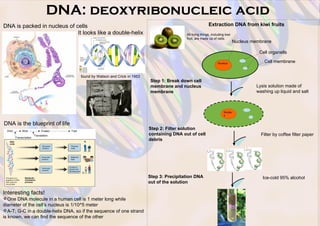
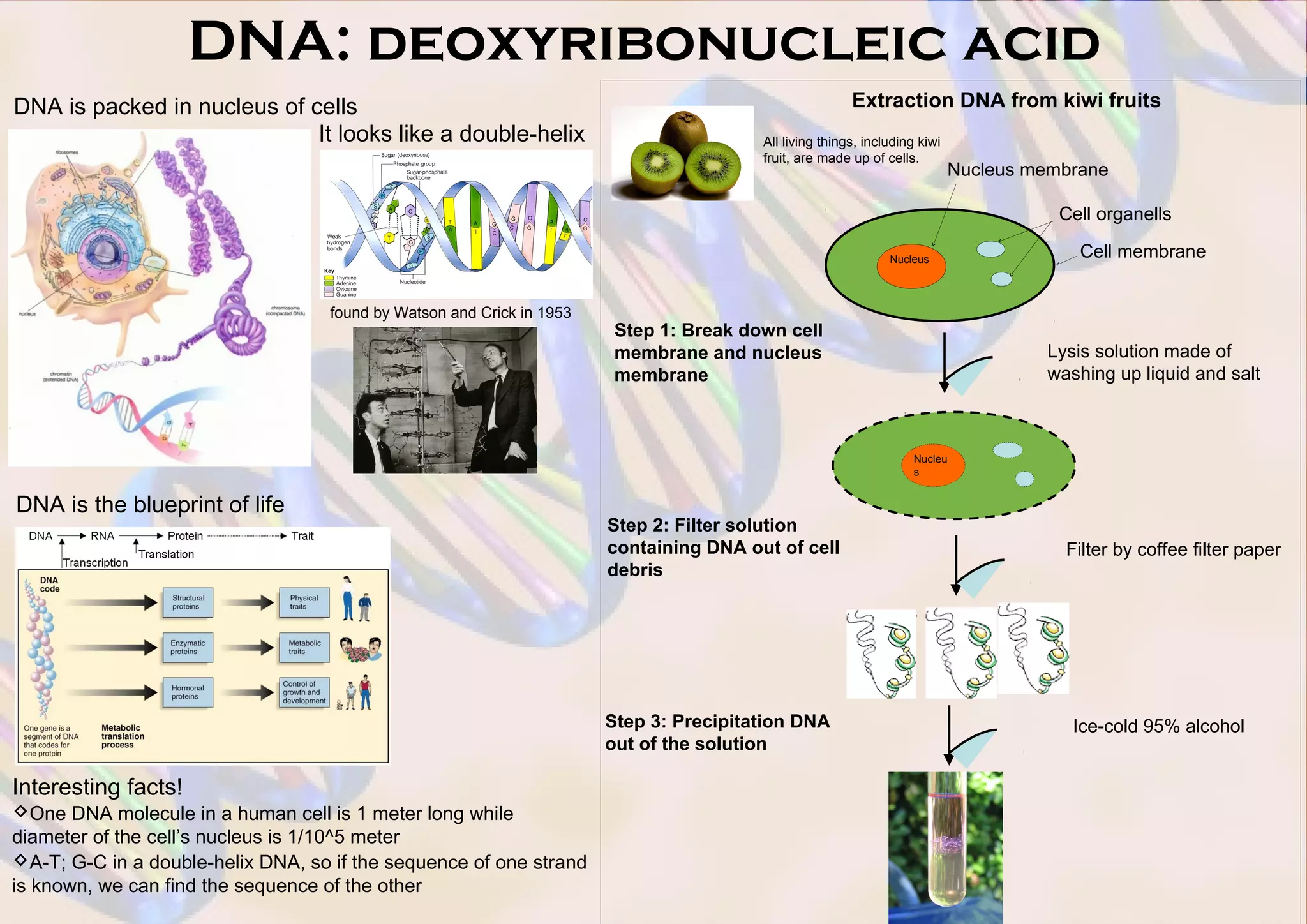
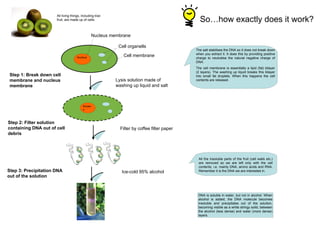
DNA is the blueprint of life found in the nucleus of cells. It was discovered in 1953 by Watson and Crick to have a double helix structure. DNA can be extracted from cells like those found in kiwi fruit through a process of breaking down the cell and nucleus membranes, filtering out the DNA-containing solution from cell debris, and using alcohol to precipitate out the DNA. The salt in the extraction solution stabilizes the DNA while the detergent breaks the cell membrane, releasing the cell contents, and filtering removes insoluble parts to leave DNA, RNA, and amino acids, with DNA then being isolated through its insolubility in alcohol.