The new engl and jour nal of medicine
n engl j med 385;6 nejm.org August 5, 2021 549
Clinical Problem-Solving
From the Department of Internal Medi-
cine (T.W.F.) and the Division of Gastro-
enterology and Hepatology, Department
of Medicine (M.B.B.N., M.C., V.G.C.),
Mayo Clinic, Rochester, MN; and Aurora
Cardiovascular and Thoracic Services,
Aurora Sinai Medical Center and Aurora
St. Luke’s Medical Center, University of
Wisconsin School of Medicine and Public
Health, Milwaukee (D.O.J.). Address re-
print requests to Dr. Chedid at the Divi-
sion of Gastroenterology and Hepatology,
Department of Medicine, Mayo Clinic,
Rochester, MN 55905 or at ­
chedid​
.­
victor@​
­mayo​.­edu.
N Engl J Med 2021;385:549-54.
DOI: 10.1056/NEJMcps2105278
Copyright © 2021 Massachusetts Medical Society.
A 32-year-old woman with a 10-year history of abdominal pain presented to the gas-
troenterology clinic for evaluation of abdominal pain. She reported episodes of se-
vere, diffuse abdominal pain, which she rated at 10 on a scale of 0 to 10, with 10 repre-
senting the worst pain imaginable. These episodes occurred every month or two and
usually lasted for several days. They were unrelated to her menstrual cycles and oc-
curred without an apparent precipitant. Between episodes, she reported having mild,
cramping midabdominal pain almost every day, with the pain fluctuating in severity
throughout the day. The pain was not associated with food intake but was aggravated
by running. She had been hospitalized three times for episodes of severe pain.
In a young woman who presents with episodic acute-on-chronic abdominal pain,
the differential diagnosis is broad. Possible causes include chronic constipation,
inflammatory bowel disease (IBD), and irritable bowel syndrome (IBS). IBD is
often associated with systemic symptoms such as fatigue, weight loss, diarrhea,
and arthralgia. A detailed history of her bowel function should be obtained.
The episodes of severe abdominal pain were followed by 3 to 4 days of constipation,
without excessive straining, manual digitation to defecate, blood in the stool, weight
loss, fevers, or changes in appetite. The patient reported taking over-the-counter
laxatives when pain occurred, after which she had loose stools and partial pain relief.
Her bowel function was normal between the episodes of pain. Her only medications
were an etonogestrel subdermal implant for contraception, which had been placed
3 years before presentation and resulted in amenorrhea, cetirizine for seasonal aller-
gies, and valacyclovir for herpes simplex prophylaxis. Before receiving the implant
for contraception, she had taken combined oral contraceptives for at least 5 years.
Her medical and surgical history were notable for the removal of an ovarian cyst by
means of a midline infraumbilical laparotomy at 16 years of age and a diagnosis of
fibromyalgia at 15 years of age. She had never smoked, and she ran marathons. She
drank alcohol socially. She reported a history of childhood sexual abuse. She had
tried multiple diets for weight loss, including ketogenic diets. There was no family
history of IBD or abdominal pain similar to what the patient reported.
The absence of diarrhea, blood in stools, weight loss, and other systemic symp-
toms argue against IBD. The severe episodic symptoms raise the possibility of
angioedema or systemic mastocytosis. These conditions are associated with atopy
and other systemic manifestations, such as rashes and urticaria. The patient’s his-
tory of childhood sexual abuse may predispose her to chronic abdominal or pelvic
Caren G. Solomon, M.D., M.P.H., Editor
Turning Purple with Pain
Thomas W. Fredrick, M.D., Manuel B. Braga Neto, M.D., Ph.D.,
Daniel O. Johnsrud, M.D., Michael Camilleri, M.D., and Victor G. Chedid, M.D.​​
In this Journal feature, information about a real patient is presented in stages (boldface type) to an expert
clinician, who responds to the information by sharing relevant background and reasoning with the reader
(regular type). The authors’ commentary follows.
CME
at NEJM.org
The New England Journal of Medicine
Downloaded from nejm.org at Biblioteca Virtual de la Consejería de Sanidad on August 10, 2021. For personal use only. No other uses without permission.
Copyright © 2021 Massachusetts Medical Society. All rights reserved.
n engl j med 385;6 nejm.org August 5, 2021
550
The new engl and jour nal of medicine
pain and functional gastrointestinal disorders.
Her intermittent constipation could indicate IBS
with constipation, functional constipation, pelvic-
floor dysfunction, or a secondary cause of con-
stipation, such as hypothyroidism or hypercalce-
mia. It may also be related to medication.
However, the intermittent nature of the consti-
pation makes hypothyroidism, hypercalcemia,
and pelvic-floor dysfunction less likely. Some of
the medications she takes, such as cetirizine,
have been associated with constipation but are
unlikely to explain her symptoms.
Given the patient’s history of constipation, a
digital rectal examination is indicated. Findings
of high resting anal sphincter tone, reduced peri-
neal descent (<2 cm), and paradoxical contrac-
tion of the pelvic floor on palpation with the
examining finger during straining would sug-
gest pelvic-floor dysfunction as a cause of con-
stipation. Physical examination for her abdomi-
nal pain should include assessment of Carnett’s
sign — a localized area of abdominal tenderness
when the patient tenses the abdominal muscles
by flexing the neck — which indicates musculo-
skeletal abdominal pain. However, the episodic
nature of her symptoms argues against both
pelvic-floor dysfunction and musculoskeletal ab-
dominal pain.
Although the patient’s symptoms are not cause
for alarm (i.e., they do not include vomiting,
fevers, or gastrointestinal bleeding), the severity
of the acute exacerbations of pain is worrisome
and requires further evaluation. Records related to
her hospitalizations should be obtained in order
to review the results of previous evaluations.
During previous hospitalizations, the patient’s ab-
dominal pain had been managed conservatively,
with bowel rest and opioids for pain. Investiga-
tions included upper gastrointestinal endoscopy
(duodenal-biopsy specimens were negative for ce-
liac disease) and colonoscopy with examination
of the terminal ileum (findings were normal).
Several abdominal and pelvic computed tomo-
graphic (CT) scans had been obtained to deter-
mine the cause of acute pain and were either nor-
mal or showed nonspecific findings. During her
most recent hospitalization, which occurred 3 days
before the current outpatient presentation, labo-
ratory testing revealed a low serum sodium level
(with a nadir of 124 mmol per liter), which was
attributed to hypovolemia and corrected with the
intravenous administration of normal saline.
Other electrolyte levels were normal. During this
hospitalization, the patient was noted to appear to
be transiently “out of it,” a condition that was
thought to be related to the use of excessive opioid
medication for pain. Concerns for opioid-seeking
behavior were raised by providers. Psychiatric eval-
uation led to a diagnosis of conversion disorder.
During the current outpatient visit, the patient
was alert and oriented to time and place and was
not in distress. Her body-mass index (the weight
in kilograms divided by the square of the height in
meters) was 19.5, and she weighed 55.7 kg. She
had abdominal tenderness to deep palpation,
with a negative Carnett’s sign and normal results
on digital rectal examination, without findings
that would suggest pelvic-floor dysfunction. A
complete blood count was normal, as were levels
of creatinine, blood urea nitrogen, ferritin, thyro-
tropin, and fasting morning cortisol. The aspar-
tate aminotransferase level was 48 U per liter
(normal range, 8 to 43), and the alanine amino-
transferase level was 53 U per liter (normal range,
7 to 45). The tryptase level was 9.5 ng per milliliter
(normal range, <11.5), the C1 esterase inhibitor
level 34 mg per deciliter (normal range, 19 to 37),
and the tissue transglutaminase (tTG) antibody
level less than 1.2 U per milliliter (normal range,
<4). IgA levels were normal. Nortriptyline was
started at a dose of 10 mg per day as a central neu-
romodulator to relieve presumed functional ab-
dominal pain.
Adrenal insufficiency can cause abdominal pain,
constipation, and hyponatremia, but the normal
morning cortisol level is inconsistent with this
diagnosis. The normal levels of C1 esterase in-
hibitor and tryptase levels argue against angio-
edema and systemic mastocytosis, respectively.
Together with the history of normal findings on
biopsy of the small bowel, the normal tTG–IgA
level (with normal IgA levels) does not support a
diagnosis of celiac disease. Functional abdomi-
nal pain is frequently diagnosed in patients for
whom an extensive diagnostic workup has been
unrevealing, and nortriptyline, along with dietary
modification and cognitive behavioral therapy,
may be helpful if that is the cause of the patient’s
symptoms. Her transient hyponatremia could be
explained by hypovolemia associated with de-
creased oral intake due to abdominal pain.
The patient returned to the emergency depart-
ment 2 months later with a 3-day history of severe
The New England Journal of Medicine
Downloaded from nejm.org at Biblioteca Virtual de la Consejería de Sanidad on August 10, 2021. For personal use only. No other uses without permission.
Copyright © 2021 Massachusetts Medical Society. All rights reserved.
n engl j med 385;6 nejm.org August 5, 2021 551
Clinical Problem-Solving
abdominal pain and no bowel movement or flatus
passed for 1 day. Her pulse rate was 107 beats per
minute, blood pressure 113/81 mm Hg, respira-
tory rate 14 breaths per minute, and oxygen satu-
ration 100% while breathing ambient air. She
appeared uncomfortable and anxious but was ori-
ented to time and place, spoke clearly, and re-
sponded appropriately to questions. Her mucous
membranes were dry, and she had tachycardia
with regular rhythm. Her abdomen was diffusely
tender; bowel sounds were high pitched. Results
of a digital rectal examination were normal, with
no evidence of fecal impaction.
Although the patient had had previous CT scans
that were either unremarkable or inconclusive,
her current severe pain, the lack of flatus or
bowel movements for 1 day, and the findings on
the abdominal examination raise concern for a
bowel obstruction. Repeat abdominal imaging
should be performed.
A complete blood count and levels of glucose,
creatinine, sodium, total bilirubin, alkaline phos-
phatase, lactate, and lipase were within normal
limits. The result of a urinary pregnancy test was
negative, and no nitrites or leukocytes were de-
tected on urinalysis. Contrast enhanced CT of the
abdomen and pelvis revealed only a large stool
burden.
Intravenous hydration (with crystalloids) and
pain medication (hydromorphone) were initiated
in the emergency department, and the pain abat-
ed and the tachycardia resolved. The patient was
admitted to the hospital, and treatment with tra-
madol and acetaminophen was started, replacing
hydromorphone. The constipation persisted de-
spite treatment with a bisacodyl suppository,
magnesium citrate, oral senna and docusate,
lactulose, polyethylene glycol, sodium phosphate,
and a mineral oil enema. Anxiety was treated with
hydroxyzine and lorazepam as needed. On hospi-
tal days 2 and 3, the patient continued to have
severe abdominal pain. On hospital day 3, her se-
rum sodium level fell from 136 mmol per liter on
admission to 128 mmol per liter. Given the pre-
sumption of hypovolemic hyponatremia, 500 ml
of normal saline was administered intravenously,
but a repeat measure of sodium levels obtained
later thatdayshowedafurtherdeclineto125mmol
per liter. The serum osmolality was 255 mOsm
per kilogram, the urine osmolality 413 mOsm per
kilogram, and the urine sodium level 153 mmol
per liter, all of which suggested the syndrome
of inappropriate antidiuretic hormone secretion
(SIADH). Water restriction was initiated, and tra-
madol was discontinued given its rare association
with hyponatremia. The serum thyrotropin level
was 2.4 mIU per liter (normal range, 0.3 to 4.2),
and the morning serum cortisol level was 24 μg
per deciliter (normal range, 7 to 25).
Laboratory and imaging studies have ruled out
bowel obstruction, pancreaticobiliary disease,
mesenteric ischemia, pregnancy, and urinary tract
infection. Hyponatremia in the setting of clini-
cal evidence of euvolemia is most consistent with
SIADH. Abdominal pain can trigger increased
antidiuretic hormone secretion and, when com-
bined with poor oral intake, can cause hypona-
tremia. Although a similar scenario may result
from adrenal insufficiency or hypothyroidism,
the patient’s recent thyrotropin and morning
cortisol levels were reportedly normal. Other
causes include anorexia nervosa, diabetes mel-
litus, psychogenic polydipsia, and, in rare cases,
porphyrias. The patient’s borderline ow BMI and
previous attempts at a restrictive diet raise con-
cern for anorexia nervosa. Diabetes mellitus is
unlikely given her normal fasting glucose level.
Psychogenic polydipsia is also unlikely in a mon-
itored hospital setting. Acute intermittent por-
phyria is high on the differential diagnosis given
her episodic severe abdominal pain, hyponatre-
mia, changes in mental status on a previous
admission, and age (young and middle-aged
women are most commonly affected). Treatment
of hyponatremia is based on correction of the
underlying problem and fluid restriction to re-
duce free water intake and, in severe hyponatre-
mia, initiate hypertonic saline. However, the
degree of hyponatremia in this patient does not
warrant hypertonic saline treatment.
On hospital day 4, the patient remained consti-
pated, and a water-soluble enema administered
with contrast material revealed fecal impaction in
the transverse colon. The serum sodium level fell
to 122 mmol per liter. By hospital day 6, her con-
stipation and abdominal pain had gradually abat-
ed with laxative management, and the hyponatre-
mia had abated with fluid restriction. Owing to
the constellation of recurrent severe abdominal
pain, hyponatremia, and transient neuropsychiat-
ric manifestations, a urine porphyrin panel was
obtained and revealed elevated levels of porphobi-
The New England Journal of Medicine
Downloaded from nejm.org at Biblioteca Virtual de la Consejería de Sanidad on August 10, 2021. For personal use only. No other uses without permission.
Copyright © 2021 Massachusetts Medical Society. All rights reserved.
n engl j med 385;6 nejm.org August 5, 2021
552
The new engl and jour nal of medicine
linogen (991.8 μmol per liter; upper limit of the
normal range, <1.3) and δ-aminolevulinic acid
(318 nmol per milliliter; upper limit of the normal
range, <15). Subsequent genetic testing identified
a heterozygous frameshift alteration in HMBS
(g.118960947dup,fromgenomereferenceGRCh38),
predicting amino acid change p.F158VfsTer52
and hydroxymethylbilane synthase deficiency and
consistent with a diagnosis of acute intermittent
porphyria. After the results of urinalysis were re-
turned, the nurses taking care of the patient noted
that her urine had appeared to be “purple colored”
a few days earlier.
On further questioning once the diagnosis was
made, the patient reported no family history of
porphyria. She noted that previous hospitaliza-
tions had occurred when she was following a
ketogenic diet. The medical team advised her to
avoid such diets in the future.
On outpatient follow-up 2 months after diag-
nosis, the patient reported substantial abatement
of her abdominal pain and constipation. She also
noted that she had been able to return to work as
a graphic artist.
Commentary
This patient presented with a history of episodes
of severe, acute abdominal pain and constipation,
superimposed on chronic pain, that had been
unexplained despite extensive evaluations. Ulti-
mately, the associated psychiatric symptoms dur-
ing an earlier hospitalization and the identifi-
cation of hyponatremia during two previous
hospitalizations raised suspicion that acute inter-
mittent porphyria was the cause of her pain. The
documentation of elevated urinary porphyrin
levels confirmed the diagnosis.
Porphyrias are a group of metabolic disorders
that result from defects in enzymes within the
heme biosynthetic pathway.1
The most common
are porphyria cutanea tarda, acute intermittent
porphyria, and erythropoietic protoporphyria, in
that order.1
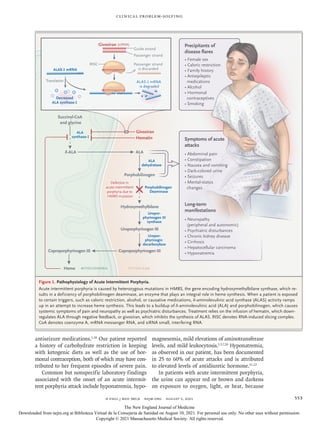
Acute intermittent porphyria results
from mutations in HMBS, the gene encoding
hydroxymethylbilane synthase (see Fig. 1), which
plays an integral role in heme synthesis.1,2
The
disease manifests as acute attacks in which the
heme pool in the liver is used up, leading to a
buildup of δ-aminolevulinic acid and porphobi-
linogen (PBG).1,2
Acute intermittent porphyria is a rare disease,
with an estimated prevalence of 5.4 cases per
million according to a survey conducted in Euro-
pean countries,3
although this may be an under-
estimate. The disease has incomplete penetrance
(approximately 10 to 20% in genetically affected
persons). The typical patient is a woman between
the ages of 18 and 45 years.1,4
In a case series of
108 persons with acute intermittent porphyria,
common symptoms included abdominal pain
(74%), nausea and vomiting (73%), constipation
(60%), and anxiety and depression (55%). Al-
though symptoms were intermittent and acute in
55% of the patients, approximately 18% reported
nearly constant symptoms, including chronic
abdominal pain, as in our patient.5
Coexisting
conditions include hypertension (43%), peripheral
neuropathy (43%), chronic kidney disease (29%),
psychiatric disorders (22%), palpitations (19%),
seizures (9%), cirrhosis (2%), and hepatocellular
carcinoma (1%).5
Elevated levels of aminolevu-
linic acid accumulate in the liver, the central and
peripheral nervous system, and the kidneys and
may account for several of these coexisting con-
ditions.6
Patients with peripheral neuropathies
often present with weakness that begins in the
legs and ascends.5,7
In addition, autonomic neu-
ropathy may develop, resulting in cardiac arrhyth-
mias, dysautonomia, and gastrointestinal man-
ifestations.6
In a cohort study from Sweden,
researchers reported a significantly increased
risk of diagnoses of schizophrenia and bipolar
disorder among persons with acute intermittent
porphyria.8
Given the challenges of diagnosing
acute intermittent porphyria, patients may re-
ceive a misdiagnosis with primary psychiatric
conditions.
Owing to the reported association between
acute intermittent porphyria and hepatocellular
carcinoma, experts recommend annual screening
with hepatic ultrasonography as well as screening
for alpha-fetoprotein starting at 50 years of age
in patients with any form of acute porphyria.1,5,9
Although data from randomized trials are lack-
ing to support the benefit of this approach, bien-
nial screening in a Swedish cohort was associated
with an improvement in survival of 3 to 5 years
as compared with no or infrequent screening;
however, lead-time bias (whereby seemingly lon-
ger survival is attributable to earlier diagnosis)
may explain these findings.9
Flares of acute intermittent porphyria can be
precipitated by the ingestion of alcohol, infec-
tions, low caloric intake, elevated levels of repro-
ductive hormones, and medications, particularly
The New England Journal of Medicine
Downloaded from nejm.org at Biblioteca Virtual de la Consejería de Sanidad on August 10, 2021. For personal use only. No other uses without permission.
Copyright © 2021 Massachusetts Medical Society. All rights reserved.
n engl j med 385;6 nejm.org August 5, 2021 553
Clinical Problem-Solving
antiseizure medications.1,10
Our patient reported
a history of carbohydrate restriction in keeping
with ketogenic diets as well as the use of hor-
monal contraception, both of which may have con-
tributed to her frequent episodes of severe pain.
Common but nonspecific laboratory findings
associated with the onset of an acute intermit-
tent porphyria attack include hyponatremia, hypo-
magnesemia, mild elevations of aminotransferase
levels, and mild leukocytosis.1,5,7,10
Hyponatremia,
as observed in our patient, has been documented
in 25 to 60% of acute attacks and is attributed
to elevated levels of antidiuretic hormone.11,12
In patients with acute intermittent porphyria,
the urine can appear red or brown and darkens
on exposure to oxygen, light, or heat, because
Figure 1. Pathophysiology of Acute Intermittent Porphyria.
Acute intermittent porphyria is caused by heterozygous mutations in HMBS, the gene encoding hydroxymethylbilane synthase, which re-
sults in a deficiency of porphobilinogen deaminase, an enzyme that plays an integral role in heme synthesis. When a patient is exposed
to certain triggers, such as caloric restriction, alcohol, or causative medications, δ-aminolevulinic acid synthase (ALAS) activity ramps
up in an attempt to increase heme synthesis. This leads to a buildup of δ-aminolevulinic acid (ALA) and porphobilinogen, which causes
systemic symptoms of pain and neuropathy as well as psychiatric disturbances. Treatment relies on the infusion of hematin, which down-
regulates ALA through negative feedback, or givosiran, which inhibits the synthesis of ALAS. RISC denotes RNA-induced slicing complex.
CoA denotes coenzyme A, mRNA messenger RNA, and siRNA small, interfering RNA.
Hematin
Precipitants of
disease flares
• Female sex
• Caloric restriction
• Family history
• Antiepileptic
medications
• Alcohol
• Hormonal
contraceptives
• Smoking
Succinyl-CoA
and glycine
ALA
synthase-1
ALAS-1 mRNA
Decreased
ALA synthase-1
ALA
dehydratase
Porphobilinogen
Deaminase
Uropor-
phyrinogen III
synthase
Uropor-
phyrinogin
decarboxylase
Defective in
acute intermittent
porphyria due to
HMBS mutation
Givosiran
Givosiran
δ-ALA ALA
Porphobilinogen
Hydroxymethylbilane
Uroporphyrinogen III
Coproporphyrinogen III
Heme
Symptoms of acute
attacks
Long-term
manifestations
• Abdominal pain
• Constipation
• Nausea and vomiting
• Dark-colored urine
• Seizures
• Mental-status
changes
• Neuropathy
(peripheral and autonomic)
• Psychiatric disturbances
• Chronic kidney disease
• Cirrhosis
• Hepatocellular carcinoma
• Hyponatremia
MITOCHONDRIA CYTOPLASM
ALAS-1 mRNA
is degraded
(siRNA)
RISC
Translation
Passenger strand
is discarded
Passenger strand
Guide strand
Decreased
Decreased
Decreased
ALA synthase-1
ALA synthase-1
ALA synthase-1
Decreased
Decreased
Decreased
Decreased
The New England Journal of Medicine
Downloaded from nejm.org at Biblioteca Virtual de la Consejería de Sanidad on August 10, 2021. For personal use only. No other uses without permission.
Copyright © 2021 Massachusetts Medical Society. All rights reserved.
n engl j med 385;6 nejm.org August 5, 2021
554
Clinical Problem-Solving
urinary porphyrins undergo autoconversion of
PBG into porphobilin.1,2
The purple urine noted
near the time of diagnosis in this patient reflects
the very high urinary PBG level. Elevated PBG
levels (relative to the urinary creatine level) ob-
tained in a random urine sample — which must
be protected from light — are consistent with the
diagnosis, and a normal value obtained during
an acute flare rules out acute porphyria.13
Dur-
ing a flare, PBG levels can be as high as 20 to
300 mg per gram of creatinine (normal range, 0 to
2 mg). Although a urinary creatinine level was
not available in our patient, her urinary PBG
level was sufficiently high to support the diag-
nosis. Urine samples obtained several days after
a flare may show persistent PBG elevation.13
The
diagnosis should be confirmed by genetic test-
ing in which a mutation in the gene encoding
hydroxymethylbilane synthase is detected.4,13
Treatment of flares starts with intravenous
administration of dextrose, which inhibits tran-
scription of the gene encoding transhepatic
5′-aminolevulinate synthase 1 (ALAS1).1,13
A high-
carbohydrate diet has also been suggested in case
reports,5,13
and parenteral opioids are sometimes
used in managing pain. However, up to 50% of
patients may not report substantive improvement
with opioids, and frequent or long-term use of
opioids can have adverse effects, including the
development of dependence.5
Hematin, adminis-
tered intravenously, is also recommended; this
treatment effectively bypasses the defective HMBS
gene. Uncontrolled studies have suggested bene-
fit, which may take up to 3 days; one small,
placebo-controlled trial did not show clear evi-
dence of benefit regarding symptoms of inter-
mittent porphyria, but the trial was underpow-
ered.14
Givosiran, an RNA interference therapy
targeting ALAS1 messenger RNA, was recently
approved for the prevention of porphyria flares
on the basis of benefit reported in a phase 3
randomized trial in which givosiran significantly
reduced the mean annual attack rate from 12.5 to
3.2 as compared with placebo.15
Patients should
be counseled to avoid triggers, including alco-
holic beverages, calorie restriction, and predis-
posing medications (including hormonal contra-
ception). Premenopausal women may benefit from
hormonal suppression.13
The prognosis is good
if the disease is identified and measures are
taken to minimize the risk of flares and to ef-
fectively treat those that occur.
This case illustrates the difficulty in diagnos-
ing rare diseases such as acute intermittent por-
phyria when patients present with nonspecific
manifestations. Our patient had several classic
symptoms and signs of acute intermittent por-
phyria, including severe, episodic abdominal pain
and constipation, transient psychiatric manifes-
tations, hyponatremia, and discolored urine.
Earlier recognition of these symptoms and a
higher level of suspicion regarding acute inter-
mittent porphyria could have led to more prompt
diagnosis and effective management.
Disclosure forms provided by the authors are available with
the full text of this article at NEJM.org.
References
1. Bissell DM, Anderson KE, Bonkovsky
HL. Porphyria. N Engl J Med 2017;​
377:​
862-72.
2. Ma Y, Teng Q, Zhang Y, Zhang S.
Acute intermittent porphyria: focus on
possible mechanisms of acute and chron-
ic manifestations. Intractable Rare Dis
Res 2020;​9:​187-95.
3. Elder G, Harper P, Badminton M,
Sandberg S, Deybach JC. The incidence of
inherited porphyrias in Europe. J Inherit
Metab Dis 2013;​36:​849-57.
4. Whatley SD, Badminton MN. Role of
genetic testing in the management of pa-
tients with inherited porphyria and their
families. Ann Clin Biochem 2013;​
50:​
204-
16.
5. Bonkovsky HL, Maddukuri VC, Yazici
C, et al. Acute porphyrias in the USA: fea-
tures of 108 subjects from porphyrias
consortium. Am J Med 2014;​
127:​
1233-41.
6. Meyer UA, Schuurmans MM, Lindberg
RL. Acute porphyrias: pathogenesis of
neurological manifestations. Semin Liver
Dis 1998;​18:​43-52.
7. Nabin A, Thapa LJ, Paudel R, Rana PV.
Acute intermittent porphyria with SIADH
and fluctuating dysautonomia. Kathmandu
Univ Med J (KUMJ) 2012;​
10:​
96-9.
8. Cederlöf M, Bergen SE, Larsson H,
Landén M, Lichtenstein P. Acute intermit-
tent porphyria: comorbidity and shared
familial risks with schizophrenia and bi-
polar disorder in Sweden. Br J Psychiatry
2015;​207:​556-7.
9. Innala E, Andersson C. Screening for
hepatocellular carcinoma in acute inter-
mittent porphyria: a 15-year follow-up in
northern Sweden. J Intern Med 2011;​
269:​
538-45.
10. The Drug Database for Acute Porphy­
ria, 2007 (http://www​.­drugs​-­porphyria​.­org/​
­languages/​­UnitedKingdom/​­index​.­php).
11. Solares I, Tejedor M, Jericó D, et al.
Management of hyponatremia associated
with acute porphyria-proposal for the use
of tolvaptan. Ann Transl Med 2020;​
8:​
1098.
12. Eales L, Dowdle EB, Sweeney GD. The
acute porphyric attack. I. The electrolyte
disorder of the acute porphyric attack and
the possible role of delta-aminolaevulic
acid. S Afr Med J 1971;​
89-97.
13. Anderson KE, Bloomer JR, Bonkovsky
HL, et al. Recommendations for the di-
agnosis and treatment of the acute por-
phyrias. Ann Intern Med 2005;​
142:​
439-50.
14. Herrick AL, McColl KE, Moore MR,
Cook A, Goldberg A. Controlled trial of
haem arginate in acute hepatic porphyria.
Lancet 1989;​1:​1295-7.
15. Balwani M, Sardh E, Ventura P, et al.
Phase 3 trial of RNAi therapeutic givosiran
for acute intermittent porphyria. N Engl J
Med 2020;​382:​2289-301.
Copyright © 2021 Massachusetts Medical Society.
The New England Journal of Medicine
Downloaded from nejm.org at Biblioteca Virtual de la Consejería de Sanidad on August 10, 2021. For personal use only. No other uses without permission.
Copyright © 2021 Massachusetts Medical Society. All rights reserved.

Turning Purple.pdf

  • 1.
    The new england jour nal of medicine n engl j med 385;6 nejm.org August 5, 2021 549 Clinical Problem-Solving From the Department of Internal Medi- cine (T.W.F.) and the Division of Gastro- enterology and Hepatology, Department of Medicine (M.B.B.N., M.C., V.G.C.), Mayo Clinic, Rochester, MN; and Aurora Cardiovascular and Thoracic Services, Aurora Sinai Medical Center and Aurora St. Luke’s Medical Center, University of Wisconsin School of Medicine and Public Health, Milwaukee (D.O.J.). Address re- print requests to Dr. Chedid at the Divi- sion of Gastroenterology and Hepatology, Department of Medicine, Mayo Clinic, Rochester, MN 55905 or at ­ chedid​ .­ victor@​ ­mayo​.­edu. N Engl J Med 2021;385:549-54. DOI: 10.1056/NEJMcps2105278 Copyright © 2021 Massachusetts Medical Society. A 32-year-old woman with a 10-year history of abdominal pain presented to the gas- troenterology clinic for evaluation of abdominal pain. She reported episodes of se- vere, diffuse abdominal pain, which she rated at 10 on a scale of 0 to 10, with 10 repre- senting the worst pain imaginable. These episodes occurred every month or two and usually lasted for several days. They were unrelated to her menstrual cycles and oc- curred without an apparent precipitant. Between episodes, she reported having mild, cramping midabdominal pain almost every day, with the pain fluctuating in severity throughout the day. The pain was not associated with food intake but was aggravated by running. She had been hospitalized three times for episodes of severe pain. In a young woman who presents with episodic acute-on-chronic abdominal pain, the differential diagnosis is broad. Possible causes include chronic constipation, inflammatory bowel disease (IBD), and irritable bowel syndrome (IBS). IBD is often associated with systemic symptoms such as fatigue, weight loss, diarrhea, and arthralgia. A detailed history of her bowel function should be obtained. The episodes of severe abdominal pain were followed by 3 to 4 days of constipation, without excessive straining, manual digitation to defecate, blood in the stool, weight loss, fevers, or changes in appetite. The patient reported taking over-the-counter laxatives when pain occurred, after which she had loose stools and partial pain relief. Her bowel function was normal between the episodes of pain. Her only medications were an etonogestrel subdermal implant for contraception, which had been placed 3 years before presentation and resulted in amenorrhea, cetirizine for seasonal aller- gies, and valacyclovir for herpes simplex prophylaxis. Before receiving the implant for contraception, she had taken combined oral contraceptives for at least 5 years. Her medical and surgical history were notable for the removal of an ovarian cyst by means of a midline infraumbilical laparotomy at 16 years of age and a diagnosis of fibromyalgia at 15 years of age. She had never smoked, and she ran marathons. She drank alcohol socially. She reported a history of childhood sexual abuse. She had tried multiple diets for weight loss, including ketogenic diets. There was no family history of IBD or abdominal pain similar to what the patient reported. The absence of diarrhea, blood in stools, weight loss, and other systemic symp- toms argue against IBD. The severe episodic symptoms raise the possibility of angioedema or systemic mastocytosis. These conditions are associated with atopy and other systemic manifestations, such as rashes and urticaria. The patient’s his- tory of childhood sexual abuse may predispose her to chronic abdominal or pelvic Caren G. Solomon, M.D., M.P.H., Editor Turning Purple with Pain Thomas W. Fredrick, M.D., Manuel B. Braga Neto, M.D., Ph.D., Daniel O. Johnsrud, M.D., Michael Camilleri, M.D., and Victor G. Chedid, M.D.​​ In this Journal feature, information about a real patient is presented in stages (boldface type) to an expert clinician, who responds to the information by sharing relevant background and reasoning with the reader (regular type). The authors’ commentary follows. CME at NEJM.org The New England Journal of Medicine Downloaded from nejm.org at Biblioteca Virtual de la Consejería de Sanidad on August 10, 2021. For personal use only. No other uses without permission. Copyright © 2021 Massachusetts Medical Society. All rights reserved.
  • 2.
    n engl jmed 385;6 nejm.org August 5, 2021 550 The new engl and jour nal of medicine pain and functional gastrointestinal disorders. Her intermittent constipation could indicate IBS with constipation, functional constipation, pelvic- floor dysfunction, or a secondary cause of con- stipation, such as hypothyroidism or hypercalce- mia. It may also be related to medication. However, the intermittent nature of the consti- pation makes hypothyroidism, hypercalcemia, and pelvic-floor dysfunction less likely. Some of the medications she takes, such as cetirizine, have been associated with constipation but are unlikely to explain her symptoms. Given the patient’s history of constipation, a digital rectal examination is indicated. Findings of high resting anal sphincter tone, reduced peri- neal descent (<2 cm), and paradoxical contrac- tion of the pelvic floor on palpation with the examining finger during straining would sug- gest pelvic-floor dysfunction as a cause of con- stipation. Physical examination for her abdomi- nal pain should include assessment of Carnett’s sign — a localized area of abdominal tenderness when the patient tenses the abdominal muscles by flexing the neck — which indicates musculo- skeletal abdominal pain. However, the episodic nature of her symptoms argues against both pelvic-floor dysfunction and musculoskeletal ab- dominal pain. Although the patient’s symptoms are not cause for alarm (i.e., they do not include vomiting, fevers, or gastrointestinal bleeding), the severity of the acute exacerbations of pain is worrisome and requires further evaluation. Records related to her hospitalizations should be obtained in order to review the results of previous evaluations. During previous hospitalizations, the patient’s ab- dominal pain had been managed conservatively, with bowel rest and opioids for pain. Investiga- tions included upper gastrointestinal endoscopy (duodenal-biopsy specimens were negative for ce- liac disease) and colonoscopy with examination of the terminal ileum (findings were normal). Several abdominal and pelvic computed tomo- graphic (CT) scans had been obtained to deter- mine the cause of acute pain and were either nor- mal or showed nonspecific findings. During her most recent hospitalization, which occurred 3 days before the current outpatient presentation, labo- ratory testing revealed a low serum sodium level (with a nadir of 124 mmol per liter), which was attributed to hypovolemia and corrected with the intravenous administration of normal saline. Other electrolyte levels were normal. During this hospitalization, the patient was noted to appear to be transiently “out of it,” a condition that was thought to be related to the use of excessive opioid medication for pain. Concerns for opioid-seeking behavior were raised by providers. Psychiatric eval- uation led to a diagnosis of conversion disorder. During the current outpatient visit, the patient was alert and oriented to time and place and was not in distress. Her body-mass index (the weight in kilograms divided by the square of the height in meters) was 19.5, and she weighed 55.7 kg. She had abdominal tenderness to deep palpation, with a negative Carnett’s sign and normal results on digital rectal examination, without findings that would suggest pelvic-floor dysfunction. A complete blood count was normal, as were levels of creatinine, blood urea nitrogen, ferritin, thyro- tropin, and fasting morning cortisol. The aspar- tate aminotransferase level was 48 U per liter (normal range, 8 to 43), and the alanine amino- transferase level was 53 U per liter (normal range, 7 to 45). The tryptase level was 9.5 ng per milliliter (normal range, <11.5), the C1 esterase inhibitor level 34 mg per deciliter (normal range, 19 to 37), and the tissue transglutaminase (tTG) antibody level less than 1.2 U per milliliter (normal range, <4). IgA levels were normal. Nortriptyline was started at a dose of 10 mg per day as a central neu- romodulator to relieve presumed functional ab- dominal pain. Adrenal insufficiency can cause abdominal pain, constipation, and hyponatremia, but the normal morning cortisol level is inconsistent with this diagnosis. The normal levels of C1 esterase in- hibitor and tryptase levels argue against angio- edema and systemic mastocytosis, respectively. Together with the history of normal findings on biopsy of the small bowel, the normal tTG–IgA level (with normal IgA levels) does not support a diagnosis of celiac disease. Functional abdomi- nal pain is frequently diagnosed in patients for whom an extensive diagnostic workup has been unrevealing, and nortriptyline, along with dietary modification and cognitive behavioral therapy, may be helpful if that is the cause of the patient’s symptoms. Her transient hyponatremia could be explained by hypovolemia associated with de- creased oral intake due to abdominal pain. The patient returned to the emergency depart- ment 2 months later with a 3-day history of severe The New England Journal of Medicine Downloaded from nejm.org at Biblioteca Virtual de la Consejería de Sanidad on August 10, 2021. For personal use only. No other uses without permission. Copyright © 2021 Massachusetts Medical Society. All rights reserved.
  • 3.
    n engl jmed 385;6 nejm.org August 5, 2021 551 Clinical Problem-Solving abdominal pain and no bowel movement or flatus passed for 1 day. Her pulse rate was 107 beats per minute, blood pressure 113/81 mm Hg, respira- tory rate 14 breaths per minute, and oxygen satu- ration 100% while breathing ambient air. She appeared uncomfortable and anxious but was ori- ented to time and place, spoke clearly, and re- sponded appropriately to questions. Her mucous membranes were dry, and she had tachycardia with regular rhythm. Her abdomen was diffusely tender; bowel sounds were high pitched. Results of a digital rectal examination were normal, with no evidence of fecal impaction. Although the patient had had previous CT scans that were either unremarkable or inconclusive, her current severe pain, the lack of flatus or bowel movements for 1 day, and the findings on the abdominal examination raise concern for a bowel obstruction. Repeat abdominal imaging should be performed. A complete blood count and levels of glucose, creatinine, sodium, total bilirubin, alkaline phos- phatase, lactate, and lipase were within normal limits. The result of a urinary pregnancy test was negative, and no nitrites or leukocytes were de- tected on urinalysis. Contrast enhanced CT of the abdomen and pelvis revealed only a large stool burden. Intravenous hydration (with crystalloids) and pain medication (hydromorphone) were initiated in the emergency department, and the pain abat- ed and the tachycardia resolved. The patient was admitted to the hospital, and treatment with tra- madol and acetaminophen was started, replacing hydromorphone. The constipation persisted de- spite treatment with a bisacodyl suppository, magnesium citrate, oral senna and docusate, lactulose, polyethylene glycol, sodium phosphate, and a mineral oil enema. Anxiety was treated with hydroxyzine and lorazepam as needed. On hospi- tal days 2 and 3, the patient continued to have severe abdominal pain. On hospital day 3, her se- rum sodium level fell from 136 mmol per liter on admission to 128 mmol per liter. Given the pre- sumption of hypovolemic hyponatremia, 500 ml of normal saline was administered intravenously, but a repeat measure of sodium levels obtained later thatdayshowedafurtherdeclineto125mmol per liter. The serum osmolality was 255 mOsm per kilogram, the urine osmolality 413 mOsm per kilogram, and the urine sodium level 153 mmol per liter, all of which suggested the syndrome of inappropriate antidiuretic hormone secretion (SIADH). Water restriction was initiated, and tra- madol was discontinued given its rare association with hyponatremia. The serum thyrotropin level was 2.4 mIU per liter (normal range, 0.3 to 4.2), and the morning serum cortisol level was 24 μg per deciliter (normal range, 7 to 25). Laboratory and imaging studies have ruled out bowel obstruction, pancreaticobiliary disease, mesenteric ischemia, pregnancy, and urinary tract infection. Hyponatremia in the setting of clini- cal evidence of euvolemia is most consistent with SIADH. Abdominal pain can trigger increased antidiuretic hormone secretion and, when com- bined with poor oral intake, can cause hypona- tremia. Although a similar scenario may result from adrenal insufficiency or hypothyroidism, the patient’s recent thyrotropin and morning cortisol levels were reportedly normal. Other causes include anorexia nervosa, diabetes mel- litus, psychogenic polydipsia, and, in rare cases, porphyrias. The patient’s borderline ow BMI and previous attempts at a restrictive diet raise con- cern for anorexia nervosa. Diabetes mellitus is unlikely given her normal fasting glucose level. Psychogenic polydipsia is also unlikely in a mon- itored hospital setting. Acute intermittent por- phyria is high on the differential diagnosis given her episodic severe abdominal pain, hyponatre- mia, changes in mental status on a previous admission, and age (young and middle-aged women are most commonly affected). Treatment of hyponatremia is based on correction of the underlying problem and fluid restriction to re- duce free water intake and, in severe hyponatre- mia, initiate hypertonic saline. However, the degree of hyponatremia in this patient does not warrant hypertonic saline treatment. On hospital day 4, the patient remained consti- pated, and a water-soluble enema administered with contrast material revealed fecal impaction in the transverse colon. The serum sodium level fell to 122 mmol per liter. By hospital day 6, her con- stipation and abdominal pain had gradually abat- ed with laxative management, and the hyponatre- mia had abated with fluid restriction. Owing to the constellation of recurrent severe abdominal pain, hyponatremia, and transient neuropsychiat- ric manifestations, a urine porphyrin panel was obtained and revealed elevated levels of porphobi- The New England Journal of Medicine Downloaded from nejm.org at Biblioteca Virtual de la Consejería de Sanidad on August 10, 2021. For personal use only. No other uses without permission. Copyright © 2021 Massachusetts Medical Society. All rights reserved.
  • 4.
    n engl jmed 385;6 nejm.org August 5, 2021 552 The new engl and jour nal of medicine linogen (991.8 μmol per liter; upper limit of the normal range, <1.3) and δ-aminolevulinic acid (318 nmol per milliliter; upper limit of the normal range, <15). Subsequent genetic testing identified a heterozygous frameshift alteration in HMBS (g.118960947dup,fromgenomereferenceGRCh38), predicting amino acid change p.F158VfsTer52 and hydroxymethylbilane synthase deficiency and consistent with a diagnosis of acute intermittent porphyria. After the results of urinalysis were re- turned, the nurses taking care of the patient noted that her urine had appeared to be “purple colored” a few days earlier. On further questioning once the diagnosis was made, the patient reported no family history of porphyria. She noted that previous hospitaliza- tions had occurred when she was following a ketogenic diet. The medical team advised her to avoid such diets in the future. On outpatient follow-up 2 months after diag- nosis, the patient reported substantial abatement of her abdominal pain and constipation. She also noted that she had been able to return to work as a graphic artist. Commentary This patient presented with a history of episodes of severe, acute abdominal pain and constipation, superimposed on chronic pain, that had been unexplained despite extensive evaluations. Ulti- mately, the associated psychiatric symptoms dur- ing an earlier hospitalization and the identifi- cation of hyponatremia during two previous hospitalizations raised suspicion that acute inter- mittent porphyria was the cause of her pain. The documentation of elevated urinary porphyrin levels confirmed the diagnosis. Porphyrias are a group of metabolic disorders that result from defects in enzymes within the heme biosynthetic pathway.1 The most common are porphyria cutanea tarda, acute intermittent porphyria, and erythropoietic protoporphyria, in that order.1 Acute intermittent porphyria results from mutations in HMBS, the gene encoding hydroxymethylbilane synthase (see Fig. 1), which plays an integral role in heme synthesis.1,2 The disease manifests as acute attacks in which the heme pool in the liver is used up, leading to a buildup of δ-aminolevulinic acid and porphobi- linogen (PBG).1,2 Acute intermittent porphyria is a rare disease, with an estimated prevalence of 5.4 cases per million according to a survey conducted in Euro- pean countries,3 although this may be an under- estimate. The disease has incomplete penetrance (approximately 10 to 20% in genetically affected persons). The typical patient is a woman between the ages of 18 and 45 years.1,4 In a case series of 108 persons with acute intermittent porphyria, common symptoms included abdominal pain (74%), nausea and vomiting (73%), constipation (60%), and anxiety and depression (55%). Al- though symptoms were intermittent and acute in 55% of the patients, approximately 18% reported nearly constant symptoms, including chronic abdominal pain, as in our patient.5 Coexisting conditions include hypertension (43%), peripheral neuropathy (43%), chronic kidney disease (29%), psychiatric disorders (22%), palpitations (19%), seizures (9%), cirrhosis (2%), and hepatocellular carcinoma (1%).5 Elevated levels of aminolevu- linic acid accumulate in the liver, the central and peripheral nervous system, and the kidneys and may account for several of these coexisting con- ditions.6 Patients with peripheral neuropathies often present with weakness that begins in the legs and ascends.5,7 In addition, autonomic neu- ropathy may develop, resulting in cardiac arrhyth- mias, dysautonomia, and gastrointestinal man- ifestations.6 In a cohort study from Sweden, researchers reported a significantly increased risk of diagnoses of schizophrenia and bipolar disorder among persons with acute intermittent porphyria.8 Given the challenges of diagnosing acute intermittent porphyria, patients may re- ceive a misdiagnosis with primary psychiatric conditions. Owing to the reported association between acute intermittent porphyria and hepatocellular carcinoma, experts recommend annual screening with hepatic ultrasonography as well as screening for alpha-fetoprotein starting at 50 years of age in patients with any form of acute porphyria.1,5,9 Although data from randomized trials are lack- ing to support the benefit of this approach, bien- nial screening in a Swedish cohort was associated with an improvement in survival of 3 to 5 years as compared with no or infrequent screening; however, lead-time bias (whereby seemingly lon- ger survival is attributable to earlier diagnosis) may explain these findings.9 Flares of acute intermittent porphyria can be precipitated by the ingestion of alcohol, infec- tions, low caloric intake, elevated levels of repro- ductive hormones, and medications, particularly The New England Journal of Medicine Downloaded from nejm.org at Biblioteca Virtual de la Consejería de Sanidad on August 10, 2021. For personal use only. No other uses without permission. Copyright © 2021 Massachusetts Medical Society. All rights reserved.
  • 5.
    n engl jmed 385;6 nejm.org August 5, 2021 553 Clinical Problem-Solving antiseizure medications.1,10 Our patient reported a history of carbohydrate restriction in keeping with ketogenic diets as well as the use of hor- monal contraception, both of which may have con- tributed to her frequent episodes of severe pain. Common but nonspecific laboratory findings associated with the onset of an acute intermit- tent porphyria attack include hyponatremia, hypo- magnesemia, mild elevations of aminotransferase levels, and mild leukocytosis.1,5,7,10 Hyponatremia, as observed in our patient, has been documented in 25 to 60% of acute attacks and is attributed to elevated levels of antidiuretic hormone.11,12 In patients with acute intermittent porphyria, the urine can appear red or brown and darkens on exposure to oxygen, light, or heat, because Figure 1. Pathophysiology of Acute Intermittent Porphyria. Acute intermittent porphyria is caused by heterozygous mutations in HMBS, the gene encoding hydroxymethylbilane synthase, which re- sults in a deficiency of porphobilinogen deaminase, an enzyme that plays an integral role in heme synthesis. When a patient is exposed to certain triggers, such as caloric restriction, alcohol, or causative medications, δ-aminolevulinic acid synthase (ALAS) activity ramps up in an attempt to increase heme synthesis. This leads to a buildup of δ-aminolevulinic acid (ALA) and porphobilinogen, which causes systemic symptoms of pain and neuropathy as well as psychiatric disturbances. Treatment relies on the infusion of hematin, which down- regulates ALA through negative feedback, or givosiran, which inhibits the synthesis of ALAS. RISC denotes RNA-induced slicing complex. CoA denotes coenzyme A, mRNA messenger RNA, and siRNA small, interfering RNA. Hematin Precipitants of disease flares • Female sex • Caloric restriction • Family history • Antiepileptic medications • Alcohol • Hormonal contraceptives • Smoking Succinyl-CoA and glycine ALA synthase-1 ALAS-1 mRNA Decreased ALA synthase-1 ALA dehydratase Porphobilinogen Deaminase Uropor- phyrinogen III synthase Uropor- phyrinogin decarboxylase Defective in acute intermittent porphyria due to HMBS mutation Givosiran Givosiran δ-ALA ALA Porphobilinogen Hydroxymethylbilane Uroporphyrinogen III Coproporphyrinogen III Coproporphyrinogen III Heme Symptoms of acute attacks Long-term manifestations • Abdominal pain • Constipation • Nausea and vomiting • Dark-colored urine • Seizures • Mental-status changes • Neuropathy (peripheral and autonomic) • Psychiatric disturbances • Chronic kidney disease • Cirrhosis • Hepatocellular carcinoma • Hyponatremia MITOCHONDRIA CYTOPLASM ALAS-1 mRNA is degraded (siRNA) RISC Translation Passenger strand is discarded Passenger strand Guide strand Decreased Decreased Decreased ALA synthase-1 ALA synthase-1 ALA synthase-1 Decreased Decreased Decreased Decreased The New England Journal of Medicine Downloaded from nejm.org at Biblioteca Virtual de la Consejería de Sanidad on August 10, 2021. For personal use only. No other uses without permission. Copyright © 2021 Massachusetts Medical Society. All rights reserved.
  • 6.
    n engl jmed 385;6 nejm.org August 5, 2021 554 Clinical Problem-Solving urinary porphyrins undergo autoconversion of PBG into porphobilin.1,2 The purple urine noted near the time of diagnosis in this patient reflects the very high urinary PBG level. Elevated PBG levels (relative to the urinary creatine level) ob- tained in a random urine sample — which must be protected from light — are consistent with the diagnosis, and a normal value obtained during an acute flare rules out acute porphyria.13 Dur- ing a flare, PBG levels can be as high as 20 to 300 mg per gram of creatinine (normal range, 0 to 2 mg). Although a urinary creatinine level was not available in our patient, her urinary PBG level was sufficiently high to support the diag- nosis. Urine samples obtained several days after a flare may show persistent PBG elevation.13 The diagnosis should be confirmed by genetic test- ing in which a mutation in the gene encoding hydroxymethylbilane synthase is detected.4,13 Treatment of flares starts with intravenous administration of dextrose, which inhibits tran- scription of the gene encoding transhepatic 5′-aminolevulinate synthase 1 (ALAS1).1,13 A high- carbohydrate diet has also been suggested in case reports,5,13 and parenteral opioids are sometimes used in managing pain. However, up to 50% of patients may not report substantive improvement with opioids, and frequent or long-term use of opioids can have adverse effects, including the development of dependence.5 Hematin, adminis- tered intravenously, is also recommended; this treatment effectively bypasses the defective HMBS gene. Uncontrolled studies have suggested bene- fit, which may take up to 3 days; one small, placebo-controlled trial did not show clear evi- dence of benefit regarding symptoms of inter- mittent porphyria, but the trial was underpow- ered.14 Givosiran, an RNA interference therapy targeting ALAS1 messenger RNA, was recently approved for the prevention of porphyria flares on the basis of benefit reported in a phase 3 randomized trial in which givosiran significantly reduced the mean annual attack rate from 12.5 to 3.2 as compared with placebo.15 Patients should be counseled to avoid triggers, including alco- holic beverages, calorie restriction, and predis- posing medications (including hormonal contra- ception). Premenopausal women may benefit from hormonal suppression.13 The prognosis is good if the disease is identified and measures are taken to minimize the risk of flares and to ef- fectively treat those that occur. This case illustrates the difficulty in diagnos- ing rare diseases such as acute intermittent por- phyria when patients present with nonspecific manifestations. Our patient had several classic symptoms and signs of acute intermittent por- phyria, including severe, episodic abdominal pain and constipation, transient psychiatric manifes- tations, hyponatremia, and discolored urine. Earlier recognition of these symptoms and a higher level of suspicion regarding acute inter- mittent porphyria could have led to more prompt diagnosis and effective management. Disclosure forms provided by the authors are available with the full text of this article at NEJM.org. References 1. Bissell DM, Anderson KE, Bonkovsky HL. Porphyria. N Engl J Med 2017;​ 377:​ 862-72. 2. Ma Y, Teng Q, Zhang Y, Zhang S. Acute intermittent porphyria: focus on possible mechanisms of acute and chron- ic manifestations. Intractable Rare Dis Res 2020;​9:​187-95. 3. Elder G, Harper P, Badminton M, Sandberg S, Deybach JC. The incidence of inherited porphyrias in Europe. J Inherit Metab Dis 2013;​36:​849-57. 4. Whatley SD, Badminton MN. Role of genetic testing in the management of pa- tients with inherited porphyria and their families. Ann Clin Biochem 2013;​ 50:​ 204- 16. 5. Bonkovsky HL, Maddukuri VC, Yazici C, et al. Acute porphyrias in the USA: fea- tures of 108 subjects from porphyrias consortium. Am J Med 2014;​ 127:​ 1233-41. 6. Meyer UA, Schuurmans MM, Lindberg RL. Acute porphyrias: pathogenesis of neurological manifestations. Semin Liver Dis 1998;​18:​43-52. 7. Nabin A, Thapa LJ, Paudel R, Rana PV. Acute intermittent porphyria with SIADH and fluctuating dysautonomia. Kathmandu Univ Med J (KUMJ) 2012;​ 10:​ 96-9. 8. Cederlöf M, Bergen SE, Larsson H, Landén M, Lichtenstein P. Acute intermit- tent porphyria: comorbidity and shared familial risks with schizophrenia and bi- polar disorder in Sweden. Br J Psychiatry 2015;​207:​556-7. 9. Innala E, Andersson C. Screening for hepatocellular carcinoma in acute inter- mittent porphyria: a 15-year follow-up in northern Sweden. J Intern Med 2011;​ 269:​ 538-45. 10. The Drug Database for Acute Porphy­ ria, 2007 (http://www​.­drugs​-­porphyria​.­org/​ ­languages/​­UnitedKingdom/​­index​.­php). 11. Solares I, Tejedor M, Jericó D, et al. Management of hyponatremia associated with acute porphyria-proposal for the use of tolvaptan. Ann Transl Med 2020;​ 8:​ 1098. 12. Eales L, Dowdle EB, Sweeney GD. The acute porphyric attack. I. The electrolyte disorder of the acute porphyric attack and the possible role of delta-aminolaevulic acid. S Afr Med J 1971;​ 89-97. 13. Anderson KE, Bloomer JR, Bonkovsky HL, et al. Recommendations for the di- agnosis and treatment of the acute por- phyrias. Ann Intern Med 2005;​ 142:​ 439-50. 14. Herrick AL, McColl KE, Moore MR, Cook A, Goldberg A. Controlled trial of haem arginate in acute hepatic porphyria. Lancet 1989;​1:​1295-7. 15. Balwani M, Sardh E, Ventura P, et al. Phase 3 trial of RNAi therapeutic givosiran for acute intermittent porphyria. N Engl J Med 2020;​382:​2289-301. Copyright © 2021 Massachusetts Medical Society. The New England Journal of Medicine Downloaded from nejm.org at Biblioteca Virtual de la Consejería de Sanidad on August 10, 2021. For personal use only. No other uses without permission. Copyright © 2021 Massachusetts Medical Society. All rights reserved.