Disengaged from education:
causes and reasons for academic
   failure and school dropout
           Mariano Fernández Enguita
               Universidad Complutense
                  http://enguita.info


      International Conference on Early School Leaving
            PER UNA SCUOLA CHE PROMUOVA DAVVERO
                     Fondazione per la Scuola
                 Casa del Teatro Ragazzi e Giovani
                   Torino, September 28, 2012
Where are we now?
• After a big success (in two centuries):
  – Universalization of primary education, i.e. reading,
    writing, basic calculation…
  – …until then an esoteric knowledge, monopolized
    by a few priests, scribes, etc.
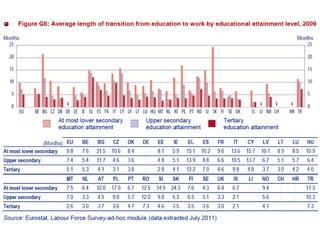
• An apparent failure (in half a century)
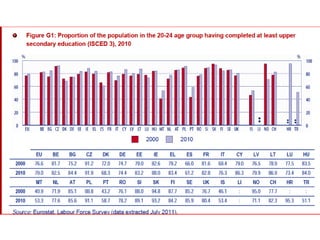
  – Universalization of secondary education,
  – With wide gaps of academic failure and early
    school leaving
A GREAT TRANSFORMATION
• The Third Industrial Revolution
   – First the means of production (XVIII-XIX)
   – Then the organization of labor (XX)
   – Now information and knowledge
• The coming of Information and Knowledge and
  Learning society
   – Information needs knowledge
   – Knowledge requires learning
   – Learning is the goal of schooling
• But with some unexpected surprises
INFORMATION AND KNOWLEDGE
• As information becomes more abundant,
  widespread, accessible, cheap
• Knowledge becomes, by the same token,
  more scarce and more valuable
• And so more unequally distributed (in terms
  of value) and more socially polarized
The Matthew Effect
• A situation in which the rich get richer and the
  poor get poorer (Merton)
• The economy in the first decade of the 21st
  Century (Reich)
• The development of reading (Stanevich)
• The dynamics of skills (Heckman)
• The growing gap between the logorich and the
  logopoor, in and outside the school
Who fails and/or leaves?
• We think of vulnerabilities, and we are right,
• But there’s some surprises again
  – Class happens to be more about culture than
    about wealth or income
  – Gender is now a problem for boys more than for
    girls
  – Ethnicity does not see its effects fade away
    through generations, but reinforced
What to do?
• There is evident shortcomings, specially in
  those countries with higher AF and ESL,
  namely
  – Poor quality teaching and leadership
  – Academically biased syllabus and curricula
  – Discontinuities outside the mainstream
  – Overuse of grade repetition
What to do?
• Then we think in focused action towards more
  vulnerable groups, which is OK, but
  – Major programs can become misused resources
  – Good practices may be jeopardized by exemplary
    experiences
  – Resource mobilization should not be an state of
    emergency
• We have to avoid missing the forest behind
  the trees
The very logic of schooling
• As we enlarge schooling, we stress individuals:
  – We ask for more
  – School is Procustean (one size fits all)
  – Education is content, so it has to be common
  – But school is a container, so it has to be diverse
• If we enlarge schooling, we should also
  enhance it. Otherwise…
• But more things happen beyond the school..
An economy of attention
• When information becomes overwhelming
  (overabundance, infoxication, information
  anxiety…)
• What information consumes becomes scarce,
  and this is attention
• An economy of attention (Simon, Goldhaber)
• A crisis of broadcast institutions (5P)
• School is no longer the window
• Curriculum is questioned and negotiated
Diffuse learning
• Since long: the city, the media
• But now: internet, SNS, NSM…
• It is more learning than education
• Same as invisible, ubiquitous, parallel, L3…
• Diffuse in time (permanent), space
  (ubiquitous), purposefulness (unintentional),
  tools (byproduct)…
• Diffuse vs. specific. i.e. instead of school
  monopoly of teaching and learning
Schooling in question
• At the primary level: home(de)schooling, the
  fastest growing type of schooling in advanced
  countries
  – No longer sects only
• At the secondary level: failure, dropping-out,
  resistance, rejection, disengagement
  – No longer popular classes only
• At the tertiary level: on line, blended, Open
  Courses, Open Resources, Digital Badges
  – No longer in the margins
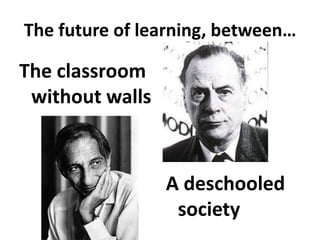
The future of learning, between…

The classroom
 without walls


                 A deschooled
                  society
THANKS FOR YOUR ATTENTION
      AND COMMENTS!
   Disengaged from education:
 causes and reasons for academic failure and
               school dropout
                     Mariano Fernández Enguita
                        Universidad Complutense
                           http://enguita.info

            International Conference on Early School Leaving
                  PER UNA SCUOLA CHE PROMUOVA DAVVERO
                           Fondazione per la Scuola
                       Casa del Teatro Ragazzi e Giovani
                         Torino, September 28, 2012

Turín (English).pptx

  • 1.
    Disengaged from education: causesand reasons for academic failure and school dropout Mariano Fernández Enguita Universidad Complutense http://enguita.info International Conference on Early School Leaving PER UNA SCUOLA CHE PROMUOVA DAVVERO Fondazione per la Scuola Casa del Teatro Ragazzi e Giovani Torino, September 28, 2012
  • 2.
    Where are wenow? • After a big success (in two centuries): – Universalization of primary education, i.e. reading, writing, basic calculation… – …until then an esoteric knowledge, monopolized by a few priests, scribes, etc. • An apparent failure (in half a century) – Universalization of secondary education, – With wide gaps of academic failure and early school leaving
  • 13.
    A GREAT TRANSFORMATION •The Third Industrial Revolution – First the means of production (XVIII-XIX) – Then the organization of labor (XX) – Now information and knowledge • The coming of Information and Knowledge and Learning society – Information needs knowledge – Knowledge requires learning – Learning is the goal of schooling • But with some unexpected surprises
  • 14.
    INFORMATION AND KNOWLEDGE •As information becomes more abundant, widespread, accessible, cheap • Knowledge becomes, by the same token, more scarce and more valuable • And so more unequally distributed (in terms of value) and more socially polarized
  • 15.
    The Matthew Effect •A situation in which the rich get richer and the poor get poorer (Merton) • The economy in the first decade of the 21st Century (Reich) • The development of reading (Stanevich) • The dynamics of skills (Heckman) • The growing gap between the logorich and the logopoor, in and outside the school
  • 16.
    Who fails and/orleaves? • We think of vulnerabilities, and we are right, • But there’s some surprises again – Class happens to be more about culture than about wealth or income – Gender is now a problem for boys more than for girls – Ethnicity does not see its effects fade away through generations, but reinforced
  • 17.
    What to do? •There is evident shortcomings, specially in those countries with higher AF and ESL, namely – Poor quality teaching and leadership – Academically biased syllabus and curricula – Discontinuities outside the mainstream – Overuse of grade repetition
  • 18.
    What to do? •Then we think in focused action towards more vulnerable groups, which is OK, but – Major programs can become misused resources – Good practices may be jeopardized by exemplary experiences – Resource mobilization should not be an state of emergency • We have to avoid missing the forest behind the trees
  • 19.
    The very logicof schooling • As we enlarge schooling, we stress individuals: – We ask for more – School is Procustean (one size fits all) – Education is content, so it has to be common – But school is a container, so it has to be diverse • If we enlarge schooling, we should also enhance it. Otherwise… • But more things happen beyond the school..
  • 20.
    An economy ofattention • When information becomes overwhelming (overabundance, infoxication, information anxiety…) • What information consumes becomes scarce, and this is attention • An economy of attention (Simon, Goldhaber) • A crisis of broadcast institutions (5P) • School is no longer the window • Curriculum is questioned and negotiated
  • 21.
    Diffuse learning • Sincelong: the city, the media • But now: internet, SNS, NSM… • It is more learning than education • Same as invisible, ubiquitous, parallel, L3… • Diffuse in time (permanent), space (ubiquitous), purposefulness (unintentional), tools (byproduct)… • Diffuse vs. specific. i.e. instead of school monopoly of teaching and learning
  • 22.
    Schooling in question •At the primary level: home(de)schooling, the fastest growing type of schooling in advanced countries – No longer sects only • At the secondary level: failure, dropping-out, resistance, rejection, disengagement – No longer popular classes only • At the tertiary level: on line, blended, Open Courses, Open Resources, Digital Badges – No longer in the margins
  • 23.
    The future oflearning, between… The classroom without walls A deschooled society
  • 24.
    THANKS FOR YOURATTENTION AND COMMENTS! Disengaged from education: causes and reasons for academic failure and school dropout Mariano Fernández Enguita Universidad Complutense http://enguita.info International Conference on Early School Leaving PER UNA SCUOLA CHE PROMUOVA DAVVERO Fondazione per la Scuola Casa del Teatro Ragazzi e Giovani Torino, September 28, 2012