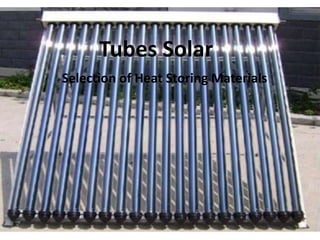
Tubes Solar
Selection of Heat Storing Materials
Over View
• Tube solar is the conversions of sunlight into
renewable energy for water heating , using a
solar thermal collector solar water heating
(SWH) comprise technologies that are used
world wide increasingly
Solar water heating system
(SWH)
• SWH systems were discovered in 19th century
• Greece, Cyprus and Spain the leaders in the use of
SWH systems, with 30-40% of homes using them
• Here, in Jordan the cost of SWH system is about 900
Heat storing materials take heat from
Sun light and pass it to water
Selection of materials
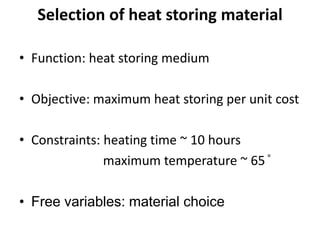
Selection of heat storing material
• Function: heat storing medium
• Objective: maximum heat storing per unit cost
• Constraints: heating time ~ 10 hours
maximum temperature ~ 65 ̊
• Free variables: material choice
Material index calculation
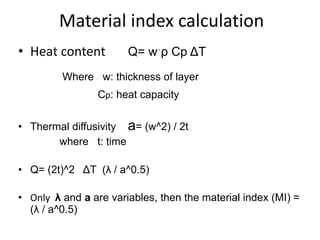
• Heat content Ԛ= wˑρ Cp ΔT
Where w: thickness of layer
Cp: heat capacity
• Thermal diffusivity a= (w^2) / 2t
where t: time
• Ԛ= (2t)^2 ΔT (λ / a^0.5)
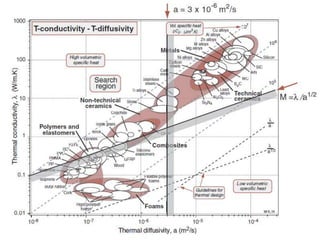
• Only λ and a are variables, then the material index (MI) =
(λ / a^0.5)
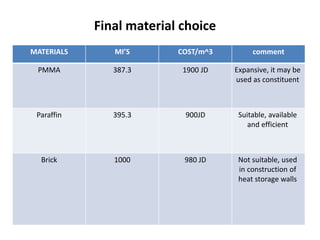
commentCOST/m^3MI’SMATERIALS
Expansive, it may be
used as constituent
1900 JD387.3PMMA
Suitable, available
and efficient
900JD395.3Paraffin
Not suitable, used
in construction of
heat storage walls
980 JD1000Brick
Final material choice
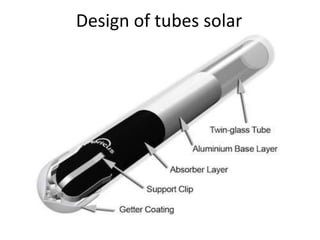
Design of tubes solar
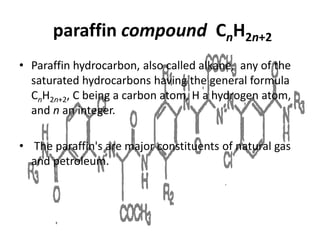
paraffin compound CnH2n+2
• Paraffin hydrocarbon, also called alkane, any of the
saturated hydrocarbons having the general formula
CnH2n+2, C being a carbon atom, H a hydrogen atom,
and n an integer.
• The paraffin's are major constituents of natural gas
and petroleum.
Heat storage material
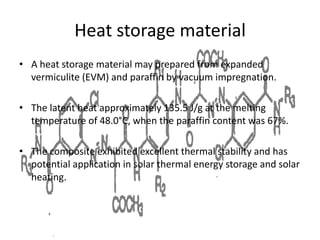
• A heat storage material may prepared from expanded
vermiculite (EVM) and paraffin by vacuum impregnation.
• The latent heat approximately 135.5 J/g at the melting
temperature of 48.0°C, when the paraffin content was 67%.
• The composite exhibited excellent thermal stability and has
potential application in solar thermal energy storage and solar
heating.
References
1- Material selection in mechanical design, Michael F.
Ashpy.
2- Review on thermal energy storage with phase
change materials and applications, Atul Sharma.
3- Internet network, Wikipedia and other sources
MATERIALS ENGINEERING DEPARTEMENT
MATERIALS SELECTION AND DESIGN
Name of Students:
Mohammad A. Al- Ajaramah
Suhaib A. Ibrahim Mohammad
Instructor:
Dr. Sami Massadah

Tubes solar (heat storing material)

  • 1.
    Tubes Solar Selection ofHeat Storing Materials
  • 2.
    Over View • Tubesolar is the conversions of sunlight into renewable energy for water heating , using a solar thermal collector solar water heating (SWH) comprise technologies that are used world wide increasingly
  • 4.
    Solar water heatingsystem (SWH) • SWH systems were discovered in 19th century • Greece, Cyprus and Spain the leaders in the use of SWH systems, with 30-40% of homes using them • Here, in Jordan the cost of SWH system is about 900
  • 5.
    Heat storing materialstake heat from Sun light and pass it to water
  • 6.
  • 7.
    Selection of heatstoring material • Function: heat storing medium • Objective: maximum heat storing per unit cost • Constraints: heating time ~ 10 hours maximum temperature ~ 65 ̊ • Free variables: material choice
  • 8.
    Material index calculation •Heat content Ԛ= wˑρ Cp ΔT Where w: thickness of layer Cp: heat capacity • Thermal diffusivity a= (w^2) / 2t where t: time • Ԛ= (2t)^2 ΔT (λ / a^0.5) • Only λ and a are variables, then the material index (MI) = (λ / a^0.5)
  • 10.
    commentCOST/m^3MI’SMATERIALS Expansive, it maybe used as constituent 1900 JD387.3PMMA Suitable, available and efficient 900JD395.3Paraffin Not suitable, used in construction of heat storage walls 980 JD1000Brick Final material choice
  • 11.
  • 12.
    paraffin compound CnH2n+2 •Paraffin hydrocarbon, also called alkane, any of the saturated hydrocarbons having the general formula CnH2n+2, C being a carbon atom, H a hydrogen atom, and n an integer. • The paraffin's are major constituents of natural gas and petroleum.
  • 13.
    Heat storage material •A heat storage material may prepared from expanded vermiculite (EVM) and paraffin by vacuum impregnation. • The latent heat approximately 135.5 J/g at the melting temperature of 48.0°C, when the paraffin content was 67%. • The composite exhibited excellent thermal stability and has potential application in solar thermal energy storage and solar heating.
  • 14.
    References 1- Material selectionin mechanical design, Michael F. Ashpy. 2- Review on thermal energy storage with phase change materials and applications, Atul Sharma. 3- Internet network, Wikipedia and other sources
  • 15.
    MATERIALS ENGINEERING DEPARTEMENT MATERIALSSELECTION AND DESIGN Name of Students: Mohammad A. Al- Ajaramah Suhaib A. Ibrahim Mohammad Instructor: Dr. Sami Massadah