W H A T T O K N O W B E F O R E Y O U R
TRIP TO CUBA
U . S . C I T I Z E N S C A N N O W T R A V E L T O C U B A
• Under revised regulations that took effect on
January 16, Americans are now allowed to visit
Cuba.
• Categories of travel allowed: family visits,
professional research, religious activities,
humanitarian efforts, performances, sports,
journalism and academic among others.
C U R R E N C Y A N D C R E D I T C A R D S
• Cuban currency is not traded internationally, so you cannot
buy it in advance.
• There are two currencies in use in Cuba - the Cuban
Convertible Peso (commonly used by tourists) and the Cuban
Peso (the locals currency).
• You can exchange your money at the airport as well as most
Hotels and Resorts.
P O W E R C O N V E R S I O N
• The outlets in Cuba use 2 pronged 220V outlets.
• Typical North American plugs will not fit into most Cuban
outlets.
• Make sure you purchase a plug adapter and check the power
outage before plugging in appliances such as hair dryers and
laptops.
I N T E R N E T R E G U L A T I O N S
• Internet is highly regulated in Cuba and can very expensive.
• You are required to have a special permit to access the
internet and your usage will be closely monitored.
• Do not expect to be able to get work done that requires the
internet while you are traveling to Cuba.
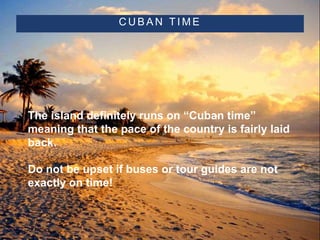
C U B A N T I M E
• The island definitely runs on “Cuban time”
meaning that the pace of the country is fairly laid
back.
• Do not be upset if buses or tour guides are not
exactly on time!
D R I N K I N G W A T E R
• While Cuba is a clean and hygienic country, the
tap water is not recommended.
• To avoid an running your vacation with an upset
stomach, you should opt for bottled water.
D E P A R T U R E T A X
• Upon leaving Cuba you will be required to pay a
$25 tourist departure tax.
• The airports only accept cash, so make sure you
have the cash on hand.
• You are allowed to bring back up to $400 in goods
for personal use but no more than $100 in
combined alcohol and tobacco products.

Travel Tips: Cuba

  • 1.
    W H AT T O K N O W B E F O R E Y O U R TRIP TO CUBA
  • 2.
    U . S. C I T I Z E N S C A N N O W T R A V E L T O C U B A • Under revised regulations that took effect on January 16, Americans are now allowed to visit Cuba. • Categories of travel allowed: family visits, professional research, religious activities, humanitarian efforts, performances, sports, journalism and academic among others.
  • 3.
    C U RR E N C Y A N D C R E D I T C A R D S • Cuban currency is not traded internationally, so you cannot buy it in advance. • There are two currencies in use in Cuba - the Cuban Convertible Peso (commonly used by tourists) and the Cuban Peso (the locals currency). • You can exchange your money at the airport as well as most Hotels and Resorts.
  • 4.
    P O WE R C O N V E R S I O N • The outlets in Cuba use 2 pronged 220V outlets. • Typical North American plugs will not fit into most Cuban outlets. • Make sure you purchase a plug adapter and check the power outage before plugging in appliances such as hair dryers and laptops.
  • 5.
    I N TE R N E T R E G U L A T I O N S • Internet is highly regulated in Cuba and can very expensive. • You are required to have a special permit to access the internet and your usage will be closely monitored. • Do not expect to be able to get work done that requires the internet while you are traveling to Cuba.
  • 6.
    C U BA N T I M E • The island definitely runs on “Cuban time” meaning that the pace of the country is fairly laid back. • Do not be upset if buses or tour guides are not exactly on time!
  • 7.
    D R IN K I N G W A T E R • While Cuba is a clean and hygienic country, the tap water is not recommended. • To avoid an running your vacation with an upset stomach, you should opt for bottled water.
  • 8.
    D E PA R T U R E T A X • Upon leaving Cuba you will be required to pay a $25 tourist departure tax. • The airports only accept cash, so make sure you have the cash on hand. • You are allowed to bring back up to $400 in goods for personal use but no more than $100 in combined alcohol and tobacco products.