Trailer analysis
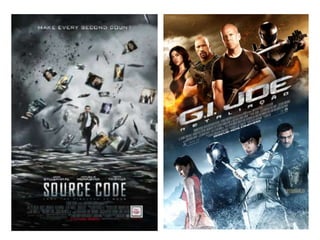
Source code and G.I Joe
Retaliation
Narrative
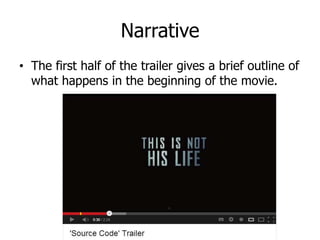
• The first half of the trailer gives a brief outline of
what happens in the beginning of the movie.
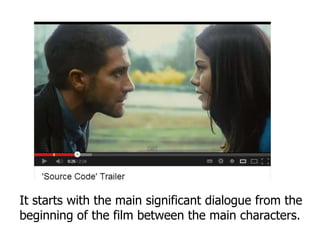
It starts with the main significant dialogue from the
beginning of the film between the main characters.
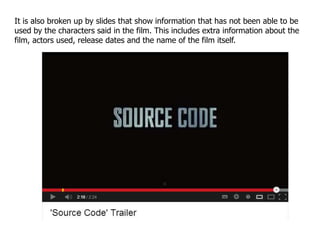
It is also broken up by slides that show information that has not been able to be
used by the characters said in the film. This includes extra information about the
film, actors used, release dates and the name of the film itself.
• No voiceovers are used. Only the scenes and lines from the movie
itself played with other scenes overlapping to create the effect of
chronological order and understanding.
• It also gives a brief description of the main plot of finding out who
the bomber is.
• It then goes into detail about the sub plots included while not giving
away the main question of who the bomber is.
• It gives audiences a taster of the beginning of the film and draws
them in to want to see more therefore making a trip to the cinema
or DVD shop to purchase this experience.
Narrative
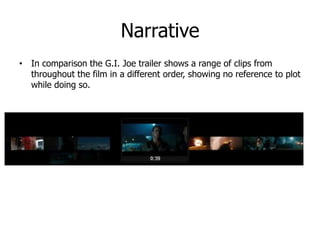
• In comparison the G.I. Joe trailer shows a range of clips from
throughout the film in a different order, showing no reference to plot
while doing so.
• There is a voice over with pauses over the first
0.40 seconds by the main character in the film
Dwayne Johnson, this adds to the experience of
the film trailer and the understanding of the film.
• It includes speech from the movie included, and
then films from a scene giving the audience the
set up for the rest of the film, although this gives
away a lot of the plot it happens early on in the
film so audiences understand what is going to
happen if they have seen the trailer.
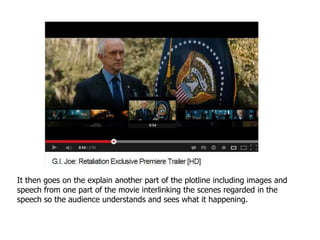
It then goes on the explain another part of the plotline including images and
speech from one part of the movie interlinking the scenes regarded in the
speech so the audience understands and sees what it happening.
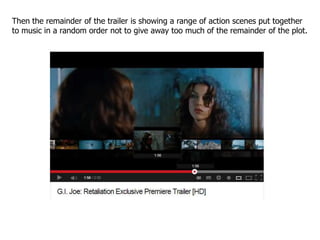
Then the remainder of the trailer is showing a range of action scenes put together
to music in a random order not to give away too much of the remainder of the plot.
It also includes a range of pauses from the video to show screens of information
such as release dates and the name of the movie.
Representation
• Gender: The main character in the film is a male, there is also a woman who plays a
main part in the film also as he spends his time with her on the train. It reflects the
lengths this man is willing to go to save this woman he has just met and all the rest
of the people on the train from someone else’s body.
• Ethnicity: It also focuses on the range of ethnic people who may get blamed for
bombings as racism and looks slightly at these views to attempt to get them noticed
and stopped.
• Age: They are both young looking people and the passengers on the train are shown
as all ages from old to young and the range of people who can be harmed by such
attacks.
• Place: it is mainly shown on a train however some clips show when he leaves the
train in one entry into the 8 minutes and another when he is back at headquarters in
the room.
• Events: the bombing itself looks at how people may be effected by such attacks and
also represents the people involved as them as innocent yet all being suspects if
something like this was to happen.
• Issues: It looks at a range of issues such as nuclear weaponry, the identification of
the culprits and finding out how such events took place and trying to stop them in
future.
Representation
• Gender: The main character in this is also a male. It includes two other
main characters of both male and female repreasenting them as equals
so there is no sexism included and all are treated equally.
• Ethnicity: There are people from different ethnicities including chinese
that are both good and bad showing an equal representation of the
country as they are shown on both sides.
• Age: All characters appear to be around the same age and all of the
same standard showing equality and creating a more realistic ideology.
• Place: They are shown in America, in the capital of Washington D.C at
the white house and also in China.
• Events: There are action scenes, emotional scenes and thrilling scenes
all giving the audience a taster of what they are in for.
• Issues addressed are that of sides that people take sides. It also deals
with the issue of nuclear weapons and why there is such high need for
protection and several levels of authorisation with the go ahead.
Generate interest
• People will wait months after they hear about the release of a
film they will wait for the trailer to be posted on the internet,
when this is done they will watch the trailer to see what is
going to happen and find out more information, see what the
actors appear to be like, the actors who are in it, whether it
looks worthwhile going to watch.
• Usually people will base their opinion on what they have seen
in the trailer meaning it has to look interesting but still be
worth going to see meaning producers of the trailer need to
make sure they get the balance of information right, not too
much but similarly not too little.
• This trailer gives away a great deal of the plot making the
audiences aware of what will be going on. Whether this is a
good thing or a bad thing is up to the personal interests of
the audience.
Generate interest
• As this is the second of the series of G.I.
Joe movies the audience will have been
eagerly anticipating it’s return meaning
they already have a fan base to please.
• This gives away less detail than the other
however shows a range of scenes in a
scrambled order to make it difficult for the
audience to grasp it all increasing
anticipation.
Reflection from research
• By looking at these film trailers I know I need to
include a range of different scenes in my trailer,
include some plotlines and also decide if I want to
use a voice over or slides.
• 5 golden rules
1. A range of clips to use
2. Selections from talking in clips relating to movie
plan
3. Good music selection
4. Chronological order
5. Not too much/too little revealed

Trailer analysis

  • 1.
    Trailer analysis Source codeand G.I Joe Retaliation
  • 3.
    Narrative • The firsthalf of the trailer gives a brief outline of what happens in the beginning of the movie.
  • 4.
    It starts withthe main significant dialogue from the beginning of the film between the main characters.
  • 5.
    It is alsobroken up by slides that show information that has not been able to be used by the characters said in the film. This includes extra information about the film, actors used, release dates and the name of the film itself.
  • 6.
    • No voiceoversare used. Only the scenes and lines from the movie itself played with other scenes overlapping to create the effect of chronological order and understanding. • It also gives a brief description of the main plot of finding out who the bomber is. • It then goes into detail about the sub plots included while not giving away the main question of who the bomber is. • It gives audiences a taster of the beginning of the film and draws them in to want to see more therefore making a trip to the cinema or DVD shop to purchase this experience.
  • 7.
    Narrative • In comparisonthe G.I. Joe trailer shows a range of clips from throughout the film in a different order, showing no reference to plot while doing so.
  • 8.
    • There isa voice over with pauses over the first 0.40 seconds by the main character in the film Dwayne Johnson, this adds to the experience of the film trailer and the understanding of the film. • It includes speech from the movie included, and then films from a scene giving the audience the set up for the rest of the film, although this gives away a lot of the plot it happens early on in the film so audiences understand what is going to happen if they have seen the trailer.
  • 9.
    It then goeson the explain another part of the plotline including images and speech from one part of the movie interlinking the scenes regarded in the speech so the audience understands and sees what it happening.
  • 10.
    Then the remainderof the trailer is showing a range of action scenes put together to music in a random order not to give away too much of the remainder of the plot.
  • 11.
    It also includesa range of pauses from the video to show screens of information such as release dates and the name of the movie.
  • 12.
    Representation • Gender: Themain character in the film is a male, there is also a woman who plays a main part in the film also as he spends his time with her on the train. It reflects the lengths this man is willing to go to save this woman he has just met and all the rest of the people on the train from someone else’s body. • Ethnicity: It also focuses on the range of ethnic people who may get blamed for bombings as racism and looks slightly at these views to attempt to get them noticed and stopped. • Age: They are both young looking people and the passengers on the train are shown as all ages from old to young and the range of people who can be harmed by such attacks. • Place: it is mainly shown on a train however some clips show when he leaves the train in one entry into the 8 minutes and another when he is back at headquarters in the room. • Events: the bombing itself looks at how people may be effected by such attacks and also represents the people involved as them as innocent yet all being suspects if something like this was to happen. • Issues: It looks at a range of issues such as nuclear weaponry, the identification of the culprits and finding out how such events took place and trying to stop them in future.
  • 13.
    Representation • Gender: Themain character in this is also a male. It includes two other main characters of both male and female repreasenting them as equals so there is no sexism included and all are treated equally. • Ethnicity: There are people from different ethnicities including chinese that are both good and bad showing an equal representation of the country as they are shown on both sides. • Age: All characters appear to be around the same age and all of the same standard showing equality and creating a more realistic ideology. • Place: They are shown in America, in the capital of Washington D.C at the white house and also in China. • Events: There are action scenes, emotional scenes and thrilling scenes all giving the audience a taster of what they are in for. • Issues addressed are that of sides that people take sides. It also deals with the issue of nuclear weapons and why there is such high need for protection and several levels of authorisation with the go ahead.
  • 14.
    Generate interest • Peoplewill wait months after they hear about the release of a film they will wait for the trailer to be posted on the internet, when this is done they will watch the trailer to see what is going to happen and find out more information, see what the actors appear to be like, the actors who are in it, whether it looks worthwhile going to watch. • Usually people will base their opinion on what they have seen in the trailer meaning it has to look interesting but still be worth going to see meaning producers of the trailer need to make sure they get the balance of information right, not too much but similarly not too little. • This trailer gives away a great deal of the plot making the audiences aware of what will be going on. Whether this is a good thing or a bad thing is up to the personal interests of the audience.
  • 15.
    Generate interest • Asthis is the second of the series of G.I. Joe movies the audience will have been eagerly anticipating it’s return meaning they already have a fan base to please. • This gives away less detail than the other however shows a range of scenes in a scrambled order to make it difficult for the audience to grasp it all increasing anticipation.
  • 16.
    Reflection from research •By looking at these film trailers I know I need to include a range of different scenes in my trailer, include some plotlines and also decide if I want to use a voice over or slides. • 5 golden rules 1. A range of clips to use 2. Selections from talking in clips relating to movie plan 3. Good music selection 4. Chronological order 5. Not too much/too little revealed