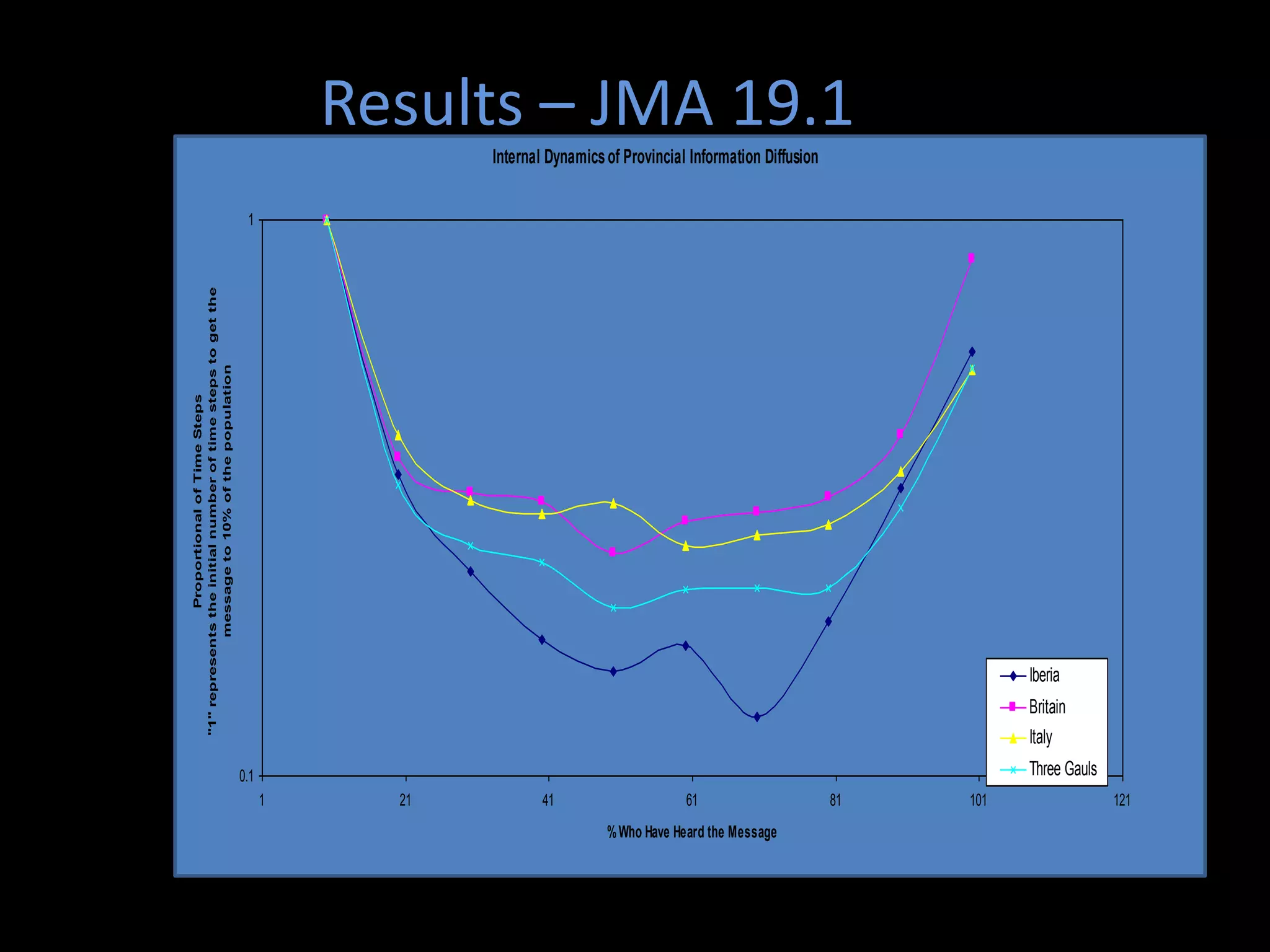
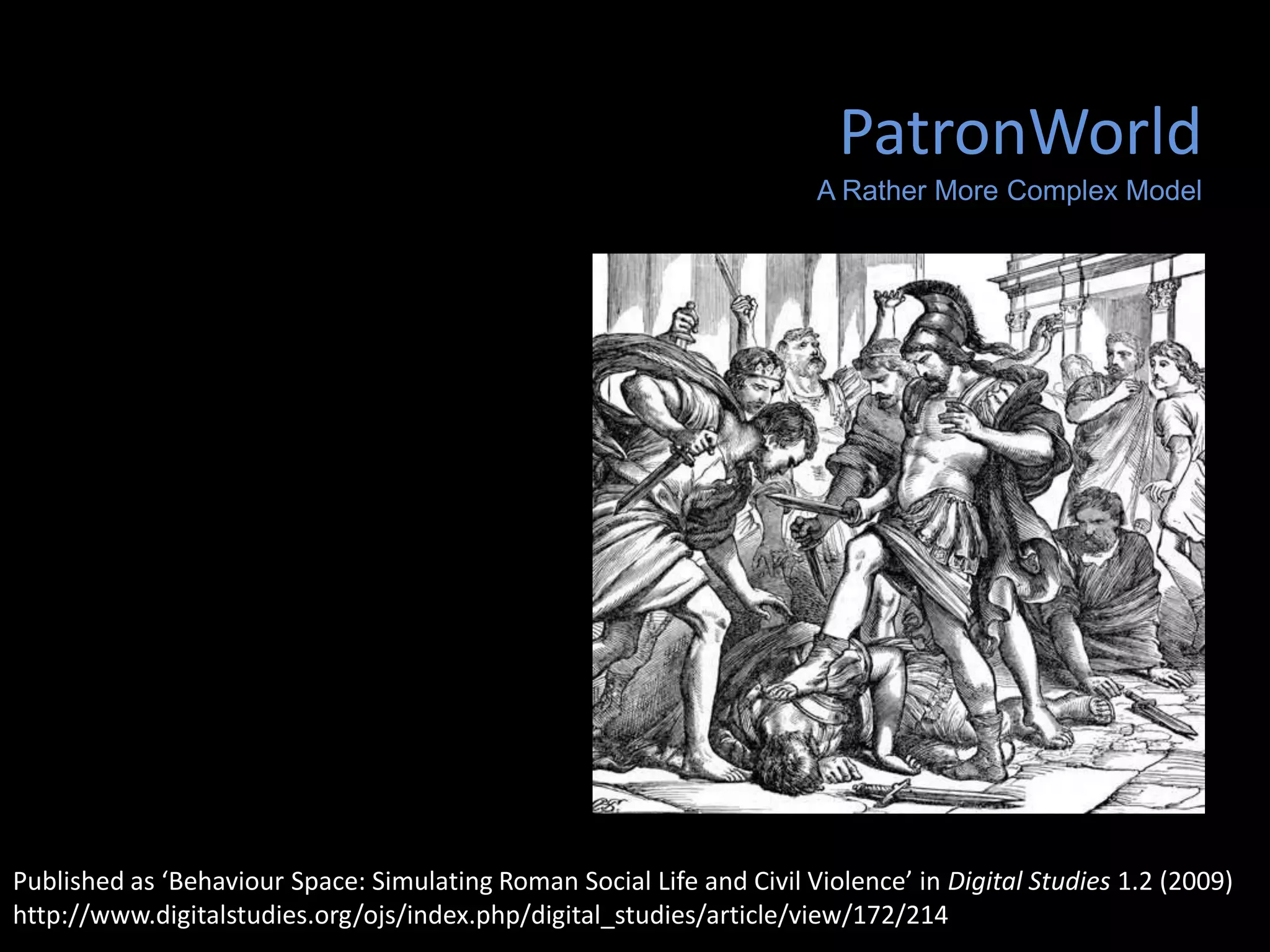
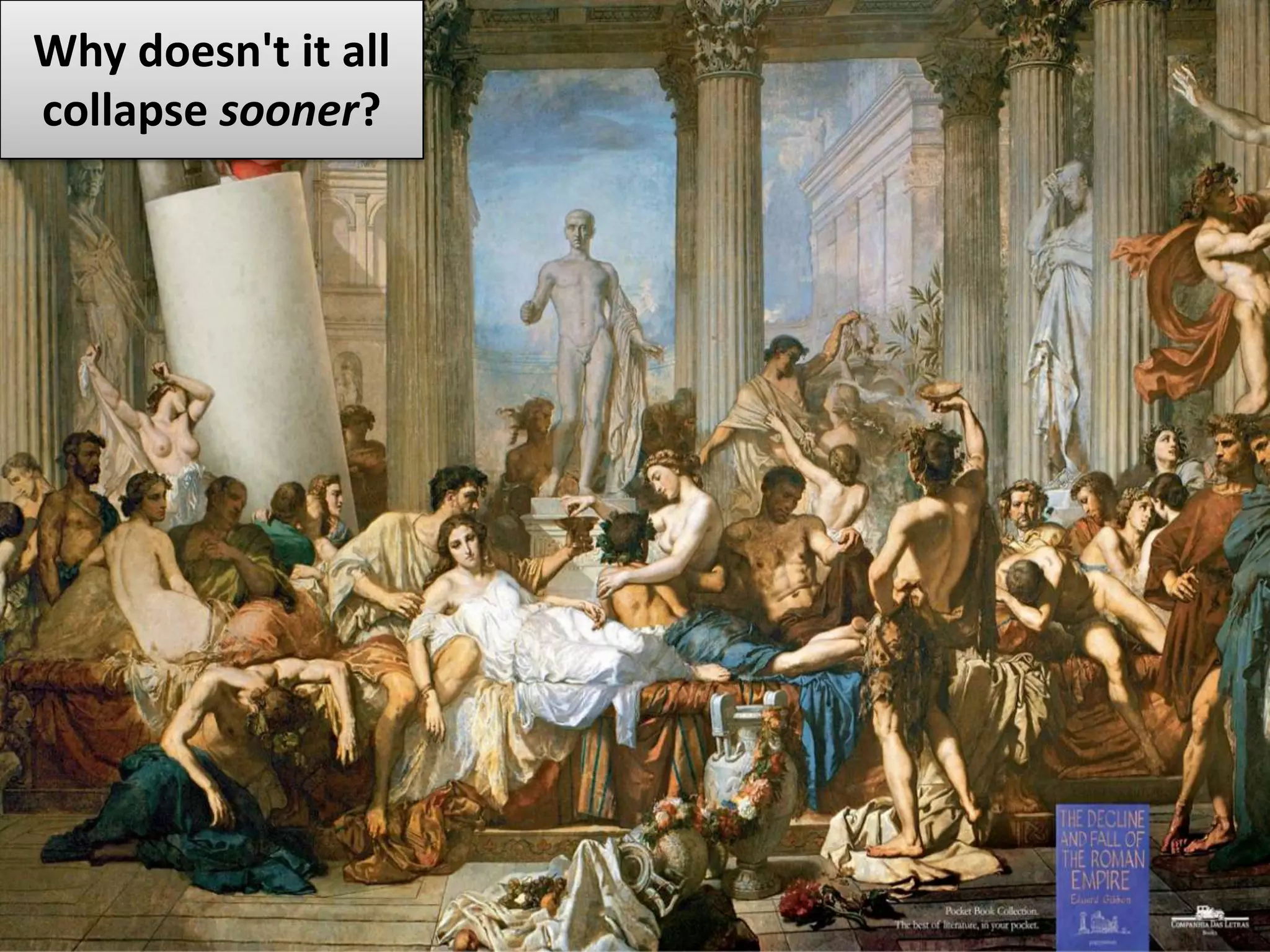
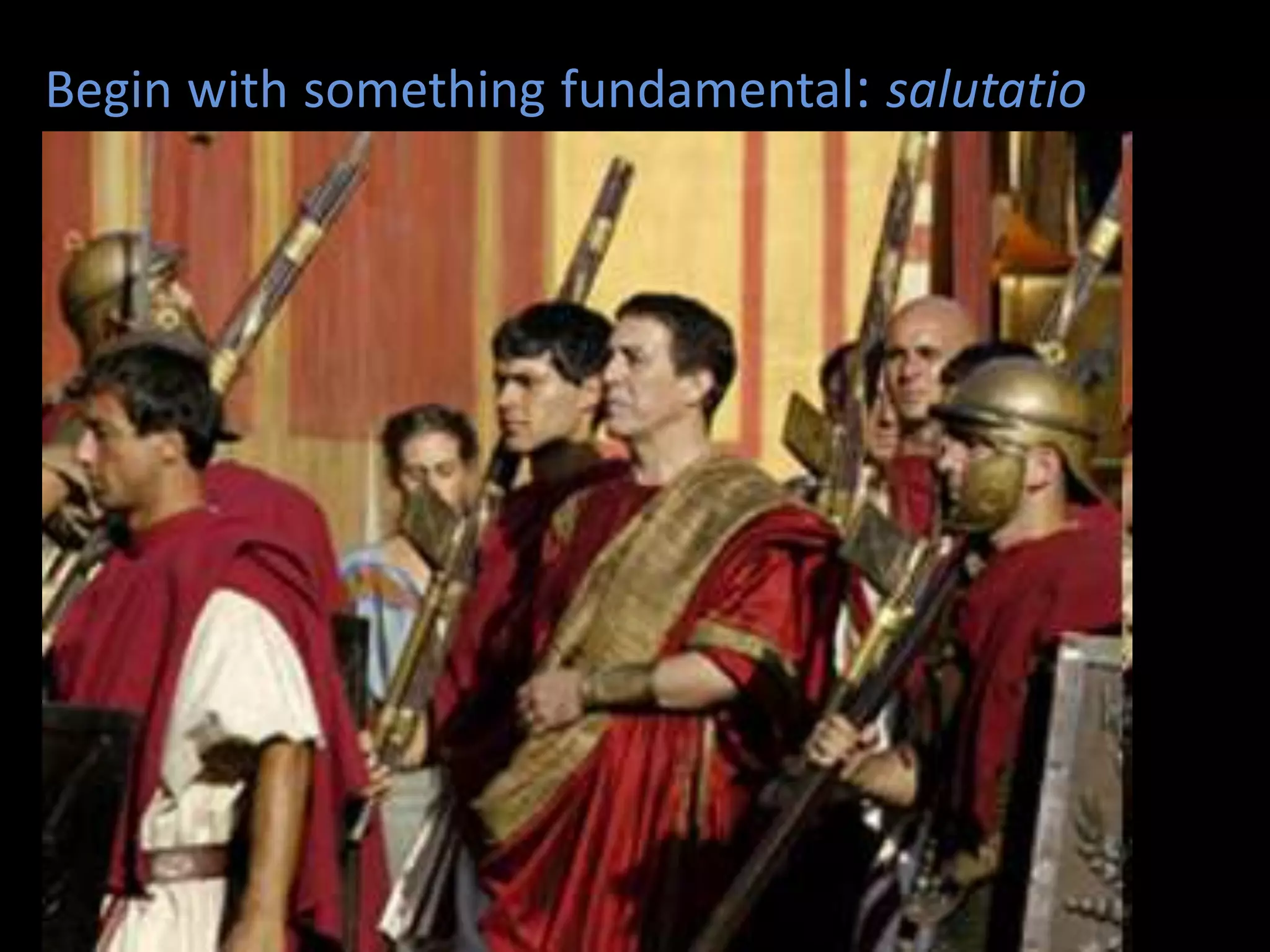
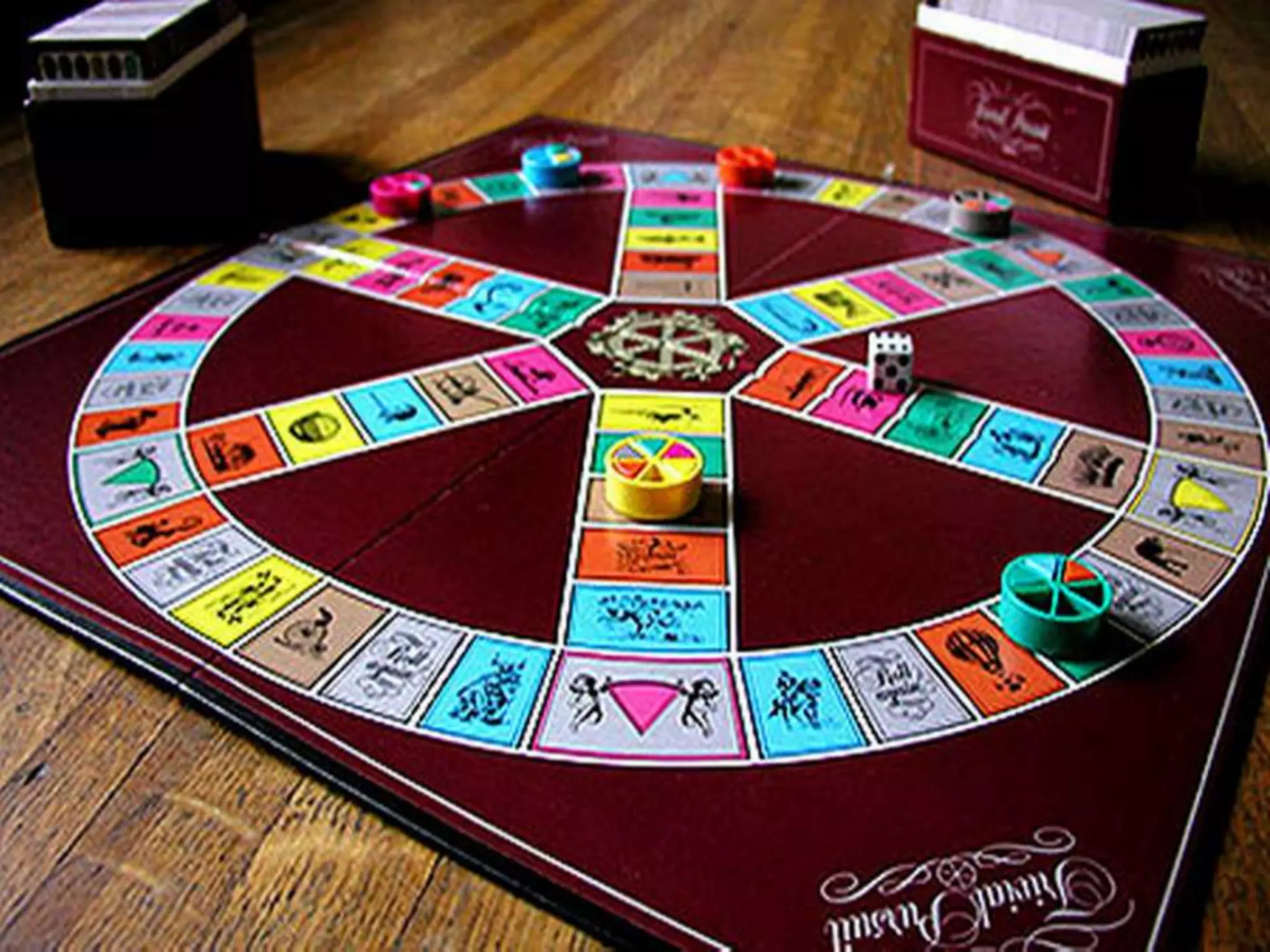
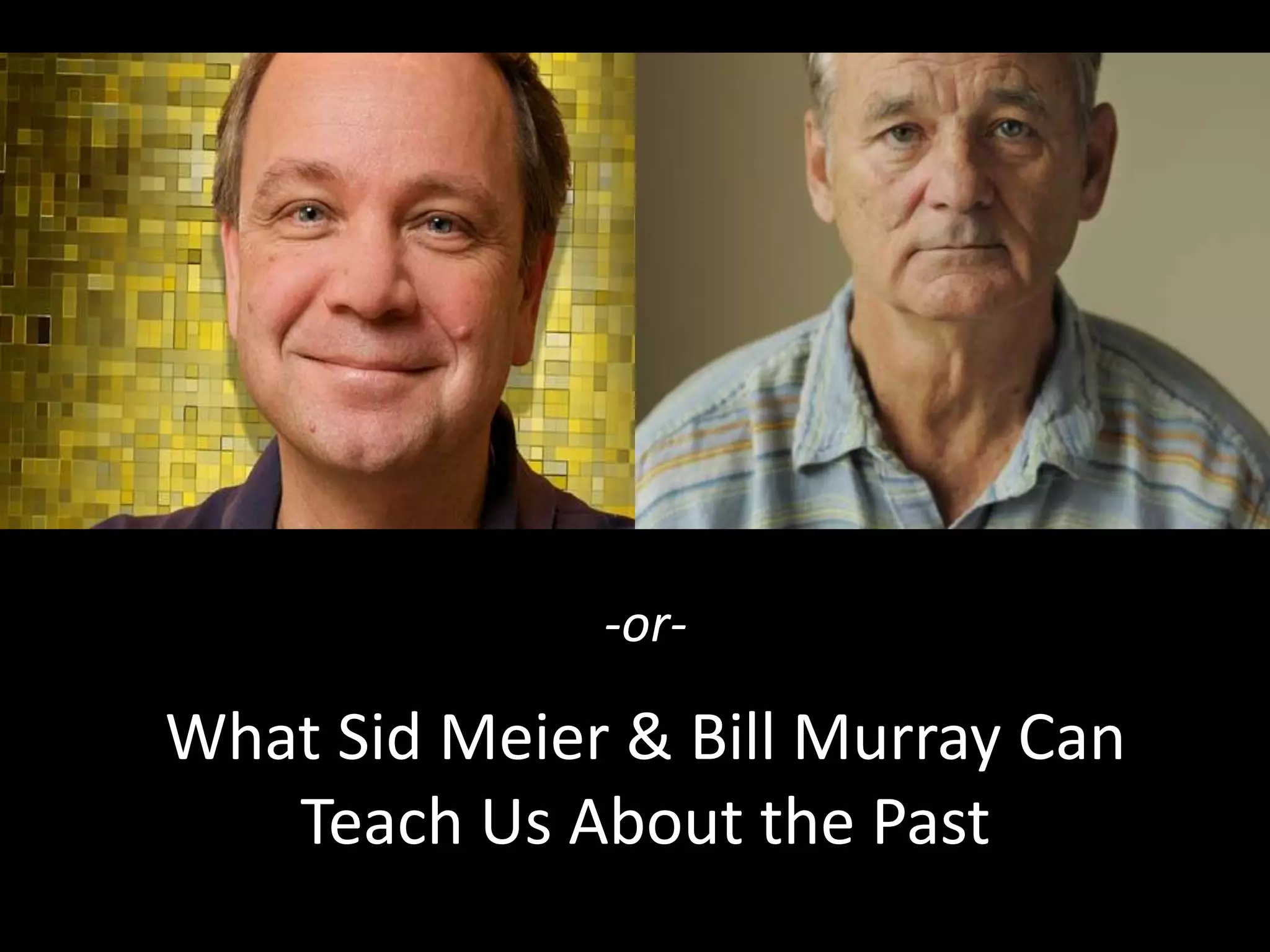
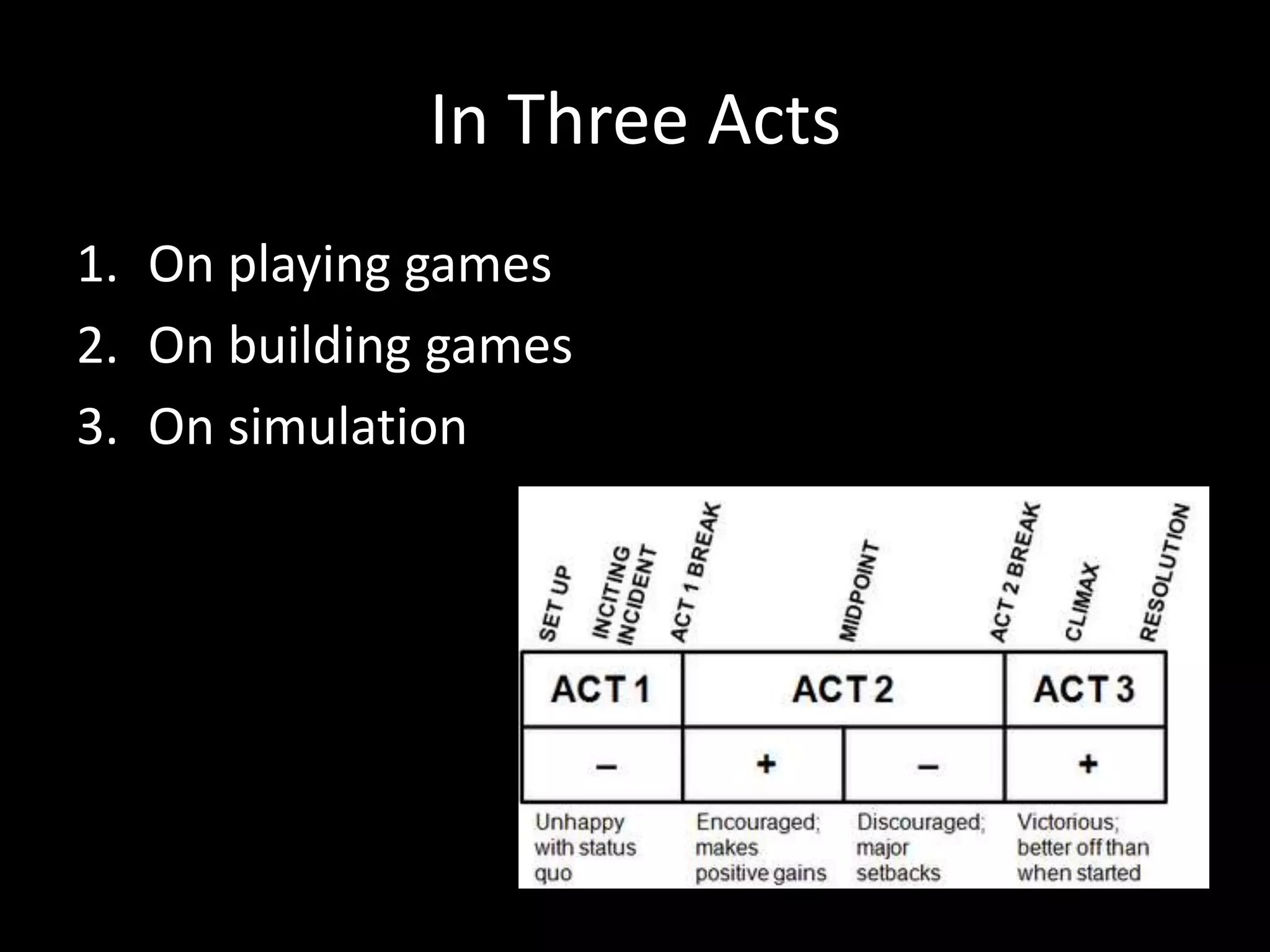
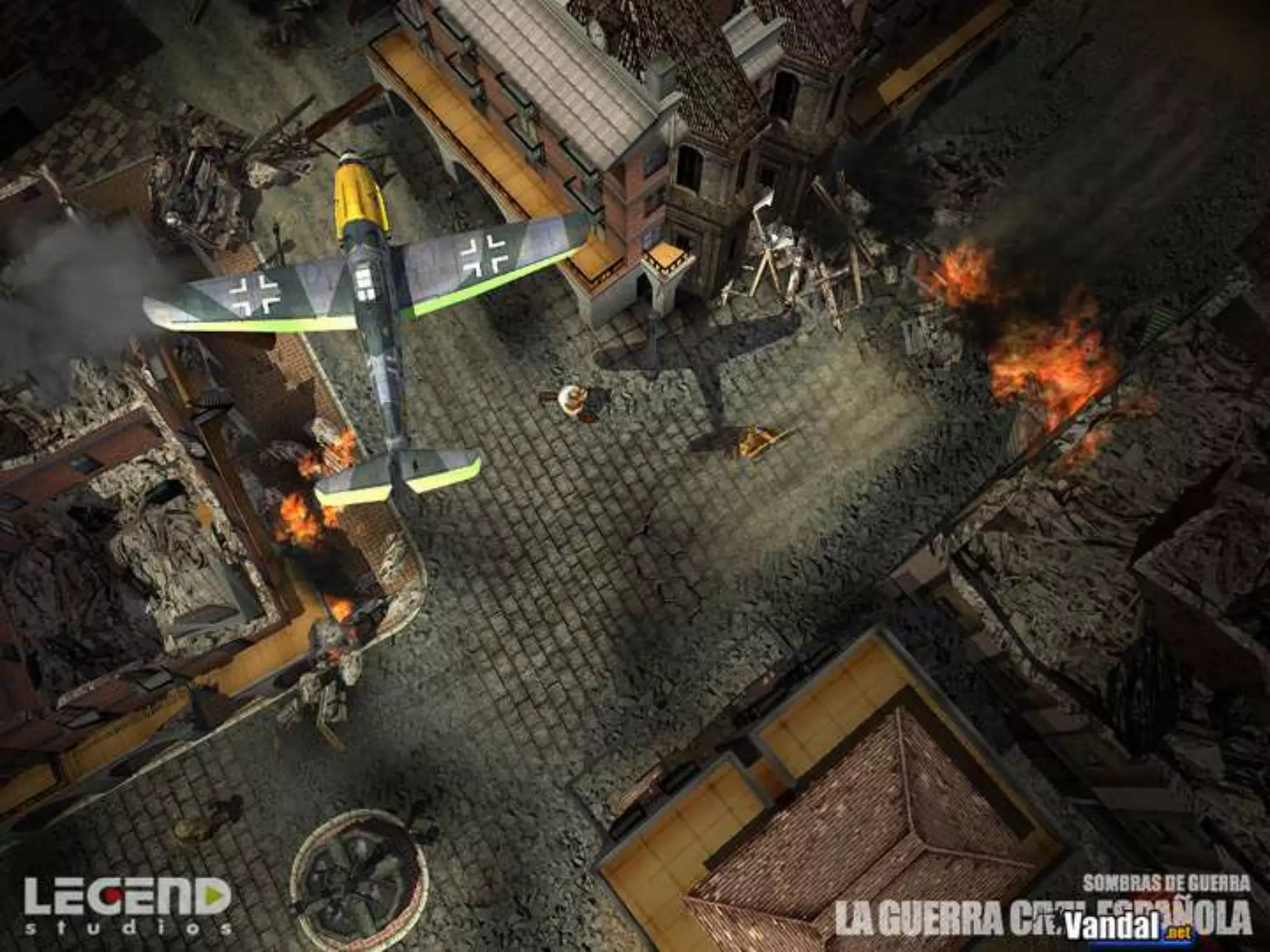
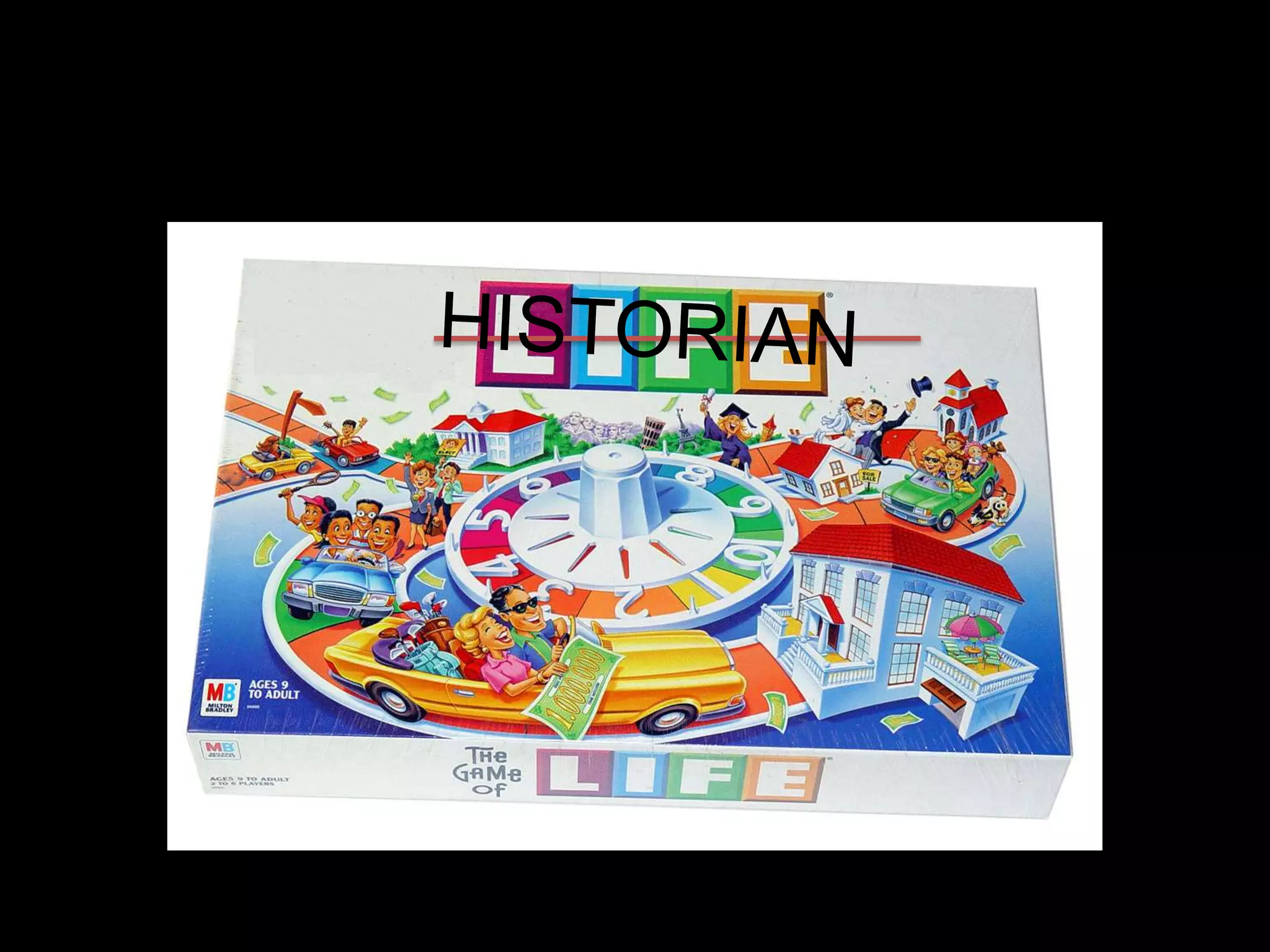
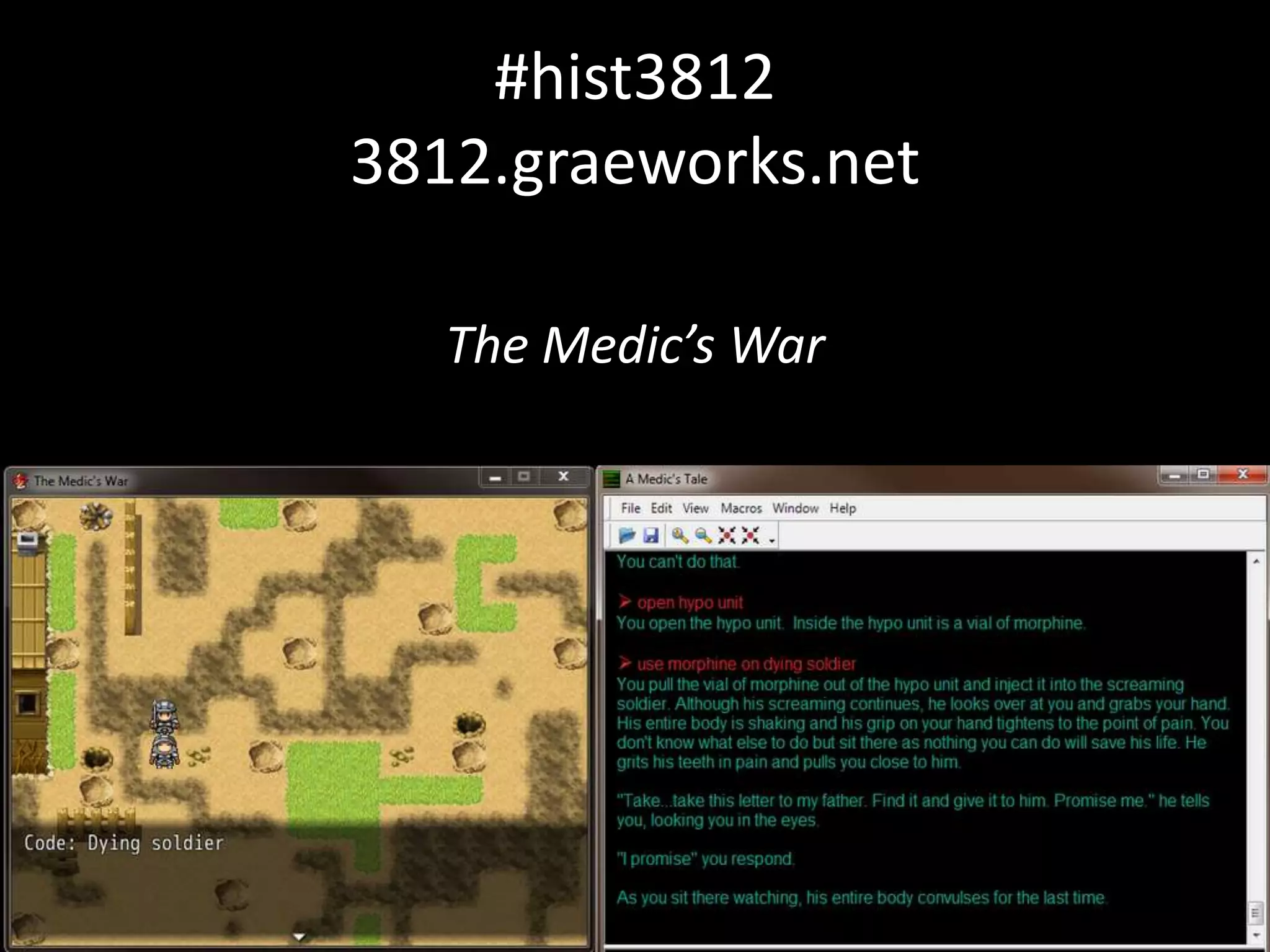
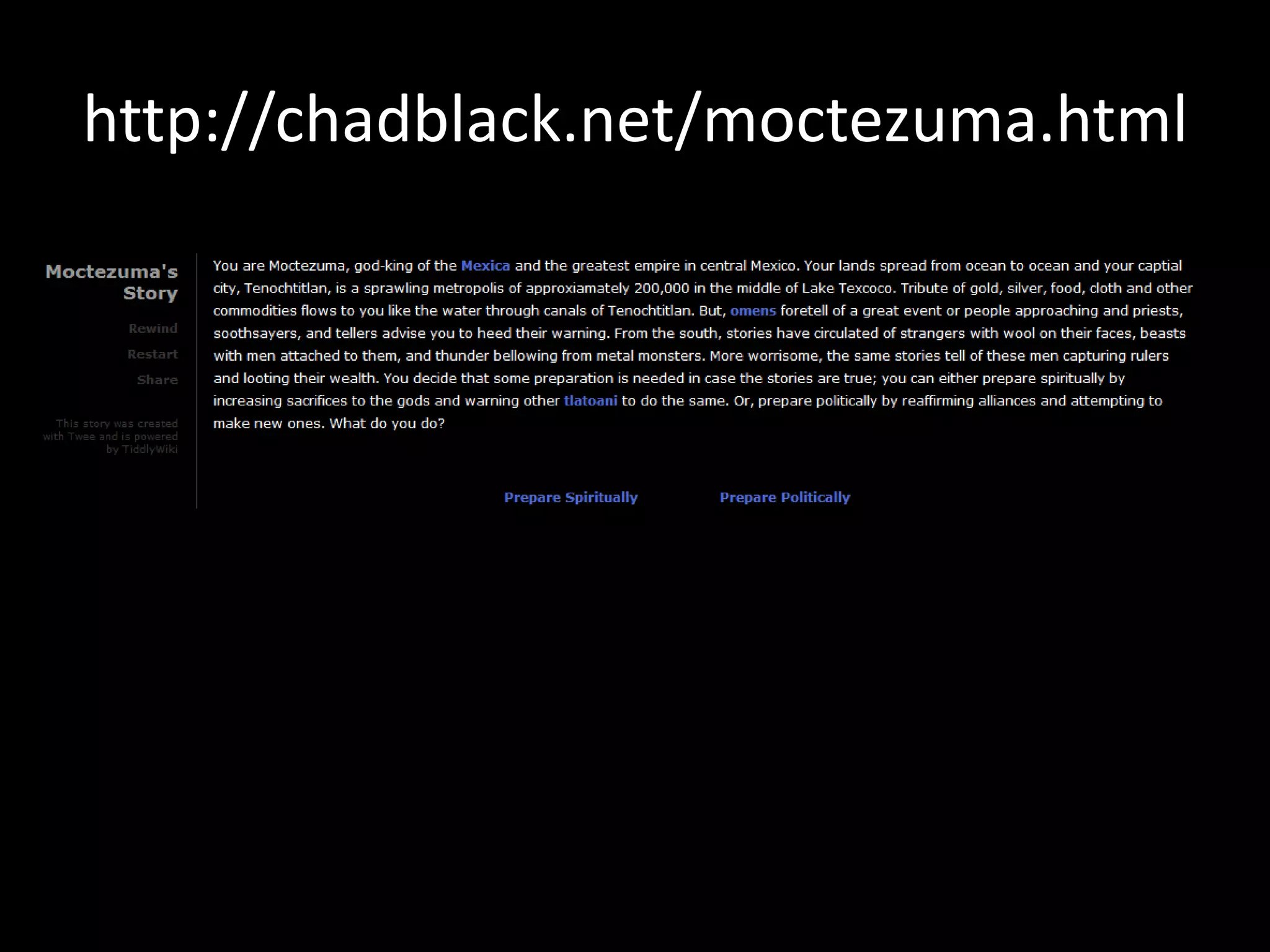
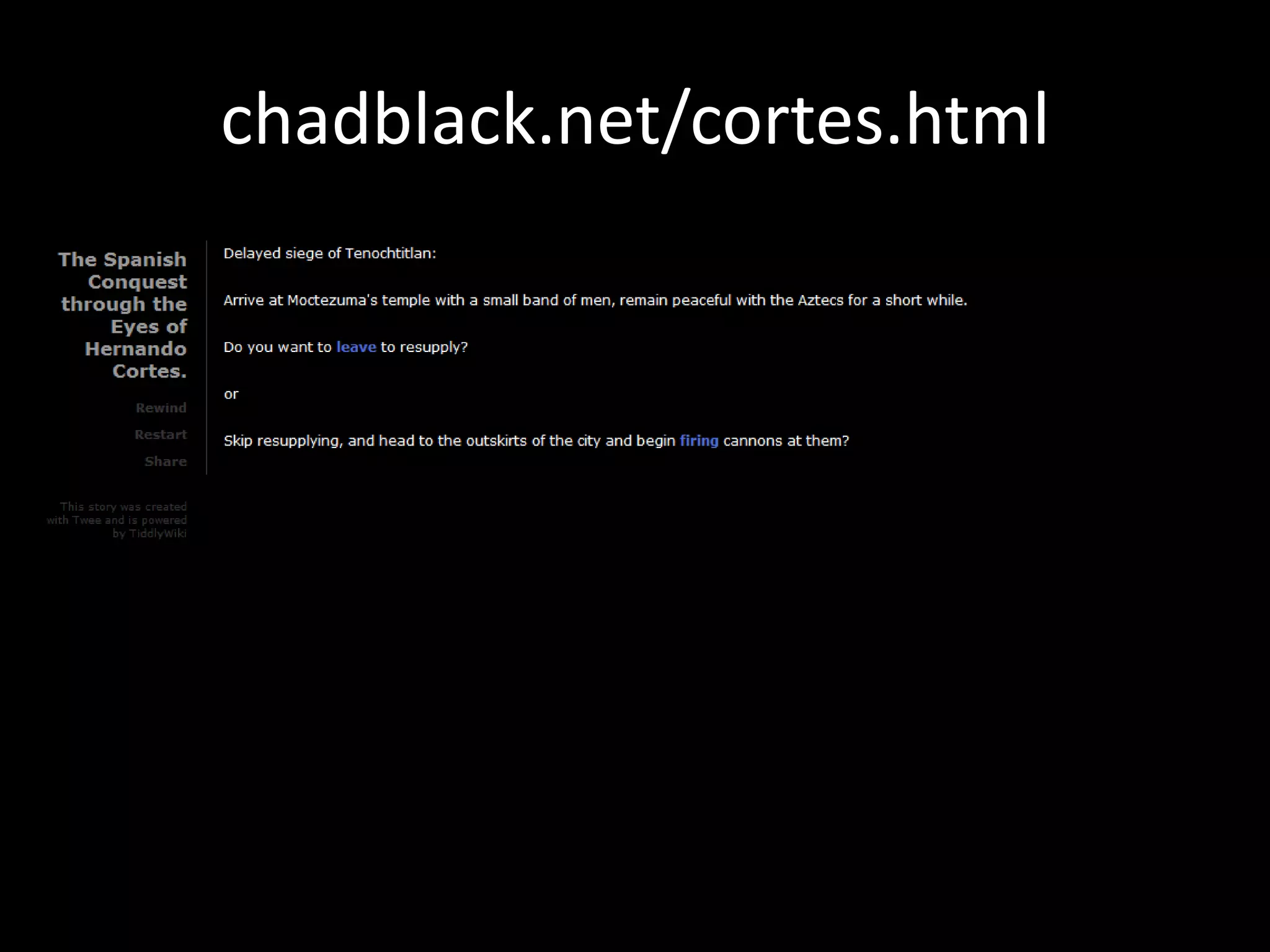
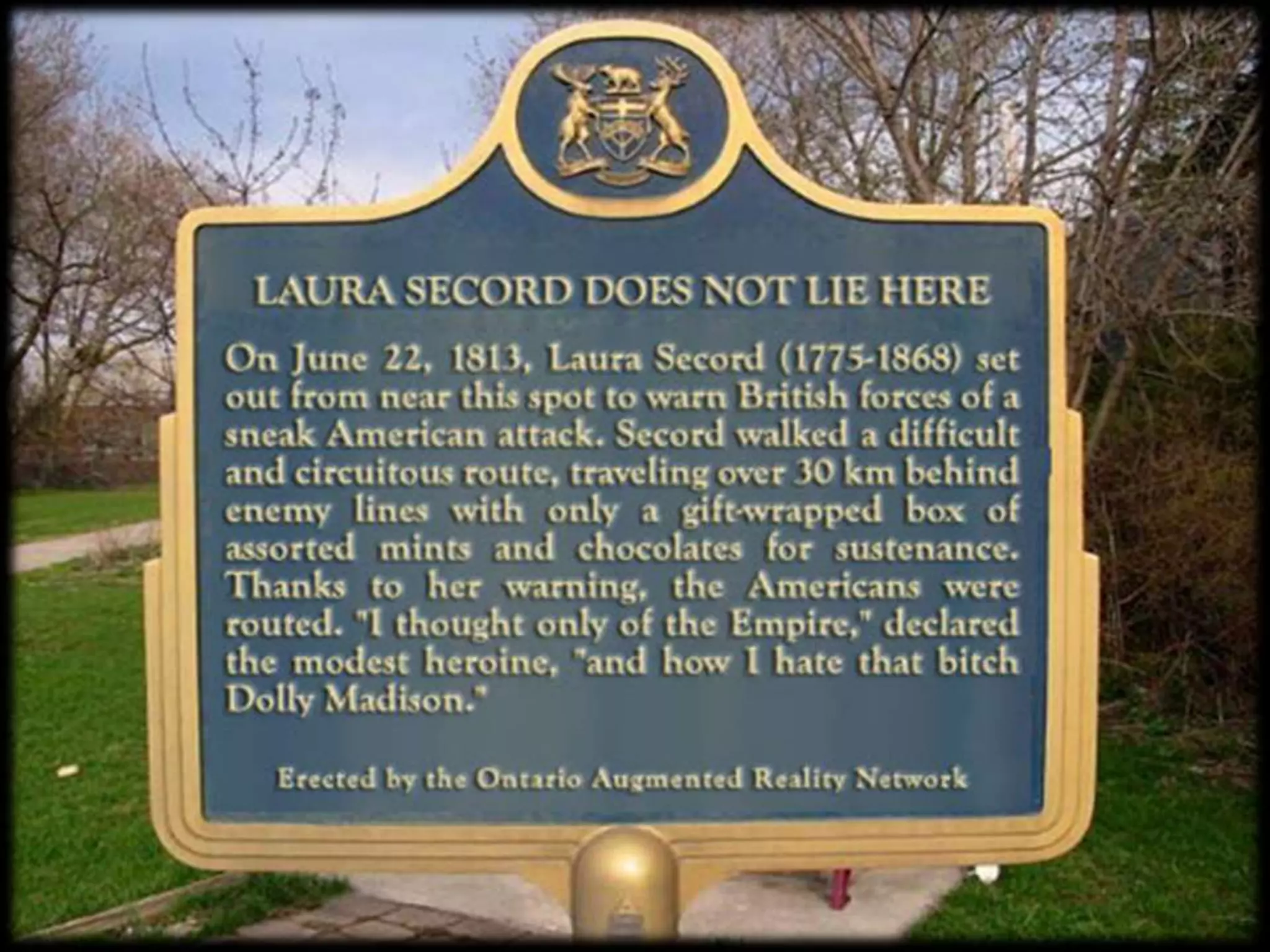
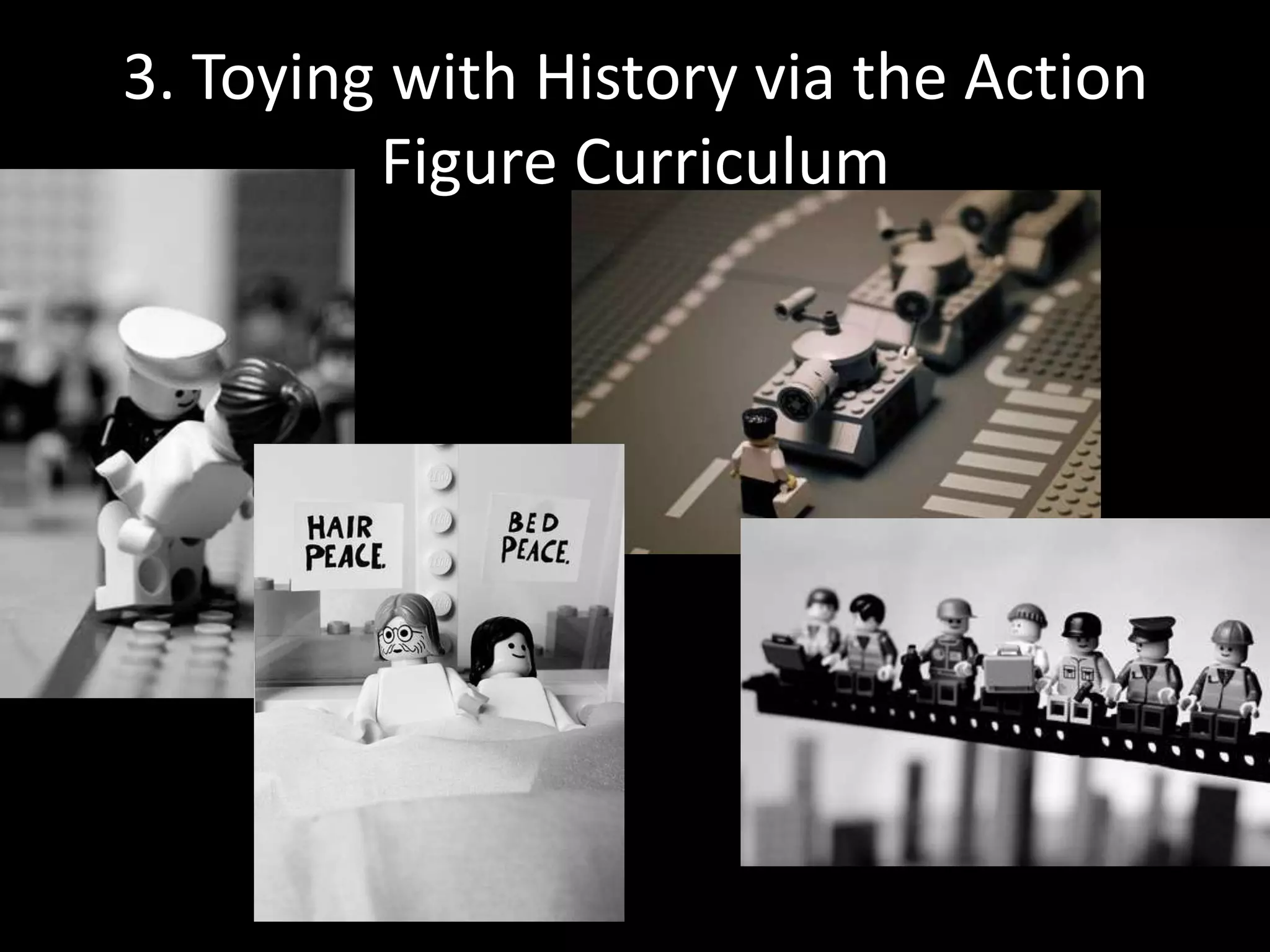
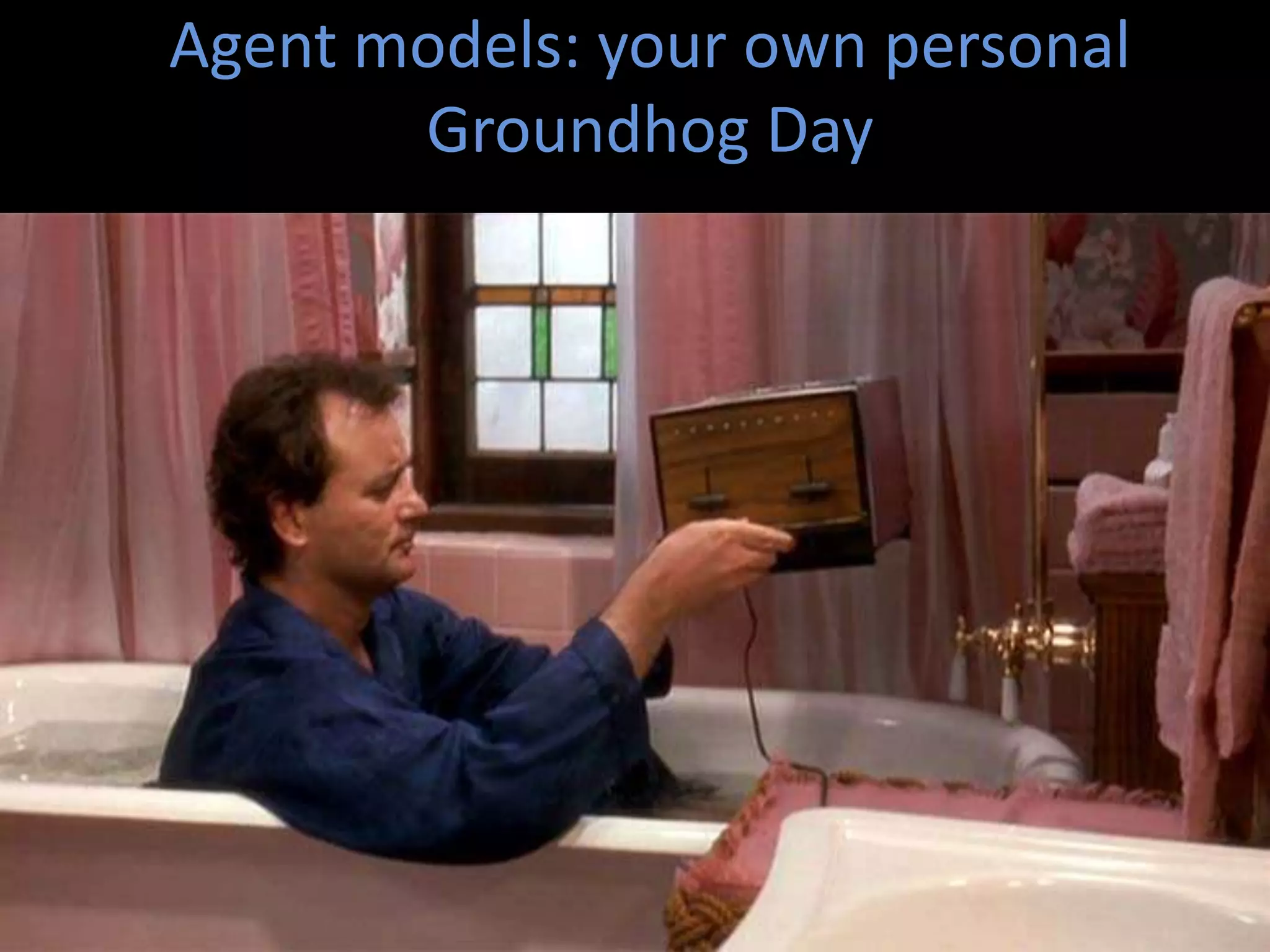
This document discusses how playing and building historical games can teach us about the past in three ways. First, playing games engages us emotionally with history and encourages exploration of contingency. Second, building games forces us to explicitly state our assumptions about how the past worked. Third, agent-based modeling allows us to simulate systems and explore unintended consequences of different scenarios, providing a "personal Groundhog Day" for history. The document argues that toying with history through games and simulations can foster deeper engagement and understanding compared to more traditional forms of learning history.

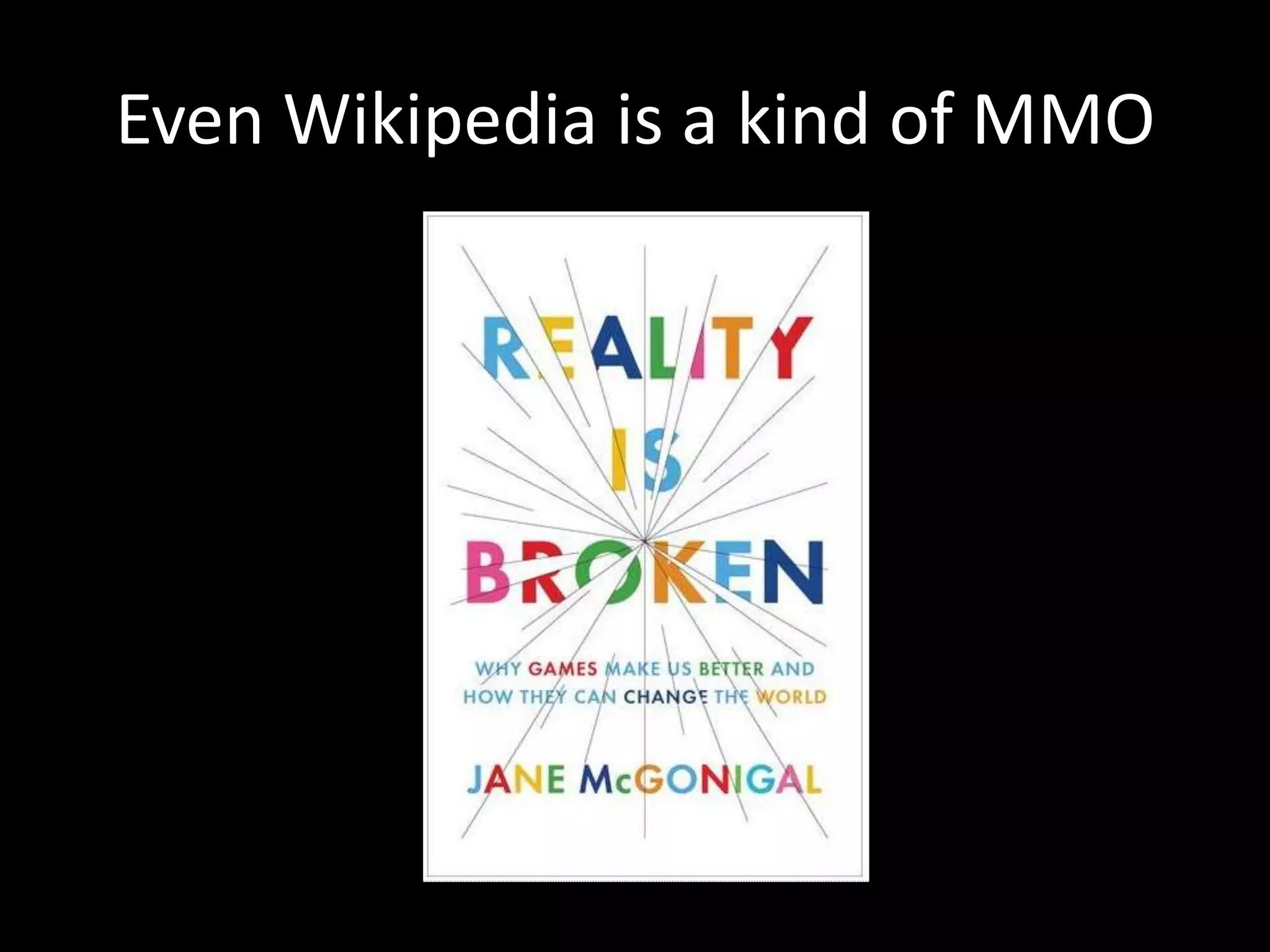
![What if people learn the wrong
history?
• Globe & Mail, Editorial, ‘Assassin’s Creed III video
game distorts history’ Nov 14 2012.
• “[…]Assassin’s Creed III is just a video game. But
given the dearth of history instruction in our
schools, it might be the only place that Canadian
young people are learning about the
Revolutionary War. At very least, they need to be
equipped to separate the Ameriphilia from the
facts.”](https://image.slidesharecdn.com/potsdam-131105110051-phpapp01/75/Toying-with-History-8-2048.jpg)


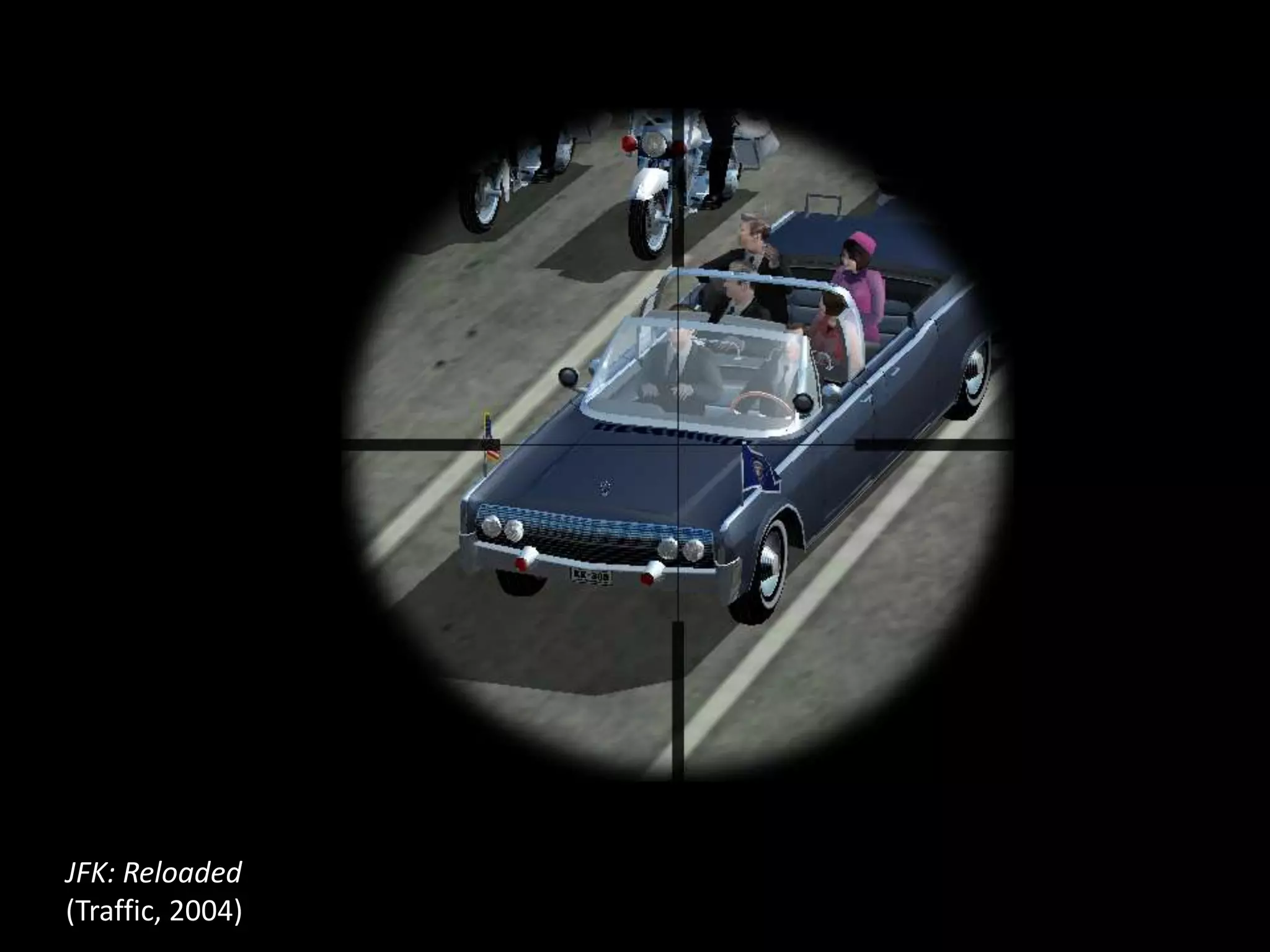
![marginalia in JFK Reloaded source
code
// —————————————————————
// Jackie cradling JFK before the money shot
// ——————————————————————
[ACTION]
<NAME>
JackieCradleJFK
<CONCERNED>
0
0](https://image.slidesharecdn.com/potsdam-131105110051-phpapp01/75/Toying-with-History-23-2048.jpg)

![The model code:
to go
ask romans
[
pass-the-word ; if somebody here hasn’t heard the idea, tell them!
move-forward ; then follow the route of the itinerary to somewhere else
]
update-plots
; plot the percentage who have now heard the idea
if everyone-heard-it = 100%
[stop]
; if everyone has heard it, stop the simulation
set ticks ticks + 1 ; update the clock.
end](https://image.slidesharecdn.com/potsdam-131105110051-phpapp01/75/Toying-with-History-36-2048.jpg)