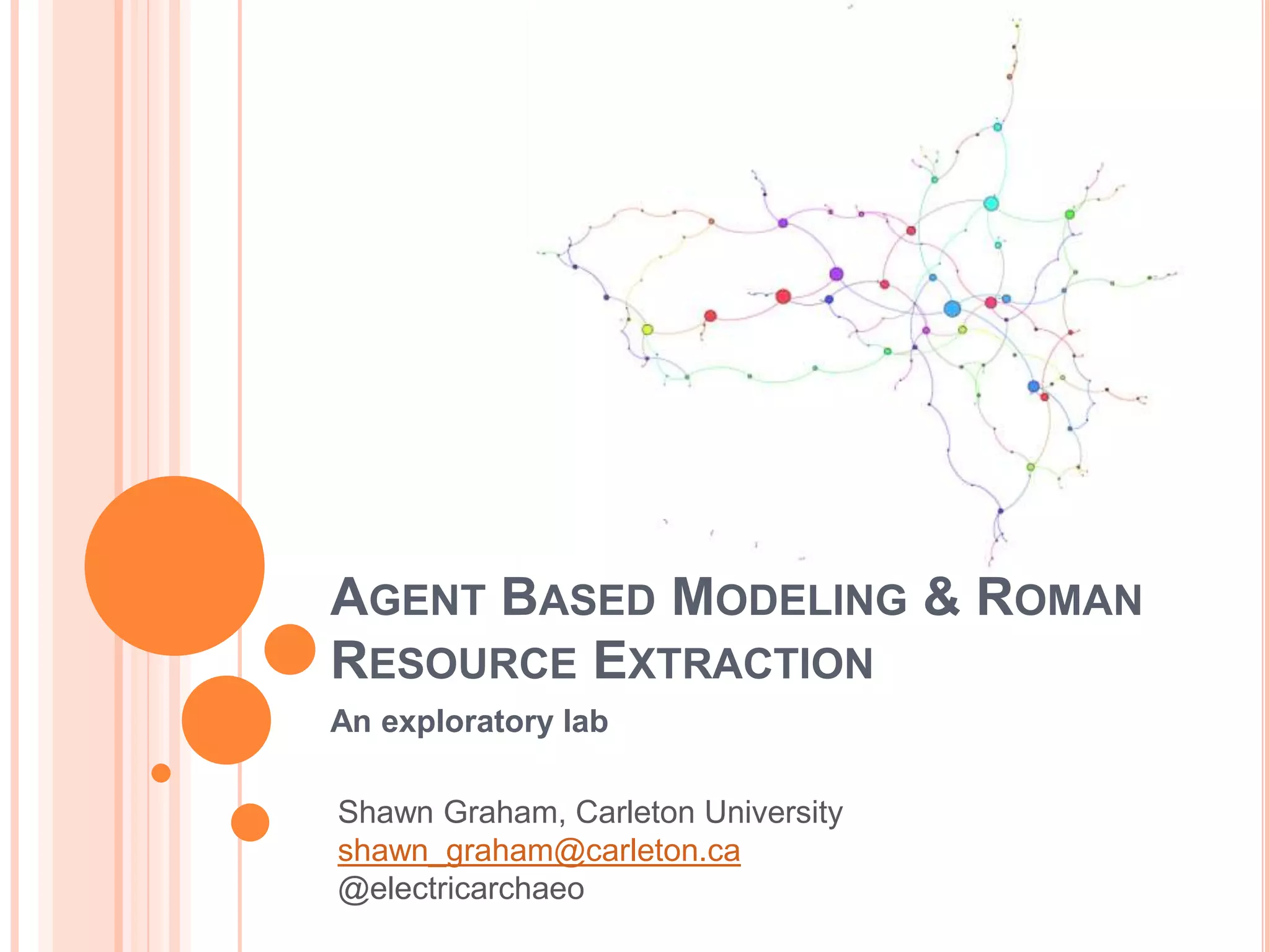
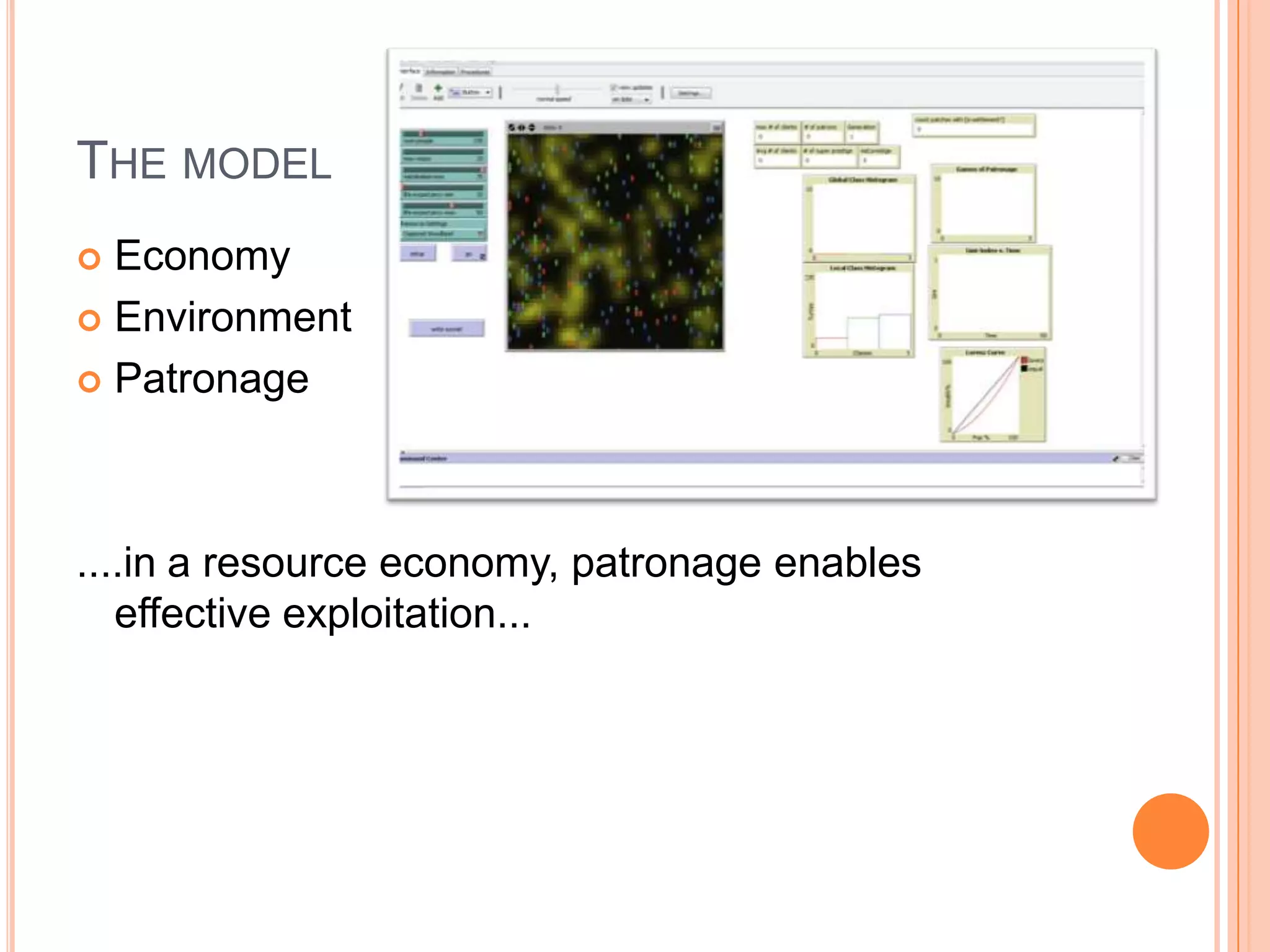
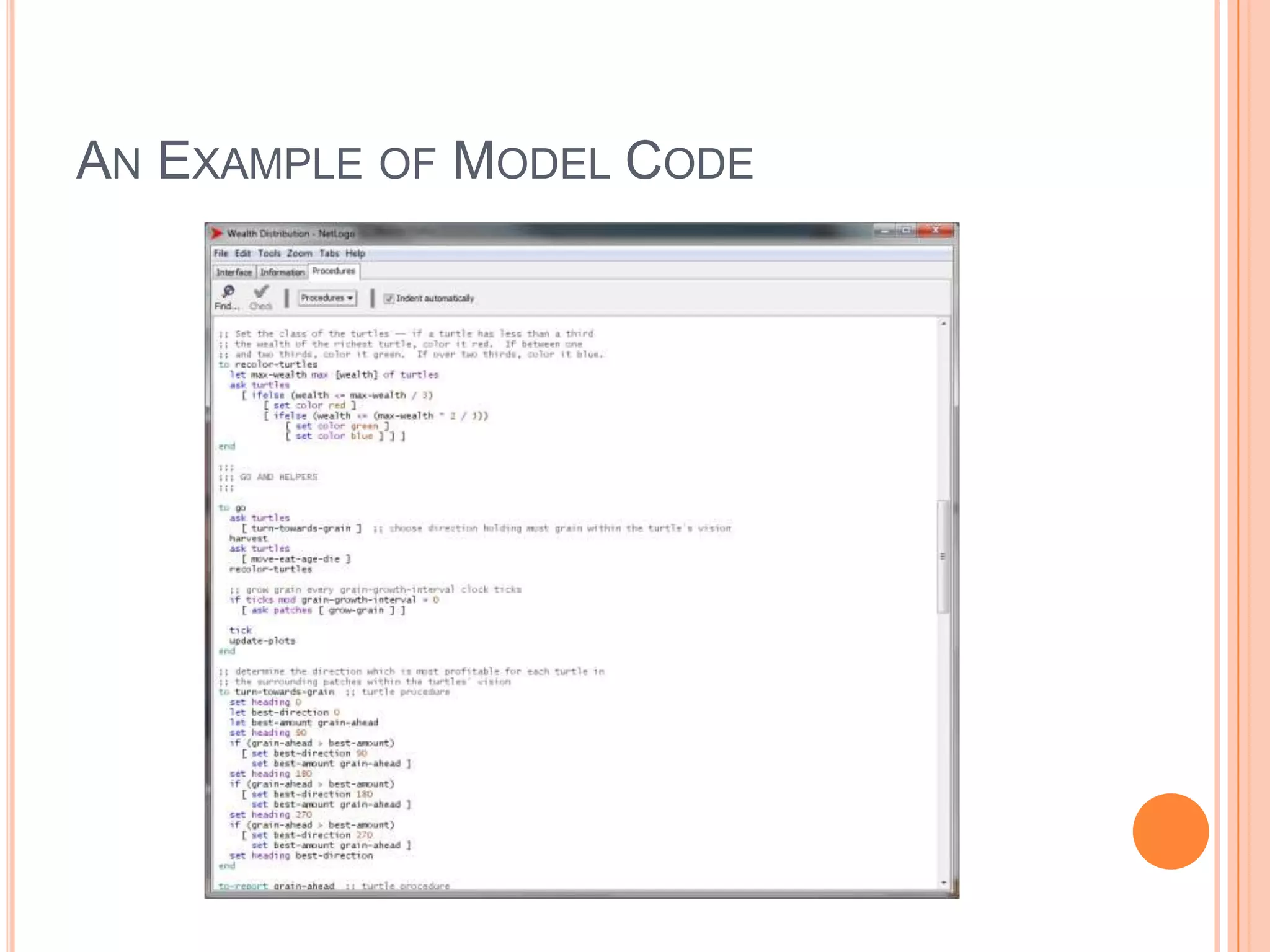
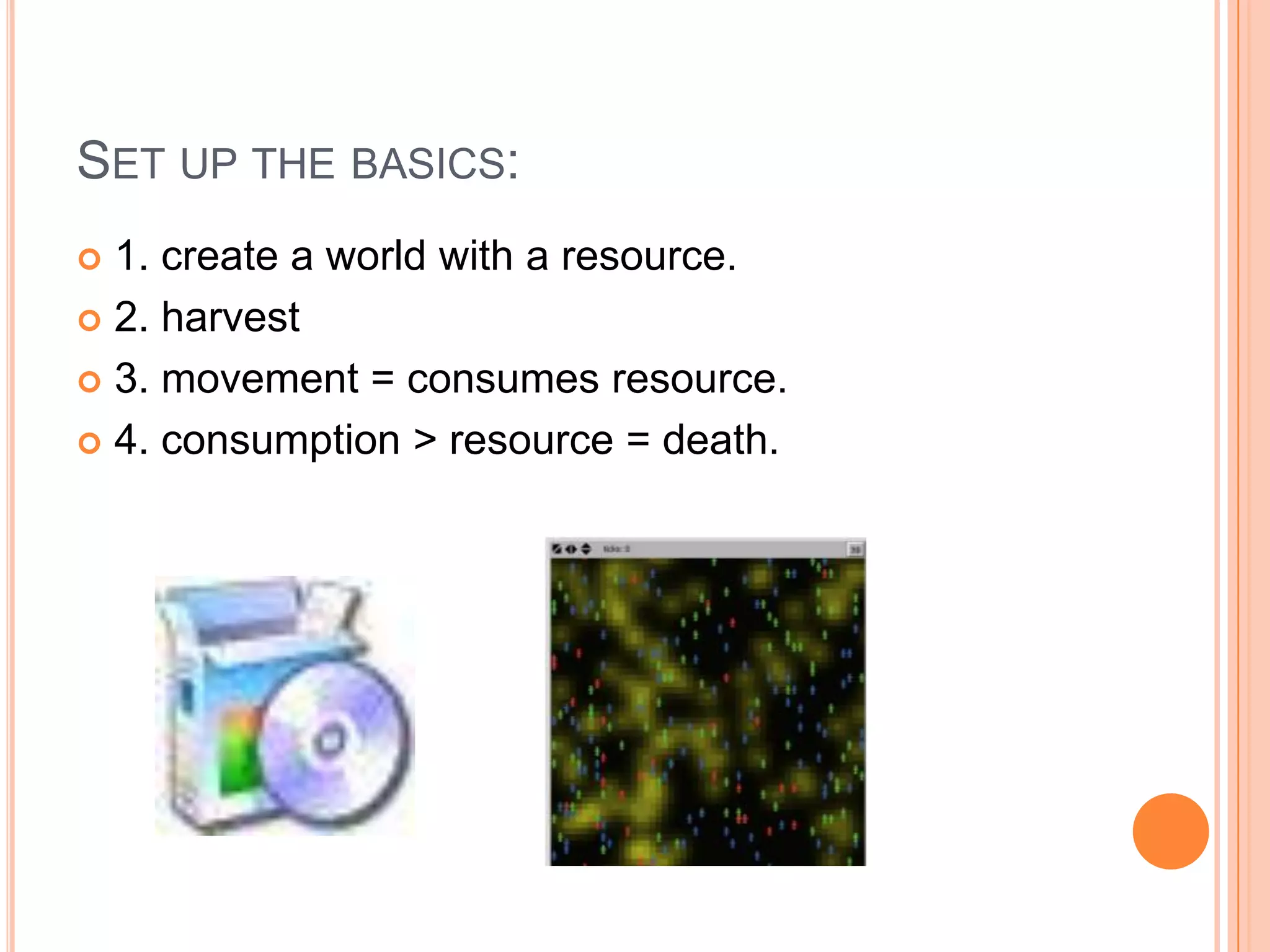
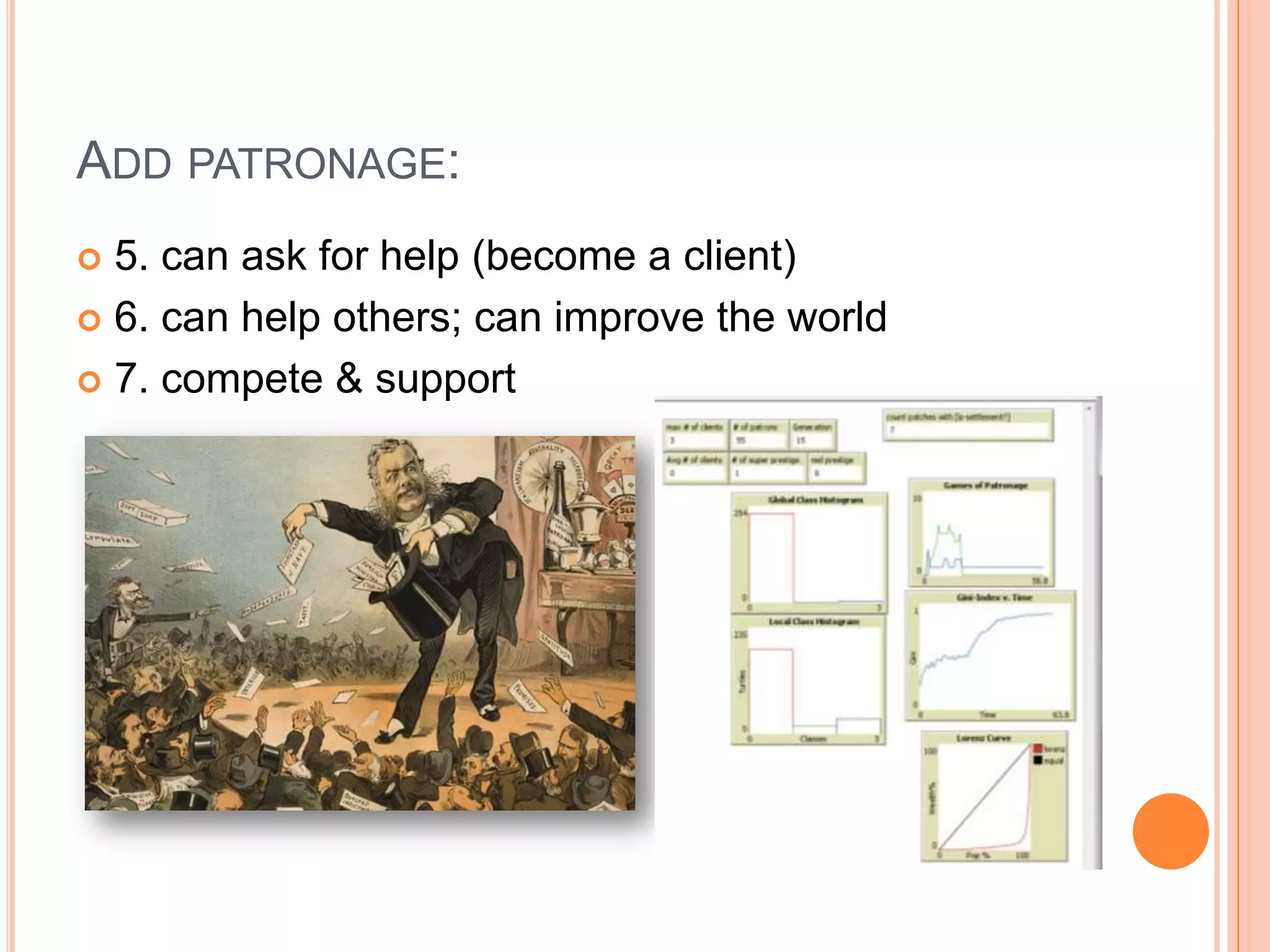
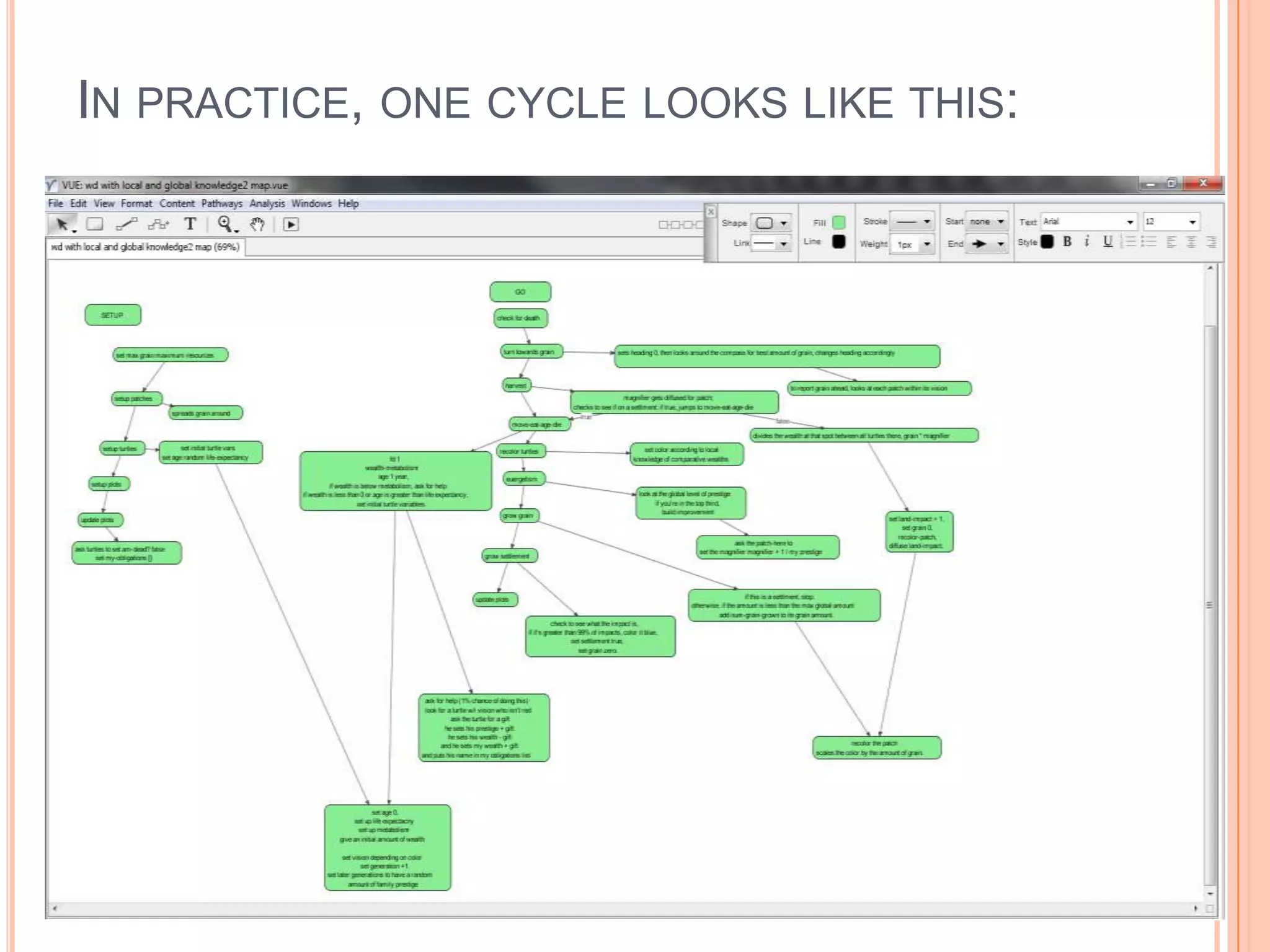
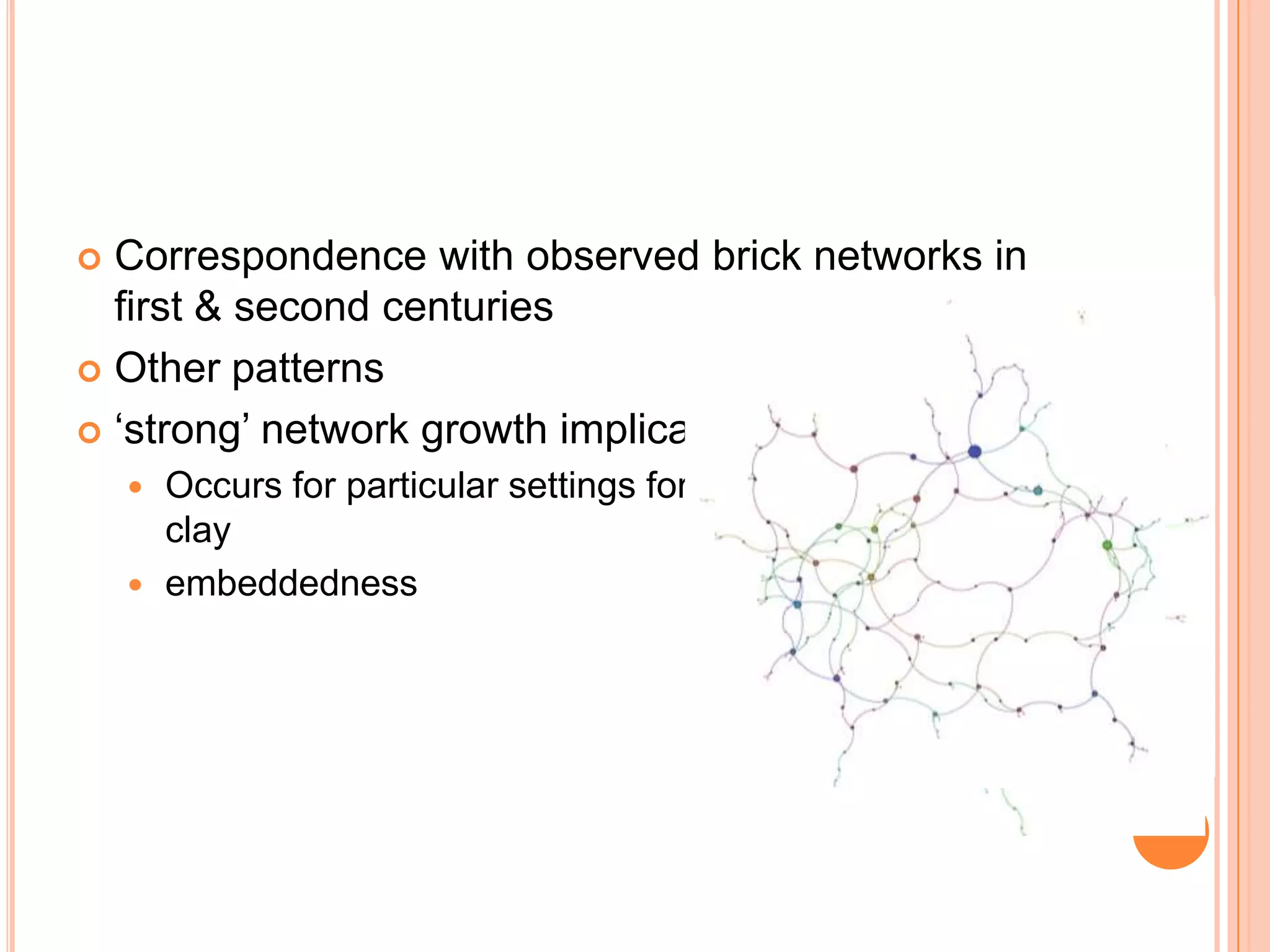
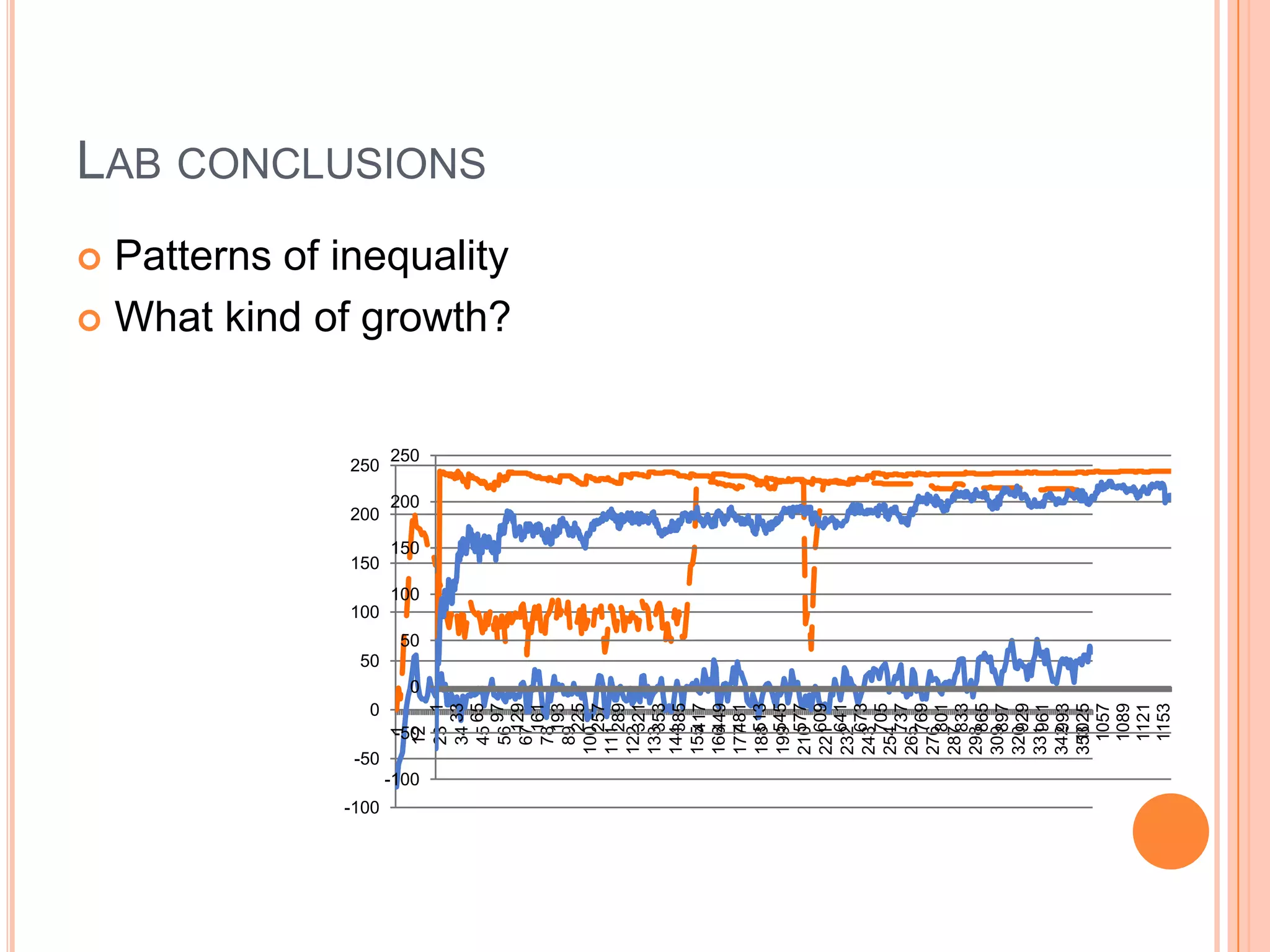
This document summarizes an agent-based model of Roman resource extraction that simulates economic and social interactions over generations. The model represents an economy, environment, and patronage system. In each cycle, agents harvest resources, move to consume resources, and can become clients to ask for help or support others. The model is run for 50 generations under different resource settings. Results are analyzed based on network growth, participation rates, and correspondence to archaeological evidence of social networks, showing patterns of inequality emerge for certain resource conditions. While useful for understanding Roman growth, the model has limitations and can be improved with more archaeological and historical network data.


![Vibe Coding vs. Spec-Driven Development [Free Meetup]](https://cdn.slidesharecdn.com/ss_thumbnails/vibecodingvsspecdrivendevelopment-251209105622-43f455e7-thumbnail.jpg?width=640&height=640&fit=bounds)


