The 15th Scandinavian International Conference on Fluid Power, SICFP’17, June 7-9, 2017, Linköping, Sweden
Towards Finding the Optimal Bucket Filling Strategy through Simulation
R. Filla1
and B. Frank1,2
1
Volvo Construction Equipment, Emerging Technologies, 631 85 Eskilstuna, Sweden
2
Lund University, Faculty of Engineering, 221 00 Lund, Sweden
E-mail: reno.filla@volvo.com, bobbie.frank@volvo.com
Abstract
The purpose of earth-moving equipment like wheel loaders is to engage with the ground or
other material. It is therefore obvious that the bucket filling phase must be included when
studying optimal machine control over a complete working cycle because total productivity and
efficiency of the machine are to a large extent determined by it. This paper reports and
discusses the results of research into how to utilize Discrete Element Method simulations in
combination with Optimal Control to find the optimal bucket filling strategy and what has been
learned regarding preparing and conducting both simulations of bucket filling and physical
testing for verification. This paper also discloses which bucket filling strategy appears to be
optimal, based on the results so far – and why we cannot be completely certain.
Keywords: wheel loaders, bucket filling, working cycle, trajectory, optimization, simulation,
optimal control, dynamic programming, tool/ground interaction, discrete-element method
1 Introduction
Construction machines can be made – and need to be –
significantly more energy efficient. Industry knowledge and
published research, including our own, indicate that large
improvements can be achieved by approaching this task
holistically. Construction machinery OEMs will have to
make their journey towards significantly increased energy
efficiency with these four milestones in mind:
‒ Understanding the machine as one system
‒ Understanding the interaction between machine,
operator and working environment
‒ Understanding the cooperation between several
machines and their operators
‒ Understanding the connection to regional, national
and international transport and energy systems
All these milestones have been previously described in [1].
The topic of this paper relates to milestones 1 and 2 as our
research is anchored in the realization that in a working
machine like a wheel loader all major systems interact
frequently, all phases in a working cycle are connected, and
both operator and working environment play a decisive role
when it comes to productivity and energy efficiency of the
total system.
2 Background
Figure 1 depicts a short loading cycle with the characteristic
driving pattern in the shape of a V, possible to extend to a
Y-pattern, if necessary [2].
Figure 1: Short loading cycle in classic V- or Y-pattern. [2]
From phase 1 to 6, the wheel loader operator first fills the
bucket in the gravel pile, then drives backwards towards the
reversing point (phase 4) and steers the wheel loader to
accomplish the aforementioned characteristic V-pattern. The
lifting function is engaged the whole time. The operator
chooses the reversing point such that having arrived at the
load receiver and starting to empty the bucket (phase 6), the
lifting height will be sufficient to do so without delay. In
case of a bad matching between the machine’s travelling
speed and the lifting speed of the bucket, the operator needs
to drive back the wheel loader even further than necessary
for maneuvering alone. This additional leg transforms the V-
pattern into a Y.
In previous research [3][4] it has been examined whether the
driving pattern necessarily has to resemble a V or Y as it
appears that this pattern has emerged from the operators’
desire to minimize the personal workload, rather than
maximize energy efficiency, for a required productivity. The
traditional cycle in Figure 1 might not necessarily be the
most productive or the most energy-efficient way for new
non-conventional systems like hybrids or autonomous
machines where the operator’s requirements are less
dominant or taken out of the loop completely. However,
papers [3][4] showed that the classic V- or Y-cycle is a good
and robust choice and seems to be recommendable for
virtually all situations where such driving pattern is not
prevented by the layout of the site.
Based on this conclusion research has then been focused on
how to optimally control the actuators of a wheel loader for
maximum energy efficiency [5], basically covering phases 2
to 10 in Figure 1 with an assumed attachment position in the
beginning. However, this exclusion of the bucket filling
phase is a serious simplification because how the bucket is
filled in phase 1 and at what height the bucket is retracted
from the pile has a significant influence on the overall
energy efficiency of a wheel loader in a short loading cycle
[2][6].
We have therefore used DEM (Discrete Element Method)
particle simulation to study how bucket filling can be
simulated in detail [2]. In order to avoid slowing down
simulation of loading cycle phases 2 to 6 a non-coupled
approach was chosen for the bucket filling in phase 1, which
means that the bucket was considered in isolation, moving
along a (large) set of pre-defined trajectories.
As discussed at length in [7] this approach has the obvious
flaw that the tight coupling of forces leading to a complex
interaction of the machine’s subsystems (engine, drivetrain,
hydraulics etc.), the work environment and the operator is
largely disregarded. Even though the loader’s linkage has
been represented through the way the trajectories have been
generated [2] and/or how the simulation results have been
analyzed [7], this limited approach falls short of the full
simulation scope actually required. The overall cycle
efficiency value and thus the performance of a particular
bucket filling strategy are first apparent after the wheel
loader has arrived at the load receiver to empty the bucket.
Therefore the simulation must comprise a complete machine
model operated by an adaptable operator model in a full
working cycle, executed in a comprehensive model of the
work place – and run in an overall optimization loop of the
bucket trajectory. However, this is not feasible today and
must remain a vision for the moment being.
We have thus been left with the pragmatic approach of
isolating the bucket and prescribing its nominal motion
independent of any resistive forces that might interfere with
the actual control. Papers [1][2] have discussed the setup
and results of these simulations and [1] has also shown a
simplistic way of how the evaluate them in the context of a
complete loading cycle.
The next step for reaching the vision of the comprehensive,
integrated optimization described above has been Optimal
Control of machine actuators in all phases of a prescribed
loading cycle, using Dynamic Programming, which paper
[7] reports. The machine studied is the electric series hybrid
wheel loader briefly discussed in [8][9], which has been the
precursor and foundation of the “LX1” concept loader [10].
In the paper at hand we will revisit the bucket filling in both
simulation and practice, discuss how to prepare and conduct
testing virtually and physically, and provide a self-critical
assessment of the results achieved.
3 Simulation
3.1 Process
Figure 2 shows the simulation process employed: the bucket
trajectories, generated in MathCad or Matlab, have been
transferred as text files to the DEM particle simulation run
in Pasimodo, as reported in [2]. The results have been
transferred back to MathCad for postprocessing (like
converting the forces acting on the bucket into cylinder
forces and rim pull demand) and then either passed on to
Matlab and the Optimal Control algorithm running wheel
loader simulations [7] or kept within MathCad to compute
the simple performance indicators published in [1].
Figure 2: Simulated bucket tip trajectories in phase 1.
The MathCad parts in this process could just as well have
been performed in Matlab, too (in the aftermath of this work
all scripts and the toolbox developed for such calculations
have in fact been ported to Matlab). The DEM simulations
in Pasimodo have been set up and conducted by Martin
Obermayr and Jan Kleinert from the Fraunhofer ITWM
institute in Kaiserslautern, Germany [2][7].
3.2 Bucket filling: literature research
There are a great many publications, both academic papers
and industrial patents (or patent applications) on the topic of
bucket automation and autonomous excavation [2].
In a publication from 1994 [11] Hemami studies bucket
trajectories in order to minimize energy consumption in the
scooping and loading process. He concentrates on the
motion pattern itself and does not consider resistive forces in
this paper. One of his conclusions is that simply estimating
the bucket load achieved as the area between the trajectory
and the uncut contour of the material will lead to deviations
that need to be corrected by an experimentally determined
factor. We have used the same estimation in our study but
have a different method of compensation, using results from
DEM simulations [2].
3.3 Trajectory generation: overview
Ideally the DEM simulation would be part of the overall
simulation that includes the Optimal Control scheme. That
way both physicality and optimality (local or global,
depending on the method chosen) would be ensured.
However, no traditional Optimal Control algorithm can be
used as the overall problem is not and cannot be made
convex to find gradients for optimization. Instead we used
an own algorithm based on Dynamic Programming [7].
However, running one big simulation with a complex
machine model in a sufficiently detailed environment,
controlled by an adaptive operator model is impossible with
the calculation resources typically available, because the
computational costs using Dynamic Programming would be
extraordinary high (though this can change in the near
future, considering cloud computing).
Instead, we disconnected the DEM bucket filling simulation
from the machine simulation [1][2] by generating a total of
5781 bucket motion trajectories a priori which were then
simulated in parallel on a computer cluster of 800 cores for a
week. The results of these simulations have then been
incorporated into the machine simulation [7].
We have developed four different principle trajectories
along which the bucket is moved in DEM simulations. Each
trajectory type is the result of interviews with experienced
wheel loader operators and represents a different bucket
filling strategy commonly employed.
In addition to the desired bucket fill factor (i.e. load mass in
the bucket in relation to the nominal load) most trajectories
types offer at least one parameter to vary the individual
shape. The bucket trajectories are generated a priori using a
kinematic model of the wheel loader’s front body, complete
with linkage, hydraulic cylinders, bucket, and front axle.
Controlling the bucket motion indirectly through cylinder
displacements and a longitudinal motion of the machine
ensures that only valid bucket positions are prescribed,
corresponding to a valid state of the wheel loader’s linkage.
In addition to these four parametric trajectories a fifth set of
bucket motions has been generated as an exploration of “all
possible” ways for a bucket to move through a pile and end
up with the desired fill factor. In this type of trajectory we
only considered the bucket motion, initially without taking
linkage constraints into account. Bucket positions that do
not correspond to a valid state of the wheel loader’s linkage
have been filtered out afterwards.
The major simplification with both approaches is that only
the nominal motion of the bucket is prescribed, independent
of any resistive forces that might interfere with the actual
control and without the adaptive behavior of a human
operator. This lack of feedback is a significant limitation,
but the study gives some meaningful answers, nonetheless.
There are clearly also challenges, which will be discussed
later.
3.4 Type A: “Slicing cheese”
This type is a literal implementation of the bucket filling
strategy advocated by professional machine instructors who
were interviewed prior to our study. Their advice was to
move the bucket such as if carving a slice of constant
thickness off the material pile.
Figure 3: Example type A trajectory,
optimized for exit height at 2m and fill factor 1
(grey: all 9 simulated trajectories of type A).
In the top left diagram in Figure 3 we see the trace of the
bucket tip moving at a constant distance to the slope until a
height of about 2.5m (corresponding to the hinge pin of the
bucket being at 2m), at which point the bucket is fully tilted
back. The diagrams at the bottom of Figure 3 show how this
is accomplished: the bucket is constantly lifted from ground
position to exit height (set a priori), while at the same time
being tilted back proportionally from initial angle (zero) to
maximum angle (which is the slope angle of the material
pile, because once the bucket is parallel with the slope, no
further advancement can be made without the bucket’s
bottom pushing into the material, which creates a large
reaction force and is a waste of energy). After stopping at
exit height the bucket is just tilted back and retracted. The
forward motion of the complete machine is controlled so
that the bucket tip is always at a constant distance to the
pile’s slope.
In this algorithm the exit height can be chosen freely, while
the slice thickness is a result of the targeted fill factor and
thus subject to parameter optimization (the value satisfying
the fill factor requirement is calculated iteratively).
3.5 Type B: “Just in & out”
This simple algorithm mimics the bucket filling style of
operators who rely mostly on momentum and rim pull
(traction force) to fill the bucket: they just push the bucket
into the pile, then tilt back and leave. No further
advancement is made after the initial penetration.
In the top left diagram in Figure 4 we see the trace of the
bucket tip accomplished purely by the motions of the
hydraulic cylinders without any further longitudinal motion
after initial penetration of the pile, as exhibited in the
diagram to the right. The bottom left diagram discloses that
in order to fulfill the fill factor target, the bucket’s hinge pin
height also needed to be increased slightly (ca. 25mm) by
using the lift function simultaneously with the tilt function
that controls bucket angle.
Figure 4: Example type B trajectory,
optimized for fill factor 1
(grey: all 3 simulated trajectories of type B).
This trajectory type offers no additional parameter since the
initial penetration is a result of the targeted fill factor and
thus subject to parameter optimization.
3.6 Type C: “Parametric parabola”
This algorithm can be parameterized to generate trajectories
of seemingly different shapes, mimicking the way most
experienced operators fill a bucket with a wheel loader,
provided the material is easily handled so that continuous
actuator motions are possible. Most operators trying to fill a
bucket according to type A “Slicing cheese” will probably
end up with a slightly curved trajectory, i.e. type C.
In the top left diagram in Figure 5 we see the trace of the
bucket tip moving on a quadratic curve in relation to the
slope until a height of about 1m (corresponding to hinge pin
height of 0.50m) at which point the bucket is fully tilted
back. This is accomplished in a similar fashion as for
trajectory type A, as can be seen in the bottom diagrams in
Figure 5; however, this time the forward motion is
controlled so that the bucket tip is always at that distance to
the pile’s slope which is prescribed by the quadratic curve.
Depending on the parameter values a type C trajectory can
be made to resemble a type A “Slicing cheese” or type B
“Just in & out” trajectory. The bucket exit height and the
control point height where the maximum penetration depth
counted from the slope is achieved can be chosen freely,
while maximum penetration itself is a result of the targeted
fill factor and therefore subject to parameter optimization.
Figure 5: Example type C trajectory, optimized for exit
height 0.50m, maximum chip depth at 0.4m, and fill factor 1
(grey: all 27 simulated trajectories of type C).
3.7 Type D: “Stairway”
This trajectory is composed of an adjustable, pre-defined
number of steps, like a stairway. Within each step the wheel
loader stands still and only the hydraulic functions lift and
tilt are executed. A new step is inserted by advancing
machine and bucket forward using the drive train. This
mimics the way less experienced operators, or experienced
ones working in tough material, reactively fill a bucket by
repeatedly advancing into the pile using traction, lifting a
little all the time and now and then, when the forward
motion has ceased, breaking material by tilting backwards,
which makes further advancement into the pile possible [6].
Figure 6: Example type D trajectory, optimized for
two steps, depreciation factor 0.5, and fill factor 1
(grey: all 12 simulated trajectories of type D).
In the top left diagram in Figure 6 we see an example
stairway consisting of two stairs after initial penetration. In
between the steps the bucket is constantly lifted and tilted.
During forward advancement the bucket height and angle
also need to be controlled in order to avoid pressing the
bucket’s bottom against the cut surface of the gravel pile. At
the end of the sequence the bucket is tilted back fully and
then retracted.
In this algorithm the number of stairs can be chosen freely,
together with a depreciation factor that controls the
subsequent advancements in relation to the initial
penetration (a depreciation of 0.5 means that the depth of
each subsequent penetration is only half as deep as the
previous one). The initial penetration depth is a result of the
targeted fill factor and therefore derived through parameter
optimization by means of iterations.
3.8 Type E: “Exhaustive search”
In contrast to the trajectory types A to D, each founded on
real-world observations and a specific theory of how the
bucket is to be moved through the gravel pile, the idea
behind this trajectory type has been to move the bucket
along all possible, even counter-intuitive paths as long as
there are continuous motions forward and upward and as
long as the resulting bucket fill factor is approximately
fulfilled.
To this end the bucket’s three degrees of freedom have been
discretized and the bucket tip has been controlled to move
from one grid point to the other with its x- and z-coordinate
as two degrees of freedom and the bucket angle as the third
[7]. Ideally the discretization would be extremely fine in
each dimension, but in order to limit the massive amount of
output trajectories the step size in x and z has been a rather
coarse 375mm and 8.5° for the target bucket angle.
Figure 7: Three examples of type E trajectories
(grey: all 4640 simulated and valid trajectories of type E).
Note that in contrast to trajectory types A to D this time only
the bucket itself has been considered, not the complete
loader linkage – which, among other problems, together
with the coarse discretization grid results in rather step-wise
control of the lift and tilt actuators as well as machine
motion, which can be seen in Figure 7.
3.9 Particle simulation
The particle simulations utilize the DEM code Pasimodo.
The model consists of 16000 spherical and non-rotational
particles of diameters ranging from 8 to 12cm. A 5m high
pile is modeled as a particle layer of 4m thickness over a
solid inclined surface. More details on this setup and lessons
learned can be found in [2].
All trajectories have been simulated varying each adjustable
parameter in three or four steps (except for the three
discretization parameters in type E), which results in the
number of simulations as per table below.
Type Name Parameters Simulations
A Slicing cheese 2 9
B Just in & out 1 3
C Parametric parabola 3 27
D Stairway 2 12
E Exhaustive search (3) 5730
The bucket fill factor achieved is determined as the ratio of
the loaded mass to the rated mass of the bucket, the former
obtained through the vertical force that is required to
balance the bucket after complete retraction from the pile.
Due to the complexity of the granular flow the amount of
material loaded into the bucket always shows deviations
from the target, the latter been simply estimated a priori as
the area between the trajectory of the bucket tip and the
uncut contour of the material pile. Our approach has
therefore been to simulate each trajectory several times with
various horizontal offsets and through interpolation, using
the simulated fill factors, to determine which profile offset
was required to reach the exact bucket fill factor that has
been originally aimed for. New trajectories have then been
generated with the profile offset added to the initial
penetration in the beginning of the filling sequence and
verified in a final simulation [2].
3.10 Particle simulation results: observations
Visualizing the simulation results of the various trajectory
variants in a rendered video has been found a very suitable
approach to both debug models and algorithms, and to learn
about various phenomena that occur during bucket filling.
Figure 8 shows snapshots from a simulation with a type D
trajectory. During the filling phase, a wedge of gravel is
moved together with the bucket, as indicated by the color
representing the velocity of the material particles. When the
bucket is tilted back, some material gets lost. This loss of
material is difficult to predict in advance without the help of
a particle simulation. Our naïve approach to estimate the
bucket fill from the area that is formed between the bucket
tip trajectory and the pile contour assumes the pile to remain
at rest and therefore cannot account for material flow.
Figure 8: Snapshots from DEM particle simulation [2].
In order to demonstrate the importance of material flow for
the bucket filling, Figure 9 and Figure 10 show snapshots
from trajectories types A and B plotted with a vector plot of
the particle velocities.
Figure 9 shows two snapshots from a simulation with
trajectory type A, with a large exit height and high bucket
fill factor. During the forward and lifting motion, the
material moves together with the bucket. The shape of the
pile is according to expectations. The theoretical approach
works very well in that phase, shown on the left in Figure 9.
However, when lifting the bucket out of the material and
tilting back at the end of the trajectory, some material is lost
(right in Figure 9) due to the fact that the granular material
can only support a certain angle of repose. Excess particles
flow back in an avalanche flow.
Figure 9: Bucket filling trajectory type A: particle velocities
(arrows) during the lift motion (left) and at final tilt (right).
Brown: current shape of the pile, light blue: initial shape.
In the case of trajectory type B this effect is even more
pronounced. Figure 10 shows a snapshot from a simulation
with a large bucket fill factor. Two lines drawn on top of the
plot indicate the material that flows underneath the bucket
and forms a new angle of repose. This observed material
loss has an impact on energy efficiency of the working
process, since the excess material has been pushed forward
and lifted upwards by the bucket, requiring mechanical
energy, but instead of keeping it in the bucket it flows back
onto the pile. A way to prevent or at least minimize this loss
of material would be to combine a forward motion together
with tilt-in, however still adhering to the general rule of not
pushing the bucket’s bottom into the pile.
Figure 10: Bucket filling with trajectory type B: particle
flow (arrows). The two lines indicate the material that flows
underneath the bucket.
Figure 18 shows that there is also a loss of material during
bucket retraction: when the filling of the bucket is finished,
the wheel loader starts accelerating backwards to get out of
the pile. In our simulations the jerk is significantly higher
than what is possible in reality, which means that the
simulation exaggerates the magnitude of this loss. In any
case, the amount of material lost through outflow during
bucket retraction is difficult to predict by conventional
means.
Figure 11: Material loss during bucket retraction.
Figure 18 also displays that the material does not flow fully
into the bucket, but remains near the cutting edge instead. It
would be desirable to fill the bucket more evenly, which
human operators achieve by the “flipping movement”, i.e.
by briefly and distinctly activating the tilt function, possibly
in combination with a longitudinal jerk [2].
3.11 Analysis with simple performance indicators
With the results from the particle simulations published and
discussed in [2] and the work with Dynamic Programming
at that time not yet finalized we wanted to examine how far
it is possible to use the results to compare different bucket
designs and different bucket filling strategies in a reasonably
fair manner with simple calculations [1].
The natural choice as performance indicator of a trajectory
is simply the amount of work that has been invested during
its execution. A fair comparison demands acknowledging
the different bucket loads achieved: as mentioned previously
the obtained bucket load always deviates from the target
value – by how much is specific for the trajectory type and
the parameter settings.
The relationship between bucket load (in t) and invested
work (in kJ) is linear only for the lifting part of a trajectory,
but non-linear for the filling sequence as a whole. This
means that while one way to compare trajectories of similar
fill factors is to calculate the specific work invested (in kJ/t),
a fair comparison between trajectories of significantly
different fill factors is more difficult to achieve. It is
therefore recommended to plot performance indicators
against respective bucket fill factor (i.e. the ratio of achieved
bucket load and the bucket rating according to ISO 7546),
also when the performance indicator is already normalized
to bucket load, such as specific work invested.
We show in [1] that the pure value of the specific work
invested in bucket filling is not relevant because it
disregards the fact that the achieved result is not only the
bucket load itself but also the potential energy achieved by
lifting the bucket including its load – which in turn impacts
the remainder of the working cycle shown in Figure 1. The
height at which the bucket is retracted from the gravel pile
thus affects the total energy efficiency of the loading cycle,
because it dictates the amount of lifting work still to be
performed during driving towards the load receiver, which
in turn may affect the driving pattern itself (extension of V
to Y). A fair performance indicator must therefore credit the
lifting work performed during bucket filling.
One might assume the ratio of the potential energy achieved
(affected by bucket load and bucket height) to the work
invested can be a suitable performance indicator but we
show in [1] that is a poor choice (at least for short loading
cycles) because it implies that the sole utility of a bucket
filling sequence is a load being lifted. It totally neglects the
utility of the bucket actually being filled, which will always
require a certain amount of work.
Besides, while the load lifting included in a bucket filling
sequence should be credited, it is wrong to assume it to be
essential. In a typical short loading cycle there is ample
opportunity for lifting to be performed in the phases 2 to 5
(Figure 1) – and in a typical load & carry cycle (not studied
here) the lifting is performed right before reaching the load
receiver after a transport phase covering a certain distance.
To end bucket filling at too great a height in short loading
cycles is impractical because the remaining lift work might
be so little that even the shortest driving phase to the load
receiver will be too long. This might be a waste, also
depending on the general question whether it is more
efficient to drive and lift concurrently or sequentially (which
in turn must be answered for each machine type, i.e. there
might be differences for a conventional loader versus the
electric series hybrid we have studied). Furthermore, driving
and steering a wheel loader with a bucket fully loaded and
raised high gives poor machine stability. Most operators
therefore raise the bucket to unloading height as late as
possible in the cycle, i.e. as close as possible to the load
receiver. This also means that loader operators usually don’t
leave the pile at too great a bucket height (generally not
above the position where the lifting arms are parallel to the
ground). The discussed ratio of potential energy achieved
and work invested however rewards higher bucket exit
heights over lower values for the same bucket load, which
shows that it is not a suitable performance indicator [1].
With the previously discussed measures being unsuitable
performance indicators because they either ignore the utility
of load lifting included in a filling sequence or over-
emphasize it, we reason in [1] that a solution might be to
isolate the actual bucket filling by subtracting the lifting
included. Since this is a continuous and compound process it
is not easily possible to calculate the actual amount of work
spent for filling vs. lifting. One practical approximation is to
subtract the potential energy achieved at the end of a bucket
filling sequence from the work invested for executing the
trajectory (Figure 12).
Figure 12: “SPI_1”, Potential energy achieved during
bucket filling subtracted from the specific work invested.
Another possibility is to do the opposite and acknowledge
the lifting part, but put it into the context of a full loading
cycle. As reasoned previously the bucket filling should not
be considered in isolation but rather as one phase in a
complete loading cycle. For unloading in phase 6 to happen
the bucket needs to be lifted sufficiently in the phases prior
to this. Any lifting work that has not been included in bucket
filling (phase 1) needs to be performed during driving
towards the load receiver (phases 2-5). In the proposed
performance indicator the potential energy increase
remaining after bucket filling is added to the work invested
for executing the trajectory (Figure 13).
Figure 13: “SPI_2”, Potential energy increase remaining
after bucket filling added to the specific work invested.
It can be argued which performance indicator captures the
truth better: SPI_1 that deducts included lifting from the
bucket filling sequence by subtracting the amount of
potential energy achieved at the end of the trajectory or
SPI_2 that acknowledges lifting by adding the increase in
potential energy still remaining to be achieved in the
subsequent phases of the loading cycle. In both indicators
the lifting work invested to achieve an increase in potential
energy is assumed without losses, which is a notable
simplification.
Also, neither SPI_1 nor SPI_2 as published in [1] include
the driveline work, which means that bucket filling
sequences resulting in low bucket loads are not suitably
punished for poor transport efficiency (basically: the longer
the transport section in a working cycle the better it is to fill
the bucket as much as possible).
With the results from the Optimal Control simulations at
hand a new simple performance indicator SPI_3 has been
formulated considering the transport work simply as rolling
resistance multiplied by the distance driven, with the former
assumed as 3% of the machine weight (calculated separately
for loaded and unloaded). The result is shown in Figure 14.
Figure 14: “SPI_3”, Transport and potential energy
increase remaining added to the specific work invested.
All simple performance indicators give essentially the same
picture: the “Slicing cheese” trajectory type A appears
superior to any other bucket filling strategy, especially
compared to the B-type’s “Just in & out” style, which
performs strikingly poor.
The argument is sometimes made that such a type B
trajectory must be surely efficient as very little work is
invested into lifting the load and the work required for
penetration is free because (at least initially) the momentum
of the moving wheel loader is used. Of course, this work is
not really “for free” in most cases, because accelerating the
machine to a certain speed requires work, meaning that the
energy demand is just shifted in time. However, there is at
least one case where this is partly true: when the wheel
loader approaches from a downhill slope and the operator
instead of using the service brakes slows down by letting the
bucket penetrating the gravel pile, thus using the gravel pile
as an “external brake”. If the machine in question is a hybrid
then it needs to be analyzed in detail whether recuperative or
regenerative braking would have been the better choice from
an overall energy management perspective.
However, for realistic speeds the loader’s momentum is not
sufficient to penetrate the gravel pile as deep as needed.
Furthermore a smooth penetration requires constant or even
increasing rim pull, but in reality the effective forward force
decreases due to the increasing resistance the deeper the
bucket penetrates the gravel pile.
In [1] we show that the type B strategy is not very efficient
when correctly accounting for the penetration work, even
without having credited the lifting work included in all other
trajectory types. In a thought experiment we investigated
how the different bucket filling strategies would compete if
the work required for initial bucket penetration actually was
for free. Little surprising, in this thought experiment the B-
type trajectories are heavily favored as per definition all
penetration work is performed in one go in the beginning of
this bucket filling strategy. But again, it is not realistic.
3.12 Optimal Control
In this section we describe the Optimal Control utilizing
simulation of a loader in a complete working cycle. To
begin with, it must be noted that the machine studied in
simulation is an electric series hybrid wheel loader. All
conclusions with respect to optimality of certain bucket
filling strategies might need revision when a conventional
wheel loader is considered. The series hybrid loader has
previously been hinted on in [8] and briefly described in [9].
The machine is equipped with a downsized diesel engine,
and four electric machines as can be seen in Figure 15.
Figure 15: Electric series hybrid wheel loader [9].
Grey background: simulated subsystems.
In the series hybrid machine the main power systems are
mechanically decoupled from each other and the main
concern in terms of system control is the sum of electric
power on the DC link. In contrast to this, in a conventional
machine both hydraulics and driveline are mechanically
coupled to each other and connected to the engine, which
presents several challenges in terms of energy efficiency and
operability [6]. The reason for having chosen the series
hybrid for this study is that we did not want the machine
system’s lack of degrees of freedom stand in the way of
exploring the optimal bucket filling strategy.
Dynamic Programming has been used as Optimal Control
method. The specific implementation details can be found in
[7], but some basic information is necessary to include here:
the algorithm developed seeks the global optimum in terms
of fuel efficiency, though for practicality converted to
electrical actuator energy efficiency – thus excluding the
generator set and energy storage, which would be a topic on
its own. The simulated subsystems have been marked with a
grey background in Figure 15.
For computational efficiency the Optimal Control has been
split into four parts:
In part 1 bucket filling, phase 1 in Figure 1, is handled by
choosing between the various bucket trajectories. Backward
simulation is performed to calculate the energy required for
following the trajectories without deviation.
Phases 2 to 5 are covered by the Dynamic Programming
algorithm in part 2. Each bucket trajectory from part 1 gives
a starting point for part 2, unique in bucket position and
load. Optimal Control is performed to find the optimal, i.e.
energy-minimizing way to get from the starting point to the
point of unloading while maintaining cycle time and thus
productivity.
Part 3 covers phase 6, bucket emptying. Ideally this should
have been included in part 2 and thus treated individually
for each trajectory, because of the different bucket loads.
Instead, Optimal Control has been performed one time only
to find the minimal energy required to empty a bucket with
the load achieved on average with the simulated trajectories.
The effect of this is that working cycles with comparatively
low bucket load are not suitably punished for the low
transport efficiency. However, it is estimated that the impact
on the overall conclusions from this study is not severe.
Finally, in part 4 Optimal Control has been performed once
for phases 7 to 10, as independent on the chosen bucket
filling trajectory from this point on the loader starts always
in the same position with the same bucket load (zero) and
stops at the same position in front of the gravel pile, ready to
start a new working cycle.
The details of the driving cycle in parts 2 and 4, i.e. how
long to drive backward/forward, where to reverse, when to
steer etc., have not been subject to optimization. Instead, we
have used the values from the most energy-efficient operator
in the measurements reported in [15] and refer otherwise to
previous work [3][4].
The total energy requirement is the sum of required energy
for all four parts. After having computed this for all 5781
bucket filling trajectories the optimal strategy has been
determined as the one with the lowest specific work for the
complete working cycle, i.e. the lowest ratio of total energy
requirement and bucket load. Figure 16 shows the results.
Figure 17 shows the winning trajectory A_0_2 in front of
the Top 10 (in terms of electrical actuator energy efficiency)
trajectories in blue, with all simulated trajectories in the
background in grey. The table below lists all Top 10
trajectories and provides details about their performance.
Figure 16: Simulation results for all bucket filling
trajectories continued in a complete working cycle.
Figure 17: Winning trajectory A_0_2 in front of Top 10.
Optimal Control,
complete cycle
Simple performance
indicators
Trajectory
name
Rank
(#)
Delta
to #1
(%)
Rank
SPI_1
(#)
Rank
SPI_2
(#)
Rank
SPI_3
(#)
A_0_2 1 56 10 3
E_4423 2 0.09 779 146 36
D_0_2 3 1.19 1843 543 133
E_4422 4 1.25 700 148 45
D_2_2 5 1.28 1230 216 37
E_4299 6 1.91 1913 525 111
E_5780 7 2.51 1195 271 70
E_6171 8 2.72 124 20 10
E_5034 9 2.80 552 129 46
E_4426 10 2.91 798 209 78
3.13 Discussion of the simulation results and conclusions
It appears that all top trajectories are emulating the winning
“Slicing cheese”-type trajectory A_0_2 to a certain degree
(Figure 17).
The table above also includes the results of the simple
performance indicators described previously. It show that
according to the simulations the second to best trajectory
E_4423 is only 0.09% less energy efficient than the winner
A_0_2 (stated in relation to the absolute value of A_0_2’s
electrical actuator energy efficiency), however using the
simple performance indicator SPI_2 the E_4423 trajectory is
ranked #146 and even worse when using SPI_1 (#779). It is
apparent that SPI_2, which adds the remaining increase in
potential energy to the work invested in bucket filling, is a
slightly better (though still not suitable) approximation than
SPI_1, which subtracts the potential energy gained in bucket
filling from the work invested. Both, however, suffer from
not having the transport work included.
The table shows that the new SPI_3 performs best among
the simple performance indicators since all the Top 10
trajectories from the simulations are also ranked high by the
SPI_3 (all are within the Top 3%). However, it has become
clear that these simple performance indicators have
significant limitations.
From the results presented above we can conclude that with
regard to bucket filling strategy the type A “Slicing cheese”
trajectory is a good choice to start with – and certainly is an
easy to remember mental model for the wheel loader
operator – but also that moderate deviations from that ideal
path don’t seem to matter too much in terms of total energy
efficiency.
However, it should be noted that the simulations conducted
contain some significant simplifications. There are thus a
number of potential improvements, which will be covered in
the following two sections.
3.14 Potential improvements in trajectory generation
All trajectories that have been found valid for inclusion in
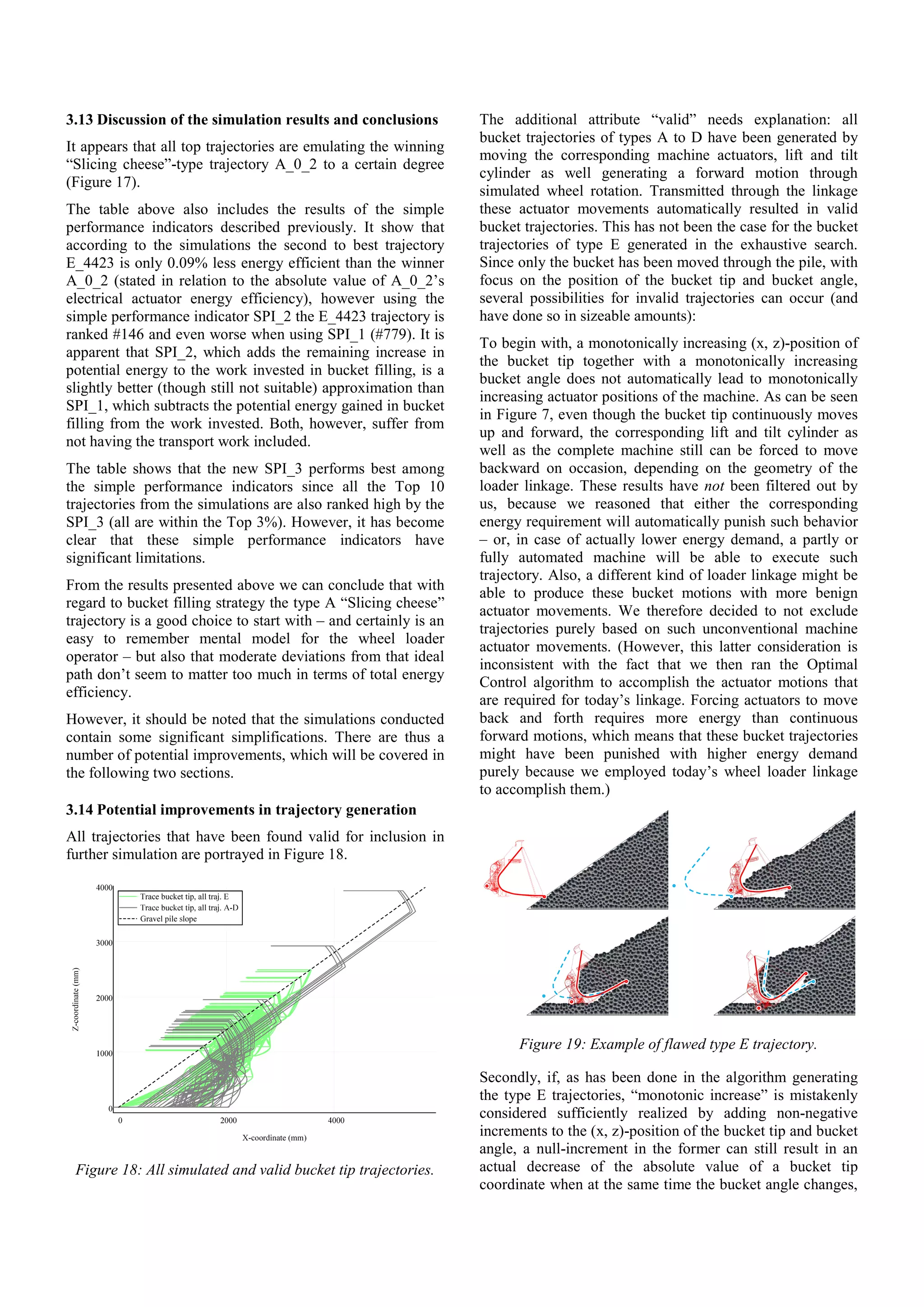
further simulation are portrayed in Figure 18.
Figure 18: All simulated and valid bucket tip trajectories.
The additional attribute “valid” needs explanation: all
bucket trajectories of types A to D have been generated by
moving the corresponding machine actuators, lift and tilt
cylinder as well generating a forward motion through
simulated wheel rotation. Transmitted through the linkage
these actuator movements automatically resulted in valid
bucket trajectories. This has not been the case for the bucket
trajectories of type E generated in the exhaustive search.
Since only the bucket has been moved through the pile, with
focus on the position of the bucket tip and bucket angle,
several possibilities for invalid trajectories can occur (and
have done so in sizeable amounts):
To begin with, a monotonically increasing (x, z)-position of
the bucket tip together with a monotonically increasing
bucket angle does not automatically lead to monotonically
increasing actuator positions of the machine. As can be seen
in Figure 7, even though the bucket tip continuously moves
up and forward, the corresponding lift and tilt cylinder as
well as the complete machine still can be forced to move
backward on occasion, depending on the geometry of the
loader linkage. These results have not been filtered out by
us, because we reasoned that either the corresponding
energy requirement will automatically punish such behavior
– or, in case of actually lower energy demand, a partly or
fully automated machine will be able to execute such
trajectory. Also, a different kind of loader linkage might be
able to produce these bucket motions with more benign
actuator movements. We therefore decided to not exclude
trajectories purely based on such unconventional machine
actuator movements. (However, this latter consideration is
inconsistent with the fact that we then ran the Optimal
Control algorithm to accomplish the actuator motions that
are required for today’s linkage. Forcing actuators to move
back and forth requires more energy than continuous
forward motions, which means that these bucket trajectories
might have been punished with higher energy demand
purely because we employed today’s wheel loader linkage
to accomplish them.)
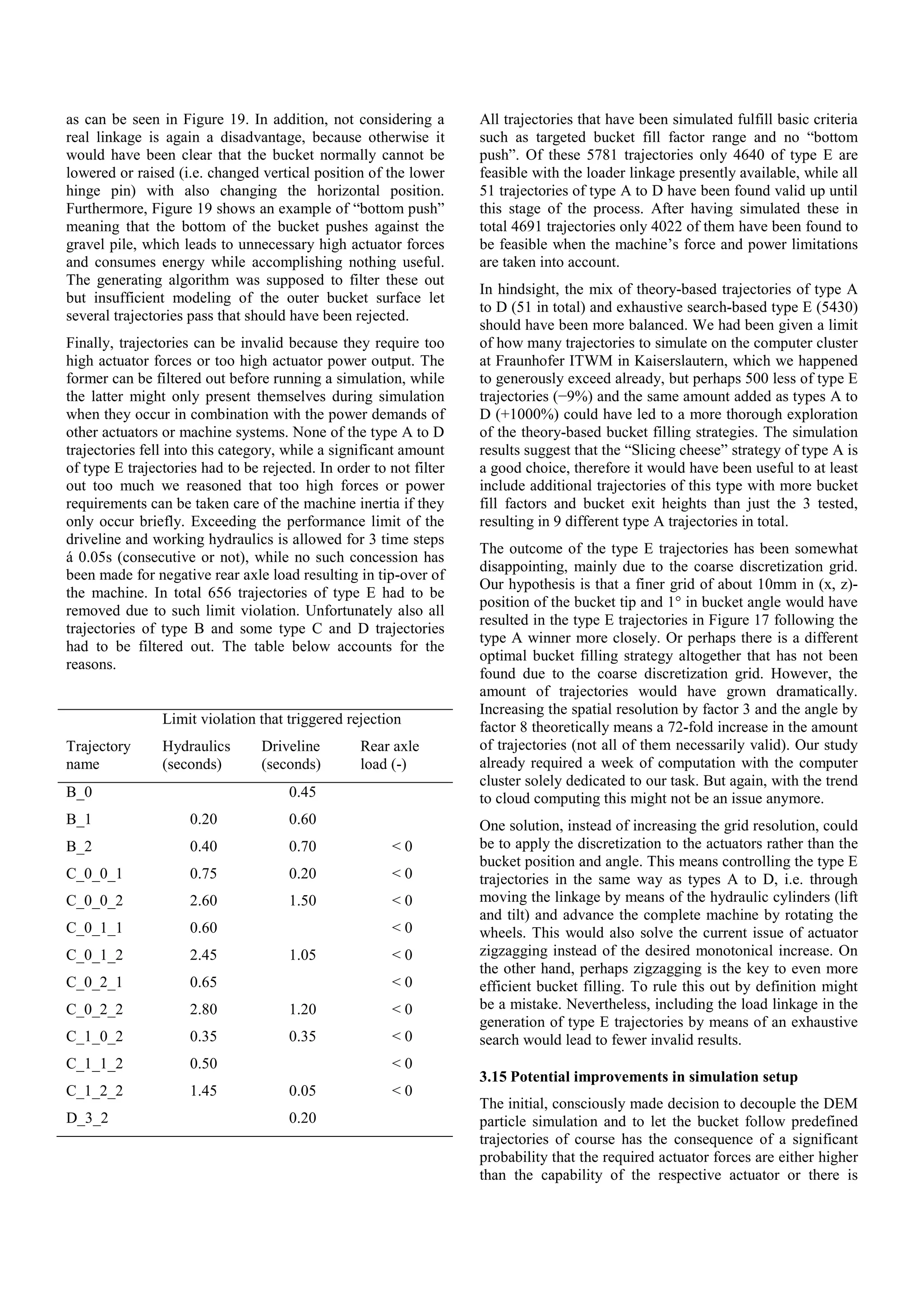
Figure 19: Example of flawed type E trajectory.
Secondly, if, as has been done in the algorithm generating
the type E trajectories, “monotonic increase” is mistakenly
considered sufficiently realized by adding non-negative
increments to the (x, z)-position of the bucket tip and bucket
angle, a null-increment in the former can still result in an
actual decrease of the absolute value of a bucket tip
coordinate when at the same time the bucket angle changes,
as can be seen in Figure 19. In addition, not considering a
real linkage is again a disadvantage, because otherwise it
would have been clear that the bucket normally cannot be
lowered or raised (i.e. changed vertical position of the lower
hinge pin) with also changing the horizontal position.
Furthermore, Figure 19 shows an example of “bottom push”
meaning that the bottom of the bucket pushes against the
gravel pile, which leads to unnecessary high actuator forces
and consumes energy while accomplishing nothing useful.
The generating algorithm was supposed to filter these out
but insufficient modeling of the outer bucket surface let
several trajectories pass that should have been rejected.
Finally, trajectories can be invalid because they require too
high actuator forces or too high actuator power output. The
former can be filtered out before running a simulation, while
the latter might only present themselves during simulation
when they occur in combination with the power demands of
other actuators or machine systems. None of the type A to D
trajectories fell into this category, while a significant amount
of type E trajectories had to be rejected. In order to not filter
out too much we reasoned that too high forces or power
requirements can be taken care of the machine inertia if they
only occur briefly. Exceeding the performance limit of the
driveline and working hydraulics is allowed for 3 time steps
á 0.05s (consecutive or not), while no such concession has
been made for negative rear axle load resulting in tip-over of
the machine. In total 656 trajectories of type E had to be
removed due to such limit violation. Unfortunately also all
trajectories of type B and some type C and D trajectories
had to be filtered out. The table below accounts for the
reasons.
Limit violation that triggered rejection
Trajectory
name
Hydraulics
(seconds)
Driveline
(seconds)
Rear axle
load (-)
B_0 0.45
B_1 0.20 0.60
B_2 0.40 0.70 < 0
C_0_0_1 0.75 0.20 < 0
C_0_0_2 2.60 1.50 < 0
C_0_1_1 0.60 < 0
C_0_1_2 2.45 1.05 < 0
C_0_2_1 0.65 < 0
C_0_2_2 2.80 1.20 < 0
C_1_0_2 0.35 0.35 < 0
C_1_1_2 0.50 < 0
C_1_2_2 1.45 0.05 < 0
D_3_2 0.20
All trajectories that have been simulated fulfill basic criteria
such as targeted bucket fill factor range and no “bottom
push”. Of these 5781 trajectories only 4640 of type E are
feasible with the loader linkage presently available, while all
51 trajectories of type A to D have been found valid up until
this stage of the process. After having simulated these in
total 4691 trajectories only 4022 of them have been found to
be feasible when the machine’s force and power limitations
are taken into account.
In hindsight, the mix of theory-based trajectories of type A
to D (51 in total) and exhaustive search-based type E (5430)
should have been more balanced. We had been given a limit
of how many trajectories to simulate on the computer cluster
at Fraunhofer ITWM in Kaiserslautern, which we happened
to generously exceed already, but perhaps 500 less of type E
trajectories (−9%) and the same amount added as types A to
D (+1000%) could have led to a more thorough exploration
of the theory-based bucket filling strategies. The simulation
results suggest that the “Slicing cheese” strategy of type A is
a good choice, therefore it would have been useful to at least
include additional trajectories of this type with more bucket
fill factors and bucket exit heights than just the 3 tested,
resulting in 9 different type A trajectories in total.
The outcome of the type E trajectories has been somewhat
disappointing, mainly due to the coarse discretization grid.
Our hypothesis is that a finer grid of about 10mm in (x, z)-
position of the bucket tip and 1° in bucket angle would have
resulted in the type E trajectories in Figure 17 following the
type A winner more closely. Or perhaps there is a different
optimal bucket filling strategy altogether that has not been
found due to the coarse discretization grid. However, the
amount of trajectories would have grown dramatically.
Increasing the spatial resolution by factor 3 and the angle by
factor 8 theoretically means a 72-fold increase in the amount
of trajectories (not all of them necessarily valid). Our study
already required a week of computation with the computer
cluster solely dedicated to our task. But again, with the trend
to cloud computing this might not be an issue anymore.
One solution, instead of increasing the grid resolution, could
be to apply the discretization to the actuators rather than the
bucket position and angle. This means controlling the type E
trajectories in the same way as types A to D, i.e. through
moving the linkage by means of the hydraulic cylinders (lift
and tilt) and advance the complete machine by rotating the
wheels. This would also solve the current issue of actuator
zigzagging instead of the desired monotonical increase. On
the other hand, perhaps zigzagging is the key to even more
efficient bucket filling. To rule this out by definition might
be a mistake. Nevertheless, including the load linkage in the
generation of type E trajectories by means of an exhaustive
search would lead to fewer invalid results.
3.15 Potential improvements in simulation setup
The initial, consciously made decision to decouple the DEM
particle simulation and to let the bucket follow predefined
trajectories of course has the consequence of a significant
probability that the required actuator forces are either higher
than the capability of the respective actuator or there is
unused potential for increased performance, which might
result in increased bucket filling efficiency.
In real work the human operator adapts to the machine and
its working environment, which should also be emulated in
simulation. We have reasoned previously that the
computational cost would be far too high to run an all-
inclusive simulation, but perhaps a simple operator model
for the decoupled particle simulation would be sufficient.
For example, the bucket filling rules from [12] could be
implemented to prevent the actuators from exceeding their
respective performance limit: lift when rim pull is too high,
tilt when lifting pressure reaches maximum, etc. Also, the
aforementioned “flipping movement” at the end of bucket
filling together with realistic longitudinal machine control
can be taken care of in such a simple operator model.
With regard to unused potential for increased performance it
is far from certain that fully utilizing the capabilities of all
actuators would lead to highest efficiency of bucket filling.
Also slower actuator movements are worth investigating.
Finally, it has already been mentioned that bucket emptying
as currently covered in part 3 of the machine simulations
should be integrated at the end of part 2, to include it in the
Optimal Control considering each individual bucket load.
4 Physical testing
4.1 Setup and previously reported results
Having completed the simulation study the question arises if
this is also how human operators fill a bucket in real work.
The results from various physical testing of wheel loaders
are available for such endeavor, for example [13] with 18
operators participating, which has been further analyzed in
[14], and the subsequent study presented in [15] with 73
operators participating, further analyzed in [16]. The large
number of test participants, operating in real work in three
different bucket loading applications makes the latter study
especially attractive. The data presented in the following are
therefore taken from this measurement campaign even
though the machine used was not the series hybrid or even
of the same size. A detailed description can be found in [15].
All participants are either Volvo employees or operators at
customers and have a different skill level (novices with less
than 10 hours operating experience, average operators and
experienced professionals). In all analyses the number of
operators is considered to be 80 because three of the 73
participants have been asked to also operate at a different
pace than what they would normally do (both slower and
faster), thus emulating the behavior of a different person.
All operators used the same wheel loader in three machine
applications:
‒ bucket loading of gravel onto a hauler in a short
loading cycle (typical rehandling, performed under
the roof of a large tent to keep conditions stable)
‒ bucket loading of gravel to a hopper in an uphill
load & carry cycle (longer transport than first
application, performed outside)
‒ bucket loading of rock onto a hauler in a short
loading cycle (more difficult bucket filling than
first application, performed outside)
In the paper at hand we have only used the results from the
first application, bucket loading of gravel in short loading
cycles. Figure 20 shows all operators’ performance in terms
of average cycle fuel efficiency over their respective average
cycle productivity. The best performing operator has been
chosen as “Shadow operator” (i.e. the one to compare with).
It can be seen in Figure 20 that the operators’ performance
varies substantially, which would have been expected given
their different skill and experience level. However, papers
[15] and [16] show that also the performance of each single
operator varies significantly between cycles.
Figure 20: All operators’ average cycle fuel efficiency over
respective average cycle productivity. Data from [15].
Figure 21: Top: Average fuel consumed in a complete cycle
vs. only bucket filling (baseline is shadow operator).
Bottom: Average bucket load relative to shadow operator.
All data from [16].
The diagram in the top of Figure 21 shows with blue dots
how much more fuel each operator consumes on average per
cycle in comparison to the Shadow operator (normalized to
100%. The red rings in the plot show how much the bucket
filling phase contributes to that additional fuel consumption
per cycle. Some operators manage to consume less fuel than
the most efficient Shadow operator, but the bottom diagram
reveals that this is due to an even lesser bucket load (i.e. in
terms of fuel efficiency they are still worse than the Shadow
operator as their decrease in fuel consumption is less than
their decrease in bucket load). Figure 21 confirms previous
reporting [6] that bucket filling is the predominant phase in
a short loading cycle when it comes to fuel efficiency.
In the context of the paper at hand it is of interest to examine
whether the data from [15] can support the conclusion that
following the “Slicing cheese” strategy for filling the bucket
leads to an efficient (if not the most efficient) short loading
cycle for a wheel loader working in gravel.
4.2 Analysis of bucket filling trajectories
The large number of data acquired in this measurement
campaign necessitates an automatic analysis, one important
aspect of this being the ability to automatically extract the
bucket filling phase from a continuous series of time data.
Ideally the location of the machine in relation to the gravel
pile would be among the signals recorded (and in high
resolution). However, this has not been the case. In any case
the location of the gravel pile is ever changing since
material is constantly removed by the wheel loader, yet
more material might fall down from the pile’s top like a
landslide.
A solution might be to record the loading cycle on video and
let automatic motion capture take care of locating both
bucket and pile. In the simplest version this would be done
from the side of the pile, but the constantly changing shape
of the gravel pile’s front might be a problem (and a loading
pocket with transparent side walls seems far-fetched).
Filming from a different angle with stereo cameras or time-
of-flight cameras might solve this problem, but requires
sophisticated image analysis. The measurement setup we
used did include a forward-facing camera in the wheel
loader cab, but the frame rate of 1fps and the fish-eye lens
employed make the recorded video feed unsuitable for
precise automatic determination of when and where bucket
filling started. Also, the camera is moving with the machine
and the image is therefore somewhat shaky.
Solutions for automatic detection of loading cycle phases
such as bucket filling have been published [13][17][18],
though it turned out that each of the underlying assumptions
have been violated in our case. For example, it is not
possible to let the gear shift F2→F1 (forward 2 down to 1)
mark the beginning of the bucket filling or even use it to
search back in time to find the beginning, because some
operators such as the Shadow operator “EP15” prefer to
manually activate the kick-down function. Also, each
operator is unique in how deep the gravel pile is initially
penetrated and how fast – both factors affect the resistance
and thus the required traction force, which in turn affects
when the automatic kick-down function triggers the gear
shift. Basing the beginning of the bucket filling phase on
this gear shift is therefore not reliable.
Another possibility seems to be to set the gear shift F1→R2
(forward 1 to reverse 2) as the end of bucket filling and
normalize all filling sequences to this point in time and
space. However, all operators penetrate the pile differently
and to unique depths, which makes it impossible to use this
to find when the bucket filling actually started.
In [13] the beginning of bucket filling is defined by the
operator laying the bucket flat on the ground and not
touching the hydraulic levers again until after the initial
penetration of the gravel pile. In the measurements used
here some operators lay the bucket down very early, farther
away from the gravel pile than others – thus invalidating this
possibility, too. In addition, we discovered that due to the
specific setup for data acquisition the recorded signals for
lift and tilt position have a varying and overall rather poor
sampling rate, mostly 10Hz but sometimes as low as 1Hz.
Finally, a significantly increased torque output of the engine
might indicate the beginning of bucket filling – yet again, all
operators act differently and while some almost operate in a
stop-motion fashion others keep all actuators moving all the
time. The torque output of the engine is determined by the
requirements of hydraulics and driveline, which in turn both
are largely affected by the operator’s use of the machine.
Having run out of options the beginning of bucket filling
and the location of the gravel pile have therefore been
estimated manually using the recorded test data (when is the
bucket laid down, when are gears shifted, etc.) in
combination with the video feed (however poor the image
quality and frame rate). To cope with the amount of data this
has only been done for a few selected operators, among
them the Shadow operator “EP15” (Figure 22).
Figure 22: Manually analyzed operators from [15].
In the following only the bucket filling trajectories of three
operators will be discussed (all of them professional
operators at customers): “EP15”, “EP4” and “EP5”. The
latter have both displayed approximately the same average
cycle productivity and average cycle fuel efficiency, as can
be seen in Figure 22. All trajectories in the following figures
appear stair-shaped, however not necessarily because the
operator controlled the bucket that way (like in a type D
bucket filling strategy), but due to the low sampling rate of
the lift and tilt position signal.
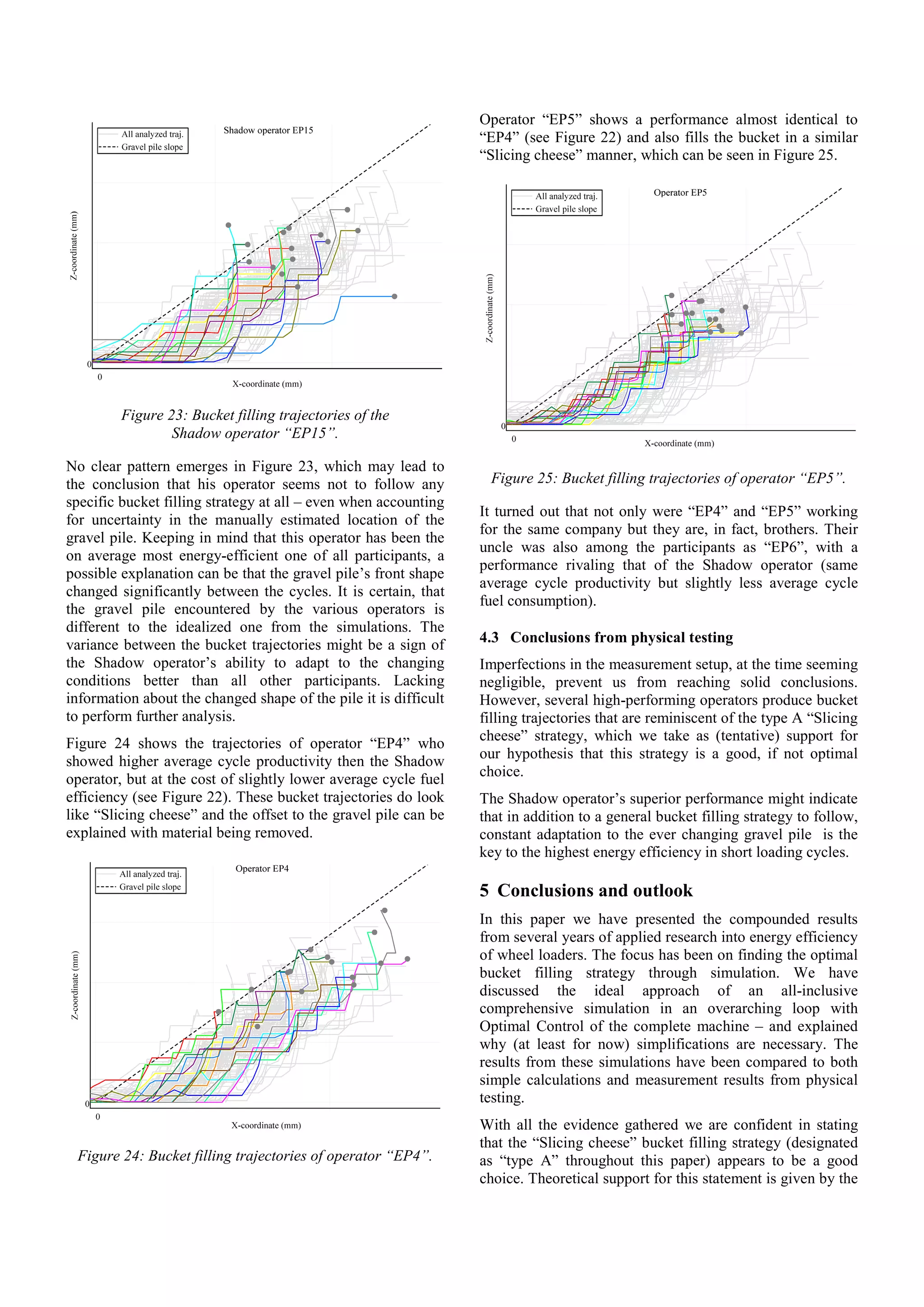
Figure 23 shows the trajectories of the Shadow operator.
Figure 23: Bucket filling trajectories of the
Shadow operator “EP15”.
No clear pattern emerges in Figure 23, which may lead to
the conclusion that his operator seems not to follow any
specific bucket filling strategy at all – even when accounting
for uncertainty in the manually estimated location of the
gravel pile. Keeping in mind that this operator has been the
on average most energy-efficient one of all participants, a
possible explanation can be that the gravel pile’s front shape
changed significantly between the cycles. It is certain, that
the gravel pile encountered by the various operators is
different to the idealized one from the simulations. The
variance between the bucket trajectories might be a sign of
the Shadow operator’s ability to adapt to the changing
conditions better than all other participants. Lacking
information about the changed shape of the pile it is difficult
to perform further analysis.
Figure 24 shows the trajectories of operator “EP4” who
showed higher average cycle productivity then the Shadow
operator, but at the cost of slightly lower average cycle fuel
efficiency (see Figure 22). These bucket trajectories do look
like “Slicing cheese” and the offset to the gravel pile can be
explained with material being removed.
Figure 24: Bucket filling trajectories of operator “EP4”.
Operator “EP5” shows a performance almost identical to
“EP4” (see Figure 22) and also fills the bucket in a similar
“Slicing cheese” manner, which can be seen in Figure 25.
Figure 25: Bucket filling trajectories of operator “EP5”.
It turned out that not only were “EP4” and “EP5” working
for the same company but they are, in fact, brothers. Their
uncle was also among the participants as “EP6”, with a
performance rivaling that of the Shadow operator (same
average cycle productivity but slightly less average cycle
fuel consumption).
4.3 Conclusions from physical testing
Imperfections in the measurement setup, at the time seeming
negligible, prevent us from reaching solid conclusions.
However, several high-performing operators produce bucket
filling trajectories that are reminiscent of the type A “Slicing
cheese” strategy, which we take as (tentative) support for
our hypothesis that this strategy is a good, if not optimal
choice.
The Shadow operator’s superior performance might indicate
that in addition to a general bucket filling strategy to follow,
constant adaptation to the ever changing gravel pile is the
key to the highest energy efficiency in short loading cycles.
5 Conclusions and outlook
In this paper we have presented the compounded results
from several years of applied research into energy efficiency
of wheel loaders. The focus has been on finding the optimal
bucket filling strategy through simulation. We have
discussed the ideal approach of an all-inclusive
comprehensive simulation in an overarching loop with
Optimal Control of the complete machine – and explained
why (at least for now) simplifications are necessary. The
results from these simulations have been compared to both
simple calculations and measurement results from physical
testing.
With all the evidence gathered we are confident in stating
that the “Slicing cheese” bucket filling strategy (designated
as “type A” throughout this paper) appears to be a good
choice. Theoretical support for this statement is given by the
simulation results showing that a type A trajectory has been
selected as winner by the Optimal Control algorithm and
that the nine next best performing trajectories all appear to
approximate the winning one. We find also practical support
in the measurement results of two top-performing operators.
However, we cannot be completely certain, because the
simulated bucket trajectories have not covered the complete
parameter space and the physical testing requires
improvements, too.
Studying both simulation and measurement results we
tentatively conclude that the energy efficiency during bucket
filling appears robust as long as the general trend is a bucket
trajectory of type A “Slicing cheese”.
This is a welcome (though still tentative) confirmation of
what professional machine instructors have been advocating
for many years.
The true efficiency of the type B “Just in & out” strategy
depends on how much additional propulsion work needs to
be invested for building up machine speed prior to ramming
the pile. In most cases this bucket filling strategy should be
avoided, though the general idea of utilizing the machine’s
momentum for initial penetration has merit, if applied
correctly.
In the future the envisioned all-inclusive simulations might
become possible through cloud computing. When this is the
case we suggest generating type E trajectories in a revised
exhaustive search with vastly improved discretization – and
simulating these with an adaptive operator model in the
loop.
Refined physical testing is another task to be performed in
future work, with improved data acquisition and stricter
control of the material, including shape of the gravel pile.
References
[1] R Filla. Evaluating the efficiency of wheel loader
bucket designs and bucket filling strategies with non-
coupled DEM simulations and simple performance
indicators. Schriftenreihe der Forschungsvereinigung
Bau- und Baustoffmaschinen: Baumaschinentechnik
2015 – Maschinen, Prozesse, Vernetzung, 49:273-292,
2015.
http://dx.doi.org/10.13140/RG.2.1.1507.1201
[2] R Filla, M Obermayr, and B Frank. A study to compare
trajectory generation algorithms for automatic bucket
filling in wheel loaders. Proceedings of the 3rd
Commercial Vehicle Technology Symposium 2014,
Kaiserslautern, Germany, March 12-13, 2014.
http://dx.doi.org/10.13140/RG.2.1.3604.2723
[3] R Filla. Optimizing the trajectory of a wheel loader
working in short loading cycles. Proceedings of The 13th
Scandinavian International Conference on Fluid Power
SICFP’13, Linköping, Sweden, June 3-5, 2013.
http://dx.doi.org/10.3384/ecp1392a30
[4] V Nezhadali, B Frank, and L Eriksson. Wheel loader
operation – Optimal control compared to real drive
experience. Control Engineering Practice, 48:1-9,
2016.
http://dx.doi.org/10.1016/j.conengprac.2015.12.015
[5] B Frank and A Fröberg. Establishing an Optimal Work
Cycle for an Alternative Wheel Loader Concept.
Proceedings of the International Exposition for Power
Transmission IFPE 2014, Las Vegas, USA, March 4-8,
2014. ISBN 0-942220-49-8.
[6] R Filla. Quantifying Operability of Working Machines.
Doctoral Thesis, Linköping University, Linköping,
Sweden, 2011.
http://urn.kb.se/resolve?urn=urn:nbn:se:liu:diva-70394
[7] B Frank, J Kleinert, and R Filla. On Optimal Control of
Wheel Loader Actuators in Gravel Applications.
Submitted to Control Engineering Practice, April 2017.
[8] R Filla. Alternative System Solutions for Wheel
Loaders and other Construction Equipment.
Proceedings of The 1st
International CTI Forum
Alternative and Hybrid Drive Trains, Berlin, Germany,
December 4-5, 2008.
http://dx.doi.org/10.13140/RG.2.1.3391.2801
[9] G Stein, A Fröberg, J Martinsson, B Brattberg, R Filla,
J Unnebäck. Fuel efficiency in construction equipment
– optimize the machine as one system. Proceedings of
the 7th
AVL International Commercial Powertrain
Conference 2013, Graz, Austria, May 22-23, 2013.
http://dx.doi.org/10.13140/RG.2.1.2031.4089
[10]Building the world we want to live in. Volvo Spirit
Magazine, 61:10-13, 2016. (URL verified May 17, 2017)
https://www.volvospiritmagazine.com/wp-
content/uploads/2014/02/VS61_EN.pdf
[11]A Hemami. Motion trajectory study in the scooping
operation of an LHD-loader. IEEE Transactions on
Industry Applications, 30(5):1333-1338, 1994.
http://dx.doi.org/10.1109/28.315248
[12]R Filla, A Ericsson, J-O Palmberg. Dynamic Simulation
of Construction Machinery: Towards an Operator
Model. Proceedings of the IFPE 2005 Technical
Conference, Las Vegas (NV), USA, pp 429-438, 2005.
http://www.arxiv.org/abs/cs.CE/0503087
[13]R Filla. Study of a method for assessing operability of
working machines in physical and virtual testing.
International Journal of Vehicle Systems Modelling and
Testing, 7(3):209-234, 2012.
http://dx.doi.org/10.1504/IJVSMT.2012.048939
[14]R Filla, E M G Olsson, B H C von Schéele, K Ohlsson.
A Case Study on Quantifying the Workload of Working
Machine Operators by Means of Psychophysiological
Measurements. The 13th
Scandinavian International
Conference on Fluid Power SICFP’13, Linköping,
Sweden, June 3-5, 2013.
http://dx.doi.org/10.3384/ecp1392a29
[15]B Frank, L Skogh, M Alaküla. On wheel loader fuel
efficiency difference due to operator behaviour
distribution. Proceedings of the 2nd
Commercial Vehicle
Technology Symposium 2012, Kaiserslautern, Germany,
March 13-15, 2012. (URL verified May 17, 2017)
http://www.iea.lth.se/publications/Papers/Frank_2012.p
df
[16]B Frank, L Skogh, R Filla, M Alaküla. On increasing
fuel efficiency by operator assistant systems in a wheel
loader. Proceedings of the 2012 International
Conference on Advanced Vehicle Technologies and
Integration, Changchun, China, July 16-19, 2012, pp.
155-161. ISBN 978-7-111-39909-4.
http://dx.doi.org/10.13140/RG.2.1.3129.1362
[17]K Ohlsson-Öhman. Identifying operator usage of wheel
loaders utilizing pattern recognition techniques. Master
thesis, Division of Automatic Control, Department of
Electrical Engineering, Linköping University,
Linköping, Sweden, 2012.
http://urn.kb.se/resolve?urn=urn:nbn:se:liu:diva-78937
[18]T Nilsson, P Nyberg, C Sundström, E Frisk and
M Krysander. Robust Driving Pattern Detection and
Identification with a Wheel Loader Application.
International journal of vehicle systems modelling and
testing, 1(9):56-76, 2014.
http://dx.doi.org/10.1504/IJVSMT.2014.059156

Towards Finding the Optimal Bucket Filling Strategy through Simulation

  • 1.
    The 15th ScandinavianInternational Conference on Fluid Power, SICFP’17, June 7-9, 2017, Linköping, Sweden Towards Finding the Optimal Bucket Filling Strategy through Simulation R. Filla1 and B. Frank1,2 1 Volvo Construction Equipment, Emerging Technologies, 631 85 Eskilstuna, Sweden 2 Lund University, Faculty of Engineering, 221 00 Lund, Sweden E-mail: reno.filla@volvo.com, bobbie.frank@volvo.com Abstract The purpose of earth-moving equipment like wheel loaders is to engage with the ground or other material. It is therefore obvious that the bucket filling phase must be included when studying optimal machine control over a complete working cycle because total productivity and efficiency of the machine are to a large extent determined by it. This paper reports and discusses the results of research into how to utilize Discrete Element Method simulations in combination with Optimal Control to find the optimal bucket filling strategy and what has been learned regarding preparing and conducting both simulations of bucket filling and physical testing for verification. This paper also discloses which bucket filling strategy appears to be optimal, based on the results so far – and why we cannot be completely certain. Keywords: wheel loaders, bucket filling, working cycle, trajectory, optimization, simulation, optimal control, dynamic programming, tool/ground interaction, discrete-element method 1 Introduction Construction machines can be made – and need to be – significantly more energy efficient. Industry knowledge and published research, including our own, indicate that large improvements can be achieved by approaching this task holistically. Construction machinery OEMs will have to make their journey towards significantly increased energy efficiency with these four milestones in mind: ‒ Understanding the machine as one system ‒ Understanding the interaction between machine, operator and working environment ‒ Understanding the cooperation between several machines and their operators ‒ Understanding the connection to regional, national and international transport and energy systems All these milestones have been previously described in [1]. The topic of this paper relates to milestones 1 and 2 as our research is anchored in the realization that in a working machine like a wheel loader all major systems interact frequently, all phases in a working cycle are connected, and both operator and working environment play a decisive role when it comes to productivity and energy efficiency of the total system. 2 Background Figure 1 depicts a short loading cycle with the characteristic driving pattern in the shape of a V, possible to extend to a Y-pattern, if necessary [2]. Figure 1: Short loading cycle in classic V- or Y-pattern. [2] From phase 1 to 6, the wheel loader operator first fills the bucket in the gravel pile, then drives backwards towards the reversing point (phase 4) and steers the wheel loader to accomplish the aforementioned characteristic V-pattern. The lifting function is engaged the whole time. The operator chooses the reversing point such that having arrived at the load receiver and starting to empty the bucket (phase 6), the lifting height will be sufficient to do so without delay. In case of a bad matching between the machine’s travelling speed and the lifting speed of the bucket, the operator needs to drive back the wheel loader even further than necessary
  • 2.
    for maneuvering alone.This additional leg transforms the V- pattern into a Y. In previous research [3][4] it has been examined whether the driving pattern necessarily has to resemble a V or Y as it appears that this pattern has emerged from the operators’ desire to minimize the personal workload, rather than maximize energy efficiency, for a required productivity. The traditional cycle in Figure 1 might not necessarily be the most productive or the most energy-efficient way for new non-conventional systems like hybrids or autonomous machines where the operator’s requirements are less dominant or taken out of the loop completely. However, papers [3][4] showed that the classic V- or Y-cycle is a good and robust choice and seems to be recommendable for virtually all situations where such driving pattern is not prevented by the layout of the site. Based on this conclusion research has then been focused on how to optimally control the actuators of a wheel loader for maximum energy efficiency [5], basically covering phases 2 to 10 in Figure 1 with an assumed attachment position in the beginning. However, this exclusion of the bucket filling phase is a serious simplification because how the bucket is filled in phase 1 and at what height the bucket is retracted from the pile has a significant influence on the overall energy efficiency of a wheel loader in a short loading cycle [2][6]. We have therefore used DEM (Discrete Element Method) particle simulation to study how bucket filling can be simulated in detail [2]. In order to avoid slowing down simulation of loading cycle phases 2 to 6 a non-coupled approach was chosen for the bucket filling in phase 1, which means that the bucket was considered in isolation, moving along a (large) set of pre-defined trajectories. As discussed at length in [7] this approach has the obvious flaw that the tight coupling of forces leading to a complex interaction of the machine’s subsystems (engine, drivetrain, hydraulics etc.), the work environment and the operator is largely disregarded. Even though the loader’s linkage has been represented through the way the trajectories have been generated [2] and/or how the simulation results have been analyzed [7], this limited approach falls short of the full simulation scope actually required. The overall cycle efficiency value and thus the performance of a particular bucket filling strategy are first apparent after the wheel loader has arrived at the load receiver to empty the bucket. Therefore the simulation must comprise a complete machine model operated by an adaptable operator model in a full working cycle, executed in a comprehensive model of the work place – and run in an overall optimization loop of the bucket trajectory. However, this is not feasible today and must remain a vision for the moment being. We have thus been left with the pragmatic approach of isolating the bucket and prescribing its nominal motion independent of any resistive forces that might interfere with the actual control. Papers [1][2] have discussed the setup and results of these simulations and [1] has also shown a simplistic way of how the evaluate them in the context of a complete loading cycle. The next step for reaching the vision of the comprehensive, integrated optimization described above has been Optimal Control of machine actuators in all phases of a prescribed loading cycle, using Dynamic Programming, which paper [7] reports. The machine studied is the electric series hybrid wheel loader briefly discussed in [8][9], which has been the precursor and foundation of the “LX1” concept loader [10]. In the paper at hand we will revisit the bucket filling in both simulation and practice, discuss how to prepare and conduct testing virtually and physically, and provide a self-critical assessment of the results achieved. 3 Simulation 3.1 Process Figure 2 shows the simulation process employed: the bucket trajectories, generated in MathCad or Matlab, have been transferred as text files to the DEM particle simulation run in Pasimodo, as reported in [2]. The results have been transferred back to MathCad for postprocessing (like converting the forces acting on the bucket into cylinder forces and rim pull demand) and then either passed on to Matlab and the Optimal Control algorithm running wheel loader simulations [7] or kept within MathCad to compute the simple performance indicators published in [1]. Figure 2: Simulated bucket tip trajectories in phase 1. The MathCad parts in this process could just as well have been performed in Matlab, too (in the aftermath of this work all scripts and the toolbox developed for such calculations have in fact been ported to Matlab). The DEM simulations in Pasimodo have been set up and conducted by Martin Obermayr and Jan Kleinert from the Fraunhofer ITWM institute in Kaiserslautern, Germany [2][7]. 3.2 Bucket filling: literature research There are a great many publications, both academic papers and industrial patents (or patent applications) on the topic of bucket automation and autonomous excavation [2]. In a publication from 1994 [11] Hemami studies bucket trajectories in order to minimize energy consumption in the scooping and loading process. He concentrates on the motion pattern itself and does not consider resistive forces in this paper. One of his conclusions is that simply estimating the bucket load achieved as the area between the trajectory and the uncut contour of the material will lead to deviations that need to be corrected by an experimentally determined factor. We have used the same estimation in our study but have a different method of compensation, using results from DEM simulations [2].
  • 3.
    3.3 Trajectory generation:overview Ideally the DEM simulation would be part of the overall simulation that includes the Optimal Control scheme. That way both physicality and optimality (local or global, depending on the method chosen) would be ensured. However, no traditional Optimal Control algorithm can be used as the overall problem is not and cannot be made convex to find gradients for optimization. Instead we used an own algorithm based on Dynamic Programming [7]. However, running one big simulation with a complex machine model in a sufficiently detailed environment, controlled by an adaptive operator model is impossible with the calculation resources typically available, because the computational costs using Dynamic Programming would be extraordinary high (though this can change in the near future, considering cloud computing). Instead, we disconnected the DEM bucket filling simulation from the machine simulation [1][2] by generating a total of 5781 bucket motion trajectories a priori which were then simulated in parallel on a computer cluster of 800 cores for a week. The results of these simulations have then been incorporated into the machine simulation [7]. We have developed four different principle trajectories along which the bucket is moved in DEM simulations. Each trajectory type is the result of interviews with experienced wheel loader operators and represents a different bucket filling strategy commonly employed. In addition to the desired bucket fill factor (i.e. load mass in the bucket in relation to the nominal load) most trajectories types offer at least one parameter to vary the individual shape. The bucket trajectories are generated a priori using a kinematic model of the wheel loader’s front body, complete with linkage, hydraulic cylinders, bucket, and front axle. Controlling the bucket motion indirectly through cylinder displacements and a longitudinal motion of the machine ensures that only valid bucket positions are prescribed, corresponding to a valid state of the wheel loader’s linkage. In addition to these four parametric trajectories a fifth set of bucket motions has been generated as an exploration of “all possible” ways for a bucket to move through a pile and end up with the desired fill factor. In this type of trajectory we only considered the bucket motion, initially without taking linkage constraints into account. Bucket positions that do not correspond to a valid state of the wheel loader’s linkage have been filtered out afterwards. The major simplification with both approaches is that only the nominal motion of the bucket is prescribed, independent of any resistive forces that might interfere with the actual control and without the adaptive behavior of a human operator. This lack of feedback is a significant limitation, but the study gives some meaningful answers, nonetheless. There are clearly also challenges, which will be discussed later. 3.4 Type A: “Slicing cheese” This type is a literal implementation of the bucket filling strategy advocated by professional machine instructors who were interviewed prior to our study. Their advice was to move the bucket such as if carving a slice of constant thickness off the material pile. Figure 3: Example type A trajectory, optimized for exit height at 2m and fill factor 1 (grey: all 9 simulated trajectories of type A). In the top left diagram in Figure 3 we see the trace of the bucket tip moving at a constant distance to the slope until a height of about 2.5m (corresponding to the hinge pin of the bucket being at 2m), at which point the bucket is fully tilted back. The diagrams at the bottom of Figure 3 show how this is accomplished: the bucket is constantly lifted from ground position to exit height (set a priori), while at the same time being tilted back proportionally from initial angle (zero) to maximum angle (which is the slope angle of the material pile, because once the bucket is parallel with the slope, no further advancement can be made without the bucket’s bottom pushing into the material, which creates a large reaction force and is a waste of energy). After stopping at exit height the bucket is just tilted back and retracted. The forward motion of the complete machine is controlled so that the bucket tip is always at a constant distance to the pile’s slope. In this algorithm the exit height can be chosen freely, while the slice thickness is a result of the targeted fill factor and thus subject to parameter optimization (the value satisfying the fill factor requirement is calculated iteratively). 3.5 Type B: “Just in & out” This simple algorithm mimics the bucket filling style of operators who rely mostly on momentum and rim pull (traction force) to fill the bucket: they just push the bucket into the pile, then tilt back and leave. No further advancement is made after the initial penetration. In the top left diagram in Figure 4 we see the trace of the bucket tip accomplished purely by the motions of the hydraulic cylinders without any further longitudinal motion
  • 4.
    after initial penetrationof the pile, as exhibited in the diagram to the right. The bottom left diagram discloses that in order to fulfill the fill factor target, the bucket’s hinge pin height also needed to be increased slightly (ca. 25mm) by using the lift function simultaneously with the tilt function that controls bucket angle. Figure 4: Example type B trajectory, optimized for fill factor 1 (grey: all 3 simulated trajectories of type B). This trajectory type offers no additional parameter since the initial penetration is a result of the targeted fill factor and thus subject to parameter optimization. 3.6 Type C: “Parametric parabola” This algorithm can be parameterized to generate trajectories of seemingly different shapes, mimicking the way most experienced operators fill a bucket with a wheel loader, provided the material is easily handled so that continuous actuator motions are possible. Most operators trying to fill a bucket according to type A “Slicing cheese” will probably end up with a slightly curved trajectory, i.e. type C. In the top left diagram in Figure 5 we see the trace of the bucket tip moving on a quadratic curve in relation to the slope until a height of about 1m (corresponding to hinge pin height of 0.50m) at which point the bucket is fully tilted back. This is accomplished in a similar fashion as for trajectory type A, as can be seen in the bottom diagrams in Figure 5; however, this time the forward motion is controlled so that the bucket tip is always at that distance to the pile’s slope which is prescribed by the quadratic curve. Depending on the parameter values a type C trajectory can be made to resemble a type A “Slicing cheese” or type B “Just in & out” trajectory. The bucket exit height and the control point height where the maximum penetration depth counted from the slope is achieved can be chosen freely, while maximum penetration itself is a result of the targeted fill factor and therefore subject to parameter optimization. Figure 5: Example type C trajectory, optimized for exit height 0.50m, maximum chip depth at 0.4m, and fill factor 1 (grey: all 27 simulated trajectories of type C). 3.7 Type D: “Stairway” This trajectory is composed of an adjustable, pre-defined number of steps, like a stairway. Within each step the wheel loader stands still and only the hydraulic functions lift and tilt are executed. A new step is inserted by advancing machine and bucket forward using the drive train. This mimics the way less experienced operators, or experienced ones working in tough material, reactively fill a bucket by repeatedly advancing into the pile using traction, lifting a little all the time and now and then, when the forward motion has ceased, breaking material by tilting backwards, which makes further advancement into the pile possible [6]. Figure 6: Example type D trajectory, optimized for two steps, depreciation factor 0.5, and fill factor 1 (grey: all 12 simulated trajectories of type D).
  • 5.
    In the topleft diagram in Figure 6 we see an example stairway consisting of two stairs after initial penetration. In between the steps the bucket is constantly lifted and tilted. During forward advancement the bucket height and angle also need to be controlled in order to avoid pressing the bucket’s bottom against the cut surface of the gravel pile. At the end of the sequence the bucket is tilted back fully and then retracted. In this algorithm the number of stairs can be chosen freely, together with a depreciation factor that controls the subsequent advancements in relation to the initial penetration (a depreciation of 0.5 means that the depth of each subsequent penetration is only half as deep as the previous one). The initial penetration depth is a result of the targeted fill factor and therefore derived through parameter optimization by means of iterations. 3.8 Type E: “Exhaustive search” In contrast to the trajectory types A to D, each founded on real-world observations and a specific theory of how the bucket is to be moved through the gravel pile, the idea behind this trajectory type has been to move the bucket along all possible, even counter-intuitive paths as long as there are continuous motions forward and upward and as long as the resulting bucket fill factor is approximately fulfilled. To this end the bucket’s three degrees of freedom have been discretized and the bucket tip has been controlled to move from one grid point to the other with its x- and z-coordinate as two degrees of freedom and the bucket angle as the third [7]. Ideally the discretization would be extremely fine in each dimension, but in order to limit the massive amount of output trajectories the step size in x and z has been a rather coarse 375mm and 8.5° for the target bucket angle. Figure 7: Three examples of type E trajectories (grey: all 4640 simulated and valid trajectories of type E). Note that in contrast to trajectory types A to D this time only the bucket itself has been considered, not the complete loader linkage – which, among other problems, together with the coarse discretization grid results in rather step-wise control of the lift and tilt actuators as well as machine motion, which can be seen in Figure 7. 3.9 Particle simulation The particle simulations utilize the DEM code Pasimodo. The model consists of 16000 spherical and non-rotational particles of diameters ranging from 8 to 12cm. A 5m high pile is modeled as a particle layer of 4m thickness over a solid inclined surface. More details on this setup and lessons learned can be found in [2]. All trajectories have been simulated varying each adjustable parameter in three or four steps (except for the three discretization parameters in type E), which results in the number of simulations as per table below. Type Name Parameters Simulations A Slicing cheese 2 9 B Just in & out 1 3 C Parametric parabola 3 27 D Stairway 2 12 E Exhaustive search (3) 5730 The bucket fill factor achieved is determined as the ratio of the loaded mass to the rated mass of the bucket, the former obtained through the vertical force that is required to balance the bucket after complete retraction from the pile. Due to the complexity of the granular flow the amount of material loaded into the bucket always shows deviations from the target, the latter been simply estimated a priori as the area between the trajectory of the bucket tip and the uncut contour of the material pile. Our approach has therefore been to simulate each trajectory several times with various horizontal offsets and through interpolation, using the simulated fill factors, to determine which profile offset was required to reach the exact bucket fill factor that has been originally aimed for. New trajectories have then been generated with the profile offset added to the initial penetration in the beginning of the filling sequence and verified in a final simulation [2]. 3.10 Particle simulation results: observations Visualizing the simulation results of the various trajectory variants in a rendered video has been found a very suitable approach to both debug models and algorithms, and to learn about various phenomena that occur during bucket filling. Figure 8 shows snapshots from a simulation with a type D trajectory. During the filling phase, a wedge of gravel is moved together with the bucket, as indicated by the color representing the velocity of the material particles. When the bucket is tilted back, some material gets lost. This loss of material is difficult to predict in advance without the help of
  • 6.
    a particle simulation.Our naïve approach to estimate the bucket fill from the area that is formed between the bucket tip trajectory and the pile contour assumes the pile to remain at rest and therefore cannot account for material flow. Figure 8: Snapshots from DEM particle simulation [2]. In order to demonstrate the importance of material flow for the bucket filling, Figure 9 and Figure 10 show snapshots from trajectories types A and B plotted with a vector plot of the particle velocities. Figure 9 shows two snapshots from a simulation with trajectory type A, with a large exit height and high bucket fill factor. During the forward and lifting motion, the material moves together with the bucket. The shape of the pile is according to expectations. The theoretical approach works very well in that phase, shown on the left in Figure 9. However, when lifting the bucket out of the material and tilting back at the end of the trajectory, some material is lost (right in Figure 9) due to the fact that the granular material can only support a certain angle of repose. Excess particles flow back in an avalanche flow. Figure 9: Bucket filling trajectory type A: particle velocities (arrows) during the lift motion (left) and at final tilt (right). Brown: current shape of the pile, light blue: initial shape. In the case of trajectory type B this effect is even more pronounced. Figure 10 shows a snapshot from a simulation with a large bucket fill factor. Two lines drawn on top of the plot indicate the material that flows underneath the bucket and forms a new angle of repose. This observed material loss has an impact on energy efficiency of the working process, since the excess material has been pushed forward and lifted upwards by the bucket, requiring mechanical energy, but instead of keeping it in the bucket it flows back onto the pile. A way to prevent or at least minimize this loss of material would be to combine a forward motion together with tilt-in, however still adhering to the general rule of not pushing the bucket’s bottom into the pile. Figure 10: Bucket filling with trajectory type B: particle flow (arrows). The two lines indicate the material that flows underneath the bucket. Figure 18 shows that there is also a loss of material during bucket retraction: when the filling of the bucket is finished, the wheel loader starts accelerating backwards to get out of the pile. In our simulations the jerk is significantly higher than what is possible in reality, which means that the simulation exaggerates the magnitude of this loss. In any case, the amount of material lost through outflow during bucket retraction is difficult to predict by conventional means. Figure 11: Material loss during bucket retraction. Figure 18 also displays that the material does not flow fully into the bucket, but remains near the cutting edge instead. It would be desirable to fill the bucket more evenly, which human operators achieve by the “flipping movement”, i.e. by briefly and distinctly activating the tilt function, possibly in combination with a longitudinal jerk [2]. 3.11 Analysis with simple performance indicators With the results from the particle simulations published and discussed in [2] and the work with Dynamic Programming at that time not yet finalized we wanted to examine how far it is possible to use the results to compare different bucket designs and different bucket filling strategies in a reasonably fair manner with simple calculations [1]. The natural choice as performance indicator of a trajectory is simply the amount of work that has been invested during its execution. A fair comparison demands acknowledging the different bucket loads achieved: as mentioned previously the obtained bucket load always deviates from the target value – by how much is specific for the trajectory type and the parameter settings. The relationship between bucket load (in t) and invested work (in kJ) is linear only for the lifting part of a trajectory,
  • 7.
    but non-linear forthe filling sequence as a whole. This means that while one way to compare trajectories of similar fill factors is to calculate the specific work invested (in kJ/t), a fair comparison between trajectories of significantly different fill factors is more difficult to achieve. It is therefore recommended to plot performance indicators against respective bucket fill factor (i.e. the ratio of achieved bucket load and the bucket rating according to ISO 7546), also when the performance indicator is already normalized to bucket load, such as specific work invested. We show in [1] that the pure value of the specific work invested in bucket filling is not relevant because it disregards the fact that the achieved result is not only the bucket load itself but also the potential energy achieved by lifting the bucket including its load – which in turn impacts the remainder of the working cycle shown in Figure 1. The height at which the bucket is retracted from the gravel pile thus affects the total energy efficiency of the loading cycle, because it dictates the amount of lifting work still to be performed during driving towards the load receiver, which in turn may affect the driving pattern itself (extension of V to Y). A fair performance indicator must therefore credit the lifting work performed during bucket filling. One might assume the ratio of the potential energy achieved (affected by bucket load and bucket height) to the work invested can be a suitable performance indicator but we show in [1] that is a poor choice (at least for short loading cycles) because it implies that the sole utility of a bucket filling sequence is a load being lifted. It totally neglects the utility of the bucket actually being filled, which will always require a certain amount of work. Besides, while the load lifting included in a bucket filling sequence should be credited, it is wrong to assume it to be essential. In a typical short loading cycle there is ample opportunity for lifting to be performed in the phases 2 to 5 (Figure 1) – and in a typical load & carry cycle (not studied here) the lifting is performed right before reaching the load receiver after a transport phase covering a certain distance. To end bucket filling at too great a height in short loading cycles is impractical because the remaining lift work might be so little that even the shortest driving phase to the load receiver will be too long. This might be a waste, also depending on the general question whether it is more efficient to drive and lift concurrently or sequentially (which in turn must be answered for each machine type, i.e. there might be differences for a conventional loader versus the electric series hybrid we have studied). Furthermore, driving and steering a wheel loader with a bucket fully loaded and raised high gives poor machine stability. Most operators therefore raise the bucket to unloading height as late as possible in the cycle, i.e. as close as possible to the load receiver. This also means that loader operators usually don’t leave the pile at too great a bucket height (generally not above the position where the lifting arms are parallel to the ground). The discussed ratio of potential energy achieved and work invested however rewards higher bucket exit heights over lower values for the same bucket load, which shows that it is not a suitable performance indicator [1]. With the previously discussed measures being unsuitable performance indicators because they either ignore the utility of load lifting included in a filling sequence or over- emphasize it, we reason in [1] that a solution might be to isolate the actual bucket filling by subtracting the lifting included. Since this is a continuous and compound process it is not easily possible to calculate the actual amount of work spent for filling vs. lifting. One practical approximation is to subtract the potential energy achieved at the end of a bucket filling sequence from the work invested for executing the trajectory (Figure 12). Figure 12: “SPI_1”, Potential energy achieved during bucket filling subtracted from the specific work invested. Another possibility is to do the opposite and acknowledge the lifting part, but put it into the context of a full loading cycle. As reasoned previously the bucket filling should not be considered in isolation but rather as one phase in a complete loading cycle. For unloading in phase 6 to happen the bucket needs to be lifted sufficiently in the phases prior to this. Any lifting work that has not been included in bucket filling (phase 1) needs to be performed during driving towards the load receiver (phases 2-5). In the proposed performance indicator the potential energy increase remaining after bucket filling is added to the work invested for executing the trajectory (Figure 13). Figure 13: “SPI_2”, Potential energy increase remaining after bucket filling added to the specific work invested. It can be argued which performance indicator captures the truth better: SPI_1 that deducts included lifting from the
  • 8.
    bucket filling sequenceby subtracting the amount of potential energy achieved at the end of the trajectory or SPI_2 that acknowledges lifting by adding the increase in potential energy still remaining to be achieved in the subsequent phases of the loading cycle. In both indicators the lifting work invested to achieve an increase in potential energy is assumed without losses, which is a notable simplification. Also, neither SPI_1 nor SPI_2 as published in [1] include the driveline work, which means that bucket filling sequences resulting in low bucket loads are not suitably punished for poor transport efficiency (basically: the longer the transport section in a working cycle the better it is to fill the bucket as much as possible). With the results from the Optimal Control simulations at hand a new simple performance indicator SPI_3 has been formulated considering the transport work simply as rolling resistance multiplied by the distance driven, with the former assumed as 3% of the machine weight (calculated separately for loaded and unloaded). The result is shown in Figure 14. Figure 14: “SPI_3”, Transport and potential energy increase remaining added to the specific work invested. All simple performance indicators give essentially the same picture: the “Slicing cheese” trajectory type A appears superior to any other bucket filling strategy, especially compared to the B-type’s “Just in & out” style, which performs strikingly poor. The argument is sometimes made that such a type B trajectory must be surely efficient as very little work is invested into lifting the load and the work required for penetration is free because (at least initially) the momentum of the moving wheel loader is used. Of course, this work is not really “for free” in most cases, because accelerating the machine to a certain speed requires work, meaning that the energy demand is just shifted in time. However, there is at least one case where this is partly true: when the wheel loader approaches from a downhill slope and the operator instead of using the service brakes slows down by letting the bucket penetrating the gravel pile, thus using the gravel pile as an “external brake”. If the machine in question is a hybrid then it needs to be analyzed in detail whether recuperative or regenerative braking would have been the better choice from an overall energy management perspective. However, for realistic speeds the loader’s momentum is not sufficient to penetrate the gravel pile as deep as needed. Furthermore a smooth penetration requires constant or even increasing rim pull, but in reality the effective forward force decreases due to the increasing resistance the deeper the bucket penetrates the gravel pile. In [1] we show that the type B strategy is not very efficient when correctly accounting for the penetration work, even without having credited the lifting work included in all other trajectory types. In a thought experiment we investigated how the different bucket filling strategies would compete if the work required for initial bucket penetration actually was for free. Little surprising, in this thought experiment the B- type trajectories are heavily favored as per definition all penetration work is performed in one go in the beginning of this bucket filling strategy. But again, it is not realistic. 3.12 Optimal Control In this section we describe the Optimal Control utilizing simulation of a loader in a complete working cycle. To begin with, it must be noted that the machine studied in simulation is an electric series hybrid wheel loader. All conclusions with respect to optimality of certain bucket filling strategies might need revision when a conventional wheel loader is considered. The series hybrid loader has previously been hinted on in [8] and briefly described in [9]. The machine is equipped with a downsized diesel engine, and four electric machines as can be seen in Figure 15. Figure 15: Electric series hybrid wheel loader [9]. Grey background: simulated subsystems. In the series hybrid machine the main power systems are mechanically decoupled from each other and the main concern in terms of system control is the sum of electric power on the DC link. In contrast to this, in a conventional machine both hydraulics and driveline are mechanically coupled to each other and connected to the engine, which presents several challenges in terms of energy efficiency and operability [6]. The reason for having chosen the series hybrid for this study is that we did not want the machine system’s lack of degrees of freedom stand in the way of exploring the optimal bucket filling strategy.
  • 9.
    Dynamic Programming hasbeen used as Optimal Control method. The specific implementation details can be found in [7], but some basic information is necessary to include here: the algorithm developed seeks the global optimum in terms of fuel efficiency, though for practicality converted to electrical actuator energy efficiency – thus excluding the generator set and energy storage, which would be a topic on its own. The simulated subsystems have been marked with a grey background in Figure 15. For computational efficiency the Optimal Control has been split into four parts: In part 1 bucket filling, phase 1 in Figure 1, is handled by choosing between the various bucket trajectories. Backward simulation is performed to calculate the energy required for following the trajectories without deviation. Phases 2 to 5 are covered by the Dynamic Programming algorithm in part 2. Each bucket trajectory from part 1 gives a starting point for part 2, unique in bucket position and load. Optimal Control is performed to find the optimal, i.e. energy-minimizing way to get from the starting point to the point of unloading while maintaining cycle time and thus productivity. Part 3 covers phase 6, bucket emptying. Ideally this should have been included in part 2 and thus treated individually for each trajectory, because of the different bucket loads. Instead, Optimal Control has been performed one time only to find the minimal energy required to empty a bucket with the load achieved on average with the simulated trajectories. The effect of this is that working cycles with comparatively low bucket load are not suitably punished for the low transport efficiency. However, it is estimated that the impact on the overall conclusions from this study is not severe. Finally, in part 4 Optimal Control has been performed once for phases 7 to 10, as independent on the chosen bucket filling trajectory from this point on the loader starts always in the same position with the same bucket load (zero) and stops at the same position in front of the gravel pile, ready to start a new working cycle. The details of the driving cycle in parts 2 and 4, i.e. how long to drive backward/forward, where to reverse, when to steer etc., have not been subject to optimization. Instead, we have used the values from the most energy-efficient operator in the measurements reported in [15] and refer otherwise to previous work [3][4]. The total energy requirement is the sum of required energy for all four parts. After having computed this for all 5781 bucket filling trajectories the optimal strategy has been determined as the one with the lowest specific work for the complete working cycle, i.e. the lowest ratio of total energy requirement and bucket load. Figure 16 shows the results. Figure 17 shows the winning trajectory A_0_2 in front of the Top 10 (in terms of electrical actuator energy efficiency) trajectories in blue, with all simulated trajectories in the background in grey. The table below lists all Top 10 trajectories and provides details about their performance. Figure 16: Simulation results for all bucket filling trajectories continued in a complete working cycle. Figure 17: Winning trajectory A_0_2 in front of Top 10. Optimal Control, complete cycle Simple performance indicators Trajectory name Rank (#) Delta to #1 (%) Rank SPI_1 (#) Rank SPI_2 (#) Rank SPI_3 (#) A_0_2 1 56 10 3 E_4423 2 0.09 779 146 36 D_0_2 3 1.19 1843 543 133 E_4422 4 1.25 700 148 45 D_2_2 5 1.28 1230 216 37 E_4299 6 1.91 1913 525 111 E_5780 7 2.51 1195 271 70 E_6171 8 2.72 124 20 10 E_5034 9 2.80 552 129 46 E_4426 10 2.91 798 209 78
  • 10.
    3.13 Discussion ofthe simulation results and conclusions It appears that all top trajectories are emulating the winning “Slicing cheese”-type trajectory A_0_2 to a certain degree (Figure 17). The table above also includes the results of the simple performance indicators described previously. It show that according to the simulations the second to best trajectory E_4423 is only 0.09% less energy efficient than the winner A_0_2 (stated in relation to the absolute value of A_0_2’s electrical actuator energy efficiency), however using the simple performance indicator SPI_2 the E_4423 trajectory is ranked #146 and even worse when using SPI_1 (#779). It is apparent that SPI_2, which adds the remaining increase in potential energy to the work invested in bucket filling, is a slightly better (though still not suitable) approximation than SPI_1, which subtracts the potential energy gained in bucket filling from the work invested. Both, however, suffer from not having the transport work included. The table shows that the new SPI_3 performs best among the simple performance indicators since all the Top 10 trajectories from the simulations are also ranked high by the SPI_3 (all are within the Top 3%). However, it has become clear that these simple performance indicators have significant limitations. From the results presented above we can conclude that with regard to bucket filling strategy the type A “Slicing cheese” trajectory is a good choice to start with – and certainly is an easy to remember mental model for the wheel loader operator – but also that moderate deviations from that ideal path don’t seem to matter too much in terms of total energy efficiency. However, it should be noted that the simulations conducted contain some significant simplifications. There are thus a number of potential improvements, which will be covered in the following two sections. 3.14 Potential improvements in trajectory generation All trajectories that have been found valid for inclusion in further simulation are portrayed in Figure 18. Figure 18: All simulated and valid bucket tip trajectories. The additional attribute “valid” needs explanation: all bucket trajectories of types A to D have been generated by moving the corresponding machine actuators, lift and tilt cylinder as well generating a forward motion through simulated wheel rotation. Transmitted through the linkage these actuator movements automatically resulted in valid bucket trajectories. This has not been the case for the bucket trajectories of type E generated in the exhaustive search. Since only the bucket has been moved through the pile, with focus on the position of the bucket tip and bucket angle, several possibilities for invalid trajectories can occur (and have done so in sizeable amounts): To begin with, a monotonically increasing (x, z)-position of the bucket tip together with a monotonically increasing bucket angle does not automatically lead to monotonically increasing actuator positions of the machine. As can be seen in Figure 7, even though the bucket tip continuously moves up and forward, the corresponding lift and tilt cylinder as well as the complete machine still can be forced to move backward on occasion, depending on the geometry of the loader linkage. These results have not been filtered out by us, because we reasoned that either the corresponding energy requirement will automatically punish such behavior – or, in case of actually lower energy demand, a partly or fully automated machine will be able to execute such trajectory. Also, a different kind of loader linkage might be able to produce these bucket motions with more benign actuator movements. We therefore decided to not exclude trajectories purely based on such unconventional machine actuator movements. (However, this latter consideration is inconsistent with the fact that we then ran the Optimal Control algorithm to accomplish the actuator motions that are required for today’s linkage. Forcing actuators to move back and forth requires more energy than continuous forward motions, which means that these bucket trajectories might have been punished with higher energy demand purely because we employed today’s wheel loader linkage to accomplish them.) Figure 19: Example of flawed type E trajectory. Secondly, if, as has been done in the algorithm generating the type E trajectories, “monotonic increase” is mistakenly considered sufficiently realized by adding non-negative increments to the (x, z)-position of the bucket tip and bucket angle, a null-increment in the former can still result in an actual decrease of the absolute value of a bucket tip coordinate when at the same time the bucket angle changes,
  • 11.
    as can beseen in Figure 19. In addition, not considering a real linkage is again a disadvantage, because otherwise it would have been clear that the bucket normally cannot be lowered or raised (i.e. changed vertical position of the lower hinge pin) with also changing the horizontal position. Furthermore, Figure 19 shows an example of “bottom push” meaning that the bottom of the bucket pushes against the gravel pile, which leads to unnecessary high actuator forces and consumes energy while accomplishing nothing useful. The generating algorithm was supposed to filter these out but insufficient modeling of the outer bucket surface let several trajectories pass that should have been rejected. Finally, trajectories can be invalid because they require too high actuator forces or too high actuator power output. The former can be filtered out before running a simulation, while the latter might only present themselves during simulation when they occur in combination with the power demands of other actuators or machine systems. None of the type A to D trajectories fell into this category, while a significant amount of type E trajectories had to be rejected. In order to not filter out too much we reasoned that too high forces or power requirements can be taken care of the machine inertia if they only occur briefly. Exceeding the performance limit of the driveline and working hydraulics is allowed for 3 time steps á 0.05s (consecutive or not), while no such concession has been made for negative rear axle load resulting in tip-over of the machine. In total 656 trajectories of type E had to be removed due to such limit violation. Unfortunately also all trajectories of type B and some type C and D trajectories had to be filtered out. The table below accounts for the reasons. Limit violation that triggered rejection Trajectory name Hydraulics (seconds) Driveline (seconds) Rear axle load (-) B_0 0.45 B_1 0.20 0.60 B_2 0.40 0.70 < 0 C_0_0_1 0.75 0.20 < 0 C_0_0_2 2.60 1.50 < 0 C_0_1_1 0.60 < 0 C_0_1_2 2.45 1.05 < 0 C_0_2_1 0.65 < 0 C_0_2_2 2.80 1.20 < 0 C_1_0_2 0.35 0.35 < 0 C_1_1_2 0.50 < 0 C_1_2_2 1.45 0.05 < 0 D_3_2 0.20 All trajectories that have been simulated fulfill basic criteria such as targeted bucket fill factor range and no “bottom push”. Of these 5781 trajectories only 4640 of type E are feasible with the loader linkage presently available, while all 51 trajectories of type A to D have been found valid up until this stage of the process. After having simulated these in total 4691 trajectories only 4022 of them have been found to be feasible when the machine’s force and power limitations are taken into account. In hindsight, the mix of theory-based trajectories of type A to D (51 in total) and exhaustive search-based type E (5430) should have been more balanced. We had been given a limit of how many trajectories to simulate on the computer cluster at Fraunhofer ITWM in Kaiserslautern, which we happened to generously exceed already, but perhaps 500 less of type E trajectories (−9%) and the same amount added as types A to D (+1000%) could have led to a more thorough exploration of the theory-based bucket filling strategies. The simulation results suggest that the “Slicing cheese” strategy of type A is a good choice, therefore it would have been useful to at least include additional trajectories of this type with more bucket fill factors and bucket exit heights than just the 3 tested, resulting in 9 different type A trajectories in total. The outcome of the type E trajectories has been somewhat disappointing, mainly due to the coarse discretization grid. Our hypothesis is that a finer grid of about 10mm in (x, z)- position of the bucket tip and 1° in bucket angle would have resulted in the type E trajectories in Figure 17 following the type A winner more closely. Or perhaps there is a different optimal bucket filling strategy altogether that has not been found due to the coarse discretization grid. However, the amount of trajectories would have grown dramatically. Increasing the spatial resolution by factor 3 and the angle by factor 8 theoretically means a 72-fold increase in the amount of trajectories (not all of them necessarily valid). Our study already required a week of computation with the computer cluster solely dedicated to our task. But again, with the trend to cloud computing this might not be an issue anymore. One solution, instead of increasing the grid resolution, could be to apply the discretization to the actuators rather than the bucket position and angle. This means controlling the type E trajectories in the same way as types A to D, i.e. through moving the linkage by means of the hydraulic cylinders (lift and tilt) and advance the complete machine by rotating the wheels. This would also solve the current issue of actuator zigzagging instead of the desired monotonical increase. On the other hand, perhaps zigzagging is the key to even more efficient bucket filling. To rule this out by definition might be a mistake. Nevertheless, including the load linkage in the generation of type E trajectories by means of an exhaustive search would lead to fewer invalid results. 3.15 Potential improvements in simulation setup The initial, consciously made decision to decouple the DEM particle simulation and to let the bucket follow predefined trajectories of course has the consequence of a significant probability that the required actuator forces are either higher than the capability of the respective actuator or there is
  • 12.
    unused potential forincreased performance, which might result in increased bucket filling efficiency. In real work the human operator adapts to the machine and its working environment, which should also be emulated in simulation. We have reasoned previously that the computational cost would be far too high to run an all- inclusive simulation, but perhaps a simple operator model for the decoupled particle simulation would be sufficient. For example, the bucket filling rules from [12] could be implemented to prevent the actuators from exceeding their respective performance limit: lift when rim pull is too high, tilt when lifting pressure reaches maximum, etc. Also, the aforementioned “flipping movement” at the end of bucket filling together with realistic longitudinal machine control can be taken care of in such a simple operator model. With regard to unused potential for increased performance it is far from certain that fully utilizing the capabilities of all actuators would lead to highest efficiency of bucket filling. Also slower actuator movements are worth investigating. Finally, it has already been mentioned that bucket emptying as currently covered in part 3 of the machine simulations should be integrated at the end of part 2, to include it in the Optimal Control considering each individual bucket load. 4 Physical testing 4.1 Setup and previously reported results Having completed the simulation study the question arises if this is also how human operators fill a bucket in real work. The results from various physical testing of wheel loaders are available for such endeavor, for example [13] with 18 operators participating, which has been further analyzed in [14], and the subsequent study presented in [15] with 73 operators participating, further analyzed in [16]. The large number of test participants, operating in real work in three different bucket loading applications makes the latter study especially attractive. The data presented in the following are therefore taken from this measurement campaign even though the machine used was not the series hybrid or even of the same size. A detailed description can be found in [15]. All participants are either Volvo employees or operators at customers and have a different skill level (novices with less than 10 hours operating experience, average operators and experienced professionals). In all analyses the number of operators is considered to be 80 because three of the 73 participants have been asked to also operate at a different pace than what they would normally do (both slower and faster), thus emulating the behavior of a different person. All operators used the same wheel loader in three machine applications: ‒ bucket loading of gravel onto a hauler in a short loading cycle (typical rehandling, performed under the roof of a large tent to keep conditions stable) ‒ bucket loading of gravel to a hopper in an uphill load & carry cycle (longer transport than first application, performed outside) ‒ bucket loading of rock onto a hauler in a short loading cycle (more difficult bucket filling than first application, performed outside) In the paper at hand we have only used the results from the first application, bucket loading of gravel in short loading cycles. Figure 20 shows all operators’ performance in terms of average cycle fuel efficiency over their respective average cycle productivity. The best performing operator has been chosen as “Shadow operator” (i.e. the one to compare with). It can be seen in Figure 20 that the operators’ performance varies substantially, which would have been expected given their different skill and experience level. However, papers [15] and [16] show that also the performance of each single operator varies significantly between cycles. Figure 20: All operators’ average cycle fuel efficiency over respective average cycle productivity. Data from [15]. Figure 21: Top: Average fuel consumed in a complete cycle vs. only bucket filling (baseline is shadow operator). Bottom: Average bucket load relative to shadow operator. All data from [16].
  • 13.
    The diagram inthe top of Figure 21 shows with blue dots how much more fuel each operator consumes on average per cycle in comparison to the Shadow operator (normalized to 100%. The red rings in the plot show how much the bucket filling phase contributes to that additional fuel consumption per cycle. Some operators manage to consume less fuel than the most efficient Shadow operator, but the bottom diagram reveals that this is due to an even lesser bucket load (i.e. in terms of fuel efficiency they are still worse than the Shadow operator as their decrease in fuel consumption is less than their decrease in bucket load). Figure 21 confirms previous reporting [6] that bucket filling is the predominant phase in a short loading cycle when it comes to fuel efficiency. In the context of the paper at hand it is of interest to examine whether the data from [15] can support the conclusion that following the “Slicing cheese” strategy for filling the bucket leads to an efficient (if not the most efficient) short loading cycle for a wheel loader working in gravel. 4.2 Analysis of bucket filling trajectories The large number of data acquired in this measurement campaign necessitates an automatic analysis, one important aspect of this being the ability to automatically extract the bucket filling phase from a continuous series of time data. Ideally the location of the machine in relation to the gravel pile would be among the signals recorded (and in high resolution). However, this has not been the case. In any case the location of the gravel pile is ever changing since material is constantly removed by the wheel loader, yet more material might fall down from the pile’s top like a landslide. A solution might be to record the loading cycle on video and let automatic motion capture take care of locating both bucket and pile. In the simplest version this would be done from the side of the pile, but the constantly changing shape of the gravel pile’s front might be a problem (and a loading pocket with transparent side walls seems far-fetched). Filming from a different angle with stereo cameras or time- of-flight cameras might solve this problem, but requires sophisticated image analysis. The measurement setup we used did include a forward-facing camera in the wheel loader cab, but the frame rate of 1fps and the fish-eye lens employed make the recorded video feed unsuitable for precise automatic determination of when and where bucket filling started. Also, the camera is moving with the machine and the image is therefore somewhat shaky. Solutions for automatic detection of loading cycle phases such as bucket filling have been published [13][17][18], though it turned out that each of the underlying assumptions have been violated in our case. For example, it is not possible to let the gear shift F2→F1 (forward 2 down to 1) mark the beginning of the bucket filling or even use it to search back in time to find the beginning, because some operators such as the Shadow operator “EP15” prefer to manually activate the kick-down function. Also, each operator is unique in how deep the gravel pile is initially penetrated and how fast – both factors affect the resistance and thus the required traction force, which in turn affects when the automatic kick-down function triggers the gear shift. Basing the beginning of the bucket filling phase on this gear shift is therefore not reliable. Another possibility seems to be to set the gear shift F1→R2 (forward 1 to reverse 2) as the end of bucket filling and normalize all filling sequences to this point in time and space. However, all operators penetrate the pile differently and to unique depths, which makes it impossible to use this to find when the bucket filling actually started. In [13] the beginning of bucket filling is defined by the operator laying the bucket flat on the ground and not touching the hydraulic levers again until after the initial penetration of the gravel pile. In the measurements used here some operators lay the bucket down very early, farther away from the gravel pile than others – thus invalidating this possibility, too. In addition, we discovered that due to the specific setup for data acquisition the recorded signals for lift and tilt position have a varying and overall rather poor sampling rate, mostly 10Hz but sometimes as low as 1Hz. Finally, a significantly increased torque output of the engine might indicate the beginning of bucket filling – yet again, all operators act differently and while some almost operate in a stop-motion fashion others keep all actuators moving all the time. The torque output of the engine is determined by the requirements of hydraulics and driveline, which in turn both are largely affected by the operator’s use of the machine. Having run out of options the beginning of bucket filling and the location of the gravel pile have therefore been estimated manually using the recorded test data (when is the bucket laid down, when are gears shifted, etc.) in combination with the video feed (however poor the image quality and frame rate). To cope with the amount of data this has only been done for a few selected operators, among them the Shadow operator “EP15” (Figure 22). Figure 22: Manually analyzed operators from [15]. In the following only the bucket filling trajectories of three operators will be discussed (all of them professional operators at customers): “EP15”, “EP4” and “EP5”. The latter have both displayed approximately the same average cycle productivity and average cycle fuel efficiency, as can be seen in Figure 22. All trajectories in the following figures appear stair-shaped, however not necessarily because the operator controlled the bucket that way (like in a type D bucket filling strategy), but due to the low sampling rate of the lift and tilt position signal. Figure 23 shows the trajectories of the Shadow operator.
  • 14.
    Figure 23: Bucketfilling trajectories of the Shadow operator “EP15”. No clear pattern emerges in Figure 23, which may lead to the conclusion that his operator seems not to follow any specific bucket filling strategy at all – even when accounting for uncertainty in the manually estimated location of the gravel pile. Keeping in mind that this operator has been the on average most energy-efficient one of all participants, a possible explanation can be that the gravel pile’s front shape changed significantly between the cycles. It is certain, that the gravel pile encountered by the various operators is different to the idealized one from the simulations. The variance between the bucket trajectories might be a sign of the Shadow operator’s ability to adapt to the changing conditions better than all other participants. Lacking information about the changed shape of the pile it is difficult to perform further analysis. Figure 24 shows the trajectories of operator “EP4” who showed higher average cycle productivity then the Shadow operator, but at the cost of slightly lower average cycle fuel efficiency (see Figure 22). These bucket trajectories do look like “Slicing cheese” and the offset to the gravel pile can be explained with material being removed. Figure 24: Bucket filling trajectories of operator “EP4”. Operator “EP5” shows a performance almost identical to “EP4” (see Figure 22) and also fills the bucket in a similar “Slicing cheese” manner, which can be seen in Figure 25. Figure 25: Bucket filling trajectories of operator “EP5”. It turned out that not only were “EP4” and “EP5” working for the same company but they are, in fact, brothers. Their uncle was also among the participants as “EP6”, with a performance rivaling that of the Shadow operator (same average cycle productivity but slightly less average cycle fuel consumption). 4.3 Conclusions from physical testing Imperfections in the measurement setup, at the time seeming negligible, prevent us from reaching solid conclusions. However, several high-performing operators produce bucket filling trajectories that are reminiscent of the type A “Slicing cheese” strategy, which we take as (tentative) support for our hypothesis that this strategy is a good, if not optimal choice. The Shadow operator’s superior performance might indicate that in addition to a general bucket filling strategy to follow, constant adaptation to the ever changing gravel pile is the key to the highest energy efficiency in short loading cycles. 5 Conclusions and outlook In this paper we have presented the compounded results from several years of applied research into energy efficiency of wheel loaders. The focus has been on finding the optimal bucket filling strategy through simulation. We have discussed the ideal approach of an all-inclusive comprehensive simulation in an overarching loop with Optimal Control of the complete machine – and explained why (at least for now) simplifications are necessary. The results from these simulations have been compared to both simple calculations and measurement results from physical testing. With all the evidence gathered we are confident in stating that the “Slicing cheese” bucket filling strategy (designated as “type A” throughout this paper) appears to be a good choice. Theoretical support for this statement is given by the
  • 15.
    simulation results showingthat a type A trajectory has been selected as winner by the Optimal Control algorithm and that the nine next best performing trajectories all appear to approximate the winning one. We find also practical support in the measurement results of two top-performing operators. However, we cannot be completely certain, because the simulated bucket trajectories have not covered the complete parameter space and the physical testing requires improvements, too. Studying both simulation and measurement results we tentatively conclude that the energy efficiency during bucket filling appears robust as long as the general trend is a bucket trajectory of type A “Slicing cheese”. This is a welcome (though still tentative) confirmation of what professional machine instructors have been advocating for many years. The true efficiency of the type B “Just in & out” strategy depends on how much additional propulsion work needs to be invested for building up machine speed prior to ramming the pile. In most cases this bucket filling strategy should be avoided, though the general idea of utilizing the machine’s momentum for initial penetration has merit, if applied correctly. In the future the envisioned all-inclusive simulations might become possible through cloud computing. When this is the case we suggest generating type E trajectories in a revised exhaustive search with vastly improved discretization – and simulating these with an adaptive operator model in the loop. Refined physical testing is another task to be performed in future work, with improved data acquisition and stricter control of the material, including shape of the gravel pile. References [1] R Filla. Evaluating the efficiency of wheel loader bucket designs and bucket filling strategies with non- coupled DEM simulations and simple performance indicators. Schriftenreihe der Forschungsvereinigung Bau- und Baustoffmaschinen: Baumaschinentechnik 2015 – Maschinen, Prozesse, Vernetzung, 49:273-292, 2015. http://dx.doi.org/10.13140/RG.2.1.1507.1201 [2] R Filla, M Obermayr, and B Frank. A study to compare trajectory generation algorithms for automatic bucket filling in wheel loaders. Proceedings of the 3rd Commercial Vehicle Technology Symposium 2014, Kaiserslautern, Germany, March 12-13, 2014. http://dx.doi.org/10.13140/RG.2.1.3604.2723 [3] R Filla. Optimizing the trajectory of a wheel loader working in short loading cycles. Proceedings of The 13th Scandinavian International Conference on Fluid Power SICFP’13, Linköping, Sweden, June 3-5, 2013. http://dx.doi.org/10.3384/ecp1392a30 [4] V Nezhadali, B Frank, and L Eriksson. Wheel loader operation – Optimal control compared to real drive experience. Control Engineering Practice, 48:1-9, 2016. http://dx.doi.org/10.1016/j.conengprac.2015.12.015 [5] B Frank and A Fröberg. Establishing an Optimal Work Cycle for an Alternative Wheel Loader Concept. Proceedings of the International Exposition for Power Transmission IFPE 2014, Las Vegas, USA, March 4-8, 2014. ISBN 0-942220-49-8. [6] R Filla. Quantifying Operability of Working Machines. Doctoral Thesis, Linköping University, Linköping, Sweden, 2011. http://urn.kb.se/resolve?urn=urn:nbn:se:liu:diva-70394 [7] B Frank, J Kleinert, and R Filla. On Optimal Control of Wheel Loader Actuators in Gravel Applications. Submitted to Control Engineering Practice, April 2017. [8] R Filla. Alternative System Solutions for Wheel Loaders and other Construction Equipment. Proceedings of The 1st International CTI Forum Alternative and Hybrid Drive Trains, Berlin, Germany, December 4-5, 2008. http://dx.doi.org/10.13140/RG.2.1.3391.2801 [9] G Stein, A Fröberg, J Martinsson, B Brattberg, R Filla, J Unnebäck. Fuel efficiency in construction equipment – optimize the machine as one system. Proceedings of the 7th AVL International Commercial Powertrain Conference 2013, Graz, Austria, May 22-23, 2013. http://dx.doi.org/10.13140/RG.2.1.2031.4089 [10]Building the world we want to live in. Volvo Spirit Magazine, 61:10-13, 2016. (URL verified May 17, 2017) https://www.volvospiritmagazine.com/wp- content/uploads/2014/02/VS61_EN.pdf [11]A Hemami. Motion trajectory study in the scooping operation of an LHD-loader. IEEE Transactions on Industry Applications, 30(5):1333-1338, 1994. http://dx.doi.org/10.1109/28.315248 [12]R Filla, A Ericsson, J-O Palmberg. Dynamic Simulation of Construction Machinery: Towards an Operator Model. Proceedings of the IFPE 2005 Technical Conference, Las Vegas (NV), USA, pp 429-438, 2005. http://www.arxiv.org/abs/cs.CE/0503087 [13]R Filla. Study of a method for assessing operability of working machines in physical and virtual testing. International Journal of Vehicle Systems Modelling and Testing, 7(3):209-234, 2012. http://dx.doi.org/10.1504/IJVSMT.2012.048939 [14]R Filla, E M G Olsson, B H C von Schéele, K Ohlsson. A Case Study on Quantifying the Workload of Working Machine Operators by Means of Psychophysiological
  • 16.
    Measurements. The 13th ScandinavianInternational Conference on Fluid Power SICFP’13, Linköping, Sweden, June 3-5, 2013. http://dx.doi.org/10.3384/ecp1392a29 [15]B Frank, L Skogh, M Alaküla. On wheel loader fuel efficiency difference due to operator behaviour distribution. Proceedings of the 2nd Commercial Vehicle Technology Symposium 2012, Kaiserslautern, Germany, March 13-15, 2012. (URL verified May 17, 2017) http://www.iea.lth.se/publications/Papers/Frank_2012.p df [16]B Frank, L Skogh, R Filla, M Alaküla. On increasing fuel efficiency by operator assistant systems in a wheel loader. Proceedings of the 2012 International Conference on Advanced Vehicle Technologies and Integration, Changchun, China, July 16-19, 2012, pp. 155-161. ISBN 978-7-111-39909-4. http://dx.doi.org/10.13140/RG.2.1.3129.1362 [17]K Ohlsson-Öhman. Identifying operator usage of wheel loaders utilizing pattern recognition techniques. Master thesis, Division of Automatic Control, Department of Electrical Engineering, Linköping University, Linköping, Sweden, 2012. http://urn.kb.se/resolve?urn=urn:nbn:se:liu:diva-78937 [18]T Nilsson, P Nyberg, C Sundström, E Frisk and M Krysander. Robust Driving Pattern Detection and Identification with a Wheel Loader Application. International journal of vehicle systems modelling and testing, 1(9):56-76, 2014. http://dx.doi.org/10.1504/IJVSMT.2014.059156