Tourism Site Sardoal
PELOURINHO SARDOAL
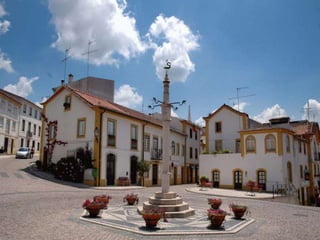
The Pelourinho Sardoal, located in Praça da República,
is a Manueline style pillory, reconstructed in 1931.
Pillories are stone columns where municipalities
exercised their righteousness. They were located
within the urban centers, usually in front of the
building of the municipality.
It consisted of a platform with or without steps, a
base (in the middle of the platform) and a capital,
which shows the coat of arms of the town.
WINDMILLS ENTREVINHAS
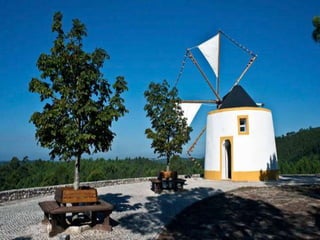
The Entrevinhas mills are at the highest point of
the village, with a privileged view. There are four
mills built at the end of the 19th century.
One of the mills has a small themed room with
original artefacts offered by the last miller
family, who worked there until the summer of
1956 , Tiago dos Santos Baptista .
These windmills are the most important
collection of mills in the region.
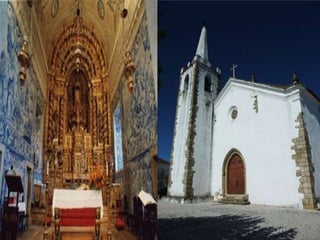
IGREJA MATRIZ
Founded in the late fourteenth century , the
Church of the Parish of St. James and St.
Matthew was the target of a set of interventions
but there are also traces of styles ranging from
Gothic to Contemporary.
Sardoal Master’s Paintings that are in the
chapel, dedicated to the Sacred Heart of Jesus,
are a call of attention.
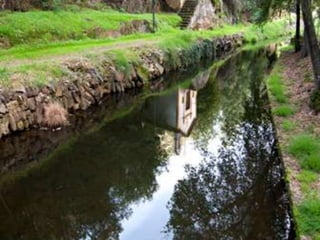
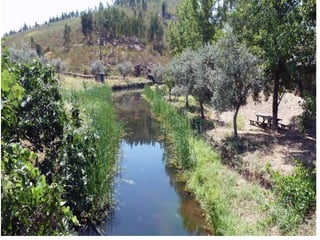
LAPA
Lapa is a heavenly place, a place that invites
leisure and contact with nature on the banks of
the stream of Areces. On the right bank of the
stream, we can see the Chapel of Our Lady of
Lapa, which has its roots in the distant past.
Since around 1600 the cult of the Lady of Lapa
has reached great diffusion and it is still a site of
pilgrimage for the local people.
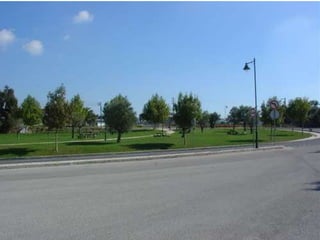
PARQUE DO RIBEIRO BARATO
Situated at the entrance of Sardoal village, the
park offers tables for picnics and a small
playground.
ROSA MANA
Situated in Alcaravela parish, in the village of
Presa, Rosa Mana is a small park along the river
with picnic tables. Several ruins of ancient
watermills can still be found at the site.
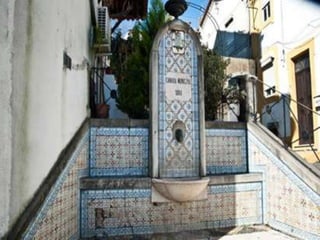
FONTE DA PRETA
Built in 1894, this fountain still features the
original tiles.
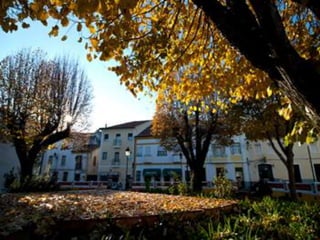
PRAÇA NOVA
Situated in the heart of the village of Sardoal,
the “New Square” is a small garden with tables
that invite you to a picnic or moments of rest
and recreation, surrounded by the shadows of
linden trees.
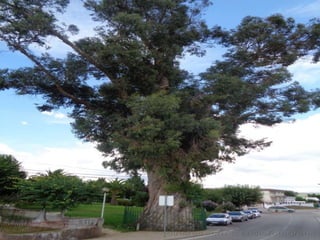
EUCALIPTO GRANDE
The village of Sardoal has an eucalyptus
considered a Rated Monument since 1972, due
to its exceptional size .
It was planted in 1850 and it is about 64 meters
high, with a canopy of about 25 meters in
diameter and about 16 meters in diameter at
the base. In the period in which it was planted ,
it was not the only one, but it was the only one
to resist more than a century and a half .
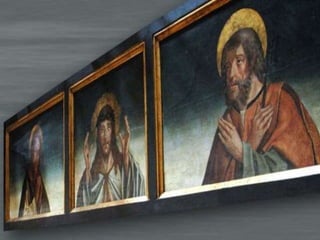
OBRAS DO MESTRE DE SARDOAL
Gil Vicente and Manuel Vicente left in Sardoal one of the
most important cultural and artistic heritages of the
county : the Paintings of the Master of Sardoal .
Ornamenting the original altarpiece of the parish church,
dating from the early sixteenth century, seven paintings in
oil on oak wood, representing the bust of Christ, St. Peter,
St. Paul, the Virgin of the Annunciation, the Archangel
Gabriel, St. John the Baptist and St. Matthew.
The importance of Sardoal Master’s work for the History
of Portuguese Art focuses on the transition from Gothic
to Renaissance, called "Portuguese Primitives“.
Tourism site Sardoal (pt)

Tourism site Sardoal (pt)

  • 1.
  • 3.
    PELOURINHO SARDOAL The PelourinhoSardoal, located in Praça da República, is a Manueline style pillory, reconstructed in 1931. Pillories are stone columns where municipalities exercised their righteousness. They were located within the urban centers, usually in front of the building of the municipality. It consisted of a platform with or without steps, a base (in the middle of the platform) and a capital, which shows the coat of arms of the town.
  • 5.
    WINDMILLS ENTREVINHAS The Entrevinhasmills are at the highest point of the village, with a privileged view. There are four mills built at the end of the 19th century. One of the mills has a small themed room with original artefacts offered by the last miller family, who worked there until the summer of 1956 , Tiago dos Santos Baptista . These windmills are the most important collection of mills in the region.
  • 7.
    IGREJA MATRIZ Founded inthe late fourteenth century , the Church of the Parish of St. James and St. Matthew was the target of a set of interventions but there are also traces of styles ranging from Gothic to Contemporary. Sardoal Master’s Paintings that are in the chapel, dedicated to the Sacred Heart of Jesus, are a call of attention.
  • 9.
    LAPA Lapa is aheavenly place, a place that invites leisure and contact with nature on the banks of the stream of Areces. On the right bank of the stream, we can see the Chapel of Our Lady of Lapa, which has its roots in the distant past. Since around 1600 the cult of the Lady of Lapa has reached great diffusion and it is still a site of pilgrimage for the local people.
  • 11.
    PARQUE DO RIBEIROBARATO Situated at the entrance of Sardoal village, the park offers tables for picnics and a small playground.
  • 13.
    ROSA MANA Situated inAlcaravela parish, in the village of Presa, Rosa Mana is a small park along the river with picnic tables. Several ruins of ancient watermills can still be found at the site.
  • 15.
    FONTE DA PRETA Builtin 1894, this fountain still features the original tiles.
  • 17.
    PRAÇA NOVA Situated inthe heart of the village of Sardoal, the “New Square” is a small garden with tables that invite you to a picnic or moments of rest and recreation, surrounded by the shadows of linden trees.
  • 19.
    EUCALIPTO GRANDE The villageof Sardoal has an eucalyptus considered a Rated Monument since 1972, due to its exceptional size . It was planted in 1850 and it is about 64 meters high, with a canopy of about 25 meters in diameter and about 16 meters in diameter at the base. In the period in which it was planted , it was not the only one, but it was the only one to resist more than a century and a half .
  • 21.
    OBRAS DO MESTREDE SARDOAL Gil Vicente and Manuel Vicente left in Sardoal one of the most important cultural and artistic heritages of the county : the Paintings of the Master of Sardoal . Ornamenting the original altarpiece of the parish church, dating from the early sixteenth century, seven paintings in oil on oak wood, representing the bust of Christ, St. Peter, St. Paul, the Virgin of the Annunciation, the Archangel Gabriel, St. John the Baptist and St. Matthew. The importance of Sardoal Master’s work for the History of Portuguese Art focuses on the transition from Gothic to Renaissance, called "Portuguese Primitives“.