Infrastructure and Services
1 Transportation
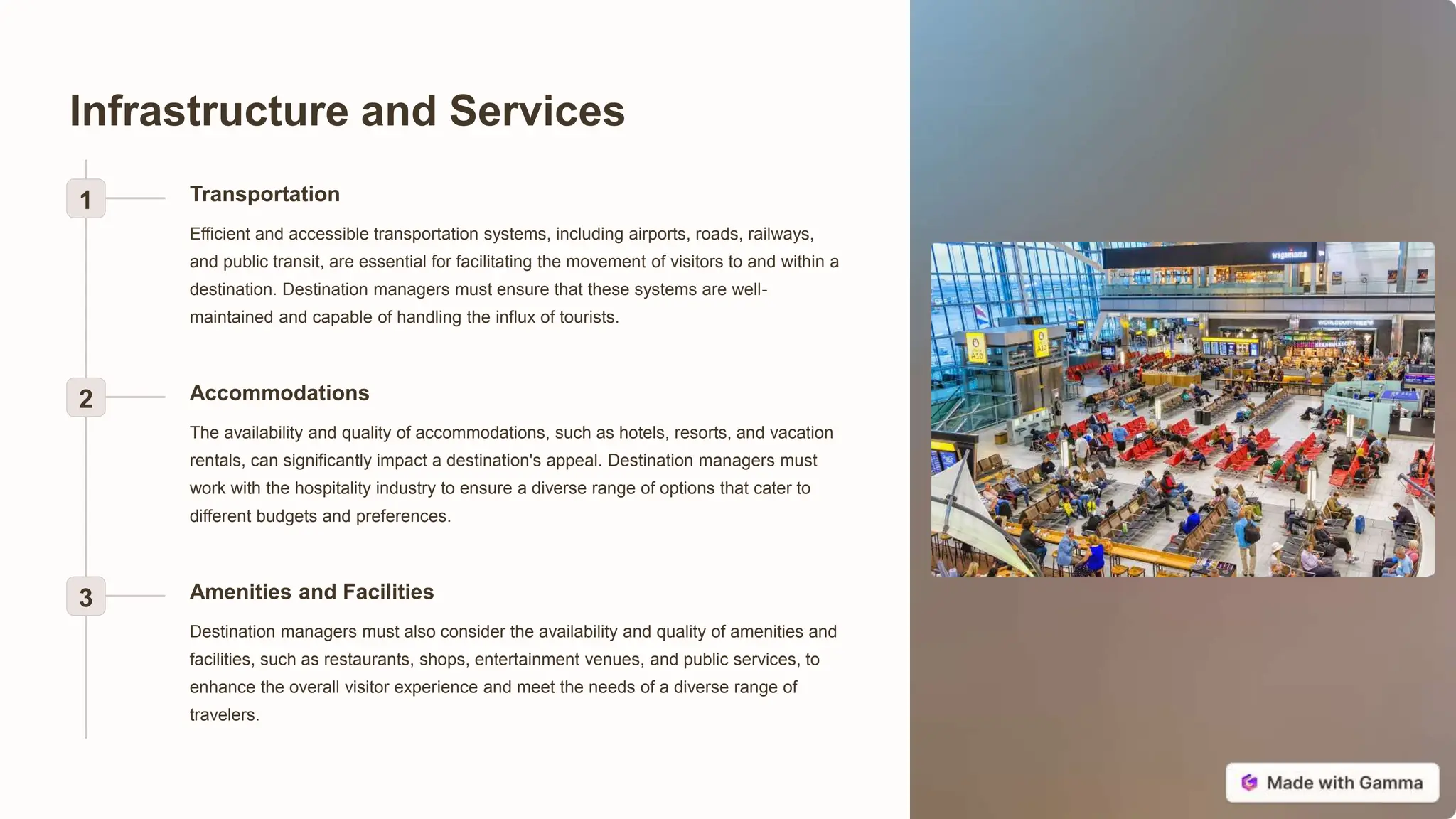
Efficient and accessible transportation systems, including airports, roads, railways,
and public transit, are essential for facilitating the movement of visitors to and within a
destination. Destination managers must ensure that these systems are well-
maintained and capable of handling the influx of tourists.
2 Accommodations
The availability and quality of accommodations, such as hotels, resorts, and vacation
rentals, can significantly impact a destination's appeal. Destination managers must
work with the hospitality industry to ensure a diverse range of options that cater to
different budgets and preferences.
3 Amenities and Facilities
Destination managers must also consider the availability and quality of amenities and
facilities, such as restaurants, shops, entertainment venues, and public services, to
enhance the overall visitor experience and meet the needs of a diverse range of
travelers.
Local Community and Culture
Community Engagement
Destination management involves engaging with the local community to ensure that tourism
development and activities align with the needs and values of residents. This can include
involving local stakeholders in the planning process and supporting community-based initiatives.
Cultural Heritage
The cultural heritage of a destination, including its history, traditions, and artistic expressions,
can be a significant draw for visitors seeking authentic experiences. Destination managers must
work to preserve and showcase these cultural assets in a respectful and sustainable manner.
Visitor-Host Interactions
The quality of interactions between visitors and the local community can greatly impact the
overall visitor experience. Destination managers must foster a welcoming and inclusive
environment that encourages positive and mutually beneficial exchanges between tourists and
residents.
Sustainable Development
Destination management must prioritize the long-term sustainability of tourism development,
Marketing and Branding
1 Destination Positioning
Effective destination management involves positioning the destination in a way that highlights
its unique selling points and appeals to the target market. This can involve creating a strong
brand identity and promoting the destination's distinct attributes.
2 Promotional Strategies
Destination managers must develop and implement a comprehensive marketing strategy that
utilizes a variety of promotional channels, such as online platforms, social media, traditional
advertising, and PR campaigns, to reach and engage potential visitors.
3 Collaboration and Partnerships
Successful destination management often involves collaboration with various stakeholders,
including tourism organizations, local businesses, and media partners, to create and
disseminate a consistent and compelling brand message across multiple channels.
4 Monitoring and Evaluation
Destination managers must continuously monitor and evaluate the effectiveness of their
marketing and branding efforts, gathering feedback from visitors and adjusting their strategies
as needed to stay responsive to evolving market trends and consumer preferences.
Stakeholder Engagement and
Collaboration
Government Agencies
Collaboration with government agencies, such as tourism boards and economic development
organizations, is crucial for aligning destination management strategies with broader regional and
national initiatives and securing necessary funding and support.
Hospitality Industry
Destination managers must work closely with the hospitality industry, including hotels, restaurants,
and tour operators, to ensure the seamless integration of tourism products and services that meet
the needs and expectations of visitors.
Local Community
Engaging and involving the local community is essential for destination management, as it helps to
ensure that tourism development aligns with the needs and values of residents and fosters a sense
Challenges and Considerations
Overtourism
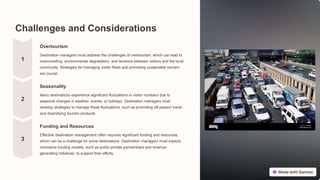
Destination managers must address the challenges of overtourism, which can lead to
overcrowding, environmental degradation, and tensions between visitors and the local
community. Strategies for managing visitor flows and promoting sustainable tourism
are crucial.
Seasonality
Many destinations experience significant fluctuations in visitor numbers due to
seasonal changes in weather, events, or holidays. Destination managers must
develop strategies to manage these fluctuations, such as promoting off-season travel
and diversifying tourism products.
Funding and Resources
Effective destination management often requires significant funding and resources,
which can be a challenge for some destinations. Destination managers must explore
innovative funding models, such as public-private partnerships and revenue-
generating initiatives, to support their efforts.
The Future of Destination Management
Technological Advancements Emerging technologies, such as artificial
intelligence, virtual reality, and digital
platforms, are transforming the way
destination management is approached,
offering new opportunities for enhancing the
visitor experience and optimizing operations.
Sustainable Development Destination management is increasingly
focused on promoting sustainable tourism
practices that balance the needs of visitors,
the local community, and the environment.
This includes initiatives such as eco-tourism,
carbon-neutral travel, and circular economy
models.
Personalized Experiences Destination management is evolving to cater
to the growing demand for personalized and
authentic experiences, with a focus on
customizing and tailoring tourism products
and services to meet the diverse needs and
preferences of visitors.
Resilience and Adaptability Destination managers must develop
strategies to enhance the resilience and
Destination
Stakeholders:
Partnering for
Success
Destination management requires a collaborative effort between
various stakeholders, each contributing unique perspectives and
resources to create an exceptional visitor experience.
Ds
by Dr Chandrasekaran siva
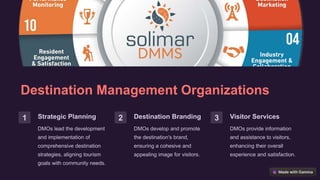
Destination Management Organizations
1 Strategic Planning
DMOs lead the development
and implementation of
comprehensive destination
strategies, aligning tourism
goals with community needs.
2 Destination Branding
DMOs develop and promote
the destination's brand,
ensuring a cohesive and
appealing image for visitors.
3 Visitor Services
DMOs provide information
and assistance to visitors,
enhancing their overall
experience and satisfaction.
Tourism Boards
Industry Representation
Tourism boards advocate for the
interests of the local tourism
industry, ensuring their needs are
addressed.
Product Development
Boards work with businesses to
enhance and diversify the
destination's tourism offerings.
Destination Promotion
Boards promote the destination's
unique attractions and
experiences to potential visitors.
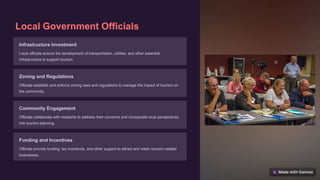
Local Government Officials
Infrastructure Investment
Local officials ensure the development of transportation, utilities, and other essential
infrastructure to support tourism.
Zoning and Regulations
Officials establish and enforce zoning laws and regulations to manage the impact of tourism on
the community.
Community Engagement
Officials collaborate with residents to address their concerns and incorporate local perspectives
into tourism planning.
Funding and Incentives
Officials provide funding, tax incentives, and other support to attract and retain tourism-related
businesses.
Hospitality Businesses
1 Accommodation
Hotels, resorts, and other lodging providers offer visitors
a comfortable and enjoyable stay.
2 Food and Beverage
Restaurants, cafes, and bars cater to the dining and
entertainment needs of visitors.
3 Attractions and Activities
Tour operators, activity providers, and cultural
institutions offer unique experiences for visitors to enjoy.
Community Residents
Welcoming Hosts
Residents provide a warm and friendly welcome to visitors, enhancing their overall
experience.
Cultural Ambassadors
Residents share their local knowledge and traditions, giving visitors a deeper
understanding of the destination.
Sustainable Stewards
Residents play a vital role in preserving the destination's natural and cultural resources.
Collaboration for Success
Shared Vision
Stakeholders align on a collective vision for the destination's
development and growth.
Open Communication
Continuous dialogue and information-sharing among
stakeholders ensures coordinated efforts and the identification of
synergies.
Mutual Benefit
Stakeholders recognize and respect each other's roles, working
together to achieve outcomes that benefit the entire destination.
Harnessing the Power of Partnerships
Destination Management Organizations Coordinate strategic planning and destination branding
Tourism Boards Advocate for industry interests and promote tourism
offerings
Local Government Officials Invest in infrastructure and manage the impact of
tourism
Hospitality Businesses Provide accommodation, dining, and activities for
visitors
Community Residents Serve as welcoming hosts and sustainable stewards
of the destination
Destination
Selection
Process
Selecting the right destination for a tourism development project
requires a thorough and strategic process. From understanding
the local landscape to assessing market demand, several key
factors must be evaluated to ensure a successful outcome.
Ds
by Dr Chandrasekaran siva
Understand the Local Landscape
Geography
Analyze the physical and natural
features, including terrain,
climate, and accessibility.
Infrastructure
Assess the existing
transportation, utilities, and
tourism-related facilities.
Community
Understand the local culture,
demographics, and potential
partnerships.
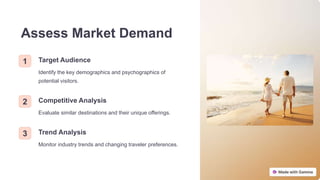
Assess Market Demand
1 Target Audience
Identify the key demographics and psychographics of
potential visitors.
2 Competitive Analysis
Evaluate similar destinations and their unique offerings.
3 Trend Analysis
Monitor industry trends and changing traveler preferences.
Evaluate Feasibility
Financial Viability
Assess the potential costs,
revenue, and return on
investment.
Regulatory
Environment
Understand the legal and
policy considerations for
development.
Stakeholder
Engagement
Collaborate with local
authorities and the community.
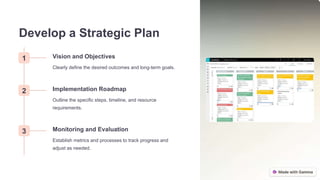
Develop a Strategic Plan
1 Vision and Objectives
Clearly define the desired outcomes and long-term goals.
2 Implementation Roadmap
Outline the specific steps, timeline, and resource
requirements.
3 Monitoring and Evaluation
Establish metrics and processes to track progress and
adjust as needed.
Engage with Stakeholders
Collaboration
Foster partnerships with local
businesses, organizations, and
residents.
Public Engagement
Gather feedback and address
concerns from the community.
Government Alignment
Align the development plan with
local, regional, and national
priorities.
Implement and Monitor
Project Execution
Oversee the development and construction of tourism-
related infrastructure.
Ongoing Management
Ensure efficient operations and continuous improvement of
the destination.
Performance Evaluation
Regularly assess the project's impact and make necessary
adjustments.
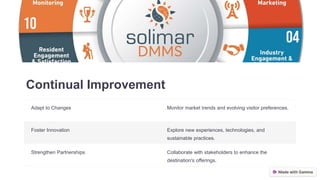
Continual Improvement
Adapt to Changes Monitor market trends and evolving visitor preferences.
Foster Innovation Explore new experiences, technologies, and
sustainable practices.
Strengthen Partnerships Collaborate with stakeholders to enhance the
destination's offerings.

Tourism Destination management for vistors

  • 1.
    Infrastructure and Services 1Transportation Efficient and accessible transportation systems, including airports, roads, railways, and public transit, are essential for facilitating the movement of visitors to and within a destination. Destination managers must ensure that these systems are well- maintained and capable of handling the influx of tourists. 2 Accommodations The availability and quality of accommodations, such as hotels, resorts, and vacation rentals, can significantly impact a destination's appeal. Destination managers must work with the hospitality industry to ensure a diverse range of options that cater to different budgets and preferences. 3 Amenities and Facilities Destination managers must also consider the availability and quality of amenities and facilities, such as restaurants, shops, entertainment venues, and public services, to enhance the overall visitor experience and meet the needs of a diverse range of travelers.
  • 2.
    Local Community andCulture Community Engagement Destination management involves engaging with the local community to ensure that tourism development and activities align with the needs and values of residents. This can include involving local stakeholders in the planning process and supporting community-based initiatives. Cultural Heritage The cultural heritage of a destination, including its history, traditions, and artistic expressions, can be a significant draw for visitors seeking authentic experiences. Destination managers must work to preserve and showcase these cultural assets in a respectful and sustainable manner. Visitor-Host Interactions The quality of interactions between visitors and the local community can greatly impact the overall visitor experience. Destination managers must foster a welcoming and inclusive environment that encourages positive and mutually beneficial exchanges between tourists and residents. Sustainable Development Destination management must prioritize the long-term sustainability of tourism development,
  • 3.
    Marketing and Branding 1Destination Positioning Effective destination management involves positioning the destination in a way that highlights its unique selling points and appeals to the target market. This can involve creating a strong brand identity and promoting the destination's distinct attributes. 2 Promotional Strategies Destination managers must develop and implement a comprehensive marketing strategy that utilizes a variety of promotional channels, such as online platforms, social media, traditional advertising, and PR campaigns, to reach and engage potential visitors. 3 Collaboration and Partnerships Successful destination management often involves collaboration with various stakeholders, including tourism organizations, local businesses, and media partners, to create and disseminate a consistent and compelling brand message across multiple channels. 4 Monitoring and Evaluation Destination managers must continuously monitor and evaluate the effectiveness of their marketing and branding efforts, gathering feedback from visitors and adjusting their strategies as needed to stay responsive to evolving market trends and consumer preferences.
  • 4.
    Stakeholder Engagement and Collaboration GovernmentAgencies Collaboration with government agencies, such as tourism boards and economic development organizations, is crucial for aligning destination management strategies with broader regional and national initiatives and securing necessary funding and support. Hospitality Industry Destination managers must work closely with the hospitality industry, including hotels, restaurants, and tour operators, to ensure the seamless integration of tourism products and services that meet the needs and expectations of visitors. Local Community Engaging and involving the local community is essential for destination management, as it helps to ensure that tourism development aligns with the needs and values of residents and fosters a sense
  • 5.
    Challenges and Considerations Overtourism Destinationmanagers must address the challenges of overtourism, which can lead to overcrowding, environmental degradation, and tensions between visitors and the local community. Strategies for managing visitor flows and promoting sustainable tourism are crucial. Seasonality Many destinations experience significant fluctuations in visitor numbers due to seasonal changes in weather, events, or holidays. Destination managers must develop strategies to manage these fluctuations, such as promoting off-season travel and diversifying tourism products. Funding and Resources Effective destination management often requires significant funding and resources, which can be a challenge for some destinations. Destination managers must explore innovative funding models, such as public-private partnerships and revenue- generating initiatives, to support their efforts.
  • 6.
    The Future ofDestination Management Technological Advancements Emerging technologies, such as artificial intelligence, virtual reality, and digital platforms, are transforming the way destination management is approached, offering new opportunities for enhancing the visitor experience and optimizing operations. Sustainable Development Destination management is increasingly focused on promoting sustainable tourism practices that balance the needs of visitors, the local community, and the environment. This includes initiatives such as eco-tourism, carbon-neutral travel, and circular economy models. Personalized Experiences Destination management is evolving to cater to the growing demand for personalized and authentic experiences, with a focus on customizing and tailoring tourism products and services to meet the diverse needs and preferences of visitors. Resilience and Adaptability Destination managers must develop strategies to enhance the resilience and
  • 7.
    Destination Stakeholders: Partnering for Success Destination managementrequires a collaborative effort between various stakeholders, each contributing unique perspectives and resources to create an exceptional visitor experience. Ds by Dr Chandrasekaran siva
  • 8.
    Destination Management Organizations 1Strategic Planning DMOs lead the development and implementation of comprehensive destination strategies, aligning tourism goals with community needs. 2 Destination Branding DMOs develop and promote the destination's brand, ensuring a cohesive and appealing image for visitors. 3 Visitor Services DMOs provide information and assistance to visitors, enhancing their overall experience and satisfaction.
  • 9.
    Tourism Boards Industry Representation Tourismboards advocate for the interests of the local tourism industry, ensuring their needs are addressed. Product Development Boards work with businesses to enhance and diversify the destination's tourism offerings. Destination Promotion Boards promote the destination's unique attractions and experiences to potential visitors.
  • 10.
    Local Government Officials InfrastructureInvestment Local officials ensure the development of transportation, utilities, and other essential infrastructure to support tourism. Zoning and Regulations Officials establish and enforce zoning laws and regulations to manage the impact of tourism on the community. Community Engagement Officials collaborate with residents to address their concerns and incorporate local perspectives into tourism planning. Funding and Incentives Officials provide funding, tax incentives, and other support to attract and retain tourism-related businesses.
  • 11.
    Hospitality Businesses 1 Accommodation Hotels,resorts, and other lodging providers offer visitors a comfortable and enjoyable stay. 2 Food and Beverage Restaurants, cafes, and bars cater to the dining and entertainment needs of visitors. 3 Attractions and Activities Tour operators, activity providers, and cultural institutions offer unique experiences for visitors to enjoy.
  • 12.
    Community Residents Welcoming Hosts Residentsprovide a warm and friendly welcome to visitors, enhancing their overall experience. Cultural Ambassadors Residents share their local knowledge and traditions, giving visitors a deeper understanding of the destination. Sustainable Stewards Residents play a vital role in preserving the destination's natural and cultural resources.
  • 13.
    Collaboration for Success SharedVision Stakeholders align on a collective vision for the destination's development and growth. Open Communication Continuous dialogue and information-sharing among stakeholders ensures coordinated efforts and the identification of synergies. Mutual Benefit Stakeholders recognize and respect each other's roles, working together to achieve outcomes that benefit the entire destination.
  • 14.
    Harnessing the Powerof Partnerships Destination Management Organizations Coordinate strategic planning and destination branding Tourism Boards Advocate for industry interests and promote tourism offerings Local Government Officials Invest in infrastructure and manage the impact of tourism Hospitality Businesses Provide accommodation, dining, and activities for visitors Community Residents Serve as welcoming hosts and sustainable stewards of the destination
  • 15.
    Destination Selection Process Selecting the rightdestination for a tourism development project requires a thorough and strategic process. From understanding the local landscape to assessing market demand, several key factors must be evaluated to ensure a successful outcome. Ds by Dr Chandrasekaran siva
  • 16.
    Understand the LocalLandscape Geography Analyze the physical and natural features, including terrain, climate, and accessibility. Infrastructure Assess the existing transportation, utilities, and tourism-related facilities. Community Understand the local culture, demographics, and potential partnerships.
  • 17.
    Assess Market Demand 1Target Audience Identify the key demographics and psychographics of potential visitors. 2 Competitive Analysis Evaluate similar destinations and their unique offerings. 3 Trend Analysis Monitor industry trends and changing traveler preferences.
  • 18.
    Evaluate Feasibility Financial Viability Assessthe potential costs, revenue, and return on investment. Regulatory Environment Understand the legal and policy considerations for development. Stakeholder Engagement Collaborate with local authorities and the community.
  • 19.
    Develop a StrategicPlan 1 Vision and Objectives Clearly define the desired outcomes and long-term goals. 2 Implementation Roadmap Outline the specific steps, timeline, and resource requirements. 3 Monitoring and Evaluation Establish metrics and processes to track progress and adjust as needed.
  • 20.
    Engage with Stakeholders Collaboration Fosterpartnerships with local businesses, organizations, and residents. Public Engagement Gather feedback and address concerns from the community. Government Alignment Align the development plan with local, regional, and national priorities.
  • 21.
    Implement and Monitor ProjectExecution Oversee the development and construction of tourism- related infrastructure. Ongoing Management Ensure efficient operations and continuous improvement of the destination. Performance Evaluation Regularly assess the project's impact and make necessary adjustments.
  • 22.
    Continual Improvement Adapt toChanges Monitor market trends and evolving visitor preferences. Foster Innovation Explore new experiences, technologies, and sustainable practices. Strengthen Partnerships Collaborate with stakeholders to enhance the destination's offerings.