Torque Converter
TITLE OF PRESENTATION :
Karmaveer Bhaurao Patil collage of
Engineering Satara.
Department of
Mechanical Engineering
Presented By :
Vishwajit Bhosale
Soham Jadhav
CONTENT
 Introduction
 Parts
 Function
 Operational phases
 Failure Problems
Torque Converter
INTRODUCTION
.A torque converter is generally a type of
fluid coupling capable of producing torque.
• Replacement of clutch for automatic
transmission vehicle.
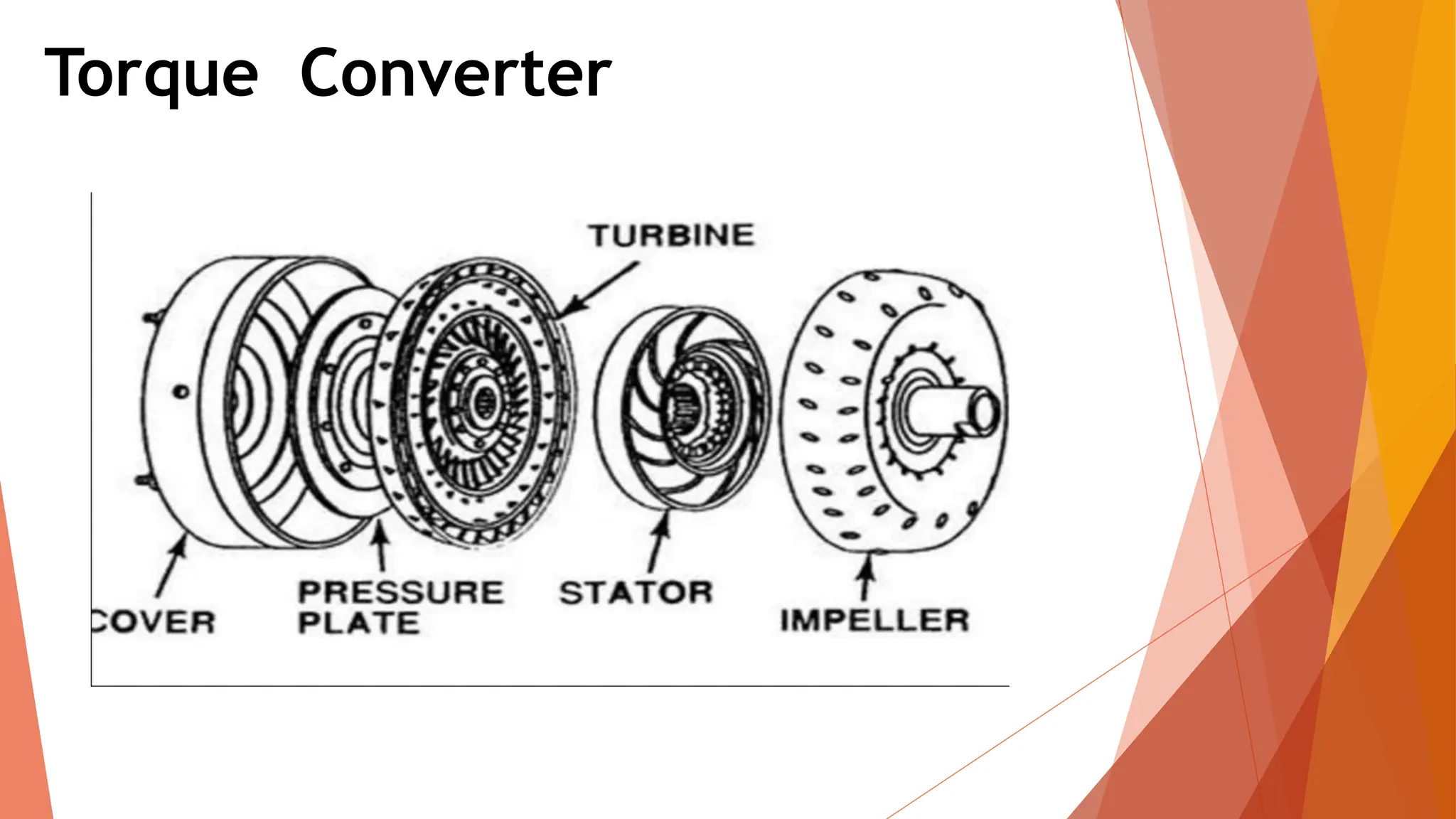
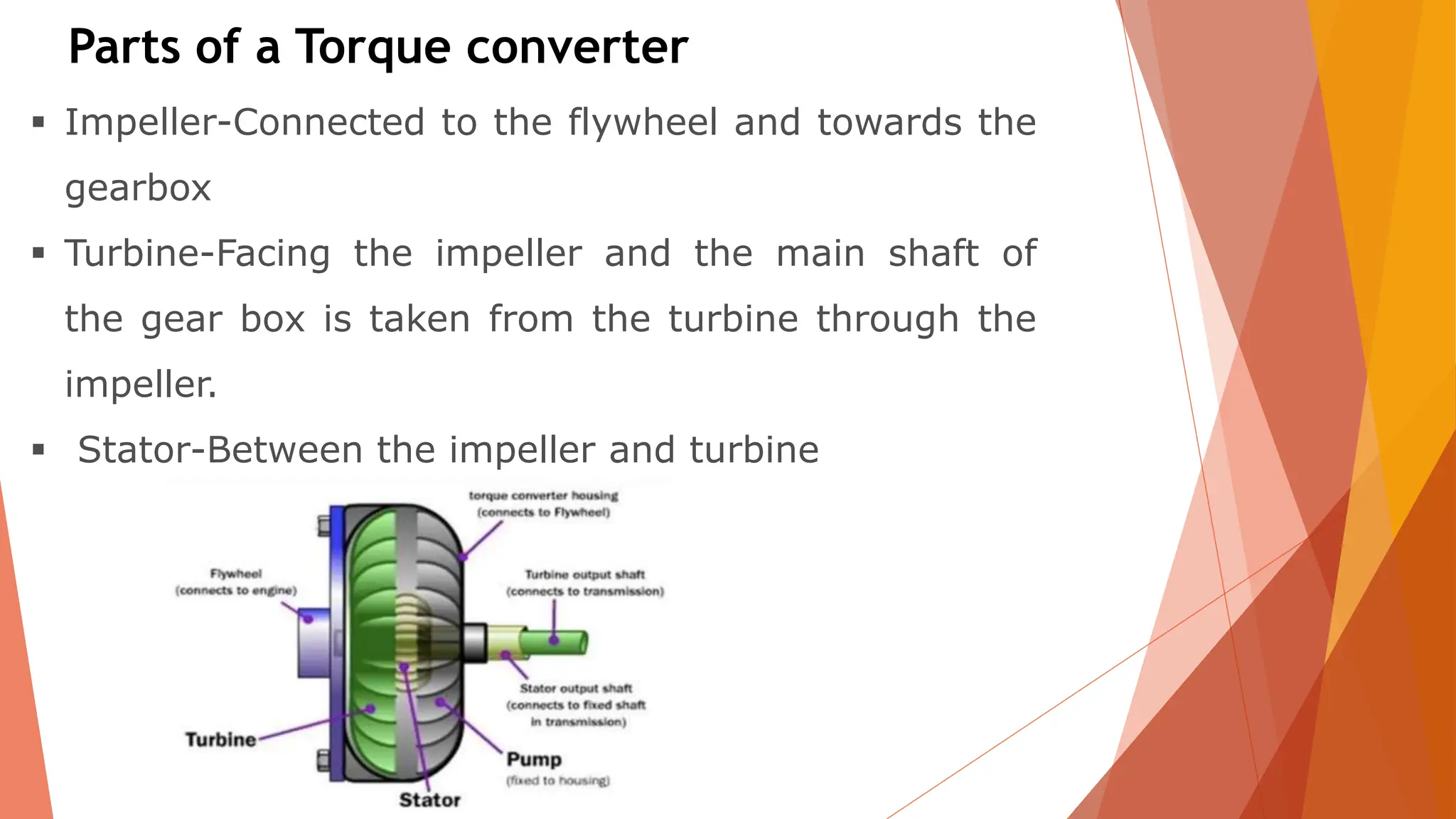
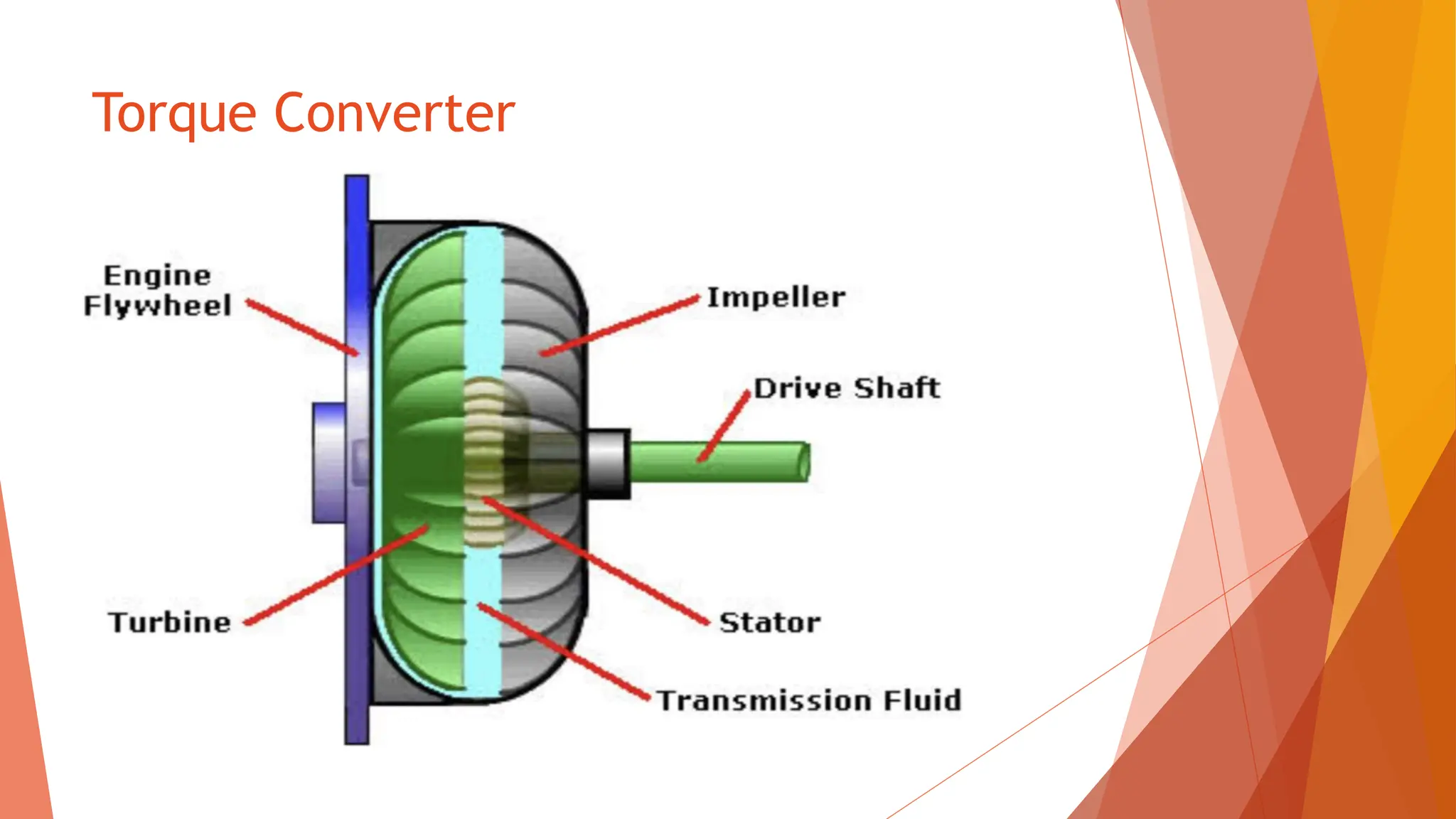
 Impeller-Connected to the flywheel and towards the
gearbox
 Turbine-Facing the impeller and the main shaft of
the gear box is taken from the turbine through the
impeller.
 Stator-Between the impeller and turbine
Parts of a Torque converter
To transmit increased or decreased power
from one shaft to another. A variable
torque is impressed on the driven
Member without the use of gear train or
clutch.
TORQUE CONVERTER:-
Function:-
Torque Converter
Automatic transmissions use a torque converter to couple the engine
to the transmission.
• The torque converter:
- Transmits the twisting force or torque delivered to it by the engine
crankshaft
- Multiplies engine torque when additional power is needed
The amount of torque transferred from the engine to the transmission
by the torque converter is directly related to engine rpm.
Torque Converter
Operational phases
• Stall-The prime mover is applying power to the impeller but the turbine
cannot rotate.
• Acceleration- The load is accelerating but there still is a relatively large
difference between impeller and turbine speed. Under this condition, the
converter will produce torque multiplication
.Coupling- The torque converter is behaving in a manner similar to a
simple fluid coupling.
Failure Problems
1. Overheating :-Continuous high levels of slippage resulting
in damage to the seals that retain fluid inside the
converter.
2. Stator clutch breakage:-A very abrupt application of
power can cause shock loading of the stator clutch,
resulting in breakage.
3. Balloning-Operating a torque converter at very high RPM
may cause the shape of the converter’s housing to be
physically distorted due to internal pressure.
THANK YOU

Torque converter In automobile engineering

  • 1.
    Torque Converter TITLE OFPRESENTATION : Karmaveer Bhaurao Patil collage of Engineering Satara. Department of Mechanical Engineering Presented By : Vishwajit Bhosale Soham Jadhav
  • 2.
    CONTENT  Introduction  Parts Function  Operational phases  Failure Problems
  • 3.
  • 4.
    INTRODUCTION .A torque converteris generally a type of fluid coupling capable of producing torque. • Replacement of clutch for automatic transmission vehicle.
  • 5.
     Impeller-Connected tothe flywheel and towards the gearbox  Turbine-Facing the impeller and the main shaft of the gear box is taken from the turbine through the impeller.  Stator-Between the impeller and turbine Parts of a Torque converter
  • 6.
    To transmit increasedor decreased power from one shaft to another. A variable torque is impressed on the driven Member without the use of gear train or clutch. TORQUE CONVERTER:- Function:-
  • 7.
    Torque Converter Automatic transmissionsuse a torque converter to couple the engine to the transmission. • The torque converter: - Transmits the twisting force or torque delivered to it by the engine crankshaft - Multiplies engine torque when additional power is needed The amount of torque transferred from the engine to the transmission by the torque converter is directly related to engine rpm.
  • 8.
  • 9.
    Operational phases • Stall-Theprime mover is applying power to the impeller but the turbine cannot rotate. • Acceleration- The load is accelerating but there still is a relatively large difference between impeller and turbine speed. Under this condition, the converter will produce torque multiplication .Coupling- The torque converter is behaving in a manner similar to a simple fluid coupling.
  • 10.
    Failure Problems 1. Overheating:-Continuous high levels of slippage resulting in damage to the seals that retain fluid inside the converter. 2. Stator clutch breakage:-A very abrupt application of power can cause shock loading of the stator clutch, resulting in breakage. 3. Balloning-Operating a torque converter at very high RPM may cause the shape of the converter’s housing to be physically distorted due to internal pressure.
  • 11.