MED 222
Ethics And Social Responsibility
ALMIRA T. SALIM
FATIMA S. DAGALANGIT
NORJEHAN P. BANSULAT
Reporters
Ethical Issues and Problems
in School
 Issues of Discipline
 Grading
 Cheating
 Bullying
 Special Treatment
Ethical Issues in School
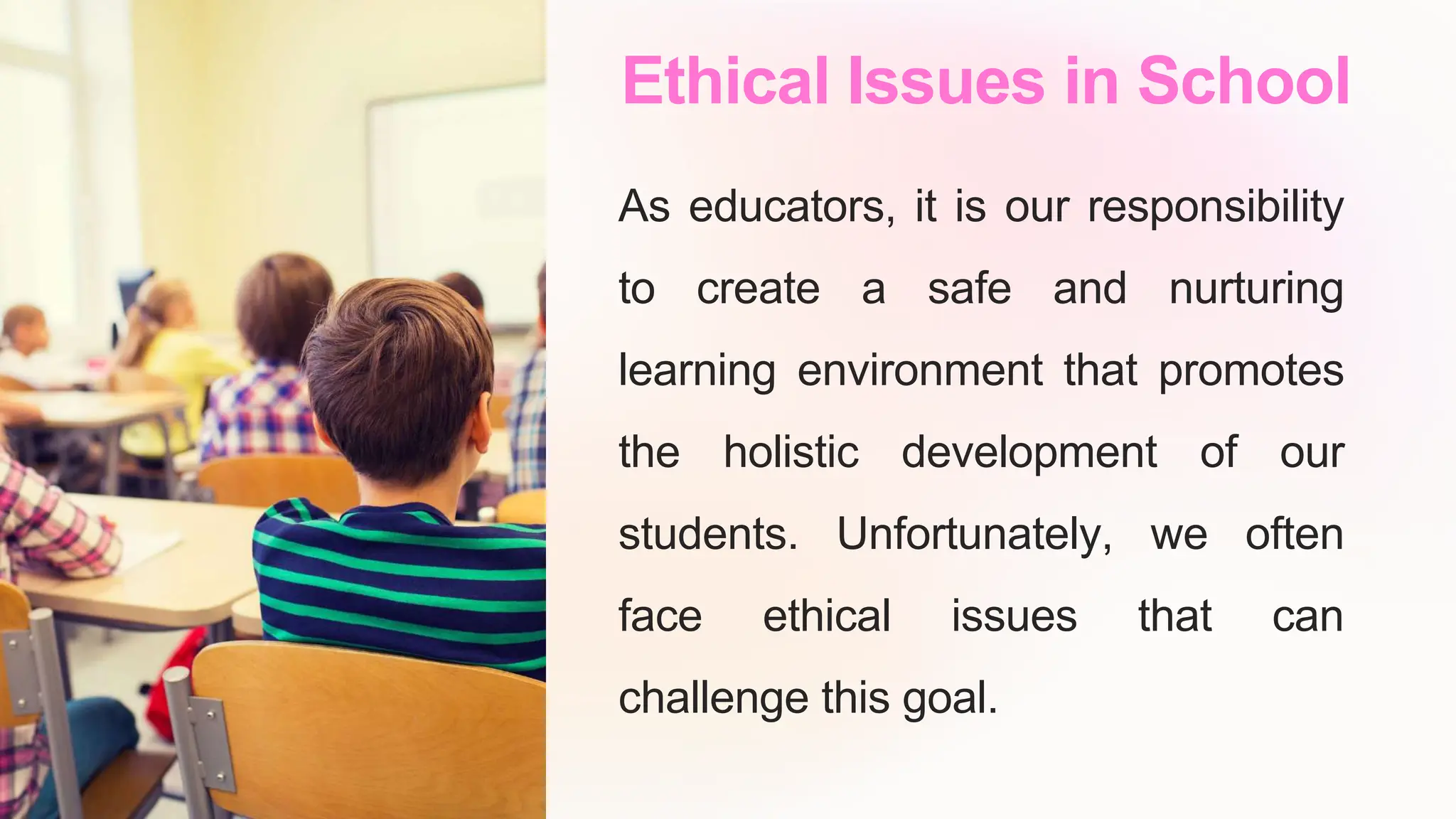
As educators, it is our responsibility
to create a safe and nurturing
learning environment that promotes
the holistic development of our
students. Unfortunately, we often
face ethical issues that can
challenge this goal.
Ethical Issues in School
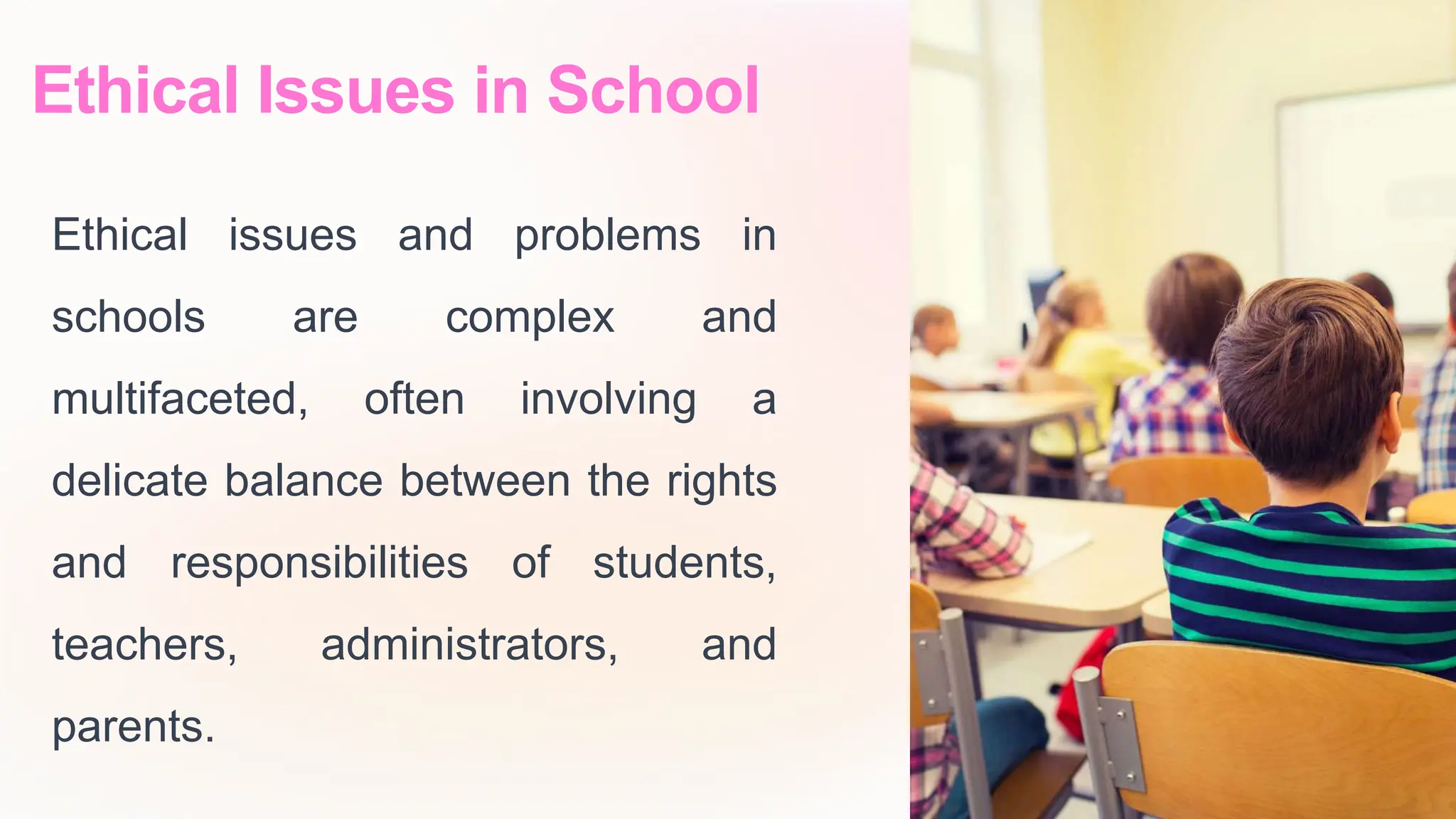
Ethical issues and problems in
schools are complex and
multifaceted, often involving a
delicate balance between the rights
and responsibilities of students,
teachers, administrators, and
parents.
Discipline in schools has been a long-standing concern,
as it involves shaping behavior, maintaining order, and
ensuring a safe and conducive learning environment.
Ethical dilemmas arise when considering the fairness and
effectiveness of disciplinary measures.
Issues of Discipline:
Discipline: Beyond Punishment
1
Restorative Practices
Address the harm done rather than
just punishing the student, promoting
accountability and community building.
2
Positive Behavior Interventions
and Supports
Create a supportive environment that
teaches and reinforces positive
behavior expectations, prompting
substantial behavioral change.
3
Student-Led Discipline
Develop student accountability and leadership
by entrusting them with discipline and
decision-making power, creating a sense of
ownership and responsibility.
Grading
Grading and assessment are important aspects of higher
education. They help measure student learning and progress,
provide feedback, and ultimately determine grades and
outcomes. However, there are ethical considerations that
must be taken into account when grading and assessing
students.
Here are some important ethics of grading
and assessment in higher education:
 Fairness
 Objectivity
 Accuracy
 Integrity
 Confidentiality
 Professionalism
Cheating
Cheating undermines the educational
process, erodes trust, and raises ethical
questions related to honesty and fairness.
Why Cheating is wrong?
1.Cheating is the same as lying and stealing.
2.Cheating causes stress.
3.Cheating is unfair to others.
4.Cheating is unfair to you.
5.Cheating hampers progress.
6.Cheating is disrespectful.
7.Cheating kills trust.
8.Cheating can become a habit.
9.Cheating eventually leads to failure.
10. Cheating is embarrassing.
Cheating: Building a Culture of
Academic Integrity
Preventative Measures
Communicate your
expectations for academic
honesty, explain what cheating
is and what the consequences
will be, and create a
partnership with students'
families to reinforce academic
integrity.
Teaching Responsibility
Emphasize the meaning of
learning over grades and
educate students on the
importance of academic
integrity for their personal
growth and future success.
Honor Code
Work collaboratively with
students to create an honor
code, a document
summarizing the principles of
academic integrity, that is
widely distributed and
regularly discussed among
students and faculty.
Bullying
Bullying has severe consequences for
students' mental and emotional well-being and
poses ethical challenges for schools.
Types of Bullying
• Verbal Bullying
• Social Bullying
• Physical Bullying
Where and When
Bullying Happens
Bullying can occur during or after school hours.
While most reported bullying happens in the
school building, a significant percentage also
happens in places like on the playground or the
bus. It can also travelling to or from school, in
the youth’s neighborhood, or on the internet.
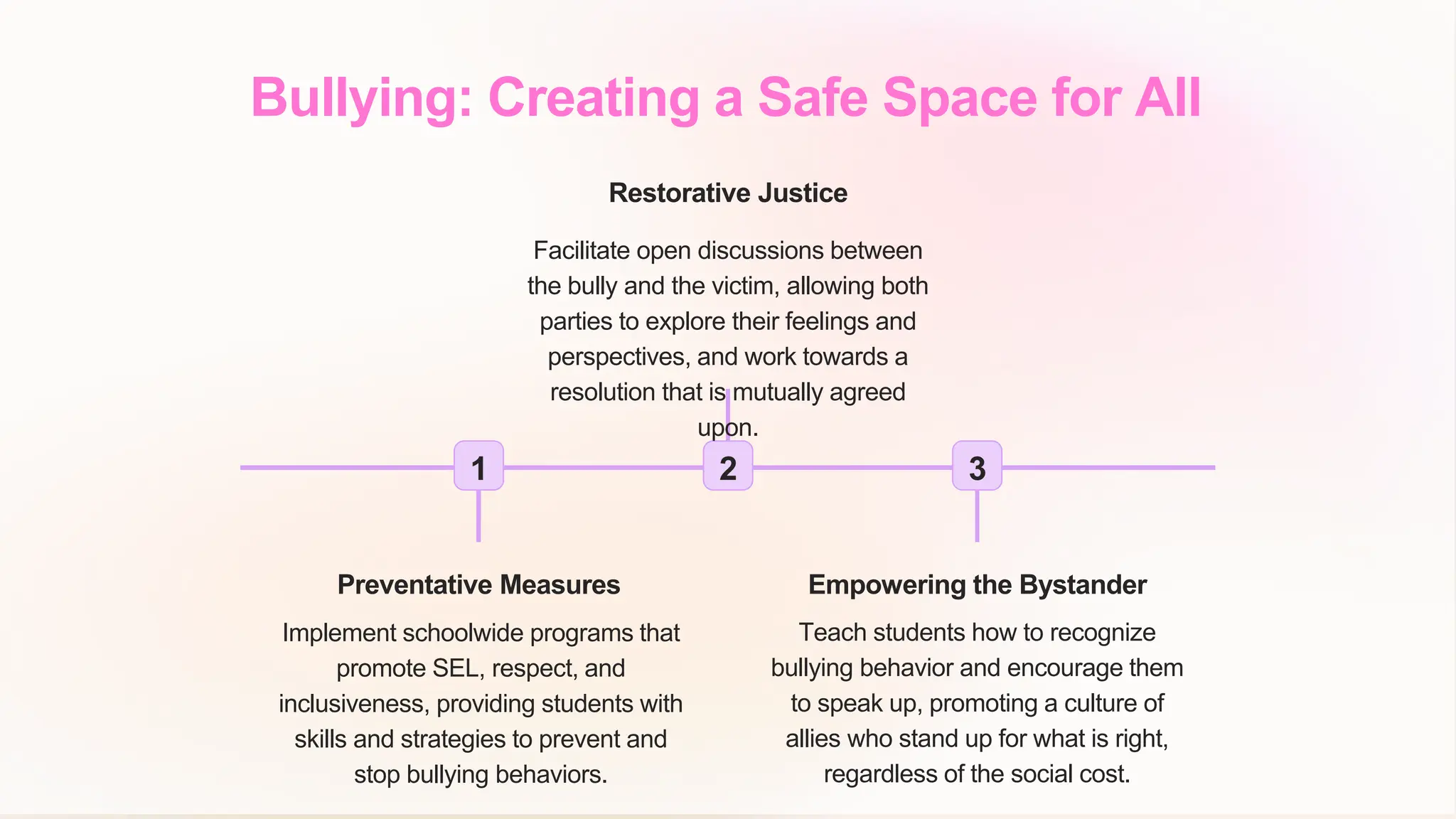
Bullying: Creating a Safe Space for All
1
Preventative Measures
Implement schoolwide programs that
promote SEL, respect, and
inclusiveness, providing students with
skills and strategies to prevent and
stop bullying behaviors.
2
Restorative Justice
Facilitate open discussions between
the bully and the victim, allowing both
parties to explore their feelings and
perspectives, and work towards a
resolution that is mutually agreed
upon.
3
Empowering the Bystander
Teach students how to recognize
bullying behavior and encourage them
to speak up, promoting a culture of
allies who stand up for what is right,
regardless of the social cost.
Special Treatment
Ethical concerns arise when some students receive
special treatment, whether due to disabilities,
exceptional talents, or personal connections.
Special Treatment: A Slippery Slope
The Problem
Teacher's bias towards particular students or groups can lead to
inequitable treatment, resulting in academic loss, discrimination, and
damaged relationships.
Solution
Develop an inclusive classroom environment that fosters relationships based on
respect and trust, promoting individualized learning strategies, and providing support
based on students' needs rather than the teacher's convenience.
Let's Act: Creating a
Culture of Ethical
Responsibility
1 Active Listening
Listen to student's concerns
and take action when ethical
concerns are raised.
2 Role Modeling
Model ethical behavior and
lead by example,
communicating clearly and
honestly with students about
ethical issues.
3 Collaboration
Collaborate with students and families to create standards of ethical
behavior and values that are consistently reinforced inside and
outside the classroom.
THANK YOU FOR
LISTENING!

TOPIC III. ETHICAL ISSUES IN SCHOOL.pptx

  • 1.
    MED 222 Ethics AndSocial Responsibility ALMIRA T. SALIM FATIMA S. DAGALANGIT NORJEHAN P. BANSULAT Reporters Ethical Issues and Problems in School  Issues of Discipline  Grading  Cheating  Bullying  Special Treatment
  • 2.
    Ethical Issues inSchool As educators, it is our responsibility to create a safe and nurturing learning environment that promotes the holistic development of our students. Unfortunately, we often face ethical issues that can challenge this goal.
  • 3.
    Ethical Issues inSchool Ethical issues and problems in schools are complex and multifaceted, often involving a delicate balance between the rights and responsibilities of students, teachers, administrators, and parents.
  • 4.
    Discipline in schoolshas been a long-standing concern, as it involves shaping behavior, maintaining order, and ensuring a safe and conducive learning environment. Ethical dilemmas arise when considering the fairness and effectiveness of disciplinary measures. Issues of Discipline:
  • 5.
    Discipline: Beyond Punishment 1 RestorativePractices Address the harm done rather than just punishing the student, promoting accountability and community building. 2 Positive Behavior Interventions and Supports Create a supportive environment that teaches and reinforces positive behavior expectations, prompting substantial behavioral change. 3 Student-Led Discipline Develop student accountability and leadership by entrusting them with discipline and decision-making power, creating a sense of ownership and responsibility.
  • 6.
    Grading Grading and assessmentare important aspects of higher education. They help measure student learning and progress, provide feedback, and ultimately determine grades and outcomes. However, there are ethical considerations that must be taken into account when grading and assessing students.
  • 7.
    Here are someimportant ethics of grading and assessment in higher education:  Fairness  Objectivity  Accuracy  Integrity  Confidentiality  Professionalism
  • 8.
    Cheating Cheating undermines theeducational process, erodes trust, and raises ethical questions related to honesty and fairness.
  • 9.
    Why Cheating iswrong? 1.Cheating is the same as lying and stealing. 2.Cheating causes stress. 3.Cheating is unfair to others. 4.Cheating is unfair to you. 5.Cheating hampers progress. 6.Cheating is disrespectful. 7.Cheating kills trust. 8.Cheating can become a habit. 9.Cheating eventually leads to failure. 10. Cheating is embarrassing.
  • 10.
    Cheating: Building aCulture of Academic Integrity Preventative Measures Communicate your expectations for academic honesty, explain what cheating is and what the consequences will be, and create a partnership with students' families to reinforce academic integrity. Teaching Responsibility Emphasize the meaning of learning over grades and educate students on the importance of academic integrity for their personal growth and future success. Honor Code Work collaboratively with students to create an honor code, a document summarizing the principles of academic integrity, that is widely distributed and regularly discussed among students and faculty.
  • 11.
    Bullying Bullying has severeconsequences for students' mental and emotional well-being and poses ethical challenges for schools.
  • 12.
    Types of Bullying •Verbal Bullying • Social Bullying • Physical Bullying
  • 13.
    Where and When BullyingHappens Bullying can occur during or after school hours. While most reported bullying happens in the school building, a significant percentage also happens in places like on the playground or the bus. It can also travelling to or from school, in the youth’s neighborhood, or on the internet.
  • 14.
    Bullying: Creating aSafe Space for All 1 Preventative Measures Implement schoolwide programs that promote SEL, respect, and inclusiveness, providing students with skills and strategies to prevent and stop bullying behaviors. 2 Restorative Justice Facilitate open discussions between the bully and the victim, allowing both parties to explore their feelings and perspectives, and work towards a resolution that is mutually agreed upon. 3 Empowering the Bystander Teach students how to recognize bullying behavior and encourage them to speak up, promoting a culture of allies who stand up for what is right, regardless of the social cost.
  • 15.
    Special Treatment Ethical concernsarise when some students receive special treatment, whether due to disabilities, exceptional talents, or personal connections.
  • 16.
    Special Treatment: ASlippery Slope The Problem Teacher's bias towards particular students or groups can lead to inequitable treatment, resulting in academic loss, discrimination, and damaged relationships. Solution Develop an inclusive classroom environment that fosters relationships based on respect and trust, promoting individualized learning strategies, and providing support based on students' needs rather than the teacher's convenience.
  • 17.
    Let's Act: Creatinga Culture of Ethical Responsibility 1 Active Listening Listen to student's concerns and take action when ethical concerns are raised. 2 Role Modeling Model ethical behavior and lead by example, communicating clearly and honestly with students about ethical issues. 3 Collaboration Collaborate with students and families to create standards of ethical behavior and values that are consistently reinforced inside and outside the classroom.
  • 18.