Top Nine Questions
Around Open
Enrollment
For many Americans, the ins-and-
outs of finding individual health
care coverage is complex and
difficult to understand.
Paired with the extensive amount
of health care-related terminology,
many health plan options, tax
penalties and sign-up procedures,
signing up for health insurance is no
walk in the park.
Blue Cross Blue Shield of Michigan
looks to ease the process, by
providing our members with as
much information and assistance
as possible.
Here’s a list of the most frequently
asked questions with the answers
you need.
1.
I want to keep my current
plan, what do I need to do?
1.
I want to keep my current
plan, what do I need to do?
If you want to keep your
current plan with Blue Cross,
you do not need to take
additional action.
You will be automatically
renewed with your current plan
if you take no action. If you’d
like to make changes to your
current plan, our health plan
advisors can help you learn
more about other health plans
that fit your needs and your
budget.
2.
I missed the deadline, can I
still enroll?
2.
I missed the deadline, can I
still enroll?
If you missed the deadline for
January 1 coverage, you have
until January 31, 2016 to enroll
in a health plan for coverage
that begins in March 2016.
3.
How do I know which plan is
right for me?
3.
How do I know which plan is
right for me?
To determine what plan is right
for you, think about how you’ve
utilized health care in the past.
Make a list of health care
services you used in the
last year, including any
prescriptions you need filled
on a regular basis.
3.
How do I know which plan is
right for me?
Do you or anyone in your
family have a chronic condition
or anticipate surgery in the
coming year? Do you have a
preferred doctor or hospital?
How often do you see the
doctor? Answering these types
of questions will help you
select the best plan for you.
4.
I enrolled last year, why is
my plan unavailable?
4.
I enrolled last year, why is
my plan unavailable?
Under the Affordable Care Act
plans are measured by the
government on coverage
relative to the cost of the plan.
This information is used to put
plans into four categories –
Bronze, Silver, Gold or
Platinum. If a plan is
determined too generous for
its category then it is required
to be adjusted or in some cases
replaced.
5.
If I change plans, can I keep
my current doctor?
5.
If I change plans, can I keep
my current doctor?
Before changing networks,
check with your preferred
doctors to see if they accept
the new plan you’re
interested in.
Blue Cross’ “Find a Doctor”
tool can help you determine if
your new plan will allow you
to continue to see your
current doctors.
6.
My plan has gotten more
expensive. Why did the
prices go up?
6.
My plan has gotten more
expensive. Why did the
prices go up?
Under the Affordable Care Act,
health insurance has become a
consumer product available to
purchase by individuals – like
anything you buy at retail. Just as
underlying costs, like raw materials
and labor costs, add up to a
vehicle’s sticker price, there are a
variety of unseen costs driving the
up the price people pay for health
insurance. Things like the type of
care you routinely receive,
expensive specialty drugs, and
visits to specialists are examples
that contribute to increases in
monthly premiums.
6.
My plan has gotten more
expensive. Why did the
prices go up?
If your health care premium
increased, you have options.
Explore other plans or contact your
health plan directly to find one that
better meets your financial and
health needs. Remember financial
help is available. Nearly 80% of
Marketplace enrollees received
financial assistance last year.
6.
My plan has gotten more
expensive. Why did the
prices go up?
If you don’t have coverage in 2016,
you’ll pay a penalty of 2.5% of your
yearly household income (HHI) or
$695, whichever is higher. This is
up from $325/2% of HHI for not
having coverage in 2015.
7.
How can I lower my health
care costs?
7.
How can I lower my health
care costs?
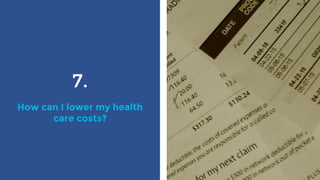
A subsidy is a form of financial
assistance that helps you pay
for your individual health care
plan. Think of it as a discount,
not a loan. Last year, around 80
percent of individuals who
enrolled in a Blue Cross plan
received some form of a
subsidy through the federal
government.
7.
How can I lower my health
care costs?
There are two types of
subsidies you may qualify for:
• The Advanced Premium Tax
Credit (affects your
premium) lowers your
monthly health insurance
payment
• The Cost Sharing
Reduction (affects your
copay) reduces the amount
you pay out-of-pocket for
services
7.
How can I lower my health
care costs?
Subsidies are based on income
levels, and Blue Cross makes it
easy for everyone to know if
they qualify. Our subsidy
estimator tool makes it simple
to check your eligibility for
2016.
7.
How can I lower my health
care costs?
It’s important to note that if
you qualify for Medicaid or
Medicare, or if an employer
offers coverage that meets
the minimum essential
coverage and affordability
standards, you likely will not
qualify for a subsidy.
7.
How can I lower my health
care costs?
Members can also lower their
costs by choosing a higher
deductible plan.
8.
I received a tax credit last
year, do I need to do
anything this year?
8.
I received a tax credit last
year, do I need to do
anything this year?
If you receive a subsidy, it’s
important to re-determine
your tax credit every year.
Changes in marital status,
income, having a child and
where you live could increase,
lower or eliminate the amount
of subsides you qualify for, as
well as which plans are
available to you.
8.
I received a tax credit last
year, do I need to do
anything this year?
Even if your income stayed the
same, the amount of financial
assistance you’re eligible for
may still increase or decrease
based on the cost of plans
offered in your area. If you
don’t re-determine your
subsidy, you may end up owing
money at tax time.
9.
Why didn’t I get a subsidy
this year when I’ve gotten
one for the past two years?
9.
Why didn’t I get a subsidy
this year when I’ve gotten
one for the past two years?
There are a variety of factors –
like household income and the
cost of health plans in your
region – that affect whether or
not you qualify for a subsidy. If
a person received a subsidy in
2014 but has not yet filed their
federal income taxes for that
year, they would stop receiving
their subsidy until those taxes
are filed.
If you still have questions regarding
your plan, our health plan advisors
are eager to help. Contact them at
888-899-4931, or go to
bcbsm.com/myblue to learn more
about plan options.
Connect With Us

Top Nine Questions Around Open Enrollment

  • 1.
  • 2.
    For many Americans,the ins-and- outs of finding individual health care coverage is complex and difficult to understand.
  • 3.
    Paired with theextensive amount of health care-related terminology, many health plan options, tax penalties and sign-up procedures, signing up for health insurance is no walk in the park.
  • 4.
    Blue Cross BlueShield of Michigan looks to ease the process, by providing our members with as much information and assistance as possible.
  • 5.
    Here’s a listof the most frequently asked questions with the answers you need.
  • 6.
    1. I want tokeep my current plan, what do I need to do?
  • 7.
    1. I want tokeep my current plan, what do I need to do? If you want to keep your current plan with Blue Cross, you do not need to take additional action. You will be automatically renewed with your current plan if you take no action. If you’d like to make changes to your current plan, our health plan advisors can help you learn more about other health plans that fit your needs and your budget.
  • 8.
    2. I missed thedeadline, can I still enroll?
  • 9.
    2. I missed thedeadline, can I still enroll? If you missed the deadline for January 1 coverage, you have until January 31, 2016 to enroll in a health plan for coverage that begins in March 2016.
  • 10.
    3. How do Iknow which plan is right for me?
  • 11.
    3. How do Iknow which plan is right for me? To determine what plan is right for you, think about how you’ve utilized health care in the past. Make a list of health care services you used in the last year, including any prescriptions you need filled on a regular basis.
  • 12.
    3. How do Iknow which plan is right for me? Do you or anyone in your family have a chronic condition or anticipate surgery in the coming year? Do you have a preferred doctor or hospital? How often do you see the doctor? Answering these types of questions will help you select the best plan for you.
  • 13.
    4. I enrolled lastyear, why is my plan unavailable?
  • 14.
    4. I enrolled lastyear, why is my plan unavailable? Under the Affordable Care Act plans are measured by the government on coverage relative to the cost of the plan. This information is used to put plans into four categories – Bronze, Silver, Gold or Platinum. If a plan is determined too generous for its category then it is required to be adjusted or in some cases replaced.
  • 15.
    5. If I changeplans, can I keep my current doctor?
  • 16.
    5. If I changeplans, can I keep my current doctor? Before changing networks, check with your preferred doctors to see if they accept the new plan you’re interested in. Blue Cross’ “Find a Doctor” tool can help you determine if your new plan will allow you to continue to see your current doctors.
  • 17.
    6. My plan hasgotten more expensive. Why did the prices go up?
  • 18.
    6. My plan hasgotten more expensive. Why did the prices go up? Under the Affordable Care Act, health insurance has become a consumer product available to purchase by individuals – like anything you buy at retail. Just as underlying costs, like raw materials and labor costs, add up to a vehicle’s sticker price, there are a variety of unseen costs driving the up the price people pay for health insurance. Things like the type of care you routinely receive, expensive specialty drugs, and visits to specialists are examples that contribute to increases in monthly premiums.
  • 19.
    6. My plan hasgotten more expensive. Why did the prices go up? If your health care premium increased, you have options. Explore other plans or contact your health plan directly to find one that better meets your financial and health needs. Remember financial help is available. Nearly 80% of Marketplace enrollees received financial assistance last year.
  • 20.
    6. My plan hasgotten more expensive. Why did the prices go up? If you don’t have coverage in 2016, you’ll pay a penalty of 2.5% of your yearly household income (HHI) or $695, whichever is higher. This is up from $325/2% of HHI for not having coverage in 2015.
  • 21.
    7. How can Ilower my health care costs?
  • 22.
    7. How can Ilower my health care costs? A subsidy is a form of financial assistance that helps you pay for your individual health care plan. Think of it as a discount, not a loan. Last year, around 80 percent of individuals who enrolled in a Blue Cross plan received some form of a subsidy through the federal government.
  • 23.
    7. How can Ilower my health care costs? There are two types of subsidies you may qualify for: • The Advanced Premium Tax Credit (affects your premium) lowers your monthly health insurance payment • The Cost Sharing Reduction (affects your copay) reduces the amount you pay out-of-pocket for services
  • 24.
    7. How can Ilower my health care costs? Subsidies are based on income levels, and Blue Cross makes it easy for everyone to know if they qualify. Our subsidy estimator tool makes it simple to check your eligibility for 2016.
  • 25.
    7. How can Ilower my health care costs? It’s important to note that if you qualify for Medicaid or Medicare, or if an employer offers coverage that meets the minimum essential coverage and affordability standards, you likely will not qualify for a subsidy.
  • 26.
    7. How can Ilower my health care costs? Members can also lower their costs by choosing a higher deductible plan.
  • 27.
    8. I received atax credit last year, do I need to do anything this year?
  • 28.
    8. I received atax credit last year, do I need to do anything this year? If you receive a subsidy, it’s important to re-determine your tax credit every year. Changes in marital status, income, having a child and where you live could increase, lower or eliminate the amount of subsides you qualify for, as well as which plans are available to you.
  • 29.
    8. I received atax credit last year, do I need to do anything this year? Even if your income stayed the same, the amount of financial assistance you’re eligible for may still increase or decrease based on the cost of plans offered in your area. If you don’t re-determine your subsidy, you may end up owing money at tax time.
  • 30.
    9. Why didn’t Iget a subsidy this year when I’ve gotten one for the past two years?
  • 31.
    9. Why didn’t Iget a subsidy this year when I’ve gotten one for the past two years? There are a variety of factors – like household income and the cost of health plans in your region – that affect whether or not you qualify for a subsidy. If a person received a subsidy in 2014 but has not yet filed their federal income taxes for that year, they would stop receiving their subsidy until those taxes are filed.
  • 32.
    If you stillhave questions regarding your plan, our health plan advisors are eager to help. Contact them at 888-899-4931, or go to bcbsm.com/myblue to learn more about plan options.
  • 33.