Title and Due Diligence: What You MUST Look for Before and After Transactions
1.
Title and DueDiligence:
What You MUST Look
for Before and After
Transactions
2.
ABOUT ME
Jazmynn Pok
•Associate at Parsons, Behle & Latimer
• Practice land use and real estate
transactions, primarily in Montana and
Utah, also licensed in Wyoming
• Experience in commercial and mixed-use,
renewable energy, and resort
development; leasing; entitlements
• Email: jpok@parsonsbehle.com
3.
ABOUT THE FIRM
ParsonsBehle & Latimer
• Full-service law firm with more than 200 attorneys
• 11 offices across Montana, Wyoming, Utah, Nevada, Idaho
• Practice areas include all aspects of real estate and
development, including purchase and sale, land use,
environmental and water diligence, development and
entitlement, financing, leasing, construction, and tax.
• Website: Parsons Behle & Latimer - A Different Legal Perspective
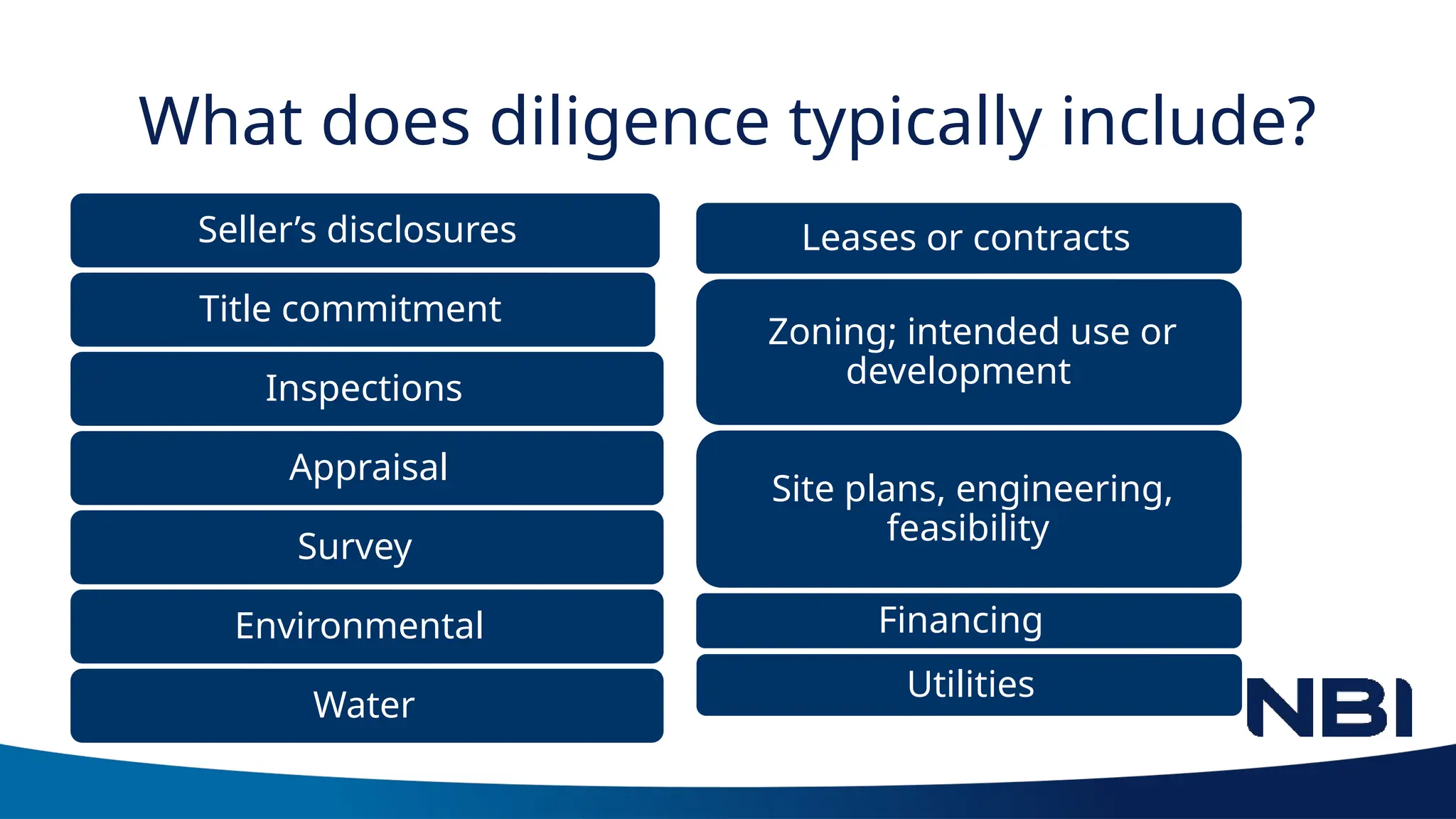
What does diligencetypically include?
Seller’s disclosures
Title commitment
Inspections
Appraisal
Survey
Environmental
Water
Leases or contracts
Zoning; intended use or
development
Site plans, engineering,
feasibility
Financing
Utilities
7.
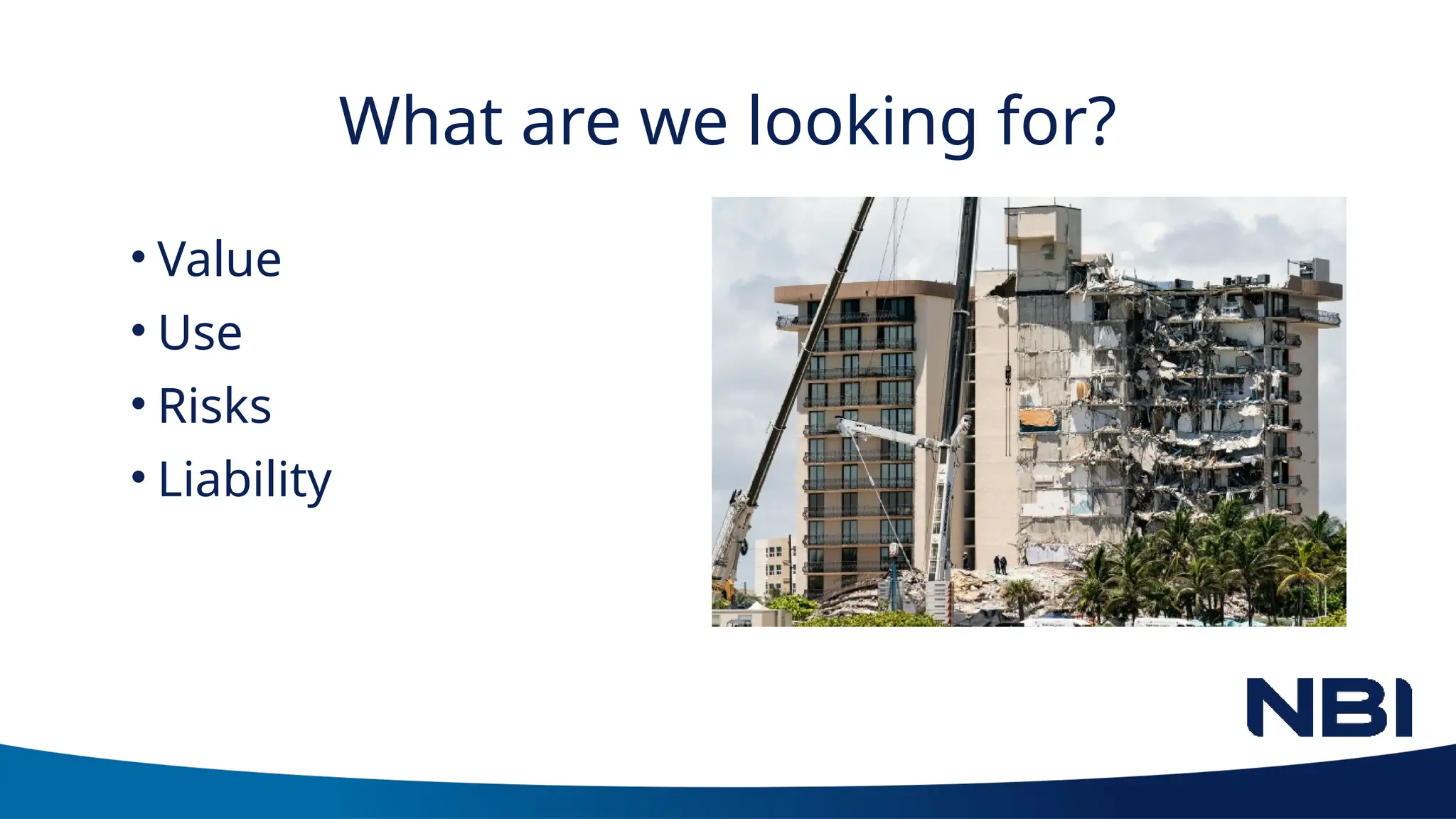
What are welooking for?
• Value
• Use
• Risks
• Liability
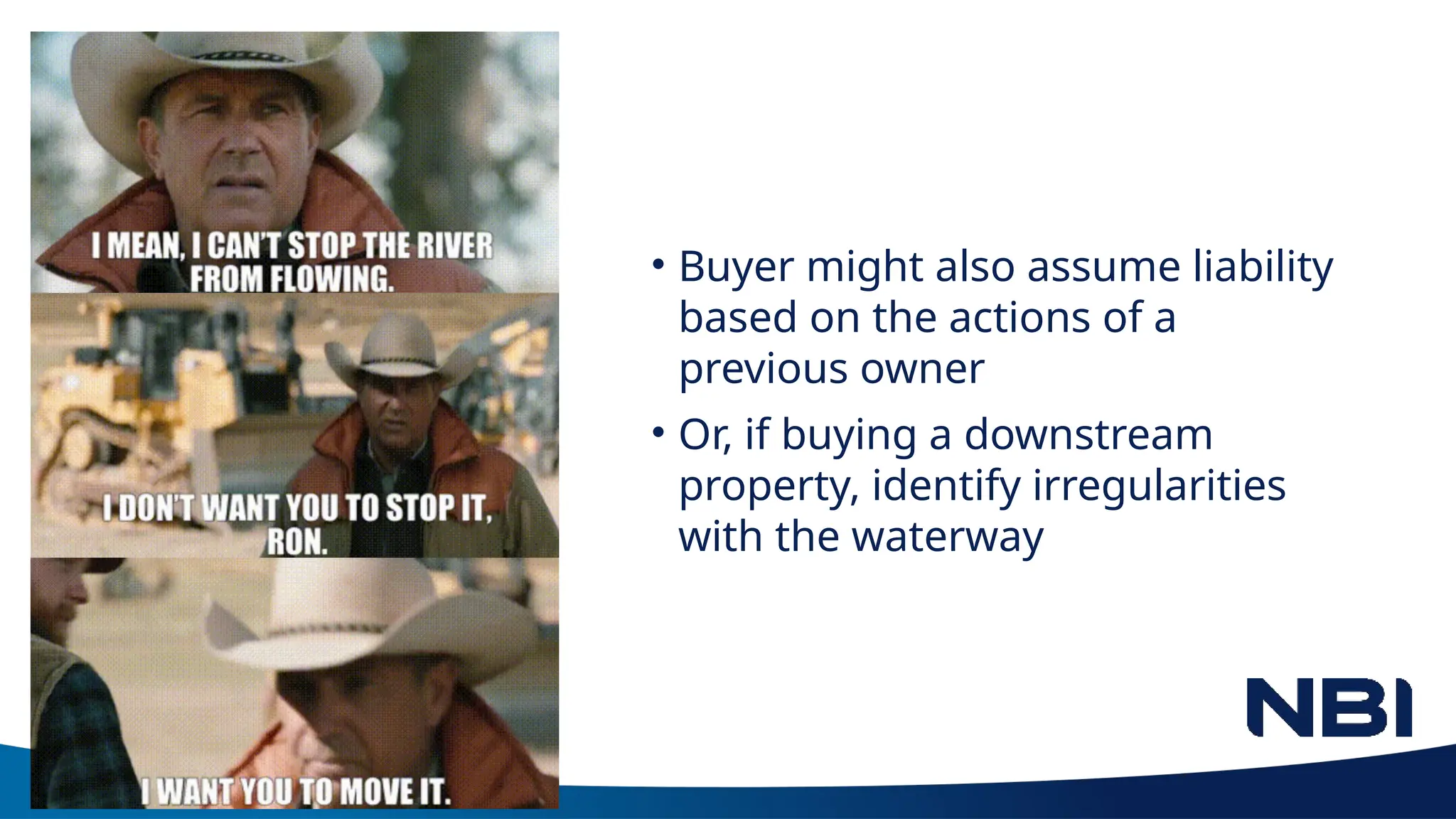
• Buyer mightalso assume liability
based on the actions of a
previous owner
• Or, if buying a downstream
property, identify irregularities
with the waterway
Title Commitment
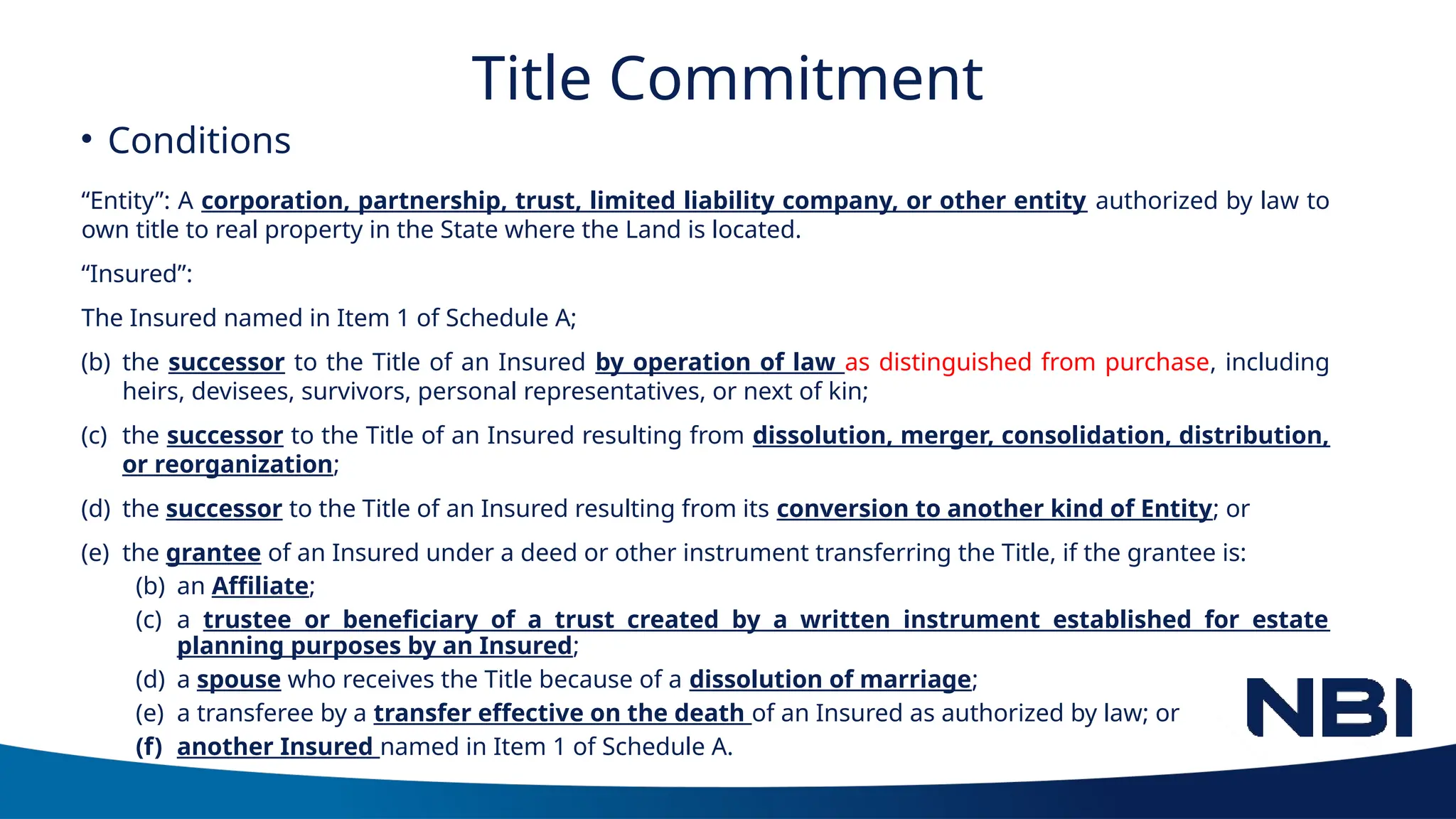
“Entity”: Acorporation, partnership, trust, limited liability company, or other entity authorized by law to
own title to real property in the State where the Land is located.
“Insured”:
The Insured named in Item 1 of Schedule A;
(b) the successor to the Title of an Insured by operation of law as distinguished from purchase, including
heirs, devisees, survivors, personal representatives, or next of kin;
(c) the successor to the Title of an Insured resulting from dissolution, merger, consolidation, distribution,
or reorganization;
(d) the successor to the Title of an Insured resulting from its conversion to another kind of Entity; or
(e) the grantee of an Insured under a deed or other instrument transferring the Title, if the grantee is:
(b) an Affiliate;
(c) a trustee or beneficiary of a trust created by a written instrument established for estate
planning purposes by an Insured;
(d) a spouse who receives the Title because of a dissolution of marriage;
(e) a transferee by a transfer effective on the death of an Insured as authorized by law; or
(f) another Insured named in Item 1 of Schedule A.
• Conditions
19.
Title Commitment
• ScheduleB, Part I - requirements
• Schedule B, Part II -exceptions to insurance
• Standard
• Recorded against property
• Judgment and lien search
• Informational notes
20.
Title Commitment
• Extendedtitle insurance coverage
• Requires ALTA/NSPS Survey, certain affidavits from Seller
• Removal of standard exceptions
• Additional coverage
21.
Title Commitment
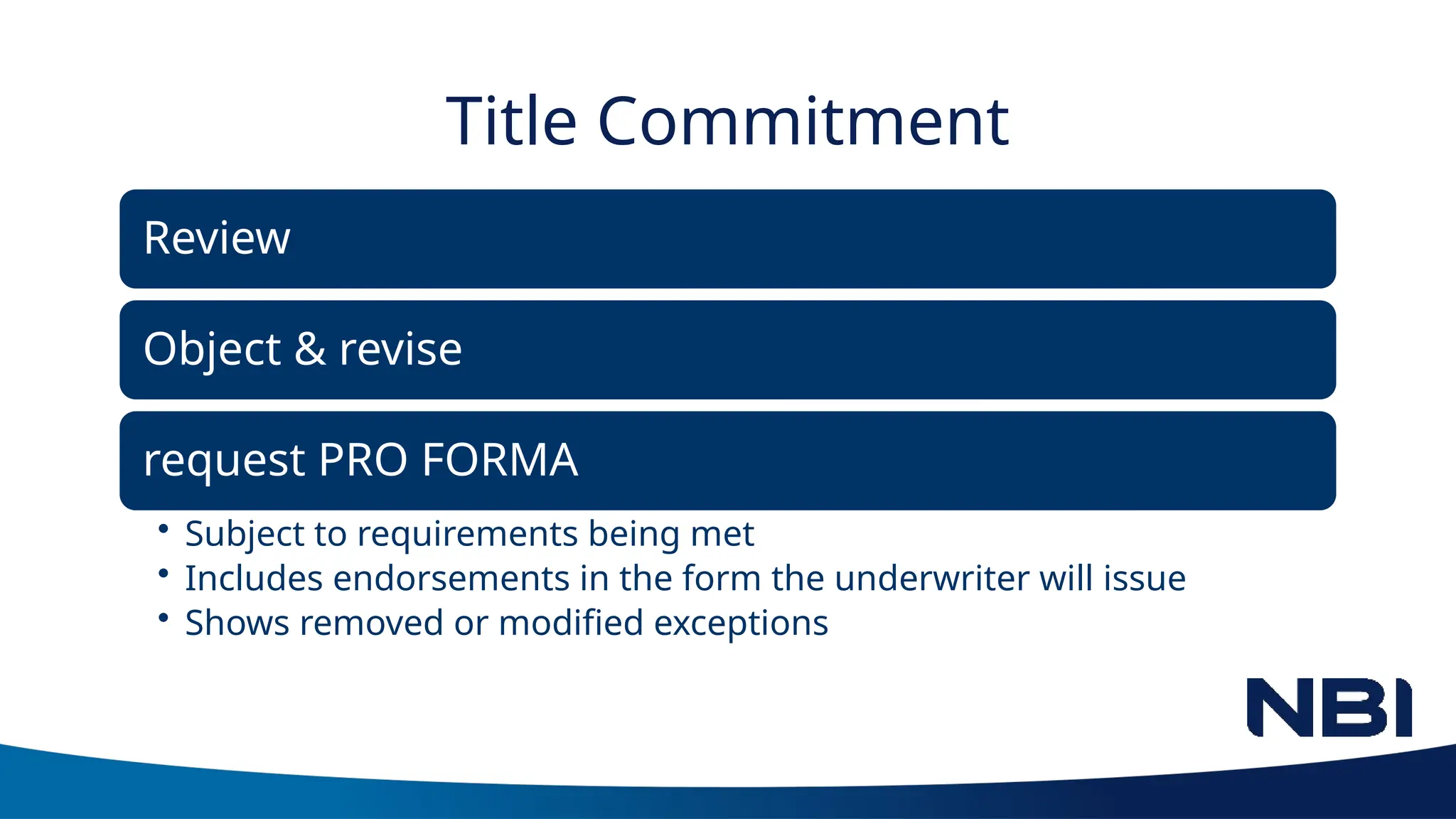
Review
Object &revise
request PRO FORMA
• Subject to requirements being met
• Includes endorsements in the form the underwriter will issue
• Shows removed or modified exceptions
22.
What is importanton a survey?
• Corresponds with title commitment
• Meets national requirements / provides required information
• Certified to the correct parties
• Evaluate site plans
Environmental
• AVOID CERCLAliability
• MEET Lender requirement
• AVOID Future liability
• Remediation and cleanup
expenses
• injury to occupants or the land
• Decrease in property value
• government restrictions on
future uses of the property
• Initial desktop review
• Environmental Site Assessment
• Phase I
• Phase II
25.
Water
• Any totransfer ?
• Any subject to
adjudication?
• Does the property use
water (irrigation, well,
pond, river) without a
secured water right?
26.
Closing
• Closing instructionletter
• closing requirements
• order of recording
• deed
• Prepare post-closing packet for client
27.
New reporting obligation
•FinCEN rule effective December 1, 2025
• Requires certain non-financed residential real estate
transactions to be reported.
#5 Diligence – why is it important?
Protects both parties
Reveals issues related to the condition of the property
Reveals chain of title issues; ensures bona fide purchaser status
Provides opportunity to address, correct, or negotiate around issues
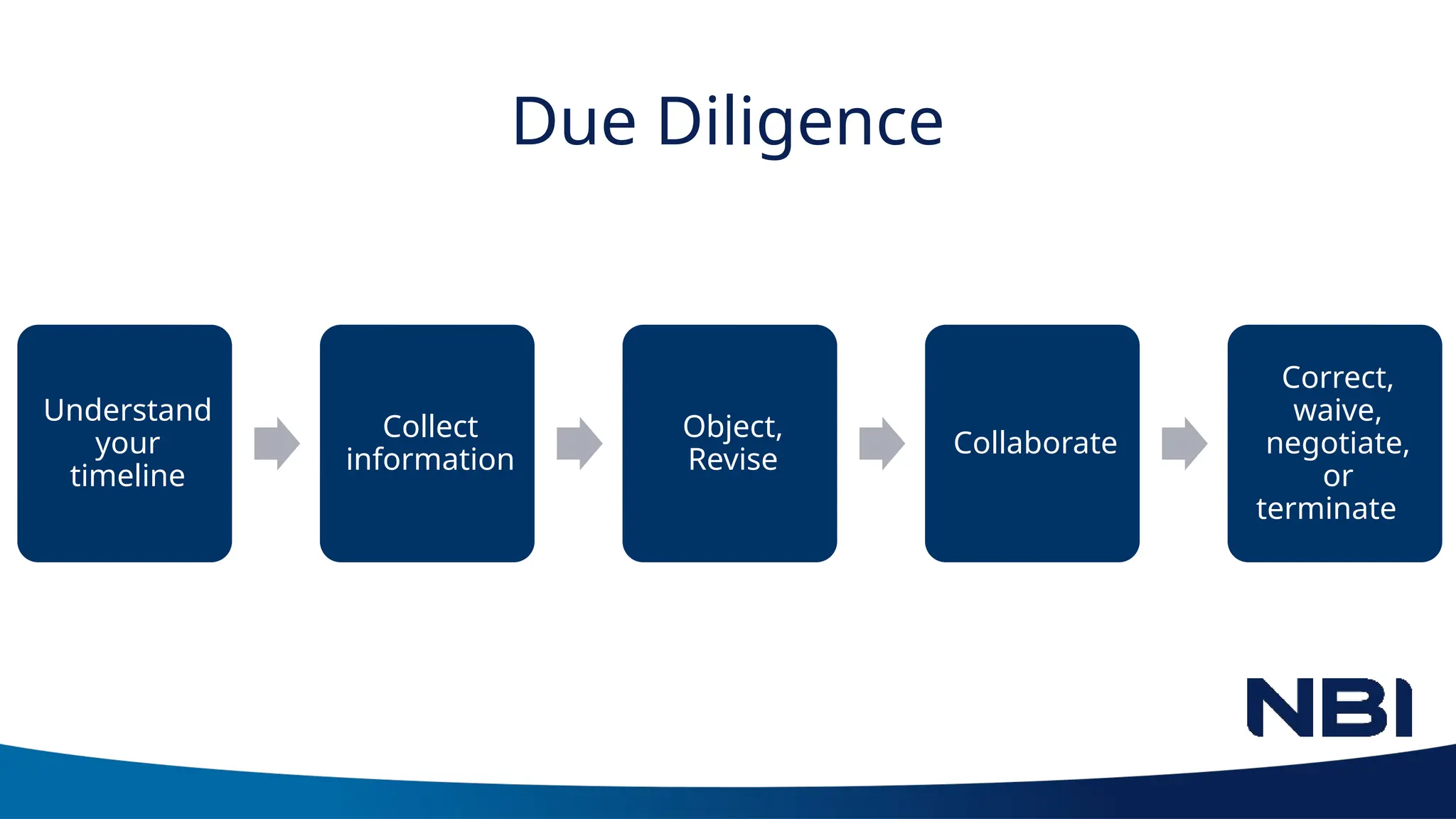
Diligence - process
Understand your timeline
Get started early
Collect information
Make objections and revisions
Collaborate with seller & title (surveyor, land use authority, and other parties)
Correct, waive, negotiate, terminate
#7 Conditions that might result in diminished value, inhibit ability to use the property as intended, or impose risk or liability on purchaser
Easements and restrictions that burden and benefit the property
Verify access to the property
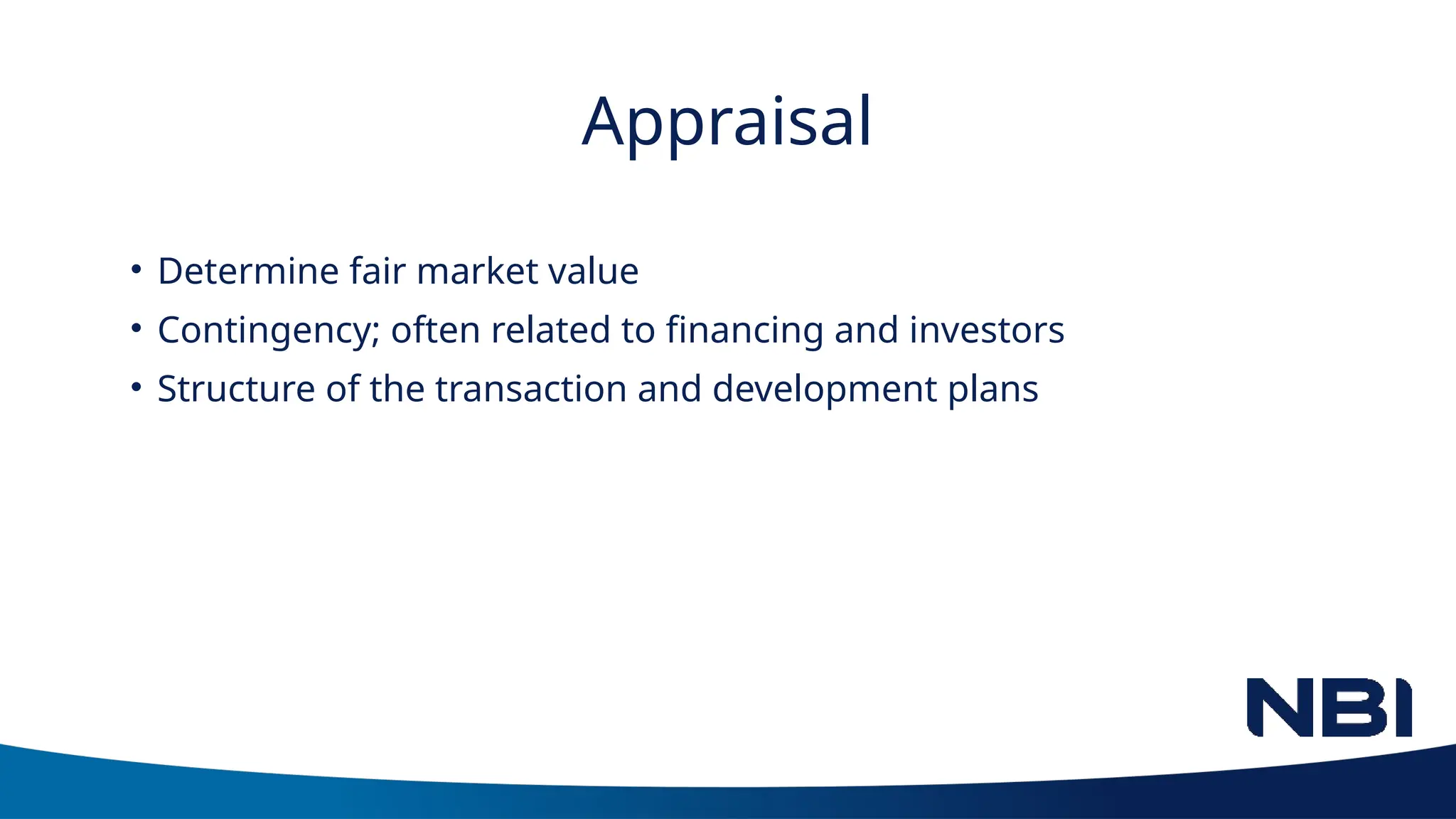
Verify appraisal value
Review chain of title to confirm the property you are actually purchasing, verify any reserved interests, potential claims of right to the Property
Determine whether additional diligence is appropriate, for example, additional inspections or information.
Should purchase price be negotiated?
Do you need more time for diligence?
Do you need to purchase additional title insurance product?
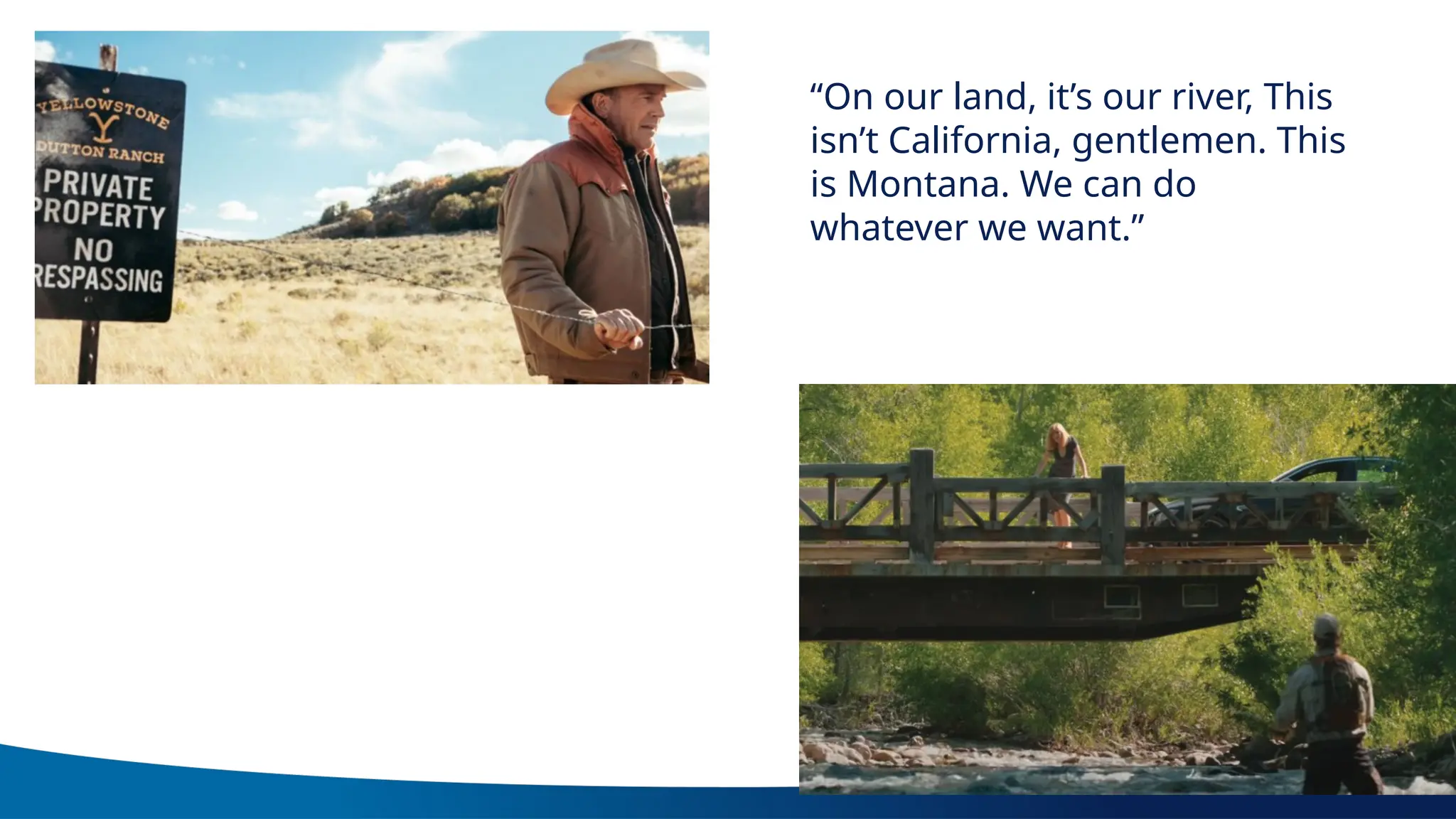
#8 Dutton Ranch .. Some of the issues we might find during diligence:
Development rights limited
Burdened by land trust / conservation easement
Buried bodies – disclosed and not disclosed
Existing violation(s) of local ordinances
#9 Buyer might also assume liability based on actions of a previous owner
No right to divert waterways
Diligence could identify irregularities with waterway, erosion issues, downstream problems for the subject land, whether ranch has appropriate rights for diversion and use of water
If buying a downstream property, diligence would identify irregularities with the diverted waterway from the ranch
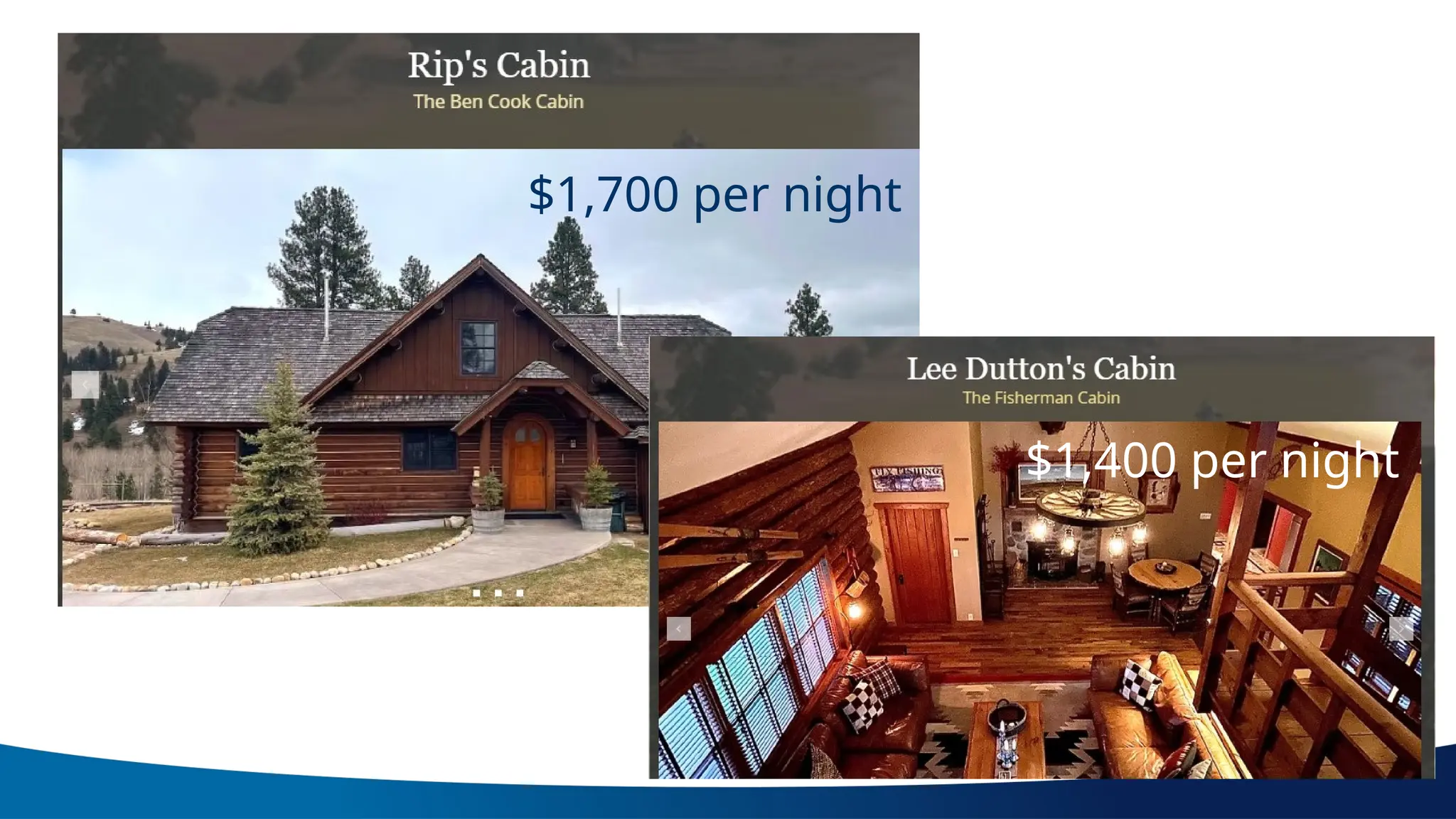
#10 Diligence, such as ordering a zoning report or preparing a land use audit, would determine whether additional structures could be built, or whether you could rent cabins on the ranch (long term or short term)
#11 NOT SO.
Proper diligence will determine whether you can use the land as you intend.
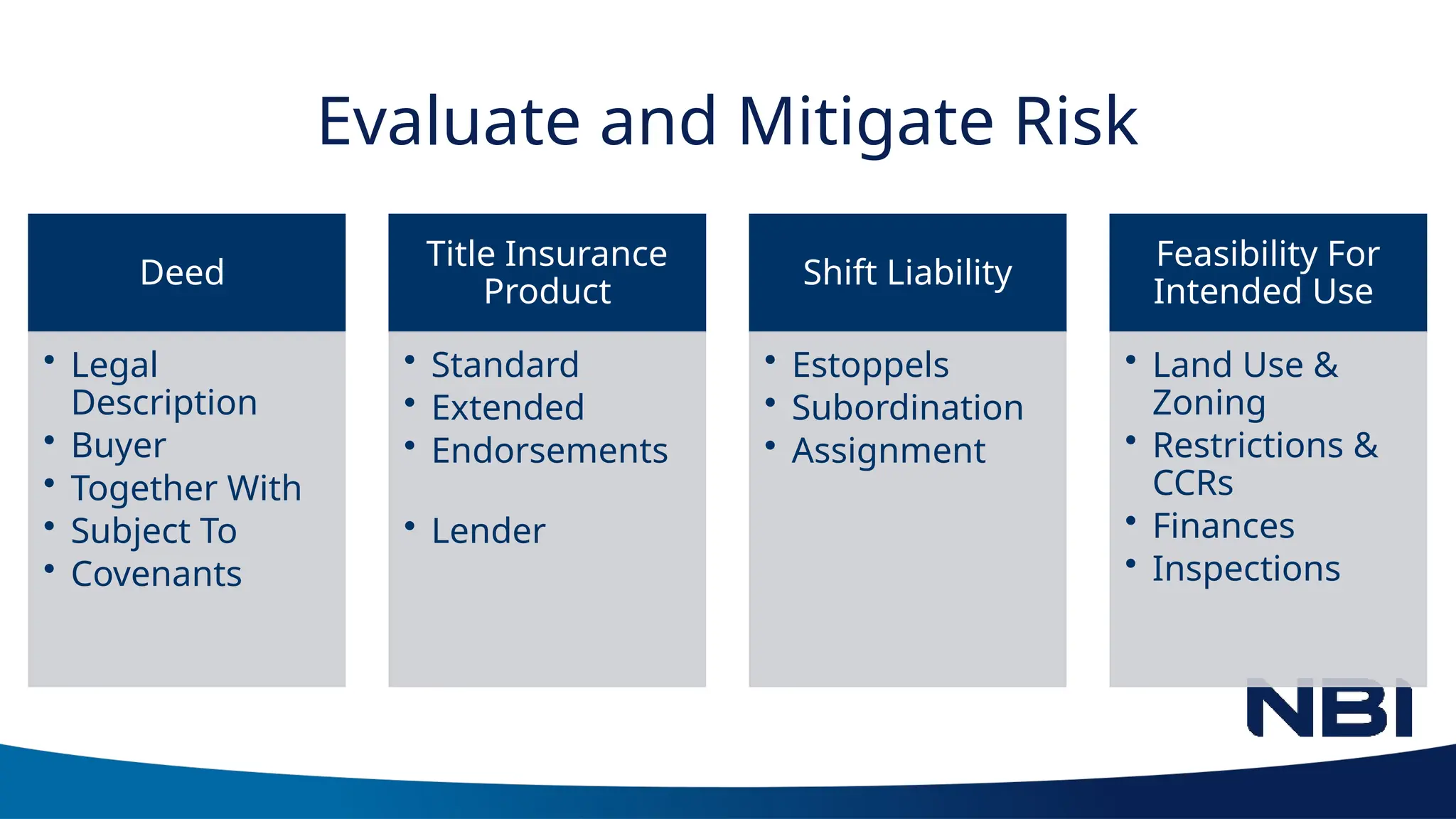
#13 Obtain verification, amend agreements, process and analyze data
We can draft protections into our deed
No statutory form of deed; Warranty deed is commonly used, as well as quitclaim and special warranty
Legal Description
Confirm buyer is correct (and comprehensive)
Together With, Subject To, Covenants, permitted exceptions
Purchase appropriate title insurance products
Standard, Extended, Endorsements
Shift liability to other parties
Estoppels, Subordination, Assignment, Affidavits
#15 Inspections
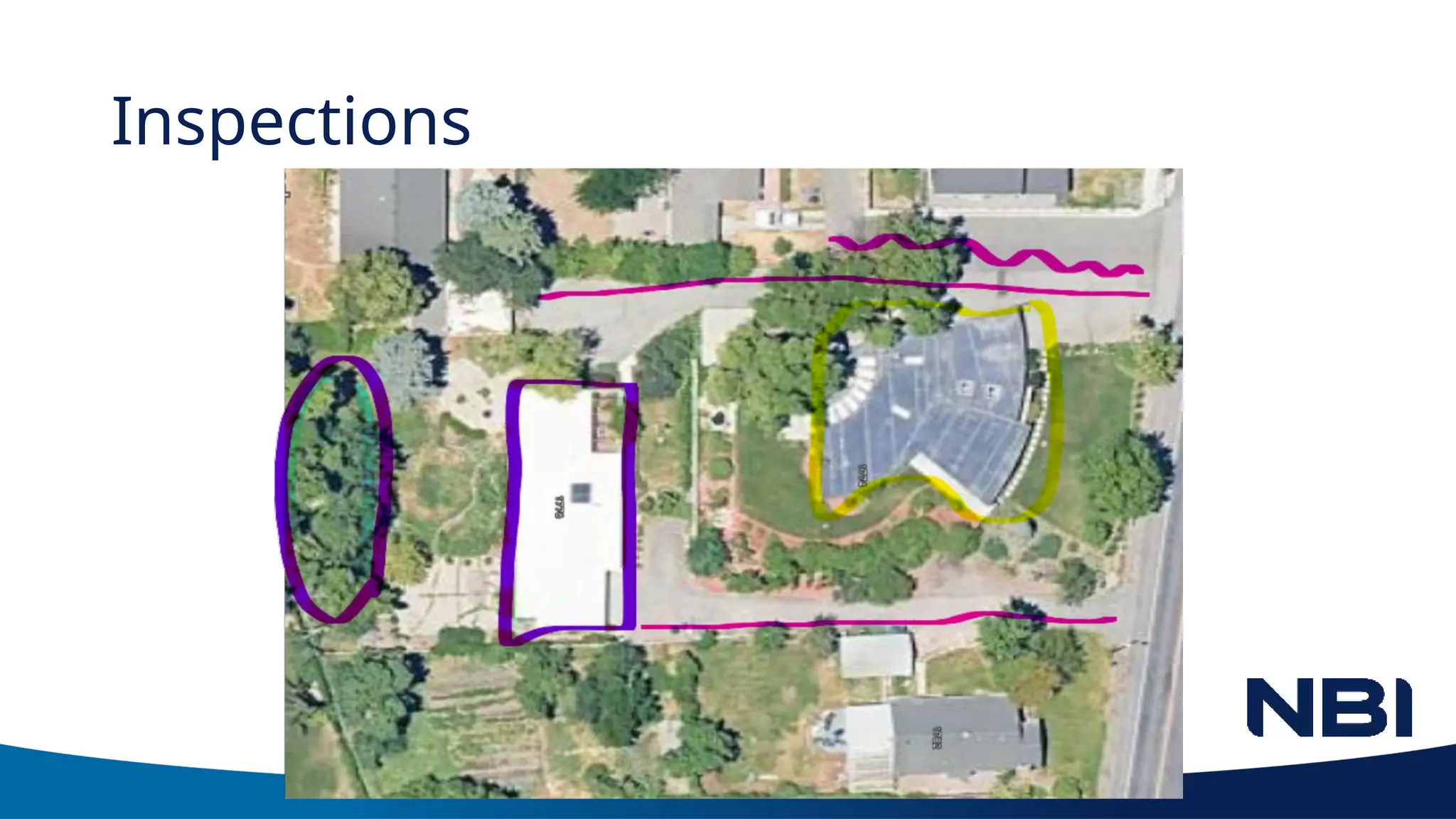
Understand the condition of the structures, fixtures, appliances, HVAC, roof, concrete, foundation, utility infrastructure.
Understand, or find evidence of, environmental or hazardous substance history or conditions, for example, existence of old poly drums, carcasses, mysterious pools of discolored water, might indicate that further environmental diligence is appropriate.
Look for evidence claims of right, use or access that are not recorded.
Look for evidence of issues not disclosed.
#17 Title Commitment - starting from the beginning:
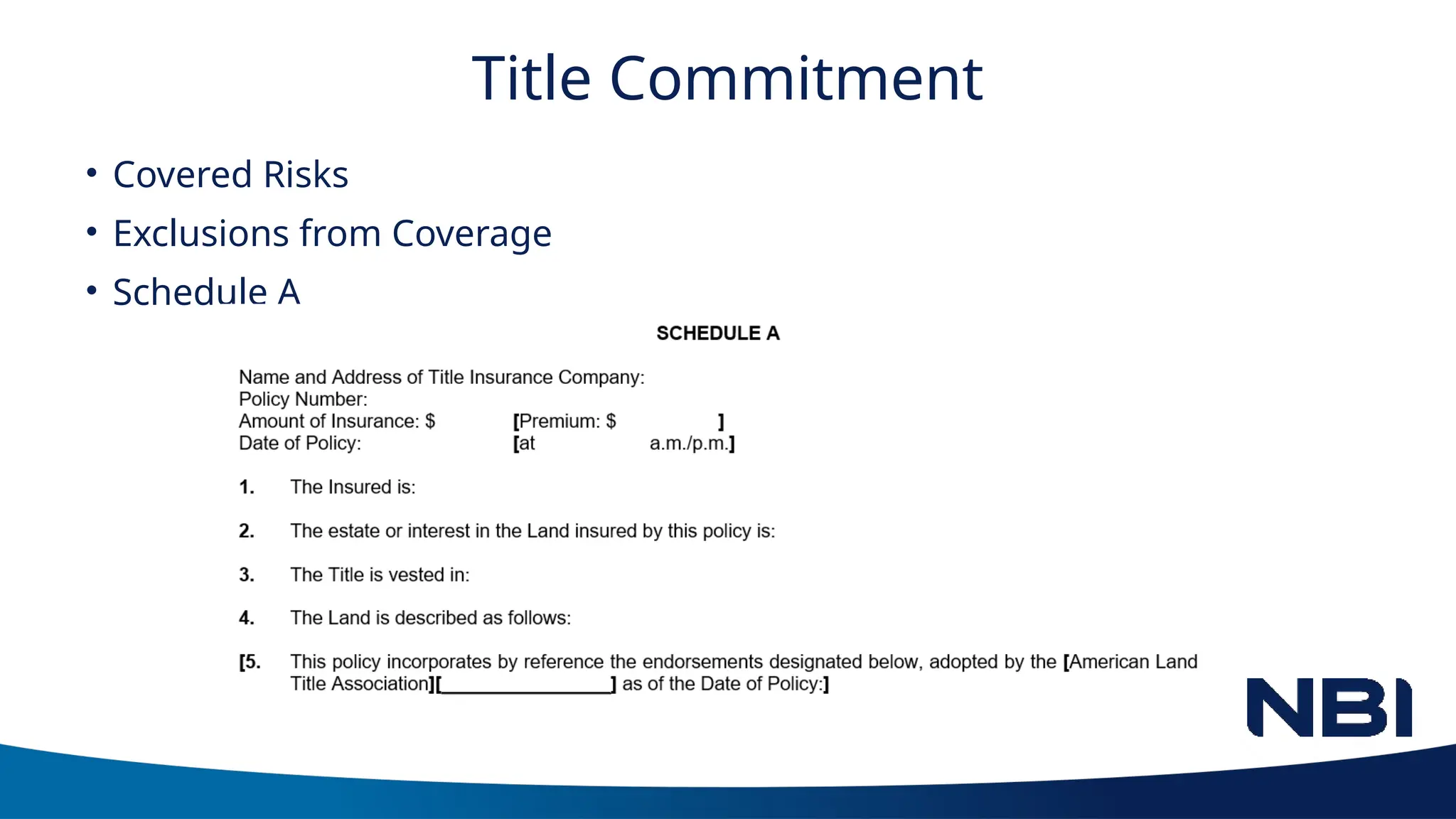
Covered Risks - describes what is included in your title insurance product
Exclusions from Coverage – describes what is not included in your title insurance product
Schedule A – provides essential terms and parties (buyer, seller, insured amount, effective date, legal description)
Legal description – consider whether you need to insure any easements interests benefitting the property or leasehold interests.
#18 Conditions
Draw attention to definition of “Insured” and verify that if you intend for any transfers to family members, affiliates, LLC, trust, that you fit precisely within the definition. Montana courts have historically interpreted this narrowly, so it’s best practice to confirm with the underwriter and if there is any ambiguity or doubt, purchase the endorsement as a safeguard
#19 Schedule B, Part I - requirements
Describes what must be provided to the title company at or before closing to issue the insurance described in the commitment.
Typically includes:
Authorization documents for entities, Money owed, Payoff statements for loans
Instruments required to remove or edit exceptions, or issue endorsements
Schedule B, Part II - exceptions to insurance
Standard exceptions
Special exceptions recorded against property
Judgment and lien search
Informational notes
#20 Title Insurance - Extended title insurance coverage
Requires ALTA/NSPS Survey and certain affidavits from Seller
Removes standard exceptions, typically
Provides additional coverage including against defects, liens, easements, encroachments, and conflicts in boundary lines that aren't in public record, and rights or claims of parties in possession, unfiled mechanics' and materialmen's liens, and matters that would be disclosed by a complete and accurate survey.
#22 National standards; should include specific things including: zoning statement, setbacks, flood plain information, access points, structures, boundaries, easements, encroachments, utilities
Use the survey in tandem with the title commitment. The title commitment should be updated based on the survey, and vice versa.
ALTA survey used to obtain extended title insurance and certain endorsements.
Review any potential easements, structures, utilities, that are not on the title commitment, figure out who they benefit, if there is any written agreement, are there restrictions imposed on your use of the property?
Confirm that all easements or agreements affecting the property are plotted on the survey.
Verify that the survey is certified to the correct parties, including the owner entity and lender.
Review how existing easements affect the property and whether they impact the planned use or development.
Verify sufficient access.
Site Plan - Prepare a site plan and confirm that the survey does not reveal any problems
Do you have infrastructure, access, and rights necessary for all utilities serving the property? (if you are increasing density, do you have sufficient infrastructure to scale up?)
Will you be able to obtain the permits and entitlements you need?
Are there existing violations of any law or ordinance?
Are there any concerns related to water, flooding, environmental conditions?
Are there any encroachments, do you need any land use agreements with adjacent parcels?
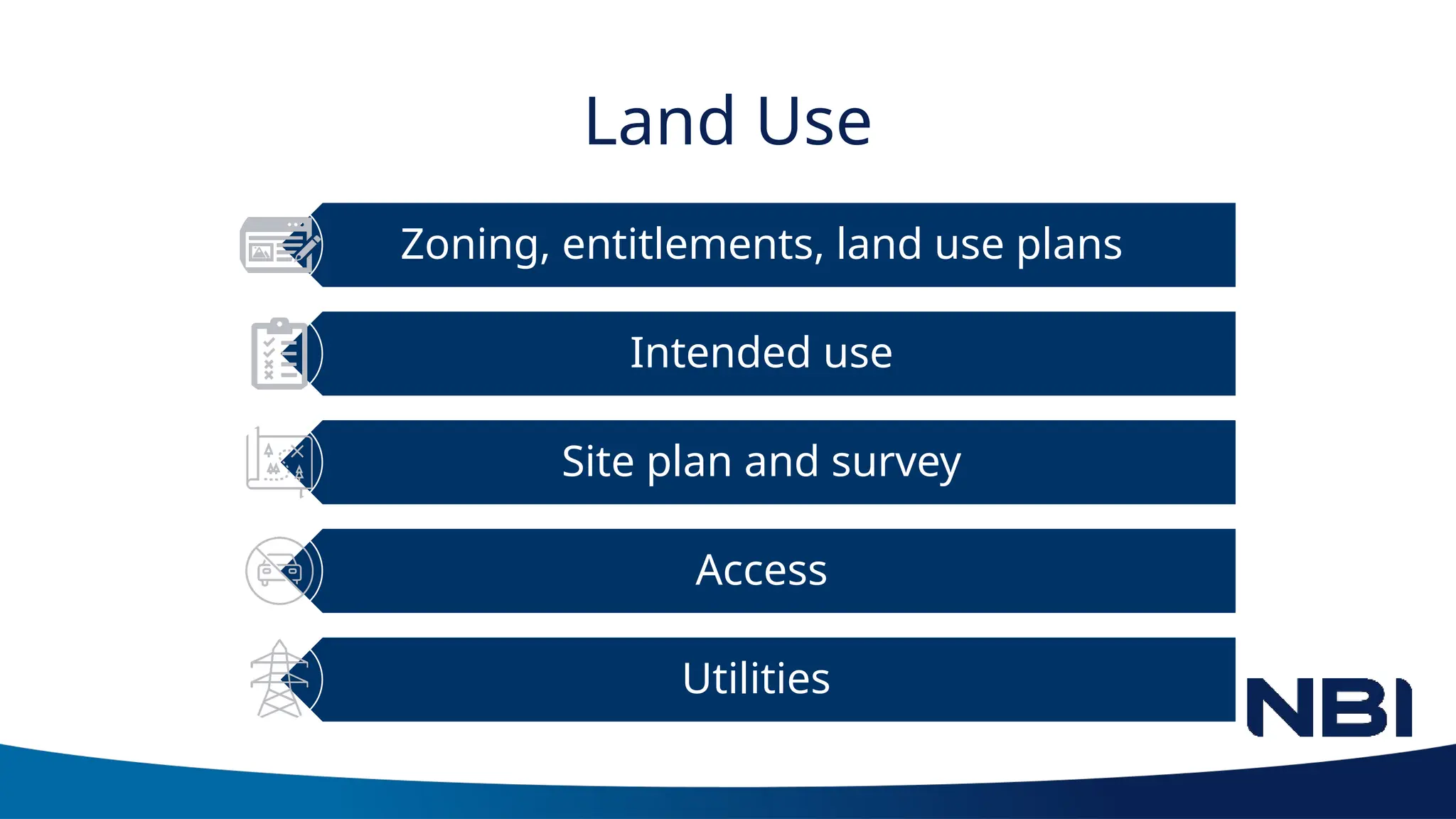
#23 Land Use - Confirm zoning and any other land use plans that apply
2023 Montana Land Use Planning Act requires certain municipalities to create or revise a comprehensive land use growth plan within three years
Zoning – whether use is permitted, conditional, or whether you will need a variance, development agreement, subdivision, etc.; review zoning district requirements and conformity with site plans
Review any restrictions that might apply to your property.
#24 Environmental Diligence
Initial “desktop” review to understand current use, history, use of surrounding properties.
Consider whether you need an Environmental Site Assessment (Phase I, Phase II)
Current and past uses (e.g. dry cleaning, fuel station)
Known contamination on the property or surroundings (e.g. mining, dumping)
Compliance with or violations of applicable laws and regulations
The buyer's planned use of the land in the future
Why is an ESA important?
May be required by lender
Prevents future liability, for example:
CERCLA, Remediation and cleanup expenses, Liability against future injury to occupants or the land
Decrease in property value
government restrictions on future uses of the property
Consider other risk mitigating factors (e.g. indemnification or insurance)
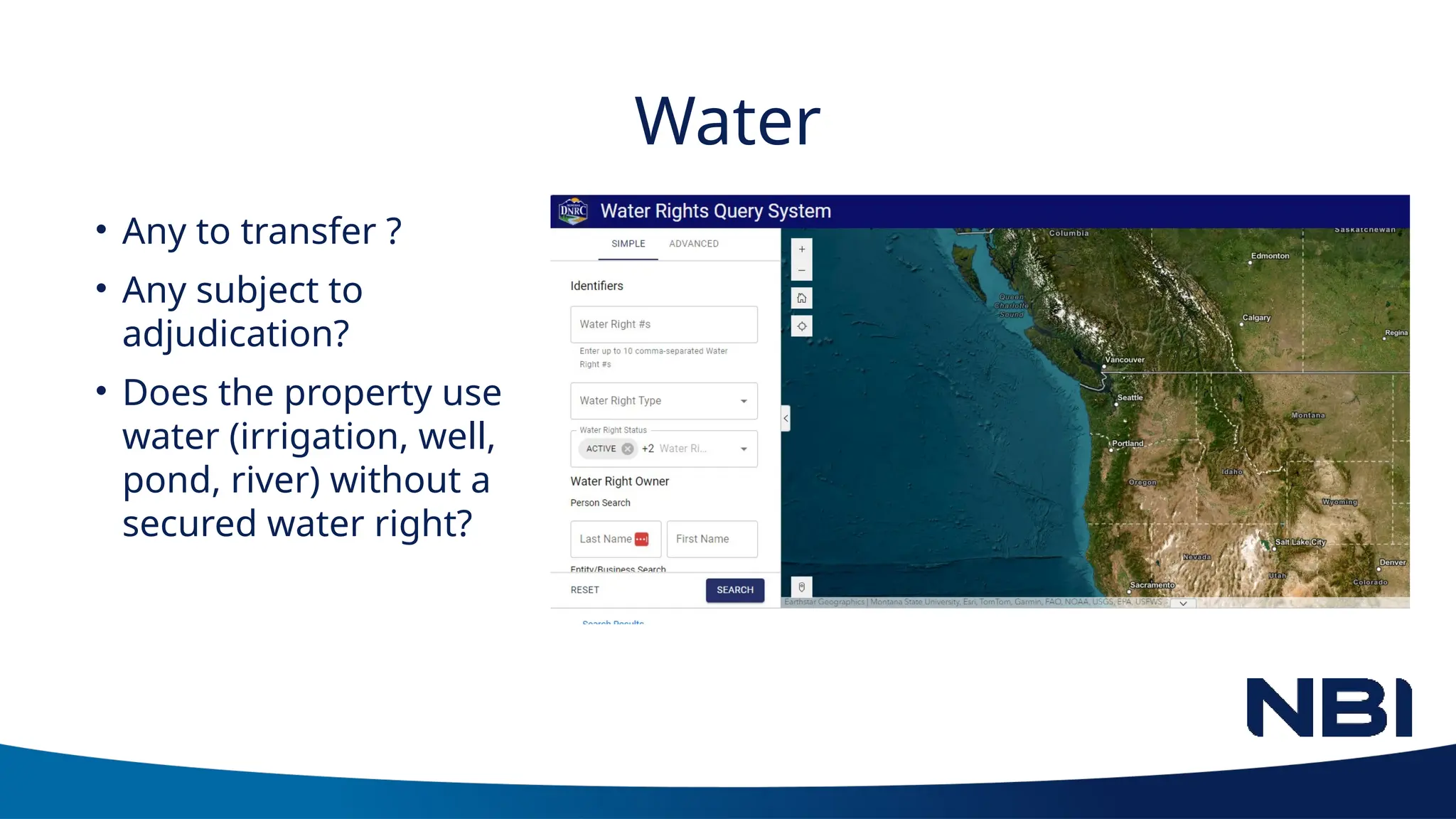
#25 confirm whether there are any water rights to transfer. Review on DNRC Water Rights Query System. Use basic search if the geocode and ownership are straight forward. The advance search works well if you have multiple legal descriptions, or parcels that have changed geocodes or boundaries over time.
Confirm whether any water rights subject to adjudication? All pre-1972 water rights have to be adjudicated.
Water rights transfers require a DNRC transfer form 640 in conjunction with the Realty Transfer Certificate.
If the property uses any water such as irrigation, well, pond, or river, confirm that there is a secured water right.
#26 Prepare a closing instruction letter for the title company.
Describe closing requirements, especially if required for title insurance.
Specify order of recording, especially if there are any agreements being executed in conjunction with the sale such as easements, licenses, development agreements.
Provide any special instructions, especially related to 1031 exchange, qualified opportunity zones, or other non-traditional transactions structures.
Provide a form of deed or closely review the deed provided by the title company or other party.
Post-closing - Prepare closing packet for client with the settlement statement, recorded copies of all documents, final title policy, and other applicable documents in final form.