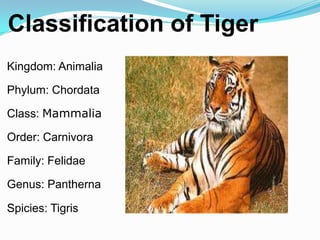
Classification of Tiger
Kingdom: Animalia

Phylum: Chordata

Class: Mammalia

Order: Carnivora

Family: Felidae

Genus: Pantherna

Spicies: Tigris
Description of Tiger

Length: 4.6-12.2 ft.

Height: 3/3 1/2 ft.

Weight: 220-675 pounds

Colors and markings: Orange
With a white belly and black
stripes

Shape: oval body that is low
to the ground
Historical Status
 There were once nine subspecies of tigers:
 Bengal, Siberian, Indochinese, South Chinese,
 Sumatran, Malayan, Caspian, Javan and Bali.
 Of these, the last three are extinct, one is extinct
 in the wild, and the rest are endangered.

 In the early 1900s, there were around 100,000
 tigers throughout their range.
Present Status
•Tigers are endangered and there are a total
of around 3,000-4,500 exist in the wild.

•South Chinese tigers are extinct in the wild.

•The Javan, Bali, and Caspian tiger are extinct.
Project Tiger
Project Tiger was launched in 1973 in India. The
project aims at ensuring a viable population of tiger
in their natural habitats and preserving areas of
biological importance as a natural heritage for the
people. The selection of areas for the reserves
represented as close as possible the diversity of
ecosystem across the tiger's distribution in the
country.
•Project Tiger is administered by the NATIONAL
TIGER CONSERVATION AUTHORITY. The
overall administration of the project is monitored
by a Steering Committee.

•The project's task force visualized these tiger
reserves as breeding nuclei, from which surplus
animals would emigrate to adjacent forests.

•The government has set-up a Tiger Protection
Force to combat poachers, and funded the
relocation of up to 200,000 villagers to minimize
human-tiger conflicts
•Wireless communication system and
outstation patrol camps have been developed
within the tiger reserves, due to which
poaching has declined considerably.

• Fire protection engineering is carried out by
suitable preventive and control measures.
Villages have been relocated in many
reserves, especially from core areas.

•Livestock grazing has been controlled to a
great extent in the tiger reserves.
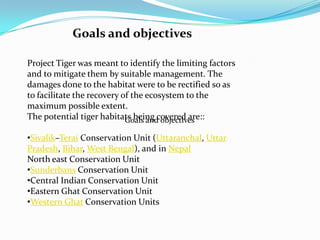
Goals and objectives

Project Tiger was meant to identify the limiting factors
and to mitigate them by suitable management. The
damages done to the habitat were to be rectified so as
to facilitate the recovery of the ecosystem to the
maximum possible extent.
The potential tiger habitats being covered are::
                            Goals and objectives

•Sivalik–Terai Conservation Unit (Uttaranchal, Uttar
Pradesh, Bihar, West Bengal), and in Nepal
North east Conservation Unit
•Sunderbans Conservation Unit
•Central Indian Conservation Unit
•Eastern Ghat Conservation Unit
•Western Ghat Conservation Units
WPSI's Tiger Poaching Statistics


The WILDLIFE PROTECTION SOCIETY OF
INDIA     (WPSI)       works    with     government
enforcement agencies to apprehend tiger poachers
and traders throughout India. WPSI also makes
every effort to investigate and verify any seizure of
tiger parts and unnatural tiger deaths that are
brought to our notice.
To date, WPSI has documented the following cases:

 95 cases of tigers known to have been killed in 1994
 121 tigers killed in 1995
 52 tigers killed in 1996
 88 tigers killed in 1997
 39 tigers killed in 1998
 81 tigers killed in 1999
 52 tigers killed in 2000
 72 tigers killed in 2001
 46 tigers killed in 2002
 38 tigers killed in 2003
 38 tigers killed in 2004
 46 tigers killed in 2005
 37 tigers killed in 2006
 27 tigers killed in 2007
 29 tigers killed in 2008
 32 tigers killed in 2009
 30 tigers killed in 2010
 13 tigers killed in 2011
Current Status of Tiger in India

India holds over half the world's tiger population.
According to the latest tiger census report
released on March 28, 2011 by the National Tiger
Conservation Authority, the current tiger
population estimated is 1,706 (i.e. ranging
between a minimum of 1,571 to a maximum of
1,875). The results include figures from 17 Indian
states with a tiger population.
PENALTIES
A general offence under the Wild Life (Protection) Act,
1972, attracts a maximum sentence of three years
imprisonment or a fine which may extend to Rs. 25,000
or both.

An offence involving a species listed in Schedule I or
Part II of Schedule II, or an offence committed within a
sanctuary or natural park, attracts a mandatory prison
term of three years, which may extend to seven years.
There is also a mandatory fine of at least Rs. 10,000. For
a subsequent offence, the prison term remains the
same, while the mandatory fine is at least Rs.25,000.
List of Tiger Reserves in India

 Bandhavgarh            Namdapha
 Bandipur               Pakhui-Nameri
 Bhadra                 Palamau
 Bori-Satpura           Panna
 Buxa                   Pench (Madhya Pradesh)
 Corbett                Pench (Maharashtra)
 Dampa                  Periyar
 Dudhwa                 Ranthambore
 Indravati              Sariska
 Kalakad-Mundanthurai   Similipal
 Kanha                  Sundarbans
 Manas                  Tadoba-Andhari
 Melghat                Valmiki
 Nagarjunasagar
Success Rate Of Project Tiger

It was merely months back when the Indian government
pulled up their socks and did a census revealing a
staggering low number of 1411 tigers left in open. All the
media and eco-conservationists turned their heads
towards India and started a campaign “Project Tiger”
dedicating the year 2010 to the Tiger savior year.

A recent statement by Jayaram Ramesh, member of
Indian cabinet, declared good signs with the tiger
population about 1700+.
Tiger

Tiger

  • 2.
    Classification of Tiger Kingdom:Animalia Phylum: Chordata Class: Mammalia Order: Carnivora Family: Felidae Genus: Pantherna Spicies: Tigris
  • 3.
    Description of Tiger Length:4.6-12.2 ft. Height: 3/3 1/2 ft. Weight: 220-675 pounds Colors and markings: Orange With a white belly and black stripes Shape: oval body that is low to the ground
  • 4.
    Historical Status Therewere once nine subspecies of tigers: Bengal, Siberian, Indochinese, South Chinese, Sumatran, Malayan, Caspian, Javan and Bali. Of these, the last three are extinct, one is extinct in the wild, and the rest are endangered. In the early 1900s, there were around 100,000 tigers throughout their range.
  • 6.
    Present Status •Tigers areendangered and there are a total of around 3,000-4,500 exist in the wild. •South Chinese tigers are extinct in the wild. •The Javan, Bali, and Caspian tiger are extinct.
  • 8.
    Project Tiger Project Tigerwas launched in 1973 in India. The project aims at ensuring a viable population of tiger in their natural habitats and preserving areas of biological importance as a natural heritage for the people. The selection of areas for the reserves represented as close as possible the diversity of ecosystem across the tiger's distribution in the country.
  • 9.
    •Project Tiger isadministered by the NATIONAL TIGER CONSERVATION AUTHORITY. The overall administration of the project is monitored by a Steering Committee. •The project's task force visualized these tiger reserves as breeding nuclei, from which surplus animals would emigrate to adjacent forests. •The government has set-up a Tiger Protection Force to combat poachers, and funded the relocation of up to 200,000 villagers to minimize human-tiger conflicts
  • 10.
    •Wireless communication systemand outstation patrol camps have been developed within the tiger reserves, due to which poaching has declined considerably. • Fire protection engineering is carried out by suitable preventive and control measures. Villages have been relocated in many reserves, especially from core areas. •Livestock grazing has been controlled to a great extent in the tiger reserves.
  • 11.
    Goals and objectives ProjectTiger was meant to identify the limiting factors and to mitigate them by suitable management. The damages done to the habitat were to be rectified so as to facilitate the recovery of the ecosystem to the maximum possible extent. The potential tiger habitats being covered are:: Goals and objectives •Sivalik–Terai Conservation Unit (Uttaranchal, Uttar Pradesh, Bihar, West Bengal), and in Nepal North east Conservation Unit •Sunderbans Conservation Unit •Central Indian Conservation Unit •Eastern Ghat Conservation Unit •Western Ghat Conservation Units
  • 12.
    WPSI's Tiger PoachingStatistics The WILDLIFE PROTECTION SOCIETY OF INDIA (WPSI) works with government enforcement agencies to apprehend tiger poachers and traders throughout India. WPSI also makes every effort to investigate and verify any seizure of tiger parts and unnatural tiger deaths that are brought to our notice.
  • 13.
    To date, WPSIhas documented the following cases: 95 cases of tigers known to have been killed in 1994 121 tigers killed in 1995 52 tigers killed in 1996 88 tigers killed in 1997 39 tigers killed in 1998 81 tigers killed in 1999 52 tigers killed in 2000 72 tigers killed in 2001 46 tigers killed in 2002 38 tigers killed in 2003 38 tigers killed in 2004 46 tigers killed in 2005 37 tigers killed in 2006 27 tigers killed in 2007 29 tigers killed in 2008 32 tigers killed in 2009 30 tigers killed in 2010 13 tigers killed in 2011
  • 15.
    Current Status ofTiger in India India holds over half the world's tiger population. According to the latest tiger census report released on March 28, 2011 by the National Tiger Conservation Authority, the current tiger population estimated is 1,706 (i.e. ranging between a minimum of 1,571 to a maximum of 1,875). The results include figures from 17 Indian states with a tiger population.
  • 16.
    PENALTIES A general offenceunder the Wild Life (Protection) Act, 1972, attracts a maximum sentence of three years imprisonment or a fine which may extend to Rs. 25,000 or both. An offence involving a species listed in Schedule I or Part II of Schedule II, or an offence committed within a sanctuary or natural park, attracts a mandatory prison term of three years, which may extend to seven years. There is also a mandatory fine of at least Rs. 10,000. For a subsequent offence, the prison term remains the same, while the mandatory fine is at least Rs.25,000.
  • 17.
    List of TigerReserves in India Bandhavgarh Namdapha Bandipur Pakhui-Nameri Bhadra Palamau Bori-Satpura Panna Buxa Pench (Madhya Pradesh) Corbett Pench (Maharashtra) Dampa Periyar Dudhwa Ranthambore Indravati Sariska Kalakad-Mundanthurai Similipal Kanha Sundarbans Manas Tadoba-Andhari Melghat Valmiki Nagarjunasagar
  • 18.
    Success Rate OfProject Tiger It was merely months back when the Indian government pulled up their socks and did a census revealing a staggering low number of 1411 tigers left in open. All the media and eco-conservationists turned their heads towards India and started a campaign “Project Tiger” dedicating the year 2010 to the Tiger savior year. A recent statement by Jayaram Ramesh, member of Indian cabinet, declared good signs with the tiger population about 1700+.