Graeme Dyck, Licensed Psychologist
www.resiliencepsych.ca
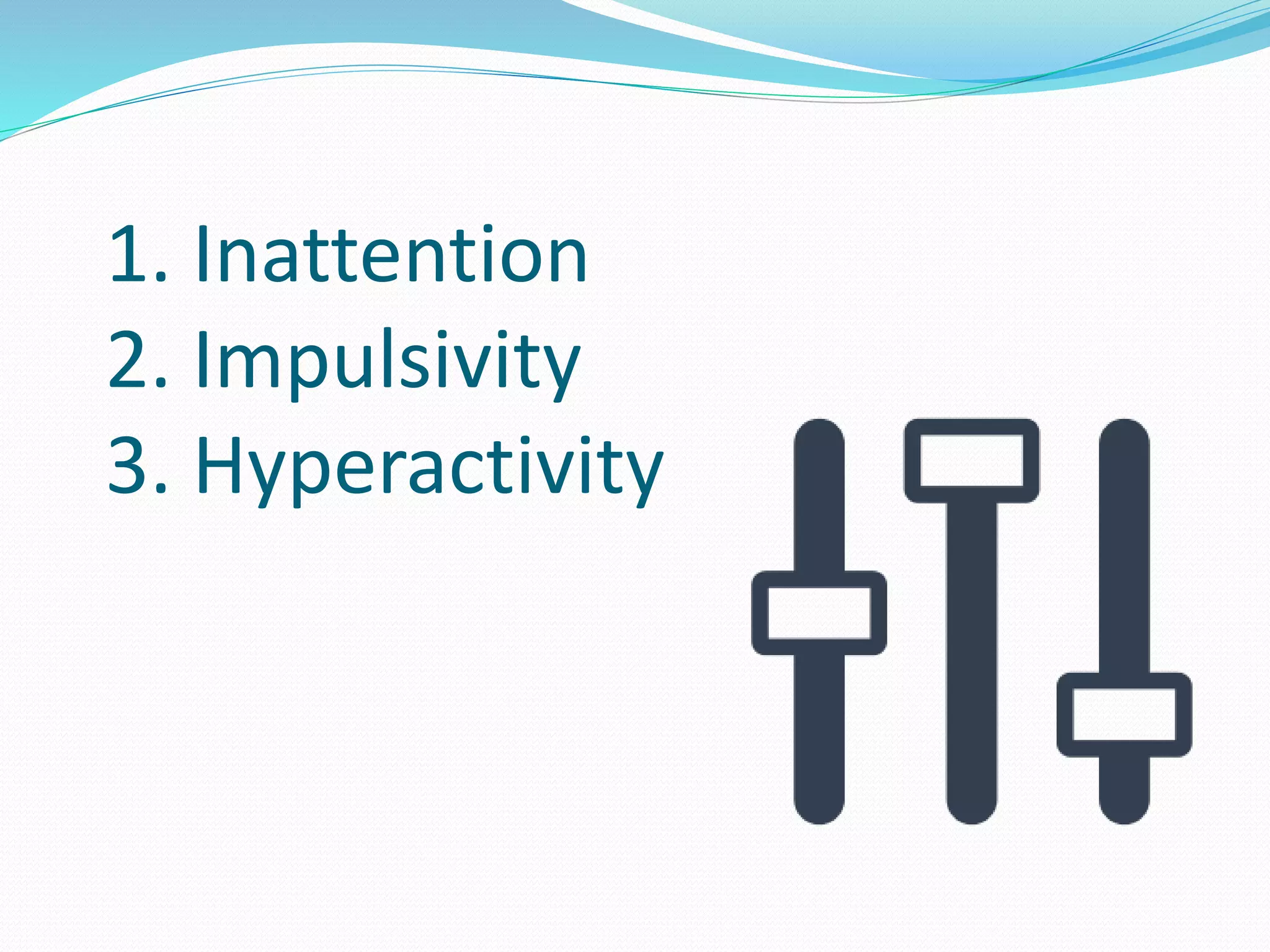
 Inattention
- Moving away from one goal and towards another
 Hyperactivity
-Restless behaviour and/or thoughts
 Impulsivity
- Quick decisions that frequently yield costs
ADHD Sliders
1. ADHD is on a 3-slider spectrum; It
looks different in everyone!
2. You can thrive if you own your
condition; Brains can be rewired!
"No longer at the mercy of the reptilian brain,
we can change ourselves.” - Carl Sagan
3. You can adapt your behaviour;
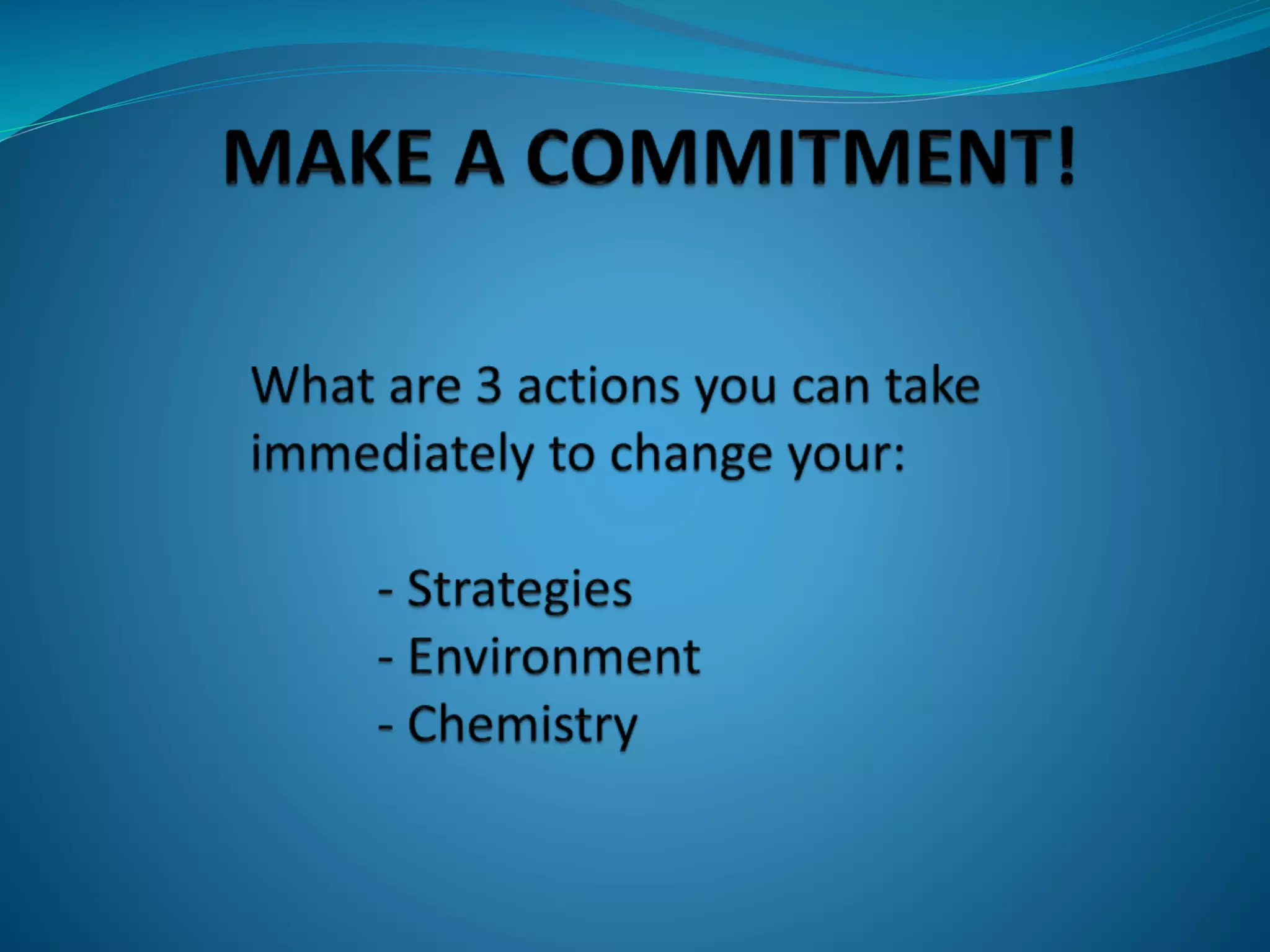
Change your:
• Environment
• Strategies
• Chemistry
4. Acknowledge your Weaknesses; Play
to your Strengths!
5. Create Lifestyle Balance; Have a
Plan!
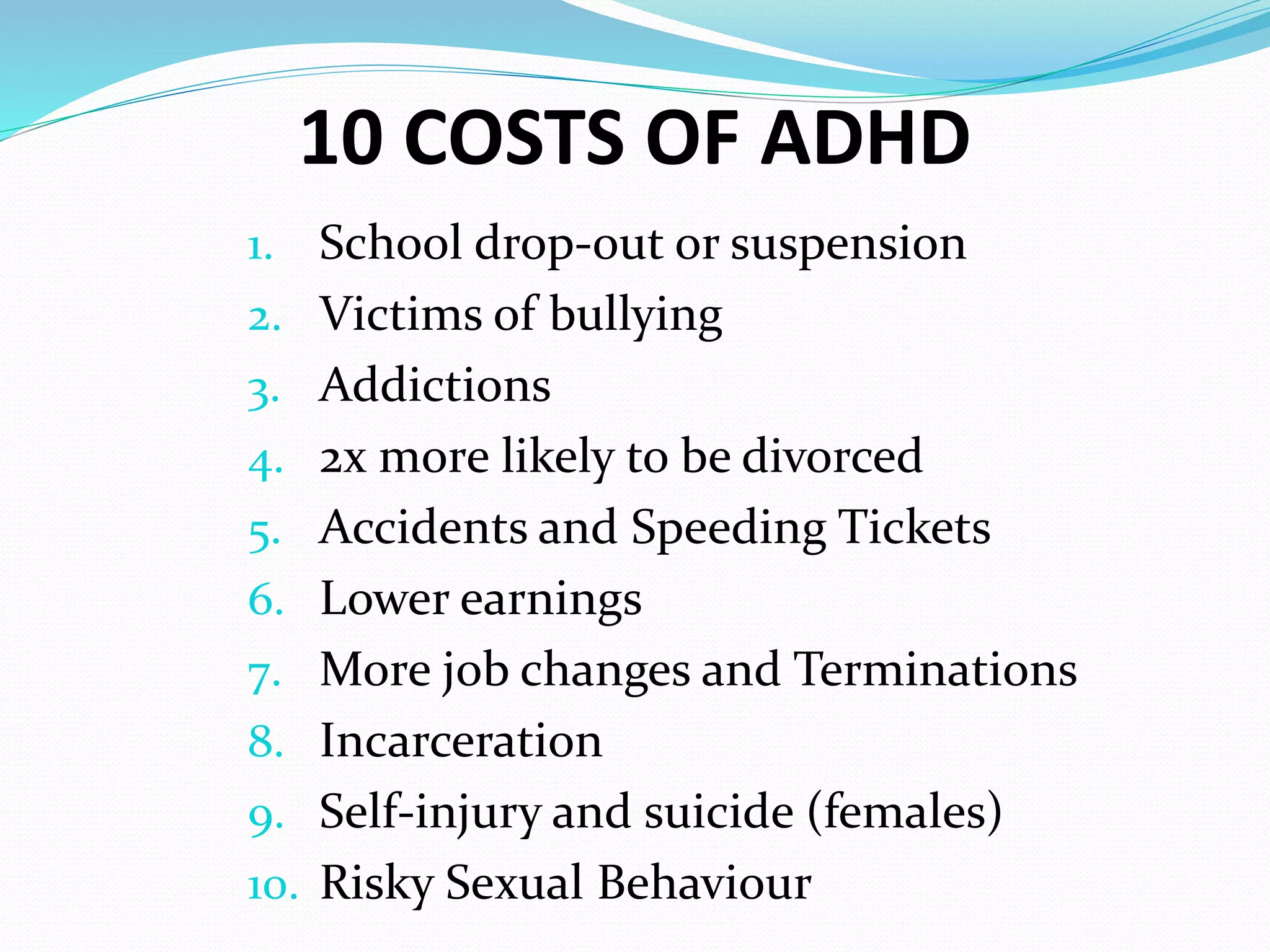
1. School drop-out or suspension
2. Victims of bullying
3. Addictions
4. 2x more likely to be divorced
5. Accidents and Speeding Tickets
6. Lower earnings
7. More job changes and Terminations
8. Incarceration
9. Self-injury and suicide (females)
10. Risky Sexual Behaviour
10 COSTS OF ADHD
WHAT CAUSES ADHD?
There is no single cause
 Genes
- highly genetic, particularly from father’s side
 Chemistry
- interaction between dopamine, seratonin and
norepinepherine
 Brain Structure
- pre-frontal cortex, limbic system, RAS
BRAIN SYSTEMS
 Pre-Frontal Cortex
- Responsible for Executive Function
 Limbic System
- Regulates emotion
 Reticular Activating System
- Attention, arousal and impulse control
• Parent with ADHD - +50%
• Sibling with ADHD - 40%
• Child with ADHD - 25%
• Identical Twin - 80%
1. Inattention
2. Impulsivity
3. Hyperactivity
1. crave mental and physical stimulation
2. pay too much attention to everything
3. multitask, but leave things incomplete
4. want shortcuts
5. will wander and procrastinate
6. leave projects unfinished
7. will dwell on the details or injustice
8. have "different" priorities
9. are born to imagine, create and problem-solve
10. are spontaneous (and sometimes unpredictable!)
20 Qualities of ADHD Brains
11. jump to conclusions
12. require motivation
13. struggle with self-talk and mental visualization
14. need behavioural repetition
15. require more time
16. get tired faster
17. are less efficient
18. feel bipolar
19. can be oppositional
20. are often late
20 Qualities (cont…)
Strategies:
- Focus on your Point of Performance
Environment:
- Modify your Cues and Space
Chemistry:
- Medication and Lifestyle Balance
1. Schedule it!
2. Break it down!
3. Make it Fun!
4. Do it to Learn it!
5. Keep it Short!
6. Add Time!
7. Take Breaks!
8. Make Signs!
9. Give Reminders!
10. Rehearse it!
20 Ways to Improve Performance
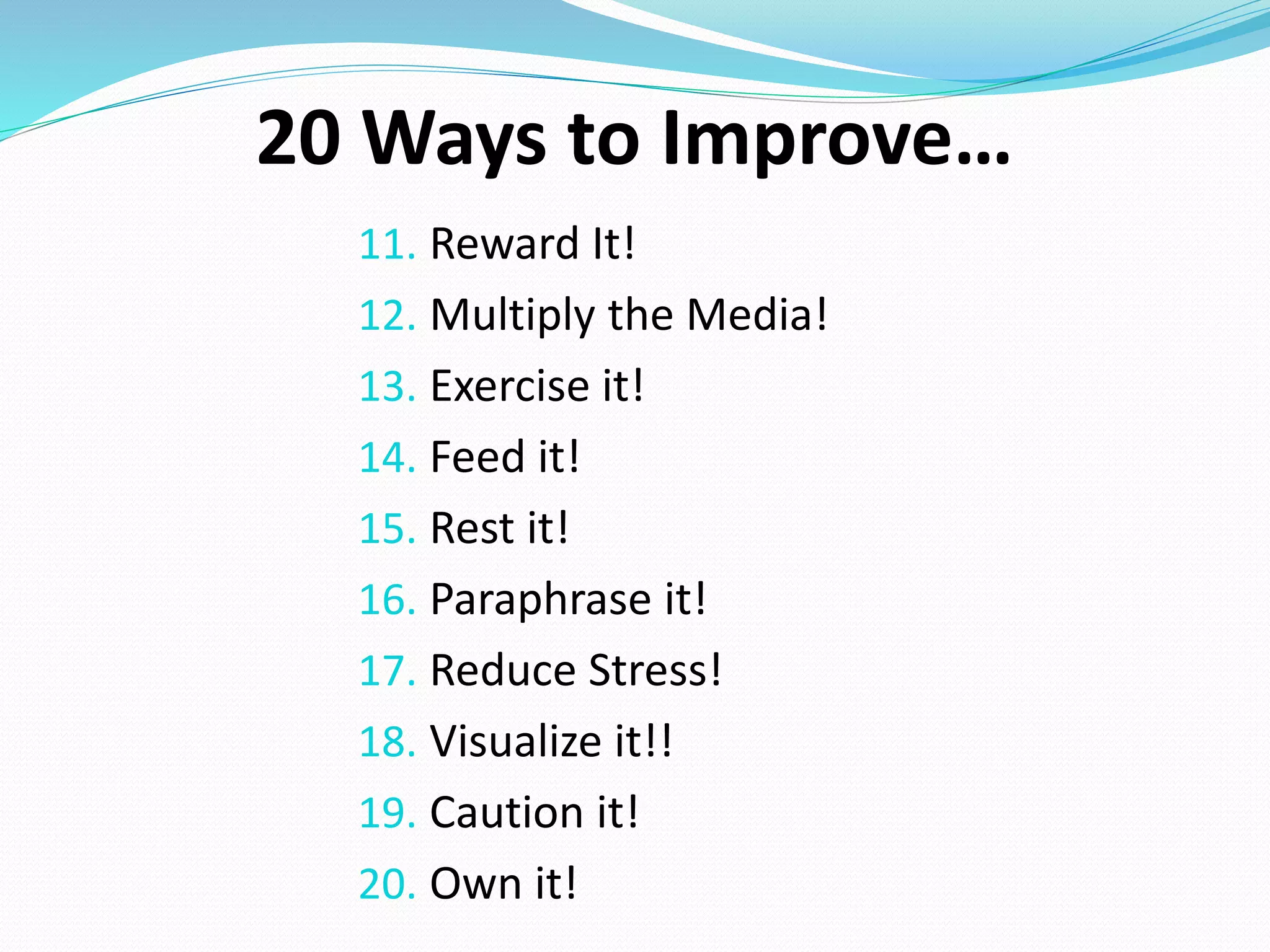
11. Reward It!
12. Multiply the Media!
13. Exercise it!
14. Feed it!
15. Rest it!
16. Paraphrase it!
17. Reduce Stress!
18. Visualize it!!
19. Caution it!
20. Own it!
20 Ways to Improve…
1. Buy yourself time
2. Inhale/Exhale Slowly
3. Paraphrase what you heard
4. Say out loud, “Let me think about that a moment.”
5. Imagine yourself doing the action
6. Say to yourself, “What could it cost me?”
7. Are there other choices?
8. Say to yourself, “What will benefit me the most?
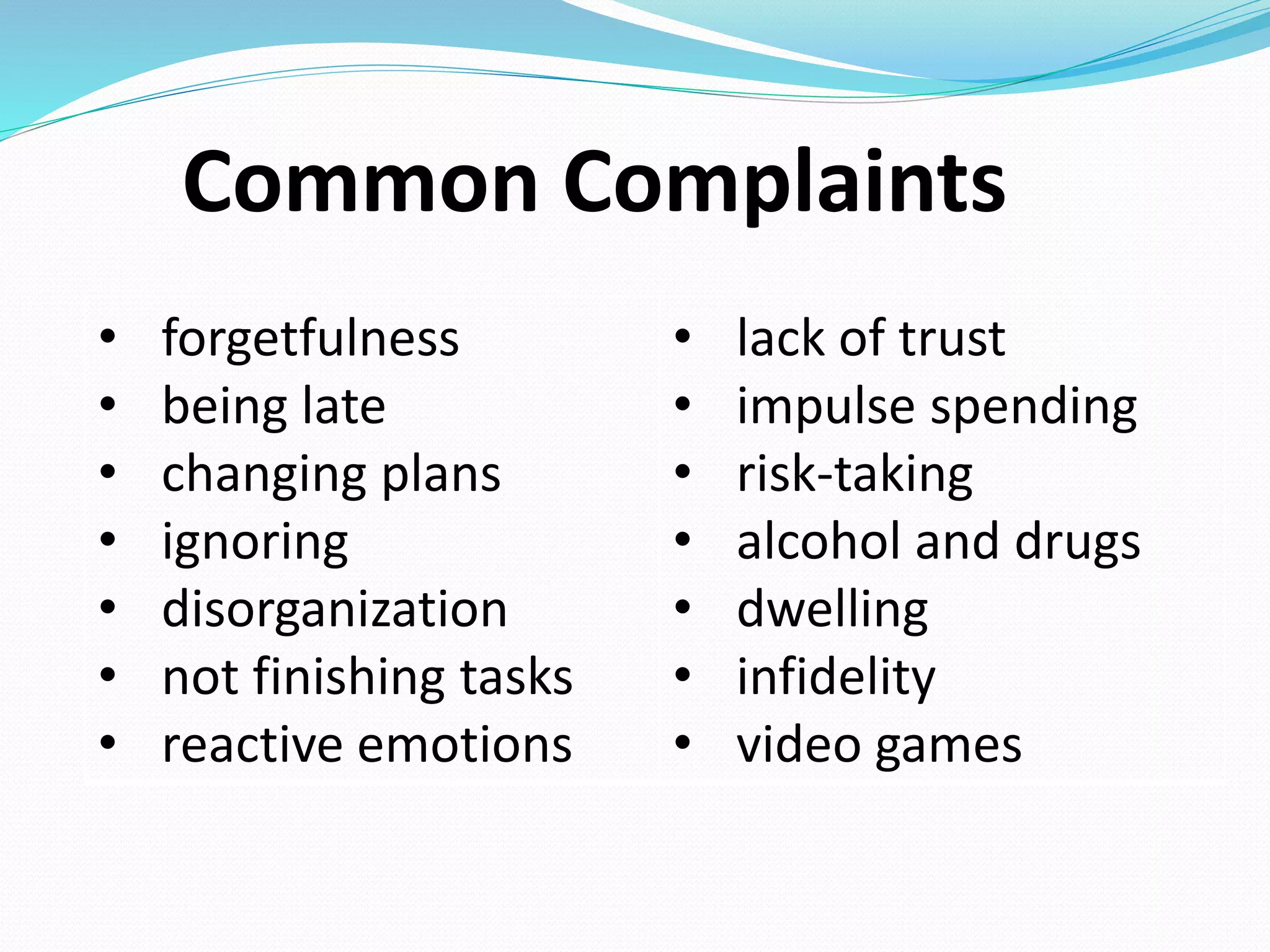
Common Complaints
• forgetfulness
• being late
• changing plans
• ignoring
• disorganization
• not finishing tasks
• reactive emotions
• lack of trust
• impulse spending
• risk-taking
• alcohol and drugs
• dwelling
• infidelity
• video games
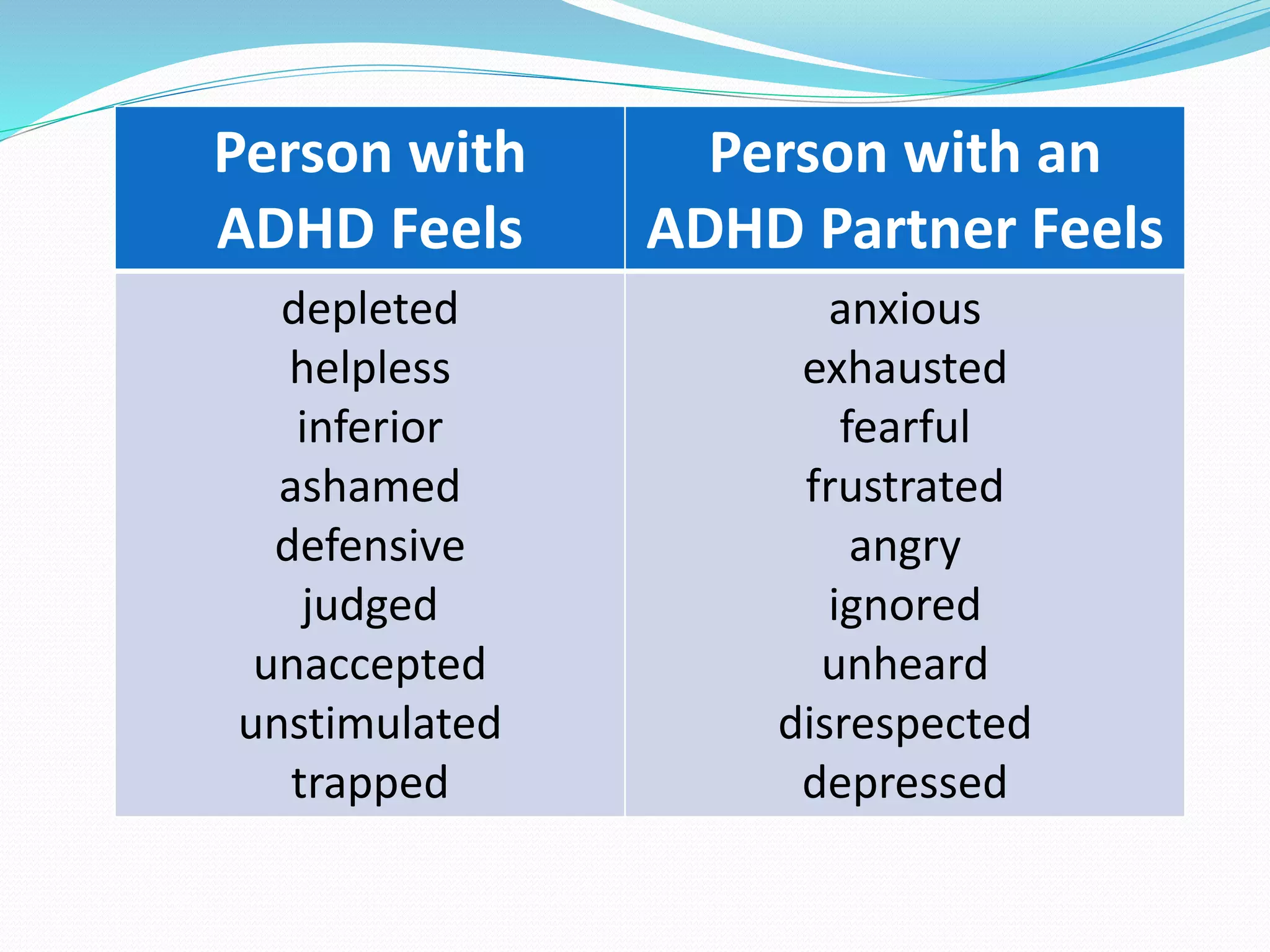
Person with
ADHD Feels
Person with an
ADHD Partner Feels
depleted
helpless
inferior
ashamed
defensive
judged
unaccepted
unstimulated
trapped
anxious
exhausted
fearful
frustrated
angry
ignored
unheard
disrespected
depressed
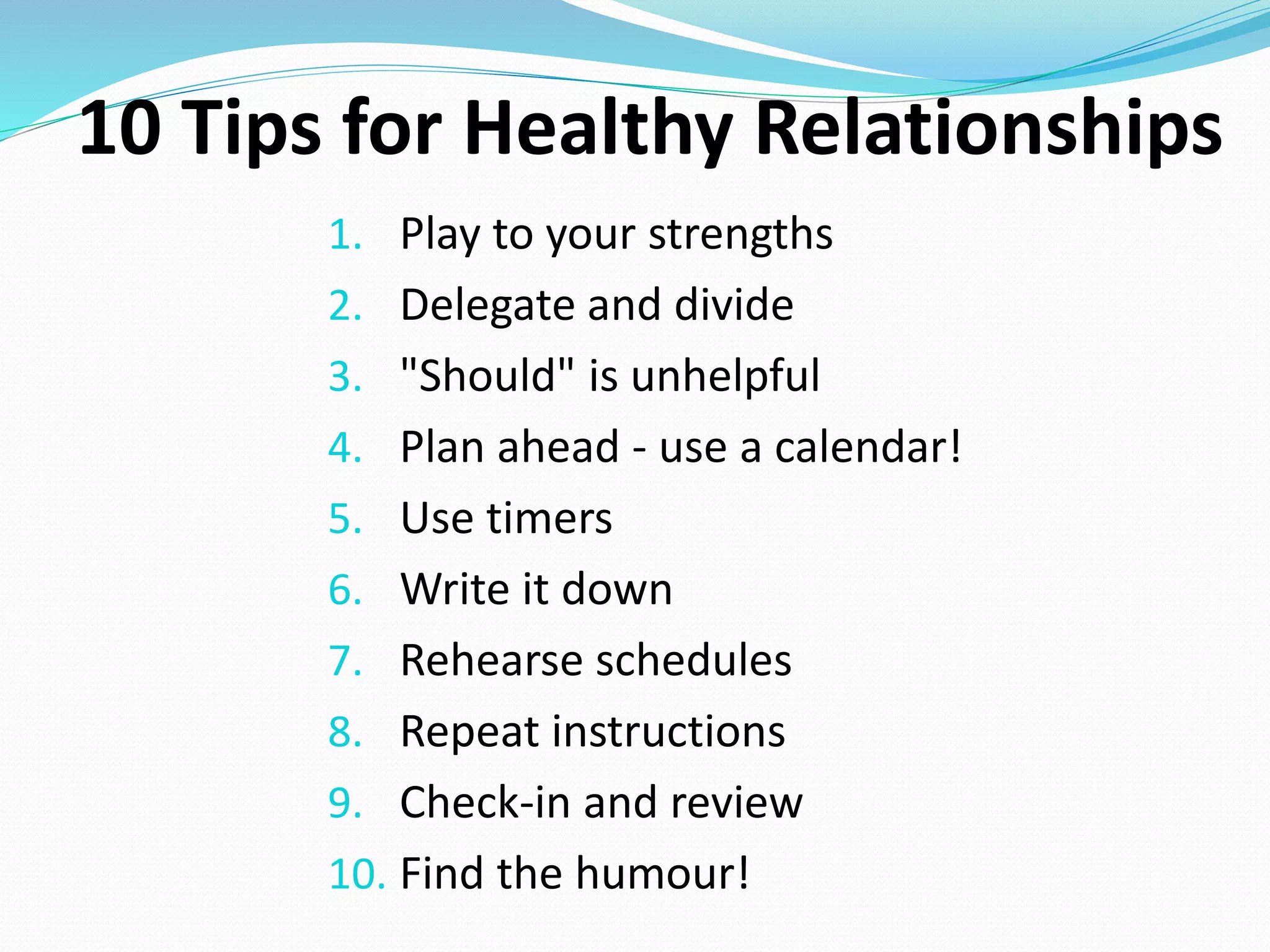
1. Play to your strengths
2. Delegate and divide
3. "Should" is unhelpful
4. Plan ahead - use a calendar!
5. Use timers
6. Write it down
7. Rehearse schedules
8. Repeat instructions
9. Check-in and review
10. Find the humour!
10 Tips for Healthy Relationships
 Brain stimulant
 Highly effective, 65-90%
improve
 Strong evidence
 Very safe
 Few side effects
 Less expensive than life
costs
 Can be used for years
 Increased concentration and persistence
 Decreased impulsivity and hyperactivity
 Increased productivity, better grades
 Better emotional control
 Decreased irritability and aggression
 Less likely to smoke and use drugs
 Better memory and self-talk
 Improved motor control
 Higher self-esteem and self-confidence
 Wider field of vision/awareness
 Improved attention and reaction time
 Better relationships with family and peers
Medication Benefits
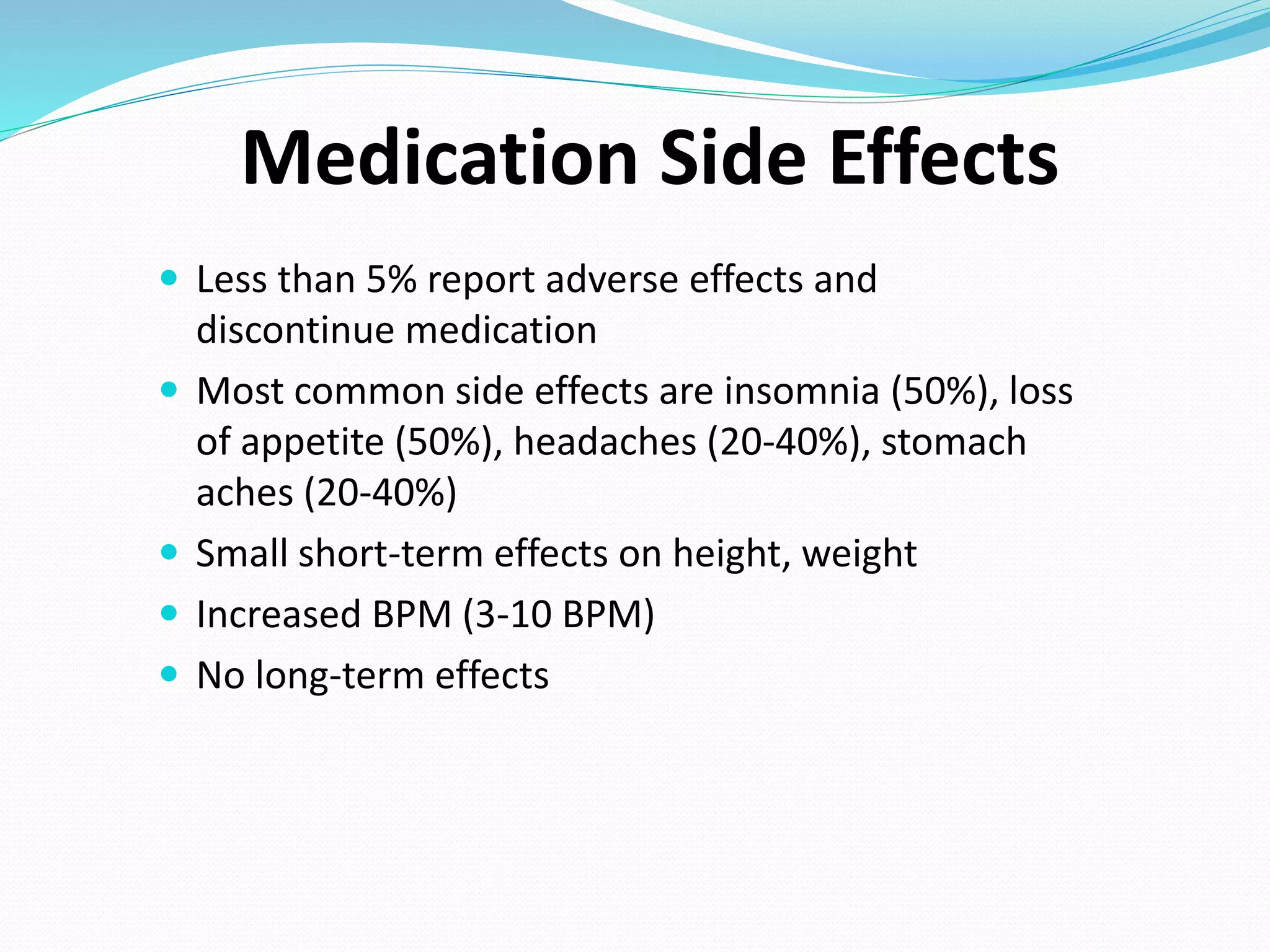
 Less than 5% report adverse effects and
discontinue medication
 Most common side effects are insomnia (50%), loss
of appetite (50%), headaches (20-40%), stomach
aches (20-40%)
 Small short-term effects on height, weight
 Increased BPM (3-10 BPM)
 No long-term effects
Medication Side Effects
 Developmental History
 Clinical Observation
 Collateral Information
 Psychometric Testing
 Self-Report Questionnaires
 Overlapping Conditions
Graeme Jan Dyck
www.resiliencepsych.ca
graeme.resilience.psych@gmail.com
506-961-9339
“Sustainability is about survival. The goal of resilience is
to thrive.” - Jamais Cascio

Thriving with Adult ADHD: The Science of Feeling Good!

  • 1.
    Graeme Dyck, LicensedPsychologist www.resiliencepsych.ca
  • 6.
     Inattention - Movingaway from one goal and towards another  Hyperactivity -Restless behaviour and/or thoughts  Impulsivity - Quick decisions that frequently yield costs ADHD Sliders
  • 7.
    1. ADHD ison a 3-slider spectrum; It looks different in everyone!
  • 8.
    2. You canthrive if you own your condition; Brains can be rewired! "No longer at the mercy of the reptilian brain, we can change ourselves.” - Carl Sagan
  • 9.
    3. You canadapt your behaviour; Change your: • Environment • Strategies • Chemistry
  • 10.
    4. Acknowledge yourWeaknesses; Play to your Strengths!
  • 11.
    5. Create LifestyleBalance; Have a Plan!
  • 13.
    1. School drop-outor suspension 2. Victims of bullying 3. Addictions 4. 2x more likely to be divorced 5. Accidents and Speeding Tickets 6. Lower earnings 7. More job changes and Terminations 8. Incarceration 9. Self-injury and suicide (females) 10. Risky Sexual Behaviour 10 COSTS OF ADHD
  • 14.
    WHAT CAUSES ADHD? Thereis no single cause  Genes - highly genetic, particularly from father’s side  Chemistry - interaction between dopamine, seratonin and norepinepherine  Brain Structure - pre-frontal cortex, limbic system, RAS
  • 15.
    BRAIN SYSTEMS  Pre-FrontalCortex - Responsible for Executive Function  Limbic System - Regulates emotion  Reticular Activating System - Attention, arousal and impulse control
  • 16.
    • Parent withADHD - +50% • Sibling with ADHD - 40% • Child with ADHD - 25% • Identical Twin - 80%
  • 18.
  • 20.
    1. crave mentaland physical stimulation 2. pay too much attention to everything 3. multitask, but leave things incomplete 4. want shortcuts 5. will wander and procrastinate 6. leave projects unfinished 7. will dwell on the details or injustice 8. have "different" priorities 9. are born to imagine, create and problem-solve 10. are spontaneous (and sometimes unpredictable!) 20 Qualities of ADHD Brains
  • 21.
    11. jump toconclusions 12. require motivation 13. struggle with self-talk and mental visualization 14. need behavioural repetition 15. require more time 16. get tired faster 17. are less efficient 18. feel bipolar 19. can be oppositional 20. are often late 20 Qualities (cont…)
  • 22.
    Strategies: - Focus onyour Point of Performance Environment: - Modify your Cues and Space Chemistry: - Medication and Lifestyle Balance
  • 24.
    1. Schedule it! 2.Break it down! 3. Make it Fun! 4. Do it to Learn it! 5. Keep it Short! 6. Add Time! 7. Take Breaks! 8. Make Signs! 9. Give Reminders! 10. Rehearse it! 20 Ways to Improve Performance
  • 25.
    11. Reward It! 12.Multiply the Media! 13. Exercise it! 14. Feed it! 15. Rest it! 16. Paraphrase it! 17. Reduce Stress! 18. Visualize it!! 19. Caution it! 20. Own it! 20 Ways to Improve…
  • 26.
    1. Buy yourselftime 2. Inhale/Exhale Slowly 3. Paraphrase what you heard 4. Say out loud, “Let me think about that a moment.” 5. Imagine yourself doing the action 6. Say to yourself, “What could it cost me?” 7. Are there other choices? 8. Say to yourself, “What will benefit me the most?
  • 28.
    Common Complaints • forgetfulness •being late • changing plans • ignoring • disorganization • not finishing tasks • reactive emotions • lack of trust • impulse spending • risk-taking • alcohol and drugs • dwelling • infidelity • video games
  • 29.
    Person with ADHD Feels Personwith an ADHD Partner Feels depleted helpless inferior ashamed defensive judged unaccepted unstimulated trapped anxious exhausted fearful frustrated angry ignored unheard disrespected depressed
  • 30.
    1. Play toyour strengths 2. Delegate and divide 3. "Should" is unhelpful 4. Plan ahead - use a calendar! 5. Use timers 6. Write it down 7. Rehearse schedules 8. Repeat instructions 9. Check-in and review 10. Find the humour! 10 Tips for Healthy Relationships
  • 32.
     Brain stimulant Highly effective, 65-90% improve  Strong evidence  Very safe  Few side effects  Less expensive than life costs  Can be used for years
  • 33.
     Increased concentrationand persistence  Decreased impulsivity and hyperactivity  Increased productivity, better grades  Better emotional control  Decreased irritability and aggression  Less likely to smoke and use drugs  Better memory and self-talk  Improved motor control  Higher self-esteem and self-confidence  Wider field of vision/awareness  Improved attention and reaction time  Better relationships with family and peers Medication Benefits
  • 34.
     Less than5% report adverse effects and discontinue medication  Most common side effects are insomnia (50%), loss of appetite (50%), headaches (20-40%), stomach aches (20-40%)  Small short-term effects on height, weight  Increased BPM (3-10 BPM)  No long-term effects Medication Side Effects
  • 35.
     Developmental History Clinical Observation  Collateral Information  Psychometric Testing  Self-Report Questionnaires  Overlapping Conditions
  • 38.
    Graeme Jan Dyck www.resiliencepsych.ca graeme.resilience.psych@gmail.com 506-961-9339 “Sustainabilityis about survival. The goal of resilience is to thrive.” - Jamais Cascio