Three phase split phase
induction motor
- P. NITHISH
INTRODUCTION
The three-phase split-phase induction motor is a key component in many industrial
applications. It offers efficient and reliable performance, making it an essential part of
various machinery and equipment.
PRINCIPLE OF OPERATION
The operation of a three-phase split-phase induction
motor is based on the interaction of magnetic fields and
induced currents. This creates a rotating magnetic field,
which drives the rotor to produce mechanical work.
CONSTRUCTION
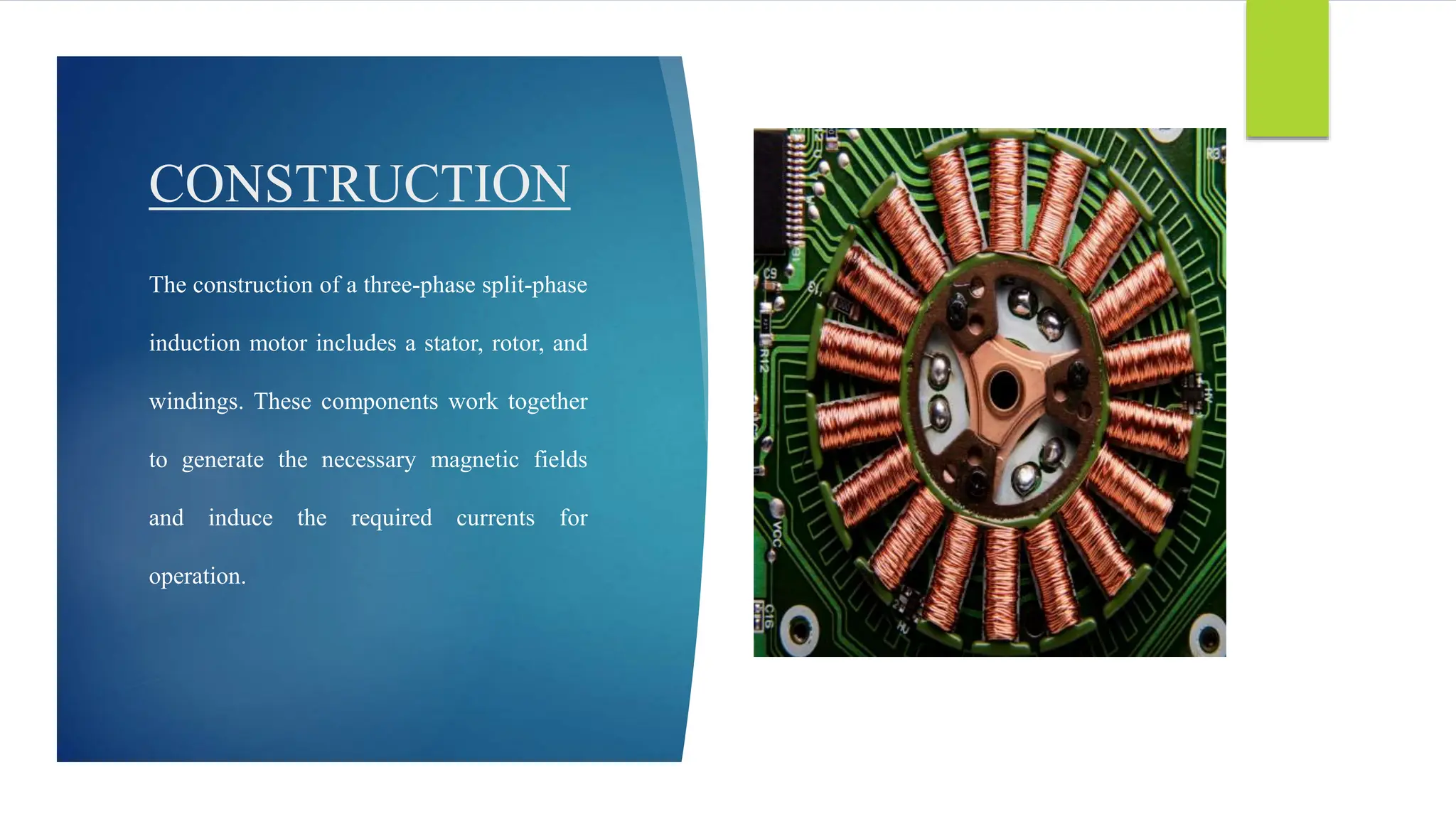
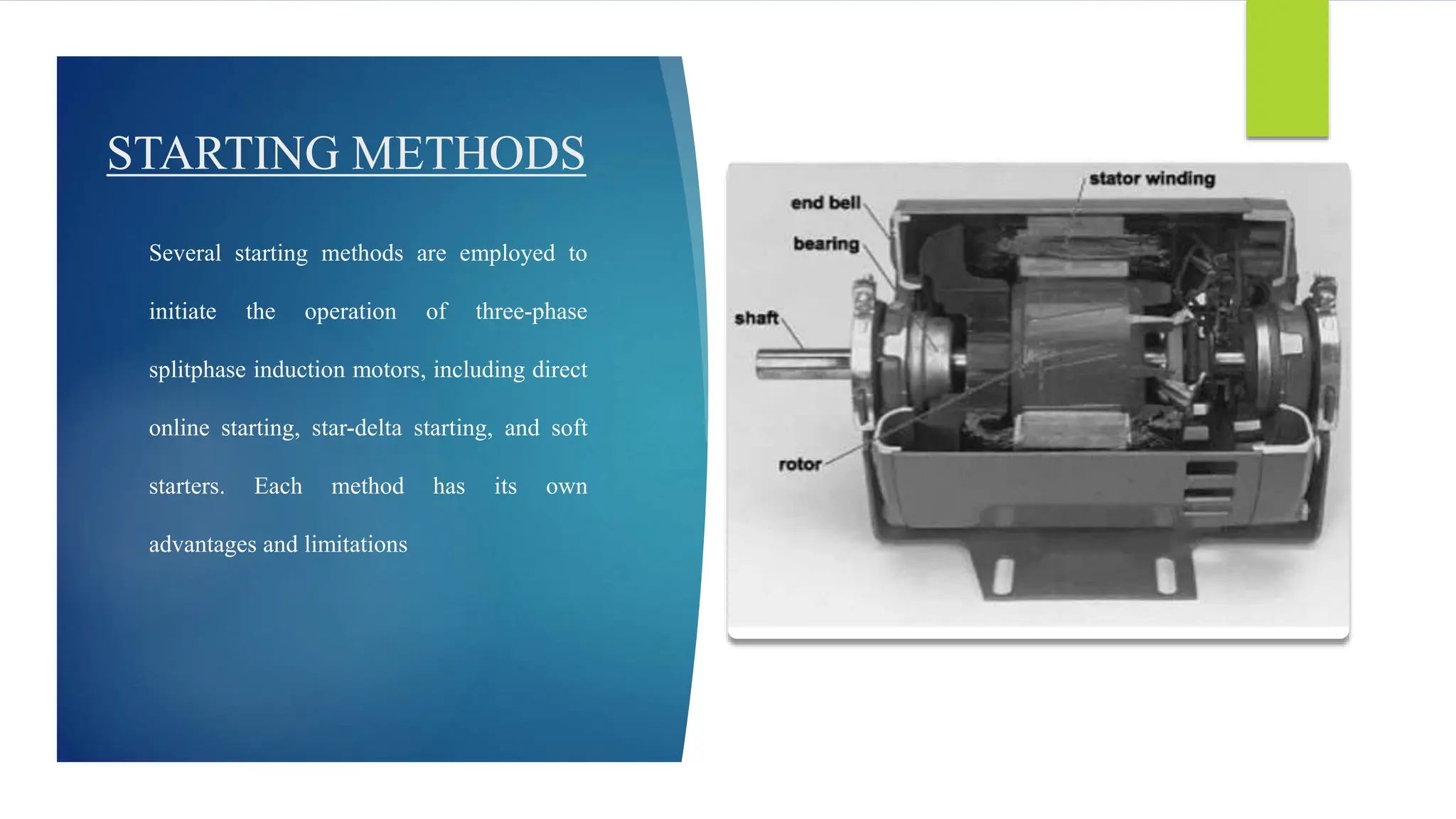
The construction of a three-phase split-phase
induction motor includes a stator, rotor, and
windings. These components work together
to generate the necessary magnetic fields
and induce the required currents for
operation.
STARTING METHODS
Several starting methods are employed to
initiate the operation of three-phase
splitphase induction motors, including direct
online starting, star-delta starting, and soft
starters. Each method has its own
advantages and limitations
SPEED CONTROL
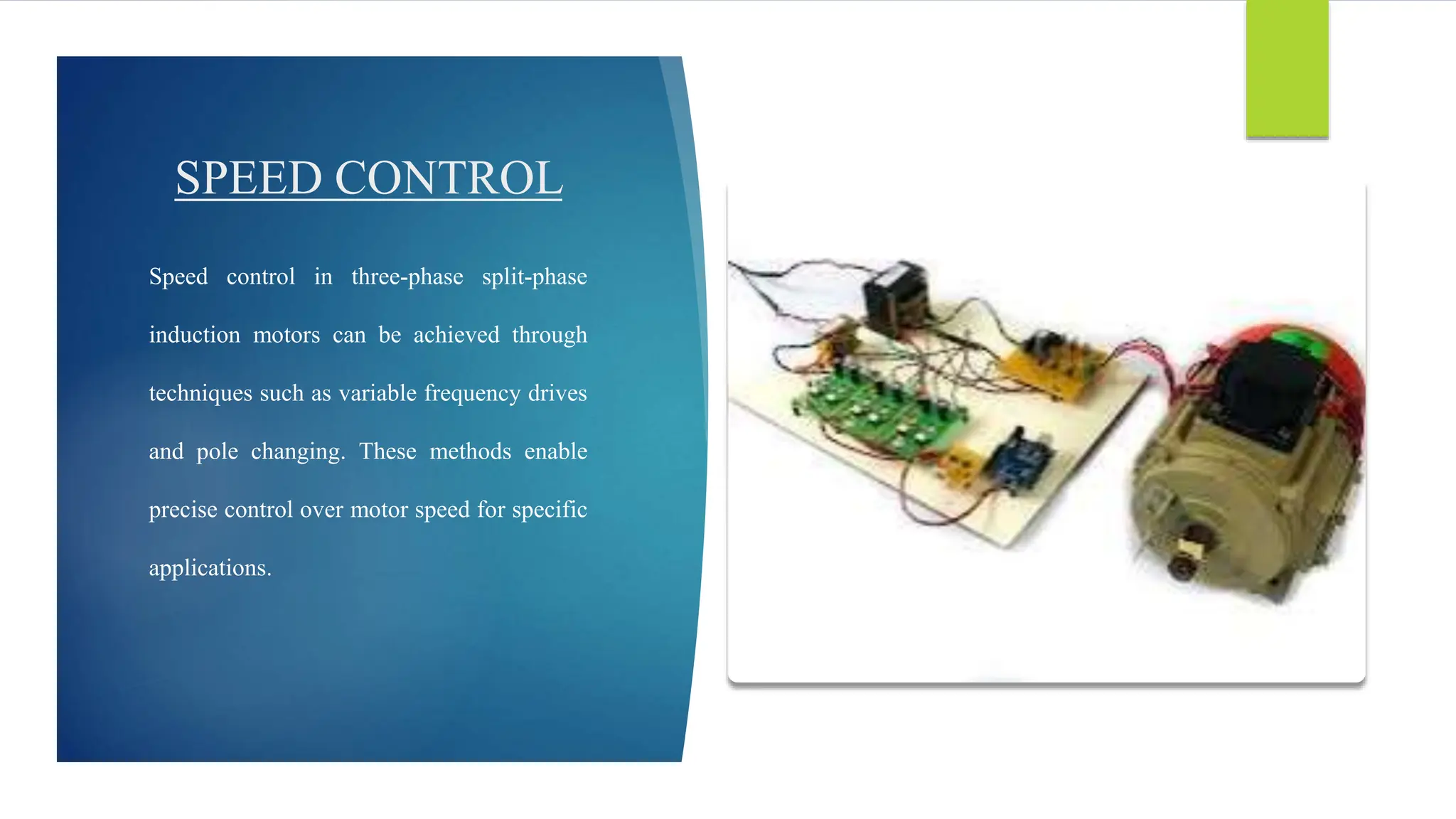
Speed control in three-phase split-phase
induction motors can be achieved through
techniques such as variable frequency drives
and pole changing. These methods enable
precise control over motor speed for specific
applications.
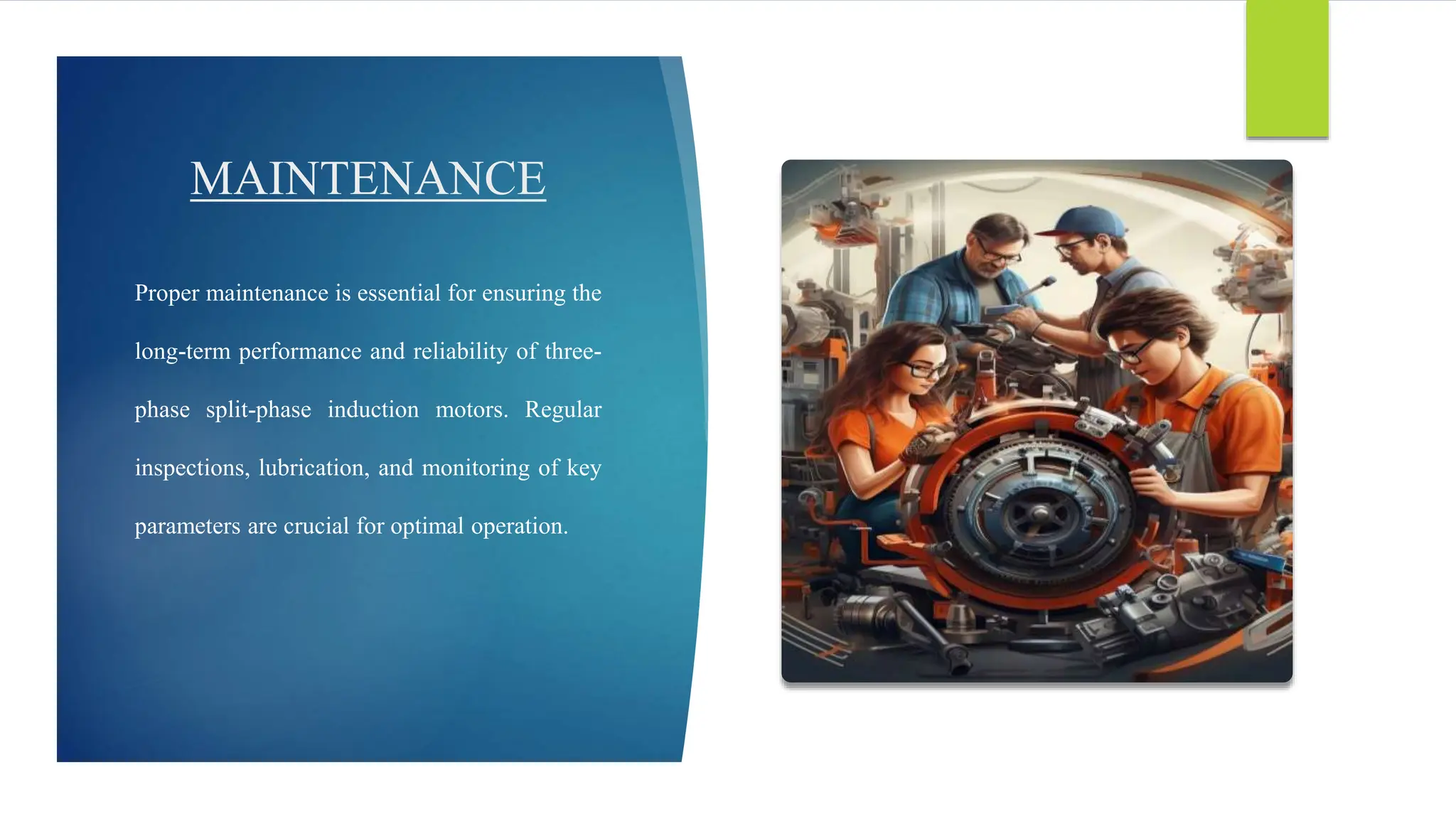
MAINTENANCE
Proper maintenance is essential for ensuring the
long-term performance and reliability of three-
phase split-phase induction motors. Regular
inspections, lubrication, and monitoring of key
parameters are crucial for optimal operation.
EFFICIENCY
CONSIDERATIONS
Effsignificant role in the selection and
operation iciency considerations play a of
three-phase split-phase induction motors.
Understanding factors such as load
variations and power factor is essential for
maximizing efficiency
ADVANTAGES
Three-phase split-phase induction motors offer several advantages like :-
 High efficiency
 Low maintenance
 Smooth operation.
These qualities make them ideal for a wide range of industrial applications.
DISADVANTAGES
 Low starting torque
 High inrush currents (about 4 to 8 times of the rated current)
 They always operate under A lagging power factor and during light loads
 They operate at the very worst power factor (about 0.3 to 0.5 lagging)
 Their operation can be noisy due to the use of the centrifugal switch.
APPLICATIONS
Three-phase split-phase induction motors are widely used in various applications such as :-
 Pumps
 Compressors
 Conveyors
 And fans
 Their versatility and reliability make them indispensable in industrial settings.
FUTURE
DEVELOPMENTS
Advancements in motor design and control
technologies are driving future
developments in three-phase split-phase
induction motors. These include innovations
in materials, electronics, and integrated
control systems.
CHALLENGES AND
OPPORTUNITIES
While three-phase split-phase induction motors
offer numerous benefits, they also present
challenges related to power quality, harmonics, and
reliability. Addressing these challenges presents
opportunities for further advancements.
CONCLUSION
In conclusion, the three-phase split-phase induction motor is a vital component in industrial machinery,
offering efficiency, reliability, and versatility. Understanding its principles, applications, and maintenance is
crucial for maximizing its performance.
Three phase split phase induction motor.pptx

Three phase split phase induction motor.pptx

  • 1.
    Three phase splitphase induction motor - P. NITHISH
  • 2.
    INTRODUCTION The three-phase split-phaseinduction motor is a key component in many industrial applications. It offers efficient and reliable performance, making it an essential part of various machinery and equipment.
  • 3.
    PRINCIPLE OF OPERATION Theoperation of a three-phase split-phase induction motor is based on the interaction of magnetic fields and induced currents. This creates a rotating magnetic field, which drives the rotor to produce mechanical work.
  • 4.
    CONSTRUCTION The construction ofa three-phase split-phase induction motor includes a stator, rotor, and windings. These components work together to generate the necessary magnetic fields and induce the required currents for operation.
  • 5.
    STARTING METHODS Several startingmethods are employed to initiate the operation of three-phase splitphase induction motors, including direct online starting, star-delta starting, and soft starters. Each method has its own advantages and limitations
  • 6.
    SPEED CONTROL Speed controlin three-phase split-phase induction motors can be achieved through techniques such as variable frequency drives and pole changing. These methods enable precise control over motor speed for specific applications.
  • 7.
    MAINTENANCE Proper maintenance isessential for ensuring the long-term performance and reliability of three- phase split-phase induction motors. Regular inspections, lubrication, and monitoring of key parameters are crucial for optimal operation.
  • 8.
    EFFICIENCY CONSIDERATIONS Effsignificant role inthe selection and operation iciency considerations play a of three-phase split-phase induction motors. Understanding factors such as load variations and power factor is essential for maximizing efficiency
  • 9.
    ADVANTAGES Three-phase split-phase inductionmotors offer several advantages like :-  High efficiency  Low maintenance  Smooth operation. These qualities make them ideal for a wide range of industrial applications.
  • 10.
    DISADVANTAGES  Low startingtorque  High inrush currents (about 4 to 8 times of the rated current)  They always operate under A lagging power factor and during light loads  They operate at the very worst power factor (about 0.3 to 0.5 lagging)  Their operation can be noisy due to the use of the centrifugal switch.
  • 11.
    APPLICATIONS Three-phase split-phase inductionmotors are widely used in various applications such as :-  Pumps  Compressors  Conveyors  And fans  Their versatility and reliability make them indispensable in industrial settings.
  • 12.
    FUTURE DEVELOPMENTS Advancements in motordesign and control technologies are driving future developments in three-phase split-phase induction motors. These include innovations in materials, electronics, and integrated control systems.
  • 13.
    CHALLENGES AND OPPORTUNITIES While three-phasesplit-phase induction motors offer numerous benefits, they also present challenges related to power quality, harmonics, and reliability. Addressing these challenges presents opportunities for further advancements.
  • 14.
    CONCLUSION In conclusion, thethree-phase split-phase induction motor is a vital component in industrial machinery, offering efficiency, reliability, and versatility. Understanding its principles, applications, and maintenance is crucial for maximizing its performance.