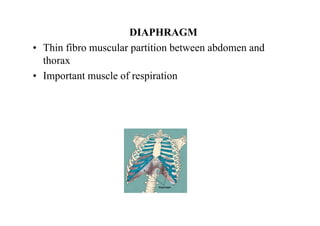
DIAPHRAGM
• Thin fibro muscular partition between abdomen and
thorax
• Important muscle of respiration
• Extent
Normal Breathing Full Expiration
Right At level of 4th Rib
nipple
Left One rib lower 5th rib
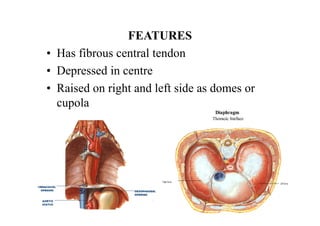
FEATURES
• Has fibrous central tendon
• Depressed in centre
• Raised on right and left side as domes or
cupola
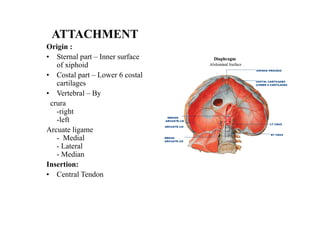
ATTACHMENT
Origin :
• Sternal part – Inner surface
of xiphoid
• Costal part – Lower 6 costal
cartilages
• Vertebral – By
crura
-right
-left
Arcuate ligame
- Medial
- Lateral
- Median
Insertion:
• Central Tendon
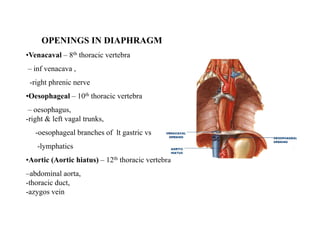
OPENINGS IN DIAPHRAGM
•Venacaval – 8th thoracic vertebra
– inf venacava ,
-right phrenic nerve
•Oesophageal – 10th thoracic vertebra
– oesophagus,
-right & left vagal trunks,
-oesophageal branches of lt gastric vs
-lymphatics
•Aortic (Aortic hiatus) – 12th thoracic vertebra
–abdominal aorta,
-thoracic duct,
-azygos vein
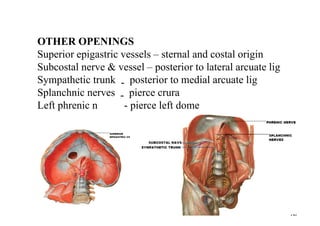
OTHER OPENINGS
Superior epigastric vessels – sternal and costal origin
Subcostal nerve & vessel – posterior to lateral arcuate lig
Sympathetic trunk - posterior to medial arcuate lig
Splanchnic nerves - pierce crura
Left phrenic n - pierce left dome
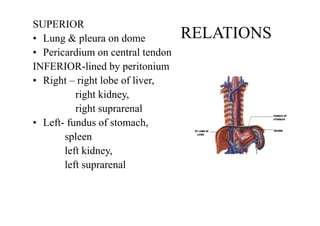
SUPERIOR
RELATIONS
• Lung & pleura on dome
• Pericardium on central tendon
INFERIOR-lined by peritonium
• Right – right lobe of liver,
right kidney,
right suprarenal
• Left- fundus of stomach,
spleen
left kidney,
left suprarenal
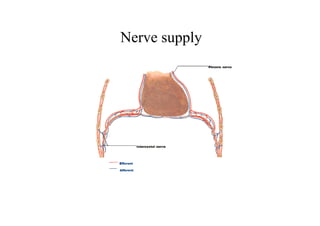
Nerve supply
Blood supply
• Pericardiophrenic
• Musculophrenic
• Inf phrenic
ACTION
• Increases vertical diameter of thoracic cavity
FUNCTIONS
• Muscle of inspiration
• Muscle of abdominal straining
• Thoracoabdominal pump – forcing blood from
IVC to rt. Atrium
• Weight- lifting muscle
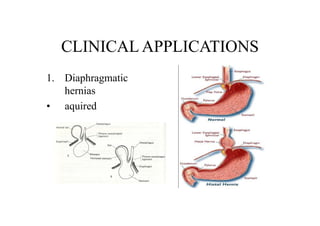
CLINICAL APPLICATIONS
1. Diaphragmatic
hernias
• aquired
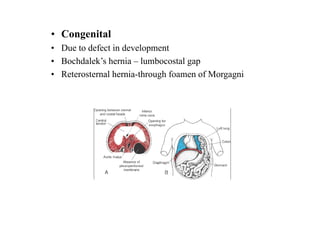
• Congenital
• Due to defect in development
• Bochdalek’s hernia – lumbocostal gap
• Reterosternal hernia-through foamen of Morgagni
2. Paralysis of diaphragm
3. Hiccups
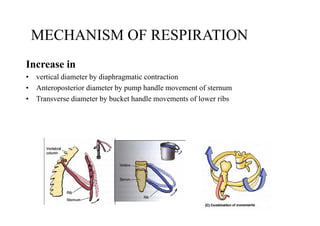
MECHANISM OF RESPIRATION
Increase in
• vertical diameter by diaphragmatic contraction
• Anteroposterior diameter by pump handle movement of sternum
• Transverse diameter by bucket handle movements of lower ribs

Thorax - diaphragm.pdf

  • 1.
    DIAPHRAGM • Thin fibromuscular partition between abdomen and thorax • Important muscle of respiration
  • 2.
    • Extent Normal BreathingFull Expiration Right At level of 4th Rib nipple Left One rib lower 5th rib
  • 3.
    FEATURES • Has fibrouscentral tendon • Depressed in centre • Raised on right and left side as domes or cupola
  • 4.
    ATTACHMENT Origin : • Sternalpart – Inner surface of xiphoid • Costal part – Lower 6 costal cartilages • Vertebral – By crura -right -left Arcuate ligame - Medial - Lateral - Median Insertion: • Central Tendon
  • 5.
    OPENINGS IN DIAPHRAGM •Venacaval– 8th thoracic vertebra – inf venacava , -right phrenic nerve •Oesophageal – 10th thoracic vertebra – oesophagus, -right & left vagal trunks, -oesophageal branches of lt gastric vs -lymphatics •Aortic (Aortic hiatus) – 12th thoracic vertebra –abdominal aorta, -thoracic duct, -azygos vein
  • 6.
    OTHER OPENINGS Superior epigastricvessels – sternal and costal origin Subcostal nerve & vessel – posterior to lateral arcuate lig Sympathetic trunk - posterior to medial arcuate lig Splanchnic nerves - pierce crura Left phrenic n - pierce left dome
  • 7.
    SUPERIOR RELATIONS • Lung &pleura on dome • Pericardium on central tendon INFERIOR-lined by peritonium • Right – right lobe of liver, right kidney, right suprarenal • Left- fundus of stomach, spleen left kidney, left suprarenal
  • 8.
  • 9.
    Blood supply • Pericardiophrenic •Musculophrenic • Inf phrenic
  • 10.
    ACTION • Increases verticaldiameter of thoracic cavity FUNCTIONS • Muscle of inspiration • Muscle of abdominal straining • Thoracoabdominal pump – forcing blood from IVC to rt. Atrium • Weight- lifting muscle
  • 11.
  • 12.
    • Congenital • Dueto defect in development • Bochdalek’s hernia – lumbocostal gap • Reterosternal hernia-through foamen of Morgagni
  • 13.
    2. Paralysis ofdiaphragm 3. Hiccups
  • 14.
    MECHANISM OF RESPIRATION Increasein • vertical diameter by diaphragmatic contraction • Anteroposterior diameter by pump handle movement of sternum • Transverse diameter by bucket handle movements of lower ribs