From Algorithms to
Automation: The Power
of Python in Computer
Science
Python is a versatile and powerful programming language that has
become an essential tool in computer science. Its clean syntax, extensive
libraries, and rich ecosystem make it ideal for a wide range of
applications, from algorithms to automation.
Index
Chapters
Chapter 1: Introduction to
Python
Chapter 2: Basics of
Python programming
language
Chapter 3: Python
libraries for computer
science
Sections
Section 4: Algorithms and
data structures in Python
Section 5: Automation
with Python
Section 6: Examples of
automation tasks using
Python
Additional
Section 7: Benefits of
using Python in computer
science
Section 8: Conclusion
and next steps
Section 9: FAQs
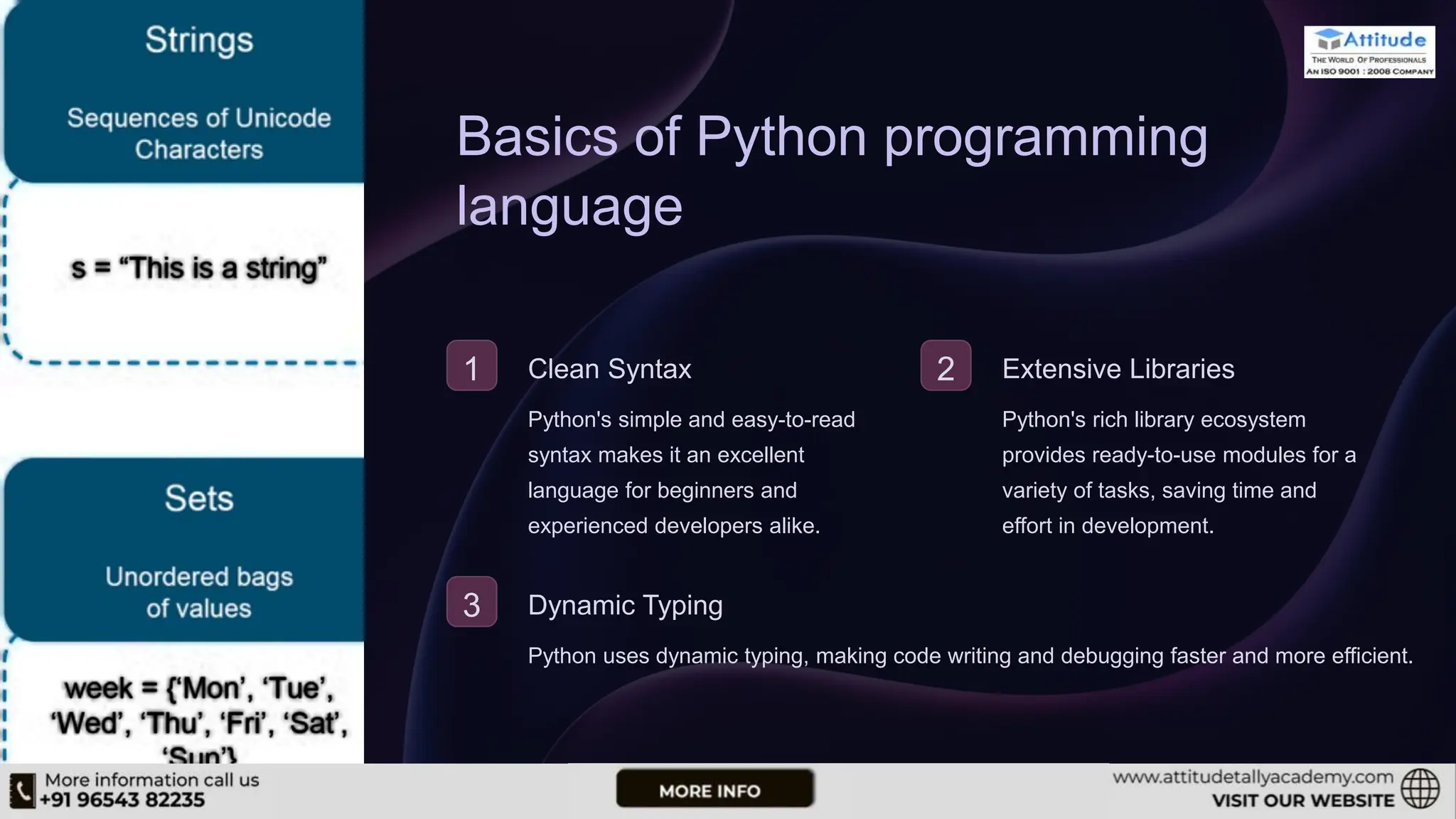
Basics of Python programming
language
1 Clean Syntax
Python's simple and easy-to-read
syntax makes it an excellent
language for beginners and
experienced developers alike.
2 Extensive Libraries
Python's rich library ecosystem
provides ready-to-use modules for a
variety of tasks, saving time and
effort in development.
3 Dynamic Typing
Python uses dynamic typing, making code writing and debugging faster and more efficient.
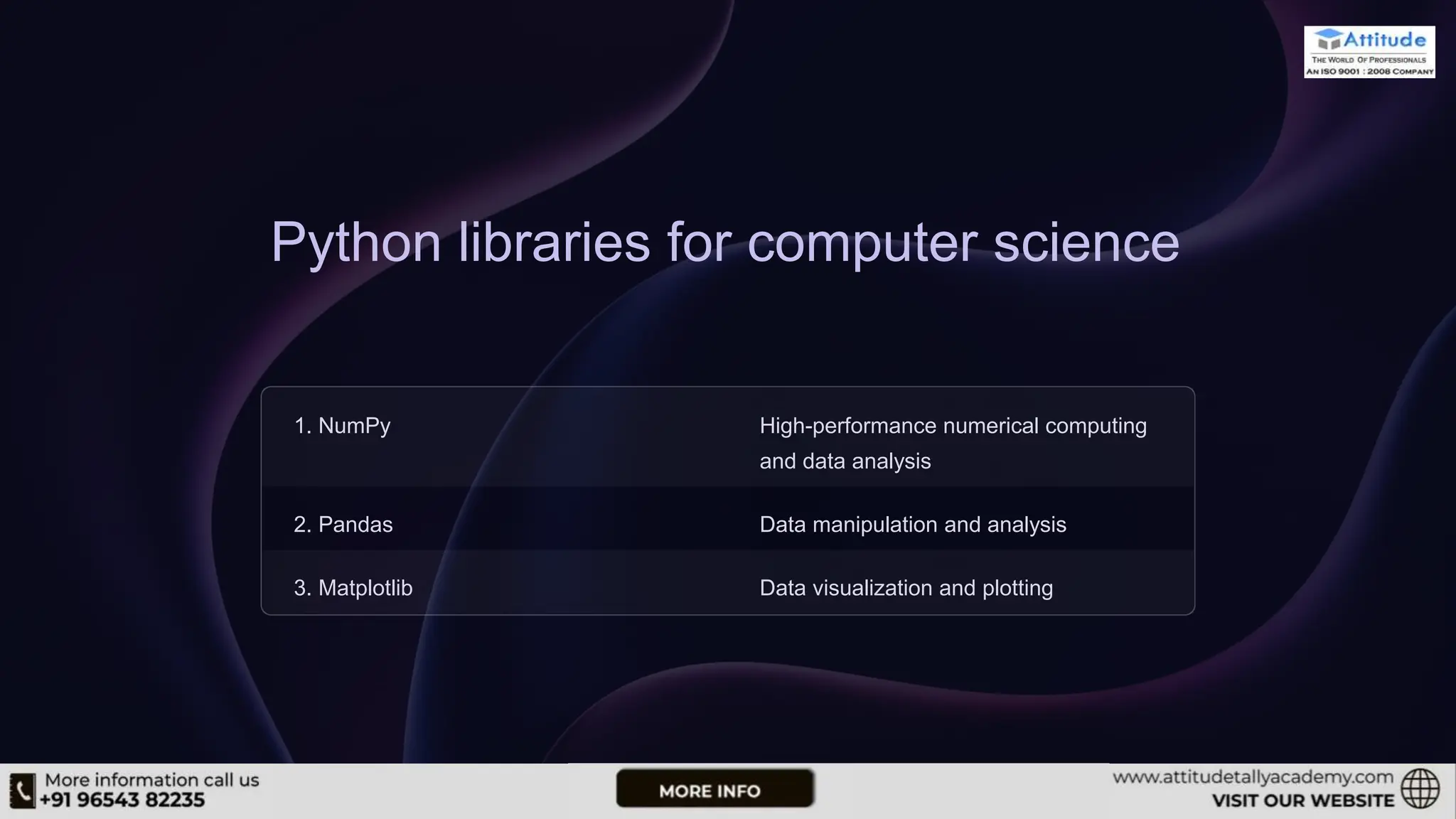
Python libraries for computer science
1. NumPy High-performance numerical computing
and data analysis
2. Pandas Data manipulation and analysis
3. Matplotlib Data visualization and plotting
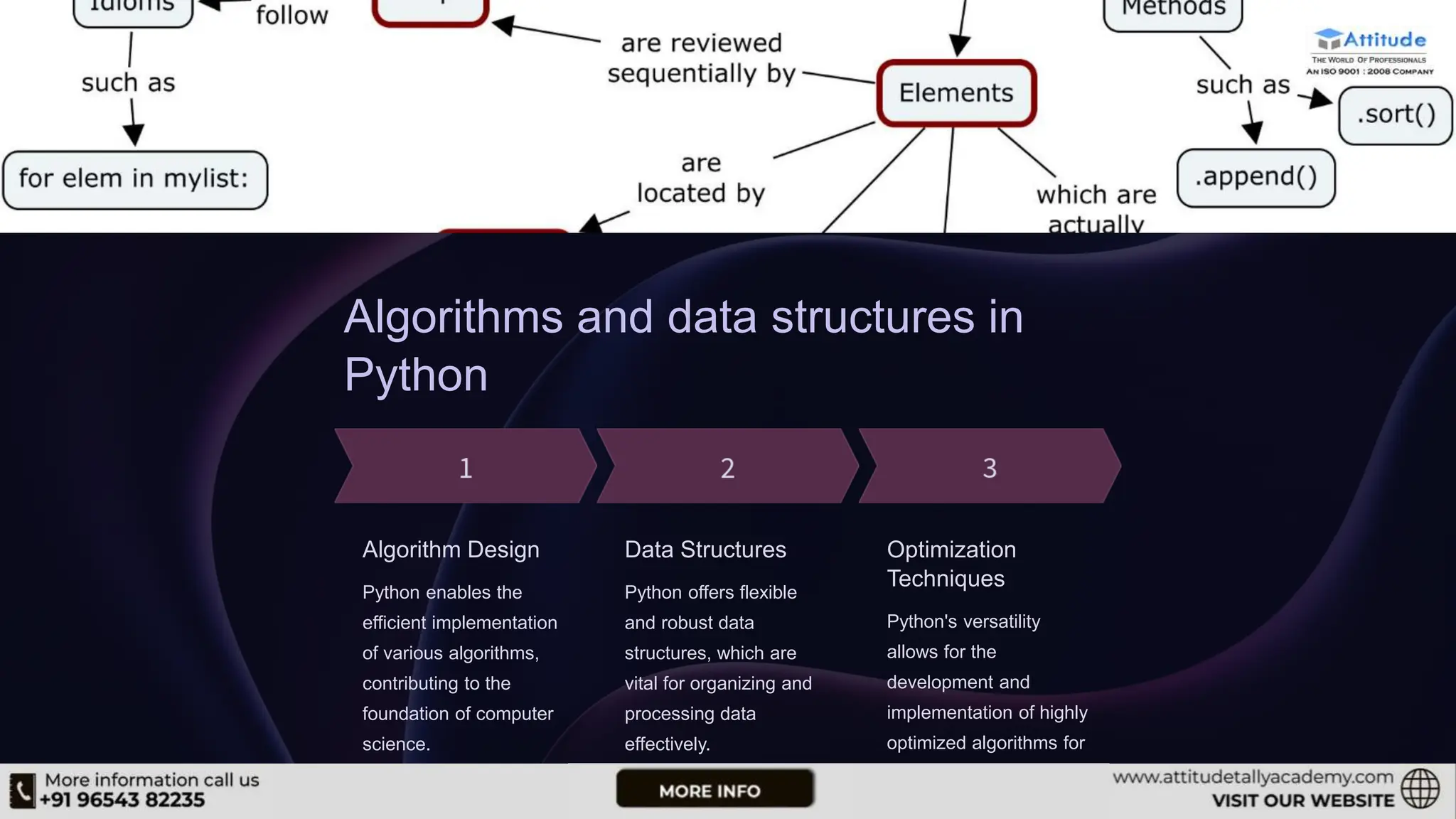
Algorithms and data structures in
Python
Algorithm Design
Python enables the
efficient implementation
of various algorithms,
contributing to the
foundation of computer
science.
Data Structures
Python offers flexible
and robust data
structures, which are
vital for organizing and
processing data
effectively.
Optimization
Techniques
Python's versatility
allows for the
development and
implementation of highly
optimized algorithms for
diverse applications.
Examples of automation tasks using
Python
Data Analysis
Automate data processing, cleaning,
and analysis for large datasets,
contributing to faster decision-making.
System Maintenance
Automate system monitoring, backup,
and routine maintenance tasks to
ensure consistent system performance.
Report Generation
Automatically generate reports, charts, and summaries from large datasets, reducing
manual effort and errors.
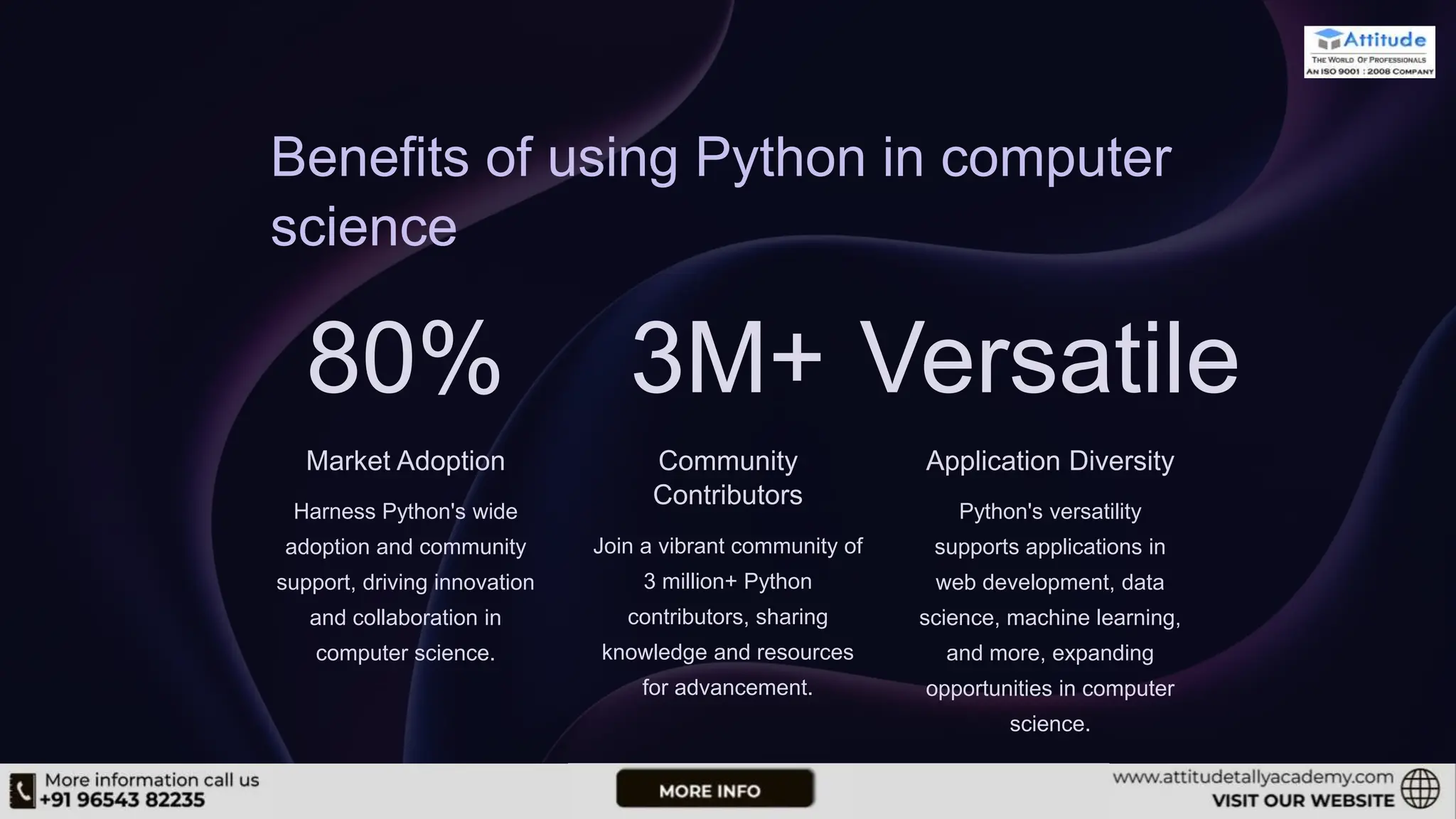
Benefits of using Python in computer
science
80%
Market Adoption
Harness Python's wide
adoption and community
support, driving innovation
and collaboration in
computer science.
3M+
Community
Contributors
Join a vibrant community of
3 million+ Python
contributors, sharing
knowledge and resources
for advancement.
Versatile
Application Diversity
Python's versatility
supports applications in
web development, data
science, machine learning,
and more, expanding
opportunities in computer
science.
Conclusion and next steps
1 Continuous Learning
Explore advanced Python concepts
and projects to further enhance skills
and knowledge in computer science.
2 Industry Applications
Incorporate Python into real-world
projects, leveraging its capabilities to
solve complex challenges in
computer science.
3 Career Growth
Seize career opportunities in software development, data analysis, automation
engineering, and other high-demand fields with a strong understanding of Python.
FAQs
Learning Curve
Is Python difficult to learn for those new
to programming?
Career Opportunities
What career paths can Python skills
lead to in computer science?
Industry Trends
How is Python shaping the future of computer science and technology?
Thank You!
Thank you for choosing our service. We appreciate your
business and look forward to serving you again in the
future. If you have any further questions or concerns,
please don't hesitate to contact us.

The-Power-of-Python-in-Computer-Science.pptx

  • 1.
    From Algorithms to Automation:The Power of Python in Computer Science Python is a versatile and powerful programming language that has become an essential tool in computer science. Its clean syntax, extensive libraries, and rich ecosystem make it ideal for a wide range of applications, from algorithms to automation.
  • 2.
    Index Chapters Chapter 1: Introductionto Python Chapter 2: Basics of Python programming language Chapter 3: Python libraries for computer science Sections Section 4: Algorithms and data structures in Python Section 5: Automation with Python Section 6: Examples of automation tasks using Python Additional Section 7: Benefits of using Python in computer science Section 8: Conclusion and next steps Section 9: FAQs
  • 3.
    Basics of Pythonprogramming language 1 Clean Syntax Python's simple and easy-to-read syntax makes it an excellent language for beginners and experienced developers alike. 2 Extensive Libraries Python's rich library ecosystem provides ready-to-use modules for a variety of tasks, saving time and effort in development. 3 Dynamic Typing Python uses dynamic typing, making code writing and debugging faster and more efficient.
  • 4.
    Python libraries forcomputer science 1. NumPy High-performance numerical computing and data analysis 2. Pandas Data manipulation and analysis 3. Matplotlib Data visualization and plotting
  • 5.
    Algorithms and datastructures in Python Algorithm Design Python enables the efficient implementation of various algorithms, contributing to the foundation of computer science. Data Structures Python offers flexible and robust data structures, which are vital for organizing and processing data effectively. Optimization Techniques Python's versatility allows for the development and implementation of highly optimized algorithms for diverse applications.
  • 6.
    Examples of automationtasks using Python Data Analysis Automate data processing, cleaning, and analysis for large datasets, contributing to faster decision-making. System Maintenance Automate system monitoring, backup, and routine maintenance tasks to ensure consistent system performance. Report Generation Automatically generate reports, charts, and summaries from large datasets, reducing manual effort and errors.
  • 7.
    Benefits of usingPython in computer science 80% Market Adoption Harness Python's wide adoption and community support, driving innovation and collaboration in computer science. 3M+ Community Contributors Join a vibrant community of 3 million+ Python contributors, sharing knowledge and resources for advancement. Versatile Application Diversity Python's versatility supports applications in web development, data science, machine learning, and more, expanding opportunities in computer science.
  • 8.
    Conclusion and nextsteps 1 Continuous Learning Explore advanced Python concepts and projects to further enhance skills and knowledge in computer science. 2 Industry Applications Incorporate Python into real-world projects, leveraging its capabilities to solve complex challenges in computer science. 3 Career Growth Seize career opportunities in software development, data analysis, automation engineering, and other high-demand fields with a strong understanding of Python.
  • 9.
    FAQs Learning Curve Is Pythondifficult to learn for those new to programming? Career Opportunities What career paths can Python skills lead to in computer science? Industry Trends How is Python shaping the future of computer science and technology?
  • 10.
    Thank You! Thank youfor choosing our service. We appreciate your business and look forward to serving you again in the future. If you have any further questions or concerns, please don't hesitate to contact us.