LECTURE OUTLINES
1. Southern Blotting:
1. History
2. Main use
3. Advantages
4. Probes
5. Hybridization
6. Procedure
7. Steps
8. Methods of Transfer
9. Example of application of SB
for the diagnosis of diseases
(SCA)
2. Northern Blotting:
1. History
2. Definition
3. Basic steps
4. Applications
3. Western Blotting:
1. WB: Definition
2. Applications & Advantages
3. WB: An overview
4. Direction of transfer
5. Factors Affecting Transfer
Efficiency
6. WB procedure, briefly
7. WB Detection methods
8. Examples of used substrates
9. WB procedure, illustrated
10. Comparison between SB &
WB (Similarities &
Differences)
OBJECTIVES
 To understand the basic concept of blotting
techniques (Southern, northern, western)
 To know the main applications and advantages of each
of the main types of blotting techniques
 To be familiar with the steps (in brief) for performing
a blotting procedure
 To understand the major similarities & differences
between different blotting techniques
 To be introduced to an example of applying a blotting
technique in diagnosis of diseases (SCA)
• Blots are techniques for transferring
DNA , RNA and proteins onto a
carrier so they can be separated, and
often follows the use of a gel
electrophoresis. The Southern blot is
Northern blot for RNA and
used for transferring DNA, the
the
western blot for PROTEIN.
Blotting technique
Southern Blot
It is used to detect DNA.
Northern Blot
It is used to detect RNA.
Western blot
It is used to detect protein.
Far-Western blot
uses protein–protein
interactions
Eastern blot The Eastern blot is used for the detection of specific
posttranslational modifications of proteins. Proteins are separated
by gel electrophoresis before being transferred to a blotting matrix
whereupon posttranslational modifications are detected by specific
substrates (cholera toxin, concanavalin, phosphomolybdate, etc.) or
antibodies.
Blotting: History
 Southern Blotting is named after its
inventor, the British biologist Edwin
Southern (1975)
 Other blotting methods (i.e. western
blot, WB, northern blot, NB) that
employ similar principles, but using
protein or RNA, have later been named
in reference to Edwin Southern's name.
SOUTHERN BLOTTING ?
Experimental procedure
DNA is extracted from cells, leukocytes.
DNA is cleaved into many fragments by
restriction enzyme (BamH1, EcoR1 etc)
 The resulting fragments are separated on
the basis of size by electrophoresis.
 The large fragments move more slowly than
the smaller fragments.
 The lengths of the fragments are compared
with band of relative standard fragments of
known size.
 The DNA fragments are denatured and
transferred to nitrocellulose membrane
(NYTRAN) for analysis.
 DNA represents the individual's entire
genome, the enzymic digest contains a
million or more fragments.
 The gene of interest is on only one of these
pieces of DNA.
 DNA segments were visualized by a
nonspecific technique, they would appear as
an unresolved blur of overlapping bands.
 To avoid this, the last step in Southern
blotting uses a probe to identify the DNA
fragments of interest.
 Southern blot analysis depend on the
specific restriction endonuclease
 The probe used to visualize the restriction
fragments.
•Labeled material to detect a target.
•For DNA: 20-30 nucleotides, complementary to a
region in the gene
•Methods of labeling:
•Non-radioactive e.g. Biotin
•Radioactive e.g. 32P
•Sensitive
•Relatively cheap
•Hazardous
You should follow the
radioactive waste disposal
regulations.
•Sensitive
•Relatively expensive
Target DNA
Probe
Biotin Avidin*
Target DNA
Probe *
Probes
Dr. Azhar Chishti
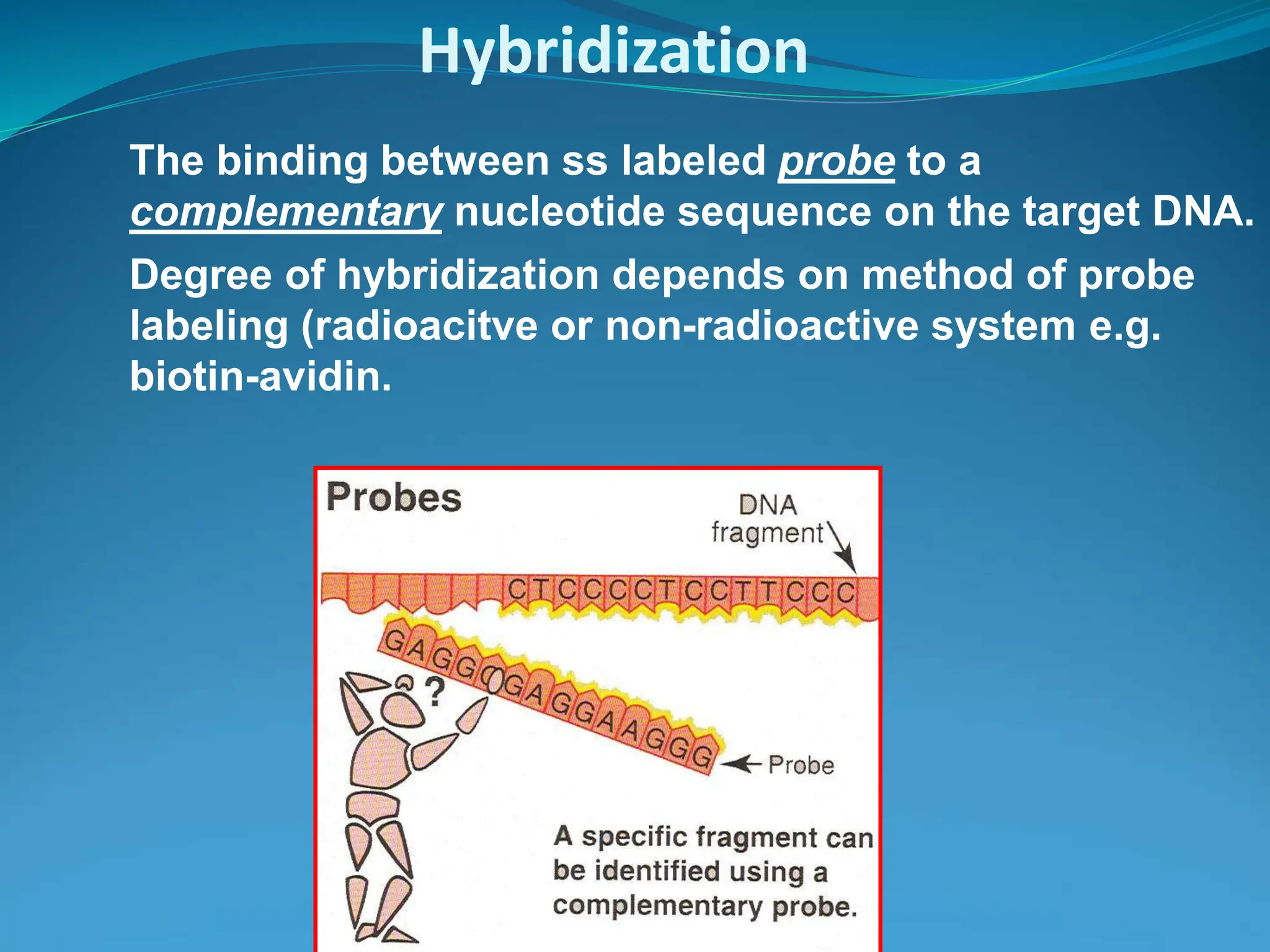
The binding between ss labeled probe to a
complementary nucleotide sequence on the target DNA.
Degree of hybridization depends on method of probe
labeling (radioacitve or non-radioactive system e.g.
biotin-avidin.
Hybridization
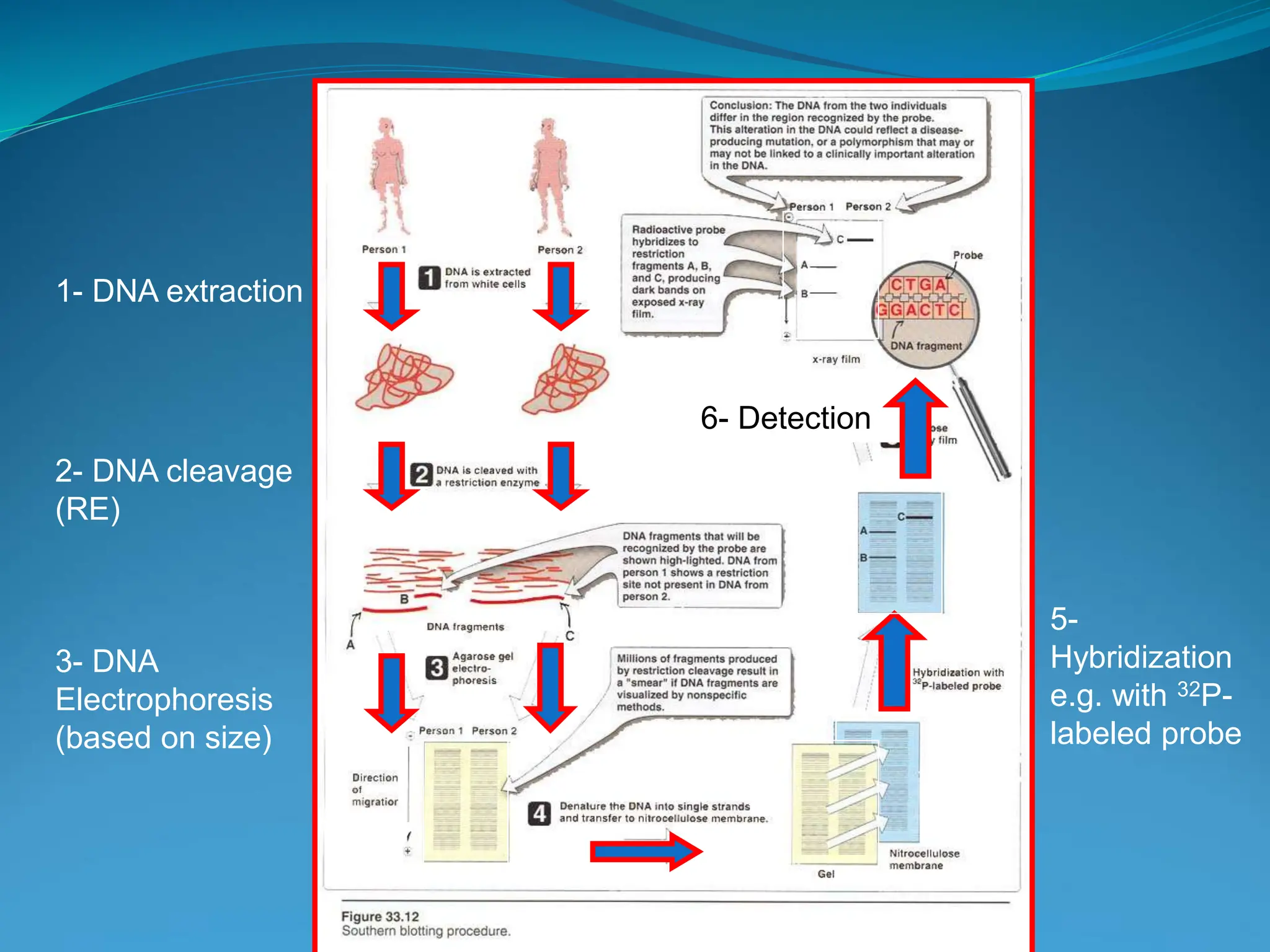
Detection of mutations
 The presence of a mutation affecting a
restriction site causes the pattern of bands to
differ from those seen with a normal gene.
 A change in one nucleotide may alter the
nucleotide sequence so that the restriction
endonuclease fails to recognize and cleave at
that site
(for example, in Figure, person 2 lacks a
restriction site present in person 1).
Dr. Azhar Chishti
Dr. Azhar Chishti
1- DNA extraction
2- DNA cleavage
(RE)
3- DNA
Electrophoresis
(based on size) -
+
4- DNA Denature, Transfer, blocking,
5-
Hybridization
e.g. with 32P-
labeled probe
6- Detection
Steps
 Digestion of genomic DNA (w/ ≥ one RE)  DNA fragments
 Size-separation of the fragments (standard agarose gel electrophoresis)
 In situ denaturation of the DNA fragments (by incubation @ ↑temp)
 Transfer of denatured DNA fragments into a solid support (nylon or
nitrocellulose).
 Hybridization of the immobilized DNA to a labeled probe (DNA, RNA)
 Detection of the bands complementary to the probe (e.g. by
autoradiography)
 Estimation of the size & number of the bands generated after digestion
of the genomic DNA w/ different RE  placing the target DNA within a
context of restriction sites)
METHODS OF TRANSFER
Downward Capillary Transfer
Upward Capillary Transfer
Simultaneous Transfer to Two Membranes
Electrophoretic Transfer
Vacuum Transfer
Example of Transfer
Upward Capillary Transfer
Weight
Glass Plate
Whatman 3MM paper
Gel
Paper towels
Membrane (nylon
or nitrocellulose)
Whatman 3MM
paper
Transfer buffer
Buffer drawn from
a reservoir passes
through the gel
into a stack of
paper towels
DNA eluted from
the gel by the
moving stream of
buffer is
deposited onto a
membrane
weight  tight connection
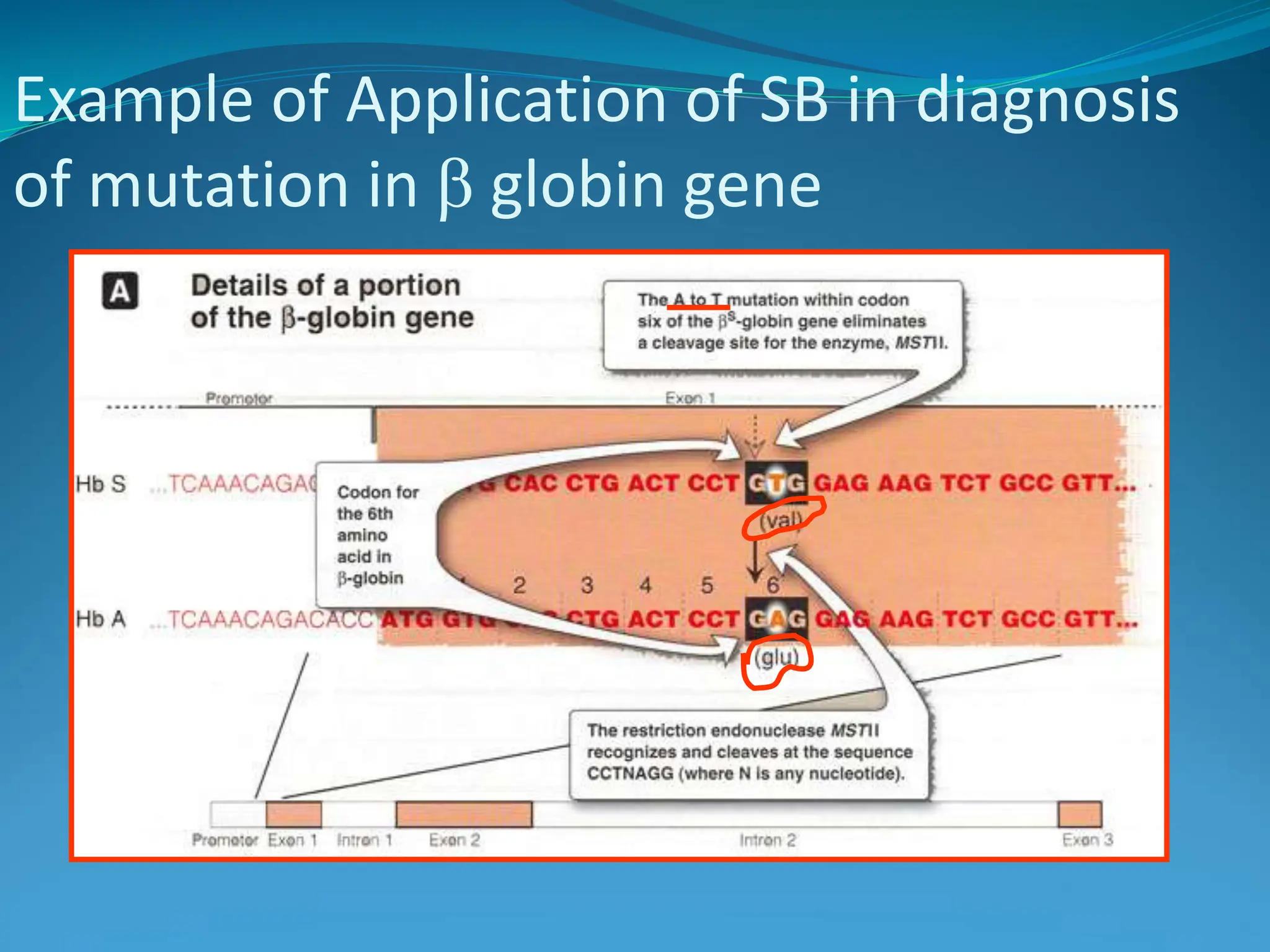
Example of Application of SB in diagnosis
of mutation in  globin gene
Dr. MUHAMMAD IMRAN
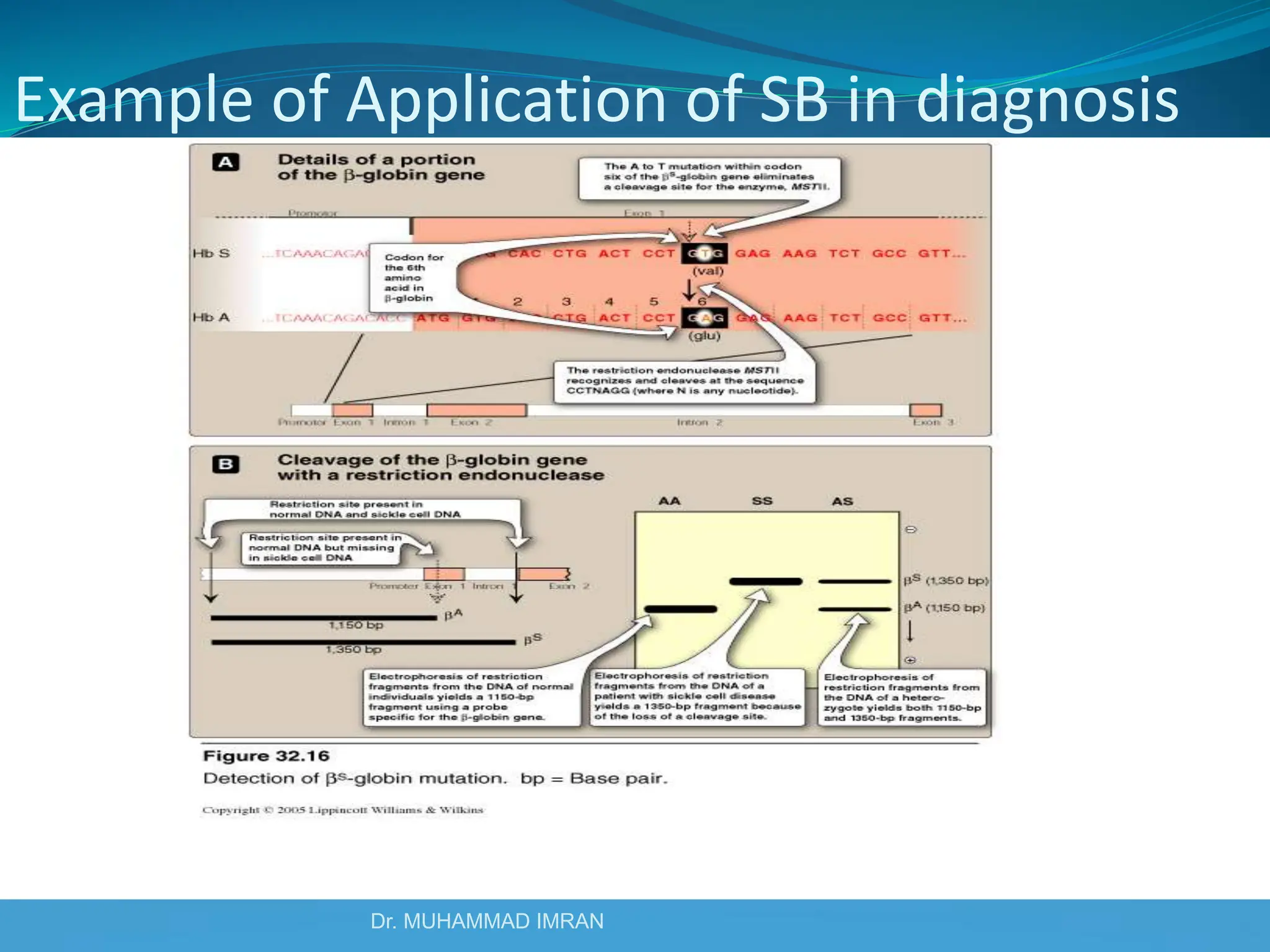
Example of Application of SB in diagnosis
of mutation in  globin gene
Northern Blotting
Northern Hybridization
A northern blot is a method routinely used in
molecular biology for detection of a specific RNA
sequence in RNA samples.
 The method was first described in the seventies
(Alwine et al. 1977, 1979)
 It is still being improved (Kroczek 1993), with the
basic steps remaining the same
Dr. Muhammad Imran
Basis Steps of NB
1. Isolation of intact mRNA
2. Separation of RNA according to size (through a
denaturing agarose gel e.g. with Glyoxal/formamide)
Transfer of the RNA to a solid support
Fixation of the RNA to the solid matrix
Hybridization of the immobilized RNA to probes
complementary to the sequences of interest
Removal of probe molecules that are nonspecifically
bound to the solid matrix
Detection, capture, & analysis of an image of the
specifically bound probe molecules.
Applications
 Study of gene expression in eukaryotic cells:
 To measure the amount & size of RNAs
transcribed from eukaryotic genes
 To estimate the abundance of RNAs
 Therefore, it is crucially important to
equalize the amounts of RNA loaded into
lanes of gels
Dr. Muhammad Imran
Dr. Muhammad Imran
Examples of methods to equalize the amounts of
RNA loaded into lanes of gels
 OD260
 Use of housekeeping gene (endogenous constitutively-
expressed gene): Normalizing samples according to
their content of mRNAs of this housekeeping gene
Dr. Muhammad Imran
Western Blotting
“Immunoblotting”
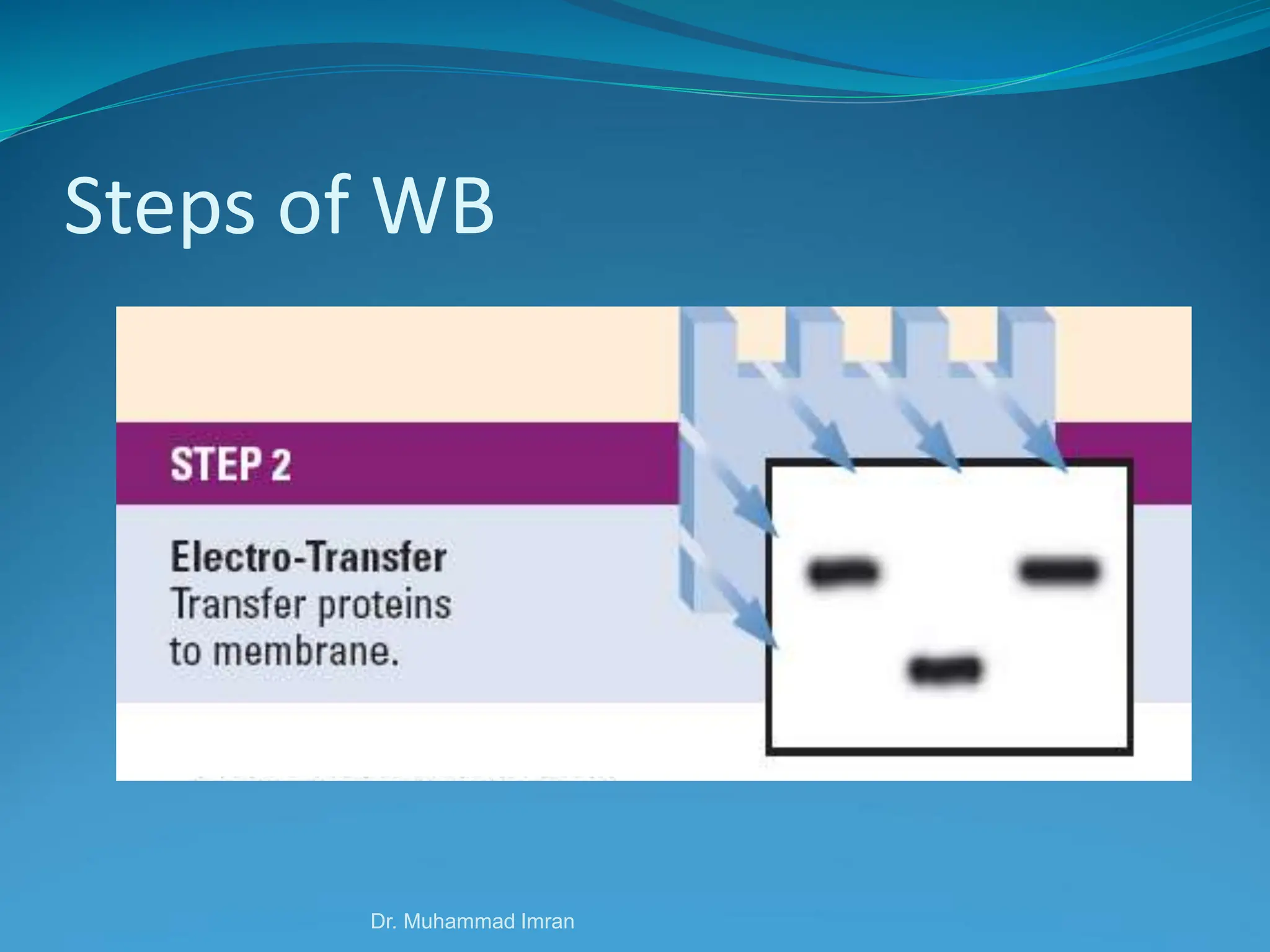
= electrophoretic transfer of proteins
from gels to membranes
Dr. Muhammad Imran
WB: Definition
 Blotting is the transfer of separated
proteins from the gel matrix into a
membrane, e.g., nitrocellulose membrane,
using electro- or vacuum-based transfer
techniques.
Towbin H, et al (1979). "Electrophoretic transfer of
proteins from polyacrylamide gels to nitrocellulose
sheets: procedure and some applications.". Proc Natl
Acad Sci U S A. 76 (9): 4350–4354
Dr. Muhammad Imran
Applications & Advantages
Applications:
To determine the molecular weight of a
protein (identification)
To measure relative amounts (quantitation) of
the protein present in complex mixtures of proteins
that are not radiolabeled (unlike
immunoprecipitation)
Advantages:
WB is highly sensitive technique
As little as 1-5 ng of an average-sized protein can be
detected by WB
Western blotting
The main steps of blotting technique in a
chronological order will be as follows:
 Blocking
 Probing with the specific antibody(ies)
 Wash
 Detection
 Washing
 X-ray (Gel Documentation System)
Dr. Muhammad Imran
Electrophoretic Transfer: An Overview
Important Issue:
Where to put the gel and the membrane relative to
the electroblotting transfer electrodes?
Dr. Muhammad Imran
Direction of Transfer
 Perpendicularly from the direction of travel of
proteins through the separating gel
Gel
Membrane
Probe with specific Ab
Dr. Azhar Chishti
Factors Affecting Transfer Efficiency
1. The Composition of the gel
2. Whether there is complete contact of
the gel with the membrane
3. The position of the electrodes
4. The transfer time
5. The size & composition of proteins
6. The field strength
7. The presence of detergents
Dr. Muhammad Imran
WB Procedure; Briefly…
www.bio.davidson.edu/.../method/Westernblot.html
1
2
3 4
Dr. Muhammad Imran
Direct Detection Method
Dr. Muhammad Imran
Indirect Detection Method
Dr. Muhammad Imran
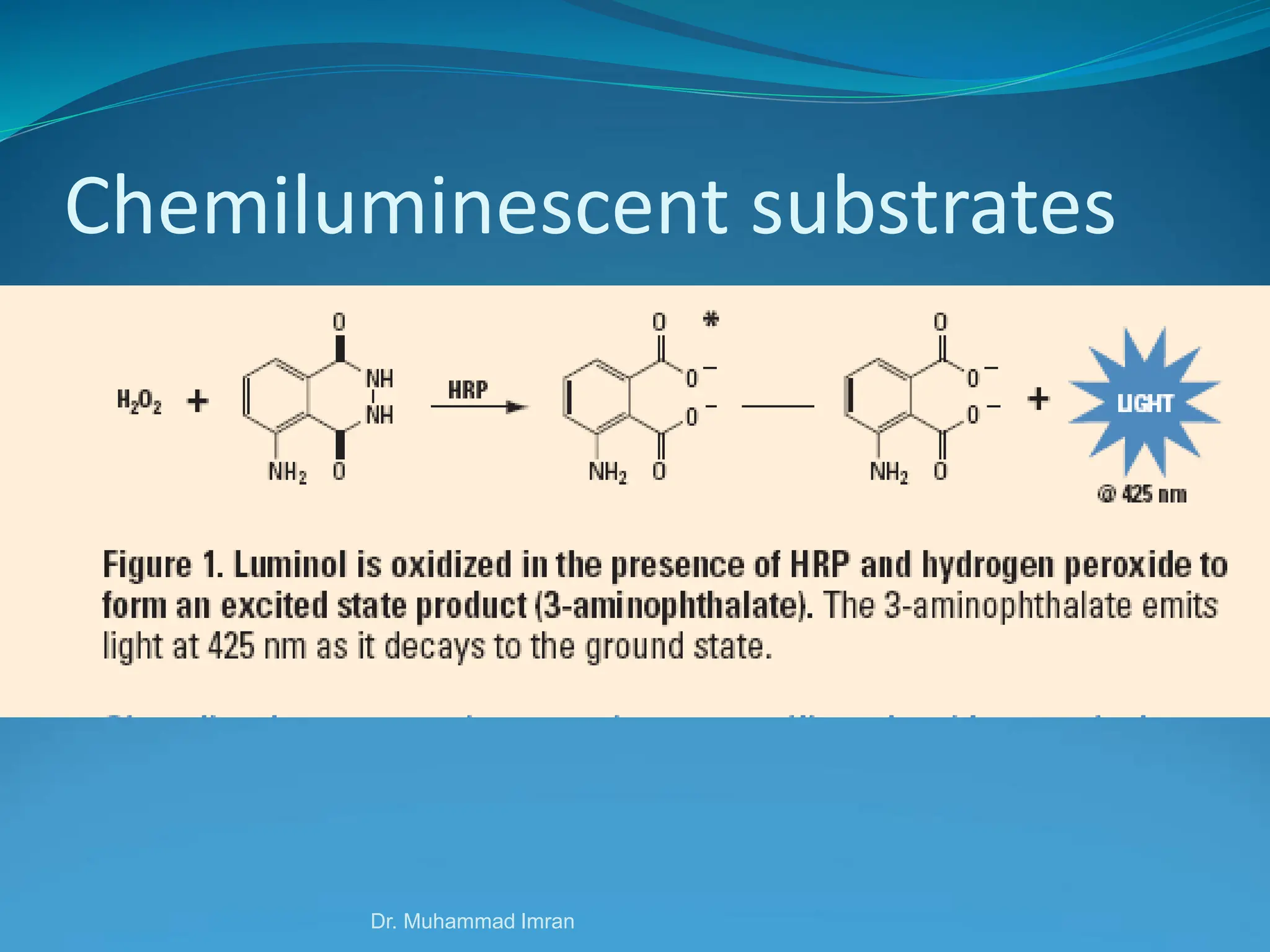
WB: examples of used
substrates
Chemiluminescent substrates
Dr. Muhammad Imran
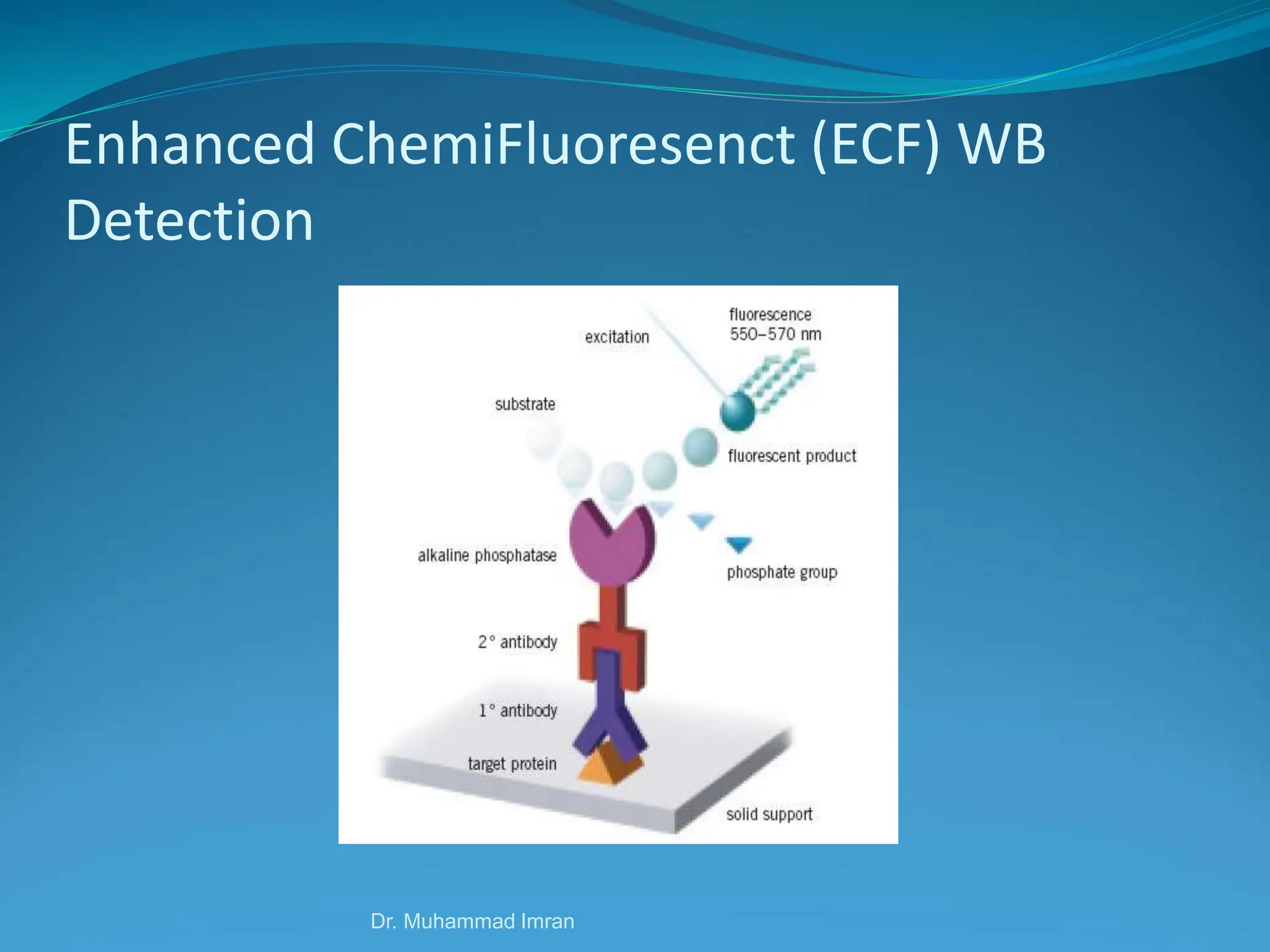
Enhanced ChemiFluoresenct (ECF) WB
Detection
Dr. Muhammad Imran
Dr. Muhammad Imran
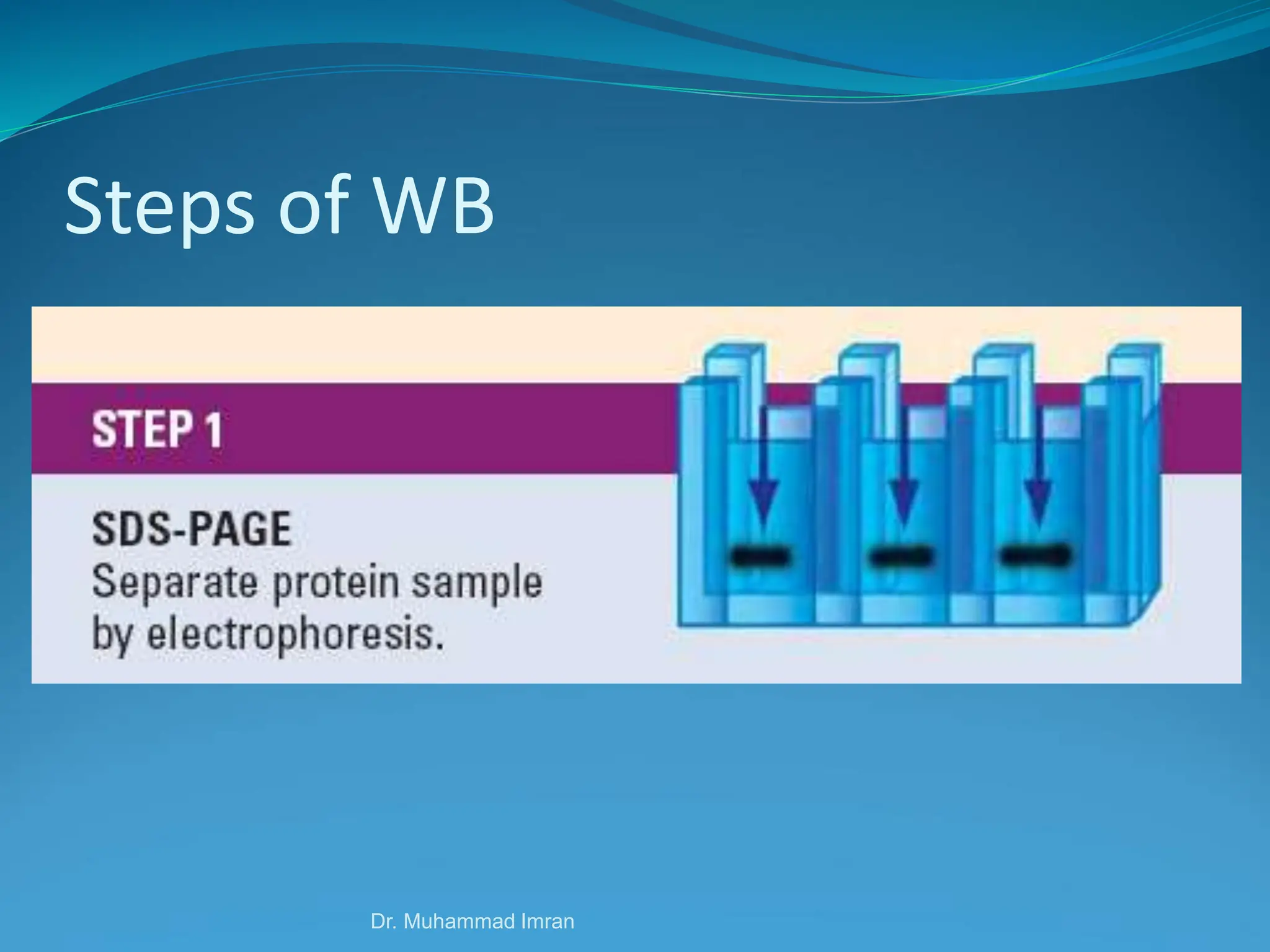
Steps of WB
Dr. Muhammad Imran
Steps of WB
Dr. Muhammad Imran
Steps of WB
Why to block?
To increase sensitivity
To prevent nonspecific signal
Dr. Muhammad Imran
Blocking of Blot
Several measures should be followed to
decrease the nonspecific reactions to a
minimum, i.e., increasing the signal to
noise ratio.
Blocking step is the incubation of the
membrane with solution containing BSA
or fat-free milk or casein for a sufficient
time with shaking.
Dr. Muhammad Imran
Steps of WB
For Direct Transfer, choices are:
Dr. Muhammad Imran
Primary Antibody labeling
 The immobilized proteins on the surface
of the membrane can be detected using
a specific, labeled antibody.
 Labeling of the antibody can be
performed using a radioactive or non-
radioactive method.
Dr. Muhammad Imran
Primary Antibody probing
 The blot is first incubated with a
primary antibody followed by the
addition of a labeled secondary antibody
that has species specificity for the
primary one.
 For example, probing of the membrane
using mouse primary antibody and anti-
mouse secondary antibody.
Dr. Muhammad Imran
Steps of WB
Dr. Muhammad Imran
Steps of WB
Dr. Muhammad Imran
Detection and interpretation
 A prestained MW standard is included
in a separate lane during electrophoresis
to allow the identification of the MW of
the target protein.
 Similar to the analysis of electrophoresis
results on a gel, the data on the membrane
can be quantitatively analyzed using gel
documentation system.
Dr. Muhammad Imran
Detection and interpretation (continue)
 Quantification of a specific protein band
can be achieved by densitometry and
integrating the areas under the peaks.
 Several gel documentation systems are
commercially available that can be useful
for analysis of results from the gel or
membranes.
Dr. Muhammad Imran
Comparison between WB & SB.
Similarities:
 Electrophoretically separated components (proteins in
WB & DNA in SB), are transferred from a gel to a solid
support and probed with reagents that are specific for
particular sequences of AA (WB) or nucleotides (SB).
Dr. Muhammad Imran
Comparison between WB & SB,
Contnd…
Differences:
The critical difference between SB & WB is: the nature
of the probes
Probes usually are Ab(s) that react
specifically with Ag-ic determinants
(epitopes) displayed by the target
protein
NA probes hybridize with a
specificity & rate that can be
predicted by simple equations,
In WB In SB
Dr. Muhammad Imran
References
 Lippincott, Illustrated review of Biochemistry, 4th
edition
 Molecular Cloning: A Laboratory Manual, J
Sambrook, EF Fritsch, T Maniatis
 Catalogues of some commercial companies
Dr. Muhammad Imran
Dr. Azhar Chishti
THANK YOU

BLOTTING TECHNIQUES SPECIAL

  • 2.
    LECTURE OUTLINES 1. SouthernBlotting: 1. History 2. Main use 3. Advantages 4. Probes 5. Hybridization 6. Procedure 7. Steps 8. Methods of Transfer 9. Example of application of SB for the diagnosis of diseases (SCA) 2. Northern Blotting: 1. History 2. Definition 3. Basic steps 4. Applications 3. Western Blotting: 1. WB: Definition 2. Applications & Advantages 3. WB: An overview 4. Direction of transfer 5. Factors Affecting Transfer Efficiency 6. WB procedure, briefly 7. WB Detection methods 8. Examples of used substrates 9. WB procedure, illustrated 10. Comparison between SB & WB (Similarities & Differences)
  • 3.
    OBJECTIVES  To understandthe basic concept of blotting techniques (Southern, northern, western)  To know the main applications and advantages of each of the main types of blotting techniques  To be familiar with the steps (in brief) for performing a blotting procedure  To understand the major similarities & differences between different blotting techniques  To be introduced to an example of applying a blotting technique in diagnosis of diseases (SCA)
  • 5.
    • Blots aretechniques for transferring DNA , RNA and proteins onto a carrier so they can be separated, and often follows the use of a gel electrophoresis. The Southern blot is Northern blot for RNA and used for transferring DNA, the the western blot for PROTEIN.
  • 6.
    Blotting technique Southern Blot Itis used to detect DNA. Northern Blot It is used to detect RNA. Western blot It is used to detect protein. Far-Western blot uses protein–protein interactions Eastern blot The Eastern blot is used for the detection of specific posttranslational modifications of proteins. Proteins are separated by gel electrophoresis before being transferred to a blotting matrix whereupon posttranslational modifications are detected by specific substrates (cholera toxin, concanavalin, phosphomolybdate, etc.) or antibodies.
  • 7.
    Blotting: History  SouthernBlotting is named after its inventor, the British biologist Edwin Southern (1975)  Other blotting methods (i.e. western blot, WB, northern blot, NB) that employ similar principles, but using protein or RNA, have later been named in reference to Edwin Southern's name.
  • 8.
    SOUTHERN BLOTTING ? Experimentalprocedure DNA is extracted from cells, leukocytes. DNA is cleaved into many fragments by restriction enzyme (BamH1, EcoR1 etc)
  • 9.
     The resultingfragments are separated on the basis of size by electrophoresis.  The large fragments move more slowly than the smaller fragments.  The lengths of the fragments are compared with band of relative standard fragments of known size.
  • 10.
     The DNAfragments are denatured and transferred to nitrocellulose membrane (NYTRAN) for analysis.  DNA represents the individual's entire genome, the enzymic digest contains a million or more fragments.  The gene of interest is on only one of these pieces of DNA.
  • 11.
     DNA segmentswere visualized by a nonspecific technique, they would appear as an unresolved blur of overlapping bands.  To avoid this, the last step in Southern blotting uses a probe to identify the DNA fragments of interest.
  • 12.
     Southern blotanalysis depend on the specific restriction endonuclease  The probe used to visualize the restriction fragments.
  • 13.
    •Labeled material todetect a target. •For DNA: 20-30 nucleotides, complementary to a region in the gene •Methods of labeling: •Non-radioactive e.g. Biotin •Radioactive e.g. 32P •Sensitive •Relatively cheap •Hazardous You should follow the radioactive waste disposal regulations. •Sensitive •Relatively expensive Target DNA Probe Biotin Avidin* Target DNA Probe * Probes
  • 14.
    Dr. Azhar Chishti Thebinding between ss labeled probe to a complementary nucleotide sequence on the target DNA. Degree of hybridization depends on method of probe labeling (radioacitve or non-radioactive system e.g. biotin-avidin. Hybridization
  • 15.
    Detection of mutations The presence of a mutation affecting a restriction site causes the pattern of bands to differ from those seen with a normal gene.  A change in one nucleotide may alter the nucleotide sequence so that the restriction endonuclease fails to recognize and cleave at that site (for example, in Figure, person 2 lacks a restriction site present in person 1).
  • 16.
  • 17.
    Dr. Azhar Chishti 1-DNA extraction 2- DNA cleavage (RE) 3- DNA Electrophoresis (based on size) - + 4- DNA Denature, Transfer, blocking, 5- Hybridization e.g. with 32P- labeled probe 6- Detection
  • 18.
    Steps  Digestion ofgenomic DNA (w/ ≥ one RE)  DNA fragments  Size-separation of the fragments (standard agarose gel electrophoresis)  In situ denaturation of the DNA fragments (by incubation @ ↑temp)  Transfer of denatured DNA fragments into a solid support (nylon or nitrocellulose).  Hybridization of the immobilized DNA to a labeled probe (DNA, RNA)  Detection of the bands complementary to the probe (e.g. by autoradiography)  Estimation of the size & number of the bands generated after digestion of the genomic DNA w/ different RE  placing the target DNA within a context of restriction sites)
  • 19.
    METHODS OF TRANSFER DownwardCapillary Transfer Upward Capillary Transfer Simultaneous Transfer to Two Membranes Electrophoretic Transfer Vacuum Transfer
  • 20.
    Example of Transfer UpwardCapillary Transfer Weight Glass Plate Whatman 3MM paper Gel Paper towels Membrane (nylon or nitrocellulose) Whatman 3MM paper Transfer buffer
  • 21.
    Buffer drawn from areservoir passes through the gel into a stack of paper towels DNA eluted from the gel by the moving stream of buffer is deposited onto a membrane weight  tight connection
  • 22.
    Example of Applicationof SB in diagnosis of mutation in  globin gene
  • 23.
    Dr. MUHAMMAD IMRAN Exampleof Application of SB in diagnosis of mutation in  globin gene
  • 24.
    Northern Blotting Northern Hybridization Anorthern blot is a method routinely used in molecular biology for detection of a specific RNA sequence in RNA samples.  The method was first described in the seventies (Alwine et al. 1977, 1979)  It is still being improved (Kroczek 1993), with the basic steps remaining the same
  • 25.
    Dr. Muhammad Imran BasisSteps of NB 1. Isolation of intact mRNA 2. Separation of RNA according to size (through a denaturing agarose gel e.g. with Glyoxal/formamide) Transfer of the RNA to a solid support Fixation of the RNA to the solid matrix Hybridization of the immobilized RNA to probes complementary to the sequences of interest Removal of probe molecules that are nonspecifically bound to the solid matrix Detection, capture, & analysis of an image of the specifically bound probe molecules.
  • 26.
    Applications  Study ofgene expression in eukaryotic cells:  To measure the amount & size of RNAs transcribed from eukaryotic genes  To estimate the abundance of RNAs  Therefore, it is crucially important to equalize the amounts of RNA loaded into lanes of gels Dr. Muhammad Imran
  • 27.
    Dr. Muhammad Imran Examplesof methods to equalize the amounts of RNA loaded into lanes of gels  OD260  Use of housekeeping gene (endogenous constitutively- expressed gene): Normalizing samples according to their content of mRNAs of this housekeeping gene
  • 28.
    Dr. Muhammad Imran WesternBlotting “Immunoblotting” = electrophoretic transfer of proteins from gels to membranes
  • 29.
    Dr. Muhammad Imran WB:Definition  Blotting is the transfer of separated proteins from the gel matrix into a membrane, e.g., nitrocellulose membrane, using electro- or vacuum-based transfer techniques. Towbin H, et al (1979). "Electrophoretic transfer of proteins from polyacrylamide gels to nitrocellulose sheets: procedure and some applications.". Proc Natl Acad Sci U S A. 76 (9): 4350–4354
  • 30.
    Dr. Muhammad Imran Applications& Advantages Applications: To determine the molecular weight of a protein (identification) To measure relative amounts (quantitation) of the protein present in complex mixtures of proteins that are not radiolabeled (unlike immunoprecipitation) Advantages: WB is highly sensitive technique As little as 1-5 ng of an average-sized protein can be detected by WB
  • 31.
    Western blotting The mainsteps of blotting technique in a chronological order will be as follows:  Blocking  Probing with the specific antibody(ies)  Wash  Detection  Washing  X-ray (Gel Documentation System)
  • 32.
    Dr. Muhammad Imran ElectrophoreticTransfer: An Overview Important Issue: Where to put the gel and the membrane relative to the electroblotting transfer electrodes?
  • 33.
    Dr. Muhammad Imran Directionof Transfer  Perpendicularly from the direction of travel of proteins through the separating gel Gel Membrane Probe with specific Ab
  • 34.
    Dr. Azhar Chishti FactorsAffecting Transfer Efficiency 1. The Composition of the gel 2. Whether there is complete contact of the gel with the membrane 3. The position of the electrodes 4. The transfer time 5. The size & composition of proteins 6. The field strength 7. The presence of detergents
  • 35.
    Dr. Muhammad Imran WBProcedure; Briefly… www.bio.davidson.edu/.../method/Westernblot.html 1 2 3 4
  • 36.
    Dr. Muhammad Imran DirectDetection Method
  • 37.
  • 38.
    Dr. Muhammad Imran WB:examples of used substrates
  • 39.
  • 40.
    Enhanced ChemiFluoresenct (ECF)WB Detection Dr. Muhammad Imran
  • 41.
  • 42.
    Steps of WB Dr.Muhammad Imran
  • 43.
    Steps of WB Dr.Muhammad Imran
  • 44.
    Steps of WB Whyto block? To increase sensitivity To prevent nonspecific signal Dr. Muhammad Imran
  • 45.
    Blocking of Blot Severalmeasures should be followed to decrease the nonspecific reactions to a minimum, i.e., increasing the signal to noise ratio. Blocking step is the incubation of the membrane with solution containing BSA or fat-free milk or casein for a sufficient time with shaking. Dr. Muhammad Imran
  • 46.
    Steps of WB ForDirect Transfer, choices are: Dr. Muhammad Imran
  • 47.
    Primary Antibody labeling The immobilized proteins on the surface of the membrane can be detected using a specific, labeled antibody.  Labeling of the antibody can be performed using a radioactive or non- radioactive method. Dr. Muhammad Imran
  • 48.
    Primary Antibody probing The blot is first incubated with a primary antibody followed by the addition of a labeled secondary antibody that has species specificity for the primary one.  For example, probing of the membrane using mouse primary antibody and anti- mouse secondary antibody. Dr. Muhammad Imran
  • 49.
    Steps of WB Dr.Muhammad Imran
  • 50.
    Steps of WB Dr.Muhammad Imran
  • 51.
    Detection and interpretation A prestained MW standard is included in a separate lane during electrophoresis to allow the identification of the MW of the target protein.  Similar to the analysis of electrophoresis results on a gel, the data on the membrane can be quantitatively analyzed using gel documentation system. Dr. Muhammad Imran
  • 52.
    Detection and interpretation(continue)  Quantification of a specific protein band can be achieved by densitometry and integrating the areas under the peaks.  Several gel documentation systems are commercially available that can be useful for analysis of results from the gel or membranes. Dr. Muhammad Imran
  • 53.
    Comparison between WB& SB. Similarities:  Electrophoretically separated components (proteins in WB & DNA in SB), are transferred from a gel to a solid support and probed with reagents that are specific for particular sequences of AA (WB) or nucleotides (SB). Dr. Muhammad Imran
  • 54.
    Comparison between WB& SB, Contnd… Differences: The critical difference between SB & WB is: the nature of the probes Probes usually are Ab(s) that react specifically with Ag-ic determinants (epitopes) displayed by the target protein NA probes hybridize with a specificity & rate that can be predicted by simple equations, In WB In SB Dr. Muhammad Imran
  • 55.
    References  Lippincott, Illustratedreview of Biochemistry, 4th edition  Molecular Cloning: A Laboratory Manual, J Sambrook, EF Fritsch, T Maniatis  Catalogues of some commercial companies Dr. Muhammad Imran
  • 56.