The Vanity Factor


•   Lightening up and weight maintenance are about health, not about how you
    look.

•   There is more to you than your appearance.

•   Denise was criticized by her mother for being overweight.

•   She felt ashamed of her body.

•   To break free of her shame, she took a dramatic step.
The Vanity Factor


•   She went to a nude beach where she found friends.

•   They ignored her weight.

•   It was wonderful to find people who accepted her for who she was, not how
    she looked.

•   Their acceptance helped her to figure something out.

•   Weight control is about health, not vanity.
The Vanity Factor


•   Denise decided to lose weight for her health.

•   She had achieved self-acceptance, even though she was heavy.

•   She felt emotionally strong.

•   She was free of self-criticism.

•   She was comfortable without clothes - but she still wanted to look attractive in
    them.
The Vanity Factor


•   You may not want to go to a nude beach in search of acceptance.

•   Maybe there aren't any nude beaches where you live.

•   But imagine freeing yourself from self-criticism about your weight.

•   Imagine at the same time, acknowledging your vanity.
The Vanity Factor


•   Vanity is a human trait.

•   Ruth was vain.

•   She was overweight but liked pretty clothes.

•   She was not ashamed of her appearance.

•   But she wanted to be more attractive and fit into her nicest clothes again.
The Vanity Factor


•   She decided to lose weight.

•   She took specific steps.

•   She put her target weight on the refrigerator.

•   Before she opened the refrigerator, she gave herself this suggestion:

•   "I will eat the way a person eats, who weighs forty pounds less than I do."
The Vanity Factor


•   She was very disciplined.

•   She was very determined.

•   She stuck to her menu plan and lost weight.

•   Vanity kept her going.

•   She looked in the mirror a lot.

•   She happily began to wear smaller sizes.
The Vanity Factor


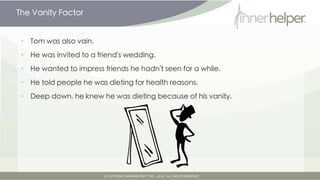
•   Tom was also vain.

•   He was invited to a friend's wedding.

•   He wanted to impress friends he hadn't seen for a while.

•   He told people he was dieting for health reasons.

•   Deep down, he knew he was dieting because of his vanity.
The Vanity Factor


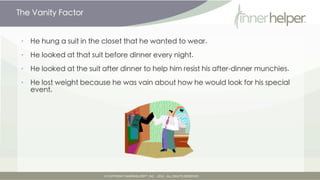
•   He hung a suit in the closet that he wanted to wear.

•   He looked at that suit before dinner every night.

•   He looked at the suit after dinner to help him resist his after-dinner munchies.

•   He lost weight because he was vain about how he would look for his special
    event.
The Vanity Factor


•   Vanity motivates behavior.

•   You are probably activating a part of the brain's reward system when you are
    pleased with how you look.

•   Feeling in control is also rewarding, although it's different from the reward of
    eating to satisfy urges.
The Vanity Factor


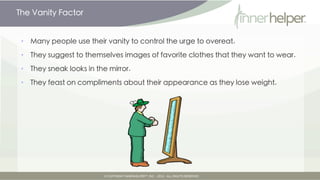
•   Many people use their vanity to control the urge to overeat.

•   They suggest to themselves images of favorite clothes that they want to wear.

•   They sneak looks in the mirror.

•   They feast on compliments about their appearance as they lose weight.
The Vanity Factor


•   You are normally vain, if you are pleased when clothes hang loose.

•   If vanity helps you lose weight for your health, go for it!

•   If you still have to eat all day long, eat tiny amounts like a bird.

•   Help yourself by noticing how you feel as you lose weight.
The Vanity Factor


•   How you feel physically is as important as how you look.

•   Are you feeling more spry?

•   Can you move more easily?

•   Have you noticed if you can cross your legs more easily?
The Vanity Factor


•   Losing weight because you are vain can help protect your body.

•   Every pound you lose, relieves three pounds of pressure on your knees.

•   Losing weight relieves pressure on your back.

•   Of course you do not want to be so vain that you starve yourself and become
    anorexic.
The Vanity Factor


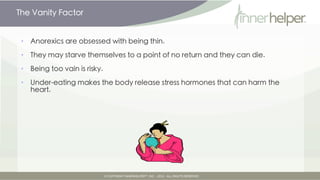
•   Anorexics are obsessed with being thin.

•   They may starve themselves to a point of no return and they can die.

•   Being too vain is risky.

•   Under-eating makes the body release stress hormones that can harm the
    heart.
The Vanity Factor


•   Your vanity gets support

•   Magazines feature diet and exercise programs - promise beautiful bodies.

•   They stir up your inner vanity.

•   You buy the magazines.

•   Maybe you try the programs for a while.
The Vanity Factor


•   However, there's a reason why you may not follow through with dieting advice
    from articles you read

•   Maybe vanity can't compete with food urges

•   Maybe being accepted for who you are, not how you look is more important
    than you vanity.
The Vanity Factor


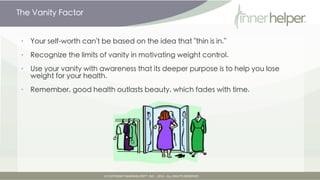
•   Your self-worth can't be based on the idea that "thin is in."

•   Recognize the limits of vanity in motivating weight control.

•   Use your vanity with awareness that its deeper purpose is to help you lose
    weight for your health.

•   Remember, good health outlasts beauty, which fades with time.
The Vanity Factor


•   So please use your vanity wisely to support weight management.

•   You can call up your vanity like other parts of the Self.

•   Inner vanity, like an inner helper, can be an ally in the battle against impulse
    eating.

•   Vanity can be an ally, though it's seldom all-powerful.
The Vanity Factor


•   Listen to the audio portion for help with using vanity for positive purposes.

•   Use the audio part of this unit to develop self-suggestions about using vanity in
    the service of your health.
The Vanity Factor

The Vanity Factor

  • 1.
    The Vanity Factor • Lightening up and weight maintenance are about health, not about how you look. • There is more to you than your appearance. • Denise was criticized by her mother for being overweight. • She felt ashamed of her body. • To break free of her shame, she took a dramatic step.
  • 2.
    The Vanity Factor • She went to a nude beach where she found friends. • They ignored her weight. • It was wonderful to find people who accepted her for who she was, not how she looked. • Their acceptance helped her to figure something out. • Weight control is about health, not vanity.
  • 3.
    The Vanity Factor • Denise decided to lose weight for her health. • She had achieved self-acceptance, even though she was heavy. • She felt emotionally strong. • She was free of self-criticism. • She was comfortable without clothes - but she still wanted to look attractive in them.
  • 4.
    The Vanity Factor • You may not want to go to a nude beach in search of acceptance. • Maybe there aren't any nude beaches where you live. • But imagine freeing yourself from self-criticism about your weight. • Imagine at the same time, acknowledging your vanity.
  • 5.
    The Vanity Factor • Vanity is a human trait. • Ruth was vain. • She was overweight but liked pretty clothes. • She was not ashamed of her appearance. • But she wanted to be more attractive and fit into her nicest clothes again.
  • 6.
    The Vanity Factor • She decided to lose weight. • She took specific steps. • She put her target weight on the refrigerator. • Before she opened the refrigerator, she gave herself this suggestion: • "I will eat the way a person eats, who weighs forty pounds less than I do."
  • 7.
    The Vanity Factor • She was very disciplined. • She was very determined. • She stuck to her menu plan and lost weight. • Vanity kept her going. • She looked in the mirror a lot. • She happily began to wear smaller sizes.
  • 8.
    The Vanity Factor • Tom was also vain. • He was invited to a friend's wedding. • He wanted to impress friends he hadn't seen for a while. • He told people he was dieting for health reasons. • Deep down, he knew he was dieting because of his vanity.
  • 9.
    The Vanity Factor • He hung a suit in the closet that he wanted to wear. • He looked at that suit before dinner every night. • He looked at the suit after dinner to help him resist his after-dinner munchies. • He lost weight because he was vain about how he would look for his special event.
  • 10.
    The Vanity Factor • Vanity motivates behavior. • You are probably activating a part of the brain's reward system when you are pleased with how you look. • Feeling in control is also rewarding, although it's different from the reward of eating to satisfy urges.
  • 11.
    The Vanity Factor • Many people use their vanity to control the urge to overeat. • They suggest to themselves images of favorite clothes that they want to wear. • They sneak looks in the mirror. • They feast on compliments about their appearance as they lose weight.
  • 12.
    The Vanity Factor • You are normally vain, if you are pleased when clothes hang loose. • If vanity helps you lose weight for your health, go for it! • If you still have to eat all day long, eat tiny amounts like a bird. • Help yourself by noticing how you feel as you lose weight.
  • 13.
    The Vanity Factor • How you feel physically is as important as how you look. • Are you feeling more spry? • Can you move more easily? • Have you noticed if you can cross your legs more easily?
  • 14.
    The Vanity Factor • Losing weight because you are vain can help protect your body. • Every pound you lose, relieves three pounds of pressure on your knees. • Losing weight relieves pressure on your back. • Of course you do not want to be so vain that you starve yourself and become anorexic.
  • 15.
    The Vanity Factor • Anorexics are obsessed with being thin. • They may starve themselves to a point of no return and they can die. • Being too vain is risky. • Under-eating makes the body release stress hormones that can harm the heart.
  • 16.
    The Vanity Factor • Your vanity gets support • Magazines feature diet and exercise programs - promise beautiful bodies. • They stir up your inner vanity. • You buy the magazines. • Maybe you try the programs for a while.
  • 17.
    The Vanity Factor • However, there's a reason why you may not follow through with dieting advice from articles you read • Maybe vanity can't compete with food urges • Maybe being accepted for who you are, not how you look is more important than you vanity.
  • 18.
    The Vanity Factor • Your self-worth can't be based on the idea that "thin is in." • Recognize the limits of vanity in motivating weight control. • Use your vanity with awareness that its deeper purpose is to help you lose weight for your health. • Remember, good health outlasts beauty, which fades with time.
  • 19.
    The Vanity Factor • So please use your vanity wisely to support weight management. • You can call up your vanity like other parts of the Self. • Inner vanity, like an inner helper, can be an ally in the battle against impulse eating. • Vanity can be an ally, though it's seldom all-powerful.
  • 20.
    The Vanity Factor • Listen to the audio portion for help with using vanity for positive purposes. • Use the audio part of this unit to develop self-suggestions about using vanity in the service of your health.
  • 21.