University of Brighton
Final Year Project 2014
‘Healthy Eating’
By Patrick Kendal
uk.linkedin.com/in/patrickkendal/
patchkendal@googlemail.com
pkdesign.moonfruit.com
07412876436
Copyright © 2014 Patrick Kendal
CONTENTS
Introduction
Research
Ideation
Development
Launch
Acknowledgements
6
7
19
27
37
42
Introduction
As a starting point for this project research was conducted
in the chosen subject of ‘Healthy Eating’. The vision was to
design a product that would promote an attractive way to
receive better nutrition.
The process of design progressed through four stages.
Research; to discover where the biggest dietary problems lie
and focus on a specific area. Ideation; to explore potential
solutions to these problems. Development; to consider and
test one particular idea and to optimise its use. Launch; to
prepare the finished product for market.
This book is a compilation of the highlights in this process.
6
RESEARCH
7
8
9
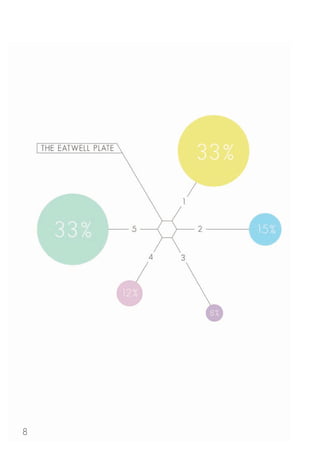
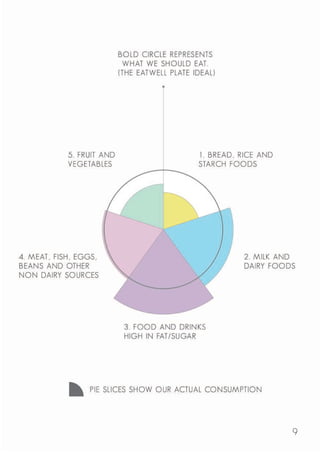
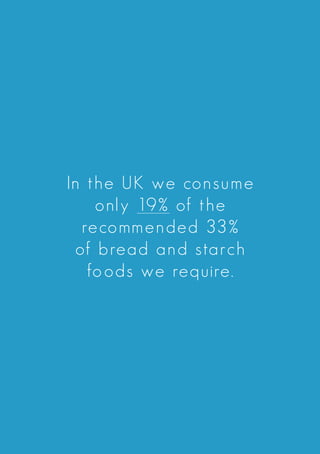
In the UK we consume
only 19% of the
recommended 33%
of bread and starch
foods we require.
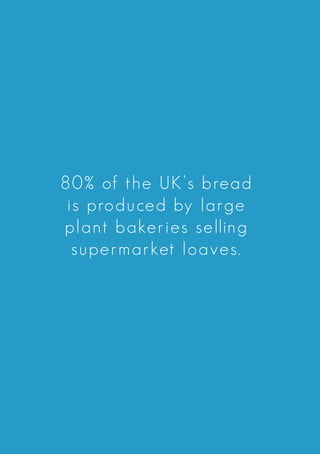
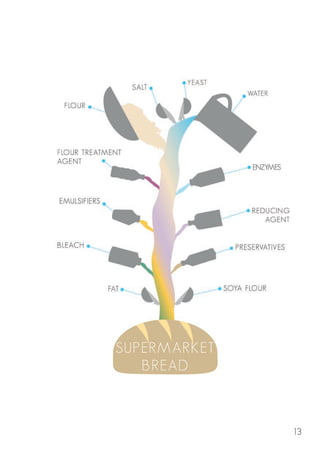
80% of the UK’s bread
is produced by large
plant bakeries selling
supermarket loaves.
12
13
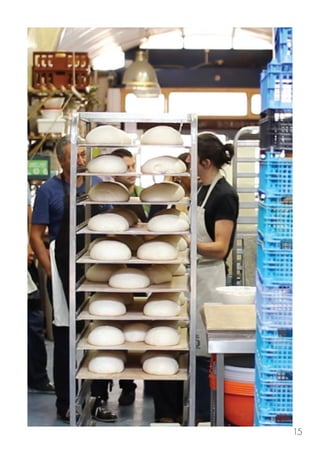
Sourdough craft
bread is fermented
for 6-24 hours before
baking. This process
aids the development
of digestive enzymes
in the dough.
14
15
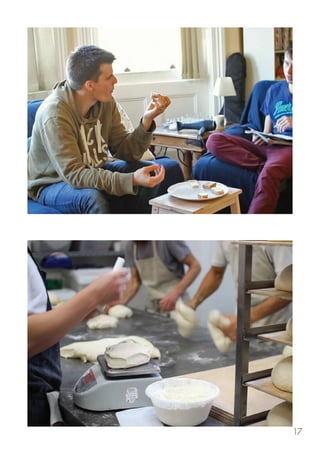
Most users taking part in
the research preferred
the taste of fresh breads
as opposed to processed
breads. Two thirds of
them enjoy making bread
at home when they have
the time.
16
17
18
IDEATION
19
20
21
22
23
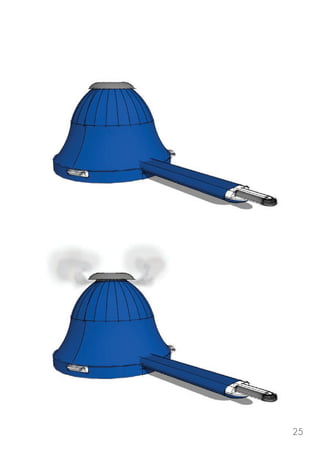
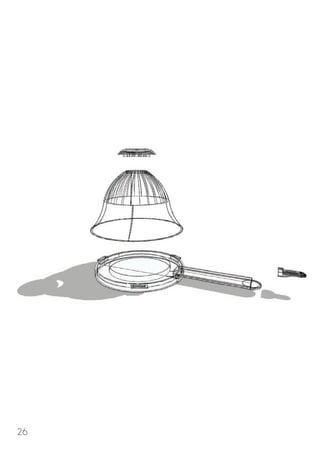
The chosen concept
was a vessel to use
in a home oven that
could bake a dough to
a similar standard as
craft breads baked in
commercial ovens.
24
25
26
DEVELOPMENT
27
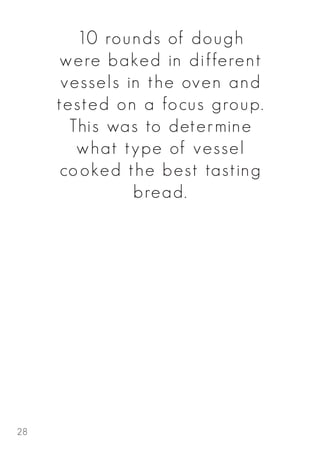
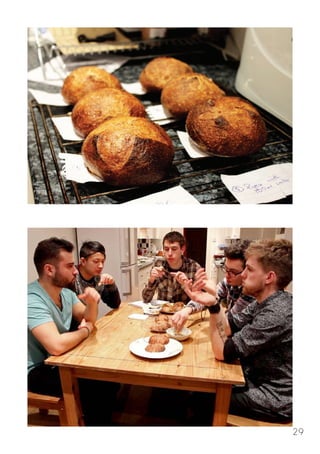
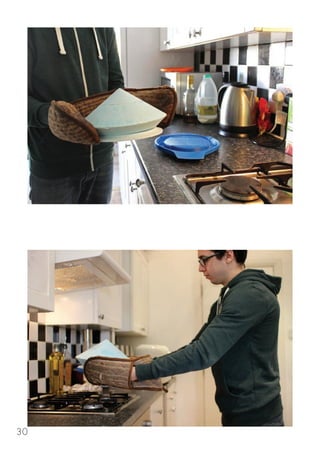
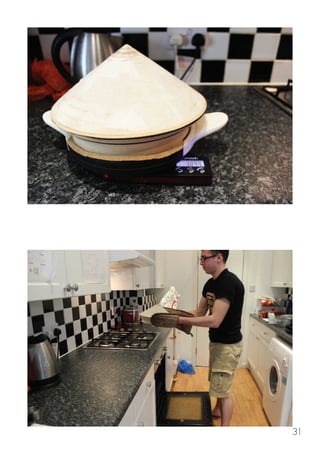
10 rounds of dough
were baked in different
vessels in the oven and
tested on a focus group.
This was to determine
what type of vessel
cooked the best tasting
bread.
28
29
30
31
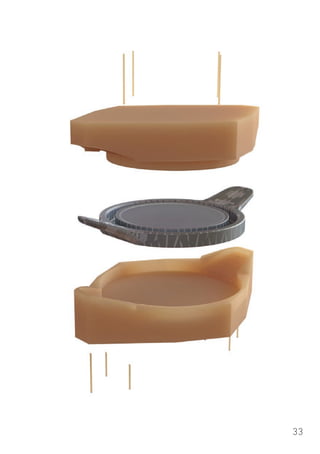
Using CAD software the
moulds were drafted up
for the product to be
die-cast from aluminium
as a finished product.
32
33
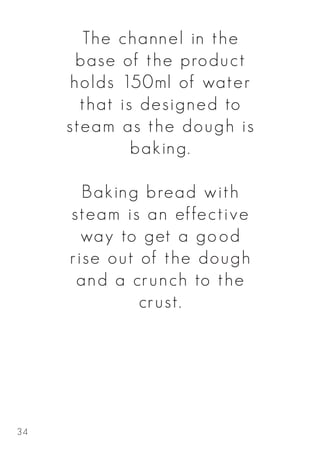
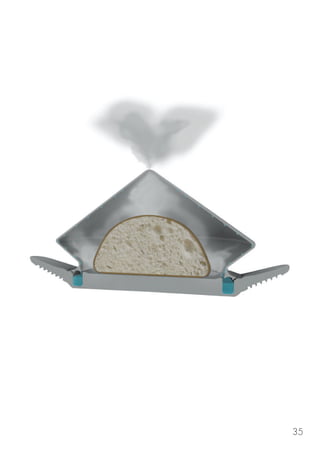
The channel in the
base of the product
holds 150ml of water
that is designed to
steam as the dough is
baking.
Baking bread with
steam is an effective
way to get a good
rise out of the dough
and a crunch to the
crust.
34
35
36
LAUNCH
37
38
39
Acknowledgements
Ollie Hyde, Alex Craig, Murat Adnan and Tan Ngo
for continued support and consultation throughout
the project.
Matt Kerr, Jacob Fortescue, Michael and Lucinda
Morrison for the time they gave as interviewee’s
to support the user research of the project.
Dr. Stephen Begg, Dr. Chris Garrett, Dr. Nicolas
Mich­e and Mr. Derek Covill for their technical
consultation.
Gary the Technician for his help with prototyping.
Henry and Jane Kendal for their continued support.
42
The Spring Oven Booklet

The Spring Oven Booklet

  • 3.
    University of Brighton FinalYear Project 2014 ‘Healthy Eating’ By Patrick Kendal uk.linkedin.com/in/patrickkendal/ patchkendal@googlemail.com pkdesign.moonfruit.com 07412876436 Copyright © 2014 Patrick Kendal
  • 5.
  • 6.
    Introduction As a startingpoint for this project research was conducted in the chosen subject of ‘Healthy Eating’. The vision was to design a product that would promote an attractive way to receive better nutrition. The process of design progressed through four stages. Research; to discover where the biggest dietary problems lie and focus on a specific area. Ideation; to explore potential solutions to these problems. Development; to consider and test one particular idea and to optimise its use. Launch; to prepare the finished product for market. This book is a compilation of the highlights in this process. 6
  • 7.
  • 8.
  • 9.
  • 10.
    In the UKwe consume only 19% of the recommended 33% of bread and starch foods we require.
  • 11.
    80% of theUK’s bread is produced by large plant bakeries selling supermarket loaves.
  • 12.
  • 13.
  • 14.
    Sourdough craft bread isfermented for 6-24 hours before baking. This process aids the development of digestive enzymes in the dough. 14
  • 15.
  • 16.
    Most users takingpart in the research preferred the taste of fresh breads as opposed to processed breads. Two thirds of them enjoy making bread at home when they have the time. 16
  • 17.
  • 18.
  • 19.
  • 20.
  • 21.
  • 22.
  • 23.
  • 24.
    The chosen concept wasa vessel to use in a home oven that could bake a dough to a similar standard as craft breads baked in commercial ovens. 24
  • 25.
  • 26.
  • 27.
  • 28.
    10 rounds ofdough were baked in different vessels in the oven and tested on a focus group. This was to determine what type of vessel cooked the best tasting bread. 28
  • 29.
  • 30.
  • 31.
  • 32.
    Using CAD softwarethe moulds were drafted up for the product to be die-cast from aluminium as a finished product. 32
  • 33.
  • 34.
    The channel inthe base of the product holds 150ml of water that is designed to steam as the dough is baking. Baking bread with steam is an effective way to get a good rise out of the dough and a crunch to the crust. 34
  • 35.
  • 36.
  • 37.
  • 38.
  • 39.
  • 42.
    Acknowledgements Ollie Hyde, AlexCraig, Murat Adnan and Tan Ngo for continued support and consultation throughout the project. Matt Kerr, Jacob Fortescue, Michael and Lucinda Morrison for the time they gave as interviewee’s to support the user research of the project. Dr. Stephen Begg, Dr. Chris Garrett, Dr. Nicolas Mich­e and Mr. Derek Covill for their technical consultation. Gary the Technician for his help with prototyping. Henry and Jane Kendal for their continued support. 42