the same as...
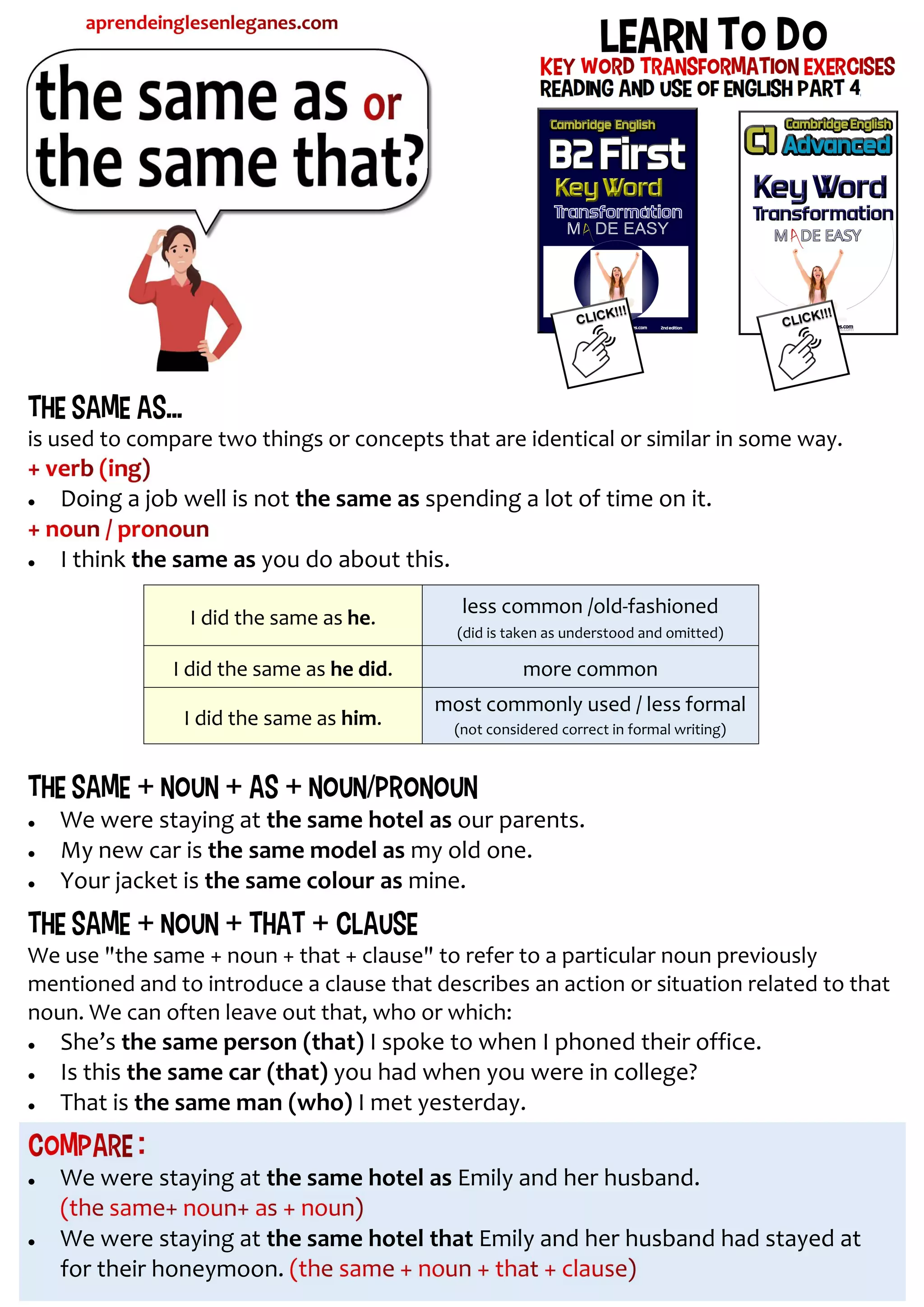
is used to compare two things or concepts that are identical or similar in some way.
 Doing a job well is not the same as spending a lot of time on it.
 I think the same as you do about this.
I did the same as he.
less common /old-fashioned
(did is taken as understood and omitted)
I did the same as he did. more common
I did the same as him.
most commonly used / less formal
(not considered correct in formal writing)
the same + noun + as + noun/pronoun
 We were staying at the same hotel as our parents.
 My new car is the same model as my old one.
 Your jacket is the same colour as mine.
the same + noun + that + clause
We use "the same + noun + that + clause" to refer to a particular noun previously
mentioned and to introduce a clause that describes an action or situation related to that
noun. We can often leave out that, who or which:
 She’s the same person (that) I spoke to when I phoned their office.
 Is this the same car (that) you had when you were in college?
 That is the same man (who) I met yesterday.
 We were staying at the same hotel as Emily and her husband.
 We were staying at the same hotel that Emily and her husband had stayed at
for their honeymoon.

the same as - the same that

  • 1.
    the same as... isused to compare two things or concepts that are identical or similar in some way.  Doing a job well is not the same as spending a lot of time on it.  I think the same as you do about this. I did the same as he. less common /old-fashioned (did is taken as understood and omitted) I did the same as he did. more common I did the same as him. most commonly used / less formal (not considered correct in formal writing) the same + noun + as + noun/pronoun  We were staying at the same hotel as our parents.  My new car is the same model as my old one.  Your jacket is the same colour as mine. the same + noun + that + clause We use "the same + noun + that + clause" to refer to a particular noun previously mentioned and to introduce a clause that describes an action or situation related to that noun. We can often leave out that, who or which:  She’s the same person (that) I spoke to when I phoned their office.  Is this the same car (that) you had when you were in college?  That is the same man (who) I met yesterday.  We were staying at the same hotel as Emily and her husband.  We were staying at the same hotel that Emily and her husband had stayed at for their honeymoon.