THE RESPIRATORY
SYSTEM
M R . A D E DE K E VI N . J, RN, OR
C L I NI CAL N URSE,O PERATING RO O M
T H E AGA K HAN UN I VERSI TY H O SPI TAL , NAI ROBI
The respiratory system is the network of organs and
tissues that help you breathe. It includes your airways,
lungs and blood vessels. The muscles that power your
lungs are also part of the respiratory system. These
parts work together to move oxygen throughout the
body and clean out waste gases like carbon dioxide.
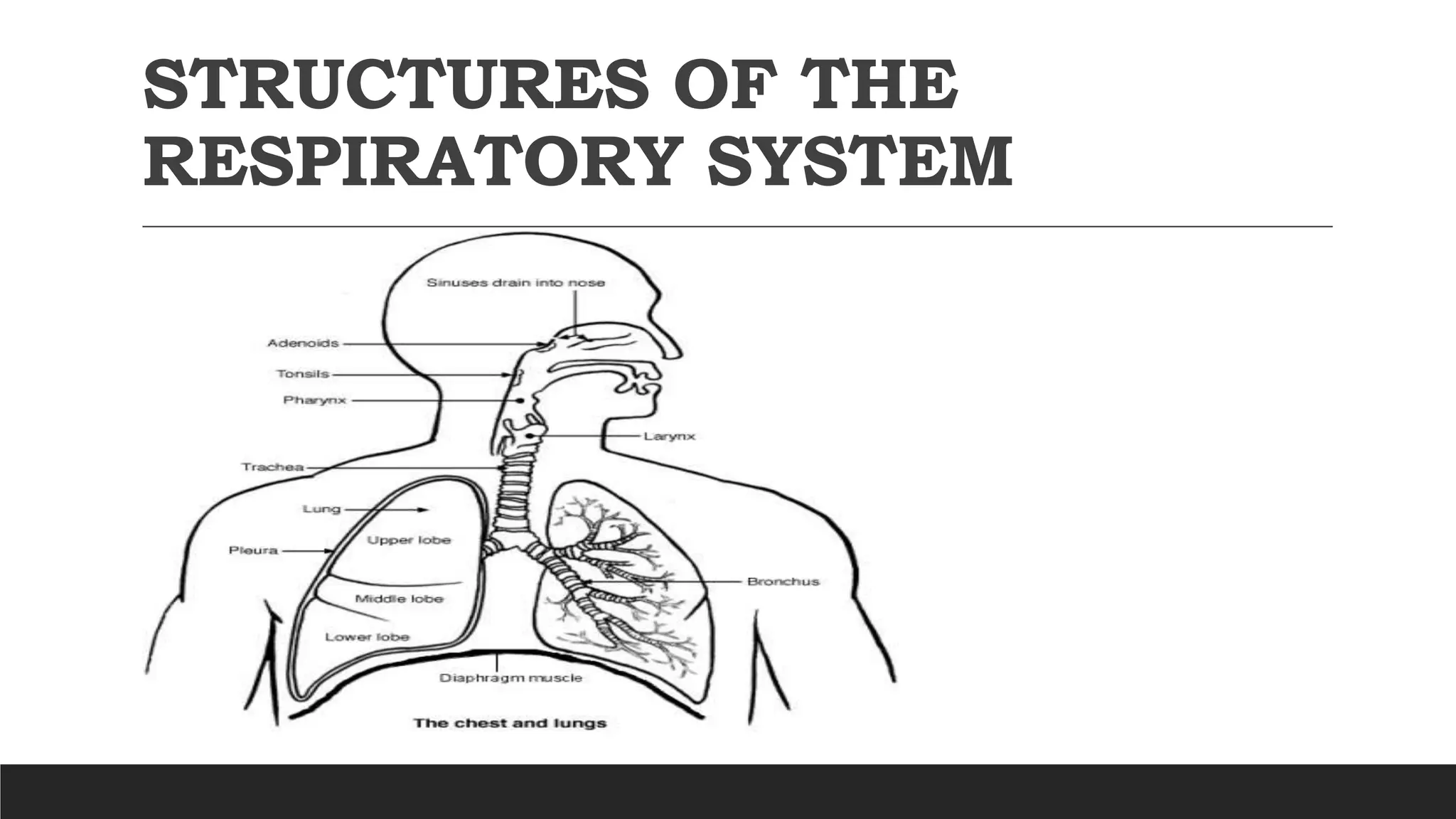
STRUCTURES OF THE
RESPIRATORY SYSTEM
FUCTIONS
 Allows you to talk and to smell.
 Warms air to match your body temperature and moisturizes it
to the humidity level your body needs.
 Delivers oxygen to the cells in your body.
 Removes waste gases, including carbon dioxide, from the
body when you exhale.
 Protects your airways from harmful substances and irritants.
Adaptive Features
Thin membranes
Large surface area
Abundant capillaries ( blood vessels)
Cartilages prevent collapse of the trachea
Bilateral ,two lungs to decrease chances of failure should
one lung collapse
PARTS OF THE RESPIRATORY
SYSTEM
 Mouth and nose: Openings that pull air from outside your
body into your respiratory system.
 Sinuses: Hollow areas between the bones in your head that
help regulate the temperature and humidity of the air you
inhale.
 Pharynx (throat): Tube that delivers air from your mouth and
nose to the trachea (windpipe).
 Trachea: Passage connecting your throat and lungs.
 Bronchial tubes: Tubes at the bottom of your windpipe that
connect into each lung.
BONES & MUSCLES OF THE
RESPIRATORY SYSTEM
 Diaphragm: Muscle that helps your lungs pull in air
and push it out.
 Ribs: Bones that surround and protect your lungs
and heart.
COMPONENTS OF THE LUNGS
 Alveoli: Tiny air sacs in the lungs where the exchange of oxygen
and carbon dioxide takes place.
 Bronchioles: Small branches of the bronchial tubes that lead to the
alveoli.
 Capillaries: Blood vessels in the alveoli walls that move oxygen
and carbon dioxide.
 Lung lobes: Sections of the lungs — three lobes in the right lung
and two in the left lung.
 Pleura: Thin sacs that surround each lung lobe and separate your
lungs from the chest wall.
 Cilia: Tiny hairs that move in a wave-like motion to filter
dust and other irritants out of your airways.
 Epiglottis: Tissue flap at the entrance to the trachea that
closes when you swallow to keep food and liquids out of
your airway.
 Larynx (voice box): Hollow organ that allows you to talk
and make sounds when air moves in and out.
GASEOUS EXCHANGE IN THE
LUNGS
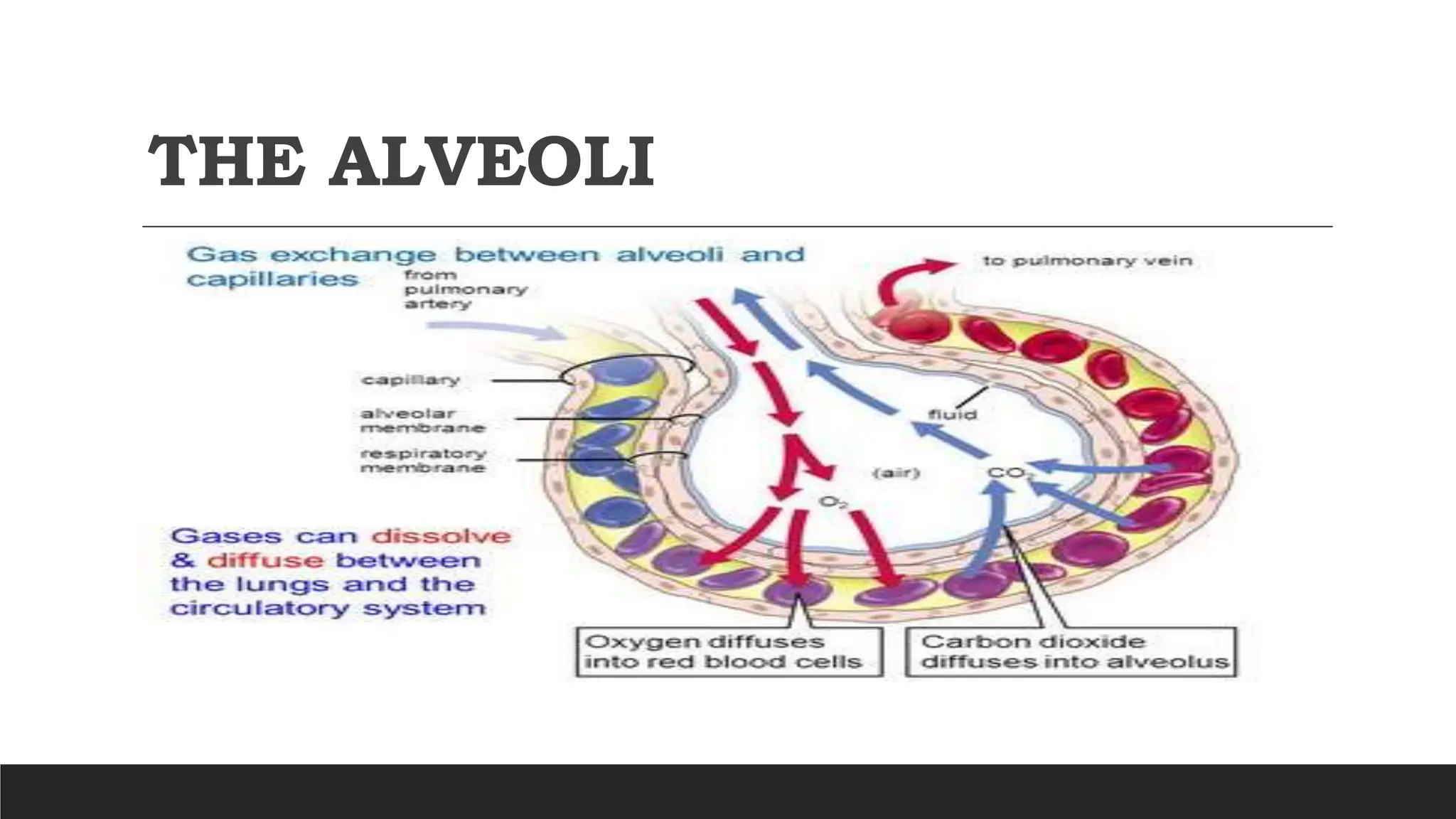
During gas exchange oxygen moves from the lungs to the
bloodstream. At the same time carbon dioxide passes from
the blood to the lungs. This happens in the lungs between
the alveoli and a network of tiny blood vessels called
capillaries, which are located in the walls of the alveoli.
The walls of the alveoli share a membrane with the capillaries.
That's how close they are.
This lets oxygen and carbon dioxide diffuse, or move freely,
between the respiratory system and the bloodstream.
Oxygen molecules attach to red blood cells, which travel
back to the heart. At the same time, the carbon dioxide
molecules in the alveoli are blown out of the body the next
time a person exhales.
Gas exchange allows the body to replenish the oxygen and
eliminate the carbon dioxide. Doing both is necessary for
survival.
THE ALVEOLI

THE RESPIRATORY SYSTEM.pptx Basic Respiratory system knowledge

  • 1.
    THE RESPIRATORY SYSTEM M R. A D E DE K E VI N . J, RN, OR C L I NI CAL N URSE,O PERATING RO O M T H E AGA K HAN UN I VERSI TY H O SPI TAL , NAI ROBI
  • 2.
    The respiratory systemis the network of organs and tissues that help you breathe. It includes your airways, lungs and blood vessels. The muscles that power your lungs are also part of the respiratory system. These parts work together to move oxygen throughout the body and clean out waste gases like carbon dioxide.
  • 3.
  • 4.
    FUCTIONS  Allows youto talk and to smell.  Warms air to match your body temperature and moisturizes it to the humidity level your body needs.  Delivers oxygen to the cells in your body.  Removes waste gases, including carbon dioxide, from the body when you exhale.  Protects your airways from harmful substances and irritants.
  • 5.
    Adaptive Features Thin membranes Largesurface area Abundant capillaries ( blood vessels) Cartilages prevent collapse of the trachea Bilateral ,two lungs to decrease chances of failure should one lung collapse
  • 6.
    PARTS OF THERESPIRATORY SYSTEM  Mouth and nose: Openings that pull air from outside your body into your respiratory system.  Sinuses: Hollow areas between the bones in your head that help regulate the temperature and humidity of the air you inhale.  Pharynx (throat): Tube that delivers air from your mouth and nose to the trachea (windpipe).  Trachea: Passage connecting your throat and lungs.  Bronchial tubes: Tubes at the bottom of your windpipe that connect into each lung.
  • 7.
    BONES & MUSCLESOF THE RESPIRATORY SYSTEM  Diaphragm: Muscle that helps your lungs pull in air and push it out.  Ribs: Bones that surround and protect your lungs and heart.
  • 8.
    COMPONENTS OF THELUNGS  Alveoli: Tiny air sacs in the lungs where the exchange of oxygen and carbon dioxide takes place.  Bronchioles: Small branches of the bronchial tubes that lead to the alveoli.  Capillaries: Blood vessels in the alveoli walls that move oxygen and carbon dioxide.  Lung lobes: Sections of the lungs — three lobes in the right lung and two in the left lung.  Pleura: Thin sacs that surround each lung lobe and separate your lungs from the chest wall.
  • 9.
     Cilia: Tinyhairs that move in a wave-like motion to filter dust and other irritants out of your airways.  Epiglottis: Tissue flap at the entrance to the trachea that closes when you swallow to keep food and liquids out of your airway.  Larynx (voice box): Hollow organ that allows you to talk and make sounds when air moves in and out.
  • 10.
    GASEOUS EXCHANGE INTHE LUNGS During gas exchange oxygen moves from the lungs to the bloodstream. At the same time carbon dioxide passes from the blood to the lungs. This happens in the lungs between the alveoli and a network of tiny blood vessels called capillaries, which are located in the walls of the alveoli.
  • 11.
    The walls ofthe alveoli share a membrane with the capillaries. That's how close they are. This lets oxygen and carbon dioxide diffuse, or move freely, between the respiratory system and the bloodstream. Oxygen molecules attach to red blood cells, which travel back to the heart. At the same time, the carbon dioxide molecules in the alveoli are blown out of the body the next time a person exhales.
  • 12.
    Gas exchange allowsthe body to replenish the oxygen and eliminate the carbon dioxide. Doing both is necessary for survival.
  • 13.