the presentation is about the react js and basucs for the dataReactJS_Presentation.pptx
1.
Introduction to React.js
AJavaScript Library for Building User
Interfaces
Presented by: [Your Name]
Date: [Insert Date]
2.
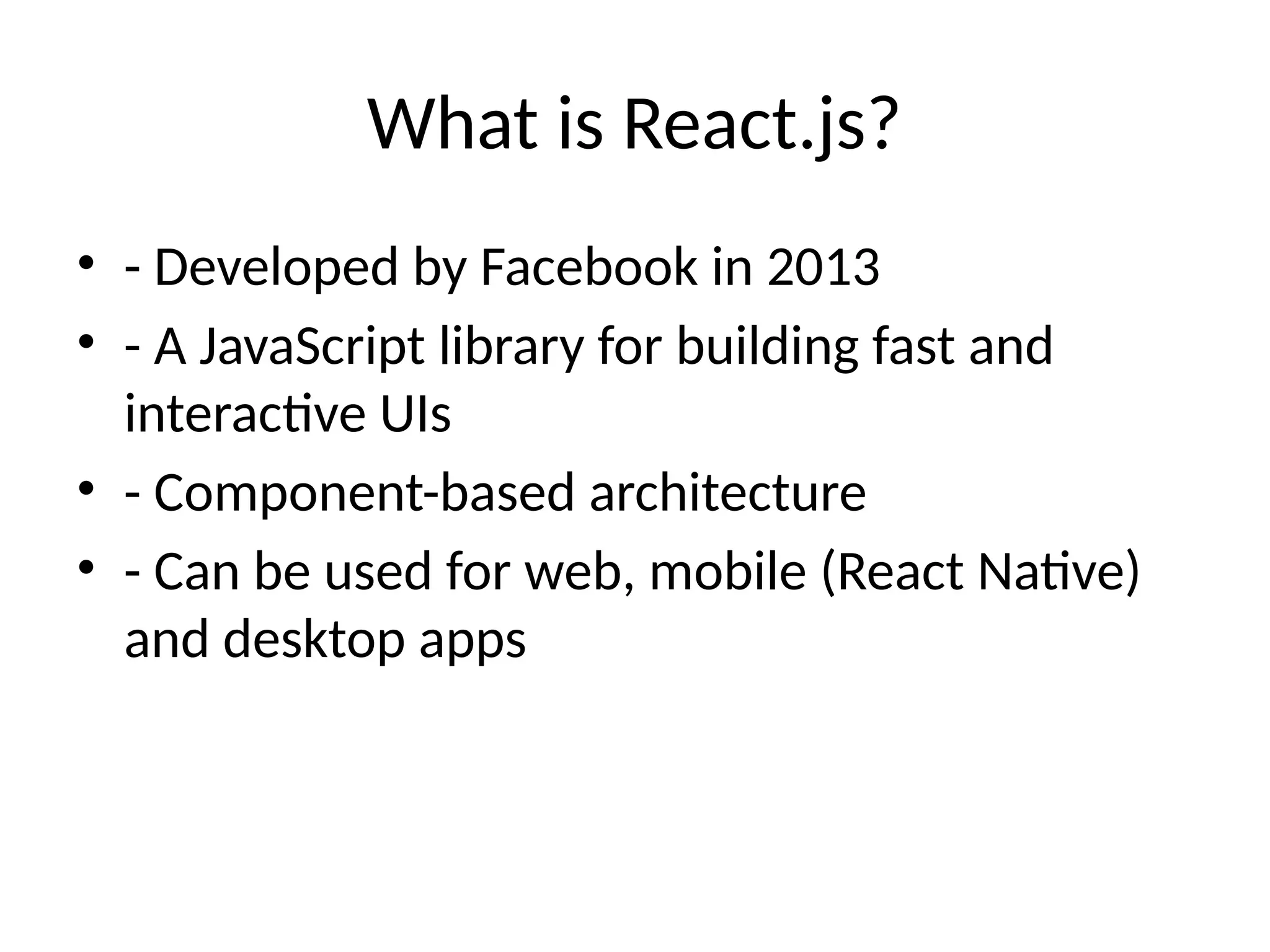
What is React.js?
•- Developed by Facebook in 2013
• - A JavaScript library for building fast and
interactive UIs
• - Component-based architecture
• - Can be used for web, mobile (React Native)
and desktop apps
3.
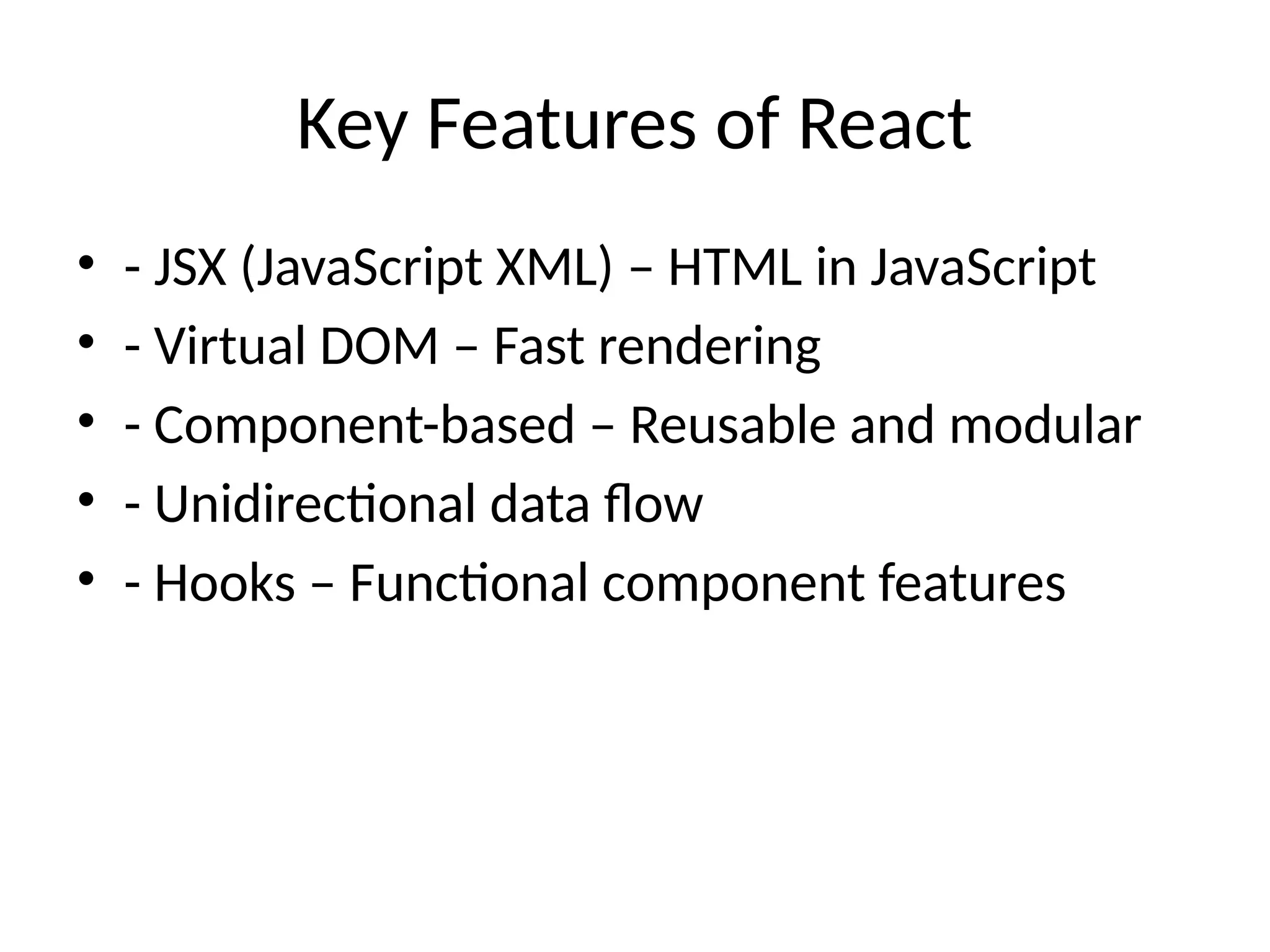
Key Features ofReact
• - JSX (JavaScript XML) – HTML in JavaScript
• - Virtual DOM – Fast rendering
• - Component-based – Reusable and modular
• - Unidirectional data flow
• - Hooks – Functional component features
4.
Why Use React?
•- Easy to learn and use
• - Strong community support
• - Reusable components save development
time
• - SEO-friendly with server-side rendering
• - Great for SPA (Single Page Applications)
5.
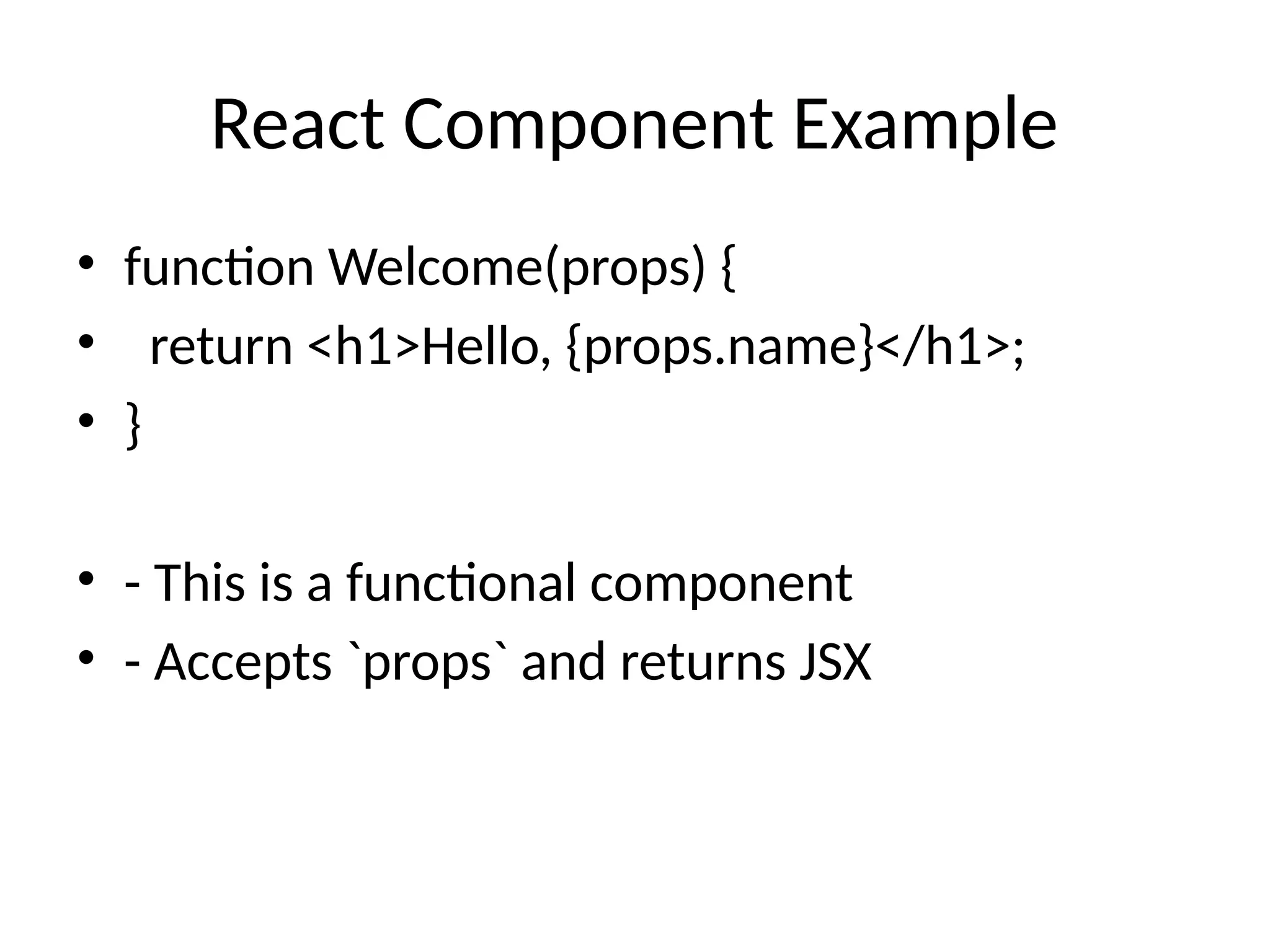
React Component Example
•function Welcome(props) {
• return <h1>Hello, {props.name}</h1>;
• }
• - This is a functional component
• - Accepts `props` and returns JSX
6.
JSX – SyntaxExtension
• const element = <h1>Welcome to
React!</h1>;
• - Combines HTML and JavaScript
• - Makes code more readable and expressive
• - Compiled using Babel
7.
Virtual DOM
• -React uses Virtual DOM for performance
• - Updates only the changed elements, not the
whole DOM
• - Efficient and faster than manual DOM
manipulation
8.
React Hooks (Basics)
•- Introduced in React 16.8
• - Examples:
• - useState – manage state
• - useEffect – side effects (like API calls)
• const [count, setCount] = useState(0);
9.
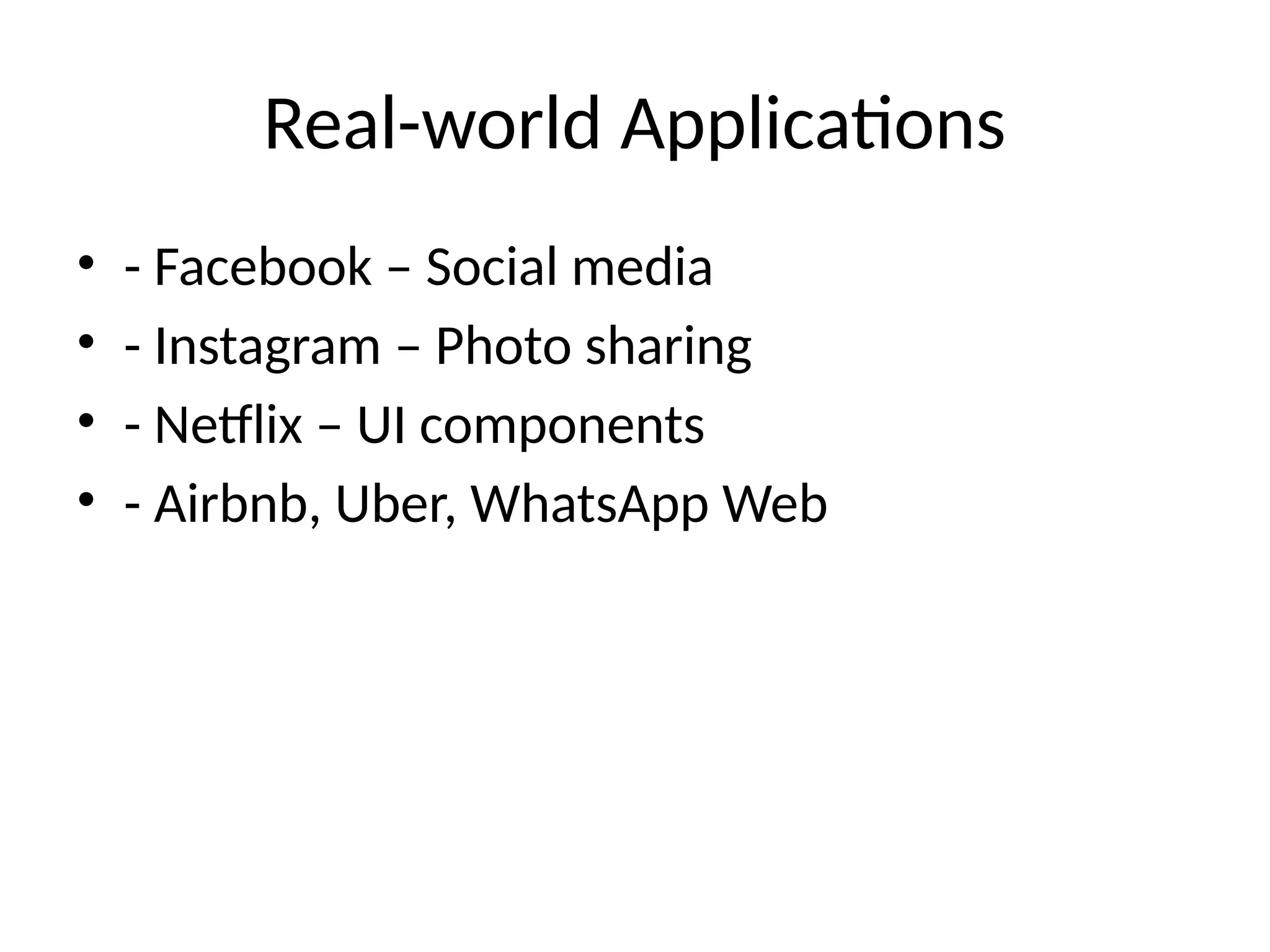
Real-world Applications
• -Facebook – Social media
• - Instagram – Photo sharing
• - Netflix – UI components
• - Airbnb, Uber, WhatsApp Web
10.
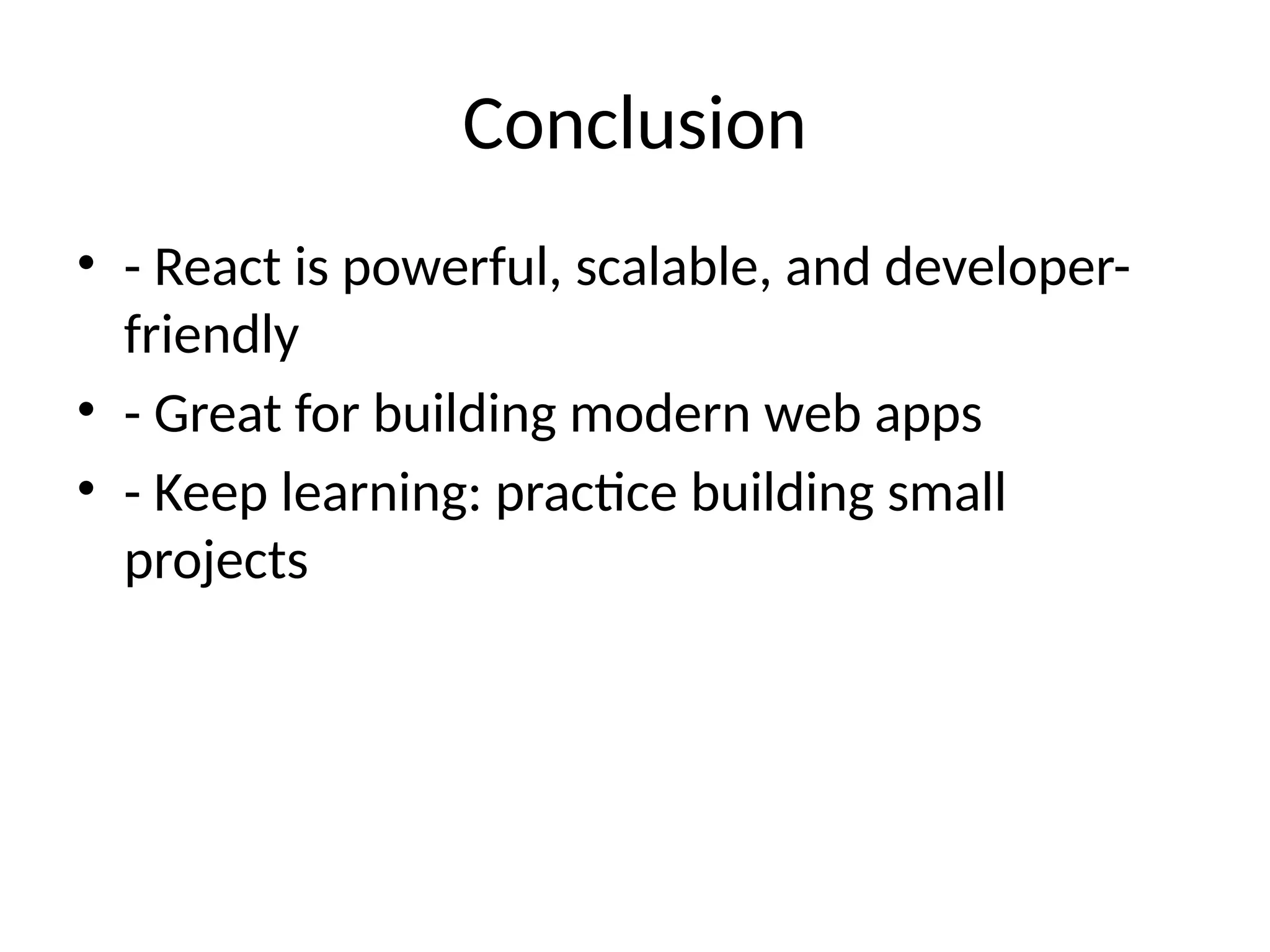
Conclusion
• - Reactis powerful, scalable, and developer-
friendly
• - Great for building modern web apps
• - Keep learning: practice building small
projects
![Introduction to React.js
A JavaScript Library for Building User
Interfaces
Presented by: [Your Name]
Date: [Insert Date]](https://image.slidesharecdn.com/reactjspresentation-250623120749-c56a823b/75/the-presentation-is-about-the-react-js-and-basucs-for-the-dataReactJS_Presentation-pptx-1-2048.jpg)

![React Hooks (Basics)
• - Introduced in React 16.8
• - Examples:
• - useState – manage state
• - useEffect – side effects (like API calls)
• const [count, setCount] = useState(0);](https://image.slidesharecdn.com/reactjspresentation-250623120749-c56a823b/75/the-presentation-is-about-the-react-js-and-basucs-for-the-dataReactJS_Presentation-pptx-8-2048.jpg)