The occupation of the Blind
Institutes in the 70’
A story of active citizenship realized
by blind people in ItalY
By Angelo Aiello- ANPVI
Experiences of Adult Education in Europe for blind or visually impaired people
In the wave of student protest between '68 and
'69, the blind university students who were
resident of the Blind Institute "Francesco
Cavazza" in Bologna and their colleagues from
Padua began a radical criticism of the
institutions for the blind with occupation of
the Institutes and a series of initiatives, such
as public meetings and newspaper articles, to
increase awareness of the general public and
politicians.
The main reasons were the antiquated
conditions of life in these institutions, rare
permissions to go out and only with parents’
permission, separation of males from females
and questionable internal discipline, lack of
meetings to discuss the problems of the blind
and substantial segregation from life outside
the institutes.
The first results were a significant improvement of
the internal conditions and the possibility to
meet freely, openings of the male and female
sections, improvements in the food through the
introduction of menus instead of set meals. Later
on these conditions were defined good but
insufficient.
The institutes for the blind were defined by the
protesters "golden ghettos" and the fight shifted
to more radical demands for the closure of the
institutions, the return in families and school
placement in their places of origin.
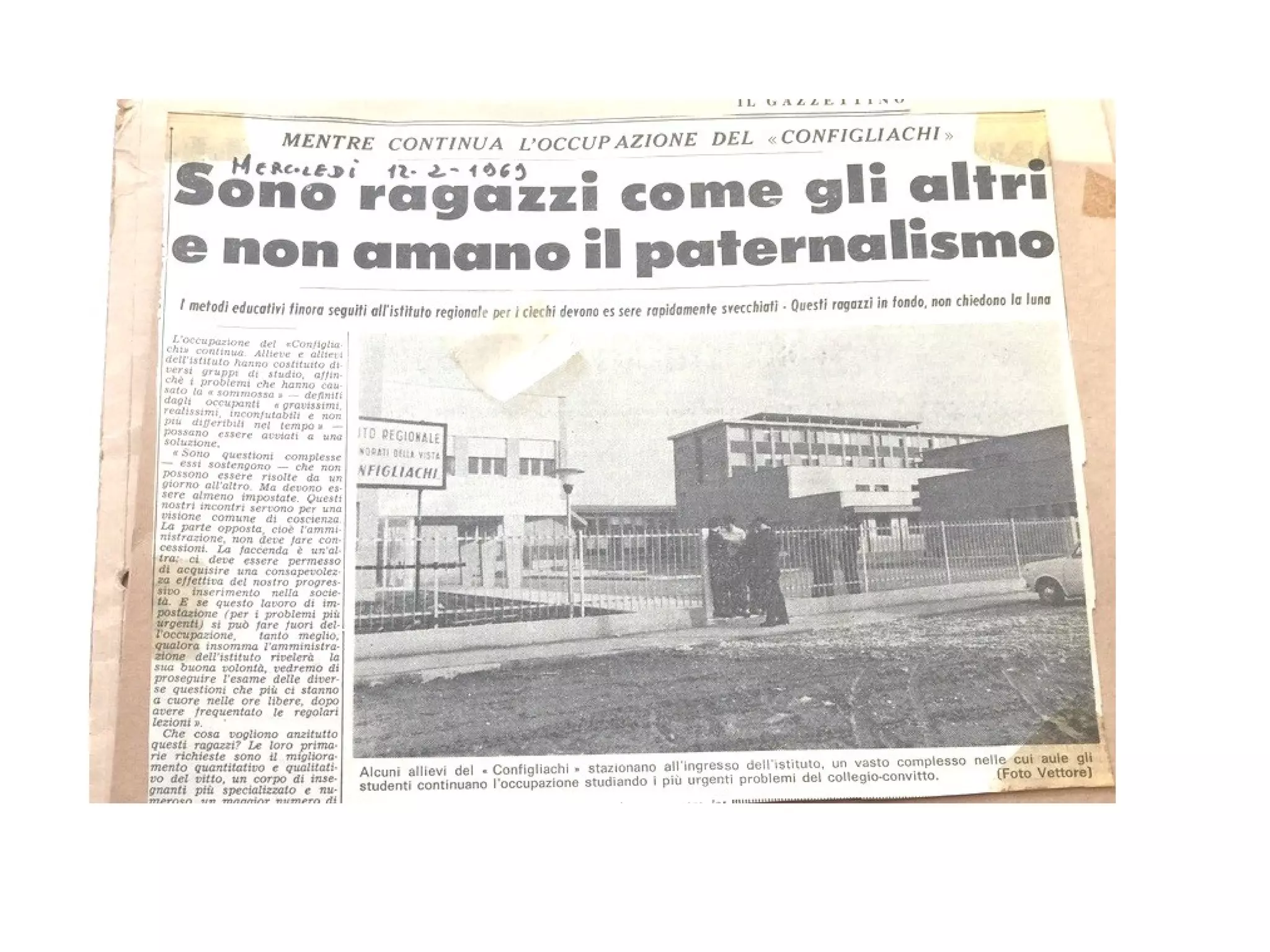
On the day of 15 February 1969 the police
penetrated inside the institute for the blind
"Configlischi" of Padua to restore normalcy.
There were clashes that led to the wounding
of a blind person and two policemen after the
blind barricaded themselves in the Institute.
In recent years the social demands of the
visually impaired have clashed with the
attempt to undermine the achievements so
far.
Several governments have attempted to
downsize the welfare state. But the struggle
and unity of blind in Italy have thwarted these
attempts.
There are still many battles going on. Among all
the protection of blind workers, greater
attention to their education, especially after
primary school, and greater awareness of the
public and the political class on the potential
the technologies now offer to improve the
living conditions of the blind.
The occupation of the blind institutes in the 70’

The occupation of the blind institutes in the 70’

  • 1.
    The occupation ofthe Blind Institutes in the 70’ A story of active citizenship realized by blind people in ItalY By Angelo Aiello- ANPVI Experiences of Adult Education in Europe for blind or visually impaired people
  • 2.
    In the waveof student protest between '68 and '69, the blind university students who were resident of the Blind Institute "Francesco Cavazza" in Bologna and their colleagues from Padua began a radical criticism of the institutions for the blind with occupation of the Institutes and a series of initiatives, such as public meetings and newspaper articles, to increase awareness of the general public and politicians.
  • 3.
    The main reasonswere the antiquated conditions of life in these institutions, rare permissions to go out and only with parents’ permission, separation of males from females and questionable internal discipline, lack of meetings to discuss the problems of the blind and substantial segregation from life outside the institutes.
  • 4.
    The first resultswere a significant improvement of the internal conditions and the possibility to meet freely, openings of the male and female sections, improvements in the food through the introduction of menus instead of set meals. Later on these conditions were defined good but insufficient. The institutes for the blind were defined by the protesters "golden ghettos" and the fight shifted to more radical demands for the closure of the institutions, the return in families and school placement in their places of origin.
  • 5.
    On the dayof 15 February 1969 the police penetrated inside the institute for the blind "Configlischi" of Padua to restore normalcy. There were clashes that led to the wounding of a blind person and two policemen after the blind barricaded themselves in the Institute.
  • 7.
    In recent yearsthe social demands of the visually impaired have clashed with the attempt to undermine the achievements so far. Several governments have attempted to downsize the welfare state. But the struggle and unity of blind in Italy have thwarted these attempts.
  • 8.
    There are stillmany battles going on. Among all the protection of blind workers, greater attention to their education, especially after primary school, and greater awareness of the public and the political class on the potential the technologies now offer to improve the living conditions of the blind.