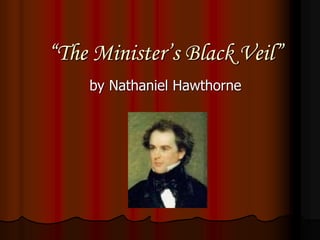
“The Minister’s Black Veil”
by Nathaniel Hawthorne
Are you afraid of masks?
Is it the mask that you fear…
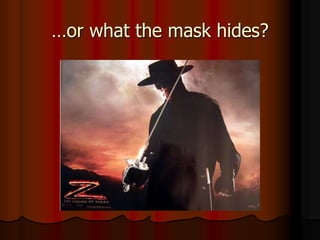
…or what the mask hides?
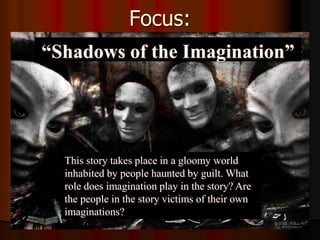
Focus:
“Shadows of the Imagination”
This story takes place in a gloomy world
inhabited by people haunted by guilt. What
role does imagination play in the story? Are
the people in the story victims of their own
imaginations?
Allegory
 A work of literature in
which events characters,
and detail of setting have
a symbolic meaning.
 A character in an allegory
may personify a single
human trait.
 Story is intended to be
read on two levels
 Literal
 Figurative
 A relatively short story
that teaches a moral or
lesson about how to lead
a good life
 Appear mostly in the
Bible (told by Jesus)
Parable
Techniques
Symbolism- The black veil symbolizes all of the Puritan
superstitions. It represents all the evil and troubles in
the world. To Puritans it was seen as a symbol of the
devil. It was also seen as all that is unknown in the
world; a mystery to the people.
Rhetorical Question- Hawthorne uses this to further
emphasis his point. In the story he wants to show
Hooper as a man who can not bear to go without the
veil, "Could Mr. Hooper be fearful of her glance, that he
so hastily caught back the black veil?" In this quote it
shows that he is afraid that even a dead person will see
his face.
Techniques
Personification- This is another technique used to give
the veil human-like qualities. It makes the veil almost
have a personality which strengthens the mystery and
fear of the veil, "It shook with his measured breath, as
he gave out the psalm; it threw its obscurity between
him and the holy page" (pg. 338). The veil obviously
could not physically throw something, but it enriches
Hawthorne’s language.
Irony- This technique is shown throughout this short
story by the man wearing the black veil. It is ironic how
people think that because he is wearing a veil that he
has something to hide, and he does. Also, during the
short story, it seems to building up to a big revealing of
his secret, but instead nothing is ever revealed, and his
secret will stay a secret forever.
Vocabulary
 Venerable – commanding
respect
 Iniquity – sin
 Indecorous – improper
 Ostentatious – intended to
attract notice
 Sagacious – shrewd
 Vagary – unpredictable
occurrence
 Tremulous – characterized by
trembling
 Waggery – mischievous humor
 Impertinent – not showing
proper respect
 Obstinacy - stubbornness
 Semblance – outward
appearance
 Obscurity – darkness
 Portend – signify
 Pensively – thinking deeply or
seriously
 Antipathy – strong dislike
 Plausibility – believability
 Resolute - determined
Summary:
In this allegory, Parson Hooper, a highly
respected minister in a small Puritan community,
suddenly appears wearing a black veil. The veil
has such a powerful, gloomy effect on his
parishioners; they are stunned, so much so that
they cannot ask him directly why he wears it.
Even his fiancée turns from him. The veil’s
symbolic meaning – secret sin – is revealed
through the remarks and actions of Hooper’s
parishioners and in his own deathbed
explanation. Make note of the symbols and the
meanings implied in this parable.
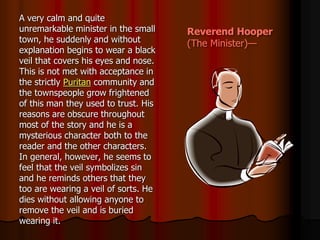
Reverend Hooper
(The Minister)—
A very calm and quite
unremarkable minister in the small
town, he suddenly and without
explanation begins to wear a black
veil that covers his eyes and nose.
This is not met with acceptance in
the strictly Puritan community and
the townspeople grow frightened
of this man they used to trust. His
reasons are obscure throughout
most of the story and he is a
mysterious character both to the
reader and the other characters.
In general, however, he seems to
feel that the veil symbolizes sin
and he reminds others that they
too are wearing a veil of sorts. He
dies without allowing anyone to
remove the veil and is buried
wearing it.
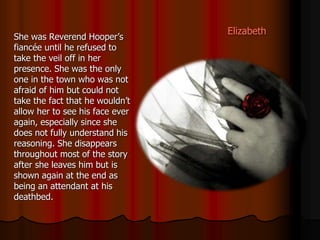
Elizabeth
She was Reverend Hooper’s
fiancée until he refused to
take the veil off in her
presence. She was the only
one in the town who was not
afraid of him but could not
take the fact that he wouldn’t
allow her to see his face ever
again, especially since she
does not fully understand his
reasoning. She disappears
throughout most of the story
after she leaves him but is
shown again at the end as
being an attendant at his
deathbed.
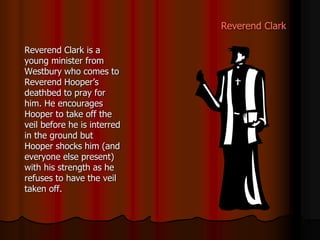
Reverend Clark
Reverend Clark is a
young minister from
Westbury who comes to
Reverend Hooper’s
deathbed to pray for
him. He encourages
Hooper to take off the
veil before he is interred
in the ground but
Hooper shocks him (and
everyone else present)
with his strength as he
refuses to have the veil
taken off.
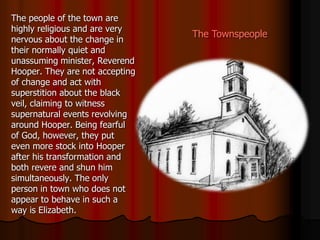
The Townspeople
The people of the town are
highly religious and are very
nervous about the change in
their normally quiet and
unassuming minister, Reverend
Hooper. They are not accepting
of change and act with
superstition about the black
veil, claiming to witness
supernatural events revolving
around Hooper. Being fearful
of God, however, they put
even more stock into Hooper
after his transformation and
both revere and shun him
simultaneously. The only
person in town who does not
appear to behave in such a
way is Elizabeth.

The Minister's Black Veil.ppt

  • 1.
    “The Minister’s BlackVeil” by Nathaniel Hawthorne
  • 2.
    Are you afraidof masks?
  • 3.
    Is it themask that you fear…
  • 4.
    …or what themask hides?
  • 5.
    Focus: “Shadows of theImagination” This story takes place in a gloomy world inhabited by people haunted by guilt. What role does imagination play in the story? Are the people in the story victims of their own imaginations?
  • 6.
    Allegory  A workof literature in which events characters, and detail of setting have a symbolic meaning.  A character in an allegory may personify a single human trait.  Story is intended to be read on two levels  Literal  Figurative  A relatively short story that teaches a moral or lesson about how to lead a good life  Appear mostly in the Bible (told by Jesus) Parable
  • 7.
    Techniques Symbolism- The blackveil symbolizes all of the Puritan superstitions. It represents all the evil and troubles in the world. To Puritans it was seen as a symbol of the devil. It was also seen as all that is unknown in the world; a mystery to the people. Rhetorical Question- Hawthorne uses this to further emphasis his point. In the story he wants to show Hooper as a man who can not bear to go without the veil, "Could Mr. Hooper be fearful of her glance, that he so hastily caught back the black veil?" In this quote it shows that he is afraid that even a dead person will see his face.
  • 8.
    Techniques Personification- This isanother technique used to give the veil human-like qualities. It makes the veil almost have a personality which strengthens the mystery and fear of the veil, "It shook with his measured breath, as he gave out the psalm; it threw its obscurity between him and the holy page" (pg. 338). The veil obviously could not physically throw something, but it enriches Hawthorne’s language. Irony- This technique is shown throughout this short story by the man wearing the black veil. It is ironic how people think that because he is wearing a veil that he has something to hide, and he does. Also, during the short story, it seems to building up to a big revealing of his secret, but instead nothing is ever revealed, and his secret will stay a secret forever.
  • 9.
    Vocabulary  Venerable –commanding respect  Iniquity – sin  Indecorous – improper  Ostentatious – intended to attract notice  Sagacious – shrewd  Vagary – unpredictable occurrence  Tremulous – characterized by trembling  Waggery – mischievous humor  Impertinent – not showing proper respect  Obstinacy - stubbornness  Semblance – outward appearance  Obscurity – darkness  Portend – signify  Pensively – thinking deeply or seriously  Antipathy – strong dislike  Plausibility – believability  Resolute - determined
  • 10.
    Summary: In this allegory,Parson Hooper, a highly respected minister in a small Puritan community, suddenly appears wearing a black veil. The veil has such a powerful, gloomy effect on his parishioners; they are stunned, so much so that they cannot ask him directly why he wears it. Even his fiancée turns from him. The veil’s symbolic meaning – secret sin – is revealed through the remarks and actions of Hooper’s parishioners and in his own deathbed explanation. Make note of the symbols and the meanings implied in this parable.
  • 11.
    Reverend Hooper (The Minister)— Avery calm and quite unremarkable minister in the small town, he suddenly and without explanation begins to wear a black veil that covers his eyes and nose. This is not met with acceptance in the strictly Puritan community and the townspeople grow frightened of this man they used to trust. His reasons are obscure throughout most of the story and he is a mysterious character both to the reader and the other characters. In general, however, he seems to feel that the veil symbolizes sin and he reminds others that they too are wearing a veil of sorts. He dies without allowing anyone to remove the veil and is buried wearing it.
  • 12.
    Elizabeth She was ReverendHooper’s fiancée until he refused to take the veil off in her presence. She was the only one in the town who was not afraid of him but could not take the fact that he wouldn’t allow her to see his face ever again, especially since she does not fully understand his reasoning. She disappears throughout most of the story after she leaves him but is shown again at the end as being an attendant at his deathbed.
  • 13.
    Reverend Clark Reverend Clarkis a young minister from Westbury who comes to Reverend Hooper’s deathbed to pray for him. He encourages Hooper to take off the veil before he is interred in the ground but Hooper shocks him (and everyone else present) with his strength as he refuses to have the veil taken off.
  • 14.
    The Townspeople The peopleof the town are highly religious and are very nervous about the change in their normally quiet and unassuming minister, Reverend Hooper. They are not accepting of change and act with superstition about the black veil, claiming to witness supernatural events revolving around Hooper. Being fearful of God, however, they put even more stock into Hooper after his transformation and both revere and shun him simultaneously. The only person in town who does not appear to behave in such a way is Elizabeth.