2011
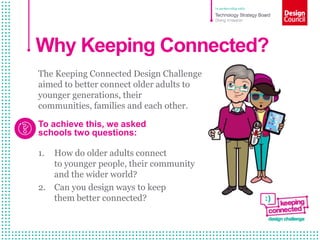
Why Keeping Connected?The Keeping Connected Design Challenge aimed to better connect older adults to younger generations, their communities, families and each other.To achieve this, we asked schools two questions:How do older adults connect to younger people, their community and the wider world?Can you design ways to keepthem better connected?
How they connectedThe Challenge is made up of the four key stages of the design process:Stage 1: DiscoverStudents conduct research into how older adults interact with services in order to understand and map their needs.Stage 2: DefineStudents create personas to focus on certain needs and, together with older adults, come up with service ideas. After voting on which service to develop, they create a brief to guide it’s development.Stage 3: DevelopStudents create a blueprint for their service. They work with older adults, and use personas and prototypes to test and improve it.Stage 4: DeliverStudents create a storyboard to show a user’s journey through their service.
How the Challenge ran
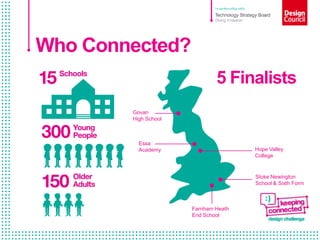
Who Connected?5 FinalistsGovan High SchoolEssa AcademyHope Valley CollegeStoke Newington School & Sixth FormFarnham Heath End School
Phase 1 judging process
Judging criteria – stage 1
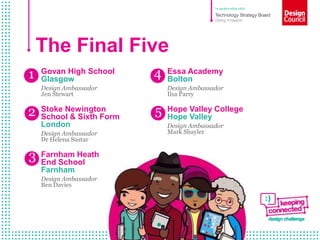
The Final Five41Govan High SchoolGlasgowDesign AmbassadorJen StewartStoke NewingtonSchool & Sixth FormLondonDesign AmbassadorDr Helena SustarFarnham Heath End SchoolFarnhamDesign AmbassadorBen DaviesEssa AcademyBoltonDesign AmbassadorIlsa ParryHope Valley CollegeHope ValleyDesign AmbassadorMark Shayler523
,
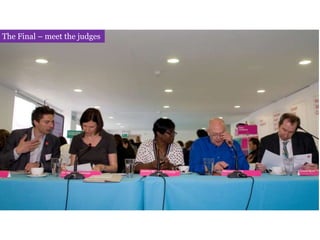
The Final – meet the judges
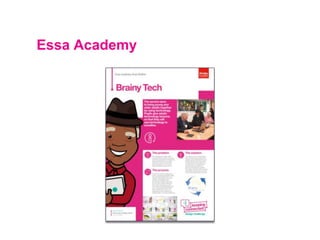
Essa Academy
Farnham Heath End
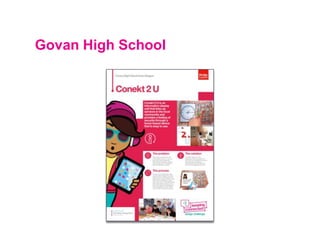
Govan High School
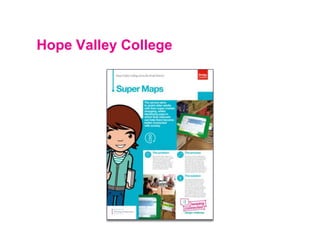
Hope Valley College
And the winner was….
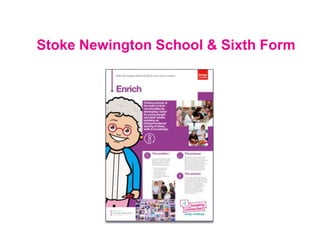
Stoke Newington School & Sixth Form
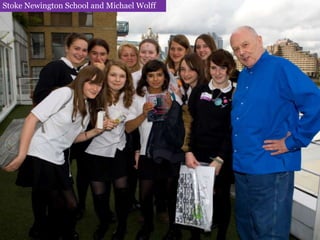
Stoke Newington School and Michael Wolff

The Keeping Connected Design Challenge

  • 1.
  • 2.
    Why Keeping Connected?TheKeeping Connected Design Challenge aimed to better connect older adults to younger generations, their communities, families and each other.To achieve this, we asked schools two questions:How do older adults connect to younger people, their community and the wider world?Can you design ways to keepthem better connected?
  • 3.
    How they connectedTheChallenge is made up of the four key stages of the design process:Stage 1: DiscoverStudents conduct research into how older adults interact with services in order to understand and map their needs.Stage 2: DefineStudents create personas to focus on certain needs and, together with older adults, come up with service ideas. After voting on which service to develop, they create a brief to guide it’s development.Stage 3: DevelopStudents create a blueprint for their service. They work with older adults, and use personas and prototypes to test and improve it.Stage 4: DeliverStudents create a storyboard to show a user’s journey through their service.
  • 4.
  • 5.
    Who Connected?5 FinalistsGovanHigh SchoolEssa AcademyHope Valley CollegeStoke Newington School & Sixth FormFarnham Heath End School
  • 6.
  • 7.
  • 8.
    The Final Five41GovanHigh SchoolGlasgowDesign AmbassadorJen StewartStoke NewingtonSchool & Sixth FormLondonDesign AmbassadorDr Helena SustarFarnham Heath End SchoolFarnhamDesign AmbassadorBen DaviesEssa AcademyBoltonDesign AmbassadorIlsa ParryHope Valley CollegeHope ValleyDesign AmbassadorMark Shayler523
  • 9.
  • 10.
    The Final –meet the judges
  • 11.
  • 12.
  • 13.
  • 14.
  • 15.
  • 16.
  • 17.
    Stoke Newington Schooland Michael Wolff

Editor's Notes

  • #5 From March – June the participating schools ran the Challenge in a number of different ways:Some schools ran the Challenge solely during class timeafter school during school holidaysCommon thread that ran through all the schools was that they all worked with older adult research participants to help them develop their ideas.This approach enabled the pupils to develop authentic and relevant service ideas based on actual insight and need, rather than guess work.
  • #7 15 June – 15 schools to 5,5 judgesBel Reed - DCMarianne Guldbrandsen – DCUrsula DaviesMike Biddle – TSBSusan Griggs – resident older adult
  • #8 5 finalists selected based these 4 criteriaDesign processWorking with older adultsFinal conceptCommunication of ideaEach school submitted a piece of work for each of the 4 stages in the double diamond. Interesting fact - 3 main themes emerged from the 15 submissionsBusses to meet and socialise Skills swap classes in the schools premisesAn electronic devise/gadget that enabled greater connectivity between older adults
  • #10 Final event at Design Museum 7 July 20115 schools pitched ideas to a panel of judges
  • #11 Judges on the panelMat Hunter (DC)Jackie Marshall-Cyrus (TSB)David Bott (TSB)Michael Wollf (designer)Dr. Helen Charman (head of education design museum)
  • #12 Essa Academy – ‘Brainy Tech’. This service aimed to enable school pupils to teach older adults how to use IT applications (such as the internet, email and Skype) with the aim of connecting them to younger people, their family and friends.
  • #13 Farnham Heath End School – ‘Strollin n Rollin’. This service aimed to bring together young people and older adults to provide local social activities, such as community walks, bike rides or group trips to cafes.
  • #14 Govan High School – ‘Conekt 2 u’. Conekt 2 u was a multi-purpose 'radio' that combined traditional style design and new technology to enable older adults to access local services, phone books, diary, bus timetables and other functions, thereby enabling connectivity
  • #15 Hope Valley College – ‘Super Maps’. The service aimed to deal with the problem of trying to find items in a supermarket. This led to the idea of a sat-nav for a shopping trolley. The twist in the idea is that the sat nav links shopping preferences to activities in the community. For example, if a customer bought lots of items for baking, they would receive the details of a local baking club on the till receipt.
  • #16 This was the winning trophy
  • #17 SNS’s idea was called ‘Enrich’. Their service idea was to bring older adults and young people together on the school premises to jointly take part in activities including cookery, dance, and gardening. The judges chose this idea as it seemed to genuinely embody the spirit of ‘keeping connected’. The idea tapped into needs of the local community, seemed easily realisable and most importantly, it would keep older adults better connected. SNS had also worked closely with a number of older adults in developing and refining their idea. SNS are going to set up their service towards the end of the 2011 using the £5,000 prize money. Dianne Abbot, the MP for Hackney and Stoke Newington, will attend the launch event.
  • #18 SNS girls with designer Michael Wollf