The Information Cycle
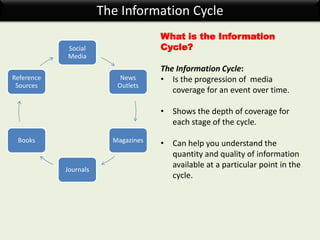
What is the Information
Cycle?
The Information Cycle:
• Is the progression of media
coverage for an event over time.
• Shows the depth of coverage for
each stage of the cycle.
• Can help you understand the
quantity and quality of information
available at a particular point in the
cycle.
Social
Media
News
Outlets
Magazines
Journals
Books
Reference
Sources
The Information Cycle
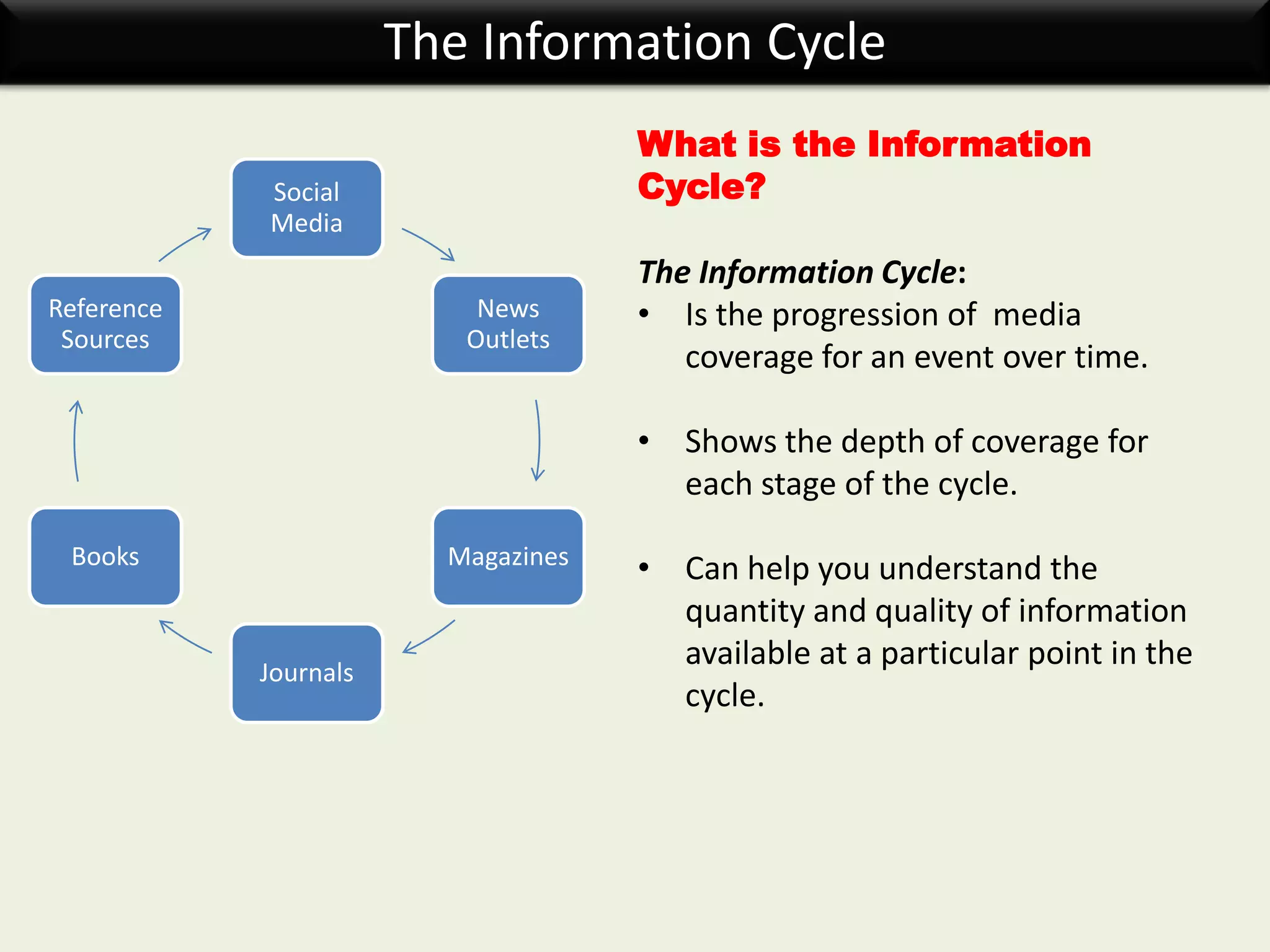
Minutes After the Event: Social Media
Information:
• Tends to be fragmented and very basic.
• Is furnished by a mix of citizen-journalists, "regular folk”, professional
journalists etc.
• May lack details, substantiation, and objectivity.
Examples:
Facebook, Twitter,
YouTube
The Information Cycle
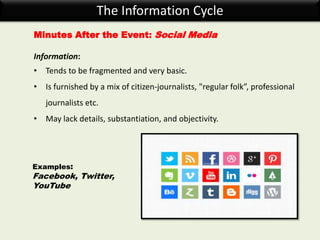
Day/Days After the Event: News Reports
Information:
• Tends to be more detailed than earlier reports : more details about
event, people involved, outcome etc.
• May include quotes from relevant parties and officials.
• Is written by journalists.
Examples:
New York Times, CBS
The Information Cycle
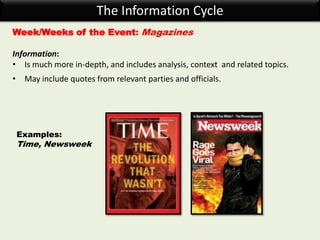
Week/Weeks of the Event: Magazines
Information:
• Is much more in-depth, and includes analysis, context and related topics.
• May include quotes from relevant parties and officials.
Examples:
Time, Newsweek
The Information Cycle
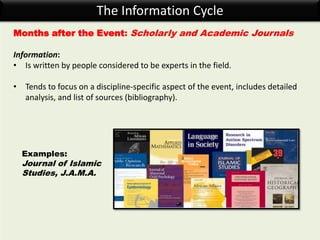
Months after the Event: Scholarly and Academic Journals
Information:
• Is written by people considered to be experts in the field.
• Tends to focus on a discipline-specific aspect of the event, includes detailed
analysis, and list of sources (bibliography).
Examples:
Journal of Islamic
Studies, J.A.M.A.
The Information Cycle
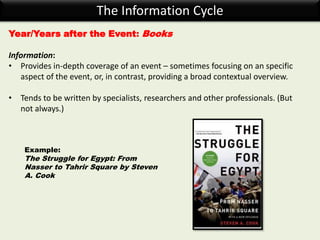
Year/Years after the Event: Books
Information:
• Provides in-depth coverage of an event – sometimes focusing on an specific
aspect of the event, or, in contrast, providing a broad contextual overview.
• Tends to be written by specialists, researchers and other professionals. (But
not always.)
Example:
The Struggle for Egypt: From
Nasser to Tahrir Square by Steven
A. Cook
The Information Cycle
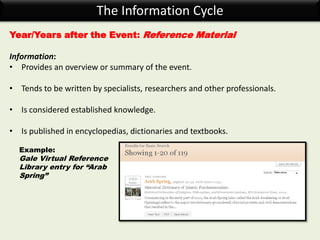
Year/Years after the Event: Reference Material
Information:
• Provides an overview or summary of the event.
• Tends to be written by specialists, researchers and other professionals.
• Is considered established knowledge.
• Is published in encyclopedias, dictionaries and textbooks.
Example:
Gale Virtual Reference
Library entry for “Arab
Spring”

The Information cycle

  • 1.
    The Information Cycle Whatis the Information Cycle? The Information Cycle: • Is the progression of media coverage for an event over time. • Shows the depth of coverage for each stage of the cycle. • Can help you understand the quantity and quality of information available at a particular point in the cycle. Social Media News Outlets Magazines Journals Books Reference Sources
  • 2.
    The Information Cycle MinutesAfter the Event: Social Media Information: • Tends to be fragmented and very basic. • Is furnished by a mix of citizen-journalists, "regular folk”, professional journalists etc. • May lack details, substantiation, and objectivity. Examples: Facebook, Twitter, YouTube
  • 3.
    The Information Cycle Day/DaysAfter the Event: News Reports Information: • Tends to be more detailed than earlier reports : more details about event, people involved, outcome etc. • May include quotes from relevant parties and officials. • Is written by journalists. Examples: New York Times, CBS
  • 4.
    The Information Cycle Week/Weeksof the Event: Magazines Information: • Is much more in-depth, and includes analysis, context and related topics. • May include quotes from relevant parties and officials. Examples: Time, Newsweek
  • 5.
    The Information Cycle Monthsafter the Event: Scholarly and Academic Journals Information: • Is written by people considered to be experts in the field. • Tends to focus on a discipline-specific aspect of the event, includes detailed analysis, and list of sources (bibliography). Examples: Journal of Islamic Studies, J.A.M.A.
  • 6.
    The Information Cycle Year/Yearsafter the Event: Books Information: • Provides in-depth coverage of an event – sometimes focusing on an specific aspect of the event, or, in contrast, providing a broad contextual overview. • Tends to be written by specialists, researchers and other professionals. (But not always.) Example: The Struggle for Egypt: From Nasser to Tahrir Square by Steven A. Cook
  • 7.
    The Information Cycle Year/Yearsafter the Event: Reference Material Information: • Provides an overview or summary of the event. • Tends to be written by specialists, researchers and other professionals. • Is considered established knowledge. • Is published in encyclopedias, dictionaries and textbooks. Example: Gale Virtual Reference Library entry for “Arab Spring”