The Hub of Innovation: Engineering
Education Redefined
Introduction: Engineering the Future
The rapidly changing world of technology and innovation witnesses a major
role played by engineering education toward producing future leaders and
problem solvers. The best BTech college in Jaipur lays a solid groundwork for
technical expertise, practical learning, and exposure to industry. These
institutions with state-of-the-art infrastructure, experienced faculty
members, and a dynamic syllabus equip students with skills relevant for
survival in the present technological age.
Why Does Innovation Need to Be at the Core of
Engineering Education?
Traditionally, engineering education was primarily focused on theoretical
knowledge and conventional approaches. With advances in technology,
innovation, research, and real-life applications must be blended into
engineering programs. This new age of engineering education ensures that
students learn more than just the technical aspects; they become
well-rounded problem solvers, critical thinkers, and leaders.
Key Pillars of Innovative Engineering Education
1.​ Industry-Based Curriculum: Incorporating cutting-edge technologies
and trends such as AI, IoT, robotics, and cybersecurity that will keep
students ahead of the curve.
2.​ Experiential Learning: State-of-the-art laboratories, workshops, and
live industry projects that foster an environment for greater practical
application.
3.​ Research and Development: Promoting innovation and
entrepreneurship via established research centers.
4.​ Interdisciplinary Approach: An amalgamation of engineering with
management, design, and the humanities for holistic learning.
5.​ International Exposure: Collaboration with international bodies and
participation in worldwide competitions.
6.​ Skill-Based Training: focused on soft skills, coding abilities, and project
management expertise.
Cutting-Edge Infrastructure & Facilities
A first-rate engineering institution, in the perception of many, has
world-class infrastructure and state-of-the-art equipment that help foster
innovation and research. Some of the more notable features are:
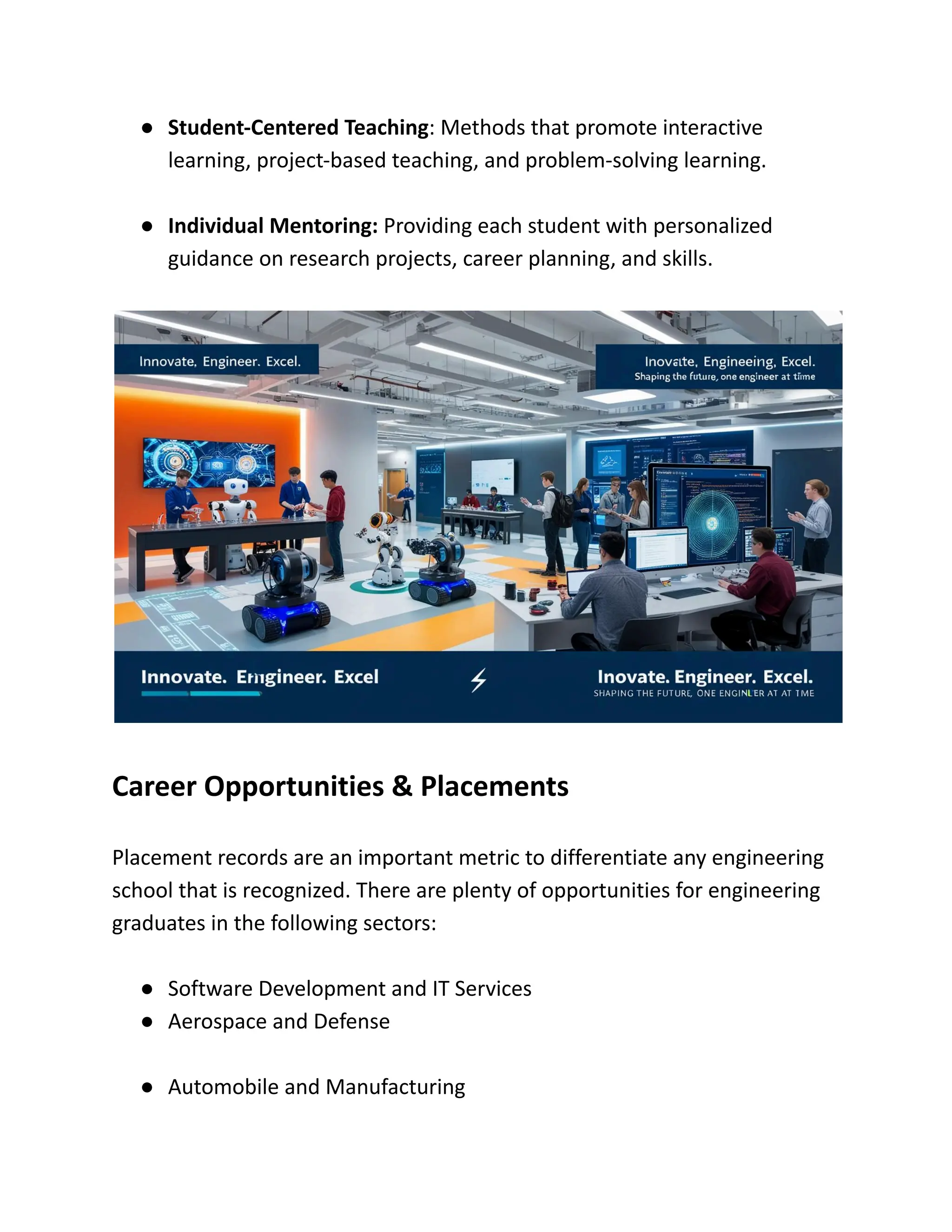
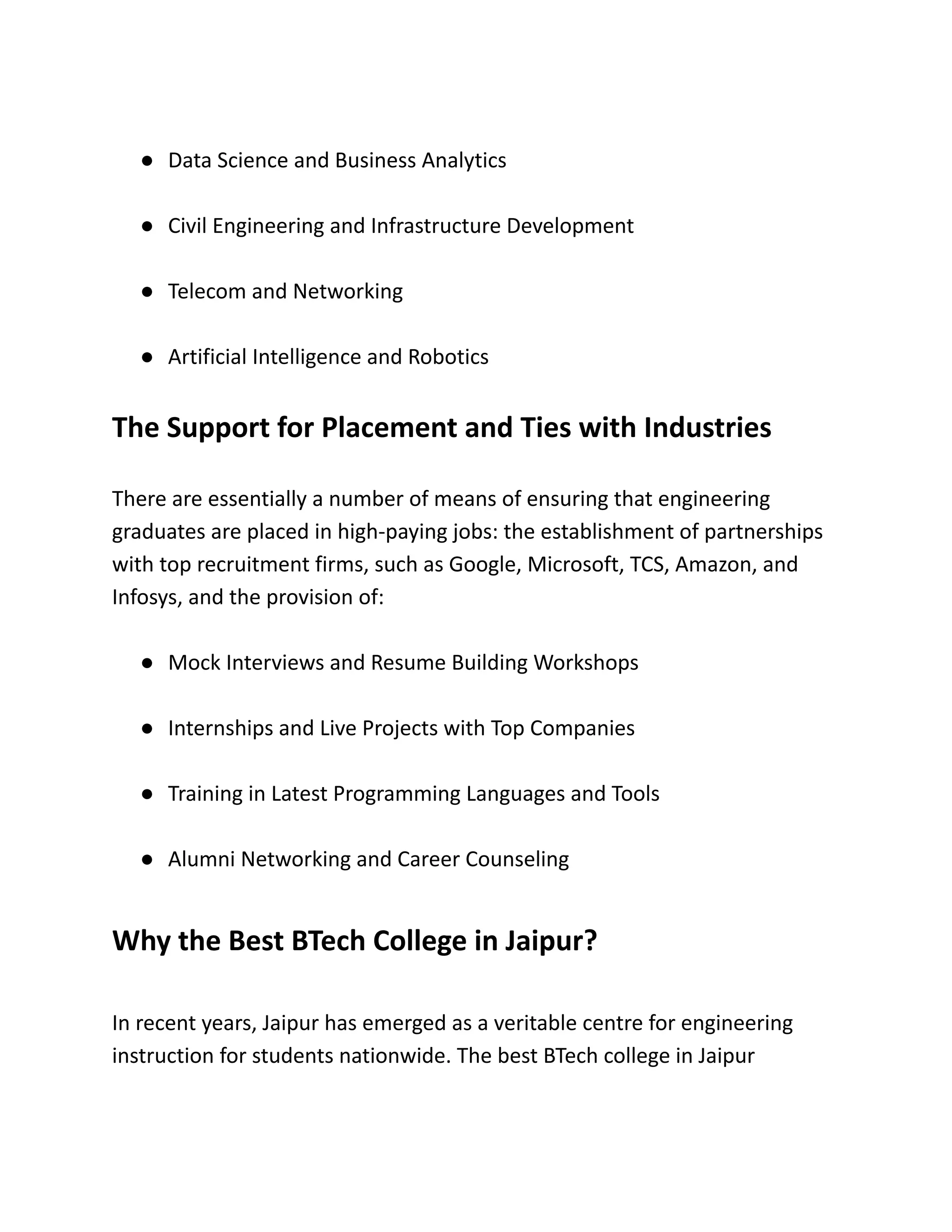
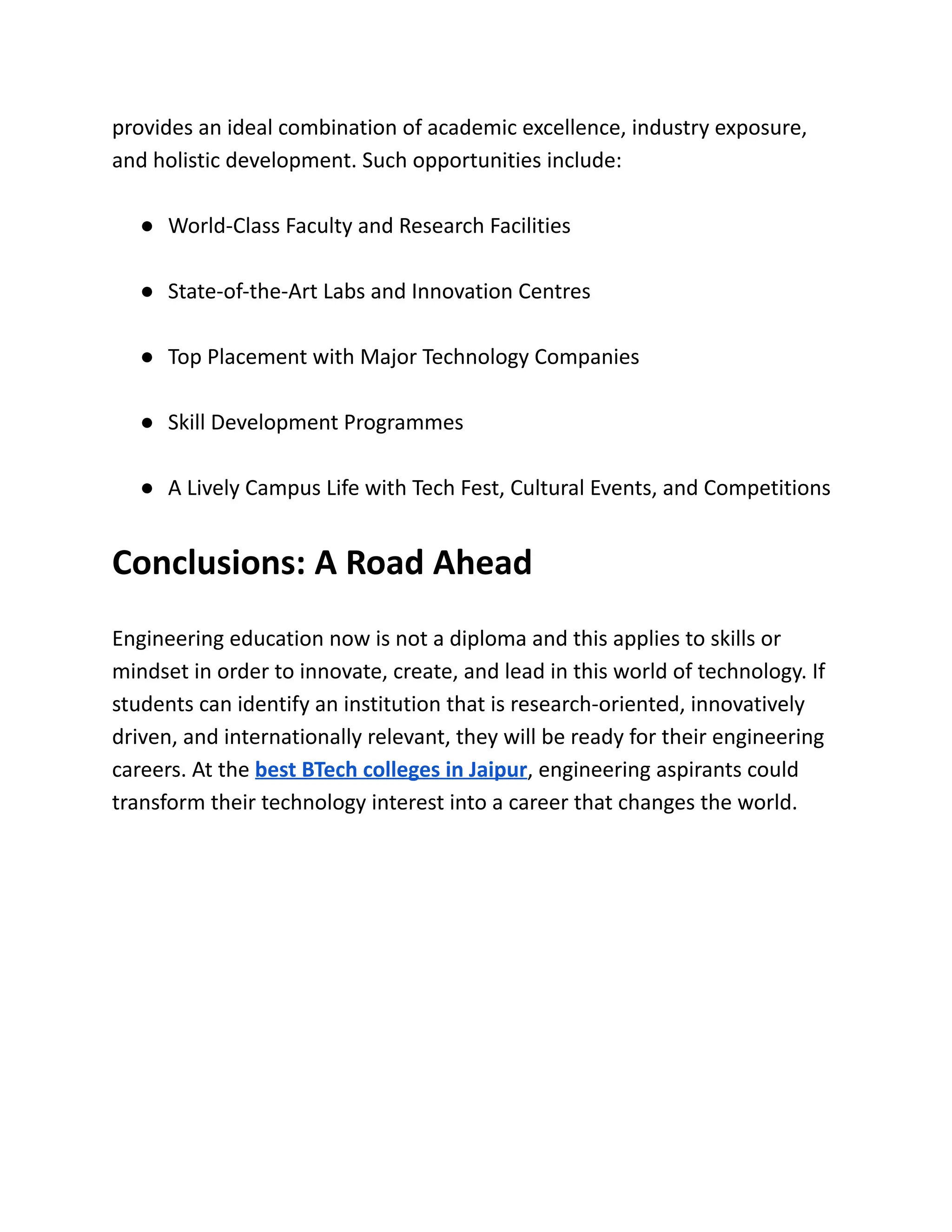
●​ World-Class Labs: All instruments have been included, from
state-of-the-art machines to simulation software and
high-performance computing.
●​ Smart Classes and E-Learning Platforms: AI-based learning tools,
virtual labs, and interactive study material are integrated.
●​ Innovation and Incubation Centers: Students are encouraged to work
on startups and deliver market-ready solutions.
●​ Collaboration Hubs: Spaces designed for teamwork, brainstorming,
and peer-learning.
●​ Green & Sustainable Campus: Eco-friendly initiatives include solar
energy, rainwater harvesting, and green buildings.
Culture of Innovation in the Making
One major paradigm shift in engineering education today focuses on
innovation-led learning. Institutions aim to develop ecosystems where
students are allowed to partner in exploring fresh ideas, building prototypes,
and, in some situations, launching their own startups. These are some major
initiatives:
1.​Start-up Incubation Centers
Incubation centers offer mentoring, funding, and technical assistance
to students who wish to pursue entrepreneurship. Many successful
start-ups have emerged out of AI, blockchain, and renewable energy
solutions from engineering campuses.
2.​Hackathons and Competitions
Hackathons, robotics challenges, and tech competitions give students
experience with real-life problem solving. Participation in global
contests like NASA Space Apps, Google Code Jam, and Smart India
Hackathon further goes on to instill creativity and innovation.
3.​Industry Collaborations
For relevant skills training, engineering institutions are forming
partnerships with tech giants, such as Microsoft, Google, and Tesla.
These partnerships safely provide industry internships, live projects,
and case studies for students.
Emerging Technologies Shaping Engineering Education
While engineering education needs to keep pace with technological
advancements to be viable, the latest emerging technologies are among the
more promising:
●​ AI and ML: Automation, data analysis, and decision-making have been
retrofitted.
●​ IoT: smart home installations for healthcare monitoring and industrial
automation.
●​ Blockchain and Cyber Security: For the dual purposes of securing the
data and ensuring transparency in these transactions.
●​ Quantum Computing: Looking at a very few seconds to solve problems
that the traditional computer would take years for.
●​ 3D Printing and Additive Manufacturing: Transforming the domains of
prototyping and product development for industries such as
aerospace, healthcare, and automobile.
●​ Renewable Energy Technologies: Aimed at sustainable engineering
solutions for a better world.
The Role of Faculty and Mentoring
Quality education is not only infrastructural but also requires guidance and
mentorship from experienced faculty. A good engineering college must
ensure:
●​ Highly Qualified Professors: Professors with PhDs and with some
industrial experience are rare and precious for the insights they
provide in the classroom.
●​ Student-Centered Teaching: Methods that promote interactive
learning, project-based teaching, and problem-solving learning.
●​ Individual Mentoring: Providing each student with personalized
guidance on research projects, career planning, and skills.
Career Opportunities & Placements
Placement records are an important metric to differentiate any engineering
school that is recognized. There are plenty of opportunities for engineering
graduates in the following sectors:
●​ Software Development and IT Services
●​ Aerospace and Defense
●​ Automobile and Manufacturing
●​ Data Science and Business Analytics
●​ Civil Engineering and Infrastructure Development
●​ Telecom and Networking
●​ Artificial Intelligence and Robotics
The Support for Placement and Ties with Industries
There are essentially a number of means of ensuring that engineering
graduates are placed in high-paying jobs: the establishment of partnerships
with top recruitment firms, such as Google, Microsoft, TCS, Amazon, and
Infosys, and the provision of:
●​ Mock Interviews and Resume Building Workshops
●​ Internships and Live Projects with Top Companies
●​ Training in Latest Programming Languages and Tools
●​ Alumni Networking and Career Counseling
Why the Best BTech College in Jaipur?
In recent years, Jaipur has emerged as a veritable centre for engineering
instruction for students nationwide. The best BTech college in Jaipur
provides an ideal combination of academic excellence, industry exposure,
and holistic development. Such opportunities include:
●​ World-Class Faculty and Research Facilities
●​ State-of-the-Art Labs and Innovation Centres
●​ Top Placement with Major Technology Companies
●​ Skill Development Programmes
●​ A Lively Campus Life with Tech Fest, Cultural Events, and Competitions
Conclusions: A Road Ahead
Engineering education now is not a diploma and this applies to skills or
mindset in order to innovate, create, and lead in this world of technology. If
students can identify an institution that is research-oriented, innovatively
driven, and internationally relevant, they will be ready for their engineering
careers. At the best BTech colleges in Jaipur, engineering aspirants could
transform their technology interest into a career that changes the world.
The Hub of Innovation Engineering Education Redefined

  • 1.
    The Hub ofInnovation: Engineering Education Redefined Introduction: Engineering the Future The rapidly changing world of technology and innovation witnesses a major role played by engineering education toward producing future leaders and problem solvers. The best BTech college in Jaipur lays a solid groundwork for technical expertise, practical learning, and exposure to industry. These institutions with state-of-the-art infrastructure, experienced faculty members, and a dynamic syllabus equip students with skills relevant for survival in the present technological age.
  • 2.
    Why Does InnovationNeed to Be at the Core of Engineering Education? Traditionally, engineering education was primarily focused on theoretical knowledge and conventional approaches. With advances in technology, innovation, research, and real-life applications must be blended into engineering programs. This new age of engineering education ensures that students learn more than just the technical aspects; they become well-rounded problem solvers, critical thinkers, and leaders. Key Pillars of Innovative Engineering Education 1.​ Industry-Based Curriculum: Incorporating cutting-edge technologies and trends such as AI, IoT, robotics, and cybersecurity that will keep students ahead of the curve. 2.​ Experiential Learning: State-of-the-art laboratories, workshops, and live industry projects that foster an environment for greater practical application. 3.​ Research and Development: Promoting innovation and entrepreneurship via established research centers. 4.​ Interdisciplinary Approach: An amalgamation of engineering with management, design, and the humanities for holistic learning. 5.​ International Exposure: Collaboration with international bodies and participation in worldwide competitions.
  • 3.
    6.​ Skill-Based Training:focused on soft skills, coding abilities, and project management expertise. Cutting-Edge Infrastructure & Facilities A first-rate engineering institution, in the perception of many, has world-class infrastructure and state-of-the-art equipment that help foster innovation and research. Some of the more notable features are: ●​ World-Class Labs: All instruments have been included, from state-of-the-art machines to simulation software and high-performance computing. ●​ Smart Classes and E-Learning Platforms: AI-based learning tools, virtual labs, and interactive study material are integrated. ●​ Innovation and Incubation Centers: Students are encouraged to work on startups and deliver market-ready solutions. ●​ Collaboration Hubs: Spaces designed for teamwork, brainstorming, and peer-learning. ●​ Green & Sustainable Campus: Eco-friendly initiatives include solar energy, rainwater harvesting, and green buildings. Culture of Innovation in the Making One major paradigm shift in engineering education today focuses on innovation-led learning. Institutions aim to develop ecosystems where students are allowed to partner in exploring fresh ideas, building prototypes,
  • 4.
    and, in somesituations, launching their own startups. These are some major initiatives: 1.​Start-up Incubation Centers Incubation centers offer mentoring, funding, and technical assistance to students who wish to pursue entrepreneurship. Many successful start-ups have emerged out of AI, blockchain, and renewable energy solutions from engineering campuses. 2.​Hackathons and Competitions Hackathons, robotics challenges, and tech competitions give students experience with real-life problem solving. Participation in global contests like NASA Space Apps, Google Code Jam, and Smart India Hackathon further goes on to instill creativity and innovation. 3.​Industry Collaborations For relevant skills training, engineering institutions are forming partnerships with tech giants, such as Microsoft, Google, and Tesla. These partnerships safely provide industry internships, live projects, and case studies for students. Emerging Technologies Shaping Engineering Education While engineering education needs to keep pace with technological advancements to be viable, the latest emerging technologies are among the more promising:
  • 5.
    ●​ AI andML: Automation, data analysis, and decision-making have been retrofitted. ●​ IoT: smart home installations for healthcare monitoring and industrial automation. ●​ Blockchain and Cyber Security: For the dual purposes of securing the data and ensuring transparency in these transactions. ●​ Quantum Computing: Looking at a very few seconds to solve problems that the traditional computer would take years for. ●​ 3D Printing and Additive Manufacturing: Transforming the domains of prototyping and product development for industries such as aerospace, healthcare, and automobile. ●​ Renewable Energy Technologies: Aimed at sustainable engineering solutions for a better world. The Role of Faculty and Mentoring Quality education is not only infrastructural but also requires guidance and mentorship from experienced faculty. A good engineering college must ensure: ●​ Highly Qualified Professors: Professors with PhDs and with some industrial experience are rare and precious for the insights they provide in the classroom.
  • 6.
    ●​ Student-Centered Teaching:Methods that promote interactive learning, project-based teaching, and problem-solving learning. ●​ Individual Mentoring: Providing each student with personalized guidance on research projects, career planning, and skills. Career Opportunities & Placements Placement records are an important metric to differentiate any engineering school that is recognized. There are plenty of opportunities for engineering graduates in the following sectors: ●​ Software Development and IT Services ●​ Aerospace and Defense ●​ Automobile and Manufacturing
  • 7.
    ●​ Data Scienceand Business Analytics ●​ Civil Engineering and Infrastructure Development ●​ Telecom and Networking ●​ Artificial Intelligence and Robotics The Support for Placement and Ties with Industries There are essentially a number of means of ensuring that engineering graduates are placed in high-paying jobs: the establishment of partnerships with top recruitment firms, such as Google, Microsoft, TCS, Amazon, and Infosys, and the provision of: ●​ Mock Interviews and Resume Building Workshops ●​ Internships and Live Projects with Top Companies ●​ Training in Latest Programming Languages and Tools ●​ Alumni Networking and Career Counseling Why the Best BTech College in Jaipur? In recent years, Jaipur has emerged as a veritable centre for engineering instruction for students nationwide. The best BTech college in Jaipur
  • 8.
    provides an idealcombination of academic excellence, industry exposure, and holistic development. Such opportunities include: ●​ World-Class Faculty and Research Facilities ●​ State-of-the-Art Labs and Innovation Centres ●​ Top Placement with Major Technology Companies ●​ Skill Development Programmes ●​ A Lively Campus Life with Tech Fest, Cultural Events, and Competitions Conclusions: A Road Ahead Engineering education now is not a diploma and this applies to skills or mindset in order to innovate, create, and lead in this world of technology. If students can identify an institution that is research-oriented, innovatively driven, and internationally relevant, they will be ready for their engineering careers. At the best BTech colleges in Jaipur, engineering aspirants could transform their technology interest into a career that changes the world.