The Food Service Supply Chain: You are Only as Good as Your Weakest Link
Food safety expert and food poison attorney Bill Marler's presentation on the importance of maintaining a food supply chain dedicated to food safety. Marler uses case examples from his nearly 20 years of experience as a food poisoning lawyer to show the dangers of a faulty supply chain.
Food Production isa Risky Business Competitive MarketsWall Street, Stockholder and Management Pressures for Increasing ProfitsLack of Clear Rewards for Marketing and Practicing Food SafetyRisk of Litigation
3.
To Put Thingsin Perspective According to the CDC, microbial pathogens in food cause an estimated 48 million case of human illness annually in the United States125,000 hospitalized3,000 deathsFoodborne Illness in United States cost $152,000,000,000 yearly – PEWThat cost includes doctor and hospital visits, medications, lost wages and productivity, functional disabilities, and deathIt does not include recall cost, price of litigation or loss of reputation
4.
A Legal Lesson– Strict Product LiabilityStrict Liability – Three QuestionsAre you a manufacturer?Was the product unsafe?Did the product cause injury?
5.
Who is aManufacturer?“A manufacturer is defined as a product seller who designs, produces, makes, fabricates, constructs, or remanufacturers the relevant product or component part of a product before its sale to a user or consumer.”Washburn v. Beatt Equipment Co., 120 Wn.2d 246 (1992).
6.
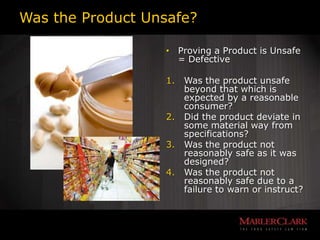
Was the ProductUnsafe?Proving a Product is Unsafe = DefectiveWas the product unsafe beyond that which is expected by a reasonable consumer?Did the product deviate in some material way from specifications?Was the product not reasonably safe as it was designed?Was the product not reasonably safe due to a failure to warn or instruct?
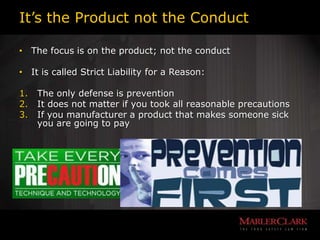
It’s the Productnot the ConductThe focus is on the product; not the conductIt is called Strict Liability for a Reason:The only defense is preventionIt does not matter if you took all reasonable precautionsIf you manufacturer a product that makes someone sick you are going to pay
9.
Why Strict Liability?Putspressure on those (manufacturers) that most likely could correct the problem in the first placePuts the cost of settlements and verdicts directly onto those (manufacturers) that profit from the product – cost shiftingCreates incentive not to let it happen again
10.
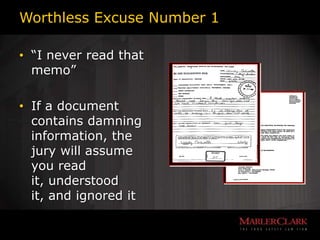
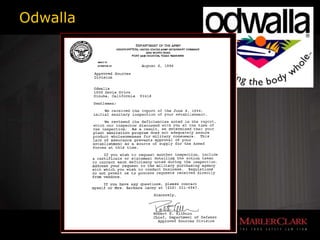
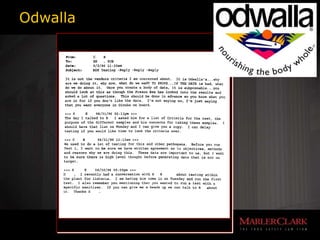
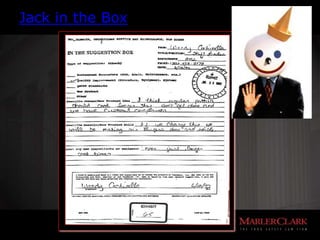
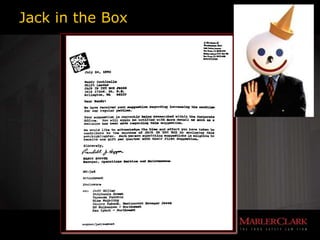
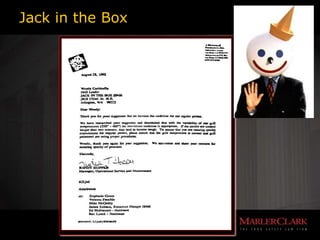
Worthless Excuse Number1“I never read that memo”If a document contains damning information, the jury will assume you read it, understood it, and ignored it
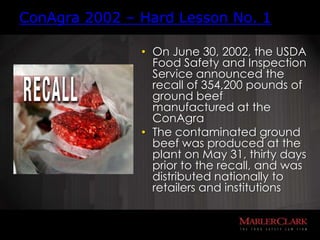
ConAgra 2002 –Hard Lesson No. 1On June 30, 2002, the USDA Food Safety and Inspection Service announced the recall of 354,200 pounds of ground beef manufactured at the ConAgraThe contaminated ground beef was produced at the plant on May 31, thirty days prior to the recall, and was distributed nationally to retailers and institutions
17.
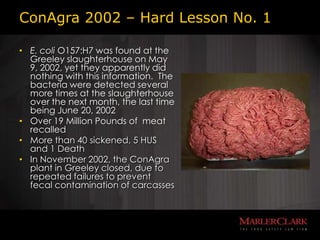
ConAgra 2002 –Hard Lesson No. 1E. coli O157:H7 was found at the Greeley slaughterhouse on May 9, 2002, yet they apparently did nothing with this information. The bacteria were detected several more times at the slaughterhouse over the next month, the last time being June 20, 2002 Over 19 Million Pounds of meat recalledMore than 40 sickened, 5 HUS and 1 DeathIn November 2002, the ConAgra plant in Greeley closed, due to repeated failures to prevent fecal contamination of carcasses
18.
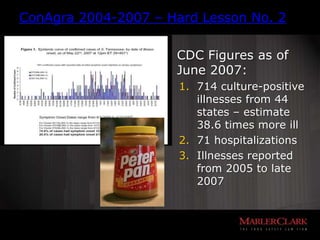
ConAgra 2004-2007 –Hard Lesson No. 2CDC Figures as of June 2007:714 culture-positive illnesses from 44 states – estimate 38.6 times more ill71 hospitalizationsIllnesses reported from 2005 to late 2007
19.
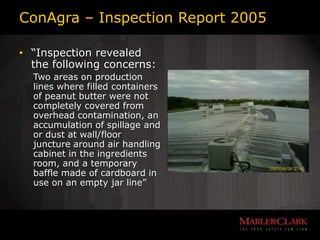
ConAgra – InspectionReport 2005“Inspection revealed the following concerns:Two areas on production lines where filled containers of peanut butter were not completely covered from overhead contamination, an accumulation of spillage and or dust at wall/floor juncture around air handling cabinet in the ingredients room, and a temporary baffle made of cardboard in use on an empty jar line”
20.
ConAgra – InspectionReport 2005“. . . Inspection found the lot in question had been shipped and management cited corporate policy in refusing to allow review of production and shipping recordsThe current inspection was conducted in response to several complaints including most recently, number 29134, an anonymous complaint alleging poor sanitation, poor facilities maintenance, and poor quality program management. Specifics in that complaint include an alleged episode of positive findings of Salmonella in peanut butter in October of 200 …
21.
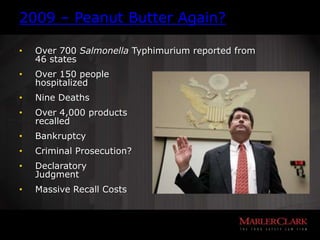
2009 – PeanutButter Again?Over 700 SalmonellaTyphimuriumreported from 46 statesOver 150 people hospitalizedNine DeathsOver 4,000 products recalledBankruptcyCriminal Prosecution?Declaratory JudgmentMassive Recall Costs
22.
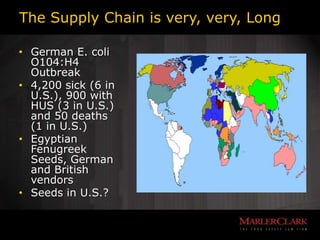
The Supply Chainis very, very, LongGerman E. coli O104:H4 Outbreak4,200 sick (6 in U.S.), 900 with HUS (3 in U.S.) and 50 deaths (1 in U.S.)Egyptian Fenugreek Seeds, German and British vendorsSeeds in U.S.?
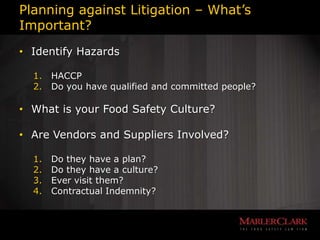
Planning against Litigation– What’s Important?Identify HazardsHACCPDo you have qualified and committed people?What is your Food Safety Culture?Are Vendors and Suppliers Involved?Do they have a plan?Do they have a culture?Ever visit them?Contractual Indemnity?
25.
Lessons Learned froman Outbreak You can insure the brand’s and the company’s reputationArm yourself with good current informationSince you have a choice between doing nothing and being proactive, be proactiveMake food safety a part of everything your doTreat your customers with respect