Discover how online classes are reshaping traditional education through technology, flexibility, and innovation.
For more information visit---https://www.edu123.in/category/boarding-schools-in-india
FROM
CHALKBOARDS
TO CLICKS –A
NEW ERA BEGINS
1
2
3
4
Education has evolved from
blackboards to broadband.
Online classes surged due to the
pandemic but are now here to stay.
Technology has made education
borderless, on-demand, and flexible.
Learning now happens at home, on
screens, and at each student’s pace.
3.
WHY ONLINE
CLASSES TOOK
OFF
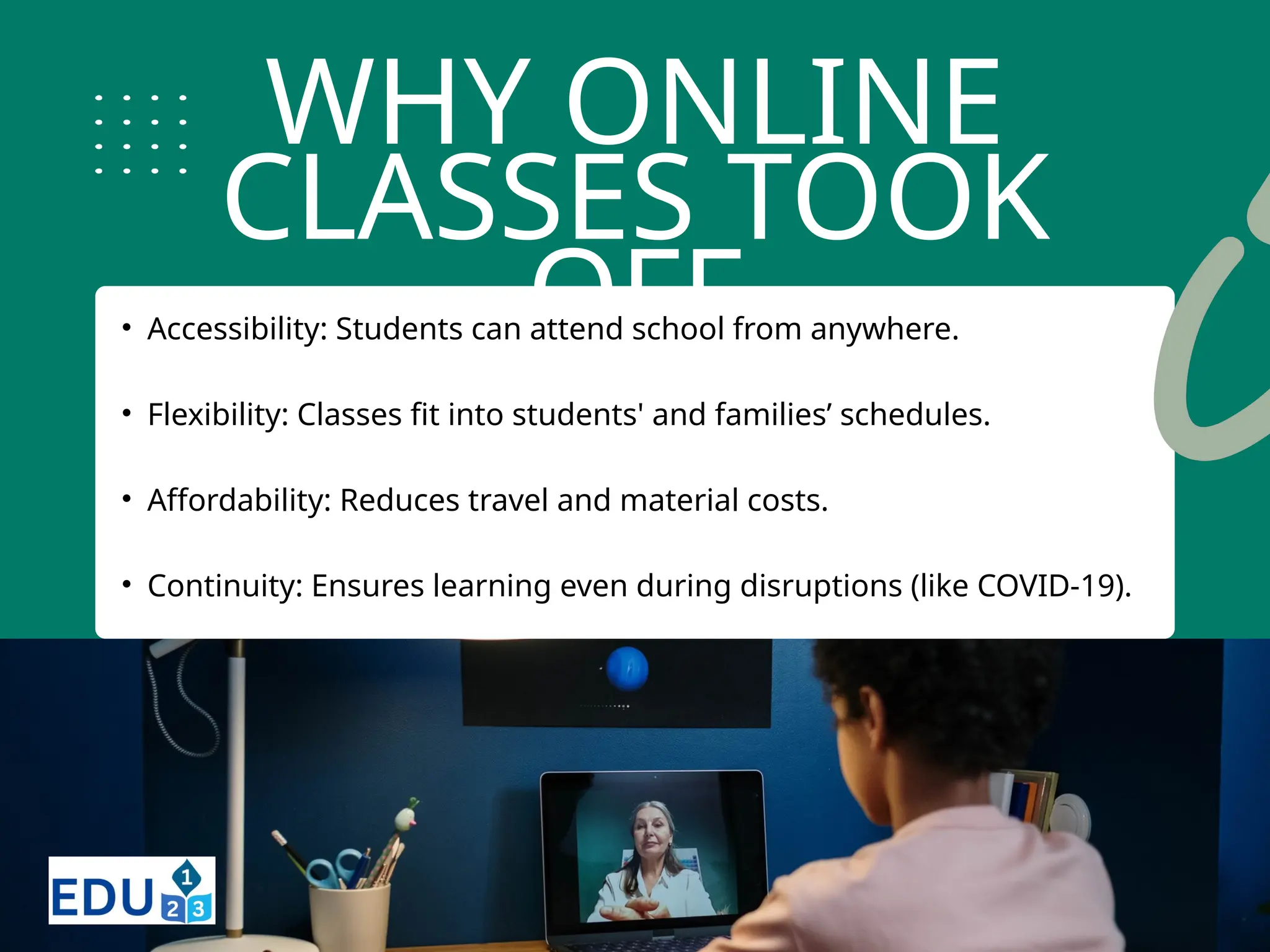
•Accessibility: Students can attend school from anywhere.
• Flexibility: Classes fit into students' and families’ schedules.
• Affordability: Reduces travel and material costs.
• Continuity: Ensures learning even during disruptions (like COVID-19).
4.
TOOLS THAT
POWER
DIGITAL
CLASSROOMS
• Videoplatforms: Zoom, Google Meet, Microsoft Teams
• Learning Management Systems (LMS): Google Classroom, Moodle
• Digital resources: e-books, YouTube lessons, interactive quizzes
• Communication tools: Email, WhatsApp groups, parent portals
5.
CHALLE
NGES
ALONG
THE WAY
• Notevery student has access to fast internet
or devices
• Reduced social interaction and screen fatigue
• Shorter attention spans without structured
environments
• Mental health & engagement support from
schools
6.
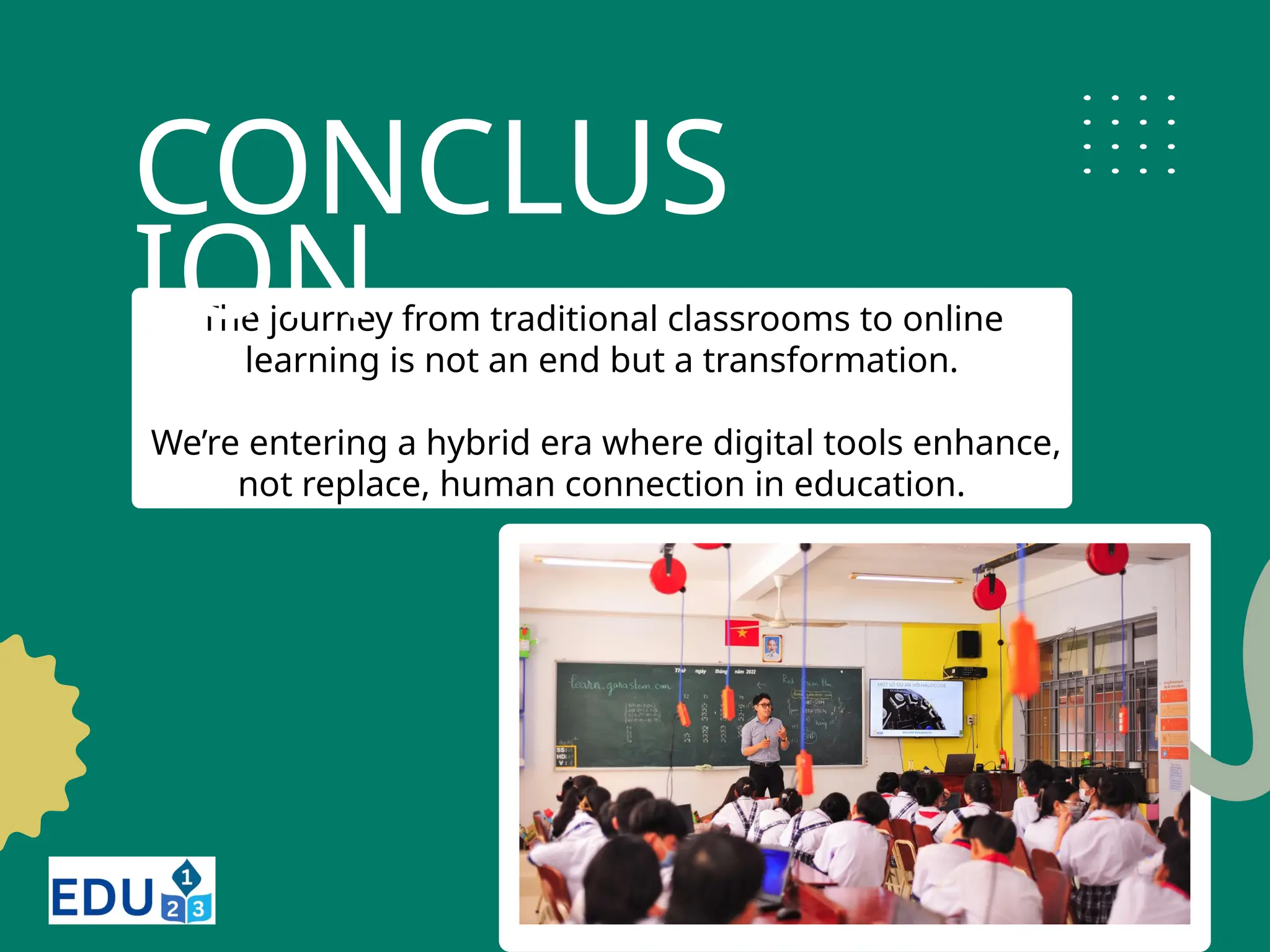
The journey fromtraditional classrooms to online
learning is not an end but a transformation.
We’re entering a hybrid era where digital tools enhance,
not replace, human connection in education.
CONCLUS
ION