The Essential Guide to Global
Dexterity
© Andrew L. Molinsky 2016 All rights
reserved
We know a lot about culture and
cultural differences
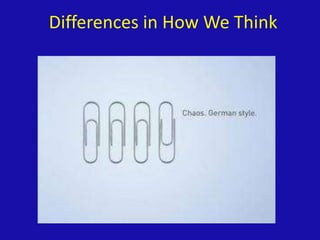
Differences in How We Think
Differences in Expressing Feelings
I’m British and this
American chap is
getting just a bit
too close…
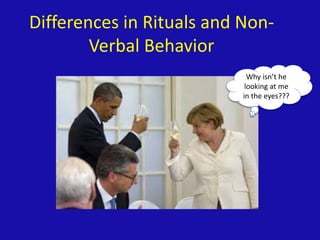
Differences in Rituals and Non-
Verbal Behavior
Why isn’t he
looking at me
in the eyes???
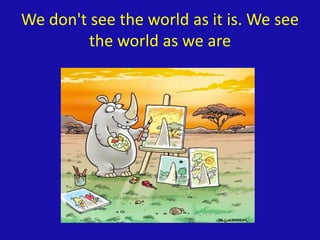
We don't see the world as it is. We see
the world as we are
We Know a Lot About Differences
But….
We don’t know as much about the
challenges of ADAPTING behavior
across cultures…. in light of these
differences
And that’s where Global Dexterity comes in…
© Andrew L. Molinsky, 2015 9
Global Dexterity is…
The ability to adapt your behavior – smoothly
and successfully – to the demands of a
foreign culture, without losing yourself in the
process
© Andrew L. Molinsky, 2015 10
But it’s easier said than done
For example…
From a Vietnamese MBA
Student Talking About Speaking in Class
I know participating in the US is required
to get good grades but somehow deep
inside I felt like I was doing something
very wrong. I was trembling, sweating. I
just could not look at the professor or
my classmates in the eyes. I felt guilty.
From an Indian Professional
Trying to Promote Himself at a Networking
Event in the US
I feel that I am performing a sin, trying to
become something that I am not, being
artificial and fake. I try to sell myself
bragging about my abilities to a stranger
and that feels so weird and selfish to me.
It makes me feel like I am doing things to
achieve my objectives at all cost
From an American Executive
Trying to Give German-Style Feedback
In the US we do the sandwich approach. But in
Germany, there’s no pre-amble, no protecting
anyone’s ego. Just the blunt, direct message of “I
don’t like that.” Or “that will not work.”
And it doesn't feel good to deliver that message. I
felt like an ogre – or like a hostile witness at a trial.
From the German perspective, it was being honest.
But I didn’t feel comfortable at all doing it.
© Andrew L. Molinsky, 2013
© Andrew L. Molinsky 2013 All rights
reserved
And this leads to what I call the
“paradox” of Global Dexterity
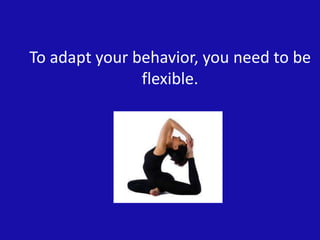
To adapt your behavior, you need to be
flexible.
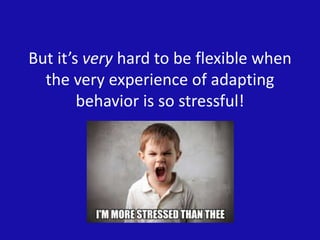
But it’s very hard to be flexible when
the very experience of adapting
behavior is so stressful!
For example: Think about a time when
you were very stressed about
something.
Was that your most “creative” or
“flexible moment”?
Probably not!
Or at least I know it’s never that way for
me.
And that’s the same challenge with Global
Dexterity.
Want a solution? A way out?
Click here to get your free guide
to the cultural codes from 10
different cultures around the
world!
Thanks so much for watching!

The Essential Guide to Global Dexterity

  • 1.
    The Essential Guideto Global Dexterity © Andrew L. Molinsky 2016 All rights reserved
  • 2.
    We know alot about culture and cultural differences
  • 3.
  • 4.
    Differences in ExpressingFeelings I’m British and this American chap is getting just a bit too close…
  • 5.
    Differences in Ritualsand Non- Verbal Behavior Why isn’t he looking at me in the eyes???
  • 6.
    We don't seethe world as it is. We see the world as we are
  • 7.
    We Know aLot About Differences But….
  • 8.
    We don’t knowas much about the challenges of ADAPTING behavior across cultures…. in light of these differences
  • 9.
    And that’s whereGlobal Dexterity comes in… © Andrew L. Molinsky, 2015 9
  • 10.
    Global Dexterity is… Theability to adapt your behavior – smoothly and successfully – to the demands of a foreign culture, without losing yourself in the process © Andrew L. Molinsky, 2015 10
  • 11.
    But it’s easiersaid than done
  • 12.
  • 13.
    From a VietnameseMBA Student Talking About Speaking in Class I know participating in the US is required to get good grades but somehow deep inside I felt like I was doing something very wrong. I was trembling, sweating. I just could not look at the professor or my classmates in the eyes. I felt guilty.
  • 14.
    From an IndianProfessional Trying to Promote Himself at a Networking Event in the US I feel that I am performing a sin, trying to become something that I am not, being artificial and fake. I try to sell myself bragging about my abilities to a stranger and that feels so weird and selfish to me. It makes me feel like I am doing things to achieve my objectives at all cost
  • 15.
    From an AmericanExecutive Trying to Give German-Style Feedback In the US we do the sandwich approach. But in Germany, there’s no pre-amble, no protecting anyone’s ego. Just the blunt, direct message of “I don’t like that.” Or “that will not work.” And it doesn't feel good to deliver that message. I felt like an ogre – or like a hostile witness at a trial. From the German perspective, it was being honest. But I didn’t feel comfortable at all doing it. © Andrew L. Molinsky, 2013
  • 16.
    © Andrew L.Molinsky 2013 All rights reserved And this leads to what I call the “paradox” of Global Dexterity
  • 17.
    To adapt yourbehavior, you need to be flexible.
  • 18.
    But it’s veryhard to be flexible when the very experience of adapting behavior is so stressful!
  • 19.
    For example: Thinkabout a time when you were very stressed about something. Was that your most “creative” or “flexible moment”?
  • 20.
    Probably not! Or atleast I know it’s never that way for me. And that’s the same challenge with Global Dexterity.
  • 21.
    Want a solution?A way out?
  • 22.
    Click here toget your free guide to the cultural codes from 10 different cultures around the world!
  • 23.
    Thanks so muchfor watching!