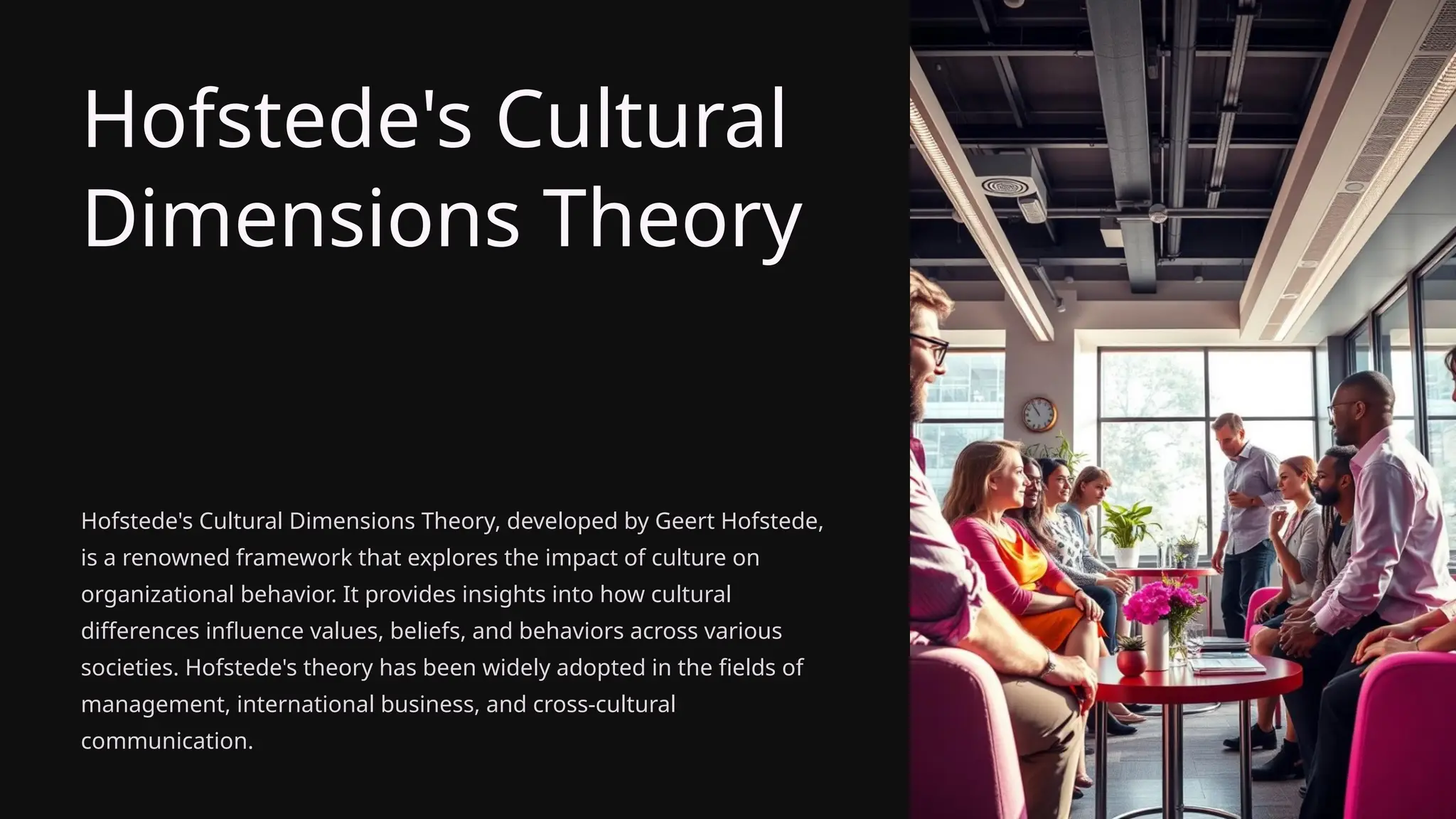
Hofstede's Cultural
Dimensions Theory
Hofstede's Cultural Dimensions Theory, developed by Geert Hofstede,
is a renowned framework that explores the impact of culture on
organizational behavior. It provides insights into how cultural
differences influence values, beliefs, and behaviors across various
societies. Hofstede's theory has been widely adopted in the fields of
management, international business, and cross-cultural
communication.
Power Distance
1 High Power Distance
Cultures with high power distance exhibit a strong hierarchical structure, where individuals with
higher power hold significant authority and influence. Subordinates are expected to show
respect and obedience to their superiors, and communication patterns tend to be more formal.
2 Low Power Distance
Low power distance cultures emphasize equality and flat organizational structures. There is a
greater sense of autonomy and empowerment, with individuals encouraged to express their
opinions and challenge authority.
3 Implications for Organizations
Understanding power distance is crucial for effective cross-cultural management. It influences
leadership styles, decision-making processes, and communication dynamics. For example, in
high power distance cultures, leaders may adopt a more authoritative approach, while in low
power distance cultures, a more participative leadership style may be more effective.
4 Examples
High power distance cultures include countries like Malaysia, India, and the Philippines. In
contrast, low power distance cultures include countries like Austria, Denmark, and Sweden.
Individualism vs. Collectivism
Individualism
Individualistic cultures prioritize
personal goals, achievements,
and individual rights. Individuals
are expected to be self-reliant and
independent, with a strong
emphasis on personal freedom
and autonomy.
Collectivism
Collectivist cultures emphasize
group harmony, loyalty, and
shared goals. Individuals are
expected to prioritize the needs of
the group over their own, and
strong social bonds are highly
valued.
Implications for
Organizations
Individualism and collectivism
influence team dynamics,
employee motivation, and reward
systems. In individualistic
cultures, employees may be
motivated by individual bonuses
and recognition, while in
collectivist cultures, team-based
rewards and social recognition
may be more effective.
Masculinity vs. Femininity
Masculinity
Masculine cultures value assertiveness, competition, and material success. They prioritize
achievement, ambition, and strong leadership. Individuals in these cultures often exhibit a strong
work ethic and a desire to be recognized for their accomplishments.
Femininity
Feminine cultures emphasize cooperation, relationships, and quality of life. They prioritize
consensus-building, empathy, and a work-life balance. Individuals in these cultures may place
more value on collaboration and helping others.
Implications for Organizations
Masculinity and femininity influence communication styles, negotiation strategies, and leadership
styles. In masculine cultures, direct communication and competitive negotiation strategies may be
common, while in feminine cultures, indirect communication and collaborative negotiation may be
preferred.
Examples
Examples of masculine cultures include Japan, Austria, and Italy. Examples of feminine cultures
include Sweden, Norway, and Denmark.
Uncertainty Avoidance
1 High Uncertainty Avoidance
High uncertainty avoidance cultures prefer clear rules, structured environments, and low
ambiguity. They emphasize planning, predictability, and stability. Individuals may be
resistant to change and prefer to follow established procedures.
2 Low Uncertainty Avoidance
Low uncertainty avoidance cultures are more open to change, ambiguity, and risk-taking.
They embrace adaptability and flexibility, with a willingness to experiment and try new
things.
3 Implications for Organizations
Uncertainty avoidance influences decision-making processes, organizational structures, and
employee behavior. In high uncertainty avoidance cultures, organizations may have strict
policies and procedures, while in low uncertainty avoidance cultures, organizations may be
more flexible and adaptable.
4 Examples
Examples of high uncertainty avoidance cultures include Greece, Japan, and Portugal.
Examples of low uncertainty avoidance cultures include Singapore, Sweden, and Denmark.
Long-Term vs. Short-Term Orientation
Long-Term Orientation
Long-term oriented cultures value persistence, thrift, and adapting to changing
circumstances. They emphasize long-term goals, delayed gratification, and a focus on
sustainability.
Short-Term Orientation
Short-term oriented cultures prioritize immediate results, tradition, and social obligations.
They emphasize quick returns, respect for established norms, and a focus on the present.
Implications for Organizations
Long-term vs. short-term orientation influences strategic planning, investment decisions,
and employee motivation. In long-term oriented cultures, organizations may prioritize long-
term growth and sustainability, while in short-term oriented cultures, organizations may
focus on short-term profits and immediate returns.
Examples
Examples of long-term oriented cultures include China, Japan, and South Korea. Examples of
short-term oriented cultures include the United States, Canada, and Australia.
Indulgence vs. Restraint
Indulgence
Indulgent cultures allow relatively
free gratification of basic human
desires related to enjoying life and
having fun. They emphasize personal
happiness, leisure activities, and a
relaxed approach to life.
Restraint
Restrained cultures suppress
gratification and regulate it through
social norms. They emphasize control
over impulses, social obligations, and
a more serious approach to life.
Implications for
Organizations
Indulgence vs. restraint influences
workplace culture, employee
expectations, and organizational
policies. In indulgent cultures,
organizations may have more flexible
work schedules and focus on
employee well-being, while in
restrained cultures, organizations
may emphasize discipline,
productivity, and work ethic.
Examples
Examples of indulgent cultures
include Mexico, the United States,
and Australia. Examples of restrained
cultures include Russia, Egypt, and
China.
Managing Change
Step Description
Assessing the Need for Change Identifying why change is necessary, based on internal
or external factors. This step involves analyzing the
current situation, identifying problems or opportunities,
and understanding the urgency for change.
Planning Developing a strategic approach for implementing
change, including setting objectives, defining resources
needed, and outlining a timeline for the change process.
It's important to involve stakeholders in the planning
stage to gain buy-in and ensure alignment.
Implementation Executing the change plan, which involves
communicating the change effectively to all
stakeholders, allocating resources, and managing the
implementation process. This step requires flexibility and
adaptability to address unforeseen challenges.
Evaluation Monitoring the change process to ensure it meets
objectives and making adjustments if required. Regular
evaluation helps track progress, identify areas for
improvement, and ensure that the change is
implemented effectively.
Forces Responsible for Change
Internal Forces
Internal forces arise from within the organization and
can include changes in organizational structure,
leadership transitions, performance issues, or shifts in
employee expectations. Internal forces often stem
from a need for improvement or adaptation to
internal challenges.
External Forces
External forces originate from the organization's
external environment and can include market
dynamics, technological advancements, economic
shifts, regulatory changes, or competitive pressures.
External forces often necessitate organizational
change to adapt to evolving industry standards,
customer preferences, or new technologies.
Overcoming Resistance to Change
1 Communication
Clear and frequent communication is
essential for addressing concerns
and building trust. Communicating
the reasons for change, its benefits,
and its impacts on employees can
help alleviate anxieties and foster
understanding.
2 Involvement
Involving employees in the change
process by seeking their input,
addressing their concerns, and
providing opportunities for feedback
can build buy-in and ownership. It
demonstrates that their perspectives
are valued and fosters a sense of
collaboration.
3 Support
Providing training, resources, and
support to help employees adapt to
the change is crucial for successful
implementation. This can include
technical training, mentorship, or
access to information and tools that
facilitate the transition.
4 Leadership
Strong leadership commitment and visible support
throughout the change process are critical. Leaders need to
demonstrate their belief in the change, communicate
effectively, and provide encouragement and guidance to
employees.
5 Address Concerns
Actively listening to and addressing the specific concerns
and fears of employees is crucial for building trust and buy-
in. This involves open dialogue, empathy, and a willingness
to address individual needs and perspectives.

Hofstedes-Cultural-Dimensions-Theory.pptx

  • 1.
    Hofstede's Cultural Dimensions Theory Hofstede'sCultural Dimensions Theory, developed by Geert Hofstede, is a renowned framework that explores the impact of culture on organizational behavior. It provides insights into how cultural differences influence values, beliefs, and behaviors across various societies. Hofstede's theory has been widely adopted in the fields of management, international business, and cross-cultural communication.
  • 2.
    Power Distance 1 HighPower Distance Cultures with high power distance exhibit a strong hierarchical structure, where individuals with higher power hold significant authority and influence. Subordinates are expected to show respect and obedience to their superiors, and communication patterns tend to be more formal. 2 Low Power Distance Low power distance cultures emphasize equality and flat organizational structures. There is a greater sense of autonomy and empowerment, with individuals encouraged to express their opinions and challenge authority. 3 Implications for Organizations Understanding power distance is crucial for effective cross-cultural management. It influences leadership styles, decision-making processes, and communication dynamics. For example, in high power distance cultures, leaders may adopt a more authoritative approach, while in low power distance cultures, a more participative leadership style may be more effective. 4 Examples High power distance cultures include countries like Malaysia, India, and the Philippines. In contrast, low power distance cultures include countries like Austria, Denmark, and Sweden.
  • 3.
    Individualism vs. Collectivism Individualism Individualisticcultures prioritize personal goals, achievements, and individual rights. Individuals are expected to be self-reliant and independent, with a strong emphasis on personal freedom and autonomy. Collectivism Collectivist cultures emphasize group harmony, loyalty, and shared goals. Individuals are expected to prioritize the needs of the group over their own, and strong social bonds are highly valued. Implications for Organizations Individualism and collectivism influence team dynamics, employee motivation, and reward systems. In individualistic cultures, employees may be motivated by individual bonuses and recognition, while in collectivist cultures, team-based rewards and social recognition may be more effective.
  • 4.
    Masculinity vs. Femininity Masculinity Masculinecultures value assertiveness, competition, and material success. They prioritize achievement, ambition, and strong leadership. Individuals in these cultures often exhibit a strong work ethic and a desire to be recognized for their accomplishments. Femininity Feminine cultures emphasize cooperation, relationships, and quality of life. They prioritize consensus-building, empathy, and a work-life balance. Individuals in these cultures may place more value on collaboration and helping others. Implications for Organizations Masculinity and femininity influence communication styles, negotiation strategies, and leadership styles. In masculine cultures, direct communication and competitive negotiation strategies may be common, while in feminine cultures, indirect communication and collaborative negotiation may be preferred. Examples Examples of masculine cultures include Japan, Austria, and Italy. Examples of feminine cultures include Sweden, Norway, and Denmark.
  • 5.
    Uncertainty Avoidance 1 HighUncertainty Avoidance High uncertainty avoidance cultures prefer clear rules, structured environments, and low ambiguity. They emphasize planning, predictability, and stability. Individuals may be resistant to change and prefer to follow established procedures. 2 Low Uncertainty Avoidance Low uncertainty avoidance cultures are more open to change, ambiguity, and risk-taking. They embrace adaptability and flexibility, with a willingness to experiment and try new things. 3 Implications for Organizations Uncertainty avoidance influences decision-making processes, organizational structures, and employee behavior. In high uncertainty avoidance cultures, organizations may have strict policies and procedures, while in low uncertainty avoidance cultures, organizations may be more flexible and adaptable. 4 Examples Examples of high uncertainty avoidance cultures include Greece, Japan, and Portugal. Examples of low uncertainty avoidance cultures include Singapore, Sweden, and Denmark.
  • 6.
    Long-Term vs. Short-TermOrientation Long-Term Orientation Long-term oriented cultures value persistence, thrift, and adapting to changing circumstances. They emphasize long-term goals, delayed gratification, and a focus on sustainability. Short-Term Orientation Short-term oriented cultures prioritize immediate results, tradition, and social obligations. They emphasize quick returns, respect for established norms, and a focus on the present. Implications for Organizations Long-term vs. short-term orientation influences strategic planning, investment decisions, and employee motivation. In long-term oriented cultures, organizations may prioritize long- term growth and sustainability, while in short-term oriented cultures, organizations may focus on short-term profits and immediate returns. Examples Examples of long-term oriented cultures include China, Japan, and South Korea. Examples of short-term oriented cultures include the United States, Canada, and Australia.
  • 7.
    Indulgence vs. Restraint Indulgence Indulgentcultures allow relatively free gratification of basic human desires related to enjoying life and having fun. They emphasize personal happiness, leisure activities, and a relaxed approach to life. Restraint Restrained cultures suppress gratification and regulate it through social norms. They emphasize control over impulses, social obligations, and a more serious approach to life. Implications for Organizations Indulgence vs. restraint influences workplace culture, employee expectations, and organizational policies. In indulgent cultures, organizations may have more flexible work schedules and focus on employee well-being, while in restrained cultures, organizations may emphasize discipline, productivity, and work ethic. Examples Examples of indulgent cultures include Mexico, the United States, and Australia. Examples of restrained cultures include Russia, Egypt, and China.
  • 8.
    Managing Change Step Description Assessingthe Need for Change Identifying why change is necessary, based on internal or external factors. This step involves analyzing the current situation, identifying problems or opportunities, and understanding the urgency for change. Planning Developing a strategic approach for implementing change, including setting objectives, defining resources needed, and outlining a timeline for the change process. It's important to involve stakeholders in the planning stage to gain buy-in and ensure alignment. Implementation Executing the change plan, which involves communicating the change effectively to all stakeholders, allocating resources, and managing the implementation process. This step requires flexibility and adaptability to address unforeseen challenges. Evaluation Monitoring the change process to ensure it meets objectives and making adjustments if required. Regular evaluation helps track progress, identify areas for improvement, and ensure that the change is implemented effectively.
  • 9.
    Forces Responsible forChange Internal Forces Internal forces arise from within the organization and can include changes in organizational structure, leadership transitions, performance issues, or shifts in employee expectations. Internal forces often stem from a need for improvement or adaptation to internal challenges. External Forces External forces originate from the organization's external environment and can include market dynamics, technological advancements, economic shifts, regulatory changes, or competitive pressures. External forces often necessitate organizational change to adapt to evolving industry standards, customer preferences, or new technologies.
  • 10.
    Overcoming Resistance toChange 1 Communication Clear and frequent communication is essential for addressing concerns and building trust. Communicating the reasons for change, its benefits, and its impacts on employees can help alleviate anxieties and foster understanding. 2 Involvement Involving employees in the change process by seeking their input, addressing their concerns, and providing opportunities for feedback can build buy-in and ownership. It demonstrates that their perspectives are valued and fosters a sense of collaboration. 3 Support Providing training, resources, and support to help employees adapt to the change is crucial for successful implementation. This can include technical training, mentorship, or access to information and tools that facilitate the transition. 4 Leadership Strong leadership commitment and visible support throughout the change process are critical. Leaders need to demonstrate their belief in the change, communicate effectively, and provide encouragement and guidance to employees. 5 Address Concerns Actively listening to and addressing the specific concerns and fears of employees is crucial for building trust and buy- in. This involves open dialogue, empathy, and a willingness to address individual needs and perspectives.