The Essential Guide to Calibration Your Thread Gauges
When it comes to ensuring accuracy and precision in
measurement, calibration is of utmost importance. Thread
gauges play a crucial role in various industries, including
manufacturing, automotive, and aerospace. To maintain the
quality and reliability of your thread gauges, it is essential to
calibrate them regularly. In this article, we will explore the
significance of thread gauge calibration and discuss how often it
should be done.
Thread Gauge Calibration: Ensuring Accuracy and Reliability
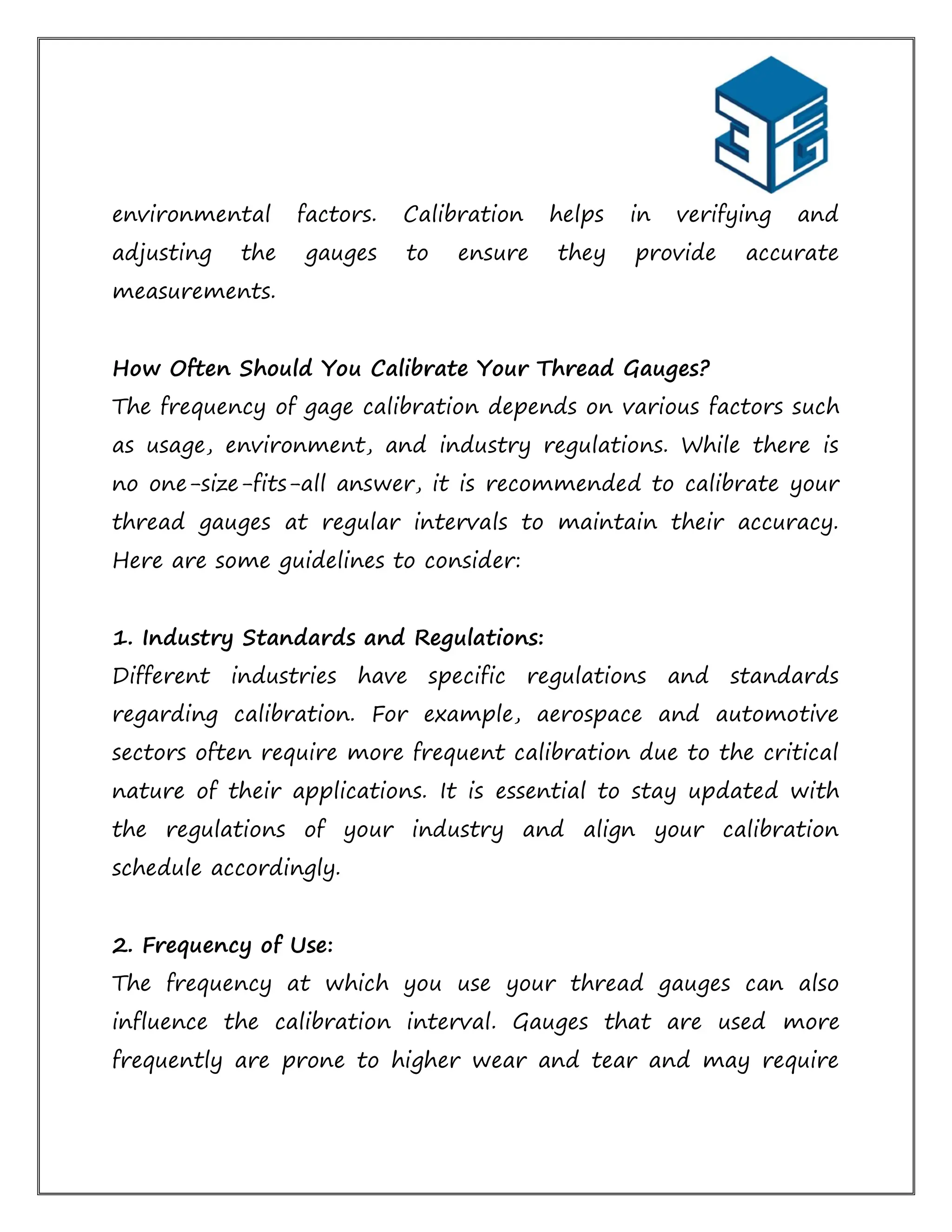
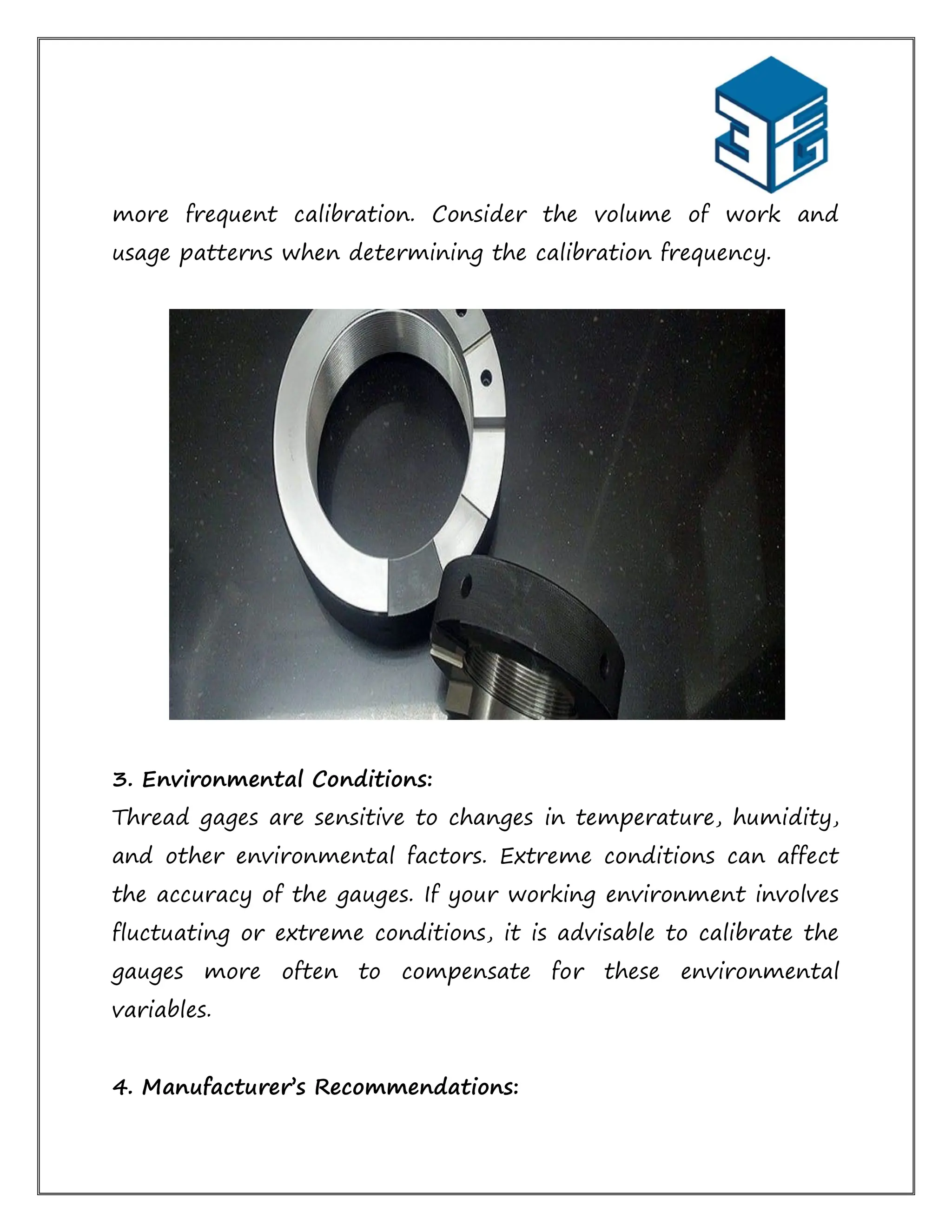
Thread gauges are used to measure the thread characteristics of
screws, nuts, and bolts. They help in determining the pitch,
diameter, and other important parameters that ensure the
proper fit and functionality of threaded components. Over time,
these gauges can lose accuracy due to wear and tear or
environmental factors. Calibration helps in verifying and
adjusting the gauges to ensure they provide accurate
measurements.
How Often Should You Calibrate Your Thread Gauges?
The frequency of gage calibration depends on various factors such
as usage, environment, and industry regulations. While there is
no one-size-fits-all answer, it is recommended to calibrate your
thread gauges at regular intervals to maintain their accuracy.
Here are some guidelines to consider:
1. Industry Standards and Regulations:
Different industries have specific regulations and standards
regarding calibration. For example, aerospace and automotive
sectors often require more frequent calibration due to the critical
nature of their applications. It is essential to stay updated with
the regulations of your industry and align your calibration
schedule accordingly.
2. Frequency of Use:
The frequency at which you use your thread gauges can also
influence the calibration interval. Gauges that are used more
frequently are prone to higher wear and tear and may require
more frequent calibration. Consider the volume of work and
usage patterns when determining the calibration frequency.
3. Environmental Conditions:
Thread gages are sensitive to changes in temperature, humidity,
and other environmental factors. Extreme conditions can affect
the accuracy of the gauges. If your working environment involves
fluctuating or extreme conditions, it is advisable to calibrate the
gauges more often to compensate for these environmental
variables.
4. Manufacturer’s Recommendations:
The manufacturer of your thread gauges can provide valuable
insights regarding calibration frequency. They are familiar with
the gauge’s specifications and performance characteristics. It’s
essential to follow the manufacturer’s recommendations to
ensure optimal performance and accuracy.
5. Calibration History:
Maintaining a record of past calibrations can help identify
patterns and determine the optimal calibration interval. If you
notice a trend of gauges losing accuracy sooner than expected, it
may be necessary to increase the frequency of calibration.
Regular calibration history analysis can provide insights into the
performance of your gauges.
Benefits of Regular Thread Gauge Calibration
Regular thread gage calibration offers several benefits that
directly impact the quality and productivity of your operations.
Here are some key advantages:
1. Accuracy and Consistency:
Calibration guarantees that your thread gauges provide accurate
and consistent measurements. This ensures that the threaded
components fit together correctly, minimizing rework, and
enhancing overall product quality.
2. Compliance with Standards and Regulations:
Adhering to industry standards and regulations is crucial for
maintaining product quality and meeting customer expectations.
Regular calibration helps you comply with these requirements
and ensures that your products meet the necessary standards.
3. Cost Savings:
Calibrating your thread gauges regularly helps detect any
deviations or inaccuracies early on. This allows for timely
adjustments, avoiding defective or non-functional products. By
preventing errors and minimizing rework, calibration contributes
to cost savings in the long run.
4. Improved Customer Satisfaction:
Accurate measurements and quality products result in improved
customer satisfaction. When your thread gauges are calibrated
regularly, you can provide reliable and high-quality products
that meet or exceed customer expectations.
Conclusion:
Thread gauge calibration is a critical aspect of maintaining
accuracy and reliability in measurement. The frequency of
calibration depends on various factors, including industry
regulations, frequency of use, environmental conditions,
manufacturer’s recommendations, and calibration history. By
calibrating your thread gauges regularly, you ensure accuracy,
comply with regulations, save costs, and enhance customer
satisfaction. Make thread gauge calibration a priority and reap
the benefits of precise measurements in your operations.
To Know More Visit:
https://thirdcoastgage.com/calibration-services/thread-
gage-calibration/

The Essential Guide to Calibration Your Thread Gauges (1).pdf

  • 1.
    The Essential Guideto Calibration Your Thread Gauges When it comes to ensuring accuracy and precision in measurement, calibration is of utmost importance. Thread gauges play a crucial role in various industries, including manufacturing, automotive, and aerospace. To maintain the quality and reliability of your thread gauges, it is essential to calibrate them regularly. In this article, we will explore the significance of thread gauge calibration and discuss how often it should be done. Thread Gauge Calibration: Ensuring Accuracy and Reliability Thread gauges are used to measure the thread characteristics of screws, nuts, and bolts. They help in determining the pitch, diameter, and other important parameters that ensure the proper fit and functionality of threaded components. Over time, these gauges can lose accuracy due to wear and tear or
  • 2.
    environmental factors. Calibrationhelps in verifying and adjusting the gauges to ensure they provide accurate measurements. How Often Should You Calibrate Your Thread Gauges? The frequency of gage calibration depends on various factors such as usage, environment, and industry regulations. While there is no one-size-fits-all answer, it is recommended to calibrate your thread gauges at regular intervals to maintain their accuracy. Here are some guidelines to consider: 1. Industry Standards and Regulations: Different industries have specific regulations and standards regarding calibration. For example, aerospace and automotive sectors often require more frequent calibration due to the critical nature of their applications. It is essential to stay updated with the regulations of your industry and align your calibration schedule accordingly. 2. Frequency of Use: The frequency at which you use your thread gauges can also influence the calibration interval. Gauges that are used more frequently are prone to higher wear and tear and may require
  • 3.
    more frequent calibration.Consider the volume of work and usage patterns when determining the calibration frequency. 3. Environmental Conditions: Thread gages are sensitive to changes in temperature, humidity, and other environmental factors. Extreme conditions can affect the accuracy of the gauges. If your working environment involves fluctuating or extreme conditions, it is advisable to calibrate the gauges more often to compensate for these environmental variables. 4. Manufacturer’s Recommendations:
  • 4.
    The manufacturer ofyour thread gauges can provide valuable insights regarding calibration frequency. They are familiar with the gauge’s specifications and performance characteristics. It’s essential to follow the manufacturer’s recommendations to ensure optimal performance and accuracy. 5. Calibration History: Maintaining a record of past calibrations can help identify patterns and determine the optimal calibration interval. If you notice a trend of gauges losing accuracy sooner than expected, it may be necessary to increase the frequency of calibration. Regular calibration history analysis can provide insights into the performance of your gauges. Benefits of Regular Thread Gauge Calibration Regular thread gage calibration offers several benefits that directly impact the quality and productivity of your operations. Here are some key advantages: 1. Accuracy and Consistency: Calibration guarantees that your thread gauges provide accurate and consistent measurements. This ensures that the threaded components fit together correctly, minimizing rework, and enhancing overall product quality.
  • 5.
    2. Compliance withStandards and Regulations: Adhering to industry standards and regulations is crucial for maintaining product quality and meeting customer expectations. Regular calibration helps you comply with these requirements and ensures that your products meet the necessary standards. 3. Cost Savings: Calibrating your thread gauges regularly helps detect any deviations or inaccuracies early on. This allows for timely adjustments, avoiding defective or non-functional products. By preventing errors and minimizing rework, calibration contributes to cost savings in the long run. 4. Improved Customer Satisfaction: Accurate measurements and quality products result in improved customer satisfaction. When your thread gauges are calibrated regularly, you can provide reliable and high-quality products that meet or exceed customer expectations. Conclusion: Thread gauge calibration is a critical aspect of maintaining accuracy and reliability in measurement. The frequency of calibration depends on various factors, including industry
  • 6.
    regulations, frequency ofuse, environmental conditions, manufacturer’s recommendations, and calibration history. By calibrating your thread gauges regularly, you ensure accuracy, comply with regulations, save costs, and enhance customer satisfaction. Make thread gauge calibration a priority and reap the benefits of precise measurements in your operations. To Know More Visit: https://thirdcoastgage.com/calibration-services/thread- gage-calibration/