The Design of Web APIs Second Edition MEAP V01 Arnaud Lauret
The Design of Web APIs Second Edition MEAP V01 Arnaud Lauret
The Design of Web APIs Second Edition MEAP V01 Arnaud Lauret
The Design of Web APIs Second Edition MEAP V01 Arnaud Lauret
The Design of Web APIs Second Edition MEAP V01 Arnaud Lauret
1.
The Design ofWeb APIs Second Edition MEAP V01
Arnaud Lauret download
https://ebookmeta.com/product/the-design-of-web-apis-second-
edition-meap-v01-arnaud-lauret/
Download full version ebook from https://ebookmeta.com
2.
We believe theseproducts will be a great fit for you. Click
the link to download now, or visit ebookmeta.com
to discover even more!
Peer-to-Peer Web Applications (MEAP V01) Steven Platt
https://ebookmeta.com/product/peer-to-peer-web-applications-
meap-v01-steven-platt/
CSS in Depth, Second Edition (MEAP V01) Keith Grant
https://ebookmeta.com/product/css-in-depth-second-edition-
meap-v01-keith-grant/
Building Web APIs with ASP.NET Core (MEAP Version 11)
Valerio De Sanctis
https://ebookmeta.com/product/building-web-apis-with-asp-net-
core-meap-version-11-valerio-de-sanctis/
Rust in Action MEAP Ver 16 1st Edition Ts Mcnamara
https://ebookmeta.com/product/rust-in-action-meap-ver-16-1st-
edition-ts-mcnamara/
3.
Football For DummiesUSA Edition 7th Edition John
Czarnecki John Czarnecki
https://ebookmeta.com/product/football-for-dummies-usa-
edition-7th-edition-john-czarnecki-john-czarnecki/
Urban Agri Cultural Heritage Frank Lohrberg
https://ebookmeta.com/product/urban-agri-cultural-heritage-frank-
lohrberg/
Sex Crimes Research and Realities 2nd Edition Donna
Vandiver
https://ebookmeta.com/product/sex-crimes-research-and-
realities-2nd-edition-donna-vandiver-3/
Solve Any Data Analysis Problem MEAP V02 David Asboth
https://ebookmeta.com/product/solve-any-data-analysis-problem-
meap-v02-david-asboth/
Everyday Data Visualization (MEAP V04) Desiree Abbott
https://ebookmeta.com/product/everyday-data-visualization-
meap-v04-desiree-abbott/
4.
The Avatar FacultyEcstatic Transformations in Religion
and Video Games 1st Edition Jeffrey G Snodgrass
https://ebookmeta.com/product/the-avatar-faculty-ecstatic-
transformations-in-religion-and-video-games-1st-edition-jeffrey-
g-snodgrass/
6.
The Design ofWeb APIs, Second
Edition
1. 1_What_is_API_design?
2. 2_Analyzing_needs
3. 3_Observing_operations_from_the_REST_angle
4. index
7.
1 What isAPI design?
This chapter covers
Explaining what web APIs are
Realizing the importance of the design of web APIs
Clarifying who designs web APIs, which ones should be
designed, and when
Comprehending the purpose of web API design
Overviewing the web API design process
What magic allows us to share pictures on social media, check bank
balances, and hail cabs from our phones? How can developers quickly
add telecom or payment services to their apps without expertise?
What do basic web or mobile apps need to display data to users?
Web application programming interfaces or APIs.
Web APIs are essential in our connected world as they serve as
technical interfaces or products for various systems, organizations,
and companies, from small startups to large corporations and
government entities. API design is crucial for the success of any
system, whether its APIs are visible or hidden. Poorly designed APIs
can negatively impact developers' productivity, the system’s
performance and integrity, end-users experience, and revenue.
Learning web API design requires a shared understanding of API and
design concepts. This chapter covers the different aspects of web
APIs, the importance of their design, and who designs them. It also
provides an overview of the API design process and our approach
that separates concerns to facilitate learning and execution.
1.1 What is a web API?
8.
Web APIs aresoftware interfaces that allow remote communication
between applications. They are invaluable because they don’t require
knowledge of the underlying code; anyone can use them, not just
their creators.
1.1.1 A remote web interface for applications
A web API enables one application (the server, backend, or provider)
to expose functions or operations that other applications (the client
or consumer) can use, call, or consume remotely over a network
using web technologies. For example, many mobile applications rely
on a remote server application accessible via the internet and its web
API to retrieve, send, or process data.
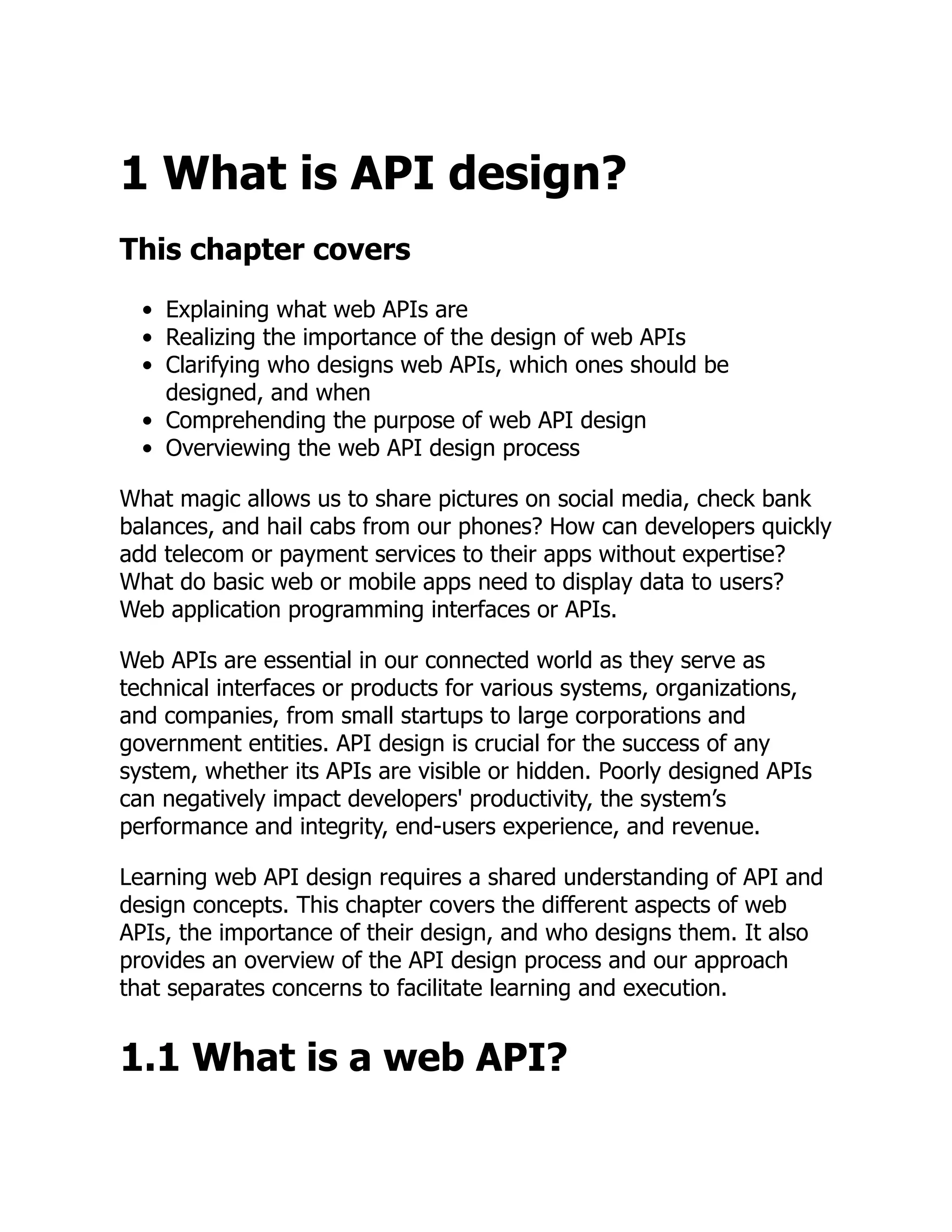
Figure 1.1 Using the Socnet mobile application
9.
Figure 1.1 showswhat happens when a user of the Socnet social
network shares a photo via its mobile application. The user takes a
photo, types a message, and taps the "Share" button. The mobile
application calls the "Share" operation of the server application’s web
API to send the message and the photo via the internet network. The
server application identifies the user’s friends in the photo and stores
the message, the identified friends, and the photo. Other users of the
Socnet mobile application can see the shared messages, photos, and
10.
identified people ontheir timelines thanks to a call to the "Timeline"
operation of the same web API.
When a mobile application communicates with a server application
via its web API, it leverages the same mechanism as when a web
browser retrieves and displays an HTML page of a basic website.
That’s the origin of the "web" in web APIs.
Note
There are different types of web APIs, such as REST, SOAP, GraphQL,
and gRPC. No worries if those names mean nothing to you; this book
focuses on REST web APIs, but many principles presented here apply
to other web APIs. What is a REST API and why we focus on it will be
explained in later chapters.
Web APIs can be exposed on any network and consumed by any
application. Socnet can use the same API in their web application,
create a batch server to regularly call the timeline operation, and
expose the next API version on their local network for quality checks
before deploying to production.
1.1.2 An interface to an implementation
We often use "web API" as a convenient shortcut to designate an
application exposing an API. However, the "web API" is only a part of
it. Reading this book, we should not confound the web API with the
application’s implementation or actual code. A web API is an interface
to an implementation and usually hides implementation details.
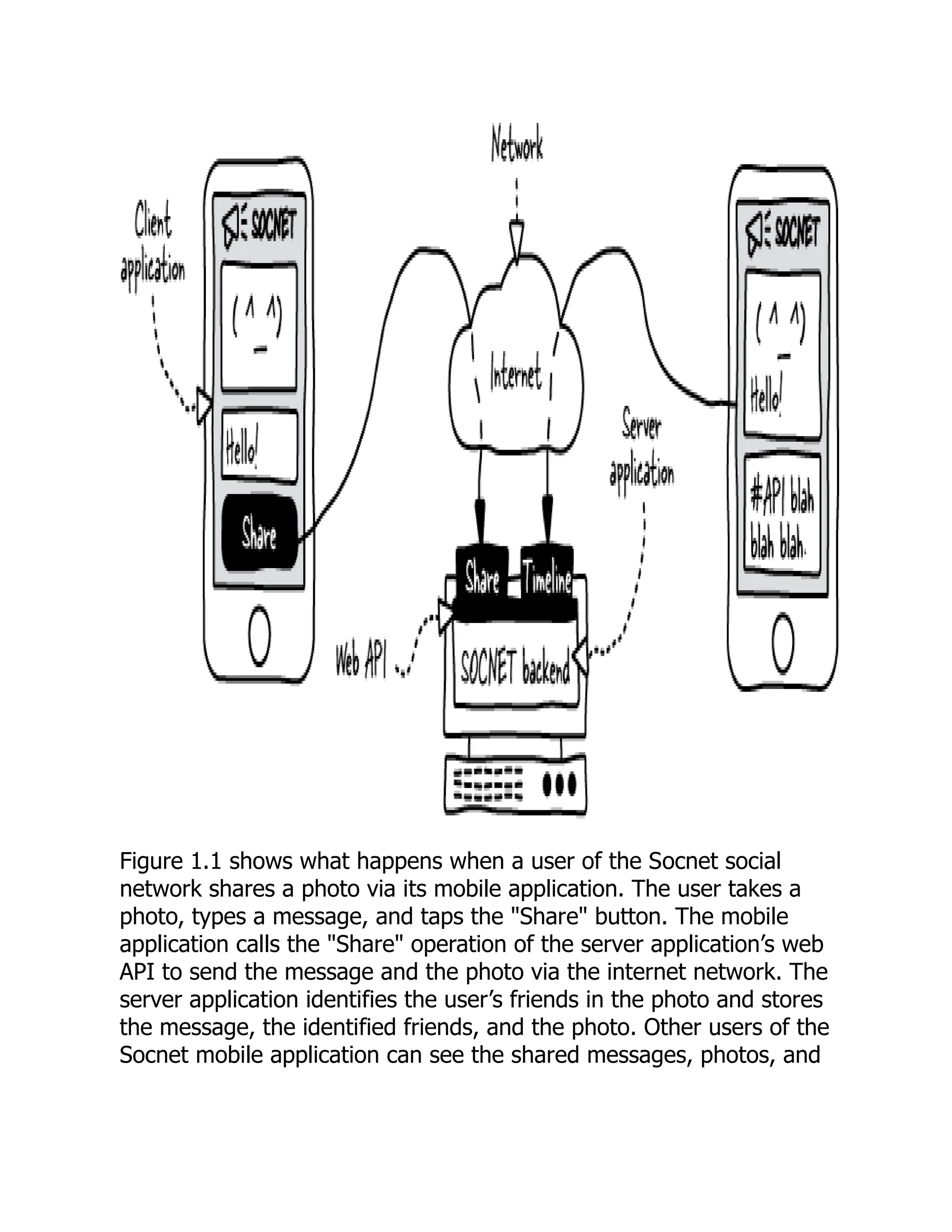
Figure 1.2 Comparing a restaurant and an application exposing a web
API
11.
As shown infigure 1.2, we can compare an API and its
implementation to a restaurant. The API is the waitperson who takes
your order and brings it back to you. The implementation is what
happens in the kitchen. You don’t need to know who is in the kitchen,
the recipe, its ingredients, how it’s cooked, and even if it’s cooked
there. You just need to know that you’ll get the dish you ordered.
The Socnet mobile developers code what happens on a tap of the
"share" button without knowing what happens behind the API.
Knowing which database is used, how data is organized, or which
12.
face detection algorithmis useless to them. They only need to code
the API call, providing the expected data, and the API
implementation takes care of the rest.
1.1.3 An interface for others
The fact that someone coding an application using a web API doesn’t
need to know how it is implemented has exciting consequences: it
enables collaboration within an organization and allows people
outside the organization to use and even pay for APIs.
At Socnet, three teams efficiently develop the backend API, mobile
app, and website with minimal need for synchronization or shared
knowledge. The mobile and web teams only need to know the
services or features provided by the backend API, not how it is
coded. To deliver a robust face detection feature, the backend API
team leveraged the "Face Detection API" from "Image Processing As
A Service" (for which they pay a subscription). Additionally, Socnet
set up a "Search API" for selected partners willing to pay for access
to more data.
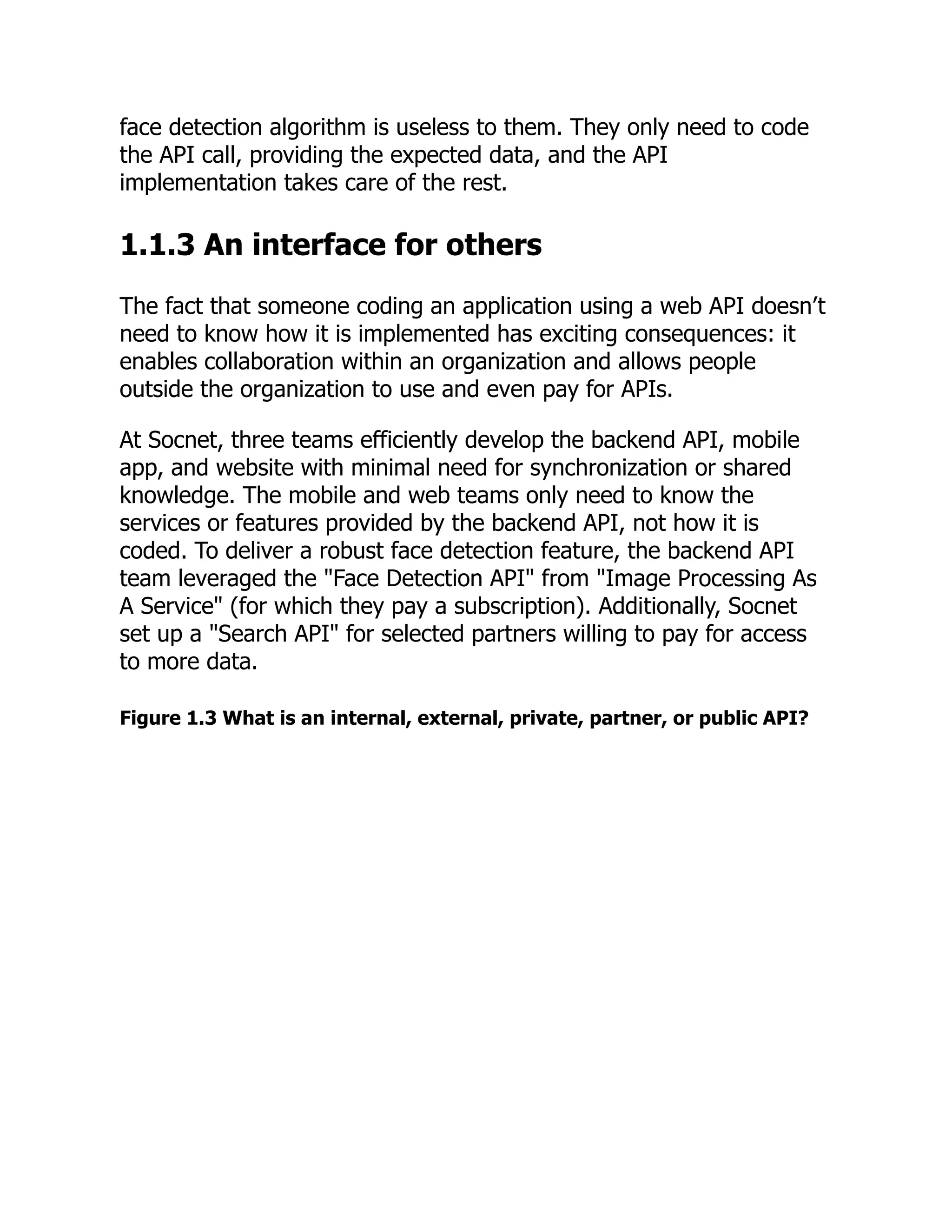
Figure 1.3 What is an internal, external, private, partner, or public API?
13.
The APIs involvedhere represent three levels of API openness (or
closeness): private (Backend API), partner (Search API), and public
(Face Detection API). Internal and external may be used to qualify
private and partner/public APIs, respectively. These terms may also
indicate that an API is exposed on a local network or the internet.
Figure 1.3 shows two tables disambiguating all these terms.
Most web APIs are private, and there are millions of them, as any
company with an IT system will need them. While many are
14.
consumed by thosewho create them, others across the organization
often use them.
Many organizations use partner or public APIs from others, which
may be qualified as products, and their access is often paid. These
APIs could be exposed by commercial or open-source software
installed on their infrastructure. Increasingly, companies offer "as-a-
service" products accessible via websites, mobile apps, and APIs, and
sometimes the API is the only channel. Examples include payroll,
retail, financial services, payments, telecommunications, project
management, development, and cloud infrastructure. Even not-so-
digital companies and government agencies offer partner or public
APIs. Whatever we need, "There’s an API for that."
1.2 Why does API design matter?
The term "design" can designate both the process we go through to
decide what an API does, how it does it, and how it looks like and the
final result, the API itself. As a result, the design of a web API
matters because it affects its consumers and provider. This section
leverages a real-world analogy to demonstrate how. Then, it explains
how this applies to web APIs and why designing them well is
essential.
1.2.1 The design of any interface affects its
users and creator
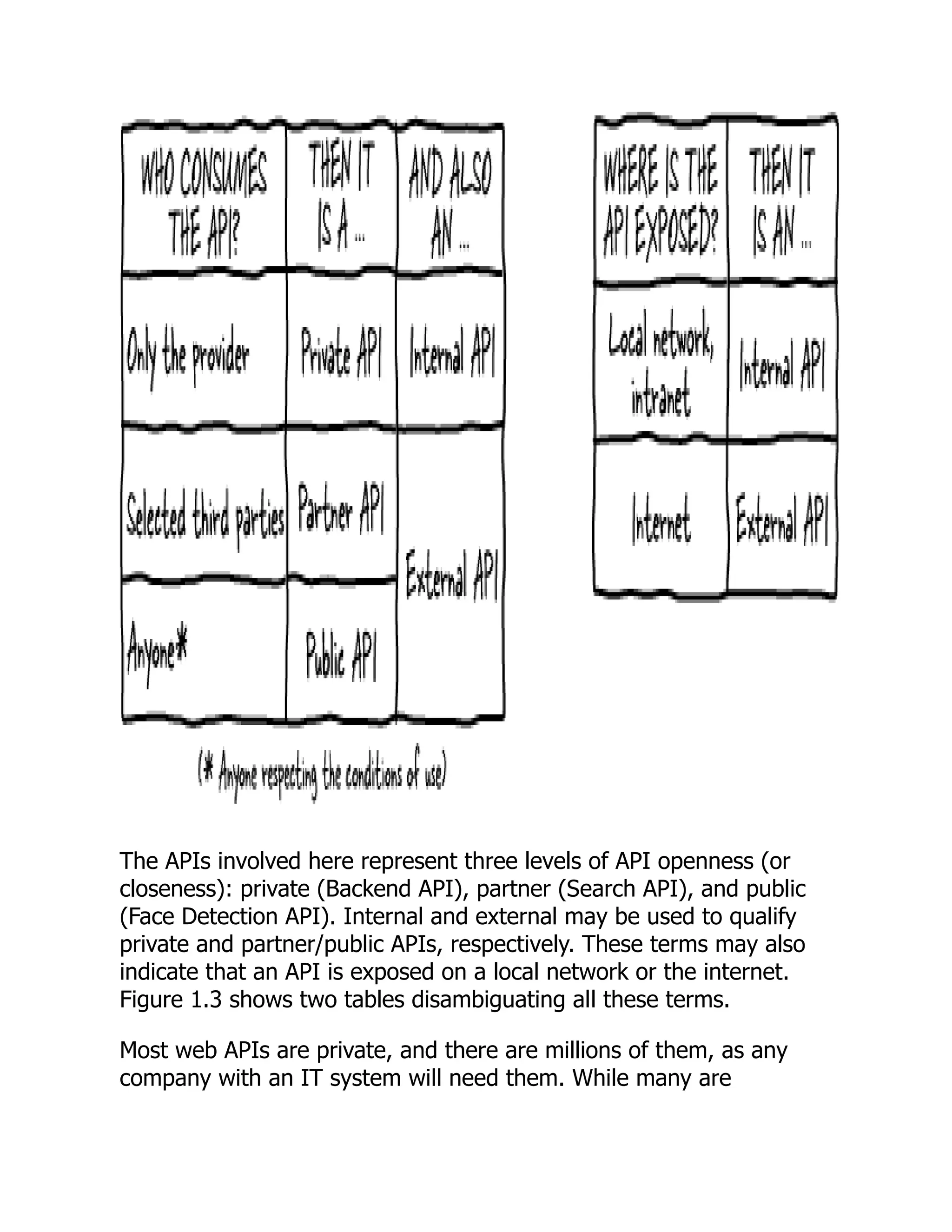
Figure 1.4 shows a Kitchen Radar. What is it, and how to operate it?
Its interface doesn’t help us figure this out. Pushing the "MAG."
button seems to start it, but it stops when we release it.
Figure 1.4 The Kitchen Radar
15.
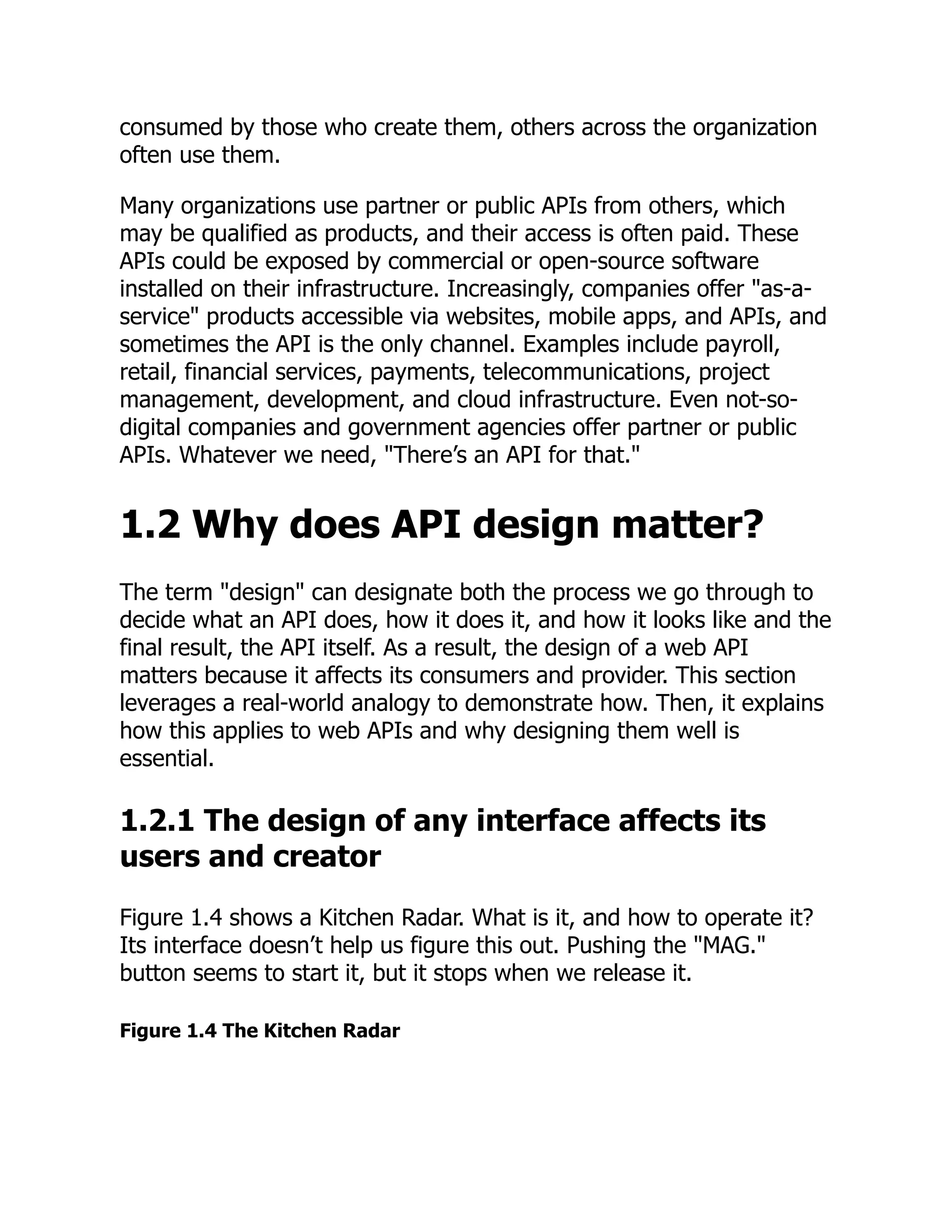
According to theuser manual, shown in figure 1.5, The Kitchen
Radar, named "Radar" for historical reasons, can heat food. The
"MAG." button turns the magnetron on and off. When on, microwaves
heat the food in the oven’s cavity. To modulate the heating power,
users must hold the button for a given time (e.g., 13 seconds) and
release it for the same time, as indicated in the "Heating power cheat
sheet."
This Kitchen Radar is a microwave oven proposing a terrible user
experience despite the user manual, thanks to its cryptic, inside-out,
16.
and absurd interface.It requires users to become experts in
magnetrons and time themselves pushing and releasing the button.
It’s complicated and annoying to use. And there may be reliability
and safety issues. How will the magnetron and overall circuitry react
to being turned on and off at a random or too high-speed rate?
Ultimately, who would buy this product?
Figure 1.5 The Kitchen Radar’s user manual
17.
1.2.2 The designof any web API affects both
consumers and provider
The design of the "Kitchen Radar" interface is an exaggeration of the
worst possible flaws you could find in an everyday object. And yet,
I’ve come across private, partner, or public APIs whose designs look
like this; they were hard to understand or use or were exposing inner
workings. Such API designs negatively impact consumers and
providers.
If an API is hard to understand, its purpose and features unclear,
developers may spend extra time integrating it, making more errors,
and asking many questions. Potential users may pass by if the API is
partner or public, leading to less revenue for the provider.
APIs that are easy to understand can still be hard to use. Developers
may spend extra time writing code to orchestrate complex API call
flows, resulting in more errors. Due to this complexity, they may
make many API calls, leading to unexpected extra load and costly
cloud infrastructure billing. If the API is public or partner-based, users
may cancel their subscription when they realize how complicated it is.
An API design exposing the implementation’s inner workings is often
hard to use and understand. But more than that, it creates tight
coupling between applications, prolongs modification, and augments
the risk of errors or crashes.
1.2.3 Taking care of design unleashes the
power of APIs
Taking care of web API design prevents the previous section’s issues
and unleashes their power. Here are some benefits you may witness:
Better developer productivity: Well-designed APIs are much
easier to understand and use. Additionally, they offer greater
18.
flexibility and interoperability,requiring less effort to interpret
their data. Developers can integrate them into their applications
quickly and with minimal code.
More modular and efficient systems: Well-designed APIs allow
the creation of decoupled systems where the applications
consuming and providing APIs have limited dependencies. They
may also contribute to reducing infrastructure usage.
Faster time to value: Developers can achieve their goals quickly
by using well-designed APIs that are versatile and reusable in
various contexts, allowing for creating innovative solutions
without rebuilding everything.
Better end-user experience: Well-designed APIs provide features
efficiently and flexibly that can contribute to creating an
outstanding experience for the end-users of the applications
using them.
More API-generated value: Well-designed APIs can increase
indirect and direct value by reducing development costs and
increasing revenue through customer satisfaction.
1.3 Who designs web API?
API design matters, but who can design web APIs? You! But probably
not alone. API design requires diverse skills and knowledge, often
resulting from different people’s work. Those with API design skills,
IT and subject-matter knowledge, and influence can all contribute
directly or indirectly to the design of an API.
1.3.1 Those with API design skills
API designers lead the discussions and hold the pen when designing
web APIs. They come from various backgrounds and have different
skill sets. I’ve worked with, advised, and trained API designers from
various profiles, including developers, tech leads, architects, business
analysts, tech writers, QA engineers, product managers, and product
19.
owners. Some startedas juniors, while others began after long
careers.
While having a thorough understanding of the subject matter and
software is undoubtedly an advantage, it is not a requirement for
designing APIs. As an API designer, you only need to know the
fundamental principles of API design and how to get the necessary
information. This book will teach you that.
1.3.2 Those with subject-matter knowledge
APIs solve specific problems like social networking, banking, product
catalogs, or database as a service system administration. As an API
designer, you don’t need to be an expert in the subject matter. Like
when creating any application, by interviewing SMEs (subject matter
experts), you can ensure your API accurately represents the business
domain and its problems.
1.3.3 Those with software knowledge
Web APIs are programming interfaces for software. Designing one
requires familiarity with web API-based systems and specific
knowledge about the system that will expose the API.
Knowing the principles, practices, and limitations of web API-based
software in general and web and mobile applications, in particular,
will significantly help design realistic, implementable, and technically
usable APIs. For example, some API design patterns may kill a
smartphone battery, and others can make an API more effortless to
use across many systems. We’ll uncover the typical general software
concerns you should consider when designing an API and how to
avoid or mitigate them in your designs.
Knowing the system behind a web API can be helpful. For instance, if
the application responsible for detecting faces takes a minute to
earth itself, whichhad witnessed the murder, spoke to Lugh, and
told him everything. So Lugh dug up his father’s corpse, and made
certain how he had come to his death; then he mourned over him,
and laid him back in the earth, and heaped a barrow over him, and
set up a pillar with his name on it in “ogam”.[118]
He went back to Tara, and entered the great hall. It was filled with
the people of the goddess Danu, and among them Lugh saw the
three sons of Tuirenn. So he shook the “chiefs’ chain”, with which
the Gaels used to ask for a hearing in an assembly, and when all
were silent, he said:
“People of the goddess Danu, I ask you a question. What would be
the vengeance that any of you would take upon one who had
murdered his father?”
A great astonishment fell upon them, and Nuada, their king, said:
“Surely it is not your father that has been murdered?”
“It is,” replied Lugh. “And I am looking at those who murdered him;
and they know how they did it better than I do.”
Then Nuada declared that nothing short of hewing the murderer of
his father limb from limb would satisfy him, and all the others said
the same, including the sons of Tuirenn.
“The very ones who did the deed say that,” cried Lugh. “Then let
them not leave the hall till they have settled with me about the
blood-fine to be paid for it.”
“If it was I who had killed your father,” said the king, “I should think
myself lucky if you were willing to accept a fine instead of
vengeance.”
The sons of Tuirenn took counsel together in whispers. Iuchar and
Iucharba were in favour of admitting their guilt, but Brian was afraid
that, if they confessed, Lugh would withdraw his offer to accept a
fine, and would demand their deaths. So he stood out, and said that,
though it was not they who had killed Cian, yet, sooner than remain
22.
under Lugh’s anger,as he suspected them, they would pay the same
fine as if they had.
“Certainly you shall pay the fine,” said Lugh, “and I will tell you what
it shall be. It is this: three apples; and a pig’s-skin; and a spear; and
two horses and a chariot; and seven pigs; and a hound-whelp; and a
cooking-spit; and three shouts on a hill: that is the fine, and, if you
think it is too much, I will remit some of it, but, if you do not think it
is too much, then pay it.”
“If it were a hundred times that,” replied Brian, “we should not think
it too much. Indeed, it seems so little that I fear there must be some
treachery concealed in it.”
“I do not think it too little,” replied Lugh. “Give me your pledge
before the people of the goddess Danu that you will pay it faithfully,
and I will give you mine that I will ask no more.”
So the sons of Tuirenn bound themselves before the Tuatha Dé
Danann to pay the fine to Lugh.
When they had sworn, and given sureties, Lugh turned to them
again. “I will now”, he said, “explain to you the nature of the fine
you have pledged yourselves to pay me, so that you may know
whether it is too little or not.” And, with foreboding hearts, the sons
of Tuirenn set themselves to listen.
“The three apples that I have demanded,” he began, “are three
apples from the Garden of the Hesperides, in the east of the world.
You will know them by three signs. They are the size of the head of
a month-old child, they are of the colour of burnished gold, and they
taste of honey. Wounds are healed and diseases cured by eating
them, and they do not diminish in any way by being eaten. Whoever
casts one of them hits anything he wishes, and then it comes back
into his hand. I will accept no other apples instead of these. Their
owners keep them perpetually guarded because of a prophecy that
three young warriors from the west of the world will come to take
them by force, and, brave as you may be, I do not think that you will
ever get them.
23.
“The pig’s-skin thatI have demanded is the pig’s-skin of Tuis, King
of Greece. It has two virtues: its touch perfectly cures all wounded
or sick persons if only there is any life still left in them; and every
stream of water through which it passes is turned into wine for nine
days. I do not think that you will get it from the King of Greece,
either with his consent or without it.
“And can you guess what spear it is that I have demanded?” asked
Lugh. “We cannot,” they said. “It is the poisoned spear of Pisear[119]
,
King of Persia; it is irresistible in battle; it is so fiery that its blade
must always be held under water, lest it destroy the city in which it is
kept. You will find it very difficult to obtain.
“And the two horses and the chariot are the two wonderful horses of
Dobhar[120]
, King of Sicily, which run equally well over land and sea;
there are no other horses in the world like them, and no other
vehicle equal to the chariot.
“And the seven pigs are the pigs of Easal[121]
, King of the Golden
Pillars; though they may be killed every night, they are found alive
again the next day, and every person that eats part of them can
never be afflicted with any disease.
“And the hound-whelp I claim is the hound-whelp of the King of
Ioruaidhe[122]
; her name is Failinis; every wild beast she sees she
catches at once. It will not be easy for you to secure her.
“The cooking-spit which you must get for me is one of the cooking-
spits of the women of the Island of Fianchuivé[123]
, which is at the
bottom of the sea, between Erin and Alba.
“You have also pledged yourselves to give three shouts upon a hill.
The hill upon which they must be given is the hill called Cnoc
Miodhchaoin[124]
, in the north of Lochlann[125]
. Miodhchaoin and his
sons do not allow shouts to be given on that hill; besides this, it was
they who gave my father his military education, and, even if I were
to forgive you, they would not; so that, though you achieve all the
other adventures, I think that you will fail in this one.
24.
“Now you knowwhat sort of a fine it is that you have bargained to
pay me,” said Lugh.
And fear and astonishment fell upon the sons of Tuirenn.
This tale is evidently the work of some ancient Irish story-teller who
wished to compile from various sources a more or less complete
account of how the Gaelic gods obtained their legendary
possessions. The spear of Pisear, King of Persia, is obviously the
same weapon as the lance of Lugh, which another tradition
describes as having been brought by the Tuatha Dé Danann from
their original home in the city of Gorias;[126]
Failinis, the whelp of the
King of Ioruaidhe, is Lugh’s “hound of mightiest deeds”, which was
irresistible in battle, and which turned any running water it bathed in
into wine,[127]
a property here transferred to the magic pig’s-skin of
King Tuis: the seven swine of the King of the Golden Pillars must be
the same undying porkers from whose flesh Manannán mac Lir
made the “Feast of Age” which preserved the eternal youth of the
gods;[128]
it was with horses and chariot that ran along the surface of
the sea that Manannán used to journey to and fro between Erin and
the Celtic Elysium in the West;[129]
the apples that grew in the
Garden of the Hesperides were surely of the same celestial growth
as those that fed the inhabitants of that immortal country;[130]
while
the cooking-spit reminds us of three such implements at Tara, made
by Goibniu and associated with the names of the Dagda and the
Morrígú.[131]
The burden of collecting all these treasures was placed upon the
shoulders of the three sons of Tuirenn.
They consulted together, and agreed that they could never hope to
succeed unless they had Manannán’s magic horse, “Splendid Mane”,
and Manannán’s magic coracle, “Wave-sweeper”. But both these had
been lent by Manannán to Lugh himself. So the sons of Tuirenn were
obliged to humble themselves to beg them from Lugh. The sun-god
would not lend them the horse, for fear of making their task too
easy, but he let them have the boat, because he knew how much
the spear of Pisear and the horses of Dobhar would be needed in
25.
the coming warwith the Fomors. They bade farewell to their father,
and went down to the shore and put out to sea, taking their sister
with them.
“Which portion of the fine shall we seek first?” said the others to
Brian. “We will seek them in the order in which they were
demanded,” he replied. So they directed the magic boat to sail to the
Garden of the Hesperides, and presently they arrived there.
They landed at a harbour, and held a council of war. It was decided
that their best chance of obtaining three of the apples would be by
taking the shapes of hawks. Thus they would have strength enough
in their claws to carry the apples away, together with sufficient
quickness upon the wing to hope to escape the arrows, darts, and
sling-stones which would be shot and hurled at them by the warders
of the garden.
They swooped down upon the orchard from above. It was done so
swiftly that they carried off the three apples, unhit either by shaft or
stone. But their difficulties were not yet over. The king of the country
had three daughters who were well skilled in witchcraft. By sorcery
they changed themselves into three ospreys, and pursued the three
hawks. But the sons of Tuirenn reached the shore first, and,
changing themselves into swans, dived into the sea. They came up
close to their coracle, and got into it, and sailed swiftly away with
the spoil.
Thus their first quest was finished, and they voyaged on to Greece,
to seek the pig’s-skin of King Tuis. No one could go without some
excuse into a king’s court, so they decided to disguise themselves as
poets, and to tell the door-keeper that they were professional bards
from Erin, seeking largess at the hands of kings. The porter let them
into the great hall, where the poets of Greece were singing before
the king.
When those had all finished, Brian rose, and asked permission to
show his art. This was accorded; and he sang:
26.
“O Tuis, weconceal not thy fame.
We praise thee as the oak above the kings;
The skin of a pig, bounty without hardness!
This is the reward which I ask for it.
“A stormy host and raging sea
Are a dangerous power, should one oppose it.
The skin of a pig, bounty without hardness!
This is the reward I ask, O Tuis.”
“That is a good poem,” said the king, “only I do not understand it.”
“I will explain it,” said Brian. “‘We praise thee as the oak above the
kings’; this means that, as the oak excels all other trees, so do you
excel all other kings in nobility and generosity. ‘The skin of a pig,
bounty without hardness’; that is a pig’s-skin which you have, O
Tuis, and which I should like to receive as the reward of my poem. ‘A
stormy host and raging sea are a dangerous power, should one
oppose it’; this means to say, that we are not used to going without
anything on which we have set our hearts, O Tuis.”
“I should have liked your poem better,” replied the king, “if my pig’s-
skin had not been mentioned in it. It was not a wise thing for you to
have done, O poet. But I will measure three fills of red gold out of
the skin, and you shall have those.”
“May all good be thine, O King!” answered Brian. “I knew that I
should get a noble reward.”
So the king sent for the pig’s-skin to measure out the gold with. But,
as soon as Brian saw it, he seized it with his left hand, and slew the
man who was holding it, and Iuchar and Iucharba also hacked about
them; and they cut their way down to the boat, leaving the King of
Greece among the dead behind them.
“And now we will go and get King Pisear’s spear,” said Brian. So,
leaving Greece, they sailed in their coracle to Persia.
27.
Their plan ofdisguising themselves as poets had served them so
well that they decided to make use of it again. So they went into the
King of Persia’s hall in the same way as they had entered that of the
King of Greece. Brian first listened to the poets of Persia singing;
then he sang his own song:
“Small the esteem of any spear with Pisear;
The battles of foes are broken;
No oppression to Pisear;
Everyone whom he wounds.
“A yew-tree, the finest of the wood,
It is called King without opposition.
May that splendid shaft drive on
Yon crowd into their wounds of death.”
“That is a good poem, O man of Erin,” said the king, “but why is my
spear mentioned in it?”
“The meaning is this,” replied Brian: “I should like to receive that
spear as a reward for my poem.”
“You make a rash request,” said the king. “If I spare your life after
having heard it, it will be a sufficient reward for your poem.”
Brian had one of the magic apples in his hand, and he remembered
its boomerang-like quality. He hurled it full in the King of Persia’s
face, dashing out his brains. The Persians flew to arms, but the three
sons of Tuirenn conquered them, and made them yield up the spear.
They had now to travel to Sicily, to obtain the horses and chariot of
King Dobhar. But they were afraid to go as poets this time, for fear
the fame of their deeds might have got abroad. They therefore
decided to pretend to be mercenary soldiers from Erin, and offer the
King of Sicily their service. This, they thought, would be the easiest
way of finding out where the horses and the chariot were kept. So
they went and stood on the green before the royal court.
28.
When the Kingof Sicily heard that there had come mercenaries from
Erin, seeking wages from the kings of the world, he invited them to
take service with him. They agreed; but, though they stayed with
him a fortnight and a month, they never saw the horses, or even
found out where they were kept. So they went to the king, and
announced that they wished to leave him.
“Why?” he asked, for he did not want them to go.
“We will tell you, O King!” replied Brian. “It is because we have not
been honoured with your confidence, as we have been accustomed
with other kings. You have two horses and a chariot, the best in the
world, and we have not even been allowed to see them.”
“I would have shown them to you on the first day if you had asked
me,” said the king; “and you shall see them at once, for I have
seldom had warriors with me so good as you are, and I do not wish
you to leave me.”
So he sent for the steeds, and had them yoked to the chariot, and
the sons of Tuirenn were witnesses of their marvellous speed, and
how they could run equally well over land or water.
Brian made a sign to his brothers, and they watched their
opportunity carefully, and, as the chariot passed close beside them,
Brian leaped into it, hurling its driver over the side. Then, turning the
horses, he struck King Dobhar with Pisear’s spear, and killed him. He
took his two brothers up into the chariot and they drove away.
By the time the sons of Tuirenn reached the country of Easal, King of
the Pillars of Gold, rumour had gone before them. The king came
down to the harbour to meet them, and asked them if it were really
true that so many kings had fallen at their hands. They replied that
it was true, but that they had no quarrel with any of them; only they
must obtain at all costs the fine demanded by Lugh. Then Easal
asked them why they had come to his land, and they told him that
they needed his seven pigs to add to the tribute. So Easal thought it
better to give them up, and to make friends with the three sons of
29.
Tuirenn, than tofight with such warriors. The sons of Tuirenn were
very glad at this, for they were growing weary of battles.
It happened that the King of Ioruaidhe, who had the hound-whelp
that Lugh had demanded, was the husband of King Easal’s daughter.
Therefore King Easal did not wish that there should be fighting
between him and the three sons of Tuirenn. He proposed to Brian
and his brothers that he should sail with them to Ioruaidhe, and try
to persuade the king of the country to give up the hound-whelp
peacefully. They consented, and all set foot safely on the “delightful,
wonderful shores of Ioruaidhe”,[132]
as the manuscript calls them. But
King Easal’s son-in-law would not listen to reason. He assembled his
warriors, and fought; but the sons of Tuirenn defeated them, and
compelled their king to yield up the hound-whelp as the ransom for
his life.
All these quests had been upon the earth, but the next was harder.
No coracle, not even Manannán’s “Wave-sweeper”, could penetrate
to the Island of Fianchuivé, in the depths of the sea that severs Erin
from Alba. So Brian left his brothers, and put on his “water-dress,
with his transparency of glass upon his head”—evidently an ancient
Irish anticipation of the modern diver’s dress. Thus equipped, he
explored the bottom of the sea for fourteen days before he found
the island. But when at last he reached it, and entered the hall of its
queen, she and her sea-maidens were so amazed at Brian’s
hardihood in having penetrated to their kingdom that they presented
him with the cooking-spit, and sent him back safe.
By this time, Lugh had found out by his magic arts that the sons of
Tuirenn had obtained all the treasures he had demanded as the
blood-fine. He desired to get them safely into his own custody
before his victims went to give their three shouts upon
Miodhchaoin’s Hill. He therefore wove a druidical spell round them,
so that they forgot the rest of their task altogether, and sailed back
to Erin. They searched for Lugh, to give him the things, but he had
gone away, leaving word that they were to be handed over to
Nuada, the Tuatha Dé Danann king. As soon as they were in safe-
30.
keeping, Lugh cameback to Tara and found the sons of Tuirenn
there. And he said to them:
“Do you not know that it is unlawful to keep back any part of a
blood-fine? So have you given those three shouts upon
Miodhchaoin’s Hill?”
Then the magic mist of forgetfulness fell from them, and they
remembered. Sorrowfully they went back to complete their task.
Miodhchaoin[133]
himself was watching for them, and, when he saw
them land, he came down to the beach. Brian attacked him, and
they fought with the swiftness of two bears and the ferocity of two
lions until Miodhchaoin fell.
Then Miodhchaoin’s three sons—Corc, Conn, and Aedh—came out to
avenge their father, and they drove their spears through the bodies
of the three sons of Tuirenn. But the three sons of Tuirenn also
drove their spears through the bodies of the three sons of
Miodhchaoin.
The three sons of Miodhchaoin were killed, and the three sons of
Tuirenn were so sorely wounded that birds might have flown through
their bodies from one side to the other. Nevertheless Brian was still
able to stand upright, and he held his two brothers, one in each
hand, and kept them on their feet, and, all together, they gave three
faint, feeble shouts.
Their coracle bore them, still living, to Erin. They sent their father
Tuirenn as a suppliant to Lugh, begging him to lend them the magic
pig’s-skin to heal their wounds.
But Lugh would not, for he had counted upon their fight with the
sons of Miodhchaoin to avenge his father Cian’s death. So the
children of Tuirenn resigned themselves to die, and their father
made a farewell song over them and over himself, and died with
them.
Thus ends that famous tale—“The Fate of the Sons of Tuirenn”,
known as one of the “Three Sorrowful Stories of Erin”.[134]
32.
CHAPTER IX
THE WARWITH THE GIANTS
[135]
By this time the seven years of preparation had come to an end. A
week before the Day of Samhain, the Morrígú discovered that the
Fomors had landed upon Erin. She at once sent a messenger to tell
the Dagda, who ordered his druids and sorcerers to go to the ford of
the River Unius, in Sligo, and utter incantations against them.
The people of the goddess Danu, however, were not yet quite ready
for battle. So the Dagda decided to visit the Fomorian camp as an
ambassador, and, by parleying with them, to gain a little more time.
The Fomors received him with apparent courtesy, and, to celebrate
his coming, prepared him a feast of porridge; for it was well-known
how fond he was of such food. They poured into their king’s
cauldron, which was as deep as five giant’s fists, fourscore gallons of
new milk, with meal and bacon in proportion. To this they added the
whole carcasses of goats, sheep, and pigs; they boiled the mixture
together, and poured it into a hole in the ground. “Now,” said they,
“if you do not eat it all, we shall put you to death, for we will not
have you go back to your own people and say that the Fomors are
inhospitable.” But they did not succeed in frightening the Dagda. He
took his spoon, which was so large that two persons of our puny size
might have reclined comfortably in the middle of it, dipped it into the
porridge, and fished up halves of salted pork and quarters of bacon.
“If it tastes as good as it smells,” he said, “it is good fare.” And so it
proved; for he ate it all, and scraped up even what remained at the
bottom of the hole. Then he went away to sleep it off, followed by
33.
the laughter ofthe Fomors; for his stomach was so swollen with
food that he could hardly walk. It was larger than the biggest
cauldron in a large house, and stood out like a sail before the wind.
But the Fomors’ little practical joke upon the Dagda had given the
Tuatha Dé Danann time to collect their forces. It was on the eve of
Samhain that the two armies came face to face. Even then the
Fomors could not believe that the people of the goddess Danu would
offer them much resistance.
“Do you think they will really dare to give us battle?” said Bress to
Indech, the son of Domnu. “If they do not pay their tribute, we will
pound their bones for them,” he replied.
The war of gods and giants naturally mirrored the warfare of the
Gaels, in whose battles, as in those of most semi-barbarous people,
single combat figured largely. The main armies stood still, while,
every day, duels took place between ambitious combatants. But no
great warriors either of the Tuatha Dé Danann or of the Fomors took
part in them.
Sometimes a god, sometimes a giant would be the victor; but there
was a difference in the net results that astonished the Fomors. If
their own swords and lances were broken, they were of no more
use, and if their own champions were killed, they never came back
to life again; but it was quite otherwise with the people of the
goddess Danu. Weapons shattered on one day re-appeared upon the
next in as good condition as though they had never been used, and
warriors slain on one day came back upon the morrow unhurt, and
ready, if necessary, to be killed again.
The Fomors decided to send someone to discover the secret of these
prodigies. The spy they chose was Ruadan, the son of Bress and of
Brigit, daughter of the Dagda, and therefore half-giant and half-god.
He disguised himself as a Tuatha Dé Danann warrior, and went to
look for Goibniu. He found him at his forge, together with Luchtainé,
the carpenter, and Credné, the bronze-worker. He saw how Goibniu
forged lance-heads with three blows of his hammer, while Luchtainé
34.
cut shafts forthem with three blows of his axe, and Credné fixed the
two parts together so adroitly that his bronze nails needed no
hammering in. He went back and told the Fomors, who sent him
again, this time to try and kill Goibniu.
He reappeared at the forge, and asked for a javelin. Without
suspicion, Goibniu gave him one, and, as soon as he got it into his
hand, he thrust it through the smith’s body. But Goibniu plucked it
out, and, hurling it back at his assailant, mortally wounded him.
Ruadan went home to die, and his father Bress and his mother Brigit
mourned for him, inventing for the purpose the Irish “keening”.
Goibniu, on the other hand, took no harm. He went to the physician
Diancecht, who, with his daughter Airmid, was always on duty at a
miraculous well called the “spring of health”. Whenever one of the
Tuatha Dé Danann was killed or wounded, he was brought to the
two doctors, who plunged him into the wonder-working water, and
brought him back to life and health again.
The mystic spring was not long, however, allowed to help the people
of the goddess. A young Fomorian chief, Octriallach son of Indech,
found it out. He and a number of his companions went to it by night,
each carrying a large stone from the bed of the River Drowes. These
they dropped into the spring, until they had filled it, dispersed the
healing water, and formed a cairn above it. Legend has identified
this place by the name of the “Cairn of Octriallach”.
This success determined the Fomors to fight a pitched battle. They
drew out their army in line. There was not a warrior in it who had
not a coat of mail and a helmet, a stout spear, a strong buckler, and
a heavy sword. “Fighting the Fomors on that day”, says the old
author, “could only be compared to one of three things—beating
one’s head against a rock, or plunging it into a fire, or putting one’s
hand into a serpent’s nest.”
All the great fighters of the Tuatha Dé Danann were drawn out
opposite to them, except Lugh. A council of the gods had decided
that his varied accomplishments made his life too valuable to be
risked in battle. They had, therefore, left him behind, guarded by
35.
nine warriors. But,at the last moment, Lugh escaped from his
warders, and appeared in his chariot before the army. He made
them a patriotic speech. “Fight bravely,” he said, “that your servitude
may last no longer; it is better to face death than to live in vassalage
and pay tribute.” With these encouraging words, he drove round the
ranks, standing on tiptoe, so that all the Tuatha Dé Danann might
see him.
The Fomors saw him too, and marvelled. “It seems wonderful to
me,”[136]
said Bress to his druids, “that the sun should rise in the
west to-day and in the east every other day.” “It would be better for
us if it were so,” replied the druids. “What else can it be, then?”
asked Bress. “It is the radiance of the face of Lugh of the Long
Arms,” said they.
Then the two armies charged each other with a great shout. Spears
and lances smote against shields, and so great was the shouting of
the fighters, the shattering of shields, the clattering of swords, the
rattling of quivers, and the whistling of darts and javelins that it
seemed as if thunder rolled everywhere.
They fought so closely that the heads, hands, and feet of those on
one side were touching the heads, hands, and feet of those on the
other side; they shed so much blood on to the ground that it
became hard to stand on it without slipping; and the river of Unsenn
was filled with dead bodies, so hard and swift and bloody and cruel
was the battle.
Many great chiefs fell on each side. Ogma, the champion of the
Tuatha Dé Danann, killed Indech, the son of the goddess Domnu.
But, meanwhile, Balor of the Mighty Blows raged among the gods,
slaying their king, Nuada of the Silver Hand, as well as Macha, one
of his warlike wives. At last he met with Lugh. The sun-god shouted
a challenge to his grandfather in the Fomorian speech. Balor heard
it, and prepared to use his death-dealing eye.
“Lift up my eyelid,” he said to his henchmen, “that I may see this
chatterer who talks to me.”
36.
The attendants liftedBalor’s eye with a hook, and if the glance of
the eye beneath had rested upon Lugh, he would certainly have
perished. But, when it was half opened, Lugh flung a magic stone
which struck Balor’s eye out through the back of his head. The eye
fell on the ground behind Balor, and destroyed a whole rank of thrice
nine Fomors who were unlucky enough to be within sight of it.
An ancient poem has handed down the secret of this magic stone. It
is there called a tathlum, meaning a “concrete ball” such as the
ancient Irish warriors used sometimes to make out of the brains of
dead enemies hardened with lime.
“A tathlum, heavy, fiery, firm,
Which the Tuatha Dé Danann had with them,
It was that broke the fierce Balor’s eye,
Of old, in the battle of the great armies.
“The blood of toads and furious bears,
And the blood of the noble lion,
The blood of vipers and of Osmuinn’s trunks;—
It was of these the tathlum was composed.
“The sand of the swift Armorian sea,
And the sand of the teeming Red Sea;—
All these, being first purified, were used
In the composition of the tathlum.
“Briun, the son of Bethar, no mean warrior,
Who on the ocean’s eastern border reigned;—
It was he that fused, and smoothly formed,
It was he that fashioned the tathlum.
“To the hero Lugh was given
This concrete ball,—no soft missile;—
In Mag Tuireadh of shrieking wails,
From his hand he threw the tathlum.”[137]
37.
This blinding ofthe terrible Balor turned the fortunes of the fight; for
the Fomors wavered, and the Morrígú came and encouraged the
people of the goddess Danu with a song, beginning “Kings arise to
the battle”, so that they took fresh heart, and drove the Fomors
headlong back to their country underneath the sea.
Such was the battle which is called in Irish Mag Tuireadh na b-
Fomorach, that is to say, the “Plain of the Towers of the Fomors”,
and, more popularly, the “Battle of Moytura the Northern”, to
distinguish it from the other Battle of Moytura fought by the Tuatha
Dé Danann against the Fir Bolgs farther to the south. More of the
Fomors were killed in it, says the ancient manuscript, than there are
stars in the sky, grains of sand on the sea-shore, snow-flakes in
winter, drops of dew upon the meadows in spring-time, hailstones
during a storm, blades of grass trodden under horses’ feet, or
Manannán son of Lêr’s white horses, the waves of the sea, when a
tempest breaks. The “towers” or pillars said to mark the graves of
the combatants still stand upon the plain of Carrowmore, near Sligo,
and form, in the opinion of Dr. Petrie, the finest collection of
prehistoric monuments in the world, with the sole exception of
Carnac, in Brittany.[138]
Megalithic structures of almost every kind are
found among them—stone cairns with dolmens in their interiors,
dolmens standing open and alone, dolmens surrounded by one, two,
or three circles of stones, and circles without dolmens—to the
number of over a hundred. Sixty-four of such prehistoric remains
stand together upon an elevated plateau not more than a mile
across, and make the battle-field of Moytura, though the least
known, perhaps the most impressive of all primeval ruins. What they
really commemorated we may never know, but, in all probability, the
place was the scene of some important and decisive early battle, the
monuments marking the graves of the chieftains who were interred
as the result of it. Those which have been examined were found to
contain burnt wood and the half-burnt bones of men and horses, as
well as implements of flint and bone. The actors, therefore, were still
in the Neolithic Age. Whether the horses were domesticated ones
buried with their riders, or wild ones eaten at the funeral feasts, it
38.
would be hardto decide. The history of the real event must have
been long lost even at the early date when its relics were pointed
out as the records of a battle between the gods and the giants of
Gaelic myth.
The Tuatha Dé Danann, following the routed Fomors, overtook and
captured Bress. He begged Lugh to spare his life.
“What ransom will you pay for it?” asked Lugh.
“I will guarantee that the cows of Ireland shall always be in milk,”
promised Bress.
But, before accepting, Lugh took counsel with his druids.
“What good will that be,” they decided, “if Bress does not also
lengthen the lives of the cows?”
This was beyond the power of Bress to do; so he made another
offer.
“Tell your people,” he said to Lugh, “that, if they will spare my life,
they shall have a good wheat harvest every year.”
But they said: “We already have the spring to plough and sow in, the
summer to ripen the crops, the autumn for reaping, and the winter
in which to eat the bread; and that is all we want.”
Lugh told this to Bress. But he also said: “You shall have your life in
return for a much less service to us than that.”
“What is it?” asked Bress.
“Tell us when we ought to plough, when we ought to sow, and when
we ought to harvest.”
Bress replied: “You should plough on a Tuesday, sow on a Tuesday,
and harvest on a Tuesday.”
And this lying maxim (says the story) saved Bress’s life.
Lugh, the Dagda, and Ogma still pursued the Fomors, who had
carried off in their flight the Dagda’s harp. They followed them into
the submarine palace where Bress and Elathan lived, and there they
39.
saw the harphanging on the wall. This harp of the Dagda’s would
not play without its owner’s leave. The Dagda sang to it:
“Come, oak of the two cries!
Come, hand of fourfold music!
Come, summer! Come, winter!
Voice of harps, bellows[139]
, and flutes!”
For the Dagda’s harp had these two names; it was called “Oak of the
two cries” and “Hand of fourfold music”.
It leaped down from the wall, killing nine of the Fomors as it passed,
and came into the Dagda’s hand. The Dagda played to the Fomors
the three tunes known to all clever harpists—the weeping-tune, the
laughing-tune, and the sleeping-tune. While he played the weeping-
tune, they were bowed with weeping; while he played the laughing-
tune, they rocked with laughter; and when he played the sleeping-
tune, they all fell asleep. And while they slept, Lugh, the Dagda, and
Ogma got away safely.
Next, the Dagda brought the black-maned heifer which he had, by
the advice of Angus son of the Young, obtained from Bress. The
wisdom of Angus had been shown in this advice, for it was this very
heifer that the cattle of the people of the goddess Danu were
accustomed to follow, whenever it lowed. Now, when it lowed, all
the cattle which the Fomors had taken away from the Tuatha Dé
Danann came back again.
Yet the power of the Fomors was not wholly broken. Four of them
still carried on a desultory warfare by spoiling the corn, fruit, and
milk of their conquerors. But the Morrígú and Badb and Mider and
Angus pursued them, and drove them out of Ireland for ever.[140]
Last of all, the Morrígú and Badb went up on to the summits of all
the high mountains of Ireland, and proclaimed the victory. All the
lesser gods who had not been in the battle came round and heard
the news. And Badb sang a song which began:
40.
“Peace mounts tothe heavens,
The heavens descend to earth,
Earth lies under the heavens,
Everyone is strong ...”,
but the rest of it has been lost and forgotten.
Then she added a prophecy in which she foretold the approaching
end of the divine age, and the beginning of a new one in which
summers would be flowerless and cows milkless and women
shameless and men strengthless, in which there would be trees
without fruit and seas without fish, when old men would give false
judgments and legislators make unjust laws, when warriors would
betray one another, and men would be thieves, and there would be
no more virtue left in the world.









![earth itself, which had witnessed the murder, spoke to Lugh, and
told him everything. So Lugh dug up his father’s corpse, and made
certain how he had come to his death; then he mourned over him,
and laid him back in the earth, and heaped a barrow over him, and
set up a pillar with his name on it in “ogam”.[118]
He went back to Tara, and entered the great hall. It was filled with
the people of the goddess Danu, and among them Lugh saw the
three sons of Tuirenn. So he shook the “chiefs’ chain”, with which
the Gaels used to ask for a hearing in an assembly, and when all
were silent, he said:
“People of the goddess Danu, I ask you a question. What would be
the vengeance that any of you would take upon one who had
murdered his father?”
A great astonishment fell upon them, and Nuada, their king, said:
“Surely it is not your father that has been murdered?”
“It is,” replied Lugh. “And I am looking at those who murdered him;
and they know how they did it better than I do.”
Then Nuada declared that nothing short of hewing the murderer of
his father limb from limb would satisfy him, and all the others said
the same, including the sons of Tuirenn.
“The very ones who did the deed say that,” cried Lugh. “Then let
them not leave the hall till they have settled with me about the
blood-fine to be paid for it.”
“If it was I who had killed your father,” said the king, “I should think
myself lucky if you were willing to accept a fine instead of
vengeance.”
The sons of Tuirenn took counsel together in whispers. Iuchar and
Iucharba were in favour of admitting their guilt, but Brian was afraid
that, if they confessed, Lugh would withdraw his offer to accept a
fine, and would demand their deaths. So he stood out, and said that,
though it was not they who had killed Cian, yet, sooner than remain](https://image.slidesharecdn.com/131608-250710160955-ecf8e95b/75/The-Design-of-Web-APIs-Second-Edition-MEAP-V01-Arnaud-Lauret-21-2048.jpg)
![“The pig’s-skin that I have demanded is the pig’s-skin of Tuis, King
of Greece. It has two virtues: its touch perfectly cures all wounded
or sick persons if only there is any life still left in them; and every
stream of water through which it passes is turned into wine for nine
days. I do not think that you will get it from the King of Greece,
either with his consent or without it.
“And can you guess what spear it is that I have demanded?” asked
Lugh. “We cannot,” they said. “It is the poisoned spear of Pisear[119]
,
King of Persia; it is irresistible in battle; it is so fiery that its blade
must always be held under water, lest it destroy the city in which it is
kept. You will find it very difficult to obtain.
“And the two horses and the chariot are the two wonderful horses of
Dobhar[120]
, King of Sicily, which run equally well over land and sea;
there are no other horses in the world like them, and no other
vehicle equal to the chariot.
“And the seven pigs are the pigs of Easal[121]
, King of the Golden
Pillars; though they may be killed every night, they are found alive
again the next day, and every person that eats part of them can
never be afflicted with any disease.
“And the hound-whelp I claim is the hound-whelp of the King of
Ioruaidhe[122]
; her name is Failinis; every wild beast she sees she
catches at once. It will not be easy for you to secure her.
“The cooking-spit which you must get for me is one of the cooking-
spits of the women of the Island of Fianchuivé[123]
, which is at the
bottom of the sea, between Erin and Alba.
“You have also pledged yourselves to give three shouts upon a hill.
The hill upon which they must be given is the hill called Cnoc
Miodhchaoin[124]
, in the north of Lochlann[125]
. Miodhchaoin and his
sons do not allow shouts to be given on that hill; besides this, it was
they who gave my father his military education, and, even if I were
to forgive you, they would not; so that, though you achieve all the
other adventures, I think that you will fail in this one.](https://image.slidesharecdn.com/131608-250710160955-ecf8e95b/75/The-Design-of-Web-APIs-Second-Edition-MEAP-V01-Arnaud-Lauret-23-2048.jpg)
![“Now you know what sort of a fine it is that you have bargained to
pay me,” said Lugh.
And fear and astonishment fell upon the sons of Tuirenn.
This tale is evidently the work of some ancient Irish story-teller who
wished to compile from various sources a more or less complete
account of how the Gaelic gods obtained their legendary
possessions. The spear of Pisear, King of Persia, is obviously the
same weapon as the lance of Lugh, which another tradition
describes as having been brought by the Tuatha Dé Danann from
their original home in the city of Gorias;[126]
Failinis, the whelp of the
King of Ioruaidhe, is Lugh’s “hound of mightiest deeds”, which was
irresistible in battle, and which turned any running water it bathed in
into wine,[127]
a property here transferred to the magic pig’s-skin of
King Tuis: the seven swine of the King of the Golden Pillars must be
the same undying porkers from whose flesh Manannán mac Lir
made the “Feast of Age” which preserved the eternal youth of the
gods;[128]
it was with horses and chariot that ran along the surface of
the sea that Manannán used to journey to and fro between Erin and
the Celtic Elysium in the West;[129]
the apples that grew in the
Garden of the Hesperides were surely of the same celestial growth
as those that fed the inhabitants of that immortal country;[130]
while
the cooking-spit reminds us of three such implements at Tara, made
by Goibniu and associated with the names of the Dagda and the
Morrígú.[131]
The burden of collecting all these treasures was placed upon the
shoulders of the three sons of Tuirenn.
They consulted together, and agreed that they could never hope to
succeed unless they had Manannán’s magic horse, “Splendid Mane”,
and Manannán’s magic coracle, “Wave-sweeper”. But both these had
been lent by Manannán to Lugh himself. So the sons of Tuirenn were
obliged to humble themselves to beg them from Lugh. The sun-god
would not lend them the horse, for fear of making their task too
easy, but he let them have the boat, because he knew how much
the spear of Pisear and the horses of Dobhar would be needed in](https://image.slidesharecdn.com/131608-250710160955-ecf8e95b/75/The-Design-of-Web-APIs-Second-Edition-MEAP-V01-Arnaud-Lauret-24-2048.jpg)
![Tuirenn, than to fight with such warriors. The sons of Tuirenn were
very glad at this, for they were growing weary of battles.
It happened that the King of Ioruaidhe, who had the hound-whelp
that Lugh had demanded, was the husband of King Easal’s daughter.
Therefore King Easal did not wish that there should be fighting
between him and the three sons of Tuirenn. He proposed to Brian
and his brothers that he should sail with them to Ioruaidhe, and try
to persuade the king of the country to give up the hound-whelp
peacefully. They consented, and all set foot safely on the “delightful,
wonderful shores of Ioruaidhe”,[132]
as the manuscript calls them. But
King Easal’s son-in-law would not listen to reason. He assembled his
warriors, and fought; but the sons of Tuirenn defeated them, and
compelled their king to yield up the hound-whelp as the ransom for
his life.
All these quests had been upon the earth, but the next was harder.
No coracle, not even Manannán’s “Wave-sweeper”, could penetrate
to the Island of Fianchuivé, in the depths of the sea that severs Erin
from Alba. So Brian left his brothers, and put on his “water-dress,
with his transparency of glass upon his head”—evidently an ancient
Irish anticipation of the modern diver’s dress. Thus equipped, he
explored the bottom of the sea for fourteen days before he found
the island. But when at last he reached it, and entered the hall of its
queen, she and her sea-maidens were so amazed at Brian’s
hardihood in having penetrated to their kingdom that they presented
him with the cooking-spit, and sent him back safe.
By this time, Lugh had found out by his magic arts that the sons of
Tuirenn had obtained all the treasures he had demanded as the
blood-fine. He desired to get them safely into his own custody
before his victims went to give their three shouts upon
Miodhchaoin’s Hill. He therefore wove a druidical spell round them,
so that they forgot the rest of their task altogether, and sailed back
to Erin. They searched for Lugh, to give him the things, but he had
gone away, leaving word that they were to be handed over to
Nuada, the Tuatha Dé Danann king. As soon as they were in safe-](https://image.slidesharecdn.com/131608-250710160955-ecf8e95b/75/The-Design-of-Web-APIs-Second-Edition-MEAP-V01-Arnaud-Lauret-29-2048.jpg)
![keeping, Lugh came back to Tara and found the sons of Tuirenn
there. And he said to them:
“Do you not know that it is unlawful to keep back any part of a
blood-fine? So have you given those three shouts upon
Miodhchaoin’s Hill?”
Then the magic mist of forgetfulness fell from them, and they
remembered. Sorrowfully they went back to complete their task.
Miodhchaoin[133]
himself was watching for them, and, when he saw
them land, he came down to the beach. Brian attacked him, and
they fought with the swiftness of two bears and the ferocity of two
lions until Miodhchaoin fell.
Then Miodhchaoin’s three sons—Corc, Conn, and Aedh—came out to
avenge their father, and they drove their spears through the bodies
of the three sons of Tuirenn. But the three sons of Tuirenn also
drove their spears through the bodies of the three sons of
Miodhchaoin.
The three sons of Miodhchaoin were killed, and the three sons of
Tuirenn were so sorely wounded that birds might have flown through
their bodies from one side to the other. Nevertheless Brian was still
able to stand upright, and he held his two brothers, one in each
hand, and kept them on their feet, and, all together, they gave three
faint, feeble shouts.
Their coracle bore them, still living, to Erin. They sent their father
Tuirenn as a suppliant to Lugh, begging him to lend them the magic
pig’s-skin to heal their wounds.
But Lugh would not, for he had counted upon their fight with the
sons of Miodhchaoin to avenge his father Cian’s death. So the
children of Tuirenn resigned themselves to die, and their father
made a farewell song over them and over himself, and died with
them.
Thus ends that famous tale—“The Fate of the Sons of Tuirenn”,
known as one of the “Three Sorrowful Stories of Erin”.[134]](https://image.slidesharecdn.com/131608-250710160955-ecf8e95b/75/The-Design-of-Web-APIs-Second-Edition-MEAP-V01-Arnaud-Lauret-30-2048.jpg)

![CHAPTER IX
THE WAR WITH THE GIANTS
[135]
By this time the seven years of preparation had come to an end. A
week before the Day of Samhain, the Morrígú discovered that the
Fomors had landed upon Erin. She at once sent a messenger to tell
the Dagda, who ordered his druids and sorcerers to go to the ford of
the River Unius, in Sligo, and utter incantations against them.
The people of the goddess Danu, however, were not yet quite ready
for battle. So the Dagda decided to visit the Fomorian camp as an
ambassador, and, by parleying with them, to gain a little more time.
The Fomors received him with apparent courtesy, and, to celebrate
his coming, prepared him a feast of porridge; for it was well-known
how fond he was of such food. They poured into their king’s
cauldron, which was as deep as five giant’s fists, fourscore gallons of
new milk, with meal and bacon in proportion. To this they added the
whole carcasses of goats, sheep, and pigs; they boiled the mixture
together, and poured it into a hole in the ground. “Now,” said they,
“if you do not eat it all, we shall put you to death, for we will not
have you go back to your own people and say that the Fomors are
inhospitable.” But they did not succeed in frightening the Dagda. He
took his spoon, which was so large that two persons of our puny size
might have reclined comfortably in the middle of it, dipped it into the
porridge, and fished up halves of salted pork and quarters of bacon.
“If it tastes as good as it smells,” he said, “it is good fare.” And so it
proved; for he ate it all, and scraped up even what remained at the
bottom of the hole. Then he went away to sleep it off, followed by](https://image.slidesharecdn.com/131608-250710160955-ecf8e95b/75/The-Design-of-Web-APIs-Second-Edition-MEAP-V01-Arnaud-Lauret-32-2048.jpg)
![nine warriors. But, at the last moment, Lugh escaped from his
warders, and appeared in his chariot before the army. He made
them a patriotic speech. “Fight bravely,” he said, “that your servitude
may last no longer; it is better to face death than to live in vassalage
and pay tribute.” With these encouraging words, he drove round the
ranks, standing on tiptoe, so that all the Tuatha Dé Danann might
see him.
The Fomors saw him too, and marvelled. “It seems wonderful to
me,”[136]
said Bress to his druids, “that the sun should rise in the
west to-day and in the east every other day.” “It would be better for
us if it were so,” replied the druids. “What else can it be, then?”
asked Bress. “It is the radiance of the face of Lugh of the Long
Arms,” said they.
Then the two armies charged each other with a great shout. Spears
and lances smote against shields, and so great was the shouting of
the fighters, the shattering of shields, the clattering of swords, the
rattling of quivers, and the whistling of darts and javelins that it
seemed as if thunder rolled everywhere.
They fought so closely that the heads, hands, and feet of those on
one side were touching the heads, hands, and feet of those on the
other side; they shed so much blood on to the ground that it
became hard to stand on it without slipping; and the river of Unsenn
was filled with dead bodies, so hard and swift and bloody and cruel
was the battle.
Many great chiefs fell on each side. Ogma, the champion of the
Tuatha Dé Danann, killed Indech, the son of the goddess Domnu.
But, meanwhile, Balor of the Mighty Blows raged among the gods,
slaying their king, Nuada of the Silver Hand, as well as Macha, one
of his warlike wives. At last he met with Lugh. The sun-god shouted
a challenge to his grandfather in the Fomorian speech. Balor heard
it, and prepared to use his death-dealing eye.
“Lift up my eyelid,” he said to his henchmen, “that I may see this
chatterer who talks to me.”](https://image.slidesharecdn.com/131608-250710160955-ecf8e95b/75/The-Design-of-Web-APIs-Second-Edition-MEAP-V01-Arnaud-Lauret-35-2048.jpg)
![The attendants lifted Balor’s eye with a hook, and if the glance of
the eye beneath had rested upon Lugh, he would certainly have
perished. But, when it was half opened, Lugh flung a magic stone
which struck Balor’s eye out through the back of his head. The eye
fell on the ground behind Balor, and destroyed a whole rank of thrice
nine Fomors who were unlucky enough to be within sight of it.
An ancient poem has handed down the secret of this magic stone. It
is there called a tathlum, meaning a “concrete ball” such as the
ancient Irish warriors used sometimes to make out of the brains of
dead enemies hardened with lime.
“A tathlum, heavy, fiery, firm,
Which the Tuatha Dé Danann had with them,
It was that broke the fierce Balor’s eye,
Of old, in the battle of the great armies.
“The blood of toads and furious bears,
And the blood of the noble lion,
The blood of vipers and of Osmuinn’s trunks;—
It was of these the tathlum was composed.
“The sand of the swift Armorian sea,
And the sand of the teeming Red Sea;—
All these, being first purified, were used
In the composition of the tathlum.
“Briun, the son of Bethar, no mean warrior,
Who on the ocean’s eastern border reigned;—
It was he that fused, and smoothly formed,
It was he that fashioned the tathlum.
“To the hero Lugh was given
This concrete ball,—no soft missile;—
In Mag Tuireadh of shrieking wails,
From his hand he threw the tathlum.”[137]](https://image.slidesharecdn.com/131608-250710160955-ecf8e95b/75/The-Design-of-Web-APIs-Second-Edition-MEAP-V01-Arnaud-Lauret-36-2048.jpg)
![This blinding of the terrible Balor turned the fortunes of the fight; for
the Fomors wavered, and the Morrígú came and encouraged the
people of the goddess Danu with a song, beginning “Kings arise to
the battle”, so that they took fresh heart, and drove the Fomors
headlong back to their country underneath the sea.
Such was the battle which is called in Irish Mag Tuireadh na b-
Fomorach, that is to say, the “Plain of the Towers of the Fomors”,
and, more popularly, the “Battle of Moytura the Northern”, to
distinguish it from the other Battle of Moytura fought by the Tuatha
Dé Danann against the Fir Bolgs farther to the south. More of the
Fomors were killed in it, says the ancient manuscript, than there are
stars in the sky, grains of sand on the sea-shore, snow-flakes in
winter, drops of dew upon the meadows in spring-time, hailstones
during a storm, blades of grass trodden under horses’ feet, or
Manannán son of Lêr’s white horses, the waves of the sea, when a
tempest breaks. The “towers” or pillars said to mark the graves of
the combatants still stand upon the plain of Carrowmore, near Sligo,
and form, in the opinion of Dr. Petrie, the finest collection of
prehistoric monuments in the world, with the sole exception of
Carnac, in Brittany.[138]
Megalithic structures of almost every kind are
found among them—stone cairns with dolmens in their interiors,
dolmens standing open and alone, dolmens surrounded by one, two,
or three circles of stones, and circles without dolmens—to the
number of over a hundred. Sixty-four of such prehistoric remains
stand together upon an elevated plateau not more than a mile
across, and make the battle-field of Moytura, though the least
known, perhaps the most impressive of all primeval ruins. What they
really commemorated we may never know, but, in all probability, the
place was the scene of some important and decisive early battle, the
monuments marking the graves of the chieftains who were interred
as the result of it. Those which have been examined were found to
contain burnt wood and the half-burnt bones of men and horses, as
well as implements of flint and bone. The actors, therefore, were still
in the Neolithic Age. Whether the horses were domesticated ones
buried with their riders, or wild ones eaten at the funeral feasts, it](https://image.slidesharecdn.com/131608-250710160955-ecf8e95b/75/The-Design-of-Web-APIs-Second-Edition-MEAP-V01-Arnaud-Lauret-37-2048.jpg)
![saw the harp hanging on the wall. This harp of the Dagda’s would
not play without its owner’s leave. The Dagda sang to it:
“Come, oak of the two cries!
Come, hand of fourfold music!
Come, summer! Come, winter!
Voice of harps, bellows[139]
, and flutes!”
For the Dagda’s harp had these two names; it was called “Oak of the
two cries” and “Hand of fourfold music”.
It leaped down from the wall, killing nine of the Fomors as it passed,
and came into the Dagda’s hand. The Dagda played to the Fomors
the three tunes known to all clever harpists—the weeping-tune, the
laughing-tune, and the sleeping-tune. While he played the weeping-
tune, they were bowed with weeping; while he played the laughing-
tune, they rocked with laughter; and when he played the sleeping-
tune, they all fell asleep. And while they slept, Lugh, the Dagda, and
Ogma got away safely.
Next, the Dagda brought the black-maned heifer which he had, by
the advice of Angus son of the Young, obtained from Bress. The
wisdom of Angus had been shown in this advice, for it was this very
heifer that the cattle of the people of the goddess Danu were
accustomed to follow, whenever it lowed. Now, when it lowed, all
the cattle which the Fomors had taken away from the Tuatha Dé
Danann came back again.
Yet the power of the Fomors was not wholly broken. Four of them
still carried on a desultory warfare by spoiling the corn, fruit, and
milk of their conquerors. But the Morrígú and Badb and Mider and
Angus pursued them, and drove them out of Ireland for ever.[140]
Last of all, the Morrígú and Badb went up on to the summits of all
the high mountains of Ireland, and proclaimed the victory. All the
lesser gods who had not been in the battle came round and heard
the news. And Badb sang a song which began:](https://image.slidesharecdn.com/131608-250710160955-ecf8e95b/75/The-Design-of-Web-APIs-Second-Edition-MEAP-V01-Arnaud-Lauret-39-2048.jpg)


![Ebook undisturbed rest-v1 [res_tful apis]](https://cdn.slidesharecdn.com/ss_thumbnails/ebook-undisturbedrestv1restfulapis-190917001013-thumbnail.jpg?width=640&height=640&fit=bounds)


