Daniel Graversen
June 2018
Takeaways from SAPPHIRENOW 2018
What is happening with Enterprise Integration
© Figaf 2018
Integration architecture
Understand your integration
● There is the following types of integration
○ Process (PI/Cloud Integration)
○ Data
○ UX
○ IoT
○ Analytic
● Get the ISA-M and perform the mapping of what needs to be done
○ Free process tool
○ Map existing and future data tools.
● New CIO Guide from SAP 70 Pages
○ https://figaf.com/cioguide2
● A lot of about the same topics as this presentation covers
● List all products for integration and their relationship
● Comparison and recommendations
○ PI/PO vs CPI
○ PI/CPI vs AIF
● SAPs direction
○ Automation of integration
○ Prepackaged content
CIO Guide
● End of maintenance for previous release
○ <7.4 End 2020
○ 7.5 End 2024
● Next release of Netweaver release later this year
● PI will get updates from cloud development
● Still the tool for integration
● TODO
○ Migrate to 7.5 single stack
○ Get away from Seeburger
Netwaver 7.5 /PI
S/4 and the Intelligent
Enterprise
The Intelligent Enterprise
● SAP now has a host of different applications Ariba, SuccessFactor,
Fieldglas, Hybris as a best of breath direction
● From old SAP days where all was in on application it was all
connected
● If selecting the SAP branded apps customers expect they are
connected
● Making it all of it smarter with Machine Learning (ML), you can
customize some of the models
● New branding on the Customer focused applications
● One view to see all that is happening.
● Integration with the different sources
C/4 HANA
● Same code sent to different deployments
○ Cloud has new innovation, ML and APIs
■ Also have metadata around entries to ensure compatibility
■ No development object all done externally
○ New cloud version using the onprem code
● Onprem one yearly release then implementation so 2 year gap for
developments.
○ You probably want to keep the speed.
○ Will need to migrate at some point, so go as standard as possible
S/4 Cloud vs Onpremise
S/4 Integration
● Goal is to use Cloud approach, no customization
● Enhancements as extensions no coding
● API is a big thing
○ Ask for missing APIs via SAP process
○ Can create API on CDS views
● S/4 cloud contains some IDOC but only for SAP use.
S/4 Integration
● API first strategy
● 1500 different API, so probably biggest API provider
● Look at the new API platform API.sap.com
● Try out the application
● Request new APIs to get it delivered, you cannot develop it self.
Requests is used to prioritize
● Same API not identical across platform, so a mapping is needed.
● SAP is working on harmonizing some so no mapping needed
○ One word Enterprise-SOA.
API
● EDI scenarios
○ No IDocs for it
○ Only APIs
○ No development and use external fields
○ Integration Advisor should be the goal
○ Not sure all custom process can be handled in middle ware
○ https://blogs.sap.com/2017/11/17/sap-s4hana-cloud-edi-integration-
strategy/
S4 EDI
● The datahub was released last year
● An ETL tool to transform data in processes good for big data
● Now realtime integration/transformation so data is just one place
● Big data cannot be moved anywhere
● Cloud be used between SAP system to just have one data source
● GDPR
○ Data is only one place and it is easier to delete
● Questions
○ How this ties into the integration teams
SAP Datahub /HANA
SAP Cloud Platform
● Strategic tool for handling all integrations
● Enhancements with SAP tools like S/4, Ariba ..
● Leonardo services
● Many different tools in it
● Todo
○ Understand the platform
○ Try to create an application on SCP
○ Try to enhance a SAP application
○ Look at pricing calculator
Cloud Platform
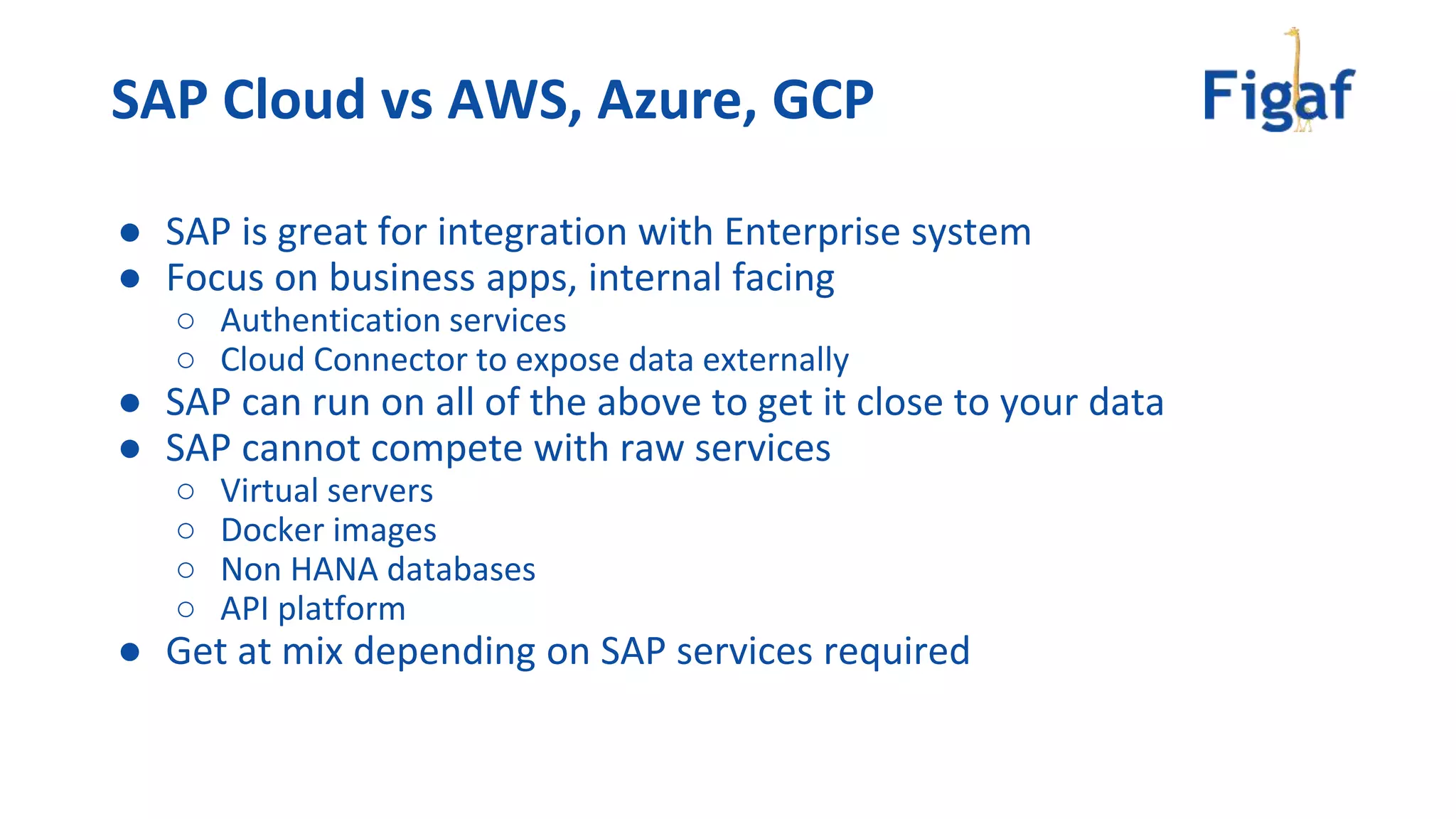
● SAP is great for integration with Enterprise system
● Focus on business apps, internal facing
○ Authentication services
○ Cloud Connector to expose data externally
● SAP can run on all of the above to get it close to your data
● SAP cannot compete with raw services
○ Virtual servers
○ Docker images
○ Non HANA databases
○ API platform
● Get at mix depending on SAP services required
SAP Cloud vs AWS, Azure, GCP
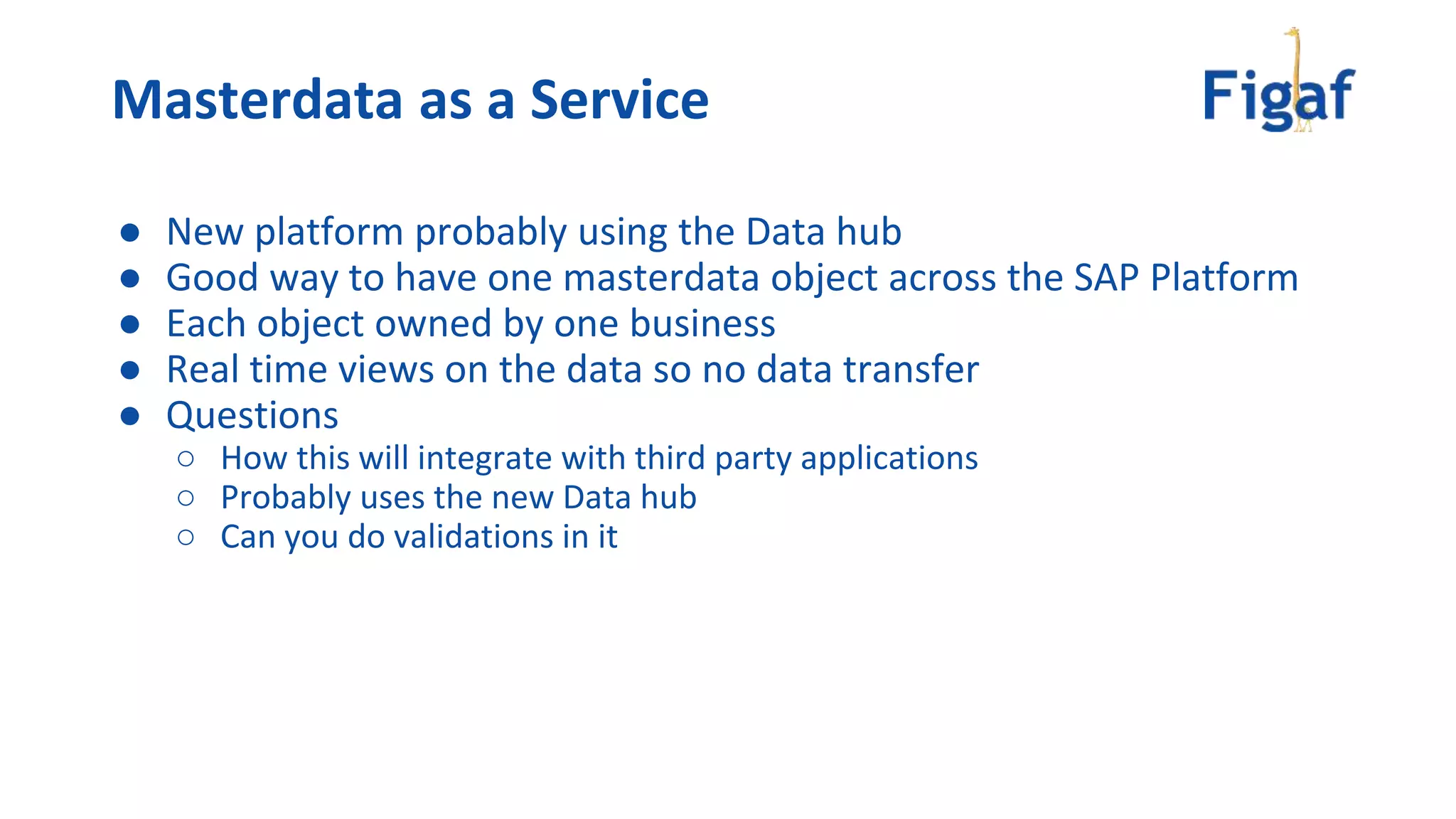
● New platform probably using the Data hub
● Good way to have one masterdata object across the SAP Platform
● Each object owned by one business
● Real time views on the data so no data transfer
● Questions
○ How this will integrate with third party applications
○ Probably uses the new Data hub
○ Can you do validations in it
Masterdata as a Service
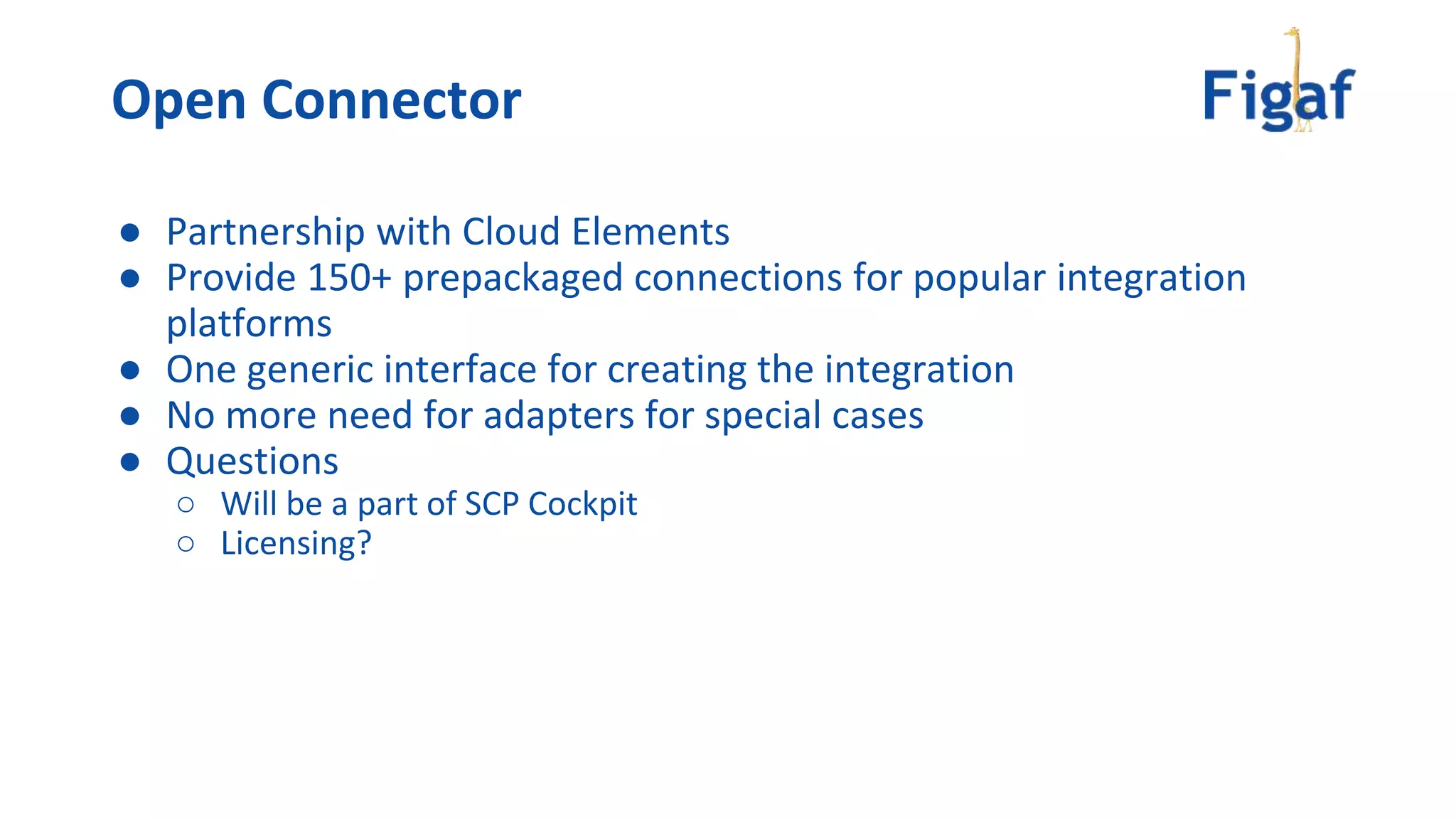
Open Connector
● Partnership with Cloud Elements
● Provide 150+ prepackaged connections for popular integration
platforms
● One generic interface for creating the integration
● No more need for adapters for special cases
● Questions
○ Will be a part of SCP Cockpit
○ Licensing?
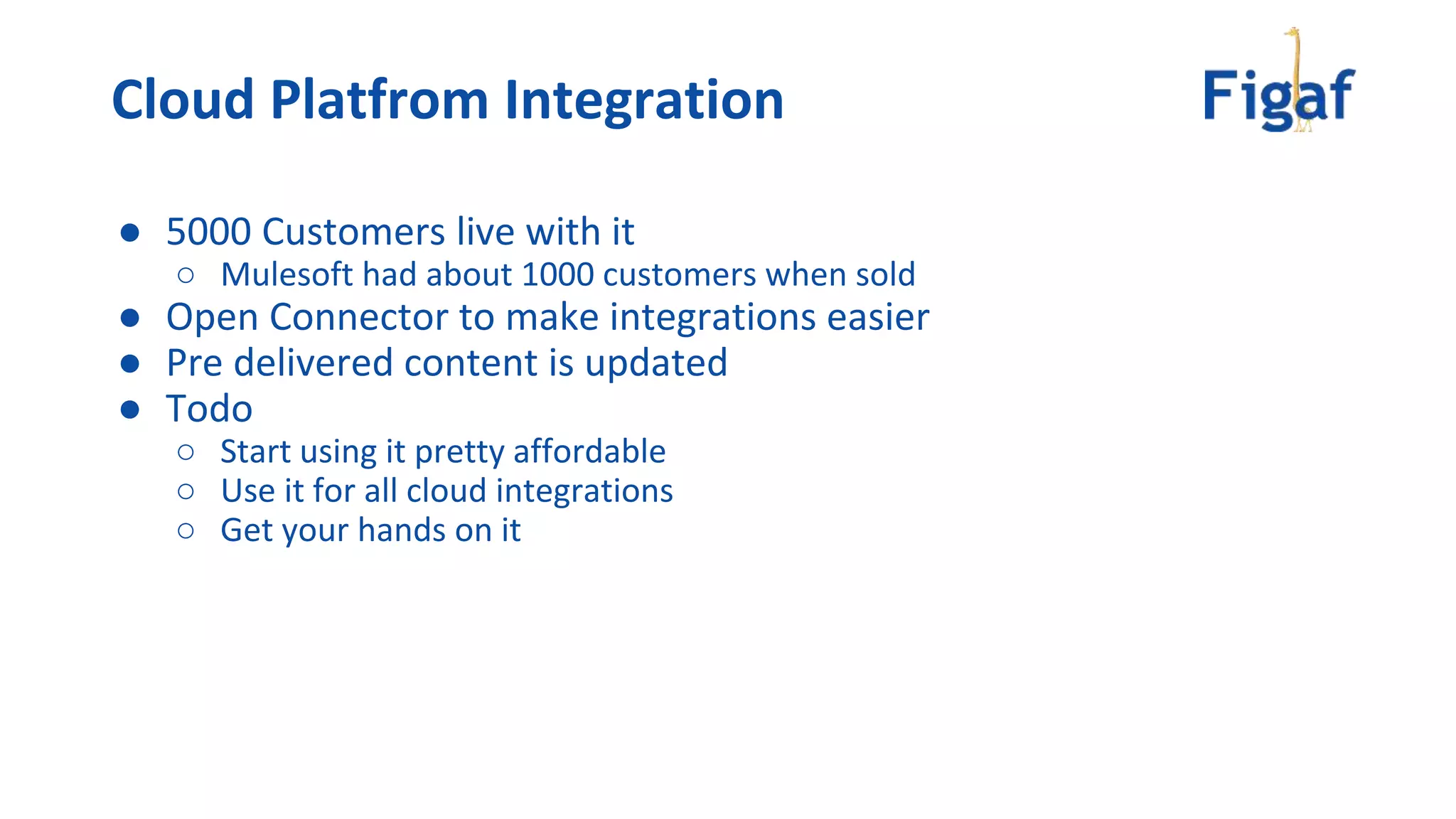
● 5000 Customers live with it
○ Mulesoft had about 1000 customers when sold
● Open Connector to make integrations easier
● Pre delivered content is updated
● Todo
○ Start using it pretty affordable
○ Use it for all cloud integrations
○ Get your hands on it
Cloud Platfrom Integration
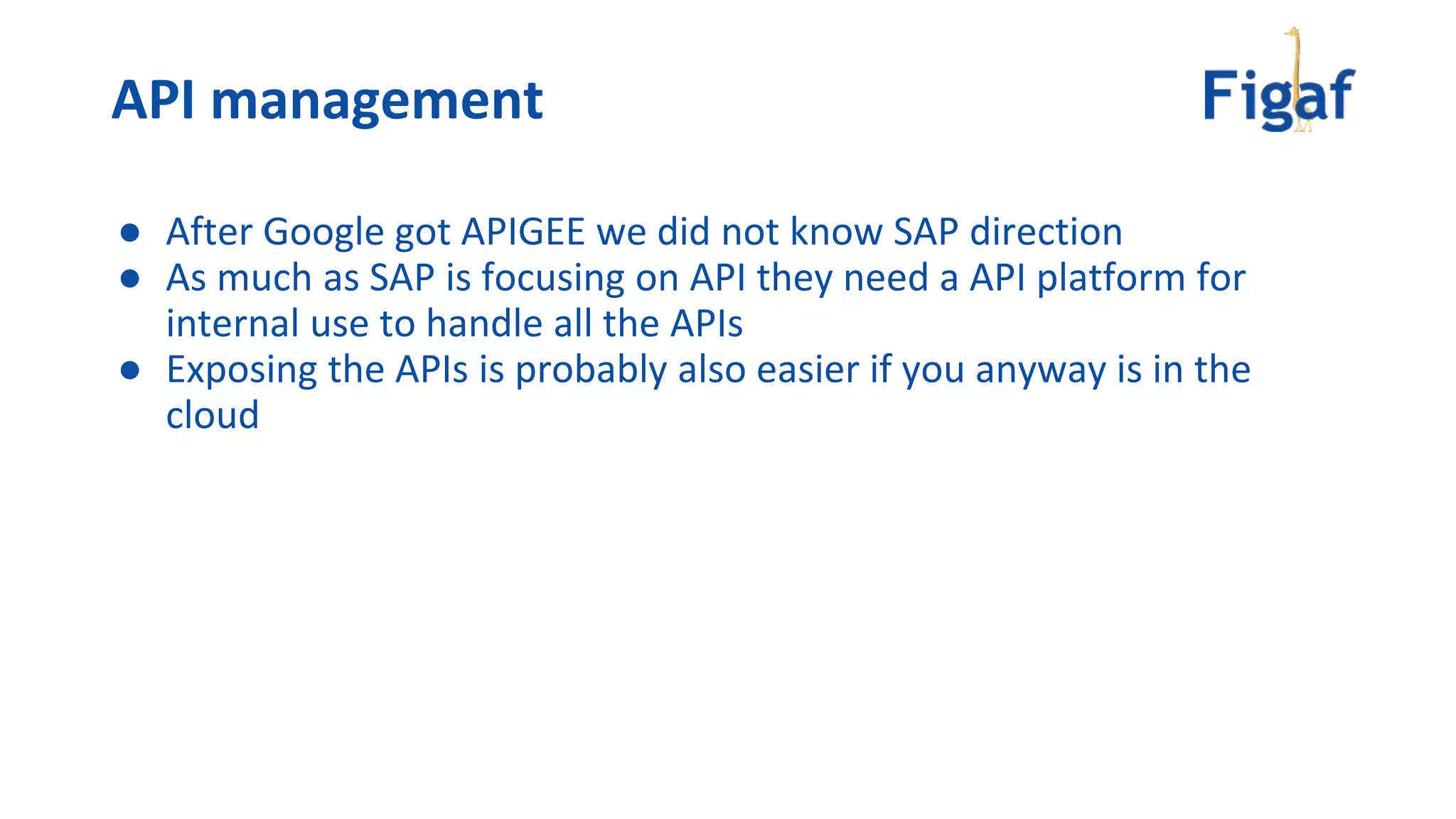
● After Google got APIGEE we did not know SAP direction
● As much as SAP is focusing on API they need a API platform for
internal use to handle all the APIs
● Exposing the APIs is probably also easier if you anyway is in the
cloud
API management
Development speed
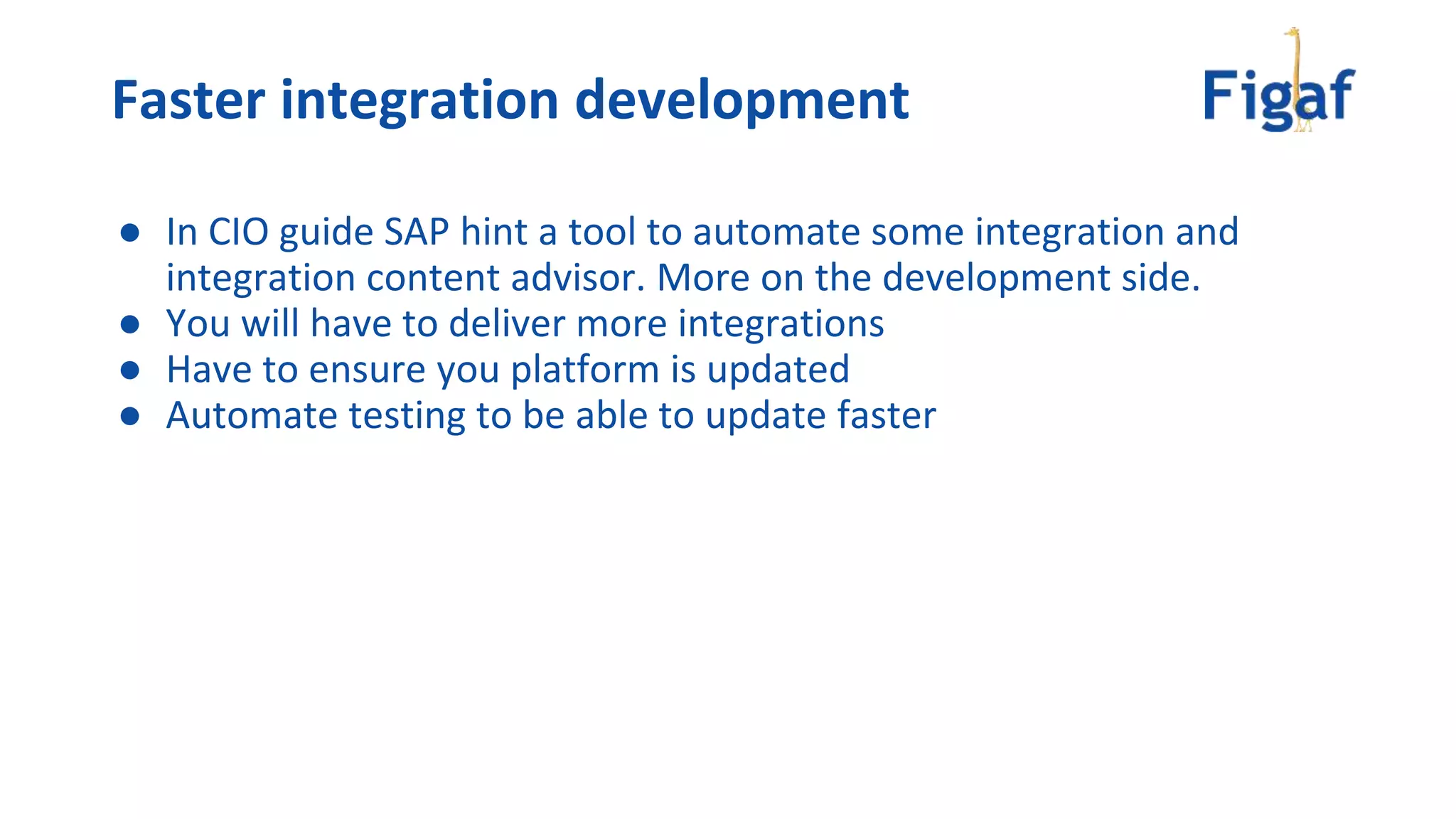
● In CIO guide SAP hint a tool to automate some integration and
integration content advisor. More on the development side.
● You will have to deliver more integrations
● Have to ensure you platform is updated
● Automate testing to be able to update faster
Faster integration development
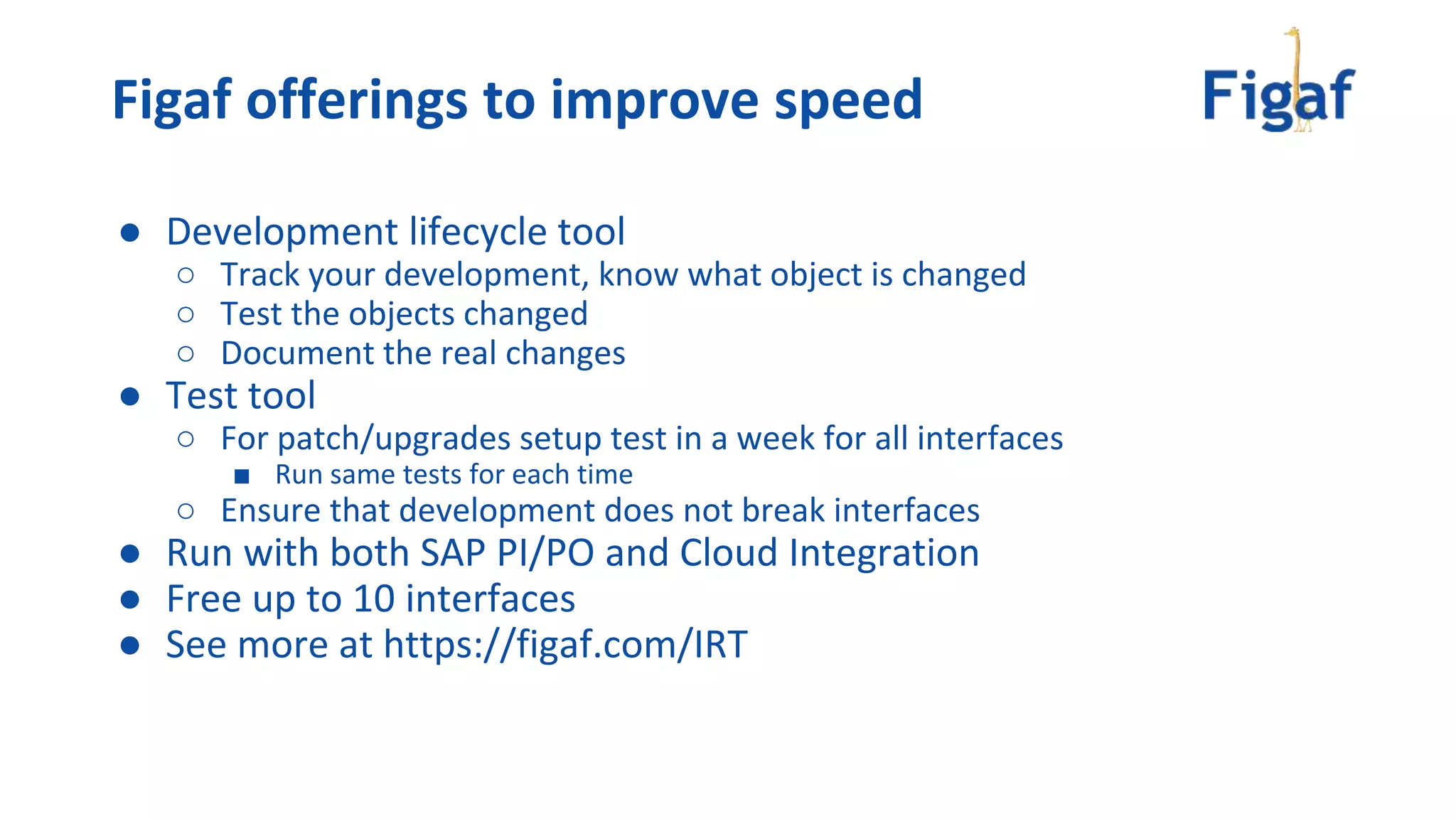
● Development lifecycle tool
○ Track your development, know what object is changed
○ Test the objects changed
○ Document the real changes
● Test tool
○ For patch/upgrades setup test in a week for all interfaces
■ Run same tests for each time
○ Ensure that development does not break interfaces
● Run with both SAP PI/PO and Cloud Integration
● Free up to 10 interfaces
● See more at https://figaf.com/IRT
Figaf offerings to improve speed
QA
● My video blogs
○ https://blogs.sap.com/2018/06/06/sapphirenow-day-1-with-focus-on-
integration/
○ https://blogs.sap.com/2018/06/07/sapphirenow-day-2-from-integration/
● Whitepapers blog
○ http://blog.whint.de/sapphire-2018-integration-review/
● CIO guide
○ https://www.sap.com/documents/2018/06/de3238a0-077d-0010-87a3-
c30de2ffd8ff.html
● SAP Best Practice
○ https://rapid.sap.com/bp/
References

The current state of SAP Integration, SAPPHIRENOW 2018

  • 1.
    Daniel Graversen June 2018 Takeawaysfrom SAPPHIRENOW 2018 What is happening with Enterprise Integration © Figaf 2018
  • 2.
  • 3.
    Understand your integration ●There is the following types of integration ○ Process (PI/Cloud Integration) ○ Data ○ UX ○ IoT ○ Analytic ● Get the ISA-M and perform the mapping of what needs to be done ○ Free process tool ○ Map existing and future data tools.
  • 4.
    ● New CIOGuide from SAP 70 Pages ○ https://figaf.com/cioguide2 ● A lot of about the same topics as this presentation covers ● List all products for integration and their relationship ● Comparison and recommendations ○ PI/PO vs CPI ○ PI/CPI vs AIF ● SAPs direction ○ Automation of integration ○ Prepackaged content CIO Guide
  • 5.
    ● End ofmaintenance for previous release ○ <7.4 End 2020 ○ 7.5 End 2024 ● Next release of Netweaver release later this year ● PI will get updates from cloud development ● Still the tool for integration ● TODO ○ Migrate to 7.5 single stack ○ Get away from Seeburger Netwaver 7.5 /PI
  • 6.
    S/4 and theIntelligent Enterprise
  • 7.
    The Intelligent Enterprise ●SAP now has a host of different applications Ariba, SuccessFactor, Fieldglas, Hybris as a best of breath direction ● From old SAP days where all was in on application it was all connected ● If selecting the SAP branded apps customers expect they are connected ● Making it all of it smarter with Machine Learning (ML), you can customize some of the models
  • 8.
    ● New brandingon the Customer focused applications ● One view to see all that is happening. ● Integration with the different sources C/4 HANA
  • 9.
    ● Same codesent to different deployments ○ Cloud has new innovation, ML and APIs ■ Also have metadata around entries to ensure compatibility ■ No development object all done externally ○ New cloud version using the onprem code ● Onprem one yearly release then implementation so 2 year gap for developments. ○ You probably want to keep the speed. ○ Will need to migrate at some point, so go as standard as possible S/4 Cloud vs Onpremise
  • 10.
  • 11.
    ● Goal isto use Cloud approach, no customization ● Enhancements as extensions no coding ● API is a big thing ○ Ask for missing APIs via SAP process ○ Can create API on CDS views ● S/4 cloud contains some IDOC but only for SAP use. S/4 Integration
  • 12.
    ● API firststrategy ● 1500 different API, so probably biggest API provider ● Look at the new API platform API.sap.com ● Try out the application ● Request new APIs to get it delivered, you cannot develop it self. Requests is used to prioritize ● Same API not identical across platform, so a mapping is needed. ● SAP is working on harmonizing some so no mapping needed ○ One word Enterprise-SOA. API
  • 13.
    ● EDI scenarios ○No IDocs for it ○ Only APIs ○ No development and use external fields ○ Integration Advisor should be the goal ○ Not sure all custom process can be handled in middle ware ○ https://blogs.sap.com/2017/11/17/sap-s4hana-cloud-edi-integration- strategy/ S4 EDI
  • 14.
    ● The datahubwas released last year ● An ETL tool to transform data in processes good for big data ● Now realtime integration/transformation so data is just one place ● Big data cannot be moved anywhere ● Cloud be used between SAP system to just have one data source ● GDPR ○ Data is only one place and it is easier to delete ● Questions ○ How this ties into the integration teams SAP Datahub /HANA
  • 15.
  • 16.
    ● Strategic toolfor handling all integrations ● Enhancements with SAP tools like S/4, Ariba .. ● Leonardo services ● Many different tools in it ● Todo ○ Understand the platform ○ Try to create an application on SCP ○ Try to enhance a SAP application ○ Look at pricing calculator Cloud Platform
  • 17.
    ● SAP isgreat for integration with Enterprise system ● Focus on business apps, internal facing ○ Authentication services ○ Cloud Connector to expose data externally ● SAP can run on all of the above to get it close to your data ● SAP cannot compete with raw services ○ Virtual servers ○ Docker images ○ Non HANA databases ○ API platform ● Get at mix depending on SAP services required SAP Cloud vs AWS, Azure, GCP
  • 18.
    ● New platformprobably using the Data hub ● Good way to have one masterdata object across the SAP Platform ● Each object owned by one business ● Real time views on the data so no data transfer ● Questions ○ How this will integrate with third party applications ○ Probably uses the new Data hub ○ Can you do validations in it Masterdata as a Service
  • 19.
    Open Connector ● Partnershipwith Cloud Elements ● Provide 150+ prepackaged connections for popular integration platforms ● One generic interface for creating the integration ● No more need for adapters for special cases ● Questions ○ Will be a part of SCP Cockpit ○ Licensing?
  • 20.
    ● 5000 Customerslive with it ○ Mulesoft had about 1000 customers when sold ● Open Connector to make integrations easier ● Pre delivered content is updated ● Todo ○ Start using it pretty affordable ○ Use it for all cloud integrations ○ Get your hands on it Cloud Platfrom Integration
  • 21.
    ● After Googlegot APIGEE we did not know SAP direction ● As much as SAP is focusing on API they need a API platform for internal use to handle all the APIs ● Exposing the APIs is probably also easier if you anyway is in the cloud API management
  • 22.
  • 23.
    ● In CIOguide SAP hint a tool to automate some integration and integration content advisor. More on the development side. ● You will have to deliver more integrations ● Have to ensure you platform is updated ● Automate testing to be able to update faster Faster integration development
  • 24.
    ● Development lifecycletool ○ Track your development, know what object is changed ○ Test the objects changed ○ Document the real changes ● Test tool ○ For patch/upgrades setup test in a week for all interfaces ■ Run same tests for each time ○ Ensure that development does not break interfaces ● Run with both SAP PI/PO and Cloud Integration ● Free up to 10 interfaces ● See more at https://figaf.com/IRT Figaf offerings to improve speed
  • 25.
  • 26.
    ● My videoblogs ○ https://blogs.sap.com/2018/06/06/sapphirenow-day-1-with-focus-on- integration/ ○ https://blogs.sap.com/2018/06/07/sapphirenow-day-2-from-integration/ ● Whitepapers blog ○ http://blog.whint.de/sapphire-2018-integration-review/ ● CIO guide ○ https://www.sap.com/documents/2018/06/de3238a0-077d-0010-87a3- c30de2ffd8ff.html ● SAP Best Practice ○ https://rapid.sap.com/bp/ References