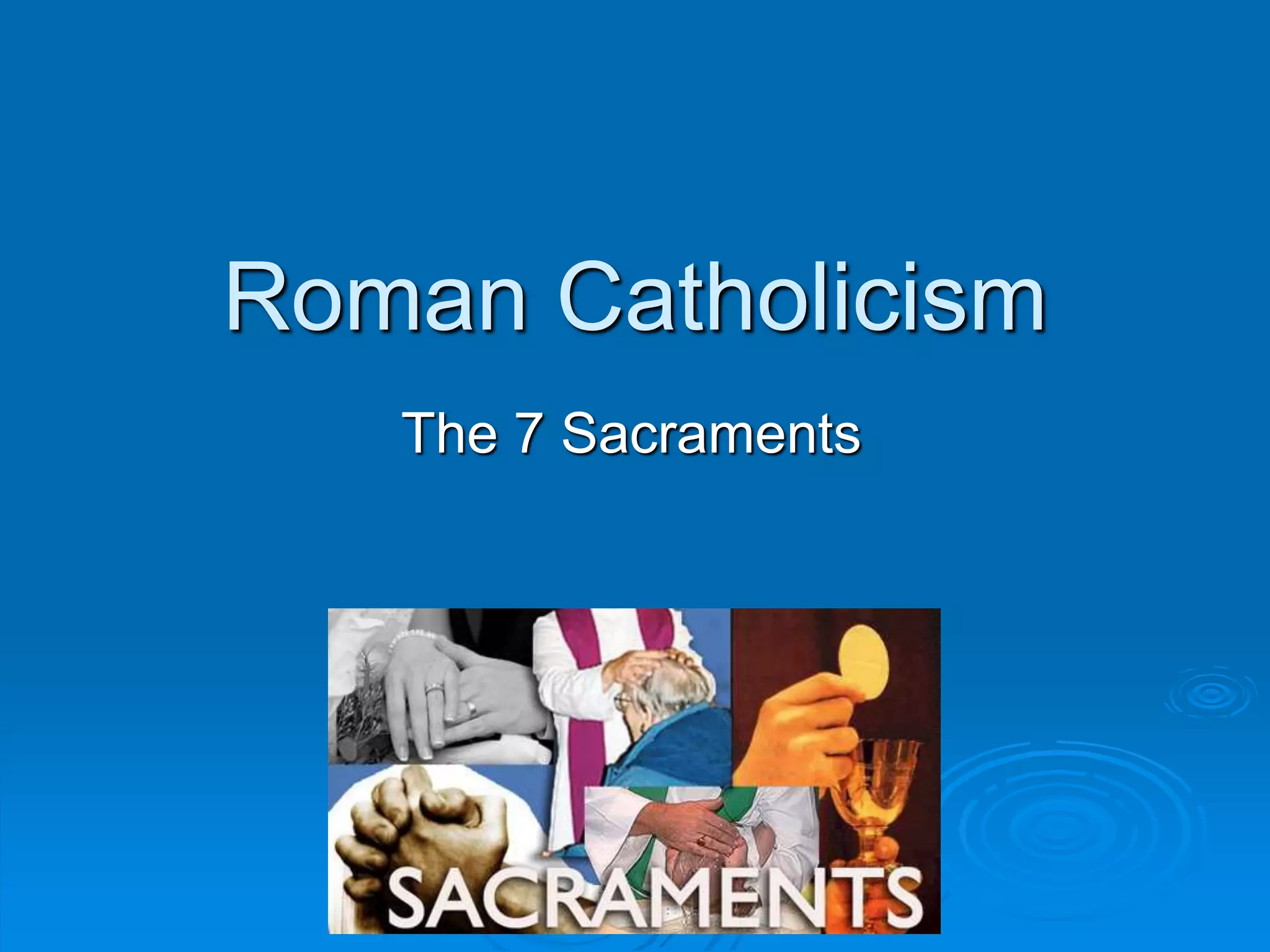
Roman Catholicism
The 7 Sacraments
What is a Sacrament?
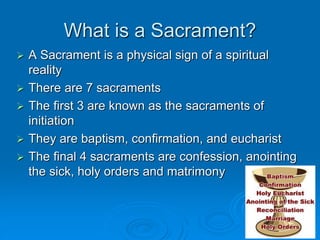
 A Sacrament is a physical sign of a spiritual
reality
 There are 7 sacraments
 The first 3 are known as the sacraments of
initiation
 They are baptism, confirmation, and eucharist
 The final 4 sacraments are confession, anointing
the sick, holy orders and matrimony
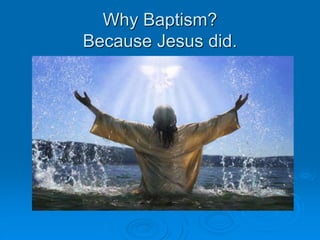
Why Baptism?
Because Jesus did.
Baptism
 Comes from the Greek word that means
“to plunge” or “to immerse”
 The symbolic plunging and rising up again
from the water reminds us that a new
Catholic enters into Christ’s death and
then rises to a new life of grace
 It is the sign of joining the Christian family
(was formerly circumcision)
 Both for men and women and children
Symbols of Baptism
 Water – water represents cleansing
 Oil – in ancient world, oil was used to
anoint kings and queens to show they
were set apart
 White garment – Purity, means putting on
Christ, similar to a bride
 Candle – Christ is the light of the world
and so we should be as well
Confirmation
 Happened in the early Church and in Acts
 Is the completion of baptism
 You are saying that this is your faith not
just your parents if baptized as an infant
 To be done when one has reached the
“age of discretion”
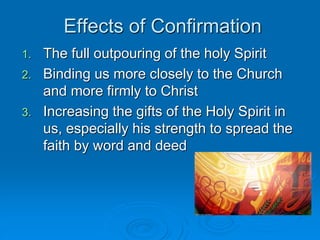
Effects of Confirmation
1. The full outpouring of the holy Spirit
2. Binding us more closely to the Church
and more firmly to Christ
3. Increasing the gifts of the Holy Spirit in
us, especially his strength to spread the
faith by word and deed
Eucharist
 The Eucharist is the celebration of the death,
burial and resurrection of Jesus.
 In the Bible, it is called the Lord's Supper.
 Christians are invited to celebrate the Eucharist
every week during Mass.
 Children usually make their First Holy
Communion at the age of 7 or 8.
 This is a formal affair, and children completing
their First Holy Communion wear formal attire.
Eucharist
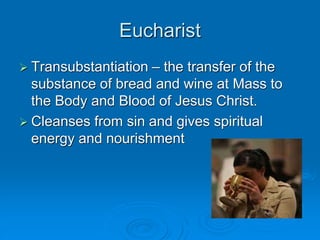
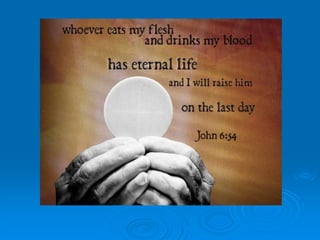
 Transubstantiation – the transfer of the
substance of bread and wine at Mass to
the Body and Blood of Jesus Christ.
 Cleanses from sin and gives spiritual
energy and nourishment
Anointing of the Sick
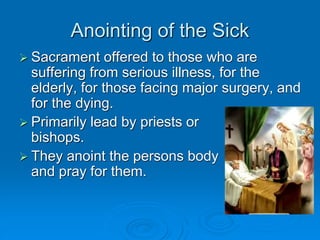
 Sacrament offered to those who are
suffering from serious illness, for the
elderly, for those facing major surgery, and
for the dying.
 Primarily lead by priests or
bishops.
 They anoint the persons body
and pray for them.
Sacrament of Confession or
Reconciliation
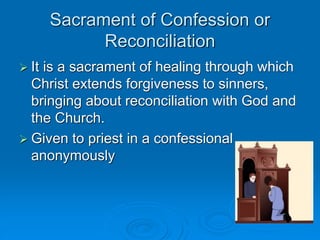
 It is a sacrament of healing through which
Christ extends forgiveness to sinners,
bringing about reconciliation with God and
the Church.
 Given to priest in a confessional
anonymously
Involves:
 Contrition – feeling sorry for your sins
 Confession – admitting our faults
 Absolution – the priest forgives us in the
name of Christ Jesus
 Satisfaction – or penance, something to
make repair for the harms our sins have
caused
Matrimony
 A sign of God calling a man and woman
to holiness through ordinary married life.
 God is the source of marriage.
 Marriage is meant to be a covenant.
 The Church teaches that there are two
primary purposes of marriage:
1. Procreative – be fruitful and multiply
2. Unitive – become one body
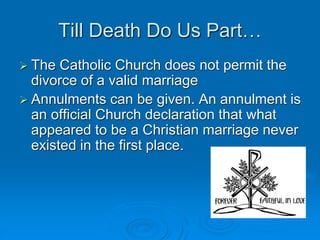
Till Death Do Us Part…
 The Catholic Church does not permit the
divorce of a valid marriage
 Annulments can be given. An annulment is
an official Church declaration that what
appeared to be a Christian marriage never
existed in the first place.
Holy Orders
 All of us are called to serve others as part of a
common priesthood, but the Church also has
those who minister to us:
 Deacons – helpers to priests
 Priests – servants to God’s people, celebrate the
Eucharist
 Bishops – servants to God’s people and the
priests in their area
 Religious nuns and brothers – servants to all of
God’s people. Join orders and take 3 vows:
 Poverty, chastity, and obedience
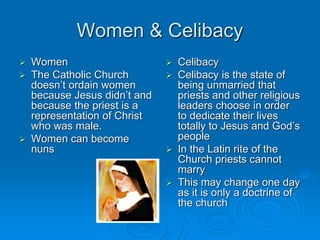
Women & Celibacy
 Women
 The Catholic Church
doesn’t ordain women
because Jesus didn’t and
because the priest is a
representation of Christ
who was male.
 Women can become
nuns
 Celibacy
 Celibacy is the state of
being unmarried that
priests and other religious
leaders choose in order
to dedicate their lives
totally to Jesus and God’s
people
 In the Latin rite of the
Church priests cannot
marry
 This may change one day
as it is only a doctrine of
the church

The 7 Sacraments ppt 2.ppt

  • 1.
  • 2.
    What is aSacrament?  A Sacrament is a physical sign of a spiritual reality  There are 7 sacraments  The first 3 are known as the sacraments of initiation  They are baptism, confirmation, and eucharist  The final 4 sacraments are confession, anointing the sick, holy orders and matrimony
  • 3.
  • 4.
    Baptism  Comes fromthe Greek word that means “to plunge” or “to immerse”  The symbolic plunging and rising up again from the water reminds us that a new Catholic enters into Christ’s death and then rises to a new life of grace  It is the sign of joining the Christian family (was formerly circumcision)  Both for men and women and children
  • 5.
    Symbols of Baptism Water – water represents cleansing  Oil – in ancient world, oil was used to anoint kings and queens to show they were set apart  White garment – Purity, means putting on Christ, similar to a bride  Candle – Christ is the light of the world and so we should be as well
  • 6.
    Confirmation  Happened inthe early Church and in Acts  Is the completion of baptism  You are saying that this is your faith not just your parents if baptized as an infant  To be done when one has reached the “age of discretion”
  • 7.
    Effects of Confirmation 1.The full outpouring of the holy Spirit 2. Binding us more closely to the Church and more firmly to Christ 3. Increasing the gifts of the Holy Spirit in us, especially his strength to spread the faith by word and deed
  • 8.
    Eucharist  The Eucharistis the celebration of the death, burial and resurrection of Jesus.  In the Bible, it is called the Lord's Supper.  Christians are invited to celebrate the Eucharist every week during Mass.  Children usually make their First Holy Communion at the age of 7 or 8.  This is a formal affair, and children completing their First Holy Communion wear formal attire.
  • 9.
    Eucharist  Transubstantiation –the transfer of the substance of bread and wine at Mass to the Body and Blood of Jesus Christ.  Cleanses from sin and gives spiritual energy and nourishment
  • 11.
    Anointing of theSick  Sacrament offered to those who are suffering from serious illness, for the elderly, for those facing major surgery, and for the dying.  Primarily lead by priests or bishops.  They anoint the persons body and pray for them.
  • 12.
    Sacrament of Confessionor Reconciliation  It is a sacrament of healing through which Christ extends forgiveness to sinners, bringing about reconciliation with God and the Church.  Given to priest in a confessional anonymously
  • 13.
    Involves:  Contrition –feeling sorry for your sins  Confession – admitting our faults  Absolution – the priest forgives us in the name of Christ Jesus  Satisfaction – or penance, something to make repair for the harms our sins have caused
  • 14.
    Matrimony  A signof God calling a man and woman to holiness through ordinary married life.  God is the source of marriage.  Marriage is meant to be a covenant.  The Church teaches that there are two primary purposes of marriage: 1. Procreative – be fruitful and multiply 2. Unitive – become one body
  • 15.
    Till Death DoUs Part…  The Catholic Church does not permit the divorce of a valid marriage  Annulments can be given. An annulment is an official Church declaration that what appeared to be a Christian marriage never existed in the first place.
  • 16.
    Holy Orders  Allof us are called to serve others as part of a common priesthood, but the Church also has those who minister to us:  Deacons – helpers to priests  Priests – servants to God’s people, celebrate the Eucharist  Bishops – servants to God’s people and the priests in their area  Religious nuns and brothers – servants to all of God’s people. Join orders and take 3 vows:  Poverty, chastity, and obedience
  • 17.
    Women & Celibacy Women  The Catholic Church doesn’t ordain women because Jesus didn’t and because the priest is a representation of Christ who was male.  Women can become nuns  Celibacy  Celibacy is the state of being unmarried that priests and other religious leaders choose in order to dedicate their lives totally to Jesus and God’s people  In the Latin rite of the Church priests cannot marry  This may change one day as it is only a doctrine of the church