A Novel Algorithm to Continuously Monitor Change of Total Peripheral Resistance using Peripheral Arterial Blood Pressure Values for Prediction of Orthostatic Intolerance Tatsuya Arai 1 , Kichang Lee 2 , and Richard J. Cohen 2 Cohen Laboratory 1 Department of Aeronautics and Astronautics,  2 Health Sciences and Technology Massachusetts Institute of Technology
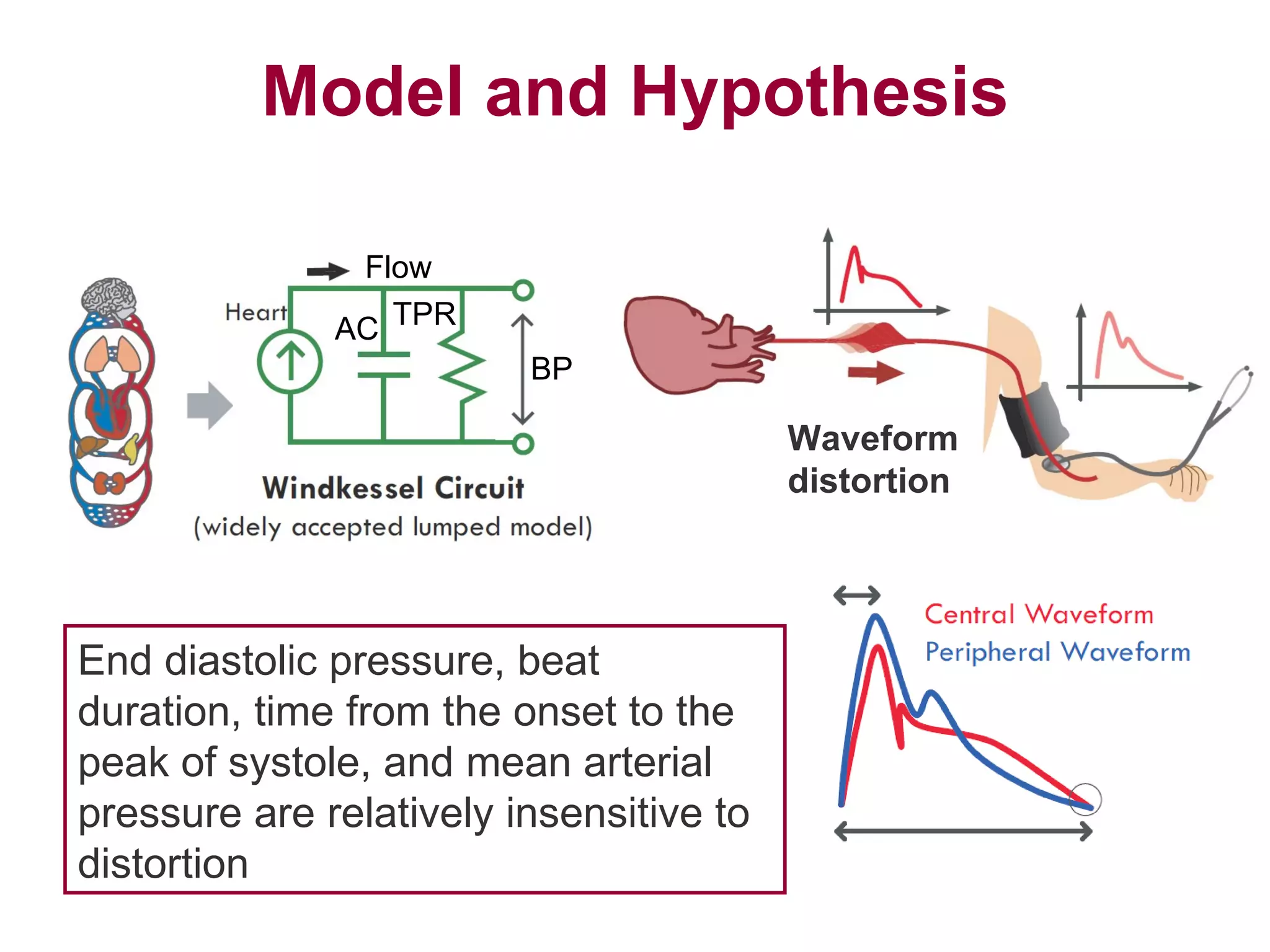
Model and Hypothesis End diastolic pressure, beat duration, time from the onset to the peak of systole, and mean arterial pressure are relatively insensitive to distortion TPR AC Flow  BP Waveform distortion
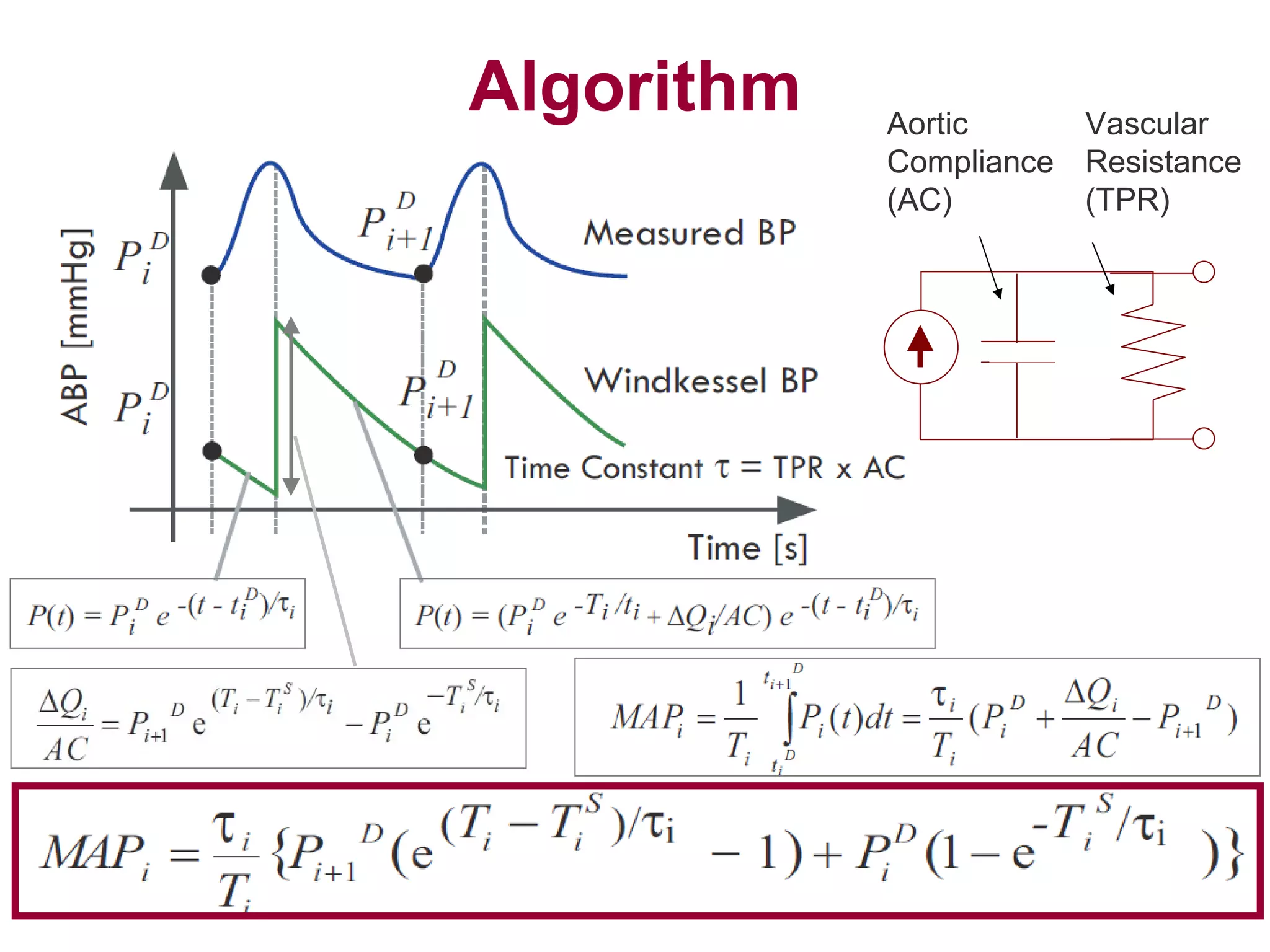
Algorithm Aortic Compliance (AC) Vascular  Resistance  (TPR)
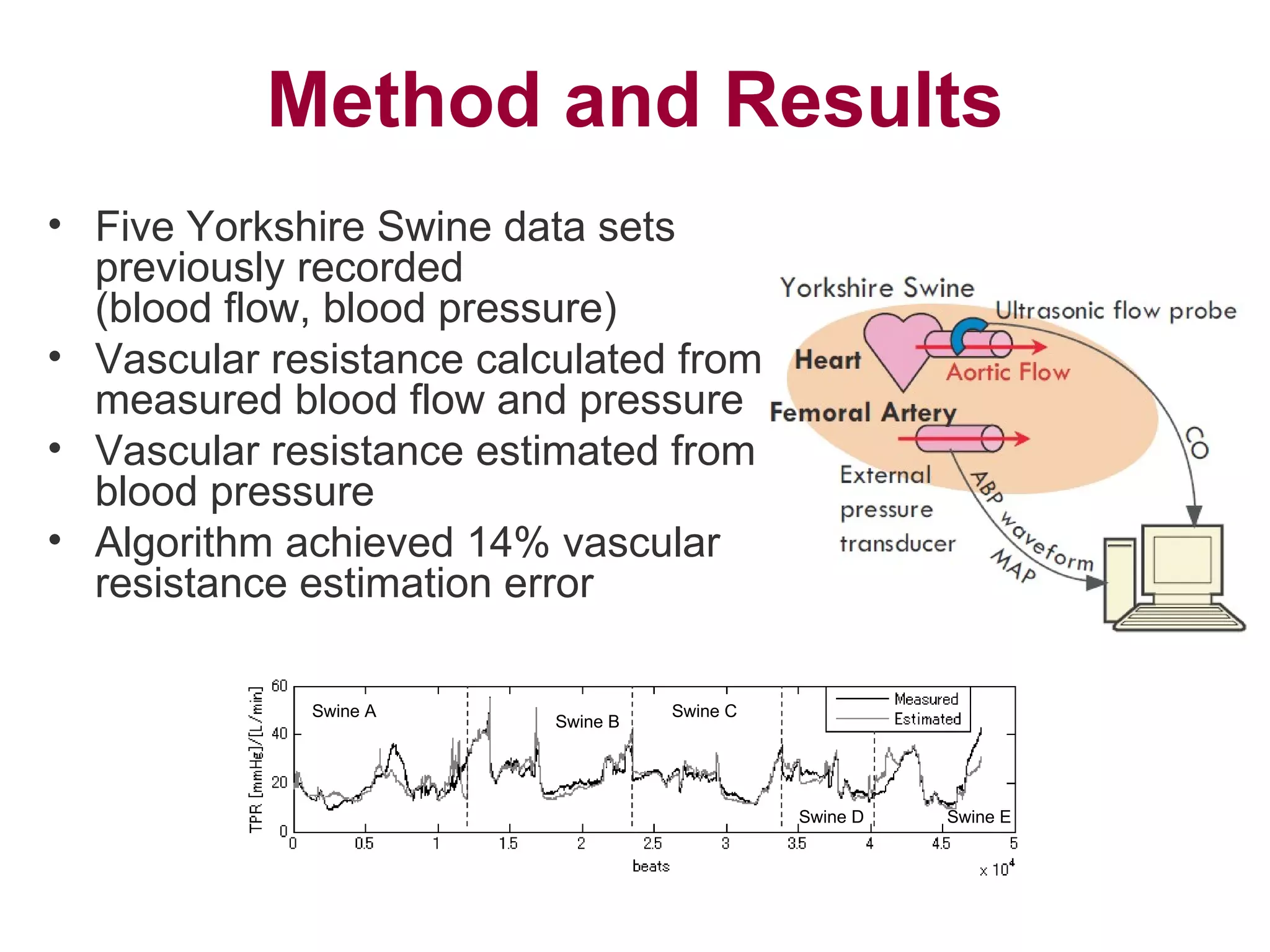
Method and Results Five Yorkshire Swine data sets previously recorded  (blood flow, blood pressure) Vascular resistance calculated from measured blood flow and pressure Vascular resistance estimated from blood pressure Algorithm achieved 14% vascular resistance estimation error Swine A Swine B Swine C Swine D Swine E
Conclusion and Future Work New TPR estimation method can reliably monitor changes of vascular resistance Potentially applicable to human  data sets Future work includes prediction of  astronauts’ post-flight orthostatic  intolerance using pre-flight blood  pressure data For the detail , please visit our poster

The 59th International Astronautical Congress

  • 1.
    A Novel Algorithmto Continuously Monitor Change of Total Peripheral Resistance using Peripheral Arterial Blood Pressure Values for Prediction of Orthostatic Intolerance Tatsuya Arai 1 , Kichang Lee 2 , and Richard J. Cohen 2 Cohen Laboratory 1 Department of Aeronautics and Astronautics, 2 Health Sciences and Technology Massachusetts Institute of Technology
  • 2.
    Model and HypothesisEnd diastolic pressure, beat duration, time from the onset to the peak of systole, and mean arterial pressure are relatively insensitive to distortion TPR AC Flow BP Waveform distortion
  • 3.
    Algorithm Aortic Compliance(AC) Vascular Resistance (TPR)
  • 4.
    Method and ResultsFive Yorkshire Swine data sets previously recorded (blood flow, blood pressure) Vascular resistance calculated from measured blood flow and pressure Vascular resistance estimated from blood pressure Algorithm achieved 14% vascular resistance estimation error Swine A Swine B Swine C Swine D Swine E
  • 5.
    Conclusion and FutureWork New TPR estimation method can reliably monitor changes of vascular resistance Potentially applicable to human data sets Future work includes prediction of astronauts’ post-flight orthostatic intolerance using pre-flight blood pressure data For the detail , please visit our poster