1
Biology 5325 - - Tropical Field Biology - - Summer 2014
Biodiversity on Steroids! Muddy Boots Ecology! Explore Costa Rican Rainforest!
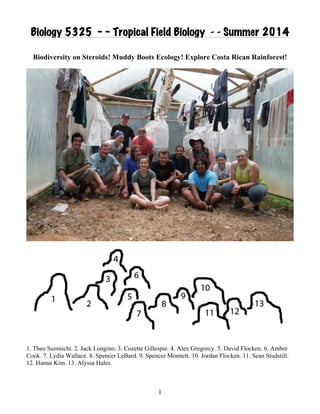
1. Theo Sumnicht. 2. Jack Longino. 3. Cozette Gillespie. 4. Alex Gregorcy. 5. David Flocken. 6. Amber
Cook. 7. Lydia Wallace. 8. Spencer LeBard. 9. Spencer Monnett. 10. Jordan Flocken. 11. Sean Studstill.
12. Hanna Kim. 13. Alyssa Hales.
2
Itinerary
3-May-14 Saturday Arrival San José
4-May-14 Sunday Transport to Osa Biodiversity Center
5-May-14 Monday Osa: orientation walks
6-May-14 Tuesday Osa: Ant diversity project
7-May-14 Wednesday Osa: faculty-led field project and oral report
8-May-14 Thursday Osa: student-originated field projects
9-May-14 Friday Osa: student-originated field projects
10-May-14 Saturday Transport Osa - Monteverde, Midterm evaluation
11-May-14 Sunday MV: Cloud forest biology
12-May-14 Monday MV: San Luis farm tour
13-May-14 Tuesday MV: Ant diversity project
14-May-14 Wednesday Hike from Monteverde to Refugio Eladio
15-May-14 Thursday Refugio Eladio: orientation
16-May-14 Friday Refugio Eladio: independent projects
17-May-14 Saturday Refugio Eladio: independent projects
18-May-14 Sunday Hike to Monteverde/Ant diversity project
19-May-14 Monday MV: sample processing/independent projects
20-May-14 Tuesday MV: sample processing/independent projects
21-May-14 Wednesday MV: sample processing/independent projects
22-May-14 Thursday MV: presentations, final exam, reviews, final banquet
23-May-14 Friday Transport to San José
24-May-14 Saturday Return
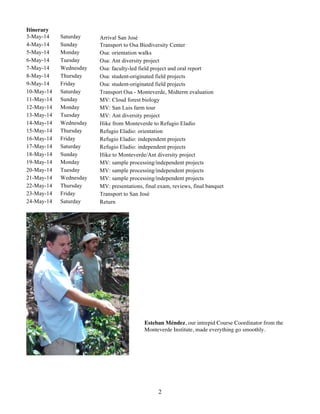
Esteban Méndez, our intrepid Course Coordinator from the
Monteverde Institute, made everything go smoothly.
3
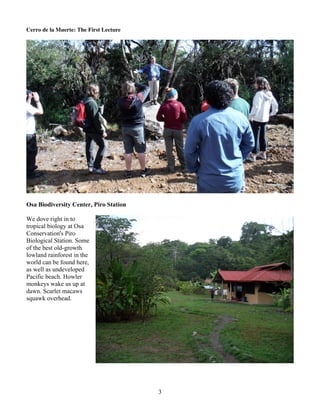
Cerro de la Muerte: The First Lecture
Osa Biodiversity Center, Piro Station
We dove right in to
tropical biology at Osa
Conservation's Piro
Biological Station. Some
of the best old-growth
lowland rainforest in the
world can be found here,
as well as undeveloped
Pacific beach. Howler
monkeys wake us up at
dawn. Scarlet macaws
squawk overhead.
4
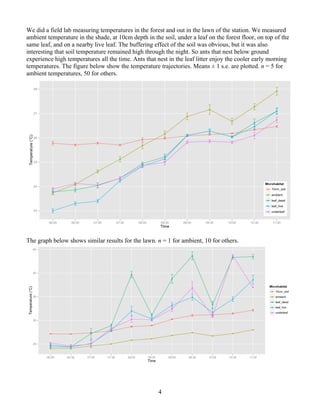
We did a field lab measuring temperatures in the forest and out in the lawn of the station. We measured
ambient temperature in the shade, at 10cm depth in the soil, under a leaf on the forest floor, on top of the
same leaf, and on a nearby live leaf. The buffering effect of the soil was obvious, but it was also
interesting that soil temperature remained high through the night. So ants that nest below ground
experience high temperatures all the time. Ants that nest in the leaf litter enjoy the cooler early morning
temperatures. The figure below show the temperature trajectories. Means ± 1 s.e. are plotted. n = 5 for
ambient temperatures, 50 for others.
The graph below shows similar results for the lawn. n = 1 for ambient, 10 for others.
5
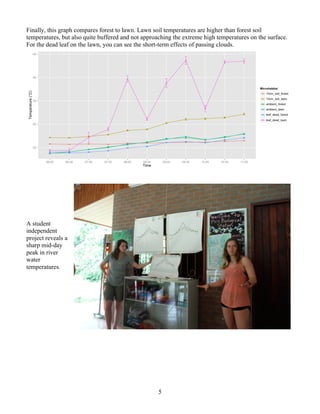
Finally, this graph compares forest to lawn. Lawn soil temperatures are higher than forest soil
temperatures, but also quite buffered and not approaching the extreme high temperatures on the surface.
For the dead leaf on the lawn, you can see the short-term effects of passing clouds.
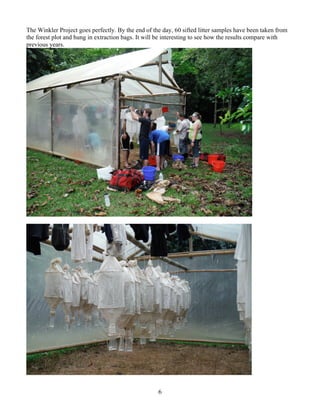
A student
independent
project reveals a
sharp mid-day
peak in river
water
temperatures.
6
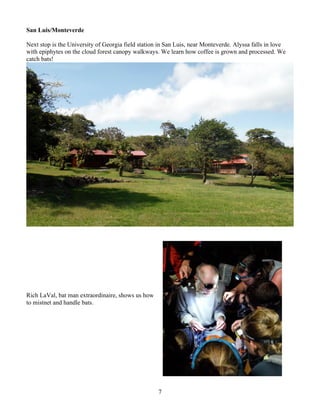
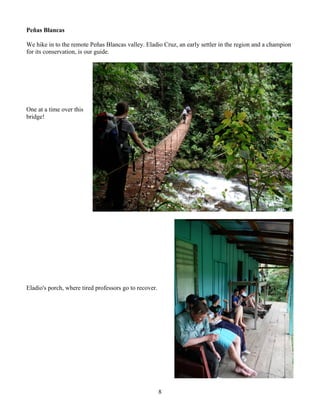
The Winkler Project goes perfectly. By the end of the day, 60 sifted litter samples have been taken from
the forest plot and hung in extraction bags. It will be interesting to see how the results compare with
previous years.
7
San Luis/Monteverde
Next stop is the University of Georgia field station in San Luis, near Monteverde. Alyssa falls in love
with epiphytes on the cloud forest canopy walkways. We learn how coffee is grown and processed. We
catch bats!
Rich LaVal, bat man extraordinaire, shows us how
to mistnet and handle bats.
8
Peñas Blancas
We hike in to the remote Peñas Blancas valley. Eladio Cruz, an early settler in the region and a champion
for its conservation, is our guide.
One at a time over this
bridge!
Eladio's porch, where tired professors go to recover.
9
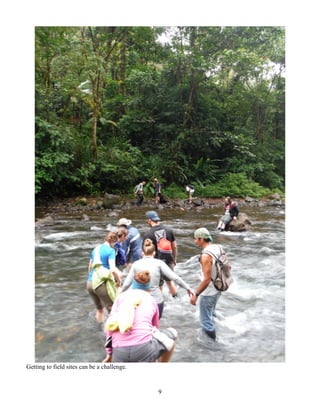
Getting to field sites can be a challenge.
10
The Last Days
Back at the University of Georgia station, it's Independent Project Time!
Our final symposium of 12-minute talks:
1:00 Species distribution and accumulation in response to human feces. Spencer LeBard
1:12 Beetle abundance in Cecropia leaf petioles. Jordan Flocken
1:24 Arthropod abundance and diversity as a function of height in bryophyte mats. Alyssa Hales
1:36 Bugs in a jug: Atta cephalotes response to major worker disturbance. Hanna Kim
1:48 Break
2:00 Moth sizes through the night. Lydia Wallace
2:12 Diurnal bird activity at the University of Georgia field station. Amber Cook
2:24 Red vs. black as potential seed dispersal attractants. Spencer Monnet
2:36 Differences in microclimates with change in elevation. Cozette Gillespie
2:48 Break
3:00 Temperature effect on paper wasp activity. David Flocken
3:12 The effects of microclimate on stomate density. Alex Gregorcy
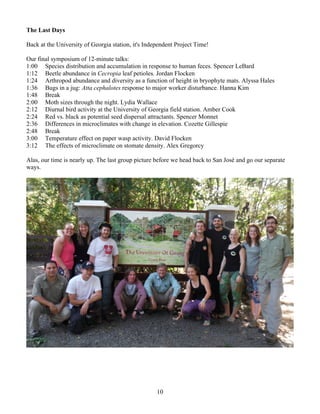
Alas, our time is nearly up. The last group picture before we head back to San José and go our separate
ways.
11
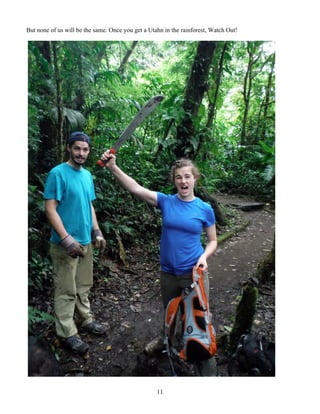
But none of us will be the same. Once you get a Utahn in the rainforest, Watch Out!

TFB-Report-2014

  • 1.
    1 Biology 5325 -- Tropical Field Biology - - Summer 2014 Biodiversity on Steroids! Muddy Boots Ecology! Explore Costa Rican Rainforest! 1. Theo Sumnicht. 2. Jack Longino. 3. Cozette Gillespie. 4. Alex Gregorcy. 5. David Flocken. 6. Amber Cook. 7. Lydia Wallace. 8. Spencer LeBard. 9. Spencer Monnett. 10. Jordan Flocken. 11. Sean Studstill. 12. Hanna Kim. 13. Alyssa Hales.
  • 2.
    2 Itinerary 3-May-14 Saturday ArrivalSan José 4-May-14 Sunday Transport to Osa Biodiversity Center 5-May-14 Monday Osa: orientation walks 6-May-14 Tuesday Osa: Ant diversity project 7-May-14 Wednesday Osa: faculty-led field project and oral report 8-May-14 Thursday Osa: student-originated field projects 9-May-14 Friday Osa: student-originated field projects 10-May-14 Saturday Transport Osa - Monteverde, Midterm evaluation 11-May-14 Sunday MV: Cloud forest biology 12-May-14 Monday MV: San Luis farm tour 13-May-14 Tuesday MV: Ant diversity project 14-May-14 Wednesday Hike from Monteverde to Refugio Eladio 15-May-14 Thursday Refugio Eladio: orientation 16-May-14 Friday Refugio Eladio: independent projects 17-May-14 Saturday Refugio Eladio: independent projects 18-May-14 Sunday Hike to Monteverde/Ant diversity project 19-May-14 Monday MV: sample processing/independent projects 20-May-14 Tuesday MV: sample processing/independent projects 21-May-14 Wednesday MV: sample processing/independent projects 22-May-14 Thursday MV: presentations, final exam, reviews, final banquet 23-May-14 Friday Transport to San José 24-May-14 Saturday Return Esteban Méndez, our intrepid Course Coordinator from the Monteverde Institute, made everything go smoothly.
  • 3.
    3 Cerro de laMuerte: The First Lecture Osa Biodiversity Center, Piro Station We dove right in to tropical biology at Osa Conservation's Piro Biological Station. Some of the best old-growth lowland rainforest in the world can be found here, as well as undeveloped Pacific beach. Howler monkeys wake us up at dawn. Scarlet macaws squawk overhead.
  • 4.
    4 We did afield lab measuring temperatures in the forest and out in the lawn of the station. We measured ambient temperature in the shade, at 10cm depth in the soil, under a leaf on the forest floor, on top of the same leaf, and on a nearby live leaf. The buffering effect of the soil was obvious, but it was also interesting that soil temperature remained high through the night. So ants that nest below ground experience high temperatures all the time. Ants that nest in the leaf litter enjoy the cooler early morning temperatures. The figure below show the temperature trajectories. Means ± 1 s.e. are plotted. n = 5 for ambient temperatures, 50 for others. The graph below shows similar results for the lawn. n = 1 for ambient, 10 for others.
  • 5.
    5 Finally, this graphcompares forest to lawn. Lawn soil temperatures are higher than forest soil temperatures, but also quite buffered and not approaching the extreme high temperatures on the surface. For the dead leaf on the lawn, you can see the short-term effects of passing clouds. A student independent project reveals a sharp mid-day peak in river water temperatures.
  • 6.
    6 The Winkler Projectgoes perfectly. By the end of the day, 60 sifted litter samples have been taken from the forest plot and hung in extraction bags. It will be interesting to see how the results compare with previous years.
  • 7.
    7 San Luis/Monteverde Next stopis the University of Georgia field station in San Luis, near Monteverde. Alyssa falls in love with epiphytes on the cloud forest canopy walkways. We learn how coffee is grown and processed. We catch bats! Rich LaVal, bat man extraordinaire, shows us how to mistnet and handle bats.
  • 8.
    8 Peñas Blancas We hikein to the remote Peñas Blancas valley. Eladio Cruz, an early settler in the region and a champion for its conservation, is our guide. One at a time over this bridge! Eladio's porch, where tired professors go to recover.
  • 9.
    9 Getting to fieldsites can be a challenge.
  • 10.
    10 The Last Days Backat the University of Georgia station, it's Independent Project Time! Our final symposium of 12-minute talks: 1:00 Species distribution and accumulation in response to human feces. Spencer LeBard 1:12 Beetle abundance in Cecropia leaf petioles. Jordan Flocken 1:24 Arthropod abundance and diversity as a function of height in bryophyte mats. Alyssa Hales 1:36 Bugs in a jug: Atta cephalotes response to major worker disturbance. Hanna Kim 1:48 Break 2:00 Moth sizes through the night. Lydia Wallace 2:12 Diurnal bird activity at the University of Georgia field station. Amber Cook 2:24 Red vs. black as potential seed dispersal attractants. Spencer Monnet 2:36 Differences in microclimates with change in elevation. Cozette Gillespie 2:48 Break 3:00 Temperature effect on paper wasp activity. David Flocken 3:12 The effects of microclimate on stomate density. Alex Gregorcy Alas, our time is nearly up. The last group picture before we head back to San José and go our separate ways.
  • 11.
    11 But none ofus will be the same. Once you get a Utahn in the rainforest, Watch Out!