Testis
Cryptorchidism
• failure of testicular descent into scrotum.
• Normally, testes descend from abdominal cavity into
pelvis by 3rd month of gestation & then through
inguinal canals into scrotum during the last 2 months
of intrauterine life.
• Diagnosis of cryptorchidism is only established with certainty
after the age of 1 year, particularly in premature infants,
because testicular descent into scrotum is not always complete
at birth.
• By 1 year of age, cryptorchidism affects 1% of male population.
• bilateral in 10% of affected pts.
• In the vast majority of cases, the cause of cryptorchidism is
unknown.
• Because undescended testes become atrophic, bilateral
cryptorchidism causes sterility.
• failure of descent is associated with 3- 5 fold increased risk of
testicular cancer
• Surgical placement of undescended testis into scrotum
(orchiopexy) before puberty decreases likelihood of
testicular atrophy & reduces but does not eliminate
risk of cancer & infertility.
Testicular Torsion
• Twisting of spermatic cord.
• Typically results in obstruction of testicular
venous drainage while leaving thick-walled &
more resilient arteries patent,
so that intense vascular engorgement &
venous infarction follow,
unless the torsion is relieved
• Neonatal torsion
occurs either in utero or shortly after birth.
• Adult torsion
• Typically seen in adolescence.
• sudden onset of testicular pain.
• bilateral
• often occurs without any inciting injury
• sudden pain heralding the torsion may even
awaken the patient from sleep.
• Urologic emergency.
• If the testis is explored surgically & cord can be
manually untwisted within 6 hours,
there is a good chance that testis will remain viable.
• To prevent the catastrophic occurrence of torsion in
contralateral testis, the unaffected testis typically is
surgically fixed within scrotum (orchiopexy).
Testicular Neoplasms
Clinically,
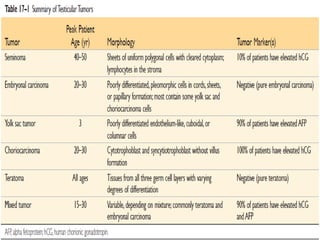
Testicular germ cell tumors can be divided into
two groups:
1. Seminomas
2. Non-seminomatous tumors
• occur with increased frequency in association with
undescended testis and with testicular dysgenesis.
Clinical Features
• Pts with testicular germ cell neoplasms present most
frequently with a painless testicular mass
• that (unlike hydroceles) is non-translucent.
• Testicular tumors are the most common cause of
painless testicular enlargement
• Biopsy of testicular neoplasm is associated with a risk
of tumor spillage, which would necessitate excision
of the scrotal skin in addition to orchiectomy.
• The standard management of a solid testicular mass
is radical orchiectomy.
based on the presumption of malignancy
• Some tumors, esp. non-seminomatous germ cell
neoplasms, may metastasized widely by the time of
diagnosis in the absence of palpable testicular lesion.
Seminomas & non-seminomatous tumors differ
in their behavior and clinical course:
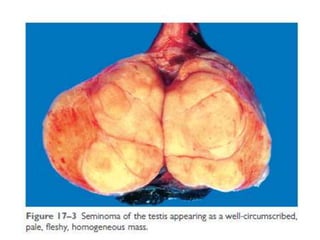
• Seminomas often remain confined to testis for long intervals
& may reach considerable size before diagnosis.
• Metastases most commonly in iliac & para-aortic lymph
nodes, particularly in upper lumbar region.
• Hematogenous metastases occur late in the course of
disease.
• By contrast, non-seminomatous germ cell neoplasms
tend to metastasize earlier, by lymphatic as well as
hematogenous routes.
• Hematogenous metastases are most common in liver &
lungs.
Assay of tumor markers secreted by germ cell
tumors is important in two ways:
1. helpful diagnostically.
2. more valuable role in following response of
tumors to therapy after diagnosis is established.
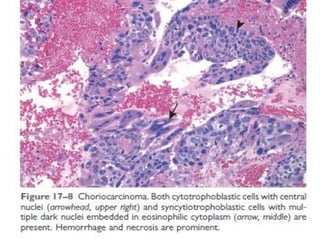
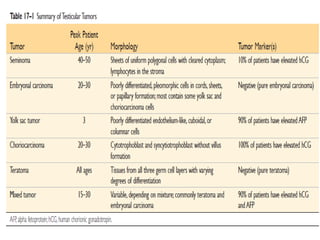
• HCG is produced by syncytiotrophoblasts and is always
elevated in pts with choriocarcinomas and those with
seminomas containing syncytiotrophoblasts
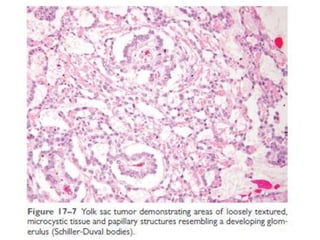
• AFP in the setting of testicular neoplasm indicates a yolk
sac tumor component
• The levels of LDH correlate with tumor burden.
Treatment of testicular germ cell
neoplasms
• Lance Armstrong !
• after being treated for widely metastatic testicular
cancer, won the grueling Tour de France bicycle race
a record seven times !
• Seminoma are radiosensitive
& tends to remain localized for long periods, has the best prognosis.
• > 95% of pts with early-stage disease can be cured.
• Non-seminomatous tumors; aggressive chemotherapy
• Pure choriocarcinoma carries a dismal prognosis
• With all testicular tumors, recurrences, typically
in the form of distant metastases, usually occur
within the first 2 years after treatment.
testis pathology

testis pathology

  • 1.
  • 2.
    Cryptorchidism • failure oftesticular descent into scrotum. • Normally, testes descend from abdominal cavity into pelvis by 3rd month of gestation & then through inguinal canals into scrotum during the last 2 months of intrauterine life.
  • 3.
    • Diagnosis ofcryptorchidism is only established with certainty after the age of 1 year, particularly in premature infants, because testicular descent into scrotum is not always complete at birth. • By 1 year of age, cryptorchidism affects 1% of male population. • bilateral in 10% of affected pts. • In the vast majority of cases, the cause of cryptorchidism is unknown. • Because undescended testes become atrophic, bilateral cryptorchidism causes sterility. • failure of descent is associated with 3- 5 fold increased risk of testicular cancer
  • 4.
    • Surgical placementof undescended testis into scrotum (orchiopexy) before puberty decreases likelihood of testicular atrophy & reduces but does not eliminate risk of cancer & infertility.
  • 5.
    Testicular Torsion • Twistingof spermatic cord. • Typically results in obstruction of testicular venous drainage while leaving thick-walled & more resilient arteries patent, so that intense vascular engorgement & venous infarction follow, unless the torsion is relieved
  • 6.
    • Neonatal torsion occurseither in utero or shortly after birth.
  • 7.
    • Adult torsion •Typically seen in adolescence. • sudden onset of testicular pain. • bilateral • often occurs without any inciting injury • sudden pain heralding the torsion may even awaken the patient from sleep.
  • 8.
    • Urologic emergency. •If the testis is explored surgically & cord can be manually untwisted within 6 hours, there is a good chance that testis will remain viable. • To prevent the catastrophic occurrence of torsion in contralateral testis, the unaffected testis typically is surgically fixed within scrotum (orchiopexy).
  • 9.
  • 17.
    Clinically, Testicular germ celltumors can be divided into two groups: 1. Seminomas 2. Non-seminomatous tumors • occur with increased frequency in association with undescended testis and with testicular dysgenesis.
  • 18.
    Clinical Features • Ptswith testicular germ cell neoplasms present most frequently with a painless testicular mass • that (unlike hydroceles) is non-translucent. • Testicular tumors are the most common cause of painless testicular enlargement
  • 19.
    • Biopsy oftesticular neoplasm is associated with a risk of tumor spillage, which would necessitate excision of the scrotal skin in addition to orchiectomy.
  • 20.
    • The standardmanagement of a solid testicular mass is radical orchiectomy. based on the presumption of malignancy • Some tumors, esp. non-seminomatous germ cell neoplasms, may metastasized widely by the time of diagnosis in the absence of palpable testicular lesion.
  • 21.
    Seminomas & non-seminomatoustumors differ in their behavior and clinical course: • Seminomas often remain confined to testis for long intervals & may reach considerable size before diagnosis. • Metastases most commonly in iliac & para-aortic lymph nodes, particularly in upper lumbar region. • Hematogenous metastases occur late in the course of disease.
  • 22.
    • By contrast,non-seminomatous germ cell neoplasms tend to metastasize earlier, by lymphatic as well as hematogenous routes. • Hematogenous metastases are most common in liver & lungs.
  • 23.
    Assay of tumormarkers secreted by germ cell tumors is important in two ways: 1. helpful diagnostically. 2. more valuable role in following response of tumors to therapy after diagnosis is established.
  • 24.
    • HCG isproduced by syncytiotrophoblasts and is always elevated in pts with choriocarcinomas and those with seminomas containing syncytiotrophoblasts • AFP in the setting of testicular neoplasm indicates a yolk sac tumor component • The levels of LDH correlate with tumor burden.
  • 25.
    Treatment of testiculargerm cell neoplasms • Lance Armstrong ! • after being treated for widely metastatic testicular cancer, won the grueling Tour de France bicycle race a record seven times !
  • 26.
    • Seminoma areradiosensitive & tends to remain localized for long periods, has the best prognosis. • > 95% of pts with early-stage disease can be cured. • Non-seminomatous tumors; aggressive chemotherapy • Pure choriocarcinoma carries a dismal prognosis
  • 27.
    • With alltesticular tumors, recurrences, typically in the form of distant metastases, usually occur within the first 2 years after treatment.