How many tests does it take to change a lightbulb? Andy Brown
Overview What is the benefit of testing? How to test? Test-driven Development Continuous Integration
What is the benefit of testing? Testing allows you to be confident that your code will do what you want it to. And more chance that it won’t do anything you don’t expect. Allows the end user to be confident that the software will do the job. Much easier to debug as the software develops.

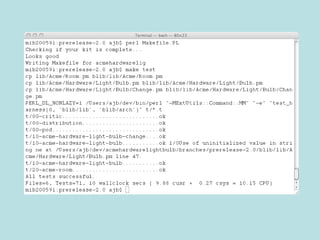
How to test? Simply: Give bits of code some data, and ask what the outcome is? Develop into a test suite. Run all tests after any feature is added, removed or code is refactored. Debug. Re-run tests.
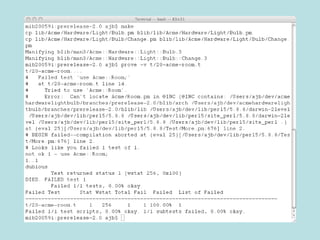
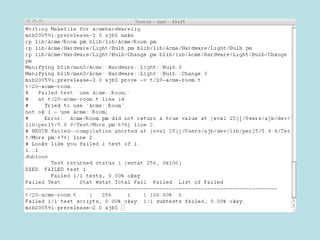
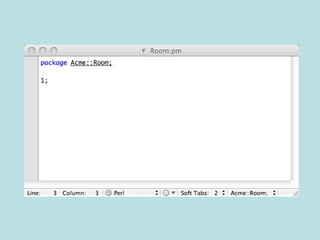
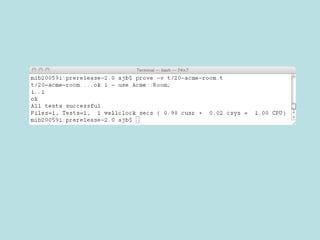
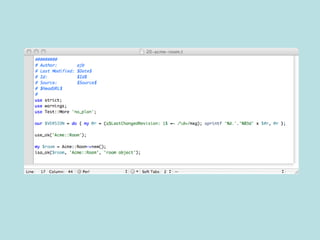
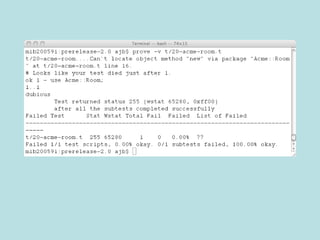
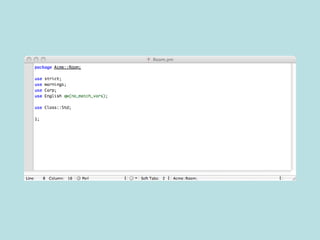
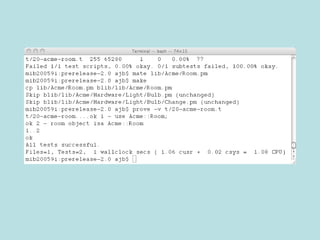
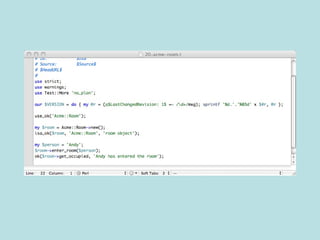
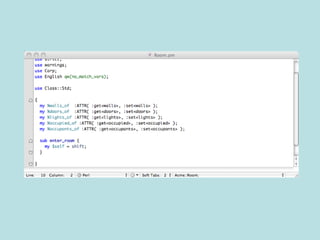
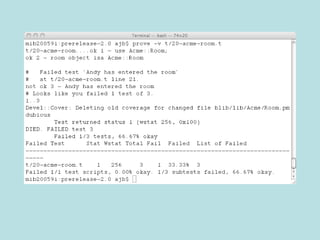
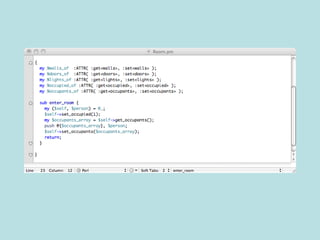
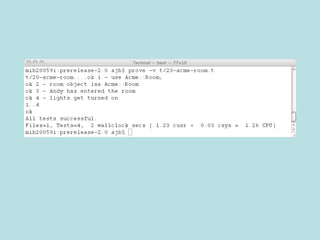
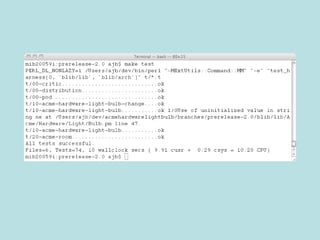
Test-driven Development Write a test to get an outcome. Run the test - it should fail. Write some code to make the test pass. Run the test - does it pass? Run the test suite to ensure nothing is now broken.
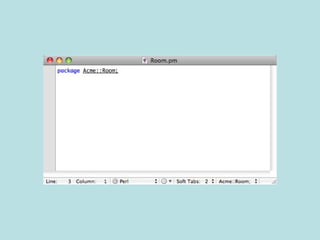
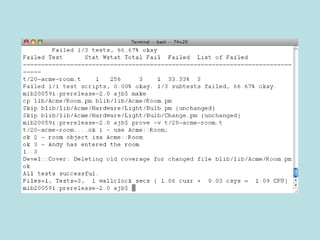
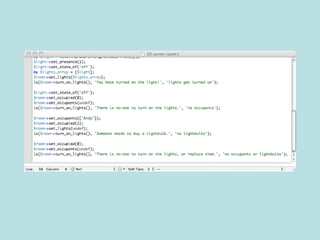
Example Developing a room for a lightbulb to light.


Conditionals
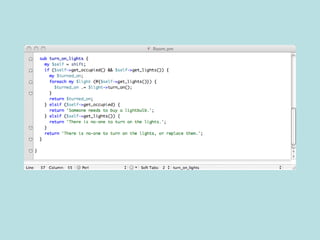
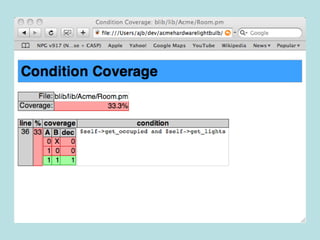
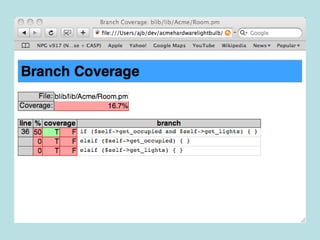
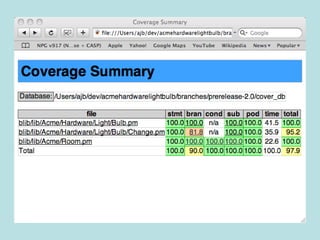
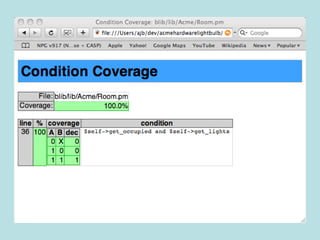
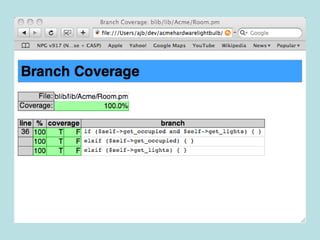
The forgotten bit You need to test every single possible path throughout Both: if/elsif/else and: if (this and that) or (!the_other) This could multiply the number of tests x-fold!


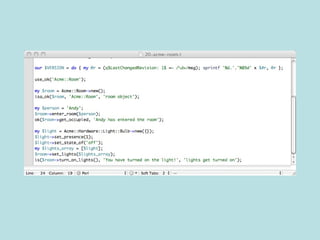
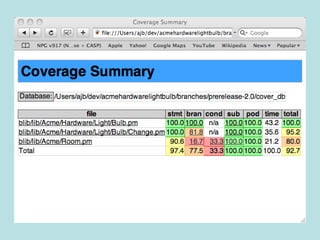
What does that mean? Because you have been through every conditional, you can be very confident that the code is robust. If I changed something in the Acme::Hardware::Light::Bulb module, all those conditionals in Acme::Room will get tested, and show breakages better.
That was PERL! Perl - Test::More and Devel::Cover Java - Junit Ruby - Test::Unit Rails - Tests baked right in Haskell - Hunit C/C++ - Boost Just Google around! You can always write tests, and if you can’t find a suitable framework, then develop your own.
Shared Development Someone changes something You update Run the tests If the tests pass - great! If the tests fail - you find out what they broke! They do the same to you!
Continuous Integration Continuous Integration servers allow code to be constantly kept in check Can update the version control and released software to constantly release Test suites are vital!
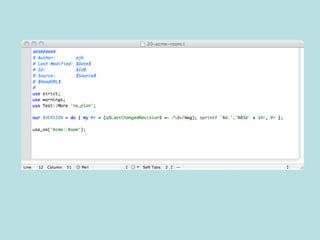
Summary Write tests - preferably before the code is written But write them anyway if not Develop into a suite Run often Even use_ok(my::module) will ensure code at least compiles
61 How many tests does it take to change a lightbulb?
http://vampiresoftware.blogspot.com/ http://sourceforge.net/projects/acmehardwarelig

Test Presentation

  • 1.
    How many testsdoes it take to change a lightbulb? Andy Brown
  • 2.
    Overview What isthe benefit of testing? How to test? Test-driven Development Continuous Integration
  • 3.
    What is thebenefit of testing? Testing allows you to be confident that your code will do what you want it to. And more chance that it won’t do anything you don’t expect. Allows the end user to be confident that the software will do the job. Much easier to debug as the software develops.
  • 4.
    How to test?Simply: Give bits of code some data, and ask what the outcome is? Develop into a test suite. Run all tests after any feature is added, removed or code is refactored. Debug. Re-run tests.
  • 5.
    Test-driven Development Writea test to get an outcome. Run the test - it should fail. Write some code to make the test pass. Run the test - does it pass? Run the test suite to ensure nothing is now broken.
  • 6.
    Example Developing aroom for a lightbulb to light.
  • 7.
  • 8.
  • 9.
  • 10.
  • 11.
  • 12.
  • 13.
  • 14.
  • 15.
  • 16.
  • 17.
  • 18.
  • 19.
  • 20.
  • 21.
  • 22.
  • 23.
    The forgotten bitYou need to test every single possible path throughout Both: if/elsif/else and: if (this and that) or (!the_other) This could multiply the number of tests x-fold!
  • 24.
  • 25.
  • 26.
  • 27.
  • 28.
  • 29.
  • 30.
  • 31.
  • 32.
  • 33.
  • 34.
  • 35.
  • 36.
    What does thatmean? Because you have been through every conditional, you can be very confident that the code is robust. If I changed something in the Acme::Hardware::Light::Bulb module, all those conditionals in Acme::Room will get tested, and show breakages better.
  • 37.
    That was PERL!Perl - Test::More and Devel::Cover Java - Junit Ruby - Test::Unit Rails - Tests baked right in Haskell - Hunit C/C++ - Boost Just Google around! You can always write tests, and if you can’t find a suitable framework, then develop your own.
  • 38.
    Shared Development Someonechanges something You update Run the tests If the tests pass - great! If the tests fail - you find out what they broke! They do the same to you!
  • 39.
    Continuous Integration ContinuousIntegration servers allow code to be constantly kept in check Can update the version control and released software to constantly release Test suites are vital!
  • 40.
    Summary Write tests- preferably before the code is written But write them anyway if not Develop into a suite Run often Even use_ok(my::module) will ensure code at least compiles
  • 41.
    61 How manytests does it take to change a lightbulb?
  • 42.