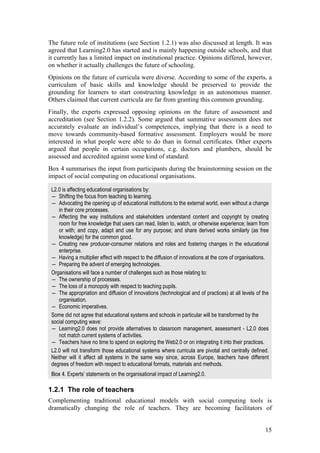
The potential of Learning 2.0 to drive pedagogical innovation in education was discussed. Key points included:
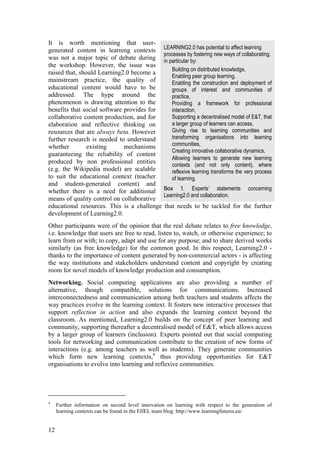
1) Social computing fosters new forms of collaboration like peer and community learning.
2) It enables the creation of interest groups and practice communities that extend beyond courses.
3) Networking tools support new interactive processes and expand learning contexts beyond classrooms.
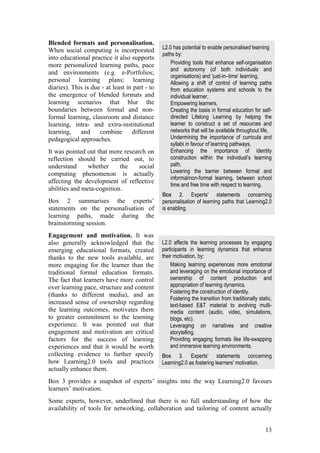
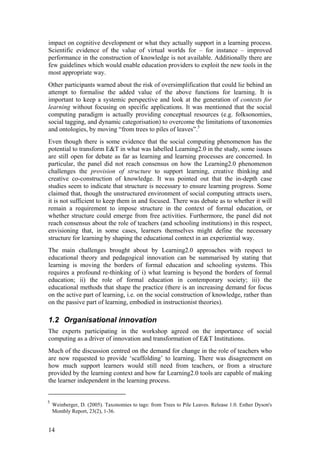
4) Trends suggest Learning 2.0 may lead to more blended, personalized learning and engaged learners.
However, challenges around quality of user-generated content need addressing.











![[EN] Education, Training & Operation | DLM Forum Industry Whitepaper 06 | TRW...](https://cdn.slidesharecdn.com/ss_thumbnails/dlmforumindustrywhitepaper06educationtrainingoperationtrw-ucl-comunicando20020618-150917131334-lva1-app6892-thumbnail.jpg?width=640&height=640&fit=bounds)


