Technology: A Journey Through Innovation
Understanding Technology, Its Evolution, and Its Impact
Technology
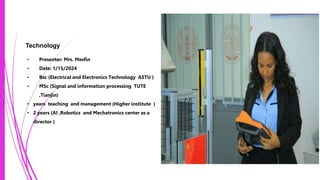
• Presenter: Mrs. Mesfin
• Date: 1/15/2024
• Bsc (Electrical and Electronics Technology ASTU )
• MSc (Signal and information processing TUTE
,Tianjin)
• years teaching and management (Higher institute )
• 2 years (AI ,Robotics and Mechatronics center as a
director )
Photo by Pexels
Introduction to Technology
What is Technology?
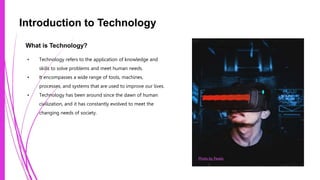
• Technology refers to the application of knowledge and
skills to solve problems and meet human needs.
• It encompasses a wide range of tools, machines,
processes, and systems that are used to improve our lives.
• Technology has been around since the dawn of human
civilization, and it has constantly evolved to meet the
changing needs of society.
Photo by Pexels
The Evolution of Technology
Early Technological Advancements
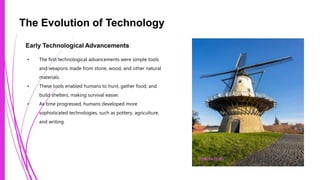
• The first technological advancements were simple tools
and weapons made from stone, wood, and other natural
materials.
• These tools enabled humans to hunt, gather food, and
build shelters, making survival easier.
• As time progressed, humans developed more
sophisticated technologies, such as pottery, agriculture,
and writing.
Photo by Pexels
The Industrial Revolution
A Turning Point in Technology
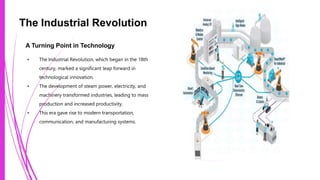
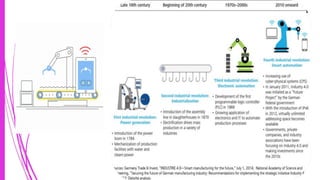
• The Industrial Revolution, which began in the 18th
century, marked a significant leap forward in
technological innovation.
• The development of steam power, electricity, and
machinery transformed industries, leading to mass
production and increased productivity.
• This era gave rise to modern transportation,
communication, and manufacturing systems.
Photo by Pexels
Technology in the Modern Age
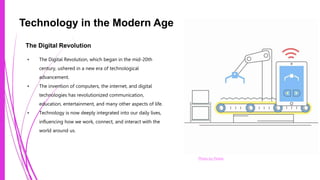
The Digital Revolution
• The Digital Revolution, which began in the mid-20th
century, ushered in a new era of technological
advancement.
• The invention of computers, the internet, and digital
technologies has revolutionized communication,
education, entertainment, and many other aspects of life.
• Technology is now deeply integrated into our daily lives,
influencing how we work, connect, and interact with the
world around us.
Photo by Pexels
Types of Technology
Hardware, Software, Networks, and Data
• Hardware: The physical components of a computer
system, such as the motherboard, CPU, RAM, and storage
devices.
• Software: The programs that run on a computer, such as
operating systems, applications, and games.
• Networks: The systems that connect devices and allow
them to communicate and share information.
• Data: The information that is processed by computers and
used to create knowledge and insights.
Photo by Pexels
Building a Simple Computer Model
Hands-on Experience with Computer Hardware
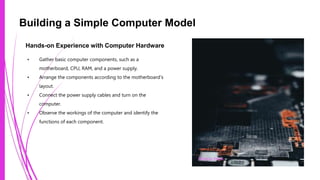
• Gather basic computer components, such as a
motherboard, CPU, RAM, and a power supply.
• Arrange the components according to the motherboard's
layout.
• Connect the power supply cables and turn on the
computer.
• Observe the workings of the computer and identify the
functions of each component.
Photo by Pexels
Conclusion
Technology: A Continuous Journey of Innovation
• Technology is constantly evolving, driven by human
ingenuity and the desire to solve problems and improve
our lives.
• Understanding the basics of technology, its history, and
its different types is essential for navigating the world
around us and making informed decisions in an
increasingly technological society.
• As we continue to explore the frontiers of technology, we
have the potential to make even greater advancements
that will shape the future of humanity.
Photo by Pexels

Tech.pptx

  • 1.
    Technology: A JourneyThrough Innovation Understanding Technology, Its Evolution, and Its Impact
  • 2.
    Technology • Presenter: Mrs.Mesfin • Date: 1/15/2024 • Bsc (Electrical and Electronics Technology ASTU ) • MSc (Signal and information processing TUTE ,Tianjin) • years teaching and management (Higher institute ) • 2 years (AI ,Robotics and Mechatronics center as a director ) Photo by Pexels
  • 3.
    Introduction to Technology Whatis Technology? • Technology refers to the application of knowledge and skills to solve problems and meet human needs. • It encompasses a wide range of tools, machines, processes, and systems that are used to improve our lives. • Technology has been around since the dawn of human civilization, and it has constantly evolved to meet the changing needs of society. Photo by Pexels
  • 4.
    The Evolution ofTechnology Early Technological Advancements • The first technological advancements were simple tools and weapons made from stone, wood, and other natural materials. • These tools enabled humans to hunt, gather food, and build shelters, making survival easier. • As time progressed, humans developed more sophisticated technologies, such as pottery, agriculture, and writing. Photo by Pexels
  • 5.
    The Industrial Revolution ATurning Point in Technology • The Industrial Revolution, which began in the 18th century, marked a significant leap forward in technological innovation. • The development of steam power, electricity, and machinery transformed industries, leading to mass production and increased productivity. • This era gave rise to modern transportation, communication, and manufacturing systems. Photo by Pexels
  • 6.
    Technology in theModern Age The Digital Revolution • The Digital Revolution, which began in the mid-20th century, ushered in a new era of technological advancement. • The invention of computers, the internet, and digital technologies has revolutionized communication, education, entertainment, and many other aspects of life. • Technology is now deeply integrated into our daily lives, influencing how we work, connect, and interact with the world around us. Photo by Pexels
  • 8.
    Types of Technology Hardware,Software, Networks, and Data • Hardware: The physical components of a computer system, such as the motherboard, CPU, RAM, and storage devices. • Software: The programs that run on a computer, such as operating systems, applications, and games. • Networks: The systems that connect devices and allow them to communicate and share information. • Data: The information that is processed by computers and used to create knowledge and insights. Photo by Pexels
  • 9.
    Building a SimpleComputer Model Hands-on Experience with Computer Hardware • Gather basic computer components, such as a motherboard, CPU, RAM, and a power supply. • Arrange the components according to the motherboard's layout. • Connect the power supply cables and turn on the computer. • Observe the workings of the computer and identify the functions of each component. Photo by Pexels
  • 10.
    Conclusion Technology: A ContinuousJourney of Innovation • Technology is constantly evolving, driven by human ingenuity and the desire to solve problems and improve our lives. • Understanding the basics of technology, its history, and its different types is essential for navigating the world around us and making informed decisions in an increasingly technological society. • As we continue to explore the frontiers of technology, we have the potential to make even greater advancements that will shape the future of humanity. Photo by Pexels