Presentation prepared for the U.N. Haiti Cholera Settlement Fund
International Developoment Group’s Emergency Task Force
Abi Olvera, Akarsh Sharma, Katherine Rich, Theresa Bailey and Sohini Sircar
Background
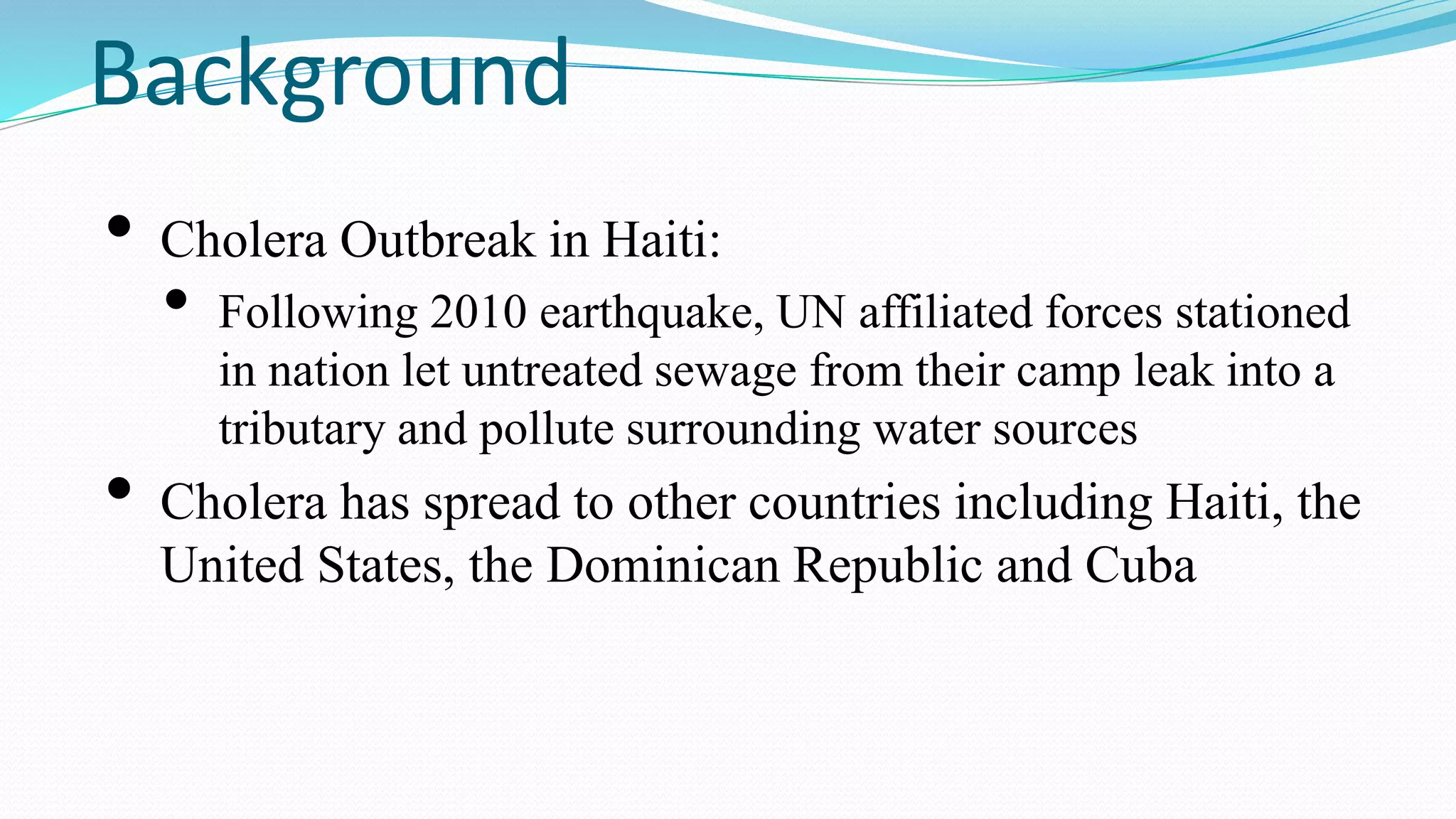
• Cholera Outbreak in Haiti:
•

Following 2010 earthquake, UN affiliated forces stationed
in nation let untreated sewage from their camp leak into a
tributary and pollute surrounding water sources

• Cholera has spread to other countries including Haiti, the
United States, the Dominican Republic and Cuba
Problem
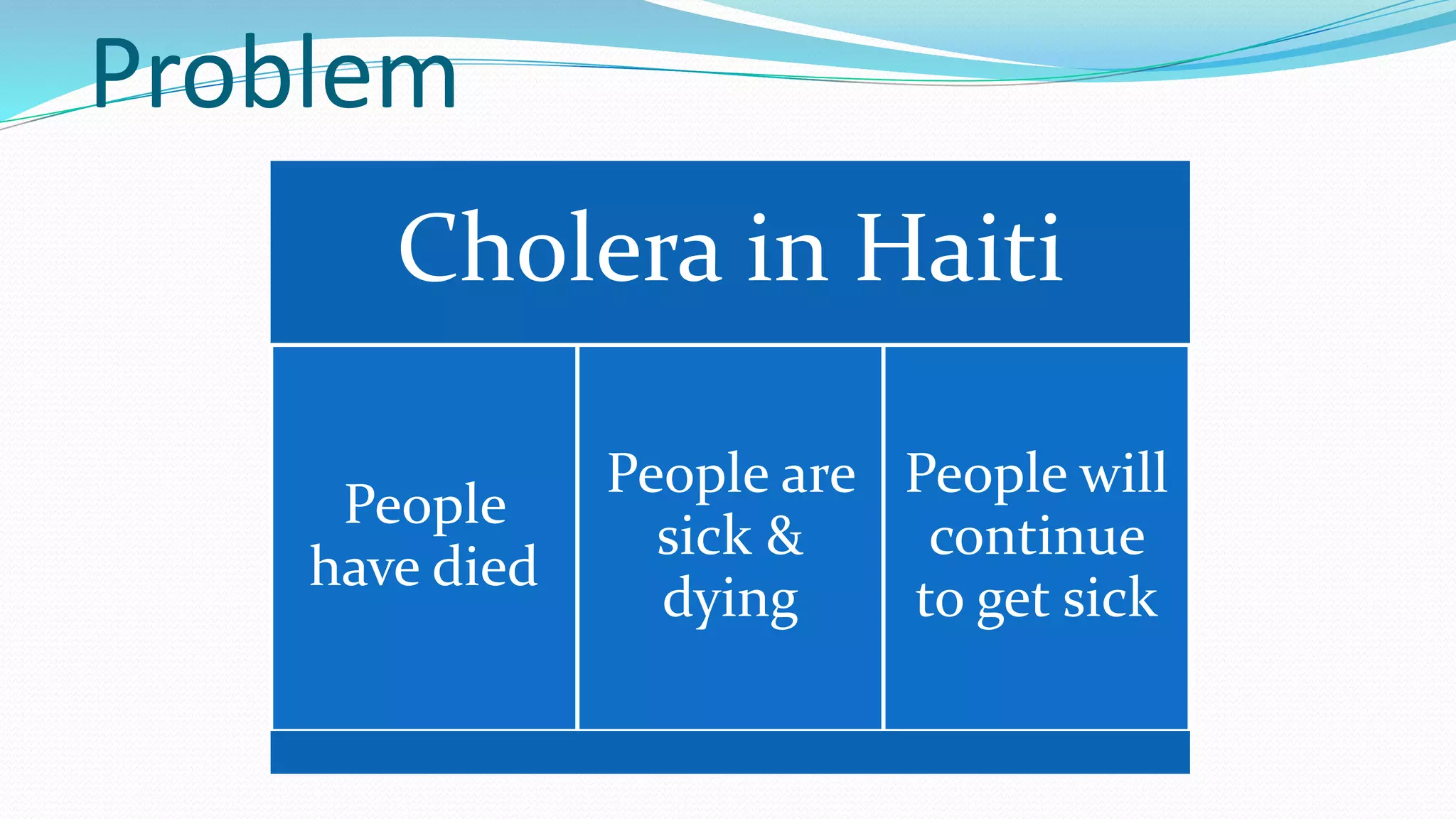
Cholera in Haiti
People
have died

People are People will
sick &
continue
dying
to get sick
Problem Components
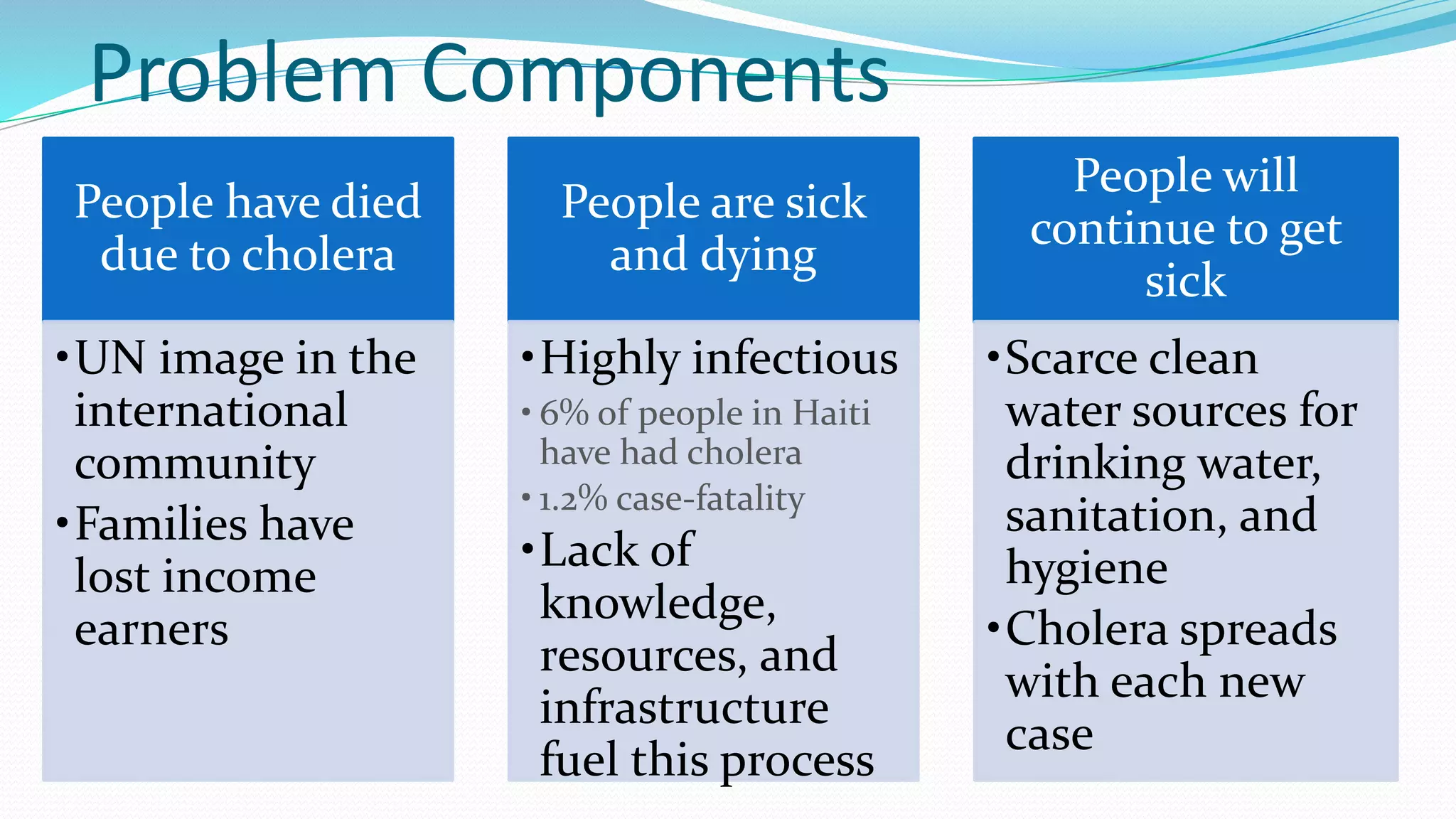
People have died
due to cholera

People are sick
and dying

•UN image in the
international
community
•Families have
lost income
earners

•Highly infectious
• 6% of people in Haiti
have had cholera
• 1.2% case-fatality

•Lack of
knowledge,
resources, and
infrastructure
fuel this process

People will
continue to get
sick
•Scarce clean
water sources for
drinking water,
sanitation, and
hygiene
•Cholera spreads
with each new
case
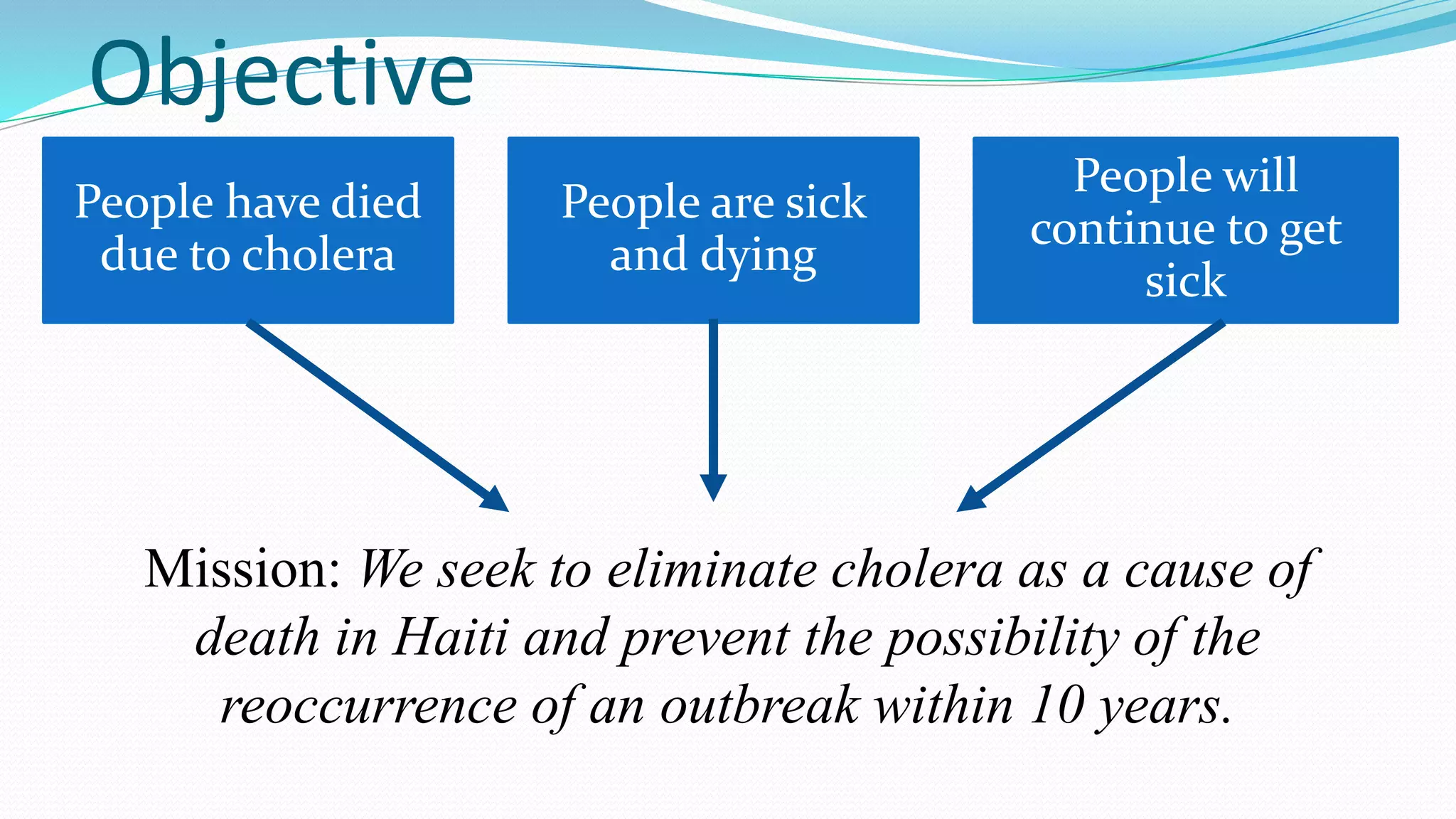
Objective
People have died
due to cholera

People are sick
and dying

People will
continue to get
sick

Mission: We seek to eliminate cholera as a cause of
death in Haiti and prevent the possibility of the
reoccurrence of an outbreak within 10 years.
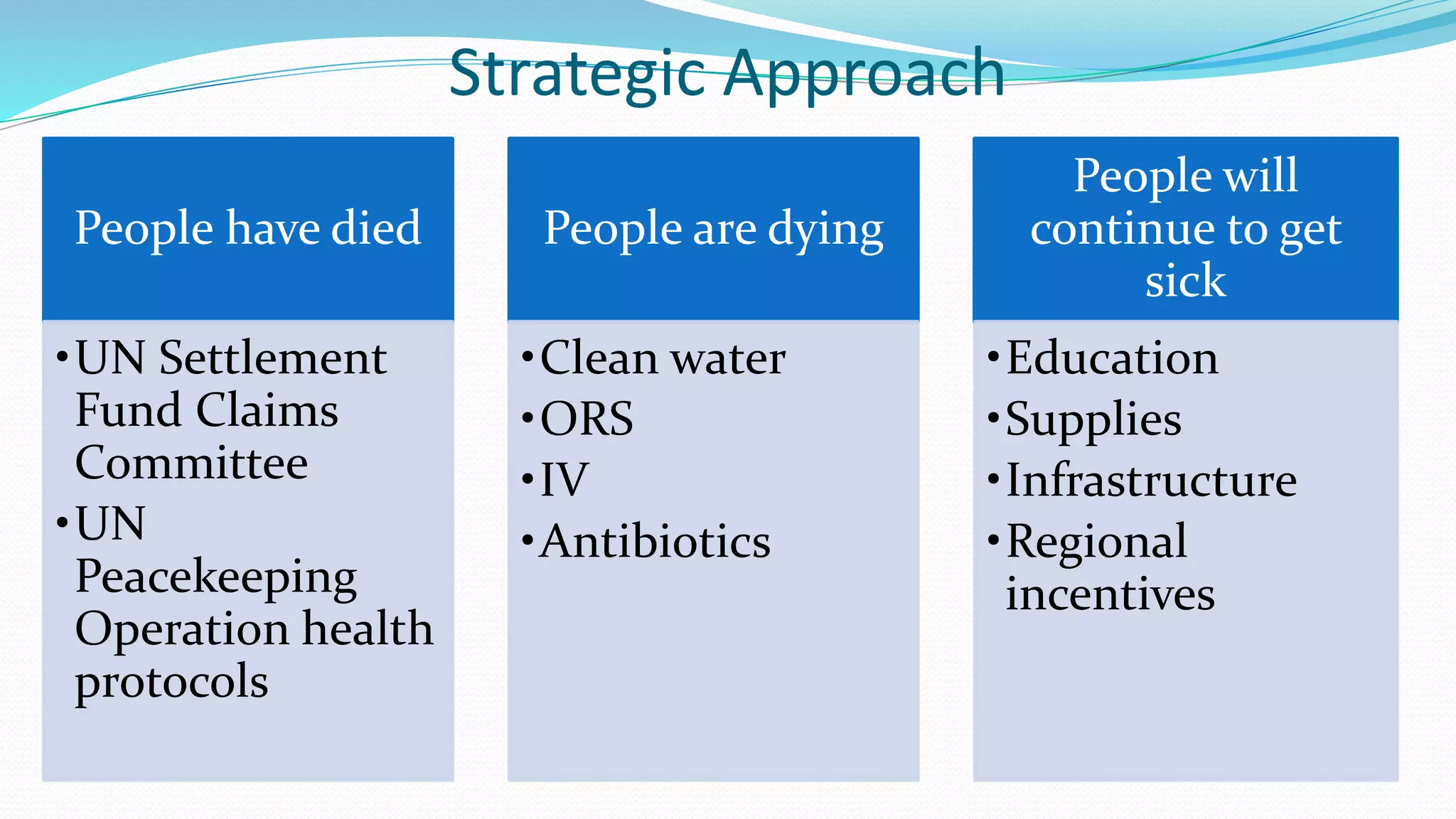
Strategic Approach
People have died
•UN Settlement
Fund Claims
Committee
•UN
Peacekeeping
Operation health
protocols

People are dying
•Clean water
•ORS
•IV
•Antibiotics

People will
continue to get
sick
•Education
•Supplies
•Infrastructure
•Regional
incentives
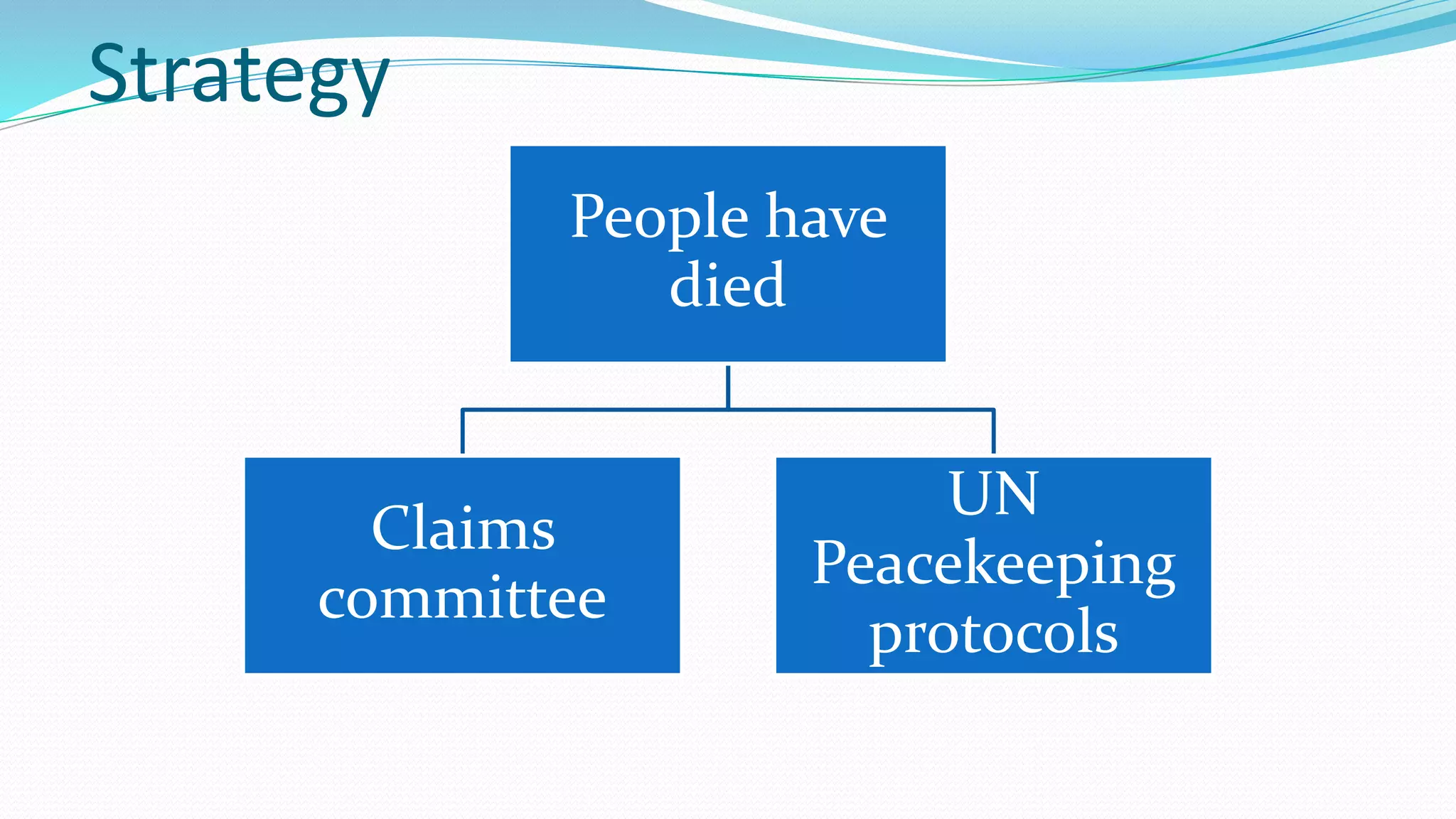
Strategy
People have
died

Claims
committee

UN
Peacekeeping
protocols
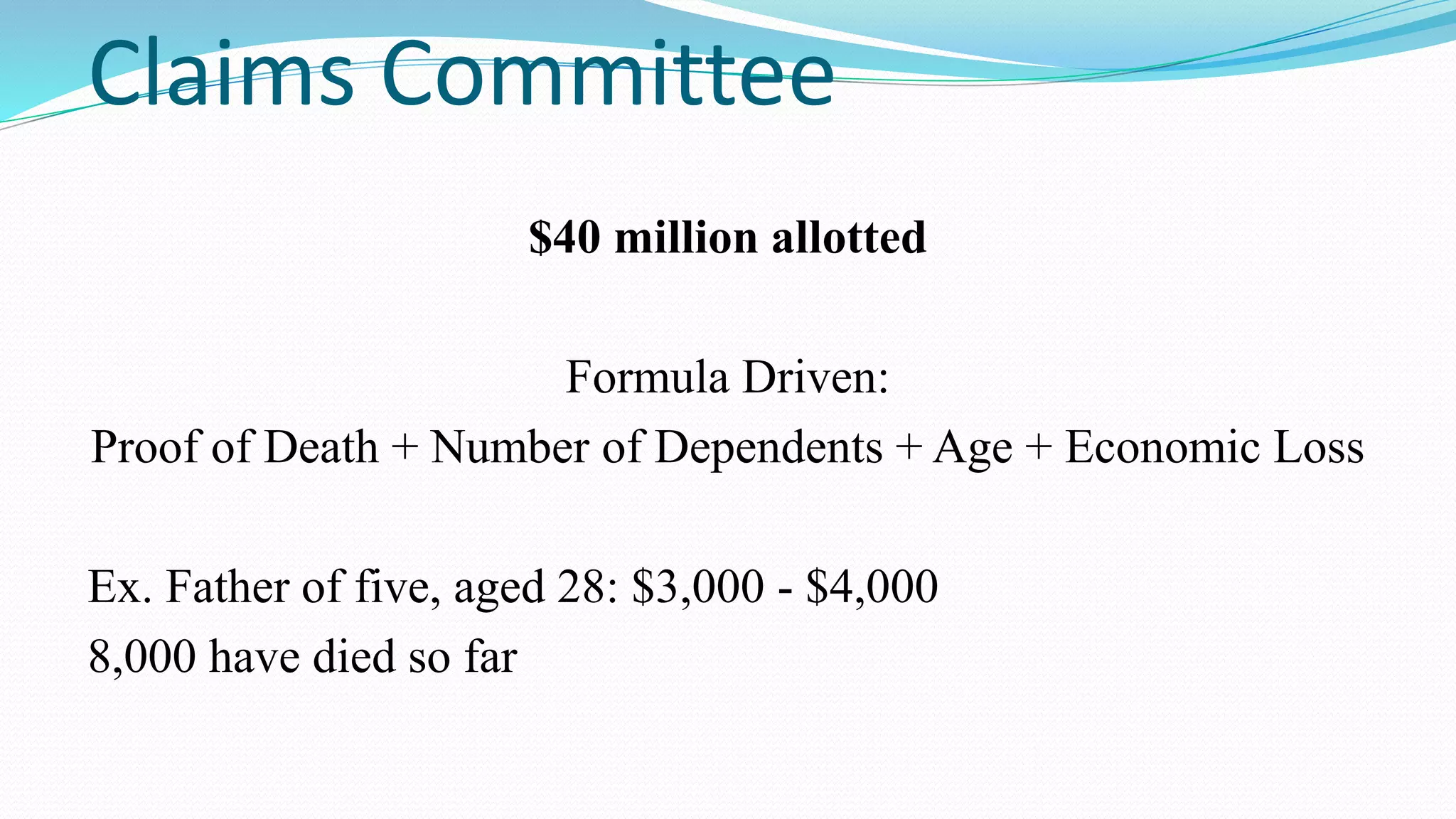
Claims Committee
$40 million allotted
Formula Driven:
Proof of Death + Number of Dependents + Age + Economic Loss
Ex. Father of five, aged 28: $3,000 - $4,000
8,000 have died so far
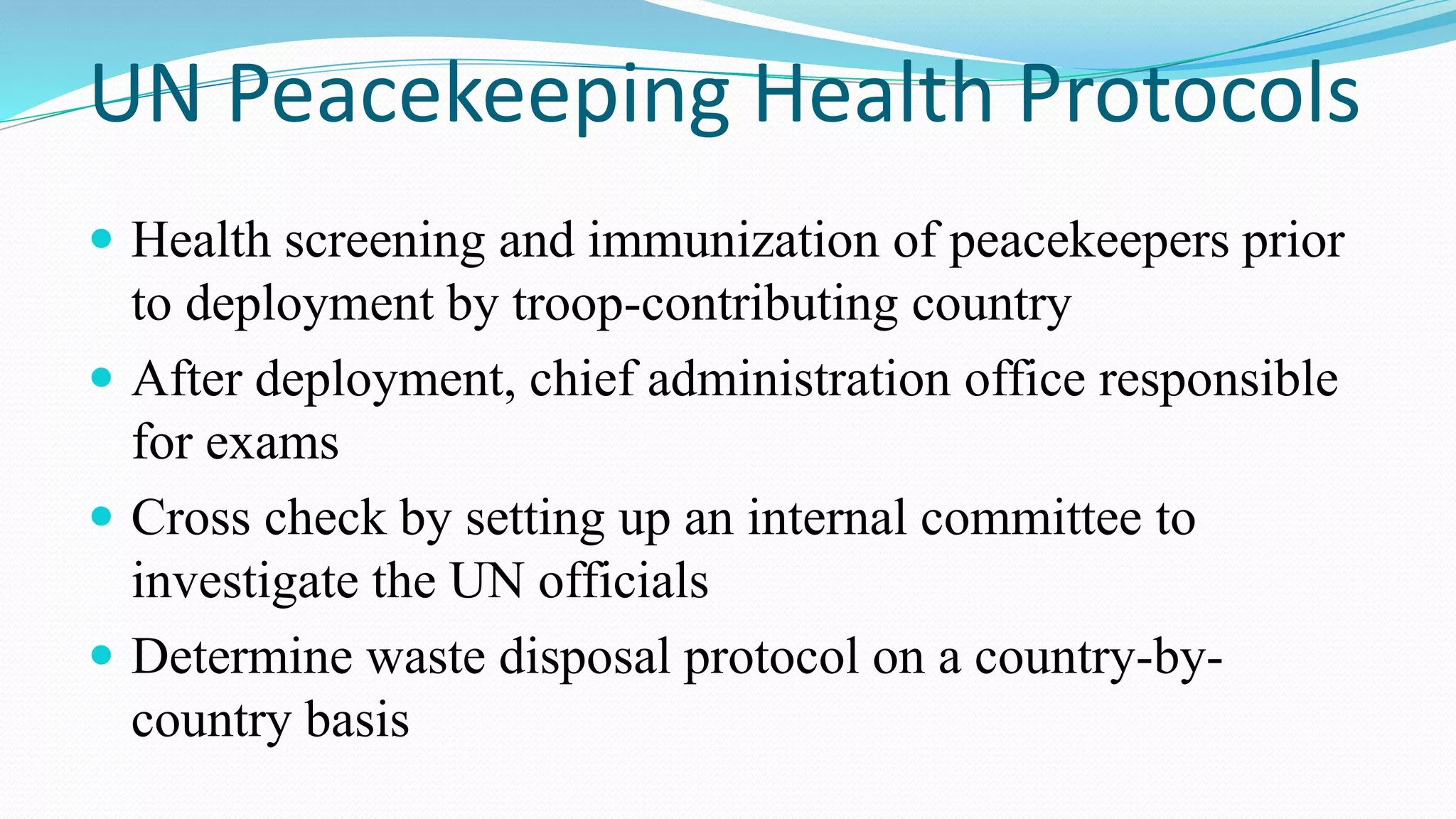
UN Peacekeeping Health Protocols
 Health screening and immunization of peacekeepers prior

to deployment by troop-contributing country
 After deployment, chief administration office responsible
for exams
 Cross check by setting up an internal committee to
investigate the UN officials
 Determine waste disposal protocol on a country-bycountry basis
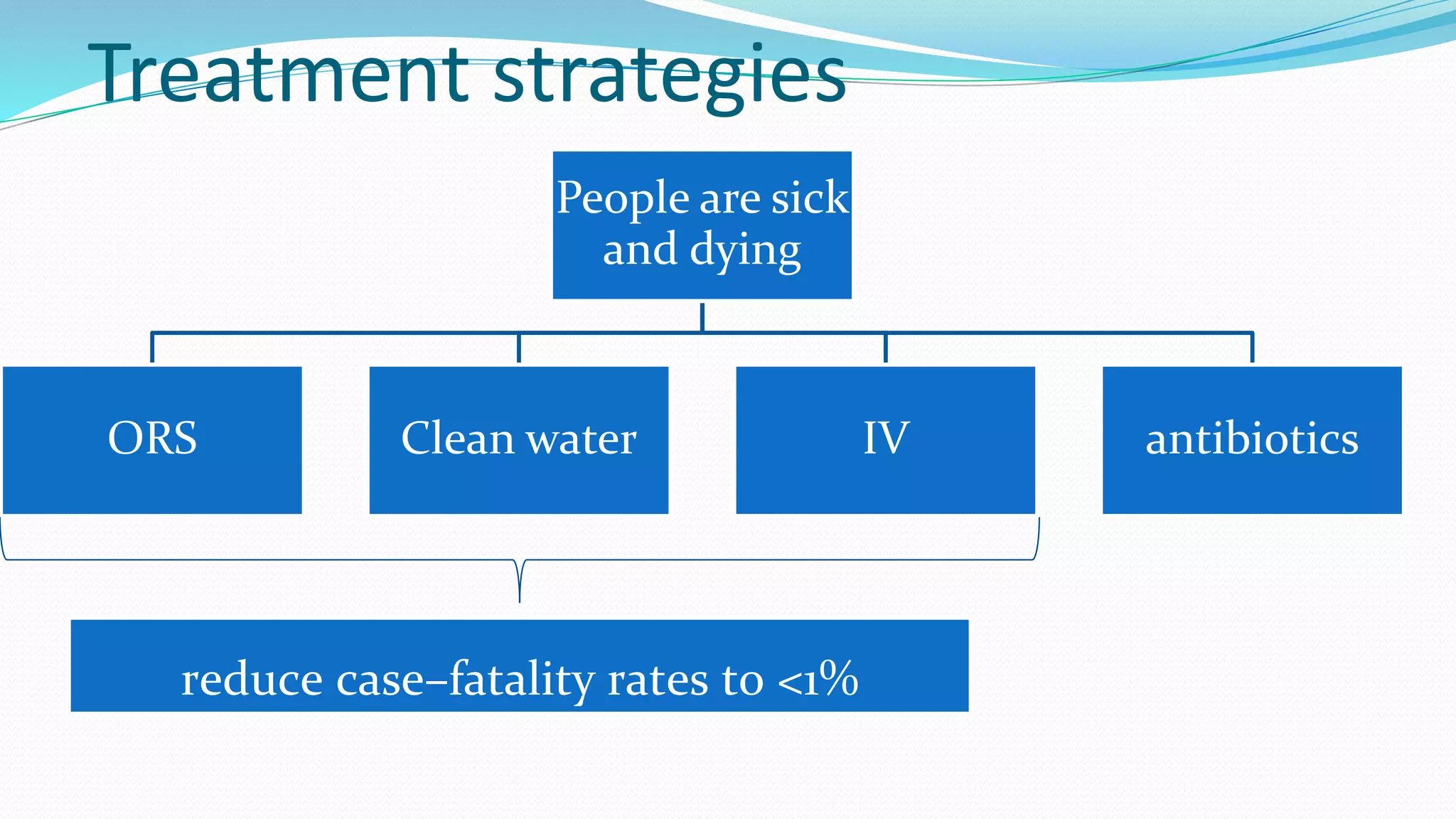
Treatment strategies
People are sick
and dying

ORS

Clean water

reduce case–fatality rates to <1%

IV

antibiotics
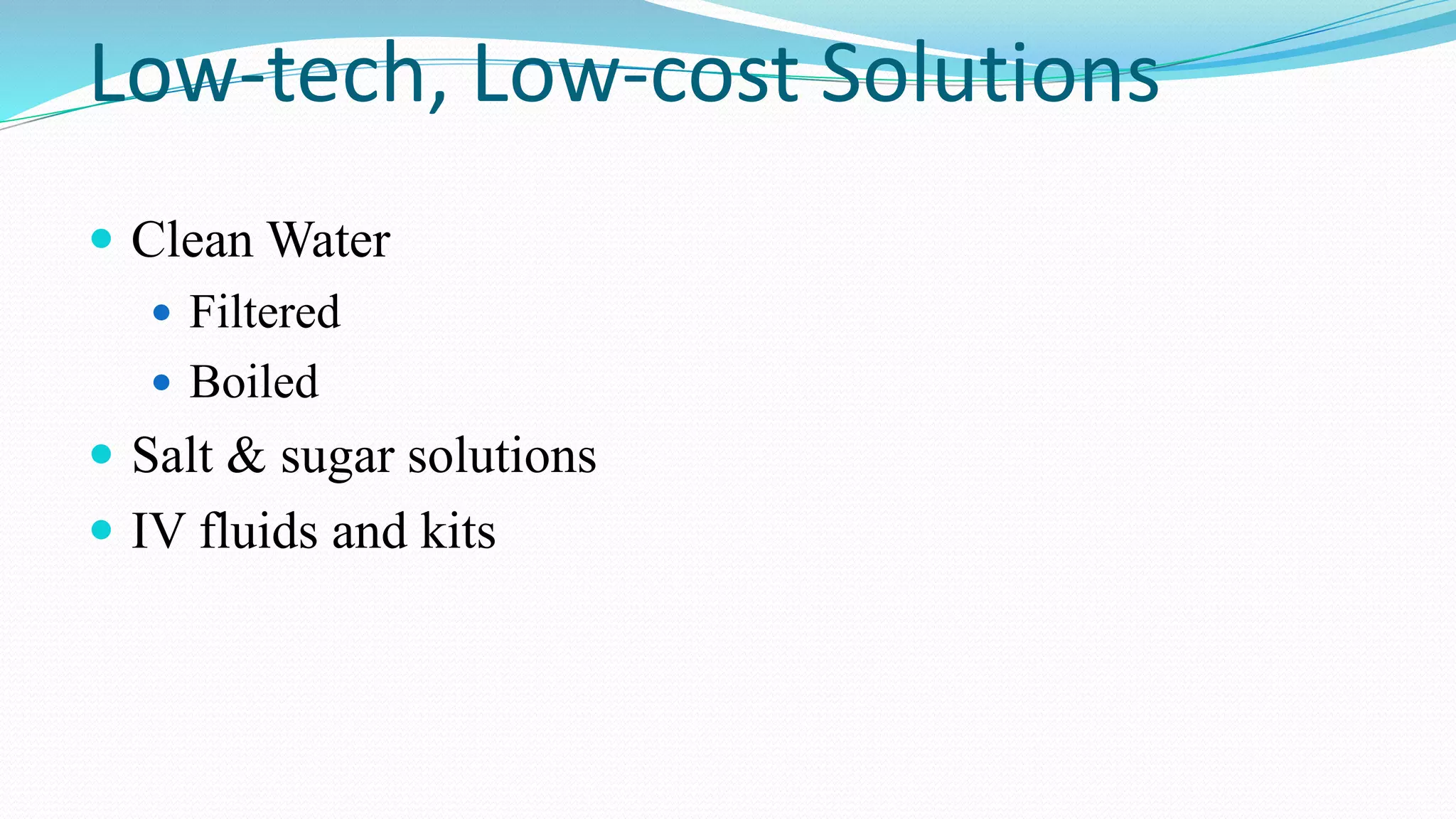
Low-tech, Low-cost Solutions
 Clean Water
 Filtered
 Boiled
 Salt & sugar solutions
 IV fluids and kits
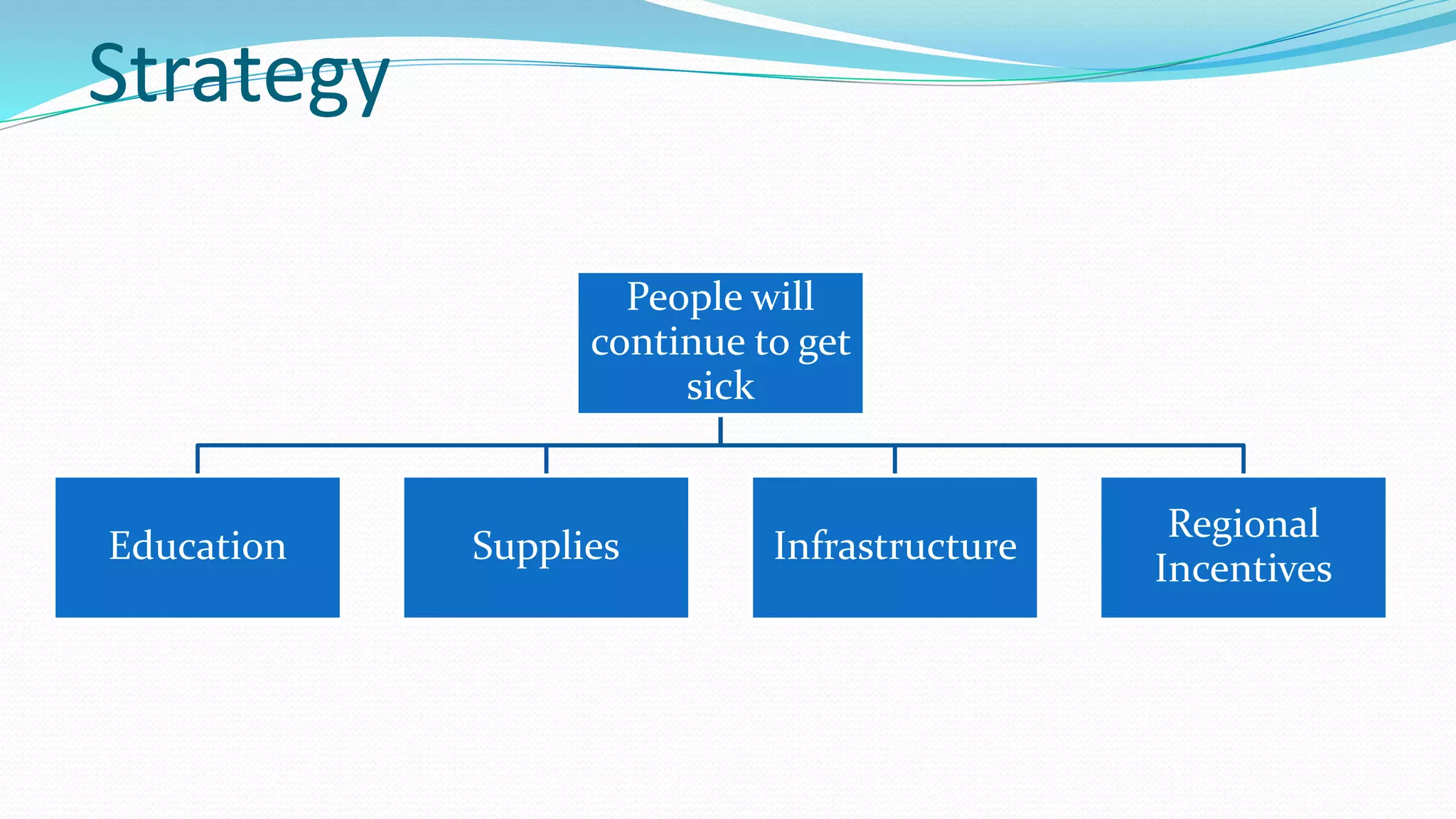
Strategy
People will
continue to get
sick

Education

Supplies

Infrastructure

Regional
Incentives
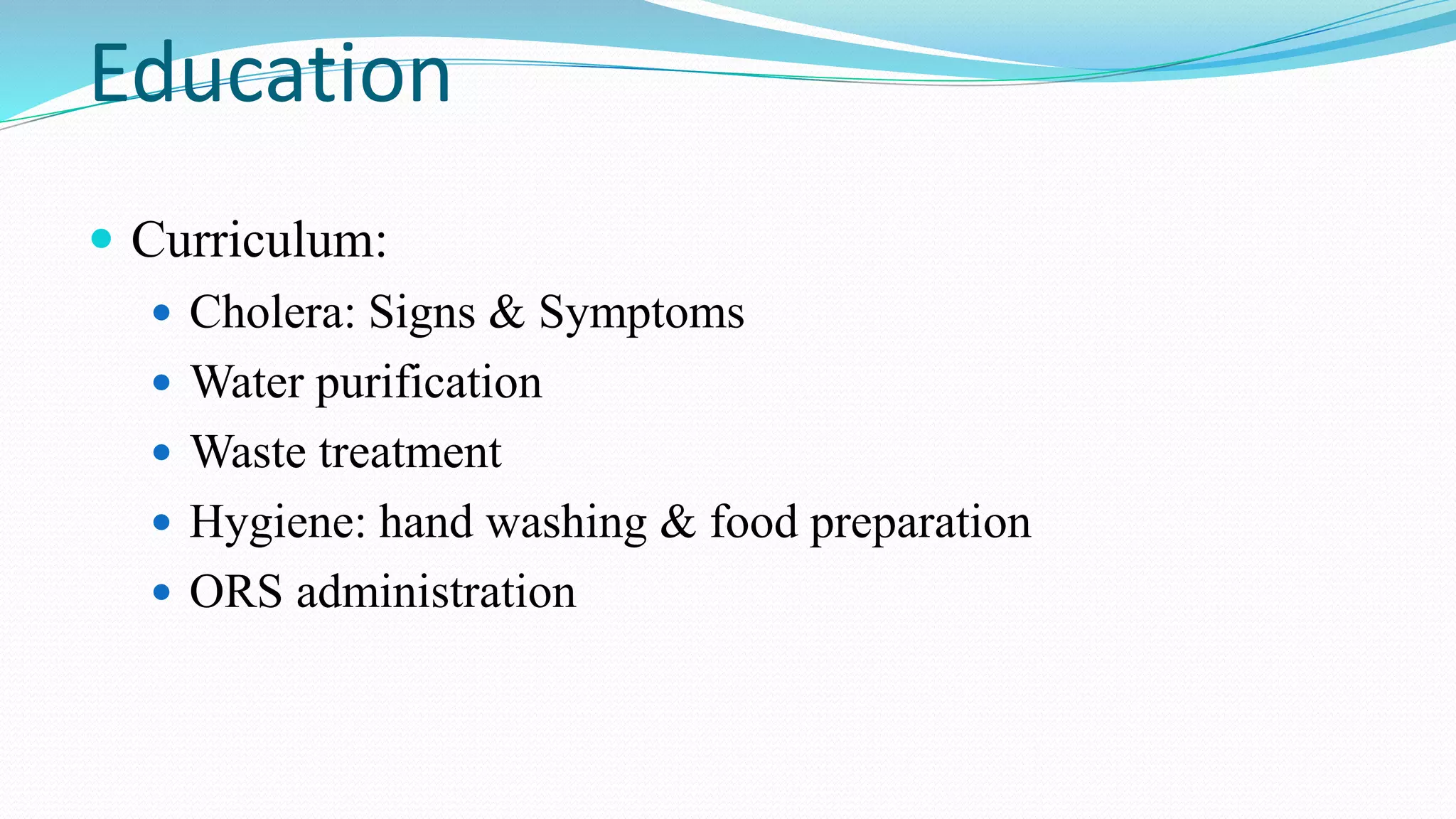
Education
 Curriculum:
 Cholera: Signs & Symptoms
 Water purification
 Waste treatment
 Hygiene: hand washing & food preparation
 ORS administration
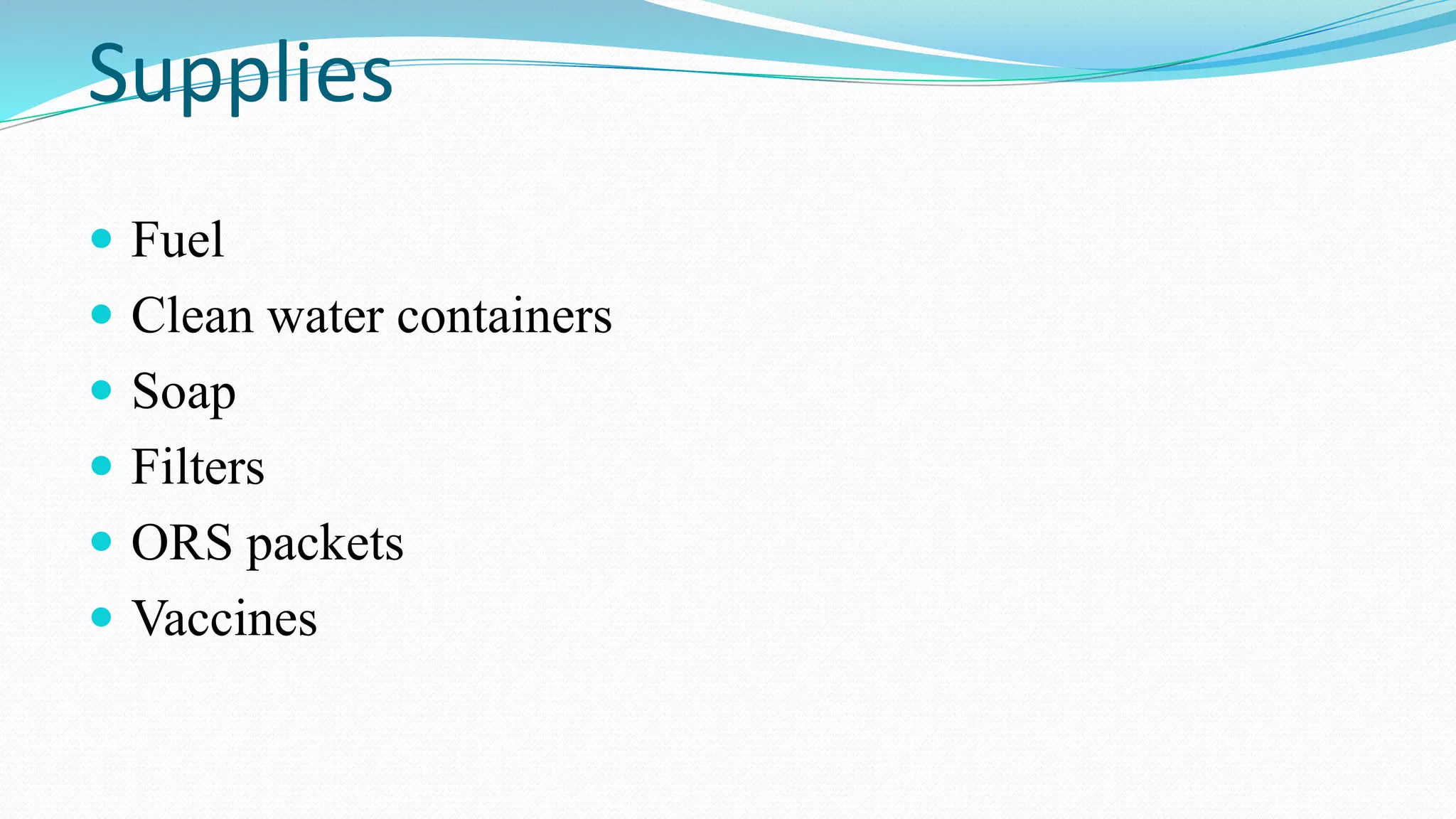
Supplies
 Fuel

 Clean water containers
 Soap

 Filters
 ORS packets
 Vaccines
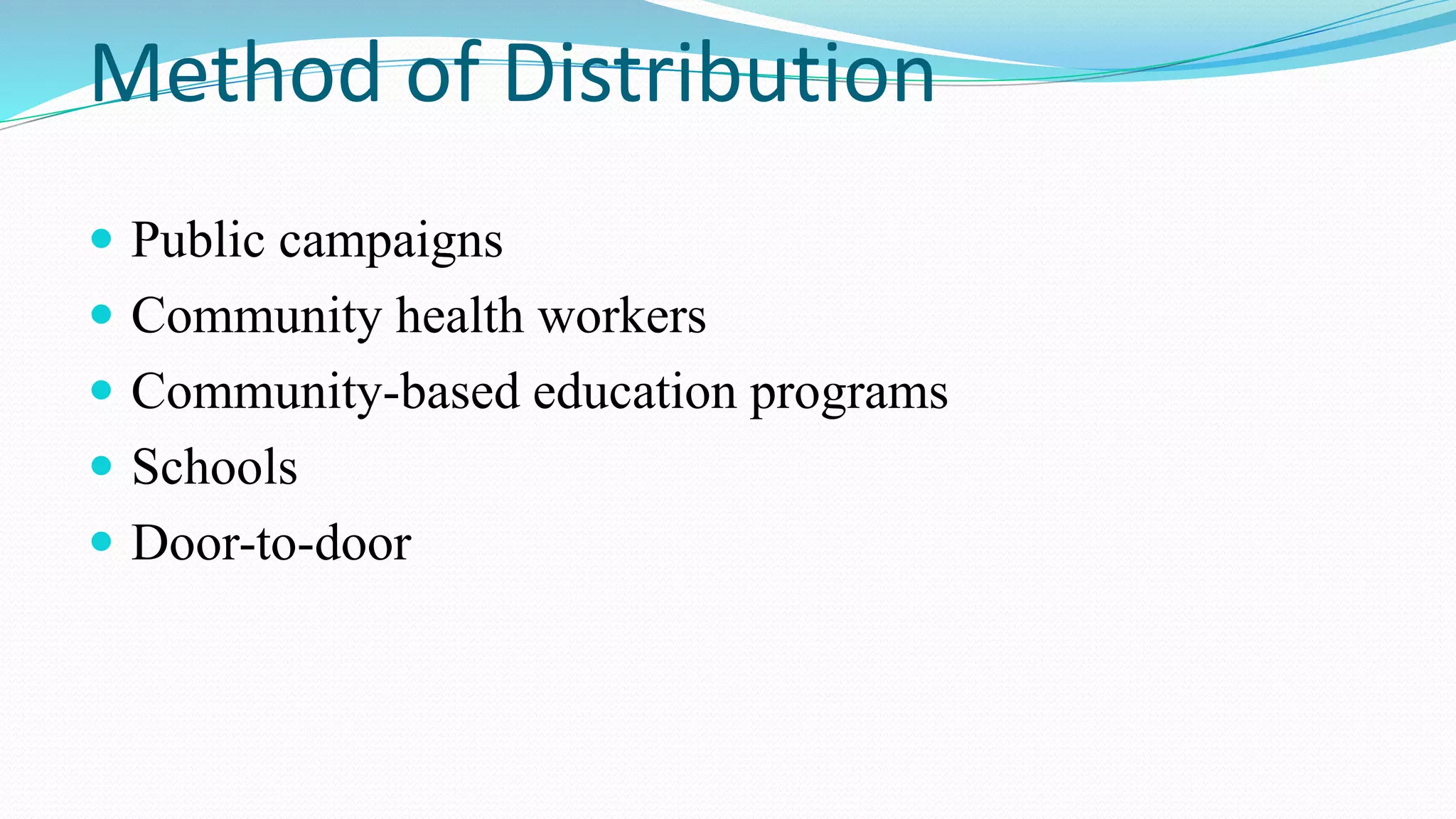
Method of Distribution
 Public campaigns

 Community health workers
 Community-based education programs

 Schools
 Door-to-door
Infrastructure
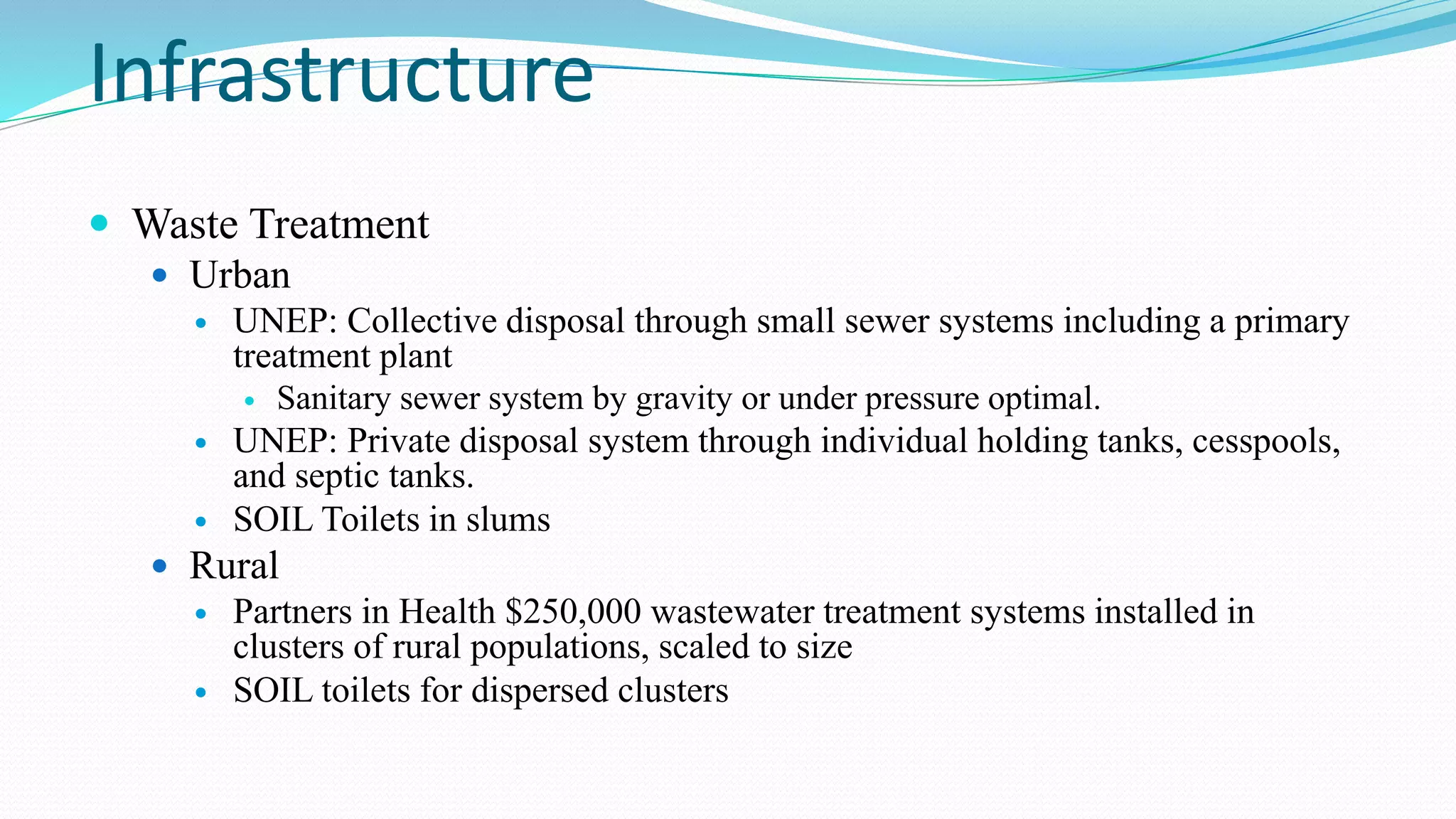
 Waste Treatment
 Urban


UNEP: Collective disposal through small sewer systems including a primary
treatment plant





Sanitary sewer system by gravity or under pressure optimal.

UNEP: Private disposal system through individual holding tanks, cesspools,
and septic tanks.
SOIL Toilets in slums

 Rural



Partners in Health $250,000 wastewater treatment systems installed in
clusters of rural populations, scaled to size
SOIL toilets for dispersed clusters
Infrastructure
 Healthcare system
 Cholera Treatment Centres
 Increase access
SOIL Toilets
 Pilot programs for optimal usage and PR
 Urban
 Rural
 Randomized testing:
 Up-front cost of toilet on sliding scale
 Monthly maintenance fee, reimbursement
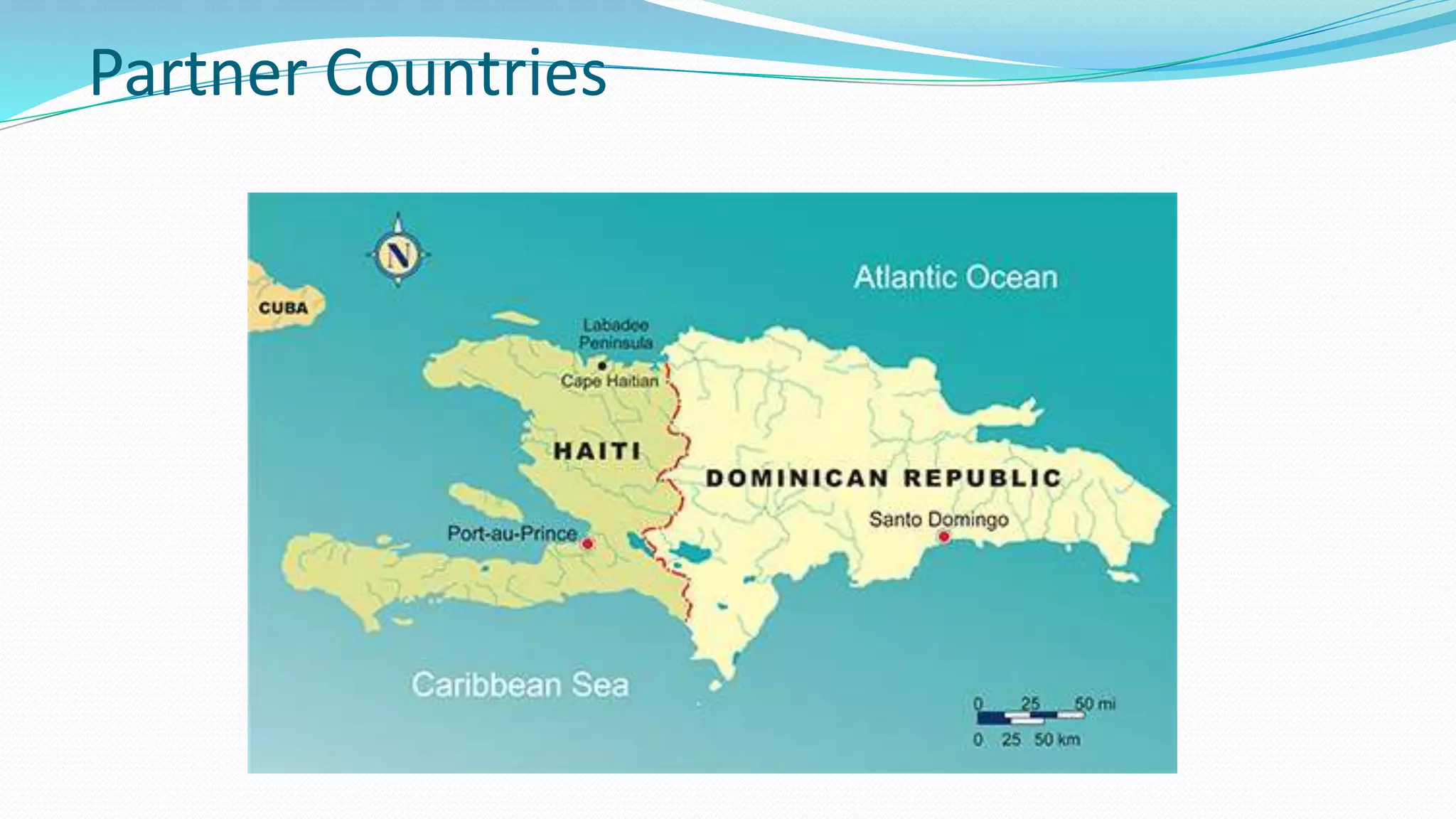
Partner Countries
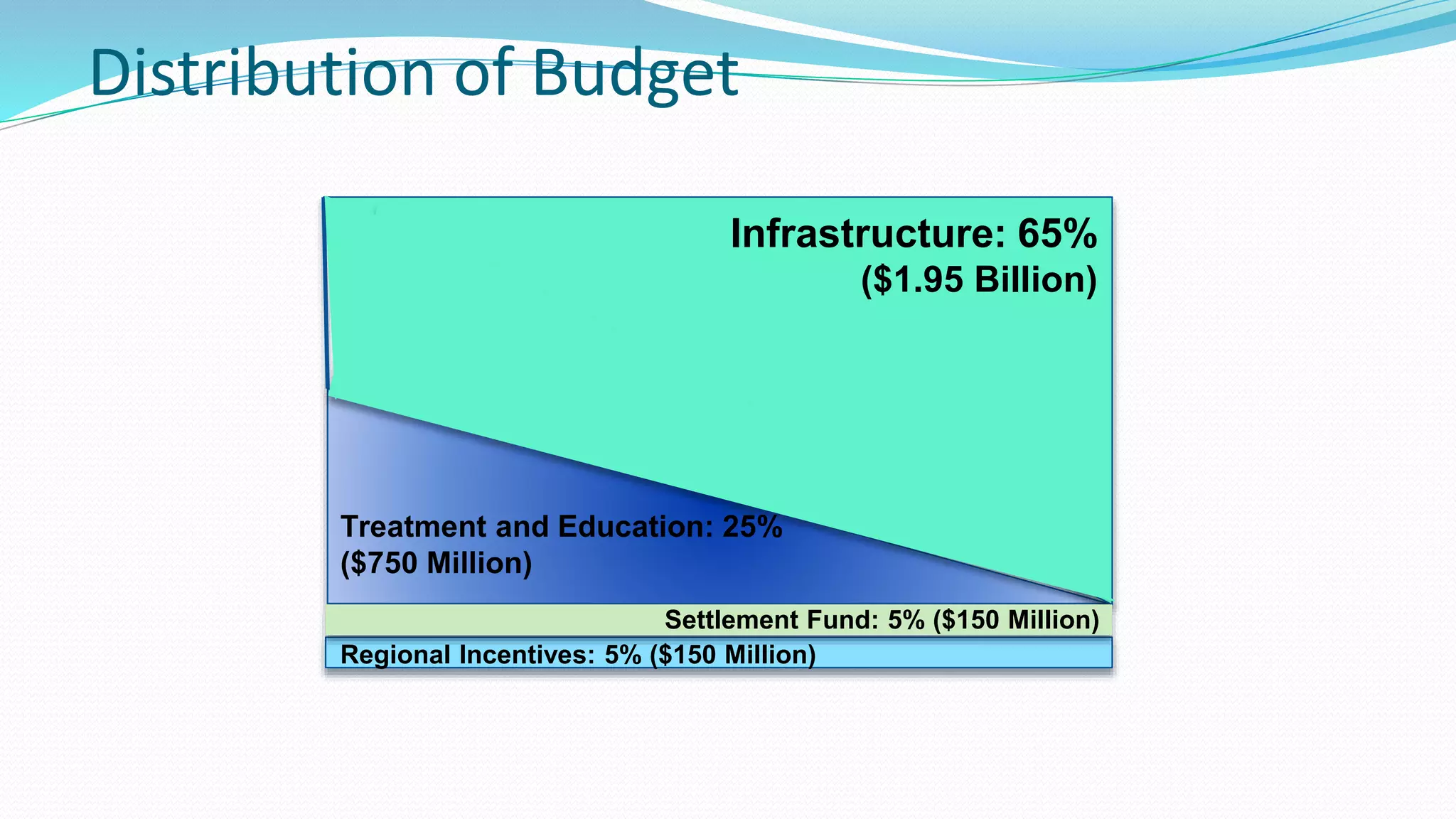
Distribution of Budget
Infrastructure: 65%
($1.95 Billion)

Treatment and Education: 25%
($750 Million)
Settlement Fund: 5% ($150 Million)
Regional Incentives: 5% ($150 Million)
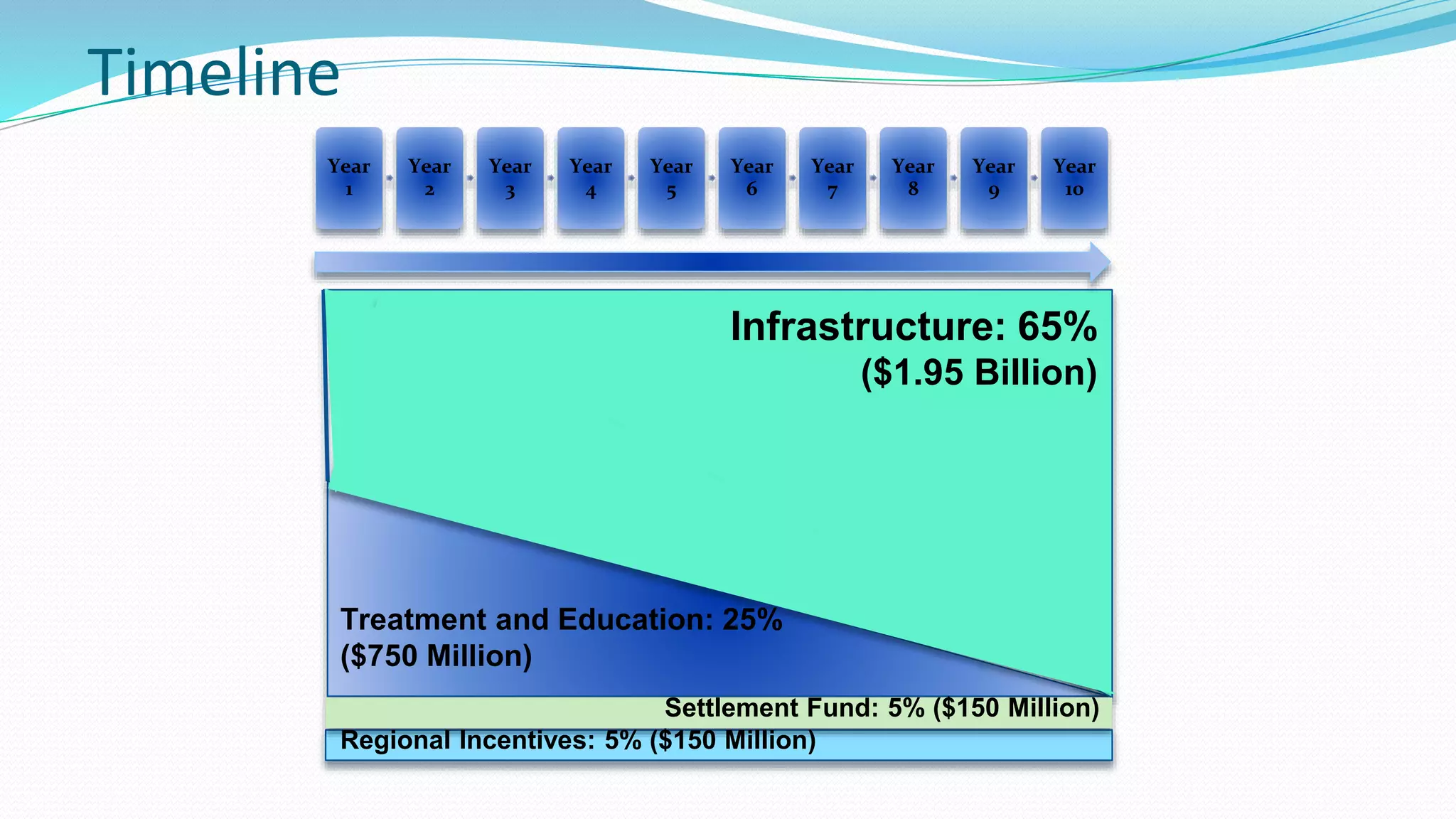
Timeline
Year
1

Year
2

Year
3

Year
4

Year
5

Year
6

Year
7

Year
8

Year
9

Year
10

Infrastructure: 65%
($1.95 Billion)

Treatment and Education: 25%
($750 Million)
Settlement Fund: 5% ($150 Million)
Regional Incentives: 5% ($150 Million)
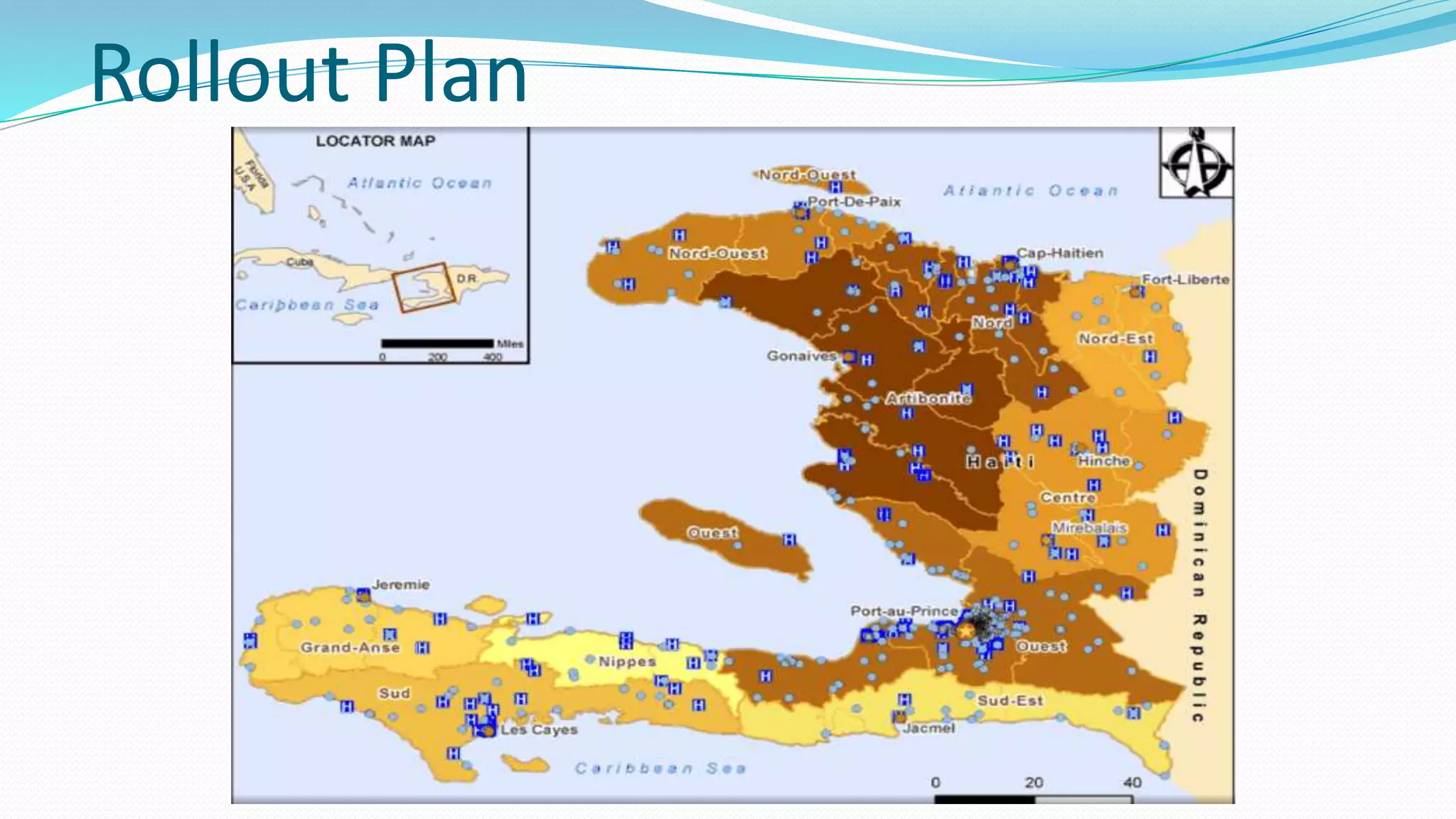
Rollout Plan
Limitations
 People have died
 Animosity towards the UN may not be absolved by settling personal claims
 Relations with other nations may still be permanently affected by this incident

 People are dying
 Plan does not include diagnostics

 Haiti’s health care infrastructure may prevent patients from obtaining treatment

 People will continue to die:
 More countries affected then we can sustainably support

 Haiti may not be able to consistently generate enough electrical energy to

adequately maintain all sewage treatment facilities
Advantages
 Sewage treatment plan is self-sustaining

 The infrastructure of Haiti will undergo rapid expansion
 The current proposal simultaneously improves the state of
neighboring nations like the Dominican Republic
 Engages the community in the solution
 Relatively low-cost, low technology solutions
Summary Slide
Our goal is to elminate cholera from Haiti
through treatment, prevention and
development of long-term infrastructure.
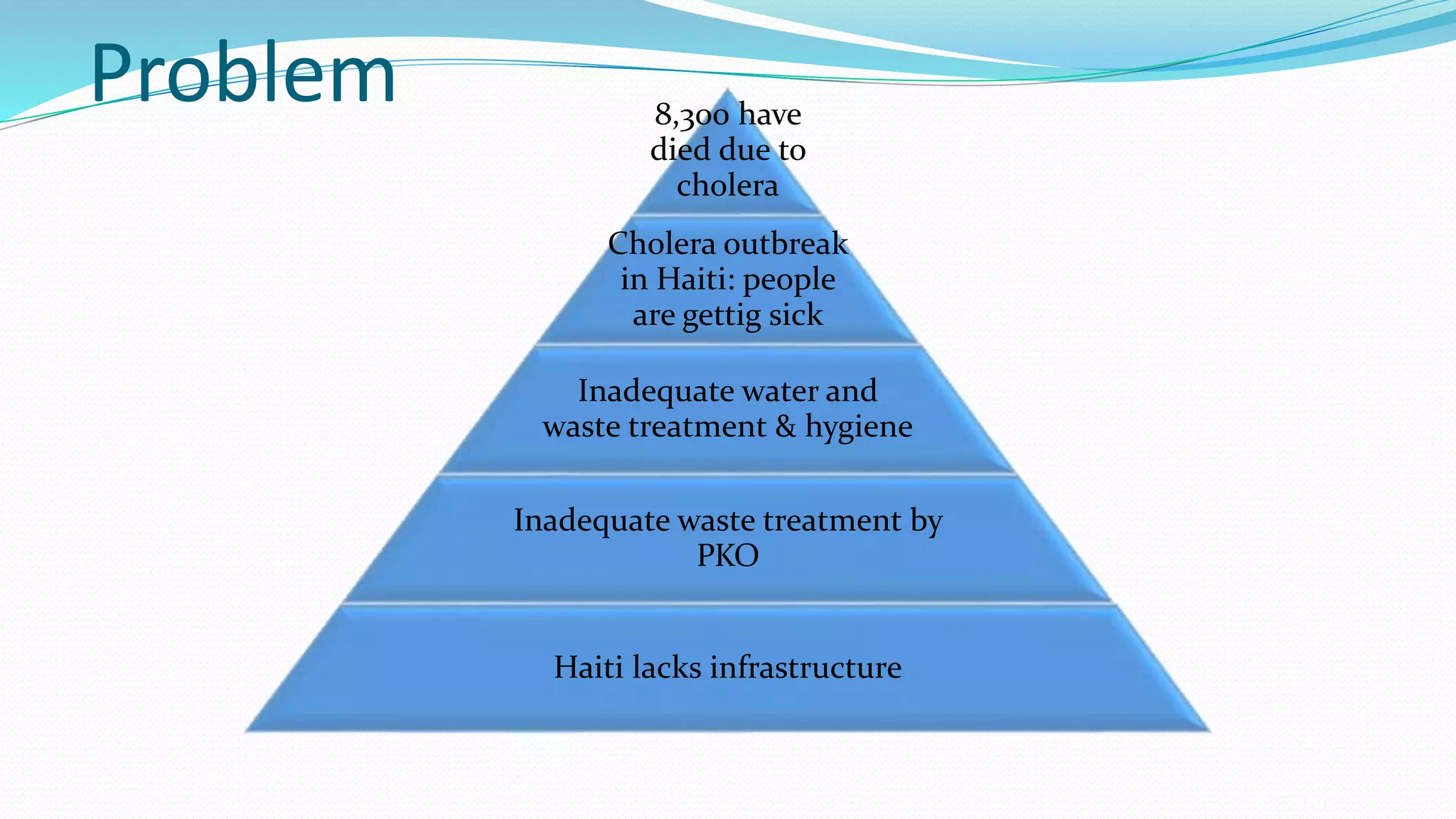
Problem

8,300 have
died due to
cholera
Cholera outbreak
in Haiti: people
are gettig sick
Inadequate water and
waste treatment & hygiene
Inadequate waste treatment by
PKO
Haiti lacks infrastructure
Stakeholders
•
•
•
•
•
•
•
•
•

Haitians with cholera and at risk for cholera
Haitian Government
UN
UN PKO
WHO
Partners in Health
SOIL
HAS
DINEPA
Solutions
8,300 Haitians who died as a result of the cholera epidemic as well as some 650,000
more survivors of the illness.
$2,220,000 ORS (.11cents per packet, 20 packets per person, 1,000,000 ppl)
$10,000,000 vaccine/yr (1.85 per vaccine, vaccines for 1,000,000)
$9,600 (.04per 200mg tablet)
$920,000 (7 per IV Ringer Lactate solution kit) *really 840,000 but a bit
more added just in case
[120,000 hospitalization per year]
$1,222,300,800 Full sanitation system (cost of treatment system for all of the domestic
water
$250,000 (300,000liters per day)
Hôpital Universitaire de Mirebalais (HUM) Mirebalais
Cholera Treatment Centres
 As of 30 November, 40 cholera treatment centres (CTCs)

were operational (100 to 200 beds each) and 61 cholera
treatment units (CTUs) were functional. Few oral
rehydration centres (ORCs) have been established so far
due to difficulties in implementing the response.
Vaccine Distribution
 Deputy director of PAHO, and arm of UN thinks that vaccines

for all newborns could be useful (60-70% effective and lasts 2
years)
 So we would need about 3 vaccines per kid to get them out of
the danger zone
 Densely populated urban areas and rural places since little
access to health care because vaccine is in short supply
 Need about 46% vaccination coverage and Zindoga
Mukandavire, David L. Smith & J. Glenn Morris Jr think it’s a
good idea
Strategic Approach
Treatment
Education
Infrastructure
Investment in Haiti’s neighbor

Team 20

  • 1.
    Presentation prepared forthe U.N. Haiti Cholera Settlement Fund International Developoment Group’s Emergency Task Force Abi Olvera, Akarsh Sharma, Katherine Rich, Theresa Bailey and Sohini Sircar
  • 2.
    Background • Cholera Outbreakin Haiti: • Following 2010 earthquake, UN affiliated forces stationed in nation let untreated sewage from their camp leak into a tributary and pollute surrounding water sources • Cholera has spread to other countries including Haiti, the United States, the Dominican Republic and Cuba
  • 3.
    Problem Cholera in Haiti People havedied People are People will sick & continue dying to get sick
  • 4.
    Problem Components People havedied due to cholera People are sick and dying •UN image in the international community •Families have lost income earners •Highly infectious • 6% of people in Haiti have had cholera • 1.2% case-fatality •Lack of knowledge, resources, and infrastructure fuel this process People will continue to get sick •Scarce clean water sources for drinking water, sanitation, and hygiene •Cholera spreads with each new case
  • 5.
    Objective People have died dueto cholera People are sick and dying People will continue to get sick Mission: We seek to eliminate cholera as a cause of death in Haiti and prevent the possibility of the reoccurrence of an outbreak within 10 years.
  • 6.
    Strategic Approach People havedied •UN Settlement Fund Claims Committee •UN Peacekeeping Operation health protocols People are dying •Clean water •ORS •IV •Antibiotics People will continue to get sick •Education •Supplies •Infrastructure •Regional incentives
  • 7.
  • 8.
    Claims Committee $40 millionallotted Formula Driven: Proof of Death + Number of Dependents + Age + Economic Loss Ex. Father of five, aged 28: $3,000 - $4,000 8,000 have died so far
  • 9.
    UN Peacekeeping HealthProtocols  Health screening and immunization of peacekeepers prior to deployment by troop-contributing country  After deployment, chief administration office responsible for exams  Cross check by setting up an internal committee to investigate the UN officials  Determine waste disposal protocol on a country-bycountry basis
  • 10.
    Treatment strategies People aresick and dying ORS Clean water reduce case–fatality rates to <1% IV antibiotics
  • 11.
    Low-tech, Low-cost Solutions Clean Water  Filtered  Boiled  Salt & sugar solutions  IV fluids and kits
  • 13.
    Strategy People will continue toget sick Education Supplies Infrastructure Regional Incentives
  • 14.
    Education  Curriculum:  Cholera:Signs & Symptoms  Water purification  Waste treatment  Hygiene: hand washing & food preparation  ORS administration
  • 15.
    Supplies  Fuel  Cleanwater containers  Soap  Filters  ORS packets  Vaccines
  • 16.
    Method of Distribution Public campaigns  Community health workers  Community-based education programs  Schools  Door-to-door
  • 17.
    Infrastructure  Waste Treatment Urban  UNEP: Collective disposal through small sewer systems including a primary treatment plant    Sanitary sewer system by gravity or under pressure optimal. UNEP: Private disposal system through individual holding tanks, cesspools, and septic tanks. SOIL Toilets in slums  Rural   Partners in Health $250,000 wastewater treatment systems installed in clusters of rural populations, scaled to size SOIL toilets for dispersed clusters
  • 18.
    Infrastructure  Healthcare system Cholera Treatment Centres  Increase access
  • 19.
    SOIL Toilets  Pilotprograms for optimal usage and PR  Urban  Rural  Randomized testing:  Up-front cost of toilet on sliding scale  Monthly maintenance fee, reimbursement
  • 20.
  • 21.
    Distribution of Budget Infrastructure:65% ($1.95 Billion) Treatment and Education: 25% ($750 Million) Settlement Fund: 5% ($150 Million) Regional Incentives: 5% ($150 Million)
  • 22.
    Timeline Year 1 Year 2 Year 3 Year 4 Year 5 Year 6 Year 7 Year 8 Year 9 Year 10 Infrastructure: 65% ($1.95 Billion) Treatmentand Education: 25% ($750 Million) Settlement Fund: 5% ($150 Million) Regional Incentives: 5% ($150 Million)
  • 23.
  • 24.
    Limitations  People havedied  Animosity towards the UN may not be absolved by settling personal claims  Relations with other nations may still be permanently affected by this incident  People are dying  Plan does not include diagnostics  Haiti’s health care infrastructure may prevent patients from obtaining treatment  People will continue to die:  More countries affected then we can sustainably support  Haiti may not be able to consistently generate enough electrical energy to adequately maintain all sewage treatment facilities
  • 25.
    Advantages  Sewage treatmentplan is self-sustaining  The infrastructure of Haiti will undergo rapid expansion  The current proposal simultaneously improves the state of neighboring nations like the Dominican Republic  Engages the community in the solution  Relatively low-cost, low technology solutions
  • 26.
    Summary Slide Our goalis to elminate cholera from Haiti through treatment, prevention and development of long-term infrastructure.
  • 28.
    Problem 8,300 have died dueto cholera Cholera outbreak in Haiti: people are gettig sick Inadequate water and waste treatment & hygiene Inadequate waste treatment by PKO Haiti lacks infrastructure
  • 29.
    Stakeholders • • • • • • • • • Haitians with choleraand at risk for cholera Haitian Government UN UN PKO WHO Partners in Health SOIL HAS DINEPA
  • 30.
    Solutions 8,300 Haitians whodied as a result of the cholera epidemic as well as some 650,000 more survivors of the illness. $2,220,000 ORS (.11cents per packet, 20 packets per person, 1,000,000 ppl) $10,000,000 vaccine/yr (1.85 per vaccine, vaccines for 1,000,000) $9,600 (.04per 200mg tablet) $920,000 (7 per IV Ringer Lactate solution kit) *really 840,000 but a bit more added just in case [120,000 hospitalization per year] $1,222,300,800 Full sanitation system (cost of treatment system for all of the domestic water $250,000 (300,000liters per day) Hôpital Universitaire de Mirebalais (HUM) Mirebalais
  • 31.
    Cholera Treatment Centres As of 30 November, 40 cholera treatment centres (CTCs) were operational (100 to 200 beds each) and 61 cholera treatment units (CTUs) were functional. Few oral rehydration centres (ORCs) have been established so far due to difficulties in implementing the response.
  • 32.
    Vaccine Distribution  Deputydirector of PAHO, and arm of UN thinks that vaccines for all newborns could be useful (60-70% effective and lasts 2 years)  So we would need about 3 vaccines per kid to get them out of the danger zone  Densely populated urban areas and rural places since little access to health care because vaccine is in short supply  Need about 46% vaccination coverage and Zindoga Mukandavire, David L. Smith & J. Glenn Morris Jr think it’s a good idea
  • 33.