Teaching
Students with
Autism Spectrum
Disorders
Prepared By:
Sheena Bales
Jerry Ferrer
Marsha Sol Mino
Basic
Concept
s About
Autism
Autism spectrum disorder (ASD)
A developmental disability caused by differences in the brain. People with
ASD may face difficulties with social communication and interaction, and
exhibit restricted or repetitive behaviors or interests.
Spectrum Disorder
Autism affects individuals differently and to varying degrees.
Early Signs
These can be detected in early childhood, often before the age of three.
Communication challenges
Difficulties in verbal and nonverbal communication.
Social interaction
Challenges in understanding social cues and forming relationships.
Repetitive behaviors
Includes repetitive movements, fixated interests, and a need for routine.
Sensory sensitivities
Unusual reactions to sensory input, such as light, sound, or touch.
Diagnosis
Diagnosed through behavioral assessments and developmental screenings.
No cure
While there is no cure for ASD, early intervention and therapies can
significantly improve outcomes.
Neurodiversity
Autism is increasingly understood as a part of natural human variation
rather than a disease.
Strategies for
Curriculum,
Instruction,
and
Classroom
Modifications
Individualized Education Program (IEP)
Tailor educational strategies to meet specific needs outlined in the IEP.
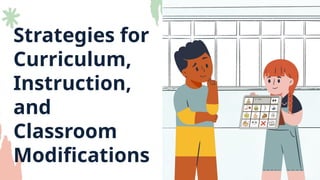
Visual supports
Use visual aids such as schedules, timers, and visual instructions to aid
understanding and reduce anxiety.
Structured environment
Create a predictable and organized classroom setting.
Sensory accommodations
Provide a quiet area or tools like noise-canceling headphones to manage
sensory overload.
Clear communication
Use simple, direct language and confirm understanding.
Social skills training
Incorporate activities that teach social cues, communication, and interaction skills.
Positive reinforcement
Use praise and rewards to encourage desired behaviors.
Flexible seating
Allow options for seating arrangements to accommodate different sensory and
attention needs.
Breaks
Provide opportunities for breaks to prevent frustration and manage attention.
Collaboration
Work with therapists, parents, and specialists to implement a consistent and
supportive approach.
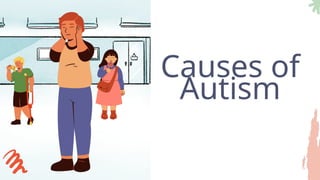
Causes of
Autism
Genetic Factors
Inherited Genes
Autism can run in families, suggesting that certain genes or
combinations of genes may increase the risk.
Genetic Mutations
New genetic mutations during conception or early
development can also lead to autism.
Specific Genetic Conditions
Some genetic disorders, such as Fragile X syndrome and
tuberous sclerosis, are associated with a higher risk of autism.
Environmental Factors
Prenatal Environment
Factors during pregnancy, such as advanced parental
age, maternal illness, or exposure to certain medications
or toxins, might increase the risk.
Complications During Birth
Limited evidence suggests that complications during
birth could potentially contribute to autism risk.
Assessment Procedures to Screen Students with
Autism
1. Screening Tools
• Modified Checklist for Autism in Toddlers (M-CHAT)
A questionnaire for parents to identify potential signs of autism in young
children.
• Screening Tool for Autism in Two-Year-Olds (STAT)
An interactive screening tool used by professionals to assess children at risk.
2. Diagnostic Assessments
• Autism Diagnostic Observation Schedule (ADOS)
A standardized assessment that observes social and communication behaviors.
• Autism Diagnostic Interview-Revised (ADI-R)
A comprehensive interview with parents about the child's developmental history
and behaviors.
3. Developmental Assessments
• Bayley Scales of Infant and Toddler Development
Evaluates cognitive, language, motor, social-emotional, and adaptive behavior in young
children.
• Vineland Adaptive Behavior Scales
Measures adaptive behavior skills in daily living, socialization, and communication.
4. Additional Evaluations
• Speech and Language Assessment
Assesses communication skills and identifies language delays or impairments.
• Occupational Therapy Evaluation
Evaluates sensory processing, motor skills, and adaptive skills.
• Psychological Evaluation
Assesses cognitive abilities, emotional functioning, and behavioral issues.
Assessment Procedures to Screen Students with
Autism
Special
Education
Programs for
Autism
1. Early Intervention Programs
Aimed at children aged 0-3, these programs provide early therapies and support
services to promote development. Include speech therapy, occupational therapy,
behavioral therapy, and parent training.
2. Applied Behavior Analysis (ABA):
A structured, evidence-based therapy that uses positive reinforcement to teach new
skills and reduce challenging behaviors.
Techniques:
Discrete Trial Training (DTT), Pivotal Response Training (PRT), and Verbal Behavior
(VB).
3. Structured Teaching (TEACCH):
• Emphasizes structured environments, visual supports, and clear routines to enhance
learning and independence.
• Workstations, visual schedules, and organized materials.
4. Social Skills Training:
Helps students develop social understanding, communication skills, and appropriate
social behaviors.
Methods:
Role-playing, social stories, and group activities.
5. Speech and Language Therapy
Addresses communication challenges, including expressive and receptive language skills.
Techniques:
Augmentative and Alternative Communication (AAC) devices, visual supports, and
language-based activities.
6. Occupational Therapy
Improves sensory processing, motor skills, and adaptive skills needed for daily living and
academic success.
Interventions:
Sensory integration therapy, fine motor activities, and adaptive equipment.
7. Inclusive Education
Students with autism are integrated into general education classrooms with
appropriate supports and accommodations.
Benefits: Promotes social interaction, peer learning, and access to the general
curriculum.
8. Self-Contained
Classrooms specifically designed for students with autism, offering specialized
instruction and support.
Benefits: Provides a structured and supportive environment for students with
significant needs.
THANK
YOU!

Teaching-Students-with-Autism-Spectrum-Disorders.pptx

  • 1.
    Teaching Students with Autism Spectrum Disorders PreparedBy: Sheena Bales Jerry Ferrer Marsha Sol Mino
  • 2.
  • 3.
    Autism spectrum disorder(ASD) A developmental disability caused by differences in the brain. People with ASD may face difficulties with social communication and interaction, and exhibit restricted or repetitive behaviors or interests. Spectrum Disorder Autism affects individuals differently and to varying degrees. Early Signs These can be detected in early childhood, often before the age of three. Communication challenges Difficulties in verbal and nonverbal communication. Social interaction Challenges in understanding social cues and forming relationships.
  • 4.
    Repetitive behaviors Includes repetitivemovements, fixated interests, and a need for routine. Sensory sensitivities Unusual reactions to sensory input, such as light, sound, or touch. Diagnosis Diagnosed through behavioral assessments and developmental screenings. No cure While there is no cure for ASD, early intervention and therapies can significantly improve outcomes. Neurodiversity Autism is increasingly understood as a part of natural human variation rather than a disease.
  • 5.
  • 6.
    Individualized Education Program(IEP) Tailor educational strategies to meet specific needs outlined in the IEP. Visual supports Use visual aids such as schedules, timers, and visual instructions to aid understanding and reduce anxiety. Structured environment Create a predictable and organized classroom setting. Sensory accommodations Provide a quiet area or tools like noise-canceling headphones to manage sensory overload. Clear communication Use simple, direct language and confirm understanding.
  • 7.
    Social skills training Incorporateactivities that teach social cues, communication, and interaction skills. Positive reinforcement Use praise and rewards to encourage desired behaviors. Flexible seating Allow options for seating arrangements to accommodate different sensory and attention needs. Breaks Provide opportunities for breaks to prevent frustration and manage attention. Collaboration Work with therapists, parents, and specialists to implement a consistent and supportive approach.
  • 8.
  • 9.
    Genetic Factors Inherited Genes Autismcan run in families, suggesting that certain genes or combinations of genes may increase the risk. Genetic Mutations New genetic mutations during conception or early development can also lead to autism. Specific Genetic Conditions Some genetic disorders, such as Fragile X syndrome and tuberous sclerosis, are associated with a higher risk of autism.
  • 10.
    Environmental Factors Prenatal Environment Factorsduring pregnancy, such as advanced parental age, maternal illness, or exposure to certain medications or toxins, might increase the risk. Complications During Birth Limited evidence suggests that complications during birth could potentially contribute to autism risk.
  • 11.
    Assessment Procedures toScreen Students with Autism 1. Screening Tools • Modified Checklist for Autism in Toddlers (M-CHAT) A questionnaire for parents to identify potential signs of autism in young children. • Screening Tool for Autism in Two-Year-Olds (STAT) An interactive screening tool used by professionals to assess children at risk. 2. Diagnostic Assessments • Autism Diagnostic Observation Schedule (ADOS) A standardized assessment that observes social and communication behaviors. • Autism Diagnostic Interview-Revised (ADI-R) A comprehensive interview with parents about the child's developmental history and behaviors.
  • 12.
    3. Developmental Assessments •Bayley Scales of Infant and Toddler Development Evaluates cognitive, language, motor, social-emotional, and adaptive behavior in young children. • Vineland Adaptive Behavior Scales Measures adaptive behavior skills in daily living, socialization, and communication. 4. Additional Evaluations • Speech and Language Assessment Assesses communication skills and identifies language delays or impairments. • Occupational Therapy Evaluation Evaluates sensory processing, motor skills, and adaptive skills. • Psychological Evaluation Assesses cognitive abilities, emotional functioning, and behavioral issues. Assessment Procedures to Screen Students with Autism
  • 13.
  • 14.
    1. Early InterventionPrograms Aimed at children aged 0-3, these programs provide early therapies and support services to promote development. Include speech therapy, occupational therapy, behavioral therapy, and parent training. 2. Applied Behavior Analysis (ABA): A structured, evidence-based therapy that uses positive reinforcement to teach new skills and reduce challenging behaviors. Techniques: Discrete Trial Training (DTT), Pivotal Response Training (PRT), and Verbal Behavior (VB). 3. Structured Teaching (TEACCH): • Emphasizes structured environments, visual supports, and clear routines to enhance learning and independence. • Workstations, visual schedules, and organized materials.
  • 15.
    4. Social SkillsTraining: Helps students develop social understanding, communication skills, and appropriate social behaviors. Methods: Role-playing, social stories, and group activities. 5. Speech and Language Therapy Addresses communication challenges, including expressive and receptive language skills. Techniques: Augmentative and Alternative Communication (AAC) devices, visual supports, and language-based activities. 6. Occupational Therapy Improves sensory processing, motor skills, and adaptive skills needed for daily living and academic success. Interventions: Sensory integration therapy, fine motor activities, and adaptive equipment.
  • 16.
    7. Inclusive Education Studentswith autism are integrated into general education classrooms with appropriate supports and accommodations. Benefits: Promotes social interaction, peer learning, and access to the general curriculum. 8. Self-Contained Classrooms specifically designed for students with autism, offering specialized instruction and support. Benefits: Provides a structured and supportive environment for students with significant needs.
  • 17.