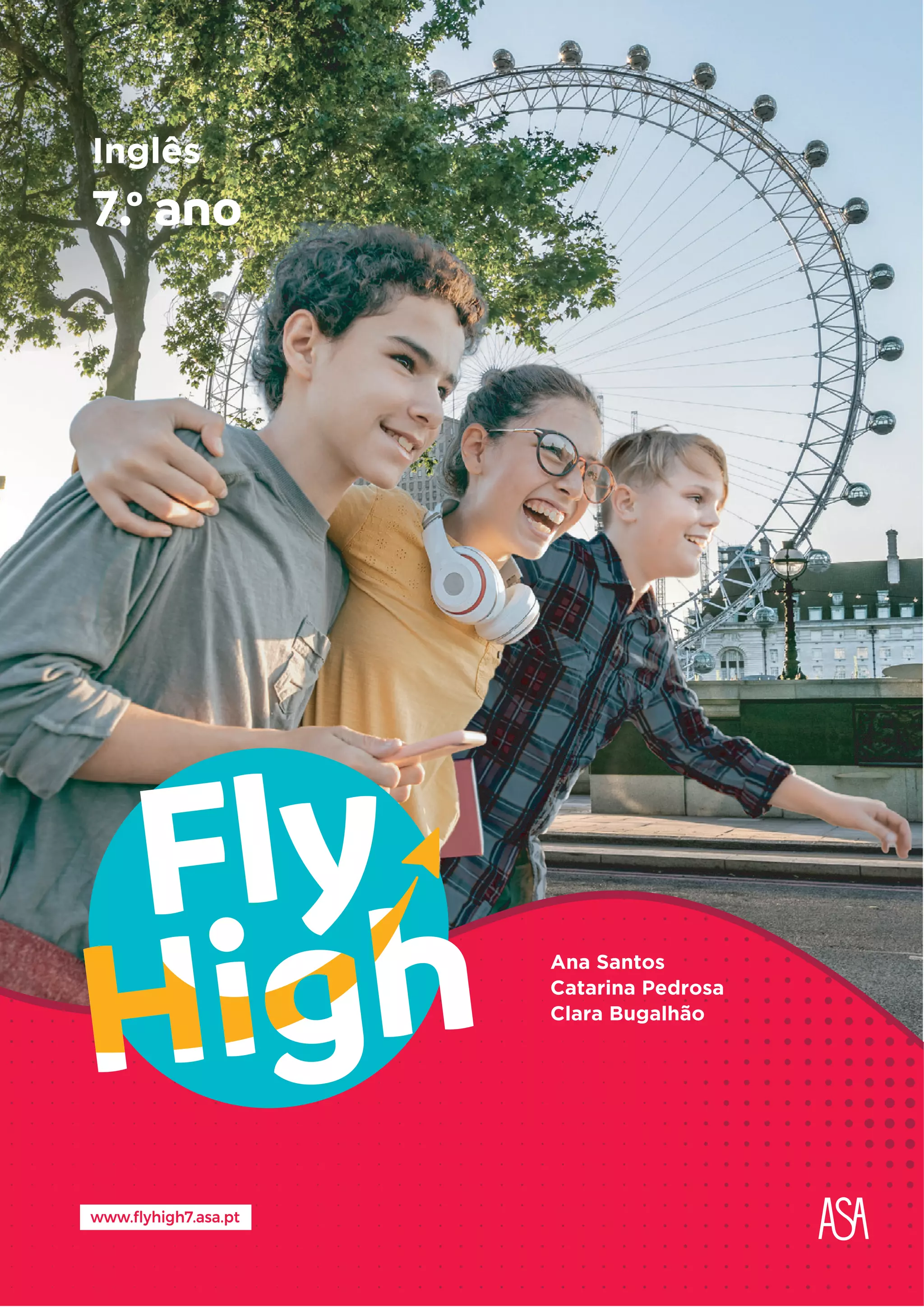
7.º ano
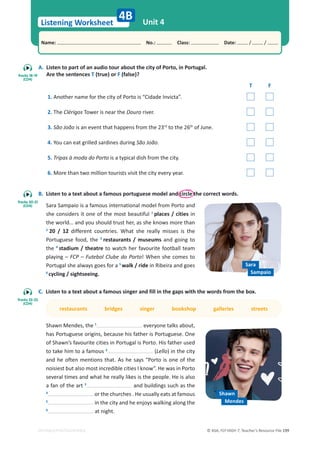
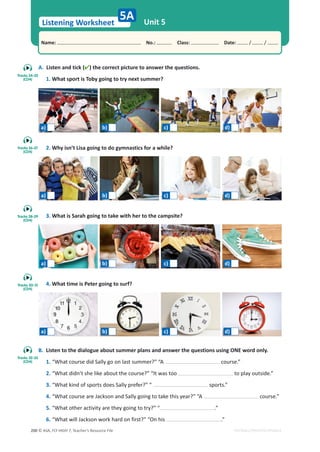
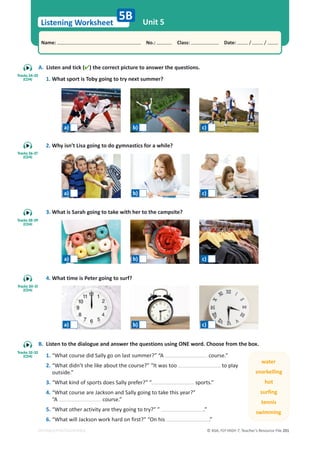
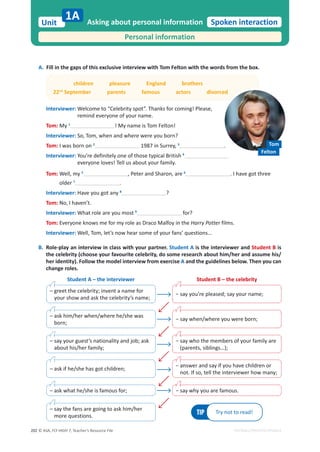
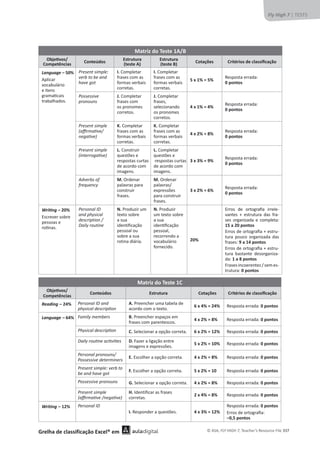
Inglês
ʥʥʥӝːʰȃȈǼȃќӝƃɰƃӝɥɽ
Ana Santos
Catarina Pedrosa
Clara Bugalhão
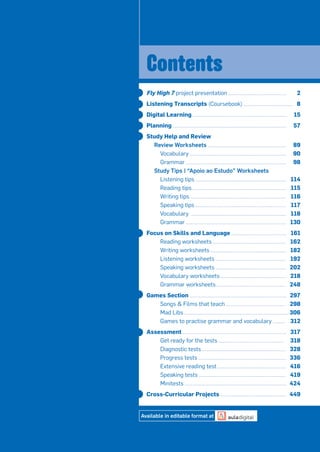
Fly High 7 project presentation 2
Listening Transcripts (Coursebook) 8
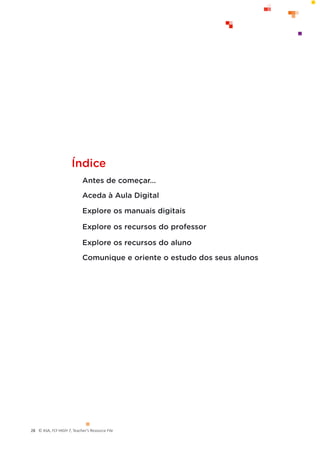
Digital Learning 15
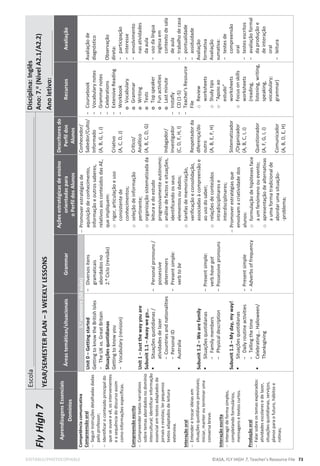
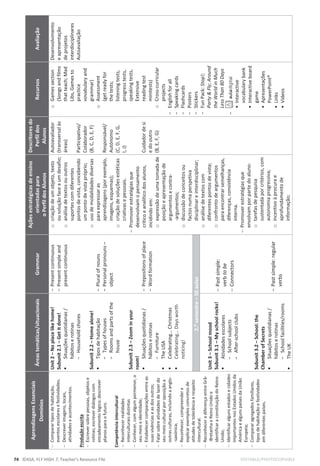
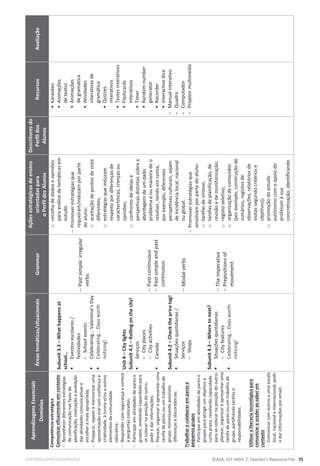
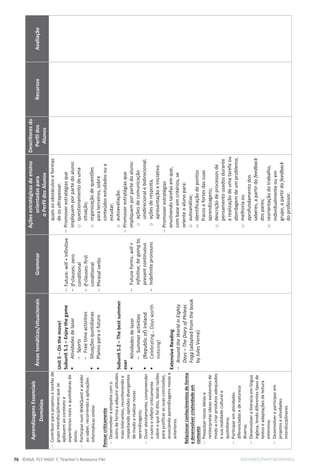
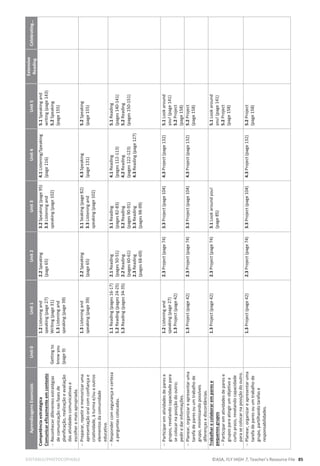
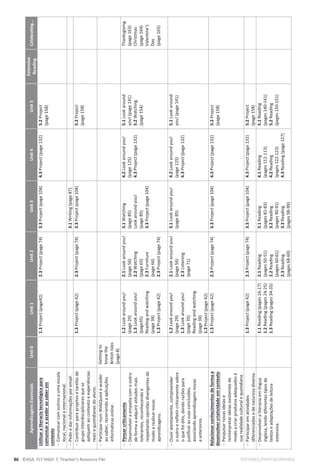
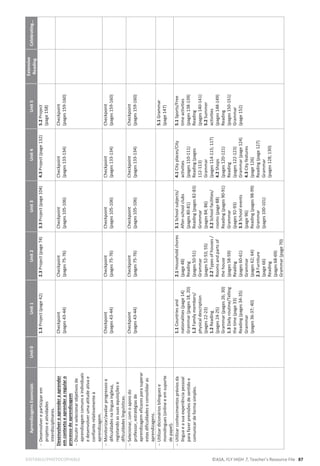
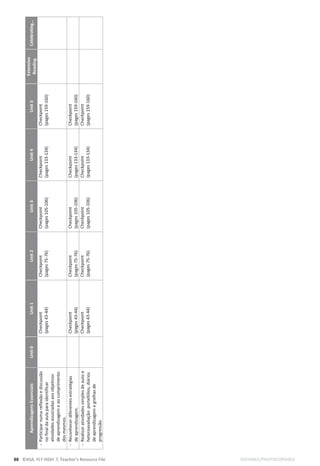
Planning 57
Study Help and Review
Review Worksheets 89
Vocabulary 90
Grammar 98
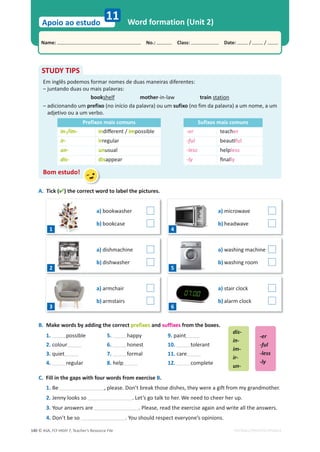
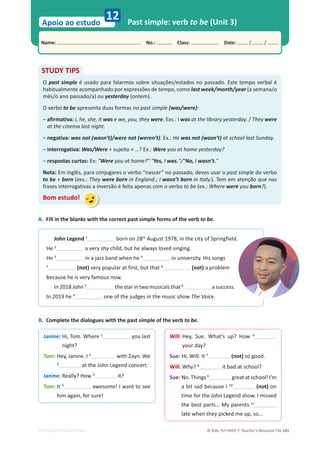
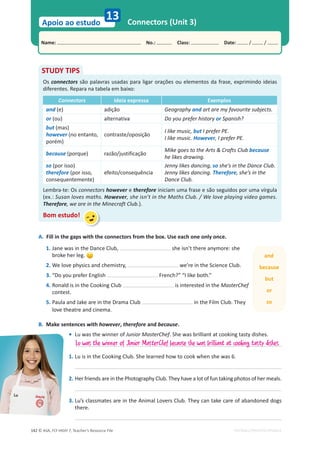
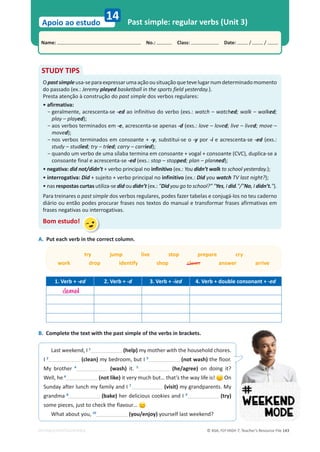
Study Tips | “Apoio ao Estudo” Worksheets
Listening tips 114
Reading tips 115
Writing tips 116
Speaking tips 117
Vocabulary 118
Grammar 130
Focus on Skills and Language 161
Reading worksheets 162
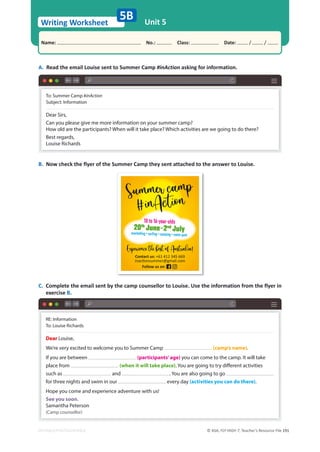
Writing worksheets 182
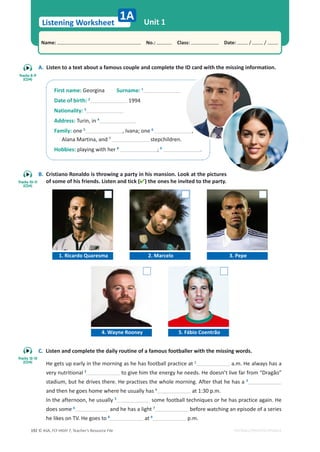
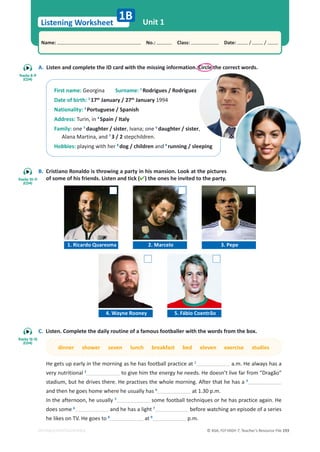
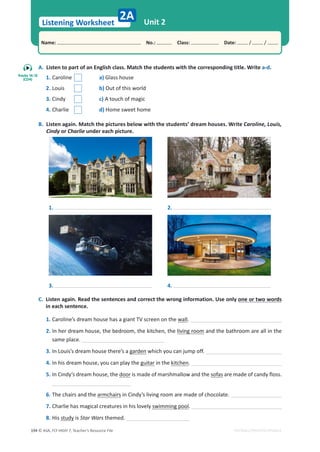
Listening worksheets 192
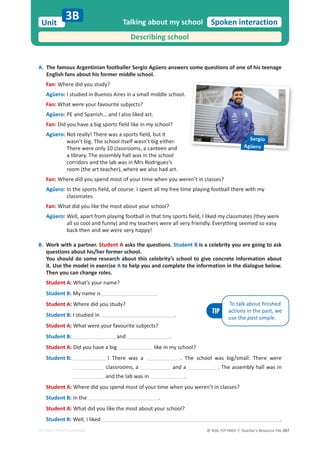
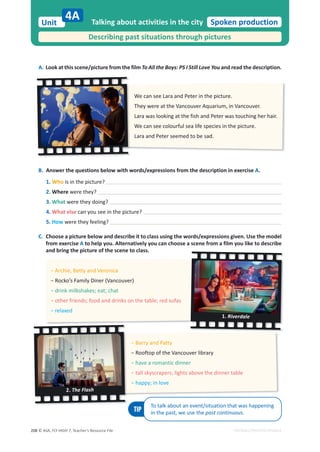
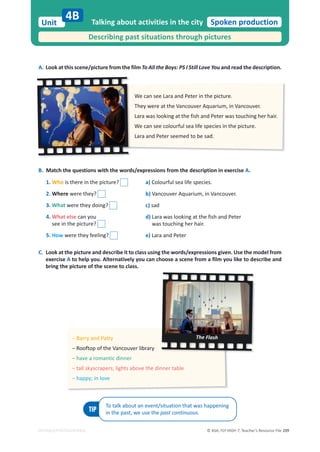
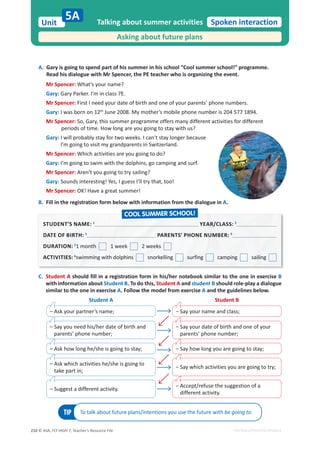
Speaking worksheets 202
Vocabulary worksheets 218
Grammar worksheets 248
Games Section 297
Songs & Films that teach 298
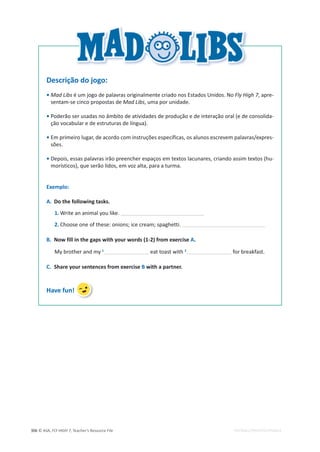
Mad Libs 306
Games to practise grammar and vocabulary 312
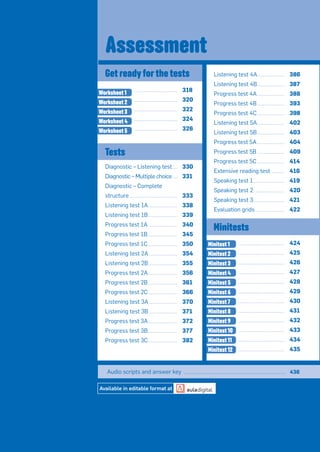
Assessment 317
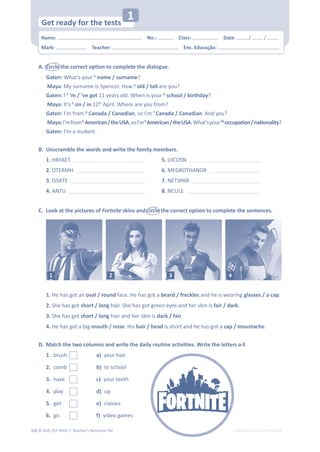
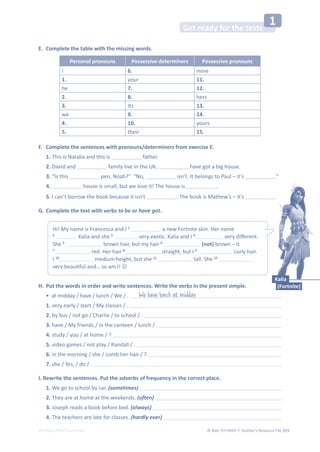
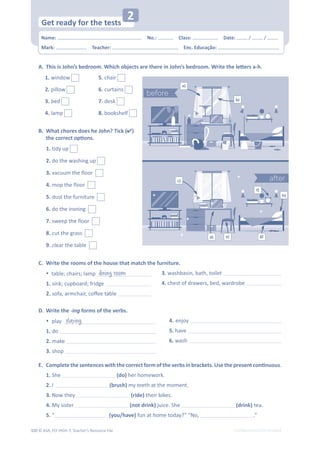
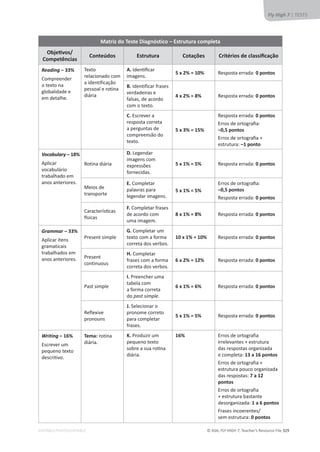
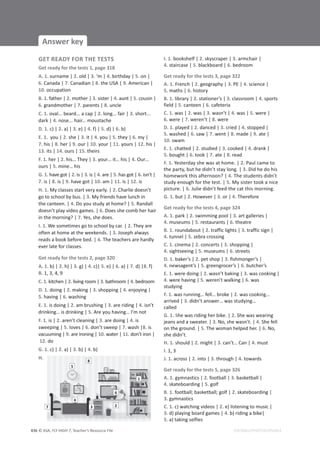
Get ready for the tests 318
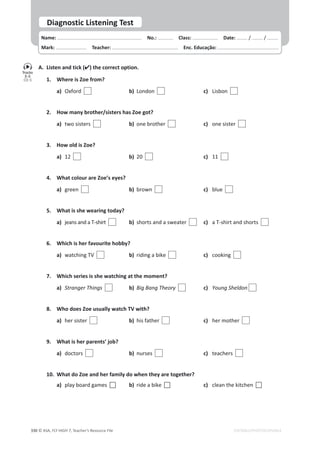
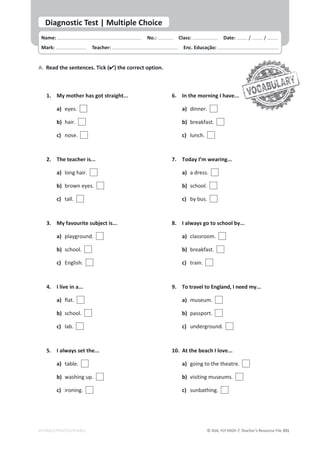
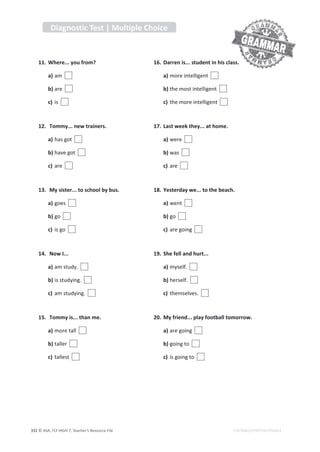
Diagnostic tests 328
Progress tests 336
Extensive reading test 416
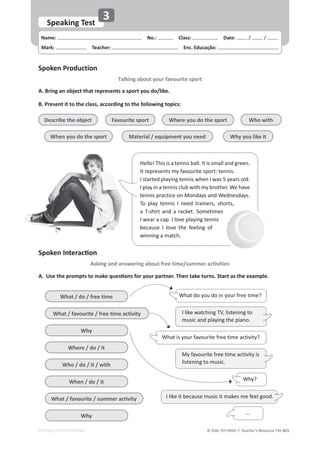
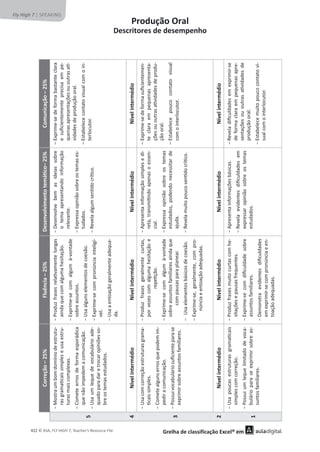
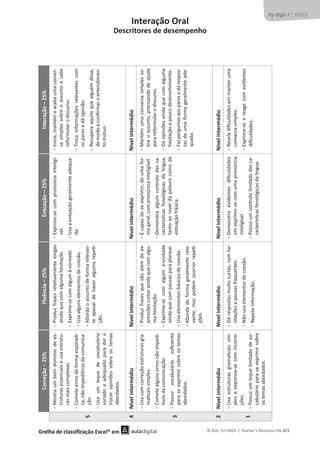
Speaking tests 419
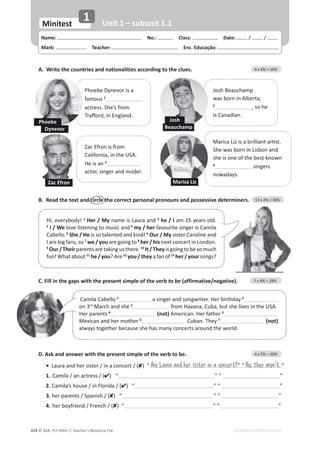
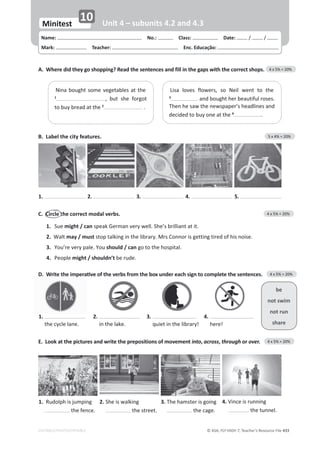
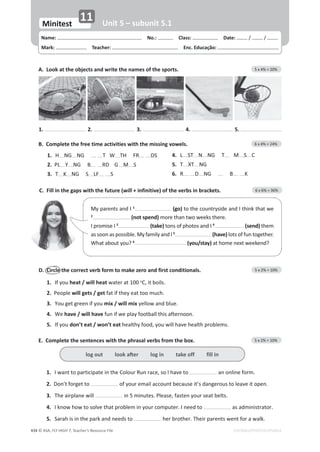
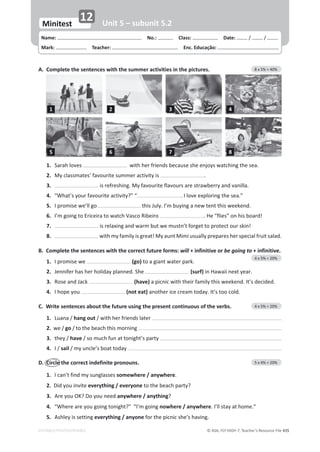
Minitests 424
Cross-Curricular Projects 449
Contents
Available in editable format at
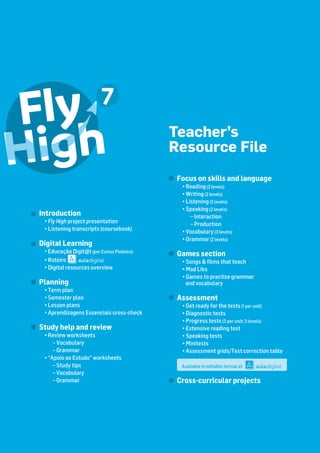
Teacher’s
Resource File
Focus on skills and language
• Reading(2 levels)
• Writing(2 levels)
• Listening(2 levels)
• Speaking(2 levels)
– Interaction
– Production
• Vocabulary(3 levels)
• Grammar(2 levels)
Games section
• Songs & films that teach
• Mad Libs
• Games to practise grammar
and vocabulary
Assessment
• Get ready for the tests(1 per unit)
• Diagnostic tests
• Progress tests(3 per unit; 3 levels)
• Extensive reading test
• Speaking tests
• Minitests
• Assessment grids/Test correction table
Available in editable format at
Cross-curricular projects
Introduction
• Fly High project presentation
• Listening transcripts (coursebook)
Digital Learning
• Educação Digit@l(por Carlos Pinheiro)
• Roteiro
• Digital resources overview
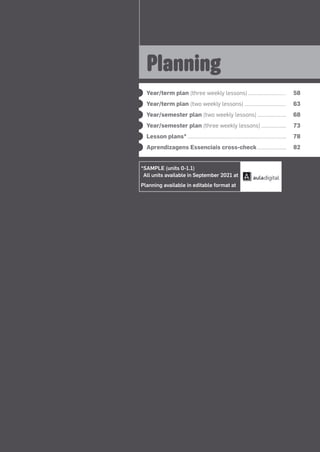
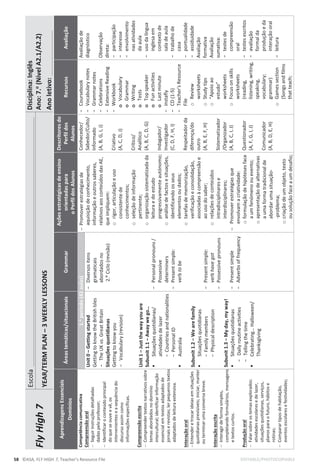
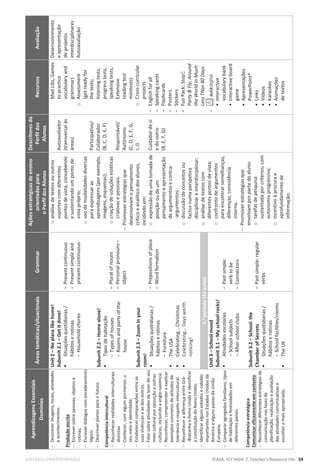
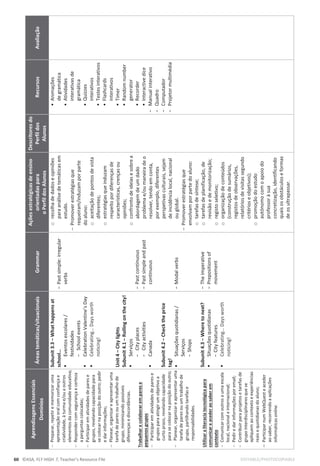
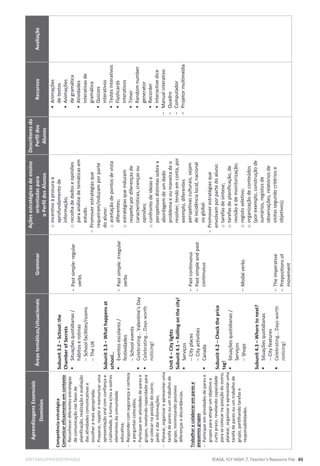
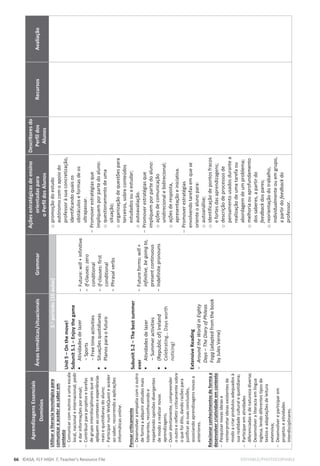
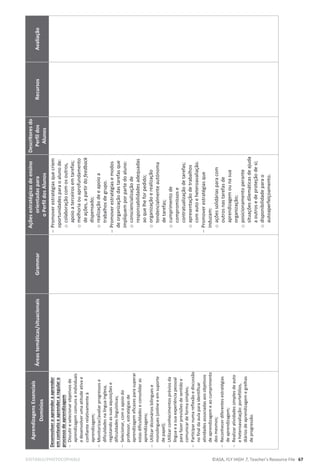
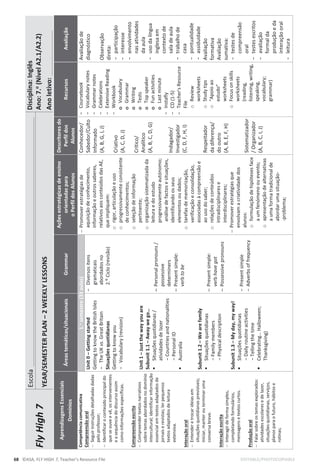
Planning
• Term plan
• Semester plan
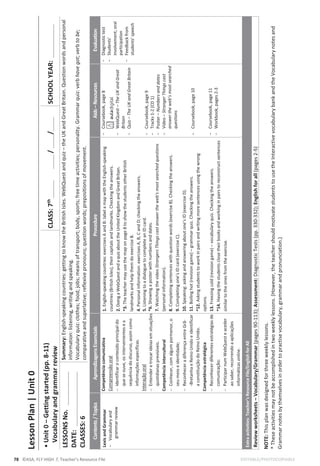
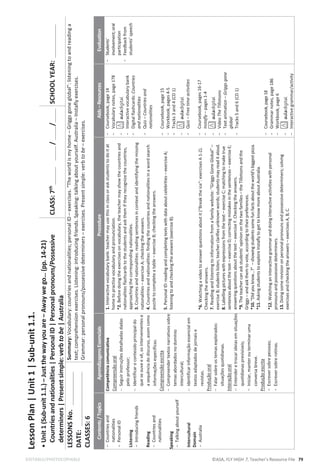
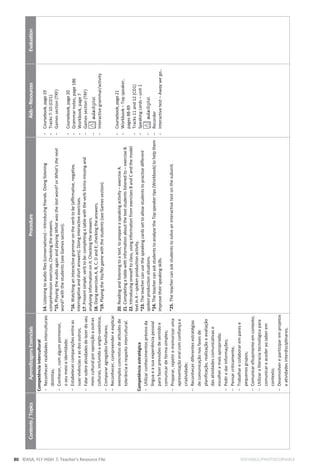
• Lesson plans
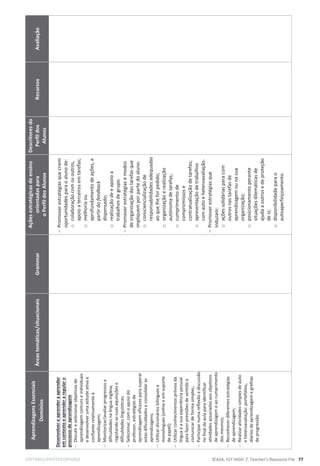
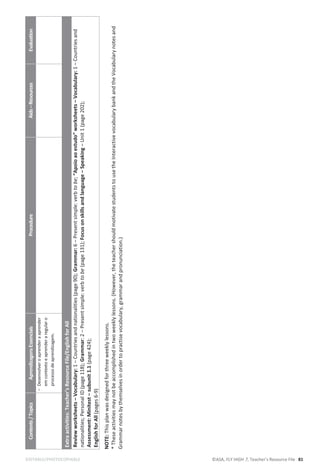
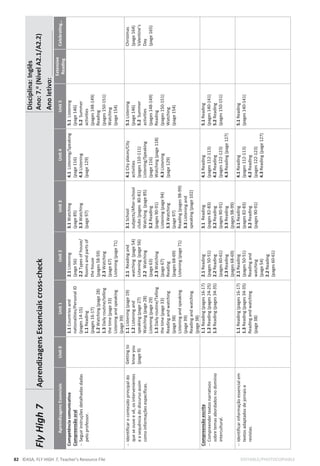
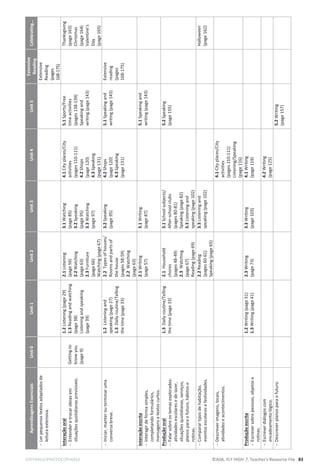
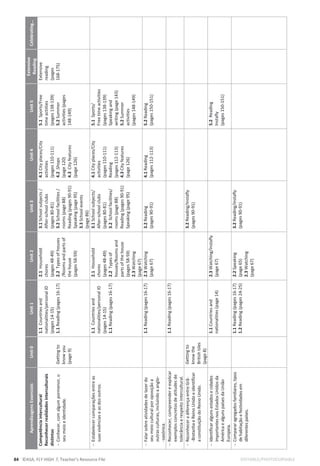
• Aprendizagens Essenciais cross-check
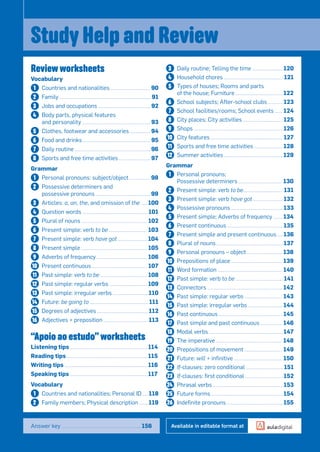
Study help and review
• Review worksheets
– Vocabulary
– Grammar
• “Apoio ao Estudo” worksheets
– Study tips
– Vocabulary
– Grammar
Available in editable format at
© ASA, FLY HIGH 7, Teacher’s Resource File
2
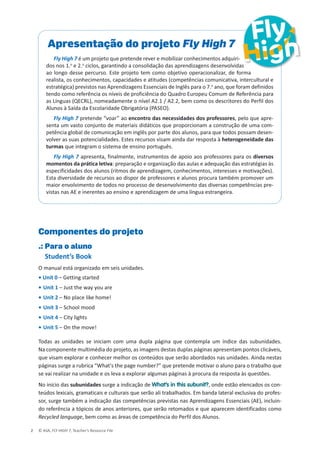
Apresentação do projeto Fly High 7
Fly High 7 é um projeto que pretende rever e mobilizar conhecimentos adquiri-
dos nos 1.o
e 2.o
ciclos, garantindo a consolidação das aprendizagens desenvolvidas
ao longo desse percurso. Este projeto tem como objetivo operacionalizar, de forma
realista, os conhecimentos, capacidades e atitudes (competências comunicativa, intercultural e
estratégica) previstos nas Aprendizagens Essenciais de Inglês para o 7.o
ano, que foram definidos
tendo como referência os níveis de proficiência do Quadro Europeu Comum de Referência para
as Línguas (QECRL), nomeadamente o nível A2.1 / A2.2, bem como os descritores do Perfil dos
Alunos à Saída da Escolaridade Obrigatória (PASEO).
Fly High 7 pretende “voar” ao encontro das necessidades dos professores, pelo que apre-
senta um vasto conjunto de materiais didáticos que proporcionam a construção de uma com-
petência global de comunicação em inglês por parte dos alunos, para que todos possam desen-
volver as suas potencialidades. Estes recursos visam ainda dar resposta à heterogeneidade das
turmas que integram o sistema de ensino português.
Fly High 7 apresenta, finalmente, instrumentos de apoio aos professores para os diversos
momentos da prática letiva: preparação e organização das aulas e adequação das estratégias às
especificidades dos alunos (ritmos de aprendizagem, conhecimentos, interesses e motivações).
Esta diversidade de recursos ao dispor de professores e alunos procura também promover um
maior envolvimento de todos no processo de desenvolvimento das diversas competências pre-
vistas nas AE e inerentes ao ensino e aprendizagem de uma língua estrangeira.
Componentes do projeto
.: Para o aluno
Student’s Book
O manual está organizado em seis unidades.
• Unit 0 – Getting started
• Unit 1 – Just the way you are
• Unit 2 – No place like home!
• Unit 3 – School mood
• Unit 4 – City lights
• Unit 5 – On the move!
Todas as unidades se iniciam com uma dupla página que contempla um índice das subunidades.
Na componente multimédia do projeto, as imagens destas duplas páginas apresentam pontos clicáveis,
que visam explorar e conhecer melhor os conteúdos que serão abordados nas unidades. Ainda nestas
páginas surge a rubrica “What's the page number?” que pretende motivar o aluno para o trabalho que
se vai realizar na unidade e os leva a explorar algumas páginas à procura da resposta às questões.
No início das subunidades surge a indicação de What’s in this subunit?, onde estão elencados os con-
teúdos lexicais, gramaticais e culturais que serão ali trabalhados. Em banda lateral exclusiva do profes-
sor, surge também a indicação das competências previstas nas Aprendizagens Essenciais (AE), incluin-
do referência a tópicos de anos anteriores, que serão retomados e que aparecem identificados como
Recycled language, bem como as áreas de competência do Perfil dos Alunos.
s
s
© ASA, FLY HIGH 7, Teacher’s Resource File 3
As subunidades desenvolvem-se em torno das seguintes rubricas:
• Vocabulary – Apresentação de vocabulário com o apoio de imagens, acompanhada por exercícios
contextualizados de matching, gap filling, multiple choice, ordenação de sequências, entre outros, que
visam facilitar a apreensão dos conteúdos trabalhados e alargar o repertório linguístico dos alunos.
• Reading – Os textos apresentam, com regularidade, personagens conhecidas dos alunos – cantores,
atores, desportistas ou cartoons –, com o intuito de os motivar e despertar a sua curiosidade e o seu
interesse. Outros textos têm uma forte componente cultural, levando também os alunos a alargar
horizontes. Através deles, os alunos poderão aprofundar os conhecimentos acerca da cultura dos
English-speaking countries relacionados com as situações temáticas em estudo. Na componente
multimédia, todos os textos estão locucionados por falantes nativos, e as faixas áudio estão dis-
poníveis em duas velocidades – standard e slow. Todos os textos dispõem ainda de uma animação
na componente multimédia do projeto. Como warming up, antes de cada texto, surge a rubrica
BREAK THE ICE , cujo objetivo é introduzir as temáticas que serão trabalhadas nos textos e ante-
cipar sentidos. Após os exercícios de compreensão sobre o texto, propõe-se aos alunos pequenas ati-
vidades de escrita e/ou de oralidade, em trabalho individual ou a pares, para alargamento de sentido.
• Listening – Esta rubrica apresenta situações de compreensão do oral, em suporte áudio, locuciona-
das por falantes nativos, e sem a presença do texto escrito. Estas atividades estão acompanhadas
de exercícios de compreensão de resposta fechada e incluem também canções, permitindo assim
aprofundar a consciência fonológica e linguística.
• Watching – Esta rubrica assenta no visionamento de pequenos trailers de filmes ou de excertos de
vídeos adequados à faixa etária e do interesse dos alunos, seguido de propostas de atividades de
compreensão do oral de tipologia variada.
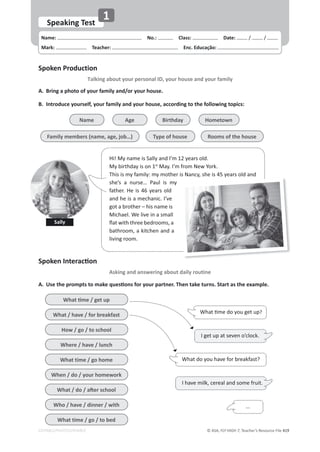
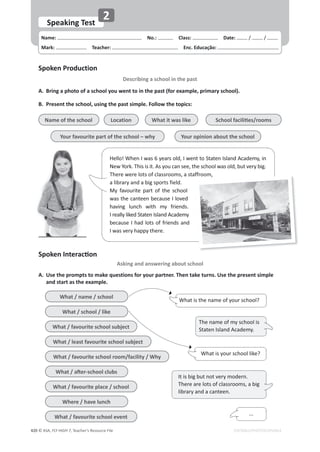
• Speaking – Atividades de produção/interação oral orientadas: em primeiro lugar apresentam-se
modelos dos textos orais, que os alunos poderão, depois, usar como referência, mediante as instru-
ções indicadas em NOW YOU!. Algumas atividades de spoken production e interaction dispõem,
na versão multimédia, de um vídeo com dramatização da situação feita por personagens reais em
cenários autênticos. Estes vídeos têm associados diferentes play modes, que possibilitam trabalhar o
vídeo de formas interativas distintas.
• Writing – Esta rubrica promove o desenvolvimento da escrita através da apresentação de um modelo
step-by-step, para que o aluno possa depois redigir o seu texto, usando as suas ideias, com o apoio
de caixas, diagramas e expressões úteis em NOW YOU!.
Nota: De destacar que, em alguns momentos, se associam rubricas, apresentando-se atividades
que visam desesenvolver diferentes skills: “Listening/Watching” ou “Listening/Speaking” ou ainda
“Writing/Speaking”.
• Grammar – Os conteúdos gramaticais são abordados a partir de exemplos contextualizados e de
sínteses claras e sucintas. Esta rubrica é complementada, na versão multimédia, por animações com
explicações a par e passo e exemplos ilustrativos, atividades interativas, apresentações PowerPoint®
e quizzes. Após a explicação de cada conteúdo, surgem exercícios de aplicação de tipologia diversifica-
da organizados por grau de dificuldade. Incluem-se nesta rubrica canções pop (com versão karaoke) e
a subrubrica GRAMMAR , que resulta da adaptação da letra de músicas do interesse dos alunos
para os ajudar a memorizar as regras gramaticais.
• SAVE – Caixas com chamadas de atenção para determinadas estruturas gramaticais ou
linguísticas que os alunos deverão recordar e/ou aprofundar e que poderão copiar para o caderno
diário.
• (remissão) – Apontamento acerca do domínio intercultural trabalhado que remete
para a componente do projeto com o mesmo título, que integra aspetos culturais e geográficos dos
English-speaking countries.
© ASA, FLY HIGH 7, Teacher’s Resource File
4
• DID YOU KNOW...? – Curiosidades e fun facts que representam um momento mais lúdico rela-
cionado com as temáticas trabalhadas.
• LOOK AROUND YOU! – Esta rubrica promove a consciência cívica e social e o espírito crítico,
conduzindo os alunos a uma reflexão acerca de temáticas socioculturais.
• Project – Todas as unidades apresentam um projeto que visa atividades de natureza interdisciplinar,
de acordo com o previsto no PASEO e na flexibilidade curricular, permitindo desse modo articular
domínios que englobam diversas disciplinas.
• Checkpoint – Teste de autoavaliação. No final, o aluno poderá preencher uma grelha de verificação
das aprendizagens para sua autorregulação.
• FAST & CURIOUS – Esta é uma secção para fast finishers, para a qual vão sendo feitas remissões
ao longo das unidades. Esta secção, de página única, apresenta um conjunto de atividades extra para
que os alunos mais rápidos possam manter-se ocupados e motivados para a aprendizagem. As solu-
ções estão disponíveis no final do manual, o que permite um trabalho autónomo.
O Manual inclui ainda os seguintes anexos:
• Let’s celebrate… – Nesta secção abordam-se algumas festividades típicas dos English-speaking
countries, com proposta de exercícios lúdicos de alargamento lexical. Apresenta, também, uma pági-
na com Days worth noticing!, para que os alunos se divirtam com algumas efemérides celebradas um
pouco por todo o mundo. Associadas a esta secção surgem atividades em PowerPoint®.
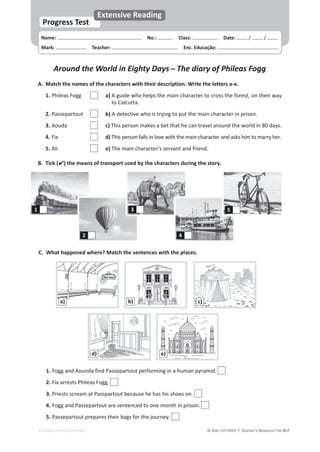
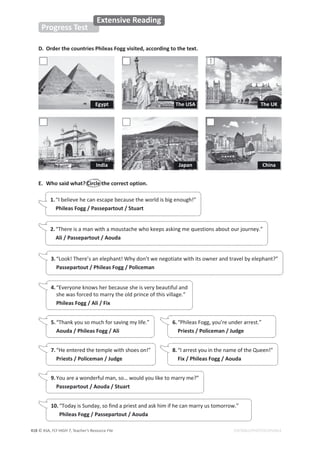
• Extensive Reading – Adaptação da obra Around the World in Eighty Days, de Jules Verne, acom-
panhada de exercícios de análise textual organizados em Before you read e After you read. Poderá
ser também trabalhada através do jogo Around the World in much less than 80 days, que integra o
Fun pack do projeto.
• V VOCABULARY NOTES – Glossário (com apresentação dos termos em inglês/português) organi-
zado por unidades/subunidades. Este material é complementado, na componente multimédia, pelo
Interactive vocabulary bank, que apresenta as imagens legendadas, acompanhadas de áudio, para que
os alunos possam treinar a pronúncia de forma autónoma e associar os termos aos seus referentes.
• G GRAMMAR NOTES – Secção que apresenta a explicação das regras gramaticais em português,
seguida de um conjunto de exercícios de aplicação dos conteúdos trabalhados. Constitui-se como
um instrumento de estudo autónomo e de preparação para os momentos de avaliação.
• Badanas da capa – Nesta secção inclui-se a lista de verbos irregulares e, no verso, exemplos de
Classroom language (do aluno e do professor), que os alunos poderão consultar para relembrarem
e utilizarem sempre que necessitarem.
INSTAFLY
Este pequeno booklet em formato semelhante ao de uma rede social propõe ao aluno uma viagem,
através de posts e de curiosidades culturais, por alguns English-speaking countries. Esta “viagem” per-
mite ao aluno conhecer mais sobre a cultura, a geografia, a gastronomia e algumas das personalidades
desses países. Em seguida, surgem atividades lúdicas, com atividades personalizadas, nas quais o aluno
pode dar a sua opinião e partilhar as suas experiências sob a forma de posts. É feita remissão para este
caderno ao longo das unidades do manual.
Workbook
Este componente promove o trabalho autónomo do aluno, dentro e fora da sala de aula, e apresenta
um conjunto diversificado de exercícios de reforço de vocabulário e de gramática e exercícios simplifi-
cados de escrita orientada ( right!
Write it ).
© ASA, FLY HIGH 7, Teacher’s Resource File 5
Tendo sido concebido em direta articulação com o Manual, o Workbook está igualmente estruturado
em seis unidades. No final de cada uma delas, surge um Progress test que, além de exercícios de vo-
cabulário e gramática, inclui também um grupo de compreensão escrita e outro de expressão escrita.
O Workbook inclui, ainda, uma secção de Fun activities, que abordam os conteúdos lexicais e grama-
ticais de cada unidade de forma lúdica, e outra secção – Top Speaker –, para a qual vai sendo feita
remissão ao longo do manual, e que visa auxiliar os alunos a melhorar a expressão oral (produção e
interação), fornecendo-lhes estratégias e estruturas comunicativas facilitadoras.
Associado ao Workbook está ainda um conjunto de cartolinas destacáveis intituladas Last minute, úteis
para o estudo sistematizado dos conteúdos gramaticais e lexicais abordados em cada unidade.
No final do workbook apresentam-se soluções (destacáveis).
.: Para o professor
Manual (Edição do Professor)
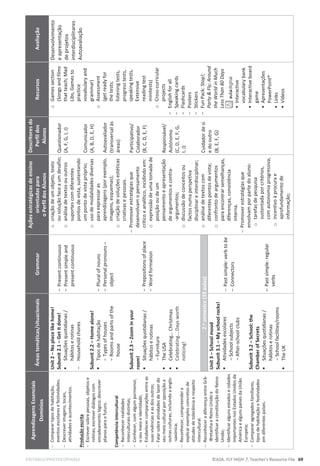
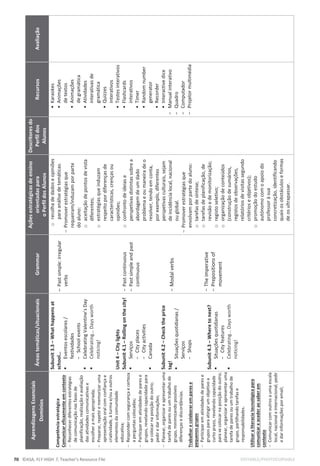
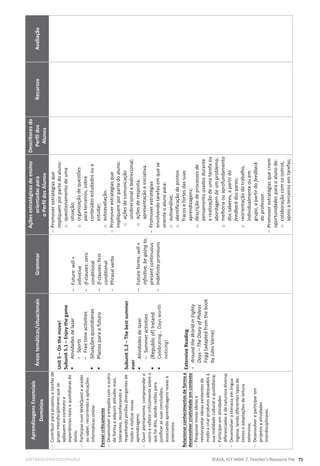
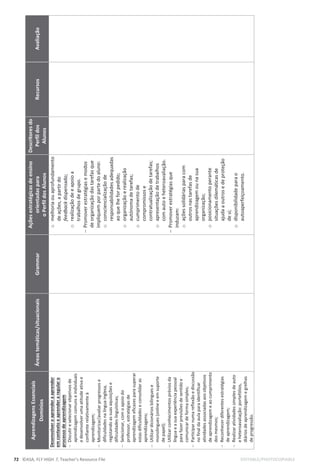
• Indicação das Aprendizagens Essenciais: (T) – Áreas temáticas/situacionais e (C) – Competência co-
municativa, intercultural e estratégica.
• Referência aos conteúdos em articulação com anos anteriores (recycled language).
• Indicação das áreas de competência do Perfil dos Alunos.
• Listagem dos recursos disponíveis no projeto.
• Soluções dos exercícios.
• Sugestões metodológicas: propostas de exploração de outros recursos; dinamização de jogos que
podem ser realizados ao longo das aulas. As sugestões de utilização destes e de outros jogos, bem
como a sua descrição, estão disponíveis na Games Section (pp. 312-315) deste Teacher's Resource File.
Booklet English for all (Edição do professor; Edição do Aluno)
Este componente foi concebido para que os alunos estrangeiros (que por vezes evidenciam falta de
pré-requisitos ao nível do domínio e conhecimento linguístico) e/ou os alunos com medidas adicio-
nais (decreto-lei n.o
54/2018) possam acompanhar as atividades propostas no manual, numa lógica de
inclusão e de aprendizagem. É um booklet que permitirá ao professor uma gestão mais eficaz do pla-
neamento das suas aulas e da implementação de recursos adequados às características destes alunos.
ƐƐŽůƵĕƁĞƐĚĞƐƚĞŬůĞƚդǀĞƌƐĆŽĂůƵŶŽդĞƐƚĆŽĚŝƐƉŽŶşǀĞŝƐĞŵĨŽƌŵĂƚŽtŽƌĚ® em aula digital.
dĞĂĐŚĞƌ͛ƐZĞƐŽƵƌĐĞŝůĞդTotalmente editável em .
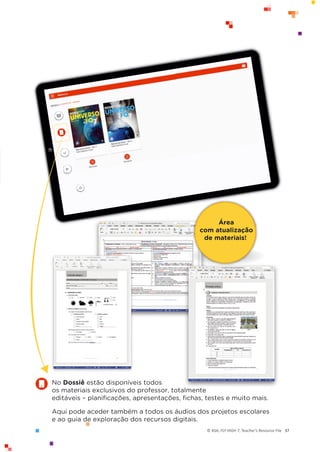
Este dossiê contém um amplo conjunto de materiais ready-to-use:
• Planning
 դ Year plan (two/three weekly lessons)
 դ Term plan (two/three weekly lessons)
 դ Semester plan (two/three weekly lessons)
 դ Lesson plans (per sub-unit)
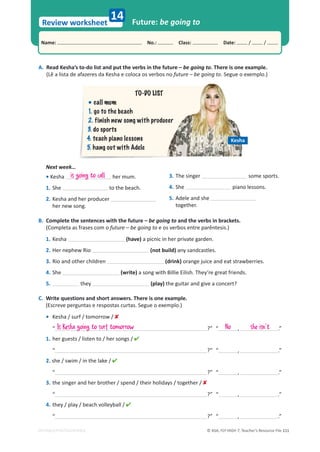
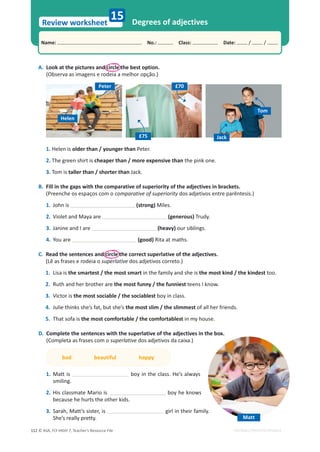
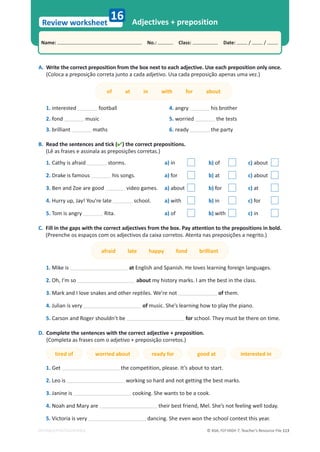
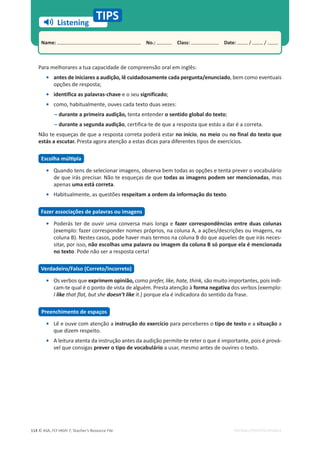
• Review Worksheets (Vocabulary/Grammar)
• Study tips (1 per skill – listening, speaking, reading, writing)
• “Apoio ao Estudo” Worksheets (Vocabulary/Grammar)
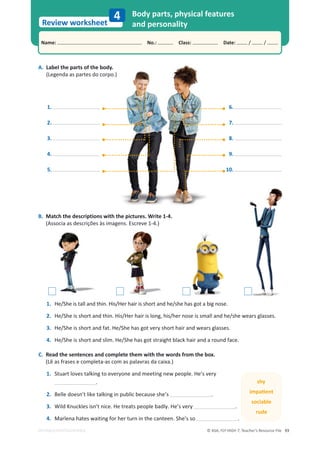
• Focus on skills and language worksheets
 դ 5 Reading (1 per unit – two levels of difficulty)
 դϱtƌŝƚŝŶŐ;ϭƉĞƌƵŶŝƚʹƚǁŽůĞǀĞůƐŽĨĚŝĨĨŝĐƵůƚLJͿ
 դϱŝƐƚĞŶŝŶŐ;ϭƉĞƌƵŶŝƚʹƚǁŽůĞǀĞůƐŽĨĚŝĨĨŝĐƵůƚLJͿ
 դϱ^ƉĞĂŬŝŶŐդŝŶƚĞƌĂĐƚŝŽŶΘƉƌŽĚƵĐƚŝŽŶ;ϭƉĞƌƵŶŝƚʹƚǁŽůĞǀĞůƐŽĨĚŝĨĨŝĐƵůƚLJͿ
 դϭϬsŽĐĂďƵůĂƌLJ;ƚŚƌĞĞůĞǀĞůƐŽĨĚŝĨĨŝĐƵůƚLJͿ
 դϮϭ'ƌĂŵŵĂƌ;ƚǁŽůĞǀĞůƐŽĨĚŝĨĨŝĐƵůƚLJͿ
© ASA, FLY HIGH 7, Teacher’s Resource File
6
• Songs  Films that teach
• Madlibs
• Games to practise grammar and vocabulary
• Assessment
 դ 5 Get Ready for the Tests Worksheets (1 per unit)
 դϯŝĂŐŶŽƐƚŝĐƚĞƐƚƐ;ƚǁŽůĞǀĞůƐŽĨĚŝĨĨŝĐƵůƚLJͿ
 դ 10 Listening tests (two levels of difficulty)
 դϭϬWƌŽŐƌĞƐƐƚĞƐƚƐ;ƚǁŽůĞǀĞůƐŽĨĚŝĨĨŝĐƵůƚLJͿ
 դϯ^ƉĞĂŬŝŶŐƚĞƐƚƐ;ǁŝƚŚƐƉĞĂŬŝŶŐŐƌŝĚƐĂŶĚŵĂƌŬŝŶŐĐƌŝƚĞƌŝĂͿ
 դdžƚĞŶƐŝǀĞZĞĂĚŝŶŐƚĞƐƚ
 դϭϮDŝŶŝƚĞƐƚƐ
 դŶƐǁĞƌŬĞLJĂŶĚĂƵĚŝŽƐĐƌŝƉƚƐ
 դƐƐĞƐƐŵĞŶƚŐƌŝĚƐĂŶĚĐŽƌƌĞĐƚŝŽŶƚĂďůĞƐ
• 3 cross-curricular projects
Fun pack
• 100 flashcards + 100 wordcards
• 12 posters (6 de vocabulário e 6 de gramática) que constituem um excelente suporte visual para
apresentação, consolidação e alargamento lexical e de funcionamento da língua.
• 100 speaking cards que podem ser utilizados para momentos formais de avaliação, ou para prática
de spoken production e spoken interaction noutros contextos, que não apenas os que estão contem-
plados no manual, de acordo com as situações temáticas trabalhadas em cada subunidade.
• Motivational stickers/celebrations stickers para premiar os alunos pelo seu desempenho, ao longo
do ano letivo; poderão ser usados no caderno diário do aluno, em fichas de trabalho ou em trabalhos
de casa.
• Party  Fly – Jogo de tabuleiro em que os alunos poderão testar os seus conhecimentos de voca-
bulário e de gramática, e poderão explorar também a criatividade e a expressão oral. Este jogo está
organizado em sets de cartões por unidade, que permitem a sua utilização para uma ou para várias
unidades em simultâneo.
• Stop! – Jogo para treino de memória e para consolidação de conteúdos lexicais.
• Around the world in much less than 80 days – Jogo de tabuleiro para exploração da ação de Around
the World in Eighty Days – The diary of Phileas Fogg (extensive reading).
5 CD Áudio
Estes CD contêm todos os recursos áudio (textos, canções) de apoio a atividades do Manual e do
Teacher's Resource File, gravados por falantes nativos. Este material inclui faixas em versão standard
e slow de modo a permitir a todos os alunos um acompanhamento mais eficaz das atividades.
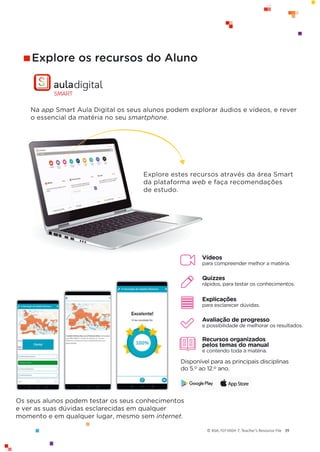
Smart é uma aplicação que dá acesso a conteúdos multimédia e quizzes, que permitem rever e
consolidar o essencial. Os quizzes têm explicações passo a passo, para esclarecimento de dúvidas,
e avaliação do progresso na aprendizagem.
© ASA, FLY HIGH 7, Teacher’s Resource File 7
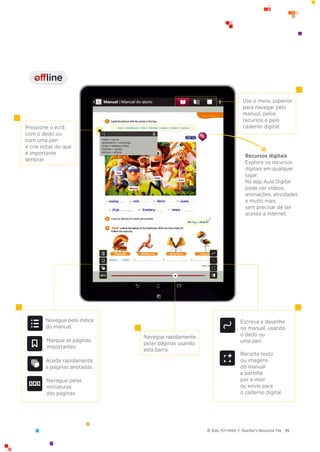
Manual interativo
Esta ferramenta possibilita, em sala de aula, a fácil exploração do projeto e o acesso a um vasto conjun-
to de conteúdos multimédia associados ao manual. Permite:
• a realização e a correção dos exercícios nas páginas do Manual;
• a visualização, in loco, de recursos digitais, tais como animações, canções, áudios e vídeos;
• a exploração, a partir das páginas do Manual, dos exercícios do Workbook com a respetiva correção;
• o acesso imediato a materiais editáveis (fichas, testes e apresentações PowerPoint®);
• o acompanhamento da progressão da aprendizagem.
Nota: o Manual Interativo está disponível offline.
(ver roteiro na p. 27)
Listagem geral dos recursos multimédia do Fly High 7
• Imagens interativas com pontos clicáveis – Imagens interativas apresentadas na abertura das unida-
des 1 a 5, com pontos clicáveis que remetem para imagens, textos e/ou vídeos de exploração temática.
• Webquest – Exploração do tema The United Kingdom and Great Britain.
• Animações – Animações dos textos das rubricas Reading e da Extensive Reading – Around the World
in Eighty Days – The diary of Phileas Fogg.
• Vídeos – Vídeos de apoio às rubricas Watching, Break the Ice, Look around you! e Project com a pos-
sibilidade de apresentar legendas em inglês ou português. Destaque para vídeos culturais e trailers
de filmes.
• Vídeos para atividades de speaking, com diferentes play modes – Vídeos protagonizados por
adolescentes simulando situações reais, com inclusão de atividades intercaladas.
• Links – 29 sugestões de vídeos.
• Gramáticas Interativas – Animações dos conteúdos gramaticais, com explicações passo a passo do
uso, da forma e respetivos exemplos.
• Atividades Gramaticais – Atividades com exercícios de aplicação dos conteúdos gramaticais abor-
dados nas gramáticas interativas. Inclui correção automática e notas de apoio (dicas).
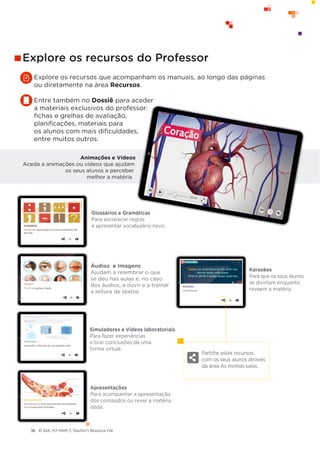
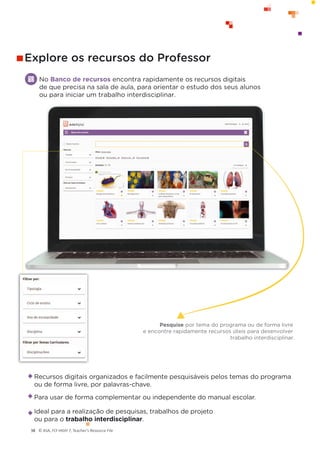
• Flashcards digitais – Galeria de imagens por unidade temática, com texto e áudio.
• Glossários interativos – Glossário interativo disponível para cada unidade do manual, que apresen-
ta uma listagem de palavras e/ou expressões acompanhada da respetiva definição, tradução e áudio.
• Jogos – Jogos de consolidação de conhecimentos, sugeridos no final de cada unidade.
• Karaokes – Vídeos das canções acompanhados das letras; disponíveis para as canções da rubrica
Hip-Hop Grammar e para canções de exercícios de grammar/vocabulary. Permitem, de uma forma
lúdica, a exploração das regras gramaticais e a aquisição e/ou consolidação de vocabulário.
• Apresentações PowerPoint® – Recursos de apresentação e aplicação de conteúdos de vocabulário
e de gramática.
• Áudios – disponíveis em duas versões: standard e slow. Na versão digital do manual, estão identifi-
cados através de hotspots.
• Testes interativos – Testes com 6 itens de resposta fechada e correção automática para revisão de
cada subunidade. Os 5 testes exclusivos do professor, disponíveis no final de cada unidade, apresen-
tam 8 itens de resposta fechada.
• Kahoots – Quizzes com perguntas de revisão, apresentados no final de cada unidade.
© ASA, FLY HIGH 7, Teacher’s Resource File
8
Fly High 7
Listening transcripts – Coursebook
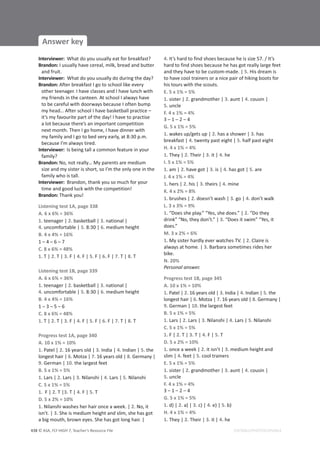
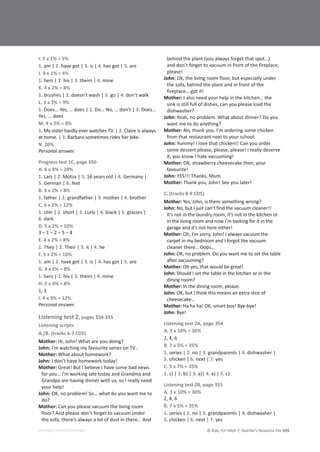
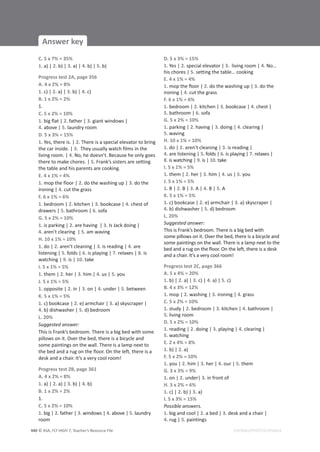
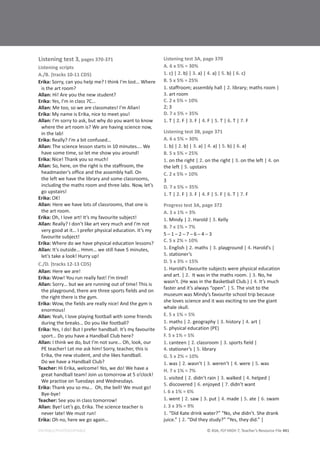
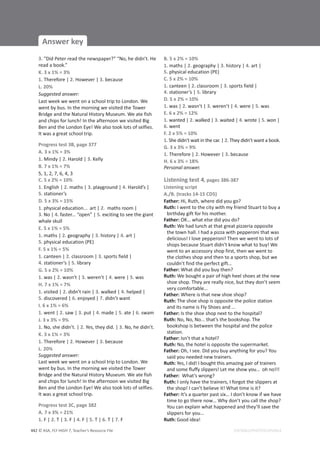
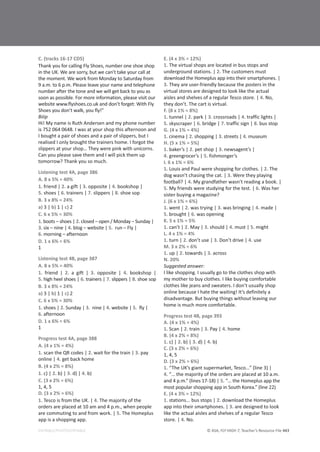
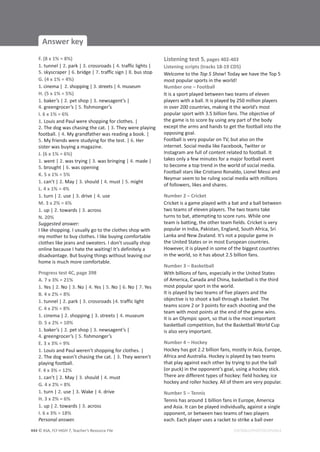
• CD1 Tracks 1-2, page 9
Jimmy: Hello, Finn! There are some things I
would like to know about you… Can I ask you
some questions?
Finn: Sure!!
Jimmy: What’s your full name?
Finn: Finn Wolfhard.
Jimmy: When is your birthday?
Finn:It’son22nd
December.It’salmostChristmas,
so sometimes I only get one gift… I hate it!
Jimmy: Where are you from?
Finn: I’m from Vancouver, in Canada. I love my
city and my country!
Jimmy: You are also a musician. Who’s your
favourite singer?
Finn: It’s difficult to choose… But maybe Mac
DeMarco.
Jimmy: Which is your favourite season of
Stranger Things?
Finn: It’s difficult… but I think it’s the first one!
Jimmy: What is your biggest secret?
Finn: I once cut my chin on a desk while
dancing! I’m not a great dancer… ha ha ha!
• CD1 Tracks 7-8, page 19
A.
On a trip to France, I met my best friend Camille
Gomes. She lives in Paris with her parents and
her brother Luc. Camille is twelve years old and
she is in year 7, just like me. She goes to the
International School of Paris. Her lessons are in
French and English. She loves playing football
and running.
Next summer she is coming to the US, so we
are very excited about it!
• CD1 Tracks 9-10, page 19
B./C.
Porter: Hi, Camille! Welcome to America.
It’s your first time here, so let’s make it
unforgettable. How are you?
Camille: Hello, Porter! I’m fine. And you?
Porter: I’m great! This is my friend Louise. She’s
from Sydney, a beautiful city in Australia.
Camille: Oh, really? I want to visit Australia one
day… I want to see kangaroos. It’s one of my
dreams. Hi, Louise.
Louise: Hey there! Nice to meet you, Camille.
Are you French?
Camille: Yes, I am. I’m from the City of Light,
Paris. What year are you in, Louise?
Louise: I’m in year 9.
Camille: Oh, so you’re older than us…
Louise: Yes, I’m 14 years old and you’re 12,
right?
Camille and Porter:That’s right!
Porter’s mother: Let’s go home, kids! You can
have some rest or watch films this afternoon.
You can make popcorn after lunch, too!
Camille and Louise: Yes! Let’s go!
• CD1 Tracks 15-16, page 27
A.
1.
Josh: Hey, Ash. What’s up?
Ashley: Hi, Josh. Do you know our new
classmate?
Josh: Which one? We have got two in our class.
The tall boy with green eyes and blonde hair,
or the other one with brown eyes and short
red hair?
Ashley: The second one. I think his name is Jim.
He’s from Ireland.
• CD1 Tracks 17-18, page 27
A.
2.
Josh: Yes, you’re right. He’s Irish, he’s thirteen
and his parents have got a café next to our
school. He’s got two twin sisters.
Ashley: How do you know all that?
Josh: Because he’s in my swimming team and
we chat all the time.
• CD1 Tracks 19-20, page 27
B.
Josh: Hey, Ash. What’s up?
Ashley: Hi, Josh. Do you know our new
classmate?
Josh: Which one? We have got two in our class.
The tall boy with green eyes and blonde hair,
or the other one with brown eyes and short
red hair?
Ashley: The second one. I think his name is Jim.
He’s from Ireland.
Josh: Yes, you’re right. He’s Irish, he’s thirteen
and his parents have got a café next to our
school. He’s got two twin sisters.
Ashley: How do you know all that?
Josh: Because he’s in my swimming team and
we chat all the time.
• CD1 Tracks 22-23, page 33
C. My friend Martha always gets up a bit late...
School starts at nine o’clock and she only gets
out of bed at a quarter past eight. She gets
dressed and after that she has breakfast at half
past eight in the morning. She brushes her teeth
© ASA, FLY HIGH 7, Teacher’s Resource File 9
after that, at twenty to nine. Ten minutes later,
at ten to nine, she kisses her mother and she
takes the bus to school. Her friends usually have
lunch at the school canteen at midday, but she
likes to have lunch at home on Wednesdays and
Fridays,soshehaslunchataquarterpasttwelve.
After a long day of classes, she returns home at
half past five and the first thing she does is her
homework. She studies at a quarter to six and at
half past seven in the evening she always visits
her favourite neighbours: her grandparents! She
has dinner and goes to bed at 10 p.m.
• CD1 Tracks 28-29, page 39
Cooper: Hi, Jason! I need to write a school
project about a friend’s daily life. Can you tell
me about your daily routine, please?
Jason: Sure! What do you want to know?
Cooper: What time do you usually wake up?
Jason: I always wake up really early, at 6 a.m.
Cooper: What do you do before you go to
school?
Jason: I have a quick shower, get dressed and
have breakfast.
Cooper: Where do you usually have lunch?
Jason: I often have lunch at the canteen with
some friends.
Cooper: What do you do after school?
Jason: After school I have dance practice, I go
to the gym and then I go home.
Cooper: What time do you go to bed?
Jason: At 10 p.m. I sometimes read or listen to
music before I sleep.
Cooper: Oh, I have to go now! Thanks a lot,
Jason! By the way, I love your dance routines!
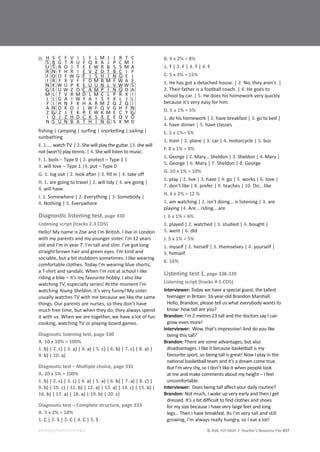
• CD1 Track 30, page 48
A/B
1. Make the bed
2. Dust the furniture
3. Sweep the floor
4. Do the ironing
5. Clear the table
6. Load the dishwasher
7. Take the rubbish out
• CD1 Tracks 37-38, page 56
A.
Presenter – Hello, good morning! Today we are
talking about household chores! It’s a tough
job, but someone has to do it. The question is:
should kids do chores at home? To talk about
this, I have two guests, Harold and Lizzy: a
father and a teenager. Let’s start with Harold.
As a parent, what do you think about this?
Harold – I think that helping at home is
very important. Kids who do chores learn
responsibility and gain important life skills
that will serve them well throughout their
lives. It teaches them the importance of
contributing to team work. By doing some
chores, they feel valued and that’s good for
their self-esteem, too.
Presenter – The question is: what kind of
chores can kids do?
Harold – That depends on their age. For
example, by the age of 3, children can pick
up their toys or put books back in the right
place. But teenagers can do many things, for
example: tidying up their bedroom; folding
their clothes; vacuuming; sweeping and
mopping the floor; feeding the pets…
Presenter – Thank you so much, Harold. But
now, let’s let the kids have a say. Lizzy, you
are 12 years old, do you agree with Harold?
Do you think kids your age should do chores?
Lizzy – Yes, I do agree with him, I think kids
should do chores because there are always
many things to do at home and every member
of the family must help and clean. But I don’t
think parents should make us tidy up our
bedrooms. My bedroom is my private space,
so I think adults shouldn’t decide when I have
to clean it or how I should organise it.
Presenter – Do you do chores at home?
Lizzy –Yes, I do. I do all the chores that Harold
mentioned and I also set the table, clear the
table, and prepare my school snacks.
Host – So, kids at home, sorry for the bad news
but you should all do your chores! Thank
you so much for listening, check out all our
podcasts at teenpodcast.com
• CD2 Tracks 5-6, page 71
A.
Alison: Hi, there! What are you doing?
Eric: Look! These are my new TikTok moves…
aren’t they super cool?
Alison: Oh, you and your TikTok dances... here
we go again… but why are you in the garden?
Eric: That’s my favourite spot in the house. I
can have some privacy… Having privacy in a
bedroom you share with your two younger
brothers isn’t easy, but I really like it that way!
It’s quite small. We only have space for one
bunk bed and another tiny bed which is stuck
between a small wardrobe and a bookshelf.
However, to be honest, I can’t imagine my
life without that little, but cosy spot!
Alison: Oh, now I get it! I have a bedroom of my
own and it’s my favourite place in the whole
house. I have everything I need there.
Eric:Yeah,that’scool!Buteverybodyknowsyour
colourful bedroom, well your pinky bedroom,
© ASA, FLY HIGH 7, Teacher’s Resource File
10
I mean… we watch your TikTok dances all
the time, in your bedroom… so don’t tell
me you’re not a fan of TikTok either! And by
the way… that fluffy bed with those big pink
pillows? And that big pink rug? It’s so you!
Alison: Uhm… Yes, that’s true! How about my
giant white wardrobe next to the bed? That’s
also my style! So, you have to see my last
TikTok dance… I am on my bed, moving my
arms up and down, shaking my head and
there’s a crazy hip-hop song playing at the
same time. It’s so, so funny…
Eric: It sounds like it! Hey! Hold my phone,
please! Check this out!
Alison: Wow! We have to try that dance
together…
• CD2 Tracks 7-8, page 71
B.
Eric: Having privacy in a bedroom you share
with your two younger brothers isn’t easy,
but I really like it that way! It’s quite small.
We only have space for one bunk bed and
another tiny bed which is stuck between a
small wardrobe and a bookshelf. However,
to be honest, I can’t imagine my life without
that little, but cosy spot!
• CD2 Tracks 9-10, page 71
C.
Alison: Oh, now I get it! I have a bedroom of my
own and it’s my favourite place in the whole
house. I have everything I need there.
Eric: Yeah, that’s cool! But everybody knows
your colourful bedroom, well your pinky
bedroom, I mean… we watch your TikTok
dances all the time, in your bedroom… so
don’t tell me you’re not a fan of TikTok either!
And by the way… that fluffy bed with those
big pink pillows? And that big pink rug? It’s
so you!
Alison: Uhm… Yes, that’s true! How about my
giant white wardrobe next to the bed? That’s
also my style! So, you have to see my last
TikTok dance… I am on my bed, moving my
arms up and down, shaking my head and
there’s a crazy hip-hop song playing at the
same time. It’s so, so funny…
Eric: It sounds like it! Hey! Hold my phone,
please! Check this out!
Alison: Wow! We have to try that dance
together…
• CD2 Tracks 11-12, page 80
B.
What do your doodles say about you?
If your notebook is full of several types of
geometrical shapes, you have an organised
brain and you are all about making plans. So,
the correct answer is c) organised.
Stars and moon indicate confidence and
optimism! If you often draw them, you are
ambitious and success driven. So, the correct
answer is a) optimistic.
If you often draw shapes that are not easily
recognised, it may mean you have some sort of
stress and, because of that, you can’t really
focus. So, the correct answer is d) stressed.
If you often draw tornadoes, something
is holding you back. You are scared of the
unfamiliar and you prefer not to take risks. So,
the correct answer is b) scared.
https://www.sweetyhigh.com/
read/handwriting-doodle-analysis-062216
(adapted, accessed in July 2020)
• CD2 Tracks 13-14, page 81
B.
Thank you so much for your help! The clubs you
are in are incredible! You all seem to have a lot
of fun! I think I made my decision. But now you
have to guess! Let me give you some clues:
I have two left feet, so I can’t dance… I also have
two left hands, I’m terrible with arts… I don’t like
science very much: my favourite subjects are ICT
and citizenship. I like photography, but I’m not
very good at it... The last time I tried to bake a
cake, it was terrible – not even my pets liked it!
I always fall asleep when I’m watching films and
I like video games, but I think I play enough at
home.Iusuallyhelpalocalanimalshelter,Ialways
take some food and I help with the baths. I have
3 cats and 2 dogs at home and I love animals…
Can you guess which club I’m choosing?
• CD2 Track 17, page 88
Sounds of school
A. 1. Stationer’s sound; 2. Classroom sound;
3. Playground sound; 4. Sports fields sound;
5. Canteen sound; 6. Music room sound
• CD2 Track 21, page 92
B.
needed
started
baked
shopped
stayed
followed
• CD2 Tracks 22-23, page 94
A./B.
The Manchester City Football Language School
in Manchester, England, is a very special school.
There, you can learn football and English
during the summer. The summer programmes
© ASA, FLY HIGH 7, Teacher’s Resource File 11
are for boys from 9 to 17 years old and girls
from 14 to 17 years old and they are designed
to help players develop their communication
skills on and off the field. The sessions last for
two weeks and take place in the City Football
Academy, where the players of the Manchester
City team play every day.
Students start at 9 o’clock with English classes
every day. There are great classrooms with
sophisticated equipment. Then, at 10:30, they
havefootballclassesononeofthemanyoutdoor
fields. At 12:00 they have lunch with their
teammatesinthecanteen,whichisverybrightand
modern. After lunch, they have one more English
class and at 2:45 they have football practice on
theindoorfield.Theyhavedinnerat6o’clockand
then some free time. They can watch a film in the
cinema room or play games in the games room.
• CD2 Tracks 24-25, page 94
C.
Mateu, how was your experience in The
Manchester City Football School?
In football training sessions we worked
on football skills and techniques just like
professional players. The training sessions were
all varied and very motivating. All the training
was very good, but personally the one I liked
the most was the day we did the competition.
In English classes we worked on various
projects related to football. We pretended to
be professional players who did interviews,
analysed football matches and created our
own teams. The part that I really liked about
classes was when we interacted inside the class
with people from another country.
I enjoyed it a lot because I seemed like a
professional player.
Rebecca, what about you?
The first year in Manchester City Football
Language School was new to me, so I wasn’t very
confident playing football with other girls and it
wasveryhardtocommunicate.Butovertheyears
I worked a lot and my self-confidence, training
andespeciallymycommunicationimprovedalot.
Classroom activities were always good
and interesting. In the first few days it was
challenging to start speaking always in English
– it was a bit difficult for me –, but once lessons
started it seemed easier for me.
Ilovedtoplaywithandagainstgirlswithdifferent
styles from all over the world. Also, activities
such as meeting Manchester City women’s team
were incredible because they allowed me to
meet inspiring women football players.
https://www.cityfootball-language.com/en/
(accessed in July 2020)
• CD2 Tracks 26-27, page 95
A.
Mateu: This school is really cool! What is your
favourite place?
Rebecca: My favourite place is the football
pitch because I love playing football. I live
and breathe football! What about you?
Mateu: I love the football pitch too, of course.
But I also like the school cinema because I
love watching films. What about the library?
Do you usually go there to read books?
Rebecca: Yes, I do. I usually do my homework
there. And what about you?
Mateu: I never go to the library because I prefer
studying in my bedroom. What about lunch
breaks? Where do you usually spend them?
Rebecca:Ilikehavinglunchintheschoolcanteen
and then I usually go to the games room with
my teammates to relax. How about you?
Mateu: I usually have lunch in the cafeteria
and then my teammates and I go for a walk
before going to the classroom, where I have
English lessons. Let’s go!
• CD2 Tracks 31-32, page 102
A.
I’m Kristina Dimova, that’s D-I-M-O-V-A. I’m
13 and I’m from Bulgaria. I go to Southfields
Community College, in south London.
My school is fantastic. Walking around the
playground is like a trip around the world:
students at my school come from 60 countries
and speak a total of 71 languages. All our classes
are in English.
• CD2 Tracks 33-34, page 102
B.
My favourite week of the year is in May: the
opening week!
Last year we had an event called “Walk around
the world” and each student told everyone
something about their country of origin. We felt
very clever knowing so many different cultures.
In the last two years there was also an event
called “Swap it out”. During the first school
month we swapped books, costumes, uniforms,
sports equipment, personal objects and all kinds
of stuff we find interesting! I swapped with my
friend Francesco from Italy: he got a traditional
Bulgarian doll from me and I got his Juventus
Football Club shirt.
These were the two best events from last year!
They were both so rewarding!
• CD2 Tracks 35-36, page 110
A./B.
Hello, Minecraft lovers!
© ASA, FLY HIGH 7, Teacher’s Resource File
12
Ah, there’s nothing like visiting a big city! Those
busy people rushing to work?
I like big cities so much and I guess that’s why
Vancouver, in Canada, inspired me so much!
The glamorous skyscrapers… yes, the
skyscrapers… those very tall buildings! And
there’s always people getting sick, so there’s a
modern hospital where sick people are treated.
If you want to spend the night there, try the
city’s hotel!
I’m in charge of this city, so if you want to have
a meeting with me, go to the town hall. That’s
the place where we administrate the city!
If that’s not enough, how about a place where
you can borrow a book? Yes, that’s it! The
library! And if you need to get some fresh air
or go for a walk, there’s no place better than
the city park!
Anything you can think of is literally here in
Mattupolis. If you want to know more about
all the other places of Mattupolis, go to my
YouTube channel and find out!
• CD3 Tracks 4-5, page 115
D.
City blackout – What were people doing when
the lights went out?
A journalist asked people about it: a young man
said that he was washing the dishes. A lady told
him that she and her husband were watching
TV while their children were doing homework.
A teenager didn’t realise anything because
he was listening to music. The journalist then
asked the official from the energy company:
“Mr Watts, is it true that you were having a
big party last night and nobody was watching
the controls?” He said they weren’t having fun;
they were working. Was he telling the truth?
No one knows exactly!
• CD3 Tracks 6-7, page 116
A.
Tommy: Hi, Jenny! What’s up?
Jenny: Hey! Tommy, you won’t believe what
happened to me!
Tommy: Wow, slow down, please. What
happened?
Jenny: While my mother and I were driving
to the shopping centre, there was this huge
traffic jam and a man was jumping in the
middle of the street, in front of the cars! It
was weird and fun at the same time.
Tommy: Really? What happened next?
Jenny: Well, the police were trying to take him
out of the road, but he was jumping and
singing so loud (screaming, actually) that he
couldn’t hear what the police officers were
saying. When they finally controlled him,
they took him to the police station, I guess.
Tommy: That was pretty hilarious, right?
Jenny: Sort of! It took us two hours to get to the
shopping centre. Can you believe it? Anyway,
as we arrived there, and after we went to
the supermarket, another weird episode
happened: a strange lady came up to us while
we were buying some clothes and said that
she was going to take us to a new planet,
because she knew we were aliens… Oh, God,
what else happened, you might ask…
Tommy: Yeah! I was about to ask that… Look,
my battery is really lo..
Jenny: Hello! Helloo…! Tommy?
• CD3 Tracks 9-10, page 121
C./D.
Zoe: OK, we bought new earrings for you at
the accessory shop. Now we need to buy
some food, but we don’t have much time…
Let’s split up: I’ll go to the fishmonger’s to
buy fresh fish and you buy some meat at the
butcher’s, OK?
Anna: Right! Don’t forget to buy the magazine
for mum at the newsagent’s and the book for
dad.
Zoe: We can’t buy the book because the
bookshop is closed today…
Anna: Don’t worry – let’s buy the book online!
Check this out, so many options! I love
shopping online!
• CD3 Tracks 13-14, page 129
A.
Journalist (broadcaster): Good afternoon.
Today, maybe one of the biggest events of the
year took place: The Town Hall Colour Run.
It started next to the stadium and the finish
line was near the aquarium. Our reporter
Nick Downer is at the scene and he has more
details about it.
Reporter: Good afternoon. This was an
event that gathered around two and a half
thousand people and they had fun for an
hour. Mr Thomson, the Mayor, is going to
explain it better. Mr Thomson, how was this
event? Can you tell us about this?
Mayor: Good afternoon. It was a huge success.
This wasn’t a common colour run race.
Participants had to go along the main streets
and find some objects in different spots to
know our town better.
Reporter: How did that work? Could you give
us an example, Mr Mayor?
Mayor: Sure. For example, participants
followed some clues and had to find a
© ASA, FLY HIGH 7, Teacher’s Resource File 13
miniature of the Town Hall at the bus stop,
or a puzzle on the bridge with a picture of
the museum … Every time they got one, they
won some points and they got more ink.
Reporter: Thank you, Mr Thomson and
congratulations for the event.
Mayor: Thank YOU. I want to invite you and
all our listeners to participate in next year’s
race. A different event with a different start
(the swimming pool) and finish line (the skate
park).
• CD3 Tracks 15-16, page 129
B.
Mark: Hey, everybody! My family and I had such
agreattimetoday.WeparticipatedintheTown
HallColourRunanditwasfa-bu-lous!Wewere
wearing white T-shirts and took a colourful
bath while we were running around town.
This race was a bit different from the usual
ones because, besides running and getting
painted, we had to win points, too. My
father found two objects related to our
town: a puzzle and a Town Hall miniature.
My mum found a hidden keychain, but she
had to walk through a tunnel. She saw it at
the top of a zebra crossing traffic light. Me?
I found a chocolate skyscraper, but I didn’t
win the points for that because I ate it right
away.
• CD3 Tracks 22-23, Page 146
A./B.
Interviewer: Good morning! Welcome to our
Oxford School radio show. Yesterday, our
football champion was here with us. Today
we have our gymnastics school sport champ,
Dennis Kimmel. Let’s find out more about
him. Hey, Dennis.
Dennis: Hi, Rita. Thanks for having me here.
Interviewer: So, how do you feel about going
to the national finals?
Dennis: I feel great and honoured to represent
our school and region in such an important
competition.
Interviewer: You’ll continue to practise until
the finals, right?
Dennis: Yeah, a hundred per cent. Before this,
I spent four hours working out and practising
(two in the morning and another two in the
afternoon), but my coach said that we’ll have
three-hour training sessions twice every day
from now on. So… It’s going to be hard but it
will be worth it.
Interviewer: Wow! That’s pretty hard… You
don’t have much time to have fun, besides
school and practice…
Dennis: Yeah! Sometimes I can’t hang out with
my friends, but I listen to music and read
comic books. However, I miss riding my bike.
Interviewer: What about watching TV? Do you
watch any TV series?
Dennis: Hmm. No, not really. I just spend some
time watching YouTube videos.
Interviewer: Do you have a message for our
listeners?
Dennis: Just follow your dreams and work hard
to make the best of it. And remember: the
most important thing isn’t the prize you get
but the respect you show.
Interviewer: Thanks, Dennis. Good luck for the
competition.
• CD3 Tracks 24-25, Page 146
C.
[Go Dennis… Go Dennis… Oooooooooooxford]
Host: Good morning! Welcome to our National
School Sport Finals. We’re in this wonderful
gym in London and we will have a great day.
The first to compete today is the Oxford
Middle School winner: Dennis Kimmel.
A round of applause, everybody. How do you
feel, Dennis?
Dennis: A bit nervous and anxious, but I’ll make
it! I won’t disappoint my schoolmates.
Host: I’m sure you won’t. Let’s start then. Good
luck!
Dennis: Thank you!
Host: After these beautiful performances, it’s
time to announce the winner for gymnastics.
Thank you to all the participants. It wasn’t
easy for the judges to decide because they
were all wonderful. I’m going to hand over
the prize to… Dennis Kimmel! Come up here,
please, Dennis. Congratulations!
• CD3 Tracks 26-27, page 149
C.
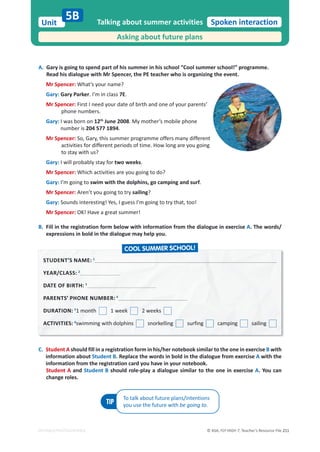
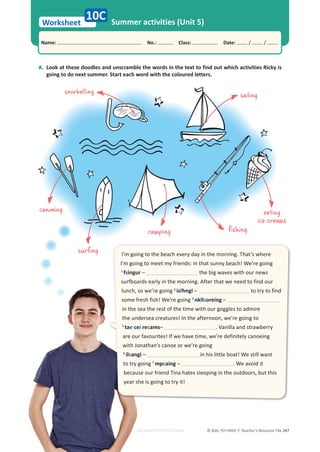
Hi, everyone!
This summer I’m going to be at a summer camp
with some of my friends. We are going to go
camping I really like dancing and singing, so I
hope to have plenty of time for that!
After the summer camp, I’m going to go to the
beach! Swimming and snorkelling are also two
of my favourite summer activities.
Hopefully, I will still have time to do some
sunbathing and get a tan.
I also like fishing with my father and we often go
sightseeing. I love eating strawberry ice creams
in a theme park and taking photos of all these
moments. Summer, make it the best of times!
Digital
Learning
Digital Learning
• Educação Digit@l(por Carlos Pinheiro)
• Roteiro
• Digital resources overview
Ensino digit@l, por Carlos Pinheiro 16
Roteiro Aula Digital 27
Guia de recursos digitais 43
Digital Learning
Available in editable format at
© ASA, FLY HIGH 7, Teacher’s Resource File
16
Ensino digital | Carlos Pinheiro
A crise pandémica obrigou as escolas a transfor-
ŵĂƌĞŵĂƐƐƵĂƐƉƌĄƟĐĂƐ͕ĂĚĂƉƚĂŶĚŽͲĂƐĂƵŵĐŽŶƚĞdžƚŽ
ĚĞĞŶƐŝŶŽĞĂƉƌĞŶĚŝnjĂŐĞŵĂĚŝƐƚąŶĐŝĂ͕ŶƵŵĂŵďŝĞŶƚĞ
totalmente virtual e mediado por tecnologias que a
ŵĂŝŽƌŝĂĚŽƐĚŽĐĞŶƚĞƐĞĂůƵŶŽƐŶĆŽĚŽŵŝŶĂǀĂ͕ŵĂƐĚĞ
que muito rapidamente se apropriaram.
KƌĞŐƌĞƐƐŽĂŽĞŶƐŝŶŽƉƌĞƐĞŶĐŝĂů͕ŶŽŝŶşĐŝŽĚŽĂŶŽ
ůĞƟǀŽ ϮϬϮϬͲϮϭ͕ƐĞ ƉŽƌ Ƶŵ ůĂĚŽ ĮĐŽƵ ŵĂƌĐĂĚŽ ƉĞůĂ
eventual necessidade de recorrer de novo a mode-
ůŽƐĚĞĞŶƐŝŶŽĂĚŝƐƚąŶĐŝĂŽƵŵŝƐƚŽ͕ƚŽƌŶŽƵ
ƚĂŵďĠŵ ĞǀŝĚĞŶƚĞ ƋƵĞ͕ ŵĞƐŵŽ ƉƌĞƐĞŶ-
ĐŝĂůŵĞŶƚĞ͕ĠƉŽƐƐşǀĞůŵŽďŝůŝnjĂƌƌĞĐƵƌƐŽƐĞ
plataformas digitais para a construção de
novos cenários de ensino e de aprendiza-
ŐĞŵ͕ŶƵŵŵŽĚĞůŽĚĞĞŶƐŝŶŽŚşďƌŝĚŽ͘
K ĐŽŶĐĞŝƚŽ ĚĞ ĞŶƐŝŶŽ ŚşďƌŝĚŽ͕ ŽƵ
blended learning, resulta da combinação
da aprendizagem presencial com ambien-
tes online͕ ƉƌŽŵŽǀĞŶĚŽ ƵŵĂ ĚŝĨĞƌĞŶĐŝĂ-
ĕĆŽĚŽƐƚĞŵƉŽƐ͕ĚŽƐůƵŐĂƌĞƐ͕ĚŽƐŵŽĚŽƐĞ
ĚŽƐƌŝƚŵŽƐĚĞĂƉƌĞŶĚŝnjĂŐĞŵ͕ƉĂƌĂƋƵĞŽƐ
ĂůƵŶŽƐĂƉƌĞŶĚĂŵŵĂŝƐĞŵĞůŚŽƌ͘
As sugestões que aqui apresentamos
ǀŝƐĂŵ͕ ĂƐƐŝŵ͕ ŶĆŽ Ɛſ ĂƵdžŝůŝĂƌ ŽƐ ĚŽĐĞŶ-
tes na eventual transição para modelos
ĚĞΛŽƵŵŝƐƚŽƐ͕ŵĂƐƚĂŵďĠŵƉŽƚĞŶĐŝĂƌĂŝŶŽǀĂ-
ĕĆŽƐƵƐƚĞŶƚĂĚĂĞĂŇĞdžŝďŝůŝĚĂĚĞŶŽŵŽĚĞůŽƉƌĞƐĞŶĐŝĂů͕
ƟƌĂŶĚŽƉĂƌƟĚŽĚŽƵƐŽĚĂƐƚĞĐŶŽůŽŐŝĂƐĚŝŐŝƚĂŝƐƉĂƌĂ
ĂŵĞůŚŽƌŝĂĚŽƉƌŽĐĞƐƐŽĚĞĞŶƐŝŶŽĞĂƉƌĞŶĚŝnjĂŐĞŵ͕
aliando com sucesso as vantagens da sala de aula
İƐŝĐĂĂŽƐďĞŶĞİĐŝŽƐĚĂĞĚƵĐĂĕĆŽĚŝŐŝƚĂů͘
WůĂŶŝĮĐĂƌ
KƋƵĞƐĆŽĂŵďŝĞŶƚĞƐŚşďƌŝĚŽƐĚĞĂƉƌĞŶĚŝnjĂŐĞŵ
ĞƋƵĂŝƐĂƐƐƵĂƐǀĂŶƚĂŐĞŶƐ͍
KƐ ĂŵďŝĞŶƚĞƐ ŚşďƌŝĚŽƐ ĚĞ ĂƉƌĞŶĚŝnjĂŐĞŵ͕ ŵƵŝ-
ƚĂƐǀĞnjĞƐĚĞƐŝŐŶĂĚŽƐƉĞůĂĞdžƉƌĞƐƐĆŽŝŶŐůĞƐĂblended
learning͕ ƐĆŽ Ƶŵ ŵŽĚĞůŽ ŇĞdžşǀĞů ƋƵĞ ĐŽŵďŝŶĂ
ĂŵďŝĞŶƚĞƐ İƐŝĐŽƐ Ğ ǀŝƌƚƵĂŝƐ ĚĞ ĂƉƌĞŶĚŝnjĂŐĞŵ ŶŽ
ĚĞƐĞŶǀŽůǀŝŵĞŶƚŽĚĞƉƌŽũĞƚŽƐŽƵĚĞŽƵƚƌĂƐĂƟǀŝĚĂĚĞƐ
ĚĞĞŶƐŝŶŽͲĂƉƌĞŶĚŝnjĂŐĞŵ͕ƐĞŵŚĂǀĞƌŶĞĐĞƐƐŝĚĂĚĞĚĞ
ƉƌŽĨĞƐƐŽƌĞƐ Ğ ĂůƵŶŽƐ ƉĂƌƟůŚĂƌĞŵ Ž ŵĞƐŵŽ ĞƐƉĂĕŽ
İƐŝĐŽĞŽƐŵĞƐŵŽƐƚĞŵƉŽƐĚĞĂƉƌĞŶĚŝnjĂŐĞŵ͘dƌĂƚĂͲƐĞ
ĚĞƵŵŵŽĚĞůŽƋƵĞĞdžŝŐĞƵŵĂĐƵŝĚĂĚŽƐĂƉůĂŶŝĮĐĂĕĆŽ
ƉĞĚĂŐſŐŝĐĂƐŽďƌĞĐŽŵŽĞƋƵĂŶĚŽƵƐĂƌŽƐĚŝĨĞƌĞŶƚĞƐ
ĂŵďŝĞŶƚĞƐ͕İƐŝĐŽƐĞĚŝŐŝƚĂŝƐ͕ƉĂƌĂĂƟǀŝĚĂĚĞƐƉƌĞƐĞŶ-
ĐŝĂŝƐ ŽƵ Ă ĚŝƐƚąŶĐŝĂ͕ ƚƌĂďĂůŚŽ ĂƵƚſŶŽŵŽ ŽƵ ĐŽůĂďŽ-
ƌĂƟǀŽ͕ŝŶƚĞƌĂĕĆŽƐŽĐŝĂůĞĂƉůŝĐĂĕĆŽƉƌĄƟĐĂ͕ƚĞŶĚŽĞŵ
ǀŝƐƚĂƉƌŽƉŽƌĐŝŽŶĂƌĂŽƐĂůƵŶŽƐĐŽŶƚĞdžƚŽƐĚĞĂƉƌĞŶĚŝnjĂ-
ŐĞŵŵĂŝƐƌŝĐŽƐ͕ĚŝǀĞƌƐŝĮĐĂĚŽƐĞĂĚĂƉƚĂĚŽƐĂŽƐƌŝƚŵŽƐ
ĞĐĂƌĂĐƚĞƌşƐƟĐĂƐĚĞĐĂĚĂĂƉƌĞŶĚĞŶƚĞ͘
ZĞůĂƟǀĂŵĞŶƚĞ ă ƐƵĂ ĞƐƚƌƵƚƵƌĂ͕ ŽƐ ĂŵďŝĞŶƚĞƐ
ŚşďƌŝĚŽƐ ĐŽŵƉƌĞĞŶĚĞŵ ƵŵĂ ĐŽŵƉŽŶĞŶƚĞ ŚƵŵĂŶĂ
;ƉƌŽĨĞƐƐŽƌĞƐ Ğ ĂůƵŶŽƐ͕ ĞǀĞŶƚƵĂůŵĞŶƚĞ ĞƐƉĞĐŝĂůŝƐƚĂƐ
ĐŽŶǀŝĚĂĚŽƐĞĞŶĐĂƌƌĞŐĂĚŽƐĚĞĞĚƵĐĂĕĆŽͿ͕
ĐŽŶƚĞƷĚŽƐƉĞĚĂŐſŐŝĐŽƐ;ƌĞĐƵƌƐŽƐ͕ŽƐƚƌĂ-
ĚŝĐŝŽŶĂŝƐ͕ŵĂƐĞƐƉĞĐŝĂůŵĞŶƚĞŽƐĚŝŐŝƚĂŝƐͿ͕
um ambienteĨşƐŝĐŽ;ĂƐĂůĂĚĞĂƵůĂͿĞ digi-
ƚĂů;ĂƐƉůĂƚĂĨŽƌŵĂƐƚĞĐŶŽůſŐŝĐĂƐͿĞĂƐŝŶƚĞ-
rações entre eles.
A aprendizagem ŚşďƌŝĚĂ ĂƉƌĞƐĞŶƚĂ
ŝŶƷŵĞƌĂƐǀĂŶƚĂŐĞŶƐ͘WŽƌƵŵůĂĚŽ͕ĂƐƐĞŶƚĂ
ŶĂŝĚĞŝĂĚĞƋƵĞŽƐĂůƵŶŽƐĚĞŝdžĂŵĚĞƐĞƌ
recetores passivos de ĐŽŶŚĞĐŝŵĞŶƚŽĞĚĞ
que o professor já não é a única fonte de
informação. Combinar o ensino presencial
ŶĂĞƐĐŽůĂĐŽŵĂƟǀŝĚĂĚĞƐƌĞĂůŝnjĂĚĂƐăĚŝƐ-
ƚąŶĐŝĂ͕ĞŵĂŵďŝĞŶƚĞƐonline͕ƉůĂŶŝĮĐĂĚĂƐ
ĞĂƉŽŝĂĚĂƐƉĞůŽƐƉƌŽĨĞƐƐŽƌĞƐ͕ĚĞƐĞŶǀŽůǀĞ
a capacidade de aprendizagem autſnoma
ĞĂƵƚŽƌƌĞŐƵůĂĚĂ͕ƉŽƚĞŶĐŝĂĂĂƉƌĞŶĚŝnjĂŐĞŵĂŽůŽŶŐŽ
da vida e oferece instrumentos que facilitam a per-
sonalização e a diferenciação. Ao usar ambientes e
recursos online͕ĞƐƚĄͲƐĞƐŝŵƵůƚĂŶĞĂŵĞŶƚĞĂĂƉŽŝĂƌŽ
desenvolvimento das competências digitais dos alu-
ŶŽƐ͕ĨĞƌƌĂŵĞŶƚĂƐŝŶĚŝƐƉĞŶƐĄǀĞŝƐƉĂƌĂŽĞdžĞƌĐşĐŝŽĚĞ
ƵŵĂĐŝĚĂĚĂŶŝĂƉůĞŶĂ͕ĂƟǀĂĞĐƌŝĂƟǀĂŶĂƐŽĐŝĞĚĂĚĞĚĂ
ŝŶĨŽƌŵĂĕĆŽĞĚŽĐŽŶŚĞĐŝŵĞŶƚŽĞŵƋƵĞĞƐƚĂŵŽƐŝŶƐĞ-
ridos.
ƐĂƟǀŝĚĂĚĞƐůĞƟǀĂƐƉƌĞƐĞŶĐŝĂŝƐƐĆŽŝŶĚŝƐƉĞŶƐĄǀĞŝƐ
para o desenvolvimento das competências sociais dos
ĂůƵŶŽƐ͕ƉĂƌĂŽďĞŵͲĞƐƚĂƌƉĞƐƐŽĂů͕ƉĂƌĂŽƐĞŶƟĚŽĚĞ
pertença ăĐŽŵƵŶŝĚĂĚĞĞƉĂƌĂĂƌĞůĂĕĆŽƉĞĚĂŐſŐŝĐĂ
ƉƌŽĨĞƐƐŽƌͬĂůƵŶŽ͕ ƚĆŽ ŝŵƉŽƌƚĂŶƚĞ ƉĂƌĂ Ž ƐƵĐĞƐƐŽ ĚĂ
aprendizagem no caso de crianças e jovens. A abor-
dagem ŚşďƌŝĚĂ, sem prescindir dessa componente
ĨƵŶĚĂŵĞŶƚĂů ĚĞ ŝŶƚĞƌĂĕĆŽ ƉĞĚĂŐſŐŝĐĂ Ğŵ ƐĂůĂ ĚĞ
aula, permite ao professor propor novas soluções de
ĞŶƐŝŶŽĞĚĞĂƉƌĞŶĚŝnjĂŐĞŵ͕ŚĂďŝƚƵĂůŵĞŶƚĞďĂƐĞĂĚĂƐ
ŶŽƵƐŽĚĞƚĞĐŶŽůŽŐŝĂƐ ĚŝŐŝƚĂŝƐ͕ĐŽŵƉƌŽĐĞƐƐŽƐŵĂŝƐ
ĐĞŶƚƌĂĚŽƐŶŽĂůƵŶŽ͕ŶŽĚĞƐĞŶǀŽůǀŝŵĞŶƚŽĚĞĐŽŵƉĞ-
ƚġŶĐŝĂƐƚƌĂŶƐǀĞƌƐĂŝƐĞŶĂĂƉƌĞŶĚŝnjĂŐĞŵƉŽƌƉƌŽũĞƚŽƐ͕
O conceito de ensino
ŚşďƌŝĚŽƌĞƐƵůƚĂĚĂ
combinação da
aprendizagem presencial
com ambientes online͕
promovendo uma
diferenciação dos
ƚĞŵƉŽƐ͕ĚŽƐůƵŐĂƌĞƐ͕
dos modos e dos ritmos
ĚĞĂƉƌĞŶĚŝnjĂŐĞŵ͕ƉĂƌĂ
que os alunos aprendam
ŵĂŝƐĞŵĞůŚŽƌ͘
© ASA, FLY HIGH 7, Teacher’s Resource File 17
ƋƵĞǀĂůŽƌŝnjĞŵŽƉĞŶƐĂŵĞŶƚŽĐƌşƟĐŽĞĐƌŝĂƟǀŽ͕ŽƚƌĂ-
ďĂůŚŽ ĐŽůĂďŽƌĂƟǀŽ Ğ ĂƐ ĐĂƉĂĐŝĚĂĚĞƐ ĚĞ ĐŽŵƵŶŝĐĂ-
ĕĆŽ͘EĞƐƚĞƐĞŶƟĚŽ͕ĠƵŵĂĂďŽƌĚĂŐĞŵƋƵĞƉŽĚĞƐĞƌ
ŝŵƉůĞŵĞŶƚĂĚĂĚĞĨŽƌŵĂĞĮĐĂnjƚĂŶƚŽŶŽĞŶƐŝŶŽďĄƐŝĐŽ
ĐŽŵŽŶŽƐĞĐƵŶĚĄƌŝŽ͕ĚĞƐĚĞƋƵĞŶĂĐŽŵƵŶŝĚĂĚĞĞƐĐŽ-
ůĂƌŚĂũĂƵŵĂĐŽŵƉƌĞĞŶƐĆŽĐůĂƌĂĚĂƐƐƵĂƐǀĂŶƚĂŐĞŶƐ
e seja precedida de organização e planeamento. Na
ŽƉŝŶŝĆŽ ĚĞ DŽƌĞŝƌĂ͕ :͘ ͕͘ Θ ,ŽƌƚĂ͕ϭ
uma das gran-
ĚĞƐǀĂŶƚĂŐĞŶƐĚĞƐƚĞŵŽĚĞůŽĠĂƐƵĂŇĞdžŝďŝůŝĚĂĚĞͨŶĂ
ĨŽƌŵĂĐŽŵŽƐĞŐĞƌĞŽƚĞŵƉŽ͕ĐŽŵŽŽƐĐŽŶƚĞƷĚŽƐƐĆŽ
ŵŝŶŝƐƚƌĂĚŽƐ͕ĐŽŵŽŽƐĂůƵŶŽƐŝŶƚĞƌĂŐĞŵĐŽŵŽƐƌĞĐƵƌ-
ƐŽƐ͕ĐŽŵŽƐƐĞƵƐƉĂƌĞƐĞĐŽŵŽƉƌŽĨĞƐƐŽƌ͘ŶƋƵĂŶƚŽ
no ambiente online ĞİƐŝĐŽ͕ŽĨŽƌŵĂƚŽĠĞƐĐŽůŚŝĚŽĞ
ƵƐĂĚŽ Ğŵ ĞdžĐůƵƐŝǀŝĚĂĚĞ Ğ͕ ƉŽƌƚĂŶƚŽ͕ ƐĞŵ ŽƐ ďĞŶĞ-
İĐŝŽƐĚŽŽƵƚƌŽ͕Žblended learning pode oferecer o
ŵĞůŚŽƌ ĚĞ ĂŵďĂƐ ĂƐ ƌĞĂůŝĚĂĚĞƐ͕ Ž ŵĞůŚŽƌ ĚĞƐƐĞƐ
ŵƵŶĚŽƐ͕ŶƵŵĂĞdžƉĞƌŝġŶĐŝĂŝŶƚĞŐƌĂĚĂĞƷŶŝĐĂͩ͘
YƵĞƉůĂƚĂĨŽƌŵĂƐĚĞǀŽƉƌŝǀŝůĞŐŝĂƌ͍
ĞƐĐŽůŚĂĚĂƉůĂƚĂĨŽƌŵĂĚĞƐƵƉŽƌƚĞĂŽƐĂŵďŝĞŶƚĞƐ
ŚşďƌŝĚŽƐĚĞĂƉƌĞŶĚŝnjĂŐĞŵĠƵŵĂĚĂƐĚĞĐŝƐƁĞƐŵĂŝƐ
importantes ŶŽƉƌŽĐĞƐƐŽĚĞƉůĂŶŝĮĐĂĕĆŽ͘KƐŵŽĚĞůŽƐ
mais comuns são os sistemas de gestão de aprendiza-
gem (LMS – Learning Management Systems) ou siste-
mas de gestão de conteúdos de aprendizagem (LCMS
ʹĞĂƌŶŝŶŐŽŶƚĞŶƚDĂŶĂŐĞŵĞŶƚ^LJƐƚĞŵƐͿ͕ƉŽĚĞŶĚŽ
ƚĂŵďĠŵƵƐĂƌͲƐĞŽƵƚƌŽƟƉŽĚĞĨĞƌƌĂŵĞŶƚĂƐĚĞĐŽůĂ-
ďŽƌĂĕĆŽĞĚŝƐĐƵƐƐĆŽ͕ĐŽŵďŝŶĂĚĂƐĐŽŵĞůĞŵĞŶƚŽƐĚĞ
ƐƵƉŽƌƚĞ͕ŽƌŝĞŶƚĂĕĆŽĞĂǀĂůŝĂĕĆŽ͘ŵĂŝŽƌŝĂĚĂƐƉůĂƚĂ-
ĨŽƌŵĂƐŵĂŝƐƵƐĂĚĂƐ;DŽŽĚůĞ͕'ŽŽŐůĞůĂƐƐƌŽŽŵŽƵ
DŝĐƌŽƐŽŌdĞĂŵƐͿĚŝƐƉŽŶŝďŝůŝnjĂŽĞƐƐĞŶĐŝĂůĚĂƐĂƟǀŝĚĂ-
des relacionadas com a gestão do processo de ensino
Ğ ĂƉƌĞŶĚŝnjĂŐĞŵ Ğŵ ĂŵďŝĞŶƚĞƐ ĚŝŐŝƚĂŝƐ͕ ŶŽŵĞĂĚĂ-
ŵĞŶƚĞ ĨĞƌƌĂŵĞŶƚĂƐ ĚĞ ĐŽŵƵŶŝĐĂĕĆŽ͕ ĚĞ ŐĞƐƚĆŽ ĚĞ
ĐŽŶƚĞƷĚŽƐĞĂƟǀŝĚĂĚĞƐĞĂǀĂůŝĂĕĆŽ͘
K ŝĚĞĂů ƐĞƌĄ ƋƵĞ Ă ƉƌſƉƌŝĂ ĞƐĐŽůĂ ĐŽŶƚƌĂƚƵĂůŝnjĞ͕
ŽƌŐĂŶŝnjĞ Ğ ĚŝƐƉŽŶŝďŝůŝnjĞ ă ĐŽŵƵŶŝĚĂĚĞ ĞƐĐŽůĂƌ ƵŵĂ
plataforma adequada ao modelo de ensino que pre-
ƚĞŶĚĞĂĚŽƚĂƌ͕ĞƋƵĞĞƐƐĂƉůĂƚĂĨŽƌŵĂƐĞũĂƵƐĂĚĂƉŽƌ
ƚŽĚŽƐŽƐƉƌŽĨĞƐƐŽƌĞƐ͘/ƐƐŽ͕ĐŽŶƚƵĚŽ͕ não significa que
ĂůƵŶŽƐĞĚŽĐĞŶƚĞƐĮƋƵĞŵůŝŵŝƚĂĚŽƐĂŽƐƌĞĐƵƌƐŽƐŽĨĞ-
ƌĞĐŝĚŽƐ ƉŽƌ ĞƐƐĂ ƉůĂƚĂĨŽƌŵĂ͕ ƐĞŶĚŽ ƉĞůŽ ĐŽŶƚƌĄƌŝŽ
ϭ
DŽƌĞŝƌĂ͕:͕͘͘Θ,ŽƌƚĂ͕D͘:͘;ϮϬϮϬͿ͘ĚƵĐĂĕĆŽĞĂŵďŝĞŶƚĞƐ
ŚşďƌŝĚŽƐĚĞĂƉƌĞŶĚŝnjĂŐĞŵ͘hŵƉƌŽĐĞƐƐŽĚĞŝŶŽǀĂĕĆŽƐƵƐƚĞŶ-
tada. Revista UFG͕20;ϮϲͿ͘Online͘ŝƐƉŽŶşǀĞůĞŵŚƩƉƐ͗ͬͬĚŽŝ͘
ŽƌŐͬϭϬ͘ϱϮϭϲͬƌĞǀƵĨŐ͘ǀϮϬ͘ϲϲϬϮϳ͘ŽŶƐƵůƚĂĚŽĞŵϮϵͲϭϭͲϮϬϮϬ
ĚĞƐĞũĄǀĞůƋƵĞƐĞĚŝǀĞƌƐŝĮƋƵĞĂƵƟůŝnjĂĕĆŽĚĞĐŽŶƚĞƷ-
ĚŽƐĞĨĞƌƌĂŵĞŶƚĂƐĚŝŐŝƚĂŝƐ͕ƐĞƉŽƐƐşǀĞůŝŶƚĞŐƌĂŶĚŽͲŽƐ
ŶĂ ƉƌſƉƌŝĂ ƉůĂƚĂĨŽƌŵĂ͕ Ğ ƐĂůǀĂŐƵĂƌĚĂŶĚŽ͕ ŶĂƚƵƌĂů-
ŵĞŶƚĞ͕ĂƐƋƵĞƐƚƁĞƐĚĞƉƌŝǀĂĐŝĚĂĚĞĞƐĞŐƵƌĂŶĕĂĚŽƐ
ĂůƵŶŽƐ͕ ŶŽ ƌĞƐƉĞŝƚŽ ƉĞůŽ ĚŝƐƉŽƐƚŽ ŶŽ ZĞŐƵůĂŵĞŶƚŽ
'ĞƌĂůƐŽďƌĞĂWƌŽƚĞĕĆŽĚĞĂĚŽƐ͘
Para a implementação de um modelo de ensino
ŚşďƌŝĚŽďĂƐĞĂĚŽĞŵƚĞĐŶŽůŽŐŝĂƐĚŝŐŝƚĂŝƐ͕ƐĞƌĄĞƐƐĞŶ-
ĐŝĂůƋƵĞĂƉůĂƚĂĨŽƌŵĂ͕ĚŽƉŽŶƚŽĚĞǀŝƐƚĂĚŽĚŽĐĞŶƚĞ͕
ƉĞƌŵŝƚĂ͕ĚĞĨŽƌŵĂĨĄĐŝů͕ŝŶĐŽƌƉŽƌĂƌĞŐĞƌŝƌĂƟǀŝĚĂĚĞƐ
de comunicação de um para um e de um para mui-
ƚŽƐ͕ĚĞĨŽƌŵĂƐşŶĐƌŽŶĂĞĂƐƐşŶĐƌŽŶĂ͕ĂĚŝƐƚƌŝďƵŝĕĆŽĞ
ŵŽŶŝƚŽƌŝnjĂĕĆŽĚĞĂƟǀŝĚĂĚĞƐĞƚĂƌĞĨĂƐ͕ĂĂǀĂůŝĂĕão das
aprendizagens e formas rápidas de feedback.
ŽƉŽŶƚŽĚĞǀŝƐƚĂĚŽƐĂƉƌĞŶĚĞŶƚĞƐ͕ĂƐƉůĂƚĂĨŽƌŵĂƐ
ĚĞǀĞƌĆŽ ĨĂǀŽƌĞĐĞƌ Ă ĂƉƌĞŶĚŝnjĂŐĞŵ ĂƵƚŽƌƌĞŐƵůĂĚĂ͕
ƉĞƌŵŝƟŶĚŽƋƵĞŽƐĂůƵŶŽƐŽƌŐĂŶŝnjĞŵ͕ƉƌŽĐĞƐƐĞŵ͕ĂŶĂ-
ůŝƐĞŵĞŝŶƚĞƌƉƌĞƚĞŵŝŶĨŽƌŵĂĕĆŽ͕ƋƵĞƉůĂŶĞŝĞŵ͕ŵŽŶŝ-
ƚŽƌŝnjĞŵĞƌĞŇŝƚĂŵƐŽďƌĞĂƐƵĂƉƌſƉƌŝĂĂƉƌĞŶĚŝnjĂŐĞŵ͕
ƋƵĞĨŽƌŶĞĕĂŵĞǀŝĚġŶĐŝĂƐĚŽƉƌŽŐƌĞƐƐŽ͕ƋƵĞƉĂƌƟůŚĞŵ
ŝĚĞŝĂƐĞĞŶĐŽŶƚƌĞŵƐŽůƵĕƁĞƐĐƌŝĂƟǀĂƐ͘ĞǀĞƌĆŽĂŝŶĚĂ
ŽĨĞƌĞĐĞƌ Ă ŽƉŽƌƚƵŶŝĚĂĚĞ ĚĞ ƚƌĂďĂůŚĂƌ ĐŽůĂďŽƌĂƟǀĂ-
ŵĞŶƚĞ͕ĚĞĂƉƌĞƐĞŶƚĂƌͬĞŶǀŝĂƌŽƚƌĂďĂůŚŽĂŽĚŽĐĞŶƚĞĞ
de receber rápido feedback. É ainda importante que
as plataformas contemplem procedimentos de auten-
ƟĐĂĕĆŽƋƵĞĐŽŵƉƌŽǀĞŵĂŝĚĞŶƟĚĂĚĞĚŽƐĂůƵŶŽƐ͕ĚĞ
ĨŽƌŵĂĂĞǀŝƚĂƌͲƐĞĂĞdžŝƐƚġŶĐŝĂĚĞĚƷǀŝĚĂƐƐŽďƌĞĂĂƵƚŽ-
ƌŝĂĚĂƐĂƟǀŝĚĂĚĞƐƌĞĂůŝnjĂĚĂƐ͘
YƵĞŵŽĚĞůŽƐĚĞƉůĂŶŝĮĐĂĕĆŽĞdžŝƐƚĞŵĞĐŽŵŽ
ƉůĂŶŝĮĐĂƌ͍
A escola deverá dispor de um Plano de Ação para
ŽĞƐĞŶǀŽůǀŝŵĞŶƚŽŝŐŝƚĂů;WͿ͕ŝŶƐƚƌƵŵĞŶƚŽĨƵŶ-
damental para o desenvolvimento digital da escola.
ƐƚĞ W ŝŵƉůŝĐĂ Ă ŝĚĞŶƟĮĐĂĕĆŽ ĚĂƐ ŝŶĨƌĂĞƐƚƌƵ-
ƚƵƌĂƐ͕ ĐŽŶĞĐƟǀŝĚĂĚĞ Ğ ĞƋƵŝƉĂŵĞŶƚŽ ĚŝŐŝƚĂŝƐ͕ Ƶŵ
ƉůĂŶĞĂŵĞŶƚŽĞĚĞƐĞŶǀŽůǀŝŵĞŶƚŽĞĮĐĂnjĞƐĚĂĐĂƉĂ-
ĐŝĚĂĚĞ ĚŝŐŝƚĂů͕ ŝŶĐůƵŝŶĚŽ ĐĂƉĂĐŝĚĂĚĞƐ ŽƌŐĂŶŝnjĂƟǀĂƐ
ĂƚƵĂůŝnjĂĚĂƐ͕ĂŝĚĞŶƟĮĐĂĕĆŽĚŽŶşǀĞůĚĞƉƌŽĮĐŝġŶĐŝĂ
digital e formas de capacitação dos professores e
o acesso a conteúdos de aprendizagem de elevada
qualidade e a plataformas seguras que respeitem
ĂƉƌŝǀĂĐŝĚĂĚĞĞĂƐŶŽƌŵĂƐĠƟĐĂƐ͘ĞƐĞũĂǀĞůŵĞŶƚĞ͕
esse plano deverá também incluir a referência a
ŵŽĚĞůŽƐĚĞƉůĂŶŝĮĐĂĕĆŽ͘
ƉůĂŶŝĮĐĂĕĆŽĚĞŵŽĚĞůŽƐŚşďƌŝĚŽƐĚĞĞĚƵĐĂĕĆŽ
ĚĞǀĞƌĄĚĂƌƉƌĞĨĞƌġŶĐŝĂĂĂƟǀŝĚĂĚĞƐƋƵĞĨĂǀŽƌĞĕĂŵŽ
© ASA, FLY HIGH 7, Teacher’s Resource File
18
Ensino digital | Carlos Pinheiro
desenvolvimento de competências trans-
versais e interdisciplinares de forma inte-
ŐƌĂĚĂĞĂƌƟĐƵůĂĚĂ͕ŝŶĐůƵŝŶĚŽĂĚƵĐĂĕĆŽ
ƉĂƌĂ Ă ŝĚĂĚĂŶŝĂ͕ ƉĞůŽ ƋƵĞ ĚĞƐĞũĂǀĞů-
ŵĞŶƚĞƌĞĂůŝnjĂƌͲƐĞͲĄŶŽĐŽŶƚĞdžƚŽĚŽŽŶƐĞ-
ůŚŽĚĞdƵƌŵĂ͕ĞŵĂƌƟĐƵůĂĕĆŽĐŽŵŽWůĂŶŽ
ĚĞdƌĂďĂůŚŽĚĞdƵƌŵĂĞĂŶƚĞƐĚŽŝŶşĐŝŽĚĂƐ
ĂƟǀŝĚĂĚĞƐ ůĞƟǀĂƐ͘ K ƚƌĂďĂůŚŽ ĐŽůĂďŽƌĂ-
ƟǀŽĚŽƐĚŽĐĞŶƚĞƐƐĞƌĄŝŵƉŽƌƚĂŶƚĞŶĆŽƐſ
ŶĞƐƚĂĨĂƐĞĚĞƉůĂŶŝĮĐĂĕĆŽ͕ĐŽŵŽĂŽůŽŶŐŽ
de todo o processo.
^ƵŐĞƌĞͲƐĞ ƵŵĂ ĚŝǀĞƌƐŝĮĐĂĕĆŽ ĚĂƐ
ŵŽĚĂůŝĚĂĚĞƐ ĚĞ ƚƌĂďĂůŚŽ͕ ƉƌŝǀŝůĞŐŝĂŶĚŽ͕
ĐŽŶƚƵĚŽ͕ ĂƐ ŵŽĚĂůŝĚĂĚĞƐ ĚĞ ƚƌĂďĂůŚŽ
ĐŽůĂďŽƌĂƟǀŽ͕ĞŵƉĂƌĞƐŽƵĞŵŐƌƵƉŽƐŵĂŝƐĂůĂƌŐĂĚŽƐ͕
usandoastecnologiasdigitaisparapromoveroenvolvi-
ŵĞŶƚŽĂƟǀŽĞĐƌŝĂƟǀŽĚŽƐĂůƵŶŽƐŶĂĐŽŶƐƚƌƵĕĆŽĚŽƐĞƵ
ƉƌſƉƌŝŽ ĐŽŶŚĞĐŝŵĞŶƚŽ͘ ƐƚƌĂƚĠŐŝĂƐ ƉĞĚĂŐſŐŝĐĂƐ ƋƵĞ
ĨŽŵĞŶƚĞŵĂƐĐŽŵƉĞƚġŶĐŝĂƐƚƌĂŶƐǀĞƌƐĂŝƐĚŽƐĂůƵŶŽƐ͕Ă
ƌĞŇĞdžĆŽĞĂĞdžƉƌĞƐƐĆŽĐƌŝĂƟǀĂ͕ĚĞĨŽƌŵĂƚƌĂŶƐĚŝƐĐŝƉůŝ-
ŶĂƌ;ƉŽƌĞdžĞŵƉůŽ͕ŶŽąŵďŝƚŽĚĞƵŵϮ
Ϳ͕ĐŽŶĚƵnjĞŵ
ŚĂďŝƚƵĂůŵĞŶƚĞăƌĞĂůŝnjĂĕĆŽĚĞĂƉƌĞŶĚŝnjĂŐĞŶƐmais sig-
ŶŝĮĐĂƟǀĂƐ͘ďƌŝƌĂĂƉƌĞŶĚŝnjĂŐĞŵĂƉƌŽďůĞŵĄƟĐĂƐĚĂ
ǀŝĚĂĂƚƵĂů͕ĞŶǀŽůǀĞŶĚŽŽƐĂůƵŶŽƐĞŵĂƟǀŝĚĂĚĞƐƉƌĄƟ-
ĐĂƐ͕ŶĂŝŶǀĞƐƟŐĂĕĆŽĐŝĞŶơĮĐĂŽƵŶĂƌĞƐŽůƵĕĆŽĚĞƉƌŽ-
ďůĞŵĂƐĐŽŶĐƌĞƚŽƐ͕ƋƵĞƐĞƚƌĂĚƵnjĂŵ͕ƉŽƌĞdžĞŵƉůŽ͕ŶĂ
ƌĞĂůŝnjĂĕĆŽĚĞƚĂƌĞĨĂƐƋƵĞƉĞƌŵŝƚĂŵĂŽƐĂůƵŶŽƐĞdžƉƌĞƐ-
ƐĂƌͲƐĞĂƚƌĂǀĠƐĚĞŵĞŝŽƐĚŝŐŝƚĂŝƐ͕ŵŽĚŝĮĐĂŶĚŽĞĐƌŝĂŶĚŽ
ĐŽŶƚĞƷĚŽĚŝŐŝƚĂů;ƉŽƌĞdžĞŵƉůŽ͕ǀşĚĞŽƐ͕ĄƵĚŝŽƐ͕ĨŽƚŽƐ͕
ĂƉƌĞƐĞŶƚĂĕƁĞƐ ĚŝŐŝƚĂŝƐ͕ ďůŽŐƵĞƐ͕ páginas web͕ wikis͕
ĞͲƉŽƌƚĞĨſůŝŽƐ͕ĚŝĄƌŝŽƐĚŝŐŝƚĂŝƐĚĞĂƉƌĞŶĚŝnjĂŐĞŵ͘͘͘ͿƐĞƌĄ
ƵŵĨĂƚŽƌĚĞŵŽƟǀĂĕĆŽĂĚŝĐŝŽŶĂůĞĐŽŵƌĞƐƵůƚĂĚŽƐƐĞŵ-
pre surpreendentes. ÉĨƵŶĚĂŵĞŶƚĂů͕ŶĞƐƚĞƐĐĂƐŽƐ͕ƚƌĂ-
ďĂůŚĂƌŽƚĞŵĂĚŽƐĚŝƌĞŝƚŽƐĚĞĂƵƚŽƌĞĚĂƐůŝĐĞŶĕĂƐƋƵĞ
ƐĞĂƉůŝĐĂŵĂŽƐĐŽŶƚĞƷĚŽƐĚŝŐŝƚĂŝƐ͕ďĞŵĐŽŵŽĂĨŽƌŵĂ
ĚĞƌĞĨĞƌĞŶĐŝĂƌĨŽŶƚĞƐĞĂƚƌŝďƵŝƌůŝĐĞŶĕĂƐ͕ĞĐĂƉĂĐŝƚĂƌŽƐ
alunos para gerir riscos e usar tecnologias digitais de
forma segura e responsável.
^ĞƌĄƚĂŵďĠŵŝŵƉŽƌƚĂŶƚĞƋƵĞĂƉůĂŶŝĮĐĂĕĆŽĐŽŶƐŝ-
dere oportunidades de aprendizagem personalizada
ŶŽąŵďŝƚŽĚĂĚŝĨĞƌĞŶĐŝĂĕĆŽƉĞĚĂŐſŐŝĐĂ;ƉŽƌĞdžĞŵƉůŽ͕
Ϯ
KƐʹĚŽŵşŶŝŽƐĚĞĂƵƚŽŶŽŵŝĂĐƵƌƌŝĐƵůĂƌʹĐŽŶƐƟƚƵĞŵ
ƵŵĂŽƉĕĆŽĐƵƌƌŝĐƵůĂƌĚĞƚƌĂďĂůŚŽŝŶƚĞƌĚŝƐĐŝƉůŝŶĂƌĞŽƵĂƌƟĐƵůĂ-
ção curricular,ĐƵũĂƉůĂŶŝĮĐĂĕĆŽĚĞǀĞŝĚĞŶƟĮĐĂƌĂƐĚŝƐĐŝƉůŝŶĂƐ
envolvidas e a forma de organização. (Decreto-Lei n.o
ϱϱͬϮϬϭϴ
ʹƌƟŐŽϵ͘o
)
dar a diferentes alunos diferentes tarefas
digitais para atender a necessidades indi-
ǀŝĚƵĂŝƐ ĚĞ ĂƉƌĞŶĚŝnjĂŐĞŵ͕ ƉƌĞĨĞƌġŶĐŝĂƐ Ğ
ŝŶƚĞƌĞƐƐĞƐͿ Ğ ƚĞƌ Ğŵ ůŝŶŚĂ ĚĞ ĐŽŶƚĂ ƋƵĞ͕
Ğŵ ƉĂƌƟĐƵůĂƌ ŶĂƐ ĂƟǀŝĚĂĚĞƐ ƌĞĂůŝnjĂĚĂƐ Ă
ĚŝƐƚąŶĐŝĂ͕ƉŽĚĞƌĆŽƐƵƌŐŝƌĚŝĮĐƵůĚĂĚĞƐƉƌĄ-
ƟĐĂƐ ŽƵ ƚĠĐŶŝĐĂƐ ;ƉŽƌ ĞdžĞŵƉůŽ͕ ĂĐĞƐƐŽ Ă
ĚŝƐƉŽƐŝƟǀŽƐĞƌĞĐƵƌƐŽƐĚŝŐŝƚĂŝƐŽƵĨĂůƚĂĚĞ
ĐŽŵƉĞƚġŶĐŝĂƐ ĚŝŐŝƚĂŝƐͿ͕ ĚĞǀĞŶĚŽ ƉŽƌ ŝƐƐŽ
prever-se formas de apoio para os alunos
que necessitem.
džŝƐƚĞŵǀĄƌŝŽƐŵŽĚĞůŽƐĚĞƉůĂŶŝĮĐĂĕĆŽ
ĚĞĂŵďŝĞŶƚĞƐŚşďƌŝĚŽƐĚĞĂƉƌĞŶĚŝnjĂŐĞŵ͕
como o dos cenários de aprendizagem da
ƵƌŽƉĞĂŶ ^ĐŚŽŽůŶĞƚ3
(ŚƩƉƐ͗ͬͬĨĐů͘ĞƵŶ͘ŽƌŐͬƚŽŽůƐĞƚϯ)
ou os do ůĂLJƚŽŶŚƌŝƐƚĞŶƐĞŶ/ŶƐƟƚƵƚĞ4
. Seja qual for
Ž ŵŽĚĞůŽ ĂĚŽƚĂĚŽ͕ Ă ƉůĂŶŝĮĐĂĕĆŽ ĚĞǀĞƌĄ ƉƌĞǀĞƌ ĂƐ
ĂƉƌĞŶĚŝnjĂŐĞŶƐ Ă ƌĞĂůŝnjĂƌ Ğ Ă ƐƵĂ ĐĂůĞŶĚĂƌŝnjĂĕĆŽ͕ ŽƐ
ƌĞĐƵƌƐŽƐŶĞĐĞƐƐĄƌŝŽƐ͕ĂĚĞƐĐƌŝĕĆŽĐůĂƌĂĚĂƐƚĂƌĞĨĂƐĞ
ĚĂĨŽƌŵĂĐŽŵŽŽƐƌĞĐƵƌƐŽƐŝƌĆŽƐĞƌƵƐĂĚŽƐ͕ĂĂǀĂůŝĂ-
ção e o papel dos alunos e do(s) professor(es) em cada
ƵŵĂĚĂƐĞƚĂƉĂƐ͘DĂŝƐăĨƌĞŶƚĞ͕ŵŽƐƚƌĂƌĞŵŽƐĐŽŵŽĂ
ĐŽŶĐĞĕĆŽ ĚĞ ĞͲĂƟǀŝĚĂĚĞƐ ƐĞ ĐŽŶĐƌĞƟnjĂ ŵĞĚŝĂŶƚĞ Ă
aplicação destes modelos.
^ĞůĞĐŝŽŶĂƌĞĐƌŝĂƌƌĞĐƵƌƐŽƐĞĞͲĂƟǀŝĚĂĚĞƐ
KƋƵĞƐĆŽďŽŶƐƌĞĐƵƌƐŽƐƉĂƌĂĞĚƵĐĂĕĆŽĚŝŐŝƚĂů
ĞŽŶĚĞĞŶĐŽŶƚƌĄͲůŽƐ͍
 ĞƐƐĞŶĐŝĂů ƋƵĞ Ž ĚŽĐĞŶƚĞ ĚŝƐƉŽŶŚĂ ĚĂƐ
ĐŽŵƉĞƚġŶĐŝĂƐŶĞĐĞƐƐĄƌŝĂƐƉĂƌĂƵƐĂƌ͕ĐƌŝĂƌ͕ƉĂƌƟůŚĂƌ
ĞƉůĂŶŝĮĐĂƌĂƵƟůŝnjĂĕĆŽĚĞƌĞĐƵƌƐŽƐĞĚƵĐĂƟǀŽƐĚŝŐŝ-
ƚĂŝƐ ĚĞ ĨŽƌŵĂ ĞĨĞƟǀĂ Ğ ƌĞƐƉŽŶƐĄǀĞů͘ ŵ ĂŵďŝĞŶƚĞƐ
online͕ŽƐƌĞĐƵƌƐŽƐĚŝŐŝƚĂŝƐƐĆŽĂƉƌŝŶĐŝƉĂůĨŽƌŵĂĚĞ
ĐŽŶƚĂĐƚŽĚŽƐĂůƵŶŽƐĐŽŵŽƐĐŽŶƚĞƷĚŽƐĐƵƌƌŝĐƵůĂƌĞƐ͕
pelo que uma cuidadosa seleção é fundamental para
ŽƐƵĐĞƐƐŽĚĂĂƉƌĞŶĚŝnjĂŐĞŵĞƐƉĞƌĂĚĂ͘EĂƚƵƌĂůŵĞŶƚĞ͕
a avaliação e seleção de recursos deverá estar sempre
orientada para ŽŽďũĞƟǀŽĞƐƉĞĐşĮĐŽĚĞĂƉƌĞŶĚŝnjĂŐĞŵ
ĞƚĞƌĞŵĐŽŶƚĂŽĐŽŶƚĞdžƚŽ͕ĂĂďŽƌĚĂŐĞŵƉĞĚĂŐſŐŝĐĂĞ
ŽŶşǀĞůĚĞĐŽŵƉĞƚġŶĐŝĂĚŽƐĂůƵŶŽƐ͘
3
sĞƌĞdžĞŵƉůŽƐĞŵƉŽƌƚƵŐƵġƐĞŵŚƩƉƐ͗ͬͬĨĐů͘ĞƵŶ͘ŽƌŐͬƉƚͺWdͬ
ƚŽŽůϯƉϭ
4
 ŚƩƉƐ͗ͬͬǁǁǁ͘ĐŚƌŝƐƚĞŶƐĞŶŝŶƐƟƚƵƚĞ͘ŽƌŐͬǁƉͲĐŽŶƚĞŶƚͬƵƉůŽĂĚƐͬ
ϮϬϭϯͬϬϰͬůĂƐƐŝĨLJŝŶŐͲͲϭϮͲďůĞŶĚĞĚͲůĞĂƌŶŝŶŐ͘ƉĚĨ
ƐƚƌĂƚĠŐŝĂƐƉĞĚĂŐſŐŝĐĂƐ
que fomentem
as competências
transversais dos
ĂůƵŶŽƐ͕ĂƌĞŇĞdžĆŽĞĂ
ĞdžƉƌĞƐƐĆŽĐƌŝĂƟǀĂ͕ĚĞ
forma transdisciplinar
conduzem
ŚĂďŝƚƵĂůŵĞŶƚĞ
ăƌĞĂůŝnjĂĕĆŽĚĞ
aprendizagens mais
ƐŝŐŶŝĮĐĂƟǀĂƐ͘
© ASA, FLY HIGH 7, Teacher’s Resource File 19
No Quadro Europeu de Competência Digital para
Educadores – DigCompEduϱ
͕ĂĐŽŵƉĞƚġŶĐŝĂĚŽƐƉƌŽ-
fessores para avaliar recursos é destacada em dife-
ƌĞŶƚĞƐŶşǀĞŝƐĚĞĐŽŵƉůĞdžŝĚĂĚĞ͗ĂǀĂůŝĂƌĂƋƵĂůŝĚĂĚĞĚĞ
recursos digitais – em termos gerais e com base em
ĐƌŝƚĠƌŝŽƐďĄƐŝĐŽƐ͕ĐŽŵŽƉŽƌĞdžĞŵƉůŽ͕ůŽĐĂůĚĞƉƵďůŝ-
ĐĂĕĆŽ͕ ĂƵƚŽƌŝĂ͕ ĐŽŵĞŶƚĄƌŝŽƐ ĚĞ ŽƵƚƌŽƐ ƵƟůŝnjĂĚŽƌĞƐ͘
ƵŵŶşǀĞůŝŶƚĞƌŵĠĚŝŽ͕ŵĂƐĚĞŵĂŝŽƌĞdžŝŐġŶĐŝĂ͕ƉĞĚĞͲ
ͲƐĞĂŽƉƌŽĨĞƐƐŽƌƋƵĞƐĞũĂĐĂƉĂnjĚĞĂǀĂůŝĂƌĂĮĂďŝůŝĚĂĚĞ
de recursos digitais e a sua adequação para o grupo
ĚĞĂƉƌĞŶĚĞŶƚĞƐĞŽďũĞƟǀŽĚĞĂƉƌĞŶĚŝnjĂŐĞŵĞƐƉĞĐş-
ĮĐŽ͘ŝŶĂůŵĞŶƚĞĂƵŵŶşǀĞůŵĂŝƐĞůĞǀĂĚŽĚĞĞdžŝŐġŶĐŝĂ
ƉĞĚĞͲƐĞĂŽƉƌŽĨĞƐƐŽƌƉĂƌĂĂǀĂůŝĂƌĂĮĂďŝůŝĚĂĚĞĞĂĚĞ-
quação do conteúdo com base numa combinação de
ĐƌŝƚĠƌŝŽƐ͕ǀĞƌŝĮĐĂŶĚŽƚĂŵďĠŵĂƐƵĂƉƌĞĐŝƐĆŽĞŶĞƵ-
tralidade.
A Internet oferece um manancial imensurável
ĚĞ ƌĞĐƵƌƐŽƐ ĞĚƵĐĂƟǀŽƐ ĚŝŐŝƚĂŝƐ͕ ĚĞƐĚĞ ĨŽƚŽŐƌĂĮĂƐ͕
ĚŽĐƵŵĞŶƚĂĕĆŽ ĞƐĐƌŝƚĂ ƐŽď Ă ĨŽƌŵĂ ĚĞ ƚĞdžƚŽƐ͕ ƋƵĞ
ƉŽĚĞŵƐĞƌĐŽŵďŝŶĂĚŽƐĐŽŵŐƌĄĮĐŽƐ͕ŇƵdžŽŐƌĂŵĂƐ͕
ĚŝĂŐƌĂŵĂƐ͕ ƚĂďĞůĂƐ͕ ďĂƐĞƐ ĚĞ ĚĂĚŽƐ͕ ŚŝƐƚſƌŝĂƐ ĚŝŐŝ-
ƚĂŝƐ͕ ĂŶŝŵĂĕões͕ ǀşĚĞŽƐ͕ ŽďũĞƚŽƐ ĚŝŐŝƚĂŝƐ ƚƌŝĚŝŵĞŶ-
ƐŝŽŶĂŝƐ Ğ ƌĞƉƌĞƐĞŶƚĂĕƁĞƐ ĞƐƉĂĐŝĂŝƐ͕ ƌĞƉƌĞƐĞŶƚĂĕƁĞƐ
ĚĞ ƌĞĂůŝĚĂĚĞ ǀŝƌƚƵĂů ŽƵ ĂƵŵĞŶƚĂĚĂ͕ ƐŝŵƵůĂĕƁĞƐ͕
ŵĂŶƵĂŝƐ ĚŝŐŝƚĂŝƐ͕ ũŽŐŽƐ͕ ĂŵďŝĞŶƚĞƐ ǀŝƌƚƵĂŝƐ͕ ƌĞĐƵƌ-
ƐŽƐĞĚƵĐĂƟǀŽƐĂďĞƌƚŽƐ͕ebooks͕ǀŝĚĞŽũŽŐŽƐ sérios ou
ĐŽŵĞƌĐŝĂŝƐĐŽŵĮŶĂůŝĚĂĚĞƐĞĚƵĐĂƟǀĂƐ;ƉŽƌĞdžĞŵƉůŽ͕
DŝŶĞĐƌĂŌͿ͕ƌĞƉŽƐŝƚſƌŝŽƐĚĞƌĞĐƵƌƐŽƐĚŝŐŝƚĂŝƐĞŽƵƚƌĂƐ
plataformas de conteúdos e recursos. Em Portugal
ƚĞŵŽƐ ĞdžĐĞůĞŶƚĞƐ ƉůĂƚĂĨŽƌŵĂƐ ĚĞ ƌĞĐƵƌƐŽƐ ůŝǀƌĞƐ͕
ĐŽŵŽ Ă ĂƐĂ ĚĂƐ ŝġŶĐŝĂƐ ;ŚƩƉƐ͗ͬͬǁǁǁ͘ĐĂƐĂĚĂƐ-
ĐŝĞŶĐŝĂƐ͘ŽƌŐͿ͕ĂZdWŶƐŝŶĂ;ŚƩƉƐ͗ͬͬĞŶƐŝŶĂ͘ƌƚƉ͘ƉƚͿ͕Ž
Portal Pordata (ŚƩƉƐ͗ͬͬǁǁǁ͘ƉŽƌĚĂƚĂ͘ƉƚͿŽƵĂŚĂŶ
Academy (ŚƩƉƐ͗ͬͬƉƚͲƉƚ͘ŬŚĂŶĂĐĂĚĞŵLJ͘ŽƌŐͿ͕ Ğ ƐŽůƵ-
ĕƁĞƐĐŽŵĞƌĐŝĂƐĚĞŵƵŝƚŽďŽĂƋƵĂůŝĚĂĚĞ͕ĚĞƋƵĞƐĆŽ
ĞdžĞŵƉůŽĂƐƉůĂƚĂĨŽƌŵĂƐĚĂƐĞĚŝƚŽƌĂƐĞƐĐŽůĂƌĞƐ͕ĐŽŵŽ
a Aula Digital da Leya (ŚƩƉƐ͗ͬͬĂƵůĂĚŝŐŝƚĂů͘ůĞLJĂ͘ĐŽŵ).
^ĞŶĚŽƉƌŽĚƵnjŝĚŽƐƉŽƌĞƋƵŝƉĂƐĚĞƉƌŽĮƐƐŝŽŶĂŝƐƋƵĞ
ĂƐƐĞŐƵƌĂŵŽƌŝŐŽƌ͕ĂĚŝǀĞƌƐŝĚĂĚĞĞĂĐŽŶƐŝƐƚġŶĐŝĂĚŽƐ
ƌĞĐƵƌƐŽƐ͕ŽƐĐŽŶƚĞƷĚŽƐĚĂƵůĂŝŐŝƚĂů oferecem um
ŐƌĂƵĚĞĐŽŶĮĂŶĕĂĞǀĂůŽƌĂĐƌĞƐĐŝĚŽƐƌĞůĂƟǀĂŵĞŶƚĞ
ĂŽƐ ƌĞĐƵƌƐŽƐ ůŝǀƌĞƐ ĚĂ /ŶƚĞƌŶĞƚ͕ Ğ ĞƐƚĆŽ ĂůŝŶŚĂĚŽƐ
ĐŽŵŽĐƵƌƌşĐƵůŽĞŽƌŝĞŶƚĂĚŽƐƉĂƌĂŽďũĞƟǀŽƐĞƐƚƌŝƚĂ-
ŵĞŶƚĞƉĞĚĂŐſŐŝĐŽƐ͘ƵůĂŝŐŝƚĂůĨŽƌŶĞĐĞƚĂŵďĠŵ
ƐƵƉŽƌƚĞĞŝŶƐƚƌƵŵĞŶƚŽƐĚĞĂƉŽŝŽăĞdžƉůŽƌĂĕĆŽĚŽƐ
ϱ
ŚƩƉ͗ͬͬĂƌĞĂ͘ĚŐĞ͘ŵĞĐ͘ƉƚͬĚŽǁŶůŽĂĚͬŝŐŽŵƉĚƵͺϮϬϭϴ͘ƉĚĨ
ƉƌſƉƌŝŽƐƌĞĐƵƌƐŽƐ͕ĨĂĐŝůŝƚĂŶĚŽƐŽďƌĞŵĂŶĞŝƌĂŽƚƌĂďĂ-
ůŚŽĚŽĚŽĐĞŶƚĞ͘
Mas como selecionar os recursos mais adequados
no meio de tanta diversidade?
 dϲ
͕ ƵŵĂ ĂŐġŶĐŝĂ ŐŽǀĞƌŶĂŵĞŶƚĂů ďƌŝƚąŶŝĐĂ
ƉĂƌĂĂƐƚĞĐŶŽůŽŐŝĂƐŶĂĞĚƵĐĂĕĆŽ͕ŝĚĞŶƟĮĐĂƵŵĐŽŶ-
ũƵŶƚŽĚĞƉƌŝŶĐşƉŝŽƐĚĞƋƵĂůŝĚĂĚĞĚŽƐƌĞĐƵƌƐŽƐĞĚƵĐĂ-
ƟǀŽƐĚŝŐŝƚĂŝƐ͗
ͻŽƌĞĐƵƌƐŽĨĂǀŽƌĞĐĞĂŝŶĐůƵƐĆŽĞŽĂĐĞƐƐŽ͖
ͻ
ŽƌĞĐƵƌƐŽĠĚĞƐĂĮĂŶƚĞĞŵŽƟǀĂĚŽƌĞƉŽƚĞŶĐŝĂŽ
ĞŶǀŽůǀŝŵĞŶƚŽĚŽƐĂůƵŶŽƐŶĂĂƉƌĞŶĚŝnjĂŐĞŵ͖
ͻ
ŽƌĞĐƵƌƐŽƚĞŵƉŽƚĞŶĐŝĂůƉĂƌĂƵŵĂĂƉƌĞŶĚŝnjĂŐĞŵ
ĞĨĞƟǀĂĞĞĮĐĂnj͖
ͻ
ŽƌĞĐƵƌƐŽƉƌŽƉŝĐŝĂƵŵĂĂǀĂůŝĂĕĆŽĨŽƌŵĂƟǀĂĞŽƌŝĞŶ-
ƚĂĚĂƉĂƌĂĂƉŽŝĂƌŽƉƌŽŐƌĞƐƐŽŶĂĂƉƌĞŶĚŝnjĂŐĞŵ͖
ͻ
ŽƌĞĐƵƌƐŽĨĂǀŽƌĞĐĞƵŵĂƌŝŐŽƌŽƐĂĂǀĂůŝĂĕĆŽƐƵŵĂ-
ƟǀĂ͖
ͻ
Ž ƌĞĐƵƌƐŽ é inovador e propicia abordagens
ƉĞĚĂŐſŐŝĐĂƐŝŶŽǀĂĚŽƌĂƐ͖
ͻ
ŽƌĞĐƵƌƐŽĠĨĄĐŝůĚĞƵƐĂƌƉĞůŽƐĂůƵŶŽƐ͖
ͻ
ŽƌĞĐƵƌƐŽƚĞŵƵŵĂĞůĞǀĂĚĂĐŽŶǀĞƌŐġŶĐŝĂĐƵƌƌŝ-
cular.
ǀŝĚĞŶƚĞŵĞŶƚĞ͕ĞƐƚĞƉƌŽĐĞƐƐŽĞdžŝŐĞƚĞŵƉŽĞĞdžƉĞ-
ƌŝġŶĐŝĂ͕ƉĞůŽƋƵĞƚĂŵďĠŵĂƋƵŝŽƚƌĂďĂůŚŽĐŽůĂďŽƌĂƟǀŽ
ĚĞĚŽĐĞŶƚĞƐĠĨƵŶĚĂŵĞŶƚĂů͕ĞĞdžŝƐƚĞŵĐŽŵƵŶŝĚĂĚĞƐ
onlineŵƵŝƚŽĂƟǀĂƐ͕ŽŶĚĞŵŝůŚĂƌĞƐĚĞƉƌŽĨĞƐƐŽƌĞƐƉĂƌ-
ƟůŚĂŵ ĂƐ ƐƵĂƐ ĞdžƉĞƌŝġŶĐŝĂƐ ĚĞ ƐƵĐĞƐƐŽ Ğŵ ĂŵďŝĞŶ-
tes digitais e esclarecem as dúvidas mais comuns. Em
ĞŶƐŝŶŽ ŚşďƌŝĚŽ͕ ĚĞǀĞŵŽƐ ƉƌŝǀŝůĞŐŝĂƌ Ă ĚŝǀĞƌƐŝĚĂĚĞ ĚĞ
ƌĞĐƵƌƐŽƐ͕ƟƌĂŶĚŽƉĂƌƟĚŽĚŽŵƵůƟŵĠĚŝĂƋƵĞŽƐĂŵďŝĞŶ-
ƚĞƐĚŝŐŝƚĂŝƐŽĨĞƌĞĐĞŵ͕Ğ͕ƐŽďƌĞƚƵĚŽ͕ĞǀŝƚĂƌĂƚĞŶƚĂĕĆŽ
de usar apenas os mesmos materiais usados nas aulas
presenciais (o que funciona bem em regime presencial
ŶĆŽƐĞƌĄŶĞĐĞƐƐĂƌŝĂŵĞŶƚĞĞĮĐĂnjƋƵĂŶĚŽŽĂůƵŶŽŶĆŽ
está na presença do professor). Deve-se também veri-
ĮĐĂƌƐĞŽƐƌĞĐƵƌƐŽƐƵƐĂŵƵŵĂůŝŶŐƵĂŐĞŵĐůĂƌĂĞŽďũĞ-
ƟǀĂĞƋƵĞƐĞũĂĞŶƚĞŶĚŝĚĂƉĞůŽƐĂůƵŶŽƐŶƵŵĂƵƟůŝnjĂĕĆŽ
ĂƵƚſŶŽŵĂ͕͘ĮŶĂůŵĞŶƚĞ͕ƉŽŶĚĞƌĂƌƉŽƐƐşǀĞŝƐƌĞƐƚƌŝĕƁĞƐ
ƉĂƌĂ Ă ƵƟůŝnjĂĕĆŽ ŽƵ ƌĞƵƟůŝnjĂĕĆŽ ĚĞ ƌĞĐƵƌƐŽƐ ĚŝŐŝƚĂŝƐ
;ƉŽƌĞdžĞŵƉůŽ͕ĚŝƌĞŝƚŽƐĚĞĂƵƚŽƌ͕ƟƉŽĚĞĮĐŚĞŝƌŽ͕ƌĞƋƵŝ-
ƐŝƚŽƐƚĠĐŶŝĐŽƐ͕ĚŝƐƉŽƐŝĕƁĞƐůĞŐĂŝƐ͕ĂĐĞƐƐŝďŝůŝĚĂĚĞͿ͘
ϲ
d;ϮϬϬϳͿYƵĂůŝƚLJWƌŝŶĐŝƉůĞƐĨŽƌĚŝŐŝƚĂůůĞĂƌŶŝŶŐƌĞƐŽƵƌĐĞƐ͘
^ƵŵŵĂƌLJ/ŶĨŽƌŵĂƟŽŶ. Online͘ŝƐƉŽŶşǀĞůĞŵŚƩƉƐ͗ͬͬůĂĞƌĞŵŝ-
ĚĚĞů͘ĚŬͬǁƉͲĐŽŶƚĞŶƚͬƵƉůŽĂĚƐͬϮϬϭϮͬϬϳͬYƵĂůŝƚLJͺƉƌŝŶĐŝƉůĞƐ͘ƉĚĨ.
ŽŶƐƵůƚĂĚŽĞŵϮϵͲϭϭͲϮϬϮϬ͘
© ASA, FLY HIGH 7, Teacher’s Resource File
20
Ensino digital | Carlos Pinheiro
KĚŽĐĞŶƚĞƉŽĚĞƌĄƚĂŵďĠŵĚĞƐĞŶǀŽůǀĞƌĂƟǀŝĚĂĚĞƐ
de ĐƵƌĂĚŽƌŝĂĚĞƌĞĐƵƌƐŽƐ͕ƉƌŽĐĞĚĞŶĚŽ͕ĚĞĨŽƌŵĂƐŝƐƚĞ-
ŵĄƟĐĂ͕ăŝĚĞŶƟĮĐĂĕĆŽ͕ǀĂůŝĚĂĕĆŽ͕ĚĞƐĐƌŝĕĆŽĞĚŝƐƉŽŶŝ-
bilização de recursos digitais de forma organizada (por
ĞdžĞŵƉůŽ͕ĚĞĂĐŽƌĚŽĐŽŵƚĞŵĂƐĚŽĐƵƌƌşĐƵůŽͿ͘džŝƐƚĞŵ
ĨĞƌƌĂŵĞŶƚĂƐĚŝŐŝƚĂŝƐƋƵĞĨĂĐŝůŝƚĂŵĞƐƐĞƉƌŽĐĞƐƐŽ͕ĐŽŵŽ
o tĂŬĞůĞƚ ŚƩƉƐ͗ͬͬǁĂŬĞůĞƚ͘ĐŽŵͿ͕ŽůŝƉďŽĂƌĚŚƩƉƐ͗ͬͬ
ŇŝƉďŽĂƌĚ͘ĐŽŵͿ͕ Ž Symbaloo ŚƩƉƐ͗ͬͬǁǁǁ͘ƐLJŵďĂůŽŽ͘
com) e o Diigo (ŚƩƉƐ͗ͬͬǁǁǁ͘ĚŝŝŐŽ͘ĐŽŵͿ͘ƐƚĞƟƉŽĚĞ
ĂƟǀŝĚĂĚĞĂƐƐĞŐƵƌĂƌĄĂŽĚŽĐĞŶƚĞƵŵďĂŶĐŽĚĞƌĞĐƵƌ-
ƐŽƐƋƵĂŶĚŽƟǀĞƌĚĞƐĞůĞĐŝŽŶĂƌŵĂƚĞƌŝĂŝƐƉĂƌĂĂĐŽŶ-
ĐĞĕĆŽĚĂƐĞͲĂƟǀŝĚĂĚĞƐĞƉŽĚĞƌĄƐĞƌŝŐƵĂůŵĞŶƚĞƵŵ
ƉƌĞĐŝŽƐŽ ĂƵdžşůŝŽ ŶĂƐ ĂƟǀŝĚĂĚĞƐ ĚĞ ŝŶǀĞƐƟŐĂĕĆŽ ĚŽƐ
alunos.
ŽŵŽĐƌŝĂƌƌĞĐƵƌƐŽƐƉĂƌĂĞŶƐŝŶŽĚŝŐŝƚĂů͍
ŽŶƐƟƚƵŝŶĚŽ ƵŵĂ ĂƟǀŝĚĂĚĞ ďĂƐƚĂŶƚĞ ĞdžŝŐĞŶƚĞ Ğ
ĐŽŵƉůĞdžĂ͕ĨƌĞƋƵĞŶƚĞŵĞŶƚĞĂĐĂƌŐŽĚĞĞƋƵŝƉĂƐŵƵů-
ƟĚŝƐĐŝƉůŝŶĂƌĞƐ;ĞƐƉĞĐŝĂůŝƐƚĂƐĚĞĐŽŶƚĞƷĚŽ͕ĞƐƉĞĐŝĂůŝƐ-
tas em designĚĞŵĂƚĞƌŝĂŝƐ͕ĞƐƉĞĐŝĂůŝƐƚĂƐĞŵdesign
ŐƌĄĮĐŽĞĚĞŝŶƚĞƌĨĂĐĞ͕ƉƌŽŐƌĂŵĂĚŽƌĞƐ͕ŐĞƐƚŽƌĚĞƉƌŽ-
ũĞƚŽ͕ĞƚĐ͘Ϳ͕ĂƉƌŽĚƵĕĆŽĚĞƌĞĐƵƌƐŽƐĞĚƵĐĂƟǀŽƐĚŝŐŝƚĂŝƐ
ĚĞĞůĞǀĂĚĂĐŽŵƉůĞdžŝĚĂĚĞ;ĂŶŝŵĂĕƁĞƐ͕ŝŶƚĞƌĂƟǀŝĚĂĚĞ͕
ƐŝŵƵůĂĕƁĞƐ͕ŐĂŵŝĮĐĂĕĆŽ͕ƌĞĂůŝĚĂĚĞǀŝƌƚƵĂů͕ŐĞƐƚĆŽĚĞ
bases de dados) não está ao alcance do comum dos
ĚŽĐĞŶƚĞƐ͘ ŽŶƚƵĚŽ͕ Ă ŵĂŝŽƌŝĂ ĚŽƐ ƉƌŽĨĞƐƐŽƌĞƐ ƉŽƐ-
ƐƵŝĐŽŵƉĞƚġŶĐŝĂƐƋƵĞ͕ĚĞĨŽƌŵĂƐŝŵƉůĞƐ͕ůŚĞƉĞƌŵŝ-
ƚĞŵĐƌŝĂƌĞŽƵĂĚĂƉƚĂƌƌĞĐƵƌƐŽƐĚŝŐŝƚĂŝƐ;ƉŽƌĞdžĞŵƉůŽ͕
ĂƉƌĞƐĞŶƚĂĕƁĞƐ͕ƉĂƌƟůŚĂĚĂƐŶŽ^ůŝĚĞƐŚĂƌĞ͕ŶƵŵƐĞƌǀŝĕŽ
ŶĂ ŶƵǀĞŵ ŽƵ ŶĂ ƉůĂƚĂĨŽƌŵĂ ĚĂ ĞƐĐŽůĂͿ͕ ŝŶƚĞŐƌĂŶĚŽ
ĂŶŝŵĂĕƁĞƐ͕links͕ŵƵůƟŵĠĚŝĂŽƵĞůĞŵĞŶƚŽƐŝŶƚĞƌĂƟ-
ǀŽƐ͕ƋƵĞƉĞƌŵŝƚĞŵƟƌĂƌƉĂƌƟĚŽĚĂƐǀĂŶƚĂŐĞŶƐĚĞƵŵ
ƌĞĐƵƌƐŽ ĚŝŐŝƚĂů͘ ĂnjĞƌ ŵŽĚŝĮĐĂĕƁĞƐ ďĄƐŝĐĂƐ Ă ƌĞĐƵƌ-
ƐŽƐ ĞĚƵĐĂƟǀŽƐ ĂďĞƌƚŽƐ͕ ƌĞƐƉĞŝƚĂŶĚŽ ŽƐ ƚĞƌŵŽƐ ĚĞ
ůŝĐĞŶĐŝĂŵĞŶƚŽĚŽƐŵĞƐŵŽƐ͕ƉĂƌĂŽƐĂĚĞƋƵĂƌĂŽƐĞƵ
ĐŽŶƚĞdžƚŽĚĞĂƉƌĞŶĚŝnjĂŐĞŵ;ƉŽƌĞdžĞŵƉůŽ͕ĞĚŝĕĆŽŽƵ
ĞdžĐůƵƐĆŽĚĞĞůĞŵĞŶƚŽƐ͕ĂĚĂƉƚĂĕĆŽĚĂƐĐŽŶĮŐƵƌĂĕƁĞƐ
gerais ou combinação de diferentes recursos) é tam-
bém uma forma de criar recursos. A simples gravação
ĚĞƵŵǀşĚĞŽ;ĐŽŵŽƉƌſƉƌŝŽƚĞůĞŵſǀĞůͿĐŽŵŽĚŽĐĞŶƚĞ
ĂĞdžƉůŝĐĂƌƵŵĐŽŶƚĞƷĚŽŵĂŝƐĐŽŵƉůĞdžŽŽƵĂĚĞŵŽŶƐ-
ƚƌĂƌƵŵƉƌŽĐĞĚŝŵĞŶƚŽ͕ĞĂƐƵĂƉƵďůŝĐĂĕĆŽŶƵŵĂƉůĂ-
ƚĂĨŽƌŵĂ ĚĞ ƉĂƌƟůŚĂ ĚĞ ǀşĚĞŽƐ ŽƵ ŶĂ ƉůĂƚĂĨŽƌŵĂ ĚĂ
ĞƐĐŽůĂ͕ĠŽƵƚƌŽĞdžĐĞůĞŶƚĞĞdžĞŵƉůŽĨĄĐŝůĚĞĞdžĞĐƵƚĂƌ.
ƐƚĂƐ ƐĆŽ ĂĕƁĞƐ ƌŽƟŶĞŝƌĂƐ ƋƵĞ ƌĞƋƵĞƌĞŵ ƉŽƵĐŽ
ƉůĂŶĞĂŵĞŶƚŽĞĐƌŝĂƟǀŝĚĂĚĞ͕ŵĂƐ͕ĐĂĚĂǀĞnjŵĂŝƐ͕ĂƐ
plataformasonlineŽĨĞƌĞĐĞŵ͕ŵĞƐŵŽŶĂƐƐƵĂƐǀĞƌƐƁĞƐ
ŐƌĂƚƵŝƚĂƐ͕ŽƉŽƌƚƵŶŝĚĂĚĞƐĚĞĐƌŝĂƌƌĞĐƵƌƐŽƐĞĚƵĐĂƟǀŽƐ
ĚŝŐŝƚĂŝƐĚĞƋƵĂůŝĚĂĚĞƋƵĞĐŽŶƐƟƚƵĞŵĞdžĐĞůĞŶƚĞƐŽƉŽƌ-
tunidades de aprendizagem e avaliação em ensino
ŚşďƌŝĚŽ͘
ĞƐƚĂĐĂŵŽƐĂƋƵŝĂůŐƵŵĂƐ͗
ͻ
ĐƌŝĂĕĆŽ ĚĞ ƉĄŐŝŶĂƐ web͗ tĞďŶŽĚĞ ;ŚƩƉƐ͗ͬͬ
ǁǁǁ͘ǁĞďŶŽĚĞ͘ƉƚͿ͕ 'ŽŽŐůĞ ^ŝƚĞƐ ;ŚƩƉƐ͗ͬͬƐŝƚĞƐ͘
google.comͿ͕tŝdž;ŚƩƉƐ͗ͬͬƉƚ͘ǁŝdž͘ĐŽŵͿ͖
ͻ
ĐƌŝĂĕĆŽ ĚĞ ƵŵĂ ĂƉƌĞƐĞŶƚĂĕão͗ WƌĞnjŝ ;ŚƩƉƐ͗ͬͬ
prezi.comͿ͕DŝĐƌŽƐŽŌ^ǁĂLJ;ŚƩƉƐ͗ͬͬƐǁĂLJ͘ŽĸĐĞ͘
comͿ͕ EĞĂƌƉŽĚ  ;ŚƩƉƐ͗ͬͬŶĞĂƌƉŽĚ͘ĐŽŵ ͕ ^ůŝĚŽ
(ŚƩƉƐ͗ͬͬǁǁǁ͘Ɛůŝ͘ĚŽͿ͕ ĚŽďĞ ^ƉĂƌŬ  ;ŚƩƉƐ͗ͬͬ
ƐƉĂƌŬ͘ĂĚŽďĞ͘ĐŽŵͬƉƚͲZͿ͖
ͻ
ĐƌŝĂĕĆŽĚĞƚĞƐƚĞƐĚĞĂǀĂůŝĂĕĆŽĨŽƌŵĂƟǀĂ͗ĂŚŽŽƚ
(ŚƩƉƐ͗ͬͬŬĂŚŽŽƚ͘ĐŽŵͬͿ͕ YƵŝnjŝnjnj ;ŚƩƉƐ͗ͬͬƋƵŝnjŝnjnj͘
comͿ͕^ŽĐƌĂƟǀĞ;ŚƩƉƐ͗ͬͬƐŽĐƌĂƟǀĞ͘ĐŽŵͿ͕'ŽŽŐůĞ
ŽƌŵƐ ;ŚƩƉƐ͗ͬͬǁǁǁ͘ŐŽŽŐůĞ͘ĐŽŵͬĨŽƌŵƐͿ͕ tŽƌ-
ĚǁĂůů;ŚƩƉƐ͗ͬͬǁŽƌĚǁĂůů͘ŶĞƚͬƉƚͿ͖
ͻ
ĐƌŝĂĕĆŽĚĞƉĞƋƵĞŶŽƐǀşĚĞŽƐƐŽďƌĞƚĞŵĂƐĚŽĐƵƌƌş-
ĐƵůŽ͗WŽǁƚŽŽŶ;ŚƩƉƐ͗ͬͬǁǁǁ͘ƉŽǁƚŽŽŶ͘ĐŽŵͿ͕ŝƚĞĂ-
ble (ŚƩƉƐ͗ͬͬďŝƚĞĂďůĞ͘ĐŽŵͿ͕ ŝnjŽĂ ;ŚƩƉƐ͗ͬͬǁǁǁ͘
ŬŝnjŽĂ͘ĐŽŵͿ͕DŽŽǀůLJ;ŚƩƉƐ͗ͬͬǁǁǁ͘ŵŽŽǀůLJ͘ĐŽŵ)͖
ͻ
ĐƌŝĂĕĆŽĚĞŝŶĨŽŐƌĄĮĐŽƐƐŽďƌĞƚĞŵĂƐĚŽĐƵƌƌşĐƵůŽ͗
WŝŬƚŽĐŚĂƌƚ ;ŚƩƉƐ͗ͬͬƉŝŬƚŽĐŚĂƌƚ͘ĐŽŵͿ͕ 'ĞŶŝĂů͘ůLJ
(ŚƩƉƐ͗ͬͬǁǁǁ͘ŐĞŶŝĂů͘ůLJͬĞŶͿ͕ /ŶĨŽŐƌĂŵ ;ŚƩƉƐ͗ͬͬ
infogram.com/ptͿ͕ ĂŶǀĂ ;ŚƩƉƐ͗ͬͬǁǁǁ͘ĐĂŶǀĂ͘
ĐŽŵͬƉƚͺƉƚͬĐƌŝĂƌͬŝŶĨŽŐƌĂĮĐŽͿ͕ sŝƐŵĞ ;ŚƩƉƐ͗ͬͬ
ǁǁǁ͘ǀŝƐŵĞ͘ĐŽͿ͖
ͻ
ĐƌŝĂĕĆŽĚĞƵŵŵĂƉĂŵĞŶƚĂůŽƵŵƵƌĂůĚŝŐŝƚĂůƉĂƌĂ
ĂƉƌĞƐĞŶƚĂƌ ŝŶĨŽƌŵĂĕĆŽ ĚĞ ĨŽƌŵĂ ŽƌŐĂŶŝnjĂĚĂ͗
Mindomo (ŚƩƉƐ͗ͬͬǁǁǁ͘ŵŝŶĚŽŵŽ͘ĐŽŵͬƉƚͿ͕
Padlet (ŚƩƉƐ͗ͬͬƉĂĚůĞƚ͘ĐŽŵͿ͕ WŽƉƉůĞƚ ;ŚƩƉƐ͗ͬͬ
popplet.com).
^ĞƌĄĂĐŽŶƐĞůŚĄǀĞůĐŽŵĞĕĂƌĐŽŵƌĞĐƵƌƐŽƐĨĄĐĞŝƐĚĞ
produzir e de disponibilizar online͕ŶƵŵĂůŝŶŐƵĂŐĞŵ
ĐůĂƌĂĞĂĐĞƐƐşǀĞůƉĂƌĂŽƐĂůƵŶŽƐ͕ĞĞdžƉĞƌŝŵĞŶƚĂƌĚŝĨĞ-
ƌĞŶƚĞƐąŶŐƵůŽƐĚĞĂďŽƌĚĂŐĞŵ;Ă/ŶƚĞƌŶĞƚĞƐƚĄĐŚĞŝĂ
ĚĞĐŽŶƚĞƷĚŽƐƐŽďƌĞƚŽĚŽƐŽƐĂƐƐƵŶƚŽƐ͕ƉĞůŽƋƵĞĂŽƌŝ-
ginalidade é muito valorizada pelos alunos). Se neces-
ƐĄƌŝŽ͕ ƉŽĚĞƌĄ ƉĞĚŝƌͲƐĞ ĂũƵĚĂ ŶĂ ĞƐĐŽůĂ ĂŽƐ ĐŽůĞŐĂƐ
ŵĂŝƐĞdžƉĞƌŝĞŶƚĞƐ͘
^ĞũĂ ƋƵĂů ĨŽƌ Ž ƟƉŽ ĚĞ ƌĞĐƵƌƐŽ ƉƌŽĚƵnjŝĚŽ ŽƵ
ĂĚĂƉƚĂĚŽ͕ Ġ ĞƐƐĞŶĐŝĂů Ž ƌĞƐƉĞŝƚŽ ƉĞůŽƐ ĚŝƌĞŝƚŽƐ ĚĞ
ĂƵƚŽƌ;ŽƐĚŝƌĞŝƚŽƐĚĞĂƵƚŽƌƚġŵĞdžĐĞĕƁĞƐƉĂƌĂĮŶĂ-
ůŝĚĂĚĞƐĞĚƵĐĂƟǀĂƐ͕ŵĂƐĚĞǀĞƌão respeitar-se essas
© ASA, FLY HIGH 7, Teacher’s Resource File 21
ĞdžĐĞĕƁĞƐĞŝĚĞŶƟĮĐĂƌƐĞŵƉƌĞŽƐĂƵƚŽƌĞƐͿ͘EŽĐĂƐŽ
ĚĞƐĞƉƌŽĚƵnjŝƌĞŵĐŽŶƚĞƷĚŽƐƉƌſƉƌŝŽƐ͕ĚĞǀĞͲƐĞĐŽŶ-
ƐŝĚĞƌĂƌĂƐƵĂƉĂƌƟůŚĂĞƉŽƐƐŝďŝůŝĚĂĚĞĚĞƌĞƵƟůŝnjĂĕĆŽ͕
ĂƚƌŝďƵŝŶĚŽͲůŚĞƐ͕ƉŽƌĞdžĞŵƉůŽ͕ƵŵĂůŝĐĞŶĕĂƌĞĂƟǀĞ
Commonsϳ
.
ŽŵŽĐƌŝĂƌĂƟǀŝĚĂĚĞƐƉĂƌĂĞŶƐŝŶŽĚŝŐŝƚĂů͍
A operacionalização dos modelos de ensino e
ĂƉƌĞŶĚŝnjĂŐĞŵ ŚşďƌŝĚŽƐ ĐŽŶĐƌĞƟnjĂͲƐĞ ŶĂ ĐƌŝĂĕĆŽ Ğ
ĚŝƐƉŽŶŝďŝůŝnjĂĕĆŽ ĂŽƐ ĂůƵŶŽƐ ĚĞ ĞͲĂƟǀŝ-
ĚĂĚĞƐ͕ ƋƵĞ ƉŽĚĞŵ ĐŽŵďŝŶĂƌ ƚƌĂďĂůŚŽ
ƌĞĂůŝnjĂĚŽĞŵƐĂůĂĂƵůĂĐŽŵƚƌĂďĂůŚŽĂĚŝƐ-
tância em plataformas digitais. A conce-
ĕĆŽĚĞĞͲĂƟǀŝĚĂĚĞƐĚĞǀĞƌĄƐĞƌĂƌƟĐƵůĂĚĂ
ĞŵĐŽŶƐĞůŚŽĚĞƚƵƌŵĂ͕ŶƵŵĂƉĞƌƐƉĞƟǀĂ
ŝŶƚĞƌĚŝƐĐŝƉůŝŶĂƌ͕ ƉŽŶĚĞƌĂŶĚŽ Ă ĐĂƌŐĂ ĚĞ
ƚƌĂďĂůŚŽƉĞĚŝĚĂĂŽƐĂůƵŶŽƐ͕ŽƟƉŽĚĞĨĞƌ-
ƌĂŵĞŶƚĂƐĂƵƟůŝnjĂƌĞĂĐĂůĞŶĚĂƌŝnjĂĕĆŽĚĂƐ
ĂƟǀŝĚĂĚĞƐ͕ƉĂƌĂĞǀŝƚĂƌƐŽďƌĞĐĂƌŐĂĚĞƚƌĂ-
ďĂůŚŽ͘ĞǀĞƚĞƌͲƐĞĞŵĐŽŶƚĂƋƵĞƚĂƌĞĨĂƐ
Ğ ĞdžĞƌĐşĐŝŽƐ Ă ĚŝƐƚąŶĐŝĂ ĚĞŵŽƌĂŵ ŵĂŝƐ
tempo a concluir em casa devido a dife-
rentes fatores.
hŵĂĞͲĂƟǀŝĚĂĚĞĚĞǀĞŝĚĞŶƟĮĐĂƌĐůĂƌĂ-
ŵĞŶƚĞŽƐŽďũĞƟǀŽƐĚĞĂƉƌĞŶĚŝnjĂŐĞŵĞĚĂƌ
ŝŶƐƚƌƵĕƁĞƐĐůĂƌĂƐ͕ƐƵĐŝŶƚĂƐĞĚĞĨĄĐŝůůĞŝƚƵƌĂ
ƉĂƌĂĂƚĂƌĞĨĂƉĞĚŝĚĂ͕ĂĮŵĚĞĞǀŝƚĂƌŝŶƚĞƌ-
ƉƌĞƚĂĕƁĞƐĞƌƌĂĚĂƐ͘KƐƌĞĐƵƌƐŽƐ͕ƚĂŶƚŽŽƐ
İƐŝĐŽƐĐŽŵŽŽƐĚŝŐŝƚĂŝƐ͕ĚĞǀĞƌĆŽĞƐƚĂƌĐŽƌ-
ƌĞƚĂŵĞŶƚĞŝĚĞŶƟĮĐĂĚŽƐ͕ĞĚĞǀĞŵŽƐĂƐƐĞŐƵƌĂƌͲŶŽƐĚĞ
que os mesmos são facilmente acedidos e entendidos
por todos os alunos.
 ĞͲĂƟǀŝĚĂĚĞ ĚĞǀĞ ƚĂŵďĠŵ ĐůĂƌŝĮĐĂƌ Ž ƟƉŽ ĚĞ
ƉĂƌƟĐŝƉĂĕĆŽĞƐƉĞƌĂĚĂĚŽƐĂůƵŶŽƐĞŵĐĂĚĂƵŵĂĚĂƐ
tarefas e indicar o tempo previsto para a sua realiza-
ĕĆŽ͕ďĞŵĐŽŵŽa forma de devolução ao professor
ĞĂĚĂƚĂůŝŵŝƚĞƉĂƌĂĂĐŽŶĐůƵƐĆŽ͘KĞƋƵŝůşďƌŝŽĞŶƚƌĞ
ŽƚĞŵƉŽĂƚƌŝďƵşĚŽƉĂƌĂĚĞƐĞŶǀŽůǀĞƌĂƐĂƟǀŝĚĂĚĞƐĞ
ĂƐƵĂĐŽŵƉůĞdžŝĚĂĚĞĠĨƵŶĚĂŵĞŶƚĂůƉĂƌĂĂƐƐĞŐƵƌĂƌŽ
ƐƵĐĞƐƐŽĚĂƐŵĞƐŵĂƐ͘ĞǀĞƌĄƐĞƌƚĂŵďĠŵŇĞdžşǀĞů͕ŝƐƚŽ
Ġ͕ƉĂƐƐşǀĞůĚĞƐĞŝƌĂĚĂƉƚĂŶĚŽĞŵĨƵŶĕĆŽĚŽfeedback
ƌĞĐŽůŚŝĚŽ͕ĞƐĞƌĂĐŽŵƉĂŶŚĂĚĂĚĞƵŵĂƌƵďƌŝĐĂĚĞĂǀĂ-
ůŝĂĕĆŽ͕ĚĞƋƵĞĨĂůĂƌĞŵŽƐĂĚŝĂŶƚĞ͘
ϳ
ŚƩƉƐ͗ͬͬĐƌĞĂƟǀĞĐŽŵŵŽŶƐ͘ŽƌŐ͘
ŽŵŽ ƐĞ ĚŝƐƐĞ Ă ƉƌŽƉſƐŝƚŽ ĚĂ ƉůĂŶŝĮĐĂĕĆŽ͕ ŶŽ
ĚĞƐĞŶŚŽĚĂƐĞͲĂƟǀŝĚĂĚĞƐĚĞǀĞͲƐĞƉƌŝǀŝůĞŐŝĂƌŽƚƌĂ-
ďĂůŚŽĐŽůĂďŽƌĂƟǀŽĞĂƐŵĞƚŽĚŽůŽŐŝĂƐĚĞƚƌĂďĂůŚŽĚĞ
ƉƌŽũĞƚŽĞ͕ĞŵĨƵŶĕĆŽĚŽƟƉŽĚĞĂƟǀŝĚĂĚĞ͕ƉŽĚĞƌĆŽ
ƉƌĞǀĞƌͲƐĞĂƟǀŝĚĂĚĞƐƐşŶĐƌŽŶĂƐĂĚŝƐƚąŶĐŝĂ͕ŽƌŐĂŶŝnjĂ-
ĚĂƐĞĚŝŶĂŵŝnjĂĚĂƐƉĞůŽƐƉƌſƉƌŝŽƐĂůƵŶŽƐ͕ŵĂƐƉƌĞ-
ferencialmente com a supervisão do professor. As
ĞͲĂƟǀŝĚĂĚĞƐ͕ ŶĂƐ ŵŽĚĂůŝĚĂĚĞƐ ĚĞ ĞŶƐŝŶŽ ŚşďƌŝĚŽ͕
têŵĐŽŵŽƉƌŝŶĐŝƉĂůŽďũĞƟǀŽĂũƵĚĂƌŽĂůƵŶŽĂĐŽŶƐ-
ƚƌƵŝƌŽƐĞƵƉƌſƉƌŝŽĐŽŶŚĞĐŝŵĞŶƚŽ͕ĂƉĂƌƟƌĚĂŝŶƚĞ-
ƌĂĕĆŽĐŽŵŽƐĐŽůĞŐĂƐ͕ĐŽŵŽƉƌŽĨĞƐƐŽƌĞ
ĐŽŵŽƐƌĞĐƵƌƐŽƐĚŝŐŝƚĂŝƐ͕ǀĂůŽƌŝnjĂŶĚŽƉŽƌ
ŝƐƐŽĂĂƉƌĞŶĚŝnjĂŐĞŵĂƵƚſŶŽŵĂĞĂƵƚŽƌ-
ƌĞŐƵůĂĚĂ͘hŵĂĞͲĂƟǀŝĚĂĚĞďĞŵĞƐƚƌƵƚƵ-
ƌĂĚĂƚĞŵĚĞƐĞƌŵŽƟǀĂĚŽƌĂ͕ĞŶǀŽůǀĞŶƚĞ
Ğ ŝŶƚĞŶĐŝŽŶĂů͕ ƉƌŽŵŽǀĞƌ ƵŵĂ ĂƉƌĞŶ-
ĚŝnjĂŐĞŵ ĂƟǀĂ Ğ ƵŵĂ ĨŽƌƚĞ ŝŶƚĞƌĂĕĆŽ Ğ
ĐŽŵƵŶŝĐĂĕĆŽ͕ Ğ ĞƐƚĂƌ ĂƐƐŽĐŝĂĚĂ Ă ƵŵĂ
ĂǀĂůŝĂĕĆŽĂĚĞƋƵĂĚĂƋƵĞǀĞƌŝĮƋƵĞƐĞŽƐ
ŽďũĞƟǀŽƐ ĞƐƚĆŽ Ă ƐĞƌ ĐƵŵƉƌŝĚŽƐ͕ ƉƌĞƐ-
ƐƵƉŽŶĚŽƉŽƌŝƐƐŽƵŵĂĐŽŵƉĂŶŚĂŵĞŶƚŽ
regular da parte do professor.
Ɛ ƚĞĐŶŽůŽŐŝĂƐ ĚŝŐŝƚĂŝƐ ƐĆŽ ĞdžĐĞůĞŶ-
tes ferramentas no apoio ă diferenciação
ƉĞĚĂŐſŐŝĐĂĞăĞĚƵĐĂĕĆŽƉĞƌƐŽŶĂůŝnjĂĚĂ͕
algo a ter em conta na conceção de
ĞͲĂƟǀŝĚĂĚĞ͕ƋƵĞĚĞǀĞƌĄĚĂƌƌĞƐƉŽƐƚĂăƐ
ĚŝĨĞƌĞŶƚĞƐĞdžƉĞĐƚĂƟǀĂƐĞĐĂƉĂĐŝĚĂĚĞƐĚĞ
ĐĂĚĂĂůƵŶŽ͘EŽĐĂƐŽĚĞĂƟǀŝĚĂĚĞƐĐŽůĂ-
ďŽƌĂƟǀĂƐ͕ĚĞǀĞƌĆŽĂĚŽƚĂƌͲƐĞĞƐƚƌĂƚĠŐŝĂƐ
ŝŶĐůƵƐŝǀĂƐ ƋƵĞ ƉƌŽŵŽǀĂŵ Ă ƉĂƌƟĐŝƉĂĕĆŽ ĚĞ ƚŽĚŽƐ
ŽƐŵĞŵďƌŽƐĚŽŐƌƵƉŽ͕ŝŶĐĞŶƟǀĂŶĚŽ͕ƉŽƌĞdžĞŵƉůŽ͕Ă
ŝŶƚĞƌĂũƵĚĂĞŶƚƌĞĂůƵŶŽƐ͕ƋƵĞƌĂŽŶşǀĞůĚĂƌĞĂůŝnjĂĕĆŽ
ĚĂƐ ƚĂƌĞĨĂƐ ƋƵĞƌ ĂŽ ŶşǀĞů ĚĂ ƌĞŐƵůĂĕĆŽ ŝŶƚĞƌƉĂƌĞƐ͘
WŽĚĞƌĆŽƐĞƌĂƚƌŝďƵşĚĂƐĨƵŶĕƁĞƐĞƐƉĞĐşĮĐĂƐĂŽƐĂůƵ-
ŶŽƐĚĞƵŵĂƚƵƌŵĂ͕ŵĞĚŝĂŶƚĞĂƐƐƵĂƐĐŽŵƉĞƚġŶĐŝĂƐ͕
ĐŽŵŽ͕ƉŽƌĞdžĞŵƉůŽ͕ƚƵƚŽƌĞƐĚŝŐŝƚĂŝƐ͕ƋƵĞĂũƵĚĂŵŽƐ
ĐŽůĞŐĂƐ ŶĂ ƵƟůŝnjĂĕĆŽ ĚĂƐ ƚĞĐŶŽůŽŐŝĂƐ͖ ĚĞůĞŐĂĚŽ ĚĞ
ƚƵƌŵĂ͕ƋƵĞĨŽŵĞŶƚĂĂƉĂƌƟĐŝƉĂĕĆŽĚŽƐĐŽůĞŐĂƐŶĂ
ĞdžĞĐƵĕĆŽĚĂƐƚĂƌĞĨĂƐƉƌŽƉŽƐƚĂƐĞĂũƵĚĂĂŵŽŶŝƚŽƌŝ-
záͲůĂƐ͖ŵŽĚĞƌĂĚŽƌĞƐŶĂƐĂƟǀŝĚĂĚĞƐĚĞĐŽŵƵŶŝĐĂĕĆŽ͕
entre outros.
WĂƌĂůĞůĂŵĞŶƚĞ͕ĚĞǀĞƌĞŵŽƐĞƐƚĂƌĂƚĞŶƚŽƐĂŽďĞŵͲ
-estar emocional dos alunos e a situações de can-
ƐĂĕŽİƐŝĐŽŽƵƉƐŝĐŽůſŐŝĐŽ͕ƐŽůŝĐŝƚĂŶĚŽĐŽŵĨƌĞƋƵġŶĐŝĂ
feedbackƐŽďƌĞĂĐĂƌŐĂĚĞƚƌĂďĂůŚŽ͕ŽĞƐƚĂĚŽĞŵŽĐŝŽ-
nal e as preferências e ritmos de aprendizagem.
EŽĚĞƐĞŶŚŽĚĂƐ
ĞͲĂƟǀŝĚĂĚĞƐĚĞǀĞͲƐĞ
ƉƌŝǀŝůĞŐŝĂƌŽƚƌĂďĂůŚŽ
ĐŽůĂďŽƌĂƟǀŽĞĂƐ
metodologias de
ƚƌĂďĂůŚŽĚĞƉƌŽũĞƚŽ
Ğ͕ĞŵĨƵŶĕĆŽĚŽƟƉŽ
ĚĞĂƟǀŝĚĂĚĞ͕ƉŽĚĞƌĆŽ
ƉƌĞǀĞƌͲƐĞĂƟǀŝĚĂĚĞƐ
ƐşŶĐƌŽŶĂƐĂĚŝƐƚąŶĐŝĂ͕
organizadas
e dinamizadas pelos
ƉƌſƉƌŝŽƐĂůƵŶŽƐ͕ŵĂƐ
preferencialmente
com a supervisão do
professor.
© ASA, FLY HIGH 7, Teacher’s Resource File
22
Ensino digital | Carlos Pinheiro
'ĞƐƚĆŽĚĂĐŽŵƵŶŝĐĂĕĆŽĞĚĂƐŝŶƚĞƌĂĕƁĞƐ
YƵĞƌĞŐƌĂƐĞƐƚĂďĞůĞĐĞƌƉĂƌĂƵŵĂĐŽŵƵŶŝĐĂĕĆŽĐůĂƌĂ
ĞĞĮĐĂnj͍
KƐŵŽĚĞůŽƐĚĞĞŶŝŶŽŚşďƌŝĚŽĞŽƵƐŽĚĞƉůĂƚĂĨŽƌ-
mas digitais incluem frequentemente espaços de inte-
ração e o estabelecimento de comunicações regulares
ĞŶƚƌĞ ƉƌŽĨĞƐƐŽƌĞƐ Ğ ĂůƵŶŽƐ Ğ ĞŶƚƌĞ ĂůƵŶŽƐ͕ ƵƐĂŶĚŽ
ferramentas que se regem porĐſĚŝŐŽƐĞĨŽrmas de
ĐŽŶĚƵƚĂƉƌſƉƌŝĂƐ͘ƉŽƌŝƐƐŽŝŵƉŽƌƚĂŶƚĞĚĞĮŶŝƌƉƌĞ-
ǀŝĂŵĞŶƚĞ͕ĞĚĞƉƌĞĨĞƌġŶĐŝĂĞŵĐŽŶũƵŶƚŽĐŽŵŽƐĂůƵ-
ŶŽƐ͕ƌĞŐƌĂƐĐůĂƌĂƐĚĞĐŽŵƵŶŝĐĂĕĆŽĞŶĞƟƋƵĞƚĂĞŶƚƌĞ
ĂůƵŶŽͬƉƌŽĨĞƐƐŽƌ͕ĞŶƚƌĞĂůƵŶŽͬĂůƵŶŽĞĞŶƚƌĞƉƌŽĨĞƐƐŽƌͬ
pais/encarregados de educação.
ƋƵŝĮĐĂŵĂůŐƵŵĂƐƐƵŐĞƐƚƁĞƐƉĂƌĂĂĞůĂďŽƌĂĕĆŽ
ĚĞƵŵĐſĚŝŐŽĚĞĐŽŶĚƵƚĂ͗
ͻ
ƐĞƌĞŵƉĄƟĐŽ͕ĐŽƌĚŝĂůĞĐŽŶƐƚƌƵƟǀŽŶĂƐŝŶƚĞƌĂ-
ĕƁĞƐĐŽŵŽƐĂůƵŶŽƐĞŝŶĐĞŶƟǀĂƌĂĂĚŽĕĆŽĚĞƐƐĞƐ
ƉƌŝŶĐşƉŝŽƐŶĂŝŶƚĞƌĂĕĆŽĞŶƚƌĞƉĂƌĞƐ͖
ͻ
ŐĞƌŝƌ ĂƐ ĞdžƉĞĐƚĂƟǀĂƐ ĚĞ ŝŶƚĞƌĂĕĆŽ ;ĚĞĮŶŝƌ Ž
ƉƌĂnjŽŵĄdžŝŵŽĚĞƌĞƐƉŽƐƚĂĂŽƐĂůƵŶŽƐͿ͗ŶĆŽƐĞ
ĚĞǀĞƌĞƐƉŽŶĚĞƌŶĂŚŽƌĂĂƋƵĂůƋƵĞƌŵĞŶƐĂŐĞŵ
ŽƵĚƷǀŝĚĂĚĞĂůƵŶŽ͕ŵĞƐŵŽĨŽƌĂĚŽŚŽƌĄƌŝŽĚĞ
ƚƌĂďĂůŚŽ;ĂŵĞŶŽƐƋƵĞƐĞũĂƵƌŐĞŶƚĞ͕ĚĞǀĞŝŶƚĞ-
ƌĂŐŝƌͲƐĞĂƉĞŶĂƐĚƵƌĂŶƚĞŽŚŽƌĄƌŝŽůĂďŽƌĂůͿ͖
ͻ
ƚĞƌĞŵĐŽŶƚĂŽĐŽŶƚĞdžƚŽĚĞĐŽŵƵŶŝĐĂĕĆŽĂƐƐşŶ-
crona (a ausência de linguagem não verbal pode
ŐĞƌĂƌĂŵďŝŐƵŝĚĂĚĞĞͬŽƵŝŶƚĞƌƉƌĞƚĂĕƁĞƐĞƌƌĂĚĂƐ͗
ƉŽŶĚĞƌĂƌŽƵƐŽĚĂĐƌşƟĐĂĚĞŵĂƐŝĂĚŽĚƵƌĂ͕ĚĂ
ŝƌŽŶŝĂĞĚŽŚƵŵŽƌͿ͖
ͻ
ĞŵĐĂŶĂŝƐŐĞƌŝĚŽƐƉŽƌĂůƵŶŽƐ͕ŶŽŵĞĂƌŽƵĞůĞŐĞƌ
ƵŵŵŽĚĞƌĂĚŽƌ͖
ͻ
ŵŽŶŝƚŽƌŝnjĂƌĐŽŵƌĞŐƵůĂƌŝĚĂĚĞĂƐĐŽŵƵŶŝĐĂĕƁĞƐ
ĞŶƚƌĞƉĂƌĞƐĞŵĂŵďŝĞŶƚĞĂďĞƌƚŽ;ƉŽƌĞdžĞŵƉůŽ͕
nosĨſƌƵns) e intervir quando necessário.
YƵĂŝƐĂƐĨĞƌƌĂŵĞŶƚĂƐĚĞĐŽŵƵŶŝĐĂĕĆŽŵĂŝƐ
ĂĚĞƋƵĂĚĂƐĂĐĂĚĂĐŽŶƚĞdžƚŽ͍
ĐŽŵƵŶŝĐĂĕĆŽƉĞĚĂŐſŐŝĐĂĂĚŝƐƚąŶĐŝĂŽĐŽƌƌĞĞŵ
ĨŽƌŵĂƚŽ ƐşŶĐƌŽŶŽ Ğ ĂƐƐşŶĐƌŽŶŽ͘ džĐĞƚŽ Ğŵ ĐĂƐŽƐ ĚĞ
ŝŶƚĞƌƌƵƉĕĆŽ ĚĞ ĞŶƐŝŶŽ ƉƌĞƐĞŶĐŝĂů͕ ĐŽŵŽ ŶĂ ƌĞĐĞŶƚĞ
ƐŝƚƵĂĕĆŽƉĂŶĚĠŵŝĐĂ͕ĚĞǀĞƌĆŽƉƌŝǀŝůĞŐŝĂƌͲƐĞ͕ŶĂƐŵŽĚĂ-
ůŝĚĂĚĞƐĚĞĞŶƐŝŶŽŚşďƌŝĚŽ͕ĂƐĨĞƌƌĂŵĞŶƚĂƐĚĞĐŽŵƵŶŝĐĂ-
ĕĆŽĂƐƐşŶĐƌŽŶĂ͘
Em termos de ĐŽŵƵŶŝĐĂĕĆŽ ƐşŶĐƌŽŶĂ͕ ĂƐ ĨĞƌƌĂ-
ŵĞŶƚĂƐĚŝƐƉŽŶşǀĞŝƐƐĆŽŽchat͕ĂĂƵĚŝŽĐŽŶĨĞƌġŶĐŝĂĞĂ
videoconferência. Estas ferramentas permitem o con-
ƚĂĐƚŽĚŝƌĞƚŽĞŶƚƌĞĂůƵŶŽ;ƐͿĞƉƌŽĨĞƐƐŽƌ͕ŽƵĞŶƚƌĞĂůƵŶŽƐ͕
simulandooambientedesaladeaulaeproporcionando
um feedbackŝŵĞĚŝĂƚŽ͖ƉƌŽŵŽǀĞŵƚĂŵďĠŵĂĞƐƉŽŶƚĂ-
ŶĞŝĚĂĚĞ͕ŽƋƵĞƉŽĚĞƐĞƌĨƵŶĚĂŵĞŶƚĂůĞŵĚĞƚĞƌŵŝŶĂ-
ĚĂƐĐŝƌĐƵŶƐƚąŶĐŝĂƐ͘ŵĂŵďŝĞŶƚĞƐĚĞĞŶƐŝŶŽŚşďƌŝĚŽ͕Ă
ƐƵĂƵƟůŝnjĂĕĆŽƉŽĚĞƌĄũƵƐƟĮĐĂƌͲƐĞŶŽĐĂƐŽĚĞƚƌĂďĂůŚŽƐ
ĚĞŐƌƵƉŽ͕ƉĞƌŵŝƟŶĚŽƋƵĞĂůƵŶŽƐĐŽŵƵŶŝƋƵĞŵĞŶƚƌĞƐŝ
ƉĂƌĂŽƌŐĂŶŝnjĂĕĆŽĚŽƚƌĂďĂůŚŽ͕ƉĂƌĂĞƐĐůĂƌĞĐŝŵĞŶƚŽĚĞ
ĚƷǀŝĚĂƐƐƵƐĐŝƚĂĚĂƐƉĞůĂƐĂƟǀŝĚĂĚĞƐĞƉĂƌĂƐĞƐƐƁĞƐĚĞ
ďƌĂŝŶƐƚŽƌŵŝŶŐ;ƉŽƌĞdžĞŵƉůŽĚĞƉƌĞƉĂƌĂĕĆŽƉĂƌĂĂƌĞĂ-
ůŝnjĂĕĆŽĚĞĂƟǀŝĚĂĚĞƐĞƉůĂŶŝĮĐĂĕĆŽĚĞƚĂƌĞĨĂƐͿ͘
Entre as ferramentas de ĐŽŵƵŶŝĐĂĕĆŽĂƐƐşŶĐƌŽŶĂ͕
encontram-se o ĞŵĂŝů (que pode ser usado como lista
ĚĞĚŝƐƚƌŝďƵŝĕĆŽͿĞŽƐĨſƌƵŶƐĚĞĚŝƐĐƵƐƐĆŽ;ƋƵĞƉŽĚĞŵ
ĂƐƐƵŵŝƌ ĨŽƌŵĂƐ ĚŝƐƟŶƚĂƐ Ğŵ ĚŝĨĞƌĞŶƚĞƐ ƉůĂƚĂĨŽƌŵĂƐ
ou aplicações). Embora as ferramentas de comunica-
ĕĆŽĂƐƐşŶĐƌŽŶĂƉŽƐƐĂŵ ƐĞƌƵƐĂĚĂƐĂƵƚŽŶŽŵĂŵĞŶƚĞ
pelos alunos (no respeito pelas regras de comunica-
ĕĆŽĞƐƚĂďĞůĞĐŝĚĂƐͿ͕ĞůĂƐĚĞǀĞŵƐĞƌƐĞŵƉƌĞ͕ƐŽďƌĞƚƵĚŽ
ĞŵĂŵďŝĞŶƚĞƐĂďĞƌƚŽƐĐŽŵŽ͕ƉŽƌĞdžĞŵƉůŽ͕ŶŽĐĂƐŽĚĞ
ĨſƌƵŶƐĚĂƚƵƌŵĂ͕ƐƵƉĞƌǀŝƐŝŽŶĂĚĂƐƉĞůŽĚŽĐĞŶƚĞ͘
ĞƉĞŶĚĞŶĚŽ ĚŽ ƟƉŽ ĚĞ ĂƟǀŝĚĂĚĞ͕ Ă ĂĕĆŽ ĚŽ
ĚŽĐĞŶƚĞƉŽĚĞŝŶĐŝĚŝƌƐŽďƌĞ͗
ͻ
ŵĞŶƐĂŐĞŶƐŽƵƉĞƌŐƵŶƚĂƐƉĂƌĂĨŽŵĞŶƚĂƌĂĚŝƐ-
ĐƵƐƐĆŽ͖
ͻ
ĞůĂďŽƌĂĕĆŽĚĞƵŵĂƐşŶƚĞƐĞĚĂĚŝƐĐƵƐƐĆŽ͖
ͻ
ŵĞŶƐĂŐĞŶƐƌĞůĂĐŝŽŶĂĚĂƐĐŽŵŽĐŽŶƚĞƷĚŽĚĂƐĂƟ-
vidades (recursos ou esclarecimentos adicionais
ƐŽďƌĞŽƚĞŵĂĚĂĂƟǀŝĚĂĚĞŽƵĂƚĂƌĞĨĂĂƌĞĂůŝnjĂƌͿ͖
ͻ
ŵĞŶƐĂŐĞŶƐƌĞůĂĐŝŽŶĂĚĂƐĐŽŵŽƉƌŽĐĞƐƐŽ;ĞƐĐůĂ-
recimento de dúvidas no uso das tecnologias
ĚŝŐŝƚĂŝƐ͕ ĐůĂƌŝĮĐĂĕĆŽ ĚĞ ƉƌŽĐĞĚŝŵĞŶƚŽƐ ƐŽďƌĞ
ĂƌĞĂůŝnjĂĕĆŽĞŽĞŶǀŝŽĚĞƚƌĂďĂůŚŽƐ͕ĚŝƐĐƵƐƐão
ƐŽďƌĞĂƐĞƚĂƉĂƐĚŽƚƌĂďĂůŚŽͿ͖
ͻ
ŽƌŝĞŶƚĂĕƁĞƐƐŽďƌĞĞƟƋƵĞƚĂ͗ĐſĚŝŐŽĚĞĐŽŶĚƵƚĂ͕
ĚĞĐŝƐƁĞƐƐŽďƌĞƉůĄŐŝŽ͕ŶĞƟƋƵĞƚĂ͕ƚŽŵĚĂƐĚŝƐ-
ĐƵƐƐƁĞƐ͖
ͻ
ƌĞƐƉŽƐƚĂĂƉĞƌŐƵŶƚĂƐŽƵĚƷǀŝĚĂƐĚŽƐĂůƵŶŽƐĞ
feedbackĂŽƐƚƌĂďĂůŚŽƐ͘
ŽŵŽƵƐĂƌĂƐĨĞƌƌĂŵĞŶƚĂƐĚĞĐŽŵƵŶŝĐĂĕĆŽ
ĂŽƐĞƌǀŝĕŽĚĂĂƉƌĞŶĚŝnjĂŐĞŵĞĚĂĂǀĂůŝĂĕĆŽ͍
ŶƋƵĂŶƚŽ ŝŶƐƚƌƵŵĞŶƚŽ ĚĂ ĂĕĆŽ ƉĞĚĂŐſŐŝĐĂ͕ ĂƐ
ĨĞƌƌĂŵĞŶƚĂƐ ĚĞ ĐŽŵƵŶŝĐĂĕĆŽ ƐĆŽ͕ ƉĞƌ ƐĞ͕ valiosos
recursos ao serviço da aprendizagem e da avaliação.
© ASA, FLY HIGH 7, Teacher’s Resource File 23
KƉĞƌĮůĚŽƐĂůƵŶŽƐăƐĂşĚĂĚĂĞƐĐŽůĂƌŝĚĂĚĞ
ŽďƌŝŐĂƚſƌŝĂ ƉƌĞĐŽŶŝnjĂ͕ ŶĂƐ ĐŽŵƉĞƚġŶĐŝĂƐ
ĚĂĄƌĞĂĚĞ/ŶĨŽƌŵĂĕĆŽĞĐŽŵƵŶŝĐĂĕĆŽ͕ƋƵĞ
ŽƐĂůƵŶŽƐƐĞũĂŵĐĂƉĂnjĞƐĚĞͨĐŽůĂďŽƌĂƌĞŵ
ĚŝĨĞƌĞŶƚĞƐ ĐŽŶƚĞdžƚŽƐ ĐŽŵƵŶŝĐĂƟǀŽƐ͕ ĚĞ
ĨŽƌŵĂĂĚĞƋƵĂĚĂĞƐĞŐƵƌĂ͕ƵƟůŝnjĂŶĚŽĚŝĨĞ-
ƌĞŶƚĞƐƟƉŽƐĚĞĨĞƌƌĂŵĞŶƚĂƐ;ĂŶĂůſŐŝĐĂƐĞ
ĚŝŐŝƚĂŝƐͿ͕ĐŽŵďĂƐĞŶĂƐƌĞŐƌĂƐĚĞĐŽŶĚƵƚĂ
ƉƌſƉƌŝĂƐĚĞĐĂĚĂĂŵďŝĞŶƚĞͩ͘ϴ
É por isso importante que o uso
das ferramentas de comunicação seja
cuidadosamente planificado͕ ĂƐƐŽĐŝĂĚŽ Ă
ŽďũĞƟǀŽƐĚĞĂƉƌĞŶĚŝnjĂŐĞŵĞŽďũĞƚŽĚĞĂǀĂ-
ůŝĂĕĆŽ͕ƐĞũĂƋƵĂůĨŽƌĂĄƌĞĂĐƵƌƌŝĐƵůĂƌ͕ƉŽƌ
ĞdžĞŵƉůŽ͕ŵĞĚŝĂŶƚĞŽƵƐŽĚĞƵŵĂƌƵďƌŝĐĂĚĞĂǀĂůŝĂĕĆŽ͘
EŽĐĂƐŽĚĂƐŵĞŶƐĂŐĞŶƐĞŵĨſƌƵŶƐ͕ĂƐŵĂŝƐƌŝĐĂƐ
ĚŽƉŽŶƚŽĚĞǀŝƐƚĂƉĞĚĂŐſŐŝĐŽ͕ŽĚŽĐĞŶƚĞĚĞǀĞŝŶĨŽƌ-
ŵĂƌƉƌĞǀŝĂŵĞŶƚĞŽƐĂůƵŶŽƐĚĞƋƵĞĂƐƐƵĂƐƉĂƌƟĐŝƉĂ-
ções serão objeto de avaliação e divulgar os critérios
ĚĞ ĂǀĂůŝĂĕĆŽ ĚĞ ĐĂĚĂ ŵĞŶƐĂŐĞŵ ;ƋƵĞ ƉŽĚĞƌĆŽ ƐĞƌ͕
ƉŽƌ ĞdžĞŵƉůŽ͕ Ă ĚŝŵĞŶƐĆŽ͕ Ž ĂĐƌĞƐĐĞŶƚĂƌ ǀĂůŽƌ ĂŽ
ĚĞďĂƚĞ͕ĞƐĞƌĞŵƐƵƉŽƌƚĂĚĂƐĞŵĐŝƚĂĕƁĞƐĐƌŝƚĞƌŝŽƐĂƐĞͬ
ŽƵƚĞƌĞŵĂŶĞdžŽƐƐŝŐŶŝĮĐĂƟǀŽƐ͘WŽĚĞŵ͕ƉŽƌĞdžĞŵƉůŽ͕
ƵƐĂƌͲƐĞĐŝŶĐŽŶşǀĞŝƐĚĞĂǀĂůŝĂĕĆŽ͗ϬʹƐĞŵƋƵĂůƋƵĞƌ
ŝŶƚĞƌĞƐƐĞ͖ϭʹĐŽŵĂůŐƵŵŝŶƚĞƌĞƐƐĞ͖ϮʹĐŽŵŝŶƚĞƌĞƐƐĞ͖
ϯʹĐŽŵŵƵŝƚŽŝŶƚĞƌĞƐƐĞ͖ϰʹĐŽŵŝŶƚĞƌĞƐƐĞĞdžĐĞĐŝŽ-
ŶĂů͘EŽĮŶĂů͕ŽĚŽĐĞŶƚĞĚĞǀĞƌĄƐŝŶƚĞƟnjĂƌŽĐŽŶƚĞƷĚŽ
ĞĂƐĞǀĞŶƚƵĂŝƐĐŽŶĐůƵƐƁĞƐĚĂĚŝƐĐƵƐƐĆŽ͕ŽƵ͕ĞŵĂůƚĞƌ-
ŶĂƟǀĂ͕ƐŽůŝĐŝƚĂƌĂƵŵŽƵŵĂŝƐĂůƵŶŽƐƋƵĞƌĞĂůŝnjĞŵƵŵ
ƚĞdžƚŽƐşŶƚĞƐĞĚŽƐĐŽŶƚƌŝďƵƚŽƐĚŽƐĐŽůĞŐĂƐ͘
FeedbackĞĂǀĂůŝĂĕĆŽ
YƵĞŵŽĚĂůŝĚĂĚĞƐ͕ŝŶƐƚƌƵŵĞŶƚŽƐĞƚĠĐŶŝĐĂƐ
ĚĞĂǀĂůŝĂĕĆŽĚĞǀŽƉƌŝǀŝůĞŐŝĂƌ͍
 ĂǀĂůŝĂĕĆŽ ĐŽŶƐƟƚƵŝ Ƶŵ ƉƌŽĐĞƐƐŽ ƌĞŐƵůĂĚŽƌ ĚŽ
ĞŶƐŝŶŽĞĚĂĂƉƌĞŶĚŝnjĂŐĞŵ͕ƋƵĞŽƌŝĞŶƚĂŽƉĞƌĐƵƌƐŽĞƐĐŽ-
ůĂƌĚŽƐĂůƵŶŽƐĞĐĞƌƟĮĐĂĂƐĂƉƌĞŶĚŝnjĂŐĞŶƐĚĞƐĞŶǀŽůǀŝ-
ĚĂƐ͕ĞƋƵĞƚĞŵƉŽƌŽďũĞƟǀŽĐĞŶƚƌĂůĂŵĞůŚŽƌŝĂĚŽĞŶƐŝŶŽ
ĞĚĂĂƉƌĞŶĚŝnjĂŐĞŵ͘ĂƐĞŝĂͲƐĞŶƵŵƉƌŽĐĞƐƐŽĐŽŶơŶƵŽĚĞ
ŝŶƚĞƌǀĞŶĕĆŽƉĞĚĂŐſŐŝĐĂƋƵĞĐŽŵƉƌĞĞŶĚĞĂƐƐĞŐƵŝŶƚĞƐ
ϴ
D/E/^dZ/KhK;ϮϬϭϲͿ͘WĞƌĮůĚŽƐůƵŶŽƐă^ĂşĚĂ
da Escolaridade Obrigatória. Online͘ŝƐƉŽŶşǀĞůĞŵ͗ŚƩƉƐ͗ͬͬ
ǁǁǁ͘ĚŐĞ͘ŵĞĐ͘ƉƚͬƐŝƚĞƐͬĚĞĨĂƵůƚͬĮůĞƐͬƵƌƌŝĐƵůŽͬWƌŽũĞƚŽͺƵƚŽ-
ŶŽŵŝĂͺĞͺůĞdžŝďŝůŝĚĂĚĞͬƉĞƌĮůͺĚŽƐͺĂůƵŶŽƐ͘ƉĚĨ. Consultado em
ϯϬͲϭϭͲϮϬϮϬ͕ƉĄŐ͘ϮϮ͘
ŵŽĚĂůŝĚĂĚĞƐĚĞĂǀĂůŝĂĕĆŽ͗ĚŝĂŐŶſƐƟĐĂ͕ĨŽƌ-
ŵĂƟǀĂĞƐƵŵĂƟǀĂ͘
A ĂǀĂůŝĂĕĆŽ ĚŝĂŐŶſƐƟĐĂ realiza-se
ƐĞŵƉƌĞ ƋƵĞ ƐĞũĂ ĐŽŶƐŝĚĞƌĂĚŽ ŽƉŽƌƚƵŶŽ͕
ƐĞŶĚŽĞƐƐĞŶĐŝĂůƉĂƌĂĨƵŶĚĂŵĞŶƚĂƌĂĚĞĮ-
ŶŝĕĆŽĚĂƐĂƟǀŝĚĂĚĞƐ͕ƉĂƌĂĂĂĚĞƋƵĂĕĆŽĚĞ
ŵĞƚŽĚŽůŽŐŝĂƐ͕ ĚĞ ĐŽŶƚĞƷĚŽƐ Ğ ŽďũĞƟǀŽƐ
ĞĚŽƐƉƌſƉƌŝŽƐŝŶƐƚƌƵŵĞŶƚŽƐĚĞĂǀĂůŝĂĕĆŽ͘
É igualmente um instrumento importante
ƉĂƌĂĂĚĞĮŶŝĕĆŽĚĞĞƐƚƌĂƚĠŐŝĂƐĚĞĚŝĨĞƌĞŶ-
ĐŝĂĕĆŽƉĞĚĂŐſŐŝĐĂĞƉŽĚĞƌĄƚĂŵďĠŵƐĞƌƷƟů
ƉĂƌĂĂĐŽŶƐƟƚƵŝĕĆŽĚĞŐƌƵƉŽƐĚĞƚƌĂďĂůŚŽ͘
EĂƐ ŵŽĚĂůŝĚĂĚĞƐ ĚĞ ĞŶƐŝŶŽ ĚŝŐŝƚĂů͕
ĐŽŵŽ Ğŵ ƚŽĚĂƐ ĂƐ ĂƟǀŝĚĂĚĞƐ ƉĞĚĂŐſŐŝ-
ĐĂƐ͕ĚĞǀĞƉƌŝǀŝůĞŐŝĂƌͲƐĞĂĂǀĂůŝĂĕĆŽĨŽƌŵĂƟǀĂ͕ƌĞĐŽƌ-
ƌĞŶĚŽĂƵŵĂǀĂƌŝĞĚĂĚĞĚĞŝŶƐƚƌƵŵĞŶƚŽƐĚĞƌĞĐŽůŚĂ
ĚĞŝŶĨŽƌŵĂĕĆŽĂĚĞƋƵĂĚŽƐăĚŝǀĞƌƐŝĚĂĚĞĚĂƐĂƉƌĞŶ-
ĚŝnjĂŐĞŶƐ Ğ ăƐ ĐŝƌĐƵŶƐƚąŶĐŝĂƐ Ğŵ ƋƵĞ ŽĐŽƌƌĞŵ͘ ƐƚĞ
ƟƉŽĚĞĂǀĂůŝĂĕĆŽ͕ĚĞĐĂƌĄƚĞƌĐŽŶơŶƵŽĞƐŝƐƚĞŵĄƟĐŽ͕
ƉĞƌŵŝƚĞĂŽƐƉƌŽĨĞƐƐŽƌĞƐ͕ĂŽƐĂůƵŶŽƐĞĂŽƐĞŶĐĂƌƌĞŐĂ-
dos de educação obter informação atualizada sobre
Ž ĚĞƐĞŶǀŽůǀŝŵĞŶƚŽ ĚŽ ĞŶƐŝŶŽ Ğ ĚĂ ĂƉƌĞŶĚŝnjĂŐĞŵ͕
com vista ao ajustamento de processos e estratégias
(autorregulação do processo e da aprendizagem).
As plataformas e ferramentas digitais oferecem
um conjunto de vantagens que ajudam a transformar
ĂĂǀĂůŝĂĕĆŽĨŽƌŵĂƟǀĂŶƵŵŝŶƐƚƌƵŵĞŶƚŽĂƟǀŽĞĐŽŶơ-
ŶƵŽĚĞŵĞůŚŽƌŝĂĚĂƐĂƉƌĞŶĚŝnjĂŐĞŶƐ͕ƚŽƌŶĂŶĚŽŽƐƉƌŽ-
ĐĞƐƐŽƐŵĂŝƐƌĄƉŝĚŽƐ͕ƚƌĂŶƐƉĂƌĞŶƚĞƐĞĞĮĐĂnjĞƐ͘:ĂŶĞƚ
ŽŽŶĞLJ;ϮϬϭϵͿϵ
ŝĚĞŶƟĮĐĂĂůŐƵŵĂƐĚĞƐƐĂƐǀĂŶƚĂŐĞŶƐ͗
ͻ
feedback rápido (em tempo real) e ĚĞƐƵƉŽƌƚĞăƐ
ĞƚĂƉĂƐƐĞŐƵŝŶƚĞƐĚĞĂƉƌĞŶĚŝnjĂŐĞŵĐŽŵƵŵŶşǀĞů
ĚĞĚŝĮĐƵůĚĂĚĞĂĚĞƋƵĂĚŽ͖
ͻ
ƐƵƉŽƌƚĞƉĂƌĂĂƐĞƐĐŽůŚĂƐĚŽƐĂůƵŶŽƐ;ƉĂƌĂƉĞƌƐŽ-
ŶĂůŝnjĂƌĂĂƉƌĞŶĚŝnjĂŐĞŵĞĐŽŵŽĨĂƚŽƌĚĞŵŽƟǀĂ-
ĕĆŽŝŶƚƌşŶƐĞĐĂͿ͖
ͻ
ĂŵďŝĞŶƚĞƐ ĚĞ ĂƉƌĞŶĚŝnjĂŐĞŵ ŝŵĞƌƐŝǀĂ ƉĂƌĂ
ĂƉŽŝĂƌĂĂƉƌĞŶĚŝnjĂŐĞŵĐŽŶƚĞdžƚƵĂůŝnjĂĚĂ͖
ͻ
ĨĞƌƌĂŵĞŶƚĂƐƉĂƌĂĚŝƐƉŽƐŝƟǀŽƐŵſǀĞŝƐƋƵĞƉĞƌ-
mitem a avaliação da aprendizagem ͨa qualquer
ŚŽƌĂĞĞŵƋƵĂůƋƵĞƌůƵŐĂƌ͖ͩ
ϵ
KKEz͕:͘;ϮϬϭϵͿ͘ŝŐŝƚĂůŽƌŵĂƟǀĞƐƐĞƐƐŵĞŶƚ͗ƌĞǀŝĞǁ
ŽĨƚŚĞůŝƚĞƌĂƚƵƌĞ͘KŶůŝŶĞ͘ŝƐƉŽŶşǀĞůĞŵ͗ŚƩƉ͗ͬͬǁǁǁ͘ĞƵŶ͘ŽƌŐͬ
ĚŽĐƵŵĞŶƚƐͬϰϭϭϳϱϯͬϴϭϳϯϰϭͬƐƐĞƐƐйϰϬĞĂƌŶŝŶŐнŝƚĞƌĂƚƵ-
ƌĞнZĞǀŝĞǁͬďĞϬϮĚϱϮϳͲϴĐϮĨͲϰϱĞϯͲϵĨϳϱͲϮĐϱĐĚϱϵϲϮϲϭĚ͘ŽŶƐƵů-
ƚĂĚŽĞŵϯϬͲϭϭͲϮϬϮϬ͕ƉƉ͘ϴͲϵ͘
É importante que o
uso das ferramentas
de comunicação seja
cuidadosamente
ƉůĂŶŝĮĐĂĚŽ͕ĂƐƐŽĐŝĂĚŽ
ĂŽďũĞƟǀŽƐĚĞ
aprendizagem e objeto
ĚĞĂǀĂůŝĂĕĆŽ͕ƐĞũĂƋƵĂů
ĨŽƌĂĄƌĞĂĐƵƌƌŝĐƵůĂƌ͕ƉŽƌ
ĞdžĞŵƉůŽ͕ŵĞĚŝĂŶƚĞŽ
uso de uma rubrica de
avaliação.
© ASA, FLY HIGH 7, Teacher’s Resource File
24
Ensino digital | Carlos Pinheiro
ͻ
ŽƉŽƌƚƵŶŝĚĂĚĞƐĚĞĂƵƚŽĂǀĂůŝĂĕĆŽĞĚĞĂǀĂůŝĂĕĆŽ
ƉŽƌƉĂƌĞƐ͖
ͻ
ĂĐĞƐƐŽĂƌĞĐƵƌƐŽƐĞĂĞdžĞŵƉůŽƐonline͖
ͻ
ƌĞĐŽůŚĂĚĞĚĂĚŽƐƉĂƌĂŵĞůŚŽƌĐŽŵƉƌĞĞŶĚĞƌŽƐ
ƉƌŽĐĞƐƐŽƐĞĐŽŶƚĞdžƚŽƐĚĞĂƉƌĞŶĚŝnjĂŐĞŵĞĂŶĄ-
ůŝƐĞĚĞƐƐĞƐĚĂĚŽƐĂĮŵĚĞƉƌĞǀĞƌŽƉƌŽŐƌĞƐƐŽ
ĚŽƐĂůƵŶŽƐĞĂĚĂƉƚĂƌĂĂƉƌĞŶĚŝnjĂŐĞŵ͖
ͻ
ƉŽƚĞŶĐŝĂůƉĂƌĂƵŵĂŝŶƚĞŐƌĂĕĆŽŵĂŝƐĐŽŶƐŝƐƚĞŶƚĞ
ĚĂƐĂǀĂůŝĂĕƁĞƐĨŽƌŵĂƟǀĂĞƐƵŵĂƟǀĂ͖
ͻ
ŽƉŽƌƚƵŶŝĚĂĚĞƐ ƉĂƌĂ ŽƐ ĂůƵŶŽƐ ĐŽŶĐĞďĞƌĞŵ ŽƐ
ƐĞƵƐƉƌſƉƌŝŽƐŽďũĞƟǀŽƐĞĞƐƚƌĂƚĠŐŝĂƐĚĞĂƉƌĞŶ-
dizagem.
Quanto aos ŝŶƐƚƌƵŵĞŶƚŽƐ Ğ ƚĠĐŶŝĐĂƐ de avalia-
ĕĆŽ͕ĞůĞƐĚĞǀĞƌĆŽƐĞƌŽŵĂŝƐĚŝǀĞƌƐŝĮĐĂĚŽƐƉŽƐƐşǀĞŝƐ͕
podendo incluir a ŽďƐĞƌǀĂĕĆŽ;ƋƵĞƉĞƌŵŝƚĞƌĞĐŽůŚĞƌ
ĚĂĚŽƐŶŽŵŽŵĞŶƚŽĞŵƋƵĞĞƐƚĆŽĂĂĐŽŶƚĞĐĞƌ͕ƐĞŵ
ĐƌŝĂƌ ƐŝƚƵĂĕƁĞƐ ĂƌƟĮĐŝĂŝƐ͕ ƉƌŽƉŽƌĐŝŽŶĂŶĚŽ Ž ƌĞƚŽƌŶŽ
imediato do resultado da aprendizagem) e ŵĠƚŽĚŽƐ
ĞƚĠĐŶŝĐĂƐŽƌĂŝƐ;ƉŽƌĞdžĞŵƉůŽ͕ĂƋƵĂŶĚŽĚĂĂƉƌĞƐĞŶƚĂ-
ĕĆŽŽƌĂůĚĞƚƌĂďĂůŚŽƐŽƵĂƐƵĂĚŝƐĐƵƐƐĆŽͬĚĞĨĞƐĂͿ͕ƋƵĞ
são os mais fáceis de aplicar.
Nas ĂƉƌĞƐĞŶƚĂĕƁĞƐŽƌĂŝƐ deverá valorizar-se não a
ƌĞƉƌŽĚƵĕĆŽĚŽĐŽŶŚĞĐŝŵĞŶƚŽ͕ŵĂƐƐŽďƌĞƚƵĚŽŽƉĞŶ-
ƐĂŵĞŶƚŽĐƌşƟĐŽĞŽƉĞŶƐĂŵĞŶƚŽĐƌŝĂƟǀŽ͕ĂĐĂƉĂĐŝĚĂĚĞ
ĚĞƉĞŶƐĂƌĚĞŵŽĚŽĂďƌĂŶŐĞŶƚĞĞĞŵƉƌŽĨƵŶĚŝĚĂĚĞ͕
ĚĞĨŽƌŵĂůſŐŝĐĂ͕ĂŶĂůŝƐĂŶĚŽŝŶĨŽƌŵĂĕĆŽ͕ĞdžƉĞƌŝġŶĐŝĂƐ
ŽƵŝĚĞŝĂƐĚĞĨŽƌŵĂĐƌşƟĐĂ͕ĂƌŐƵŵĞŶƚĂŶĚŽĐŽŵƌĞĐƵƌƐŽ
ĂĐƌŝƚĠƌŝŽƐŝŵƉůşĐŝƚŽƐŽƵĞdžƉůşĐŝƚŽƐ͘
Quanto aos ŵĠƚŽĚŽƐĞƐĐƌŝƚŽƐ͕ĂůĠŵĚŽƐƚƌĂĚŝĐŝŽ-
ŶĂŝƐƚĞƐƚĞƐĞƐĐƌŝƚŽƐ͕ĞdžŝƐƚĞŵŽƵƚƌŽƐŝŶƐƚƌƵŵĞŶƚŽƐŵĂŝƐ
adequados ăĂǀĂůŝĂĕĆŽĞŵĂŵďŝĞŶƚĞƐĚŝŐŝƚĂŝƐ͕ĚĞƋƵĞ
ĚĞƐƚĂĐĂŵŽƐŽƐƐĞŐƵŝŶƚĞƐ͗
ͻ
ƚƌĂďĂůŚŽƐ ĞƐĐƌŝƚŽƐ ;ĞŶƐĂŝŽƐ͕ ƌĞůĂƚſƌŝŽƐ͕ ĂŶĄůŝ-
ƐĞƐ ĚĞ ƚĞdžƚŽƐ͕ ĮĐŚĂƐ ĚĞ ƌĞƐŽůƵĕĆŽ ĚĞ ĞdžĞƌĐş-
ĐŝŽƐ͕ƌĞĚĂĕĆŽĚĞƚĞdžƚŽƐŽƌŝŐŝŶĂŝƐ͕ĂƉƌĞƐĞŶƚĂĕƁĞƐ͕
ŵĂƉĂƐ ŵĞŶƚĂŝƐ͕ ŝŶĨŽŐƌĄĮĐŽƐ͘͘͘Ϳ͘ EĞƐƚĞ ƟƉŽ
ĚĞ ƚƌĂďĂůŚŽƐ͕ ĚĞǀĞƌĆŽ ĂĚŽƚĂƌͲƐĞ ĞƐƚƌĂƚĠŐŝĂƐ
ĂŶƟͲ'ŽŽŐůĞ͕ŝƐƚŽĠ͕ŽƐĂůƵŶŽƐĚĞǀĞƌĆŽƐĞƌĚĞƐĂ-
ĮĂĚŽƐĂĂŶĂůŝƐĂƌĞŝŶǀĞƐƟŐĂƌƋƵĞƐƚƁĞƐ;ƵƐĂŶĚŽĂ
/ŶƚĞƌŶĞƚĞŽƵƚƌĂƐĨŽŶƚĞƐĚĞŝŶĨŽƌŵĂĕĆŽͿ͕ĚŝƐƟŶ-
guindo o que sabem do que pretendem desco-
brir e adotando as estratégias adequadas para
ŝŶǀĞƐƟŐĂƌĞƌĞƐƉŽŶĚĞƌăƐƋƵĞƐƚƁĞƐŝŶŝĐŝĂŝƐ͘ĞǀĞ
valorizar-se a análise crşƟĐĂ ĚĂƐ ĐŽŶĐůƵƐƁĞƐ Ă
ƋƵĞ ĐŚĞŐĂŵ͕ ƌĞĨŽƌŵƵůĂŶĚŽ͕ ƐĞ ŶĞĐĞƐƐĄƌŝŽ͕ ĂƐ
ĞƐƚƌĂƚĠŐŝĂƐ ĂĚŽƚĂĚĂƐ͕ Ğ ĐŽŶƚƌĂƌŝĂƌ Ğ ĐŽŶĚĞŶĂƌ
ƐŝƐƚĞŵĂƟĐĂŵĞŶƚĞŽƉůĄŐŝŽĞĂƉƌĞƐĞŶƚĂĕĆŽĂĐƌş-
ƟĐĂ ĚĂ ŝŶĨŽƌŵĂĕĆŽ͘ DƵŝƚŽƐ ĚĞƐƚĞƐ ƚƌĂďĂůŚŽƐ
podem também ser avaliados mediante técni-
cas orais.
ͻ
ƚƌĂďĂůŚŽƐ ƉƌĄƟĐŽƐ͘ ƐƚĞƐ ƉŽĚĞŵ ƐĞƌ ƌĞĂůŝnjĂ-
ĚŽƐƉƌĞƐĞŶĐŝĂůŵĞŶƚĞŽƵĞŵŵŽĚĂůŝĚĂĚĞƐŚşďƌŝ-
ĚĂƐ͕ ƉƌŽƉŽŶĚŽ͕ ŶĞƐƚĞ ƷůƟŵŽ ĐĂƐŽ͕ ĂƟǀŝĚĂĚĞƐ
cujos resultados possam ser documentados por
ĞƐĐƌŝƚŽ͕ĄƵĚŝŽŽƵǀşĚĞŽ͕ƉĞůŽĂůƵŶŽŽƵƉŽƌƚĞƌ-
ĐĞŝƌŽƐ͕ĞƉŽƐƚĞƌŝŽƌŵĞŶƚĞĞŶǀŝĂĚŽƐŽƵĂƉƌĞƐĞŶ-
ƚĂĚŽƐĂŽƉƌŽĨĞƐƐŽƌŽƵăƚƵƌŵĂ͖
ͻ
ƉĂƌƟĐŝƉĂĕĆŽĞŵĨſƌƵŶƐ͖
ͻ
ĞͲƉŽƌƚĞĨſůŝŽƐŽƵĚŝĄƌŝŽƐĚĞĂƉƌĞŶĚŝnjĂŐĞŵ͘ƐƚĞƐ
são os instrumentos mais ricos do ponto de vista
ĚĂĂƉƌĞŶĚŝnjĂŐĞŵ͕ƉŽŝƐƉĞƌŵŝƚĞŵĚĞƐĞŶǀŽůǀĞƌĞ
ĂǀĂůŝĂƌĐŽŵƉĞƚġŶĐŝĂƐĚĞŶşǀĞůĞůĞǀĂĚŽ;ĚĞƐĐƌĞ-
ǀĞƌ͕ ĐŽŵĞŶƚĂƌ͕ ƌĞůĂĐŝŽŶĂƌ͕ ĂǀĂůŝĂƌ͕ ĐƌŝĂƌͿ͘  ƐƵĂ
componente digital possibilita o recurso a for-
mas diversas de produção ou organização de
ĐŽŶƚĞƷĚŽƐ ;ĨŽƚŽŐƌĂĮĂ͕ ŵƵůƟŵĠĚŝĂͿ ƋƵĞ ĚŽĐƵ-
ŵĞŶƚĂŵĂƐĨĂƐĞƐĚŽƚƌĂďĂůŚŽĞĐŽŶǀŽĐĂŵĚŝĨĞ-
ƌĞŶƚĞƐƟƉŽƐĚĞůŝƚĞƌĂĐŝĂƐ͘
ƵƟůŝnjĂĕĆŽĚĞĞͲƉŽƌƚĞĨſůŝŽƐŽƵĚŝĄƌŝŽƐĚĞĂƉƌĞŶĚŝnjĂ-
ŐĞŵƉĞƌŵŝƚĞĂŽƐĂůƵŶŽƐƵƟůŝnjĂƌĞĚŽŵŝŶĂƌŝŶƐƚƌƵŵĞŶ-
ƚŽƐ ĚŝǀĞƌƐŝĮĐĂĚŽƐ ƉĂƌĂ ƉĞƐƋƵŝƐĂƌ͕ ĚĞƐĐƌĞǀĞƌ͕ ĂǀĂůŝĂƌ͕
ǀĂůŝĚĂƌĞŵŽďŝůŝnjĂƌŝŶĨŽƌŵĂĕĆŽ͕ĚĞĨŽƌŵĂĐƌşƟĐĂĞĂƵƚſ-
ŶŽŵĂ͕ǀĞƌŝĮĐĂŶĚŽĚŝĨĞƌĞŶƚĞƐĨŽŶƚĞƐĚŽĐƵŵĞŶƚĂŝƐĞĂ
ƐƵĂĐƌĞĚŝďŝůŝĚĂĚĞ͕ĞŽƌŐĂŶŝnjĂƌĂŝŶĨŽƌŵĂĕĆŽƌĞĐŽůŚŝĚĂ
ĚĞĂĐŽƌĚŽĐŽŵƵŵƉůĂŶŽ͕ĐŽŵǀŝƐƚĂăĞůĂďŽƌĂĕĆŽĞă
ĂƉƌĞƐĞŶƚĂĕĆŽĚĞƵŵŶŽǀŽƉƌŽĚƵƚŽŽƵĞdžƉĞƌŝġŶĐŝĂĚĞ
aprendizagem.  ƚĂŵďĠŵ ƵŵĂ ĞdžĐĞůĞŶƚĞ ĨŽƌŵĂ ĚĞ
desenvolver as competências digitais dos aprendentes.
džĞŵƉůŽƐĚĞĞůĞŵĞŶƚŽƐĂĂǀĂůŝĂƌ͗
ͻ
ƐĞůĞĕĆŽ ĚŽƐ ŵĂƚĞƌŝĂŝƐ Ğ ƐƵĂ ƌĞůĂĕĆŽ ĐŽŵ ĂƐ
ĂƉƌĞŶĚŝnjĂŐĞŶƐ͖
ͻ
ƚĞdžƚŽĚĞƐĐƌŝƟǀŽͬĞdžƉůŝĐĂƟǀŽ͖
ͻ
ĂŶĄůŝƐĞĐƌşƟĐĂ͖
ͻ
ĞǀŝĚġŶĐŝĂƐĚĞĂƉƌĞŶĚŝnjĂŐĞŵ͖
ͻ
ŶĂǀĞŐĂĕĆŽ͕ĨŽƌŵĂƚĂĕĆŽĞĂĐĞƐƐŝďŝůŝĚĂĚĞ͖
ͻ
ĐŝƚĂĕƁĞƐĞƌĞƐƉĞŝƚŽƉĞůŽƐĚŝƌĞŝƚŽƐĚĞĂƵƚŽƌ͖
ͻ
ĞůĞŵĞŶƚŽƐŵƵůƟŵĠĚŝĂ͘
Outra forma de usar a avaliação ao serviço da
aprendizagem é a prática da ĂƵƚŽĂǀĂůŝĂĕĆŽ͕ƋƵĞƉŽĚĞ
ƐĞƌ ƌĞĂůŝnjĂĚĂ ĂŶƚĞƐ͕ ĚƵƌĂŶƚĞ ŽƵ ĂƉſƐ ĂƐ ĂƟǀŝĚĂĚĞƐ͘
ƐƚĂƉŽĚĞƌĄƌĞǀĞƐƟƌͲƐĞĚĞƵŵĂƌĞŇĞdžĆŽĐƌşƟĐĂ͕ĐŽŵ
© ASA, FLY HIGH 7, Teacher’s Resource File 25
ƋƵĞƐƚƁĞƐ ŽƌŝĞŶƚĂĚŽƌĂƐ͕ ŽƵ ĚĞ ƵŵĂ ĚŝƐĐƵƐƐĆŽ ŶƵŵ
ĨſƌƵŵ͘KƌĞƐƵůƚĂĚŽĚĞƐƚĞƉƌŽĐĞƐƐŽƐĞƌǀŝƌĄĚĞŝŶƐƚƌƵ-
ŵĞŶƚŽĂƵƚŽƌƌĞŐƵůĂĚŽƌƉĂƌĂŽĂůƵŶŽĞ͕ƉĂƌĂŽƉƌŽĨĞƐ-
ƐŽƌ͕ƐĞƌĄƵŵŝŶĚŝĐĂĚŽƌĚĞŶĞĐĞƐƐŝĚĂĚĞĚĞƌĞǀŝƐĆŽĞͬŽƵ
ĂƉƌŽĨƵŶĚĂŵĞŶƚŽĚĂƐĂƟǀŝĚĂĚĞƐƉƌŽƉŽƐƚĂƐ͘
Importa também referir o uso das tecnologias digi-
tais para ĂǀĂůŝĂĕĆŽ ĞŶƚƌĞ ƉĂƌĞƐ͕ ŵĞĚŝĂŶƚĞ ĐƌŝƚĠƌŝŽƐ
ƉƌĞĚĞĮŶŝĚŽƐ͕ƋƵĞĐŽŶƚƌŝďƵŝƉĂƌĂĐŽŶƐƚƌƵĕĆŽĐŽůĂďŽƌĂ-
ƟǀĂĚĞĐŽŶŚĞĐŝŵĞŶƚŽĞŵĂŵďŝĞŶƚĞƐĚŝŐŝƚĂŝƐĞƉĂƌĂĂ
aprendizagem entre pares.
Muitas das plataformas de ensino digital permi-
tem manter os pais informados acerca do percurso
ĚŽƐĂůƵŶŽƐĞĚŽƐƌĞƐƵůƚĂĚŽƐĚĂƐƵĂĂǀĂůŝĂĕĆŽ͕ĂƐƐĞŐƵ-
ƌĂŶĚŽĂƐƐŝŵƵŵĂƉĂƌƟĐŝƉĂĕĆŽŵĂŝƐŝŶĨŽƌŵĂĚĂŶĂǀŝĚĂ
escolar do seu educando.
YƵĂůĂŝŵƉŽƌƚąŶĐŝĂĚŽĨĞĞĚďĂĐŬ
ŶŽĞŶƐŝŶŽĚŝŐŝƚĂů͍
Dar feedback ĨŽƌŵĂƟǀŽ ĨƌĞƋƵĞŶƚĞ͕ ƌĄƉŝĚŽ͕ ŽƉŽƌ-
ƚƵŶŽĞĚŝƌĞĐŝŽŶĂĚŽĂŽƐĂůƵŶŽƐĠƵŵĨĂƚŽƌĐƌşƟĐŽĚĞ
sucesso da aprendizagem em ambientes digitais.
Ainda que muitas ferramentas permitam conceber
ĂƟǀŝĚĂĚĞƐĚĞfeedbackĂƵƚŽŵĄƟĐŽ;ŽĐĂƐŽĚŽƐƚĞƐƚĞƐ
ĚĞƌĞƐƉŽƐƚĂĨĞĐŚĂĚĂͿ͕ĞƐƚĞŵƵŝƚĂƐǀĞnjĞƐŶĆŽĠŵĂŝƐĚŽ
que a devolução do resultado de uma tarefa/questão
e não ĚĞǀĞƌĄƐƵďƐƟƚƵŝƌŽfeedbackƉĞƐƐŽĂů͕ĨŽƌŵĂƟǀŽ
ĞĨŽƌŵĂĚŽƌ͕ƉŽƌƉĂƌƚĞĚŽĚŽĐĞŶƚĞ͘
EĂ ĐƌŝĂĕĆŽ ĚĞ ĂƟǀŝĚĂĚĞƐ ĚĞ ĂƉƌĞŶĚŝnjĂŐĞŵ Ğŵ
ĂŵďŝĞŶƚĞƐŚşďƌŝĚŽƐ͕ŽƉƌŽĨĞƐƐŽƌĚĞǀĞƌĄƉŽƌŝƐƐŽƉƌĞ-
ver a necessidade de dar um feedback regular aos
ĂůƵŶŽƐ͕ƵƐĂŶĚŽĂƐƚĞĐŶŽůŽŐŝĂƐĚŝŐŝƚĂŝƐƉĂƌĂŵŽŶŝƚŽƌŝ-
zar remotamente o seu progresso e intervir quando
ŶĞĐĞƐƐĄƌŝŽ͕ ƉĞƌŵŝƟŶĚŽ Ă ĂƵƚŽƌƌĞŐƵůĂĕĆŽ Ğ ŽĨĞƌĞ-
ĐĞŶĚŽƐŽůƵĕƁĞƐƉĂƌĂƵůƚƌĂƉĂƐƐĂƌĚŝĮĐƵůĚĂĚĞƐŽƵƉĂƌĂ
ĂƉƌŽĨƵŶĚĂƌ ĐŽŶŚĞĐŝŵĞŶƚŽƐ͘ WŽĚĞƌͲƐĞͲĄ ŝŶĐůƵƐŝǀĂ-
mente antecipar as necessidades de orientação dos
ĂůƵŶŽƐ͕ ĐƌŝĂŶĚŽ͕ ƉŽƌ ĞdžĞŵƉůŽ͕ ƵŵĂ ƐĞĐ-
ção de ajuda ou de perguntas frequentes
;YͿŽƵƚƵƚŽƌŝĂŝƐĞŵǀşĚĞŽ͘
WĂƌĂƐĞƌĞĨĞƟǀŽ͕Žfeedback deve evi-
denciar as competências já adquiridas
pelos alunos e oferecer novas possibilida-
des de aprendizagem e de evidenciação
ĚĂƐŵĞƐŵĂƐ͘hŵfeedback focado apenas
ŶĂŝĚĞŶƟĮĐĂĕĆŽĚĞĞƌƌŽƐĠƉŽƵĐŽƷƚŝůĞƐſ
terá verdadeiro impacto se incidir naquilo
ƋƵĞŽĂůƵŶŽƉƌĞĐŝƐĂĚĞĨĂnjĞƌƉĂƌĂĐƵŵƉƌŝƌĂƚĂƌĞĨĂ͕ŽĨĞ-
ƌĞĐĞŶĚŽ͕ ƐĞ ŶĞĐĞƐƐĄƌŝŽ͕ ŶŽǀĂƐ ĞƐƚƌĂƚĠŐŝĂƐ ŽƵ ŶŽǀŽƐ
ƌĞĐƵƌƐŽƐƉĂƌĂĂƟŶŐŝƌŽƐŽďũĞƟǀŽƐ͘hŵĂĨŽƌŵĂĚĞĨŽƌŶĞ-
cer um feedbackĞĮĐĂnjƐĞƌĄĞƐƚĂďĞůĞĐĞƌƵŵĂĐŽŵƉĂƌĂ-
ĕĆŽĐŽŵĐƌŝƚĠƌŝŽƐĚĞĂǀĂůŝĂĕĆŽŽƵƌƵďƌŝĐĂƐ͕ĚĞƐĐƌĞǀĞŶĚŽ
aquilo que o aluno já alcançou e fornecendo sugestões
ƐŽďƌĞŽƋƵĞĂŝŶĚĂƉŽĚĞƐĞƌŵĞůŚŽƌĂĚŽ͘Kfeedback
deverá por isso ocorrer durante o processo de realiza-
ĕĆŽĚĂĂƟǀŝĚĂĚĞĞŶĆŽĂƉſƐŽƐĞƵĮŶĂů͘
Além deste feedback ĨŽƌŵĂƟǀŽĞĂǀĂůŝĂƟǀŽ͕Ğŵ
modalidades de ensino digital é também essencial o
feedback ŝŶƚĞƌĂĐŝŽŶĂů͕ŶŽŵĞĂĚĂŵĞŶƚĞŵĞŶƐĂŐĞŶƐĚĞ
ŝŶĐĞŶƟǀŽŽƵƐŝŵƉůĞƐŵĞŶƚĞĂĐŽŶĮƌŵĂĕĆŽĚĞƌĞĐĞďŝ-
ŵĞŶƚŽĚĞƚƌĂďĂůŚŽƐŽƵĞdžĞĐƵĕĆŽĚĞƚĂƌĞĨĂƐ͘
ŽŵŽĐŽŶƐƚƌƵŝƌŝŶƐƚƌƵŵĞŶƚŽƐĚĞƌĞŐŝƐƚŽ
ĚĞĂǀĂůŝĂĕĆŽŵĂŝƐŽďũĞƟǀŽƐ͕ƚƌĂŶƐƉĂƌĞŶƚĞƐĞ
ƉŽƚĞŶĐŝĂĚŽƌĞƐĚĂĂƉƌĞŶĚŝnjĂŐĞŵ͍
ĂǀĂůŝĂĕĆŽĚĂƐĂƉƌĞŶĚŝnjĂŐĞŶƐƉƌĞƐƐƵƉƁĞĂĞdžŝƐ-
tência de critérios que traduzam claramente o que é
desejável que os alunos aprendam e a descrição dos
diferentesŶşǀĞŝƐĚĞĚĞƐĞŵƉĞŶŚŽ͘ Estes instrumentos
de registo são comummente designados de rubricas
;ĂƉĂƌƟƌĚŽŝŶŐůġƐƌƵďƌŝĐ) de avaliação ou descritores
ĚĞĚĞƐĞŵƉĞŶŚŽ͘,ĂďŝƚƵĂůŵĞŶƚĞ͕ĂƐƌƵďƌŝĐĂƐĂƉƌĞƐĞŶ-
tam-se sob a forma de uma matriz com indicação de
um conjunto de critérios que contemplem todas as
ĂƉƌĞŶĚŝnjĂŐĞŶƐƋƵĞŽĂůƵŶŽƚĞŵĚĞƌĞĂůŝnjĂƌŶĂĞdžĞĐƵ-
ĕĆŽĚĂƚĂƌĞĨĂ͕Ğ͕ƉĂƌĂĐĂĚĂĐƌŝƚĠƌŝŽ͕ŽƐĚŝĨĞƌĞŶƚĞƐŶşǀĞŝƐ
ĚĞĚĞƐĞŵƉĞŶŚŽƋƵĂůŝƚĂƟǀŽ;ƋƵĞǀĂƌŝĂŵŝĚĞĂůŵĞŶƚĞ
ĞŶƚƌĞϯĞϱͿ͘ĂĚĂŶşǀĞůĚĞĚĞƐĞŵƉĞŶŚŽĠĚĞƐĐƌŝƚŽĚĞ
ĨŽƌŵĂĚĞƚĂůŚĂĚĂĞĐůĂƌĂƉĂƌĂŽĂůƵŶŽĞƉŽĚĞƐĞƌĂƐƐŽ-
ĐŝĂĚŽĂƵŵĂĞƐĐĂůĂĚĞǀĂůŽƌĞƐ͕ƉĞƌŵŝƟŶĚŽĂƐƐŝŵĂŽ
professor criar registos de avaliação mais transparen-
ƚĞƐĞĐŽĞƌĞŶƚĞƐĐŽŵŽƐŽďũĞƟǀŽƐĚĞĂƉƌĞŶĚŝnjĂŐĞŵ͘
As rubricas podem ser usadas para avaliar qual-
ƋƵĞƌ ƟƉŽ ĚĞ ƚƌĂďĂůŚŽ͕ ĐŽŵŽ ƉĞƐƋƵŝƐĂƐ͕
ƚƌĂďĂůŚŽƐĞŵŐƌƵƉŽ͕ĂƉƌĞƐĞŶƚĂĕƁĞƐ͕ƌĞƐĞ-
ŶŚĂƐ͕ ƉŽƌƚĞĨſůŝŽƐ͕ ĚĞďĂƚĞƐ͕ ƉƌŽĚƵĕĆŽ ĚĞ
ƉŽĚĐĂƐƚƐ͕ ǀşĚĞŽƐ͕ ĞƚĐ͕͘ ƐĞŶĚŽ ĞdžƚƌĞŵĂ-
mente úteis em qualquer modalidade e
ŶşǀĞůĚĞĞŶƐŝŶŽ͕ƉŽŝƐĂůĠŵĚĞĨĂĐŝůŝƚĂƌĞŵ
ŽƚƌĂďĂůŚŽĚŽĚŽĐĞŶƚĞ͕ƉŽĚĞŵƐĞƌƵƐĂĚĂƐ
pelos alunos como instrumento orienta-
ĚŽƌĚŽƐĞƵƚƌĂďĂůŚŽ͕ĂŽƐĞƌǀŝĕŽĚĂĂƉƌĞŶ-
ĚŝnjĂŐĞŵĂƵƚſŶŽŵĂĞĂƵƚŽƌƌĞŐƵůĂĚĂ͘
Dar feedbackĨŽƌŵĂƟǀŽ
ĨƌĞƋƵĞŶƚĞ͕ƌĄƉŝĚŽ͕
oportuno e direcionado
aos alunos é um fator
ĐƌşƟĐŽĚĞƐƵĐĞƐƐŽĚĂ
aprendizagem em
ambientes digitais.
© ASA, FLY HIGH 7, Teacher’s Resource File
26
Ensino digital | Carlos Pinheiro
ŶƚƌĞ ĂƐ ǀĂŶƚĂŐĞŶƐ ĚĂƐ ƌƵďƌŝĐĂƐ ĚĞ ĂǀĂůŝĂĕĆŽ͕
ƐĂůŝĞŶƚĂŵŽƐĂƐƐĞŐƵŝŶƚĞƐ͗
ͻ
ƉĞƌŵŝƚĞŵŽĞŶǀŽůǀŝŵĞŶƚŽĚŽƐĂůƵŶŽƐŶŽƉƌŽͲ
ĐĞƐƐŽĚĞĂƉƌĞŶĚŝnjĂŐĞŵĞĂǀĂůŝĂĕĆŽ;ƉŽƌĞdžĞŵ-
ƉůŽ͕ ƐƵŐĞƌŝŶĚŽ ĐƌŝƚĠƌŝŽƐ ƉĂƌĂ Ă ĞůĂďŽƌĂĕĆŽ ĚĂƐ
ƌƵďƌŝĐĂƐƉĞůĂƐƋƵĂŝƐŽƐƐĞƵƐƚƌĂďĂůŚŽƐĞƉƌŽũĞƚŽƐ
ƐĞƌĆŽĂǀĂůŝĂĚŽƐͿ͖
ͻ
ƌĞĚƵnjĞŵ Ă ƐƵďũĞƟǀŝĚĂĚĞ da avaliação (o pro-
cesso de avaliação torna-se mais transparente
e o aluno compreenderá mais facilmente o
ĚĞƐĞŵƉĞŶŚŽƋƵĞƐĞĞƐƉĞƌĂĚĞůĞŶƵŵĂƚĂƌĞĨĂĚĞ
ĂǀĂůŝĂĕĆŽ͕ĞƋƵĂŝƐƐĆŽŽƐĂƐƉĞƚŽƐƋƵĞǀĆŽƐĞƌŽ
ĨŽĐŽĚĂĂǀĂůŝĂĕĆŽͿ͖
ͻ
ĂũƵĚĂŵŽƉƌŽĨĞƐƐŽƌĂĚĂƌŵĞůŚŽƌ feedback ao
ĂůƵŶŽ͖
ͻ
ŵĞůŚŽƌĂƌĂŵĂŵŽƟǀĂĕĆŽĞĂĐŽŶĮĂŶĕĂĚŽƐĂůƵͲ
nos͕ pelo facto de os ajudar a compreender a
ĨŽƌŵĂĚĞĂůĐĂŶĕĂƌƵŵďŽŵĚĞƐĞŵƉĞŶŚŽ͖
ͻ
ĞŶĐŽƌĂũĂŵŽƉĞŶƐĂŵĞŶƚŽĐƌşƟĐŽ(ͨƐĞĚŝƐĐƵƟƌ-
mos previamente com os alunos os critérios pre-
ƐĞŶƚĞƐŶĂƐŐƌĞůŚĂƐ͕ĞƐƚĂƌĞŵŽƐĂĞdžƉůŝĐŝƚĂƌĂůŐƵŶƐ
ĞůĞŵĞŶƚŽƐŝŵƉŽƌƚĂŶƚĞƐŶŽƉĞŶƐĂŵĞŶƚŽĐƌşƟĐŽ
ƋƵĞ͕ĚĞŽƵƚƌŽŵŽĚŽ͕ŽŵŝƟƌşĂŵŽƐĐŽŶƐŝĚĞƌĂŶĚŽͲ
ͲŽƐŝŵƉůşĐŝƚŽƐ͕ͩ^ƚĞǀĞŶƐΘĞǀŝϭϬ
Ϳ͖
ͻ
ĨĂĐŝůŝƚĂŵĂĐŽŵƉƌĞĞŶƐĆŽĚĂƐĞdžƉĞĐƚĂƟǀĂƐĐŽŵŽ
ƚƌĂďĂůŚŽ͘ƌƵďƌŝĐĂĚĞŝdžĂĐůĂƌŽƋƵĂŝƐĂƐĐĂƌĂĐƚĞ-
ƌşƐƟĐĂƐƋƵĞŽƚƌĂďĂůŚŽĚĞǀĞƉŽƐƐƵŝƌƉĂƌĂŽďƚĞƌĂ
ĞdžĐĞůġŶĐŝĂ͘WĞƌŵŝƚĞƋƵĞŽĂůƵŶŽĨĂĕĂƵŵĂĂƵƚŽĂ-
ǀĂůŝĂĕĆŽƉĞƌŵĂŶĞŶƚĞĚŽƐĞƵƚƌĂďĂůŚŽĞƐĞũĂŵĂŝƐ
ĂƵƚſŶŽŵŽŶŽƉƌŽĐĞƐƐŽĚĞĂƉƌĞŶĚŝnjĂŐĞŵ͖
ͻ
ĂũƵĚĂŵĂĐůĂƌŝĮĐĂƌŽďũĞƟǀŽƐĚĞĂƉƌĞŶĚŝnjĂŐĞŵ
ĐŽŵƉůĞdžŽƐ assegurando avaliações consisten-
ƚĞƐ͘KƐĂůƵŶŽƐƉĞƌĐĞďĞŵŵĞůŚŽƌŽƋƵĞƐĞĞƐƉĞƌĂ
ĚĞůĞƐ͕ŵĞƐŵŽĞŵƚĂƌĞĨĂƐĐŽŵƉůĞdžĂƐ͕ƉŽĚĞŶĚŽ
usar a rubrica como um guia para um bom
ĚĞƐĞŵƉĞŶŚŽ Ğ ƉĞƌŵŝƟŶĚŽͲůŚĞƐ ƉĞƌĐĞďĞƌ ƉŽƌ-
ƋƵĞĠƋƵĞŽƐĞƵƚƌĂďĂůŚŽĠďŽŵŽƵŵĂƵ͖
ͻ
ƌĞĚƵnjĞŵŽƚƌĂďĂůŚŽĚŽƉƌŽĨĞƐƐŽƌ͕ƉŽŝƐƚŽƌŶĂŵĂ
ĂǀĂůŝĂĕĆŽŵĂŝƐƌĄƉŝĚĂĞŵĞŶŽƐƐƵďũĞƟǀĂ͘
Algumas plataformas de LMS já permitem a avaͲ
ůŝĂĕĆŽƉŽƌƌƵďƌŝĐĂƐ;ƉŽƌĞdžĞŵƉůŽ͕ĂDŝĐƌŽƐŽŌdĞĂŵƐ͕
ϭϬ
 ^ƚĞǀĞŶƐ͕ ͘ Θ Ğǀŝ͕ ͘ ;ϮϬϬϱͿ͘ /ŶƚƌŽĚƵĐƟŽŶ ƚŽ ZƵďƌŝĐƐ͗
ĂŶ ĂƐƐĞƐƐŵĞŶƚ ƚŽŽů ƚŽ ƐĂǀĞ ŐƌĂĚŝŶŐ ƟŵĞ͕ ĐŽŶǀĞLJ ĞīĞĐƟǀĞ
ĨĞĞĚďĂĐŬ ĂŶĚ ƉƌŽŵŽƚĞ ƐƚƵĚĞŶƚ ůĞĂƌŶŝŶŐ͘ ^ƚĞƌůŝŶŐ͕ sŝƌŐŝŶŝĂ͗
^ƚLJůƵƐWƵďůŝƐŚŝŶŐ͘
Ă 'ŽŽŐůĞ ůĂƐƐƌŽŽŵ Ğ ĂƐ ǀĞƌƐƁĞƐ ŵĂŝƐ ƌĞĐĞŶƚĞƐ ĚŽ
DŽŽĚůĞͿ͘džŝƐƚĞŵĚŝǀĞƌƐĂƐĨĞƌƌĂŵĞŶƚĂƐonlineϭϭ
e apli-
ĐĂĕƁĞƐƉĂƌĂĚŝƐƉŽƐŝƟǀŽƐŵſǀĞŝƐƋƵĞĨĂĐŝůŝƚĂŵĂĐƌŝĂ-
ĕĆŽ ĚĞ ƌƵďƌŝĐĂƐ Ğ ŽĨĞƌĞĐĞŵ ĞdžĞŵƉůŽƐ͕ ƐƵŐĞƐƚƁĞƐ Ğ
modelos que podem ser adaptados. Estas ferramen-
ƚĂƐ͕ĐŽŶƚƵĚŽ͕ƐĆŽŵĞŶŽƐǀĂŶƚĂũŽƐĂƐĚŽƋƵĞĂƐƌƵďƌŝ-
ĐĂƐĚŝƐƉŽŶŝďŝůŝnjĂĚĂƐƉĞůĂƐƉůĂƚĂĨŽƌŵĂƐD^͕ƉŽŝƐĂşͨĂƐ
rubricas de avaliação são criadas e enviadas ao mesmo
ƚĞŵƉŽƋƵĞĂĂƟǀŝĚĂĚĞƋƵĞŽƉƌŽĨĞƐƐŽƌƉƌĞƚĞŶĚĞƌĞĂůŝ-
njĂƌ͕ĐůĂƌŝĮĐĂŶĚŽƉƌĞǀŝĂŵĞŶƚĞ͕ŶƵŵĂůſŐŝĐĂĚĞĨĞĞĚƵƉ͕
ŽƋƵĞƐĞĞƐƉĞƌĂƋƵĞĐĂĚĂĂůƵŶŽĨĂĕĂ͘ůĠŵĚŝƐƐŽ͕ĂŐŝ-
ůŝnjĂŵĞƉŽƚĞŶĐŝĂŵĂŽƉŽƌƚƵŶŝĚĂĚĞ͕ĂĞƐƉĞĐŝĮĐŝĚĂĚĞĞ
a personalização do feedbackĚŽƉƌŽĨĞƐƐŽƌ͕ĂĂǀĂůŝĂĕĆŽ
ƉĞůŽƐƉĂƌĞƐĞĂƉƌſƉƌŝĂĂƵƚŽĂǀĂůŝĂĕĆŽ͕ƉĞƌŵŝƟŶĚŽƵŵĂ
ŐĞƐƚĆŽŵĂŝƐĞĮĐĂnjĚĂŝŶĨŽƌŵĂĕĆŽƌĞĐŽůŚŝĚĂͩ͘ϭϮ
hŵĂďŽĂƌƵďƌŝĐĂĚĞĂǀĂůŝĂĕĆŽĚĞǀĞƌĄƐĞƌ͗
ͻ
ĂĚĞƋƵĂĚĂ ăƐ ƚĂƌĞĨĂƐ ŽƵ ƉƌŽĚƵƚŽƐ ƋƵĞ ƐĞ ƉƌĞ-
ƚĞŶĚĞĂǀĂůŝĂƌ͖
ͻ
džƉůşĐŝƚĂ ƋƵĂŶƚŽ ĂŽƐ ŶşǀĞŝƐ ĚĞ ĚĞƐĞŵƉĞŶŚŽ
;ŶŽ ƐĞƵ ĐŽŶũƵŶƚŽ͕ ĚĞǀĞ ĚĞƐĐƌĞǀĞƌ ƋƵĂůƋƵĞƌ
ƌĞƐƵůƚĂĚŽƉŽƐƐşǀĞůƐŽďƌĞŽĚĞƐĞŵƉĞŶŚŽĚĞƵŵ
aluno) e quanto ao que se espera do aluno em
ĐĂĚĂŶşǀĞů͖
ͻ
ĐůĂƌĂĞŽďũĞƟǀĂƋƵĂŶƚŽăůŝŶŐƵĂŐĞŵĞƚĞƌŵŝŶŽůŽ-
ŐŝĂƵƟůŝnjĂĚĂ;ĚĞǀĞŵƐĞƌĞŶƚĞŶĚŝĚĂƐƉĞůŽĂůƵŶŽͿ
ʹƋƵĂŶƚŽŵĂŝƐŽďũĞƟǀĂĨŽƌĂƐƵĂĚĞƐĐƌŝĕĆŽ͕ŵĂŝƐ
fácil será para o professor a avaliação do traba-
ůŚŽŽƵƚĂƌĞĨĂĞ͕ƉĂƌĂŽĂůƵŶŽ͕ĂůĐĂŶĕĂƌŽƌĞƐƵů-
ƚĂĚŽĞƐƉĞƌĂĚŽĞĞŶƚĞŶĚĞƌĂĐůĂƐƐŝĮĐĂĕĆŽŽďƟĚĂ͖
ͻ
ĨŽƌŵĂƟǀĂ. Embora a rubrica possa ser usada
ĐŽŵŽŝŶƐƚƌƵŵĞŶƚŽĚĞĐůĂƐƐŝĮĐĂĕĆŽ͕ĞůĂĚĞǀĞƌĄ
estar sobretudo ao serviço da aprendizagem
ĂƵƚŽƌƌĞŐƵůĂĚĂ͕ĐŽŶƚƌŝďƵŝŶĚŽƉĂƌĂĂũƵĚĂƌŽƐĂůƵ-
nos a aprender e os professores a ensinar.
sĄƌŝŽƐĞdžĞŵƉůŽƐĚĞƌƵďƌŝĐĂƐĚĞĂǀĂůŝĂĕĆŽ;ĚĂƌĞƐ-
ponsabilidade da Direção Regional da Educação dos
ĕŽƌĞƐͿ͕ƉĂƌĂĚŝĨĞƌĞŶƚĞƐƟƉŽůŽŐŝĂƐĚĞƚƌĂďĂůŚŽƐ͕ƉŽĚĞ-
rão ser encontrados em ŚƩƉƐ͗ͬͬǀŝĞǁ͘ŐĞŶŝĂů͘ůLJͬϱĞďĨ-
ϮĚϬĞϴĞϮϰϯďϬĚϱĂϯϮĨĂĚďͬŐƵŝĚĞͲƌƵďƌŝĐĂƐ.
ϭϭ
 ůŐƵŵĂƐ ĨĞƌƌĂŵĞŶƚĂƐ ƐĆŽ͕ ƉŽƌ ĞdžĞŵƉůŽ͕ YƵŝĐŬZƵďƌŝĐ͕
ƐƐĂLJdĂŐŐĞƌ͕ZƵďƌŝĐDĂŬĞƌ͕ŝZƵďƌŝĐŽƵZƵďŝƐƚĂƌ͘
ϭϮ
DĂĐŚĂĚŽ͕͘;ϮϬϮϬͿ͘WƌĄƟĐĂƐĚĞĂǀĂůŝĂĕĆŽĨŽƌŵĂƟǀĂĞŵĐŽŶͲ
ƚĞdžƚŽƐĚĞĂƉƌĞŶĚŝnjĂŐĞŵĞĞŶƐŝŶŽĂĚŝƐƚąŶĐŝĂ͘Online͘ŝƐƉŽŶşǀĞů
Ğŵ͗ ŚƩƉƐ͗ͬͬǁǁǁ͘ƌĞƐĞĂƌĐŚŐĂƚĞ͘ŶĞƚͬƉƵďůŝĐĂƟŽŶͬϯϰϬϵϰϬϱϬϱͺ
WƌĂƟĐĂƐͺĚĞͺĂǀĂůŝĂĐĂŽͺĨŽƌŵĂƟǀĂͺĞŵͺĐŽŶƚĞdžƚŽƐͺĚĞͺĂƉƌĞŶĚŝ-
njĂŐĞŵͺĞͺĞŶƐŝŶŽͺĂͺĚŝƐƚĂŶĐŝĂ͘ŽŶƐƵůƚĂĚŽĞŵϯϬͲϭϭͲϮϬϮϬ͘
© ASA, FLY HIGH 7, Teacher’s Resource File 27
R
Roteiro
© ASA, FLY HIGH 7, Teacher’s Resource File
28
Índice
Antes de começar…
Aceda à Aula Digital
Explore os manuais digitais
Explore os recursos do professor
Explore os recursos do aluno
Comunique e oriente o estudo dos seus alunos
© ASA, FLY HIGH 7, Teacher’s Resource File 29
Antes de começar…
Para aceder rapidamente aos manuais e recursos digitais da LeYa Educação
(Edições Asa, Gailivro, Texto e Sebenta):
offline
I
Plataforma web Aula Digital:
www.auladigital.leya.com
Crie um atalho ou guarde esta página nos Favoritos do navegador
que está a usar (Chrome, por exemplo).
App Aula Digital
Coloque esta app no ecrã inicial do seu tablet para aceder aos manuais
e recursos digitais sem precisar de ter internet.
online
I
App Smart Aula Digital
Coloque esta app no ecrã inicial do teu tablet ou smartphone para aceder a vídeos
e quizzes com explicações imediatas, que ajudam os seus alunos a rever o essencial
das matérias. Disponível do 5.o
ao 12.o
ano.
© ASA, FLY HIGH 7, Teacher’s Resource File
30
Aceda à Aula Digital
Na Aula Digital encontra os manuais e todos os recursos digitais de que precisa
para explorar os temas das suas disciplinas com os seus alunos – vídeos, animações,
atividades interativas, materiais de apoio à avaliação e muito, muito mais.
Para usar todos estes recursos, comece por aceder à sua conta em Aula Digital.
Clique em Entrar
Aceda a
www.auladigital.leya.com
2
Introduza o seu utilizador,
a sua palavra-passe
e clique em Entrar.
3
1
© ASA, FLY HIGH 7, Teacher’s Resource File 31
Explore as áreas
da plataforma Aula Digital.
4
Biblioteca | Área onde pode aceder aos manuais e aos recursos digitais online
Banco de Recursos | Área onde encontra uma bateria de recursos das principais disciplinas,
do 1.o
ao 12.o
ano
Smart | Área de acesso a sequências de vídeos, áudios e quizzes, com explicações imediatas
que ajudam os seus alunos a estudar e a esclarecer dúvidas
Os meus testes | Área onde pode editar ou criar testes interativos com correção automática
As minhas aulas | Área onde pode editar ou criar aulas interativas para projeção em sala de aula
As minhas salas | Área a partir da qual pode criar salas para comunicar, esclarecer dúvidas
e orientar o estudo dos seus alunos
© ASA, FLY HIGH 7, Teacher’s Resource File
32
Para explorar os manuais digitais online, aceda à plataforma web Aula Digital,
entre na Biblioteca e selecione o manual a que pretende aceder.
Explore os manuais digitais
online
I
Biblioteca | Área onde os manuais escolares são disponibilizados.
Cada manual está identificado com o título, a disciplina e o ano.
Clicando nele, pode aceder a todas as publicações e recursos
digitais que lhe estão associados.
© ASA, FLY HIGH 7, Teacher’s Resource File 33
Recursos digitais | Explore os vários
temas das suas disciplinas usando
os recursos digitais que encontra nas páginas dos manuais: vídeos,
animações, atividades, áudios, mapas interativos, jogos e muito, muito mais.
Navegue pelo índice.
Explore todos os recursos
digitais do manual.
Aceda rapidamente a páginas
importantes, marcadas
ou anotadas.
Pesquise um assunto e aceda
rapidamente a páginas
e recursos que o abordam.
Navegue pelas páginas
e ajuste a visualização
para poder ler e explorar
texto, imagens e esquemas
com todo o detalhe.
Anote o que é
mais importante.
Marque as páginas
mais importantes
para lhes aceder
rapidamente.
online
I
© ASA, FLY HIGH 7, Teacher’s Resource File
34
offline
I
Para poder explorar os manuais offline,
faça o seu download. Toque no botão
de opções e escolha a opção
Download por capítulos.
Faça o download dos capítulos que
está a trabalhar com os seus alunos.
Se preferir, pode descarregar
todos os capítulos,
tocando no botão.
Explore os manuais digitais
Para explorar os manuais digitais offline, descarregue-os da plataforma web
para o seu computador ou aceda no seu tablet à app Aula Digital
com os mesmos dados de acesso.
No computador
Em tablet
Aceda à área Offline e descarregue os conteúdos seguindo as instruções apresentadas.
© ASA, FLY HIGH 7, Teacher’s Resource File 35
Navegue pelo índice
do manual.
Marque as páginas
importantes.
Aceda rapidamente
a páginas anotadas.
Navegue pelas
miniaturas
das páginas.
Navegue rapidamente
pelas páginas usando
esta barra.
Escreva e desenhe
no manual, usando
o dedo ou
uma pen.
Recorte texto
ou imagens
do manual
e partilhe
por e-mail
ou envie para
o caderno digital.
Pressione o ecrã
com o dedo ou
com uma pen
e crie notas do que
é importante
lembrar.
Use o menu superior
para navegar pelo
manual, pelos
recursos e pelo
caderno digital.
Recursos digitais
Explore os recursos
digitais em qualquer
lugar.
Na app Aula Digital
pode ver vídeos,
animações, atividades
e muito mais,
sem precisar de ter
acesso a internet.
offline
I
© ASA, FLY HIGH 7, Teacher’s Resource File
36
Explore os recursos do Professor
Glossários e Gramáticas
Para esclarecer regras
e apresentar vocabulário novo.
Áudios e Imagens
Ajudam a relembrar o que
se deu nas aulas e, no caso
dos áudios, a ouvir e a treinar
a leitura de textos.
Simuladores e Vídeos laboratoriais
Para fazer experiências
e tirar conclusões de uma
forma virtual.
Apresentações
Para acompanhar a apresentação
dos conteúdos ou rever a matéria
dada.
Karaokes
Para que os seus alunos
se divirtam enquanto
reveem a matéria.
Animações e Vídeos
Aceda a animações ou vídeos que ajudam
os seus alunos a perceber
melhor a matéria.
Explore os recursos que acompanham os manuais, ao longo das páginas
ou diretamente na área Recursos.
Entre também no Dossiê para aceder
a materiais exclusivos do professor:
fichas e grelhas de avaliação,
planificações, materiais para
os alunos com mais dificuldades,
entre muitos outros.
Partilhe estes recursos
com os seus alunos através
da área As minhas salas.
© ASA, FLY HIGH 7, Teacher’s Resource File 37
No Dossiê estão disponíveis todos
os materiais exclusivos do professor, totalmente
editáveis – planificações, apresentações, fichas, testes e muito mais.
Aqui pode aceder também a todos os áudios dos projetos escolares
e ao guia de exploração dos recursos digitais.
Área
com atualização
de materiais!
© ASA, FLY HIGH 7, Teacher’s Resource File
38
No Banco de recursos encontra rapidamente os recursos digitais
de que precisa na sala de aula, para orientar o estudo dos seus alunos
ou para iniciar um trabalho interdisciplinar.
Explore os recursos do Professor
Recursos digitais organizados e facilmente pesquisáveis pelos temas do programa
ou de forma livre, por palavras-chave.
Para usar de forma complementar ou independente do manual escolar.
Ideal para a realização de pesquisas, trabalhos de projeto
ou para o trabalho interdisciplinar.
Pesquise por tema do programa ou de forma livre
e encontre rapidamente recursos úteis para desenvolver
trabalho interdisciplinar.
© ASA, FLY HIGH 7, Teacher’s Resource File 39
Os seus alunos podem testar os seus conhecimentos
e ver as suas dúvidas esclarecidas em qualquer
momento e em qualquer lugar, mesmo sem internet.
Explore os recursos do Aluno
Na app Smart Aula Digital os seus alunos podem explorar áudios e vídeos, e rever
o essencial da matéria no seu smartphone.
Vídeos
para compreender melhor a matéria.
Quizzes
rápidos, para testar os conhecimentos.
Explicações
para esclarecer dúvidas.
Avaliação de progresso
e possibilidade de melhorar os resultados.
Recursos organizados
pelos temas do manual
e contendo toda a matéria.
Disponível para as principais disciplinas
do 5.o ao 12.o ano.
Explore estes recursos através da área Smart
da plataforma web e faça recomendações
de estudo.
© ASA, FLY HIGH 7, Teacher’s Resource File
40
Comunicar
facilmente com
os seus alunos
num ambiente
controlado
por si!
Pode responder a questões
colocadas pelos seus alunos,
lançar tópicos de debate
e escrever comentários.
A partir da área As minhas salas pode comunicar e enviar trabalhos e testes
para orientar o estudo dos seus alunos, monitorizando os seus resultados.
Numa sala, pode publicar informações importantes, partilhar páginas
e documentos de estudo, comunicar e esclarecer as dúvidas de todos
os alunos da turma, criando um post no mural.
Para criar uma sala e associar alunos:
Clique em Associar sala, na área As minhas salas.
Preencha o nome da sala.
Clique em Criar sala.
Clique em Associar alunos.
Associe os alunos, disponibilizando-lhes
o código da sala ou enviando um convite
por e-mail.
1
2
3
4
5
Comunique e oriente o estudo dos seus alunos
41
41
Envie testes interativos
e consulte os relatórios
automáticos individuais
de cada aluno para
identificar o que ainda
precisa de ser melhorado.
A partir de uma sala,
pode ainda enviar trabalhos
e testes interativos que os alunos
podem realizar de acordo
com as suas orientações.
Acompanhe a realização dos trabalhos
dos seus alunos e esclareça as dúvidas,
escrevendo comentários.
© ASA, FLY HIGH 7, Teacher’s Resource File
42
www.auladigital.leya.com
www.facebook.com/leyaeducacaoportugal
www.youtube.com/leyaeducacaoportugal
© ASA, FLY HIGH 7, Teacher’s Resource File 43
Recursos digitais disponíveis no projeto Fly High 7
'ĞƫŶŐƐƚĂƌƚĞĚ
Apresentação
de conteúdos
• Link Stranger Things cast answer the web’s most searched questions
[Exclusivo para o Professor]
Vídeo com entrevista feita aos atores da série Stranger Things.
Aplicação/
Consolidação
• Quiz Great Britain and the United Kingdom
Quiz composto por 5 questões e respetiva explicação.
• Link Webquest UK
Webquest de factos interessantes e curiosos sobre o Reino Unido.
• Simuladores
Talking Avatar
Interactive dice [Exclusivo para o Professor]
Timer [Exclusivo para o Professor]
Random number generator [Exclusivo para o Professor]
Unit 1 – Just the way we are
1.1 Away we go…
Apresentação
de conteúdos
• Imagem Just the way you are [Exclusivo para o Professor]
Imagem interativa com pontos clicáveis, revelando características e curiosidades
sobre os temas abordados na unidade 1.
• Imagem Countries and nationalities
Galeria de imagens referentes a países e nacionalidades, onde a cada imagem se
associa a legenda e o áudio.
• Interactive Vocabulary Bank – Just the way you are
Listagem de palavras e/ou expressões acompanhada da respetiva definição, tradução
e áudio.
• Animação Grigg’s gone global
Animação do texto do manual.
• Vídeo The Tillostons [Exclusivo para o Professor]
Vídeo sobre a família Tillotson na sua viagem de um ano por 38 países.
• Gramáticas interativas
Personal pronouns/Possessive determiners
Present simple: verb to be
Animações explicativas dos conteúdos gramaticais.
Aplicação/
Consolidação
• Quizzes
Countries and nationalities
Free time activities
Questões de resposta automática com feedback imediato.
• Atividades
Personal pronouns/Possessive determiners
Present simple: verb to be
Exercícios interativos sobre conteúdos gramaticais respetivos, com correção automá-
tica e notas de apoio (dicas).
• Simuladores
Bingo [Exclusivo para o Professor]
Timer [Exclusivo para o Professor]
Random number generator [Exclusivo para o Professor]
Interactive dice [Exclusivo para o Professor]
Recorder
Talking Avatar
© ASA, FLY HIGH 7, Teacher’s Resource File
44
Avaliação • Teste interativo Away we go…
Teste com 6 itens de resposta fechada e correção automática.
1.2 We are family
Apresentação
de conteúdos
• Imagem Family members
Galeria de imagens referentes a membros da família, onde a cada imagem se associa
a legenda e o áudio.
• Vídeo Instagram vs. Real Life [Exclusivo para o Professor]
Vídeo com comparação entre situações retratadas no Instagram por comparação
com situações idênticas da vida real.
• Animação What do you think about filters on social media?
Animação do texto do manual.
• Gramática Present simple: verb have got
Animação explicativa do conteúdo gramatical.
• Vídeo Sierra Burgess is a loser
Trailer do filme Sierra Burgess is a Loser.
• Karaoke Sunflower
Vídeo da canção acompanhado da letra.
• Link Sunflower [Exclusivo para o Professor]
Videoclip da música “Sunflower”.
• Vídeo The story of Henry, the hedgehog [Exclusivo para o Professor]
Vídeo de curta-metragem sobre o poder da amizade e o respeito pelas diferenças.
• Gramáticas interativas
Possessive case
Possessive pronouns
Animações explicativas dos conteúdos gramaticais.
• Apresentação Possessive pronouns/Possessive case [Exclusivo para o Professor]
Apresentação em PowerPoint® com explicações dos conteúdos gramaticais.
Aplicação/
Consolidação
• Quiz Family ties
Questões de resposta automática com feedback imediato.
• Atividades
Present simple: verb have got
Possessive case
Possessive pronouns
Exercícios interativos sobre conteúdos gramaticais respetivos, com correção
automática e notas de apoio (dicas).
Avaliação
• Teste interativo We are family
Teste com 6 itens de resposta fechada e correção automática.
1.3 My day, my way!
Apresentação
de conteúdos
• Link John Cena’s daily routine [Exclusivo para o Professor]
Vídeo da rotina diária de John Cena.
• Link “We don’t talk anymore” [Exclusivo para o Professor]
Videoclip da música “We don't talk anymore”, de Charlie Puth.
• Link Break Dance Battle [Exclusivo para o Professor]
Vídeo de break dance de Dinis Pedrosa.
• Animação Dinis Pedrosa
Animação do texto do manual.
© ASA, FLY HIGH 7, Teacher’s Resource File 45
Apresentação
de conteúdos
• Vídeo Taylor Hatala: a hip-hop dancer [Exclusivo para o Professor]
Trailer do dia-a-dia da hip-hop dancer Taylor Hatala.
• Karaokes
Hip-Hop Grammar: present simple rules
“Love Someone”
Vídeos das canções acompanhados da letra.
• Link “Love Someone” [Exclusivo para o Professor]
Videoclipe da música “Love someone”, de Lukas Graham.
• Vídeo High School Musical: The series
Trailer de High School Musical: The series.
• Vídeo Talking about daily routine
Vídeo speaking com play modes protagonizado por adolescentes que dialogam sobre
a rotina diária.
• Gramática interativa
Present simple and adverbs of frequency
Animação explicativa do conteúdo gramatical.
Aplicação/
Consolidação
• Simulador Interactive Big Ben [Exclusivo para o Professor]
Relógio digital que permite manipular os ponteiros exercitar as horas.
• Quizzes
Present simple
Daily routine
Questões de resposta automática com feedback imediato.
• Atividade Present simple and adverbs of frequency
Exercícios interativos sobre o conteúdo gramatical respetivo, com correção automáti-
ca e notas de apoio (dicas).
Kahoot Just the way you are [Exclusivo para o Professor]
Quiz com perguntas sobre a Unit 1.
• Quiz – Just the way you are
Jogo de aplicação de conhecimentos sobre os conteúdos da unidade 1.
Avaliação
• Teste interativo My day, my day!
Teste com 6 itens de resposta fechada e correção automática.
• Teste interativo My day, my day! [Exclusivo para o Professor]
Teste com 8 itens de resposta fechada e correção automática.
Unit 2 – No place like home!
2.1 Get it done!
Apresentação
de conteúdos
• Imagem No place like home! [Exclusivo para o Professor]
Imagem interativa com pontos clicáveis, revelando características e curiosidades so-
bre os temas abordados na unidade 2.
• Imagem Household chores
Galeria de imagens referentes a tarefas domésticas, onde cada imagem tem associada
a legenda e o áudio.
• Interactive Vocabulary Bank – No place like home!
Listagem de palavras e/ou expressões acompanhada da respetiva definição, tradução
e áudio.
• Links Robots in action: Foldimate; Self making bed; Robotic kitchen [Exclusivo para o
Professor]
Vídeos de robots que desempenham tarefas domésticas.
© ASA, FLY HIGH 7, Teacher’s Resource File
46
Apresentação
de conteúdos
• Animação Bike Washing Machine
Animação do texto do manual.
• Link Chinese students use bicycle to power washing machine
[Exclusivo para o Professor]
Vídeo de máquina de lavar a roupa acionada pelo pedalar de uma bicicleta.
• Gramática interativa Present continuous
Animação explicativa do conteúdo gramatical.
• Apresentação Present continuous [Exclusivo para o Professor]
Apresentação em PowerPoint® com explicação do conteúdo gramatical.
• Karaoke
Hip-Hop Grammar: present continuous rules
“Radioactive”
Vídeos das canções acompanhados da letra.
• Link “Radioactive” [Exclusivo para o Professor]
Videoclip da música “Radioactive”, dos Imagine Dragons.
• Animação Back to the future – The Jetsons
Animação do texto do manual.
• Vídeo The Jetsons [Exclusivo para o Professor]
Trailer da serie The Jetsons.
• Link Technology from The Jetsons [Exclusivo para o Professor]
Vídeo sobre tecnologias da série de animação The Jetsons existentes nos dias de hoje.
• Gramática interativa Present simple and present continuous
Animação explicativa do conteúdo gramatical.
• Vídeo Japanese students clean their classrooms [Exclusivo para o Professor]
Vídeo de alunos japoneses que limpam as salas de aula.
• Link Kids doing chores [Exclusivo para o Professor]
Compilação de vídeos de crianças a realizar tarefas domésticas.
Aplicação/
Consolidação
• Atividade Present continuous
Exercícios interativos sobre o conteúdo gramatical respetivo, com correção automática
e notas de apoio (dicas).
• Quiz Present continuous
Questões de resposta automática com feedback imediato.
• Atividade Present simple and present continuous
Exercícios interativos sobre o conteúdo gramatical respetivo, com correção automática
e notas de apoio (dicas).
• Simuladores
Timer [Exclusivo para o Professor]
Random number generator [Exclusivo para o Professor]
Interactive dice [Exclusivo para o Professor]
Recorder
Talking Avatar
Avaliação
• Teste interativo Get it done!
Teste com 6 itens de resposta fechada e correção automática para revisão.
2.2 Home alone!
Apresentação
de conteúdos
• Vídeo Types of houses (Films and TV series set tour)
Vídeo cultural sobre casas de filmes e séries de televisão.
© ASA, FLY HIGH 7, Teacher’s Resource File 47
Apresentação
de conteúdos
• Imagem Types of houses
Galeria de imagens referentes a tipos de casas, onde cada imagem tem associada a
legenda e o áudio.
• Vídeo On my block: behind the scenes [Exclusivo para o Professor]
Vídeo dos bastidores da série de TV On my block.
• Imagem Rooms and parts of the house
Galeria de imagens referentes às partes da casa, onde cada imagem tem associada a
legenda e o áudio.
• Vídeo Celebrity Houses [Exclusivo para o Professor]
Vídeo de casas de famosos.
• Animação Suzy from the block!
Animação do texto do manual.
• Gramática interativa Plural of nouns
Animação explicativa do conteúdo gramatical.
• Vídeos
“Sheeranville” (part 1)
“Sheeranville” (part 2)
Vídeos culturais sobre “Sheeranville”, a aldeia do músico Ed Sheeran.
• Gramática Personal pronouns (object)
Animação explicativa do conteúdo gramatical.
• Vídeo Comparing houses
Vídeo speaking com play modes protagonizado por adolescentes dialogando sobre a
casa onde habitam.
Aplicação/
Consolidação
• Quizzes
Types of houses
Parts of the house
Questões de resposta automática com feedback imediato.
• Atividades
Plural of nouns
Personal pronouns (object)
Exercícios interativos sobre os conteúdos gramaticais respetivos, com correção auto-
mática e notas de apoio (dicas).
Avaliação
• Teste interativo Home alone!
Teste com 6 itens de resposta fechada e correção automática.
2.3 Zoom in your room!
Apresentação
de conteúdos
• Link IKEA Hooray! [Exclusivo para o Professor]
Vídeo de anúncio da loja IKEA.
• Imagem Furniture
Galeria de imagens referentes a objetos e mobiliário da casa, onde cada imagem tem
associada a legenda e o áudio.
• Vídeos [Exclusivo para o Professor]
Dream house with a zip line and slide (part 1)
Dream house with a zip line and slide (part 2)
Vídeos sobre um apartamento com características peculiares.
• Vídeo Do not enter diaries: Luke C [Exclusivo para o Professor]
Vídeo do interior do quarto de um adolescente.
© ASA, FLY HIGH 7, Teacher’s Resource File
48
Apresentação
de conteúdos
• Animação What does your bedroom say about you?
Animação do texto do manual.
• Gramática Prepositions of place
Animação explicativa do conteúdo gramatical.
• Link Hand challenge (TikTok) [Exclusivo para o Professor]
Vídeo de adolescentes a fazerem um Hand challenge.
• Gramática interativa Word formation
Animação explicativa do conteúdo gramatical.
• Link How to build a DIY bird house using a PVC pipe [Exclusivo para o Professor]
Vídeo de como construir uma casa para pássaros.
• Link How to make a feeder from a plastic bottle [Exclusivo para o Professor]
Vídeo de como construir um alimentador de pássaros a partir de uma garrafa
de plástico.
Aplicação/
Consolidação
• Quiz Furniture
Questões de resposta automática com feedback imediato.
• Atividades
Prepositions of place
Word formation
Exercícios interativos sobre os conteúdos gramaticais respetivos, com correção auto-
mática e notas de apoio (dicas).
• Quiz Word formation
Questões de resposta automática com feedback imediato.
• Kahoot No place like home! [Exclusivo para o Professor]
Quiz com perguntas sobre a Unit 2.
• Jogo Quiz – No place like home!
Jogo de aplicação de conhecimentos sobre os conteúdos da unidade 2.
Avaliação
• Teste interativo Zoom in your room!
Teste com 6 itens de resposta fechada e correção automática.
• Teste interativo Zoom in your room! [Exclusivo para o Professor]
Teste com 8 itens de resposta fechada e correção automática.
Unit 3 – School mood
3.1 My school rocks!
Apresentação
de conteúdos
• Imagem School mood [Exclusivo para o Professor]
Imagem interativa com pontos clicáveis, revelando características e curiosidades so-
bre os temas abordados na unidade 3.
• Imagem School subjects
Galeria de imagens referentes às disciplinas escolares, onde cada imagem tem asso-
ciada a legenda e o áudio.
• Interactive Vocabulary Bank – School mood
Listagem de palavras e/ou expressões acompanhada da respetiva definição, tradução
e áudio.
• Imagem After-school clubs
Galeria de imagens referentes aos clubes de atividades extracurricular, onde cada ima-
gem tem associada a legenda e o áudio.
• Animação Before the fame…
Animação do texto do manual.
© ASA, FLY HIGH 7, Teacher’s Resource File 49
Apresentação
de conteúdos
• Apresentação Famous people at their proms [Exclusivo para o Professor]
Apresentação em PowerPoint®, estilo jogo de adivinhação, de celebridades, através
de fotos do baile de finalistas.
• Apresentação Types of schools [Exclusivo para o Professor]
Apresentação em PowerPoint® de comparação dos diferentes tipos de escolas entre
os Estados Unidos da América e o Reino Unido.
• Gramática interativa Past simple: verb to be
Animação explicativa do conteúdo gramatical.
• Apresentação Past simple: verb to be [Exclusivo para o Professor]
Apresentação em PowerPoint® com explicação do conteúdo gramatical.
• Vídeos
Gifted
Gifted: First day clip
Trailer e cena do filme Gifted.
• Link Clint’s story [Exclusivo para o Professor]
Vídeo da história inspiradora de Clint e como conseguiu fazer de um problema a
solução.
• Apresentação Look around you! – They made it! (so can you) [Exclusivo para
o Professor]
Apresentação em PowerPoint® com exemplos de celebridades e mentes criativas que
vingaram no mundo contra todas as expectativas.
• Gramática Connectors: however, so, therefore
Animação explicativa do conteúdo gramatical.
Aplicação/
Consolidação
• Quiz School subjects
Questões de resposta automática com feedback imediato.
• Atividades
Past simple: verb to be
Connectors: however, so, therefore
Exercícios interativos sobre os conteúdos gramaticais respetivos, com correção auto-
mática e notas de apoio (dicas).
• Quiz Connectors
Questões de resposta automática com feedback imediato.
• Simuladores
Timer [Exclusivo para o Professor]
Random number generator [Exclusivo para o Professor]
Interactive dice [Exclusivo para o Professor]
Recorder
Talking Avatar
Avaliação
• Teste interativo My school rocks!
Teste com 6 itens de resposta fechada e correção automática.
3.2 School: the Chamber of Secrets!
Apresentação
de conteúdos
• Imagem School objects and school facilities
Galeria de imagens referentes ao material escolar e aos espaços na escola, onde cada
imagem tem associada a legenda e o áudio.
• Link Sounds of the school [Exclusivo para o Professor]
Vídeo de sons típicos da escola.
© ASA, FLY HIGH 7, Teacher’s Resource File
50
Apresentação
de conteúdos
• Link Millbrook Boarding School
Vídeo de depoimentos de estudantes da escola de Millbrook e o papel desta no seu
percurso académico.
• Apresentação Millbrook Boarding School
[Exclusivo para o Professor]
Apresentação em PowerPoint® da resolução do exercício D, da página 89.
• Vídeo Big Top Academy: The Best Circus School
Trailer da série Big Top Academy: The Best Circus School.
• Link Big Top Academy: Celeste [Exclusivo para o Professor]
Vídeo de apresentação da personagem Celeste, da série Big Top Academy.
• Animação My diary
Animação do texto do manual.
• Gramática Past simple: regular verbs
Animação explicativa do conteúdo gramatical.
• Karaoke Hip-Hop Grammar: past simple rules
Vídeo da canção acompanhado da letra.
• Link Manchester City Football school [Exclusivo para o Professor]
Vídeo de apresentação da escola de futebol em Manchester City.
• Vídeo Talking about school places
Vídeo speaking com play modes protagonizado por adolescentes dialogando sobre a
escola que frequentam.
Aplicação/
Consolidação
• Atividade Past simple: irregular verbs
Exercícios interativos sobre o conteúdo gramatical respetivo, com correção automática
e notas de apoio (dicas).
• Quizzes
Past simple (1)
School facilities
Questões de resposta automática com feedback imediato.
Avaliação
• Teste interativo School: the Chamber of Secrets!
Teste com 6 itens de resposta fechada e correção automática.
3.3 What happens at school…
Apresentação
de conteúdos
• Imagem School events
Galeria de imagens referentes a eventos escolares, onde cada imagem tem associada
a legenda e o áudio.
• Vídeo Spider-Man: Science Fair
Videoclipe do filme Spider-Man – Science Fair.
• Animação Fly Foam Party
Animação do texto do manual.
• Gramática Past simple: irregular verbs
Animação explicativa do conteúdo gramatical.
• Apresentação To better memorise past forms [Exclusivo para o Professor]
Apresentação em PowerPoint® com exploração de truques para melhor memorizar
as formas irregulares dos verbos no past simple.
• Karaoke “High Hopes”
Vídeo da canção acompanhado da letra.
• Link “High Hopes” [Exclusivo para o Professor]
Videoclipe da música “High Hopes”, dos Panic! At The Disco.
© ASA, FLY HIGH 7, Teacher’s Resource File 51
Aplicação/
Consolidação
• Apresentação The blank space challenge [Exclusivo para o Professor]
Apresentação em PowerPoint® da página do Instagram de Nuno Markl e Marisa Silva,
O Maldito espaço em branco.
• Atividade Past simple: irregular verbs
Exercícios interativos sobre o conteúdo gramatical respetivo, com correção automáti-
ca e notas de apoio (dicas).
• Quiz
Past simple (2) e Past simple (3)
Questões de resposta automática com feedback imediato.
• Simulador Bingo [Exclusivo para o Professor]
Ferramenta de seleção aleatória de verbos no infinitivo.
• Kahoot School mood [Exclusivo para o Professor]
Quiz com perguntas sobre a Unit 3.
• Quiz – School mood
Jogo de aplicação de conhecimentos sobre os conteúdos da unidade 3.
Avaliação
• Teste interativo What happens at school…
Teste com 6 itens de resposta fechada e correção automática.
• Teste interativo What happens at school… [Exclusivo para o Professor]
Teste com 8 itens de resposta fechada e correção automática.
Unit 4 – City lights
4.1 Rolling on the city!
Apresentação
de conteúdos
• Imagem City lights [Exclusivo para o Professor]
Imagem interativa com pontos clicáveis, revelando características e curiosidades so-
bre os temas abordados na unidade 4.
• Imagem City places
Galeria de imagens referentes aos locais na cidade, onde cada imagem tem associada
a legenda e o áudio.
• Link Mattupolis [Exclusivo para o Professor]
Vídeo de apresentação da cidade virtual Mattupolis, criada no jogo Minecraft e inspi-
rada na cidade de Vancouver, Canadá.
• Interactive Vocabulary Bank – City lights
Listagem de palavras e/ou expressões acompanhada da respetiva definição, tradução
e áudio.
• Vídeo Things to do in Vancouver [Exclusivo para o Professor]
Vídeo de apresentação da cidade de Vancouver, Canadá.
• Animação Vancouver
Animação do texto do manual.
• Gramática Past continuous
Animação explicativa do conteúdo gramatical.
• Karaokes
Hip-Hop Grammar: past continuous rules
“History
Vídeo das canções acompanhados da letra.
• Link “History” [Exclusivo para o Professor]
Videoclip da música “History”, dos One Direction.
© ASA, FLY HIGH 7, Teacher’s Resource File
52
Apresentação
de conteúdos
• Vídeo James Bond escorts the Queen [Exclusivo para o Professor]
Excerto da Cerimónia da Abertura dos Jogos Olímpicos de Londres com a Rainha Isa-
bel II e o Agente secreto James Bond.
• Apresentação World’s most amazing selfies [Exclusivo para o Professor]
Apresentação em PowerPoint® com exemplos das selfies mais impressionantes do
mundo, com sugestão de exercício de construção de texto descritivo.
Aplicação/
Consolidação
• Quiz Public buildings and facilities
Questões de resposta automática com feedback imediato.
• Atividade Past continuous
Exercícios interativos sobre o conteúdo gramatical respetivo, com correção automáti-
ca e notas de apoio (dicas).
• Quizzes
Past continuous
Past simple and past continuous
Questões de resposta automática com feedback imediato.
• Simuladores
Timer [Exclusivo para o Professor]
Random number generator [Exclusivo para o Professor]
Interactive dice [Exclusivo para o Professor]
Recorder
Talking Avatar
Bingo
Avaliação
• Teste interativo Rolling on the city!
Teste com 6 itens de resposta fechada e correção automática.
4.2 Check the price tag!
Apresentação
de conteúdos
• Imagem Shops
Galeria de imagens referentes a lojas, onde cada imagem tem associada a legenda e
o áudio.
• Apresentação Online shopping fails [Exclusivo para o Professor]
Apresentação em PowerPoint® com exemplos de compras feitas na internet que cor-
reram mal.
• Vídeo West Edmonton Mall [Exclusivo para o Professor]
Vídeo de apresentação do West Edmonton Mall, no Canadá.
• Animação A weekend at the West Edmonton Mall
Animação do texto do manual.
• Gramática Modal verbs
Animação explicativa do conteúdo gramatical.
Aplicação/
Consolidação
• Quiz Shops
Questões de resposta automática com feedback imediato.
• Atividade Modal verbs
Exercícios interativos sobre o conteúdo gramatical respetivo, com correção automáti-
ca e notas de apoio (dicas).
• Quiz Modal verbs
Questões de resposta automática com feedback imediato.
Avaliação
• Teste interativo Check the price tag!
Teste com 6 itens de resposta fechada e correção automática.
© ASA, FLY HIGH 7, Teacher’s Resource File 53
4.3 Where to next?
Apresentação
de conteúdos
• Imagem City features
Galeria de imagens de características da cidade, onde cada imagem tem associada a
legenda e o áudio.
• Link Mr Bean: 25th
anniversary [Exclusivo para o Professor]
Vídeo da personagem Mr Bean a passear por parques e locais históricos de Londres.
• Gramática The imperative
Animação explicativa do conteúdo gramatical.
• Gramática Prepositions of movement
Animação explicativa do conteúdo gramatical.
• Apresentação Asking for and giving directions [Exclusivo para o Professor]
Apresentação em PowerPoint® com exercício de pedir e dar indicações.
• Vídeo Asking for and giving directions
Vídeo speaking com play modes protagonizado por adolescente pedindo ajuda a um
polícia sobre indicações para chegar a um local.
• Vídeo Creative outdoor billboards
Vídeo cultural de publicidade criativa.
Aplicação/
Consolidação
• Atividades
The imperative
Prepositions of movement
Exercícios interativos sobre os conteúdos gramaticais respetivos, com correção auto-
mática e notas de apoio (dicas).
• Quiz Prepositions of place and movement
Questões de resposta automática com feedback imediato.
• Kahoot City lights [Exclusivo para o Professor]
Quiz com perguntas sobre a Unit 4.
• Quiz – City lights
Jogo de aplicação de conhecimentos sobre os conteúdos da unidade 4.
Avaliação
• Teste interativo Where to next?
Teste com 6 itens de resposta fechada e correção automática.
• Teste interativo Where to next? [Exclusivo para o Professor]
Teste com 8 itens de resposta fechada e correção automática.
Unit 5 – On the move!
5.1 Enjoy the game
Apresentação
de conteúdos
• Imagem On the move! [Exclusivo para o Professor]
Imagem interativa com pontos clicáveis, revelando características e curiosidades
sobre os temas abordados na unidade 5.
• Imagem Sports
Galeria de imagens ade desportos, onde cada imagem tem associada a legenda e
o áudio.
• Interactive Vocabulary Bank – On the move!
Listagem de palavras e/ou expressões acompanhada da respetiva definição, tradução
e áudio.
• Vídeos [Exclusivo para o Professor]
American Ninja Warrior Junior I
American Ninja Warrior Junior II
Vídeos da apresentação e de desafios do programa American Ninja Warrior Junior.
© ASA, FLY HIGH 7, Teacher’s Resource File
54
Apresentação
de conteúdos
• Animação A week in the life of a junior Ninja Warrior
Animação em vídeo do texto do manual.
• Vídeo Look around you! American Ninja Warrior Junior: Tiny but mighty
[Exclusivo para o Professor]
Vídeo da competição entre dois Ninja Warriors de estatura baixa.
• Gramática If-clauses: zero and first conditionals
Animação explicativa do conteúdo gramatical.
• Karaoke Hip-Hop Grammar: learn the if-clauses
Vídeo da canção acompanhado da letra.
• Gramática Phrasal verbs
Animação explicativa do conteúdo gramatical.
Aplicação/
Consolidação
• Quiz Future (1)
Questões de resposta automática com feedback imediato.
• Atividade If-clauses: zero and first conditionals
Exercícios interativos sobre o conteúdo gramatical respetivo, com correção automáti-
ca e notas de apoio (dicas).
• Quiz Conditionals
Questões de resposta automática com feedback imediato.
• Atividade Phrasal verbs
Exercícios interativos sobre o conteúdo gramatical respetivo, com correção automáti-
ca e notas de apoio (dicas).
• Simuladores
Timer [Exclusivo para o Professor]
Random number generator [Exclusivo para o Professor]
Interactive dice [Exclusivo para o Professor]
Recorder
Talking Avatar
Avaliação
• Teste interativo Enjoy the game
Teste com 6 itens de resposta fechada e correção automática para revisão.
5.2 The best summer ever
Apresentação
de conteúdos
• Imagem Summer activities
Galeria de imagens referentes a atividades de verão, onde cada imagem tem associa-
da a legenda e o áudio.
• Karaoke “We own the summer”
Vídeo da canção acompanhado da letra.
• Link “We own the summer” [Exclusivo para o Professor]
Videoclip da música “We own the summer”, de Milo Manheim.
• Vídeo Enjoy the sun, Irish summer [Exclusivo para o Professor]
Vídeo da E-Dublin TV sobre o verão de 2013 em Dublin.
• Animação New message: summer holidays
Animação do texto do manual.
• Gramática Future: will, be going to and present continuous
Animação explicativa do conteúdo gramatical.
• Vídeo Malibu Rescue
Trailer do filme Malibu Rescue.
• Vídeo Talking about my plans for the summer
Vídeo speaking com play modes protagonizado por adolescente sobre os planos para
o verão.
© ASA, FLY HIGH 7, Teacher’s Resource File 55
Apresentação
de conteúdos
• Gramática Indefinite pronouns
Animação explicativa do conteúdo gramatical.
• Karaoke “I don’t care”
Vídeo da canção acompanhado da letra.
• Link vI don’t care” [Exclusivo para o Professor]
sŝĚĞŽĐůŝƉĚĂŵƷƐŝĐĂ͞/ĚŽŶ͛ƚĐĂƌĞ͕͟ĚĞĚ^ŚĞĞƌĂŶΘ:ƵƐƚŝŶŝĞďĞƌ͘
• Vídeo Village camps [Exclusivo para o Professor]
Vídeo de apresentação dos programas de Village Camps.
• Link 10 Classic Summer Camp Craft Projetcs [Exclusivo para o Professor]
Vídeo de apresentação de projetos artesanais em acampamentos de verão.
Aplicação/
Consolidação
• Atividade Future: will, be going to and present continuous
Exercícios interativos sobre o conteúdo gramatical respetivo, com correção automáti-
ca e notas de apoio (dicas).
• Quiz Future (2)
Questões de resposta automática com feedback imediato.
• Atividade Indefinite pronouns
Exercícios interativos sobre o conteúdo gramatical respetivo, com correção automáti-
ca e notas de apoio (dicas).
• Quiz Indefinite pronouns
Questões de resposta automática com feedback imediato.
• Simulador Bingo
Ferramenta de seleção aleatória de verbos no infinitivo.
• Kahoot On the move! [Exclusivo para o Professor]
Quiz com perguntas sobre a Unit 5.
• Quiz – On the move!
Jogo de aplicação de conhecimentos sobre os conteúdos da unidade 5.
Avaliação
• Teste interativo The best summer ever
Teste com 6 itens de resposta fechada e correção automática.
• Teste interativo The best summer ever [Exclusivo para o Professor]
Teste com 8 itens de resposta fechada e correção automática.
Let’s celebrate…
Apresentação
de conteúdos
• Link Halloween activities [Exclusivo para o Professor]
Vídeo sobre atividades de Halloween.
• Apresentação Halloween [Exclusivo para o Professor]
Apresentação em PowerPoint® de exploração alusiva ao Halloween.
• Apresentação Thanksgiving [Exclusivo para o Professor]
Apresentação em PowerPoint® de exploração alusiva ao Thanksgiving.
• Vídeo Last Christmas
Trailer do filme Last Christmas.
• Apresentação [Exclusivo para o Professor]
Christmas Santa Claus Parade
Apresentação em PowerPoint® de resolução do exercício A da p. 164.
• Apresentação Christmas [Exclusivo para o Professor]
Apresentação em PowerPoint® sobre o Natal.
• Vídeo Free Rein Valentine’s Day
Trailer do filme Free Rein Valentine's Day.
• Apresentação Valentine’s day [Exclusivo para o Professor]
Apresentação em PowerPoint® sobre o Valentine’s day.
© ASA, FLY HIGH 7, Teacher’s Resource File
56
Apresentação
de conteúdos
• Karaoke “Conversations in the Dark”
Vídeo da canção acompanhado da letra.
• Link “Conversations in the dark” [Exclusivo para o Professor]
Videoclipe da música “Conversations in the Dark”, de John Legend.
Extensive readingʹƌŽƵŶĚƚŚĞtŽƌůĚŝŶŝŐŚƚLJĂLJƐծdŚĞĚŝĂƌLJŽĨWŚŝůĞĂƐŽŐŐ
Apresentação
de conteúdos
• Vídeo Around the World in 80 days
Trailer do filme Around the World in 80 Days.
• Animação October 2nd
, 1872
Animação de texto da leitura extensiva com recurso a highlights, imagens e áudio
associado.
• Animação November 14th
, 1872
Animação de texto da leitura extensiva com recurso a highlights, imagens e áudio
associado.
• Animação December 21st
, 1872
Animação de texto da leitura extensiva com recurso a highlights, imagens e áudio
associado.
Planning
Planning
• Term plan
• Semester plan
• Lesson plans*
• Aprendizagens Essenciais
cross-check
* SAMPLE
complete version available at
Available in editable format at
Year/term plan (three weekly lessons) 58
Year/term plan (two weekly lessons) 63
Year/semester plan (two weekly lessons) 68
Year/semester plan (three weekly lessons) 73
Lesson plans* 78
Aprendizagens Essenciais cross-check 82
Planning
*SAMPLE (units 0-1.1)
All units available in September 2021 at
Planning available in editable format at
58 ©ASA, FLY HIGH 7, Teacher’s Resource File EDITABLE/PHOTOCOPIABLE
Fly
High
7
Escola
___________________________________________________________________________________
Disciplina:
Inglês
Ano:
7.
o
(Nível
A2.1/A2.2)
Ano
letivo:
_______________
YEAR/TERM
PLAN
–
3
WEEKLY
LESSONS
Aprendizagens
Essenciais
Domínios
Áreas
temáticas/situacionais
Grammar
Ações
estratégicas
de
ensino
orientadas
para
o
Perfil
dos
Alunos
Descritores
do
Perfil
dos
Alunos
Recursos
Avaliação
Competência
comunicativa
Compreensão
oral

Seguir
instruções
detalhadas
dadas
pelo
professor;

Identificar
o
conteúdo
principal
do
que
se
ouve
e
vê,
os
intervenientes
e
a
sequência
do
discurso
assim
como
informações
específicas.
Compreensão
escrita

Compreender
textos
narrativos
sobre
temas
abordados
no
domínio
intercultural;
identificar
informação
essencial
em
textos
adaptados
de
jornais
e
revistas;
ler
pequenos
textos
adaptados
de
leitura
extensiva.
Interação
oral

Entender
e
trocar
ideias
em
situações
quotidianas
previsíveis;
iniciar,
manter
ou
terminar
uma
conversa
breve.
Interação
escrita

Interagir
de
forma
simples,
completando
formulários,
mensagens
e
textos
curtos.
Produção
oral

Falar
sobre
os
temas
explorados:
atividades
escolares
e
de
lazer,
situações
quotidianas,
serviços,
planos
para
o
futuro,
hábitos
e
rotinas;

Comparar
tipos
de
habitação,
eventos
escolares
e
festividades;
1.
o
período
(42
aulas)

Promover
estratégias
de
aquisição
de
conhecimento,
informação
e
outros
saberes,
relativos
aos
conteúdos
das
AE,
que
impliquem:
o
rigor,
articulação
e
uso
consistente
de
conhecimentos;
o
seleção
de
informação
pertinente;
o
organização
sistematizada
da
leitura
e
do
estudo
progressivamente
autónomo;
o
análise
de
factos
e
situações,
identificando
os
seus
elementos
ou
dados;
o
tarefas
de
memorização,
verificação
e
consolidação,
associadas
à
compreensão
e
ao
uso
do
saber;
o
relações
de
conteúdos
intradisciplinares
e
interdisciplinares;

Promover
estratégias
que
envolvam
a
criatividade:
o
formulação
de
hipóteses
face
a
um
fenómeno
ou
evento;
o
apresentação
de
alternativas
a
uma
forma
tradicional
de
abordar
uma
situação-
-problema;
o
criação
de
um
objeto,
texto
ou
solução
face
a
um
desafio;
Conhecedor/
Sabedor/Culto/
Informado
(A,
B,
G,
I,
J)
Criativo
(A,
C,
D,
J)
Crítico/
Analítico
(A,
B,
C,
D,
G)
Indagador/
Investigador
(C,
D,
F,
H,
I)
Respeitador
da
diferença/do
outro
(A,
B,
E,
F,
H)
Sistematizador
/Organizador
(A,
B,
C,
I,
J)
Questionador
(A,
F,
G,
I,
J)
Comunicador
(A,
B,
D,
E,
H)
-
Coursebook
-
Vocabulary
notes
-
Grammar
notes
-
Celebrations
-
Extensive
Reading
-
Workbook
o
Vocabulary
o
Grammar
o
Writing
o
Tests
o
Top
speaker
o
Fun
activities
o
Last
minute
-
Instafly
-
CD
(1-5)
-
Teacher's
Resource
File
o
Review
worksheets
o
Study
tips
o
“Apoio
ao
estudo”
worksheets
o
Focus
on
skills
worksheets
(reading,
listening,
writing,
speaking,
vocabulary;
grammar)
o
Games
section
(Songs
and
films
that
teach;
Avaliação
de
diagnóstico
Observação
direta:
-
participação
-
interesse
-
envolvimento
nas
atividades
da
aula
-
uso
da
língua
inglesa
em
contexto
de
sala
de
aula
-
trabalho
de
casa
-
pontualidade
-
assiduidade
Avaliação
formativa
Avaliação
sumativa:
-
testes
de
compreensão
oral
-
testes
escritos
-
avaliação
formal
da
produção
e
da
interação
oral
-
leitura
Unit
0
–
Getting
started
Getting
to
know
the
British
Isles
-
The
UK
vs.
Great
Britain
Situações
quotidianas
Getting
to
know
you
-
Vocabulary
(revision)
Unit
1
–
Just
the
way
you
are
Subunit
1.1
–
Away
we
go…
ƒ
Situações
quotidianas/
atividades
de
lazer
-
Countries
and
nationalities
-
Personal
ID
ƒ
Australia
Subunit
1.2
–
We
are
family
ƒ
Situações
quotidianas
-
Family
members
-
Physical
description
Subunit
1.3
–
My
day,
my
way!
ƒ
Situações
quotidianas
-
Daily
routine
activities
-
Telling
the
time
ƒ
Celebrating…
Halloween/
Thanksgiving
-
Diversos
itens
gramaticais
abordados
no
2.º
Ciclo
(revisão)
-
Personal
pronouns
/
Possessive
determiners
-
Present
simple:
verb
to
be
-
Present
simple:
verb
have
got
-
Possessive
pronouns
-
Present
simple
-
Adverbs
of
frequency
EDITABLE/PHOTOCOPIABLE ©ASA, FLY HIGH 7, Teacher’s Resource File 59
Aprendizagens
Essenciais
Domínios
Áreas
temáticas/situacionais
Grammar
Ações
estratégicas
de
ensino
orientadas
para
o
Perfil
dos
Alunos
Descritores
do
Perfil
dos
Alunos
Recursos
Avaliação

Descrever
imagens,
locais,
atividades
e
acontecimentos.
Produção
escrita

Escrever
sobre
pessoas,
objetos
e
rotinas;

Escrever
diálogos
com
encadeamento
lógico;

Descrever
planos
para
o
futuro.
Competência
intercultural

Reconhecer
realidades
interculturais
distintas

Conhecer,
com
algum
pormenor,
o
seu
meio
e
identidade;

Estabelecer
comparações
entre
as
suas
vivências
e
as
dos
outros;

Falar
sobre
atividades
de
lazer
do
seu
meio
cultural
por
oposição
a
outras
culturas,
incluindo
a
anglo-saxónica;

Reconhecer,
compreender
e
explicar
exemplos
concretos
de
atitudes
de
tolerância
e
respeito
intercultural.

Reconhecer
a
diferença
entre
Grã-
-Bretanha
e
Reino
Unido
e
identificar
a
constituição
do
Reino
Unido;

Identificar
alguns
estados
e
cidades
importantes
nos
Estados
Unidos
da
América
e
alguns
países
da
União
Europeia;

Comparar
agregados
familiares,
tipos
de
habitação
e
festividades
em
diferentes
países.
Competência
estratégica
Comunicar
eficazmente
em
contexto

Reconhecer
diferentes
estratégias
de
comunicação
nas
fases
de
planificação,
realização
e
avaliação
das
atividades
comunicativas
e
escolher
a
mais
apropriada;
Unit
2
–
No
place
like
home!
Subunit
2.1
–
Get
it
done!
ƒ
Situações
quotidianas
/
hábitos
e
rotinas
-
Household
chores
Subunit
2.2
–
Home
alone!
ƒ
Tipos
de
habitação
-
Types
of
houses
-
Rooms
and
parts
of
the
house
Subunit
2.3
–
Zoom
in
your
room!
ƒ
Situações
quotidianas
/
hábitos
e
rotinas
-
Furniture
ƒ
The
USA
ƒ
Celebrating…
Christmas
ƒ
Celebrating…
Days
worth
noticing!
-
Present
continuous
-
Present
simple
and
present
continuous
-
Plural
of
nouns
-
Personal
pronouns
–
object
-
Prepositions
of
place
-
Word
formation
o
análise
de
textos
ou
outros
suportes
com
diferentes
pontos
de
vista,
concebendo
e
sustentando
um
ponto
de
vista
próprio;
o
uso
de
modalidades
diversas
para
expressar
as
aprendizagens
(por
exemplo,
imagens,
esquemas);
o
criação
de
soluções
estéticas
criativas
e
pessoais.

Promover
estratégias
que
desenvolvam
o
pensamento
crítico
e
analítico
dos
alunos,
incidindo
em:
o
expressão
de
uma
tomada
de
posição
ou
de
um
pensamento
e
apresentação
de
argumentos
e
contra-
-argumentos;
o
discussão
de
conceitos
ou
factos
numa
perspetiva
disciplinar
e
interdisciplinar;
o
análise
de
textos
com
diferentes
pontos
de
vista;
o
confronto
de
argumentos
para
encontrar
semelhanças,
diferenças,
consistência
interna.

Promover
estratégias
que
envolvam
por
parte
do
aluno:
o
tarefas
de
pesquisa
sustentada
por
critérios,
com
autonomia
progressiva;
o
incentivo
à
procura
e
aprofundamento
de
informação;
Autoavaliador
(transversal
às
áreas)
Participativo/
Colaborador
(B,
C,
D,
E,
F)
Responsável/
Autónomo
(C,
D,
E,
F,
G,
I,
J)
Cuidador
de
si
e
do
outro
(B,
E,
F,
G)
Mad
Libs,
Games
to
practice
vocabulary
and
grammar)
o
Assessment
(get
ready
for
the
tests;
listening
tests,
progress
tests,
speaking
tests,
Extensive
reading
test
minitests)
o
Cross-curricular
projects
-
English
for
all
-
Speaking
cards
-
Flashcards
-
Posters
-
Stickers
-
Fun
Pack:
Stop!;
Party

Fly;
Around
the
World
in
Much
Less
Than
80
Days
-
•
Interactive
vocabulary
bank
•
Interactive
board
game
•
Apresentações
PowerPoint®
•
Links
•
Vídeos
•
Karaokes
•
Animações
de
textos
Desenvolvimento
e
apresentação
de
projetos
interdisciplinares
Autoavaliação
2.
o
período
(42
aulas)
Unit
3
–
School
mood
Subunit
3.1
–
My
school
rocks!
ƒ
Atividades
escolares
-
School
subjects
-
After-school
clubs
Subunit
3.2
–
School:
the
Chamber
of
Secrets
ƒ
Situações
quotidianas
/
hábitos
e
rotinas
-
School
facilities/rooms
ƒ
The
UK
-
Past
simple:
verb
to
be
-
Connectors
-
Past
simple:
regular
verbs
60 ©ASA, FLY HIGH 7, Teacher’s Resource File EDITABLE/PHOTOCOPIABLE
Aprendizagens
Essenciais
Domínios
Áreas
temáticas/situacionais
Grammar
Ações
estratégicas
de
ensino
orientadas
para
o
Perfil
dos
Alunos
Descritores
do
Perfil
dos
Alunos
Recursos
Avaliação

Preparar,
repetir
e
memorizar
uma
apresentação
oral
com
confiança
e
criatividade,
à
turma
e/ou
a
outros
elementos
da
comunidade
educativa;

Responder
com
segurança
e
certeza
a
perguntas
colocadas;

Participar
em
atividades
de
pares
e
grupos,
revelando
capacidade
para
se
colocar
na
posição
do
outro;
pedir
e
dar
informações;

Planear,
organizar
e
apresentar
uma
tarefa
de
pares
ou
um
trabalho
de
grupo,
minimizando
possíveis
diferenças
e
discordâncias.
Trabalhar
e
colaborar
em
pares
e
pequenos
grupos

Participar
em
atividades
de
pares
e
grupos
para
atingir
um
objetivo
a
curto
prazo,
revelando
capacidade
para
se
colocar
na
posição
do
outro;

Planear,
organizar
e
apresentar
uma
tarefa
de
pares
ou
um
trabalho
de
grupo,
partilhando
tarefas
e
responsabilidades.
Utilizar
a
literacia
tecnológica
para
comunicar
e
aceder
ao
saber
em
contexto

Comunicar
com
outros
a
uma
escala
local,
nacional
e
internacional;

Pedir
e
dar
informações
por
email;

Contribuir
para
projetos
e
tarefas
de
grupo
interdisciplinares
que
se
apliquem
ao
contexto
e
experiências
reais
e
quotidianas
do
aluno;

Participar
num
WebQuest
e
aceder
ao
saber,
recorrendo
a
aplicações
informáticas
online.
Subunit
3.3
–
What
happens
at
school…
ƒ
Eventos
escolares
/
festividades
-
School
events
ƒ
Celebration
Valentine’s
Day
ƒ
Celebrating…
Days
worth
noticing!
Unit
4
–
City
lights
Subunit
4.1
–
Rolling
on
the
city!
ƒ
Serviços
-
City
places
-
City
activities
ƒ
Canada
Subunit
4.2
–
Check
the
price
tag!
ƒ
Situações
quotidianas
/
Serviços
-
Shops
Subunit
4.3
–
Where
to
next?
ƒ
Situações
quotidianas
-
City
features
ƒ
Celebrating…
Days
worth
noticing!
-
Past
simple:
irregular
verbs
-
Past
continuous
-
Past
simple
and
past
continuous
-
Modal
verbs
-
The
imperative
-
Prepositions
of
movement
o
recolha
de
dados
e
opiniões
para
análise
de
temáticas
em
estudo.

Promover
estratégias
que
requeiram/induzam
por
parte
do
aluno:
o
aceitação
de
pontos
de
vista
diferentes;
o
estratégias
que
induzam
respeito
por
diferenças
de
características,
crenças
ou
opiniões;
o
confronto
de
ideias
e
sobre
a
abordagem
de
um
dado
problema
e/ou
maneira
de
o
resolver,
tendo
em
conta,
por
exemplo,
diferentes
perspetivas
culturais,
sejam
de
incidência
local,
nacional
ou
global.

Promover
estratégias
que
envolvam
por
parte
do
aluno:
o
tarefas
de
síntese;
o
tarefas
de
planificação,
de
revisão
e
de
monitorização;
o
registo
seletivo;
o
organização
de
conteúdos
(construção
de
sumários,
registos
de
observações,
relatórios
de
visitas
segundo
critérios
e
objetivos);
o
promoção
do
estudo
autónomo
com
o
apoio
do
professor
à
sua
concretização,
identificando
quais
os
obstáculos
e
formas
de
os
ultrapassar.
•
Animações
de
gramática
•
Atividades
interativas
de
gramática
•
Quizzes
interativos
•
Testes
interativos
•
Flashcards
interativos
•
Timer
•
Random
number
generator
•
Recorder
•
Interactive
dice
-
Manual
interativo
-
Quadro
-
Computador
-
Projetor
multimédia
EDITABLE/PHOTOCOPIABLE ©ASA, FLY HIGH 7, Teacher’s Resource File 61
Aprendizagens
Essenciais
Domínios
Áreas
temáticas/situacionais
Grammar
Ações
estratégicas
de
ensino
orientadas
para
o
Perfil
dos
Alunos
Descritores
do
Perfil
dos
Alunos
Recursos
Avaliação
Pensar
criticamente

Desenvolver
a
empatia
com
o
outro
de
forma
a
adquirir
atitudes
mais
tolerantes,
reconhecendo
e
respeitando
opiniões
divergentes
de
modo
a
realizar
novas
aprendizagens;

Ouvir
atentamente,
compreender
o
outro
e
refletir
criticamente
sobre
o
que
foi
dito,
dando
razões
para
justificar
as
suas
conclusões,
associando
aprendizagens
novas
a
anteriores.
Relacionar
conhecimentos
de
forma
a
desenvolver
criatividade
em
contexto

Pesquisar
novas
ideias
e
reinterpretar
ideias
existentes
de
modo
a
criar
produtos
adequados
à
sua
realidade
cultural
e
quotidiana;

Participar
em
atividades
diferenciadas
e
de
natureza
diversa;

Desenvolver
a
literacia
em
língua
inglesa,
lendo
diferentes
tipos
de
textos
e
adaptações
de
leitura
extensiva;

Desenvolver
e
participar
em
projetos
e
atividades
interdisciplinares.
Desenvolver
o
aprender
a
aprender
em
contexto
e
aprender
a
regular
o
processo
de
aprendizagem

Discutir
e
selecionar
objetivos
de
aprendizagem
comuns
e
individuais
e
desenvolver
uma
atitude
ativa
e
confiante
relativamente
à
aprendizagem;

Monitorizar/avaliar
progressos
e
dificuldades
na
língua
inglesa,
registando
as
suas
aquisições
e
dificuldades
linguísticas;
3.
o
período
(16
aulas)

Promover
estratégias
que
impliquem
por
parte
do
aluno:
o
questionamento
de
uma
situação;
o
organização
de
questões
para
terceiros,
sobre
conteúdos
estudados
ou
a
estudar;
o
autoavaliação.

Promover
estratégias
que
impliquem
por
parte
do
aluno:
o
ações
de
comunicação
unidirecional
e
bidirecional;
o
ações
de
resposta,
apresentação
e
iniciativa.

Promover
estratégias
envolvendo
tarefas
em
que
se
oriente
o
aluno
para:
o
autoanálise;
o
identificação
de
pontos
fracos
e
fortes
das
suas
aprendizagens;
o
descrição
de
processos
de
pensamento
usados
durante
a
realização
de
uma
tarefa
ou
abordagem
de
um
problema;
o
melhoria
ou
aprofundamento
dos
saberes,
a
partir
do
feedback
dos
pares;
o
reorientação
do
trabalho,
individualmente
ou
em
grupo,
a
partir
do
feedback
do
professor.

Promover
estratégias
que
criem
oportunidades
para
o
aluno
de:
o
colaboração
com
os
outros,
apoio
a
terceiros
em
tarefas;
Unit
5
–
On
the
move!
Subunit
5.1
–
Enjoy
the
game
ƒ
Atividades
de
lazer
-
Sports
-
Free
time
activities
ƒ
Situações
quotidianas
ƒ
Planos
para
o
futuro
Subunit
5.2
–
The
best
summer
ever
ƒ
Atividades
de
lazer
-
Summer
activities
ƒ
(Republic
of)
Ireland
ƒ
Celebrating…
Days
worth
noticing!
Extensive
Reading
-
Around
the
World
in
Eighty
Days
–
The
Diary
of
Phileas
Fogg
(adapted
from
the
book
by
Jules
Verne)
-
Future:
will
+
infinitive
-
I
f-clauses:
zero
conditional
-
If-clauses:
first
conditional
-
Phrasal
verbs
-
Future
forms:
will
+
infinitive,
be
going
to,
present
continuous
-
Indefinite
pronouns
62 ©ASA, FLY HIGH 7, Teacher’s Resource File EDITABLE/PHOTOCOPIABLE
Aprendizagens
Essenciais
Domínios
Áreas
temáticas/situacionais
Grammar
Ações
estratégicas
de
ensino
orientadas
para
o
Perfil
dos
Alunos
Descritores
do
Perfil
dos
Alunos
Recursos
Avaliação

Selecionar,
com
o
apoio
do
professor,
estratégias
de
aprendizagem
eficazes
para
superar
estas
dificuldades
e
consolidar
as
aprendizagens;

Utilizar
dicionários
bilingues
e
monolingues
(online
e
em
suporte
de
papel);

Utilizar
conhecimentos
prévios
da
língua
e
a
sua
experiência
pessoal
para
fazer
previsões
de
sentido
e
comunicar
de
forma
simples;

Participar
numa
reflexão
e
discussão
no
final
da
aula
para
identificar
atividades
associadas
aos
objetivos
de
aprendizagem
e
ao
cumprimento
dos
mesmos;

Reconhecer
diferentes
estratégias
de
aprendizagem;

Realizar
atividades
simples
de
auto
e
heteroavaliação:
portefólios,
diários
de
aprendizagem
e
grelhas
de
progressão.
o
melhoria
ou
aprofundamento
de
ações,
a
partir
do
feedback
dispensado;
o
realização
de
e
apoio
a
trabalhos
de
grupo.

Promover
estratégias
e
modos
de
organização
das
tarefas
que
impliquem
por
parte
do
aluno:
o
consciencialização
de
responsabilidades
adequadas
ao
que
lhe
for
pedido;
o
organização
e
realização
tendencialmente
autónoma
de
tarefas;
o
cumprimento
de
compromissos
e
contratualização
de
tarefas;
o
apresentação
de
trabalhos
com
auto
e
heteroavaliação.

Promover
estratégias
que
induzam:
o
ações
solidárias
para
com
outros
nas
tarefas
de
aprendizagem
ou
na
sua
organização;
o
posicionamento
perante
situações
dilemáticas
de
ajuda
a
outros
e
de
proteção
de
si;
o
disponibilidade
para
o
autoaperfeiçoamento.
EDITABLE/PHOTOCOPIABLE ©ASA, FLY HIGH 7, Teacher’s Resource File 63
Fly
High
7
Escola
___________________________________________________________________________________
Disciplina:
Inglês
Ano:
7.
o
(Nível
A2.1/A2.2)
Ano
letivo:
_______________
YEAR/TERM
PLAN
–
2
WEEKLY
LESSONS
Aprendizagens
Essenciais
Domínios
Áreas
temáticas/situacionais
Grammar
Ações
estratégicas
de
ensino
orientadas
para
o
Perfil
dos
Alunos
Descritores
do
Perfil
dos
Alunos
Recursos
Avaliação
Competência
comunicativa
Compreensão
oral

Seguir
instruções
detalhadas
dadas
pelo
professor;

Identificar
o
conteúdo
principal
do
que
se
ouve
e
vê,
os
intervenientes
e
a
sequência
do
discurso,
assim
como
informações
específicas.
Compreensão
escrita

Compreender
textos
narrativos
sobre
temas
abordados
no
domínio
intercultural;

Identificar
informação
essencial
em
textos
adaptados
de
jornais
e
revistas;

Ler
pequenos
textos
adaptados
de
leitura
extensiva.
Interação
oral

Entender
e
trocar
ideias
em
situações
quotidianas
previsíveis;
iniciar,
manter
ou
terminar
uma
conversa
breve.
Interação
escrita

Interagir
de
forma
simples,
completando
formulários,
mensagens
e
textos
curtos.
Produção
oral

Falar
sobre
os
temas
explorados:
atividades
escolares
e
de
lazer,
situações
quotidianas,
serviços,
planos
para
o
futuro,
hábitos
e
rotinas;
1.
o
período
(28
aulas)

Promover
estratégias
de
aquisição
de
conhecimento,
informação
e
outros
saberes,
relativos
aos
conteúdos
das
AE,
que
impliquem:
o
rigor,
articulação
e
uso
consistente
de
conhecimentos;
o
seleção
de
informação
pertinente;
o
organização
sistematizada
da
leitura
e
do
estudo
autónomo;
o
análise
de
factos
e
situações,
identificando
os
seus
elementos
ou
dados;
o
tarefas
de
memorização,
verificação
e
consolidação,
associadas
à
compreensão
e
ao
uso
do
saber;
o
relações
de
conteúdos
intradisciplinares
e
interdisciplinares;
o
Promover
estratégias
que
envolvam
a
criatividade:
formulação
de
hipóteses
face
a
um
fenómeno
ou
evento;
o
apresentação
de
alternativas
a
uma
forma
tradicional
de
abordar
uma
situação-
-problema;
Conhecedor/
Sabedor/Culto/
Informado
(A,
B,
G,
I,
J)
Criativo
(A,
C,
D,
J)
Crítico/
Analítico
(A,
B,
C,
D,
G)
Indagador/
Investigador
(C,
D,
F,
H,
I)
Respeitador
da
diferença/do
outro
(A,
B,
E,
F,
H)
Sistematizador
/Organizador
(A,
B,
C,
I,
J)
-
Coursebook
-
Vocabulary
notes
-
Grammar
notes
-
Celebrations
-
Extensive
Reading
-
Workbook
o
Vocabulary
o
Grammar
o
Writing
o
Tests
o
Top
speaker
o
Fun
activities
o
Last
minute
-
Instafly
-
CD
(1-5)
-
Teacher's
Resource
File
o
Review
worksheets
o
Study
tips
o
“Apoio
ao
estudo”
worksheets
o
Focus
on
skills
worksheets
(reading,
listening,
writing,
speaking,
vocabulary;
grammar)
o
Games
section
Avaliação
de
diagnóstico
Observação
direta:
-
participação
-
interesse
-
envolvimento
nas
atividades
da
aula
-
uso
da
língua
inglesa
em
contexto
de
sala
de
aula
-
trabalho
de
casa
-
pontualidade
-
assiduidade
Avaliação
formativa
Avaliação
sumativa:
-
testes
de
compreensão
oral
-
testes
escritos
-
avaliação
formal
da
produção
e
da
interação
oral
-
leitura
Unit
0
–
Getting
started
Getting
to
know
the
British
Isles
-
The
UK
vs.
Great
Britain
Situações
quotidianas
Getting
to
know
you
-
Vocabulary
(revision)
Unit
1
–
Just
the
way
you
are
Subunit
1.1
–
Away
we
go…
ƒ
Situações
quotidianas
/
atividades
de
lazer
-
Countries
and
nationalities
-
Personal
ID
ƒ
Australia
Subunit
1.2
–
We
are
family
ƒ
Situações
quotidianas
-
Family
members
-
Physical
description
Subunit
1.3
–
My
day,
my
way!
ƒ
Situações
quotidianas
-
Daily
routine
activities
-
Telling
the
time
ƒ
Celebrating…
Halloween/
Thanksgiving
-
Diversos
itens
gramaticais
abordados
no
2.º
Ciclo
(revisão)
-
Personal
pronouns
/
possessive
determiners
-
Present
simple:
verb
to
be

Present
simple:
verb
have
got

Possessive
pronouns
-
Present
simple
-
Adverbs
of
frequency
64 ©ASA, FLY HIGH 7, Teacher’s Resource File EDITABLE/PHOTOCOPIABLE
Aprendizagens
Essenciais
Domínios
Áreas
temáticas/situacionais
Grammar
Ações
estratégicas
de
ensino
orientadas
para
o
Perfil
dos
Alunos
Descritores
do
Perfil
dos
Alunos
Recursos
Avaliação

Comparar
tipos
de
habitação,
eventos
escolares
e
festividades;

Descrever
imagens,
locais,
atividades
e
acontecimentos.
Produção
escrita

Escrever
sobre
pessoas,
objetos
e
rotinas;
escrever
diálogos
com
encadeamento
lógico;
descrever
planos
para
o
futuro.
Competência
intercultural

Reconhecer
realidades
interculturais
distintas;

Conhecer,
com
algum
pormenor,
o
seu
meio
e
identidade;

Estabelecer
comparações
entre
as
suas
vivências
e
as
dos
outros;

Falar
sobre
atividades
de
lazer
do
seu
meio
cultural
por
oposição
a
outras
culturas,
incluindo
a
anglo-
-saxónica;

Reconhecer,
compreender
e
explicar
exemplos
concretos
de
atitudes
de
tolerância
e
respeito
intercultural.

Reconhecer
a
diferença
entre
Grã-
-Bretanha
e
Reino
Unido
e
identificar
a
constituição
do
Reino
Unido;

Identificar
alguns
estados
e
cidades
importantes
nos
Estados
Unidos
da
América
e
alguns
países
da
União
Europeia;

Comparar
agregados
familiares,
tipos
de
habitação
e
festividades
em
diferentes
países.
Unit
2
–
No
place
like
home!
Subunit
2.1
–
Get
it
done!
ƒ
Situações
quotidianas
/
hábitos
e
rotinas
-
Household
chores
Subunit
2.2
–
Home
alone!
ƒ
Tipos
de
habitação
-
Types
of
houses
-
Rooms
and
parts
of
the
house
Subunit
2.3
–
Zoom
in
your
room!
ƒ
Situações
quotidianas
/
hábitos
e
rotinas
-
Furniture
ƒ
The
USA
ƒ
Celebration…
Christmas
ƒ
Celebrating…
Days
worth
noticing!
-
Present
continuous
-
Present
simple
and
present
continuous
-
Plural
of
nouns
-
Personal
pronouns
–
object
-
Prepositions
of
place
-
Word
formation
o
criação
de
um
objeto,
texto
ou
solução
face
a
um
desafio;
o
análise
de
textos
ou
outros
suportes
com
diferentes
pontos
de
vista,
concebendo
e
sustentando
um
ponto
de
vista
próprio;
o
uso
de
modalidades
diversas
para
expressar
as
aprendizagens
(por
exemplo,
imagens,
esquemas);
o
criação
de
soluções
estéticas
criativas
e
pessoais.

Promover
estratégias
que
desenvolvam
o
pensamento
crítico
e
analítico
dos
alunos,
incidindo
em:
o
expressão
de
uma
tomada
de
posição
ou
de
um
pensamento
e
apresentação
de
argumentos
e
contra-
-argumentos;
o
discussão
de
conceitos
ou
factos
numa
perspetiva
disciplinar
e
interdisciplinar;
o
análise
de
textos
com
diferentes
pontos
de
vista;
o
confronto
de
argumentos
para
encontrar
semelhanças,
diferenças,
consistência
interna.

Promover
estratégias
que
envolvam
por
parte
do
aluno:
o
tarefas
de
pesquisa
sustentada
por
critérios,
com
autonomia
progressiva;
Questionador
(A,
F,
G,
I,
J)
Comunicador
(A,
B,
D,
E,
H)
Autoavaliador
(transversal
às
áreas)
Participativo/
Colaborador
(B,
C,
D,
E,
F)
Responsável/
Autónomo
(C,
D,
E,
F,
G,
I,
J)
Cuidador
de
si
e
do
outro
(B,
E,
F,
G)
(Songs
and
films
that
teach;
Mad
Libs,
Games
to
practice
vovabulary
and
grammar)
o
Assessment
(get
ready
for
the
tests;
listening
tests,
progress
tests,
speaking
tests,
Extensive
reading
test
minitests)
o
Cross-curricular
projects
-
English
for
all
-
Speaking
cards
-
Flashcards
-
Posters
-
Stickers
-
Fun
Pack:
Stop!;
Party

Fly;
Around
the
World
in
Much
Less
Than
80
Days
-
•
Interactive
vocabulary
bank
•
Interactive
board
game
•
Apresentações
PowerPoint®
•
Links
•
Vídeos
•
Karaokes
Desenvolvimento
e
apresentação
de
projetos
interdisciplinares
Autoavaliação
2.
o
período
(28
aulas)
Unit
3
–
School
mood
Subunit
3.1
–
My
school
rocks!
ƒ
Atividades
escolares

School
subjects

After-school
clubs

Past
simple:
verb
to
be

Connectors
EDITABLE/PHOTOCOPIABLE ©ASA, FLY HIGH 7, Teacher’s Resource File 65
Aprendizagens
Essenciais
Domínios
Áreas
temáticas/situacionais
Grammar
Ações
estratégicas
de
ensino
orientadas
para
o
Perfil
dos
Alunos
Descritores
do
Perfil
dos
Alunos
Recursos
Avaliação
Competência
estratégica
Comunicar
eficazmente
em
contexto

Reconhecer
diferentes
estratégias
de
comunicação
nas
fases
de
planificação,
realização
e
avaliação
das
atividades
comunicativas
e
escolher
a
mais
apropriada;

Preparar,
repetir
e
memorizar
uma
apresentação
oral
com
confiança
e
criatividade,
à
turma
e/ou
a
outros
elementos
da
comunidade
educativa;

Responder
com
segurança
e
certeza
a
perguntas
colocadas;

Participar
em
atividades
de
pares
e
grupos,
revelando
capacidade
para
se
colocar
na
posição
do
outro;
pedir
e
dar
informações;

Planear,
organizar
e
apresentar
uma
tarefa
de
pares
ou
um
trabalho
de
grupo,
minimizando
possíveis
diferenças
e
discordâncias.
Trabalhar
e
colaborar
em
pares
e
pequenos
grupos

Participar
em
atividades
de
pares
e
grupos
para
atingir
um
objetivo
a
curto
prazo,
revelando
capacidade
para
se
colocar
na
posição
do
outro;
planear,
organizar
e
apresentar
uma
tarefa
de
pares
ou
um
trabalho
de
grupo,
partilhando
tarefas
e
responsabilidades.
Subunit
3.2
–
School:
the
Chamber
of
Secrets
ƒ
Situações
quotidianas
/
hábitos
e
rotinas

School
facilities/rooms

The
UK
Subunit
3.3
–
What
happens
at
school…
ƒ
Eventos
escolares
/
festividades

School
events
ƒ
Celebrating…
Valentine’s
Day
ƒ
Celebrating…
Days
worth
noticing!
Unit
4
–
City
lights
Subunit
4.1
–
Rolling
on
the
city!
ƒ
Serviços

City
places

City
activities
ƒ
Canada
Subunit
4.2
–
Check
the
price
tag!
ƒ
Situações
quotidianas
/
Serviços

Shops
Subunit
4.3
–
Where
to
next?
ƒ
Situações
quotidianas

City
features
ƒ
Celebrating…
Days
worth
noticing!
-
Past
simple:
regular
verbs
-
Past
simple:
irregular
verbs
-
Past
continuous
-
Past
simple
and
past
continuous
-
Modal
verbs
-
The
imperative
-
Prepositions
of
movement
o
incentivo
à
procura
e
aprofundamento
de
informação;
o
recolha
de
dados
e
opiniões
para
análise
de
temáticas
em
estudo.

Promover
estratégias
que
requeiram/induzam
por
parte
do
aluno:
o
aceitação
de
pontos
de
vista
diferentes;
o
estratégias
que
induzam
respeito
por
diferenças
de
características,
crenças
ou
opiniões;
o
confronto
de
ideias
e
perspetivas
distintas
sobre
a
abordagem
de
um
dado
problema
e
ou
maneira
de
o
resolver,
tendo
em
conta,
por
exemplo,
diferentes
perspetivas
culturais,
sejam
de
incidência
local,
nacional
ou
global.

Promover
estratégias
que
envolvam
por
parte
do
aluno:
o
tarefas
de
síntese;
o
tarefas
de
planificação,
de
revisão
e
de
monitorização;
o
registo
seletivo;
o
organização
de
conteúdos
(por
exemplo,
construção
de
sumários,
registos
de
observações,
relatórios
de
visitas
segundo
critérios
e
objetivos);
•
Animações
de
textos
•
Animações
de
gramática
•
Atividades
interativas
de
gramática
•
Quizzes
interativos
•
Testes
interativos
•
Flashcards
interativos
•
Timer
•
Random
number
generator
•
Recorder
•
Interactive
dice
-
Manual
interativo
-
Quadro
-
Computador
-
Projetor
multimédia
66 ©ASA, FLY HIGH 7, Teacher’s Resource File EDITABLE/PHOTOCOPIABLE
Aprendizagens
Essenciais
Domínios
Áreas
temáticas/situacionais
Grammar
Ações
estratégicas
de
ensino
orientadas
para
o
Perfil
dos
Alunos
Descritores
do
Perfil
dos
Alunos
Recursos
Avaliação
Utilizar
a
literacia
tecnológica
para
comunicar
e
aceder
ao
saber
em
contexto

Comunicar
com
outros
a
uma
escala
local,
nacional
e
internacional;
pedir
e
dar
informações
por
email;

Contribuir
para
projetos
e
tarefas
de
grupo
interdisciplinares
que
se
apliquem
ao
contexto
e
experiências
reais
e
quotidianas
do
aluno;

Participar
num
WebQuest
e
aceder
ao
saber,
recorrendo
a
aplicações
informáticas
online.
Pensar
criticamente

Desenvolver
a
empatia
com
o
outro
de
forma
a
adquirir
atitudes
mais
tolerantes,
reconhecendo
e
respeitando
opiniões
divergentes
de
modo
a
realizar
novas
aprendizagens;

Ouvir
atentamente,
compreender
o
outro
e
refletir
criticamente
sobre
o
que
foi
dito,
dando
razões
para
justificar
as
suas
conclusões,
associando
aprendizagens
novas
a
anteriores.
Relacionar
conhecimentos
de
forma
a
desenvolver
criatividade
em
contexto

Pesquisar
novas
ideias
e
reinterpretar
ideias
existentes
de
modo
a
criar
produtos
adequados
à
sua
realidade
cultural
e
quotidiana;

Participar
em
atividades
diferenciadas
e
de
natureza
diversa;

Desenvolver
a
literacia
em
língua
inglesa,
lendo
diferentes
tipos
de
textos
e
adaptações
de
leitura
extensiva;

Desenvolver
e
participar
em
projetos
e
atividades
interdisciplinares.
3.
o
período
(10
aulas)
o
promoção
do
estudo
autónomo
com
o
apoio
do
professor
à
sua
concretização,
identificando
quais
os
obstáculos
e
formas
de
os
ultrapassar.

Promover
estratégias
que
impliquem
por
parte
do
aluno:
o
questionamento
de
uma
situação;
o
organização
de
questões
para
terceiros,
sobre
conteúdos
estudados
ou
a
estudar;
o
autoavaliação.

Promover
estratégias
que
impliquem
por
parte
do
aluno:
o
ações
de
comunicação
unidirecional
e
bidirecional;
o
ações
de
resposta,
apresentação
e
iniciativa.

Promover
estratégias
envolvendo
tarefas
em
que
se
oriente
o
aluno
para:
o
autoanálise;
o
identificação
de
pontos
fracos
e
fortes
das
aprendizagens;
o
descrição
de
processos
de
pensamento
usados
durante
a
realização
de
uma
tarefa
ou
abordagem
de
um
problema;
o
melhoria
ou
aprofundamento
dos
saberes,
a
partir
do
feedback
dos
pares;
o
reorientação
do
trabalho,
individualmente
ou
em
grupo,
a
partir
do
feedback
do
professor.
Unit
5
–
On
the
move!
Subunit
5.1
–
Enjoy
the
game
ƒ
Atividades
de
lazer
-
Sports
-
Free
time
activities
ƒ
Situações
quotidianas
ƒ
Planos
para
o
futuro
Subunit
5.2
–
The
best
summer
ever
ƒ
Atividades
de
lazer
-
Summer
activities
ƒ
(Republic
of)
Ireland
ƒ
Celebrating…
Days
worth
noticing!
Extensive
Reading
-
Around
the
World
in
Eighty
Days
–
The
Diary
of
Phileas
Fogg
(adapted
from
the
book
by
Jules
Verne)
-
Future:
will
+
infinitive
-
If-clauses:
zero
conditional
-
If-clauses:
first
conditional
-
Phrasal
verbs
-
Future
forms:
will
+
infinitive,
be
going
to,
present
continuous
-
Indefinite
pronouns
EDITABLE/PHOTOCOPIABLE ©ASA, FLY HIGH 7, Teacher’s Resource File 67
Aprendizagens
Essenciais
Domínios
Áreas
temáticas/situacionais
Grammar
Ações
estratégicas
de
ensino
orientadas
para
o
Perfil
dos
Alunos
Descritores
do
Perfil
dos
Alunos
Recursos
Avaliação
Desenvolver
o
aprender
a
aprender
em
contexto
e
aprender
a
regular
o
processo
de
aprendizagem

Discutir
e
selecionar
objetivos
de
aprendizagem
comuns
e
individuais
e
desenvolver
uma
atitude
ativa
e
confiante
relativamente
à
aprendizagem;

Monitorizar/avaliar
progressos
e
dificuldades
na
língua
inglesa,
registando
as
suas
aquisições
e
dificuldades
linguísticas;

Selecionar,
com
o
apoio
do
professor,
estratégias
de
aprendizagem
eficazes
para
superar
estas
dificuldades
e
consolidar
as
aprendizagens;

Utilizar
dicionários
bilingues
e
monolingues
(online
e
em
suporte
de
papel);

Utilizar
conhecimentos
prévios
da
língua
e
a
sua
experiência
pessoal
para
fazer
previsões
de
sentido
e
comunicar
de
forma
simples;

Participar
numa
reflexão
e
discussão
no
final
da
aula
para
identificar
atividades
associadas
aos
objetivos
de
aprendizagem
e
ao
cumprimento
dos
mesmos;

Reconhecer
diferentes
estratégias
de
aprendizagem;

Realizar
atividades
simples
de
auto
e
heteroavaliação:
portefólios,
diários
de
aprendizagem
e
grelhas
de
progressão.

Promover
estratégias
que
criem
oportunidades
para
o
aluno
de:
o
colaboração
com
os
outros,
apoio
a
terceiros
em
tarefas;
o
melhoria
ou
aprofundamento
de
ações,
a
partir
do
feedback
dispensado;
o
realização
de
e
apoio
a
trabalhos
de
grupo.

Promover
estratégias
e
modos
de
organização
das
tarefas
que
impliquem
por
parte
do
aluno:
o
consciencialização
de
responsabilidades
adequadas
ao
que
lhe
for
pedido;
o
organização
e
realização
tendencialmente
autónoma
de
tarefas;
o
cumprimento
de
compromissos
e
contratualização
de
tarefas;
o
apresentação
de
trabalhos
com
auto
e
heteroavaliação.

Promover
estratégias
que
induzam:
o
ações
solidárias
para
com
outros
nas
tarefas
de
aprendizagem
ou
na
sua
organização;
o
posicionamento
perante
situações
dilemáticas
de
ajuda
a
outros
e
de
proteção
de
si;
o
disponibilidade
para
o
autoaperfeiçoamento.
68 ©ASA, FLY HIGH 7, Teacher’s Resource File EDITABLE/PHOTOCOPIABLE
Fly
High
7
Escola
___________________________________________________________________________________
Disciplina:
Inglês
Ano:
7.
o
(Nível
A2.1/A2.2)
Ano
letivo:
_______________
YEAR/SEMESTER
PLAN
–
2
WEEKLY
LESSONS
Aprendizagens
Essenciais
Domínios
Áreas
temáticas/situacionais
Grammar
Ações
estratégicas
de
ensino
orientadas
para
o
Perfil
dos
Alunos
Descritores
do
Perfil
dos
Alunos
Recursos
Avaliação
Competência
comunicativa
Compreensão
oral

Seguir
instruções
detalhadas
dadas
pelo
professor;

Identificar
o
conteúdo
principal
do
que
se
ouve
e
vê,
os
intervenientes
e
a
sequência
do
discurso
assim
como
informações
específicas.
Compreensão
escrita

Compreender
textos
narrativos
sobre
temas
abordados
no
domínio
intercultural;
identificar
informação
essencial
em
textos
adaptados
de
jornais
e
revistas;
ler
pequenos
textos
adaptados
de
leitura
extensiva.
Interação
oral

Entender
e
trocar
ideias
em
situações
quotidianas
previsíveis;
iniciar,
manter
ou
terminar
uma
conversa
breve.
Interação
escrita

Interagir
de
forma
simples,
completando
formulários,
mensagens
e
textos
curtos.
Produção
oral

Falar
sobre
os
temas
explorados:
atividades
escolares
e
de
lazer,
situações
quotidianas,
serviços,
planos
para
o
futuro,
hábitos
e
rotinas;
1.
o
semestre
(33
aulas)

Promover
estratégias
de
aquisição
de
conhecimento,
informação
e
outros
saberes,
relativos
aos
conteúdos
das
AE,
que
impliquem:
o
rigor,
articulação
e
uso
o
progressivamente
consistente
de
conhecimentos;
o
seleção
de
informação
pertinente;
o
organização
sistematizada
da
leitura
e
do
estudo
progressivamente
autónomo;
análise
de
factos
e
situações,
identificando
os
seus
elementos
ou
dados;
o
tarefas
de
memorização,
verificação
e
consolidação,
associadas
à
compreensão
e
ao
uso
do
saber;
o
relações
de
conteúdos
intradisciplinares
e
interdisciplinares;

Promover
estratégias
que
envolvam
a
criatividade
dos
alunos:
o
formulação
de
hipóteses
face
a
um
fenómeno
ou
evento;
o
apresentação
de
alternativas
a
uma
forma
tradicional
de
abordar
uma
situação-
-problema;
Conhecedor/
Sabedor/Culto
Informado
(A,
B,
G,
I,
J)
Criativo
(A,
C,
D,
J)
Crítico/
Analítico
(A,
B,
C,
D,
G)
Indagador/
Investigador
(C,
D,
F,
H,
I)
Respeitador
da
diferença/
do
outro
(A,
B,
E,
F,
H)
Sistematizador
/
Organizador
(A,
B,
C,
I,
J)
-
Coursebook
-
Vocabulary
notes
-
Grammar
notes
-
Celebrations
-
Extensive
Reading
-
Workbook
o
Vocabulary
o
Grammar
o
Writing
o
Tests
o
Top
speaker
o
Fun
activities
o
Last
minute
-
Instafly
-
CD
(1-5)
-
Teacher's
Resource
File
o
Review
worksheets
o
Study
tips
o
“Apoio
ao
estudo”
worksheets
o
Focus
on
skills
worksheets
(reading,
listening,
writing,
speaking,
vocabulary;
grammar)
Avaliação
de
diagnóstico
Observação
direta:
-
participação
-
interesse
-
envolvimento
nas
atividades
da
aula
-
uso
da
língua
inglesa
em
contexto
de
sala
de
aula
-
trabalho
de
casa
-
pontualidade
-
assiduidade
Avaliação
formativa
Avaliação
sumativa:
-
testes
de
compreensão
oral
-
testes
escritos
-
avaliação
formal
da
produção
e
da
interação
oral
-
leitura
Unit
0
–
Getting
started
Getting
to
know
the
British
Isles
-
The
UK
vs.
Great
Britain
Situações
quotidianas
Getting
to
know
you
-
Vocabulary
(revision)
Unit
1
–
Just
the
way
you
are
Subunit
1.1
–
Away
we
go…
ƒ
Situações
quotidianas
/
atividades
de
lazer
-
Countries
and
nationalities
-
Personal
ID
ƒ
Australia
Subunit
1.2
–
We
are
family
ƒ
Situações
quotidianas
-
Family
members
-
Physical
description
Subunit
1.3
–
My
day,
my
way!
ƒ
Situações
quotidianas
-
Daily
routine
activities
-
Telling
the
time
ƒ
Celebrating…
Halloween;
Thanksgiving)
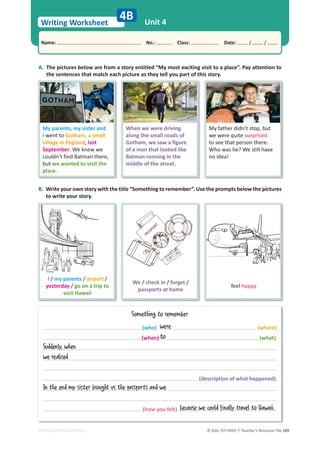
-
Diversos
itens
gramaticais
abordados
no
2.º
Ciclo
(revisão)
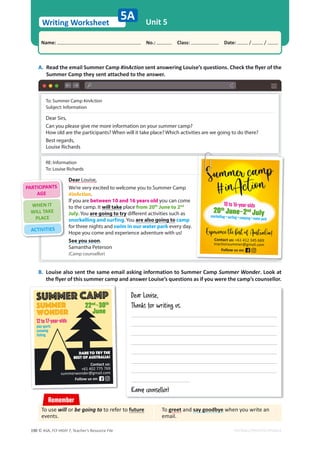

Personal
pronouns
/
possessive
determiners

Present
simple:
verb
to
be

Present
simple:
verb
have
got

Possessive
pronouns
-
Present
simple
-
Adverbs
of
frequency
EDITABLE/PHOTOCOPIABLE ©ASA, FLY HIGH 7, Teacher’s Resource File 69
Aprendizagens
Essenciais
Domínios
Áreas
temáticas/situacionais
Grammar
Ações
estratégicas
de
ensino
orientadas
para
o
Perfil
dos
Alunos
Descritores
do
Perfil
dos
Alunos
Recursos
Avaliação

Comparar
tipos
de
habitação,
eventos
escolares
e
festividades;

Descrever
imagens,
locais,
atividades
e
acontecimentos.
Produção
escrita

Escrever
sobre
pessoas,
objetos
e
rotinas;
escrever
diálogos
com
encadeamento
lógico;
descrever
planos
para
o
futuro.
Competência
intercultural

Reconhecer
realidades
interculturais
distintas;

Conhecer,
com
algum
pormenor,
o
seu
meio
e
identidade;

Estabelecer
comparações
entre
as
suas
vivências
e
as
dos
outros;

Falar
sobre
atividades
de
lazer
do
seu
meio
cultural
por
oposição
a
outras
culturas,
incluindo
a
anglo-
-saxónica;

Reconhecer,
compreender
e
explicar
exemplos
concretos
de
atitudes
de
tolerância
e
respeito
intercultural.

Reconhecer
a
diferença
entre
Grã-
-Bretanha
e
Reino
Unido
e
identificar
a
constituição
do
Reino
Unido;

Identificar
alguns
estados
e
cidades
importantes
nos
Estados
Unidos
da
América
e
alguns
países
da
União
Europeia;

Comparar
agregados
familiares,
tipos
de
habitação
e
festividades
em
diferentes
países.
Unit
2
–
No
place
like
home!
Subunit
2.1
–
Get
it
done!
ƒ
Situações
quotidianas
/
hábitos
e
rotinas
-
Household
chores
Subunit
2.2
–
Home
alone!
ƒ
Tipos
de
habitação
-
Types
of
houses
-
Rooms
and
parts
of
the
house
Subunit
2.3
–
Zoom
in
your
room!
ƒ
Situações
quotidianas
/
hábitos
e
rotinas
-
Furniture
ƒ
The
USA
ƒ
Celebrating…
Christmas
ƒ
Celebrating…
Days
worth
noticing!
-
Present
continuous
-
Present
simple
and
present
continuous
-
Plural
of
nouns
-
Personal
pronouns
–
object
-
Prepositions
of
place
-
Word
formation
o
criação
de
um
objeto,
texto
ou
solução
face
a
um
desafio;
o
análise
de
textos
ou
outros
suportes
com
diferentes
pontos
de
vista,
sustentando
um
ponto
de
vista
próprio;
o
uso
de
modalidades
diversas
para
expressar
as
aprendizagens
(por
exemplo,
imagens,
esquemas);
o
criação
de
soluções
estéticas
criativas
e
pessoais.

Promover
estratégias
que
desenvolvam
o
pensamento
crítico
e
analítico,
incidindo
em:
o
expressão
de
uma
tomada
de
posição
ou
de
um
pensamento
e
apresentação
de
argumentos
e
contra-
-argumentos;
o
discussão
de
conceitos
ou
factos
numa
perspetiva
disciplinar
e
interdisciplinar;
o
análise
de
textos
com
diferentes
pontos
de
vista;
o
confronto
de
argumentos
para
encontrar
semelhanças,
diferenças,
consistência
interna.

Promover
estratégias
que
envolvam
por
parte
do
aluno:
o
tarefas
de
pesquisa
sustentada
por
critérios,
com
autonomia
progressiva;
o
incentivo
à
procura
e
aprofundamento
de
informação;
Questionador
(A,
F,
G,
I,
J)
Comunicador
(A,
B,
D,
E,
H)
Autoavaliador
(transversal
às
áreas)
Participativo/
Colaborador
(B,
C,
D,
E,
F)
Responsável/
Autónomo
(C,
D,
E,
F,
G,
I,
J)
Cuidador
de
si
e
do
outro
(B,
E,
F,
G)
o
Games
section
(Songs
and
films
that
teach;
Mad
Libs,
Games
to
practice
vovabulary
and
grammar)
o
Assessment
(get
ready
for
the
tests;
listening
tests,
progress
tests,
speaking
tests,
Extensive
reading
test
minitests)
o
Cross-curricular
projects
-
English
for
all
-
Speaking
cards
-
Flashcards
-
Posters
-
Stickers
-
Fun
Pack:
Stop!;
Party

Fly;
Around
the
World
in
Much
Less
Than
80
Days
•
Interactive
vocabulary
bank
•
Interactive
board
game
•
Apresentações
PowerPoint®
•
Links
•
Vídeos
Desenvolvimento
e
apresentação
de
projetos
interdisciplinares
Autoavaliação
2.
o
semestre
(33
aulas)
Unit
3
–
School
mood
Subunit
3.1
–
My
school
rocks!
ƒ
Atividades
escolares
-
School
subjects
-
After-school
clubs
Subunit
3.2
–
School:
the
Chamber
of
Secrets
ƒ
Situações
quotidianas
/
hábitos
e
rotinas
-
School
facilities/rooms
ƒ
The
UK

Past
simple:
verb
to
be

Connectors


Past
simple:
regular
verbs
70 ©ASA, FLY HIGH 7, Teacher’s Resource File EDITABLE/PHOTOCOPIABLE
Aprendizagens
Essenciais
Domínios
Áreas
temáticas/situacionais
Grammar
Ações
estratégicas
de
ensino
orientadas
para
o
Perfil
dos
Alunos
Descritores
do
Perfil
dos
Alunos
Recursos
Avaliação
Competência
estratégica
Comunicar
eficazmente
em
contexto

Reconhecer
diferentes
estratégias
de
comunicação
nas
fases
de
planificação,
realização
e
avaliação
das
atividades
comunicativas
e
escolher
a
mais
apropriada;

Preparar,
repetir
e
memorizar
uma
apresentação
oral
com
confiança
e
criatividade,
à
turma
e/ou
a
outros
elementos
da
comunidade
educativa;

Responder
com
segurança
e
certeza
a
perguntas
colocadas;

Participar
em
atividades
de
pares
e
grupos,
revelando
capacidade
para
se
colocar
na
posição
do
outro;
pedir
e
dar
informações;

Planear,
organizar
e
apresentar
uma
tarefa
de
pares
ou
um
trabalho
de
grupo,
minimizando
possíveis
diferenças
e
discordâncias.
Trabalhar
e
colaborar
em
pares
e
pequenos
grupos

Participar
em
atividades
de
pares
e
grupos
para
atingir
um
objetivo
a
curto
prazo,
revelando
capacidade
para
se
colocar
na
posição
do
outro;
planear,
organizar
e
apresentar
uma
tarefa
de
pares
ou
um
trabalho
de
grupo,
partilhando
tarefas
e
responsabilidades.
Utilizar
a
literacia
tecnológica
para
comunicar
e
aceder
ao
saber
em
contexto

Comunicar
com
outros
a
uma
escala
local,
nacional
e
internacional;
pedir
e
dar
informações
por
email;
Subunit
3.3
–
What
happens
at
school…
ƒ
Eventos
escolares
/
festividades
-
School
events
ƒ
Celebrating
Valentine’s
Day
ƒ
Celebrating…
Days
worth
noticing!
Unit
4
–
City
lights
Subunit
4.1
–
Rolling
on
the
city!
ƒ
Serviços
-
City
places
-
City
activities
ƒ
Canada
Subunit
4.2
–
Check
the
price
tag!
ƒ
Situações
quotidianas
/
Serviços
-
Shops
Subunit
4.3
–
Where
to
next?
ƒ
Situações
quotidianas
-
City
features
ƒ
Celebrating…
Days
worth
noticing!


Past
simple:
irregular
verbs
-
Past
continuous
-
Past
simple
and
past
continuous
-
Modal
verbs
-
The
imperative
-
Prepositions
of
movement
o
recolha
de
dados
e
opiniões
para
análise
de
temáticas.

Promover
estratégias
que
requeiram/induzam
por
parte
do
aluno:
o
aceitação
de
pontos
de
vista
diferentes;
o
estratégias
que
induzam
respeito
por
diferenças
de
características,
crenças
ou
opiniões;
o
confronto
de
ideias
e
perspetivas
distintas
sobre
a
abordagem
de
um
dado
problema
e
ou
maneira
de
o
resolver,
tendo
em
conta,
por
exemplo,
diferentes
perspetivas
culturais,
sejam
de
incidência
local,
nacional
ou
global.

Promover
estratégias
que
envolvam
por
parte
do
aluno:
o
tarefas
de
síntese;
o
tarefas
de
planificação,
de
revisão
e
de
monitorização;
o
registo
seletivo;
o
organização
de
conteúdos
(construção
de
sumários,
registos
de
observações,
relatórios
de
visitas
segundo
critérios
e
objetivos);
o
promoção
do
estudo
autónomo
com
o
apoio
do
professor
à
sua
concretização,
identificando
quais
os
obstáculos
e
formas
de
os
ultrapassar.
•
Karaokes
•
Animações
de
textos
•
Animações
de
gramática
•
Atividades
interativas
de
gramática
•
Quizzes
interativos
•
Testes
interativos
•
Flashcards
interativos
•
Timer
•
Random
number
generator
•
Recorder
•
Interactive
dice
-
Manual
interativo
-
Quadro
-
Computador
-
Projetor
multimédia
EDITABLE/PHOTOCOPIABLE ©ASA, FLY HIGH 7, Teacher’s Resource File 71
Aprendizagens
Essenciais
Domínios
Áreas
temáticas/situacionais
Grammar
Ações
estratégicas
de
ensino
orientadas
para
o
Perfil
dos
Alunos
Descritores
do
Perfil
dos
Alunos
Recursos
Avaliação

Contribuir
para
projetos
e
tarefas
de
grupo
interdisciplinares
que
se
apliquem
ao
contexto
e
experiências
reais
e
quotidianas
do
aluno;

Participar
num
WebQuest
e
aceder
ao
saber,
recorrendo
a
aplicações
informáticas
online.
Pensar
criticamente

Desenvolver
a
empatia
com
o
outro
de
forma
a
adquirir
atitudes
mais
tolerantes,
reconhecendo
e
respeitando
piniões
divergentes
de
modo
a
realizar
novas
aprendizagens;

Ouvir
atentamente,
compreender
o
outro
e
refletir
criticamente
sobre
o
que
foi
dito,
dando
razões
para
justificar
as
suas
conclusões,
associando
aprendizagens
novas
a
anteriores.
Relacionar
conhecimentos
de
forma
a
desenvolver
criatividade
em
contexto

Pesquisar
novas
ideias
e
reinterpretar
ideias
existentes
de
modo
a
criar
produtos
adequados
à
sua
realidade
cultural
e
quotidiana;

Participar
em
atividades
diferenciadas
e
de
natureza
diversa;

Desenvolver
a
literacia
em
língua
inglesa,
lendo
diferentes
tipos
de
textos
e
adaptações
de
leitura
extensiva;

Desenvolver
e
participar
em
projetos
e
atividades
interdisciplinares.
Unit
5
–
On
the
move!
Subunit
5.1
–
Enjoy
the
game
ƒ
Atividades
de
lazer
-
Sports
-
Free
time
activities
ƒ
Situações
quotidianas
ƒ
Planos
para
o
futuro
Subunit
5.2
–
The
best
summer
ever
ƒ
Atividades
de
lazer
-
Summer
activities
ƒ
(Republic
of)
Ireland
ƒ
Celebrating…
Days
worth
noticing!
Extensive
Reading
-
Around
the
World
in
Eighty
Days
–
The
Diary
of
Phileas
Fogg
(adapted
from
the
book
by
Jules
Verne)
-
Future:
will
+
infinitive
-
If-clauses:
zero
conditional
-
If-clauses:
first
conditional
-
Phrasal
verbs
-
Future
forms:
will
+
infinitive,
be
going
to,
present
continuous
-
Indefinite
pronouns

Promover
estratégias
que
impliquem
por
parte
do
aluno:
o
questionamento
de
uma
situação;
o
organização
de
questões
para
terceiros,
sobre
conteúdos
estudados
ou
a
estudar;
o
autoavaliação.

Promover
estratégias
que
impliquem
por
parte
do
aluno:
o
ações
de
comunicação
unidirecional
e
bidirecional;
o
ações
de
resposta,
apresentação
e
iniciativa.

Promover
estratégias
envolvendo
tarefas
em
que
se
oriente
o
aluno
para:
o
autoanálise;
o
identificação
de
pontos
fracos
e
fortes
das
suas
aprendizagens;
o
descrição
de
processos
de
pensamento
usados
durante
a
realização
de
uma
tarefa
ou
abordagem
de
um
problema;
o
melhoria
ou
aprofundamento
dos
saberes,
a
partir
do
feedback
dos
pares;
o
reorientação
do
trabalho,
individualmente
ou
em
grupo,
a
partir
do
feedback
do
professor.

Promover
estratégias
que
criem
oportunidades
para
o
aluno
de:
o
colaboração
com
os
outros,
apoio
a
terceiros
em
tarefas;
72 ©ASA, FLY HIGH 7, Teacher’s Resource File EDITABLE/PHOTOCOPIABLE
Aprendizagens
Essenciais
Domínios
Áreas
temáticas/situacionais
Grammar
Ações
estratégicas
de
ensino
orientadas
para
o
Perfil
dos
Alunos
Descritores
do
Perfil
dos
Alunos
Recursos
Avaliação
Desenvolver
o
aprender
a
aprender
em
contexto
e
aprender
a
regular
o
processo
de
aprendizagem

Discutir
e
selecionar
objetivos
de
aprendizagem
comuns
e
individuais
e
desenvolver
uma
atitude
ativa
e
confiante
relativamente
à
aprendizagem;

Monitorizar/avaliar
progressos
e
dificuldades
na
língua
inglesa,
registando
as
suas
aquisições
e
dificuldades
linguísticas;

Selecionar,
com
o
apoio
do
professor,
estratégias
de
aprendizagem
eficazes
para
superar
estas
dificuldades
e
consolidar
as
aprendizagens;

Utilizar
dicionários
bilingues
e
monolingues
(online
e
em
suporte
de
papel);

Utilizar
conhecimentos
prévios
da
língua
e
a
sua
experiência
pessoal
para
fazer
previsões
de
sentido
e
comunicar
de
forma
simples;

Participar
numa
reflexão
e
discussão
no
final
da
aula
para
identificar
atividades
associadas
aos
objetivos
de
aprendizagem
e
ao
cumprimento
dos
mesmos;

Reconhecer
diferentes
estratégias
de
aprendizagem;

Realizar
atividades
simples
de
auto
e
heteroavaliação:
portefólios,
diários
de
aprendizagem
e
grelhas
de
progressão.
o
melhoria
ou
aprofundamento
de
ações,
a
partir
do
feedback
dispensado;
o
realização
de
e
apoio
a
trabalhos
de
grupo.

Promover
estratégias
e
modos
de
organização
das
tarefas
que
impliquem
por
parte
do
aluno:
o
consciencialização
de
responsabilidades
adequadas
ao
que
lhe
for
pedido;
o
organização
e
realização
autónoma
de
tarefas;
o
cumprimento
de
compromissos
e
contratualização
de
tarefas;
o
apresentação
de
trabalhos
com
auto
e
heteroavaliação.

Promover
estratégias
que
induzam:
o
ações
solidárias
para
com
outros
nas
tarefas
de
aprendizagem
ou
na
sua
organização;
o
posicionamento
perante
situações
dilemáticas
de
ajuda
a
outros
e
de
proteção
de
si;
o
disponibilidade
para
o
autoaperfeiçoamento.
EDITABLE/PHOTOCOPIABLE ©ASA, FLY HIGH 7, Teacher’s Resource File 73
Fly
High
7
Escola
___________________________________________________________________________________
Disciplina:
Inglês
Ano:
7.
o
(Nível
A2.1/A2.2)
Ano
letivo:
_______________
YEAR/SEMESTER
PLAN
–
3
WEEKLY
LESSONS
Aprendizagens
Essenciais
Domínios
Áreas
temáticas/situacionais
Grammar
Ações
estratégicas
de
ensino
orientadas
para
o
Perfil
dos
Alunos
Descritores
do
Perfil
dos
Alunos
Recursos
Avaliação
Competência
comunicativa
Compreensão
oral

Seguir
instruções
detalhadas
dadas
pelo
professor;

Identificar
o
conteúdo
principal
do
que
se
ouve
e
vê,
os
intervenientes
e
a
sequência
do
discurso
assim
como
informações
específicas.
Compreensão
escrita

Compreender
textos
narrativos
sobre
temas
abordados
no
domínio
intercultural;
identificar
informação
essencial
em
textos
adaptados
de
jornais
e
revistas;
ler
pequenos
textos
adaptados
de
leitura
extensiva.
Interação
oral

Entender
e
trocar
ideias
em
situações
quotidianas
previsíveis;
iniciar,
manter
ou
terminar
uma
conversa
breve.
Interação
escrita

Interagir
de
forma
simples,
completando
formulários,
mensagens
e
textos
curtos.
Produção
oral

Falar
sobre
os
temas
explorados:
atividades
escolares
e
de
lazer,
situações
quotidianas,
serviços,
planos
para
o
futuro,
hábitos
e
rotinas;
1.
o
semestre
(50
aulas)

Promover
estratégias
de
aquisição
de
conhecimento,
informação
e
outros
saberes,
relativos
aos
conteúdos
das
AE,
que
impliquem:
o
rigor,
articulação
e
uso
consistente
de
conhecimentos;
o
seleção
de
informação
pertinente;
o
organização
sistematizada
da
leitura
e
do
estudo
progressivamente
autónomo;
o
análise
de
factos
e
situações,
identificando
os
seus
elementos
ou
dados;
o
tarefas
de
memorização,
verificação
e
consolidação,
associadas
à
compreensão
e
ao
uso
do
saber;
o
relações
de
conteúdos
intradisciplinares
e
interdisciplinares;

Promover
estratégias
que
envolvam
a
criatividade
dos
alunos:
o
formulação
de
hipóteses
face
a
um
fenómeno
ou
evento;
o
apresentação
de
alternativas
a
uma
forma
tradicional
de
abordar
uma
situação-
-problema;
Conhecedor/
Sabedor/Culto/
Informado
(A,
B,
G,
I,
J)
Criativo
(A,
C,
D,
J)
Crítico/
Analítico
(A,
B,
C,
D,
G)
Indagador/
Investigador
(C,
D,
F,
H,
I)
Respeitador
da
diferença/do
outro
(A,
B,
E,
F,
H)
Sistematizador
/Organizador
(A,
B,
C,
I,
J)
Questionador
(A,
F,
G,
I,
J)
Comunicador
(A,
B,
D,
E,
H)
-
Coursebook
-
Vocabulary
notes
-
Grammar
notes
-
Celebrations
-
Extensive
Reading
-
Workbook
o
Vocabulary
o
Grammar
o
Writing
o
Tests
o
Top
speaker
o
Fun
activities
o
Last
minute
-
Instafly
-
CD
(1-5)
-
Teacher's
Resource
File
o
Review
worksheets
o
Study
tips
o
“Apoio
ao
estudo”
worksheets
o
Focus
on
skills
worksheets
(reading,
listening,
writing,
speaking,
vocabulary;
grammar)
Avaliação
de
diagnóstico
Observação
direta:
-
participação
-
interesse
-
envolvimento
nas
atividades
da
aula
-
uso
da
língua
inglesa
em
contexto
de
sala
de
aula
-
trabalho
de
casa
-
pontualidade
-
assiduidade
Avaliação
formativa
Avaliação
sumativa:
-
testes
de
compreensão
oral
-
testes
escritos
-
avaliação
formal
da
produção
e
de
interação
oral
-
leitura
Unit
0
–
Getting
started
Getting
to
know
the
British
Isles
-
The
UK
vs.
Great
Britain
Situações
quotidianas
Getting
to
know
you
-
Vocabulary
(revision)
Unit
1
–
Just
the
way
you
are
Subunit
1.1
–
Away
we
go…
ƒ
Situações
quotidianas
/
atividades
de
lazer
-
Countries
and
nationalities
-
Personal
ID
ƒ
Australia
Subunit
1.2
–
We
are
family
ƒ
Situações
quotidianas
-
Family
members
-
Physical
description
Subunit
1.3
–
My
day,
my
way!
ƒ
Situações
quotidianas
-
Daily
routine
activities
-
Telling
the
time
ƒ
Celebrating…
Halloween/
Thanksgiving
-
Diversos
itens
gramaticais
abordados
no
2.º
Ciclo
(revisão)
-
Personal
pronouns
/
possessive
determiners
-
Present
simple:
verb
to
be
-
Present
simple:
verb
have
got
-
Possessive
pronouns
-
Present
simple
-
Adverbs
of
frequency
74 ©ASA, FLY HIGH 7, Teacher’s Resource File EDITABLE/PHOTOCOPIABLE
Aprendizagens
Essenciais
Domínios
Áreas
temáticas/situacionais
Grammar
Ações
estratégicas
de
ensino
orientadas
para
o
Perfil
dos
Alunos
Descritores
do
Perfil
dos
Alunos
Recursos
Avaliação

Comparar
tipos
de
habitação,
eventos
escolares
e
festividades;

Descrever
imagens,
locais,
atividades
e
acontecimentos.
Produção
escrita

Escrever
sobre
pessoas,
objetos
e
rotinas;
escrever
diálogos
com
encadeamento
lógico;
descrever
planos
para
o
futuro.
Competência
intercultural

Reconhecer
realidades
interculturais
distintas

Conhecer,
com
algum
pormenor,
o
seu
meio
e
identidade;

Estabelecer
comparações
entre
as
suas
vivências
e
as
dos
outros;

Falar
sobre
atividades
de
lazer
do
seu
meio
cultural
por
oposição
a
outras
culturas,
incluindo
a
anglo-
-saxónica;

Reconhecer,
compreender
e
explicar
exemplos
concretos
de
atitudes
de
tolerância
e
respeito
intercultural.

Reconhecer
a
diferença
entre
Grã-
-Bretanha
e
Reino
Unido
e
identificar
a
constituição
do
Reino
Unido;

Identificar
alguns
estados
e
cidades
importantes
nos
Estados
Unidos
da
América
e
alguns
países
da
União
Europeia;

Comparar
agregados
familiares,
tipos
de
habitação
e
festividades
em
diferentes
países.
Unit
2
–
No
place
like
home!
Subunit
2.1
–
Get
it
done!
ƒ
Situações
quotidianas
/
hábitos
e
rotinas
-
Household
chores
Subunit
2.2
–
Home
alone!
ƒ
Tipos
de
habitação
-
Types
of
houses
-
Rooms
and
parts
of
the
house
Subunit
2.3
–
Zoom
in
your
room!
ƒ
Situações
quotidianas
/
hábitos
e
rotinas
-
Furniture
ƒ
The
USA
ƒ
Celebrating…
Christmas
ƒ
Celebrating…
Days
worth
noticing!
-
Present
continuous
-
Present
simple
and
present
continuous
-
Plural
of
nouns
-
Personal
pronouns
–
object
-
Prepositions
of
place
-
Word
formation
o
criação
de
um
objeto,
texto
ou
solução
face
a
um
desafio;
o
análise
de
textos
ou
outros
suportes
com
diferentes
pontos
de
vista,
concebendo
um
ponto
de
vista
próprio;
o
uso
de
modalidades
diversas
para
expressar
as
aprendizagens
(por
exemplo,
imagens,
esquemas);
o
criação
de
soluções
estéticas
criativas
e
pessoais.

Promover
estratégias
que
desenvolvam
o
pensamento
crítico
e
analítico
dos
alunos,
incidindo
em:
o
expressão
de
uma
tomada
de
posição
e
apresentação
de
argumentos
e
contra-
-argumentos;
o
discussão
de
conceitos
ou
factos
numa
perspetiva
disciplinar
e
interdisciplinar;
o
análise
de
textos
com
diferentes
pontos
de
vista;
o
confronto
de
argumentos
para
encontrar
semelhanças,
diferenças,
consistência
interna.

Promover
estratégias
que
envolvam
por
parte
do
aluno:
o
tarefas
de
pesquisa
sustentada
por
critérios,
com
autonomia
progressiva;
o
incentivo
à
procura
e
aprofundamento
de
informação;
Autoavaliador
(transversal
às
áreas)
Participativo/
Colaborador
(B,
C,
D,
E,
F)
Responsável/
Autónomo
(C,
D,
E,
F,
G,
I,
J)
Cuidador
de
si
e
do
outro
(B,
E,
F,
G)
o
Games
section
(Songs
and
films
that
teach;
Mad
Libs,
Games
to
practice
vovabulary
and
grammar)
o
Assessment
(get
ready
for
the
tests;
listening
tests,
progress
tests,
speaking
tests,
Extensive
reading
test
minitests)
o
Cross-curricular
projects
-
English
for
all
-
Speaking
cards
-
Flashcards
-
Posters
-
Stickers
-
Fun
Pack:
Stop!;
Party

Fly;
Around
the
World
in
Much
Less
Than
80
Days
-
•
Interactive
vocabulary
bank
•
Interactive
board
game
•
Apresentações
PowerPoint®
•
Links
•
Vídeos
Desenvolvimento
e
apresentação
de
projetos
interdisciplinares
Autoavaliação
2.º
semestre
–
50
aulas
Unit
3
–
School
mood
Subunit
3.1
–
My
school
rocks!
ƒ
Atividades
escolares
-
School
subjects
-
After-school
clubs
Subunit
3.2
–
School:
the
Chamber
of
Secrets
ƒ
Situações
quotidianas
/
hábitos
e
rotinas
-
School
facilities/rooms
ƒ
The
UK

Past
simple:
verb
to
be

Connectors
-
Past
simple:
regular
verbs
EDITABLE/PHOTOCOPIABLE ©ASA, FLY HIGH 7, Teacher’s Resource File 75
Aprendizagens
Essenciais
Domínios
Áreas
temáticas/situacionais
Grammar
Ações
estratégicas
de
ensino
orientadas
para
o
Perfil
dos
Alunos
Descritores
do
Perfil
dos
Alunos
Recursos
Avaliação
Competência
estratégica
Comunicar
eficazmente
em
contexto

Reconhecer
diferentes
estratégias
de
comunicação
nas
fases
de
planificação,
realização
e
avaliação
das
atividades
comunicativas
e
escolher
a
mais
apropriada;

Preparar,
repetir
e
memorizar
uma
apresentação
oral
com
confiança
e
criatividade,
à
turma
e/ou
a
outros
elementos
da
comunidade
educativa;

Responder
com
segurança
e
certeza
a
perguntas
colocadas;

Participar
em
atividades
de
pares
e
grupos,
revelando
capacidade
para
se
colocar
na
posição
do
outro;
pedir
e
dar
informações;

Planear,
organizar
e
apresentar
uma
tarefa
de
pares
ou
um
trabalho
de
grupo,
minimizando
possíveis
diferenças
e
discordâncias.
Trabalhar
e
colaborar
em
pares
e
pequenos
grupos

Participar
em
atividades
de
pares
e
grupos
para
atingir
um
objetivo
a
curto
prazo,
revelando
capacidade
para
se
colocar
na
posição
do
outro;
planear,
organizar
e
apresentar
uma
tarefa
de
pares
ou
um
trabalho
de
grupo,
partilhando
tarefas
e
responsabilidades.
Utilizar
a
literacia
tecnológica
para
comunicar
e
aceder
ao
saber
em
contexto

Comunicar
com
outros
a
uma
escala
local,
nacional
e
internacional;
pedir
e
dar
informações
por
email;
Subunit
3.3
–
What
happens
at
school…
ƒ
Eventos
escolares
/
festividades
-
School
events
ƒ
Celebrating…
Valentine’s
Day
ƒ
Celebrating…
Days
worth
noticing!
Unit
4
–
City
lights
Subunit
4.1
–
Rolling
on
the
city!
ƒ
Serviços
-
City
places
-
City
activities
ƒ
Canada
Subunit
4.2
–
Check
the
price
tag!
ƒ
Situações
quotidianas
/
Serviços
-
Shops
Subunit
4.3
–
Where
to
next?
ƒ
Situações
quotidianas
-
City
features
ƒ
Celebrating…
Days
worth
noticing!
-
Past
simple:
irregular
verbs
-
Past
continuous
-
Past
simple
and
past
continuous
-
Modal
verbs
-
The
imperative
-
Prepositions
of
movement
o
recolha
de
dados
e
opiniões
para
análise
de
temáticas
em
estudo.

Promover
estratégias
que
requeiram/induzam
por
parte
do
aluno:
o
aceitação
de
pontos
de
vista
diferentes;
o
estratégias
que
induzam
respeito
por
diferenças
de
características,
crenças
ou
opiniões;
o
confronto
de
ideias
e
perspetivas
distintas
sobre
a
abordagem
de
um
dado
problema
e
ou
maneira
de
o
resolver,
tendo
em
conta,
por
exemplo,
diferentes
perspetivas
culturais,
sejam
de
incidência
local,
nacional
ou
global.

Promover
estratégias
que
envolvam
por
parte
do
aluno:
o
tarefas
de
síntese;
o
tarefas
de
planificação,
de
revisão
e
de
monitorização;
o
registo
seletivo;
o
organização
de
conteúdos
(por
exemplo,
construção
de
sumários,
registos
de
observações,
relatórios
de
visitas
segundo
critérios
e
objetivos);
o
promoção
do
estudo
autónomo
com
o
apoio
do
professor
à
sua
concretização,
identificando
•
Karaokes
•
Animações
de
textos
•
Animações
de
gramática
•
Atividades
interativas
de
gramática
•
Quizzes
interativos
•
Testes
interativos
•
Flashcards
interativos
•
Timer
•
Random
number
generator
•
Recorder
•
Interactive
dice
-
Manual
interativo
-
Quadro
-
Computador
-
Projetor
multimédia
76 ©ASA, FLY HIGH 7, Teacher’s Resource File EDITABLE/PHOTOCOPIABLE
Aprendizagens
Essenciais
Domínios
Áreas
temáticas/situacionais
Grammar
Ações
estratégicas
de
ensino
orientadas
para
o
Perfil
dos
Alunos
Descritores
do
Perfil
dos
Alunos
Recursos
Avaliação

Contribuir
para
projetos
e
tarefas
de
grupo
interdisciplinares
que
se
apliquem
ao
contexto
e
experiências
reais
e
quotidianas
do
aluno;

Participar
num
WebQuest
e
aceder
ao
saber,
recorrendo
a
aplicações
informáticas
online.
Pensar
criticamente

Desenvolver
a
empatia
com
o
outro
de
forma
a
adquirir
atitudes
mais
tolerantes,
reconhecendo
e
respeitando
opiniões
divergentes
de
modo
a
realizar
novas
aprendizagens;

Ouvir
atentamente,
compreender
o
outro
e
refletir
criticamente
sobre
o
que
foi
dito,
dando
razões
para
justificar
as
suas
conclusões,
associando
aprendizagens
novas
a
anteriores.
Relacionar
conhecimentos
de
forma
a
desenvolver
criatividade
em
contexto

Pesquisar
novas
ideias
e
reinterpretar
ideias
existentes
de
modo
a
criar
produtos
adequados
à
sua
realidade
cultural
e
quotidiana;

Participar
em
atividades
diferenciadas
e
de
natureza
diversa;

Desenvolver
a
literacia
em
língua
inglesa,
lendo
diferentes
tipos
de
textos
e
adaptações
de
leitura
extensiva;

Desenvolver
e
participar
em
projetos
e
atividades
interdisciplinares.
Unit
5
–
On
the
move!
Subunit
5.1
–
Enjoy
the
game
ƒ
Atividades
de
lazer
-
Sports
-
Free
time
activities
ƒ
Situações
quotidianas
ƒ
Planos
para
o
futuro
Subunit
5.2
–
The
best
summer
ever
ƒ
Atividades
de
lazer
-
Summer
activities
ƒ
(Republic
of)
Ireland
ƒ
Celebrating…
Days
worth
noticing!
Extensive
Reading
-
Around
the
World
in
Eighty
Days
–
The
Diary
of
Phileas
Fogg
(adapted
from
the
book
by
Jules
Verne)
-
Future:
will
+
infinitive
-
If-clauses:
zero
conditional
-
If-clauses:
first
conditional
-
Phrasal
verbs
-
Future
forms:
will
+
infinitive,
be
going
to,
present
continuous
-
Indefinite
pronouns
quais
os
obstáculos
e
formas
de
os
ultrapassar.

Promover
estratégias
que
impliquem
por
parte
do
aluno:
o
questionamento
de
uma
situação;
o
organização
de
questões
para
terceiros,
sobre
conteúdos
estudados
ou
a
estudar;
o
autoavaliação.

Promover
estratégias
que
impliquem
por
parte
do
aluno:
o
ações
de
comunicação
unidirecional
e
bidirecional;
o
ações
de
resposta,
apresentação
e
iniciativa.

Promover
estratégias
envolvendo
tarefas
em
que,
com
base
em
critérios,
se
oriente
o
aluno
para:
o
autoanálise;
o
identificação
de
pontos
fracos
e
fortes
das
suas
aprendizagens;
o
descrição
de
processos
de
pensamento
usados
durante
a
realização
de
uma
tarefa
ou
abordagem
de
um
problema;
o
melhoria
ou
aprofundamento
dos
saberes,
a
partir
do
feedback
dos
pares;
o
reorientação
do
trabalho,
individualmente
ou
em
grupo,
a
partir
do
feedback
do
professor.
EDITABLE/PHOTOCOPIABLE ©ASA, FLY HIGH 7, Teacher’s Resource File 77
Aprendizagens
Essenciais
Domínios
Áreas
temáticas/situacionais
Grammar
Ações
estratégicas
de
ensino
orientadas
para
o
Perfil
dos
Alunos
Descritores
do
Perfil
dos
Alunos
Recursos
Avaliação
Desenvolver
o
aprender
a
aprender
em
contexto
e
aprender
a
regular
o
processo
de
aprendizagem

Discutir
e
selecionar
objetivos
de
aprendizagem
comuns
e
individuais
e
desenvolver
uma
atitude
ativa
e
confiante
relativamente
à
aprendizagem;

Monitorizar/avaliar
progressos
e
dificuldades
na
língua
inglesa,
registando
as
suas
aquisições
e
dificuldades
linguísticas;

Selecionar,
com
o
apoio
do
professor,
estratégias
de
aprendizagem
eficazes
para
superar
estas
dificuldades
e
consolidar
as
aprendizagens;

Utilizar
dicionários
bilingues
e
monolingues
(online
e
em
suporte
de
papel);

Utilizar
conhecimentos
prévios
da
língua
e
a
sua
experiência
pessoal
para
fazer
previsões
de
sentido
e
comunicar
de
forma
simples;

Participar
numa
reflexão
e
discussão
no
final
da
aula
para
identificar
atividades
associadas
aos
objetivos
de
aprendizagem
e
ao
cumprimento
dos
mesmos;

Reconhecer
diferentes
estratégias
de
aprendizagem;

Realizar
atividades
simples
de
auto
e
heteroavaliação:
portefólios,
diários
de
aprendizagem
e
grelhas
de
progressão.

Promover
estratégias
que
criem
oportunidades
para
o
aluno
de:
o
colaboração
com
os
outros,
apoio
a
terceiros
em
tarefas;
o
melhoria
ou
aprofundamento
de
ações,
a
partir
do
feedback
dispensado;
o
realização
de
e
apoio
a
trabalhos
de
grupo.

Promover
estratégias
e
modos
de
organização
das
tarefas
que
impliquem
por
parte
do
aluno:
o
consciencialização
de
responsabilidades
adequadas
ao
que
lhe
for
pedido;
o
organização
e
realização
autónoma
de
tarefas;
o
cumprimento
de
compromissos
e
contratualização
de
tarefas;
o
apresentação
de
trabalhos
com
auto
e
heteroavaliação.

Promover
estratégias
que
induzam:
o
ações
solidárias
para
com
outros
nas
tarefas
de
aprendizagem
ou
na
sua
organização;
o
posicionamento
perante
situações
dilemáticas
de
ajuda
a
outros
e
de
proteção
de
si;
o
disponibilidade
para
o
autoaperfeiçoamento.
78 ©ASA, FLY HIGH 7, Teacher’s Resource File EDITABLE/PHOTOCOPIABLE
Lesson
Plan
|
Unit
0
•
Unit
0
–
Getting
started
(pp.
8-11)
Vocabulary
and
grammar
review
CLASS:
7
th
_____
____
/
____/____
SCHOOL
YEAR:
___________
LESSONS
No.
___________
DATE:
__________________
CLASSES:
6
Summary:
English-speaking
countries:
getting
to
know
the
British
Isles.
WebQuest
and
quiz
–
the
UK
and
Great
Britain.
Question
words
and
personal
information:
listening,
writing
and
speaking.
Vocabulary
quiz:
clothes;
food;
jobs;
means
of
transport;
body,
sports;
free
time
activities;
personality.
Grammar
quiz:
verb
have
got;
verb
to
be;
comparative
and
superlative;
reflexive
pronouns;
question
words;
prepositions
of
movement.
Contents
/
Topics
Aprendizagens
Essenciais
Procedure
Aids
–
Resources
Evaluation
Lexis
and
Grammar
-
Vocabulary
and
grammar
review
Competência
comunicativa
Compreensão
oral

Identificar
o
conteúdo
principal
do
que
se
ouve,
os
intervenientes
e
a
sequência
do
discurso,
assim
como
informações
específicas.
Interação
oral

Entender
e
trocar
ideias
em
situações
quotidianas
previsíveis.
Competência
intercultural

Conhecer,
com
algum
pormenor,
o
seu
meio
e
identidade;

Reconhecer
a
diferença
entre
Grã-
-Bretanha
e
Reino
Unido
e
identificar
a
constituição
do
Reino
Unido.
Competência
estratégica

Reconhecer
diferentes
estratégias
de
comunicação;

Participar
num
WebQuest
e
aceder
ao
saber,
recorrendo
a
aplicações
informáticas
online.
1.
English-speaking
countries:
exercises
A
and
B:
label
a
map
with
the
English-speaking
countries
(British
Isles),
their
capitals
and
landmarks.
Checking
the
answers.
2.
Doing
a
WebQuest
and
a
quiz
about
the
United
Kingdom
and
Great
Britain.
*3.
The
teacher
may
use
the
map
on
page
8
to
show
the
students
other
British
landmarks
and
help
them
do
exercise
B.
4.
Personal
information:
exercises
A,
B,
C
and
D;
checking
the
answers.
5.
Listening
to
a
dialogue
to
complete
an
ID
card.
*6.
Showing
a
poster
with
numbers
and
dates.
7.
Watching
the
video
Strangers
Things
cast
answer
the
web's
most
searched
questions
(personal
information).
8.
Completing
sentences
with
question
words
(exercise
B).
Checking
the
answers.
9.
Completing
one’s
ID
card
(exercise
C).
10.
Speaking:
asking
and
answering
about
one’s
ID
(exercise
D).
11.
Boiling
hot
(revision
game)
–
grammar
quiz.
Checking
the
answers.
*12.
Asking
students
to
work
in
pairs
and
writing
more
sentences
using
the
wrong
options.
13.
Freezing
cold
(revision
game)
–
vocabulary
quiz.
Checking
the
answers.
*14.
Having
the
students
close
their
books
and
working
in
pairs
to
reconstruct
sentences
similar
to
the
ones
from
the
exercise.
-
Coursebook,
page
8
-
WebQuest
–
The
UK
and
Great
Britain
-
Quiz
–
The
UK
and
Great
Britain
-
Coursebook,
page
9
-
Tracks
1-2
(CD
1)
-
Poster
–
Numbers
and
dates
-
Video
–
Stranger
Things
cast
answer
the
web’s
most
searched
questions
-
Coursebook,
page
10
-
Coursebook,
page
11
-
Workbook,
pages
2-3
-
Diagnostic
test
-
Students’
involvement;
oral
participation
-
Feedback
from
students’
speech
Extra
activities:
Teacher’s
Resource
File/English
for
All
Review
worksheets
–
Vocabulary/Grammar
(pages
90-113);
Assessment:
Diagnostic
Tests
(pp.
330-332);
English
for
all
(pages
2-5)
NOTE:
This
plan
was
designed
for
three
weekly
lessons.
*
These
activities
may
not
be
accomplished
in
two
weekly
lessons.
(However,
the
teacher
should
motivate
students
to
use
the
Interactive
vocabulary
bank
and
the
Vocabulary
notes
and
Grammar
notes
by
themselves
in
order
to
practise
vocabulary,
grammar
and
pronunciation.)
EDITABLE/PHOTOCOPIABLE ©ASA, FLY HIGH 7, Teacher’s Resource File 79
Lesson
Plan
|
Unit
1
|
Sub-unit
1.1.
•
Unit
1
(Sub-unit
1.1.)
–
Just
the
way
you
are
–
Away
we
go…
(pp.
14-21)
Countries
and
nationalities
|
Personal
ID
|
Personal
pronouns/Possessive
determiners
|
Present
simple:
verb
to
be
|
Australia
CLASS:
7
th
_____
____
/
____/____
SCHOOL
YEAR:
___________
LESSONS
No.
___________
DATE:
__________________
CLASSES:
6
Summary:
Vocabulary:
countries
and
nationalities;
personal
ID
–
exercises.
“The
world
is
my
home
–
Griggs
gone
global”:
listening
to
and
reading
a
text;
comprehension
exercises.
Listening:
introducing
friends.
Speaking:
talking
about
yourself.
Australia
–
Instafly
exercises.
Grammar:
personal
pronouns/possessive
determiners
–
exercises.
Present
simple:
verb
to
be
–
exercises.
Contents
/
Topics
Aprendizagens
Essenciais
Procedure
Aids
–
Resources
Evaluation
-
Countries
and
nationalities
-
Personal
ID
Listening
-
Introducing
friends
Reading
-
Countries
and
nationalities
Speaking
-
Talking
about
yourself
Intercultural
Domain
-
Australia
Competência
comunicativa
Compreensão
oral

Seguir
instruções
detalhadas
dadas
pelo
professor;

Identificar
o
conteúdo
principal
do
que
se
ouve
e
vê,
os
intervenientes
e
a
sequência
do
discurso,
assim
como
informações
específicas.
Compreensão
escrita

Compreender
textos
narrativos
sobre
temas
abordados
no
domínio
intercultural;

Identificar
informação
essencial
em
textos
adaptados
de
jornais
e
revistas.
Produção
oral

Falar
sobre
os
temas
explorados:
situações
quotidianas.
Interação
oral
-
Entender
e
trocar
ideias
em
situações
quotidianas
previsíveis;
-
Iniciar,
manter
ou
terminar
uma
conversa
breve.
Produção
escrita
-
Escrever
sobre
pessoas;
-
Escrever
sobre
rotinas.
1.
Interactive
vocabulary
bank:
teacher
may
use
this
in
class
or
ask
students
to
do
it
at
home
to
practise
vocabulary
and
pronunciation.
*2.
Before
doing
the
exercises
on
vocabulary,
the
teacher
may
show
the
countries
and
nationalities
flashcards
to
the
students
and
ask
them
if
they
recognize
the
countries,
approaching
the
corresponding
nationalities.
3.
Countries
and
nationalities:
reading
sentences
in
context
and
identifying
the
missing
nationalities
–
exercise
A;
checking
the
answers.
4.
Countries
and
nationalities:
finding
the
countries
and
nationalities
in
a
word
search
puzzle
to
complete
a
table
–
exercise
B;
checking
the
answers.
5.
Personal
ID:
reading
and
completing
texts
with
data
about
celebrities
–
exercise
A;
listening
to
and
checking
the
answers
(exercise
B).
*6.
Watching
a
video
to
answer
questions
about
it
(“Break
the
ice”:
exercises
A
1-2).
Checking
the
answers.
7.
Reading
and
listening
to
information
from
a
family
website:
“Griggs
Gone
Global”
–
exercise
B;
students
listen;
teacher
clarifies
unknown
words;
students
may
read
it
aloud.
8.
Labelling
pictures
with
expressions
from
the
text
–
exercise
C;
matching
to
make
true
sentences
about
the
text
–
exercise
D;
correcting
mistakes
in
the
sentences
–
exercise
E;
answering
questions
about
the
text
–
exercise
F.
Checking
the
answers.
*9.
The
teacher
can
ask
students’
opinion
on
the
two
families
–
the
Tillotsons
and
the
Griggs
–
and
ask
them
to
vote,
according
to
their
preferences.
*10.
“Did
you
know…?”
–
showing
students
some
fun
facts
about
the
world’s
biggest
pizza.
*11.
Asking
students
to
explore
Instafly
to
get
to
know
more
about
Australia.
*12.
Watching
an
interactive
grammar
and
doing
interactive
activities
with
personal
pronouns
and
possessive
determiners.
13.
Doing
some
revision
on
personal
pronouns
and
possessive
determiners;
solving
exercises
and
checking
the
answers
–
exercises
A,
B,
C.
-
Coursebook,
page
14
-
Vocabulary
notes,
page
178
-
-
Interactive
vocabulary
bank
-
Digital
flashcards:
Countries
and
nationalities
-
Quiz
–
Countries
and
nationalities
-
Coursebook,
page
15
-
Workbook,
pages
4-5
-
Tracks
3
and
4
(CD
1)
-
-
Quiz
–
Free
time
activities
-
Coursebook,
pages
16-17
-
Instafly
–
pages
1-4
-
-
Video
The
Tillotsons
-
Text
animation
–
Griggs
gone
global
-
Tracks
5
and
6
(CD
1)
-
Coursebook,
page
18
-
Grammar
notes,
page
186
-
Workbook,
page
6
-
-
Interactive
grammar/activity
-
Students’
involvement;
oral
participation
-
Feedback
from
students’
speech
80 ©ASA, FLY HIGH 7, Teacher’s Resource File EDITABLE/PHOTOCOPIABLE
Contents
/
Topics
Aprendizagens
Essenciais
Procedure
Aids
–
Resources
Evaluation
Competência
intercultural
-
Reconhecer
realidades
interculturais
distintas;
-
Conhecer,
com
algum
pormenor,
o
seu
meio
e
identidade;
-
Estabelecer
comparações
entre
as
suas
vivências
e
as
dos
outros;
-
Falar
sobre
atividades
de
lazer
do
seu
meio
cultural
por
oposição
a
outras
culturas,
incluindo
a
anglo-saxónica;
-
Comparar
agregados
familiares;
-
Reconhecer,
compreender
e
explicar
exemplos
concretos
de
atitudes
de
tolerância
e
respeito
intercultural.
Competência
estratégica
-
Utilizar
conhecimentos
prévios
da
língua
e
a
sua
experiência
pessoal
para
fazer
previsões
de
sentido
e
comunicar
de
forma
simples;
-
Preparar,
repetir
e
memorizar
uma
apresentação
oral
com
confiança
e
criatividade;
-
Reconhecer
diferentes
estratégias
de
comunicação
nas
fases
de
planificação,
realização
e
avaliação
das
atividades
comunicativas
e
escolher
a
mais
apropriada;
-
Pedir
e
dar
informações;
-
Pensar
criticamente;
-
Trabalhar
e
colaborar
em
pares
e
pequenos
grupos;
-
Comunicar
eficazmente
em
contexto;
-
Utilizar
a
literacia
tecnológica
para
comunicar
e
aceder
ao
saber
em
contexto;
-
Desenvolver
e
participar
em
projetos
e
atividades
interdisciplinares;
14.
Listening
to
audio
files
(conversations)
–
Introducing
friends.
Doing
listening
comprehension
exercises.
Checking
the
answers.
*15.
Playing
the
audio
again
and
playing
What
was
the
last
word?
or
What’s
the
next
word?
with
the
students
(see
Games
section).
.
*16.
Watching
an
interactive
grammar
on
the
verb
to
be
(affirmative,
negative,
interrogative
and
short
answers).
Doing
interactive
exercises.
17.
Present
simple:
verb
to
be:
completing
a
table
with
the
verb
forms
missing
and
analysing
information
on
it.
Checking
the
answers.
18.
Doing
exercises
A,
B,
C,
D
and
E;
checking
the
answers.
*19.
Playing
the
Yes/No
game
with
the
students
(see
Games
section).
20.
Reading
and
listening
to
a
text,
to
prepare
a
speaking
activity
–
exercise
A.
21.
Completing
a
table
with
information
about
the
text
students
listened
to
–
exercise
B.
22.
Introducing
oneself
to
class,
using
information
from
exercises
B
and
C
and
the
model
text
in
A
–
spoken
production
activity.
*23.
The
teacher
can
use
the
speaking
cards
set
to
allow
students
to
practise
different
spoken
production
situations.
*24.
The
teacher
can
ask
students
to
analyse
the
Top
speaker
tips
(Workbook)
to
help
them
improve
their
speaking
skills.
*25.
The
teacher
can
ask
students
to
solve
an
interactive
test
on
the
subunit.
-
Coursebook,
page
19
-
Tracks
7-10
(CD1)
-
Games
section
(TRF)
-
Coursebook,
page
20
-
Grammar
notes,
page
186
-
Workbook,
page
7
-
Games
section
(TRF)
-
-
Interactive
grammar/activity
-
Coursebook,
page
21
-
Workbook
–
Top
speaker,
pages
88-89
-
Tracks
11
and
12
(CD1)
-
Speaking
cards
–
unit
1
-
-
Recorder
-
Interactive
test
–
Away
we
go…
EDITABLE/PHOTOCOPIABLE ©ASA, FLY HIGH 7, Teacher’s Resource File 81
Contents
/
Topics
Aprendizagens
Essenciais
Procedure
Aids
–
Resources
Evaluation
-
Desenvolver
o
aprender
a
aprender
em
contexto
e
aprender
a
regular
o
processo
de
aprendizagem.
Extra
activities:
Teacher’s
Resource
File/English
for
All
Review
worksheets
–
Vocabulary:
1
–
Countries
and
nationalities
(page
90);
Grammar:
6
–
Present
simple:
verb
to
be;
“Apoio
ao
estudo”
worksheets
–
Vocabulary:
1
–
Countries
and
nationalities;
Personal
ID
(page
118);
Grammar:
2
–
Present
simple:
verb
to
be
(page
131);
Focus
on
skills
and
language
–
Speaking
–
Unit
1
(page
202);
Assessment:
Minitest
–
subunit
1.1
(page
424);
English
for
All
(pages
6-9)
NOTE:
This
plan
was
designed
for
three
weekly
lessons.
*
These
activities
may
not
be
accomplished
in
two
weekly
lessons.
(However,
the
teacher
should
motivate
students
to
use
the
Interactive
vocabulary
bank
and
the
Vocabulary
notes
and
Grammar
notes
by
themselves
in
order
to
practise
vocabulary,
grammar
and
pronunciation.)
82 ©ASA, FLY HIGH 7, Teacher’s Resource File EDITABLE/PHOTOCOPIABLE
Fly
High
7
Aprendizagens
Essenciais
cross-check
Disciplina:
Inglês
Ano:
7.
o
(Nível
A2.1/A2.2)
Ano
letivo:
_______________
Aprendizagens
Essenciais
Unit
0
Unit
1
Unit
2
Unit
3
Unit
4
Unit
5
Extensive
Reading
Celebrating…
Competência
comunicativa
Compreensão
oral

Seguir
instruções
detalhadas
dadas
pelo
professor.
1.1
Countries
and
nationalities/Personal
ID
(pages
14-15)
1.1
Reading
(pages
16-17)
1.2
Watching
(page
28)
1.3
Daily
routine/telling
the
time
(page
33)
Listening
and
speaking
(page
39)
2.1
Listening
(page
56)
2.2
Types
of
house/
Rooms
and
parts
of
the
house
(pages
58-59)
2.3
Watching
(page
67)
Listening
(page
71)
3.1
Watching
(page
85)
3.3
Watching
(page
97)
4.1
Listening/Speaking
(page
116)
4.3
Listening
(page
129)
5.1
Listening
(page
146)
5.2
Summer
activities
(pages
148-149)
Reading
(pages
150-151)
Watching
(page
154)

Identificar
o
conteúdo
principal
do
que
se
ouve
e
vê,
os
intervenientes
e
a
sequência
do
discurso
assim
como
informações
específicas.
Getting
to
know
you
(page
9)
1.1
Listening
(page
19)
1.2
Listening
and
speaking
(page
27)
Watching
(page
28)
Listening
(page
29)
1.3
Daily
routine/Telling
the
time
(page
33)
Reading
and
watching
(page
38)
Listening
and
speaking
(page
39)
Reading
and
watching
(page
38)
2.1
Reading
and
watching
(page
54)
Listening
(page
56)
2.2
Watching
(page
63)
2.3
Watching
(page
67)
Reading
(pages
68-69)
Listening
(page
71)
3.1
School
subjects/After-school
clubs
(pages
80-81)
Watching
(page
85)
3.2
Reading
(pages
90-91)
Listening
(page
94)
3.3
Watching
(page
97)
Reading
(pages
98-99)
3.3
Listening
and
speaking
(page
102)
4.1
City
places/City
activities
(pages
110-111)
Listening/Speaking
(page
116)
Watching
(page
118)
4.3
Listening
(page
129)
5.1
Listening
(page
146)
5.2
Summer
activities
(pages
148-149)
Reading
(pages
150-151)
Watching
(page
154)
Christmas
(page
164)
Valentine’s
Day
(page
165)
Compreensão
escrita

Compreender
textos
narrativos
sobre
temas
abordados
no
domínio
intercultural.
1.1
Reading
(pages
16-17)
1.2
Reading
(pages
24-25)
1.3
Reading
(pages
34-35)
2.1
Reading
(pages
50-51)
2.2
Reading
(pages
60-61)
2.3
Reading
(pages
68-69)
3.1
Reading
(pages
82-83)
3.2
Reading
(pages
90-91)
3.3
Reading
(pages
98-99)
4.1
Reading
(pages
112-113)
4.2
Reading
(pages
122-123)
4.3
Reading
(page
127)
5.1
Reading
(pages
140-141)
5.2
Reading
(pages
150-151)

Identificar
informação
essencial
em
textos
adaptados
de
jornais
e
revistas.
1.1
Reading
(pages
16-17)
1.3
Reading
(pages
34-35)
Reading
and
watching
(page
38)
2.1
Reading
(pages
50-51)
Reading
and
watching
(page
54)
2.2
Reading
(pages
60-61)
3.1
Reading
(pages
82-83)
3.2
Reading
(pages
90-91)
4.1
Reading
(pages
112-113)
4.2
Reading
(pages
122-123)
4.3
Reading
(page
127)
5.1
Reading
(pages
140-141)
EDITABLE/PHOTOCOPIABLE ©ASA, FLY HIGH 7, Teacher’s Resource File 83
Aprendizagens
Essenciais
Unit
0
Unit
1
Unit
2
Unit
3
Unit
4
Unit
5
Extensive
Reading
Celebrating…

Ler
pequenos
textos
adaptados
de
leitura
extensiva.
Extensive
Reading
(pages
168-175)
Interação
oral

Entender
e
trocar
ideias
em
situações
quotidianas
previsíveis.
Getting
to
know
you
(page
9)
1.2
Listening
(page
29)
1.3
Reading
and
watching
(page
38)
Listening
and
speaking
(page
39)
2.1
Listening
(page
56)
2.2
Watching
(page
63)
2.3
Furniture
(page
66)
Watching
(page
67)
3.1
Watching
(page
85)
3.2
Speaking
(page
95)
3.3
Watching
(page
97)
4.1
City
places/City
activities
(pages
110-111)
4.2
Shops
(page
120)
4.3
Speaking
(page
131)
5.1
Sports/Free
time
activities
(pages
138-139)
Speaking
and
writing
(page
143)
Thanksgiving
(page
163)
Christmas
(page
164)
Valentine’s
Day
(page
165)

Iniciar,
manter
ou
terminar
uma
conversa
breve.
1.2
Listening
and
speaking
(page
27)
1.3
Daily
routine/Telling
the
time
(page
33)
2.2
Types
of
houses/
Rooms
and
parts
of
the
house
(pages
58-59)
2.2
Watching
(page
63)
3.2
Speaking
(page
95)
4.2
Shops
(page
120)
4.3
Speaking
(page
131)
5.1
Speaking
and
writing
(page
143)
Extensive
reading
(pages
168-175)
Interação
escrita

Interagir
de
forma
simples,
completando
formulários,
mensagens
e
textos
curtos.
2.1
Writing
(page
57)
3.1
Writing
(page
87)
5.1
Speaking
and
writing
(page
143)
Produção
oral

Falar
sobre
os
temas
explorados:
atividades
escolares
e
de
lazer,
situações
quotidianas,
serviços,
planos
para
o
futuro,
hábitos
e
rotinas.
1.3
Daily
routine/Telling
the
time
(page
33)
2.1
Household
chores
(pages
48-49)
2.3
Watching
(page
67)
Reading
(page
69)
3.1
School
subjects/
After-school
clubs
(pages
80-81)
Speaking
(page
82)
3.3
Listening
and
speaking
(page
102)
5.2
Speaking
(page
155)

Comparar
tipos
de
habitação,
eventos
escolares
e
festividades.
2.2
Reading
(pages
60-61)
Speaking
(page
65)
3.3
Listening
and
speaking
(page
102)
Halloween
(page
162)

Descrever
imagens,
locais,
atividades
e
acontecimentos.
4.1
City
places/City
activities
(pages
110-111)
Listening/Speaking
(page
116)
Produção
escrita

Escrever
sobre
pessoas,
objetos
e
rotinas.
1.2
Writing
(page
31)
1.3
Writing
(page
41)
2.3
Writing
(page
73)
3.3
Writing
(page
103)
4.1
Writing
(page
119)

Escrever
diálogos
com
encadeamento
lógico.
4.2
Writing
(page
125)

Descrever
planos
para
o
futuro.
5.2
Writing
(page
157)
84 ©ASA, FLY HIGH 7, Teacher’s Resource File EDITABLE/PHOTOCOPIABLE
Aprendizagens
Essenciais
Unit
0
Unit
1
Unit
2
Unit
3
Unit
4
Unit
5
Extensive
Reading
Celebrating…
Competência
intercultural
Reconhecer
realidades
interculturais
distintas

Conhecer,
com
algum
pormenor,
o
seu
meio
e
identidade.
Getting
to
know
you
(page
9)
1.1
Countries
and
nationalities/personal
ID
(pages
14-15)
1.1
Reading
(pages
16-17)
2.1
Household
chores
(pages
48-49)
2.2
Types
of
houses
/Rooms
and
parts
of
the
house
(pages
58-59)
3.1
School
subjects
/
After-school
clubs
(pages
80-81)
3.2
School
facilities
/
rooms
(page
88)
Reading
(pages
90-91)
Speaking
(page
95)
3.3
School
events
(page
86)
4.1
City
places/City
activities
(pages
110-111)
4.2
.Shops
(page
120)
4.3
City
features
(page
126)
5.1
Sports/Free
time
actiities
(pages
138-139)
5.2
Summer
activities
(pages
148-149)
Extensive
reading
(pages
168-175)

Estabelecer
comparações
entre
as
suas
vivências
e
as
dos
outros.
1.1
Countries
and
nationalities/personal
ID
(pages
14-15)
1.1
Reading
(pages
16-17)
2.1
Household
chores
(pages
48-49)
2.2
Types
of
houses/Rooms
and
parts
of
the
house
(pages
58-59)
2.3
Watching
(page
67)
3.1
School
subjects/
After-school
clubs
(pages
80-81)
3.2
School
facilities/
rooms
(page
88)
Reading
(pages
90-91)
Speaking
(page
95)
4.1
City
places/City
activities
(pages
110-111)
Reading
(pages
112-113)
4.3
City
features
(page
126)
5.1
Sports/
Free
time
activities
(pages
138-139)
Speaking
and
writing
(page
143)
5.2
Summer
activities
(pages
148-149)

Falar
sobre
atividades
de
lazer
do
seu
meio
cultural
por
oposição
a
outras
culturas,
incluindo
a
anglo-
-saxónica.
1.1
Reading
(pages
16-17)
2.3
Watching
(page
67)
3.2
Reading
(pages
90-91)
4.1
Reading
(pages
112-113)
5.2
Reading
(pages
150-151)

Reconhecer,
compreender
e
explicar
exemplos
concretos
de
atitudes
de
tolerância
e
respeito
intercultural.
1.1
Reading
(pages
16-17)

Reconhecer
a
diferença
entre
Grã-
-Bretanha
e
Reino
Unido
e
identificar
a
constituição
do
Reino
Unido.
Getting
to
know
the
British
Isles
(page
8)
3.2
Reading/Instafly
(pages
90-91)

Identificar
alguns
estados
e
cidades
importantes
nos
Estados
Unidos
da
América
e
alguns
países
da
União
Europeia.
1.1
Countries
and
nationalities
(page
14)
2.3
Watching/Instafly
(page
67)
5.2
Reading
Instafly
(pages
150-151)

Comparar
agregados
familiares,
tipos
de
habitação
e
festividades
em
diferentes
países.
1.1
Reading
(pages
16-17)
1.2
Reading
(pages
24-25)
2.2
Speaking
(page
65)
2.3
Watching
(page
67)
3.2
Reading/Instafly
(pages
90-91)
EDITABLE/PHOTOCOPIABLE ©ASA, FLY HIGH 7, Teacher’s Resource File 85
Aprendizagens
Essenciais
Unit
0
Unit
1
Unit
2
Unit
3
Unit
4
Unit
5
Extensive
Reading
Celebrating…
Competência
estratégica
Comunicar
eficazmente
em
contexto

Reconhecer
diferentes
estratégias
de
comunicação
nas
fases
de
planificação,
realização
e
avaliação
das
atividades
comunicativas
e
escolher
a
mais
apropriada.
Getting
to
know
you
(page
9)
1.2
Listening
and
speaking
(page
27)
Writing
(page
31)
1.3
Listening
and
speaking
(page
39)
2.2
Speaking
(page
65)
3.2
Speaking
(page
95)
3.3
Listening
and
speaking
(page
102)
4.1
Listening/Speaking
(page
116)
5.1
Speaking
and
writing
(page
143)
5.2
Speaking
(page
155)

Preparar,
repetir
e
memorizar
uma
apresentação
oral
com
confiança
e
criatividade,
à
turma
e/ou
a
outros
elementos
da
comunidade
educativa.
1.3
Listening
and
speaking
(page
39)
2.2
Speaking
(page
65)
3.1
Seaking
(page
82)
3.3
Listening
and
speaking
(page
102)
4.3
Speaking
(page
131)
5.2
Speaking
(page
155)

Responder
com
segurança
e
certeza
a
perguntas
colocadas.
1.1
Reading
(pages
16-17)
1.2
Reading
(pages
24-25)
1.3
Reading
(pages
34-35)
2.1
Reading
(pages
50-51)
2.2
Reading
(pages
60-61)
2.3
Reading
(pages
68-69)
3.1
Reading
(pages
82-83)
3.2
Reading
(pages
90-91)
3.3
Reading
(pages
98-99)
4.1
Reading
(pages
112-113)
4.2
Reading
(pages
122-123)
4.3
Reading
(page
127)
5.1
Reading
(pages
140-141)
5.2
Reading
(pages
150-151)

Participar
em
atividades
de
pares
e
grupos,
revelando
capacidade
para
se
colocar
na
posição
do
outro;
pedir
e
dar
informações.
1.2
Listening
and
speaking
(page
27)
1.3
Project
(page
42)
2.3
Project
(page
74)
3.3
Project
(page
104)
4.3
Project
(page
132)
5.1
Look
around
you!
(page
141)
5.2
Project
(page
158)

Planear,
organizar
e
apresentar
uma
tarefa
de
pares
ou
um
trabalho
de
grupo,
minimizando
possíveis
diferenças
e
discordâncias.
1.3
Project
(page
42)
2.3
Project
(page
74)
3.3
Project
(page
104)
4.3
Project
(page
132)
5.2
Project
(page
158)
Trabalhar
e
colaborar
em
pares
e
pequenos
grupos

Participar
em
atividades
de
pares
e
grupos
para
atingir
um
objetivo
a
curto
prazo,
revelando
capacidade
para
se
colocar
na
posição
do
outro.
1.3
Project
(page
42)
2.3
Project
(page
74)
3.1
Look
around
you!
(page
85)
5.1
Look
around
you!
(page
141)
5.2
Project
(page
158)

Planear,
organizar
e
apresentar
uma
tarefa
de
pares
ou
um
trabalho
de
grupo,
partilhando
tarefas
e
responsabilidades.
1.3
Project
(page
42)
2.3
Project
(page
74)
3.3
Project
(page
104)
4.3
Project
(page
132)
5.2
Project
(page
158)
86 ©ASA, FLY HIGH 7, Teacher’s Resource File EDITABLE/PHOTOCOPIABLE
Aprendizagens
Essenciais
Unit
0
Unit
1
Unit
2
Unit
3
Unit
4
Unit
5
Extensive
Reading
Celebrating…
Utilizar
a
literacia
tecnológica
para
comunicar
e
aceder
ao
saber
em
contexto

Comunicar
com
outros
a
uma
escala
local,
nacional
e
internacional.
1.3
Project
(page42)
2.3
Project
(page
74)
3.3
Project
(page
104)
4.3
Project
(page
132)
5.2
Project
(page
158)

Pedir
e
dar
informações
por
email.
3.1
Writing
(page
87)

Contribuir
para
projetos
e
tarefas
de
grupo
interdisciplinares
que
se
apliquem
ao
contexto
e
experiências
reais
e
quotidianas
do
aluno.
1.3
Project
(page
42)
2.3
Project
(page
74)
3.3
Project
(page
104)
5.2
Project
(page
158)

Participar
num
WebQuest
e
aceder
ao
saber,
recorrendo
a
aplicações
informáticas
online.
Getting
to
know
the
British
Isles
(page
8)

Pensar
criticamente

Desenvolver
a
empatia
com
o
outro
de
forma
a
adquirir
atitudes
mais
tolerantes,
reconhecendo
e
respeitando
opiniões
divergentes
de
modo
a
realizar
novas
aprendizagens.
1.2
Look
around
you!
(page
29)
1.3
Look
around
you!
(page35)
Reading
and
watching
(page
38)
1.3
Project
(page
42)
2.1
Look
around
you!
(page
56)
2.2
Watching
(page
63)
2.3
Furniture
(page
66)
2.3
Project
(page
74)
3.1
Watching
(page
85)
Look
around
you!
(page
85)
3.3
Project
(page
104)
4.2
Look
around
you!
(page
125)
4.3
Project
(page
132)
5.1
Look
around
you!
(page
141)
5.2
Watching
(page
154)
Thanksgiving
(page
163)
Christmas
(page
164)
Valentine’s
Day
(page
165)

Ouvir
atentamente,
compreender
o
outro
e
refletir
criticamente
sobre
o
que
foi
dito,
dando
razões
para
justificar
as
suas
conclusões,
associando
aprendizagens
novas
a
anteriores.
1.2
Look
around
you!
(page
29)
1.3
Look
around
you!
(page
35)
Reading
and
watching
(page
38)
1.3
Project
(page
42)
2.1
Look
around
you!
(page
56)
2.3
Listening
(page
71)
3.1
Look
around
you!
(page
85)
4.2
Look
around
you!
(page
125)
4.3
Project
(page
132)
5.1
Look
around
you!
(page
141)
Relacionar
conhecimentos
de
forma
a
desenvolver
criatividade
em
contexto

Pesquisar
novas
ideias
e
reinterpretar
ideias
existentes
de
modo
a
criar
produtos
adequados
à
sua
realidade
cultural
e
quotidiana.
1.3
Project
(page
42)
2.3
Project
(page
74)
3.3
Project
(page
104)
4.3
Project
(page
132)
5.2
Project
(page
158)

Participar
em
atividades
diferenciadas
e
de
natureza
diversa.
1.3
Project
(page
42)
2.3
Project
(page
74)
3.3
Project
(page
104)
4.3
Project
(page
132)
5.2
Project
(page
158)

Desenvolver
a
literacia
em
língua
inglesa,
lendo
diferentes
tipos
de
textos
e
adaptações
de
leitura
extensiva.
1.1
Reading
(pages
16-17)
1.2
Reading
(pages
24-25)
1.3
Reading
(pages
34-35)
2.1
Reading
(pages
50-51)
2.2
Reading
(pages
60-61)
2.3
Reading
(pages
68-69)
3.1
Reading
(pages
82-83)
3.2
Reading
(pages
90-91)
3.3
Reading
(pages
98-99)
4.1
Reading
(pages
112-113)
4.2
Reading
(pages
122-123)
4.3
Reading
(page
127)
5.1
Reading
(pages
140-141)
5.2
Reading
(pages
150-151)
EDITABLE/PHOTOCOPIABLE ©ASA, FLY HIGH 7, Teacher’s Resource File 87
Aprendizagens
Essenciais
Unit
0
Unit
1
Unit
2
Unit
3
Unit
4
Unit
5
Extensive
Reading
Celebrating…

Desenvolver
e
participar
em
projetos
e
atividades
interdisciplinares.
1.3
Project
(page
42)
2.3
Project
(page
74)
3.3
Project
(page
104)
4.3
Project
(page
132)
5.2
Project
(page
158)
Desenvolver
o
aprender
a
aprender
em
contexto
e
aprender
a
regular
o
processo
de
aprendizagem

Discutir
e
selecionar
objetivos
de
aprendizagem
comuns
e
individuais
e
desenvolver
uma
atitude
ativa
e
confiante
relativamente
à
aprendizagem.
Checkpoint
(pages
43-44)
Checkpoint
(pages
75-76)
Checkpoint
(pages
105-106)
Checkpoint
(pages
133-134)
Checkpoint
(pages
159-160)

Monitorizar/avaliar
progressos
e
dificuldades
na
língua
inglesa,
registando
as
suas
aquisições
e
dificuldades
linguísticas.
Checkpoint
(pages
43-44)
Checkpoint
(pages
75-76)
Checkpoint
(pages
105-106)
Checkpoint
(pages
133-134)
Checkpoint
(pages
159-160)

Selecionar,
com
o
apoio
do
professor,
estratégias
de
aprendizagem
eficazes
para
superar
estas
dificuldades
e
consolidar
as
aprendizagens.
Checkpoint
(pages
43-44)
Checkpoint
(pages
75-76)
Checkpoint
(pages
105-106)
Checkpoint
(pages
133-134)
Checkpoint
(pages
159-160)

Utilizar
dicionários
bilingues
e
monolingues
(online
e
em
suporte
de
papel).
5.1
Grammar
(page
147)

Utilizar
conhecimentos
prévios
da
língua
e
a
sua
experiência
pessoal
para
fazer
previsões
de
sentido
e
comunicar
de
forma
simples.
1.1
Countries
and
nationalities
(page
14)
Grammar
(pages
18,
20)
1.2
Family
members/
physical
description
(pages
22-23)
1.2
Reading
(pages
24-25)
Grammar
(pages
26;
30)
1.3
Daily
routine/Telling
the
time
(page
33)
Reading
(pages
34-35)
Grammar
(pages
36-37;
40)
2.1
Household
chores
(page
48)
Reading
(pages
50-51)
Grammar
(pages
52-53;
55)
2.2
Types
of
houses
/
Rooms
and
parts
of
the
house
(pages
58-59)
Reading
(pages
60-61)
Grammar
(pages
62;
64)
2.3
Furniture
(page
66)
Reading
(pages
68-69)
Grammar
(page
70)
3.1
School
subjects/
After-school
clubs
(pages
80-81)
Reading
(pages
82-83)
Grammar
(pages
84;
86)
3.2
School
facilities/
rooms
(page
88)
Reading
(pages
90-91)
Grammar
(pages
92-93)
3.3
School
events
(page
96)
Reading
(pages
98-99)
Grammar
(pages
100-101)
4.1
City
places/City
activities
(pages
110-111)
Reading
(pages
112-113)
Grammar
(pages
114-115;
117)
4.2
Shops
(pages
120-121)
Reading
(pages
122-123)
Grammar
(page
124)
4.3
City
features
(page
126)
Reading
(page
127)
Grammar
(pages
128;
130)
5.1
Sports/Free
time
activities
(pages
138-139)
Reading
(pages
140-141)
5.2
Summer
activities
(pages
148-149)
Reading
(pages
150-151)
Grammar
(page
152)
88 ©ASA, FLY HIGH 7, Teacher’s Resource File EDITABLE/PHOTOCOPIABLE
Aprendizagens
Essenciais
Unit
0
Unit
1
Unit
2
Unit
3
Unit
4
Unit
5
Extensive
Reading
Celebrating…

Participar
numa
reflexão
e
discussão
no
final
da
aula
para
identificar
atividades
associadas
aos
objetivos
de
aprendizagem
e
ao
cumprimento
dos
mesmos.
Checkpoint
(pages
43-44)
Checkpoint
(pages
75-76)
Checkpoint
(pages
105-106)
Checkpoint
(pages
133-134)
Checkpoint
(pages
159-160)

Reconhecer
diferentes
estratégias
de
aprendizagem.
Checkpoint
(pages
43-44)
Checkpoint
(pages
75-76)
Checkpoint
(pages
105-106)
Checkpoint
(pages
133-134)
Checkpoint
(pages
159-160)

Realizar
atividades
simples
de
auto
e
heteroavaliação:
portefólios,
diários
de
aprendizagem
e
grelhas
de
progressão.
Checkpoint
(pages
43-44)
Checkpoint
(pages
75-76)
Checkpoint
(pages
105-106)
Checkpoint
(pages
133-134)
Checkpoint
(pages
159-160)
Study
help
Study help
and review
• 24 Review worksheets
– Vocabulary
– Grammar
• 38 “Apoio ao Estudo” worksheets
– Study tips
– Vocabulary
– Grammar
• Answer key
Available in editable format at
Study Help and Review
Review worksheets
Vocabulary
1 Countries and nationalities 90
2 Family 91
3 Jobs and occupations 92
4 Body parts, physical features
and personality 93
5 Clothes, footwear and accessories 94
6 Food and drinks 95
7 Daily routine 96
8 Sports and free time activities 97
Grammar
1 Personal pronouns: subject/object 98
2 Possessive determiners and
possessive pronouns 99
3 Articles: a, an, the, and omission of the 100
4 Question words 101
5 Plural of nouns 102
6 Present simple: verb to be 103
7 Present simple: verb have got 104
8 Present simple 105
9 Adverbs of frequency 106
10 Present continuous 107
11 Past simple: verb to be 108
12 Past simple: regular verbs 109
13 Past simple: irregular verbs 110
14 Future: be going to 111
15 Degrees of adjectives 112
16 Adjectives + preposition 113
“Apoio ao estudo” worksheets
Listening tips 114
Reading tips 115
Writing tips 116
Speaking tips 117
Vocabulary
1 Countries and nationalities; Personal ID 118
2 Family members; Physical description 119
3 Daily routine; Telling the time 120
4 Household chores 121
5 Types of houses; Rooms and parts
of the house; Furniture 122
6 School subjects; After-school clubs 123
7 School facilities/rooms; School events 124
8 City places; City activities 125
9 Shops 126
10 City features 127
11 Sports and free time activities 128
12 Summer activities 129
Grammar
1 Personal pronouns;
Possessive determiners 130
2 Present simple: verb to be 131
3 Present simple: verb have got 132
4 Possessive pronouns 133
5 Present simple; Adverbs of frequency 134
6 Present continuous 135
7 Present simple and present continuous 136
8 Plural of nouns 137
9 Personal pronouns – object 138
10 Prepositions of place 139
11 Word formation 140
12 Past simple: verb to be 141
13 Connectors 142
14 Past simple: regular verbs 143
15 Past simple: irregular verbs 144
16 Past continuous 145
17 Past simple and past continuous 146
18 Modal verbs 147
19 The imperative 148
20 Prepositions of movement 149
21 Future: will + infinitive 150
22 If-clauses: zero conditional 151
23 If-clauses: first conditional 152
24 Phrasal verbs 153
25 Future forms 154
26 Indefinite pronouns 155
Answer key 156 Available in editable format at
© ASA, FLY HIGH 7, Teacher’s Resource File
90
Name: പNo.: പClass: പDate: / /
Review worksheet
1
EDITABLE/PHOTOCOPIABLE
A. Look at the pictures and write the country or the nationality.
(Observa as imagens e escreve o país ou a nacionalidade.)
Countries and nationalities
B. Complete the crossword puzzle with the correct nationalities.
(Completa as palavras cruzadas com as nacionalidades corretas.)
The USA
Scottish
Torres
England
India
China
Greece
Japanese
Angolan
4.
1.
5.
2.
6.
3.
7.
Charlize
American
Ferrán
Theron
ACROSS
1. Luca Pellegrini is from Rome. He’s an
football player.
2. Charlize Theron is a actress.
She was born in South Africa.
3. Ferrán Torres is a football player.
He’s from Spain.
4.
ĂǀŝĚ'ƵĞƩĂŝƐ . He was born in
France.
DOWN
5. Sara Sampaio is from Portugal.
She’s .
6.
dĂLJůŽƌ^ǁŝŌŝƐĨƌŽŵƚŚĞh^͕ƐŽƐŚĞ͛Ɛ
.
7. Vitor Kley is a singer. He’s from
Brazil.
8. Shawn Mendes was born in Canada.
He’s .
1
5
6 7
8
2
4
3
© ASA, FLY HIGH 7, Teacher’s Resource File 91
Name: പNo.: പClass: പDate: / /
Review worksheet
EDITABLE/PHOTOCOPIABLE
2
A. Fill in the table with the family members. There is one example.
(Preenche a tabela com os membros da família. Segue o exemplo.)
B. Look at the picture of Ava’s family and complete the text with the family members.
Use the words from the box.
;KďƐĞƌǀĂĂĨŽƚŽŐƌĂĮĂĚĂĨĂŵşůŝĂĚĂǀĂĞĐŽŵƉůĞƚĂŽƚĞdžƚŽĐŽŵŽƐŵĞŵďƌŽƐĚĂĨĂŵşůŝĂ͘
hƐĂĂƐƉĂůĂǀƌĂƐĚĂĐĂŝdžĂ͘Ϳ
Family
Male Female
• father mother
uncle 1
son 2
3
grandmother
cousin 4
grandmother
wife
mother
grandfather
brother
grandchildren
father
grandparents
I’m Ava and this is my family. Aren’t we gorgeous? Mimi is my 1
and Mike is
my 2
. I’ve got one 3
͕ƵŬĞ͘,ĞůĞŶĂŶĚdŝŵŽƚŚLJĂƌĞŵĂƌƌŝĞĚ
– she’s his 4
and my aunt. James and Olivia are my 5
and I
love them very much. My 6
James is very funny and he’s always there for me.
My 7
KůŝǀŝĂŝƐĂǁŽŶĚĞƌĨƵůĐŽŽŬ͘,ĞƌĂƉƉůĞƉŝĞŝƐ͙//Kh^͘^ŚĞƐĂLJƐƚŚĂƚ
ŵLJƐŝďůŝŶŐƐĂŶĚ/͕ŚĞƌ8
͕ĂƌĞŚĞƌďĞƐƚŐƵŝŶĞĂƉŝŐƐďĞĐĂƵƐĞǁĞƚĂƐƚĞƐĞǀĞƌĂů
ƐůŝĐĞƐ͕ŶŽƚŽŶůLJŽŶĞ͊tĞƚŽƚĂůůLJĂŐƌĞĞ͊
James
Olivia
Luke
Ava
Mimi
Helen
Mike
Timothy
Male Female
5
sister
nephew 6
stepfather 7
husband 8
9
granddaughter
© ASA, FLY HIGH 7, Teacher’s Resource File
92
Name: പNo.: പClass: പDate: / /
Review worksheet
EDITABLE/PHOTOCOPIABLE
A. Look at the word cloud and find five jobs.
(Observa a nuvem de palavras e descobre cinco profissões.)
B. Label the pictures with the correct jobs and occupations.
(Legenda as imagens com as profissões e ocupações corretas.)
3 Jobs and occupations
6.
1.
7.
2.
8.
3.
9.
4.
10.
5.
n
t
c
f
s
p
v
m
s
a
© ASA, FLY HIGH 7, Teacher’s Resource File 93
Name: പNo.: പClass: പDate: / /
Review worksheet
EDITABLE/PHOTOCOPIABLE
4
B. Match the descriptions with the pictures. Write 1-4.
(Associa as descrições às imagens. Escreve 1-4.)
Body parts, physical features
and personality
A. Label the parts of the body.
(Legenda as partes do corpo.)
1.
2.
3.
4.
5.
16.
17.
18.
19.
10.
o.)
1. He/She is tall and thin. His/Her hair is short and he/she has got a big nose.
2. ,Ğͬ^ŚĞŝƐƐŚŽƌƚĂŶĚƚŚŝŶ͘,ŝƐͬ,ĞƌŚĂŝƌŝƐůŽŶŐ͕ŚŝƐͬŚĞƌŶŽƐĞŝƐƐŵĂůůĂŶĚŚĞͬƐŚĞǁĞĂƌƐŐůĂƐƐĞƐ͘
3. He/She is short and fat. He/She has got very short hair and wears glasses.
4. He/She is short and slim. He/She has got straight black hair and a round face.
C. Read the sentences and complete them with the words from the box.
(Lê as frases e completa-as com as palavras da caixa.)
1. Stuart loves talking to everyone and meeting new people. He’s very
.
2. Belle doesn’t like talking in public because she’s .
3. tŝůĚŶƵĐŬůĞƐŝƐŶ͛ƚŶŝĐĞ͘,ĞƚƌĞĂƚƐƉĞŽƉůĞďĂĚůLJ͘,Ğ͛ƐǀĞƌLJ .
4. Marlena hates waiting for her turn in the canteen. She’s so .
shy
ŝŵƉĂƟĞŶƚ
sociable
rude
© ASA, FLY HIGH 7, Teacher’s Resource File
94
Name: പNo.: പClass: പDate: / /
Review worksheet
EDITABLE/PHOTOCOPIABLE
A.
hŶƐĐƌĂŵďůĞƚŚĞůĞƩĞƌƐĂŶĚůĂďĞůƚŚĞĐůŽƚŚĞƐĂŶĚĨŽŽƚǁĞĂƌ͘
(Ordena as letras e legenda as peças de vestuário e calçado.)
Clothes, footwear and accessories
5
B. Look at the pictures and fill in the gaps with the words from the box. There are two extra options.
(Observa as imagens e preenche os espaços com as palavras da caixa. Há duas opções a mais.)
A S J N E
Y P S J M A A
A J C T K E
N R A T I E S R
C S O K S
T K R T A C I S U
E S A E W R T
S O B T O
/ŶƚŚŝƐƉŝĐƚƵƌĞ͕^ĂƌĂDĂƚŽƐŝƐǁĞĂƌŝŶŐĂďůĂĐŬ 1
.

tĞĐĂŶ͛ƚƐĞĞŚĞƌ2
because her outfit is too long
and it touches the floor.
Diogo Morgado is wearing a pair of black 3
and
a dark casual 4
.
He’s also wearing a 5
on his left wrist because
he likes being on time.
shoes shirt dress T-shirt
jeans watch skirt
1. 2. 3. 4.
5. 6. 7. 8.
Sara
Matos
Diogo
Morgado
© ASA, FLY HIGH 7, Teacher’s Resource File 95
Name: പNo.: പClass: പDate: / /
Review worksheet
EDITABLE/PHOTOCOPIABLE
6 Food and drinks
A. Write the names of the food and drinks you see in the picture.
(Escreve os nomes dos alimentos e bebidas que vês na imagem.)
B. Complete the dialogue at a restaurant with the names of the food and drinks.
The pictures will help you.
(Completa o diálogo num restaurante com o nome da comida e bebida. As imagens irão ajudar-te.)
Waiter: Good morning. May I help you?
Jenny:
'ŽŽĚŵŽƌŶŝŶŐ͘zĞƐ͕ƉůĞĂƐĞ͘/͛ĚůŝŬĞƚŽŚĂǀĞůƵŶĐŚ͗1
and 2
. Can you bring some 3
͕ƚŽŽ͕ƉůĞĂƐĞ͍
Waiter:KĨĐŽƵƌƐĞ͕ŵŝƐƐ͘ŶLJƚŚŝŶŐƚŽĚƌŝŶŬ͍
Jenny: zĞƐ͕ƉůĞĂƐĞ͘/͛ĚůŝŬĞĂďŽƚƚůĞŽĨ4
.
[After lunch…]
Waiter:ŶLJƚŚŝŶŐĞůƐĞ͕ŵŝƐƐ͍
Jenny: Could you bring me a cup of 5
͕ƉůĞĂƐĞ͍
Waiter: Right away.
1.
2.
3.
4.
5.
6.
7.
8.
3
1
2
4
5
6
7
8
© ASA, FLY HIGH 7, Teacher’s Resource File
96
Name: പNo.: പClass: പDate: / /
Review worksheet
EDITABLE/PHOTOCOPIABLE
Daily routine
7
A. Label the daily routine activities with the expressions from the box.
(Legenda as atividades da rotina diária com as expressões da caixa.)
have lunch catch the bus wake up watch TV have a shower
brush her teeth get dressed do her homework go to bed
ŚĂǀĞďƌĞĂŬĨĂƐƚŚĂǀĞĨŽŽƚďĂůůƉƌĂĐƟĐĞƉůĂLJǀŝĚĞŽŐĂŵĞƐ
10.
1. 2. 3.
4. 5. 6.
7. 8. 9.
11. 12.
© ASA, FLY HIGH 7, Teacher’s Resource File 97
Name: പNo.: പClass: പDate: / /
Review worksheet
EDITABLE/PHOTOCOPIABLE
8 Sports and free time activities
A. Find ten sports in the word search puzzle (Ö×).
(Encontra dez desportos na sopa de letras.)
B. Complete the blanks with these celebrities’ favourite free time activities. Use the expressions
from the box.
(Completa os espaços em branco com as atividades de tempos livres destas celebridades.
hƐĂĂƐĞdžƉƌĞƐƐƁĞƐĚĂĐĂŝdžĂ͘Ϳ
ƚĞdžƟŶŐŐŽŝŶŐƐŚŽƉƉŝŶŐĚŽŝŶŐƐƉŽƌƚƐǁĂƚĐŚŝŶŐĮůŵƐ
Kevin Hart loves 1
at the cinema.
S K A T E B O A R D I N G S
E B h A X F O V D Z S S F t
F A Z h I O K P H X F O X I
B S J S H O V Z L P D V R M
B K A t B T t Q L Z O X N M
A E B B M B R A J P C Z J I
D T T R H A N D B A L L N N
M B E A h L t K H L R I E G
I A N N Z L E L T T N H O R
N L N L h A X L Y h N O Q h
T L I t R Y Z t G X I C Q R
O F S Q D Y A E O C M K J G
N B A S E B A L L B Y E I T
C Q X h F M F E F P t Y H V
Chris Hemsworth enjoys
3
ŝŶŚŝƐĨƌĞĞƟŵĞ͘
Zendaya likes 2
her friends.
4
is one of Margot
Robbie’s favourite hobby.
© ASA, FLY HIGH 7, Teacher’s Resource File
98
Name: പNo.: പClass: പDate: / /
Review worksheet
EDITABLE/PHOTOCOPIABLE
1 Personal pronouns: subject/object
B. Complete the table with the personal pronouns – subject and object.
(Completa a tabela com os pronomes pessoais – função de sujeito e de complemento.)
A. Look at the words in the box. Circle the personal pronouns. There is one example.
(Observa as palavras da caixa. Rodeia os pronomes pessoais. Segue o exemplo.)
C. Fill in the blanks with the correct personal pronouns.
(Preenche os espaços com os pronomes pessoais corretos.)
1. Jason Derulo is a great singer. is my favourite artist.
2. “And you? Do ůŝŬĞŚŝƐƐŽŶŐƐ͕ƚŽŽ͍͟
  ͞zĞƐ͕ ĚŽ͘͟
3. He’s got a lot of fans. are from all over the world.
4. My mother is a fan too. loves his music.
5. DLJƐŝƐƚĞƌĂŶĚ/ůŝŬĞŚŝƉͲŚŽƉ͕ďƵƚ ƉƌĞĨĞƌůŝƐƚĞŶŝŶŐƚŽdŚĞtĞĞŬŶĚĂŶĚƌĂŬĞ͘
D. Complete the sentences with the correct personal pronouns – object. There is one example.
(Completa as frases com os pronomes pessoais – função de complemento – corretos.
Segue o exemplo.)
• I love watching America’s Got Talent. Do you like ͕ƚŽŽ͍
1. /ƚ͛ƐƚŚĞ:ĂƐŽŶĞƌƵůŽĐŽŶĐĞƌƚƚŽŶŝŐŚƚ͘tĞ͛ƌĞŐŽŝŶŐƚŽƐĞĞ for the first time.
2. Our grandmother is also a fan. Let’s invite to go with .
3. ͞,ĂǀĞLJŽƵŐŽƚƚŚĞƚŝĐŬĞƚƐ͍͟͞zĞƐ͕/͛ǀĞŐŽƚ ŝŶŵLJďĂŐ͘͟
4. ŝƐĂ͕/͛ŵǁĂƚĐŚŝŶŐĂŶĞǁĚĂŶĐĞƐŚŽǁ͘ŽLJŽƵǁĂŶƚƚŽǁĂƚĐŚŝƚǁŝƚŚ ?
5. I know you’re going to the JD concert. Can I go with ?
we you his they mine its ours is I she us it he
Derulo
Jason
it
Subject
Singular
1
you
he
she
2
Plural
we
3
4
Object
Singular
me
5
6
her
it
Plural
7
you
8
© ASA, FLY HIGH 7, Teacher’s Resource File 99
Name: പNo.: പClass: പDate: / /
Review worksheet
EDITABLE/PHOTOCOPIABLE
2 Possessive determiners
and possessive pronouns
A. Complete the table with the missing possessive determiners and possessive pronouns.
(Completa a tabela com os determinantes e pronomes possessivos em falta.)
B. Tick () the correct option to complete the sentences.
(Escolhe a opção correta para completar as frases.)
1.͞tŚĂƚ͛Ɛ ĨĂǀŽƵƌŝƚĞĨŽŽĚ͕:ĞƐƐŝĞ͍͟͞ ĨĂǀŽƵƌŝƚĞĨŽŽĚŝƐůĂƐĂŐŶĞ͘͟
a) my… Your b) your… My c) their… My
2. Julia has got a new house. last one was very small.
a) Our b) His c) Her
3.tĞĂƌĞƚǁŝŶƐĂŶĚ birthday is on 5th
June.
a) Our b) My c) His
4.:ĂĐŬŝĞĂŶĚ^ĞůŵĂĂƌĞƉŽůŝĐĞŽĨĨŝĐĞƌƐ͕ďƵƚ sister is a vet.
a) your b) their c) its
C. Complete the sentences with the possessive determiners or possessive pronouns from the box.
(Completa as frases com os determinantes ou os pronomes possessivos da caixa.)
theirs our yours his my hers mine
1. I love Mike’s new smartphone. ŝƐƐŽŽůĚ͙/ǁĂŶƚĂŶĞǁŽŶĞƚŽŽ͊
2. 
dŚĞƌĞĂƌĞƚŚƌĞĞůƵŶĐŚďŽdžĞƐŽŶƚŚĞƚĂďůĞ͘dŚĞŐƌĞĞŶŽŶĞŝƐĞŝůĂ͛Ɛ͘tŚŝĐŚŽŶĞŝƐ ͕
Sarah? The yellow or the grey one?
3. John and I are doing a school project together. ǁŽƌŬŝƐƚŚĞďĞƐƚĨŽƌƐƵƌĞ͊
4. ZŝƚĂůŽǀĞƐ^ĂƌĂŚ͛ƐĨĂŶĐLJĐůŽƚŚĞƐ͕ďƵƚƐŚĞůŝŬĞƐ ͕ƚŽŽ͘
5. ^ĂŵŝƐWĂƵů͛ƐĨƌŝĞŶĚ͕ďƵƚ BFF is Danny.
6. dŚĞLJǁĞĂƌŐůĂƐƐĞƐůŝŬĞŵŝŶĞ͕ďƵƚ are more modern.
7. /ƚ͛ƐĂůŵŽƐƚŚƌŝƐƚŵĂƐ͘/͛ŵƐŽŚĂƉƉLJ͊ grandparents are coming from Paris.
Possessive determiners Possessive pronouns
1 6
your yours
2
her
3
7
8
-----
4
ours
your yours
5 9
© ASA, FLY HIGH 7, Teacher’s Resource File
100
Name: പNo.: പClass: പDate: / /
Review worksheet
EDITABLE/PHOTOCOPIABLE
A. Write a or an.
(Escreve a ou an.)
3 Articles: a, an, the and omission of the
1. doctor 2. architect 3. engineer 4. cook 5. firefighter
B. Fill in the gaps with a, an or the.
(Preenche os espaços em branco com a͕an ou the.)
1. My mother is vet and my father is swimming teacher.
2. Ricky and Carly live in h͘dŚĞLJƚŚŝŶŬŝƚ͛Ɛ wonderful place to live.
3. apple a day keeps doctor away.
4. Is your brother singer or actor?
5. Josh isn’t ǁĂŝƚĞƌ͕ďƵƚŚĞƐŽŵĞƚŝŵĞƐŚĞůƉƐŚŝƐĨĂƚŚĞƌŝŶ restaurant.
C. Complete the sentences with the or ’.
(Completa as frases com the ou ’.)
1. Canada is one of the largest countries in world.
2. Joana and Lorenzo are engineers.
3. tĞŚĂǀĞĚĂŶĐĞůĞƐƐŽŶƐŽŶ Monday.
4. dance teacher is French. She’s from Paris.
5. Ted’s father works in hospital near my house.
D. Complete the text with a, an, the or ’.
(Completa o texto com a͕an͕the ou ’.)
1
Dua Lipa is 2
English singer. She is also
3
songwriter and 4
model. She was born in
5
London on 22nd
August 1995. Her parents are not
from 6
h͘dŚĞLJĂƌĞ7
Albanian. Her father is
8
ƐŝŶŐĞƌ͕ƚŽŽ͕ĂŶĚŚĞƌŵŽƚŚĞƌǁŽƌŬƐŝŶƚŽƵƌŝƐŵ͘^ŚĞ
has got 9
younger brother and 10
younger
sister.
ĞĨŽƌĞďĞĐŽŵŝŶŐĨĂŵŽƵƐ͕ƵĂŝƉĂǁĂƐ11
waitress at
ƚŚĞĂŐĞŽĨϭϱ͕ƚŽƉĂLJĨŽƌŚĞƌŵƵƐŝĐůĞƐƐŽŶƐ͘
EŽǁĂĚĂLJƐ͕ƐŚĞůŝǀĞƐŝŶ12
ĨůĂƚ͕ŝŶ13
EĞǁzŽƌŬ͕
in 14
h^͘^ŚĞůŽǀĞƐůŝǀŝŶŐŝŶ15
America.
Dua
Lipa
© ASA, FLY HIGH 7, Teacher’s Resource File 101
Name: പNo.: പClass: പDate: / /
Review worksheet
EDITABLE/PHOTOCOPIABLE
4 Question words
A. Match the questions and answers about Emilia Clarke. Write the letters a-h.
(Liga as questões e as respostas sobre Emilia Clarke. Escreve as letras a-h.)
B. Read the answers and choose a question word from the box to complete the questions.
(Lê as respostas e escolhe uma question word da caixa para completar as questões.)
Who Whose Where When How tall How old What (2x)
1. “ ŝƐŚŝƐŶĂŵĞ͍͟͞,ŝƐŶĂŵĞ͛ƐTom Holland͘͟
2. “ ŝƐŚĞ͍͟͞,Ğ͛Ɛ25 years old͘͟
3. “ ŝƐŚĞ͍͟͞,Ğ͛Ɛ1.73m tall͊͟
4. “ ĂƌĞŚŝƐƉĂƌĞŶƚƐĨƌŽŵ͍͟͞dŚĞLJĂƌĞĨƌŽŵEngland͘͟
5. “ ŶĂƚŝŽŶĂůŝƚLJŝƐŚĞ͍͟͞,Ğ͛ƐBritish͘͟
6. “ was he in the film Spider-Man: Far from Home͍͟͞/Ŷ2019͘͟
7. “ ĚŽĞƐŚĞůŝǀĞǁŝƚŚ͍͟͞,ĞůŝǀĞƐǁŝƚŚhis three best friends͘͟
8. “ ŚŽƵƐĞŝƐŝƚ͍͟͞/ƚ͛ƐTom’s house͘͟
C. Let’s learn more about Tom Holland. Complete the interview with the correct question words.
(Vamos saber mais sobre Tom Holland. Completa a entrevista com as question words corretas.)
Luke:,ĞLJ͕dŽŵ͘ 1
are you? Can I ask you some questions?
Tom:,ŝ͕ƵŬĞ͘/͛ŵĨŝŶĞ͕ƚŚĂŶŬƐ͘^ƵƌĞ͕ŐŽĂŚĞĂĚ͘
Luke: zŽƵůŝǀĞŝŶŽŶĚŽŶ͕ďƵƚLJŽƵĂůƐŽŚĂǀĞĂŚŽƵƐĞŝŶŽƐŶŐĞůĞƐ͘ 2
one do you prefer?
Tom: tĞůů͕/ůŽǀĞĂůŝĨŽƌŶŝĂ͕ďƵƚŵLJĨĂǀŽƵƌŝƚĞĐŝƚLJŝƐĚĞĨŝŶŝƚĞůLJŽŶĚŽŶ͘
Luke: 3
do you miss the most when you’re not in England?
Tom: I miss my family and my friends. It’s hard being away for a long period of time.
Luke: I know your family is big and you have great fun together… 4
siblings have you got?
Tom: zĞĂŚ͕ƚŚĂƚ͛ƐƚƌƵĞ͘tĞ͛ƌĞĂůǁĂLJƐƉůĂLJŝŶŐƉƌĂŶŬƐ͘/͛ǀĞŐŽƚƚŚƌĞĞďƌŽƚŚĞƌƐ͗WĂĚĚLJ͕^ĂŵĂŶĚ,ĂƌƌLJ͘
tions.
͟
Tom
Holland
Clarke
Emilia
1. tŚĞƌĞŝƐƐŚĞĨƌŽŵ͍ a) She’s an actress.
2. tŚĞŶǁĂƐƐŚĞďŽƌŶ͍ b) She lives in California.
3. How does she go to work? c) She’s English.
4. tŚĞƌĞĚŽĞƐƐŚĞůŝǀĞ͍ d) She prefers black.
5. tŚĂƚ͛ƐŚĞƌũŽď͍ e) ^ŚĞ͛ƐĨƌŽŵŽŶĚŽŶ͕ŶŐůĂŶĚ͘
6. tŚĂƚŶĂƚŝŽŶĂůŝƚLJŝƐƐŚĞ͍ f) She has one brother.
7. How many siblings does she have? g) On 23rd
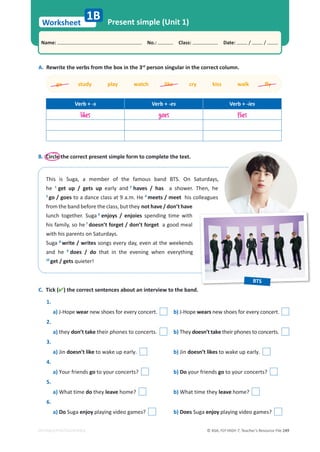
October 1986.
8. tŚŝĐŚŝƐŚĞƌĨĂǀŽƵƌŝƚĞĐŽůŽƵƌ͗ďůĂĐŬŽƌǁŚŝƚĞ͍ h) She drives her car.
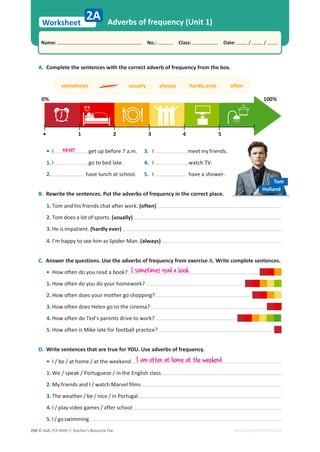
© ASA, FLY HIGH 7, Teacher’s Resource File
102
Name: പNo.: പClass: പDate: / /
Review worksheet
EDITABLE/PHOTOCOPIABLE
5 Plural of nouns
A. Write the plurals of the words from the box in the correct column, according to their forms.
;ƐĐƌĞǀĞŽƉůƵƌĂůĚĂƐƉĂůĂǀƌĂƐĚĂĐĂŝdžĂŶĂĐŽůƵŶĂĐŽƌƌĞƚĂ͕ĚĞĂĐŽƌĚŽĐŽŵĂƐƵĂĨŽƌŵĂ͘Ϳ
1. Noun + -s 2. Noun + -es 3. Noun + -ies 4. Noun + -ves
babies
B. Write the plural of the nouns.
(Escreve o plural dos nomes.)
1. book 6. fish
2. shelf 7. strawberry
3. teacher 8. person
4. policeman 9. schoolbag
5. child 10. student
C. Find the plural of the nouns from the box in the word search puzzle (Ö×).
(Encontra o plural dos nomes da caixa na sopa de letras.)
ĐŚĞƌƌLJŚĂŵďƵƌŐĞƌĮƌĞĮŐŚƚĞƌƉĂƌƚŶĞƌǁŝĨĞŽƌĂŶŐĞƚŽŵĂƚŽ
sheep book mouse woman party
B Y B P F P N T J T K T V A C
F Z X G H A M B h R G h E R S
I G C B J h G h O R A N G E S
R X X X A E B O T Q C D t V P
E M I C E A T O J Q H S X B I
F T O M A T O E S L E F I O t
I S K I L C h G B F R O P O O
G h P A R T N E R S R H B K M
H P A t J D R h O D I h G S E
T G P V t J A M N X E M I G N
E L H O B K V X A N S B G h O
R G G P h h T D E S H E E P K
S G Z A N V t P A R T I E S V
F S G h Y F G V E t I V E S V
O T F M I t R T Q F M H S Q L
blueberry potato year box wolf brother boy baby
© ASA, FLY HIGH 7, Teacher’s Resource File 103
Name: പNo.: പClass: പDate: / /
Review worksheet
EDITABLE/PHOTOCOPIABLE
6 Present simple: verb to be
A. Circle the correct verb form in each sentence.
(Rodeia em cada frase a forma correta do verbo.)
1. Mariska is / areŵĞƌŝĐĂŶ͕ďƵƚŚĞƌƉĂƌĞŶƚƐis / are from Russia.
2. I am / areǀĞƌLJďƵƐLJ͕ƐŽ/am not / are not going to the cinema today.
3. Are / Is you from London or from Liverpool?
4. She isn’t / aren’t a firefighter. She ’s / ’m a nurse.
5. Paul and Trisha isn’t / aren’t in New York. They is / are in Orlando.
B. These sentences are wrong. Correct the underlined words. There is one example.
(Estas frases estão erradas. Corrige as palavras sublinhadas. Segue o exemplo.)
• Lucy and Millie is Australian.
1. Melinda am the new English teacher.
2. Noah aren’t a student. He’s a baker.
3. Is you twelve years old?
4. tĞisn’t Brazilian.
5. Harry are my goldfish. I love him very much.
C. Make sentences. Use the verb to be: affirmative (), negative () or interrogative (?).
;ŽŶƐƚƌſŝĨƌĂƐĞƐ͘hƐĂŽǀĞƌďŽto be͗ĂĨŝƌŵĂƚŝǀĂ͕ŶĞŐĂƚŝǀĂŽƵŝŶƚĞƌƌŽŐĂƚŝǀĂ͘Ϳ
1. John / British ()
2. my parents / at home ()
3. what / that girl’s name (?)
4. you / Canadian (?)
5. Sarah / at school ()
6. I / from Miami ()
D. Complete the text with the correct forms of the verb to be.
(Completa o texto com as formas corretas do verbo to be.)
tŝŶŶŝĞ 1
a monster wrestling trainer in the
film Rumble. She 2
 Ă LJŽƵŶŐ Őŝƌů ǁŝƚŚ Ă ĚƌĞĂŵ͗
ƚƌĂŝŶŝŶŐĂŵŽŶƐƚĞƌ͕^ƚĞǀĞ͕ƚŽǁŝŶƚŚĞĐŚĂŵƉŝŽŶƐŚŝƉ͘ƚĨŝƌƐƚ
it 3
(not) easy to train him. He 4
stubborn
ĂŶĚĨĞĞůƐƚŝƌĞĚĂůůƚŚĞƚŝŵĞ͕ďƵƚƐŚĞĚŽĞƐŶ͛ƚŐŝǀĞƵƉ͘
^ƚĞǀĞŽĨƚĞŶƚĞůůƐtŝŶŶŝĞŚĞ 5
ĂĨƌĂŝĚŽĨdĞŶƚĂĐƵůĂƌ͕
because he 6
strong and he always wins the
ĐŽŵƉĞƚŝƚŝŽŶ͘͞ZĞĂůůLJ͕^ƚĞǀĞ͍ 7
you a winner or a
loser? You 8
ďŽƚŚĨŝŐŚƚĞƌƐ͕ŽĨĐŽƵƌƐĞ͕͟tŝŶŶŝĞƐĂLJƐ͘
Winnie
Steve
Lucy and Millie are Australian.
© ASA, FLY HIGH 7, Teacher’s Resource File
104
Name: പNo.: പClass: പDate: / /
Review worksheet
EDITABLE/PHOTOCOPIABLE
A. Complete the sentences with the verb forms from the boxes.
(Completa as frases com as formas verbais das caixas.)
1. Molly two brothers and one baby sister.
2. tĂůƚĞƌĂŶĚ/ a new pair of boots.
3. Richard and Lenny brown hair and blue eyes.
4. I short blonde hair.
5. John a nice family.
6. My hamster a very modern cage.
B. Write the sentences in the negative (short form).
(Escreve as frases na negativa – forma abreviada.)
• Serena has got blue gloves.
1. Matt and Vivian have got black hair.
2. Marcel has got a new watch.
3. Suzy has got lovely earrings.
4. Her dog has got a modern kennel.
5. I have got a moustache.
6. Fatima and you have got a twin brother.
C. Look at the picture. Write questions and answers with the verb have got. There is one example.
(Observa a imagem. Escreve perguntas e respostas com o verbo have got. Segue o exemplo.)
• Maitreyi / long hair
“ ͍͟͞ ͕ ͘͟
1. Lee and Ramona / white boots
“ ͍͟͞ ͕ ͘͟
2. Lee / a short skirt
“ ͍͟͞ ͕ ͘͟
3. they / a modern look
“ ͍͟͞ ͕ ͘͟
4. Maitreyi / a long dress
“ ͍͟͞ ͕ ͘͟
5. the three girls / a bag in their hand
“ ͍͟͞ ͕ ͘͟
Present simple: verb have got
7
has got
have got
Serena hasn't got blue gloves.
Has Maitreyi got curly hair
Lee
Rodriguez
Maitreyi
Ramakrishnan
Young
Ramona
Yes she has
© ASA, FLY HIGH 7, Teacher’s Resource File 105
Name: പNo.: പClass: പDate: / /
Review worksheet
EDITABLE/PHOTOCOPIABLE
8 Present simple
A. Write the 3rd
person singular of the verbs. There is one example.
(Escreve a 3.a
pessoa do singular os verbos. Segue o exemplo)
Verb he/she/it Verb he/she/it
play • plays watch 4
run 1
study 5
cook 2
read 6
clean 3
write 7
B. Fill in the gaps with the present simple of the verbs in brackets.
(Preenche os espaços com o present simple dos verbos entre parêntesis.)
1. Max always (have)ďƌĞĂŬĨĂƐƚĂƚϳ͗ϯϬĂ͘ŵ͘
2. Juliet and Alice (go) to school by bus. They (catch) it at 8 o’clock.
3. Matilda usually (make) her bed in the morning.
4. Jeremy and I (not prepare) our lunchboxes every day.
5. My mother (not drive)ŵĞƚŽƐĐŚŽŽůŽŶtĞĚŶĞƐĚĂLJƐ͘
C. What do they do at the weekend? Look at the pictures and write sentences in the present simple.
There is one example.
(O que é que eles fazem ao fim de semana? Observa as imagens e escreve frases no present simple.
Segue o exemplo.)
• Nelly / clean the bathroom / tidy the bedroom
“ ͍͟
“ ͕ . ͘͟
1. Byron / cook dinner
“ ͍͟
“ ͕ ͘͟
2. Val and Poh / wash their car / walk the dog
“ ͍͟
“ ͕ . ͘͟
3. Thomas / take the rubbish out
“ ͍͟
“ ͕ ͘͟
She tidies her bedroom
Does Nelly clean the bathroom at the weekend
No she doesn't
© ASA, FLY HIGH 7, Teacher’s Resource File
106
Name: പNo.: പClass: പDate: / /
Review worksheet
EDITABLE/PHOTOCOPIABLE
A. Look at the pictures and label them with the adverbs of frequency from the box.
(Observa as imagens e legenda-as com os adverbs of frequency da caixa.)
Adverbs of frequency
9
B. MarkthesentencesR(right)orW(wrong).Payattentiontothepositionoftheadverbsoffrequency.
(Assinala as frases como certas ou erradas. Presta atenção à posição dos advérbios de frequência.)
R W
1. I go to the library never.
2. Pete and you have piano lessons twice a week.
3. tĞĞĂƚĂůǁĂLJƐĐĞƌĞĂůĂŶĚĚƌŝŶŬŵŝůŬĂƚďƌĞĂŬĨĂƐƚ͘
4. Tony and Mike walk to school once a week.
5. DLJƐŝƐƚĞƌƐŽŵĞƟŵĞƐŝƐĂůŽŶĞŝŶƚŚĞůĂď͘
C. Put the words in order and make correct sentences.
(Ordena as palavras e constrói frases corretas.)
1. washes / usually / his car / on Saturdays / Marcus / .
2. he / hardly ever / to the cinema / goes / .
3. in the evening / do / always / I / my homework / .
4. often / make / they / their beds / .
5. never / late for school / is / Jane / .
never
sometimes
usually
often
always
MON TUE WED THU FRI SAT SUN
1 2 3 4 5 6
7 8 9 10 11 12 13
14 15 16 17 18 19 20
21 22 23 24 25 26 27
28 29 30 31
MON TUE WED THU FRI SAT SUN
1 2 3 4 5 6
7 8 9 10 11 12 13
14 15 16 17 18 19 20
21 22 23 24 25 26 27
28 29 30 31
MON TUE WED THU FRI SAT SUN
1 2 3 4 5 6
7 8 9 10 11 12 13
14 15 16 17 18 19 20
21 22 23 24 25 26 27
28 29 30 31
MON TUE WED THU FRI SAT SUN
1 2 3 4 5 6
7 8 9 10 11 12 13
14 15 16 17 18 19 20
21 22 23 24 25 26 27
28 29 30 31
MON TUE WED THU FRI SAT SUN
1 2 3 4 5 6
7 8 9 10 11 12 13
14 15 16 17 18 19 20
21 22 23 24 25 26 27
28 29 30 31
1. 2.
3. 4. 5.
Marcus
Rashford
© ASA, FLY HIGH 7, Teacher’s Resource File 107
Name: പNo.: പClass: പDate: / /
Review worksheet
EDITABLE/PHOTOCOPIABLE
10 Present continuous
A. Write the -ing form of the verbs. There is one example.
(Escreve a -ing form dos verbos. Segue o exemplo.)
Infinitive -ing form Infinitive -ing form
play • playing run 5
study 1
watch 6
wash 2
do 7
prepare 3
sit 8
mix 4
walk 9
B. Read the sentences and circle the correct option.
(Lê as frases e rodeia a opção correta.)
1. Lucy and Elsa is cleaning / are cleaning the bathroom.
2. I are setting / am setting the table while my mother is cooking / are cooking dinner.
3. Ella and I am having fun / are having dinner together.
4. James is fixing / are fixing his computer.
5. Fred and his siblings is taking / are taking the rubbish out.
C. Complete the sentences with the present continuous of the verbs in brackets.
(Completa as frases com o present continuous dos verbos entre parêntesis.)
dŽĚĂLJŝƐ^ĂƚƵƌĚĂLJĂŶĚ:ĞŶŶLJ͕^ƵƐĂŶĂŶĚdĞĚĚLJ1
(help)ƚŚĞŝƌƉĂƌĞŶƚƐ͕
sŝǀŝĂŶĂŶĚĂƌƚ͕ǁŝƚŚƚŚĞŚŽƵƐĞŚŽůĚĐŚŽƌĞƐ͘dŚĞLJ2
(not do) anything
ƐƉĞĐŝĂů͕ďƵƚƚŚĞLJ3
(have) a lot of fun together. The two sisters
4
(tidy) their bedrooms while their brother 5
(vacuum) the living room. Vivian 6
(iron) their clothes and
she 7
(listen) to music too. Bart 8
(do) the laundry.
D. Write questions and short answers in the present continuous. There is one example.
(Pergunta e escreve respostas curtas no present continuous. Segue o exemplo.)
• you / write / an email / ()
1. Jenny / watch TV / ()
2. Teddy and Susan / walk / the dogs / ()
3. Bart / read / the newspaper / ()
4. the dogs / play / in the backyard / ()
5. you and Vivian / prepare / lunch / ()
”Are you writing an email?“ ”No, I'm not.“
© ASA, FLY HIGH 7, Teacher’s Resource File
108
Name: പNo.: പClass: പDate: / /
Review worksheet
EDITABLE/PHOTOCOPIABLE
A. Read the sentences and tick () the correct option.
(Lê as frases e escolhe a opção correta.)
1. dŚĞtĞĞŬŶĚ in Dublin last month.
a) was b) were
2. dŚĞtĞĞŬŶĚĂŶĚŚŝƐďĂŶĚ ŝŶĂƐŚŽǁǁŝƚŚϮϬ͕ϬϬϬĨĂŶƐ͘
a) was b) were
3. His Irish fans very happy to see him.
a) was b) were
4. They anxious to sing In your eyes with him
at the end of the concert.
a) was b) were
B. Fill in the gaps with the past simple of the verb to be.
(Completa os espaços com o past simple do verbo to be.)
1.dŚĞtĞĞŬŶĚ in my hometown last week.
2. My friends and I at the concert.
3. My parents ĂƚƚŚĞĐŽŶĐĞƌƚ͕ƚŽŽ͘
4. The singer very nice to the fans.
5. My friends Joe and Paul with the artist backstage.
6. They excited and nervous about meeting him.
C. Rewrite the sentences in the affirmative, negative or interrogative.
;ƐĐƌĞǀĞĂƐĨƌĂƐĞƐŶĂĂĨŝƌŵĂƚŝǀĂ͕ŶĞŐĂƚŝǀĂŽƵŶĂŝŶƚĞƌƌŽŐĂƚŝǀĂ͘Ϳ
1. You were at home yesterday.
Neg.: Int.:
2. Ted wasn’t with his schoolmates this morning.
Aff.: Int.:
3.tĞƌĞDŝŶŶŝĞĂŶĚDĂƌŬĂƚƚŚĞŐLJŵ͍
Aff.: Neg.:
4. Bruno’s dog was in the park.
Neg.: Int.:
11 Past simple: verb to be
The
Weeknd
© ASA, FLY HIGH 7, Teacher’s Resource File 109
Name: പNo.: പClass: പDate: / /
Review worksheet
EDITABLE/PHOTOCOPIABLE
12 Past simple: regular verbs
A. Write the past simple of the verbs in the boxes, according to the spelling rules.
(Escreve o past simple ĚŽƐǀĞƌďŽƐĚĂƐĐĂŝdžĂƐ͕ĚĞĂĐŽƌĚŽĐŽŵĂƐƌĞŐƌĂƐŽƌƚŽŐƌĄĨŝĐĂƐ͘Ϳ
love
stop
travel
park
visit
cook
try
plan
change
ƟĚLJ
watch
decide
1. verb + -ed 2. verb + -d 3. verb + -ied 4. verb + double
consonant + -ed
B. Complete the sentences with the past simple of the verbs in brackets.
(Completa as frases com o past simple dos verbos entre parêntesis.)
1. zĞƐƚĞƌĚĂLJ͕/ (arrive) late at the airport.
2. Jeff and Sean (plan) their dream trip last year.
3. Molly (not study) for the English test.
4. tĞ (walk) our dog in the park this morning.
5. You (not play) video games last night.
C. Write questions and short answers in the past simple. There is one example.
(Escreve perguntas e respostas curtas no past simple. Segue o exemplo.)
• Ruth / try / different food / ()
1. Helen / visit / the Eiffel Tower / ()
2. Mary and Charles / listen to music / ()
3. you / photograph / the Empire State Building / ()
4. Lucy / pack her bags / this morning / ()
“Did Ruth try different food?” “Yes, she did.”
© ASA, FLY HIGH 7, Teacher’s Resource File
110
Name: പNo.: പClass: പDate: / /
Review worksheet
EDITABLE/PHOTOCOPIABLE
A. Complete the crossword puzzle with the past simple of the verbs.
(Encontra o past simple dos verbos no cruzadex e escreve-o.)
B. Complete the sentences with the past simple of the verbs in brackets.
(Completa as frases com o past simple dos verbos entre parêntesis.)
1. Last month we (go) on holiday to London.
2. Donald (have) fun with his family.
3. I (take) lots of photos on my last summer holidays.
4. Luke (not feel) very well during the trip.
5. Joan and Susan (not run) in the park.
6. They (swim) in the river.
C. Rewrite the sentences in the negative and in the interrogative.
(Reescreve as frases na negativa e na interrogativa.)
1. Sylvie forgot her ticket at home.
Neg.:
Int.:
2. Serena and Liam sent a postcard to their cousins.
Neg.:
Int.:
3. I saw a racoon on the city tour.
Neg.:
Int.:
Past simple: irregular verbs
13
ACROSS
1. make
2. buy
3. drive
4. spend
DOWN
5. swim
6. read
7. become
8. go
9. sing
10. take
1
2
3
4
5
6
7
8
9
10
© ASA, FLY HIGH 7, Teacher’s Resource File 111
Name: പNo.: പClass: പDate: / /
Review worksheet
EDITABLE/PHOTOCOPIABLE
14 Future: be going to
A. Read Kesha’s to-do list and put the verbs in the future – be going to. There is one example.
(Lê a lista de afazeres da Kesha e coloca os verbos no future – be going to. Segue o exemplo.)
Next week…
• Kesha her mum.
1. She to the beach.
2. Kesha and her producer
her new song.
3. The singer some sports.
4. She piano lessons.
5. Adele and she
together.
B. Complete the sentences with the future – be going to and the verbs in brackets.
(Completa as frases com o future – be going to e os verbos entre parêntesis.)
1. Kesha (have) a picnic in her private garden.
2. Her nephew Rio (not build) any sandcastles.
3. Rio and other children (drink) orange juice and eat strawberries.
4. She (write) a song with Billie Eilish. They’re great friends.
5. they (play) the guitar and give a concert?
C. Write questions and short answers. There is one example.
(Escreve perguntas e respostas curtas. Segue o exemplo.)
• Kesha / surf / tomorrow / 
“ ͍͟͞ ͕ ͘͟
1. her guests / listen to / her songs / 
“ ͍͟͞ ͕ ͘͟
2. she / swim / in the lake / 
“ ͍͟͞ ͕ ͘͟
3. the singer and her brother / spend / their holidays / together / 
“ ͍͟͞ ͕ ͘͟
4. they / play / beach volleyball / 
“ ͍͟͞ ͕ ͘͟
No
TO-DO LIST
• call mum
1. go to the beach
2. finish new song with producer
3. do sports
4. teach piano lessons
5. hang out with Adele
ucer
is going to call
Kesha
Is Kesha going to surf tomorrow she isn’t
© ASA, FLY HIGH 7, Teacher’s Resource File
112
Name: പNo.: പClass: പDate: / /
Review worksheet
EDITABLE/PHOTOCOPIABLE
A. Look at the pictures and circle the best option.
(Observa as imagens e rodeia a melhor opção.)
Degrees of adjectives
15
1. Helen is older than / younger than Peter.
2. The green shirt is cheaper than / more expensive than the pink one.
3. Tom is taller than / shorter than Jack.
B. Fill in the gaps with the comparative of superiority of the adjectives in brackets.
(Preenche os espaços com o comparative of superiority dos adjetivos entre parêntesis.)
1. John is (strong) Miles.
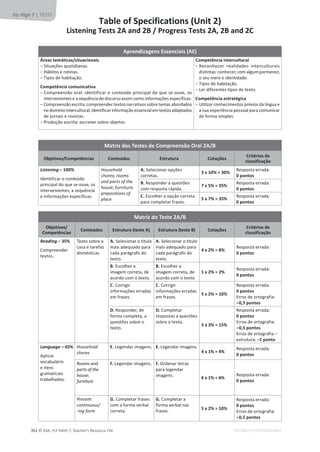
2. Violet and Maya are (generous) Trudy.
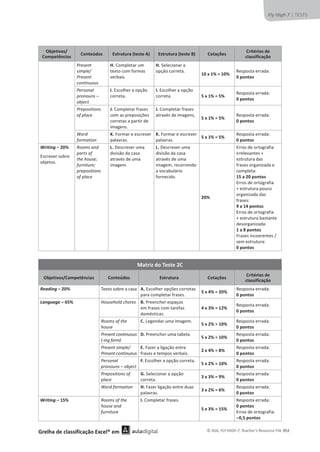
3. Janine and I are (heavy) our siblings.
4. You are (good) Rita at maths.
C. Read the sentences and circle the correct superlative of the adjectives.
(Lê as frases e rodeia o superlative dos adjetivos correto.)
1. Lisa is the smartest / the most smart in the family and she is the most kind / the kindest too.
2. Ruth and her brother are the most funny / the funniest teens I know.
3. Victor is the most sociable / the sociablest boy in class.
4. :ƵůŝĞƚŚŝŶŬƐƐŚĞ͛ƐĨĂƚ͕ďƵƚƐŚĞ͛Ɛthe most slim / the slimmest of all her friends.
5. That sofa is the most comfortable / the comfortablest in my house.
D. Complete the sentences with the superlative of the adjectives in the box.
(Completa as frases com o superlative dos adjetivos da caixa.)
bad beautiful happy
1. Matt is boy in the class. He’s always
smiling.
2. His classmate Mario is boy he knows
because he hurts the other kids.
3. ^ĂƌĂŚ͕DĂƚƚ͛ƐƐŝƐƚĞƌ͕ŝƐ girl in their family.
She’s really pretty. Matt
Helen
Peter
Jack
Tom
£75
£70
© ASA, FLY HIGH 7, Teacher’s Resource File 113
Name: പNo.: പClass: പDate: / /
Review worksheet
EDITABLE/PHOTOCOPIABLE
16 Adjectives + preposition
A. Write the correct preposition from the box next to each adjective. Use each preposition only once.
;ŽůŽĐĂĂƉƌĞƉŽƐŝĕĆŽĐŽƌƌĞƚĂũƵŶƚŽĂĐĂĚĂĂĚũĞƚŝǀŽ͘hƐĂĐĂĚĂƉƌĞƉŽƐŝĕĆŽĂƉĞŶĂƐƵŵĂǀĞnj͘Ϳ
of at in with for about
1. interested football
2. fond music
3. brilliant maths
4. angry his brother
5. worried the tests
6. ready the party
B. Read the sentences and tick () the correct prepositions.
(Lê as frases e assinala as preposições corretas.)
1. Cathy is afraid storms. a) in b) of c) about
2. Drake is famous his songs. a) for b) at c) about
3. Ben and Zoe are good video games. a) about b) for c) at
4. ,ƵƌƌLJƵƉ͕:ĂLJ͊zŽƵ͛ƌĞůĂƚĞ school. a) with b) in c) for
5. Tom is angry Rita. a) of b) with c) in
C. Fill in the gaps with the correct adjectives from the box. Pay attention to the prepositions in bold.
(Preenche os espaços com os adjectivos da caixa corretos. Atenta nas preposições a negrito.)
afraid late happy fond brilliant
1. Mike is at English and Spanish. He loves learning foreign languages.
2. KŚ͕/͛ŵƐŽ about my history marks. I am the best in the class.
3. DĂƌŬĂŶĚ/ůŽǀĞƐŶĂŬĞƐĂŶĚŽƚŚĞƌƌĞƉƚŝůĞƐ͘tĞ͛ƌĞŶŽƚ of them.
4. Julian is very of music. She’s learning how to play the piano.
5. Carson and Roger shouldn’t be for school. They must be there on time.
D. Complete the sentences with the correct adjective + preposition.
(Completa as frases com o adjetivo + preposição corretos.)
tired of worried about ready for good at interested in
1. Get ƚŚĞĐŽŵƉĞƚŝƚŝŽŶ͕ƉůĞĂƐĞ͘/ƚ͛ƐĂďŽƵƚƚŽƐƚĂƌƚ͘
2. Leo is working so hard and not getting the best marks.
3. Janine is cooking. She wants to be a cook.
4. Noah and Mary are ƚŚĞŝƌďĞƐƚĨƌŝĞŶĚ͕DĞů͘^ŚĞ͛ƐŶŽƚĨĞĞůŝŶŐǁĞůůƚŽĚĂLJ͘
5. Victoria is very dancing. She even won the school contest this year.
© ASA, FLY HIGH 7, Teacher’s Resource File
114
Listening
TIPS
EDITABLE/PHOTOCOPIABLE
Name: പNo.: പClass: പDate: / /
Para melhorares a tua capacidade de compreensão oral em inglês:
• antes de iniciares a audição, lê cuidadosamente cada pergunta/enunciado, bem como eventuais
opções de resposta;
• identifica as palavras-chave e o seu significado;
• como, habitualmente, ouves cada texto duas vezes:
– durante a primeira audição, tenta entender o sentido global do texto;
– durante a segunda audição, certifica-te de que a resposta que estás a dar é a correta.
Não te esqueças de que a resposta correta poderá estar no início, no meio ou no final do texto que
estás a escutar. Presta agora atenção a estas dicas para diferentes tipos de exercícios.
ƐĐŽůŚĂŵƷůƟƉůĂ
• Quando tens de selecionar imagens, observa bem todas as opções e tenta prever o vocabulário
de que irás precisar. Não te esqueças de que todas as imagens podem ser mencionadas, mas
apenas uma está correta.
• Habitualmente, as questões respeitam a ordem da informação do texto.
Fazer associações de palavras ou imagens
• Poderás ter de ouvir uma conversa mais longa e fazer correspondências entre duas colunas
(exemplo: fazer corresponder nomes próprios, na coluna A, a ações/descrições ou imagens, na
coluna B). Nestes casos, pode haver mais termos na coluna B do que aqueles de que irás neces-
sitar, por isso, não escolhas uma palavra ou imagem da coluna B só porque ela é mencionada
no texto. Pode não ser a resposta certa!
Verdadeiro/Falso (Correto/Incorreto)
• Os verbos que exprimem opinião, como prefer, like, hate, think, são muito importantes, pois indi-
cam-te qual é o ponto de vista de alguém. Presta atenção à forma negativa dos verbos (exemplo:
I like that flat, but she doesn’t like it.) porque ela é indicadora do sentido da frase.
Preenchimento de espaços
• Lê e ouve com atenção a instrução do exercício para perceberes o tipo de texto e a situação a
que dizem respeito.
• A leitura atenta da instrução antes da audição permite-te reter o que é importante, pois é prová-
vel que consigas prever o tipo de vocabulário a usar, mesmo antes de ouvires o texto.
© ASA, FLY HIGH 7, Teacher’s Resource File 115
EDITABLE/PHOTOCOPIABLE
Name: പNo.: പClass: പDate: / /
Reading
TIPS
Segue as dicas para mais facilmente conseguires ler e interpretar um texto, respondendo às questões que
te forem apresentadas.
• Faz uma primeira leitura e tenta entender a ideia global do texto.
• Caso não conheças todas as palavras, tenta entendê-las através do contexto. Não te esqueças
de que nem todas as palavras serão essenciais para a compreensão do texto.
• Podes consultar a secção Vocabulary notes do manual, onde se encontra o vocabulário essencial
dos vários temas abordados ou consultar dicionários (em papel ou online).
• Lê o texto novamente e destaca as ideias-chave.
• Lê muito bem o enunciado das questões antes de começares a resolver os exercícios.
Presta agora atenção a estas dicas para diferentes tipos de exercícios.
Questões sobre o texto
• Para responderes às perguntas, deves conhecer o significado das question words (who = quem;
what = o quê; where = onde; when = quando; why = porquê; how = como…).
• Sublinha, no texto, as frases/expressões que constituem a resposta às perguntas. Podes usar
palavras do texto para responderes, mas não deves fazer cópia do texto, a não ser que tal seja
solicitado na questão.
Associação de palavras, definições, sinónimos
• Lê sempre todas as opções antes de começares a responder.
• Caso tenhas dúvidas em alguma, passa à seguinte e, no final, tenta perceber se a palavra e a de-
finição que sobraram coincidem, de facto.
ƐĐŽůŚĂŵƷůƟƉůĂ
• Lê bem as opções antes de selecionares a resposta, pois pode haver opções semelhantes.
• Confirma sempre a informação no texto, antes de assinalares a tua resposta.
Verdadeiro ou Falso (True/False)
• Presta atenção a todas as palavras das frases. Por vezes alguns pormenores das frases (como
verbos na negativa ou a utilização de sinónimos/antónimos) podem induzir em erro! Toda a frase
tem de ser verdadeira para ser classificada dessa forma.
Completamento de espaços ou frases
• Lê sempre todo o texto ou frase antes de começares a preencher os espaços.
• Caso haja opções para preenchimento dos espaços, lê-as todas antes de dares a resposta.
Ordenação
• Lê cada alínea ou observa cada imagem atentamente; depois escreve o número da alínea no
local do texto onde a informação correspondente se encontra. Assim consegues identificar fa-
cilmente a ordem das alíneas.
Legendar figuras
• Usa, quando possível, as palavras do texto para legendar as imagens, mas presta atenção: não
cometas erros em palavras que estão no texto ou no enunciado!
© ASA, FLY HIGH 7, Teacher’s Resource File
116 EDITABLE/PHOTOCOPIABLE
Name: പNo.: പClass: പDate: / /
Para melhorares a escrita dos vários tipos de texto, presta atenção a estas dicas.
• Faz sempre um plano do texto antes de começares a escrever.
• Escreve o texto com cuidado para evitares erros. Se necessário, usa o dicionário.
• Relê sempre o texto depois de o escreveres e faz as alterações necessárias.
• Poderás ter de escrever textos na 1.
a
pessoa (I; we) ou na 3.
a
pessoa (he/she; they). Atenção aos
verbos e determinantes/pronomes, pois são diferentes consoante estejas a falar de ti ou de outra
pessoa (My name is…/Her name is…).
• Utiliza pronomes e sinónimos de palavras que usaste anteriormente, de modo a evitares repe-
tições desnecessárias.
• Usa connectors para ligares as frases/orações (first, then, after that, finally, because, and, or,
(
(
therefore, so, but, however…).
dĞdžƚŽŶĂƌƌĂƟǀŽ
Podes ter de escrever textos narrativos sobre vários temas (identificação pessoal, descrição física, rotina
diária, eventos passados…). Toma atenção para que o teu texto esteja dividido em três partes:
1. introdução – pequena frase de introdução ao tema (podes começar por referir o assunto sobre
o qual vais escrever, dependendo do que te for pedido na instrução; por exemplo, Hi! My name
is Diana and I’m going to talk about a school trip I went to last year.);
2. desenvolvimento – corpo ou parte mais longa do texto, onde desenvolves o tema;
3. conclusão – pequena frase para terminar o texto (podes exprimir gostos e preferências, por exem-
plo, I loved the school trip because I learnt new things about that city.).
Email
• Inicia o teu texto com uma saudação. Não te esqueças de que deverás adequar a linguagem à
pessoa a quem estás a escrever e ao contexto apresentado.
• Organiza o texto em introdução, desenvolvimento e conclusão. Deves abordar todos os assuntos
que te forem pedidos na instrução.
• No final, termina com uma fórmula de despedida.
Descrição de imagens/objetos
• Observa muito bem a imagem antes de começares a escrever. Podes descrever a imagem de
cima para baixo ou podes começar a partir do centro, por exemplo, respondendo às perguntas
Who?, Where?, When?, What?.
• Para descreveres o que está na imagem, deves usar o verbo there + to be e preposições de lugar
(por exemplo, There is a bed and there are two bedside tables, but there aren’t any chairs.).
• Se houver pessoas e não objetos, terás de dizer o que é que eles/elas estão a fazer, usando o
present continuous para te referires a ações que estejam a acontecer na situação identificada
na imagem.
tƌŝƟŶŐ
TIPS
© ASA, FLY HIGH 7, Teacher’s Resource File 117
EDITABLE/PHOTOCOPIABLE
Name: പNo.: പClass: പDate: / /
Speaking
TIPS
Repara nas várias dicas que te poderão ajudar a melhorar a produção/interação oral em inglês.
• Escuta cuidadosamente as instruções do/a professor/a.
• Presta atenção ao modelo e às guidelines fornecidas.
• Fala num tom audível e de forma pausada.
• Constrói frases curtas e simples e evita traduzir diretamente de português para inglês.
• Se não entenderes a instrução, diz I don’t understand., ou Could you repeat, please?, para teres
a certeza do que te é pedido.
• Quando falares, olha para o teu interlocutor, pois as expressões faciais/corporais melhoram a
comunicação.
Produção oral Expressões úteis
Falar sobre si/Descrever-se e descrever outros
– Refere os seguintes aspetos: nome, idade, ano es-
colar, aparência física, preferências…
– Utiliza verbos que exprimem opinião, como prefer
(preferir), like (gostar), hate (detestar), love (adorar)
– Deves usar a -ing form depois desses verbos (exem-
plo: I love playing football, but I don’t like writing.).
– Utiliza adjetivos específicos para te descreveres e
fazeres a descrição de outros.
– My name is…
– I’m… years old and I’m from…
– I was born on…
– I’m in year…
– I’m tall/short.
– I have got short/long brown/dark hair. My eyes are
green/blue/brown…
– I like… but I don’t like…/I like… but I prefer…
Descrever imagens/objetos
– Observa as imagens/os objetos com atenção e ten-
ta prever o vocabulário de que irás precisar, não es-
quecendo o tempo verbal a utilizar.
– Tenta responder às questões “Quem?”, “O quê?”,
“Onde?”.
– Utiliza o present simple e/ou o present continuous.
– In this picture, I can see…
– It looks/seems like…
– There’s… / There are…
– On the left…/On the right…/Between… and… there
is / there are…
– The girl is cleaning the house…
Descrever a rotina diária/eventos passados
– Organiza o teu discurso por tópicos (exemplo: ati-
vidades matinais/da tarde/da noite), concentrando-
-te no vocabulário essencial da rotina diária e/ou do
evento passado.
– Utiliza o present simple e adverbs of frequency
(always, usually, sometimes…) para descreveres a
rotina diária.
– Utiliza o past simple e time expressions (yesterday,
last week/month/year) para descreveres eventos
passados.
– In the morning I…
– I usually wake up at… Then I have a shower
and… I always/never have breakfast at home.
– In the afternoon I…
– In the evening I…/At night I…
– Last month/year I went to… and I visited…
– I went there with… and stayed for… days/weeks.
Interação oral Expressões úteis
Pedir e dar informação pessoal
– Apresenta-te, utilizando greetings.
– Atenta nas estruturas orais básicas: perguntar e res-
ponder sobre o nome e apelido, idade, nacionalida-
de, aniversário, preferências, família, atividades de
tempos livres, rotina diária, …
– Formula as perguntas para poderes depois respon-
der.
– Hello!/Hi!
– “What is your name/surname?” “My name is…
and my surname is…”
– “How old are you?”/“When were you born?”
“I’m… years old. / I was born on…”
– “Where are you from?”/“What nationality
are you?” “I’m from…, so I’m…”
– Goodbye!/See you!”
Dialogar sobre atividades das férias/planos futuros
– Utiliza a estrutura be + going to ou will + infinitivo
l
(futuro)
– “What are you going to do next summer?”
“I’m going to [go camping], …”
© ASA, FLY HIGH 7, Teacher’s Resource File
118
Name: പNo.: പClass: പDate: / /
Apoio ao estudo
1
EDITABLE/PHOTOCOPIABLE
Countries and nationalities
Personal ID (Unit 1)
A. Write the countries and the nationalities.
Country EĂƟŽŶĂůŝƚLJ Country EĂƟŽŶĂůŝƚLJ
1.
German 6.
Spanish
France 2.
The USA 7.
3.
Irish 8.
Italian
Wales 4. 9.
Australian
Mexico 5.
England 10.
B. Match the questions with the answers. Write letters a-f.
1. What’s your name? a) They are German.
2. How old is Janine? b) It’s Nelson.
3. What nationality are Steve and Luke? c) It is on 13th
January.
4. When is your dad’s birthday? d) My name’s Tessa.
5. Who is the new student? e) They are from Berlin.
6. Where are they from? f) She’s 25.
C. Fill in the gaps with the correct country or nationality.
STUDY TIPS
Para responderes às perguntas Where are you from? (De onde és?), How old are you? (Que idade
tens?), When is your birthday? (Quando é o teu aniversário?), What nationality are you? (Qual
é a tua nacionalidade?), … deves usar sempre o verbo to be (ex.: I am from Covilhã.; I am from
Portugal.; I am 12 years old.; My birthday is on 5th
March.; I am Portuguese.).
Para perguntar sobre os teus dados pessoais, deves prestar atenção às question words: who (quem),
what (qual/quais), where (onde), when (quando), how (como), how old (que idade/quantos anos)…
Não te esqueças de que, em inglês, as nacionalidades se escrevem sempre com maiúsculas.
Bom estudo!
Hi! I’m James McAvoy
and I’m from Glasgow,
in Scotland. I’m a
1
actor.
Charlize Theron is a
South African actress.
She was born in Benoni,
2
.
Ana and Vitória are
3
singers, from a small
town in Brazil.
Do you know the
4
singer The Weeknd?
His hometown is
Toronto, in Canada.
© ASA, FLY HIGH 7, Teacher’s Resource File 119
Name: പNo.: പClass: പDate: / /
Apoio ao estudo
2
EDITABLE/PHOTOCOPIABLE
My name’s Jenny and this is my family.
My 1
is forty years old and
his name is Jeff. Gianna is my 2
and she’s thirty-nine years old. I haven’t got any
brothers or sisters, so I’m an only child. I sometimes
go to my 3
’ house (Damien
and Lisa) and I play with my 4
Nancy and her baby 5
Mark.
Their 6
, Jill and Charles, are my
7
and my 8
.
Family members
Physical description (Unit 1)
A. Look at the family tree and complete the sentences with the correct family member.
STUDY TIPS
Para descreveres alguém, precisas de utilizar vocabulário e adjetivos específicos.
Não te esqueças de que, em inglês, a ordem dos adjetivos é:
• adjetivo + nome (ex.: I have got red hair.);
• verbo to be + adjetivo (ex.: He is good-looking.).
Se usares mais do que um adjetivo para descrever o cabelo, por exemplo, a ordem deverá ser:
tamanho (1), o estilo (2) e a cor (3) e só depois o nome (ex.: My sister has got long (1) wavy (2)
brown (3) hair.).
Nota: habitualmente, os adjetivos handsome (bonito) e good-looking (bem parecido) são utilizados
para o masculino. Para o feminino, usamos pretty ou beautiful (bonita).
Bom estudo!
Nancy is a very 1
sad / happy girl. Her eyes are brown and she has
got a 2
round / square face and 3
wavy brown / straight black hair.
She loves wearing casual clothes. In this picture, she is wearing a
pink 4
blouse / sweater, her favourite 5
jeans / shorts and her white
6
boots / trainers, of course. Isn’t she 7
handsome / pretty?
B. Look at the picture and circle the correct words to describe Nancy, Jenny’s cousin.
Jenny’s family
Jenny’s family
Jenny Nancy Mark
Jill
Gianna :Ğī Charles
Damien Lisa
© ASA, FLY HIGH 7, Teacher’s Resource File
120
Name: പNo.: പClass: പDate: / /
Apoio ao estudo
EDITABLE/PHOTOCOPIABLE
Daily routine
Telling the time (Unit 1)
3
STUDY TIPS
Para descreveres a rotina diária em inglês, existem expressões que deverás usar, como por exem-
plo: wake up, get dressed, have a shower, do the homework, go to school, have football practice,
brush the teeth, watch TV...
A descrição da rotina diária é, muitas vezes, acompanhada pelas indicação das horas. Quando te
referes à hora certa, deverás utilizar a expressão o’clock (ex.: at 7 o’clock); half significa “meia-hora”
e a quarter “um quarto de hora”.
Em inglês, dizem-se primeiro os minutos, seguidos de past, até à meia-hora, e to depois da meia-
-hora. Só depois se dizem as horas. Ora repara: It’s twenty past eight. (São 8:20.); It’s ten to seven.
(São 6:50.).
Se for antes do meio-dia, deves incluir a.m. e, se for depois do meio-dia, deves incluir p.m.
Meio-dia diz-se midday e meia-noite midnight.
Bom estudo!
A. Write the time under the clocks.
1. It’s 2. 3. 4.
B. Find and circle six daily routine activities in the word snakes.
STHAVEBREAKFASTINDOTHEHOMEWORKBFHAVELUNCHJREW
C. Complete the text with the correct daily routine activities. Pay attention to the pictures.
Michael B. Jordan is a very busy actor. He always 1
at
6 a.m. and 2
to the gym. He works out for about one hour
and then he 3
and 4
. Then he
5
in the kitchen. He usually eats fruit and toast or pancakes
and drinks orange juice. After a hard day at the studio, he goes back home at around
7 p.m. and 6
. He loves preparing his own meals. He does the
washing up and he 7
. Finally, he 8
and 9
a book. He 10
at 11 p.m.
GOTOSCHOOLFJOSTUDYJUKNGJBRUSHYOURTEETH
© ASA, FLY HIGH 7, Teacher’s Resource File 121
Name: പNo.: പClass: പDate: / /
Apoio ao estudo
EDITABLE/PHOTOCOPIABLE
Household chores (Unit 2)
4
A. Match the household chores with the pictures. Write letters a-f.
1. do the ironing 3. fold the laundry 5. set the table
2. do the laundry 4. take the rubbish out 6. wash the car
STUDY TIPS
Nesta ficha encontrarás vocabulário específico relacionado com as tarefas domésticas, que são
também atividades de rotina diária.
Para estudares este vocabulário, poderás elaborar listas de palavras ou pesquisar imagens online
de várias tarefas para as legendares e/ou descreveres.
Bom estudo!
B. Read the post-it notes and complete the sentences with the household chores from the box.
D
D
D
De
e
e
e
ear
ar
ar J
J
Jo
oe
e,
,
D
D
Don
on't
t f
f
for
org
ge
et
t t
to
o
'
'
1
l
l
lu
u
un
n
n
nc
c
c
c
ch
h
h
h a
a
a
an
n
nd
d
d
2
.
.
.
L
L
L
L
L
L
Lov
ov
ov
ov
ov
ove
e
e
e
e
e
e,
,
,
,
,
,
M
M
M
M
M
M
M
Mu
u
u
u
u
u
um
m
m
m
m
m
m
H
H
H
H
H
Hiiii, M
M
Ma
att
t!
J
J
J
J
J
J
J
Jiiiiiiiim
m
m
m
m
m
m
m iiiiiis
s
s
s
s
s c
c
c
c
c
c
co
o
o
o
o
om
m
m
m
m
m
m
miiiiiiiin
n
n
n
n
n
ng
g
g
g
g
g
g a
a
a
a
a
at n
n
n
no
oo
on to
3
.
T
T
T
T
T
T
T
Th
h
h
h
h
h
h
he
e
e
e
e
e
er
r
r
r
r
r
r
re
e
e
e
e
e
e
e''''s
s
s
s
s m
m
m
m
m
m
m
mo
o
o
o
o
o
o
on
n
n
ney
y
y
y o
o
o
on
n
n
n
t
t
t
t
t
t
t
th
h
h
h
h
h
h
he
e
e
e
e
e
e
e k
k
k
k
k
k
k
kiiiiiiiit
t
t
t
t
t
t
tc
c
c
c
c
ch
h
h
h
h
h
he
e
e
e
en
n
n
n
n
n t
t
t
t
t
t
t
ta
a
a
a
ab
b
b
b
b
b
bllle
e
e
e.
S
S
S
S
S
Se
e
e
e
ee
e
e
e
e
e y
y
y
y
y
yo
o
o
ou
u
u
u lllllla
a
a
a
a
at
t
t
t
t
t
t
te
e
e
e
er
r
r
r
r,
,
,
,
M
M
Me
e
e
e
eg
g
g
ga
a
a
an
n
n
n
De
De
De
Dear
r
ar
r
ar J
J
J
Joh
oh
h
h
o n,
n,
Lu
Lu
Lu
Lu
Lunc
nc
nc
nc
c
c
c
n h
h
h
h is
is
is
is
is
is
s iiiiin
n
n
n
n
n
n th
th
th
th
th
th
th
the
e
e
e fr
f
fr
fr
fr
fr
fr
frid
id
id
id
id
i ge
ge
ge
ge
e
e..
He
He
He
He
He
He
He
Heat
at
at
at
at
t iiiiiit
t
t
t
t
t
t
t in
in
in
in
in
n
in
in t
t
t
t
t
t
t
the
he
he
he
he
he
he
he m
m
m
m
mic
c
ic
ic
ic
c
cro
ro
ro
rowa
wa
wa
wa
w ve
ve
ve
ve
v
an
an
an
n
nd
d
d
d
d do
do
do
do
o
d
do
on
n
n
n
n'
n
nt
t
t
t
t
t fo
fo
fo
fo
f
f rg
rg
rg
g
g
r et
et
et
et
e t
t
t
to
o
o
o
o
'
4
t
t
to
o
o
o
o
o
af
af
af
af
af
a
a
a te
te
te
te
ter.
r.
r
r.
Lo
Lo
Lo
L
Love
ve
ve
ve,, V
V
V
Val
al
a
a
He
He
He
He
ey!
y!
y!
y!
!
y!
Cl
Cl
Clllea
ea
ea
a
ea
ea
ani
ni
niiiing
ng
ng
ng
ng d
d
d
d
d
day
ay
ay
ay
ay
ay!
!
!
!
! Pl
Plea
ea
e
e se
se
s ,
5
5
an
and
d then
n
6
iit.
t.
I
I'll b
be
e ba
b ck
c a
at
t 1
1 p.
p.
p.
p
p
p
p m.
m.
m
m
Su
Su
Su
ue
e
a)
load the dishwasher vacuum the floor cook
do the washing up cut the grass mop
b) c)
d) e) f)
© ASA, FLY HIGH 7, Teacher’s Resource File
122
Name: പNo.: പClass: പDate: / /
Apoio ao estudo
EDITABLE/PHOTOCOPIABLE
Types of houses; Rooms and parts
of the house; Furniture (Unit 2)
5
B. Find five parts/rooms of the house and five objects in the word search puzzle (Ö×).
C. Put the words from exercise B in the correct column.
1. Parts/Rooms of the house 2. Objects
A. Look at the pictures and complete the sentences to label the types of houses. The first letter is given.
STUDY TIPS
Vais estudar alguns dos tipos de casa existentes em Inglaterra ou noutros países, divisões da casa
e peças de mobiliário. Tenta memorizar as palavras escrevendo no teu caderno diário frases onde
incluas este vocabulário (exs.: I live in a detached house. / My dream house is a tree house. / There
are two bedrooms and one living room in my house. / I’ve got a bunk bed in my bedroom and there’s
a big bookcase in front of it.).
Deves ainda rever as question words Where? e What (type of)? para perguntares “onde” e “em
que tipo de casa” alguém habita; e How many? (quantos/as) para saberes o número de divisões.
Para descreveres o espaço ou as divisões deves utilizar os verbos there to be, to be e have got
(exs.: There’s a rug on the bathroom floor. / The house is big. / I have got a lovely bedroom.) e as
prepositions of place (ex.: There are two plants on the table.).
Bom estudo!
1. Look at Jane’s modern .
2. Helena’s is in Ireland.
3. Tom loves his .
4. Vince and Val live in a
house.
5. Peter lives in a -
house.
G K M P U W A S H B A S I N
U T V S I C X J C J B B K F
V C X R O B E D R O O M X E
D I S H W A S H E R M G A R
F U O L G F R I D G E P D H
B G J I J R F D T K B K W B
A T V V M K M E U B O I C I
L N M I U W V S B A O T S B
C X L N O L I K R T K C X V
O F X G B W U G W H S H W W
N R N R G K V O O R H E Q H
Y C I O E G E Z L O E N I A
K K W O N Q W G B O L A Y Z
C O K M S D P M H M F H P V
1
2
3
4
5
s d
f
c
c
d
© ASA, FLY HIGH 7, Teacher’s Resource File 123
Name: പNo.: പClass: പDate: / /
Apoio ao estudo
EDITABLE/PHOTOCOPIABLE
School subjects
After-school clubs (Unit 3)
6
A. Complete the crossword puzzle with school subjects. Then find the hidden message.
and
O
STUDY TIPS
Para memorizares as disciplinas e os clubes escolares, faz listas de palavras no teu caderno diário,
tantas vezes quantas as que achares necessárias.
Algumas disciplinas podem ser abreviadas: ICT – information and communication technology (TIC
– Tecnologias da Informação e Comunicação); PE – physical education (Educação Física).
Não te esqueças: em inglês, as disciplinas escrevem-se com letra minúscula (geography), exceto as
línguas (English, French, Spanish, German).
Bom estudo!
B. Read and complete the sentences with the after-school clubs from the box.
Dance Club Arts and Crafts Club Science Club Cooking Club Photography Club
1. Prince George loves studying volcanoes, so he’s in the .
2. He doesn't like drawing and painting, that’s why he will never go to the
.
3. Did you know that Kate Middleton was in the
when she was younger? She loved ballet.
4. Prince William decided to join the when he was a
high school student, but he didn’t like it very much. He wasn’t good with the camera.
5. Prince George loves helping his mother in the kitchen, maybe next year he'll learn how to cook
in the .
1
Prince
George
2
3
4
5
6
7
8
9
10
11
2
3
4
5 6 7
8
9
11
10
1
© ASA, FLY HIGH 7, Teacher’s Resource File
124
Name: No.: Class: Date: / /
Apoio ao estudo
EDITABLE/PHOTOCOPIABLE
School facilities/rooms
School events (Unit 3)
7
B. Complete the calendar with the school events from the box. There are two extra expressions.
STUDY TIPS
Para memorizares vocabulário relacionado com instalações/espaços e eventos escolares, podes
fazer listas de palavras no teu caderno diário, tantas vezes quantas as que achares necessárias, ou
criar um glossário/minidicionário global em português e em inglês (ou vice-versa). Podes ir acres-
centando palavras novas, por categorias (espaços da escola, atividades escolares…), por exemplo.
Bom estudo!
a) gym
b) art room
c) classroom
d) toilets
e) canteen
f) music room
g) computer room
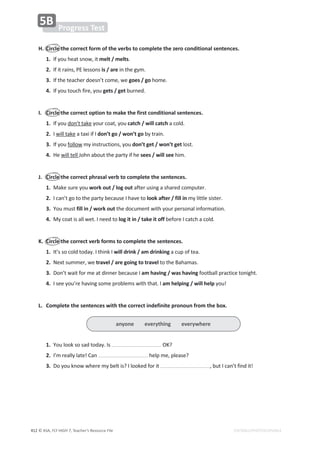
h) library
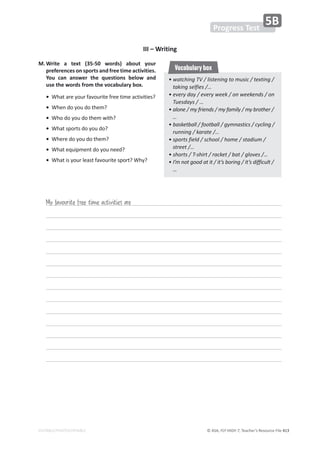
i) changing room
8
7
3
5
2
6
1
4
9
16th
– Welcome dance night
September
19th
– 1
5th
– 2
October
31st
– Halloween party
11th
– 3
November
23rd
– I’m thankful for… day
14th
– Valentine’s Day card contest
February
19th
–4
A. s
e
i
t
i
l
i
c
a
f
e
h
t
h
c
t
a
m
d
n
a
p
a
m
l
o
o
h
c
s
e
h
t
t
a
k
o
o
L
with the words. Write the numbers 1-9.
12th
– School play
March
21st
– 5
17th
– Talent show
May
24th
– 6
School MasterChef Singing Contest Chess Tournament Gaming Tournament
Book Fair Carnival Costume Contest Sports Day Science Fair
125
Name: പNo.: പClass: പDate: / /
Apoio ao estudo
EDITABLE/PHOTOCOPIABLE
1
2
3
4
5
6
7
8
9
10
City places
City activities (Unit 4)
8
A. Look at the city map and write the city places. The first letter is already given.
STUDY TIPS
Nesta ficha de trabalho vais encontrar algum vocabulário relacionado com os principais locais
públicos e de lazer de uma cidade e as atividades que aí se poderão realizar.
Para mais facilmente memorizares este vocabulário, poderás fazer duas listas, dividindo as pala-
vras/expressões em public places (locais públicos) e places of interest (locais de lazer). Poderás
também fazer uma tabela com os verbos go, walk e visit e associar a cada um deles as atividades
correspondentes.
Bom estudo!
B. Write the words/expressions under each verb to make correct city activities.
1. walk 2. visit 3. go • the dog
• for a walk
• an exhibition
• shopping
• along the street
• a museum
• to a concert
• a landmark
1.
2.
3.
4.
5.
6.
7.
8.
9.
10.
© ASA, FLY HIGH 7, Teacher’s Resource File
s
f
h
p
m
r
t
a
b
l
s s s
© ASA, FLY HIGH 7, Teacher’s Resource File
126
Name: പNo.: പClass: പDate: / /
Apoio ao estudo
EDITABLE/PHOTOCOPIABLE
Shops (Unit 4)
9
B. Label the pictures with five shops from the dialogue in exercise A.
A. Phoebe Dynevor went shopping, but the products weren’t in the right shops… She’s telling a
friend about her shopping adventure. The mistakes are underlined. Write the correct words
under the speech bubbles.
STUDY TIPS
Nesta ficha de trabalho vais encontrar algum vocabulário relacionado com os principais espaços
comerciais e lojas.
Para mais facilmente memorizares este vocabulário, faz uma lista no teu caderno diário, associan-
do-o a produtos que poderás comprar em cada um dos espaços (ex.: greengrocer’s – bananas,
carrots…).
Bom estudo!
1.
4.
2.
5.
3.
6.
1. 2. 3. 4. 5.
Phoebe
Dynevor
(actress)
Hey, Claudia! I went shopping and I wanted to buy a dress for a party, so I
went to the ¹ greengrocer’s and found a fabulous one. As I needed shoes to
wear with the dress, I went to the 2
pet shop, of course. Then, I decided to
buy some food for my cat at the 3
bookshop and at the 4
baker’s I found a
beautiful pair of trainers. It was love at first sight! Before going back home, I
needed to look for a new mobile phone and I went to the 5
florist’s and saw
a lovely one with lots of hearts and flowers on it, but I didn’t buy it. Maybe
next time.
1.
4.
next time.
Hi, Phoebe! Are you feeling OK? How did you buy and see all those products
inthoseshops?Please,don’ttellmethatyouboughtyourfavouritemagazine
at the 6
fishmonger’s, too…
Claudia
Jessie
(actress)
1
2
3
4
5
© ASA, FLY HIGH 7, Teacher’s Resource File 127
Name: പNo.: പClass: പDate: / /
Apoio ao estudo
EDITABLE/PHOTOCOPIABLE
City features (Unit 4)
10
A. Unscramble the letters and label the city features.
STUDY TIPS
Nesta ficha de trabalho vais encontrar vocabulário relacionado com city features (características
da cidade): roundabout – rotunda; traffic lights – semáforos; crossroads – cruzamento; tunnel –
túnel; bridge – ponte…
Para mais facilmente memorizares este vocabulário, podes procurar um mapa de uma cidade e
legendar os locais e as características da cidade com as palavras que aprendeste.
Bom estudo!
T A N V P E E M R C A F T F I
N I G S
S R O C D S R O S A
E Y C L C N L E A E Z B A R
R S O I G N C S
1. 2. 3. 4. 5.
B. Complete the sentences with the missing city features.
1. I live in a beautiful city with a big river, so every time we want to go to the other side we need to
cross the .
2. Gina and Adam went to Edmonton, but they didn’t know the city, so they got lost and didn’t find
the right to catch the downtown bus.
3. Be careful every time you cross the road. You must respect the and
wait for the green one.
4. My cousin loves running, especially through that new under the road.
5. Last weekend, Sarah saw a terrible accident. A lady started driving in circles around a
and couldn’t stop her car when another driver got in the way.
C. Match the sentences from exercise B with the pictures below. Write the numbers (1-5).
b
b
r
s
t
t
l
© ASA, FLY HIGH 7, Teacher’s Resource File
128
Name: പNo.: പClass: പDate: / /
Apoio ao estudo
EDITABLE/PHOTOCOPIABLE
Sports and free time activities (Unit 5)
11
A. Complete the crossword puzzle with the correct sports.
B. Look at the pictures and complete the free time activities with the missing vowels.
STUDY TIPS
Praticar desporto é fundamental para a saúde e, como sabes, há imensos desportos que se podem
praticar para competir, ou apenas como forma de passar o tempo livre.
Nesta ficha, poderás rever algumas atividades desportivas e de tempos livres. Para as poderes
estudar mais facilmente, poderás dividi-las por categorias, por exemplo, indoors/outdoors;
I like/I dont like, colocando as palavras/expressões nas colunas correspondentes de uma tabela.
Poderás também categorizar os desportos associando-os aos verbos go, do e play, de acordo com
as suas especificidades.
Bom estudo!
1. H N G N G T W T H F R N D S
2. L S T N N G T M S C
3. R D N G A B K
1
2
3
4
5
4. W T C H N G V D S
5. D R W N G
4
1 8
3
2
6
5
7
1
2
3
4
5
6
7
8
© ASA, FLY HIGH 7, Teacher’s Resource File 129
Name: പNo.: പClass: പDate: / /
Apoio ao estudo
EDITABLE/PHOTOCOPIABLE
Summer activities (Unit 5)
12
A. Look at the pictures and tick () the correct summer activity.
STUDY TIPS
Aproxima-se o final das aulas! Viva o verão e a diversão!
Para melhor memorizares o vocabulário relacionado com as atividades de verão, copia para o teu
caderno diário o nome das atividades desta ficha e classifica-as em categorias: indoor activities
(atividades no interior); outdoor activities (atividades no exterior).
Bom estudo!
B. Look at the pictures and write the summer activities.
1.
2.
3.
4.
5.
6.
1. a) going to the
swimming pool
b) going to the beach
2. a) surfing
b) snorkelling
3. a) going camping
b) having a picnic
4. a) sunbathing
b) sailing
1
2
3
4
OPIABLE
1 2 3
4 5 6
© ASA, FLY HIGH 7, Teacher’s Resource File
130
Name: പNo.: പClass: പDate: / /
Apoio ao estudo
1
EDITABLE/PHOTOCOPIABLE
Personal pronouns
Possessive determiners (Unit 1)
A. Complete the sentences with the correct personal pronouns.
• Victor is 12 years old and is from Scotland.
1. Mary is in year 7 and loves riding her bike.
2. Janine and Sue are from Melbourne, so are Australian.
3. Mel and I aren’t English. are Welsh.
4. That cat is grey and orange. is very beautiful.
B. Circle the correct possessive determiners.
1. Lucas is Portuguese, but his / her mother is British.
2. Nelly and Jodie love listening to his / their favourite singer’s songs.
3. We live in Ireland, but our / my family isn’t Irish. They’re Italian.
4. Spain is a beautiful country and your / its capital, Madrid, is a wonderful city to visit.
C. Fill in the gaps with personal pronouns (subject) and with possessive determiners.
STUDY TIPS
Os personal pronouns (subject) desempenham a função de sujeito e usam-se para substituir os
nomes ou outros grupos nominais (ex.: Jacques is 12 years old and he is French.).
Os possessive determiners indicam posse e surgem antes de um nome ou adjetivo (ex.: My friend
Pedro is Portuguese, but his cousin is Canadian.).
Para estudares os personal pronouns e os possessive determiners podes fazer uma tabela no teu
caderno diário em que associes cada um dos pronomes ao respetivo determinante (ex.: I Ö my).
Personal pronouns I you he she it we you they
Possessive determiners my your his her its our your their
Bom estudo!
he
Fernando Daniel is a Portuguese singer and 1
is
from Estarreja, a town near Aveiro. 2
birthday is on
11th
May and one of the best presents he can get is having
3
family with him on that day. 4
has got two
older sisters and 5
are very proud of 6
brother!
Fernando is the winner of the talent show contest “The
Voice Portugal” (2016). 7
favourite artists are James
Arthur, Ed Sheeran, Shawn Mendes and Adele. 8
are
an inspiration.
© ASA, FLY HIGH 7, Teacher’s Resource File 131
Name: പNo.: പClass: പDate: / /
Apoio ao estudo
2
EDITABLE/PHOTOCOPIABLE
Present simple: verb to be (Unit 1)
A. Write sentences. Use the verb to be.
• Zendaya / American / .
1. Tom Holland and she / together / in Los Angeles / .
2. they / not / from the same country / .
3. he / Welsh / ?
4. Zendaya’s pet / a lovely dog / .
5. how old / Zendaya / ?
B. Fill in the gaps with the present simple of the verb to be.
Zendaya Coleman, best-known as Zendaya, 1
an actress, a singer
and a songwriter, but she 2
(not) only that. She 3
also
a model. Zendaya 4
from California and her birthday 5
on 1st
September. Her name 6
a bit unusual and it means “to give
thanks” in a language from Zimbabwe, an African country. She has got five
siblings. They 7
(not) actors, but they 8
huge fans of hers.
The actress 9
very funny and relaxed. She loves being with her friends,
but she 10
also very fond of staying at home alone. Her dog’s name
11
Noon and he makes her laugh a lot. They 12
besties!
STUDY TIPS
O verbo to be tem dois significados: ser e estar.
Exs.: Laura is English. (A Laura é inglesa.); She is
in London. (Ela está em Londres.).
Para formares a negativa basta colocares not à
frentedoverbo(ex.:IamnotFrench.)eainterro-
gativa forma-se colocando o verbo seguido pelo
sujeito (ex.: Are you from New York?).
Para estudares o verbo to be, poderás escre-
vê-lo no teu caderno tantas quantas as vezes
necessárias para o conseguires memorizar.
Não te esqueças: usamos o verbo to be para se
dizer a idade em inglês. Ex.: She is twelve years
old. (Ela tem doze anos.)
Bom estudo!
Verb to be
Afirmativa Negativa Interrogativa
I am I am not Am I…?
You are You are not Are you…?
He He he…?
She is She is not Is she…?
It It it…?
We are We are not Are we…?
You are You are not Are you…?
They are They are not Are they…?
Zendaya is American.
© ASA, FLY HIGH 7, Teacher’s Resource File
132
Name: പNo.: പClass: പDate: / /
Apoio ao estudo
EDITABLE/PHOTOCOPIABLE
Mike
Larissa
Luke
Lilly
Sarah
Roman
Sue
Nick
3 Present simple: verb have got (Unit 1)
B. Look at the picture again. Ask and answer with the verb have got.
• Lilly / white scarf
1. Mike and Sue / dark hair
2. Nick / moustache
3. Roman and Sarah / T-shirt
4. Luke / jeans
5. Larissa / a dress
STUDY TIPS
O verbo have got significa ter e indica posse.
Na afirmativa, assume duas formas: have got (I/you/we/they) and has got (he/she/it).
Para formares a negativa, só tens que colocar not depois da primeira parte do verbo (ex.: He has
not got curly hair./He hasn’t got curly hair.).
Na interrogativa, deves inver-
ter a ordem e colocar has
ou have antes do pronome
pessoal (ou do nome) (ex.: Has
he got curly hair?).
Nas short answers (respostas
curtas), não se usa got (ex.:
Have they got two brothers?
Yes, they have./No, they
haven’t. ).
Este verbo utiliza-se frequen-
temente com a descrição física
(ex.: I’ve got freckles.).
Bom estudo!
Verb have got
Afirmativa Negativa Interrogativa
I
You
have got
I
You
have not
got
Have
I
you
got…?
He
She
It
has got
He
She
It
has not got Has
he
she
it
got…?
We
You
They
have got
We
You
They
have not
got
Have
we
you
they
got…?
“Has Lilly got a white scarf?” “No, she hasn't. She has got a blue scarf.”
Hi, my name’s Roman and I 1
a big
family. Check this photo! I 2
three
siblings. Sarah, my older sister, is 19 years old and she
3
long blonde hair and a beautiful smile
(Shh! don’t tell her I said this .). Larissa, my little
sister, 4
a sweet look. Larissa and Luke are
twins and they 5
a similar smile, don’t you
think? They 6
(not) the same interests.
They’re actually very different. We 7
20 cousins, but they aren’t in the photo.
A. Look at the picture and complete the description with the correct forms of the verb have got.
© ASA, FLY HIGH 7, Teacher’s Resource File 133
Name: പNo.: പClass: പDate: / /
Apoio ao estudo
EDITABLE/PHOTOCOPIABLE
4 Possessive pronouns (Unit 1)
A. Read and circle the correct possessive pronouns.
1. Can I borrow your jacket? Theirs / Mine is in the classroom.
2. ͞/ƐƚŚŝƐDĂƩ͛ƐĐĂƉ͍͟͞EŽ͕ŝƚŝƐŶ͛ƚhers / his. It’s Jane’s.”
3. “Whose T-shirt is that?” “It’s Maria’s. It’s hers / mine.”
4. John and Ricky have got two hamsters at home, but the pets aren’t ours / theirs. They’re Nina’s.
5. We like your new car. It’s more modern than ours / his.
B. Look at the pictures and complete with the correct possessive pronouns.
STUDY TIPS
A question word Whose significa “De quem” e utiliza-se em perguntas quando queremos saber a
quem pertence algo (ex.: Whose bag is this? It’s mine.).
Os possessive pronouns indicam sempre posse e substituem os nomes. Deves memorizá-los para
os aplicares corretamente.
Personal pronouns I you he she it we you they
Possessive pronouns mine yours his hers its ours yours theirs
Nota:
Quando queres indicar que algo pertence a alguém também podes utilizar o possessive case:
– se o primeiro nome for singular ou plural irregular, acrescentas ’s (ex.: Matt’s cat/The children’s
cars).
– se o primeiro nome for plural e terminar em -s, acrescentas apenas o apóstrofo (ex.: The girls’ hats).
Bom estudo!
• “Which smart watch is the prettiest?” “The prettiest one is .”
1. “Whose jeans are these?” “They are .”
2. “Whose mobile is that?” “It’s .”
3. “Whose bikes are the ones in the photo?” “They’re .”
4. My trainers are nice, but I prefer .”
5. These gloves are so colourful. Don't you love them? They’re !
yours
we
Rita
they
you
Jack
I
© ASA, FLY HIGH 7, Teacher’s Resource File
134
Name: പNo.: പClass: പDate: / /
Apoio ao estudo
EDITABLE/PHOTOCOPIABLE
Present simple
Adverbs of frequency (Unit 1)
5
STUDY TIPS
O present simple usa-se para exprimir hábitos e rotinas (ex.: I drink milk for breakfast.), horários
(ex.: The lesson starts at 8:30 a.m.) ou factos gerais (ex.: The Earth is round.).
Na afirmativa, todas as formas do verbo são iguais ao infinitivo, exceto na 3.a
pessoa do singular,
à qual, regra geral, se acrescenta um -s (exs.: She likes; He walks; It runs). Contudo:
– se os verbos terminarem em -o, -s, -ch-, -sh, -x e -z, acrescenta-se -es ao infinitivo do verbo (exs.:
go – goes; miss – misses; catch – catches; wash – washes; mix – mixes; buzz – buzzes);
–nosverbosterminadosemconsoante+ -y,altera-seo-y para-ieacrescenta-se-es(ex.:study–studies).
Na negativa e na interrogativa, usa-se o auxiliar do (exs.: She doesn’t speak English; Do they play
basketball?). Nas respostas curtas, utiliza-se do/does ou don’t/doesn’t (ex.: Do you like football?
Yes, I do./No. I don’t.).
Os adverbs of frequency usam-se para falar sobre rotinas. Colocam-se antes de um verbo (ex.: She
often plays basketball.), mas depois do verbo to be (ex.: He is always late for school.).
Observa atentamente esta tabela que te mostra os adverbs of frequency organizados do mais fre-
quente (always – sempre) para o menos frequente (never – nunca).
always usually ŽŌĞŶ sometimes hardly ever/rarely never
100% 80% 60% 40% 20% 0%
Bom estudo!
B. Fill in the gaps with the present simple of the verbs in brackets.
Zac Efron 1
(wake up) early every morning. He 2
(have)
a quick shower and 3
(get) dressed. He usually 4
(eat)
cereal and 5
(drink) orange juice for breakfast.
Before going to work, Zac and his best friend always 6
(stop) in a coffee shop, but Zac
7
(not drink) coffee because he doesn’t like it – he 8
(prefer) a cup of tea.
Then they 9
(drive) to the studio and 10
(stay) there until 5 p.m., but they
11
(not do) this every day. After work, Zac usually 12
(go) to the gym.
He 13
(walk) his dog at night and then he 14
(relax) for a bit.
15
(you/know) him from High School Musical films?
C. Write sentences in the present simple. Put the adverbs in brackets in the correct position.
1. Zac / catch / the bus to work / (hardly ever)
2. Zac / is / tired / (often)
3. we / get up / early / (usually)
4. I / drink / coffee / (never)
Infinitive Present simple
do does
1
play
2
make
Infinitive Present simple
3
watch
4
kiss
5
try
Infinitive Present simple
6
listen
7
read
8
brush
A. Write the 3rd
person singular (he, she, it) of each verb.
© ASA, FLY HIGH 7, Teacher’s Resource File 135
Name: പNo.: പClass: പDate: / /
Apoio ao estudo
EDITABLE/PHOTOCOPIABLE
Present continuous (Unit 2)
6
STUDY TIPS
O present continuous utiliza-se para exprimir ações que decorrem no momento em que se fala.
Ocorre geralmente com as expressões now (agora), today (hoje) e at the moment (neste momento)
(ex.: Zoe is making her bed now.).
O present continuous constrói-se da seguinte forma:
– na afirmativa: am/is/are + -ing form do verbo principal (ex.: We are cooking dinner.);
– na negativa: am not/is not/are not + -ing form (ex.: I am not washing the car.);
– na interrogativa: Am/Is/Are + sujeito + -ing form (ex.: Are you doing the ironing?);
– nas respostas curtas, utiliza-se o verbo to be e não o verbo principal (ex.: Is Zoe tidying her
bedroom? Yes, she is./No, she isn’t.).
Regras de formação da -ing form
Regra geral, acrescenta-se -ing ao infinitivo (exs.: wash – washing; sleep – sleeping). Mas:
– se os verbos terminarem em -e, retira-se esta vogal e acrescenta-se -ing (ex.: bake – baking);
– nos verbos terminados em consoante + vogal + consoante, dobra-se a consoante final antes de se
acrescentar -ing (exs.: cut – cutting; run – running).
Bom estudo!
A. Read the the sentences and tick () R (right) or W (wrong).
R W
1. Donnie and Brad are fold the clothes.
2. Shania is cutting the grass while her father are baking a cake.
3. Laura isn’t making her bed. She’s tidying her bedroom.
4. Is you running in the park? Yes, I’m not.
B. Look at the pictures and use the verbs from the box to describe what they are doing.
do (x2) take vacuum sweep clean cook water
1. Vince the laundry while Nancy the plants.
2. Thomas and Brian the floor.
3. Logan dinner.
4. Ted the bathroom.
5. Tilda and Jimmy the ironing and Frank the rubbish out.
6. Jenny the floor.
Vince
Thomas
Nancy
Tilda
Frank
Jenny
Brian
Logan
Ted
Jimmy
© ASA, FLY HIGH 7, Teacher’s Resource File
136
Name: പNo.: പClass: പDate: / /
Apoio ao estudo
EDITABLE/PHOTOCOPIABLE
7 Present simple and
present continuous (Unit 2)
A. Circle the correct verb forms. Pay attention to the underlined words/expressions.
1. I usually do / am doing the laundry on Saturday.
2. Are Julia and Niles watering / Do Julia and Niles water the plants now? No, they do / aren’t.
They cut / are cutting the grass.
3. Ruth isn’t preparing / doesn’t prepare lunch at the moment. She folds / is folding laundry.
4. Victor’s dog often runs / is running around the house.
5. We sometimes are tidying / tidy our bedrooms after school.
B. Put the words in the correct order and write sentences in the present simple or in the present
continuous.
• never the floor I sweep at night
1. Jeremy make
now
his bed
2. clean usually the kitchen my siblings
3. do his laundry
often
Sam’s mum
4. at the moment load Ted the dishwasher
STUDY TIPS
O present simple usa-se para exprimir hábitos e rotinas.
Forma:
оafirmativa: igual ao infinitivo do verbo, exceto na 3.a
pessoa do singular à qual se acrescenta
-s/-es/-ies (ex.: I play – she plays; you go – he goes; they study – she studies);
оnegativa: do not (don’t)/does not (doesn’t) + infinitivo (ex.: I don’t cut the grass.);
оinterrogativa: Do/Does + sujeito + infinitivo (ex.: Does Sarah cook dinner on Sunday?);
о
ŶĂƐrespostas curtas, usa-se o verbo to do e não o verbo principal (ex.: Does she cook dinner?
Yes, she does./No, she doesn’t.).
Nota: O present simple, habitualmente, surge com adverbs of frequency (always, usually, often,
never, hardly ever, sometimes).
O present continuous utiliza-se para exprimir ações que decorrem no momento em que se fala.
Forma:
оafirmativa: am / is / are + -ing form do verbo principal (ex.: We are cooking dinner.);
оnegativa: am not / is not / are not + -ing form (ex.: I am not washing the car.);
оinterrogativa: Am / Is / Are + sujeito + -ing form (ex.: Are you doing the ironing?);
о
ŶĂƐ respostas curtas, utiliza-se o verbo to be e não o verbo principal (ex.: Is Zoe tidying her
bedroom? Yes, she is./No, she isn’t.).
Nota: Para distinguires melhor os tempos verbais, lembra-te de que o present continuous surge
com time expressions, como now, at the moment, today.
Bom estudo!
I never sweep the floor at night.
© ASA, FLY HIGH 7, Teacher’s Resource File 137
Name: പNo.: പClass: പDate: / /
Apoio ao estudo
EDITABLE/PHOTOCOPIABLE
Plural of nouns (Unit 2)
8
STUDY TIPS
Os nomes formam o plural em inglês, regra geral, acrescentando-se -s ao nome no singular. Há, no
entanto exceções. Repara na tabela:
Regra geral
Nomes terminados
em -s, -ss, -ch, -sh,
-x, -o
Nomes
terminados em
consoante + -y
Nomes
terminados
em -f / -fe
Plurais
irregulares
nome + -s nome + -es
nome sem
-y + -ies
nome sem
-f / -fe + -ves
child ‰ children
man ‰ men
woman ‰ women
person ‰ people
foot ‰ feet
tooth ‰ teeth
mouse ‰ mice
fish ‰ fish
sheep ‰ sheep
house ‰ houses
attic ‰ attics
bus ‰ buses
kiss ‰ kisses
match ‰ matches
dish ‰ dishes
box ‰ boxes
potato ‰ potatoes
dictionary ‰
dictionaries
baby ‰ babies
shelf ‰ shelves
wife ‰ wives
Nota: Faz no teu caderno diário uma tabela idêntica à apresentada e associa a cada uma das regras
palavras que fores encontrando ao longo da subunidade, por exemplo.
Bom estudo!
A. Find the plural of the nouns in the word search puzzle (Ö×).
wolf dress shelf sandwich brush box book dish
B. Fill in the gaps with the plural of the words from the box. There are two extra words.
B H Y P Z W I N D O W S D F X
A R G G C C J K N L O T P P O
L M I S C A K Z N C C S R K W
C L H D Z K D V A C T X B Q P
O A R N T V P A O W L O E E Y
N P P K U U R S T I X X N H N
I P U R B O O K S H E L V E S
E L K B N H W Y P O O U M A X
S E Z O M V U P O H C X D P S
G S V V K K J K S P T K K E Z
W Z R V Y B N X T K J P P O F
Z B C U S B R C M O Y C X P M
V I U A K N I V E S F G T L F
T R S C T P V C N E J H W E T
L C I M H H C H I L D R E N G
1. child
2. postman
3. balcony
4. bookshelf
5. person
6. window
7. apple
8. knife
I’m Steve and I love my grandparents’ attic. There are lots of 1
with my grandma’s old, colourful 2
and hair 3
.
My grandfather loves reading, so there are also lots of 4
on
5
. This is my favourite spot, so I spend lots of time exploring
it and I even bring my grandma’s special 6
. They are delicious!
© ASA, FLY HIGH 7, Teacher’s Resource File
138
Name: പNo.: പClass: പDate: / /
Apoio ao estudo
EDITABLE/PHOTOCOPIABLE
Personal pronouns – object (Unit 2)
9
A. Read the sentences, pay attention to the words in bold and tick () SP (subject pronouns) or OP
(object pronouns).
SP OP
1. We are so happy because our parents are coming to visit us.
2. My new house is in the countryside. It is near Dublin.
3. Jim’s bedroom is decorated with the Avengers characters. He loves them.
4. Greg and Liam live near Hyde Park. They love running there.
5. Joan is helping her mother cleaning. She does it every week.
B. Match the two columns to make correct sentences. Write the letters a-d.
1. Avengers films are my favourite.
2. Chris Hemsworth is Thor, our idol.
3. Scarlett Johansson is the Black Widow.
4. Mark Ruffalo is Hulk, Matt and Tina’s
favourite character.
C. Fill in the gaps with the correct personal pronouns (object) from the box.
STUDY TIPS
Os pronomes pessoais substituem sempre os nomes. Podem aparecer no lugar do sujeito (subject),
normalmente no início das frases, ou no lugar de um complemento (object), já depois do verbo.
Personal pronouns (subject) I you he she it we you they
Personal pronouns (object) me you him her it us you them
Os personal pronouns (object) são também usados depois de uma preposição (exs.: I am talking to
Kate. / I am talking to her.; She is looking at the mirror. / She is looking at it.).
Bom estudo!
a) She’s incredible and fights really well.
b) They admire him because he can lift cars.
c) I spend hours watching them.
d) We love him so much. He’s brilliant!
me her them it
I don’t know who Iron
Man is. Can you tell
4
, please?
Mike and Pete don’t
answer the phone and
Vicky really needs to
talk to 3
.
Josh’s grandmother
needs help, so he’s
helping 2
.
Oh, what a sweet cat!
Jenny is holding
1
tight.
© ASA, FLY HIGH 7, Teacher’s Resource File 139
Name: പNo.: പClass: പDate: / /
Apoio ao estudo
EDITABLE/PHOTOCOPIABLE
Prepositions of place (Unit 2)
10
STUDY TIPS
As prepositions of place (preposições de lugar) indicam o lugar onde algo se situa. Deves saber muito
bem o seu significado para que as possas aplicar corretamente.
Bom estudo!
on in under in front of behind between opposite next to
A. Match the two columns to make correct sentences. Write the letters a-d.
1. There’s a dog the sofa.
a) on b) next to
2. The coffee table is the sofa.
a) between b) in front of
3. There’s a rug the coffee table.
a) under b) opposite
4. The sofa is the lamp and the plant.
a) between b) behind
B. Look at the upside-down living room and make sentences with the correct prepositions of place.
• three bottles / the box
1. a sofa / the table
2. a lamp / the small vase
3. four pictures / the wall
4. a plant / the vase
5. four cushions / the sofa
There are three bottles in the box.
(em cima de) (dentro de) (debaixo de) (à frente de) (atrás de) (entre) (no lado oposto) (ao lado de)
© ASA, FLY HIGH 7, Teacher’s Resource File
140
Name: പNo.: പClass: പDate: / /
Apoio ao estudo
EDITABLE/PHOTOCOPIABLE
Word formation (Unit 2)
11
B. Make words by adding the correct prefixes and suffixes from the boxes.
1. possible 5. happy 9. paint
2. colour 6. honest 10. tolerant
3. quiet 7. formal 11. care
4. regular 8. help 12. complete
C. Fill in the gaps with four words from exercise B.
1. Be , please. Don’t break those dishes, they were a gift from my grandmother.
2. Jenny looks so . Let’s go talk to her. We need to cheer her up.
3. Your answers are . Please, read the exercise again and write all the answers.
4. Don’t be so . You should respect everyone’s opinions.
STUDY TIPS
Em inglês podemos formar nomes de duas maneiras diferentes:
– juntando duas ou mais palavras:
bookshelf mother-in-law train station
– adicionando um prefixo (no início da palavra) ou um sufixo (no fim da palavra) a um nome, a um
adjetivo ou a um verbo.
Prefixos mais comuns Sufixos mais comuns
in-/im- inĚŝīĞƌĞŶƚͬimpossible -er teacher
ir- irregular -ful ďĞĂƵƟful
un- unusual -less helpless
dis- disappear -ly ĮŶĂůly
Bom estudo!
dis-
in-
im-
ir-
un-
-er
-ful
-less
-ly
A. Tick () the correct word to label the pictures.
a) bookwasher
b) bookcase
a) dishmachine
b) dishwasher
a) armchair
b) armstairs
a) microwave
b) headwave
a) washing machine
b) washing room
a) stair clock
b) alarm clock
1
2
3
4
5
6
© ASA, FLY HIGH 7, Teacher’s Resource File 141
Name: പNo.: പClass: പDate: / /
Apoio ao estudo
EDITABLE/PHOTOCOPIABLE
12 Past simple: verb to be (Unit 3)
A. Fill in the blanks with the correct past simple forms of the verb to be.
STUDY TIPS
O past simple é usado para falarmos sobre situações/estados no passado. Este tempo verbal é
habitualmente acompanhado por expressões de tempo, como last week/month/year (a semana/o
mês/o ano passado/a) ou yesterday (ontem).
O verbo to be apresenta duas formas no past simple (was/were):
– afirmativa: I, he, she, it was e we, you, they were. Exs.: I was at the library yesterday. / They were
at the cinema last night.
– negativa: was not (wasn’t)/were not (weren’t). Ex.: He was not (wasn’t) at school last Sunday.
– interrogativa: Was/Were + sujeito + …? Ex.: Were you at home yesterday?
– respostas curtas: Ex: Were you at home? Yes, I was./No, I wasn’t.
Nota: Em inglês, para conjugares o verbo “nascer” no passado, deves usar o past simple do verbo
to be + born (exs.: They were born in England.; I wasn’t born in Italy.). Tem em atenção que nas
frases interrogativas a inversão é feita apenas com o verbo to be (ex.: Where were you born?).
Bom estudo!
John Legend 1
born on 28th
August 1978, in the city of Springfield.
He 2
a very shy child, but he always loved singing.
He 3
in a jazz band when he 4
in university. His songs
5
(not) very popular at first, but that 6
(not) a problem
because he is very famous now.
In 2018 John 7
the star in two musicals that 8
a success.
In 2019 he 9
one of the judges in the music show The Voice.
Janine: Hi, Tom. Where 1
you last
night?
Tom: Hey, Janine. I 2
with Zayn. We
3
at the John Legend concert.
Janine: Really? How 4
it?
Tom: It 5
awesome! I want to see
him again, for sure!
Will: Hey, Sue. What’s up? How 6
your day?
Sue: Hi, Will. It 7
(not) so good.
Will: Why? 8
it bad at school?
Sue: No. Things 9
great at school! I’m
a bit sad because I 10
(not) on
time for the John Legend show. I missed
the best parts… My parents 11
late when they picked me up, so…
B. Complete the dialogues with the past simple of the verb to be.
© ASA, FLY HIGH 7, Teacher’s Resource File
142
Name: പNo.: പClass: പDate: / /
Apoio ao estudo
EDITABLE/PHOTOCOPIABLE
Connectors (Unit 3)
13
A. Fill in the gaps with the connectors from the box. Use each one only once.
1. Jane was in the Dance Club, she isn’t there anymore: she
broke her leg.
2. We love physics and chemistry, we’re in the Science Club.
3. “Do you prefer English French?” “I like both.”
4. Ronald is in the Cooking Club is interested in the MasterChef
contest.
5. Paula and Jake are in the Drama Club in the Film Club. They
love theatre and cinema.
B. Make sentences with however, therefore and because.
• Lu was the winner of Junior MasterChef. She was brilliant at cooking tasty dishes.
1. Lu is in the Cooking Club. She learned how to cook when she was 6.
2. Her friends are in the Photography Club. They have a lot of fun taking photos of her meals.
3. Lu’s classmates are in the Animal Lovers Club. They can take care of abandoned dogs
there.
STUDY TIPS
Os connectors são palavras usadas para ligar orações ou elementos da frase, exprimindo ideias
diferentes. Repara na tabela em baixo:
Connectors Ideia expressa Exemplos
and (e) adição Geography and art are my favourite subjects.
or (ou) alternativa Do you prefer history or Spanish?
but (mas)
however (no entanto,
porém)
contraste/oposição
I like music, but I prefer PE.
I like music. However, I prefer PE.
because (porque) razão/justificação
Mike goes to the Arts  Crafts Club because
he likes drawing.
so (por isso)
therefore (por isso,
consequentemente)
efeito/consequência
Jenny likes dancing, so she’s in the Dance Club.
Jenny likes dancing. Therefore, she’s in the
Dance Club.
Lembra-te: Os connectors however e therefore iniciam uma frase e são seguidos por uma vírgula
(ex.: Susan loves maths. However, she isn’t in the Maths Club. / We love playing video games.
Therefore, we are in the Minecraft Club.).
Bom estudo!
Lu was the winner of Junior MasterChef because she was brilliant at cooking tasty dishes.
and
because
but
or
so
© ASA, FLY HIGH 7, Teacher’s Resource File 143
Name: പNo.: പClass: പDate: / /
Apoio ao estudo
EDITABLE/PHOTOCOPIABLE
14 Past simple: regular verbs (Unit 3)
A. Put each verb in the correct column.
try jump live stop prepare cry
work drop identify shop clean answer arrive
1. Verb + -ed 2. Verb + -d 3. Verb + -ied 4. Verb + double consonant + -ed
cleaned
B. Complete the text with the past simple of the verbs in brackets.
STUDY TIPS
Opastsimpleusa-separaexpressarumaaçãoousituaçãoquetevelugarnumdeterminadomomento
do passado (ex.: Jeremy played basketball in the sports field yesterday.).
Presta atenção à construção do past simple dos verbos regulares:
• afirmativa:
о
ŐĞƌĂůŵĞŶƚĞ͕ĂĐƌĞƐĐĞŶƚĂͲƐĞ-ed ao infinitivo do verbo (exs.: watch – watched; walk – walked;
play – played);
о
ĂŽƐǀĞƌďŽƐƚĞƌŵŝŶĂĚŽƐĞŵ -e, acrescenta-se apenas -d (exs.: love – loved; live – lived; move –
moved);
о
ŶŽƐǀĞƌďŽƐƚĞƌŵŝŶĂĚŽƐĞŵĐŽŶƐŽĂŶƚĞн-y, substitui-se o -y por -i e acrescenta-se -ed (exs.:
study – studied; try – tried; carry – carried);
о
ƋƵĂŶĚŽƵŵǀĞƌďŽĚĞƵŵĂƐşůĂďĂƚĞƌŵŝŶĂĞŵĐŽŶƐŽĂŶƚĞнǀŽŐĂůнĐŽŶƐŽĂŶƚĞ;sͿ͕ĚƵƉůŝĐĂͲƐĞĂ
consoante final e acrescenta-se -ed (exs.: stop – stopped; plan – planned);
• negativa: did not/didn’t + verbo principal no infinitivo (ex.: You didn’t walk to school yesterday.);
• interrogativa: Did + sujeito + verbo principal no infinitivo (ex.: Did you watch TV last night?);
• nas respostas curtas utiliza-se did ou didn’t (ex.: Did you go to school? Yes, I did./No, I didn’t.).
Para treinares o past simple dos verbos regulares, podes fazer tabelas e conjugá-los no teu caderno
diário ou então podes procurar frases nos textos do manual e transformar frases afirmativas em
frases negativas ou interrogativas.
Bom estudo!
Last weekend, I 1
(help) my mother with the household chores.
I 2
(clean) my bedroom, but I 3
(not wash) the floor.
My brother 4
(wash) it. 5
(he/agree) on doing it?
Well, he 6
(not like) it very much but… that’s the way life is! On
Sunday after lunch my family and I 7
(visit) my grandparents. My
grandma 8
(bake) her delicious cookies and I 9
(try)
some pieces, just to check the flavour…
What about you, 10
(you/enjoy) yourself last weekend?
© ASA, FLY HIGH 7, Teacher’s Resource File
144
Name: പNo.: പClass: പDate: / /
Apoio ao estudo
EDITABLE/PHOTOCOPIABLE
Past simple: irregular verbs (Unit 3)
15
A. Look at the pictures and say what people did. Put the verbs in the past simple.
STUDY TIPS
Na afirmativa, o past simple dos verbos irregulares, tal como o nome indica, não segue uma regra
(ex.: go – She went to the Halloween Party with her best friend.).
Para mais facilmente memorizares os verbos irregulares no past simple, deverás consultar a tabela
dos irregular verbs que se encontra na badana do teu manual. Poderás criar um ritmo ou uma
melodia, em que digas o infinitivo e o past simple da cada um dos verbos, memorizando cinco
verbos de cada vez, por exemplo. Poderás, ainda, escrever as formas no teu caderno tantas vezes
quantas as necessárias para memorizares o maior número de verbos irregulares possível.
As formas negativa e interrogativa constroem-se da mesma forma que as dos verbos regulares:
• negativa: did not/didn’t + verbo principal no infinitivo (ex.: You didn’t go to the party last night.);
•interrogativa:Did+sujeito+verboprincipalno infinitivo(ex.:DidyougototheBookFairlastweek?);
• nas respostas curtas utiliza-se did ou didn’t (ex.: Did you sing last night? Yes, I did./No, I didn’t.).
Bom estudo!
• Sarah / go / to the
Book Fair / buy /
3 books
1. Josh / meet / his
girlfriend at the
Valentine’s Day Party
2. Valerie and you / run /
fast, but / not win / a
medal on Sports Day
3. Kate / feel / happy
because / she sing /
in the Singing contest
B. Ask and answer about the events in exercise A.
• Sarah / spend / money /() “ ” “ , ”
1. Josh / write / to his girlfriend / () “ ” “ , ”
2. you / swim / in the river / () “ ” “ , ”
3. Kate / win / first prize / () “ ” “ , ”
C. Rewrite the sentences in the past simple.
• Gal is at the school library.
1. Julia and Zoe give special presents to their BFF.
2. Lucy’s parents find a funny costume for the Carnival contest.
3. James doesn’t have fun at the Halloween party.
4. Do the students make their costumes?
Sarah went to the Book Fair and bought 3 books.
she did.
Gal was at the school library.
•
1.
2.
3.
Did Sarah spend money at the Book Fair? Yes
© ASA, FLY HIGH 7, Teacher’s Resource File 145
Name: പNo.: പClass: പDate: / /
Apoio ao estudo
EDITABLE/PHOTOCOPIABLE
16 Past continuous (Unit 4)
STUDY TIPS
Usamos o past continuous para nos referirmos a:
оĂĕƁĞƐĞŵĐƵƌƐŽŶƵŵĚĞƚĞƌŵŝŶĂĚŽŵŽŵĞŶƚŽƉĂƐƐĂĚŽ͖
оĂĕƁĞƐĂĚĞĐŽƌƌĞƌĞŵƐŝŵƵůƚąŶĞŽŶŽƉĂƐƐĂĚŽ͖
оƵŵĂĂĕĆŽĞŵĐƵƌƐŽŶŽƉĂƐƐĂĚŽŝŶƚĞƌƌŽŵƉŝĚĂƉŽƌŽƵƚƌĂƚĂŵďĠŵŶŽƉĂƐƐĂĚŽ͘
Presta atenção à construção do past continuous:
оafirmativa: was/were + -ing form do verbo principal (ex.: I was visiting an exhibition.);
о
negativa: was not (wasn’t)/were not (weren’t) + -ing form do verbo principal (ex.: They weren’t
shopping.);
о
interrogativa: Was/Were + sujeito + -ing form do verbo principal (ex.: Were you walking along
the streets?);
о
nasrespostascurtasutiliza-sewas/wereouwasn’t/weren’t(ex.:Wereyouwalkinginthestreet?
Yes, I was./No, I wasn’t.).
Bom estudo!
A. Complete the text with the past continuous of the verbs in brackets.
Back to the future was a very popular film in the past. The main character,
Marty McFly, 1
(try) to go back to his real life after going on a
crazy trip to 1950. Marty 2
(do) some research on his family
history while he 3
(travel) around the city.
He didn’t feel very comfortable with his story, so Doc Brown, the scientist
4
(fix) his timeline car to end that problem. Marty and his
family 5
(have) a lot of fun together when he had to get back
to reality.
B. What were they doing? Fill in the gaps with the past continuous of the verbs from the box.
take walk not watch drive read
1. Marty around the city.
2. He along the street.
3. People photos of the skyscrapers.
4. Marty’s son the news on TV. He he newspaper.
1
2
3
4
© ASA, FLY HIGH 7, Teacher’s Resource File
146
Name: പNo.: പClass: പDate: / /
Apoio ao estudo
EDITABLE/PHOTOCOPIABLE
Past simple and past continuous (Unit 4)
17
A. Past simple or past continuous? Tick () the correct option to complete the sentences.
1. While Otto along the street, he fell down.
a) was walking b) walked
2. Yesterday, Gru the Minions about his childhood.
a) told b) was telling
3. Belle Bottom her motorbike when the traffic .
a) rode… was stopping b) was riding… stopped
B. Fill in the gaps with the past simple or the past continuous of the verbs in brackets. Then match
the sentences with the corresponding pictures. Write the numbers 1-4.
1. Gru (speak) with the criminals while they (wait) in the waiting room.
2. While Belle Bottom (look) for Gru, the girls (be) scared.
3. While Otto (jump) to catch the medal, the duck (fly) near him.
4. Gru (feel) happy when he (become) a villain.
STUDY TIPS
Recorda o seguinte:
• O past simple usa-se para descrever:
оĂĕƁĞƐĐŽŶĐůƵşĚĂƐŶŽƉĂƐƐĂĚŽ;Ğdž͗͘Maggie and Liam went to Paris last year.);
оĂĕƁĞƐŚĂďŝƚƵĂŝƐŶŽƉĂƐƐĂĚŽ;Ğdž͗͘When I lived in Braga, I ran in the city park.);
– e com as time expressions:
when, yesterday, last week/month/year, … ago, …
• O past continuous usa-se para descrever:
оĂĕƁĞƐĞŵĐƵƌƐŽŶƵŵĚĞƚĞƌŵŝŶĂĚŽŵŽŵĞŶƚŽƉĂƐƐĂĚŽ;Ğdž͗͘David was running at that moment.);
о
ĂĕƁĞƐĂĚĞĐŽƌƌĞƌĞŵƐŝŵƵůƚąŶĞŽŶŽƉĂƐƐĂĚŽ;Ğdž͗͘While Ruth and Jill were walking the dog, Jim
was relaxing at the park.;
о
ƵŵĂĂĕĆŽĞŵĐƵƌƐŽŶŽƉĂƐƐĂĚŽŝŶƚĞƌƌŽŵƉŝĚĂƉŽƌŽƵƚƌĂƚĂŵďĠŵŶŽƉĂƐƐĂĚŽ;Ğdž͗͘We were visiting
the museum when the police arrived.);
– e com as time expressions:
while, as, at that time, at that moment…
Bom estudo!
© ASA, FLY HIGH 7, Teacher’s Resource File 147
Name: പNo.: പClass: പDate: / /
Apoio ao estudo
EDITABLE/PHOTOCOPIABLE
18 Modal verbs (Unit 4)
A. Circle the correct modal verbs to complete the dialogue.
STUDY TIPS
Os modal verbs são utilizados para expressar uma determinada intenção comunicativa e não variam
(ex.: My brother and I can speak English, but my brother can speak Spanish too.).
Modal verb Uso Exemplos
can/can’t
оĐĂƉĂĐŝĚĂĚĞƉĂƌĂĨĂnjĞƌĂůŐŽ
оƉĞƌŵŝƐƐĆŽ
I can run fast.
Can I buy a goldfish?
may/may not
оƉĞƌŵŝƐƐĆŽ;ŵĂŝƐĨŽƌŵĂůͿ
оƉŽƐƐŝďŝůŝĚĂĚĞ;ĨƵƚƵƌĂͿ
May I come in?
I may go to Vancouver next summer.
might/might not оƉŽƐƐŝďŝůŝĚĂĚĞ;ĨƵƚƵƌĂͿ It might rain tomorrow.
should/shouldn’t – conselho
You should go to the gym more often.
You shouldn’t be rude.
must/mustn’t
оŶĞĐĞƐƐŝĚĂĚĞ
оŽďƌŝŐĂĕĆŽ
оƉƌŽŝďŝĕĆŽ
You must hurry to catch the train on time.
You must wait in the line.
You mustn’t put rubbish on the floor.
Regras de formação: modal verb + infinitivo (ex.: You should pay with your credit card.).
Bom estudo!
Jakob: Hey, Dom. Let’s race against each other!
Dom: I 1
can / should drive fast, but I 2
must / mustn’t do
it around the city because it 3
shouldn’t / may be
dangerous.
Jakob: Are you afraid of racing against me? You 4
should / can
be scared. I’m the best!
Dom: Oh, really? You 5
might / must prove it. My car isn’t
your bike, you know? Let’s do it in a safe place.
Jakob: OK! OK! Let’s go for it then.
B. Letty and Mia are friends and they want to go shopping together. Read their messages and fill
in the blanks with should, must or can.
challenge Dom
(Vin Diesel)
Jakob Toretto
(John Cena)
Mia: Hi, Letty. I need to buy a gift for Dom.
Any ideas? 1
you come with me?
Letty: Sure, Mia. You 2
buy him a puppy.
Mia: Great idea! So, we 3
go to the new pet shop
in the shopping centre. He will love a puppy I saw there.
Letty: Yes, you’re right. We 4
go there. 5
we go to the greengrocer’s, too? I need to buy some vegetables.
Letty
(Michelle Rodriguez)
Mia
(Jordana Brewster)
© ASA, FLY HIGH 7, Teacher’s Resource File
148
Name: പNo.: പClass: പDate: / /
Apoio ao estudo
EDITABLE/PHOTOCOPIABLE
19 The imperative (Unit 4)
STUDY TIPS
O imperative (imperativo) é usado para transmitir indicações, ordens e conselhos/sugestões. Pode
ser usado também para fazer pedidos/convites.
Afirmativa Exemplo Negativa Exemplo
verbo no
infinitivo sem to
Pay attention!
don’t + verbo
no infinitivo sem to
Don’t run in
the library.
Usamos o imperativo para:
– dar instruções (ex.: Open your books, please.); – indicar direções (ex.: Go straight on.);
– dar ordens (ex.: Don’t run in the library.); – dar conselhos (ex.: Think more about yourself!).
– apresentar sugestões (ex.: Call me later if you need help.);
Bom estudo!
A. Circle the correct imperative options.
1. Go / Goes up the street and turn right.
2. Not walk / Don’t walk on the grass.
3. Mary, listens / listen to the teacher. He’s explaining important topics.
4. Don’t drive / Not drive so fast. It’s dangerous!
B. Complete the sentences with the imperative of the verbs from the box. Use each one only once.
1. across the street and you can see the post office on your left.
2. loud in the hospital. Patients need peace and quiet.
3. careful! The traffic light is red.
4. in the train station. You may fall and hurt yourself.
5. the window, please. It’s getting cold.
C. Fill in the gaps with the missing verbs in the imperative. Then match the sentences with the signs.
1. (not listen) to music while you’re crossing the street.
2. (respect) others and wait for your turn.
3. (not throw) rubbish into the lake.
4. (be) silent in class.
5. (ride) your bike in the cycle lane.
not run
walk
close
be
not speak
© ASA, FLY HIGH 7, Teacher’s Resource File 149
Name: പNo.: പClass: പDate: / /
Apoio ao estudo
EDITABLE/PHOTOCOPIABLE
Prepositions of movement (Unit 4)
20
A. Circle the correct prepositions of movement according to the pictures.
STUDY TIPS
As prepositions of movement são usadas para indicar movimento de pessoas ou de coisas.
Repara nas imagens e no significado das preposições em inglês.
Para estudares as preposições, podes desenhar objetos no teu caderno e posicioná-los de determi-
nada forma para as conseguires identificar (podes até colocar as setas, como no exemplo). Podes
ainda fazer uma lista com as preposições em inglês, traduzi-las sem olhares para a ficha e depois
verificar se está correto.
Bom estudo!
1. The cat crawled
into / along the box.
2. I am driving
onto / through the tunnel.
3. Eddie is jumping
up / onto the sofa.
B. Look at the pictures and fill in the gaps with the prepositions of movement from the box.
over towards across along
(para cima de)
(em direção a)
(para dentro de)
(para cima)
(para baixo)
(através de /
por dentro de)
(através de /
por cima de)
(ao longo de)
(por cima de)
1 2 3
1. Roger is chasing Pokémons the streets.
2. Ray and Nina are running the street.
They shouldn’t do that. It may be dangerous!
3. Wilson was jumping the fence,
but it didn’t go well.
4. Sarah ran her mother and gave
her a big hug.
onto
into
to
down
over
up
through across
along
© ASA, FLY HIGH 7, Teacher’s Resource File
150
Name: പNo.: പClass: പDate: / /
Apoio ao estudo
EDITABLE/PHOTOCOPIABLE
Future: will + infinitive (Unit 5)
21
A. Match each sentence with its use.
1. Will you lend me your baseball bat, please?
a) predictions
b) on-the-spot decisions
c) promises
d) offers and requests
2. I probably won’t spend two months in Edinburgh.
3. I think I will play tennis next week, but I’m not sure.
4. Phil called me, so I’ll participate in the handball competition.
5. I promise we will travel to Los Angeles next year.
6. Shawn and Andrew will have a picnic with their family at the
weekend.
B. Complete the sentences with will and the verbs in brackets.
1. Barry (read) his favourite book at the library.
2. They (not send) a postcard to Sophie.
3. (you/pass) me the salt?
4. Anna (offer) a basketball to her brother.
C. Write questions and answers with will.
• it / rain / this afternoon / ()
1. Carissa / be / in the diving competition / ()
2. Lucy and Rob / hang out / with his friends / ()
3. you / text / me / later / ()
4. you and Janine / play / video games / on Sunday / ()
STUDY TIPS
Uso:
O futuro com will + infinitive usa-se para indicar:
оƉƌĞǀŝƐƁĞƐ;Ğdž͗͘I think I will go to Barcelona next year.);
оĚĞĐŝƐƁĞƐƚŽŵĂĚĂƐŶŽŵŽŵĞŶƚŽĞŵƋƵĞƐĞĨĂůĂ;Ğdž͗͘It’s sunny today, so I will go to the beach.);
оƉƌŽŵĞƐƐĂƐ;Ğdž͗͘I promise I will study more.);
оŽĨĞƌƚĂƐŽƵƉĞĚŝĚŽƐ;Ğdž͗͘Will you give me a new mobile phone?).
Forma:
оafirmativa: will (’ll) + verbo no infinitivo (ex.: I will spend my holidays at home.);
оnegativa: will not (won’t) + verbo no infinitivo (ex.: They won’t play tennis.);
оinterrogativa: Will + sujeito + verbo no infinitivo (ex.: Will you go to Madrid?);
оŶĂƐshort answers, usa-se will/won’t (ex.: Will they go on holidays? Yes, I will. / No, I won’t.).
Bom estudo!
“Will it rain this afternoon?” “Yes, it will.”
Carissa
(surfer)
Moore
© ASA, FLY HIGH 7, Teacher’s Resource File 151
Name: പNo.: പClass: പDate: / /
Apoio ao estudo
EDITABLE/PHOTOCOPIABLE
22 If-clauses: zero conditional (Unit 5)
A. Match the beginnings to the endings to make zero conditional sentences. Write the letters a-e.
1. If you sweat too much, a) it melts.
2. If you freeze water, b) if you stand in the rain.
3. If you leave ice in the sun, c) you can dehydrate.
4. You get wet d) if you heat it to 100° C.
5. Water boils e) it turns into ice.
B. Circle the correct option.
1. If you run too fast, you get / gets exhausted.
2. If you boil / boils water, it evaporates.
3. If you smoke / smokes, you get old early.
4. Ted gets tired if he work / works too much.
5. If it’s cold, I stays / stay inside the house.
C. Fill in the gaps with the verbs in brackets to make zero conditional sentences.
1. If you (mix) red and
white, you get pink.
2. If it rains, the ground (get)
wet.
3. These royals can’t sleep at night if they
(drink) too much coffee,
so they prefer tea.
4. If you don’t keep ice in the freezer,
it (melt).
5. Your skin (turn) red if
you spend too much time in the sun.
STUDY TIPS
As if-clauses – zero conditional sentences expressam condições possíveis que ocorrem no presente
(situações reais, factos científicos, verdades universais e conselhos).
Repara na forma como se constroem:
If + present simple + , + present simple
(ex.: If you mix yellow and blue, you get green.)
Present simple + if + present simple
(ex.: You get green if you mix yellow and blue.)1
Nota: 1
Quando a ordem das orações se inverte, não se utiliza vírgula [,] a separá-las.
Bom estudo!
© ASA, FLY HIGH 7, Teacher’s Resource File
152
Name: പNo.: പClass: പDate: / /
Apoio ao estudo
EDITABLE/PHOTOCOPIABLE
If-clauses: first conditional (Unit 5)
23
A. Complete the first part of the first conditional sentences with the expressions from the box.
I will go with my sister, of course they’ll be the local winners
you will be number one in your team he will become a famous band member
1. If you train hard, .
2. If Mary and Trisha are first in the championship, .
3. If Jack plays the guitar more often, .
4. If Taylor Swift gives a concert in Lisbon, .
B. Complete the texts with the correct verb forms.
STUDY TIPS
As if-clauses – first conditional sentences expressam condições possíveis que poderão ocorrer no
presente ou no futuro (situações reais ou prováveis e promessas).
Repara na forma como se constroem:
If + present simple + , + will + infinitive
(ex.: If you study hard, you’ll get good marks.)
will + infinitive + if + present simple
(ex.: You’ll get good marks if you study hard.)1
Nota: 1
Quando a ordem das orações se inverte, não se utiliza vírgula [,] a separá-las.
Bom estudo!
Trent Alexander-Arnold is an English football player and he is
very talented. He 5
(achieve) all his goals if the
6
(believe) in himself. Trent and his teammates
are hard-working and their behaviour 7
(help)
them to succeed if they 8
(practise) every day.
This is Dina Asher-Smith and she is a British athlete. If she 1
(go)
on training hard, she 2
(continue) to be a great champion. She
loves running and she was the first British woman to run under 11 seconds for the
100 metres. If her coaches 3
(keep) believing in her skills, she
4
(go) to the next Olympics.
© ASA, FLY HIGH 7, Teacher’s Resource File 153
Name: പNo.: പClass: പDate: / /
Apoio ao estudo
EDITABLE/PHOTOCOPIABLE
24 Phrasal verbs (Unit 5)
B. Look at the pictures and fill in the gaps with the correct phrasal verbs from the box.
log out look after log in work out fill in
A. Read the text messages and circle five phrasal verbs.
STUDY TIPS
Os phrasal verbs resultam da combinação de um verbo com uma preposição ou um advérbio. Estes
verbos têm um significado diferente daquele em que surgem isolados.
Repara nos seguintes phrasal verbs e respetivo significado:
Phrasal verbs Significado Phrasal verbs Significado
fill in preencher look after tomar conta de; cuidar
log in conectar take off descolar; levantar voo; despir
log out desconectar work out fazer exercício físico
Bom estudo!
1. Ruth needs to to her email account to the Singing Contest form.
2. Oh, no, I forgot to of my social media account. I must pay attention because I need
to keep my online information safe.
3. First Lou is going to in the gym and then he’s going to help his grandmother. He needs
to Rugsy, her dog.
Ruth: Hi, Mimi! What are you doing?
Mimi: Hey, sweetie. I’m looking after my baby brother. My parents aren’t
at home, they went to work out. What about you? What are you doing?
Ruth: Nothing special, really. I went to the gym, so I’m going to take off these clothes and have
a shower. But first I need to fill in that form Miss Jackson asked us to do for the Singing Contest.
Mimi: Oh, I didn’t remember that. I have to do that, too. Thanks!
I need to go now. See you!
1 2 3
© ASA, FLY HIGH 7, Teacher’s Resource File
154
Name: പNo.: പClass: പDate: / /
Apoio ao estudo
EDITABLE/PHOTOCOPIABLE
Future forms (Unit 5)
25
A. Complete the text about the actress McKenna Grace with the correct future form (will or be
going to) of the verbs in brackets.
STUDY TIPS
Em inglês, há várias formas de expressar o futuro. Presta atenção:
Will
• Usa-se will para falar sobre:
– previsões; promessas; decisões tomadas no momento em que se fala; ofertas e pedidos.
• Constrói-se com will + verbo no infinitivo (ex.: I promise I will visit you soon.).
Be going to
• Usa-se be going to para exprimir:
– planos ou intenções futuras; previsões baseadas em factos.
• Constrói-se da seguinte forma: am/is/are + going to + verbo no infinitivo (ex.: My family and I are
going to have a picnic next week.).
Present continuous
• Usa-se o present continuous para nos referirmos a:
– planos definidos; previamente combinados; compromissos fixos no futuro.
• Constrói-se com am/is/are + -ing form (ex.: I’m spending the whole summer with my grandparents.).
Nota: Para reveres as três formas de construção do futuro, conjuga o verbo play no teu caderno
diário com will, be going to e no present continuous.
Bom estudo!
B. Look at McKenna’s to do list for tomorrow and write sentences in
the future. Use the present continuous of the verbs from the box.
text cook walk go
•
1. I with in the afternoon.
2. in the evening.
3. I on Instagram before going to bed.
I'm walking the dog tomorrow morning.
McKenna
Grace
• + dog
1. + Mia
2. + Mum and Dad
3. + friends
Hey, everyone! This summer 1
(be) great! I promise I 2
(do)
all I have in my diary. In the first week, I 3
probably (stay) at
homeandtidymybedroom.MyparentsandI4
certainly (have)
fun. In the second week, we 5
(go) camping in the countryside and my
father and I 6
(sail) on his boat and go fishing. I love it! At night I think
we 7
(eat) marshmallows after lighting a fire. Oh, and of course we
8
(sing) and play the guitar! On the other days I hope I 9
(go)
out with my friends and eat our favourite ice creams on the beach!
What about you? What 10
(you/do) next summer? Share your plans
with me.
© ASA, FLY HIGH 7, Teacher’s Resource File 155
Name: പNo.: പClass: പDate: / /
Apoio ao estudo
EDITABLE/PHOTOCOPIABLE
26 Indefinite pronouns (Unit 5)
A. Circle the correct indefinite pronouns.
1. Cheryl is going to the cinema tonight, but she can’t find her tickets somewhere / anywhere.
2. Valerie and Luke will probably go camping alone next summer. Someone / No one will go with
them.
3. “Hi, Mel. Is everything / something OK with you?” “Yes, something / everything’s fine.”
4. Junior arrived at home and the door was open. Anything / Something is not right, so he’s calling
the police.
5. My dog is chasing a cat in the garden. He broke my mother’s vase. There are pieces of it
nowhere / everywhere.
B. Fill in the gaps with the correct indefinite pronouns.
STUDY TIPS
Os indefinite pronouns substituem nomes. São indefinite porque não identificam ninguém/nada
em particular.
Repara nos seguintes indefinite pronouns:
Indefinite pronouns iniciados por...
pessoas
-one / -body
objetos
-thing
lugares
-where
some- (afirmativa) someone somebody something somewhere
every- (afirmativa) everyone everybody everything everywhere
any- (negativa e interrogativa) anyone anybody anything anywhere
no- (ideia negativa, mas verbo
na afirmativa)
no one nobody nothing nowhere
Bom estudo!
Hey, Sophia!
What are you doing?
Maria and I are going to
the cinema. 5
from our class is coming,
even Rita. She’s feeling
better. Bring 6
to eat, please. We’re going
to have a picnic after.
H
Helll
lo, d
dear!
!
D
Do
on
n’t
t f
fo
or
rg
ge
et
t t
to
o c
clle
ea
an
n y
yo
ou
ur
r b
be
ed
dr
ro
oo
om
m
before going to the beach. There
are clothes 1
on the
floor. Look for your sunscreen, too.
to
oo
o.
too.
It must be hidden
2
among yo
ong
g y
yo
ou
ur thing
gs
s.
Love, 
Mum
WARNING!
Danger of drowning!
No swimming! It is
dangerous for
3
.
Surfing isn’t allowed
4
on this
beach, too.
Stay safe!
© ASA, FLY HIGH 7, Teacher’s Resource File
156
Answer key
EDITABLE/PHOTOCOPIABLE
Zs/ttKZ^,d^͵sKhZz
tŽƌŬƐŚĞĞƚϭ͗ŽƵŶƚƌŝĞƐĂŶĚŶĂƚŝŽŶĂůŝƚŝĞƐ͕ƉĂŐĞϵϬ
͘ ϭ͘ English | Ϯ͘ Chinese | ϯ͘ Japan | ϰ͘ Scotland |
ϱ͘ Indian | ϲ͘ Greek | ϳ͘ Angola
͘
ĐƌŽƐƐ͗ ϭ͘ Italian | Ϯ͘ South-African | ϯ͘ Spanish |
ϰ͘ French
ŽǁŶ͗ ϱ͘ Portuguese | ϲ͘ American | ϳ͘ Brazilian |
ϴ͘ Canadian
tŽƌŬƐŚĞĞƚϮ͗ĂŵŝůLJ͕ƉĂŐĞϵϭ
͘ ϭ͘ aunt | Ϯ͘ daughter | ϯ͘ grandfather | ϰ͘ cousin |
ϱ͘ brother | ϲ͘ niece | ϳ͘ stepmother | ϴ͘ wife |
ϵ͘ grandson
͘ ϭ͘ mother | Ϯ͘ father | ϯ͘ brother | ϰ͘ wife |
ϱ͘ grandparents | ϲ͘ grandfather | ϳ͘ grandmother |
ϴ͘ grandchildren
tŽƌŬƐŚĞĞƚϯ͗:ŽďƐĂŶĚŽĐĐƵƉĂƚŝŽŶƐ͕ƉĂŐĞϵϮ
͘ doctor | lawyer | babysitter | football player |
engineer
͘ ϭ͘ teacher | Ϯ͘ firefighter | ϯ͘ police officer |
ϰ͘ mechanic | ϱ͘ architect | ϲ͘ nurse | ϳ͘ cook |
ϴ͘ singer | ϵ͘ vet | ϭϬ͘ student
tŽƌŬƐŚĞĞƚϰ͗ŽĚLJƉĂƌƚƐ͕ƉŚLJƐŝĐĂůĨĞĂƚƵƌĞƐ
ĂŶĚƉĞƌƐŽŶĂůŝƚLJ͕ƉĂŐĞϵϯ
͘ ϭ͘ face | Ϯ͘ mouth | ϯ͘ eyes/eye | ϰ͘ hand | ϱ͘ finger |
ϲ͘ arm | ϳ͘ neck | ϴ͘ leg | ϵ͘knee | ϭϬ͘ foot
͘ 4 – 2 – 3 – 1
͘ ϭ͘ sociable | Ϯ͘ shy | ϯ͘ rude | ϰ͘ impatient
tŽƌŬƐŚĞĞƚϱ͗ůŽƚŚĞƐ͕ĨŽŽƚǁĞĂƌĂŶĚĂĐĐĞƐƐŽƌŝĞƐ͕
ƉĂŐĞϵϰ
͘ ϭ͘ jeans | Ϯ͘ jacket | ϯ͘ socks | ϰ͘ sweater |
ϱ͘ pyjamas | ϲ͘ trainers | ϳ͘ tracksuit | ϴ͘ boots
͘ ϭ͘ dress | Ϯ͘ shoes | ϯ͘ jeans | ϰ͘ shirt | ϱ͘ watch
tŽƌŬƐŚĞĞƚϲ͗ŽŽĚĂŶĚĚƌŝŶŬƐ͕ƉĂŐĞϵϱ
͘ ϭ͘ strawberries | Ϯ͘ apple | ϯ͘ banana | ϰ͘ salad |
ϱ͘ cherries | ϲ͘ crackers | ϳ͘ pie | ϴ͘ bread
͘ ϭ͘ spaghetti | Ϯ͘ meatballs | ϯ͘ salad | ϰ͘ water |
ϱ͘ coffee
tŽƌŬƐŚĞĞƚϳ͗ĂŝůLJƌŽƵƚŝŶĞ͕ƉĂŐĞϵϲ
͘ ϭ͘ wake up | Ϯ͘ have a shower | ϯ͘ get dressed |
ϰ͘ have breakfast | ϱ͘ brush her teeth | ϲ͘ catch the
bus | ϳ͘ have lunch | ϴ͘ have football practice |
ϵ͘ do her homework | ϭϬ͘ play video games |
ϭϭ͘ watch TV | ϭϮ͘ go to bed
tŽƌŬƐŚĞĞƚϴ͗^ƉŽƌƚƐĂŶĚĨƌĞĞƚŝŵĞĂĐƚŝǀŝƚŝĞƐ͕ƉĂŐĞϵϳ
͘
football | basketball | baseball | tennis| golf | handball |
hockey| skateboarding | swimming | badminton
͘ ϭ͘ watching films | Ϯ͘ texting | ϯ͘ doing sports |
ϰ͘ going shopping
Zs/ttKZ^,d^͵'ZDDZ
tŽƌŬƐŚĞĞƚϭ͗WĞƌƐŽŶĂůƉƌŽŶŽƵŶƐ͗ƐƵďũĞĐƚͬŽďũĞĐƚ͕
ƉĂŐĞϵϴ
͘ we, they, I, she, it, he
͘ ƐƵďũĞĐƚ͗ ϭ͘ I | Ϯ͘ it | ϯ͘ you | ϰ͘ they
ŽďũĞĐƚ͗ ϱ͘ you | ϲ͘ him | ϳ͘ us | ϴ͘ them
͘ ϭ͘ He | Ϯ͘ you… I | ϯ͘ They | ϰ͘ She | ϱ͘ we
͘ ϭ͘ him/it | Ϯ͘ her… us | ϯ͘ them | ϰ͘ me | ϱ͘ you
tŽƌŬƐŚĞĞƚϮ͗WŽƐƐĞƐƐŝǀĞĚĞƚĞƌŵŝŶĞƌƐ
ĂŶĚƉŽƐƐĞƐƐŝǀĞƉƌŽŶŽƵŶƐ͕ƉĂŐĞϵϵ
͘ ϭ͘ my | Ϯ͘ his | ϯ͘ its | ϰ͘ our | ϱ͘ their | ϲ͘ mine |
ϳ͘ his | ϴ͘ hers | ϵ͘ theirs
͘ ϭ͘ b) | Ϯ͘ c) | ϯ͘ a) | ϰ͘ b)
͘ ϭ͘ Mine | Ϯ͘ yours | ϯ͘ Our | ϰ͘ hers | ϱ͘ his |
ϲ͘ theirs | ϳ͘ My
tŽƌŬƐŚĞĞƚϯ͗ƌƚŝĐůĞƐ͗a, an, theĂŶĚŽŵŝƐƐŝŽŶ
ŽĨthe͕ƉĂŐĞϭϬϬ
͘ ϭ͘ a | Ϯ͘ an | ϯ͘ an | ϰ͘ a | ϱ͘ a
͘ ϭ͘ a… a | Ϯ͘ the… a | ϯ͘ An… the | ϰ͘ a… an | ϱ͘ a… the
͘ ϭ͘ ’ … the | Ϯ͘ ’… ’ | ϯ͘ ’ | ϰ͘ The… ’… ’ |
ϱ͘ ’… the
͘ ϭ͘ ’ | Ϯ͘ an | ϯ͘ a | ϰ͘ a | ϱ͘ ’ | ϲ͘ the | ϳ͘ ’ | ϴ͘ a |
ϵ͘ a | ϭϬ͘ a | ϭϭ͘ a | ϭϮ͘ a | ϭϯ͘ ’ | ϭϰ͘ the | ϭϱ͘ ’
tŽƌŬƐŚĞĞƚϰ͗YƵĞƐƚŝŽŶǁŽƌĚƐ͕ƉĂŐĞϭϬϭ
͘ ϭ͘ e) | Ϯ͘ g) | ϯ͘ h) | ϰ͘ b) | ϱ͘ a) | ϲ͘ c) | ϳ͘ f) | ϴ͘ d)
͘ ϭ͘ What | Ϯ͘ How old | ϯ͘ How tall | ϰ͘ Where |
ϱ͘ What | ϲ͘ When | ϳ͘ Who | ϴ͘ Whose
͘ ϭ͘ How | Ϯ͘ Which | ϯ͘ What / Who | ϰ͘ How many
I T A L I A N B
M R
P E A
O R Z C
R I I A
T C L N
S O U T H A F R I C A N
G N A D
U N I
E A
S P A N I S H F R E N C H
E
1
5
6 7
8
2
4
3
S K A T E B O A R D I N G S
E B U A X F O V D Z S S F W
F A Z U I O K P H X F O X I
B S J S H O V Z L P D V R M
B K A W B T W Q L Z O X N M
A E B B M B R A J P C Z J I
D T T R H A N D B A L L N N
M B E A U L W K H L R I E G
I A N N Z L E L T T N H O R
N L N L U A X L Y U N O Q U
T L I W R Y Z W G X I C Q R
O F S Q D Y A E O C M K J G
N B A S E B A L L B Y E I T
C Q X U F M F E F P W Y H V
© ASA, FLY HIGH 7, Teacher’s Resource File 157
EDITABLE/PHOTOCOPIABLE
tŽƌŬƐŚĞĞƚϱ͗WůƵƌĂůŽĨŶŽƵŶƐ͕ƉĂŐĞϭϬϮ
͘ ϭ͘ years, brothers, boys | Ϯ͘ potatoes, boxes |
ϯ͘ blueberries | ϰ͘ wolves
͘ ϭ͘ books | Ϯ͘ shelves | ϯ͘ teachers | ϰ͘ policemen |
ϱ͘ children | ϲ͘ fish | ϳ͘ strawberries | ϴ͘ people |
ϵ͘ schoolbags | ϭϬ͘ students
͘
cherries | hamburguers | firefighters | partners |
wives | oranges | tomatoes | sheep | books | mice |
women | parties
tŽƌŬƐŚĞĞƚϲ͗WƌĞƐĞŶƚƐŝŵƉůĞ͗ǀĞƌďto be͕ƉĂŐĞϭϬϯ
͘ ϭ͘is… are | Ϯ͘ am… am not | ϯ͘ Are | ϰ͘ isn’t… ’s |
ϱ͘ aren’t… are
͘ ϭ͘ Melinda ŝƐ the new English teacher. | Ϯ͘ Noah
ŝƐŶ͛ƚ a student. He’s a baker. | ϯ͘ ƌĞ you twelve years
old? | ϰ͘ We ĂƌĞŶ͛ƚBrazilian. | ϱ͘ Harry ŝƐ my goldfish.
I love him very much.
͘ ϭ͘ John is British. | Ϯ͘ My parents aren’t at home. |
ϯ͘ What is that girl’s name? | ϰ͘ Are you Canadian? |
ϱ͘ Sarah isn’t at school. | ϲ͘ I am from Miami.
͘ ϭ͘ is | Ϯ͘ is | ϯ͘ isn’t | ϰ͘ is | ϱ͘ is | ϲ͘ is | ϳ͘ Are |
ϴ͘ are
tŽƌŬƐŚĞĞƚϳ͗WƌĞƐĞŶƚƐŝŵƉůĞ͗ǀĞƌďhave got͕
ƉĂŐĞϭϬϰ
͘ ϭ͘ has got | Ϯ͘ have got | ϯ͘ have got | ϰ͘ have got |
ϱ͘ has got | ϲ͘ has got
͘ ϭ͘ Matt and Vivian haven’t got black hair. | Ϯ͘ Marcel
hasn’t got a new watch. | ϯ͘ Suzy hasn’t got lovely
earrings. | ϰ͘ Her dog hasn’t got a modern kennel. |
ϱ͘ I haven’t got a moustache. | ϲ͘ Fatima and you
haven’t got a twin brother.
͘ ϭ͘ “Have Lee and Ramona got white boots?” “No,
they haven’t.” | Ϯ͘ “Has Lee got a short skirt?” “No,
she hasn’t.” | ϯ͘ “Have they got a modern look?” “Yes,
they have.” | ϰ͘ “Has Maitreyi got a long dress.” “Yes,
she has.” | ϱ͘ “Have the three girls got a bag in their
hand?” “No, they haven’t.”
tŽƌŬƐŚĞĞƚϴ͗WƌĞƐĞŶƚƐŝŵƉůĞ͕ƉĂŐĞϭϬϱ
͘ ϭ͘ runs | Ϯ͘ cooks | ϯ͘ cleans | ϰ͘ watches | ϱ͘ studies |
ϲ͘ reads | ϳ͘ writes
͘ ϭ͘ has | Ϯ͘ go… catch | ϯ͘ makes | ϰ͘ don’t prepare |
ϱ͘ doesn’t drive
͘ ϭ͘ “Does Byron cook dinner at the weekend?” “Yes,
he does.” | Ϯ͘ “Do Val and Poh wash their car at the
weekend?” “No, they don’t. They walk the dog.” |
ϯ͘ “Does Thomas take the rubbish out at the
weekend?” “Yes, he does.”
tŽƌŬƐŚĞĞƚϵ͗ĚǀĞƌďƐŽĨĨƌĞƋƵĞŶĐLJ͕ƉĂŐĞϭϬϲ
͘ ϭ͘ usually | Ϯ͘ often | ϯ͘ sometimes | ϰ͘ always |
ϱ͘ never
͘ ϭ͘ W (I never go to the library.) | Ϯ͘ R | ϯ͘ W (We
always eat cereal and drink milk at breakfast.) | ϰ͘ R |
ϱ͘ W (My sister is sometimes alone in the canteen).
͘ ϭ͘ Marcus usually washes his car on Saturdays. |
Ϯ͘ He hardly ever goes to the cinema. | ϯ͘ I always do
my homework in the evening. | ϰ͘ They often make
their beds. | ϱ͘ Jane is never late for school.
tŽƌŬƐŚĞĞƚϭϬ͗WƌĞƐĞŶƚĐŽŶƚŝŶƵŽƵƐ͕ƉĂŐĞϭϬϳ
͘ ϭ͘ studying | Ϯ͘ washing | ϯ͘ preparing | ϰ͘ mixing |
ϱ͘ running | ϲ͘ watching | ϳ͘ doing | ϴ͘ sitting |
ϵ͘ walking
͘ ϭ͘ are cleaning | Ϯ͘ am setting… is cooking | ϯ͘ are
having | ϰ͘ is fixing | ϱ͘ are taking
͘ ϭ͘ are helping | Ϯ͘ aren’t doing | ϯ͘ are having |
ϰ͘ are tidying | ϱ͘ is vacuuming | ϲ͘ is ironing | ϳ͘ is
listening | ϴ͘ is doing
͘ ϭ͘ “Is Jenny watching TV?” “Yes, she is.” | Ϯ͘ “Are
Teddy and Susan walking the dogs?” “No, they
aren’t.” | ϯ͘ “Is Bart reading the newspaper?” “No,
he isn’t.” | ϰ͘ “Are the dogs playing in the backyard?”
“Yes, they are.” | ϱ͘ “Are you and Vivian preparing
lunch?” “Yes, we are.”
tŽƌŬƐŚĞĞƚϭϭ͗WĂƐƚƐŝŵƉůĞ͗ǀĞƌďto be͕ƉĂŐĞϭϬϴ
͘ ϭ͘ a) | Ϯ͘ b) | ϯ͘ b) | ϰ͘ b)
͘ ϭ͘ was | Ϯ͘ were | ϯ͘ were | ϰ͘ was | ϱ͘ were | ϲ͘ were
͘ ϭ͘ EĞŐ͗͘ You weren’t at home yesterday. / /Ŷƚ͗͘
Were you at home yesterday? | Ϯ͘ ĨĨ͗͘ Ted was with
his schoolmates this morning. / /Ŷƚ͗͘ Was Ted with his
schoolmates this morning? | ϯ͘ ĨĨ͗͘ Minnie and Mark
were at the gym. / EĞŐ͗͘ Minnie and Mark weren’t at
the gym. | ϰ͘ EĞŐ͗͘ Bruno’s dog wasn’t in the park. /
/Ŷƚ͗͘ Was Bruno’s dog in the park?
tŽƌŬƐŚĞĞƚϭϮ͗WĂƐƚƐŝŵƉůĞ͗ƌĞŐƵůĂƌǀĞƌďƐ͕ƉĂŐĞϭϬϵ
͘ ϭ͘ visited; watched; parked; cooked | Ϯ͘ loved;
changed; decided | ϯ͘ tried; tidied | ϰ͘ travelled;
stopped; planned
͘ ϭ͘ arrived | Ϯ͘ planned | ϯ͘ didn’t study | ϰ͘ walked |
ϱ͘ didn’t play
͘ ϭ͘ “Did Helen visit the Eiffel Tower?” “No, she
didn’t.” | Ϯ͘ “Did Mary and Charles listen to music?”
“Yes, they did.” | ϯ͘” Did you photograph the Empire
State Building?” “No, I didn’t.” | ϰ͘ “Did Lucy pack her
bags this morning?” “Yes, she did.”
B Y B P F P N T J T K T V A C
F Z X G H A M B U R G U E R S
I G C B J U G U O R A N G E S
R X X X A E B O T Q C D W V P
E M I C E A T O J Q H S X B I
F T O M A T O E S L E F I O W
I S K I L C U G B F R O P O O
G U P A R T N E R S R H B K M
H P A W J D R U O D I U G S E
T G P V W J A M N X E M I G N
E L H O B K V X A N S B G U O
R G G P U U T D E S H E E P K
S G Z A N V W P A R T I E S V
F S G U Y F G V E W I V E S V
O T F M I W R T Q F M H S Q L
© ASA, FLY HIGH 7, Teacher’s Resource File
158
Answer key
EDITABLE/PHOTOCOPIABLE
tŽƌŬƐŚĞĞƚϭϯ͗WĂƐƚƐŝŵƉůĞ͗ŝƌƌĞŐƵůĂƌǀĞƌďƐ͕ƉĂŐĞϭϭϬ
͘
ĐƌŽƐƐ͗ ϭ͘ made | Ϯ͘ bought | ϯ͘ drove | ϰ͘ spent
ŽǁŶ͗ ϱ͘ swam | ϲ͘ read | ϳ͘ became | ϴ͘ went |
ϵ͘ sang | ϭϬ͘ took
͘ ϭ͘ went | Ϯ͘ had | ϯ͘ took | ϰ͘ didn’t feel | ϱ͘ didn’t
run | ϲ͘ swam
͘ ϭ͘ EĞŐ͗͘ Sylvie didn’t forget her ticket at home. /
/Ŷƚ͗͘ Did Sylvie forget her ticket at home? | Ϯ͘ EĞŐ͗͘
Serena and Liam didn’t send a postcard to their
cousins. / /Ŷƚ͗͘ Did Serena and Liam send a postcard
to their cousins? | ϯ͘ EĞŐ͗͘ I didn’t see a racoon on the
city tour. / /Ŷƚ͗͘ Did I/you see a racoon on the city tour?
tŽƌŬƐŚĞĞƚϭϰ͗ƵƚƵƌĞ͗be going to͕ƉĂŐĞϭϭϭ
͘ ϭ͘ is going to go | Ϯ͘ are going to finish | ϯ͘ is going
to do | ϰ͘ is going to teach | ϱ͘ are going to hang out
͘ ϭ͘ is going to have | Ϯ͘ isn’t going to build | ϯ͘ are going
to drink | ϰ͘ is going to write | ϱ͘ Are… going to play
͘ ϭ͘ “Are her guests going to listen to her songs?”
“Yes, they are.” | Ϯ͘ “Is she going to swim in the lake?”
“Yes, she is.” | ϯ͘ “Are the singer and her brother
going to spend their holidays together?” “No, they
aren’t.” | ϰ͘ “Are they going to play beach volleyball?”
“Yes, they are.”
tŽƌŬƐŚĞĞƚϭϱ͗ĞŐƌĞĞƐŽĨĂĚũĞĐƚŝǀĞƐ͕ƉĂŐĞϭϭϮ
͘ ϭ͘ younger than | Ϯ͘ more expensive than | ϯ͘ taller
than
͘ ϭ͘ stronger than | Ϯ͘ more generous than | ϯ͘ heavier
than | ϰ͘ better than
͘ ϭ͘ the smartest… the kindest | Ϯ͘ the funniest |
ϯ͘ the most sociable | ϰ͘ the slimmest | ϱ͘ the most
comfortable
͘ ϭ͘ the happiest | Ϯ͘ the worst | ϯ͘ the most beautiful
tŽƌŬƐŚĞĞƚϭϲ͗ĚũĞĐƚŝǀĞƐнƉƌĞƉŽƐŝƚŝŽŶ͕ƉĂŐĞϭϭϯ
͘ ϭ͘ in | Ϯ͘ of | ϯ͘ at | ϰ͘ with/about | ϱ͘ about/with |
ϲ͘ for
͘ ϭ͘ b) | Ϯ͘ a) | ϯ͘ c) | ϰ͘ c) | ϱ͘ b)
͘ ϭ͘ brilliant | Ϯ͘ happy | ϯ͘ afraid | ϰ͘ fond | ϱ͘ late
͘ ϭ͘ ready for | Ϯ͘ tired of | ϯ͘ interested in | ϰ͘ worried
about | ϱ͘ good at
͞WK/KK^dhK͟
tKZ^,d^͵sKhZz
tŽƌŬƐŚĞĞƚϭ͗ŽƵŶƚƌŝĞƐĂŶĚŶĂƚŝŽŶĂůŝƚŝĞƐ͖WĞƌƐŽŶĂů/͕
ƉĂŐĞϭϭϴ
͘ ϭ͘ Germany | Ϯ͘ French | ϯ͘ Ireland | ϰ͘ Welsh |
ϱ͘ Mexican | ϲ͘ Spain | ϳ͘ American | ϴ͘ Italy |
ϵ͘ Australia | ϭϬ͘ English
͘ ϭ͘ d) | Ϯ͘ f) | ϯ͘ a) | ϰ͘ c) | ϱ͘ b) | ϲ͘ e)
͘ ϭ͘ Scottish | Ϯ͘ South Africa | ϯ͘ Brazilian | ϰ͘ Canadian
tŽƌŬƐŚĞĞƚϮ͗ĂŵŝůLJŵĞŵďĞƌƐ͖WŚLJƐŝĐĂůĚĞƐĐƌŝƉƚŝŽŶ͕
ƉĂŐĞϭϭϵ
͘ ϭ͘ father | Ϯ͘ mother | ϯ͘ grandparents | ϰ͘ cousin |
ϱ͘ brother | ϲ͘ parents | ϳ͘ aunt/uncle | ϴ͘ uncle/aunt
͘ ϭ͘ happy | Ϯ͘ round | ϯ͘ wavy brown | ϰ͘ sweater |
ϱ͘ jeans | ϲ͘ trainers | ϳ͘ pretty
tŽƌŬƐŚĞĞƚϯ͗ĂŝůLJƌŽƵƚŝŶĞ͖dĞůůŝŶŐƚŚĞƚŝŵĞ͕ƉĂŐĞϭϮϬ
͘ ϭ͘ half past three | Ϯ͘ It’s one o’clock. | ϯ͘ It’s a
quarter past five. | ϰ͘ It’s a quarter to nine.
͘ have breakfast | do the homework | have lunch |
go to school | study | brush your teeth
͘ ϭ͘ wakes up/gets up | Ϯ͘ goes | ϯ͘ has a shower |
ϰ͘ gets dressed | ϱ͘ has breakfast | ϲ͘ cooks dinner |
ϳ͘ listens to music | ϴ͘ brushes his teeth | ϵ͘ reads |
ϭϬ͘ goes to bed/goes to sleep
tŽƌŬƐŚĞĞƚϰ͗,ŽƵƐĞŚŽůĚĐŚŽƌĞƐ͕ƉĂŐĞϭϮϭ
͘ ϭ͘ d) | Ϯ͘ b) | ϯ͘ f) | ϰ͘ e) | ϱ͘ a) | ϲ͘ c)
͘ ϭ͘ cook | Ϯ͘ load the dishwasher | ϯ͘ cut the grass |
ϰ͘ do the washing up | ϱ͘ vacuum the floor | ϲ͘mop
tŽƌŬƐŚĞĞƚϱ͗dLJƉĞƐŽĨŚŽƵƐĞƐ͖ZŽŽŵƐĂŶĚƉĂƌƚƐ
ŽĨƚŚĞŚŽƵƐĞ͖ƵƌŶŝƚƵƌĞ͕ƉĂŐĞϭϮϮ
͘ ϭ͘ flat | Ϯ͘ castle | ϯ͘ cottage | ϰ͘ detached |
ϱ͘ semi-detached
͘
͘ ϭ͘ WĂƌƚƐͬƌŽŽŵƐŽĨƚŚĞŚŽƵƐĞ͗ kitchen, bedroom,
living room, bathroom, balcony | Ϯ͘ KďũĞĐƚƐ͗
washbasin, dishwasher, fridge, bookshelf, desk
tŽƌŬƐŚĞĞƚϲ͗^ĐŚŽŽůƐƵďũĞĐƚƐ͖ĨƚĞƌͲƐĐŚŽŽůĐůƵďƐ͕
ƉĂŐĞϭϮϯ
͘ ϭ͘ science | Ϯ͘ French | ϯ͘ maths | ϰ͘ geography |
ϱ͘ history | ϲ͘ English | ϳ͘ music | ϴ͘ Spanish |
ϵ͘ physics and chemistry | ϭϬ͘ Portuguese | ϭϭ͘ physical
education | ,ŝĚĚĞŶŵĞƐƐĂŐĞ͗^,KK/^KK
͘ ϭ͘ Science Club | Ϯ͘ Arts and Crafts Club | ϯ͘ Dance
Club | ϰ͘ Photography Club | ϱ͘ Cooking Club
tŽƌƐŚĞĞƚϳ͗^ĐŚŽŽůĨĂĐŝůŝƚŝĞƐͬƌŽŽŵƐ͖^ĐŚŽŽůĞǀĞŶƚƐ͕
ƉĂŐĞϭϮϰ
͘ ĂͿ 8 | ďͿ 7 | ĐͿ 3 | ĚͿ 5 | ĞͿ 2 | ĨͿ 6 | ŐͿ 1 | ŚͿ 4 | ŝͿ 9
͘ ϭ͘ Science Fair | Ϯ͘ School MasterChef | ϯ͘ Book
Fair | ϰ͘ Singing Contest | ϱ͘ Sports Day | ϲ͘ Chess
Tournament
S S
W R A
M A D E N
M A B O U G H T
D R O V E O
C W O
A E K
M N
S P E N T
1
2
3
4
5
6
7
8
ϵ
ϭϬ
G K M P U W A S H B A S I N
U T V S I C X J C J B B K F
V C X R O B E D R O O M X E
D I S H W A S H E R M G A R
F U O L G F R I D G E P D H
B G J I J R F D T K B K W B
A T V V M K M E U B O I C I
L N M I U W V S B A O T S B
C X L N O L I K R T K C X V
O F X G B W U G W H S H W W
N R N R G K V O O R H E Q H
Y C I O E G E Z L O E N I A
K K W O N Q W G B O L A Y Z
C O K M S D P M H M F H P V
© ASA, FLY HIGH 7, Teacher’s Resource File 159
EDITABLE/PHOTOCOPIABLE
tŽƌŬƐŚĞĞƚϴ͗ŝƚLJƉůĂĐĞƐ͖ŝƚLJĂĐƚŝǀŝƚŝĞƐ͕ƉĂŐĞϭϮϱ
͘ ϭ͘ stadium | Ϯ͘ fire station | ϯ͘ hospital | ϰ͘ police
station | ϱ͘ museum | ϲ͘ railway station | ϳ͘ theatre |
ϴ͘ airport | ϵ͘ bank | ϭϬ͘ library
͘ ϭ͘ the dog | along the street | Ϯ͘ a museum | a
landmark | an exhibition | ϯ͘ for a walk | shopping |
to a concert
tŽƌŬƐŚĞĞƚϵ͗^ŚŽƉƐ͕ƉĂŐĞϭϮϲ
͘ ϭ͘ greengrocer’s – clothes shop | Ϯ͘ pet shop –
shoe shop | ϯ͘ bookshop – pet shop | ϰ͘ baker’s –
sports shop | ϱ͘ florist’s – computer shop |
ϲ͘ fishmonger’s – newsagent’s
 ϭ͘ florist’s | Ϯ͘ baker’s | ϯ͘ pet shop | ϰ͘ greengrocer’s |
ϱ͘ bookshop
tŽƌŬƐŚĞĞƚϭϬ͗ŝƚLJĨĞĂƚƵƌĞƐ͕ƉĂŐĞϭϮϳ
͘ ϭ͘ cycle lane | Ϯ͘ zebra crossing | ϯ͘ pavement |
ϰ͘ traffic sign | ϱ͘ crossroads
͘ ϭ͘ bridge | Ϯ͘ bus stop | ϯ͘ traffic lights | ϰ͘ tunnel |
ϱ͘ roundabout
͘ 5 – 2 – 1 – 4 – 3
tŽƌŬƐŚĞĞƚϭϭ͗^ƉŽƌƚƐĂŶĚĨƌĞĞƚŝŵĞĂĐƚŝǀŝƚŝĞƐ͕ƉĂŐĞϭϮϴ
͘ ĐƌŽƐƐ͗ ϭ͘ hockey | Ϯ͘ skateboarding |
ŽǁŶ͗ ϯ͘ baseball | ϰ͘ volleyball | ϱ͘ football |
ϲ͘ karate| ϳ͘ gymnastics | ϴ͘ diving
͘ ϭ͘ hanging out with friends | Ϯ͘ listening to music |
ϯ͘ riding a bike | ϰ͘ watching videos | ϱ͘ drawing
tŽƌŬƐŚĞĞƚϭϮ͗^ƵŵŵĞƌĂĐƚŝǀŝƚŝĞƐ͕ƉĂŐĞϭϮϵ
͘ ϭ͘ a) | Ϯ͘ a) | ϯ͘ b) | ϰ͘ a)
͘ ϭ͘ going to water parks | Ϯ͘ snorkelling | ϯ͘ camping |
ϰ͘ eating ice creams | ϱ͘ fishing | ϲ͘ taking photos/
pictures/selfies
͞WK/KK^dhK͟
tKZ^,d^͵'ZDDZ
tŽƌŬƐŚĞĞƚϭ͗WĞƌƐŽŶĂůƉƌŽŶŽƵŶƐ͖WŽƐƐĞƐƐŝǀĞ
ĚĞƚĞƌŵŝŶĞƌƐ͕ƉĂŐĞϭϯϬ
͘ ϭ͘ she | Ϯ͘ they | ϯ͘ We | ϰ͘ It
͘ ϭ͘ his | Ϯ͘ their | ϯ͘ our | ϰ͘ its
͘ ϭ͘ he | Ϯ͘ His | ϯ͘ his | ϰ͘ He | ϱ͘ they | ϲ͘ their |
ϳ͘ His | ϴ͘ They
tŽƌŬƐŚĞĞƚϮ͗WƌĞƐĞŶƚƐŝŵƉůĞ͗ǀĞƌďto be͕ƉĂŐĞϭϯϭ
͘ ϭ͘ Tom Holland and she are together in Los Angeles. |
Ϯ͘ They aren’t from the same country. | ϯ͘ Is he
Welsh? | ϰ͘ Zendaya’s pet is a lovely dog. | ϱ͘ How old
is Zendaya?
͘ ϭ͘ is | Ϯ͘ isn’t | ϯ͘ is | ϰ͘ is | ϱ͘ is | ϲ͘ is | ϳ͘ aren’t |
ϴ͘ are | ϵ͘ is | ϭϬ͘ is | ϭϭ͘ is | ϭϮ͘ are
tŽƌŬƐŚĞĞƚϯ͗WƌĞƐĞŶƚƐŝŵƉůĞ͗ǀĞƌďhave got͕ƉĂŐĞϭϯϮ
͘ ϭ͘ have got | Ϯ͘ have got | ϯ͘ has got | ϰ͘ has got |
ϱ͘ have got | ϲ͘ haven’t got | ϳ͘ have got
͘ ϭ͘ “Have Mike and Sue got dark hair?” “No, they
haven’t. They have got brown hair.” | Ϯ͘ “Has Nick got
a moustache?” “No, he hasn’t.” | ϯ͘ “Have Roman and
Sarah got a T-shirt?” “No, they haven’t. Roman has got
a shirt and Larissa has got a sweater.” | ϰ͘ “Has Luke got
jeans?” “Yes, he has.” | ϱ͘ “Has Larissa got a dress?”
“No, she hasn’t. She has got a sweater and jeans.”
tŽƌŬƐŚĞĞƚϰ͗WŽƐƐĞƐƐŝǀĞƉƌŽŶŽƵŶƐ͕ƉĂŐĞϭϯϯ
͘ ϭ͘ Mine | Ϯ͘ his | ϯ͘ hers | ϰ͘ theirs | ϱ͘ ours
͘ ϭ͘ hers | Ϯ͘ his | ϯ͘ ours | ϰ͘ theirs | ϱ͘ mine
tŽƌŬƐŚĞĞƚϱ͗WƌĞƐĞŶƚƐŝŵƉůĞ͖ĚǀĞƌďƐŽĨĨƌĞƋƵĞŶĐLJ͕
ƉĂŐĞϭϯϰ
͘ ϭ͘ plays | Ϯ͘ makes | ϯ͘ watches | ϰ͘ kisses | ϱ͘ tries |
ϲ͘ listens | ϳ͘ reads | ϴ͘ brushes
͘ ϭ͘ wakes up | Ϯ͘ has | ϯ͘ gets | ϰ͘ eats | ϱ͘ drinks |
ϲ͘ stop | ϳ͘ doesn’t drink | ϴ͘ prefers | ϵ͘ drive |
ϭϬ͘ stay | ϭϭ͘ don’t do | ϭϮ͘ goes | ϭϯ͘ walks |
ϭϰ͘ relaxes | ϭϱ͘ Do you know
͘ ϭ͘ Zac hardly even catches the bus to work. | Ϯ͘ Zac
is often tired. | ϯ͘ We usually get up early. | ϰ͘ I never
drink coffee.
tŽƌŬƐŚĞĞƚϲ͗WƌĞƐĞŶƚĐŽŶƚŝŶƵŽƵƐ͕ƉĂŐĞϭϯϱ
͘ ϭ͘ W (are folding) | Ϯ͘ W (is baking) | ϯ͘ R | ϰ͘ W
(Are you running… Yes, I am. / No, I’m not.)
͘ ϭ͘ is doing… is watering | Ϯ͘ are vacuuming | ϯ͘ is
cooking | ϰ͘ is cleaning | ϱ͘ are doing… is taking | ϲ͘ is
sweeping
tŽƌŬƐŚĞĞƚϳ͗WƌĞƐĞŶƚƐŝŵƉůĞĂŶĚƉƌĞƐĞŶƚĐŽŶƚŝŶƵŽƵƐ͕
ƉĂŐĞϭϯϲ
͘ ϭ͘ do | Ϯ͘ Are Julia and Niles watering… aren’t… are
cutting | ϯ͘ isn’t preparing… is folding | ϰ͘ runs | ϱ͘ tidy
͘ ϭ͘ Jeremy is making his bed now. | Ϯ͘ My siblings
usually clean the kitchen. | ϯ͘ Sam’s mum often does
his laundry. | ϰ͘ Ted is loading the dishwasher at the
moment.
tŽƌŬƐŚĞĞƚϴ͗WůƵƌĂůŽĨŶŽƵŶƐ͕ƉĂŐĞϭϯϳ
͘ ϭ͘ children | Ϯ͘ postmen | ϯ͘ balconies |
ϰ͘ bookshelves | ϱ͘ people | ϲ͘ windows |ϳ͘ apples |
ϴ͘ knives
͘ ϭ͘ boxes | Ϯ͘ dresses | ϯ͘ brushes | ϰ͘ books |
ϱ͘ bookshelves | ϲ͘ sandwiches
tŽƌŬƐŚĞĞƚϵ͗WĞƌƐŽŶĂůƉƌŽŶŽƵŶƐʹŽďũĞĐƚ͕ƉĂŐĞϭϯϴ
͘ ϭ͘ OP | Ϯ͘ SP | ϯ͘ OP | ϰ͘ SP | ϱ͘ OP
͘ ϭ͘ c) | Ϯ͘ d) | ϯ͘ a) | ϰ͘ b)
͘ ϭ͘ it | Ϯ͘ her | ϯ͘ them | ϰ͘ me
tŽƌŬƐŚĞĞƚϭϬ͗WƌĞƉŽƐŝƚŝŽŶƐŽĨƉůĂĐĞ͕ƉĂŐĞϭϯϵ
͘ ϭ͘ b) | Ϯ͘ b) | ϯ͘ a) | ϰ͘ a)
B H Y P Z W I N D O W S D F X
A R G G C C J K N L O T P P O
L M I S C A K Z N C C S R K W
C L H D Z K D V A C T X B Q P
O A R N T V P A O W L O E E Y
N P P K U U R S T I X X N H N
I P U R B O O K S H E L V E S
E L K B N H W Y P O O U M A X
S E Z O M V U P O H C X D P S
G S V V K K J K S P T K K E Z
W Z R V Y B N X T K J P P O F
Z B C U S B R C M O Y C X P M
V I U A K N I V E S F G T L F
T R S C T P V C N E J H W E T
L C I M H H C H I L D R E N G
© ASA, FLY HIGH 7, Teacher’s Resource File
160 EDITABLE/PHOTOCOPIABLE
ŶƐǁĞƌŬĞLJ
͘ ϭ͘ There is a sofa under the table. | Ϯ͘ There is a
lamp next to/opposite a small vase. | ϯ͘ There are
four pictures on the wall. | ϰ͘ There is a plant in the
vase. | ϱ͘ There are four cushions on the sofa.
tŽƌŬƐŚĞĞƚϭϭ͗tŽƌĚĨŽƌŵĂƚŝŽŶ͕ƉĂŐĞϭϰϬ
͘ ϭ͘ b) | Ϯ͘ b) | ϯ͘ a) | ϰ͘ a) | ϱ͘ a) | ϲ͘ b)
͘ ϭ͘ impossible | Ϯ͘ colourful/colourless | ϯ͘ quietly |
ϰ͘ irregular | ϱ͘ unhappy | ϲ͘ dishonest | ϳ͘ informal |
ϴ͘ helpful/helpless/helper | ϵ͘ painter | ϭϬ͘ intolerant |
ϭϭ͘ careless/careful | ϭϮ͘ incomplete
͘ ϭ͘ careful | Ϯ͘ unhappy | ϯ͘ incomplete | ϰ͘ intolerant
tŽƌŬƐŚĞĞƚϭϮ͗WĂƐƚƐŝŵƉůĞ͗ǀĞƌďto be,ƉĂŐĞϭϰϭ
͘ ϭ͘ was | Ϯ͘ was | ϯ͘ was | ϰ͘ was | ϱ͘ weren’t |
Ϯ͘ wasn’t | ϳ͘ was | ϴ͘ were | ϵ͘ was
͘ ϭ͘ were | Ϯ͘ was | ϯ͘ were | ϰ͘ was | ϱ͘ was | ϲ͘ was |
ϳ͘ wasn’t | ϴ͘ Was | ϵ͘ were | ϭϬ͘ wasn’t | ϭϭ͘ were
tŽƌŬƐŚĞĞƚϭϯ͗ŽŶŶĞĐƚŽƌƐ͕ƉĂŐĞϭϰϮ
͘ ϭ͘ but | Ϯ͘ so | ϯ͘ or | ϰ͘ because | ϱ͘ and
͘ ϭ͘ Lu is in the Cooking Club. However, she learned
how to cook when she was 6. | Ϯ͘ Her friends are in
the Photography Club. Therefore, they have a lot of
fun taking photos of her meals. | ϯ͘ Lu’s classmates
are in the Animal Lovers Club because they can take
care of abandoned dogs there.
tŽƌŬƐŚĞĞƚϭϰ͗WĂƐƚƐŝŵƉůĞ͗ƌĞŐƵůĂƌǀĞƌďƐ͕ƉĂŐĞϭϰϯ
͘ ϭ͘ jumped, worked, answered | Ϯ͘ lived, prepared,
arrived | ϯ͘ tried, cried, identified | ϰ͘ stopped,
dropped, shopped
͘ ϭ͘ helped | Ϯ͘ cleaned | ϯ͘ didn’t wash | ϰ͘ washed |
ϱ͘ Did he agree | ϲ͘ didn’t like | ϳ͘ visited | ϴ͘ baked |
ϵ͘ tried | ϭϬ͘ Did you enjoy
tŽƌŬƐŚĞĞƚϭϱ͗WĂƐƚƐŝŵƉůĞ͗ŝƌƌĞŐƵůĂƌǀĞƌďƐ͕ƉĂŐĞϭϰϰ
͘ ϭ͘ Josh met his girlfriend at the Valentine’s Day
Party. | Ϯ͘ Valerie and you ran fast, but you didn’t win
a medal on Sports Day. | ϯ͘ Kate felt happy because
she sang in the Singing contest.
͘ ϭ͘ “Did Josh write to his girlfriend at the Valentine’s
Day Party?” “No, he didn’t.” | Ϯ͘ “Did you swim in the
river on Sports Day?” “No, we/I didn’t.” | ϯ͘ “Did Kate
win first prize in the Singing contest?” “Yes, she did.”
͘ ϭ͘ Julia and Zoe gave special presents to their BFF. |
Ϯ͘ Lucy’s parents found a funny costume for the Carnival
contest. | ϯ͘ James didn’t have fun at the Halloween
party. | ϰ͘ Did the students make their costumes?
tŽƌŬƐŚĞĞƚϭϲ͗WĂƐƚĐŽŶƚŝŶƵŽƵƐ͕ƉĂŐĞϭϰϱ
͘ ϭ͘ was trying | Ϯ͘ was doing | ϯ͘ was travelling |
ϰ͘ was fixing | ϱ͘ were having
͘ ϭ͘ was driving | Ϯ͘ was walking | ϯ͘ were taking |
ϰ͘ wasn’t watching… was reading
tŽƌŬƐŚĞĞƚϭϳ͗WĂƐƚƐŝŵƉůĞĂŶĚƉĂƐƚĐŽŶƚŝŶƵŽƵƐ͕
ƉĂŐĞϭϰϲ
͘ ϭ͘ a) | Ϯ͘ a) | ϯ͘ b)
͘ ϭ͘ spoke… were waiting | Ϯ͘ was looking… were |
ϯ͘ was jumping… was flying | ϰ͘ felt… became |
2 – 4 – 3 – 1
tŽƌŬƐŚĞĞƚϭϴ͗DŽĚĂůǀĞƌďƐ͕ƉĂŐĞϭϰϳ
͘ ϭ͘ can | Ϯ͘ mustn’t | ϯ͘ may | ϰ͘ should | ϱ͘ must
͘ ϭ͘ Can | Ϯ͘ should | ϯ͘ must/should | ϰ͘ should/
must | ϱ͘ Can
tŽƌŬƐŚĞĞƚϭϵ͗dŚĞŝŵƉĞƌĂƚŝǀĞ͕ƉĂŐĞϭϰϴ
͘ ϭ͘ Go | Ϯ͘ Don’t walk | ϯ͘ listen | ϰ͘ Don’t drive
͘ ϭ͘ Walk | Ϯ͘ Don’t speak | ϯ͘ Be | ϰ͘ Don’t run |
ϱ͘ Close
͘ ϭ͘ Don’t listen | Ϯ͘ Respect | ϯ͘ Don’t throw | ϰ͘ Be |
ϱ͘ Ride | 2 – 4 – 1 – 5 – 3
tŽƌŬƐŚĞĞƚϮϬ͗WƌĞƉŽƐŝƚŝŽŶƐŽĨŵŽǀĞŵĞŶƚ͕ƉĂŐĞϭϰϵ
͘ ϭ͘ into | Ϯ͘ through | ϯ͘ onto
͘ ϭ͘ along | Ϯ͘ across | ϯ͘ over | ϰ͘ towards
tŽƌŬƐŚĞĞƚϮϭ͗ƵƚƵƌĞ͗willнŝŶĨŝŶŝƚŝǀĞ͕ƉĂŐĞϭϱϬ
͘ ϭ͘ d) | Ϯ͘ a) | ϯ͘ a) | ϰ͘ d) | ϱ͘ c) | ϲ͘ a)
͘ ϭ͘ will read | Ϯ͘ won’t send | ϯ͘ Will you pass |
ϰ͘ will offer
͘ ϭ͘ “Will Carissa be in the diving competition?” “No,
she won’t.” | Ϯ͘ “Will Lucy and Rob hang out with his
friends?” “Yes, they will.” | ϯ͘ “Will you text me later?”
“Yes, I will.” | ϰ͘ “Will you and Janine play video games
on Sunday?” “No, we won’t.”
Worksheet 22: IfͲĐůĂƵƐĞƐ͗njĞƌŽĐŽŶĚŝƚŝŽŶĂů͕ƉĂŐĞϭϱϭ
͘ ϭ͘ c) | Ϯ͘ e) | ϯ͘ a) | ϰ͘ b) | ϱ͘ d)
͘ ϭ͘ get | Ϯ͘ boil | ϯ͘ smoke | ϰ͘ works | ϱ͘ stay
͘ ϭ͘ mix | Ϯ͘ gets | ϯ͘ drink | ϰ͘ melts | ϱ͘ turns
Worksheet 23: IfͲĐůĂƵƐĞƐ͗ĨŝƌƐƚĐŽŶĚŝƚŝŽŶĂů͕ƉĂŐĞϭϱϮ
͘ ϭ͘ you will be number one in your team | Ϯ͘ they’ll
be the local winners | ϯ͘ he will become a famous
band member | ϰ͘ I will go with my sister, of course
͘ ϭ͘ goes | Ϯ͘ will continue | ϯ͘ keep | ϰ͘ will go |
ϱ͘ will achieve | ϲ͘ believes | ϳ͘ will help | ϴ͘ practise
tŽƌŬƐŚĞĞƚϮϰ͗WŚƌĂƐĂůǀĞƌďƐ͕ƉĂŐĞϭϱϯ
͘“looking after”, “work out”, “take off”, “fill in”.
͘ ϭ͘ log in… fill in | Ϯ͘ log out | ϯ͘ work out… look after
tŽƌŬƐŚĞĞƚϮϱ͗ƵƚƵƌĞĨŽƌŵƐ͕ƉĂŐĞϭϱϰ
͘ ϭ͘ is going to be | Ϯ͘ will do | ϯ͘ will… stay | ϰ͘ will…
have | ϱ͘ are going to go | ϲ͘ are going to sail | ϳ͘ will
eat | ϴ͘ are going to sing | ϵ͘ will go | ϭϬ͘ are you going
to do
͘ ϭ͘ … I’m going to the cinema with Mia. | Ϯ͘ … I’m
cooking with Mum and Dad. | ϯ͘ … am texting my
friends
tŽƌŬƐŚĞĞƚϮϲ͗/ŶĚĞĨŝŶŝƚĞƉƌŽŶŽƵŶƐ͕ƉĂŐĞϭϱϱ
͘ ϭ͘ anywhere | Ϯ͘ No one | ϯ͘ everything…
everything | ϰ͘ Something | ϱ͘ everywhere
͘ ϭ͘ everywhere | Ϯ͘ somewhere | ϯ͘ anyone/everyone |
ϰ͘ anywhere | ϱ͘ Everyone/Everybody | ϲ͘ something
Focus on skills
and language
• 10 Reading(2 levels)
• 10 Writing(2 levels)
• 10 Listening(2 levels)
• 10 Speaking(2 levels)
– Interaction
– Production
• 30 Vocabulary(3 levels)
• 42 Grammar(2 levels)
• Answer key and listening scripts
Available in editable format at
Focus
on
skills
Focus on Skills
and Language
Just the way you are 162
No place like home! 166
School mood 170
City lights 174
On the move! 178
Unit 1
Unit 5
Unit 2
Unit 3
Unit 4
Answer key and listening scripts 212
Available in editable format at
Asking about personal information 202
Talking about my bedroom 204
Talking about my school 206
Talking about activities in the city 208
Talking about summer activities 210
Reading worksheets (two levels)
Writing worksheets (two levels)
Just the way you are 182
No place like home! 184
School mood 186
City lights 188
On the move! 190
Unit 1
Unit 5
Unit 2
Unit 3
Unit 4
Listeningworksheets(twolevels)
Just the way you are 192
No place like home! 194
School mood 196
City lights 198
On the move! 200
Unit 1
Unit 5
Unit 2
Unit 3
Unit 4
Speakingworksheets(twolevels)
Unit 1
Unit 5
Unit 2
Unit 3
Unit 4
Vocabulary 218 Grammar 248
© ASA, FLY HIGH 7, Teacher’s Resource File
162
Reading Worksheet
1A
Name: പNo.: പClass: പDate: / /
Unit 1
EDITABLE/PHOTOCOPIABLE
Read the magazine article.
Charli D’Amelio
The Face ofTikTok
Charli Grace D’Amelio was born on 1st
May
2004, in Connecticut, USA.
Her father is a politician and her mother
is a photographer. She has got an older sister,
Dixie.
Charli is a student at King School, but she
is also a dancer. She is the first TikTok star to
reach 50 million followers and she currently
has more than 90 million followers.
She is one of the main internet influencers
and many girls want to look like her: she is tall
and slim and she has got long straight dark hair.
Her smile is so beautiful. She is very stylish!
In a vlog about her daily routine, she says her
day is “crazy”. She wakes up at 8 a.m., but she
stays in bed until about 9 a.m. The first thing
she does is to check her mobile phone. Then
she goes straight to the bathroom, brushes
her teeth and takes care of make-up. She gets
dressed, has a milkshake for breakfast and
before going to school she still takes her dogs
for a walk. Her morning classes only start at
10.30 a.m., so she has time! She has classes
until 4.30 p.m. and after classes she checks
her agenda (she goes to many TV shows and
gives a lot of interviews) and she practises her
dance routines. She always has dinner with
her family at around 8.30 p.m. and she usually
goes to bed at 11 p.m.
There are two reasons why her fans love
her so much: she shares very creative videos
on TikTok every day and Charli also uses her
influence to raise money for many charity
organisations. As Charli says: “Making dance
videos is my passion. I do what I really like and
at the same time I make a difference!”
The truth is Charli D’Amelio is a popularity
phenomenon… Many teens talk about her and
want to wear a T-shirt with a photo of her on it
or have a pencil case with her name!
A. Complete with Charli’s personal information.
Name: 1
Surname: 2
Date of birth: 3
Nationality: 4
Occupations: 5
and 6
Father’s job: 7
Mother’s job: 8
Number of siblings: 9
5
10
15
20
25
30
35
40
© ASA, FLY HIGH 7, Teacher’s Resource File 163
Worksheet
1A
EDITABLE/PHOTOCOPIABLE
C. Complete the sentences using ONE word, according to the text.
1. Charli’s sister’s name is .
2. Charli’s hair is long, dark and .
3. She has got a beautiful .
4. She checks her agenda after .
5. She also practises her dance after classes.
6. She has dinner with her .
D. Answer the questions about the text. Give complete answers.
1. How many followers does Charli have on TikTok?
2. What time does Charli get out of bed?
3. Do her classes start early in the morning?
4. How often does she share videos on TikTok?
5. What are the two reasons why her fans love her so much?
B. Order the activities Charli does in the morning before going to school. Write 1-5.
Charli
and her sister
a)
b)
c) e)
d)
© ASA, FLY HIGH 7, Teacher’s Resource File
164
Reading Worksheet
Name: പNo.: പClass: പDate: / /
Unit 1
EDITABLE/PHOTOCOPIABLE
1B
Read the magazine article.
A. Complete with Charli’s personal information. Choose words from the box.
Name: 1
Surname: 2
Date of birth: 3
Nationality: 4
Occupations: 5
and 6
Father’s job: 7
Mother’s job: 8
Number of siblings: 9
American one D’Amelio student Charli Grace
photographer 1st
May 2004 dancer politician
Charli D’Amelio
The Face ofTikTok
Charli Grace D’Amelio was born on 1st
May
2004, in Connecticut, USA.
Her father is a politician and her mother is a
photographer. She has got an older sister, Dixie.
Charli is a student at King School, but she
is also a dancer. She is the first TikTok star to
reach 50 million followers and she currently
has more than 90 million followers.
She is one of the main internet influencers
and many girls want to look like her: she is tall
and slim and she has got long straight dark hair.
Her smile is so beautiful. She is very stylish!
In a vlog about her daily routine, she says
her day is “crazy”. She wakes up at 8 a.m., but
she stays in bed until about 9 a.m. The first thing
she does is to check her mobile phone. Then
she goes straight1
to the bathroom, brushes
her teeth and takes care of make-up. She gets
dressed, has a milkshake for breakfast and
before going to school she still takes her dogs
for a walk. Her morning classes only start at
10.30 a.m., so she has time! She has classes
until 4.30 p.m. and after classes she checks
her agenda (she goes to many TV shows and
gives a lot of interviews2
) and she practises
her dance routines. She always has dinner
with her family at around 8.30 p.m. and she
usually goes to bed at 11 p.m.
There are two reasons why her fans love
her so much: she shares very creative videos
on TikTok every day and Charli also uses her
influence on to raise money for many charity
organisations. As Charli says: “Making dance
videos is my passion. I do what I really like and
at the same time I make a difference!”
The truth is Charli D’Amelio is a popularity
phenomenon3
… Many teens talk about her and
want to wear a T-shirt with a photo of her on it
or have a pencil case with her name!
Vocabulary: 1
straight = diretamente; 2
interviews = entrevistas; 3
phenomenon = fenómeno.
5
10
15
20
25
30
35
© ASA, FLY HIGH 7, Teacher’s Resource File 165
EDITABLE/PHOTOCOPIABLE
Worksheet
1B
B. Order the activities Charli does in the morning before going to school. Write 2-5.
The first one is done.
C. Complete the sentences using a word from the box.
1. Charli’s sister’s name is .
2. Charli’s hair is long, dark and .
3. She has got a beautiful .
4. She checks her agenda after .
5. She also practises her dance after classes.
6. She has dinner with her .
D. Read the questions and tick () the correct answer, according to the text.
1. How many followers does Charli have on TikTok?
a) Charli has more than ninety million followers on TikTok.
b) Charli has more than nineteen million followers on TikTok.
2. What time does Charli get out of bed?
a) Charli gets out of bed at 9 a.m.
b) Charli gets out of bed at 8 a.m.
3. Do her classes start early in the morning?
a) Yes, they do.
b) No, they don’t.
4. How often does she share videos on TikTok?
a) She shares videos on TikTok every week.
b) She shares videos on TikTok every day.
5. What are the two reasons why her fans love her so much?
a) Her fans love her so much because she shares very creative videos on TikTok every day and
Charli also uses her influence to raise money for many charity organisations.
b) Her fans love her so much because she practices her dance routines every day and Charli also
uses her influence to raise money for many charity organisations.
routines
classes
family
Dixie
smile
straight
Charli
and her sister
a)
b)
c) e)
1
d)
© ASA, FLY HIGH 7, Teacher’s Resource File
166
Reading Worksheet
Name: പNo.: പClass: പDate: / /
EDITABLE/PHOTOCOPIABLE
Unit 2
Read this text from a website page and look at the pictures.
2A
A. What do these numbers refer to? Match. Write the letters a-f.
Buckingham Palace
Behind the scenes!
How many rooms are there in your house? Six, seven… maybe ten? How about 775!
That’s the number of rooms there are in Buckingham Palace, the official London home
of Queen Elizabeth II. These 775 rooms include 19 state rooms, 52 royal and guest
bedrooms for the most important visitors like presidents and kings and queens from
other countries, 92 offices and 78 bathrooms. There is also a gallery, a cinema, a ballroom
and a dining table for 60 people. You can find more than 300 clocks on the walls throughout
the palace.
The garden is huge and it has a swimming pool and a lake. The balcony of the palace
is one of the most famous in the world because this is where the Royal Family stands and
waves to the public when there are important ceremonies or events.
There are 1200 members of staff working for the Queen inside the palace and there are
188 staff bedrooms. Being a royal butler1
or servant is a demanding2
, but rewarding3
job.
Vocabulary: 1
butler = mordomo; 2
demanding = exigente; 3
rewarding = recompensador.
The chefs at the palace are always busy.
This chef is baking chocolates and cookies for more than 150
guests. After that, there’s the washing-up.
It takes 15 people to do the washing-up after a banquet.
The Queen invites more than 50,000 people every year to
banquets and parties. They take place in the ballroom.
These servants are setting the table. Everything must be
perfect!
start | services | products | photos | news | contact
| services
1 2
5
10
1. nineteen a) People needed to do the washing-up after a banquet
2. fifty-two b) Clocks on the walls
3. one hundred and eighty-eight c) Royal and guest bedrooms
4. sixty d) State rooms
5. fifteen e) Staff bedrooms
6. three hundred f) People that can sit at the dining table
© ASA, FLY HIGH 7, Teacher’s Resource File 167
EDITABLE/PHOTOCOPIABLE
Worksheet
2A
B. Read the sentences and tick () True or False.
TRUE FALSE
1. Buckingham Palace is in London.
2. There are more offices than bathrooms in the palace.
3. There is a room where you can watch films.
4. There is a swimming pool, but there isn’t a lake in the garden.
5. The members of staff don’t sleep in the palace.
C. Answer these questions about the text. Give complete answers.
1. How many rooms does Buckingham Palace have?
2. Why is the balcony of the palace one of the most famous in the world?
3. What is the chef in photo 1 doing?
4. Are the servants in photo 2 doing the washing-up?
5. Where do the royal banquets and parties take place?
Buckingham
Palace
© ASA, FLY HIGH 7, Teacher’s Resource File
168
Reading Worksheet
Name: പNo.: പClass: പDate: / /
EDITABLE/PHOTOCOPIABLE
Unit 2
2B
Read part of this text from a website page and look at the pictures.
A. What do these numbers refer to? Match. Write the letters a-f.
Buckingham Palace
Behind the scenes!
How many rooms are there in your house? Six, seven… maybe ten? How about 775!
That’s the number of rooms there are in Buckingham Palace, the official London home
of Queen Elizabeth II. These 775 rooms include 19 state rooms, 52 royal and guest
bedrooms for the most important visitors like presidents and kings and queens from
other countries, 92 offices and 78 bathrooms. There is also a gallery, a cinema, a ballroom
and a dining table for 60 people. You can find more than 300 clocks on the walls throughout
the palace.
The garden is huge and it has a swimming pool and a lake. The balcony of the palace
is one of the most famous in the world because this is where the Royal Family stands and
waves to the public when there are important ceremonies or events.
There are 1200 members of staff working for the Queen inside the palace and there are
188 staff bedrooms. Being a royal butler1
or servant is a demanding2
, but rewarding3
job.
Vocabulary: 1
butler = mordomo; 2
demanding = exigente; 3
rewarding = recompensador.
The chefs at the palace are always busy.
This chef is baking chocolates and cookies for more than 150
guests. After that, there’s the washing-up.
It takes 15 people to do the washing-up after a banquet.
The Queen invites more than 50,000 people every year to
banquets and parties. They take place in the ballroom.
These servants are setting the table. Everything must be
perfect!
start | services | products | photos | news | contact
| services
1 2
1. 19 a) People needed to do the washing-up after a banquet
2. 52 b) Clocks on the walls
3. 188 c) Royal and guest bedrooms
4. 60 d) State rooms
5. 15 e) Staff bedrooms
6. 300 f) People that can sit at the dining table
5
10
© ASA, FLY HIGH 7, Teacher’s Resource File 169
EDITABLE/PHOTOCOPIABLE
Worksheet
2B
B. Read the sentences and tick () True or False.
TRUE FALSE
1. Buckingham Palace is in London.
2. There are more offices than bathrooms in the palace.
3. There is a room where you can watch films.
4. There is a swimming pool, but there isn’t a lake in the garden.
5. The members of staff don’t sleep in the palace.
C. Tick () the correct endings to the sentences below, according to the text.
1. Buckingham Palace has…
a) seven hundred and seventy-five rooms.
b) seventy-five rooms.
2. The balcony of the palace is one of the most famous in the world because…
a) this is where important events happen.
b) this is where the Royal Family stands and waves
to the public when there are important ceremonies or events.
3. In photo 1 , the chef…
a) is baking chocolates and cookies for more than 150 guests.
b) is setting the table.
4. In photo 2 , the servants…
a) are baking chocolates and cookies.
b) are setting the table.
5. Royal banquets and parties take place…
a) in the gallery.
b) in the ballroom.
Buckingham
Palace
© ASA, FLY HIGH 7, Teacher’s Resource File
170
Reading Worksheet
Name: പNo.: പClass: പDate: / /
EDITABLE/PHOTOCOPIABLE
Unit 3
3A
Read the blog post.
A. Find synonyms in the text for the words below. All the synonyms are in bold.
1. find out
2. came in
3. real
4. sincere
5. amazing
6. huge
C
ommon students like me go to common schools like mine: Parkfields Middle
School. It’s in Bedfordshire, 70 km from London. We have all the common subjects,
like English, maths, history… there’s an Arts Club and a Swimming Club and we all
like to study there because the school has good facilities (spacious classrooms,
labs, a fantastic library and a giant gym) and the teachers are great! But… let me tell you
all about our last school trip! Forget about all these “common things” in your school life
and focus on magic, wizards1
and witchcraft2
! That’s it! We went to the Warner Bros. Studio
Tour London to discover everything about the authentic sets used in the making of the
Harry Potter film series and Hogwarts School.
We left school at around 7 a.m. and arrived in historic Oxford one hour later. We walked
around and we felt Harry, Hermione and Ron (famous characters from the films) were
right behind us in some magical parallel universe. When we entered the studio for The
Making of Harry Potter Tour, we walked in the famous Diagon Alley and then we went
inside the Great Hall and explored Dumbledore’s office and then the Gryffindor common
room. What I liked the most? Definitely the Potions Classroom, with over 950 potion jars
on the classroom walls and Professor Umbridge’s office. I liked it because it’s the only
pink office in Hogwarts. Before we left, I went to the souvenir shop and, as a fan of Gryffindor
House, I bought Harry Potter’s magic wand and some magnetic bookmarks. I really wanted
a backpack, but I didn’t have enough money. I had a lot more to tell you about this trip,
but to be honest, this “world of magic” is so fantastic that all I want to do now is to go
to sleep and dream of a school like this!
Jackie, 12, Bedfordshire (London)
Vocabulary: 1
wizards = feiticeiros; 2
witchcraft = bruxaria.
start | services | products | photos | specials | contact
5
10
15
20
© ASA, FLY HIGH 7, Teacher’s Resource File 171
EDITABLE/PHOTOCOPIABLE
Worksheet
3A
B. Correct the underlined information in the sentences.
1. Parkfields Middle School is an unusual school.
2. Jackie has English, maths and magic classes.
3. The school has good facilities and the teachers are unfriendly.
4. Jackie’s last school trip was to a fantastic library.
C. Look at the pictures and order them according to Jackie’s school trip. Write 1-6.
D. Answer these questions about the text. Give complete answers.
1. Which facilities does Jackie’s school have?
2. What time did they arrive in historic Oxford?
3. Who did they feel was behind them during the walk?
4. Why did Jackie like Professor Umbridge’s office?
5. Where did Jackie go before leaving?
6. What did she really want to buy in the souvenir shop?
Gryffindor
Professor Umbridge’s
Dumbledore’s
Diagon
common room
office
office Alley
Souvenir
shop
© ASA, FLY HIGH 7, Teacher’s Resource File
172
Reading Worksheet
Name: പNo.: പClass: പDate: / /
EDITABLE/PHOTOCOPIABLE
Unit 3
3B
Read the blog post.
A. Circle the correct synonym for the words in bold from the text.
1. spacious = huge / magnetic
2. discover = forget / find out
3. authentic = real / fantastic
4. entered = left / came in
5. honest = sincere / famous
6. fantastic = magic / amazing
C
ommon students like me go to common schools like mine: Parkfields Middle
School. It’s in Bedfordshire, 70 km from London. We have all the common subjects,
like English, maths, history… There’s an Arts Club and a Swimming Club and we all
like to study there because the school has good facilities (spacious classrooms,
labs, a fantastic library and a giant gym) and the teachers are great! But… let me tell you
all about our last school trip! Forget about all these “common things” in your school life
and focus on magic, wizards1
and witchcraft2
! That’s it! We went to the Warner Bros. Studio
Tour London to discover everything about the authentic sets used in the making of the
Harry Potter film series and Hogwarts School.
We left school at around 7 a.m. and arrived in historic Oxford one hour later. We walked
around and we felt Harry, Hermione and Ron (famous characters from the films) were
right behind us in some magical parallel universe. When we entered the studio for The
Making of Harry Potter Tour, we walked in the famous Diagon Alley and then we went
inside the Great Hall and explored Dumbledore’s office and then the Gryffindor common
room. What I liked the most? Definitely the Potions Classroom, with over 950 potion jars
on the classroom walls and Professor Umbridge’s office. I liked it because it’s the only
pink office in Hogwarts. Before we left, I went to the souvenir shop and, as a fan of Gryffindor
House, I bought Harry Potter’s magic wand and some magnetic bookmarks. I really wanted
a backpack, but I didn’t have enough money. I had a lot more to tell you about this trip,
but to be honest, this “world of magic” is so fantastic that all I want to do now is to go
to sleep and dream of a school like this!
Jackie, 12, Bedfordshire (London)
Vocabulary: 1
wizards = feiticeiros; 2
witchcraft = bruxaria.
start | services | products | photos | specials | contact
5
10
15
20
© ASA, FLY HIGH 7, Teacher’s Resource File 173
EDITABLE/PHOTOCOPIABLE
Worksheet
3B
D. Complete the sentences using ONE word in each gap, according to the text.
1. Jackie’s school has spacious , labs, a fantastic library and a giant .
2. They arrived in historic Oxford at a.m.
3. They felt , and were right behind them during the .
4. Jackie liked Professor Umbridge’s because it’s the only room in Hogwarts.
5. Jackie went to the shop before leaving.
6. She really wanted to buy a in the souvenir shop.
B. Read the sentences and correct the underlined information. Use words/expressions from the box.
great Warner Bros. Studio Tour London history a common
1. Parkfields Middle School is an unusual school.
2. Jackie has English, maths and magic classes.
3. The school has good facilities and the teachers are unfriendly.
4. Jackie’s last school trip was to a fantastic library.
C. Look at the pictures and order them according to Jackie’s school trip. Write 2-6. The first one is
done for you.
Gryffindor
common room
Dumbledore’s
office
Professor Umbridge’s
office
Diagon
Alley
1
Souvenir
shop
© ASA, FLY HIGH 7, Teacher’s Resource File
174
Reading Worksheet
Name: പNo.: പClass: പDate: / /
EDITABLE/PHOTOCOPIABLE
Unit 4
Read the text.
A day in Bekonscot!
The first time I asked my mother to visit it I
was 5 years old… Now, 8 years later, I finally went
to Bekonscot Model Village and Railway, the
world’s oldest model village, located in South
East England. There are more than 200 buildings,
3,000 tiny people living their daily lives, 1,000
animals and hundreds of vehicles.
I went with my parents and my younger brother,
Gabriel, and we had an amazing visit (the only one
that stayed at home was our dog, Twinkie, as pets
are not allowed). Inside Bekonscot there are seven
little towns, but my favourite ones were Greenhaily
and Bekonscot Town.
In Greenhaily we saw Chessnade Zoo with model penguins, elephants, tigers, lions and even a
chimps’ tea party. In this little town there was also a castle. I visited it with my mother while my
father and brother were counting how many different animal species there were.
Bekonscot Town is the oldest part of the village. We could see a cinema, two railway stations,
a fire station and four pubs. When we were walking along the streets we visited a circus and the
world’s smallest Marks  Spencer (one of the most famous department stores in the UK).
My brother Gabriel loves trains, so this was the ideal place for him. The two of us went on a
small train to get to know the village and he could see many models of different trains. While I
was trying to take some photos, my brother was behind me desperately trying to ruin all of them.
He wanted me to see all those trains attentively! The train stopped at a large outdoor area with a
café where my parents were waiting for us. After a day spent in Bekonscot, it was time to go. This
was a fantastic family day out in a wonderful little world.
A. Look at the pictures and tick () the places that are NOT mentioned in the text.
4A
Eve
Gabriel
1 2 3
4 5 6
5
10
15
20
25
© ASA, FLY HIGH 7, Teacher’s Resource File 175
EDITABLE/PHOTOCOPIABLE
Worksheet
4A
B. Look at these signs and notices. Tick () the ones can you find in Bekonscot Model Village.
D. Answer the questions about the text. Give complete answers.
1. Who did Eve go to Bekonscot with?
2. What did they see in Greenhaily?
3. Was Eve’s mother also counting the animal species?
4. Why was Bekonscot the ideal place for Gabriel?
5. What was Gabriel doing while Eve was trying to take photos?
6. Where were Eve and Gabriel’s parents waiting for them after the train trip?
1 2 3
4 5 6
1. Eve was five when… a) in South East England.
2. Eve is… b) Greenhaily and Bekonscot Town.
3. Bekonscot Model Village is… c) thirteen years old.
4. It has… d) she first asked her mother to go to Bekonscot.
5. The family’s pet dog… e) many buildings, people, animals and vehicles.
6. Eve’s favourite towns were… f) didn’t go with them.
C. Match the columns to make true sentences. Write the letters a-f.
© ASA, FLY HIGH 7, Teacher’s Resource File
176
Reading Worksheet
Name: പNo.: പClass: പDate: / /
EDITABLE/PHOTOCOPIABLE
Unit 4
4B
Read the text.
A day in Bekonscot!
The first time I asked my mother to visit it I
was 5 years old… Now, 8 years later, I finally went
to Bekonscot Model Village and Railway, the
world’s oldest model village, located in South
East England. There are more than 200 buildings1
,
3,000 tiny people living their daily lives, 1,000
animals and hundreds of vehicles.
I went with my parents and my younger brother,
Gabriel, and we had an amazing visit (the only one
that stayed at home was our dog, Twinkie, as pets
are not allowed). Inside Bekonscot there are seven
little towns, but my favourite ones were Greenhaily
and Bekonscot Town.
In Greenhaily we saw Chessnade Zoo with model penguins, elephants, tigers, lions and even a
chimps’ tea party. In this little town there was also a castle. I visited it with my mother while my
father and brother were counting how many different animal species there were.
Bekonscot Town is the oldest part of the village. We could see a cinema, two railway stations,
a fire station and four pubs. When we were walking along the streets we visited a circus and the
world’s smallest Marks  Spencer (one of the most famous department stores in the UK).
My brother Gabriel loves trains, so this was the ideal place for him. The two of us went on a
small train to get to know the village and he could see many models of different trains. While I
was trying to take some photos, my brother was behind me desperately trying to ruin all of them.
He wanted me to see all those trains attentively! The train stopped at a large outdoor area with a
café where my parents were waiting for us. After a day spent in Bekonscot, it was time to go. This
was a fantastic family day out in a wonderful little world.
A. Look at the pictures and tick () the places that are mentioned in the text.
Eve
Gabriel
Vocabulary: 1
buildings = edifícios.
1 2 3
4 5 6
5
10
15
20
25
© ASA, FLY HIGH 7, Teacher’s Resource File 177
EDITABLE/PHOTOCOPIABLE
Worksheet
4B
B. Look at these signs and notices. Tick () the ones can you find in Bekonscot Model Village.
D. Tick () the best answer to the questions below, according to the text.
1. Who did Eve go to Bekonscot with?
a) Eve went with her parents and her brother, Gabriel.
b) Eve went with her parents, her brother, Gabriel, and her dog, Twinkie.
2. What did they see in Greenhaily?
a) They saw Chessnade Zoo and a pub in Greenhaily.
b) They saw Chessnade Zoo and a castle in Greenhaily.
3. Why was Bekonscot the ideal place for Gabriel?
a) Bekonscot was the ideal place for Gabriel because he loves trains.
b) Bekonscot was the ideal place for Gabriel because he loves the circus.
4. What was Gabriel doing while Eve was trying to take photos?
a) Gabriel was trying to take photos himself.
b) Gabriel was trying to ruin Eve’s photos.
5. Where were Eve and Gabriel’s parents waiting for them after the train trip?
a) Eve and Gabriel’s parents were waiting for them at a large outdoor area with a café.
b) Eve and Gabriel’s parents were waiting for them at a large outdoor area with a garden.
1 2 3
4 5 6
1. Eve was five when… a) in South East England.
2. Eve is… b) Greenhaily and Bekonscot Town.
3. Bekonscot Model Village is… c) thirteen years old.
4. It has… d) she first asked her mother to go to Bekonscot.
5. Eve’s favourite towns were… e) many buildings, people, animals and vehicles.
C. Match the columns to make true sentences. Write the letters a-e.
© ASA, FLY HIGH 7, Teacher’s Resource File
178
Reading Worksheet
Name: പNo.: പClass: പDate: / /
EDITABLE/PHOTOCOPIABLE
Unit 5
These teens are talking about their future and how they see it. Read what they say about it.
5A
I’m sure I’ll get a good job! I think I’ll work for some years and then I will travel the world,
as travelling is my passion. I want to see lots of different countries and meet lots of different
people. The only problem is that I hate flying, so I hope electric water bikes or cars will make
part of our future lives. I will miss my family, of course, so we will all communicate daily using
electronic jewellery (I love fancy earrings) which can detect my thoughts and send a virtual hug
or kiss to my parents and sister.
Claire
I’m only 14, but I already know that, in a few years, I’m going to keep playing video games and be
a famous YouTuber. Oh, and I will be able to watch football matches in 3D on my bedroom giant
screen. It will be awesome to have a football star playing in front of me.
As for me, there won’t be any television sets and everyone will watch TV on their own computers.
This will be incredible as there will be no arguments in people’s houses when they want to watch
different programmes, as it happens now between me and my brother!
Justin
I want to be a dancer and if I’m lucky, I will take part in movies like High School Musical and other
famous TV series that involve dancing. After all, all I want is to be famous – my greatest desire!
I also like writing, so I’m going to write a book about my life in the world of fame. I already have
an idea about how it’s going to be: a book in the form of a hologram! Isn’t that an awesome idea?
Brianna
Brianna
Claire
Justin
How do you see the future?
© ASA, FLY HIGH 7, Teacher’s Resource File 179
EDITABLE/PHOTOCOPIABLE
Worksheet
5A
A. Find opposites for the following words in Claire and Justin’s texts.
1. same (Claire’s text) ≠
2. hate (Claire’s text) ≠
3. real (Claire’s text) ≠
4. tiny (Justin’s text) ≠
5. no one (Justin’s text) ≠
6. terrible (Justin’s text) ≠
B. Which picture refers to the future which each of these teens predicts? Write their names (Claire,
Brianna or Justin) under the pictures.
D. Answer these questions about the text. Give complete answers.
1. What is Claire’s passion?
2. Which device is Claire going to use to communicate with her family?
3. What is Justin going to be in the future?
4. According to Justin, why will it be great that everyone in the family watches TV on a personal
computer?
5. What is Brianna’s biggest dream for the future?
6. What is Brianna’s book going to look like?
1. 2. 3.
C. Read the sentences and tick () Yes or No. Yes No
1. Having a great professional career is something Claire predicts for her future.
2. Claire hates travelling and that’s her only problem.
3. Justin is young, but he is quite sure about what he is going to be in the future.
4. He doesn’t like technology very much, so he won’t use any technological devices.
5. Brianna wants to participate in all types of films.
6. She is going to write a book about her own life.
© ASA, FLY HIGH 7, Teacher’s Resource File
180
Reading Worksheet
Name: പNo.: പClass: പDate: / /
EDITABLE/PHOTOCOPIABLE
Unit 5
5B
These teens are talking about their future and how they see it. Read what they say about it.
I’m sure I’ll get a good job! I think I’ll work for some years and then I will travel the world,
as travelling is my passion. I want to see lots of different countries and meet lots of different
people. The only problem is that I hate flying, so I hope electric water bikes or cars will make
part of our future lives. I will miss my family, of course, so we will all communicate daily using
electronic jewellery (I love fancy earrings) which can detect my thoughts and send a virtual hug
or kiss to my parents and sister.
Claire
I’m only 14, but I already know that, in a few years, I’m going to keep playing video games and be
a famous YouTuber. Oh, and I will be able to watch football matches in 3D on my bedroom giant
screens. It will be awesome to have a football star playing in front of me.
As for me, there won’t be any television sets and everyone will watch TV on their own computers.
This will be incredible as there will be no arguments in people’s houses when they want to watch
different programmes, as it happens now between me and my brother!
Justin
I want to be a dancer and if I’m lucky, I will take part in movies like High School Musical and other
famous TV series that involve dancing. After all, all I want is to be famous – my greatest desire!
I also like writing, so I’m going to write a book about my life in the world of fame. I already have
an idea about how it’s going to be: a book in the form of a hologram! Isn’t that an awesome idea?
Brianna
Brianna
Claire
Justin
How do you see the future?
© ASA, FLY HIGH 7, Teacher’s Resource File 181
EDITABLE/PHOTOCOPIABLE
Worksheet
5B
A. Find opposites in bold for the following words in Claire and Justin’s texts.
1. hate (Claire’s text) ≠
2. same (Claire’s text) ≠
3. real (Claire’s text) ≠
4. terrible (Justin’s text) ≠
5. tiny (Justin’s text) ≠
6. no one (Justin’s text) ≠
C. Read the sentences and tick () Yes or No.
a) A famous YouTuber.
b) To be famous.
c) Travelling.
d) Electronic jewellery.
e) A hologram.
f) No arguments in people’s houses
when they want to watch different
programmes.
1. Claire’s passion.
2. Device Claire is going to use
to communicate with her family.
3. What Justin is going to be in the future.
4. Reason why having a personal
computer at home will be great.
5. Brianna’s biggest dream for the future.
6. How Brianna’s book is going to look like.
1. 2. 3.
D. Match the two columns. Write a-f.
Yes No
1. Having a great professional career is something Claire predicts for her future.
2. Claire hates travelling and that’s her only problem.
3. Justin is young, but he is quite sure about what he is going to be in the future.
4. He doesn’t like technology very much, so he won’t use any technological devices.
5. Brianna wants to participate in all types of films.
B. Which picture refers to the future which each of these teens predicts? Write their names (Claire,
Brianna or Justin) under the pictures.
© ASA, FLY HIGH 7, Teacher’s Resource File
182
Writing Worksheet
1A Unit 1
Name: പNo.: പClass: പDate: / /
EDITABLE/PHOTOCOPIABLE
A. Take a look at this model text!
Hi, I’m Vincent!
I wake up at 7 a.m. and I get up at 7:15. Then I have cereal and milk for breakfast and after that
I get dressed. I go to school on foot. My classes start at 8:30.
I have lunch in the canteen at 12:30. I have classes until 4:30 p.m. I usually watch TV when I
arrive home.
Before dinner I do my homework. I have dinner with my family at 8 p.m. Finally I always go to
bed at 10 o’clock.
At the weekend I sometimes visit my grandparents, study or play video games with my friends.
TIP You can start your text with a greeting and your name.
B. Write a text about your daily routine.
Things you do in the morning:
– wake up
– get up
– have breakfast
– get dressed
– go to school by bus/car/on foot
– have classes
Things you do in the afternoon:
– have lunch… at home/in the
canteen/in the cafeteria
– have classes/finish classes
– arrive home
– do my homework
Things you do in the evening:
– have dinner
– watch TV
– go to bed
Things you do at the weekend:
– study
– go to football practice
– play video games
– visit my family
– meet my friends
Plan first
To include adverbs of frequency:
after that; and; before; but; finally;
first; so; then; when
To include the times:
at 8 o’clock; at 4 p.m.;
until midday
To use connectors:
after that; and; before; but;
finally; first; so; then; when
Remember
In the morning I
In the afternoon I
In the evening I
At the weekend I
© ASA, FLY HIGH 7, Teacher’s Resource File 183
Writing Worksheet
Name: പNo.: പClass: പDate: / /
EDITABLE/PHOTOCOPIABLE
Unit 1
1B
A.dĂŬĞĂůŽŽŬĂƚƚŚŝƐŵŽĚĞůƚĞdžƚĂďŽƵƚsŝŶĐĞŶƚ͛ƐĚĂŝůLJƌŽƵƟŶĞ͊
B. Tick () the activities YOU do in the boxes below.
C. Write a text about your daily routine. Use the words/expressions you underlined above.
Hi, I’m Vincent!
In the morning I wake up at 7 a.m. I have breakfast and I get dressed. I go to school on foot.
I have classes at 8:30.
In the afternoon I have lunch in the canteen. I have classes again until 4:30 p.m. I watch TV when
I arrive home.
In the evening I do my homework and I have dinner at 8 p.m. I go to bed at 10 o’clock.
At the weekend I visit my grandparents, study or play video games with my friends.
Things you do in the morning:
– wake up
– get up
– have breakfast
– get dressed
– go to school by bus/car/on foot
– have classes/finish classes
– have lunch… at home/in the canteen/in the cafeteria
– other:
Things you do in the afternoon:
– have classes – arrive home
– do my homework – other:
Things you do in the evening:
– have dinner
– watch TV
– go to bed
– other:
Things you do at the weekend:
– study
– go to football practice
– play video games
– visit my family
– meet my friends
– other:
TIP
You can start your text with a greeting and your name.
You can use times to say exactly when you do something.
Hi, I'm
In the morning I
!
In the afternoon I
In the evening I
At the weekend I
© ASA, FLY HIGH 7, Teacher’s Resource File
184
Writing Worksheet
Name: പNo.: പClass: പDate: / /
EDITABLE/PHOTOCOPIABLE
Unit 2
2A
My dream house is similar to Kelburn Castle, in Scotland.
Imagine waking up in a royal bed with warm sunlight
shining through your bedroom window. This is what I
dream of when I imagine my ideal house.
It has got three floors with a total of six bedrooms, three
bathrooms, a large kitchen, a living room and an attic.
The attic is my favourite spot because it’s where I do the
things I like the most and spend some time on my own.
There is a secret forest full of mysteries and the exterior
walls have got colourful paintings. Even the chimneys
have got funny drawings!
Type of house and location:
– castle, detached house, flat, mansion,
cottage;
– countryside; city
Reason why it’s your ideal house:
– huge; cosy; comfortable
Floors and rooms in the house:
– number of floors;
– number/characteristics of the bedrooms;
bathrooms; living room; kitchen…
Favourite spot in the house/why:
– I have some privacy; I do/have the things
I like there…
Other features that make the house special:
– garden, swimming pool…
A. Read the description below.
B. Write a description with the title “The house of my dreams”.
THE HOUSE OF MY DREAMS
Kelburn Castle
(Scotland)
Plan first
Remember
To use different adjectives:
comfortable; big; huge; colourful; cosy; warm;
large; funny; ideal
To use the verbs to be, have got and
there to be.
My dream house is a
in the
It's my ideal house because
It has got
The is my favourite spot because
There is even
The house of my dreams
© ASA, FLY HIGH 7, Teacher’s Resource File 185
Writing Worksheet
Name: പNo.: പClass: പDate: / /
EDITABLE/PHOTOCOPIABLE
Unit 2
2B
Type of house and location:
– castle, detached house, flat, mansion,
cottage;
– countryside; city
Floors and rooms in the house:
– number of floors;
– number/characteristics of the bedrooms;
bathrooms; living room; kitchen…
Favourite spot in the house:
– attic; bedroom; study; living room;
garden…
Other features that make the house special:
– garden, swimming pool…
A. Read the description below.
B. Write a description with the title “My dream house is a…”. Replace the underlined expressions
from the description in A with your ideas, if necessary. You can use the vocabulary from the box
to help you.
MY DREAM HOUSE IS A
My dream house is similar to Kelburn Castle, in Scotland.
It has got three floors with a total of six bedrooms, three
bathrooms, a large kitchen, a living room and an attic.
The attic is my favourite spot.
There is a secret forest and the exterior walls have got
colourful paintings. Even the chimneys have got funny
drawings!
Kelburn Castle
(Scotland)
Remember
To use different adjectives:
comfortable; big; huge; colourful; cosy; warm;
large; funny
To use the verbs to be, have got and
there to be.
Plan first
My dream house is a castle
My dream house is a
in the
It has got
The is my favourite spot.
There is even
© ASA, FLY HIGH 7, Teacher’s Resource File
186
Writing Worksheet
Name: പNo.: പClass: പDate: / /
EDITABLE/PHOTOCOPIABLE
Unit 3
3A
School places:
gym, lab, library, sports field, assembly hall,
playground…
Reason(s) why you like it/what you do there:
place to meet friends; practise sports; read
books; have interesting classes; have my
favourite subject…
School events:
gaming tournament; end-of-year party;
Christmas/Halloween party; school trips…
When it was:
last…/in….
Reason(s) to like it/what you did:
have fun with friends; meet different
people/places; wear costumes; eat; dance…
A. Take a look at these posts in an English subject blog.
What is your favourite spot at school? Why?
What was the best school event ever? Why?
B. Contribute to the blog above by posting your comments/answers to the questions from the blog.
³´
DEAR STUDENTS, SHARE YOUR THOUGHTS ON THE FOLLOWING TOPICS.
– What is your favourite spot at school? Why?
– What was the best school event ever? Why?
your teacher (Miss Adams)
It’s the assembly hall because that’s where I meet all my friends.
The best school event ever was definitely last year’s Halloween party. We dressed up as
scary creatures and it was very funny to see all our teachers wearing a costume, too.
Kate (7B)
Well, the sports field is my favourite place at school. I’m a sports fan and that’s where I feel
completely happy.
The gaming tournament last June was unforgettable. We had the chance to meet other
students from different schools and we enjoyed ourselves a lot.
Craig (7C)
www.englishsubject.blogspot.com
Plan first
TIP
When you write about your favourites, you should always use adjectives that justify
your preference: unforgettable; interesting; fun; exciting; amazing; fantastic…
To use the past simple tense when you write
about past events.
Remember
© ASA, FLY HIGH 7, Teacher’s Resource File 187
Writing Worksheet
Name: പNo.: പClass: പDate: / /
EDITABLE/PHOTOCOPIABLE
Unit 3
3B
A. Take a look at these posts in an English subject blog.
B. Contribute to the blog above by posting your comments/answers to the questions from the blog.
Choose words/expressions from the boxes.
School places:
gym, lab, library, sports field,
assembly hall, playground…
Reason(s) why you like it/what
you do there:
place to meet friends; practise
sports; read books; have
interesting classes; have my
favourite subject…
School events:
gaming tournament; end-of-year
party; Christmas/Halloween
party; school trips…
When it was:
last…/in….
Reason(s) to like it/what you did:
have fun with friends; meet
different people/places; wear
costumes; eat; dance…
What is your favourite spot at school? Why?
(schoolplace)
(reason why you like it/what you do there).
What was the best school event ever? Why?
(school event)
(when it was)
(adjective that justifies your preference).
(reason to like it/what you did).
³´
DEAR STUDENTS, SHARE YOUR THOUGHTS ON THE FOLLOWING…
– What is your favourite spot at school? Why?
– What was the best school event ever? Why?
your teacher (Miss Adams)
It’s the assembly hall because that’s where I meet all my friends.
The best school event ever, was last year’s Halloween party. I liked it so much because we
dressed up as scary creatures and it was very funny.
Kate (7B)
Well, the sports field is my favourite place at school. I’m a sports fan and that’s where I
play my favourite sports.
The gaming tournament last June was fantastic. I liked it so much because we met other
students from different schools.
Craig (7C)
www.englishsubject.blogspot.com
It's the
because that's where
The
was
I liked it so much
because
© ASA, FLY HIGH 7, Teacher’s Resource File
188
Writing Worksheet
Name: പNo.: പClass: പDate: / /
EDITABLE/PHOTOCOPIABLE
Unit 4
4A
A. The pictures below are from a story entitled “My most exciting visit to a place”. Pay attention to
the sentences that match each picture as they tell you part of this story.
Description of what happened
How you felt at the end – surprised;
anxious; happy, excited; sad…
An exciting visit to
B. Write your own story with the title “An exciting visit to…”. You can imagine it (invent the name of
a place/village/city or name a real one) and use real pictures or draw them yourself.
To use the past simple and the past continuous when you write a story telling about past events.
Remember
Who – I; parents; siblings; friends…
Where – country; city; village of…
When – last…; in…; yesterday…
What – visit the place; meet new
people; go sightseeing; visit
museums/monuments…
Plan first
My parents, my sister and
I went to Gotham, a small
village in England, last
September. We knew we
couldn’t find Batman there,
but we wanted to visit the
place.
When we were driving
along the small roads of
Gotham, we saw a figure
of a man that looked like
Batman running in the
middle of the street.
My father didn’t stop, but
we were quite surprised
to see that person there.
Who was he? We still have
no idea!
© ASA, FLY HIGH 7, Teacher’s Resource File 189
Writing Worksheet
Name: പNo.: പClass: പDate: / /
EDITABLE/PHOTOCOPIABLE
Unit 4
4B
A. The pictures below are from a story entitled “My most exciting visit to a place”. Pay attention to
the sentences that match each picture as they tell you part of this story.
B. Write your own story with the title “Something to remember”. Use the prompts below the pictures
to write your story.
Something to remember
(who) (where)
(when) (what).
(description of what happened).
(how you felt)
My parents, my sister and
I went to Gotham, a small
village in England, last
September. We knew we
couldn’t find Batman there,
but we wanted to visit the
place.
When we were driving
along the small roads of
Gotham, we saw a figure
of a man that looked like
Batman running in the
middle of the street.
My father didn’t stop, but
we were quite surprised
to see that person there.
Who was he? We still have
no idea!
I / my parents / airport /
yesterday / go on a trip to
visit Hawaii
We / check in / forget /
passports at home
feel happy
were
to
Suddenly, when
we realised
In the end my sister brought us the passports and we
because we could finally travel to Hawaii.
© ASA, FLY HIGH 7, Teacher’s Resource File
190
Writing Worksheet
Name: പNo.: പClass: പDate: / /
EDITABLE/PHOTOCOPIABLE
Unit 5
5A
A. Read the email Summer Camp #inAction sent answering Louise’s questions. Check the flyer of the
Summer Camp they sent attached to the answer.
B. Louise also sent the same email asking information to Summer Camp Summer Wonder. Look at
the flyer of this summer camp and answer Louise’s questions as if you were the camp’s counsellor.
Remember
To greet and say goodbye when you write an
email.
To use will or be going to to refer to future
events.
To: Summer Camp #inAction
Subject: Information
Dear Sirs,
Can you please give me more information on your summer camp?
How old are the participants? When will it take place? Which activities are we going to do there?
Best regards,
Louise Richards
RE: Information
To: Louise Richards
Dear Louise,
We’re very excited to welcome you to Summer Camp
#inAction.
If you are between 10 and 16 years old you can come
to the camp. It will take place from 20th
June to 2nd
July. You are going to try different activities such as
snorkelling and surfing. You are also going to camp
for three nights and swim in our water park every day.
Hope you come and experience adventure with us!
See you soon.
Samantha Peterson
(Camp counsellor)
10 to 16-year-olds
20th
June–2nd
July
snorkelling • surfing • camping • water park
Contact us: +61 412 345 669
inactionsummer@gmail.com
Follow us on:
Dear Louise,
Thanks for writing us.
(Camp counsellor)
Contact us:
+61 402 775 769
summerwonder@gmail.com
Follow us on:
Dare to try the
best of Australia!
12 to 17-year-olds
play sports
canoeing
fishing
Summer camp
Summer
Wonder
22nd
–30th
June
PARTICIPANTS
AGE
WHEN IT
WILL TAKE
PLACE
ACTIVITIES
© ASA, FLY HIGH 7, Teacher’s Resource File 191
Writing Worksheet
Name: പNo.: പClass: പDate: / /
EDITABLE/PHOTOCOPIABLE
RE: Information
To: Louise Richards
Dear Louise,
We’re very excited to welcome you to Summer Camp (camp’s name).
If you are between (participants’age) you can come to the camp. It will take
place from (when it will take place). You are going to try different activities
such as and . You are also going to go
for three nights and swim in our every day (activities you can do there).
Hope you come and experience adventure with us!
See you soon.
Samantha Peterson
(Camp counsellor)
5B Unit 5
A. Read the email Louise sent to Summer Camp #inAction asking for information.
B. Now check the flyer of the Summer Camp they sent attached to the answer to Louise.
C. Complete the email sent by the camp counsellor to Louise. Use the information from the flyer in
exercise B.
To: Summer Camp #inAction
Subject: Information
Dear Sirs,
Can you please give me more information on your summer camp?
How old are the participants? When will it take place? Which activities are we going to do there?
Best regards,
Louise Richards
10 to 16-year-olds
20th
June–2nd
July
snorkelling • surfing • camping • water park
Contact us: +61 412 345 669
ŝŶĂĐƟŽŶƐƵŵŵĞƌΛŐŵĂŝů͘ĐŽŵ
Follow us on:
© ASA, FLY HIGH 7, Teacher’s Resource File
192
Listening Worksheet
1A
Name: പNo.: പClass: പDate: / /
EDITABLE/PHOTOCOPIABLE
A. Listen to a text about a famous couple and complete the ID card with the missing information.
B. Cristiano Ronaldo is throwing a party in his mansion. Look at the pictures
of some of his friends. Listen and tick () the ones he invited to the party.
C. Listen and complete the daily routine of a famous footballer with the missing words.
He gets up early in the morning as he has football practice at 1
a.m. He always has a
very nutritional 2
to give him the energy he needs. He doesn’t live far from “Dragão”
stadium, but he drives there. He practises the whole morning. After that he has a 3
and then he goes home where he usually has 4
at 1:30 p.m.
In the afternoon, he usually 5
some football techniques or he has practice again. He
does some 6
and he has a light 7
before watching an episode of a series
he likes on TV. He goes to 8
at 9
p.m.
Unit 1
First name: Georgina Surname: 1
Date of birth: 2
1994
Nationality: 3
Address: Turin, in 4
Family: one 5
, Ivana; one 6
,
Alana Martina, and 7
stepchildren.
Hobbies: playing with her 8
; 9
.
Tracks 8-9
(CD4)
1. Ricardo Quaresma 2. Marcelo 3. Pepe
4. Wayne Rooney 5. Fábio Coentrão
Tracks 10-11
(CD4)
Tracks 12-13
(CD4)
© ASA, FLY HIGH 7, Teacher’s Resource File 193
Listening Worksheet
1B
Name: പNo.: പClass: പDate: / /
EDITABLE/PHOTOCOPIABLE
Unit 1
A. Listen and complete the ID card with the missing information. Circle the correct words.
B. Cristiano Ronaldo is throwing a party in his mansion. Look at the pictures
of some of his friends. Listen and tick () the ones he invited to the party.
C. Listen. Complete the daily routine of a famous footballer with the words from the box.
dinner shower seven lunch breakfast bed eleven exercise studies
He gets up early in the morning as he has football practice at 1
a.m. He always has a
very nutritional 2
to give him the energy he needs. He doesn’t live far from “Dragão”
stadium, but he drives there. He practises the whole morning. After that he has a 3
and then he goes home where he usually has 4
at 1.30 p.m.
In the afternoon, he usually 5
some football techniques or he has practice again. He
does some 6
and he has a light 7
before watching an episode of a series
he likes on TV. He goes to 8
at 9
p.m.
First name: Georgina Surname: 1
Rodrigues / Rodriguez
Date of birth: 2
17th
January / 27th
January 1994
Nationality: 3
Portuguese / Spanish
Address: Turin, in 4
Spain / Italy
Family: one 5
daughter / sister, Ivana; one 6
daughter / sister,
Alana Martina, and 7
3 / 2 stepchildren.
Hobbies: playing with her 8
dog / children and 9
running / sleeping
1. Ricardo Quaresma 2. Marcelo 3. Pepe
4. Wayne Rooney 5. Fábio Coentrão
Tracks 8-9
(CD4)
Tracks 10-11
(CD4)
Tracks 12-13
(CD4)
© ASA, FLY HIGH 7, Teacher’s Resource File
194
Listening Worksheet
Name: പNo.: പClass: പDate: / /
EDITABLE/PHOTOCOPIABLE
Unit 2
2A
A. Listen to part of an English class. Match the students with the corresponding title. Write a-d.
1. Caroline a) Glass house
2. Louis b) Out of this world
3. Cindy c) A touch of magic
4. Charlie d) Home sweet home
B. Listen again. Match the pictures below with the students’ dream houses. Write Caroline, Louis,
Cindy or Charlie under each picture.
C. Listen again. Read the sentences and correct the wrong information. Use only one or two words
in each sentence.
1. Caroline’s dream house has a giant TV screen on the wall.
2. In her dream house, the bedroom, the kitchen, the living room and the bathroom are all in the
same place.
3. In Louis’s dream house there’s a garden which you can jump off.
4. In his dream house, you can play the guitar in the kitchen.
5. In Cindy’s dream house, the door is made of marshmallow and the sofas are made of candy floss.
6. The chairs and the armchairs in Cindy’s living room are made of chocolate.
7. Charlie has magical creatures in his lovely swimming pool.
8. His study is Star Wars themed.
1.
3.
2.
4.
Tracks 14-15
(CD4)
© ASA, FLY HIGH 7, Teacher’s Resource File 195
Listening Worksheet
Name: പNo.: പClass: പDate: / /
EDITABLE/PHOTOCOPIABLE
2B Unit 2
A. Listen to part of an English class. Match the students with the corresponding title. Write a-d.
1. Caroline a) A glass house
2. Louis b) A house in space
3. Cindy c) A house with a Star Wars touch
4. Charlie d) A very sweet house
B. Match the pictures below with the students’ dream houses. Write Caroline, Louis, Cindy or Charlie
under each picture.
C. Listen again. Read the sentences and circle the correct words.
1. Caroline’s dream house has a giant TV screen on the ceiling / wall.
2. In her dream house, the bedroom, the kitchen, living room / dining room and the bathroom are
all in the same place.
3. In Louis’s dream house there’s a garden / balcony which you can jump off.
4. In his dream house, you can play the guitar / piano in the living room / kitchen.
5. In Cindy’s dream house, the floor/ door is made of marshmallow and the sofa / pillows are made
of candy floss.
6. The chairs and the armchairs / sofa in Cindy’s living room are made of chocolate.
7. Charlie has magical creatures in his lovely garden / swimming pool.
8. His bedroom / study is Star Wars themed.
I can see the Earth from here!
3.
My house is made of sweets!
2.
I can jump from here!
4.
1.
Enola Holmes film set! My favourite!
Tracks 14-15
(CD4)
© ASA, FLY HIGH 7, Teacher’s Resource File
196
Listening Worksheet
Name: പNo.: പClass: പDate: / /
EDITABLE/PHOTOCOPIABLE
A. Melinda is in the competition “BBC reporter for a day”. She interviewed some students about their
favourite school trip memory. Listen to the interview. Look at the photos she received from the
students and write Adam, Dan, Susie or Jacinta.
C. Listen to the interview again and answer with the questions. Use topic sentences.
1. What is the interview about?
2. Where did Adam go last year?
3. When did Dan go to the Christmas market?
4. Which football team won the championship during Susie’s school trip to Trafalgar Square?
5. What did Jacinta see on the walls of the Oxford University library?
Unit 3
3A
1. 2. 3. 4.
B. Complete the speech bubbles with one of the words from the box. There are two extra words.
nightmare experience trip scary coincidence surprise
Adam
Dan
Susie
Jacinta
1. What a !
2. What a !
3. What a !
4. What a !
Tracks 16-17
(CD4)
© ASA, FLY HIGH 7, Teacher’s Resource File 197
Listening Worksheet
Name: പNo.: പClass: പDate: / /
EDITABLE/PHOTOCOPIABLE
A. Melinda is in the competition “BBC reporter for a day”. She interviewed some students about their
favourite school trip memory. Listen to the interview. Look at the photos she received from the
students and write Adam, Dan, Susie or Jacinta.
C. Listen to the interview again and circle the best way to complete the sentences.
1. The interview is about favourite school trip memories / summer holidays.
2. Last year Adam went to Trafalgar Square / Iceland.
3. Dan went to the Christmas market last year / two years ago.
4. Liverpool / Oxford won the championship during Susie’s school trip to Trafalgar Square.
5. Jacinta saw books / her father’s photo on the walls of Oxford University’s library.
Unit 3
3B
1. 2. 3. 4.
B. Circle the correct word to complete the speech bubbles.
Adam
1. What a trip / nightmare!
Susie
3. What a surprise / coincidence!
Dan
2. What a surprise / nightmare!
Jacinta
4. What a trip / coincidence!
Tracks 16-17
(CD4)
© ASA, FLY HIGH 7, Teacher’s Resource File
198
Listening Worksheet
Name: പNo.: പClass: പDate: / /
EDITABLE/PHOTOCOPIABLE
Unit 4
4A
A. Listen to part of an audio tour about the city of Porto, in Portugal.
Are the sentences T (true) or F (false)?
T F
1. Another name for the city of Porto is “Cidade Invicta”.
2. The city of Porto is in the south of Portugal.
3. In Porto there is good wine and food.
4. In summer the temperature can reach more than 30 °C.
5. The Clérigos Tower is near the Douro river.
6. The Cheese Castle is famous for its exhibitions.
7. São João is an event that happens from the 23rd
to the 26th
of June.
8. You can eat grilled sardines during São João.
9. Tripas à moda do Porto is a typical dish from the city.
10. More than two million tourists visit the city every year.
B. Listen to a text about a famous portuguese model and circle the correct words.
Sara Sampaio is a famous international model from Porto and
she considers it one of the most beautiful 1
places / cities in
the world… You should trust her, as she knows more than
2
20 / 12 different countries. What she really misses is the
Portuguese food, the 3
restaurants / museums and going to
the 4
stadium / theatre to watch her favourite football team
playing – FCP – Futebol Clube do Porto! When she comes to
Portugal she always goes for a 5
walk / ride in Ribeira and goes
6
cycling / sightseeing.
C. Listen to a text about a famous singer and fill in the gaps with the missing words.
Shawn Mendes, the 1
everyone talks about,
has Portuguese origins, because his father is Portuguese. One
of Shawn’s favourite cities in Portugal is Porto. His father used
to take him to a famous 2
(Lello) in the city
and he often mentions that. As he says “Porto is one of the
noisiest but also most incredible cities I know”. He was in Porto
several times and what he really likes is the people. He is also
a fan of the art 3
and buildings such as the
4
or the churches . He usually eats at famous
5
in the city and he enjoys walking along the
6
at night.
Sara
Sampaio
Shawn
Mendes
Tracks 18-19
(CD4)
Tracks 20-21
(CD4)
Tracks 22-23
(CD4)
© ASA, FLY HIGH 7, Teacher’s Resource File 199
Listening Worksheet
Name: പNo.: പClass: പDate: / /
EDITABLE/PHOTOCOPIABLE
Unit 4
4B
A. Listen to part of an audio tour about the city of Porto, in Portugal.
Are the sentences T (true) or F (false)?
T F
1. Another name for the city of Porto is “Cidade Invicta”.
2. The Clérigos Tower is near the Douro river.
3. São João is an event that happens from the 23rd
to the 26th
of June.
4. You can eat grilled sardines during São João.
5. Tripas à moda do Porto is a typical dish from the city.
6. More than two million tourists visit the city every year.
B. Listen to a text about a famous portuguese model and circle the correct words.
Sara Sampaio is a famous international model from Porto and
she considers it one of the most beautiful 1
places / cities in
the world… and you should trust her, as she knows more than
2
20 / 12 different countries. What she really misses is the
Portuguese food, the 3
restaurants / museums and going to
the 4
stadium / theatre to watch her favourite football team
playing – FCP – Futebol Clube do Porto! When she comes to
Portugal she always goes for a 5
walk / ride in Ribeira and goes
6
cycling / sightseeing.
C. Listen to a text about a famous singer and fill in the gaps with the words from the box.
restaurants bridges singer bookshop galleries streets
Shawn Mendes, the 1
everyone talks about,
has Portuguese origins, because his father is Portuguese. One
of Shawn’s favourite cities in Portugal is Porto. His father used
to take him to a famous 2
(Lello) in the city
and he often mentions that. As he says “Porto is one of the
noisiest but also most incredible cities I know”. He was in Porto
several times and what he really likes is the people. He is also
a fan of the art 3
and buildings such as the
4
or the churches . He usually eats at famous
5
in the city and he enjoys walking along the
6
at night.
Shawn
Mendes
Sara
Sampaio
Tracks 18-19
(CD4)
Tracks 20-21
(CD4)
Tracks 22-23
(CD4)
© ASA, FLY HIGH 7, Teacher’s Resource File
200
Listening Worksheet
Name: പNo.: പClass: പDate: / /
EDITABLE/PHOTOCOPIABLE
A. Listen and tick () the correct picture to answer the questions.
1. What sport is Toby going to try next summer?
2. Why isn’t Lisa going to do gymnastics for a while?
3. What is Sarah going to take with her to the campsite?
4. What time is Peter going to surf?
Unit 5
5A
B. Listen to the dialogue about summer plans and answer the questions using ONE word only.
1. “What course did Sally go on last summer?” “A course.”
2. “What didn’t she like about the course?” “It was too to play outside.”
3. “What kind of sports does Sally prefer?” “ sports.”
4. “What course are Jackson and Sally going to take this year?” “A course.”
5. “What other activity are they going to try?” “ .”
6. “What will Jackson work hard on first?” “On his .”
Tracks 24-25
(CD4)
a) b) c) d)
a) b) c) d)
a) b) c) d)
a) b) c) d)
Tracks 26-27
(CD4)
Tracks 28-29
(CD4)
Tracks 30-31
(CD4)
Tracks 32-33
(CD4)
© ASA, FLY HIGH 7, Teacher’s Resource File 201
Listening Worksheet
Name: പNo.: പClass: പDate: / /
EDITABLE/PHOTOCOPIABLE
A. Listen and tick () the correct picture to answer the questions.
1. What sport is Toby going to try next summer?
2. Why isn’t Lisa going to do gymnastics for a while?
3. What is Sarah going to take with her to the campsite?
4. What time is Peter going to surf?
Unit 5
5B
B. Listen to the dialogue and answer the questions using ONE word. Choose from the box.
1. “What course did Sally go on last summer?” “A course.”
2. “What didn’t she like about the course?” “It was too to play
outside.”
3. “What kind of sports does Sally prefer?” “ sports.”
4. “What course are Jackson and Sally going to take this year?”
“A course.”
5. “What other activity are they going to try?” ” .”
6. “What will Jackson work hard on first?” “On his .”
water
snorkelling
hot
surfing
tennis
swimming
Tracks 24-25
(CD4)
Tracks 26-27
(CD4)
Tracks 28-29
(CD4)
Tracks 30-31
(CD4)
Tracks 32-33
(CD4)
a) b) c)
a) b) c)
a) b) c)
a) b) c)
© ASA, FLY HIGH 7, Teacher’s Resource File
202
Unit
1A Spoken interaction
EDITABLE/PHOTOCOPIABLE
A. Fill in the gaps of this exclusive interview with Tom Felton with the words from the box.
children pleasure England brothers
22nd
September parents famous actors divorced
Interviewer: Welcome to “Celebrity spot”. Thanks for coming! Please,
remind everyone of your name.
Tom: My 1
! My name is Tom Felton!
Interviewer: So, Tom, when and where were you born?
Tom: I was born on 2
1987 in Surrey, 3
.
Interviewer: You’re definitely one of those typical British 4
everyone loves! Tell us about your family.
Tom: Well, my 5
, Peter and Sharon, are 6
. I have got three
older 7
.
Interviewer: Have you got any 8
?
Tom: No, I haven’t.
Interviewer: What role are you most 9
for?
Tom: Everyone knows me for my role as Draco Malfoy in the Harry Potter films.
Interviewer: Well, Tom, let’s now hear some of your fans’ questions…
B. Role-play an interview in class with your partner. Student A is the interviewer and Student B is
the celebrity (choose your favourite celebrity, do some research about him/her and assume his/
her identity). Follow the model interview from exercise A and the guidelines below. Then you can
change roles.
Personal information
Asking about personal information
Student A – the interviewer
TIP Try not to read!
Student B – the celebrity
– greet the celebrity; invent a name for
your show and ask the celebrity’s name;
оƐĂLJLJŽƵ͛ƌĞƉůĞĂƐĞĚ͖ƐĂLJLJŽƵƌŶĂŵĞ͖
– say the fans are going to ask him/her
more questions.
– ask what he/she is famous for;
– ask if he/she has got children;
– say your guest’s nationality and job; ask
about his/her family;
– ask him/her when/where he/she was
born;
оƐĂLJǁŚĞŶͬǁŚĞƌĞLJŽƵǁĞƌĞďŽƌŶ͖
о
ƐĂLJǁŚŽƚŚĞŵĞŵďĞƌƐŽĨLJŽƵƌĨĂŵŝůLJĂƌĞ
(parents, siblings…);
о
ĂŶƐǁĞƌĂŶĚƐĂLJŝĨLJŽƵŚĂǀĞĐŚŝůĚƌĞŶŽƌ
not. If so, tell the interviewer how many;
оƐĂLJǁŚLJLJŽƵĂƌĞĨĂŵŽƵƐ͘
Tom
Felton
© ASA, FLY HIGH 7, Teacher’s Resource File 203
Unit
EDITABLE/PHOTOCOPIABLE
Spoken interaction
A. Complete this exclusive interview with Tom Felton. Circle the correct words.
Interviewer: Welcome to “Celebrity spot”. Thanks for coming! Please,
remind everyone of your name.
Tom: My 1
pleasure / thanks! My name is Tom Felton!
Interviewer: So, Tom, when and where were you born?
Tom: I was born on 2
England / 22nd
September 1987 in Surrey,
3
England / 22nd
September.
Interviewer: You’re definitely one of those typical British 4
names / actors
everyone loves! Tell us about your family.
Tom: Well, my 5
friends / parents, Peter and Sharon are 6
brothers / divorced. I have got three
older 7
brothers / grandparents.
Interviewer: Have you got any 8
children / films?
Tom: No, I haven’t.
Interviewer: What role are you most 9
pleasure / famous for?
Tom: Everyone knows me for my role as Draco Malfoy in the Harry Potter films.
Interviewer: Well, Tom, let’s now hear some of your fans’ questions…
B. Role-play an interview in class with your partner. Student A is the interviewer and Student B is the
celebrity (choose your favourite celebrity, do some research about him/her and assume his/her
identity). Follow the model interview from exercise A and complete the interview below. Then
you can change roles.
Asking about personal information
Personal information
1B
Student A Student B
Welcome to (give a
name to your show). Thanks for coming!
Please, remind everyone of your name.
My (say it’s your
pleasure)! My name is
(say your name).
Well, let’s now hear some of your fans’
questions…
What are you most famous for?
? (ask if he/she has got
children)
You’re definitely one of those typical
(guest’s nationality)
(guest’s job) everyone
loves! Tell us about your family.
So, ?
(ask when/where you were born)
I was born on
(your date of birth) in
(your birthplace).
Well, my (tell about
your family – parents and siblings).
, I .
(say if you have children or not).
Everyone knows me for
(say why you are famous).
Tom
Felton
© ASA, FLY HIGH 7, Teacher’s Resource File
204
Unit
EDITABLE/PHOTOCOPIABLE
Spoken production
A. Read Gary’s description of his bedroom.
Talking about my bedroom
My bedroom’s description
2A
C. Describe your bedroom to the class using the text in exercise A as a model. You can bring a photo
of it and display it on the board while you describe it. Alternatively, you can also create/imagine
a different bedroom.
B. Look at two possible structures of a text where you describe your bedroom. Tick () the one that
matches the text in exercise A.
– Description of the bedroom (furniture
and its position);
оtŚĂƚŝƐƐŽƐƉĞĐŝĂůĂďŽƵƚŝƚͬǁŚLJ͖
оtŚĂƚŝƐƚŚĞƌĞŽŶƚŚĞĨůŽŽƌͬǁĂůů͖
оzŽƵƌŐĞŶĞƌĂůŽƉŝŶŝŽŶŽŶLJŽƵƌďĞĚƌŽŽŵ͘
оzŽƵƌŐĞŶĞƌĂůŽƉŝŶŝŽŶŽŶLJŽƵƌďĞĚƌŽŽŵ͖
о
ĞƐĐƌŝƉƚŝŽŶŽĨƚŚĞďĞĚƌŽŽŵ;ĨƵƌŶŝƚƵƌĞ
and its position);
оtŚĂƚŝƐƚŚĞƌĞŽŶƚŚĞĨůŽŽƌͬǁĂůů͖
оtŚĂƚŝƐƐŽƐƉĞĐŝĂůĂďŽƵƚŝƚͬǁŚLJ͘
1 2
TIP
Use the verbs to be, there to be and have got together with the prepositions of place
to better describe your bedroom!
My bedroom is super cool! I first imagined my
bedroom while building it in the game Sims 4.
Have a look at a picture of it!
There’s a small bed next to the wall with my
pillow. In front of the bed there’s a rack where I
keep my favourite T-shirts and jackets.
Next to the bed there’s also a small bedside table
and there’s a lamp on it.
There’s a window between my wardrobe and the
bedside table.
On the floor I have a big rug.
What’s so special about my bedroom? The
walls! I love horses, cars, planes and beautiful
landscapes and I have paintings, posters and
photos of all of these on the walls. I even have
the front part of a car on the wall above my bed!
One last thing that makes my bedroom special:
my bike is always in there!
© ASA, FLY HIGH 7, Teacher’s Resource File 205
Unit Spoken production
EDITABLE/PHOTOCOPIABLE
A. Read Gary’s description of his bedroom.
Talking about my bedroom
My bedroom’s description
2B
B. Match the paragraphs of the text with their subjects below. Write the letters a-d.
Paragraph 1 a) Description of the bedroom (furniture and its position).
Paragraph 2 b) What is so special about it/why.
Paragraph 3 c) What is there on the floor/wall.
Paragraph 4 d) Your general opinion on your bedroom.
C. Complete the text below with the description of your bedroom and then describe it to the class.
Use the text in exercise A as a model. You can bring a photo of it and display it on the board while
you describe it. In alternative, you can also create/imagine a different bedroom.
My bedroom is (general opinion on your bedroom)!
There’s (furniture you have there and where it is).
On the floor I have (what is there on the floor).
What’s so special about my bedroom?
(the most special thing about your bedroom).
One last thing that makes my bedroom special:
(another thing that makes your bedroom special for you).
My bedroom is super cool! I first imagined my
bedroom while building it in the game Sims 4.
Have a look at a picture of it!
There’s a small bed next to the wall with my
pillow. In front of the bed there’s a rack where I
keep my favourite T-shirts and jackets.
Next to the bed there’s also a small bedside table
and there’s a lamp on it.
There’s a window between my wardrobe and the
bedside table.
On the floor I have a big rug.
What’s so special about my bedroom? The
walls! I love horses, cars, planes and beautiful
landscapes and I have paintings, posters and
photos of all of these on the walls. I even have
the front part of a car on the wall above my bed!
One last thing that makes my bedroom special:
my bike is always in there!
© ASA, FLY HIGH 7, Teacher’s Resource File
206
Unit Spoken interaction
EDITABLE/PHOTOCOPIABLE
A. The famous Argentinian footballer Sergio Agüero answers some questions of one of his teenage
English fans about his former middle school.
Fan: Where did you study?
Agüero: I studied in Buenos Aires in a small middle
school.
Fan: What were your favourite subjects?
Agüero: PE and Spanish… and I also liked art.
Fan: Did you have a big sports field like in my school?
Agüero: Not really! There was a sports field, but it
wasn’t big. The school itself wasn’t big either.
There were only 10 classrooms, a canteen and
a library. The assembly hall was in the school
corridors and the lab was in Mrs Rodriguez’s
room (the art teacher), where we also had art.
Fan: Where did you spend most of your time when you weren’t in classes?
Agüero: In the sports field, of course. I spent all my free time playing football there with my
classmates.
Fan: What did you like the most about your school?
Agüero: Well, apart from playing football in that tiny sports field, I liked my classmates (they
were all so cool and funny) and my teachers were all very friendly. Everything seemed
so easy back then and we were very happy!
B. Go to the dialogue in exercise A and find the words/expressions that match each of the categories
below.
School subjects School facilities
Adjectives to describe the
school/classmates/teachers
C. Work with a partner. Student A asks the questions. Student B is a celebrity you are going to ask
questions about his/her former school.
You should do some research about this celebrity’s school to give concrete information about
it. Replace the words/expressions in bold in the dialogue in exercise A with your own words if
necessary. Then you can change roles.
Talking about my school
Describing school
3A
TIP To talk about finished actions in the past, we use the past simple.
Sergio
Agüero
© ASA, FLY HIGH 7, Teacher’s Resource File 207
Unit
EDITABLE/PHOTOCOPIABLE
Spoken interaction
A. The famous Argentinian footballer Sergio Agüero answers some questions of one of his teenage
English fans about his former middle school.
Fan: Where did you study?
Agüero: I studied in Buenos Aires in a small middle school.
Fan: What were your favourite subjects?
Agüero: PE and Spanish… and I also liked art.
Fan: Did you have a big sports field like in my school?
Agüero: Not really! There was a sports field, but it
wasn’t big. The school itself wasn’t big either.
There were only 10 classrooms, a canteen and
a library. The assembly hall was in the school
corridors and the lab was in Mrs Rodriguez’s
room (the art teacher), where we also had art.
Fan: Where did you spend most of your time when you weren’t in classes?
Agüero: In the sports field, of course. I spent all my free time playing football there with my
classmates.
Fan: What did you like the most about your school?
Agüero: Well, apart from playing football in that tiny sports field, I liked my classmates (they were
all so cool and funny) and my teachers were all very friendly. Everything seemed so easy
back then and we were very happy!
B. Work with a partner. Student A asks the questions. Student B is a celebrity you are going to ask
questions about his/her former school.
You should do some research about this celebrity’s school to give concrete information about
it. Use the model in exercise A to help you and complete the information in the dialogue below.
Then you can change roles.
Student A: What’s your name?
Student B: My name is .
Student A: Where did you study?
Student B: I studied in .
Student A: What were your favourite subjects?
Student B: and .
Student A: Did you have a big like in my school?
Student B: ! There was a . The school was big/small. There were
classrooms, a and a . The assembly hall was in
and the lab was in .
Student A: Where did you spend most of your time when you weren’t in classes?
Student B: In the .
Student A: What did you like the most about your school?
Student B: Well, I liked .
Talking about my school
3B
Describing school
TIP
To talk about finished
actions in the past, we
use the past simple.
Sergio
Agüero
© ASA, FLY HIGH 7, Teacher’s Resource File
208
Unit
EDITABLE/PHOTOCOPIABLE
оĂƌƌLJĂŶĚWĂƚƚLJ
оZŽŽĨƚŽƉŽĨƚŚĞsĂŶĐŽƵǀĞƌůŝďƌĂƌLJ
оŚĂǀĞĂƌŽŵĂŶƚŝĐĚŝŶŶĞƌ
оƚĂůůƐŬLJƐĐƌĂƉĞƌƐ͖ůŝŐŚƚƐĂďŽǀĞƚŚĞĚŝŶŶĞƌƚĂďůĞ
оŚĂƉƉLJ͖ŝŶůŽǀĞ
Spoken production
A. Look at this scene/picture from the film To All the Boys: PS I Still Love You and read the description.
Describing past situations through pictures
Talking about activities in the city
4A
B. Answer the questions below with words/expressions from the description in exercise A.
1. Who is in the picture?
2. Where were they?
3. What were they doing?
4. What else can you see in the picture?
5. How were they feeling?
C. Choose a picture below and describe it to class using the words/expressions given. Use the model
from exercise A to help you. Alternatively you can choose a scene from a film you like to describe
and bring the picture of the scene to class.
TIP
To talk about an event/situation that was happening
in the past, we use the past continuous.
We can see Lara and Peter in the picture.
dŚĞLJǁĞƌĞĂƚƚŚĞsĂŶĐŽƵǀĞƌƋƵĂƌŝƵŵ͕ŝŶsĂŶĐŽƵǀĞƌ͘
Lara was looking at the fish and Peter was touching her hair.
We can see colourful sea life species in the picture.
Lara and Peter seemed to be sad.
оƌĐŚŝĞ͕ĞƚƚLJĂŶĚsĞƌŽŶŝĐĂ
оZŽĐŬŽ͛ƐĂŵŝůLJŝŶĞƌ;sĂŶĐŽƵǀĞƌͿ
оĚƌŝŶŬŵŝůŬƐŚĂŬĞƐ͖ĞĂƚ͖ĐŚĂƚ
оŽƚŚĞƌĨƌŝĞŶĚƐ͖ĨŽŽĚĂŶĚĚƌŝŶŬƐŽŶƚŚĞƚĂďůĞ͖ƌĞĚƐŽĨĂƐ
оƌĞůĂdžĞĚ
1. Riverdale
2. The Flash
© ASA, FLY HIGH 7, Teacher’s Resource File 209
Unit Spoken production
EDITABLE/PHOTOCOPIABLE
A. Look at this scene/picture from the film To All the Boys: PS I Still Love You and read the description.
Talking about activities in the city
Describing past situations through pictures
4B
B. Match the questions with the words/expressions from the description in exercise A.
TIP
To talk about an event/situation that was happening
in the past, we use the past continuous.
We can see Lara and Peter in the picture.
dŚĞLJǁĞƌĞĂƚƚŚĞsĂŶĐŽƵǀĞƌƋƵĂƌŝƵŵ͕ŝŶsĂŶĐŽƵǀĞƌ͘
Lara was looking at the fish and Peter was touching her hair.
We can see colourful sea life species in the picture.
Lara and Peter seemed to be sad.
оĂƌƌLJĂŶĚWĂƚƚLJ
оZŽŽĨƚŽƉŽĨƚŚĞsĂŶĐŽƵǀĞƌůŝďƌĂƌLJ
оŚĂǀĞĂƌŽŵĂŶƚŝĐĚŝŶŶĞƌ
оƚĂůůƐŬLJƐĐƌĂƉĞƌƐ͖ůŝŐŚƚƐĂďŽǀĞƚŚĞĚŝŶŶĞƌƚĂďůĞ
оŚĂƉƉLJ͖ŝŶůŽǀĞ
The Flash
1. Who is there in the picture?
2. Where were they?
3. What were they doing?
4. What else can you
see in the picture?
5. How were they feeling?
C. Look at the picture and describe it to class using the words/expressions given. Use the model from
exercise A to help you. Alternatively you can choose a scene from a film you like to describe and
bring the picture of the scene to class.
a) Colourful sea life species.
b)sĂŶĐŽƵǀĞƌƋƵĂƌŝƵŵ͕ŝŶsĂŶĐŽƵǀĞƌ͘
c) sad
d) Lara was looking at the fish and Peter
was touching her hair.
e) Lara and Peter
© ASA, FLY HIGH 7, Teacher’s Resource File
210
Unit Spoken interaction
EDITABLE/PHOTOCOPIABLE
A. Gary is going to spend part of his summer in his school “Cool summer school!” programme.
Read his dialogue with Mr Spencer, the PE teacher who is organizing the event.
Mr Spencer: What’s your name?
Gary: Gary Parker. I’m in class 7E.
Mr Spencer: First I need your date of birth and one of your parents’ phone numbers.
Gary: I was born on 12th
June 2008. My mother’s mobile phone number is 204 577 1894.
Mr Spencer: So, Gary, this summer programme offers many different activities for different
periods of time. How long are you going to stay with us?
Gary: I will probably stay for two weeks. I can’t stay longer because
I’m going to visit my grandparents in Switzerland.
Mr Spencer: Which activities are you going to do?
Gary: I’m going to swim with the dolphins, go camping and surf.
Mr Spencer: Aren’t you going to try sailing?
Gary: Sounds interesting! Yes, I guess I’ll try that, too!
Mr Spencer: OK! Have a great summer!
B. Fill in the registration form below with information from the dialogue in A.
Talking about summer activities
Asking about future plans
5A
C. Student A should fill in a registration form in his/her notebook similar to the one in exercise B
with information about Student B. To do this, Student A and student B should role-play a dialogue
similar to the one in exercise A. Follow the model from exercise A and the guidelines below.
TIP To talk about future plans/intentions you use the future with be going to.
Student A Student B
– Ask your partner’s name; о^ĂLJLJŽƵƌŶĂŵĞĂŶĚĐůĂƐƐ͖
– Say you need his/her date of birth and
parents’ phone number;
о
^ĂLJLJŽƵƌĚĂƚĞŽĨďŝƌƚŚĂŶĚŽŶĞŽĨLJŽƵƌ
parents’ phone number;
– Ask how long he/she is going to stay; о^ĂLJŚŽǁůŽŶŐLJŽƵĂƌĞŐŽŝŶŐƚŽƐƚĂLJ͖
– Ask which activities he/she is going to
take part in;
о^ĂLJǁŚŝĐŚĂĐƚŝǀŝƚŝĞƐLJŽƵĂƌĞŐŽŝŶŐƚŽƚƌLJ͖
– Suggest a different activity.
о
ĐĐĞƉƚͬƌĞĨƵƐĞƚŚĞƐƵŐŐĞƐƚŝŽŶŽĨĂ
different activity.
STUDENT’S NAME: 1
YEAR/CLASS: 2
DATE OF BIRTH: 3
3
PARENTS’ PHONE NUMBER: 4
DURATION: 5
5
1 month 1 week 2 weeks
ACTIVITIES: 6
swimming with dolphins snorkelling surfing camping sailing
COOL SUMMER SCHOOL!
© ASA, FLY HIGH 7, Teacher’s Resource File 211
Unit
EDITABLE/PHOTOCOPIABLE
Spoken interaction
A. Gary is going to spend part of his summer in his school “Cool summer school!” programme.
Read his dialogue with Mr Spencer, the PE teacher who is organizing the event.
Mr Spencer: What’s your name?
Gary: Gary Parker. I’m in class 7E.
Mr Spencer: First I need your date of birth and one of your parents’
phone numbers.
Gary: I was born on 12th
June 2008. My mother’s mobile phone
number is 204 577 1894.
Mr Spencer: So, Gary, this summer programme offers many different
activities for different periods of time. How long are you going
to stay with us?
Gary: I will probably stay for two weeks.
Mr Spencer: Which activities are you going to do?
Gary: I’m going to swim with the dolphins, go camping and surf.
Mr Spencer: Aren’t you going to try sailing?
Gary: Sounds interesting! Yes, I guess I’m going to try that, too!
Mr Spencer: OK! Have a great summer!
B. Fill in the registration form below with information from the dialogue in exercise A. The words/
expressions in bold in the dialogue may help you.
Talking about summer activities
Asking about future plans
5B
C. Student A should fill in a registration form in his/her notebook similar to the one in exercise B with
information about Student B. Replace the words in bold in the dialogue from exercise A with the
information from the registration card you have in your notebook.
Student A and Student B should role-play a dialogue similar to the one in exercise A. You can
change roles.
TIP
To talk about future plans/intentions
you use the future with be going to.
STUDENT’S NAME: 1
1
YEAR/CLASS: 2
DATE OF BIRTH: 3
3
PARENTS’ PHONE NUMBER: 4
4
DURATION: 5
1 month 1 week 2 weeks
ACTIVITIES: 6
6
swimming with dolphins snorkelling surfing camping sailing
COOL SUMMER SCHOOL!
© ASA, FLY HIGH 7, Teacher’s Resource File
212
Answer key
EDITABLE/PHOTOCOPIABLE
READING WORKSHEETS
Reading worksheet 1A, page 162
A. 1. Charli Grace | 2. D’Amelio | 3. 1st
May 2004 |
4. American | 5. student | 6. dancer/TikTok star |
7. politician | 8. photographer | 9. 1 (one)
B. a) 4 | b) 5 | c) 3 | d) 1 | e) 2
C. 1. Dixie | 2. straight | 3. smile | 4. classes |
5. routines | 6. family
D. 1. Charli has more than 90 million followers on
TikTok. | 2. Charli gets out of bed at 9 a.m. | 3. No, they
don’t. They/her classes start at 10:30 a.m. | 4. She
shares videos on TikTok every day. | 5. Her fans love
her so much because she shares very creative videos
on TikTok every day and Charli also uses her influence
to raise money for many charity organisations.
Reading worksheet 1B, page 164
A. 1. Charli Grace | 2. D’Amelio | 3. 1st
May 2004 |
4. American | 5. student | 6. dancer | 7. politician |
8. photographer | 9. one
B. a) 4 | b) 5 | c) 3 | d) 1 | e) 2
C. 1. Dixie | 2. straight | 3. smile | 4. classes |
5. routines | 6. family
D. 1 a) | 2. a) | 3. b) | 4. b) | 5. a)
Reading worksheet 2A, page 166
A. 1. d) | 2. c) | 3. e) | 4. f) | 5. a) | 6. b)
B. 1. T | 2. T | 3. T | 4. F | 5. F
C. 1. Buckingham Palace has 775 (seven hundred and
seventy-five) rooms. | 2. The balcony of the palace is
one of the most famous in the world because this is
where the Royal Family stands and waves to the
public when there are important ceremonies or
events. | 3. The chef in the photo is baking chocolates
and cookies for more than 150 guests. | 4. No, they
aren’t. (They are setting the table.) | 5. Royal banquets
and parties take place in the ballroom.
Reading Worksheet 2B, page 168
A. 1. d) | 2. c) | 3. e) | 4. f) | 5. a) | 6. b)
B. 1. T | 2. T | 3. T | 4. F | 5. F
C. 1. a) | 2. b) | 3. a) | 4. b) | 5. b)
Reading worksheet 3A, page 170
A. 1. discover | 2. entered | 3. authentic | 4. honest |
5. fantastic | 6. spacious
B. 1. “an unusual” – a common | 2. “magic” – history |
3. “unfriendly” – great | 4. “a fantastic library” –
Warner Bros. Studio Tour London
C. 4 – 1 – 3 – 6 – 5 – 2
D. 1. Jackie’s school has spacious classrooms, labs,
a fantastic library and a giant gym. | 2. They arrived
to historic Oxford at 8 a.m. | 3. They felt Harry,
Hermione and Ron were right behind them during
the walk. | 4. Jackie liked Professor Umbridge’s office
because it’s the only pink room in Hogwarts. |
5. Jackie went to the souvenir shop before leaving. |
6. She really wanted to buy a backpack in the
souvenir shop.
Reading worksheet 3B, page 172
A. 1. huge | 2. find out | 3. real | 4. came in |
5. sincere | 6. amazing
B. 1. “an unusual” – a common | 2. “magic” – history |
3. “unfriendly” – great | 4. “a fantastic library” –
Warner Bros. Studio Tour London
C. 4 – 1 – 3 – 6 – 5 – 2
D. 1. classrooms… gym | 2. 8 (eight) | 3. Harry…
Hermione… Ron… walk | 4. office… pink | 5. souvenir |
6. backpack
Reading Worksheet 4A, page 174
A. 1, 4, 6
B. 1, 2, 3, 6
C. 1. d) | 2. c) | 3. a) | 4. e) | 5. f) | 6. b)
D 1. Eve/She went with her parents and her brother,
Gabriel. | 2. They saw Chessnade Zoo and a castle in
Greenhaily. | 3. No, she wasn’t. (She was visiting the
castle with Eve.) | 4. Bekonscot was the ideal place
for Gabriel because he loves trains and they went
on a train to get to know the village. | 5. Gabriel was
trying to ruin Eve’s photos. | 6. Eve and Gabriel’s/
Their parents were waiting for them at a large
outdoor area with a café.
Reading worksheet 4B, page 176
A. 2, 3, 5
B. 1, 2, 3, 6
C. 1. d) | 2. c) | 3. a) | 4. e) | 5. b)
D. 1. a) | 2. b) | 3. a) | 4. b) | 5. a)
Reading worksheet 5A, page 178
A. 1. different | 2. love | 3. virtual | 4. giant |
5. everyone | 6. incredible
B. 1. Justin | 2. Brianna | 3. Claire
C. 1. Yes | 2. No | 3. Yes | 4. No | 5. No | 6. Yes
D. 1. Claire’s passion is travelling. / Travelling is Claire’s
passion. | 2. Claire is going to use electronic jewellery
to communicate with her family. | 3. Justin is going to
be a famous YouTuber in the future. | 4. (According to
Justin/him) It will be great that everyone in the family
watches TV in his/her own computer because there
will be no arguments in people’s houses when they
want to watch different programmes. | 5. Brianna’s
biggest dream for the future is to be famous. | 6. Her
book is going to be in the form of a hologram.
© ASA, FLY HIGH 7, Teacher’s Resource File 213
EDITABLE/PHOTOCOPIABLE
Reading worksheet 5B, page 180
A. 1. love | 2. different | 3. virtual | 4. incredible |
5. giant | 6. everyone
B. 1. Justin | 2. Brianna | 3. Claire
C. 1. Yes | 2. No | 3. Yes | 4. No | 5. No
D. 1. c) | 2. d) | 3. a) | 4. f) | 5. b) | 6. e)
LISTENING WORKSHEETS
Listening worksheet 1, pages 192-193
Listening scripts
A. Tracks 8-9 (CD4)
Ken has Barbie, Shrek has Fiona and Cristiano Ronaldo
has Georgina Rodriguez. A true romantic couple from
the movies! Her boyfriend, Ronaldo, calls her “Gio”,
but the world knows her as “Georgina Rodriguez”. She
was born on the 27th
January 1994. She is Spanish,
but she lives in Turin, in Italy with her boyfriend and
children.
She has got one sister, Ivana, one daughter, Alana
Martina, and three stepchildren.
She is very dedicated to her family life, so she loves
playing with her children and running is also one of
her favourite hobbies.
B. Tracks 10-11 (CD4)
Well, dear listeners, Cristiano Ronaldo is throwing one
of his famous parties, but not everyone was invited…
let me play a game with you. I’ll describe some of his
guests and you can post their names on the Radio’s
Facebook page. Let’s do it!
– He is tall and athletic. He has got very short dark
hair, a beard and a moustache. His eyes are dark and
he has got many tattoos.
– The next one is tall and thin. He has got curly, black
hair and brown eyes.
– The last one is medium height. He has short hair
and blue eyes. He has got a beard and a moustache.
Now can you guess who they are? The time starts
counting now… you have 2 minutes to post your
guesses!
C. Tracks 12-13 (CD4)
And now I have another challenge for you, football
fans! I’ll describe the daily routine of a famous
footballer. See if you can guess who I’m talking about…
He gets up early in the morning as he has football
practice at 7 a.m. He always has a very nutritional
breakfast to give him the energy he needs. He doesn’t
live far from “Dragão” stadium, but he drives there.
He practises the whole morning. After that he has a
shower and then he goes home where he usually has
lunch at 1.30 p.m.
In the afternoon, he usually studies some football
techniques or has practice again. He does some
exercise and he has a light dinner before watching an
episode of a series he likes. He goes to bed at 11 p.m.
And now... let’s see who was the first to guess...
Congratulations, Maria, from Portugal, it’s Pepe’s daily
routine. You got it!
Answer key
Listening worksheet 1A, page 192
A. 1. Rodriguez | 2. 27th
January | 3. Spanish | 4. Italy |
5. sister | 6. daughter | 7. three (3) | 8. children |
9. running
B. 1, 2, 4
C. 1. 7 (seven) | 2. breakfast | 3. shower | 4. lunch |
5. studies | 6. exercise | 7. dinner | 8. bed | 9. 11
(eleven)
Listening worksheet 1B, page 193
A. 1. Rodriguez | 2. 27th
January | 3. Spanish | 4. Italy |
5. sister | 6. daughter | 7. three (3) | 8. children |
9. running
B. 1, 2, 4
C. 1. seven | 2. breakfast | 3. shower | 4. lunch |
5. studies | 6. exercise | 7. dinner | 8. bed | 9. eleven
Listening worksheet 2, pages 194-195
Listening script
Tracks 14-15 (CD4)
Teacher: Hello, everyone! Today our class is about
your dream house. So, close your eyes and
imagine you are inside it. Describe it to us.
Caroline, you can start…
Caroline: Wow! I can see the Earth from here. I’m in
space! My dream house orbits the Earth. It has a
lot of high-tech stuff and, of course, a button to
turn off zero gravity because I don’t like sleeping
and floating at the same time. I have a giant TV
screen on the ceiling! I don’t have separate rooms
in here. This means the bedroom is the same
place where the kitchen, the dining room and the
bathroom is. There is also a teleporter that allows
me to go anywhere on Earth, as I need to see my
friends and family all the time.
Teacher: Well done, Caroline! That’s quite creative!
Louis, do you want to be next?
Louis: Yes, miss! My dream house is shaped like a
sphere and made of glass. There’s a balcony which
you can jump off. There is also a garden with all
types of flowers. Oh… and I also have a piano in
the living room because I love playing and listening
to the piano in my free time.
Teacher: Good! That is very relaxing! Cindy, what
about your dream house?
Cindy: You know I love sweets, so my house is entirely
made of candy. The door is made of my favourite
butter cookies and the rooftop is made with
chocolate bars. There are yummy sweets stuck
all over the walls. Inside, the floor is made of
marshmallow and the pillows are made of candy
floss. The chairs and the sofa in the living room are
also made of chocolate.
© ASA, FLY HIGH 7, Teacher’s Resource File
214
Answer key
EDITABLE/PHOTOCOPIABLE
Teacher: Cindy, you are a true candy lover!!! And
to finish… let’s listen to you, Charlie…
Charlie: My dream house is just like one from the
cinema… It has a lovely garden with lots of magical
creatures from the film Fantastic Beasts, but the
house itself is a country house very similar to the
one from the Netflix film Enola Holmes from the
outside. Inside the house everything is very tidy.
The rooms are classical, but each one has a
different theme with a modern touch. It has a
gorgeous living room and my bedroom? Well, my
bedroom is Star Wars themed and it looks like a
snowy cave! It’s awesome!
Teacher: Awesome! You may say it has classical and
modern style in the same house… great idea!
Congratulations…
Answer key
Listening worksheet 2A, page 194
A. 1. b) | 2. a) | 3. d) | 4. c)
B. 1. Charlie | 2. Cindy | 3. Caroline | 4. Louis
C. 1. ceiling | 2. dining room | 3. balcony | 4. piano…
living room | 5. floor… pillows | 6. sofa | 7. garden |
8. bedroom
Listening worksheet 2B, page 195
A. 1. b) | 2. a) | 3. d) | 4. c)
B. 1. Charlie | 2. Cindy | 3. Caroline | 4. Louis
C. 1. ceiling | 2. dining room | 3. balcony | 4. piano…
living room | 5. floor… pillows | 6. sofa | 7. garden |
8. bedroom
Listening worksheet 3, pages 196-197
Listening script
Tracks 16-17 (CD4)
Melinda: Well, first of all, I want to thank you for
helping me in this competition. The topic of this
talk is “school trip memories” and my question
for you four is: What’s your favourite school trip
memory? Let’s hear what you have to say. You
start, Adam, then Dan, Susie and finally Jacinta.
Adam: I travelled to Iceland with the school last year.
We were on an eTwinning project that really
helped me improve my love for geography. It was
an awesome experience. What a trip!
Dan: In year 6, two years ago, we went to the village
Christmas market right before the Christmas
holidays. My friend Andrew got lost in the market
and ended up ruining the whole visit. It was a bit
scary! What a nightmare!
Susie: We went to Trafalgar Square and when we got
there thousands of people were celebrating the
victory of the Liverpool team in the football
championship. I’m crazy about this team and I
forgot about the school trip – all I wanted was
to celebrate, too. What a surprise!
Jacinta: We went to Oxford University to visit the
facilities of a real university. We saw large
auditoriums; the university is very historic and
inspired me a lot. We went to the library and on
the walls there were photos of former students.
Can you imagine who I saw in one of the photos?
My father! He studied medicine there! What a
coincidence!
Answer key
Listening worksheet 3A, page 196
A. 1. Dan | 2. Adam | 3. Jacinta | 4. Susie
B. 1. trip | 2. nightmare | 3. surprise | 4. coincidence
C. 1. (favourite) school trip memories | 2. to Iceland |
3. in the 6th
grade/ two years ago/right before
Christmas holiday | 4. Liverpool | 5. photos
of former students/her father’s photo
Listening worksheet 3B, page 197
A. 1. Dan | 2. Adam | 3. Jacinta | 4. Susie
B. 1. trip | 2. nightmare | 3. surprise | 4. coincidence
C. 1. favourite school trip memories | 2. Iceland |
3. two years ago | 4. Liverpool | 5. her father’s photo
Listening worksheet 4, pages 198-199
Listening scripts
A. Tracks 18-19 (CD4)
The city of Porto, also called “Cidade Invicta” is in
the north of Portugal. It is famous for its wine,
bridges, buildings, beautiful historical centre, and
also its restaurants and tasty food. In winter, the
temperature is usually between 5 °C and 14 °C. In
summer, it is between 15 °C and 25 °C and reaches
35 °C in July and August.
You can visit the Clérigos Tower, the Cathedral, the
Serralves Foundation, the Historical Centre or the
tourist area of Foz, one of the most beautiful areas of
the city near the Douro river. There are many museums
in the city, for example, the Port Wine Museum, the
Military Museum of Porto, and the Cheese Castle,
famous for its viewpoint and exhibitions. And there
is also the House of Music and the Bolhão Market,
a symbol of traditional culture.
The city’s biggest event is São João do Porto, celebrated
from the 23rd
to the 24th
of June. Thousands of people
from the whole country invade the city streets to
celebrate. It is a time for grilled sardines, plastic
hammers and bailaricos.
The typical dish of the city is Tripas à moda do Porto
and also the Francesinha, a sandwich with various
meats, covered with cheese and a special sauce.
This city welcomes more than one million tourists
a year. It is one of the most visited cities in Europe.
B. Tracks 20-21 (CD4)
Sara Sampaio is a famous international model from
Porto and she considers it one of the most beautiful
© ASA, FLY HIGH 7, Teacher’s Resource File 215
EDITABLE/PHOTOCOPIABLE
cities in the world… and you should trust her, as she
knows more than twenty different countries. What
she really misses is the food, the museums and going
to the stadium to watch her favourite football team –
FCP – Futebol Clube do Porto!
When she comes to Portugal she always goes for
a walk in Ribeira and goes sightseeing.
C. Tracks 22-23 (CD4)
Shawn Mendes, the singer everyone talks about, has
Portuguese origins, because his father is Portuguese.
One of Shawn’s favourite cities in Portugal is Porto. His
father used to take him to a famous bookshop (Lello)
in the city and he often mentions that. As he says
“Porto is one of the noisiest but also most incredible
cities I know”. He was in Porto several times and what
he really likes is the people. He is also a fan of the
art galleries and buildings such as the bridges or the
churches. He usually eats at famous restaurants in the
city and he enjoys walking along the streets at night.
Answer key
Listening worksheet 4A, page 198
A. 1. T | 2. F | 3. T | 4. T | 5. T | 6. T | 7. F | 8. T |
9. T | 10. F
B. 1. cities | 2. 20 | 3. museums | 4. stadium | 5. walk |
6. sightseeing
C. 1. singer | 2. bookshop | 3. galleries | 4. bridges |
5. restaurants | 6. streets
Listening worksheet 4B, page 199
A. 1. T | 2. T | 3. F | 4. T | 5. T | 6. F
B. 1. cities | 2. 20 | 3. museums | 4. stadium | 5. walk |
6. sightseeing
C. 1. singer | 2. bookshop | 3. galleries | 4. bridges |
5. restaurants | 6. streets
Listening worksheet 5, pages 200-201
Listening scripts
A.
1. What is Toby going to try next summer?
Tracks 24-25 (CD4)
I started playing football when I was seven and now
I’m going to try something different. My brother
thinks I should join his basketball team, but I want a
sport which is more challenging, so I’m going to try
hockey. It’s not as exciting as bungee jumping, but I’m
sure it will be fun!
2. Why isn’t Lisa going to do gymnastics for a while?
Tracks 26-27 (CD4)
When I was young I loved gymnastics and I always
found time to do it without forgetting about school
and friends. I remember that when I was 12 I broke
my arm in one of the sessions, but that didn’t stop
me. Now, three years later I’m going to stop doing
gymnastics for two months, but that’s for a good
reason: I’m going to visit my grandparents in London
and all I want to do is to spend time with them. I’ll get
back to my gymnastics sessions in two months.
3. What is Sarah going to take with her to
the campsite? Tracks 28-29 (CD4)
Salesman: Hello! How can I help you?
Sarah: I need some trainers, please.
Salesman: Winter or summer trainers?
Sarah: Summer… they’re a present for my sister.
Salesman: Anything else?
Sarah: Yes, a sleeping bag for the camping activity
next weekend and that black raincoat, please.
Salesman: The black raincoat? Good option for
a campsite!
Sarah: Oh, I’m not going to take the raincoat next
weekend. That’s for my mother.
Salesman: Is that all?
Sarah: Yes, that’s it…
4. What time is Peter going to surf?
A. Tracks 30-31 (CD4)
Well, according to the weather forecast today is an
awesome day to surf! I have classes until midday and
at half past one I’m going to meet my friend Jordan.
We have to study for the geography test. One hour
later, at half past two, I’m going to pick my sister Julia
at school and I should take her to the ballet lesson at
three, so I think the best time to go surfing is probably
after that, at half past three.
B. Tracks 32-33 (CD4)
Jackson: It’s almost summer time. Any plans for this
year’s holiday, Sally?
Sally: I’m not sure! Last year, I went on a tennis
course at the new tennis centre.
Jackson: Did you like it?
Sally: Yes, but it was too hot to play outside for
hours and hours. I’m not going to take that risk
again this year. I love water sports, so I’m going to
take a snorkelling course at the diving school.
Jackson: That sounds interesting. Do you mind if
I join you?
Sally: Don’t be silly. Of course, not! It’s going to be
even better! And if we get good waves, we will
also try surfing. What do you think?
Jackson: Great idea! But I’ll work hard at my swimming
first…
Answer key
Listening worksheet 5A, page 200
A. 1. a) | 2. d) | 3. b) | 4. c)
B. 1. tennis | 2. hot | 3.Water | 4. snorkelling |
5. Surfing | 6. swimming
Listening Worksheet 5B, page 201
A. 1. a) | 2. c) | 3. b) | 4. c)
B. 1. tennis | 2. hot | 3. Water | 4. snorkelling |
5. Surfing | 6. swimming
© ASA, FLY HIGH 7, Teacher’s Resource File
216 EDITABLE/PHOTOCOPIABLE
Answer key
SPEAKING WORKSHEETS
Speaking worksheet 1A, page 202
A. 1. pleasure | 2. 22nd
September | 3. England |
4. actors | 5. parents | 6. divorced | 7. brothers |
8. children | 9. famous
Speaking worksheet 1B, page 203
A. 1. pleasure | 2. 22nd
September | 3. England |
4. actors | 5. parents | 6. divorced | 7. brothers |
8. children | 9. famous
Speaking worksheet 2A, page 204
B. 2
Speaking worksheet 2B, page 205
Paragraph 1 – d) | Paragraph 2 – a) |
Paragraph 3 – c) | Paragraph 4 – b)
Speaking worksheet 3A, page 206
B. School subjects: PE, Spanish, art | School facilities:
sports field; classrooms; canteen; library; assembly
hall; lab | Adjectives to describe the school/
classmates/teachers: big; small; cool; funny; friendly;
happy
Speaking worksheet 4A, page 208
B. 1. Lara and Peter. | 2. Vancouver Aquarium, in
Vancouver. | 3. Lara was looking at the fish and Peter
was touching her hair. | 4. Colourful sea life species. |
5. sad
C. Suggested answer:
1. We can see Archie, Betty and Veronica in the
picture. They were at the Rocko’s Family Diner
(known in the series as Pop’s Chock’lit Shoppe) in
Mission, Vancouver. They were drinking milkshakes,
eating and chatting.
We can see their other friends looking through the
window and food and drinks on the table. They
seemed relaxed.
2. We can see Barry and Patty in the picture. They
were on the rooftop of the Vancouver library.
They were having a romantic dinner. We can see tall
skyscrapers and lights above the table in the picture.
They seemed happy and in love.
Speaking worksheet 4B, page 209
B. 1. e) | 2. b) | 3. d) | 4. a) | 5. c)
C. Suggested answer:
We can see Barry and Patty in the picture. They
were on the rooftop of the Vancouver library.
They were having a romantic dinner. We can see tall
skyscrapers and lights above the table in the picture.
They seemed happy and in love.
Speaking worksheet 5A, page 210
B. 1. Gary Parker | 2. 7E | 3. 12th
June 2008 |
4. 2045771894 | 5. 2 weeks | 6. swimming with
dolphins; surfing; camping; sailing
Speaking worksheet 5B, page 211
B. 1. Gary Parker | 2. 7E | 3. 12th
June 2008 |
4. 2045771894 | 5. 2 weeks | 6. swimming with
dolphins; surfing; camping; sailing
Physical description 218
Daily routine activities 221
Household chores and types of houses 224
Rooms, parts of the house and furniture 227
School subjects and after-school clubs 230
School facilities and events 233
City places and activities 236
Shops and city features 239
Sports and free time activities 242
Summer activities 245
1
2
3
4
5
6
7
8
9
10
Present simple 248
Adverbs of frequency 250
Present continuous 252
Present simple and present continuous 254
Plural of nouns 256
Personal pronouns: subject/object 258
Prepositions of place 260
Word formation 262
Past simple: verb to be 264
Connectors 266
Past simple: regular verbs 268
Past simple: irregular verbs 270
Past continuous 272
Past continuous and past simple 274
Modal verbs 276
The imperative 278
Prepositions of movement 280
Future forms 282
If-clauses: zero conditional 284
If-clauses: first conditional 286
Indefinite pronouns 288
1
2
3
4
5
6
7
8
9
10
11
12
13
14
15
16
17
18
19
20
21
Focus on Skills
and Language
Vocabulary worksheets (three levels)
Grammar worksheets (two levels)
Answer key 290
Available in editable format at
© ASA, FLY HIGH 7, Teacher’s Resource File
218
Worksheet
Name: പNo.: പClass: പDate: / /
EDITABLE/PHOTOCOPIABLE
B. List the words in bold from the text in exercise A in the correct columns.
1. Height 2. Build/Weight 3. Age 4. Hair 5. Skin
6. General
appearance
C. Which category from the table in exercise B do these words belong to? Write 1-6.
a) curly c) freckles e) medium height
b) handsome d) plump f)old
D. Look at Billie Eilish’s photo in exercise A and complete her description.
Billie is 1
(weight) and slim. Her face is 2
.
She has got big eyes and 3
skin.
She has got 4 5 6
hair.
E. Think about your favourite singer and complete his/her description.
A. Look at the photos and read the text. Who is Colin’s favourite singer?
Tick () the correct option.
Physical description (Unit 1)
1A
(your favourite singer’s name) is (height) and
(weight). His/ Her face is . He/She has got
eyes and skin. He/She has got
hair.
1. Jessica Sanchez 2. Billie Eilish 3. Olivia Holt 4. Sabrina Carpenter
She is quite beautiful and young. She is tall and she isn’t fat – she’s slim. She hasn’t got dark hair.
Her hair is blonde and wavy, but it isn’t long – it’s short. Her skin isn’t dark – it’s fair.
© ASA, FLY HIGH 7, Teacher’s Resource File 219
Worksheet
Name: പNo.: പClass: പDate: / /
EDITABLE/PHOTOCOPIABLE
She is quite beautiful and young. She is tall and she isn’t fat – she’s slim. She hasn’t got dark hair.
Her hair is blonde and wavy, but it isn’t long – it’s short. Her skin isn’t dark – it’s fair.
A. Look at the photos and read the text. Who is Colin’s favourite singer?
Tick () the correct option.
Physical description (Unit 1)
1B
1. Jessica Sanchez 2. Billie Eilish 3. Olivia Holt
Billie is 1
medium height / small and slim. Her face is 2
oval / short.
She has got big green eyes and 3
dark / fair skin.
She has got 4
long / short 5
straight / curly 6
dark / light hair.
B. Complete the table with the words from the box.
ďůŽŶĚĞLJŽƵŶŐƚĂůůĨĂƚƉĂůĞƐůŝŵǁĂǀLJďĞĂƵƟĨƵů
1. Height 2. Build/Weight 3. Age 4. Hair 5. Skin
6. General
appearance
C. Which category from the table in exercise B do these words belong to? Write 1-6.
a) curly c) freckles e) medium height
b) handsome d) plump f)old
D. Look at Billie Eilish’s photo in exercise A and circle the correct option to complete her description.
© ASA, FLY HIGH 7, Teacher’s Resource File
220
Worksheet
Name: പNo.: പClass: പDate: / /
EDITABLE/PHOTOCOPIABLE
1.
A. Look at the photos. Read the descriptions and find out who is who. Write their names.
B. Look at Billie Eilish’s photo and label it with the expressions from the box.
small mouth green eyes oval face black hair pale skin
Physical description (Unit 1)
1C
She is beautiful and young. She is tall and
slim. Her hair is blonde and wavy. Her
eyes are brown and her skin is light.
She is medium height and slim. Her hair
is long and dark. Her eyes are dark too.
Jessica Sanchez Olivia Holt
1
2
2.
3.
4.
5.
© ASA, FLY HIGH 7, Teacher’s Resource File 221
Worksheet
Name: പNo.: പClass: പDate: / /
EDITABLE/PHOTOCOPIABLE
1. I at .
2. I at .
3. I at .
4. I at .
5. I at .
6. I at .
C. Complete the questions with the words from the box. Then answer shortly about YOU.
wake up foot home shower sleep
cereal lunch homework watch
1. “What time do you ?” “At .”
2. “Do you have for breakfast? ” “ , .”
3. “Do you leave at eight o’clock? “ , .”
4. “Do you go to school on ?” “ , ..”
5. “Do you usually have at school?” “ , .”
6. “Do you do your in your bedroom?” “ , .”
7. “Do you TV after dinner?” “ , .”
8. “Do you have a before going to bed?” “ , .”
9. “Do you go to late at night?” “ , .”
A. Complete the expressions for routine activities.
1. your teeth
2. breakfast
3. a shower
4. dressed
5. to school
6. classes
7. lunch
8. your homework
9. to sleep
B. Look at the pictures and complete the sentences. Use expressions from exercise A and the
correct times.
Daily routine activities (Unit 1)
2A
Hi, I’m Neil! Here’s some of
my daily routine activities! 4 5 6
1 2 3
half past seven
© ASA, FLY HIGH 7, Teacher’s Resource File
222
Worksheet
Name: പNo.: പClass: പDate: / /
EDITABLE/PHOTOCOPIABLE
A. Circle the correct verb to complete the phrases for routine activities.
1. comb / brush your teeth
2. drink / have breakfast
3. send / have a shower
4. get / go dressed
5. go / catch to school
6. have / do classes
7. have / go lunch
8. have / do homework
9. go / have to sleep
B. Look at the pictures and complete the sentences. Use expressions from exercise A and circle the
correct times.
2B Daily routine activities (Unit 1)
• I at half past seven / half past eight.
1. I at a quarter to eight / a quarter past eight.
2. I at half past eight / a quarter past eight.
3. I at quarter to one / quarter past one.
4. I at six o’clock / five o’clock.
5. I to sleep at half past nine / ten o'clock.
C. Complete the questions with the words from the box.
wake up foot home sleep cereal lunch watch
• Do you early?
1. Do you have for breakfast?
2. Do you leave at eight o’clock?
3. Do you go to school on ?
4. Do you usually have at school?
5. Do you TV after dinner?
6. Do you go to late at night?
have breakfast
wake up
Hi, I’m Neil! Here’s some of
my daily routine activities!
3 4 5
• 1 2
© ASA, FLY HIGH 7, Teacher’s Resource File 223
Worksheet
Name: പNo.: പClass: പDate: / /
EDITABLE/PHOTOCOPIABLE
07:30
1
A. Lookatthepicturesandcirclethecorrectdailyroutineactivityandtimetocompletethesentences.
2C Daily routine activities (Unit 1)
07:00
03:30
08:00 13:15
10:00
06:00
08:30
Hi, I’m Neil! Here’s
some of my daily
ƌŽƵƟŶĞĂĐƟǀŝƟĞƐ͊
•
3 4 5
6 7 8
• I wake up / go to sleep at seven o’clock / ten past seven.
1. I have breakfast / have a shower at half past seven / a quarter past seven.
2. I have breakfast / have a shower at a quarter to eight / a quarter past eight.
3. I go to school / go home at seven o’clock / eight o’clock.
4. I have classes / finish classes at half past eight / half past nine.
5. I have lunch / have dinner at half past twelve / a quarter past one.
6. I go home / go to school at half past four / half past three.
7. I do my homework / watch TV at twenty past six / six o’clock.
8. I go to sleep / read a book at nine o'clock / ten o'clock.
07:45
2
© ASA, FLY HIGH 7, Teacher’s Resource File
224
Worksheet
Name: പNo.: പClass: പDate: / /
EDITABLE/PHOTOCOPIABLE
A. Cheryl has lots of energy! Match the two parts of the pictures and write the household chores she
does to help at home.
B. Are you a busy bee or a couch potato? Which chores from exercise A do you usually do?
C. Read the text and complete it with the missing types of houses. The first letter is given.
Household chores and types of houses (Unit 2)
3A
• A + =
1.B+ =
2.C+ =
3.D+ =
4. I + =
5. J + =
6.K+ =
7.L+ =
Downton
Wheeler house
Abbey set
(Stranger things)
The Netflix show The World’s Most Extraordinary Homes presents different types of houses that
are able to leave you more surprised than ever. From a 1
with more than 25
bedrooms and three swimming pools to a luxurious 2
in the countryside, you
won’t believe your eyes. You will see a 3
on the 145th
floor of a skyscraper and
a 4
that is often used as a film set, such as the Wheeler
House, from the series Stranger things. Check out the 5
similar to the one
from the series Downton Abbey or even a 6
where the farm animals join you
for breakfast!! Finally, get ready to get to know the 7
–
house of your dreams. There you’ll see two houses sharing a wall made of glass… isn’t that amazing?
m
c
f
d h
c
f
s d
E make the bed
A B C D E F G H
I J K L M N O P
© ASA, FLY HIGH 7, Teacher’s Resource File 225
Worksheet
Name: പNo.: പClass: പDate: / /
EDITABLE/PHOTOCOPIABLE
A. Cheryl has lots of energy! Circle the correct household chore to label her activities.
B. Read the text and unscramble the types of houses to complete it. Start with the coloured letter.
3B Household chores and types of houses (Unit 2)
The Netflix show The World’s Most Extraordinary Homes presents different types of houses that
are able to leave you more surprised than ever. From a • namison – with more
than 25 bedrooms and three swimming pools to a luxurious 1
aetogtc – in the
countryside,youwon’tbelieveyoureyes.Youwillseea2
aftl– onthe145th
floor
of a skyscraper and a 3
ehetadcd – house that is often used as a film set, such
as the Wheeler House, from the series Stranger things. Check the 4
scaetl –
similar to the one from the series Downton Abbey or even a 5
ouhsarfme –
where the farm animals join you for breakfast!! Finally, get ready to get to know the 6
iems-ehetadcd
– house of your dreams. There you’ll see two houses sharing a
wall made of glass… isn’t that amazing?
• make the bed / clear the table
1. set the table / dust the furniture
2. do the washing-up / dust the furniture
3. do the laundry / do the washing-up
4. do the ironing / vacuum the floor
5. take the rubbish out / vacuum the floor
6. do the laundry / do the ironing
7. do the laundry / take the rubbish out
mansion
Downton
Wheeler house
Abbey set
(Stranger things)
•
1
2
3
4
5
6
7
© ASA, FLY HIGH 7, Teacher’s Resource File
226
Worksheet
Name: പNo.: പClass: പDate: / /
EDITABLE/PHOTOCOPIABLE
A. Complete Cheryl’s household chores with the missing vowels (a, e, i, o, u).
B. Match the pictures with the corresponding type of house.
C. Circle the one that corresponds to the type of house you live in.
3C Household chores and types of houses (Unit 2)
1. s t
t h t b l
a) mansion b) castle c)ĐŽƩĂŐĞ d)ŇĂƚ
e) semi-detached house f) detached house
1 2 3
4 5 6
• m k
t h b d
a e
e
e
2. d s t t h
f r n t r
3. d t h
w s h n g - p
4. d t h
r n n g
5. v c m
t h f l r
6. d t h
l n d r y
7. t k t h
r b b s h t
© ASA, FLY HIGH 7, Teacher’s Resource File 227
Worksheet
Name: പNo.: പClass: പDate: / /
EDITABLE/PHOTOCOPIABLE
4A Rooms, parts of the house and furniture (Unit 2)
A. Read the clues. Guess which rooms these The Umbrella Academy’s characters are talking about.
B. Label the items in these rooms from the series The Umbrella Academy.
1.
2.
3.
4.
5.
6.
7.
8.
9.
10.
11.
12.
• Vanya
1. Five
2. Allison
3. Luther
4. Diego
5. Klaus
bedroom
It’s where
I usually sleep!
Vanya
Five
Allison
Luther
Diego
Klaus
There are
ŇŽǁĞƌƐ
here!
I love cooking, so it’s
where I try my dishes!
This is where my
mother works!
This is where I watch
TV sitting on my sofa.
It’s just below the
roof of the house.
1
2 3
4
5
6
7
8
9
10
11
12
© ASA, FLY HIGH 7, Teacher’s Resource File
228
Worksheet
Name: പNo.: പClass: പDate: / /
EDITABLE/PHOTOCOPIABLE
Rooms, parts of the house and furniture (Unit 2)
4B
A. Read the clues. Guess which rooms these The Umbrella Academy’s characters are talking about.
Circle the correct option.
B. Label the items in these rooms from the series The Umbrella Academy. The first and the last let-
ters are given.
• Vanya – bedroom / garden
1. Five – kitchen / study
It’s where
I usually sleep!
Vanya
Five
Allison
Luther
Diego
Klaus
I love cooking, so it’s
where I try my dishes!
This is where my
mother works!
1.
2.
3.
4.
5.
6.
7.
8.
9.
10.
11.
12.
a r
2. Allison – dining room / garden
3. Luther – bathroom / kitchen
4. Diego – toilet / living room
5. Klaus – ĂƫĐͬŐĂƌĚĞŶ
l p
f e
t e
s a
t e
c e
d k
c s
p s
b d
r g
b e t e
1
2 3
4
5
6
7
8
9
10
11
12
There are
ŇŽǁĞƌƐ
here!
This is where I watch
TV sitting on my sofa.
It’s just below the
roof of the house.
© ASA, FLY HIGH 7, Teacher’s Resource File 229
Worksheet
Name: പNo.: പClass: പDate: / /
EDITABLE/PHOTOCOPIABLE
Rooms, parts of the house and furniture (Unit 2)
4C
A. Read the clues and guess which are these The Umbrella Academy characters’s favourite rooms.
Circle the correct option. There is one example.
B. Match the pictures from rooms you see in the series The Umbrella Academy with the words below.
Vanya
Five
Allison
Luther
Diego
Klaus
• Vanya likes to sleep:
bedroom / garden
1. Five’s mother works a
lot: kitchen / study
4. Diego watches TV every day:
toilet / living room
5. Klaus keeps his things
stored: dining room / attic
2. Allison ůŽǀĞƐƉŝĐŬŝŶŐŇŽǁĞƌƐ:
dining room / garden
3. Luther cooks well:
bathroom / kitchen
1
2 3
4
5
6
7
8
9
10
11
12
a) fireplace
b) coffee table
c) armchair
d) lamp
e) sofa
f) table
g) curtains
h) bed
i) bedside table
j) rug
k) pillows
l) desk
© ASA, FLY HIGH 7, Teacher’s Resource File
230
Worksheet
Name: പNo.: പClass: പDate: / /
EDITABLE/PHOTOCOPIABLE
A. Complete the crosswords with school subjects.
B. Look at the pictures and tick () the correct option. Then label the pictures with the names of the
correct after-school clubs.
School subjects and after-school clubs (Unit 3)
5A
a)/ůĞĂƌŶĚĂŶĐĞƌŽƵƟŶĞƐ͘
b) I play chess.
1. Club
4. Club
2. Club
5. Club
3. Club
6. Club
a) I play video games.
b) I love watching films.
a) I make experiments.
b) I study history.
a) I take amazing photos.
b) I send text messages.
a) I organise campaigns.
b) I learn how to sing.
a)/ƉůĂLJDŝŶĞĐƌĂŌ͘
b) I play team games.
1. H2
O
2. 'ƵŝƚĂƌ͕ƉŝĂŶŽ͕ŇƵƚĞ͙
3. Buenos días!
4. Bonjour!
5. Ancient Greece…
6. 12585 -198 x 10…
7. “Chess” means “xadrez”
8. Lisbon, Madrid, Paris, London…
M F E G
S
P M
H
1
2
3
4
5
6
7
8
© ASA, FLY HIGH 7, Teacher’s Resource File 231
Worksheet
Name: പNo.: പClass: പDate: / /
EDITABLE/PHOTOCOPIABLE
A. Complete the crosswords with school subjects. Choose from the box.
B. Label the pictures with after-school clubs. The first letter is given.
School subjects and after-school clubs (Unit 3)
5B
1. Club
4. Club
2. Club
5. Club
3. Club
6. Club
maths English geography French history Spanish physics and chemistry music
D F N
P S S
C.ŽLJŽƵŐŽƚŽĂŶĂŌĞƌͲƐĐŚŽŽůĐůƵď͍/ĨƐŽ͕ǁŚŝĐŚŽŶĞ͍
Yes, I do. I go to / No, I don't.
1. H2
O
2. 'ƵŝƚĂƌ͕ƉŝĂŶŽ͕ŇƵƚĞ͙
3. Buenos días!
4. Bonjour!
5. Ancient Greece…
6. 12585 -198 x 10…
7. “Chess” means “xadrez”
8. Lisbon, Madrid, Paris, London…
M F E G
S
P M
H
1
2
3
4
5
6
7
8
© ASA, FLY HIGH 7, Teacher’s Resource File
232
Worksheet
Name: പNo.: പClass: പDate: / /
EDITABLE/PHOTOCOPIABLE
B.ŽŽŬĂƚƚŚĞƉŝĐƚƵƌĞƐĂŶĚĐŝƌĐůĞƚŚĞĐŽƌƌĞĐƚĂŌĞƌͲƐĐŚŽŽůĐůƵď͘
A. Find seven school subjects in the wordsearch (×Ö).
School subjects and after-school clubs (Unit 3)
5C
1. Dance Club / Computer Club
4. Book Club /
Photography Club
2. Film Club / Maths Club
5. Science Club / Chess Club
3. Music Club / Nature Club
6. DŝŶĞĐƌĂŌůƵďͬ^ƉŽƌƚƐůƵď
J X A D J B A F L B Q M E N I
S M U S I C C W N V W G Y E C
J E X J H E G X U Y R D R B S
J D O H H J D I K N X Q G E K
E N G L I S H P N Y M A T H S
G G C Z N S W Z V F N P R K M
W E S Y L C N T I A O R J F F
H O P B N M T E M O B H Q R C
I G A C V A Q D F V B X N E H
S R N A N Z S S G E S M U N H
T A I L C D P B R A X X D C N
O P S N P E Q A M C H F N H Z
R H H V L J I N X U F E L N O
Y Y S B I X A E B T E Y H H I
L Z D R H R O Q P A C Z A X B
1. 'ƵŝƚĂƌ͕ƉŝĂŶŽ͕ŇƵƚĞ͙
2. Buenos días!
3. Bonjour!
4. Ancient Greece…
5. 12585 -198 x 10…
6. Chess” means “xadrez”
7. Lisbon, Madrid, Paris, London…
1
2
3 5
4
7
6
© ASA, FLY HIGH 7, Teacher’s Resource File 233
Worksheet
Name: പNo.: പClass: പDate: / /
EDITABLE/PHOTOCOPIABLE
A. Look at the pictures of school facilities. Read the clues and cross out the pictures to find out where
the impostor is. Write the correct school facility to complete the sentence at the end.
6A School facilities and events (Unit 3)
B. Look at the pictures and read the sentences. Which school event are these characters from the
game Among Us going to participate in? Complete the name of the event with the missing letters.
He isn’t in the classroom. He isn’t in the sports field. He isn’t in the changing room.
He isn’t in the headmaster’s office. He isn’t in the gym.
So the impostor is in the . Tricky hungry boy!!!
1. We go to a V L N T I E’ Day party! Love is in the air!
2. I’m wearing a Harry Potter costume for the A N I A party.
3. The Z A party is always awesome.
4. The H L O E party at school is always scary! I’m a pumpkin this year!
5. I hope to be elected as “the King” in this year’s P M.
6. Ho! Ho! Ho! Don’t forget my present for the H I M S party.
1
2 3
4 5 6
© ASA, FLY HIGH 7, Teacher’s Resource File
234
Worksheet
Name: പNo.: പClass: പDate: / /
EDITABLE/PHOTOCOPIABLE
A. Look at the pictures of school facilities. Read the clues and cross out the pictures to find out where
the impostor is. Write the correct school facility to complete the sentence at the end.
6B School facilities and events (Unit 3)
B. Look at the pictures and read the sentences. Which school event are these characters from the
game Among UsŐŽŝŶŐƚŽƉĂƌƟĐŝƉĂƚĞŝŶ͍ŽŵƉůĞƚĞƚŚĞŶĂŵĞŽĨƚŚĞĞǀĞŶƚǁŝƚŚƚŚĞŵŝƐƐŝŶŐůĞƩĞƌƐ͘
He isn’t in the classroom. He isn’t in the sports field.
He isn’t in the gym.
So the impostor is in the . Tricky hungry boy!!!
1. We go to a V L N T I E’ Day party! Love is in the air!
2./͛ŵǁĞĂƌŝŶŐĂ,ĂƌƌLJWŽƩĞƌĐŽƐƚƵŵĞĨŽƌƚŚĞ A N I A party.
3. The H L O E party at school is always scary! I’m a pumpkin this year!
4. Ho! Ho! Ho! Don’t forget my present for the H I M S party.
1 2
3 4
© ASA, FLY HIGH 7, Teacher’s Resource File 235
Worksheet
Name: പNo.: പClass: പDate: / /
EDITABLE/PHOTOCOPIABLE
A. Read the clues and cross out the pictures to find out where the impostor is. Write the correct
school facility to complete the sentence at the end.
6C School facilities and events (Unit 3)
B. Read the sentences and look at the pictures. Which school event are these characters from the
game Among UsŐŽŝŶŐƚŽƉĂƌƟĐŝƉĂƚĞŝŶ͍
He isn’t in the classroom. He isn’t in the sports field.
He isn’t in the gym.
So the impostor is in the . Tricky hungry boy!!!
1 2
3 4
1. We go to a Valentine’s Day / Foam party! Love is in the air!
2. I’m wearing a Harry Potter costume for the Christmas / Carnival party.
3. The Halloween party / gaming tournament at school is always scary! I’m a pumpkin this year!
4. Ho! Ho! Ho! Don’t forget my present for the Christmas party / book fair.
© ASA, FLY HIGH 7, Teacher’s Resource File
236
Worksheet
Name: പNo.: പClass: പDate: / /
EDITABLE/PHOTOCOPIABLE
City places and activities (Unit 4)
B. Complete the sentences with the missing city activities. The first letter is given.
7A
A.
. Where is Johnny English going to strike again? Unscramble each of the clue words to find city
places. Then, copy the letters in the numbered cells to the cells below with the same number.
PORRIAT A
9 1 11
TAR GEYLARL A
7 12
FEIR NOITAST F
13 2
RRIYBAL L
3
RYLWIAA TASNOIT R
SUAMIDT S
4 10
TOSP ECFIOF P
5
RACREKSSPY S
6
MESMUU M
THLOE H
8
1 2 3 4 5 6 1 2 7 8 9 10 11 9 12 9 5 13
1. I
to watch a football match.
Go, go Manchester United!
g 2. I always
at the weekends. Madame Tussauds’
wax museum is my favourite.
v
3. I
to watch a film. I love James
Bond films!
g 4. I love London. That’s why I usually
to get
ƚŽŬŶŽǁƚŚĞĐŝƚLJďĞƩĞƌ͘
g
5. There are excellent restaurants
in London and I often
!
e
6. Imagine Dragons is my favourite band.
I always
by this band!
g
7. I love pets, especially dogs! That’s why I always
help people that their
in the city!
w
d
© ASA, FLY HIGH 7, Teacher’s Resource File 237
Worksheet
Name: പNo.: പClass: പDate: / /
EDITABLE/PHOTOCOPIABLE
City places and activities (Unit 4)
B. Complete the sentences with the missing city activities. Choose from the box.
7B
A.
. Where is Johnny English going to strike again? Unscramble each of the clue words to find city
places. Then, copy the letters in the numbered cells to the cells below with the same number.
PORRIAT A
9 1 11
TAR GEYLARL A
7 12
FEIR NOITAST F
13 2
RRIYBAL L
3
RYLWIAA TASNOIT R
SUAMIDT S
4 10
TOSP ECFIOF P
5
RACREKSSPY S
6
MESMUU M
THLOE H
8
1 2 3 4 5 6 1 2 7 8 9 10 11 9 12 9 5 13
2. I always
at the weekends. Madame Tussauds’
wax museum is my favourite.
3. I to watch
a film. I love James Bond films! 4. I love London. That’s why I usually
to get
ƚŽŬŶŽǁƚŚĞĐŝƚLJďĞƩĞƌ͘
5. There are excellent restaurants in London
ĂŶĚ/ŽŌĞŶ !
7. I love pets, especially dogs! That’s why I always help
people that in the city!
eat out go to the stadium go to a concert walk their dogs
visit a museum go sightseeing go to the cinema
1. I to watch a
football match. Go, go Manchester United!
6. Imagine Dragons is my favourite band.
I always
by this band!
© ASA, FLY HIGH 7, Teacher’s Resource File
238
Worksheet
Name: പNo.: പClass: പDate: / /
EDITABLE/PHOTOCOPIABLE
City places and activities (Unit 4)
B. Read the sentences and circle the correct option.
A.
. Where is Johnny English going to strike again? Label the pictures with city places from the box.
airport hotel library ƌĂŝůǁĂLJƐƚĂƟŽŶ stadium museum
7C
1.
4.
2.
5.
3.
6.
1. I go to the stadium /
go shopping to watch a
football match. Go, go
Manchester United!!
2. Imagine Dragons is my favourite
band. I always
walk along the street / go to a concert
by this band!
3. I go to the cinema /
go sightseeing to watch
a film. I love
James Bond films!
4. There are excellent
restaurants in London
ƚŚĂƚ͛ƐǁŚLJ/ŽŌĞŶ
go to the theatre / eat out!
5. I love pets, especially dogs! That’s why I always
help people that eat ice cream / walk their dogs
in the city!
© ASA, FLY HIGH 7, Teacher’s Resource File 239
Worksheet
Name: പNo.: പClass: പDate: / /
Shops and city features (Unit 4)
8A
A. Complete the sentences with the shops. Then match them with the pictures. Write numbers 1-6.
1. You can buy potatoes at the .
2. You can buy books at the .
3. You can buy a football at the .
4. You can buy bread at the .
5. You can buy a dress at the .
6. You can buy magazines at the .
B. Complete the text with the city features from the box. There are three extra words/expressions.
zebra crossing bridge roundabout traffic lights tunnel
pavements bus stops crossroads cycle lane
Hi, I’m Petra. I’m a policewoman and I love the town where
I work. There’s a 1
that crosses a river and
the 2
where people walk are all very
clean. People respect the road signs and cyclists only use
the 3
to ride their bikes. Pedestrians,
cyclists and drivers always respect the 4
and they never ignore a red light, especially next to a
5
where people usually cross the
street. There are also many buses, so we have more than
one hundred 6
in town.
EDITABLE/PHOTOCOPIABLE
Worksheet
Name: പNo.: പClass: പDate: / /
EDITABLE/PHOTOCOPIABLE
B. Complete the sentences with the shops from exercise A.
A. Write the names of the shops. The first and last letters are given.
Shops and city features (Unit 4)
8B
1.
4.
2.
5.
3.
6.
Hi, I’m Petra. I’m a policewoman and I love my little town. There’s a
1
that crosses a river and the 2
where people walk are all very clean. People respect the road signs and
cyclists only use the 3
to ride their bikes.
Pedestrians, cyclists and drivers always respect the 4
and they never ignore a red light, especially next to a 5
where people usually cross the street. There are also many buses, so we have
more than one hundred 6
in town.
1. You can buy a at the .
2. You can buy at the .
3. You can buy a at the .
4. You can buy at the .
5. You can buy at the .
6. You can buy at the .
C. Complete the text with the missing words/expressions from the box. The pictures will help you.
zebra crossing bridge traffic lights pavements bus stops cycle lane
b 's b p c p
g 's s p n 's
© ASA, FLY HIGH 7, Teacher’s Resource File
240
© ASA, FLY HIGH 7, Teacher’s Resource File 241
Worksheet
Name: പNo.: പClass: പDate: / /
EDITABLE/PHOTOCOPIABLE
A. Look at the pictures and tick () the correct shop.
Shops and city features (Unit 4)
8C
a)ĮƐŚŵŽŶŐĞƌ͛Ɛ
b) baker’s
a) chemist’s
b) greengrocer’s
a) greengrocer’s
b) bookshop
a) sports shop
b) computer shop
a) clothes shop
b) pet shop
a) shoe shop
b) newsagent’s
B. Label the pictures with the words from the box.
zebra crossing bridge traffic lights pavement bus stop cycle lane
1
2
3
4
5
6
1.
2.
3.
4.
5.
6.
1
4
2
5
3
6
© ASA, FLY HIGH 7, Teacher’s Resource File
242
Worksheet
Name: പNo.: പClass: പDate: / /
EDITABLE/PHOTOCOPIABLE
Sports and free time activities (Unit 5)
A. Label with the names of the sports.
B. Check out some posters of films/series and complete the sentences with free time activities.
9A
1. I love . Their routines are amazing!
2. is the best to relax.
3. and the guitar are two of my favourites!
4. is definitely something I love!
5. with friends is lots of fun!
6. I enjoy all kinds of to help me concentrate!
1.
2.
3.
4.
5.
6.
7.
8.
We are sports stars!
2
1 3 4
5 6 7 8
1
2
3
4 5 6
4
© ASA, FLY HIGH 7, Teacher’s Resource File 243
Worksheet
Name: പNo.: പClass: പDate: / /
EDITABLE/PHOTOCOPIABLE
Sports and free time activities (Unit 5)
A. Label with the sports from the box.
B. Check out some posters of films/series and tick () the correct sentence to label them.
1. a) Taking selfies is the best way to relax before competitions!
b) Playing video games is so much fun!
2. a) Drawing is definitely something I love!
b) Listening to music is definitely something I love!
3. a) I love dancing. Their routines are amazing!
b) I love riding a bike. Their routines are amazing!
9B
1.
2.
3.
4.
5.
6.
7.
8.
ƚĞŶŶŝƐƌƵŶŶŝŶŐĨŽŽƚďĂůůŐLJŵŶĂƐƟĐƐƐŶŽǁďŽĂƌĚŝŶŐǀŽůůĞLJďĂůůƌƵŐďLJďĂƐŬĞƚďĂůů
We are sports stars!
2
1 3 4
5 6 7 8
© ASA, FLY HIGH 7, Teacher’s Resource File
244
Worksheet
Name: പNo.: പClass: പDate: / /
EDITABLE/PHOTOCOPIABLE
Sports and free time activities (Unit 5)
9C
A. Look at the pictures and circle the correct sport.
B. Check out some posters of films/series and tick () the correct option to label them.
1. football / karate
2. gymnastics / running
3. baseball / volleyball
4. rugby / gymnastics
5. gymnastics / hockey
6. snowboarding / basketball
7. volleyball / tennis
8. hockey / basketball
1. a) Taking selfies b) Playing video games
2. a) Drawing b) Listening to music
3. a) Dancing b) Riding a bike
We are sports stars!
2
1 3 4
5 6 7 8
© ASA, FLY HIGH 7, Teacher’s Resource File 245
Worksheet
Name: പNo.: പClass: പDate: / /
Summer activities (Unit 5)
A. Which word or phrase in each group is different? Circle it.
1. camping – dancing – having a picnic – going to the swimming pool
2. sunbathing – going to the beach – swimming – singing
3. surfing – swimming – eating ice creams – snorkelling
4. going to a theme park – canoeing – fishing – snorkelling
5. sailing – taking photos – going to a theme park – eating ice creams
B. Look at these doodles and use the words/expressions from exercise A to find out which activities
Ricky is going to do next summer. Complete the text with those activities.
10A
I’m •
every day in the morning. That’s
where I’m going to meet my friends: in that sunny beach! We’re
1
the big waves with our new surfboards
early in the morning. After that we need to find our lunch,
so we’re 2
to try to find some fresh fish!
We’re 3
in the sea the rest of the time with
our goggles to admire the undersea creatures! In the afternoon,
we’re 4
. Vanilla and strawberry are our favourites!
If we have time, we’re definitely 5
with
Jonathan’s canoe or we’re 6
in his little boat!
We still want to try 7
. We avoid it because
our friend Tina hates sleeping in the outdoors, but this year she is
going to try it!
going to the beach
EDITABLE/PHOTOCOPIABLE
Worksheet
Name: പNo.: പClass: പDate: / /
EDITABLE/PHOTOCOPIABLE
Summer activities (Unit 5)
10B
A. Which word or phrase in each group is different? Circle it.
1. camping – dancing – going to the swimming pool
2. sunbathing – going to the beach – singing
3. surfing – swimming – eating ice creams
4. going to a theme park – fishing – snorkelling
5. sailing – taking photos – eating ice creams
B. Look at these doodles and unscramble the words/expressions in the text to find out which
activities Ricky is going to do next summer. Start each word with the coloured letters.
1.
2.
3.
4.
5.
6.
I’m going to the beach every day in the morning. That’s where I’m
going to meet my friends: in that sunny beach! We’re going 1
fsingur
the big waves with our new surfboards early in the morning. After
that we need to find our lunch, so we’re going 2
isfhngi to try to
find some fresh fish! We’ree going 3
nkllsoreing in the sea the rest
of the time with our goggles to admire the undersea creatures!
In the afternoon, we’re going to 4
tae cei recams. Vanilla and
strawberry are our favourites! If we have time, we’re definitely
canoeing with Jonathan’s canoe or we’re going 5
ilsangi in his little
boat! We still want to try going 6
mpcaing. We avoid it because
our friend Tina hates sleeping in the outdoors, but this year she is
going to try it!
© ASA, FLY HIGH 7, Teacher’s Resource File
246
© ASA, FLY HIGH 7, Teacher’s Resource File 247
Worksheet
Name: പNo.: പClass: പDate: / /
Summer activities (Unit 5)
10C
A. Look at these doodles and unscramble the words in the text to find out which activities Ricky is
going to do next summer. Start each word with the coloured letters.
I’m going to the beach every day in the morning. That’s where
I’m going to meet my friends: in that sunny beach! We’re going
1
fsingur – the big waves with our news
surfboards early in the morning. After that we need to find our
lunch, so we’re going 2
isfhngi – to try to find
some fresh fish! We’re going 3
nkllsoreing –
in the sea the rest of the time with our goggles to admire
the undersea creatures! In the afternoon, we’re going to
5
tae cei recams– . Vanilla and strawberry
are our favourites! If we have time, we’re definitely canoeing
with Jonathan’s canoe or we’re going
6
ilsangi – in his little boat! We still want
to try going 7
mpcaing – . We avoid it
because our friend Tina hates sleeping in the outdoors, but this
year she is going to try it!
camping fishing
eating
ice creams
sailing
snorkelling
canœing
surfing
EDITABLE/PHOTOCOPIABLE
© ASA, FLY HIGH 7, Teacher’s Resource File
248
Worksheet
Name: പNo.: പClass: പDate: / /
Present simple (Unit 1)
EDITABLE/PHOTOCOPIABLE
1A
A. Rewrite the verbs from the box in the 3rd
person singular in the correct column.
ŐŽƐƚƵĚLJƉůĂLJǁĂƚĐŚůŝŬĞĐƌLJŬŝƐƐǁĂůŬŇLJ
Verb + -s Verb + -es Verb + -ies
B. Complete the sentences using some of the verbs from exercise A in the present simple.
1. Will video games.
2. We TV every day.
3. My sister to school by bus.
4. Ted and Jack for the tests.
5. Chris when he is sad.
6. I going to BTS concerts.
C. Fill in the gaps using the verbs in brackets in the present simple.
This is Suga, a member of the famous band BTS. On Saturdays,
he 1
(get up) early and 2
(have)
a shower. Then, he 3
(go) to a dance class.
He 4
(meet) his colleagues from the band before
the class, but they 5
(not have) lunch together.
Suga 6
(enjoy) spending time with his family, so he
7
(not forget) a good meal with his parents on Saturdays.
Suga 8
(write) songs every day, even at the weekends and he 9
(do)
that in the evening when everything 10
(get) quieter!
D. Write sentences about the band. Use the present simple (affirmative, negative or interrogative).
1. J-Hope / wear / new shoes for every concert
2. they / speak / English very well
3. they / not take / our phones to concerts
4. Jin / not like / to wake up early
5. Jimin and Suga / call / their parents all the time
6. your friends / go / to your concerts / ?
7. What time / they / leave / home / ?
8. Suga / enjoy / playing video games / ?
© ASA, FLY HIGH 7, Teacher’s Resource File 249
Worksheet
Name: പNo.: പClass: പDate: / /
Present simple (Unit 1)
EDITABLE/PHOTOCOPIABLE
B. Circle the correct present simple form to complete the text.
1B
This is Suga, a member of the famous band BTS. On Saturdays,
he 1
get up / gets up early and 2
haves / has a shower. Then, he
3
go / goes to a dance class at 9 a.m. He 4
meets / meet his colleagues
from the band before the class, but they not have / don’t have
lunch together. Suga 6
enjoys / enjoies spending time with
his family, so he 7
doesn’t forget / don’t forget a good meal
with his parents on Saturdays.
Suga 8
write / writes songs every day, even at the weekends
and he 9
does / do that in the evening when everything
10
get / gets quieter!
C. Tick () the correct sentences about an interview to the band.
1.
a) J-Hope wear new shoes for every concert. b) J-Hope wears new shoes for every concert.
2.
a) they don’t take their phones to concerts. b) They doesn’t take their phones to concerts.
3.
a) Jin doesn’t like to wake up early. b) Jin doesn’t likes to wake up early.
4.
a) Your friends go to your concerts? b) Do your friends go to your concerts?
5.
a) What time do they leave home? b) What time they leave home?
6.
a) Do Suga enjoy playing video games? b) Does Suga enjoy playing video games?
A. Rewrite the verbs from the box in the 3rd
person singular in the correct column.
ŐŽƐƚƵĚLJƉůĂLJǁĂƚĐŚůŝŬĞĐƌLJŬŝƐƐǁĂůŬŇLJ
Verb + -s Verb + -es Verb + -ies
likes goes flies
BTS
© ASA, FLY HIGH 7, Teacher’s Resource File
250
Worksheet
Name: പNo.: പClass: പDate: / /
EDITABLE/PHOTOCOPIABLE
ƐŽŵĞƟŵĞƐŶĞǀĞƌƵƐƵĂůůLJĂůǁĂLJƐŚĂƌĚůLJĞǀĞƌŽŌĞŶ
Adverbs of frequency (Unit 1)
B. Rewrite the sentences. Put the adverbs of frequency in the correct place.
1. Tom and his friends chat after work. (often)
2. Tom does a lot of sports. (usually)
3. He is impatient. (hardly ever)
4. I’m happy to see him as Spider-Man. (always)
C. Answer the questions. Use the adverbs of frequency from exercise A. Write complete sentences.
• How often do you read a book?
1. How often do you do your homework?
2. How often does your mother go shopping?
3. How often does Helen go to the cinema?
4. How often do Ted’s parents drive to work?
5. How often is Mike late for football practice?
2A
A. Complete the sentences with the correct adverb of frequency from the box.
D. Write sentences that are true for YOU. Use adverbs of frequency.
• I / be / at home / at the weekend
1. We / speak / Portuguese / in the English class
2. My friends and I / watch Marvel films
3. The weather / be / nice / in Portugal
4. I / play video games / after school
5. I/goswimming
I am often at home at the weekend.
3. I meetmyfriends.
4. I watch TV.
5. I have a shower.
never
• I get up before 7 a.m.
1. I go to bed late.
2. have lunch at school.
Tom
Holland
I sometimes read a book.
100%
0%
1
• 2 3 4 5
© ASA, FLY HIGH 7, Teacher’s Resource File 251
Worksheet
Name: പNo.: പClass: പDate: / /
EDITABLE/PHOTOCOPIABLE
Adverbs of frequency (Unit 1)
2B
A. Circle the correct adverb of frequency to complete the sentences.
100%
0%
1
• 2 3 4 5
• I never / often get up before 7 a.m.
1. I hardly ever / always go to bed late.
2. I never / sometimes have lunch at school.
3. I often / sometimes meet my friends.
4. I always / usually watch TV.
5. I always / hardly ever have a shower.
B.ŶƐǁĞƌƚŚĞƋƵĞƐƟŽŶƐ͘hƐĞƚŚĞĂĚǀĞƌďƐŽĨĨƌĞƋƵĞŶĐLJĨƌŽŵĞdžĞƌĐŝƐĞA.
• How often do you read a book? I read a book.
1. How often do you do your homework? I do my homework.
2. How often does your mother go shopping? My mother goes shopping.
3. How often does Helen go to the cinema? Helen goes to the cinema .
4. How often do Ted’s parents drive to work? Ted’s parents drive to work .
5. How often is Mike late for football practice? Mike is late for football practice.
sometimes
C. Complete the sentences so that they are true for YOU. Use adverbs of frequency.
• I am at home at the weekend.
1. We speak Portuguese in the English class.
2. My friends and I watch Marvel films.
3. The weather is nice in Portugal.
4. I play video games after school.
5. I go swimming.
often
D. Rewrite the sentences. Put the adverbs of frequency in the correct place.
• dŽŵ,ŽůůĂŶĚ͛ƐĮůŵƐĂƌĞŐƌĞĂƚ͘(always)
• He plays superheroes. (sometimes)
1. Tom and his friends chat after work. (often)
2. Tom does a lot of sports. (usually)
3. He is impatient. (hardly ever)
4. I’m happy to see him as Spider-Man. (always)
Tom Holland's films are always great.
He sometimes plays superheroes.
Tom
Holland
© ASA, FLY HIGH 7, Teacher’s Resource File
252
Worksheet
Name: പNo.: പClass: പDate: / /
EDITABLE/PHOTOCOPIABLE
Present continuous (Unit 2)
A. Read the sentences and tick () the correct one.
1. a) I’m waiting for my friends. b) I waiting for my friends.
2. a) My friends and I aren’t swimming. b) My friends and I isn’t swimming.
3. a) My sister is surf the net. b) My sister is surfing the net.
4. a) Caroline is write a message. b) Caroline is writing a message.
5. a) Lina isn’t helping her parents at home. b) Lina not is helping her parents at home.
3A
B. What are her friends saying? Complete the sentences
with the verbs from the box in the present continuous.
play not have take chat not do sleep drink watch
h
1. I lunch right now, but I juice.
2. I care of my sister. She .
3. I TV at the moment. Doug and I too.
4. Jack and I our homework. We video games.
C. Look at the pictures. Write questions and answers using the present continuous.
1 they ? No, they . They .
2. ? , . .
3. ? , . .
What are
LJŽƵĚŽŝŶŕ͍
1 2 3 4
they / run / celebrate Aurea / sing / visit London Bruno Mars / cook / dance
1 2 3
© ASA, FLY HIGH 7, Teacher’s Resource File 253
Worksheet
Name: പNo.: പClass: പDate: / /
EDITABLE/PHOTOCOPIABLE
3B Present continuous (Unit 2)
A. Tick () the correct present continuous forms.
1. a) I’m waiting. b) I waiting.
2. a) We aren’t swimming. b) We isn’t swiming.
3. a) He is surf. b) He is surfing.
4. a) She is write. b) She is writing.
5. a) It isn’t helping. b) It not is helping.
B. What are his friends saying? Circle the correct present
continuous form to complete the sentences.
1. I am taking / am looking care of my sister. She is playing / is sleeping.
2. I am eating / am watching TV at the moment. Doug and I are chatting / are working too.
3. Jake and I aren’t doing / aren’t reading our homework. We are studying / are playing video
games.
C. Look at the pictures. Write questions and answers using the present continuous.
• they ? No, they . They .
1. Aurea ? No, she . She London.
2. Bruno Mars ? , . .
Are running aren't
What are
LJŽƵĚŽŝŶŕ͍
1 2 3
run / celebrate sing / visit cook / dance
• 1 2
are celebrating
© ASA, FLY HIGH 7, Teacher’s Resource File
254
Worksheet
Name: പNo.: പClass: പDate: / /
EDITABLE/PHOTOCOPIABLE
4A Present simple and present continuous (Unit 2)
A. Read the sentences and tick () PS (present simple) or PC (present continuous).
PS PC
1. Look! The waiter is bringing our pizza now.
2. We usually make the bed before we leave home.
3. I’m not watching TV at the moment.
4. Jackie is tidying her bedroom today.
5. My friends don’t cook meals, but I cook very well!
C. Fill in the gaps using the verbs in brackets in the present simple or present continuous.
1. Look at this photo! Diogo Piçarra’s cat (play) with him! How cute!
2. Katy (not set) the table every day. She (set)
the table twice a week.
3. Peter (ride) his bike to school every morning.
4. Hurry up! Matt and Liz (wait) for us. I really
(not want) to be late!
5. “Where (your mother/buy) your clothes?”
“She usually (buy) them at that new shop in town.”
6. “ (you/cut) the grass now?”
“No, I . I (sweep) the floor!”
7. “ (they/come) home before 5 p.m. every day?” “Yes, they .”
8. “What (Bill and Peter/do) at the moment?”
“They (not play) football, they (listen) to music.”
B. Complete the texts with the present simple or present continuous of the verbs in brackets.
tŚĂƚĚŽƚŚĞLJĚŽŽŶĂƵƐƵĂůƌŝĚĂLJĂŌĞƌŶŽŽŶ͍ͻtŚĂƚĂƌĞƚŚĞLJĚŽŝŶŐƚŚŝƐƌŝĚĂLJĂŌĞƌŶŽŽŶ͍
Diogo
Piçarra
Bob Brave usually wears (wear) a uniform and
1
(help) people in danger. This Friday afternoon
he 2
(not do) that. He 3
(swim)
in the pool. He always 4
(stay) at the fire
station, but today he 5
(not work)!
Helen House always 6
(clean) the house,
7
(wash) the car or 8
(look)
after her children. She 9
(not have) free
time. But this Friday she 10
(enjoy) her free
time. She and her friends 11
(shop) in the city!
wears Bob Brave
Helen
House
© ASA, FLY HIGH 7, Teacher’s Resource File 255
Worksheet
Name: പNo.: പClass: പDate: / /
EDITABLE/PHOTOCOPIABLE
4B Present simple and present continuous (Unit 2)
A. Read the sentences and tick () PS (present simple) or PC (present continuous). Pay attention to
the coloured time expressions.
PS PC
1. Look! The waiter is bringing our pizza now.
2. We usually make the bed before we leave home.
3. I’m not watching TV at the moment.
4. :ĂĐŬŝĞŝƐƟĚLJŝŶŐŚĞƌďĞĚƌŽŽŵ today.
5. My friends never cook meals, but I cook very well!
C. Read the sentences and circle the correct option: present simple or present continuous.
1. Look at this photo! Diogo Piçarra’s cat is playing / plays with him now! How cute!
2. Katy doesn’t set / isn’t setting the table every day. She is setting / sets the
table twice a week.
3. Peter is riding / rides his bike to school every morning.
4. Hurry up! Matt and Liz are waiting / wait for us now. I really
am not wanting / don’t want to be late!
5. “Where is your mother usually buying / does your mother usually buy
your clothes?” “She usually is buying / buys them at that new shop in
town.”
6. “Are you cutting / Do you cut the grass at the moment?”
“No, I'm not / don’t. I sweep / am sweeping the floor right now!”
7. “Do they come / Are they coming home before 5 p.m. every day?” “Yes, they do / are.”
B. Circle the correct verb form to complete the texts.
tŚĂƚĚŽƚŚĞLJĚŽŽŶĂƵƐƵĂůƌŝĚĂLJĂŌĞƌŶŽŽŶ͍ͻtŚĂƚĂƌĞƚŚĞLJĚŽŝŶŐƚŚŝƐƌŝĚĂLJĂŌĞƌŶŽŽŶ͍
Diogo
Piçarra
Bob Brave usually wears / is wearing a uniform.
and 1
is helping / helps people in danger.
This Friday afternoon he 2
does / isn’t doing that.
He 3
swims / is swimming in the pool.
He always 4
stays / is staying at the fire station, but
today he 5
doesn’t work / isn’t working!
Helen House always 6
is cleaning / cleans the
house, 7
is washing / washes the car or 8
looks /
is looking after her children on Friday afternoons.
She 9
isn’t having / doesn’t have free time. But
this Friday she 10
enjoys / is enjoying her free time.
She and her friends 11
shop / are shopping in the city!
Bob Brave
Helen
House
© ASA, FLY HIGH 7, Teacher’s Resource File
256
Worksheet
Name: പNo.: പClass: പDate: / /
EDITABLE/PHOTOCOPIABLE
5A Plural of nouns (Unit 2)
A. Read these riddles. Then write the plural form of the coloured nouns in the correct column.
This is something in your kitchen
An apple, an egg and a potato it does hold
The reason you put them in this
Is because it helps keep them cold
In every person’s bathroom
This is a thing that will be seen
For it is used by all the family
To keep your teeth white and clean
When you walk into a living room
zŽƵŵŝŐŚƚƐĞĞĂĐŽīĞĞ table
You also see this item
You can turn on and watch cable
I’m something in your kitchen
Although I am not a cup
zŽƵĐĂŶĮŶĚŵĞŝŶƚŚĞcupboard
Used to cut all your food up
Answer: fridge
Answer: toothbrush
Answer: television
Answer: knife
1. Noun + -s 2. Noun + -es 3. Noun + -ies 4. Nouns + -ves 5. Irregular nouns
rooms
C. Rewrite the sentences and change the underlined words into the plural form. Make other necessary
changes.
1. Look at the chimney!
2. The woman in the red dress is my aunt.
3. The house has got a balcony.
4. There is a black tree leaf in the garden.
5. That block of flats has got a studio and a yellow roof.
B. Look at the pictures. Tick () the correct sentences to label them.
a) Will loves his childrens.
b) Will loves his children.
a) There are two taxis here.
b) There are two taxi here.
a) Jacob takes great photoes.
b) Jacob takes great photos.
1 2 3
Will Smith
Shawn Mendes
Jacob Elordi
© ASA, FLY HIGH 7, Teacher’s Resource File 257
Worksheet
Name: പNo.: പClass: പDate: / /
EDITABLE/PHOTOCOPIABLE
5B Plural of nouns (Unit 2)
A. Tick () the correct plural forms box from the coloured nouns in the riddles. Then write the
plural form of the coloured nouns in the correct column.
1. I’m something in your kitchen
Although I am not a cup
 zŽƵĐĂŶĮŶĚŵĞŝŶƚŚĞcupboard
Used to cut all your food up
cups
cupboards
knives
a)
cups
cupboardes
knifes
b)
2. In every person’s bathroom
This is a thing that will be seen
For it is used by all the family
To keep your teeth white and clean
persons; bathrooms;
things; families; tooths;
toothbrushes
people; bathrooms;
things; families; teeth;
toothbrushes
a) b)
B. Put the plural forms of the coloured nouns from exercise A in the correct column.
1. Noun + -s 2. Noun + -es 3. Noun + -ies 4. Nouns + -ves 5. Irregular nouns
C. Tick () the correct sentence in the plural form.
1. Look at the chimney!
a) Look at the chimneys! b) Look at the chimneies!
2. The woman in the red dress is my aunt.
a)The womans in the red dresses is my aunts. b)The women in the red dresses are my aunts.
3. The house has got a balcony.
a) The house has got two balconies. b) The houses have got two balconies.
4. There is a black tree leaf in the garden.
a) There are black tree leafs in the garden. b) There are black tree leaves in the gardens.
C.ŽŽŬĂƚƚŚĞƉŝĐƚƵƌĞƐ͘ŚŽŽƐĞĂƐĞŶƚĞŶĐĞĨƌŽŵƚŚĞďŽdžƚŽůĂďĞůƚŚĞŵ͘tƌŝƚĞƚŚĞůĞƩĞƌƐ a-c.
a) There are two taxis here. b) Jacob takes great photos. c) Will loves his children.
1 2 3
Will Smith
Shawn Mendes
Jacob Elordi
Answer: knife Answer: toothbrush
© ASA, FLY HIGH 7, Teacher’s Resource File
258
Worksheet
Name: പNo.: പClass: പDate: / /
EDITABLE/PHOTOCOPIABLE
Personal pronouns: subject/object (Unit 2)
C. Fill in the blanks with the correct personal pronoun subject or object.
1. My father washes the dishes. also cooks meals.
2. Amy lives in my street. I see every day after school.
3. Are Amy and you at the park? I can meet there.
4. Matilde and Robert live next door. are very friendly neighbours.
5. That’s my favourite actor! Do you know ?
D. Complete the text with the correct personal pronouns (subject or object).
B. Circle the correct option to complete the sentences.
1. Can you give me / I your book, please?
2. This is Gary’s mobile. Can you give it to you / him?
3. Tom sets the table every day. He / Him is very helpful.
4. My dogs are great. I really like it / them.
5. We cut the grass on Saturday. Do you want to help we / us?
6. My sister and I share a bedroom. Us / We clean her / it together.
A. Find the missing object pronouns in the word cloud and write them on the table.
Subject I you he she
Object me
1 2 3
Subject it we you they
Object it
4 5 6
6A
What a boring Saturday! I’m so bored! My mother says it’s cleaning
day, so my sisters and I help 1
with the chores.2
are against this idea, but we have to accept 3
! There’s no
other option! My brother Tom never does anything. 4
says
he has to study! Good excuse! My sisters Paula and Beth dust the
furniture and I sometimes help 5
! Our Dad also washes
the car on Saturdays and my sister Lydia always helps6
!
It’s a boring family cleaning day… well, not for everyone because
my brother doesn’t do it with7
! How lucky!
The only thing that cheered me up?? A photo of Daniel Radcliffe
with his dog ! Check it out! Aren’t 8
funny?
OCOPIABLE
ning
no
ays
he
es
!
e
Daniel
Daniel Radcliffe
Worksheet
Name: പNo.: പClass: പDate: / /
EDITABLE/PHOTOCOPIABLE
Personal pronouns: subject/object (Unit 2)
C. Fill in the blanks with the correct personal pronoun subject or object from the box.
1. My father washes the dishes. also cooks meals.
2. Amy lives in my street. I see every day after school.
3. Are Amy and you at the park? I can meet there.
4. Matilde and Robert live next door. are very friendly neighbours.
5. That’s my favourite actor! Do you know ?
D. Complete the text with the correct personal pronouns (subject or object).
A. Find the missing object pronouns in the word cloud and write them on the table.
Subject I you he she
Object me
1 2
her
Subject it we you they
Object it
3 4 5
6B
What a boring Saturday! I’m so bored! My mother says it’s cleaning
day, so my sisters and I help 1
him / her with the chores. 2
I / We
are against this idea, but we have to accept 3
you / it! There’s no
other option! My brother Tom never does anything. 4
They / He
says he has to study! Good excuse! My sisters Paula and Beth dust
the furniture and I sometimes help 5
they / them! Our Dad also
washes the car on Saturdays and my sister Lydia always helps
6
he/him!It’saboringfamilycleaningday…well,notforeveryone
because my brother doesn’t do it with 7
us / we! How lucky!
The only thing that cheered me up?? A photo of Daniel Radcliffe
with his dog ! Check it out! Aren’t 8
he / they funny?
© ASA, FLY HIGH 7, Teacher’s Resource File 259
B. Circle the correct option to complete the sentences.
1. This is Gary’s mobile. Can you give it to you / him?
2. Tom sets the table every day. He / Him is very helpful.
3. My dogs are great. I really like it / them.
4. We cut the grass on Saturday. Do you want to help we / us?
her
you
him
they
he
ct).
ning
We
no
He
st
so
s
e
e
Daniel
Daniel Radcliffe
© ASA, FLY HIGH 7, Teacher’s Resource File
260
Worksheet
Name: പNo.: പClass: പDate: / /
EDITABLE/PHOTOCOPIABLE
A.ŽŽŬĂƚƚŚĞƉŝĐƚƵƌĞ͘tŚŽŝƐƐƉĞĂŬŝŶŐ͍DŽƌĞƚŚĂŶŵŽƌĞĂŶƐǁĞƌŝƐƉŽƐƐŝďůĞ͘tƌŝƚĞƚŚĞůĞƩĞƌƐ a-e.
1. “I’m sitting on the floor.”
2. “I’m on the sofa.”
3. “I’m between Nancy and John.”
4.“Therearetwocushionsbehindme.”
5. “I’m behind Tessa.”
6. “I’m in front of Thomas.”
7.͞/͛ŵŶĞdžƚƚŽWĂƩLJ͘͟
8. “John is behind me.”
Prepositions of place (Unit 2)
B. Look at this picture. Fill in the gaps with the prepositions of place from the box.
on (x4) next to between in opposite above under
7A
1. The clock is the wall.
2. The trainers are the floor.
3. The books are the bookcase.
4. The pillows are the bed.
5. The bedside table is the bed.
6. The clock is the pictures.
7. The rug is the magazines.
8. The bookcase is the bed.
9. The jacket is the red chair.
10.The black chair is the desk
and the bed.
C. Make two different sentences about the picture from exercise B using prepositions of place.
1.
2.
c) John
d) Patty
e) Tessa
a) Thomas
b) Nancy
© ASA, FLY HIGH 7, Teacher’s Resource File 261
Worksheet
Name: പNo.: പClass: പDate: / /
EDITABLE/PHOTOCOPIABLE
Prepositions of place (Unit 2)
7B
1. The clock is under / on the wall.
2. The trainers are under / on the floor.
3. The books are in / above the bookcase.
4. The pillows are on / under the bed.
5. The bedside table is next to / in the bed.
6. The clock is above / on the pictures.
7. The rug is on / under the magazines.
8. The bookcase is opposite / in the bed.
9. The jacket is on / below the red chair.
10. The black chair is in / between the desk
and the bed.
A. Look at the picture. Who is speaking? Write the letters a-e. First check the meaning of the coloured
prepositions of place.
1. “I’m sitting on the floor.”
2. “I’m on the sofa.”
3. “I’m between Nancy and John.”
4. “There are two cushions behind me.”
5. “I’m behind Tessa.”
6. “I’m in front of Thomas.”
7. “I’m next to Patty.”
8. “John is behind me.”
c) John
d) Patty
e) Tessa
a) Thomas
b) Nancy
B. Look at this picture. Circle the correct preposition of place to complete the sentences.
© ASA, FLY HIGH 7, Teacher’s Resource File
262
Worksheet
Name: പNo.: പClass: പDate: / /
EDITABLE/PHOTOCOPIABLE
Word formation (Unit 2)
A. Match the puzzle pieces to make nouns. Write the words below.
wave
washer
board
stairs
cup
dish
micro
down
book
case
8A
B. Complete the words with the correct prefix or suffix from the boxes. Use each one only once.
C. Use some words from exercises A and B to complete the sentences and label the pictures.
The first letter of the words is given.
1. The 1
is very heavy, but it’s 2 3
on the ground floor!
2. What an 4 5
!
3. Be 6
with the food in the 7
! It can be hot!
bookcase
•
prefixes: in-; un-; dis-; im- suffixes: -er; -ful; -less; -ly
1. usual
2. care
3. final
4. honest
5. possible
6. cook
7. help
8. complete
1 2 3
c f d
u b
c m
© ASA, FLY HIGH 7, Teacher’s Resource File 263
Worksheet
Name: പNo.: പClass: പDate: / /
EDITABLE/PHOTOCOPIABLE
Word formation (Unit 2)
A. Match the puzzle pieces to make nouns. Write the words below.
wave
washer
board
stairs
cup
dish
micro
down
book
ease
8B
C. Choose words from the box to complete the sentences and label the pictures.
bookcase microwave unusual downstairs cupboard finally careful
B.ŝƌĐůĞƚŚĞĐŽƌƌĞĐƚŽƉƟŽŶƚŽŵĂŬĞŶĞǁǁŽƌĚƐ͘
1. usual – unusual / inusual
2. care – careful / uncare
3. final – finalful / finally
4. honest – unhonest / dishonest
5. possible – impossible / unpossible
6. cook – cookly / cooker
7. help – helpless / helply
8. complete – imcomplete / incomplete
bookcase
•
1. The 1
is very heavy, but it’s 2 3
on the ground floor!
2. What an 4 5
!
3. Be 6
with the food in the 7
! It can be hot!
1 2 3
© ASA, FLY HIGH 7, Teacher’s Resource File
264
Worksheet
Name: പNo.: പClass: പDate: / /
EDITABLE/PHOTOCOPIABLE
Past simple: verb to be (Unit 3)
D. Complete the sentences with the past simple form of the verb to be.
1. My brother and I (not) at school yesterday because we in a school trip.
2. “ you with Paul during the break yesterday?” “No, I .”
3. “Where your brother yesterday?” “He at the sports field.”
4. I (not) on time for the English class, but the teacher also a bit late.
A. Colin was absent from classes every day last week. What were some of his excuses?
9A
H I L
E S L
W A .
W A H J T H .
E S T O N E B
H W I N I L A
H T E E A V E H H T .
E D D R T E T T I E
A N W E T H W I S P
• He was ill. 1. 2.
B. Some students were absent from school yesterday. Complete the excuse notes with the past
simple of the verb to be – affirmative or negative (was/wasn’t; were/weren’t).
1.
1. Jason absent
yesterday because
he ill.
C. Look at the pictures. Ask and answer.
1. Colin and Jon
at the lab yesterday?
No, they .
3. Ed and Jackie at
their cousin’s birthday party?
, .
2. Jason ill?
, .
2
2. I’m sorry that Ed and Jackie
at school yesterday. They at
their cousin’s birthday party.
3.
3 Jenny at school yesterday
because she on time to catch
the bus.
4
4. Grace and Rupert
absent yesterday. They
at the dentist.
© ASA, FLY HIGH 7, Teacher’s Resource File 265
Worksheet
Name: പNo.: പClass: പDate: / /
EDITABLE/PHOTOCOPIABLE
Past simple: verb to be (Unit 3)
A. Colin was absent from classes every day last week. What were some of his excuses?
9B
B. Some students were absent from school yesterday. Circle the corret form of the past simple
of the verb to be to complete the excuse notes.
C. Look at the pictures. Ask and answer.
D. Complete the sentences with the past simple form of the verb to be. Choose from the box.
1. My brother and I at school yesterday because we
in a school trip.
2. “ you with Paul during the break yesterday?” “No, I .”
3. “Where your brother yesterday?” “He at the sports field.”
4. I on time for the English class, but the teacher also a bit late.
Were / wasn’t
wasn’t / was
weren’t / were
was / was
H I L
E S L
W A .
W A H J T H .
E S T O N E B
H W I N I L A
H T E E A T C
E D D R T A H
A N W E A M .
• 1. 2.
He was ill.
1.
1. Jason was / were absent
was /
was / were
was / were
s / were
was / wer
er
s / were
s / r
yesterday because he
was / wasn’t
was /
was / was
was / wasn’t
s / wasn’t
s /
was s
s wasn
was / wasn’t ill.
2. I’m sorry that Ed and Jackie were / weren’t
were / weren’t
ere / ere
we e / we en’t
at school yesterday. They was / were
wa we e
as / were
wa e e
at their cousin’s birthday party.
3.
3 Jenny weren’t / wasn’t at school
weren’t / wasn’t
yesterday because she wasn’t / was
wasn’t / was
on time to catch the bus.
4
4. Grace and Rupert was / were
was / were
absent yesterday. They was / were
was / were
at the dentist.
1. Colin and Jon
at the lab yesterday?
No, .
3. Ed and Jackie at
their cousin’s birthday party?
, .
2. Jason ill?
Yes, .
Were
they weren't
© ASA, FLY HIGH 7, Teacher’s Resource File
266
Worksheet
Name: പNo.: പClass: പDate: / /
EDITABLE/PHOTOCOPIABLE
Connectors (Unit 3)
B. Cross out the extra word in the sentences.
• Maths and or English are my favourite subjects.
1. I love films, so because I’m joining the Film Club.
2. Bart and Maggie don’t like school that much. However
Therefore, they don’t learn easily.
3. In the Sports Club I play tennis or but football.
4. I have PE today, but or I forgot my trainers at home.
A.DĂƚĐŚƚŚĞƚǁŽĐŽůƵŵŶƐƚŽŵĂŬĞƐĞŶƚĞŶĐĞƐ͘tƌŝƚĞƚŚĞůĞƩĞƌƐa-f.
1. In Springfield Elementary school you learn
science and
2. A lot of students attend this school because
3. Lisa has great marks at history, but
4. Bart hates school. Therefore,
5. Marge helps her children with their homework.
However,
6. Homer was excellent at maths, so
D. Rewrite the sentences using the connectors in brackets. Make the necessary changes.
1. Sue and Tina like the PE teacher. They also like the English teacher. (and)
2. Caroline was extremely happy. She finally passed the Spanish test. (because)
3. Today is Friday. We don’t have classes in the afternoon. (Therefore)
C. Complete the text with the connectors from the box.
Hello, my friends! As you all know, I hate school! The teachers and
the classes are boring, 1
I prefer skateboarding. I don’t
like doing homework 2
studying. My school isn’t that
cool and I hate lunches there 3
the food in the canteen
is awful! 4
, as you should also know… you can’t trust
what I say! School is our life 5
that’s what you need
to concentrate on! Without school you are NOTHING! That’s true!
Believe in your teachers and parents! Don’t believe in me!
p
He
th
lik
co
is
wh
to
Be
M
a
t
t
G
r
o
e
n
in
g
or
and
However
because
so
10A
a) she is terrible at PE.
b) he doesn’t study.
c) geography.
d) he helps his kids with calculations.
e) the teachers are nice.
f) Bart never wants her help.
© ASA, FLY HIGH 7, Teacher’s Resource File 267
Worksheet
Name: പNo.: പClass: പDate: / /
EDITABLE/PHOTOCOPIABLE
Connectors (Unit 3)
A. Tick () the correct option to complete the sentences.
1. In Springfield Elementary school you learn science and…
a) she is terrible at PE. b) geography.
2. A lot of students attend this school because…
a) he doesn’t study. b) the teachers are nice.
3. Lisa has great marks at history, but…
a) she is terrible at PE. b) he doesn’t study.
4. Bart hates school.Therefore, …
a) he helps his kids with calculations. b) he doesn’t study.
5. Marge helps her children with their homework. However,
a) Bart never wants her help. b) the teachers are nice.
6. Homer was excellent at maths, so…
a) Bart never wants her help. b) he helps his kids with calculations.
C. Tick () the correct sentence.
1. a) They like the PE and the English teachers.
b) They like the PE but the English teachers.
2. a) Caroline was extremely happy because she finally passed the Spanish test.
b) Caroline was extremely happy, but she finally passed the Spanish test.
3. a) Today is Friday. Therefore we don’t have classes in the afternoon.
b) Today is Friday. Therefore, we don’t have classes in the afternoon.
B. Circle the correct connectors to complete the text.
Hello, my friends! As you all know,
I hate school! The teachers and the
classes are boring, 1
so / but I prefer
skateboarding. I don’t like doing
homework 2
but / or studying. My
school isn’t that cool and I hate
lunches there 3
however / because
the food in the canteen is awful! 4
Because / However, as
you should also know… you can’t trust what I say! School is
our life 5
but / and that’s what you need to concentrate on!
Without school you are NOTHING! That’s true! Believe in
your teachers and parents! Don’t believe in me.
H
I
cl
sk
h
sc
lu
th
yo
o
W
yo
M
a
t
t
G
r
o
e
n
in
g
10B
© ASA, FLY HIGH 7, Teacher’s Resource File
268
Worksheet
Name: പNo.: പClass: പDate: / /
EDITABLE/PHOTOCOPIABLE
Past simple: regular verbs (Unit 3)
11A
A. Find the past simple form of the verbs below
in the word search (Ö×). Write it next to
the corresponding infinitive form.
G B G P R M D F M T C W K E R
O X K W D O S H D I G Q K U D
P L A N N E D V A I L Z K V N
C P E U D N W S N V K P D K S
J Y Y O X D V D C B G U A Q Q
Y C W W A T C H E D R G Y W Y
S G L C A N B V D C X F H E K
M T G H X W M G S L I L R I S
R M X T N O S T O P P E D X Z
S A L I P R G S T U D I E D K
T R I Z M K A Y B I P I K I I
A H V C X E B Z P W U S H B E
Y F E N Q D W Q G Z U S Z H Q
E G D U X D E O E U E X L U W
D W V D H B D Y C B D S Y X R
1. watch 5. stay
2. study 6. live
3. stop 7. dance
4. plan 8. work
C. Write questions and short answers about Eusébio’s life.
• Eusébio / like / football as a child ? .
1. he / live / in Mozambique ? .
2. when / he / arrive / in Portugal ? .
3. where / he / play / most of his career ? .
4. he / continue / playing after 1979 ? .
5. how many / goals / he / score ? .
6. he / die / in Mozambique ? .
B. Complete a short biography of the Portuguese footballer, Eusébio, using the past simple of the
regular verbs in brackets.
EusébiodaSilvaFerreira,alsoknownas“TheBlackPanther”,wasbornin1942in
Mozambique.He1
(attend)schoolthere,buthe2
(skip)
classes just to play football! He3
(not arrive) classes on time as
he 4
(kick) every object that5
(look) like a ball on his way
to school! He 6
(move) to Lisbon in 1960. He 7
(start)
his career and 8
(turn) into one of the greatest footballers
of all time. He 9
(play) for Benfica most of his career
until he badly 10
(injure) his knee in 1974. After his recovery,
he 11
(not return) to Benfica. He 12
(not stop) playing
until 1979, when he 13
(retire). He 14
(score) a total of
896 goals! He always 15
(try) really hard to be a good professional
and a caring human being. He 16
(die) in 2014, in Lisbon.
A football
legend!
Did Eusébio like football as a child Yes, he did
© ASA, FLY HIGH 7, Teacher’s Resource File 269
Worksheet
Name: പNo.: പClass: പDate: / /
EDITABLE/PHOTOCOPIABLE
Past simple: regular verbs (Unit 3)
11B
A. Circle the past simple form of the verbs from
the box in the word search (Ö×).
G B G P R M D F M T C W K E R
O X K W D O S H D I G Q K U D
P L A N N E D V A I L Z K V N
C P E U D N W S N V K P D K S
J Y Y O X D V D C B G U A Q Q
Y C W W A T C H E D R G Y W Y
S G L C A N B V D C X F H E K
M T G H X W M G S L I L R I S
R M X T N O S T O P P E D X Z
S A L I P R G S T U D I E D K
T R I Z M K A Y B I P I K I I
A H V C X E B Z P W U S H B E
Y F E N Q D W Q G Z U S Z H Q
E G D U X D E O E U E X L U W
D W V D H B D Y C B D S Y X R
C. Complete the questions and circle the correct short answers about Eusébio’s life.
• “ Eusébio football as a child?” “Yes, he did./ No, he didn’t.”
1. “ he (live) in Mozambique?” “Yes, he did. / No, he didn’t.”
2. “When he (arrive) in Portugal?” “In 1960. / In 1979.”
3. “Where he (play) most of his career?” “In Mozambique. / In Benfica.”
4. “ he (continue) playing after 1979?” “Yes, he did. / No, he didn’t.”
5. “How many goals he (score)?” “896 goals. / 2014 goals.”
6. “ he (die) in Mozambique?” “Yes, he did. / No, he didn’t.”
B. Circle the correct past simple form of the verbs to complete a short biography of the Portuguese
footballer, Eusébio.
EusébiodaSilvaFerreira,alsoknownas“TheBlackPanther”,wasbornin1942in
Mozambique. He 1
attend / attended school there, but he2
skiped / skipped
classes just to play football! He 3
didnt’t arrive / not arrive classes on time
as he 4
kick / kicked every object that 5
looked / look like a ball on his
way to school! He 6
move / moved to Lisbon in 1960. He 7
starts / started
his career and 8
turned / turn into one of the greatest footballers of all time.
He9
plaied/playedforBenficamostofhiscareeruntilhe10
injure / injuredhisknee
in 1974. After his recovery, he 11
didn’t return / didn’t returned to Benfica.
He 12
not stopped / didn’t stop playing until 1979, when he 13
retires / retired.
He 14
scored / score a total of 896 goals! He always 15
tries / tried really hard to be
a good professional and a caring human being. He 16
die / died in 2014, in Lisbon.
watch
study
stop
plan
stay
live
dance
work
A football
legend!
Did like
© ASA, FLY HIGH 7, Teacher’s Resource File
270
Worksheet
Name: പNo.: പClass: പDate: / /
EDITABLE/PHOTOCOPIABLE
Past simple: irregular verbs (Unit 3)
C.ZĞǁƌŝƚĞƚŚĞƐĞŶƚĞŶĐĞƐŝŶƚŚĞĐŽƌƌĞĐƚƉĂƐƚƐŝŵƉůĞĨŽƌŵ;ŶĞŐĂƟǀĞĂŶĚŝŶƚĞƌƌŽŐĂƟǀĞͿ͘
1. Mrs Preston saw an old student. Neg.: Int.:
2. She ate a giant ice cream. Neg.: Int.:
3. She did some shopping. Neg.: Int.:
4. She went to a museum. Neg.: Int.:
5. She ran in the park. Neg.: Int.:
12A
A. Complete the sentences and the crossword puzzle with the past simple form of the irregular
verbs from the box.
go have buy do send swim see catch
1. Mrs Preston to a museum.
2. She in the river.
3. She new clothes and accessories.
4. She a taxi to school.
5. She some shopping at the supermarket.
6. She a sandwich for lunch.
7. She an old student.
8. She her students text messages.
B. Mrs Preston, the English teacher, lost her memory for two hours during a school trip. No one
could find her! The pictures below show what she had in her pocket. Label them with some
sentences from exercise A to find out what she did during those two hours!
1.
went
2. 3.
W E N T
8
7
6
5
4
3
2
1
© ASA, FLY HIGH 7, Teacher’s Resource File 271
Worksheet
Name: പNo.: പClass: പDate: / /
EDITABLE/PHOTOCOPIABLE
Past simple: irregular verbs (Unit 3)
C. Tick () the correct sentences.
1. a) Mrs Preston didn’t saw an old student. b) Mrs Preston didn’t see an old student.
2. a) She didn’t eat a giant ice cream. b) She didn’t ate a giant ice cream.
3. a) Did she do any shopping? b) Did she any shopping?
4. a) Did she went to a museum? b) Did she go to a museum?
12B
A. Complete the sentences with the past simple form of the irregular verbs in brackets. Then write
the past simple verb forms in the crossword puzzle.
1. Mrs Preston (go) to a museum.
2. She (swim) in the river.
3. She (buy) ten new dresses.
4. She (catch) a taxi to school.
5. She (do) some shopping at the supermarket.
6. She (have) a sandwich for lunch.
7. She (see) an old student.
8. She (send) her students text messages.
B. Mrs Preston, the English teacher, lost her memory for two hours during a school trip. No one
ĐŽƵůĚĮŶĚŚĞƌ͊dŚĞƉŝĐƚƵƌĞƐďĞůŽǁƐŚŽǁǁŚĂƚƐŚĞŚĂĚŝŶŚĞƌƉŽĐŬĞƚƐ͘tŚŝĐŚƐĞŶƚĞŶĐĞƐƚĞůůƵƐ
what she did during those two hours?
1. a) She saw an old student.
b) She had a sandwich for
lunch.
3.a) She caught a taxi.
b) She ran in the park.
2.a) She swam in the river.
b) She bought new
clothes.
went
W E N T
8
7
6
5
4
3
2
1
© ASA, FLY HIGH 7, Teacher’s Resource File
272
Worksheet
Name: പNo.: പClass: പDate: / /
EDITABLE/PHOTOCOPIABLE
Past continuous (Unit 4)
B. Read part of the film synopsis and fill in the gaps with the past continuous of the verbs from the box.
A. Look at the scenes from the film Tom  Jerry and complete the sentences with the past continuous
of the verbs in brackets.
13A
Tom and Jerry 1
a tough time being homeless. They
2
with their owners anymore, so they 3
about being friends and having a fresh start! Jerry 4
to
live in a comfortable place: a hotel in Manhattan, NYC, where everyone
5
the“weddingofthecentury”.Kayla,ahotelstaffmember,
6
the wedding and hired Tom to get rid of Jerry, starting
their never-ending fight again. But Kayla 7
everything
that was about to come… you have to watch to guess what it was!
C. Ask and answer, according to the text in exercise B.
1. Tom and Jerry (live) in the UK? No, they .
2. Tom and Jerry (try) to be friends? , .
3. Tom (stay) with Jerry at the hotel? , .
4. Kayla (help) to prepare the wedding? , .
What were Tom and Jerry doing?
• Tom and Jerry
(have) fun in Tower Bridge.
1.Tom (chase)
Jerry; Jerry (run)
away from Tom.
2.Tom (play)
the piano while Kayla
(stare) at him.
3.Tom (wait)
for Jerry at the bus stop.
4.They
(skateboard) in the road and
they (try)
to escape the New York traffic.
5.They (walk)
in the middle of the road.
not live
have
prepare
not expect
hope
think
organise
were having
© ASA, FLY HIGH 7, Teacher’s Resource File 273
Worksheet
Name: പNo.: പClass: പDate: / /
EDITABLE/PHOTOCOPIABLE
Past continuous (Unit 4)
B. Tick () the correct sentence in the negative.
1. a) Tom and Jerry weren’t having fun at the Eiffel Tower.
b) Tom and Jerry not having fun at the Eiffel Tower.
2. a) Tom wasn’t not waiting for Kayla at the bus stop.
b) Tom wasn’t waiting for Kayla at the bus stop.
3. a) They didn’t were walking in the middle of the park.
b) They weren’t walking in the middle of the park.
A. Look at the scenes from the film Tom  Jerry and circle the correct past continuous form of the
verbs to complete the sentences.
13B
1. Tom and Jerry
were having / was having
fun in Tower Bridge.
4. Tom was waiting / was wait
for Jerry at the bus stop.
3. Tom was play / was playing
the piano while Kayla
were stare / was staring
at him.
6. They walk / were walking
in the middle of the road.
2. Tom was chase / was chasing
Jerry; Jerry
was running / were running
away from Tom.
5. They skateboard / were
skateboarding in the road.
C. Complete the questions and the short answers.
• “ Tom (run) after Jerry?” “Yes, .”
1. “ Jerry (play) the guitar?” “No, .”
2. “ Tom and Jerry (drive) in New York?” “No, .”
3. “ Kayla (look) angrily at Tom while he was on the piano?” “Yes, .”
was running he was
What were Tom and Jerry doing?
© ASA, FLY HIGH 7, Teacher’s Resource File
274
Worksheet
Name: പNo.: പClass: പDate: / /
EDITABLE/PHOTOCOPIABLE
Past continuous and past simple (Unit 4)
14A
A. Circle the correct verb form to complete the sentences – past simple or past continuous.
1. Tom and I were watching / watched Rick  Morty on TV while our brother
was sleeping / slept.
2. Ann was walking / walked along the streets yesterday at 7 a.m.
3. I ate / was eating at a famous restaurant in London last week.
4. After dinner I had / was shaving a shower and then I went / was going
to bed.
5. While I was waiting / waited for the bus, Toby called / was calling me.
B. Complete the text using the past simple or the past continuous of the verbs in brackets.
Chris Evans 1
(sit) on his sofa watching TV Rick  Morty on TV
yesterday at 9 p.m. when something strange 2
(happen). He
3
(hear) the doorbell ringing. He 4
(open) the
door, but he 5
(not see) anyone. While he 6
(hope)
for someone to show up, he 7
(look) down to the floor and there
it was: the latest volume of the Rick  Morty book! Surprise and coincidence? For
sure! He 8
(have) no idea how the book 9
(appear) there
while he 10
(watch) the show, but he 11
(not worry) about that!
C. Put the verbs in brackets in the past simple or past continuous.
“What 1
(Ray/do)
at 10 o’clock yesterday morning?”
“He2
(shop)
for a pair of trainers at the sports shop.”
“3
(you/meet)
Ann yesterday?”
“Yes, we 4
(go) to the gym
together.”
“5
(you/enjoy)
your trip?”
“Not really! It 6
(rain) the whole
time!”
“Why 7
(you/not call)
Tracy yesterday?”
“I wanted to but, I 8
(not have)
time!
I 9
(study) for the
maths test until late.”
“What happened to you?”
“I 10
(play)
football when I 11
(fall) down.”
“When 12
(you/see) Andy?”
“While I 13
(do) the
shopping! But he 14
(not buy)
anything, he 15
(eat) a
pizza.”
© ASA, FLY HIGH 7, Teacher’s Resource File 275
Worksheet
Name: പNo.: പClass: പDate: / /
EDITABLE/PHOTOCOPIABLE
Past continuous and past simple (Unit 4)
14B
B. Cross out the wrong verbs forms in the text.
Chris Evans • was sitting / sat on his sofa watching Rick  Morty on TV
yesterday at 9 p.m. when something strange 1
happened / was happening.
He 2
was hearing / heard the doorbell ringing. He 3
opened / was opening the
door, but he 4
didn’t see / wasn’t seeing anyone. While he 5
was hoping / hoped
for someone to show up, he 6
looked / was looking down to the floor and there
it was: the latest volume of the Rick  Morty book! Surprise and coincidence? For
sure! He 7
had / was having no idea how the book 8
was appearing / appeared there
while he 9
watched / was watching the show, but he 10
didn’t worry / wasn’t worrying about that!
C. ŝƌĐůĞƚŚĞĐŽƌƌĞĐƚŽƉƚŝŽŶƚŽĐŽŵƉůĞƚĞƚŚĞĐŽŶǀĞƌƐĂƟŽŶƐ͘
A. What’s the tense of the verb forms in bold? Tick () PS (past simple) or PC (past continuous).
PS PC
1. Jackie and I were watching Rick  Morty on TV while our brother was sleeping.
2. Ann was walking along the streets yesterday at 7 a.m.
3. I ate at a famous restaurant in London last week.
4. After dinner I had a shower and then I went to bed.
5. While I was waiting for the bus, Toby called me.
“What1
wasRaydoing/didRaydoat10o’clock
yesterday morning?”
“He 2
was shopping / shopped for a pair of
trainers at the sports shop.”
“Why 7
didn’t you call / weren’t you calling
Tracy yesterday?”
“I wanted to but I 8
didn’t have / wasn’t having
time! I 9
was studying / studied for the maths
test until late.”
“3
Did you meet / Were you meeting Ann
yesterday?”
“Yes, we 4
were going / went to the gym
together.”
“5
Were you enjoying / Did you enjoy your
trip?”
“Not really! It 6
was raining / rained the whole
time!”
“What happened to you?”
“I 10
was playing / played football when I
11
fell / was falling down.”
“When 12
did you see / were you seeing Andy?”
“While I 13
was doing / did the shopping! But
he 14
wasn’t buying / didn’t buy anything,
he 15
ate / was eating a pizza.”
© ASA, FLY HIGH 7, Teacher’s Resource File
276
Worksheet
Name: പNo.: പClass: പDate: / /
EDITABLE/PHOTOCOPIABLE
Modal verbs (Unit 4)
A. Look at these heroes and their super powers. Complete the sentences with can or can’t and
match them with the correct super hero’s name.
B. Here are some rules these super heroes must obey in their school. Put the words in the
correct order and add must or mustn’t.
• at school / you / wear / a uniform
1. before 9 a.m. / arrive / you
2. animals / not bring / you / to school
3. you / polite / be / to teachers
4. not use / your powers / in the classroom / you
C. Complete the sentences with the correct modal verb from the box.
• “I go forward in time, but I (not) sing. I’m .”
1. “I do what I want, but I (not) control my power. I’m .”
2. “I (not) stretch my body, but I sing. I’m .”
3. “I go back in time, but I (not) fast forward in time. I’m .”
4. “I (not) sing, but I stretch my head a lot. I’m .”
15A
1. You exercise more often to keep fit.
2. I go out, Mr Smith?
3. Who’s that? I think it be Guppy, but I’m not sure!
4. I’m sorry! I (not) meet you after school! I have an extra class!
5. Oh, not again! You know you (not) run in the corridors! It’s not allowed!
6. Wheels is super intelligent, but he study anyway!
should (x2) might may can must
You must wear a uniform at school.
can't Fast Forward
can
A-Capella – sing
Noodles – body
stretching
Rewind – go
ďĂĐŬŝŶƟŵĞ
Fast Forward – go
ĨŽƌǁĂƌĚŝŶƟŵĞ
Wild Card – no
power control
© ASA, FLY HIGH 7, Teacher’s Resource File 277
Worksheet
Name: പNo.: പClass: പDate: / /
EDITABLE/PHOTOCOPIABLE
Modal verbs (Unit 4)
A. Look at these heroes and their super powers. Complete the sentences with can or can’t and
match them with the correct super hero’s name.
B. Here are some rules these super heroes must obey in their school. Rewrite the sentences and
add must or mustn’t.
• you / wear / a uniform / at school
1. you / arrive / before 9 a.m.
2. you / not bring / animals to school
3. you / be polite / to teachers
4. you/ not use / your powers in the classroom
C. Circle the correct modal verb to complete the sentences.
1. You should / mustn’t exercise more often to keep fit.
2. Must / May I go out, Mr Smith?
3. Who’s that? I think it might / can’t be Guppy, but I’m not sure!
4. I’m sorry! I must / can’t meet you after school! I have an extra class!
5. Oh, not again! You know you should / mustn’t run in the corridors! It’s not allowed!
6. Wheels is super intelligent, but he shouldn’t / should study anyway!
• “I go forward in time, but I sing. I’m .”
1. “I do what I want, but I (not) control my power. I’m .”
2. “I (not) stretch my body, but I sing. I’m .”
3. “I go back in time, but I (not) fast forward in time. I’m .”
4. “I (not) sing, but I stretch my head a lot. I’m .”
15B
can can't Fast Forward
Wild Card
You must wear a uniform at school.
A-Capella – sing
Noodles – body
stretching
Rewind – go
ďĂĐŬŝŶƟŵĞ
Fast Forward – go
ĨŽƌǁĂƌĚŝŶƟŵĞ
Wild Card – no
power control
© ASA, FLY HIGH 7, Teacher’s Resource File
278
Worksheet
Name: പNo.: പClass: പDate: / /
EDITABLE/PHOTOCOPIABLE
The imperative (Unit 4)
A. Here are some basic rules of parkour. Circle the correct imperative to complete them.
B. Carla is a parkour fan. She needs to know all the city signs to do it safely.
Choose a verb from the box and complete the sentences to label the signs. Use the imperative.
16A
1. Walk / Run first, then run!
2. Plan / Swim before you jump!
3. Respect / Harm the
environment!
4. Forget / Wear comfortable
clothes!
5. Enjoy / Know your limits!
6. Don’t leave / Not leave trash around.
7. Don’t do / Do something you’re not
sure you can.
8. Don’t try / Try to do it in crowded
areas.
9. Don’t be / Not be overconfident!
10. Not practise / Don’t practise it
when you’re injured!
1. in this area.
2. careful! Road under construction!
3. ! Pedestrians aren’t allowed!
4. attention! Narrow bridge ahead!
5. Please, your bikes at home!
leave pay be not walk not circulate
C. Make affirmative and negative sentences in the imperative.
• cross the road / the red light ()
1. park / here ()
2. jump / without looking ()
3. go / over the obstacles ()
4. run / get some speed ()
5. cross / busy streets ()
6. be / aware / traffic ()
Don't cross the road with the red light.
1 2 3 5
4
© ASA, FLY HIGH 7, Teacher’s Resource File 279
Worksheet
Name: പNo.: പClass: പDate: / /
EDITABLE/PHOTOCOPIABLE
The imperative (Unit 4)
A. 
,ĞƌĞĂƌĞƐŽŵĞďĂƐŝĐƌƵůĞƐŽĨƉĂƌŬŽƵƌ͘ŝƌĐůĞƚŚĞĐŽƌƌĞĐƚǀĞƌďĨŽƌŵŝŶƚŚĞŝŵƉĞƌĂƟǀĞƚŽĐŽŵƉůĞƚĞ
the rules.
B. Carla is a parkour fan. She needs to know most city signs to do it safely.
Choose a verb form from the box and complete the sentences to label the signs.
16B
leave pay be don’t walk don’t circulate
C. Make affirmative and negative sentences in the imperative.
• (cross) the road with the red light. ().
1. (park) here. ()
2. (jump) without looking. ()
3. (go) over the obstacles. ()
4. (run) to get some speed. ()
5. (cross) busy streets. ()
6. (be) aware of the traffic. ()
1. Walk / Don’t walk first, then run!
2. Plan / Don’t plan before you
jump!
3. Respect / Don’t respect the
environment!
4. Don’t wear / Wear comfortable
clothes!
5. Don’t know / Know your limits!
6. Don’t leave / Not leave trash around.
7. Don’t do / Do something you’re not
sure you can.
8. Don’t try / Try to do it in crowded
areas.
9. Don’t be / Not be overconfident!
10. Not practise / Don’t practise it
when you’re injured!
Don't cross
1. in this area.
2. careful! Road under construction!
3. ! Pedestrians aren’t allowed!
4. attention! Narrow bridge ahead!
5. Please, your bikes at home!
1 2 3 5
4
© ASA, FLY HIGH 7, Teacher’s Resource File
280
Worksheet
Name: പNo.: പClass: പDate: / /
EDITABLE/PHOTOCOPIABLE
Prepositions of movement (Unit 4)
A. Fill in the blanks to complete Simon’s cat’s movements. Use the prepositions of movement from
the box.
17A
1.He is climbing
Simon’s back.
over into towards onto down across
B. Read the text and complete it with the correct preposition of movement. The pictures next to
each gap will help you.
2.He is flying
Simon’s head.
3.He is jumping
the box.
4.He’s walking
Simon.
5.He is running
the bookshelf.
6.He is coming
the stairs.
7KHUH·VDSDUWWRGDDW6LPRQ·V KRXVH+LVFDWVHFUHWOLQYLWHG$//KLV IULHQGV
+HUH·VWKH VHFUHWQRWH KHVHQWWKHPZLWK KLV KRXVH GLUHFWLRQV
Come 1 the train station and turn left. Turn right into Park Road
and go 2
2 the little bridge. Walk 3 the supermarket.
)URP WKHUH RX·OO VHH D WXQQHO *R 4 that tunnel and walk
5 the park. Turn right 6 Chester Road. My block
RI DSDUWPHQWV LV QH[W WR WKH SHW VKRS *R 7 the stairs to the
2nd
ÁRRU 0GRRULVRQWKH OHIW6HHRXDWWKHSDUW
DW·VJUHHWLQJV
© ASA, FLY HIGH 7, Teacher’s Resource File 281
Worksheet
Name: പNo.: പClass: പDate: / /
EDITABLE/PHOTOCOPIABLE
Prepositions of movement (Unit 4)
17B
A. Circle the correct preposition of movement to complete Simon’s cat’s movements.
B. 
ZĞĂĚƚŚĞƚĞdžƚĂŶĚĐŽŵƉůĞƚĞŝƚǁŝƚŚĂƉƌĞƉŽƐŝƟŽŶŽĨŵŽǀĞŵĞŶƚĨƌŽŵƚŚĞďŽdž͘dŚĞƉŝĐƚƵƌĞƐŶĞdžƚ
to each gap will help you.
towards across over through into up out of
7KHUH·VDSDUWWRGDDW6LPRQ·V KRXVH+LVFDWVHFUHWOLQYLWHG$//KLV IULHQGV
+HUH·VWKH VHFUHWQRWH KH VHQWWKHPZLWK KLV KRXVH GLUHFWLRQV
Come 1 the train station and turn left. Turn right into Park Road
and go 2
2 the little bridge. Walk 3 the supermarket.
)URP WKHUH RX·OO VHH D WXQQHO *R 4 that tunnel and walk
5 the park. Turn right 6 Chester Road. My block
RI DSDUWPHQWV LV QH[W WR WKH SHW VKRS *R 7 the stairs to the
2nd
ÁRRU 0GRRULVRQWKH OHIW6HHRXDWWKHSDUW
DW·VJUHHWLQJV
1.He is climbing onto / down
Simon’s back.
2.He is flying towards / over
Simon’s head.
3.He is jumping into / out of
the box.
4.He’s walking
through / towards Simon.
5.He is running across / down
the bookshelf.
6.He is coming down / over
the stairs.
© ASA, FLY HIGH 7, Teacher’s Resource File
282
Worksheet
Name: പNo.: പClass: പDate: / /
EDITABLE/PHOTOCOPIABLE
Future forms (Unit 5)
A. DĂƚĐŚƚŚĞĐŽůƵŵŶƐƚŽŵĂŬĞĐŽƌƌĞĐƚƉĂŝƌƐ͘tƌŝƚĞƚŚĞůĞƩĞƌƐa-e.
B. What are they going to do? Ask and answer.
18A
1. You will like the film The Kissing Booth. a) I will be on holiday.
2. I won’t see you next week. b) I can’t draw or paint.
3. I definitely won’t become an artist. c) I hate the traffic noise.
4. We’ve got a lot of time. d) It’s excellent!
5. I definitely won’t live in the city. e) We won’t be late!
C. Circle the correct future form to make correct sentences.
1. Will you be / Are you being a famous footballer in the future?
2. That’s Ariana Grande! She is going to take / will take a selfie!
3. I’m meeting / will meet my teacher on Sunday. We have work to do!
4. I don’t know where John is! I will send / am sending him a message.
5. I promise I won’t leave / am going to leave you alone at the concert.
6. Next weekend we are going to ride / will ride our bikes.
7. I hate football, so I probably won’t go / am probably going to the match.
8. “Are you going / Will you go to the dentist tomorrow?” “Yes, I am.”
• Selena / have a shower / have breakfast
1. Ronaldo / exercise / travel
“ ?”
“ , . .”
2. Messi / rest / play a match
“ ?”
“ , . .”
Is Selena going to have a shower? No, she isn't. She is going to have breakfast.
• 1 2
Ariana
Grande
© ASA, FLY HIGH 7, Teacher’s Resource File 283
Worksheet
Name: പNo.: പClass: പDate: / /
EDITABLE/PHOTOCOPIABLE
Future forms (Unit 5)
A. DĂƚĐŚƚŚĞƚǁŽĐŽůƵŵŶƐ͘tƌŝƚĞƚŚĞůĞƩĞƌƐa-e.
B. What are they going to do? Ask and answer.
18B
1. You will like the film The Kissing Booth. a) I will be on holiday next week.
2. I won’t see you next week. b) I can’t draw or paint as an artist.
3. I definitely won’t become an artist. c) I hate the traffic noise in the city.
4. We’ve got a lot of time. d) It’s an excellent film!
5. I definitely won’t live in the city. e) We won’t be late! The match is only in 1 hour.
C. Tick () the correct sentences.
1. a) Will you be a famous footballer in the future?
b) Are you being a famous footballer in the future?
2. a) That’s Ariana Grande! She is going to take a selfie!
b) That’s Ariana Grande! She will take a selfie!
3. a) I’m meeting my teacher on Sunday. We have work to do!
b) I will meet my teacher on Sunday. We have work to do!
4. a) I promise I am going to leave you alone at the concert.
b) I promise I won’t leave you alone at the concert.
5. a) “Will you go to the dentist tomorrow?” “Yes, I am.”
b) “Are you going to the dentist tomorrow?” “Yes, I am.”
• 1 2
• Selena / have a shower / have breakfast
“ Selena ?” “No, . She .”
1. Ronaldo/ exercise / travel
“ Ronaldo ?”
“No, . He .”
2. Messi / rest / play a match
“ Messi ?”
“No, . .”
Is going to have a shower she isn't is going to have breakfast
Ariana
Grande
© ASA, FLY HIGH 7, Teacher’s Resource File
284
Worksheet
Name: പNo.: പClass: പDate: / /
EDITABLE/PHOTOCOPIABLE
If-clauses: zero conditional (Unit 5)
A. DĂƚĐŚƚŚĞnjĞƌŽĐŽŶĚŝƟŽŶĂůƐĞŶƚĞŶĐĞƐǁŝƚŚƚŚĞƉŝĐƚƵƌĞƐ͘tƌŝƚĞƚŚĞůĞƩĞƌƐa-d.
B. Fill in the gaps with the correct tense to complete the zero conditional sentences.
1. If their favourite team (play), Jaden and Will always (go) to the stadium.
2. Cameron always (watch) TV if there (be) a film with Jaden Smith.
3. If you (drop) ice in water, it (melt).
4. The baby always (wake up) if we (make) too much noise.
5. If Susan (eat) too much fast food, she (not lose) weight.
6. If the weather (be) bad, people usually (not have) picnics.
C. Use the phrases to make zero conditional sentences. Start with “If…”.
• I / stay out late my parents / worry
1. you / freeze water it turn / into ice
2. you / mix blue and yellow you / get green
3. you / lie in the sun too long your skin / turn red
4. you / run too fast you / get exhausted
5. my little sister / get angry she / cry
6. you / not drink enough water you / get / dehydrated
19A
1 2
3 4
a) If he doesn’t run
fast, he doesn’t
win his races.
b) If you want to be
happy, you need
to have fun with
your friends.
c) If I listen to music
too loud, my mum
complains.
d) If it is a good
musical, I always
watch it.
If I stay out late, my parents worry.
© ASA, FLY HIGH 7, Teacher’s Resource File 285
Worksheet
Name: പNo.: പClass: പDate: / /
EDITABLE/PHOTOCOPIABLE
If-clauses: zero conditional (Unit 5)
A. Match the zero conditional sentences with the pictures. Write the letters a-d. The coloured
words will help you.
B. Circle the correct verb form to make zero conditional sentences.
1. If their favourite team play / plays, Jaden and Will always goes / go to the stadium.
2. Cameron always watch / watches TV if there be / is a film with Jaden Smith.
3. If you drops / drop ice in water, it melts / melt.
4. The baby wakes up / wake up if we make / makes too much noise.
5. If Susan eat / eats too much fast food, she not lose / doesn’t lose weight.
6. If the weather are / is bad, people usually doesn’t have / don’t have picnics.
C. Tick () the correct sentences.
1. If I stay out late, my parents worry.
2. If you freeze water, it turn into ice.
3. If you mix blue and yellow, you get green.
4. If you lie in the sun too long, your skin turn red.
5. If you run too fast, you gets exhausted.
6. If my little sister gets angry, she cries.
19B
1 2
3 4
a) If he doesn’t run
fast, he doesn’t
win his races.
b) If you want to be
happy, you need
to have fun with
your friends.
c) If I listen to music
too loud, my mum
complains.
d) If it is a good
musical, I always
watch it.
© ASA, FLY HIGH 7, Teacher’s Resource File
286
Worksheet
Name: No.: Class: Date: / /
EDITABLE/PHOTOCOPIABLE
If-clauses: first conditional (Unit 5)
A. (
k
c
i
T
.
s
e
c
n
e
t
n
e
s
e
h
t
d
a
e
R ) R (right) or W (wrong).
C. Look at the summer festival poster. Then complete the dialogue.
20A
R W
1. If Sam doesn’t start saving, he won’t be able to go on holiday.
2. If Ron doesn’t arrive soon, we’ll go to the beach without him.
3. Millie doesn’t go to the water park if her mother won’t buy her the ticket.
4. If you go to the beach today, you will take great photos.
5. If it rain tomorrow afternoon, we don’t go to the swimming pool.
6. Paula and I go to the summer camp if Anita will come with us.
Becky: u
o
y
f
I
?
l
a
v
i
t
s
e
f
e
h
t
o
t
g
n
i
m
o
c
u
o
y
e
r
A
!
e
r
e
h
t
,
i
H 1
(not come), I 2
(be)
extremely sad!
Richard: s
t
n
e
r
a
p
y
m
f
i
d
n
A
!
g
n
i
o
g
m
’
I
,
e
s
r
u
o
c
f
O
3
(let) him, my brother
4
(come) with us too.
Becky: And are you going to camp there?
Richard: I 5
(stay) there if it
6
(not rain). You know I hate
rainy weather!
Becky: How about the surfing programme they have?
Richard: r
e
h
t
o
r
b
y
m
f
I
!
n
i
y
l
e
t
i
n
i
f
e
d
m
’
I
,
l
l
e
W
7
(not want) to come with me, you 8
(do) it! I’m sure!
Becky: You bet I will! Do you know Drake was invited to perform?
Richard: t
a
h
t
f
i
n
e
h
t
,
l
l
e
W
?
y
l
l
a
e
R 9
(be) true, I 10
(forget) about
the rain and I 11
(not leave) the festival, not even for a night!
B. What will you do if…? Match to make correct sentences.
1. … you miss the
bus to the beach?
2. … you become
rich and famous?
3. … visit London
for a day?
4. … have all the free
time you want?
a) I will buy Juventus
football team!
b) I will stay
at home!
c) I will play video
games!
d) I will try to see
the Queen!
© ASA, FLY HIGH 7, Teacher’s Resource File 287
Worksheet
Name: No.: Class: Date: / /
EDITABLE/PHOTOCOPIABLE
If-clauses: first conditional (Unit 5)
A. (
k
c
i
t
d
n
a
s
e
l
p
m
a
x
e
e
h
t
t
a
k
o
o
L ) R (right) or W (wrong). Three sentences are right and three
are wrong.
C. Look at the summer festival poster. Then circle the correct verb forms to complete the dialogue.
20B
Becky: ?
l
a
v
i
t
s
e
f
e
h
t
o
t
g
n
i
m
o
c
u
o
y
e
r
A
!
e
r
e
h
t
,
i
H
If you 1
don’t come / won’t come, I 2
am / will be
extremely sad!
Richard: s
t
n
e
r
a
p
y
m
f
i
d
n
A
!
g
n
i
o
g
m
’
I
,
e
s
r
u
o
c
f
O 3
let / will let
him, my brother 4
come / will come with us too.
Becky: And are you going to camp there?
Richard: I 5
stay / will stay there if it 6
doesn’t rain / won’t rain.
You know I hate rainy weather!
Becky: How about the surfing programme they have?
Richard: r
e
h
t
o
r
b
y
m
f
I
!
n
i
y
l
e
t
i
n
i
f
e
d
m
’
I
,
l
l
e
W
7
won’t want / doesn’t want to come with me, you
8
do / will do it! I’m sure!
Becky: o
t
d
e
t
i
v
n
i
s
a
w
e
k
a
r
D
w
o
n
k
u
o
y
o
D
!
l
l
i
w
I
t
e
b
u
o
Y
perform?
Richard: t
a
h
t
f
i
n
e
h
t
,
l
l
e
W
?
y
l
l
a
e
R 9
is / will be true, I 10
forget / will forget about the rain and
I 11
won’t leave / don’t leave the festival, not even for a night!
R W
1. If Sam doesn’t start saving, he won’t be able to go on holiday.
2. If Ron doesn’t arrive soon, we’ll go to the beach without him.
3. Millie doesn’t go to the water park if her mother won’t buy her the ticket.
4. If you go to the beach today, you will take great photos.
5. If it rain tomorrow afternoon, we don’t go to the swimming.
6. Paula and I go to the summer camp if Anita will come with us.
Examples: If you study hard, you will get good grades.
If you don’t study hard, you won’t get good grades.
B. What will you do if…? Match to make correct sentences.
1. … you miss the
bus to the beach?
2. … you become
rich and famous?
3. … visit London
for a day?
4. … have all the free
time you want?
a) I will buy Juventus
football team!
b) I will stay
at home!
c) I will play video
games!
d) I will try to see
the Queen!
© ASA, FLY HIGH 7, Teacher’s Resource File
288
Worksheet
Name: പNo.: പClass: പDate: / /
EDITABLE/PHOTOCOPIABLE
Indefinite pronouns (Unit 5)
A. Circle the correct indefinite pronoun in the sentences.
1. “I think there’s someone / anyone at the door!” “You’re right! I’ll see who it is.”
2. “Can no one / anyone help me fix this?” “Sure! Let me have a look!”
3. Nobody / Everybody came to my party and I was very sad.
4. “Where did everyone / somebody go?” “They all went to the swimming pool.”
5. Does nobody / anybody have a pen I can borrow?
B. Complete Alice’s email. Use the pronouns from the box.
C. Fill in the gaps with the correct indefinite pronoun: somewhere, everywhere, anywhere
or nowhere.
1. They said Neymar is on this beach. Let’s find him!
2. “Where are you going on holiday?” “ ! We’re staying home this summer.”
3. I looked for my surfing equipment but I can’t find it .
D. Complete the speech bubbles with the correct indefinite pronoun.
21A
1. Can
help me with my luggage,
please?
nothing something everything anything
Hi, Dennis!
Greetings from Brazil! We’re having a lot of fun here. 1
is
fantastic: the people, the food, the weather… Jackson is lazy, you know, so he’s
doing 2
special, but I’m enjoying every moment. There
isn’t 3
bothering me. I will send you some photos and later
I will buy 4
to take home as a souvenir!
See you in two days!
Alice
dennis@gmail.com
Fantastic vacations
2. There is that
makes me happier than a
good day sunbathing!
3. We looked
for our sunglasses, but we
couldn’t find them!
© ASA, FLY HIGH 7, Teacher’s Resource File 289
Worksheet
Name: പNo.: പClass: പDate: / /
EDITABLE/PHOTOCOPIABLE
Indefinite pronouns (Unit 5)
A. Circle the correct indefinite pronoun in the sentences.
1. “I think there’s someone / anyone at the door!” “You’re right! I’ll see who it is.”
2. “Can no one / anyone help me fix this?” “Sure! Let me have a look!”
3. Nobody / Everybody came to my party and I was very sad.
4. “Where did everyone / somebody go?” “They all went to the swimming pool.”
5. Does nobody / anybody have a pen I can borrow?
B. Circle the correct pronouns to complete Alice’s email.
C. Which sentence is correct? Only one is right! Tick () it!
1. They said Neymar is somewhere on this beach. Let’s find him!
2. “Where are you going on holiday?” “Everywhere! We’re staying home this summer.”
3. I looked nowhere for my surfing equipment but I can’t find it everywhere.
D. 
ŽŵƉůĞƚĞƚŚĞƐƉĞĞĐŚďƵďďůĞƐǁŝƚŚƚŚĞĐŽƌƌĞĐƚŝŶĚĞĮŶŝƚĞƉƌŽŶŽƵŶ͗someone, everywhere
or nothing.
21B
Hi, Dennis!
Greetings from Brazil! We’re having a lot of fun here. 1
Everything / Nothing is
fantastic: the people, the food, the weather… Jackson is lazy, you know, so he’s
doing 2
something / nothing special, but I’m enjoying every moment. There isn’t
3
anything / nothing bothering me. I will send you some photos and later I will
buy 4
something / anything to take home as a souvenir!
See you in two days!
Alice
dennis@gmail.com
Fantastic vacations
1. Can
help me with my luggage,
please?
2. There is that
makes me happier than a
good day sunbathing!
3. We looked
for our sunglasses, but
we couldn’t find them!
© ASA, FLY HIGH 7, Teacher’s Resource File
290
Answer key
EDITABLE/PHOTOCOPIABLE
VOCABULARY WORKSHEETS
Worksheet 1A, page 218
A. 3. Olivia Holt
B. 1. Height: tall | 2. Build/Weight: fat; slim |
3. Age: young | 4. Hair: dark; blonde; wavy; long;
short | 5. Skin: dark; fair | 6. General appearance:
beautiful
C. a) 4 | b) 6 | c) 5 | d) 2 | e) 1 | f) 3
D. 1. medium height | 2. oval/long | 3. fair/light/pale |
4. short | 5. straight | 6. dark/black and green
E. Personal answer.
Worksheet 1B, page 219
A. 3. Olivia Holt
B. 1. tall | 2. fat; slim | 3. young | 4. blonde; wavy |
5. pale | 6. beautiful
C. a) 4 | b) 6 | c) 5 | d) 2 | e) 1 | f) 3
D. 1. medium height | 2. oval | 3. fair | 4. long |
5. straight | 6. dark
Worksheet 1 C, page 220
A. 1. Olivia Holt | 2. Jessica Sanchez
B. 1. oval face | 2. black hair | 3. pale skin | 4. green
eyes | 5. small mouth
Worksheet 2A, page 221
A. 1. brush | 2. have | 3. have | 4. get | 5. go/walk |
6. have | 7. have | 8. do | 9. go
B. 1. have breakfast | 2. have a shower… a quarter
to eight | 3. have classes… half past eight | 4. have
lunch… a quarter past one | 5. do (my) homework…
six o’clock | 6. go to sleep… ten o’clock
C. 1. wake up | 2. cereal | 3. home | 4. foot | 5. lunch |
6. homework | 7. watch | 8. shower | 9. sleep
Worksheet 2B, page 222
A. 1. brush | 2. have | 3. have | 4. get | 5. go |
6. have | 7. have | 8. do | 9. go
B. 1. have a shower… a quarter to eight | 2. have
classes… half past eight | 3. have lunch… a quarter
past one | 4. do (my) homework… six o’clock | 5. go
to sleep… ten o’clock
C. 1. cereal | 2. home | 3. foot | 4. lunch | 5. watch |
6. sleep
Worksheet 2C, page 223
A. 1. have breakfast… half past seven | 2. have a
shower… a quarter to eight | 3. go to school… eight
o’clock | 4. have classes… half past eight | 5. have
lunch… a quarter past one | 6. go home… half past
three | 7. do my homework… six o’clock | 8. go to
sleep… ten o’clock
Worksheet 3A, page 224
A. 1. B + G = set the table | 2. C + H = dust the furniture |
3. D + F = do the washing-up | 4. I + M = do the ironing |
5. J + P = vacuum the floor | 6. K + N = do the laundry |
7. L + O = take the rubbish out
B. Personal answer.
C. 1. mansion | 2. cottage | 3. flat | 4. detached
house | 5. castle | 6. farmhouse | 7. semi-detached
house
Worksheet 3B, page 225
A. 1. set the table | 2. dust the furniture | 3. do the
washing-up | 4. do the ironing | 5. vacuum the floor |
6. do the laundry | 7. take the rubbish out
B. 1. cottage | 2. flat | 3. detached |
4. castle | 5. farmhouse | 6. semi-detached
Worksheet 3C, page 226
A. 1. set the table | 2. dust the furniture | 3. do the
washing-up | 4. do the ironing | 5. vacuum the floor |
6. do the laundry | 7. take the rubbish out
B. 1. a) | 2. c) | 3. b) | 4. f) | 5. e) | 6. d)
C. Personal answer.
Worksheet 4A, page 227
A. 1. study | 2. garden | 3. kitchen | 4. living room |
5. attic
B. 1. armchair | 2. lamp | 3. fireplace | 4. table |
5. sofa | 6. coffee table | 7. desk | 8. curtains |
9. pillow(s) | 10. bed | 11. rug | 12. bedside table
Worksheet 4B, page 228
A. 1. study | 2. garden | 3. kitchen | 4. living room |
5. attic
B. 1. armchair | 2. lamp | 3. fireplace | 4. table |
5. sofa | 6. coffee table | 7. desk | 8. curtains |
9. pillows | 10. bed | 11. rug | 12. bedside table
Worksheet 4C, page 229
A. 1. study | 2. garden | 3. kitchen | 4. living room |
5. attic
B. a) 3 | b) 6 | c) 1 | d) 2 | e) 5 | f) 4 | g) 8 | h) 10 |
i) 12 | j) 11 | k) 9 | l) 7
Worksheet 5A, page 230
A.
1. physics and chemistry | 2. music | 3. Spanish |
4. French | 5. history | 6. maths | 7. English |
8. geography
M F E N G L I S H
U S R E
S P E O
I A N G
P H Y S I C S A N D C H E M I S T R Y
I H A A
S T P
H H H
H I S T O R Y
2
1
4
3 7
6
5
8
© ASA, FLY HIGH 7, Teacher’s Resource File 291
EDITABLE/PHOTOCOPIABLE
B. 1. Dance (a) | 2. Film/Cinema (b) | 3. Nature (a) |
4. Photography (a) | 5. Science (a) | 6. Sports (b)
Worksheet 5B, page 231
A.
1. physics and chemistry | 2. music | 3. Spanish |
4. French | 5. history | 6. maths | 7. English |
8. geography |
B. 1. Dance | 2. Film | 3. Nature | 4. Photography |
5. Science | 6. Sports
C. Personal answer.
Worksheet 5C, page 232
A. J X A D J B A F L B Q M E N I
S M U S I C C W N V W G Y E C
J E X J H E G X U Y R D R B S
J D O H H J D I K N X Q G E K
E N G L I S H P N Y M A T H S
G G C Z N S W Z V F N P R K M
W E S Y L C N T I A O R J F F
H O P B N M T E M O B H Q R C
I G A C V A Q D F V B X N E H
S R N A N Z S S G E S M U N H
T A I L C D P B R A X X D C N
O P S N P E Q A M C H F N H Z
R H H V L J I N X U F E L N O
Y Y S B I X A E B T E Y H H I
L Z D R H R O Q P A C Z A X B
B. 1. Dance Club | 2. Film Club | 3. Nature Club |
4. Photography Club | 5. Science Club | 6. Sports Club
Worksheet 6A, page 233
A. canteen
B. 1. Valentine’s | 2. Carnival | 3. Pizza | 4. Halloween |
5. Prom | 6. Christmas
Worksheet 6 B, page 234
A. canteen
B. 1. Valentine’s | 2. Carnival | 3. Halloween |
4. Christmas
Worksheet 6C, page 235
A. canteen
B. 1. Valentine’s Day | 2. Carnival | 3. Halloween party |
4. Christmas party
Worksheet 7A, page 236
A. airport | art gallery | fire station | library | railway
station | stadium | post office | skyscraper |
museum | hotel
IN BUCKINGHAM PALACE
B. 1. go to the stadium | 2. visit a museum | 3. go to
the cinema | 4. go sightseeing | 5. eat out | 6. go to a
concert | 7. walk… dogs
Worksheet 7B, page 237
A. airport | art gallery | fire station | library | railway
station | stadium | post office | skyscraper |
museum | hotel
IN BUCKINGHAM PALACE
B. 1. go to the stadium | 2. visit a museum | 3. go to
the cinema | 4. go sightseeing | 5. eat out | 6. go to a
concert | 7. walk their dogs
Worksheet 7C, page 238
A. 1. library | 2. railway station | 3. museum |
4. airport | 5. hotel | 6. stadium
B. 1. go to the stadium | 2. go to a concert | 3. go to
the cinema | 4. eat out | 5. walk their dogs
Worksheet 8A, page 239
A. 1. greengrocer’s | 2. bookshop | 3. sports shop |
4. baker’s | 5. clothes shop | 6. newsagent’s
4 – 2 – 5
1 – 3 – 6
B. 1. bridge | 2. pavements | 3. cycle lane | 4. traffic
lights | 5. zebra crossing | 6. bus stops
Worksheet 8B, page 240
A. 1. baker’s | 2. bookshop | 3. clothes shop |
4. greengrocer’s | 5. sports shop | 6. newsagent’s
B. 1. clothes shop | 2. greengrocer’s | 3. sports shop |
4. newsagent’s | 5. baker’s | 6. bookshop
C. 1. bridge | 2. pavements | 3. cycle lane | 4. traffic
lights | 5. zebra crossing | 6. bus stops
Worksheet 8C, page 241
A. 1. b)| 2. b)| 3. a) | 4. b) | 5. a) | 6. b)
B. 1. bridge | 2. pavement | 3. cycle lane | 4. traffic
lights | 5. zebra crossing | 6. bus stop
Worksheet 9A, page 242
A. 1. football | 2. running | 3. volleyball | 4. rugby |
5. gymnastics | 6. snowboarding | 7. tennis |
8. basketball
B. 1. dancing | 2. Listening to music | 3. Singing…
playing | 4. Taking selfies | 5. Hanging out |
6. playing/doing… games
Worksheet 9B, page 243
A. 1. football | 2. running | 3. volleyball | 4. rugby |
5. gymnastics | 6. snowboarding | 7. tennis |
8. basketball
B. 1. a) | 2. b) | 3. a)
Worksheet 9C, page 244
A. 1. football | 2. running | 3. volleyball | 4. rugby |
5. gymnastics | 6. snowboarding | 7. tennis |
8. basketball
B. 1. a) | 2. b) | 3. a)
M F E N G L I S H
U S R E
S P E O
I A N G
P H Y S I C S A N D C H E M I S T R Y
I H A A
S T P
H H H
H I S T O R Y
2
1
4
3 7
6
5
8
© ASA, FLY HIGH 7, Teacher’s Resource File
292
Answer key
EDITABLE/PHOTOCOPIABLE
Worksheet 10A, page 245
A. 1. going to the swimming pool | 2. singing | 3. eating
ice creams | 4. going to a theme park | 5. sailing
B. 1. going surfing | 2. going fishing | 3. going
snorkelling | 4. going to eat ice cream(s) | 5. going
canoeing | 6. going sailing | 7. going camping
Worksheet 10B, page 246
A. 1. going to the swimming pool | 2. singing | 3. eat
ice creams | 4. going to a theme park | 5. sailing
B. 1. surfing | 2. fishing | 3. snorkelling | 4. eat ice
creams | 5. sailing | 6. camping
Worksheet 10C, page 247
A. 1. surfing | 2. fishing | 3. snorkelling | 4. eat ice
creams | 5. sailing | 6. camping
GRAMMAR WORKSHEETS
Worksheet 1A, page 248
A. Verb + -s: plays; likes; walks | Verb + -es: goes;
watches; kisses | Verb + -ies: studies; cries; flies
B. 1. plays | 2. watch | 3. goes | 4. study | 5. cries |
6. like
C. 1. gets up | 2. has | 3. goes | 4. meets | 5. don’t
have | 6. enjoys | 7. doesn’t forget | 8. writes |
9. does | 10. gets
D. 1. J-Hope wears new shoes for every concert. |
2. They speak English very well. | 3. They don’t take
their phones to concerts. | 4. Jin doesn’t like to wake
up early.| 5. Jimin and Suga call their parents all the
time. | 6. Do your friends go to your concerts? |
7. What time do they leave home? | 8. Does Suga
enjoy playing video games?
Worksheet 1B, page 249
A. Verb + -s: plays; walks | Verb + -es: watches; kisses |
Verb + -ies: studies; cries
B. 1. gets up | 2. has | 3. goes | 4. meets | 5. don’t
have | 6. enjoys | 7. doesn’t forget | 8. writes |
9. does | 10. gets
C. 1. b) | 2. a) | 3. a) | 4. b) | 5. a) | 6. b)
Worksheet 2A, page 250
A. 1. hardly ever | 2. sometimes | 3. often | 4. usually |
5. always
B. 1. Tom and his friends often chat after work. |
2. Tom usually does a lot of sports. | 3. He is hardly
ever impatient. | 4. I’m always happy to see him as
Spider-Man.
C. 1. I usually do my homework. | 2. My mother
often goes shopping. | 3. Helen hardly ever goes to
the cinema. | 4. Ted’s parents always drive to work. |
5. Mike is never late for football practice.
D. (Suggested answers)
1. We hardly ever speak Portuguese in the English
class. | 2. My friends and I often watch Marvel films. |
3. The weather is usually nice in Portugal. | 4. I always
play video games after school. | 5. I sometimes go
swimming.
Worksheet 2B, page 251
A. 1. hardly ever | 2. sometimes | 3. often | 4. usually |
5. always
B. 1. usually | 2. often | 3. hardly ever | 4. always |
5. never
C. (Suggested answers)
1. hardly ever | 2. often | 3. usually | 4. always |
5. sometimes
D. 1. Tom and his friends often chat after work. |
2. Tom usually does a lot of sports. | 3. He is hardly
ever impatient. | 4. I’m always happy to see him as
Spider-Man.
Worksheet 3A, page 252
A. 1. a) | 2. a) | 3. b) |4. b) | 5. a)
B. 1. ’m not having… ’m drinking | 2.’m taking…
’s sleeping | 3. ’m watching… are chatting | 4. aren’t
doing… ’re playing
C. 1. Are… running… aren’t… are celebrating | 2. “Is
Aurea singing?” “No, she isn’t. She is visiting London.” |
3. “Is Bruno Mars cooking?” “No, he isn’t. He is
dancing.”
Worksheet 3B, page 253
A. 1. a) | 2. a) | 3. b) | 4. b) | 5. a)
B. 1. am taking… is sleeping | 2. am watching… are
chatting | 3. aren’t doing… are playing
C. 1. “Is… singing…” “isn’t. … is visiting” | 2. “Is…
cooking?” “No, he isn’t. He is dancing.”
Worksheet 4A, page 254
A. 1. PC | 2. PS | 3. PC | 4. PC | 5. PS
B. 1. helps | 2. isn’t doing | 3. is swimming | 4. stays |
5. isn’t working | 6. cleans | 7. washes | 8. looks |
9. doesn’t have | 10. is enjoying | 11. are shopping
C. 1. is playing | 2. doesn’t set… sets | 3. rides |
4. are waiting… don’t want | 5. does your mother buy…
buys | 6. Are you cutting… ’m not… am sweeping |
7. Do they come… do | 8. are Bill and Peter doing…
aren’t playing… are listening
Worksheet 4B, page 255
A. 1. PC | 2. PS | 3. PC | 4. PC | 5. PS
B. 1. helps | 2. isn’t doing | 3. is swimming | 4. stays |
5. isn’t working | 6. cleans | 7. washes | 8. looks |
9. doesn’t have | 10. is enjoying | 11. are shopping
C. 1. is playing | 2. doesn’t set… sets | 3. rides | 4. are
waiting… don’t want | 5. does your mother usually
buy… buys | 6. Are you cutting…’m not… am sweeping |
7. Do they come… do
© ASA, FLY HIGH 7, Teacher’s Resource File 293
EDITABLE/PHOTOCOPIABLE
Worksheet 5A, page 256
A. 1. tables; items; cables, televisions; kitchens;
apples; eggs; fridges; cups; cupboards; bathrooms;
things | 2. potatoes; toothbrushes | 3. families |
4. knives | 5. people; teeth
B. 1. b) | 2. a) | 3. b)
C. 1. Look at the chimneys! | 2. The women in red
dresses are my aunts. | 3. The houses have got
balconies. | 4. There are black tree leaves in the
gardens. | 5. That block of flats has got studios and
yellow roofs.
Worksheet 5B, page 257
A. 1. a) | 2. b)
B. 1. cups; cupboards; bathrooms, things |
2. toothbrushes | 3. families | 4. knives | 5. people;
teeth
C. 1. c) | 2. a) | 3. b)
D. 1. a) | 2. b) | 3. b) | 4. b)
Worksheet 6A, page 258
A. 1. you | 2. him | 3. her | 4. us | 5. you | 6. them
B. 1. me | 2. him | 3. He | 4. them | 5. us | 6. We… it
C. 1. He | 2. her | 3. you | 4. They | 5. him
D. 1. her | 2. We | 3. it | 4. He | 5. them | 6. him |
7. us | 8. they
Worksheet 6B, page 259
A. 1. you | 2. him | 3. us | 4. you | 5. them
B. 1. him | 2. He | 3. them | 4. us
C. 1. He | 2. her | 3. you | 4. They | 5. him
D. 1. her | 2. We | 3. it | 4. He | 5. them | 6. him |
7. us | 8. they
Worksheet 7A, page 260
A. 1. a)/e) | 2. c) | 3. d) | 4. b)/d) | 5. a) | 6. e) |
7. b)/c) | 8. d)
B. 1. on | 2. on | 3. in | 4. on | 5. next to | 6. above |
7. under | 8. opposite | 9. on | 10. between
C. (Suggested answers)
The jeans are on the bed. | The lamp is on the desk. |
The guitar is next to the bookcase. | The black chair is
in front of the desk.
Worksheet 7B, page 261
A. 1. a)/e) | 2. c) | 3. d) | 4. b)/d) | 5. a) | 6. e) |
7. b)/c) | 8. d)
B. 1. on | 2. on | 3. in | 4. on | 5. next to | 6. above |
7. under | 8. opposite | 9. on | 10. between
Worksheet 8A, page 262
A. microwave | dishwasher | cupboard | downstairs
B. 1. unusual | 2. careful/less | 3. finally | 4. dishonest |
5. impossible | 6. cooker | 7. helpless/ful | 8. incomplete
C. 1. cupboard | 2. finally | 3. downstairs | 4. unusual |
5. bookcase | 6. careful | 7. microwave
Worksheet 8B, page 263
A. microwave | dishwasher | cupboard | downstairs
B. 1. unusual | 2. careful | 3. finally | 4. dishonest |
5. impossible | 6. cooker | 7. helpless | 8. incomplete
C. 1. cupboard | 2. finally | 3. downstairs | 4. unusual |
5. bookcase | 6. careful | 7. microwave
Worksheet 9A, page 264
A. 1. He was with Jon in the lab. | 2. He and Ted were
at the vet with his pet.
B. 1. was… was | 2. weren’t… were | 3. wasn’t…
wasn’t | 4. were… were
C. 1. Were… weren’t | 2. Was… Yes, he was. |
3. Were… Yes, they were.
D. 1. weren’t… were | 2. Were… wasn’t | 3. was…
was | 4. wasn’t… was
Worksheet 9B, page 265
A. 1. He was with Jo in the lab. | 2. He and Ted were
at a match.
B. 1. was… was | 2. weren’t… were | 3. wasn’t…
wasn’t | 4. were… were
C. 1. Was… he was. | 2. Were… Yes, they were.
D. 1. weren’t… were | 2. Were… wasn’t | 3. was… was |
4. wasn’t… was
Worksheet 10A, page 266
A. 1. c) | 2. e) | 3. a) | 4. b) | 5. f) | 6. d)
B. 1. because | 2. However | 3. but | 4. or
C. 1. so | 2. or | 3. because | 4. However | 5. and
D. 1. Sue and Tina like the PE and the English
teacher. | 2. Caroline was extremely happy
because she finally passed the Spanish test. |
3. Today is Friday. Therefore, we don’t have classes
in the afternoon.
Worksheet 10B, page 267
A. 1. b) | 2. b) | 3. a) | 4. b) | 5. a) | 6. b)
B. 1. so | 2. or | 3. because | 4. However | 5. and
C. 1. a) | 2. a) | 3. b)
Worksheet 11A, page 268
A. G B G P R M D F M T C W K E R
O X K W D O S H D I G Q K U D
P L A N N E D V A I L Z K V N
C P E U D N W S N V K P D K S
J Y Y O X D V D C B G U A Q Q
Y C W W A T C H E D R G Y W Y
S G L C A N B V D C X F H E K
M T G H X W M G S L I L R I S
R M X T N O S T O P P E D X Z
S A L I P R G S T U D I E D K
T R I Z M K A Y B I P I K I I
A H V C X E B Z P W U S H B E
Y F E N Q D W Q G Z U S Z H Q
E G D U X D E O E U E X L U W
D W V D H B D Y C B D S Y X R
1. watched | 2. studied | 3. stopped | 4. planned |
5. stayed | 6. lived | 7. danced | 8. worked
B. 1. attended | 2. skipped | 3. didn’t arrive | 4. kicked |
5. looked | 6. moved | 7. started | 8. turned |
9. played | 10. injured | 11. didn’t return | 12. didn’t
stop | 13. retired | 14. scored | 15. tried | 16. died
However . bu . or
© ASA, FLY HIGH 7, Teacher’s Resource File
294
Answer key
EDITABLE/PHOTOCOPIABLE
C. 1. Did he live in Mozambique? Yes, he did. |
2. When did he arrive in Portugal? (He arrived in
Portugal) in 1960. | 3. Where did he play most of his
career? (He played) in/for Benfica (most of his career). |
4. Did he continue playing after 1979? No, he didn’t.
(He retired in 1979.) | 5. How many goals did he score?
(He scored) 896 goals. | 6. Did he die in Mozambique?
No, he didn’t. (He died in Lisbon, Portugal.)
Worksheet 11B, page 269
A.
G B G P R M D F M T C W K E R
O X K W D O S H D I G Q K U D
P L A N N E D V A I L Z K V N
C P E U D N W S N V K P D K S
J Y Y O X D V D C B G U A Q Q
Y C W W A T C H E D R G Y W Y
S G L C A N B V D C X F H E K
M T G H X W M G S L I L R I S
R M X T N O S T O P P E D X Z
S A L I P R G S T U D I E D K
T R I Z M K A Y B I P I K I I
A H V C X E B Z P W U S H B E
Y F E N Q D W Q G Z U S Z H Q
E G D U X D E O E U E X L U W
D W V D H B D Y C B D S Y X R
B. 1. attended | 2. skipped | 3. didn’t arrive | 4. kicked
| 5. looked | 6. moved | 7. started | 8. turned |
9. played | 10. injured | 11. didn’t return | 12. didn’t
stop | 13. retired | 14. scored | 15. tried | 16. died
C. 1. Did… live… Yes, he did. | 2. did… arrive… In 1960. |
3. did… play… In Benfica. | 4. Did… continue… No, he
didn’t. | 5. did… score… 896 goals. | 6. Did… die… No,
he didn’t.
Worksheet 12A, page 270
A. 1. went | 2. swam | 3. bought | 4. caught |
5. did | 6. had | 7. saw | 8. sent
B. 1. She had a sandwich for lunch. | 2. She bought
new clothes. | 3. She caught a taxi to school.
C. 1. Neg.: Mrs Preston didn’t see an old student. /
Int.: Did Mrs Preston see an old student? | 2. Neg.:
She didn’t eat a giant ice cream. / Int.: Did she eat
a giant ice cream? | 3. Neg.: She didn’t do (any)
shopping. / Int.: Did she do (any) shopping? | 4. Neg.:
She didn’t go to a museum. / Int.: Did she go to a
museum? |
5. Neg.: She didn’t run in the park. / Int.: Did she run
in the park?
Worksheet 12B, page 271
A. 1. went | 2. swam | 3. bought | 4. caught | 5. did |
6. had | 7. saw | 8. sent
B. 1. b)| 2. b) | 3. a)
C. 1. b) | 2. a) | 3. a) | 4. b)
Worksheet 13A, page 272
A. 1. was chasing… was running | 2. was playing…
was staring | 3. was waiting | 4. were skateboarding…
were trying | 5. were walking
B. 1. were having | 2. weren’t living | 3. were thinking |
4. was hoping | 5. was preparing | 6. was organising |
7. wasn’t expecting
C. 1. Were… living… weren’t | 2. Were… trying… Yes,
they were. | 3. Was… staying… No, he wasn’t. |
4. Was… helping… Yes, she was.
Worksheet 13B, page 273
A. 1. was chasing… was running | 2. was playing… was
staring | 3. was waiting | 4. were skateboarding |
5. were walking
B. 1. a) | 2. b) | 3. b)
C. 1. Was… playing… he wasn’t | 2. Were… driving…
they weren’t. | 3. Was… looking… she was
Worksheet 14A, page 274
A. 1. were watching… was sleeping | 2. was walking |
3. ate | 4. had… went | 5. was waiting… called
B. 1. was sitting | 2. happened | 3. heard | 4. opened |
5. didn’t see | 6. was hoping | 7. looked | 8. had |
9. appeared | 10. was watching | 11. didn’t worry
C. 1. was Ray doing | 2. was shopping | 3. Did you
meet | 4. went | 5. Did you enjoy | 6. rained |
7. didn’t you call | 8. didn’t have | 9. was studying |
10. was playing | 11. fell | 12. did you see | 13. was
doing | 14. wasn’t buying | 15. was eating
Worksheet 14B, page 275
A. 1. PC | 2. PC | 3. PS | 4. PS | 5. PS
B. 1. was happening | 2. was hearing | 3. was opening |
4. wasn’t seeing | 5. hoped | 6. was looking |
7. was having | 8. was appearing |9. watched |
10. wasn’t worrying
happening s hearing s opening
looking
hoped
n t seeing
was havin s appear watched
sn’t worr
S A W
C E
A N
B O U G H T
G A
S H D I D
W E N T
A
M
8
7
6
5
4
3
2
1
S A W
C E
A N
B O U G H T
G A
S H D I D
W E N T
A
M
8
7
6
5
4
3
2
1
© ASA, FLY HIGH 7, Teacher’s Resource File 295
EDITABLE/PHOTOCOPIABLE
C. 1. was Ray doing | 2. was shopping | 3. Did you
meet | 4. went | 5. Did you enjoy | 6. rained |
7. didn’t you call | 8. didn’t have | 9. was studying |
10. was playing | 11. fell | 12. did you see | 13. was
doing | 14. wasn’t buying | 15. was eating
Worksheet 15A, page 276
A. 1. can… can’t… Wild card | 2. can’t… can…
A-Capella | 3. can… can’t… Rewind | 4. can’t… can…
Noodles
B. 1. You must arrive before 9 a.m. | 2. You mustn’t
bring animals to school. | 3. You must be polite to
teachers. | 4. You mustn’t use your powers in the
classroom.
C. 1. should | 2. May | 3. might | 4. can’t | 5. mustn’t |
6. should
Worksheet 15B, page 277
A. 1. can… can’t | 2. can’t… can… A-Capella | 3. can…
can’t… Rewind | 4. can’t… can.. Noodles
B. 1. You must arrive before 9 a.m. | 2. You mustn’t
bring animals to school. | 3. You must be polite to
teachers. | 4. You mustn’t use your powers in the
classroom.
C. 1. should | 2. May | 3. might | 4. can’t | 5. mustn’t |
6. should
Worksheet 16A, page 278
A. 1. Walk | 2. Plan | 3. Respect | 4. Wear | 5. Know |
6. Don’t leave | 7. Don’t do | 8. Don’t try | 9. Don’t
be | 10. Don’t practise
B. 1. Don’t circulate | 2. Be | 3. Don’t walk | 4. Pay |
5. leave
C. 1. Don’t park here. | 2. Don’t jump without
looking. | 3. Go over the obstacles. | 4. Run to get
some speed. | 5. Don’t cross busy streets. | 6. Be
aware of the traffic.
Worksheet 16B, page 279
A. 1. Walk | 2. Plan | 3. Respect | 4. Wear | 5. Know |
6. Don’t leave | 7. Don’t do |8. Don’t try | 9. Don’t be |
10. Don’t practise
B.1. Don’t circulate | 2. Be | 3. Don’t walk | 4. Pay |
5. leave
C. 1. Don’t park | 2. Don’t jump | 3. Go | 4. Run |
5. Don’t cross | 6. Be
Worksheet 17A, page 280
A. 1. onto | 2. over | 3. into | 4. towards | 5. across |
6. down
B. 1. out of | 2. over | 3. towards | 4. through |
5. across | 6. to/into | 7. up
Worksheet 17B, page 281
A. 1. onto | 2. over | 3. into | 4. towards | 5. across |
6. down
B. 1. out of | 2. over | 3. towards | 4. through |
5. across | 6. into | 7. up
Worksheet 18A, page 282
A. 1. d) | 2. a) | 3. b) | 4. e) | 5. c)
B. 1. “Is Ronaldo going to exercise?” “No, he isn’t. He
is going to travel.” | 2. “Is Messi going to rest?” “No,
he isn’t. He is going to play a match.”
C. 1. Will you be | 2. is going to take | 3. ‘m meeting |
4. will send | 5. won’t leave | 6. are going to ride |
7. probably won’t go | 8. Are you going
Worksheet 18B, page 283
A. 1. d) |2. a) | 3. b) | 4. e) | 5. c)
B. 1. Is… going to exercise?… he isn’t… is going to
travel. | 2. Is… going to rest… he isn’t. He is going to
play a match.
C. 1. a) | 2. a) | 3. a) | 4. b) | 5. b)
Worksheet 19A, page 284
A. 1. a) | 2. d) | 3. b) | 4. c)
B. 1. plays… go | 2. watches.. is | 3. drop… melts |
4. wakes up… make | 5. eats… doesn’t lose |6. is…
don’t have
C. 1. If you freeze water, it turns into ice. | 2. If you
mix blue and yellow, you get green. | 3. If you lie in
the sun too long, your skin turns red. | 4. If you run
too fast, you get exhausted. | 5. If my little sister gets
angry, she cries. | 6. If you don’t drink enough water,
you get dehydrated.
Worksheet 19B, page 285
A. 1. a) | 2. d) | 3. b) | 4. c)
B. 1. plays… go | 2. watches… is | 3. drop… melts |
4. wakes up… make | 5. eats… doesn’t lose | 6. is…
don’t have
C. 1, 3, 6
Worksheet 20A, page 286
A. 1. R | 2. R | 3. W | 4. R | 5. W | 6. W
B. 1. b) | 2. a) | 3. d) | 4. c)
C. 1. don’t come | 2. will be | 3. let | 4. will come |
5. will stay | 6. doesn’t rain | 7. doesn’t want | 8. will
do | 9. is | 10. will forget | 11. won’t leave
Worksheet 20B, page 287
A. 1. R | 2. R | 3. W | 4. R | 5. W |6. W
B. 1. b) | 2. a) | 3. d) | 4. c)
C. 1. don’t come | 2. will be | 3. let | 4. will come |
5. will stay | 6. doesn’t rain | 7. doesn’t want | 8. will
do | 9. is | 10. will forget | 11. won’t leave
© ASA, FLY HIGH 7, Teacher’s Resource File
296
Answer key
EDITABLE/PHOTOCOPIABLE
Worksheet 21A, page 288
A. 1. someone | 2. anyone | 3. Nobody | 4. everyone |
5. anybody
B. 1. Everything | 2. nothing | 3. anything |
4. something
C. 1. somewhere | 2. Nowhere | 3. Everywhere…
anywhere
D. 1. someone | 2. nothing | 3. everywhere
Worksheet 21B, page 289
A. 1. someone | 2. anyone | 3. Nobody | 4. everyone |
5. anybody
B. 1. Everything | 2. nothing | 3. anything |
4. something
C. 1
D. 1. someone | 2. nothing | 3. everywhere
Games
section
Games section
• Songs  films that teach
• Mad Libs
• Games to practise grammar
and vocabulary
• Answer key
Available in editable format at
Games section
Present simple (Unit 1) 298
Present simple and present continuous (Unit 2) 299
Past simple (Unit 3) 300
City places/features (Unit 4) 301
Past simple and past continuous (Unit 4) 302
Free time  summer activities (Unit 5) 303
Revision work 305
Answer key 316
Available in editable format at
Songs  films that teach
Mad Libs
307
308
309
310
311
Unit 1
Unit 5
Unit 2
Unit 3
Unit 4
Gamestopractisegrammar
andvocabulary 312
1
2
3
4
5
6
7
© ASA, FLY HIGH 7, Teacher’s Resource File
298
Songs  films that teach
1
Name: പNo.: പClass: പDate: / /
EDITABLE/PHOTOCOPIABLE
Present simple (Unit 1)
A. Listen to the song “One Love” by Now United and R3HAB and write
down six verbs you hear. Write the verbs in the infinitive form.
B. Fill in the gaps of an excerpt of the song with the present simple
of the verbs in brackets.
I can feel your heart right now
I can feel your heartbeat now
Louder than the drums right now
Banging from a distance now
Open up your arms real wide
Love 1
(be) on the other side
Let's hold each other down
Every day, every day, every day, every day,
every day, every day
We laugh, we 2
(cry), we keep
on dreaming
Every day, every day, every day, every day,
every day, every day
You 3
(know) the vibes, you
know the feeling
One love
It's time to light it up
Come take my hand, let's touch
The world tonight
We 4
(need) one love
It's time to light it up
Come take my hand, let's touch
The world tonight
We need one love
One lo-lo-lo-lo love
Tonight we need one love
Someone in the world right now
5
(need) a little love right now
Do it for the people now
Beautiful people now
Even when it's dark outside
Put your phone to the sky
And 6
(shine) it all around
Every day, every day, every day, every day,
every day, every day
C. Rewrite this sentence with the subject given.
1. We laugh, we cry, we keep on dreaming.
Josh , Josh , Josh on dreaming.
D. Write the sentences in the negative and interrogative forms.
1. Love is on the other side. Neg.: Int.: ?
2. You know the vibes. Neg.: Int.: ?
3. She needs a little love. Neg.: Int.: ?
E. Find a time expression in the song that marks the use of the present simple.
F. Now watch the video clip of the song and learn some new dance moves. Have fun!
OneLove
OneLove
Track 34
(CD4)
© ASA, FLY HIGH 7, Teacher’s Resource File 299
Songs  films that teach
Name: പNo.: പClass: പDate: / /
EDITABLE/PHOTOCOPIABLE
2 Present simple and
present continuous (Unit 2)
A. Listen to the song lines and try to guess the singer/band and the song title. Write 1-6.
B. Put the sentences in order as you hear them.
C. Complete the sentences with the present simple or the present continuous and time expressions.
The verb forms in blue from exercise B are in the 1
and the verb forms in pink
are in the 2
. In those songs, a time expression used with the present simple is
3
and a time expression used with the present continuous is 4
.
D. Put the verbs in brackets in the present simple or present continuous. Then listen and check
your answers.
How many times 1
I (have) to tell you
Even when you 2
(cry), you're beautiful too?
The world 3
(beat) you down
Feels like I 4
(stand) in a timeless dream
Of light mist, of pale amber rose
I 5
(go) under and this time I fear
there 6
(be) no one to save me
I 7
(run) out of time
'Cause I can see the sun light up the sky
So I 8
(hit) the road in overdrive, baby, oh
The radio is playing Iron  Wine
The weather outside's changing
The leaves are buried under six
inches of white
“Afterglow” (Ed Sheeran)
Just wanna feel your kiss against my lips
And now all this time is passing by
And I can't see the end of this
It hurts me every time I see you
Feeling used but I'm still missing you
But I still can't seem to tell you why
“I hate you, I love you” (Gnash ft. Olivia O’Brien)
1
2 3 4
1 Song
2 Song
3 Song
4 Song
5 Song
6 Song
5 6
a) b)
•“All of me” (John Legend)
•“I love you always forever” (Betty Who)
•“Someone you loved” (Lewis Capaldi)
•“Blinding lights” (The Weeknd)
Tracks 35-40
(CD4)
Tracks 35-40
(CD4)
© ASA, FLY HIGH 7, Teacher’s Resource File
300
Songs  films that teach
Name: പNo.: പClass: പDate: / /
EDITABLE/PHOTOCOPIABLE
A. Listen to the chorus of the song and complete it with the missing words.
B. Which verb tense in the interrogative can you find in the chorus above? Tick ().
1. Present simple 2. Past simple 3. Present continuous
C. Listen to an excerpt of the song “See you again” by Wiz Khalifa ft. Charlie Puth. Find and correct
ten wrong verb forms in the song. Write the correct verbs below.
D. Rewrite the sentences in the negative or interrogative forms.
Past simple (Unit 3)
3
1
somebody, 2
somebody 3
your heart?
1.
2.
3.
4.
5.
6.
7.
8.
9.
10.
[Charlie Puth]
It's been a long day without you, my friend
And I'll tell you all about it when I see you again
We've come a long way from where we begin
Oh I'll tell you all about it when I see you again
When I see you again
[Wiz Khalifa]
Damn, who knows?
All the planes we fly, good things we've been
through
That I'd be standing right here talking to you
About another path, I know we love to hit the
road and laugh
But something tells me that it wouldn't last
Have to switch up, look at things different, see
the bigger picture
Those are the days, hard work forever pays
Now I see you in a better place
How can we not talk about family when family's
all that we get?
Everything I go through, you were standing
there by my side
And now you gonna be with me for the last ride
[Charlie Puth]
1. All the planes we flew.
Neg.: .
2. We loved to hit the road.
Int.: ?
3. Those were the days.
Neg.: .
4. I went through everything.
Int.: ?
Savage love
Savage love
SEE YOU AGAIN
SEE YOU AGAIN
Track 41
(CD4)
Track 42
(CD4)
© ASA, FLY HIGH 7, Teacher’s Resource File 301
Songs  films that teach
Name: പNo.: പClass: പDate: / /
EDITABLE/PHOTOCOPIABLE
A. Listen to the beginning of the Tom  Jerry movie trailer. Guess the title of the song by Bruno Mars
which is playing.
B. Match the sentences with the movie scenes. Then watch the movie trailer and check your
answers.
C. Watch the trailer again and put the movie scenes in the correct order. Write 1-6.
City places/features (Unit 4)
4
1. “Uptown Funk”
2. “Count on Me”
3. “The Lazy Song”
4. “Marry You”
5. “Grenade”
6. “Treasure”
a) Tom  Jerry are about to start over in the big city!
b) This hotel is about to host the wedding of the century.
c) We have a mouse problem!
D. Label the city places numbered in the movie scenes from exercise C. The first letter is given.
1.
4.
2.
5.
3.
6.
r t l z c
s b s b
1 2 3
Track 43
(CD4)
a) b) c)
d) e) f)
© ASA, FLY HIGH 7, Teacher’s Resource File
302
Songs  films that teach
Name: പNo.: പClass: പDate: / /
EDITABLE/PHOTOCOPIABLE
A. Listen to two song excerpts. Identify the tenses of the verbs in bold. Write 1-6 in the table.
B. Fill in the gaps with the past simple or past continuous of the verbs in brackets. Then listen to an
excerpt of the song “Thunder” by Imagine Dragons and tick () the sentences you hear.
1. I (dream, past continuous) of bigger things.
2. There’s a time that I remember, when I (not know, past simple) no pain.
3. Kids (laugh, past continuous) in my classes.
4. While I (scheme, past continuous) for the masses.
5. While you (clap, past continuous) in the nose bleeds.
6. We (take, past simple) the chance like
We (dance, past continuous) our last dance.
C. Make sentences with the past simple or the past continuous with the words/expressions given. Then
watch and listen to the video clip of the song “This Town” by Niall Horan to check your answers.
Past simple
and past continuous (Unit 4)
5
They say oh my god I see the way you shine
Take your hand, my dear, and place them both in mine
You know you 1
stopped me dead while I 2
was passing by
And now I beg to see you dance just one more time
“Dance Monkey” (Tones and I)
Hey, I 3
was doing just fine before I 4
met you
I drink too much, and that's an issue, but I'm okay
Hey, you tell your friends it 5
was nice to meet them
But I hope I never see them again
I know it breaks your heart
6
Moved to the city in a broke-down car, and
Four years, no calls
Now you're looking pretty in a hotel bar, and
I-I-I can't stop
No, I-I-I can't stop
“Closer” (Chainsmokers ft. Halsey)
Past continuous Past simple
If / the whole world / watch I / see / that you / move on / with someone new
1. 2.
Tracks 44-45
(CD4)
Track 46
(CD4)
Track 47
(CD4)
© ASA, FLY HIGH 7, Teacher’s Resource File 303
Songs  films that teach
Name: പNo.: പClass: പDate: / /
EDITABLE/PHOTOCOPIABLE
A. Complete the free time activities to label the scenes from the film To All the Boys Always and
Forever.
B. Fill in the gaps with the correct future form of the verbs in brackets: future with will, be going to
or present continuous. Then watch and listen to the trailer of the film and check your answers.
C. What do you think? Will Lara go to the University of Stanford? Tick ().
1. Yes, she will. 2. No, she won’t.
Free time  summer
activities (Unit 5)
6
1. ice creams 2. a bike 3. going
4. karaoke songs 5. photos 6. at the prom
The best part of this vacation is spending
time with my sisters, but pretty soon we
1
(be) back from spring break
and then I 2
(tackle)
you and smother you with kisses and
give you gifts.
Lara Jean Song Covey
3
you (go)
to the prom with me?
On a scale of one to ten,
how much 4
you
(miss)
me when I’m gone next
year?
Heather 6
(take)
me to a really cool party tonight.
7
I (look)
back in 20 years and wonder
if I made the wrong choice?
I’m glad you and Peter 5
both (go) to Stanford.
© ASA, FLY HIGH 7, Teacher’s Resource File
304 EDITABLE/PHOTOCOPIABLE
Worksheet
6
D. Listen to the song “Some Say” by Nea and fill in the gaps with the missing verb forms.
E. Fill in the blanks of the song “Honey” by Noble with the correct verb tense: present simple or
future with will. Then listen and check your answers.
You know that I want you, you know that I want you next to me
But if you 1
some space I 2
away
And I know it might sound stupid but for me, yeah yeah
I just gotta keep believing and I've heard
Some say you 3
me one day
And I 4
, I 5
to get your loving one day
Just say you will love me one day
And I will wait, I will wait to get your loving one day
I promise that 6
, that I 7
to meet someone
And there's so many guys, who told me I deserve someone
I wanna call you up but maybe it 8
only it worse
I guess that I just don't know what to do with myself
'Cause I know it might sound stupid but for me, yeah yeah
I just gotta keep believing and I've heard
Chorus
I 9
you space to the moon if it 10
what you need
Just say you one day 11
back yourself to me
If I 1
(leave) here tomorrow, know you
2
(be) on my mind
If I leave here tomorrow, honey 3
(not cry)
'Cause your love, your love 4
(be) the light
Everything, everything will be alright
I 5
(love) you if you 6
(let) me
I 7
(give) my heart to you
I will give my heart to you
If I leave here tomorrow, know you'll be in my heart
If I leave here tomorrow, honey just 8
(smile)
'Cause your love, your love 9
(be) the light
Everything, everything will be alright
I will give my heart
to you 
I will wait 
SOME SAY
SOME SAY
Track 48
(CD4)
Track 49
(CD4)
© ASA, FLY HIGH 7, Teacher’s Resource File 305
Songs  films that teach
Name: പNo.: പClass: പDate: / /
EDITABLE/PHOTOCOPIABLE
7 Revision work
A. Read the lyrics of the song “Put a Little Love on Me” by Niall Horan. Then find and write…
1. four verb forms in the present simple affirmative:
2. one verb form in the present simple negative:
3. one verb form in the present simple interrogative:
4. two verb forms in the present continuous affirmative:
5. one verb form in the present continuous interrogative:
6. two regular verb forms in the past simple:
7. four irregular verb forms in the past simple:
8. one verb form in the past continuous affirmative:
9. one verb form in the future:
B. Read the lyrics again and find…
1. two indefinite pronouns that refer to people.
2. one indefinite pronoun that refers to places.
3. one indefinite pronoun that refers to things.
C. Now listen to the song and sing. Enjoy!
We fight we get high holding on to love
We came down 'cause there was nothing
holding us
Is it wrong that I still wonder where you are
Is it wrong that I still don't know my heart
Are you all dressed up but with nowhere to go
Are your tears falling down when the lights
are low
Another Friday night trying to put on a show
Do you hate the weekend
'Cause nobody's calling
I've still got so much love hidden beneath
this skin
So darling
Put a little love on me
When the lights come up and there's no
shadows dancing
I look around as my heart is collapsing
'Cause you're the only one I need
To put a little love on me
We wrote and we wrote
‘Til there were no more words
We laughed and we cried
Until we saw our worst
Is it wrong that I still wonder where you are
Is it wrong that I still don't know my heart
Are you all dressed up but with nowhere to go
Are your tears falling down when the lights
are low
Another Friday night trying to put on a show
Do you hate the weekend
'Cause nobody's calling
I've still got so much love hidden beneath
this skin
Will someone
Put a little love on me
PUT A LITTLE LOVE ON ME
Track 1
(CD5)
© ASA, FLY HIGH 7, Teacher’s Resource File
306 EDITABLE/PHOTOCOPIABLE
Descrição do jogo:
• Mad Libs é um jogo de palavras originalmente criado nos Estados Unidos. No Fly High 7, apre-
sentam-se cinco propostas de Mad Libs, uma por unidade.
• Poderão ser usadas no âmbito de atividades de produção e de interação oral (e de consolida-
ção vocabular e de estruturas de língua).
• Em primeiro lugar, de acordo com instruções específicas, os alunos escrevem palavras/expres-
sões.
• Depois, essas palavras irão preencher espaços em textos lacunares, criando assim textos (hu-
morísticos), que serão lidos, em voz alta, para a turma.
Exemplo:
A. Do the following tasks.
1. Write an animal you like.
2. Choose one of these: onions; ice cream; spaghetti.
B. Now fill in the gaps with your words (1-2) from exercise A.
My brother and my 1
eat toast with 2
for breakfast.
C. Share your sentences from exercise B with a partner.
Have fun!
© ASA, FLY HIGH 7, Teacher’s Resource File 307
Unit
Name: പNo.: പClass: പDate: / /
EDITABLE/PHOTOCOPIABLE
Just the way you are
1
A. Read the instructions and write your answers. You will use these words in a moment!
1. Write a form of transport (singular):
2. Write a number between two and twelve:
3. Choose one – love/hate:
4. Choose one – long/short/big/small:
5. Write the name of an item of clothes (plural):
6. Write an item of family vocabulary (e.g. brother, cousin, etc.) (singular):
7. Write the name of a school subject you don’t like:
8. Write an item of body vocabulary (e.g. nose, legs, etc.):
9. Write a colour:
10. Write one daily routine verb (infinitive):
11. Write a nationality:
B. Now use the words in exercise A to complete the dialogue below. Insert the word from exercise A
that corresponds to the number of the gap.
Jamal: Tomorrow is Monday – I 3
Mondays!
Aisha: Why?
Jamal: Oh, so many reasons! On Monday, I get up at 2
o’clock in the morning!
At that time, I usually 10
!
Aisha: OK, that’s bad…
Jamal: Then I go to school by 1
and I have 2
hours
of 7
in the morning. But dinner is good – we always
eat 11
food. My 6
is an excellent cook!
Aisha: Oh, look – is that your sister?
Jamal: No! My sister has got (a) 4 8
and she wears
9 5
.
Aisha: You have a strange family…
Jamal: Thank you!
C. Now work in pairs and role-play your dialogues. Choose the best one.
Now make a group with another pair and listen to their dialogue.
Finally, choose one dialogue in your group to read to the class.
© ASA, FLY HIGH 7, Teacher’s Resource File
308
Unit
Name: പNo.: പClass: പDate: / /
EDITABLE/PHOTOCOPIABLE
No place like home!
2
A. Read the instructions and write your answers. You will use these words in a moment!
1. Write the name of an item of furniture (e.g. bed, cupboard, etc.) (singular):
2. Write an item of family vocabulary (e.g. brother, cousin, etc.) (singular):
3. Grandmother + grandfather = …? (plural):
4. Write a number between one and one hundred:
5. Write an item of furniture (e.g. bed, cupboard, etc.) (singular):
6. Write a number between 2 and 20:
7. Write another item of furniture (e.g. bed, cupboard, etc.) (singular) :
8. Write the name of something big in your house:
9. Write the name of a room in the house (e.g. bedroom, kitchen, etc.):
10. Choose one – sweeping/vacuuming/mopping:
11. Write your favourite free-time activity (-ing form):
B. Now use the words in exercise A to complete the dialogue below. Insert the word from exercise A
that corresponds to the number of the gap.
Aisha: Hi Jamal! What are you doing?
Jamal: We’re doing the household chores. Every Saturday, I wash the 5
and my 2
mops the 9
.
Aisha: That’s not too bad…
Jamal: Oh, that’s just the start! We usually do chores for 6
hours!
Aisha: That’s crazy!
Jamal: I know! At the moment my sister is taking out the 8
and
I am 10
the TV. My mum is vacuuming the 7
and my 3
are loading the 1
!
Aisha: How many rooms has your house got?
Jamal: 4
. Can you come and help us?
Aisha: Sorry I can’t – I’m doing chores too – I’m 11
. Bye!
C. Now work in pairs and role-play your dialogues. Choose the best one.
Now make a group with another pair and listen to their dialogue.
Finally, choose one dialogue in your group to read to the class.
© ASA, FLY HIGH 7, Teacher’s Resource File 309
Unit
Name: പNo.: പClass: പDate: / /
EDITABLE/PHOTOCOPIABLE
A. Read the instructions and write your answers. You will use these words in a moment!
1. Write the name of a boring sport or activity:
2. Write a number between two and one hundred:
3. Write the name of a town or city you don’t like:
4. Choose one – best/worst:
5. Write the name of a place in the school (e.g. stationer’s, music room, etc.):
6. Write the name of a famous person you don’t like:
7. Choose one – fantastic/strange/terrible:
8. Write an adverb of frequency – never/sometimes/often/usually/always:
9. Choose one – 7/70/700:
10. Write the name of something – NOT a book – you have in your school bag (singular):
11. Choose one – ten/a million:
B. Now use the words in exercise A to complete the poster below. Insert the word from exercise A
that corresponds to the number of the gap.
C. Now work in pairs and share your posters. Choose the best one.
Now make a group with another pair and read/listen to their posters.
Finally, choose one poster in your group to read to the class.
School mood
3
Come and join the 1
1
Club!
This is the 4
after-school club in the school
because we 8
have fun!
We have 9
members and we meet
2
times a week in the
tim 5
.
Last year, we made a trip to
ar
e
t
t 3
and we saw 6
.
It was
wa
w
It 7
7
! Last year our 10
Fair ma
a
a
a
a
ad
d
d
d
de
e
11
euros for charity. How about that?!?
u
Join the 1
Club today!
© ASA, FLY HIGH 7, Teacher’s Resource File
310
Unit
Name: പNo.: പClass: പDate: / /
EDITABLE/PHOTOCOPIABLE
City lights
4
A. Read the instructions and write your answers. You will use these words in a moment!
1. Write the name of a place in the town (e.g. post office, skate park, etc.):
2. Write something you don’t like doing in the town (infinitive):
3. Write a number between 2 and 100:
4. Write a part of the body (e.g. nose, leg, etc.) (singular):
5. Write the past simple of the verb break:
6. Write the name of another place in the town:
7. Write a number between 2 and 100:
8. Write an activity you like doing in the town (e.g. shopping, walking the dog, etc.):
9. Write the name of another place in the town:
10. Write a number between 2 and 100:
B. Now use the words in exercise A to complete the dialogue below. Insert the word from exercise A
that corresponds to the number of the gap.
Doctor: Good morning. What’s the problem?
Aymee: Good morning, doctor. My 4
hurts.
Doctor: Oh dear! How did that happen?
Aymee: I 5
it when I was 8
.
Doctor: I see… Where were you?
Aymee: I was near the 1
, opposite the 9
.
Doctor: Where were you going?
Aymee: I was going to the 6
to 2
.
It’s my favourite thing to do in the city!
Doctor: Well, it’s very dangerous! Next time stay at home. Here is some medicine.
Take 7
tablets 10
times a day and stay
in bed for 3
days. You’ll be fine!
Aymee: Thank you, doctor! Now I’m going to 2
some more!
Doctor: No….!
C. Now work in pairs and share your finished versions. Choose the best one.
Now make a group with another pair and listen to theirs.
Finally, choose one version in your group to read to the class.
© ASA, FLY HIGH 7, Teacher’s Resource File 311
Unit
Name: പNo.: പClass: പDate: / /
EDITABLE/PHOTOCOPIABLE
On the move!
5
A. Read the instructions and write your answers. You will use these words in a moment!
1. Choose one – amazing/normal/boring/terrible:
2. Choose one: best/worst:
3. Write the name of your town:
4. Choose one – amazing/normal/boring/terrible:
5. Write the name of a place in the town (e.g. post office, skate park, etc.):
6. Write an activity you usually do in the morning (e.g. having breakfast, catching the bus, etc.)
(-ing form):
7. Choose one: ten/a hundred/a thousand/a million:
8. Choose one: everyone/no one:
9. Write the name of an animal:
10. Write an activity you love doing with your friends (infinitive):
11. Write a household chore you do (but you don’t like) (-ing form):
B. Now use the words in exercise A to complete the advertisement for a summer camp below. Insert
the word from exercise A that corresponds to the number of the gap.
C. Now work in pairs and share your finished advertisement. Choose the best one.
Now make a group with another pair and listen to theirs.
Finally, choose one version in your group to read to the class.
3
3
Su
S mmer
r C
Cam
a p
p
Th
his
is summe
er, come a
and
d join
n us
s in 3
–
– th
he 2
place f
fo
or
holi
id
da
d ys! You
u can do 4
activities
es l
lik
ike
e ri
rid
ding
ng a(n
(n) 9
9
a
and
visiting
ng
g a 5
!
! If
If it ra
ain
ins,
s, we i
will
ll d
do ot
othe
her ac
cti
tiviti
tie
es like 11
or 6
6
. In 3
, 8
8
c
can have
e f
f
fu
un!
You are go
goin
i g
g to have a(n) 1
summer!
Just l
log i
in
n to
to o
our
ur w
web
eb i
sit
te and
pa
pay
y
y 7
7
eu
uro
ros
s to
to
toda
da
day
y.
=hgm 10
–
co
come to 3
3
!
!
© ASA, FLY HIGH 7, Teacher’s Resource File
312
Games to practise grammar and vocabulary
EDITABLE/PHOTOCOPIABLE
What was the last word? / What’s the next word? [Coursebook, pages 19; 102]
A great way to get students to really focus on a listening text. It works best if they have heard it at least
once already.
• Play the text and EITHER:
– (a) pause the audio after a series of key words in the text;
– (b) pause the audio just before a series of key words (let your students know in advance which
version of the game you are playing!).
• Students are divided into teams and the first team to write the word down on the group paper and
hold it up gets a point.
• If you have a smaller class and plenty of space, one person from each team can run to the board to
write the answer.
Yes/No Game [Coursebook, page 20]
A fun way to practise questions and answers for basic, personal information (and indeed other areas!).
• Ask for one student to be a volunteer and demonstrate the game – ask the student a series of questions
about themselves (some yes/no, some open-ended).
• The student must answer all the questions, but never use the words yes or no. If they do, they lose.
Once students have the idea, they can play the game in pairs. (Hint: a great way to fool a good student
is to ask right at the beginning – “Are you ready…?” They nearly always answer “Yes!”).
Physical Spelling [Coursebook, page 23]
This is a fun, active way to get students to focus on spelling and to move as well – always welcome!
• Choose some words that students tend to have difficulty with and then, as a whole class, do the
activity:
– (i) show the word and a visual if possible;
– (ii) all the students stand and spell out the word in chorus;
– (iii) at the same time, they raise their arms for letters with a “stalk” going up – b, d, h, etc., fold
their arms for letters with no stalk – a, c, i, etc., and lower their arms for letters with a stalk going
down – g, j, p, etc.
• It’s surprisingly difficult and takes a lot of concentration – perfect to fix the spellings! To raise the
challenge, take away the written prompt and spell it from memory – with actions!
© ASA, FLY HIGH 7, Teacher’s Resource File 313
EDITABLE/PHOTOCOPIABLE
Dictogloss [Coursebook, page 25]
The first time you do this, your students may be dismayed at how difficult it seems – then they’ll realise
that they are capable of more than they imagined!
• Choose a short text (the texts on page 24 are just short enough, or use a shorter version).
• Read it out carefully and ask the students to concentrate but write nothing.
• Then when you finish, the students take pen and paper and write down everything they can remember
– single words, numbers, small phrases, etc.
• When they have run out of ideas, read again (students only listen – no writing) and then when you
finish, they can add to their lists. The idea is now to work in groups to reconstruct a text as close to
the original as possible – reassure them it doesn’t have to be identical!
• They work in small groups (3-4 students) and based on all their notes, they make one final text.
• Then each group reads out their text and they vote for which is the closest to the original.
• Finally, show the original and let them compare and ask questions about possible differences.
Change Places [Coursebook, page 27]
A great way to get a lively start to the lesson – with everyone paying attention!
• Explain that you will give a series of instructions starting with the words Change places if… (e.g.
“Change places if you watched TV last night.”) and if that statement is true for any student, they must
stand up and move to a different chair.
• After a few examples, ask individual students to provide their own instructions for the class.
• It can be noisy, but it is fun, intensive listening practice with an instant ‘response’ – especially if there
is one fewer chairs than there are students and they have to rush to find a place! (the one left standing
provides the next instruction).
Connect 4 / Who Wants to Be a Millionaire? [Coursebook, page 44]
Popular games which students are familiar with are a good way to keep them focused on tasks – especially
ones like the Checkpoints with multiple questions.
• Draw your scheme on the board (a grid for playing Connect Four with the squares numbered or a
‘tower’ to climb with amounts of money at each level for Millionaire).
• Divide the class into two teams and ask questions to alternate teams – use the tasks in the Checkpoint
pages as your questions (use harder questions for higher levels of the tower).
• The winning team is the one that reaches the top of the tower or connects four spaces on the grid
first – or is highest up the tower/has the most squares when all the questions are done. The team
aspect means students are more focused on the correct outcome!
© ASA, FLY HIGH 7, Teacher’s Resource File
314 EDITABLE/PHOTOCOPIABLE
Ping-Pong [Coursebook, page 59]
Nominate a topic of vocabulary – for example, parts of the house or furniture, etc.
• Divide the class into two teams – the aim is for the teams to call out a word connected to the topic
– they take turns to do this within a 5-second limit – this keeps the imaginary “ball” going back and
forth between the teams – until one team has no more words. Then the other team wins a point.
• Choose a new topic and start again!
Running Sentences / Telephone [Coursebook, page 65]
This is great for getting students to focus on sentence structure and help them gain confidence for
speaking.
• Take sentences from the model for their speaking and EITHER:
– (a) read the sentence out twice: students work in teams to run to the board (Running Sentences)
and write one word each until the sentence is complete);
– (b) Write it on a piece of paper and show it to the first person in each team who whispers it to the
next person until the last person hears it and writes down what they think they heard (Telephone).
• Compare the sentence to the original and get all the students to repeat it.
Change it Round [Coursebook, pages 81, 157]
The idea of Change it Round is to get students to see how easily they can adapt and personalize a model
text.
• Display a short text about a familiar theme (the first or the second paragraph of the text on page 157
is a good example) on the board (in a Word® document is good).
• Then explain to students that they will change the text bit by bit by taking out a word or a short phrase
and replacing it with something new. It’s good to give a direction for the new text (e.g. “Imagine this
is one of the Avengers speaking!”; “This isn’t in the city, but in the jungle!”).
• When the students make a suggestion, insert their new words in a different colour.
• Keep going until all the possible changes have been made (coloured words cannot be changed) or
until the class is happy with the result.
• It usually ends up with something a bit silly, funny and memorable!
Mime game [Coursebook, pages 89, 139]
A mime game played in pairs (one miming, the other speaking, then change) is a good way to reinforce
meaning of vocabulary. For example with the vocabulary of places in the school on page 89, one student
chooses a vocabulary item and mimes doing an activity in that place – the other guesses what the place
is. You can extend this game to all sorts of vocabulary.
© ASA, FLY HIGH 7, Teacher’s Resource File 315
EDITABLE/PHOTOCOPIABLE
Disappearing Text [Coursebook, page 111]
A good way to get students to focus on sentence structure and syntax.
• Ask the students to read out model sentences from the book (e.g. in exercise C on page 111) and
write them on the board.
• Erase a word or two from each sentence and have them read out the sentences again, including the
erased words. Now erase more words from each sentence and repeat.
• Continue until the students are reading out complete sentences with a prompt of only one or two
words on the board – or none! For some students this will be a real confidence builder as they hear
themselves saying complex, extended sentences that they would have said were beyond their level.
Group Mimes [Coursebook, page 115]
• This is like the Mime Game from the previous page, except you invite 4-5 students at a time to come
to the front of the class and mime an activity each (for example city activities) all at the same time
for about 10 seconds.
• Then say “Freeze!” and have the students stop in the middle of their mime.
• Now ask for suggestions from the class about what each one is (or was) doing: e.g. “Dinis is/was
shopping… Lara is/was visiting a museum.”
• The students who were miming confirm if the guess is correct or not. Then ask for more volunteers
and play another round.
© ASA, FLY HIGH 7, Teacher’s Resource File
316 EDITABLE/PHOTOCOPIABLE
Answer key
SONGS AND FILMS THAT TEACH
Worksheet 1, page 298
A. Suggested answers: can; feel; open; be; hold;
know; come; take; need; touch; do; put; shine; laugh;
cry; keep
B. 1. is | 2. cry | 3. know | 4. need | 5. needs |
6. shine
C. 1. laughs… cries… keeps
D. 1. Negative: Love isn’t on the other side. /
Interrogative: Is love on the other side? | 2. Negative:
You don’t know the vibes. / Interrogative: Do you
know the vibes? | 3. Negative: She doesn’t need a
little love. / Interrogative: Does she need a little love?
E. Every day
Worksheet 2, page 299
A. 1. Song 4 | 2. Song 2 | 3. Song 5 | 4. Song 1 |
5. Song 6 | 6. Song 3
B. a) 3 – 1 – 2 | b) 3 – 4 – 2 – 6 – 1 – 5
C. 1. present simple | 2. present continuous |
3. every time | 4. now/still
D. 1. do… have | 2. cry | 3. is beating | 4. ’m standing |
5. ’m going | 6. is | 7. ’m running | 8. hit
Worksheet 3, page 300
A. 1. Did | 2. did | 3. break
B. 2
C. 1. begin – began | 2. knows – knew | 3. fly – flew |
4. love – loved | 5. tells – told | 6. have – had | 7. are
– were | 8. can –could | 9. get – got | 10. go – went
D. 1. All the planes we didn’t fly. | 2. Did we love to
hit the road? | 3. Those weren’t the days. | 4. Did I go
through everything?
Worksheet 4, page 301
A. 2. “Count on me”
B. 1. c) | 2. a) | 3. b)
C. a) 3; b) 4; c) 5;
d) 6; e) 1; f) 2
D. 1. road | 2. traffic lights | 3. zebra crossing |
4. skyscraper | 5. bus stop | 6. bridge
Worksheet 5, page 302
A. Past continuous: 2; 3 | Past simple: 1; 4; 5; 6
B. 1. was dreaming  | 2. didn’t know |
3. were laughing  | 4. was scheming  |
5. were clapping  | 6. took… were dancing
C. 1. If the whole world was watching. | 2. I saw that
you moved on with someone new.
Worksheet 6, page 303
A. 1. Eating | 2. Riding | 3. shopping | 4. Singing |
5. Taking | 6. Dancing
B. 1. ’ll be | 2. ’m going to tackle | 3. Will… go |
4. are you going to miss | 5. are… going | 6. is taking |
7. Will… look
C. Personal answers. But at the end of the trailer she
says “I didn’t get in”, so we can predict she won’t go
to Stanford.
D. 1. need | 2. will step | 3. will love | 4. will wait |
5. will wait | 6. will try | 7. will try | 8. will… make |
9. ’ll give | 10. ’s | 11. will bring
E. 1. leave | 2. will be | 3. don’t cry | 4. will be |
5. will love | 6. let | 7. will give | 8. smile | 9. will be
Worksheet 7, page 305
A. Suggested answers: 1. fight; is; ’ve got; come up;
look around; are; need | 2. don’t know | 3. Do you
hate | 4. ‘s calling; is collapsing | 5. Are… falling |
6. laughed; cried | 7. came down; wrote; there were;
saw | 8. was… holding | 9. will… put
B. 1. nobody… someone | 2. nowhere | 3. nothing
Assessment
Assessment
• 5 Get ready for the tests(1 per unit)
• 3 Diagnostic tests
• 15 Progress tests(3 per unit; 3 levels)
• Extensive reading test
• 3 Speaking tests
• 12 Minitests
• Assessment grids/Test correction table
• Answer key and listening scripts
Available in editable format at
Assessment
............................................ 318
............................................ 320
............................................ 322
............................................ 324
............................................ 326
Diagnostic – Listening test..... 330
Diagnostic – Multiple choice....... 331
Diagnostic – Complete
structure................................................. 333
Listening test 1A.............................. 338
Listening test 1B.............................. 339
Progress test 1A.............................. 340
Progress test 1B.............................. 345
Progress test 1C.............................. 350
Listening test 2A............................. 354
Listening test 2B.............................. 355
Progress test 2A.............................. 356
Progress test 2B.............................. 361
Progress test 2C.............................. 366
Listening test 3A............................. 370
Listening test 3B............................. 371
Progress test 3A.............................. 372
Progress test 3B.............................. 377
Progress test 3C.............................. 382
Listening test 4A............................ 386
Listening test 4B............................ 387
Progress test 4A............................ 388
Progress test 4B............................ 393
Progress test 4C............................ 398
Listening test 5A............................ 402
Listening test 5B............................ 403
Progress test 5A............................ 404
Progress test 5B............................ 409
Progress test 5C............................ 414
Extensive reading test ............. 416
Speaking test 1................................ 419
Speaking test 2................................ 420
Speaking test 3................................ 421
Evaluation grids.............................. 422
............................................... 424
............................................... 425
............................................... 426
............................................... 427
............................................... 428
............................................... 429
............................................... 430
............................................... 431
............................................... 432
............................................... 433
............................................... 434
............................................... 435
Worksheet 1
Worksheet 5
Worksheet 2
Worksheet 3
Worksheet 4
Minitest 1
Minitest 5
Minitest 8
Minitest 11
Minitest 12
Minitest 2
Minitest 3
Minitest 6
Minitest 9
Minitest 4
Minitest 7
Minitest 10
Available in editable format at
Audio scripts and answer key 436
Tests
Minitests
Get ready for the tests
© ASA, FLY HIGH 7, Teacher’s Resource File
318 EDITABLE/PHOTOCOPIABLE
Name: പNo.: പClass: പDate: / /
Mark: പTeacher: പEnc. Educação:
Get ready for the tests
1
A. Circle the correct option to complete the dialogue.
Gaten: What’s your 1
name / surname?
Maya: My surname is Spencer. How 2
old / tall are you?
Gaten: I 3
’m / ’ve got 11 years old. When is your 4
school / birthday?
Maya: It’s 5
on / in 12th
April. Where are you from?
Gaten: I’m from 6
Canada / Canadian, so I’m 7
Canada / Canadian. And you?
Maya:I’mfrom8
American/theUSA,soI’m9
American/theUSA.What’syour10
occupation/nationality?
Gaten: I’m a student.
B. Unscramble the words and write the family members.
1. HRFAET
2. OTERMH
3. ISSRTE
4. ANTU
5. UICOSN
6. MEGROTHANDR
7. NETSPAR
8. NCULE
C. Look at the pictures of Fortnite skins and circle the correct option to complete the sentences.
1. He has got an oval / round face. He has got a beard / freckles and he is wearing glasses / a cap.
2. She has got short / long hair. She has got green eyes and her skin is fair / dark.
3. She has got short / long hair and her skin is dark / fair.
4. He has got a big mouth / nose. His hair / head is short and he has got a cap / moustache.
D. Match the two columns and write the daily routine activities. Write the letters a-f.
1.brush  a)your hair
2.comb  b)to school
3.have  c)your teeth
4.play  d)up
5.get  e)classes
6.go  f)video games
1 2 3 4
© ASA, FLY HIGH 7, Teacher’s Resource File 319
EDITABLE/PHOTOCOPIABLE
Get ready for the tests
1
E. Complete the table with the missing words.
Personal pronouns Possessive determiners Possessive pronouns
I 6. mine
1. your 11.
he 7. 12.
2. 8. hers
3. Its 13.
we 9. 14.
4. 10. yours
5. their 15.
F. Complete the sentences with pronouns/determiners from exercise E.
1. This is Natalia and this is father.
2. David and family live in the UK. have got a big house.
3. “Is this pen, Noah?” “No, isn’t. It belongs to Paul – it’s .”
4. house is small, but we love it! The house is .
5. I can’t borrow the book because it isn’t . The book is Mathew’s – it’s .
G. Complete the text with verbs to be or have got.
H. Put the words in order and write sentences. Write the verbs in the present simple.
• at midday / have / lunch / We / .
1. very early / start / My classes / .
2. by bus / not go / Charlie / to school / .
3. have / My friends / in the canteen / lunch / .
4. study / you / at home / ?
5. video games / not play / Randall / .
6. in the morning / she / comb her hair / ?
7. she / Yes, / do / .
I. Rewrite the sentences. Put the adverbs of frequency in the correct place.
1. We go to school by car. (sometimes)
2. They are at home at the weekends. (often)
3. Joseph reads a book before bed. (always)
4. The teachers are late for classes. (hardly ever)
We have lunch at midday.
Hi! My name is Francesca and I 1
a new Fortnite skin. Her name
2
Kalia and she 3
ǀĞƌLJĞdžŽƟĐ͘ĂůŝĂĂŶĚ/4
ǀĞƌLJĚŝīĞƌĞŶƚ͘
She 5
brown hair, but my hair 6
(not) brown – it
7
red. Her hair 8
straight, but I 9
curly hair.
I 10
medium height, but she 11
tall. She 12
ǀĞƌLJďĞĂƵƟĨƵůĂŶĚ͙ƐŽĂŵ/͊-
Kalia
(Fortnite)
© ASA, FLY HIGH 7, Teacher’s Resource File
320 EDITABLE/PHOTOCOPIABLE
B. What chores does he John? Tick ()
ƚŚĞĐŽƌƌĞĐƚŽƉƟŽŶƐ͘
͘ 

dŚŝƐŝƐ:ŽŚŶ͛ƐďĞĚƌŽŽŵ͘tŚŝĐŚŽďũĞĐƚƐĂƌĞƚŚĞƌĞŝŶ:ŽŚŶ͛ƐďĞĚƌŽŽŵ͘tƌŝƚĞƚŚĞůĞƩĞƌƐĂͲŚ͘
1. tidy up 
2. do the washing up 
3. vacuum the floor 
4. mop the floor 
5. dust the furniture 
6. do the ironing 
7. sweep the floor 
8. cut the grass 
9. clear the table 
C. Write the rooms of the house that match the furniture.
% table; chairs; lamp dining room
1. sink; cupboard; fridge
2.ƐŽĨĂ͕ĂƌŵĐŚĂŝƌ͕ĐŽīĞĞƚĂďůĞ
3. washbasin, bath, toilet
4. chest of drawers, bed, wardrobe
D. Write the -ing forms of the verbs.
%play playing
1. do
2. make
3. shop
4. enjoy
5. have
6. wash
͘ 
ŽŵƉůĞƚĞƚŚĞƐĞŶƚĞŶĐĞƐǁŝƚŚƚŚĞĐŽƌƌĞĐƚĨŽƌŵŽĨƚŚĞǀĞƌďƐŝŶďƌĂĐŬĞƚƐ͘hƐĞƚŚĞƉƌĞƐĞŶƚĐŽŶƟŶƵŽƵƐ.
1. She (do) her homework.
2. I (brush) my teeth at the moment.
3. Now they (ride) their bikes.
4. My sister (not drink) juice. She (drink) tea.
5. “ (you/have) fun at home today?” “No, .”
1. window
2. pillow
3. bed
4. lamp
5. chair
6. curtains
7. desk
8. bookshelf
a)
b)
c)
d) e)
f)
h)
g)
Name: പNo.: പClass: പDate: / /
Mark: പTeacher: പEnc. Educação:
Get ready for the tests
2
© ASA, FLY HIGH 7, Teacher’s Resource File 321
Get ready for the tests
2
EDITABLE/PHOTOCOPIABLE
book scraper chair shelf
bed black stair board
case arm room sky
1. In the bookcase.
2. Under the desk.
3. Between the bed and the desk.
4. On the bed.
5. Above the clock.
6. Next to the lamp.
7. Behind the bed.
8. On the wall.
F. Complete the text with the present simple or present continuous of the verbs in brackets.
The Hudsons are a very funny family! Today 1
(be)
Saturday. Now they 2
(not clean) the house
inside – they 3
(do) some chores outside.
Jack 4
(sweep) the car – he 5
(love)
his car! But we 6
(not sweep) the car with
a broom, we usually 7
(wash) it, right? Rose
8
(vacuum) her favourite part of the house:
the garden! At least the garden is always clean! Ruth
and Tommy 9
(iron) the plants. Poor plants!
People usually 10
(water) them or even clean
them, but they 11
(not iron) them! Anyway, this is a
crazy family, so they always 12
(do) crazy things!
G. Tick () the correct object pronoun to replace the underlined words/expressions.
1. Peter is reading a new book. a) us b) them c) it
2. My sister likes John. a) him b) me c) you
3. This present is for my parents. a) me b) them c) her
4. Can you give those pencils to Tony and me? a) it b) us c) him
H. Read the sentences and write the numbers in the picture.
I. Use the words in the box to make six compound nouns and write them.
1.
2.
3.
4.
5.
6.
Name: പNo.: പClass: പDate: / /
Mark: പTeacher: പEnc. Educação:
© ASA, FLY HIGH 7, Teacher’s Resource File
322
Get ready for the tests
EDITABLE/PHOTOCOPIABLE
3
A. Read what Miles is saying and find out the school subjects. Write them next to the numbers 1-6 below.
D. Complete the table with the past simple of the verbs.
Regular verbs Past simple Irregular verbs Past simple
1. play 6. see
2. dance 7. go
3. cry 8. make
4. stop 9. eat
5. wash 10. swim
͘ tŚĞƌĞŝŶƐĐŚŽŽůĐĂŶDŝůĞƐDŽƌĂůĞƐĚŽƚŚĞƐĞƚŚŝŶŐƐ͍tƌŝƚĞƚŚĞƐĐŚŽŽůĨĂĐŝůŝƟĞƐ͘
1. borrow a book
2. buy a new pencil
3. have classes
4. play football
5. have lunch
6. buy a snack
C. Complete the text with the past simple of the verb to be.
1. 2. 3. 4. 5. 6.
4. I know! It’s a
metamorphic rock!
1. What does “merci”
mean?
5. Teacher, I can’t solve
ƚŚŝƐĞƋƵĂƟŽŶ͙
2. The capital of Poland is
Warsaw.
6. Brazil? It was discovered
by Pedro Álvares Cabral.
3. Can I play in Rick’s team?
Hi! My name is Shameik Moore and I’m the voice of Miles
Morales in the film Spider-Man: Into the Spider-Verse. When
I 1
younger, I 2
in Druid Hills High School,
in Georgia (USA). It 3
(not) a big school, but it
4
nice and the teachers 5
very friendly.
My friends and I 6
always in the sports field playing
basketball and when we 7
(not) there, we 8
ŽƵƚƐŝĚĞĐŚĂƚƚŝŶŐĂŶĚŚĂǀŝŶŐĨƵŶ͘/ŵŝƐƐƚŚŽƐĞĚĂLJƐ͙ Shameik
Moore
© ASA, FLY HIGH 7, Teacher’s Resource File 323
EDITABLE/PHOTOCOPIABLE
Get ready for the tests
3
E. What did they do yesterday? Look at the pictures and complete the sentences with the correct
past simple form of the verbs from the box.
F. Use the words to make sentences in the past simple.
% I / go / to school / last week / . I went to school last week.
1. Yesterday she / be / at home / .
2. Paul / come / to the party, but he / not stay / long / .
3. He / do / his homework this afternoon / ?
4. The students / not study / enough for the test / .
5. My sister / take / a nice picture / .
6. Julie / not feed / the cat this morning / .
G. Circle the correct connector to complete the sentences.
1. I watched the latest Spider-Man film, but / or it wasn’t my favourite one.
2. I don’t usually watch films. However / So, I love Spider-Man films.
3. Do you prefer Spider-Man and / or Batman?
4. My brother is a Spider-Man fan. Therefore / Or, he watched all the films.
1. The girls
in the café.
5. Samantha
a new book.
2. Lucas
in his bedroom.
6. He
the bus to go to
school.
3. Tom and Sarah
a delicious lasagne.
7. The dogs
their food.
4. The cat
his milk.
8. My father
the newspaper.
read chat eat take buy cook drink study
Name: പNo.: പClass: പDate: / /
Mark: പTeacher: പEnc. Educação:
© ASA, FLY HIGH 7, Teacher’s Resource File
324
Get ready for the tests
EDITABLE/PHOTOCOPIABLE
4
A. Unscramble the words to complete the text with city places.
D. Read the clues and write the names of the shops. “I never go to the supermarket, so…”
1. when I need to buy some bread, I go to the .
2. when I need to buy food for my dog, I go to the .
3. when I need to buy some fresh fish, I go to the .
4. when I need to buy the newspaper, I go to the .
5. when I need to buy fruit and vegetables, I go to the .
6. when I need to buy meat, I go to the .
B. Label the city features.
1. 2. 3. 4. 5.
C. Complete the city activities. The first letter is already given.
Hello! I’m Cardi B and I live in New York. It’s my favourite city in
the world! During the day, I love going to the 1
PRKA
and to the 2
MINSMWIG POLO to exercise
ĂůŝƩůĞďŝƚ͘/ƵƐƵĂůůLJǀŝƐŝƚƐŽŵĞ3
RTAEESGRIALL
and 4
UMUSSME . There are lots of them in NY City!
In the evening I like to go out for dinner. There are lots of nice
5
ARANUTRESTS ͕ƐŽŝƚ͛ƐĚŝĸĐƵůƚƚŽĐŚŽŽƐĞ͊
ŌĞƌĚŝŶŶĞƌ/ůŝŬĞŐŽŝŶŐƚŽƚŚĞ6
ETHTREA .
Sam Smith
Cardi B
Hi! I’m Sam Smith and I’m from London. It’s a big city
and there are lots of things we can do. I love going to the
1
with my friends to watch the latest movies.
I also go to 2
ǀĞƌLJŽŌĞŶďĞĐĂƵƐĞ/ůŽǀĞŵƵƐŝĐ͘
When I need to buy some clothes, I go 3
with
my sisters. I have some friends from other countries, so when
they come to London, we always go 4
, visit some
5
and walk along the 6
because
ŝƚ͛ƐĂďĞĂƵƟĨƵůĐŝƚLJ͘
c
c
s
s
m
s
© ASA, FLY HIGH 7, Teacher’s Resource File 325
EDITABLE/PHOTOCOPIABLE
Get ready for the tests
4
E. What were they doing yesterday? Complete the sentences with the past continuous of the verbs
in brackets.
1.They (do)theirhomework.
2. Lisa (not bake) a cake.
3. John (cook) dinner.
4. My parents (have) dinner
5. My friends (not walk) to school.
6. I (study) for the maths test.
F. Past simple or past continuous? Complete the sentences with the verbs in brackets.
1. The girl (run) when she (fall) and (break) her arm.
2. I (cook) dinner when she (arrive) home.
3. Sorry, I (not answer) because I (study) when you (call).
G. Look at the picture and answer the questions using the past continuous or past simple. Use the
words/expressions from the box.
1. What was the girl doing?
2. What clothes was she wearing?
3. Was she wearing a helmet?
4. What happened to her?
5. What did the woman do?
6. Did the woman run away?
H. Circle the correct modal verb to complete the sentences.
1. If you want to buy fish, you may / should go to the fishmonger’s.
2. Those clouds are really dark. It might / can’t rain.
3. I can’t / shouldn’t ride a bike. Can / Must you teach me?
4. At the library you may / must be quiet.
I. Tick () the imperative sentences.
1. Turn right to go to the gym.
2. She always turns right to go to the gym.
3. Don’t walk on the grass.
4. John didn’t walk on the grass.
J. Choose the correct preposition of movement from the box to complete
the sentences.
1. I went the zebra crossing to get to the other side of the road.
2. I love going to the swimming pool, especially diving the water.
3. When I go to work, I always pass a tunnel.
4. When I arrive home, my dog always runs happily me. He’s so cute!
ride her bike jeans and sweater fall on the ground help
towards
across
through
into
Name: പNo.: പClass: പDate: / /
Mark: പTeacher: പEnc. Educação:
© ASA, FLY HIGH 7, Teacher’s Resource File
326
Get ready for the tests
EDITABLE/PHOTOCOPIABLE
5
A. What sports are these films about? Label the pictures with the names of the sports.
1. 2. 3. 4. 5.
B. Complete the table with three sports from exercise A.
1. Play… 2. Go… 3. Do…
C. Match the two columns and write free time activities.
Colunn A Column B ƌĞĞƟŵĞĂĐƟǀŝƟĞƐ
1.watching a) selfies
2.listening b) a bike
3.playing c) videos
4.riding d) board games
5. taking e) to music
D. Find six summer activities in the word search and write them.
%
%
%
%
%
%
H S C F V I L F L M J J R T C
S B G T R U F Q X A J P C M I
U S B O J T E E W R B S S M A
R N Y H R I E V Z D T B C I F
F O O F W G F I S H I N G E I
I R F X V F F D M B M F W A F
N K W U P K E U U N L V W W S
G E U W Z O C A M P I N G O A
M L T V R M D L M C L P R X I
L L G A I W Y A I S Y X L J L
Y I H N F K H A R M Z Q Z Q I
A N O K O J L W F Q V G H F N
Z G Z J E K R E W K M E C Y G
I O J Z H D C K S X E E Q V O
N S U N B A T H I N G S K M D
© ASA, FLY HIGH 7, Teacher’s Resource File 327
EDITABLE/PHOTOCOPIABLE
Get ready for the tests
5
F. Complete the conditional sentences with the verbs in brackets. Then write Type 0 or Type 1.
1. If you heat water to 100 o
C, it (boil).
2. If you (protect)ƚŚĞƉůĂŶĞƚ͕LJŽƵǁŝůůŚĂǀĞĂďĞƩĞƌůŝĨĞ͘
3. If you like Italian food, you (love) this restaurant.
4. If you (put) water in the freezer, it freezes.
G. Complete the sentences with the phrasal verbs from the box. There is one extra phrasal verb.
1. Our ICT lesson is over. Please and shut down the computers.
2. Sorry, I can’t go to the cinema: my parents are out and I have to my baby sister.
3. To participate in the contest, you must the form.
4. It’s so hot in here, I need to my jacket!
H. Complete the sentences with will + infinitive, be going to + infinitive or present continuous of the
verbs in brackets.
1. My parents (travel) to London next summer. Or that’s their intention.
2. I promise I (tidy) my bedroom tomorrow.
3. Joe and his friends made an arrangement: they (go) to the party this evening.
4. /ƚ͛ƐƐŽŚŽƚ͙/ƚŚŝŶŬ/ (have) a lemonade.
I. Circle the correct indefinite pronouns to complete the names of the songs.
1. “Somewhere / Everybody over the rainbow” – Israel Kamakawiwo’ole
2. “Everywhere / Everything I wanted” – Billie Eilish
3. “Somebody / Anywhere that I used to know” – Gotye
4. “Anywhere / Nothing else matters” – Metallica
5. “Everywhere / Anyone I go” – Shawn Mullins
1. She will 2. 3. 4.
   
take off look after log in log out fill in
E. What will she do when she has free time? Look at the pictures and write sentences with
will + infinitive (affirmative or negative).
© ASA, FLY HIGH 7, Teacher’s Resource File
328 EDITABLE/PHOTOCOPIABLE
Recycled Language
Vocabulary Grammar
оƉĞƌƐŽŶĂů/͖
оĨĂŵŝůLJ͖
оƉŚLJƐŝĐĂůĨĞĂƚƵƌĞƐ͖
оĐůŽƚŚĞƐ͖
оũŽďƐ͖
оĨƌĞĞƚŝŵĞĂĐƟǀŝƟĞƐ͖
оĚĂŝůLJƌŽƵƟŶĞ͖
оƚLJƉĞƐŽĨŚŽƵƐĞƐ͖
оŵĞĂŶƐŽĨƚƌĂŶƐƉŽƌƚ͖
оƐĐŚŽŽůƐƵďũĞĐƚƐ͖
оŚŽƵƐĞŚŽůĚĐŚŽƌĞƐ͘
оǀĞƌďƚŽďĞ͖
оǀĞƌďŚĂǀĞŐŽƚ͖
оƉƌĞƐĞŶƚƐŝŵƉůĞ͖
оƉƌĞƐĞŶƚĐŽŶƟŶƵŽƵƐ͖
оĐŽŵƉĂƌĂƟǀĞĂŶĚƐƵƉĞƌůĂƟǀĞ͖
оƉĂƐƚƐŝŵƉůĞ͖
оƌĞŇĞdžŝǀĞƉƌŽŶŽƵŶƐ͖
оďĞŐŽŝŶŐƚŽ͘
Matriz do Teste Diagnóstico de Compreensão Oral
KďũĞƟǀŽƐͬ
Competências
Conteúdos Estrutura Cotações
Critérios de
classificação
Listening – 100%
Compreender
discursos muito
simples articulados
de forma clara
e pausada.
Vocabulário e estruturas
ĐŽŵƵŶŝĐĂƟǀĂƐ
trabalhados em anos
anteriores
A. Escolher a opção
correta, de
acordo com o
texto escutado.
10 x 10% = 100% Resposta errada:
0 pontos
Matriz do Teste Diagnóstico – Escolha múltipla
KďũĞƟǀŽƐͬ
Competências
Conteúdos Estrutura Cotações
Critérios de
classificação
Vocabulary – 50%
ƉůŝĐĂƌǀŽĐĂďƵůĄƌŝŽ
trabalhado nos
anos anteriores.
WŚLJƐŝĐĂůĨĞĂƚƵƌĞƐ͕
ƐĐŚŽŽůƐƵďũĞĐƚƐ͕ƚLJƉĞƐ
ŽĨŚŽƵƐĞƐ͕ŚŽƵƐĞŚŽůĚ
ĐŚŽƌĞƐ͕ĚĂŝůLJƌŽƵƟŶĞ͕
ĐůŽƚŚĞƐ͕ŵĞĂŶƐŽĨ
ƚƌĂŶƐƉŽƌƚ͕ĨƌĞĞƟŵĞ
ĂĐƟǀŝƟĞƐ
A. Selecionar a
opção correta.
20 x 5% = 100% Resposta errada:
0 pontos
Grammar – 50%
Aplicar itens
ŐƌĂŵĂƟĐĂŝƐ
trabalhados nos
anos anteriores.
sĞƌďƚŽďĞͬŚĂǀĞgot͕
ƉƌĞƐĞŶƚƐŝŵƉůĞ͕
ĐŽŵƉĂƌĂƚŝǀĞͬ
ƐƵƉĞƌůĂƚŝǀĞ͕ƉĂƐƚƐŝŵƉůĞ͕
ƌĞĨůĞdžŝǀĞƉƌŽŶŽƵŶƐ͕
ďĞŐŽŝŶŐƚŽ
Table of Specifications
Diagnostic Listening Test
Diagnostic Test – Multiple Choice
Diagnostic Test – Complete structure
Fly High 7 | TESTS
© ASA, FLY HIGH 7, Teacher’s Resource File 329
EDITABLE/PHOTOCOPIABLE
Matriz do Teste Diagnóstico – Estrutura completa
KďũĞƟǀŽƐͬ
Competências
Conteúdos Estrutura Cotações ƌŝƚĠƌŝŽƐĚĞĐůĂƐƐŝĮĐĂĕĆŽ
Reading – 33%
Compreender
o texto na
globalidade e
em detalhe.
Texto
relacionado com
a identificação
pessoal e rotina
diária
A./ĚĞŶƟĮĐĂƌ
imagens.
5 x 2% = 10% Resposta errada: 0 pontos
B. Identificar frases
ǀĞƌĚĂĚĞŝƌĂƐĞ
falsas, de acordo
com o texto.
4 x 2% = 8% Resposta errada: 0 pontos
C.ƐĐƌĞǀĞƌĂ
resposta correta
a perguntas de
compreensão do
texto.
5 x 3% = 15%
Resposta errada: 0 pontos
ƌƌŽƐĚĞŽƌƚŽŐƌĂĮĂ͗
–0,5 pontos
ƌƌŽƐĚĞŽƌƚŽŐƌĂĮĂн
estrutura: –1 ponto
Vocabulary – 18%
Aplicar
ǀŽĐĂďƵůĄƌŝŽ
trabalhado em
anos anteriores.
Rotina diária
D. Legendar
imagens com
expressões
fornecidas.
5 x 1% = 5% Resposta errada: 0 pontos
Meios de
transporte
E. Completar
ƉĂůĂǀƌĂƐƉĂƌĂ
legendar imagens.
5 x 1% = 5%
ƌƌŽƐĚĞŽƌƚŽŐƌĂĮĂ͗
–0,5 pontos
Resposta errada: 0 pontos
ĂƌĂĐƚĞƌşƐƟĐĂƐ
İƐŝĐĂƐ
F. Completar frases
de acordo com
uma imagem.
8 x 1% = 8% Resposta errada: 0 pontos
Grammar – 33%
Aplicar itens
gramaticais
trabalhados em
anos anteriores.
Present simple
G. Completar um
texto com a forma
ĐŽƌƌĞƚĂĚŽƐǀĞƌďŽƐ͘
10 x 1% = 10% Resposta errada: 0 pontos
Present
continuous
H. Completar
frases com a forma
ĐŽƌƌĞƚĂĚŽƐǀĞƌďŽƐ͘
6 x 2% = 12% Resposta errada: 0 pontos
Past simple
I. Preencher uma
tabela com
a forma correta
do ƉĂƐƚƐŝŵƉůĞ.
6 x 1% = 6% Resposta errada: 0 pontos
ZĞĨůĞdžŝǀĞ
pronouns
J. Selecionar o
pronome correto
para completar
frases.
5 x 1% = 5% Resposta errada: 0 pontos
Writing – 16%
ƐĐƌĞǀĞƌƵŵ
pequeno texto
ĚĞƐĐƌŝƚŝǀŽ͘
Tema: rotina
diária.
K. Produzir um
pequeno texto
ƐŽďƌĞĂƐƵĂƌŽƟŶĂ
diária.
16% Erros de ortografia
ŝƌƌĞůĞǀĂŶƚĞƐнĞƐƚƌƵƚƵƌĂ
das respostas organizada
e completa: 13 a 16 pontos
ƌƌŽƐĚĞŽƌƚŽŐƌĂĨŝĂн
estrutura pouco organizada
das respostas: 7 a 12
pontos
Erros de ortografia
нĞƐƚƌƵƚƵƌĂďĂƐƚĂŶƚĞ
desorganizada: 1 a 6 pontos
Frases incoerentes/
sem estrutura: 0 pontos
Fly High 7 | TESTS
© ASA, FLY HIGH 7, Teacher’s Resource File
330 EDITABLE/PHOTOCOPIABLE
Name: പNo.: പClass: പDate: / /
Mark: പTeacher: പEnc. Educação:
Diagnostic Listening Test
A. Listen and tick () the correct option.
1. Where is Zoe from?
a) Oxford  b) London  c) Lisbon
2. ,ŽǁŵĂŶLJďƌŽƚŚĞƌͬƐŝƐƚĞƌƐŚĂƐŽĞŐŽƚ͍
a) two sisters  b) one brother  c) one sister
3. How old is Zoe?
a) 12  b) 20  c) 11
4. What colour are Zoe’s eyes?
a) green  b) brown  c) blue
5. What is she wearing today?
a) jeans and a T-shirt  b) shorts and a sweater  c) a T-shirt and shorts
6. tŚŝĐŚŝƐŚĞƌĨĂǀŽƵƌŝƚĞŚŽďďLJ͍
a) watching TV  b) riding a bike  c) cooking
7. Which series is she watching at the moment?
a) ^ƚƌĂŶŐĞƌdŚŝŶŐƐ  b) ŝŐĂŶŐdŚĞŽƌLJ  c) zŽƵŶŐ^ŚĞůĚŽŶ
8. Who does Zoe usually watch TV with?
a) her sister  b) his father  c) her mother
9. What is her parents’ job?
a) doctors  b) nurses  c) teachers
10. What do Zoe and her family do when they are together?
a) play board games F b) ride a bike F c) clean the kitchen F
Tracks
2-3
CD 5
© ASA, FLY HIGH 7, Teacher’s Resource File 331
EDITABLE/PHOTOCOPIABLE
Name: പNo.: പClass: പDate: / /
Mark: പTeacher: പEnc. Educação:
1. My mother has got straight...
a) eyes.
b) hair.
c) nose.
2. The teacher is...
a) long hair.
b) brown eyes.
c) tall.
ϯ͘ DLJĨĂǀŽƵƌŝƚĞƐƵďũĞĐƚŝƐ͘͘͘
a) playground.
b) school.
c) English.
 ϰ͘ /ůŝǀĞŝŶĂ͘͘͘
a) flat.
b) school.
c) lab.
5. I always set the...
a) table.
b) washing up.
c) ironing.
6. /ŶƚŚĞŵŽƌŶŝŶŐ/ŚĂǀĞ͘͘͘
a) dinner.
b) breakfast.
c) lunch.
7. Today I’m wearing...
a) a dress.
b) school.
c) by bus.
8. I always go to school by...
a) classroom.
b) breakfast.
c) train.
9. dŽƚƌĂǀĞůƚŽŶŐůĂŶĚ͕/ŶĞĞĚŵLJ͘͘͘
a) museum.
b) passport.
c) underground.
10. ƚƚŚĞďĞĂĐŚ/ůŽǀĞ͘͘͘
a) going to the theatre.
b) ǀŝƐŝƚŝŶŐŵƵƐĞƵŵƐ͘
c) sunbathing.
A. Read the sentences. Tick () the correct option.
Diagnostic Test | Multiple Choice
© ASA, FLY HIGH 7, Teacher’s Resource File
332 EDITABLE/PHOTOCOPIABLE
11. Where... you from?
a) am
b) are
c) is
12. Tommy... new trainers.
a) has got
b)ŚĂǀĞŐŽƚ
c) are
13. My sister... to school by bus.
a) goes
b) go
c) is go
14. Now I...
a) am study.
b) is studying.
c) am studying.
15. Tommy is... than me.
a) more tall
b) taller
c) tallest
16. Darren is... student in his class.
a) more intelligent
b) the most intelligent
c) the more intelligent
17. Last week they... at home.
a) were
b) was
c) are
18. Yesterday we... to the beach.
a) went
b) go
c) are going
19. She fell and hurt...
a) myself.
b) herself.
c)ƚŚĞŵƐĞůǀĞƐ͘
20. My friend... play football tomorrow.
a) are going
b) going to
c) is going to
Diagnostic Test | Multiple Choice
© ASA, FLY HIGH 7, Teacher’s Resource File 333
EDITABLE/PHOTOCOPIABLE
Read the text.
Young Sheldon
My name is Sheldon Cooper, from the series Young Sheldon. I’m from
Texas, in the United States of America, so I’m American. I live with my
parents, my older brother and my twin sister in a detached house.
In my family, people like football very much. My father, George, is a
football coach and my older brother plays football, but I don’t like football. I
prefer playing with trains. It’s my favourite hobby. Melissa is my twin sister,
but we always call her “Missy”. We both have blue eyes, but she has got long
blonde hair, like our mother, and I’ve got short brown hair, like our father.
I’m 9 years old, but I’m more intelligent than kids my age, so I’m already in high school1
.
In fact, my brother Georgie is 15 years old and we are in the same class at school. I’m very good at maths
and science and I am the best student in my school. My classmates always wear jeans, T-shirts and
trainers, but I prefer formal clothes. I always wear trousers with a belt, shoes and a shirt with a bow tie2
.
I think I always look really nice!
My days are always the same: I wake up, have a shower and get dressed. After that, I have cereal for
breakfast and I go to school by car. I have classes until 5 p.m. and then I do my homework very quickly
because it’s always very easy for me. At 8 p.m. I have dinner with my family (my favourite food is spaghetti
and sausages). Before going to bed, I watch documentaries on TV or read a book.
Vocabulary: 1
high school = escola secundária; 2
bow tie = laço
B. Tick () TRUE or FALSE.
A. Who usually wears these clothes? Sheldon (S) or his classmates (C)?
TRUE FALSE
1. Sheldon is from the USA.
2. Melissa has got brown hair, like her mother.
3. Sheldon and his brother Georgie are in high school.
4. Sheldon’s favourite food is sausages with rice.
Name: പNo.: പClass: പDate: / /
Mark: പTeacher: പEnc. Educação:
Diagnostic Test | Complete structure
5
10
15
© ASA, FLY HIGH 7, Teacher’s Resource File
334 EDITABLE/PHOTOCOPIABLE
D. Label the pictures with the daily activities from the box.
E. Label the means of transport.
F. Look at the picture and write the names of the characters to complete the sentences.
1 2 3
5
4
1. is fat.
2. and are slim.
3. is short.
4. has got long hair.
5. is wearing shorts.
6. is wearing a dress.
7. is wearing trousers.
8. is wearing trainers.
C. Answer the questions about the text. Give complete answers.
1. What type of house has Sheldon got?
2. Are Sheldon and Georgie twins?
3. What is their father’s job?
4. How does Sheldon go to school?
5. Why does Sheldon do his homework very quickly?
ŝĂŐŶŽƐƟĐdĞƐƚͮŽŵƉůĞƚĞƐƚƌƵĐƚƵƌĞ
1. 2. 3. 4. 5.
go to bed have classes have breakfast have dinner do his homework
Mary
Sheldon
George
1.
2.
3.
4.
5.
t
p
b
m
c
© ASA, FLY HIGH 7, Teacher’s Resource File 335
EDITABLE/PHOTOCOPIABLE
G. Complete the text with the present simple form of the verbs in brackets.
:͘ ŝƌĐůĞƚŚĞĐŽƌƌĞĐƚƌĞŇĞdžŝǀĞƉƌŽŶŽƵŶƚŽĐŽŵƉĞƚĞƚŚĞƐĞŶƚĞŶĐĞƐ͘
1. I can do it myself / yourself. I don’t need help.
2. Missy loves looking at themselves / herself in the mirror.
3. They are enjoying themselves / himself at the party.
4. Can you do that by yourself / itself?
5. Peter is doing the exercise by ourselves / himself.
͘ tƌŝƚĞĂƐŚŽƌƚƚĞdžƚ;ϮϱͲϯϬǁŽƌĚƐͿĂďŽƵƚLJŽƵƌĚĂŝůLJƌŽƵƟŶĞ͘
___________________________________________________________________________________
___________________________________________________________________________________
___________________________________________________________________________________
___________________________________________________________________________________
I. Write the past simple form of the verbs (regular and irregular).
1. play ______________________________
2. watch ____________________________
3. study _____________________________
4. buy ______________________________
5. go _______________________________
6. do _______________________________
ŝĂŐŶŽƐƟĐdĞƐƚͮŽŵƉůĞƚĞƐƚƌƵĐƚƵƌĞ
Hi!I’mRaeganRevordandI1
(play)Missyintheseries
Young Sheldon. My parents and I2
(live) in California.
I 3
(have) a normal life. Every day I 4
(go) to school by car with my best friend because her mother
5
(work) next to our school.
I 6
(love) going to school, but I 7
(not like)
history. I 8
(prefer) maths – it’s my favourite
subject! And the teacher 9
(teach) really well!
What about you? 10
you (like) going
to school?
H. Complete the sentences with the present continuous form of the verbs in brackets.
• We (listen) to music now.
1. At the moment, I (watch) TV.
2. Georgie (not do) his homework. He (listen) to music.
3. Missy and I (play) board games.
4. “ they (ride) their bikes?” “Yes, they .”
are listening
© ASA, FLY HIGH 7, Teacher’s Resource File
336 EDITABLE/PHOTOCOPIABLE
Table of Specifications (Unit 1)
Listening Tests 1A and 1B / Progress Tests 1A, 1B and 1C
Fly High 7 | TESTS
Aprendizagens Essenciais (AE)
Áreas temáticas/situacionais
о^ŝƚƵĂĕƁĞƐƋƵŽƚŝĚŝĂŶĂƐ͘
о,ĄďŝƚŽƐĞƌŽƚŝŶĂƐ͘
Competência comunicativa
о
ŽŵƉƌĞĞŶƐĆŽŽƌĂů͗ŝĚĞŶƚŝĨŝĐĂƌŽĐŽŶƚĞƷĚŽƉƌŝŶĐŝƉĂůĚŽƋƵĞƐĞŽƵǀĞ͕ŽƐŝŶ-
ƚĞƌǀĞŶŝĞŶƚĞƐĞĂƐĞƋƵġŶĐŝĂĚŽĚŝƐĐƵƌƐŽĂƐƐŝŵĐŽŵŽŝŶĨŽƌŵĂĕƁĞƐĞƐƉĞĐşĨŝĐĂƐ͘
о
ŽŵƉƌĞĞŶƐĆŽ ĞƐĐƌŝƚĂ͗ ĐŽŵƉƌĞĞŶĚĞƌ ƚĞdžƚŽƐ ŶĂƌƌĂƚŝǀŽƐ ƐŽďƌĞ ƚĞŵĂƐ ĂďŽƌ-
ĚĂĚŽƐŶŽĚŽŵşŶŝŽŝŶƚĞƌĐƵůƚƵƌĂů͖ŝĚĞŶƚŝĨŝĐĂƌŝŶĨŽƌŵĂĕĆŽĞƐƐĞŶĐŝĂůĞŵƚĞdžƚŽƐ
ĂĚĂƉƚĂĚŽƐĚĞũŽƌŶĂŝƐĞƌĞǀŝƐƚĂƐ͘
о
WƌŽĚƵĕĆŽĞƐĐƌŝƚĂ͗ĞƐĐƌĞǀĞƌƐŽďƌĞƉĞƐƐŽĂƐĞƌŽƚŝŶĂƐ͘
Competência intercultural
о
ZĞĐŽŶŚĞĐĞƌ ƌĞĂůŝĚĂĚĞƐ ŝŶƚĞƌĐƵůƚƵƌĂŝƐ
ĚŝƐƟŶƚĂƐ͗ ĐŽŶŚĞĐĞƌ͕ ĐŽŵ ĂůŐƵŵ ƉŽƌ-
ŵĞŶŽƌ͕ŽƐĞƵŵĞŝŽĞŝĚĞŶƟĚĂĚĞ͘
Competência estratégica
о
hƟůŝnjĂƌĐŽŶŚĞĐŝŵĞŶƚŽƐƉƌĠǀŝŽƐĚĂůşŶ-
ŐƵĂĞĂƐƵĂĞdžƉĞƌŝġŶĐŝĂƉĞƐƐŽĂůƉĂƌĂ
ĐŽŵƵŶŝĐĂƌĚĞĨŽƌŵĂƐŝŵƉůĞƐ͘
Matriz dos Testes de Compreensão Oral 1A/1B
KďũĞƟǀŽƐͬŽŵƉĞƚġŶĐŝĂƐ Conteúdos Estrutura Cotações
Critérios
ĚĞĐůĂƐƐŝĮĐĂĕĆŽ
Listening – 100%
/ĚĞŶƟĮĐĂƌŽĐŽŶƚĞƷĚŽ
ƉƌŝŶĐŝƉĂůĚŽƋƵĞƐĞŽƵǀĞ͕
ŽƐŝŶƚĞƌǀĞŶŝĞŶƚĞƐ͕
ĂƐĞƋƵġŶĐŝĂĞ
ŝŶĨŽƌŵĂĕƁĞƐĞƐƉĞĐşĮĐĂƐ͘
Personal ID;
family
members;
physical
ĚĞƐĐƌŝƉƟŽŶ͖
ĚĂŝůLJƌŽƵƟŶĞ
ĂĐƟǀŝƟĞƐ
A. ƐĐŽůŚĞƌĂŽƉĕĆŽĐŽƌƌĞƚĂƉĂƌĂ
ĐŽŵƉůĞƚĂƌĨƌĂƐĞƐ͘ 6 x 6% = 36%
Resposta errada:
ϬƉŽŶƚŽƐ
B. ^ĞůĞĐŝŽŶĂƌĂŝŵĂŐĞŵĐŽƌƌĞƚĂ͘ 4 x 4% = 16%
Resposta errada:
ϬƉŽŶƚŽƐ
C. ůĂƐƐŝĮĐĂƌĂƐĂĮƌŵĂĕƁĞƐĐŽŵŽ
ǀĞƌĚĂĚĞŝƌĂƐŽƵĨĂůƐĂƐ͕ĚĞĂĐŽƌĚŽ
ĐŽŵŽĚŝĄůŽŐŽĞƐĐƵƚĂĚŽ͘
8 x 6% = 48% Resposta errada:
ϬƉŽŶƚŽƐ
Matriz do Teste 1A/B
KďũĞƟǀŽƐͬ
Competências
Conteúdos
Estrutura
(teste A)
Estrutura
(teste B)
Cotações ƌŝƚĠƌŝŽƐĚĞĐůĂƐƐŝĮĐĂĕĆŽ
Reading – 30%
ŽŵƉƌĞĞŶĚĞƌ
ƚĞdžƚŽƐ͘
dĞdžƚŽƐŽďƌĞ
ĂƌŽƟŶĂĚŝĄƌŝĂ
ĚĞĚŽŝƐ
ĂĚŽůĞƐĐĞŶƚĞƐĐŽŵ
ĐĂƌĂĐƚĞƌşƐƟĐĂƐ
İƐŝĐĂƐĞƐƉĞĐŝĂŝƐ
A. ŽŵƉůĞƚĂƌ
ƵŵĂƚĂďĞůĂĐŽŵ
ŝŶĨŽƌŵĂĕĆŽĚŽ
ƚĞdžƚŽ͘
A.ŽŵƉůĞƚĂƌ
ƵŵĂƚĂďĞůĂĐŽŵ
ŝŶĨŽƌŵĂĕĆŽĚŽ
ƚĞdžƚŽ͘
10 x 1% = 10%
ZĞƐƉŽƐƚĂĞƌƌĂĚĂ͗0 pontos
ƌƌŽƐĚĞŽƌƚŽŐƌĂĮĂ͗
–0,5 pontos
B. IĚĞŶƚŝĨŝĐĂƌĂ
ƋƵĞŵƐĞƌĞĨĞƌĞ
ĐĂĚĂĨƌĂƐĞ͘
B. /ĚĞŶƚŝĨŝĐĂƌĂ
ƋƵĞŵƐĞƌĞĨĞƌĞ
ĐĂĚĂĨƌĂƐĞ͘
5 x 1% = 5% ZĞƐƉŽƐƚĂĞƌƌĂĚĂ͗0 pontos
C.ůĂƐƐŝĨŝĐĂƌ
ĂĨŝƌŵĂĕƁĞƐ
ĐŽŵŽ
ǀĞƌĚĂĚĞŝƌĂƐ
ŽƵĨĂůƐĂƐ͘
C. ůĂƐƐŝĨŝĐĂƌ
ĂĨŝƌŵĂĕƁĞƐ
ĐŽŵŽ
ǀĞƌĚĂĚĞŝƌĂƐ
ŽƵĨĂůƐĂƐ͘
5 x 1% = 5% ZĞƐƉŽƐƚĂĞƌƌĂĚĂ͗0 pontos
D. ZĞƐƉŽŶĚĞƌ͕
ĚĞĨŽƌŵĂ
ĐŽŵƉůĞƚĂ͕Ă
ƋƵĞƐƚƁĞƐƐŽďƌĞ
ŽƚĞdžƚŽ͘
D.ZĞƐƉŽŶĚĞƌ
ĂƋƵĞƐƚƁĞƐ
ĚŽƚĞdžƚŽ͕
ĐŽŵƉůĞƚĂŶĚŽ
ĂƐƌĞƐƉŽƐƚĂƐ͘
5 x 2% = 10%
ZĞƐƉŽƐƚĂĞƌƌĂĚĂ͗0 pontos
ƌƌŽƐĚĞŽƌƚŽŐƌĂĮĂ͗
– 0,5 pontos
ƌƌŽƐĚĞŽƌƚŽŐƌĂĮĂнĞƐƚƌƵ-
ƚƵƌĂ͗–1 ponto
Language – 50%
ƉůŝĐĂƌ
ǀŽĐĂďƵůĄƌŝŽĞ
ŝƚĞŶƐŐƌĂŵĂƟĐĂŝƐ
ƚƌĂďĂůŚĂĚŽƐ͘
Family members E. ŽŵƉůĞƚĂƌ
ĨƌĂƐĞƐĐŽŵ
ƉĂƌĞŶƚĞƐĐŽƐ͘
E. ŽŵƉůĞƚĂƌ
ĨƌĂƐĞƐĐŽŵ
ƉĂƌĞŶƚĞƐĐŽƐ͘
5 x 1% = 5% ZĞƐƉŽƐƚĂĞƌƌĂĚĂ͗0 pontos
Physical
ĚĞƐĐƌŝƉƟŽŶ
F. ƐƐŽĐŝĂƌ
ŝŵĂŐĞŶƐĂ
ĨƌĂƐĞƐ͘
F. ƐƐŽĐŝĂƌ
ŝŵĂŐĞŶƐĂ
ĨƌĂƐĞƐ͘
4 x 1% = 4% ZĞƐƉŽƐƚĂĞƌƌĂĚĂ͗0 pontos
ĂŝůLJƌŽƵƟŶĞ
ĂĐƟǀŝƟĞƐ͖
ƚĞůůŝŶŐƚŚĞƟŵĞ
G.ŽŵƉůĞƚĂƌ
ĨƌĂƐĞƐĚĞĂĐŽƌĚŽ
ĐŽŵŝŵĂŐĞŶƐ͘
G. ŽŵƉůĞƚĂƌ
ĨƌĂƐĞƐĚĞĂĐŽƌĚŽ
ĐŽŵŝŵĂŐĞŶƐ͘
5 x 1% = 5% ZĞƐƉŽƐƚĂĞƌƌĂĚĂ͗ 0 pontos
Personal
pronouns/
WŽƐƐĞƐƐŝǀĞ
determiners
H.^ĞůĞĐŝŽŶĂƌĂ
ŽƉĕĆŽĐŽƌƌĞƚĂ͘
H. ^ĞůĞĐŝŽŶĂƌĂ
ŽƉĕĆŽĐŽƌƌĞƚĂ͘
4 x 1% = 4%
ZĞƐƉŽƐƚĂĞƌƌĂĚĂ͗0 pontos
ƌƌŽƐĚĞŽƌƚŽŐƌĂĮĂ͗
–0,5 pontos
© ASA, FLY HIGH 7, Teacher’s Resource File 337
Fly High 7 | TESTS
Grelha de classificação Excel® em
Matriz do Teste 1A/B
KďũĞƟǀŽƐͬ
Competências
Conteúdos
Estrutura
(teste A)
Estrutura
(teste B)
Cotações ƌŝƚĠƌŝŽƐĚĞĐůĂƐƐŝĮĐĂĕĆŽ
Language – 50%
ƉůŝĐĂƌ
ǀŽĐĂďƵůĄƌŝŽ
ĞŝƚĞŶƐ
ŐƌĂŵĂƟĐĂŝƐ
ƚƌĂďĂůŚĂĚŽƐ͘
Present simple:
ǀĞƌďƚŽďĞĂŶĚ
ŚĂǀĞŐŽƚ
I.ŽŵƉůĞƚĂƌ
ĨƌĂƐĞƐĐŽŵĂƐ
ĨŽƌŵĂƐǀĞƌďĂŝƐ
ĐŽƌƌĞƚĂƐ͘
I. ŽŵƉůĞƚĂƌ
ĨƌĂƐĞƐĐŽŵĂƐ
ĨŽƌŵĂƐǀĞƌďĂŝƐ
ĐŽƌƌĞƚĂƐ͘
5 x 1% = 5%
ZĞƐƉŽƐƚĂĞƌƌĂĚĂ͗
0 pontos
WŽƐƐĞƐƐŝǀĞ
pronouns
J. ŽŵƉůĞƚĂƌ
ĨƌĂƐĞƐĐŽŵ
ŽƐƉƌŽŶŽŵĞƐ
ĐŽƌƌĞƚŽƐ͘
J. ŽŵƉůĞƚĂƌ
ĨƌĂƐĞƐ͕
ƐĞůĞĐŝŽŶĂŶĚŽ
ŽƐƉƌŽŶŽŵĞƐ
ĐŽƌƌĞƚŽƐ͘
4 x 1% = 4%
ZĞƐƉŽƐƚĂĞƌƌĂĚĂ͗
0 pontos
Present simple
;ĂĸƌŵĂƟǀĞͬ
ŶĞŐĂƟǀĞͿ
K. ŽŵƉůĞƚĂƌ
ĨƌĂƐĞƐĐŽŵĂƐ
ĨŽƌŵĂƐǀĞƌďĂŝƐ
ĐŽƌƌĞƚĂƐ͘
K. ŽŵƉůĞƚĂƌ
ĨƌĂƐĞƐĐŽŵĂƐ
ĨŽƌŵĂƐǀĞƌďĂŝƐ
ĐŽƌƌĞƚĂƐ͘
4 x 2% = 8%
ZĞƐƉŽƐƚĂĞƌƌĂĚĂ͗
0 pontos
Present simple
;ŝŶƚĞƌƌŽŐĂƟǀĞͿ
L.ŽŶƐƚƌƵŝƌ
ƋƵĞƐƚƁĞƐĞ
ƌĞƐƉŽƐƚĂƐĐƵƌƚĂƐ
ĚĞĂĐŽƌĚŽĐŽŵ
ŝŵĂŐĞŶƐ͘
L. ŽŵƉůĞƚĂƌ
ƋƵĞƐƚƁĞƐĞ
ƌĞƐƉŽƐƚĂƐĐƵƌƚĂƐ
ĚĞĂĐŽƌĚŽĐŽŵ
ŝŵĂŐĞŶƐ͘
3 x 3% = 9%
ZĞƐƉŽƐƚĂĞƌƌĂĚĂ͗
0 pontos
ĚǀĞƌďƐŽĨ
frequency
M. KƌĚĞŶĂƌ
ƉĂůĂǀƌĂƐƉĂƌĂ
ĐŽŶƐƚƌƵŝƌ
ĨƌĂƐĞƐ͘
M. KƌĚĞŶĂƌ
ƉĂůĂǀƌĂƐͬ
ĞdžƉƌĞƐƐƁĞƐ
ƉĂƌĂĐŽŶƐƚƌƵŝƌ
ĨƌĂƐĞƐ͘
3 x 2% = 6%
ZĞƐƉŽƐƚĂĞƌƌĂĚĂ͗
0 pontos
tƌŝƟŶŐ – 20%
ƐĐƌĞǀĞƌƐŽďƌĞ
ƉĞƐƐŽĂƐĞ
ƌŽƟŶĂƐ͘
Personal ID
and physical
description /
Daily routine
N. WƌŽĚƵnjŝƌƵŵ
ƚĞdžƚŽƐŽďƌĞ
ĂƐƵĂ
ŝĚĞŶƚŝĨŝĐĂĕĆŽ
ƉĞƐƐŽĂůŽƵ
ƐŽďƌĞĂƐƵĂ
ƌŽƚŝŶĂĚŝĄƌŝĂ͘
N. WƌŽĚƵnjŝƌ
ƵŵƚĞdžƚŽƐŽďƌĞ
ĂƐƵĂ
ŝĚĞŶƟĮĐĂĕĆŽ
ƉĞƐƐŽĂů͕
ƌĞĐŽƌƌĞŶĚŽĂ
ǀŽĐĂďƵůĄƌŝŽ
ĨŽƌŶĞĐŝĚŽ͘
20%
ƌƌŽƐ ĚĞ ŽƌƚŽŐƌĂĮĂ ŝƌƌĞůĞ-
ǀĂŶƚĞƐ н ĞƐƚƌƵƚƵƌĂ ĚĂƐ ĨƌĂ-
ƐĞƐ ŽƌŐĂŶŝnjĂĚĂ Ğ ĐŽŵƉůĞƚĂ͗
15 a 20 pontos
ƌƌŽƐĚĞŽƌƚŽŐƌĂĮĂнĞƐƚƌƵ-
ƚƵƌĂ ƉŽƵĐŽ ŽƌŐĂŶŝnjĂĚĂ ĚĂƐ
ĨƌĂƐĞƐ͗9 a 14 pontos
ƌƌŽƐĚĞŽƌƚŽŐƌĂĮĂнĞƐƚƌƵ-
ƚƵƌĂ ďĂƐƚĂŶƚĞ ĚĞƐŽƌŐĂŶŝnjĂ-
ĚĂ͗1 a 8 pontos
ƌĂƐĞƐŝŶĐŽĞƌĞŶƚĞƐͬƐĞŵĞƐͲ
ƚƌƵƚƵƌĂ͗0 pontos
Matriz do Teste 1C
KďũĞƟǀŽƐͬ
Competências
Conteúdos Estrutura Cotações ƌŝƚĠƌŝŽƐĚĞĐůĂƐƐŝĮĐĂĕĆŽ
Reading – 24% Personal ID and
ƉŚLJƐŝĐĂůĚĞƐĐƌŝƉƟŽŶ
A. WƌĞĞŶĐŚĞƌƵŵĂƚĂďĞůĂĚĞ
ĂĐŽƌĚŽĐŽŵŽƚĞdžƚŽ͘
6 x 4% = 24% ZĞƐƉŽƐƚĂĞƌƌĂĚĂ͗0 pontos
Language – 64% Family members B.WƌĞĞŶĐŚĞƌĞƐƉĂĕŽƐĞŵ
ĨƌĂƐĞƐĐŽŵƉĂƌĞŶƚĞƐĐŽƐ͘
4 x 2% = 8% ZĞƐƉŽƐƚĂĞƌƌĂĚĂ͗0 pontos
WŚLJƐŝĐĂůĚĞƐĐƌŝƉƟŽŶ C. ^ĞůĞĐŝŽŶĂƌĂŽƉĕĆŽĐŽƌƌĞƚĂ͘ 6 x 2% = 12% ZĞƐƉŽƐƚĂĞƌƌĂĚĂ͗0 pontos
ĂŝůLJƌŽƵƟŶĞĂĐƟǀŝƟĞƐ D. ĂnjĞƌĂůŝŐĂĕĆŽĞŶƚƌĞ
ŝŵĂŐĞŶƐĞĞdžƉƌĞƐƐƁĞƐ͘
5 x 2% = 10% ZĞƐƉŽƐƚĂĞƌƌĂĚĂ͗0 pontos
Personal pronouns/
WŽƐƐĞƐƐŝǀĞĚĞƚĞƌŵŝŶĞƌƐ
E. ƐĐŽůŚĞƌĂŽƉĕĆŽĐŽƌƌĞƚĂ͘ 4 x 2% = 8% ZĞƐƉŽƐƚĂĞƌƌĂĚĂ͗0 pontos
WƌĞƐĞŶƚƐŝŵƉůĞ͗ǀĞƌďƚŽ
ďĞĂŶĚŚĂǀĞŐŽƚ
F. ƐĐŽůŚĞƌĂŽƉĕĆŽĐŽƌƌĞƚĂ͘ 5 x 2% = 10 ZĞƐƉŽƐƚĂĞƌƌĂĚĂ͗0 pontos
WŽƐƐĞƐƐŝǀĞƉƌŽŶŽƵŶƐ G. ^ĞůĞĐŝŽŶĂƌĂŽƉĕĆŽĐŽƌƌĞƚĂ͘ 4 x 2% = 8% ZĞƐƉŽƐƚĂĞƌƌĂĚĂ͗0 pontos
Present simple
;ĂĸƌŵĂƟǀĞͬŶĞŐĂƟǀĞͿ
H. /ĚĞŶƚŝĨŝĐĂƌĂƐĨƌĂƐĞƐ
ĐŽƌƌĞƚĂƐ͘
2 x 4% = 8% ZĞƐƉŽƐƚĂĞƌƌĂĚĂ͗0 pontos
Writing – 12% Personal ID
I. ZĞƐƉŽŶĚĞƌĂƋƵĞƐƚƁĞƐ͘ 4 x 3% = 12%
ZĞƐƉŽƐƚĂĞƌƌĂĚĂ͗0 pontos
ƌƌŽƐĚĞŽƌƚŽŐƌĂĮĂ͗
–0,5 pontos
© ASA, FLY HIGH 7, Teacher’s Resource File
338 EDITABLE/PHOTOCOPIABLE
Name: പNo.: പClass: പDate: ͬ ͬ
Mark: പTeacher: പEnc. Educação:
Listening Test
1A
A. Listen to the interview and circle the correct option to
complete the sentences.
1. 
ƌĂŶĚŽŶŝƐƚŚĞƚĂůůĞƐƚadult / teenager / personŝŶƌŝƚĂŝŶ͘
2. 
ƌĂŶĚŽŶ͛ƐĨĂǀŽƵƌŝƚĞƐƉŽƌƚŝƐfootball / handball / basketball͘
3. 
ƌĂŶĚŽŶƉůĂLJƐŝŶƚŚĞnational / international / regional
ƚĞĂŵ͘
4. 
ƌĂŶĚŽŶĨĞĞůƐuncomfortable / comfortable / goodǁŚĞŶ
ƉĞŽƉůĞŵĂŬĞĐŽŵŵĞŶƚƐĂďŽƵƚŚŝƐŚĞŝŐŚƚ͘
5. ƌĂŶĚŽŶŐŽĞƐƚŽďĞĚĂƚ8:00 / 8:30 / 8:45 Ɖ͘ŵ͘
6. ,ŝƐŵŽƚŚĞƌŝƐ tall / short / medium height͘
B. Tick () what Brandon usually has for breakfast.
C. Listen to the interview again and tick () TRUE or FALSE.
TRUE FALSE
1. ƌĂŶĚŽŶŝƐϭϲLJĞĂƌƐŽůĚ͘
2. ƌĂŶĚŽŶŝƐϮŵĞƚƌĞƐϮϯƚĂůů͘
3. ĞŝŶŐƚĂůůŽŶůLJŚĂƐĂĚǀĂŶƚĂŐĞƐ͘
4. /ƚ͛ƐĞĂƐLJƚŽĨŝŶĚƐŚŽĞƐĨŽƌŚŝƐƐŝnjĞ͘
5. ƌĂŶĚŽŶŚĂƐůƵŶĐŚĂƚŚŽŵĞ͘
6. ƌĂŶĚŽŶŚĂƐĨŽŽƚďĂůůƉƌĂĐƚŝĐĞďĞĨŽƌĞƐĐŚŽŽů͘
7. ƌĂŶĚŽŶŚĂƐĚŝŶŶĞƌǁŝƚŚŚŝƐĨĂŵŝůLJ͘
8. ,ĞŚĂƐŐŽƚĂƐŝƐƚĞƌ͘
Tracks
4-5
CD 5
1
5
2
6
3
7
4
8
© ASA, FLY HIGH 7, Teacher’s Resource File 339
EDITABLE/PHOTOCOPIABLE
Name: പNo.: പClass: പDate: ͬ ͬ
Mark: പTeacher: പEnc. Educação:
Listening Test
1B
A. Listen to the interview and circle the correct option to complete the sentences.
1. ƌĂŶĚŽŶŝƐƚŚĞƚĂůůĞƐƚteenager / personŝŶƌŝƚĂŝŶ͘
2. ƌĂŶĚŽŶ͛ƐĨĂǀŽƵƌŝƚĞƐƉŽƌƚŝƐhandball / basketball͘
3. ƌĂŶĚŽŶƉůĂLJƐŝŶƚŚĞnational / internationalƚĞĂŵ͘
4. 
ƌĂŶĚŽŶĨĞĞůƐuncomfortable / comfortableǁŚĞŶƉĞŽƉůĞŵĂŬĞ
ĐŽŵŵĞŶƚƐĂďŽƵƚŚŝƐŚĞŝŐŚƚ͘
5. ƌĂŶĚŽŶŐŽĞƐƚŽďĞĚĂƚ8:00 / 8:30 Ɖ͘ŵ͘
6. ,ŝƐŵŽƚŚĞƌŝƐshort / medium height͘
B. Tick () four pictures of what Brandon usually eats for breakfast.
͘ 
ŝƐƚĞŶƚŽƚŚĞŝŶƚĞƌǀŝĞǁĂŐĂŝŶĂŶĚƟĐŬ;) TRUE or FALSE.
TRUE FALSE
1. ƌĂŶĚŽŶŝƐϭϲLJĞƌƐŽůĚ͘
2. ƌĂŶĚŽŶŝƐϮŵĞƚƌĞƐϮϯƚĂůů͘
3. dŚĞƌĞĂƌĞŽŶůLJĂĚǀĂŶƚĂŐĞƐŽĨďĞŝŶŐƚŚŝƐƚĂůů͘
4. /ƚ͛ƐǀĞƌLJĞĂƐLJƚŽĨŝŶĚƐŚŽĞƐĨŽƌŚŝƐƐŝnjĞ͘
5. ƌĂŶĚŽŶŚĂƐůƵŶĐŚŝŶƚŚĞĐůĂƐƐƌŽŽŵ͘
6. ƌĂŶĚŽŶŚĂƐŐLJŵŶĂƐƚŝĐƐƉƌĂĐƚŝĐĞ͘
7. ƌĂŶĚŽŶŚĂƐĚŝŶŶĞƌǁŝƚŚŚŝƐĨĂŵŝůLJ͘
8. ƌĂŶĚŽŶ͛ƐƐŝƐƚĞƌŝƐƐŚŽƌƚ͘
Tracks
4-5
CD 5
1
4
2
5
3
6
© ASA, FLY HIGH 7, Teacher’s Resource File
340 EDITABLE/PHOTOCOPIABLE
Name: പNo.: പClass: പDate: ͬ ͬ
Mark: പTeacher: പEnc. Educação:
Vocabulary: 1
ďƌĂŝĚсtrança͖2
ďŽƚŚĞƌсincomoda͖3
ĐƵƐƚŽŵͲŵĂĚĞсfeitos à medida
Progress Test
1A
I – Reading
Read the texts.
Teenagers with special features
,ŝ͊DLJŶĂŵĞŝƐEŝůĂŶƐŚŝWĂƚĞů͕/͛ŵϭϲLJĞĂƌƐŽůĚĂŶĚ/͛ŵĨƌŽŵ
/ŶĚŝĂ͕ƐŽ/͛ŵ/ŶĚŝĂŶ͘WĞŽƉůĞĐĂůůŵĞƚŚĞ͞ƌĞĂůͲůŝĨĞZĂƉƵŶnjĞů͟ĂŶĚ
ŝƚ͛Ɛ ǀĞƌLJ ĞĂƐLJ ƚŽ ƵŶĚĞƌƐƚĂŶĚ ǁŚLJ͗ /͛ŵ ƚŚĞ ƚĞĞŶĂŐĞƌ ǁŝƚŚ ƚŚĞ
ůŽŶŐĞƐƚŚĂŝƌŝŶƚŚĞǁŽƌůĚ͘DLJŚĂŝƌŝƐƚǁŽŵĞƚƌĞƐůŽŶŐ͊
ǀĞƌLJ ĚĂLJ / ǁĂŬĞ ƵƉ Ăƚ ϳ͗ϯϬ Ă͘ŵ͘ ĂŶĚ ƚŚĞŶ / ŚĂǀĞ Ă
ƐŚŽǁĞƌ͕ ďƵƚ / ŽŶůLJ ǁĂƐŚ ŵLJ ŚĂŝƌ ŽŶĐĞ Ă ǁĞĞŬ͘ KŶ ƚŚĂƚ ĚĂLJ͕
/ǁĂŬĞƵƉƌĞĂůůLJĞĂƌůLJďĞĐĂƵƐĞŵLJŚĂŝƌƚĂŬĞƐƚŚŝƌƚLJŵŝŶƵƚĞƐƚŽĚƌLJ
ĂŶĚŝƚƚĂŬĞƐŽŶĞŚŽƵƌƚŽĐŽŵď͘ƵƚƚŚĂƚ͛ƐŶŽƚĂƉƌŽďůĞŵďĞĐĂƵƐĞ
ŵLJŵŽƚŚĞƌĂůǁĂLJƐŚĞůƉƐŵĞ͘/ƵƐƵĂůůLJŚĂǀĞĂůŽŶŐďƌĂŝĚ1
ĂŶĚ/
ƌĞĂůůLJůŝŬĞŝƚ͊KŶƚŚĞŽƚŚĞƌĚĂLJƐ/ŚĂǀĞĂƉĞƌĨĞĐƚůLJŶŽƌŵĂůƌŽƵƚŝŶĞ
ĂŶĚŵLJŚĂŝƌĚŽĞƐŶ͛ƚďŽƚŚĞƌ2
ŵĞĂƚĂůů͘/ŐŽƚŽƐĐŚŽŽů͕ŚĂŶŐŽƵƚ
ǁŝƚŚ ŵLJ ĨƌŝĞŶĚƐ ĂŶĚ / ĚŽ ƐƉŽƌƚƐ͘ DLJ ĨĂǀŽƵƌŝƚĞ ƐƉŽƌƚ ŝƐ ƚĂďůĞ
ƚĞŶŶŝƐ͕/ůŽǀĞŝƚ͊/ĨĞĞůŐŽŽĚĂďŽƵƚŵLJƐĞůĨ͘/ĂŵŵĞĚŝƵŵŚĞŝŐŚƚ
ĂŶĚƐůŝŵ͘/͛ǀĞŐŽƚĂďŝŐŵŽƵƚŚ͕ďƌŽǁŶĞLJĞƐ͘ƵƚŵLJĨĂǀŽƵƌŝƚĞ
ƉĂƌƚŽĨŵLJďŽĚLJŝƐ͕ŽĨĐŽƵƌƐĞ͕ŵLJďĞĂƵƚŝĨƵůůŽŶŐŚĂŝƌ͊
,ĞůůŽ͊DLJŶĂŵĞŝƐĂƌƐDŽƚnjĂĂŶĚ/͛ŵĨƌŽŵ'ĞƌŵĂŶLJ͘
/͛ŵϭϲLJĞĂƌƐŽůĚĂŶĚ/͛ŵƚŚĞƚĞĞŶĂŐĞƌǁŝƚŚƚŚĞůĂƌŐĞƐƚ
ĨĞĞƚŝŶƚŚĞǁŽƌůĚ͊ĂŶLJŽƵŐƵĞƐƐǁŚĂƚŵLJƐŚŽĞƐŝnjĞŝƐ͍
/ƚ͛Ɛ ƐŝnjĞ ϱϳ͊ ^Ž͕ ĂƐ LJŽƵ ĐĂŶ ŝŵĂŐŝŶĞ͕ ŝƚ͛Ɛ ƌĞĂůůLJ ŚĂƌĚ ƚŽ
ĨŝŶĚƐŚŽĞƐŵLJƐŝnjĞĂŶĚƚŚĂƚ͛ƐĂƉƌŽďůĞŵĨŽƌŵĞ͙/ĐĂŶ͛ƚ
ǁĞĂƌĐŽŵŵŽŶƚƌĂŝŶĞƌƐůŝŬĞŵLJĨƌŝĞŶĚƐʹĂůůŵLJƐŚŽĞƐĂƌĞ
ĐƵƐƚŽŵͲŵĂĚĞ3
͘DLJĚƌĞĂŵŝƐƚŽŚĂǀĞĐŽŽůƚƌĂŝŶĞƌƐŽƌĂŶŝĐĞ
ƉĂŝƌŽĨŚŝŬŝŶŐƚƐĨŽƌŵLJƚŽƵƌƐǁŝƚŚƚŚĞƐĐŽƵƚƐ͘
,ĂǀŝŶŐ ďŝŐ ĨĞĞƚ ŝƐ ĐŽŵŵŽŶ ŝŶ ŵLJ ĨĂŵŝůLJ͘ DLJ ĨĂƚŚĞƌ͕
ƌĂŶŬ͕ŝƐƐŝnjĞϱϬĂŶĚŵLJŵŽƚŚĞƌŝƐƐŝnjĞϰϯ͘
/ĨLJŽƵĂůƐŽŚĂǀĞĂŶƵŶĐŽŵŵŽŶĨĞĂƚƵƌĞ͕ƚĂŬĞŵLJĂĚǀŝĐĞ͗
ŶŽŵĂƚƚĞƌǁŚĂƚŽƚŚĞƌƐƐĂLJ͕ƐƚĂLJƚƌƵĞƚŽLJŽƵƌƐĞůĨĂŶĚĂůǁĂLJƐ
ƚŚŝŶŬƉŽƐŝƚŝǀĞůLJ͘
͗
Ɛ
ϱ
ϭϬ
ϭϱ
ϱ
ϭϬ
© ASA, FLY HIGH 7, Teacher’s Resource File ϯϰϭ
EDITABLE/PHOTOCOPIABLE
Progress Test
1A
A. Complete the table with information from the texts.
B. Complete the sentences with Nilanshi or Lars, according to the texts.
1. ͛ƐƐƉĞĐŝĂůĨĞĂƚƵƌĞŝƐĂƉƌŽďůĞŵ͘
2. ŝƐĂƐĐŽƵƚ͘
3. ůŝŬĞƐƚĂďůĞƚĞŶŶŝƐ͘
4. ƚŚŝŶŬƐŝƚ͛ƐŝŵƉŽƌƚĂŶƚƚŽƚŚŝŶŬƉŽƐŝƚŝǀĞůLJ͘
5. WĞŽƉůĞĐŽŵƉĂƌĞ ƚŽZĂƉƵŶnjĞů͘
Name Nilanshi Lars
Surname 1. 6.
Age 2. 7.
Country 3. 8.
Nationality 4. 9.
Special feature 5. in the world 10. in the world
C. Read the sentences and tick () TRUE or FALSE.
TRUE FALSE
1. EŝůĂŶƐŚŝ͛ƐŚĂŝƌŝƐϭϮŵĞƚƌĞƐůŽŶŐ͘
2. EŝůĂŶƐŚŝǁĂŬĞƐƵƉĂƚŚĂůĨƉĂƐƚƐĞǀĞŶ͘
3. EŝůĂŶƐŚŝ͛ƐƚŚŝŶŬƐŚĞƌŚĂŝƌŝƐďĞĂƵƚŝĨƵů͘
4. ĂƌƐ͛ƐƉĂƌĞŶƚƐŚĂǀĞŐŽƚƐŵĂůůĨĞĞƚ͘
5. ĂƌƐƚŚŝŶŬƐƉĞŽƉůĞǁŝƚŚƐƉĞĐŝĂůĨĞĂƚƵƌĞƐƐŚŽƵůĚƐƚĂLJƚƌƵĞƚŽƚŚĞŵƐĞůǀĞƐ͘
D. Answer the questions about the text. Give complete answers.
1. 
,ŽǁŽĨƚĞŶĚŽĞƐEŝůĂŶƐŚŝǁĂƐŚŚĞƌŚĂŝƌ͍
2.
/ƐEŝůĂŶƐŚŝ͛ƐŚĂŝƌĂƉƌŽďůĞŵĨŽƌŚĞƌ͍
3.
tŚĂƚĚŽĞƐEŝůĂŶƐŚŝůŽŽŬůŝŬĞ͍
4. tŚLJŝƐŝƚĚŝĨĨŝĐƵůƚĨŽƌĂƌƐƚŽĨŝŶĚƐŚŽĞƐ͍
5.
tŚĂƚŝƐĂƌƐ͛ƐĚƌĞĂŵ͍
© ASA, FLY HIGH 7, Teacher’s Resource File
ϯϰϮ EDITABLE/PHOTOCOPIABLE
Progress Test
1A
II – Language
E. Complete the sentences with the family members from the boxes. There are two extra words.
1. DLJƉĂƌĞŶƚƐ͛ĚĂƵŐŚƚĞƌŝƐŵLJ ͘
2. DLJĨĂƚŚĞƌ͛ƐŵŽƚŚĞƌŝƐŵLJ ͘
3. DLJŵŽƚŚĞƌ͛ƐƐŝƐƚĞƌŝƐŵLJ ͘
4. DLJƵŶĐůĞ͛ƐƐŽŶŝƐŵLJ ͘
5. DLJĨĂƚŚĞƌ͛ƐďƌŽƚŚĞƌŝƐŵLJ ͘
F. Look at the pictures and match them with the texts. Write numbers 1-4.
G. Look at the pictures and complete the sentences with the correct morning activity or the time.
1. 
/͛ŵƚĂůůĂŶĚƐůŝŵ͘/͛ǀĞŐŽƚƐŚŽƌƚĐƵƌůLJŚĂŝƌ͘DLJƐŬŝŶŝƐĚĂƌŬĂŶĚ/ǁĞĂƌŐůĂƐƐĞƐ͘
2. 
/͛ŵƐŚŽƌƚĂŶĚƚŚŝŶ͘/͛ǀĞŐŽƚůŽŶŐƐƚƌĂŝŐŚƚŚĂŝƌĂŶĚĂŶŽǀĂůĨĂĐĞ͘
3. 
/͛ŵƚĂůůĂŶĚƚŚŝŶ͘/͛ǀĞŐŽƚƐŚŽƌƚŚĂŝƌĂŶĚĂďĞĂƌĚ͘
4. 
/͛ŵŵĞĚŝƵŵŚĞŝŐŚƚĂŶĚ/͛ŵďĂůĚ͘/ǁĞĂƌŐůĂƐƐĞƐĂŶĚ/ŚĂǀĞĂďŝŐƐŵŝůĞ͘
1. ,Ğ ĂƚĂƋƵĂƌƚĞƌƉĂƐƚƐĞǀĞŶ͘
2. ƚŚĂůĨƉĂƐƚƐĞǀĞŶŚĞ ͘
3. ƚĞŝŐŚƚŽ͛ĐůŽĐŬĂ͘ŵ͕͘ŚĞ ͘
4. ƚ ͕ŚĞŐŽĞƐƚŽƐĐŚŽŽůďLJďƵƐ͘
5. ,ĞŚĂƐĐůĂƐƐĞƐĂƚ ͘
3
7:15 7:30 8:00 8:20 8:30
grandmother
brother
cousin sister
uncle aunt
father
4
© ASA, FLY HIGH 7, Teacher’s Resource File 343
EDITABLE/PHOTOCOPIABLE
H. Circle the correct personal pronoun or possessive determiner to
complete the sentences.
ůĂŝƌĞ ĂŶĚ ŶŶ ZĞĐŚƚ ĂƌĞ ƚŚĞ ƚĂůůĞƐƚ ƚǁŝŶ ƐŝƐƚĞƌƐ ŝŶ ƚŚĞ ǁŽƌůĚ͘
1
They / We ĂƌĞĨƌŽŵƚŚĞh^ĂŶĚƚŚĞLJĂƌĞϮŵĞƚƌĞƐϬϭƚĂůů͘2
Her / Their
ĨĂǀŽƵƌŝƚĞƐƉŽƌƚŝƐǀŽůůĞLJďĂůů͕ƚŚĞLJƉůĂLJ3
him / it ƌĞĂůůLJǁĞůů͊dŚĞLJŚĂǀĞ
ŐŽƚĂďƌŽƚŚĞƌĂŶĚ4
she / heŝƐĞǀĞŶƚĂůůĞƌ͗ϮŵĞƚƌĞƐϭϬ͊
I. Complete the sentences with the verbs to be or have got.
1. 
,ŝ͕ŵLJŶĂŵĞŝƐůĂŝƌĞĂŶĚ/
ǀĞƌLJƚĂůů͊
2. I ĂƚǁŝŶƐŝƐƚĞƌ͘,ĞƌŶĂŵĞŝƐŶŶ͘
3. ŶŶ ĂůƐŽǀĞƌLJƚĂůů͘
4. 
^ŚĞ ůŽŶŐƐƚƌĂŝŐŚƚŚĂŝƌ͕ũƵƐƚ
ůŝŬĞŵĞ͘
5. 
tĞ ƚŚĞƚĂůůĞƐƚƚǁŝŶƐŝŶƚŚĞ
ǁŽƌůĚ͘
Progress Test
1A
L. Look at the pictures. Write questions and answers using the present simple.
%  ͞ (go)ƚŽƐĐŚŽŽůďLJĐĂƌ͍͟͞ ͘͟
1. ͞ (play)ƚŚĞƉŝĂŶŽ͍͟͞ ͕ ͘͟
2. ͞ (drink)ĐŽĨĨĞĞ͍͟͞ ͕ ͘͟
3. ͞ (swim)͍͟͞ ͕ ͘͟
Does she go No, she doesn't
J. Complete the sentences with the possessive pronouns from the boxes. There are two extra words.
1. ͞/ƐƚŚŝƐŬLJŽƵƌƐ͍͟͞EŽ͕ŝƚďĞůŽŶŐƐƚŽ:ĂŶĞʹŝƚ͛Ɛ ͘͟
2. dŚŝƐŝƐŶ͛ƚŵLJĐĂƌʹŝƚďĞůŽŶŐƐƚŽŵLJĨĂƚŚĞƌ͘dŚĞĐĂƌŝƐ ͘
3. dŚŝƐŝƐ:ŽŚŶĂŶĚWĞƚĞƌ͛ƐŚŽƵƐĞ͘dŚĞŚŽƵƐĞŝƐ ͘
4. ͞/ƐƚŚŝƐLJŽƵƌďĂůů͕DŝĐŚĂĞů͍͟͞zĞƐ͕ŝƚ͛Ɛ ͘͟
ours
his
theirs
mine
hers
yours
K. Complete the sentences with the present simple of the verbs in brackets.
 1.
,ĞĂůǁĂLJƐ (brush)ŚŝƐƚĞĞƚŚ͘
2.^ŚĞ (not wash)ŚĞƌŚĂŝƌĞǀĞƌLJĚĂLJ͘
3. 
DLJĨƌŝĞŶĚƐ (go) ƚŽƐĐŚŽŽůďLJďƵƐ͘
4. 
DĂƌŬĂŶĚ/ (not walk) ƚŽƐĐŚŽŽů͘
M.Put the words in order to make correct sentences.
1. ŚĂƌĚůLJͬŵLJƐŝƐƚĞƌͬǁĂƚĐŚĞƐͬĞǀĞƌͬdsͬ͘
2. ŝƐͬĂƚͬŚŽŵĞͬůĂŝƌĞͬĂůǁĂLJƐͬ͘
3. ĂƌďĂƌĂͬŚĞƌͬďŝŬĞͬƌŝĚĞƐͬƐŽŵĞƚŝŵĞƐͬ͘
4
2 3
1
© ASA, FLY HIGH 7, Teacher’s Resource File
344 EDITABLE/PHOTOCOPIABLE
Progress Test
1A
III – Writing
N. Choose ONE topic (1 or 2) and write a short text (35-50 words) about it.
1. ĞƐĐƌŝďĞLJŽƵƌƐĞůĨ͘ŽŶ͛ƚĨŽƌŐĞƚƚŽŵĞŶƚŝŽŶ͗
  о
ƉĞƌƐŽŶĂů/;ŶĂŵĞ͕ĐŽƵŶƚƌLJ͕ŶĂƚŝŽŶĂůŝƚLJ͕ĨĂŵŝůLJ͕ĨƌĞĞƚŝŵĞĂĐƚŝǀŝƚŝĞƐ͙Ϳ͖
  о
ƉŚLJƐŝĐĂůĂƉƉĞĂƌĂŶĐĞ;ŚĞŝŐŚƚ͕ǁĞŝŐŚƚ͕ŚĂŝƌ͕ĞLJĞƐ͕ƐƉĞĐŝĂůĨĞĂƚƵƌĞƐդŝĨLJŽƵŚĂǀĞĂŶLJդ
ƉĞƌƐŽŶĂůŝƚLJ͙Ϳ͘
2. ĞƐĐƌŝďĞLJŽƵƌĚĂŝůLJƌŽƵƚŝŶĞ͘ŽŶ͛ƚĨŽƌŐĞƚƚŽŵĞŶƚŝŽŶ͗
  ʹǁŚĂƚLJŽƵĚŽŝŶƚŚĞŵŽƌŶŝŶŐ͖
  оǁŚĂƚLJŽƵĚŽŝŶƚŚĞĂĨƚĞƌŶŽŽŶ͖
  оǁŚĂƚLJŽƵĚŽŝŶƚŚĞĞǀĞŶŝŶŐ͘
Topic
© ASA, FLY HIGH 7, Teacher’s Resource File ϯϰϱ
EDITABLE/PHOTOCOPIABLE
Name: പNo.: പClass: പDate: ͬ ͬ
Mark: പTeacher: പEnc. Educação:
Progress Test
1B
Vocabulary: 1
ďƌĂŝĚсtrança͖2
ďŽƚŚĞƌсincomoda͖3
ĐƵƐƚŽŵͲŵĂĚĞсfeitos à medida;
4
ŚŝŬŝŶŐƚƐ сbotas de caminhada
ϱ
ϭϬ
I – Reading
Read the texts.
Teenagers with special features
,ŝ͊DLJŶĂŵĞŝƐEŝůĂŶƐŚŝWĂƚĞů͕/͛ŵϭϲLJĞĂƌƐŽůĚĂŶĚ/͛ŵĨƌŽŵ
/ŶĚŝĂ͕ƐŽ/͛ŵ/ŶĚŝĂŶ͘WĞŽƉůĞĐĂůůŵĞƚŚĞ͞ƌĞĂůͲůŝĨĞZĂƉƵŶnjĞů͟ĂŶĚ
ŝƚ͛Ɛ ǀĞƌLJ ĞĂƐLJ ƚŽ ƵŶĚĞƌƐƚĂŶĚ ǁŚLJ͗ /͛ŵ ƚŚĞ ƚĞĞŶĂŐĞƌ ǁŝƚŚ ƚŚĞ
ůŽŶŐĞƐƚŚĂŝƌŝŶƚŚĞǁŽƌůĚ͘DLJŚĂŝƌŝƐƚǁŽŵĞƚƌĞƐůŽŶŐ͊
ǀĞƌLJ ĚĂLJ / ǁĂŬĞ ƵƉ Ăƚ ϳ͗ϯϬ Ă͘ŵ͘ ĂŶĚ ƚŚĞŶ / ŚĂǀĞ Ă
ƐŚŽǁĞƌ͕ ďƵƚ / ŽŶůLJ ǁĂƐŚ ŵLJ ŚĂŝƌ ŽŶĐĞ Ă ǁĞĞŬ͘ KŶ ƚŚĂƚ ĚĂLJ͕
/ǁĂŬĞƵƉƌĞĂůůLJĞĂƌůLJďĞĐĂƵƐĞŵLJŚĂŝƌƚĂŬĞƐƚŚŝƌƚLJŵŝŶƵƚĞƐƚŽĚƌLJ
ĂŶĚŝƚƚĂŬĞƐŽŶĞŚŽƵƌƚŽĐŽŵď͘ƵƚƚŚĂƚ͛ƐŶŽƚĂƉƌŽďůĞŵďĞĐĂƵƐĞ
ŵLJŵŽƚŚĞƌĂůǁĂLJƐŚĞůƉƐŵĞ͘/ƵƐƵĂůůLJŚĂǀĞĂůŽŶŐďƌĂŝĚ1
ĂŶĚ/
ƌĞĂůůLJůŝŬĞŝƚ͊KŶƚŚĞŽƚŚĞƌĚĂLJƐ/ŚĂǀĞĂƉĞƌĨĞĐƚůLJŶŽƌŵĂůƌŽƵƚŝŶĞ
ĂŶĚŵLJŚĂŝƌĚŽĞƐŶ͛ƚďŽƚŚĞƌ2
ŵĞĂƚĂůů͘/ŐŽƚŽƐĐŚŽŽů͕ŚĂŶŐŽƵƚ
ǁŝƚŚ ŵLJ ĨƌŝĞŶĚƐ ĂŶĚ / ĚŽ ƐƉŽƌƚƐ͘ DLJ ĨĂǀŽƵƌŝƚĞ ƐƉŽƌƚ ŝƐ ƚĂďůĞ
ƚĞŶŶŝƐ͕/ůŽǀĞŝƚ͊/ĨĞĞůŐŽŽĚĂďŽƵƚŵLJƐĞůĨ͘/ĂŵŵĞĚŝƵŵŚĞŝŐŚƚ
ĂŶĚƐůŝŵ͘/͛ǀĞŐŽƚĂďŝŐŵŽƵƚŚ͕ďƌŽǁŶĞLJĞƐ͘ƵƚŵLJĨĂǀŽƵƌŝƚĞ
ƉĂƌƚŽĨŵLJďŽĚLJŝƐ͕ŽĨĐŽƵƌƐĞ͕ŵLJďĞĂƵƚŝĨƵůůŽŶŐŚĂŝƌ͊
,ĞůůŽ͊DLJŶĂŵĞŝƐĂƌƐDŽƚnjĂĂŶĚ/͛ŵĨƌŽŵ'ĞƌŵĂŶLJ͕͘
ƐŽ/͛ŵ'ĞƌŵĂŶ͘/͛ŵϭϲLJĞĂƌƐŽůĚĂŶĚ/͛ŵƚŚĞƚĞĞŶĂŐĞƌ
ǁŝƚŚƚŚĞůĂƌŐĞƐƚĨĞĞƚŝŶƚŚĞǁŽƌůĚ͊ĂŶLJŽƵŐƵĞƐƐǁŚĂƚŵLJ
ƐŚŽĞƐŝnjĞŝƐ͍/ƚ͛ƐƐŝnjĞϱϳ͊^Ž͕ĂƐLJŽƵĐĂŶŝŵĂŐŝŶĞ͕ŝƚ͛ƐƌĞĂůůLJ
ŚĂƌĚƚŽĨŝŶĚƐŚŽĞƐŵLJƐŝnjĞĂŶĚƚŚĂƚ͛ƐĂƉƌŽďůĞŵĨŽƌŵĞ͙/
ĐĂŶ͛ƚǁĞĂƌĐŽŵŵŽŶƚƌĂŝŶĞƌƐůŝŬĞŵLJĨƌŝĞŶĚƐʹĂůůŵLJƐŚŽĞƐ
ĂƌĞĐƵƐƚŽŵͲŵĂĚĞ3
͘DLJĚƌĞĂŵŝƐƚŽŚĂǀĞĐŽŽůƚƌĂŝŶĞƌƐŽƌĂ
ŶŝĐĞƉĂŝƌŽĨŚŝŬŝŶŐƚƐ4
ĨŽƌŵLJƚŽƵƌƐǁŝƚŚƚŚĞƐĐŽƵƚƐ͘
,ĂǀŝŶŐ ďŝŐ ĨĞĞƚ ŝƐ ĐŽŵŵŽŶ ŝŶ ŵLJ ĨĂŵŝůLJ͘ DLJ ĨĂƚŚĞƌ͕
ƌĂŶŬ͕ŝƐƐŝnjĞϱϬĂŶĚŵLJŵŽƚŚĞƌŝƐƐŝnjĞϰϯ͘
/ĨLJŽƵĂůƐŽŚĂǀĞĂŶƵŶĐŽŵŵŽŶĨĞĂƚƵƌĞ͕ƚĂŬĞŵLJĂĚǀŝĐĞ͗
ŶŽŵĂƚƚĞƌǁŚĂƚŽƚŚĞƌƐƐĂLJ͕ƐƚĂLJƚƌƵĞƚŽLJŽƵƌƐĞůĨĂŶĚĂůǁĂLJƐ
ƚŚŝŶŬƉŽƐŝƚŝǀĞůLJ͘
͗
Ɛ
ϱ
ϭϬ
ϭϱ
ϱ
ϭϬ
© ASA, FLY HIGH 7, Teacher’s Resource File
346 EDITABLE/PHOTOCOPIABLE
A. Complete the table with the underlinedŝŶĨŽƌŵĂƟŽŶĨƌŽŵƚŚĞƚĞdžƚƐ͘
B. Complete the sentences with Nilanshi or Lars, according to the texts.
1. ͛ƐƐƉĞĐŝĂůĨĞĂƚƵƌĞŝƐĂƉƌŽďůĞŵ͘
2. ŝƐĂƐĐŽƵƚ͘
3. ůŝŬĞƐƚĂďůĞƚĞŶŶŝƐ͘
4. ƚŚŝŶŬƐŝƚ͛ƐŝŵƉŽƌƚĂŶƚƚŽƚŚŝŶŬƉŽƐŝƚŝǀĞůLJ͘
5. WĞŽƉůĞĐŽŵƉĂƌĞ ƚŽZĂƉƵŶnjĞů͘
Name Nilanshi Lars
Surname 1. 6.
Age 2. 7.
Country 3. 8.
EĂƟŽŶĂůŝƚLJ 4. 9.
Special feature 5. in the world 10. in the world
C. Read the sentences and tick () TRUE or FALSE.
TRUE FALSE
1. EŝůĂŶƐŚŝ͛ƐŚĂŝƌŝƐϭϮŵĞƚƌĞƐůŽŶŐ͘
2. EŝůĂŶƐŚŝǁĂŬĞƐƵƉĂƚϳ͗ϯϬ͘
3. EŝůĂŶƐŚŝ͛ƐŚĂƐŐŽƚďƌŽǁŶĞLJĞƐ͘
4. ĂƌƐ͛ƐƉĂƌĞŶƚƐŚĂǀĞŐŽƚƐŵĂůůĨĞĞƚ͘
5. ĂƌƐ͛ƐĂĚǀŝĐĞŝƐ͞ĂůǁĂLJƐƚŚŝŶŬƉŽƐŝƚŝǀĞůLJ͘͟
cool trainers
once a week
it isn’t
medium height
and slim
feet
Progress Test
1B
D. Answer the questions about the text. Use the words/expressions from the box.
1. ,ŽǁŽĨƚĞŶĚŽĞƐEŝůĂŶƐŚŝǁĂƐŚŚĞƌŚĂŝƌ͍
͘
2.
/ƐEŝůĂŶƐŚŝ͛ƐŚĂŝƌĂƉƌŽďůĞŵĨŽƌŚĞƌ͍
͘
3.
tŚĂƚĚŽĞƐEŝůĂŶƐŚŝůŽŽŬůŝŬĞ͍
͘
4. tŚLJŝƐŝƚĚŝĨĨŝĐƵůƚĨŽƌĂƌƐƚŽĨŝŶĚƐŚŽĞƐ͍
͘
5.
tŚĂƚŝƐĂƌƐ͛ƐĚƌĞĂŵ͍
͘
No,
Nilanshi washes her hair
She is
His dream is to have or a nice pair of hiking boots
for his tours with the scouts
she has got a big mouth
It's hard to find shoes because he has got really large
and brown eyes
© ASA, FLY HIGH 7, Teacher’s Resource File 347
EDITABLE/PHOTOCOPIABLE
3
II – Language
E. Complete the sentences with the family members from the boxes.
1. DLJƉĂƌĞŶƚƐ͛ĚĂƵŐŚƚĞƌŝƐŵLJ ͘
2. DLJĨĂƚŚĞƌ͛ƐŵŽƚŚĞƌŝƐŵLJ ͘
3. DLJŵŽƚŚĞƌ͛ƐƐŝƐƚĞƌŝƐŵLJ ͘
4. DLJƵŶĐůĞ͛ƐƐŽŶŝƐŵLJ ͘
5. DLJĨĂƚŚĞƌ͛ƐďƌŽƚŚĞƌŝƐŵLJ ͘
F. Look at the pictures and match them with the texts. Write numbers 1-4.
'͘ ŽŽŬĂƚƚŚĞƉŝĐƚƵƌĞƐĂŶĚŵĂƚĐŚƚŚĞŵǁŝƚŚƚŚĞƐĞŶƚĞŶĐĞƐ͘tƌŝƚĞƚŚĞůĞƩĞƌƐĂͲĞ͘
1. 
/͛ŵdŽŵ͘/͛ǀĞŐŽƚƐŚŽƌƚĐƵƌůLJŚĂŝƌ͘DLJƐŬŝŶŝƐĚĂƌŬĂŶĚ/ǁĞĂƌŐůĂƐƐĞƐ͘
2. /͛ŵƵĐLJ͘/͛ǀĞŐŽƚůŽŶŐƐƚƌĂŝŐŚƚŚĂŝƌĂŶĚĂŶŽǀĂůĨĂĐĞ͘
3. 
/͛ŵDĂƌŬ͘/͛ǀĞŐŽƚƐŚŽƌƚŚĂŝƌĂŶĚĂďĞĂƌĚ͘
4. 
/͛ŵWĞƚĞƌ͘/͛ŵďĂůĚ͕/ǁĞĂƌŐůĂƐƐĞƐĂŶĚ/ŚĂǀĞĂďŝŐƐŵŝůĞ͘
1. ƚƚǁĞŶƚLJƉĂƐƚĞŝŐŚƚ͕ŚĞŐŽĞƐƚŽƐĐŚŽŽůďLJďƵƐ͘
2. ,ĞǁĂŬĞƐƵƉĂƚĂƋƵĂƌƚĞƌƉĂƐƚƐĞǀĞŶ͘
3. ƚĞŝŐŚƚŽ͛ĐůŽĐŬĂ͘ŵ͕͘ŚĞŚĂƐďƌĞĂŬĨĂƐƚ͘
4. ,ĞŚĂƐĐůĂƐƐĞƐĂƚŚĂůĨƉĂƐƚĞŝŐŚƚ͘
5. ƚŚĂůĨƉĂƐƚƐĞǀĞŶŚĞŚĂƐĂƐŚŽǁĞƌ͘
grandmother
cousin sister
uncle aunt
4
Progress Test
1B
8:00
c) 8:20
d) 8:30
e)
7:30
b)
7:15
a)
© ASA, FLY HIGH 7, Teacher’s Resource File
348 EDITABLE/PHOTOCOPIABLE
I. Complete the sentences with am, is, are, have got or has got.
1. 
,ŝ͕ŵLJŶĂŵĞŝƐůĂŝƌĞĂŶĚ/
ǀĞƌLJƚĂůů͊
2. I ĂƚǁŝŶƐŝƐƚĞƌ͕ŚĞƌŶĂŵĞŝƐŶŶ͘
3. ŶŶ ĂůƐŽǀĞƌLJƚĂůů͘
4. 
^ŚĞ ůŽŶŐƐƚƌĂŝŐŚƚŚĂŝƌ͕ũƵƐƚ
ůŝŬĞŵĞ͘
5. 
tĞ ƚŚĞƚĂůůĞƐƚƚǁŝŶƐŝŶƚŚĞ
ǁŽƌůĚ͘
J. Complete the sentences with the possessive pronouns from the box.
1. ͞/ƐƚŚŝƐŬLJŽƵƌƐ͍͟͞EŽ͕ŝƚďĞůŽŶŐƐƚŽ:ĂŶĞʹŝƚ͛Ɛ ͘͟
2. dŚŝƐŝƐŶ͛ƚŵLJĐĂƌʹŝƚďĞůŽŶŐƐƚŽŵLJĨĂƚŚĞƌ͘dŚĞĐĂƌŝƐ ͘
3. dŚŝƐŝƐ:ŽŚŶĂŶĚWĞƚĞƌ͛ƐŚŽƵƐĞ͘dŚĞŚŽƵƐĞŝƐ ͘
4. ͞/ƐƚŚŝƐLJŽƵƌďĂůů͕DŝĐŚĂĞů͍͟͞zĞƐ͕ŝƚ͛Ɛ ͘͟
mine
his
hers
theirs
K. Circle the correct present simple forms and complete the sentences.
M.Put the words in order to make correct sentences.
1. ŚĂƌĚůLJĞǀĞƌͬŵLJƐŝƐƚĞƌͬǁĂƚĐŚĞƐdsͬ͘
2. ŝƐͬĂƚŚŽŵĞͬůĂŝƌĞͬĂůǁĂLJƐͬ͘
3. ĂƌďĂƌĂͬƌŝĚĞƐŚĞƌďŝŬĞͬƐŽŵĞƚŝŵĞƐͬ͘
Progress Test
1B
H. Circle the correct personal pronoun or possessive determiner to
complete the sentences.
ůĂŝƌĞ ĂŶĚ ŶŶ ZĞĐŚƚ ĂƌĞ ƚŚĞ ƚĂůůĞƐƚ ƚǁŝŶ ƐŝƐƚĞƌƐ ŝŶ ƚŚĞ ǁŽƌůĚ͘
1
They / WeĂƌĞĨƌŽŵƚŚĞh^ĂŶĚƚŚĞLJĂƌĞϮŵĞƚƌĞƐϬϭƚĂůů͘2
Her / Their
ĨĂǀŽƵƌŝƚĞƐƉŽƌƚŝƐǀŽůůĞLJďĂůů͕ƚŚĞLJƉůĂLJ3
him / it ƌĞĂůůLJǁĞůů͊dŚĞLJŚĂǀĞ
ŐŽƚĂďƌŽƚŚĞƌĂŶĚ4
he / youŝƐĞǀĞŶƚĂůůĞƌ͗ϮŵĞƚƌĞƐϭϬ͊
1. ,ĞĂůǁĂLJƐbrush / brushesŚŝƐƚĞĞƚŚ͘
2. ^ŚĞdoesn’t wash / don’t washŚĞƌŚĂŝƌĞǀĞƌLJĚĂLJ͘
3. DLJĨƌŝĞŶĚƐgoes / go ƚŽƐĐŚŽŽůďLJďƵƐ͘
4. DĂƌŬĂŶĚ/don’t walk / doesn’t walkƚŽƐĐŚŽŽů͘
L. Look at the pictures. Write questions and answers using the present simple.
% ͞ ƚŽƐĐŚŽŽůďLJĐĂƌ͍͟͞ ͕ŚĞ ͘͟
1. ͞ ƐŚĞƉůĂLJƚŚĞƉŝĂŶŽ͍͟͞ ͕ƐŚĞ ͘͟
2. ͞ ƚŚĞLJĚƌŝŶŬĐŽĨĨĞĞ͍͟͞ ͕ƚŚĞLJ ͘͟
3. ͞ ŝƚƐǁŝŵ͍͟͞ ͕ŝƚ ͘͟
Does No doesn't
3
1 2
•
© ASA, FLY HIGH 7, Teacher’s Resource File 349
EDITABLE/PHOTOCOPIABLE
III – Writing
N. Describe yourself. Write a short text (35-50 words) and don’t forget to mention personal ID
and physical appearance. You may answer the questions below and use some words from the
vocabulary box.
 о
tŚĂƚ͛ƐLJŽƵƌŶĂŵĞ͍ͬ,ŽǁŽůĚĂƌĞLJŽƵ͍ͬtŚĂƚŶĂƚŝŽŶĂůŝƚLJĂƌĞLJŽƵ͍ͬtŚŽĚŽLJŽƵůŝǀĞǁŝƚŚ͍ͬ
tŚĂƚĂƌĞLJŽƵƌĨĂǀŽƵƌŝƚĞĨƌĞĞƚŝŵĞĂĐƚŝǀŝƚŝĞƐ͍͙ͬ
 оtŚĂƚĚŽLJŽƵůŽŽŬůŝŬĞ͍;height, weightͿͬtŚĂƚĐŽůŽƵƌĂƌĞLJŽƵƌĞLJĞƐ͍ͬtŚĂƚŝƐLJŽƵƌŚĂŝƌůŝŬĞ͍͙ͬ
• Nationalities:WŽƌƚƵŐƵĞƐĞͬƌĂnjŝůŝĂŶͬŚŝŶĞƐĞͬZƵƐƐŝĂŶͬ͘͘͘
• Family: ĨĂƚŚĞƌͬŵŽƚŚĞƌͬŐƌĂŶĚƉĂƌĞŶƚƐͬďƌŽƚŚĞƌͬƐŝƐƚĞƌͬĐŽƵƐŝŶͬ͘͘͘
• Free time activities:ǁĂƚĐŚŝŶŐdsͬůŝƐƚĞŶŝŶŐƚŽŵƵƐŝĐͬƐƵƌĨŝŶŐƚŚĞŶĞƚͬ͘͘͘
• Physical description: ƚĂůůͬƐŚŽƌƚͬŵĞĚŝƵŵŚĞŝŐŚƚͬƐůŝŵͬĨĂƚͬƚŚŝŶͬďƌŽǁŶͬďůĂĐŬͬŐƌĞĞŶͬ
ƐŚŽƌƚͬůŽŶŐͬĐƵƌůLJͬƐƚƌĂŝŐŚƚͬďůŽŶĚĞͬďĞĂƵƚŝĨƵůͬƵŐůLJͬ͘͘͘
Vocabulary box
Hi! My name is
Progress Test
1B
© ASA, FLY HIGH 7, Teacher’s Resource File
ϯϱϬ EDITABLE/PHOTOCOPIABLE
A. Read the texts and complete the table with the underlined words from the text.
B. Look at the picture and complete the sentences with the family members from the box.
͘ ŽŽŬĂƚƚŚĞƉŝĐƚƵƌĞĂŶĚĐŝƌĐůĞƚŚĞĐŽƌƌĞĐƚŽƉƟŽŶƚŽĐŽŵƉůĞƚĞƚŚĞƐĞŶƚĞŶĐĞƐ͘
1. ^ŚĞŝƐfat / slim͘
2. ^ŚĞŚĂƐŐŽƚlong / shortŚĂŝƌ͘
3. ^ŚĞŚĂƐŐŽƚstraight / curlyŚĂŝƌ͘
4. ^ŚĞŚĂƐŐŽƚblack / blonde ŚĂŝƌ͘
5. ^ŚĞŚĂƐŐŽƚglasses / a beard͘
6. ^ŚĞŚĂƐŐŽƚdark / lightƐŬŝŶ͘
Teenagers with special features
Name: പNo.: പClass: പDate: ͬ ͬ
Mark: പTeacher: പEnc. Educação:
Progress Test
1C
Ŭ Ś ŝ Ě ŝ ů Ś
EDITABLE/PH
H
H
HO
,ŝ͊DLJŶĂŵĞŝƐEŝůĂŶƐŚŝĂŶĚŵLJƐƵƌŶĂŵĞŝƐWĂƚĞů͕/͛ŵϭϲLJĞĂƌƐŽůĚĂŶĚ
/͛ŵĨƌŽŵ/ŶĚŝĂ͕ƐŽ/͛ŵ/ŶĚŝĂŶ͘DLJĨƌŝĞŶĚƐ͞ZĂƉƵŶnjĞů͟ďĞĐĂƵƐĞŵLJŚĂŝƌ
ŝƐǀĞƌLJƐƉĞĐŝĂů͘/ƚ͛ƐƚŚĞůŽŶŐĞƐƚŚĂŝƌŝŶƚŚĞǁŽƌůĚ͗ŝƚ͛ƐƚǁŽŵĞƚƌĞƐůŽŶŐ͊
,ĞůůŽ͊DLJŶĂŵĞŝƐĂƌƐĂŶĚŵLJƐƵƌŶĂŵĞŝƐDŽƚnjĂĂŶĚ/͛ŵĨƌŽŵ'Ğƌ-
ŵĂŶLJ͕ƐŽ/͛ŵ'ĞƌŵĂŶ͘/͛ŵϭϲLJĞĂƌƐŽůĚĂŶĚ/ŚĂǀĞƐƉĞĐŝĂůĨĞĞƚďĞĐĂƵƐĞ
ƚŚĞLJĂƌĞƚŚĞůĂƌŐĞƐƚŝŶƚŚĞǁŽƌůĚ͊DLJƐŚŽĞƐŝnjĞŝƐϱϳ͊
Name Nilanshi 1.
Surname Patel 2.
Age 16 years old 3.
Country India 4.
EĂƟŽŶĂůŝƚLJ Indian 5.
Special feature hair 6.
,ŝ͊DLJŶĂŵĞŝƐTomĂŶĚƚŚŝƐŝƐŵLJĨĂŵŝůLJ͘ŶĚLJŝƐ
ŵLJ1
ĂŶĚ^ĂŵŝƐŵLJ2
͘ĂƌĞŶŝƐ
ŵLJ3
ĂŶĚ:ŽŚŶŝƐŵLJůŝƩůĞ4
͘
brother mother father grandfather
Tom
John
Andy
Karen
Sam
© ASA, FLY HIGH 7, Teacher’s Resource File ϯϱϭ
EDITABLE/PHOTOCOPIABLE
D. Look at the pictures and match them with the daily activities. Write numbers 1-5.
͘ ŝƌĐůĞƚŚĞĐŽƌƌĞĐƚĨŽƌŵդto be or have got.
1. ,ŝ͕ŵLJŶĂŵĞŝƐůĂŝƌĞĂŶĚ/am / have gotǀĞƌLJƚĂůů͊
2. I am / have gotĂƚǁŝŶƐŝƐƚĞƌ͕ŚĞƌŶĂŵĞŝƐŶŶ͘
3. ŶŶis / has gotĂůƐŽǀĞƌLJƚĂůů͘
4. ^ŚĞis / has gotůŽŶŐƐƚƌĂŝŐŚƚŚĂŝƌ͘
5. tĞare / have gotƚŚĞƚĂůůĞƐƚƚǁŝŶƐŝŶƚŚĞǁŽƌůĚ͘
H. Tick () the correct sentences.
1. tŚĞŶŚĞǁĂŬĞƐƵƉ͕ŚĞĂůǁĂLJƐbrushesŚŝƐƚĞĞƚŚ͘
2. ^ŚĞwashŚĞƌŚĂŝƌĞǀĞƌLJĚĂLJ͘
3. ůůŵLJĨƌŝĞŶĚƐgoƚŽƐĐŚŽŽůďLJďƵƐ͘
4. DLJďƌŽƚŚĞƌĂůǁĂLJƐstudy ŝŶŚŝƐďĞĚƌŽŽŵ͘
Progress Test
1C
5 5 5 5 5
E. Circle the correct personal pronoun or possessive determiner to
complete the sentences.
ůĂŝƌĞ ĂŶĚ ŶŶ ZĞĐŚƚ ĂƌĞ ƚŚĞ ƚĂůůĞƐƚ ƚǁŝŶ ƐŝƐƚĞƌƐ ŝŶ ƚŚĞ ǁŽƌůĚ͘
1
They / We ĂƌĞϮŵĞƚƌĞƐϬϭƚĂůů͘2
Her / TheirĨĂǀŽƵƌŝƚĞƐƉŽƌƚŝƐ
ǀŽůůĞLJďĂůů͕ƚŚĞLJƉůĂLJ3
him / it ƌĞĂůůLJǁĞůů͊dŚĞLJŚĂǀĞŐŽƚĂďƌŽƚŚĞƌĂŶĚ
4
he / youŝƐϮŵĞƚƌĞƐϭϬ͊
G. Circle the correct possessive pronouns to complete the sentences.
1. ͞/ƐƚŚŝƐŬLJŽƵƌƐ͍͟͞EŽ͕ŝƚďĞůŽŶŐƐƚŽ:ĂŶĞ͘/ƚ͛Ɛtheirs / hers͘͟
2. dŚŝƐŝƐŶ͛ƚŵLJĐĂƌ͕ŝƚďĞůŽŶŐƐƚŽŵLJĨĂƚŚĞƌ͘dŚĞĐĂƌŝƐhis / mine͘
3. dŚŝƐŝƐ:ŽŚŶĂŶĚWĞƚĞƌ͛ƐŚŽƵƐĞ͘dŚĞŚŽƵƐĞŝƐours / theirs͘
4. ͞/ƐƚŚŝƐLJŽƵƌďĂůů͕DŝĐŚĂĞů͍͟͞zĞƐ͕ŝƚ͛Ɛtheirs / mine͘͟
/͘ ŽŽŬĂƚƚŚĞĞdžĂŵƉůĞĂŶĚĂŶƐǁĞƌƚŚĞƋƵĞƐƟŽŶƐĂďŽƵƚzKh͘
1. tŚĂƚ͛ƐLJŽƵƌŶĂŵĞ͍
2. ,ŽǁŽůĚĂƌĞLJŽƵ͍
3. tŚĞƌĞĂƌĞLJŽƵĨƌŽŵ͍
4. tŚĂƚŶĂƚŝŽŶĂůŝƚLJĂƌĞLJŽƵ͍
My
DLJŶĂŵĞŝƐŝĂƌĂ͘/͛ŵϭϮ
LJĞĂƌƐŽůĚ͘/͛ŵĨƌŽŵ/ƌĞůĂŶĚ͘
/͛ŵ/ƌŝƐŚ͘
3. wake up 4. have classes 5. go to school
2. have breakfast
1. have a shower
© ASA, FLY HIGH 7, Teacher’s Resource File
352
Fly High 7 | TESTS
EDITABLE/PHOTOCOPIABLE
Table of Specifications (Unit 2)
Listening Tests 2A and 2B / Progress Tests 2A, 2B and 2C
Aprendizagens Essenciais (AE)
Áreas temáticas/situacionais
о^ŝƚƵĂĕƁĞƐƋƵŽƚŝĚŝĂŶĂƐ͘
о,ĄďŝƚŽƐĞƌŽƚŝŶĂƐ͘
оdŝƉŽƐĚĞŚĂďŝƚĂĕĆŽ͘
Competência comunicativa
о
ŽŵƉƌĞĞŶƐĆŽŽƌĂů͗ŝĚĞŶƚŝĨŝĐĂƌŽĐŽŶƚĞƷĚŽƉƌŝŶĐŝƉĂůĚŽƋƵĞƐĞŽƵǀĞ͕ŽƐ
ŝŶƚĞƌǀĞŶŝĞŶƚĞƐĞĂƐĞƋƵġŶĐŝĂĚŽĚŝƐĐƵƌƐŽĂƐƐŝŵĐŽŵŽŝŶĨŽƌŵĂĕƁĞƐĞƐƉĞĐşĨŝĐĂƐ͘
о
ŽŵƉƌĞĞŶƐĆŽĞƐĐƌŝƚĂ͗ĐŽŵƉƌĞĞŶĚĞƌƚĞdžƚŽƐŶĂƌƌĂƚŝǀŽƐƐŽďƌĞƚĞŵĂƐĂďŽƌĚĂĚŽƐ
ŶŽĚŽŵşŶŝŽŝŶƚĞƌĐƵůƚƵƌĂů͖ŝĚĞŶƚŝĨŝĐĂƌŝŶĨŽƌŵĂĕĆŽĞƐƐĞŶĐŝĂůĞŵƚĞdžƚŽƐĂĚĂƉƚĂĚŽƐ
ĚĞũŽƌŶĂŝƐĞƌĞǀŝƐƚĂƐ͘
оWƌŽĚƵĕĆŽĞƐĐƌŝƚĂ͗ĞƐĐƌĞǀĞƌƐŽďƌĞŽďũĞƚŽƐ͘
Competência intercultural
о
ZĞĐŽŶŚĞĐĞƌ ƌĞĂůŝĚĂĚĞƐ ŝŶƚĞƌĐƵůƚƵƌĂŝƐ
ĚŝƐƚŝŶƚĂƐ͗ĐŽŶŚĞĐĞƌ͕ĐŽŵĂůŐƵŵƉŽƌŵĞŶŽƌ͕
ŽƐĞƵŵĞŝŽĞŝĚĞŶƚŝĚĂĚĞ͘
оdŝƉŽƐĚĞŚĂďŝƚĂĕĆŽ͘
оĞƌĚŝĨĞƌĞŶƚĞƐƚŝƉŽƐĚĞƚĞdžƚŽ͘
Competência estratégica
о
hƚŝůŝnjĂƌĐŽŶŚĞĐŝŵĞŶƚŽƐƉƌĠǀŝŽƐĚĂůşŶŐƵĂĞ
ĂƐƵĂĞdžƉĞƌŝġŶĐŝĂƉĞƐƐŽĂůƉĂƌĂĐŽŵƵŶŝĐĂƌ
ĚĞĨŽƌŵĂƐŝŵƉůĞƐ͘
Matriz dos Testes de Compreensão Oral 2A/B
Objetivos/Competências Conteúdos Estrutura Cotações
Critérios de
classificação
Listening – 100%
/ĚĞŶƚŝĨŝĐĂƌŽĐŽŶƚĞƷĚŽ
ƉƌŝŶĐŝƉĂůĚŽƋƵĞƐĞŽƵǀĞ͕ŽƐ
ŝŶƚĞƌǀĞŶŝĞŶƚĞƐ͕ĂƐĞƋƵġŶĐŝĂ
ĞŝŶĨŽƌŵĂĕƁĞƐĞƐƉĞĐşĨŝĐĂƐ͘
Household
chores; rooms
and parts of the
house; furniture;
prepositions of
place
A.^ĞůĞĐŝŽŶĂƌŽƉĕƁĞƐ
ĐŽƌƌĞƚĂƐ͘
3 x 10% = 30%
ZĞƐƉŽƐƚĂĞƌƌĂĚĂ͗
0 pontos
B.ZĞƐƉŽŶĚĞƌĂƋƵĞƐƚƁĞƐ
ĐŽŵƌĞƐƉŽƐƚĂƌĄƉŝĚĂ͘
7 x 5% = 35%
ZĞƐƉŽƐƚĂĞƌƌĂĚĂ͗
0 pontos
C.ƐĐŽůŚĞƌĂŽƉĕĆŽĐŽƌƌĞƚĂ
ƉĂƌĂĐŽŵƉůĞƚĂƌĨƌĂƐĞƐ͘
5 x 7% = 35%
ZĞƐƉŽƐƚĂĞƌƌĂĚĂ͗
0 pontos
Matriz do Teste 2A/B
Objetivos/
Competências
Conteúdos Estrutura (teste A) Estrutura (teste B) Cotações
Critérios de
classificação
Reading – 35%
ŽŵƉƌĞĞŶĚĞƌ
ƚĞdžƚŽƐ͘
dĞdžƚŽƐŽďƌĞĂ
ĐĂƐĂĞƚĂƌĞĨĂƐ
ĚŽŵĠƐƚŝĐĂƐ
A.^ĞůĞĐŝŽŶĂƌŽƚşƚƵůŽ
ŵĂŝƐĂĚĞƋƵĂĚŽƉĂƌĂ
ĐĂĚĂƉĂƌĄŐƌĂĨŽĚŽ
ƚĞdžƚŽ͘
A.^ĞůĞĐŝŽŶĂƌŽƚşƚƵůŽ
ŵĂŝƐĂĚĞƋƵĂĚŽƉĂƌĂ
ĐĂĚĂƉĂƌĄŐƌĂĨŽĚŽ
ƚĞdžƚŽ͘
4 x 2% = 8%
ZĞƐƉŽƐƚĂĞƌƌĂĚĂ͗
0 pontos
B.ƐĐŽůŚĞƌĂ
ŝŵĂŐĞŵĐŽƌƌĞƚĂ͕ĚĞ
ĂĐŽƌĚŽĐŽŵŽƚĞdžƚŽ͘
B.ƐĐŽůŚĞƌĂ
ŝŵĂŐĞŵĐŽƌƌĞƚĂ͕ĚĞ
ĂĐŽƌĚŽĐŽŵŽƚĞdžƚŽ͘
1 x 2% = 2%
ZĞƐƉŽƐƚĂĞƌƌĂĚĂ͗
0 pontos
C.ŽƌƌŝŐŝƌ
ŝŶĨŽƌŵĂĕƁĞƐĞƌƌĂĚĂƐ
ĞŵĨƌĂƐĞƐ͘
C.ŽƌƌŝŐŝƌ
ŝŶĨŽƌŵĂĕƁĞƐĞƌƌĂĚĂƐ
ĞŵĨƌĂƐĞƐ͘
5 x 2% = 10%
ZĞƐƉŽƐƚĂĞƌƌĂĚĂ͗
0 pontos
ƌƌŽƐĚĞŽƌƚŽŐƌĂĨŝĂ͗
–0,5 pontos
D.ZĞƐƉŽŶĚĞƌ͕ĚĞ
ĨŽƌŵĂĐŽŵƉůĞƚĂ͕Ă
ƋƵĞƐƚƁĞƐƐŽďƌĞŽ
ƚĞdžƚŽ͘
D.ŽŵƉůĞƚĂƌ
ƌĞƐƉŽƐƚĂƐĂƋƵĞƐƚƁĞƐ
ƐŽďƌĞŽƚĞdžƚŽ͘
5 x 3% = 15%
ZĞƐƉŽƐƚĂĞƌƌĂĚĂ͗
0 pontos
ƌƌŽƐĚĞŽƌƚŽŐƌĂĨŝĂ͗
–0,5 pontos
ƌƌŽƐĚĞŽƌƚŽŐƌĂĨŝĂʹ
ĞƐƚƌƵƚƵƌĂ͗–1 ponto
Language – 45%
ƉůŝĐĂƌ
ǀŽĐĂďƵůĄƌŝŽ
ĞŝƚĞŶƐ
ŐƌĂŵĂƚŝĐĂŝƐ
ƚƌĂďĂůŚĂĚŽƐ͘
Household
chores
E.ĞŐĞŶĚĂƌŝŵĂŐĞŶƐ͘ E.ĞŐĞŶĚĂƌŝŵĂŐĞŶƐ͘
4 x 1% = 4%
ZĞƐƉŽƐƚĂĞƌƌĂĚĂ͗
0 pontos
Rooms and
parts of the
house;
furniture
F.ĞŐĞŶĚĂƌŝŵĂŐĞŶƐ͘ F.KƌĚĞŶĂƌůĞƚƌĂƐ
ƉĂƌĂůĞŐĞŶĚĂƌ
ŝŵĂŐĞŶƐ͘ 6 x 1% = 6%
ZĞƐƉŽƐƚĂĞƌƌĂĚĂ͗
0 pontos
Present
continuous/
-ing form
G.ŽŵƉůĞƚĂƌĨƌĂƐĞƐ
ĐŽŵĂĨŽƌŵĂǀĞƌďĂů
ĐŽƌƌĞƚĂ͘
G.ŽŵƉůĞƚĂƌĂ
ĨŽƌŵĂǀĞƌďĂůŶĂƐ
ĨƌĂƐĞƐ͘
5 x 2% = 10%
ZĞƐƉŽƐƚĂĞƌƌĂĚĂ͗
0 pontos
ƌƌŽƐĚĞŽƌƚŽŐƌĂĨŝĂ͗
–0,5 pontos
© ASA, FLY HIGH 7, Teacher’s Resource File 353
Fly High 7 | TESTS
Objetivos/
Competências
Conteúdos Estrutura (teste A) Estrutura (teste B) Cotações
Critérios de
classificação
Present
simple/
Present
continuous
H.ŽŵƉůĞƚĂƌƵŵ
ƚĞdžƚŽĐŽŵĨŽƌŵĂƐ
ǀĞƌďĂŝƐ͘
H.^ĞůĞĐŝŽŶĂƌĂ
ŽƉĕĆŽĐŽƌƌĞƚĂ͘
10 x 1% = 10%
ZĞƐƉŽƐƚĂĞƌƌĂĚĂ͗
0 pontos
Personal
pronouns –
object
I.ƐĐŽůŚĞƌĂŽƉĕĆŽ
ĐŽƌƌĞƚĂ͘
I.ƐĐŽůŚĞƌĂŽƉĕĆŽ
ĐŽƌƌĞƚĂ͘ 5 x 1% = 5%
ZĞƐƉŽƐƚĂĞƌƌĂĚĂ͗
0 pontos
Prepositions
of place
J.ŽŵƉůĞƚĂƌĨƌĂƐĞƐ
ĐŽŵĂƐƉƌĞƉŽƐŝĕƁĞƐ
ĐŽƌƌĞƚĂƐĂƉĂƌƚŝƌĚĞ
ŝŵĂŐĞŶƐ͘
J.ŽŵƉůĞƚĂƌĨƌĂƐĞƐ
ĂƚƌĂǀĠƐĚĞŝŵĂŐĞŶƐ͕
5 x 1% = 5%
ZĞƐƉŽƐƚĂĞƌƌĂĚĂ͗
0 pontos
Word
formation
K.ŽƌŵĂƌĞĞƐĐƌĞǀĞƌ
ƉĂůĂǀƌĂƐ͘
K.ŽƌŵĂƌĞĞƐĐƌĞǀĞƌ
ƉĂůĂǀƌĂƐ͘
5 x 1% = 5%
ZĞƐƉŽƐƚĂĞƌƌĂĚĂ͗
0 pontos
Writing – 20%
ƐĐƌĞǀĞƌƐŽďƌĞ
ŽďũĞƚŽƐ͘
Rooms and
parts of
the house;
furniture;
prepositions
of place
L.ĞƐĐƌĞǀĞƌƵŵĂ
ĚŝǀŝƐĆŽĚĂĐĂƐĂ
ĂƚƌĂǀĠƐĚĞƵŵĂ
ŝŵĂŐĞŵ͘
L.ĞƐĐƌĞǀĞƌƵŵĂ
ĚŝǀŝƐĆŽĚĂĐĂƐĂ
ĂƚƌĂǀĠƐĚĞƵŵĂ
ŝŵĂŐĞŵ͕ƌĞĐŽƌƌĞŶĚŽ
ĂǀŽĐĂďƵůĄƌŝŽ
ĨŽƌŶĞĐŝĚŽ͘
20%
ƌƌŽƐĚĞŽƌƚŽŐƌĂĨŝĂ
ŝƌƌĞůĞǀĂŶƚĞƐн
ĞƐƚƌƵƚƵƌĂĚĂƐ
ĨƌĂƐĞƐŽƌŐĂŶŝnjĂĚĂĞ
ĐŽŵƉůĞƚĂ͗
15 a 20 pontos
ƌƌŽƐĚĞŽƌƚŽŐƌĂĨŝĂ
нĞƐƚƌƵƚƵƌĂƉŽƵĐŽ
ŽƌŐĂŶŝnjĂĚĂĚĂƐ
ĨƌĂƐĞƐ͗
9 a 14 pontos
ƌƌŽƐĚĞŽƌƚŽŐƌĂĨŝĂ
нĞƐƚƌƵƚƵƌĂďĂƐƚĂŶƚĞ
ĚĞƐŽƌŐĂŶŝnjĂĚĂ͗
1 a 8 pontos
ƌĂƐĞƐŝŶĐŽĞƌĞŶƚĞƐͬ
ƐĞŵĞƐƚƌƵƚƵƌĂ͗
0 pontos
Matriz do Teste 2C
Objetivos/Competências Conteúdos Estrutura Cotações
Critérios de
classificação
Reading – 20% dĞdžƚŽƐŽďƌĞĂĐĂƐĂ A.ƐĐŽůŚĞƌŽƉĕƁĞƐĐŽƌƌĞƚĂƐ
ƉĂƌĂĐŽŵƉůĞƚĂƌĨƌĂƐĞƐ͘
5 x 4% = 20%
ZĞƐƉŽƐƚĂĞƌƌĂĚĂ͗
0 pontos
Language – 65% Household chores B.WƌĞĞŶĐŚĞƌĞƐƉĂĕŽƐ
ĞŵĨƌĂƐĞƐĐŽŵƚĂƌĞĨĂƐ
ĚŽŵĠƐƚŝĐĂƐ͘
4 x 3% = 12%
ZĞƐƉŽƐƚĂĞƌƌĂĚĂ͗
0 pontos
Rooms of the
house
C.ĞŐĞŶĚĂƌƵŵĂŝŵĂŐĞŵ͘
5 x 2% = 10%
ZĞƐƉŽƐƚĂĞƌƌĂĚĂ͗
0 pontos
Present continuous
(-ing form)
D.WƌĞĞŶĐŚĞƌƵŵĂƚĂďĞůĂ͘
5 x 2% = 10%
ZĞƐƉŽƐƚĂĞƌƌĂĚĂ͗
0 pontos
Present simple/
Present continuous
E.ĂnjĞƌĂůŝŐĂĕĆŽĞŶƚƌĞ
ĨƌĂƐĞƐĞƚĞŵƉŽƐǀĞƌďĂŝƐ͘
2 x 4% = 8%
ZĞƐƉŽƐƚĂĞƌƌĂĚĂ͗
0 pontos
Personal
pronouns – object
F.ƐĐŽůŚĞƌĂŽƉĕĆŽĐŽƌƌĞƚĂ͘
5 x 2% = 10%
ZĞƐƉŽƐƚĂĞƌƌĂĚĂ͗
0 pontos
Prepositions of
place
G.^ĞůĞĐŝŽŶĂƌĂŽƉĕĆŽ
ĐŽƌƌĞƚĂ͘
3 x 3% = 9%
ZĞƐƉŽƐƚĂĞƌƌĂĚĂ͗
0 pontos
Word formation H.ĂnjĞƌůŝŐĂĕĆŽĞŶƚƌĞĚƵĂƐ
ƉĂůĂǀƌĂƐ͘
3 x 2% = 6%
ZĞƐƉŽƐƚĂĞƌƌĂĚĂ͗
0 pontos
Writing – 15% Rooms of the
house and
furniture
I.ŽŵƉůĞƚĂƌĨƌĂƐĞƐ͘
5 x 3% = 15%
ZĞƐƉŽƐƚĂĞƌƌĂĚĂ͗
0 pontos
ƌƌŽƐĚĞŽƌƚŽŐƌĂĨŝĂ͗
–0,5 pontos
Grelha de classificação Excel® em
© ASA, FLY HIGH 7, Teacher’s Resource File
354
Name: പNo.: പClass: പDate: ͬ ͬ
Mark: പTeacher: പEnc. Educação:
EDITABLE/PHOTOCOPIABLE
Listening Test
2A
A. Listen to the dialogue and tick () the three places John can’t forget to vacuum in the living room.
B. Listen to the dialogue again and answer the questions using ONE word.
Choose from the box. There are three extra words.
C. Listen to the second part of the dialogue and tick (ͿƚŚĞĐŽƌƌĞĐƚŽƉƟŽŶƚŽĐŽŵƉůĞƚĞƚŚĞƐĞŶƚĞŶĐĞƐ͘
1.:ŽŚŶĐĂůůƐŚŝƐŵŽƚŚĞƌďĞĐĂƵƐĞ͙
 a)ƚŚĞƌĞ͛ƐƐŽŵĞƚŚŝŶŐǁƌŽŶŐ͘ b)ŚĞŝƐǀĞƌLJŚĂƉƉLJ͘ c)ŚĞĐĂŶ͛ƚĨŝŶĚƚŚĞǀĂĐƵƵŵĐůĞĂŶĞƌ͘
2.dŚĞǀĂĐƵƵŵĐůĞĂŶĞƌŝƐŝŶ͙
 a):ŽŚŶ͛ƐďĞĚƌŽŽŵ͘  b)ŚŝƐŵŽƚŚĞƌ͛ƐďĞĚƌŽŽŵ͘  c)ƚŚĞŐĂƌĂŐĞ͘
3.ĨƚĞƌǀĂĐƵƵŵŝŶŐ͕:ŽŚŶ͙
 a)ƐĞƚƐƚŚĞƚĂďůĞ͘  b)ůŽĂĚƐƚŚĞĚŝƐŚǁĂƐŚĞƌ͘  c)ůŽŽŬƐĨŽƌƚŚĞǀĂĐƵƵŵĐůĞĂŶĞƌ͘
4.,ĞƐĞƚƐƚŚĞƚĂďůĞŝŶ͙
 a)ƚŚĞĚŝŶŝŶŐƌŽŽŵ͘  b)ƚŚĞŬŝƚĐŚĞŶ͘   c)ƚŚĞůŝǀŝŶŐƌŽŽŵ͘ 
5.:ŽŚŶǁĂŶƚƐŽŶĞŵŽƌĞƐůŝĐĞŽĨ͙
 a)ĐĂŬĞ͘  b)ĐŚŝĐŬĞŶ͘   c)ĐŚĞĞƐĞĐĂŬĞ͘
chicken yes meatballs grandparents film
friends series dishwasher next no
1.tŚĂƚŝƐ:ŽŚŶǁĂƚĐŚŝŶŐ͍ ͘
2.,ĂƐŚĞŐŽƚŚŽŵĞǁŽƌŬƚŽĚĂLJ͍ ͘
3.tŚŽŝƐŚĂǀŝŶŐĚŝŶŶĞƌĂƚ:ŽŚŶ͛ƐƚŽĚĂLJ͍ ͘
4.tŚĂƚĚŽĞƐ:ŽŚŶ͛ƐŵŽƚŚĞƌĂƐŬŚŝŵƚŽĚŽŝŶƚŚĞŬŝƚĐŚĞŶ͍͟͞ŽĂĚƚŚĞ ͘
5.tŚĂƚĂƌĞƚŚĞLJŐŽŝŶŐƚŽŚĂǀĞĨŽƌĚŝŶŶĞƌ͍ ͘
6.tŚĞƌĞŝƐƚŚĞƌĞƐƚĂƵƌĂŶƚ͍͟͞ ƚŽ:ŽŚŶ͛ƐƐĐŚŽŽů͘
7.ŽĞƐ:ŽŚŶŚĂƚĞǀĂĐƵƵŵŝŶŐ͍ ͘
Tracks
6-7
CD 5
Tracks
8-9
CD 5
4
5
1
2
6
3
© ASA, FLY HIGH 7, Teacher’s Resource File 355
Name: പNo.: പClass: പDate: ͬ ͬ
Mark: പTeacher: പEnc. Educação:
EDITABLE/PHOTOCOPIABLE
Listening Test
2B
A. Listen to the dialogue and tick () the three places John can’t forget to vacuum in the living room.
 1.KŶƚŚĞƐŽĨĂ͘
2./ŶĨƌŽŶƚŽĨƚŚĞĨŝƌĞƉůĂĐĞ͘
3.KǀĞƌƚŚĞƉůĂŶƚ͘
 4.hŶĚĞƌƚŚĞƐŽĨĂ͘
5.KŶƚŚĞĨŝƌĞƉůĂĐĞ͘
6.ĞŚŝŶĚƚŚĞƉůĂŶƚ͘
C. Listen to the second part of the dialogue and tick () the correct option to complete the sentences.
1.:ŽŚŶĐĂůůƐŚŝƐŵŽƚŚĞƌďĞĐĂƵƐĞ͙
 a)ŚĞĐĂŶ͛ƚĨŝŶĚƚŚĞǀĂĐƵƵŵĐůĞĂŶĞƌ͘
 b)ŚĞŝƐǀĞƌLJŚĂƉƉLJ͘
2.dŚĞǀĂĐƵƵŵĐůĞĂŶĞƌŝƐŝŶ͙
 a):ŽŚŶ͛ƐďĞĚƌŽŽŵ͘
 b)ŚŝƐŵŽƚŚĞƌ͛ƐďĞĚƌŽŽŵ͘
3.ĨƚĞƌǀĂĐƵƵŵŝŶŐ͕:ŽŚŶ͙
 a)ƐĞƚƐƚŚĞƚĂďůĞ͘
 b)ůŽĂĚƐƚŚĞĚŝƐŚǁĂƐŚĞƌ͘
4.,ĞƐĞƚƐƚŚĞƚĂďůĞŝŶ͙
 a)ƚŚĞůŝǀŝŶŐƌŽŽŵ͘
 b)ƚŚĞĚŝŶŝŶŐƌŽŽŵ͘
5.:ŽŚŶǁĂŶƚƐŽŶĞŵŽƌĞƐůŝĐĞŽĨ͙
 a)ĐĂŬĞ͘
 b)ĐŚĞĞƐĞĐĂŬĞ͘
͘ ŝƐƚĞŶƚŽƚŚĞĚŝĂůŽŐƵĞĂŐĂŝŶĂŶĚĂŶƐǁĞƌƚŚĞƋƵĞƐƟŽŶƐƵƐŝŶŐONE word. Choose from the box.
chicken yes grandparents series dishwasher next no
1.tŚĂƚŝƐ:ŽŚŶǁĂƚĐŚŝŶŐ͍
2.,ĂƐŚĞŐŽƚŚŽŵĞǁŽƌŬƚŽĚĂLJ͍
3.tŚŽŝƐŚĂǀŝŶŐĚŝŶŶĞƌĂƚ:ŽŚŶ͛ƐƚŽĚĂLJ͍
4.tŚĂƚĚŽĞƐ:ŽŚŶ͛ƐŵŽƚŚĞƌĂƐŬŚŝŵƚŽĚŽŝŶƚŚĞŬŝƚĐŚĞŶ͍ŽĂĚƚŚĞ ͘
5.tŚĂƚĂƌĞƚŚĞLJŐŽŝŶŐƚŽŚĂǀĞĨŽƌĚŝŶŶĞƌ͍
6.tŚĞƌĞŝƐƚŚĞƌĞƐƚĂƵƌĂŶƚ͍ ƚŽ:ŽŚŶ͛ƐƐĐŚŽŽů͘
7.ŽĞƐ:ŽŚŶŚĂƚĞǀĂĐƵƵŵŝŶŐ͍
Tracks
6-7
CD 5
Tracks
8-9
CD 5
© ASA, FLY HIGH 7, Teacher’s Resource File
356
Progress Test
Name: പNo.: പClass: പDate: ͬ ͬ
Mark: പTeacher: പEnc. Educação:
EDITABLE/PHOTOCOPIABLE
2A
I – Reading
Read the texts.
A house for car lovers
DLJŶĂŵĞŝƐƌĂŶŬĂŶĚ/ůŝǀĞŝŶĂďŝŐĨůĂƚǁŝƚŚŵLJ
ƉĂƌĞŶƚƐĂŶĚŵLJƚǁŽƐŝƐƚĞƌƐ͘KƵƌĨůĂƚŝƐǀĞƌLJďŝŐ͘dŚĞƌĞ
ĂƌĞ ƚŚƌĞĞ ďĞĚƌŽŽŵƐ ;ŵLJ ƐŝƐƚĞƌƐ ƐŚĂƌĞ Ă ďĞĚƌŽŽŵͿ͕
ĨŽƵƌďĂƚŚƌŽŽŵƐ͕Ă ŬŝƚĐŚĞŶ͕ Ă ĚŝŶŝŶŐ ƌŽŽŵ͕ Ă ůŝǀŝŶŐ
ƌŽŽŵ͕ĂƐƚƵĚLJĂŶĚĂůĂƵŶĚƌLJƌŽŽŵ͘
DLJ ĨĂǀŽƵƌŝƚĞ ƌŽŽŵ ŽĨ ƚŚĞ ŚŽƵƐĞ ŝƐ ĚĞĨŝŶŝƚĞůLJ ƚŚĞ
ůŝǀŝŶŐƌŽŽŵďĞĐĂƵƐĞŝƚ͛ƐĂůŝǀŝŶŐƌŽŽŵĂŶĚĂŐĂƌĂŐĞĂƚ
ƚŚĞƐĂŵĞƚŝŵĞ͊tĞůŝǀĞŝŶĂďŝŐĐŝƚLJ͕ďƵƚǁĞĚŽŶ͛ƚŚĂǀĞ
ƚŽǁŽƌƌLJĂďŽƵƚƉĂƌŬŝŶŐďĞĐĂƵƐĞǁĞĐĂŶƉĂƌŬŽƵƌĐĂƌ
ŝŶƚŚĞůŝǀŝŶŐƌŽŽŵ͊dŚĞƌĞŝƐĂƐƉĞĐŝĂůĞůĞǀĂƚŽƌƚŽďƌŝŶŐ
ƚŚĞĐĂƌŝŶƐŝĚĞ͕ŝƚ͛ƐƌĞĂůůLJĐŽŽů͊DLJĨĂƚŚĞƌůŽǀĞƐŚŝƐĐĂƌ͕ƐŽƚŚŝƐŝƐŚŝƐĨĂǀŽƵƌŝƚĞƉĂƌƚŽĨƚŚĞŚŽƵƐĞƚŽŽ͘Ƶƚ
ƚŚĞƌĞĂƌĞŽƚŚĞƌŶŝĐĞƚŚŝŶŐƐŝŶŽƵƌůŝǀŝŶŐƌŽŽŵ͘dŚĞƌĞĂƌĞŐŝĂŶƚǁŝŶĚŽǁƐ͕ƐŽǁĞĐĂŶĞŶũŽLJƚŚĞĂŵĂnjŝŶŐ
ǀŝĞǁŽǀĞƌƚŚĞĐŝƚLJĂŶĚĂƚŶŝŐŚƚŝƚ͛ƐĞǀĞŶŵŽƌĞďĞĂƵƚŝĨƵů͊dŚĞƌĞŝƐĂďŝŐǁŚŝƚĞƐŽĨĂǁŝƚŚĨůƵĨĨLJĐƵƐŚŝŽŶƐ
ǁŚĞƌĞǁĞĐĂŶƌĞůĂdžĂŶĚǁĂƚĐŚƐŽŵĞĨŝůŵƐŝŶƚŚĞĞǀĞŶŝŶŐ͘
DLJƉĂƌĞŶƚƐ͛ďĞĚƌŽŽŵŝƐĂůƐŽƌĞĂůůLJĐŽŽů͊dŚĞLJŚĂǀĞĂƉƌŝǀĂƚĞďĂƚŚƌŽŽŵǁŝƚŚĂďŝŐďĂƚŚĂŶĚŐůĂƐƐ
ǁĂůůƐ͊dŚĞƌĞŝƐĂďŝŐ͕ĐŽŵĨŽƌƚĂďůĞďĞĚǁŝƚŚƐŽŵĞƉŝůůŽǁƐĂŶĚĂůĂŵƉĂďŽǀĞƚŚĞďĞĚƐŝĚĞƚĂďůĞ͘dŚĞƌĞŝƐ
ĂůƐŽĂŶŝĐĞĐĂƌƉĞƚŽŶƚŚĞĨůŽŽƌ͘
ƵƚƚŚĞƌĞ͛ƐĂƌŽŽŵŝŶŵLJŚŽƵƐĞƚŚĂƚ/ĚŽŶ͛ƚůŝŬĞ͘/ƚ͛ƐƚŚĞůĂƵŶĚƌLJƌŽŽŵďĞĐĂƵƐĞ/ŽŶůLJŐŽƚŚĞƌĞƚŽĚŽ
ĐŚŽƌĞƐ͘DLJƐŝƐƚĞƌƐĂŶĚ/ĂůǁĂLJƐŚĞůƉĂƌŽƵŶĚƚŚĞŚŽƵƐĞ͘/ƵƐƵĂůůLJĨŽůĚƚŚĞůĂƵŶĚƌLJŝŶƚŚĞůĂƵŶĚƌLJƌŽŽŵ
ĂŶĚƚŝĚLJŵLJďĞĚƌŽŽŵ͘DLJƐŝƐƚĞƌƐƚŝĚLJƚŚĞŝƌďĞĚƌŽŽŵĂƐǁĞůůĂŶĚƚŚĞLJĚŽƚŚĞǁĂƐŚŝŶŐƵƉ͕ďƵƚĂƚƚŚĞ
ŵŽŵĞŶƚƚŚĞLJĂƌĞƐĞƚƚŝŶŐƚŚĞƚĂďůĞĂŶĚŵLJƉĂƌĞŶƚƐĂƌĞĐŽŽŬŝŶŐďĞĐĂƵƐĞŝƚ͛ƐĚŝŶŶĞƌƚŝŵĞ͊
5
10
15
20
A. Tick () the appropriate title for each paragraph.
 Paragraph 1
 a)ƵƌŶŝƚƵƌĞ  b)dŚĞƐƉĞĐŝĂůďĞĚƌŽŽŵ  c)ZŽŽŵƐŽĨƚŚĞŚŽƵƐĞ
 Paragraph 2
 a)ĂǀŽƵƌŝƚĞƌŽŽŵ  b)WƌŝǀĂƚĞďĂƚŚƌŽŽŵ  c)dŚĞůĂƵŶĚƌLJƌŽŽŵ
Paragraph 3
 a)dŚĞůŝǀŝŶŐƌŽŽŵ  b)dŚĞďĞĚƌŽŽŵ  c)WĂƌƚƐŽĨƚŚĞŚŽƵƐĞ
Paragraph 4
 a)ZĞůĂdžŝŶƚŚĞĞǀĞŶŝŶŐ  b)dLJƉĞŽĨŚŽƵƐĞ  c),ŽƵƐĞŚŽůĚĐŚŽƌĞƐ
1
2
3
4
© ASA, FLY HIGH 7, Teacher’s Resource File 357
EDITABLE/PHOTOCOPIABLE
Progress Test
2A
B. Which is Frank’s parents’ bedroom? Tick ().
C. These sentences are all wrong. Correct the underlined information.
1.ƌĂŶŬůŝǀĞƐŝŶĂƐŵĂůůĚĞƚĂĐŚĞĚŚŽƵƐĞ͘

2.dŚĞůŝǀŝŶŐƌŽŽŵŝƐƌĂŶŬĂŶĚŚŝƐŵŽƚŚĞƌ͛ƐĨĂǀŽƵƌŝƚĞƉĂƌƚŽĨƚŚĞŚŽƵƐĞ͘

3.dŚĞLJĐĂŶĞŶũŽLJƚŚĞǀŝĞǁŽǀĞƌƚŚĞĐŝƚLJƚŚƌŽƵŐŚƚŚĞŐůĂƐƐǁĂůůƐ͘

4.dŚĞůĂŵƉŝƐŝŶĨƌŽŶƚŽĨƚŚĞďĞĚƐŝĚĞƚĂďůĞ͘

5.ƌĂŶŬĨŽůĚƐƚŚĞůĂƵŶĚƌLJŝŶƚŚĞďĞĚƌŽŽŵ͘

D. Answer the questions about the text. Give complete answers.
1./ƐƚŚĞƌĞĂƐƚƵĚLJŝŶƌĂŶŬ͛ƐŚŽƵƐĞ͍

2.,ŽǁĚŽƚŚĞLJďƌŝŶŐƚŚĞĐĂƌŝŶƚŽƚŚĞůŝǀŝŶŐƌŽŽŵ͍

3.tŚĞƌĞĚŽƚŚĞLJƵƐƵĂůůLJǁĂƚĐŚĨŝůŵƐŝŶƚŚĞĞǀĞŶŝŶŐ͍

4.ŽĞƐƌĂŶŬůŝŬĞƚŚĞůĂƵŶĚƌLJƌŽŽŵ͍tŚLJͬtŚLJŶŽƚ͍

5.tŚĂƚĂƌĞƌĂŶŬ͛ƐƐŝƐƚĞƌƐĂŶĚƉĂƌĞŶƚƐĚŽŝŶŐĂƚƚŚĞŵŽŵĞŶƚ͍

1
2
3
© ASA, FLY HIGH 7, Teacher’s Resource File
358
Progress Test
2A
EDITABLE/PHOTOCOPIABLE
II – Language
E. Label the pictures with the household chores from the box. There are two extra chores.
F. Label the rooms of the house or the furniture.
G. Complete the sentences with the present continuous form of the verbs in brackets.
• :ĂĐŬ (study)ĨŽƌƚŚĞŶŐůŝƐŚƚĞƐƚ͘
1.ƚƚŚĞŵŽŵĞŶƚ:ĂĐŬ͛ƐĨĂƚŚĞƌ (park)ŚŝƐĐĂƌŝŶƚŚĞůŝǀŝŶŐƌŽŽŵ͘
2.,ŝƐƐŝƐƚĞƌƐ (have)ĚŝŶŶĞƌŝŶƚŚĞŬŝƚĐŚĞŶŶŽǁ͘
3. (Jack/do)ŚŝƐŚŽŵĞǁŽƌŬŝŶƚŚĞďĞĚƌŽŽŵ͍
4.:ĂĐŬĂŶĚŚŝƐƐŝƐƚĞƌ (not clear)ƚŚĞƚĂďůĞĂƚƚŚĞŵŽŵĞŶƚ͘
5.ŽŽŬ͊/ (wave)ĂƚLJŽƵ͊ĂŶLJŽƵƐĞĞŵĞ͍
ĚŽƚŚĞŝƌŽŶŝŶŐǀĂĐƵƵŵƚŚĞŇŽŽƌŵŽƉƚŚĞŇŽŽƌ
cut the grass clear the table do the washing up
1. 2. 3. 4.
1
4
2 5
3
6
is studying
1.
2.
3.
4.
5.
6.
© ASA, FLY HIGH 7, Teacher’s Resource File 359
EDITABLE/PHOTOCOPIABLE
Progress Test
2A
H. Complete the text with the present simple or present continuous of the verbs in brackets.
I. Circle the correct object pronouns to complete the sentences.
1.ŽŽŬ͕ĂƌĞŶ͛ƚƚŚĞLJLJŽƵƌĨƌŝĞŶĚƐ͍/ŶǀŝƚĞher / themƚŽĐŽŵĞƚŽŽƵƌƉĂƌƚLJ͊
2./ŚĂǀĞĂƐŝƐƚĞƌ͘/ĂůǁĂLJƐŚĂǀĞůƵŶĐŚǁŝƚŚher / it͘
3.dŚĂƚ͛ƐŵLJŶŐůŝƐŚƚĞĂĐŚĞƌ͘/ƌĞĂůůLJůŝŬĞus / him͘
4.:ŽŚŶĂŶĚ/ĂƌĞŐŽŝŶŐƚŽƚŚĞĐŝŶĞŵĂ͘ŽŵĞǁŝƚŚyou / us͘
5./ƚ͛ƐLJŽƵƌďŝƌƚŚĚĂLJ͊,ĂƉƉLJďŝƌƚŚĚĂLJƚŽme / you͊
dŽĚĂLJ ŝƐ ^ĂƚƵƌĚĂLJ͘ :ĂĐŬ ĂŶĚ ŚŝƐ ĨĂŵŝůLJ ƵƐƵĂůůLJ 1
 (do) ŚŽƵƐĞŚŽůĚ ĐŚŽƌĞƐ͕ ďƵƚ
ŶŽǁ ƚŚĞLJ 2
 (not clean) ƚŚĞ ŚŽƵƐĞ͘ :ĂĐŬ͛Ɛ ĨĂƚŚĞƌ 3
 (read)
à Ŭ ĂŶĚ ƚŚĞŝƌ ƐŝƐƚĞƌƐ 4
 (listening) ƚŽ ŵƵƐŝĐ ŝŶ ƚŚĞŝƌ ďĞĚƌŽŽŵ͘ :ĂĐŬ
ŽĨƚĞŶ 5
 (fold) ƚŚĞ ůĂƵŶĚƌLJ ŽŶ ^ĂƚƵƌĚĂLJƐ͕ ďƵƚ Ăƚ ƚŚĞ ŵŽŵĞŶƚ ŚĞ

6
 (play) ǁŝƚŚ ŚŝƐ ĚŽŐ͘ :ŽŚŶ͛Ɛ ŵŽƚŚĞƌ ƌĂƌĞůLJ 7
 (relax)
ŽŶ^ĂƚƵƌĚĂLJƐ͕ďƵƚŶŽǁƐŚĞ8
(watch)ĂĨŝůŵŝŶƚŚĞůŝǀŝŶŐƌŽŽŵ͘dŽĚĂLJ

9
(be)ĂŶĂƚŝŽŶĂůŚŽůŝĚĂLJĂŶĚƚŚĞLJĂůǁĂLJƐ10
(take)
ŚŽůŝĚĂLJƐǀĞƌLJƐĞƌŝŽƵƐůLJ͊
:͘ ŽŽŬĂƚƚŚĞƉŝĐƚƵƌĞĂŶĚĐŽŵƉůĞƚĞƚŚĞƐĞŶƚĞŶĐĞƐǁŝƚŚƉƌĞƉŽƐŝƟŽŶƐŽĨƉůĂĐĞĨƌŽŵƚŚĞďŽdž͘
K. Match the two halves and write new words.
under on between in opposite
1.ĂƌŝƐ ĐĂƌ͘
2.dŚĞŐŝƌůŝƐ ĐĂƌ͘
3.dŚĞĐĂƚŝƐ ĐĂƌ͘
4.dŚĞĐĂƌŬĞLJƐĂƌĞ ĐĂƌ͘
5.dŚĞďĂůůŝƐ ĐĂƌĂŶĚĐĂƌ͘
1.Ŭ
2.Ăƌŵ
3.ƐŬLJ
4.ĚŝƐŚ
5.ďĞĚ
a)ƐĐƌĂƉĞƌ
b)ǁĂƐŚĞƌ
c)ĐĂƐĞ
d)ƌŽŽŵ
e)ĐŚĂŝƌ
1.
2.
3.
4.
5.
A B
© ASA, FLY HIGH 7, Teacher’s Resource File
360
Progress Test
2A
EDITABLE/PHOTOCOPIABLE
III – Writing
L. This is Frank’s bedroom. Look at the picture and describe it (35-50 words).
© ASA, FLY HIGH 7, Teacher’s Resource File 361
Name: പNo.: പClass: പDate: ͬ ͬ
Mark: പTeacher: പEnc. Educação:
EDITABLE/PHOTOCOPIABLE
Progress Test
2B
I – Reading
Read the text.
A house for car lovers
DLJŶĂŵĞŝƐƌĂŶŬĂŶĚ/ůŝǀĞŝŶĂďŝŐĨůĂƚǁŝƚŚŵLJ
ƉĂƌĞŶƚƐĂŶĚŵLJƚǁŽƐŝƐƚĞƌƐ͘KƵƌĨůĂƚŝƐǀĞƌLJďŝŐ͘dŚĞƌĞ
ĂƌĞ ƚŚƌĞĞ ďĞĚƌŽŽŵƐ ;ŵLJ ƐŝƐƚĞƌƐ ƐŚĂƌĞ Ă ďĞĚƌŽŽŵͿ͕
ĨŽƵƌďĂƚŚƌŽŽŵƐ͕Ă ŬŝƚĐŚĞŶ͕ Ă ĚŝŶŝŶŐ ƌŽŽŵ͕ Ă ůŝǀŝŶŐ
ƌŽŽŵ͕ĂƐƚƵĚLJĂŶĚĂůĂƵŶĚƌLJƌŽŽŵ͘
DLJ ĨĂǀŽƵƌŝƚĞ ƌŽŽŵ ŽĨ ƚŚĞ ŚŽƵƐĞ ŝƐ ĚĞĨŝŶŝƚĞůLJ ƚŚĞ
ůŝǀŝŶŐƌŽŽŵďĞĐĂƵƐĞŝƚ͛ƐĂůŝǀŝŶŐƌŽŽŵĂŶĚĂŐĂƌĂŐĞĂƚ
ƚŚĞƐĂŵĞƚŝŵĞ͊tĞůŝǀĞŝŶĂďŝŐĐŝƚLJ͕ďƵƚǁĞĚŽŶ͛ƚŚĂǀĞ
ƚŽǁŽƌƌLJĂďŽƵƚƉĂƌŬŝŶŐďĞĐĂƵƐĞǁĞĐĂŶƉĂƌŬŽƵƌĐĂƌ
ŝŶƚŚĞůŝǀŝŶŐƌŽŽŵ͊dŚĞƌĞŝƐĂƐƉĞĐŝĂůĞůĞǀĂƚŽƌƚŽďƌŝŶŐ
ƚŚĞĐĂƌŝŶƐŝĚĞ͕ŝƚ͛ƐƌĞĂůůLJĐŽŽů͊DLJĨĂƚŚĞƌůŽǀĞƐŚŝƐĐĂƌ͕ƐŽƚŚŝƐŝƐŚŝƐĨĂǀŽƵƌŝƚĞƉĂƌƚŽĨƚŚĞŚŽƵƐĞƚŽŽ͘Ƶƚ
ƚŚĞƌĞĂƌĞŽƚŚĞƌŶŝĐĞƚŚŝŶŐƐŝŶŽƵƌůŝǀŝŶŐƌŽŽŵ͘dŚĞƌĞĂƌĞŐŝĂŶƚǁŝŶĚŽǁƐ͕ƐŽǁĞĐĂŶĞŶũŽLJƚŚĞĂŵĂnjŝŶŐ
ǀŝĞǁŽǀĞƌƚŚĞĐŝƚLJĂŶĚĂƚŶŝŐŚƚŝƚ͛ƐĞǀĞŶŵŽƌĞďĞĂƵƚŝĨƵů͊dŚĞƌĞŝƐĂďŝŐǁŚŝƚĞƐŽĨĂǁŝƚŚĨůƵĨĨLJĐƵƐŚŝŽŶƐ
ǁŚĞƌĞǁĞĐĂŶƌĞůĂdžĂŶĚǁĂƚĐŚƐŽŵĞĨŝůŵƐŝŶƚŚĞĞǀĞŶŝŶŐ͘
DLJƉĂƌĞŶƚƐ͛ďĞĚƌŽŽŵŝƐĂůƐŽƌĞĂůůLJĐŽŽů͊dŚĞLJŚĂǀĞĂƉƌŝǀĂƚĞďĂƚŚƌŽŽŵǁŝƚŚĂďŝŐďĂƚŚĂŶĚŐůĂƐƐ
ǁĂůůƐ͊dŚĞƌĞŝƐĂďŝŐ͕ĐŽŵĨŽƌƚĂďůĞďĞĚǁŝƚŚƐŽŵĞƉŝůůŽǁƐĂŶĚĂůĂŵƉĂďŽǀĞƚŚĞďĞĚƐŝĚĞƚĂďůĞ͘dŚĞƌĞŝƐ
ĂůƐŽĂŶŝĐĞĐĂƌƉĞƚŽŶƚŚĞĨůŽŽƌ͘
ƵƚƚŚĞƌĞ͛ƐĂƌŽŽŵŝŶŵLJŚŽƵƐĞƚŚĂƚ/ĚŽŶ͛ƚůŝŬĞ͘/ƚ͛ƐƚŚĞůĂƵŶĚƌLJƌŽŽŵďĞĐĂƵƐĞ/ŽŶůLJŐŽƚŚĞƌĞƚŽĚŽ
ĐŚŽƌĞƐ͘DLJƐŝƐƚĞƌƐĂŶĚ/ĂůǁĂLJƐŚĞůƉĂƌŽƵŶĚƚŚĞŚŽƵƐĞ͘/ƵƐƵĂůůLJĨŽůĚƚŚĞůĂƵŶĚƌLJŝŶƚŚĞůĂƵŶĚƌLJƌŽŽŵ
ĂŶĚƚŝĚLJŵLJďĞĚƌŽŽŵ͘DLJƐŝƐƚĞƌƐƚŝĚLJƚŚĞŝƌďĞĚƌŽŽŵĂƐǁĞůůĂŶĚƚŚĞLJĚŽƚŚĞǁĂƐŚŝŶŐƵƉ͕ďƵƚĂƚƚŚĞ
ŵŽŵĞŶƚƚŚĞLJĂƌĞƐĞƚƚŝŶŐƚŚĞƚĂďůĞĂŶĚŵLJƉĂƌĞŶƚƐĂƌĞĐŽŽŬŝŶŐďĞĐĂƵƐĞŝƚ͛ƐĚŝŶŶĞƌƚŝŵĞ͊
A. Tick () the appropriate title for each paragraph.
Paragraph 1
 a)ZŽŽŵƐŽĨƚŚĞŚŽƵƐĞ  b)dŚĞƐƉĞĐŝĂůďĞĚƌŽŽŵ 
Paragraph 2
 a)ĂǀŽƵƌŝƚĞƌŽŽŵ  b)WƌŝǀĂƚĞďĂƚŚƌŽŽŵ
Paragraph 3
 a)dŚĞůŝǀŝŶŐƌŽŽŵ  b)dŚĞďĞĚƌŽŽŵ
Paragraph 4
 a)ZĞůĂdžŝŶƚŚĞĞǀĞŶŝŶŐ  b),ŽƵƐĞŚŽůĚĐŚŽƌĞƐ
5
10
15
20
1
2
3
4
© ASA, FLY HIGH 7, Teacher’s Resource File
362
Progress Test
EDITABLE/PHOTOCOPIABLE
2B
B. Which is Frank’s parents’ bedroom? Tick ().
͘ dŚĞƐĞƐĞŶƚĞŶĐĞƐĂƌĞĂůůǁƌŽŶŐ͘ŽƌƌĞĐƚƚŚĞƵŶĚĞƌůŝŶĞĚŝŶĨŽƌŵĂƟŽŶ͘
1.ƌĂŶŬůŝǀĞƐŝŶĂƐŵĂůůĨůĂƚ͘

2.dŚĞůŝǀŝŶŐƌŽŽŵŝƐƌĂŶŬĂŶĚŚŝƐŵŽƚŚĞƌ͛ƐĨĂǀŽƵƌŝƚĞƉĂƌƚŽĨƚŚĞŚŽƵƐĞ͘

3.dŚĞLJĐĂŶĞŶũŽLJƚŚĞǀŝĞǁŽǀĞƌƚŚĞĐŝƚLJƚŚƌŽƵŐŚƚŚĞŐŝĂŶƚǁĂůů͘

4.dŚĞůĂŵƉŝƐŝŶĨƌŽŶƚŽĨƚŚĞďĞĚƐŝĚĞƚĂďůĞ͘

5.ƌĂŶŬĨŽůĚƐƚŚĞůĂƵŶĚƌLJŝŶƚŚĞďĞĚƌŽŽŵ͘

1 2
D. Read the questions and complete the answers according to the text.
1./ƐƚŚĞƌĞĂƐƚƵĚLJŝŶƌĂŶŬ͛ƐŚŽƵƐĞ͍zĞƐŽƌEŽ͍;ƉĂƌĂŐƌĂƉŚϭͿ
 ͘
2.,ŽǁĚŽƚŚĞLJďƌŝŶŐƚŚĞĐĂƌŝŶƚŽƚŚĞůŝǀŝŶŐƌŽŽŵ͍;ƉĂƌĂŐƌĂƉŚϮͿ

3.tŚĞƌĞĚŽƚŚĞLJƵƐƵĂůůLJǁĂƚĐŚĨŝůŵƐŝŶƚŚĞĞǀĞŶŝŶŐ͍;ƉĂƌĂŐƌĂƉŚϮͿ
 ͘
4.ŽĞƐƌĂŶŬůŝŬĞƚŚĞůĂƵŶĚƌLJƌŽŽŵ͍tŚLJͬtŚLJŶŽƚ͍;ƉĂƌĂŐƌĂƉŚϰͿ
 ͘
5.tŚĂƚĂƌĞƌĂŶŬ͛ƐƐŝƐƚĞƌƐĂŶĚƉĂƌĞŶƚƐĚŽŝŶŐĂƚƚŚĞŵŽŵĞŶƚ͍;ƉĂƌĂŐƌĂƉŚϰͿ
 ͘
They usually watch films in the
There is a to bring the car inside.
because he only goes there to do
and his parents are
Frank's sisters are
© ASA, FLY HIGH 7, Teacher’s Resource File 363
EDITABLE/PHOTOCOPIABLE
II – Language
E. Label the pictures with the household chores from the box.
F. Unscramble the words to label the rooms of the house or the furniture.
G. Complete the sentences with the -ing form of the verbs in brackets.
• :ĂĐŬis (study)ĨŽƌƚŚĞŶŐůŝƐŚƚĞƐƚ͘
1.ƚƚŚĞŵŽŵĞŶƚ:ĂĐŬ͛ƐĨĂƚŚĞƌis (park)ŚŝƐĐĂƌŝŶƚŚĞůŝǀŝŶŐƌŽŽŵ͘
2.,ŝƐƐŝƐƚĞƌƐare (haveͿĚŝŶŶĞƌŝŶƚŚĞŬŝƚĐŚĞŶŶŽǁ͘
3.Is:ĂĐŬ (do)ŚŝƐŚŽŵĞǁŽƌŬŝŶƚŚĞďĞĚƌŽŽŵ͍
4.:ĂĐŬĂŶĚŚŝƐƐŝƐƚĞƌaren’t (clear)ƚŚĞƚĂďůĞĂƚƚŚĞŵŽŵĞŶƚ͘
5.ŽŽŬ͊/am (wave)ĂƚLJŽƵ͊ĂŶLJŽƵƐĞĞŵĞ͍
ĚŽƚŚĞŝƌŽŶŝŶŐŵŽƉƚŚĞŇŽŽƌĐƵƚƚŚĞŐƌĂƐƐĚŽƚŚĞǁĂƐŚŝŶŐƵƉ
Progress Test
2B
studying
1. 2. 3. 4.
1
4
2 5
3
6
1. ZKKD
2. ,/Ed
3. KK^
4. ^,d ŽĨĚƌĂǁĞƌƐ
5.KDdK,Z
6. ^K
© ASA, FLY HIGH 7, Teacher’s Resource File
364
Progress Test
EDITABLE/PHOTOCOPIABLE
2B
H. Circle the correct verb forms to complete the text.
I. Circle the correct object pronouns to complete the sentences.
1.ŽŽŬ͕ĂƌĞŶ͛ƚƚŚĞLJLJŽƵƌĨƌŝĞŶĚƐ͍/ŶǀŝƚĞher / themƚŽĐŽŵĞƚŽŽƵƌƉĂƌƚLJ͊
2./ŚĂǀĞĂƐŝƐƚĞƌ͘/ĂůǁĂLJƐŚĂǀĞůƵŶĐŚǁŝƚŚher / it͘
3.dŚĂƚ͛ƐŵLJŶŐůŝƐŚƚĞĂĐŚĞƌ͘/ƌĞĂůůLJůŝŬĞme / him͘
4.:ŽŚŶĂŶĚ/ĂƌĞŐŽŝŶŐƚŽƚŚĞĐŝŶĞŵĂ͘ŽŵĞǁŝƚŚus / it͘
5./ƚ͛ƐLJŽƵƌďŝƌƚŚĚĂLJ͊,ĂƉƉLJďŝƌƚŚĚĂLJƚŽme / you͊
dŽĚĂLJ ŝƐ ^ĂƚƵƌĚĂLJ͘ :ĂĐŬ ĂŶĚ ŚŝƐ ĨĂŵŝůLJ ƵƐƵĂůůLJ 1
do / am doing ŚŽƵƐĞŚŽůĚ ĐŚŽƌĞƐ͕ ďƵƚ ŶŽǁ

ƚŚĞLJ2
don’t clean / aren’t cleaningƚŚĞŚŽƵƐĞ͘:ĂĐŬ͛ƐĨĂƚŚĞƌ3
reads / is readingĂŬĂŶĚ
ƚŚĞŝƌƐŝƐƚĞƌƐ4
listen / are listeningƚŽŵƵƐŝĐŝŶƚŚĞŝƌďĞĚƌŽŽŵ͘:ĂĐŬŽĨƚĞŶ5
folds / is foldingƚŚĞ
ůĂƵŶĚƌLJŽŶ^ĂƚƵƌĚĂLJƐ͕ďƵƚĂƚƚŚĞŵŽŵĞŶƚŚĞ6
plays / is playingǁŝƚŚŚŝƐĚŽŐ͘:ŽŚŶ͛ƐŵŽƚŚĞƌƌĂƌĞůLJ

7
relaxes / is relaxingŽŶ^ĂƚƵƌĚĂLJƐ͕ďƵƚŶŽǁƐŚĞ8
watches / is watchingĂĨŝůŵŝŶƚŚĞůŝǀŝŶŐƌŽŽŵ͘
dŽĚĂLJ9
is / is beingĂŶĂƚŝŽŶĂůŚŽůŝĚĂLJĂŶĚƚŚĞLJ10
take / are takingŚŽůŝĚĂLJƐǀĞƌLJƐĞƌŝŽƵƐůLJ͊
J. Look at the picture and write A or B according to the picture and the prepositions of place.
K. Match the two halves and write new words.
1.ĂƌŝƐoppositeĐĂƌ ͘
2.dŚĞŐŝƌůŝƐinĐĂƌ ͘
3.dŚĞĐĂƚŝƐonĐĂƌ ͘
4.dŚĞĐĂƌŬĞLJƐĂƌĞunderĐĂƌ ͘
5.dŚĞďĂůůŝƐbetweenĐĂƌ ĂŶĚĐĂƌ͘
1.Ŭ
2.Ăƌŵ
3.ƐŬLJ
4.ĚŝƐŚ
5.ďĞĚ
a)ƐĐƌĂƉĞƌ
b)ǁĂƐŚĞƌ
c)ĐĂƐĞ
d)ƌŽŽŵ
e)ĐŚĂŝƌ
1.
2.
3.
4.
5.
A B
© ASA, FLY HIGH 7, Teacher’s Resource File 365
EDITABLE/PHOTOCOPIABLE
III – Writing
L. This is Frank’s bedroom. Look at the picture and describe it (35-50 words). You may use some
words from the vocabulary box.
Progress Test
2B
This is Frank's bedroom
• Verbs: there is, there are, is, has got…
• Prepositions of place: on, in, next to, opposite…
• Objects: bed, pillows, bicycle, paintings, desk, chair, rug, wardrobe, lamp…
• Adjetives: big, small, nice, ugly…
Vocabulary box
© ASA, FLY HIGH 7, Teacher’s Resource File
366
Progress Test
Name: പNo.: പClass: പDate: ͬ ͬ
Mark: പTeacher: പEnc. Educação:
EDITABLE/PHOTOCOPIABLE
2C
A. Read the text and tick () the correct option to complete the sentences.
A house for car lovers
DLJŶĂŵĞŝƐƌĂŶŬĂŶĚ/ůŝǀĞŝŶĂďŝŐĨůĂƚǁŝƚŚŵLJ
ƉĂƌĞŶƚƐĂŶĚŵLJƚǁŽƐŝƐƚĞƌƐ͘
KƵƌĨůĂƚŝƐǀĞƌLJďŝŐ͘dŚĞƌĞĂƌĞƚŚƌĞĞďĞĚƌŽŽŵƐ͕
ĨŽƵƌďĂƚŚƌŽŽŵƐ͕ĂŬŝƚĐŚĞŶ͕ĂĚŝŶŝŶŐƌŽŽŵ͕ĂůŝǀŝŶŐ
ƌŽŽŵ͕ĂƐƚƵĚLJĂŶĚĂůĂƵŶĚƌLJƌŽŽŵ͘
DLJĨĂǀŽƵƌŝƚĞƌŽŽŵŽĨƚŚĞŚŽƵƐĞŝƐƚŚĞůŝǀŝŶŐƌŽŽŵ
ďĞĐĂƵƐĞŝƚ͛ƐĂůŝǀŝŶŐƌŽŽŵĂŶĚĂŐĂƌĂŐĞ͘tĞĐĂŶ
ƉĂƌŬŽƵƌĐĂƌŝŶƚŚĞůŝǀŝŶŐƌŽŽŵ͊dŚĞƌĞŝƐĂƐƉĞĐŝĂů
ĞůĞǀĂƚŽƌ ƚŽ ďƌŝŶŐ ƚŚĞ ĐĂƌ ŝŶƐŝĚĞ͘ /ƚ͛Ɛ ƌĞĂůůLJ ĐŽŽů͊

/ůŽǀĞŵLJŚŽƵƐĞ͊
B. Complete the household chores with words from the box to label the pictures.
C. Write the missing vowels to label the rooms of the house.
ironing mop grass washing
1. ƚŚĞĨůŽŽƌ͘ 2.ŽƚŚĞ ƵƉ͘ 3.ŽƚŚĞ ͘ 4.ƵƚƚŚĞ ͘
1.^d 
2. Z  M
3. d, E
4. d,Z  M
5. s E'Z  M
1.ƌĂŶŬůŝǀĞƐŝŶĂ  a)ĚĞƚĂĐŚĞĚŚŽƵƐĞ͘  b)ĨůĂƚ͘  c)ĐĂƐƚůĞ͘
2.ƌĂŶŬŚĂƐŐŽƚ  a)ƚǁŽƐŝƐƚĞƌƐ͘  b)ĂďƌŽƚŚĞƌ͘  c)ƚǁŽďƌŽƚŚĞƌƐ͘
3.dŚĞƌĞĂƌĞƚŚƌĞĞ  a)ŬŝƚĐŚĞŶƐ͘  b)ůŝǀŝŶŐƌŽŽŵƐ͘  c)ďĞĚƌŽŽŵƐ͘
4.dŚĞƌĞĂƌĞĨŽƵƌ  a)ďĂƚŚƌŽŽŵƐ͘  b)ƐƚƵĚŝĞƐ͘  c)ŐĂƌĂŐĞƐ͘
5.ƌĂŶŬ͛ƐĨĂǀŽƵƌŝƚĞƌŽŽŵŝƐ a)ŚŝƐďĞĚƌŽŽŵ͘  b)ƚŚĞŬŝƚĐŚĞŶ͘  c)ƚŚĞůŝǀŝŶŐƌŽŽŵ͘
1
2
3
4
5
© ASA, FLY HIGH 7, Teacher’s Resource File 367
EDITABLE/PHOTOCOPIABLE
Progress Test
2C
D. Write the -ing form of the verbs.
• ƐƚƵĚLJ  3.ƉůĂLJ
1.ƌĞĂĚ  4.ĐůĞĂƌ
2.ĚŽ  5.ǁĂƚĐŚ
E. Match the sentences with the correct verb tense. Draw lines.
1./setƚŚĞƚĂďůĞĞǀĞƌLJĚĂLJ͘ ͻ ͻ a)WƌĞƐĞŶƚĐŽŶƚŝŶƵŽƵƐ
2./am settingƚŚĞƚĂďůĞĂƚƚŚĞŵŽŵĞŶƚ͘ ͻ ͻ b)WƌĞƐĞŶƚƐŝŵƉůĞ
F. Circle the correct object pronoun.
• / me / him 2.ŚĞ him / their 4.ǁĞ her / our
1.LJŽƵ her / you 3.ƐŚĞ our / her 5.ƚŚĞLJ them / me
'͘ ŽŽŬĂƚƚŚĞƉŝĐƚƵƌĞĂŶĚĐŝƌĐůĞƚŚĞĐŽƌƌĞĐƚƉƌĞƉŽƐŝƟŽŶƐŽĨƉůĂĐĞ͘
1.dŚĞĐĂƚŝƐon / underƚŚĞĐĂƌ͘
2.dŚĞďĂůůŝƐunder / next toƚŚĞĐĂƌ͘
3.dŚĞŬĞLJƐĂƌĞin front of / betweenƚŚĞĐĂƌ͘
H. Match the two halves to create new words. Draw lines.
1. Ŭ • • a) ƐĐƌĂƉĞƌ
2.Ăƌŵ • • b) ĐŚĂŝƌ
3.ƐŬLJ • • c) ĐĂƐĞ
I. Describe the Jack’s bedroom. Look at the picture and complete the sentences about it. Use the
words from the box.
big small cool bed wardrobe desk
ĐŚĂŝƌƌƵŐůĂŵƉƉĂŝŶƟŶŐƐŬƐƉŝůůŽǁƐ
1.:ĂĐŬ͛ƐďĞĚƌŽŽŵŝƐ ͘
2.dŚĞƌĞŝƐĂďŝĐLJĐůĞŽǀĞƌƚŚĞ ͘
3.dŚĞƌĞŝƐĂ ĂŶĚĂ ͘
4.dŚĞƌĞŝƐĂ ŽŶƚŚĞĨůŽŽƌ͘
5.dŚĞƌĞĂƌĞƐŽŵĞ ͘
studying
1
2
3
© ASA, FLY HIGH 7, Teacher’s Resource File
368 EDITABLE/PHOTOCOPIABLE
Aprendizagens Essenciais (AE)
ƌĞĂƐƚĞŵĄƟĐĂƐͬƐŝƚƵĂĐŝŽŶĂŝƐ
оƟǀŝĚĂĚĞƐĞƐĐŽůĂƌĞƐ͘
о^ŝƚƵĂĕƁĞƐƋƵŽƟĚŝĂŶĂƐ͘
о,ĄďŝƚŽƐĞƌŽƟŶĂƐ͘
оǀĞŶƚŽƐĞƐĐŽůĂƌĞƐ͘
CŽŵƉĞƚġŶĐŝĂĐŽŵƵŶŝĐĂƟǀĂ
о
ŽŵƉƌĞĞŶƐĆŽŽƌĂů͗ŝĚĞŶƟĮĐĂƌŽĐŽŶƚĞƷĚŽƉƌŝŶĐŝƉĂůĚŽƋƵĞƐĞŽƵǀĞ͕ŽƐŝŶ-
ƚĞƌǀĞŶŝĞŶƚĞƐĞĂƐĞƋƵġŶĐŝĂĚŽĚŝƐĐƵƌƐŽĂƐƐŝŵĐŽŵŽŝŶĨŽƌŵĂĕƁĞƐĞƐƉĞĐşĮĐĂƐ͘
о
ŽŵƉƌĞĞŶƐĆŽĞƐĐƌŝƚĂ͗ĐŽŵƉƌĞĞŶĚĞƌƚĞdžƚŽƐŶĂƌƌĂƟǀŽƐƐŽďƌĞƚĞŵĂƐĂďŽƌĚĂĚŽƐ
ŶŽĚŽŵşŶŝŽŝŶƚĞƌĐƵůƚƵƌĂů͖ŝĚĞŶƟĮĐĂƌŝŶĨŽƌŵĂĕĆŽĞƐƐĞŶĐŝĂůĞŵƚĞdžƚŽƐĂĚĂƉƚĂ-
ĚŽƐĚĞũŽƌŶĂŝƐĞƌĞǀŝƐƚĂƐ͘
оWƌŽĚƵĕĆŽĞƐĐƌŝƚĂ͗ĞƐĐƌĞǀĞƌƐŽďƌĞƌŽƟŶĂƐ͘
ŽŵƉĞƚġŶĐŝĂŝŶƚĞƌĐƵůƚƵƌĂů
о
ZĞĐŽŶŚĞĐĞƌ ƌĞĂůŝĚĂĚĞƐ ŝŶƚĞƌĐƵůƚƵƌĂŝƐ
ĚŝƐƟŶƚĂƐ͗ ĐŽŶŚĞĐĞƌ͕ ĐŽŵ ĂůŐƵŵ ƉŽƌ-
ŵĞŶŽƌ͕ŽƐĞƵŵĞŝŽĞŝĚĞŶƟĚĂĚĞ͘
оĞƌĚŝĨĞƌĞŶƚĞƐƟƉŽƐĚĞƚĞdžƚŽ͘
ŽŵƉĞƚġŶĐŝĂĞƐƚƌĂƚĠŐŝĐĂ
о
hƟůŝnjĂƌĐŽŶŚĞĐŝŵĞŶƚŽƐƉƌĠǀŝŽƐĚĂůşŶ-
ŐƵĂĞĂƐƵĂĞdžƉĞƌŝġŶĐŝĂƉĞƐƐŽĂůƉĂƌĂ
ĐŽŵƵŶŝĐĂƌĚĞĨŽƌŵĂƐŝŵƉůĞƐ͘
DĂƚƌŝnjĚŽƐdĞƐƚĞƐĚĞŽŵƉƌĞĞŶƐĆŽKƌĂůϯͬ
KďũĞƟǀŽƐͬŽŵƉĞƚġŶĐŝĂƐ ŽŶƚĞƷĚŽƐ ƐƚƌƵƚƵƌĂ ŽƚĂĕƁĞƐ
ƌŝƚĠƌŝŽƐ
ĚĞĐůĂƐƐŝĨŝĐĂĕĆŽ
Listening – 100%
/ĚĞŶƟĮĐĂƌŽĐŽŶƚĞƷĚŽ
ƉƌŝŶĐŝƉĂůĚŽƋƵĞƐĞŽƵǀĞ͕
ŽƐŝŶƚĞƌǀĞŶŝĞŶƚĞƐ͕Ă
ƐĞƋƵġŶĐŝĂĞŝŶĨŽƌŵĂĕƁĞƐ
ĞƐƉĞĐşĮĐĂƐ͘
School
subjects;
ĂŌĞƌͲƐĐŚŽŽů
clubs; school
ƌŽŽŵƐͬ
ĨĂĐŝůŝƟĞƐ
A.
ƐĐŽůŚĞƌĂŽƉĕĆŽĐŽƌƌĞƚĂƉĂƌĂ
ĐŽŵƉůĞƚĂƌĨƌĂƐĞƐ͘ ϲdžϱйсϯϬй
ZĞƐƉŽƐƚĂĞƌƌĂĚĂ͗
ϬƉŽŶƚŽƐ
͘
WƌĞĞŶĐŚĞƌƵŵĂƚĂďĞůĂĚĞĂĐŽƌĚŽ
ĐŽŵŽĚŝĄůŽŐŽ͘ 5 x 5% = 25%
ZĞƐƉŽƐƚĂĞƌƌĂĚĂ͗
ϬƉŽŶƚŽƐ
C.
^ĞůĞĐŝŽŶĂƌĂƐŝŵĂŐĞŶƐƌĞĨĞƌĞŶƚĞƐ
ĂŽƐůŽĐĂŝƐŵĞŶĐŝŽŶĂĚŽƐ͘
2 x 5% = 10%
ZĞƐƉŽƐƚĂĞƌƌĂĚĂ͗
ϬƉŽŶƚŽƐ
C. ůĂƐƐŝĮĐĂƌĂƐĂĮƌŵĂĕƁĞƐĐŽŵŽ
ǀĞƌĚĂĚĞŝƌĂƐŽƵĨĂůƐĂƐ͘
ϳdžϱйсϯϱй
ZĞƐƉŽƐƚĂĞƌƌĂĚĂ͗
ϬƉŽŶƚŽƐ
DĂƚƌŝnjĚŽdĞƐƚĞϯͬ
KďũĞƟǀŽƐͬ
ŽŵƉĞƚġŶĐŝĂƐ
ŽŶƚĞƷĚŽƐ
ƐƚƌƵƚƵƌĂ
(teste A)
ƐƚƌƵƚƵƌĂ
;ƚĞƐƚĞͿ
ŽƚĂĕƁĞƐ ƌŝƚĠƌŝŽƐĚĞĐůĂƐƐŝĨŝĐĂĕĆŽ
Reading –ϯϱй
ŽŵƉƌĞĞŶĚĞƌ
ƚĞdžƚŽƐ͘
dĞdžƚŽƐƐŽďƌĞ
ŽƐĞƐƉĂĕŽƐĚĂ
ĞƐĐŽůĂ͕ĐůƵďĞƐ
ĞĞǀĞŶƚŽƐ
ĞƐĐŽůĂƌĞƐ
A.ĞŐĞŶĚĂƌ
ŝŵĂŐĞŶƐ͘
A.ĞŐĞŶĚĂƌ
ŝŵĂŐĞŶƐ͘
ϯdžϭйсϯй ZĞƐƉŽƐƚĂĞƌƌĂĚĂ͗ϬƉŽŶƚŽƐ
͘KƌĚĞŶĂƌĨƌĂ-
ƐĞƐ͕ĚĞĂĐŽƌĚŽ
ĐŽŵŽƐƚĞdžƚŽƐ͘
͘KƌĚĞŶĂƌ
ĨƌĂƐĞƐ͕ĚĞĂĐŽƌĚŽ
ĐŽŵŽƐƚĞdžƚŽƐ͘
7 x 1% = 7% ZĞƐƉŽƐƚĂĞƌƌĂĚĂ͗ϬƉŽŶƚŽƐ
C.ƐĐŽůŚĞƌĂ
ŽƉĕĆŽĐŽƌƌĞƚĂ
ƉĂƌĂĐŽŵƉůĞƚĂƌ
ĨƌĂƐĞƐ͘
C.ƐĐŽůŚĞƌĂ
ŽƉĕĆŽĐŽƌƌĞƚĂ
ƉĂƌĂĐŽŵƉůĞƚĂƌ
ĨƌĂƐĞƐ͘
5 x 2% = 10% ZĞƐƉŽƐƚĂĞƌƌĂĚĂ͗ϬƉŽŶƚŽƐ
D. ZĞƐƉŽŶĚĞƌ͕
ĚĞĨŽƌŵĂ
ĐŽŵƉůĞƚĂ͕Ă
ƋƵĞƐƚƁĞƐƐŽďƌĞ
ŽƚĞdžƚŽ͘
D. ZĞƐƉŽŶĚĞƌ͕
ĚĞĨŽƌŵĂ
ĐŽŵƉůĞƚĂ͕Ă
ƋƵĞƐƚƁĞƐƐŽďƌĞ
ŽƚĞdžƚŽ͘
ϱdžϯйсϭϱй
ZĞƐƉŽƐƚĂĞƌƌĂĚĂ͗ϬƉŽŶƚŽƐ
ƌƌŽƐĚĞŽƌƚŽŐƌĂĮĂ͗
ʹϬ͕ϱƉŽŶƚŽƐ
ƌƌŽƐĚĞŽƌƚŽŐƌĂĮĂнĞƐƚƌƵ-
ƚƵƌĂ͗ʹϭƉŽŶƚŽ
Language – 45%
ƉůŝĐĂƌ
ǀŽĐĂďƵůĄƌŝŽ
ĞŝƚĞŶƐ
ŐƌĂŵĂƟĐĂŝƐ
ƚƌĂďĂůŚĂĚŽƐ͘
School subjects E. ĞŐĞŶĚĂƌ
ŝŵĂŐĞŶƐ͘
E.ĞŐĞŶĚĂƌ
ŝŵĂŐĞŶƐ͘
5 x 1% = 5% ZĞƐƉŽƐƚĂĞƌƌĂĚĂ͗ϬƉŽŶƚŽƐ
^ĐŚŽŽůĨĂĐŝůŝƟĞƐ F.ŽŵƉůĞƚĂƌ
ĨƌĂƐĞƐĐŽŵĂ
ƉĂůĂǀƌĂĐŽƌƌĞƚĂ͘
F. ŽŵƉůĞƚĂƌ
ĨƌĂƐĞƐĐŽŵĂ
ƉĂůĂǀƌĂĐŽƌƌĞƚĂ͘
5 x 1% = 5% ZĞƐƉŽƐƚĂĞƌƌĂĚĂ͗ϬƉŽŶƚŽƐ
WĂƐƚƐŝŵƉůĞ͗
ǀĞƌďƚŽďĞ
G.ŽŵƉůĞƚĂƌ
ĨƌĂƐĞƐĐŽŵĂ
ĨŽƌŵĂǀĞƌďĂů
ĐŽƌƌĞƚĂ͘
G.ŽŵƉůĞƚĂƌ
ĨƌĂƐĞƐĐŽŵĂ
ĨŽƌŵĂǀĞƌďĂů
ĐŽƌƌĞƚĂ͘
5x 2% = 10% ZĞƐƉŽƐƚĂĞƌƌĂĚĂ͗ϬƉŽŶƚŽƐ
dĂďůĞŽĨ^ƉĞĐŝĨŝĐĂƚŝŽŶƐ;hŶŝƚϯͿ
ŝƐƚĞŶŝŶŐdĞƐƚƐϯĂŶĚϯͬWƌŽŐƌĞƐƐdĞƐƚƐϯ͕ϯĂŶĚϯ
Fly High 7 ͮd^d^
© ASA, FLY HIGH 7, Teacher’s Resource File 369
DĂƚƌŝnjĚŽdĞƐƚĞϯͬ
KďũĞƟǀŽƐͬ
ŽŵƉĞƚġŶĐŝĂƐ
ŽŶƚĞƷĚŽƐ
ƐƚƌƵƚƵƌĂ
(teste A)
ƐƚƌƵƚƵƌĂ
;ƚĞƐƚĞͿ
ŽƚĂĕƁĞƐ ƌŝƚĠƌŝŽƐĚĞĐůĂƐƐŝĨŝĐĂĕĆŽ
Language – 45%
ƉůŝĐĂƌ
ǀŽĐĂďƵůĄƌŝŽ
ĞŝƚĞŶƐ
ŐƌĂŵĂƚŝĐĂŝƐ
ƚƌĂďĂůŚĂĚŽƐ͘
WĂƐƚƐŝŵƉůĞ͗
ƌĞŐƵůĂƌǀĞƌďƐ
H.ŽŵƉůĞƚĂƌ
ĨƌĂƐĞƐĐŽŵĂ
ĨŽƌŵĂǀĞƌďĂů
ĐŽƌƌĞƚĂ͘
H. ^ĞůĞĐŝŽŶĂƌ
ĂĨŽƌŵĂǀĞƌďĂů
ĐŽƌƌĞƚĂƉĂƌĂ
ĐŽŵƉůĞƚĂƌ
ĨƌĂƐĞƐ͘
7 x 1% = 7% ZĞƐƉŽƐƚĂĞƌƌĂĚĂ͗ϬƉŽŶƚŽƐ
WĂƐƚƐŝŵƉůĞ͗
ŝƌƌĞŐƵůĂƌǀĞƌďƐ
I. WƌĞĞŶĐŚĞƌ
ƵŵĂƚĂďĞůĂ
ĐŽŵĂƐĨŽƌŵĂƐ
ǀĞƌďĂŝƐ
ĐŽƌƌĞƚĂƐ͘
I. WƌĞĞŶĐŚĞƌ
ƵŵĂƚĂďĞůĂ
ĐŽŵĂƐĨŽƌŵĂƐ
ǀĞƌďĂŝƐ
ĐŽƌƌĞƚĂƐ͘
6 x 1% = 6%
ZĞƐƉŽƐƚĂĞƌƌĂĚĂ͗
ϬƉŽŶƚŽƐ
WĂƐƚƐŝŵƉůĞʹ
ŝŶƚĞƌƌŽŐĂƟǀĞ
ĂŶĚƐŚŽƌƚ
ĂŶƐǁĞƌƐ
J.ŽƌŵƵůĂƌ
ƋƵĞƐƚƁĞƐĞ
ƌĞƐƉŽƐƚĂƐĐƵƌƚĂƐ
ĚĞĂĐŽƌĚŽĐŽŵ
ŝŵĂŐĞŶƐ͘
J. ŽƌŵƵůĂƌ
ƋƵĞƐƚƁĞƐĞ
ƌĞƐƉŽƐƚĂƐĐƵƌƚĂƐ
ĚĞĂĐŽƌĚŽĐŽŵ
ŝŵĂŐĞŶƐ͘
ϯdžϯйсϵй
ZĞƐƉŽƐƚĂĞƌƌĂĚĂ͗
ϬƉŽŶƚŽƐ
ŽŶŶĞĐƚŽƌƐ K.^ĞůĞĐŝŽŶĂƌĂ
ŽƉĕĆŽĐŽƌƌĞƚĂ
ƉĂƌĂĐŽŵƉůĞƚĂƌ
ĨƌĂƐĞƐ͘
K.^ĞůĞĐŝŽŶĂƌĂ
ŽƉĕĆŽĐŽƌƌĞƚĂ
ƉĂƌĂĐŽŵƉůĞƚĂƌ
ĨƌĂƐĞƐ͘
ϯdžϭйсϯй
ZĞƐƉŽƐƚĂĞƌƌĂĚĂ͗
ϬƉŽŶƚŽƐ
Writing – 20%
ƐĐƌĞǀĞƌ
ƐŽďƌĞƉĞƐƐŽĂƐ
ĞƌŽƚŝŶĂƐ͘
School events;
ƉĂƐƚƐŝŵƉůĞ͕
ĐŽŶŶĞĐƚŽƌƐ
L͘ĞƐĐƌĞǀĞƌ
ƵŵĂǀŝƐŝƚĂĚĞ
ĞƐƚƵĚŽ͘
L.ĞƐĐƌĞǀĞƌ
ƵŵĂǀŝƐŝƚĂ
ĚĞĞƐƚƵĚŽ͕
ƌĞĐŽƌƌĞŶĚŽĂ
ǀŽĐĂďƵůĄƌŝŽ
ĨŽƌŶĞĐŝĚŽ͘
20%
ƌƌŽƐ ĚĞ ŽƌƚŽŐƌĂĮĂ ŝƌƌĞůĞ-
ǀĂŶƚĞƐ н ĞƐƚƌƵƚƵƌĂ ĚĂƐ ĨƌĂ-
ƐĞƐ ŽƌŐĂŶŝnjĂĚĂ Ğ ĐŽŵƉůĞƚĂ͗
ϭϱĂϮϬƉŽŶƚŽƐ
ƌƌŽƐĚĞŽƌƚŽŐƌĂĮĂнĞƐƚƌƵ-
ƚƵƌĂ ƉŽƵĐŽ ŽƌŐĂŶŝnjĂĚĂ ĚĂƐ
ĨƌĂƐĞƐ͗ϵĂϭϰƉŽŶƚŽƐ
ƌƌŽƐĚĞŽƌƚŽŐƌĂĮĂнĞƐƚƌƵ-
ƚƵƌĂ ďĂƐƚĂŶƚĞ ĚĞƐŽƌŐĂŶŝnjĂ-
ĚĂ͗ϭĂϴƉŽŶƚŽƐ
ƌĂƐĞƐŝŶĐŽĞƌĞŶƚĞƐͬƐĞŵĞƐͲ
ƚƌƵƚƵƌĂ͗ϬƉŽŶƚŽƐ
Fly High 7 ͮd^d^
DĂƚƌŝnjĚŽdĞƐƚĞϯ
KďũĞƟǀŽƐͬ
ŽŵƉĞƚġŶĐŝĂƐ
ŽŶƚĞƷĚŽƐ ƐƚƌƵƚƵƌĂ ŽƚĂĕƁĞƐ ƌŝƚĠƌŝŽƐĚĞĐůĂƐƐŝĨŝĐĂĕĆŽ
Reading– 21% dĞdžƚŽƐŽďƌĞĂĞƐĐŽůĂ͘ A.
ĞĐŝĚŝƌƐĞĂƐĨƌĂƐĞƐƐĆŽ
ǀĞƌĚĂĚĞŝƌĂƐŽƵĨĂůƐĂƐ͘
ϳdžϯйсϮϭй ZĞƐƉŽƐƚĂĞƌƌĂĚĂ͗ϬƉŽŶƚŽƐ
Language– 61% School subjects ͘ĞŐĞŶĚĂƌŝŵĂŐĞŶƐ͘ 5 x 2% = 10% ZĞƐƉŽƐƚĂĞƌƌĂĚĂ͗ϬƉŽŶƚŽƐ
^ĐŚŽŽůĨĂĐŝůŝƟĞƐ C. 
ŽŵƉůĞƚĂƌĨƌĂƐĞƐ͘ 5 x 2% = 10% ZĞƐƉŽƐƚĂĞƌƌĂĚĂ͗ϬƉŽŶƚŽƐ
WĂƐƚƐŝŵƉůĞ͗
ǀĞƌďƚŽďĞ
D. ƐĐŽůŚĞƌĂŽƉĕĆŽĐŽƌƌĞƚĂ͘
5 x 2% = 10% ZĞƐƉŽƐƚĂĞƌƌĂĚĂ͗ϬƉŽŶƚŽƐ
WĂƐƚƐŝŵƉůĞ͗ƌĞŐƵůĂƌ
ĂŶĚŝƌƌĞŐƵůĂƌǀĞƌďƐ
E. WƌĞĞŶĐŚĞƌƵŵĂƚĂďĞůĂ͘
6 x 2% = 12% ZĞƐƉŽƐƚĂĞƌƌĂĚĂ͗ϬƉŽŶƚŽƐ
WĂƐƚƐŝŵƉůĞ͗ŶĞŐĂƟǀĞ
ĨŽƌŵ
F. dƌĂŶƐĨŽƌŵĂƌĨƌĂƐĞƐ
ĂĨŝƌŵĂƚŝǀĂƐĞŵŶĞŐĂƚŝǀĂƐ͘ 2 x 5% = 10% ZĞƐƉŽƐƚĂĞƌƌĂĚĂ͗ϬƉŽŶƚŽƐ
ŽŶŶĞĐƚŽƌƐ G.^ĞůĞĐŝŽŶĂƌĂŽƉĕĆŽ
ĐŽƌƌĞƚĂ͘ ϯdžϯйсϵй ZĞƐƉŽƐƚĂĞƌƌĂĚĂ͗ϬƉŽŶƚŽƐ
Writing– 18% ĞƐĐƌĞǀĞƌƵŵĂǀŝƐŝƚĂ
ĚĞĞƐƚƵĚŽ͘
I. ŽŵƉůĞƚĂƌƌĞƐƉŽƐƚĂƐĂ
ƋƵĞƐƚƁĞƐƐŽďƌĞƵŵĂǀŝƐŝƚĂ
ĚĞĞƐƚƵĚŽ͘
ϲdžϯйсϭϴй
ZĞƐƉŽƐƚĂĞƌƌĂĚĂ͗ϬƉŽŶƚŽƐ
ƌƌŽƐĚĞŽƌƚŽŐƌĂĮĂ͗
ʹϬ͕ϱƉŽŶƚŽƐ
'ƌĞůŚĂĚĞĐůĂƐƐŝĨŝĐĂĕĆŽdžĐĞůΠĞŵ
© ASA, FLY HIGH 7, Teacher’s Resource File
370
Name: പEŽ͗͘ പůĂƐƐ͗ പDate: ͬ ͬ
Mark: പdĞĂĐŚĞƌ͗ പŶĐ͘ĚƵĐĂĕĆŽ͗
Listening Test
3A
EDITABLE/PHOTOCOPIABLE
dZh ^
1. ůůĂŶƌƵŶƐĨĂƐƚ͘
2. dŚĞƌĞŝƐĂƐŵĂůůŐLJŵŽŶƚŚĞƌŝŐŚƚ͘
ϯ͘ ƌŝŬĂĚŽĞƐŶ͛ƚůŝŬĞĨŽŽƚďĂůů͘^ŚĞƉƌĞĨĞƌƐŚĂŶĚďĂůů͘
4. ůůĂŶĂƐŬƐƚŚĞWƚĞĂĐŚĞƌĂďŽƵƚƚŚĞŽŽƚďĂůůůƵď͘
5. ,ĂŶĚďĂůůƉƌĂĐƟĐĞŝƐŽŶdƵĞƐĚĂLJƐĂŶĚtĞĚŶĞƐĚĂLJƐĂƚϱŽ͛ĐůŽĐŬ͘
6. ůůĂŶĂŶĚƌŝŬĂŚĂǀĞĂWůĞƐƐŽŶƚŽŵŽƌƌŽǁ͘
7. dŚĞLJĚŽŶ͛ƚŶĞĞĚƚŽŚƵƌƌLJďĞĐĂƵƐĞƚŚĞƐĐŝĞŶĐĞƚĞĂĐŚĞƌŝƐĂůǁĂLJƐůĂƚĞ͘
͘ ŝƐƚĞŶƚŽƚŚĞĚŝĂůŽŐƵĞĂŶĚƚŝĐŬ;ͿƚŚĞĐŽƌƌĞĐƚŽƉƚŝŽŶ͘
1. ƌŝŬĂŝƐůŽŽŬŝŶŐĨŽƌƚŚĞ͙
a)ůĂď͘  ďͿŚĞĂĚŵĂƐƚĞƌ͛ƐŽĨĨŝĐĞ͘  c)ĂƌƚƌŽŽŵ͘
2. ůůĂŶŝƐŝŶĐůĂƐƐ͙
a)ϲ͘  ďͿϳ͘  c)ϳ͘
ϯ͘dŚĞƐĐŝĞŶĐĞůĞƐƐŽŶŝƐŝŶƚŚĞ͘͘͘
a)ůĂď͘  ďͿĂƌƚƌŽŽŵ͘  c)ĂƐƐĞŵďůLJŚĂůů͘
4. ůůĂŶƐŚŽǁƐƌŝŬĂƚŚĞƐĐŚŽŽůďĞĨŽƌĞƚŚĞ͙
a)ƐĐŝĞŶĐĞůĞƐƐŽŶ͘  ďͿďƌĞĂŬ͘  c)WůĞƐƐŽŶ͘
5. ůůĂŶ͛ƐĨĂǀŽƵƌŝƚĞƐƵďũĞĐƚŝƐ͙
a)/d͘  ďͿƉŚLJƐŝĐĂůĞĚƵĐĂƚŝŽŶ͘  c)Ăƌƚ͘ 
6. dŚĞWůĞƐƐŽŶƐĂƌĞ͙
a)ƵƉƐƚĂŝƌƐ͘  ďͿŝŶƚŚĞůŝďƌĂƌLJ͘  c)ŽƵƚƐŝĚĞ͘
͘ ŝƐƚĞŶƚŽƚŚĞĚŝĂůŽŐƵĞĂŐĂŝŶĂŶĚĨŝůůŝŶƚŚĞƚĂďůĞǁŝƚŚƚŚĞƐĐŚŽŽůƉůĂĐĞƐĨƌŽŵƚŚĞďŽdž͘
ŽǁŶƐƚĂŝƌƐ
ϯ͘hƉƐƚĂŝƌƐ
ϭ͘KŶƚŚĞƌŝŐŚƚ Ϯ͘KŶƚŚĞůĞŌ
• • •
• •
͘ ŝƐƚĞŶƚŽƚŚĞƐĞĐŽŶĚƉĂƌƚŽĨƚŚĞĚŝĂůŽŐƵĞĂŶĚƚŝĐŬ;ͿƚŚĞƚǁŽƉůĂĐĞƐŵĞŶƚŝŽŶĞĚ͘
ůŝďƌĂƌLJĂƐƐĞŵďůLJŚĂůůŵĂƚŚƐƌŽŽŵĂƌƚƌŽŽŵƐƚĂīƌŽŽŵ
͘ ŝƐƚĞŶƚŽƚŚĞĚŝĂůŽŐƵĞĂŐĂŝŶĂŶĚƚŝĐŬ;ͿdZhŽƌ^͘
Tracks
10-11
CD 5
Tracks
12-13
CD 5
2
1 ϯ 4
© ASA, FLY HIGH 7, Teacher’s Resource File 371
Name: പEŽ͗͘ പůĂƐƐ͗ പDate: ͬ ͬ
Mark: പdĞĂĐŚĞƌ͗ പŶĐ͘ĚƵĐĂĕĆŽ͗
EDITABLE/PHOTOCOPIABLE
ŝƐƚĞŶŝŶŐdĞƐƚ
ϯ
͘ ŝƐƚĞŶƚŽƚŚĞĚŝĂůŽŐƵĞĂŶĚƚŝĐŬ;ͿƚŚĞĐŽƌƌĞĐƚŽƉƚŝŽŶ͘
1.ƌŝŬĂŝƐůŽŽŬŝŶŐĨŽƌƚŚĞ͙ a)ůĂď͘  ďͿĂƌƚƌŽŽŵ͘
2.ůůĂŶŝƐŝŶĐůĂƐƐ͙ a)ϲ͘  ďͿϳ͘
ϯ͘dŚĞƐĐŝĞŶĐĞůĞƐƐŽŶŝƐŝŶƚŚĞ͘͘͘ a)ůĂď͘  ďͿĂƌƚƌŽŽŵ͘
4.ůůĂŶƐŚŽǁƐƌŝŬĂƚŚĞƐĐŚŽŽůďĞĨŽƌĞƚŚĞ͙ a)ƐĐŝĞŶĐĞůĞƐƐŽŶ͘  ďͿďƌĞĂŬ͘
5.ůůĂŶ͛ƐĨĂǀŽƵƌŝƚĞƐƵďũĞĐƚŝƐ͙ a)/d͘  ďͿƉŚLJƐŝĐĂůĞĚƵĐĂƚŝŽŶ͘
6.dŚĞWůĞƐƐŽŶƐĂƌĞ͙ a)ŽƵƚƐŝĚĞ͘  ďͿŝŶƚŚĞůŝďƌĂƌLJ͘
͘ ŝƐƚĞŶƚŽƚŚĞĚŝĂůŽŐƵĞĂŐĂŝŶĂŶĚĨŝůůŝŶƚŚĞƚĂďůĞǁŝƚŚƚŚĞƐĐŚŽŽůƉůĂĐĞƐĨƌŽŵƚŚĞďŽdž͘
^ĐŚŽŽůƌŽŽŵƐ
ŽǁŶƐƚĂŝƌƐ
hƉƐƚĂŝƌƐ
KŶƚŚĞƌŝŐŚƚ KŶƚŚĞůĞŌ
•ŚĞĂĚŵĂƐƚĞƌ͛ƐŽĨĨŝĐĞ 
1.ƐƚĂĨĨƌŽŽŵ
2.ĂƐƐĞŵďůLJŚĂůů
ϯ͘ůŝďƌĂƌLJ
4.ŵĂƚŚƐƌŽŽŵ
5.ĂƌƚƌŽŽŵ
͘ ŝƐƚĞŶƚŽƚŚĞƐĞĐŽŶĚƉĂƌƚŽĨƚŚĞĚŝĂůŽŐƵĞĂŶĚƚŝĐŬ;ͿƚǁŽƉůĂĐĞƐŵĞŶƚŝŽŶĞĚ͘
dZh ^
1. ůůĂŶƌƵŶƐƌĞĂůůLJĨĂƐƚ͘
2. dŚĞƐƉŽƌƚƐĨŝĞůĚƐĂƌĞŶ͛ƚŶŝĐĞĂŶĚƚŚĞŐLJŵŝƐƐŵĂůů͘
ϯ͘ ƌŝŬĂĚŽĞƐŶ͛ƚůŝŬĞĨŽŽƚďĂůůĂŶĚƐŚĞĚŽĞƐŶ͛ƚůŝŬĞŚĂŶĚďĂůů͘
4. ůůĂŶĂƐŬƐƚŚĞWƚĞĂĐŚĞƌĂďŽƵƚƚŚĞŚĞƐƐůƵď͘
5. dŚĞLJƉƌĂĐƚŝƐĞŚĂŶĚďĂůůŽŶdƵĞƐĚĂLJƐĂŶĚtĞĚŶĞƐĚĂLJƐ͘
6. dŚĞLJŚĂǀĞĂWůĞƐƐŽŶƚŽŵŽƌƌŽǁ͘
7. dŚĞƐĐŝĞŶĐĞƚĞĂĐŚĞƌŝƐĂůǁĂLJƐůĂƚĞ͘
͘ ŝƐƚĞŶƚŽƚŚĞĚŝĂůŽŐƵĞĂŐĂŝŶĂŶĚƚŝĐŬ;ͿdZhŽƌ^͘
1 2 ϯ
© ASA, FLY HIGH 7, Teacher’s Resource File
372
Name: പEŽ͗͘ പůĂƐƐ͗ പDate: ͬ ͬ
Mark: പdĞĂĐŚĞƌ͗ പŶĐ͘ĚƵĐĂĕĆŽ͗
EDITABLE/PHOTOCOPIABLE
WƌŽŐƌĞƐƐdĞƐƚ
ϯ
͘ ĂďĞůƚŚĞƉŝĐƚƵƌĞƐĂĐĐŽƌĚŝŶŐƚŽƚŚĞƚĞdžƚƐ͘tƌŝƚĞKelly, HaroldŽƌMindy.
sŽĐĂďƵůĂƌLJ͗ 1
ůŝŶĞс fila; 2
ǀĞŶĚŝŶŐŵĂĐŚŝŶĞсŵĄƋƵŝŶĂĂƵƚŽŵĄƚŝĐĂĚĞǀĞŶĚĂƐ͖3
ƐŬĞůĞƚŽŶ сĞƐƋƵĞůĞƚŽ
1. ϯ͘
2.
/ʹZĞĂĚŝŶŐ
ZĞĂĚƚŚĞƚĞdžƚƐ͘
^ĐŚŽŽůĨĂǀŽƵƌŝƚĞƐ͊
/ůŽǀĞĚŵLJƉƌŝŵĂƌLJƐĐŚŽŽů͘/ƚǁĂƐĂƐŵĂůůƐĐŚŽŽů͕ǁŝƚŚƐŽŵĞĐůĂƐƐƌŽŽŵƐ͕
Ă ŵƵƐŝĐ ƌŽŽŵ ĂŶĚ Ă ƐƚĂĨĨƌŽŽŵ͘ /ƚ ǁĂƐ Ă ďŝƚ ŽůĚ͕ ďƵƚ ĐŽŵĨŽƌƚĂďůĞ͘ dŚĞ
ƉůĂLJŐƌŽƵŶĚǁĂƐŐƌĞĂƚďĞĐĂƵƐĞŝƚǁĂƐǀĞƌLJďŝŐǁŝƚŚůŽƚƐŽĨƚƌĞĞƐĂŶĚ/ůŽǀĞĚ
ĐůŝŵďŝŶŐƚƌĞĞƐ͊/ǁĂƐĂŐŽŽĚƐƚƵĚĞŶƚĂŶĚŵLJĨĂǀŽƵƌŝƚĞƐƵďũĞĐƚǁĂƐŶŐůŝƐŚ
;ďƵƚŶŽǁ/ƉƌĞĨĞƌŚŝƐƚŽƌLJ͙Ϳ͘DLJƉƌŝŵĂƌLJƐĐŚŽŽůǁĂƐǀĞƌLJƐƉĞĐŝĂů͕ďƵƚƚŚĞƌĞ
ǁĂƐƐŽŵĞƚŚŝŶŐƚŚĂƚǁĂƐƌĞĂůůLJ͕ƌĞĂůůLJŐƌĞĂƚ͗ƚŚĞƐůŝĚĞ͊zĞƐ͕ƚŚĞƌĞǁĂƐĂƐůŝĚĞ
ŝŶƐŝĚĞƚŚĞƐĐŚŽŽů͊/ƚǁĂƐĂǁĞƐŽŵĞĂŶĚƚŚĞĨĂƐƚĞƐƚǁĂLJƚŽŐŽĚŽǁŶƐƚĂŝƌƐ͊
ĞůůLJ͕ϭϱ
tŚĞŶ/ǁĂƐĂƚƐĐŚŽŽů͕ŵLJĨĂǀŽƵƌŝƚĞƐƵďũĞĐƚƐǁĞƌĞƉŚLJƐŝĐĂůĞĚƵĐĂƚŝŽŶĂŶĚ
Ăƌƚ͕ďƵƚ/ǁĂƐŶ͛ƚǀĞƌLJŐŽŽĚĂƚŵĂƚŚƐ͙,ŽǁĞǀĞƌ͕/ƌĞŵĞŵďĞƌŚĂǀŝŶŐĂŐŽŽĚ
ŵĂƌŬŝŶĂƚĞƐƚƚŚĂƚǁĂƐĂďŽƵƚĂŶŐůĞƐ͘ŶĚĚŽLJŽƵŬŶŽǁǁŚLJ͍ĞĐĂƵƐĞƚŚĞƌĞ
ǁĂƐĂƐƉĞĐŝĂůĚŽŽƌŝŶƚŚĞŵĂƚŚƐƌŽŽŵƚŚĂƚŚĞůƉĞĚƚŚĞƐƚƵĚĞŶƚƐƚŽŵĞĂƐƵƌĞ
ƚŚĞĂŶŐůĞƐŝŶĚĞŐƌĞĞƐ͘tŝƚŚƚŚĂƚŚĞůƉŝƚǁĂƐǀĞƌLJĞĂƐLJƚŽƵŶĚĞƌƐƚĂŶĚ͊DLJ
ƐĐŚŽŽůǁĂƐŐƌĞĂƚ͘dŚĞƌĞǁĂƐĂďŝŐƉůĂLJŐƌŽƵŶĚǁŚĞƌĞ/ƵƐƵĂůůLJƉůĂLJĞĚǁŝƚŚ
ŵLJĨƌŝĞŶĚƐ͘/ǁĂƐŝŶƚŚĞĂƐŬĞƚďĂůůůƵďĂŶĚ/ĂůǁĂLJƐƉĂƌƚŝĐŝƉĂƚĞĚŝŶƚŚĞ
ďĂƐŬĞƚďĂůůƚŽƵƌŶĂŵĞŶƚĚƵƌŝŶŐ^ƉŽƌƚƐĂLJ͊
,ĂƌŽůĚ͕Ϯϳ
/ůŝŬĞŵLJƐĐŚŽŽů͊/ƚ͛ƐǀĞƌLJďŝŐĂŶĚƚŚĞƌĞĂƌĞŵĂŶLJĐůĂƐƐƌŽŽŵƐ͊ŶĚƚŚĞƌĞŝƐĂƐƉĞĐŝĂů
ƐƚĂƚŝŽŶĞƌ͛Ɛ͘tŚĞŶ/ĐĂŵĞƚŽƚŚŝƐƐĐŚŽŽůĨŽƌƚŚĞĨŝƌƐƚƚŝŵĞ͕/ŚĂĚƚŽǁĂŝƚůŽƚƐŽĨƚŝŵĞ
ŝŶůŝŶĞ1
ĨŽƌƚŚĞƐƚĂƚŝŽŶĞƌ͛ƐĂŶĚ/ŚĂƚĞĚŝƚ͊ƵƚƚŚĞŶƚŚĞLJŝŶƐƚĂůůĞĚĂǀĞŶĚŝŶŐŵĂĐŚŝŶĞ2

ǁŝƚŚƐĐŚŽŽůƐƵƉƉůŝĞƐ͊/ƐŶ͛ƚŝƚŐĞŶŝƵƐ͍/ƚ͛ƐŵƵĐŚĨĂƐƚĞƌĂŶĚŝƚ͛ƐĂůǁĂLJƐ͞ŽƉĞŶ͊͟/Ĩ/
ŶĞĞĚĂƉĞŶĐŝů͕/ũƵƐƚƵƐĞƚŚĞǀĞŶĚŝŶŐŵĂĐŚŝŶĞ͊EŽŵŽƌĞǁĂŝƚŝŶŐŝŶůŝŶĞƐ͊
ŶŽƚŚĞƌŐƌĞĂƚƚŚŝŶŐĂďŽƵƚƚŚŝƐƐĐŚŽŽůŝƐƚŚĞƐĐŚŽŽůƚƌŝƉƐ͊DLJĨĂǀŽƵƌŝƚĞƐĐŚŽŽůƚƌŝƉ
ǁĂƐƚŚĞŽŶĞǁĞŵĂĚĞƚŽƚŚĞEĂƚƵƌĂů,ŝƐƚŽƌLJDƵƐĞƵŵ͕ŝŶŽŶĚŽŶďĞĐĂƵƐĞ/ůŽǀĞ
ƐĐŝĞŶĐĞ͕ƐŽŝƚǁĂƐǀĞƌLJĞdžĐŝƚŝŶŐƚŽƐĞĞƚŚĞŐŝĂŶƚǁŚĂůĞƐŬĞůĞƚŽŶϯ
͊
DŝŶĚLJ͕ϭϭ
ϱ
ϭϱ
10
20
© ASA, FLY HIGH 7, Teacher’s Resource File 373
EDITABLE/PHOTOCOPIABLE
WƌŽŐƌĞƐƐdĞƐƚ
ϯ
͘ KƌĚĞƌƚŚĞƐĞŶƚĞŶĐĞƐĂĐĐŽƌĚŝŶŐƚŽĞůůLJ͛ƐƚĞdžƚ͘tƌŝƚĞŶƵŵďĞƌƐϭͲϳ͘
a)ĞůůLJůŽǀĞĚĐůŝŵďŝŶŐƚƌĞĞƐ͘
ďͿ/ƚǁĂƐƐŵĂůů͕ďƵƚƐŚĞůŽǀĞĚŚĞƌƉƌŝŵĂƌLJƐĐŚŽŽů͘
c)dŚĞƌĞǁĂƐĂŵƵƐŝĐƌŽŽŵ͘
d)ĞůůLJƵƐĞĚƚŚĞƐůŝĚĞƚŽŐŽĚŽǁŶƐƚĂŝƌƐ͘
e)ĞůůLJƉƌĞĨĞƌƐŚŝƐƚŽƌLJŶŽǁ͘
ĨͿdŚĞƌĞǁĂƐĂƉůĂLJŐƌŽƵŶĚ͘
g)ĞůůLJ͛ƐƉƌŝŵĂƌLJƐĐŚŽŽůǁĂƐŽůĚ͘
͘ ŝƌĐůĞƚŚĞĐŽƌƌĞĐƚŽƉƚŝŽŶƚŽĐŽŵƉůĞƚĞƚŚĞƐĞŶƚĞŶĐĞƐ͘
1.ĞůůLJ͛ƐĨĂǀŽƵƌŝƚĞƐƵďũĞĐƚǁĂƐŚŝƐƚŽƌLJͬŶŐůŝƐŚͬŵƵƐŝĐ͘
2.,ĂƌŽůĚƌĞŵĞŵďĞƌƐŚĂǀŝŶŐĂŐŽŽĚŵĂƌŬŝŶĂŵĂƚŚƐͬƉŚLJƐŝĐĂůĞĚƵĐĂƚŝŽŶͬĂƌƚƚĞƐƚ͘
ϯ͘,ĂƌŽůĚƵƐƵĂůůLJƉůĂLJĞĚǁŝƚŚŚŝƐĨƌŝĞŶĚƐŝŶƚŚĞďĂƐŬĞƚďĂůůĨŝĞůĚͬŵĂƚŚƐƌŽŽŵͬƉůĂLJŐƌŽƵŶĚ͘
4.ƚĞůůLJ͛Ɛͬ,ĂƌŽůĚ͛ƐͬDŝŶĚLJ͛ƐƐĐŚŽŽůƚŚĞƌĞǁĂƐĂďĂƐŬĞƚďĂůůƚŽƵƌŶĂŵĞŶƚĚƵƌŝŶŐ^ƉŽƌƚƐĂLJ͘
5.DŝŶĚLJŚĂƚĞĚǁĂŝƚŝŶŐŝŶůŝŶĞĨŽƌƚŚĞůŝďƌĂƌLJͬǀĞŶĚŝŶŐŵĂĐŚŝŶĞͬƐƚĂƚŝŽŶĞƌ͛Ɛ͘
͘ ŶƐǁĞƌƚŚĞƋƵĞƐƚŝŽŶƐĂďŽƵƚ,ĂƌŽůĚĂŶĚDŝŶĚLJ͘'ŝǀĞĐŽŵƉůĞƚĞĂŶƐǁĞƌƐ͘
1.tŚĂƚǁĞƌĞ,ĂƌŽůĚ͛ƐĨĂǀŽƵƌŝƚĞƐƵďũĞĐƚƐ͍


2.tŚĞƌĞǁĂƐƚŚĞƐƉĞĐŝĂůĚŽŽƌŝŶ,ĂƌŽůĚ͛ƐƐĐŚŽŽů͍
 
ϯ͘tĂƐ,ĂƌŽůĚŝŶƚŚĞŽŽƚďĂůůůƵď͍


4.tŚĂƚĂƌĞƚŚĞĂĚǀĂŶƚĂŐĞƐŽĨƚŚĞǀĞŶĚŝŶŐŵĂĐŚŝŶĞĂƚDŝŶĚLJ͛ƐƐĐŚŽŽů͍


5.tŚLJǁĂƐƚŚĞǀŝƐŝƚƚŽƚŚĞŵƵƐĞƵŵDŝŶĚLJ͛ƐĨĂǀŽƵƌŝƚĞƐĐŚŽŽůƚƌŝƉ͍
© ASA, FLY HIGH 7, Teacher’s Resource File
374 EDITABLE/PHOTOCOPIABLE
WƌŽŐƌĞƐƐdĞƐƚ
ϯ
//ʹĂŶŐƵĂŐĞ
͘ ĂďĞůƚŚĞƉŝĐƚƵƌĞƐǁŝƚŚƚŚĞƐĐŚŽŽůƐƵďũĞĐƚƐ
1. 2. ϯ͘ 4. 5.
͘ ŽŵƉůĞƚĞƚŚĞƐĞŶƚĞŶĐĞƐǁŝƚŚƚŚĞƐĐŚŽŽůĨĂĐŝůŝƚŝĞƐĨƌŽŵƚŚĞďŽdž͘
1./ƚ͛ƐůƵŶĐŚƚŝŵĞ͘Ğƚ͛ƐŐŽƚŽƚŚĞ ĂŶĚŚĂǀĞůƵŶĐŚƚŽŐĞƚŚĞƌ͊
2.KŚ͕/ĨŽƌŐŽƚŵLJũĂĐŬĞƚŝŶƚŚĞ ͘ĞƚŵĞƐĞĞŝĨƚŚĞŶŐůŝƐŚƚĞĂĐŚĞƌŝƐƐƚŝůůƚŚĞƌĞ͊
ϯ͘Ğƚ͛ƐŵĞĞƚĂƚƚŚĞ ĂĨƚĞƌůƵŶĐŚƚŽƉůĂLJďĂƐŬĞƚďĂůů͊
4.DLJŶŽƚĞŬŝƐĨƵůů͙/ŶĞĞĚƚŽŐŽƚŽƚŚĞ ĂŶĚďƵLJĂŶĞǁŽŶĞ͘
5./ŶĞĞĚƚŽŐŽƚŽƚŚĞ ƚŽďŽƌƌŽǁĂŬĨŽƌŵLJWŽƌƚƵŐƵĞƐĞƉƌĞƐĞŶƚĂƚŝŽŶ͘
'͘ ŽŵƉůĞƚĞƚŚĞƐĞŶƚĞŶĐĞƐǁŝƚŚƚŚĞƉĂƐƚƐŝŵƉůĞŽĨƚŚĞǀĞƌďto be.
1.DLJŐƌĂŶĚŵŽƚŚĞƌ ƚŚĞďĞƐƚƐƚƵĚĞŶƚŝŶŚĞƌĐůĂƐƐ͘
2.^ĂƌĂŚ ;ŶŽƚͿĂƚŚŽŵĞLJĞƐƚĞƌĚĂLJ͘
ϯ͘ĂƐƚǁĞĞŬ͕:ŽŚŶĂŶĚƵĐĂƐ ;ŶŽƚͿĂƚƚŚĞĐŝŶĞŵĂ͘
4.tŚĞƌĞ LJŽƵLJĞƐƚĞƌĚĂLJ͍
5./ ĂƚƐĐŚŽŽů͕ĂƐĂůǁĂLJƐ͊
,͘ ŽŵƉůĞƚĞƚŚĞƐĞŶƚĞŶĐĞƐǁŝƚŚƚŚĞƉĂƐƚƐŝŵƉůĞŽĨƚŚĞƌĞŐƵůĂƌǀĞƌďƐŝŶďƌĂĐŬĞƚƐ͘
ĂƐƚ ǁĞĞŬ ŵLJ ƉĂƌĞŶƚƐ ĂŶĚ / 1
 ;ǀŝƐŝƚͿ
ŵLJďƌŽƚŚĞƌĂƚŚŝƐƵŶŝǀĞƌƐŝƚLJ͘/ƚ2
;ŶŽƚƌĂŝŶͿ͕
ƐŽ ǁĞ ϯ
 ;ǁĂůŬͿ ŝŶ ƚŚĞ ĐĂŵƉƵƐ͘ /ƚ͛Ɛ ǀĞƌLJ
ďŝŐ͊ dŚĞŶ ǁĞ 4
  ;ŚĞůƉͿ ŵLJ ďƌŽƚŚĞƌ
ĐůĞĂŶŚŝƐďĞĚƌŽŽŵ͘/5
;ĚŝƐĐŽǀĞƌͿƚŚĞ
ďĞƐƚ ƐƚĂŝƌƐ ĞǀĞƌ͊ dŚĞLJ ŚĂǀĞ ƚŚƌĞĞ ĚŝĨĨĞƌĞŶƚ ǁĂLJƐ͕ ƐŽ
ǁĞŶĞǀĞƌŐĞƚƐƚƵĐŬďĞŚŝŶĚƐůŽǁƉĞŽƉůĞ͊tŚĂƚĂŐƌĞĂƚ
ŝĚĞĂ͊ / 6
 ;ĞŶũŽLJͿ ƚŚŝƐ ǀŝƐŝƚ Ă ůŽƚ ĂŶĚ

/7
;ŶŽƚǁĂŶƚͿƚŽůĞĂǀĞ͘/ĐĂŶ͛ƚǁĂŝƚƚŽ
ŐŽƚŽƵŶŝǀĞƌƐŝƚLJ͊
ůŝďƌĂƌLJƐƉŽƌƚƐĨŝĞůĚĐůĂƐƐƌŽŽŵƐƚĂƚŝŽŶĞƌ͛ƐĐĂŶƚĞĞŶ
© ASA, FLY HIGH 7, Teacher’s Resource File ϯϳϱ
EDITABLE/PHOTOCOPIABLE
WƌŽŐƌĞƐƐdĞƐƚ
ϯ
/͘ ŝůůŝŶƚŚĞƚĂďůĞǁŝƚŚƚŚĞƉĂƐƚƐŝŵƉůĞĨŽƌŵŽĨƚŚĞŝƌƌĞŐƵůĂƌǀĞƌďƐ͘
/ŶĨŝŶŝƚŝǀĞ WĂƐƚƐŝŵƉůĞ /ŶĨŝŶŝƚŝǀĞ WĂƐƚƐŝŵƉůĞ
ŐŽ 1. make 4.
see 2. eat 5.
ƉƵƚ ϯ͘ Ɛǁŝŵ 6.
:͘ tŚĂƚĚŝĚƚŚĞLJĚŽLJĞƐƚĞƌĚĂLJ͍ŽŽŬĂƚƚŚĞƉŝĐƚƵƌĞƐ͕ƚŚĞŶǁƌŝƚĞƋƵĞƐƚŝŽŶƐĂŶĚĂŶƐǁĞƌƐ͘
•dŽŵͬƉůĂLJĨŽŽƚďĂůů
͍ ͘
1.ĂƚĞͬĚƌŝŶŬǁĂƚĞƌ
͍ ͘
2.dŚĞLJͬƐƚƵĚLJ
͍ ͘
ϯ͘WĞƚĞƌͬƌĞĂĚƚŚĞŶĞǁƐƉĂƉĞƌ
͍ ͘
͘ ŝƌĐůĞƚŚĞĐŽƌƌĞĐƚĐŽŶŶĞĐƚŽƌƚŽĐŽŵƉůĞƚĞƚŚĞƐĞŶƚĞŶĐĞƐ͘
1.dŽŵŽƌƌŽǁŝƐƐĐŚŽŽůĚĂLJ͘ĞĐĂƵƐĞͬdŚĞƌĞĨŽƌĞ͕/ŶĞĞĚƚŽŐŽƚŽďĞĚĞĂƌůLJ͘
2./ƐƚƵĚŝĞĚĂůŽƚ͘,ŽǁĞǀĞƌͬ^Ž͕/ŚĂĚĂďĂĚŵĂƌŬ͘
ϯ͘/ƌĞĂůůLJŶĞĞĚƚŽƐƚƵĚLJĂŶĚͬďĞĐĂƵƐĞ/ŚĂǀĞĂƚĞƐƚƚŽŵŽƌƌŽǁ͘
Did Tom play football No, he didn't. He played basketball
1
ϯ
2
•
© ASA, FLY HIGH 7, Teacher’s Resource File
376 EDITABLE/PHOTOCOPIABLE
WƌŽŐƌĞƐƐdĞƐƚ
ϯ
///ʹtƌŝƚŝŶŐ
͘ 
ŽŽŬĂƚƚŚĞƉŝĐƚƵƌĞƐŽĨĂƐĐŚŽŽůƚƌŝƉƚŽŽŶĚŽŶ͘/ŵĂŐŝŶĞ
LJŽƵƌƐĐŚŽŽůŝƐŶĞĂƌŽŶĚŽŶĂŶĚLJŽƵǁĞŶƚŽŶƚŚŝƐƐĐŚŽŽů
ƚƌŝƉ͘tƌŝƚĞĂƐŚŽƌƚƚĞdžƚĂďŽƵƚŝƚ;ϯϱͲϱϬǁŽƌĚƐͿ͘zŽƵĐĂŶ
ŵĞŶƚŝŽŶ͗
•ŵĞĂŶƐŽĨƚƌĂŶƐƉŽƌƚƵƐĞĚ͖
•ǁŚŽLJŽƵǁĞŶƚǁŝƚŚ͖
•ǁŚĂƚLJŽƵĚŝĚŝŶƚŚĞŵŽƌŶŝŶŐ͖
•ǁŚĞƌĞLJŽƵŚĂĚůƵŶĐŚ͖
•ǁŚĂƚLJŽƵĚŝĚŝŶƚŚĞĂĨƚĞƌŶŽŽŶ͖
•LJŽƵƌŽƉŝŶŝŽŶĂďŽƵƚƚŚĞƐĐŚŽŽůƚƌŝƉ͘
^ŝŐŚƚƐĞĞŝŶŐ
dŽǁĞƌƌŝĚŐĞ
ŽŶĚŽŶLJĞ
ŝŐĞŶ
EĂƚƵƌĂů,ŝƐƚŽƌLJDƵƐĞƵŵ
© ASA, FLY HIGH 7, Teacher’s Resource File 377
Name: പEŽ͗͘ പůĂƐƐ͗ പDate: ͬ ͬ
Mark: പdĞĂĐŚĞƌ͗ പŶĐ͘ĚƵĐĂĕĆŽ͗
EDITABLE/PHOTOCOPIABLE
WƌŽŐƌĞƐƐdĞƐƚ
ϯ
͘ ŽŽŬĂƚƚŚĞƵŶĚĞƌůŝŶĞĚĞdžƉƌĞƐƐŝŽŶƐŝŶƚŚĞƚĞdžƚƐĂŶĚĐŝƌĐůĞƚŚĞĐŽƌƌĞĐƚŽƉƚŝŽŶƚŽůĂďĞůƚŚĞƉŝĐƚƵƌĞƐ͘
sŽĐĂďƵůĂƌLJ͗ 1
ůŝŶĞс fila; 2
ǀĞŶĚŝŶŐŵĂĐŚŝŶĞ сŵĄƋƵŝŶĂĂƵƚŽŵĄƚŝĐĂĚĞǀĞŶĚĂƐ͖3
ƐŬĞůĞƚŽŶ сĞƐƋƵĞůĞƚŽ
1.ĞůůLJͬ,ĂƌŽůĚͬDŝŶĚLJ ϯ͘ĞůůLJͬ,ĂƌŽůĚͬDŝŶĚLJ
2.ĞůůLJͬ,ĂƌŽůĚͬDŝŶĚLJ
/ʹZĞĂĚŝŶŐ
ZĞĂĚƚŚĞƚĞdžƚƐ͘
^ĐŚŽŽůĨĂǀŽƵƌŝƚĞƐ͊
/ůŽǀĞĚŵLJƉƌŝŵĂƌLJƐĐŚŽŽů͘/ƚǁĂƐĂƐŵĂůůƐĐŚŽŽů͕ǁŝƚŚƐŽŵĞĐůĂƐƐƌŽŽŵƐ͕
Ă ŵƵƐŝĐ ƌŽŽŵ ĂŶĚ Ă ƐƚĂĨĨƌŽŽŵ͘ /ƚ ǁĂƐ Ă ďŝƚ ŽůĚ͕ ďƵƚ ĐŽŵĨŽƌƚĂďůĞ͘ dŚĞ
ƉůĂLJŐƌŽƵŶĚǁĂƐŐƌĞĂƚďĞĐĂƵƐĞŝƚǁĂƐǀĞƌLJďŝŐǁŝƚŚůŽƚƐŽĨƚƌĞĞƐĂŶĚ/ůŽǀĞĚ
ĐůŝŵďŝŶŐƚƌĞĞƐ͊/ǁĂƐĂŐŽŽĚƐƚƵĚĞŶƚĂŶĚŵLJĨĂǀŽƵƌŝƚĞƐƵďũĞĐƚǁĂƐŶŐůŝƐŚ
;ďƵƚŶŽǁ/ƉƌĞĨĞƌŚŝƐƚŽƌLJ͙Ϳ͘DLJƉƌŝŵĂƌLJƐĐŚŽŽůǁĂƐǀĞƌLJƐƉĞĐŝĂů͕ďƵƚƚŚĞƌĞ
ǁĂƐƐŽŵĞƚŚŝŶŐƚŚĂƚǁĂƐƌĞĂůůLJ͕ƌĞĂůůLJŐƌĞĂƚ͗ƚŚĞƐůŝĚĞ͊zĞƐ͕ƚŚĞƌĞǁĂƐĂƐůŝĚĞ
ŝŶƐŝĚĞƚŚĞƐĐŚŽŽů͊/ƚǁĂƐĂǁĞƐŽŵĞĂŶĚƚŚĞĨĂƐƚĞƐƚǁĂLJƚŽŐŽĚŽǁŶƐƚĂŝƌƐ͊
ĞůůLJ͕ϭϱ
tŚĞŶ/ǁĂƐĂƚƐĐŚŽŽů͕ŵLJĨĂǀŽƵƌŝƚĞƐƵďũĞĐƚƐǁĞƌĞƉŚLJƐŝĐĂůĞĚƵĐĂƚŝŽŶĂŶĚ
Ăƌƚ͕ďƵƚ/ǁĂƐŶ͛ƚǀĞƌLJŐŽŽĚĂƚŵĂƚŚƐ͙,ŽǁĞǀĞƌ͕/ƌĞŵĞŵďĞƌŚĂǀŝŶŐĂŐŽŽĚ
ŵĂƌŬŝŶĂƚĞƐƚƚŚĂƚǁĂƐĂďŽƵƚĂŶŐůĞƐ͘ŶĚĚŽLJŽƵŬŶŽǁǁŚLJ͍ĞĐĂƵƐĞƚŚĞƌĞ
ǁĂƐĂƐƉĞĐŝĂůĚŽŽƌŝŶƚŚĞŵĂƚŚƐƌŽŽŵƚŚĂƚŚĞůƉĞĚƚŚĞƐƚƵĚĞŶƚƐƚŽŵĞĂƐƵƌĞ
ƚŚĞĂŶŐůĞƐŝŶĚĞŐƌĞĞƐ͘tŝƚŚƚŚĂƚŚĞůƉŝƚǁĂƐǀĞƌLJĞĂƐLJƚŽƵŶĚĞƌƐƚĂŶĚ͊DLJ
ƐĐŚŽŽůǁĂƐŐƌĞĂƚ͘dŚĞƌĞǁĂƐĂďŝŐƉůĂLJŐƌŽƵŶĚǁŚĞƌĞ/ƵƐƵĂůůLJƉůĂLJĞĚǁŝƚŚ
ŵLJĨƌŝĞŶĚƐ͘/ǁĂƐŝŶƚŚĞĂƐŬĞƚďĂůůůƵďĂŶĚ/ĂůǁĂLJƐƉĂƌƚŝĐŝƉĂƚĞĚŝŶƚŚĞ
ďĂƐŬĞƚďĂůůƚŽƵƌŶĂŵĞŶƚĚƵƌŝŶŐ^ƉŽƌƚƐĂLJ͊
,ĂƌŽůĚ͕Ϯϳ
/ůŝŬĞŵLJƐĐŚŽŽů͊/ƚ͛ƐǀĞƌLJďŝŐĂŶĚƚŚĞƌĞĂƌĞŵĂŶLJĐůĂƐƐƌŽŽŵƐ͊ŶĚƚŚĞƌĞŝƐĂƐƉĞĐŝĂů
ƐƚĂƚŝŽŶĞƌ͛Ɛ͘tŚĞŶ/ĐĂŵĞƚŽƚŚŝƐƐĐŚŽŽůĨŽƌƚŚĞĨŝƌƐƚƚŝŵĞ͕/ŚĂĚƚŽǁĂŝƚůŽƚƐŽĨƚŝŵĞ
ŝŶůŝŶĞ1
ĨŽƌƚŚĞƐƚĂƚŝŽŶĞƌ͛ƐĂŶĚ/ŚĂƚĞĚŝƚ͊ƵƚƚŚĞŶƚŚĞLJŝŶƐƚĂůůĞĚĂǀĞŶĚŝŶŐŵĂĐŚŝŶĞ2

ǁŝƚŚƐĐŚŽŽůƐƵƉƉůŝĞƐ͊/ƐŶ͛ƚŝƚŐĞŶŝƵƐ͍/ƚ͛ƐŵƵĐŚĨĂƐƚĞƌĂŶĚŝƚ͛ƐĂůǁĂLJƐ͞ŽƉĞŶ͊͟/Ĩ/
ŶĞĞĚĂƉĞŶĐŝů͕/ũƵƐƚƵƐĞƚŚĞǀĞŶĚŝŶŐŵĂĐŚŝŶĞ͊EŽŵŽƌĞǁĂŝƚŝŶŐŝŶůŝŶĞƐ͊
ŶŽƚŚĞƌŐƌĞĂƚƚŚŝŶŐĂďŽƵƚƚŚŝƐƐĐŚŽŽůŝƐƚŚĞƐĐŚŽŽůƚƌŝƉƐ͊DLJĨĂǀŽƵƌŝƚĞƐĐŚŽŽůƚƌŝƉ
ǁĂƐƚŚĞŽŶĞǁĞŵĂĚĞƚŽƚŚĞEĂƚƵƌĂů,ŝƐƚŽƌLJDƵƐĞƵŵ͕ŝŶŽŶĚŽŶďĞĐĂƵƐĞ/ůŽǀĞ
ƐĐŝĞŶĐĞ͕ƐŽŝƚǁĂƐǀĞƌLJĞdžĐŝƚŝŶŐƚŽƐĞĞƚŚĞŐŝĂŶƚǁŚĂůĞƐŬĞůĞƚŽŶϯ
͊
DŝŶĚLJ͕ϭϭ
ϱ
ϭϱ
10
20
© ASA, FLY HIGH 7, Teacher’s Resource File
378 EDITABLE/PHOTOCOPIABLE
WƌŽŐƌĞƐƐdĞƐƚ
ϯ
͘ KƌĚĞƌƚŚĞƐĞŶƚĞŶĐĞƐĂĐĐŽƌĚŝŶŐƚŽĞůůLJ͛ƐƚĞdžƚ͘tƌŝƚĞŶƵŵďĞƌƐϭͲϳ͘
a)͞/ůŽǀĞĚĐůŝŵďŝŶŐƚƌĞĞƐ͘͟
ďͿ͞/ƚǁĂƐĂƐŵĂůůƐĐŚŽŽů͘͟
c)͙͞ĂŵƵƐŝĐƌŽŽŵĂŶĚĂƐƚĂĨĨƌŽŽŵ͘͟
d)͙͞ƚŚĞĨĂƐƚĞƐƚǁĂLJƚŽŐŽĚŽǁŶƐƚĂŝƌƐ͘͟
e)͞ďƵƚŶŽǁ/ƉƌĞĨĞƌŚŝƐƚŽƌLJ͘͟
ĨͿ͞dŚĞƉůĂLJŐƌŽƵŶĚǁĂƐŐƌĞĂƚ͘͟
g)͞/ƚǁĂƐĂďŝƚŽůĚ͕ďƵƚĐŽŵĨŽƌƚĂďůĞ͘͟
͘ ŝƌĐůĞƚŚĞĐŽƌƌĞĐƚŽƉƚŝŽŶƚŽĐŽŵƉůĞƚĞƚŚĞƐĞŶƚĞŶĐĞƐ͘
1.ĞůůLJ͛ƐĨĂǀŽƵƌŝƚĞƐƵďũĞĐƚǁĂƐŚŝƐƚŽƌLJͬŶŐůŝƐŚ͘;ůŝŶĞϰͿ
2.,ĂƌŽůĚƌĞŵĞŵďĞƌƐŚĂǀŝŶŐĂŐŽŽĚŵĂƌŬŝŶĂŵĂƚŚƐͬĂƌƚƚĞƐƚ͘;ůŝŶĞƐϵͲϭϬͿ
ϯ͘,ĂƌŽůĚƵƐƵĂůůLJƉůĂLJĞĚǁŝƚŚŚŝƐĨƌŝĞŶĚƐŝŶƚŚĞďĂƐŬĞƚďĂůůĨŝĞůĚͬƉůĂLJŐƌŽƵŶĚ͘;ůŝŶĞƐϭϯͲϭϰͿ
4.ƚĞůůLJ͛Ɛͬ,ĂƌŽůĚ͛ƐƐĐŚŽŽůƚŚĞƌĞǁĂƐĂďĂƐŬĞƚďĂůůƚŽƵƌŶĂŵĞŶƚĚƵƌŝŶŐ^ƉŽƌƚƐĂLJ͘;ůŝŶĞƐϭϰͲϭϱͿ
5.DŝŶĚLJŚĂƚĞĚǁĂŝƚŝŶŐŝŶůŝŶĞĨŽƌƚŚĞǀĞŶĚŝŶŐŵĂĐŚŝŶĞͬƐƚĂƚŝŽŶĞƌ͛Ɛ͘;ůŝŶĞƐϭϳͲϭϴͿ
͘ ZĞĂĚƚŚĞƋƵĞƐƚŝŽŶƐĂŶĚĐŽŵƉůĞƚĞƚŚĞĂŶƐǁĞƌƐĂĐĐŽƌĚŝŶŐƚŚĞƚĞdžƚ͘
1.tŚĂƚǁĞƌĞ,ĂƌŽůĚ͛ƐĨĂǀŽƵƌŝƚĞƐƵďũĞĐƚƐ͍
͘
2.tŚĞƌĞǁĂƐƚŚĞƐƉĞĐŝĂůĚŽŽƌŝŶ,ĂƌŽůĚ͛ƐƐĐŚŽŽů͍
͘
ϯ͘tĂƐ,ĂƌŽůĚŝŶƚŚĞŽŽƚďĂůůůƵď͍zĞƐŽƌEŽ͍
͘
4.tŚĂƚĂƌĞƚŚĞĂĚǀĂŶƚĂŐĞƐŽĨƚŚĞǀĞŶĚŝŶŐŵĂĐŚŝŶĞĂƚDŝŶĚLJ͛ƐƐĐŚŽŽů͍
 ͘
5.tŚLJǁĂƐƚŚĞǀŝƐŝƚƚŽƚŚĞŵƵƐĞƵŵDŝŶĚLJ͛ƐĨĂǀŽƵƌŝƚĞƐĐŚŽŽůƚƌŝƉ͍
͘
Harold's favourite subjects were and
It was in the
It's much
The visit to the museum was Mindy's favourite school trip because it was very
and it's always
© ASA, FLY HIGH 7, Teacher’s Resource File 379
EDITABLE/PHOTOCOPIABLE
WƌŽŐƌĞƐƐdĞƐƚ
ϯ
//ʹĂŶŐƵĂŐĞ
͘ ĂďĞůƚŚĞƉŝĐƚƵƌĞƐǁŝƚŚƚŚĞƐĐŚŽŽůƐƵďũĞĐƚƐĨƌŽŵƚŚĞďŽdž͘
1./ƚ͛ƐůƵŶĐŚƚŝŵĞ͘Ğƚ͛ƐŐŽƚŽƚŚĞ ĂŶĚŚĂǀĞůƵŶĐŚƚŽŐĞƚŚĞƌ͊
2.KŚ͕/ĨŽƌŐŽƚŵLJũĂĐŬĞƚŝŶƚŚĞ ͘ĞƚŵĞƐĞĞŝĨƚŚĞŶŐůŝƐŚƚĞĂĐŚĞƌŝƐƐƚŝůůƚŚĞƌĞ͊
ϯ͘Ğƚ͛ƐŵĞĞƚĂƚƚŚĞ ĂĨƚĞƌůƵŶĐŚƚŽƉůĂLJďĂƐŬĞƚďĂůů͊
4.DLJŶŽƚĞŬŝƐĨƵůů͘͘͘/ŶĞĞĚƚŽŐŽƚŽƚŚĞ ĂŶĚďƵLJĂŶĞǁŶŽƚĞŬ͘
5./ŶĞĞĚƚŽŐŽƚŽƚŚĞ ƚŽďŽƌƌŽǁĂŬĨŽƌŵLJWŽƌƚƵŐƵĞƐĞƉƌĞƐĞŶƚĂƚŝŽŶ͘
'͘ ŽŵƉůĞƚĞƚŚĞƐĞŶƚĞŶĐĞƐǁŝƚŚwas, were, wasn’tŽƌ weren’t.
1.DLJŐƌĂŶĚŵŽƚŚĞƌ ƚŚĞďĞƐƚƐƚƵĚĞŶƚŝŶŚĞƌĐůĂƐƐ͘
2.^ĂƌĂŚ ;ŶŽƚͿĂƚŚŽŵĞLJĞƐƚĞƌĚĂLJ͘
ϯ͘ĂƐƚǁĞĞŬ͕:ŽŚŶĂŶĚƵĐĂƐ ;ŶŽƚͿĂƚƚŚĞĐŝŶĞŵĂ͘
4.tŚĞƌĞ LJŽƵLJĞƐƚĞƌĚĂLJ͍
5./ ĂƚƐĐŚŽŽů͕ĂƐĂůǁĂLJƐ͊
,͘ ŝƌĐůĞƚŚĞĐŽƌƌĞĐƚŽƉƚŝŽŶƚŽĐŽŵƉůĞƚĞƚŚĞƐĞŶƚĞŶĐĞƐǁŝƚŚƚŚĞƉĂƐƚƐŝŵƉůĞŽĨƚŚĞƌĞŐƵůĂƌǀĞƌďƐ͘
ĂƐƚ ǁĞĞŬĞŶĚ ŵLJ ƉĂƌĞŶƚƐ ĂŶĚ / 1
 ǀŝƐŝƚĞĚ ͬ ǀŝƐŝƚ
ŵLJ ďƌŽƚŚĞƌ Ăƚ ŚŝƐ ƵŶŝǀĞƌƐŝƚLJ͘ /ƚ ǁĂƐ ƌĞĂůůLJ ŶŝĐĞ͊
/ƚ2
ĚŝĚŶ͛ƚƌĂŝŶĞĚͬĚŝĚŶ͛ƚƌĂŝŶ͕ƐŽǁĞϯ
ǁĂůŬĞĚͬǁĂůŬŝŶ
ƚŚĞĐĂŵƉƵƐ͘/ƚ͛ƐǀĞƌLJďŝŐ͊dŚĞŶǁĞ4
ŚĞůƉŝŶŐͬŚĞůƉĞĚ
ŵLJďƌŽƚŚĞƌĐůĞĂŶŚŝƐďĞĚƌŽŽŵ͘/5
ĚŝƐĐŽǀĞƌĞĚͬĚŝƐĐŽǀĞƌ
ƚŚĞďĞƐƚƐƚĂŝƌƐĞǀĞƌ͊dŚĞLJŚĂǀĞƚŚƌĞĞĚŝĨĨĞƌĞŶƚǁĂLJƐ͕
ƐŽ ǁĞ ŶĞǀĞƌ ŐĞƚ ƐƚƵĐŬ ďĞŚŝŶĚ ƐůŽǁ ƉĞŽƉůĞ͊ tŚĂƚ

ĂŐƌĞĂƚŝĚĞĂ͊/6
ĞŶũŽLJŝŶŐͬĞŶũŽLJĞĚƚŚŝƐǀŝƐŝƚĂůŽƚĂŶĚ
I7
ĚŝĚŶ͛ƚǁĂŶƚĞĚͬĚŝĚŶ͛ƚǁĂŶƚƚŽůĞĂǀĞ͘/ĐĂŶ͛ƚǁĂŝƚ
ƚŽŐŽƚŽƵŶŝǀĞƌƐŝƚLJ͊
͘ ŽŵƉůĞƚĞƚŚĞƐĞŶƚĞŶĐĞƐǁŝƚŚƚŚĞƐĐŚŽŽůĨĂĐŝůŝƚŝĞƐ͘
1. 2. ϯ͘ 4. 5.
WŵĂƚŚƐĂƌƚŐĞŽŐƌĂƉŚLJŚŝƐƚŽƌLJ
ůŝďƌĂƌLJ ƐƉŽƌƚƐĮĞůĚ ƐƚĂƟŽŶĞƌ͛Ɛ ĐůĂƐƐƌŽŽŵ
canteen
© ASA, FLY HIGH 7, Teacher’s Resource File
380 EDITABLE/PHOTOCOPIABLE
WƌŽŐƌĞƐƐdĞƐƚ
ϯ
/͘ ŝůůŝŶƚŚĞƚĂďůĞǁŝƚŚƚŚĞƉĂƐƚƐŝŵƉůĞĨŽƌŵŽĨƚŚĞŝƌƌĞŐƵůĂƌǀĞƌďƐĨƌŽŵƚŚĞďŽdž͘
/ŶĨŝŶŝƚŝǀĞ WĂƐƚƐŝŵƉůĞ /ŶĨŝŶŝƚŝǀĞ WĂƐƚƐŝŵƉůĞ
ŐŽ 1. make 4.
see 2. eat 5.
ƉƵƚ ϯ͘ Ɛǁŝŵ 6.
:͘ tŚĂƚĚŝĚƚŚĞLJĚŽLJĞƐƚĞƌĚĂLJ͍ŽŽŬĂƚƚŚĞƉŝĐƚƵƌĞƐĂŶĚĂŶƐǁĞƌƚŚĞƋƵĞƐƚŝŽŶƐ͘
No, he didn't.
•ŝĚdŽŵƉůĂLJĨŽŽƚďĂůů͍
1.ŝĚĂƚĞĚƌŝŶŬǁĂƚĞƌ͍
2.ŝĚƚŚĞLJƐƚƵĚLJ͍
ϯ͘ŝĚWĞƚĞƌƌĞĂĚƚŚĞŶĞǁƐƉĂƉĞƌ͍
͘ ŝƌĐůĞƚŚĞĐŽƌƌĞĐƚĐŽŶŶĞĐƚŽƌƚŽĐŽŵƉůĞƚĞƚŚĞƐĞŶƚĞŶĐĞƐ͘
1. dŽŵŽƌƌŽǁŝƐƐĐŚŽŽůĚĂLJ͘ƵƚͬdŚĞƌĞĨŽƌĞ͕/ŶĞĞĚƚŽŐŽƚŽďĞĚĞĂƌůLJ͘
2. /ƐƚƵĚŝĞĚĂůŽƚ͘,ŽǁĞǀĞƌͬĞĐĂƵƐĞ͕/ŚĂĚĂďĂĚŵĂƌŬ͘
ϯ͘/ƌĞĂůůLJŶĞĞĚƚŽƐƚƵĚLJandͬďĞĐĂƵƐĞ/ŚĂǀĞĂƚĞƐƚƚŽŵŽƌƌŽǁ͘
ƐǁĂŵĂƚĞƐĂǁǁĞŶƚŵĂĚĞƉƵƚ
dŽŵ
Kate WĞƚĞƌ
dŚĞLJ
© ASA, FLY HIGH 7, Teacher’s Resource File 381
EDITABLE/PHOTOCOPIABLE
WƌŽŐƌĞƐƐdĞƐƚ
ϯ
Last week, we went on a school trip to
͘ 
ŽŽŬ Ăƚ ƚŚĞ ƉŝĐƚƵƌĞƐ ŽĨ Ă ƐĐŚŽŽů ƚƌŝƉ ƚŽ
ŽŶĚŽŶ͘tƌŝƚĞĂƐŚŽƌƚƚĞdžƚĂďŽƵƚŝƚ;ϯϱͲϱϬ
ǁŽƌĚƐͿ͘ zŽƵ ŵĂLJ ĂŶƐǁĞƌ ƚŚĞ ƋƵĞƐƟŽŶƐ
ďĞůŽǁ ĂŶĚ ƵƐĞ ƐŽŵĞ ǁŽƌĚƐ ĨƌŽŵ ƚŚĞ
ǀŽĐĂďƵůĂƌLJďŽdž͘
•tŚĞƌĞĚŝĚLJŽƵŐŽ͍
•tŚĂƚŵĞĂŶƐŽĨƚƌĂŶƐƉŽƌƚĚŝĚLJŽƵƵƐĞ͍
•tŚŽĚŝĚLJŽƵŐŽǁŝƚŚ͍
•tŚĂƚĚŝĚLJŽƵĚŽŝŶƚŚĞŵŽƌŶŝŶŐ͍
•tŚĞƌĞĚŝĚLJŽƵŚĂǀĞůƵŶĐŚ͍
•tŚĂƚĚŝĚLJŽƵĚŽŝŶƚŚĞĂĨƚĞƌŶŽŽŶ͍
•tŚĂƚŝƐLJŽƵƌŽƉŝŶŝŽŶĂďŽƵƚŝƚ͍
ͻ
ďƵƐͬĐĂƌͬƵŶĚĞƌŐƌŽƵŶĚͬƚĂdžŝͬƉůĂŶĞͬƚƌĂŝŶ
ͻ
ĨƌŝĞŶĚƐͬƚĞĂĐŚĞƌƐͬĐŽůůĞĂŐƵĞƐ
ͻ
EĂƚƵƌĂů,ŝƐƚŽƌLJDƵƐĞƵŵͬŽŶĚŽŶLJĞͬ
dŽǁĞƌƌŝĚŐĞͬŝŐĞŶͬǁĂůŬĂůŽŶŐƚŚĞƐƚƌĞĞƚƐͬ
ƚĂŬĞƐĞůĨŝĞƐ
ͻ
ƐŚŽƉƉŝŶŐĐĞŶƚƌĞͬƌĞƐƚĂƵƌĂŶƚͬƉŝĐŶŝĐŝŶƚŚĞƉĂƌŬ
ͻ
ŐƌĞĂƚͬŝŶƚĞƌĞƐƚŝŶŐͬďŽƌŝŶŐͬŐŽŽĚ
Vocabulary box
///ʹtƌŝƟŶŐ
^ŝŐŚƚƐĞĞŝŶŐ
dŽǁĞƌƌŝĚŐĞ
ŽŶĚŽŶLJĞ
ŝŐĞŶ
EĂƚƵƌĂů,ŝƐƚŽƌLJDƵƐĞƵŵ
© ASA, FLY HIGH 7, Teacher’s Resource File
382
Name: പEŽ͗͘ പůĂƐƐ͗ പDate: ͬ ͬ
Mark: പdĞĂĐŚĞƌ͗ പŶĐ͘ĚƵĐĂĕĆŽ͗
EDITABLE/PHOTOCOPIABLE
ůŝďƌĂƌLJ ƐƉŽƌƚƐĨŝĞůĚ ƐƚĂƚŝŽŶĞƌ͛Ɛ ĐůĂƐƐƌŽŽŵ
canteen
WƌŽŐƌĞƐƐdĞƐƚ
ϯ
͘ ZĞĂĚƚŚĞƚĞdžƚĂŶĚĚĞĐŝĚĞŝĨƚŚĞƐĞŶƚĞŶĐĞƐĂƌĞƚƌƵĞŽƌĨĂůƐĞ͘dŝĐŬ;ͿƚŚĞĐŽƌƌĞĐƚďŽdž͘
^ĐŚŽŽůĨĂǀŽƵƌŝƚĞƐ͊
/ůŽǀĞĚŵLJƉƌŝŵĂƌLJƐĐŚŽŽů͘/ƚǁĂƐĂƐŵĂůůƐĐŚŽŽů͕ǁŝƚŚƐŽŵĞĐůĂƐƐƌŽŽŵƐ͕
ĂŵƵƐŝĐƌŽŽŵĂŶĚĂƐƚĂīƌŽŽŵ͘/ƚǁĂƐĂďŝƚŽůĚ͕ďƵƚĐŽŵĨŽƌƚĂďůĞ͘
dŚĞƉůĂLJŐƌŽƵŶĚǁĂƐǀĞƌLJďŝŐǁŝƚŚůŽƚƐŽĨƚƌĞĞƐ͊/ǁĂƐĂŐŽŽĚƐƚƵĚĞŶƚĂŶĚ
ŵLJĨĂǀŽƵƌŝƚĞƐƵďũĞĐƚǁĂƐŶŐůŝƐŚ͘DLJƉƌŝŵĂƌLJƐĐŚŽŽůǁĂƐǀĞƌLJƐƉĞĐŝĂů͕ďƵƚ
ƚŚĞƌĞǁĂƐƐŽŵĞƚŚŝŶŐƚŚĂƚǁĂƐƌĞĂůůLJ͕ƌĞĂůůLJŐƌĞĂƚ͗ƚŚĞƐůŝĚĞ͊zĞƐ͕ƚŚĞƌĞǁĂƐ
ĂƐůŝĚĞŝŶƐŝĚĞƚŚĞƐĐŚŽŽů͊/ƚǁĂƐĂǁĞƐŽŵĞ͊
ĞůůLJ͕ϭϱ
dZh ^
1. /ŚĂƚĞĚŵLJƉƌŝŵĂƌLJƐĐŚŽŽů͘
2. /ƚǁĂƐĂƐŵĂůůƐĐŚŽŽů͕ǁŝƚŚƐŽŵĞĐůĂƐƐƌŽŽŵƐ͘
ϯ͘ /ƚǁĂƐŵŽĚĞƌŶďƵƚǀĞƌLJƵŶĐŽŵĨŽƌƚĂďůĞ͘
4. dŚĞƉůĂLJŐƌŽƵŶĚǁĂƐƐŵĂůůǁŝƚŚůŽƚƐŽĨĨůŽǁĞƌƐ͘
5. /ǁĂƐĂŐŽŽĚƐƚƵĚĞŶƚ͘
6. dŚĞƌĞǁĂƐƐŽŵĞƚŚŝŶŐƌĞĂůůLJŐƌĞĂƚ͗ƚŚĞƐůŝĚĞ͘
7. dŚĞƌĞǁĂƐĂƚƌĞĞŝŶƐŝĚĞƚŚĞƐĐŚŽŽů͘
͘ ŝƌĐůĞƚŚĞĐŽƌƌĞĐƚƐĐŚŽŽůĨĂĐŝůŝƚŝĞƐƚŽĐŽŵƉůĞƚĞƚŚĞƐĞŶƚĞŶĐĞƐ͘
1. /ƚ͛ƐůƵŶĐŚƚŝŵĞ͘Ğƚ͛ƐŐŽƚŽƚŚĞĐůĂƐƐƌŽŽŵͬĐĂŶƚĞĞŶĂŶĚŚĂǀĞůƵŶĐŚƚŽŐĞƚŚĞƌ͊
2. KŚ͕/ĨŽƌŐŽƚŵLJũĂĐŬĞƚŝŶƚŚĞĐĂŶƚĞĞŶͬĐůĂƐƐƌŽŽŵ͘ĞƚŵĞƐĞĞŝĨƚŚĞŶŐůŝƐŚƚĞĂĐŚĞƌŝƐƐƚŝůůƚŚĞƌĞ͊
ϯ͘ Ğƚ͛ƐŵĞĞƚĂƚƚŚĞƐƉŽƌƚƐĨŝĞůĚͬůŝďƌĂƌLJĂĨƚĞƌůƵŶĐŚƚŽƉůĂLJďĂƐŬĞƚďĂůů͊
4. DLJŶŽƚĞŬŝƐĨƵůů͙/ŶĞĞĚƚŽŐŽƚŽƚŚĞĐĂŶƚĞĞŶͬƐƚĂƚŝŽŶĞƌ͛ƐĂŶĚďƵLJĂŶĞǁŶŽƚĞŬ͘
5. /ŶĞĞĚƚŽŐŽƚŽƚŚĞĐůĂƐƐƌŽŽŵͬůŝďƌĂƌLJƚŽďŽƌƌŽǁĂŬĨŽƌŵLJWŽƌƚƵŐƵĞƐĞƉƌĞƐĞŶƚĂƚŝŽŶ͘
1. D__d,^ 2. G____'Z__W,__ ϯ͘,__^d__Z__ 4. __Z__ 5. W,__^__C__
͘ ŽŵƉůĞƚĞƚŚĞƐĐŚŽŽůƐƵďũĞĐƚƐƚŽůĂďĞůƚŚĞƉŝĐƚƵƌĞƐ͘
____C__T____E
ϱ
© ASA, FLY HIGH 7, Teacher’s Resource File 383
EDITABLE/PHOTOCOPIABLE
WƌŽŐƌĞƐƐdĞƐƚ
ϯ
͘ ŝƌĐůĞƚŚĞĐŽƌƌĞĐƚŽƉƚŝŽŶƚŽĐŽŵƉůĞƚĞƚŚĞƐĞŶƚĞŶĐĞƐ͘
1.DLJŐƌĂŶĚŵŽƚŚĞƌǁĂƐͬǁĞƌĞƚŚĞďĞƐƚƐƚƵĚĞŶƚŝŶŚĞƌĐůĂƐƐ͘
2.^ĂƌĂŚǁĂƐŶ͛ƚͬǁĞƌĞŶ͛ƚĂƚŚŽŵĞLJĞƐƚĞƌĚĂLJ͘
ϯ͘ĂƐƚǁĞĞŬ͕:ŽŚŶĂŶĚƵĐĂƐǁĂƐŶ͛ƚͬǁĞƌĞŶ͛ƚĂƚƚŚĞĐŝŶĞŵĂ͘
4.tŚĞƌĞǁĂƐͬǁĞƌĞLJŽƵLJĞƐƚĞƌĚĂLJ͍
5./ǁĂƐͬǁĞƌĞĂƚƐĐŚŽŽů͕ĂƐĂůǁĂLJƐ͊
͘ ŝůůŝŶƚŚĞƚĂďůĞǁŝƚŚƚŚĞƉĂƐƚƐŝŵƉůĞĨŽƌŵŽĨƚŚĞǀĞƌďƐĨƌŽŵƚŚĞďŽdž͘
/ŶĨŝŶŝƚŝǀĞ WĂƐƚƐŝŵƉůĞ /ŶĨŝŶŝƚŝǀĞ WĂƐƚƐŝŵƉůĞ
ǁĂŶƚ 1. ǁƌŝƚĞ 4.
ǁĂůŬ 2. ǁŝŶ 5.
ǁĂŝƚ ϯ͘ ŐŽ 6.
͘ ŽŽŬĂƚƚŚĞĞdžĂŵƉůĞĂŶĚƉƵƚƚŚĞƐĞŶƚĞŶĐĞƐŝŶƚŚĞŶĞŐĂƚŝǀĞĨŽƌŵ͘
•/ǁĂůŬĞĚƚŽƐĐŚŽŽů͘Neg.
1.^ŚĞǁĂŝƚĞĚŝŶƚŚĞĐĂƌ͘Neg.
2.dŚĞLJǁĂŶƚĞĚĂŬ͘Neg.
'͘ ŝƌĐůĞƚŚĞĐŽƌƌĞĐƚĐŽŶŶĞĐƚŽƌƚŽĐŽŵƉůĞƚĞƚŚĞƐĞŶƚĞŶĐĞƐ͘
1.dŽŵŽƌƌŽǁŝƐƐĐŚŽŽůĚĂLJ͘ƵƚͬdŚĞƌĞĨŽƌĞ͕/ŶĞĞĚƚŽŐŽƚŽďĞĚĞĂƌůLJ͘
2./ƐƚƵĚŝĞĚĂůŽƚ͘,ŽǁĞǀĞƌͬĞĐĂƵƐĞ͕/ŚĂĚĂďĂĚŵĂƌŬ͘
ϯ͘/ƌĞĂůůLJŶĞĞĚƚŽƐƚƵĚLJĂŶĚͬďĞĐĂƵƐĞ/ŚĂǀĞĂƚĞƐƚƚŽŵŽƌƌŽǁ͘
,͘ 
/ŵĂŐŝŶĞ LJŽƵ ǁĞŶƚ ŽŶ Ă ƐĐŚŽŽů ƚƌŝƉ ƚŽ ŽŶĚŽŶ͘ ŽŵƉůĞƚĞ ƚŚĞ
ĂŶƐǁĞƌƐƚŽƚŚĞƋƵĞƐƚŝŽŶƐƵƐŝŶŐǁŽƌĚƐĨƌŽŵƚŚĞďŽdž͘
1.͞tŚĞƌĞĚŝĚLJŽƵŐŽ͍͟͞/ǁĞŶƚƚŽ ͘͟
2.͞,ŽǁĚŝĚLJŽƵŐŽƚŚĞƌĞ͍͟͞tĞǁĞŶƚďLJ ͘͟
ϯ͘͞tŚŽĚŝĚLJŽƵŐŽǁŝƚŚ͍͟͞/ǁĞŶƚǁŝƚŚŵLJ ͘͟
4.͞tŚĂƚĚŝĚLJŽƵĚŽ͍͟͞tĞ ͘͟
5.͞tŚĞƌĞĚŝĚLJŽƵŚĂǀĞůƵŶĐŚ͍͟͞tĞŚĂĚůƵŶĐŚŝŶ ͘͟
6.͞tŚĂƚŝƐLJŽƵƌŽƉŝŶŝŽŶĂďŽƵƚŝƚ͍͟͞/ƚǁĂƐ ͘͟
I didn't walk to school.
ǁĂůŬĞĚǁŽŶǁĂŶƚĞĚǁĂŝƚĞĚǁƌŽƚĞǁĞŶƚ
WĂƌŝƐŽŶĚŽŶ
ďƵƐƚƌĂŝŶ
ĨƌŝĞŶĚƐƚĞĂĐŚĞƌƐ
ǀŝƐŝƚĞĚĂŵƵƐĞƵŵ
ǁĞŶƚĨŽƌĂǁĂůŬ
ƐŚŽƉƉŝŶŐĐĞŶƚƌĞƉĂƌŬ
ŐƌĞĂƚďŽƌŝŶŐ
EDITABLE/PHOTOCOPIABLE
© ASA, FLY HIGH 7, Teacher’s Resource File
384
Fly High 7 | TESTS
Table of Specifications (Unit 4)
Listening Tests 4A and 4B / Progress Tests 4A, 4B and 4C
Aprendizagens Essenciais (AE)
Áreas temáticas/situacionais
о^ŝƚƵĂĕƁĞƐƋƵŽƚŝĚŝĂŶĂƐ͘
о^ĞƌǀŝĕŽƐ͘
о,ĄďŝƚŽƐĞƌŽƚŝŶĂƐ͘
Competência comunicativa
о
ŽŵƉƌĞĞŶƐĆŽŽƌĂů͗ŝĚĞŶƚŝĨŝĐĂƌŽĐŽŶƚĞƷĚŽƉƌŝŶĐŝƉĂůĚŽƋƵĞƐĞŽƵǀĞ͕ŽƐŝŶƚĞƌ-
ǀĞŶŝĞŶƚĞƐĞĂƐĞƋƵġŶĐŝĂĚŽĚŝƐĐƵƌƐŽĂƐƐŝŵĐŽŵŽŝŶĨŽƌŵĂĕƁĞƐĞƐƉĞĐşĨŝĐĂƐ͘
о
ŽŵƉƌĞĞŶƐĆŽĞƐĐƌŝƚĂ͗ĐŽŵƉƌĞĞŶĚĞƌƚĞdžƚŽƐŶĂƌƌĂƚŝǀŽƐƐŽďƌĞƚĞŵĂƐĂďŽƌ-
ĚĂĚŽƐŶŽĚŽŵşŶŝŽŝŶƚĞƌĐƵůƚƵƌĂů͖ŝĚĞŶƚŝĨŝĐĂƌŝŶĨŽƌŵĂĕĆŽĞƐƐĞŶĐŝĂůĞŵƚĞdžƚŽƐ
ĂĚĂƉƚĂĚŽƐĚĞũŽƌŶĂŝƐĞƌĞǀŝƐƚĂƐ͘
оWƌŽĚƵĕĆŽĞƐĐƌŝƚĂ͗ĞƐĐƌĞǀĞƌƐŽďƌĞƌŽƚŝŶĂƐ͘
Competência intercultural
о
ZĞĐŽŶŚĞĐĞƌƌĞĂůŝĚĂĚĞƐŝŶƚĞƌĐƵůƚƵƌĂŝƐĚŝƐ-
ƚŝŶƚĂƐ͗ĐŽŶŚĞĐĞƌ͕ĐŽŵĂůŐƵŵƉŽƌŵĞŶŽƌ͕
ŽƐĞƵŵĞŝŽĞŝĚĞŶƚŝĚĂĚĞ͘
оĞƌĚŝĨĞƌĞŶƚĞƐƚŝƉŽƐĚĞƚĞdžƚŽ͘
Competência estratégica
о
hƚŝůŝnjĂƌĐŽŶŚĞĐŝŵĞŶƚŽƐƉƌĠǀŝŽƐĚĂůşŶŐƵĂĞ
ĂƐƵĂĞdžƉĞƌŝġŶĐŝĂƉĞƐƐŽĂůƉĂƌĂĐŽŵƵŶŝĐĂƌ
ĚĞĨŽƌŵĂƐŝŵƉůĞƐ͘
Matriz dos Testes de Compreensão Oral 4A/B
Objetivos/Competências Conteúdos Estrutura Cotações
Critérios de
classificação
Listening – 100%
/ĚĞŶƚŝĨŝĐĂƌŽĐŽŶƚĞƷĚŽ
ƉƌŝŶĐŝƉĂůĚŽƋƵĞƐĞŽƵǀĞ͕ŽƐ
ŝŶƚĞƌǀĞŶŝĞŶƚĞƐ͕ĂƐĞƋƵġŶĐŝĂ
ĞŝŶĨŽƌŵĂĕƁĞƐĞƐƉĞĐşĨŝĐĂƐ͘
City places; city
activities; shops
A.ŽŵƉůĞƚĂƌĨƌĂƐĞƐĚĞ
ĂĐŽƌĚŽĐŽŵŽĚŝĄůŽŐŽ͘
8 x 5% = 40% ZĞƐƉŽƐƚĂĞƌƌĂĚĂ͗
0 pontos
B.ƐƐŽĐŝĂƌŝŵĂŐĞŶƐĂ
ƉĂůĂǀƌĂƐ͘
3 x 8% = 24% ZĞƐƉŽƐƚĂĞƌƌĂĚĂ͗
0 pontos
C.ŽƌƌŝŐŝƌƉĂůĂǀƌĂƐĞƌƌĂĚĂƐ
ĞŵĨƌĂƐĞƐ͘ 6 x 5% = 30%
ZĞƐƉŽƐƚĂĞƌƌĂĚĂ͗
0 pontos
ƌƌŽƐĚĞŽƌƚŽŐƌĂĨŝĂ͗
–0,5 pontos (teste A)
D.^ĞůĞĐŝŽŶĂƌĂŝŵĂŐĞŵ
ĐŽƌƌĞƚĂ͘
1 x 6% = 6% ZĞƐƉŽƐƚĂĞƌƌĂĚĂ͗
0 pontos
Matriz do Teste 4A/B
Objetivos/
Competências
Conteúdos Estrutura (teste A) Estrutura (teste B) Cotações
Critérios de
classificação
Reading – 36%
ŽŵƉƌĞĞŶĚĞƌ
ƚĞdžƚŽƐ͘
dĞdžƚŽƐƐŽďƌĞĂ
ĐŝĚĂĚĞĞůŽũĂƐ
A.ĞŐĞŶĚĂƌŝŵĂŐĞŶƐ
ĐŽŵƉĂůĂǀƌĂƐĚŽ
ƚĞdžƚŽ͘
A.ĞŐĞŶĚĂƌŝŵĂŐĞŶƐ
ĐŽŵƉĂůĂǀƌĂƐĚŽ
ƚĞdžƚŽ͘
4 x 1% = 4%
ZĞƐƉŽƐƚĂĞƌƌĂĚĂ͗
0 pontos
B.ƐƐŽĐŝĂƌƉĂůĂǀƌĂƐ
ĚŽƚĞdžƚŽăƐƵĂ
ĚĞĨŝŶŝĕĆŽ͘
B.ƐƐŽĐŝĂƌƉĂůĂǀƌĂƐ
ĚŽƚĞdžƚŽăƐƵĂ
ĚĞĨŝŶŝĕĆŽ͘
4 x 2% = 8%
ZĞƐƉŽƐƚĂĞƌƌĂĚĂ͗
0 pontos
C./ĚĞŶƚŝĨŝĐĂƌĨƌĂƐĞƐ
ĨĂůƐĂƐ͘
C./ĚĞŶƚŝĨŝĐĂƌĨƌĂƐĞƐ
ĨĂůƐĂƐ͘
3 x 2% = 6%
ZĞƐƉŽƐƚĂĞƌƌĂĚĂ͗
0 pontos
D.ŽƌƌŝŐŝƌĂƐĨƌĂƐĞƐ
ĨĂůƐĂƐ͘
D.ŽƌƌŝŐŝƌĂƐĨƌĂƐĞƐ
ĨĂůƐĂƐƵƐĂŶĚŽ
ƉĂůĂǀƌĂƐĚŽƚĞdžƚŽ͘
3 x 2% = 6%
ZĞƐƉŽƐƚĂĞƌƌĂĚĂ͗
0 pontos
ƌƌŽƐĚĞŽƌƚŽŐƌĂĨŝĂ͗
–0,5 pontos
ƌƌŽƐĚĞŽƌƚŽŐƌĂĨŝĂн
ĞƐƚƌƵƚƵƌĂ͗–1 ponto
E.ZĞƐƉŽŶĚĞƌ͕ĚĞ
ĨŽƌŵĂĐŽŵƉůĞƚĂ͕Ă
ƋƵĞƐƚƁĞƐƐŽďƌĞŽ
ƚĞdžƚŽ͘
E.ŽŵƉůĞƚĂƌ
ƌĞƐƉŽƐƚĂƐĂƋƵĞƐƚƁĞƐ
ƐŽďƌĞŽƚĞdžƚŽ͘
4 x 3% = 12%
ZĞƐƉŽƐƚĂĞƌƌĂĚĂ͗
0 pontos
ƌƌŽƐĚĞŽƌƚŽŐƌĂĨŝĂ͗
–0,5 pontos
ƌƌŽƐĚĞŽƌƚŽŐƌĂĨŝĂʹ
ĞƐƚƌƵƚƵƌĂ͗–1 ponto
Language –
44%
ƉůŝĐĂƌ
ǀŽĐĂďƵůĄƌŝŽ
ĞŝƚĞŶƐ
ŐƌĂŵĂƚŝĐĂŝƐ
ƚƌĂďĂůŚĂĚŽƐ͘
City places;
city features
F.ĞŐĞŶĚĂƌŝŵĂŐĞŶƐ͘ F.ĞŐĞŶĚĂƌŝŵĂŐĞŶƐ͘
8 x 1% = 8%
ZĞƐƉŽƐƚĂĞƌƌĂĚĂ͗
0 pontos
ƌƌŽƐĚĞŽƌƚŽŐƌĂĨŝĂ͗
–0,5 pontos (teste A)
City activities G.ŽŵƉůĞƚĂƌ
ƵŵĚŝĄůŽŐŽĐŽŵ
ĂƚŝǀŝĚĂĚĞƐ͘
G.ŽŵƉůĞƚĂƌ
ƵŵĚŝĄůŽŐŽĐŽŵ
ĂƚŝǀŝĚĂĚĞƐ͘
4 x 1% = 4%
ZĞƐƉŽƐƚĂĞƌƌĂĚĂ͗
0 pontos
© ASA, FLY HIGH 7, Teacher’s Resource File 385
Fly High 7 | TESTS
Objetivos/
Competências
Conteúdos Estrutura (teste A) Estrutura (teste B) Cotações
Critérios de
classificação
Shops H.ĞŐĞŶĚĂƌ
ŝŵĂŐĞŶƐ͘
H.ĞŐĞŶĚĂƌ
ŝŵĂŐĞŶƐ͘
5 x 1% = 5%
ZĞƐƉŽƐƚĂĞƌƌĂĚĂ͗
0 pontos
Past continuous I.ŽŶƐƚƌƵŝƌĨƌĂƐĞƐĂ
ƉĂƌƚŝƌĚĞƉĂůĂǀƌĂƐ͘
I.ŽŶƐƚƌƵŝƌĨƌĂƐĞƐĂ
ƉĂƌƚŝƌĚĞƉĂůĂǀƌĂƐ͘
6 x 1% = 6%
ZĞƐƉŽƐƚĂĞƌƌĂĚĂ͗
0 pontos
Past simple
and past
continuous
J.ŽŵƉůĞƚĂƌĨƌĂƐĞƐ
ĐŽŵĂĨŽƌŵĂǀĞƌďĂů
ĂĚĞƋƵĂĚĂ͘
J.ƐĐŽůŚĞƌĂĨŽƌŵĂ
ǀĞƌďĂůĂĚĞƋƵĂĚĂ
ƉĂƌĂĐŽŵƉůĞƚĂƌ
ĨƌĂƐĞƐ͘
6 x 1% = 6%
ZĞƐƉŽƐƚĂĞƌƌĂĚĂ͗
0 pontos
Modal verbs K.^ĞůĞĐŝŽŶĂƌĂ
ƉĂůĂǀƌĂĐŽƌƌĞƚĂ͘
K.^ĞůĞĐŝŽŶĂƌĂ
ƉĂůĂǀƌĂĐŽƌƌĞƚĂ͘
5 x 1% = 5%
ZĞƐƉŽƐƚĂĞƌƌĂĚĂ͗
0 pontos
Imperative L.ŽŵƉůĞƚĂƌĨƌĂƐĞƐ
ĐŽŵĂĨŽƌŵĂǀĞƌďĂů
ĂĚĞƋƵĂĚĂ͘
L.ŽŵƉůĞƚĂƌĨƌĂƐĞƐ
ĐŽŵĂĨŽƌŵĂǀĞƌďĂů
ĂĚĞƋƵĂĚĂ͘
4 x 1% = 4%
ZĞƐƉŽƐƚĂĞƌƌĂĚĂ͗
0 pontos
Prepositions
of movement
M.ŽŵƉůĞƚĂƌ
ĨƌĂƐĞƐƉĂƌĂůĞŐĞŶĚĂƌ
ŝŵĂŐĞŶƐ͘
M.ŽŵƉůĞƚĂƌ
ĨƌĂƐĞƐƉĂƌĂůĞŐĞŶĚĂƌ
ŝŵĂŐĞŶƐ͘
3 x 2% = 6%
Writing – 20%
ƐĐƌĞǀĞƌƐŽďƌĞ
ŚĄďŝƚŽƐ
ĞƌŽƚŝŶĂƐ͘
ŽŵƉƌĂƐ N.ƐĐƌĞǀĞƌƐŽďƌĞ
ĐŽŵƉƌĂƐĞŵůŽũĂƐĞ
ĐŽŵƉƌĂƐonline͘
N.ZĞƐƉŽŶĚĞƌĂ
ƋƵĞƐƚƁĞƐƐŽďƌĞ
ĐŽŵƉƌĂƐ͘
20%
ƌƌŽƐĚĞŽƌƚŽŐƌĂĨŝĂ
ŝƌƌĞůĞǀĂŶƚĞƐн
ĞƐƚƌƵƚƵƌĂĚĂƐ
ĨƌĂƐĞƐŽƌŐĂŶŝnjĂĚĂ
ĞĐŽŵƉůĞƚĂ͗
15 a 20 pontos
ƌƌŽƐĚĞŽƌƚŽŐƌĂĨŝĂ
нĞƐƚƌƵƚƵƌĂƉŽƵĐŽ
ŽƌŐĂŶŝnjĂĚĂĚĂƐ
ĨƌĂƐĞƐ͗9 a 14 pontos
ƌƌŽƐĚĞŽƌƚŽŐƌĂĨŝĂ
нĞƐƚƌƵƚƵƌĂďĂƐƚĂŶƚĞ
ĚĞƐŽƌŐĂŶŝnjĂĚĂ͗
1 a 8 pontos
ƌĂƐĞƐŝŶĐŽĞƌĞŶƚĞƐͬ
ƐĞŵĞƐƚƌƵƚƵƌĂ͗
0 pontos
Matriz do Teste 4C
Objetivos/Competências Conteúdos Estrutura Cotações
Critérios de
classificação
Reading – 21% dĞdžƚŽƐŽďƌĞƵŵ
ƐƵƉĞƌŵĞƌĐĂĚŽ
ǀŝƌƚƵĂů͘
A.ZĞƐƉŽŶĚĞƌĂƉĞƌŐƵŶƚĂƐ
ƐŽďƌĞŽƚĞdžƚŽ͘ 7 x 3% = 21%
ZĞƐƉŽƐƚĂĞƌƌĂĚĂ͗
0 pontos
Language – 61% City places/
features
B.ĞŐĞŶĚĂƌŝŵĂŐĞŶƐ͘
4 x 2% = 8%
ZĞƐƉŽƐƚĂĞƌƌĂĚĂ͗
0 pontos
City activities C.KƌĚĞŶĂƌůĞƚƌĂƐƉĂƌĂ
ĨŽƌŵĂƌƉĂůĂǀƌĂƐ͘
4 x 2% = 8%
ZĞƐƉŽƐƚĂĞƌƌĂĚĂ͗
0 pontos
Shops D.ŽŵƉůĞƚĂƌƉĂůĂǀƌĂƐƉĂƌĂ
ůĞŐĞŶĚĂƌŝŵĂŐĞŶƐ͘
5 x 2% = 10%
ZĞƐƉŽƐƚĂĞƌƌĂĚĂ͗
0 pontos
Past continuous E.ŽůŽĐĂƌĨƌĂƐĞƐŶĂĨŽƌŵĂ
ŶĞŐĂƚŝǀĂ͘
3 x 3% = 9%
ZĞƐƉŽƐƚĂĞƌƌĂĚĂ͗
0 pontos
Modal verbs F.^ĞůĞĐŝŽŶĂƌĂƉĂůĂǀƌĂĐŽƌƌĞƚĂ
ƉĂƌĂĐŽŵƉůĞƚĂƌĨƌĂƐĞƐ͘
4 x 3% = 12%
ZĞƐƉŽƐƚĂĞƌƌĂĚĂ͗
0 pontos
Imperative G.ŽŵƉůĞƚĂƌĨƌĂƐĞƐƵƐĂŶĚŽ
ŽŝŵƉĞƌĂƚŝǀŽ͘
4 x 2% = 8%
ZĞƐƉŽƐƚĂĞƌƌĂĚĂ͗
0 pontos
Prepositions
of movement
H.ƐĐŽůŚĞƌĂƉĂůĂǀƌĂĐŽƌƌĞƚĂ
ƉĂƌĂĐŽŵƉůĞƚĂƌĨƌĂƐĞƐĚĞ
ĂĐŽƌĚŽĐŽŵŝŵĂŐĞŶƐ͘
3 x 2% = 6%
ZĞƐƉŽƐƚĂĞƌƌĂĚĂ͗
0 pontos
Writing – 18% ŽŵƉƌĂƐ I.ZĞƐƉŽŶĚĞƌĂƉĞƌŐƵŶƚĂƐ
ƐŽďƌĞĐŽŵƉƌĂƐ͘
6 x 3% = 18%
ZĞƐƉŽƐƚĂĞƌƌĂĚĂ͗
0 pontos
ƌƌŽƐĚĞŽƌƚŽŐƌĂĨŝĂ͗
–0,5 pontos
Grelha de classificação Excel® em
© ASA, FLY HIGH 7, Teacher’s Resource File
386
Name: പNo.: പClass: പDate: ͬ ͬ
Mark: പTeacher: പEnc. Educação:
EDITABLE/PHOTOCOPIABLE
Listening Test
4A
C. Listen to the phone call Ruth made to the shoe shop. Underline the wrong word in each sentence.
Then correct it.
1.dŚĞƐŚŽĞƐŚŽƉŶĂŵĞŝƐůLJŽŽƚƐ͘
2.dŚĞƐŚŽĞƐŚŽƉŝƐĐůŽƐĞĚŽŶDŽŶĚĂLJ͘
3.dŚĞƐŚŽƉŽƉĞŶƐĂƚƐŝdžĂ͘ŵ͘
4.ŽƌŵŽƌĞŝŶĨŽƌŵĂƚŝŽŶ͕ZƵƚŚƐŚŽƵůĚǀŝƐŝƚƚŚĞŝƌďůŽŐ͘
5.dŚĞƐůŽŐĂŶŝƐ͞tŝƚŚůLJ^ŚŽĞƐLJŽƵĚŽŶ͛ƚǁĂůŬ͕LJŽƵƌƵŶ͘͟
6.ZƵƚŚǁĂƐĂƚƚŚĞƐŚŽƉŝŶƚŚĞŵŽƌŶŝŶŐ͘
D. Which are Ruth’s slippers? Tick () the correct option.
A. Listen to the dialogue between Ruth and her father. Choose a word/expression from the box to
complete the sentences. There are two extra words/expressions.
1. ZƵƚŚǁĞŶƚƚŽƚŚĞĐŝƚLJǁŝƚŚŚĞƌ ͘
2. ^ƚƵĂƌƚǁĂŶƚĞĚƚŽďƵLJ ͘
3. dŚĞƉŝnjnjĞƌŝĂŝƐ ƚŚĞƚŽǁŶŚĂůů͘
4. dŚĞLJĚŝĚŶ͛ƚŐŽƚŽƚŚĞ ͘
5. ^ƚƵĂƌƚďŽƵŐŚƚŚŝŐŚŚĞĞů ĨŽƌŚŝƐŵŽƚŚĞƌ͘
6. ZƵƚŚďŽƵŐŚƚĂƉĂŝƌŽĨ ͘
7. ZƵƚŚĨŽƌŐŽƚƚŚĞ ĂƚƚŚĞƐŚŽƉ͘
8. ZƵƚŚ͛ƐĨĂƚŚĞƌƐƵŐŐĞƐƚƐĐĂůůŝŶŐƚŚĞ ͘
bookshop next to
shoes trainers
shoe shop father
ĂŐŝŌŽƉƉŽƐŝƚĞ
friend slippers
B. Listen to the dialogue again and match the buildings in the picture with the shops. Write the numbers.
a) ŬƐŚŽƉ b)ŚŽƚĞů c)ƐŚŽĞƐŚŽƉ
1
2
3
Tracks
14-15
CD 5
Tracks
16-17
CD 5
1 2 3
© ASA, FLY HIGH 7, Teacher’s Resource File 387
Name: പNo.: പClass: പDate: ͬ ͬ
Mark: പTeacher: പEnc. Educação:
Listening Test
4B
EDITABLE/PHOTOCOPIABLE
A. ListentothedialoguebetweenRuthandherfather.Circlethecorrectword tocompletethesentences.
1.ZƵƚŚǁĞŶƚƚŽƚŚĞĐŝƚLJǁŝƚŚŚĞƌfather / friend͘
2.^ƚƵĂƌƚǁĂŶƚĞĚƚŽďƵLJa gift / a book͘
3.dŚĞƉŝnjnjĞƌŝĂŝƐopposite / next toƚŚĞƚŽǁŶŚĂůů͘
4.dŚĞLJĚŝĚŶ͛ƚŐŽƚŽƚŚĞshoe shop / bookshop͘
5.^ƚƵĂƌƚďŽƵŐŚƚhigh heel shoes / earringsĨŽƌŚŝƐŵŽƚŚĞƌ͘
6.ZƵƚŚďŽƵŐŚƚĂƉĂŝƌŽĨtrainers / jeans͘
7.ZƵƚŚĨŽƌŐŽƚƚŚĞboots / slippersĂƚƚŚĞƐŚŽƉ͘
8.ZƵƚŚ͛ƐĨĂƚŚĞƌƐƵŐŐĞƐƚƐĐĂůůŝŶŐƚŚĞhospital / shoe shop͘
B. Listen to the dialogue again and match the buildings in the picture with the shops. Circle the correct
number for each building.
a)ŽŽŬƐŚŽƉʹ1 / 3 b),ŽƚĞůʹ2 / 1 c)^ŚŽĞƐŚŽƉʹ2 / 3
C. Listen to the phone call Ruth made to the shoe shop. Correct the underlined the words in each
sentence with words from the box.
1.dŚĞƐŚŽĞƐŚŽƉŶĂŵĞŝƐůLJŽŽƚƐ͘
2.dŚĞƐŚŽĞƐŚŽƉŝƐĐůŽƐĞĚŽŶDŽŶĚĂLJ͘
3.dŚĞƐŚŽƉŽƉĞŶƐĂƚƐŝdžĂ͘ŵ͘
4.ŽƌŵŽƌĞŝŶĨŽƌŵĂƚŝŽŶ͕ZƵƚŚƐŚŽƵůĚǀŝƐŝƚƚŚĞŝƌďůŽŐ͘
5.dŚĞƐůŽŐĂŶŝƐ͞tŝƚŚůLJ^ŚŽĞƐLJŽƵĚŽŶ͛ƚǁĂůŬ͕LJŽƵƌƵŶ͘͟
6.ZƵƚŚǁĂƐĂƚƚŚĞƐŚŽƉŝŶƚŚĞŵŽƌŶŝŶŐ͘
D. Which are Ruth’s slippers? Tick (ͿƚŚĞĐŽƌƌĞĐƚŽƉƟŽŶ͘
ŇLJ
ĂŌĞƌŶŽŽŶ
Shoes
website
^ƵŶĚĂLJ
nine
1
2
3
Tracks
14-15
CD 5
Tracks
16-17
CD 5
1 2
© ASA, FLY HIGH 7, Teacher’s Resource File
388
Name: പNo.: പClass: പDate: ͬ ͬ
Mark: പTeacher: പEnc. Educação:
Progress Test
4A
EDITABLE/PHOTOCOPIABLE
1.
2.
3.
4.
A. Label the pictures with the underlined expressions from the text.
1
2
3
4
I – Reading
Read the article.
Shop on the go
^ŽƵƚŚŽƌĞĂŶƐǁŽƌŬŵĂŶLJŚŽƵƌƐĂĚĂLJ͕ƐŽƚŚĞǁŽƌŬĞƌƐ
ĂƌĞ ŽĨƚĞŶ ƚŽŽ ďƵƐLJ ƚŽ ŐŽ ƐŚŽƉƉŝŶŐ ĨŽƌ ŐƌŽĐĞƌLJ Ăƚ Ă
ƚƌĂĚŝƚŝŽŶĂůƐƚŽƌĞ͘dŚĞhΖƐŐŝĂŶƚƐƵƉĞƌŵĂƌŬĞƚ͕dĞƐĐŽ͕
ŝŶƚƌŽĚƵĐĞĚ ΗǀŝƌƚƵĂů ƐƚŽƌĞƐΗ͕ ǁŚŝĐŚ ĂƌĞ ĞƐƐĞŶƚŝĂůůLJ
Ă ĚŝƐƉůĂLJ ŽĨ ƉƌŽĚƵĐƚƐ ŽŶ ǁĂůůƐ ŽĨ ƚŚĞ ƵŶĚĞƌŐƌŽƵŶĚ
ƐƚĂƚŝŽŶƐĂŶĚďƵƐƐƚŽƉƐ͘WĞŽƉůĞƐĐĂŶƚŚĞYZĐŽĚĞƐŽĨƚŚĞ
ƉƌŽĚƵĐƚƐŽŶĚŝƐƉůĂLJǁŝƚŚƚŚĞŝƌƐŵĂƌƚƉŚŽŶĞƐ͕ĂŶĚƉůĂĐĞ
ƚŚĞŝƌŽƌĚĞƌƐĂƐƚŚĞLJǁĂŝƚĨŽƌƚŚĞƚƌĂŝŶŽƌďƵƐ͘
dŚĞǀŝƌƚƵĂůƐƚŽƌĞƐĂƌĞƐĞƚƵƉŝŶƉƵďůŝĐƐƉĂĐĞƐ͕ŵŽƐƚ
ŽĨƚĞŶŝŶƵŶĚĞƌŐƌŽƵŶĚƐƚĂƚŝŽŶƐĂŶĚďƵƐƐƚŽƉƐǁŝƚŚŚŝŐŚ
ĨŽŽƚƚƌĂĨĨŝĐ1
͘dŚŝƐŝƐŚŽǁƚŚĞƐƚŽƌĞƐǁŽƌŬ͗
оŝŶƚĞƌĞƐƚĞĚĐƵƐƚŽŵĞƌƐŵƵƐƚĚŽǁŶůŽĂĚƚŚĞ,ŽŵĞƉůƵƐĂƉƉŝŶƚŽƚŚĞŝƌƐŵĂƌƚƉŚŽŶĞƐ͖
о
ƚŚĞŶƚŚĞLJƵƐĞƚŚĞŝƌƐŵĂƌƚƉŚŽŶĞƐƚŽƐĐĂŶƚŚĞYZĐŽĚĞƐŽĨƚŚĞƉƌŽĚƵĐƚƐƚŚĞLJǁĂŶƚƚŽƉƵƌĐŚĂƐĞ͘dŚĞ
ƉŽƐƚĞƌƐŝŶƚŚĞǀŝƌƚƵĂůƐƚŽƌĞƐĂƌĞĚĞƐŝŐŶĞĚƚŽůŽŽŬůŝŬĞƚŚĞĂĐƚƵĂůĂŝƐůĞƐĂŶĚƐŚĞůǀĞƐŽĨĂƌĞŐƵůĂƌdĞƐĐŽ
ƐƚŽƌĞ͕ŵĂŬŝŶŐƚŚĞĞdžƉĞƌŝĞŶĐĞǀĞƌLJƵƐĞƌͲĨƌŝĞŶĚůLJ͖
о
ƚŚĞƐĐĂŶŶĞĚƉƌŽĚƵĐƚƐĂƌĞƐƚŽƌĞĚŝŶƚŚĞĐƵƐƚŽŵĞƌƐΖǀŝƌƚƵĂůƐŚŽƉƉŝŶŐĐĂƌƚ͕ĂŶĚƚŚĞLJƉĂLJŽŶůŝŶĞŽŶĐĞ
ƚŚĞŝƌŽƌĚĞƌŝƐĐŽŵƉůĞƚĞĚ͘,ŽŵĞƉůƵƐƌĞƉŽƌƚĞĚƚŚĂƚƚŚĞŵĂũŽƌŝƚLJŽĨƚŚĞŽƌĚĞƌƐĂƌĞƉůĂĐĞĚĂƚϭϬĂ͘ŵ͘
ĂŶĚϰƉ͘ŵ͕͘ǁŚĞŶƉĞŽƉůĞĂƌĞĐŽŵŵƵƚŝŶŐ2
ƚŽĂŶĚĨƌŽŵǁŽƌŬ͖
о
ĐƵƐƚŽŵĞƌƐƐĐŚĞĚƵůĞĂƚŝŵĞĨŽƌŚŽŵĞĚĞůŝǀĞƌLJ͘^ĂŵĞͲĚĂLJĚĞůŝǀĞƌLJŝƐƚŚĞŶŽƌŵ͕ƐŽƚŚĂƚĐƵƐƚŽŵĞƌƐ
ĐĂŶŐĞƚƚŚĞŝƌƉƌŽĚƵĐƚƐďLJƚŚĞƚŝŵĞƚŚĞLJŐĞƚďĂĐŬŚŽŵĞĨƌŽŵǁŽƌŬ͘
dŚĞǀŝƌƚƵĂůƐƚŽƌĞǁĂƐĂŚƵŐĞƐƵĐĐĞƐƐǁŝƚŚĐŽŵŵƵƚĞƌƐĂŶĚƚŚĞƌĞǁĞƌĞŽǀĞƌϵϬϬ͕ϬϬϬĂƉƉĚŽǁŶůŽĂĚƐŝŶ
ůĞƐƐƚŚĂŶŽŶĞLJĞĂƌ͕ŵĂŬŝŶŐƚŚĞ,ŽŵĞƉůƵƐĂƉƉƚŚĞŵŽƐƚƉŽƉƵůĂƌƐŚŽƉƉŝŶŐĂƉƉŝŶ^ŽƵƚŚŽƌĞĂ͘
ŚƚƚƉƐ͗ͬͬǁǁǁ͘ďƵƐŝŶĞƐƐƚŽĚĂLJ͘ŝŶ;ĂďƌŝĚŐĞĚĂŶĚĂĚĂƉƚĞĚ͕ĂĐĐĞƐƐĞĚŝŶĞĐĞŵďĞƌϮϬϮϬͿ
sŽĐĂďƵůĂƌLJ͗ 1
ŚŝŐŚĨŽŽƚƚƌĂĨĨŝĐс muitas pessoas a andar a pé; 2
ĐŽŵŵƵƚŝŶŐ с a viajar
5
ϭϬ
ϭϱ
ϮϬ
© ASA, FLY HIGH 7, Teacher’s Resource File ϯϴϵ
EDITABLE/PHOTOCOPIABLE
Progress Test
4A
B. Match the words from the text with their definition. Write numbers 1-4.
1. ĚŝƐƉůĂLJ;ůŝŶĞϱͿ a)ŽŶŐ͕ŶĂƌƌŽǁƐƉĂĐĞƐďĞƚǁĞĞŶƚŚĞƌŽǁƐŽĨƐŚĞůǀĞƐŝŶĂůĂƌŐĞƐŚŽƉ͘
2. ĂŝƐůĞƐ;ůŝŶĞϭϰͿ b)WĞŽƉůĞǁŚŽƌĞŐƵůĂƌůLJƚƌĂǀĞůďĞƚǁĞĞŶǁŽƌŬĂŶĚŚŽŵĞ͘
3. ĚĞůŝǀĞƌLJ;ůŝŶĞϭϵͿ c)ĐŽůůĞĐƚŝŽŶŽĨŽďũĞĐƚƐĂƌƌĂŶŐĞĚĨŽƌƉĞŽƉůĞƚŽůŽŽŬĂƚ͘
4. ĐŽŵŵƵƚĞƌƐ;ůŝŶĞϮϭͿ d)dŚĞĂĐƚŽĨƚĂŬŝŶŐƉƌŽĚƵĐƚƐƚŽƉĞŽƉůĞΖƐŚŽƵƐĞƐ͘
C. Three of these sentences are false. Tick () them.
1. dĞƐĐŽŝƐĂ^ŽƵƚŚŽƌĞĂŶƐƵƉĞƌŵĂƌŬĞƚ͘
2. dŽƵƐĞƚŚĞǀŝƌƚƵĂůƐƵƉĞƌŵĂƌŬĞƚ͕ƉĞŽƉůĞŶĞĞĚƚŽĚŽǁŶůŽĂĚĂŶĂƉƉ͘
3. dŽďƵLJƚŚĞƉƌŽĚƵĐƚƐ͕ƉĞŽƉůĞƵƐĞƐŵĂƌƚƉŚŽŶĞƐ͘
4. DŽƐƚƉĞŽƉůĞƵƐĞƚŚŝƐǀŝƌƚƵĂůƐƵƉĞƌŵĂƌŬĞƚĚƵƌŝŶŐůƵŶĐŚƚŝŵĞ͘
5. dŚĞ,ŽŵĞƉůƵƐĂƉƉŝƐĂŐĂŵĞĨŽƌƐŵĂƌƚƉŚŽŶĞƐ͘
D. Correct the false sentences from exercise C.
ʹ
ʹ
ʹ
E. Answer the questions about the text. Give complete answers.
1. tŚĞƌĞĂƌĞƚŚĞƐĞǀŝƌƚƵĂůƐƚŽƌĞƐůŽĐĂƚĞĚ͍
2. tŚĂƚŵƵƐƚĐƵƐƚŽŵĞƌƐĚŽĨŝƌƐƚƚŽďƵLJĂƚƚŚĞƐĞƐƚŽƌĞƐ͍
3. tŚLJĂƌĞǀŝƌƚƵĂůƐƚŽƌĞƐƵƐĞƌͲĨƌŝĞŶĚůLJ͍
4. ŽƚŚĞĐƵƐƚŽŵĞƌƐŚĂǀĞĂƌĞĂůƐŚŽƉƉŝŶŐĐĂƌƚ͍
© ASA, FLY HIGH 7, Teacher’s Resource File
ϯϵϬ
Progress Test
4A
EDITABLE/PHOTOCOPIABLE
II – Language
͘ ĂďĞůƚŚĞƉŝĐƚƵƌĞƐǁŝƚŚƚŚĞĐŝƚLJƉůĂĐĞƐͬĨĞĂƚƵƌĞƐĨƌŽŵƚŚĞďŽdž͘dŚĞƌĞĂƌĞƚǁŽĞdžƚƌĂǁŽƌĚƐ͘
'͘ ŽŵƉůĞƚĞƚŚĞĐŝƚLJĂĐƟǀŝƟĞƐŝŶƚŚĞĚŝĂůŽŐƵĞ͘
A:Ğƚ͛ƐŐŽƚŽƚŚĞĐŝƚLJ͊
B: K͊ĂŶǁĞŐŽƚŽƚŚĞ1
͍dŚĞƌĞ͛ƐĂŶĞǁĨŝůŵ/͛ĚƌĞĂůůLJůŽǀĞƚŽǁĂƚĐŚ͙
A:^ƵƌĞ͕ďƵƚĨŝƌƐƚǁĞ͛ůůŐŽ2
ďĞĐĂƵƐĞ/ĚĞƐƉĞƌĂƚĞůLJŶĞĞĚƚŽďƵLJŶĞǁĐůŽƚŚĞƐ͊
ŶĚŝƚ͛ƐŐŽŽĚƚŽǁĂůŬĂůŽŶŐƚŚĞ3
ĂŶĚŐĞƚƐŽŵĞĨƌĞƐŚĂŝƌ͊
B: ĨƚĞƌƚŚĂƚ͕ĐĂŶǁĞǀŝƐŝƚĂ4
͍dŚĞƌĞĂƌĞůŽƚƐŽĨŶĞǁĂƌƚĞdžŚŝďŝƚƐĂŶĚ/ůŽǀĞĂƌƚ͊
,͘ tŚĞƌĞĐĂŶLJŽƵďƵLJƚŚĞƐĞƉƌŽĚƵĐƚƐ͍tƌŝƚĞƚŚĞŶĂŵĞƐŽĨƚŚĞƐŚŽƉƐ͘
park crossroads stadium traffic lights bus stop bridge
ƚƌĂĨĨŝĐƐŝŐŶƐŬLJƐĐƌĂƉĞƌƚƵŶŶĞůĂŝƌƉŽƌƚ
1. 2. 3. 4.
5. 6. 7. 8.
c
s
s
m
1. 2. 3.
b p n
4. g 5. f
© ASA, FLY HIGH 7, Teacher’s Resource File 391
EDITABLE/PHOTOCOPIABLE
Progress Test
4A
I. What were they doing yesterday? Use the words to write sentences in the past continuous
(affirmative, negative or interrogative).
• Mark / clean / the house ?
1. Louise and Paul / shop / for clothes 
2. the dog / chase / the cat 
3. they / play / football ?
4. my grandfather / read / a book 
5. my friends / study / for the test 
6. her sister / buy / a magazine ?
J. Complete the sentences with the past simple or the past continuous of the verbs in brackets.
I 1
(go) to the shoe shop yesterday to buy a new pair of shoes.
While I 2
(try) some shoes, the shop assistant 3
(bring)
other pairs of shoes, so it was very difficult to choose! But I finally 4
(make) my
decision and I 5
(bring) some nice blue shoes!
At home, while I 6
(open) the box, I had a big surprise… Do you know what I
brought from the shop? Two left feet shoes… Oh no!
K. Circle the correct modal verb to complete the sentences.
1. Sorry, I don’t understad. I mustn’t / can’t speak Portuguese.
2. May / Might I use your bathroom, please?
3. You can’t / should buy that dress. It looks really good on you!
4. To use the virtual supermarket, you must / might install the app first.
5. Everyone is using the app. It can’t / might be a success in the near future.
L. Complete the sentences with the imperative (affirmative/negative).
1. To go to the library, (turn) right.
2. Please, (not use) the computer. It’s damaged.
3. (not drive) so fast! It’s dangerous!
4. In the car, always (use) the seat belt!
M.Complete the sentences with the correct prepositions of movement from the box. There are two
extra prepositions.
Was Mark cleaning the house?
down
up
across
onto
towards
1. She is going the stairs.
2. She is running her father.
3. They are walking the street.
1 2 3
© ASA, FLY HIGH 7, Teacher’s Resource File
ϯϵϮ
Progress Test
4A
EDITABLE/PHOTOCOPIABLE
III – Writing
E͘
ŽLJŽƵůŝŬĞŐŽŝŶŐƐŚŽƉƉŝŶŐ͍tƌŝƚĞĂƐŚŽƌƚƚĞdžƚ;ϯϱͲϱϬǁŽƌĚƐͿĂďŽƵƚŝƚ͘
ŶƐǁĞƌŝŶŐƚŚĞĨŽůůŽǁŝŶŐƋƵĞƐƚŝŽŶƐŵĂLJŚĞůƉLJŽƵ͗
ʹŽLJŽƵůŝŬĞƐŚŽƉƉŝŶŐ͍tŚLJ͍ͬtŚLJŶŽƚ͍
ʹtŚŽĚŽLJŽƵƵƐƵĂůůLJŐŽǁŝƚŚ͍
ʹtŚĂƚĂƌĞLJŽƵƌĨĂǀŽƵƌŝƚĞƐŚŽƉƐ͍
ʹ
tŚĂƚĚŽLJŽƵƵƐƵĂůůLJďƵLJǁŚĞŶLJŽƵ
ŐŽƐŚŽƉƉŝŶŐ͍
ʹŽLJŽƵƵƐƵĂůůLJƐŚŽƉŽŶůŝŶĞ͍tŚLJ͍ͬtŚLJŶŽƚ͍
ʹ
tŚĂƚĂƌĞƚŚĞĂĚǀĂŶƚĂŐĞƐͬĚŝƐĂĚǀĂŶƚĂŐĞƐ
ŽĨƐŚŽƉƉŝŶŐŽŶůŝŶĞ͍
© ASA, FLY HIGH 7, Teacher’s Resource File ϯϵϯ
Name: പNo.: പClass: പDate: ͬ ͬ
Mark: പTeacher: പEnc. Educação:
EDITABLE/PHOTOCOPIABLE
Progress Test
4B
I – Reading
Read the article.
Shop on the go
^ŽƵƚŚŽƌĞĂŶƐǁŽƌŬŵĂŶLJŚŽƵƌƐĂĚĂLJ͕ƐŽƚŚĞǁŽƌŬĞƌƐ
ĂƌĞ ŽĨƚĞŶ ƚŽŽ ďƵƐLJ ƚŽ ŐŽ ƐŚŽƉƉŝŶŐ ĨŽƌ ŐƌŽĐĞƌLJ Ăƚ Ă
ƚƌĂĚŝƚŝŽŶĂůƐƚŽƌĞ͘dŚĞhΖƐŐŝĂŶƚƐƵƉĞƌŵĂƌŬĞƚ͕dĞƐĐŽ͕
ŝŶƚƌŽĚƵĐĞĚ ΗǀŝƌƚƵĂů ƐƚŽƌĞƐΗ͕ ǁŚŝĐŚ ĂƌĞ ĞƐƐĞŶƚŝĂůůLJ
Ă ĚŝƐƉůĂLJ ŽĨ ƉƌŽĚƵĐƚƐ ŽŶ ǁĂůůƐ ŽĨ ƚŚĞ ƵŶĚĞƌŐƌŽƵŶĚ
ƐƚĂƚŝŽŶƐĂŶĚďƵƐƐƚŽƉƐ͘WĞŽƉůĞƐĐĂŶƚŚĞYZĐŽĚĞƐŽĨƚŚĞ
ƉƌŽĚƵĐƚƐŽŶĚŝƐƉůĂLJǁŝƚŚƚŚĞŝƌƐŵĂƌƚƉŚŽŶĞƐ͕ĂŶĚƉůĂĐĞ
ƚŚĞŝƌŽƌĚĞƌƐĂƐƚŚĞLJǁĂŝƚĨŽƌƚŚĞƚƌĂŝŶŽƌďƵƐ͘
dŚĞǀŝƌƚƵĂůƐƚŽƌĞƐĂƌĞƐĞƚƵƉŝŶƉƵďůŝĐƐƉĂĐĞƐ͕ŵŽƐƚ
ŽĨƚĞŶŝŶƵŶĚĞƌŐƌŽƵŶĚƐƚĂƚŝŽŶƐĂŶĚďƵƐƐƚŽƉƐǁŝƚŚŚŝŐŚ
ĨŽŽƚƚƌĂĨĨŝĐ1
͘dŚŝƐŝƐŚŽǁƚŚĞƐƚŽƌĞƐǁŽƌŬ͗
оŝŶƚĞƌĞƐƚĞĚĐƵƐƚŽŵĞƌƐŵƵƐƚĚŽǁŶůŽĂĚƚŚĞ,ŽŵĞƉůƵƐĂƉƉŝŶƚŽƚŚĞŝƌƐŵĂƌƚƉŚŽŶĞƐ͖
о
ƚŚĞŶƚŚĞLJƵƐĞƚŚĞŝƌƐŵĂƌƚƉŚŽŶĞƐƚŽƐĐĂŶƚŚĞYZĐŽĚĞƐŽĨƚŚĞƉƌŽĚƵĐƚƐƚŚĞLJǁĂŶƚƚŽƉƵƌĐŚĂƐĞ͘dŚĞ
ƉŽƐƚĞƌƐŝŶƚŚĞǀŝƌƚƵĂůƐƚŽƌĞƐĂƌĞĚĞƐŝŐŶĞĚƚŽůŽŽŬůŝŬĞƚŚĞĂĐƚƵĂůĂŝƐůĞƐĂŶĚƐŚĞůǀĞƐŽĨĂƌĞŐƵůĂƌdĞƐĐŽ
ƐƚŽƌĞ͕ŵĂŬŝŶŐƚŚĞĞdžƉĞƌŝĞŶĐĞǀĞƌLJƵƐĞƌͲĨƌŝĞŶĚůLJ͖
о
ƚŚĞƐĐĂŶŶĞĚƉƌŽĚƵĐƚƐĂƌĞƐƚŽƌĞĚŝŶƚŚĞĐƵƐƚŽŵĞƌƐΖǀŝƌƚƵĂůƐŚŽƉƉŝŶŐĐĂƌƚ͕ĂŶĚƚŚĞLJƉĂLJŽŶůŝŶĞŽŶĐĞ
ƚŚĞŝƌŽƌĚĞƌŝƐĐŽŵƉůĞƚĞĚ͘,ŽŵĞƉůƵƐƌĞƉŽƌƚĞĚƚŚĂƚƚŚĞŵĂũŽƌŝƚLJŽĨƚŚĞŽƌĚĞƌƐĂƌĞƉůĂĐĞĚĂƚϭϬĂ͘ŵ͘
ĂŶĚϰƉ͘ŵ͕͘ǁŚĞŶƉĞŽƉůĞĂƌĞĐŽŵŵƵƚŝŶŐ2
ƚŽĂŶĚĨƌŽŵǁŽƌŬ͖
о
ĐƵƐƚŽŵĞƌƐƐĐŚĞĚƵůĞĂƚŝŵĞĨŽƌŚŽŵĞĚĞůŝǀĞƌLJ͘^ĂŵĞͲĚĂLJĚĞůŝǀĞƌLJŝƐƚŚĞŶŽƌŵ͕ƐŽƚŚĂƚĐƵƐƚŽŵĞƌƐ
ĐĂŶŐĞƚƚŚĞŝƌƉƌŽĚƵĐƚƐďLJƚŚĞƚŝŵĞƚŚĞLJŐĞƚďĂĐŬŚŽŵĞĨƌŽŵǁŽƌŬ͘
dŚĞǀŝƌƚƵĂůƐƚŽƌĞǁĂƐĂŚƵŐĞƐƵĐĐĞƐƐǁŝƚŚĐŽŵŵƵƚĞƌƐĂŶĚƚŚĞƌĞǁĞƌĞŽǀĞƌϵϬϬ͕ϬϬϬĂƉƉĚŽǁŶůŽĂĚƐŝŶ
ůĞƐƐƚŚĂŶŽŶĞLJĞĂƌ͕ŵĂŬŝŶŐƚŚĞ,ŽŵĞƉůƵƐĂƉƉƚŚĞŵŽƐƚƉŽƉƵůĂƌƐŚŽƉƉŝŶŐĂƉƉŝŶ^ŽƵƚŚŽƌĞĂ͘
ŚƚƚƉƐ͗ͬͬǁǁǁ͘ďƵƐŝŶĞƐƐƚŽĚĂLJ͘ŝŶ;ĂďƌŝĚŐĞĚĂŶĚĂĚĂƉƚĞĚ͕ĂĐĐĞƐƐĞĚŝŶĞĐĞŵďĞƌϮϬϮϬͿ
sŽĐĂďƵůĂƌLJ͗ 1
ŚŝŐŚĨŽŽƚƚƌĂĨĨŝĐс muitas pessoas a andar a pé; 2
ĐŽŵŵƵƚŝŶŐ с a viajar
1. Scan / WriteƚŚĞYZĐŽĚĞƐ͘
2.tĂŝƚĨŽƌƚŚĞbus / train.
ϯ͘WĂLJͬWůĂLJŽŶůŝŶĞ͘
4.'ĞƚďĂĐŬhome / to school.
A. Complete the expressions to label the pictures. Circle the correct option.
1
2
3
4
5
ϭϬ
ϭϱ
ϮϬ
© ASA, FLY HIGH 7, Teacher’s Resource File
ϯϵϰ EDITABLE/PHOTOCOPIABLE
Progress Test
4B
B. Match the words from the text with their definition. Write numbers 1-4.
1.ĚŝƐƉůĂLJ;ůŝŶĞϱͿ a)ŽŶŐ͕ŶĂƌƌŽǁƐƉĂĐĞƐďĞƚǁĞĞŶƚŚĞƌŽǁƐŽĨƐŚĞůǀĞƐŝŶĂůĂƌŐĞƐŚŽƉ͘
2.ĂŝƐůĞƐ;ůŝŶĞϭϰͿ b)WĞŽƉůĞǁŚŽƌĞŐƵůĂƌůLJĐŽŵŵƵƚĞ;ƚƌĂǀĞůͿďĞƚǁĞĞŶǁŽƌŬĂŶĚŚŽŵĞ͘
3.ĚĞůŝǀĞƌLJ;ůŝŶĞϭϵͿ c)ĐŽůůĞĐƚŝŽŶŽĨŽďũĞĐƚƐĚŝƐƉůĂLJĞĚĨŽƌƉĞŽƉůĞƚŽůŽŽŬĂƚ͘
4.ĐŽŵŵƵƚĞƌƐ;ůŝŶĞϮϭͿ d)dŚĞĂĐƚŽĨĚĞůŝǀĞƌŝŶŐƉƌŽĚƵĐƚƐƚŽƉĞŽƉůĞΖƐŚŽƵƐĞƐ͘
C. Three of these sentences are false. Tick () them.
1.dĞƐĐŽŝƐĂŐŝĂŶƚ^ŽƵƚŚŽƌĞĂ͛ƐƐƵƉĞƌŵĂƌŬĞƚ͘;ůŝŶĞϯͿ
2./ŶƚĞƌĞƐƚĞĚĐƵƐƚŽŵĞƌƐŵƵƐƚĚŽǁŶůŽĂĚƚŚĞ,ŽŵĞƉůƵƐĂƉƉ͘;ůŝŶĞϭϮͿ
3.dŽďƵLJƚŚĞƉƌŽĚƵĐƚƐ͕ƉĞŽƉůĞƵƐĞƐŵĂƌƚƉŚŽŶĞƐ͘;ůŝŶĞϭϯͿ
4.dŚĞŵĂũŽƌŝƚLJŽĨŽƌĚĞƌƐĂƌĞƉůĂĐĞĚĂƚϭϮĂ͘ŵ͘;ůŝŶĞƐϭϳͲϭϴͿ
5.dŚĞ,ŽŵĞƉůƵƐĂƉƉŝƐƚŚĞŵŽƐƚƉŽƉƵůĂƌŐĂŵŝŶŐĂƉƉŝŶEŽƌƚŚŽƌĞĂ͘;ůŝŶĞϮϮͿ
D. Correct the false sentences from exercise C using sentences/expressions from the text.
ʹ
ʹ
ʹ
E. Read the questions and complete the answers according the text.
1. tŚĞƌĞĂƌĞƚŚĞƐĞǀŝƌƚƵĂůƐƚŽƌĞƐůŽĐĂƚĞĚ͍;ůŝŶĞƐϱͲϲͿ
2. tŚĂƚŵƵƐƚĐƵƐƚŽŵĞƌƐĚŽĨŝƌƐƚƚŽďƵLJĂƚƚŚĞƐĞƐƚŽƌĞƐ͍;ůŝŶĞϭϮͿ
3. tŚLJĂƌĞǀŝƌƚƵĂůƐƚŽƌĞƐƵƐĞƌͲĨƌŝĞŶĚůLJ͍;ůŝŶĞƐϭϯͲϭϱͿ
4. ŽƚŚĞĐƵƐƚŽŵĞƌƐŚĂǀĞĂƌĞĂůƐŚŽƉƉŝŶŐĐĂƌƚ͍zĞƐŽƌEŽ͍;ůŝŶĞϭϲͿ
They are located in underground and
The stores are user-friendly because the posters in the virtual stores
First, they
© ASA, FLY HIGH 7, Teacher’s Resource File ϯϵϱ
EDITABLE/PHOTOCOPIABLE
Progress Test
4B
II – Language
͘ ĂďĞůƚŚĞƉŝĐƚƵƌĞƐǁŝƚŚƚŚĞĐŝƚLJƉůĂĐĞƐͬĨĞĂƚƵƌĞƐĨƌŽŵƚŚĞďŽdž͘
G. Write the missing words to complete the dialogue. Choose from the box.
shopping museum cinema streets
A:Ğƚ͛ƐŐŽƚŽƚŚĞĐŝƚLJ͊
B: K͊ĂŶǁĞŐŽƚŽƚŚĞ1
͍dŚĞƌĞ͛ƐĂŶĞǁĨŝůŵ/͛ĚƌĞĂůůLJůŽǀĞƚŽǁĂƚĐŚ͙
A:^ƵƌĞ͕ďƵƚĨŝƌƐƚǁĞ͛ůůŐŽ2
ďĞĐĂƵƐĞ/ĚĞƐƉĞƌĂƚĞůLJŶĞĞĚƚŽďƵLJŶĞǁĐůŽƚŚĞƐ͊
ŶĚŝƚ͛ƐŐŽŽĚƚŽǁĂůŬĂůŽŶŐƚŚĞ3
ĂŶĚŐĞƚƐŽŵĞĨƌĞƐŚĂŝƌ͊
B: ĨƚĞƌƚŚĂƚ͕ĐĂŶǁĞǀŝƐŝƚĂ4
͍dŚĞƌĞĂƌĞůŽƚƐŽĨŶĞǁĂƌƚĞdžŚŝďŝƚƐĂŶĚ/ůŽǀĞĂƌƚ͊
,͘ tŚĞƌĞĐĂŶLJŽƵďƵLJƚŚĞƐĞƉƌŽĚƵĐƚƐ͍ŽŵƉůĞƚĞƚŚĞŶĂŵĞƐŽĨƚŚĞƐŚŽƉƐ͘
ƉĂƌŬĐƌŽƐƐƌŽĂĚƐƚƌĂĨĨŝĐůŝŐŚƚƐďƵƐƐƚŽƉďƌŝĚŐĞƚƌĂĨĨŝĐƐŝŐŶƐŬLJƐĐƌĂƉĞƌƚƵŶŶĞů
1. 2. 3. 4.
5. 6. 7. 8.
1.   R’S
2. W d^, W
3. E S G Ed͛^
4. GR E'Z  R’S
5. F ^,D E' R’S
1
2
3
4
5
© ASA, FLY HIGH 7, Teacher’s Resource File
ϯϵϲ
Progress Test
EDITABLE/PHOTOCOPIABLE
4B
/͘ tŚĂƚǁĞƌĞƚŚĞLJĚŽŝŶŐLJĞƐƚĞƌĚĂLJ͍hƐĞƚŚĞǁŽƌĚƐƚŽǁƌŝƚĞƐĞŶƚĞŶĐĞƐŝŶƚŚĞƉĂƐƚĐŽŶƚŝŶƵŽƵƐ͘
• DĂƌŬͬĐůĞĂŶͬƚŚĞŚŽƵƐĞ
1. ŽƵŝƐĞĂŶĚWĂƵůͬƐŚŽƉͬĨŽƌĐůŽƚŚĞƐ
2. ƚŚĞĚŽŐͬĐŚĂƐĞͬƚŚĞĐĂƚ
3. ƚŚĞLJͬƉůĂLJͬĨŽŽƚďĂůů
4. ŵLJŐƌĂŶĚĨĂƚŚĞƌͬƌĞĂĚͬĂŬ
5. ŵLJĨƌŝĞŶĚƐͬƐƚƵĚLJͬĨŽƌƚŚĞƚĞƐƚ
6. ŚĞƌƐŝƐƚĞƌͬďƵLJͬĂŵĂŐĂnjŝŶĞ
J. Circle the correct option to complete the sentences.
I 1
went / was goingƚŽƚŚĞƐŚŽĞƐŚŽƉLJĞƐƚĞƌĚĂLJƚŽďƵLJĂŶĞǁƉĂŝƌŽĨƐŚŽĞƐ͘
tŚŝůĞ/2
ƚƌŝĞĚͬǁĂƐƚƌLJŝŶŐƐŽŵĞƐŚŽĞƐ͕ƚŚĞƐŚŽƉĂƐƐŝƐƚĂŶƚ3
brought / was bringingŽƚŚĞƌƉĂŝƌƐ
ŽĨ ƐŚŽĞƐ͕ ƐŽ ŝƚ ǁĂƐ ǀĞƌLJ ĚŝĨĨŝĐƵůƚ ƚŽ ĐŚŽŽƐĞ͊ Ƶƚ / ĨŝŶĂůůLJ 4
made / was making ŵLJ ĚĞĐŝƐŝŽŶ /
5
brought / was bringingƐŽŵĞŶŝĐĞďůƵĞƐŚŽĞƐ͊
ƚŚŽŵĞ͕ǁŚŝůĞ/6
opened / was opening ƚŚĞďŽdž͕/ŚĂĚĂďŝŐƐƵƌƉƌŝƐĞ͙ŽLJŽƵŬŶŽǁǁŚĂƚ/ďƌŽƵŐŚƚ
ĨƌŽŵƚŚĞƐŚŽƉ͍dǁŽůĞĨƚĨĞĞƚƐŚŽĞƐ͙KŚŶŽ͊
K. Circle the correct modal verb to complete the sentences.
1. ^ŽƌƌLJ͕/ĚŽŶ͛ƚƵŶĚĞƌƐƚĂŶĚ͘/mustn’t / can’tƐƉĞĂŬWŽƌƚƵŐƵĞƐĞ͘
2. DĂLJͬ^ŚŽƵůĚŶ͛ƚ/ƵƐĞLJŽƵƌďĂƚŚƌŽŽŵ͕ƉůĞĂƐĞ͍
3. You can’t / should ďƵLJƚŚĂƚĚƌĞƐƐ͘/ƚůŽŽŬƐƌĞĂůůLJŐŽŽĚŽŶLJŽƵ͊
4. dŽƵƐĞƚŚĞǀŝƌƚƵĂůƐƵƉĞƌŵĂƌŬĞƚ͕LJŽƵmust / mightŝŶƐƚĂůůƚŚĞĂƉƉĨŝƌƐƚ͘
5. ǀĞƌLJŽŶĞŝƐƵƐŝŶŐƚŚĞĂƉƉ͘/ƚmight / shouldn’tďĞĂƐƵĐĐĞƐƐŝŶƚŚĞŶĞĂƌĨƵƚƵƌĞ͘
L. Complete the sentences with the imperative.
• tŚĞŶLJŽƵĚƌŝǀĞ͕ ;ƉĂLJͿĂƚƚĞŶƚŝŽŶƚŽƚŚĞƌŽĂĚ͘
1. dŽŐŽƚŽƚŚĞůŝďƌĂƌLJ͕ (turn) ƌŝŐŚƚ͘
2. WůĞĂƐĞ͕ĚŽŶ͛ƚ (use)ƚŚĞĐŽŵƉƵƚĞƌ͘/ƚ͛ƐĚĂŵĂŐĞĚ͘
3. ŽŶ͛ƚ (drive)ƐŽĨĂƐƚ͊/ƚ͛ƐĚĂŶŐĞƌŽƵƐ͊
4. /ŶƚŚĞĐĂƌ͕ĂůǁĂLJƐ (use)ƚŚĞƐĞĂƚďĞůƚ͊
M.Complete the sentences with the correct prepositions of movement from the box.
Mark was cleaning the house.
across
up
towards
pay
1.^ŚĞŝƐŐŽŝŶŐ ƚŚĞƐƚĂŝƌƐ͘
2.^ŚĞŝƐƌƵŶŶŝŶŐ ŚĞƌĨĂƚŚĞƌ͘
3.dŚĞLJĂƌĞǁĂůŬŝŶŐ ƚŚĞƐƚƌĞĞƚ͘
1 2 3
© ASA, FLY HIGH 7, Teacher’s Resource File ϯϵϳ
EDITABLE/PHOTOCOPIABLE
Progress Test
4B
III – Writing
E͘
ŽLJŽƵůŝŬĞŐŽŝŶŐƐŚŽƉƉŝŶŐ͍tƌŝƚĞĂƐŚŽƌƚƚĞdžƚ;ϯϱͲϱϬǁŽƌĚƐͿĂďŽƵƚŝƚ͘ŶƐǁĞƌŝŶŐƚŚĞĨŽůůŽǁŝŶŐ
ƋƵĞƐƚŝŽŶƐŵĂLJŚĞůƉLJŽƵ͗
ʹŽLJŽƵůŝŬĞƐŚŽƉƉŝŶŐ͍tŚLJ͍ͬtŚLJŶŽƚ͍
ʹtŚŽĚŽLJŽƵƵƐƵĂůůLJŐŽǁŝƚŚ͍
ʹtŚĂƚĂƌĞLJŽƵƌĨĂǀŽƵƌŝƚĞƐŚŽƉƐ͍
ʹ
tŚĂƚĚŽLJŽƵƵƐƵĂůůLJďƵLJǁŚĞŶLJŽƵ
ŐŽƐŚŽƉƉŝŶŐ͍
ʹŽLJŽƵƵƐƵĂůůLJƐŚŽƉŽŶůŝŶĞ͍
ʹ
tŚĂƚĂƌĞƚŚĞĂĚǀĂŶƚĂŐĞƐͬĚŝƐĂĚǀĂŶƚĂŐĞƐ
ŽĨƐŚŽƉƉŝŶŐŽŶůŝŶĞ͍
I like/don't like shopping because
• it’s fun / it’s boring
• my friends / my mother / my brother / my sister / ...
• clothes shops / sports shops / shoe shops / computer shop / ...
• clothes / footwear / accessories / gadgets / ...
• Yes, I do. / No, I don’t.
• It’s easier / it’s dangerous / it’s faster / ...
Vocabulary box
© ASA, FLY HIGH 7, Teacher’s Resource File
ϯϵϴ
Name: പNo.: പClass: പDate: ͬ ͬ
Mark: പTeacher: പEnc. Educação:
Progress Test
EDITABLE/PHOTOCOPIABLE
4C
A. Read the article and answer the questions with Yes or No.
Shop on the go
^ŽƵƚŚŽƌĞĂŶƐǁŽƌŬŵĂŶLJŚŽƵƌƐĂĚĂLJ͕ƐŽƚŚĞLJŚĂǀĞvirtual supermarketsŝŶpublic spaces͕ƵƐƵĂůůLJ
ŝŶƵŶĚĞƌŐƌŽƵŶĚƐƚĂƚŝŽŶƐĂŶĚďƵƐƐƚŽƉƐ͘
dŚŝƐŝƐŚŽǁƚŚĞƐƵƉĞƌŵĂƌŬĞƚƐǁŽƌŬ͗
оƵƐƚŽŵĞƌƐdownload the appŽŶƚŽƚŚĞŝƌƐŵĂƌƚƉŚŽŶĞƐ͘
оdŚĞŶƚŚĞLJƵƐĞƚŚĞŝƌƐŵĂƌƚƉŚŽŶĞƐƚŽƐĐĂŶƚŚĞYZĐŽĚĞƐŽĨƚŚĞƉƌŽĚƵĐƚƐƚŚĞLJǁĂŶƚƚŽďƵLJ͘
оdŚĞLJƉĂLJŽŶůŝŶĞǁŚĞŶƚŚĞŝƌŽƌĚĞƌŝƐĐŽŵƉůĞƚĞĚ͘
оƵƐƚŽŵĞƌƐƌĞĐĞŝǀĞƚŚĞŝƌƉƌŽĚƵĐƚƐat home͘
1. Ž^ŽƵƚŚŽƌĞĂŶƐǁŽƌŬŵĂŶLJŚŽƵƌƐĂĚĂLJ͍
2. ŽƚŚĞLJŚĂǀĞǀŝƌƚƵĂůƐŚŽĞƐŚŽƉƐ͍
3. ƌĞƚŚĞǀŝƌƚƵĂůƐƵƉĞƌŵĂƌŬĞƚƐŝŶƉƌŝǀĂƚĞƐƉĂĐĞƐ͍
4. ŽĐƵƐƚŽŵĞƌƐĚŽǁŶůŽĂĚĂŶĂƉƉ͍
5. ŽƚŚĞLJƵƐĞĂĐŽŵƉƵƚĞƌƚŽƐĐĂŶƚŚĞYZĐŽĚĞƐ͍
6. ŽƚŚĞLJƉĂLJŽĨĨůŝŶĞ͍
7. ŽƚŚĞLJƌĞĐĞŝǀĞƚŚĞƉƌŽĚƵĐƚƐĂƚŚŽŵĞ͍
͘ ŝƌĐůĞƚŚĞĐŽƌƌĞĐƚŽƉƚŝŽŶƚŽůĂďĞůƚŚĞƉŝĐƚƵƌĞƐŽĨĐŝƚLJƉůĂĐĞƐͬĨĞĂƚƵƌĞƐ͘
͘ hŶƐĐƌĂŵďůĞƚŚĞǁŽƌĚƐƚŽĐŽŵƉůĞƚĞƚŚĞĐŝƚLJĂĐƚŝǀŝƚŝĞƐ͘
1. 'ŽƚŽƚŚĞD/E 3. tĂůŬĂůŽŶŐƚŚĞd^^dZ
2. ŐŽ^K'WW/E, 4. ǀŝƐŝƚĂDhDh^
D. Complete the names of the shops with the missing vowels.
1. park / tunnel
2. park / roundabout
3. crossroads / hospital
4. traffic lights / traffic sign
1.   R’S
2. W d^, W
3. E t^ G Ed͛^
4. GR E'Z  R’S
5. F ^,D E' R’S
1 2 3 4
1
2
3
4
5
5
© ASA, FLY HIGH 7, Teacher’s Resource File ϯϵϵ
EDITABLE/PHOTOCOPIABLE
• my friends / my mother /
my brother / my sister
• clothes shops / sports
shops / shoe shops /
computer shop
• clothes / footwear /
accessories / gadgets
• easier / faster /
dangerous / comfortable
Vocabulary box
Progress Test
4C
E. Put the sentences in the negative form.
• DĂƌŬǁĂƐĐůĞĂŶŝŶŐƚŚĞŚŽƵƐĞ͘
1. ŽƵŝƐĞĂŶĚWĂƵůǁĞƌĞƐŚŽƉƉŝŶŐĨŽƌĐůŽƚŚĞƐ͘
2. dŚĞĚŽŐǁĂƐĐŚĂƐŝŶŐƚŚĞĐĂƚ͘
3. dŚĞLJǁĞƌĞƉůĂLJŝŶŐĨŽŽƚďĂůů͘
F. Circle the correct modal verb to complete the sentences.
1. ^ŽƌƌLJ͕/ĚŽŶ͛ƚƵŶĚĞƌƐƚĂŶĚ͕/mustn’t / can’tƐƉĞĂŬWŽƌƚƵŐƵĞƐĞ͘
2. DĂLJͬ^ŚŽƵůĚŶ͛ƚ/ƵƐĞLJŽƵƌďĂƚŚƌŽŽŵ͕ƉůĞĂƐĞ͍
3. You can’t / shouldďƵLJƚŚĂƚĚƌĞƐƐ͘/ƚůŽŽŬƐƌĞĂůůLJŐŽŽĚŽŶLJŽƵ͊
4. dŽƵƐĞƚŚĞǀŝƌƚƵĂůƐƵƉĞƌŵĂƌŬĞƚ͕LJŽƵmust / might ŝŶƐƚĂůůƚŚĞĂƉƉĨŝƌƐƚ͘
G. Complete the sentences with the imperative.
• tŚĞŶLJŽƵĚƌŝǀĞ͕ƉĂLJ ;ƉĂLJͿĂƚƚĞŶƚŝŽŶƚŽƚŚĞƌŽĂĚ͘
1. dŽŐŽƚŽƚŚĞůŝďƌĂƌLJ͕ (turn)ƌŝŐŚƚ͘ 3. (wake)ƵƉ͕ŝƚ͛ƐƚŝŵĞƚŽŐŽ͊
2. /ŶƚŚĞĐĂƌ͕ĂůǁĂLJƐ (use)ƚŚĞƐĞĂƚďĞůƚ͊ 4. /ƚ͛ƐƌĂŝŶŝŶŐ͕ (drive)ĐĂƌĞĨƵůůLJ͊
H. Circle the correct prepositions of movement to complete the sentences.
Mark wasn't cleaning the house.
pay
1.
^ŚĞŝƐŐŽŝŶŐup / across
ƚŚĞƐƚĂŝƌƐ͘
2.
^ŚĞŝƐƌƵŶŶŝŶŐ
across / towardsŚĞƌĨĂƚŚĞƌ͘
3.
dŚĞLJĂƌĞǁĂůŬŝŶŐ
onto / acrossƚŚĞƐƚƌĞĞƚ͘
/͘ ŽLJŽƵůŝŬĞŐŽŝŶŐƐŚŽƉƉŝŶŐ͍ŶƐǁĞƌƚŚĞĨŽůůŽǁŝŶŐƋƵĞƐƚŝŽŶƐ͘
1.ŽLJŽƵůŝŬĞƐŚŽƉƉŝŶŐ͍zĞƐŽƌŶŽ͍
2.tŚŽĚŽLJŽƵƵƐƵĂůůLJŐŽǁŝƚŚ͍
3.tŚĂƚŝƐLJŽƵƌĨĂǀŽƵƌŝƚĞƐŚŽƉ͍
4.tŚĂƚĚŽLJŽƵƵƐƵĂůůLJďƵLJ͍
5. ŽLJŽƵƵƐƵĂůůLJƐŚŽƉŽŶůŝŶĞ͍zĞƐŽƌŶŽ͍
6. tŚĂƚĚŽLJŽƵƚŚŝŶŬĂďŽƵƚƐŚŽƉƉŝŶŐŽŶůŝŶĞ͍
I go with
My favourite shop is
I usually buy
I think it's
© ASA, FLY HIGH 7, Teacher’s Resource File
400 EDITABLE/PHOTOCOPIABLE
Table of Specifications (Unit 5)
Listening Tests 5A and 5B / Progress Tests 5A, 5B and 5C
Fly High 7 | TESTS
Aprendizagens Essenciais (AE)
Áreas temáticas/situacionais
оƚŝǀŝĚĂĚĞƐĚĞůĂnjĞƌ͘
о^ŝƚƵĂĕƁĞƐƋƵŽƚŝĚŝĂŶĂƐ͘
оWůĂŶŽƐƉĂƌĂŽĨƵƚƵƌŽ͘
о,ĄďŝƚŽƐĞƌŽƚŝŶĂƐ͘
оǀĞŶƚŽƐĞƐĐŽůĂƌĞƐ͘
Competência comunicativa
о
ŽŵƉƌĞĞŶƐĆŽŽƌĂů͗ŝĚĞŶƚŝĨŝĐĂƌŽĐŽŶƚĞƷĚŽƉƌŝŶĐŝƉĂůĚŽƋƵĞƐĞŽƵǀĞ͕ŽƐŝŶ-
ƚĞƌǀĞŶŝĞŶƚĞƐĞĂƐĞƋƵġŶĐŝĂĚŽĚŝƐĐƵƌƐŽĂƐƐŝŵĐŽŵŽŝŶĨŽƌŵĂĕƁĞƐĞƐƉĞĐşĨŝĐĂƐ͘
о
ŽŵƉƌĞĞŶƐĆŽ ĞƐĐƌŝƚĂ͗ ĐŽŵƉƌĞĞŶĚĞƌ ƚĞdžƚŽƐ ŶĂƌƌĂƚŝǀŽƐ ƐŽďƌĞ ƚĞŵĂƐ ĂďŽƌ-
ĚĂĚŽƐŶŽĚŽŵşŶŝŽŝŶƚĞƌĐƵůƚƵƌĂů͖ŝĚĞŶƚŝĨŝĐĂƌŝŶĨŽƌŵĂĕĆŽĞƐƐĞŶĐŝĂůĞŵƚĞdžƚŽƐ
ĂĚĂƉƚĂĚŽƐĚĞũŽƌŶĂŝƐĞƌĞǀŝƐƚĂƐ͘
оWƌŽĚƵĕĆŽĞƐĐƌŝƚĂ͗ĚĞƐĐƌĞǀĞƌƉůĂŶŽƐƉĂƌĂŽĨƵƚƵƌŽ͘
Competência intercultural
о
ZĞĐŽŶŚĞĐĞƌ ƌĞĂůŝĚĂĚĞƐ ŝŶƚĞƌĐƵůƚƵƌĂŝƐ
ĚŝƐƟŶƚĂƐ͗ ĐŽŶŚĞĐĞƌ͕ ĐŽŵ ĂůŐƵŵ ƉŽƌ-
ŵĞŶŽƌ͕ŽƐĞƵŵĞŝŽĞŝĚĞŶƟĚĂĚĞ͘
оĞƌĚŝĨĞƌĞŶƚĞƐƟƉŽƐĚĞƚĞdžƚŽ͘
Competência estratégica
о
hƟůŝnjĂƌĐŽŶŚĞĐŝŵĞŶƚŽƐƉƌĠǀŝŽƐĚĂůşŶ-
ŐƵĂĞĂƐƵĂĞdžƉĞƌŝġŶĐŝĂƉĞƐƐŽĂůƉĂƌĂ
ĐŽŵƵŶŝĐĂƌĚĞĨŽƌŵĂƐŝŵƉůĞƐ͘
Matriz dos Testes de Compreensão Oral 5A/5B
KďũĞƟǀŽƐͬŽŵƉĞƚġŶĐŝĂƐ Conteúdos Estrutura Cotações
Critérios
ĚĞĐůĂƐƐŝĮĐĂĕĆŽ
Listening – 100%
/ĚĞŶƚŝĨŝĐĂƌŽĐŽŶƚĞƷĚŽ
ƉƌŝŶĐŝƉĂůĚŽƋƵĞƐĞŽƵǀĞ͕
ŽƐŝŶƚĞƌǀĞŶŝĞŶƚĞƐ͕Ă
ƐĞƋƵġŶĐŝĂĞŝŶĨŽƌŵĂĕƁĞƐ
ĞƐƉĞĐşĨŝĐĂƐ͘
Sports A. ƐƐŽĐŝĂƌĨƌĂƐĞƐĂŝŵĂŐĞŶƐ͘ 5 x 6% = 30%
Resposta errada:
ϬƉŽŶƚŽƐ
B. ŽŵƉůĞƚĂƌĨƌĂƐĞƐĐŽŵŶƷŵĞƌŽƐ͘ 10 x 4% = 40%
Resposta errada:
ϬƉŽŶƚŽƐ
C. ^ĞůĞĐŝŽŶĂƌĨƌĂƐĞƐĨĂůƐĂƐ͘
5 x 6% = 30% Resposta errada:
ϬƉŽŶƚŽƐ
Matriz do Teste 5A/B
KďũĞƟǀŽƐͬ
Competências
Conteúdos
Estrutura
(teste A)
Estrutura
(teste B)
Cotações ƌŝƚĠƌŝŽƐĚĞĐůĂƐƐŝĮĐĂĕĆŽ
Reading – 25%
ŽŵƉƌĞĞŶĚĞƌ
ƚĞdžƚŽƐ͘
dĞdžƚŽƐŽďƌĞ
ĂƟǀŝĚĂĚĞƐĚĞ
ǀĞƌĆŽĞƉůĂŶŽƐ
ĨƵƚƵƌŽƐ
A. ĞŐĞŶĚĂƌ
ŝŵĂŐĞŶƐ͘
A.ĞŐĞŶĚĂƌ
ŝŵĂŐĞŶƐ͘
4 x 1% = 4% ZĞƐƉŽƐƚĂĞƌƌĂĚĂ͗0 pontos
B. ƐĐŽůŚĞƌĂ
ŽƉĕĆŽĐŽƌƌĞƚĂ
ƉĂƌĂĐŽŵƉůĞƚĂƌ
ĨƌĂƐĞƐ͘
B. ƐĐŽůŚĞƌĂ
ŽƉĕĆŽĐŽƌƌĞƚĂ
ƉĂƌĂĐŽŵƉůĞƚĂƌ
ĨƌĂƐĞƐ͘
6 x 1% = 6% ZĞƐƉŽƐƚĂĞƌƌĂĚĂ͗0 pontos
C. ZĞƐƉŽŶĚĞƌĂ
ƋƵĞƐƚƁĞƐƐŽďƌĞ
ŽƚĞdžƚŽ͘
C. ŽŵƉůĞƚĂƌ
ƌĞƐƉŽƐƚĂƐĂ
ƋƵĞƐƚƁĞƐƐŽďƌĞ
ŽƚĞdžƚŽ͘
5 x 3% = 15%
ZĞƐƉŽƐƚĂĞƌƌĂĚĂ͗0 pontos
ƌƌŽƐĚĞŽƌƚŽŐƌĂĮĂ͗
– 0,5 pontos
ƌƌŽƐĚĞŽƌƚŽŐƌĂĮĂнĞƐƚƌƵ-
ƚƵƌĂ͗–1 ponto
Language – 55%
ƉůŝĐĂƌ
ǀŽĐĂďƵůĄƌŝŽ
ĞŝƚĞŶƐ
ŐƌĂŵĂƟĐĂŝƐ
ƚƌĂďĂůŚĂĚŽƐ͘
Sports D.WƌĞĞŶĐŚĞƌ
ƵŵĂƚĂďĞůĂ
ĐŽŵ
ǀŽĐĂďƵůĄƌŝŽ͘
D.WƌĞĞŶĐŚĞƌ
ƵŵĂƚĂďĞůĂ
ĐŽŵ
ǀŽĐĂďƵůĄƌŝŽ͘
6 x 1% = 6% ZĞƐƉŽƐƚĂĞƌƌĂĚĂ͗0 pontos
ƌĞĞƟŵĞ
ĂĐƟǀŝƟĞƐ
E.ĞŐĞŶĚĂƌ
ŝŵĂŐĞŶƐ͘
E.ĞŐĞŶĚĂƌ
ŝŵĂŐĞŶƐ͘ 4 x 2% = 8%
ZĞƐƉŽƐƚĂĞƌƌĂĚĂ͗0 pontos
ƌƌŽƐĚĞŽƌƚŽŐƌĂĮĂ͗
– 0,5 pontos
^ƵŵŵĞƌ
ĂĐƟǀŝƟĞƐ
F.ƐƐŽĐŝĂƌ
ƉĂůĂǀƌĂƐĂ
ĚĞĮŶŝĕƁĞƐ͘
F.ƐƐŽĐŝĂƌ
ƉĂůĂǀƌĂƐĂ
ĚĞĮŶŝĕƁĞƐ͘
4 x 1% = 4% ZĞƐƉŽƐƚĂĞƌƌĂĚĂ͗0 pontos
ƵƚƵƌĞ͗ǁŝůůн
ŝŶĮŶŝƟǀĞ
G. ŽŵƉůĞƚĂƌ
ĨƌĂƐĞƐĐŽŵĂ
ĨŽƌŵĂǀĞƌďĂů
ĂĚĞƋƵĂĚĂ͘
G. ŽŵƉůĞƚĂƌ
ĨƌĂƐĞƐĐŽŵĂ
ĨŽƌŵĂǀĞƌďĂů
ĂĚĞƋƵĂĚĂ͘
6 x 1% = 6% ZĞƐƉŽƐƚĂĞƌƌĂĚĂ͗0 pontos
© ASA, FLY HIGH 7, Teacher’s Resource File 401
Fly High 7 | TESTS
Matriz do Teste 5A/5B
KďũĞƟǀŽƐͬ
Competências
Conteúdos
Estrutura
(teste A)
Estrutura
(teste B)
Cotações ƌŝƚĠƌŝŽƐĚĞĐůĂƐƐŝĮĐĂĕĆŽ
Language – 55%
ƉůŝĐĂƌ
ǀŽĐĂďƵůĄƌŝŽ
ĞŝƚĞŶƐ
ŐƌĂŵĂƟĐĂŝƐ
ƚƌĂďĂůŚĂĚŽƐ͘
/ĨͲĐůĂƵƐĞƐ͗njĞƌŽ
ĐŽŶĚŝƟŽŶĂů
H.ŽŶƐƚƌƵŝƌ
ĨƌĂƐĞƐĂƉĂƌƟƌ
ĚĞƉĂůĂǀƌĂƐ͘
H.ŽŶƐƚƌƵŝƌ
ĨƌĂƐĞƐĂƉĂƌƟƌ
ĚĞƉĂůĂǀƌĂƐ͘
4 x 2% = 8%
ZĞƐƉŽƐƚĂĞƌƌĂĚĂ͗
0 pontos
/ĨͲĐůĂƵƐĞƐ͗ĮƌƐƚ
ĐŽŶĚŝƟŽŶĂů
I. ŽŵƉůĞƚĂƌ
ĨƌĂƐĞƐĐŽŵĂ
ĨŽƌŵĂǀĞƌďĂů
ĂĚĞƋƵĂĚĂ͘
I.ŽŵƉůĞƚĂƌ
ĨƌĂƐĞƐĐŽŵĂ
ĨŽƌŵĂǀĞƌďĂů
ĂĚĞƋƵĂĚĂ͘
8 x 1% = 8%
(A)
4 x 2% = 8%
(B)
ZĞƐƉŽƐƚĂĞƌƌĂĚĂ͗
0 pontos
WŚƌĂƐĂůǀĞƌďƐ J.^ĞůĞĐŝŽŶĂƌĂ
ƉĂůĂǀƌĂĐŽƌƌĞƚĂ
ƉĂƌĂĐŽŵƉůĞƚĂƌ
ĨƌĂƐĞƐ͘
J.^ĞůĞĐŝŽŶĂƌĂ
ƉĂůĂǀƌĂĐŽƌƌĞƚĂ
ƉĂƌĂĐŽŵƉůĞƚĂƌ
ĨƌĂƐĞƐ͘
4 x 1% = 4%
ZĞƐƉŽƐƚĂĞƌƌĂĚĂ͗
0 pontos
ƵƚƵƌĞĨŽƌŵƐ͗
ǁŝůů͖ďĞŐŽŝŶŐƚŽ͖
ƉƌĞƐĞŶƚ
ĐŽŶƟŶƵŽƵƐ
K.ŽŵƉůĞƚĂƌ
ĨƌĂƐĞƐĐŽŵĂ
ĨŽƌŵĂǀĞƌďĂů
ĂĚĞƋƵĂĚĂ͘
K. ŽŵƉůĞƚĂƌ
ĨƌĂƐĞƐĐŽŵĂ
ĨŽƌŵĂǀĞƌďĂů
ĂĚĞƋƵĂĚĂ͘
4 x 2% = 8%
ZĞƐƉŽƐƚĂĞƌƌĂĚĂ͗
0 pontos
/ŶĚĞĮŶŝƚĞ
ƉƌŽŶŽƵŶƐ
L. ŽŵƉůĞƚĂƌ
ĨƌĂƐĞƐĐŽŵĂ
ƉĂůĂǀƌĂĐŽƌƌĞƚĂ͘
L. ŽŵƉůĞƚĂƌ
ĨƌĂƐĞƐĐŽŵĂ
ƉĂůĂǀƌĂĐŽƌƌĞƚĂ͘
3 x 1% = 3%
ZĞƐƉŽƐƚĂĞƌƌĂĚĂ͗
0 pontos
Writing – 20%
ƐĐƌĞǀĞƌ
ƐŽďƌĞƌŽƚŝŶĂƐ
ŽƵĚĞƐĐƌĞǀĞƌ
ƉůĂŶŽƐƉĂƌĂŽ
ĨƵƚƵƌŽ͘
ƌĞĞƟŵĞ
ĂĐƟǀŝƟĞƐ͖
ƐƉŽƌƚƐ͖ƐƵŵŵĞƌ
ĂĐƟǀŝƟĞƐ͖
ĨƵƚƵƌĞĨŽƌŵƐ
M.WƌŽĚƵnjŝƌ
ƵŵƚĞdžƚŽƐŽďƌĞ
ĂƟǀŝĚĂĚĞƐĚĞ
ƚĞŵƉŽůŝǀƌĞŽƵ
ƉůĂŶŽƐĨƵƚƵƌŽƐ͘
M. WƌŽĚƵnjŝƌ
ƵŵƚĞdžƚŽƐŽďƌĞ
ĂƟǀŝĚĂĚĞƐĚĞ
ƚĞŵƉŽůŝǀƌĞĞ
ĚĞƐƉŽƌƚŽƐ͘
20%
ƌƌŽƐ ĚĞ ŽƌƚŽŐƌĂĮĂ ŝƌƌĞůĞ-
ǀĂŶƚĞƐ н ĞƐƚƌƵƚƵƌĂ ĚĂƐ ĨƌĂ-
ƐĞƐ ŽƌŐĂŶŝnjĂĚĂ Ğ ĐŽŵƉůĞƚĂ͗
15 a 20 pontos
ƌƌŽƐĚĞŽƌƚŽŐƌĂĮĂнĞƐƚƌƵ-
ƚƵƌĂ ƉŽƵĐŽ ŽƌŐĂŶŝnjĂĚĂ ĚĂƐ
ĨƌĂƐĞƐ͗9 a 14 pontos
ƌƌŽƐĚĞŽƌƚŽŐƌĂĮĂнĞƐƚƌƵ-
ƚƵƌĂ ďĂƐƚĂŶƚĞ ĚĞƐŽƌŐĂŶŝnjĂ-
ĚĂ͗1 a 8 pontos
ƌĂƐĞƐ ŝŶĐŽĞƌĞŶƚĞƐ ͬ ƐĞŵ
ĞƐƚƌƵƚƵƌĂ͗0 pontos
Matriz do Teste 5C
KďũĞƟǀŽƐͬ
Competências
Conteúdos Estrutura Cotações ƌŝƚĠƌŝŽƐĚĞĐůĂƐƐŝĮĐĂĕĆŽ
Reading – 12% dĞdžƚŽƐŽďƌĞŽǀĞƌĆŽ A. ĞŐĞŶĚĂƌŝŵĂŐĞŶƐĐŽŵ
ƉĂůĂǀƌĂƐĚŽƚĞdžƚŽ͘
4 x 3% = 12% ZĞƐƉŽƐƚĂĞƌƌĂĚĂ͗0 pontos
Language – 76% Sports B.ŽŵƉůĞƚĂƌƵŵĂƚĂďĞůĂ͘ 4 x 3% = 12% ZĞƐƉŽƐƚĂĞƌƌĂĚĂ͗0 pontos
ƌĞĞƟŵĞĂĐƟǀŝƟĞƐ C. ĞŐĞŶĚĂƌŝŵĂŐĞŶƐ͘ 3 x 3% = 9% ZĞƐƉŽƐƚĂĞƌƌĂĚĂ͗0 pontos
^ƵŵŵĞƌĂĐƟǀŝƟĞƐ D.ŽŵƉůĞƚĂƌĚĞĮŶŝĕƁĞƐ 4 x 3% = 12% ZĞƐƉŽƐƚĂĞƌƌĂĚĂ͗0 pontos
tŝůůнŝŶĮŶŝƟǀĞ E. ŽŵƉůĞƚĂƌĨƌĂƐĞƐĐŽŵĂ
ĨŽƌŵĂǀĞƌďĂůĂĚĞƋƵĂĚĂ͘
4 x 2% = 8% ZĞƐƉŽƐƚĂĞƌƌĂĚĂ͗0 pontos
/ĨͲĐůĂƵƐĞƐ͗ƚLJƉĞϬĂŶĚ
ƚLJƉĞϭĐŽŶĚŝƟŽŶĂůƐ
F.^ĞůĞĐŝŽŶĂƌŽƟƉŽĐŽƌƌĞƚŽĚĞ
ĨƌĂƐĞƐĐŽŶĚŝĐŝŽŶĂŝƐ͘
4 x 2% = 8% ZĞƐƉŽƐƚĂĞƌƌĂĚĂ͗0 pontos
WŚƌĂƐĂůǀĞƌďƐ G.^ĞůĞĐŝŽŶĂƌĂƉĂůĂǀƌĂ
ĂĚĞƋƵĂĚĂ͘
3 x 3% = 9% ZĞƐƉŽƐƚĂĞƌƌĂĚĂ͗0 pontos
ƵƚƵƌĞĨŽƌŵƐ H. ĂnjĞƌĂůŝŐĂĕĆŽĞŶƚƌĞĨƌĂƐĞƐ
ĞƚĞŵƉŽƐǀĞƌďĂŝƐ͘
3 x 3% = 9% ZĞƐƉŽƐƚĂĞƌƌĂĚĂ͗0 pontos
/ŶĚĞĮŶŝƚĞƉƌŽŶŽƵŶƐ I. ^ĞůĞĐŝŽŶĂƌĂƉĂůĂǀƌĂĐŽƌƌĞƚĂ͘ 3 x 3% = 9% ZĞƐƉŽƐƚĂĞƌƌĂĚĂ͗0 pontos
Writing – 12% ^ƉŽƌƚƐ͖ĨƌĞĞƟŵĞ
ĂĐƟǀŝƟĞƐ
J.ZĞƐƉŽŶĚĞƌĂƋƵĞƐƚƁĞƐƐŽďƌĞ
ƉƌĞĨĞƌġŶĐŝĂƐ͘ 4 x 3% = 12%
ZĞƐƉŽƐƚĂĞƌƌĂĚĂ͗0 pontos
ƌƌŽƐĚĞŽƌƚŽŐƌĂĮĂ͗
–0,5 pontos
Grelha de classificação Excel® em
© ASA, FLY HIGH 7, Teacher’s Resource File
402
Name: പNo.: പClass: പDate: ͬ ͬ
Mark: പTeacher: പEnc. Educação:
Listening Test
5A
EDITABLE/PHOTOCOPIABLE
1.dŚĞKůLJŵƉŝĐĐŽŵƉĞƚŝƚŝŽŶŝƐǀĞƌLJŝŵƉŽƌƚĂŶƚ͘
2./ƚŝƐǀĞƌLJƉŽƉƵůĂƌŽŶdsĂŶĚƐŽĐŝĂůŵĞĚŝĂ͘
3.dŚĞƌĞĂƌĞĚŝĨĨĞƌĞŶƚƚLJƉĞƐŽĨƚŚŝƐƐƉŽƌƚ͘
4./ƚ͛ƐĂƐƉŽƌƚƉůĂLJĞĚŝŶĞƋƵĂůŝƚLJďLJŵĞŶĂŶĚǁŽŵĞŶ͘
5./ƚŝƐŶŽƚĂƉŽƉƵůĂƌŐĂŵĞŝŶƚŚĞhŶŝƚĞĚ^ƚĂƚĞƐŽĨŵĞƌŝĐĂ͘
B. Listen to the text again and complete the sentences with the numbers from the box.
1.ŽŽƚďĂůůŝƐƉůĂLJĞĚďLJ ŵŝůůŝŽŶƉůĂLJĞƌƐ͘
2.ŽŽƚďĂůůŝƐƉůĂLJĞĚŝŶŽǀĞƌ ĐŽƵŶƚƌŝĞƐ͘
3.ŽŽƚďĂůůŚĂƐ ďŝůůŝŽŶĨĂŶƐ͘
4.ƌŝĐŬĞƚƚĞĂŵƐŚĂǀĞŐŽƚ ƉůĂLJĞƌƐ͘
5.ƌŝĐŬĞƚŚĂƐĂďŽƵƚ ďŝůůŝŽŶĨĂŶƐ͘
6.ĂƐŬĞƚďĂůůŝƐƚŚĞ ŵŽƐƚƉŽƉƵůĂƌƐƉŽƌƚŝŶƚŚĞǁŽƌůĚ͘
7.ĂƐŬĞƚďĂůůƚĞĂŵƐŚĂǀĞŐŽƚ ƉůĂLJĞƌƐ͘
8.dŚĞƌĞĂƌĞ ďŝůůŝŽŶŚŽĐŬĞLJĨĂŶƐ͘
9.dĞŶŶŝƐŚĂƐĂƌŽƵŶĚ ďŝůůŝŽŶĨĂŶƐĂůůŽǀĞƌƚŚĞǁŽƌůĚ͘
10.dĞŶŶŝƐĐĂŶďĞƉůĂLJĞĚŝŶĚŝǀŝĚƵĂůůLJŽƌŝŶƚĞĂŵƐŽĨ ƉůĂLJĞƌƐĞĂĐŚ͘
C. Five of the following sentences are wrong. Choose () them.
1.EĞLJŵĂƌŝƐĂďĂƐŬĞƚďĂůůƐƚĂƌ͘
2.ƌŝĐŬĞƚŝƐǀĞƌLJƉŽƉƵůĂƌŝŶ/ŶĚŝĂ͘
3./ŶďĂƐŬĞƚďĂůůŝƚ͛ƐŝŵƉŽƌƚĂŶƚƚŽƐĐŽƌĞƉŽŝŶƚƐ͘
4.,ŽĐŬĞLJŝƐŶ͛ƚƉŽƉƵůĂƌŝŶƐŝĂ͘
5.,ŽĐŬĞLJŝƐƉůĂLJĞĚǁŝƚŚĂďĂƚĂŶĚĂďĂůů͘
6.dĞŶŶŝƐƉůĂLJĞƌƐƵƐĞĂƐƚŝĐŬ͘
7.dĞŶŶŝƐŝƐƉůĂLJĞĚŝŶƚĞĂŵƐŽĨĨŝǀĞƉůĂLJĞƌƐ͘
8.^ĞƌĞŶĂtŝůůŝĂŵƐĂŶĚZĂĨĂĞůEĂĚĂůĂƌĞƚĞŶŶŝƐƉůĂLJĞƌƐ͘
A. Listen to the text and match the pictures to the sentences.
11 2.5
3.5 3rd
5 200
1 2.2
2 250
Tracks
18-19
CD 5
© ASA, FLY HIGH 7, Teacher’s Resource File 403
Name: പNo.: പClass: പDate: ͬ ͬ
Mark: പTeacher: പEnc. Educação:
Listening Test
5B
EDITABLE/PHOTOCOPIABLE
A. Listen to the text and match the pictures to the sentences. Write numbers 1-5.
1./ƚŝƐĂŶKůLJŵƉŝĐƐƉŽƌƚ͕ƐŽƚŚĂƚŝƐƚŚĞŵŽƐƚŝŵƉŽƌƚĂŶƚĐŽŵƉĞƚŝƚŝŽŶ͘
2.
/ƚŝƐǀĞƌLJƉŽƉƵůĂƌŽŶds͕ďƵƚĂůƐŽŽŶƚŚĞŝŶƚĞƌŶĞƚ͘
3.dŚĞƌĞĂƌĞĚŝĨĨĞƌĞŶƚƚLJƉĞƐŽĨƚŚŝƐƐƉŽƌƚ͗ĨŝĞůĚ͕ŝĐĞŽƌƌŽůůĞƌ͘
4./ƚ͛ƐŽŶĞŽĨƚŚĞĨĞǁƐƉŽƌƚƐŝŶǁŚŝĐŚƚŚĞƌĞŝƐĞƋƵĂůŝƚLJďĞƚǁĞĞŶŵĞŶĂŶĚǁŽŵĞŶ͘
5./ƚ͛ƐŶŽƚĂƉŽƉƵůĂƌŐĂŵĞŝŶƚŚĞhŶŝƚĞĚ^ƚĂƚĞƐŽƌŝŶŵŽƐƚƵƌŽƉĞĂŶĐŽƵŶƚƌŝĞƐ͘
B. Listen to the text again and circle the correct number to complete the sentences.
1.ŽŽƚďĂůůŝƐƉůĂLJĞĚďLJ250 / 675ŵŝůůŝŽŶƉůĂLJĞƌƐ͘
2.ŽŽƚďĂůůŝƐƉůĂLJĞĚŝŶŽǀĞƌ845 / 200ĐŽƵŶƚƌŝĞƐ͘
3.ŽŽƚďĂůůŚĂƐ3.5 / 9ďŝůůŝŽŶĨĂŶƐ͘
4.ƌŝĐŬĞƚƚĞĂŵƐŚĂǀĞŐŽƚ46 / 11ƉůĂLJĞƌƐ͘
5.ƌŝĐŬĞƚŚĂƐĂďŽƵƚ3 / 2.5 ďŝůůŝŽŶĨĂŶƐ͘
6.ĂƐŬĞƚďĂůůŝƐƚŚĞ3rd
/ 9th
ŵŽƐƚƉŽƉƵůĂƌƐƉŽƌƚŝŶƚŚĞǁŽƌůĚ͘
7.ĂƐŬĞƚďĂůůƚĞĂŵƐŚĂǀĞŐŽƚ14 / 5ƉůĂLJĞƌƐ͘
8.dŚĞƌĞĂƌĞ2.2 / 9.6ďŝůůŝŽŶŚŽĐŬĞLJĨĂŶƐ͘
9.dĞŶŶŝƐŚĂƐĂƌŽƵŶĚ1 / 5ďŝůůŝŽŶĨĂŶƐĂůůŽǀĞƌƚŚĞǁŽƌůĚ͘
10.dĞŶŶŝƐĐĂŶďĞƉůĂLJĞĚŝŶƚĞĂŵƐŽĨ8 / 2ƉůĂLJĞƌƐĞĂĐŚ͘
C. Five of the following sentences are wrong. Choose () them.
1.ƌŝƐƚŝĂŶŽZŽŶĂůĚŽŝƐĂďĂƐŬĞƚďĂůůƐƚĂƌ͘
2.ƌŝĐŬĞƚŝƐǀĞƌLJƉŽƉƵůĂƌŝŶ/ŶĚŝĂ͘
3./ŶďĂƐŬĞƚďĂůů͕ƚŚĞƚĞĂŵǁŝƚŚŵŽƐƚƉŽŝŶƚƐĂƚƚŚĞĞŶĚŽĨƚŚĞŐĂŵĞǁŝŶƐ͘
4.,ŽĐŬĞLJŚĂƐŶ͛ƚŐŽƚĂŶLJĨĂŶƐŝŶƐŝĂ͘
5.,ŽĐŬĞLJŝƐƉůĂLJĞĚďLJƚŚƌĞĞƚĞĂŵƐ͘
6.dĞŶŶŝƐƉůĂLJĞƌƐƵƐĞĂƐƚŝĐŬ͘
7.dĞŶŶŝƐŝƐƉůĂLJĞĚŝŶƚĞĂŵƐŽĨĨŝǀĞƉůĂLJĞƌƐ͘
8.^ĞƌĞŶĂtŝůůŝĂŵƐĂŶĚDĂƌŝĂ^ŚĂƌĂƉŽǀĂĂƌĞƚĞŶŶŝƐƐƚĂƌƐ͘
© ASA, FLY HIGH 7, Teacher’s Resource File
404
Name: പNo.: പClass: പDate: ͬ ͬ
Mark: പTeacher: പEnc. Educação:
EDITABLE/PHOTOCOPIABLE
Progress Test
5A
I – Reading
Read the text.
Around the World in 5 summer holiday destinations
1 The Bahamas
/ŶƚŚĞĂŚĂŵĂƐ͕LJŽƵǁŝůůŐĞƚůŽƐƚŝŶƚŚĞďĞĂƵƚŝĨƵůďĞĂĐŚĞƐ͘dŚĞĂŚĂŵĂƐŝƐƚŚĞ
ƉůĂĐĞŽĨŽůƵŵďƵƐ͛ƐĨŝƌƐƚƐƚĞƉǁŚĞŶŚĞĚŝƐĐŽǀĞƌĞĚŵĞƌŝĐĂ͘/ƚŚĂƐƐŽŵĞŽĨƚŚĞ
ǁŽƌůĚ͛ƐŵŽƐƚĞdžƚƌĂŽƌĚŝŶĂƌLJďĞĂĐŚĞƐĂŶĚĂǁĞƐŽŵĞďĞĂĐŚŚŽƚĞůƐ͘
3 Amsterdam
ůŽǀĞůLJĐŝƚLJǁŚĞƌĞLJŽƵĐĂŶĨŝŶĚďĞĂƵƚŝĨƵůĐĂĨĠƐ͕ŚŽƵƐĞďŽĂƚƐĂŶĚĐĂŶĂůƐ͘/ƚŝƐĂ
ƉŽƉƵůĂƌĚĞƐƚŝŶĂƚŝŽŶŝŶƵƌŽƉĞĨŽƌĞǀĞƌLJƚƌĂǀĞůůĞƌ͘zŽƵĐĂŶĨŝŶĚŚŝƐƚŽƌŝĐĂůďƵŝůĚŝŶŐƐ
ǁŝƚŚĂŵĂnjŝŶŐĂƌĐŚŝƚĞĐƚƵƌĞ͘
5 The Seychelles
dŚĞ^ĞLJĐŚĞůůĞƐĂƌĞĂŐƌŽƵƉŽĨŝƐůĂŶĚƐŝŶƚŚĞ/ŶĚŝĂŶKĐĞĂŶ͘ĐůĞĂƌďůƵĞƐŬLJ͕ƚƵƌƋƵŽŝƐĞ
ǁĂƚĞƌ ĂŶĚ ĐĂůŵ ďĞĂĐŚĞƐ ŵĂŬĞ ƚŚŝƐ ĚĞƐƚŝŶĂƚŝŽŶ ǀĞƌLJ ƉŽƉƵůĂƌ͘ dŚĞƌĞ ĂƌĞ ƉŝŶŬ ƐĂŶĚ
ďĞĂĐŚĞƐǁŚŝĐŚĂƌĞĂŵĂnjŝŶŐ͘
2 Hawaii
/ƚŝƐƌĞĂůůLJĂŵĂnjŝŶŐĂŶĚŚĂƐŐŽƚƐŽŵƵĐŚƚŽŽĨĨĞƌƚŽƚŚĞƚŽƵƌŝƐƚƐǁŝƚŚƐŽŵĞŽĨ
ƚŚĞŵŽƐƚĂŵĂnjŝŶŐŝƐůĂŶĚƐĂŶĚǁŽŶĚĞƌĨƵůŵĂƌŝŶĞůŝĨĞ͘,ĂǁĂŝŝŝƐĂŶĂƚƚƌĂĐƚŝǀĞ
ĚĞƐƚŝŶĂƚŝŽŶĨŽƌŚŽŶĞLJŵŽŽŶĞƌƐ1
͕ĂĚǀĞŶƚƵƌĞůŽǀĞƌƐĂŶĚĨĂŵŝůŝĞƐ͘
4 Kerala, India
/ŶĞƌĂůĂLJŽƵĐĂŶĨŝŶĚĐŽůŽŶŝĂůůĂŶĚŵĂƌŬƐ3
ĂŶĚǀŝďƌĂŶƚĐƵůƚƵƌĞ͘ĞƌĂůĂ͛ƐďĞĂĐŚĞƐ͕
ůĂŬĞƐ͕ǁĂƚĞƌĨĂůůƐ͕ƉĂůĂĐĞƐĂŶĚǁŝůĚůŝĨĞƐĂŶĐƚƵĂƌŝĞƐĂƌĞŵĂũŽƌĂƚƚƌĂĐƚŝŽŶƐ͘
destinations
Travel tip: ŽŶŽƚůĞĂǀĞLJŽƵƌĞƐƐĞŶƚŝĂůŝƚĞŵƐŽŶƚŚĞ
ďĞĂĐŚǁŚŝůĞƐǁŝŵŵŝŶŐ͘
Things to do: ^ŶŽƌŬĞůůŝŶŐ͕ŐŽŝŶŐŽŶďŽĂƚƚŽƵƌƐ
ďĞƚǁĞĞŶ/ƐůĂŶĚƐ͘
Travel tip: ŽŶŽƚǁĂůŬŝŶƚŚĞĐLJĐůĞůĂŶĞƐ͘
ŽĐĂůƐ2
ǁŝůůŐĞƚƌĞĂůůLJĂŶŐƌLJĂďŽƵƚŝƚ͘
Things to do: LJĐůŝŶŐƚŚƌŽƵŐŚƚŚĞĐŝƚLJ͖ǀŝƐŝƚŝŶŐ
ƚŚĞsĂŶ'ŽŐŚDƵƐĞƵŵ͘
Vocabulary: 1
ŚŽŶĞLJŵŽŽŶĞƌƐсĐĂƐĂŝƐĞŵůƵĂĚĞŵĞů͖2
ůŽĐĂůƐсůŽĐĂŝƐ͖3
ůĂŶĚŵĂƌŬƐсŵĂƌĐŽƐͬĂƚƌĂĕƁĞƐ
ŚƚƚƉƐ͗ͬͬǁǁǁ͘ƉĂŚĂĚŝƚƌĂǀĞůĞƌƐ͘ĐŽŵ;ĂďƌŝĚŐĞĚĂŶĚĂĚĂƉƚĞĚ͕ĂĐĐĞƐƐĞĚŝŶĞĐĞŵďĞƌϮϬϮϬͿ
Travel tip: 'ŽŝŶŐŽƵƚƚŽƚŚĞŵŽƵŶƚĂŝŶƐĐĂŶďĞĚĂŶŐĞƌŽƵƐ͘
dƌLJƚŽďĞƐĂĨĞǁŚŝůĞƚĂŬŝŶŐƉŚŽƚŽƐ͊
Things to do: ĞĂƌŶƐƵƌĨŝŶŐŝŶ
tĂŝŬŝŬŝ͘
Travel tip: /ĨLJŽƵĞŶƚĞƌĂŶLJƚĞŵƉůĞ͕LJŽƵǁŝůůŚĂǀĞƚŽƚĂŬĞ
ŽĨĨLJŽƵƌƐŚŽĞƐĨŝƌƐƚ͘
Things to do: ^ƚĂLJŝŶŐŝŶĂŚŽƵƐĞďŽĂƚ͘
Travel tip: /ŶŽƌĚĞƌƚŽƉƌŽƚĞĐƚƚŚĞĨůŽƌĂĂŶĚĨĂƵŶĂ͕ĚŽŶ͛ƚƚĂŬĞ
ƚŚŝŶŐƐĨƌŽŵďĞĂĐŚĞƐ͕ƐƵĐŚĂƐƐĞĂƐŚĞůůƐ͘
Things to do: ^ĐƵďĂĚŝǀŝŶŐ͘
© ASA, FLY HIGH 7, Teacher’s Resource File 405
EDITABLE/PHOTOCOPIABLE
͘ 
tŚĞƌĞĐĂŶLJŽƵĚŽƚŚĞƐĞĂĐƟǀŝƟĞƐ͍ĂďĞůƚŚĞƉŝĐƚƵƌĞƐǁŝƚŚƚŚĞƉůĂĐĞƐ͗ƚŚĞĂŚĂŵĂƐ͕,ĂǁĂŝŝ͕
Amsterdam or the Seychelles.
1.
2.
3.
4.
͘ ŝƌĐůĞƚŚĞĐŽƌƌĞĐƚŽƉƟŽŶƚŽĐŽŵƉůĞƚĞƚŚĞƐĞŶƚĞŶĐĞƐĂĐĐŽƌĚŝŶŐƚŽƚŚĞƚĞdžƚƐ͘
1. 
zŽƵŵƵƐƚďĞĐĂƌĞĨƵůǁŝƚŚLJŽƵƌĞƐƐĞŶƚŝĂůŝƚĞŵƐǁŚĞŶLJŽƵŐŽƐǁŝŵŵŝŶŐŝŶ
the Bahamas / the Seychelles͘
2. ,ĂǁĂŝŝŝƐƚŚĞƉĞƌĨĞĐƚĚĞƐƚŝŶĂƚŝŽŶĨŽƌfamilies / teenagers͘
3. Ğthankful / carefulǁŚĞŶLJŽƵƚĂŬĞƉŚŽƚŽƐŝŶƚŚĞŵŽƵŶƚĂŝŶƐ͘/ƚĐĂŶďĞĚĂŶŐĞƌŽƵƐ͘
4. tĞĐĂŶĨŝŶĚŚŽƵƐĞďŽĂƚƐŝŶAmsterdam and the Bahamas / Kerala and Amsterdam͘
5. ĞĨŽƌĞĞŶƚĞƌŝŶŐĂwildlife sanctuary / templeŝŶ/ŶĚŝĂ͕ƉĞŽƉůĞŵƵƐƚƚĂŬĞŽĨĨƚŚĞŝƌƐŚŽĞƐ͘
6. /ŶƐŽŵĞďĞĂĐŚĞƐŝŶƚŚĞ^ĞLJĐŚĞůůĞƐƚŚĞƐĂŶĚŝƐturquoise / pink͘
C. Answer the questions about the text. Give complete answers.
1. tŚŽĚŝƐĐŽǀĞƌĞĚŵĞƌŝĐĂ͍
2. tŚĞƌĞĐĂŶǁĞĨŝŶĚĂǁĞƐŽŵĞďĞĂĐŚŚŽƚĞůƐ͍
3. tŚĂƚǁŝůůŵƐƚĞƌĚĂŵůŽĐĂůƐŐĞƚĂŶŐƌLJĂďŽƵƚ͍
4. tŚĂƚĂƌĞƚŚĞŵĂŝŶĂƚƚƌĂĐƚŝŽŶƐŝŶĞƌĂůĂ͍
5. tŚLJĐĂŶ͛ƚƉĞŽƉůĞƚĂŬĞƚŚŝŶŐƐĨƌŽŵƚŚĞďĞĂĐŚŝŶƚŚĞ^ĞLJĐŚĞůůĞƐ͍
Progress Test
5A
© ASA, FLY HIGH 7, Teacher’s Resource File
406 EDITABLE/PHOTOCOPIABLE
II – Language
D. Fill in the table with the sports from the box.
1. Play… 2. Do… 3. Go…
• • •
• • •
E. Label the pictures with the corresponding free time activities.
F. Match the summer activities from the box with their definitions. There are two extra activities.
1.dŽƌŝĚĞŽŶĂǁĂǀĞŝŶƚŚĞƐĞĂƵƐŝŶŐĂƐƉĞĐŝĂůďŽĂƌĚ͘
2.dŽƐǁŝŵƵƐŝŶŐĂƚƵďĞƚŽďƌĞĂƚŚĞƵŶĚĞƌǁĂƚĞƌ͘
3.dŽƐŝƚŽƌůŝĞŝŶƚŚĞƐƵŶƐŽƚŚĂƚLJŽƵƌƐŬŝŶďĞĐŽŵĞƐĚĂƌŬĞƌ͘
4.dŽƐƚĂLJĂŶĚƐůĞĞƉŝŶĂŶŽƵƚƐŝĚĞĂƌĞĂ͕ƵƐƵĂůůLJŝŶĂƚĞŶƚ͘
G. Complete the sentences with will and the verbs in brackets.
1.tĞ (go)ƚŽƚŚĞďĞĂĐŚďLJďƵƐ͘
2.dŚĞĨŽŽƚďĂůůŵĂƚĐŚŝƐĂďŽƵƚƚŽƐƚĂƌƚ͘/ (call)DƵŵ͘
3.dŚĞLJ (not have)ĐŽĨĨĞĞĂĨƚĞƌĚŝŶŶĞƌ͘
4.DLJĐŽƵƐŝŶ (stay) ĨŽƌƚŚĞƐƵŵŵĞƌŚŽůŝĚĂLJƐŶĞdžƚLJĞĂƌ͘
5.^ŚĞ (be)ƚŚĞƌĞƚŽŵŽƌƌŽǁ͘
6. (they/invent)ĂŶĞǁĞůĞĐƚƌŝĐĐĂƌ͍
1. 3.
2. 4.
Progress Test
5A
gymnastics skateboarding football basketball karate running
fishing camping surfing snorkelling sailing sunbathing
© ASA, FLY HIGH 7, Teacher’s Resource File 407
EDITABLE/PHOTOCOPIABLE
H. Build zero conditional sentences. Put the verb in the correct sense.
•LJŽƵͬŵŝdžͬLJĞůůŽǁĂŶĚďůƵĞͬLJŽƵͬŐĞƚͬŐƌĞĞŶͬ͘
1.LJŽƵͬŚĞĂƚͬƐŶŽǁͬŝƚͬŵĞůƚͬ͘
2.ŝƚͬƌĂŝŶͬWůĞƐƐŽŶƐͬďĞͬŝŶƚŚĞŐLJŵͬ͘
3.ƚŚĞƚĞĂĐŚĞƌͬŶŽƚĐŽŵĞͬǁĞͬŐŽͬŚŽŵĞͬ͘
4.LJŽƵͬƚŽƵĐŚͬĨŝƌĞͬLJŽƵͬŐĞƚͬďƵƌŶĞĚͬ͘
I. Complete the first conditional sentences putting the verbs in brackets in the correct form.
1./ĨLJŽƵ (not take)LJŽƵƌĐŽĂƚ͕LJŽƵ (catch) ĂĐŽůĚ͘
2. I (take)ĂƚĂdžŝŝĨ/ (not go)ďLJƚƌĂŝŶ͘
3./ĨLJŽƵ (follow) ŵLJŝŶƐƚƌƵĐƚŝŽŶƐ͕LJŽƵ (not get) ůŽƐƚ͘
4.,Ğ (tell) :ŽŚŶĂďŽƵƚƚŚĞƉĂƌƚLJŝĨŚĞ (see) Śŝŵ͘
J. Circle the correct phrasal verb to complete the sentences.
1.DĂŬĞƐƵƌĞLJŽƵwork out / log outĂĨƚĞƌƵƐŝŶŐĂƐŚĂƌĞĚĐŽŵƉƵƚĞƌ͘
2./ĐĂŶ͛ƚŐŽƚŽƚŚĞƉĂƌƚLJďĞĐĂƵƐĞ/ŚĂǀĞƚŽlog in / look afterŵLJůŝƚƚůĞƐŝƐƚĞƌ͘
3.zŽƵŵƵƐƚfill in / work outƚŚĞĚŽĐƵŵĞŶƚǁŝƚŚLJŽƵƌƉĞƌƐŽŶĂůŝŶĨŽƌŵĂƚŝŽŶ͘
4.DLJĐŽĂƚŝƐĂůůǁĞƚ͘/ŶĞĞĚƚŽlog it in / take it offďĞĨŽƌĞ/ĐĂƚĐŚĂĐŽůĚ͘
K. Complete the sentences with will, be going to or the present continuous.
1./ƚ͛ƐƐŽĐŽůĚƚŽĚĂLJ͘/ƚŚŝŶŬ/ (drink)ĂĐƵƉŽĨƚĞĂ͘
2.EĞdžƚƐƵŵŵĞƌ͕ǁĞ (travel)ƚŽƚŚĞĂŚĂŵĂƐ͘
3.ŽŶ͛ƚǁĂŝƚĨŽƌŵĞĂƚĚŝŶŶĞƌďĞĐĂƵƐĞ/ (have)ĨŽŽƚďĂůůƉƌĂĐƚŝĐĞƚŽŶŝŐŚƚ͘
4./ƐĞĞLJŽƵ͛ƌĞŚĂǀŝŶŐƐŽŵĞƉƌŽďůĞŵƐǁŝƚŚƚŚĂƚ͘/ (help)LJŽƵ͊
L. Complete the sentences with the correct indefinite pronoun from the box. There are two extra
pronouns.
1.zŽƵůŽŽŬƐŽƐĂĚƚŽĚĂLJ͘/Ɛ K͍
2./͛ŵƌĞĂůůLJůĂƚĞ͊ĂŶ ŚĞůƉŵĞ͕ƉůĞĂƐĞ͍
3.ŽLJŽƵŬŶŽǁǁŚĞƌĞŵLJďĞůƚŝƐ͍/ůŽŽŬĞĚĨŽƌŝƚ ͕ďƵƚ/ĐĂŶ͛ƚĨŝŶĚŝƚ͊
If you mix yellow and blue, you get green.
Progress Test
5A
anywhere anyone anything everything everywhere
© ASA, FLY HIGH 7, Teacher’s Resource File
408 EDITABLE/PHOTOCOPIABLE
III – Writing
M.Choose ONE topic (1 or 2) and write a text (35-50 words) about it.
1. Write about your preferences on sports and free time activities. You can mention:
оĨƌĞĞƚŝŵĞĂĐƚŝǀŝƚŝĞƐͬƐƉŽƌƚƐLJŽƵĚŽ͖
оǁŚĞƌĞĂŶĚǁŚĞŶLJŽƵĚŽƚŚĞŵĂŶĚǁŚŽǁŝƚŚ͖
оLJŽƵƌůĞĂƐƚĨĂǀŽƵƌŝƚĞƐƉŽƌƚͬĨƌĞĞƚŝŵĞĂĐƚŝǀŝƚLJ͘:ƵƐƚŝĨLJ͘
2. Write about your plans for your next summer holidays. You can mention:
оǁŚĞƌĞ͖
оǁŚŽǁŝƚŚ͖
оŚŽǁůŽŶŐ͖
оƐƵŵŵĞƌĂĐƚŝǀŝƚŝĞƐ͘
Topic
Progress Test
5A
© ASA, FLY HIGH 7, Teacher’s Resource File 409
Name: പNo.: പClass: പDate: ͬ ͬ
Mark: പTeacher: പEnc. Educação:
EDITABLE/PHOTOCOPIABLE
Progress Test
5B
I – Reading
Read the text.
Around the World in 5 summer holiday destinations
1 The Bahamas
/ŶƚŚĞĂŚĂŵĂƐ͕LJŽƵǁŝůůŐĞƚůŽƐƚŝŶƚŚĞďĞĂƵƚŝĨƵůďĞĂĐŚĞƐ͘dŚĞĂŚĂŵĂƐŝƐƚŚĞ
ƉůĂĐĞŽĨŽůƵŵďƵƐ͛ƐĨŝƌƐƚƐƚĞƉǁŚĞŶŚĞĚŝƐĐŽǀĞƌĞĚŵĞƌŝĐĂ͘/ƚŚĂƐƐŽŵĞŽĨƚŚĞ
ǁŽƌůĚ͛ƐŵŽƐƚĞdžƚƌĂŽƌĚŝŶĂƌLJďĞĂĐŚĞƐĂŶĚĂǁĞƐŽŵĞďĞĂĐŚŚŽƚĞůƐ͘
3 Amsterdam
ůŽǀĞůLJĐŝƚLJǁŚĞƌĞLJŽƵĐĂŶĨŝŶĚďĞĂƵƚŝĨƵůĐĂĨĠƐ͕ŚŽƵƐĞďŽĂƚƐĂŶĚĐĂŶĂůƐ͘/ƚŝƐĂ
ƉŽƉƵůĂƌĚĞƐƚŝŶĂƚŝŽŶŝŶƵƌŽƉĞĨŽƌĞǀĞƌLJƚƌĂǀĞůůĞƌ͘zŽƵĐĂŶĨŝŶĚŚŝƐƚŽƌŝĐĂůďƵŝůĚŝŶŐƐ
ǁŝƚŚĂŵĂnjŝŶŐĂƌĐŚŝƚĞĐƚƵƌĞ͘
5 The Seychelles
dŚĞ^ĞLJĐŚĞůůĞƐĂƌĞĂŐƌŽƵƉŽĨŝƐůĂŶĚƐŝŶƚŚĞ/ŶĚŝĂŶKĐĞĂŶ͘ĐůĞĂƌďůƵĞƐŬLJ͕ƚƵƌƋƵŽŝƐĞ
ǁĂƚĞƌ ĂŶĚ ĐĂůŵ ďĞĂĐŚĞƐ ŵĂŬĞ ƚŚŝƐ ĚĞƐƚŝŶĂƚŝŽŶ ǀĞƌLJ ƉŽƉƵůĂƌ͘ dŚĞƌĞ ĂƌĞ ƉŝŶŬ ƐĂŶĚ
ďĞĂĐŚĞƐǁŚŝĐŚĂƌĞĂŵĂnjŝŶŐ͘
2 Hawaii
/ƚŝƐƌĞĂůůLJĂŵĂnjŝŶŐĂŶĚŚĂƐŐŽƚƐŽŵƵĐŚƚŽŽĨĨĞƌƚŽƚŚĞƚŽƵƌŝƐƚƐǁŝƚŚƐŽŵĞŽĨ
ƚŚĞŵŽƐƚĂŵĂnjŝŶŐŝƐůĂŶĚƐĂŶĚǁŽŶĚĞƌĨƵůŵĂƌŝŶĞůŝĨĞ͘,ĂǁĂŝŝŝƐĂŶĂƚƚƌĂĐƚŝǀĞ
ĚĞƐƚŝŶĂƚŝŽŶĨŽƌŚŽŶĞLJŵŽŽŶĞƌƐ1
͕ĂĚǀĞŶƚƵƌĞůŽǀĞƌƐĂŶĚĨĂŵŝůŝĞƐ͘
4 Kerala, India
/ŶĞƌĂůĂLJŽƵĐĂŶĨŝŶĚĐŽůŽŶŝĂůůĂŶĚŵĂƌŬƐ3
ĂŶĚǀŝďƌĂŶƚĐƵůƚƵƌĞ͘ĞƌĂůĂ͛ƐďĞĂĐŚĞƐ͕
ůĂŬĞƐ͕ǁĂƚĞƌĨĂůůƐ͕ƉĂůĂĐĞƐĂŶĚǁŝůĚůŝĨĞƐĂŶĐƚƵĂƌŝĞƐĂƌĞŵĂũŽƌĂƚƚƌĂĐƚŝŽŶƐ͘
destinations
Travel tip: ŽŶŽƚůĞĂǀĞLJŽƵƌĞƐƐĞŶƚŝĂůŝƚĞŵƐŽŶƚŚĞ
ďĞĂĐŚǁŚŝůĞƐǁŝŵŵŝŶŐ͘
Things to do: ^ŶŽƌŬĞůůŝŶŐ͕ŐŽŝŶŐŽŶďŽĂƚƚŽƵƌƐ
ďĞƚǁĞĞŶ/ƐůĂŶĚƐ͘
Travel tip: ŽŶŽƚǁĂůŬŝŶƚŚĞĐLJĐůĞůĂŶĞƐ͘
ŽĐĂůƐ2
ǁŝůůŐĞƚƌĞĂůůLJĂŶŐƌLJĂďŽƵƚŝƚ͘
Things to do: LJĐůŝŶŐƚŚƌŽƵŐŚƚŚĞĐŝƚLJ͖ǀŝƐŝƚŝŶŐ
ƚŚĞsĂŶ'ŽŐŚDƵƐĞƵŵ͘
Vocabulary: 1
ŚŽŶĞLJŵŽŽŶĞƌƐсĐĂƐĂŝƐĞŵůƵĂĚĞŵĞů͖2
ůŽĐĂůƐсůŽĐĂŝƐ͖3
ůĂŶĚŵĂƌŬƐсŵĂƌĐŽƐͬĂƚƌĂĕƁĞƐ
ŚƚƚƉƐ͗ͬͬǁǁǁ͘ƉĂŚĂĚŝƚƌĂǀĞůĞƌƐ͘ĐŽŵ;ĂďƌŝĚŐĞĚĂŶĚĂĚĂƉƚĞĚ͕ĂĐĐĞƐƐĞĚŝŶĞĐĞŵďĞƌϮϬϮϬͿ
Travel tip: 'ŽŝŶŐŽƵƚƚŽƚŚĞŵŽƵŶƚĂŝŶƐĐĂŶďĞĚĂŶŐĞƌŽƵƐ͘
dƌLJƚŽďĞƐĂĨĞǁŚŝůĞƚĂŬŝŶŐƉŚŽƚŽƐ͊
Things to do: ĞĂƌŶƐƵƌĨŝŶŐŝŶ
tĂŝŬŝŬŝ͘
Travel tip: /ĨLJŽƵĞŶƚĞƌĂŶLJƚĞŵƉůĞ͕LJŽƵǁŝůůŚĂǀĞƚŽƚĂŬĞ
ŽĨĨLJŽƵƌƐŚŽĞƐĨŝƌƐƚ͘
Things to do: ^ƚĂLJŝŶŐŝŶĂŚŽƵƐĞďŽĂƚ͘
Travel tip: /ŶŽƌĚĞƌƚŽƉƌŽƚĞĐƚƚŚĞĨůŽƌĂĂŶĚĨĂƵŶĂ͕ĚŽŶ͛ƚƚĂŬĞ
ƚŚŝŶŐƐĨƌŽŵďĞĂĐŚĞƐ͕ƐƵĐŚĂƐƐĞĂƐŚĞůůƐ͘
Things to do: ^ĐƵďĂĚŝǀŝŶŐ͘
© ASA, FLY HIGH 7, Teacher’s Resource File
410 EDITABLE/PHOTOCOPIABLE
1. The Seychelles / Hawaii
2. Amsterdam / The Seychelles
3. Amsterdam / The Bahamas
4. Hawaii / Amsterdam
͘ 
tŚĞƌĞĐĂŶLJŽƵĚŽƚŚĞƐĞĂĐƚŝǀŝƚŝĞƐ͍ŝƌĐůĞƚŚĞĐŽƌƌĞĐƚŽƉƚŝŽŶƚŽůĂďĞůƚŚĞƉŝĐƚƵƌĞƐ͘
Progress Test
5B
B. Circle the correct option to complete the sentences according to the texts.
1. zŽƵŵƵƐƚďĞĐĂƌĞĨƵůǁŝƚŚLJŽƵƌĞƐƐĞŶƚŝĂůŝƚĞŵƐǁŚĞŶLJŽƵŐŽƐǁŝŵŵŝŶŐŝŶ
the Bahamas / the Seychelles͘
2. ,ĂǁĂŝŝŝƐƚŚĞƉĞƌĨĞĐƚĚĞƐƚŝŶĂƚŝŽŶĨŽƌfamilies / teenagers͘
3. Ğhopeful / carefulǁŚĞŶLJŽƵƚĂŬĞƉŚŽƚŽƐŝŶƚŚĞŵŽƵŶƚĂŝŶƐ͘/ƚĐĂŶďĞĚĂŶŐĞƌŽƵƐ͘
4. tĞĐĂŶĨŝŶĚŚŽƵƐĞďŽĂƚƐŝŶAmsterdam and Bahamas / Kerala and Amsterdam͘
5. ĞĨŽƌĞĞŶƚĞƌŝŶŐĂhouseboat / templeŝŶ/ŶĚŝĂ͕ƉĞŽƉůĞŵƵƐƚƚĂŬĞŽĨĨƚŚĞŝƌƐŚŽĞƐ͘
6. /ŶƐŽŵĞďĞĂĐŚĞƐŝŶƚŚĞ^ĞLJĐŚĞůůĞƐƚŚĞƐĂŶĚŝƐturquoise / pink͘
C. Red the questions and complete the answers, according to the texts.
1. tŚŽĚŝƐĐŽǀĞƌĞĚŵĞƌŝĐĂ͍;ĚĞƐƚŝŶĂƚŝŽŶŶŽ͘ϭͿ
2. tŚĞƌĞĐĂŶǁĞĨŝŶĚĂǁĞƐŽŵĞďĞĂĐŚŚŽƚĞůƐ͍;ĚĞƐƚŝŶĂƚŝŽŶŶŽ͘ϭͿ
͘
3. tŚĂƚǁŝůůŵƐƚĞƌĚĂŵůŽĐĂůƐŐĞƚĂŶŐƌLJĂďŽƵƚ͍;ĚĞƐƚŝŶĂƚŝŽŶŶŽ͘ϯʹƚƌĂǀĞůƚŝƉͿ
͘
4. tŚĂƚĂƌĞƚŚĞŵĂŝŶĂƚƚƌĂĐƚŝŽŶƐŝŶĞƌĂůĂ͍;ĚĞƐƚŝŶĂƚŝŽŶŶŽ͘ϰͿ
͘
5. tŚLJĐĂŶ͛ƚƉĞŽƉůĞƚĂŬĞƚŚŝŶŐƐĨƌŽŵƚŚĞďĞĂĐŚŝŶƚŚĞ^ĞLJĐŚĞůůĞƐ͍;ĚĞƐƚŝŶĂƚŝŽŶŶŽ͘ϱʹƚƌĂǀĞůƚŝƉͿ
discovered America.
We can find awesome beach hotels in
They will get angry if people walk in the
In order to , people can't take things from the beach.
The main attractions are the beaches, lakes
© ASA, FLY HIGH 7, Teacher’s Resource File 411
EDITABLE/PHOTOCOPIABLE
II – Language
D. Fill in the table with the sports from the box.
1. Play… ;ďĂůůƐƉŽƌƚƐͿ 2. Do… ;ŶŽŶͲƚĞĂŵƐƉŽƌƚƐͿ 3. Go… ;ƐƉŽƌƚƐƚŚĂƚĞŶĚǁŝƚŚͲŝŶŐͿ
• • •
• • •
E. Complete the free time activities to label the pictures.
F. Match the summer activities from the box with their definitions.
1.dŽƌŝĚĞŽŶĂǁĂǀĞŝŶƚŚĞƐĞĂƵƐŝŶŐĂƐƉĞĐŝĂůďŽĂƌĚ͘
2.dŽƐǁŝŵƵƐŝŶŐĂƚƵďĞƚŽďƌĞĂƚŚƵŶĚĞƌǁĂƚĞƌ͘
3.dŽƐŝƚŽƌůŝĞŝŶƚŚĞƐƵŶƐŽƚŚĂƚLJŽƵƌƐŬŝŶďĞĐŽŵĞƐĚĂƌŬĞƌ͘
4.dŽƐƚĂLJĂŶĚƐůĞĞƉŝŶĂŶŽƵƚƐŝĚĞĂƌĞĂ͕ƵƐƵĂůůLJŝŶĂƚĞŶƚ͘
G. Complete the sentences with will and the verbs in brackets.
•^ŚĞǁŝůůƉůĂLJ (play)ďĂƐŬĞƚďĂůů͘
1.tĞ (go)ƚŽƚŚĞďĞĂĐŚďLJďƵƐ͘
2.dŚĞĨŽŽƚďĂůůŵĂƚĐŚŝƐĂďŽƵƚƚŽƐƚĂƌƚ͘/ (call)DƵŵ͘
3.dŚĞLJ (not have)ĐŽĨĨĞĞĂĨƚĞƌĚŝŶŶĞƌ͘
4.DLJĐŽƵƐŝŶ (stay)ĨŽƌƚŚĞƐƵŵŵĞƌŚŽůŝĚĂLJƐŶĞdžƚLJĞĂƌ͘
5.^ŚĞ (be)ƚŚĞƌĞƚŽŵŽƌƌŽǁ͘
6.dŚĞLJ (invent)ĂŶĞǁĞůĞĐƚƌŝĐĐĂƌ͘
1. ds 3. ǁĂƚĐŚŝŶŐ
2. ƚŽŵƵƐŝĐ 4. ďŽĂƌĚŐĂŵĞƐ
will play
Progress Test
5B
ŐLJŵŶĂƐƟĐƐƐŬĂƚĞďŽĂƌĚŝŶŐĨŽŽƚďĂůůďĂƐŬĞƚďĂůůŬĂƌĂƚĞƌƵŶŶŝŶŐ
camping surfing snorkelling sunbathing
© ASA, FLY HIGH 7, Teacher’s Resource File
412 EDITABLE/PHOTOCOPIABLE
H. Circle the correct form of the verbs to complete the zero conditional sentences.
1./ĨLJŽƵŚĞĂƚƐŶŽǁ͕ŝƚmelt / melts͘
2./ĨŝƚƌĂŝŶƐ͕WůĞƐƐŽŶƐis / areŝŶƚŚĞŐLJŵ͘
3./ĨƚŚĞƚĞĂĐŚĞƌĚŽĞƐŶ͛ƚĐŽŵĞ͕ǁĞgoes / goŚŽŵĞ͘
4./ĨLJŽƵƚŽƵĐŚĨŝƌĞ͕LJŽƵgets / get ďƵƌŶĞĚ͘
I. Circle the correct option to make the first conditional sentences.
1./ĨLJŽƵĚŽŶ͛ƚƚĂŬĞLJŽƵƌĐŽĂƚ͕LJŽƵcatch / will catchĂĐŽůĚ͘
2. I ǁŝůůƚĂŬĞĂƚĂdžŝŝĨ/don’t go / won’t goďLJƚƌĂŝŶ͘
3./ĨLJŽƵĨŽůůŽǁŵLJŝŶƐƚƌƵĐƚŝŽŶƐ͕LJŽƵdon’t get / won’t getůŽƐƚ͘
4.,ĞǁŝůůƚĞůů:ŽŚŶĂďŽƵƚƚŚĞƉĂƌƚLJŝĨŚĞsees / will seeŚŝŵ͘
J. Circle the correct phrasal verb to complete the sentences.
1.DĂŬĞƐƵƌĞLJŽƵwork out / log outĂĨƚĞƌƵƐŝŶŐĂƐŚĂƌĞĚĐŽŵƉƵƚĞƌ͘
2./ĐĂŶ͛ƚŐŽƚŽƚŚĞƉĂƌƚLJďĞĐĂƵƐĞ/ŚĂǀĞƚŽlook after / fill inŵLJůŝƚƚůĞƐŝƐƚĞƌ͘
3.zŽƵŵƵƐƚfill in / work out ƚŚĞĚŽĐƵŵĞŶƚǁŝƚŚLJŽƵƌƉĞƌƐŽŶĂůŝŶĨŽƌŵĂƚŝŽŶ͘
4.DLJĐŽĂƚŝƐĂůůǁĞƚ͘/ŶĞĞĚƚŽlog it in / take it off ďĞĨŽƌĞ/ĐĂƚĐŚĂĐŽůĚ͘
K. Circle the correct verb forms to complete the sentences.
1./ƚ͛ƐƐŽĐŽůĚƚŽĚĂLJ͘/ƚŚŝŶŬ/will drink / am drinking ĂĐƵƉŽĨƚĞĂ͘
2.EĞdžƚƐƵŵŵĞƌ͕ǁĞtravel / are going to travelƚŽƚŚĞĂŚĂŵĂƐ͘
3.ŽŶ͛ƚǁĂŝƚĨŽƌŵĞĂƚĚŝŶŶĞƌďĞĐĂƵƐĞ/am having / was havingĨŽŽƚďĂůůƉƌĂĐƚŝĐĞƚŽŶŝŐŚƚ͘
4./ƐĞĞLJŽƵ͛ƌĞŚĂǀŝŶŐƐŽŵĞƉƌŽďůĞŵƐǁŝƚŚƚŚĂƚ͘/am helping / will helpLJŽƵ͊
L. Complete the sentences with the correct indefinite pronoun from the box.
1.zŽƵůŽŽŬƐŽƐĂĚƚŽĚĂLJ͘/Ɛ K͍
2./͛ŵƌĞĂůůLJůĂƚĞ͊ĂŶ ŚĞůƉŵĞ͕ƉůĞĂƐĞ͍
3.ŽLJŽƵŬŶŽǁǁŚĞƌĞŵLJďĞůƚŝƐ͍/ůŽŽŬĞĚĨŽƌŝƚ ͕ďƵƚ/ĐĂŶ͛ƚĨŝŶĚŝƚ͊
Progress Test
5B
anyone everything everywhere
© ASA, FLY HIGH 7, Teacher’s Resource File 413
EDITABLE/PHOTOCOPIABLE
Progress Test
5B
M.Write a text (35-50 words) about your
preferences on sports and free time activities.
You can answer the questions below and
use the words from the vocabulary box.
•tŚĂƚĂƌĞLJŽƵƌĨĂǀŽƵƌŝƚĞĨƌĞĞƚŝŵĞĂĐƚŝǀŝƚŝĞƐ͍
•tŚĞŶĚŽLJŽƵĚŽƚŚĞŵ͍
•tŚŽĚŽLJŽƵĚŽƚŚĞŵǁŝƚŚ͍
•tŚĂƚƐƉŽƌƚƐĚŽLJŽƵĚŽ͍
•tŚĞƌĞĚŽLJŽƵĚŽƚŚĞŵ͍
•tŚĂƚĞƋƵŝƉŵĞŶƚĚŽLJŽƵŶĞĞĚ͍
•tŚĂƚŝƐLJŽƵƌůĞĂƐƚĨĂǀŽƵƌŝƚĞƐƉŽƌƚ͍tŚLJ͍
ͻ
ǁĂƚĐŚŝŶŐdsͬůŝƐƚĞŶŝŶŐƚŽŵƵƐŝĐͬƚĞdžƚŝŶŐͬ
ƚĂŬŝŶŐƐĞůĨŝĞƐ͙ͬ
ͻ
ĞǀĞƌLJĚĂLJͬĞǀĞƌLJǁĞĞŬͬŽŶǁĞĞŬĞŶĚƐͬŽŶ
dƵĞƐĚĂLJƐ͙ͬ
ͻ
ĂůŽŶĞͬŵLJĨƌŝĞŶĚƐͬŵLJĨĂŵŝůLJͬŵLJďƌŽƚŚĞƌͬ
͙
ͻ
ďĂƐŬĞƚďĂůůͬĨŽŽƚďĂůůͬŐLJŵŶĂƐƚŝĐƐͬĐLJĐůŝŶŐͬ
ƌƵŶŶŝŶŐͬŬĂƌĂƚĞ͙ͬ
ͻ
ƐƉŽƌƚƐĨŝĞůĚͬƐĐŚŽŽůͬŚŽŵĞͬƐƚĂĚŝƵŵͬ
ƐƚƌĞĞƚ͙ͬ
ͻƐŚŽƌƚƐͬdͲƐŚŝƌƚͬƌĂĐŬĞƚͬďĂƚͬŐůŽǀĞƐ͙ͬ
ͻ
/͛ŵŶŽƚŐŽŽĚĂƚŝƚͬŝƚ͛ƐďŽƌŝŶŐͬŝƚ͛ƐĚŝĨĨŝĐƵůƚͬ
͙
Vocabulary box
III – Writing
My favourite free time activities are
414
Name: പNo.: പClass: പDate: ͬ ͬ
Mark: പTeacher: പEnc. Educação:
EDITABLE/PHOTOCOPIABLE
Progress Test
5C
B. Fill in the table with the sports from the box.
1. Play… ;ƚĞĂŵƐƉŽƌƚƐͿ 2. Do… ;ŶŽŶͲƚĞĂŵƐƉŽƌƚƐͿ
• •
• •
C. Complete the free time activities with the missing vowels.
1.t__d,__E'ds 3.t__d,__E's__D__ __S
2. __ST__N__E'd__ D__S__
D. Choose the correct summer activities from the box according to their definitions.
1.dŽƌŝĚĞŽŶĂwave ŝŶƚŚĞƐĞĂƵƐŝŶŐĂƐƉĞĐŝĂůďŽĂƌĚ͘
2.dŽƐǁŝŵƵƐŝŶŐĂtube ƚŽďƌĞĂƚŚƵŶĚĞƌǁĂƚĞƌ͘
3.dŽƐŝƚŽƌůŝĞŝŶƚŚĞsun ƐŽƚŚĂƚLJŽƵƌƐŬŝŶďĞĐŽŵĞƐĚĂƌŬĞƌ͘
4.dŽƐƚĂLJĂŶĚƐůĞĞƉŝŶĂŶŽƵƚƐŝĚĞĂƌĞĂ͕ƵƐƵĂůůLJŝŶĂtent ͘
A. Read text and use the underlined words to label the pictures.
The Bahamas – the best Summer Holiday Destination
1 The Bahamas
/ŶƚŚĞĂŚĂŵĂƐ͕LJŽƵǁŝůůŐĞƚůŽƐƚŝŶƚŚĞďĞĂƵƚŝĨƵůďĞĂĐŚĞƐ͘dŚĞĂŚĂŵĂƐŝƐƚŚĞ
ƉůĂĐĞŽĨŽůƵŵďƵƐ͛ƐĨŝƌƐƚƐƚĞƉǁŚĞŶŚĞĚŝƐĐŽǀĞƌĞĚŵĞƌŝĐĂ͘/ƚŚĂƐƐŽŵĞŽĨƚŚĞ
ǁŽƌůĚ͛ƐŵŽƐƚĞdžƚƌĂŽƌĚŝŶĂƌLJďĞĂĐŚĞƐĂŶĚĂǁĞƐŽŵĞďĞĂĐŚŚŽƚĞůƐ͘
1. 3.
2. 4.
ŐLJŵŶĂƐƟĐƐ
football
basketball
karate
ĐĂŵƉŝŶŐƐƵƌĮŶŐƐŶŽƌŬĞůůŝŶŐƐƵŶďĂƚŚŝŶŐ
   
  
Travel tip: ŽŶŽƚůĞĂǀĞLJŽƵƌĞƐƐĞŶƚŝĂůŝƚĞŵƐŽŶƚŚĞ
ďĞĂĐŚǁŚŝůĞƐǁŝŵŵŝŶŐ͘
Things to do: ^ŶŽƌŬĞůůŝŶŐ͕ŐŽŝŶŐŽŶďŽĂƚƚŽƵƌƐ
ďĞƚǁĞĞŶ/ƐůĂŶĚƐ͘
© ASA, FLY HIGH 7, Teacher’s Resource File 415
EDITABLE/PHOTOCOPIABLE
Progress Test
5C
E. Complete the sentences with will and the verbs in brackets.
•^ŚĞǁŝůůƉůĂLJ (play)ďĂƐŬĞƚďĂůů͘
1.tĞ (go)ƚŽƚŚĞďĞĂĐŚďLJďƵƐ͘
2.dŚĞĨŽŽƚďĂůůŵĂƚĐŚŝƐĂďŽƵƚƚŽƐƚĂƌƚ͘/ (call)DƵŵ͘
3.DLJĐŽƵƐŝŶ (stay)ĨŽƌƚŚĞƐƵŵŵĞƌŚŽůŝĚĂLJƐŶĞdžƚLJĞĂƌ͘
4.^ŚĞ (be)ƚŚĞƌĞƚŽŵŽƌƌŽǁ͘
͘ 
ƌĞƚŚĞƐĞŶƚĞŶĐĞƐĐŽŶĚŝƚŝŽŶĂůƐƚLJƉĞϬŽƌƚLJƉĞϭ͍
Tick () the correct option.
G. Circle the correct word to complete the phrasal verbs.
1.DĂŬĞƐƵƌĞLJŽƵůŽŐ off / outĂĨƚĞƌƵƐŝŶŐĂƐŚĂƌĞĚĐŽŵƉƵƚĞƌ͘
2./ĐĂŶ͛ƚŐŽƚŽƚŚĞƉĂƌƚLJďĞĐĂƵƐĞ/ŚĂǀĞƚŽůŽŽŬ after / inŵLJůŝƚƚůĞƐŝƐƚĞƌ͘
3.zŽƵŵƵƐƚĨŝůů in / outƚŚĞĚŽĐƵŵĞŶƚǁŝƚŚLJŽƵƌƉĞƌƐŽŶĂůŝŶĨŽƌŵĂƚŝŽŶ͘
H. Match the sentences with the future forms. Draw lines.
I. Circle the correct indefinite pronoun to complete the sentences.
1.zŽƵůŽŽŬƐŽƐĂĚƚŽĚĂLJ͘/Ɛsomeone / everything͕K͍
2./͛ŵƌĞĂůůLJůĂƚĞ͘ĂŶeverywhere / anyoneŚĞůƉŵĞ͕ƉůĞĂƐĞ͍
3.ŽLJŽƵŬŶŽǁǁŚĞƌĞŵLJďĞůƚŝƐ͍/ůŽŽŬĞĚĨŽƌŝƚeverywhere / everything͕ďƵƚ/ĐĂŶ͛ƚĨŝŶĚŝƚ͊
J. Answer the questions about you.
1.tŚĂƚŝƐLJŽƵƌĨĂǀŽƵƌŝƚĞƐƉŽƌƚ͍
2.tŚĂƚŝƐLJŽƵƌĨĂǀŽƵƌŝƚĞĨƌĞĞƚŝŵĞĂĐƚŝǀŝƚLJ͍
3.tŚĞƌĞĚŽLJŽƵĚŽŝƚ͍
4.tŚŽĚŽLJŽƵĚŽŝƚǁŝƚŚ͍
will play
TYPE 0 TYPE 1
•/ĨLJŽƵŵŝdžďůƵĞĂŶĚLJĞůůŽǁLJŽƵgetŐƌĞĞŶ͘ 
•/ĨŝƚƌĂŝŶƐ͕ǁĞwill play ŝŶƐŝĚĞ͘ 
1./ĨLJŽƵŚĞĂƚƐŶŽǁ͕ŝƚmelts͘
2./ĨLJŽƵĚŽŶ͛ƚĨŽůůŽǁŵLJŝŶƐƚƌƵĐƚŝŽŶƐ͕LJŽƵwill getůŽƐƚ͘
3./ĨLJŽƵƚŽƵĐŚĨŝƌĞ͕LJŽƵgetďƵƌŶĞĚ͘
4./Ĩ/ƐĞĞ:ŽŚŶ͕/will tellŚŝŵ͘
1./ƚ͛ƐƐŽĐŽůĚƚŽĚĂLJ͕/ƚŚŝŶŬ/will drink ĂĐƵƉŽĨƚĞĂ͘ • • a) ƉƌĞƐĞŶƚĐŽŶƚŝŶƵŽƵƐ
2.EĞdžƚƐƵŵŵĞƌ͕ǁĞare going to travelƚŽĂŚĂŵĂƐ͘ • • b) ďĞŐŽŝŶŐƚŽ
3.
ŽŶ͛ƚǁĂŝƚĨŽƌŵĞĂƚĚŝŶŶĞƌďĞĐĂƵƐĞ/am havingĨŽŽƚďĂůů
ƉƌĂĐƚŝĐĞƚŽŶŝŐŚƚ͘
• • c) ǁŝůůнŝŶĨŝŶŝƚŝǀĞ
My favourite sport is (football/basketball/karate...)
(watching TV/playing videogames...)
(home/school...)
(alone/with friends/with family)
© ASA, FLY HIGH 7, Teacher’s Resource File
416
Fly High 7 | TESTS
Table of Specifications
Progress Test – Extensive Reading
Aprendizagens Essenciais
;ͿŽŵƉƌĞĞŶƐĆŽĞƐĐƌŝƚĂ͗ůĞƌƉĞƋƵĞŶŽƐƚĞdžƚŽƐĂĚĂƉƚĂĚŽƐĚĞůĞŝƚƵƌĂĞdžƚĞŶƐŝǀĂ͘
Matriz do Teste sobre Extensive Reading
Objetivos/Competências Conteúdos Estrutura Cotações
Critérios de
classificação
Reading – 100%
ĞƌƉĞƋƵĞŶŽƐƚĞdžƚŽƐ
ĂĚĂƉƚĂĚŽƐĚĞůĞŝƚƵƌĂ
ĞdžƚĞŶƐŝǀĂ
ĚĂƉƚĂĕĆŽĚŽ
ĐůĄƐƐŝĐŽĚĞ:ƷůŝŽ
sĞƌŶĞ͗ƌŽƵŶĚ
ƚŚĞtŽƌůĚŝŶϴϬ
ĂLJƐծdŚĞŝĂƌLJ
ŽĨWŚŝŶĞĂƐŽŐŐ
A.ĂnjĞƌůŝŐĂĕĆŽĞŶƚƌĞ
ƉĞƌƐŽŶĂŐĞŶƐĞĂƐƐƵĂƐ
ĐĂƌĂĐƚĞƌşƐƚŝĐĂƐ͘
5 x 4% = 20%
ZĞƐƉŽƐƚĂĞƌƌĂĚĂ͗
0 pontos
B./ĚĞŶƚŝĨŝĐĂƌŽƐŵĞŝŽƐĚĞ
ƚƌĂŶƐƉŽƌƚĞƵƚŝůŝnjĂĚŽƐ͘
3 x 5% = 15%
ZĞƐƉŽƐƚĂĞƌƌĂĚĂ͗
0 pontos
C.ĂnjĞƌĂůŝŐĂĕĆŽĞŶƚƌĞ
ĞƐƉĂĕŽƐĞĂĐŽŶƚĞĐŝŵĞŶƚŽƐ͘
5 x 5% = 25%
ZĞƐƉŽƐƚĂĞƌƌĂĚĂ͗
0 pontos
D.KƌĚĞŶĂƌ
ĐƌŽŶŽůŽŐŝĐĂŵĞŶƚĞŽƐ
ĞƐƉĂĕŽƐĚĂĂĕĆŽ͘
5 x 4% = 20%
ZĞƐƉŽƐƚĂĞƌƌĂĚĂ͗
0 pontos
E./ĚĞŶƚŝĨŝĐĂƌƉĞƌƐŽŶĂŐĞŶƐĂ
ƉĂƌƚŝƌĚĂƐƐƵĂƐĨĂůĂƐ͘
10 x 2% = 20%
ZĞƐƉŽƐƚĂĞƌƌĂĚĂ͗
0 pontos
Grelha de classificação Excel® em
© ASA, FLY HIGH 7, Teacher’s Resource File 417
Name: പNo.: പClass: പDate: / /
Mark: പTeacher: പEnc. Educação:
Progress Test
Extensive Reading
EDITABLE/PHOTOCOPIABLE
Around the World in Eighty Days դThe diary of Phileas Fogg
A. Match the names of the characters with their description. Write the letters a-e.
1. Phileas Fogg a) A guide who helps the main character to cross the forest, on their way
to Calcutta.
2. Passepartout b) A detective who is trying to put the main character in prison.
3. Aouda c) This person makes a bet that he can travel around the world in 80 days.
4. Fix d) This person falls in love with the main character and asks him to marry her.
5. Ali e) The main character’s servant and friend.
B. Tick () the means of transport used by the characters during the story.
C. What happened where? Match the sentences with the places.
1. Fogg and Aounda find Passepartout performing in a human pyramid.
2. Fix arrests Phileas Fogg.
3. Priests scream at Passpartout because he has his shoes on.
4. Fogg and Passepartout are sentenced to one month in prison.
5. Passepartout prepares their bags for the journey.
1
2
3
4
5
a) b) c)
d) e)
© ASA, FLY HIGH 7, Teacher’s Resource File
418
Progress Test
Extensive Reading
EDITABLE/PHOTOCOPIABLE
D. Order the countries Phileas Fogg visited, according to the text.
1
1.“I believe he can escape because the world is big enough!”
Phileas Fogg / Passepartout / Stuart
E. Who said what? Circle the correct option.
2.“There is a man with a moustache who keeps asking me questions about our journey.”
Ali / Passepartout / Aouda
3.“Look! There’s an elephant! Why don’t we negotiate with its owner and travel by elephant?”
Passepartout / Phileas Fogg / Policeman
4.“Everyone knows her because she is very beautiful and
she was forced to marry the old prince of this village.”
Phileas Fogg / Ali / Fix
5.“Thank you so much for saving my life.”
Aouda / Phileas Fogg / Ali
6.“Phileas Fogg, you’re under arrest.”
Priests / Policeman / Judge
7.“He entered the temple with shoes on!”
Priests / Policeman / Judge
8.“I arrest you in the name of the Queen!”
Fix / Phileas Fogg / Aouda
9.You are a wonderful man, so… would you like to marry me?”
Passepartout / Aouda / Stuart
10. “Today is Sunday, so find a priest and ask him if he can marry us tomorrow.”
Phileas Fogg / Passepartout / Aouda
Egypt The USA The UK
China
Japan
India
© ASA, FLY HIGH 7, Teacher’s Resource File 419
EDITABLE/PHOTOCOPIABLE
Name: പNo.: പClass: പDate: / /
Mark: പTeacher: പEnc. Educação:
Speaking Test
1
Spoken Production
Talking about your personal ID, your house and your family
^ƉŽŬĞŶ/ŶƚĞƌĂĐƟŽŶ
Asking and answering about daily routine
A. Bring a photo of your family and/or your house.
B. Introduce yourself, your family and your house, according to the following topics:
A. hƐĞƚŚĞƉƌŽŵƉƚƐƚŽŵĂŬĞƋƵĞƐƟŽŶƐĨŽƌLJŽƵƌƉĂƌƚŶĞƌ͘dŚĞŶƚĂŬĞƚƵƌŶƐ͘^ƚĂƌƚĂƐƚŚĞĞdžĂŵƉůĞ͘
Hi! My name is Sally and I’m 12 years old.
My birthday is on 1st
May. I’m from New York.
This is my family: my mother is Nancy, she is 45 years old and
she’s a nurse… Paul is my
father. He is 46 years old
and he is a mechanic. I’ve
got a brother – his name is
Michael. We live in a small
ŇĂƚǁŝƚŚƚŚƌĞĞďĞĚƌŽŽŵƐ͕Ă
bathroom, a kitchen and a
living room.
Sally
y y
Name
Family members (name, age, job…)
Birthday
Age Hometown
Type of house Rooms of the house
tŚĂƚƟŵĞͬŐĞƚƵƉ
What / have / for breakfast
How / go / to school
Where / have / lunch
What time / go home
When / do / your homework
tŚĂƚͬĚŽͬĂŌĞƌƐĐŚŽŽů
Who / have / dinner / with
What time / go / to bed
What do you have for breakfast?
I get up at seven o’clock.
I have milk, cereal and some fruit.
tŚĂƚƟŵĞĚŽLJŽƵŐĞƚƵƉ?
...
© ASA, FLY HIGH 7, Teacher’s Resource File
420 EDITABLE/PHOTOCOPIABLE
Name: പNo.: പClass: പDate: / /
Mark: പTeacher: പEnc. Educação:
Speaking Test
2
Spoken Production
Describing a school in the past
^ƉŽŬĞŶ/ŶƚĞƌĂĐƟŽŶ
Asking and answering about school
A. ƌŝŶŐĂƉŚŽƚŽŽĨĂƐĐŚŽŽůLJŽƵǁĞŶƚƚŽŝŶƚŚĞƉĂƐƚ;ĨŽƌĞdžĂŵƉůĞ͕ƉƌŝŵĂƌLJƐĐŚŽŽůͿ͘
B. Present the school, using the past simple. Follow the topics:
A. Use the prompts to make questions for your partner. Then take turns. Use the present simple
ĂŶĚƐƚĂƌƚĂƐƚŚĞĞdžĂŵƉůĞ͘
Hello! When I was 6 years old, I went to Staten Island Academy, in
New York. This is it. As you can see, the school was old, but very big.
There were lots of classrooms, a staffroom,
a library and a big sports field.
My favourite part of the school
was the canteen because I loved
having lunch with my friends.
I really liked Staten Island Academy
because I had lots of friends and
I was very happy there.
ffroom,
Name of the school
Your favourite part of the school – why
What it was like
Location ^ĐŚŽŽůĨĂĐŝůŝƟĞƐͬƌŽŽŵƐ
Your opinion about the school
What / name / school
What / school / like
What / favourite school subject
What / least favourite school subject
What / favourite school room/facility / Why
tŚĂƚͬĂŌĞƌͲƐĐŚŽŽůĐůƵďƐ
What / favourite place / school
Where / have lunch
What / favourite school event
What is your school like?
The name of my school is
Staten Island Academy.
It is big but not very modern.
There are lots of classrooms, a big
library and a canteen.
What is the name of your school?
...
© ASA, FLY HIGH 7, Teacher’s Resource File 421
EDITABLE/PHOTOCOPIABLE
Name: പNo.: പClass: പDate: / /
Mark: പTeacher: പEnc. Educação:
Speaking Test
3
Spoken Production
Talking about your favourite sport
^ƉŽŬĞŶ/ŶƚĞƌĂĐƟŽŶ
Asking and answering about free time/summer activities
A. Bring an object that represents a sport you do/like.
B. Present it to the class, according to the following topics:
A. hƐĞƚŚĞƉƌŽŵƉƚƐƚŽŵĂŬĞƋƵĞƐƟŽŶƐĨŽƌLJŽƵƌƉĂƌƚŶĞƌ͘dŚĞŶƚĂŬĞƚƵƌŶƐ͘^ƚĂƌƚĂƐƚŚĞĞdžĂŵƉůĞ͘
Hello! This is a tennis ball. It is small and green.
It represents my favourite sport: tennis.
I started playing tennis when I was 5 years old.
I play in a tennis club with my brother. We have
tennis practice on Mondays and Wednesdays.
To play tennis I need trainers, shorts,
a T-shirt and a racket. Sometimes
I wear a cap. I love playing tennis
because I love the feeling of
winning a match.
Describe the object
When you do the sport
Where you do the sport
Favourite sport Who with
Material / equipment you need Why you like it
What / do / free time
What / favourite / free time activity
Why
Where / do / it
Who / do / it / with
When / do / it
What / favourite / summer activity
Why
What is your favourite free time activity?
I like watching TV, listening to
music and playing the piano.
I like it because music it makes me feel good.
My favourite free time activity is
listening to music.
...
What do you do in your free time?
Why?
© ASA, FLY HIGH 7, Teacher’s Resource File
422 EDITABLE/PHOTOCOPIABLE
Correção
–
25%
Fluência
–
25%
ĞƐĞŶǀŽůǀŝŵĞŶƚŽƚĞŵĄƟĐŽʹϮϱй
Comunicação
–
25%
5
о
D
ŽƐƚƌĂƵŵďŽŵĚŽŵşŶŝŽĚĞĞƐƚƌƵƚƵ-
ƌĂƐŐƌĂŵĂƟĐĂŝƐƐŝŵƉůĞƐĞƵƐĂĞƐƚƌƵ-
turas
mais
complexas.
о

ŽŵĞƚĞ
ĞƌƌŽƐ
ĚĞ
ĨŽƌŵĂ
ĞƐƉŽƌĄĚŝĐĂ
que
não
impedem
a
comunicação.
о
h
ƐĂ
Ƶŵ
ůĞƋƵĞ
ĚĞ
ǀŽĐĂďƵůĄƌŝŽ
ĂĚĞ-
quado
para
dar
e
trocar
opiniões
so-
bre
os
temas
estudados.
о
W
ƌŽĚƵnj
ĨƌĂƐĞƐ
ƌĞůĂƟǀĂŵĞŶƚĞ
ůŽŶŐĂƐ
ainda
que
com
alguma
hesitação.
о

džƉƌŝŵĞͲƐĞ
ĐŽŵ
ĂůŐƵŵ
ăͲǀŽŶƚĂĚĞ
sobre
assuntos.
о
h
ƐĂĂůŐƵŶƐĞůĞŵĞŶƚŽƐĚĞĐŽĞƐĆŽ͘
о

džƉƌŝŵĞͲƐĞ
ĐŽŵ
ƉƌŽŶƷŶĐŝĂ
ŝŶƚĞůŝŐş-
vel.
о
h
ƐĂĂĞŶƚŽĂĕĆŽŐĞƌĂůŵĞŶƚĞĂĚĞƋƵĂ-
da.
о

ĞƐĞŶǀŽůǀĞ
ďĞŵ
ĂƐ
ŝĚĞŝĂƐ
ƐŽďƌĞ
o
tema
apresentando
informação
relevante.
о

džƉƌĞƐƐĂŽƉŝŶŝĆŽƐŽďƌĞŽƐƚĞŵĂƐĞƐ-
tudados.
о
Z
ĞǀĞůĂĂůŐƵŵƐĞŶƟĚŽĐƌşƟĐŽ͘
ʹ

džƉƌŝŵĞͲƐĞĚĞĨŽƌŵĂďĂƐƚĂŶƚĞĐůĂƌĂ
Ğ
ƐƵĮĐŝĞŶƚĞŵĞŶƚĞ
ƉƌĞĐŝƐĂ
Ğŵ
ƉĞ-
ƋƵĞŶĂƐĂƉƌĞƐĞŶƚĂĕƁĞƐŽƵŽƵƚƌĂƐĂƟ-
vidades
de
produção
oral.
ʹ

ƐƚĂďĞůĞĐĞĐŽŶƚĂƚŽǀŝƐƵĂůĐŽŵŽŝŶ-
terlocutor.
4
Nível
intermédio
Nível
intermédio
Nível
intermédio
Nível
intermédio
3
о
h
ƐĂĐŽŵĐŽƌƌĞĕĆŽĞƐƚƌƵƚƵƌĂƐŐƌĂŵĂ-
ƟĐĂŝƐƐŝŵƉůĞƐ͘
о

ŽŵĞƚĞĂůŐƵŶƐĞƌƌŽƐƋƵĞƉŽĚĞŵŝŵ-
pedir
a
comunicação.
о
W
ŽƐƐƵŝǀŽĐĂďƵůĄƌŝŽƐƵĮĐŝĞŶƚĞƉĂƌĂƐĞ
exprimir
sobre
assuntos
familiares.
о
W
ƌŽĚƵnj
ĨƌĂƐĞƐ
ŐĞƌĂůŵĞŶƚĞ
ĐƵƌƚĂƐ͕
ƉŽƌ
ǀĞnjĞƐ
ĐŽŵ
ĂůŐƵŵĂ
ŚĞƐŝƚĂĕĆŽ
Ğ
ƌĞƉĞƟĕĆŽ͘
о

džƉƌŝŵĞͲƐĞ
ĐŽŵ
ĂůŐƵŵ
ăͲǀŽŶƚĂĚĞ
sobre
assuntos
familiares
ainda
que
com
pausas
para
planear.
о
hƐĂĞůĞŵĞŶƚŽƐďĄƐŝĐŽƐĚĞĐŽĞƐĆŽ͘
о

džƉƌŝŵĞͲƐĞ͕
ŐĞƌĂůŵĞŶƚĞ͕
ĐŽŵ
ƉƌŽ-
ŶƷŶĐŝĂĞĞŶƚŽĂĕĆŽĂĚĞƋƵĂĚĂƐ͘
о

ƉƌĞƐĞŶƚĂŝŶĨŽƌŵĂĕĆŽƐŝŵƉůĞƐĞĚŝ-
ƌĞƚĂ͕
ƚƌĂŶƐŵŝƟŶĚŽ
ĂƉĞŶĂƐ
Ž
ĞƐƐĞŶ-
cial.
о

džƉƌĞƐƐĂ
ŽƉŝŶŝĆŽ
ƐŽďƌĞ
ŽƐ
ƚĞŵĂƐ
estudados,
podendo
necessitar
de
ajuda.
о
Z
ĞǀĞůĂŵƵŝƚŽƉŽƵĐŽƐĞŶƟĚŽĐƌşƟĐŽ͘
ʹ

džƉƌŝŵĞͲƐĞĚĞĨŽƌŵĂƐƵĮĐŝĞŶƚĞŵĞŶ-
te
clara
em
pequenas
apresenta-
ĕƁĞƐŽƵŽƵƚƌĂƐĂƟǀŝĚĂĚĞƐĚĞƉƌŽĚƵ-
ção
oral.
ʹ

ƐƚĂďĞůĞĐĞ
ƉŽƵĐŽ
ĐŽŶƚĂƚŽ
ǀŝƐƵĂů
com
o
interlocuto
r.
2
Nível
intermédio
Nível
intermédio
Nível
intermédio
Nível
intermédio
1
о
h
ƐĂ
ƉŽƵĐĂƐ
ĞƐƚƌƵƚƵƌĂƐ
ŐƌĂŵĂƟĐĂŝƐ
simples
com
correção.
о
W
ŽƐƐƵŝ
Ƶŵ
ůĞƋƵĞ
ůŝŵŝƚĂĚŽ
ĚĞ
ǀŽĐĂ-
ďƵůĄƌŝŽ
ƉĂƌĂ
ƐĞ
ĞdžƉƌŝŵŝƌ
ƐŽďƌĞ
ĂƐ-
suntos
familiares.
о
W
ƌŽĚƵnjĨƌĂƐĞƐŵƵŝƚŽĐƵƌƚĂƐĐŽŵŚĞ-
sitações
e
pausas
frequentes.
о

džƉƌŝŵĞͲƐĞ
ĐŽŵ
ĚŝĮĐƵůĚĂĚĞ
ƐŽďƌĞ
assuntos
familiares.
о

ĞŵŽŶƐƚƌĂ
ĞǀŝĚĞŶƚĞƐ
ĚŝĮĐƵůĚĂĚĞƐ
ĞŵĞdžƉƌŝŵŝƌͲƐĞĐŽŵƉƌŽŶƷŶĐŝĂĞĞŶ-
toação
adequadas.
о

ƉƌĞƐĞŶƚĂŝŶĨŽƌŵĂĕƁĞƐďĄƐŝĐĂƐ͘
о
Z
ĞǀĞůĂ
ĞǀŝĚĞŶƚĞƐ
ĚŝĮĐƵůĚĂĚĞƐ
Ğŵ
expressar
opinião
sobre
os
temas
estudados.
о
Z
ĞǀĞůĂ
ĚŝĮĐƵůĚĂĚĞƐ
Ğŵ
ĞdžƉƌŝŵŝƌͲƐĞ
de
forma
clara
em
pequenas
apre-
ƐĞŶƚĂĕƁĞƐ
ŽƵ
ŽƵƚƌĂƐ
ĂƟǀŝĚĂĚĞƐ
ĚĞ
produção
oral.
о

ƐƚĂďĞůĞĐĞŵƵŝƚŽƉŽƵĐŽĐŽŶƚĂƚŽǀŝ-
sual
com
o
interlocutor.
Fly High 7 ͮ^W/E'
Produção Oral
Descritores de desempenho
'ƌĞůŚĂĚĞĐůĂƐƐŝĨŝĐĂĕĆŽdžĐĞůΠĞŵ
© ASA, FLY HIGH 7, Teacher’s Resource File 423
EDITABLE/PHOTOCOPIABLE
Correção
–
25%
Fluência
–
25%
Entoação
–
25%
Interação
–
25%
5
о
D
ŽƐƚƌĂ
Ƶŵ
ďŽŵ
ĚŽŵşŶŝŽ
ĚĞ
ĞƐ-
truturas
essenciais
e
usa
estrutu-
ras
mais
complexas.
о

ŽŵĞƚĞĞƌƌŽƐĚĞĨŽƌŵĂĞƐƉŽƌĄĚŝ-
ĐĂ͕ŶĆŽŝŵƉĞĚŝƟǀŽƐĚĂĐŽŵƵŶŝĐĂ-
ção.
о
h
ƐĂ
Ƶŵ
ůĞƋƵĞ
ĚĞ
ǀŽĐĂďƵůĄƌŝŽ
variado
e
adequado
para
dar
e
trocar
opiniões
sobre
os
temas
abordados.
о
W
ƌŽĚƵnj
ĨƌĂƐĞƐ
ƌĞůĂƟǀĂŵĞŶƚĞ
ůŽŶŐĂƐ
ainda
que
com
alguma
hesitação.
о

džƉƌŝŵĞͲƐĞĐŽŵĂůŐƵŵăͲǀŽŶƚĂĚĞ
о
h
ƐĂĂůŐƵŶƐĞůĞŵĞŶƚŽƐĚĞĐŽĞƐĆŽ͘
о

ďŽƌĚĂŽĂƐƐƵŶƚŽĚĞĨŽƌŵĂƌĞůĞǀĂŶ-
ƚĞ
ĂƉĞƐĂƌ
ĚĞ
ŚĂǀĞƌ
ĂůŐƵŵĂ
ƌĞƉĞƟ-
ção.
о

džƉƌŝŵĞͲƐĞ
ĐŽŵ
ƉƌŽŶƷŶĐŝĂ
ŝŶƚĞůŝŐş-
vel.
о
h
ƐĂĂĞŶƚŽĂĕĆŽŐĞƌĂůŵĞŶƚĞĂĚĞƋƵĂ-
da.
о
/
ŶŝĐŝĂ͕ŵĂŶƚĠŵĞĂĐĂďĂƵŵĂĐŽŶǀĞƌ-
sa
simples
sobre
o
assunto
e
sabe
reformular
o
discurso.
о
d
ƌŽĐĂ
ŝŶĨŽƌŵĂĕƁĞƐ
ƌĞůĞǀĂŶƚĞƐ
ĐŽŵ
ŽƐƉĂƌĞƐĞĚĄŽƉŝŶŝĆŽ͘
о
Z
ĞĐƵƉĞƌĂ
ĂƋƵŝůŽ
ƋƵĞ
ĂůŐƵĠŵ
ĚŝƐƐĞ͕
ĚĞŵŽĚŽĂĐŽŶĮƌŵĂƌŽĞŶƚĞŶĚŝŵĞŶ-
ƚŽŵƷƚƵŽ͘
4
Nível
intermédio
Nível
intermédio
Nível
intermédio
Nível
intermédio
3
о
h
ƐĂĐŽŵĐŽƌƌĞĕĆŽĞƐƚƌƵƚƵƌĂƐŐƌĂ-
ŵĂƟĐĂŝƐƐŝŵƉůĞƐ͘
о

ŽŵĞƚĞĂůŐƵŶƐĞƌƌŽƐŶĆŽŝŵƉĞĚŝ-
ƟǀŽƐĚĂĐŽŵƵŶŝĐĂĕĆŽ͘
о
W
ŽƐƐƵŝ
ǀŽĐĂďƵůĄƌŝŽ
ƐƵĮĐŝĞŶƚĞ
para
se
exprimir
sobre
os
temas
abordados.
о
W
ƌŽĚƵnj
ĨƌĂƐĞƐ
ƋƵĞ
ǀĆŽ
ĂůĠŵ
ĚĞ
Ğdž-
pressões
curtas
ainda
que
com
algu-
ma
hesitação.
о

džƉƌŝŵĞͲƐĞ
ĐŽŵ
ĂůŐƵŵ
ăͲǀŽŶƚĂĚĞ
ainda
que
com
pausas
para
planear.
о
h
ƐĂĞůĞŵĞŶƚŽƐďĄƐŝĐŽƐĚĞĐŽĞƐĆŽ͘
о

ďŽƌĚĂ
ĚĞ
ĨŽƌŵĂ
ŐĞƌĂůŵĞŶƚĞ
ƌĞůĞ-
ǀĂŶƚĞ͕
ŵĂƐ
ƉŽĚĞŵ
ŽĐŽƌƌĞƌ
ƌĞƉĞƟ-
ções.
о

ĐĂƉĂnjĚĞƐĞĞdžƉƌŝŵŝƌ͕ĚĞƵŵĂĨŽƌ-
ŵĂŐĞƌĂů͕ĐŽŵƉƌŽŶƷŶĐŝĂŝŶƚĞůŝŐşǀĞů͘
о

ĞŵŽŶƐƚƌĂ
ĂůŐƵŵ
ĐŽŶƚƌŽůŽ
ĚĂƐ
ĐĂ-
ƌĂĐƚĞƌşƐƟĐĂƐ
ĨŽŶŽůſŐŝĐĂƐ
ĚĂ
ůşŶŐƵĂ͕
ƚĂŶƚŽ
ĂŽ
ŶşǀĞů
ĚĂ
ƉĂůĂǀƌĂ
ĐŽŵŽ
ĚĂ
ĞŶƚŽĂĕĆŽĨƌĄƐŝĐĂ͘
о
D
ĂŶƚĠŵ
ƵŵĂ
ĐŽŶǀĞƌƐĂ
ƐŝŵƉůĞƐ
ƐŽ-
bre
o
assunto,
precisando
de
ajuda
para
reformular
o
discurso.
о

ĄŽƉŝŶŝƁĞƐĂŝŶĚĂƋƵĞĐŽŵĂůŐƵŵĂ
hesitação
e
pouco
desenvolvimento.
о

ĂnjƉĞƌŐƵŶƚĂƐĂŽƐƉĂƌĞƐĞĚĄƌĞƐƉŽƐ-
tas
de
uma
forma
geralmente
ade-
quada.
2
Nível
intermédio
Nível
intermédio
Nível
intermédio
Nível
intermédio
1
о
h
ƐĂ
ĞƐƚƌƵƚƵƌĂƐ
ŐƌĂŵĂƟĐĂŝƐ
Ɛŝŵ-
ples
e
expressa-se
com
incorre-
ções.
о
W
ŽƐƐƵŝ
Ƶŵ
ůĞƋƵĞ
ůŝŵŝƚĂĚŽ
ĚĞ
ǀŽ-
ĐĂďƵůĄƌŝŽ
ƉĂƌĂ
ƐĞ
ĞdžƉƌŝŵŝƌ
ƐŽďƌĞ
os
temas
abordados.
о

ĄƌĞƐƉŽƐƚĂƐŵƵŝƚŽĐƵƌƚĂƐ͕ĐŽŵŚĞ-
sitações
e
pausas
frequentes.
о
E
ĆŽƵƐĂĞůĞŵĞŶƚŽƐĚĞĐŽĞƐĆŽ͘
о
Z
ĞƉĞƚĞŝŶĨŽƌŵĂĕĆŽ͘
о

ĞŵŽŶƐƚƌĂ
ĞǀŝĚĞŶƚĞƐ
ĚŝĮĐƵůĚĂĚĞƐ
ĞŵĞdžƉƌŝŵŝƌͲƐĞĐŽŵƵŵĂƉƌŽŶƷŶĐŝĂ
ŝŶƚĞůŝŐşǀĞů͘
о
W
ŽƐƐƵŝƵŵĐŽŶƚƌŽůŽůŝŵŝƚĂĚŽĚĂƐĐĂ-
ƌĂĐƚĞƌşƐƟĐĂƐĨŽŶŽůſŐŝĐĂƐĚĂůşŶŐƵĂ͘
о
Z
ĞǀĞůĂĚŝĮĐƵůĚĂĚĞƐĞŵŵĂŶƚĞƌƵŵĂ
conversa
simples.
о

džƉƌŝŵĞͲƐĞ
Ğ
ƌĞĂŐĞ
ĐŽŵ
ĞǀŝĚĞŶƚĞƐ
ĚŝĮĐƵůĚĂĚĞƐ
.
Interação Oral
Descritores de desempenho
Fly High 7 ͮd^d^
'ƌĞůŚĂĚĞĐůĂƐƐŝĨŝĐĂĕĆŽdžĐĞůΠĞŵ
© ASA, FLY HIGH 7, Teacher’s Resource File
424
Name: പNo.: പClass: പDate: / /
Mark: പTeacher: പEnc. Educação:
Minitest
1 Unit 1 – subunit 1.1
EDITABLE/PHOTOCOPIABLE
B. Read the text and circle the correct personal pronouns and possessive determiners. 13 x 2% = 36%
C. Fill in the gaps with the present simple of the verb to be (affirmative/negative). 7 x 4% = 28%
A. Write the countries and nationalities according to the clues. 4 x 4% = 16%
Phoebe Dynevor is a
famous 1
actress. She’s from
dƌĂīŽƌĚ͕ŝŶŶŐůĂŶĚ͘
Josh Beauchamp
ǁĂƐďŽƌŶŝŶůďĞƌƚĂ͕
2
͕ so he
ŝƐĂŶĂĚŝĂŶ͘
ĂĐĨƌŽŶŝƐĨƌŽŵ
ĂůŝĨŽƌŶŝĂ͕ŝŶƚŚĞh^͘
He is an 3
ĂĐƚŽƌ͕ƐŝŶŐĞƌĂŶĚŵŽĚĞů͘
DĂƌŝƐĂŝnjŝƐĂďƌŝůůŝĂŶƚĂƌƟƐƚ͘
^ŚĞǁĂƐďŽƌŶŝŶŝƐďŽŶĂŶĚ
she is one of the best-known
4
ƐŝŶŐĞƌƐ
ŶŽǁĂĚĂLJƐ͘
Phoebe
Dynevor
Josh
Beauchamp
Zac Efron
,ŝ͕ĞǀĞƌLJďŽĚLJ͊1
Her / MyŶĂŵĞŝƐĂƵƌĂĂŶĚ2
he / IĂŵϭϱLJĞĂƌƐŽůĚ͘
3
I / WeůŽǀĞůŝƐƚĞŶŝŶŐƚŽŵƵƐŝĐĂŶĚ4
my / herĨĂǀŽƵƌŝƚĞƐŝŶŐĞƌŝƐĂŵŝůĂ
ĂďĞůůŽ͘5
She / HeŝƐƐŽƚĂůĞŶƚĞĚĂŶĚŬŝŶĚ͊6
Our / MyƐŝƐƚĞƌĂƌŽůŝŶĞĂŶĚ
/ĂƌĞďŝŐĨĂŶƐ͕ƐŽ7
we / youĂƌĞŐŽŝŶŐƚŽ8
her / hisŶĞdžƚĐŽŶĐĞƌƚŝŶŽŶĚŽŶ͘
9
Our/TheirƉĂƌĞŶƚƐĂƌĞƚĂŬŝŶŐƵƐƚŚĞƌĞ͘10
It/TheyŝƐŐŽŝŶŐƚŽďĞƐŽŵƵĐŚ
ĨƵŶ͊What about 11
he / you? Are 12
you / they a fan of 13
her / yourƐŽŶŐƐ͍
ĂŵŝůĂĂďĞůůŽ1
ĂƐŝŶŐĞƌĂŶĚƐŽŶŐǁƌŝƚĞƌ͘,ĞƌďŝƌƚŚĚĂLJ2
on 3ƌĚ
DĂƌĐŚĂŶĚƐŚĞ3
ĨƌŽŵ,ĂǀĂŶĂ͕ƵďĂ͕ďƵƚƐŚĞůŝǀĞƐŝŶƚŚĞh^͘
Her parents 4
(not) American. Her father 5
DĞdžŝĐĂŶĂŶĚŚĞƌŵŽƚŚĞƌ6
Cuban. They 7
(not)
ĂůǁĂLJƐƚŽŐĞƚŚĞƌďĞĐĂƵƐĞƐŚĞŚĂƐŵĂŶLJĐŽŶĐĞƌƚƐĂƌŽƵŶĚƚŚĞǁŽƌůĚ͘
D. Ask and answer with the present simple of the verb to be. 4 x 5% = 20%
• ĂƵƌĂĂŶĚŚĞƌƐŝƐƚĞƌͬŝŶĂĐŽŶĐĞƌƚͬ;) “ ”
1. ĂŵŝůĂͬĂŶĂĐƚƌĞƐƐͬ;) “ ” “ ”
2. ĂŵŝůĂ͛ƐŚŽƵƐĞͬŝŶůŽƌŝĚĂͬ;) “ ” “ ”
3. ŚĞƌƉĂƌĞŶƚƐͬ^ƉĂŶŝƐŚͬ;) “ ” “ ”
4. ŚĞƌďŽLJĨƌŝĞŶĚͬƌĞŶĐŚͬ;) “ ” “ ”
Are Laura and her sister in a concert?” “ No, they aren't.
Marisa Liz
© ASA, FLY HIGH 7, Teacher’s Resource File 425
EDITABLE/PHOTOCOPIABLE
Name: പNo.: പClass: പDate: / /
Mark: പTeacher: പEnc. Educação:
Minitest
2 Unit 1 – subunit 1.2
C. Fill in the blanks with the present simple of the verb have got. 6 x 6% = 36%
C. Replace the underlined possessive pronouns with the correct ones. 4 x 5% = 20%
1.ŽƐƐĂďLJŚĂƐŐŽƚĂĐŽŵƉĂŶLJ͕ďƵƚŝƚŝƐŶ͛ƚŽŶůLJmine͖ŝƚŝƐĂůƐŽŚŝƐďƌŽƚŚĞƌ͛ƐĐŽŵƉĂŶLJ͘
2.dŝŶĂĂŶĚdĂďŝƚŚĂŚĂǀĞŐŽƚĂƐĞĐƌĞƚ͘/ŚĂǀĞŐŽƚƐĞĐƌĞƚƐ͕ƚŽŽ͕ďƵƚyoursŝƐĞdžƚƌĂŽƌĚŝŶĂƌLJ͘
3.ĂƌŽů͛ƐĚĂƵŐŚƚĞƌƐĂƌĞǀĞƌLJƐǁĞĞƚ͘dŚĞLJĐŽƵůĚŽŶůLJďĞoursďĞĐĂƵƐĞƐŚĞ͛ƐĂůƐŽŬŝŶĚ͘
4./ŚĂǀĞŐŽƚƚŚĞBoss Baby ĨŝůŵƐ͘dŚĞLJǁĞƌĞĂŐŝĨƚĨƌŽŵŵLJĨĂƚŚĞƌ͘dŚĞLJĂƌĞtheirs now.
B. Look at the picture and circle the correct words to describe the Templetons. 12 x 2% = 24%
A. Complete the table with the family members (male or female). 4 x 5% = 20%
Male Female Male Female
1. father 3. ŚƵƐďĂŶĚ
2. ĚĂƵŐŚƚĞƌ 4. ƵŶĐůĞ
dĞĚ͕ ƚŚĞ ĨĂƚŚĞƌ͕ ŝƐ 1
tall / short. His hair is 2
long / short ĂŶĚ

3
curly / straight͘,ĞŚĂƐŐŽƚ4
glasses / a beardĂŶĚŚŝƐĞLJĞƐĂƌĞ
5
tall / big͘ :ĂŶŝĐĞ͕ ƚŚĞ ŵŽƚŚĞƌ͕ ŝƐ ƚĂůů ĂŶĚ ƐŚĞ ŝƐ 6
fat / slim.
^ŚĞŚĂƐŐŽƚ7
short / longŚĂŝƌ͕ŚĞƌĨĂĐĞŝƐ8
oval / roundĂŶĚŚĞƌƐŬŝŶŝƐ
9
fair / dark͘dŝŵ͕ƚŚĞŽůĚĞƌƐŽŶ͕ŝƐŶ͛ƚ10
tall / short. He is 11
fat / thin
ĂŶĚŚĞŚĂƐŐŽƚ12
big / smallƌŽƵŶĚĞLJĞƐ͘
dŚĞdĞŵƉůĞƚŽŶƐĂƌĞĂĚŝīĞƌĞŶƚĨĂŵŝůLJ͘ůůŽĨƚŚĞŵ1
ƐŽŵĞƚŚŝŶŐ
ŝŶĐŽŵŵŽŶ͗ĂďLJŽƌƉ͕ĂĨĂŵŝůLJďƵƐŝŶĞƐƐĂŶĚĂďŝŐƐĞĐƌĞƚ͕ĂďĂďLJĚƌŝŶŬ
ƚŚĂƚƚƵƌŶƐĂĚƵůƚƐŝŶƚŽďĂďŝĞƐĂŐĂŝŶ͘ĂŶLJŽƵŝŵĂŐŝŶĞ͍
dĞĚ͕ŽƌŽƐƐĂďLJ͕2
ƐŚŽƌƚďůŽŶĚĞŚĂŝƌĂŶĚďŝŐĞLJĞƐ͘,ĞƵƐƵĂůůLJ
ǁĞĂƌƐĂƐƵŝƚĂŶĚƟĞďĞĐĂƵƐĞŚĞůŽǀĞƐŝƚĂŶĚŚĞ3
(not) trainers
ŽƌĐĂƐƵĂůĐůŽƚŚĞƐ͘,ĞŝƐdŝŶĂĂŶĚdĂďŝƚŚĂ͛ƐƵŶĐůĞĂŶĚƚŚĞLJ4
Ă ǀĞƌLJ ƐƉĞĐŝĂů ƌĞůĂƟŽŶƐŚŝƉ͘ 5
(they) ƐĞĐƌĞƚƐ͍ zĞƐ͕
they 6
͘ŶĚƚŚĞŐŝƌůƐ͛ƉĂƌĞŶƚƐĚŽŶ͛ƚůŝŬĞŝƚĂƚĂůů͘
© ASA, FLY HIGH 7, Teacher’s Resource File
426 EDITABLE/PHOTOCOPIABLE
B. Fill in the gaps with the present simple of the verbs in brackets. 10 x 5% = 50%
C. Write sentences in the present simple. Put the adverbs of frequency in the correct place. 5 x 5% = 25%
A. Complete the sentences with the daily routine activities. 5 x 5% = 25%
1. /ĂůǁĂLJƐ ĂƚϳĂ͘ŵ͘ĂŶĚ/ .
2. ĨƚĞƌŐĞƚƚŝŶŐĚƌĞƐƐĞĚ͕/ ǁŝƚŚŵLJĨĂŵŝůLJĂŶĚƚŚĞŶ/ƉƌĞƉĂƌĞŵLJůƵŶĐŚďŽdž͘
3. ĨƚĞƌŵŽƌŶŝŶŐĐůĂƐƐĞƐ͕/ƵƐƵĂůůLJ ŝŶƚŚĞĐĂŶƚĞĞŶǁŝƚŚŵLJďĞƐƚĨƌŝĞŶĚ
ĂŶĚŚĂǀĞĨƵŶŝŶƚŚĞƉůĂLJŐƌŽƵŶĚ͘
4. We sometimes ĨŽŽƚďĂůůŝŶƚŚĞƐƉŽƌƚƐĨŝĞůĚĂŶĚƚŚĞŶǁĞŚĂǀĞƚŚĞ
ĂĨƚĞƌŶŽŽŶůĞƐƐŽŶƐ͘
5. DLJĨĂŵŝůLJĂŶĚ/ dsĂƚĂƌŽƵŶĚϵ͗ϯϬƉ͘ŵ.
Name: പNo.: പClass: പDate: / /
Mark: പTeacher: പEnc. Educação:
Minitest
3 Unit 1 – subunit 1.3
Harry Styles ŝƐ ĂŶ ŶŐůŝƐŚ ƐŝŶŐĞƌ ĂŶĚ ƐŽŶŐǁƌŝƚĞƌ͘ ,Ğ 1
(live)
ŝŶ DĂůŝďƵ͕ ĂůŝĨŽƌŶŝĂ͘ ,Ğ ŚĂƐ Ă ŚŽƵƐĞ ŝŶ ŽŶĚŽŶ͕ ƚŽŽ͘ ,Ğ ƌĞĂůůLJ
2
(love)ŝƚƚŚĞƌĞ͕ďƵƚŚĞ3
(prefer)ĂůŝĨŽƌŶŝĂƐƵŶ͘
He 4
(not like)ƚŽŐŽƚŽďĞĚůĂƚĞ͘,Ğ5
(say) ƚŚĂƚĂŐŽŽĚŶŝŐŚƚ͛Ɛ
ƐůĞĞƉ ŝƐ ĞƐƐĞŶƚŝĂů͘ ,Ğ 6
(wake up) Ăƚ ϳ͗ϯϬ͘ ,Ğ ƵƐƵĂůůLJ  7
(eat)
ƉĂŶĐĂŬĞƐĨŽƌďƌĞĂŬĨĂƐƚ͕ďƵƚŚĞ8
(not drink)ĂŶLJƚŚŝŶŐ͘
Why 9
(he/have)ƐƵĐŚĂďƵƐLJůŝĨĞ͍tĞůů͕ŚĞ͛ƐŐŽƚĐŽŶĐĞƌƚƐĂůůŽǀĞƌƚŚĞǁŽƌůĚ͕
ďƵƚŚĞĂŶĚŚŝƐďĂŶĚ10
(love)ǁŚĂƚƚŚĞLJĚŽ͘
• ,ĂƌƌLJͬŵĞĞƚͬŚŝƐŽůĚĨƌŝĞŶĚƐŝŶŽŶĚŽŶ (usually)
1. ,ĞͬŐŽͬƚŽƚŚĞŐLJŵ (always)
2. dŚĞƐŝŶŐĞƌĂŶĚŚŝƐďĂŶĚͬƐůĞĞƉͬŝŶƚŚĞƐĂŵĞĐŝƚLJ (hardly ever)
3. ,ŝƐƌĞĂůĨĂŶƐͬŐŽͬƚŽŚŝƐĐŽŶĐĞƌƚƐ(often)
4.,ĂƌƌLJ͛ƐŵŽƚŚĞƌͬŚĂǀĞůƵŶĐŚͬǁŝƚŚŚŝŵ(sometimes)
5. Harry / watch TV (never)
Harry usually meets his old friends in London.
Harry
Styles
wake up
© ASA, FLY HIGH 7, Teacher’s Resource File 427
EDITABLE/PHOTOCOPIABLE
Name: പNo.: പClass: പDate: / /
Mark: പTeacher: പEnc. Educação:
Minitest
4 Unit 2 – subunit 2.1
B. Write the present continuous of the verbs in brackets to complete the dialogues. 14 x 4% = 56%
A. Look at the pictures and label the household chores. 5 x 4% = 20%
D. Present simple or present continuous? Circle the correct verb forms. 6 x 2% = 12%
1.DŽůůLJĂŶĚ/study / are studying now. 4.tĞŚĂƌĚůLJĞǀĞƌare cooking / cookůƵŶĐŚ͘
2.DLJƚŚƌĞĞĚŽŐƐare sleeping / sleep at the moment. 5. I run / am running ŝŶƚŚĞƉĂƌŬƌŝŐŚƚŶŽǁ͘
3. Ron often folds / is folding ŚŝƐĐůŽƚŚĞƐ͘ 6. You never make / are makingLJŽƵƌďĞĚ͘
1. 2. 3. 4. 5.
Maggie:,ĞLJ͕:Ž͘tŚĂƚ1
(you/do)?
Jo: ,ŝ͕DĂŐŐŝĞ͘/2
(tidy)
ŵLJďĞĚƌŽŽŵĂŶĚ3
(vacuum)
ƚŚĞĨůŽŽƌ͘tŚĂƚĂďŽƵƚLJŽƵ͍
Maggie:tĞůů͕/4
(listen) to music
ǁŚŝůĞ/5
(clean) the bathroom.
dŽĚĂLJŝƐŚŽƵƐĞŚŽůĚĚĂLJŚĞƌĞ͕ƚŽŽ͘-
Jo: 6
(your brothers/help)
you?
Maggie:EŽ͕ƚŚĞLJ7
. Can you
ďĞůŝĞǀĞŝƚ͍dŚĞLJ8
(play)
ǀŝĚĞŽŐĂŵĞƐĚŽǁŶƐƚĂŝƌƐǁŚŝůĞŵLJDƵŵ
9
(do) ƚŚĞǁĂƐŚŝŶŐƵƉ͘/
Brian: ,ŝ͕ŽŐĂŶ͘ƌĞLJŽƵďƵƐLJ͍
Logan: ,ĞLJ͘zĞƐ͕/Ăŵ͘DLJƉĂƌĞŶƚƐĂŶĚ
I 10
(do) the chores
ƚŽĚĂLJ͘/ƚ͛Ɛ^ĂƚƵƌĚĂLJ͕ƌĞŵĞŵďĞƌ͍
DLJĂĚ11
(wash)ƚŚĞĐĂƌ͕
my Mum 12
(cut)ƚŚĞŐƌĂƐƐ
ĂŶĚŵLJƐŝƐƚĞƌ13
(not do)
ĂŶLJƚŚŝŶŐ͘^ŚĞƐĂLJƐƐŚĞ͛ƐƚŝƌĞĚ͙
Brian:KŚ͕ǁĞůů͕/14
(try)
ĂŶĞǁW^ŐĂŵĞ͙ŽLJŽƵǁĂŶƚƚŽƉůĂLJ
with me?
Logan: /͛ŵƐŽƌƌLJ͕ŵĂƚĞ͘EŽƚƚŽĚĂLJ͘
C. Write questions and answers in the present continuous. Use the words given. 3 x 4% = 12%
Is Mary doing the
laundry? No, she isn't.
She is loading the
dishwasher.
• DĂƌLJͬĚŽͬƚŚĞ
ůĂƵŶĚƌLJͬůŽĂĚ
ƚŚĞĚŝƐŚǁĂƐŚĞƌ
1. Vince / sweep /
ƚŚĞĨůŽŽƌͬ
ŵŽƉƚŚĞĨůŽŽƌ
2.
EŝŶĂĂŶĚŝƐĂͬ
ƐĞƚͬƚŚĞƚĂďůĞ
3. 'ĞŽƌŐĞͬŵĂŬĞͬ
ŚŝƐďĞĚ
© ASA, FLY HIGH 7, Teacher’s Resource File
428 EDITABLE/PHOTOCOPIABLE
͘hŶƐĐƌĂŵďůĞƚŚĞůĞƩĞƌƐĂŶĚǁƌŝƚĞƚŚĞƚLJƉĞƐŽĨŚŽƵƐĞƐ͘ 4 x 4% = 16%
Name: പNo.: പClass: പDate: / /
Mark: പTeacher: പEnc. Educação:
Minitest
5 Unit 2 – subunit 2.2
EHDATCDE house
1.
GOTCTEA
2.
DERTRCEA house
3.
EASCLT
4.
B. Read the clues and write the correct rooms/parts of the house. Use the words from the box.
6 x 4% = 24%
1. /ƚŝƐŵĂĚĞŽĨŐůĂƐƐĂŶĚ/ĐĂŶƐĞĞŵLJŐĂƌĚĞŶƚŚƌŽƵŐŚŝƚ͘
2. dŚĞƌĞĂƌĞŽůĚďŽdžĞƐĂŶĚ͞ƚƌĞĂƐƵƌĞƐ͟ŝŶƚŚŝƐƌŽŽŵ͘
3. /ƐůĞĞƉĂŶĚůŝƐƚĞŶƚŽŵƵƐŝĐŝŶƚŚŝƐƌŽŽŵ͘
4. tĞĐŽŽŬĚŝŶŶĞƌŚĞƌĞ͘
5. dŚĞƌĞĂƌĞƚƌĞĞƐĂŶĚĨůŽǁĞƌƐŝŶƚŚŝƐƉůĂĐĞ͘
6. /ĚŽŵLJŚŽŵĞǁŽƌŬŚĞƌĞ͘
bedroom study window garden attic kitchen
C. Write the plural of the nouns. 10 x 4% = 40%
singular plural singular plural
1. ŐĂƌĚĞŶ 6. ƉŽůŝĐĞŵĂŶ
2. ďĂůĐŽŶLJ 7. house
3. ŬƐŚĞůĨ 8. chimney
4. tomato 9. ĐŚŝůĚ
5. person 10. ĚŽŽƌ
D. Circle the correct object pronoun. 5 x 4% = 20%
1. dŚĂƚĨůĂƚŝƐŶ͛ƚŵŝŶĞ͘/ƚ͛Ɛ:ŽŚŶ͛Ɛ͘/ƚďĞůŽŶŐƐƚŽher / him.
2. ĂŶLJŽƵŐŝǀĞme / you ƚŚĂƚǀĂƐĞŽĨĨůŽǁĞƌƐ͕ƉůĞĂƐĞ͍/ŶĞĞĚƚŽǁĂƚĞƌme / them.
3. ͞tŚŽƐĞƉĂůĂĐĞŝƐƚŚĂƚ͍͟͞/ĚŽŶ͛ƚŬŶŽǁ͕ďƵƚ/ƚŚŝŶŬŝƚŝƐƚŚĞYƵĞĞŶ͛Ɛ͘/ƚďĞůŽŶŐƐƚŽ us / her.”
4. tĞǁĂŶƚƚŽďƵLJĂĐŽƚƚĂŐĞŝŶƚŚĞĐŽƵŶƚƌLJƐŝĚĞ͘ĂŶLJŽƵƚĞůůthem / us ƚŚĞďĞƐƚƉůĂĐĞƚŽďƵLJŽŶĞ͍
© ASA, FLY HIGH 7, Teacher’s Resource File ϰϮϵ
EDITABLE/PHOTOCOPIABLE
Name: പNo.: പClass: പDate: / /
Mark: പTeacher: പEnc. Educação:
Minitest
6 Unit 2 – subunit 2.3
/Ŷ^ŝŵŽŶ͛ƐďĞĚƌŽŽŵƚŚĞƌĞĂƌĞƚƐ1
the
ĚĞƐŬ ĂŶĚ ƐŽŵĞ ďŽŽŬƐŚĞůǀĞƐ 2
the
ĚĞƐŬ ĂŶĚ ƚŚĞ ďĞĚƐŝĚĞ ƚĂďůĞ͘ dŚĞƌĞΖƐ Ă ƐŵĂůů ďŽĂƚ
3
ƚŚĞďĞĚĂŶĚƚŚĞĚĞƐŬ͘dŚĞƌĞŝƐĂƌƵŐ
4
ƚŚĞĐŚĂŝƌ͘dŚĞƌĞĂƌĞƐŽŵĞƉŝůůŽǁƐ
5
 ƚŚĞ ďĞĚ ĂŶĚ ƚŚĞƌĞ ŝƐ Ă ĐŚĂŝƌ
6
ƚŚĞĚĞƐŬ͘
͘
DĂƚĐŚƚŚĞǁŽƌĚƐĨƌŽŵƚŚĞďŽdžǁŝƚŚƚŚĞƉŝĐƚƵƌĞƐ͘tƌŝƚĞƚŚĞůĞƩĞƌƐĂͲũ͘ 10 x 4% = 40%
a) cooker b) TV set c) cupboard d) picture e) oven
f) sink g) sofa h) fridge i) rug j) armchair
3
2
5
6
10
9
8
7
4
1
C. Complete the words in the sentences with the prefixes and suffixes below. 6 x 4% = 24%
1. :ĞŶŶLJŝƐŶ͛ƚǀĞƌLJǁĞůůƚŽĚĂLJ͘^ŚĞĨĞĞůƐ happy because her work is complete.
2. 
sŝŽůĞƚĂŶĚ:ŝŵĚŽŶ͛ƚďĞůŝĞǀĞŝŶ possibleƚŚŝŶŐƐ͘dŚĞLJĂƌĞŐŽŝŶŐƚŽďƵLJĂwonder
ŚŽƵƐĞ͕ƚŚĞŝƌĚƌĞĂŵŚŽƵƐĞ͘
3. Roman is friend ĂŶĚŬŝŶĚƚŽĞǀĞƌLJŽŶĞ͘
4. There are many home ƉĞŽƉůĞŝŶƚŚĞƐƚƌĞĞƚƐ͘
un- im- in- -ful -less -ly
B. Look at the picture and complete the text with the prepositions of place on, above, under,
in front of, between or next to. 6 x 6% = 36%
© ASA, FLY HIGH 7, Teacher’s Resource File
430 EDITABLE/PHOTOCOPIABLE
A. Can you guess the school subjects? Read the sentences and write the missing words. 6 x 4% = 24%
1. /ůŽǀĞĐĂůĐƵůĂƚŝŽŶĂŶĚŶƵŵďĞƌƐ͘DLJĨĂǀŽƵƌŝƚĞƐƵďũĞĐƚŝƐ .
2. 
dŚŝƐƐƵďũĞĐƚƐŚŽǁƐƵƐƚŚĞůŽĐĂƚŝŽŶĂŶĚĐƵůƚƵƌĞŽĨĐŽƵŶƚƌŝĞƐ͘/͛ŵƚĂůŬŝŶŐĂďŽƵƚ .
3. Our ƚĞĂĐŚĞƌĞdžƉůĂŝŶƐƚŚŝŶŐƐĂďŽƵƚŬŝŶŐƐĂŶĚƋƵĞĞŶƐ͕ǁĂƌƐĂŶĚŽƚŚĞƌƉĂƐƚĞǀĞŶƚƐ͘
4. ŝƐŵLJĨĂǀŽƵƌŝƚĞƐƵďũĞĐƚ͘/ǁĂŶƚƚŽŐŽƚŽŶŐůĂŶĚƚŽŐĞƚďĞƚƚĞƌĂƚƚŚŝƐůĂŶŐƵĂŐĞ͘
5. /ůŝŬĞƐƉŽƌƚƐĂŶĚŬĞĞƉŝŶŐĨŝƚ͕ƐŽ/ůŽǀĞ .
6. In ĐůĂƐƐĞƐǁĞĚŽĞdžƉĞƌŝŵĞŶƚƐŝŶƚŚĞůĂďĂŶĚƚĂůŬĂďŽƵƚĞĞŶĞƌŐLJ͘
Name: പNo.: പClass: പDate: / /
Mark: പTeacher: പEnc. Educação:
Minitest
7 Unit 3 – subunit 3.1
͘ŽŽŬĂƚƚŚĞƉŝĐƚƵƌĞƐĂŶĚůĂďĞůƚŚĞŵǁŝƚŚƚŚĞĂŌĞƌͲƐĐŚŽŽůĐůƵďƐ͘ 5 x 4% = 20%
1. 2. 3. 4. 5.
C. Fill in the gaps with the past simple of the verb to be. 12 x 3% = 36%
Niall HoranŝƐĂƐŝŶŐĞƌĂŶĚŚĞ1
born on 13th
^ĞƉƚĞŵďĞƌϭϵϵϯ͕
ŝŶ/ƌĞůĂŶĚ͘,Ğ2
ĂƐƚƵĚĞŶƚĂƚ^ƚ͘ĞŶŶLJΖƐEĂƚŝŽŶĂů^ĐŚŽŽůĂŶĚŚĞ
3
ƋƵŝƚĞŚĂƉƉLJƚŚĞƌĞ͘,ŝƐĨĂǀŽƵƌŝƚĞƐƵďũĞĐƚƐ4
ŵĂƚŚƐ͕
WĂŶĚŵƵƐŝĐ͘
EŝĂůůŝƐĨĂŵŽƵƐŶŽǁďƵƚŚĞ5
(not) ƵŶƚŝůŚŝƐƉĂƌƚŝĐŝƉĂƚŝŽŶŝŶƚŚĞ
ƚĂůĞŶƚƐŚŽǁX Factor͘,ĞƐŝŶŐƐƐŽůŽŶŽǁĂĚĂLJƐ͕ďƵƚŚĞ6
a member of the
ƌŝƚŝƐŚďŽLJďĂŶĚKŶĞŝƌĞĐƚŝŽŶƵŶƚŝůϮϬϭϲ͘7
ŚĞŐůĂĚƚŽŚĂǀĞƚŚĂƚƚŝŵĞǁŝƚŚŚŝƐŵĂƚĞƐ͍
zĞƐ͕ŽĨĐŽƵƌƐĞŚĞ8
͘EŝĂůůĂŶĚƚŚĞŽƚŚĞƌĨŽƵƌŵĞŵďĞƌƐŽĨƚŚĞďĂŶĚ9
happy
ƚŽŐĞƚŚĞƌďĞĐĂƵƐĞƐŝŶŐŝŶŐǁĂƐƚŚĞŝƌĐŽŵŵŽŶƉĂƐƐŝŽŶ͘dŚĞLJ10
(not)ƚŽŐĞƚŚĞƌĨŽƌŽŶůLJŽŶĞ
year – they 11
ĂĨĂŵŝůLJĨŽƌƐŝdžLJĞĂƌƐĂŶĚƚŚĞLJ12
ƌĞĂůůLJĂŵĂnjŝŶŐ͘
Niall
Horan
D. Read the sentences and circle the correct connector. 5 x 4% = 20%
1. EŝĂůůǁĂƐĂŐŽŽĚƐƚƵĚĞŶƚĂŶĚŚĞůŽǀĞĚƐŝŶŐŝŶŐ͕but / soŚĞǁĂƐŝŶƚŚĞDƵƐŝĐůƵď͘
2. 
,ĞůĞĂƌŶĞĚŚŽǁƚŽĐŽŽŬǁŚĞŶŚĞǁĂƐĂĐŚŝůĚ͘Therefore / However͕ŚĞǁĂƐŶ͛ƚŝŶƚŚĞŽŽŬŝŶŐ
ůƵďbecause / andŚĞǁĂƐŝŶƚǁŽŽƚŚĞƌĐůƵďƐ͗DƵƐŝĐĂŶĚ^ƉŽƌƚƐ͘
3. His parents are happy but / andƉƌŽƵĚŽĨŚŝƐĐĂƌĞĞƌ͘
4. 
EŝĂůůĂŶĚƚŚĞŽƚŚĞƌŵĞŵďĞƌƐƐƉůŝƚ͕ďƵƚƚŚĞLJƌĞĂůůLJůŽǀĞĞĂĐŚŽƚŚĞƌ͘Because / Therefore͕/ƚŚŝŶŬ
ƚŚĞLJŶĞĞĚƚŽďĞƚŽŐĞƚŚĞƌĂŐĂŝŶ͘
© ASA, FLY HIGH 7, Teacher’s Resource File 431
EDITABLE/PHOTOCOPIABLE
Name: പNo.: പClass: പDate: / /
Mark: പTeacher: പEnc. Educação:
Minitest
8 Unit 3 – subunits 3.2 and 3.3
B. Read the clues and write the school events from the box in the blanks. 4 x 5% = 20%
1. 
/͛ŵŝŶƚĞƌĞƐƚĞĚŝŶƌĞĂĚŝŶŐŶŽǀĞůƐĂŶĚůŽǀĞƐƚŽƌŝĞƐ͕ƐŽ/ƐŚŽƵůĚŐŽƚŽƚŚĞƐĐŚŽŽů
ĂŶĚďƵLJƐŽŵĞ͘
2. The 31st
KĐƚŽďĞƌŝƐĂůŵŽƐƚŚĞƌĞ͘KƵƌĐůĂƐƐŵĂƚĞƐĂƌĞŽƌŐĂŶŝƐŝŶŐĂ ͘/ƚ͛ƐŐŽŝŶŐ
ƚŽďĞ͞ƐƉŽŽŬƚĂĐƵůĂƌ͊͟
3. ŽŽƚďĂůů͕ďĂƐŬĞƚďĂůů͕ŐLJŵŶĂƐƚŝĐƐĂŶĚƐŽŵĂŶLJŵŽƌĞ͙ůĞƚ͛ƐŬĞĞƉĨŝƚĂŶĚŚĞĂůƚŚLJŽŶŽƵƌ .
4. zŽƵƐŚŽƵůĚƉĂƌƚŝĐŝƉĂƚĞŝŶƚŚĞ ͘zŽƵ͛ǀĞŐŽƚƐƵĐŚĂǁŽŶĚĞƌĨƵůǀŽŝĐĞ͊
C. Fill in the gaps with the past simple of the regular verbs in brackets. 12 x 3% = 36%
Last week I 1
(work)ǁŝƚŚ:ŽĂŶŶĂŽŶĂƐĐŝĞŶĐĞƉƌŽũĞĐƚ͘tĞ2
(need) to
ĐƌĞĂƚĞĂǁĂLJŽĨƐĂǀŝŶŐĂďĂŶĚŽŶĞĚĂŶŝŵĂůƐ͕ƐŽǁĞ3
(search)ĨŽƌŝŶĨŽƌŵĂƚŝŽŶĂŶĚ
4
(decide) ƚŽ ĐŽŶƚĂĐƚ Ă ĚŽŐ ƐŚĞůƚĞƌ͘ tĞ 5
(not understand) much
ĂďŽƵƚ ŝƚ ĂŶĚ ƚŚĞ ƉƌĞƐŝĚĞŶƚ 6
(not answer) ŽƵƌ ƉŚŽŶĞ ĐĂůůƐ͖ ƚŚĞƌĞĨŽƌĞ͕ ǁĞ
7
(contact) ŽƵƌƚĞĂĐŚĞƌĂŶĚ8
(ask) ŚĞƌĨŽƌŚĞůƉ͘^ŚĞǁĂƐŐƌĞĂƚĂƐĂůǁĂLJƐ
ĂŶĚǁĞ9
(rescue) ƐŽŵĞĚŽŐƐ͘ǀĞƌLJďŽĚLJ10
(like)ŽƵƌƉƌŽũĞĐƚ͞ĂƌŝŶŐĚŽŐƐ͘͟
11
(we/enjoy) ŽƵƌƐĞůǀĞƐŚĞůƉŝŶŐƚŚŽƐĞĂďĂŶĚŽŶĞĚĚŽŐƐ͍zĞƐ͕ǁĞ12
.
D. Write the past simple of the irregular verbs in the box to complete the sentences. 6 x 4% = 24%
1. 
ĂƐƚLJĞĂƌ͕dĞĚ ŽŶĂƐĐŚŽŽůƚƌŝƉǁŝƚŚŚŝƐƐĐŚŽŽůŵĂƚĞƐ͘
2. 
dŚĞŐĞŽŐƌĂƉŚLJƚĞĂĐŚĞƌ them to Paris.
3. dŚĞƐƚƵĚĞŶƚƐ ĂůŽƚĂďŽƵƚƚŚĞĐŝƚLJ͘
4. They ŶĞǁĨƌŝĞŶĚƐƚŚĞƌĞ͘
5. They ǁŚLJ͕ďƵƚƚŚĞLJůŽǀĞĚƚŚĂƚĐŝƚLJǀĞƌLJŵƵĐŚ͘
6. They :ŝƚΖƐĂŵĂŐŝĐĂůƉůĂĐĞ͊
A. Label the pictures with the school facilities/rooms. 5 x 4% = 20%
1. 2. 3. 4. 5.
Sports Day Book Fair Singing Contest Halloween Party
take
go
meet
not know
learn
say
© ASA, FLY HIGH 7, Teacher’s Resource File
432 EDITABLE/PHOTOCOPIABLE
͘DĂƚĐŚƚŚĞƚǁŽƉĂƌƚƐŽĨƚŚĞĞdžƉƌĞƐƐŝŽŶƐ͘tƌŝƚĞƚŚĞůĞƚƚĞƌƐĂͲĨ͘ 6 x 4% = 24%
1. ŐŽĨŽƌ 5. ǁĂůŬĂůŽŶŐ
2. visit an 4. visit a
3. ǁĂůŬ 6. ŐŽ
a) attraction d) ƚŚĞĚŽŐ
b) ƐŚŽƉƉŝŶŐ e)ĂǁĂůŬ
c) museum f) the streets
D. Past simple or past continuous? Fill in the gaps with the correct verb forms. 6 x 4% = 24%
1. tŚŝůĞ/ (drink) ĚĞůŝĐŝŽƵƐŵĂŶŐŽũƵŝĐĞ͕ŵLJƐŝƐƚĞƌǁĂƐƚƌLJŝŶŐƚŚĞƉŝŶĞĂƉƉůĞŽŶĞ͘
2. When Louise (arrive)ĂƚƚŚĞƉĂƌŬ͕ŽĞǁĂƐƌƵŶŶŝŶŐǁŝƚŚŚĞƌĚŽŐ͘
3. ĂƐƚǁĞĞŬƚŚĞLJǁĞŶƚƚŽƚŚĞnjŽŽĂŶĚ (watch)ƚŚĞƚŝŐĞƌƐ͘
4. KƵƌŐƌĂŶĚƉĂƌĞŶƚƐ (chat) ŽŶůŝŶĞǁŚŝůĞǁĞǁĞƌĞƉůĂLJŝŶŐǀŝĚĞŽŐĂŵĞƐ͘
5. Sean (read) his favourite book when the phone (ring).
A. Look at the pictures and write the names of the city places. 8 x 4% = 32%
Name: പNo.: പClass: പDate: / /
Mark: പTeacher: പEnc. Educação:
Minitest
9 Unit 4 – subunit 4.1
1
2
6 7 8
3
4
5
C. Write sentences in the past continuous. 4 x 5% = 20%
• Martha / visit / an exhibition / .
1. LJŽƵͬǁĂůŬͬĚŽǁŶƚŚĞĂǀĞŶƵĞͬ͘
2. :ĞƐƐŝĞͬŶŽƚǁĂƚĐŚͬƚŚĞĚŽůƉŚŝŶƐͬĂƚƚŚĞĂƋƵĂƌŝƵŵͬ͘
3. ƚŚĞƉůĂŶĞͬĨůLJͬƚŽŝǀĞƌƉŽŽů͍ͬ
4. tŝůůĂŶĚ:ĂĐŬͬĐůŝŵďͬĂƐŬLJƐĐƌĂƉĞƌͬ͘
Martha was visiting an exhibition.
1.
2.
3.
4.
5.
6.
7.
8.
© ASA, FLY HIGH 7, Teacher’s Resource File 433
EDITABLE/PHOTOCOPIABLE
Name: പNo.: പClass: പDate: / /
Mark: പTeacher: പEnc. Educação:
Minitest
10 Unit 4 – subunits 4.2 and 4.3
B. Label the city features. 5 x 4% = 20%
A. Where did they go shopping? Read the sentences and fill in the gaps with the correct shops. 4 x 5% = 20%
ŝƐĂ ůŽǀĞƐ ĨůŽǁĞƌƐ͕ ƐŽ EĞŝů ǁĞŶƚ ƚŽ ƚŚĞ
3
ĂŶĚďŽƵŐŚƚŚĞƌďĞĂƵƚŝĨƵůƌŽƐĞƐ͘
dŚĞŶŚĞƐĂǁƚŚĞŶĞǁƐƉĂƉĞƌ͛ƐŚĞĂĚůŝŶĞƐĂŶĚ
ĚĞĐŝĚĞĚƚŽďƵLJŽŶĞĂƚƚŚĞ4
.
EŝŶĂďŽƵŐŚƚƐŽŵĞǀĞŐĞƚĂďůĞƐĂƚƚŚĞ
1
͕ ďƵƚ ƐŚĞ ĨŽƌŐŽƚ
ƚŽďƵLJďƌĞĂĚĂƚƚŚĞ2
.
1. 2. 3. 4. 5.
C. Circle the correct modal verbs. 4 x 5% = 20%
1. Sue might / canƐƉĞĂŬ'ĞƌŵĂŶǀĞƌLJǁĞůů͘^ŚĞ͛ƐďƌŝůůŝĂŶƚĂƚŝƚ͘
2. tĂůƚmay / must ƐƚŽƉƚĂůŬŝŶŐŝŶƚŚĞůŝďƌĂƌLJ͘DƌƐŽŶŶŽƌŝƐŐĞƚƚŝŶŐƚŝƌĞĚŽĨŚŝƐŶŽŝƐĞ͘
3. zŽƵ͛ƌĞǀĞƌLJƉĂůĞ͘zŽƵshould / can ŐŽƚŽƚŚĞŚŽƐƉŝƚĂů͘
4. WĞŽƉůĞmight / shouldn’t ďĞƌƵĚĞ͘
1.
ƚŚĞĐLJĐůĞůĂŶĞ͘
2.
ŝŶƚŚĞůĂŬĞ͘
3.
ƋƵŝĞƚŝŶƚŚĞůŝďƌĂƌLJ͊
4.
ŚĞƌĞ͊
be
not swim
not run
share
E. Look at the pictures and write the prepositions of movement into, across, through or over. 4 x 5% = 20%
1. ZƵĚŽůƉŚŝƐũƵŵƉŝŶŐ
the fence.
2. ^ŚĞŝƐǁĂůŬŝŶŐ
the street.
3. dŚĞŚĂŵƐƚĞƌŝƐŐŽŝŶŐ
ƚŚĞĐĂŐĞ͘
4. sŝŶĐĞŝƐƌƵŶŶŝŶŐ
ƚŚĞƚƵŶŶĞů͘
͘
tƌŝƚĞƚŚĞŝŵƉĞƌĂƟǀĞŽĨƚŚĞǀĞƌďƐĨƌŽŵƚŚĞďŽdžƵŶĚĞƌĞĂĐŚƐŝŐŶƚŽĐŽŵƉůĞƚĞƚŚĞƐĞŶƚĞŶĐĞƐ͘ 4 x 5% = 20%
© ASA, FLY HIGH 7, Teacher’s Resource File
434 EDITABLE/PHOTOCOPIABLE
C. Fill in the gaps with the future (will + infinitive) of the verbs in brackets. 6 x 6% = 36%
A. Look at the objects and write the names of the sports. 5 x 4% = 20%
Name: പNo.: പClass: പDate: / /
Mark: പTeacher: പEnc. Educação:
Minitest
11 Unit 5 – subunit 5.1
1. 2. 3. 4. 5.
D. Circle the correct verb form to make zero and first conditionals. 5 x 2% = 10%
1. If you heat / will heat water at 100 o
͕ŝƚďŽŝůƐ͘
2. WĞŽƉůĞwill gets / get fat if they eat too much.
3. zŽƵŐĞƚŐƌĞĞŶŝĨLJŽƵmix / will mix LJĞůůŽǁĂŶĚďůƵĞ͘
4. We have / will haveĨƵŶŝĨǁĞƉůĂLJĨŽŽƚďĂůůƚŚŝƐĂĨƚĞƌŶŽŽŶ͘
5. If you don’t eat / won’t eatŚĞĂůƚŚLJĨŽŽĚ͕LJŽƵǁŝůůŚĂǀĞŚĞĂůƚŚƉƌŽďůĞŵƐ͘
B. Complete the free time activities with the missing vowels. 6 x 4% = 24%
1. H NG NG T W d,Z DS
2. PL Y NG B RD G M S
3. T  NG S  S
4. L ST N NG T M S C
5. T XT NG
6. R D NG B 
E. Complete the sentences with the phrasal verbs from the box. 5 x 2% = 10%
1. /ǁĂŶƚƚŽƉĂƌƚŝĐŝƉĂƚĞŝŶƚŚĞŽůŽƵƌZƵŶƌĂĐĞ͕ƐŽ/ŚĂǀĞƚŽ ĂŶŽŶůŝŶĞĨŽƌŵ͘
2. ŽŶ͛ƚĨŽƌŐĞƚƚŽ ŽĨLJŽƵƌĞŵĂŝůĂĐĐŽƵŶƚďĞĐĂƵƐĞŝƚ͛ƐĚĂŶŐĞƌŽƵƐƚŽůĞĂǀĞŝƚŽƉĞŶ͘
3. dŚĞĂŝƌƉůĂŶĞǁŝůů ŝŶϱŵŝŶƵƚĞƐ͘WůĞĂƐĞ͕ĨĂƐƚĞŶLJŽƵƌƐĞĂƚďĞůƚƐ͘
4. /ŬŶŽǁŚŽǁƚŽƐŽůǀĞƚŚĂƚƉƌŽďůĞŵŝŶLJŽƵƌĐŽŵƉƵƚĞƌ͘/ŶĞĞĚƚŽ ĂƐĂĚŵŝŶŝƐƚƌĂƚŽƌ͘
5. ^ĂƌĂŚŝƐŝŶƚŚĞƉĂƌŬĂŶĚŶĞĞĚƐƚŽ ŚĞƌďƌŽƚŚĞƌ͘dŚĞŝƌƉĂƌĞŶƚƐǁĞŶƚĨŽƌĂǁĂůŬ͘
ůŽŐŽƵƚůŽŽŬĂŌĞƌůŽŐŝŶƚĂŬĞŽĨĨĨŝůůŝŶ
DLJƉĂƌĞŶƚƐĂŶĚ/1
(go)ƚŽƚŚĞĐŽƵŶƚƌLJƐŝĚĞĂŶĚ/ƚŚŝŶŬƚŚĂƚǁĞ
2
(not spend) more than two weeks there.
I promise I 3
(take) ƚŽŶƐŽĨƉŚŽƚŽƐĂŶĚ/4
(send) them
ĂƐƐŽŽŶĂƐƉŽƐƐŝďůĞ͘DLJĨĂŵŝůLJĂŶĚ/5
(have)ůŽƚƐŽĨĨƵŶƚŽŐĞƚŚĞƌ͘
What about you? 6
(you/stay) ĂƚŚŽŵĞŶĞdžƚǁĞĞŬĞŶĚ͍
© ASA, FLY HIGH 7, Teacher’s Resource File 435
EDITABLE/PHOTOCOPIABLE
Name: പNo.: പClass: പDate: / /
Mark: പTeacher: പEnc. Educação:
Minitest
12 Unit 5 – subunit 5.2
B. Complete the sentences with the correct future forms: will + infinitive or be going to + infinitive.
4 x 5% = 20%
C. Write sentences about the future using the present continuous of the verbs. 4 x 5% = 20%
1. Luana / hang out ͬǁŝƚŚŚĞƌĨƌŝĞŶĚƐůĂƚĞƌ
2. we / goͬƚŽƚŚĞďĞĂĐŚƚŚŝƐŵŽƌŶŝŶŐ
3. they / haveͬƐŽŵƵĐŚĨƵŶĂƚƚŽŶŝŐŚƚ͛ƐƉĂƌƚLJ
4. I / sail ͬŵLJƵŶĐůĞ͛ƐďŽĂƚƚŽĚĂLJ
1. ^ĂƌĂŚůŽǀĞƐ ǁŝƚŚŚĞƌĨƌŝĞŶĚƐďĞĐĂƵƐĞƐŚĞĞŶũŽLJƐǁĂƚĐŚŝŶŐƚŚĞƐĞĂ͘
2. DLJĐůĂƐƐŵĂƚĞƐ͛ĨĂǀŽƵƌŝƚĞƐƵŵŵĞƌĂĐƚŝǀŝƚLJŝƐ .
3. ŝƐƌĞĨƌĞƐŚŝŶŐ͘DLJĨĂǀŽƵƌŝƚĞĨůĂǀŽƵƌƐĂƌĞƐƚƌĂǁďĞƌƌLJĂŶĚǀĂŶŝůůĂ͘
4. “What’s your favourite activity?” “ ͘/ůŽǀĞĞdžƉůŽƌŝŶŐƚŚĞƐĞĂ͘͟
5. /ƉƌŽŵŝƐĞǁĞ͛ůůŐŽ ƚŚŝƐ:ƵůLJ͘/͛ŵďƵLJŝŶŐĂŶĞǁƚĞŶƚƚŚŝƐǁĞĞŬĞŶĚ͘
6. /͛ŵŐŽŝŶŐƚŽƌŝĐĞŝƌĂƚŽǁĂƚĐŚsĂƐĐŽZŝďĞŝƌŽ ͘,Ğ͞ĨůŝĞƐ͟ŽŶŚŝƐďŽĂƌĚ͊
7. ŝƐƌĞůĂdžŝŶŐĂŶĚǁĂƌŵďƵƚǁĞŵƵƐƚŶ͛ƚĨŽƌŐĞƚƚŽƉƌŽƚĞĐƚŽƵƌƐŬŝŶ͊
8. ǁŝƚŚŵLJĨĂŵŝůLJŝƐŐƌĞĂƚ͊DLJĂƵŶƚDŝŵŝƵƐƵĂůůLJƉƌĞƉĂƌĞƐŚĞƌƐƉĞĐŝĂůĨƌƵŝƚƐĂůĂĚ͘
A. Complete the sentences with the summer activities in the pictures. 8 x 5% = 40%
D. Circle the correct indefinite pronouns. 5 x 4% = 20%
1. /ĐĂŶ͛ƚĨŝŶĚŵLJƐƵŶŐůĂƐƐĞƐsomewhere / anywhere.
2. ŝĚLJŽƵŝŶǀŝƚĞeverything / everyone to the beach party?
3. ƌĞLJŽƵK͍ŽLJŽƵŶĞĞĚanywhere / anything?
4. ͞tŚĞƌĞĂƌĞLJŽƵŐŽŝŶŐƚŽŶŝŐŚƚ͍͟͞/͛ŵŐŽŝŶŐnowhere / anywhere͘/͛ůůƐƚĂLJĂƚŚŽŵĞ͘͟
5. ƐŚůĞLJŝƐƐĞƚƚŝŶŐeverything / anyoneĨŽƌƚŚĞƉŝĐŶŝĐƐŚĞ͛ƐŚĂǀŝŶŐ͘
5
1
6
2
7
3
8
4
1. I promise we (go)ƚŽĂŐŝĂŶƚǁĂƚĞƌƉĂƌŬ͘
2. :ĞŶŶŝĨĞƌŚĂƐŚĞƌŚŽůŝĚĂLJƉůĂŶŶĞĚ͘^ŚĞ (surf) in Hawaii next year.
3. ZŽƐĞĂŶĚ:ĂĐŬ (have) ĂƉŝĐŶŝĐǁŝƚŚƚŚĞŝƌĨĂŵŝůLJƚŚŝƐǁĞĞŬĞŶĚ͘/ƚ͛ƐĚĞĐŝĚĞĚ͘
4. I hope you (not eat) ĂŶŽƚŚĞƌŝĐĞĐƌĞĂŵƚŽĚĂLJ͘/ƚ͛ƐƚŽŽĐŽůĚ͘
© ASA, FLY HIGH 7, Teacher’s Resource File
436
Answer key
EDITABLE/PHOTOCOPIABLE
GET READY FOR THE TESTS
Get ready for the tests 1, page 318
A. 1. surname | 2. old | 3. ‘m | 4. birthday | 5. on |
6. Canada | 7. Canadian | 8. the USA | 9. American |
10. occupation
B. 1. father | 2. mother | 3. sister | 4. aunt | 5. cousin |
6. grandmother | 7. parents | 8. uncle
C. 1. oval... beard... a cap | 2. long... fair | 3. short...
dark | 4. nose... hair... moustache
D. 1. c) | 2. a) | 3. e) | 4. f) | 5. d) | 6. b)
E. 1. you | 2. she | 3. it | 4. you | 5. they | 6. my |
7. his | 8. her | 9. our | 10. your | 11. yours | 12. his |
13. its | 14. ours | 15. theirs
F. 1. her | 2. his… They | 3. your… it… his | 4. Our…
ours | 5. mine… his
G. 1. have got | 2. is | 3. is | 4. are | 5. has got | 6. isn’t |
7. is | 8. is | 9. have got | 10. am | 11. is | 12. is
H. 1. My classes start very early. | 2. Charlie doesn’t
go to school by bus. | 3. My friends have lunch in
the canteen. | 4. Do you study at home? | 5. Randall
doesn’t play video games. | 6. Does she comb her hair
in the morning? | 7. Yes, she does.
I. 1. We sometimes go to school by car. | 2. They are
often at home at the weekends. | 3. Joseph always
reads a book before bed. | 4. The teachers are hardly
ever late for classes.
Get ready for the tests 2, page 320
A. 1. b) | 2. h) | 3. g) | 4. c)| 5. e) | 6. a) | 7. d) |8. f)
B. 1, 3, 4, 9
C. 1. kitchen | 2. living room | 3. bathroom | 4. bedroom
D. 1. doing | 2. making | 3. shopping | 4. enjoying |
5. having | 6. washing
E. 1. is doing | 2. am brushing | 3. are riding | 4. isn’t
drinking… is drinking | 5. Are you having… I’m not
F. 1. is | 2. aren’t cleaning | 3. are doing | 4. is
sweeping | 5. loves | 6. don’t sweep | 7. wash |8. is
vacuuming | 9. are ironing | 10. water | 11. don’t iron |
12. do
G. 1. c) | 2. a) | 3. b) | 4. b)
H.
5
8
4
7 3 2
1
6
I. 1. bookshelf | 2. skyscraper | 3. armchair |
4. staircase | 5. blackboard | 6. bedroom
Get ready for the tests 3, page 322
A. 1. French | 2. geography | 3. PE | 4. science |
5. maths | 6. history
B. 1. library | 2. stationer’s | 3. classroom | 4. sports
field | 5. canteen | 6. cafeteria
C. 1. was | 2. was | 3. wasn’t | 4. was | 5. were |
6. were | 7. weren’t | 8. were
D. 1. played | 2. danced | 3. cried | 4. stopped |
5. washed | 6. saw | 7. went | 8. made | 9. ate |
10. swam
E. 1. chatted | 2. studied | 3. cooked | 4. drank |
5. bought | 6. took | 7. ate | 8. read
F. 1. Yesterday she was at home. | 2. Paul came to
the party, but he didn’t stay long. | 3. Did he do his
homework this afternoon? | 4. The students didn’t
study enough for the test. | 5. My sister took a nice
picture. | 6. Julie didn’t feed the cat this morning.
G. 1. but | 2. However | 3. or | 4. Therefore
Get ready for the tests 4, page 324
A. 1. park | 2. swimming pool | 3. art galleries |
4. museums | 5. restaurants | 6. theatre
B. 1. roundabout | 2. traffic lights | 3. traffic sign |
4. tunnel | 5. zebra crossing
C. 1. cinema | 2. concerts | 3. shopping |
4. sightseeing | 5. museums | 6. streets
D. 1. baker’s | 2. pet shop | 3. fishmonger’s |
4. newsagent’s | 5. greengrocer’s | 6. butcher’s
E. 1. were doing | 2. wasn’t baking | 3. was cooking |
4. were having | 5. weren’t walking | 6. was
studying
F. 1. was running… fell… broke | 2. was cooking…
arrived | 3. didn’t answer… was studying…
called
G. 1. She was riding her bike. | 2. She was wearing
jeans and a sweater. | 3. No, she wasn’t. | 4. She fell
on the ground. | 5. The woman helped her. | 6. No,
she didn’t.
H. 1. should | 2. might | 3. can’t… Can | 4. must
I. 1, 3
J. 1. across | 2. into | 3. through | 4. towards
Get ready for the tests 5, page 326
A. 1. gymnastics | 2. football | 3. basketball |
4. skateboarding | 5. golf
B. 1. football; basketball; golf | 2. skateboarding |
3. gymnastics
C. 1. c) watching videos | 2. e) listening to music |
3. d) playing board games | 4. b) riding a bike|
5. a) taking selfies
© ASA, FLY HIGH 7, Teacher’s Resource File 437
EDITABLE/PHOTOCOPIABLE
D. H S C F V I L F L M J J R T C
S B G T R U F Q X A J P C M I
U S B O J T E E W R B S S M A
R N Y H R I E V Z D T B C I F
F O O F W G F I S H I N G E I
I R F X V F F D M B M F W A F
N K W U P K E U U N L V W W S
G E U W Z O C A M P I N G O A
M L T V R M D L M C L P R X I
L L G A I W Y A I S Y X L J L
Y I H N F K H A R M Z Q Z Q I
A N O K O J L W F Q V G H F N
Z G Z J E K R E W K M E C Y G
I O J Z H D C K S X E E Q V O
N S U N B A T H I N G S K M D
fishing | camping | surfing | snorkelling | sailing |
sunbathing
E. 1. … watch TV. | 2. She will play the guitar. |3. she will
not (won’t) play tennis. | 4. She will listen to music.
F. 1. boils – Type 0 | 2. protect – Type 1 |
3. will love – Type 1 |4. put – Type 0
G. 1. log out | 2. look after | 3. fill in | 4. take off
H. 1. are going to travel | 2. will tidy | 3. are going |
4. will have
I. 1. Somewhere | 2. Everything | 3. Somebody |
4. Nothing | 5. Everywhere
Diagnostic listening test, page 330
Listening script (tracks 2-3 CD5)
Hello! My name is Zoe and I’m British. I live in London
with my parents and my younger sister. I’m 12 years
old and I’m in year 7. I’m tall and slim. I’ve got long
straight brown hair and green eyes. I’m kind and
sociable, but a bit stubborn sometimes. I like wearing
comfortable clothes. Today I’m wearing blue shorts,
a T-shirt and sandals. When I’m not at school I like
riding a bike – it’s my favourite hobby. I also like
watching TV, especially series! At the moment I’m
watching Young Sheldon, it’s very funny! My sister
usually watches TV with me because we like the same
things. Our parents are nurses, so they don’t have
much free time, but when they do, they always spend
it with us. When we are together, we have a lot of fun
cooking, watching TV or playing board games.
Diagnostic listening test, page 330
A. 10 x 10% = 100%
1. b) | 2. c) | 3. a) | 4. a) | 5. c) | 6. b) | 7. c) | 8. a) |
9. b) | 10. a)
Diagnostic test – Multiple choice, page 331
A. 20 x 5% = 100%
1. b) | 2. c) | 3. c) | 4. a) | 5. a) | 6. b) | 7. a) | 8. c) |
9. b) | 10. c) | 11. b) | 12. a) | 13. a) | 14. c) | 15. b) |
16. b) | 17. a) | 18. a) | 19. b) | 20. c)
Diagnostic test – Complete structure, page 333
A. 5 x 2% = 10%
1. C | 2. S | 3. C | 4. C | 5. S
B. 4 x 2% = 8%
1. T | 2. F | 3. T | 4. F
C. 5 x 3% = 15%
1. He has got a detached house. | 2. No, they aren’t. |
3. Their father is a football coach. | 4. He goes to
school by car. | 5. He does his homework very quickly
because it’s very easy for him.
D. 5 x 1% = 5%
1. do his homework | 2. have breakfast | 3. go to bed |
4. have dinner | 5. have classes
E. 5 x 1%= 5%
1. train | 2. plane | 3. car | 4. motorcycle | 5. bus
F. 8 x 1% = 8%
1. George | 2. Mary… Sheldon | 3. Sheldon | 4. Mary |
5. George | 6. Mary | 7. Sheldon | 8. George
G. 10 x 1% = 10%
1. play | 2. live | 3. have | 4. go | 5. works | 6. love |
7. don’t like | 8. prefer | 9. teaches | 10. Do… like
H. 6 x 2% = 12 %
1. am watching | 2. isn’t doing… is listening | 3. are
playing |4. Are… riding… are
I. 6 x 1% = 6%
1. played | 2. watched | 3. studied | 4. bought |
5. went | 6. did
J. 5 x 1% = 5%
1. myself | 2. herself | 3. themselves | 4. yourself |
5. himself
K. 16%
Listening test 1, page 338-339
Listening script (tracks 4-5 CD5)
Interviewer: Today we have a special guest, the tallest
teenager in Britain: 16-year-old Brandon Marshall.
Hello, Brandon, please tell us what everybody wants to
know: how tall are you?
Brandon: I’m 2 metres 23 tall and the doctors say I can
grow even more!
Interviewer: Wow, that’s impressive! And do you like
being this tall?
Brandon: There are some advantages, but also
disadvantages. I like it because basketball is my
favourite sport, so being tall is great! Now I play in the
national basketball team and it’s a dream come true.
But I’m very shy, so I don’t like it when people look
at me and make comments about my height – I feel
uncomfortable.
Interviewer: Does being tall affect your daily routine?
Brandon: Not much, I wake up very early and then I get
dressed. It’s a bit difficult to find clothes and shoes
for my size because I have very large feet and long
legs… Then I have breakfast. As I’m very tall and still
growing, I’m always really hungry, so I eat a lot!
© ASA, FLY HIGH 7, Teacher’s Resource File
438
Answer key
EDITABLE/PHOTOCOPIABLE
Interviewer: What do you usually eat for breakfast?
Brandon: I usually have cereal, milk, bread and butter
and fruit.
Interviewer: What do you usually do during the day?
Brandon: After breakfast I go to school like every
other teenager. I have classes and I have lunch with
my friends in the canteen. At school I always have
to be careful with doorways because I often bump
my head… After school I have basketball practice –
it’s my favourite part of the day! I have to practise
a lot because there’s an important competition
next month. Then I go home, I have dinner with
my family and I go to bed very early, at 8:30 p.m.
because I’m always tired.
Interviewer: Is being tall a common feature in your
family?
Brandon: No, not really… My parents are medium
size and my sister is short, so I’m the only one in the
family who is tall.
Interviewer: Brandon, thank you so much for your
time and good luck with the competition!
Brandon: Thank you!
Listening test 1A, page 338
A. 6 x 6% = 36%
1. teenager | 2. basketball | 3. national |
4. uncomfortable | 5. 8:30 | 6. medium height
B. 4 x 4% = 16%
1 – 4 – 6 – 7
C. 8 x 6% = 48%
1. T | 2. T | 3. F | 4. F | 5. F | 6. F | 7. T | 8. T
Listening test 1B, page 339
A. 6 x 6% = 36%
1. teenager | 2. basketball | 3. national |
4. uncomfortable | 5. 8:30 | 6. medium height
B. 4 x 4% = 16%
1 – 3 – 5 – 6
C. 8 x 6% = 48%
1. T | 2. T | 3. F | 4. F | 5. F | 6. F | 7. T | 8. T
Progress test 1A, page 340
A. 10 x 1% = 10%
1. Patel | 2. 16 years old | 3. India | 4. Indian | 5. the
longest hair | 6. Motza | 7. 16 years old | 8. Germany |
9. German | 10. the largest feet
B. 5 x 1% = 5%
1. Lars | 2. Lars | 3. Nilanshi | 4. Lars | 5. Nilanshi
C. 5 x 1% = 5%
1. F | 2. T |3. T | 4. F | 5. T
D. 5 x 2% = 10%
1. Nilanshi washes her hair once a week. | 2. No, it
isn’t. | 3. She is medium height and slim, she has got
a big mouth, brown eyes. She has got long hair. |
4. It’s hard to find shoes because he is size 57. / It’s
hard to find shoes because he has got really large feet
and they have to be custom-made. | 5. His dream is
to have cool trainers or a nice pair of hiking boots for
his tours with the scouts.
E. 5 x 1% = 5%
1. sister | 2. grandmother | 3. aunt | 4. cousin |
5. uncle
F. 4 x 1% = 4%
3 – 1 – 2 – 4
G. 5 x 1% = 5%
1. wakes up/gets up | 2. has a shower | 3. has
breakfast | 4. twenty past eight | 5. half past eight
H. 4 x 1% = 4%
1. They | 2. Their | 3. it | 4. he
I. 5 x 1% = 5%
1. am | 2. have got | 3. is | 4. has got | 5. are
J. 4 x 1% = 4%
1. hers | 2. his | 3. theirs | 4. mine
K. 4 x 2% = 8%
1. brushes | 2. doesn’t wash | 3. go | 4. don’t walk
L. 3 x 3% = 9%
1. “Does she play.” “Yes, she does.” | 2. “Do they
drink” “No, they don’t.” | 3. “Does it swim” “Yes, it
does.”
M. 3 x 2% = 6%
1. My sister hardly ever watches TV. | 2. Claire is
always at home. | 3. Barbara sometimes rides her
bike.
N. 20%
Personal answer.
Progress test 1B, page 345
A. 10 x 1% = 10%
1. Patel | 2. 16 years old | 3. India | 4. Indian | 5. the
longest hair | 6. Motza | 7. 16 years old | 8. Germany |
9. German | 10. the largest feet
B. 5 x 1% = 5%
1. Lars | 2. Lars | 3. Nilanshi | 4. Lars | 5. Nilanshi
C. 5 x 1% = 5%
1. F | 2. T | 3. T | 4. F | 5. T
D. 5 x 2% = 10%
1. once a week | 2. it isn’t | 3. medium height and
slim | 4. feet | 5. cool trainers
E. 5 x 1% = 5%
1. sister | 2. grandmother | 3. aunt | 4. cousin |
5. uncle
F. 4 x 1% = 4%
3 – 1 – 2 – 4
G. 5 x 1% = 5%
1. d) | 2. a) | 3. c) | 4. e) | 5. b)
H. 4 x 1% = 4%
1. They | 2. Their | 3. it | 4. he
© ASA, FLY HIGH 7, Teacher’s Resource File 439
EDITABLE/PHOTOCOPIABLE
I. 5 x 1% = 5%
1. am | 2. have got | 3. is | 4. has got | 5. are
J. 4 x 1% = 4%
1. hers | 2. his | 3. theirs | 4. mine
K. 4 x 2% = 8%
1. brushes | 2. doesn’t wash | 3. go | 4. don’t walk
L. 3 x 3% = 9%
1. Does… Yes, … does | 2. Do… No, … don’t | 3. Does…
Yes, … does
M. 4 x 2% = 8%
1. My sister hardly ever watches TV. | 2. Claire is always
at home. | 3. Barbara sometimes rides her bike.
N. 20%
Personal answer.
Progress test 1C, page 350
A. 6 x 4% = 24%
1. Lars | 2. Motza | 3. 16 years old | 4. Germany |
5. German | 6. feet
B. 4 x 2% = 8%
1. father | 2. grandfather | 3. mother | 4. brother
C. 6 x 2% = 12%
1. slim | 2. short | 3. curly | 4. black | 5. glasses |
6. dark
D. 5 x 2% = 10%
3 – 1 – 2 – 5 – 4
E. 4 x 2% = 8%
1. They | 2. Their | 3. it | 4. he
F. 5 x 2% = 10%
1. am | 2. have got | 3. is | 4. has got | 5. are
G. 4 x 2% = 8%
1. hers | 2. his | 3. theirs | 4. mine
H. 2 x 4% = 8%
1, 3
I. 4 x 3% = 12%
Personal answer.
Listening test 2, pages 354-355
Listening scripts
A./B. (tracks 6-7 CD5)
Mother: Hi, John! What are you doing?
John: I’m watching my favourite series on TV…
Mother: What about homework?
John: I don’t have homework today!
Mother: Great! But I believe I have some bad news
for you… I’m working late today and Grandma and
Grandpa are having dinner with us, so I really need
your help!
John: OK, no problem! So… what do you want me to
do?
Mother: Can you please vacuum the living room
floor? And please don’t forget to vacuum under
the sofa, there’s always a lot of dust in there… And
behind the plant (you always forget that spot…)
and don’t forget to vacuum in front of the fireplace,
please!
John: Ok, the living room floor, but especially under
the sofa, behind the plant and in front of the
fireplace… got it!
Mother: I also need your help in the kitchen… the
sink is still full of dishes, can you please load the
dishwasher?
John: Yeah, no problem. What about dinner? Do you
want me to do anything?
Mother: No, thank you. I’m ordering some chicken
from that restaurant next to your school.
John: Yummy! I love that chicken!! Can you order
some dessert please, please, please! I really deserve
it, you know I hate vacuuming!
Mother: OK, strawberry cheesecake then, your
favourite!
John: YES!!! Thanks, Mum.
Mother: Thank you, John! See you later!
C. (tracks 8-9 CD5)
Mother: Yes, John, is there something wrong?
John: No, but I just can’t find the vacuum cleaner!!
It’s not in the laundry room, it’s not in the kitchen or
in the living room and now I’m looking for it in the
garage and it’s not here either!
Mother: Oh, I’m sorry, John! I always vacuum the
carpet in my bedroom and I forgot the vacuum
cleaner there… Oops…
John: OK, no problem. Do you want me to set the table
after vacuuming?
Mother: Oh yes, that would be great!
John: Should I set the table in the kitchen or in the
dining room?
Mother: In the dining room, please.
John: OK, but I think this means an extra slice of
cheesecake…
Mother: Ha ha ha! OK, smart boy! Bye-bye!
John: Bye!
Listening test 2A, page 354
A. 3 x 10% = 30%
2, 4, 6
B. 7 x 5% = 35%
1. series | 2. no | 3. grandparents | 4. dishwasher |
5. chicken | 6. next | 7. yes
C. 5 x 7% = 35%
1. c) | 2. b) | 3. a)| 4. a) | 5. c)
Listening test 2B, page 355
A. 3 x 10% = 30%
2, 4, 6
B. 7 x 5% = 35%
1. series | 2. no | 3. grandparents | 4. dishwasher |
5. chicken | 6. next | 7. yes
© ASA, FLY HIGH 7, Teacher’s Resource File
440
Answer key
EDITABLE/PHOTOCOPIABLE
C. 5 x 7% = 35%
1. a) | 2. b) | 3. a) | 4. b) | 5. b)
Progress test 2A, page 356
A. 4 x 2% = 8%
1. c) | 2. a) | 3. b) | 4. c)
B. 1 x 2% = 2%
1.
C. 5 x 2% = 10%
1. big flat | 2. father | 3. giant windows |
4. above | 5. laundry room
D. 5 x 3% = 15%
1. Yes, there is. | 2. There is a special elevator to bring
the car inside. | 3. They usually watch films in the
living room. | 4. No, he doesn’t. Because he only goes
there to make chores. | 5. Frank’s sisters are setting
the table and his parents are cooking.
E. 4 x 1% = 4%
1. mop the floor | 2. do the washing up | 3. do the
ironing | 4. cut the grass
F. 6 x 1% = 6%
1. bedroom | 2. kitchen | 3. bookcase | 4. chest of
drawers | 5. bathroom | 6. sofa
G. 5 x 2% = 10%
1. is parking | 2. are having | 3. Is Jack doing |
4. aren’t clearing | 5. am waving
H. 10 x 1% = 10%
1. do | 2. aren’t cleaning | 3. is reading | 4. are
listening | 5. folds | 6. is playing | 7. relaxes | 8. is
watching | 9. is | 10. take
I. 5 x 1% = 5%
1. them | 2. her | 3. him | 4. us | 5. you
J. 5 x 1% = 5%
1. opposite | 2. in | 3. on | 4. under | 5. between
K. 5 x 1% = 5%
1. c) bookcase | 2. e) armchair | 3. a) skyscraper |
4. b) dishwasher | 5. d) bedroom
L. 20%
Suggested answer:
This is Frank’s bedroom. There is a big bed with some
pillows on it. Over the bed, there is a bicycle and
some paintings on the wall. There is a lamp next to
the bed and a rug on the floor. On the left, there is a
desk and a chair. It’s a very cool room!
Progress test 2B, page 361
A. 4 x 2% = 8%
1. a) | 2. a) | 3. b) | 4. b)
B. 1 x 2% = 2%
1.
C. 5 x 2% = 10%
1. big | 2. father | 3. windows | 4. above | 5. laundry
room
D. 5 x 3% = 15%
1. Yes | 2. special elevator | 3. living room | 4. No…
his chores | 5. setting the table… cooking
E. 4 x 1% = 4%
1. mop the floor | 2. do the washing up | 3. do the
ironing | 4. cut the grass
F. 6 x 1% = 6%
1. bedroom | 2. kitchen | 3. bookcase | 4. chest |
5. bathroom | 6. sofa
G. 5 x 2% = 10%
1. parking | 2. having | 3. doing | 4. clearing |
5. waving
H. 10 x 1% = 10%
1. do | 2. aren’t cleaning | 3. is reading |
4. are listening | 5. folds | 6. is playing | 7. relaxes |
8. is watching | 9. is | 10. take
I. 5 x 1% = 5%
1. them | 2. her | 3. him | 4. us | 5. you
J. 5 x 1% = 5%
1. B | 2. B | 3. A | 4. B | 5. A
K. 5 x 1% = 5%
1. c) bookcase | 2. e) armchair | 3. a) skyscraper |
4. b) dishwasher | 5. d) bedroom
L. 20%
Suggested answer:
This is Frank’s bedroom. There is a big bed with
some pillows on it. Over the bed, there is a bicycle and
some paintings on the wall. There is a lamp next to the
bed and a rug on the floor. On the left, there is a desk
and a chair. It’s a very cool room!
Progress test 2C, page 366
A. 5 x 4% = 20%
1. b) | 2. a) | 3. c) | 4. a) | 5. c)
B. 4 x 3% = 12%
1. mop | 2. washing | 3. ironing | 4. grass
C. 5 x 2% = 10%
1. study | 2. bedroom | 3. kitchen | 4. bathroom |
5. living room
D. 5 x 2% = 10%
1. reading | 2. doing | 3. playing | 4. clearing |
5. watching
E. 2 x 4% = 8%
1. b) | 2. a)
F. 5 x 2% = 10%
1. you | 2. him | 3. her | 4. our | 5. them
G. 3 x 3% = 9%
1. on | 2. under| 3. in front of
H. 3 x 2% = 6%
1. c) | 2. b) | 3. a)
I. 5 x 3% = 15%
Possible answers.
1. big and cool | 2. a bed | 3. desk and a chair |
4. rug | 5. paintings
© ASA, FLY HIGH 7, Teacher’s Resource File 441
EDITABLE/PHOTOCOPIABLE
Listening test 3, pages 370-371
Listening scripts
A./B. (tracks 10-11 CD5)
Erika: Sorry, can you help me? I think I’m lost… Where
is the art room?
Allan: Hi! Are you the new student?
Erika: Yes, I’m in class 7C…
Allan: Me too, so we are classmates! I’m Allan!
Erika: My name is Erika, nice to meet you!
Allan: I’m sorry to ask, but why do you want to know
where the art room is? We are having science now,
in the lab!
Erika: Really? I’m a bit confused…
Allan: The science lesson starts in 10 minutes…. We
have some time, so let me show you around!
Erika: Nice! Thank you so much!
Allan: So, here, on the right is the staffroom, the
headmaster’s office and the assembly hall. On
the left we have the library and some classrooms,
including the maths room and three labs. Now, let’s
go upstairs!
Erika: OK!
Allan: Here we have lots of classrooms, that one is
the art room.
Erika: Oh, I love art! It’s my favourite subject!
Allan: Really? I don’t like art very much and I’m not
very good at it… I prefer physical education. It’s my
favourite subject!
Erika: Where do we have physical education lessons?
Allan: It’s outside… Hmm… we still have 5 minutes,
let’s take a look! Hurry up!
C./D. (tracks 12-13 CD5)
Allan: Here we are!
Erika: Wow! You run really fast! I’m tired!
Allan: Sorry… but we are running out of time! This is
the playground, there are three sports fields and on
the right there is the gym.
Erika: Wow, the fields are really nice! And the gym is
enormous!
Allan: Yeah, I love playing football with some friends
during the breaks… Do you like football?
Erika: Yes, I do! But I prefer handball. It’s my favourite
sport… Do you have a Handball Club here?
Allan: I think we do, but I’m not sure… Oh, look, our
PE teacher! Let me ask him! Sorry, teacher, this is
Erika, the new student, and she likes handball.
Do we have a Handball Club?
Teacher: Hi Erika, welcome! Yes, we do! We have a
great handball team! Join us tomorrow at 5 o’clock!
We practise on Tuesdays and Wednesdays.
Erika: Thank you so mu… Oh, the bell! We must go!
Bye-bye!
Teacher: See you in class tomorrow!
Allan: Bye! Let’s go, Erika. The science teacher is
never late! We must run!
Erika: Oh no, here we go again…
Listening test 3A, page 370
A. 6 x 5% = 30%
1. c) | 2. b) | 3. a) | 4. a) | 5. b) | 6. c)
B. 5 x 5% = 25%
1. staffroom; assembly hall | 2. library; maths room |
3. art room
C. 2 x 5% = 10%
2; 3
D. 7 x 5% = 35%
1. T | 2. F | 3. F | 4. F | 5. T | 6. T | 7. F
Listening test 3B, page 371
A. 6 x 5% = 30%
1. b) | 2. b) | 3. a) | 4. a) | 5. b) | 6. a)
B. 5 x 5% = 25%
1. on the right | 2. on the right | 3. on the left | 4. on
the left | 5. upstairs
C. 2 x 5% = 10%
3
D. 7 x 5% = 35%
1. T | 2. F | 3. F | 4. F | 5. F | 6. T | 7. F
Progress test 3A, page 372
A. 3 x 1% = 3%
1. Mindy | 2. Harold | 3. Kelly
B. 7 x 1% = 7%
ϱդϭդϮդϳդϲդϰդϯ
C. 5 x 2% = 10%
1. English | 2. maths | 3. playground | 4. Harold’s |
5. stationer’s
D. 5 x 3% = 15%
1. Harold’s favourite subjects were physical education
and art. | 2. It was in the maths room. | 3. No, he
wasn’t. (He was in the Basketball Club.) | 4. It’s much
faster and it’s always “open”. | 5. The visit to the
museum was Mindy’s favourite school trip because
she loves science and it was exciting to see the giant
whale skull.
E. 5 x 1% = 5%
1. maths | 2. geography | 3. history | 4. art |
5. physical education (PE)
F. 5 x 1% = 5%
1. canteen | 2. classroom | 3. sports field |
4. stationer’s | 5. library
G. 5 x 2% = 10%
1. was | 2. wasn’t | 3. weren’t | 4. were | 5. was
H. 7 x 1% = 7%
1. visited | 2. didn’t rain | 3. walked | 4. helped |
5. discovered | 6. enjoyed | 7. didn’t want
I. 6 x 1% = 6%
1. went | 2. saw | 3. put | 4. made | 5. ate | 6. swam
J. 3 x 3% = 9%
1. “Did Kate drink water?” “No, she didn’t. She drank
juice.” | 2. “Did they study?” “Yes, they did.” |
© ASA, FLY HIGH 7, Teacher’s Resource File
442
Answer key
EDITABLE/PHOTOCOPIABLE
3. “Did Peter read the newspaper?” “No, he didn’t. He
read a book.”
K. 3 x 1% = 3%
1. Therefore | 2. However | 3. because
L. 20%
Suggested answer:
Last week we went on a school trip to London. We
went by bus. In the morning we visited the Tower
Bridge and the Natural History Museum. We ate fish
and chips for lunch! In the afternoon we visited Big
Ben and the London Eye! We also took lots of selfies.
It was a great school trip.
Progress test 3B, page 377
A. 3 x 1% = 3%
1. Mindy | 2. Harold | 3. Kelly
B. 7 x 1% = 7%
5, 1, 2, 7, 6, 4, 3
C. 5 x 2% = 10%
1. English | 2. maths | 3. playground | 4. Harold’s |
5. stationer’s
D. 5 x 3% = 15%
1. physical education... art | 2. maths room |
3. No | 4. faster... “open” | 5. exciting to see the giant
whale skull
E. 5 x 1% = 5%
1. maths | 2. geography | 3. history | 4. art |
5. physical education (PE)
F. 5 x 1% = 5%
1. canteen | 2. classroom | 3. sports field |
4. stationer’s | 5. library
G. 5 x 2% = 10%
1. was | 2. wasn’t | 3. weren’t | 4. were | 5. was
H. 7 x 1% = 7%
1. visited | 2. didn’t rain | 3. walked | 4. helped |
5. discovered | 6. enjoyed | 7. didn’t want
I. 6 x 1% = 6%
1. went | 2. saw | 3. put | 4. made | 5. ate | 6. swam
J. 3 x 3% = 9%
1. No, she didn’t. | 2. Yes, they did. | 3. No, he didn’t.
K. 3 x 1% = 3%
1. Therefore | 2. However | 3. because
L. 20%
Suggested answer:
Last week we went on a school trip to London. We
went by bus. In the morning we visited the Tower
Bridge and the Natural History Museum. We ate fish
and chips for lunch! In the afternoon we visited Big
Ben and the London Eye! We also took lots of selfies.
It was a great school trip.
Progress test 3C, page 382
A. 7 x 3% = 21%
1. F | 2. T | 3. F | 4. F | 5. T | 6. T | 7. F
B. 5 x 2% = 10%
1. maths | 2. geography | 3. history | 4. art |
5. physical education (PE)
C. 5 x 2% = 10%
1. canteen | 2. classroom | 3. sports field |
4. stationer’s | 5. library
D. 5 x 2% = 10%
1. was | 2. wasn’t | 3. weren’t | 4. were | 5. was
E. 6 x 2% = 12%
1. wanted | 2. walked | 3. waited | 4. wrote | 5. won |
6. went
F. 2 x 5% = 10%
1. She didn’t wait in the car. | 2. They didn’t want a book.
G. 3 x 3% = 9%
1. Therefore | 2. However | 3. because
H. 6 x 3% = 18%
Personal answer.
Listening test 4, pages 386-387
Listening script
A./B. (tracks 14-15 CD5)
Father: Hi, Ruth, where did you go?
Ruth: I went to the city with my friend Stuart to buy a
birthday gift for his mother.
Father: OK… what else did you do?
Ruth: We had lunch at that great pizzeria opposite
the town hall. I had a pizza with pepperoni that was
delicious! I love pepperoni! Then we went to lots of
shops because Stuart didn’t know what to buy! We
went to an accessory shop first, then we went to
the clothes shop and then to a sports shop, but we
couldn’t find the perfect gift…
Father: What did you buy then?
Ruth: We bought a pair of high heel shoes at the new
shoe shop. They are really nice, but they don’t seem
very comfortable…
Father: Where is that new shoe shop?
Ruth: The shoe shop is opposite the police station
and its name is Fly Shoes and …
Father: Is the shoe shop next to the hospital?
Ruth: No, No, No... that’s the bookshop. The
bookshop is between the hospital and the police
station.
Father: Isn’t that a hotel?
Ruth: No, the hotel is opposite the supermarket.
Father: Oh, I see. Did you buy anything for you? You
said you needed new trainers.
Ruth: Yes, I did! I bought this amazing pair of trainers
and some fluffy slippers! Let me show you… oh no!!!
Father: What’s wrong?
Ruth: I only have the trainers, I forgot the slippers at
the shop! I can’t believe it! What time is it?
Father: It’s a quarter past six… I don’t know if we have
time to go there now… Why don’t you call the shop?
You can explain what happened and they’ll save the
slippers for you…
Ruth: Good idea!
© ASA, FLY HIGH 7, Teacher’s Resource File 443
EDITABLE/PHOTOCOPIABLE
C. (tracks 16-17 CD5)
Thank you for calling Fly Shoes, number one shoe shop
in the UK. We are sorry, but we can’t take your call at
the moment. We work from Monday to Saturday from
9 a.m. to 6 p.m. Please leave your name and telephone
number after the tone and we will get back to you as
soon as possible. For more information, please visit our
website www.flyshoes.co.uk and don’t forget: With Fly
Shoes you don’t walk, you fly!”
Biiip
Hi! My name is Ruth Andersen and my phone number
is 752 064 0648. I was at your shop this afternoon and
I bought a pair of shoes and a pair of slippers, but I
realised I only brought the trainers home. I forgot the
slippers at your shop… They were pink with unicorns.
Can you please save them and I will pick them up
tomorrow? Thank you so much.
Listening test 4A, page 386
A. 8 x 5% = 40%
1. friend | 2. a gift | 3. opposite | 4. bookshop |
5. shoes | 6. trainers | 7. slippers | 8. shoe sop
B. 3 x 8% = 24%
a) 3 | b) 1 | c) 2
C. 6 x 5% = 30%
1. boots – shoes | 2. closed – open / Monday – Sunday |
3. six – nine | 4. blog – website | 5. run – Fly |
6. morning – afternoon
D. 1 x 6% = 6%
1
Listening test 4B, page 387
A. 8 x 5% = 40%
1. friend | 2. a gift | 3. opposite | 4. bookshop |
5. high heel shoes | 6. trainers | 7. slippers | 8. shoe sop
B. 3 x 8% = 24%
a) 3 | b) 1 | c) 2
C. 6 x 5% = 30%
1. shoes | 2. Sunday | 3. nine | 4. website | 5. fly |
6. afternoon
D. 1 x 6% = 6%
1
Progress test 4A, page 388
A. (4 x 1% = 4%)
1. scan the QR codes | 2. wait for the train | 3. pay
online | 4. get back home
B. (4 x 2% = 8%)
1. c) | 2. b) | 3. d) | 4. b)
C. (3 x 2% = 6%)
1, 4, 5
D. (3 x 2% = 6%)
1. Tesco is from the UK. | 4. The majority of the
orders are placed at 10 am and 4 p.m., when people
are commuting to and from work. | 5. The Homeplus
app is a shopping app.
E. (4 x 3% = 12%)
1. The virtual shops are located in bus stops and
underground stations. | 2. The customers must
download the Homeplus app into their smartphones. |
3. They are user-friendly because the posters in the
virtual stores are designed to look like the actual
aisles and shelves of a regular Tesco store. | 4. No,
they don’t. The cart is virtual.
F. (8 x 1% = 8%)
1. tunnel | 2. park | 3. crossroads | 4. traffic lights |
5. skyscraper | 6. bridge | 7. traffic sign | 8. bus stop
G. (4 x 1% = 4%)
1. cinema | 2. shopping | 3. streets | 4. museum
H. (5 x 1% = 5%)
1. baker’s | 2. pet shop | 3. newsagent’s |
4. greengrocer’s | 5. fishmonger’s
I. 6 x 1% = 6%
1. Louis and Paul were shopping for clothes. | 2. The
dog wasn’t chasing the cat. | 3. Were they playing
football? | 4. My grandfather wasn’t reading a book. |
5. My friends were studying for the test. | 6. Was her
sister buying a magazine?
J. (6 x 1% = 6%)
1. went | 2. was trying | 3. was bringing | 4. made |
5. brought | 6. was opening
K. 5 x 1% = 5%
1. can’t | 2. May | 3. should | 4. must | 5. might
L. 4 x 1% = 4%
1. turn | 2. don’t use | 3. Don’t drive | 4. use
M. 3 x 2% = 6%
1. up | 2. towards | 3. across
N. 20%
Suggested answer:
I like shopping. I usually go to the clothes shop with
my mother to buy clothes. I like buying comfortable
clothes like jeans and sweaters. I don’t usually shop
online because I hate the waiting! It’s definitely a
disadvantage. But buying things without leaving our
home is much more comfortable.
Progress test 4B, page 393
A. (4 x 1% = 4%)
1. Scan | 2. train | 3. Pay | 4. home
B. (4 x 2% = 8%)
1. c) | 2. b) | 3. d) | 4. b)
C. (3 x 2% = 6%)
1, 4, 5
D. (3 x 2% = 6%)
1. “The UK’s giant supermarket, Tesco…” (line 3) |
4. “… the majority of the orders are placed at 10 a.m.
and 4 p.m.” (lines 17-18) | 5. “… the Homeplus app the
most popular shopping app in South Korea.” (line 22)
E. (4 x 3% = 12%)
1. stations... bus stops | 2. download the Homeplus
app into their smartphones. | 3. are designed to look
like the actual aisles and shelves of a regular Tesco
store. | 4. No.
© ASA, FLY HIGH 7, Teacher’s Resource File
444
Answer key
EDITABLE/PHOTOCOPIABLE
F. (8 x 1% = 8%)
1. tunnel | 2. park | 3. crossroads | 4. traffic lights |
5. skyscraper | 6. bridge | 7. traffic sign | 8. bus stop
G. (4 x 1% = 4%)
1. cinema | 2. shopping | 3. streets | 4. museum
H. (5 x 1% = 5%)
1. baker’s | 2. pet shop | 3. newsagent’s |
4. greengrocer’s | 5. fishmonger’s
I. 6 x 1% = 6%
1. Louis and Paul were shopping for clothes. |
2. The dog was chasing the cat. | 3. They were playing
football. | 4. My grandfather was reading a book. |
5. My friends were studying for the test. | 6. Her
sister was buying a magazine.
J. (6 x 1% = 6%)
1. went | 2. was trying | 3. was bringing | 4. made |
5. brought | 6. was opening
K. 5 x 1% = 5%
1. can’t | 2. May | 3. should | 4. must | 5. might
L. 4 x 1% = 4%
1. turn | 2. use | 3. drive | 4. use
M. 3 x 2% = 6%
1. up | 2. towards | 3. across
N. 20%
Suggested answer:
I like shopping. I usually go to the clothes shop with
my mother to buy clothes. I like buying comfortable
clothes like jeans and sweaters. I don’t usually shop
online because I hate the waiting! It’s definitely a
disadvantage. But buying things without leaving our
home is much more comfortable.
Progress test 4C, page 398
A. 7 x 3% = 21%
1. Yes | 2. No | 3. No | 4. Yes | 5. No | 6. No | 7. Yes
B. 4 x 2% = 8%
1. tunnel | 2. park | 3. crossroads |4. traffic light
C. 4 x 2% = 8%
1. cinema | 2. shopping | 3. streets | 4. museum
D. 5 x 2% = 10%
1. baker’s | 2. pet shop | 3. newsagent’s |
4. greengrocer’s | 5. fishmonger’s
E. 3 x 3% = 9%
1. Louis and Paul weren’t shopping for clothes. |
2. The dog wasn’t chasing the cat. | 3. They weren’t
playing football.
F. 4 x 3% = 12%
1. can’t | 2. May | 3. should | 4. must
G. 4 x 2% = 8%
1. turn | 2. use | 3. Wake | 4. drive
H. 3 x 2% = 6%
1. up | 2. towards | 3. across
I. 6 x 3% = 18%
Personal answer.
Listening test 5, pages 402-403
Listening scripts (tracks 18-19 CD5)
Welcome to the Top 5 Show! Today we have the Top 5
most popular sports in the world!
Number one – Football
It is a sport played between two teams of eleven
players with a ball. It is played by 250 million players
in over 200 countries, making it the world’s most
popular sport with 3.5 billion fans. The objective of
the game is to score by using any part of the body
except the arms and hands to get the football into the
opposing goal.
Football is very popular on TV, but also on the
internet. Social media like Facebook, Twitter or
Instagram are full of content related to football. It
takes only a few minutes for a major football event
to become a top trend in the world of social media.
Football stars like Cristiano Ronaldo, Lionel Messi and
Neymar seem to be ruling social media with millions
of followers, likes and shares.
Number 2 – Cricket
Cricket is a game played with a bat and a ball between
two teams of eleven players. The two teams take
turns to bat, attempting to score runs. While one
team is batting, the other team fields. Cricket is very
popular in India, Pakistan, England, South Africa, Sri
Lanka and New Zealand. It’s not a popular game in
the United States or in most European countries.
However, it is played in some of the biggest countries
in the world, so it has about 2.5 billion fans.
Number 3 – Basketball
With billions of fans, especially in the United States
of America, Canada and China, basketball is the third
most popular sport in the world.
It is played by two teams of five players and the
objective is to shoot a ball through a basket. The
teams score 2 or 3 points for each shooting and the
team with most points at the end of the game wins.
It is an Olympic sport, so that is the most important
basketball competition, but the Basketball World Cup
is also very important.
Number 4 – Hockey
Hockey has got 2.2 billion fans, mostly in Asia, Europe,
Africa and Australia. Hockey is played by two teams
that play against each other by trying to put the ball
(or puck) in the opponent’s goal, using a hockey stick.
There are different types of hockey: field hockey, ice
hockey and roller hockey. All of them are very popular.
Number 5 – Tennis
Tennis has around 1 billion fans in Europe, America
and Asia. It can be played individually, against a single
opponent, or between two teams of two players
each. Each player uses a racket to strike a ball over
© ASA, FLY HIGH 7, Teacher’s Resource File 445
EDITABLE/PHOTOCOPIABLE
a net and into the opponent’s court. The objective
of the game is to play the ball in such way that the
opponent is not able to play a good return.
Tennis is one of the few sports in which there is
equality between men and women. The men’s and
women’s competitions are held side by side in all
major competitions. Women tennis stars like Serena
Williams and Maria Sharapova enjoy nearly the same
level of fame and exposure as the male stars like
Rafael Nadal or Roger Federer.
Listening test 5A, page 402
A. 5 x 6% = 30%
2 – 5 – 1 – 3 – 4
B. 10 x 4% = 40%
1. 250 | 2. 200 | 3. 3.5 | 4. 11 | 5. 2.5 | 6. 3rd
| 7. 5 |
8. 2.2 | 9. 1 | 10. 2
C. 5 x 6% = 30%
1, 4, 5, 6, 7
Listening test 5B, page 403
A. 5 x 6% = 30%
2 – 5 – 1 – 3 - 4
B. 10 x 4% = 40%
1. 250 | 2. 200 | 3. 3.5 | 4. 11 | 5. 2.5 | 6. 3rd
| 7. 5 |
8. 2.2 | 9. 1 | 10. 2
C. 5 x 6% = 30%
1, 4, 5, 6, 7
Progress test 5A, page 404
A. 4 x 1% = 4%
1. Hawaii | 2. The Seychelles | 3. The Bahamas |
4. Amsterdam
B. 6 x 1% = 6%
1. the Bahamas | 2. families | 3. careful | 4. Kerala
and Amsterdam | 5. temple | 6. pink
C. 5 x 3% = 15%
1. Columbus discovered America. | 2. We can find
awesome beach hotels in the Bahamas. |
3. Amsterdam locals will get angry if people walk in
the cycle lanes. | 4. The main attractions in Kerala are
the beaches, lakes, waterfalls, palaces and wildlife
sanctuaries. | 5. People can’t take things from the
beach to protect flora and fauna.
D. 6 x 1% = 6%
1. football; basketball | 2. gymnastics; karate |
3. skateboarding; running
E. 4 x 2% = 8%
1. watching TV | 2. listening to music | 3. watching
videos | 4. playing board games
F. 4 x 1% = 4%
1. surfing | 2. snorkelling | 3. sunbathing | 4. camping
G. 6 x 1% = 6%
1. will go | 2. will call | 3. won’t have | 4. will stay |
5. will be | 6. Will they invent
H. 4 x 2% = 8%
1. If you heat snow, it melts. | 2. If it rains,
PE lessons are in the gym. | 3. If the teacher doesn’t
come, we go home. | 4. If you touch fire, you get
burned.
I. 8 x 1% = 8%
1. don’t take… will catch | 2. will take… don’t go |
3. follow… won’t get | 4. will tell… sees
J. 4 x 1% = 4%
1. log out | 2. look after | 3. fill in | 4. take it off
K. 4 x 2% = 8%
1. will drink | 2. are going to travel | 3. am having |
4. will help
L. 3 x 1% = 3%
1. everything | 2. anyone | 3. everywhere
M. 20%
Personal answer.
Progress test 5B, page 409
A. 4 x 1% = 4%
1. Hawaii | 2. The Seychelles | 3. The Bahamas |
4. Amsterdam
B. 6 x 1% = 6%
1. the Bahamas | 2. families | 3. careful | 4. Kerala
and Amsterdam | 5. temple | 6. pink
C. 5 x 3% = 15%
1. Columbus | 2. the Bahamas | 3. cycle lanes |
4. waterfalls, palaces and wildlife sanctuaries |
5. protect flora and fauna
D. 6 x 1% = 6%
1. football; basketball | 2. gymnastics; karate |
3. skateboarding; running
E. 4 x 2% = 8%
1. watching | 2. listening | 3. videos | 4. playing
F. 4 x 1% = 4%
1. surfing | 2. snorkelling | 3. sunbathing | 4. camping
G. 6 x 1% = 6%
1. will go | 2. will call | 3. won’t have | 4. will stay |
5. will be | 6. will invent
H. 4 x 2% = 8%
1. melts | 2. are | 3. go | 4. get
I. 4 x 2% = 8%
1. will catch | 2. don’t go | 3. won’t get | 4. sees
J. 4 x 1% = 4%
1. log out | 2. look after | 3. fill in | 4. take it off
K. 4 x 2% = 8%
1. will drink | 2. are going to travel | 3. am having |
4. will help
L. 3 x 1% = 3%
1. everything | 2. anyone | 3. everywhere
M. 20%
Personal answers.
© ASA, FLY HIGH 7, Teacher’s Resource File
446
Answer key
EDITABLE/PHOTOCOPIABLE
Progress test 5C, page 414
A. 4 x 3% = 12%
1. beach | 2. boat | 3. snorkelling | 4. hotels
B. 4 x 3% = 12%
play: football; basketball | do: gymnastics; karate
C. 3 x 3% = 9%
1. watching TV | 2. listening to music | 3. watching
videos
D. 4 x 3% = 12%
1. surfing | 2. snorkelling | 3. sunbathing | 4. camping
E. 4 x 2% = 8%
1. will go | 2. will call | 3. will stay | 4. will be
F. 4 x 2% = 8%
1. 0 | 2. 1 | 3. 0 | 4. 1
G. 3 x 3% = 9%
1. out | 2. after | 3. in
H. 3 x 3% = 9%
1. c) | 2. b) | 3. a)
I. 3 x 3% = 9%
1. everything | 2. anyone | 3. everywhere
J. 4 x 3% = 12%
Extensive reading test, page 417
A. 5 x 4% = 20%
1. c) | 2. e) | 3. d) | 4. b) | 5. a)
B. 3 x 5% = 15%
1, 3, 4
C. 5 x 5% = 25%
1. c) | 2. a) | 3. e) | 4. d) | 5. b)
D. 5 x 4% = 20%
2 – 6 – 1
3 – 5 – 4
E. 10 x 2% = 20%
1. Stuart | 2. Passepartout | 3. Passepartout | 4. Ali |
5. Aouda | 6. Policeman | 7. Priests | 8. Fix | 9. Aouda |
10. Fogg
MINITESTS
Minitest 1, page 424
A. 1. English/British | 2. Canada | 3. American |
4. Portuguese
B. 1. My | 2. I | 3. I | 4. my | 5. She | 6. My | 7. we |
8. her | 9. Our | 10. It | 11. you |12. you | 13. her
C. 1. is | 2. is | 3. is | 4. aren’t | 5. is | 6. is |
7. aren’t
D. 1. “Is Camila an actress?” “Yes, she is.” | 2. “Is
Camila’s house in Florida?” “Yes, it is.” | 3. “Are
her parents Spanish?” “No, they arent.” | 4. “Is her
boyfriend French?” “No, he isn’t.”
Minitest 2, page 425
A. 1. mother | 2. son | 3. wife | 4. aunt
B. 1. tall | 2. short | 3. straight | 4. glasses | 5. big |
6. slim | 7. long | 8. oval | 9. fair | 10. tall | 11. thin |
12. big
C. 1. have got | 2. has got | 3. hasn’t got | 4. have got |
5. Have they got | 6. have
D. 1. his | 2. theirs | 3. hers | 4. mine
Minitest 3, page 426
A. 1. have a shower | 2. have breakfast | 3. have
lunch | 4. play | 5. watch
B. 1. lives | 2. loves | 3. prefers | 4. doesn’t like |
5. says | 6. wakes up | 7. eats | 8. doesn’t drink |
9. does he have | 10. love
C. 1. He always goes to the gym. | 2. The singer and
his band hardly ever sleep in the same city. | 3. His
real fans often go to his concerts. | 4. Harry’s
mother sometimes has lunch with him. | 5. Harry
never watches TV.
Minitest 4, page 427
A. 1. doing the ironing | 2. folding the laundry |
3. doing the washing up | 4. vacuuming (the floor) |
5. mopping the floor
B. 1. are you doing | 2. am tidying | 3. vacuuming |
4. am listening | 5. am cleaning | 6. Are your brothers
helping | 7. aren’t | 8. are playing | 9. is doing |
10. are doing | 11. is washing | 12. is cutting |
13. isn’t doing | 14. am trying
C. 1. “Is Vince sweeping the floor?” “No, he isn’t. He
is mopping the floor.” | 2. “Are Nina and Lisa setting
the table?” “Yes, they are.” | 3. “Is George making his
bed?” “Yes, he is.”
D. 1. are studying | 2. are sleeping | 3. folds | 4. cook |
5. am running | 6. make
Minitest 5, page 428
A. 1. detached | 2. cottage | 3. terraced | 4. castle
B. 1. window | 2. attic | 3. bedroom | 4. kitchen |
5. garden | 6. study
C. 1. gardens | 2. balconies | 3. bookshelves |
4. tomatoes | 5. people | 6. policemen | 7. houses |
8. chimneys | 9. children | 10. doors
D. 1. him | 2. me… them | 3. her | 4. us
Minitest 6, page 429
A. 1. d) | 2. g) | 3. j) | 4. b) | 5. i) | 6. h) | 7. f) | 8. c) |
9. a) | 10. e)
B. 1. next to | 2. above | 3. between | 4. under | 5. on |
6. in front of
C. 1. unhappy… incomplete | 2. impossible… wonderful |
3. friendly | 4. homeless
Minitest 7, page 430
A. 1. maths | 2. geography | 3. history | 4. English |
5. PE (physical education) | 6. physics and chemistry/
science
B. 1. Drama Club | 2. Science Club |
3. Cooking Club | 4. Photography Club |
5. Arts  Crafts Club
© ASA, FLY HIGH 7, Teacher’s Resource File 447
EDITABLE/PHOTOCOPIABLE
C. 1. was | 2. was | 3. was | 4. were | 5. wasn’t |
6. was | 7. Was | 8. was | 9. were | 10. weren’t |
11. were | 12. were
D. 1. so | 2. However… because | 3. and |
4. Therefore
Minitest 8, page 431
A. 1. stationer’s | 2. gym | 3. lab | 4. canteen |
5. classroom
B. 1. Book Fair | 2. Halloween Party | 3. Sports Day |
4. Singing Contest
C. 1. worked | 2. needed | 3. searched | 4. decided |
5. didn’t understand | 6. didn’t answer | 7. contacted |
8. asked | 9. rescued | 10. liked | 11. Did we enjoy |
12. did
D. 1. went | 2. took | 3. learnt | 4. met | 5. didn’t
know | 6. said
Minitest 9, page 432
A. 1. bank | 2. airport | 3. library | 4. skatepark |
5. police station | 6. stadium | 7. theatre |
8. hospital
B. 1. e) go for a walk | 2. a) visit an attraction |
3. d) walk the dog | 4. f) walk along the streets |
5. c) visit a museum | 6. b) go shopping
C. 1. You were walking down the avenue. |
2. Jessie wasn’t watching the dolphins at the
aquarium. | 3. Was the plane flying to
Liverpool? | 4. Will and Jack were climbing
a skyscraper.
D. 1. was drinking | 2. arrived | 3. watched | 4. were
chatting | 5. was reading… rang
Minitest 10, page 433
A. 1. greengrocer’s | 2. baker’s | 3. florist’s |
4. newsagent’s
B. 1. traffic lights | 2. zebra crossing | 3. roundabout |
4. crossroads | 5. cycle lane
C. 1. can | 2. must | 3. should | 4. shouldn’t
D. 1. Share | 2. Don’t swim! | 3. Be | 4. Don’t run
E. 1. over | 2. across | 3. into | 4. through
Minitest 11, page 434
A. 1. tennis | 2. golf | 3. baseball | 4. (ice) hockey |
5. basketball
B. 1. hanging out with friends | 2. playing board
games | 3. taking selfies | 4. listening to music |
5. texting | 6. reading a book
C. 1. will go | 2. won’t spend | 3. will take | 4. will
send | 5. will have | 6. Will you stay
D. 1. heat | 2. get | 3. mix | 4. will have | 5. don’t eat
E. 1. fill in | 2. log out | 3. take off | 4. log in | 5. look after
Minitest 12, page 435
A. 1. going to the beach | 2. going to water parks |
3. eating ice creams | 4. Snorkelling | 5. camping |
6. surfing | 7. Sunbathing | 8. Having a picnic
B. 1. will go | 2. is going to surf | 3. are going to have |
4. won’t eat
C. 1. Luana is hanging out with her friends later. |
2. We are going to the beach this morning. | 3. They
are having so much fun at tonight’s party. | 4. I am
sailing my uncle’s boat today.
D. 1. anywhere | 2. everyone | 3. anything |
4. nowhere | 5. everything
3 Cross-curricular
projects
Available in editable format at
Projects
Cross-curricular
projects
A Internet e as fake news 450
Vamos criar um país
from scratch 452
Quem tem medo compra
adota um cão 454
Cross-curricular project 1
Cross-curricular project 2
Cross-curricular project 3
Available in editable format at
compra
© ASA, FLY HIGH 7, Teacher’s Resource File
450 EDITABLE/PHOTOCOPIABLE
Fly High 7 | CROSS-CURRICULAR PROJECTS
A Internet e as fake news
Aprendizagens Essenciais Ações a desenvolver
Português
Escrita
Elaborar textos que cumpram objetivos explícitos quanto
ao destinatário e à finalidade.
Planificar a escrita de textos com finalidades informativas.
Escrever com propriedade vocabular e com respeito pelas re-
gras de ortografia e de pontuação. Avaliar a correção do texto
escrito individualmente e com discussão de diversos pontos
de vista.
о
sŝƐŝŽŶĂŵĞŶƚŽĚĞƵŵǀşĚĞŽƐŽďƌĞfake news
(notícias falsas).
о
dƌĂďĂůŚŽĚĞƉĂƌĞƐ͗ĐƌŝĂĕĆŽ͕ƌĞĚĂĕĆŽĞĂƉƌĞ-
ƐĞŶƚĂĕĆŽ ĚĞ ƉĞƋƵĞŶĂƐ ŶŽƚşĐŝĂƐ ĨĂůƐĂƐ͕ ĚĞ
acordo com as características identificadas
no vídeo.
о
^ĞůĞĕĆŽĚĞĂůŐƵŵĂƐŶŽƚşĐŝĂƐƉĂƌĂŽĐŽŶĐƵƌƐŽ͘
Adotar uma atitude crítica, refletida e responsável no uso de
tecnologias, ambientes e serviços digitais.
Ğƌ͕ ĐŽŵƉƌĞĞŶĚĞƌ Ğ ŝĚĞŶƚŝĨŝĐĂƌ ŵĞŶƐĂŐĞŶƐ ŵĂŶŝƉƵůĂĚĂƐ ŽƵ
falsas.
Explorar ideias e desenvolver o pensamento computacional
e produzir artefactos digitais criativos, recorrendo a estraté-
gias e ferramentas digitais de apoio à criatividade.
Integrar conteúdos provenientes de diferentes tipos de supor-
ƚĞƐ͕ƉĂƌĂƉƌŽĚƵnjŝƌĞŵŽĚŝĨŝĐĂƌ͕ĚĞĂĐŽƌĚŽĐŽŵŶŽƌŵĂƐĞĚŝ-
ƌĞƚƌŝnjĞƐĐŽŶŚĞĐŝĚĂƐ͕ĂƌƚĞĨĂĐƚŽƐĚŝŐŝƚĂŝƐĐƌŝĂƚŝǀŽƐƉĂƌĂĞdžƉƌŝŵŝƌ
ŝĚĞŝĂƐ͕ƐĞŶƚŝŵĞŶƚŽƐĞƉƌŽƉſƐŝƚŽƐĞƐƉĞĐşĨŝĐŽƐ͘
о
ŝƐĐƵƚŝƌ Ž ĨĞŶſŵĞŶŽ ĚĂ ĞdžŝƐƚġŶĐŝĂ ĚĞ fake
news, especialmente nas redes sociais.
о
WĞƐƋƵŝƐĂƌŶŽƚşĐŝĂƐĨĂůƐĂƐĞŶŽƚşĐŝĂƐǀĞƌĚĂĚĞŝ-
ras para o concurso.
о
WƌŽĚƵnjŝƌ ƵŵĂ ĂƉƌĞƐĞŶƚĂĕĆŽ ĚŝŐŝƚĂů ;Ğŵ
WŽǁĞƌWŽŝŶƚΠ͕ ƉŽƌ ĞdžĞŵƉůŽͿ ƉĂƌĂ ƐĞƌǀŝƌ ĚĞ
ďĂƐĞĂŽĐŽŶĐƵƌƐŽ͕ŽŶĚĞƐĞƌĞƷŶĂŵĂƐŶŽƚş-
cias pesquisadas também nas outras disci-
ƉůŝŶĂƐ;WKZd͕EĞYͿ͘
Inglês
Compreensão oral
^ĞŐƵŝƌŝŶƐƚƌƵĕƁĞƐĚĞƚĂůŚĂĚĂƐĚĂĚĂƐƉĞůŽƉƌŽĨĞƐƐŽƌ͖ŝĚĞŶƚŝĨŝ-
ĐĂƌŽĐŽŶƚĞƷĚŽƉƌŝŶĐŝƉĂůĚŽƋƵĞƐĞŽƵǀĞĞǀġ͕ŽƐŝŶƚĞƌǀĞ-
ŶŝĞŶƚĞƐĞĂƐĞƋƵġŶĐŝĂĚŽĚŝƐĐƵƌƐŽ͕ĂƐƐŝŵĐŽŵŽŝŶĨŽƌŵĂĕƁĞƐ
específicas.
о
sŝƐŝŽŶĂŵĞŶƚŽĚĞƵŵǀşĚĞŽƐŽďƌĞfake news.
о
ZĞƐŽůƵĕĆŽ ĚĞ ƵŵĂ ĨŝĐŚĂ ĚĞ ĐŽŵƉƌĞĞŶƐĆŽ
oral (Anexo 1).
Cross-curricular Project
Objetivos:
оWƌŽŵŽǀĞƌĐŽŵƉŽƌƚĂŵĞŶƚŽƐƌĞƐƉŽŶƐĄǀĞŝƐŶŽƵƐŽĚĂŝŶƚĞƌŶĞƚ͘
о
ZĞĐŽŶŚĞĐĞƌĂƐƌĞĚĞƐƐŽĐŝĂŝƐ͕ĐŽŵŽŵĞŝŽƉƌŝŵŽƌĚŝĂůƉĂƌĂĂ
propagação de fake news.
о
^ĞŶƐŝďŝůŝnjĂƌƉĂƌĂĂŝŵƉŽƌƚąŶĐŝĂĚĞƐĂďĞƌĚŝƐƚŝŶŐƵŝƌŶŽƚşĐŝĂƐ
falsas de notícia verdadeiras e credíveis.
о
ĞƐĞŶǀŽůǀĞƌĐĂƉĂĐŝĚĂĚĞƐĚĞƉĞƐƋƵŝƐĂ͕ƚƌĂƚĂŵĞŶƚŽĞƉƌŽĚƵĕĆŽ
através das tecnologias de informação e comunicação.
Produto final: ĚŝŶĂŵŝnjĂĕĆŽĚŽĐŽŶĐƵƌƐŽĞƐĐŽůĂƌ“Quem quer ser um perito em fake news?”
(concurso ao estilo quiz showĞŵƋƵĞƐĆŽĂƉƌĞƐĞŶƚĂĚĂƐŶŽƚşĐŝĂƐĞŽƐĐŽŶĐŽƌƌĞŶƚĞƐƚġŵĚĞƐĂďĞƌ
se são verdadeiras ou falsas).
Disciplinas envolvidas:WKZd͕d/͕/E'͕E͕Y͕͕sĞDd
Áreas de competência do perfil dos alunos:͕͕͕͕͕͕'͕,͕/
© ASA, FLY HIGH 7, Teacher’s Resource File 451
EDITABLE/PHOTOCOPIABLE
Fly High 7 | CROSS-CURRICULAR PROJECTS
Aprendizagens Essenciais Ações a desenvolver
Ciências
Naturais
Ciência geológica e sustentabilidade da vida na Terra
ZĞůĂĐŝŽŶĂƌŽĂŵďŝĞŶƚĞŐĞŽůſŐŝĐŽĐŽŵĂƐĂƷĚĞĞĂŽĐŽƌƌġŶ-
ĐŝĂĚĞĚŽĞŶĕĂƐŶĂƐƉĞƐƐŽĂƐ͕ŶŽƐĂŶŝŵĂŝƐĞŶĂƐƉůĂŶƚĂƐƋƵĞ
ǀŝǀĞŵŶĞƐƐĞĂŵďŝĞŶƚĞ͕ƉĂƌƚŝŶĚŽĚĞƋƵĞƐƚƁĞƐƉƌŽďůĞŵĄƚŝĐĂƐ
ůŽĐĂŝƐ͕ ƌĞŐŝŽŶĂŝƐ ŽƵ ŶĂĐŝŽŶĂŝƐ͘ džƉůŝĐŝƚĂƌ Ă ŝŵƉŽƌƚąŶĐŝĂ ĚŽ
ĐŽŶŚĞĐŝŵĞŶƚŽŐĞŽůſŐŝĐŽƉĂƌĂĂƐƵƐƚĞŶƚĂďŝůŝĚĂĚĞĚĂǀŝĚĂŶĂ
dĞƌƌĂ͘
о
dƌĂďĂůŚŽĚĞŐƌƵƉŽ͗ƉĞƐƋƵŝƐĂƌĞƌĞƵŶŝƌfake
news sobre saúde e ambiente.
Físico-Química
Sistema Solar
/ŶƚĞƌƉƌĞƚĂƌŝŶĨŽƌŵĂĕĆŽƐŽďƌĞƉůĂŶĞƚĂƐĚŽ^ŝƐƚĞŵĂ^ŽůĂƌ͘
A Terra, a Lua e as forças gravíticas
/ŶƚĞƌƉƌĞƚĂƌĨĞŶſŵĞŶŽƐƋƵĞŽĐŽƌƌĞŵŶĂdĞƌƌĂĐŽŵŽƌĞƐƵůƚĂĚŽ
ĚŽƐŵŽǀŝŵĞŶƚŽƐŶŽƐŝƐƚĞŵĂ^ŽůͲdĞƌƌĂͲƵĂ͗ƐƵĐĞƐƐĆŽĚŽƐĚŝĂƐĞ
ĚĂƐŶŽŝƚĞƐ͕ĞƐƚĂĕƁĞƐĚŽĂŶŽ͕ĨĂƐĞƐĚĂƵĂĞĞĐůŝƉƐĞƐ͘
о
sŝƐŝŽŶĂŵĞŶƚŽ Ğ ĞdžƉůŽƌĂĕĆŽ ĚŽ ĚŽĐƵŵĞŶͲ
tário ou de excertos do documentário da
EĞƚĨůŝdžA Terra é Plana (ou apenas o trailer).
о
dƌĂďĂůŚŽĚĞƉĂƌĞƐʹƉĞƐƋƵŝƐĂƌŶŽƚşĐŝĂƐonline
sobre a teoria da terra plana.
о
ZĞĚŝŐŝƌƵŵĂůŝƐƚĂĚĞĨĂĐƚŽƐĐŝĞŶƚşĨŝĐŽƐƋƵĞŝŶ-
validam esta teoria.
Cidadania
e
Desenvolvimento
Domínio: Media
о
ZĞĐŽŶŚĞĐĞƌ Ă ŝŶƚĞƌŶĞƚ͕ ĞƐƉĞĐŝĂůŵĞŶƚĞ ĂƐ ƌĞĚĞƐ ƐŽĐŝĂŝƐ͕
como veículo de informação (verdadeira e falsa).
о
ZĞůĂĐŝŽŶĂŵĞŶƚŽŝŶƚĞƌƉĞƐƐŽĂů͗ƚƌĂďĂůŚĂƌĞŵĞƋƵŝƉĂƉĂƌĂŽƌ-
ŐĂŶŝnjĂƌƵŵĞǀĞŶƚŽ͘
о
^ĞůĞĐŝŽŶĂƌŽĂƉƌĞƐĞŶƚĂĚŽƌĚŽĐŽŶĐƵƌƐŽ͘
о
KƌŐĂŶŝnjĂƌŽĐŽŶĐƵƌƐŽ͗ŝŶƐĐƌŝĕƁĞƐ͕ĚĂƚĂ͕ůŽĐĂů͕
ĚĞƐĞŶǀŽůǀŝŵĞŶƚŽ ĚŽ ũŽŐŽ͕ ƌĞŐƌĂƐ͕ ƉŽŶƚƵĂ-
ĕƁĞƐ͕ŵĠƚŽĚŽƉĂƌĂĞůĞŐĞƌŽǀĞŶĐĞĚŽƌ͙
Educação
Visual
Experimentação e criação
ƌƚŝĐƵůĂƌĐŽŶĐĞŝƚŽƐ;ĞƐƉĂĕŽ͕ǀŽůƵŵĞ͕ĐŽƌ͕ůƵnj͕ŵŽǀŝŵĞŶƚŽ͕ĞƐ-
ƚƌƵƚƵƌĂ͕ĨŽƌŵĂ͕ƌŝƚŵŽͿ͕ƌĞĨĞƌġŶĐŝĂƐ͕ĞdžƉĞƌŝġŶĐŝĂƐ͕ŵĂƚĞƌŝĂŝƐĞ
ƐƵƉŽƌƚĞƐŶĂƐƐƵĂƐĐŽŵƉŽƐŝĕƁĞƐƉůĄƐƚŝĐĂƐ͘DĂŶŝĨĞƐƚĂƌĞdžƉƌĞƐ-
ƐŝǀŝĚĂĚĞŶŽƐƐĞƵƐƚƌĂďĂůŚŽƐ͕ƐĞůĞĐŝŽŶĂŶĚŽ͕ĚĞĨŽƌŵĂŝŶƚĞŶĐŝŽ-
ŶĂů͕ĐŽŶĐĞŝƚŽƐ͕ƚĞŵĄƚŝĐĂƐ͕ŵĂƚĞƌŝĂŝƐ͕ƐƵƉŽƌƚĞƐĞƚĠĐŶŝĐĂƐ͘
о
WůĂŶŝĨŝĐĂĕĆŽĞĞůĂďŽƌĂĕĆŽĚĞƉƌĠŵŝŽƉĂƌĂŽ
ǀĞŶĐĞĚŽƌ ĚŽ ĐŽŶĐƵƌƐŽ ;ĚŝƉůŽŵĂ͕ ƚƌŽĨĠƵ ŽƵ
outro).
DĂƚĞŵĄƟĐĂ
Organização e tratamento de dados
Analisar e interpretar informação contida num conjunto de
dados recorrendo às medidas estatísticas mais adequadas
;ŵĞĚŝĂŶĂ͕ŵĠĚŝĂ͕ŵŽĚĂͿĞƌĞĐŽŶŚĞĐĞƌŽƐĞƵƐŝŐŶŝĨŝĐĂĚŽŶŽ
contexto de uma dada situação.
о
ŶĂůŝƐĂƌ ĞƐƚĂƚŝƐƚŝĐĂŵĞŶƚĞ ŽƐ ƌĞƐƵůƚĂĚŽƐ ĚŽ
ĐŽŶĐƵƌƐŽ͕ƌĞŐŝƐƚĂŶĚŽĂƐĐŽŶĐůƵƐƁĞƐĂƚƌĂǀĠƐ
de gráficos ou tabelas.
о
WĞƌĐĞďĞƌ͕ĂƚƌĂǀĠƐĚŽƐĚĂĚŽƐŽďƚŝĚŽƐ͕ĞŵƋƵĞ
medida é que os alunos conseguem ou não
distinguir notícias falsas de verdadeiras.
© ASA, FLY HIGH 7, Teacher’s Resource File
452 EDITABLE/PHOTOCOPIABLE
Fly High 7 | CROSS-CURRICULAR PROJECTS
Cross-curricular Project (Unit 2)
Vamos criar um país from scratch
Aprendizagens Essenciais Ações a desenvolver
História
Das sociedades recoletoras às primeiras sociedades produ-
toras
ŽŵƉƌĞĞŶĚĞƌĂĞdžŝƐƚġŶĐŝĂĚĞĚŝĨĞƌĞŶƚĞƐƐĞŶƚŝĚŽƐĚĞĞǀŽůƵĕĆŽ
ŶĂƐƐŽĐŝĞĚĂĚĞƐƌĞĐŽůĞƚŽƌĂƐͬĐĂĕĂĚŽƌĂƐĞĂŐƌŽƉĂƐƚŽƌŝƐ͕ĞƐƚĂďĞ-
ůĞĐĞŶĚŽĐŽŵƉĂƌĂĕƁĞƐĐŽŵĂƐƐŽĐŝĞĚĂĚĞƐĂƚƵĂŝƐ͘
оĂƌŶŽŵĞĂŽƉĂşƐ͘
оƌŝĂƌĂŚŝƐƚſƌŝĂĚŽƉĂşƐ͘
о
ůĂďŽƌĂĕĆŽĚĞƵŵĨƌŝƐŽĐƌŽŶŽůſŐŝĐŽĐŽŵĂƐ
ĚĂƚĂƐŵĂŝƐŝŵƉŽƌƚĂŶƚĞƐĚĂŚŝƐƚſƌŝĂĚŽƉĂşƐ͕
para integrar a exposição.
Geografia
A Terra: estudos e representações
WƌŽďůĞŵĂƚŝnjĂƌĞĚĞďĂƚĞƌĂƐŝŶƚĞƌͲƌĞůĂĕƁĞƐĞŶƚƌĞĨĞŶſŵĞŶŽƐĞ
espaços geográficos.
ZĞĐŽŶŚĞĐĞƌĚŝĨĞƌĞŶƚĞƐĨŽƌŵĂƐĚĞƌĞƉƌĞƐĞŶƚĂĕĆŽĚŽŵƵŶĚŽĚĞ
acordo com a posição geográfica dos continentes e com os
ĞƐƉĂĕŽƐĚĞǀŝǀġŶĐŝĂĚŽƐƉŽǀŽƐ͕ƵƚŝůŝnjĂŶĚŽĚŝǀĞƌƐĂƐƉƌŽũĞĕƁĞƐ
cartográficas.
о
dƌĂďĂůŚŽ ĚĞ ŐƌƵƉŽ͗ ĐĂĚĂ ŐƌƵƉŽ ĚĞĨŝŶĞ Ƶŵ
ĂƐƉĞƚŽĚŽƉĂşƐ͗
ͻůŽĐĂůŝnjĂĕĆŽ
• dimensão
• demografia
• clima
• fauna e flora
ͻ͙
о
ƌŝĂĕĆŽƵŵĂƌĞƉƌĞƐĞŶƚĂĕĆŽĚŽƉĂşƐʹŵĂƉĂ͕
ƉŽƌĞdžĞŵƉůŽʹƉĂƌĂĐŽůŽĐĂƌŶĂĞdžƉŽƐŝĕĆŽ͘
Cidadania
e
Desenvolvimento
Domínio: Instituições e participação democrática
ŝƐƚŝŶŐƵŝƌŽƐǀĄƌŝŽƐſƌŐĆŽƐĚĞƐŽďĞƌĂŶŝĂĞĂƐƐƵĂƐĨƵŶĕƁĞƐ͘
ZĞĐŽŶŚĞĐĞƌĂŝŵƉŽƌƚąŶĐŝĂĚĂŽŶƐƚŝƚƵŝĕĆŽ͘
о
ĞĨŝŶŝƌŽƐſƌŐĆŽƐĚĞƐŽďĞƌĂŶŝĂĚŽƉĂşƐĞĂƐ
ƐƵĂƐĨƵŶĕƁĞƐ͘
о
ZĞĚŝŐŝƌĂŽŶƐƚŝƚƵŝĕĆŽ;ƐŝŵƉůŝĨŝĐĂĚĂ͕ĐŽŶũƵŶ-
to de direitos e deveres dos cidadãos).
о
ŽŶƚƌƵŝƌ Ƶŵ ƉĂŝŶĞůͬĐĂƌƚĂnj ĐŽŵ ĞƐƚĂƐ ŝŶĨŽƌ-
ŵĂĕƁĞƐƉĂƌĂŝŶƚĞŐƌĂƌĂĞdžƉŽƐŝĕĆŽ͘
Português
Escrita
Escrever com propriedade vocabular e com respeito pelas
ƌĞŐƌĂƐĚĞŽƌƚŽŐƌĂĮĂĞĚĞƉŽŶƚƵĂĕĆŽ͘
о
ƌŝĂƌƵŵŚŝŶŽƉĂƌĂŽƉĂşƐ;ŵƷƐŝĐĂĚŽŚŝŶŽĚĞ
Portugal/outro país e a letra adaptada).
о
ŽŶƐƚƌƵŝƌƵŵĐĂƌƚĂnjĐŽŵĂůĞƚƌĂĚŽŚŝŶŽƉĂƌĂ
constar da exposição.
Objetivos:
оWƌŽŵŽǀĞƌŽĚĞƐĞŶǀŽůǀŝŵĞŶƚŽĐƌşƚŝĐŽĞĂŶĂůşƚŝĐŽĚŽƐĂůƵŶŽƐ͘
о
ƐƚŝŵƵůĂƌĂĐƌŝĂƚŝǀŝĚĂĚĞ͕ĂŝŵĂŐŝŶĂĕĆŽĞĂĞdžƉƌĞƐƐŝǀŝĚĂĚĞĚŽƐ
ĂůƵŶŽƐ͕ŶĂƐƐƵĂƐǀĄƌŝĂƐǀĞƌƚĞŶƚĞƐ͘
о
ZĞĐŽŶŚĞĐĞƌŽƉĂƉĞůĚĂŽŶƐƚŝƚƵŝĕĆŽĞĚŽƐſƌŐĆŽƐĚĞ
soberania de um país.
оsĂůŽƌŝnjĂƌĂƐƌĞůĂĕƁĞƐĚĞĐŽŽƉĞƌĂĕĆŽĞĞŶƚƌĞĂũƵĚĂ͘
о
ĞƐĞŶǀŽůǀĞƌĐĂƉĂĐŝĚĂĚĞƐĚĞƉĞƐƋƵŝƐĂ͕ƚƌĂƚĂŵĞŶƚŽĞƉƌŽĚƵĕĆŽ
através das tecnologias de informação e comunicação.
Produto final: Invenção de um novo país from scratch (a partir
ĚŽnjĞƌŽͿ͘džƉŽƐŝĕĆŽĐŽŵƚŽĚĂƐĂƐŝŶĨŽƌŵĂĕƁĞƐĚĞƐƐĞŶŽǀŽƉĂşƐ͘
Disciplinas envolvidas:,^d͕'K͕͕WKZd͕͕s͕/E'͕d/
Áreas de competência do perfil dos alunos:͕͕͕͕͕͕'͕,͕/͕:
© ASA, FLY HIGH 7, Teacher’s Resource File 453
EDITABLE/PHOTOCOPIABLE
Fly High 7 | CROSS-CURRICULAR PROJECTS
Aprendizagens Essenciais Ações a desenvolver
Educação
Física
Atividades rítmicas expressivas
ƉƌĞĐŝĂƌ͕ĐŽŵƉŽƌĞƌĞĂůŝnjĂƌ͕ŶĂƐĂƚŝǀŝĚĂĚĞƐƌşƚŵŝĐĂƐĞdžƉƌĞƐƐŝ-
ǀĂƐ;ĂŶĕĂ͕ĂŶĕĂƐ^ŽĐŝĂŝƐ͕ĂŶĕĂƐdƌĂĚŝĐŝŽŶĂŝƐͿ͕ƐĞƋƵġŶĐŝĂƐ
ĚĞĞůĞŵĞŶƚŽƐƚĠĐŶŝĐŽƐĞůĞŵĞŶƚĂƌĞƐ͕ĞŵĐŽƌĞŽŐƌĂĨŝĂƐŝŶĚŝǀŝ-
ĚƵĂŝƐĞŽƵĞŵŐƌƵƉŽ͕ĂƉůŝĐĂŶĚŽŽƐĐƌŝƚĠƌŝŽƐĚĞĞdžƉƌĞƐƐŝǀŝĚĂ-
ĚĞ͕ĚĞĂĐŽƌĚŽĐŽŵŽƐŵŽƚŝǀŽƐĚĂƐĐŽŵƉŽƐŝĕƁĞƐ͘
о
ŽŵƉŽƌƵŵĂĐŽƌĞŽŐƌĂĨŝĂͬŐĞƐƚŽƐƉĂƌĂĂĐŽŵ-
ƉĂŶŚĂƌŽŚŝŶŽĚŽƉĂşƐ͘
Educação
Visual
Apropriação e reflexão
ZĞĐŽŶŚĞĐĞƌĂŝŵƉŽƌƚąŶĐŝĂĚĂƐŝŵĂŐĞŶƐĐŽŵŽŵĞŝŽƐĚĞĐŽŵƵ-
ŶŝĐĂĕĆŽĚĞŵĂƐƐĂƐ͕ĐĂƉĂnjĞƐĚĞǀĞŝĐƵůĂƌĚŝĨĞƌĞŶƚĞƐƐŝŐŶŝĨŝĐĂĚŽƐ
;ĞĐŽŶſŵŝĐŽƐ͕ ƉŽůşƚŝĐŽƐ͕ ƐŽĐŝĂŝƐ͕ ƌĞůŝŐŝŽƐŽƐ͕ ĂŵďŝĞŶƚĂŝƐ͕ ĞŶƚƌĞ
outros).
Experimentação e criação
ƌƚŝĐƵůĂƌĐŽŶĐĞŝƚŽƐ;ĞƐƉĂĕŽ͕ǀŽůƵŵĞ͕ĐŽƌ͕ůƵnj͕ŵŽǀŝŵĞŶƚŽ͕ĞƐ-
ƚƌƵƚƵƌĂ͕ĨŽƌŵĂ͕ƌŝƚŵŽͿ͕ƌĞĨĞƌġŶĐŝĂƐ͕ĞdžƉĞƌŝġŶĐŝĂƐ͕ŵĂƚĞƌŝĂŝƐĞ
ƐƵƉŽƌƚĞƐŶĂƐƐƵĂƐĐŽŵƉŽƐŝĕƁĞƐƉůĄƐƚŝĐĂƐ͘
о
ŝƐĐƵƚŝƌĂƐŝŵďŽůŽŐŝĂĚĂƐĐŽƌĞƐ͘
о
ƌŝĂƌƵŵĂďĂŶĚĞŝƌĂƉĂƌĂŽƉĂşƐ͘
о
ŽŶƐƚƌƵŝƌƵŵĂďĂŶĚĞŝƌĂƉĂƌĂĂĞdžƉŽƐŝĕĆŽ͘
Inglês
Relacionar conhecimentos de forma a desenvolver criativi-
dade em contexto
Pesquisar novas ideias e reinterpretar ideias existentes de
modo a criar produtos adequados à sua realidade cultural e
quotidiana.
о
/ŶǀĞŶƚĂƌƵŵĂůşŶŐƵĂƉĂƌĂŽƉĂşƐ;ƉŽĚĞƌĄƐĞƌ
ƵŵĂŵŝƐƚƵƌĂĚĞƉŽƌƚƵŐƵġƐĞŝŶŐůġƐŽƵŽƵƚƌĂ
ůşŶŐƵĂĞƐƚƌĂŶŐĞŝƌĂͿ͕ƌĞĚŝŐŝƌƵŵĂůŝƐƚĂĚĞǀŽ-
ĐĂďƵůĄƌŝŽĞƐƐĞŶĐŝĂůĞƚƌĂĚƵnjŝͲůŽƉĂƌĂĂŶŽǀĂ
língua.
оĂƌŶŽŵĞăůşŶŐƵĂ͘
о
ůĂďŽƌĂƌĐĂƌƚĂnjƉĂƌĂĂĞdžƉŽƐŝĕĆŽŽƵĐŽŶƚĞƷ-
do audiovisual para o vídeo.
TIC
Mobilizar estratégias e ferramentas de comunicação e cola-
boração
^ĞůĞĐŝŽŶĂƌ ĂƐ ƐŽůƵĕƁĞƐ ƚĞĐŶŽůſŐŝĐĂƐ ;ŵĂŝƐ ĂĚĞƋƵĂĚĂƐ ƉĂƌĂ
ƌĞĂůŝnjĂĕĆŽ ĚĞ ƚƌĂďĂůŚŽ ĐŽůĂďŽƌĂƚŝǀŽ Ğ ĐŽŵƵŶŝĐĂĕĆŽͿ ƋƵĞ ƐĞ
ƉƌĞƚĞŶĚĞŵĞĨĞƚƵĂƌŶŽąŵďŝƚŽĚĞĂƚŝǀŝĚĂĚĞƐĞͬŽƵƉƌŽũĞƚŽƐ͘
ƉƌĞƐĞŶƚĂƌĞƉĂƌƚŝůŚĂƌŽƐƉƌŽĚƵƚŽƐĚĞƐĞŶǀŽůǀŝĚŽƐ͕ƵƚŝůŝnjĂŶĚŽ
meios digitais de comunicação e colaboração em ambientes
ĚŝŐŝƚĂŝƐĨĞĐŚĂĚŽƐ͘
о
ƌŝĂƌƵŵǀşĚĞŽĚĞĂƉƌĞƐĞŶƚĂĕĆŽĚŽƉĂşƐƋƵĞ
ŝŶĐůƵĂŽƐĚĂĚŽƐƌĞĐŽůŚŝĚŽƐŶĂƐŽƵƚƌĂƐĚŝƐĐŝ-
plinas. (poderá incluir filmagens dos alunos
ĂĐĂŶƚĂƌŽŚŝŶŽĞĂƌĞĂůŝnjĂƌĂĐŽƌĞŽŐƌĂĨŝĂͿ͘
о
ŝǀƵůŐĂƌŽǀşĚĞŽŶĂƐƉůĂƚĂĨŽƌŵĂƐĚŝŐŝƚĂŝƐĚĂ
escola.
© ASA, FLY HIGH 7, Teacher’s Resource File
454 EDITABLE/PHOTOCOPIABLE
Fly High 7 | CROSS-CURRICULAR PROJECTS
Cross-curricular Project (Unit 3)
Quem tem medo compra adota um cão
Aprendizagens Essenciais Ações a desenvolver
TIC
Investigar e pesquisar
WůĂŶŝĨŝĐĂƌĞƐƚƌĂƚĠŐŝĂƐĚĞŝŶǀĞƐƚŝŐĂĕĆŽĞĚĞƉĞƐƋƵŝƐĂĂƌĞĂůŝnjĂƌ
online.
Explorar ideias e desenvolver o pensamento computacional
e produzir artefactos digitais criativos, recorrendo a estraté-
gias e ferramentas digitais de apoio à criatividade:
Integrar conteúdos provenientes de diferentes tipos de supor-
ƚĞƐ͕ƉĂƌĂƉƌŽĚƵnjŝƌĞŵŽĚŝĨŝĐĂƌ͕ĚĞĂĐŽƌĚŽĐŽŵŶŽƌŵĂƐĞĚŝ-
ƌĞƚƌŝnjĞƐĐŽŶŚĞĐŝĚĂƐ͕ĂƌƚĞĨĂĐƚŽƐĚŝŐŝƚĂŝƐĐƌŝĂƚŝǀŽƐƉĂƌĂĞdžƉƌŝŵŝƌ
ŝĚĞŝĂƐ͕ƐĞŶƚŝŵĞŶƚŽƐĞƉƌŽƉſƐŝƚŽƐĞƐƉĞĐşĨŝĐŽƐ͘
о
WĞƐƋƵŝƐĂƌĂďƌŝŐŽƐĚĞĂŶŝŵĂŝƐŶĂnjŽŶĂŐĞŽ-
gráfica em que se insere a escola.
о
ĂnjĞƌǀşĚĞŽƐŽƵĨŽƚŽƐĐŽŵŽƐĂŶŝŵĂŝƐƉĂƌĂ
ajudar à sua adoção.
о
ŝǀƵůŐĂƌĨŽƚŽƐĞͬŽƵǀşĚĞŽƐ͘
Cidadania
e
Desenvolvimento
Domínios:
оĞŵͲĞƐƚĂƌĂŶŝŵĂů
оsŽůƵŶƚĂƌŝĂĚŽ
о
sĞƌƵŵƉĞƋƵĞŶŽǀşĚĞŽƐŽďƌĞĂĂĚŽĕĆŽĚĞĂŶŝ-
mais.
о
ZĞĨůĞƚŝƌ ƐŽďƌĞ Ă ŝŵƉŽƌƚąŶĐŝĂ ĚĞ ĂĚŽƚĂƌ ĐŽŵ
responsabilidade.
о
KƌŐĂŶŝnjĂƌĂĐĂŵƉĂŶŚĂĚĞĂĚŽĕĆŽĚĞĂŶŝŵĂŝƐ͗
ͻĚŝƐƚƌŝďƵŝƌƚĂƌĞĨĂƐ͖
ͻĚĞĐŝĚŝƌĚĂƚĂĞůŽĐĂů͖
• estabelecer contactos com a associação.
Inglês
Compreensão oral
^ĞŐƵŝƌŝŶƐƚƌƵĕƁĞƐĚĞƚĂůŚĂĚĂƐĚĂĚĂƐƉĞůŽƉƌŽĨĞƐƐŽƌ͖ŝĚĞŶƚŝĨŝ-
ĐĂƌŽĐŽŶƚĞƷĚŽƉƌŝŶĐŝƉĂůĚŽƋƵĞƐĞŽƵǀĞĞǀġ͕ŽƐŝŶƚĞƌǀĞ-
ŶŝĞŶƚĞƐĞĂƐĞƋƵġŶĐŝĂĚŽĚŝƐĐƵƌƐŽĂƐƐŝŵĐŽŵŽŝŶĨŽƌŵĂĕƁĞƐ
específicas.
о
sĞƌŽĞƉŝƐſĚŝŽϭĚŽĚŽĐƵŵĞŶƚĄƌŝŽDogs da
EĞƚĨůŝdž;ŽƵĂƉĞŶĂƐŽtrailer).
о
ZĞĨůĞƚŝƌĞƚƌŽĐĂƌŝĚĞŝĂƐƐŽďƌĞĂŝŵƉŽƌƚąŶĐŝĂ
ĚŽƐĂŶŝŵĂŝƐĚĞĐŽŵƉĂŶŚŝĂŶĂǀŝĚĂĚĂƐƉĞƐ-
ƐŽĂƐ͕ƵƐĂŶĚŽĨƌĂƐĞƐƐŝŵƉůĞƐ͘
KďũĞƟǀŽƐ͗
о^ĞŶƐŝďŝůŝnjĂƌƉĂƌĂĂƋƵĞƐƚĆŽĚŽďĞŵͲĞƐƚĂƌĂŶŝŵĂů͘
оsĂůŽƌŝnjĂƌŽƐĂŶŝŵĂŝƐĚĞĐŽŵƉĂŶŚŝĂ͘
оWƌŽŵŽǀĞƌŽĚĞƐĞŶǀŽůǀŝŵĞŶƚŽĐƌşƚŝĐŽĞĂŶĂůşƚŝĐŽĚŽƐĂůƵŶŽƐ͘
оsĂůŽƌŝnjĂƌĂƐƌĞůĂĕƁĞƐĚĞĐŽŽƉĞƌĂĕĆŽĞĞŶƚƌĞĂũƵĚĂ͘
о
sĂůŽƌŝnjĂƌĂƵƚŝůŝnjĂĕĆŽĚĂƐƚĞĐŶŽůŽŐŝĂƐĚĞŝŶĨŽƌŵĂĕĆŽĞ
ĐŽŵƵŶŝĐĂĕĆŽ͕ĂƐƐŝŵĐŽŵŽĂŵƉůŝĂƌĂĐĂƉĂĐŝĚĂĚĞĚĞƵƐŽĚĞ
ƉƌŽĐĞƐƐŽƐĞĨŝĐĂnjĞƐĚĞĂĐĞƐƐŽĂŽĐŽŶŚĞĐŝŵĞŶƚŽ͘
о
WƌŽŵŽǀĞƌĞƐƚƌĂƚĠŐŝĂƐƋƵĞĚĞƐĞŶǀŽůǀĂŵĂĐƌŝĂƚŝǀŝĚĂĚĞĚŽƐ
ĂůƵŶŽƐ͕ĞŵƚŽĚĂƐĂƐƐƵĂƐǀĞƌƚĞŶƚĞƐ͘
Produto final: ĂŵƉĂŶŚĂ“Quem tem medo compra adota um cão”͕ƉĂƌĂĂĚŽĕĆŽƌĞƐƉŽŶƐĄǀĞůĚĞ
ĂŶŝŵĂŝƐ͘ĂŵƉĂŶŚĂĚĞƌĞĐŽůŚĂĚĞĂůŝŵĞŶƚŽƐĞďĞŶƐĞƐƐĞŶĐŝĂŝƐƉĂƌĂĂŶŝŵĂŝƐ͘
Disciplinas envolvidas:d/͕͕WKZd͕͕s͕/E'
Áreas de competência do perfil dos alunos:͕͕͕͕͕͕'͕,͕/͕:
compra
compra
© ASA, FLY HIGH 7, Teacher’s Resource File 455
EDITABLE/PHOTOCOPIABLE
Fly High 7 | CROSS-CURRICULAR PROJECTS
Aprendizagens Essenciais Ações a desenvolver
Cidadania
e
Desenvolvimento
Interação oral
ŶƚĞŶĚĞƌĞƚƌŽĐĂƌŝĚĞŝĂƐĞŵƐŝƚƵĂĕƁĞƐƋƵŽƚŝĚŝĂŶĂƐƉƌĞǀŝƐş-
ǀĞŝƐ͖ŝŶŝĐŝĂƌ͕ŵĂŶƚĞƌŽƵƚĞƌŵŝŶĂƌƵŵĂĐŽŶǀĞƌƐĂďƌĞǀĞ͘
Produção oral
ĂůĂƌƐŽďƌĞŽƐƚĞŵĂƐĞdžƉůŽƌĂĚŽƐ͗ƐŝƚƵĂĕƁĞƐƋƵŽƚŝĚŝĂŶĂƐ͕ŚĄ-
ďŝƚŽƐĞƌŽƚŝŶĂƐ͖ĚĞƐĐƌĞǀĞƌŝŵĂŐĞŶƐ͘
о
WƌĞƉĂƌĂƌ ƵŵĂ ĂƚŝǀŝĚĂĚĞ ĚĞ show and tell
ƐŽďƌĞĂŶŝŵĂŝƐĚĞĞƐƚŝŵĂĕĆŽ͕ĂƉĂƌƚŝƌĚĞƵŵ
guião (Anexo 2).
Português
Escrita
Elaborar textos que cumpram objetivos explícitos quanto ao
destinatário e à finalidade (opinião).
о
ZĞĚŝŐŝƌƵŵƚĞdžƚŽĚĞŽƉŝŶŝĆŽƐŽďƌĞŽĂďĂŶĚŽ-
no de animais.
о
ZĞĚŝŐŝƌŽƐƚĞdžƚŽƐƉĂƌĂŽƐĐĂƌƚĂnjĞƐĂĞůĂďŽƌĂƌ
ŶĂĚŝƐĐŝƉůŝŶĂĚĞs͘
Educação
Física
ƐƐƵŵŝƌĐŽŵƉƌŽŵŝƐƐŽƐĞƌĞƐƉŽŶƐĂďŝůŝĚĂĚĞƐĚĞŽƌŐĂŶŝnjĂĕĆŽĞ
ƉƌĞƉĂƌĂĕĆŽĚĂƐĂƚŝǀŝĚĂĚĞƐŝŶĚŝǀŝĚƵĂŝƐĞŽƵĚĞŐƌƵƉŽ͕ĐƵŵƉƌŝŶ-
ĚŽĐŽŵĞŵƉĞŶŚŽĞďƌŝŽĂƐƚĂƌĞĨĂƐŝŶĞƌĞŶƚĞƐ͘
Jogos Desportivos Coletivos
ƵƚĞďŽů
о
KƌŐĂŶŝnjĂƌ Ƶŵ ƚŽƌŶĞŝŽ ĚĞ ĨƵƚĞďŽů ƐŽůŝĚĄƌŝŽ
em que quem queira participar (a jogar ou
ĂĂƐƐŝƐƚŝƌͿƚĞƌĄĚĞƚƌĂnjĞƌƵŵŝƚĞŵĚĞĂůŝŵĞŶ-
tação para animais ou outros bens para ani-
mais (em articulação com a associação com
a qual se colabora).
о
ĞĨŝŶŝƌ ĚĂƚĂ͕ ůŽĐĂů͕ ŝŶƐĐƌŝĕƁĞƐ͕ ĚŝǀƵůŐĂĕĆŽ Ğ
logística do torneio.
Educação
Visual
Apropriação e reflexão
ZĞĐŽŶŚĞĐĞƌĂŝŵƉŽƌƚąŶĐŝĂĚĂƐŝŵĂŐĞŶƐĐŽŵŽŵĞŝŽƐĚĞĐŽ-
ŵƵŶŝĐĂĕĆŽĚĞŵĂƐƐĂƐ͕ĐĂƉĂnjĞƐĚĞǀĞŝĐƵůĂƌĚŝĨĞƌĞŶƚĞƐƐŝŐŶŝĨŝ-
cados.
Experimentação e criação
ƌƚŝĐƵůĂƌĐŽŶĐĞŝƚŽƐ;ĞƐƉĂĕŽ͕ǀŽůƵŵĞ͕ĐŽƌ͕ůƵnj͕ŵŽǀŝŵĞŶƚŽ͕ĞƐ-
ƚƌƵƚƵƌĂ͕ĨŽƌŵĂ͕ƌŝƚŵŽͿ͕ƌĞĨĞƌġŶĐŝĂƐ͕ĞdžƉĞƌŝġŶĐŝĂƐ͕ŵĂƚĞƌŝĂŝƐĞ
ƐƵƉŽƌƚĞƐŶĂƐƐƵĂƐĐŽŵƉŽƐŝĕƁĞƐƉůĄƐƚŝĐĂƐ͘DĂŶŝĨĞƐƚĂƌĞdžƉƌĞƐ-
ƐŝǀŝĚĂĚĞŶŽƐƐĞƵƐƚƌĂďĂůŚŽƐ͕ƐĞůĞĐŝŽŶĂŶĚŽ͕ĚĞĨŽƌŵĂŝŶƚĞŶĐŝŽ-
ŶĂů͕͘ĐŽŶĐĞŝƚŽƐ͕ƚĞŵĄƚŝĐĂƐ͕ŵĂƚĞƌŝĂŝƐ͕ƐƵƉŽƌƚĞƐĞƚĠĐŶŝĐĂƐ͘
о
WĞƐƋƵŝƐĂƌŶĂŝŶƚĞƌŶĞƚĚĞĐĂƌƚĂnjĞƐƐŽďƌĞĂĚŽ-
ção de animais.
о
ZĞĨůĞƚŝƌƐŽďƌĞĂƐƚĠĐŶŝĐĂƐƵƐĂĚĂƐƉĂƌĂĂĞĨŝ-
ĐĄĐŝĂĚŽƐĐĂƌƚĂnjĞƐ͘
о
ƌŝĂƌĐĂƌƚĂnjĞƐĂĂƉĞůĂƌăĂĚŽĕĆŽƌĞƐƉŽŶƐĄǀĞů͘
www.asa.pt
9 788888 914763

Teacher's Resource File (1).pdf

  • 1.
  • 2.
    Fly High 7project presentation 2 Listening Transcripts (Coursebook) 8 Digital Learning 15 Planning 57 Study Help and Review Review Worksheets 89 Vocabulary 90 Grammar 98 Study Tips | “Apoio ao Estudo” Worksheets Listening tips 114 Reading tips 115 Writing tips 116 Speaking tips 117 Vocabulary 118 Grammar 130 Focus on Skills and Language 161 Reading worksheets 162 Writing worksheets 182 Listening worksheets 192 Speaking worksheets 202 Vocabulary worksheets 218 Grammar worksheets 248 Games Section 297 Songs & Films that teach 298 Mad Libs 306 Games to practise grammar and vocabulary 312 Assessment 317 Get ready for the tests 318 Diagnostic tests 328 Progress tests 336 Extensive reading test 416 Speaking tests 419 Minitests 424 Cross-Curricular Projects 449 Contents Available in editable format at
  • 3.
    Teacher’s Resource File Focus onskills and language • Reading(2 levels) • Writing(2 levels) • Listening(2 levels) • Speaking(2 levels) – Interaction – Production • Vocabulary(3 levels) • Grammar(2 levels) Games section • Songs & films that teach • Mad Libs • Games to practise grammar and vocabulary Assessment • Get ready for the tests(1 per unit) • Diagnostic tests • Progress tests(3 per unit; 3 levels) • Extensive reading test • Speaking tests • Minitests • Assessment grids/Test correction table Available in editable format at Cross-curricular projects Introduction • Fly High project presentation • Listening transcripts (coursebook) Digital Learning • Educação Digit@l(por Carlos Pinheiro) • Roteiro • Digital resources overview Planning • Term plan • Semester plan • Lesson plans • Aprendizagens Essenciais cross-check Study help and review • Review worksheets – Vocabulary – Grammar • “Apoio ao Estudo” worksheets – Study tips – Vocabulary – Grammar Available in editable format at
  • 4.
    © ASA, FLYHIGH 7, Teacher’s Resource File 2 Apresentação do projeto Fly High 7 Fly High 7 é um projeto que pretende rever e mobilizar conhecimentos adquiri- dos nos 1.o e 2.o ciclos, garantindo a consolidação das aprendizagens desenvolvidas ao longo desse percurso. Este projeto tem como objetivo operacionalizar, de forma realista, os conhecimentos, capacidades e atitudes (competências comunicativa, intercultural e estratégica) previstos nas Aprendizagens Essenciais de Inglês para o 7.o ano, que foram definidos tendo como referência os níveis de proficiência do Quadro Europeu Comum de Referência para as Línguas (QECRL), nomeadamente o nível A2.1 / A2.2, bem como os descritores do Perfil dos Alunos à Saída da Escolaridade Obrigatória (PASEO). Fly High 7 pretende “voar” ao encontro das necessidades dos professores, pelo que apre- senta um vasto conjunto de materiais didáticos que proporcionam a construção de uma com- petência global de comunicação em inglês por parte dos alunos, para que todos possam desen- volver as suas potencialidades. Estes recursos visam ainda dar resposta à heterogeneidade das turmas que integram o sistema de ensino português. Fly High 7 apresenta, finalmente, instrumentos de apoio aos professores para os diversos momentos da prática letiva: preparação e organização das aulas e adequação das estratégias às especificidades dos alunos (ritmos de aprendizagem, conhecimentos, interesses e motivações). Esta diversidade de recursos ao dispor de professores e alunos procura também promover um maior envolvimento de todos no processo de desenvolvimento das diversas competências pre- vistas nas AE e inerentes ao ensino e aprendizagem de uma língua estrangeira. Componentes do projeto .: Para o aluno Student’s Book O manual está organizado em seis unidades. • Unit 0 – Getting started • Unit 1 – Just the way you are • Unit 2 – No place like home! • Unit 3 – School mood • Unit 4 – City lights • Unit 5 – On the move! Todas as unidades se iniciam com uma dupla página que contempla um índice das subunidades. Na componente multimédia do projeto, as imagens destas duplas páginas apresentam pontos clicáveis, que visam explorar e conhecer melhor os conteúdos que serão abordados nas unidades. Ainda nestas páginas surge a rubrica “What's the page number?” que pretende motivar o aluno para o trabalho que se vai realizar na unidade e os leva a explorar algumas páginas à procura da resposta às questões. No início das subunidades surge a indicação de What’s in this subunit?, onde estão elencados os con- teúdos lexicais, gramaticais e culturais que serão ali trabalhados. Em banda lateral exclusiva do profes- sor, surge também a indicação das competências previstas nas Aprendizagens Essenciais (AE), incluin- do referência a tópicos de anos anteriores, que serão retomados e que aparecem identificados como Recycled language, bem como as áreas de competência do Perfil dos Alunos. s s
  • 5.
    © ASA, FLYHIGH 7, Teacher’s Resource File 3 As subunidades desenvolvem-se em torno das seguintes rubricas: • Vocabulary – Apresentação de vocabulário com o apoio de imagens, acompanhada por exercícios contextualizados de matching, gap filling, multiple choice, ordenação de sequências, entre outros, que visam facilitar a apreensão dos conteúdos trabalhados e alargar o repertório linguístico dos alunos. • Reading – Os textos apresentam, com regularidade, personagens conhecidas dos alunos – cantores, atores, desportistas ou cartoons –, com o intuito de os motivar e despertar a sua curiosidade e o seu interesse. Outros textos têm uma forte componente cultural, levando também os alunos a alargar horizontes. Através deles, os alunos poderão aprofundar os conhecimentos acerca da cultura dos English-speaking countries relacionados com as situações temáticas em estudo. Na componente multimédia, todos os textos estão locucionados por falantes nativos, e as faixas áudio estão dis- poníveis em duas velocidades – standard e slow. Todos os textos dispõem ainda de uma animação na componente multimédia do projeto. Como warming up, antes de cada texto, surge a rubrica BREAK THE ICE , cujo objetivo é introduzir as temáticas que serão trabalhadas nos textos e ante- cipar sentidos. Após os exercícios de compreensão sobre o texto, propõe-se aos alunos pequenas ati- vidades de escrita e/ou de oralidade, em trabalho individual ou a pares, para alargamento de sentido. • Listening – Esta rubrica apresenta situações de compreensão do oral, em suporte áudio, locuciona- das por falantes nativos, e sem a presença do texto escrito. Estas atividades estão acompanhadas de exercícios de compreensão de resposta fechada e incluem também canções, permitindo assim aprofundar a consciência fonológica e linguística. • Watching – Esta rubrica assenta no visionamento de pequenos trailers de filmes ou de excertos de vídeos adequados à faixa etária e do interesse dos alunos, seguido de propostas de atividades de compreensão do oral de tipologia variada. • Speaking – Atividades de produção/interação oral orientadas: em primeiro lugar apresentam-se modelos dos textos orais, que os alunos poderão, depois, usar como referência, mediante as instru- ções indicadas em NOW YOU!. Algumas atividades de spoken production e interaction dispõem, na versão multimédia, de um vídeo com dramatização da situação feita por personagens reais em cenários autênticos. Estes vídeos têm associados diferentes play modes, que possibilitam trabalhar o vídeo de formas interativas distintas. • Writing – Esta rubrica promove o desenvolvimento da escrita através da apresentação de um modelo step-by-step, para que o aluno possa depois redigir o seu texto, usando as suas ideias, com o apoio de caixas, diagramas e expressões úteis em NOW YOU!. Nota: De destacar que, em alguns momentos, se associam rubricas, apresentando-se atividades que visam desesenvolver diferentes skills: “Listening/Watching” ou “Listening/Speaking” ou ainda “Writing/Speaking”. • Grammar – Os conteúdos gramaticais são abordados a partir de exemplos contextualizados e de sínteses claras e sucintas. Esta rubrica é complementada, na versão multimédia, por animações com explicações a par e passo e exemplos ilustrativos, atividades interativas, apresentações PowerPoint® e quizzes. Após a explicação de cada conteúdo, surgem exercícios de aplicação de tipologia diversifica- da organizados por grau de dificuldade. Incluem-se nesta rubrica canções pop (com versão karaoke) e a subrubrica GRAMMAR , que resulta da adaptação da letra de músicas do interesse dos alunos para os ajudar a memorizar as regras gramaticais. • SAVE – Caixas com chamadas de atenção para determinadas estruturas gramaticais ou linguísticas que os alunos deverão recordar e/ou aprofundar e que poderão copiar para o caderno diário. • (remissão) – Apontamento acerca do domínio intercultural trabalhado que remete para a componente do projeto com o mesmo título, que integra aspetos culturais e geográficos dos English-speaking countries.
  • 6.
    © ASA, FLYHIGH 7, Teacher’s Resource File 4 • DID YOU KNOW...? – Curiosidades e fun facts que representam um momento mais lúdico rela- cionado com as temáticas trabalhadas. • LOOK AROUND YOU! – Esta rubrica promove a consciência cívica e social e o espírito crítico, conduzindo os alunos a uma reflexão acerca de temáticas socioculturais. • Project – Todas as unidades apresentam um projeto que visa atividades de natureza interdisciplinar, de acordo com o previsto no PASEO e na flexibilidade curricular, permitindo desse modo articular domínios que englobam diversas disciplinas. • Checkpoint – Teste de autoavaliação. No final, o aluno poderá preencher uma grelha de verificação das aprendizagens para sua autorregulação. • FAST & CURIOUS – Esta é uma secção para fast finishers, para a qual vão sendo feitas remissões ao longo das unidades. Esta secção, de página única, apresenta um conjunto de atividades extra para que os alunos mais rápidos possam manter-se ocupados e motivados para a aprendizagem. As solu- ções estão disponíveis no final do manual, o que permite um trabalho autónomo. O Manual inclui ainda os seguintes anexos: • Let’s celebrate… – Nesta secção abordam-se algumas festividades típicas dos English-speaking countries, com proposta de exercícios lúdicos de alargamento lexical. Apresenta, também, uma pági- na com Days worth noticing!, para que os alunos se divirtam com algumas efemérides celebradas um pouco por todo o mundo. Associadas a esta secção surgem atividades em PowerPoint®. • Extensive Reading – Adaptação da obra Around the World in Eighty Days, de Jules Verne, acom- panhada de exercícios de análise textual organizados em Before you read e After you read. Poderá ser também trabalhada através do jogo Around the World in much less than 80 days, que integra o Fun pack do projeto. • V VOCABULARY NOTES – Glossário (com apresentação dos termos em inglês/português) organi- zado por unidades/subunidades. Este material é complementado, na componente multimédia, pelo Interactive vocabulary bank, que apresenta as imagens legendadas, acompanhadas de áudio, para que os alunos possam treinar a pronúncia de forma autónoma e associar os termos aos seus referentes. • G GRAMMAR NOTES – Secção que apresenta a explicação das regras gramaticais em português, seguida de um conjunto de exercícios de aplicação dos conteúdos trabalhados. Constitui-se como um instrumento de estudo autónomo e de preparação para os momentos de avaliação. • Badanas da capa – Nesta secção inclui-se a lista de verbos irregulares e, no verso, exemplos de Classroom language (do aluno e do professor), que os alunos poderão consultar para relembrarem e utilizarem sempre que necessitarem. INSTAFLY Este pequeno booklet em formato semelhante ao de uma rede social propõe ao aluno uma viagem, através de posts e de curiosidades culturais, por alguns English-speaking countries. Esta “viagem” per- mite ao aluno conhecer mais sobre a cultura, a geografia, a gastronomia e algumas das personalidades desses países. Em seguida, surgem atividades lúdicas, com atividades personalizadas, nas quais o aluno pode dar a sua opinião e partilhar as suas experiências sob a forma de posts. É feita remissão para este caderno ao longo das unidades do manual. Workbook Este componente promove o trabalho autónomo do aluno, dentro e fora da sala de aula, e apresenta um conjunto diversificado de exercícios de reforço de vocabulário e de gramática e exercícios simplifi- cados de escrita orientada ( right! Write it ).
  • 7.
    © ASA, FLYHIGH 7, Teacher’s Resource File 5 Tendo sido concebido em direta articulação com o Manual, o Workbook está igualmente estruturado em seis unidades. No final de cada uma delas, surge um Progress test que, além de exercícios de vo- cabulário e gramática, inclui também um grupo de compreensão escrita e outro de expressão escrita. O Workbook inclui, ainda, uma secção de Fun activities, que abordam os conteúdos lexicais e grama- ticais de cada unidade de forma lúdica, e outra secção – Top Speaker –, para a qual vai sendo feita remissão ao longo do manual, e que visa auxiliar os alunos a melhorar a expressão oral (produção e interação), fornecendo-lhes estratégias e estruturas comunicativas facilitadoras. Associado ao Workbook está ainda um conjunto de cartolinas destacáveis intituladas Last minute, úteis para o estudo sistematizado dos conteúdos gramaticais e lexicais abordados em cada unidade. No final do workbook apresentam-se soluções (destacáveis). .: Para o professor Manual (Edição do Professor) • Indicação das Aprendizagens Essenciais: (T) – Áreas temáticas/situacionais e (C) – Competência co- municativa, intercultural e estratégica. • Referência aos conteúdos em articulação com anos anteriores (recycled language). • Indicação das áreas de competência do Perfil dos Alunos. • Listagem dos recursos disponíveis no projeto. • Soluções dos exercícios. • Sugestões metodológicas: propostas de exploração de outros recursos; dinamização de jogos que podem ser realizados ao longo das aulas. As sugestões de utilização destes e de outros jogos, bem como a sua descrição, estão disponíveis na Games Section (pp. 312-315) deste Teacher's Resource File. Booklet English for all (Edição do professor; Edição do Aluno) Este componente foi concebido para que os alunos estrangeiros (que por vezes evidenciam falta de pré-requisitos ao nível do domínio e conhecimento linguístico) e/ou os alunos com medidas adicio- nais (decreto-lei n.o 54/2018) possam acompanhar as atividades propostas no manual, numa lógica de inclusão e de aprendizagem. É um booklet que permitirá ao professor uma gestão mais eficaz do pla- neamento das suas aulas e da implementação de recursos adequados às características destes alunos. ƐƐŽůƵĕƁĞƐĚĞƐƚĞŬůĞƚդǀĞƌƐĆŽĂůƵŶŽդĞƐƚĆŽĚŝƐƉŽŶşǀĞŝƐĞŵĨŽƌŵĂƚŽtŽƌĚ® em aula digital. dĞĂĐŚĞƌ͛ƐZĞƐŽƵƌĐĞŝůĞդTotalmente editável em . Este dossiê contém um amplo conjunto de materiais ready-to-use: • Planning դ Year plan (two/three weekly lessons) դ Term plan (two/three weekly lessons) դ Semester plan (two/three weekly lessons) դ Lesson plans (per sub-unit) • Review Worksheets (Vocabulary/Grammar) • Study tips (1 per skill – listening, speaking, reading, writing) • “Apoio ao Estudo” Worksheets (Vocabulary/Grammar) • Focus on skills and language worksheets դ 5 Reading (1 per unit – two levels of difficulty) դϱtƌŝƚŝŶŐ;ϭƉĞƌƵŶŝƚʹƚǁŽůĞǀĞůƐŽĨĚŝĨĨŝĐƵůƚLJͿ դϱŝƐƚĞŶŝŶŐ;ϭƉĞƌƵŶŝƚʹƚǁŽůĞǀĞůƐŽĨĚŝĨĨŝĐƵůƚLJͿ դϱ^ƉĞĂŬŝŶŐդŝŶƚĞƌĂĐƚŝŽŶΘƉƌŽĚƵĐƚŝŽŶ;ϭƉĞƌƵŶŝƚʹƚǁŽůĞǀĞůƐŽĨĚŝĨĨŝĐƵůƚLJͿ դϭϬsŽĐĂďƵůĂƌLJ;ƚŚƌĞĞůĞǀĞůƐŽĨĚŝĨĨŝĐƵůƚLJͿ դϮϭ'ƌĂŵŵĂƌ;ƚǁŽůĞǀĞůƐŽĨĚŝĨĨŝĐƵůƚLJͿ
  • 8.
    © ASA, FLYHIGH 7, Teacher’s Resource File 6 • Songs Films that teach • Madlibs • Games to practise grammar and vocabulary • Assessment դ 5 Get Ready for the Tests Worksheets (1 per unit) դϯŝĂŐŶŽƐƚŝĐƚĞƐƚƐ;ƚǁŽůĞǀĞůƐŽĨĚŝĨĨŝĐƵůƚLJͿ դ 10 Listening tests (two levels of difficulty) դϭϬWƌŽŐƌĞƐƐƚĞƐƚƐ;ƚǁŽůĞǀĞůƐŽĨĚŝĨĨŝĐƵůƚLJͿ դϯ^ƉĞĂŬŝŶŐƚĞƐƚƐ;ǁŝƚŚƐƉĞĂŬŝŶŐŐƌŝĚƐĂŶĚŵĂƌŬŝŶŐĐƌŝƚĞƌŝĂͿ դdžƚĞŶƐŝǀĞZĞĂĚŝŶŐƚĞƐƚ դϭϮDŝŶŝƚĞƐƚƐ դŶƐǁĞƌŬĞLJĂŶĚĂƵĚŝŽƐĐƌŝƉƚƐ դƐƐĞƐƐŵĞŶƚŐƌŝĚƐĂŶĚĐŽƌƌĞĐƚŝŽŶƚĂďůĞƐ • 3 cross-curricular projects Fun pack • 100 flashcards + 100 wordcards • 12 posters (6 de vocabulário e 6 de gramática) que constituem um excelente suporte visual para apresentação, consolidação e alargamento lexical e de funcionamento da língua. • 100 speaking cards que podem ser utilizados para momentos formais de avaliação, ou para prática de spoken production e spoken interaction noutros contextos, que não apenas os que estão contem- plados no manual, de acordo com as situações temáticas trabalhadas em cada subunidade. • Motivational stickers/celebrations stickers para premiar os alunos pelo seu desempenho, ao longo do ano letivo; poderão ser usados no caderno diário do aluno, em fichas de trabalho ou em trabalhos de casa. • Party Fly – Jogo de tabuleiro em que os alunos poderão testar os seus conhecimentos de voca- bulário e de gramática, e poderão explorar também a criatividade e a expressão oral. Este jogo está organizado em sets de cartões por unidade, que permitem a sua utilização para uma ou para várias unidades em simultâneo. • Stop! – Jogo para treino de memória e para consolidação de conteúdos lexicais. • Around the world in much less than 80 days – Jogo de tabuleiro para exploração da ação de Around the World in Eighty Days – The diary of Phileas Fogg (extensive reading). 5 CD Áudio Estes CD contêm todos os recursos áudio (textos, canções) de apoio a atividades do Manual e do Teacher's Resource File, gravados por falantes nativos. Este material inclui faixas em versão standard e slow de modo a permitir a todos os alunos um acompanhamento mais eficaz das atividades. Smart é uma aplicação que dá acesso a conteúdos multimédia e quizzes, que permitem rever e consolidar o essencial. Os quizzes têm explicações passo a passo, para esclarecimento de dúvidas, e avaliação do progresso na aprendizagem.
  • 9.
    © ASA, FLYHIGH 7, Teacher’s Resource File 7 Manual interativo Esta ferramenta possibilita, em sala de aula, a fácil exploração do projeto e o acesso a um vasto conjun- to de conteúdos multimédia associados ao manual. Permite: • a realização e a correção dos exercícios nas páginas do Manual; • a visualização, in loco, de recursos digitais, tais como animações, canções, áudios e vídeos; • a exploração, a partir das páginas do Manual, dos exercícios do Workbook com a respetiva correção; • o acesso imediato a materiais editáveis (fichas, testes e apresentações PowerPoint®); • o acompanhamento da progressão da aprendizagem. Nota: o Manual Interativo está disponível offline. (ver roteiro na p. 27) Listagem geral dos recursos multimédia do Fly High 7 • Imagens interativas com pontos clicáveis – Imagens interativas apresentadas na abertura das unida- des 1 a 5, com pontos clicáveis que remetem para imagens, textos e/ou vídeos de exploração temática. • Webquest – Exploração do tema The United Kingdom and Great Britain. • Animações – Animações dos textos das rubricas Reading e da Extensive Reading – Around the World in Eighty Days – The diary of Phileas Fogg. • Vídeos – Vídeos de apoio às rubricas Watching, Break the Ice, Look around you! e Project com a pos- sibilidade de apresentar legendas em inglês ou português. Destaque para vídeos culturais e trailers de filmes. • Vídeos para atividades de speaking, com diferentes play modes – Vídeos protagonizados por adolescentes simulando situações reais, com inclusão de atividades intercaladas. • Links – 29 sugestões de vídeos. • Gramáticas Interativas – Animações dos conteúdos gramaticais, com explicações passo a passo do uso, da forma e respetivos exemplos. • Atividades Gramaticais – Atividades com exercícios de aplicação dos conteúdos gramaticais abor- dados nas gramáticas interativas. Inclui correção automática e notas de apoio (dicas). • Flashcards digitais – Galeria de imagens por unidade temática, com texto e áudio. • Glossários interativos – Glossário interativo disponível para cada unidade do manual, que apresen- ta uma listagem de palavras e/ou expressões acompanhada da respetiva definição, tradução e áudio. • Jogos – Jogos de consolidação de conhecimentos, sugeridos no final de cada unidade. • Karaokes – Vídeos das canções acompanhados das letras; disponíveis para as canções da rubrica Hip-Hop Grammar e para canções de exercícios de grammar/vocabulary. Permitem, de uma forma lúdica, a exploração das regras gramaticais e a aquisição e/ou consolidação de vocabulário. • Apresentações PowerPoint® – Recursos de apresentação e aplicação de conteúdos de vocabulário e de gramática. • Áudios – disponíveis em duas versões: standard e slow. Na versão digital do manual, estão identifi- cados através de hotspots. • Testes interativos – Testes com 6 itens de resposta fechada e correção automática para revisão de cada subunidade. Os 5 testes exclusivos do professor, disponíveis no final de cada unidade, apresen- tam 8 itens de resposta fechada. • Kahoots – Quizzes com perguntas de revisão, apresentados no final de cada unidade.
  • 10.
    © ASA, FLYHIGH 7, Teacher’s Resource File 8 Fly High 7 Listening transcripts – Coursebook • CD1 Tracks 1-2, page 9 Jimmy: Hello, Finn! There are some things I would like to know about you… Can I ask you some questions? Finn: Sure!! Jimmy: What’s your full name? Finn: Finn Wolfhard. Jimmy: When is your birthday? Finn:It’son22nd December.It’salmostChristmas, so sometimes I only get one gift… I hate it! Jimmy: Where are you from? Finn: I’m from Vancouver, in Canada. I love my city and my country! Jimmy: You are also a musician. Who’s your favourite singer? Finn: It’s difficult to choose… But maybe Mac DeMarco. Jimmy: Which is your favourite season of Stranger Things? Finn: It’s difficult… but I think it’s the first one! Jimmy: What is your biggest secret? Finn: I once cut my chin on a desk while dancing! I’m not a great dancer… ha ha ha! • CD1 Tracks 7-8, page 19 A. On a trip to France, I met my best friend Camille Gomes. She lives in Paris with her parents and her brother Luc. Camille is twelve years old and she is in year 7, just like me. She goes to the International School of Paris. Her lessons are in French and English. She loves playing football and running. Next summer she is coming to the US, so we are very excited about it! • CD1 Tracks 9-10, page 19 B./C. Porter: Hi, Camille! Welcome to America. It’s your first time here, so let’s make it unforgettable. How are you? Camille: Hello, Porter! I’m fine. And you? Porter: I’m great! This is my friend Louise. She’s from Sydney, a beautiful city in Australia. Camille: Oh, really? I want to visit Australia one day… I want to see kangaroos. It’s one of my dreams. Hi, Louise. Louise: Hey there! Nice to meet you, Camille. Are you French? Camille: Yes, I am. I’m from the City of Light, Paris. What year are you in, Louise? Louise: I’m in year 9. Camille: Oh, so you’re older than us… Louise: Yes, I’m 14 years old and you’re 12, right? Camille and Porter:That’s right! Porter’s mother: Let’s go home, kids! You can have some rest or watch films this afternoon. You can make popcorn after lunch, too! Camille and Louise: Yes! Let’s go! • CD1 Tracks 15-16, page 27 A. 1. Josh: Hey, Ash. What’s up? Ashley: Hi, Josh. Do you know our new classmate? Josh: Which one? We have got two in our class. The tall boy with green eyes and blonde hair, or the other one with brown eyes and short red hair? Ashley: The second one. I think his name is Jim. He’s from Ireland. • CD1 Tracks 17-18, page 27 A. 2. Josh: Yes, you’re right. He’s Irish, he’s thirteen and his parents have got a café next to our school. He’s got two twin sisters. Ashley: How do you know all that? Josh: Because he’s in my swimming team and we chat all the time. • CD1 Tracks 19-20, page 27 B. Josh: Hey, Ash. What’s up? Ashley: Hi, Josh. Do you know our new classmate? Josh: Which one? We have got two in our class. The tall boy with green eyes and blonde hair, or the other one with brown eyes and short red hair? Ashley: The second one. I think his name is Jim. He’s from Ireland. Josh: Yes, you’re right. He’s Irish, he’s thirteen and his parents have got a café next to our school. He’s got two twin sisters. Ashley: How do you know all that? Josh: Because he’s in my swimming team and we chat all the time. • CD1 Tracks 22-23, page 33 C. My friend Martha always gets up a bit late... School starts at nine o’clock and she only gets out of bed at a quarter past eight. She gets dressed and after that she has breakfast at half past eight in the morning. She brushes her teeth
  • 11.
    © ASA, FLYHIGH 7, Teacher’s Resource File 9 after that, at twenty to nine. Ten minutes later, at ten to nine, she kisses her mother and she takes the bus to school. Her friends usually have lunch at the school canteen at midday, but she likes to have lunch at home on Wednesdays and Fridays,soshehaslunchataquarterpasttwelve. After a long day of classes, she returns home at half past five and the first thing she does is her homework. She studies at a quarter to six and at half past seven in the evening she always visits her favourite neighbours: her grandparents! She has dinner and goes to bed at 10 p.m. • CD1 Tracks 28-29, page 39 Cooper: Hi, Jason! I need to write a school project about a friend’s daily life. Can you tell me about your daily routine, please? Jason: Sure! What do you want to know? Cooper: What time do you usually wake up? Jason: I always wake up really early, at 6 a.m. Cooper: What do you do before you go to school? Jason: I have a quick shower, get dressed and have breakfast. Cooper: Where do you usually have lunch? Jason: I often have lunch at the canteen with some friends. Cooper: What do you do after school? Jason: After school I have dance practice, I go to the gym and then I go home. Cooper: What time do you go to bed? Jason: At 10 p.m. I sometimes read or listen to music before I sleep. Cooper: Oh, I have to go now! Thanks a lot, Jason! By the way, I love your dance routines! • CD1 Track 30, page 48 A/B 1. Make the bed 2. Dust the furniture 3. Sweep the floor 4. Do the ironing 5. Clear the table 6. Load the dishwasher 7. Take the rubbish out • CD1 Tracks 37-38, page 56 A. Presenter – Hello, good morning! Today we are talking about household chores! It’s a tough job, but someone has to do it. The question is: should kids do chores at home? To talk about this, I have two guests, Harold and Lizzy: a father and a teenager. Let’s start with Harold. As a parent, what do you think about this? Harold – I think that helping at home is very important. Kids who do chores learn responsibility and gain important life skills that will serve them well throughout their lives. It teaches them the importance of contributing to team work. By doing some chores, they feel valued and that’s good for their self-esteem, too. Presenter – The question is: what kind of chores can kids do? Harold – That depends on their age. For example, by the age of 3, children can pick up their toys or put books back in the right place. But teenagers can do many things, for example: tidying up their bedroom; folding their clothes; vacuuming; sweeping and mopping the floor; feeding the pets… Presenter – Thank you so much, Harold. But now, let’s let the kids have a say. Lizzy, you are 12 years old, do you agree with Harold? Do you think kids your age should do chores? Lizzy – Yes, I do agree with him, I think kids should do chores because there are always many things to do at home and every member of the family must help and clean. But I don’t think parents should make us tidy up our bedrooms. My bedroom is my private space, so I think adults shouldn’t decide when I have to clean it or how I should organise it. Presenter – Do you do chores at home? Lizzy –Yes, I do. I do all the chores that Harold mentioned and I also set the table, clear the table, and prepare my school snacks. Host – So, kids at home, sorry for the bad news but you should all do your chores! Thank you so much for listening, check out all our podcasts at teenpodcast.com • CD2 Tracks 5-6, page 71 A. Alison: Hi, there! What are you doing? Eric: Look! These are my new TikTok moves… aren’t they super cool? Alison: Oh, you and your TikTok dances... here we go again… but why are you in the garden? Eric: That’s my favourite spot in the house. I can have some privacy… Having privacy in a bedroom you share with your two younger brothers isn’t easy, but I really like it that way! It’s quite small. We only have space for one bunk bed and another tiny bed which is stuck between a small wardrobe and a bookshelf. However, to be honest, I can’t imagine my life without that little, but cosy spot! Alison: Oh, now I get it! I have a bedroom of my own and it’s my favourite place in the whole house. I have everything I need there. Eric:Yeah,that’scool!Buteverybodyknowsyour colourful bedroom, well your pinky bedroom,
  • 12.
    © ASA, FLYHIGH 7, Teacher’s Resource File 10 I mean… we watch your TikTok dances all the time, in your bedroom… so don’t tell me you’re not a fan of TikTok either! And by the way… that fluffy bed with those big pink pillows? And that big pink rug? It’s so you! Alison: Uhm… Yes, that’s true! How about my giant white wardrobe next to the bed? That’s also my style! So, you have to see my last TikTok dance… I am on my bed, moving my arms up and down, shaking my head and there’s a crazy hip-hop song playing at the same time. It’s so, so funny… Eric: It sounds like it! Hey! Hold my phone, please! Check this out! Alison: Wow! We have to try that dance together… • CD2 Tracks 7-8, page 71 B. Eric: Having privacy in a bedroom you share with your two younger brothers isn’t easy, but I really like it that way! It’s quite small. We only have space for one bunk bed and another tiny bed which is stuck between a small wardrobe and a bookshelf. However, to be honest, I can’t imagine my life without that little, but cosy spot! • CD2 Tracks 9-10, page 71 C. Alison: Oh, now I get it! I have a bedroom of my own and it’s my favourite place in the whole house. I have everything I need there. Eric: Yeah, that’s cool! But everybody knows your colourful bedroom, well your pinky bedroom, I mean… we watch your TikTok dances all the time, in your bedroom… so don’t tell me you’re not a fan of TikTok either! And by the way… that fluffy bed with those big pink pillows? And that big pink rug? It’s so you! Alison: Uhm… Yes, that’s true! How about my giant white wardrobe next to the bed? That’s also my style! So, you have to see my last TikTok dance… I am on my bed, moving my arms up and down, shaking my head and there’s a crazy hip-hop song playing at the same time. It’s so, so funny… Eric: It sounds like it! Hey! Hold my phone, please! Check this out! Alison: Wow! We have to try that dance together… • CD2 Tracks 11-12, page 80 B. What do your doodles say about you? If your notebook is full of several types of geometrical shapes, you have an organised brain and you are all about making plans. So, the correct answer is c) organised. Stars and moon indicate confidence and optimism! If you often draw them, you are ambitious and success driven. So, the correct answer is a) optimistic. If you often draw shapes that are not easily recognised, it may mean you have some sort of stress and, because of that, you can’t really focus. So, the correct answer is d) stressed. If you often draw tornadoes, something is holding you back. You are scared of the unfamiliar and you prefer not to take risks. So, the correct answer is b) scared. https://www.sweetyhigh.com/ read/handwriting-doodle-analysis-062216 (adapted, accessed in July 2020) • CD2 Tracks 13-14, page 81 B. Thank you so much for your help! The clubs you are in are incredible! You all seem to have a lot of fun! I think I made my decision. But now you have to guess! Let me give you some clues: I have two left feet, so I can’t dance… I also have two left hands, I’m terrible with arts… I don’t like science very much: my favourite subjects are ICT and citizenship. I like photography, but I’m not very good at it... The last time I tried to bake a cake, it was terrible – not even my pets liked it! I always fall asleep when I’m watching films and I like video games, but I think I play enough at home.Iusuallyhelpalocalanimalshelter,Ialways take some food and I help with the baths. I have 3 cats and 2 dogs at home and I love animals… Can you guess which club I’m choosing? • CD2 Track 17, page 88 Sounds of school A. 1. Stationer’s sound; 2. Classroom sound; 3. Playground sound; 4. Sports fields sound; 5. Canteen sound; 6. Music room sound • CD2 Track 21, page 92 B. needed started baked shopped stayed followed • CD2 Tracks 22-23, page 94 A./B. The Manchester City Football Language School in Manchester, England, is a very special school. There, you can learn football and English during the summer. The summer programmes
  • 13.
    © ASA, FLYHIGH 7, Teacher’s Resource File 11 are for boys from 9 to 17 years old and girls from 14 to 17 years old and they are designed to help players develop their communication skills on and off the field. The sessions last for two weeks and take place in the City Football Academy, where the players of the Manchester City team play every day. Students start at 9 o’clock with English classes every day. There are great classrooms with sophisticated equipment. Then, at 10:30, they havefootballclassesononeofthemanyoutdoor fields. At 12:00 they have lunch with their teammatesinthecanteen,whichisverybrightand modern. After lunch, they have one more English class and at 2:45 they have football practice on theindoorfield.Theyhavedinnerat6o’clockand then some free time. They can watch a film in the cinema room or play games in the games room. • CD2 Tracks 24-25, page 94 C. Mateu, how was your experience in The Manchester City Football School? In football training sessions we worked on football skills and techniques just like professional players. The training sessions were all varied and very motivating. All the training was very good, but personally the one I liked the most was the day we did the competition. In English classes we worked on various projects related to football. We pretended to be professional players who did interviews, analysed football matches and created our own teams. The part that I really liked about classes was when we interacted inside the class with people from another country. I enjoyed it a lot because I seemed like a professional player. Rebecca, what about you? The first year in Manchester City Football Language School was new to me, so I wasn’t very confident playing football with other girls and it wasveryhardtocommunicate.Butovertheyears I worked a lot and my self-confidence, training andespeciallymycommunicationimprovedalot. Classroom activities were always good and interesting. In the first few days it was challenging to start speaking always in English – it was a bit difficult for me –, but once lessons started it seemed easier for me. Ilovedtoplaywithandagainstgirlswithdifferent styles from all over the world. Also, activities such as meeting Manchester City women’s team were incredible because they allowed me to meet inspiring women football players. https://www.cityfootball-language.com/en/ (accessed in July 2020) • CD2 Tracks 26-27, page 95 A. Mateu: This school is really cool! What is your favourite place? Rebecca: My favourite place is the football pitch because I love playing football. I live and breathe football! What about you? Mateu: I love the football pitch too, of course. But I also like the school cinema because I love watching films. What about the library? Do you usually go there to read books? Rebecca: Yes, I do. I usually do my homework there. And what about you? Mateu: I never go to the library because I prefer studying in my bedroom. What about lunch breaks? Where do you usually spend them? Rebecca:Ilikehavinglunchintheschoolcanteen and then I usually go to the games room with my teammates to relax. How about you? Mateu: I usually have lunch in the cafeteria and then my teammates and I go for a walk before going to the classroom, where I have English lessons. Let’s go! • CD2 Tracks 31-32, page 102 A. I’m Kristina Dimova, that’s D-I-M-O-V-A. I’m 13 and I’m from Bulgaria. I go to Southfields Community College, in south London. My school is fantastic. Walking around the playground is like a trip around the world: students at my school come from 60 countries and speak a total of 71 languages. All our classes are in English. • CD2 Tracks 33-34, page 102 B. My favourite week of the year is in May: the opening week! Last year we had an event called “Walk around the world” and each student told everyone something about their country of origin. We felt very clever knowing so many different cultures. In the last two years there was also an event called “Swap it out”. During the first school month we swapped books, costumes, uniforms, sports equipment, personal objects and all kinds of stuff we find interesting! I swapped with my friend Francesco from Italy: he got a traditional Bulgarian doll from me and I got his Juventus Football Club shirt. These were the two best events from last year! They were both so rewarding! • CD2 Tracks 35-36, page 110 A./B. Hello, Minecraft lovers!
  • 14.
    © ASA, FLYHIGH 7, Teacher’s Resource File 12 Ah, there’s nothing like visiting a big city! Those busy people rushing to work? I like big cities so much and I guess that’s why Vancouver, in Canada, inspired me so much! The glamorous skyscrapers… yes, the skyscrapers… those very tall buildings! And there’s always people getting sick, so there’s a modern hospital where sick people are treated. If you want to spend the night there, try the city’s hotel! I’m in charge of this city, so if you want to have a meeting with me, go to the town hall. That’s the place where we administrate the city! If that’s not enough, how about a place where you can borrow a book? Yes, that’s it! The library! And if you need to get some fresh air or go for a walk, there’s no place better than the city park! Anything you can think of is literally here in Mattupolis. If you want to know more about all the other places of Mattupolis, go to my YouTube channel and find out! • CD3 Tracks 4-5, page 115 D. City blackout – What were people doing when the lights went out? A journalist asked people about it: a young man said that he was washing the dishes. A lady told him that she and her husband were watching TV while their children were doing homework. A teenager didn’t realise anything because he was listening to music. The journalist then asked the official from the energy company: “Mr Watts, is it true that you were having a big party last night and nobody was watching the controls?” He said they weren’t having fun; they were working. Was he telling the truth? No one knows exactly! • CD3 Tracks 6-7, page 116 A. Tommy: Hi, Jenny! What’s up? Jenny: Hey! Tommy, you won’t believe what happened to me! Tommy: Wow, slow down, please. What happened? Jenny: While my mother and I were driving to the shopping centre, there was this huge traffic jam and a man was jumping in the middle of the street, in front of the cars! It was weird and fun at the same time. Tommy: Really? What happened next? Jenny: Well, the police were trying to take him out of the road, but he was jumping and singing so loud (screaming, actually) that he couldn’t hear what the police officers were saying. When they finally controlled him, they took him to the police station, I guess. Tommy: That was pretty hilarious, right? Jenny: Sort of! It took us two hours to get to the shopping centre. Can you believe it? Anyway, as we arrived there, and after we went to the supermarket, another weird episode happened: a strange lady came up to us while we were buying some clothes and said that she was going to take us to a new planet, because she knew we were aliens… Oh, God, what else happened, you might ask… Tommy: Yeah! I was about to ask that… Look, my battery is really lo.. Jenny: Hello! Helloo…! Tommy? • CD3 Tracks 9-10, page 121 C./D. Zoe: OK, we bought new earrings for you at the accessory shop. Now we need to buy some food, but we don’t have much time… Let’s split up: I’ll go to the fishmonger’s to buy fresh fish and you buy some meat at the butcher’s, OK? Anna: Right! Don’t forget to buy the magazine for mum at the newsagent’s and the book for dad. Zoe: We can’t buy the book because the bookshop is closed today… Anna: Don’t worry – let’s buy the book online! Check this out, so many options! I love shopping online! • CD3 Tracks 13-14, page 129 A. Journalist (broadcaster): Good afternoon. Today, maybe one of the biggest events of the year took place: The Town Hall Colour Run. It started next to the stadium and the finish line was near the aquarium. Our reporter Nick Downer is at the scene and he has more details about it. Reporter: Good afternoon. This was an event that gathered around two and a half thousand people and they had fun for an hour. Mr Thomson, the Mayor, is going to explain it better. Mr Thomson, how was this event? Can you tell us about this? Mayor: Good afternoon. It was a huge success. This wasn’t a common colour run race. Participants had to go along the main streets and find some objects in different spots to know our town better. Reporter: How did that work? Could you give us an example, Mr Mayor? Mayor: Sure. For example, participants followed some clues and had to find a
  • 15.
    © ASA, FLYHIGH 7, Teacher’s Resource File 13 miniature of the Town Hall at the bus stop, or a puzzle on the bridge with a picture of the museum … Every time they got one, they won some points and they got more ink. Reporter: Thank you, Mr Thomson and congratulations for the event. Mayor: Thank YOU. I want to invite you and all our listeners to participate in next year’s race. A different event with a different start (the swimming pool) and finish line (the skate park). • CD3 Tracks 15-16, page 129 B. Mark: Hey, everybody! My family and I had such agreattimetoday.WeparticipatedintheTown HallColourRunanditwasfa-bu-lous!Wewere wearing white T-shirts and took a colourful bath while we were running around town. This race was a bit different from the usual ones because, besides running and getting painted, we had to win points, too. My father found two objects related to our town: a puzzle and a Town Hall miniature. My mum found a hidden keychain, but she had to walk through a tunnel. She saw it at the top of a zebra crossing traffic light. Me? I found a chocolate skyscraper, but I didn’t win the points for that because I ate it right away. • CD3 Tracks 22-23, Page 146 A./B. Interviewer: Good morning! Welcome to our Oxford School radio show. Yesterday, our football champion was here with us. Today we have our gymnastics school sport champ, Dennis Kimmel. Let’s find out more about him. Hey, Dennis. Dennis: Hi, Rita. Thanks for having me here. Interviewer: So, how do you feel about going to the national finals? Dennis: I feel great and honoured to represent our school and region in such an important competition. Interviewer: You’ll continue to practise until the finals, right? Dennis: Yeah, a hundred per cent. Before this, I spent four hours working out and practising (two in the morning and another two in the afternoon), but my coach said that we’ll have three-hour training sessions twice every day from now on. So… It’s going to be hard but it will be worth it. Interviewer: Wow! That’s pretty hard… You don’t have much time to have fun, besides school and practice… Dennis: Yeah! Sometimes I can’t hang out with my friends, but I listen to music and read comic books. However, I miss riding my bike. Interviewer: What about watching TV? Do you watch any TV series? Dennis: Hmm. No, not really. I just spend some time watching YouTube videos. Interviewer: Do you have a message for our listeners? Dennis: Just follow your dreams and work hard to make the best of it. And remember: the most important thing isn’t the prize you get but the respect you show. Interviewer: Thanks, Dennis. Good luck for the competition. • CD3 Tracks 24-25, Page 146 C. [Go Dennis… Go Dennis… Oooooooooooxford] Host: Good morning! Welcome to our National School Sport Finals. We’re in this wonderful gym in London and we will have a great day. The first to compete today is the Oxford Middle School winner: Dennis Kimmel. A round of applause, everybody. How do you feel, Dennis? Dennis: A bit nervous and anxious, but I’ll make it! I won’t disappoint my schoolmates. Host: I’m sure you won’t. Let’s start then. Good luck! Dennis: Thank you! Host: After these beautiful performances, it’s time to announce the winner for gymnastics. Thank you to all the participants. It wasn’t easy for the judges to decide because they were all wonderful. I’m going to hand over the prize to… Dennis Kimmel! Come up here, please, Dennis. Congratulations! • CD3 Tracks 26-27, page 149 C. Hi, everyone! This summer I’m going to be at a summer camp with some of my friends. We are going to go camping I really like dancing and singing, so I hope to have plenty of time for that! After the summer camp, I’m going to go to the beach! Swimming and snorkelling are also two of my favourite summer activities. Hopefully, I will still have time to do some sunbathing and get a tan. I also like fishing with my father and we often go sightseeing. I love eating strawberry ice creams in a theme park and taking photos of all these moments. Summer, make it the best of times!
  • 17.
    Digital Learning Digital Learning • EducaçãoDigit@l(por Carlos Pinheiro) • Roteiro • Digital resources overview
  • 18.
    Ensino digit@l, porCarlos Pinheiro 16 Roteiro Aula Digital 27 Guia de recursos digitais 43 Digital Learning Available in editable format at
  • 19.
    © ASA, FLYHIGH 7, Teacher’s Resource File 16 Ensino digital | Carlos Pinheiro A crise pandémica obrigou as escolas a transfor- ŵĂƌĞŵĂƐƐƵĂƐƉƌĄƟĐĂƐ͕ĂĚĂƉƚĂŶĚŽͲĂƐĂƵŵĐŽŶƚĞdžƚŽ ĚĞĞŶƐŝŶŽĞĂƉƌĞŶĚŝnjĂŐĞŵĂĚŝƐƚąŶĐŝĂ͕ŶƵŵĂŵďŝĞŶƚĞ totalmente virtual e mediado por tecnologias que a ŵĂŝŽƌŝĂĚŽƐĚŽĐĞŶƚĞƐĞĂůƵŶŽƐŶĆŽĚŽŵŝŶĂǀĂ͕ŵĂƐĚĞ que muito rapidamente se apropriaram. KƌĞŐƌĞƐƐŽĂŽĞŶƐŝŶŽƉƌĞƐĞŶĐŝĂů͕ŶŽŝŶşĐŝŽĚŽĂŶŽ ůĞƟǀŽ ϮϬϮϬͲϮϭ͕ƐĞ ƉŽƌ Ƶŵ ůĂĚŽ ĮĐŽƵ ŵĂƌĐĂĚŽ ƉĞůĂ eventual necessidade de recorrer de novo a mode- ůŽƐĚĞĞŶƐŝŶŽĂĚŝƐƚąŶĐŝĂŽƵŵŝƐƚŽ͕ƚŽƌŶŽƵ ƚĂŵďĠŵ ĞǀŝĚĞŶƚĞ ƋƵĞ͕ ŵĞƐŵŽ ƉƌĞƐĞŶ- ĐŝĂůŵĞŶƚĞ͕ĠƉŽƐƐşǀĞůŵŽďŝůŝnjĂƌƌĞĐƵƌƐŽƐĞ plataformas digitais para a construção de novos cenários de ensino e de aprendiza- ŐĞŵ͕ŶƵŵŵŽĚĞůŽĚĞĞŶƐŝŶŽŚşďƌŝĚŽ͘ K ĐŽŶĐĞŝƚŽ ĚĞ ĞŶƐŝŶŽ ŚşďƌŝĚŽ͕ ŽƵ blended learning, resulta da combinação da aprendizagem presencial com ambien- tes online͕ ƉƌŽŵŽǀĞŶĚŽ ƵŵĂ ĚŝĨĞƌĞŶĐŝĂ- ĕĆŽĚŽƐƚĞŵƉŽƐ͕ĚŽƐůƵŐĂƌĞƐ͕ĚŽƐŵŽĚŽƐĞ ĚŽƐƌŝƚŵŽƐĚĞĂƉƌĞŶĚŝnjĂŐĞŵ͕ƉĂƌĂƋƵĞŽƐ ĂůƵŶŽƐĂƉƌĞŶĚĂŵŵĂŝƐĞŵĞůŚŽƌ͘ As sugestões que aqui apresentamos ǀŝƐĂŵ͕ ĂƐƐŝŵ͕ ŶĆŽ Ɛſ ĂƵdžŝůŝĂƌ ŽƐ ĚŽĐĞŶ- tes na eventual transição para modelos ĚĞΛŽƵŵŝƐƚŽƐ͕ŵĂƐƚĂŵďĠŵƉŽƚĞŶĐŝĂƌĂŝŶŽǀĂ- ĕĆŽƐƵƐƚĞŶƚĂĚĂĞĂŇĞdžŝďŝůŝĚĂĚĞŶŽŵŽĚĞůŽƉƌĞƐĞŶĐŝĂů͕ ƟƌĂŶĚŽƉĂƌƟĚŽĚŽƵƐŽĚĂƐƚĞĐŶŽůŽŐŝĂƐĚŝŐŝƚĂŝƐƉĂƌĂ ĂŵĞůŚŽƌŝĂĚŽƉƌŽĐĞƐƐŽĚĞĞŶƐŝŶŽĞĂƉƌĞŶĚŝnjĂŐĞŵ͕ aliando com sucesso as vantagens da sala de aula İƐŝĐĂĂŽƐďĞŶĞİĐŝŽƐĚĂĞĚƵĐĂĕĆŽĚŝŐŝƚĂů͘ WůĂŶŝĮĐĂƌ KƋƵĞƐĆŽĂŵďŝĞŶƚĞƐŚşďƌŝĚŽƐĚĞĂƉƌĞŶĚŝnjĂŐĞŵ ĞƋƵĂŝƐĂƐƐƵĂƐǀĂŶƚĂŐĞŶƐ͍ KƐ ĂŵďŝĞŶƚĞƐ ŚşďƌŝĚŽƐ ĚĞ ĂƉƌĞŶĚŝnjĂŐĞŵ͕ ŵƵŝ- ƚĂƐǀĞnjĞƐĚĞƐŝŐŶĂĚŽƐƉĞůĂĞdžƉƌĞƐƐĆŽŝŶŐůĞƐĂblended learning͕ ƐĆŽ Ƶŵ ŵŽĚĞůŽ ŇĞdžşǀĞů ƋƵĞ ĐŽŵďŝŶĂ ĂŵďŝĞŶƚĞƐ İƐŝĐŽƐ Ğ ǀŝƌƚƵĂŝƐ ĚĞ ĂƉƌĞŶĚŝnjĂŐĞŵ ŶŽ ĚĞƐĞŶǀŽůǀŝŵĞŶƚŽĚĞƉƌŽũĞƚŽƐŽƵĚĞŽƵƚƌĂƐĂƟǀŝĚĂĚĞƐ ĚĞĞŶƐŝŶŽͲĂƉƌĞŶĚŝnjĂŐĞŵ͕ƐĞŵŚĂǀĞƌŶĞĐĞƐƐŝĚĂĚĞĚĞ ƉƌŽĨĞƐƐŽƌĞƐ Ğ ĂůƵŶŽƐ ƉĂƌƟůŚĂƌĞŵ Ž ŵĞƐŵŽ ĞƐƉĂĕŽ İƐŝĐŽĞŽƐŵĞƐŵŽƐƚĞŵƉŽƐĚĞĂƉƌĞŶĚŝnjĂŐĞŵ͘dƌĂƚĂͲƐĞ ĚĞƵŵŵŽĚĞůŽƋƵĞĞdžŝŐĞƵŵĂĐƵŝĚĂĚŽƐĂƉůĂŶŝĮĐĂĕĆŽ ƉĞĚĂŐſŐŝĐĂƐŽďƌĞĐŽŵŽĞƋƵĂŶĚŽƵƐĂƌŽƐĚŝĨĞƌĞŶƚĞƐ ĂŵďŝĞŶƚĞƐ͕İƐŝĐŽƐĞĚŝŐŝƚĂŝƐ͕ƉĂƌĂĂƟǀŝĚĂĚĞƐƉƌĞƐĞŶ- ĐŝĂŝƐ ŽƵ Ă ĚŝƐƚąŶĐŝĂ͕ ƚƌĂďĂůŚŽ ĂƵƚſŶŽŵŽ ŽƵ ĐŽůĂďŽ- ƌĂƟǀŽ͕ŝŶƚĞƌĂĕĆŽƐŽĐŝĂůĞĂƉůŝĐĂĕĆŽƉƌĄƟĐĂ͕ƚĞŶĚŽĞŵ ǀŝƐƚĂƉƌŽƉŽƌĐŝŽŶĂƌĂŽƐĂůƵŶŽƐĐŽŶƚĞdžƚŽƐĚĞĂƉƌĞŶĚŝnjĂ- ŐĞŵŵĂŝƐƌŝĐŽƐ͕ĚŝǀĞƌƐŝĮĐĂĚŽƐĞĂĚĂƉƚĂĚŽƐĂŽƐƌŝƚŵŽƐ ĞĐĂƌĂĐƚĞƌşƐƟĐĂƐĚĞĐĂĚĂĂƉƌĞŶĚĞŶƚĞ͘ ZĞůĂƟǀĂŵĞŶƚĞ ă ƐƵĂ ĞƐƚƌƵƚƵƌĂ͕ ŽƐ ĂŵďŝĞŶƚĞƐ ŚşďƌŝĚŽƐ ĐŽŵƉƌĞĞŶĚĞŵ ƵŵĂ ĐŽŵƉŽŶĞŶƚĞ ŚƵŵĂŶĂ ;ƉƌŽĨĞƐƐŽƌĞƐ Ğ ĂůƵŶŽƐ͕ ĞǀĞŶƚƵĂůŵĞŶƚĞ ĞƐƉĞĐŝĂůŝƐƚĂƐ ĐŽŶǀŝĚĂĚŽƐĞĞŶĐĂƌƌĞŐĂĚŽƐĚĞĞĚƵĐĂĕĆŽͿ͕ ĐŽŶƚĞƷĚŽƐƉĞĚĂŐſŐŝĐŽƐ;ƌĞĐƵƌƐŽƐ͕ŽƐƚƌĂ- ĚŝĐŝŽŶĂŝƐ͕ŵĂƐĞƐƉĞĐŝĂůŵĞŶƚĞŽƐĚŝŐŝƚĂŝƐͿ͕ um ambienteĨşƐŝĐŽ;ĂƐĂůĂĚĞĂƵůĂͿĞ digi- ƚĂů;ĂƐƉůĂƚĂĨŽƌŵĂƐƚĞĐŶŽůſŐŝĐĂƐͿĞĂƐŝŶƚĞ- rações entre eles. A aprendizagem ŚşďƌŝĚĂ ĂƉƌĞƐĞŶƚĂ ŝŶƷŵĞƌĂƐǀĂŶƚĂŐĞŶƐ͘WŽƌƵŵůĂĚŽ͕ĂƐƐĞŶƚĂ ŶĂŝĚĞŝĂĚĞƋƵĞŽƐĂůƵŶŽƐĚĞŝdžĂŵĚĞƐĞƌ recetores passivos de ĐŽŶŚĞĐŝŵĞŶƚŽĞĚĞ que o professor já não é a única fonte de informação. Combinar o ensino presencial ŶĂĞƐĐŽůĂĐŽŵĂƟǀŝĚĂĚĞƐƌĞĂůŝnjĂĚĂƐăĚŝƐ- ƚąŶĐŝĂ͕ĞŵĂŵďŝĞŶƚĞƐonline͕ƉůĂŶŝĮĐĂĚĂƐ ĞĂƉŽŝĂĚĂƐƉĞůŽƐƉƌŽĨĞƐƐŽƌĞƐ͕ĚĞƐĞŶǀŽůǀĞ a capacidade de aprendizagem autſnoma ĞĂƵƚŽƌƌĞŐƵůĂĚĂ͕ƉŽƚĞŶĐŝĂĂĂƉƌĞŶĚŝnjĂŐĞŵĂŽůŽŶŐŽ da vida e oferece instrumentos que facilitam a per- sonalização e a diferenciação. Ao usar ambientes e recursos online͕ĞƐƚĄͲƐĞƐŝŵƵůƚĂŶĞĂŵĞŶƚĞĂĂƉŽŝĂƌŽ desenvolvimento das competências digitais dos alu- ŶŽƐ͕ĨĞƌƌĂŵĞŶƚĂƐŝŶĚŝƐƉĞŶƐĄǀĞŝƐƉĂƌĂŽĞdžĞƌĐşĐŝŽĚĞ ƵŵĂĐŝĚĂĚĂŶŝĂƉůĞŶĂ͕ĂƟǀĂĞĐƌŝĂƟǀĂŶĂƐŽĐŝĞĚĂĚĞĚĂ ŝŶĨŽƌŵĂĕĆŽĞĚŽĐŽŶŚĞĐŝŵĞŶƚŽĞŵƋƵĞĞƐƚĂŵŽƐŝŶƐĞ- ridos. ƐĂƟǀŝĚĂĚĞƐůĞƟǀĂƐƉƌĞƐĞŶĐŝĂŝƐƐĆŽŝŶĚŝƐƉĞŶƐĄǀĞŝƐ para o desenvolvimento das competências sociais dos ĂůƵŶŽƐ͕ƉĂƌĂŽďĞŵͲĞƐƚĂƌƉĞƐƐŽĂů͕ƉĂƌĂŽƐĞŶƟĚŽĚĞ pertença ăĐŽŵƵŶŝĚĂĚĞĞƉĂƌĂĂƌĞůĂĕĆŽƉĞĚĂŐſŐŝĐĂ ƉƌŽĨĞƐƐŽƌͬĂůƵŶŽ͕ ƚĆŽ ŝŵƉŽƌƚĂŶƚĞ ƉĂƌĂ Ž ƐƵĐĞƐƐŽ ĚĂ aprendizagem no caso de crianças e jovens. A abor- dagem ŚşďƌŝĚĂ, sem prescindir dessa componente ĨƵŶĚĂŵĞŶƚĂů ĚĞ ŝŶƚĞƌĂĕĆŽ ƉĞĚĂŐſŐŝĐĂ Ğŵ ƐĂůĂ ĚĞ aula, permite ao professor propor novas soluções de ĞŶƐŝŶŽĞĚĞĂƉƌĞŶĚŝnjĂŐĞŵ͕ŚĂďŝƚƵĂůŵĞŶƚĞďĂƐĞĂĚĂƐ ŶŽƵƐŽĚĞƚĞĐŶŽůŽŐŝĂƐ ĚŝŐŝƚĂŝƐ͕ĐŽŵƉƌŽĐĞƐƐŽƐŵĂŝƐ ĐĞŶƚƌĂĚŽƐŶŽĂůƵŶŽ͕ŶŽĚĞƐĞŶǀŽůǀŝŵĞŶƚŽĚĞĐŽŵƉĞ- ƚġŶĐŝĂƐƚƌĂŶƐǀĞƌƐĂŝƐĞŶĂĂƉƌĞŶĚŝnjĂŐĞŵƉŽƌƉƌŽũĞƚŽƐ͕ O conceito de ensino ŚşďƌŝĚŽƌĞƐƵůƚĂĚĂ combinação da aprendizagem presencial com ambientes online͕ promovendo uma diferenciação dos ƚĞŵƉŽƐ͕ĚŽƐůƵŐĂƌĞƐ͕ dos modos e dos ritmos ĚĞĂƉƌĞŶĚŝnjĂŐĞŵ͕ƉĂƌĂ que os alunos aprendam ŵĂŝƐĞŵĞůŚŽƌ͘
  • 20.
    © ASA, FLYHIGH 7, Teacher’s Resource File 17 ƋƵĞǀĂůŽƌŝnjĞŵŽƉĞŶƐĂŵĞŶƚŽĐƌşƟĐŽĞĐƌŝĂƟǀŽ͕ŽƚƌĂ- ďĂůŚŽ ĐŽůĂďŽƌĂƟǀŽ Ğ ĂƐ ĐĂƉĂĐŝĚĂĚĞƐ ĚĞ ĐŽŵƵŶŝĐĂ- ĕĆŽ͘EĞƐƚĞƐĞŶƟĚŽ͕ĠƵŵĂĂďŽƌĚĂŐĞŵƋƵĞƉŽĚĞƐĞƌ ŝŵƉůĞŵĞŶƚĂĚĂĚĞĨŽƌŵĂĞĮĐĂnjƚĂŶƚŽŶŽĞŶƐŝŶŽďĄƐŝĐŽ ĐŽŵŽŶŽƐĞĐƵŶĚĄƌŝŽ͕ĚĞƐĚĞƋƵĞŶĂĐŽŵƵŶŝĚĂĚĞĞƐĐŽ- ůĂƌŚĂũĂƵŵĂĐŽŵƉƌĞĞŶƐĆŽĐůĂƌĂĚĂƐƐƵĂƐǀĂŶƚĂŐĞŶƐ e seja precedida de organização e planeamento. Na ŽƉŝŶŝĆŽ ĚĞ DŽƌĞŝƌĂ͕ :͘ ͕͘ Θ ,ŽƌƚĂ͕ϭ uma das gran- ĚĞƐǀĂŶƚĂŐĞŶƐĚĞƐƚĞŵŽĚĞůŽĠĂƐƵĂŇĞdžŝďŝůŝĚĂĚĞͨŶĂ ĨŽƌŵĂĐŽŵŽƐĞŐĞƌĞŽƚĞŵƉŽ͕ĐŽŵŽŽƐĐŽŶƚĞƷĚŽƐƐĆŽ ŵŝŶŝƐƚƌĂĚŽƐ͕ĐŽŵŽŽƐĂůƵŶŽƐŝŶƚĞƌĂŐĞŵĐŽŵŽƐƌĞĐƵƌ- ƐŽƐ͕ĐŽŵŽƐƐĞƵƐƉĂƌĞƐĞĐŽŵŽƉƌŽĨĞƐƐŽƌ͘ŶƋƵĂŶƚŽ no ambiente online ĞİƐŝĐŽ͕ŽĨŽƌŵĂƚŽĠĞƐĐŽůŚŝĚŽĞ ƵƐĂĚŽ Ğŵ ĞdžĐůƵƐŝǀŝĚĂĚĞ Ğ͕ ƉŽƌƚĂŶƚŽ͕ ƐĞŵ ŽƐ ďĞŶĞ- İĐŝŽƐĚŽŽƵƚƌŽ͕Žblended learning pode oferecer o ŵĞůŚŽƌ ĚĞ ĂŵďĂƐ ĂƐ ƌĞĂůŝĚĂĚĞƐ͕ Ž ŵĞůŚŽƌ ĚĞƐƐĞƐ ŵƵŶĚŽƐ͕ŶƵŵĂĞdžƉĞƌŝġŶĐŝĂŝŶƚĞŐƌĂĚĂĞƷŶŝĐĂͩ͘ YƵĞƉůĂƚĂĨŽƌŵĂƐĚĞǀŽƉƌŝǀŝůĞŐŝĂƌ͍ ĞƐĐŽůŚĂĚĂƉůĂƚĂĨŽƌŵĂĚĞƐƵƉŽƌƚĞĂŽƐĂŵďŝĞŶƚĞƐ ŚşďƌŝĚŽƐĚĞĂƉƌĞŶĚŝnjĂŐĞŵĠƵŵĂĚĂƐĚĞĐŝƐƁĞƐŵĂŝƐ importantes ŶŽƉƌŽĐĞƐƐŽĚĞƉůĂŶŝĮĐĂĕĆŽ͘KƐŵŽĚĞůŽƐ mais comuns são os sistemas de gestão de aprendiza- gem (LMS – Learning Management Systems) ou siste- mas de gestão de conteúdos de aprendizagem (LCMS ʹĞĂƌŶŝŶŐŽŶƚĞŶƚDĂŶĂŐĞŵĞŶƚ^LJƐƚĞŵƐͿ͕ƉŽĚĞŶĚŽ ƚĂŵďĠŵƵƐĂƌͲƐĞŽƵƚƌŽƟƉŽĚĞĨĞƌƌĂŵĞŶƚĂƐĚĞĐŽůĂ- ďŽƌĂĕĆŽĞĚŝƐĐƵƐƐĆŽ͕ĐŽŵďŝŶĂĚĂƐĐŽŵĞůĞŵĞŶƚŽƐĚĞ ƐƵƉŽƌƚĞ͕ŽƌŝĞŶƚĂĕĆŽĞĂǀĂůŝĂĕĆŽ͘ŵĂŝŽƌŝĂĚĂƐƉůĂƚĂ- ĨŽƌŵĂƐŵĂŝƐƵƐĂĚĂƐ;DŽŽĚůĞ͕'ŽŽŐůĞůĂƐƐƌŽŽŵŽƵ DŝĐƌŽƐŽŌdĞĂŵƐͿĚŝƐƉŽŶŝďŝůŝnjĂŽĞƐƐĞŶĐŝĂůĚĂƐĂƟǀŝĚĂ- des relacionadas com a gestão do processo de ensino Ğ ĂƉƌĞŶĚŝnjĂŐĞŵ Ğŵ ĂŵďŝĞŶƚĞƐ ĚŝŐŝƚĂŝƐ͕ ŶŽŵĞĂĚĂ- ŵĞŶƚĞ ĨĞƌƌĂŵĞŶƚĂƐ ĚĞ ĐŽŵƵŶŝĐĂĕĆŽ͕ ĚĞ ŐĞƐƚĆŽ ĚĞ ĐŽŶƚĞƷĚŽƐĞĂƟǀŝĚĂĚĞƐĞĂǀĂůŝĂĕĆŽ͘ K ŝĚĞĂů ƐĞƌĄ ƋƵĞ Ă ƉƌſƉƌŝĂ ĞƐĐŽůĂ ĐŽŶƚƌĂƚƵĂůŝnjĞ͕ ŽƌŐĂŶŝnjĞ Ğ ĚŝƐƉŽŶŝďŝůŝnjĞ ă ĐŽŵƵŶŝĚĂĚĞ ĞƐĐŽůĂƌ ƵŵĂ plataforma adequada ao modelo de ensino que pre- ƚĞŶĚĞĂĚŽƚĂƌ͕ĞƋƵĞĞƐƐĂƉůĂƚĂĨŽƌŵĂƐĞũĂƵƐĂĚĂƉŽƌ ƚŽĚŽƐŽƐƉƌŽĨĞƐƐŽƌĞƐ͘/ƐƐŽ͕ĐŽŶƚƵĚŽ͕ não significa que ĂůƵŶŽƐĞĚŽĐĞŶƚĞƐĮƋƵĞŵůŝŵŝƚĂĚŽƐĂŽƐƌĞĐƵƌƐŽƐŽĨĞ- ƌĞĐŝĚŽƐ ƉŽƌ ĞƐƐĂ ƉůĂƚĂĨŽƌŵĂ͕ ƐĞŶĚŽ ƉĞůŽ ĐŽŶƚƌĄƌŝŽ ϭ DŽƌĞŝƌĂ͕:͕͘͘Θ,ŽƌƚĂ͕D͘:͘;ϮϬϮϬͿ͘ĚƵĐĂĕĆŽĞĂŵďŝĞŶƚĞƐ ŚşďƌŝĚŽƐĚĞĂƉƌĞŶĚŝnjĂŐĞŵ͘hŵƉƌŽĐĞƐƐŽĚĞŝŶŽǀĂĕĆŽƐƵƐƚĞŶ- tada. Revista UFG͕20;ϮϲͿ͘Online͘ŝƐƉŽŶşǀĞůĞŵŚƩƉƐ͗ͬͬĚŽŝ͘ ŽƌŐͬϭϬ͘ϱϮϭϲͬƌĞǀƵĨŐ͘ǀϮϬ͘ϲϲϬϮϳ͘ŽŶƐƵůƚĂĚŽĞŵϮϵͲϭϭͲϮϬϮϬ ĚĞƐĞũĄǀĞůƋƵĞƐĞĚŝǀĞƌƐŝĮƋƵĞĂƵƟůŝnjĂĕĆŽĚĞĐŽŶƚĞƷ- ĚŽƐĞĨĞƌƌĂŵĞŶƚĂƐĚŝŐŝƚĂŝƐ͕ƐĞƉŽƐƐşǀĞůŝŶƚĞŐƌĂŶĚŽͲŽƐ ŶĂ ƉƌſƉƌŝĂ ƉůĂƚĂĨŽƌŵĂ͕ Ğ ƐĂůǀĂŐƵĂƌĚĂŶĚŽ͕ ŶĂƚƵƌĂů- ŵĞŶƚĞ͕ĂƐƋƵĞƐƚƁĞƐĚĞƉƌŝǀĂĐŝĚĂĚĞĞƐĞŐƵƌĂŶĕĂĚŽƐ ĂůƵŶŽƐ͕ ŶŽ ƌĞƐƉĞŝƚŽ ƉĞůŽ ĚŝƐƉŽƐƚŽ ŶŽ ZĞŐƵůĂŵĞŶƚŽ 'ĞƌĂůƐŽďƌĞĂWƌŽƚĞĕĆŽĚĞĂĚŽƐ͘ Para a implementação de um modelo de ensino ŚşďƌŝĚŽďĂƐĞĂĚŽĞŵƚĞĐŶŽůŽŐŝĂƐĚŝŐŝƚĂŝƐ͕ƐĞƌĄĞƐƐĞŶ- ĐŝĂůƋƵĞĂƉůĂƚĂĨŽƌŵĂ͕ĚŽƉŽŶƚŽĚĞǀŝƐƚĂĚŽĚŽĐĞŶƚĞ͕ ƉĞƌŵŝƚĂ͕ĚĞĨŽƌŵĂĨĄĐŝů͕ŝŶĐŽƌƉŽƌĂƌĞŐĞƌŝƌĂƟǀŝĚĂĚĞƐ de comunicação de um para um e de um para mui- ƚŽƐ͕ĚĞĨŽƌŵĂƐşŶĐƌŽŶĂĞĂƐƐşŶĐƌŽŶĂ͕ĂĚŝƐƚƌŝďƵŝĕĆŽĞ ŵŽŶŝƚŽƌŝnjĂĕĆŽĚĞĂƟǀŝĚĂĚĞƐĞƚĂƌĞĨĂƐ͕ĂĂǀĂůŝĂĕão das aprendizagens e formas rápidas de feedback. ŽƉŽŶƚŽĚĞǀŝƐƚĂĚŽƐĂƉƌĞŶĚĞŶƚĞƐ͕ĂƐƉůĂƚĂĨŽƌŵĂƐ ĚĞǀĞƌĆŽ ĨĂǀŽƌĞĐĞƌ Ă ĂƉƌĞŶĚŝnjĂŐĞŵ ĂƵƚŽƌƌĞŐƵůĂĚĂ͕ ƉĞƌŵŝƟŶĚŽƋƵĞŽƐĂůƵŶŽƐŽƌŐĂŶŝnjĞŵ͕ƉƌŽĐĞƐƐĞŵ͕ĂŶĂ- ůŝƐĞŵĞŝŶƚĞƌƉƌĞƚĞŵŝŶĨŽƌŵĂĕĆŽ͕ƋƵĞƉůĂŶĞŝĞŵ͕ŵŽŶŝ- ƚŽƌŝnjĞŵĞƌĞŇŝƚĂŵƐŽďƌĞĂƐƵĂƉƌſƉƌŝĂĂƉƌĞŶĚŝnjĂŐĞŵ͕ ƋƵĞĨŽƌŶĞĕĂŵĞǀŝĚġŶĐŝĂƐĚŽƉƌŽŐƌĞƐƐŽ͕ƋƵĞƉĂƌƟůŚĞŵ ŝĚĞŝĂƐĞĞŶĐŽŶƚƌĞŵƐŽůƵĕƁĞƐĐƌŝĂƟǀĂƐ͘ĞǀĞƌĆŽĂŝŶĚĂ ŽĨĞƌĞĐĞƌ Ă ŽƉŽƌƚƵŶŝĚĂĚĞ ĚĞ ƚƌĂďĂůŚĂƌ ĐŽůĂďŽƌĂƟǀĂ- ŵĞŶƚĞ͕ĚĞĂƉƌĞƐĞŶƚĂƌͬĞŶǀŝĂƌŽƚƌĂďĂůŚŽĂŽĚŽĐĞŶƚĞĞ de receber rápido feedback. É ainda importante que as plataformas contemplem procedimentos de auten- ƟĐĂĕĆŽƋƵĞĐŽŵƉƌŽǀĞŵĂŝĚĞŶƟĚĂĚĞĚŽƐĂůƵŶŽƐ͕ĚĞ ĨŽƌŵĂĂĞǀŝƚĂƌͲƐĞĂĞdžŝƐƚġŶĐŝĂĚĞĚƷǀŝĚĂƐƐŽďƌĞĂĂƵƚŽ- ƌŝĂĚĂƐĂƟǀŝĚĂĚĞƐƌĞĂůŝnjĂĚĂƐ͘ YƵĞŵŽĚĞůŽƐĚĞƉůĂŶŝĮĐĂĕĆŽĞdžŝƐƚĞŵĞĐŽŵŽ ƉůĂŶŝĮĐĂƌ͍ A escola deverá dispor de um Plano de Ação para ŽĞƐĞŶǀŽůǀŝŵĞŶƚŽŝŐŝƚĂů;WͿ͕ŝŶƐƚƌƵŵĞŶƚŽĨƵŶ- damental para o desenvolvimento digital da escola. ƐƚĞ W ŝŵƉůŝĐĂ Ă ŝĚĞŶƟĮĐĂĕĆŽ ĚĂƐ ŝŶĨƌĂĞƐƚƌƵ- ƚƵƌĂƐ͕ ĐŽŶĞĐƟǀŝĚĂĚĞ Ğ ĞƋƵŝƉĂŵĞŶƚŽ ĚŝŐŝƚĂŝƐ͕ Ƶŵ ƉůĂŶĞĂŵĞŶƚŽĞĚĞƐĞŶǀŽůǀŝŵĞŶƚŽĞĮĐĂnjĞƐĚĂĐĂƉĂ- ĐŝĚĂĚĞ ĚŝŐŝƚĂů͕ ŝŶĐůƵŝŶĚŽ ĐĂƉĂĐŝĚĂĚĞƐ ŽƌŐĂŶŝnjĂƟǀĂƐ ĂƚƵĂůŝnjĂĚĂƐ͕ĂŝĚĞŶƟĮĐĂĕĆŽĚŽŶşǀĞůĚĞƉƌŽĮĐŝġŶĐŝĂ digital e formas de capacitação dos professores e o acesso a conteúdos de aprendizagem de elevada qualidade e a plataformas seguras que respeitem ĂƉƌŝǀĂĐŝĚĂĚĞĞĂƐŶŽƌŵĂƐĠƟĐĂƐ͘ĞƐĞũĂǀĞůŵĞŶƚĞ͕ esse plano deverá também incluir a referência a ŵŽĚĞůŽƐĚĞƉůĂŶŝĮĐĂĕĆŽ͘ ƉůĂŶŝĮĐĂĕĆŽĚĞŵŽĚĞůŽƐŚşďƌŝĚŽƐĚĞĞĚƵĐĂĕĆŽ ĚĞǀĞƌĄĚĂƌƉƌĞĨĞƌġŶĐŝĂĂĂƟǀŝĚĂĚĞƐƋƵĞĨĂǀŽƌĞĕĂŵŽ
  • 21.
    © ASA, FLYHIGH 7, Teacher’s Resource File 18 Ensino digital | Carlos Pinheiro desenvolvimento de competências trans- versais e interdisciplinares de forma inte- ŐƌĂĚĂĞĂƌƟĐƵůĂĚĂ͕ŝŶĐůƵŝŶĚŽĂĚƵĐĂĕĆŽ ƉĂƌĂ Ă ŝĚĂĚĂŶŝĂ͕ ƉĞůŽ ƋƵĞ ĚĞƐĞũĂǀĞů- ŵĞŶƚĞƌĞĂůŝnjĂƌͲƐĞͲĄŶŽĐŽŶƚĞdžƚŽĚŽŽŶƐĞ- ůŚŽĚĞdƵƌŵĂ͕ĞŵĂƌƟĐƵůĂĕĆŽĐŽŵŽWůĂŶŽ ĚĞdƌĂďĂůŚŽĚĞdƵƌŵĂĞĂŶƚĞƐĚŽŝŶşĐŝŽĚĂƐ ĂƟǀŝĚĂĚĞƐ ůĞƟǀĂƐ͘ K ƚƌĂďĂůŚŽ ĐŽůĂďŽƌĂ- ƟǀŽĚŽƐĚŽĐĞŶƚĞƐƐĞƌĄŝŵƉŽƌƚĂŶƚĞŶĆŽƐſ ŶĞƐƚĂĨĂƐĞĚĞƉůĂŶŝĮĐĂĕĆŽ͕ĐŽŵŽĂŽůŽŶŐŽ de todo o processo. ^ƵŐĞƌĞͲƐĞ ƵŵĂ ĚŝǀĞƌƐŝĮĐĂĕĆŽ ĚĂƐ ŵŽĚĂůŝĚĂĚĞƐ ĚĞ ƚƌĂďĂůŚŽ͕ ƉƌŝǀŝůĞŐŝĂŶĚŽ͕ ĐŽŶƚƵĚŽ͕ ĂƐ ŵŽĚĂůŝĚĂĚĞƐ ĚĞ ƚƌĂďĂůŚŽ ĐŽůĂďŽƌĂƟǀŽ͕ĞŵƉĂƌĞƐŽƵĞŵŐƌƵƉŽƐŵĂŝƐĂůĂƌŐĂĚŽƐ͕ usandoastecnologiasdigitaisparapromoveroenvolvi- ŵĞŶƚŽĂƟǀŽĞĐƌŝĂƟǀŽĚŽƐĂůƵŶŽƐŶĂĐŽŶƐƚƌƵĕĆŽĚŽƐĞƵ ƉƌſƉƌŝŽ ĐŽŶŚĞĐŝŵĞŶƚŽ͘ ƐƚƌĂƚĠŐŝĂƐ ƉĞĚĂŐſŐŝĐĂƐ ƋƵĞ ĨŽŵĞŶƚĞŵĂƐĐŽŵƉĞƚġŶĐŝĂƐƚƌĂŶƐǀĞƌƐĂŝƐĚŽƐĂůƵŶŽƐ͕Ă ƌĞŇĞdžĆŽĞĂĞdžƉƌĞƐƐĆŽĐƌŝĂƟǀĂ͕ĚĞĨŽƌŵĂƚƌĂŶƐĚŝƐĐŝƉůŝ- ŶĂƌ;ƉŽƌĞdžĞŵƉůŽ͕ŶŽąŵďŝƚŽĚĞƵŵϮ Ϳ͕ĐŽŶĚƵnjĞŵ ŚĂďŝƚƵĂůŵĞŶƚĞăƌĞĂůŝnjĂĕĆŽĚĞĂƉƌĞŶĚŝnjĂŐĞŶƐmais sig- ŶŝĮĐĂƟǀĂƐ͘ďƌŝƌĂĂƉƌĞŶĚŝnjĂŐĞŵĂƉƌŽďůĞŵĄƟĐĂƐĚĂ ǀŝĚĂĂƚƵĂů͕ĞŶǀŽůǀĞŶĚŽŽƐĂůƵŶŽƐĞŵĂƟǀŝĚĂĚĞƐƉƌĄƟ- ĐĂƐ͕ŶĂŝŶǀĞƐƟŐĂĕĆŽĐŝĞŶơĮĐĂŽƵŶĂƌĞƐŽůƵĕĆŽĚĞƉƌŽ- ďůĞŵĂƐĐŽŶĐƌĞƚŽƐ͕ƋƵĞƐĞƚƌĂĚƵnjĂŵ͕ƉŽƌĞdžĞŵƉůŽ͕ŶĂ ƌĞĂůŝnjĂĕĆŽĚĞƚĂƌĞĨĂƐƋƵĞƉĞƌŵŝƚĂŵĂŽƐĂůƵŶŽƐĞdžƉƌĞƐ- ƐĂƌͲƐĞĂƚƌĂǀĠƐĚĞŵĞŝŽƐĚŝŐŝƚĂŝƐ͕ŵŽĚŝĮĐĂŶĚŽĞĐƌŝĂŶĚŽ ĐŽŶƚĞƷĚŽĚŝŐŝƚĂů;ƉŽƌĞdžĞŵƉůŽ͕ǀşĚĞŽƐ͕ĄƵĚŝŽƐ͕ĨŽƚŽƐ͕ ĂƉƌĞƐĞŶƚĂĕƁĞƐ ĚŝŐŝƚĂŝƐ͕ ďůŽŐƵĞƐ͕ páginas web͕ wikis͕ ĞͲƉŽƌƚĞĨſůŝŽƐ͕ĚŝĄƌŝŽƐĚŝŐŝƚĂŝƐĚĞĂƉƌĞŶĚŝnjĂŐĞŵ͘͘͘ͿƐĞƌĄ ƵŵĨĂƚŽƌĚĞŵŽƟǀĂĕĆŽĂĚŝĐŝŽŶĂůĞĐŽŵƌĞƐƵůƚĂĚŽƐƐĞŵ- pre surpreendentes. ÉĨƵŶĚĂŵĞŶƚĂů͕ŶĞƐƚĞƐĐĂƐŽƐ͕ƚƌĂ- ďĂůŚĂƌŽƚĞŵĂĚŽƐĚŝƌĞŝƚŽƐĚĞĂƵƚŽƌĞĚĂƐůŝĐĞŶĕĂƐƋƵĞ ƐĞĂƉůŝĐĂŵĂŽƐĐŽŶƚĞƷĚŽƐĚŝŐŝƚĂŝƐ͕ďĞŵĐŽŵŽĂĨŽƌŵĂ ĚĞƌĞĨĞƌĞŶĐŝĂƌĨŽŶƚĞƐĞĂƚƌŝďƵŝƌůŝĐĞŶĕĂƐ͕ĞĐĂƉĂĐŝƚĂƌŽƐ alunos para gerir riscos e usar tecnologias digitais de forma segura e responsável. ^ĞƌĄƚĂŵďĠŵŝŵƉŽƌƚĂŶƚĞƋƵĞĂƉůĂŶŝĮĐĂĕĆŽĐŽŶƐŝ- dere oportunidades de aprendizagem personalizada ŶŽąŵďŝƚŽĚĂĚŝĨĞƌĞŶĐŝĂĕĆŽƉĞĚĂŐſŐŝĐĂ;ƉŽƌĞdžĞŵƉůŽ͕ Ϯ KƐʹĚŽŵşŶŝŽƐĚĞĂƵƚŽŶŽŵŝĂĐƵƌƌŝĐƵůĂƌʹĐŽŶƐƟƚƵĞŵ ƵŵĂŽƉĕĆŽĐƵƌƌŝĐƵůĂƌĚĞƚƌĂďĂůŚŽŝŶƚĞƌĚŝƐĐŝƉůŝŶĂƌĞŽƵĂƌƟĐƵůĂ- ção curricular,ĐƵũĂƉůĂŶŝĮĐĂĕĆŽĚĞǀĞŝĚĞŶƟĮĐĂƌĂƐĚŝƐĐŝƉůŝŶĂƐ envolvidas e a forma de organização. (Decreto-Lei n.o ϱϱͬϮϬϭϴ ʹƌƟŐŽϵ͘o ) dar a diferentes alunos diferentes tarefas digitais para atender a necessidades indi- ǀŝĚƵĂŝƐ ĚĞ ĂƉƌĞŶĚŝnjĂŐĞŵ͕ ƉƌĞĨĞƌġŶĐŝĂƐ Ğ ŝŶƚĞƌĞƐƐĞƐͿ Ğ ƚĞƌ Ğŵ ůŝŶŚĂ ĚĞ ĐŽŶƚĂ ƋƵĞ͕ Ğŵ ƉĂƌƟĐƵůĂƌ ŶĂƐ ĂƟǀŝĚĂĚĞƐ ƌĞĂůŝnjĂĚĂƐ Ă ĚŝƐƚąŶĐŝĂ͕ƉŽĚĞƌĆŽƐƵƌŐŝƌĚŝĮĐƵůĚĂĚĞƐƉƌĄ- ƟĐĂƐ ŽƵ ƚĠĐŶŝĐĂƐ ;ƉŽƌ ĞdžĞŵƉůŽ͕ ĂĐĞƐƐŽ Ă ĚŝƐƉŽƐŝƟǀŽƐĞƌĞĐƵƌƐŽƐĚŝŐŝƚĂŝƐŽƵĨĂůƚĂĚĞ ĐŽŵƉĞƚġŶĐŝĂƐ ĚŝŐŝƚĂŝƐͿ͕ ĚĞǀĞŶĚŽ ƉŽƌ ŝƐƐŽ prever-se formas de apoio para os alunos que necessitem. džŝƐƚĞŵǀĄƌŝŽƐŵŽĚĞůŽƐĚĞƉůĂŶŝĮĐĂĕĆŽ ĚĞĂŵďŝĞŶƚĞƐŚşďƌŝĚŽƐĚĞĂƉƌĞŶĚŝnjĂŐĞŵ͕ como o dos cenários de aprendizagem da ƵƌŽƉĞĂŶ ^ĐŚŽŽůŶĞƚ3 (ŚƩƉƐ͗ͬͬĨĐů͘ĞƵŶ͘ŽƌŐͬƚŽŽůƐĞƚϯ) ou os do ůĂLJƚŽŶŚƌŝƐƚĞŶƐĞŶ/ŶƐƟƚƵƚĞ4 . Seja qual for Ž ŵŽĚĞůŽ ĂĚŽƚĂĚŽ͕ Ă ƉůĂŶŝĮĐĂĕĆŽ ĚĞǀĞƌĄ ƉƌĞǀĞƌ ĂƐ ĂƉƌĞŶĚŝnjĂŐĞŶƐ Ă ƌĞĂůŝnjĂƌ Ğ Ă ƐƵĂ ĐĂůĞŶĚĂƌŝnjĂĕĆŽ͕ ŽƐ ƌĞĐƵƌƐŽƐŶĞĐĞƐƐĄƌŝŽƐ͕ĂĚĞƐĐƌŝĕĆŽĐůĂƌĂĚĂƐƚĂƌĞĨĂƐĞ ĚĂĨŽƌŵĂĐŽŵŽŽƐƌĞĐƵƌƐŽƐŝƌĆŽƐĞƌƵƐĂĚŽƐ͕ĂĂǀĂůŝĂ- ção e o papel dos alunos e do(s) professor(es) em cada ƵŵĂĚĂƐĞƚĂƉĂƐ͘DĂŝƐăĨƌĞŶƚĞ͕ŵŽƐƚƌĂƌĞŵŽƐĐŽŵŽĂ ĐŽŶĐĞĕĆŽ ĚĞ ĞͲĂƟǀŝĚĂĚĞƐ ƐĞ ĐŽŶĐƌĞƟnjĂ ŵĞĚŝĂŶƚĞ Ă aplicação destes modelos. ^ĞůĞĐŝŽŶĂƌĞĐƌŝĂƌƌĞĐƵƌƐŽƐĞĞͲĂƟǀŝĚĂĚĞƐ KƋƵĞƐĆŽďŽŶƐƌĞĐƵƌƐŽƐƉĂƌĂĞĚƵĐĂĕĆŽĚŝŐŝƚĂů ĞŽŶĚĞĞŶĐŽŶƚƌĄͲůŽƐ͍ ĞƐƐĞŶĐŝĂů ƋƵĞ Ž ĚŽĐĞŶƚĞ ĚŝƐƉŽŶŚĂ ĚĂƐ ĐŽŵƉĞƚġŶĐŝĂƐŶĞĐĞƐƐĄƌŝĂƐƉĂƌĂƵƐĂƌ͕ĐƌŝĂƌ͕ƉĂƌƟůŚĂƌ ĞƉůĂŶŝĮĐĂƌĂƵƟůŝnjĂĕĆŽĚĞƌĞĐƵƌƐŽƐĞĚƵĐĂƟǀŽƐĚŝŐŝ- ƚĂŝƐ ĚĞ ĨŽƌŵĂ ĞĨĞƟǀĂ Ğ ƌĞƐƉŽŶƐĄǀĞů͘ ŵ ĂŵďŝĞŶƚĞƐ online͕ŽƐƌĞĐƵƌƐŽƐĚŝŐŝƚĂŝƐƐĆŽĂƉƌŝŶĐŝƉĂůĨŽƌŵĂĚĞ ĐŽŶƚĂĐƚŽĚŽƐĂůƵŶŽƐĐŽŵŽƐĐŽŶƚĞƷĚŽƐĐƵƌƌŝĐƵůĂƌĞƐ͕ pelo que uma cuidadosa seleção é fundamental para ŽƐƵĐĞƐƐŽĚĂĂƉƌĞŶĚŝnjĂŐĞŵĞƐƉĞƌĂĚĂ͘EĂƚƵƌĂůŵĞŶƚĞ͕ a avaliação e seleção de recursos deverá estar sempre orientada para ŽŽďũĞƟǀŽĞƐƉĞĐşĮĐŽĚĞĂƉƌĞŶĚŝnjĂŐĞŵ ĞƚĞƌĞŵĐŽŶƚĂŽĐŽŶƚĞdžƚŽ͕ĂĂďŽƌĚĂŐĞŵƉĞĚĂŐſŐŝĐĂĞ ŽŶşǀĞůĚĞĐŽŵƉĞƚġŶĐŝĂĚŽƐĂůƵŶŽƐ͘ 3 sĞƌĞdžĞŵƉůŽƐĞŵƉŽƌƚƵŐƵġƐĞŵŚƩƉƐ͗ͬͬĨĐů͘ĞƵŶ͘ŽƌŐͬƉƚͺWdͬ ƚŽŽůϯƉϭ 4 ŚƩƉƐ͗ͬͬǁǁǁ͘ĐŚƌŝƐƚĞŶƐĞŶŝŶƐƟƚƵƚĞ͘ŽƌŐͬǁƉͲĐŽŶƚĞŶƚͬƵƉůŽĂĚƐͬ ϮϬϭϯͬϬϰͬůĂƐƐŝĨLJŝŶŐͲͲϭϮͲďůĞŶĚĞĚͲůĞĂƌŶŝŶŐ͘ƉĚĨ ƐƚƌĂƚĠŐŝĂƐƉĞĚĂŐſŐŝĐĂƐ que fomentem as competências transversais dos ĂůƵŶŽƐ͕ĂƌĞŇĞdžĆŽĞĂ ĞdžƉƌĞƐƐĆŽĐƌŝĂƟǀĂ͕ĚĞ forma transdisciplinar conduzem ŚĂďŝƚƵĂůŵĞŶƚĞ ăƌĞĂůŝnjĂĕĆŽĚĞ aprendizagens mais ƐŝŐŶŝĮĐĂƟǀĂƐ͘
  • 22.
    © ASA, FLYHIGH 7, Teacher’s Resource File 19 No Quadro Europeu de Competência Digital para Educadores – DigCompEduϱ ͕ĂĐŽŵƉĞƚġŶĐŝĂĚŽƐƉƌŽ- fessores para avaliar recursos é destacada em dife- ƌĞŶƚĞƐŶşǀĞŝƐĚĞĐŽŵƉůĞdžŝĚĂĚĞ͗ĂǀĂůŝĂƌĂƋƵĂůŝĚĂĚĞĚĞ recursos digitais – em termos gerais e com base em ĐƌŝƚĠƌŝŽƐďĄƐŝĐŽƐ͕ĐŽŵŽƉŽƌĞdžĞŵƉůŽ͕ůŽĐĂůĚĞƉƵďůŝ- ĐĂĕĆŽ͕ ĂƵƚŽƌŝĂ͕ ĐŽŵĞŶƚĄƌŝŽƐ ĚĞ ŽƵƚƌŽƐ ƵƟůŝnjĂĚŽƌĞƐ͘ ƵŵŶşǀĞůŝŶƚĞƌŵĠĚŝŽ͕ŵĂƐĚĞŵĂŝŽƌĞdžŝŐġŶĐŝĂ͕ƉĞĚĞͲ ͲƐĞĂŽƉƌŽĨĞƐƐŽƌƋƵĞƐĞũĂĐĂƉĂnjĚĞĂǀĂůŝĂƌĂĮĂďŝůŝĚĂĚĞ de recursos digitais e a sua adequação para o grupo ĚĞĂƉƌĞŶĚĞŶƚĞƐĞŽďũĞƟǀŽĚĞĂƉƌĞŶĚŝnjĂŐĞŵĞƐƉĞĐş- ĮĐŽ͘ŝŶĂůŵĞŶƚĞĂƵŵŶşǀĞůŵĂŝƐĞůĞǀĂĚŽĚĞĞdžŝŐġŶĐŝĂ ƉĞĚĞͲƐĞĂŽƉƌŽĨĞƐƐŽƌƉĂƌĂĂǀĂůŝĂƌĂĮĂďŝůŝĚĂĚĞĞĂĚĞ- quação do conteúdo com base numa combinação de ĐƌŝƚĠƌŝŽƐ͕ǀĞƌŝĮĐĂŶĚŽƚĂŵďĠŵĂƐƵĂƉƌĞĐŝƐĆŽĞŶĞƵ- tralidade. A Internet oferece um manancial imensurável ĚĞ ƌĞĐƵƌƐŽƐ ĞĚƵĐĂƟǀŽƐ ĚŝŐŝƚĂŝƐ͕ ĚĞƐĚĞ ĨŽƚŽŐƌĂĮĂƐ͕ ĚŽĐƵŵĞŶƚĂĕĆŽ ĞƐĐƌŝƚĂ ƐŽď Ă ĨŽƌŵĂ ĚĞ ƚĞdžƚŽƐ͕ ƋƵĞ ƉŽĚĞŵƐĞƌĐŽŵďŝŶĂĚŽƐĐŽŵŐƌĄĮĐŽƐ͕ŇƵdžŽŐƌĂŵĂƐ͕ ĚŝĂŐƌĂŵĂƐ͕ ƚĂďĞůĂƐ͕ ďĂƐĞƐ ĚĞ ĚĂĚŽƐ͕ ŚŝƐƚſƌŝĂƐ ĚŝŐŝ- ƚĂŝƐ͕ ĂŶŝŵĂĕões͕ ǀşĚĞŽƐ͕ ŽďũĞƚŽƐ ĚŝŐŝƚĂŝƐ ƚƌŝĚŝŵĞŶ- ƐŝŽŶĂŝƐ Ğ ƌĞƉƌĞƐĞŶƚĂĕƁĞƐ ĞƐƉĂĐŝĂŝƐ͕ ƌĞƉƌĞƐĞŶƚĂĕƁĞƐ ĚĞ ƌĞĂůŝĚĂĚĞ ǀŝƌƚƵĂů ŽƵ ĂƵŵĞŶƚĂĚĂ͕ ƐŝŵƵůĂĕƁĞƐ͕ ŵĂŶƵĂŝƐ ĚŝŐŝƚĂŝƐ͕ ũŽŐŽƐ͕ ĂŵďŝĞŶƚĞƐ ǀŝƌƚƵĂŝƐ͕ ƌĞĐƵƌ- ƐŽƐĞĚƵĐĂƟǀŽƐĂďĞƌƚŽƐ͕ebooks͕ǀŝĚĞŽũŽŐŽƐ sérios ou ĐŽŵĞƌĐŝĂŝƐĐŽŵĮŶĂůŝĚĂĚĞƐĞĚƵĐĂƟǀĂƐ;ƉŽƌĞdžĞŵƉůŽ͕ DŝŶĞĐƌĂŌͿ͕ƌĞƉŽƐŝƚſƌŝŽƐĚĞƌĞĐƵƌƐŽƐĚŝŐŝƚĂŝƐĞŽƵƚƌĂƐ plataformas de conteúdos e recursos. Em Portugal ƚĞŵŽƐ ĞdžĐĞůĞŶƚĞƐ ƉůĂƚĂĨŽƌŵĂƐ ĚĞ ƌĞĐƵƌƐŽƐ ůŝǀƌĞƐ͕ ĐŽŵŽ Ă ĂƐĂ ĚĂƐ ŝġŶĐŝĂƐ ;ŚƩƉƐ͗ͬͬǁǁǁ͘ĐĂƐĂĚĂƐ- ĐŝĞŶĐŝĂƐ͘ŽƌŐͿ͕ĂZdWŶƐŝŶĂ;ŚƩƉƐ͗ͬͬĞŶƐŝŶĂ͘ƌƚƉ͘ƉƚͿ͕Ž Portal Pordata (ŚƩƉƐ͗ͬͬǁǁǁ͘ƉŽƌĚĂƚĂ͘ƉƚͿŽƵĂŚĂŶ Academy (ŚƩƉƐ͗ͬͬƉƚͲƉƚ͘ŬŚĂŶĂĐĂĚĞŵLJ͘ŽƌŐͿ͕ Ğ ƐŽůƵ- ĕƁĞƐĐŽŵĞƌĐŝĂƐĚĞŵƵŝƚŽďŽĂƋƵĂůŝĚĂĚĞ͕ĚĞƋƵĞƐĆŽ ĞdžĞŵƉůŽĂƐƉůĂƚĂĨŽƌŵĂƐĚĂƐĞĚŝƚŽƌĂƐĞƐĐŽůĂƌĞƐ͕ĐŽŵŽ a Aula Digital da Leya (ŚƩƉƐ͗ͬͬĂƵůĂĚŝŐŝƚĂů͘ůĞLJĂ͘ĐŽŵ). ^ĞŶĚŽƉƌŽĚƵnjŝĚŽƐƉŽƌĞƋƵŝƉĂƐĚĞƉƌŽĮƐƐŝŽŶĂŝƐƋƵĞ ĂƐƐĞŐƵƌĂŵŽƌŝŐŽƌ͕ĂĚŝǀĞƌƐŝĚĂĚĞĞĂĐŽŶƐŝƐƚġŶĐŝĂĚŽƐ ƌĞĐƵƌƐŽƐ͕ŽƐĐŽŶƚĞƷĚŽƐĚĂƵůĂŝŐŝƚĂů oferecem um ŐƌĂƵĚĞĐŽŶĮĂŶĕĂĞǀĂůŽƌĂĐƌĞƐĐŝĚŽƐƌĞůĂƟǀĂŵĞŶƚĞ ĂŽƐ ƌĞĐƵƌƐŽƐ ůŝǀƌĞƐ ĚĂ /ŶƚĞƌŶĞƚ͕ Ğ ĞƐƚĆŽ ĂůŝŶŚĂĚŽƐ ĐŽŵŽĐƵƌƌşĐƵůŽĞŽƌŝĞŶƚĂĚŽƐƉĂƌĂŽďũĞƟǀŽƐĞƐƚƌŝƚĂ- ŵĞŶƚĞƉĞĚĂŐſŐŝĐŽƐ͘ƵůĂŝŐŝƚĂůĨŽƌŶĞĐĞƚĂŵďĠŵ ƐƵƉŽƌƚĞĞŝŶƐƚƌƵŵĞŶƚŽƐĚĞĂƉŽŝŽăĞdžƉůŽƌĂĕĆŽĚŽƐ ϱ ŚƩƉ͗ͬͬĂƌĞĂ͘ĚŐĞ͘ŵĞĐ͘ƉƚͬĚŽǁŶůŽĂĚͬŝŐŽŵƉĚƵͺϮϬϭϴ͘ƉĚĨ ƉƌſƉƌŝŽƐƌĞĐƵƌƐŽƐ͕ĨĂĐŝůŝƚĂŶĚŽƐŽďƌĞŵĂŶĞŝƌĂŽƚƌĂďĂ- ůŚŽĚŽĚŽĐĞŶƚĞ͘ Mas como selecionar os recursos mais adequados no meio de tanta diversidade? dϲ ͕ ƵŵĂ ĂŐġŶĐŝĂ ŐŽǀĞƌŶĂŵĞŶƚĂů ďƌŝƚąŶŝĐĂ ƉĂƌĂĂƐƚĞĐŶŽůŽŐŝĂƐŶĂĞĚƵĐĂĕĆŽ͕ŝĚĞŶƟĮĐĂƵŵĐŽŶ- ũƵŶƚŽĚĞƉƌŝŶĐşƉŝŽƐĚĞƋƵĂůŝĚĂĚĞĚŽƐƌĞĐƵƌƐŽƐĞĚƵĐĂ- ƟǀŽƐĚŝŐŝƚĂŝƐ͗ ͻŽƌĞĐƵƌƐŽĨĂǀŽƌĞĐĞĂŝŶĐůƵƐĆŽĞŽĂĐĞƐƐŽ͖ ͻ ŽƌĞĐƵƌƐŽĠĚĞƐĂĮĂŶƚĞĞŵŽƟǀĂĚŽƌĞƉŽƚĞŶĐŝĂŽ ĞŶǀŽůǀŝŵĞŶƚŽĚŽƐĂůƵŶŽƐŶĂĂƉƌĞŶĚŝnjĂŐĞŵ͖ ͻ ŽƌĞĐƵƌƐŽƚĞŵƉŽƚĞŶĐŝĂůƉĂƌĂƵŵĂĂƉƌĞŶĚŝnjĂŐĞŵ ĞĨĞƟǀĂĞĞĮĐĂnj͖ ͻ ŽƌĞĐƵƌƐŽƉƌŽƉŝĐŝĂƵŵĂĂǀĂůŝĂĕĆŽĨŽƌŵĂƟǀĂĞŽƌŝĞŶ- ƚĂĚĂƉĂƌĂĂƉŽŝĂƌŽƉƌŽŐƌĞƐƐŽŶĂĂƉƌĞŶĚŝnjĂŐĞŵ͖ ͻ ŽƌĞĐƵƌƐŽĨĂǀŽƌĞĐĞƵŵĂƌŝŐŽƌŽƐĂĂǀĂůŝĂĕĆŽƐƵŵĂ- ƟǀĂ͖ ͻ Ž ƌĞĐƵƌƐŽ é inovador e propicia abordagens ƉĞĚĂŐſŐŝĐĂƐŝŶŽǀĂĚŽƌĂƐ͖ ͻ ŽƌĞĐƵƌƐŽĠĨĄĐŝůĚĞƵƐĂƌƉĞůŽƐĂůƵŶŽƐ͖ ͻ ŽƌĞĐƵƌƐŽƚĞŵƵŵĂĞůĞǀĂĚĂĐŽŶǀĞƌŐġŶĐŝĂĐƵƌƌŝ- cular. ǀŝĚĞŶƚĞŵĞŶƚĞ͕ĞƐƚĞƉƌŽĐĞƐƐŽĞdžŝŐĞƚĞŵƉŽĞĞdžƉĞ- ƌŝġŶĐŝĂ͕ƉĞůŽƋƵĞƚĂŵďĠŵĂƋƵŝŽƚƌĂďĂůŚŽĐŽůĂďŽƌĂƟǀŽ ĚĞĚŽĐĞŶƚĞƐĠĨƵŶĚĂŵĞŶƚĂů͕ĞĞdžŝƐƚĞŵĐŽŵƵŶŝĚĂĚĞƐ onlineŵƵŝƚŽĂƟǀĂƐ͕ŽŶĚĞŵŝůŚĂƌĞƐĚĞƉƌŽĨĞƐƐŽƌĞƐƉĂƌ- ƟůŚĂŵ ĂƐ ƐƵĂƐ ĞdžƉĞƌŝġŶĐŝĂƐ ĚĞ ƐƵĐĞƐƐŽ Ğŵ ĂŵďŝĞŶ- tes digitais e esclarecem as dúvidas mais comuns. Em ĞŶƐŝŶŽ ŚşďƌŝĚŽ͕ ĚĞǀĞŵŽƐ ƉƌŝǀŝůĞŐŝĂƌ Ă ĚŝǀĞƌƐŝĚĂĚĞ ĚĞ ƌĞĐƵƌƐŽƐ͕ƟƌĂŶĚŽƉĂƌƟĚŽĚŽŵƵůƟŵĠĚŝĂƋƵĞŽƐĂŵďŝĞŶ- ƚĞƐĚŝŐŝƚĂŝƐŽĨĞƌĞĐĞŵ͕Ğ͕ƐŽďƌĞƚƵĚŽ͕ĞǀŝƚĂƌĂƚĞŶƚĂĕĆŽ de usar apenas os mesmos materiais usados nas aulas presenciais (o que funciona bem em regime presencial ŶĆŽƐĞƌĄŶĞĐĞƐƐĂƌŝĂŵĞŶƚĞĞĮĐĂnjƋƵĂŶĚŽŽĂůƵŶŽŶĆŽ está na presença do professor). Deve-se também veri- ĮĐĂƌƐĞŽƐƌĞĐƵƌƐŽƐƵƐĂŵƵŵĂůŝŶŐƵĂŐĞŵĐůĂƌĂĞŽďũĞ- ƟǀĂĞƋƵĞƐĞũĂĞŶƚĞŶĚŝĚĂƉĞůŽƐĂůƵŶŽƐŶƵŵĂƵƟůŝnjĂĕĆŽ ĂƵƚſŶŽŵĂ͕͘ĮŶĂůŵĞŶƚĞ͕ƉŽŶĚĞƌĂƌƉŽƐƐşǀĞŝƐƌĞƐƚƌŝĕƁĞƐ ƉĂƌĂ Ă ƵƟůŝnjĂĕĆŽ ŽƵ ƌĞƵƟůŝnjĂĕĆŽ ĚĞ ƌĞĐƵƌƐŽƐ ĚŝŐŝƚĂŝƐ ;ƉŽƌĞdžĞŵƉůŽ͕ĚŝƌĞŝƚŽƐĚĞĂƵƚŽƌ͕ƟƉŽĚĞĮĐŚĞŝƌŽ͕ƌĞƋƵŝ- ƐŝƚŽƐƚĠĐŶŝĐŽƐ͕ĚŝƐƉŽƐŝĕƁĞƐůĞŐĂŝƐ͕ĂĐĞƐƐŝďŝůŝĚĂĚĞͿ͘ ϲ d;ϮϬϬϳͿYƵĂůŝƚLJWƌŝŶĐŝƉůĞƐĨŽƌĚŝŐŝƚĂůůĞĂƌŶŝŶŐƌĞƐŽƵƌĐĞƐ͘ ^ƵŵŵĂƌLJ/ŶĨŽƌŵĂƟŽŶ. Online͘ŝƐƉŽŶşǀĞůĞŵŚƩƉƐ͗ͬͬůĂĞƌĞŵŝ- ĚĚĞů͘ĚŬͬǁƉͲĐŽŶƚĞŶƚͬƵƉůŽĂĚƐͬϮϬϭϮͬϬϳͬYƵĂůŝƚLJͺƉƌŝŶĐŝƉůĞƐ͘ƉĚĨ. ŽŶƐƵůƚĂĚŽĞŵϮϵͲϭϭͲϮϬϮϬ͘
  • 23.
    © ASA, FLYHIGH 7, Teacher’s Resource File 20 Ensino digital | Carlos Pinheiro KĚŽĐĞŶƚĞƉŽĚĞƌĄƚĂŵďĠŵĚĞƐĞŶǀŽůǀĞƌĂƟǀŝĚĂĚĞƐ de ĐƵƌĂĚŽƌŝĂĚĞƌĞĐƵƌƐŽƐ͕ƉƌŽĐĞĚĞŶĚŽ͕ĚĞĨŽƌŵĂƐŝƐƚĞ- ŵĄƟĐĂ͕ăŝĚĞŶƟĮĐĂĕĆŽ͕ǀĂůŝĚĂĕĆŽ͕ĚĞƐĐƌŝĕĆŽĞĚŝƐƉŽŶŝ- bilização de recursos digitais de forma organizada (por ĞdžĞŵƉůŽ͕ĚĞĂĐŽƌĚŽĐŽŵƚĞŵĂƐĚŽĐƵƌƌşĐƵůŽͿ͘džŝƐƚĞŵ ĨĞƌƌĂŵĞŶƚĂƐĚŝŐŝƚĂŝƐƋƵĞĨĂĐŝůŝƚĂŵĞƐƐĞƉƌŽĐĞƐƐŽ͕ĐŽŵŽ o tĂŬĞůĞƚ ŚƩƉƐ͗ͬͬǁĂŬĞůĞƚ͘ĐŽŵͿ͕ŽůŝƉďŽĂƌĚŚƩƉƐ͗ͬͬ ŇŝƉďŽĂƌĚ͘ĐŽŵͿ͕ Ž Symbaloo ŚƩƉƐ͗ͬͬǁǁǁ͘ƐLJŵďĂůŽŽ͘ com) e o Diigo (ŚƩƉƐ͗ͬͬǁǁǁ͘ĚŝŝŐŽ͘ĐŽŵͿ͘ƐƚĞƟƉŽĚĞ ĂƟǀŝĚĂĚĞĂƐƐĞŐƵƌĂƌĄĂŽĚŽĐĞŶƚĞƵŵďĂŶĐŽĚĞƌĞĐƵƌ- ƐŽƐƋƵĂŶĚŽƟǀĞƌĚĞƐĞůĞĐŝŽŶĂƌŵĂƚĞƌŝĂŝƐƉĂƌĂĂĐŽŶ- ĐĞĕĆŽĚĂƐĞͲĂƟǀŝĚĂĚĞƐĞƉŽĚĞƌĄƐĞƌŝŐƵĂůŵĞŶƚĞƵŵ ƉƌĞĐŝŽƐŽ ĂƵdžşůŝŽ ŶĂƐ ĂƟǀŝĚĂĚĞƐ ĚĞ ŝŶǀĞƐƟŐĂĕĆŽ ĚŽƐ alunos. ŽŵŽĐƌŝĂƌƌĞĐƵƌƐŽƐƉĂƌĂĞŶƐŝŶŽĚŝŐŝƚĂů͍ ŽŶƐƟƚƵŝŶĚŽ ƵŵĂ ĂƟǀŝĚĂĚĞ ďĂƐƚĂŶƚĞ ĞdžŝŐĞŶƚĞ Ğ ĐŽŵƉůĞdžĂ͕ĨƌĞƋƵĞŶƚĞŵĞŶƚĞĂĐĂƌŐŽĚĞĞƋƵŝƉĂƐŵƵů- ƟĚŝƐĐŝƉůŝŶĂƌĞƐ;ĞƐƉĞĐŝĂůŝƐƚĂƐĚĞĐŽŶƚĞƷĚŽ͕ĞƐƉĞĐŝĂůŝƐ- tas em designĚĞŵĂƚĞƌŝĂŝƐ͕ĞƐƉĞĐŝĂůŝƐƚĂƐĞŵdesign ŐƌĄĮĐŽĞĚĞŝŶƚĞƌĨĂĐĞ͕ƉƌŽŐƌĂŵĂĚŽƌĞƐ͕ŐĞƐƚŽƌĚĞƉƌŽ- ũĞƚŽ͕ĞƚĐ͘Ϳ͕ĂƉƌŽĚƵĕĆŽĚĞƌĞĐƵƌƐŽƐĞĚƵĐĂƟǀŽƐĚŝŐŝƚĂŝƐ ĚĞĞůĞǀĂĚĂĐŽŵƉůĞdžŝĚĂĚĞ;ĂŶŝŵĂĕƁĞƐ͕ŝŶƚĞƌĂƟǀŝĚĂĚĞ͕ ƐŝŵƵůĂĕƁĞƐ͕ŐĂŵŝĮĐĂĕĆŽ͕ƌĞĂůŝĚĂĚĞǀŝƌƚƵĂů͕ŐĞƐƚĆŽĚĞ bases de dados) não está ao alcance do comum dos ĚŽĐĞŶƚĞƐ͘ ŽŶƚƵĚŽ͕ Ă ŵĂŝŽƌŝĂ ĚŽƐ ƉƌŽĨĞƐƐŽƌĞƐ ƉŽƐ- ƐƵŝĐŽŵƉĞƚġŶĐŝĂƐƋƵĞ͕ĚĞĨŽƌŵĂƐŝŵƉůĞƐ͕ůŚĞƉĞƌŵŝ- ƚĞŵĐƌŝĂƌĞŽƵĂĚĂƉƚĂƌƌĞĐƵƌƐŽƐĚŝŐŝƚĂŝƐ;ƉŽƌĞdžĞŵƉůŽ͕ ĂƉƌĞƐĞŶƚĂĕƁĞƐ͕ƉĂƌƟůŚĂĚĂƐŶŽ^ůŝĚĞƐŚĂƌĞ͕ŶƵŵƐĞƌǀŝĕŽ ŶĂ ŶƵǀĞŵ ŽƵ ŶĂ ƉůĂƚĂĨŽƌŵĂ ĚĂ ĞƐĐŽůĂͿ͕ ŝŶƚĞŐƌĂŶĚŽ ĂŶŝŵĂĕƁĞƐ͕links͕ŵƵůƟŵĠĚŝĂŽƵĞůĞŵĞŶƚŽƐŝŶƚĞƌĂƟ- ǀŽƐ͕ƋƵĞƉĞƌŵŝƚĞŵƟƌĂƌƉĂƌƟĚŽĚĂƐǀĂŶƚĂŐĞŶƐĚĞƵŵ ƌĞĐƵƌƐŽ ĚŝŐŝƚĂů͘ ĂnjĞƌ ŵŽĚŝĮĐĂĕƁĞƐ ďĄƐŝĐĂƐ Ă ƌĞĐƵƌ- ƐŽƐ ĞĚƵĐĂƟǀŽƐ ĂďĞƌƚŽƐ͕ ƌĞƐƉĞŝƚĂŶĚŽ ŽƐ ƚĞƌŵŽƐ ĚĞ ůŝĐĞŶĐŝĂŵĞŶƚŽĚŽƐŵĞƐŵŽƐ͕ƉĂƌĂŽƐĂĚĞƋƵĂƌĂŽƐĞƵ ĐŽŶƚĞdžƚŽĚĞĂƉƌĞŶĚŝnjĂŐĞŵ;ƉŽƌĞdžĞŵƉůŽ͕ĞĚŝĕĆŽŽƵ ĞdžĐůƵƐĆŽĚĞĞůĞŵĞŶƚŽƐ͕ĂĚĂƉƚĂĕĆŽĚĂƐĐŽŶĮŐƵƌĂĕƁĞƐ gerais ou combinação de diferentes recursos) é tam- bém uma forma de criar recursos. A simples gravação ĚĞƵŵǀşĚĞŽ;ĐŽŵŽƉƌſƉƌŝŽƚĞůĞŵſǀĞůͿĐŽŵŽĚŽĐĞŶƚĞ ĂĞdžƉůŝĐĂƌƵŵĐŽŶƚĞƷĚŽŵĂŝƐĐŽŵƉůĞdžŽŽƵĂĚĞŵŽŶƐ- ƚƌĂƌƵŵƉƌŽĐĞĚŝŵĞŶƚŽ͕ĞĂƐƵĂƉƵďůŝĐĂĕĆŽŶƵŵĂƉůĂ- ƚĂĨŽƌŵĂ ĚĞ ƉĂƌƟůŚĂ ĚĞ ǀşĚĞŽƐ ŽƵ ŶĂ ƉůĂƚĂĨŽƌŵĂ ĚĂ ĞƐĐŽůĂ͕ĠŽƵƚƌŽĞdžĐĞůĞŶƚĞĞdžĞŵƉůŽĨĄĐŝůĚĞĞdžĞĐƵƚĂƌ. ƐƚĂƐ ƐĆŽ ĂĕƁĞƐ ƌŽƟŶĞŝƌĂƐ ƋƵĞ ƌĞƋƵĞƌĞŵ ƉŽƵĐŽ ƉůĂŶĞĂŵĞŶƚŽĞĐƌŝĂƟǀŝĚĂĚĞ͕ŵĂƐ͕ĐĂĚĂǀĞnjŵĂŝƐ͕ĂƐ plataformasonlineŽĨĞƌĞĐĞŵ͕ŵĞƐŵŽŶĂƐƐƵĂƐǀĞƌƐƁĞƐ ŐƌĂƚƵŝƚĂƐ͕ŽƉŽƌƚƵŶŝĚĂĚĞƐĚĞĐƌŝĂƌƌĞĐƵƌƐŽƐĞĚƵĐĂƟǀŽƐ ĚŝŐŝƚĂŝƐĚĞƋƵĂůŝĚĂĚĞƋƵĞĐŽŶƐƟƚƵĞŵĞdžĐĞůĞŶƚĞƐŽƉŽƌ- tunidades de aprendizagem e avaliação em ensino ŚşďƌŝĚŽ͘ ĞƐƚĂĐĂŵŽƐĂƋƵŝĂůŐƵŵĂƐ͗ ͻ ĐƌŝĂĕĆŽ ĚĞ ƉĄŐŝŶĂƐ web͗ tĞďŶŽĚĞ ;ŚƩƉƐ͗ͬͬ ǁǁǁ͘ǁĞďŶŽĚĞ͘ƉƚͿ͕ 'ŽŽŐůĞ ^ŝƚĞƐ ;ŚƩƉƐ͗ͬͬƐŝƚĞƐ͘ google.comͿ͕tŝdž;ŚƩƉƐ͗ͬͬƉƚ͘ǁŝdž͘ĐŽŵͿ͖ ͻ ĐƌŝĂĕĆŽ ĚĞ ƵŵĂ ĂƉƌĞƐĞŶƚĂĕão͗ WƌĞnjŝ ;ŚƩƉƐ͗ͬͬ prezi.comͿ͕DŝĐƌŽƐŽŌ^ǁĂLJ;ŚƩƉƐ͗ͬͬƐǁĂLJ͘ŽĸĐĞ͘ comͿ͕ EĞĂƌƉŽĚ ;ŚƩƉƐ͗ͬͬŶĞĂƌƉŽĚ͘ĐŽŵ ͕ ^ůŝĚŽ (ŚƩƉƐ͗ͬͬǁǁǁ͘Ɛůŝ͘ĚŽͿ͕ ĚŽďĞ ^ƉĂƌŬ ;ŚƩƉƐ͗ͬͬ ƐƉĂƌŬ͘ĂĚŽďĞ͘ĐŽŵͬƉƚͲZͿ͖ ͻ ĐƌŝĂĕĆŽĚĞƚĞƐƚĞƐĚĞĂǀĂůŝĂĕĆŽĨŽƌŵĂƟǀĂ͗ĂŚŽŽƚ (ŚƩƉƐ͗ͬͬŬĂŚŽŽƚ͘ĐŽŵͬͿ͕ YƵŝnjŝnjnj ;ŚƩƉƐ͗ͬͬƋƵŝnjŝnjnj͘ comͿ͕^ŽĐƌĂƟǀĞ;ŚƩƉƐ͗ͬͬƐŽĐƌĂƟǀĞ͘ĐŽŵͿ͕'ŽŽŐůĞ ŽƌŵƐ ;ŚƩƉƐ͗ͬͬǁǁǁ͘ŐŽŽŐůĞ͘ĐŽŵͬĨŽƌŵƐͿ͕ tŽƌ- ĚǁĂůů;ŚƩƉƐ͗ͬͬǁŽƌĚǁĂůů͘ŶĞƚͬƉƚͿ͖ ͻ ĐƌŝĂĕĆŽĚĞƉĞƋƵĞŶŽƐǀşĚĞŽƐƐŽďƌĞƚĞŵĂƐĚŽĐƵƌƌş- ĐƵůŽ͗WŽǁƚŽŽŶ;ŚƩƉƐ͗ͬͬǁǁǁ͘ƉŽǁƚŽŽŶ͘ĐŽŵͿ͕ŝƚĞĂ- ble (ŚƩƉƐ͗ͬͬďŝƚĞĂďůĞ͘ĐŽŵͿ͕ ŝnjŽĂ ;ŚƩƉƐ͗ͬͬǁǁǁ͘ ŬŝnjŽĂ͘ĐŽŵͿ͕DŽŽǀůLJ;ŚƩƉƐ͗ͬͬǁǁǁ͘ŵŽŽǀůLJ͘ĐŽŵ)͖ ͻ ĐƌŝĂĕĆŽĚĞŝŶĨŽŐƌĄĮĐŽƐƐŽďƌĞƚĞŵĂƐĚŽĐƵƌƌşĐƵůŽ͗ WŝŬƚŽĐŚĂƌƚ ;ŚƩƉƐ͗ͬͬƉŝŬƚŽĐŚĂƌƚ͘ĐŽŵͿ͕ 'ĞŶŝĂů͘ůLJ (ŚƩƉƐ͗ͬͬǁǁǁ͘ŐĞŶŝĂů͘ůLJͬĞŶͿ͕ /ŶĨŽŐƌĂŵ ;ŚƩƉƐ͗ͬͬ infogram.com/ptͿ͕ ĂŶǀĂ ;ŚƩƉƐ͗ͬͬǁǁǁ͘ĐĂŶǀĂ͘ ĐŽŵͬƉƚͺƉƚͬĐƌŝĂƌͬŝŶĨŽŐƌĂĮĐŽͿ͕ sŝƐŵĞ ;ŚƩƉƐ͗ͬͬ ǁǁǁ͘ǀŝƐŵĞ͘ĐŽͿ͖ ͻ ĐƌŝĂĕĆŽĚĞƵŵŵĂƉĂŵĞŶƚĂůŽƵŵƵƌĂůĚŝŐŝƚĂůƉĂƌĂ ĂƉƌĞƐĞŶƚĂƌ ŝŶĨŽƌŵĂĕĆŽ ĚĞ ĨŽƌŵĂ ŽƌŐĂŶŝnjĂĚĂ͗ Mindomo (ŚƩƉƐ͗ͬͬǁǁǁ͘ŵŝŶĚŽŵŽ͘ĐŽŵͬƉƚͿ͕ Padlet (ŚƩƉƐ͗ͬͬƉĂĚůĞƚ͘ĐŽŵͿ͕ WŽƉƉůĞƚ ;ŚƩƉƐ͗ͬͬ popplet.com). ^ĞƌĄĂĐŽŶƐĞůŚĄǀĞůĐŽŵĞĕĂƌĐŽŵƌĞĐƵƌƐŽƐĨĄĐĞŝƐĚĞ produzir e de disponibilizar online͕ŶƵŵĂůŝŶŐƵĂŐĞŵ ĐůĂƌĂĞĂĐĞƐƐşǀĞůƉĂƌĂŽƐĂůƵŶŽƐ͕ĞĞdžƉĞƌŝŵĞŶƚĂƌĚŝĨĞ- ƌĞŶƚĞƐąŶŐƵůŽƐĚĞĂďŽƌĚĂŐĞŵ;Ă/ŶƚĞƌŶĞƚĞƐƚĄĐŚĞŝĂ ĚĞĐŽŶƚĞƷĚŽƐƐŽďƌĞƚŽĚŽƐŽƐĂƐƐƵŶƚŽƐ͕ƉĞůŽƋƵĞĂŽƌŝ- ginalidade é muito valorizada pelos alunos). Se neces- ƐĄƌŝŽ͕ ƉŽĚĞƌĄ ƉĞĚŝƌͲƐĞ ĂũƵĚĂ ŶĂ ĞƐĐŽůĂ ĂŽƐ ĐŽůĞŐĂƐ ŵĂŝƐĞdžƉĞƌŝĞŶƚĞƐ͘ ^ĞũĂ ƋƵĂů ĨŽƌ Ž ƟƉŽ ĚĞ ƌĞĐƵƌƐŽ ƉƌŽĚƵnjŝĚŽ ŽƵ ĂĚĂƉƚĂĚŽ͕ Ġ ĞƐƐĞŶĐŝĂů Ž ƌĞƐƉĞŝƚŽ ƉĞůŽƐ ĚŝƌĞŝƚŽƐ ĚĞ ĂƵƚŽƌ;ŽƐĚŝƌĞŝƚŽƐĚĞĂƵƚŽƌƚġŵĞdžĐĞĕƁĞƐƉĂƌĂĮŶĂ- ůŝĚĂĚĞƐĞĚƵĐĂƟǀĂƐ͕ŵĂƐĚĞǀĞƌão respeitar-se essas
  • 24.
    © ASA, FLYHIGH 7, Teacher’s Resource File 21 ĞdžĐĞĕƁĞƐĞŝĚĞŶƟĮĐĂƌƐĞŵƉƌĞŽƐĂƵƚŽƌĞƐͿ͘EŽĐĂƐŽ ĚĞƐĞƉƌŽĚƵnjŝƌĞŵĐŽŶƚĞƷĚŽƐƉƌſƉƌŝŽƐ͕ĚĞǀĞͲƐĞĐŽŶ- ƐŝĚĞƌĂƌĂƐƵĂƉĂƌƟůŚĂĞƉŽƐƐŝďŝůŝĚĂĚĞĚĞƌĞƵƟůŝnjĂĕĆŽ͕ ĂƚƌŝďƵŝŶĚŽͲůŚĞƐ͕ƉŽƌĞdžĞŵƉůŽ͕ƵŵĂůŝĐĞŶĕĂƌĞĂƟǀĞ Commonsϳ . ŽŵŽĐƌŝĂƌĂƟǀŝĚĂĚĞƐƉĂƌĂĞŶƐŝŶŽĚŝŐŝƚĂů͍ A operacionalização dos modelos de ensino e ĂƉƌĞŶĚŝnjĂŐĞŵ ŚşďƌŝĚŽƐ ĐŽŶĐƌĞƟnjĂͲƐĞ ŶĂ ĐƌŝĂĕĆŽ Ğ ĚŝƐƉŽŶŝďŝůŝnjĂĕĆŽ ĂŽƐ ĂůƵŶŽƐ ĚĞ ĞͲĂƟǀŝ- ĚĂĚĞƐ͕ ƋƵĞ ƉŽĚĞŵ ĐŽŵďŝŶĂƌ ƚƌĂďĂůŚŽ ƌĞĂůŝnjĂĚŽĞŵƐĂůĂĂƵůĂĐŽŵƚƌĂďĂůŚŽĂĚŝƐ- tância em plataformas digitais. A conce- ĕĆŽĚĞĞͲĂƟǀŝĚĂĚĞƐĚĞǀĞƌĄƐĞƌĂƌƟĐƵůĂĚĂ ĞŵĐŽŶƐĞůŚŽĚĞƚƵƌŵĂ͕ŶƵŵĂƉĞƌƐƉĞƟǀĂ ŝŶƚĞƌĚŝƐĐŝƉůŝŶĂƌ͕ ƉŽŶĚĞƌĂŶĚŽ Ă ĐĂƌŐĂ ĚĞ ƚƌĂďĂůŚŽƉĞĚŝĚĂĂŽƐĂůƵŶŽƐ͕ŽƟƉŽĚĞĨĞƌ- ƌĂŵĞŶƚĂƐĂƵƟůŝnjĂƌĞĂĐĂůĞŶĚĂƌŝnjĂĕĆŽĚĂƐ ĂƟǀŝĚĂĚĞƐ͕ƉĂƌĂĞǀŝƚĂƌƐŽďƌĞĐĂƌŐĂĚĞƚƌĂ- ďĂůŚŽ͘ĞǀĞƚĞƌͲƐĞĞŵĐŽŶƚĂƋƵĞƚĂƌĞĨĂƐ Ğ ĞdžĞƌĐşĐŝŽƐ Ă ĚŝƐƚąŶĐŝĂ ĚĞŵŽƌĂŵ ŵĂŝƐ tempo a concluir em casa devido a dife- rentes fatores. hŵĂĞͲĂƟǀŝĚĂĚĞĚĞǀĞŝĚĞŶƟĮĐĂƌĐůĂƌĂ- ŵĞŶƚĞŽƐŽďũĞƟǀŽƐĚĞĂƉƌĞŶĚŝnjĂŐĞŵĞĚĂƌ ŝŶƐƚƌƵĕƁĞƐĐůĂƌĂƐ͕ƐƵĐŝŶƚĂƐĞĚĞĨĄĐŝůůĞŝƚƵƌĂ ƉĂƌĂĂƚĂƌĞĨĂƉĞĚŝĚĂ͕ĂĮŵĚĞĞǀŝƚĂƌŝŶƚĞƌ- ƉƌĞƚĂĕƁĞƐĞƌƌĂĚĂƐ͘KƐƌĞĐƵƌƐŽƐ͕ƚĂŶƚŽŽƐ İƐŝĐŽƐĐŽŵŽŽƐĚŝŐŝƚĂŝƐ͕ĚĞǀĞƌĆŽĞƐƚĂƌĐŽƌ- ƌĞƚĂŵĞŶƚĞŝĚĞŶƟĮĐĂĚŽƐ͕ĞĚĞǀĞŵŽƐĂƐƐĞŐƵƌĂƌͲŶŽƐĚĞ que os mesmos são facilmente acedidos e entendidos por todos os alunos. ĞͲĂƟǀŝĚĂĚĞ ĚĞǀĞ ƚĂŵďĠŵ ĐůĂƌŝĮĐĂƌ Ž ƟƉŽ ĚĞ ƉĂƌƟĐŝƉĂĕĆŽĞƐƉĞƌĂĚĂĚŽƐĂůƵŶŽƐĞŵĐĂĚĂƵŵĂĚĂƐ tarefas e indicar o tempo previsto para a sua realiza- ĕĆŽ͕ďĞŵĐŽŵŽa forma de devolução ao professor ĞĂĚĂƚĂůŝŵŝƚĞƉĂƌĂĂĐŽŶĐůƵƐĆŽ͘KĞƋƵŝůşďƌŝŽĞŶƚƌĞ ŽƚĞŵƉŽĂƚƌŝďƵşĚŽƉĂƌĂĚĞƐĞŶǀŽůǀĞƌĂƐĂƟǀŝĚĂĚĞƐĞ ĂƐƵĂĐŽŵƉůĞdžŝĚĂĚĞĠĨƵŶĚĂŵĞŶƚĂůƉĂƌĂĂƐƐĞŐƵƌĂƌŽ ƐƵĐĞƐƐŽĚĂƐŵĞƐŵĂƐ͘ĞǀĞƌĄƐĞƌƚĂŵďĠŵŇĞdžşǀĞů͕ŝƐƚŽ Ġ͕ƉĂƐƐşǀĞůĚĞƐĞŝƌĂĚĂƉƚĂŶĚŽĞŵĨƵŶĕĆŽĚŽfeedback ƌĞĐŽůŚŝĚŽ͕ĞƐĞƌĂĐŽŵƉĂŶŚĂĚĂĚĞƵŵĂƌƵďƌŝĐĂĚĞĂǀĂ- ůŝĂĕĆŽ͕ĚĞƋƵĞĨĂůĂƌĞŵŽƐĂĚŝĂŶƚĞ͘ ϳ ŚƩƉƐ͗ͬͬĐƌĞĂƟǀĞĐŽŵŵŽŶƐ͘ŽƌŐ͘ ŽŵŽ ƐĞ ĚŝƐƐĞ Ă ƉƌŽƉſƐŝƚŽ ĚĂ ƉůĂŶŝĮĐĂĕĆŽ͕ ŶŽ ĚĞƐĞŶŚŽĚĂƐĞͲĂƟǀŝĚĂĚĞƐĚĞǀĞͲƐĞƉƌŝǀŝůĞŐŝĂƌŽƚƌĂ- ďĂůŚŽĐŽůĂďŽƌĂƟǀŽĞĂƐŵĞƚŽĚŽůŽŐŝĂƐĚĞƚƌĂďĂůŚŽĚĞ ƉƌŽũĞƚŽĞ͕ĞŵĨƵŶĕĆŽĚŽƟƉŽĚĞĂƟǀŝĚĂĚĞ͕ƉŽĚĞƌĆŽ ƉƌĞǀĞƌͲƐĞĂƟǀŝĚĂĚĞƐƐşŶĐƌŽŶĂƐĂĚŝƐƚąŶĐŝĂ͕ŽƌŐĂŶŝnjĂ- ĚĂƐĞĚŝŶĂŵŝnjĂĚĂƐƉĞůŽƐƉƌſƉƌŝŽƐĂůƵŶŽƐ͕ŵĂƐƉƌĞ- ferencialmente com a supervisão do professor. As ĞͲĂƟǀŝĚĂĚĞƐ͕ ŶĂƐ ŵŽĚĂůŝĚĂĚĞƐ ĚĞ ĞŶƐŝŶŽ ŚşďƌŝĚŽ͕ têŵĐŽŵŽƉƌŝŶĐŝƉĂůŽďũĞƟǀŽĂũƵĚĂƌŽĂůƵŶŽĂĐŽŶƐ- ƚƌƵŝƌŽƐĞƵƉƌſƉƌŝŽĐŽŶŚĞĐŝŵĞŶƚŽ͕ĂƉĂƌƟƌĚĂŝŶƚĞ- ƌĂĕĆŽĐŽŵŽƐĐŽůĞŐĂƐ͕ĐŽŵŽƉƌŽĨĞƐƐŽƌĞ ĐŽŵŽƐƌĞĐƵƌƐŽƐĚŝŐŝƚĂŝƐ͕ǀĂůŽƌŝnjĂŶĚŽƉŽƌ ŝƐƐŽĂĂƉƌĞŶĚŝnjĂŐĞŵĂƵƚſŶŽŵĂĞĂƵƚŽƌ- ƌĞŐƵůĂĚĂ͘hŵĂĞͲĂƟǀŝĚĂĚĞďĞŵĞƐƚƌƵƚƵ- ƌĂĚĂƚĞŵĚĞƐĞƌŵŽƟǀĂĚŽƌĂ͕ĞŶǀŽůǀĞŶƚĞ Ğ ŝŶƚĞŶĐŝŽŶĂů͕ ƉƌŽŵŽǀĞƌ ƵŵĂ ĂƉƌĞŶ- ĚŝnjĂŐĞŵ ĂƟǀĂ Ğ ƵŵĂ ĨŽƌƚĞ ŝŶƚĞƌĂĕĆŽ Ğ ĐŽŵƵŶŝĐĂĕĆŽ͕ Ğ ĞƐƚĂƌ ĂƐƐŽĐŝĂĚĂ Ă ƵŵĂ ĂǀĂůŝĂĕĆŽĂĚĞƋƵĂĚĂƋƵĞǀĞƌŝĮƋƵĞƐĞŽƐ ŽďũĞƟǀŽƐ ĞƐƚĆŽ Ă ƐĞƌ ĐƵŵƉƌŝĚŽƐ͕ ƉƌĞƐ- ƐƵƉŽŶĚŽƉŽƌŝƐƐŽƵŵĂĐŽŵƉĂŶŚĂŵĞŶƚŽ regular da parte do professor. Ɛ ƚĞĐŶŽůŽŐŝĂƐ ĚŝŐŝƚĂŝƐ ƐĆŽ ĞdžĐĞůĞŶ- tes ferramentas no apoio ă diferenciação ƉĞĚĂŐſŐŝĐĂĞăĞĚƵĐĂĕĆŽƉĞƌƐŽŶĂůŝnjĂĚĂ͕ algo a ter em conta na conceção de ĞͲĂƟǀŝĚĂĚĞ͕ƋƵĞĚĞǀĞƌĄĚĂƌƌĞƐƉŽƐƚĂăƐ ĚŝĨĞƌĞŶƚĞƐĞdžƉĞĐƚĂƟǀĂƐĞĐĂƉĂĐŝĚĂĚĞƐĚĞ ĐĂĚĂĂůƵŶŽ͘EŽĐĂƐŽĚĞĂƟǀŝĚĂĚĞƐĐŽůĂ- ďŽƌĂƟǀĂƐ͕ĚĞǀĞƌĆŽĂĚŽƚĂƌͲƐĞĞƐƚƌĂƚĠŐŝĂƐ ŝŶĐůƵƐŝǀĂƐ ƋƵĞ ƉƌŽŵŽǀĂŵ Ă ƉĂƌƟĐŝƉĂĕĆŽ ĚĞ ƚŽĚŽƐ ŽƐŵĞŵďƌŽƐĚŽŐƌƵƉŽ͕ŝŶĐĞŶƟǀĂŶĚŽ͕ƉŽƌĞdžĞŵƉůŽ͕Ă ŝŶƚĞƌĂũƵĚĂĞŶƚƌĞĂůƵŶŽƐ͕ƋƵĞƌĂŽŶşǀĞůĚĂƌĞĂůŝnjĂĕĆŽ ĚĂƐ ƚĂƌĞĨĂƐ ƋƵĞƌ ĂŽ ŶşǀĞů ĚĂ ƌĞŐƵůĂĕĆŽ ŝŶƚĞƌƉĂƌĞƐ͘ WŽĚĞƌĆŽƐĞƌĂƚƌŝďƵşĚĂƐĨƵŶĕƁĞƐĞƐƉĞĐşĮĐĂƐĂŽƐĂůƵ- ŶŽƐĚĞƵŵĂƚƵƌŵĂ͕ŵĞĚŝĂŶƚĞĂƐƐƵĂƐĐŽŵƉĞƚġŶĐŝĂƐ͕ ĐŽŵŽ͕ƉŽƌĞdžĞŵƉůŽ͕ƚƵƚŽƌĞƐĚŝŐŝƚĂŝƐ͕ƋƵĞĂũƵĚĂŵŽƐ ĐŽůĞŐĂƐ ŶĂ ƵƟůŝnjĂĕĆŽ ĚĂƐ ƚĞĐŶŽůŽŐŝĂƐ͖ ĚĞůĞŐĂĚŽ ĚĞ ƚƵƌŵĂ͕ƋƵĞĨŽŵĞŶƚĂĂƉĂƌƟĐŝƉĂĕĆŽĚŽƐĐŽůĞŐĂƐŶĂ ĞdžĞĐƵĕĆŽĚĂƐƚĂƌĞĨĂƐƉƌŽƉŽƐƚĂƐĞĂũƵĚĂĂŵŽŶŝƚŽƌŝ- záͲůĂƐ͖ŵŽĚĞƌĂĚŽƌĞƐŶĂƐĂƟǀŝĚĂĚĞƐĚĞĐŽŵƵŶŝĐĂĕĆŽ͕ entre outros. WĂƌĂůĞůĂŵĞŶƚĞ͕ĚĞǀĞƌĞŵŽƐĞƐƚĂƌĂƚĞŶƚŽƐĂŽďĞŵͲ -estar emocional dos alunos e a situações de can- ƐĂĕŽİƐŝĐŽŽƵƉƐŝĐŽůſŐŝĐŽ͕ƐŽůŝĐŝƚĂŶĚŽĐŽŵĨƌĞƋƵġŶĐŝĂ feedbackƐŽďƌĞĂĐĂƌŐĂĚĞƚƌĂďĂůŚŽ͕ŽĞƐƚĂĚŽĞŵŽĐŝŽ- nal e as preferências e ritmos de aprendizagem. EŽĚĞƐĞŶŚŽĚĂƐ ĞͲĂƟǀŝĚĂĚĞƐĚĞǀĞͲƐĞ ƉƌŝǀŝůĞŐŝĂƌŽƚƌĂďĂůŚŽ ĐŽůĂďŽƌĂƟǀŽĞĂƐ metodologias de ƚƌĂďĂůŚŽĚĞƉƌŽũĞƚŽ Ğ͕ĞŵĨƵŶĕĆŽĚŽƟƉŽ ĚĞĂƟǀŝĚĂĚĞ͕ƉŽĚĞƌĆŽ ƉƌĞǀĞƌͲƐĞĂƟǀŝĚĂĚĞƐ ƐşŶĐƌŽŶĂƐĂĚŝƐƚąŶĐŝĂ͕ organizadas e dinamizadas pelos ƉƌſƉƌŝŽƐĂůƵŶŽƐ͕ŵĂƐ preferencialmente com a supervisão do professor.
  • 25.
    © ASA, FLYHIGH 7, Teacher’s Resource File 22 Ensino digital | Carlos Pinheiro 'ĞƐƚĆŽĚĂĐŽŵƵŶŝĐĂĕĆŽĞĚĂƐŝŶƚĞƌĂĕƁĞƐ YƵĞƌĞŐƌĂƐĞƐƚĂďĞůĞĐĞƌƉĂƌĂƵŵĂĐŽŵƵŶŝĐĂĕĆŽĐůĂƌĂ ĞĞĮĐĂnj͍ KƐŵŽĚĞůŽƐĚĞĞŶŝŶŽŚşďƌŝĚŽĞŽƵƐŽĚĞƉůĂƚĂĨŽƌ- mas digitais incluem frequentemente espaços de inte- ração e o estabelecimento de comunicações regulares ĞŶƚƌĞ ƉƌŽĨĞƐƐŽƌĞƐ Ğ ĂůƵŶŽƐ Ğ ĞŶƚƌĞ ĂůƵŶŽƐ͕ ƵƐĂŶĚŽ ferramentas que se regem porĐſĚŝŐŽƐĞĨŽrmas de ĐŽŶĚƵƚĂƉƌſƉƌŝĂƐ͘ƉŽƌŝƐƐŽŝŵƉŽƌƚĂŶƚĞĚĞĮŶŝƌƉƌĞ- ǀŝĂŵĞŶƚĞ͕ĞĚĞƉƌĞĨĞƌġŶĐŝĂĞŵĐŽŶũƵŶƚŽĐŽŵŽƐĂůƵ- ŶŽƐ͕ƌĞŐƌĂƐĐůĂƌĂƐĚĞĐŽŵƵŶŝĐĂĕĆŽĞŶĞƟƋƵĞƚĂĞŶƚƌĞ ĂůƵŶŽͬƉƌŽĨĞƐƐŽƌ͕ĞŶƚƌĞĂůƵŶŽͬĂůƵŶŽĞĞŶƚƌĞƉƌŽĨĞƐƐŽƌͬ pais/encarregados de educação. ƋƵŝĮĐĂŵĂůŐƵŵĂƐƐƵŐĞƐƚƁĞƐƉĂƌĂĂĞůĂďŽƌĂĕĆŽ ĚĞƵŵĐſĚŝŐŽĚĞĐŽŶĚƵƚĂ͗ ͻ ƐĞƌĞŵƉĄƟĐŽ͕ĐŽƌĚŝĂůĞĐŽŶƐƚƌƵƟǀŽŶĂƐŝŶƚĞƌĂ- ĕƁĞƐĐŽŵŽƐĂůƵŶŽƐĞŝŶĐĞŶƟǀĂƌĂĂĚŽĕĆŽĚĞƐƐĞƐ ƉƌŝŶĐşƉŝŽƐŶĂŝŶƚĞƌĂĕĆŽĞŶƚƌĞƉĂƌĞƐ͖ ͻ ŐĞƌŝƌ ĂƐ ĞdžƉĞĐƚĂƟǀĂƐ ĚĞ ŝŶƚĞƌĂĕĆŽ ;ĚĞĮŶŝƌ Ž ƉƌĂnjŽŵĄdžŝŵŽĚĞƌĞƐƉŽƐƚĂĂŽƐĂůƵŶŽƐͿ͗ŶĆŽƐĞ ĚĞǀĞƌĞƐƉŽŶĚĞƌŶĂŚŽƌĂĂƋƵĂůƋƵĞƌŵĞŶƐĂŐĞŵ ŽƵĚƷǀŝĚĂĚĞĂůƵŶŽ͕ŵĞƐŵŽĨŽƌĂĚŽŚŽƌĄƌŝŽĚĞ ƚƌĂďĂůŚŽ;ĂŵĞŶŽƐƋƵĞƐĞũĂƵƌŐĞŶƚĞ͕ĚĞǀĞŝŶƚĞ- ƌĂŐŝƌͲƐĞĂƉĞŶĂƐĚƵƌĂŶƚĞŽŚŽƌĄƌŝŽůĂďŽƌĂůͿ͖ ͻ ƚĞƌĞŵĐŽŶƚĂŽĐŽŶƚĞdžƚŽĚĞĐŽŵƵŶŝĐĂĕĆŽĂƐƐşŶ- crona (a ausência de linguagem não verbal pode ŐĞƌĂƌĂŵďŝŐƵŝĚĂĚĞĞͬŽƵŝŶƚĞƌƉƌĞƚĂĕƁĞƐĞƌƌĂĚĂƐ͗ ƉŽŶĚĞƌĂƌŽƵƐŽĚĂĐƌşƟĐĂĚĞŵĂƐŝĂĚŽĚƵƌĂ͕ĚĂ ŝƌŽŶŝĂĞĚŽŚƵŵŽƌͿ͖ ͻ ĞŵĐĂŶĂŝƐŐĞƌŝĚŽƐƉŽƌĂůƵŶŽƐ͕ŶŽŵĞĂƌŽƵĞůĞŐĞƌ ƵŵŵŽĚĞƌĂĚŽƌ͖ ͻ ŵŽŶŝƚŽƌŝnjĂƌĐŽŵƌĞŐƵůĂƌŝĚĂĚĞĂƐĐŽŵƵŶŝĐĂĕƁĞƐ ĞŶƚƌĞƉĂƌĞƐĞŵĂŵďŝĞŶƚĞĂďĞƌƚŽ;ƉŽƌĞdžĞŵƉůŽ͕ nosĨſƌƵns) e intervir quando necessário. YƵĂŝƐĂƐĨĞƌƌĂŵĞŶƚĂƐĚĞĐŽŵƵŶŝĐĂĕĆŽŵĂŝƐ ĂĚĞƋƵĂĚĂƐĂĐĂĚĂĐŽŶƚĞdžƚŽ͍ ĐŽŵƵŶŝĐĂĕĆŽƉĞĚĂŐſŐŝĐĂĂĚŝƐƚąŶĐŝĂŽĐŽƌƌĞĞŵ ĨŽƌŵĂƚŽ ƐşŶĐƌŽŶŽ Ğ ĂƐƐşŶĐƌŽŶŽ͘ džĐĞƚŽ Ğŵ ĐĂƐŽƐ ĚĞ ŝŶƚĞƌƌƵƉĕĆŽ ĚĞ ĞŶƐŝŶŽ ƉƌĞƐĞŶĐŝĂů͕ ĐŽŵŽ ŶĂ ƌĞĐĞŶƚĞ ƐŝƚƵĂĕĆŽƉĂŶĚĠŵŝĐĂ͕ĚĞǀĞƌĆŽƉƌŝǀŝůĞŐŝĂƌͲƐĞ͕ŶĂƐŵŽĚĂ- ůŝĚĂĚĞƐĚĞĞŶƐŝŶŽŚşďƌŝĚŽ͕ĂƐĨĞƌƌĂŵĞŶƚĂƐĚĞĐŽŵƵŶŝĐĂ- ĕĆŽĂƐƐşŶĐƌŽŶĂ͘ Em termos de ĐŽŵƵŶŝĐĂĕĆŽ ƐşŶĐƌŽŶĂ͕ ĂƐ ĨĞƌƌĂ- ŵĞŶƚĂƐĚŝƐƉŽŶşǀĞŝƐƐĆŽŽchat͕ĂĂƵĚŝŽĐŽŶĨĞƌġŶĐŝĂĞĂ videoconferência. Estas ferramentas permitem o con- ƚĂĐƚŽĚŝƌĞƚŽĞŶƚƌĞĂůƵŶŽ;ƐͿĞƉƌŽĨĞƐƐŽƌ͕ŽƵĞŶƚƌĞĂůƵŶŽƐ͕ simulandooambientedesaladeaulaeproporcionando um feedbackŝŵĞĚŝĂƚŽ͖ƉƌŽŵŽǀĞŵƚĂŵďĠŵĂĞƐƉŽŶƚĂ- ŶĞŝĚĂĚĞ͕ŽƋƵĞƉŽĚĞƐĞƌĨƵŶĚĂŵĞŶƚĂůĞŵĚĞƚĞƌŵŝŶĂ- ĚĂƐĐŝƌĐƵŶƐƚąŶĐŝĂƐ͘ŵĂŵďŝĞŶƚĞƐĚĞĞŶƐŝŶŽŚşďƌŝĚŽ͕Ă ƐƵĂƵƟůŝnjĂĕĆŽƉŽĚĞƌĄũƵƐƟĮĐĂƌͲƐĞŶŽĐĂƐŽĚĞƚƌĂďĂůŚŽƐ ĚĞŐƌƵƉŽ͕ƉĞƌŵŝƟŶĚŽƋƵĞĂůƵŶŽƐĐŽŵƵŶŝƋƵĞŵĞŶƚƌĞƐŝ ƉĂƌĂŽƌŐĂŶŝnjĂĕĆŽĚŽƚƌĂďĂůŚŽ͕ƉĂƌĂĞƐĐůĂƌĞĐŝŵĞŶƚŽĚĞ ĚƷǀŝĚĂƐƐƵƐĐŝƚĂĚĂƐƉĞůĂƐĂƟǀŝĚĂĚĞƐĞƉĂƌĂƐĞƐƐƁĞƐĚĞ ďƌĂŝŶƐƚŽƌŵŝŶŐ;ƉŽƌĞdžĞŵƉůŽĚĞƉƌĞƉĂƌĂĕĆŽƉĂƌĂĂƌĞĂ- ůŝnjĂĕĆŽĚĞĂƟǀŝĚĂĚĞƐĞƉůĂŶŝĮĐĂĕĆŽĚĞƚĂƌĞĨĂƐͿ͘ Entre as ferramentas de ĐŽŵƵŶŝĐĂĕĆŽĂƐƐşŶĐƌŽŶĂ͕ encontram-se o ĞŵĂŝů (que pode ser usado como lista ĚĞĚŝƐƚƌŝďƵŝĕĆŽͿĞŽƐĨſƌƵŶƐĚĞĚŝƐĐƵƐƐĆŽ;ƋƵĞƉŽĚĞŵ ĂƐƐƵŵŝƌ ĨŽƌŵĂƐ ĚŝƐƟŶƚĂƐ Ğŵ ĚŝĨĞƌĞŶƚĞƐ ƉůĂƚĂĨŽƌŵĂƐ ou aplicações). Embora as ferramentas de comunica- ĕĆŽĂƐƐşŶĐƌŽŶĂƉŽƐƐĂŵ ƐĞƌƵƐĂĚĂƐĂƵƚŽŶŽŵĂŵĞŶƚĞ pelos alunos (no respeito pelas regras de comunica- ĕĆŽĞƐƚĂďĞůĞĐŝĚĂƐͿ͕ĞůĂƐĚĞǀĞŵƐĞƌƐĞŵƉƌĞ͕ƐŽďƌĞƚƵĚŽ ĞŵĂŵďŝĞŶƚĞƐĂďĞƌƚŽƐĐŽŵŽ͕ƉŽƌĞdžĞŵƉůŽ͕ŶŽĐĂƐŽĚĞ ĨſƌƵŶƐĚĂƚƵƌŵĂ͕ƐƵƉĞƌǀŝƐŝŽŶĂĚĂƐƉĞůŽĚŽĐĞŶƚĞ͘ ĞƉĞŶĚĞŶĚŽ ĚŽ ƟƉŽ ĚĞ ĂƟǀŝĚĂĚĞ͕ Ă ĂĕĆŽ ĚŽ ĚŽĐĞŶƚĞƉŽĚĞŝŶĐŝĚŝƌƐŽďƌĞ͗ ͻ ŵĞŶƐĂŐĞŶƐŽƵƉĞƌŐƵŶƚĂƐƉĂƌĂĨŽŵĞŶƚĂƌĂĚŝƐ- ĐƵƐƐĆŽ͖ ͻ ĞůĂďŽƌĂĕĆŽĚĞƵŵĂƐşŶƚĞƐĞĚĂĚŝƐĐƵƐƐĆŽ͖ ͻ ŵĞŶƐĂŐĞŶƐƌĞůĂĐŝŽŶĂĚĂƐĐŽŵŽĐŽŶƚĞƷĚŽĚĂƐĂƟ- vidades (recursos ou esclarecimentos adicionais ƐŽďƌĞŽƚĞŵĂĚĂĂƟǀŝĚĂĚĞŽƵĂƚĂƌĞĨĂĂƌĞĂůŝnjĂƌͿ͖ ͻ ŵĞŶƐĂŐĞŶƐƌĞůĂĐŝŽŶĂĚĂƐĐŽŵŽƉƌŽĐĞƐƐŽ;ĞƐĐůĂ- recimento de dúvidas no uso das tecnologias ĚŝŐŝƚĂŝƐ͕ ĐůĂƌŝĮĐĂĕĆŽ ĚĞ ƉƌŽĐĞĚŝŵĞŶƚŽƐ ƐŽďƌĞ ĂƌĞĂůŝnjĂĕĆŽĞŽĞŶǀŝŽĚĞƚƌĂďĂůŚŽƐ͕ĚŝƐĐƵƐƐão ƐŽďƌĞĂƐĞƚĂƉĂƐĚŽƚƌĂďĂůŚŽͿ͖ ͻ ŽƌŝĞŶƚĂĕƁĞƐƐŽďƌĞĞƟƋƵĞƚĂ͗ĐſĚŝŐŽĚĞĐŽŶĚƵƚĂ͕ ĚĞĐŝƐƁĞƐƐŽďƌĞƉůĄŐŝŽ͕ŶĞƟƋƵĞƚĂ͕ƚŽŵĚĂƐĚŝƐ- ĐƵƐƐƁĞƐ͖ ͻ ƌĞƐƉŽƐƚĂĂƉĞƌŐƵŶƚĂƐŽƵĚƷǀŝĚĂƐĚŽƐĂůƵŶŽƐĞ feedbackĂŽƐƚƌĂďĂůŚŽƐ͘ ŽŵŽƵƐĂƌĂƐĨĞƌƌĂŵĞŶƚĂƐĚĞĐŽŵƵŶŝĐĂĕĆŽ ĂŽƐĞƌǀŝĕŽĚĂĂƉƌĞŶĚŝnjĂŐĞŵĞĚĂĂǀĂůŝĂĕĆŽ͍ ŶƋƵĂŶƚŽ ŝŶƐƚƌƵŵĞŶƚŽ ĚĂ ĂĕĆŽ ƉĞĚĂŐſŐŝĐĂ͕ ĂƐ ĨĞƌƌĂŵĞŶƚĂƐ ĚĞ ĐŽŵƵŶŝĐĂĕĆŽ ƐĆŽ͕ ƉĞƌ ƐĞ͕ valiosos recursos ao serviço da aprendizagem e da avaliação.
  • 26.
    © ASA, FLYHIGH 7, Teacher’s Resource File 23 KƉĞƌĮůĚŽƐĂůƵŶŽƐăƐĂşĚĂĚĂĞƐĐŽůĂƌŝĚĂĚĞ ŽďƌŝŐĂƚſƌŝĂ ƉƌĞĐŽŶŝnjĂ͕ ŶĂƐ ĐŽŵƉĞƚġŶĐŝĂƐ ĚĂĄƌĞĂĚĞ/ŶĨŽƌŵĂĕĆŽĞĐŽŵƵŶŝĐĂĕĆŽ͕ƋƵĞ ŽƐĂůƵŶŽƐƐĞũĂŵĐĂƉĂnjĞƐĚĞͨĐŽůĂďŽƌĂƌĞŵ ĚŝĨĞƌĞŶƚĞƐ ĐŽŶƚĞdžƚŽƐ ĐŽŵƵŶŝĐĂƟǀŽƐ͕ ĚĞ ĨŽƌŵĂĂĚĞƋƵĂĚĂĞƐĞŐƵƌĂ͕ƵƟůŝnjĂŶĚŽĚŝĨĞ- ƌĞŶƚĞƐƟƉŽƐĚĞĨĞƌƌĂŵĞŶƚĂƐ;ĂŶĂůſŐŝĐĂƐĞ ĚŝŐŝƚĂŝƐͿ͕ĐŽŵďĂƐĞŶĂƐƌĞŐƌĂƐĚĞĐŽŶĚƵƚĂ ƉƌſƉƌŝĂƐĚĞĐĂĚĂĂŵďŝĞŶƚĞͩ͘ϴ É por isso importante que o uso das ferramentas de comunicação seja cuidadosamente planificado͕ ĂƐƐŽĐŝĂĚŽ Ă ŽďũĞƟǀŽƐĚĞĂƉƌĞŶĚŝnjĂŐĞŵĞŽďũĞƚŽĚĞĂǀĂ- ůŝĂĕĆŽ͕ƐĞũĂƋƵĂůĨŽƌĂĄƌĞĂĐƵƌƌŝĐƵůĂƌ͕ƉŽƌ ĞdžĞŵƉůŽ͕ŵĞĚŝĂŶƚĞŽƵƐŽĚĞƵŵĂƌƵďƌŝĐĂĚĞĂǀĂůŝĂĕĆŽ͘ EŽĐĂƐŽĚĂƐŵĞŶƐĂŐĞŶƐĞŵĨſƌƵŶƐ͕ĂƐŵĂŝƐƌŝĐĂƐ ĚŽƉŽŶƚŽĚĞǀŝƐƚĂƉĞĚĂŐſŐŝĐŽ͕ŽĚŽĐĞŶƚĞĚĞǀĞŝŶĨŽƌ- ŵĂƌƉƌĞǀŝĂŵĞŶƚĞŽƐĂůƵŶŽƐĚĞƋƵĞĂƐƐƵĂƐƉĂƌƟĐŝƉĂ- ções serão objeto de avaliação e divulgar os critérios ĚĞ ĂǀĂůŝĂĕĆŽ ĚĞ ĐĂĚĂ ŵĞŶƐĂŐĞŵ ;ƋƵĞ ƉŽĚĞƌĆŽ ƐĞƌ͕ ƉŽƌ ĞdžĞŵƉůŽ͕ Ă ĚŝŵĞŶƐĆŽ͕ Ž ĂĐƌĞƐĐĞŶƚĂƌ ǀĂůŽƌ ĂŽ ĚĞďĂƚĞ͕ĞƐĞƌĞŵƐƵƉŽƌƚĂĚĂƐĞŵĐŝƚĂĕƁĞƐĐƌŝƚĞƌŝŽƐĂƐĞͬ ŽƵƚĞƌĞŵĂŶĞdžŽƐƐŝŐŶŝĮĐĂƟǀŽƐ͘WŽĚĞŵ͕ƉŽƌĞdžĞŵƉůŽ͕ ƵƐĂƌͲƐĞĐŝŶĐŽŶşǀĞŝƐĚĞĂǀĂůŝĂĕĆŽ͗ϬʹƐĞŵƋƵĂůƋƵĞƌ ŝŶƚĞƌĞƐƐĞ͖ϭʹĐŽŵĂůŐƵŵŝŶƚĞƌĞƐƐĞ͖ϮʹĐŽŵŝŶƚĞƌĞƐƐĞ͖ ϯʹĐŽŵŵƵŝƚŽŝŶƚĞƌĞƐƐĞ͖ϰʹĐŽŵŝŶƚĞƌĞƐƐĞĞdžĐĞĐŝŽ- ŶĂů͘EŽĮŶĂů͕ŽĚŽĐĞŶƚĞĚĞǀĞƌĄƐŝŶƚĞƟnjĂƌŽĐŽŶƚĞƷĚŽ ĞĂƐĞǀĞŶƚƵĂŝƐĐŽŶĐůƵƐƁĞƐĚĂĚŝƐĐƵƐƐĆŽ͕ŽƵ͕ĞŵĂůƚĞƌ- ŶĂƟǀĂ͕ƐŽůŝĐŝƚĂƌĂƵŵŽƵŵĂŝƐĂůƵŶŽƐƋƵĞƌĞĂůŝnjĞŵƵŵ ƚĞdžƚŽƐşŶƚĞƐĞĚŽƐĐŽŶƚƌŝďƵƚŽƐĚŽƐĐŽůĞŐĂƐ͘ FeedbackĞĂǀĂůŝĂĕĆŽ YƵĞŵŽĚĂůŝĚĂĚĞƐ͕ŝŶƐƚƌƵŵĞŶƚŽƐĞƚĠĐŶŝĐĂƐ ĚĞĂǀĂůŝĂĕĆŽĚĞǀŽƉƌŝǀŝůĞŐŝĂƌ͍ ĂǀĂůŝĂĕĆŽ ĐŽŶƐƟƚƵŝ Ƶŵ ƉƌŽĐĞƐƐŽ ƌĞŐƵůĂĚŽƌ ĚŽ ĞŶƐŝŶŽĞĚĂĂƉƌĞŶĚŝnjĂŐĞŵ͕ƋƵĞŽƌŝĞŶƚĂŽƉĞƌĐƵƌƐŽĞƐĐŽ- ůĂƌĚŽƐĂůƵŶŽƐĞĐĞƌƟĮĐĂĂƐĂƉƌĞŶĚŝnjĂŐĞŶƐĚĞƐĞŶǀŽůǀŝ- ĚĂƐ͕ĞƋƵĞƚĞŵƉŽƌŽďũĞƟǀŽĐĞŶƚƌĂůĂŵĞůŚŽƌŝĂĚŽĞŶƐŝŶŽ ĞĚĂĂƉƌĞŶĚŝnjĂŐĞŵ͘ĂƐĞŝĂͲƐĞŶƵŵƉƌŽĐĞƐƐŽĐŽŶơŶƵŽĚĞ ŝŶƚĞƌǀĞŶĕĆŽƉĞĚĂŐſŐŝĐĂƋƵĞĐŽŵƉƌĞĞŶĚĞĂƐƐĞŐƵŝŶƚĞƐ ϴ D/E/^dZ/KhK;ϮϬϭϲͿ͘WĞƌĮůĚŽƐůƵŶŽƐă^ĂşĚĂ da Escolaridade Obrigatória. Online͘ŝƐƉŽŶşǀĞůĞŵ͗ŚƩƉƐ͗ͬͬ ǁǁǁ͘ĚŐĞ͘ŵĞĐ͘ƉƚͬƐŝƚĞƐͬĚĞĨĂƵůƚͬĮůĞƐͬƵƌƌŝĐƵůŽͬWƌŽũĞƚŽͺƵƚŽ- ŶŽŵŝĂͺĞͺůĞdžŝďŝůŝĚĂĚĞͬƉĞƌĮůͺĚŽƐͺĂůƵŶŽƐ͘ƉĚĨ. Consultado em ϯϬͲϭϭͲϮϬϮϬ͕ƉĄŐ͘ϮϮ͘ ŵŽĚĂůŝĚĂĚĞƐĚĞĂǀĂůŝĂĕĆŽ͗ĚŝĂŐŶſƐƟĐĂ͕ĨŽƌ- ŵĂƟǀĂĞƐƵŵĂƟǀĂ͘ A ĂǀĂůŝĂĕĆŽ ĚŝĂŐŶſƐƟĐĂ realiza-se ƐĞŵƉƌĞ ƋƵĞ ƐĞũĂ ĐŽŶƐŝĚĞƌĂĚŽ ŽƉŽƌƚƵŶŽ͕ ƐĞŶĚŽĞƐƐĞŶĐŝĂůƉĂƌĂĨƵŶĚĂŵĞŶƚĂƌĂĚĞĮ- ŶŝĕĆŽĚĂƐĂƟǀŝĚĂĚĞƐ͕ƉĂƌĂĂĂĚĞƋƵĂĕĆŽĚĞ ŵĞƚŽĚŽůŽŐŝĂƐ͕ ĚĞ ĐŽŶƚĞƷĚŽƐ Ğ ŽďũĞƟǀŽƐ ĞĚŽƐƉƌſƉƌŝŽƐŝŶƐƚƌƵŵĞŶƚŽƐĚĞĂǀĂůŝĂĕĆŽ͘ É igualmente um instrumento importante ƉĂƌĂĂĚĞĮŶŝĕĆŽĚĞĞƐƚƌĂƚĠŐŝĂƐĚĞĚŝĨĞƌĞŶ- ĐŝĂĕĆŽƉĞĚĂŐſŐŝĐĂĞƉŽĚĞƌĄƚĂŵďĠŵƐĞƌƷƟů ƉĂƌĂĂĐŽŶƐƟƚƵŝĕĆŽĚĞŐƌƵƉŽƐĚĞƚƌĂďĂůŚŽ͘ EĂƐ ŵŽĚĂůŝĚĂĚĞƐ ĚĞ ĞŶƐŝŶŽ ĚŝŐŝƚĂů͕ ĐŽŵŽ Ğŵ ƚŽĚĂƐ ĂƐ ĂƟǀŝĚĂĚĞƐ ƉĞĚĂŐſŐŝ- ĐĂƐ͕ĚĞǀĞƉƌŝǀŝůĞŐŝĂƌͲƐĞĂĂǀĂůŝĂĕĆŽĨŽƌŵĂƟǀĂ͕ƌĞĐŽƌ- ƌĞŶĚŽĂƵŵĂǀĂƌŝĞĚĂĚĞĚĞŝŶƐƚƌƵŵĞŶƚŽƐĚĞƌĞĐŽůŚĂ ĚĞŝŶĨŽƌŵĂĕĆŽĂĚĞƋƵĂĚŽƐăĚŝǀĞƌƐŝĚĂĚĞĚĂƐĂƉƌĞŶ- ĚŝnjĂŐĞŶƐ Ğ ăƐ ĐŝƌĐƵŶƐƚąŶĐŝĂƐ Ğŵ ƋƵĞ ŽĐŽƌƌĞŵ͘ ƐƚĞ ƟƉŽĚĞĂǀĂůŝĂĕĆŽ͕ĚĞĐĂƌĄƚĞƌĐŽŶơŶƵŽĞƐŝƐƚĞŵĄƟĐŽ͕ ƉĞƌŵŝƚĞĂŽƐƉƌŽĨĞƐƐŽƌĞƐ͕ĂŽƐĂůƵŶŽƐĞĂŽƐĞŶĐĂƌƌĞŐĂ- dos de educação obter informação atualizada sobre Ž ĚĞƐĞŶǀŽůǀŝŵĞŶƚŽ ĚŽ ĞŶƐŝŶŽ Ğ ĚĂ ĂƉƌĞŶĚŝnjĂŐĞŵ͕ com vista ao ajustamento de processos e estratégias (autorregulação do processo e da aprendizagem). As plataformas e ferramentas digitais oferecem um conjunto de vantagens que ajudam a transformar ĂĂǀĂůŝĂĕĆŽĨŽƌŵĂƟǀĂŶƵŵŝŶƐƚƌƵŵĞŶƚŽĂƟǀŽĞĐŽŶơ- ŶƵŽĚĞŵĞůŚŽƌŝĂĚĂƐĂƉƌĞŶĚŝnjĂŐĞŶƐ͕ƚŽƌŶĂŶĚŽŽƐƉƌŽ- ĐĞƐƐŽƐŵĂŝƐƌĄƉŝĚŽƐ͕ƚƌĂŶƐƉĂƌĞŶƚĞƐĞĞĮĐĂnjĞƐ͘:ĂŶĞƚ ŽŽŶĞLJ;ϮϬϭϵͿϵ ŝĚĞŶƟĮĐĂĂůŐƵŵĂƐĚĞƐƐĂƐǀĂŶƚĂŐĞŶƐ͗ ͻ feedback rápido (em tempo real) e ĚĞƐƵƉŽƌƚĞăƐ ĞƚĂƉĂƐƐĞŐƵŝŶƚĞƐĚĞĂƉƌĞŶĚŝnjĂŐĞŵĐŽŵƵŵŶşǀĞů ĚĞĚŝĮĐƵůĚĂĚĞĂĚĞƋƵĂĚŽ͖ ͻ ƐƵƉŽƌƚĞƉĂƌĂĂƐĞƐĐŽůŚĂƐĚŽƐĂůƵŶŽƐ;ƉĂƌĂƉĞƌƐŽ- ŶĂůŝnjĂƌĂĂƉƌĞŶĚŝnjĂŐĞŵĞĐŽŵŽĨĂƚŽƌĚĞŵŽƟǀĂ- ĕĆŽŝŶƚƌşŶƐĞĐĂͿ͖ ͻ ĂŵďŝĞŶƚĞƐ ĚĞ ĂƉƌĞŶĚŝnjĂŐĞŵ ŝŵĞƌƐŝǀĂ ƉĂƌĂ ĂƉŽŝĂƌĂĂƉƌĞŶĚŝnjĂŐĞŵĐŽŶƚĞdžƚƵĂůŝnjĂĚĂ͖ ͻ ĨĞƌƌĂŵĞŶƚĂƐƉĂƌĂĚŝƐƉŽƐŝƟǀŽƐŵſǀĞŝƐƋƵĞƉĞƌ- mitem a avaliação da aprendizagem ͨa qualquer ŚŽƌĂĞĞŵƋƵĂůƋƵĞƌůƵŐĂƌ͖ͩ ϵ KKEz͕:͘;ϮϬϭϵͿ͘ŝŐŝƚĂůŽƌŵĂƟǀĞƐƐĞƐƐŵĞŶƚ͗ƌĞǀŝĞǁ ŽĨƚŚĞůŝƚĞƌĂƚƵƌĞ͘KŶůŝŶĞ͘ŝƐƉŽŶşǀĞůĞŵ͗ŚƩƉ͗ͬͬǁǁǁ͘ĞƵŶ͘ŽƌŐͬ ĚŽĐƵŵĞŶƚƐͬϰϭϭϳϱϯͬϴϭϳϯϰϭͬƐƐĞƐƐйϰϬĞĂƌŶŝŶŐнŝƚĞƌĂƚƵ- ƌĞнZĞǀŝĞǁͬďĞϬϮĚϱϮϳͲϴĐϮĨͲϰϱĞϯͲϵĨϳϱͲϮĐϱĐĚϱϵϲϮϲϭĚ͘ŽŶƐƵů- ƚĂĚŽĞŵϯϬͲϭϭͲϮϬϮϬ͕ƉƉ͘ϴͲϵ͘ É importante que o uso das ferramentas de comunicação seja cuidadosamente ƉůĂŶŝĮĐĂĚŽ͕ĂƐƐŽĐŝĂĚŽ ĂŽďũĞƟǀŽƐĚĞ aprendizagem e objeto ĚĞĂǀĂůŝĂĕĆŽ͕ƐĞũĂƋƵĂů ĨŽƌĂĄƌĞĂĐƵƌƌŝĐƵůĂƌ͕ƉŽƌ ĞdžĞŵƉůŽ͕ŵĞĚŝĂŶƚĞŽ uso de uma rubrica de avaliação.
  • 27.
    © ASA, FLYHIGH 7, Teacher’s Resource File 24 Ensino digital | Carlos Pinheiro ͻ ŽƉŽƌƚƵŶŝĚĂĚĞƐĚĞĂƵƚŽĂǀĂůŝĂĕĆŽĞĚĞĂǀĂůŝĂĕĆŽ ƉŽƌƉĂƌĞƐ͖ ͻ ĂĐĞƐƐŽĂƌĞĐƵƌƐŽƐĞĂĞdžĞŵƉůŽƐonline͖ ͻ ƌĞĐŽůŚĂĚĞĚĂĚŽƐƉĂƌĂŵĞůŚŽƌĐŽŵƉƌĞĞŶĚĞƌŽƐ ƉƌŽĐĞƐƐŽƐĞĐŽŶƚĞdžƚŽƐĚĞĂƉƌĞŶĚŝnjĂŐĞŵĞĂŶĄ- ůŝƐĞĚĞƐƐĞƐĚĂĚŽƐĂĮŵĚĞƉƌĞǀĞƌŽƉƌŽŐƌĞƐƐŽ ĚŽƐĂůƵŶŽƐĞĂĚĂƉƚĂƌĂĂƉƌĞŶĚŝnjĂŐĞŵ͖ ͻ ƉŽƚĞŶĐŝĂůƉĂƌĂƵŵĂŝŶƚĞŐƌĂĕĆŽŵĂŝƐĐŽŶƐŝƐƚĞŶƚĞ ĚĂƐĂǀĂůŝĂĕƁĞƐĨŽƌŵĂƟǀĂĞƐƵŵĂƟǀĂ͖ ͻ ŽƉŽƌƚƵŶŝĚĂĚĞƐ ƉĂƌĂ ŽƐ ĂůƵŶŽƐ ĐŽŶĐĞďĞƌĞŵ ŽƐ ƐĞƵƐƉƌſƉƌŝŽƐŽďũĞƟǀŽƐĞĞƐƚƌĂƚĠŐŝĂƐĚĞĂƉƌĞŶ- dizagem. Quanto aos ŝŶƐƚƌƵŵĞŶƚŽƐ Ğ ƚĠĐŶŝĐĂƐ de avalia- ĕĆŽ͕ĞůĞƐĚĞǀĞƌĆŽƐĞƌŽŵĂŝƐĚŝǀĞƌƐŝĮĐĂĚŽƐƉŽƐƐşǀĞŝƐ͕ podendo incluir a ŽďƐĞƌǀĂĕĆŽ;ƋƵĞƉĞƌŵŝƚĞƌĞĐŽůŚĞƌ ĚĂĚŽƐŶŽŵŽŵĞŶƚŽĞŵƋƵĞĞƐƚĆŽĂĂĐŽŶƚĞĐĞƌ͕ƐĞŵ ĐƌŝĂƌ ƐŝƚƵĂĕƁĞƐ ĂƌƟĮĐŝĂŝƐ͕ ƉƌŽƉŽƌĐŝŽŶĂŶĚŽ Ž ƌĞƚŽƌŶŽ imediato do resultado da aprendizagem) e ŵĠƚŽĚŽƐ ĞƚĠĐŶŝĐĂƐŽƌĂŝƐ;ƉŽƌĞdžĞŵƉůŽ͕ĂƋƵĂŶĚŽĚĂĂƉƌĞƐĞŶƚĂ- ĕĆŽŽƌĂůĚĞƚƌĂďĂůŚŽƐŽƵĂƐƵĂĚŝƐĐƵƐƐĆŽͬĚĞĨĞƐĂͿ͕ƋƵĞ são os mais fáceis de aplicar. Nas ĂƉƌĞƐĞŶƚĂĕƁĞƐŽƌĂŝƐ deverá valorizar-se não a ƌĞƉƌŽĚƵĕĆŽĚŽĐŽŶŚĞĐŝŵĞŶƚŽ͕ŵĂƐƐŽďƌĞƚƵĚŽŽƉĞŶ- ƐĂŵĞŶƚŽĐƌşƟĐŽĞŽƉĞŶƐĂŵĞŶƚŽĐƌŝĂƟǀŽ͕ĂĐĂƉĂĐŝĚĂĚĞ ĚĞƉĞŶƐĂƌĚĞŵŽĚŽĂďƌĂŶŐĞŶƚĞĞĞŵƉƌŽĨƵŶĚŝĚĂĚĞ͕ ĚĞĨŽƌŵĂůſŐŝĐĂ͕ĂŶĂůŝƐĂŶĚŽŝŶĨŽƌŵĂĕĆŽ͕ĞdžƉĞƌŝġŶĐŝĂƐ ŽƵŝĚĞŝĂƐĚĞĨŽƌŵĂĐƌşƟĐĂ͕ĂƌŐƵŵĞŶƚĂŶĚŽĐŽŵƌĞĐƵƌƐŽ ĂĐƌŝƚĠƌŝŽƐŝŵƉůşĐŝƚŽƐŽƵĞdžƉůşĐŝƚŽƐ͘ Quanto aos ŵĠƚŽĚŽƐĞƐĐƌŝƚŽƐ͕ĂůĠŵĚŽƐƚƌĂĚŝĐŝŽ- ŶĂŝƐƚĞƐƚĞƐĞƐĐƌŝƚŽƐ͕ĞdžŝƐƚĞŵŽƵƚƌŽƐŝŶƐƚƌƵŵĞŶƚŽƐŵĂŝƐ adequados ăĂǀĂůŝĂĕĆŽĞŵĂŵďŝĞŶƚĞƐĚŝŐŝƚĂŝƐ͕ĚĞƋƵĞ ĚĞƐƚĂĐĂŵŽƐŽƐƐĞŐƵŝŶƚĞƐ͗ ͻ ƚƌĂďĂůŚŽƐ ĞƐĐƌŝƚŽƐ ;ĞŶƐĂŝŽƐ͕ ƌĞůĂƚſƌŝŽƐ͕ ĂŶĄůŝ- ƐĞƐ ĚĞ ƚĞdžƚŽƐ͕ ĮĐŚĂƐ ĚĞ ƌĞƐŽůƵĕĆŽ ĚĞ ĞdžĞƌĐş- ĐŝŽƐ͕ƌĞĚĂĕĆŽĚĞƚĞdžƚŽƐŽƌŝŐŝŶĂŝƐ͕ĂƉƌĞƐĞŶƚĂĕƁĞƐ͕ ŵĂƉĂƐ ŵĞŶƚĂŝƐ͕ ŝŶĨŽŐƌĄĮĐŽƐ͘͘͘Ϳ͘ EĞƐƚĞ ƟƉŽ ĚĞ ƚƌĂďĂůŚŽƐ͕ ĚĞǀĞƌĆŽ ĂĚŽƚĂƌͲƐĞ ĞƐƚƌĂƚĠŐŝĂƐ ĂŶƟͲ'ŽŽŐůĞ͕ŝƐƚŽĠ͕ŽƐĂůƵŶŽƐĚĞǀĞƌĆŽƐĞƌĚĞƐĂ- ĮĂĚŽƐĂĂŶĂůŝƐĂƌĞŝŶǀĞƐƟŐĂƌƋƵĞƐƚƁĞƐ;ƵƐĂŶĚŽĂ /ŶƚĞƌŶĞƚĞŽƵƚƌĂƐĨŽŶƚĞƐĚĞŝŶĨŽƌŵĂĕĆŽͿ͕ĚŝƐƟŶ- guindo o que sabem do que pretendem desco- brir e adotando as estratégias adequadas para ŝŶǀĞƐƟŐĂƌĞƌĞƐƉŽŶĚĞƌăƐƋƵĞƐƚƁĞƐŝŶŝĐŝĂŝƐ͘ĞǀĞ valorizar-se a análise crşƟĐĂ ĚĂƐ ĐŽŶĐůƵƐƁĞƐ Ă ƋƵĞ ĐŚĞŐĂŵ͕ ƌĞĨŽƌŵƵůĂŶĚŽ͕ ƐĞ ŶĞĐĞƐƐĄƌŝŽ͕ ĂƐ ĞƐƚƌĂƚĠŐŝĂƐ ĂĚŽƚĂĚĂƐ͕ Ğ ĐŽŶƚƌĂƌŝĂƌ Ğ ĐŽŶĚĞŶĂƌ ƐŝƐƚĞŵĂƟĐĂŵĞŶƚĞŽƉůĄŐŝŽĞĂƉƌĞƐĞŶƚĂĕĆŽĂĐƌş- ƟĐĂ ĚĂ ŝŶĨŽƌŵĂĕĆŽ͘ DƵŝƚŽƐ ĚĞƐƚĞƐ ƚƌĂďĂůŚŽƐ podem também ser avaliados mediante técni- cas orais. ͻ ƚƌĂďĂůŚŽƐ ƉƌĄƟĐŽƐ͘ ƐƚĞƐ ƉŽĚĞŵ ƐĞƌ ƌĞĂůŝnjĂ- ĚŽƐƉƌĞƐĞŶĐŝĂůŵĞŶƚĞŽƵĞŵŵŽĚĂůŝĚĂĚĞƐŚşďƌŝ- ĚĂƐ͕ ƉƌŽƉŽŶĚŽ͕ ŶĞƐƚĞ ƷůƟŵŽ ĐĂƐŽ͕ ĂƟǀŝĚĂĚĞƐ cujos resultados possam ser documentados por ĞƐĐƌŝƚŽ͕ĄƵĚŝŽŽƵǀşĚĞŽ͕ƉĞůŽĂůƵŶŽŽƵƉŽƌƚĞƌ- ĐĞŝƌŽƐ͕ĞƉŽƐƚĞƌŝŽƌŵĞŶƚĞĞŶǀŝĂĚŽƐŽƵĂƉƌĞƐĞŶ- ƚĂĚŽƐĂŽƉƌŽĨĞƐƐŽƌŽƵăƚƵƌŵĂ͖ ͻ ƉĂƌƟĐŝƉĂĕĆŽĞŵĨſƌƵŶƐ͖ ͻ ĞͲƉŽƌƚĞĨſůŝŽƐŽƵĚŝĄƌŝŽƐĚĞĂƉƌĞŶĚŝnjĂŐĞŵ͘ƐƚĞƐ são os instrumentos mais ricos do ponto de vista ĚĂĂƉƌĞŶĚŝnjĂŐĞŵ͕ƉŽŝƐƉĞƌŵŝƚĞŵĚĞƐĞŶǀŽůǀĞƌĞ ĂǀĂůŝĂƌĐŽŵƉĞƚġŶĐŝĂƐĚĞŶşǀĞůĞůĞǀĂĚŽ;ĚĞƐĐƌĞ- ǀĞƌ͕ ĐŽŵĞŶƚĂƌ͕ ƌĞůĂĐŝŽŶĂƌ͕ ĂǀĂůŝĂƌ͕ ĐƌŝĂƌͿ͘ ƐƵĂ componente digital possibilita o recurso a for- mas diversas de produção ou organização de ĐŽŶƚĞƷĚŽƐ ;ĨŽƚŽŐƌĂĮĂ͕ ŵƵůƟŵĠĚŝĂͿ ƋƵĞ ĚŽĐƵ- ŵĞŶƚĂŵĂƐĨĂƐĞƐĚŽƚƌĂďĂůŚŽĞĐŽŶǀŽĐĂŵĚŝĨĞ- ƌĞŶƚĞƐƟƉŽƐĚĞůŝƚĞƌĂĐŝĂƐ͘ ƵƟůŝnjĂĕĆŽĚĞĞͲƉŽƌƚĞĨſůŝŽƐŽƵĚŝĄƌŝŽƐĚĞĂƉƌĞŶĚŝnjĂ- ŐĞŵƉĞƌŵŝƚĞĂŽƐĂůƵŶŽƐƵƟůŝnjĂƌĞĚŽŵŝŶĂƌŝŶƐƚƌƵŵĞŶ- ƚŽƐ ĚŝǀĞƌƐŝĮĐĂĚŽƐ ƉĂƌĂ ƉĞƐƋƵŝƐĂƌ͕ ĚĞƐĐƌĞǀĞƌ͕ ĂǀĂůŝĂƌ͕ ǀĂůŝĚĂƌĞŵŽďŝůŝnjĂƌŝŶĨŽƌŵĂĕĆŽ͕ĚĞĨŽƌŵĂĐƌşƟĐĂĞĂƵƚſ- ŶŽŵĂ͕ǀĞƌŝĮĐĂŶĚŽĚŝĨĞƌĞŶƚĞƐĨŽŶƚĞƐĚŽĐƵŵĞŶƚĂŝƐĞĂ ƐƵĂĐƌĞĚŝďŝůŝĚĂĚĞ͕ĞŽƌŐĂŶŝnjĂƌĂŝŶĨŽƌŵĂĕĆŽƌĞĐŽůŚŝĚĂ ĚĞĂĐŽƌĚŽĐŽŵƵŵƉůĂŶŽ͕ĐŽŵǀŝƐƚĂăĞůĂďŽƌĂĕĆŽĞă ĂƉƌĞƐĞŶƚĂĕĆŽĚĞƵŵŶŽǀŽƉƌŽĚƵƚŽŽƵĞdžƉĞƌŝġŶĐŝĂĚĞ aprendizagem. ƚĂŵďĠŵ ƵŵĂ ĞdžĐĞůĞŶƚĞ ĨŽƌŵĂ ĚĞ desenvolver as competências digitais dos aprendentes. džĞŵƉůŽƐĚĞĞůĞŵĞŶƚŽƐĂĂǀĂůŝĂƌ͗ ͻ ƐĞůĞĕĆŽ ĚŽƐ ŵĂƚĞƌŝĂŝƐ Ğ ƐƵĂ ƌĞůĂĕĆŽ ĐŽŵ ĂƐ ĂƉƌĞŶĚŝnjĂŐĞŶƐ͖ ͻ ƚĞdžƚŽĚĞƐĐƌŝƟǀŽͬĞdžƉůŝĐĂƟǀŽ͖ ͻ ĂŶĄůŝƐĞĐƌşƟĐĂ͖ ͻ ĞǀŝĚġŶĐŝĂƐĚĞĂƉƌĞŶĚŝnjĂŐĞŵ͖ ͻ ŶĂǀĞŐĂĕĆŽ͕ĨŽƌŵĂƚĂĕĆŽĞĂĐĞƐƐŝďŝůŝĚĂĚĞ͖ ͻ ĐŝƚĂĕƁĞƐĞƌĞƐƉĞŝƚŽƉĞůŽƐĚŝƌĞŝƚŽƐĚĞĂƵƚŽƌ͖ ͻ ĞůĞŵĞŶƚŽƐŵƵůƟŵĠĚŝĂ͘ Outra forma de usar a avaliação ao serviço da aprendizagem é a prática da ĂƵƚŽĂǀĂůŝĂĕĆŽ͕ƋƵĞƉŽĚĞ ƐĞƌ ƌĞĂůŝnjĂĚĂ ĂŶƚĞƐ͕ ĚƵƌĂŶƚĞ ŽƵ ĂƉſƐ ĂƐ ĂƟǀŝĚĂĚĞƐ͘ ƐƚĂƉŽĚĞƌĄƌĞǀĞƐƟƌͲƐĞĚĞƵŵĂƌĞŇĞdžĆŽĐƌşƟĐĂ͕ĐŽŵ
  • 28.
    © ASA, FLYHIGH 7, Teacher’s Resource File 25 ƋƵĞƐƚƁĞƐ ŽƌŝĞŶƚĂĚŽƌĂƐ͕ ŽƵ ĚĞ ƵŵĂ ĚŝƐĐƵƐƐĆŽ ŶƵŵ ĨſƌƵŵ͘KƌĞƐƵůƚĂĚŽĚĞƐƚĞƉƌŽĐĞƐƐŽƐĞƌǀŝƌĄĚĞŝŶƐƚƌƵ- ŵĞŶƚŽĂƵƚŽƌƌĞŐƵůĂĚŽƌƉĂƌĂŽĂůƵŶŽĞ͕ƉĂƌĂŽƉƌŽĨĞƐ- ƐŽƌ͕ƐĞƌĄƵŵŝŶĚŝĐĂĚŽƌĚĞŶĞĐĞƐƐŝĚĂĚĞĚĞƌĞǀŝƐĆŽĞͬŽƵ ĂƉƌŽĨƵŶĚĂŵĞŶƚŽĚĂƐĂƟǀŝĚĂĚĞƐƉƌŽƉŽƐƚĂƐ͘ Importa também referir o uso das tecnologias digi- tais para ĂǀĂůŝĂĕĆŽ ĞŶƚƌĞ ƉĂƌĞƐ͕ ŵĞĚŝĂŶƚĞ ĐƌŝƚĠƌŝŽƐ ƉƌĞĚĞĮŶŝĚŽƐ͕ƋƵĞĐŽŶƚƌŝďƵŝƉĂƌĂĐŽŶƐƚƌƵĕĆŽĐŽůĂďŽƌĂ- ƟǀĂĚĞĐŽŶŚĞĐŝŵĞŶƚŽĞŵĂŵďŝĞŶƚĞƐĚŝŐŝƚĂŝƐĞƉĂƌĂĂ aprendizagem entre pares. Muitas das plataformas de ensino digital permi- tem manter os pais informados acerca do percurso ĚŽƐĂůƵŶŽƐĞĚŽƐƌĞƐƵůƚĂĚŽƐĚĂƐƵĂĂǀĂůŝĂĕĆŽ͕ĂƐƐĞŐƵ- ƌĂŶĚŽĂƐƐŝŵƵŵĂƉĂƌƟĐŝƉĂĕĆŽŵĂŝƐŝŶĨŽƌŵĂĚĂŶĂǀŝĚĂ escolar do seu educando. YƵĂůĂŝŵƉŽƌƚąŶĐŝĂĚŽĨĞĞĚďĂĐŬ ŶŽĞŶƐŝŶŽĚŝŐŝƚĂů͍ Dar feedback ĨŽƌŵĂƟǀŽ ĨƌĞƋƵĞŶƚĞ͕ ƌĄƉŝĚŽ͕ ŽƉŽƌ- ƚƵŶŽĞĚŝƌĞĐŝŽŶĂĚŽĂŽƐĂůƵŶŽƐĠƵŵĨĂƚŽƌĐƌşƟĐŽĚĞ sucesso da aprendizagem em ambientes digitais. Ainda que muitas ferramentas permitam conceber ĂƟǀŝĚĂĚĞƐĚĞfeedbackĂƵƚŽŵĄƟĐŽ;ŽĐĂƐŽĚŽƐƚĞƐƚĞƐ ĚĞƌĞƐƉŽƐƚĂĨĞĐŚĂĚĂͿ͕ĞƐƚĞŵƵŝƚĂƐǀĞnjĞƐŶĆŽĠŵĂŝƐĚŽ que a devolução do resultado de uma tarefa/questão e não ĚĞǀĞƌĄƐƵďƐƟƚƵŝƌŽfeedbackƉĞƐƐŽĂů͕ĨŽƌŵĂƟǀŽ ĞĨŽƌŵĂĚŽƌ͕ƉŽƌƉĂƌƚĞĚŽĚŽĐĞŶƚĞ͘ EĂ ĐƌŝĂĕĆŽ ĚĞ ĂƟǀŝĚĂĚĞƐ ĚĞ ĂƉƌĞŶĚŝnjĂŐĞŵ Ğŵ ĂŵďŝĞŶƚĞƐŚşďƌŝĚŽƐ͕ŽƉƌŽĨĞƐƐŽƌĚĞǀĞƌĄƉŽƌŝƐƐŽƉƌĞ- ver a necessidade de dar um feedback regular aos ĂůƵŶŽƐ͕ƵƐĂŶĚŽĂƐƚĞĐŶŽůŽŐŝĂƐĚŝŐŝƚĂŝƐƉĂƌĂŵŽŶŝƚŽƌŝ- zar remotamente o seu progresso e intervir quando ŶĞĐĞƐƐĄƌŝŽ͕ ƉĞƌŵŝƟŶĚŽ Ă ĂƵƚŽƌƌĞŐƵůĂĕĆŽ Ğ ŽĨĞƌĞ- ĐĞŶĚŽƐŽůƵĕƁĞƐƉĂƌĂƵůƚƌĂƉĂƐƐĂƌĚŝĮĐƵůĚĂĚĞƐŽƵƉĂƌĂ ĂƉƌŽĨƵŶĚĂƌ ĐŽŶŚĞĐŝŵĞŶƚŽƐ͘ WŽĚĞƌͲƐĞͲĄ ŝŶĐůƵƐŝǀĂ- mente antecipar as necessidades de orientação dos ĂůƵŶŽƐ͕ ĐƌŝĂŶĚŽ͕ ƉŽƌ ĞdžĞŵƉůŽ͕ ƵŵĂ ƐĞĐ- ção de ajuda ou de perguntas frequentes ;YͿŽƵƚƵƚŽƌŝĂŝƐĞŵǀşĚĞŽ͘ WĂƌĂƐĞƌĞĨĞƟǀŽ͕Žfeedback deve evi- denciar as competências já adquiridas pelos alunos e oferecer novas possibilida- des de aprendizagem e de evidenciação ĚĂƐŵĞƐŵĂƐ͘hŵfeedback focado apenas ŶĂŝĚĞŶƟĮĐĂĕĆŽĚĞĞƌƌŽƐĠƉŽƵĐŽƷƚŝůĞƐſ terá verdadeiro impacto se incidir naquilo ƋƵĞŽĂůƵŶŽƉƌĞĐŝƐĂĚĞĨĂnjĞƌƉĂƌĂĐƵŵƉƌŝƌĂƚĂƌĞĨĂ͕ŽĨĞ- ƌĞĐĞŶĚŽ͕ ƐĞ ŶĞĐĞƐƐĄƌŝŽ͕ ŶŽǀĂƐ ĞƐƚƌĂƚĠŐŝĂƐ ŽƵ ŶŽǀŽƐ ƌĞĐƵƌƐŽƐƉĂƌĂĂƟŶŐŝƌŽƐŽďũĞƟǀŽƐ͘hŵĂĨŽƌŵĂĚĞĨŽƌŶĞ- cer um feedbackĞĮĐĂnjƐĞƌĄĞƐƚĂďĞůĞĐĞƌƵŵĂĐŽŵƉĂƌĂ- ĕĆŽĐŽŵĐƌŝƚĠƌŝŽƐĚĞĂǀĂůŝĂĕĆŽŽƵƌƵďƌŝĐĂƐ͕ĚĞƐĐƌĞǀĞŶĚŽ aquilo que o aluno já alcançou e fornecendo sugestões ƐŽďƌĞŽƋƵĞĂŝŶĚĂƉŽĚĞƐĞƌŵĞůŚŽƌĂĚŽ͘Kfeedback deverá por isso ocorrer durante o processo de realiza- ĕĆŽĚĂĂƟǀŝĚĂĚĞĞŶĆŽĂƉſƐŽƐĞƵĮŶĂů͘ Além deste feedback ĨŽƌŵĂƟǀŽĞĂǀĂůŝĂƟǀŽ͕Ğŵ modalidades de ensino digital é também essencial o feedback ŝŶƚĞƌĂĐŝŽŶĂů͕ŶŽŵĞĂĚĂŵĞŶƚĞŵĞŶƐĂŐĞŶƐĚĞ ŝŶĐĞŶƟǀŽŽƵƐŝŵƉůĞƐŵĞŶƚĞĂĐŽŶĮƌŵĂĕĆŽĚĞƌĞĐĞďŝ- ŵĞŶƚŽĚĞƚƌĂďĂůŚŽƐŽƵĞdžĞĐƵĕĆŽĚĞƚĂƌĞĨĂƐ͘ ŽŵŽĐŽŶƐƚƌƵŝƌŝŶƐƚƌƵŵĞŶƚŽƐĚĞƌĞŐŝƐƚŽ ĚĞĂǀĂůŝĂĕĆŽŵĂŝƐŽďũĞƟǀŽƐ͕ƚƌĂŶƐƉĂƌĞŶƚĞƐĞ ƉŽƚĞŶĐŝĂĚŽƌĞƐĚĂĂƉƌĞŶĚŝnjĂŐĞŵ͍ ĂǀĂůŝĂĕĆŽĚĂƐĂƉƌĞŶĚŝnjĂŐĞŶƐƉƌĞƐƐƵƉƁĞĂĞdžŝƐ- tência de critérios que traduzam claramente o que é desejável que os alunos aprendam e a descrição dos diferentesŶşǀĞŝƐĚĞĚĞƐĞŵƉĞŶŚŽ͘ Estes instrumentos de registo são comummente designados de rubricas ;ĂƉĂƌƟƌĚŽŝŶŐůġƐƌƵďƌŝĐ) de avaliação ou descritores ĚĞĚĞƐĞŵƉĞŶŚŽ͘,ĂďŝƚƵĂůŵĞŶƚĞ͕ĂƐƌƵďƌŝĐĂƐĂƉƌĞƐĞŶ- tam-se sob a forma de uma matriz com indicação de um conjunto de critérios que contemplem todas as ĂƉƌĞŶĚŝnjĂŐĞŶƐƋƵĞŽĂůƵŶŽƚĞŵĚĞƌĞĂůŝnjĂƌŶĂĞdžĞĐƵ- ĕĆŽĚĂƚĂƌĞĨĂ͕Ğ͕ƉĂƌĂĐĂĚĂĐƌŝƚĠƌŝŽ͕ŽƐĚŝĨĞƌĞŶƚĞƐŶşǀĞŝƐ ĚĞĚĞƐĞŵƉĞŶŚŽƋƵĂůŝƚĂƟǀŽ;ƋƵĞǀĂƌŝĂŵŝĚĞĂůŵĞŶƚĞ ĞŶƚƌĞϯĞϱͿ͘ĂĚĂŶşǀĞůĚĞĚĞƐĞŵƉĞŶŚŽĠĚĞƐĐƌŝƚŽĚĞ ĨŽƌŵĂĚĞƚĂůŚĂĚĂĞĐůĂƌĂƉĂƌĂŽĂůƵŶŽĞƉŽĚĞƐĞƌĂƐƐŽ- ĐŝĂĚŽĂƵŵĂĞƐĐĂůĂĚĞǀĂůŽƌĞƐ͕ƉĞƌŵŝƟŶĚŽĂƐƐŝŵĂŽ professor criar registos de avaliação mais transparen- ƚĞƐĞĐŽĞƌĞŶƚĞƐĐŽŵŽƐŽďũĞƟǀŽƐĚĞĂƉƌĞŶĚŝnjĂŐĞŵ͘ As rubricas podem ser usadas para avaliar qual- ƋƵĞƌ ƟƉŽ ĚĞ ƚƌĂďĂůŚŽ͕ ĐŽŵŽ ƉĞƐƋƵŝƐĂƐ͕ ƚƌĂďĂůŚŽƐĞŵŐƌƵƉŽ͕ĂƉƌĞƐĞŶƚĂĕƁĞƐ͕ƌĞƐĞ- ŶŚĂƐ͕ ƉŽƌƚĞĨſůŝŽƐ͕ ĚĞďĂƚĞƐ͕ ƉƌŽĚƵĕĆŽ ĚĞ ƉŽĚĐĂƐƚƐ͕ ǀşĚĞŽƐ͕ ĞƚĐ͕͘ ƐĞŶĚŽ ĞdžƚƌĞŵĂ- mente úteis em qualquer modalidade e ŶşǀĞůĚĞĞŶƐŝŶŽ͕ƉŽŝƐĂůĠŵĚĞĨĂĐŝůŝƚĂƌĞŵ ŽƚƌĂďĂůŚŽĚŽĚŽĐĞŶƚĞ͕ƉŽĚĞŵƐĞƌƵƐĂĚĂƐ pelos alunos como instrumento orienta- ĚŽƌĚŽƐĞƵƚƌĂďĂůŚŽ͕ĂŽƐĞƌǀŝĕŽĚĂĂƉƌĞŶ- ĚŝnjĂŐĞŵĂƵƚſŶŽŵĂĞĂƵƚŽƌƌĞŐƵůĂĚĂ͘ Dar feedbackĨŽƌŵĂƟǀŽ ĨƌĞƋƵĞŶƚĞ͕ƌĄƉŝĚŽ͕ oportuno e direcionado aos alunos é um fator ĐƌşƟĐŽĚĞƐƵĐĞƐƐŽĚĂ aprendizagem em ambientes digitais.
  • 29.
    © ASA, FLYHIGH 7, Teacher’s Resource File 26 Ensino digital | Carlos Pinheiro ŶƚƌĞ ĂƐ ǀĂŶƚĂŐĞŶƐ ĚĂƐ ƌƵďƌŝĐĂƐ ĚĞ ĂǀĂůŝĂĕĆŽ͕ ƐĂůŝĞŶƚĂŵŽƐĂƐƐĞŐƵŝŶƚĞƐ͗ ͻ ƉĞƌŵŝƚĞŵŽĞŶǀŽůǀŝŵĞŶƚŽĚŽƐĂůƵŶŽƐŶŽƉƌŽͲ ĐĞƐƐŽĚĞĂƉƌĞŶĚŝnjĂŐĞŵĞĂǀĂůŝĂĕĆŽ;ƉŽƌĞdžĞŵ- ƉůŽ͕ ƐƵŐĞƌŝŶĚŽ ĐƌŝƚĠƌŝŽƐ ƉĂƌĂ Ă ĞůĂďŽƌĂĕĆŽ ĚĂƐ ƌƵďƌŝĐĂƐƉĞůĂƐƋƵĂŝƐŽƐƐĞƵƐƚƌĂďĂůŚŽƐĞƉƌŽũĞƚŽƐ ƐĞƌĆŽĂǀĂůŝĂĚŽƐͿ͖ ͻ ƌĞĚƵnjĞŵ Ă ƐƵďũĞƟǀŝĚĂĚĞ da avaliação (o pro- cesso de avaliação torna-se mais transparente e o aluno compreenderá mais facilmente o ĚĞƐĞŵƉĞŶŚŽƋƵĞƐĞĞƐƉĞƌĂĚĞůĞŶƵŵĂƚĂƌĞĨĂĚĞ ĂǀĂůŝĂĕĆŽ͕ĞƋƵĂŝƐƐĆŽŽƐĂƐƉĞƚŽƐƋƵĞǀĆŽƐĞƌŽ ĨŽĐŽĚĂĂǀĂůŝĂĕĆŽͿ͖ ͻ ĂũƵĚĂŵŽƉƌŽĨĞƐƐŽƌĂĚĂƌŵĞůŚŽƌ feedback ao ĂůƵŶŽ͖ ͻ ŵĞůŚŽƌĂƌĂŵĂŵŽƟǀĂĕĆŽĞĂĐŽŶĮĂŶĕĂĚŽƐĂůƵͲ nos͕ pelo facto de os ajudar a compreender a ĨŽƌŵĂĚĞĂůĐĂŶĕĂƌƵŵďŽŵĚĞƐĞŵƉĞŶŚŽ͖ ͻ ĞŶĐŽƌĂũĂŵŽƉĞŶƐĂŵĞŶƚŽĐƌşƟĐŽ(ͨƐĞĚŝƐĐƵƟƌ- mos previamente com os alunos os critérios pre- ƐĞŶƚĞƐŶĂƐŐƌĞůŚĂƐ͕ĞƐƚĂƌĞŵŽƐĂĞdžƉůŝĐŝƚĂƌĂůŐƵŶƐ ĞůĞŵĞŶƚŽƐŝŵƉŽƌƚĂŶƚĞƐŶŽƉĞŶƐĂŵĞŶƚŽĐƌşƟĐŽ ƋƵĞ͕ĚĞŽƵƚƌŽŵŽĚŽ͕ŽŵŝƟƌşĂŵŽƐĐŽŶƐŝĚĞƌĂŶĚŽͲ ͲŽƐŝŵƉůşĐŝƚŽƐ͕ͩ^ƚĞǀĞŶƐΘĞǀŝϭϬ Ϳ͖ ͻ ĨĂĐŝůŝƚĂŵĂĐŽŵƉƌĞĞŶƐĆŽĚĂƐĞdžƉĞĐƚĂƟǀĂƐĐŽŵŽ ƚƌĂďĂůŚŽ͘ƌƵďƌŝĐĂĚĞŝdžĂĐůĂƌŽƋƵĂŝƐĂƐĐĂƌĂĐƚĞ- ƌşƐƟĐĂƐƋƵĞŽƚƌĂďĂůŚŽĚĞǀĞƉŽƐƐƵŝƌƉĂƌĂŽďƚĞƌĂ ĞdžĐĞůġŶĐŝĂ͘WĞƌŵŝƚĞƋƵĞŽĂůƵŶŽĨĂĕĂƵŵĂĂƵƚŽĂ- ǀĂůŝĂĕĆŽƉĞƌŵĂŶĞŶƚĞĚŽƐĞƵƚƌĂďĂůŚŽĞƐĞũĂŵĂŝƐ ĂƵƚſŶŽŵŽŶŽƉƌŽĐĞƐƐŽĚĞĂƉƌĞŶĚŝnjĂŐĞŵ͖ ͻ ĂũƵĚĂŵĂĐůĂƌŝĮĐĂƌŽďũĞƟǀŽƐĚĞĂƉƌĞŶĚŝnjĂŐĞŵ ĐŽŵƉůĞdžŽƐ assegurando avaliações consisten- ƚĞƐ͘KƐĂůƵŶŽƐƉĞƌĐĞďĞŵŵĞůŚŽƌŽƋƵĞƐĞĞƐƉĞƌĂ ĚĞůĞƐ͕ŵĞƐŵŽĞŵƚĂƌĞĨĂƐĐŽŵƉůĞdžĂƐ͕ƉŽĚĞŶĚŽ usar a rubrica como um guia para um bom ĚĞƐĞŵƉĞŶŚŽ Ğ ƉĞƌŵŝƟŶĚŽͲůŚĞƐ ƉĞƌĐĞďĞƌ ƉŽƌ- ƋƵĞĠƋƵĞŽƐĞƵƚƌĂďĂůŚŽĠďŽŵŽƵŵĂƵ͖ ͻ ƌĞĚƵnjĞŵŽƚƌĂďĂůŚŽĚŽƉƌŽĨĞƐƐŽƌ͕ƉŽŝƐƚŽƌŶĂŵĂ ĂǀĂůŝĂĕĆŽŵĂŝƐƌĄƉŝĚĂĞŵĞŶŽƐƐƵďũĞƟǀĂ͘ Algumas plataformas de LMS já permitem a avaͲ ůŝĂĕĆŽƉŽƌƌƵďƌŝĐĂƐ;ƉŽƌĞdžĞŵƉůŽ͕ĂDŝĐƌŽƐŽŌdĞĂŵƐ͕ ϭϬ ^ƚĞǀĞŶƐ͕ ͘ Θ Ğǀŝ͕ ͘ ;ϮϬϬϱͿ͘ /ŶƚƌŽĚƵĐƟŽŶ ƚŽ ZƵďƌŝĐƐ͗ ĂŶ ĂƐƐĞƐƐŵĞŶƚ ƚŽŽů ƚŽ ƐĂǀĞ ŐƌĂĚŝŶŐ ƟŵĞ͕ ĐŽŶǀĞLJ ĞīĞĐƟǀĞ ĨĞĞĚďĂĐŬ ĂŶĚ ƉƌŽŵŽƚĞ ƐƚƵĚĞŶƚ ůĞĂƌŶŝŶŐ͘ ^ƚĞƌůŝŶŐ͕ sŝƌŐŝŶŝĂ͗ ^ƚLJůƵƐWƵďůŝƐŚŝŶŐ͘ Ă 'ŽŽŐůĞ ůĂƐƐƌŽŽŵ Ğ ĂƐ ǀĞƌƐƁĞƐ ŵĂŝƐ ƌĞĐĞŶƚĞƐ ĚŽ DŽŽĚůĞͿ͘džŝƐƚĞŵĚŝǀĞƌƐĂƐĨĞƌƌĂŵĞŶƚĂƐonlineϭϭ e apli- ĐĂĕƁĞƐƉĂƌĂĚŝƐƉŽƐŝƟǀŽƐŵſǀĞŝƐƋƵĞĨĂĐŝůŝƚĂŵĂĐƌŝĂ- ĕĆŽ ĚĞ ƌƵďƌŝĐĂƐ Ğ ŽĨĞƌĞĐĞŵ ĞdžĞŵƉůŽƐ͕ ƐƵŐĞƐƚƁĞƐ Ğ modelos que podem ser adaptados. Estas ferramen- ƚĂƐ͕ĐŽŶƚƵĚŽ͕ƐĆŽŵĞŶŽƐǀĂŶƚĂũŽƐĂƐĚŽƋƵĞĂƐƌƵďƌŝ- ĐĂƐĚŝƐƉŽŶŝďŝůŝnjĂĚĂƐƉĞůĂƐƉůĂƚĂĨŽƌŵĂƐD^͕ƉŽŝƐĂşͨĂƐ rubricas de avaliação são criadas e enviadas ao mesmo ƚĞŵƉŽƋƵĞĂĂƟǀŝĚĂĚĞƋƵĞŽƉƌŽĨĞƐƐŽƌƉƌĞƚĞŶĚĞƌĞĂůŝ- njĂƌ͕ĐůĂƌŝĮĐĂŶĚŽƉƌĞǀŝĂŵĞŶƚĞ͕ŶƵŵĂůſŐŝĐĂĚĞĨĞĞĚƵƉ͕ ŽƋƵĞƐĞĞƐƉĞƌĂƋƵĞĐĂĚĂĂůƵŶŽĨĂĕĂ͘ůĠŵĚŝƐƐŽ͕ĂŐŝ- ůŝnjĂŵĞƉŽƚĞŶĐŝĂŵĂŽƉŽƌƚƵŶŝĚĂĚĞ͕ĂĞƐƉĞĐŝĮĐŝĚĂĚĞĞ a personalização do feedbackĚŽƉƌŽĨĞƐƐŽƌ͕ĂĂǀĂůŝĂĕĆŽ ƉĞůŽƐƉĂƌĞƐĞĂƉƌſƉƌŝĂĂƵƚŽĂǀĂůŝĂĕĆŽ͕ƉĞƌŵŝƟŶĚŽƵŵĂ ŐĞƐƚĆŽŵĂŝƐĞĮĐĂnjĚĂŝŶĨŽƌŵĂĕĆŽƌĞĐŽůŚŝĚĂͩ͘ϭϮ hŵĂďŽĂƌƵďƌŝĐĂĚĞĂǀĂůŝĂĕĆŽĚĞǀĞƌĄƐĞƌ͗ ͻ ĂĚĞƋƵĂĚĂ ăƐ ƚĂƌĞĨĂƐ ŽƵ ƉƌŽĚƵƚŽƐ ƋƵĞ ƐĞ ƉƌĞ- ƚĞŶĚĞĂǀĂůŝĂƌ͖ ͻ džƉůşĐŝƚĂ ƋƵĂŶƚŽ ĂŽƐ ŶşǀĞŝƐ ĚĞ ĚĞƐĞŵƉĞŶŚŽ ;ŶŽ ƐĞƵ ĐŽŶũƵŶƚŽ͕ ĚĞǀĞ ĚĞƐĐƌĞǀĞƌ ƋƵĂůƋƵĞƌ ƌĞƐƵůƚĂĚŽƉŽƐƐşǀĞůƐŽďƌĞŽĚĞƐĞŵƉĞŶŚŽĚĞƵŵ aluno) e quanto ao que se espera do aluno em ĐĂĚĂŶşǀĞů͖ ͻ ĐůĂƌĂĞŽďũĞƟǀĂƋƵĂŶƚŽăůŝŶŐƵĂŐĞŵĞƚĞƌŵŝŶŽůŽ- ŐŝĂƵƟůŝnjĂĚĂ;ĚĞǀĞŵƐĞƌĞŶƚĞŶĚŝĚĂƐƉĞůŽĂůƵŶŽͿ ʹƋƵĂŶƚŽŵĂŝƐŽďũĞƟǀĂĨŽƌĂƐƵĂĚĞƐĐƌŝĕĆŽ͕ŵĂŝƐ fácil será para o professor a avaliação do traba- ůŚŽŽƵƚĂƌĞĨĂĞ͕ƉĂƌĂŽĂůƵŶŽ͕ĂůĐĂŶĕĂƌŽƌĞƐƵů- ƚĂĚŽĞƐƉĞƌĂĚŽĞĞŶƚĞŶĚĞƌĂĐůĂƐƐŝĮĐĂĕĆŽŽďƟĚĂ͖ ͻ ĨŽƌŵĂƟǀĂ. Embora a rubrica possa ser usada ĐŽŵŽŝŶƐƚƌƵŵĞŶƚŽĚĞĐůĂƐƐŝĮĐĂĕĆŽ͕ĞůĂĚĞǀĞƌĄ estar sobretudo ao serviço da aprendizagem ĂƵƚŽƌƌĞŐƵůĂĚĂ͕ĐŽŶƚƌŝďƵŝŶĚŽƉĂƌĂĂũƵĚĂƌŽƐĂůƵ- nos a aprender e os professores a ensinar. sĄƌŝŽƐĞdžĞŵƉůŽƐĚĞƌƵďƌŝĐĂƐĚĞĂǀĂůŝĂĕĆŽ;ĚĂƌĞƐ- ponsabilidade da Direção Regional da Educação dos ĕŽƌĞƐͿ͕ƉĂƌĂĚŝĨĞƌĞŶƚĞƐƟƉŽůŽŐŝĂƐĚĞƚƌĂďĂůŚŽƐ͕ƉŽĚĞ- rão ser encontrados em ŚƩƉƐ͗ͬͬǀŝĞǁ͘ŐĞŶŝĂů͘ůLJͬϱĞďĨ- ϮĚϬĞϴĞϮϰϯďϬĚϱĂϯϮĨĂĚďͬŐƵŝĚĞͲƌƵďƌŝĐĂƐ. ϭϭ ůŐƵŵĂƐ ĨĞƌƌĂŵĞŶƚĂƐ ƐĆŽ͕ ƉŽƌ ĞdžĞŵƉůŽ͕ YƵŝĐŬZƵďƌŝĐ͕ ƐƐĂLJdĂŐŐĞƌ͕ZƵďƌŝĐDĂŬĞƌ͕ŝZƵďƌŝĐŽƵZƵďŝƐƚĂƌ͘ ϭϮ DĂĐŚĂĚŽ͕͘;ϮϬϮϬͿ͘WƌĄƟĐĂƐĚĞĂǀĂůŝĂĕĆŽĨŽƌŵĂƟǀĂĞŵĐŽŶͲ ƚĞdžƚŽƐĚĞĂƉƌĞŶĚŝnjĂŐĞŵĞĞŶƐŝŶŽĂĚŝƐƚąŶĐŝĂ͘Online͘ŝƐƉŽŶşǀĞů Ğŵ͗ ŚƩƉƐ͗ͬͬǁǁǁ͘ƌĞƐĞĂƌĐŚŐĂƚĞ͘ŶĞƚͬƉƵďůŝĐĂƟŽŶͬϯϰϬϵϰϬϱϬϱͺ WƌĂƟĐĂƐͺĚĞͺĂǀĂůŝĂĐĂŽͺĨŽƌŵĂƟǀĂͺĞŵͺĐŽŶƚĞdžƚŽƐͺĚĞͺĂƉƌĞŶĚŝ- njĂŐĞŵͺĞͺĞŶƐŝŶŽͺĂͺĚŝƐƚĂŶĐŝĂ͘ŽŶƐƵůƚĂĚŽĞŵϯϬͲϭϭͲϮϬϮϬ͘
  • 30.
    © ASA, FLYHIGH 7, Teacher’s Resource File 27 R Roteiro
  • 31.
    © ASA, FLYHIGH 7, Teacher’s Resource File 28 Índice Antes de começar… Aceda à Aula Digital Explore os manuais digitais Explore os recursos do professor Explore os recursos do aluno Comunique e oriente o estudo dos seus alunos
  • 32.
    © ASA, FLYHIGH 7, Teacher’s Resource File 29 Antes de começar… Para aceder rapidamente aos manuais e recursos digitais da LeYa Educação (Edições Asa, Gailivro, Texto e Sebenta): offline I Plataforma web Aula Digital: www.auladigital.leya.com Crie um atalho ou guarde esta página nos Favoritos do navegador que está a usar (Chrome, por exemplo). App Aula Digital Coloque esta app no ecrã inicial do seu tablet para aceder aos manuais e recursos digitais sem precisar de ter internet. online I App Smart Aula Digital Coloque esta app no ecrã inicial do teu tablet ou smartphone para aceder a vídeos e quizzes com explicações imediatas, que ajudam os seus alunos a rever o essencial das matérias. Disponível do 5.o ao 12.o ano.
  • 33.
    © ASA, FLYHIGH 7, Teacher’s Resource File 30 Aceda à Aula Digital Na Aula Digital encontra os manuais e todos os recursos digitais de que precisa para explorar os temas das suas disciplinas com os seus alunos – vídeos, animações, atividades interativas, materiais de apoio à avaliação e muito, muito mais. Para usar todos estes recursos, comece por aceder à sua conta em Aula Digital. Clique em Entrar Aceda a www.auladigital.leya.com 2 Introduza o seu utilizador, a sua palavra-passe e clique em Entrar. 3 1
  • 34.
    © ASA, FLYHIGH 7, Teacher’s Resource File 31 Explore as áreas da plataforma Aula Digital. 4 Biblioteca | Área onde pode aceder aos manuais e aos recursos digitais online Banco de Recursos | Área onde encontra uma bateria de recursos das principais disciplinas, do 1.o ao 12.o ano Smart | Área de acesso a sequências de vídeos, áudios e quizzes, com explicações imediatas que ajudam os seus alunos a estudar e a esclarecer dúvidas Os meus testes | Área onde pode editar ou criar testes interativos com correção automática As minhas aulas | Área onde pode editar ou criar aulas interativas para projeção em sala de aula As minhas salas | Área a partir da qual pode criar salas para comunicar, esclarecer dúvidas e orientar o estudo dos seus alunos
  • 35.
    © ASA, FLYHIGH 7, Teacher’s Resource File 32 Para explorar os manuais digitais online, aceda à plataforma web Aula Digital, entre na Biblioteca e selecione o manual a que pretende aceder. Explore os manuais digitais online I Biblioteca | Área onde os manuais escolares são disponibilizados. Cada manual está identificado com o título, a disciplina e o ano. Clicando nele, pode aceder a todas as publicações e recursos digitais que lhe estão associados.
  • 36.
    © ASA, FLYHIGH 7, Teacher’s Resource File 33 Recursos digitais | Explore os vários temas das suas disciplinas usando os recursos digitais que encontra nas páginas dos manuais: vídeos, animações, atividades, áudios, mapas interativos, jogos e muito, muito mais. Navegue pelo índice. Explore todos os recursos digitais do manual. Aceda rapidamente a páginas importantes, marcadas ou anotadas. Pesquise um assunto e aceda rapidamente a páginas e recursos que o abordam. Navegue pelas páginas e ajuste a visualização para poder ler e explorar texto, imagens e esquemas com todo o detalhe. Anote o que é mais importante. Marque as páginas mais importantes para lhes aceder rapidamente. online I
  • 37.
    © ASA, FLYHIGH 7, Teacher’s Resource File 34 offline I Para poder explorar os manuais offline, faça o seu download. Toque no botão de opções e escolha a opção Download por capítulos. Faça o download dos capítulos que está a trabalhar com os seus alunos. Se preferir, pode descarregar todos os capítulos, tocando no botão. Explore os manuais digitais Para explorar os manuais digitais offline, descarregue-os da plataforma web para o seu computador ou aceda no seu tablet à app Aula Digital com os mesmos dados de acesso. No computador Em tablet Aceda à área Offline e descarregue os conteúdos seguindo as instruções apresentadas.
  • 38.
    © ASA, FLYHIGH 7, Teacher’s Resource File 35 Navegue pelo índice do manual. Marque as páginas importantes. Aceda rapidamente a páginas anotadas. Navegue pelas miniaturas das páginas. Navegue rapidamente pelas páginas usando esta barra. Escreva e desenhe no manual, usando o dedo ou uma pen. Recorte texto ou imagens do manual e partilhe por e-mail ou envie para o caderno digital. Pressione o ecrã com o dedo ou com uma pen e crie notas do que é importante lembrar. Use o menu superior para navegar pelo manual, pelos recursos e pelo caderno digital. Recursos digitais Explore os recursos digitais em qualquer lugar. Na app Aula Digital pode ver vídeos, animações, atividades e muito mais, sem precisar de ter acesso a internet. offline I
  • 39.
    © ASA, FLYHIGH 7, Teacher’s Resource File 36 Explore os recursos do Professor Glossários e Gramáticas Para esclarecer regras e apresentar vocabulário novo. Áudios e Imagens Ajudam a relembrar o que se deu nas aulas e, no caso dos áudios, a ouvir e a treinar a leitura de textos. Simuladores e Vídeos laboratoriais Para fazer experiências e tirar conclusões de uma forma virtual. Apresentações Para acompanhar a apresentação dos conteúdos ou rever a matéria dada. Karaokes Para que os seus alunos se divirtam enquanto reveem a matéria. Animações e Vídeos Aceda a animações ou vídeos que ajudam os seus alunos a perceber melhor a matéria. Explore os recursos que acompanham os manuais, ao longo das páginas ou diretamente na área Recursos. Entre também no Dossiê para aceder a materiais exclusivos do professor: fichas e grelhas de avaliação, planificações, materiais para os alunos com mais dificuldades, entre muitos outros. Partilhe estes recursos com os seus alunos através da área As minhas salas.
  • 40.
    © ASA, FLYHIGH 7, Teacher’s Resource File 37 No Dossiê estão disponíveis todos os materiais exclusivos do professor, totalmente editáveis – planificações, apresentações, fichas, testes e muito mais. Aqui pode aceder também a todos os áudios dos projetos escolares e ao guia de exploração dos recursos digitais. Área com atualização de materiais!
  • 41.
    © ASA, FLYHIGH 7, Teacher’s Resource File 38 No Banco de recursos encontra rapidamente os recursos digitais de que precisa na sala de aula, para orientar o estudo dos seus alunos ou para iniciar um trabalho interdisciplinar. Explore os recursos do Professor Recursos digitais organizados e facilmente pesquisáveis pelos temas do programa ou de forma livre, por palavras-chave. Para usar de forma complementar ou independente do manual escolar. Ideal para a realização de pesquisas, trabalhos de projeto ou para o trabalho interdisciplinar. Pesquise por tema do programa ou de forma livre e encontre rapidamente recursos úteis para desenvolver trabalho interdisciplinar.
  • 42.
    © ASA, FLYHIGH 7, Teacher’s Resource File 39 Os seus alunos podem testar os seus conhecimentos e ver as suas dúvidas esclarecidas em qualquer momento e em qualquer lugar, mesmo sem internet. Explore os recursos do Aluno Na app Smart Aula Digital os seus alunos podem explorar áudios e vídeos, e rever o essencial da matéria no seu smartphone. Vídeos para compreender melhor a matéria. Quizzes rápidos, para testar os conhecimentos. Explicações para esclarecer dúvidas. Avaliação de progresso e possibilidade de melhorar os resultados. Recursos organizados pelos temas do manual e contendo toda a matéria. Disponível para as principais disciplinas do 5.o ao 12.o ano. Explore estes recursos através da área Smart da plataforma web e faça recomendações de estudo.
  • 43.
    © ASA, FLYHIGH 7, Teacher’s Resource File 40 Comunicar facilmente com os seus alunos num ambiente controlado por si! Pode responder a questões colocadas pelos seus alunos, lançar tópicos de debate e escrever comentários. A partir da área As minhas salas pode comunicar e enviar trabalhos e testes para orientar o estudo dos seus alunos, monitorizando os seus resultados. Numa sala, pode publicar informações importantes, partilhar páginas e documentos de estudo, comunicar e esclarecer as dúvidas de todos os alunos da turma, criando um post no mural. Para criar uma sala e associar alunos: Clique em Associar sala, na área As minhas salas. Preencha o nome da sala. Clique em Criar sala. Clique em Associar alunos. Associe os alunos, disponibilizando-lhes o código da sala ou enviando um convite por e-mail. 1 2 3 4 5 Comunique e oriente o estudo dos seus alunos
  • 44.
    41 41 Envie testes interativos econsulte os relatórios automáticos individuais de cada aluno para identificar o que ainda precisa de ser melhorado. A partir de uma sala, pode ainda enviar trabalhos e testes interativos que os alunos podem realizar de acordo com as suas orientações. Acompanhe a realização dos trabalhos dos seus alunos e esclareça as dúvidas, escrevendo comentários. © ASA, FLY HIGH 7, Teacher’s Resource File
  • 45.
    © ASA, FLYHIGH 7, Teacher’s Resource File 42 www.auladigital.leya.com www.facebook.com/leyaeducacaoportugal www.youtube.com/leyaeducacaoportugal
  • 46.
    © ASA, FLYHIGH 7, Teacher’s Resource File 43 Recursos digitais disponíveis no projeto Fly High 7 'ĞƫŶŐƐƚĂƌƚĞĚ Apresentação de conteúdos • Link Stranger Things cast answer the web’s most searched questions [Exclusivo para o Professor] Vídeo com entrevista feita aos atores da série Stranger Things. Aplicação/ Consolidação • Quiz Great Britain and the United Kingdom Quiz composto por 5 questões e respetiva explicação. • Link Webquest UK Webquest de factos interessantes e curiosos sobre o Reino Unido. • Simuladores Talking Avatar Interactive dice [Exclusivo para o Professor] Timer [Exclusivo para o Professor] Random number generator [Exclusivo para o Professor] Unit 1 – Just the way we are 1.1 Away we go… Apresentação de conteúdos • Imagem Just the way you are [Exclusivo para o Professor] Imagem interativa com pontos clicáveis, revelando características e curiosidades sobre os temas abordados na unidade 1. • Imagem Countries and nationalities Galeria de imagens referentes a países e nacionalidades, onde a cada imagem se associa a legenda e o áudio. • Interactive Vocabulary Bank – Just the way you are Listagem de palavras e/ou expressões acompanhada da respetiva definição, tradução e áudio. • Animação Grigg’s gone global Animação do texto do manual. • Vídeo The Tillostons [Exclusivo para o Professor] Vídeo sobre a família Tillotson na sua viagem de um ano por 38 países. • Gramáticas interativas Personal pronouns/Possessive determiners Present simple: verb to be Animações explicativas dos conteúdos gramaticais. Aplicação/ Consolidação • Quizzes Countries and nationalities Free time activities Questões de resposta automática com feedback imediato. • Atividades Personal pronouns/Possessive determiners Present simple: verb to be Exercícios interativos sobre conteúdos gramaticais respetivos, com correção automá- tica e notas de apoio (dicas). • Simuladores Bingo [Exclusivo para o Professor] Timer [Exclusivo para o Professor] Random number generator [Exclusivo para o Professor] Interactive dice [Exclusivo para o Professor] Recorder Talking Avatar
  • 47.
    © ASA, FLYHIGH 7, Teacher’s Resource File 44 Avaliação • Teste interativo Away we go… Teste com 6 itens de resposta fechada e correção automática. 1.2 We are family Apresentação de conteúdos • Imagem Family members Galeria de imagens referentes a membros da família, onde a cada imagem se associa a legenda e o áudio. • Vídeo Instagram vs. Real Life [Exclusivo para o Professor] Vídeo com comparação entre situações retratadas no Instagram por comparação com situações idênticas da vida real. • Animação What do you think about filters on social media? Animação do texto do manual. • Gramática Present simple: verb have got Animação explicativa do conteúdo gramatical. • Vídeo Sierra Burgess is a loser Trailer do filme Sierra Burgess is a Loser. • Karaoke Sunflower Vídeo da canção acompanhado da letra. • Link Sunflower [Exclusivo para o Professor] Videoclip da música “Sunflower”. • Vídeo The story of Henry, the hedgehog [Exclusivo para o Professor] Vídeo de curta-metragem sobre o poder da amizade e o respeito pelas diferenças. • Gramáticas interativas Possessive case Possessive pronouns Animações explicativas dos conteúdos gramaticais. • Apresentação Possessive pronouns/Possessive case [Exclusivo para o Professor] Apresentação em PowerPoint® com explicações dos conteúdos gramaticais. Aplicação/ Consolidação • Quiz Family ties Questões de resposta automática com feedback imediato. • Atividades Present simple: verb have got Possessive case Possessive pronouns Exercícios interativos sobre conteúdos gramaticais respetivos, com correção automática e notas de apoio (dicas). Avaliação • Teste interativo We are family Teste com 6 itens de resposta fechada e correção automática. 1.3 My day, my way! Apresentação de conteúdos • Link John Cena’s daily routine [Exclusivo para o Professor] Vídeo da rotina diária de John Cena. • Link “We don’t talk anymore” [Exclusivo para o Professor] Videoclip da música “We don't talk anymore”, de Charlie Puth. • Link Break Dance Battle [Exclusivo para o Professor] Vídeo de break dance de Dinis Pedrosa. • Animação Dinis Pedrosa Animação do texto do manual.
  • 48.
    © ASA, FLYHIGH 7, Teacher’s Resource File 45 Apresentação de conteúdos • Vídeo Taylor Hatala: a hip-hop dancer [Exclusivo para o Professor] Trailer do dia-a-dia da hip-hop dancer Taylor Hatala. • Karaokes Hip-Hop Grammar: present simple rules “Love Someone” Vídeos das canções acompanhados da letra. • Link “Love Someone” [Exclusivo para o Professor] Videoclipe da música “Love someone”, de Lukas Graham. • Vídeo High School Musical: The series Trailer de High School Musical: The series. • Vídeo Talking about daily routine Vídeo speaking com play modes protagonizado por adolescentes que dialogam sobre a rotina diária. • Gramática interativa Present simple and adverbs of frequency Animação explicativa do conteúdo gramatical. Aplicação/ Consolidação • Simulador Interactive Big Ben [Exclusivo para o Professor] Relógio digital que permite manipular os ponteiros exercitar as horas. • Quizzes Present simple Daily routine Questões de resposta automática com feedback imediato. • Atividade Present simple and adverbs of frequency Exercícios interativos sobre o conteúdo gramatical respetivo, com correção automáti- ca e notas de apoio (dicas). Kahoot Just the way you are [Exclusivo para o Professor] Quiz com perguntas sobre a Unit 1. • Quiz – Just the way you are Jogo de aplicação de conhecimentos sobre os conteúdos da unidade 1. Avaliação • Teste interativo My day, my day! Teste com 6 itens de resposta fechada e correção automática. • Teste interativo My day, my day! [Exclusivo para o Professor] Teste com 8 itens de resposta fechada e correção automática. Unit 2 – No place like home! 2.1 Get it done! Apresentação de conteúdos • Imagem No place like home! [Exclusivo para o Professor] Imagem interativa com pontos clicáveis, revelando características e curiosidades so- bre os temas abordados na unidade 2. • Imagem Household chores Galeria de imagens referentes a tarefas domésticas, onde cada imagem tem associada a legenda e o áudio. • Interactive Vocabulary Bank – No place like home! Listagem de palavras e/ou expressões acompanhada da respetiva definição, tradução e áudio. • Links Robots in action: Foldimate; Self making bed; Robotic kitchen [Exclusivo para o Professor] Vídeos de robots que desempenham tarefas domésticas.
  • 49.
    © ASA, FLYHIGH 7, Teacher’s Resource File 46 Apresentação de conteúdos • Animação Bike Washing Machine Animação do texto do manual. • Link Chinese students use bicycle to power washing machine [Exclusivo para o Professor] Vídeo de máquina de lavar a roupa acionada pelo pedalar de uma bicicleta. • Gramática interativa Present continuous Animação explicativa do conteúdo gramatical. • Apresentação Present continuous [Exclusivo para o Professor] Apresentação em PowerPoint® com explicação do conteúdo gramatical. • Karaoke Hip-Hop Grammar: present continuous rules “Radioactive” Vídeos das canções acompanhados da letra. • Link “Radioactive” [Exclusivo para o Professor] Videoclip da música “Radioactive”, dos Imagine Dragons. • Animação Back to the future – The Jetsons Animação do texto do manual. • Vídeo The Jetsons [Exclusivo para o Professor] Trailer da serie The Jetsons. • Link Technology from The Jetsons [Exclusivo para o Professor] Vídeo sobre tecnologias da série de animação The Jetsons existentes nos dias de hoje. • Gramática interativa Present simple and present continuous Animação explicativa do conteúdo gramatical. • Vídeo Japanese students clean their classrooms [Exclusivo para o Professor] Vídeo de alunos japoneses que limpam as salas de aula. • Link Kids doing chores [Exclusivo para o Professor] Compilação de vídeos de crianças a realizar tarefas domésticas. Aplicação/ Consolidação • Atividade Present continuous Exercícios interativos sobre o conteúdo gramatical respetivo, com correção automática e notas de apoio (dicas). • Quiz Present continuous Questões de resposta automática com feedback imediato. • Atividade Present simple and present continuous Exercícios interativos sobre o conteúdo gramatical respetivo, com correção automática e notas de apoio (dicas). • Simuladores Timer [Exclusivo para o Professor] Random number generator [Exclusivo para o Professor] Interactive dice [Exclusivo para o Professor] Recorder Talking Avatar Avaliação • Teste interativo Get it done! Teste com 6 itens de resposta fechada e correção automática para revisão. 2.2 Home alone! Apresentação de conteúdos • Vídeo Types of houses (Films and TV series set tour) Vídeo cultural sobre casas de filmes e séries de televisão.
  • 50.
    © ASA, FLYHIGH 7, Teacher’s Resource File 47 Apresentação de conteúdos • Imagem Types of houses Galeria de imagens referentes a tipos de casas, onde cada imagem tem associada a legenda e o áudio. • Vídeo On my block: behind the scenes [Exclusivo para o Professor] Vídeo dos bastidores da série de TV On my block. • Imagem Rooms and parts of the house Galeria de imagens referentes às partes da casa, onde cada imagem tem associada a legenda e o áudio. • Vídeo Celebrity Houses [Exclusivo para o Professor] Vídeo de casas de famosos. • Animação Suzy from the block! Animação do texto do manual. • Gramática interativa Plural of nouns Animação explicativa do conteúdo gramatical. • Vídeos “Sheeranville” (part 1) “Sheeranville” (part 2) Vídeos culturais sobre “Sheeranville”, a aldeia do músico Ed Sheeran. • Gramática Personal pronouns (object) Animação explicativa do conteúdo gramatical. • Vídeo Comparing houses Vídeo speaking com play modes protagonizado por adolescentes dialogando sobre a casa onde habitam. Aplicação/ Consolidação • Quizzes Types of houses Parts of the house Questões de resposta automática com feedback imediato. • Atividades Plural of nouns Personal pronouns (object) Exercícios interativos sobre os conteúdos gramaticais respetivos, com correção auto- mática e notas de apoio (dicas). Avaliação • Teste interativo Home alone! Teste com 6 itens de resposta fechada e correção automática. 2.3 Zoom in your room! Apresentação de conteúdos • Link IKEA Hooray! [Exclusivo para o Professor] Vídeo de anúncio da loja IKEA. • Imagem Furniture Galeria de imagens referentes a objetos e mobiliário da casa, onde cada imagem tem associada a legenda e o áudio. • Vídeos [Exclusivo para o Professor] Dream house with a zip line and slide (part 1) Dream house with a zip line and slide (part 2) Vídeos sobre um apartamento com características peculiares. • Vídeo Do not enter diaries: Luke C [Exclusivo para o Professor] Vídeo do interior do quarto de um adolescente.
  • 51.
    © ASA, FLYHIGH 7, Teacher’s Resource File 48 Apresentação de conteúdos • Animação What does your bedroom say about you? Animação do texto do manual. • Gramática Prepositions of place Animação explicativa do conteúdo gramatical. • Link Hand challenge (TikTok) [Exclusivo para o Professor] Vídeo de adolescentes a fazerem um Hand challenge. • Gramática interativa Word formation Animação explicativa do conteúdo gramatical. • Link How to build a DIY bird house using a PVC pipe [Exclusivo para o Professor] Vídeo de como construir uma casa para pássaros. • Link How to make a feeder from a plastic bottle [Exclusivo para o Professor] Vídeo de como construir um alimentador de pássaros a partir de uma garrafa de plástico. Aplicação/ Consolidação • Quiz Furniture Questões de resposta automática com feedback imediato. • Atividades Prepositions of place Word formation Exercícios interativos sobre os conteúdos gramaticais respetivos, com correção auto- mática e notas de apoio (dicas). • Quiz Word formation Questões de resposta automática com feedback imediato. • Kahoot No place like home! [Exclusivo para o Professor] Quiz com perguntas sobre a Unit 2. • Jogo Quiz – No place like home! Jogo de aplicação de conhecimentos sobre os conteúdos da unidade 2. Avaliação • Teste interativo Zoom in your room! Teste com 6 itens de resposta fechada e correção automática. • Teste interativo Zoom in your room! [Exclusivo para o Professor] Teste com 8 itens de resposta fechada e correção automática. Unit 3 – School mood 3.1 My school rocks! Apresentação de conteúdos • Imagem School mood [Exclusivo para o Professor] Imagem interativa com pontos clicáveis, revelando características e curiosidades so- bre os temas abordados na unidade 3. • Imagem School subjects Galeria de imagens referentes às disciplinas escolares, onde cada imagem tem asso- ciada a legenda e o áudio. • Interactive Vocabulary Bank – School mood Listagem de palavras e/ou expressões acompanhada da respetiva definição, tradução e áudio. • Imagem After-school clubs Galeria de imagens referentes aos clubes de atividades extracurricular, onde cada ima- gem tem associada a legenda e o áudio. • Animação Before the fame… Animação do texto do manual.
  • 52.
    © ASA, FLYHIGH 7, Teacher’s Resource File 49 Apresentação de conteúdos • Apresentação Famous people at their proms [Exclusivo para o Professor] Apresentação em PowerPoint®, estilo jogo de adivinhação, de celebridades, através de fotos do baile de finalistas. • Apresentação Types of schools [Exclusivo para o Professor] Apresentação em PowerPoint® de comparação dos diferentes tipos de escolas entre os Estados Unidos da América e o Reino Unido. • Gramática interativa Past simple: verb to be Animação explicativa do conteúdo gramatical. • Apresentação Past simple: verb to be [Exclusivo para o Professor] Apresentação em PowerPoint® com explicação do conteúdo gramatical. • Vídeos Gifted Gifted: First day clip Trailer e cena do filme Gifted. • Link Clint’s story [Exclusivo para o Professor] Vídeo da história inspiradora de Clint e como conseguiu fazer de um problema a solução. • Apresentação Look around you! – They made it! (so can you) [Exclusivo para o Professor] Apresentação em PowerPoint® com exemplos de celebridades e mentes criativas que vingaram no mundo contra todas as expectativas. • Gramática Connectors: however, so, therefore Animação explicativa do conteúdo gramatical. Aplicação/ Consolidação • Quiz School subjects Questões de resposta automática com feedback imediato. • Atividades Past simple: verb to be Connectors: however, so, therefore Exercícios interativos sobre os conteúdos gramaticais respetivos, com correção auto- mática e notas de apoio (dicas). • Quiz Connectors Questões de resposta automática com feedback imediato. • Simuladores Timer [Exclusivo para o Professor] Random number generator [Exclusivo para o Professor] Interactive dice [Exclusivo para o Professor] Recorder Talking Avatar Avaliação • Teste interativo My school rocks! Teste com 6 itens de resposta fechada e correção automática. 3.2 School: the Chamber of Secrets! Apresentação de conteúdos • Imagem School objects and school facilities Galeria de imagens referentes ao material escolar e aos espaços na escola, onde cada imagem tem associada a legenda e o áudio. • Link Sounds of the school [Exclusivo para o Professor] Vídeo de sons típicos da escola.
  • 53.
    © ASA, FLYHIGH 7, Teacher’s Resource File 50 Apresentação de conteúdos • Link Millbrook Boarding School Vídeo de depoimentos de estudantes da escola de Millbrook e o papel desta no seu percurso académico. • Apresentação Millbrook Boarding School [Exclusivo para o Professor] Apresentação em PowerPoint® da resolução do exercício D, da página 89. • Vídeo Big Top Academy: The Best Circus School Trailer da série Big Top Academy: The Best Circus School. • Link Big Top Academy: Celeste [Exclusivo para o Professor] Vídeo de apresentação da personagem Celeste, da série Big Top Academy. • Animação My diary Animação do texto do manual. • Gramática Past simple: regular verbs Animação explicativa do conteúdo gramatical. • Karaoke Hip-Hop Grammar: past simple rules Vídeo da canção acompanhado da letra. • Link Manchester City Football school [Exclusivo para o Professor] Vídeo de apresentação da escola de futebol em Manchester City. • Vídeo Talking about school places Vídeo speaking com play modes protagonizado por adolescentes dialogando sobre a escola que frequentam. Aplicação/ Consolidação • Atividade Past simple: irregular verbs Exercícios interativos sobre o conteúdo gramatical respetivo, com correção automática e notas de apoio (dicas). • Quizzes Past simple (1) School facilities Questões de resposta automática com feedback imediato. Avaliação • Teste interativo School: the Chamber of Secrets! Teste com 6 itens de resposta fechada e correção automática. 3.3 What happens at school… Apresentação de conteúdos • Imagem School events Galeria de imagens referentes a eventos escolares, onde cada imagem tem associada a legenda e o áudio. • Vídeo Spider-Man: Science Fair Videoclipe do filme Spider-Man – Science Fair. • Animação Fly Foam Party Animação do texto do manual. • Gramática Past simple: irregular verbs Animação explicativa do conteúdo gramatical. • Apresentação To better memorise past forms [Exclusivo para o Professor] Apresentação em PowerPoint® com exploração de truques para melhor memorizar as formas irregulares dos verbos no past simple. • Karaoke “High Hopes” Vídeo da canção acompanhado da letra. • Link “High Hopes” [Exclusivo para o Professor] Videoclipe da música “High Hopes”, dos Panic! At The Disco.
  • 54.
    © ASA, FLYHIGH 7, Teacher’s Resource File 51 Aplicação/ Consolidação • Apresentação The blank space challenge [Exclusivo para o Professor] Apresentação em PowerPoint® da página do Instagram de Nuno Markl e Marisa Silva, O Maldito espaço em branco. • Atividade Past simple: irregular verbs Exercícios interativos sobre o conteúdo gramatical respetivo, com correção automáti- ca e notas de apoio (dicas). • Quiz Past simple (2) e Past simple (3) Questões de resposta automática com feedback imediato. • Simulador Bingo [Exclusivo para o Professor] Ferramenta de seleção aleatória de verbos no infinitivo. • Kahoot School mood [Exclusivo para o Professor] Quiz com perguntas sobre a Unit 3. • Quiz – School mood Jogo de aplicação de conhecimentos sobre os conteúdos da unidade 3. Avaliação • Teste interativo What happens at school… Teste com 6 itens de resposta fechada e correção automática. • Teste interativo What happens at school… [Exclusivo para o Professor] Teste com 8 itens de resposta fechada e correção automática. Unit 4 – City lights 4.1 Rolling on the city! Apresentação de conteúdos • Imagem City lights [Exclusivo para o Professor] Imagem interativa com pontos clicáveis, revelando características e curiosidades so- bre os temas abordados na unidade 4. • Imagem City places Galeria de imagens referentes aos locais na cidade, onde cada imagem tem associada a legenda e o áudio. • Link Mattupolis [Exclusivo para o Professor] Vídeo de apresentação da cidade virtual Mattupolis, criada no jogo Minecraft e inspi- rada na cidade de Vancouver, Canadá. • Interactive Vocabulary Bank – City lights Listagem de palavras e/ou expressões acompanhada da respetiva definição, tradução e áudio. • Vídeo Things to do in Vancouver [Exclusivo para o Professor] Vídeo de apresentação da cidade de Vancouver, Canadá. • Animação Vancouver Animação do texto do manual. • Gramática Past continuous Animação explicativa do conteúdo gramatical. • Karaokes Hip-Hop Grammar: past continuous rules “History Vídeo das canções acompanhados da letra. • Link “History” [Exclusivo para o Professor] Videoclip da música “History”, dos One Direction.
  • 55.
    © ASA, FLYHIGH 7, Teacher’s Resource File 52 Apresentação de conteúdos • Vídeo James Bond escorts the Queen [Exclusivo para o Professor] Excerto da Cerimónia da Abertura dos Jogos Olímpicos de Londres com a Rainha Isa- bel II e o Agente secreto James Bond. • Apresentação World’s most amazing selfies [Exclusivo para o Professor] Apresentação em PowerPoint® com exemplos das selfies mais impressionantes do mundo, com sugestão de exercício de construção de texto descritivo. Aplicação/ Consolidação • Quiz Public buildings and facilities Questões de resposta automática com feedback imediato. • Atividade Past continuous Exercícios interativos sobre o conteúdo gramatical respetivo, com correção automáti- ca e notas de apoio (dicas). • Quizzes Past continuous Past simple and past continuous Questões de resposta automática com feedback imediato. • Simuladores Timer [Exclusivo para o Professor] Random number generator [Exclusivo para o Professor] Interactive dice [Exclusivo para o Professor] Recorder Talking Avatar Bingo Avaliação • Teste interativo Rolling on the city! Teste com 6 itens de resposta fechada e correção automática. 4.2 Check the price tag! Apresentação de conteúdos • Imagem Shops Galeria de imagens referentes a lojas, onde cada imagem tem associada a legenda e o áudio. • Apresentação Online shopping fails [Exclusivo para o Professor] Apresentação em PowerPoint® com exemplos de compras feitas na internet que cor- reram mal. • Vídeo West Edmonton Mall [Exclusivo para o Professor] Vídeo de apresentação do West Edmonton Mall, no Canadá. • Animação A weekend at the West Edmonton Mall Animação do texto do manual. • Gramática Modal verbs Animação explicativa do conteúdo gramatical. Aplicação/ Consolidação • Quiz Shops Questões de resposta automática com feedback imediato. • Atividade Modal verbs Exercícios interativos sobre o conteúdo gramatical respetivo, com correção automáti- ca e notas de apoio (dicas). • Quiz Modal verbs Questões de resposta automática com feedback imediato. Avaliação • Teste interativo Check the price tag! Teste com 6 itens de resposta fechada e correção automática.
  • 56.
    © ASA, FLYHIGH 7, Teacher’s Resource File 53 4.3 Where to next? Apresentação de conteúdos • Imagem City features Galeria de imagens de características da cidade, onde cada imagem tem associada a legenda e o áudio. • Link Mr Bean: 25th anniversary [Exclusivo para o Professor] Vídeo da personagem Mr Bean a passear por parques e locais históricos de Londres. • Gramática The imperative Animação explicativa do conteúdo gramatical. • Gramática Prepositions of movement Animação explicativa do conteúdo gramatical. • Apresentação Asking for and giving directions [Exclusivo para o Professor] Apresentação em PowerPoint® com exercício de pedir e dar indicações. • Vídeo Asking for and giving directions Vídeo speaking com play modes protagonizado por adolescente pedindo ajuda a um polícia sobre indicações para chegar a um local. • Vídeo Creative outdoor billboards Vídeo cultural de publicidade criativa. Aplicação/ Consolidação • Atividades The imperative Prepositions of movement Exercícios interativos sobre os conteúdos gramaticais respetivos, com correção auto- mática e notas de apoio (dicas). • Quiz Prepositions of place and movement Questões de resposta automática com feedback imediato. • Kahoot City lights [Exclusivo para o Professor] Quiz com perguntas sobre a Unit 4. • Quiz – City lights Jogo de aplicação de conhecimentos sobre os conteúdos da unidade 4. Avaliação • Teste interativo Where to next? Teste com 6 itens de resposta fechada e correção automática. • Teste interativo Where to next? [Exclusivo para o Professor] Teste com 8 itens de resposta fechada e correção automática. Unit 5 – On the move! 5.1 Enjoy the game Apresentação de conteúdos • Imagem On the move! [Exclusivo para o Professor] Imagem interativa com pontos clicáveis, revelando características e curiosidades sobre os temas abordados na unidade 5. • Imagem Sports Galeria de imagens ade desportos, onde cada imagem tem associada a legenda e o áudio. • Interactive Vocabulary Bank – On the move! Listagem de palavras e/ou expressões acompanhada da respetiva definição, tradução e áudio. • Vídeos [Exclusivo para o Professor] American Ninja Warrior Junior I American Ninja Warrior Junior II Vídeos da apresentação e de desafios do programa American Ninja Warrior Junior.
  • 57.
    © ASA, FLYHIGH 7, Teacher’s Resource File 54 Apresentação de conteúdos • Animação A week in the life of a junior Ninja Warrior Animação em vídeo do texto do manual. • Vídeo Look around you! American Ninja Warrior Junior: Tiny but mighty [Exclusivo para o Professor] Vídeo da competição entre dois Ninja Warriors de estatura baixa. • Gramática If-clauses: zero and first conditionals Animação explicativa do conteúdo gramatical. • Karaoke Hip-Hop Grammar: learn the if-clauses Vídeo da canção acompanhado da letra. • Gramática Phrasal verbs Animação explicativa do conteúdo gramatical. Aplicação/ Consolidação • Quiz Future (1) Questões de resposta automática com feedback imediato. • Atividade If-clauses: zero and first conditionals Exercícios interativos sobre o conteúdo gramatical respetivo, com correção automáti- ca e notas de apoio (dicas). • Quiz Conditionals Questões de resposta automática com feedback imediato. • Atividade Phrasal verbs Exercícios interativos sobre o conteúdo gramatical respetivo, com correção automáti- ca e notas de apoio (dicas). • Simuladores Timer [Exclusivo para o Professor] Random number generator [Exclusivo para o Professor] Interactive dice [Exclusivo para o Professor] Recorder Talking Avatar Avaliação • Teste interativo Enjoy the game Teste com 6 itens de resposta fechada e correção automática para revisão. 5.2 The best summer ever Apresentação de conteúdos • Imagem Summer activities Galeria de imagens referentes a atividades de verão, onde cada imagem tem associa- da a legenda e o áudio. • Karaoke “We own the summer” Vídeo da canção acompanhado da letra. • Link “We own the summer” [Exclusivo para o Professor] Videoclip da música “We own the summer”, de Milo Manheim. • Vídeo Enjoy the sun, Irish summer [Exclusivo para o Professor] Vídeo da E-Dublin TV sobre o verão de 2013 em Dublin. • Animação New message: summer holidays Animação do texto do manual. • Gramática Future: will, be going to and present continuous Animação explicativa do conteúdo gramatical. • Vídeo Malibu Rescue Trailer do filme Malibu Rescue. • Vídeo Talking about my plans for the summer Vídeo speaking com play modes protagonizado por adolescente sobre os planos para o verão.
  • 58.
    © ASA, FLYHIGH 7, Teacher’s Resource File 55 Apresentação de conteúdos • Gramática Indefinite pronouns Animação explicativa do conteúdo gramatical. • Karaoke “I don’t care” Vídeo da canção acompanhado da letra. • Link vI don’t care” [Exclusivo para o Professor] sŝĚĞŽĐůŝƉĚĂŵƷƐŝĐĂ͞/ĚŽŶ͛ƚĐĂƌĞ͕͟ĚĞĚ^ŚĞĞƌĂŶΘ:ƵƐƚŝŶŝĞďĞƌ͘ • Vídeo Village camps [Exclusivo para o Professor] Vídeo de apresentação dos programas de Village Camps. • Link 10 Classic Summer Camp Craft Projetcs [Exclusivo para o Professor] Vídeo de apresentação de projetos artesanais em acampamentos de verão. Aplicação/ Consolidação • Atividade Future: will, be going to and present continuous Exercícios interativos sobre o conteúdo gramatical respetivo, com correção automáti- ca e notas de apoio (dicas). • Quiz Future (2) Questões de resposta automática com feedback imediato. • Atividade Indefinite pronouns Exercícios interativos sobre o conteúdo gramatical respetivo, com correção automáti- ca e notas de apoio (dicas). • Quiz Indefinite pronouns Questões de resposta automática com feedback imediato. • Simulador Bingo Ferramenta de seleção aleatória de verbos no infinitivo. • Kahoot On the move! [Exclusivo para o Professor] Quiz com perguntas sobre a Unit 5. • Quiz – On the move! Jogo de aplicação de conhecimentos sobre os conteúdos da unidade 5. Avaliação • Teste interativo The best summer ever Teste com 6 itens de resposta fechada e correção automática. • Teste interativo The best summer ever [Exclusivo para o Professor] Teste com 8 itens de resposta fechada e correção automática. Let’s celebrate… Apresentação de conteúdos • Link Halloween activities [Exclusivo para o Professor] Vídeo sobre atividades de Halloween. • Apresentação Halloween [Exclusivo para o Professor] Apresentação em PowerPoint® de exploração alusiva ao Halloween. • Apresentação Thanksgiving [Exclusivo para o Professor] Apresentação em PowerPoint® de exploração alusiva ao Thanksgiving. • Vídeo Last Christmas Trailer do filme Last Christmas. • Apresentação [Exclusivo para o Professor] Christmas Santa Claus Parade Apresentação em PowerPoint® de resolução do exercício A da p. 164. • Apresentação Christmas [Exclusivo para o Professor] Apresentação em PowerPoint® sobre o Natal. • Vídeo Free Rein Valentine’s Day Trailer do filme Free Rein Valentine's Day. • Apresentação Valentine’s day [Exclusivo para o Professor] Apresentação em PowerPoint® sobre o Valentine’s day.
  • 59.
    © ASA, FLYHIGH 7, Teacher’s Resource File 56 Apresentação de conteúdos • Karaoke “Conversations in the Dark” Vídeo da canção acompanhado da letra. • Link “Conversations in the dark” [Exclusivo para o Professor] Videoclipe da música “Conversations in the Dark”, de John Legend. Extensive readingʹƌŽƵŶĚƚŚĞtŽƌůĚŝŶŝŐŚƚLJĂLJƐծdŚĞĚŝĂƌLJŽĨWŚŝůĞĂƐŽŐŐ Apresentação de conteúdos • Vídeo Around the World in 80 days Trailer do filme Around the World in 80 Days. • Animação October 2nd , 1872 Animação de texto da leitura extensiva com recurso a highlights, imagens e áudio associado. • Animação November 14th , 1872 Animação de texto da leitura extensiva com recurso a highlights, imagens e áudio associado. • Animação December 21st , 1872 Animação de texto da leitura extensiva com recurso a highlights, imagens e áudio associado.
  • 60.
    Planning Planning • Term plan •Semester plan • Lesson plans* • Aprendizagens Essenciais cross-check * SAMPLE complete version available at Available in editable format at
  • 61.
    Year/term plan (threeweekly lessons) 58 Year/term plan (two weekly lessons) 63 Year/semester plan (two weekly lessons) 68 Year/semester plan (three weekly lessons) 73 Lesson plans* 78 Aprendizagens Essenciais cross-check 82 Planning *SAMPLE (units 0-1.1) All units available in September 2021 at Planning available in editable format at
  • 62.
    58 ©ASA, FLYHIGH 7, Teacher’s Resource File EDITABLE/PHOTOCOPIABLE Fly High 7 Escola ___________________________________________________________________________________ Disciplina: Inglês Ano: 7. o (Nível A2.1/A2.2) Ano letivo: _______________ YEAR/TERM PLAN – 3 WEEKLY LESSONS Aprendizagens Essenciais Domínios Áreas temáticas/situacionais Grammar Ações estratégicas de ensino orientadas para o Perfil dos Alunos Descritores do Perfil dos Alunos Recursos Avaliação Competência comunicativa Compreensão oral Seguir instruções detalhadas dadas pelo professor; Identificar o conteúdo principal do que se ouve e vê, os intervenientes e a sequência do discurso assim como informações específicas. Compreensão escrita Compreender textos narrativos sobre temas abordados no domínio intercultural; identificar informação essencial em textos adaptados de jornais e revistas; ler pequenos textos adaptados de leitura extensiva. Interação oral Entender e trocar ideias em situações quotidianas previsíveis; iniciar, manter ou terminar uma conversa breve. Interação escrita Interagir de forma simples, completando formulários, mensagens e textos curtos. Produção oral Falar sobre os temas explorados: atividades escolares e de lazer, situações quotidianas, serviços, planos para o futuro, hábitos e rotinas; Comparar tipos de habitação, eventos escolares e festividades; 1. o período (42 aulas) Promover estratégias de aquisição de conhecimento, informação e outros saberes, relativos aos conteúdos das AE, que impliquem: o rigor, articulação e uso consistente de conhecimentos; o seleção de informação pertinente; o organização sistematizada da leitura e do estudo progressivamente autónomo; o análise de factos e situações, identificando os seus elementos ou dados; o tarefas de memorização, verificação e consolidação, associadas à compreensão e ao uso do saber; o relações de conteúdos intradisciplinares e interdisciplinares; Promover estratégias que envolvam a criatividade: o formulação de hipóteses face a um fenómeno ou evento; o apresentação de alternativas a uma forma tradicional de abordar uma situação- -problema; o criação de um objeto, texto ou solução face a um desafio; Conhecedor/ Sabedor/Culto/ Informado (A, B, G, I, J) Criativo (A, C, D, J) Crítico/ Analítico (A, B, C, D, G) Indagador/ Investigador (C, D, F, H, I) Respeitador da diferença/do outro (A, B, E, F, H) Sistematizador /Organizador (A, B, C, I, J) Questionador (A, F, G, I, J) Comunicador (A, B, D, E, H) - Coursebook - Vocabulary notes - Grammar notes - Celebrations - Extensive Reading - Workbook o Vocabulary o Grammar o Writing o Tests o Top speaker o Fun activities o Last minute - Instafly - CD (1-5) - Teacher's Resource File o Review worksheets o Study tips o “Apoio ao estudo” worksheets o Focus on skills worksheets (reading, listening, writing, speaking, vocabulary; grammar) o Games section (Songs and films that teach; Avaliação de diagnóstico Observação direta: - participação - interesse - envolvimento nas atividades da aula - uso da língua inglesa em contexto de sala de aula - trabalho de casa - pontualidade - assiduidade Avaliação formativa Avaliação sumativa: - testes de compreensão oral - testes escritos - avaliação formal da produção e da interação oral - leitura Unit 0 – Getting started Getting to know the British Isles - The UK vs. Great Britain Situações quotidianas Getting to know you - Vocabulary (revision) Unit 1 – Just the way you are Subunit 1.1 – Away we go… ƒ Situações quotidianas/ atividades de lazer - Countries and nationalities - Personal ID ƒ Australia Subunit 1.2 – We are family ƒ Situações quotidianas - Family members - Physical description Subunit 1.3 – My day, my way! ƒ Situações quotidianas - Daily routine activities - Telling the time ƒ Celebrating… Halloween/ Thanksgiving - Diversos itens gramaticais abordados no 2.º Ciclo (revisão) - Personal pronouns / Possessive determiners - Present simple: verb to be - Present simple: verb have got - Possessive pronouns - Present simple - Adverbs of frequency
  • 63.
    EDITABLE/PHOTOCOPIABLE ©ASA, FLYHIGH 7, Teacher’s Resource File 59 Aprendizagens Essenciais Domínios Áreas temáticas/situacionais Grammar Ações estratégicas de ensino orientadas para o Perfil dos Alunos Descritores do Perfil dos Alunos Recursos Avaliação Descrever imagens, locais, atividades e acontecimentos. Produção escrita Escrever sobre pessoas, objetos e rotinas; Escrever diálogos com encadeamento lógico; Descrever planos para o futuro. Competência intercultural Reconhecer realidades interculturais distintas Conhecer, com algum pormenor, o seu meio e identidade; Estabelecer comparações entre as suas vivências e as dos outros; Falar sobre atividades de lazer do seu meio cultural por oposição a outras culturas, incluindo a anglo-saxónica; Reconhecer, compreender e explicar exemplos concretos de atitudes de tolerância e respeito intercultural. Reconhecer a diferença entre Grã- -Bretanha e Reino Unido e identificar a constituição do Reino Unido; Identificar alguns estados e cidades importantes nos Estados Unidos da América e alguns países da União Europeia; Comparar agregados familiares, tipos de habitação e festividades em diferentes países. Competência estratégica Comunicar eficazmente em contexto Reconhecer diferentes estratégias de comunicação nas fases de planificação, realização e avaliação das atividades comunicativas e escolher a mais apropriada; Unit 2 – No place like home! Subunit 2.1 – Get it done! ƒ Situações quotidianas / hábitos e rotinas - Household chores Subunit 2.2 – Home alone! ƒ Tipos de habitação - Types of houses - Rooms and parts of the house Subunit 2.3 – Zoom in your room! ƒ Situações quotidianas / hábitos e rotinas - Furniture ƒ The USA ƒ Celebrating… Christmas ƒ Celebrating… Days worth noticing! - Present continuous - Present simple and present continuous - Plural of nouns - Personal pronouns – object - Prepositions of place - Word formation o análise de textos ou outros suportes com diferentes pontos de vista, concebendo e sustentando um ponto de vista próprio; o uso de modalidades diversas para expressar as aprendizagens (por exemplo, imagens, esquemas); o criação de soluções estéticas criativas e pessoais. Promover estratégias que desenvolvam o pensamento crítico e analítico dos alunos, incidindo em: o expressão de uma tomada de posição ou de um pensamento e apresentação de argumentos e contra- -argumentos; o discussão de conceitos ou factos numa perspetiva disciplinar e interdisciplinar; o análise de textos com diferentes pontos de vista; o confronto de argumentos para encontrar semelhanças, diferenças, consistência interna. Promover estratégias que envolvam por parte do aluno: o tarefas de pesquisa sustentada por critérios, com autonomia progressiva; o incentivo à procura e aprofundamento de informação; Autoavaliador (transversal às áreas) Participativo/ Colaborador (B, C, D, E, F) Responsável/ Autónomo (C, D, E, F, G, I, J) Cuidador de si e do outro (B, E, F, G) Mad Libs, Games to practice vocabulary and grammar) o Assessment (get ready for the tests; listening tests, progress tests, speaking tests, Extensive reading test minitests) o Cross-curricular projects - English for all - Speaking cards - Flashcards - Posters - Stickers - Fun Pack: Stop!; Party Fly; Around the World in Much Less Than 80 Days - • Interactive vocabulary bank • Interactive board game • Apresentações PowerPoint® • Links • Vídeos • Karaokes • Animações de textos Desenvolvimento e apresentação de projetos interdisciplinares Autoavaliação 2. o período (42 aulas) Unit 3 – School mood Subunit 3.1 – My school rocks! ƒ Atividades escolares - School subjects - After-school clubs Subunit 3.2 – School: the Chamber of Secrets ƒ Situações quotidianas / hábitos e rotinas - School facilities/rooms ƒ The UK - Past simple: verb to be - Connectors - Past simple: regular verbs
  • 64.
    60 ©ASA, FLYHIGH 7, Teacher’s Resource File EDITABLE/PHOTOCOPIABLE Aprendizagens Essenciais Domínios Áreas temáticas/situacionais Grammar Ações estratégicas de ensino orientadas para o Perfil dos Alunos Descritores do Perfil dos Alunos Recursos Avaliação Preparar, repetir e memorizar uma apresentação oral com confiança e criatividade, à turma e/ou a outros elementos da comunidade educativa; Responder com segurança e certeza a perguntas colocadas; Participar em atividades de pares e grupos, revelando capacidade para se colocar na posição do outro; pedir e dar informações; Planear, organizar e apresentar uma tarefa de pares ou um trabalho de grupo, minimizando possíveis diferenças e discordâncias. Trabalhar e colaborar em pares e pequenos grupos Participar em atividades de pares e grupos para atingir um objetivo a curto prazo, revelando capacidade para se colocar na posição do outro; Planear, organizar e apresentar uma tarefa de pares ou um trabalho de grupo, partilhando tarefas e responsabilidades. Utilizar a literacia tecnológica para comunicar e aceder ao saber em contexto Comunicar com outros a uma escala local, nacional e internacional; Pedir e dar informações por email; Contribuir para projetos e tarefas de grupo interdisciplinares que se apliquem ao contexto e experiências reais e quotidianas do aluno; Participar num WebQuest e aceder ao saber, recorrendo a aplicações informáticas online. Subunit 3.3 – What happens at school… ƒ Eventos escolares / festividades - School events ƒ Celebration Valentine’s Day ƒ Celebrating… Days worth noticing! Unit 4 – City lights Subunit 4.1 – Rolling on the city! ƒ Serviços - City places - City activities ƒ Canada Subunit 4.2 – Check the price tag! ƒ Situações quotidianas / Serviços - Shops Subunit 4.3 – Where to next? ƒ Situações quotidianas - City features ƒ Celebrating… Days worth noticing! - Past simple: irregular verbs - Past continuous - Past simple and past continuous - Modal verbs - The imperative - Prepositions of movement o recolha de dados e opiniões para análise de temáticas em estudo. Promover estratégias que requeiram/induzam por parte do aluno: o aceitação de pontos de vista diferentes; o estratégias que induzam respeito por diferenças de características, crenças ou opiniões; o confronto de ideias e sobre a abordagem de um dado problema e/ou maneira de o resolver, tendo em conta, por exemplo, diferentes perspetivas culturais, sejam de incidência local, nacional ou global. Promover estratégias que envolvam por parte do aluno: o tarefas de síntese; o tarefas de planificação, de revisão e de monitorização; o registo seletivo; o organização de conteúdos (construção de sumários, registos de observações, relatórios de visitas segundo critérios e objetivos); o promoção do estudo autónomo com o apoio do professor à sua concretização, identificando quais os obstáculos e formas de os ultrapassar. • Animações de gramática • Atividades interativas de gramática • Quizzes interativos • Testes interativos • Flashcards interativos • Timer • Random number generator • Recorder • Interactive dice - Manual interativo - Quadro - Computador - Projetor multimédia
  • 65.
    EDITABLE/PHOTOCOPIABLE ©ASA, FLYHIGH 7, Teacher’s Resource File 61 Aprendizagens Essenciais Domínios Áreas temáticas/situacionais Grammar Ações estratégicas de ensino orientadas para o Perfil dos Alunos Descritores do Perfil dos Alunos Recursos Avaliação Pensar criticamente Desenvolver a empatia com o outro de forma a adquirir atitudes mais tolerantes, reconhecendo e respeitando opiniões divergentes de modo a realizar novas aprendizagens; Ouvir atentamente, compreender o outro e refletir criticamente sobre o que foi dito, dando razões para justificar as suas conclusões, associando aprendizagens novas a anteriores. Relacionar conhecimentos de forma a desenvolver criatividade em contexto Pesquisar novas ideias e reinterpretar ideias existentes de modo a criar produtos adequados à sua realidade cultural e quotidiana; Participar em atividades diferenciadas e de natureza diversa; Desenvolver a literacia em língua inglesa, lendo diferentes tipos de textos e adaptações de leitura extensiva; Desenvolver e participar em projetos e atividades interdisciplinares. Desenvolver o aprender a aprender em contexto e aprender a regular o processo de aprendizagem Discutir e selecionar objetivos de aprendizagem comuns e individuais e desenvolver uma atitude ativa e confiante relativamente à aprendizagem; Monitorizar/avaliar progressos e dificuldades na língua inglesa, registando as suas aquisições e dificuldades linguísticas; 3. o período (16 aulas) Promover estratégias que impliquem por parte do aluno: o questionamento de uma situação; o organização de questões para terceiros, sobre conteúdos estudados ou a estudar; o autoavaliação. Promover estratégias que impliquem por parte do aluno: o ações de comunicação unidirecional e bidirecional; o ações de resposta, apresentação e iniciativa. Promover estratégias envolvendo tarefas em que se oriente o aluno para: o autoanálise; o identificação de pontos fracos e fortes das suas aprendizagens; o descrição de processos de pensamento usados durante a realização de uma tarefa ou abordagem de um problema; o melhoria ou aprofundamento dos saberes, a partir do feedback dos pares; o reorientação do trabalho, individualmente ou em grupo, a partir do feedback do professor. Promover estratégias que criem oportunidades para o aluno de: o colaboração com os outros, apoio a terceiros em tarefas; Unit 5 – On the move! Subunit 5.1 – Enjoy the game ƒ Atividades de lazer - Sports - Free time activities ƒ Situações quotidianas ƒ Planos para o futuro Subunit 5.2 – The best summer ever ƒ Atividades de lazer - Summer activities ƒ (Republic of) Ireland ƒ Celebrating… Days worth noticing! Extensive Reading - Around the World in Eighty Days – The Diary of Phileas Fogg (adapted from the book by Jules Verne) - Future: will + infinitive - I f-clauses: zero conditional - If-clauses: first conditional - Phrasal verbs - Future forms: will + infinitive, be going to, present continuous - Indefinite pronouns
  • 66.
    62 ©ASA, FLYHIGH 7, Teacher’s Resource File EDITABLE/PHOTOCOPIABLE Aprendizagens Essenciais Domínios Áreas temáticas/situacionais Grammar Ações estratégicas de ensino orientadas para o Perfil dos Alunos Descritores do Perfil dos Alunos Recursos Avaliação Selecionar, com o apoio do professor, estratégias de aprendizagem eficazes para superar estas dificuldades e consolidar as aprendizagens; Utilizar dicionários bilingues e monolingues (online e em suporte de papel); Utilizar conhecimentos prévios da língua e a sua experiência pessoal para fazer previsões de sentido e comunicar de forma simples; Participar numa reflexão e discussão no final da aula para identificar atividades associadas aos objetivos de aprendizagem e ao cumprimento dos mesmos; Reconhecer diferentes estratégias de aprendizagem; Realizar atividades simples de auto e heteroavaliação: portefólios, diários de aprendizagem e grelhas de progressão. o melhoria ou aprofundamento de ações, a partir do feedback dispensado; o realização de e apoio a trabalhos de grupo. Promover estratégias e modos de organização das tarefas que impliquem por parte do aluno: o consciencialização de responsabilidades adequadas ao que lhe for pedido; o organização e realização tendencialmente autónoma de tarefas; o cumprimento de compromissos e contratualização de tarefas; o apresentação de trabalhos com auto e heteroavaliação. Promover estratégias que induzam: o ações solidárias para com outros nas tarefas de aprendizagem ou na sua organização; o posicionamento perante situações dilemáticas de ajuda a outros e de proteção de si; o disponibilidade para o autoaperfeiçoamento.
  • 67.
    EDITABLE/PHOTOCOPIABLE ©ASA, FLYHIGH 7, Teacher’s Resource File 63 Fly High 7 Escola ___________________________________________________________________________________ Disciplina: Inglês Ano: 7. o (Nível A2.1/A2.2) Ano letivo: _______________ YEAR/TERM PLAN – 2 WEEKLY LESSONS Aprendizagens Essenciais Domínios Áreas temáticas/situacionais Grammar Ações estratégicas de ensino orientadas para o Perfil dos Alunos Descritores do Perfil dos Alunos Recursos Avaliação Competência comunicativa Compreensão oral Seguir instruções detalhadas dadas pelo professor; Identificar o conteúdo principal do que se ouve e vê, os intervenientes e a sequência do discurso, assim como informações específicas. Compreensão escrita Compreender textos narrativos sobre temas abordados no domínio intercultural; Identificar informação essencial em textos adaptados de jornais e revistas; Ler pequenos textos adaptados de leitura extensiva. Interação oral Entender e trocar ideias em situações quotidianas previsíveis; iniciar, manter ou terminar uma conversa breve. Interação escrita Interagir de forma simples, completando formulários, mensagens e textos curtos. Produção oral Falar sobre os temas explorados: atividades escolares e de lazer, situações quotidianas, serviços, planos para o futuro, hábitos e rotinas; 1. o período (28 aulas) Promover estratégias de aquisição de conhecimento, informação e outros saberes, relativos aos conteúdos das AE, que impliquem: o rigor, articulação e uso consistente de conhecimentos; o seleção de informação pertinente; o organização sistematizada da leitura e do estudo autónomo; o análise de factos e situações, identificando os seus elementos ou dados; o tarefas de memorização, verificação e consolidação, associadas à compreensão e ao uso do saber; o relações de conteúdos intradisciplinares e interdisciplinares; o Promover estratégias que envolvam a criatividade: formulação de hipóteses face a um fenómeno ou evento; o apresentação de alternativas a uma forma tradicional de abordar uma situação- -problema; Conhecedor/ Sabedor/Culto/ Informado (A, B, G, I, J) Criativo (A, C, D, J) Crítico/ Analítico (A, B, C, D, G) Indagador/ Investigador (C, D, F, H, I) Respeitador da diferença/do outro (A, B, E, F, H) Sistematizador /Organizador (A, B, C, I, J) - Coursebook - Vocabulary notes - Grammar notes - Celebrations - Extensive Reading - Workbook o Vocabulary o Grammar o Writing o Tests o Top speaker o Fun activities o Last minute - Instafly - CD (1-5) - Teacher's Resource File o Review worksheets o Study tips o “Apoio ao estudo” worksheets o Focus on skills worksheets (reading, listening, writing, speaking, vocabulary; grammar) o Games section Avaliação de diagnóstico Observação direta: - participação - interesse - envolvimento nas atividades da aula - uso da língua inglesa em contexto de sala de aula - trabalho de casa - pontualidade - assiduidade Avaliação formativa Avaliação sumativa: - testes de compreensão oral - testes escritos - avaliação formal da produção e da interação oral - leitura Unit 0 – Getting started Getting to know the British Isles - The UK vs. Great Britain Situações quotidianas Getting to know you - Vocabulary (revision) Unit 1 – Just the way you are Subunit 1.1 – Away we go… ƒ Situações quotidianas / atividades de lazer - Countries and nationalities - Personal ID ƒ Australia Subunit 1.2 – We are family ƒ Situações quotidianas - Family members - Physical description Subunit 1.3 – My day, my way! ƒ Situações quotidianas - Daily routine activities - Telling the time ƒ Celebrating… Halloween/ Thanksgiving - Diversos itens gramaticais abordados no 2.º Ciclo (revisão) - Personal pronouns / possessive determiners - Present simple: verb to be Present simple: verb have got Possessive pronouns - Present simple - Adverbs of frequency
  • 68.
    64 ©ASA, FLYHIGH 7, Teacher’s Resource File EDITABLE/PHOTOCOPIABLE Aprendizagens Essenciais Domínios Áreas temáticas/situacionais Grammar Ações estratégicas de ensino orientadas para o Perfil dos Alunos Descritores do Perfil dos Alunos Recursos Avaliação Comparar tipos de habitação, eventos escolares e festividades; Descrever imagens, locais, atividades e acontecimentos. Produção escrita Escrever sobre pessoas, objetos e rotinas; escrever diálogos com encadeamento lógico; descrever planos para o futuro. Competência intercultural Reconhecer realidades interculturais distintas; Conhecer, com algum pormenor, o seu meio e identidade; Estabelecer comparações entre as suas vivências e as dos outros; Falar sobre atividades de lazer do seu meio cultural por oposição a outras culturas, incluindo a anglo- -saxónica; Reconhecer, compreender e explicar exemplos concretos de atitudes de tolerância e respeito intercultural. Reconhecer a diferença entre Grã- -Bretanha e Reino Unido e identificar a constituição do Reino Unido; Identificar alguns estados e cidades importantes nos Estados Unidos da América e alguns países da União Europeia; Comparar agregados familiares, tipos de habitação e festividades em diferentes países. Unit 2 – No place like home! Subunit 2.1 – Get it done! ƒ Situações quotidianas / hábitos e rotinas - Household chores Subunit 2.2 – Home alone! ƒ Tipos de habitação - Types of houses - Rooms and parts of the house Subunit 2.3 – Zoom in your room! ƒ Situações quotidianas / hábitos e rotinas - Furniture ƒ The USA ƒ Celebration… Christmas ƒ Celebrating… Days worth noticing! - Present continuous - Present simple and present continuous - Plural of nouns - Personal pronouns – object - Prepositions of place - Word formation o criação de um objeto, texto ou solução face a um desafio; o análise de textos ou outros suportes com diferentes pontos de vista, concebendo e sustentando um ponto de vista próprio; o uso de modalidades diversas para expressar as aprendizagens (por exemplo, imagens, esquemas); o criação de soluções estéticas criativas e pessoais. Promover estratégias que desenvolvam o pensamento crítico e analítico dos alunos, incidindo em: o expressão de uma tomada de posição ou de um pensamento e apresentação de argumentos e contra- -argumentos; o discussão de conceitos ou factos numa perspetiva disciplinar e interdisciplinar; o análise de textos com diferentes pontos de vista; o confronto de argumentos para encontrar semelhanças, diferenças, consistência interna. Promover estratégias que envolvam por parte do aluno: o tarefas de pesquisa sustentada por critérios, com autonomia progressiva; Questionador (A, F, G, I, J) Comunicador (A, B, D, E, H) Autoavaliador (transversal às áreas) Participativo/ Colaborador (B, C, D, E, F) Responsável/ Autónomo (C, D, E, F, G, I, J) Cuidador de si e do outro (B, E, F, G) (Songs and films that teach; Mad Libs, Games to practice vovabulary and grammar) o Assessment (get ready for the tests; listening tests, progress tests, speaking tests, Extensive reading test minitests) o Cross-curricular projects - English for all - Speaking cards - Flashcards - Posters - Stickers - Fun Pack: Stop!; Party Fly; Around the World in Much Less Than 80 Days - • Interactive vocabulary bank • Interactive board game • Apresentações PowerPoint® • Links • Vídeos • Karaokes Desenvolvimento e apresentação de projetos interdisciplinares Autoavaliação 2. o período (28 aulas) Unit 3 – School mood Subunit 3.1 – My school rocks! ƒ Atividades escolares School subjects After-school clubs Past simple: verb to be Connectors
  • 69.
    EDITABLE/PHOTOCOPIABLE ©ASA, FLYHIGH 7, Teacher’s Resource File 65 Aprendizagens Essenciais Domínios Áreas temáticas/situacionais Grammar Ações estratégicas de ensino orientadas para o Perfil dos Alunos Descritores do Perfil dos Alunos Recursos Avaliação Competência estratégica Comunicar eficazmente em contexto Reconhecer diferentes estratégias de comunicação nas fases de planificação, realização e avaliação das atividades comunicativas e escolher a mais apropriada; Preparar, repetir e memorizar uma apresentação oral com confiança e criatividade, à turma e/ou a outros elementos da comunidade educativa; Responder com segurança e certeza a perguntas colocadas; Participar em atividades de pares e grupos, revelando capacidade para se colocar na posição do outro; pedir e dar informações; Planear, organizar e apresentar uma tarefa de pares ou um trabalho de grupo, minimizando possíveis diferenças e discordâncias. Trabalhar e colaborar em pares e pequenos grupos Participar em atividades de pares e grupos para atingir um objetivo a curto prazo, revelando capacidade para se colocar na posição do outro; planear, organizar e apresentar uma tarefa de pares ou um trabalho de grupo, partilhando tarefas e responsabilidades. Subunit 3.2 – School: the Chamber of Secrets ƒ Situações quotidianas / hábitos e rotinas School facilities/rooms The UK Subunit 3.3 – What happens at school… ƒ Eventos escolares / festividades School events ƒ Celebrating… Valentine’s Day ƒ Celebrating… Days worth noticing! Unit 4 – City lights Subunit 4.1 – Rolling on the city! ƒ Serviços City places City activities ƒ Canada Subunit 4.2 – Check the price tag! ƒ Situações quotidianas / Serviços Shops Subunit 4.3 – Where to next? ƒ Situações quotidianas City features ƒ Celebrating… Days worth noticing! - Past simple: regular verbs - Past simple: irregular verbs - Past continuous - Past simple and past continuous - Modal verbs - The imperative - Prepositions of movement o incentivo à procura e aprofundamento de informação; o recolha de dados e opiniões para análise de temáticas em estudo. Promover estratégias que requeiram/induzam por parte do aluno: o aceitação de pontos de vista diferentes; o estratégias que induzam respeito por diferenças de características, crenças ou opiniões; o confronto de ideias e perspetivas distintas sobre a abordagem de um dado problema e ou maneira de o resolver, tendo em conta, por exemplo, diferentes perspetivas culturais, sejam de incidência local, nacional ou global. Promover estratégias que envolvam por parte do aluno: o tarefas de síntese; o tarefas de planificação, de revisão e de monitorização; o registo seletivo; o organização de conteúdos (por exemplo, construção de sumários, registos de observações, relatórios de visitas segundo critérios e objetivos); • Animações de textos • Animações de gramática • Atividades interativas de gramática • Quizzes interativos • Testes interativos • Flashcards interativos • Timer • Random number generator • Recorder • Interactive dice - Manual interativo - Quadro - Computador - Projetor multimédia
  • 70.
    66 ©ASA, FLYHIGH 7, Teacher’s Resource File EDITABLE/PHOTOCOPIABLE Aprendizagens Essenciais Domínios Áreas temáticas/situacionais Grammar Ações estratégicas de ensino orientadas para o Perfil dos Alunos Descritores do Perfil dos Alunos Recursos Avaliação Utilizar a literacia tecnológica para comunicar e aceder ao saber em contexto Comunicar com outros a uma escala local, nacional e internacional; pedir e dar informações por email; Contribuir para projetos e tarefas de grupo interdisciplinares que se apliquem ao contexto e experiências reais e quotidianas do aluno; Participar num WebQuest e aceder ao saber, recorrendo a aplicações informáticas online. Pensar criticamente Desenvolver a empatia com o outro de forma a adquirir atitudes mais tolerantes, reconhecendo e respeitando opiniões divergentes de modo a realizar novas aprendizagens; Ouvir atentamente, compreender o outro e refletir criticamente sobre o que foi dito, dando razões para justificar as suas conclusões, associando aprendizagens novas a anteriores. Relacionar conhecimentos de forma a desenvolver criatividade em contexto Pesquisar novas ideias e reinterpretar ideias existentes de modo a criar produtos adequados à sua realidade cultural e quotidiana; Participar em atividades diferenciadas e de natureza diversa; Desenvolver a literacia em língua inglesa, lendo diferentes tipos de textos e adaptações de leitura extensiva; Desenvolver e participar em projetos e atividades interdisciplinares. 3. o período (10 aulas) o promoção do estudo autónomo com o apoio do professor à sua concretização, identificando quais os obstáculos e formas de os ultrapassar. Promover estratégias que impliquem por parte do aluno: o questionamento de uma situação; o organização de questões para terceiros, sobre conteúdos estudados ou a estudar; o autoavaliação. Promover estratégias que impliquem por parte do aluno: o ações de comunicação unidirecional e bidirecional; o ações de resposta, apresentação e iniciativa. Promover estratégias envolvendo tarefas em que se oriente o aluno para: o autoanálise; o identificação de pontos fracos e fortes das aprendizagens; o descrição de processos de pensamento usados durante a realização de uma tarefa ou abordagem de um problema; o melhoria ou aprofundamento dos saberes, a partir do feedback dos pares; o reorientação do trabalho, individualmente ou em grupo, a partir do feedback do professor. Unit 5 – On the move! Subunit 5.1 – Enjoy the game ƒ Atividades de lazer - Sports - Free time activities ƒ Situações quotidianas ƒ Planos para o futuro Subunit 5.2 – The best summer ever ƒ Atividades de lazer - Summer activities ƒ (Republic of) Ireland ƒ Celebrating… Days worth noticing! Extensive Reading - Around the World in Eighty Days – The Diary of Phileas Fogg (adapted from the book by Jules Verne) - Future: will + infinitive - If-clauses: zero conditional - If-clauses: first conditional - Phrasal verbs - Future forms: will + infinitive, be going to, present continuous - Indefinite pronouns
  • 71.
    EDITABLE/PHOTOCOPIABLE ©ASA, FLYHIGH 7, Teacher’s Resource File 67 Aprendizagens Essenciais Domínios Áreas temáticas/situacionais Grammar Ações estratégicas de ensino orientadas para o Perfil dos Alunos Descritores do Perfil dos Alunos Recursos Avaliação Desenvolver o aprender a aprender em contexto e aprender a regular o processo de aprendizagem Discutir e selecionar objetivos de aprendizagem comuns e individuais e desenvolver uma atitude ativa e confiante relativamente à aprendizagem; Monitorizar/avaliar progressos e dificuldades na língua inglesa, registando as suas aquisições e dificuldades linguísticas; Selecionar, com o apoio do professor, estratégias de aprendizagem eficazes para superar estas dificuldades e consolidar as aprendizagens; Utilizar dicionários bilingues e monolingues (online e em suporte de papel); Utilizar conhecimentos prévios da língua e a sua experiência pessoal para fazer previsões de sentido e comunicar de forma simples; Participar numa reflexão e discussão no final da aula para identificar atividades associadas aos objetivos de aprendizagem e ao cumprimento dos mesmos; Reconhecer diferentes estratégias de aprendizagem; Realizar atividades simples de auto e heteroavaliação: portefólios, diários de aprendizagem e grelhas de progressão. Promover estratégias que criem oportunidades para o aluno de: o colaboração com os outros, apoio a terceiros em tarefas; o melhoria ou aprofundamento de ações, a partir do feedback dispensado; o realização de e apoio a trabalhos de grupo. Promover estratégias e modos de organização das tarefas que impliquem por parte do aluno: o consciencialização de responsabilidades adequadas ao que lhe for pedido; o organização e realização tendencialmente autónoma de tarefas; o cumprimento de compromissos e contratualização de tarefas; o apresentação de trabalhos com auto e heteroavaliação. Promover estratégias que induzam: o ações solidárias para com outros nas tarefas de aprendizagem ou na sua organização; o posicionamento perante situações dilemáticas de ajuda a outros e de proteção de si; o disponibilidade para o autoaperfeiçoamento.
  • 72.
    68 ©ASA, FLYHIGH 7, Teacher’s Resource File EDITABLE/PHOTOCOPIABLE Fly High 7 Escola ___________________________________________________________________________________ Disciplina: Inglês Ano: 7. o (Nível A2.1/A2.2) Ano letivo: _______________ YEAR/SEMESTER PLAN – 2 WEEKLY LESSONS Aprendizagens Essenciais Domínios Áreas temáticas/situacionais Grammar Ações estratégicas de ensino orientadas para o Perfil dos Alunos Descritores do Perfil dos Alunos Recursos Avaliação Competência comunicativa Compreensão oral Seguir instruções detalhadas dadas pelo professor; Identificar o conteúdo principal do que se ouve e vê, os intervenientes e a sequência do discurso assim como informações específicas. Compreensão escrita Compreender textos narrativos sobre temas abordados no domínio intercultural; identificar informação essencial em textos adaptados de jornais e revistas; ler pequenos textos adaptados de leitura extensiva. Interação oral Entender e trocar ideias em situações quotidianas previsíveis; iniciar, manter ou terminar uma conversa breve. Interação escrita Interagir de forma simples, completando formulários, mensagens e textos curtos. Produção oral Falar sobre os temas explorados: atividades escolares e de lazer, situações quotidianas, serviços, planos para o futuro, hábitos e rotinas; 1. o semestre (33 aulas) Promover estratégias de aquisição de conhecimento, informação e outros saberes, relativos aos conteúdos das AE, que impliquem: o rigor, articulação e uso o progressivamente consistente de conhecimentos; o seleção de informação pertinente; o organização sistematizada da leitura e do estudo progressivamente autónomo; análise de factos e situações, identificando os seus elementos ou dados; o tarefas de memorização, verificação e consolidação, associadas à compreensão e ao uso do saber; o relações de conteúdos intradisciplinares e interdisciplinares; Promover estratégias que envolvam a criatividade dos alunos: o formulação de hipóteses face a um fenómeno ou evento; o apresentação de alternativas a uma forma tradicional de abordar uma situação- -problema; Conhecedor/ Sabedor/Culto Informado (A, B, G, I, J) Criativo (A, C, D, J) Crítico/ Analítico (A, B, C, D, G) Indagador/ Investigador (C, D, F, H, I) Respeitador da diferença/ do outro (A, B, E, F, H) Sistematizador / Organizador (A, B, C, I, J) - Coursebook - Vocabulary notes - Grammar notes - Celebrations - Extensive Reading - Workbook o Vocabulary o Grammar o Writing o Tests o Top speaker o Fun activities o Last minute - Instafly - CD (1-5) - Teacher's Resource File o Review worksheets o Study tips o “Apoio ao estudo” worksheets o Focus on skills worksheets (reading, listening, writing, speaking, vocabulary; grammar) Avaliação de diagnóstico Observação direta: - participação - interesse - envolvimento nas atividades da aula - uso da língua inglesa em contexto de sala de aula - trabalho de casa - pontualidade - assiduidade Avaliação formativa Avaliação sumativa: - testes de compreensão oral - testes escritos - avaliação formal da produção e da interação oral - leitura Unit 0 – Getting started Getting to know the British Isles - The UK vs. Great Britain Situações quotidianas Getting to know you - Vocabulary (revision) Unit 1 – Just the way you are Subunit 1.1 – Away we go… ƒ Situações quotidianas / atividades de lazer - Countries and nationalities - Personal ID ƒ Australia Subunit 1.2 – We are family ƒ Situações quotidianas - Family members - Physical description Subunit 1.3 – My day, my way! ƒ Situações quotidianas - Daily routine activities - Telling the time ƒ Celebrating… Halloween; Thanksgiving) - Diversos itens gramaticais abordados no 2.º Ciclo (revisão) Personal pronouns / possessive determiners Present simple: verb to be Present simple: verb have got Possessive pronouns - Present simple - Adverbs of frequency
  • 73.
    EDITABLE/PHOTOCOPIABLE ©ASA, FLYHIGH 7, Teacher’s Resource File 69 Aprendizagens Essenciais Domínios Áreas temáticas/situacionais Grammar Ações estratégicas de ensino orientadas para o Perfil dos Alunos Descritores do Perfil dos Alunos Recursos Avaliação Comparar tipos de habitação, eventos escolares e festividades; Descrever imagens, locais, atividades e acontecimentos. Produção escrita Escrever sobre pessoas, objetos e rotinas; escrever diálogos com encadeamento lógico; descrever planos para o futuro. Competência intercultural Reconhecer realidades interculturais distintas; Conhecer, com algum pormenor, o seu meio e identidade; Estabelecer comparações entre as suas vivências e as dos outros; Falar sobre atividades de lazer do seu meio cultural por oposição a outras culturas, incluindo a anglo- -saxónica; Reconhecer, compreender e explicar exemplos concretos de atitudes de tolerância e respeito intercultural. Reconhecer a diferença entre Grã- -Bretanha e Reino Unido e identificar a constituição do Reino Unido; Identificar alguns estados e cidades importantes nos Estados Unidos da América e alguns países da União Europeia; Comparar agregados familiares, tipos de habitação e festividades em diferentes países. Unit 2 – No place like home! Subunit 2.1 – Get it done! ƒ Situações quotidianas / hábitos e rotinas - Household chores Subunit 2.2 – Home alone! ƒ Tipos de habitação - Types of houses - Rooms and parts of the house Subunit 2.3 – Zoom in your room! ƒ Situações quotidianas / hábitos e rotinas - Furniture ƒ The USA ƒ Celebrating… Christmas ƒ Celebrating… Days worth noticing! - Present continuous - Present simple and present continuous - Plural of nouns - Personal pronouns – object - Prepositions of place - Word formation o criação de um objeto, texto ou solução face a um desafio; o análise de textos ou outros suportes com diferentes pontos de vista, sustentando um ponto de vista próprio; o uso de modalidades diversas para expressar as aprendizagens (por exemplo, imagens, esquemas); o criação de soluções estéticas criativas e pessoais. Promover estratégias que desenvolvam o pensamento crítico e analítico, incidindo em: o expressão de uma tomada de posição ou de um pensamento e apresentação de argumentos e contra- -argumentos; o discussão de conceitos ou factos numa perspetiva disciplinar e interdisciplinar; o análise de textos com diferentes pontos de vista; o confronto de argumentos para encontrar semelhanças, diferenças, consistência interna. Promover estratégias que envolvam por parte do aluno: o tarefas de pesquisa sustentada por critérios, com autonomia progressiva; o incentivo à procura e aprofundamento de informação; Questionador (A, F, G, I, J) Comunicador (A, B, D, E, H) Autoavaliador (transversal às áreas) Participativo/ Colaborador (B, C, D, E, F) Responsável/ Autónomo (C, D, E, F, G, I, J) Cuidador de si e do outro (B, E, F, G) o Games section (Songs and films that teach; Mad Libs, Games to practice vovabulary and grammar) o Assessment (get ready for the tests; listening tests, progress tests, speaking tests, Extensive reading test minitests) o Cross-curricular projects - English for all - Speaking cards - Flashcards - Posters - Stickers - Fun Pack: Stop!; Party Fly; Around the World in Much Less Than 80 Days • Interactive vocabulary bank • Interactive board game • Apresentações PowerPoint® • Links • Vídeos Desenvolvimento e apresentação de projetos interdisciplinares Autoavaliação 2. o semestre (33 aulas) Unit 3 – School mood Subunit 3.1 – My school rocks! ƒ Atividades escolares - School subjects - After-school clubs Subunit 3.2 – School: the Chamber of Secrets ƒ Situações quotidianas / hábitos e rotinas - School facilities/rooms ƒ The UK Past simple: verb to be Connectors Past simple: regular verbs
  • 74.
    70 ©ASA, FLYHIGH 7, Teacher’s Resource File EDITABLE/PHOTOCOPIABLE Aprendizagens Essenciais Domínios Áreas temáticas/situacionais Grammar Ações estratégicas de ensino orientadas para o Perfil dos Alunos Descritores do Perfil dos Alunos Recursos Avaliação Competência estratégica Comunicar eficazmente em contexto Reconhecer diferentes estratégias de comunicação nas fases de planificação, realização e avaliação das atividades comunicativas e escolher a mais apropriada; Preparar, repetir e memorizar uma apresentação oral com confiança e criatividade, à turma e/ou a outros elementos da comunidade educativa; Responder com segurança e certeza a perguntas colocadas; Participar em atividades de pares e grupos, revelando capacidade para se colocar na posição do outro; pedir e dar informações; Planear, organizar e apresentar uma tarefa de pares ou um trabalho de grupo, minimizando possíveis diferenças e discordâncias. Trabalhar e colaborar em pares e pequenos grupos Participar em atividades de pares e grupos para atingir um objetivo a curto prazo, revelando capacidade para se colocar na posição do outro; planear, organizar e apresentar uma tarefa de pares ou um trabalho de grupo, partilhando tarefas e responsabilidades. Utilizar a literacia tecnológica para comunicar e aceder ao saber em contexto Comunicar com outros a uma escala local, nacional e internacional; pedir e dar informações por email; Subunit 3.3 – What happens at school… ƒ Eventos escolares / festividades - School events ƒ Celebrating Valentine’s Day ƒ Celebrating… Days worth noticing! Unit 4 – City lights Subunit 4.1 – Rolling on the city! ƒ Serviços - City places - City activities ƒ Canada Subunit 4.2 – Check the price tag! ƒ Situações quotidianas / Serviços - Shops Subunit 4.3 – Where to next? ƒ Situações quotidianas - City features ƒ Celebrating… Days worth noticing! Past simple: irregular verbs - Past continuous - Past simple and past continuous - Modal verbs - The imperative - Prepositions of movement o recolha de dados e opiniões para análise de temáticas. Promover estratégias que requeiram/induzam por parte do aluno: o aceitação de pontos de vista diferentes; o estratégias que induzam respeito por diferenças de características, crenças ou opiniões; o confronto de ideias e perspetivas distintas sobre a abordagem de um dado problema e ou maneira de o resolver, tendo em conta, por exemplo, diferentes perspetivas culturais, sejam de incidência local, nacional ou global. Promover estratégias que envolvam por parte do aluno: o tarefas de síntese; o tarefas de planificação, de revisão e de monitorização; o registo seletivo; o organização de conteúdos (construção de sumários, registos de observações, relatórios de visitas segundo critérios e objetivos); o promoção do estudo autónomo com o apoio do professor à sua concretização, identificando quais os obstáculos e formas de os ultrapassar. • Karaokes • Animações de textos • Animações de gramática • Atividades interativas de gramática • Quizzes interativos • Testes interativos • Flashcards interativos • Timer • Random number generator • Recorder • Interactive dice - Manual interativo - Quadro - Computador - Projetor multimédia
  • 75.
    EDITABLE/PHOTOCOPIABLE ©ASA, FLYHIGH 7, Teacher’s Resource File 71 Aprendizagens Essenciais Domínios Áreas temáticas/situacionais Grammar Ações estratégicas de ensino orientadas para o Perfil dos Alunos Descritores do Perfil dos Alunos Recursos Avaliação Contribuir para projetos e tarefas de grupo interdisciplinares que se apliquem ao contexto e experiências reais e quotidianas do aluno; Participar num WebQuest e aceder ao saber, recorrendo a aplicações informáticas online. Pensar criticamente Desenvolver a empatia com o outro de forma a adquirir atitudes mais tolerantes, reconhecendo e respeitando piniões divergentes de modo a realizar novas aprendizagens; Ouvir atentamente, compreender o outro e refletir criticamente sobre o que foi dito, dando razões para justificar as suas conclusões, associando aprendizagens novas a anteriores. Relacionar conhecimentos de forma a desenvolver criatividade em contexto Pesquisar novas ideias e reinterpretar ideias existentes de modo a criar produtos adequados à sua realidade cultural e quotidiana; Participar em atividades diferenciadas e de natureza diversa; Desenvolver a literacia em língua inglesa, lendo diferentes tipos de textos e adaptações de leitura extensiva; Desenvolver e participar em projetos e atividades interdisciplinares. Unit 5 – On the move! Subunit 5.1 – Enjoy the game ƒ Atividades de lazer - Sports - Free time activities ƒ Situações quotidianas ƒ Planos para o futuro Subunit 5.2 – The best summer ever ƒ Atividades de lazer - Summer activities ƒ (Republic of) Ireland ƒ Celebrating… Days worth noticing! Extensive Reading - Around the World in Eighty Days – The Diary of Phileas Fogg (adapted from the book by Jules Verne) - Future: will + infinitive - If-clauses: zero conditional - If-clauses: first conditional - Phrasal verbs - Future forms: will + infinitive, be going to, present continuous - Indefinite pronouns Promover estratégias que impliquem por parte do aluno: o questionamento de uma situação; o organização de questões para terceiros, sobre conteúdos estudados ou a estudar; o autoavaliação. Promover estratégias que impliquem por parte do aluno: o ações de comunicação unidirecional e bidirecional; o ações de resposta, apresentação e iniciativa. Promover estratégias envolvendo tarefas em que se oriente o aluno para: o autoanálise; o identificação de pontos fracos e fortes das suas aprendizagens; o descrição de processos de pensamento usados durante a realização de uma tarefa ou abordagem de um problema; o melhoria ou aprofundamento dos saberes, a partir do feedback dos pares; o reorientação do trabalho, individualmente ou em grupo, a partir do feedback do professor. Promover estratégias que criem oportunidades para o aluno de: o colaboração com os outros, apoio a terceiros em tarefas;
  • 76.
    72 ©ASA, FLYHIGH 7, Teacher’s Resource File EDITABLE/PHOTOCOPIABLE Aprendizagens Essenciais Domínios Áreas temáticas/situacionais Grammar Ações estratégicas de ensino orientadas para o Perfil dos Alunos Descritores do Perfil dos Alunos Recursos Avaliação Desenvolver o aprender a aprender em contexto e aprender a regular o processo de aprendizagem Discutir e selecionar objetivos de aprendizagem comuns e individuais e desenvolver uma atitude ativa e confiante relativamente à aprendizagem; Monitorizar/avaliar progressos e dificuldades na língua inglesa, registando as suas aquisições e dificuldades linguísticas; Selecionar, com o apoio do professor, estratégias de aprendizagem eficazes para superar estas dificuldades e consolidar as aprendizagens; Utilizar dicionários bilingues e monolingues (online e em suporte de papel); Utilizar conhecimentos prévios da língua e a sua experiência pessoal para fazer previsões de sentido e comunicar de forma simples; Participar numa reflexão e discussão no final da aula para identificar atividades associadas aos objetivos de aprendizagem e ao cumprimento dos mesmos; Reconhecer diferentes estratégias de aprendizagem; Realizar atividades simples de auto e heteroavaliação: portefólios, diários de aprendizagem e grelhas de progressão. o melhoria ou aprofundamento de ações, a partir do feedback dispensado; o realização de e apoio a trabalhos de grupo. Promover estratégias e modos de organização das tarefas que impliquem por parte do aluno: o consciencialização de responsabilidades adequadas ao que lhe for pedido; o organização e realização autónoma de tarefas; o cumprimento de compromissos e contratualização de tarefas; o apresentação de trabalhos com auto e heteroavaliação. Promover estratégias que induzam: o ações solidárias para com outros nas tarefas de aprendizagem ou na sua organização; o posicionamento perante situações dilemáticas de ajuda a outros e de proteção de si; o disponibilidade para o autoaperfeiçoamento.
  • 77.
    EDITABLE/PHOTOCOPIABLE ©ASA, FLYHIGH 7, Teacher’s Resource File 73 Fly High 7 Escola ___________________________________________________________________________________ Disciplina: Inglês Ano: 7. o (Nível A2.1/A2.2) Ano letivo: _______________ YEAR/SEMESTER PLAN – 3 WEEKLY LESSONS Aprendizagens Essenciais Domínios Áreas temáticas/situacionais Grammar Ações estratégicas de ensino orientadas para o Perfil dos Alunos Descritores do Perfil dos Alunos Recursos Avaliação Competência comunicativa Compreensão oral Seguir instruções detalhadas dadas pelo professor; Identificar o conteúdo principal do que se ouve e vê, os intervenientes e a sequência do discurso assim como informações específicas. Compreensão escrita Compreender textos narrativos sobre temas abordados no domínio intercultural; identificar informação essencial em textos adaptados de jornais e revistas; ler pequenos textos adaptados de leitura extensiva. Interação oral Entender e trocar ideias em situações quotidianas previsíveis; iniciar, manter ou terminar uma conversa breve. Interação escrita Interagir de forma simples, completando formulários, mensagens e textos curtos. Produção oral Falar sobre os temas explorados: atividades escolares e de lazer, situações quotidianas, serviços, planos para o futuro, hábitos e rotinas; 1. o semestre (50 aulas) Promover estratégias de aquisição de conhecimento, informação e outros saberes, relativos aos conteúdos das AE, que impliquem: o rigor, articulação e uso consistente de conhecimentos; o seleção de informação pertinente; o organização sistematizada da leitura e do estudo progressivamente autónomo; o análise de factos e situações, identificando os seus elementos ou dados; o tarefas de memorização, verificação e consolidação, associadas à compreensão e ao uso do saber; o relações de conteúdos intradisciplinares e interdisciplinares; Promover estratégias que envolvam a criatividade dos alunos: o formulação de hipóteses face a um fenómeno ou evento; o apresentação de alternativas a uma forma tradicional de abordar uma situação- -problema; Conhecedor/ Sabedor/Culto/ Informado (A, B, G, I, J) Criativo (A, C, D, J) Crítico/ Analítico (A, B, C, D, G) Indagador/ Investigador (C, D, F, H, I) Respeitador da diferença/do outro (A, B, E, F, H) Sistematizador /Organizador (A, B, C, I, J) Questionador (A, F, G, I, J) Comunicador (A, B, D, E, H) - Coursebook - Vocabulary notes - Grammar notes - Celebrations - Extensive Reading - Workbook o Vocabulary o Grammar o Writing o Tests o Top speaker o Fun activities o Last minute - Instafly - CD (1-5) - Teacher's Resource File o Review worksheets o Study tips o “Apoio ao estudo” worksheets o Focus on skills worksheets (reading, listening, writing, speaking, vocabulary; grammar) Avaliação de diagnóstico Observação direta: - participação - interesse - envolvimento nas atividades da aula - uso da língua inglesa em contexto de sala de aula - trabalho de casa - pontualidade - assiduidade Avaliação formativa Avaliação sumativa: - testes de compreensão oral - testes escritos - avaliação formal da produção e de interação oral - leitura Unit 0 – Getting started Getting to know the British Isles - The UK vs. Great Britain Situações quotidianas Getting to know you - Vocabulary (revision) Unit 1 – Just the way you are Subunit 1.1 – Away we go… ƒ Situações quotidianas / atividades de lazer - Countries and nationalities - Personal ID ƒ Australia Subunit 1.2 – We are family ƒ Situações quotidianas - Family members - Physical description Subunit 1.3 – My day, my way! ƒ Situações quotidianas - Daily routine activities - Telling the time ƒ Celebrating… Halloween/ Thanksgiving - Diversos itens gramaticais abordados no 2.º Ciclo (revisão) - Personal pronouns / possessive determiners - Present simple: verb to be - Present simple: verb have got - Possessive pronouns - Present simple - Adverbs of frequency
  • 78.
    74 ©ASA, FLYHIGH 7, Teacher’s Resource File EDITABLE/PHOTOCOPIABLE Aprendizagens Essenciais Domínios Áreas temáticas/situacionais Grammar Ações estratégicas de ensino orientadas para o Perfil dos Alunos Descritores do Perfil dos Alunos Recursos Avaliação Comparar tipos de habitação, eventos escolares e festividades; Descrever imagens, locais, atividades e acontecimentos. Produção escrita Escrever sobre pessoas, objetos e rotinas; escrever diálogos com encadeamento lógico; descrever planos para o futuro. Competência intercultural Reconhecer realidades interculturais distintas Conhecer, com algum pormenor, o seu meio e identidade; Estabelecer comparações entre as suas vivências e as dos outros; Falar sobre atividades de lazer do seu meio cultural por oposição a outras culturas, incluindo a anglo- -saxónica; Reconhecer, compreender e explicar exemplos concretos de atitudes de tolerância e respeito intercultural. Reconhecer a diferença entre Grã- -Bretanha e Reino Unido e identificar a constituição do Reino Unido; Identificar alguns estados e cidades importantes nos Estados Unidos da América e alguns países da União Europeia; Comparar agregados familiares, tipos de habitação e festividades em diferentes países. Unit 2 – No place like home! Subunit 2.1 – Get it done! ƒ Situações quotidianas / hábitos e rotinas - Household chores Subunit 2.2 – Home alone! ƒ Tipos de habitação - Types of houses - Rooms and parts of the house Subunit 2.3 – Zoom in your room! ƒ Situações quotidianas / hábitos e rotinas - Furniture ƒ The USA ƒ Celebrating… Christmas ƒ Celebrating… Days worth noticing! - Present continuous - Present simple and present continuous - Plural of nouns - Personal pronouns – object - Prepositions of place - Word formation o criação de um objeto, texto ou solução face a um desafio; o análise de textos ou outros suportes com diferentes pontos de vista, concebendo um ponto de vista próprio; o uso de modalidades diversas para expressar as aprendizagens (por exemplo, imagens, esquemas); o criação de soluções estéticas criativas e pessoais. Promover estratégias que desenvolvam o pensamento crítico e analítico dos alunos, incidindo em: o expressão de uma tomada de posição e apresentação de argumentos e contra- -argumentos; o discussão de conceitos ou factos numa perspetiva disciplinar e interdisciplinar; o análise de textos com diferentes pontos de vista; o confronto de argumentos para encontrar semelhanças, diferenças, consistência interna. Promover estratégias que envolvam por parte do aluno: o tarefas de pesquisa sustentada por critérios, com autonomia progressiva; o incentivo à procura e aprofundamento de informação; Autoavaliador (transversal às áreas) Participativo/ Colaborador (B, C, D, E, F) Responsável/ Autónomo (C, D, E, F, G, I, J) Cuidador de si e do outro (B, E, F, G) o Games section (Songs and films that teach; Mad Libs, Games to practice vovabulary and grammar) o Assessment (get ready for the tests; listening tests, progress tests, speaking tests, Extensive reading test minitests) o Cross-curricular projects - English for all - Speaking cards - Flashcards - Posters - Stickers - Fun Pack: Stop!; Party Fly; Around the World in Much Less Than 80 Days - • Interactive vocabulary bank • Interactive board game • Apresentações PowerPoint® • Links • Vídeos Desenvolvimento e apresentação de projetos interdisciplinares Autoavaliação 2.º semestre – 50 aulas Unit 3 – School mood Subunit 3.1 – My school rocks! ƒ Atividades escolares - School subjects - After-school clubs Subunit 3.2 – School: the Chamber of Secrets ƒ Situações quotidianas / hábitos e rotinas - School facilities/rooms ƒ The UK Past simple: verb to be Connectors - Past simple: regular verbs
  • 79.
    EDITABLE/PHOTOCOPIABLE ©ASA, FLYHIGH 7, Teacher’s Resource File 75 Aprendizagens Essenciais Domínios Áreas temáticas/situacionais Grammar Ações estratégicas de ensino orientadas para o Perfil dos Alunos Descritores do Perfil dos Alunos Recursos Avaliação Competência estratégica Comunicar eficazmente em contexto Reconhecer diferentes estratégias de comunicação nas fases de planificação, realização e avaliação das atividades comunicativas e escolher a mais apropriada; Preparar, repetir e memorizar uma apresentação oral com confiança e criatividade, à turma e/ou a outros elementos da comunidade educativa; Responder com segurança e certeza a perguntas colocadas; Participar em atividades de pares e grupos, revelando capacidade para se colocar na posição do outro; pedir e dar informações; Planear, organizar e apresentar uma tarefa de pares ou um trabalho de grupo, minimizando possíveis diferenças e discordâncias. Trabalhar e colaborar em pares e pequenos grupos Participar em atividades de pares e grupos para atingir um objetivo a curto prazo, revelando capacidade para se colocar na posição do outro; planear, organizar e apresentar uma tarefa de pares ou um trabalho de grupo, partilhando tarefas e responsabilidades. Utilizar a literacia tecnológica para comunicar e aceder ao saber em contexto Comunicar com outros a uma escala local, nacional e internacional; pedir e dar informações por email; Subunit 3.3 – What happens at school… ƒ Eventos escolares / festividades - School events ƒ Celebrating… Valentine’s Day ƒ Celebrating… Days worth noticing! Unit 4 – City lights Subunit 4.1 – Rolling on the city! ƒ Serviços - City places - City activities ƒ Canada Subunit 4.2 – Check the price tag! ƒ Situações quotidianas / Serviços - Shops Subunit 4.3 – Where to next? ƒ Situações quotidianas - City features ƒ Celebrating… Days worth noticing! - Past simple: irregular verbs - Past continuous - Past simple and past continuous - Modal verbs - The imperative - Prepositions of movement o recolha de dados e opiniões para análise de temáticas em estudo. Promover estratégias que requeiram/induzam por parte do aluno: o aceitação de pontos de vista diferentes; o estratégias que induzam respeito por diferenças de características, crenças ou opiniões; o confronto de ideias e perspetivas distintas sobre a abordagem de um dado problema e ou maneira de o resolver, tendo em conta, por exemplo, diferentes perspetivas culturais, sejam de incidência local, nacional ou global. Promover estratégias que envolvam por parte do aluno: o tarefas de síntese; o tarefas de planificação, de revisão e de monitorização; o registo seletivo; o organização de conteúdos (por exemplo, construção de sumários, registos de observações, relatórios de visitas segundo critérios e objetivos); o promoção do estudo autónomo com o apoio do professor à sua concretização, identificando • Karaokes • Animações de textos • Animações de gramática • Atividades interativas de gramática • Quizzes interativos • Testes interativos • Flashcards interativos • Timer • Random number generator • Recorder • Interactive dice - Manual interativo - Quadro - Computador - Projetor multimédia
  • 80.
    76 ©ASA, FLYHIGH 7, Teacher’s Resource File EDITABLE/PHOTOCOPIABLE Aprendizagens Essenciais Domínios Áreas temáticas/situacionais Grammar Ações estratégicas de ensino orientadas para o Perfil dos Alunos Descritores do Perfil dos Alunos Recursos Avaliação Contribuir para projetos e tarefas de grupo interdisciplinares que se apliquem ao contexto e experiências reais e quotidianas do aluno; Participar num WebQuest e aceder ao saber, recorrendo a aplicações informáticas online. Pensar criticamente Desenvolver a empatia com o outro de forma a adquirir atitudes mais tolerantes, reconhecendo e respeitando opiniões divergentes de modo a realizar novas aprendizagens; Ouvir atentamente, compreender o outro e refletir criticamente sobre o que foi dito, dando razões para justificar as suas conclusões, associando aprendizagens novas a anteriores. Relacionar conhecimentos de forma a desenvolver criatividade em contexto Pesquisar novas ideias e reinterpretar ideias existentes de modo a criar produtos adequados à sua realidade cultural e quotidiana; Participar em atividades diferenciadas e de natureza diversa; Desenvolver a literacia em língua inglesa, lendo diferentes tipos de textos e adaptações de leitura extensiva; Desenvolver e participar em projetos e atividades interdisciplinares. Unit 5 – On the move! Subunit 5.1 – Enjoy the game ƒ Atividades de lazer - Sports - Free time activities ƒ Situações quotidianas ƒ Planos para o futuro Subunit 5.2 – The best summer ever ƒ Atividades de lazer - Summer activities ƒ (Republic of) Ireland ƒ Celebrating… Days worth noticing! Extensive Reading - Around the World in Eighty Days – The Diary of Phileas Fogg (adapted from the book by Jules Verne) - Future: will + infinitive - If-clauses: zero conditional - If-clauses: first conditional - Phrasal verbs - Future forms: will + infinitive, be going to, present continuous - Indefinite pronouns quais os obstáculos e formas de os ultrapassar. Promover estratégias que impliquem por parte do aluno: o questionamento de uma situação; o organização de questões para terceiros, sobre conteúdos estudados ou a estudar; o autoavaliação. Promover estratégias que impliquem por parte do aluno: o ações de comunicação unidirecional e bidirecional; o ações de resposta, apresentação e iniciativa. Promover estratégias envolvendo tarefas em que, com base em critérios, se oriente o aluno para: o autoanálise; o identificação de pontos fracos e fortes das suas aprendizagens; o descrição de processos de pensamento usados durante a realização de uma tarefa ou abordagem de um problema; o melhoria ou aprofundamento dos saberes, a partir do feedback dos pares; o reorientação do trabalho, individualmente ou em grupo, a partir do feedback do professor.
  • 81.
    EDITABLE/PHOTOCOPIABLE ©ASA, FLYHIGH 7, Teacher’s Resource File 77 Aprendizagens Essenciais Domínios Áreas temáticas/situacionais Grammar Ações estratégicas de ensino orientadas para o Perfil dos Alunos Descritores do Perfil dos Alunos Recursos Avaliação Desenvolver o aprender a aprender em contexto e aprender a regular o processo de aprendizagem Discutir e selecionar objetivos de aprendizagem comuns e individuais e desenvolver uma atitude ativa e confiante relativamente à aprendizagem; Monitorizar/avaliar progressos e dificuldades na língua inglesa, registando as suas aquisições e dificuldades linguísticas; Selecionar, com o apoio do professor, estratégias de aprendizagem eficazes para superar estas dificuldades e consolidar as aprendizagens; Utilizar dicionários bilingues e monolingues (online e em suporte de papel); Utilizar conhecimentos prévios da língua e a sua experiência pessoal para fazer previsões de sentido e comunicar de forma simples; Participar numa reflexão e discussão no final da aula para identificar atividades associadas aos objetivos de aprendizagem e ao cumprimento dos mesmos; Reconhecer diferentes estratégias de aprendizagem; Realizar atividades simples de auto e heteroavaliação: portefólios, diários de aprendizagem e grelhas de progressão. Promover estratégias que criem oportunidades para o aluno de: o colaboração com os outros, apoio a terceiros em tarefas; o melhoria ou aprofundamento de ações, a partir do feedback dispensado; o realização de e apoio a trabalhos de grupo. Promover estratégias e modos de organização das tarefas que impliquem por parte do aluno: o consciencialização de responsabilidades adequadas ao que lhe for pedido; o organização e realização autónoma de tarefas; o cumprimento de compromissos e contratualização de tarefas; o apresentação de trabalhos com auto e heteroavaliação. Promover estratégias que induzam: o ações solidárias para com outros nas tarefas de aprendizagem ou na sua organização; o posicionamento perante situações dilemáticas de ajuda a outros e de proteção de si; o disponibilidade para o autoaperfeiçoamento.
  • 82.
    78 ©ASA, FLYHIGH 7, Teacher’s Resource File EDITABLE/PHOTOCOPIABLE Lesson Plan | Unit 0 • Unit 0 – Getting started (pp. 8-11) Vocabulary and grammar review CLASS: 7 th _____ ____ / ____/____ SCHOOL YEAR: ___________ LESSONS No. ___________ DATE: __________________ CLASSES: 6 Summary: English-speaking countries: getting to know the British Isles. WebQuest and quiz – the UK and Great Britain. Question words and personal information: listening, writing and speaking. Vocabulary quiz: clothes; food; jobs; means of transport; body, sports; free time activities; personality. Grammar quiz: verb have got; verb to be; comparative and superlative; reflexive pronouns; question words; prepositions of movement. Contents / Topics Aprendizagens Essenciais Procedure Aids – Resources Evaluation Lexis and Grammar - Vocabulary and grammar review Competência comunicativa Compreensão oral Identificar o conteúdo principal do que se ouve, os intervenientes e a sequência do discurso, assim como informações específicas. Interação oral Entender e trocar ideias em situações quotidianas previsíveis. Competência intercultural Conhecer, com algum pormenor, o seu meio e identidade; Reconhecer a diferença entre Grã- -Bretanha e Reino Unido e identificar a constituição do Reino Unido. Competência estratégica Reconhecer diferentes estratégias de comunicação; Participar num WebQuest e aceder ao saber, recorrendo a aplicações informáticas online. 1. English-speaking countries: exercises A and B: label a map with the English-speaking countries (British Isles), their capitals and landmarks. Checking the answers. 2. Doing a WebQuest and a quiz about the United Kingdom and Great Britain. *3. The teacher may use the map on page 8 to show the students other British landmarks and help them do exercise B. 4. Personal information: exercises A, B, C and D; checking the answers. 5. Listening to a dialogue to complete an ID card. *6. Showing a poster with numbers and dates. 7. Watching the video Strangers Things cast answer the web's most searched questions (personal information). 8. Completing sentences with question words (exercise B). Checking the answers. 9. Completing one’s ID card (exercise C). 10. Speaking: asking and answering about one’s ID (exercise D). 11. Boiling hot (revision game) – grammar quiz. Checking the answers. *12. Asking students to work in pairs and writing more sentences using the wrong options. 13. Freezing cold (revision game) – vocabulary quiz. Checking the answers. *14. Having the students close their books and working in pairs to reconstruct sentences similar to the ones from the exercise. - Coursebook, page 8 - WebQuest – The UK and Great Britain - Quiz – The UK and Great Britain - Coursebook, page 9 - Tracks 1-2 (CD 1) - Poster – Numbers and dates - Video – Stranger Things cast answer the web’s most searched questions - Coursebook, page 10 - Coursebook, page 11 - Workbook, pages 2-3 - Diagnostic test - Students’ involvement; oral participation - Feedback from students’ speech Extra activities: Teacher’s Resource File/English for All Review worksheets – Vocabulary/Grammar (pages 90-113); Assessment: Diagnostic Tests (pp. 330-332); English for all (pages 2-5) NOTE: This plan was designed for three weekly lessons. * These activities may not be accomplished in two weekly lessons. (However, the teacher should motivate students to use the Interactive vocabulary bank and the Vocabulary notes and Grammar notes by themselves in order to practise vocabulary, grammar and pronunciation.)
  • 83.
    EDITABLE/PHOTOCOPIABLE ©ASA, FLYHIGH 7, Teacher’s Resource File 79 Lesson Plan | Unit 1 | Sub-unit 1.1. • Unit 1 (Sub-unit 1.1.) – Just the way you are – Away we go… (pp. 14-21) Countries and nationalities | Personal ID | Personal pronouns/Possessive determiners | Present simple: verb to be | Australia CLASS: 7 th _____ ____ / ____/____ SCHOOL YEAR: ___________ LESSONS No. ___________ DATE: __________________ CLASSES: 6 Summary: Vocabulary: countries and nationalities; personal ID – exercises. “The world is my home – Griggs gone global”: listening to and reading a text; comprehension exercises. Listening: introducing friends. Speaking: talking about yourself. Australia – Instafly exercises. Grammar: personal pronouns/possessive determiners – exercises. Present simple: verb to be – exercises. Contents / Topics Aprendizagens Essenciais Procedure Aids – Resources Evaluation - Countries and nationalities - Personal ID Listening - Introducing friends Reading - Countries and nationalities Speaking - Talking about yourself Intercultural Domain - Australia Competência comunicativa Compreensão oral Seguir instruções detalhadas dadas pelo professor; Identificar o conteúdo principal do que se ouve e vê, os intervenientes e a sequência do discurso, assim como informações específicas. Compreensão escrita Compreender textos narrativos sobre temas abordados no domínio intercultural; Identificar informação essencial em textos adaptados de jornais e revistas. Produção oral Falar sobre os temas explorados: situações quotidianas. Interação oral - Entender e trocar ideias em situações quotidianas previsíveis; - Iniciar, manter ou terminar uma conversa breve. Produção escrita - Escrever sobre pessoas; - Escrever sobre rotinas. 1. Interactive vocabulary bank: teacher may use this in class or ask students to do it at home to practise vocabulary and pronunciation. *2. Before doing the exercises on vocabulary, the teacher may show the countries and nationalities flashcards to the students and ask them if they recognize the countries, approaching the corresponding nationalities. 3. Countries and nationalities: reading sentences in context and identifying the missing nationalities – exercise A; checking the answers. 4. Countries and nationalities: finding the countries and nationalities in a word search puzzle to complete a table – exercise B; checking the answers. 5. Personal ID: reading and completing texts with data about celebrities – exercise A; listening to and checking the answers (exercise B). *6. Watching a video to answer questions about it (“Break the ice”: exercises A 1-2). Checking the answers. 7. Reading and listening to information from a family website: “Griggs Gone Global” – exercise B; students listen; teacher clarifies unknown words; students may read it aloud. 8. Labelling pictures with expressions from the text – exercise C; matching to make true sentences about the text – exercise D; correcting mistakes in the sentences – exercise E; answering questions about the text – exercise F. Checking the answers. *9. The teacher can ask students’ opinion on the two families – the Tillotsons and the Griggs – and ask them to vote, according to their preferences. *10. “Did you know…?” – showing students some fun facts about the world’s biggest pizza. *11. Asking students to explore Instafly to get to know more about Australia. *12. Watching an interactive grammar and doing interactive activities with personal pronouns and possessive determiners. 13. Doing some revision on personal pronouns and possessive determiners; solving exercises and checking the answers – exercises A, B, C. - Coursebook, page 14 - Vocabulary notes, page 178 - - Interactive vocabulary bank - Digital flashcards: Countries and nationalities - Quiz – Countries and nationalities - Coursebook, page 15 - Workbook, pages 4-5 - Tracks 3 and 4 (CD 1) - - Quiz – Free time activities - Coursebook, pages 16-17 - Instafly – pages 1-4 - - Video The Tillotsons - Text animation – Griggs gone global - Tracks 5 and 6 (CD 1) - Coursebook, page 18 - Grammar notes, page 186 - Workbook, page 6 - - Interactive grammar/activity - Students’ involvement; oral participation - Feedback from students’ speech
  • 84.
    80 ©ASA, FLYHIGH 7, Teacher’s Resource File EDITABLE/PHOTOCOPIABLE Contents / Topics Aprendizagens Essenciais Procedure Aids – Resources Evaluation Competência intercultural - Reconhecer realidades interculturais distintas; - Conhecer, com algum pormenor, o seu meio e identidade; - Estabelecer comparações entre as suas vivências e as dos outros; - Falar sobre atividades de lazer do seu meio cultural por oposição a outras culturas, incluindo a anglo-saxónica; - Comparar agregados familiares; - Reconhecer, compreender e explicar exemplos concretos de atitudes de tolerância e respeito intercultural. Competência estratégica - Utilizar conhecimentos prévios da língua e a sua experiência pessoal para fazer previsões de sentido e comunicar de forma simples; - Preparar, repetir e memorizar uma apresentação oral com confiança e criatividade; - Reconhecer diferentes estratégias de comunicação nas fases de planificação, realização e avaliação das atividades comunicativas e escolher a mais apropriada; - Pedir e dar informações; - Pensar criticamente; - Trabalhar e colaborar em pares e pequenos grupos; - Comunicar eficazmente em contexto; - Utilizar a literacia tecnológica para comunicar e aceder ao saber em contexto; - Desenvolver e participar em projetos e atividades interdisciplinares; 14. Listening to audio files (conversations) – Introducing friends. Doing listening comprehension exercises. Checking the answers. *15. Playing the audio again and playing What was the last word? or What’s the next word? with the students (see Games section). . *16. Watching an interactive grammar on the verb to be (affirmative, negative, interrogative and short answers). Doing interactive exercises. 17. Present simple: verb to be: completing a table with the verb forms missing and analysing information on it. Checking the answers. 18. Doing exercises A, B, C, D and E; checking the answers. *19. Playing the Yes/No game with the students (see Games section). 20. Reading and listening to a text, to prepare a speaking activity – exercise A. 21. Completing a table with information about the text students listened to – exercise B. 22. Introducing oneself to class, using information from exercises B and C and the model text in A – spoken production activity. *23. The teacher can use the speaking cards set to allow students to practise different spoken production situations. *24. The teacher can ask students to analyse the Top speaker tips (Workbook) to help them improve their speaking skills. *25. The teacher can ask students to solve an interactive test on the subunit. - Coursebook, page 19 - Tracks 7-10 (CD1) - Games section (TRF) - Coursebook, page 20 - Grammar notes, page 186 - Workbook, page 7 - Games section (TRF) - - Interactive grammar/activity - Coursebook, page 21 - Workbook – Top speaker, pages 88-89 - Tracks 11 and 12 (CD1) - Speaking cards – unit 1 - - Recorder - Interactive test – Away we go…
  • 85.
    EDITABLE/PHOTOCOPIABLE ©ASA, FLYHIGH 7, Teacher’s Resource File 81 Contents / Topics Aprendizagens Essenciais Procedure Aids – Resources Evaluation - Desenvolver o aprender a aprender em contexto e aprender a regular o processo de aprendizagem. Extra activities: Teacher’s Resource File/English for All Review worksheets – Vocabulary: 1 – Countries and nationalities (page 90); Grammar: 6 – Present simple: verb to be; “Apoio ao estudo” worksheets – Vocabulary: 1 – Countries and nationalities; Personal ID (page 118); Grammar: 2 – Present simple: verb to be (page 131); Focus on skills and language – Speaking – Unit 1 (page 202); Assessment: Minitest – subunit 1.1 (page 424); English for All (pages 6-9) NOTE: This plan was designed for three weekly lessons. * These activities may not be accomplished in two weekly lessons. (However, the teacher should motivate students to use the Interactive vocabulary bank and the Vocabulary notes and Grammar notes by themselves in order to practise vocabulary, grammar and pronunciation.)
  • 86.
    82 ©ASA, FLYHIGH 7, Teacher’s Resource File EDITABLE/PHOTOCOPIABLE Fly High 7 Aprendizagens Essenciais cross-check Disciplina: Inglês Ano: 7. o (Nível A2.1/A2.2) Ano letivo: _______________ Aprendizagens Essenciais Unit 0 Unit 1 Unit 2 Unit 3 Unit 4 Unit 5 Extensive Reading Celebrating… Competência comunicativa Compreensão oral Seguir instruções detalhadas dadas pelo professor. 1.1 Countries and nationalities/Personal ID (pages 14-15) 1.1 Reading (pages 16-17) 1.2 Watching (page 28) 1.3 Daily routine/telling the time (page 33) Listening and speaking (page 39) 2.1 Listening (page 56) 2.2 Types of house/ Rooms and parts of the house (pages 58-59) 2.3 Watching (page 67) Listening (page 71) 3.1 Watching (page 85) 3.3 Watching (page 97) 4.1 Listening/Speaking (page 116) 4.3 Listening (page 129) 5.1 Listening (page 146) 5.2 Summer activities (pages 148-149) Reading (pages 150-151) Watching (page 154) Identificar o conteúdo principal do que se ouve e vê, os intervenientes e a sequência do discurso assim como informações específicas. Getting to know you (page 9) 1.1 Listening (page 19) 1.2 Listening and speaking (page 27) Watching (page 28) Listening (page 29) 1.3 Daily routine/Telling the time (page 33) Reading and watching (page 38) Listening and speaking (page 39) Reading and watching (page 38) 2.1 Reading and watching (page 54) Listening (page 56) 2.2 Watching (page 63) 2.3 Watching (page 67) Reading (pages 68-69) Listening (page 71) 3.1 School subjects/After-school clubs (pages 80-81) Watching (page 85) 3.2 Reading (pages 90-91) Listening (page 94) 3.3 Watching (page 97) Reading (pages 98-99) 3.3 Listening and speaking (page 102) 4.1 City places/City activities (pages 110-111) Listening/Speaking (page 116) Watching (page 118) 4.3 Listening (page 129) 5.1 Listening (page 146) 5.2 Summer activities (pages 148-149) Reading (pages 150-151) Watching (page 154) Christmas (page 164) Valentine’s Day (page 165) Compreensão escrita Compreender textos narrativos sobre temas abordados no domínio intercultural. 1.1 Reading (pages 16-17) 1.2 Reading (pages 24-25) 1.3 Reading (pages 34-35) 2.1 Reading (pages 50-51) 2.2 Reading (pages 60-61) 2.3 Reading (pages 68-69) 3.1 Reading (pages 82-83) 3.2 Reading (pages 90-91) 3.3 Reading (pages 98-99) 4.1 Reading (pages 112-113) 4.2 Reading (pages 122-123) 4.3 Reading (page 127) 5.1 Reading (pages 140-141) 5.2 Reading (pages 150-151) Identificar informação essencial em textos adaptados de jornais e revistas. 1.1 Reading (pages 16-17) 1.3 Reading (pages 34-35) Reading and watching (page 38) 2.1 Reading (pages 50-51) Reading and watching (page 54) 2.2 Reading (pages 60-61) 3.1 Reading (pages 82-83) 3.2 Reading (pages 90-91) 4.1 Reading (pages 112-113) 4.2 Reading (pages 122-123) 4.3 Reading (page 127) 5.1 Reading (pages 140-141)
  • 87.
    EDITABLE/PHOTOCOPIABLE ©ASA, FLYHIGH 7, Teacher’s Resource File 83 Aprendizagens Essenciais Unit 0 Unit 1 Unit 2 Unit 3 Unit 4 Unit 5 Extensive Reading Celebrating… Ler pequenos textos adaptados de leitura extensiva. Extensive Reading (pages 168-175) Interação oral Entender e trocar ideias em situações quotidianas previsíveis. Getting to know you (page 9) 1.2 Listening (page 29) 1.3 Reading and watching (page 38) Listening and speaking (page 39) 2.1 Listening (page 56) 2.2 Watching (page 63) 2.3 Furniture (page 66) Watching (page 67) 3.1 Watching (page 85) 3.2 Speaking (page 95) 3.3 Watching (page 97) 4.1 City places/City activities (pages 110-111) 4.2 Shops (page 120) 4.3 Speaking (page 131) 5.1 Sports/Free time activities (pages 138-139) Speaking and writing (page 143) Thanksgiving (page 163) Christmas (page 164) Valentine’s Day (page 165) Iniciar, manter ou terminar uma conversa breve. 1.2 Listening and speaking (page 27) 1.3 Daily routine/Telling the time (page 33) 2.2 Types of houses/ Rooms and parts of the house (pages 58-59) 2.2 Watching (page 63) 3.2 Speaking (page 95) 4.2 Shops (page 120) 4.3 Speaking (page 131) 5.1 Speaking and writing (page 143) Extensive reading (pages 168-175) Interação escrita Interagir de forma simples, completando formulários, mensagens e textos curtos. 2.1 Writing (page 57) 3.1 Writing (page 87) 5.1 Speaking and writing (page 143) Produção oral Falar sobre os temas explorados: atividades escolares e de lazer, situações quotidianas, serviços, planos para o futuro, hábitos e rotinas. 1.3 Daily routine/Telling the time (page 33) 2.1 Household chores (pages 48-49) 2.3 Watching (page 67) Reading (page 69) 3.1 School subjects/ After-school clubs (pages 80-81) Speaking (page 82) 3.3 Listening and speaking (page 102) 5.2 Speaking (page 155) Comparar tipos de habitação, eventos escolares e festividades. 2.2 Reading (pages 60-61) Speaking (page 65) 3.3 Listening and speaking (page 102) Halloween (page 162) Descrever imagens, locais, atividades e acontecimentos. 4.1 City places/City activities (pages 110-111) Listening/Speaking (page 116) Produção escrita Escrever sobre pessoas, objetos e rotinas. 1.2 Writing (page 31) 1.3 Writing (page 41) 2.3 Writing (page 73) 3.3 Writing (page 103) 4.1 Writing (page 119) Escrever diálogos com encadeamento lógico. 4.2 Writing (page 125) Descrever planos para o futuro. 5.2 Writing (page 157)
  • 88.
    84 ©ASA, FLYHIGH 7, Teacher’s Resource File EDITABLE/PHOTOCOPIABLE Aprendizagens Essenciais Unit 0 Unit 1 Unit 2 Unit 3 Unit 4 Unit 5 Extensive Reading Celebrating… Competência intercultural Reconhecer realidades interculturais distintas Conhecer, com algum pormenor, o seu meio e identidade. Getting to know you (page 9) 1.1 Countries and nationalities/personal ID (pages 14-15) 1.1 Reading (pages 16-17) 2.1 Household chores (pages 48-49) 2.2 Types of houses /Rooms and parts of the house (pages 58-59) 3.1 School subjects / After-school clubs (pages 80-81) 3.2 School facilities / rooms (page 88) Reading (pages 90-91) Speaking (page 95) 3.3 School events (page 86) 4.1 City places/City activities (pages 110-111) 4.2 .Shops (page 120) 4.3 City features (page 126) 5.1 Sports/Free time actiities (pages 138-139) 5.2 Summer activities (pages 148-149) Extensive reading (pages 168-175) Estabelecer comparações entre as suas vivências e as dos outros. 1.1 Countries and nationalities/personal ID (pages 14-15) 1.1 Reading (pages 16-17) 2.1 Household chores (pages 48-49) 2.2 Types of houses/Rooms and parts of the house (pages 58-59) 2.3 Watching (page 67) 3.1 School subjects/ After-school clubs (pages 80-81) 3.2 School facilities/ rooms (page 88) Reading (pages 90-91) Speaking (page 95) 4.1 City places/City activities (pages 110-111) Reading (pages 112-113) 4.3 City features (page 126) 5.1 Sports/ Free time activities (pages 138-139) Speaking and writing (page 143) 5.2 Summer activities (pages 148-149) Falar sobre atividades de lazer do seu meio cultural por oposição a outras culturas, incluindo a anglo- -saxónica. 1.1 Reading (pages 16-17) 2.3 Watching (page 67) 3.2 Reading (pages 90-91) 4.1 Reading (pages 112-113) 5.2 Reading (pages 150-151) Reconhecer, compreender e explicar exemplos concretos de atitudes de tolerância e respeito intercultural. 1.1 Reading (pages 16-17) Reconhecer a diferença entre Grã- -Bretanha e Reino Unido e identificar a constituição do Reino Unido. Getting to know the British Isles (page 8) 3.2 Reading/Instafly (pages 90-91) Identificar alguns estados e cidades importantes nos Estados Unidos da América e alguns países da União Europeia. 1.1 Countries and nationalities (page 14) 2.3 Watching/Instafly (page 67) 5.2 Reading Instafly (pages 150-151) Comparar agregados familiares, tipos de habitação e festividades em diferentes países. 1.1 Reading (pages 16-17) 1.2 Reading (pages 24-25) 2.2 Speaking (page 65) 2.3 Watching (page 67) 3.2 Reading/Instafly (pages 90-91)
  • 89.
    EDITABLE/PHOTOCOPIABLE ©ASA, FLYHIGH 7, Teacher’s Resource File 85 Aprendizagens Essenciais Unit 0 Unit 1 Unit 2 Unit 3 Unit 4 Unit 5 Extensive Reading Celebrating… Competência estratégica Comunicar eficazmente em contexto Reconhecer diferentes estratégias de comunicação nas fases de planificação, realização e avaliação das atividades comunicativas e escolher a mais apropriada. Getting to know you (page 9) 1.2 Listening and speaking (page 27) Writing (page 31) 1.3 Listening and speaking (page 39) 2.2 Speaking (page 65) 3.2 Speaking (page 95) 3.3 Listening and speaking (page 102) 4.1 Listening/Speaking (page 116) 5.1 Speaking and writing (page 143) 5.2 Speaking (page 155) Preparar, repetir e memorizar uma apresentação oral com confiança e criatividade, à turma e/ou a outros elementos da comunidade educativa. 1.3 Listening and speaking (page 39) 2.2 Speaking (page 65) 3.1 Seaking (page 82) 3.3 Listening and speaking (page 102) 4.3 Speaking (page 131) 5.2 Speaking (page 155) Responder com segurança e certeza a perguntas colocadas. 1.1 Reading (pages 16-17) 1.2 Reading (pages 24-25) 1.3 Reading (pages 34-35) 2.1 Reading (pages 50-51) 2.2 Reading (pages 60-61) 2.3 Reading (pages 68-69) 3.1 Reading (pages 82-83) 3.2 Reading (pages 90-91) 3.3 Reading (pages 98-99) 4.1 Reading (pages 112-113) 4.2 Reading (pages 122-123) 4.3 Reading (page 127) 5.1 Reading (pages 140-141) 5.2 Reading (pages 150-151) Participar em atividades de pares e grupos, revelando capacidade para se colocar na posição do outro; pedir e dar informações. 1.2 Listening and speaking (page 27) 1.3 Project (page 42) 2.3 Project (page 74) 3.3 Project (page 104) 4.3 Project (page 132) 5.1 Look around you! (page 141) 5.2 Project (page 158) Planear, organizar e apresentar uma tarefa de pares ou um trabalho de grupo, minimizando possíveis diferenças e discordâncias. 1.3 Project (page 42) 2.3 Project (page 74) 3.3 Project (page 104) 4.3 Project (page 132) 5.2 Project (page 158) Trabalhar e colaborar em pares e pequenos grupos Participar em atividades de pares e grupos para atingir um objetivo a curto prazo, revelando capacidade para se colocar na posição do outro. 1.3 Project (page 42) 2.3 Project (page 74) 3.1 Look around you! (page 85) 5.1 Look around you! (page 141) 5.2 Project (page 158) Planear, organizar e apresentar uma tarefa de pares ou um trabalho de grupo, partilhando tarefas e responsabilidades. 1.3 Project (page 42) 2.3 Project (page 74) 3.3 Project (page 104) 4.3 Project (page 132) 5.2 Project (page 158)
  • 90.
    86 ©ASA, FLYHIGH 7, Teacher’s Resource File EDITABLE/PHOTOCOPIABLE Aprendizagens Essenciais Unit 0 Unit 1 Unit 2 Unit 3 Unit 4 Unit 5 Extensive Reading Celebrating… Utilizar a literacia tecnológica para comunicar e aceder ao saber em contexto Comunicar com outros a uma escala local, nacional e internacional. 1.3 Project (page42) 2.3 Project (page 74) 3.3 Project (page 104) 4.3 Project (page 132) 5.2 Project (page 158) Pedir e dar informações por email. 3.1 Writing (page 87) Contribuir para projetos e tarefas de grupo interdisciplinares que se apliquem ao contexto e experiências reais e quotidianas do aluno. 1.3 Project (page 42) 2.3 Project (page 74) 3.3 Project (page 104) 5.2 Project (page 158) Participar num WebQuest e aceder ao saber, recorrendo a aplicações informáticas online. Getting to know the British Isles (page 8) Pensar criticamente Desenvolver a empatia com o outro de forma a adquirir atitudes mais tolerantes, reconhecendo e respeitando opiniões divergentes de modo a realizar novas aprendizagens. 1.2 Look around you! (page 29) 1.3 Look around you! (page35) Reading and watching (page 38) 1.3 Project (page 42) 2.1 Look around you! (page 56) 2.2 Watching (page 63) 2.3 Furniture (page 66) 2.3 Project (page 74) 3.1 Watching (page 85) Look around you! (page 85) 3.3 Project (page 104) 4.2 Look around you! (page 125) 4.3 Project (page 132) 5.1 Look around you! (page 141) 5.2 Watching (page 154) Thanksgiving (page 163) Christmas (page 164) Valentine’s Day (page 165) Ouvir atentamente, compreender o outro e refletir criticamente sobre o que foi dito, dando razões para justificar as suas conclusões, associando aprendizagens novas a anteriores. 1.2 Look around you! (page 29) 1.3 Look around you! (page 35) Reading and watching (page 38) 1.3 Project (page 42) 2.1 Look around you! (page 56) 2.3 Listening (page 71) 3.1 Look around you! (page 85) 4.2 Look around you! (page 125) 4.3 Project (page 132) 5.1 Look around you! (page 141) Relacionar conhecimentos de forma a desenvolver criatividade em contexto Pesquisar novas ideias e reinterpretar ideias existentes de modo a criar produtos adequados à sua realidade cultural e quotidiana. 1.3 Project (page 42) 2.3 Project (page 74) 3.3 Project (page 104) 4.3 Project (page 132) 5.2 Project (page 158) Participar em atividades diferenciadas e de natureza diversa. 1.3 Project (page 42) 2.3 Project (page 74) 3.3 Project (page 104) 4.3 Project (page 132) 5.2 Project (page 158) Desenvolver a literacia em língua inglesa, lendo diferentes tipos de textos e adaptações de leitura extensiva. 1.1 Reading (pages 16-17) 1.2 Reading (pages 24-25) 1.3 Reading (pages 34-35) 2.1 Reading (pages 50-51) 2.2 Reading (pages 60-61) 2.3 Reading (pages 68-69) 3.1 Reading (pages 82-83) 3.2 Reading (pages 90-91) 3.3 Reading (pages 98-99) 4.1 Reading (pages 112-113) 4.2 Reading (pages 122-123) 4.3 Reading (page 127) 5.1 Reading (pages 140-141) 5.2 Reading (pages 150-151)
  • 91.
    EDITABLE/PHOTOCOPIABLE ©ASA, FLYHIGH 7, Teacher’s Resource File 87 Aprendizagens Essenciais Unit 0 Unit 1 Unit 2 Unit 3 Unit 4 Unit 5 Extensive Reading Celebrating… Desenvolver e participar em projetos e atividades interdisciplinares. 1.3 Project (page 42) 2.3 Project (page 74) 3.3 Project (page 104) 4.3 Project (page 132) 5.2 Project (page 158) Desenvolver o aprender a aprender em contexto e aprender a regular o processo de aprendizagem Discutir e selecionar objetivos de aprendizagem comuns e individuais e desenvolver uma atitude ativa e confiante relativamente à aprendizagem. Checkpoint (pages 43-44) Checkpoint (pages 75-76) Checkpoint (pages 105-106) Checkpoint (pages 133-134) Checkpoint (pages 159-160) Monitorizar/avaliar progressos e dificuldades na língua inglesa, registando as suas aquisições e dificuldades linguísticas. Checkpoint (pages 43-44) Checkpoint (pages 75-76) Checkpoint (pages 105-106) Checkpoint (pages 133-134) Checkpoint (pages 159-160) Selecionar, com o apoio do professor, estratégias de aprendizagem eficazes para superar estas dificuldades e consolidar as aprendizagens. Checkpoint (pages 43-44) Checkpoint (pages 75-76) Checkpoint (pages 105-106) Checkpoint (pages 133-134) Checkpoint (pages 159-160) Utilizar dicionários bilingues e monolingues (online e em suporte de papel). 5.1 Grammar (page 147) Utilizar conhecimentos prévios da língua e a sua experiência pessoal para fazer previsões de sentido e comunicar de forma simples. 1.1 Countries and nationalities (page 14) Grammar (pages 18, 20) 1.2 Family members/ physical description (pages 22-23) 1.2 Reading (pages 24-25) Grammar (pages 26; 30) 1.3 Daily routine/Telling the time (page 33) Reading (pages 34-35) Grammar (pages 36-37; 40) 2.1 Household chores (page 48) Reading (pages 50-51) Grammar (pages 52-53; 55) 2.2 Types of houses / Rooms and parts of the house (pages 58-59) Reading (pages 60-61) Grammar (pages 62; 64) 2.3 Furniture (page 66) Reading (pages 68-69) Grammar (page 70) 3.1 School subjects/ After-school clubs (pages 80-81) Reading (pages 82-83) Grammar (pages 84; 86) 3.2 School facilities/ rooms (page 88) Reading (pages 90-91) Grammar (pages 92-93) 3.3 School events (page 96) Reading (pages 98-99) Grammar (pages 100-101) 4.1 City places/City activities (pages 110-111) Reading (pages 112-113) Grammar (pages 114-115; 117) 4.2 Shops (pages 120-121) Reading (pages 122-123) Grammar (page 124) 4.3 City features (page 126) Reading (page 127) Grammar (pages 128; 130) 5.1 Sports/Free time activities (pages 138-139) Reading (pages 140-141) 5.2 Summer activities (pages 148-149) Reading (pages 150-151) Grammar (page 152)
  • 92.
    88 ©ASA, FLYHIGH 7, Teacher’s Resource File EDITABLE/PHOTOCOPIABLE Aprendizagens Essenciais Unit 0 Unit 1 Unit 2 Unit 3 Unit 4 Unit 5 Extensive Reading Celebrating… Participar numa reflexão e discussão no final da aula para identificar atividades associadas aos objetivos de aprendizagem e ao cumprimento dos mesmos. Checkpoint (pages 43-44) Checkpoint (pages 75-76) Checkpoint (pages 105-106) Checkpoint (pages 133-134) Checkpoint (pages 159-160) Reconhecer diferentes estratégias de aprendizagem. Checkpoint (pages 43-44) Checkpoint (pages 75-76) Checkpoint (pages 105-106) Checkpoint (pages 133-134) Checkpoint (pages 159-160) Realizar atividades simples de auto e heteroavaliação: portefólios, diários de aprendizagem e grelhas de progressão. Checkpoint (pages 43-44) Checkpoint (pages 75-76) Checkpoint (pages 105-106) Checkpoint (pages 133-134) Checkpoint (pages 159-160)
  • 93.
    Study help Study help and review •24 Review worksheets – Vocabulary – Grammar • 38 “Apoio ao Estudo” worksheets – Study tips – Vocabulary – Grammar • Answer key Available in editable format at
  • 94.
    Study Help andReview Review worksheets Vocabulary 1 Countries and nationalities 90 2 Family 91 3 Jobs and occupations 92 4 Body parts, physical features and personality 93 5 Clothes, footwear and accessories 94 6 Food and drinks 95 7 Daily routine 96 8 Sports and free time activities 97 Grammar 1 Personal pronouns: subject/object 98 2 Possessive determiners and possessive pronouns 99 3 Articles: a, an, the, and omission of the 100 4 Question words 101 5 Plural of nouns 102 6 Present simple: verb to be 103 7 Present simple: verb have got 104 8 Present simple 105 9 Adverbs of frequency 106 10 Present continuous 107 11 Past simple: verb to be 108 12 Past simple: regular verbs 109 13 Past simple: irregular verbs 110 14 Future: be going to 111 15 Degrees of adjectives 112 16 Adjectives + preposition 113 “Apoio ao estudo” worksheets Listening tips 114 Reading tips 115 Writing tips 116 Speaking tips 117 Vocabulary 1 Countries and nationalities; Personal ID 118 2 Family members; Physical description 119 3 Daily routine; Telling the time 120 4 Household chores 121 5 Types of houses; Rooms and parts of the house; Furniture 122 6 School subjects; After-school clubs 123 7 School facilities/rooms; School events 124 8 City places; City activities 125 9 Shops 126 10 City features 127 11 Sports and free time activities 128 12 Summer activities 129 Grammar 1 Personal pronouns; Possessive determiners 130 2 Present simple: verb to be 131 3 Present simple: verb have got 132 4 Possessive pronouns 133 5 Present simple; Adverbs of frequency 134 6 Present continuous 135 7 Present simple and present continuous 136 8 Plural of nouns 137 9 Personal pronouns – object 138 10 Prepositions of place 139 11 Word formation 140 12 Past simple: verb to be 141 13 Connectors 142 14 Past simple: regular verbs 143 15 Past simple: irregular verbs 144 16 Past continuous 145 17 Past simple and past continuous 146 18 Modal verbs 147 19 The imperative 148 20 Prepositions of movement 149 21 Future: will + infinitive 150 22 If-clauses: zero conditional 151 23 If-clauses: first conditional 152 24 Phrasal verbs 153 25 Future forms 154 26 Indefinite pronouns 155 Answer key 156 Available in editable format at
  • 95.
    © ASA, FLYHIGH 7, Teacher’s Resource File 90 Name: പNo.: പClass: പDate: / / Review worksheet 1 EDITABLE/PHOTOCOPIABLE A. Look at the pictures and write the country or the nationality. (Observa as imagens e escreve o país ou a nacionalidade.) Countries and nationalities B. Complete the crossword puzzle with the correct nationalities. (Completa as palavras cruzadas com as nacionalidades corretas.) The USA Scottish Torres England India China Greece Japanese Angolan 4. 1. 5. 2. 6. 3. 7. Charlize American Ferrán Theron ACROSS 1. Luca Pellegrini is from Rome. He’s an football player. 2. Charlize Theron is a actress. She was born in South Africa. 3. Ferrán Torres is a football player. He’s from Spain. 4. ĂǀŝĚ'ƵĞƩĂŝƐ . He was born in France. DOWN 5. Sara Sampaio is from Portugal. She’s . 6. dĂLJůŽƌ^ǁŝŌŝƐĨƌŽŵƚŚĞh^͕ƐŽƐŚĞ͛Ɛ . 7. Vitor Kley is a singer. He’s from Brazil. 8. Shawn Mendes was born in Canada. He’s . 1 5 6 7 8 2 4 3
  • 96.
    © ASA, FLYHIGH 7, Teacher’s Resource File 91 Name: പNo.: പClass: പDate: / / Review worksheet EDITABLE/PHOTOCOPIABLE 2 A. Fill in the table with the family members. There is one example. (Preenche a tabela com os membros da família. Segue o exemplo.) B. Look at the picture of Ava’s family and complete the text with the family members. Use the words from the box. ;KďƐĞƌǀĂĂĨŽƚŽŐƌĂĮĂĚĂĨĂŵşůŝĂĚĂǀĂĞĐŽŵƉůĞƚĂŽƚĞdžƚŽĐŽŵŽƐŵĞŵďƌŽƐĚĂĨĂŵşůŝĂ͘ hƐĂĂƐƉĂůĂǀƌĂƐĚĂĐĂŝdžĂ͘Ϳ Family Male Female • father mother uncle 1 son 2 3 grandmother cousin 4 grandmother wife mother grandfather brother grandchildren father grandparents I’m Ava and this is my family. Aren’t we gorgeous? Mimi is my 1 and Mike is my 2 . I’ve got one 3 ͕ƵŬĞ͘,ĞůĞŶĂŶĚdŝŵŽƚŚLJĂƌĞŵĂƌƌŝĞĚ – she’s his 4 and my aunt. James and Olivia are my 5 and I love them very much. My 6 James is very funny and he’s always there for me. My 7 KůŝǀŝĂŝƐĂǁŽŶĚĞƌĨƵůĐŽŽŬ͘,ĞƌĂƉƉůĞƉŝĞŝƐ͙//Kh^͘^ŚĞƐĂLJƐƚŚĂƚ ŵLJƐŝďůŝŶŐƐĂŶĚ/͕ŚĞƌ8 ͕ĂƌĞŚĞƌďĞƐƚŐƵŝŶĞĂƉŝŐƐďĞĐĂƵƐĞǁĞƚĂƐƚĞƐĞǀĞƌĂů ƐůŝĐĞƐ͕ŶŽƚŽŶůLJŽŶĞ͊tĞƚŽƚĂůůLJĂŐƌĞĞ͊ James Olivia Luke Ava Mimi Helen Mike Timothy Male Female 5 sister nephew 6 stepfather 7 husband 8 9 granddaughter
  • 97.
    © ASA, FLYHIGH 7, Teacher’s Resource File 92 Name: പNo.: പClass: പDate: / / Review worksheet EDITABLE/PHOTOCOPIABLE A. Look at the word cloud and find five jobs. (Observa a nuvem de palavras e descobre cinco profissões.) B. Label the pictures with the correct jobs and occupations. (Legenda as imagens com as profissões e ocupações corretas.) 3 Jobs and occupations 6. 1. 7. 2. 8. 3. 9. 4. 10. 5. n t c f s p v m s a
  • 98.
    © ASA, FLYHIGH 7, Teacher’s Resource File 93 Name: പNo.: പClass: പDate: / / Review worksheet EDITABLE/PHOTOCOPIABLE 4 B. Match the descriptions with the pictures. Write 1-4. (Associa as descrições às imagens. Escreve 1-4.) Body parts, physical features and personality A. Label the parts of the body. (Legenda as partes do corpo.) 1. 2. 3. 4. 5. 16. 17. 18. 19. 10. o.) 1. He/She is tall and thin. His/Her hair is short and he/she has got a big nose. 2. ,Ğͬ^ŚĞŝƐƐŚŽƌƚĂŶĚƚŚŝŶ͘,ŝƐͬ,ĞƌŚĂŝƌŝƐůŽŶŐ͕ŚŝƐͬŚĞƌŶŽƐĞŝƐƐŵĂůůĂŶĚŚĞͬƐŚĞǁĞĂƌƐŐůĂƐƐĞƐ͘ 3. He/She is short and fat. He/She has got very short hair and wears glasses. 4. He/She is short and slim. He/She has got straight black hair and a round face. C. Read the sentences and complete them with the words from the box. (Lê as frases e completa-as com as palavras da caixa.) 1. Stuart loves talking to everyone and meeting new people. He’s very . 2. Belle doesn’t like talking in public because she’s . 3. tŝůĚŶƵĐŬůĞƐŝƐŶ͛ƚŶŝĐĞ͘,ĞƚƌĞĂƚƐƉĞŽƉůĞďĂĚůLJ͘,Ğ͛ƐǀĞƌLJ . 4. Marlena hates waiting for her turn in the canteen. She’s so . shy ŝŵƉĂƟĞŶƚ sociable rude
  • 99.
    © ASA, FLYHIGH 7, Teacher’s Resource File 94 Name: പNo.: പClass: പDate: / / Review worksheet EDITABLE/PHOTOCOPIABLE A. hŶƐĐƌĂŵďůĞƚŚĞůĞƩĞƌƐĂŶĚůĂďĞůƚŚĞĐůŽƚŚĞƐĂŶĚĨŽŽƚǁĞĂƌ͘ (Ordena as letras e legenda as peças de vestuário e calçado.) Clothes, footwear and accessories 5 B. Look at the pictures and fill in the gaps with the words from the box. There are two extra options. (Observa as imagens e preenche os espaços com as palavras da caixa. Há duas opções a mais.) A S J N E Y P S J M A A A J C T K E N R A T I E S R C S O K S T K R T A C I S U E S A E W R T S O B T O /ŶƚŚŝƐƉŝĐƚƵƌĞ͕^ĂƌĂDĂƚŽƐŝƐǁĞĂƌŝŶŐĂďůĂĐŬ 1 . tĞĐĂŶ͛ƚƐĞĞŚĞƌ2 because her outfit is too long and it touches the floor. Diogo Morgado is wearing a pair of black 3 and a dark casual 4 . He’s also wearing a 5 on his left wrist because he likes being on time. shoes shirt dress T-shirt jeans watch skirt 1. 2. 3. 4. 5. 6. 7. 8. Sara Matos Diogo Morgado
  • 100.
    © ASA, FLYHIGH 7, Teacher’s Resource File 95 Name: പNo.: പClass: പDate: / / Review worksheet EDITABLE/PHOTOCOPIABLE 6 Food and drinks A. Write the names of the food and drinks you see in the picture. (Escreve os nomes dos alimentos e bebidas que vês na imagem.) B. Complete the dialogue at a restaurant with the names of the food and drinks. The pictures will help you. (Completa o diálogo num restaurante com o nome da comida e bebida. As imagens irão ajudar-te.) Waiter: Good morning. May I help you? Jenny: 'ŽŽĚŵŽƌŶŝŶŐ͘zĞƐ͕ƉůĞĂƐĞ͘/͛ĚůŝŬĞƚŽŚĂǀĞůƵŶĐŚ͗1 and 2 . Can you bring some 3 ͕ƚŽŽ͕ƉůĞĂƐĞ͍ Waiter:KĨĐŽƵƌƐĞ͕ŵŝƐƐ͘ŶLJƚŚŝŶŐƚŽĚƌŝŶŬ͍ Jenny: zĞƐ͕ƉůĞĂƐĞ͘/͛ĚůŝŬĞĂďŽƚƚůĞŽĨ4 . [After lunch…] Waiter:ŶLJƚŚŝŶŐĞůƐĞ͕ŵŝƐƐ͍ Jenny: Could you bring me a cup of 5 ͕ƉůĞĂƐĞ͍ Waiter: Right away. 1. 2. 3. 4. 5. 6. 7. 8. 3 1 2 4 5 6 7 8
  • 101.
    © ASA, FLYHIGH 7, Teacher’s Resource File 96 Name: പNo.: പClass: പDate: / / Review worksheet EDITABLE/PHOTOCOPIABLE Daily routine 7 A. Label the daily routine activities with the expressions from the box. (Legenda as atividades da rotina diária com as expressões da caixa.) have lunch catch the bus wake up watch TV have a shower brush her teeth get dressed do her homework go to bed ŚĂǀĞďƌĞĂŬĨĂƐƚŚĂǀĞĨŽŽƚďĂůůƉƌĂĐƟĐĞƉůĂLJǀŝĚĞŽŐĂŵĞƐ 10. 1. 2. 3. 4. 5. 6. 7. 8. 9. 11. 12.
  • 102.
    © ASA, FLYHIGH 7, Teacher’s Resource File 97 Name: പNo.: പClass: പDate: / / Review worksheet EDITABLE/PHOTOCOPIABLE 8 Sports and free time activities A. Find ten sports in the word search puzzle (Ö×). (Encontra dez desportos na sopa de letras.) B. Complete the blanks with these celebrities’ favourite free time activities. Use the expressions from the box. (Completa os espaços em branco com as atividades de tempos livres destas celebridades. hƐĂĂƐĞdžƉƌĞƐƐƁĞƐĚĂĐĂŝdžĂ͘Ϳ ƚĞdžƟŶŐŐŽŝŶŐƐŚŽƉƉŝŶŐĚŽŝŶŐƐƉŽƌƚƐǁĂƚĐŚŝŶŐĮůŵƐ Kevin Hart loves 1 at the cinema. S K A T E B O A R D I N G S E B h A X F O V D Z S S F t F A Z h I O K P H X F O X I B S J S H O V Z L P D V R M B K A t B T t Q L Z O X N M A E B B M B R A J P C Z J I D T T R H A N D B A L L N N M B E A h L t K H L R I E G I A N N Z L E L T T N H O R N L N L h A X L Y h N O Q h T L I t R Y Z t G X I C Q R O F S Q D Y A E O C M K J G N B A S E B A L L B Y E I T C Q X h F M F E F P t Y H V Chris Hemsworth enjoys 3 ŝŶŚŝƐĨƌĞĞƟŵĞ͘ Zendaya likes 2 her friends. 4 is one of Margot Robbie’s favourite hobby.
  • 103.
    © ASA, FLYHIGH 7, Teacher’s Resource File 98 Name: പNo.: പClass: പDate: / / Review worksheet EDITABLE/PHOTOCOPIABLE 1 Personal pronouns: subject/object B. Complete the table with the personal pronouns – subject and object. (Completa a tabela com os pronomes pessoais – função de sujeito e de complemento.) A. Look at the words in the box. Circle the personal pronouns. There is one example. (Observa as palavras da caixa. Rodeia os pronomes pessoais. Segue o exemplo.) C. Fill in the blanks with the correct personal pronouns. (Preenche os espaços com os pronomes pessoais corretos.) 1. Jason Derulo is a great singer. is my favourite artist. 2. “And you? Do ůŝŬĞŚŝƐƐŽŶŐƐ͕ƚŽŽ͍͟ ͞zĞƐ͕ ĚŽ͘͟ 3. He’s got a lot of fans. are from all over the world. 4. My mother is a fan too. loves his music. 5. DLJƐŝƐƚĞƌĂŶĚ/ůŝŬĞŚŝƉͲŚŽƉ͕ďƵƚ ƉƌĞĨĞƌůŝƐƚĞŶŝŶŐƚŽdŚĞtĞĞŬŶĚĂŶĚƌĂŬĞ͘ D. Complete the sentences with the correct personal pronouns – object. There is one example. (Completa as frases com os pronomes pessoais – função de complemento – corretos. Segue o exemplo.) • I love watching America’s Got Talent. Do you like ͕ƚŽŽ͍ 1. /ƚ͛ƐƚŚĞ:ĂƐŽŶĞƌƵůŽĐŽŶĐĞƌƚƚŽŶŝŐŚƚ͘tĞ͛ƌĞŐŽŝŶŐƚŽƐĞĞ for the first time. 2. Our grandmother is also a fan. Let’s invite to go with . 3. ͞,ĂǀĞLJŽƵŐŽƚƚŚĞƚŝĐŬĞƚƐ͍͟͞zĞƐ͕/͛ǀĞŐŽƚ ŝŶŵLJďĂŐ͘͟ 4. ŝƐĂ͕/͛ŵǁĂƚĐŚŝŶŐĂŶĞǁĚĂŶĐĞƐŚŽǁ͘ŽLJŽƵǁĂŶƚƚŽǁĂƚĐŚŝƚǁŝƚŚ ? 5. I know you’re going to the JD concert. Can I go with ? we you his they mine its ours is I she us it he Derulo Jason it Subject Singular 1 you he she 2 Plural we 3 4 Object Singular me 5 6 her it Plural 7 you 8
  • 104.
    © ASA, FLYHIGH 7, Teacher’s Resource File 99 Name: പNo.: പClass: പDate: / / Review worksheet EDITABLE/PHOTOCOPIABLE 2 Possessive determiners and possessive pronouns A. Complete the table with the missing possessive determiners and possessive pronouns. (Completa a tabela com os determinantes e pronomes possessivos em falta.) B. Tick () the correct option to complete the sentences. (Escolhe a opção correta para completar as frases.) 1.͞tŚĂƚ͛Ɛ ĨĂǀŽƵƌŝƚĞĨŽŽĚ͕:ĞƐƐŝĞ͍͟͞ ĨĂǀŽƵƌŝƚĞĨŽŽĚŝƐůĂƐĂŐŶĞ͘͟ a) my… Your b) your… My c) their… My 2. Julia has got a new house. last one was very small. a) Our b) His c) Her 3.tĞĂƌĞƚǁŝŶƐĂŶĚ birthday is on 5th June. a) Our b) My c) His 4.:ĂĐŬŝĞĂŶĚ^ĞůŵĂĂƌĞƉŽůŝĐĞŽĨĨŝĐĞƌƐ͕ďƵƚ sister is a vet. a) your b) their c) its C. Complete the sentences with the possessive determiners or possessive pronouns from the box. (Completa as frases com os determinantes ou os pronomes possessivos da caixa.) theirs our yours his my hers mine 1. I love Mike’s new smartphone. ŝƐƐŽŽůĚ͙/ǁĂŶƚĂŶĞǁŽŶĞƚŽŽ͊ 2. dŚĞƌĞĂƌĞƚŚƌĞĞůƵŶĐŚďŽdžĞƐŽŶƚŚĞƚĂďůĞ͘dŚĞŐƌĞĞŶŽŶĞŝƐĞŝůĂ͛Ɛ͘tŚŝĐŚŽŶĞŝƐ ͕ Sarah? The yellow or the grey one? 3. John and I are doing a school project together. ǁŽƌŬŝƐƚŚĞďĞƐƚĨŽƌƐƵƌĞ͊ 4. ZŝƚĂůŽǀĞƐ^ĂƌĂŚ͛ƐĨĂŶĐLJĐůŽƚŚĞƐ͕ďƵƚƐŚĞůŝŬĞƐ ͕ƚŽŽ͘ 5. ^ĂŵŝƐWĂƵů͛ƐĨƌŝĞŶĚ͕ďƵƚ BFF is Danny. 6. dŚĞLJǁĞĂƌŐůĂƐƐĞƐůŝŬĞŵŝŶĞ͕ďƵƚ are more modern. 7. /ƚ͛ƐĂůŵŽƐƚŚƌŝƐƚŵĂƐ͘/͛ŵƐŽŚĂƉƉLJ͊ grandparents are coming from Paris. Possessive determiners Possessive pronouns 1 6 your yours 2 her 3 7 8 ----- 4 ours your yours 5 9
  • 105.
    © ASA, FLYHIGH 7, Teacher’s Resource File 100 Name: പNo.: പClass: പDate: / / Review worksheet EDITABLE/PHOTOCOPIABLE A. Write a or an. (Escreve a ou an.) 3 Articles: a, an, the and omission of the 1. doctor 2. architect 3. engineer 4. cook 5. firefighter B. Fill in the gaps with a, an or the. (Preenche os espaços em branco com a͕an ou the.) 1. My mother is vet and my father is swimming teacher. 2. Ricky and Carly live in h͘dŚĞLJƚŚŝŶŬŝƚ͛Ɛ wonderful place to live. 3. apple a day keeps doctor away. 4. Is your brother singer or actor? 5. Josh isn’t ǁĂŝƚĞƌ͕ďƵƚŚĞƐŽŵĞƚŝŵĞƐŚĞůƉƐŚŝƐĨĂƚŚĞƌŝŶ restaurant. C. Complete the sentences with the or ’. (Completa as frases com the ou ’.) 1. Canada is one of the largest countries in world. 2. Joana and Lorenzo are engineers. 3. tĞŚĂǀĞĚĂŶĐĞůĞƐƐŽŶƐŽŶ Monday. 4. dance teacher is French. She’s from Paris. 5. Ted’s father works in hospital near my house. D. Complete the text with a, an, the or ’. (Completa o texto com a͕an͕the ou ’.) 1 Dua Lipa is 2 English singer. She is also 3 songwriter and 4 model. She was born in 5 London on 22nd August 1995. Her parents are not from 6 h͘dŚĞLJĂƌĞ7 Albanian. Her father is 8 ƐŝŶŐĞƌ͕ƚŽŽ͕ĂŶĚŚĞƌŵŽƚŚĞƌǁŽƌŬƐŝŶƚŽƵƌŝƐŵ͘^ŚĞ has got 9 younger brother and 10 younger sister. ĞĨŽƌĞďĞĐŽŵŝŶŐĨĂŵŽƵƐ͕ƵĂŝƉĂǁĂƐ11 waitress at ƚŚĞĂŐĞŽĨϭϱ͕ƚŽƉĂLJĨŽƌŚĞƌŵƵƐŝĐůĞƐƐŽŶƐ͘ EŽǁĂĚĂLJƐ͕ƐŚĞůŝǀĞƐŝŶ12 ĨůĂƚ͕ŝŶ13 EĞǁzŽƌŬ͕ in 14 h^͘^ŚĞůŽǀĞƐůŝǀŝŶŐŝŶ15 America. Dua Lipa
  • 106.
    © ASA, FLYHIGH 7, Teacher’s Resource File 101 Name: പNo.: പClass: പDate: / / Review worksheet EDITABLE/PHOTOCOPIABLE 4 Question words A. Match the questions and answers about Emilia Clarke. Write the letters a-h. (Liga as questões e as respostas sobre Emilia Clarke. Escreve as letras a-h.) B. Read the answers and choose a question word from the box to complete the questions. (Lê as respostas e escolhe uma question word da caixa para completar as questões.) Who Whose Where When How tall How old What (2x) 1. “ ŝƐŚŝƐŶĂŵĞ͍͟͞,ŝƐŶĂŵĞ͛ƐTom Holland͘͟ 2. “ ŝƐŚĞ͍͟͞,Ğ͛Ɛ25 years old͘͟ 3. “ ŝƐŚĞ͍͟͞,Ğ͛Ɛ1.73m tall͊͟ 4. “ ĂƌĞŚŝƐƉĂƌĞŶƚƐĨƌŽŵ͍͟͞dŚĞLJĂƌĞĨƌŽŵEngland͘͟ 5. “ ŶĂƚŝŽŶĂůŝƚLJŝƐŚĞ͍͟͞,Ğ͛ƐBritish͘͟ 6. “ was he in the film Spider-Man: Far from Home͍͟͞/Ŷ2019͘͟ 7. “ ĚŽĞƐŚĞůŝǀĞǁŝƚŚ͍͟͞,ĞůŝǀĞƐǁŝƚŚhis three best friends͘͟ 8. “ ŚŽƵƐĞŝƐŝƚ͍͟͞/ƚ͛ƐTom’s house͘͟ C. Let’s learn more about Tom Holland. Complete the interview with the correct question words. (Vamos saber mais sobre Tom Holland. Completa a entrevista com as question words corretas.) Luke:,ĞLJ͕dŽŵ͘ 1 are you? Can I ask you some questions? Tom:,ŝ͕ƵŬĞ͘/͛ŵĨŝŶĞ͕ƚŚĂŶŬƐ͘^ƵƌĞ͕ŐŽĂŚĞĂĚ͘ Luke: zŽƵůŝǀĞŝŶŽŶĚŽŶ͕ďƵƚLJŽƵĂůƐŽŚĂǀĞĂŚŽƵƐĞŝŶŽƐŶŐĞůĞƐ͘ 2 one do you prefer? Tom: tĞůů͕/ůŽǀĞĂůŝĨŽƌŶŝĂ͕ďƵƚŵLJĨĂǀŽƵƌŝƚĞĐŝƚLJŝƐĚĞĨŝŶŝƚĞůLJŽŶĚŽŶ͘ Luke: 3 do you miss the most when you’re not in England? Tom: I miss my family and my friends. It’s hard being away for a long period of time. Luke: I know your family is big and you have great fun together… 4 siblings have you got? Tom: zĞĂŚ͕ƚŚĂƚ͛ƐƚƌƵĞ͘tĞ͛ƌĞĂůǁĂLJƐƉůĂLJŝŶŐƉƌĂŶŬƐ͘/͛ǀĞŐŽƚƚŚƌĞĞďƌŽƚŚĞƌƐ͗WĂĚĚLJ͕^ĂŵĂŶĚ,ĂƌƌLJ͘ tions. ͟ Tom Holland Clarke Emilia 1. tŚĞƌĞŝƐƐŚĞĨƌŽŵ͍ a) She’s an actress. 2. tŚĞŶǁĂƐƐŚĞďŽƌŶ͍ b) She lives in California. 3. How does she go to work? c) She’s English. 4. tŚĞƌĞĚŽĞƐƐŚĞůŝǀĞ͍ d) She prefers black. 5. tŚĂƚ͛ƐŚĞƌũŽď͍ e) ^ŚĞ͛ƐĨƌŽŵŽŶĚŽŶ͕ŶŐůĂŶĚ͘ 6. tŚĂƚŶĂƚŝŽŶĂůŝƚLJŝƐƐŚĞ͍ f) She has one brother. 7. How many siblings does she have? g) On 23rd October 1986. 8. tŚŝĐŚŝƐŚĞƌĨĂǀŽƵƌŝƚĞĐŽůŽƵƌ͗ďůĂĐŬŽƌǁŚŝƚĞ͍ h) She drives her car.
  • 107.
    © ASA, FLYHIGH 7, Teacher’s Resource File 102 Name: പNo.: പClass: പDate: / / Review worksheet EDITABLE/PHOTOCOPIABLE 5 Plural of nouns A. Write the plurals of the words from the box in the correct column, according to their forms. ;ƐĐƌĞǀĞŽƉůƵƌĂůĚĂƐƉĂůĂǀƌĂƐĚĂĐĂŝdžĂŶĂĐŽůƵŶĂĐŽƌƌĞƚĂ͕ĚĞĂĐŽƌĚŽĐŽŵĂƐƵĂĨŽƌŵĂ͘Ϳ 1. Noun + -s 2. Noun + -es 3. Noun + -ies 4. Noun + -ves babies B. Write the plural of the nouns. (Escreve o plural dos nomes.) 1. book 6. fish 2. shelf 7. strawberry 3. teacher 8. person 4. policeman 9. schoolbag 5. child 10. student C. Find the plural of the nouns from the box in the word search puzzle (Ö×). (Encontra o plural dos nomes da caixa na sopa de letras.) ĐŚĞƌƌLJŚĂŵďƵƌŐĞƌĮƌĞĮŐŚƚĞƌƉĂƌƚŶĞƌǁŝĨĞŽƌĂŶŐĞƚŽŵĂƚŽ sheep book mouse woman party B Y B P F P N T J T K T V A C F Z X G H A M B h R G h E R S I G C B J h G h O R A N G E S R X X X A E B O T Q C D t V P E M I C E A T O J Q H S X B I F T O M A T O E S L E F I O t I S K I L C h G B F R O P O O G h P A R T N E R S R H B K M H P A t J D R h O D I h G S E T G P V t J A M N X E M I G N E L H O B K V X A N S B G h O R G G P h h T D E S H E E P K S G Z A N V t P A R T I E S V F S G h Y F G V E t I V E S V O T F M I t R T Q F M H S Q L blueberry potato year box wolf brother boy baby
  • 108.
    © ASA, FLYHIGH 7, Teacher’s Resource File 103 Name: പNo.: പClass: പDate: / / Review worksheet EDITABLE/PHOTOCOPIABLE 6 Present simple: verb to be A. Circle the correct verb form in each sentence. (Rodeia em cada frase a forma correta do verbo.) 1. Mariska is / areŵĞƌŝĐĂŶ͕ďƵƚŚĞƌƉĂƌĞŶƚƐis / are from Russia. 2. I am / areǀĞƌLJďƵƐLJ͕ƐŽ/am not / are not going to the cinema today. 3. Are / Is you from London or from Liverpool? 4. She isn’t / aren’t a firefighter. She ’s / ’m a nurse. 5. Paul and Trisha isn’t / aren’t in New York. They is / are in Orlando. B. These sentences are wrong. Correct the underlined words. There is one example. (Estas frases estão erradas. Corrige as palavras sublinhadas. Segue o exemplo.) • Lucy and Millie is Australian. 1. Melinda am the new English teacher. 2. Noah aren’t a student. He’s a baker. 3. Is you twelve years old? 4. tĞisn’t Brazilian. 5. Harry are my goldfish. I love him very much. C. Make sentences. Use the verb to be: affirmative (), negative () or interrogative (?). ;ŽŶƐƚƌſŝĨƌĂƐĞƐ͘hƐĂŽǀĞƌďŽto be͗ĂĨŝƌŵĂƚŝǀĂ͕ŶĞŐĂƚŝǀĂŽƵŝŶƚĞƌƌŽŐĂƚŝǀĂ͘Ϳ 1. John / British () 2. my parents / at home () 3. what / that girl’s name (?) 4. you / Canadian (?) 5. Sarah / at school () 6. I / from Miami () D. Complete the text with the correct forms of the verb to be. (Completa o texto com as formas corretas do verbo to be.) tŝŶŶŝĞ 1 a monster wrestling trainer in the film Rumble. She 2 Ă LJŽƵŶŐ Őŝƌů ǁŝƚŚ Ă ĚƌĞĂŵ͗ ƚƌĂŝŶŝŶŐĂŵŽŶƐƚĞƌ͕^ƚĞǀĞ͕ƚŽǁŝŶƚŚĞĐŚĂŵƉŝŽŶƐŚŝƉ͘ƚĨŝƌƐƚ it 3 (not) easy to train him. He 4 stubborn ĂŶĚĨĞĞůƐƚŝƌĞĚĂůůƚŚĞƚŝŵĞ͕ďƵƚƐŚĞĚŽĞƐŶ͛ƚŐŝǀĞƵƉ͘ ^ƚĞǀĞŽĨƚĞŶƚĞůůƐtŝŶŶŝĞŚĞ 5 ĂĨƌĂŝĚŽĨdĞŶƚĂĐƵůĂƌ͕ because he 6 strong and he always wins the ĐŽŵƉĞƚŝƚŝŽŶ͘͞ZĞĂůůLJ͕^ƚĞǀĞ͍ 7 you a winner or a loser? You 8 ďŽƚŚĨŝŐŚƚĞƌƐ͕ŽĨĐŽƵƌƐĞ͕͟tŝŶŶŝĞƐĂLJƐ͘ Winnie Steve Lucy and Millie are Australian.
  • 109.
    © ASA, FLYHIGH 7, Teacher’s Resource File 104 Name: പNo.: പClass: പDate: / / Review worksheet EDITABLE/PHOTOCOPIABLE A. Complete the sentences with the verb forms from the boxes. (Completa as frases com as formas verbais das caixas.) 1. Molly two brothers and one baby sister. 2. tĂůƚĞƌĂŶĚ/ a new pair of boots. 3. Richard and Lenny brown hair and blue eyes. 4. I short blonde hair. 5. John a nice family. 6. My hamster a very modern cage. B. Write the sentences in the negative (short form). (Escreve as frases na negativa – forma abreviada.) • Serena has got blue gloves. 1. Matt and Vivian have got black hair. 2. Marcel has got a new watch. 3. Suzy has got lovely earrings. 4. Her dog has got a modern kennel. 5. I have got a moustache. 6. Fatima and you have got a twin brother. C. Look at the picture. Write questions and answers with the verb have got. There is one example. (Observa a imagem. Escreve perguntas e respostas com o verbo have got. Segue o exemplo.) • Maitreyi / long hair “ ͍͟͞ ͕ ͘͟ 1. Lee and Ramona / white boots “ ͍͟͞ ͕ ͘͟ 2. Lee / a short skirt “ ͍͟͞ ͕ ͘͟ 3. they / a modern look “ ͍͟͞ ͕ ͘͟ 4. Maitreyi / a long dress “ ͍͟͞ ͕ ͘͟ 5. the three girls / a bag in their hand “ ͍͟͞ ͕ ͘͟ Present simple: verb have got 7 has got have got Serena hasn't got blue gloves. Has Maitreyi got curly hair Lee Rodriguez Maitreyi Ramakrishnan Young Ramona Yes she has
  • 110.
    © ASA, FLYHIGH 7, Teacher’s Resource File 105 Name: പNo.: പClass: പDate: / / Review worksheet EDITABLE/PHOTOCOPIABLE 8 Present simple A. Write the 3rd person singular of the verbs. There is one example. (Escreve a 3.a pessoa do singular os verbos. Segue o exemplo) Verb he/she/it Verb he/she/it play • plays watch 4 run 1 study 5 cook 2 read 6 clean 3 write 7 B. Fill in the gaps with the present simple of the verbs in brackets. (Preenche os espaços com o present simple dos verbos entre parêntesis.) 1. Max always (have)ďƌĞĂŬĨĂƐƚĂƚϳ͗ϯϬĂ͘ŵ͘ 2. Juliet and Alice (go) to school by bus. They (catch) it at 8 o’clock. 3. Matilda usually (make) her bed in the morning. 4. Jeremy and I (not prepare) our lunchboxes every day. 5. My mother (not drive)ŵĞƚŽƐĐŚŽŽůŽŶtĞĚŶĞƐĚĂLJƐ͘ C. What do they do at the weekend? Look at the pictures and write sentences in the present simple. There is one example. (O que é que eles fazem ao fim de semana? Observa as imagens e escreve frases no present simple. Segue o exemplo.) • Nelly / clean the bathroom / tidy the bedroom “ ͍͟ “ ͕ . ͘͟ 1. Byron / cook dinner “ ͍͟ “ ͕ ͘͟ 2. Val and Poh / wash their car / walk the dog “ ͍͟ “ ͕ . ͘͟ 3. Thomas / take the rubbish out “ ͍͟ “ ͕ ͘͟ She tidies her bedroom Does Nelly clean the bathroom at the weekend No she doesn't
  • 111.
    © ASA, FLYHIGH 7, Teacher’s Resource File 106 Name: പNo.: പClass: പDate: / / Review worksheet EDITABLE/PHOTOCOPIABLE A. Look at the pictures and label them with the adverbs of frequency from the box. (Observa as imagens e legenda-as com os adverbs of frequency da caixa.) Adverbs of frequency 9 B. MarkthesentencesR(right)orW(wrong).Payattentiontothepositionoftheadverbsoffrequency. (Assinala as frases como certas ou erradas. Presta atenção à posição dos advérbios de frequência.) R W 1. I go to the library never. 2. Pete and you have piano lessons twice a week. 3. tĞĞĂƚĂůǁĂLJƐĐĞƌĞĂůĂŶĚĚƌŝŶŬŵŝůŬĂƚďƌĞĂŬĨĂƐƚ͘ 4. Tony and Mike walk to school once a week. 5. DLJƐŝƐƚĞƌƐŽŵĞƟŵĞƐŝƐĂůŽŶĞŝŶƚŚĞůĂď͘ C. Put the words in order and make correct sentences. (Ordena as palavras e constrói frases corretas.) 1. washes / usually / his car / on Saturdays / Marcus / . 2. he / hardly ever / to the cinema / goes / . 3. in the evening / do / always / I / my homework / . 4. often / make / they / their beds / . 5. never / late for school / is / Jane / . never sometimes usually often always MON TUE WED THU FRI SAT SUN 1 2 3 4 5 6 7 8 9 10 11 12 13 14 15 16 17 18 19 20 21 22 23 24 25 26 27 28 29 30 31 MON TUE WED THU FRI SAT SUN 1 2 3 4 5 6 7 8 9 10 11 12 13 14 15 16 17 18 19 20 21 22 23 24 25 26 27 28 29 30 31 MON TUE WED THU FRI SAT SUN 1 2 3 4 5 6 7 8 9 10 11 12 13 14 15 16 17 18 19 20 21 22 23 24 25 26 27 28 29 30 31 MON TUE WED THU FRI SAT SUN 1 2 3 4 5 6 7 8 9 10 11 12 13 14 15 16 17 18 19 20 21 22 23 24 25 26 27 28 29 30 31 MON TUE WED THU FRI SAT SUN 1 2 3 4 5 6 7 8 9 10 11 12 13 14 15 16 17 18 19 20 21 22 23 24 25 26 27 28 29 30 31 1. 2. 3. 4. 5. Marcus Rashford
  • 112.
    © ASA, FLYHIGH 7, Teacher’s Resource File 107 Name: പNo.: പClass: പDate: / / Review worksheet EDITABLE/PHOTOCOPIABLE 10 Present continuous A. Write the -ing form of the verbs. There is one example. (Escreve a -ing form dos verbos. Segue o exemplo.) Infinitive -ing form Infinitive -ing form play • playing run 5 study 1 watch 6 wash 2 do 7 prepare 3 sit 8 mix 4 walk 9 B. Read the sentences and circle the correct option. (Lê as frases e rodeia a opção correta.) 1. Lucy and Elsa is cleaning / are cleaning the bathroom. 2. I are setting / am setting the table while my mother is cooking / are cooking dinner. 3. Ella and I am having fun / are having dinner together. 4. James is fixing / are fixing his computer. 5. Fred and his siblings is taking / are taking the rubbish out. C. Complete the sentences with the present continuous of the verbs in brackets. (Completa as frases com o present continuous dos verbos entre parêntesis.) dŽĚĂLJŝƐ^ĂƚƵƌĚĂLJĂŶĚ:ĞŶŶLJ͕^ƵƐĂŶĂŶĚdĞĚĚLJ1 (help)ƚŚĞŝƌƉĂƌĞŶƚƐ͕ sŝǀŝĂŶĂŶĚĂƌƚ͕ǁŝƚŚƚŚĞŚŽƵƐĞŚŽůĚĐŚŽƌĞƐ͘dŚĞLJ2 (not do) anything ƐƉĞĐŝĂů͕ďƵƚƚŚĞLJ3 (have) a lot of fun together. The two sisters 4 (tidy) their bedrooms while their brother 5 (vacuum) the living room. Vivian 6 (iron) their clothes and she 7 (listen) to music too. Bart 8 (do) the laundry. D. Write questions and short answers in the present continuous. There is one example. (Pergunta e escreve respostas curtas no present continuous. Segue o exemplo.) • you / write / an email / () 1. Jenny / watch TV / () 2. Teddy and Susan / walk / the dogs / () 3. Bart / read / the newspaper / () 4. the dogs / play / in the backyard / () 5. you and Vivian / prepare / lunch / () ”Are you writing an email?“ ”No, I'm not.“
  • 113.
    © ASA, FLYHIGH 7, Teacher’s Resource File 108 Name: പNo.: പClass: പDate: / / Review worksheet EDITABLE/PHOTOCOPIABLE A. Read the sentences and tick () the correct option. (Lê as frases e escolhe a opção correta.) 1. dŚĞtĞĞŬŶĚ in Dublin last month. a) was b) were 2. dŚĞtĞĞŬŶĚĂŶĚŚŝƐďĂŶĚ ŝŶĂƐŚŽǁǁŝƚŚϮϬ͕ϬϬϬĨĂŶƐ͘ a) was b) were 3. His Irish fans very happy to see him. a) was b) were 4. They anxious to sing In your eyes with him at the end of the concert. a) was b) were B. Fill in the gaps with the past simple of the verb to be. (Completa os espaços com o past simple do verbo to be.) 1.dŚĞtĞĞŬŶĚ in my hometown last week. 2. My friends and I at the concert. 3. My parents ĂƚƚŚĞĐŽŶĐĞƌƚ͕ƚŽŽ͘ 4. The singer very nice to the fans. 5. My friends Joe and Paul with the artist backstage. 6. They excited and nervous about meeting him. C. Rewrite the sentences in the affirmative, negative or interrogative. ;ƐĐƌĞǀĞĂƐĨƌĂƐĞƐŶĂĂĨŝƌŵĂƚŝǀĂ͕ŶĞŐĂƚŝǀĂŽƵŶĂŝŶƚĞƌƌŽŐĂƚŝǀĂ͘Ϳ 1. You were at home yesterday. Neg.: Int.: 2. Ted wasn’t with his schoolmates this morning. Aff.: Int.: 3.tĞƌĞDŝŶŶŝĞĂŶĚDĂƌŬĂƚƚŚĞŐLJŵ͍ Aff.: Neg.: 4. Bruno’s dog was in the park. Neg.: Int.: 11 Past simple: verb to be The Weeknd
  • 114.
    © ASA, FLYHIGH 7, Teacher’s Resource File 109 Name: പNo.: പClass: പDate: / / Review worksheet EDITABLE/PHOTOCOPIABLE 12 Past simple: regular verbs A. Write the past simple of the verbs in the boxes, according to the spelling rules. (Escreve o past simple ĚŽƐǀĞƌďŽƐĚĂƐĐĂŝdžĂƐ͕ĚĞĂĐŽƌĚŽĐŽŵĂƐƌĞŐƌĂƐŽƌƚŽŐƌĄĨŝĐĂƐ͘Ϳ love stop travel park visit cook try plan change ƟĚLJ watch decide 1. verb + -ed 2. verb + -d 3. verb + -ied 4. verb + double consonant + -ed B. Complete the sentences with the past simple of the verbs in brackets. (Completa as frases com o past simple dos verbos entre parêntesis.) 1. zĞƐƚĞƌĚĂLJ͕/ (arrive) late at the airport. 2. Jeff and Sean (plan) their dream trip last year. 3. Molly (not study) for the English test. 4. tĞ (walk) our dog in the park this morning. 5. You (not play) video games last night. C. Write questions and short answers in the past simple. There is one example. (Escreve perguntas e respostas curtas no past simple. Segue o exemplo.) • Ruth / try / different food / () 1. Helen / visit / the Eiffel Tower / () 2. Mary and Charles / listen to music / () 3. you / photograph / the Empire State Building / () 4. Lucy / pack her bags / this morning / () “Did Ruth try different food?” “Yes, she did.”
  • 115.
    © ASA, FLYHIGH 7, Teacher’s Resource File 110 Name: പNo.: പClass: പDate: / / Review worksheet EDITABLE/PHOTOCOPIABLE A. Complete the crossword puzzle with the past simple of the verbs. (Encontra o past simple dos verbos no cruzadex e escreve-o.) B. Complete the sentences with the past simple of the verbs in brackets. (Completa as frases com o past simple dos verbos entre parêntesis.) 1. Last month we (go) on holiday to London. 2. Donald (have) fun with his family. 3. I (take) lots of photos on my last summer holidays. 4. Luke (not feel) very well during the trip. 5. Joan and Susan (not run) in the park. 6. They (swim) in the river. C. Rewrite the sentences in the negative and in the interrogative. (Reescreve as frases na negativa e na interrogativa.) 1. Sylvie forgot her ticket at home. Neg.: Int.: 2. Serena and Liam sent a postcard to their cousins. Neg.: Int.: 3. I saw a racoon on the city tour. Neg.: Int.: Past simple: irregular verbs 13 ACROSS 1. make 2. buy 3. drive 4. spend DOWN 5. swim 6. read 7. become 8. go 9. sing 10. take 1 2 3 4 5 6 7 8 9 10
  • 116.
    © ASA, FLYHIGH 7, Teacher’s Resource File 111 Name: പNo.: പClass: പDate: / / Review worksheet EDITABLE/PHOTOCOPIABLE 14 Future: be going to A. Read Kesha’s to-do list and put the verbs in the future – be going to. There is one example. (Lê a lista de afazeres da Kesha e coloca os verbos no future – be going to. Segue o exemplo.) Next week… • Kesha her mum. 1. She to the beach. 2. Kesha and her producer her new song. 3. The singer some sports. 4. She piano lessons. 5. Adele and she together. B. Complete the sentences with the future – be going to and the verbs in brackets. (Completa as frases com o future – be going to e os verbos entre parêntesis.) 1. Kesha (have) a picnic in her private garden. 2. Her nephew Rio (not build) any sandcastles. 3. Rio and other children (drink) orange juice and eat strawberries. 4. She (write) a song with Billie Eilish. They’re great friends. 5. they (play) the guitar and give a concert? C. Write questions and short answers. There is one example. (Escreve perguntas e respostas curtas. Segue o exemplo.) • Kesha / surf / tomorrow / “ ͍͟͞ ͕ ͘͟ 1. her guests / listen to / her songs / “ ͍͟͞ ͕ ͘͟ 2. she / swim / in the lake / “ ͍͟͞ ͕ ͘͟ 3. the singer and her brother / spend / their holidays / together / “ ͍͟͞ ͕ ͘͟ 4. they / play / beach volleyball / “ ͍͟͞ ͕ ͘͟ No TO-DO LIST • call mum 1. go to the beach 2. finish new song with producer 3. do sports 4. teach piano lessons 5. hang out with Adele ucer is going to call Kesha Is Kesha going to surf tomorrow she isn’t
  • 117.
    © ASA, FLYHIGH 7, Teacher’s Resource File 112 Name: പNo.: പClass: പDate: / / Review worksheet EDITABLE/PHOTOCOPIABLE A. Look at the pictures and circle the best option. (Observa as imagens e rodeia a melhor opção.) Degrees of adjectives 15 1. Helen is older than / younger than Peter. 2. The green shirt is cheaper than / more expensive than the pink one. 3. Tom is taller than / shorter than Jack. B. Fill in the gaps with the comparative of superiority of the adjectives in brackets. (Preenche os espaços com o comparative of superiority dos adjetivos entre parêntesis.) 1. John is (strong) Miles. 2. Violet and Maya are (generous) Trudy. 3. Janine and I are (heavy) our siblings. 4. You are (good) Rita at maths. C. Read the sentences and circle the correct superlative of the adjectives. (Lê as frases e rodeia o superlative dos adjetivos correto.) 1. Lisa is the smartest / the most smart in the family and she is the most kind / the kindest too. 2. Ruth and her brother are the most funny / the funniest teens I know. 3. Victor is the most sociable / the sociablest boy in class. 4. :ƵůŝĞƚŚŝŶŬƐƐŚĞ͛ƐĨĂƚ͕ďƵƚƐŚĞ͛Ɛthe most slim / the slimmest of all her friends. 5. That sofa is the most comfortable / the comfortablest in my house. D. Complete the sentences with the superlative of the adjectives in the box. (Completa as frases com o superlative dos adjetivos da caixa.) bad beautiful happy 1. Matt is boy in the class. He’s always smiling. 2. His classmate Mario is boy he knows because he hurts the other kids. 3. ^ĂƌĂŚ͕DĂƚƚ͛ƐƐŝƐƚĞƌ͕ŝƐ girl in their family. She’s really pretty. Matt Helen Peter Jack Tom £75 £70
  • 118.
    © ASA, FLYHIGH 7, Teacher’s Resource File 113 Name: പNo.: പClass: പDate: / / Review worksheet EDITABLE/PHOTOCOPIABLE 16 Adjectives + preposition A. Write the correct preposition from the box next to each adjective. Use each preposition only once. ;ŽůŽĐĂĂƉƌĞƉŽƐŝĕĆŽĐŽƌƌĞƚĂũƵŶƚŽĂĐĂĚĂĂĚũĞƚŝǀŽ͘hƐĂĐĂĚĂƉƌĞƉŽƐŝĕĆŽĂƉĞŶĂƐƵŵĂǀĞnj͘Ϳ of at in with for about 1. interested football 2. fond music 3. brilliant maths 4. angry his brother 5. worried the tests 6. ready the party B. Read the sentences and tick () the correct prepositions. (Lê as frases e assinala as preposições corretas.) 1. Cathy is afraid storms. a) in b) of c) about 2. Drake is famous his songs. a) for b) at c) about 3. Ben and Zoe are good video games. a) about b) for c) at 4. ,ƵƌƌLJƵƉ͕:ĂLJ͊zŽƵ͛ƌĞůĂƚĞ school. a) with b) in c) for 5. Tom is angry Rita. a) of b) with c) in C. Fill in the gaps with the correct adjectives from the box. Pay attention to the prepositions in bold. (Preenche os espaços com os adjectivos da caixa corretos. Atenta nas preposições a negrito.) afraid late happy fond brilliant 1. Mike is at English and Spanish. He loves learning foreign languages. 2. KŚ͕/͛ŵƐŽ about my history marks. I am the best in the class. 3. DĂƌŬĂŶĚ/ůŽǀĞƐŶĂŬĞƐĂŶĚŽƚŚĞƌƌĞƉƚŝůĞƐ͘tĞ͛ƌĞŶŽƚ of them. 4. Julian is very of music. She’s learning how to play the piano. 5. Carson and Roger shouldn’t be for school. They must be there on time. D. Complete the sentences with the correct adjective + preposition. (Completa as frases com o adjetivo + preposição corretos.) tired of worried about ready for good at interested in 1. Get ƚŚĞĐŽŵƉĞƚŝƚŝŽŶ͕ƉůĞĂƐĞ͘/ƚ͛ƐĂďŽƵƚƚŽƐƚĂƌƚ͘ 2. Leo is working so hard and not getting the best marks. 3. Janine is cooking. She wants to be a cook. 4. Noah and Mary are ƚŚĞŝƌďĞƐƚĨƌŝĞŶĚ͕DĞů͘^ŚĞ͛ƐŶŽƚĨĞĞůŝŶŐǁĞůůƚŽĚĂLJ͘ 5. Victoria is very dancing. She even won the school contest this year.
  • 119.
    © ASA, FLYHIGH 7, Teacher’s Resource File 114 Listening TIPS EDITABLE/PHOTOCOPIABLE Name: പNo.: പClass: പDate: / / Para melhorares a tua capacidade de compreensão oral em inglês: • antes de iniciares a audição, lê cuidadosamente cada pergunta/enunciado, bem como eventuais opções de resposta; • identifica as palavras-chave e o seu significado; • como, habitualmente, ouves cada texto duas vezes: – durante a primeira audição, tenta entender o sentido global do texto; – durante a segunda audição, certifica-te de que a resposta que estás a dar é a correta. Não te esqueças de que a resposta correta poderá estar no início, no meio ou no final do texto que estás a escutar. Presta agora atenção a estas dicas para diferentes tipos de exercícios. ƐĐŽůŚĂŵƷůƟƉůĂ • Quando tens de selecionar imagens, observa bem todas as opções e tenta prever o vocabulário de que irás precisar. Não te esqueças de que todas as imagens podem ser mencionadas, mas apenas uma está correta. • Habitualmente, as questões respeitam a ordem da informação do texto. Fazer associações de palavras ou imagens • Poderás ter de ouvir uma conversa mais longa e fazer correspondências entre duas colunas (exemplo: fazer corresponder nomes próprios, na coluna A, a ações/descrições ou imagens, na coluna B). Nestes casos, pode haver mais termos na coluna B do que aqueles de que irás neces- sitar, por isso, não escolhas uma palavra ou imagem da coluna B só porque ela é mencionada no texto. Pode não ser a resposta certa! Verdadeiro/Falso (Correto/Incorreto) • Os verbos que exprimem opinião, como prefer, like, hate, think, são muito importantes, pois indi- cam-te qual é o ponto de vista de alguém. Presta atenção à forma negativa dos verbos (exemplo: I like that flat, but she doesn’t like it.) porque ela é indicadora do sentido da frase. Preenchimento de espaços • Lê e ouve com atenção a instrução do exercício para perceberes o tipo de texto e a situação a que dizem respeito. • A leitura atenta da instrução antes da audição permite-te reter o que é importante, pois é prová- vel que consigas prever o tipo de vocabulário a usar, mesmo antes de ouvires o texto.
  • 120.
    © ASA, FLYHIGH 7, Teacher’s Resource File 115 EDITABLE/PHOTOCOPIABLE Name: പNo.: പClass: പDate: / / Reading TIPS Segue as dicas para mais facilmente conseguires ler e interpretar um texto, respondendo às questões que te forem apresentadas. • Faz uma primeira leitura e tenta entender a ideia global do texto. • Caso não conheças todas as palavras, tenta entendê-las através do contexto. Não te esqueças de que nem todas as palavras serão essenciais para a compreensão do texto. • Podes consultar a secção Vocabulary notes do manual, onde se encontra o vocabulário essencial dos vários temas abordados ou consultar dicionários (em papel ou online). • Lê o texto novamente e destaca as ideias-chave. • Lê muito bem o enunciado das questões antes de começares a resolver os exercícios. Presta agora atenção a estas dicas para diferentes tipos de exercícios. Questões sobre o texto • Para responderes às perguntas, deves conhecer o significado das question words (who = quem; what = o quê; where = onde; when = quando; why = porquê; how = como…). • Sublinha, no texto, as frases/expressões que constituem a resposta às perguntas. Podes usar palavras do texto para responderes, mas não deves fazer cópia do texto, a não ser que tal seja solicitado na questão. Associação de palavras, definições, sinónimos • Lê sempre todas as opções antes de começares a responder. • Caso tenhas dúvidas em alguma, passa à seguinte e, no final, tenta perceber se a palavra e a de- finição que sobraram coincidem, de facto. ƐĐŽůŚĂŵƷůƟƉůĂ • Lê bem as opções antes de selecionares a resposta, pois pode haver opções semelhantes. • Confirma sempre a informação no texto, antes de assinalares a tua resposta. Verdadeiro ou Falso (True/False) • Presta atenção a todas as palavras das frases. Por vezes alguns pormenores das frases (como verbos na negativa ou a utilização de sinónimos/antónimos) podem induzir em erro! Toda a frase tem de ser verdadeira para ser classificada dessa forma. Completamento de espaços ou frases • Lê sempre todo o texto ou frase antes de começares a preencher os espaços. • Caso haja opções para preenchimento dos espaços, lê-as todas antes de dares a resposta. Ordenação • Lê cada alínea ou observa cada imagem atentamente; depois escreve o número da alínea no local do texto onde a informação correspondente se encontra. Assim consegues identificar fa- cilmente a ordem das alíneas. Legendar figuras • Usa, quando possível, as palavras do texto para legendar as imagens, mas presta atenção: não cometas erros em palavras que estão no texto ou no enunciado!
  • 121.
    © ASA, FLYHIGH 7, Teacher’s Resource File 116 EDITABLE/PHOTOCOPIABLE Name: പNo.: പClass: പDate: / / Para melhorares a escrita dos vários tipos de texto, presta atenção a estas dicas. • Faz sempre um plano do texto antes de começares a escrever. • Escreve o texto com cuidado para evitares erros. Se necessário, usa o dicionário. • Relê sempre o texto depois de o escreveres e faz as alterações necessárias. • Poderás ter de escrever textos na 1. a pessoa (I; we) ou na 3. a pessoa (he/she; they). Atenção aos verbos e determinantes/pronomes, pois são diferentes consoante estejas a falar de ti ou de outra pessoa (My name is…/Her name is…). • Utiliza pronomes e sinónimos de palavras que usaste anteriormente, de modo a evitares repe- tições desnecessárias. • Usa connectors para ligares as frases/orações (first, then, after that, finally, because, and, or, ( ( therefore, so, but, however…). dĞdžƚŽŶĂƌƌĂƟǀŽ Podes ter de escrever textos narrativos sobre vários temas (identificação pessoal, descrição física, rotina diária, eventos passados…). Toma atenção para que o teu texto esteja dividido em três partes: 1. introdução – pequena frase de introdução ao tema (podes começar por referir o assunto sobre o qual vais escrever, dependendo do que te for pedido na instrução; por exemplo, Hi! My name is Diana and I’m going to talk about a school trip I went to last year.); 2. desenvolvimento – corpo ou parte mais longa do texto, onde desenvolves o tema; 3. conclusão – pequena frase para terminar o texto (podes exprimir gostos e preferências, por exem- plo, I loved the school trip because I learnt new things about that city.). Email • Inicia o teu texto com uma saudação. Não te esqueças de que deverás adequar a linguagem à pessoa a quem estás a escrever e ao contexto apresentado. • Organiza o texto em introdução, desenvolvimento e conclusão. Deves abordar todos os assuntos que te forem pedidos na instrução. • No final, termina com uma fórmula de despedida. Descrição de imagens/objetos • Observa muito bem a imagem antes de começares a escrever. Podes descrever a imagem de cima para baixo ou podes começar a partir do centro, por exemplo, respondendo às perguntas Who?, Where?, When?, What?. • Para descreveres o que está na imagem, deves usar o verbo there + to be e preposições de lugar (por exemplo, There is a bed and there are two bedside tables, but there aren’t any chairs.). • Se houver pessoas e não objetos, terás de dizer o que é que eles/elas estão a fazer, usando o present continuous para te referires a ações que estejam a acontecer na situação identificada na imagem. tƌŝƟŶŐ TIPS
  • 122.
    © ASA, FLYHIGH 7, Teacher’s Resource File 117 EDITABLE/PHOTOCOPIABLE Name: പNo.: പClass: പDate: / / Speaking TIPS Repara nas várias dicas que te poderão ajudar a melhorar a produção/interação oral em inglês. • Escuta cuidadosamente as instruções do/a professor/a. • Presta atenção ao modelo e às guidelines fornecidas. • Fala num tom audível e de forma pausada. • Constrói frases curtas e simples e evita traduzir diretamente de português para inglês. • Se não entenderes a instrução, diz I don’t understand., ou Could you repeat, please?, para teres a certeza do que te é pedido. • Quando falares, olha para o teu interlocutor, pois as expressões faciais/corporais melhoram a comunicação. Produção oral Expressões úteis Falar sobre si/Descrever-se e descrever outros – Refere os seguintes aspetos: nome, idade, ano es- colar, aparência física, preferências… – Utiliza verbos que exprimem opinião, como prefer (preferir), like (gostar), hate (detestar), love (adorar) – Deves usar a -ing form depois desses verbos (exem- plo: I love playing football, but I don’t like writing.). – Utiliza adjetivos específicos para te descreveres e fazeres a descrição de outros. – My name is… – I’m… years old and I’m from… – I was born on… – I’m in year… – I’m tall/short. – I have got short/long brown/dark hair. My eyes are green/blue/brown… – I like… but I don’t like…/I like… but I prefer… Descrever imagens/objetos – Observa as imagens/os objetos com atenção e ten- ta prever o vocabulário de que irás precisar, não es- quecendo o tempo verbal a utilizar. – Tenta responder às questões “Quem?”, “O quê?”, “Onde?”. – Utiliza o present simple e/ou o present continuous. – In this picture, I can see… – It looks/seems like… – There’s… / There are… – On the left…/On the right…/Between… and… there is / there are… – The girl is cleaning the house… Descrever a rotina diária/eventos passados – Organiza o teu discurso por tópicos (exemplo: ati- vidades matinais/da tarde/da noite), concentrando- -te no vocabulário essencial da rotina diária e/ou do evento passado. – Utiliza o present simple e adverbs of frequency (always, usually, sometimes…) para descreveres a rotina diária. – Utiliza o past simple e time expressions (yesterday, last week/month/year) para descreveres eventos passados. – In the morning I… – I usually wake up at… Then I have a shower and… I always/never have breakfast at home. – In the afternoon I… – In the evening I…/At night I… – Last month/year I went to… and I visited… – I went there with… and stayed for… days/weeks. Interação oral Expressões úteis Pedir e dar informação pessoal – Apresenta-te, utilizando greetings. – Atenta nas estruturas orais básicas: perguntar e res- ponder sobre o nome e apelido, idade, nacionalida- de, aniversário, preferências, família, atividades de tempos livres, rotina diária, … – Formula as perguntas para poderes depois respon- der. – Hello!/Hi! – “What is your name/surname?” “My name is… and my surname is…” – “How old are you?”/“When were you born?” “I’m… years old. / I was born on…” – “Where are you from?”/“What nationality are you?” “I’m from…, so I’m…” – Goodbye!/See you!” Dialogar sobre atividades das férias/planos futuros – Utiliza a estrutura be + going to ou will + infinitivo l (futuro) – “What are you going to do next summer?” “I’m going to [go camping], …”
  • 123.
    © ASA, FLYHIGH 7, Teacher’s Resource File 118 Name: പNo.: പClass: പDate: / / Apoio ao estudo 1 EDITABLE/PHOTOCOPIABLE Countries and nationalities Personal ID (Unit 1) A. Write the countries and the nationalities. Country EĂƟŽŶĂůŝƚLJ Country EĂƟŽŶĂůŝƚLJ 1. German 6. Spanish France 2. The USA 7. 3. Irish 8. Italian Wales 4. 9. Australian Mexico 5. England 10. B. Match the questions with the answers. Write letters a-f. 1. What’s your name? a) They are German. 2. How old is Janine? b) It’s Nelson. 3. What nationality are Steve and Luke? c) It is on 13th January. 4. When is your dad’s birthday? d) My name’s Tessa. 5. Who is the new student? e) They are from Berlin. 6. Where are they from? f) She’s 25. C. Fill in the gaps with the correct country or nationality. STUDY TIPS Para responderes às perguntas Where are you from? (De onde és?), How old are you? (Que idade tens?), When is your birthday? (Quando é o teu aniversário?), What nationality are you? (Qual é a tua nacionalidade?), … deves usar sempre o verbo to be (ex.: I am from Covilhã.; I am from Portugal.; I am 12 years old.; My birthday is on 5th March.; I am Portuguese.). Para perguntar sobre os teus dados pessoais, deves prestar atenção às question words: who (quem), what (qual/quais), where (onde), when (quando), how (como), how old (que idade/quantos anos)… Não te esqueças de que, em inglês, as nacionalidades se escrevem sempre com maiúsculas. Bom estudo! Hi! I’m James McAvoy and I’m from Glasgow, in Scotland. I’m a 1 actor. Charlize Theron is a South African actress. She was born in Benoni, 2 . Ana and Vitória are 3 singers, from a small town in Brazil. Do you know the 4 singer The Weeknd? His hometown is Toronto, in Canada.
  • 124.
    © ASA, FLYHIGH 7, Teacher’s Resource File 119 Name: പNo.: പClass: പDate: / / Apoio ao estudo 2 EDITABLE/PHOTOCOPIABLE My name’s Jenny and this is my family. My 1 is forty years old and his name is Jeff. Gianna is my 2 and she’s thirty-nine years old. I haven’t got any brothers or sisters, so I’m an only child. I sometimes go to my 3 ’ house (Damien and Lisa) and I play with my 4 Nancy and her baby 5 Mark. Their 6 , Jill and Charles, are my 7 and my 8 . Family members Physical description (Unit 1) A. Look at the family tree and complete the sentences with the correct family member. STUDY TIPS Para descreveres alguém, precisas de utilizar vocabulário e adjetivos específicos. Não te esqueças de que, em inglês, a ordem dos adjetivos é: • adjetivo + nome (ex.: I have got red hair.); • verbo to be + adjetivo (ex.: He is good-looking.). Se usares mais do que um adjetivo para descrever o cabelo, por exemplo, a ordem deverá ser: tamanho (1), o estilo (2) e a cor (3) e só depois o nome (ex.: My sister has got long (1) wavy (2) brown (3) hair.). Nota: habitualmente, os adjetivos handsome (bonito) e good-looking (bem parecido) são utilizados para o masculino. Para o feminino, usamos pretty ou beautiful (bonita). Bom estudo! Nancy is a very 1 sad / happy girl. Her eyes are brown and she has got a 2 round / square face and 3 wavy brown / straight black hair. She loves wearing casual clothes. In this picture, she is wearing a pink 4 blouse / sweater, her favourite 5 jeans / shorts and her white 6 boots / trainers, of course. Isn’t she 7 handsome / pretty? B. Look at the picture and circle the correct words to describe Nancy, Jenny’s cousin. Jenny’s family Jenny’s family Jenny Nancy Mark Jill Gianna :Ğī Charles Damien Lisa
  • 125.
    © ASA, FLYHIGH 7, Teacher’s Resource File 120 Name: പNo.: പClass: പDate: / / Apoio ao estudo EDITABLE/PHOTOCOPIABLE Daily routine Telling the time (Unit 1) 3 STUDY TIPS Para descreveres a rotina diária em inglês, existem expressões que deverás usar, como por exem- plo: wake up, get dressed, have a shower, do the homework, go to school, have football practice, brush the teeth, watch TV... A descrição da rotina diária é, muitas vezes, acompanhada pelas indicação das horas. Quando te referes à hora certa, deverás utilizar a expressão o’clock (ex.: at 7 o’clock); half significa “meia-hora” e a quarter “um quarto de hora”. Em inglês, dizem-se primeiro os minutos, seguidos de past, até à meia-hora, e to depois da meia- -hora. Só depois se dizem as horas. Ora repara: It’s twenty past eight. (São 8:20.); It’s ten to seven. (São 6:50.). Se for antes do meio-dia, deves incluir a.m. e, se for depois do meio-dia, deves incluir p.m. Meio-dia diz-se midday e meia-noite midnight. Bom estudo! A. Write the time under the clocks. 1. It’s 2. 3. 4. B. Find and circle six daily routine activities in the word snakes. STHAVEBREAKFASTINDOTHEHOMEWORKBFHAVELUNCHJREW C. Complete the text with the correct daily routine activities. Pay attention to the pictures. Michael B. Jordan is a very busy actor. He always 1 at 6 a.m. and 2 to the gym. He works out for about one hour and then he 3 and 4 . Then he 5 in the kitchen. He usually eats fruit and toast or pancakes and drinks orange juice. After a hard day at the studio, he goes back home at around 7 p.m. and 6 . He loves preparing his own meals. He does the washing up and he 7 . Finally, he 8 and 9 a book. He 10 at 11 p.m. GOTOSCHOOLFJOSTUDYJUKNGJBRUSHYOURTEETH
  • 126.
    © ASA, FLYHIGH 7, Teacher’s Resource File 121 Name: പNo.: പClass: പDate: / / Apoio ao estudo EDITABLE/PHOTOCOPIABLE Household chores (Unit 2) 4 A. Match the household chores with the pictures. Write letters a-f. 1. do the ironing 3. fold the laundry 5. set the table 2. do the laundry 4. take the rubbish out 6. wash the car STUDY TIPS Nesta ficha encontrarás vocabulário específico relacionado com as tarefas domésticas, que são também atividades de rotina diária. Para estudares este vocabulário, poderás elaborar listas de palavras ou pesquisar imagens online de várias tarefas para as legendares e/ou descreveres. Bom estudo! B. Read the post-it notes and complete the sentences with the household chores from the box. D D D De e e e ear ar ar J J Jo oe e, , D D Don on't t f f for org ge et t t to o ' ' 1 l l lu u un n n nc c c c ch h h h a a a an n nd d d 2 . . . L L L L L L Lov ov ov ov ov ove e e e e e e, , , , , , M M M M M M M Mu u u u u u um m m m m m m H H H H H Hiiii, M M Ma att t! J J J J J J J Jiiiiiiiim m m m m m m m iiiiiis s s s s s c c c c c c co o o o o om m m m m m m miiiiiiiin n n n n n ng g g g g g g a a a a a at n n n no oo on to 3 . T T T T T T T Th h h h h h h he e e e e e er r r r r r r re e e e e e e e''''s s s s s m m m m m m m mo o o o o o o on n n ney y y y o o o on n n n t t t t t t t th h h h h h h he e e e e e e e k k k k k k k kiiiiiiiit t t t t t t tc c c c c ch h h h h h he e e e en n n n n n t t t t t t t ta a a a ab b b b b b bllle e e e. S S S S S Se e e e ee e e e e e y y y y y yo o o ou u u u lllllla a a a a at t t t t t t te e e e er r r r r, , , , M M Me e e e eg g g ga a a an n n n De De De Dear r ar r ar J J J Joh oh h h o n, n, Lu Lu Lu Lu Lunc nc nc nc c c c n h h h h is is is is is is s iiiiin n n n n n n th th th th th th th the e e e fr f fr fr fr fr fr frid id id id id i ge ge ge ge e e.. He He He He He He He Heat at at at at t iiiiiit t t t t t t t in in in in in n in in t t t t t t t the he he he he he he he m m m m mic c ic ic ic c cro ro ro rowa wa wa wa w ve ve ve ve v an an an n nd d d d d do do do do o d do on n n n n' n nt t t t t t fo fo fo fo f f rg rg rg g g r et et et et e t t t to o o o o ' 4 t t to o o o o o af af af af af a a a te te te te ter. r. r r. Lo Lo Lo L Love ve ve ve,, V V V Val al a a He He He He ey! y! y! y! ! y! Cl Cl Clllea ea ea a ea ea ani ni niiiing ng ng ng ng d d d d d day ay ay ay ay ay! ! ! ! ! Pl Plea ea e e se se s , 5 5 an and d then n 6 iit. t. I I'll b be e ba b ck c a at t 1 1 p. p. p. p p p p m. m. m m Su Su Su ue e a) load the dishwasher vacuum the floor cook do the washing up cut the grass mop b) c) d) e) f)
  • 127.
    © ASA, FLYHIGH 7, Teacher’s Resource File 122 Name: പNo.: പClass: പDate: / / Apoio ao estudo EDITABLE/PHOTOCOPIABLE Types of houses; Rooms and parts of the house; Furniture (Unit 2) 5 B. Find five parts/rooms of the house and five objects in the word search puzzle (Ö×). C. Put the words from exercise B in the correct column. 1. Parts/Rooms of the house 2. Objects A. Look at the pictures and complete the sentences to label the types of houses. The first letter is given. STUDY TIPS Vais estudar alguns dos tipos de casa existentes em Inglaterra ou noutros países, divisões da casa e peças de mobiliário. Tenta memorizar as palavras escrevendo no teu caderno diário frases onde incluas este vocabulário (exs.: I live in a detached house. / My dream house is a tree house. / There are two bedrooms and one living room in my house. / I’ve got a bunk bed in my bedroom and there’s a big bookcase in front of it.). Deves ainda rever as question words Where? e What (type of)? para perguntares “onde” e “em que tipo de casa” alguém habita; e How many? (quantos/as) para saberes o número de divisões. Para descreveres o espaço ou as divisões deves utilizar os verbos there to be, to be e have got (exs.: There’s a rug on the bathroom floor. / The house is big. / I have got a lovely bedroom.) e as prepositions of place (ex.: There are two plants on the table.). Bom estudo! 1. Look at Jane’s modern . 2. Helena’s is in Ireland. 3. Tom loves his . 4. Vince and Val live in a house. 5. Peter lives in a - house. G K M P U W A S H B A S I N U T V S I C X J C J B B K F V C X R O B E D R O O M X E D I S H W A S H E R M G A R F U O L G F R I D G E P D H B G J I J R F D T K B K W B A T V V M K M E U B O I C I L N M I U W V S B A O T S B C X L N O L I K R T K C X V O F X G B W U G W H S H W W N R N R G K V O O R H E Q H Y C I O E G E Z L O E N I A K K W O N Q W G B O L A Y Z C O K M S D P M H M F H P V 1 2 3 4 5 s d f c c d
  • 128.
    © ASA, FLYHIGH 7, Teacher’s Resource File 123 Name: പNo.: പClass: പDate: / / Apoio ao estudo EDITABLE/PHOTOCOPIABLE School subjects After-school clubs (Unit 3) 6 A. Complete the crossword puzzle with school subjects. Then find the hidden message. and O STUDY TIPS Para memorizares as disciplinas e os clubes escolares, faz listas de palavras no teu caderno diário, tantas vezes quantas as que achares necessárias. Algumas disciplinas podem ser abreviadas: ICT – information and communication technology (TIC – Tecnologias da Informação e Comunicação); PE – physical education (Educação Física). Não te esqueças: em inglês, as disciplinas escrevem-se com letra minúscula (geography), exceto as línguas (English, French, Spanish, German). Bom estudo! B. Read and complete the sentences with the after-school clubs from the box. Dance Club Arts and Crafts Club Science Club Cooking Club Photography Club 1. Prince George loves studying volcanoes, so he’s in the . 2. He doesn't like drawing and painting, that’s why he will never go to the . 3. Did you know that Kate Middleton was in the when she was younger? She loved ballet. 4. Prince William decided to join the when he was a high school student, but he didn’t like it very much. He wasn’t good with the camera. 5. Prince George loves helping his mother in the kitchen, maybe next year he'll learn how to cook in the . 1 Prince George 2 3 4 5 6 7 8 9 10 11 2 3 4 5 6 7 8 9 11 10 1
  • 129.
    © ASA, FLYHIGH 7, Teacher’s Resource File 124 Name: No.: Class: Date: / / Apoio ao estudo EDITABLE/PHOTOCOPIABLE School facilities/rooms School events (Unit 3) 7 B. Complete the calendar with the school events from the box. There are two extra expressions. STUDY TIPS Para memorizares vocabulário relacionado com instalações/espaços e eventos escolares, podes fazer listas de palavras no teu caderno diário, tantas vezes quantas as que achares necessárias, ou criar um glossário/minidicionário global em português e em inglês (ou vice-versa). Podes ir acres- centando palavras novas, por categorias (espaços da escola, atividades escolares…), por exemplo. Bom estudo! a) gym b) art room c) classroom d) toilets e) canteen f) music room g) computer room h) library i) changing room 8 7 3 5 2 6 1 4 9 16th – Welcome dance night September 19th – 1 5th – 2 October 31st – Halloween party 11th – 3 November 23rd – I’m thankful for… day 14th – Valentine’s Day card contest February 19th –4 A. s e i t i l i c a f e h t h c t a m d n a p a m l o o h c s e h t t a k o o L with the words. Write the numbers 1-9. 12th – School play March 21st – 5 17th – Talent show May 24th – 6 School MasterChef Singing Contest Chess Tournament Gaming Tournament Book Fair Carnival Costume Contest Sports Day Science Fair
  • 130.
    125 Name: പNo.: പClass:പDate: / / Apoio ao estudo EDITABLE/PHOTOCOPIABLE 1 2 3 4 5 6 7 8 9 10 City places City activities (Unit 4) 8 A. Look at the city map and write the city places. The first letter is already given. STUDY TIPS Nesta ficha de trabalho vais encontrar algum vocabulário relacionado com os principais locais públicos e de lazer de uma cidade e as atividades que aí se poderão realizar. Para mais facilmente memorizares este vocabulário, poderás fazer duas listas, dividindo as pala- vras/expressões em public places (locais públicos) e places of interest (locais de lazer). Poderás também fazer uma tabela com os verbos go, walk e visit e associar a cada um deles as atividades correspondentes. Bom estudo! B. Write the words/expressions under each verb to make correct city activities. 1. walk 2. visit 3. go • the dog • for a walk • an exhibition • shopping • along the street • a museum • to a concert • a landmark 1. 2. 3. 4. 5. 6. 7. 8. 9. 10. © ASA, FLY HIGH 7, Teacher’s Resource File s f h p m r t a b l s s s
  • 131.
    © ASA, FLYHIGH 7, Teacher’s Resource File 126 Name: പNo.: പClass: പDate: / / Apoio ao estudo EDITABLE/PHOTOCOPIABLE Shops (Unit 4) 9 B. Label the pictures with five shops from the dialogue in exercise A. A. Phoebe Dynevor went shopping, but the products weren’t in the right shops… She’s telling a friend about her shopping adventure. The mistakes are underlined. Write the correct words under the speech bubbles. STUDY TIPS Nesta ficha de trabalho vais encontrar algum vocabulário relacionado com os principais espaços comerciais e lojas. Para mais facilmente memorizares este vocabulário, faz uma lista no teu caderno diário, associan- do-o a produtos que poderás comprar em cada um dos espaços (ex.: greengrocer’s – bananas, carrots…). Bom estudo! 1. 4. 2. 5. 3. 6. 1. 2. 3. 4. 5. Phoebe Dynevor (actress) Hey, Claudia! I went shopping and I wanted to buy a dress for a party, so I went to the ¹ greengrocer’s and found a fabulous one. As I needed shoes to wear with the dress, I went to the 2 pet shop, of course. Then, I decided to buy some food for my cat at the 3 bookshop and at the 4 baker’s I found a beautiful pair of trainers. It was love at first sight! Before going back home, I needed to look for a new mobile phone and I went to the 5 florist’s and saw a lovely one with lots of hearts and flowers on it, but I didn’t buy it. Maybe next time. 1. 4. next time. Hi, Phoebe! Are you feeling OK? How did you buy and see all those products inthoseshops?Please,don’ttellmethatyouboughtyourfavouritemagazine at the 6 fishmonger’s, too… Claudia Jessie (actress) 1 2 3 4 5
  • 132.
    © ASA, FLYHIGH 7, Teacher’s Resource File 127 Name: പNo.: പClass: പDate: / / Apoio ao estudo EDITABLE/PHOTOCOPIABLE City features (Unit 4) 10 A. Unscramble the letters and label the city features. STUDY TIPS Nesta ficha de trabalho vais encontrar vocabulário relacionado com city features (características da cidade): roundabout – rotunda; traffic lights – semáforos; crossroads – cruzamento; tunnel – túnel; bridge – ponte… Para mais facilmente memorizares este vocabulário, podes procurar um mapa de uma cidade e legendar os locais e as características da cidade com as palavras que aprendeste. Bom estudo! T A N V P E E M R C A F T F I N I G S S R O C D S R O S A E Y C L C N L E A E Z B A R R S O I G N C S 1. 2. 3. 4. 5. B. Complete the sentences with the missing city features. 1. I live in a beautiful city with a big river, so every time we want to go to the other side we need to cross the . 2. Gina and Adam went to Edmonton, but they didn’t know the city, so they got lost and didn’t find the right to catch the downtown bus. 3. Be careful every time you cross the road. You must respect the and wait for the green one. 4. My cousin loves running, especially through that new under the road. 5. Last weekend, Sarah saw a terrible accident. A lady started driving in circles around a and couldn’t stop her car when another driver got in the way. C. Match the sentences from exercise B with the pictures below. Write the numbers (1-5). b b r s t t l
  • 133.
    © ASA, FLYHIGH 7, Teacher’s Resource File 128 Name: പNo.: പClass: പDate: / / Apoio ao estudo EDITABLE/PHOTOCOPIABLE Sports and free time activities (Unit 5) 11 A. Complete the crossword puzzle with the correct sports. B. Look at the pictures and complete the free time activities with the missing vowels. STUDY TIPS Praticar desporto é fundamental para a saúde e, como sabes, há imensos desportos que se podem praticar para competir, ou apenas como forma de passar o tempo livre. Nesta ficha, poderás rever algumas atividades desportivas e de tempos livres. Para as poderes estudar mais facilmente, poderás dividi-las por categorias, por exemplo, indoors/outdoors; I like/I dont like, colocando as palavras/expressões nas colunas correspondentes de uma tabela. Poderás também categorizar os desportos associando-os aos verbos go, do e play, de acordo com as suas especificidades. Bom estudo! 1. H N G N G T W T H F R N D S 2. L S T N N G T M S C 3. R D N G A B K 1 2 3 4 5 4. W T C H N G V D S 5. D R W N G 4 1 8 3 2 6 5 7 1 2 3 4 5 6 7 8
  • 134.
    © ASA, FLYHIGH 7, Teacher’s Resource File 129 Name: പNo.: പClass: പDate: / / Apoio ao estudo EDITABLE/PHOTOCOPIABLE Summer activities (Unit 5) 12 A. Look at the pictures and tick () the correct summer activity. STUDY TIPS Aproxima-se o final das aulas! Viva o verão e a diversão! Para melhor memorizares o vocabulário relacionado com as atividades de verão, copia para o teu caderno diário o nome das atividades desta ficha e classifica-as em categorias: indoor activities (atividades no interior); outdoor activities (atividades no exterior). Bom estudo! B. Look at the pictures and write the summer activities. 1. 2. 3. 4. 5. 6. 1. a) going to the swimming pool b) going to the beach 2. a) surfing b) snorkelling 3. a) going camping b) having a picnic 4. a) sunbathing b) sailing 1 2 3 4 OPIABLE 1 2 3 4 5 6
  • 135.
    © ASA, FLYHIGH 7, Teacher’s Resource File 130 Name: പNo.: പClass: പDate: / / Apoio ao estudo 1 EDITABLE/PHOTOCOPIABLE Personal pronouns Possessive determiners (Unit 1) A. Complete the sentences with the correct personal pronouns. • Victor is 12 years old and is from Scotland. 1. Mary is in year 7 and loves riding her bike. 2. Janine and Sue are from Melbourne, so are Australian. 3. Mel and I aren’t English. are Welsh. 4. That cat is grey and orange. is very beautiful. B. Circle the correct possessive determiners. 1. Lucas is Portuguese, but his / her mother is British. 2. Nelly and Jodie love listening to his / their favourite singer’s songs. 3. We live in Ireland, but our / my family isn’t Irish. They’re Italian. 4. Spain is a beautiful country and your / its capital, Madrid, is a wonderful city to visit. C. Fill in the gaps with personal pronouns (subject) and with possessive determiners. STUDY TIPS Os personal pronouns (subject) desempenham a função de sujeito e usam-se para substituir os nomes ou outros grupos nominais (ex.: Jacques is 12 years old and he is French.). Os possessive determiners indicam posse e surgem antes de um nome ou adjetivo (ex.: My friend Pedro is Portuguese, but his cousin is Canadian.). Para estudares os personal pronouns e os possessive determiners podes fazer uma tabela no teu caderno diário em que associes cada um dos pronomes ao respetivo determinante (ex.: I Ö my). Personal pronouns I you he she it we you they Possessive determiners my your his her its our your their Bom estudo! he Fernando Daniel is a Portuguese singer and 1 is from Estarreja, a town near Aveiro. 2 birthday is on 11th May and one of the best presents he can get is having 3 family with him on that day. 4 has got two older sisters and 5 are very proud of 6 brother! Fernando is the winner of the talent show contest “The Voice Portugal” (2016). 7 favourite artists are James Arthur, Ed Sheeran, Shawn Mendes and Adele. 8 are an inspiration.
  • 136.
    © ASA, FLYHIGH 7, Teacher’s Resource File 131 Name: പNo.: പClass: പDate: / / Apoio ao estudo 2 EDITABLE/PHOTOCOPIABLE Present simple: verb to be (Unit 1) A. Write sentences. Use the verb to be. • Zendaya / American / . 1. Tom Holland and she / together / in Los Angeles / . 2. they / not / from the same country / . 3. he / Welsh / ? 4. Zendaya’s pet / a lovely dog / . 5. how old / Zendaya / ? B. Fill in the gaps with the present simple of the verb to be. Zendaya Coleman, best-known as Zendaya, 1 an actress, a singer and a songwriter, but she 2 (not) only that. She 3 also a model. Zendaya 4 from California and her birthday 5 on 1st September. Her name 6 a bit unusual and it means “to give thanks” in a language from Zimbabwe, an African country. She has got five siblings. They 7 (not) actors, but they 8 huge fans of hers. The actress 9 very funny and relaxed. She loves being with her friends, but she 10 also very fond of staying at home alone. Her dog’s name 11 Noon and he makes her laugh a lot. They 12 besties! STUDY TIPS O verbo to be tem dois significados: ser e estar. Exs.: Laura is English. (A Laura é inglesa.); She is in London. (Ela está em Londres.). Para formares a negativa basta colocares not à frentedoverbo(ex.:IamnotFrench.)eainterro- gativa forma-se colocando o verbo seguido pelo sujeito (ex.: Are you from New York?). Para estudares o verbo to be, poderás escre- vê-lo no teu caderno tantas quantas as vezes necessárias para o conseguires memorizar. Não te esqueças: usamos o verbo to be para se dizer a idade em inglês. Ex.: She is twelve years old. (Ela tem doze anos.) Bom estudo! Verb to be Afirmativa Negativa Interrogativa I am I am not Am I…? You are You are not Are you…? He He he…? She is She is not Is she…? It It it…? We are We are not Are we…? You are You are not Are you…? They are They are not Are they…? Zendaya is American.
  • 137.
    © ASA, FLYHIGH 7, Teacher’s Resource File 132 Name: പNo.: പClass: പDate: / / Apoio ao estudo EDITABLE/PHOTOCOPIABLE Mike Larissa Luke Lilly Sarah Roman Sue Nick 3 Present simple: verb have got (Unit 1) B. Look at the picture again. Ask and answer with the verb have got. • Lilly / white scarf 1. Mike and Sue / dark hair 2. Nick / moustache 3. Roman and Sarah / T-shirt 4. Luke / jeans 5. Larissa / a dress STUDY TIPS O verbo have got significa ter e indica posse. Na afirmativa, assume duas formas: have got (I/you/we/they) and has got (he/she/it). Para formares a negativa, só tens que colocar not depois da primeira parte do verbo (ex.: He has not got curly hair./He hasn’t got curly hair.). Na interrogativa, deves inver- ter a ordem e colocar has ou have antes do pronome pessoal (ou do nome) (ex.: Has he got curly hair?). Nas short answers (respostas curtas), não se usa got (ex.: Have they got two brothers? Yes, they have./No, they haven’t. ). Este verbo utiliza-se frequen- temente com a descrição física (ex.: I’ve got freckles.). Bom estudo! Verb have got Afirmativa Negativa Interrogativa I You have got I You have not got Have I you got…? He She It has got He She It has not got Has he she it got…? We You They have got We You They have not got Have we you they got…? “Has Lilly got a white scarf?” “No, she hasn't. She has got a blue scarf.” Hi, my name’s Roman and I 1 a big family. Check this photo! I 2 three siblings. Sarah, my older sister, is 19 years old and she 3 long blonde hair and a beautiful smile (Shh! don’t tell her I said this .). Larissa, my little sister, 4 a sweet look. Larissa and Luke are twins and they 5 a similar smile, don’t you think? They 6 (not) the same interests. They’re actually very different. We 7 20 cousins, but they aren’t in the photo. A. Look at the picture and complete the description with the correct forms of the verb have got.
  • 138.
    © ASA, FLYHIGH 7, Teacher’s Resource File 133 Name: പNo.: പClass: പDate: / / Apoio ao estudo EDITABLE/PHOTOCOPIABLE 4 Possessive pronouns (Unit 1) A. Read and circle the correct possessive pronouns. 1. Can I borrow your jacket? Theirs / Mine is in the classroom. 2. ͞/ƐƚŚŝƐDĂƩ͛ƐĐĂƉ͍͟͞EŽ͕ŝƚŝƐŶ͛ƚhers / his. It’s Jane’s.” 3. “Whose T-shirt is that?” “It’s Maria’s. It’s hers / mine.” 4. John and Ricky have got two hamsters at home, but the pets aren’t ours / theirs. They’re Nina’s. 5. We like your new car. It’s more modern than ours / his. B. Look at the pictures and complete with the correct possessive pronouns. STUDY TIPS A question word Whose significa “De quem” e utiliza-se em perguntas quando queremos saber a quem pertence algo (ex.: Whose bag is this? It’s mine.). Os possessive pronouns indicam sempre posse e substituem os nomes. Deves memorizá-los para os aplicares corretamente. Personal pronouns I you he she it we you they Possessive pronouns mine yours his hers its ours yours theirs Nota: Quando queres indicar que algo pertence a alguém também podes utilizar o possessive case: – se o primeiro nome for singular ou plural irregular, acrescentas ’s (ex.: Matt’s cat/The children’s cars). – se o primeiro nome for plural e terminar em -s, acrescentas apenas o apóstrofo (ex.: The girls’ hats). Bom estudo! • “Which smart watch is the prettiest?” “The prettiest one is .” 1. “Whose jeans are these?” “They are .” 2. “Whose mobile is that?” “It’s .” 3. “Whose bikes are the ones in the photo?” “They’re .” 4. My trainers are nice, but I prefer .” 5. These gloves are so colourful. Don't you love them? They’re ! yours we Rita they you Jack I
  • 139.
    © ASA, FLYHIGH 7, Teacher’s Resource File 134 Name: പNo.: പClass: പDate: / / Apoio ao estudo EDITABLE/PHOTOCOPIABLE Present simple Adverbs of frequency (Unit 1) 5 STUDY TIPS O present simple usa-se para exprimir hábitos e rotinas (ex.: I drink milk for breakfast.), horários (ex.: The lesson starts at 8:30 a.m.) ou factos gerais (ex.: The Earth is round.). Na afirmativa, todas as formas do verbo são iguais ao infinitivo, exceto na 3.a pessoa do singular, à qual, regra geral, se acrescenta um -s (exs.: She likes; He walks; It runs). Contudo: – se os verbos terminarem em -o, -s, -ch-, -sh, -x e -z, acrescenta-se -es ao infinitivo do verbo (exs.: go – goes; miss – misses; catch – catches; wash – washes; mix – mixes; buzz – buzzes); –nosverbosterminadosemconsoante+ -y,altera-seo-y para-ieacrescenta-se-es(ex.:study–studies). Na negativa e na interrogativa, usa-se o auxiliar do (exs.: She doesn’t speak English; Do they play basketball?). Nas respostas curtas, utiliza-se do/does ou don’t/doesn’t (ex.: Do you like football? Yes, I do./No. I don’t.). Os adverbs of frequency usam-se para falar sobre rotinas. Colocam-se antes de um verbo (ex.: She often plays basketball.), mas depois do verbo to be (ex.: He is always late for school.). Observa atentamente esta tabela que te mostra os adverbs of frequency organizados do mais fre- quente (always – sempre) para o menos frequente (never – nunca). always usually ŽŌĞŶ sometimes hardly ever/rarely never 100% 80% 60% 40% 20% 0% Bom estudo! B. Fill in the gaps with the present simple of the verbs in brackets. Zac Efron 1 (wake up) early every morning. He 2 (have) a quick shower and 3 (get) dressed. He usually 4 (eat) cereal and 5 (drink) orange juice for breakfast. Before going to work, Zac and his best friend always 6 (stop) in a coffee shop, but Zac 7 (not drink) coffee because he doesn’t like it – he 8 (prefer) a cup of tea. Then they 9 (drive) to the studio and 10 (stay) there until 5 p.m., but they 11 (not do) this every day. After work, Zac usually 12 (go) to the gym. He 13 (walk) his dog at night and then he 14 (relax) for a bit. 15 (you/know) him from High School Musical films? C. Write sentences in the present simple. Put the adverbs in brackets in the correct position. 1. Zac / catch / the bus to work / (hardly ever) 2. Zac / is / tired / (often) 3. we / get up / early / (usually) 4. I / drink / coffee / (never) Infinitive Present simple do does 1 play 2 make Infinitive Present simple 3 watch 4 kiss 5 try Infinitive Present simple 6 listen 7 read 8 brush A. Write the 3rd person singular (he, she, it) of each verb.
  • 140.
    © ASA, FLYHIGH 7, Teacher’s Resource File 135 Name: പNo.: പClass: പDate: / / Apoio ao estudo EDITABLE/PHOTOCOPIABLE Present continuous (Unit 2) 6 STUDY TIPS O present continuous utiliza-se para exprimir ações que decorrem no momento em que se fala. Ocorre geralmente com as expressões now (agora), today (hoje) e at the moment (neste momento) (ex.: Zoe is making her bed now.). O present continuous constrói-se da seguinte forma: – na afirmativa: am/is/are + -ing form do verbo principal (ex.: We are cooking dinner.); – na negativa: am not/is not/are not + -ing form (ex.: I am not washing the car.); – na interrogativa: Am/Is/Are + sujeito + -ing form (ex.: Are you doing the ironing?); – nas respostas curtas, utiliza-se o verbo to be e não o verbo principal (ex.: Is Zoe tidying her bedroom? Yes, she is./No, she isn’t.). Regras de formação da -ing form Regra geral, acrescenta-se -ing ao infinitivo (exs.: wash – washing; sleep – sleeping). Mas: – se os verbos terminarem em -e, retira-se esta vogal e acrescenta-se -ing (ex.: bake – baking); – nos verbos terminados em consoante + vogal + consoante, dobra-se a consoante final antes de se acrescentar -ing (exs.: cut – cutting; run – running). Bom estudo! A. Read the the sentences and tick () R (right) or W (wrong). R W 1. Donnie and Brad are fold the clothes. 2. Shania is cutting the grass while her father are baking a cake. 3. Laura isn’t making her bed. She’s tidying her bedroom. 4. Is you running in the park? Yes, I’m not. B. Look at the pictures and use the verbs from the box to describe what they are doing. do (x2) take vacuum sweep clean cook water 1. Vince the laundry while Nancy the plants. 2. Thomas and Brian the floor. 3. Logan dinner. 4. Ted the bathroom. 5. Tilda and Jimmy the ironing and Frank the rubbish out. 6. Jenny the floor. Vince Thomas Nancy Tilda Frank Jenny Brian Logan Ted Jimmy
  • 141.
    © ASA, FLYHIGH 7, Teacher’s Resource File 136 Name: പNo.: പClass: പDate: / / Apoio ao estudo EDITABLE/PHOTOCOPIABLE 7 Present simple and present continuous (Unit 2) A. Circle the correct verb forms. Pay attention to the underlined words/expressions. 1. I usually do / am doing the laundry on Saturday. 2. Are Julia and Niles watering / Do Julia and Niles water the plants now? No, they do / aren’t. They cut / are cutting the grass. 3. Ruth isn’t preparing / doesn’t prepare lunch at the moment. She folds / is folding laundry. 4. Victor’s dog often runs / is running around the house. 5. We sometimes are tidying / tidy our bedrooms after school. B. Put the words in the correct order and write sentences in the present simple or in the present continuous. • never the floor I sweep at night 1. Jeremy make now his bed 2. clean usually the kitchen my siblings 3. do his laundry often Sam’s mum 4. at the moment load Ted the dishwasher STUDY TIPS O present simple usa-se para exprimir hábitos e rotinas. Forma: оafirmativa: igual ao infinitivo do verbo, exceto na 3.a pessoa do singular à qual se acrescenta -s/-es/-ies (ex.: I play – she plays; you go – he goes; they study – she studies); оnegativa: do not (don’t)/does not (doesn’t) + infinitivo (ex.: I don’t cut the grass.); оinterrogativa: Do/Does + sujeito + infinitivo (ex.: Does Sarah cook dinner on Sunday?); о ŶĂƐrespostas curtas, usa-se o verbo to do e não o verbo principal (ex.: Does she cook dinner? Yes, she does./No, she doesn’t.). Nota: O present simple, habitualmente, surge com adverbs of frequency (always, usually, often, never, hardly ever, sometimes). O present continuous utiliza-se para exprimir ações que decorrem no momento em que se fala. Forma: оafirmativa: am / is / are + -ing form do verbo principal (ex.: We are cooking dinner.); оnegativa: am not / is not / are not + -ing form (ex.: I am not washing the car.); оinterrogativa: Am / Is / Are + sujeito + -ing form (ex.: Are you doing the ironing?); о ŶĂƐ respostas curtas, utiliza-se o verbo to be e não o verbo principal (ex.: Is Zoe tidying her bedroom? Yes, she is./No, she isn’t.). Nota: Para distinguires melhor os tempos verbais, lembra-te de que o present continuous surge com time expressions, como now, at the moment, today. Bom estudo! I never sweep the floor at night.
  • 142.
    © ASA, FLYHIGH 7, Teacher’s Resource File 137 Name: പNo.: പClass: പDate: / / Apoio ao estudo EDITABLE/PHOTOCOPIABLE Plural of nouns (Unit 2) 8 STUDY TIPS Os nomes formam o plural em inglês, regra geral, acrescentando-se -s ao nome no singular. Há, no entanto exceções. Repara na tabela: Regra geral Nomes terminados em -s, -ss, -ch, -sh, -x, -o Nomes terminados em consoante + -y Nomes terminados em -f / -fe Plurais irregulares nome + -s nome + -es nome sem -y + -ies nome sem -f / -fe + -ves child ‰ children man ‰ men woman ‰ women person ‰ people foot ‰ feet tooth ‰ teeth mouse ‰ mice fish ‰ fish sheep ‰ sheep house ‰ houses attic ‰ attics bus ‰ buses kiss ‰ kisses match ‰ matches dish ‰ dishes box ‰ boxes potato ‰ potatoes dictionary ‰ dictionaries baby ‰ babies shelf ‰ shelves wife ‰ wives Nota: Faz no teu caderno diário uma tabela idêntica à apresentada e associa a cada uma das regras palavras que fores encontrando ao longo da subunidade, por exemplo. Bom estudo! A. Find the plural of the nouns in the word search puzzle (Ö×). wolf dress shelf sandwich brush box book dish B. Fill in the gaps with the plural of the words from the box. There are two extra words. B H Y P Z W I N D O W S D F X A R G G C C J K N L O T P P O L M I S C A K Z N C C S R K W C L H D Z K D V A C T X B Q P O A R N T V P A O W L O E E Y N P P K U U R S T I X X N H N I P U R B O O K S H E L V E S E L K B N H W Y P O O U M A X S E Z O M V U P O H C X D P S G S V V K K J K S P T K K E Z W Z R V Y B N X T K J P P O F Z B C U S B R C M O Y C X P M V I U A K N I V E S F G T L F T R S C T P V C N E J H W E T L C I M H H C H I L D R E N G 1. child 2. postman 3. balcony 4. bookshelf 5. person 6. window 7. apple 8. knife I’m Steve and I love my grandparents’ attic. There are lots of 1 with my grandma’s old, colourful 2 and hair 3 . My grandfather loves reading, so there are also lots of 4 on 5 . This is my favourite spot, so I spend lots of time exploring it and I even bring my grandma’s special 6 . They are delicious!
  • 143.
    © ASA, FLYHIGH 7, Teacher’s Resource File 138 Name: പNo.: പClass: പDate: / / Apoio ao estudo EDITABLE/PHOTOCOPIABLE Personal pronouns – object (Unit 2) 9 A. Read the sentences, pay attention to the words in bold and tick () SP (subject pronouns) or OP (object pronouns). SP OP 1. We are so happy because our parents are coming to visit us. 2. My new house is in the countryside. It is near Dublin. 3. Jim’s bedroom is decorated with the Avengers characters. He loves them. 4. Greg and Liam live near Hyde Park. They love running there. 5. Joan is helping her mother cleaning. She does it every week. B. Match the two columns to make correct sentences. Write the letters a-d. 1. Avengers films are my favourite. 2. Chris Hemsworth is Thor, our idol. 3. Scarlett Johansson is the Black Widow. 4. Mark Ruffalo is Hulk, Matt and Tina’s favourite character. C. Fill in the gaps with the correct personal pronouns (object) from the box. STUDY TIPS Os pronomes pessoais substituem sempre os nomes. Podem aparecer no lugar do sujeito (subject), normalmente no início das frases, ou no lugar de um complemento (object), já depois do verbo. Personal pronouns (subject) I you he she it we you they Personal pronouns (object) me you him her it us you them Os personal pronouns (object) são também usados depois de uma preposição (exs.: I am talking to Kate. / I am talking to her.; She is looking at the mirror. / She is looking at it.). Bom estudo! a) She’s incredible and fights really well. b) They admire him because he can lift cars. c) I spend hours watching them. d) We love him so much. He’s brilliant! me her them it I don’t know who Iron Man is. Can you tell 4 , please? Mike and Pete don’t answer the phone and Vicky really needs to talk to 3 . Josh’s grandmother needs help, so he’s helping 2 . Oh, what a sweet cat! Jenny is holding 1 tight.
  • 144.
    © ASA, FLYHIGH 7, Teacher’s Resource File 139 Name: പNo.: പClass: പDate: / / Apoio ao estudo EDITABLE/PHOTOCOPIABLE Prepositions of place (Unit 2) 10 STUDY TIPS As prepositions of place (preposições de lugar) indicam o lugar onde algo se situa. Deves saber muito bem o seu significado para que as possas aplicar corretamente. Bom estudo! on in under in front of behind between opposite next to A. Match the two columns to make correct sentences. Write the letters a-d. 1. There’s a dog the sofa. a) on b) next to 2. The coffee table is the sofa. a) between b) in front of 3. There’s a rug the coffee table. a) under b) opposite 4. The sofa is the lamp and the plant. a) between b) behind B. Look at the upside-down living room and make sentences with the correct prepositions of place. • three bottles / the box 1. a sofa / the table 2. a lamp / the small vase 3. four pictures / the wall 4. a plant / the vase 5. four cushions / the sofa There are three bottles in the box. (em cima de) (dentro de) (debaixo de) (à frente de) (atrás de) (entre) (no lado oposto) (ao lado de)
  • 145.
    © ASA, FLYHIGH 7, Teacher’s Resource File 140 Name: പNo.: പClass: പDate: / / Apoio ao estudo EDITABLE/PHOTOCOPIABLE Word formation (Unit 2) 11 B. Make words by adding the correct prefixes and suffixes from the boxes. 1. possible 5. happy 9. paint 2. colour 6. honest 10. tolerant 3. quiet 7. formal 11. care 4. regular 8. help 12. complete C. Fill in the gaps with four words from exercise B. 1. Be , please. Don’t break those dishes, they were a gift from my grandmother. 2. Jenny looks so . Let’s go talk to her. We need to cheer her up. 3. Your answers are . Please, read the exercise again and write all the answers. 4. Don’t be so . You should respect everyone’s opinions. STUDY TIPS Em inglês podemos formar nomes de duas maneiras diferentes: – juntando duas ou mais palavras: bookshelf mother-in-law train station – adicionando um prefixo (no início da palavra) ou um sufixo (no fim da palavra) a um nome, a um adjetivo ou a um verbo. Prefixos mais comuns Sufixos mais comuns in-/im- inĚŝīĞƌĞŶƚͬimpossible -er teacher ir- irregular -ful ďĞĂƵƟful un- unusual -less helpless dis- disappear -ly ĮŶĂůly Bom estudo! dis- in- im- ir- un- -er -ful -less -ly A. Tick () the correct word to label the pictures. a) bookwasher b) bookcase a) dishmachine b) dishwasher a) armchair b) armstairs a) microwave b) headwave a) washing machine b) washing room a) stair clock b) alarm clock 1 2 3 4 5 6
  • 146.
    © ASA, FLYHIGH 7, Teacher’s Resource File 141 Name: പNo.: പClass: പDate: / / Apoio ao estudo EDITABLE/PHOTOCOPIABLE 12 Past simple: verb to be (Unit 3) A. Fill in the blanks with the correct past simple forms of the verb to be. STUDY TIPS O past simple é usado para falarmos sobre situações/estados no passado. Este tempo verbal é habitualmente acompanhado por expressões de tempo, como last week/month/year (a semana/o mês/o ano passado/a) ou yesterday (ontem). O verbo to be apresenta duas formas no past simple (was/were): – afirmativa: I, he, she, it was e we, you, they were. Exs.: I was at the library yesterday. / They were at the cinema last night. – negativa: was not (wasn’t)/were not (weren’t). Ex.: He was not (wasn’t) at school last Sunday. – interrogativa: Was/Were + sujeito + …? Ex.: Were you at home yesterday? – respostas curtas: Ex: Were you at home? Yes, I was./No, I wasn’t. Nota: Em inglês, para conjugares o verbo “nascer” no passado, deves usar o past simple do verbo to be + born (exs.: They were born in England.; I wasn’t born in Italy.). Tem em atenção que nas frases interrogativas a inversão é feita apenas com o verbo to be (ex.: Where were you born?). Bom estudo! John Legend 1 born on 28th August 1978, in the city of Springfield. He 2 a very shy child, but he always loved singing. He 3 in a jazz band when he 4 in university. His songs 5 (not) very popular at first, but that 6 (not) a problem because he is very famous now. In 2018 John 7 the star in two musicals that 8 a success. In 2019 he 9 one of the judges in the music show The Voice. Janine: Hi, Tom. Where 1 you last night? Tom: Hey, Janine. I 2 with Zayn. We 3 at the John Legend concert. Janine: Really? How 4 it? Tom: It 5 awesome! I want to see him again, for sure! Will: Hey, Sue. What’s up? How 6 your day? Sue: Hi, Will. It 7 (not) so good. Will: Why? 8 it bad at school? Sue: No. Things 9 great at school! I’m a bit sad because I 10 (not) on time for the John Legend show. I missed the best parts… My parents 11 late when they picked me up, so… B. Complete the dialogues with the past simple of the verb to be.
  • 147.
    © ASA, FLYHIGH 7, Teacher’s Resource File 142 Name: പNo.: പClass: പDate: / / Apoio ao estudo EDITABLE/PHOTOCOPIABLE Connectors (Unit 3) 13 A. Fill in the gaps with the connectors from the box. Use each one only once. 1. Jane was in the Dance Club, she isn’t there anymore: she broke her leg. 2. We love physics and chemistry, we’re in the Science Club. 3. “Do you prefer English French?” “I like both.” 4. Ronald is in the Cooking Club is interested in the MasterChef contest. 5. Paula and Jake are in the Drama Club in the Film Club. They love theatre and cinema. B. Make sentences with however, therefore and because. • Lu was the winner of Junior MasterChef. She was brilliant at cooking tasty dishes. 1. Lu is in the Cooking Club. She learned how to cook when she was 6. 2. Her friends are in the Photography Club. They have a lot of fun taking photos of her meals. 3. Lu’s classmates are in the Animal Lovers Club. They can take care of abandoned dogs there. STUDY TIPS Os connectors são palavras usadas para ligar orações ou elementos da frase, exprimindo ideias diferentes. Repara na tabela em baixo: Connectors Ideia expressa Exemplos and (e) adição Geography and art are my favourite subjects. or (ou) alternativa Do you prefer history or Spanish? but (mas) however (no entanto, porém) contraste/oposição I like music, but I prefer PE. I like music. However, I prefer PE. because (porque) razão/justificação Mike goes to the Arts Crafts Club because he likes drawing. so (por isso) therefore (por isso, consequentemente) efeito/consequência Jenny likes dancing, so she’s in the Dance Club. Jenny likes dancing. Therefore, she’s in the Dance Club. Lembra-te: Os connectors however e therefore iniciam uma frase e são seguidos por uma vírgula (ex.: Susan loves maths. However, she isn’t in the Maths Club. / We love playing video games. Therefore, we are in the Minecraft Club.). Bom estudo! Lu was the winner of Junior MasterChef because she was brilliant at cooking tasty dishes. and because but or so
  • 148.
    © ASA, FLYHIGH 7, Teacher’s Resource File 143 Name: പNo.: പClass: പDate: / / Apoio ao estudo EDITABLE/PHOTOCOPIABLE 14 Past simple: regular verbs (Unit 3) A. Put each verb in the correct column. try jump live stop prepare cry work drop identify shop clean answer arrive 1. Verb + -ed 2. Verb + -d 3. Verb + -ied 4. Verb + double consonant + -ed cleaned B. Complete the text with the past simple of the verbs in brackets. STUDY TIPS Opastsimpleusa-separaexpressarumaaçãoousituaçãoquetevelugarnumdeterminadomomento do passado (ex.: Jeremy played basketball in the sports field yesterday.). Presta atenção à construção do past simple dos verbos regulares: • afirmativa: о ŐĞƌĂůŵĞŶƚĞ͕ĂĐƌĞƐĐĞŶƚĂͲƐĞ-ed ao infinitivo do verbo (exs.: watch – watched; walk – walked; play – played); о ĂŽƐǀĞƌďŽƐƚĞƌŵŝŶĂĚŽƐĞŵ -e, acrescenta-se apenas -d (exs.: love – loved; live – lived; move – moved); о ŶŽƐǀĞƌďŽƐƚĞƌŵŝŶĂĚŽƐĞŵĐŽŶƐŽĂŶƚĞн-y, substitui-se o -y por -i e acrescenta-se -ed (exs.: study – studied; try – tried; carry – carried); о ƋƵĂŶĚŽƵŵǀĞƌďŽĚĞƵŵĂƐşůĂďĂƚĞƌŵŝŶĂĞŵĐŽŶƐŽĂŶƚĞнǀŽŐĂůнĐŽŶƐŽĂŶƚĞ;sͿ͕ĚƵƉůŝĐĂͲƐĞĂ consoante final e acrescenta-se -ed (exs.: stop – stopped; plan – planned); • negativa: did not/didn’t + verbo principal no infinitivo (ex.: You didn’t walk to school yesterday.); • interrogativa: Did + sujeito + verbo principal no infinitivo (ex.: Did you watch TV last night?); • nas respostas curtas utiliza-se did ou didn’t (ex.: Did you go to school? Yes, I did./No, I didn’t.). Para treinares o past simple dos verbos regulares, podes fazer tabelas e conjugá-los no teu caderno diário ou então podes procurar frases nos textos do manual e transformar frases afirmativas em frases negativas ou interrogativas. Bom estudo! Last weekend, I 1 (help) my mother with the household chores. I 2 (clean) my bedroom, but I 3 (not wash) the floor. My brother 4 (wash) it. 5 (he/agree) on doing it? Well, he 6 (not like) it very much but… that’s the way life is! On Sunday after lunch my family and I 7 (visit) my grandparents. My grandma 8 (bake) her delicious cookies and I 9 (try) some pieces, just to check the flavour… What about you, 10 (you/enjoy) yourself last weekend?
  • 149.
    © ASA, FLYHIGH 7, Teacher’s Resource File 144 Name: പNo.: പClass: പDate: / / Apoio ao estudo EDITABLE/PHOTOCOPIABLE Past simple: irregular verbs (Unit 3) 15 A. Look at the pictures and say what people did. Put the verbs in the past simple. STUDY TIPS Na afirmativa, o past simple dos verbos irregulares, tal como o nome indica, não segue uma regra (ex.: go – She went to the Halloween Party with her best friend.). Para mais facilmente memorizares os verbos irregulares no past simple, deverás consultar a tabela dos irregular verbs que se encontra na badana do teu manual. Poderás criar um ritmo ou uma melodia, em que digas o infinitivo e o past simple da cada um dos verbos, memorizando cinco verbos de cada vez, por exemplo. Poderás, ainda, escrever as formas no teu caderno tantas vezes quantas as necessárias para memorizares o maior número de verbos irregulares possível. As formas negativa e interrogativa constroem-se da mesma forma que as dos verbos regulares: • negativa: did not/didn’t + verbo principal no infinitivo (ex.: You didn’t go to the party last night.); •interrogativa:Did+sujeito+verboprincipalno infinitivo(ex.:DidyougototheBookFairlastweek?); • nas respostas curtas utiliza-se did ou didn’t (ex.: Did you sing last night? Yes, I did./No, I didn’t.). Bom estudo! • Sarah / go / to the Book Fair / buy / 3 books 1. Josh / meet / his girlfriend at the Valentine’s Day Party 2. Valerie and you / run / fast, but / not win / a medal on Sports Day 3. Kate / feel / happy because / she sing / in the Singing contest B. Ask and answer about the events in exercise A. • Sarah / spend / money /() “ ” “ , ” 1. Josh / write / to his girlfriend / () “ ” “ , ” 2. you / swim / in the river / () “ ” “ , ” 3. Kate / win / first prize / () “ ” “ , ” C. Rewrite the sentences in the past simple. • Gal is at the school library. 1. Julia and Zoe give special presents to their BFF. 2. Lucy’s parents find a funny costume for the Carnival contest. 3. James doesn’t have fun at the Halloween party. 4. Do the students make their costumes? Sarah went to the Book Fair and bought 3 books. she did. Gal was at the school library. • 1. 2. 3. Did Sarah spend money at the Book Fair? Yes
  • 150.
    © ASA, FLYHIGH 7, Teacher’s Resource File 145 Name: പNo.: പClass: പDate: / / Apoio ao estudo EDITABLE/PHOTOCOPIABLE 16 Past continuous (Unit 4) STUDY TIPS Usamos o past continuous para nos referirmos a: оĂĕƁĞƐĞŵĐƵƌƐŽŶƵŵĚĞƚĞƌŵŝŶĂĚŽŵŽŵĞŶƚŽƉĂƐƐĂĚŽ͖ оĂĕƁĞƐĂĚĞĐŽƌƌĞƌĞŵƐŝŵƵůƚąŶĞŽŶŽƉĂƐƐĂĚŽ͖ оƵŵĂĂĕĆŽĞŵĐƵƌƐŽŶŽƉĂƐƐĂĚŽŝŶƚĞƌƌŽŵƉŝĚĂƉŽƌŽƵƚƌĂƚĂŵďĠŵŶŽƉĂƐƐĂĚŽ͘ Presta atenção à construção do past continuous: оafirmativa: was/were + -ing form do verbo principal (ex.: I was visiting an exhibition.); о negativa: was not (wasn’t)/were not (weren’t) + -ing form do verbo principal (ex.: They weren’t shopping.); о interrogativa: Was/Were + sujeito + -ing form do verbo principal (ex.: Were you walking along the streets?); о nasrespostascurtasutiliza-sewas/wereouwasn’t/weren’t(ex.:Wereyouwalkinginthestreet? Yes, I was./No, I wasn’t.). Bom estudo! A. Complete the text with the past continuous of the verbs in brackets. Back to the future was a very popular film in the past. The main character, Marty McFly, 1 (try) to go back to his real life after going on a crazy trip to 1950. Marty 2 (do) some research on his family history while he 3 (travel) around the city. He didn’t feel very comfortable with his story, so Doc Brown, the scientist 4 (fix) his timeline car to end that problem. Marty and his family 5 (have) a lot of fun together when he had to get back to reality. B. What were they doing? Fill in the gaps with the past continuous of the verbs from the box. take walk not watch drive read 1. Marty around the city. 2. He along the street. 3. People photos of the skyscrapers. 4. Marty’s son the news on TV. He he newspaper. 1 2 3 4
  • 151.
    © ASA, FLYHIGH 7, Teacher’s Resource File 146 Name: പNo.: പClass: പDate: / / Apoio ao estudo EDITABLE/PHOTOCOPIABLE Past simple and past continuous (Unit 4) 17 A. Past simple or past continuous? Tick () the correct option to complete the sentences. 1. While Otto along the street, he fell down. a) was walking b) walked 2. Yesterday, Gru the Minions about his childhood. a) told b) was telling 3. Belle Bottom her motorbike when the traffic . a) rode… was stopping b) was riding… stopped B. Fill in the gaps with the past simple or the past continuous of the verbs in brackets. Then match the sentences with the corresponding pictures. Write the numbers 1-4. 1. Gru (speak) with the criminals while they (wait) in the waiting room. 2. While Belle Bottom (look) for Gru, the girls (be) scared. 3. While Otto (jump) to catch the medal, the duck (fly) near him. 4. Gru (feel) happy when he (become) a villain. STUDY TIPS Recorda o seguinte: • O past simple usa-se para descrever: оĂĕƁĞƐĐŽŶĐůƵşĚĂƐŶŽƉĂƐƐĂĚŽ;Ğdž͗͘Maggie and Liam went to Paris last year.); оĂĕƁĞƐŚĂďŝƚƵĂŝƐŶŽƉĂƐƐĂĚŽ;Ğdž͗͘When I lived in Braga, I ran in the city park.); – e com as time expressions: when, yesterday, last week/month/year, … ago, … • O past continuous usa-se para descrever: оĂĕƁĞƐĞŵĐƵƌƐŽŶƵŵĚĞƚĞƌŵŝŶĂĚŽŵŽŵĞŶƚŽƉĂƐƐĂĚŽ;Ğdž͗͘David was running at that moment.); о ĂĕƁĞƐĂĚĞĐŽƌƌĞƌĞŵƐŝŵƵůƚąŶĞŽŶŽƉĂƐƐĂĚŽ;Ğdž͗͘While Ruth and Jill were walking the dog, Jim was relaxing at the park.; о ƵŵĂĂĕĆŽĞŵĐƵƌƐŽŶŽƉĂƐƐĂĚŽŝŶƚĞƌƌŽŵƉŝĚĂƉŽƌŽƵƚƌĂƚĂŵďĠŵŶŽƉĂƐƐĂĚŽ;Ğdž͗͘We were visiting the museum when the police arrived.); – e com as time expressions: while, as, at that time, at that moment… Bom estudo!
  • 152.
    © ASA, FLYHIGH 7, Teacher’s Resource File 147 Name: പNo.: പClass: പDate: / / Apoio ao estudo EDITABLE/PHOTOCOPIABLE 18 Modal verbs (Unit 4) A. Circle the correct modal verbs to complete the dialogue. STUDY TIPS Os modal verbs são utilizados para expressar uma determinada intenção comunicativa e não variam (ex.: My brother and I can speak English, but my brother can speak Spanish too.). Modal verb Uso Exemplos can/can’t оĐĂƉĂĐŝĚĂĚĞƉĂƌĂĨĂnjĞƌĂůŐŽ оƉĞƌŵŝƐƐĆŽ I can run fast. Can I buy a goldfish? may/may not оƉĞƌŵŝƐƐĆŽ;ŵĂŝƐĨŽƌŵĂůͿ оƉŽƐƐŝďŝůŝĚĂĚĞ;ĨƵƚƵƌĂͿ May I come in? I may go to Vancouver next summer. might/might not оƉŽƐƐŝďŝůŝĚĂĚĞ;ĨƵƚƵƌĂͿ It might rain tomorrow. should/shouldn’t – conselho You should go to the gym more often. You shouldn’t be rude. must/mustn’t оŶĞĐĞƐƐŝĚĂĚĞ оŽďƌŝŐĂĕĆŽ оƉƌŽŝďŝĕĆŽ You must hurry to catch the train on time. You must wait in the line. You mustn’t put rubbish on the floor. Regras de formação: modal verb + infinitivo (ex.: You should pay with your credit card.). Bom estudo! Jakob: Hey, Dom. Let’s race against each other! Dom: I 1 can / should drive fast, but I 2 must / mustn’t do it around the city because it 3 shouldn’t / may be dangerous. Jakob: Are you afraid of racing against me? You 4 should / can be scared. I’m the best! Dom: Oh, really? You 5 might / must prove it. My car isn’t your bike, you know? Let’s do it in a safe place. Jakob: OK! OK! Let’s go for it then. B. Letty and Mia are friends and they want to go shopping together. Read their messages and fill in the blanks with should, must or can. challenge Dom (Vin Diesel) Jakob Toretto (John Cena) Mia: Hi, Letty. I need to buy a gift for Dom. Any ideas? 1 you come with me? Letty: Sure, Mia. You 2 buy him a puppy. Mia: Great idea! So, we 3 go to the new pet shop in the shopping centre. He will love a puppy I saw there. Letty: Yes, you’re right. We 4 go there. 5 we go to the greengrocer’s, too? I need to buy some vegetables. Letty (Michelle Rodriguez) Mia (Jordana Brewster)
  • 153.
    © ASA, FLYHIGH 7, Teacher’s Resource File 148 Name: പNo.: പClass: പDate: / / Apoio ao estudo EDITABLE/PHOTOCOPIABLE 19 The imperative (Unit 4) STUDY TIPS O imperative (imperativo) é usado para transmitir indicações, ordens e conselhos/sugestões. Pode ser usado também para fazer pedidos/convites. Afirmativa Exemplo Negativa Exemplo verbo no infinitivo sem to Pay attention! don’t + verbo no infinitivo sem to Don’t run in the library. Usamos o imperativo para: – dar instruções (ex.: Open your books, please.); – indicar direções (ex.: Go straight on.); – dar ordens (ex.: Don’t run in the library.); – dar conselhos (ex.: Think more about yourself!). – apresentar sugestões (ex.: Call me later if you need help.); Bom estudo! A. Circle the correct imperative options. 1. Go / Goes up the street and turn right. 2. Not walk / Don’t walk on the grass. 3. Mary, listens / listen to the teacher. He’s explaining important topics. 4. Don’t drive / Not drive so fast. It’s dangerous! B. Complete the sentences with the imperative of the verbs from the box. Use each one only once. 1. across the street and you can see the post office on your left. 2. loud in the hospital. Patients need peace and quiet. 3. careful! The traffic light is red. 4. in the train station. You may fall and hurt yourself. 5. the window, please. It’s getting cold. C. Fill in the gaps with the missing verbs in the imperative. Then match the sentences with the signs. 1. (not listen) to music while you’re crossing the street. 2. (respect) others and wait for your turn. 3. (not throw) rubbish into the lake. 4. (be) silent in class. 5. (ride) your bike in the cycle lane. not run walk close be not speak
  • 154.
    © ASA, FLYHIGH 7, Teacher’s Resource File 149 Name: പNo.: പClass: പDate: / / Apoio ao estudo EDITABLE/PHOTOCOPIABLE Prepositions of movement (Unit 4) 20 A. Circle the correct prepositions of movement according to the pictures. STUDY TIPS As prepositions of movement são usadas para indicar movimento de pessoas ou de coisas. Repara nas imagens e no significado das preposições em inglês. Para estudares as preposições, podes desenhar objetos no teu caderno e posicioná-los de determi- nada forma para as conseguires identificar (podes até colocar as setas, como no exemplo). Podes ainda fazer uma lista com as preposições em inglês, traduzi-las sem olhares para a ficha e depois verificar se está correto. Bom estudo! 1. The cat crawled into / along the box. 2. I am driving onto / through the tunnel. 3. Eddie is jumping up / onto the sofa. B. Look at the pictures and fill in the gaps with the prepositions of movement from the box. over towards across along (para cima de) (em direção a) (para dentro de) (para cima) (para baixo) (através de / por dentro de) (através de / por cima de) (ao longo de) (por cima de) 1 2 3 1. Roger is chasing Pokémons the streets. 2. Ray and Nina are running the street. They shouldn’t do that. It may be dangerous! 3. Wilson was jumping the fence, but it didn’t go well. 4. Sarah ran her mother and gave her a big hug. onto into to down over up through across along
  • 155.
    © ASA, FLYHIGH 7, Teacher’s Resource File 150 Name: പNo.: പClass: പDate: / / Apoio ao estudo EDITABLE/PHOTOCOPIABLE Future: will + infinitive (Unit 5) 21 A. Match each sentence with its use. 1. Will you lend me your baseball bat, please? a) predictions b) on-the-spot decisions c) promises d) offers and requests 2. I probably won’t spend two months in Edinburgh. 3. I think I will play tennis next week, but I’m not sure. 4. Phil called me, so I’ll participate in the handball competition. 5. I promise we will travel to Los Angeles next year. 6. Shawn and Andrew will have a picnic with their family at the weekend. B. Complete the sentences with will and the verbs in brackets. 1. Barry (read) his favourite book at the library. 2. They (not send) a postcard to Sophie. 3. (you/pass) me the salt? 4. Anna (offer) a basketball to her brother. C. Write questions and answers with will. • it / rain / this afternoon / () 1. Carissa / be / in the diving competition / () 2. Lucy and Rob / hang out / with his friends / () 3. you / text / me / later / () 4. you and Janine / play / video games / on Sunday / () STUDY TIPS Uso: O futuro com will + infinitive usa-se para indicar: оƉƌĞǀŝƐƁĞƐ;Ğdž͗͘I think I will go to Barcelona next year.); оĚĞĐŝƐƁĞƐƚŽŵĂĚĂƐŶŽŵŽŵĞŶƚŽĞŵƋƵĞƐĞĨĂůĂ;Ğdž͗͘It’s sunny today, so I will go to the beach.); оƉƌŽŵĞƐƐĂƐ;Ğdž͗͘I promise I will study more.); оŽĨĞƌƚĂƐŽƵƉĞĚŝĚŽƐ;Ğdž͗͘Will you give me a new mobile phone?). Forma: оafirmativa: will (’ll) + verbo no infinitivo (ex.: I will spend my holidays at home.); оnegativa: will not (won’t) + verbo no infinitivo (ex.: They won’t play tennis.); оinterrogativa: Will + sujeito + verbo no infinitivo (ex.: Will you go to Madrid?); оŶĂƐshort answers, usa-se will/won’t (ex.: Will they go on holidays? Yes, I will. / No, I won’t.). Bom estudo! “Will it rain this afternoon?” “Yes, it will.” Carissa (surfer) Moore
  • 156.
    © ASA, FLYHIGH 7, Teacher’s Resource File 151 Name: പNo.: പClass: പDate: / / Apoio ao estudo EDITABLE/PHOTOCOPIABLE 22 If-clauses: zero conditional (Unit 5) A. Match the beginnings to the endings to make zero conditional sentences. Write the letters a-e. 1. If you sweat too much, a) it melts. 2. If you freeze water, b) if you stand in the rain. 3. If you leave ice in the sun, c) you can dehydrate. 4. You get wet d) if you heat it to 100° C. 5. Water boils e) it turns into ice. B. Circle the correct option. 1. If you run too fast, you get / gets exhausted. 2. If you boil / boils water, it evaporates. 3. If you smoke / smokes, you get old early. 4. Ted gets tired if he work / works too much. 5. If it’s cold, I stays / stay inside the house. C. Fill in the gaps with the verbs in brackets to make zero conditional sentences. 1. If you (mix) red and white, you get pink. 2. If it rains, the ground (get) wet. 3. These royals can’t sleep at night if they (drink) too much coffee, so they prefer tea. 4. If you don’t keep ice in the freezer, it (melt). 5. Your skin (turn) red if you spend too much time in the sun. STUDY TIPS As if-clauses – zero conditional sentences expressam condições possíveis que ocorrem no presente (situações reais, factos científicos, verdades universais e conselhos). Repara na forma como se constroem: If + present simple + , + present simple (ex.: If you mix yellow and blue, you get green.) Present simple + if + present simple (ex.: You get green if you mix yellow and blue.)1 Nota: 1 Quando a ordem das orações se inverte, não se utiliza vírgula [,] a separá-las. Bom estudo!
  • 157.
    © ASA, FLYHIGH 7, Teacher’s Resource File 152 Name: പNo.: പClass: പDate: / / Apoio ao estudo EDITABLE/PHOTOCOPIABLE If-clauses: first conditional (Unit 5) 23 A. Complete the first part of the first conditional sentences with the expressions from the box. I will go with my sister, of course they’ll be the local winners you will be number one in your team he will become a famous band member 1. If you train hard, . 2. If Mary and Trisha are first in the championship, . 3. If Jack plays the guitar more often, . 4. If Taylor Swift gives a concert in Lisbon, . B. Complete the texts with the correct verb forms. STUDY TIPS As if-clauses – first conditional sentences expressam condições possíveis que poderão ocorrer no presente ou no futuro (situações reais ou prováveis e promessas). Repara na forma como se constroem: If + present simple + , + will + infinitive (ex.: If you study hard, you’ll get good marks.) will + infinitive + if + present simple (ex.: You’ll get good marks if you study hard.)1 Nota: 1 Quando a ordem das orações se inverte, não se utiliza vírgula [,] a separá-las. Bom estudo! Trent Alexander-Arnold is an English football player and he is very talented. He 5 (achieve) all his goals if the 6 (believe) in himself. Trent and his teammates are hard-working and their behaviour 7 (help) them to succeed if they 8 (practise) every day. This is Dina Asher-Smith and she is a British athlete. If she 1 (go) on training hard, she 2 (continue) to be a great champion. She loves running and she was the first British woman to run under 11 seconds for the 100 metres. If her coaches 3 (keep) believing in her skills, she 4 (go) to the next Olympics.
  • 158.
    © ASA, FLYHIGH 7, Teacher’s Resource File 153 Name: പNo.: പClass: പDate: / / Apoio ao estudo EDITABLE/PHOTOCOPIABLE 24 Phrasal verbs (Unit 5) B. Look at the pictures and fill in the gaps with the correct phrasal verbs from the box. log out look after log in work out fill in A. Read the text messages and circle five phrasal verbs. STUDY TIPS Os phrasal verbs resultam da combinação de um verbo com uma preposição ou um advérbio. Estes verbos têm um significado diferente daquele em que surgem isolados. Repara nos seguintes phrasal verbs e respetivo significado: Phrasal verbs Significado Phrasal verbs Significado fill in preencher look after tomar conta de; cuidar log in conectar take off descolar; levantar voo; despir log out desconectar work out fazer exercício físico Bom estudo! 1. Ruth needs to to her email account to the Singing Contest form. 2. Oh, no, I forgot to of my social media account. I must pay attention because I need to keep my online information safe. 3. First Lou is going to in the gym and then he’s going to help his grandmother. He needs to Rugsy, her dog. Ruth: Hi, Mimi! What are you doing? Mimi: Hey, sweetie. I’m looking after my baby brother. My parents aren’t at home, they went to work out. What about you? What are you doing? Ruth: Nothing special, really. I went to the gym, so I’m going to take off these clothes and have a shower. But first I need to fill in that form Miss Jackson asked us to do for the Singing Contest. Mimi: Oh, I didn’t remember that. I have to do that, too. Thanks! I need to go now. See you! 1 2 3
  • 159.
    © ASA, FLYHIGH 7, Teacher’s Resource File 154 Name: പNo.: പClass: പDate: / / Apoio ao estudo EDITABLE/PHOTOCOPIABLE Future forms (Unit 5) 25 A. Complete the text about the actress McKenna Grace with the correct future form (will or be going to) of the verbs in brackets. STUDY TIPS Em inglês, há várias formas de expressar o futuro. Presta atenção: Will • Usa-se will para falar sobre: – previsões; promessas; decisões tomadas no momento em que se fala; ofertas e pedidos. • Constrói-se com will + verbo no infinitivo (ex.: I promise I will visit you soon.). Be going to • Usa-se be going to para exprimir: – planos ou intenções futuras; previsões baseadas em factos. • Constrói-se da seguinte forma: am/is/are + going to + verbo no infinitivo (ex.: My family and I are going to have a picnic next week.). Present continuous • Usa-se o present continuous para nos referirmos a: – planos definidos; previamente combinados; compromissos fixos no futuro. • Constrói-se com am/is/are + -ing form (ex.: I’m spending the whole summer with my grandparents.). Nota: Para reveres as três formas de construção do futuro, conjuga o verbo play no teu caderno diário com will, be going to e no present continuous. Bom estudo! B. Look at McKenna’s to do list for tomorrow and write sentences in the future. Use the present continuous of the verbs from the box. text cook walk go • 1. I with in the afternoon. 2. in the evening. 3. I on Instagram before going to bed. I'm walking the dog tomorrow morning. McKenna Grace • + dog 1. + Mia 2. + Mum and Dad 3. + friends Hey, everyone! This summer 1 (be) great! I promise I 2 (do) all I have in my diary. In the first week, I 3 probably (stay) at homeandtidymybedroom.MyparentsandI4 certainly (have) fun. In the second week, we 5 (go) camping in the countryside and my father and I 6 (sail) on his boat and go fishing. I love it! At night I think we 7 (eat) marshmallows after lighting a fire. Oh, and of course we 8 (sing) and play the guitar! On the other days I hope I 9 (go) out with my friends and eat our favourite ice creams on the beach! What about you? What 10 (you/do) next summer? Share your plans with me.
  • 160.
    © ASA, FLYHIGH 7, Teacher’s Resource File 155 Name: പNo.: പClass: പDate: / / Apoio ao estudo EDITABLE/PHOTOCOPIABLE 26 Indefinite pronouns (Unit 5) A. Circle the correct indefinite pronouns. 1. Cheryl is going to the cinema tonight, but she can’t find her tickets somewhere / anywhere. 2. Valerie and Luke will probably go camping alone next summer. Someone / No one will go with them. 3. “Hi, Mel. Is everything / something OK with you?” “Yes, something / everything’s fine.” 4. Junior arrived at home and the door was open. Anything / Something is not right, so he’s calling the police. 5. My dog is chasing a cat in the garden. He broke my mother’s vase. There are pieces of it nowhere / everywhere. B. Fill in the gaps with the correct indefinite pronouns. STUDY TIPS Os indefinite pronouns substituem nomes. São indefinite porque não identificam ninguém/nada em particular. Repara nos seguintes indefinite pronouns: Indefinite pronouns iniciados por... pessoas -one / -body objetos -thing lugares -where some- (afirmativa) someone somebody something somewhere every- (afirmativa) everyone everybody everything everywhere any- (negativa e interrogativa) anyone anybody anything anywhere no- (ideia negativa, mas verbo na afirmativa) no one nobody nothing nowhere Bom estudo! Hey, Sophia! What are you doing? Maria and I are going to the cinema. 5 from our class is coming, even Rita. She’s feeling better. Bring 6 to eat, please. We’re going to have a picnic after. H Helll lo, d dear! ! D Do on n’t t f fo or rg ge et t t to o c clle ea an n y yo ou ur r b be ed dr ro oo om m before going to the beach. There are clothes 1 on the floor. Look for your sunscreen, too. to oo o. too. It must be hidden 2 among yo ong g y yo ou ur thing gs s. Love, Mum WARNING! Danger of drowning! No swimming! It is dangerous for 3 . Surfing isn’t allowed 4 on this beach, too. Stay safe!
  • 161.
    © ASA, FLYHIGH 7, Teacher’s Resource File 156 Answer key EDITABLE/PHOTOCOPIABLE Zs/ttKZ^,d^͵sKhZz tŽƌŬƐŚĞĞƚϭ͗ŽƵŶƚƌŝĞƐĂŶĚŶĂƚŝŽŶĂůŝƚŝĞƐ͕ƉĂŐĞϵϬ ͘ ϭ͘ English | Ϯ͘ Chinese | ϯ͘ Japan | ϰ͘ Scotland | ϱ͘ Indian | ϲ͘ Greek | ϳ͘ Angola ͘ ĐƌŽƐƐ͗ ϭ͘ Italian | Ϯ͘ South-African | ϯ͘ Spanish | ϰ͘ French ŽǁŶ͗ ϱ͘ Portuguese | ϲ͘ American | ϳ͘ Brazilian | ϴ͘ Canadian tŽƌŬƐŚĞĞƚϮ͗ĂŵŝůLJ͕ƉĂŐĞϵϭ ͘ ϭ͘ aunt | Ϯ͘ daughter | ϯ͘ grandfather | ϰ͘ cousin | ϱ͘ brother | ϲ͘ niece | ϳ͘ stepmother | ϴ͘ wife | ϵ͘ grandson ͘ ϭ͘ mother | Ϯ͘ father | ϯ͘ brother | ϰ͘ wife | ϱ͘ grandparents | ϲ͘ grandfather | ϳ͘ grandmother | ϴ͘ grandchildren tŽƌŬƐŚĞĞƚϯ͗:ŽďƐĂŶĚŽĐĐƵƉĂƚŝŽŶƐ͕ƉĂŐĞϵϮ ͘ doctor | lawyer | babysitter | football player | engineer ͘ ϭ͘ teacher | Ϯ͘ firefighter | ϯ͘ police officer | ϰ͘ mechanic | ϱ͘ architect | ϲ͘ nurse | ϳ͘ cook | ϴ͘ singer | ϵ͘ vet | ϭϬ͘ student tŽƌŬƐŚĞĞƚϰ͗ŽĚLJƉĂƌƚƐ͕ƉŚLJƐŝĐĂůĨĞĂƚƵƌĞƐ ĂŶĚƉĞƌƐŽŶĂůŝƚLJ͕ƉĂŐĞϵϯ ͘ ϭ͘ face | Ϯ͘ mouth | ϯ͘ eyes/eye | ϰ͘ hand | ϱ͘ finger | ϲ͘ arm | ϳ͘ neck | ϴ͘ leg | ϵ͘knee | ϭϬ͘ foot ͘ 4 – 2 – 3 – 1 ͘ ϭ͘ sociable | Ϯ͘ shy | ϯ͘ rude | ϰ͘ impatient tŽƌŬƐŚĞĞƚϱ͗ůŽƚŚĞƐ͕ĨŽŽƚǁĞĂƌĂŶĚĂĐĐĞƐƐŽƌŝĞƐ͕ ƉĂŐĞϵϰ ͘ ϭ͘ jeans | Ϯ͘ jacket | ϯ͘ socks | ϰ͘ sweater | ϱ͘ pyjamas | ϲ͘ trainers | ϳ͘ tracksuit | ϴ͘ boots ͘ ϭ͘ dress | Ϯ͘ shoes | ϯ͘ jeans | ϰ͘ shirt | ϱ͘ watch tŽƌŬƐŚĞĞƚϲ͗ŽŽĚĂŶĚĚƌŝŶŬƐ͕ƉĂŐĞϵϱ ͘ ϭ͘ strawberries | Ϯ͘ apple | ϯ͘ banana | ϰ͘ salad | ϱ͘ cherries | ϲ͘ crackers | ϳ͘ pie | ϴ͘ bread ͘ ϭ͘ spaghetti | Ϯ͘ meatballs | ϯ͘ salad | ϰ͘ water | ϱ͘ coffee tŽƌŬƐŚĞĞƚϳ͗ĂŝůLJƌŽƵƚŝŶĞ͕ƉĂŐĞϵϲ ͘ ϭ͘ wake up | Ϯ͘ have a shower | ϯ͘ get dressed | ϰ͘ have breakfast | ϱ͘ brush her teeth | ϲ͘ catch the bus | ϳ͘ have lunch | ϴ͘ have football practice | ϵ͘ do her homework | ϭϬ͘ play video games | ϭϭ͘ watch TV | ϭϮ͘ go to bed tŽƌŬƐŚĞĞƚϴ͗^ƉŽƌƚƐĂŶĚĨƌĞĞƚŝŵĞĂĐƚŝǀŝƚŝĞƐ͕ƉĂŐĞϵϳ ͘ football | basketball | baseball | tennis| golf | handball | hockey| skateboarding | swimming | badminton ͘ ϭ͘ watching films | Ϯ͘ texting | ϯ͘ doing sports | ϰ͘ going shopping Zs/ttKZ^,d^͵'ZDDZ tŽƌŬƐŚĞĞƚϭ͗WĞƌƐŽŶĂůƉƌŽŶŽƵŶƐ͗ƐƵďũĞĐƚͬŽďũĞĐƚ͕ ƉĂŐĞϵϴ ͘ we, they, I, she, it, he ͘ ƐƵďũĞĐƚ͗ ϭ͘ I | Ϯ͘ it | ϯ͘ you | ϰ͘ they ŽďũĞĐƚ͗ ϱ͘ you | ϲ͘ him | ϳ͘ us | ϴ͘ them ͘ ϭ͘ He | Ϯ͘ you… I | ϯ͘ They | ϰ͘ She | ϱ͘ we ͘ ϭ͘ him/it | Ϯ͘ her… us | ϯ͘ them | ϰ͘ me | ϱ͘ you tŽƌŬƐŚĞĞƚϮ͗WŽƐƐĞƐƐŝǀĞĚĞƚĞƌŵŝŶĞƌƐ ĂŶĚƉŽƐƐĞƐƐŝǀĞƉƌŽŶŽƵŶƐ͕ƉĂŐĞϵϵ ͘ ϭ͘ my | Ϯ͘ his | ϯ͘ its | ϰ͘ our | ϱ͘ their | ϲ͘ mine | ϳ͘ his | ϴ͘ hers | ϵ͘ theirs ͘ ϭ͘ b) | Ϯ͘ c) | ϯ͘ a) | ϰ͘ b) ͘ ϭ͘ Mine | Ϯ͘ yours | ϯ͘ Our | ϰ͘ hers | ϱ͘ his | ϲ͘ theirs | ϳ͘ My tŽƌŬƐŚĞĞƚϯ͗ƌƚŝĐůĞƐ͗a, an, theĂŶĚŽŵŝƐƐŝŽŶ ŽĨthe͕ƉĂŐĞϭϬϬ ͘ ϭ͘ a | Ϯ͘ an | ϯ͘ an | ϰ͘ a | ϱ͘ a ͘ ϭ͘ a… a | Ϯ͘ the… a | ϯ͘ An… the | ϰ͘ a… an | ϱ͘ a… the ͘ ϭ͘ ’ … the | Ϯ͘ ’… ’ | ϯ͘ ’ | ϰ͘ The… ’… ’ | ϱ͘ ’… the ͘ ϭ͘ ’ | Ϯ͘ an | ϯ͘ a | ϰ͘ a | ϱ͘ ’ | ϲ͘ the | ϳ͘ ’ | ϴ͘ a | ϵ͘ a | ϭϬ͘ a | ϭϭ͘ a | ϭϮ͘ a | ϭϯ͘ ’ | ϭϰ͘ the | ϭϱ͘ ’ tŽƌŬƐŚĞĞƚϰ͗YƵĞƐƚŝŽŶǁŽƌĚƐ͕ƉĂŐĞϭϬϭ ͘ ϭ͘ e) | Ϯ͘ g) | ϯ͘ h) | ϰ͘ b) | ϱ͘ a) | ϲ͘ c) | ϳ͘ f) | ϴ͘ d) ͘ ϭ͘ What | Ϯ͘ How old | ϯ͘ How tall | ϰ͘ Where | ϱ͘ What | ϲ͘ When | ϳ͘ Who | ϴ͘ Whose ͘ ϭ͘ How | Ϯ͘ Which | ϯ͘ What / Who | ϰ͘ How many I T A L I A N B M R P E A O R Z C R I I A T C L N S O U T H A F R I C A N G N A D U N I E A S P A N I S H F R E N C H E 1 5 6 7 8 2 4 3 S K A T E B O A R D I N G S E B U A X F O V D Z S S F W F A Z U I O K P H X F O X I B S J S H O V Z L P D V R M B K A W B T W Q L Z O X N M A E B B M B R A J P C Z J I D T T R H A N D B A L L N N M B E A U L W K H L R I E G I A N N Z L E L T T N H O R N L N L U A X L Y U N O Q U T L I W R Y Z W G X I C Q R O F S Q D Y A E O C M K J G N B A S E B A L L B Y E I T C Q X U F M F E F P W Y H V
  • 162.
    © ASA, FLYHIGH 7, Teacher’s Resource File 157 EDITABLE/PHOTOCOPIABLE tŽƌŬƐŚĞĞƚϱ͗WůƵƌĂůŽĨŶŽƵŶƐ͕ƉĂŐĞϭϬϮ ͘ ϭ͘ years, brothers, boys | Ϯ͘ potatoes, boxes | ϯ͘ blueberries | ϰ͘ wolves ͘ ϭ͘ books | Ϯ͘ shelves | ϯ͘ teachers | ϰ͘ policemen | ϱ͘ children | ϲ͘ fish | ϳ͘ strawberries | ϴ͘ people | ϵ͘ schoolbags | ϭϬ͘ students ͘ cherries | hamburguers | firefighters | partners | wives | oranges | tomatoes | sheep | books | mice | women | parties tŽƌŬƐŚĞĞƚϲ͗WƌĞƐĞŶƚƐŝŵƉůĞ͗ǀĞƌďto be͕ƉĂŐĞϭϬϯ ͘ ϭ͘is… are | Ϯ͘ am… am not | ϯ͘ Are | ϰ͘ isn’t… ’s | ϱ͘ aren’t… are ͘ ϭ͘ Melinda ŝƐ the new English teacher. | Ϯ͘ Noah ŝƐŶ͛ƚ a student. He’s a baker. | ϯ͘ ƌĞ you twelve years old? | ϰ͘ We ĂƌĞŶ͛ƚBrazilian. | ϱ͘ Harry ŝƐ my goldfish. I love him very much. ͘ ϭ͘ John is British. | Ϯ͘ My parents aren’t at home. | ϯ͘ What is that girl’s name? | ϰ͘ Are you Canadian? | ϱ͘ Sarah isn’t at school. | ϲ͘ I am from Miami. ͘ ϭ͘ is | Ϯ͘ is | ϯ͘ isn’t | ϰ͘ is | ϱ͘ is | ϲ͘ is | ϳ͘ Are | ϴ͘ are tŽƌŬƐŚĞĞƚϳ͗WƌĞƐĞŶƚƐŝŵƉůĞ͗ǀĞƌďhave got͕ ƉĂŐĞϭϬϰ ͘ ϭ͘ has got | Ϯ͘ have got | ϯ͘ have got | ϰ͘ have got | ϱ͘ has got | ϲ͘ has got ͘ ϭ͘ Matt and Vivian haven’t got black hair. | Ϯ͘ Marcel hasn’t got a new watch. | ϯ͘ Suzy hasn’t got lovely earrings. | ϰ͘ Her dog hasn’t got a modern kennel. | ϱ͘ I haven’t got a moustache. | ϲ͘ Fatima and you haven’t got a twin brother. ͘ ϭ͘ “Have Lee and Ramona got white boots?” “No, they haven’t.” | Ϯ͘ “Has Lee got a short skirt?” “No, she hasn’t.” | ϯ͘ “Have they got a modern look?” “Yes, they have.” | ϰ͘ “Has Maitreyi got a long dress.” “Yes, she has.” | ϱ͘ “Have the three girls got a bag in their hand?” “No, they haven’t.” tŽƌŬƐŚĞĞƚϴ͗WƌĞƐĞŶƚƐŝŵƉůĞ͕ƉĂŐĞϭϬϱ ͘ ϭ͘ runs | Ϯ͘ cooks | ϯ͘ cleans | ϰ͘ watches | ϱ͘ studies | ϲ͘ reads | ϳ͘ writes ͘ ϭ͘ has | Ϯ͘ go… catch | ϯ͘ makes | ϰ͘ don’t prepare | ϱ͘ doesn’t drive ͘ ϭ͘ “Does Byron cook dinner at the weekend?” “Yes, he does.” | Ϯ͘ “Do Val and Poh wash their car at the weekend?” “No, they don’t. They walk the dog.” | ϯ͘ “Does Thomas take the rubbish out at the weekend?” “Yes, he does.” tŽƌŬƐŚĞĞƚϵ͗ĚǀĞƌďƐŽĨĨƌĞƋƵĞŶĐLJ͕ƉĂŐĞϭϬϲ ͘ ϭ͘ usually | Ϯ͘ often | ϯ͘ sometimes | ϰ͘ always | ϱ͘ never ͘ ϭ͘ W (I never go to the library.) | Ϯ͘ R | ϯ͘ W (We always eat cereal and drink milk at breakfast.) | ϰ͘ R | ϱ͘ W (My sister is sometimes alone in the canteen). ͘ ϭ͘ Marcus usually washes his car on Saturdays. | Ϯ͘ He hardly ever goes to the cinema. | ϯ͘ I always do my homework in the evening. | ϰ͘ They often make their beds. | ϱ͘ Jane is never late for school. tŽƌŬƐŚĞĞƚϭϬ͗WƌĞƐĞŶƚĐŽŶƚŝŶƵŽƵƐ͕ƉĂŐĞϭϬϳ ͘ ϭ͘ studying | Ϯ͘ washing | ϯ͘ preparing | ϰ͘ mixing | ϱ͘ running | ϲ͘ watching | ϳ͘ doing | ϴ͘ sitting | ϵ͘ walking ͘ ϭ͘ are cleaning | Ϯ͘ am setting… is cooking | ϯ͘ are having | ϰ͘ is fixing | ϱ͘ are taking ͘ ϭ͘ are helping | Ϯ͘ aren’t doing | ϯ͘ are having | ϰ͘ are tidying | ϱ͘ is vacuuming | ϲ͘ is ironing | ϳ͘ is listening | ϴ͘ is doing ͘ ϭ͘ “Is Jenny watching TV?” “Yes, she is.” | Ϯ͘ “Are Teddy and Susan walking the dogs?” “No, they aren’t.” | ϯ͘ “Is Bart reading the newspaper?” “No, he isn’t.” | ϰ͘ “Are the dogs playing in the backyard?” “Yes, they are.” | ϱ͘ “Are you and Vivian preparing lunch?” “Yes, we are.” tŽƌŬƐŚĞĞƚϭϭ͗WĂƐƚƐŝŵƉůĞ͗ǀĞƌďto be͕ƉĂŐĞϭϬϴ ͘ ϭ͘ a) | Ϯ͘ b) | ϯ͘ b) | ϰ͘ b) ͘ ϭ͘ was | Ϯ͘ were | ϯ͘ were | ϰ͘ was | ϱ͘ were | ϲ͘ were ͘ ϭ͘ EĞŐ͗͘ You weren’t at home yesterday. / /Ŷƚ͗͘ Were you at home yesterday? | Ϯ͘ ĨĨ͗͘ Ted was with his schoolmates this morning. / /Ŷƚ͗͘ Was Ted with his schoolmates this morning? | ϯ͘ ĨĨ͗͘ Minnie and Mark were at the gym. / EĞŐ͗͘ Minnie and Mark weren’t at the gym. | ϰ͘ EĞŐ͗͘ Bruno’s dog wasn’t in the park. / /Ŷƚ͗͘ Was Bruno’s dog in the park? tŽƌŬƐŚĞĞƚϭϮ͗WĂƐƚƐŝŵƉůĞ͗ƌĞŐƵůĂƌǀĞƌďƐ͕ƉĂŐĞϭϬϵ ͘ ϭ͘ visited; watched; parked; cooked | Ϯ͘ loved; changed; decided | ϯ͘ tried; tidied | ϰ͘ travelled; stopped; planned ͘ ϭ͘ arrived | Ϯ͘ planned | ϯ͘ didn’t study | ϰ͘ walked | ϱ͘ didn’t play ͘ ϭ͘ “Did Helen visit the Eiffel Tower?” “No, she didn’t.” | Ϯ͘ “Did Mary and Charles listen to music?” “Yes, they did.” | ϯ͘” Did you photograph the Empire State Building?” “No, I didn’t.” | ϰ͘ “Did Lucy pack her bags this morning?” “Yes, she did.” B Y B P F P N T J T K T V A C F Z X G H A M B U R G U E R S I G C B J U G U O R A N G E S R X X X A E B O T Q C D W V P E M I C E A T O J Q H S X B I F T O M A T O E S L E F I O W I S K I L C U G B F R O P O O G U P A R T N E R S R H B K M H P A W J D R U O D I U G S E T G P V W J A M N X E M I G N E L H O B K V X A N S B G U O R G G P U U T D E S H E E P K S G Z A N V W P A R T I E S V F S G U Y F G V E W I V E S V O T F M I W R T Q F M H S Q L
  • 163.
    © ASA, FLYHIGH 7, Teacher’s Resource File 158 Answer key EDITABLE/PHOTOCOPIABLE tŽƌŬƐŚĞĞƚϭϯ͗WĂƐƚƐŝŵƉůĞ͗ŝƌƌĞŐƵůĂƌǀĞƌďƐ͕ƉĂŐĞϭϭϬ ͘ ĐƌŽƐƐ͗ ϭ͘ made | Ϯ͘ bought | ϯ͘ drove | ϰ͘ spent ŽǁŶ͗ ϱ͘ swam | ϲ͘ read | ϳ͘ became | ϴ͘ went | ϵ͘ sang | ϭϬ͘ took ͘ ϭ͘ went | Ϯ͘ had | ϯ͘ took | ϰ͘ didn’t feel | ϱ͘ didn’t run | ϲ͘ swam ͘ ϭ͘ EĞŐ͗͘ Sylvie didn’t forget her ticket at home. / /Ŷƚ͗͘ Did Sylvie forget her ticket at home? | Ϯ͘ EĞŐ͗͘ Serena and Liam didn’t send a postcard to their cousins. / /Ŷƚ͗͘ Did Serena and Liam send a postcard to their cousins? | ϯ͘ EĞŐ͗͘ I didn’t see a racoon on the city tour. / /Ŷƚ͗͘ Did I/you see a racoon on the city tour? tŽƌŬƐŚĞĞƚϭϰ͗ƵƚƵƌĞ͗be going to͕ƉĂŐĞϭϭϭ ͘ ϭ͘ is going to go | Ϯ͘ are going to finish | ϯ͘ is going to do | ϰ͘ is going to teach | ϱ͘ are going to hang out ͘ ϭ͘ is going to have | Ϯ͘ isn’t going to build | ϯ͘ are going to drink | ϰ͘ is going to write | ϱ͘ Are… going to play ͘ ϭ͘ “Are her guests going to listen to her songs?” “Yes, they are.” | Ϯ͘ “Is she going to swim in the lake?” “Yes, she is.” | ϯ͘ “Are the singer and her brother going to spend their holidays together?” “No, they aren’t.” | ϰ͘ “Are they going to play beach volleyball?” “Yes, they are.” tŽƌŬƐŚĞĞƚϭϱ͗ĞŐƌĞĞƐŽĨĂĚũĞĐƚŝǀĞƐ͕ƉĂŐĞϭϭϮ ͘ ϭ͘ younger than | Ϯ͘ more expensive than | ϯ͘ taller than ͘ ϭ͘ stronger than | Ϯ͘ more generous than | ϯ͘ heavier than | ϰ͘ better than ͘ ϭ͘ the smartest… the kindest | Ϯ͘ the funniest | ϯ͘ the most sociable | ϰ͘ the slimmest | ϱ͘ the most comfortable ͘ ϭ͘ the happiest | Ϯ͘ the worst | ϯ͘ the most beautiful tŽƌŬƐŚĞĞƚϭϲ͗ĚũĞĐƚŝǀĞƐнƉƌĞƉŽƐŝƚŝŽŶ͕ƉĂŐĞϭϭϯ ͘ ϭ͘ in | Ϯ͘ of | ϯ͘ at | ϰ͘ with/about | ϱ͘ about/with | ϲ͘ for ͘ ϭ͘ b) | Ϯ͘ a) | ϯ͘ c) | ϰ͘ c) | ϱ͘ b) ͘ ϭ͘ brilliant | Ϯ͘ happy | ϯ͘ afraid | ϰ͘ fond | ϱ͘ late ͘ ϭ͘ ready for | Ϯ͘ tired of | ϯ͘ interested in | ϰ͘ worried about | ϱ͘ good at ͞WK/KK^dhK͟ tKZ^,d^͵sKhZz tŽƌŬƐŚĞĞƚϭ͗ŽƵŶƚƌŝĞƐĂŶĚŶĂƚŝŽŶĂůŝƚŝĞƐ͖WĞƌƐŽŶĂů/͕ ƉĂŐĞϭϭϴ ͘ ϭ͘ Germany | Ϯ͘ French | ϯ͘ Ireland | ϰ͘ Welsh | ϱ͘ Mexican | ϲ͘ Spain | ϳ͘ American | ϴ͘ Italy | ϵ͘ Australia | ϭϬ͘ English ͘ ϭ͘ d) | Ϯ͘ f) | ϯ͘ a) | ϰ͘ c) | ϱ͘ b) | ϲ͘ e) ͘ ϭ͘ Scottish | Ϯ͘ South Africa | ϯ͘ Brazilian | ϰ͘ Canadian tŽƌŬƐŚĞĞƚϮ͗ĂŵŝůLJŵĞŵďĞƌƐ͖WŚLJƐŝĐĂůĚĞƐĐƌŝƉƚŝŽŶ͕ ƉĂŐĞϭϭϵ ͘ ϭ͘ father | Ϯ͘ mother | ϯ͘ grandparents | ϰ͘ cousin | ϱ͘ brother | ϲ͘ parents | ϳ͘ aunt/uncle | ϴ͘ uncle/aunt ͘ ϭ͘ happy | Ϯ͘ round | ϯ͘ wavy brown | ϰ͘ sweater | ϱ͘ jeans | ϲ͘ trainers | ϳ͘ pretty tŽƌŬƐŚĞĞƚϯ͗ĂŝůLJƌŽƵƚŝŶĞ͖dĞůůŝŶŐƚŚĞƚŝŵĞ͕ƉĂŐĞϭϮϬ ͘ ϭ͘ half past three | Ϯ͘ It’s one o’clock. | ϯ͘ It’s a quarter past five. | ϰ͘ It’s a quarter to nine. ͘ have breakfast | do the homework | have lunch | go to school | study | brush your teeth ͘ ϭ͘ wakes up/gets up | Ϯ͘ goes | ϯ͘ has a shower | ϰ͘ gets dressed | ϱ͘ has breakfast | ϲ͘ cooks dinner | ϳ͘ listens to music | ϴ͘ brushes his teeth | ϵ͘ reads | ϭϬ͘ goes to bed/goes to sleep tŽƌŬƐŚĞĞƚϰ͗,ŽƵƐĞŚŽůĚĐŚŽƌĞƐ͕ƉĂŐĞϭϮϭ ͘ ϭ͘ d) | Ϯ͘ b) | ϯ͘ f) | ϰ͘ e) | ϱ͘ a) | ϲ͘ c) ͘ ϭ͘ cook | Ϯ͘ load the dishwasher | ϯ͘ cut the grass | ϰ͘ do the washing up | ϱ͘ vacuum the floor | ϲ͘mop tŽƌŬƐŚĞĞƚϱ͗dLJƉĞƐŽĨŚŽƵƐĞƐ͖ZŽŽŵƐĂŶĚƉĂƌƚƐ ŽĨƚŚĞŚŽƵƐĞ͖ƵƌŶŝƚƵƌĞ͕ƉĂŐĞϭϮϮ ͘ ϭ͘ flat | Ϯ͘ castle | ϯ͘ cottage | ϰ͘ detached | ϱ͘ semi-detached ͘ ͘ ϭ͘ WĂƌƚƐͬƌŽŽŵƐŽĨƚŚĞŚŽƵƐĞ͗ kitchen, bedroom, living room, bathroom, balcony | Ϯ͘ KďũĞĐƚƐ͗ washbasin, dishwasher, fridge, bookshelf, desk tŽƌŬƐŚĞĞƚϲ͗^ĐŚŽŽůƐƵďũĞĐƚƐ͖ĨƚĞƌͲƐĐŚŽŽůĐůƵďƐ͕ ƉĂŐĞϭϮϯ ͘ ϭ͘ science | Ϯ͘ French | ϯ͘ maths | ϰ͘ geography | ϱ͘ history | ϲ͘ English | ϳ͘ music | ϴ͘ Spanish | ϵ͘ physics and chemistry | ϭϬ͘ Portuguese | ϭϭ͘ physical education | ,ŝĚĚĞŶŵĞƐƐĂŐĞ͗^,KK/^KK ͘ ϭ͘ Science Club | Ϯ͘ Arts and Crafts Club | ϯ͘ Dance Club | ϰ͘ Photography Club | ϱ͘ Cooking Club tŽƌƐŚĞĞƚϳ͗^ĐŚŽŽůĨĂĐŝůŝƚŝĞƐͬƌŽŽŵƐ͖^ĐŚŽŽůĞǀĞŶƚƐ͕ ƉĂŐĞϭϮϰ ͘ ĂͿ 8 | ďͿ 7 | ĐͿ 3 | ĚͿ 5 | ĞͿ 2 | ĨͿ 6 | ŐͿ 1 | ŚͿ 4 | ŝͿ 9 ͘ ϭ͘ Science Fair | Ϯ͘ School MasterChef | ϯ͘ Book Fair | ϰ͘ Singing Contest | ϱ͘ Sports Day | ϲ͘ Chess Tournament S S W R A M A D E N M A B O U G H T D R O V E O C W O A E K M N S P E N T 1 2 3 4 5 6 7 8 ϵ ϭϬ G K M P U W A S H B A S I N U T V S I C X J C J B B K F V C X R O B E D R O O M X E D I S H W A S H E R M G A R F U O L G F R I D G E P D H B G J I J R F D T K B K W B A T V V M K M E U B O I C I L N M I U W V S B A O T S B C X L N O L I K R T K C X V O F X G B W U G W H S H W W N R N R G K V O O R H E Q H Y C I O E G E Z L O E N I A K K W O N Q W G B O L A Y Z C O K M S D P M H M F H P V
  • 164.
    © ASA, FLYHIGH 7, Teacher’s Resource File 159 EDITABLE/PHOTOCOPIABLE tŽƌŬƐŚĞĞƚϴ͗ŝƚLJƉůĂĐĞƐ͖ŝƚLJĂĐƚŝǀŝƚŝĞƐ͕ƉĂŐĞϭϮϱ ͘ ϭ͘ stadium | Ϯ͘ fire station | ϯ͘ hospital | ϰ͘ police station | ϱ͘ museum | ϲ͘ railway station | ϳ͘ theatre | ϴ͘ airport | ϵ͘ bank | ϭϬ͘ library ͘ ϭ͘ the dog | along the street | Ϯ͘ a museum | a landmark | an exhibition | ϯ͘ for a walk | shopping | to a concert tŽƌŬƐŚĞĞƚϵ͗^ŚŽƉƐ͕ƉĂŐĞϭϮϲ ͘ ϭ͘ greengrocer’s – clothes shop | Ϯ͘ pet shop – shoe shop | ϯ͘ bookshop – pet shop | ϰ͘ baker’s – sports shop | ϱ͘ florist’s – computer shop | ϲ͘ fishmonger’s – newsagent’s ϭ͘ florist’s | Ϯ͘ baker’s | ϯ͘ pet shop | ϰ͘ greengrocer’s | ϱ͘ bookshop tŽƌŬƐŚĞĞƚϭϬ͗ŝƚLJĨĞĂƚƵƌĞƐ͕ƉĂŐĞϭϮϳ ͘ ϭ͘ cycle lane | Ϯ͘ zebra crossing | ϯ͘ pavement | ϰ͘ traffic sign | ϱ͘ crossroads ͘ ϭ͘ bridge | Ϯ͘ bus stop | ϯ͘ traffic lights | ϰ͘ tunnel | ϱ͘ roundabout ͘ 5 – 2 – 1 – 4 – 3 tŽƌŬƐŚĞĞƚϭϭ͗^ƉŽƌƚƐĂŶĚĨƌĞĞƚŝŵĞĂĐƚŝǀŝƚŝĞƐ͕ƉĂŐĞϭϮϴ ͘ ĐƌŽƐƐ͗ ϭ͘ hockey | Ϯ͘ skateboarding | ŽǁŶ͗ ϯ͘ baseball | ϰ͘ volleyball | ϱ͘ football | ϲ͘ karate| ϳ͘ gymnastics | ϴ͘ diving ͘ ϭ͘ hanging out with friends | Ϯ͘ listening to music | ϯ͘ riding a bike | ϰ͘ watching videos | ϱ͘ drawing tŽƌŬƐŚĞĞƚϭϮ͗^ƵŵŵĞƌĂĐƚŝǀŝƚŝĞƐ͕ƉĂŐĞϭϮϵ ͘ ϭ͘ a) | Ϯ͘ a) | ϯ͘ b) | ϰ͘ a) ͘ ϭ͘ going to water parks | Ϯ͘ snorkelling | ϯ͘ camping | ϰ͘ eating ice creams | ϱ͘ fishing | ϲ͘ taking photos/ pictures/selfies ͞WK/KK^dhK͟ tKZ^,d^͵'ZDDZ tŽƌŬƐŚĞĞƚϭ͗WĞƌƐŽŶĂůƉƌŽŶŽƵŶƐ͖WŽƐƐĞƐƐŝǀĞ ĚĞƚĞƌŵŝŶĞƌƐ͕ƉĂŐĞϭϯϬ ͘ ϭ͘ she | Ϯ͘ they | ϯ͘ We | ϰ͘ It ͘ ϭ͘ his | Ϯ͘ their | ϯ͘ our | ϰ͘ its ͘ ϭ͘ he | Ϯ͘ His | ϯ͘ his | ϰ͘ He | ϱ͘ they | ϲ͘ their | ϳ͘ His | ϴ͘ They tŽƌŬƐŚĞĞƚϮ͗WƌĞƐĞŶƚƐŝŵƉůĞ͗ǀĞƌďto be͕ƉĂŐĞϭϯϭ ͘ ϭ͘ Tom Holland and she are together in Los Angeles. | Ϯ͘ They aren’t from the same country. | ϯ͘ Is he Welsh? | ϰ͘ Zendaya’s pet is a lovely dog. | ϱ͘ How old is Zendaya? ͘ ϭ͘ is | Ϯ͘ isn’t | ϯ͘ is | ϰ͘ is | ϱ͘ is | ϲ͘ is | ϳ͘ aren’t | ϴ͘ are | ϵ͘ is | ϭϬ͘ is | ϭϭ͘ is | ϭϮ͘ are tŽƌŬƐŚĞĞƚϯ͗WƌĞƐĞŶƚƐŝŵƉůĞ͗ǀĞƌďhave got͕ƉĂŐĞϭϯϮ ͘ ϭ͘ have got | Ϯ͘ have got | ϯ͘ has got | ϰ͘ has got | ϱ͘ have got | ϲ͘ haven’t got | ϳ͘ have got ͘ ϭ͘ “Have Mike and Sue got dark hair?” “No, they haven’t. They have got brown hair.” | Ϯ͘ “Has Nick got a moustache?” “No, he hasn’t.” | ϯ͘ “Have Roman and Sarah got a T-shirt?” “No, they haven’t. Roman has got a shirt and Larissa has got a sweater.” | ϰ͘ “Has Luke got jeans?” “Yes, he has.” | ϱ͘ “Has Larissa got a dress?” “No, she hasn’t. She has got a sweater and jeans.” tŽƌŬƐŚĞĞƚϰ͗WŽƐƐĞƐƐŝǀĞƉƌŽŶŽƵŶƐ͕ƉĂŐĞϭϯϯ ͘ ϭ͘ Mine | Ϯ͘ his | ϯ͘ hers | ϰ͘ theirs | ϱ͘ ours ͘ ϭ͘ hers | Ϯ͘ his | ϯ͘ ours | ϰ͘ theirs | ϱ͘ mine tŽƌŬƐŚĞĞƚϱ͗WƌĞƐĞŶƚƐŝŵƉůĞ͖ĚǀĞƌďƐŽĨĨƌĞƋƵĞŶĐLJ͕ ƉĂŐĞϭϯϰ ͘ ϭ͘ plays | Ϯ͘ makes | ϯ͘ watches | ϰ͘ kisses | ϱ͘ tries | ϲ͘ listens | ϳ͘ reads | ϴ͘ brushes ͘ ϭ͘ wakes up | Ϯ͘ has | ϯ͘ gets | ϰ͘ eats | ϱ͘ drinks | ϲ͘ stop | ϳ͘ doesn’t drink | ϴ͘ prefers | ϵ͘ drive | ϭϬ͘ stay | ϭϭ͘ don’t do | ϭϮ͘ goes | ϭϯ͘ walks | ϭϰ͘ relaxes | ϭϱ͘ Do you know ͘ ϭ͘ Zac hardly even catches the bus to work. | Ϯ͘ Zac is often tired. | ϯ͘ We usually get up early. | ϰ͘ I never drink coffee. tŽƌŬƐŚĞĞƚϲ͗WƌĞƐĞŶƚĐŽŶƚŝŶƵŽƵƐ͕ƉĂŐĞϭϯϱ ͘ ϭ͘ W (are folding) | Ϯ͘ W (is baking) | ϯ͘ R | ϰ͘ W (Are you running… Yes, I am. / No, I’m not.) ͘ ϭ͘ is doing… is watering | Ϯ͘ are vacuuming | ϯ͘ is cooking | ϰ͘ is cleaning | ϱ͘ are doing… is taking | ϲ͘ is sweeping tŽƌŬƐŚĞĞƚϳ͗WƌĞƐĞŶƚƐŝŵƉůĞĂŶĚƉƌĞƐĞŶƚĐŽŶƚŝŶƵŽƵƐ͕ ƉĂŐĞϭϯϲ ͘ ϭ͘ do | Ϯ͘ Are Julia and Niles watering… aren’t… are cutting | ϯ͘ isn’t preparing… is folding | ϰ͘ runs | ϱ͘ tidy ͘ ϭ͘ Jeremy is making his bed now. | Ϯ͘ My siblings usually clean the kitchen. | ϯ͘ Sam’s mum often does his laundry. | ϰ͘ Ted is loading the dishwasher at the moment. tŽƌŬƐŚĞĞƚϴ͗WůƵƌĂůŽĨŶŽƵŶƐ͕ƉĂŐĞϭϯϳ ͘ ϭ͘ children | Ϯ͘ postmen | ϯ͘ balconies | ϰ͘ bookshelves | ϱ͘ people | ϲ͘ windows |ϳ͘ apples | ϴ͘ knives ͘ ϭ͘ boxes | Ϯ͘ dresses | ϯ͘ brushes | ϰ͘ books | ϱ͘ bookshelves | ϲ͘ sandwiches tŽƌŬƐŚĞĞƚϵ͗WĞƌƐŽŶĂůƉƌŽŶŽƵŶƐʹŽďũĞĐƚ͕ƉĂŐĞϭϯϴ ͘ ϭ͘ OP | Ϯ͘ SP | ϯ͘ OP | ϰ͘ SP | ϱ͘ OP ͘ ϭ͘ c) | Ϯ͘ d) | ϯ͘ a) | ϰ͘ b) ͘ ϭ͘ it | Ϯ͘ her | ϯ͘ them | ϰ͘ me tŽƌŬƐŚĞĞƚϭϬ͗WƌĞƉŽƐŝƚŝŽŶƐŽĨƉůĂĐĞ͕ƉĂŐĞϭϯϵ ͘ ϭ͘ b) | Ϯ͘ b) | ϯ͘ a) | ϰ͘ a) B H Y P Z W I N D O W S D F X A R G G C C J K N L O T P P O L M I S C A K Z N C C S R K W C L H D Z K D V A C T X B Q P O A R N T V P A O W L O E E Y N P P K U U R S T I X X N H N I P U R B O O K S H E L V E S E L K B N H W Y P O O U M A X S E Z O M V U P O H C X D P S G S V V K K J K S P T K K E Z W Z R V Y B N X T K J P P O F Z B C U S B R C M O Y C X P M V I U A K N I V E S F G T L F T R S C T P V C N E J H W E T L C I M H H C H I L D R E N G
  • 165.
    © ASA, FLYHIGH 7, Teacher’s Resource File 160 EDITABLE/PHOTOCOPIABLE ŶƐǁĞƌŬĞLJ ͘ ϭ͘ There is a sofa under the table. | Ϯ͘ There is a lamp next to/opposite a small vase. | ϯ͘ There are four pictures on the wall. | ϰ͘ There is a plant in the vase. | ϱ͘ There are four cushions on the sofa. tŽƌŬƐŚĞĞƚϭϭ͗tŽƌĚĨŽƌŵĂƚŝŽŶ͕ƉĂŐĞϭϰϬ ͘ ϭ͘ b) | Ϯ͘ b) | ϯ͘ a) | ϰ͘ a) | ϱ͘ a) | ϲ͘ b) ͘ ϭ͘ impossible | Ϯ͘ colourful/colourless | ϯ͘ quietly | ϰ͘ irregular | ϱ͘ unhappy | ϲ͘ dishonest | ϳ͘ informal | ϴ͘ helpful/helpless/helper | ϵ͘ painter | ϭϬ͘ intolerant | ϭϭ͘ careless/careful | ϭϮ͘ incomplete ͘ ϭ͘ careful | Ϯ͘ unhappy | ϯ͘ incomplete | ϰ͘ intolerant tŽƌŬƐŚĞĞƚϭϮ͗WĂƐƚƐŝŵƉůĞ͗ǀĞƌďto be,ƉĂŐĞϭϰϭ ͘ ϭ͘ was | Ϯ͘ was | ϯ͘ was | ϰ͘ was | ϱ͘ weren’t | Ϯ͘ wasn’t | ϳ͘ was | ϴ͘ were | ϵ͘ was ͘ ϭ͘ were | Ϯ͘ was | ϯ͘ were | ϰ͘ was | ϱ͘ was | ϲ͘ was | ϳ͘ wasn’t | ϴ͘ Was | ϵ͘ were | ϭϬ͘ wasn’t | ϭϭ͘ were tŽƌŬƐŚĞĞƚϭϯ͗ŽŶŶĞĐƚŽƌƐ͕ƉĂŐĞϭϰϮ ͘ ϭ͘ but | Ϯ͘ so | ϯ͘ or | ϰ͘ because | ϱ͘ and ͘ ϭ͘ Lu is in the Cooking Club. However, she learned how to cook when she was 6. | Ϯ͘ Her friends are in the Photography Club. Therefore, they have a lot of fun taking photos of her meals. | ϯ͘ Lu’s classmates are in the Animal Lovers Club because they can take care of abandoned dogs there. tŽƌŬƐŚĞĞƚϭϰ͗WĂƐƚƐŝŵƉůĞ͗ƌĞŐƵůĂƌǀĞƌďƐ͕ƉĂŐĞϭϰϯ ͘ ϭ͘ jumped, worked, answered | Ϯ͘ lived, prepared, arrived | ϯ͘ tried, cried, identified | ϰ͘ stopped, dropped, shopped ͘ ϭ͘ helped | Ϯ͘ cleaned | ϯ͘ didn’t wash | ϰ͘ washed | ϱ͘ Did he agree | ϲ͘ didn’t like | ϳ͘ visited | ϴ͘ baked | ϵ͘ tried | ϭϬ͘ Did you enjoy tŽƌŬƐŚĞĞƚϭϱ͗WĂƐƚƐŝŵƉůĞ͗ŝƌƌĞŐƵůĂƌǀĞƌďƐ͕ƉĂŐĞϭϰϰ ͘ ϭ͘ Josh met his girlfriend at the Valentine’s Day Party. | Ϯ͘ Valerie and you ran fast, but you didn’t win a medal on Sports Day. | ϯ͘ Kate felt happy because she sang in the Singing contest. ͘ ϭ͘ “Did Josh write to his girlfriend at the Valentine’s Day Party?” “No, he didn’t.” | Ϯ͘ “Did you swim in the river on Sports Day?” “No, we/I didn’t.” | ϯ͘ “Did Kate win first prize in the Singing contest?” “Yes, she did.” ͘ ϭ͘ Julia and Zoe gave special presents to their BFF. | Ϯ͘ Lucy’s parents found a funny costume for the Carnival contest. | ϯ͘ James didn’t have fun at the Halloween party. | ϰ͘ Did the students make their costumes? tŽƌŬƐŚĞĞƚϭϲ͗WĂƐƚĐŽŶƚŝŶƵŽƵƐ͕ƉĂŐĞϭϰϱ ͘ ϭ͘ was trying | Ϯ͘ was doing | ϯ͘ was travelling | ϰ͘ was fixing | ϱ͘ were having ͘ ϭ͘ was driving | Ϯ͘ was walking | ϯ͘ were taking | ϰ͘ wasn’t watching… was reading tŽƌŬƐŚĞĞƚϭϳ͗WĂƐƚƐŝŵƉůĞĂŶĚƉĂƐƚĐŽŶƚŝŶƵŽƵƐ͕ ƉĂŐĞϭϰϲ ͘ ϭ͘ a) | Ϯ͘ a) | ϯ͘ b) ͘ ϭ͘ spoke… were waiting | Ϯ͘ was looking… were | ϯ͘ was jumping… was flying | ϰ͘ felt… became | 2 – 4 – 3 – 1 tŽƌŬƐŚĞĞƚϭϴ͗DŽĚĂůǀĞƌďƐ͕ƉĂŐĞϭϰϳ ͘ ϭ͘ can | Ϯ͘ mustn’t | ϯ͘ may | ϰ͘ should | ϱ͘ must ͘ ϭ͘ Can | Ϯ͘ should | ϯ͘ must/should | ϰ͘ should/ must | ϱ͘ Can tŽƌŬƐŚĞĞƚϭϵ͗dŚĞŝŵƉĞƌĂƚŝǀĞ͕ƉĂŐĞϭϰϴ ͘ ϭ͘ Go | Ϯ͘ Don’t walk | ϯ͘ listen | ϰ͘ Don’t drive ͘ ϭ͘ Walk | Ϯ͘ Don’t speak | ϯ͘ Be | ϰ͘ Don’t run | ϱ͘ Close ͘ ϭ͘ Don’t listen | Ϯ͘ Respect | ϯ͘ Don’t throw | ϰ͘ Be | ϱ͘ Ride | 2 – 4 – 1 – 5 – 3 tŽƌŬƐŚĞĞƚϮϬ͗WƌĞƉŽƐŝƚŝŽŶƐŽĨŵŽǀĞŵĞŶƚ͕ƉĂŐĞϭϰϵ ͘ ϭ͘ into | Ϯ͘ through | ϯ͘ onto ͘ ϭ͘ along | Ϯ͘ across | ϯ͘ over | ϰ͘ towards tŽƌŬƐŚĞĞƚϮϭ͗ƵƚƵƌĞ͗willнŝŶĨŝŶŝƚŝǀĞ͕ƉĂŐĞϭϱϬ ͘ ϭ͘ d) | Ϯ͘ a) | ϯ͘ a) | ϰ͘ d) | ϱ͘ c) | ϲ͘ a) ͘ ϭ͘ will read | Ϯ͘ won’t send | ϯ͘ Will you pass | ϰ͘ will offer ͘ ϭ͘ “Will Carissa be in the diving competition?” “No, she won’t.” | Ϯ͘ “Will Lucy and Rob hang out with his friends?” “Yes, they will.” | ϯ͘ “Will you text me later?” “Yes, I will.” | ϰ͘ “Will you and Janine play video games on Sunday?” “No, we won’t.” Worksheet 22: IfͲĐůĂƵƐĞƐ͗njĞƌŽĐŽŶĚŝƚŝŽŶĂů͕ƉĂŐĞϭϱϭ ͘ ϭ͘ c) | Ϯ͘ e) | ϯ͘ a) | ϰ͘ b) | ϱ͘ d) ͘ ϭ͘ get | Ϯ͘ boil | ϯ͘ smoke | ϰ͘ works | ϱ͘ stay ͘ ϭ͘ mix | Ϯ͘ gets | ϯ͘ drink | ϰ͘ melts | ϱ͘ turns Worksheet 23: IfͲĐůĂƵƐĞƐ͗ĨŝƌƐƚĐŽŶĚŝƚŝŽŶĂů͕ƉĂŐĞϭϱϮ ͘ ϭ͘ you will be number one in your team | Ϯ͘ they’ll be the local winners | ϯ͘ he will become a famous band member | ϰ͘ I will go with my sister, of course ͘ ϭ͘ goes | Ϯ͘ will continue | ϯ͘ keep | ϰ͘ will go | ϱ͘ will achieve | ϲ͘ believes | ϳ͘ will help | ϴ͘ practise tŽƌŬƐŚĞĞƚϮϰ͗WŚƌĂƐĂůǀĞƌďƐ͕ƉĂŐĞϭϱϯ ͘“looking after”, “work out”, “take off”, “fill in”. ͘ ϭ͘ log in… fill in | Ϯ͘ log out | ϯ͘ work out… look after tŽƌŬƐŚĞĞƚϮϱ͗ƵƚƵƌĞĨŽƌŵƐ͕ƉĂŐĞϭϱϰ ͘ ϭ͘ is going to be | Ϯ͘ will do | ϯ͘ will… stay | ϰ͘ will… have | ϱ͘ are going to go | ϲ͘ are going to sail | ϳ͘ will eat | ϴ͘ are going to sing | ϵ͘ will go | ϭϬ͘ are you going to do ͘ ϭ͘ … I’m going to the cinema with Mia. | Ϯ͘ … I’m cooking with Mum and Dad. | ϯ͘ … am texting my friends tŽƌŬƐŚĞĞƚϮϲ͗/ŶĚĞĨŝŶŝƚĞƉƌŽŶŽƵŶƐ͕ƉĂŐĞϭϱϱ ͘ ϭ͘ anywhere | Ϯ͘ No one | ϯ͘ everything… everything | ϰ͘ Something | ϱ͘ everywhere ͘ ϭ͘ everywhere | Ϯ͘ somewhere | ϯ͘ anyone/everyone | ϰ͘ anywhere | ϱ͘ Everyone/Everybody | ϲ͘ something
  • 166.
    Focus on skills andlanguage • 10 Reading(2 levels) • 10 Writing(2 levels) • 10 Listening(2 levels) • 10 Speaking(2 levels) – Interaction – Production • 30 Vocabulary(3 levels) • 42 Grammar(2 levels) • Answer key and listening scripts Available in editable format at Focus on skills
  • 167.
    Focus on Skills andLanguage Just the way you are 162 No place like home! 166 School mood 170 City lights 174 On the move! 178 Unit 1 Unit 5 Unit 2 Unit 3 Unit 4 Answer key and listening scripts 212 Available in editable format at Asking about personal information 202 Talking about my bedroom 204 Talking about my school 206 Talking about activities in the city 208 Talking about summer activities 210 Reading worksheets (two levels) Writing worksheets (two levels) Just the way you are 182 No place like home! 184 School mood 186 City lights 188 On the move! 190 Unit 1 Unit 5 Unit 2 Unit 3 Unit 4 Listeningworksheets(twolevels) Just the way you are 192 No place like home! 194 School mood 196 City lights 198 On the move! 200 Unit 1 Unit 5 Unit 2 Unit 3 Unit 4 Speakingworksheets(twolevels) Unit 1 Unit 5 Unit 2 Unit 3 Unit 4 Vocabulary 218 Grammar 248
  • 168.
    © ASA, FLYHIGH 7, Teacher’s Resource File 162 Reading Worksheet 1A Name: പNo.: പClass: പDate: / / Unit 1 EDITABLE/PHOTOCOPIABLE Read the magazine article. Charli D’Amelio The Face ofTikTok Charli Grace D’Amelio was born on 1st May 2004, in Connecticut, USA. Her father is a politician and her mother is a photographer. She has got an older sister, Dixie. Charli is a student at King School, but she is also a dancer. She is the first TikTok star to reach 50 million followers and she currently has more than 90 million followers. She is one of the main internet influencers and many girls want to look like her: she is tall and slim and she has got long straight dark hair. Her smile is so beautiful. She is very stylish! In a vlog about her daily routine, she says her day is “crazy”. She wakes up at 8 a.m., but she stays in bed until about 9 a.m. The first thing she does is to check her mobile phone. Then she goes straight to the bathroom, brushes her teeth and takes care of make-up. She gets dressed, has a milkshake for breakfast and before going to school she still takes her dogs for a walk. Her morning classes only start at 10.30 a.m., so she has time! She has classes until 4.30 p.m. and after classes she checks her agenda (she goes to many TV shows and gives a lot of interviews) and she practises her dance routines. She always has dinner with her family at around 8.30 p.m. and she usually goes to bed at 11 p.m. There are two reasons why her fans love her so much: she shares very creative videos on TikTok every day and Charli also uses her influence to raise money for many charity organisations. As Charli says: “Making dance videos is my passion. I do what I really like and at the same time I make a difference!” The truth is Charli D’Amelio is a popularity phenomenon… Many teens talk about her and want to wear a T-shirt with a photo of her on it or have a pencil case with her name! A. Complete with Charli’s personal information. Name: 1 Surname: 2 Date of birth: 3 Nationality: 4 Occupations: 5 and 6 Father’s job: 7 Mother’s job: 8 Number of siblings: 9 5 10 15 20 25 30 35 40
  • 169.
    © ASA, FLYHIGH 7, Teacher’s Resource File 163 Worksheet 1A EDITABLE/PHOTOCOPIABLE C. Complete the sentences using ONE word, according to the text. 1. Charli’s sister’s name is . 2. Charli’s hair is long, dark and . 3. She has got a beautiful . 4. She checks her agenda after . 5. She also practises her dance after classes. 6. She has dinner with her . D. Answer the questions about the text. Give complete answers. 1. How many followers does Charli have on TikTok? 2. What time does Charli get out of bed? 3. Do her classes start early in the morning? 4. How often does she share videos on TikTok? 5. What are the two reasons why her fans love her so much? B. Order the activities Charli does in the morning before going to school. Write 1-5. Charli and her sister a) b) c) e) d)
  • 170.
    © ASA, FLYHIGH 7, Teacher’s Resource File 164 Reading Worksheet Name: പNo.: പClass: പDate: / / Unit 1 EDITABLE/PHOTOCOPIABLE 1B Read the magazine article. A. Complete with Charli’s personal information. Choose words from the box. Name: 1 Surname: 2 Date of birth: 3 Nationality: 4 Occupations: 5 and 6 Father’s job: 7 Mother’s job: 8 Number of siblings: 9 American one D’Amelio student Charli Grace photographer 1st May 2004 dancer politician Charli D’Amelio The Face ofTikTok Charli Grace D’Amelio was born on 1st May 2004, in Connecticut, USA. Her father is a politician and her mother is a photographer. She has got an older sister, Dixie. Charli is a student at King School, but she is also a dancer. She is the first TikTok star to reach 50 million followers and she currently has more than 90 million followers. She is one of the main internet influencers and many girls want to look like her: she is tall and slim and she has got long straight dark hair. Her smile is so beautiful. She is very stylish! In a vlog about her daily routine, she says her day is “crazy”. She wakes up at 8 a.m., but she stays in bed until about 9 a.m. The first thing she does is to check her mobile phone. Then she goes straight1 to the bathroom, brushes her teeth and takes care of make-up. She gets dressed, has a milkshake for breakfast and before going to school she still takes her dogs for a walk. Her morning classes only start at 10.30 a.m., so she has time! She has classes until 4.30 p.m. and after classes she checks her agenda (she goes to many TV shows and gives a lot of interviews2 ) and she practises her dance routines. She always has dinner with her family at around 8.30 p.m. and she usually goes to bed at 11 p.m. There are two reasons why her fans love her so much: she shares very creative videos on TikTok every day and Charli also uses her influence on to raise money for many charity organisations. As Charli says: “Making dance videos is my passion. I do what I really like and at the same time I make a difference!” The truth is Charli D’Amelio is a popularity phenomenon3 … Many teens talk about her and want to wear a T-shirt with a photo of her on it or have a pencil case with her name! Vocabulary: 1 straight = diretamente; 2 interviews = entrevistas; 3 phenomenon = fenómeno. 5 10 15 20 25 30 35
  • 171.
    © ASA, FLYHIGH 7, Teacher’s Resource File 165 EDITABLE/PHOTOCOPIABLE Worksheet 1B B. Order the activities Charli does in the morning before going to school. Write 2-5. The first one is done. C. Complete the sentences using a word from the box. 1. Charli’s sister’s name is . 2. Charli’s hair is long, dark and . 3. She has got a beautiful . 4. She checks her agenda after . 5. She also practises her dance after classes. 6. She has dinner with her . D. Read the questions and tick () the correct answer, according to the text. 1. How many followers does Charli have on TikTok? a) Charli has more than ninety million followers on TikTok. b) Charli has more than nineteen million followers on TikTok. 2. What time does Charli get out of bed? a) Charli gets out of bed at 9 a.m. b) Charli gets out of bed at 8 a.m. 3. Do her classes start early in the morning? a) Yes, they do. b) No, they don’t. 4. How often does she share videos on TikTok? a) She shares videos on TikTok every week. b) She shares videos on TikTok every day. 5. What are the two reasons why her fans love her so much? a) Her fans love her so much because she shares very creative videos on TikTok every day and Charli also uses her influence to raise money for many charity organisations. b) Her fans love her so much because she practices her dance routines every day and Charli also uses her influence to raise money for many charity organisations. routines classes family Dixie smile straight Charli and her sister a) b) c) e) 1 d)
  • 172.
    © ASA, FLYHIGH 7, Teacher’s Resource File 166 Reading Worksheet Name: പNo.: പClass: പDate: / / EDITABLE/PHOTOCOPIABLE Unit 2 Read this text from a website page and look at the pictures. 2A A. What do these numbers refer to? Match. Write the letters a-f. Buckingham Palace Behind the scenes! How many rooms are there in your house? Six, seven… maybe ten? How about 775! That’s the number of rooms there are in Buckingham Palace, the official London home of Queen Elizabeth II. These 775 rooms include 19 state rooms, 52 royal and guest bedrooms for the most important visitors like presidents and kings and queens from other countries, 92 offices and 78 bathrooms. There is also a gallery, a cinema, a ballroom and a dining table for 60 people. You can find more than 300 clocks on the walls throughout the palace. The garden is huge and it has a swimming pool and a lake. The balcony of the palace is one of the most famous in the world because this is where the Royal Family stands and waves to the public when there are important ceremonies or events. There are 1200 members of staff working for the Queen inside the palace and there are 188 staff bedrooms. Being a royal butler1 or servant is a demanding2 , but rewarding3 job. Vocabulary: 1 butler = mordomo; 2 demanding = exigente; 3 rewarding = recompensador. The chefs at the palace are always busy. This chef is baking chocolates and cookies for more than 150 guests. After that, there’s the washing-up. It takes 15 people to do the washing-up after a banquet. The Queen invites more than 50,000 people every year to banquets and parties. They take place in the ballroom. These servants are setting the table. Everything must be perfect! start | services | products | photos | news | contact | services 1 2 5 10 1. nineteen a) People needed to do the washing-up after a banquet 2. fifty-two b) Clocks on the walls 3. one hundred and eighty-eight c) Royal and guest bedrooms 4. sixty d) State rooms 5. fifteen e) Staff bedrooms 6. three hundred f) People that can sit at the dining table
  • 173.
    © ASA, FLYHIGH 7, Teacher’s Resource File 167 EDITABLE/PHOTOCOPIABLE Worksheet 2A B. Read the sentences and tick () True or False. TRUE FALSE 1. Buckingham Palace is in London. 2. There are more offices than bathrooms in the palace. 3. There is a room where you can watch films. 4. There is a swimming pool, but there isn’t a lake in the garden. 5. The members of staff don’t sleep in the palace. C. Answer these questions about the text. Give complete answers. 1. How many rooms does Buckingham Palace have? 2. Why is the balcony of the palace one of the most famous in the world? 3. What is the chef in photo 1 doing? 4. Are the servants in photo 2 doing the washing-up? 5. Where do the royal banquets and parties take place? Buckingham Palace
  • 174.
    © ASA, FLYHIGH 7, Teacher’s Resource File 168 Reading Worksheet Name: പNo.: പClass: പDate: / / EDITABLE/PHOTOCOPIABLE Unit 2 2B Read part of this text from a website page and look at the pictures. A. What do these numbers refer to? Match. Write the letters a-f. Buckingham Palace Behind the scenes! How many rooms are there in your house? Six, seven… maybe ten? How about 775! That’s the number of rooms there are in Buckingham Palace, the official London home of Queen Elizabeth II. These 775 rooms include 19 state rooms, 52 royal and guest bedrooms for the most important visitors like presidents and kings and queens from other countries, 92 offices and 78 bathrooms. There is also a gallery, a cinema, a ballroom and a dining table for 60 people. You can find more than 300 clocks on the walls throughout the palace. The garden is huge and it has a swimming pool and a lake. The balcony of the palace is one of the most famous in the world because this is where the Royal Family stands and waves to the public when there are important ceremonies or events. There are 1200 members of staff working for the Queen inside the palace and there are 188 staff bedrooms. Being a royal butler1 or servant is a demanding2 , but rewarding3 job. Vocabulary: 1 butler = mordomo; 2 demanding = exigente; 3 rewarding = recompensador. The chefs at the palace are always busy. This chef is baking chocolates and cookies for more than 150 guests. After that, there’s the washing-up. It takes 15 people to do the washing-up after a banquet. The Queen invites more than 50,000 people every year to banquets and parties. They take place in the ballroom. These servants are setting the table. Everything must be perfect! start | services | products | photos | news | contact | services 1 2 1. 19 a) People needed to do the washing-up after a banquet 2. 52 b) Clocks on the walls 3. 188 c) Royal and guest bedrooms 4. 60 d) State rooms 5. 15 e) Staff bedrooms 6. 300 f) People that can sit at the dining table 5 10
  • 175.
    © ASA, FLYHIGH 7, Teacher’s Resource File 169 EDITABLE/PHOTOCOPIABLE Worksheet 2B B. Read the sentences and tick () True or False. TRUE FALSE 1. Buckingham Palace is in London. 2. There are more offices than bathrooms in the palace. 3. There is a room where you can watch films. 4. There is a swimming pool, but there isn’t a lake in the garden. 5. The members of staff don’t sleep in the palace. C. Tick () the correct endings to the sentences below, according to the text. 1. Buckingham Palace has… a) seven hundred and seventy-five rooms. b) seventy-five rooms. 2. The balcony of the palace is one of the most famous in the world because… a) this is where important events happen. b) this is where the Royal Family stands and waves to the public when there are important ceremonies or events. 3. In photo 1 , the chef… a) is baking chocolates and cookies for more than 150 guests. b) is setting the table. 4. In photo 2 , the servants… a) are baking chocolates and cookies. b) are setting the table. 5. Royal banquets and parties take place… a) in the gallery. b) in the ballroom. Buckingham Palace
  • 176.
    © ASA, FLYHIGH 7, Teacher’s Resource File 170 Reading Worksheet Name: പNo.: പClass: പDate: / / EDITABLE/PHOTOCOPIABLE Unit 3 3A Read the blog post. A. Find synonyms in the text for the words below. All the synonyms are in bold. 1. find out 2. came in 3. real 4. sincere 5. amazing 6. huge C ommon students like me go to common schools like mine: Parkfields Middle School. It’s in Bedfordshire, 70 km from London. We have all the common subjects, like English, maths, history… there’s an Arts Club and a Swimming Club and we all like to study there because the school has good facilities (spacious classrooms, labs, a fantastic library and a giant gym) and the teachers are great! But… let me tell you all about our last school trip! Forget about all these “common things” in your school life and focus on magic, wizards1 and witchcraft2 ! That’s it! We went to the Warner Bros. Studio Tour London to discover everything about the authentic sets used in the making of the Harry Potter film series and Hogwarts School. We left school at around 7 a.m. and arrived in historic Oxford one hour later. We walked around and we felt Harry, Hermione and Ron (famous characters from the films) were right behind us in some magical parallel universe. When we entered the studio for The Making of Harry Potter Tour, we walked in the famous Diagon Alley and then we went inside the Great Hall and explored Dumbledore’s office and then the Gryffindor common room. What I liked the most? Definitely the Potions Classroom, with over 950 potion jars on the classroom walls and Professor Umbridge’s office. I liked it because it’s the only pink office in Hogwarts. Before we left, I went to the souvenir shop and, as a fan of Gryffindor House, I bought Harry Potter’s magic wand and some magnetic bookmarks. I really wanted a backpack, but I didn’t have enough money. I had a lot more to tell you about this trip, but to be honest, this “world of magic” is so fantastic that all I want to do now is to go to sleep and dream of a school like this! Jackie, 12, Bedfordshire (London) Vocabulary: 1 wizards = feiticeiros; 2 witchcraft = bruxaria. start | services | products | photos | specials | contact 5 10 15 20
  • 177.
    © ASA, FLYHIGH 7, Teacher’s Resource File 171 EDITABLE/PHOTOCOPIABLE Worksheet 3A B. Correct the underlined information in the sentences. 1. Parkfields Middle School is an unusual school. 2. Jackie has English, maths and magic classes. 3. The school has good facilities and the teachers are unfriendly. 4. Jackie’s last school trip was to a fantastic library. C. Look at the pictures and order them according to Jackie’s school trip. Write 1-6. D. Answer these questions about the text. Give complete answers. 1. Which facilities does Jackie’s school have? 2. What time did they arrive in historic Oxford? 3. Who did they feel was behind them during the walk? 4. Why did Jackie like Professor Umbridge’s office? 5. Where did Jackie go before leaving? 6. What did she really want to buy in the souvenir shop? Gryffindor Professor Umbridge’s Dumbledore’s Diagon common room office office Alley Souvenir shop
  • 178.
    © ASA, FLYHIGH 7, Teacher’s Resource File 172 Reading Worksheet Name: പNo.: പClass: പDate: / / EDITABLE/PHOTOCOPIABLE Unit 3 3B Read the blog post. A. Circle the correct synonym for the words in bold from the text. 1. spacious = huge / magnetic 2. discover = forget / find out 3. authentic = real / fantastic 4. entered = left / came in 5. honest = sincere / famous 6. fantastic = magic / amazing C ommon students like me go to common schools like mine: Parkfields Middle School. It’s in Bedfordshire, 70 km from London. We have all the common subjects, like English, maths, history… There’s an Arts Club and a Swimming Club and we all like to study there because the school has good facilities (spacious classrooms, labs, a fantastic library and a giant gym) and the teachers are great! But… let me tell you all about our last school trip! Forget about all these “common things” in your school life and focus on magic, wizards1 and witchcraft2 ! That’s it! We went to the Warner Bros. Studio Tour London to discover everything about the authentic sets used in the making of the Harry Potter film series and Hogwarts School. We left school at around 7 a.m. and arrived in historic Oxford one hour later. We walked around and we felt Harry, Hermione and Ron (famous characters from the films) were right behind us in some magical parallel universe. When we entered the studio for The Making of Harry Potter Tour, we walked in the famous Diagon Alley and then we went inside the Great Hall and explored Dumbledore’s office and then the Gryffindor common room. What I liked the most? Definitely the Potions Classroom, with over 950 potion jars on the classroom walls and Professor Umbridge’s office. I liked it because it’s the only pink office in Hogwarts. Before we left, I went to the souvenir shop and, as a fan of Gryffindor House, I bought Harry Potter’s magic wand and some magnetic bookmarks. I really wanted a backpack, but I didn’t have enough money. I had a lot more to tell you about this trip, but to be honest, this “world of magic” is so fantastic that all I want to do now is to go to sleep and dream of a school like this! Jackie, 12, Bedfordshire (London) Vocabulary: 1 wizards = feiticeiros; 2 witchcraft = bruxaria. start | services | products | photos | specials | contact 5 10 15 20
  • 179.
    © ASA, FLYHIGH 7, Teacher’s Resource File 173 EDITABLE/PHOTOCOPIABLE Worksheet 3B D. Complete the sentences using ONE word in each gap, according to the text. 1. Jackie’s school has spacious , labs, a fantastic library and a giant . 2. They arrived in historic Oxford at a.m. 3. They felt , and were right behind them during the . 4. Jackie liked Professor Umbridge’s because it’s the only room in Hogwarts. 5. Jackie went to the shop before leaving. 6. She really wanted to buy a in the souvenir shop. B. Read the sentences and correct the underlined information. Use words/expressions from the box. great Warner Bros. Studio Tour London history a common 1. Parkfields Middle School is an unusual school. 2. Jackie has English, maths and magic classes. 3. The school has good facilities and the teachers are unfriendly. 4. Jackie’s last school trip was to a fantastic library. C. Look at the pictures and order them according to Jackie’s school trip. Write 2-6. The first one is done for you. Gryffindor common room Dumbledore’s office Professor Umbridge’s office Diagon Alley 1 Souvenir shop
  • 180.
    © ASA, FLYHIGH 7, Teacher’s Resource File 174 Reading Worksheet Name: പNo.: പClass: പDate: / / EDITABLE/PHOTOCOPIABLE Unit 4 Read the text. A day in Bekonscot! The first time I asked my mother to visit it I was 5 years old… Now, 8 years later, I finally went to Bekonscot Model Village and Railway, the world’s oldest model village, located in South East England. There are more than 200 buildings, 3,000 tiny people living their daily lives, 1,000 animals and hundreds of vehicles. I went with my parents and my younger brother, Gabriel, and we had an amazing visit (the only one that stayed at home was our dog, Twinkie, as pets are not allowed). Inside Bekonscot there are seven little towns, but my favourite ones were Greenhaily and Bekonscot Town. In Greenhaily we saw Chessnade Zoo with model penguins, elephants, tigers, lions and even a chimps’ tea party. In this little town there was also a castle. I visited it with my mother while my father and brother were counting how many different animal species there were. Bekonscot Town is the oldest part of the village. We could see a cinema, two railway stations, a fire station and four pubs. When we were walking along the streets we visited a circus and the world’s smallest Marks Spencer (one of the most famous department stores in the UK). My brother Gabriel loves trains, so this was the ideal place for him. The two of us went on a small train to get to know the village and he could see many models of different trains. While I was trying to take some photos, my brother was behind me desperately trying to ruin all of them. He wanted me to see all those trains attentively! The train stopped at a large outdoor area with a café where my parents were waiting for us. After a day spent in Bekonscot, it was time to go. This was a fantastic family day out in a wonderful little world. A. Look at the pictures and tick () the places that are NOT mentioned in the text. 4A Eve Gabriel 1 2 3 4 5 6 5 10 15 20 25
  • 181.
    © ASA, FLYHIGH 7, Teacher’s Resource File 175 EDITABLE/PHOTOCOPIABLE Worksheet 4A B. Look at these signs and notices. Tick () the ones can you find in Bekonscot Model Village. D. Answer the questions about the text. Give complete answers. 1. Who did Eve go to Bekonscot with? 2. What did they see in Greenhaily? 3. Was Eve’s mother also counting the animal species? 4. Why was Bekonscot the ideal place for Gabriel? 5. What was Gabriel doing while Eve was trying to take photos? 6. Where were Eve and Gabriel’s parents waiting for them after the train trip? 1 2 3 4 5 6 1. Eve was five when… a) in South East England. 2. Eve is… b) Greenhaily and Bekonscot Town. 3. Bekonscot Model Village is… c) thirteen years old. 4. It has… d) she first asked her mother to go to Bekonscot. 5. The family’s pet dog… e) many buildings, people, animals and vehicles. 6. Eve’s favourite towns were… f) didn’t go with them. C. Match the columns to make true sentences. Write the letters a-f.
  • 182.
    © ASA, FLYHIGH 7, Teacher’s Resource File 176 Reading Worksheet Name: പNo.: പClass: പDate: / / EDITABLE/PHOTOCOPIABLE Unit 4 4B Read the text. A day in Bekonscot! The first time I asked my mother to visit it I was 5 years old… Now, 8 years later, I finally went to Bekonscot Model Village and Railway, the world’s oldest model village, located in South East England. There are more than 200 buildings1 , 3,000 tiny people living their daily lives, 1,000 animals and hundreds of vehicles. I went with my parents and my younger brother, Gabriel, and we had an amazing visit (the only one that stayed at home was our dog, Twinkie, as pets are not allowed). Inside Bekonscot there are seven little towns, but my favourite ones were Greenhaily and Bekonscot Town. In Greenhaily we saw Chessnade Zoo with model penguins, elephants, tigers, lions and even a chimps’ tea party. In this little town there was also a castle. I visited it with my mother while my father and brother were counting how many different animal species there were. Bekonscot Town is the oldest part of the village. We could see a cinema, two railway stations, a fire station and four pubs. When we were walking along the streets we visited a circus and the world’s smallest Marks Spencer (one of the most famous department stores in the UK). My brother Gabriel loves trains, so this was the ideal place for him. The two of us went on a small train to get to know the village and he could see many models of different trains. While I was trying to take some photos, my brother was behind me desperately trying to ruin all of them. He wanted me to see all those trains attentively! The train stopped at a large outdoor area with a café where my parents were waiting for us. After a day spent in Bekonscot, it was time to go. This was a fantastic family day out in a wonderful little world. A. Look at the pictures and tick () the places that are mentioned in the text. Eve Gabriel Vocabulary: 1 buildings = edifícios. 1 2 3 4 5 6 5 10 15 20 25
  • 183.
    © ASA, FLYHIGH 7, Teacher’s Resource File 177 EDITABLE/PHOTOCOPIABLE Worksheet 4B B. Look at these signs and notices. Tick () the ones can you find in Bekonscot Model Village. D. Tick () the best answer to the questions below, according to the text. 1. Who did Eve go to Bekonscot with? a) Eve went with her parents and her brother, Gabriel. b) Eve went with her parents, her brother, Gabriel, and her dog, Twinkie. 2. What did they see in Greenhaily? a) They saw Chessnade Zoo and a pub in Greenhaily. b) They saw Chessnade Zoo and a castle in Greenhaily. 3. Why was Bekonscot the ideal place for Gabriel? a) Bekonscot was the ideal place for Gabriel because he loves trains. b) Bekonscot was the ideal place for Gabriel because he loves the circus. 4. What was Gabriel doing while Eve was trying to take photos? a) Gabriel was trying to take photos himself. b) Gabriel was trying to ruin Eve’s photos. 5. Where were Eve and Gabriel’s parents waiting for them after the train trip? a) Eve and Gabriel’s parents were waiting for them at a large outdoor area with a café. b) Eve and Gabriel’s parents were waiting for them at a large outdoor area with a garden. 1 2 3 4 5 6 1. Eve was five when… a) in South East England. 2. Eve is… b) Greenhaily and Bekonscot Town. 3. Bekonscot Model Village is… c) thirteen years old. 4. It has… d) she first asked her mother to go to Bekonscot. 5. Eve’s favourite towns were… e) many buildings, people, animals and vehicles. C. Match the columns to make true sentences. Write the letters a-e.
  • 184.
    © ASA, FLYHIGH 7, Teacher’s Resource File 178 Reading Worksheet Name: പNo.: പClass: പDate: / / EDITABLE/PHOTOCOPIABLE Unit 5 These teens are talking about their future and how they see it. Read what they say about it. 5A I’m sure I’ll get a good job! I think I’ll work for some years and then I will travel the world, as travelling is my passion. I want to see lots of different countries and meet lots of different people. The only problem is that I hate flying, so I hope electric water bikes or cars will make part of our future lives. I will miss my family, of course, so we will all communicate daily using electronic jewellery (I love fancy earrings) which can detect my thoughts and send a virtual hug or kiss to my parents and sister. Claire I’m only 14, but I already know that, in a few years, I’m going to keep playing video games and be a famous YouTuber. Oh, and I will be able to watch football matches in 3D on my bedroom giant screen. It will be awesome to have a football star playing in front of me. As for me, there won’t be any television sets and everyone will watch TV on their own computers. This will be incredible as there will be no arguments in people’s houses when they want to watch different programmes, as it happens now between me and my brother! Justin I want to be a dancer and if I’m lucky, I will take part in movies like High School Musical and other famous TV series that involve dancing. After all, all I want is to be famous – my greatest desire! I also like writing, so I’m going to write a book about my life in the world of fame. I already have an idea about how it’s going to be: a book in the form of a hologram! Isn’t that an awesome idea? Brianna Brianna Claire Justin How do you see the future? How do you see the future?
  • 185.
    © ASA, FLYHIGH 7, Teacher’s Resource File 179 EDITABLE/PHOTOCOPIABLE Worksheet 5A A. Find opposites for the following words in Claire and Justin’s texts. 1. same (Claire’s text) ≠ 2. hate (Claire’s text) ≠ 3. real (Claire’s text) ≠ 4. tiny (Justin’s text) ≠ 5. no one (Justin’s text) ≠ 6. terrible (Justin’s text) ≠ B. Which picture refers to the future which each of these teens predicts? Write their names (Claire, Brianna or Justin) under the pictures. D. Answer these questions about the text. Give complete answers. 1. What is Claire’s passion? 2. Which device is Claire going to use to communicate with her family? 3. What is Justin going to be in the future? 4. According to Justin, why will it be great that everyone in the family watches TV on a personal computer? 5. What is Brianna’s biggest dream for the future? 6. What is Brianna’s book going to look like? 1. 2. 3. C. Read the sentences and tick () Yes or No. Yes No 1. Having a great professional career is something Claire predicts for her future. 2. Claire hates travelling and that’s her only problem. 3. Justin is young, but he is quite sure about what he is going to be in the future. 4. He doesn’t like technology very much, so he won’t use any technological devices. 5. Brianna wants to participate in all types of films. 6. She is going to write a book about her own life.
  • 186.
    © ASA, FLYHIGH 7, Teacher’s Resource File 180 Reading Worksheet Name: പNo.: പClass: പDate: / / EDITABLE/PHOTOCOPIABLE Unit 5 5B These teens are talking about their future and how they see it. Read what they say about it. I’m sure I’ll get a good job! I think I’ll work for some years and then I will travel the world, as travelling is my passion. I want to see lots of different countries and meet lots of different people. The only problem is that I hate flying, so I hope electric water bikes or cars will make part of our future lives. I will miss my family, of course, so we will all communicate daily using electronic jewellery (I love fancy earrings) which can detect my thoughts and send a virtual hug or kiss to my parents and sister. Claire I’m only 14, but I already know that, in a few years, I’m going to keep playing video games and be a famous YouTuber. Oh, and I will be able to watch football matches in 3D on my bedroom giant screens. It will be awesome to have a football star playing in front of me. As for me, there won’t be any television sets and everyone will watch TV on their own computers. This will be incredible as there will be no arguments in people’s houses when they want to watch different programmes, as it happens now between me and my brother! Justin I want to be a dancer and if I’m lucky, I will take part in movies like High School Musical and other famous TV series that involve dancing. After all, all I want is to be famous – my greatest desire! I also like writing, so I’m going to write a book about my life in the world of fame. I already have an idea about how it’s going to be: a book in the form of a hologram! Isn’t that an awesome idea? Brianna Brianna Claire Justin How do you see the future? How do you see the future?
  • 187.
    © ASA, FLYHIGH 7, Teacher’s Resource File 181 EDITABLE/PHOTOCOPIABLE Worksheet 5B A. Find opposites in bold for the following words in Claire and Justin’s texts. 1. hate (Claire’s text) ≠ 2. same (Claire’s text) ≠ 3. real (Claire’s text) ≠ 4. terrible (Justin’s text) ≠ 5. tiny (Justin’s text) ≠ 6. no one (Justin’s text) ≠ C. Read the sentences and tick () Yes or No. a) A famous YouTuber. b) To be famous. c) Travelling. d) Electronic jewellery. e) A hologram. f) No arguments in people’s houses when they want to watch different programmes. 1. Claire’s passion. 2. Device Claire is going to use to communicate with her family. 3. What Justin is going to be in the future. 4. Reason why having a personal computer at home will be great. 5. Brianna’s biggest dream for the future. 6. How Brianna’s book is going to look like. 1. 2. 3. D. Match the two columns. Write a-f. Yes No 1. Having a great professional career is something Claire predicts for her future. 2. Claire hates travelling and that’s her only problem. 3. Justin is young, but he is quite sure about what he is going to be in the future. 4. He doesn’t like technology very much, so he won’t use any technological devices. 5. Brianna wants to participate in all types of films. B. Which picture refers to the future which each of these teens predicts? Write their names (Claire, Brianna or Justin) under the pictures.
  • 188.
    © ASA, FLYHIGH 7, Teacher’s Resource File 182 Writing Worksheet 1A Unit 1 Name: പNo.: പClass: പDate: / / EDITABLE/PHOTOCOPIABLE A. Take a look at this model text! Hi, I’m Vincent! I wake up at 7 a.m. and I get up at 7:15. Then I have cereal and milk for breakfast and after that I get dressed. I go to school on foot. My classes start at 8:30. I have lunch in the canteen at 12:30. I have classes until 4:30 p.m. I usually watch TV when I arrive home. Before dinner I do my homework. I have dinner with my family at 8 p.m. Finally I always go to bed at 10 o’clock. At the weekend I sometimes visit my grandparents, study or play video games with my friends. TIP You can start your text with a greeting and your name. B. Write a text about your daily routine. Things you do in the morning: – wake up – get up – have breakfast – get dressed – go to school by bus/car/on foot – have classes Things you do in the afternoon: – have lunch… at home/in the canteen/in the cafeteria – have classes/finish classes – arrive home – do my homework Things you do in the evening: – have dinner – watch TV – go to bed Things you do at the weekend: – study – go to football practice – play video games – visit my family – meet my friends Plan first To include adverbs of frequency: after that; and; before; but; finally; first; so; then; when To include the times: at 8 o’clock; at 4 p.m.; until midday To use connectors: after that; and; before; but; finally; first; so; then; when Remember In the morning I In the afternoon I In the evening I At the weekend I
  • 189.
    © ASA, FLYHIGH 7, Teacher’s Resource File 183 Writing Worksheet Name: പNo.: പClass: പDate: / / EDITABLE/PHOTOCOPIABLE Unit 1 1B A.dĂŬĞĂůŽŽŬĂƚƚŚŝƐŵŽĚĞůƚĞdžƚĂďŽƵƚsŝŶĐĞŶƚ͛ƐĚĂŝůLJƌŽƵƟŶĞ͊ B. Tick () the activities YOU do in the boxes below. C. Write a text about your daily routine. Use the words/expressions you underlined above. Hi, I’m Vincent! In the morning I wake up at 7 a.m. I have breakfast and I get dressed. I go to school on foot. I have classes at 8:30. In the afternoon I have lunch in the canteen. I have classes again until 4:30 p.m. I watch TV when I arrive home. In the evening I do my homework and I have dinner at 8 p.m. I go to bed at 10 o’clock. At the weekend I visit my grandparents, study or play video games with my friends. Things you do in the morning: – wake up – get up – have breakfast – get dressed – go to school by bus/car/on foot – have classes/finish classes – have lunch… at home/in the canteen/in the cafeteria – other: Things you do in the afternoon: – have classes – arrive home – do my homework – other: Things you do in the evening: – have dinner – watch TV – go to bed – other: Things you do at the weekend: – study – go to football practice – play video games – visit my family – meet my friends – other: TIP You can start your text with a greeting and your name. You can use times to say exactly when you do something. Hi, I'm In the morning I ! In the afternoon I In the evening I At the weekend I
  • 190.
    © ASA, FLYHIGH 7, Teacher’s Resource File 184 Writing Worksheet Name: പNo.: പClass: പDate: / / EDITABLE/PHOTOCOPIABLE Unit 2 2A My dream house is similar to Kelburn Castle, in Scotland. Imagine waking up in a royal bed with warm sunlight shining through your bedroom window. This is what I dream of when I imagine my ideal house. It has got three floors with a total of six bedrooms, three bathrooms, a large kitchen, a living room and an attic. The attic is my favourite spot because it’s where I do the things I like the most and spend some time on my own. There is a secret forest full of mysteries and the exterior walls have got colourful paintings. Even the chimneys have got funny drawings! Type of house and location: – castle, detached house, flat, mansion, cottage; – countryside; city Reason why it’s your ideal house: – huge; cosy; comfortable Floors and rooms in the house: – number of floors; – number/characteristics of the bedrooms; bathrooms; living room; kitchen… Favourite spot in the house/why: – I have some privacy; I do/have the things I like there… Other features that make the house special: – garden, swimming pool… A. Read the description below. B. Write a description with the title “The house of my dreams”. THE HOUSE OF MY DREAMS Kelburn Castle (Scotland) Plan first Remember To use different adjectives: comfortable; big; huge; colourful; cosy; warm; large; funny; ideal To use the verbs to be, have got and there to be. My dream house is a in the It's my ideal house because It has got The is my favourite spot because There is even The house of my dreams The house of my dreams
  • 191.
    © ASA, FLYHIGH 7, Teacher’s Resource File 185 Writing Worksheet Name: പNo.: പClass: പDate: / / EDITABLE/PHOTOCOPIABLE Unit 2 2B Type of house and location: – castle, detached house, flat, mansion, cottage; – countryside; city Floors and rooms in the house: – number of floors; – number/characteristics of the bedrooms; bathrooms; living room; kitchen… Favourite spot in the house: – attic; bedroom; study; living room; garden… Other features that make the house special: – garden, swimming pool… A. Read the description below. B. Write a description with the title “My dream house is a…”. Replace the underlined expressions from the description in A with your ideas, if necessary. You can use the vocabulary from the box to help you. MY DREAM HOUSE IS A My dream house is similar to Kelburn Castle, in Scotland. It has got three floors with a total of six bedrooms, three bathrooms, a large kitchen, a living room and an attic. The attic is my favourite spot. There is a secret forest and the exterior walls have got colourful paintings. Even the chimneys have got funny drawings! Kelburn Castle (Scotland) Remember To use different adjectives: comfortable; big; huge; colourful; cosy; warm; large; funny To use the verbs to be, have got and there to be. Plan first My dream house is a castle My dream house is a castle My dream house is a in the It has got The is my favourite spot. There is even
  • 192.
    © ASA, FLYHIGH 7, Teacher’s Resource File 186 Writing Worksheet Name: പNo.: പClass: പDate: / / EDITABLE/PHOTOCOPIABLE Unit 3 3A School places: gym, lab, library, sports field, assembly hall, playground… Reason(s) why you like it/what you do there: place to meet friends; practise sports; read books; have interesting classes; have my favourite subject… School events: gaming tournament; end-of-year party; Christmas/Halloween party; school trips… When it was: last…/in…. Reason(s) to like it/what you did: have fun with friends; meet different people/places; wear costumes; eat; dance… A. Take a look at these posts in an English subject blog. What is your favourite spot at school? Why? What was the best school event ever? Why? B. Contribute to the blog above by posting your comments/answers to the questions from the blog. ³´ DEAR STUDENTS, SHARE YOUR THOUGHTS ON THE FOLLOWING TOPICS. – What is your favourite spot at school? Why? – What was the best school event ever? Why? your teacher (Miss Adams) It’s the assembly hall because that’s where I meet all my friends. The best school event ever was definitely last year’s Halloween party. We dressed up as scary creatures and it was very funny to see all our teachers wearing a costume, too. Kate (7B) Well, the sports field is my favourite place at school. I’m a sports fan and that’s where I feel completely happy. The gaming tournament last June was unforgettable. We had the chance to meet other students from different schools and we enjoyed ourselves a lot. Craig (7C) www.englishsubject.blogspot.com Plan first TIP When you write about your favourites, you should always use adjectives that justify your preference: unforgettable; interesting; fun; exciting; amazing; fantastic… To use the past simple tense when you write about past events. Remember
  • 193.
    © ASA, FLYHIGH 7, Teacher’s Resource File 187 Writing Worksheet Name: പNo.: പClass: പDate: / / EDITABLE/PHOTOCOPIABLE Unit 3 3B A. Take a look at these posts in an English subject blog. B. Contribute to the blog above by posting your comments/answers to the questions from the blog. Choose words/expressions from the boxes. School places: gym, lab, library, sports field, assembly hall, playground… Reason(s) why you like it/what you do there: place to meet friends; practise sports; read books; have interesting classes; have my favourite subject… School events: gaming tournament; end-of-year party; Christmas/Halloween party; school trips… When it was: last…/in…. Reason(s) to like it/what you did: have fun with friends; meet different people/places; wear costumes; eat; dance… What is your favourite spot at school? Why? (schoolplace) (reason why you like it/what you do there). What was the best school event ever? Why? (school event) (when it was) (adjective that justifies your preference). (reason to like it/what you did). ³´ DEAR STUDENTS, SHARE YOUR THOUGHTS ON THE FOLLOWING… – What is your favourite spot at school? Why? – What was the best school event ever? Why? your teacher (Miss Adams) It’s the assembly hall because that’s where I meet all my friends. The best school event ever, was last year’s Halloween party. I liked it so much because we dressed up as scary creatures and it was very funny. Kate (7B) Well, the sports field is my favourite place at school. I’m a sports fan and that’s where I play my favourite sports. The gaming tournament last June was fantastic. I liked it so much because we met other students from different schools. Craig (7C) www.englishsubject.blogspot.com It's the because that's where The was I liked it so much because
  • 194.
    © ASA, FLYHIGH 7, Teacher’s Resource File 188 Writing Worksheet Name: പNo.: പClass: പDate: / / EDITABLE/PHOTOCOPIABLE Unit 4 4A A. The pictures below are from a story entitled “My most exciting visit to a place”. Pay attention to the sentences that match each picture as they tell you part of this story. Description of what happened How you felt at the end – surprised; anxious; happy, excited; sad… An exciting visit to B. Write your own story with the title “An exciting visit to…”. You can imagine it (invent the name of a place/village/city or name a real one) and use real pictures or draw them yourself. To use the past simple and the past continuous when you write a story telling about past events. Remember Who – I; parents; siblings; friends… Where – country; city; village of… When – last…; in…; yesterday… What – visit the place; meet new people; go sightseeing; visit museums/monuments… Plan first My parents, my sister and I went to Gotham, a small village in England, last September. We knew we couldn’t find Batman there, but we wanted to visit the place. When we were driving along the small roads of Gotham, we saw a figure of a man that looked like Batman running in the middle of the street. My father didn’t stop, but we were quite surprised to see that person there. Who was he? We still have no idea!
  • 195.
    © ASA, FLYHIGH 7, Teacher’s Resource File 189 Writing Worksheet Name: പNo.: പClass: പDate: / / EDITABLE/PHOTOCOPIABLE Unit 4 4B A. The pictures below are from a story entitled “My most exciting visit to a place”. Pay attention to the sentences that match each picture as they tell you part of this story. B. Write your own story with the title “Something to remember”. Use the prompts below the pictures to write your story. Something to remember (who) (where) (when) (what). (description of what happened). (how you felt) My parents, my sister and I went to Gotham, a small village in England, last September. We knew we couldn’t find Batman there, but we wanted to visit the place. When we were driving along the small roads of Gotham, we saw a figure of a man that looked like Batman running in the middle of the street. My father didn’t stop, but we were quite surprised to see that person there. Who was he? We still have no idea! I / my parents / airport / yesterday / go on a trip to visit Hawaii We / check in / forget / passports at home feel happy were to Suddenly, when we realised In the end my sister brought us the passports and we because we could finally travel to Hawaii.
  • 196.
    © ASA, FLYHIGH 7, Teacher’s Resource File 190 Writing Worksheet Name: പNo.: പClass: പDate: / / EDITABLE/PHOTOCOPIABLE Unit 5 5A A. Read the email Summer Camp #inAction sent answering Louise’s questions. Check the flyer of the Summer Camp they sent attached to the answer. B. Louise also sent the same email asking information to Summer Camp Summer Wonder. Look at the flyer of this summer camp and answer Louise’s questions as if you were the camp’s counsellor. Remember To greet and say goodbye when you write an email. To use will or be going to to refer to future events. To: Summer Camp #inAction Subject: Information Dear Sirs, Can you please give me more information on your summer camp? How old are the participants? When will it take place? Which activities are we going to do there? Best regards, Louise Richards RE: Information To: Louise Richards Dear Louise, We’re very excited to welcome you to Summer Camp #inAction. If you are between 10 and 16 years old you can come to the camp. It will take place from 20th June to 2nd July. You are going to try different activities such as snorkelling and surfing. You are also going to camp for three nights and swim in our water park every day. Hope you come and experience adventure with us! See you soon. Samantha Peterson (Camp counsellor) 10 to 16-year-olds 20th June–2nd July snorkelling • surfing • camping • water park Contact us: +61 412 345 669 inactionsummer@gmail.com Follow us on: Dear Louise, Thanks for writing us. (Camp counsellor) Contact us: +61 402 775 769 summerwonder@gmail.com Follow us on: Dare to try the best of Australia! 12 to 17-year-olds play sports canoeing fishing Summer camp Summer Wonder 22nd –30th June PARTICIPANTS AGE WHEN IT WILL TAKE PLACE ACTIVITIES
  • 197.
    © ASA, FLYHIGH 7, Teacher’s Resource File 191 Writing Worksheet Name: പNo.: പClass: പDate: / / EDITABLE/PHOTOCOPIABLE RE: Information To: Louise Richards Dear Louise, We’re very excited to welcome you to Summer Camp (camp’s name). If you are between (participants’age) you can come to the camp. It will take place from (when it will take place). You are going to try different activities such as and . You are also going to go for three nights and swim in our every day (activities you can do there). Hope you come and experience adventure with us! See you soon. Samantha Peterson (Camp counsellor) 5B Unit 5 A. Read the email Louise sent to Summer Camp #inAction asking for information. B. Now check the flyer of the Summer Camp they sent attached to the answer to Louise. C. Complete the email sent by the camp counsellor to Louise. Use the information from the flyer in exercise B. To: Summer Camp #inAction Subject: Information Dear Sirs, Can you please give me more information on your summer camp? How old are the participants? When will it take place? Which activities are we going to do there? Best regards, Louise Richards 10 to 16-year-olds 20th June–2nd July snorkelling • surfing • camping • water park Contact us: +61 412 345 669 ŝŶĂĐƟŽŶƐƵŵŵĞƌΛŐŵĂŝů͘ĐŽŵ Follow us on:
  • 198.
    © ASA, FLYHIGH 7, Teacher’s Resource File 192 Listening Worksheet 1A Name: പNo.: പClass: പDate: / / EDITABLE/PHOTOCOPIABLE A. Listen to a text about a famous couple and complete the ID card with the missing information. B. Cristiano Ronaldo is throwing a party in his mansion. Look at the pictures of some of his friends. Listen and tick () the ones he invited to the party. C. Listen and complete the daily routine of a famous footballer with the missing words. He gets up early in the morning as he has football practice at 1 a.m. He always has a very nutritional 2 to give him the energy he needs. He doesn’t live far from “Dragão” stadium, but he drives there. He practises the whole morning. After that he has a 3 and then he goes home where he usually has 4 at 1:30 p.m. In the afternoon, he usually 5 some football techniques or he has practice again. He does some 6 and he has a light 7 before watching an episode of a series he likes on TV. He goes to 8 at 9 p.m. Unit 1 First name: Georgina Surname: 1 Date of birth: 2 1994 Nationality: 3 Address: Turin, in 4 Family: one 5 , Ivana; one 6 , Alana Martina, and 7 stepchildren. Hobbies: playing with her 8 ; 9 . Tracks 8-9 (CD4) 1. Ricardo Quaresma 2. Marcelo 3. Pepe 4. Wayne Rooney 5. Fábio Coentrão Tracks 10-11 (CD4) Tracks 12-13 (CD4)
  • 199.
    © ASA, FLYHIGH 7, Teacher’s Resource File 193 Listening Worksheet 1B Name: പNo.: പClass: പDate: / / EDITABLE/PHOTOCOPIABLE Unit 1 A. Listen and complete the ID card with the missing information. Circle the correct words. B. Cristiano Ronaldo is throwing a party in his mansion. Look at the pictures of some of his friends. Listen and tick () the ones he invited to the party. C. Listen. Complete the daily routine of a famous footballer with the words from the box. dinner shower seven lunch breakfast bed eleven exercise studies He gets up early in the morning as he has football practice at 1 a.m. He always has a very nutritional 2 to give him the energy he needs. He doesn’t live far from “Dragão” stadium, but he drives there. He practises the whole morning. After that he has a 3 and then he goes home where he usually has 4 at 1.30 p.m. In the afternoon, he usually 5 some football techniques or he has practice again. He does some 6 and he has a light 7 before watching an episode of a series he likes on TV. He goes to 8 at 9 p.m. First name: Georgina Surname: 1 Rodrigues / Rodriguez Date of birth: 2 17th January / 27th January 1994 Nationality: 3 Portuguese / Spanish Address: Turin, in 4 Spain / Italy Family: one 5 daughter / sister, Ivana; one 6 daughter / sister, Alana Martina, and 7 3 / 2 stepchildren. Hobbies: playing with her 8 dog / children and 9 running / sleeping 1. Ricardo Quaresma 2. Marcelo 3. Pepe 4. Wayne Rooney 5. Fábio Coentrão Tracks 8-9 (CD4) Tracks 10-11 (CD4) Tracks 12-13 (CD4)
  • 200.
    © ASA, FLYHIGH 7, Teacher’s Resource File 194 Listening Worksheet Name: പNo.: പClass: പDate: / / EDITABLE/PHOTOCOPIABLE Unit 2 2A A. Listen to part of an English class. Match the students with the corresponding title. Write a-d. 1. Caroline a) Glass house 2. Louis b) Out of this world 3. Cindy c) A touch of magic 4. Charlie d) Home sweet home B. Listen again. Match the pictures below with the students’ dream houses. Write Caroline, Louis, Cindy or Charlie under each picture. C. Listen again. Read the sentences and correct the wrong information. Use only one or two words in each sentence. 1. Caroline’s dream house has a giant TV screen on the wall. 2. In her dream house, the bedroom, the kitchen, the living room and the bathroom are all in the same place. 3. In Louis’s dream house there’s a garden which you can jump off. 4. In his dream house, you can play the guitar in the kitchen. 5. In Cindy’s dream house, the door is made of marshmallow and the sofas are made of candy floss. 6. The chairs and the armchairs in Cindy’s living room are made of chocolate. 7. Charlie has magical creatures in his lovely swimming pool. 8. His study is Star Wars themed. 1. 3. 2. 4. Tracks 14-15 (CD4)
  • 201.
    © ASA, FLYHIGH 7, Teacher’s Resource File 195 Listening Worksheet Name: പNo.: പClass: പDate: / / EDITABLE/PHOTOCOPIABLE 2B Unit 2 A. Listen to part of an English class. Match the students with the corresponding title. Write a-d. 1. Caroline a) A glass house 2. Louis b) A house in space 3. Cindy c) A house with a Star Wars touch 4. Charlie d) A very sweet house B. Match the pictures below with the students’ dream houses. Write Caroline, Louis, Cindy or Charlie under each picture. C. Listen again. Read the sentences and circle the correct words. 1. Caroline’s dream house has a giant TV screen on the ceiling / wall. 2. In her dream house, the bedroom, the kitchen, living room / dining room and the bathroom are all in the same place. 3. In Louis’s dream house there’s a garden / balcony which you can jump off. 4. In his dream house, you can play the guitar / piano in the living room / kitchen. 5. In Cindy’s dream house, the floor/ door is made of marshmallow and the sofa / pillows are made of candy floss. 6. The chairs and the armchairs / sofa in Cindy’s living room are made of chocolate. 7. Charlie has magical creatures in his lovely garden / swimming pool. 8. His bedroom / study is Star Wars themed. I can see the Earth from here! 3. My house is made of sweets! 2. I can jump from here! 4. 1. Enola Holmes film set! My favourite! Tracks 14-15 (CD4)
  • 202.
    © ASA, FLYHIGH 7, Teacher’s Resource File 196 Listening Worksheet Name: പNo.: പClass: പDate: / / EDITABLE/PHOTOCOPIABLE A. Melinda is in the competition “BBC reporter for a day”. She interviewed some students about their favourite school trip memory. Listen to the interview. Look at the photos she received from the students and write Adam, Dan, Susie or Jacinta. C. Listen to the interview again and answer with the questions. Use topic sentences. 1. What is the interview about? 2. Where did Adam go last year? 3. When did Dan go to the Christmas market? 4. Which football team won the championship during Susie’s school trip to Trafalgar Square? 5. What did Jacinta see on the walls of the Oxford University library? Unit 3 3A 1. 2. 3. 4. B. Complete the speech bubbles with one of the words from the box. There are two extra words. nightmare experience trip scary coincidence surprise Adam Dan Susie Jacinta 1. What a ! 2. What a ! 3. What a ! 4. What a ! Tracks 16-17 (CD4)
  • 203.
    © ASA, FLYHIGH 7, Teacher’s Resource File 197 Listening Worksheet Name: പNo.: പClass: പDate: / / EDITABLE/PHOTOCOPIABLE A. Melinda is in the competition “BBC reporter for a day”. She interviewed some students about their favourite school trip memory. Listen to the interview. Look at the photos she received from the students and write Adam, Dan, Susie or Jacinta. C. Listen to the interview again and circle the best way to complete the sentences. 1. The interview is about favourite school trip memories / summer holidays. 2. Last year Adam went to Trafalgar Square / Iceland. 3. Dan went to the Christmas market last year / two years ago. 4. Liverpool / Oxford won the championship during Susie’s school trip to Trafalgar Square. 5. Jacinta saw books / her father’s photo on the walls of Oxford University’s library. Unit 3 3B 1. 2. 3. 4. B. Circle the correct word to complete the speech bubbles. Adam 1. What a trip / nightmare! Susie 3. What a surprise / coincidence! Dan 2. What a surprise / nightmare! Jacinta 4. What a trip / coincidence! Tracks 16-17 (CD4)
  • 204.
    © ASA, FLYHIGH 7, Teacher’s Resource File 198 Listening Worksheet Name: പNo.: പClass: പDate: / / EDITABLE/PHOTOCOPIABLE Unit 4 4A A. Listen to part of an audio tour about the city of Porto, in Portugal. Are the sentences T (true) or F (false)? T F 1. Another name for the city of Porto is “Cidade Invicta”. 2. The city of Porto is in the south of Portugal. 3. In Porto there is good wine and food. 4. In summer the temperature can reach more than 30 °C. 5. The Clérigos Tower is near the Douro river. 6. The Cheese Castle is famous for its exhibitions. 7. São João is an event that happens from the 23rd to the 26th of June. 8. You can eat grilled sardines during São João. 9. Tripas à moda do Porto is a typical dish from the city. 10. More than two million tourists visit the city every year. B. Listen to a text about a famous portuguese model and circle the correct words. Sara Sampaio is a famous international model from Porto and she considers it one of the most beautiful 1 places / cities in the world… You should trust her, as she knows more than 2 20 / 12 different countries. What she really misses is the Portuguese food, the 3 restaurants / museums and going to the 4 stadium / theatre to watch her favourite football team playing – FCP – Futebol Clube do Porto! When she comes to Portugal she always goes for a 5 walk / ride in Ribeira and goes 6 cycling / sightseeing. C. Listen to a text about a famous singer and fill in the gaps with the missing words. Shawn Mendes, the 1 everyone talks about, has Portuguese origins, because his father is Portuguese. One of Shawn’s favourite cities in Portugal is Porto. His father used to take him to a famous 2 (Lello) in the city and he often mentions that. As he says “Porto is one of the noisiest but also most incredible cities I know”. He was in Porto several times and what he really likes is the people. He is also a fan of the art 3 and buildings such as the 4 or the churches . He usually eats at famous 5 in the city and he enjoys walking along the 6 at night. Sara Sampaio Shawn Mendes Tracks 18-19 (CD4) Tracks 20-21 (CD4) Tracks 22-23 (CD4)
  • 205.
    © ASA, FLYHIGH 7, Teacher’s Resource File 199 Listening Worksheet Name: പNo.: പClass: പDate: / / EDITABLE/PHOTOCOPIABLE Unit 4 4B A. Listen to part of an audio tour about the city of Porto, in Portugal. Are the sentences T (true) or F (false)? T F 1. Another name for the city of Porto is “Cidade Invicta”. 2. The Clérigos Tower is near the Douro river. 3. São João is an event that happens from the 23rd to the 26th of June. 4. You can eat grilled sardines during São João. 5. Tripas à moda do Porto is a typical dish from the city. 6. More than two million tourists visit the city every year. B. Listen to a text about a famous portuguese model and circle the correct words. Sara Sampaio is a famous international model from Porto and she considers it one of the most beautiful 1 places / cities in the world… and you should trust her, as she knows more than 2 20 / 12 different countries. What she really misses is the Portuguese food, the 3 restaurants / museums and going to the 4 stadium / theatre to watch her favourite football team playing – FCP – Futebol Clube do Porto! When she comes to Portugal she always goes for a 5 walk / ride in Ribeira and goes 6 cycling / sightseeing. C. Listen to a text about a famous singer and fill in the gaps with the words from the box. restaurants bridges singer bookshop galleries streets Shawn Mendes, the 1 everyone talks about, has Portuguese origins, because his father is Portuguese. One of Shawn’s favourite cities in Portugal is Porto. His father used to take him to a famous 2 (Lello) in the city and he often mentions that. As he says “Porto is one of the noisiest but also most incredible cities I know”. He was in Porto several times and what he really likes is the people. He is also a fan of the art 3 and buildings such as the 4 or the churches . He usually eats at famous 5 in the city and he enjoys walking along the 6 at night. Shawn Mendes Sara Sampaio Tracks 18-19 (CD4) Tracks 20-21 (CD4) Tracks 22-23 (CD4)
  • 206.
    © ASA, FLYHIGH 7, Teacher’s Resource File 200 Listening Worksheet Name: പNo.: പClass: പDate: / / EDITABLE/PHOTOCOPIABLE A. Listen and tick () the correct picture to answer the questions. 1. What sport is Toby going to try next summer? 2. Why isn’t Lisa going to do gymnastics for a while? 3. What is Sarah going to take with her to the campsite? 4. What time is Peter going to surf? Unit 5 5A B. Listen to the dialogue about summer plans and answer the questions using ONE word only. 1. “What course did Sally go on last summer?” “A course.” 2. “What didn’t she like about the course?” “It was too to play outside.” 3. “What kind of sports does Sally prefer?” “ sports.” 4. “What course are Jackson and Sally going to take this year?” “A course.” 5. “What other activity are they going to try?” “ .” 6. “What will Jackson work hard on first?” “On his .” Tracks 24-25 (CD4) a) b) c) d) a) b) c) d) a) b) c) d) a) b) c) d) Tracks 26-27 (CD4) Tracks 28-29 (CD4) Tracks 30-31 (CD4) Tracks 32-33 (CD4)
  • 207.
    © ASA, FLYHIGH 7, Teacher’s Resource File 201 Listening Worksheet Name: പNo.: പClass: പDate: / / EDITABLE/PHOTOCOPIABLE A. Listen and tick () the correct picture to answer the questions. 1. What sport is Toby going to try next summer? 2. Why isn’t Lisa going to do gymnastics for a while? 3. What is Sarah going to take with her to the campsite? 4. What time is Peter going to surf? Unit 5 5B B. Listen to the dialogue and answer the questions using ONE word. Choose from the box. 1. “What course did Sally go on last summer?” “A course.” 2. “What didn’t she like about the course?” “It was too to play outside.” 3. “What kind of sports does Sally prefer?” “ sports.” 4. “What course are Jackson and Sally going to take this year?” “A course.” 5. “What other activity are they going to try?” ” .” 6. “What will Jackson work hard on first?” “On his .” water snorkelling hot surfing tennis swimming Tracks 24-25 (CD4) Tracks 26-27 (CD4) Tracks 28-29 (CD4) Tracks 30-31 (CD4) Tracks 32-33 (CD4) a) b) c) a) b) c) a) b) c) a) b) c)
  • 208.
    © ASA, FLYHIGH 7, Teacher’s Resource File 202 Unit 1A Spoken interaction EDITABLE/PHOTOCOPIABLE A. Fill in the gaps of this exclusive interview with Tom Felton with the words from the box. children pleasure England brothers 22nd September parents famous actors divorced Interviewer: Welcome to “Celebrity spot”. Thanks for coming! Please, remind everyone of your name. Tom: My 1 ! My name is Tom Felton! Interviewer: So, Tom, when and where were you born? Tom: I was born on 2 1987 in Surrey, 3 . Interviewer: You’re definitely one of those typical British 4 everyone loves! Tell us about your family. Tom: Well, my 5 , Peter and Sharon, are 6 . I have got three older 7 . Interviewer: Have you got any 8 ? Tom: No, I haven’t. Interviewer: What role are you most 9 for? Tom: Everyone knows me for my role as Draco Malfoy in the Harry Potter films. Interviewer: Well, Tom, let’s now hear some of your fans’ questions… B. Role-play an interview in class with your partner. Student A is the interviewer and Student B is the celebrity (choose your favourite celebrity, do some research about him/her and assume his/ her identity). Follow the model interview from exercise A and the guidelines below. Then you can change roles. Personal information Asking about personal information Student A – the interviewer TIP Try not to read! Student B – the celebrity – greet the celebrity; invent a name for your show and ask the celebrity’s name; оƐĂLJLJŽƵ͛ƌĞƉůĞĂƐĞĚ͖ƐĂLJLJŽƵƌŶĂŵĞ͖ – say the fans are going to ask him/her more questions. – ask what he/she is famous for; – ask if he/she has got children; – say your guest’s nationality and job; ask about his/her family; – ask him/her when/where he/she was born; оƐĂLJǁŚĞŶͬǁŚĞƌĞLJŽƵǁĞƌĞďŽƌŶ͖ о ƐĂLJǁŚŽƚŚĞŵĞŵďĞƌƐŽĨLJŽƵƌĨĂŵŝůLJĂƌĞ (parents, siblings…); о ĂŶƐǁĞƌĂŶĚƐĂLJŝĨLJŽƵŚĂǀĞĐŚŝůĚƌĞŶŽƌ not. If so, tell the interviewer how many; оƐĂLJǁŚLJLJŽƵĂƌĞĨĂŵŽƵƐ͘ Tom Felton
  • 209.
    © ASA, FLYHIGH 7, Teacher’s Resource File 203 Unit EDITABLE/PHOTOCOPIABLE Spoken interaction A. Complete this exclusive interview with Tom Felton. Circle the correct words. Interviewer: Welcome to “Celebrity spot”. Thanks for coming! Please, remind everyone of your name. Tom: My 1 pleasure / thanks! My name is Tom Felton! Interviewer: So, Tom, when and where were you born? Tom: I was born on 2 England / 22nd September 1987 in Surrey, 3 England / 22nd September. Interviewer: You’re definitely one of those typical British 4 names / actors everyone loves! Tell us about your family. Tom: Well, my 5 friends / parents, Peter and Sharon are 6 brothers / divorced. I have got three older 7 brothers / grandparents. Interviewer: Have you got any 8 children / films? Tom: No, I haven’t. Interviewer: What role are you most 9 pleasure / famous for? Tom: Everyone knows me for my role as Draco Malfoy in the Harry Potter films. Interviewer: Well, Tom, let’s now hear some of your fans’ questions… B. Role-play an interview in class with your partner. Student A is the interviewer and Student B is the celebrity (choose your favourite celebrity, do some research about him/her and assume his/her identity). Follow the model interview from exercise A and complete the interview below. Then you can change roles. Asking about personal information Personal information 1B Student A Student B Welcome to (give a name to your show). Thanks for coming! Please, remind everyone of your name. My (say it’s your pleasure)! My name is (say your name). Well, let’s now hear some of your fans’ questions… What are you most famous for? ? (ask if he/she has got children) You’re definitely one of those typical (guest’s nationality) (guest’s job) everyone loves! Tell us about your family. So, ? (ask when/where you were born) I was born on (your date of birth) in (your birthplace). Well, my (tell about your family – parents and siblings). , I . (say if you have children or not). Everyone knows me for (say why you are famous). Tom Felton
  • 210.
    © ASA, FLYHIGH 7, Teacher’s Resource File 204 Unit EDITABLE/PHOTOCOPIABLE Spoken production A. Read Gary’s description of his bedroom. Talking about my bedroom My bedroom’s description 2A C. Describe your bedroom to the class using the text in exercise A as a model. You can bring a photo of it and display it on the board while you describe it. Alternatively, you can also create/imagine a different bedroom. B. Look at two possible structures of a text where you describe your bedroom. Tick () the one that matches the text in exercise A. – Description of the bedroom (furniture and its position); оtŚĂƚŝƐƐŽƐƉĞĐŝĂůĂďŽƵƚŝƚͬǁŚLJ͖ оtŚĂƚŝƐƚŚĞƌĞŽŶƚŚĞĨůŽŽƌͬǁĂůů͖ оzŽƵƌŐĞŶĞƌĂůŽƉŝŶŝŽŶŽŶLJŽƵƌďĞĚƌŽŽŵ͘ оzŽƵƌŐĞŶĞƌĂůŽƉŝŶŝŽŶŽŶLJŽƵƌďĞĚƌŽŽŵ͖ о ĞƐĐƌŝƉƚŝŽŶŽĨƚŚĞďĞĚƌŽŽŵ;ĨƵƌŶŝƚƵƌĞ and its position); оtŚĂƚŝƐƚŚĞƌĞŽŶƚŚĞĨůŽŽƌͬǁĂůů͖ оtŚĂƚŝƐƐŽƐƉĞĐŝĂůĂďŽƵƚŝƚͬǁŚLJ͘ 1 2 TIP Use the verbs to be, there to be and have got together with the prepositions of place to better describe your bedroom! My bedroom is super cool! I first imagined my bedroom while building it in the game Sims 4. Have a look at a picture of it! There’s a small bed next to the wall with my pillow. In front of the bed there’s a rack where I keep my favourite T-shirts and jackets. Next to the bed there’s also a small bedside table and there’s a lamp on it. There’s a window between my wardrobe and the bedside table. On the floor I have a big rug. What’s so special about my bedroom? The walls! I love horses, cars, planes and beautiful landscapes and I have paintings, posters and photos of all of these on the walls. I even have the front part of a car on the wall above my bed! One last thing that makes my bedroom special: my bike is always in there!
  • 211.
    © ASA, FLYHIGH 7, Teacher’s Resource File 205 Unit Spoken production EDITABLE/PHOTOCOPIABLE A. Read Gary’s description of his bedroom. Talking about my bedroom My bedroom’s description 2B B. Match the paragraphs of the text with their subjects below. Write the letters a-d. Paragraph 1 a) Description of the bedroom (furniture and its position). Paragraph 2 b) What is so special about it/why. Paragraph 3 c) What is there on the floor/wall. Paragraph 4 d) Your general opinion on your bedroom. C. Complete the text below with the description of your bedroom and then describe it to the class. Use the text in exercise A as a model. You can bring a photo of it and display it on the board while you describe it. In alternative, you can also create/imagine a different bedroom. My bedroom is (general opinion on your bedroom)! There’s (furniture you have there and where it is). On the floor I have (what is there on the floor). What’s so special about my bedroom? (the most special thing about your bedroom). One last thing that makes my bedroom special: (another thing that makes your bedroom special for you). My bedroom is super cool! I first imagined my bedroom while building it in the game Sims 4. Have a look at a picture of it! There’s a small bed next to the wall with my pillow. In front of the bed there’s a rack where I keep my favourite T-shirts and jackets. Next to the bed there’s also a small bedside table and there’s a lamp on it. There’s a window between my wardrobe and the bedside table. On the floor I have a big rug. What’s so special about my bedroom? The walls! I love horses, cars, planes and beautiful landscapes and I have paintings, posters and photos of all of these on the walls. I even have the front part of a car on the wall above my bed! One last thing that makes my bedroom special: my bike is always in there!
  • 212.
    © ASA, FLYHIGH 7, Teacher’s Resource File 206 Unit Spoken interaction EDITABLE/PHOTOCOPIABLE A. The famous Argentinian footballer Sergio Agüero answers some questions of one of his teenage English fans about his former middle school. Fan: Where did you study? Agüero: I studied in Buenos Aires in a small middle school. Fan: What were your favourite subjects? Agüero: PE and Spanish… and I also liked art. Fan: Did you have a big sports field like in my school? Agüero: Not really! There was a sports field, but it wasn’t big. The school itself wasn’t big either. There were only 10 classrooms, a canteen and a library. The assembly hall was in the school corridors and the lab was in Mrs Rodriguez’s room (the art teacher), where we also had art. Fan: Where did you spend most of your time when you weren’t in classes? Agüero: In the sports field, of course. I spent all my free time playing football there with my classmates. Fan: What did you like the most about your school? Agüero: Well, apart from playing football in that tiny sports field, I liked my classmates (they were all so cool and funny) and my teachers were all very friendly. Everything seemed so easy back then and we were very happy! B. Go to the dialogue in exercise A and find the words/expressions that match each of the categories below. School subjects School facilities Adjectives to describe the school/classmates/teachers C. Work with a partner. Student A asks the questions. Student B is a celebrity you are going to ask questions about his/her former school. You should do some research about this celebrity’s school to give concrete information about it. Replace the words/expressions in bold in the dialogue in exercise A with your own words if necessary. Then you can change roles. Talking about my school Describing school 3A TIP To talk about finished actions in the past, we use the past simple. Sergio Agüero
  • 213.
    © ASA, FLYHIGH 7, Teacher’s Resource File 207 Unit EDITABLE/PHOTOCOPIABLE Spoken interaction A. The famous Argentinian footballer Sergio Agüero answers some questions of one of his teenage English fans about his former middle school. Fan: Where did you study? Agüero: I studied in Buenos Aires in a small middle school. Fan: What were your favourite subjects? Agüero: PE and Spanish… and I also liked art. Fan: Did you have a big sports field like in my school? Agüero: Not really! There was a sports field, but it wasn’t big. The school itself wasn’t big either. There were only 10 classrooms, a canteen and a library. The assembly hall was in the school corridors and the lab was in Mrs Rodriguez’s room (the art teacher), where we also had art. Fan: Where did you spend most of your time when you weren’t in classes? Agüero: In the sports field, of course. I spent all my free time playing football there with my classmates. Fan: What did you like the most about your school? Agüero: Well, apart from playing football in that tiny sports field, I liked my classmates (they were all so cool and funny) and my teachers were all very friendly. Everything seemed so easy back then and we were very happy! B. Work with a partner. Student A asks the questions. Student B is a celebrity you are going to ask questions about his/her former school. You should do some research about this celebrity’s school to give concrete information about it. Use the model in exercise A to help you and complete the information in the dialogue below. Then you can change roles. Student A: What’s your name? Student B: My name is . Student A: Where did you study? Student B: I studied in . Student A: What were your favourite subjects? Student B: and . Student A: Did you have a big like in my school? Student B: ! There was a . The school was big/small. There were classrooms, a and a . The assembly hall was in and the lab was in . Student A: Where did you spend most of your time when you weren’t in classes? Student B: In the . Student A: What did you like the most about your school? Student B: Well, I liked . Talking about my school 3B Describing school TIP To talk about finished actions in the past, we use the past simple. Sergio Agüero
  • 214.
    © ASA, FLYHIGH 7, Teacher’s Resource File 208 Unit EDITABLE/PHOTOCOPIABLE оĂƌƌLJĂŶĚWĂƚƚLJ оZŽŽĨƚŽƉŽĨƚŚĞsĂŶĐŽƵǀĞƌůŝďƌĂƌLJ оŚĂǀĞĂƌŽŵĂŶƚŝĐĚŝŶŶĞƌ оƚĂůůƐŬLJƐĐƌĂƉĞƌƐ͖ůŝŐŚƚƐĂďŽǀĞƚŚĞĚŝŶŶĞƌƚĂďůĞ оŚĂƉƉLJ͖ŝŶůŽǀĞ Spoken production A. Look at this scene/picture from the film To All the Boys: PS I Still Love You and read the description. Describing past situations through pictures Talking about activities in the city 4A B. Answer the questions below with words/expressions from the description in exercise A. 1. Who is in the picture? 2. Where were they? 3. What were they doing? 4. What else can you see in the picture? 5. How were they feeling? C. Choose a picture below and describe it to class using the words/expressions given. Use the model from exercise A to help you. Alternatively you can choose a scene from a film you like to describe and bring the picture of the scene to class. TIP To talk about an event/situation that was happening in the past, we use the past continuous. We can see Lara and Peter in the picture. dŚĞLJǁĞƌĞĂƚƚŚĞsĂŶĐŽƵǀĞƌƋƵĂƌŝƵŵ͕ŝŶsĂŶĐŽƵǀĞƌ͘ Lara was looking at the fish and Peter was touching her hair. We can see colourful sea life species in the picture. Lara and Peter seemed to be sad. оƌĐŚŝĞ͕ĞƚƚLJĂŶĚsĞƌŽŶŝĐĂ оZŽĐŬŽ͛ƐĂŵŝůLJŝŶĞƌ;sĂŶĐŽƵǀĞƌͿ оĚƌŝŶŬŵŝůŬƐŚĂŬĞƐ͖ĞĂƚ͖ĐŚĂƚ оŽƚŚĞƌĨƌŝĞŶĚƐ͖ĨŽŽĚĂŶĚĚƌŝŶŬƐŽŶƚŚĞƚĂďůĞ͖ƌĞĚƐŽĨĂƐ оƌĞůĂdžĞĚ 1. Riverdale 2. The Flash
  • 215.
    © ASA, FLYHIGH 7, Teacher’s Resource File 209 Unit Spoken production EDITABLE/PHOTOCOPIABLE A. Look at this scene/picture from the film To All the Boys: PS I Still Love You and read the description. Talking about activities in the city Describing past situations through pictures 4B B. Match the questions with the words/expressions from the description in exercise A. TIP To talk about an event/situation that was happening in the past, we use the past continuous. We can see Lara and Peter in the picture. dŚĞLJǁĞƌĞĂƚƚŚĞsĂŶĐŽƵǀĞƌƋƵĂƌŝƵŵ͕ŝŶsĂŶĐŽƵǀĞƌ͘ Lara was looking at the fish and Peter was touching her hair. We can see colourful sea life species in the picture. Lara and Peter seemed to be sad. оĂƌƌLJĂŶĚWĂƚƚLJ оZŽŽĨƚŽƉŽĨƚŚĞsĂŶĐŽƵǀĞƌůŝďƌĂƌLJ оŚĂǀĞĂƌŽŵĂŶƚŝĐĚŝŶŶĞƌ оƚĂůůƐŬLJƐĐƌĂƉĞƌƐ͖ůŝŐŚƚƐĂďŽǀĞƚŚĞĚŝŶŶĞƌƚĂďůĞ оŚĂƉƉLJ͖ŝŶůŽǀĞ The Flash 1. Who is there in the picture? 2. Where were they? 3. What were they doing? 4. What else can you see in the picture? 5. How were they feeling? C. Look at the picture and describe it to class using the words/expressions given. Use the model from exercise A to help you. Alternatively you can choose a scene from a film you like to describe and bring the picture of the scene to class. a) Colourful sea life species. b)sĂŶĐŽƵǀĞƌƋƵĂƌŝƵŵ͕ŝŶsĂŶĐŽƵǀĞƌ͘ c) sad d) Lara was looking at the fish and Peter was touching her hair. e) Lara and Peter
  • 216.
    © ASA, FLYHIGH 7, Teacher’s Resource File 210 Unit Spoken interaction EDITABLE/PHOTOCOPIABLE A. Gary is going to spend part of his summer in his school “Cool summer school!” programme. Read his dialogue with Mr Spencer, the PE teacher who is organizing the event. Mr Spencer: What’s your name? Gary: Gary Parker. I’m in class 7E. Mr Spencer: First I need your date of birth and one of your parents’ phone numbers. Gary: I was born on 12th June 2008. My mother’s mobile phone number is 204 577 1894. Mr Spencer: So, Gary, this summer programme offers many different activities for different periods of time. How long are you going to stay with us? Gary: I will probably stay for two weeks. I can’t stay longer because I’m going to visit my grandparents in Switzerland. Mr Spencer: Which activities are you going to do? Gary: I’m going to swim with the dolphins, go camping and surf. Mr Spencer: Aren’t you going to try sailing? Gary: Sounds interesting! Yes, I guess I’ll try that, too! Mr Spencer: OK! Have a great summer! B. Fill in the registration form below with information from the dialogue in A. Talking about summer activities Asking about future plans 5A C. Student A should fill in a registration form in his/her notebook similar to the one in exercise B with information about Student B. To do this, Student A and student B should role-play a dialogue similar to the one in exercise A. Follow the model from exercise A and the guidelines below. TIP To talk about future plans/intentions you use the future with be going to. Student A Student B – Ask your partner’s name; о^ĂLJLJŽƵƌŶĂŵĞĂŶĚĐůĂƐƐ͖ – Say you need his/her date of birth and parents’ phone number; о ^ĂLJLJŽƵƌĚĂƚĞŽĨďŝƌƚŚĂŶĚŽŶĞŽĨLJŽƵƌ parents’ phone number; – Ask how long he/she is going to stay; о^ĂLJŚŽǁůŽŶŐLJŽƵĂƌĞŐŽŝŶŐƚŽƐƚĂLJ͖ – Ask which activities he/she is going to take part in; о^ĂLJǁŚŝĐŚĂĐƚŝǀŝƚŝĞƐLJŽƵĂƌĞŐŽŝŶŐƚŽƚƌLJ͖ – Suggest a different activity. о ĐĐĞƉƚͬƌĞĨƵƐĞƚŚĞƐƵŐŐĞƐƚŝŽŶŽĨĂ different activity. STUDENT’S NAME: 1 YEAR/CLASS: 2 DATE OF BIRTH: 3 3 PARENTS’ PHONE NUMBER: 4 DURATION: 5 5 1 month 1 week 2 weeks ACTIVITIES: 6 swimming with dolphins snorkelling surfing camping sailing COOL SUMMER SCHOOL!
  • 217.
    © ASA, FLYHIGH 7, Teacher’s Resource File 211 Unit EDITABLE/PHOTOCOPIABLE Spoken interaction A. Gary is going to spend part of his summer in his school “Cool summer school!” programme. Read his dialogue with Mr Spencer, the PE teacher who is organizing the event. Mr Spencer: What’s your name? Gary: Gary Parker. I’m in class 7E. Mr Spencer: First I need your date of birth and one of your parents’ phone numbers. Gary: I was born on 12th June 2008. My mother’s mobile phone number is 204 577 1894. Mr Spencer: So, Gary, this summer programme offers many different activities for different periods of time. How long are you going to stay with us? Gary: I will probably stay for two weeks. Mr Spencer: Which activities are you going to do? Gary: I’m going to swim with the dolphins, go camping and surf. Mr Spencer: Aren’t you going to try sailing? Gary: Sounds interesting! Yes, I guess I’m going to try that, too! Mr Spencer: OK! Have a great summer! B. Fill in the registration form below with information from the dialogue in exercise A. The words/ expressions in bold in the dialogue may help you. Talking about summer activities Asking about future plans 5B C. Student A should fill in a registration form in his/her notebook similar to the one in exercise B with information about Student B. Replace the words in bold in the dialogue from exercise A with the information from the registration card you have in your notebook. Student A and Student B should role-play a dialogue similar to the one in exercise A. You can change roles. TIP To talk about future plans/intentions you use the future with be going to. STUDENT’S NAME: 1 1 YEAR/CLASS: 2 DATE OF BIRTH: 3 3 PARENTS’ PHONE NUMBER: 4 4 DURATION: 5 1 month 1 week 2 weeks ACTIVITIES: 6 6 swimming with dolphins snorkelling surfing camping sailing COOL SUMMER SCHOOL!
  • 218.
    © ASA, FLYHIGH 7, Teacher’s Resource File 212 Answer key EDITABLE/PHOTOCOPIABLE READING WORKSHEETS Reading worksheet 1A, page 162 A. 1. Charli Grace | 2. D’Amelio | 3. 1st May 2004 | 4. American | 5. student | 6. dancer/TikTok star | 7. politician | 8. photographer | 9. 1 (one) B. a) 4 | b) 5 | c) 3 | d) 1 | e) 2 C. 1. Dixie | 2. straight | 3. smile | 4. classes | 5. routines | 6. family D. 1. Charli has more than 90 million followers on TikTok. | 2. Charli gets out of bed at 9 a.m. | 3. No, they don’t. They/her classes start at 10:30 a.m. | 4. She shares videos on TikTok every day. | 5. Her fans love her so much because she shares very creative videos on TikTok every day and Charli also uses her influence to raise money for many charity organisations. Reading worksheet 1B, page 164 A. 1. Charli Grace | 2. D’Amelio | 3. 1st May 2004 | 4. American | 5. student | 6. dancer | 7. politician | 8. photographer | 9. one B. a) 4 | b) 5 | c) 3 | d) 1 | e) 2 C. 1. Dixie | 2. straight | 3. smile | 4. classes | 5. routines | 6. family D. 1 a) | 2. a) | 3. b) | 4. b) | 5. a) Reading worksheet 2A, page 166 A. 1. d) | 2. c) | 3. e) | 4. f) | 5. a) | 6. b) B. 1. T | 2. T | 3. T | 4. F | 5. F C. 1. Buckingham Palace has 775 (seven hundred and seventy-five) rooms. | 2. The balcony of the palace is one of the most famous in the world because this is where the Royal Family stands and waves to the public when there are important ceremonies or events. | 3. The chef in the photo is baking chocolates and cookies for more than 150 guests. | 4. No, they aren’t. (They are setting the table.) | 5. Royal banquets and parties take place in the ballroom. Reading Worksheet 2B, page 168 A. 1. d) | 2. c) | 3. e) | 4. f) | 5. a) | 6. b) B. 1. T | 2. T | 3. T | 4. F | 5. F C. 1. a) | 2. b) | 3. a) | 4. b) | 5. b) Reading worksheet 3A, page 170 A. 1. discover | 2. entered | 3. authentic | 4. honest | 5. fantastic | 6. spacious B. 1. “an unusual” – a common | 2. “magic” – history | 3. “unfriendly” – great | 4. “a fantastic library” – Warner Bros. Studio Tour London C. 4 – 1 – 3 – 6 – 5 – 2 D. 1. Jackie’s school has spacious classrooms, labs, a fantastic library and a giant gym. | 2. They arrived to historic Oxford at 8 a.m. | 3. They felt Harry, Hermione and Ron were right behind them during the walk. | 4. Jackie liked Professor Umbridge’s office because it’s the only pink room in Hogwarts. | 5. Jackie went to the souvenir shop before leaving. | 6. She really wanted to buy a backpack in the souvenir shop. Reading worksheet 3B, page 172 A. 1. huge | 2. find out | 3. real | 4. came in | 5. sincere | 6. amazing B. 1. “an unusual” – a common | 2. “magic” – history | 3. “unfriendly” – great | 4. “a fantastic library” – Warner Bros. Studio Tour London C. 4 – 1 – 3 – 6 – 5 – 2 D. 1. classrooms… gym | 2. 8 (eight) | 3. Harry… Hermione… Ron… walk | 4. office… pink | 5. souvenir | 6. backpack Reading Worksheet 4A, page 174 A. 1, 4, 6 B. 1, 2, 3, 6 C. 1. d) | 2. c) | 3. a) | 4. e) | 5. f) | 6. b) D 1. Eve/She went with her parents and her brother, Gabriel. | 2. They saw Chessnade Zoo and a castle in Greenhaily. | 3. No, she wasn’t. (She was visiting the castle with Eve.) | 4. Bekonscot was the ideal place for Gabriel because he loves trains and they went on a train to get to know the village. | 5. Gabriel was trying to ruin Eve’s photos. | 6. Eve and Gabriel’s/ Their parents were waiting for them at a large outdoor area with a café. Reading worksheet 4B, page 176 A. 2, 3, 5 B. 1, 2, 3, 6 C. 1. d) | 2. c) | 3. a) | 4. e) | 5. b) D. 1. a) | 2. b) | 3. a) | 4. b) | 5. a) Reading worksheet 5A, page 178 A. 1. different | 2. love | 3. virtual | 4. giant | 5. everyone | 6. incredible B. 1. Justin | 2. Brianna | 3. Claire C. 1. Yes | 2. No | 3. Yes | 4. No | 5. No | 6. Yes D. 1. Claire’s passion is travelling. / Travelling is Claire’s passion. | 2. Claire is going to use electronic jewellery to communicate with her family. | 3. Justin is going to be a famous YouTuber in the future. | 4. (According to Justin/him) It will be great that everyone in the family watches TV in his/her own computer because there will be no arguments in people’s houses when they want to watch different programmes. | 5. Brianna’s biggest dream for the future is to be famous. | 6. Her book is going to be in the form of a hologram.
  • 219.
    © ASA, FLYHIGH 7, Teacher’s Resource File 213 EDITABLE/PHOTOCOPIABLE Reading worksheet 5B, page 180 A. 1. love | 2. different | 3. virtual | 4. incredible | 5. giant | 6. everyone B. 1. Justin | 2. Brianna | 3. Claire C. 1. Yes | 2. No | 3. Yes | 4. No | 5. No D. 1. c) | 2. d) | 3. a) | 4. f) | 5. b) | 6. e) LISTENING WORKSHEETS Listening worksheet 1, pages 192-193 Listening scripts A. Tracks 8-9 (CD4) Ken has Barbie, Shrek has Fiona and Cristiano Ronaldo has Georgina Rodriguez. A true romantic couple from the movies! Her boyfriend, Ronaldo, calls her “Gio”, but the world knows her as “Georgina Rodriguez”. She was born on the 27th January 1994. She is Spanish, but she lives in Turin, in Italy with her boyfriend and children. She has got one sister, Ivana, one daughter, Alana Martina, and three stepchildren. She is very dedicated to her family life, so she loves playing with her children and running is also one of her favourite hobbies. B. Tracks 10-11 (CD4) Well, dear listeners, Cristiano Ronaldo is throwing one of his famous parties, but not everyone was invited… let me play a game with you. I’ll describe some of his guests and you can post their names on the Radio’s Facebook page. Let’s do it! – He is tall and athletic. He has got very short dark hair, a beard and a moustache. His eyes are dark and he has got many tattoos. – The next one is tall and thin. He has got curly, black hair and brown eyes. – The last one is medium height. He has short hair and blue eyes. He has got a beard and a moustache. Now can you guess who they are? The time starts counting now… you have 2 minutes to post your guesses! C. Tracks 12-13 (CD4) And now I have another challenge for you, football fans! I’ll describe the daily routine of a famous footballer. See if you can guess who I’m talking about… He gets up early in the morning as he has football practice at 7 a.m. He always has a very nutritional breakfast to give him the energy he needs. He doesn’t live far from “Dragão” stadium, but he drives there. He practises the whole morning. After that he has a shower and then he goes home where he usually has lunch at 1.30 p.m. In the afternoon, he usually studies some football techniques or has practice again. He does some exercise and he has a light dinner before watching an episode of a series he likes. He goes to bed at 11 p.m. And now... let’s see who was the first to guess... Congratulations, Maria, from Portugal, it’s Pepe’s daily routine. You got it! Answer key Listening worksheet 1A, page 192 A. 1. Rodriguez | 2. 27th January | 3. Spanish | 4. Italy | 5. sister | 6. daughter | 7. three (3) | 8. children | 9. running B. 1, 2, 4 C. 1. 7 (seven) | 2. breakfast | 3. shower | 4. lunch | 5. studies | 6. exercise | 7. dinner | 8. bed | 9. 11 (eleven) Listening worksheet 1B, page 193 A. 1. Rodriguez | 2. 27th January | 3. Spanish | 4. Italy | 5. sister | 6. daughter | 7. three (3) | 8. children | 9. running B. 1, 2, 4 C. 1. seven | 2. breakfast | 3. shower | 4. lunch | 5. studies | 6. exercise | 7. dinner | 8. bed | 9. eleven Listening worksheet 2, pages 194-195 Listening script Tracks 14-15 (CD4) Teacher: Hello, everyone! Today our class is about your dream house. So, close your eyes and imagine you are inside it. Describe it to us. Caroline, you can start… Caroline: Wow! I can see the Earth from here. I’m in space! My dream house orbits the Earth. It has a lot of high-tech stuff and, of course, a button to turn off zero gravity because I don’t like sleeping and floating at the same time. I have a giant TV screen on the ceiling! I don’t have separate rooms in here. This means the bedroom is the same place where the kitchen, the dining room and the bathroom is. There is also a teleporter that allows me to go anywhere on Earth, as I need to see my friends and family all the time. Teacher: Well done, Caroline! That’s quite creative! Louis, do you want to be next? Louis: Yes, miss! My dream house is shaped like a sphere and made of glass. There’s a balcony which you can jump off. There is also a garden with all types of flowers. Oh… and I also have a piano in the living room because I love playing and listening to the piano in my free time. Teacher: Good! That is very relaxing! Cindy, what about your dream house? Cindy: You know I love sweets, so my house is entirely made of candy. The door is made of my favourite butter cookies and the rooftop is made with chocolate bars. There are yummy sweets stuck all over the walls. Inside, the floor is made of marshmallow and the pillows are made of candy floss. The chairs and the sofa in the living room are also made of chocolate.
  • 220.
    © ASA, FLYHIGH 7, Teacher’s Resource File 214 Answer key EDITABLE/PHOTOCOPIABLE Teacher: Cindy, you are a true candy lover!!! And to finish… let’s listen to you, Charlie… Charlie: My dream house is just like one from the cinema… It has a lovely garden with lots of magical creatures from the film Fantastic Beasts, but the house itself is a country house very similar to the one from the Netflix film Enola Holmes from the outside. Inside the house everything is very tidy. The rooms are classical, but each one has a different theme with a modern touch. It has a gorgeous living room and my bedroom? Well, my bedroom is Star Wars themed and it looks like a snowy cave! It’s awesome! Teacher: Awesome! You may say it has classical and modern style in the same house… great idea! Congratulations… Answer key Listening worksheet 2A, page 194 A. 1. b) | 2. a) | 3. d) | 4. c) B. 1. Charlie | 2. Cindy | 3. Caroline | 4. Louis C. 1. ceiling | 2. dining room | 3. balcony | 4. piano… living room | 5. floor… pillows | 6. sofa | 7. garden | 8. bedroom Listening worksheet 2B, page 195 A. 1. b) | 2. a) | 3. d) | 4. c) B. 1. Charlie | 2. Cindy | 3. Caroline | 4. Louis C. 1. ceiling | 2. dining room | 3. balcony | 4. piano… living room | 5. floor… pillows | 6. sofa | 7. garden | 8. bedroom Listening worksheet 3, pages 196-197 Listening script Tracks 16-17 (CD4) Melinda: Well, first of all, I want to thank you for helping me in this competition. The topic of this talk is “school trip memories” and my question for you four is: What’s your favourite school trip memory? Let’s hear what you have to say. You start, Adam, then Dan, Susie and finally Jacinta. Adam: I travelled to Iceland with the school last year. We were on an eTwinning project that really helped me improve my love for geography. It was an awesome experience. What a trip! Dan: In year 6, two years ago, we went to the village Christmas market right before the Christmas holidays. My friend Andrew got lost in the market and ended up ruining the whole visit. It was a bit scary! What a nightmare! Susie: We went to Trafalgar Square and when we got there thousands of people were celebrating the victory of the Liverpool team in the football championship. I’m crazy about this team and I forgot about the school trip – all I wanted was to celebrate, too. What a surprise! Jacinta: We went to Oxford University to visit the facilities of a real university. We saw large auditoriums; the university is very historic and inspired me a lot. We went to the library and on the walls there were photos of former students. Can you imagine who I saw in one of the photos? My father! He studied medicine there! What a coincidence! Answer key Listening worksheet 3A, page 196 A. 1. Dan | 2. Adam | 3. Jacinta | 4. Susie B. 1. trip | 2. nightmare | 3. surprise | 4. coincidence C. 1. (favourite) school trip memories | 2. to Iceland | 3. in the 6th grade/ two years ago/right before Christmas holiday | 4. Liverpool | 5. photos of former students/her father’s photo Listening worksheet 3B, page 197 A. 1. Dan | 2. Adam | 3. Jacinta | 4. Susie B. 1. trip | 2. nightmare | 3. surprise | 4. coincidence C. 1. favourite school trip memories | 2. Iceland | 3. two years ago | 4. Liverpool | 5. her father’s photo Listening worksheet 4, pages 198-199 Listening scripts A. Tracks 18-19 (CD4) The city of Porto, also called “Cidade Invicta” is in the north of Portugal. It is famous for its wine, bridges, buildings, beautiful historical centre, and also its restaurants and tasty food. In winter, the temperature is usually between 5 °C and 14 °C. In summer, it is between 15 °C and 25 °C and reaches 35 °C in July and August. You can visit the Clérigos Tower, the Cathedral, the Serralves Foundation, the Historical Centre or the tourist area of Foz, one of the most beautiful areas of the city near the Douro river. There are many museums in the city, for example, the Port Wine Museum, the Military Museum of Porto, and the Cheese Castle, famous for its viewpoint and exhibitions. And there is also the House of Music and the Bolhão Market, a symbol of traditional culture. The city’s biggest event is São João do Porto, celebrated from the 23rd to the 24th of June. Thousands of people from the whole country invade the city streets to celebrate. It is a time for grilled sardines, plastic hammers and bailaricos. The typical dish of the city is Tripas à moda do Porto and also the Francesinha, a sandwich with various meats, covered with cheese and a special sauce. This city welcomes more than one million tourists a year. It is one of the most visited cities in Europe. B. Tracks 20-21 (CD4) Sara Sampaio is a famous international model from Porto and she considers it one of the most beautiful
  • 221.
    © ASA, FLYHIGH 7, Teacher’s Resource File 215 EDITABLE/PHOTOCOPIABLE cities in the world… and you should trust her, as she knows more than twenty different countries. What she really misses is the food, the museums and going to the stadium to watch her favourite football team – FCP – Futebol Clube do Porto! When she comes to Portugal she always goes for a walk in Ribeira and goes sightseeing. C. Tracks 22-23 (CD4) Shawn Mendes, the singer everyone talks about, has Portuguese origins, because his father is Portuguese. One of Shawn’s favourite cities in Portugal is Porto. His father used to take him to a famous bookshop (Lello) in the city and he often mentions that. As he says “Porto is one of the noisiest but also most incredible cities I know”. He was in Porto several times and what he really likes is the people. He is also a fan of the art galleries and buildings such as the bridges or the churches. He usually eats at famous restaurants in the city and he enjoys walking along the streets at night. Answer key Listening worksheet 4A, page 198 A. 1. T | 2. F | 3. T | 4. T | 5. T | 6. T | 7. F | 8. T | 9. T | 10. F B. 1. cities | 2. 20 | 3. museums | 4. stadium | 5. walk | 6. sightseeing C. 1. singer | 2. bookshop | 3. galleries | 4. bridges | 5. restaurants | 6. streets Listening worksheet 4B, page 199 A. 1. T | 2. T | 3. F | 4. T | 5. T | 6. F B. 1. cities | 2. 20 | 3. museums | 4. stadium | 5. walk | 6. sightseeing C. 1. singer | 2. bookshop | 3. galleries | 4. bridges | 5. restaurants | 6. streets Listening worksheet 5, pages 200-201 Listening scripts A. 1. What is Toby going to try next summer? Tracks 24-25 (CD4) I started playing football when I was seven and now I’m going to try something different. My brother thinks I should join his basketball team, but I want a sport which is more challenging, so I’m going to try hockey. It’s not as exciting as bungee jumping, but I’m sure it will be fun! 2. Why isn’t Lisa going to do gymnastics for a while? Tracks 26-27 (CD4) When I was young I loved gymnastics and I always found time to do it without forgetting about school and friends. I remember that when I was 12 I broke my arm in one of the sessions, but that didn’t stop me. Now, three years later I’m going to stop doing gymnastics for two months, but that’s for a good reason: I’m going to visit my grandparents in London and all I want to do is to spend time with them. I’ll get back to my gymnastics sessions in two months. 3. What is Sarah going to take with her to the campsite? Tracks 28-29 (CD4) Salesman: Hello! How can I help you? Sarah: I need some trainers, please. Salesman: Winter or summer trainers? Sarah: Summer… they’re a present for my sister. Salesman: Anything else? Sarah: Yes, a sleeping bag for the camping activity next weekend and that black raincoat, please. Salesman: The black raincoat? Good option for a campsite! Sarah: Oh, I’m not going to take the raincoat next weekend. That’s for my mother. Salesman: Is that all? Sarah: Yes, that’s it… 4. What time is Peter going to surf? A. Tracks 30-31 (CD4) Well, according to the weather forecast today is an awesome day to surf! I have classes until midday and at half past one I’m going to meet my friend Jordan. We have to study for the geography test. One hour later, at half past two, I’m going to pick my sister Julia at school and I should take her to the ballet lesson at three, so I think the best time to go surfing is probably after that, at half past three. B. Tracks 32-33 (CD4) Jackson: It’s almost summer time. Any plans for this year’s holiday, Sally? Sally: I’m not sure! Last year, I went on a tennis course at the new tennis centre. Jackson: Did you like it? Sally: Yes, but it was too hot to play outside for hours and hours. I’m not going to take that risk again this year. I love water sports, so I’m going to take a snorkelling course at the diving school. Jackson: That sounds interesting. Do you mind if I join you? Sally: Don’t be silly. Of course, not! It’s going to be even better! And if we get good waves, we will also try surfing. What do you think? Jackson: Great idea! But I’ll work hard at my swimming first… Answer key Listening worksheet 5A, page 200 A. 1. a) | 2. d) | 3. b) | 4. c) B. 1. tennis | 2. hot | 3.Water | 4. snorkelling | 5. Surfing | 6. swimming Listening Worksheet 5B, page 201 A. 1. a) | 2. c) | 3. b) | 4. c) B. 1. tennis | 2. hot | 3. Water | 4. snorkelling | 5. Surfing | 6. swimming
  • 222.
    © ASA, FLYHIGH 7, Teacher’s Resource File 216 EDITABLE/PHOTOCOPIABLE Answer key SPEAKING WORKSHEETS Speaking worksheet 1A, page 202 A. 1. pleasure | 2. 22nd September | 3. England | 4. actors | 5. parents | 6. divorced | 7. brothers | 8. children | 9. famous Speaking worksheet 1B, page 203 A. 1. pleasure | 2. 22nd September | 3. England | 4. actors | 5. parents | 6. divorced | 7. brothers | 8. children | 9. famous Speaking worksheet 2A, page 204 B. 2 Speaking worksheet 2B, page 205 Paragraph 1 – d) | Paragraph 2 – a) | Paragraph 3 – c) | Paragraph 4 – b) Speaking worksheet 3A, page 206 B. School subjects: PE, Spanish, art | School facilities: sports field; classrooms; canteen; library; assembly hall; lab | Adjectives to describe the school/ classmates/teachers: big; small; cool; funny; friendly; happy Speaking worksheet 4A, page 208 B. 1. Lara and Peter. | 2. Vancouver Aquarium, in Vancouver. | 3. Lara was looking at the fish and Peter was touching her hair. | 4. Colourful sea life species. | 5. sad C. Suggested answer: 1. We can see Archie, Betty and Veronica in the picture. They were at the Rocko’s Family Diner (known in the series as Pop’s Chock’lit Shoppe) in Mission, Vancouver. They were drinking milkshakes, eating and chatting. We can see their other friends looking through the window and food and drinks on the table. They seemed relaxed. 2. We can see Barry and Patty in the picture. They were on the rooftop of the Vancouver library. They were having a romantic dinner. We can see tall skyscrapers and lights above the table in the picture. They seemed happy and in love. Speaking worksheet 4B, page 209 B. 1. e) | 2. b) | 3. d) | 4. a) | 5. c) C. Suggested answer: We can see Barry and Patty in the picture. They were on the rooftop of the Vancouver library. They were having a romantic dinner. We can see tall skyscrapers and lights above the table in the picture. They seemed happy and in love. Speaking worksheet 5A, page 210 B. 1. Gary Parker | 2. 7E | 3. 12th June 2008 | 4. 2045771894 | 5. 2 weeks | 6. swimming with dolphins; surfing; camping; sailing Speaking worksheet 5B, page 211 B. 1. Gary Parker | 2. 7E | 3. 12th June 2008 | 4. 2045771894 | 5. 2 weeks | 6. swimming with dolphins; surfing; camping; sailing
  • 223.
    Physical description 218 Dailyroutine activities 221 Household chores and types of houses 224 Rooms, parts of the house and furniture 227 School subjects and after-school clubs 230 School facilities and events 233 City places and activities 236 Shops and city features 239 Sports and free time activities 242 Summer activities 245 1 2 3 4 5 6 7 8 9 10 Present simple 248 Adverbs of frequency 250 Present continuous 252 Present simple and present continuous 254 Plural of nouns 256 Personal pronouns: subject/object 258 Prepositions of place 260 Word formation 262 Past simple: verb to be 264 Connectors 266 Past simple: regular verbs 268 Past simple: irregular verbs 270 Past continuous 272 Past continuous and past simple 274 Modal verbs 276 The imperative 278 Prepositions of movement 280 Future forms 282 If-clauses: zero conditional 284 If-clauses: first conditional 286 Indefinite pronouns 288 1 2 3 4 5 6 7 8 9 10 11 12 13 14 15 16 17 18 19 20 21 Focus on Skills and Language Vocabulary worksheets (three levels) Grammar worksheets (two levels) Answer key 290 Available in editable format at
  • 224.
    © ASA, FLYHIGH 7, Teacher’s Resource File 218 Worksheet Name: പNo.: പClass: പDate: / / EDITABLE/PHOTOCOPIABLE B. List the words in bold from the text in exercise A in the correct columns. 1. Height 2. Build/Weight 3. Age 4. Hair 5. Skin 6. General appearance C. Which category from the table in exercise B do these words belong to? Write 1-6. a) curly c) freckles e) medium height b) handsome d) plump f)old D. Look at Billie Eilish’s photo in exercise A and complete her description. Billie is 1 (weight) and slim. Her face is 2 . She has got big eyes and 3 skin. She has got 4 5 6 hair. E. Think about your favourite singer and complete his/her description. A. Look at the photos and read the text. Who is Colin’s favourite singer? Tick () the correct option. Physical description (Unit 1) 1A (your favourite singer’s name) is (height) and (weight). His/ Her face is . He/She has got eyes and skin. He/She has got hair. 1. Jessica Sanchez 2. Billie Eilish 3. Olivia Holt 4. Sabrina Carpenter She is quite beautiful and young. She is tall and she isn’t fat – she’s slim. She hasn’t got dark hair. Her hair is blonde and wavy, but it isn’t long – it’s short. Her skin isn’t dark – it’s fair.
  • 225.
    © ASA, FLYHIGH 7, Teacher’s Resource File 219 Worksheet Name: പNo.: പClass: പDate: / / EDITABLE/PHOTOCOPIABLE She is quite beautiful and young. She is tall and she isn’t fat – she’s slim. She hasn’t got dark hair. Her hair is blonde and wavy, but it isn’t long – it’s short. Her skin isn’t dark – it’s fair. A. Look at the photos and read the text. Who is Colin’s favourite singer? Tick () the correct option. Physical description (Unit 1) 1B 1. Jessica Sanchez 2. Billie Eilish 3. Olivia Holt Billie is 1 medium height / small and slim. Her face is 2 oval / short. She has got big green eyes and 3 dark / fair skin. She has got 4 long / short 5 straight / curly 6 dark / light hair. B. Complete the table with the words from the box. ďůŽŶĚĞLJŽƵŶŐƚĂůůĨĂƚƉĂůĞƐůŝŵǁĂǀLJďĞĂƵƟĨƵů 1. Height 2. Build/Weight 3. Age 4. Hair 5. Skin 6. General appearance C. Which category from the table in exercise B do these words belong to? Write 1-6. a) curly c) freckles e) medium height b) handsome d) plump f)old D. Look at Billie Eilish’s photo in exercise A and circle the correct option to complete her description.
  • 226.
    © ASA, FLYHIGH 7, Teacher’s Resource File 220 Worksheet Name: പNo.: പClass: പDate: / / EDITABLE/PHOTOCOPIABLE 1. A. Look at the photos. Read the descriptions and find out who is who. Write their names. B. Look at Billie Eilish’s photo and label it with the expressions from the box. small mouth green eyes oval face black hair pale skin Physical description (Unit 1) 1C She is beautiful and young. She is tall and slim. Her hair is blonde and wavy. Her eyes are brown and her skin is light. She is medium height and slim. Her hair is long and dark. Her eyes are dark too. Jessica Sanchez Olivia Holt 1 2 2. 3. 4. 5.
  • 227.
    © ASA, FLYHIGH 7, Teacher’s Resource File 221 Worksheet Name: പNo.: പClass: പDate: / / EDITABLE/PHOTOCOPIABLE 1. I at . 2. I at . 3. I at . 4. I at . 5. I at . 6. I at . C. Complete the questions with the words from the box. Then answer shortly about YOU. wake up foot home shower sleep cereal lunch homework watch 1. “What time do you ?” “At .” 2. “Do you have for breakfast? ” “ , .” 3. “Do you leave at eight o’clock? “ , .” 4. “Do you go to school on ?” “ , ..” 5. “Do you usually have at school?” “ , .” 6. “Do you do your in your bedroom?” “ , .” 7. “Do you TV after dinner?” “ , .” 8. “Do you have a before going to bed?” “ , .” 9. “Do you go to late at night?” “ , .” A. Complete the expressions for routine activities. 1. your teeth 2. breakfast 3. a shower 4. dressed 5. to school 6. classes 7. lunch 8. your homework 9. to sleep B. Look at the pictures and complete the sentences. Use expressions from exercise A and the correct times. Daily routine activities (Unit 1) 2A Hi, I’m Neil! Here’s some of my daily routine activities! 4 5 6 1 2 3 half past seven
  • 228.
    © ASA, FLYHIGH 7, Teacher’s Resource File 222 Worksheet Name: പNo.: പClass: പDate: / / EDITABLE/PHOTOCOPIABLE A. Circle the correct verb to complete the phrases for routine activities. 1. comb / brush your teeth 2. drink / have breakfast 3. send / have a shower 4. get / go dressed 5. go / catch to school 6. have / do classes 7. have / go lunch 8. have / do homework 9. go / have to sleep B. Look at the pictures and complete the sentences. Use expressions from exercise A and circle the correct times. 2B Daily routine activities (Unit 1) • I at half past seven / half past eight. 1. I at a quarter to eight / a quarter past eight. 2. I at half past eight / a quarter past eight. 3. I at quarter to one / quarter past one. 4. I at six o’clock / five o’clock. 5. I to sleep at half past nine / ten o'clock. C. Complete the questions with the words from the box. wake up foot home sleep cereal lunch watch • Do you early? 1. Do you have for breakfast? 2. Do you leave at eight o’clock? 3. Do you go to school on ? 4. Do you usually have at school? 5. Do you TV after dinner? 6. Do you go to late at night? have breakfast wake up Hi, I’m Neil! Here’s some of my daily routine activities! 3 4 5 • 1 2
  • 229.
    © ASA, FLYHIGH 7, Teacher’s Resource File 223 Worksheet Name: പNo.: പClass: പDate: / / EDITABLE/PHOTOCOPIABLE 07:30 1 A. Lookatthepicturesandcirclethecorrectdailyroutineactivityandtimetocompletethesentences. 2C Daily routine activities (Unit 1) 07:00 03:30 08:00 13:15 10:00 06:00 08:30 Hi, I’m Neil! Here’s some of my daily ƌŽƵƟŶĞĂĐƟǀŝƟĞƐ͊ • 3 4 5 6 7 8 • I wake up / go to sleep at seven o’clock / ten past seven. 1. I have breakfast / have a shower at half past seven / a quarter past seven. 2. I have breakfast / have a shower at a quarter to eight / a quarter past eight. 3. I go to school / go home at seven o’clock / eight o’clock. 4. I have classes / finish classes at half past eight / half past nine. 5. I have lunch / have dinner at half past twelve / a quarter past one. 6. I go home / go to school at half past four / half past three. 7. I do my homework / watch TV at twenty past six / six o’clock. 8. I go to sleep / read a book at nine o'clock / ten o'clock. 07:45 2
  • 230.
    © ASA, FLYHIGH 7, Teacher’s Resource File 224 Worksheet Name: പNo.: പClass: പDate: / / EDITABLE/PHOTOCOPIABLE A. Cheryl has lots of energy! Match the two parts of the pictures and write the household chores she does to help at home. B. Are you a busy bee or a couch potato? Which chores from exercise A do you usually do? C. Read the text and complete it with the missing types of houses. The first letter is given. Household chores and types of houses (Unit 2) 3A • A + = 1.B+ = 2.C+ = 3.D+ = 4. I + = 5. J + = 6.K+ = 7.L+ = Downton Wheeler house Abbey set (Stranger things) The Netflix show The World’s Most Extraordinary Homes presents different types of houses that are able to leave you more surprised than ever. From a 1 with more than 25 bedrooms and three swimming pools to a luxurious 2 in the countryside, you won’t believe your eyes. You will see a 3 on the 145th floor of a skyscraper and a 4 that is often used as a film set, such as the Wheeler House, from the series Stranger things. Check out the 5 similar to the one from the series Downton Abbey or even a 6 where the farm animals join you for breakfast!! Finally, get ready to get to know the 7 – house of your dreams. There you’ll see two houses sharing a wall made of glass… isn’t that amazing? m c f d h c f s d E make the bed A B C D E F G H I J K L M N O P
  • 231.
    © ASA, FLYHIGH 7, Teacher’s Resource File 225 Worksheet Name: പNo.: പClass: പDate: / / EDITABLE/PHOTOCOPIABLE A. Cheryl has lots of energy! Circle the correct household chore to label her activities. B. Read the text and unscramble the types of houses to complete it. Start with the coloured letter. 3B Household chores and types of houses (Unit 2) The Netflix show The World’s Most Extraordinary Homes presents different types of houses that are able to leave you more surprised than ever. From a • namison – with more than 25 bedrooms and three swimming pools to a luxurious 1 aetogtc – in the countryside,youwon’tbelieveyoureyes.Youwillseea2 aftl– onthe145th floor of a skyscraper and a 3 ehetadcd – house that is often used as a film set, such as the Wheeler House, from the series Stranger things. Check the 4 scaetl – similar to the one from the series Downton Abbey or even a 5 ouhsarfme – where the farm animals join you for breakfast!! Finally, get ready to get to know the 6 iems-ehetadcd – house of your dreams. There you’ll see two houses sharing a wall made of glass… isn’t that amazing? • make the bed / clear the table 1. set the table / dust the furniture 2. do the washing-up / dust the furniture 3. do the laundry / do the washing-up 4. do the ironing / vacuum the floor 5. take the rubbish out / vacuum the floor 6. do the laundry / do the ironing 7. do the laundry / take the rubbish out mansion Downton Wheeler house Abbey set (Stranger things) • 1 2 3 4 5 6 7
  • 232.
    © ASA, FLYHIGH 7, Teacher’s Resource File 226 Worksheet Name: പNo.: പClass: പDate: / / EDITABLE/PHOTOCOPIABLE A. Complete Cheryl’s household chores with the missing vowels (a, e, i, o, u). B. Match the pictures with the corresponding type of house. C. Circle the one that corresponds to the type of house you live in. 3C Household chores and types of houses (Unit 2) 1. s t t h t b l a) mansion b) castle c)ĐŽƩĂŐĞ d)ŇĂƚ e) semi-detached house f) detached house 1 2 3 4 5 6 • m k t h b d a e e e 2. d s t t h f r n t r 3. d t h w s h n g - p 4. d t h r n n g 5. v c m t h f l r 6. d t h l n d r y 7. t k t h r b b s h t
  • 233.
    © ASA, FLYHIGH 7, Teacher’s Resource File 227 Worksheet Name: പNo.: പClass: പDate: / / EDITABLE/PHOTOCOPIABLE 4A Rooms, parts of the house and furniture (Unit 2) A. Read the clues. Guess which rooms these The Umbrella Academy’s characters are talking about. B. Label the items in these rooms from the series The Umbrella Academy. 1. 2. 3. 4. 5. 6. 7. 8. 9. 10. 11. 12. • Vanya 1. Five 2. Allison 3. Luther 4. Diego 5. Klaus bedroom It’s where I usually sleep! Vanya Five Allison Luther Diego Klaus There are ŇŽǁĞƌƐ here! I love cooking, so it’s where I try my dishes! This is where my mother works! This is where I watch TV sitting on my sofa. It’s just below the roof of the house. 1 2 3 4 5 6 7 8 9 10 11 12
  • 234.
    © ASA, FLYHIGH 7, Teacher’s Resource File 228 Worksheet Name: പNo.: പClass: പDate: / / EDITABLE/PHOTOCOPIABLE Rooms, parts of the house and furniture (Unit 2) 4B A. Read the clues. Guess which rooms these The Umbrella Academy’s characters are talking about. Circle the correct option. B. Label the items in these rooms from the series The Umbrella Academy. The first and the last let- ters are given. • Vanya – bedroom / garden 1. Five – kitchen / study It’s where I usually sleep! Vanya Five Allison Luther Diego Klaus I love cooking, so it’s where I try my dishes! This is where my mother works! 1. 2. 3. 4. 5. 6. 7. 8. 9. 10. 11. 12. a r 2. Allison – dining room / garden 3. Luther – bathroom / kitchen 4. Diego – toilet / living room 5. Klaus – ĂƫĐͬŐĂƌĚĞŶ l p f e t e s a t e c e d k c s p s b d r g b e t e 1 2 3 4 5 6 7 8 9 10 11 12 There are ŇŽǁĞƌƐ here! This is where I watch TV sitting on my sofa. It’s just below the roof of the house.
  • 235.
    © ASA, FLYHIGH 7, Teacher’s Resource File 229 Worksheet Name: പNo.: പClass: പDate: / / EDITABLE/PHOTOCOPIABLE Rooms, parts of the house and furniture (Unit 2) 4C A. Read the clues and guess which are these The Umbrella Academy characters’s favourite rooms. Circle the correct option. There is one example. B. Match the pictures from rooms you see in the series The Umbrella Academy with the words below. Vanya Five Allison Luther Diego Klaus • Vanya likes to sleep: bedroom / garden 1. Five’s mother works a lot: kitchen / study 4. Diego watches TV every day: toilet / living room 5. Klaus keeps his things stored: dining room / attic 2. Allison ůŽǀĞƐƉŝĐŬŝŶŐŇŽǁĞƌƐ: dining room / garden 3. Luther cooks well: bathroom / kitchen 1 2 3 4 5 6 7 8 9 10 11 12 a) fireplace b) coffee table c) armchair d) lamp e) sofa f) table g) curtains h) bed i) bedside table j) rug k) pillows l) desk
  • 236.
    © ASA, FLYHIGH 7, Teacher’s Resource File 230 Worksheet Name: പNo.: പClass: പDate: / / EDITABLE/PHOTOCOPIABLE A. Complete the crosswords with school subjects. B. Look at the pictures and tick () the correct option. Then label the pictures with the names of the correct after-school clubs. School subjects and after-school clubs (Unit 3) 5A a)/ůĞĂƌŶĚĂŶĐĞƌŽƵƟŶĞƐ͘ b) I play chess. 1. Club 4. Club 2. Club 5. Club 3. Club 6. Club a) I play video games. b) I love watching films. a) I make experiments. b) I study history. a) I take amazing photos. b) I send text messages. a) I organise campaigns. b) I learn how to sing. a)/ƉůĂLJDŝŶĞĐƌĂŌ͘ b) I play team games. 1. H2 O 2. 'ƵŝƚĂƌ͕ƉŝĂŶŽ͕ŇƵƚĞ͙ 3. Buenos días! 4. Bonjour! 5. Ancient Greece… 6. 12585 -198 x 10… 7. “Chess” means “xadrez” 8. Lisbon, Madrid, Paris, London… M F E G S P M H 1 2 3 4 5 6 7 8
  • 237.
    © ASA, FLYHIGH 7, Teacher’s Resource File 231 Worksheet Name: പNo.: പClass: പDate: / / EDITABLE/PHOTOCOPIABLE A. Complete the crosswords with school subjects. Choose from the box. B. Label the pictures with after-school clubs. The first letter is given. School subjects and after-school clubs (Unit 3) 5B 1. Club 4. Club 2. Club 5. Club 3. Club 6. Club maths English geography French history Spanish physics and chemistry music D F N P S S C.ŽLJŽƵŐŽƚŽĂŶĂŌĞƌͲƐĐŚŽŽůĐůƵď͍/ĨƐŽ͕ǁŚŝĐŚŽŶĞ͍ Yes, I do. I go to / No, I don't. 1. H2 O 2. 'ƵŝƚĂƌ͕ƉŝĂŶŽ͕ŇƵƚĞ͙ 3. Buenos días! 4. Bonjour! 5. Ancient Greece… 6. 12585 -198 x 10… 7. “Chess” means “xadrez” 8. Lisbon, Madrid, Paris, London… M F E G S P M H 1 2 3 4 5 6 7 8
  • 238.
    © ASA, FLYHIGH 7, Teacher’s Resource File 232 Worksheet Name: പNo.: പClass: പDate: / / EDITABLE/PHOTOCOPIABLE B.ŽŽŬĂƚƚŚĞƉŝĐƚƵƌĞƐĂŶĚĐŝƌĐůĞƚŚĞĐŽƌƌĞĐƚĂŌĞƌͲƐĐŚŽŽůĐůƵď͘ A. Find seven school subjects in the wordsearch (×Ö). School subjects and after-school clubs (Unit 3) 5C 1. Dance Club / Computer Club 4. Book Club / Photography Club 2. Film Club / Maths Club 5. Science Club / Chess Club 3. Music Club / Nature Club 6. DŝŶĞĐƌĂŌůƵďͬ^ƉŽƌƚƐůƵď J X A D J B A F L B Q M E N I S M U S I C C W N V W G Y E C J E X J H E G X U Y R D R B S J D O H H J D I K N X Q G E K E N G L I S H P N Y M A T H S G G C Z N S W Z V F N P R K M W E S Y L C N T I A O R J F F H O P B N M T E M O B H Q R C I G A C V A Q D F V B X N E H S R N A N Z S S G E S M U N H T A I L C D P B R A X X D C N O P S N P E Q A M C H F N H Z R H H V L J I N X U F E L N O Y Y S B I X A E B T E Y H H I L Z D R H R O Q P A C Z A X B 1. 'ƵŝƚĂƌ͕ƉŝĂŶŽ͕ŇƵƚĞ͙ 2. Buenos días! 3. Bonjour! 4. Ancient Greece… 5. 12585 -198 x 10… 6. Chess” means “xadrez” 7. Lisbon, Madrid, Paris, London… 1 2 3 5 4 7 6
  • 239.
    © ASA, FLYHIGH 7, Teacher’s Resource File 233 Worksheet Name: പNo.: പClass: പDate: / / EDITABLE/PHOTOCOPIABLE A. Look at the pictures of school facilities. Read the clues and cross out the pictures to find out where the impostor is. Write the correct school facility to complete the sentence at the end. 6A School facilities and events (Unit 3) B. Look at the pictures and read the sentences. Which school event are these characters from the game Among Us going to participate in? Complete the name of the event with the missing letters. He isn’t in the classroom. He isn’t in the sports field. He isn’t in the changing room. He isn’t in the headmaster’s office. He isn’t in the gym. So the impostor is in the . Tricky hungry boy!!! 1. We go to a V L N T I E’ Day party! Love is in the air! 2. I’m wearing a Harry Potter costume for the A N I A party. 3. The Z A party is always awesome. 4. The H L O E party at school is always scary! I’m a pumpkin this year! 5. I hope to be elected as “the King” in this year’s P M. 6. Ho! Ho! Ho! Don’t forget my present for the H I M S party. 1 2 3 4 5 6
  • 240.
    © ASA, FLYHIGH 7, Teacher’s Resource File 234 Worksheet Name: പNo.: പClass: പDate: / / EDITABLE/PHOTOCOPIABLE A. Look at the pictures of school facilities. Read the clues and cross out the pictures to find out where the impostor is. Write the correct school facility to complete the sentence at the end. 6B School facilities and events (Unit 3) B. Look at the pictures and read the sentences. Which school event are these characters from the game Among UsŐŽŝŶŐƚŽƉĂƌƟĐŝƉĂƚĞŝŶ͍ŽŵƉůĞƚĞƚŚĞŶĂŵĞŽĨƚŚĞĞǀĞŶƚǁŝƚŚƚŚĞŵŝƐƐŝŶŐůĞƩĞƌƐ͘ He isn’t in the classroom. He isn’t in the sports field. He isn’t in the gym. So the impostor is in the . Tricky hungry boy!!! 1. We go to a V L N T I E’ Day party! Love is in the air! 2./͛ŵǁĞĂƌŝŶŐĂ,ĂƌƌLJWŽƩĞƌĐŽƐƚƵŵĞĨŽƌƚŚĞ A N I A party. 3. The H L O E party at school is always scary! I’m a pumpkin this year! 4. Ho! Ho! Ho! Don’t forget my present for the H I M S party. 1 2 3 4
  • 241.
    © ASA, FLYHIGH 7, Teacher’s Resource File 235 Worksheet Name: പNo.: പClass: പDate: / / EDITABLE/PHOTOCOPIABLE A. Read the clues and cross out the pictures to find out where the impostor is. Write the correct school facility to complete the sentence at the end. 6C School facilities and events (Unit 3) B. Read the sentences and look at the pictures. Which school event are these characters from the game Among UsŐŽŝŶŐƚŽƉĂƌƟĐŝƉĂƚĞŝŶ͍ He isn’t in the classroom. He isn’t in the sports field. He isn’t in the gym. So the impostor is in the . Tricky hungry boy!!! 1 2 3 4 1. We go to a Valentine’s Day / Foam party! Love is in the air! 2. I’m wearing a Harry Potter costume for the Christmas / Carnival party. 3. The Halloween party / gaming tournament at school is always scary! I’m a pumpkin this year! 4. Ho! Ho! Ho! Don’t forget my present for the Christmas party / book fair.
  • 242.
    © ASA, FLYHIGH 7, Teacher’s Resource File 236 Worksheet Name: പNo.: പClass: പDate: / / EDITABLE/PHOTOCOPIABLE City places and activities (Unit 4) B. Complete the sentences with the missing city activities. The first letter is given. 7A A. . Where is Johnny English going to strike again? Unscramble each of the clue words to find city places. Then, copy the letters in the numbered cells to the cells below with the same number. PORRIAT A 9 1 11 TAR GEYLARL A 7 12 FEIR NOITAST F 13 2 RRIYBAL L 3 RYLWIAA TASNOIT R SUAMIDT S 4 10 TOSP ECFIOF P 5 RACREKSSPY S 6 MESMUU M THLOE H 8 1 2 3 4 5 6 1 2 7 8 9 10 11 9 12 9 5 13 1. I to watch a football match. Go, go Manchester United! g 2. I always at the weekends. Madame Tussauds’ wax museum is my favourite. v 3. I to watch a film. I love James Bond films! g 4. I love London. That’s why I usually to get ƚŽŬŶŽǁƚŚĞĐŝƚLJďĞƩĞƌ͘ g 5. There are excellent restaurants in London and I often ! e 6. Imagine Dragons is my favourite band. I always by this band! g 7. I love pets, especially dogs! That’s why I always help people that their in the city! w d
  • 243.
    © ASA, FLYHIGH 7, Teacher’s Resource File 237 Worksheet Name: പNo.: പClass: പDate: / / EDITABLE/PHOTOCOPIABLE City places and activities (Unit 4) B. Complete the sentences with the missing city activities. Choose from the box. 7B A. . Where is Johnny English going to strike again? Unscramble each of the clue words to find city places. Then, copy the letters in the numbered cells to the cells below with the same number. PORRIAT A 9 1 11 TAR GEYLARL A 7 12 FEIR NOITAST F 13 2 RRIYBAL L 3 RYLWIAA TASNOIT R SUAMIDT S 4 10 TOSP ECFIOF P 5 RACREKSSPY S 6 MESMUU M THLOE H 8 1 2 3 4 5 6 1 2 7 8 9 10 11 9 12 9 5 13 2. I always at the weekends. Madame Tussauds’ wax museum is my favourite. 3. I to watch a film. I love James Bond films! 4. I love London. That’s why I usually to get ƚŽŬŶŽǁƚŚĞĐŝƚLJďĞƩĞƌ͘ 5. There are excellent restaurants in London ĂŶĚ/ŽŌĞŶ ! 7. I love pets, especially dogs! That’s why I always help people that in the city! eat out go to the stadium go to a concert walk their dogs visit a museum go sightseeing go to the cinema 1. I to watch a football match. Go, go Manchester United! 6. Imagine Dragons is my favourite band. I always by this band!
  • 244.
    © ASA, FLYHIGH 7, Teacher’s Resource File 238 Worksheet Name: പNo.: പClass: പDate: / / EDITABLE/PHOTOCOPIABLE City places and activities (Unit 4) B. Read the sentences and circle the correct option. A. . Where is Johnny English going to strike again? Label the pictures with city places from the box. airport hotel library ƌĂŝůǁĂLJƐƚĂƟŽŶ stadium museum 7C 1. 4. 2. 5. 3. 6. 1. I go to the stadium / go shopping to watch a football match. Go, go Manchester United!! 2. Imagine Dragons is my favourite band. I always walk along the street / go to a concert by this band! 3. I go to the cinema / go sightseeing to watch a film. I love James Bond films! 4. There are excellent restaurants in London ƚŚĂƚ͛ƐǁŚLJ/ŽŌĞŶ go to the theatre / eat out! 5. I love pets, especially dogs! That’s why I always help people that eat ice cream / walk their dogs in the city!
  • 245.
    © ASA, FLYHIGH 7, Teacher’s Resource File 239 Worksheet Name: പNo.: പClass: പDate: / / Shops and city features (Unit 4) 8A A. Complete the sentences with the shops. Then match them with the pictures. Write numbers 1-6. 1. You can buy potatoes at the . 2. You can buy books at the . 3. You can buy a football at the . 4. You can buy bread at the . 5. You can buy a dress at the . 6. You can buy magazines at the . B. Complete the text with the city features from the box. There are three extra words/expressions. zebra crossing bridge roundabout traffic lights tunnel pavements bus stops crossroads cycle lane Hi, I’m Petra. I’m a policewoman and I love the town where I work. There’s a 1 that crosses a river and the 2 where people walk are all very clean. People respect the road signs and cyclists only use the 3 to ride their bikes. Pedestrians, cyclists and drivers always respect the 4 and they never ignore a red light, especially next to a 5 where people usually cross the street. There are also many buses, so we have more than one hundred 6 in town. EDITABLE/PHOTOCOPIABLE
  • 246.
    Worksheet Name: പNo.: പClass:പDate: / / EDITABLE/PHOTOCOPIABLE B. Complete the sentences with the shops from exercise A. A. Write the names of the shops. The first and last letters are given. Shops and city features (Unit 4) 8B 1. 4. 2. 5. 3. 6. Hi, I’m Petra. I’m a policewoman and I love my little town. There’s a 1 that crosses a river and the 2 where people walk are all very clean. People respect the road signs and cyclists only use the 3 to ride their bikes. Pedestrians, cyclists and drivers always respect the 4 and they never ignore a red light, especially next to a 5 where people usually cross the street. There are also many buses, so we have more than one hundred 6 in town. 1. You can buy a at the . 2. You can buy at the . 3. You can buy a at the . 4. You can buy at the . 5. You can buy at the . 6. You can buy at the . C. Complete the text with the missing words/expressions from the box. The pictures will help you. zebra crossing bridge traffic lights pavements bus stops cycle lane b 's b p c p g 's s p n 's © ASA, FLY HIGH 7, Teacher’s Resource File 240
  • 247.
    © ASA, FLYHIGH 7, Teacher’s Resource File 241 Worksheet Name: പNo.: പClass: പDate: / / EDITABLE/PHOTOCOPIABLE A. Look at the pictures and tick () the correct shop. Shops and city features (Unit 4) 8C a)ĮƐŚŵŽŶŐĞƌ͛Ɛ b) baker’s a) chemist’s b) greengrocer’s a) greengrocer’s b) bookshop a) sports shop b) computer shop a) clothes shop b) pet shop a) shoe shop b) newsagent’s B. Label the pictures with the words from the box. zebra crossing bridge traffic lights pavement bus stop cycle lane 1 2 3 4 5 6 1. 2. 3. 4. 5. 6. 1 4 2 5 3 6
  • 248.
    © ASA, FLYHIGH 7, Teacher’s Resource File 242 Worksheet Name: പNo.: പClass: പDate: / / EDITABLE/PHOTOCOPIABLE Sports and free time activities (Unit 5) A. Label with the names of the sports. B. Check out some posters of films/series and complete the sentences with free time activities. 9A 1. I love . Their routines are amazing! 2. is the best to relax. 3. and the guitar are two of my favourites! 4. is definitely something I love! 5. with friends is lots of fun! 6. I enjoy all kinds of to help me concentrate! 1. 2. 3. 4. 5. 6. 7. 8. We are sports stars! 2 1 3 4 5 6 7 8 1 2 3 4 5 6 4
  • 249.
    © ASA, FLYHIGH 7, Teacher’s Resource File 243 Worksheet Name: പNo.: പClass: പDate: / / EDITABLE/PHOTOCOPIABLE Sports and free time activities (Unit 5) A. Label with the sports from the box. B. Check out some posters of films/series and tick () the correct sentence to label them. 1. a) Taking selfies is the best way to relax before competitions! b) Playing video games is so much fun! 2. a) Drawing is definitely something I love! b) Listening to music is definitely something I love! 3. a) I love dancing. Their routines are amazing! b) I love riding a bike. Their routines are amazing! 9B 1. 2. 3. 4. 5. 6. 7. 8. ƚĞŶŶŝƐƌƵŶŶŝŶŐĨŽŽƚďĂůůŐLJŵŶĂƐƟĐƐƐŶŽǁďŽĂƌĚŝŶŐǀŽůůĞLJďĂůůƌƵŐďLJďĂƐŬĞƚďĂůů We are sports stars! 2 1 3 4 5 6 7 8
  • 250.
    © ASA, FLYHIGH 7, Teacher’s Resource File 244 Worksheet Name: പNo.: പClass: പDate: / / EDITABLE/PHOTOCOPIABLE Sports and free time activities (Unit 5) 9C A. Look at the pictures and circle the correct sport. B. Check out some posters of films/series and tick () the correct option to label them. 1. football / karate 2. gymnastics / running 3. baseball / volleyball 4. rugby / gymnastics 5. gymnastics / hockey 6. snowboarding / basketball 7. volleyball / tennis 8. hockey / basketball 1. a) Taking selfies b) Playing video games 2. a) Drawing b) Listening to music 3. a) Dancing b) Riding a bike We are sports stars! 2 1 3 4 5 6 7 8
  • 251.
    © ASA, FLYHIGH 7, Teacher’s Resource File 245 Worksheet Name: പNo.: പClass: പDate: / / Summer activities (Unit 5) A. Which word or phrase in each group is different? Circle it. 1. camping – dancing – having a picnic – going to the swimming pool 2. sunbathing – going to the beach – swimming – singing 3. surfing – swimming – eating ice creams – snorkelling 4. going to a theme park – canoeing – fishing – snorkelling 5. sailing – taking photos – going to a theme park – eating ice creams B. Look at these doodles and use the words/expressions from exercise A to find out which activities Ricky is going to do next summer. Complete the text with those activities. 10A I’m • every day in the morning. That’s where I’m going to meet my friends: in that sunny beach! We’re 1 the big waves with our new surfboards early in the morning. After that we need to find our lunch, so we’re 2 to try to find some fresh fish! We’re 3 in the sea the rest of the time with our goggles to admire the undersea creatures! In the afternoon, we’re 4 . Vanilla and strawberry are our favourites! If we have time, we’re definitely 5 with Jonathan’s canoe or we’re 6 in his little boat! We still want to try 7 . We avoid it because our friend Tina hates sleeping in the outdoors, but this year she is going to try it! going to the beach EDITABLE/PHOTOCOPIABLE
  • 252.
    Worksheet Name: പNo.: പClass:പDate: / / EDITABLE/PHOTOCOPIABLE Summer activities (Unit 5) 10B A. Which word or phrase in each group is different? Circle it. 1. camping – dancing – going to the swimming pool 2. sunbathing – going to the beach – singing 3. surfing – swimming – eating ice creams 4. going to a theme park – fishing – snorkelling 5. sailing – taking photos – eating ice creams B. Look at these doodles and unscramble the words/expressions in the text to find out which activities Ricky is going to do next summer. Start each word with the coloured letters. 1. 2. 3. 4. 5. 6. I’m going to the beach every day in the morning. That’s where I’m going to meet my friends: in that sunny beach! We’re going 1 fsingur the big waves with our new surfboards early in the morning. After that we need to find our lunch, so we’re going 2 isfhngi to try to find some fresh fish! We’ree going 3 nkllsoreing in the sea the rest of the time with our goggles to admire the undersea creatures! In the afternoon, we’re going to 4 tae cei recams. Vanilla and strawberry are our favourites! If we have time, we’re definitely canoeing with Jonathan’s canoe or we’re going 5 ilsangi in his little boat! We still want to try going 6 mpcaing. We avoid it because our friend Tina hates sleeping in the outdoors, but this year she is going to try it! © ASA, FLY HIGH 7, Teacher’s Resource File 246
  • 253.
    © ASA, FLYHIGH 7, Teacher’s Resource File 247 Worksheet Name: പNo.: പClass: പDate: / / Summer activities (Unit 5) 10C A. Look at these doodles and unscramble the words in the text to find out which activities Ricky is going to do next summer. Start each word with the coloured letters. I’m going to the beach every day in the morning. That’s where I’m going to meet my friends: in that sunny beach! We’re going 1 fsingur – the big waves with our news surfboards early in the morning. After that we need to find our lunch, so we’re going 2 isfhngi – to try to find some fresh fish! We’re going 3 nkllsoreing – in the sea the rest of the time with our goggles to admire the undersea creatures! In the afternoon, we’re going to 5 tae cei recams– . Vanilla and strawberry are our favourites! If we have time, we’re definitely canoeing with Jonathan’s canoe or we’re going 6 ilsangi – in his little boat! We still want to try going 7 mpcaing – . We avoid it because our friend Tina hates sleeping in the outdoors, but this year she is going to try it! camping fishing eating ice creams sailing snorkelling canœing surfing EDITABLE/PHOTOCOPIABLE
  • 254.
    © ASA, FLYHIGH 7, Teacher’s Resource File 248 Worksheet Name: പNo.: പClass: പDate: / / Present simple (Unit 1) EDITABLE/PHOTOCOPIABLE 1A A. Rewrite the verbs from the box in the 3rd person singular in the correct column. ŐŽƐƚƵĚLJƉůĂLJǁĂƚĐŚůŝŬĞĐƌLJŬŝƐƐǁĂůŬŇLJ Verb + -s Verb + -es Verb + -ies B. Complete the sentences using some of the verbs from exercise A in the present simple. 1. Will video games. 2. We TV every day. 3. My sister to school by bus. 4. Ted and Jack for the tests. 5. Chris when he is sad. 6. I going to BTS concerts. C. Fill in the gaps using the verbs in brackets in the present simple. This is Suga, a member of the famous band BTS. On Saturdays, he 1 (get up) early and 2 (have) a shower. Then, he 3 (go) to a dance class. He 4 (meet) his colleagues from the band before the class, but they 5 (not have) lunch together. Suga 6 (enjoy) spending time with his family, so he 7 (not forget) a good meal with his parents on Saturdays. Suga 8 (write) songs every day, even at the weekends and he 9 (do) that in the evening when everything 10 (get) quieter! D. Write sentences about the band. Use the present simple (affirmative, negative or interrogative). 1. J-Hope / wear / new shoes for every concert 2. they / speak / English very well 3. they / not take / our phones to concerts 4. Jin / not like / to wake up early 5. Jimin and Suga / call / their parents all the time 6. your friends / go / to your concerts / ? 7. What time / they / leave / home / ? 8. Suga / enjoy / playing video games / ?
  • 255.
    © ASA, FLYHIGH 7, Teacher’s Resource File 249 Worksheet Name: പNo.: പClass: പDate: / / Present simple (Unit 1) EDITABLE/PHOTOCOPIABLE B. Circle the correct present simple form to complete the text. 1B This is Suga, a member of the famous band BTS. On Saturdays, he 1 get up / gets up early and 2 haves / has a shower. Then, he 3 go / goes to a dance class at 9 a.m. He 4 meets / meet his colleagues from the band before the class, but they not have / don’t have lunch together. Suga 6 enjoys / enjoies spending time with his family, so he 7 doesn’t forget / don’t forget a good meal with his parents on Saturdays. Suga 8 write / writes songs every day, even at the weekends and he 9 does / do that in the evening when everything 10 get / gets quieter! C. Tick () the correct sentences about an interview to the band. 1. a) J-Hope wear new shoes for every concert. b) J-Hope wears new shoes for every concert. 2. a) they don’t take their phones to concerts. b) They doesn’t take their phones to concerts. 3. a) Jin doesn’t like to wake up early. b) Jin doesn’t likes to wake up early. 4. a) Your friends go to your concerts? b) Do your friends go to your concerts? 5. a) What time do they leave home? b) What time they leave home? 6. a) Do Suga enjoy playing video games? b) Does Suga enjoy playing video games? A. Rewrite the verbs from the box in the 3rd person singular in the correct column. ŐŽƐƚƵĚLJƉůĂLJǁĂƚĐŚůŝŬĞĐƌLJŬŝƐƐǁĂůŬŇLJ Verb + -s Verb + -es Verb + -ies likes goes flies BTS
  • 256.
    © ASA, FLYHIGH 7, Teacher’s Resource File 250 Worksheet Name: പNo.: പClass: പDate: / / EDITABLE/PHOTOCOPIABLE ƐŽŵĞƟŵĞƐŶĞǀĞƌƵƐƵĂůůLJĂůǁĂLJƐŚĂƌĚůLJĞǀĞƌŽŌĞŶ Adverbs of frequency (Unit 1) B. Rewrite the sentences. Put the adverbs of frequency in the correct place. 1. Tom and his friends chat after work. (often) 2. Tom does a lot of sports. (usually) 3. He is impatient. (hardly ever) 4. I’m happy to see him as Spider-Man. (always) C. Answer the questions. Use the adverbs of frequency from exercise A. Write complete sentences. • How often do you read a book? 1. How often do you do your homework? 2. How often does your mother go shopping? 3. How often does Helen go to the cinema? 4. How often do Ted’s parents drive to work? 5. How often is Mike late for football practice? 2A A. Complete the sentences with the correct adverb of frequency from the box. D. Write sentences that are true for YOU. Use adverbs of frequency. • I / be / at home / at the weekend 1. We / speak / Portuguese / in the English class 2. My friends and I / watch Marvel films 3. The weather / be / nice / in Portugal 4. I / play video games / after school 5. I/goswimming I am often at home at the weekend. 3. I meetmyfriends. 4. I watch TV. 5. I have a shower. never • I get up before 7 a.m. 1. I go to bed late. 2. have lunch at school. Tom Holland I sometimes read a book. 100% 0% 1 • 2 3 4 5
  • 257.
    © ASA, FLYHIGH 7, Teacher’s Resource File 251 Worksheet Name: പNo.: പClass: പDate: / / EDITABLE/PHOTOCOPIABLE Adverbs of frequency (Unit 1) 2B A. Circle the correct adverb of frequency to complete the sentences. 100% 0% 1 • 2 3 4 5 • I never / often get up before 7 a.m. 1. I hardly ever / always go to bed late. 2. I never / sometimes have lunch at school. 3. I often / sometimes meet my friends. 4. I always / usually watch TV. 5. I always / hardly ever have a shower. B.ŶƐǁĞƌƚŚĞƋƵĞƐƟŽŶƐ͘hƐĞƚŚĞĂĚǀĞƌďƐŽĨĨƌĞƋƵĞŶĐLJĨƌŽŵĞdžĞƌĐŝƐĞA. • How often do you read a book? I read a book. 1. How often do you do your homework? I do my homework. 2. How often does your mother go shopping? My mother goes shopping. 3. How often does Helen go to the cinema? Helen goes to the cinema . 4. How often do Ted’s parents drive to work? Ted’s parents drive to work . 5. How often is Mike late for football practice? Mike is late for football practice. sometimes C. Complete the sentences so that they are true for YOU. Use adverbs of frequency. • I am at home at the weekend. 1. We speak Portuguese in the English class. 2. My friends and I watch Marvel films. 3. The weather is nice in Portugal. 4. I play video games after school. 5. I go swimming. often D. Rewrite the sentences. Put the adverbs of frequency in the correct place. • dŽŵ,ŽůůĂŶĚ͛ƐĮůŵƐĂƌĞŐƌĞĂƚ͘(always) • He plays superheroes. (sometimes) 1. Tom and his friends chat after work. (often) 2. Tom does a lot of sports. (usually) 3. He is impatient. (hardly ever) 4. I’m happy to see him as Spider-Man. (always) Tom Holland's films are always great. He sometimes plays superheroes. Tom Holland
  • 258.
    © ASA, FLYHIGH 7, Teacher’s Resource File 252 Worksheet Name: പNo.: പClass: പDate: / / EDITABLE/PHOTOCOPIABLE Present continuous (Unit 2) A. Read the sentences and tick () the correct one. 1. a) I’m waiting for my friends. b) I waiting for my friends. 2. a) My friends and I aren’t swimming. b) My friends and I isn’t swimming. 3. a) My sister is surf the net. b) My sister is surfing the net. 4. a) Caroline is write a message. b) Caroline is writing a message. 5. a) Lina isn’t helping her parents at home. b) Lina not is helping her parents at home. 3A B. What are her friends saying? Complete the sentences with the verbs from the box in the present continuous. play not have take chat not do sleep drink watch h 1. I lunch right now, but I juice. 2. I care of my sister. She . 3. I TV at the moment. Doug and I too. 4. Jack and I our homework. We video games. C. Look at the pictures. Write questions and answers using the present continuous. 1 they ? No, they . They . 2. ? , . . 3. ? , . . What are LJŽƵĚŽŝŶŕ͍ 1 2 3 4 they / run / celebrate Aurea / sing / visit London Bruno Mars / cook / dance 1 2 3
  • 259.
    © ASA, FLYHIGH 7, Teacher’s Resource File 253 Worksheet Name: പNo.: പClass: പDate: / / EDITABLE/PHOTOCOPIABLE 3B Present continuous (Unit 2) A. Tick () the correct present continuous forms. 1. a) I’m waiting. b) I waiting. 2. a) We aren’t swimming. b) We isn’t swiming. 3. a) He is surf. b) He is surfing. 4. a) She is write. b) She is writing. 5. a) It isn’t helping. b) It not is helping. B. What are his friends saying? Circle the correct present continuous form to complete the sentences. 1. I am taking / am looking care of my sister. She is playing / is sleeping. 2. I am eating / am watching TV at the moment. Doug and I are chatting / are working too. 3. Jake and I aren’t doing / aren’t reading our homework. We are studying / are playing video games. C. Look at the pictures. Write questions and answers using the present continuous. • they ? No, they . They . 1. Aurea ? No, she . She London. 2. Bruno Mars ? , . . Are running aren't What are LJŽƵĚŽŝŶŕ͍ 1 2 3 run / celebrate sing / visit cook / dance • 1 2 are celebrating
  • 260.
    © ASA, FLYHIGH 7, Teacher’s Resource File 254 Worksheet Name: പNo.: പClass: പDate: / / EDITABLE/PHOTOCOPIABLE 4A Present simple and present continuous (Unit 2) A. Read the sentences and tick () PS (present simple) or PC (present continuous). PS PC 1. Look! The waiter is bringing our pizza now. 2. We usually make the bed before we leave home. 3. I’m not watching TV at the moment. 4. Jackie is tidying her bedroom today. 5. My friends don’t cook meals, but I cook very well! C. Fill in the gaps using the verbs in brackets in the present simple or present continuous. 1. Look at this photo! Diogo Piçarra’s cat (play) with him! How cute! 2. Katy (not set) the table every day. She (set) the table twice a week. 3. Peter (ride) his bike to school every morning. 4. Hurry up! Matt and Liz (wait) for us. I really (not want) to be late! 5. “Where (your mother/buy) your clothes?” “She usually (buy) them at that new shop in town.” 6. “ (you/cut) the grass now?” “No, I . I (sweep) the floor!” 7. “ (they/come) home before 5 p.m. every day?” “Yes, they .” 8. “What (Bill and Peter/do) at the moment?” “They (not play) football, they (listen) to music.” B. Complete the texts with the present simple or present continuous of the verbs in brackets. tŚĂƚĚŽƚŚĞLJĚŽŽŶĂƵƐƵĂůƌŝĚĂLJĂŌĞƌŶŽŽŶ͍ͻtŚĂƚĂƌĞƚŚĞLJĚŽŝŶŐƚŚŝƐƌŝĚĂLJĂŌĞƌŶŽŽŶ͍ Diogo Piçarra Bob Brave usually wears (wear) a uniform and 1 (help) people in danger. This Friday afternoon he 2 (not do) that. He 3 (swim) in the pool. He always 4 (stay) at the fire station, but today he 5 (not work)! Helen House always 6 (clean) the house, 7 (wash) the car or 8 (look) after her children. She 9 (not have) free time. But this Friday she 10 (enjoy) her free time. She and her friends 11 (shop) in the city! wears Bob Brave Helen House
  • 261.
    © ASA, FLYHIGH 7, Teacher’s Resource File 255 Worksheet Name: പNo.: പClass: പDate: / / EDITABLE/PHOTOCOPIABLE 4B Present simple and present continuous (Unit 2) A. Read the sentences and tick () PS (present simple) or PC (present continuous). Pay attention to the coloured time expressions. PS PC 1. Look! The waiter is bringing our pizza now. 2. We usually make the bed before we leave home. 3. I’m not watching TV at the moment. 4. :ĂĐŬŝĞŝƐƟĚLJŝŶŐŚĞƌďĞĚƌŽŽŵ today. 5. My friends never cook meals, but I cook very well! C. Read the sentences and circle the correct option: present simple or present continuous. 1. Look at this photo! Diogo Piçarra’s cat is playing / plays with him now! How cute! 2. Katy doesn’t set / isn’t setting the table every day. She is setting / sets the table twice a week. 3. Peter is riding / rides his bike to school every morning. 4. Hurry up! Matt and Liz are waiting / wait for us now. I really am not wanting / don’t want to be late! 5. “Where is your mother usually buying / does your mother usually buy your clothes?” “She usually is buying / buys them at that new shop in town.” 6. “Are you cutting / Do you cut the grass at the moment?” “No, I'm not / don’t. I sweep / am sweeping the floor right now!” 7. “Do they come / Are they coming home before 5 p.m. every day?” “Yes, they do / are.” B. Circle the correct verb form to complete the texts. tŚĂƚĚŽƚŚĞLJĚŽŽŶĂƵƐƵĂůƌŝĚĂLJĂŌĞƌŶŽŽŶ͍ͻtŚĂƚĂƌĞƚŚĞLJĚŽŝŶŐƚŚŝƐƌŝĚĂLJĂŌĞƌŶŽŽŶ͍ Diogo Piçarra Bob Brave usually wears / is wearing a uniform. and 1 is helping / helps people in danger. This Friday afternoon he 2 does / isn’t doing that. He 3 swims / is swimming in the pool. He always 4 stays / is staying at the fire station, but today he 5 doesn’t work / isn’t working! Helen House always 6 is cleaning / cleans the house, 7 is washing / washes the car or 8 looks / is looking after her children on Friday afternoons. She 9 isn’t having / doesn’t have free time. But this Friday she 10 enjoys / is enjoying her free time. She and her friends 11 shop / are shopping in the city! Bob Brave Helen House
  • 262.
    © ASA, FLYHIGH 7, Teacher’s Resource File 256 Worksheet Name: പNo.: പClass: പDate: / / EDITABLE/PHOTOCOPIABLE 5A Plural of nouns (Unit 2) A. Read these riddles. Then write the plural form of the coloured nouns in the correct column. This is something in your kitchen An apple, an egg and a potato it does hold The reason you put them in this Is because it helps keep them cold In every person’s bathroom This is a thing that will be seen For it is used by all the family To keep your teeth white and clean When you walk into a living room zŽƵŵŝŐŚƚƐĞĞĂĐŽīĞĞ table You also see this item You can turn on and watch cable I’m something in your kitchen Although I am not a cup zŽƵĐĂŶĮŶĚŵĞŝŶƚŚĞcupboard Used to cut all your food up Answer: fridge Answer: toothbrush Answer: television Answer: knife 1. Noun + -s 2. Noun + -es 3. Noun + -ies 4. Nouns + -ves 5. Irregular nouns rooms C. Rewrite the sentences and change the underlined words into the plural form. Make other necessary changes. 1. Look at the chimney! 2. The woman in the red dress is my aunt. 3. The house has got a balcony. 4. There is a black tree leaf in the garden. 5. That block of flats has got a studio and a yellow roof. B. Look at the pictures. Tick () the correct sentences to label them. a) Will loves his childrens. b) Will loves his children. a) There are two taxis here. b) There are two taxi here. a) Jacob takes great photoes. b) Jacob takes great photos. 1 2 3 Will Smith Shawn Mendes Jacob Elordi
  • 263.
    © ASA, FLYHIGH 7, Teacher’s Resource File 257 Worksheet Name: പNo.: പClass: പDate: / / EDITABLE/PHOTOCOPIABLE 5B Plural of nouns (Unit 2) A. Tick () the correct plural forms box from the coloured nouns in the riddles. Then write the plural form of the coloured nouns in the correct column. 1. I’m something in your kitchen Although I am not a cup zŽƵĐĂŶĮŶĚŵĞŝŶƚŚĞcupboard Used to cut all your food up cups cupboards knives a) cups cupboardes knifes b) 2. In every person’s bathroom This is a thing that will be seen For it is used by all the family To keep your teeth white and clean persons; bathrooms; things; families; tooths; toothbrushes people; bathrooms; things; families; teeth; toothbrushes a) b) B. Put the plural forms of the coloured nouns from exercise A in the correct column. 1. Noun + -s 2. Noun + -es 3. Noun + -ies 4. Nouns + -ves 5. Irregular nouns C. Tick () the correct sentence in the plural form. 1. Look at the chimney! a) Look at the chimneys! b) Look at the chimneies! 2. The woman in the red dress is my aunt. a)The womans in the red dresses is my aunts. b)The women in the red dresses are my aunts. 3. The house has got a balcony. a) The house has got two balconies. b) The houses have got two balconies. 4. There is a black tree leaf in the garden. a) There are black tree leafs in the garden. b) There are black tree leaves in the gardens. C.ŽŽŬĂƚƚŚĞƉŝĐƚƵƌĞƐ͘ŚŽŽƐĞĂƐĞŶƚĞŶĐĞĨƌŽŵƚŚĞďŽdžƚŽůĂďĞůƚŚĞŵ͘tƌŝƚĞƚŚĞůĞƩĞƌƐ a-c. a) There are two taxis here. b) Jacob takes great photos. c) Will loves his children. 1 2 3 Will Smith Shawn Mendes Jacob Elordi Answer: knife Answer: toothbrush
  • 264.
    © ASA, FLYHIGH 7, Teacher’s Resource File 258 Worksheet Name: പNo.: പClass: പDate: / / EDITABLE/PHOTOCOPIABLE Personal pronouns: subject/object (Unit 2) C. Fill in the blanks with the correct personal pronoun subject or object. 1. My father washes the dishes. also cooks meals. 2. Amy lives in my street. I see every day after school. 3. Are Amy and you at the park? I can meet there. 4. Matilde and Robert live next door. are very friendly neighbours. 5. That’s my favourite actor! Do you know ? D. Complete the text with the correct personal pronouns (subject or object). B. Circle the correct option to complete the sentences. 1. Can you give me / I your book, please? 2. This is Gary’s mobile. Can you give it to you / him? 3. Tom sets the table every day. He / Him is very helpful. 4. My dogs are great. I really like it / them. 5. We cut the grass on Saturday. Do you want to help we / us? 6. My sister and I share a bedroom. Us / We clean her / it together. A. Find the missing object pronouns in the word cloud and write them on the table. Subject I you he she Object me 1 2 3 Subject it we you they Object it 4 5 6 6A What a boring Saturday! I’m so bored! My mother says it’s cleaning day, so my sisters and I help 1 with the chores.2 are against this idea, but we have to accept 3 ! There’s no other option! My brother Tom never does anything. 4 says he has to study! Good excuse! My sisters Paula and Beth dust the furniture and I sometimes help 5 ! Our Dad also washes the car on Saturdays and my sister Lydia always helps6 ! It’s a boring family cleaning day… well, not for everyone because my brother doesn’t do it with7 ! How lucky! The only thing that cheered me up?? A photo of Daniel Radcliffe with his dog ! Check it out! Aren’t 8 funny? OCOPIABLE ning no ays he es ! e Daniel Daniel Radcliffe
  • 265.
    Worksheet Name: പNo.: പClass:പDate: / / EDITABLE/PHOTOCOPIABLE Personal pronouns: subject/object (Unit 2) C. Fill in the blanks with the correct personal pronoun subject or object from the box. 1. My father washes the dishes. also cooks meals. 2. Amy lives in my street. I see every day after school. 3. Are Amy and you at the park? I can meet there. 4. Matilde and Robert live next door. are very friendly neighbours. 5. That’s my favourite actor! Do you know ? D. Complete the text with the correct personal pronouns (subject or object). A. Find the missing object pronouns in the word cloud and write them on the table. Subject I you he she Object me 1 2 her Subject it we you they Object it 3 4 5 6B What a boring Saturday! I’m so bored! My mother says it’s cleaning day, so my sisters and I help 1 him / her with the chores. 2 I / We are against this idea, but we have to accept 3 you / it! There’s no other option! My brother Tom never does anything. 4 They / He says he has to study! Good excuse! My sisters Paula and Beth dust the furniture and I sometimes help 5 they / them! Our Dad also washes the car on Saturdays and my sister Lydia always helps 6 he/him!It’saboringfamilycleaningday…well,notforeveryone because my brother doesn’t do it with 7 us / we! How lucky! The only thing that cheered me up?? A photo of Daniel Radcliffe with his dog ! Check it out! Aren’t 8 he / they funny? © ASA, FLY HIGH 7, Teacher’s Resource File 259 B. Circle the correct option to complete the sentences. 1. This is Gary’s mobile. Can you give it to you / him? 2. Tom sets the table every day. He / Him is very helpful. 3. My dogs are great. I really like it / them. 4. We cut the grass on Saturday. Do you want to help we / us? her you him they he ct). ning We no He st so s e e Daniel Daniel Radcliffe
  • 266.
    © ASA, FLYHIGH 7, Teacher’s Resource File 260 Worksheet Name: പNo.: പClass: പDate: / / EDITABLE/PHOTOCOPIABLE A.ŽŽŬĂƚƚŚĞƉŝĐƚƵƌĞ͘tŚŽŝƐƐƉĞĂŬŝŶŐ͍DŽƌĞƚŚĂŶŵŽƌĞĂŶƐǁĞƌŝƐƉŽƐƐŝďůĞ͘tƌŝƚĞƚŚĞůĞƩĞƌƐ a-e. 1. “I’m sitting on the floor.” 2. “I’m on the sofa.” 3. “I’m between Nancy and John.” 4.“Therearetwocushionsbehindme.” 5. “I’m behind Tessa.” 6. “I’m in front of Thomas.” 7.͞/͛ŵŶĞdžƚƚŽWĂƩLJ͘͟ 8. “John is behind me.” Prepositions of place (Unit 2) B. Look at this picture. Fill in the gaps with the prepositions of place from the box. on (x4) next to between in opposite above under 7A 1. The clock is the wall. 2. The trainers are the floor. 3. The books are the bookcase. 4. The pillows are the bed. 5. The bedside table is the bed. 6. The clock is the pictures. 7. The rug is the magazines. 8. The bookcase is the bed. 9. The jacket is the red chair. 10.The black chair is the desk and the bed. C. Make two different sentences about the picture from exercise B using prepositions of place. 1. 2. c) John d) Patty e) Tessa a) Thomas b) Nancy
  • 267.
    © ASA, FLYHIGH 7, Teacher’s Resource File 261 Worksheet Name: പNo.: പClass: പDate: / / EDITABLE/PHOTOCOPIABLE Prepositions of place (Unit 2) 7B 1. The clock is under / on the wall. 2. The trainers are under / on the floor. 3. The books are in / above the bookcase. 4. The pillows are on / under the bed. 5. The bedside table is next to / in the bed. 6. The clock is above / on the pictures. 7. The rug is on / under the magazines. 8. The bookcase is opposite / in the bed. 9. The jacket is on / below the red chair. 10. The black chair is in / between the desk and the bed. A. Look at the picture. Who is speaking? Write the letters a-e. First check the meaning of the coloured prepositions of place. 1. “I’m sitting on the floor.” 2. “I’m on the sofa.” 3. “I’m between Nancy and John.” 4. “There are two cushions behind me.” 5. “I’m behind Tessa.” 6. “I’m in front of Thomas.” 7. “I’m next to Patty.” 8. “John is behind me.” c) John d) Patty e) Tessa a) Thomas b) Nancy B. Look at this picture. Circle the correct preposition of place to complete the sentences.
  • 268.
    © ASA, FLYHIGH 7, Teacher’s Resource File 262 Worksheet Name: പNo.: പClass: പDate: / / EDITABLE/PHOTOCOPIABLE Word formation (Unit 2) A. Match the puzzle pieces to make nouns. Write the words below. wave washer board stairs cup dish micro down book case 8A B. Complete the words with the correct prefix or suffix from the boxes. Use each one only once. C. Use some words from exercises A and B to complete the sentences and label the pictures. The first letter of the words is given. 1. The 1 is very heavy, but it’s 2 3 on the ground floor! 2. What an 4 5 ! 3. Be 6 with the food in the 7 ! It can be hot! bookcase • prefixes: in-; un-; dis-; im- suffixes: -er; -ful; -less; -ly 1. usual 2. care 3. final 4. honest 5. possible 6. cook 7. help 8. complete 1 2 3 c f d u b c m
  • 269.
    © ASA, FLYHIGH 7, Teacher’s Resource File 263 Worksheet Name: പNo.: പClass: പDate: / / EDITABLE/PHOTOCOPIABLE Word formation (Unit 2) A. Match the puzzle pieces to make nouns. Write the words below. wave washer board stairs cup dish micro down book ease 8B C. Choose words from the box to complete the sentences and label the pictures. bookcase microwave unusual downstairs cupboard finally careful B.ŝƌĐůĞƚŚĞĐŽƌƌĞĐƚŽƉƟŽŶƚŽŵĂŬĞŶĞǁǁŽƌĚƐ͘ 1. usual – unusual / inusual 2. care – careful / uncare 3. final – finalful / finally 4. honest – unhonest / dishonest 5. possible – impossible / unpossible 6. cook – cookly / cooker 7. help – helpless / helply 8. complete – imcomplete / incomplete bookcase • 1. The 1 is very heavy, but it’s 2 3 on the ground floor! 2. What an 4 5 ! 3. Be 6 with the food in the 7 ! It can be hot! 1 2 3
  • 270.
    © ASA, FLYHIGH 7, Teacher’s Resource File 264 Worksheet Name: പNo.: പClass: പDate: / / EDITABLE/PHOTOCOPIABLE Past simple: verb to be (Unit 3) D. Complete the sentences with the past simple form of the verb to be. 1. My brother and I (not) at school yesterday because we in a school trip. 2. “ you with Paul during the break yesterday?” “No, I .” 3. “Where your brother yesterday?” “He at the sports field.” 4. I (not) on time for the English class, but the teacher also a bit late. A. Colin was absent from classes every day last week. What were some of his excuses? 9A H I L E S L W A . W A H J T H . E S T O N E B H W I N I L A H T E E A V E H H T . E D D R T E T T I E A N W E T H W I S P • He was ill. 1. 2. B. Some students were absent from school yesterday. Complete the excuse notes with the past simple of the verb to be – affirmative or negative (was/wasn’t; were/weren’t). 1. 1. Jason absent yesterday because he ill. C. Look at the pictures. Ask and answer. 1. Colin and Jon at the lab yesterday? No, they . 3. Ed and Jackie at their cousin’s birthday party? , . 2. Jason ill? , . 2 2. I’m sorry that Ed and Jackie at school yesterday. They at their cousin’s birthday party. 3. 3 Jenny at school yesterday because she on time to catch the bus. 4 4. Grace and Rupert absent yesterday. They at the dentist.
  • 271.
    © ASA, FLYHIGH 7, Teacher’s Resource File 265 Worksheet Name: പNo.: പClass: പDate: / / EDITABLE/PHOTOCOPIABLE Past simple: verb to be (Unit 3) A. Colin was absent from classes every day last week. What were some of his excuses? 9B B. Some students were absent from school yesterday. Circle the corret form of the past simple of the verb to be to complete the excuse notes. C. Look at the pictures. Ask and answer. D. Complete the sentences with the past simple form of the verb to be. Choose from the box. 1. My brother and I at school yesterday because we in a school trip. 2. “ you with Paul during the break yesterday?” “No, I .” 3. “Where your brother yesterday?” “He at the sports field.” 4. I on time for the English class, but the teacher also a bit late. Were / wasn’t wasn’t / was weren’t / were was / was H I L E S L W A . W A H J T H . E S T O N E B H W I N I L A H T E E A T C E D D R T A H A N W E A M . • 1. 2. He was ill. 1. 1. Jason was / were absent was / was / were was / were s / were was / wer er s / were s / r yesterday because he was / wasn’t was / was / was was / wasn’t s / wasn’t s / was s s wasn was / wasn’t ill. 2. I’m sorry that Ed and Jackie were / weren’t were / weren’t ere / ere we e / we en’t at school yesterday. They was / were wa we e as / were wa e e at their cousin’s birthday party. 3. 3 Jenny weren’t / wasn’t at school weren’t / wasn’t yesterday because she wasn’t / was wasn’t / was on time to catch the bus. 4 4. Grace and Rupert was / were was / were absent yesterday. They was / were was / were at the dentist. 1. Colin and Jon at the lab yesterday? No, . 3. Ed and Jackie at their cousin’s birthday party? , . 2. Jason ill? Yes, . Were they weren't
  • 272.
    © ASA, FLYHIGH 7, Teacher’s Resource File 266 Worksheet Name: പNo.: പClass: പDate: / / EDITABLE/PHOTOCOPIABLE Connectors (Unit 3) B. Cross out the extra word in the sentences. • Maths and or English are my favourite subjects. 1. I love films, so because I’m joining the Film Club. 2. Bart and Maggie don’t like school that much. However Therefore, they don’t learn easily. 3. In the Sports Club I play tennis or but football. 4. I have PE today, but or I forgot my trainers at home. A.DĂƚĐŚƚŚĞƚǁŽĐŽůƵŵŶƐƚŽŵĂŬĞƐĞŶƚĞŶĐĞƐ͘tƌŝƚĞƚŚĞůĞƩĞƌƐa-f. 1. In Springfield Elementary school you learn science and 2. A lot of students attend this school because 3. Lisa has great marks at history, but 4. Bart hates school. Therefore, 5. Marge helps her children with their homework. However, 6. Homer was excellent at maths, so D. Rewrite the sentences using the connectors in brackets. Make the necessary changes. 1. Sue and Tina like the PE teacher. They also like the English teacher. (and) 2. Caroline was extremely happy. She finally passed the Spanish test. (because) 3. Today is Friday. We don’t have classes in the afternoon. (Therefore) C. Complete the text with the connectors from the box. Hello, my friends! As you all know, I hate school! The teachers and the classes are boring, 1 I prefer skateboarding. I don’t like doing homework 2 studying. My school isn’t that cool and I hate lunches there 3 the food in the canteen is awful! 4 , as you should also know… you can’t trust what I say! School is our life 5 that’s what you need to concentrate on! Without school you are NOTHING! That’s true! Believe in your teachers and parents! Don’t believe in me! p He th lik co is wh to Be M a t t G r o e n in g or and However because so 10A a) she is terrible at PE. b) he doesn’t study. c) geography. d) he helps his kids with calculations. e) the teachers are nice. f) Bart never wants her help.
  • 273.
    © ASA, FLYHIGH 7, Teacher’s Resource File 267 Worksheet Name: പNo.: പClass: പDate: / / EDITABLE/PHOTOCOPIABLE Connectors (Unit 3) A. Tick () the correct option to complete the sentences. 1. In Springfield Elementary school you learn science and… a) she is terrible at PE. b) geography. 2. A lot of students attend this school because… a) he doesn’t study. b) the teachers are nice. 3. Lisa has great marks at history, but… a) she is terrible at PE. b) he doesn’t study. 4. Bart hates school.Therefore, … a) he helps his kids with calculations. b) he doesn’t study. 5. Marge helps her children with their homework. However, a) Bart never wants her help. b) the teachers are nice. 6. Homer was excellent at maths, so… a) Bart never wants her help. b) he helps his kids with calculations. C. Tick () the correct sentence. 1. a) They like the PE and the English teachers. b) They like the PE but the English teachers. 2. a) Caroline was extremely happy because she finally passed the Spanish test. b) Caroline was extremely happy, but she finally passed the Spanish test. 3. a) Today is Friday. Therefore we don’t have classes in the afternoon. b) Today is Friday. Therefore, we don’t have classes in the afternoon. B. Circle the correct connectors to complete the text. Hello, my friends! As you all know, I hate school! The teachers and the classes are boring, 1 so / but I prefer skateboarding. I don’t like doing homework 2 but / or studying. My school isn’t that cool and I hate lunches there 3 however / because the food in the canteen is awful! 4 Because / However, as you should also know… you can’t trust what I say! School is our life 5 but / and that’s what you need to concentrate on! Without school you are NOTHING! That’s true! Believe in your teachers and parents! Don’t believe in me. H I cl sk h sc lu th yo o W yo M a t t G r o e n in g 10B
  • 274.
    © ASA, FLYHIGH 7, Teacher’s Resource File 268 Worksheet Name: പNo.: പClass: പDate: / / EDITABLE/PHOTOCOPIABLE Past simple: regular verbs (Unit 3) 11A A. Find the past simple form of the verbs below in the word search (Ö×). Write it next to the corresponding infinitive form. G B G P R M D F M T C W K E R O X K W D O S H D I G Q K U D P L A N N E D V A I L Z K V N C P E U D N W S N V K P D K S J Y Y O X D V D C B G U A Q Q Y C W W A T C H E D R G Y W Y S G L C A N B V D C X F H E K M T G H X W M G S L I L R I S R M X T N O S T O P P E D X Z S A L I P R G S T U D I E D K T R I Z M K A Y B I P I K I I A H V C X E B Z P W U S H B E Y F E N Q D W Q G Z U S Z H Q E G D U X D E O E U E X L U W D W V D H B D Y C B D S Y X R 1. watch 5. stay 2. study 6. live 3. stop 7. dance 4. plan 8. work C. Write questions and short answers about Eusébio’s life. • Eusébio / like / football as a child ? . 1. he / live / in Mozambique ? . 2. when / he / arrive / in Portugal ? . 3. where / he / play / most of his career ? . 4. he / continue / playing after 1979 ? . 5. how many / goals / he / score ? . 6. he / die / in Mozambique ? . B. Complete a short biography of the Portuguese footballer, Eusébio, using the past simple of the regular verbs in brackets. EusébiodaSilvaFerreira,alsoknownas“TheBlackPanther”,wasbornin1942in Mozambique.He1 (attend)schoolthere,buthe2 (skip) classes just to play football! He3 (not arrive) classes on time as he 4 (kick) every object that5 (look) like a ball on his way to school! He 6 (move) to Lisbon in 1960. He 7 (start) his career and 8 (turn) into one of the greatest footballers of all time. He 9 (play) for Benfica most of his career until he badly 10 (injure) his knee in 1974. After his recovery, he 11 (not return) to Benfica. He 12 (not stop) playing until 1979, when he 13 (retire). He 14 (score) a total of 896 goals! He always 15 (try) really hard to be a good professional and a caring human being. He 16 (die) in 2014, in Lisbon. A football legend! Did Eusébio like football as a child Yes, he did
  • 275.
    © ASA, FLYHIGH 7, Teacher’s Resource File 269 Worksheet Name: പNo.: പClass: പDate: / / EDITABLE/PHOTOCOPIABLE Past simple: regular verbs (Unit 3) 11B A. Circle the past simple form of the verbs from the box in the word search (Ö×). G B G P R M D F M T C W K E R O X K W D O S H D I G Q K U D P L A N N E D V A I L Z K V N C P E U D N W S N V K P D K S J Y Y O X D V D C B G U A Q Q Y C W W A T C H E D R G Y W Y S G L C A N B V D C X F H E K M T G H X W M G S L I L R I S R M X T N O S T O P P E D X Z S A L I P R G S T U D I E D K T R I Z M K A Y B I P I K I I A H V C X E B Z P W U S H B E Y F E N Q D W Q G Z U S Z H Q E G D U X D E O E U E X L U W D W V D H B D Y C B D S Y X R C. Complete the questions and circle the correct short answers about Eusébio’s life. • “ Eusébio football as a child?” “Yes, he did./ No, he didn’t.” 1. “ he (live) in Mozambique?” “Yes, he did. / No, he didn’t.” 2. “When he (arrive) in Portugal?” “In 1960. / In 1979.” 3. “Where he (play) most of his career?” “In Mozambique. / In Benfica.” 4. “ he (continue) playing after 1979?” “Yes, he did. / No, he didn’t.” 5. “How many goals he (score)?” “896 goals. / 2014 goals.” 6. “ he (die) in Mozambique?” “Yes, he did. / No, he didn’t.” B. Circle the correct past simple form of the verbs to complete a short biography of the Portuguese footballer, Eusébio. EusébiodaSilvaFerreira,alsoknownas“TheBlackPanther”,wasbornin1942in Mozambique. He 1 attend / attended school there, but he2 skiped / skipped classes just to play football! He 3 didnt’t arrive / not arrive classes on time as he 4 kick / kicked every object that 5 looked / look like a ball on his way to school! He 6 move / moved to Lisbon in 1960. He 7 starts / started his career and 8 turned / turn into one of the greatest footballers of all time. He9 plaied/playedforBenficamostofhiscareeruntilhe10 injure / injuredhisknee in 1974. After his recovery, he 11 didn’t return / didn’t returned to Benfica. He 12 not stopped / didn’t stop playing until 1979, when he 13 retires / retired. He 14 scored / score a total of 896 goals! He always 15 tries / tried really hard to be a good professional and a caring human being. He 16 die / died in 2014, in Lisbon. watch study stop plan stay live dance work A football legend! Did like
  • 276.
    © ASA, FLYHIGH 7, Teacher’s Resource File 270 Worksheet Name: പNo.: പClass: പDate: / / EDITABLE/PHOTOCOPIABLE Past simple: irregular verbs (Unit 3) C.ZĞǁƌŝƚĞƚŚĞƐĞŶƚĞŶĐĞƐŝŶƚŚĞĐŽƌƌĞĐƚƉĂƐƚƐŝŵƉůĞĨŽƌŵ;ŶĞŐĂƟǀĞĂŶĚŝŶƚĞƌƌŽŐĂƟǀĞͿ͘ 1. Mrs Preston saw an old student. Neg.: Int.: 2. She ate a giant ice cream. Neg.: Int.: 3. She did some shopping. Neg.: Int.: 4. She went to a museum. Neg.: Int.: 5. She ran in the park. Neg.: Int.: 12A A. Complete the sentences and the crossword puzzle with the past simple form of the irregular verbs from the box. go have buy do send swim see catch 1. Mrs Preston to a museum. 2. She in the river. 3. She new clothes and accessories. 4. She a taxi to school. 5. She some shopping at the supermarket. 6. She a sandwich for lunch. 7. She an old student. 8. She her students text messages. B. Mrs Preston, the English teacher, lost her memory for two hours during a school trip. No one could find her! The pictures below show what she had in her pocket. Label them with some sentences from exercise A to find out what she did during those two hours! 1. went 2. 3. W E N T 8 7 6 5 4 3 2 1
  • 277.
    © ASA, FLYHIGH 7, Teacher’s Resource File 271 Worksheet Name: പNo.: പClass: പDate: / / EDITABLE/PHOTOCOPIABLE Past simple: irregular verbs (Unit 3) C. Tick () the correct sentences. 1. a) Mrs Preston didn’t saw an old student. b) Mrs Preston didn’t see an old student. 2. a) She didn’t eat a giant ice cream. b) She didn’t ate a giant ice cream. 3. a) Did she do any shopping? b) Did she any shopping? 4. a) Did she went to a museum? b) Did she go to a museum? 12B A. Complete the sentences with the past simple form of the irregular verbs in brackets. Then write the past simple verb forms in the crossword puzzle. 1. Mrs Preston (go) to a museum. 2. She (swim) in the river. 3. She (buy) ten new dresses. 4. She (catch) a taxi to school. 5. She (do) some shopping at the supermarket. 6. She (have) a sandwich for lunch. 7. She (see) an old student. 8. She (send) her students text messages. B. Mrs Preston, the English teacher, lost her memory for two hours during a school trip. No one ĐŽƵůĚĮŶĚŚĞƌ͊dŚĞƉŝĐƚƵƌĞƐďĞůŽǁƐŚŽǁǁŚĂƚƐŚĞŚĂĚŝŶŚĞƌƉŽĐŬĞƚƐ͘tŚŝĐŚƐĞŶƚĞŶĐĞƐƚĞůůƵƐ what she did during those two hours? 1. a) She saw an old student. b) She had a sandwich for lunch. 3.a) She caught a taxi. b) She ran in the park. 2.a) She swam in the river. b) She bought new clothes. went W E N T 8 7 6 5 4 3 2 1
  • 278.
    © ASA, FLYHIGH 7, Teacher’s Resource File 272 Worksheet Name: പNo.: പClass: പDate: / / EDITABLE/PHOTOCOPIABLE Past continuous (Unit 4) B. Read part of the film synopsis and fill in the gaps with the past continuous of the verbs from the box. A. Look at the scenes from the film Tom Jerry and complete the sentences with the past continuous of the verbs in brackets. 13A Tom and Jerry 1 a tough time being homeless. They 2 with their owners anymore, so they 3 about being friends and having a fresh start! Jerry 4 to live in a comfortable place: a hotel in Manhattan, NYC, where everyone 5 the“weddingofthecentury”.Kayla,ahotelstaffmember, 6 the wedding and hired Tom to get rid of Jerry, starting their never-ending fight again. But Kayla 7 everything that was about to come… you have to watch to guess what it was! C. Ask and answer, according to the text in exercise B. 1. Tom and Jerry (live) in the UK? No, they . 2. Tom and Jerry (try) to be friends? , . 3. Tom (stay) with Jerry at the hotel? , . 4. Kayla (help) to prepare the wedding? , . What were Tom and Jerry doing? What were Tom and Jerry doing? • Tom and Jerry (have) fun in Tower Bridge. 1.Tom (chase) Jerry; Jerry (run) away from Tom. 2.Tom (play) the piano while Kayla (stare) at him. 3.Tom (wait) for Jerry at the bus stop. 4.They (skateboard) in the road and they (try) to escape the New York traffic. 5.They (walk) in the middle of the road. not live have prepare not expect hope think organise were having
  • 279.
    © ASA, FLYHIGH 7, Teacher’s Resource File 273 Worksheet Name: പNo.: പClass: പDate: / / EDITABLE/PHOTOCOPIABLE Past continuous (Unit 4) B. Tick () the correct sentence in the negative. 1. a) Tom and Jerry weren’t having fun at the Eiffel Tower. b) Tom and Jerry not having fun at the Eiffel Tower. 2. a) Tom wasn’t not waiting for Kayla at the bus stop. b) Tom wasn’t waiting for Kayla at the bus stop. 3. a) They didn’t were walking in the middle of the park. b) They weren’t walking in the middle of the park. A. Look at the scenes from the film Tom Jerry and circle the correct past continuous form of the verbs to complete the sentences. 13B 1. Tom and Jerry were having / was having fun in Tower Bridge. 4. Tom was waiting / was wait for Jerry at the bus stop. 3. Tom was play / was playing the piano while Kayla were stare / was staring at him. 6. They walk / were walking in the middle of the road. 2. Tom was chase / was chasing Jerry; Jerry was running / were running away from Tom. 5. They skateboard / were skateboarding in the road. C. Complete the questions and the short answers. • “ Tom (run) after Jerry?” “Yes, .” 1. “ Jerry (play) the guitar?” “No, .” 2. “ Tom and Jerry (drive) in New York?” “No, .” 3. “ Kayla (look) angrily at Tom while he was on the piano?” “Yes, .” was running he was What were Tom and Jerry doing? What were Tom and Jerry doing?
  • 280.
    © ASA, FLYHIGH 7, Teacher’s Resource File 274 Worksheet Name: പNo.: പClass: പDate: / / EDITABLE/PHOTOCOPIABLE Past continuous and past simple (Unit 4) 14A A. Circle the correct verb form to complete the sentences – past simple or past continuous. 1. Tom and I were watching / watched Rick Morty on TV while our brother was sleeping / slept. 2. Ann was walking / walked along the streets yesterday at 7 a.m. 3. I ate / was eating at a famous restaurant in London last week. 4. After dinner I had / was shaving a shower and then I went / was going to bed. 5. While I was waiting / waited for the bus, Toby called / was calling me. B. Complete the text using the past simple or the past continuous of the verbs in brackets. Chris Evans 1 (sit) on his sofa watching TV Rick Morty on TV yesterday at 9 p.m. when something strange 2 (happen). He 3 (hear) the doorbell ringing. He 4 (open) the door, but he 5 (not see) anyone. While he 6 (hope) for someone to show up, he 7 (look) down to the floor and there it was: the latest volume of the Rick Morty book! Surprise and coincidence? For sure! He 8 (have) no idea how the book 9 (appear) there while he 10 (watch) the show, but he 11 (not worry) about that! C. Put the verbs in brackets in the past simple or past continuous. “What 1 (Ray/do) at 10 o’clock yesterday morning?” “He2 (shop) for a pair of trainers at the sports shop.” “3 (you/meet) Ann yesterday?” “Yes, we 4 (go) to the gym together.” “5 (you/enjoy) your trip?” “Not really! It 6 (rain) the whole time!” “Why 7 (you/not call) Tracy yesterday?” “I wanted to but, I 8 (not have) time! I 9 (study) for the maths test until late.” “What happened to you?” “I 10 (play) football when I 11 (fall) down.” “When 12 (you/see) Andy?” “While I 13 (do) the shopping! But he 14 (not buy) anything, he 15 (eat) a pizza.”
  • 281.
    © ASA, FLYHIGH 7, Teacher’s Resource File 275 Worksheet Name: പNo.: പClass: പDate: / / EDITABLE/PHOTOCOPIABLE Past continuous and past simple (Unit 4) 14B B. Cross out the wrong verbs forms in the text. Chris Evans • was sitting / sat on his sofa watching Rick Morty on TV yesterday at 9 p.m. when something strange 1 happened / was happening. He 2 was hearing / heard the doorbell ringing. He 3 opened / was opening the door, but he 4 didn’t see / wasn’t seeing anyone. While he 5 was hoping / hoped for someone to show up, he 6 looked / was looking down to the floor and there it was: the latest volume of the Rick Morty book! Surprise and coincidence? For sure! He 7 had / was having no idea how the book 8 was appearing / appeared there while he 9 watched / was watching the show, but he 10 didn’t worry / wasn’t worrying about that! C. ŝƌĐůĞƚŚĞĐŽƌƌĞĐƚŽƉƚŝŽŶƚŽĐŽŵƉůĞƚĞƚŚĞĐŽŶǀĞƌƐĂƟŽŶƐ͘ A. What’s the tense of the verb forms in bold? Tick () PS (past simple) or PC (past continuous). PS PC 1. Jackie and I were watching Rick Morty on TV while our brother was sleeping. 2. Ann was walking along the streets yesterday at 7 a.m. 3. I ate at a famous restaurant in London last week. 4. After dinner I had a shower and then I went to bed. 5. While I was waiting for the bus, Toby called me. “What1 wasRaydoing/didRaydoat10o’clock yesterday morning?” “He 2 was shopping / shopped for a pair of trainers at the sports shop.” “Why 7 didn’t you call / weren’t you calling Tracy yesterday?” “I wanted to but I 8 didn’t have / wasn’t having time! I 9 was studying / studied for the maths test until late.” “3 Did you meet / Were you meeting Ann yesterday?” “Yes, we 4 were going / went to the gym together.” “5 Were you enjoying / Did you enjoy your trip?” “Not really! It 6 was raining / rained the whole time!” “What happened to you?” “I 10 was playing / played football when I 11 fell / was falling down.” “When 12 did you see / were you seeing Andy?” “While I 13 was doing / did the shopping! But he 14 wasn’t buying / didn’t buy anything, he 15 ate / was eating a pizza.”
  • 282.
    © ASA, FLYHIGH 7, Teacher’s Resource File 276 Worksheet Name: പNo.: പClass: പDate: / / EDITABLE/PHOTOCOPIABLE Modal verbs (Unit 4) A. Look at these heroes and their super powers. Complete the sentences with can or can’t and match them with the correct super hero’s name. B. Here are some rules these super heroes must obey in their school. Put the words in the correct order and add must or mustn’t. • at school / you / wear / a uniform 1. before 9 a.m. / arrive / you 2. animals / not bring / you / to school 3. you / polite / be / to teachers 4. not use / your powers / in the classroom / you C. Complete the sentences with the correct modal verb from the box. • “I go forward in time, but I (not) sing. I’m .” 1. “I do what I want, but I (not) control my power. I’m .” 2. “I (not) stretch my body, but I sing. I’m .” 3. “I go back in time, but I (not) fast forward in time. I’m .” 4. “I (not) sing, but I stretch my head a lot. I’m .” 15A 1. You exercise more often to keep fit. 2. I go out, Mr Smith? 3. Who’s that? I think it be Guppy, but I’m not sure! 4. I’m sorry! I (not) meet you after school! I have an extra class! 5. Oh, not again! You know you (not) run in the corridors! It’s not allowed! 6. Wheels is super intelligent, but he study anyway! should (x2) might may can must You must wear a uniform at school. can't Fast Forward can A-Capella – sing Noodles – body stretching Rewind – go ďĂĐŬŝŶƟŵĞ Fast Forward – go ĨŽƌǁĂƌĚŝŶƟŵĞ Wild Card – no power control
  • 283.
    © ASA, FLYHIGH 7, Teacher’s Resource File 277 Worksheet Name: പNo.: പClass: പDate: / / EDITABLE/PHOTOCOPIABLE Modal verbs (Unit 4) A. Look at these heroes and their super powers. Complete the sentences with can or can’t and match them with the correct super hero’s name. B. Here are some rules these super heroes must obey in their school. Rewrite the sentences and add must or mustn’t. • you / wear / a uniform / at school 1. you / arrive / before 9 a.m. 2. you / not bring / animals to school 3. you / be polite / to teachers 4. you/ not use / your powers in the classroom C. Circle the correct modal verb to complete the sentences. 1. You should / mustn’t exercise more often to keep fit. 2. Must / May I go out, Mr Smith? 3. Who’s that? I think it might / can’t be Guppy, but I’m not sure! 4. I’m sorry! I must / can’t meet you after school! I have an extra class! 5. Oh, not again! You know you should / mustn’t run in the corridors! It’s not allowed! 6. Wheels is super intelligent, but he shouldn’t / should study anyway! • “I go forward in time, but I sing. I’m .” 1. “I do what I want, but I (not) control my power. I’m .” 2. “I (not) stretch my body, but I sing. I’m .” 3. “I go back in time, but I (not) fast forward in time. I’m .” 4. “I (not) sing, but I stretch my head a lot. I’m .” 15B can can't Fast Forward Wild Card You must wear a uniform at school. A-Capella – sing Noodles – body stretching Rewind – go ďĂĐŬŝŶƟŵĞ Fast Forward – go ĨŽƌǁĂƌĚŝŶƟŵĞ Wild Card – no power control
  • 284.
    © ASA, FLYHIGH 7, Teacher’s Resource File 278 Worksheet Name: പNo.: പClass: പDate: / / EDITABLE/PHOTOCOPIABLE The imperative (Unit 4) A. Here are some basic rules of parkour. Circle the correct imperative to complete them. B. Carla is a parkour fan. She needs to know all the city signs to do it safely. Choose a verb from the box and complete the sentences to label the signs. Use the imperative. 16A 1. Walk / Run first, then run! 2. Plan / Swim before you jump! 3. Respect / Harm the environment! 4. Forget / Wear comfortable clothes! 5. Enjoy / Know your limits! 6. Don’t leave / Not leave trash around. 7. Don’t do / Do something you’re not sure you can. 8. Don’t try / Try to do it in crowded areas. 9. Don’t be / Not be overconfident! 10. Not practise / Don’t practise it when you’re injured! 1. in this area. 2. careful! Road under construction! 3. ! Pedestrians aren’t allowed! 4. attention! Narrow bridge ahead! 5. Please, your bikes at home! leave pay be not walk not circulate C. Make affirmative and negative sentences in the imperative. • cross the road / the red light () 1. park / here () 2. jump / without looking () 3. go / over the obstacles () 4. run / get some speed () 5. cross / busy streets () 6. be / aware / traffic () Don't cross the road with the red light. 1 2 3 5 4
  • 285.
    © ASA, FLYHIGH 7, Teacher’s Resource File 279 Worksheet Name: പNo.: പClass: പDate: / / EDITABLE/PHOTOCOPIABLE The imperative (Unit 4) A. ,ĞƌĞĂƌĞƐŽŵĞďĂƐŝĐƌƵůĞƐŽĨƉĂƌŬŽƵƌ͘ŝƌĐůĞƚŚĞĐŽƌƌĞĐƚǀĞƌďĨŽƌŵŝŶƚŚĞŝŵƉĞƌĂƟǀĞƚŽĐŽŵƉůĞƚĞ the rules. B. Carla is a parkour fan. She needs to know most city signs to do it safely. Choose a verb form from the box and complete the sentences to label the signs. 16B leave pay be don’t walk don’t circulate C. Make affirmative and negative sentences in the imperative. • (cross) the road with the red light. (). 1. (park) here. () 2. (jump) without looking. () 3. (go) over the obstacles. () 4. (run) to get some speed. () 5. (cross) busy streets. () 6. (be) aware of the traffic. () 1. Walk / Don’t walk first, then run! 2. Plan / Don’t plan before you jump! 3. Respect / Don’t respect the environment! 4. Don’t wear / Wear comfortable clothes! 5. Don’t know / Know your limits! 6. Don’t leave / Not leave trash around. 7. Don’t do / Do something you’re not sure you can. 8. Don’t try / Try to do it in crowded areas. 9. Don’t be / Not be overconfident! 10. Not practise / Don’t practise it when you’re injured! Don't cross 1. in this area. 2. careful! Road under construction! 3. ! Pedestrians aren’t allowed! 4. attention! Narrow bridge ahead! 5. Please, your bikes at home! 1 2 3 5 4
  • 286.
    © ASA, FLYHIGH 7, Teacher’s Resource File 280 Worksheet Name: പNo.: പClass: പDate: / / EDITABLE/PHOTOCOPIABLE Prepositions of movement (Unit 4) A. Fill in the blanks to complete Simon’s cat’s movements. Use the prepositions of movement from the box. 17A 1.He is climbing Simon’s back. over into towards onto down across B. Read the text and complete it with the correct preposition of movement. The pictures next to each gap will help you. 2.He is flying Simon’s head. 3.He is jumping the box. 4.He’s walking Simon. 5.He is running the bookshelf. 6.He is coming the stairs. 7KHUH·VDSDUWWRGDDW6LPRQ·V KRXVH+LVFDWVHFUHWOLQYLWHG$//KLV IULHQGV +HUH·VWKH VHFUHWQRWH KHVHQWWKHPZLWK KLV KRXVH GLUHFWLRQV Come 1 the train station and turn left. Turn right into Park Road and go 2 2 the little bridge. Walk 3 the supermarket. )URP WKHUH RX·OO VHH D WXQQHO *R 4 that tunnel and walk 5 the park. Turn right 6 Chester Road. My block RI DSDUWPHQWV LV QH[W WR WKH SHW VKRS *R 7 the stairs to the 2nd ÁRRU 0GRRULVRQWKH OHIW6HHRXDWWKHSDUW DW·VJUHHWLQJV
  • 287.
    © ASA, FLYHIGH 7, Teacher’s Resource File 281 Worksheet Name: പNo.: പClass: പDate: / / EDITABLE/PHOTOCOPIABLE Prepositions of movement (Unit 4) 17B A. Circle the correct preposition of movement to complete Simon’s cat’s movements. B. ZĞĂĚƚŚĞƚĞdžƚĂŶĚĐŽŵƉůĞƚĞŝƚǁŝƚŚĂƉƌĞƉŽƐŝƟŽŶŽĨŵŽǀĞŵĞŶƚĨƌŽŵƚŚĞďŽdž͘dŚĞƉŝĐƚƵƌĞƐŶĞdžƚ to each gap will help you. towards across over through into up out of 7KHUH·VDSDUWWRGDDW6LPRQ·V KRXVH+LVFDWVHFUHWOLQYLWHG$//KLV IULHQGV +HUH·VWKH VHFUHWQRWH KH VHQWWKHPZLWK KLV KRXVH GLUHFWLRQV Come 1 the train station and turn left. Turn right into Park Road and go 2 2 the little bridge. Walk 3 the supermarket. )URP WKHUH RX·OO VHH D WXQQHO *R 4 that tunnel and walk 5 the park. Turn right 6 Chester Road. My block RI DSDUWPHQWV LV QH[W WR WKH SHW VKRS *R 7 the stairs to the 2nd ÁRRU 0GRRULVRQWKH OHIW6HHRXDWWKHSDUW DW·VJUHHWLQJV 1.He is climbing onto / down Simon’s back. 2.He is flying towards / over Simon’s head. 3.He is jumping into / out of the box. 4.He’s walking through / towards Simon. 5.He is running across / down the bookshelf. 6.He is coming down / over the stairs.
  • 288.
    © ASA, FLYHIGH 7, Teacher’s Resource File 282 Worksheet Name: പNo.: പClass: പDate: / / EDITABLE/PHOTOCOPIABLE Future forms (Unit 5) A. DĂƚĐŚƚŚĞĐŽůƵŵŶƐƚŽŵĂŬĞĐŽƌƌĞĐƚƉĂŝƌƐ͘tƌŝƚĞƚŚĞůĞƩĞƌƐa-e. B. What are they going to do? Ask and answer. 18A 1. You will like the film The Kissing Booth. a) I will be on holiday. 2. I won’t see you next week. b) I can’t draw or paint. 3. I definitely won’t become an artist. c) I hate the traffic noise. 4. We’ve got a lot of time. d) It’s excellent! 5. I definitely won’t live in the city. e) We won’t be late! C. Circle the correct future form to make correct sentences. 1. Will you be / Are you being a famous footballer in the future? 2. That’s Ariana Grande! She is going to take / will take a selfie! 3. I’m meeting / will meet my teacher on Sunday. We have work to do! 4. I don’t know where John is! I will send / am sending him a message. 5. I promise I won’t leave / am going to leave you alone at the concert. 6. Next weekend we are going to ride / will ride our bikes. 7. I hate football, so I probably won’t go / am probably going to the match. 8. “Are you going / Will you go to the dentist tomorrow?” “Yes, I am.” • Selena / have a shower / have breakfast 1. Ronaldo / exercise / travel “ ?” “ , . .” 2. Messi / rest / play a match “ ?” “ , . .” Is Selena going to have a shower? No, she isn't. She is going to have breakfast. • 1 2 Ariana Grande
  • 289.
    © ASA, FLYHIGH 7, Teacher’s Resource File 283 Worksheet Name: പNo.: പClass: പDate: / / EDITABLE/PHOTOCOPIABLE Future forms (Unit 5) A. DĂƚĐŚƚŚĞƚǁŽĐŽůƵŵŶƐ͘tƌŝƚĞƚŚĞůĞƩĞƌƐa-e. B. What are they going to do? Ask and answer. 18B 1. You will like the film The Kissing Booth. a) I will be on holiday next week. 2. I won’t see you next week. b) I can’t draw or paint as an artist. 3. I definitely won’t become an artist. c) I hate the traffic noise in the city. 4. We’ve got a lot of time. d) It’s an excellent film! 5. I definitely won’t live in the city. e) We won’t be late! The match is only in 1 hour. C. Tick () the correct sentences. 1. a) Will you be a famous footballer in the future? b) Are you being a famous footballer in the future? 2. a) That’s Ariana Grande! She is going to take a selfie! b) That’s Ariana Grande! She will take a selfie! 3. a) I’m meeting my teacher on Sunday. We have work to do! b) I will meet my teacher on Sunday. We have work to do! 4. a) I promise I am going to leave you alone at the concert. b) I promise I won’t leave you alone at the concert. 5. a) “Will you go to the dentist tomorrow?” “Yes, I am.” b) “Are you going to the dentist tomorrow?” “Yes, I am.” • 1 2 • Selena / have a shower / have breakfast “ Selena ?” “No, . She .” 1. Ronaldo/ exercise / travel “ Ronaldo ?” “No, . He .” 2. Messi / rest / play a match “ Messi ?” “No, . .” Is going to have a shower she isn't is going to have breakfast Ariana Grande
  • 290.
    © ASA, FLYHIGH 7, Teacher’s Resource File 284 Worksheet Name: പNo.: പClass: പDate: / / EDITABLE/PHOTOCOPIABLE If-clauses: zero conditional (Unit 5) A. DĂƚĐŚƚŚĞnjĞƌŽĐŽŶĚŝƟŽŶĂůƐĞŶƚĞŶĐĞƐǁŝƚŚƚŚĞƉŝĐƚƵƌĞƐ͘tƌŝƚĞƚŚĞůĞƩĞƌƐa-d. B. Fill in the gaps with the correct tense to complete the zero conditional sentences. 1. If their favourite team (play), Jaden and Will always (go) to the stadium. 2. Cameron always (watch) TV if there (be) a film with Jaden Smith. 3. If you (drop) ice in water, it (melt). 4. The baby always (wake up) if we (make) too much noise. 5. If Susan (eat) too much fast food, she (not lose) weight. 6. If the weather (be) bad, people usually (not have) picnics. C. Use the phrases to make zero conditional sentences. Start with “If…”. • I / stay out late my parents / worry 1. you / freeze water it turn / into ice 2. you / mix blue and yellow you / get green 3. you / lie in the sun too long your skin / turn red 4. you / run too fast you / get exhausted 5. my little sister / get angry she / cry 6. you / not drink enough water you / get / dehydrated 19A 1 2 3 4 a) If he doesn’t run fast, he doesn’t win his races. b) If you want to be happy, you need to have fun with your friends. c) If I listen to music too loud, my mum complains. d) If it is a good musical, I always watch it. If I stay out late, my parents worry.
  • 291.
    © ASA, FLYHIGH 7, Teacher’s Resource File 285 Worksheet Name: പNo.: പClass: പDate: / / EDITABLE/PHOTOCOPIABLE If-clauses: zero conditional (Unit 5) A. Match the zero conditional sentences with the pictures. Write the letters a-d. The coloured words will help you. B. Circle the correct verb form to make zero conditional sentences. 1. If their favourite team play / plays, Jaden and Will always goes / go to the stadium. 2. Cameron always watch / watches TV if there be / is a film with Jaden Smith. 3. If you drops / drop ice in water, it melts / melt. 4. The baby wakes up / wake up if we make / makes too much noise. 5. If Susan eat / eats too much fast food, she not lose / doesn’t lose weight. 6. If the weather are / is bad, people usually doesn’t have / don’t have picnics. C. Tick () the correct sentences. 1. If I stay out late, my parents worry. 2. If you freeze water, it turn into ice. 3. If you mix blue and yellow, you get green. 4. If you lie in the sun too long, your skin turn red. 5. If you run too fast, you gets exhausted. 6. If my little sister gets angry, she cries. 19B 1 2 3 4 a) If he doesn’t run fast, he doesn’t win his races. b) If you want to be happy, you need to have fun with your friends. c) If I listen to music too loud, my mum complains. d) If it is a good musical, I always watch it.
  • 292.
    © ASA, FLYHIGH 7, Teacher’s Resource File 286 Worksheet Name: No.: Class: Date: / / EDITABLE/PHOTOCOPIABLE If-clauses: first conditional (Unit 5) A. ( k c i T . s e c n e t n e s e h t d a e R ) R (right) or W (wrong). C. Look at the summer festival poster. Then complete the dialogue. 20A R W 1. If Sam doesn’t start saving, he won’t be able to go on holiday. 2. If Ron doesn’t arrive soon, we’ll go to the beach without him. 3. Millie doesn’t go to the water park if her mother won’t buy her the ticket. 4. If you go to the beach today, you will take great photos. 5. If it rain tomorrow afternoon, we don’t go to the swimming pool. 6. Paula and I go to the summer camp if Anita will come with us. Becky: u o y f I ? l a v i t s e f e h t o t g n i m o c u o y e r A ! e r e h t , i H 1 (not come), I 2 (be) extremely sad! Richard: s t n e r a p y m f i d n A ! g n i o g m ’ I , e s r u o c f O 3 (let) him, my brother 4 (come) with us too. Becky: And are you going to camp there? Richard: I 5 (stay) there if it 6 (not rain). You know I hate rainy weather! Becky: How about the surfing programme they have? Richard: r e h t o r b y m f I ! n i y l e t i n i f e d m ’ I , l l e W 7 (not want) to come with me, you 8 (do) it! I’m sure! Becky: You bet I will! Do you know Drake was invited to perform? Richard: t a h t f i n e h t , l l e W ? y l l a e R 9 (be) true, I 10 (forget) about the rain and I 11 (not leave) the festival, not even for a night! B. What will you do if…? Match to make correct sentences. 1. … you miss the bus to the beach? 2. … you become rich and famous? 3. … visit London for a day? 4. … have all the free time you want? a) I will buy Juventus football team! b) I will stay at home! c) I will play video games! d) I will try to see the Queen!
  • 293.
    © ASA, FLYHIGH 7, Teacher’s Resource File 287 Worksheet Name: No.: Class: Date: / / EDITABLE/PHOTOCOPIABLE If-clauses: first conditional (Unit 5) A. ( k c i t d n a s e l p m a x e e h t t a k o o L ) R (right) or W (wrong). Three sentences are right and three are wrong. C. Look at the summer festival poster. Then circle the correct verb forms to complete the dialogue. 20B Becky: ? l a v i t s e f e h t o t g n i m o c u o y e r A ! e r e h t , i H If you 1 don’t come / won’t come, I 2 am / will be extremely sad! Richard: s t n e r a p y m f i d n A ! g n i o g m ’ I , e s r u o c f O 3 let / will let him, my brother 4 come / will come with us too. Becky: And are you going to camp there? Richard: I 5 stay / will stay there if it 6 doesn’t rain / won’t rain. You know I hate rainy weather! Becky: How about the surfing programme they have? Richard: r e h t o r b y m f I ! n i y l e t i n i f e d m ’ I , l l e W 7 won’t want / doesn’t want to come with me, you 8 do / will do it! I’m sure! Becky: o t d e t i v n i s a w e k a r D w o n k u o y o D ! l l i w I t e b u o Y perform? Richard: t a h t f i n e h t , l l e W ? y l l a e R 9 is / will be true, I 10 forget / will forget about the rain and I 11 won’t leave / don’t leave the festival, not even for a night! R W 1. If Sam doesn’t start saving, he won’t be able to go on holiday. 2. If Ron doesn’t arrive soon, we’ll go to the beach without him. 3. Millie doesn’t go to the water park if her mother won’t buy her the ticket. 4. If you go to the beach today, you will take great photos. 5. If it rain tomorrow afternoon, we don’t go to the swimming. 6. Paula and I go to the summer camp if Anita will come with us. Examples: If you study hard, you will get good grades. If you don’t study hard, you won’t get good grades. B. What will you do if…? Match to make correct sentences. 1. … you miss the bus to the beach? 2. … you become rich and famous? 3. … visit London for a day? 4. … have all the free time you want? a) I will buy Juventus football team! b) I will stay at home! c) I will play video games! d) I will try to see the Queen!
  • 294.
    © ASA, FLYHIGH 7, Teacher’s Resource File 288 Worksheet Name: പNo.: പClass: പDate: / / EDITABLE/PHOTOCOPIABLE Indefinite pronouns (Unit 5) A. Circle the correct indefinite pronoun in the sentences. 1. “I think there’s someone / anyone at the door!” “You’re right! I’ll see who it is.” 2. “Can no one / anyone help me fix this?” “Sure! Let me have a look!” 3. Nobody / Everybody came to my party and I was very sad. 4. “Where did everyone / somebody go?” “They all went to the swimming pool.” 5. Does nobody / anybody have a pen I can borrow? B. Complete Alice’s email. Use the pronouns from the box. C. Fill in the gaps with the correct indefinite pronoun: somewhere, everywhere, anywhere or nowhere. 1. They said Neymar is on this beach. Let’s find him! 2. “Where are you going on holiday?” “ ! We’re staying home this summer.” 3. I looked for my surfing equipment but I can’t find it . D. Complete the speech bubbles with the correct indefinite pronoun. 21A 1. Can help me with my luggage, please? nothing something everything anything Hi, Dennis! Greetings from Brazil! We’re having a lot of fun here. 1 is fantastic: the people, the food, the weather… Jackson is lazy, you know, so he’s doing 2 special, but I’m enjoying every moment. There isn’t 3 bothering me. I will send you some photos and later I will buy 4 to take home as a souvenir! See you in two days! Alice dennis@gmail.com Fantastic vacations 2. There is that makes me happier than a good day sunbathing! 3. We looked for our sunglasses, but we couldn’t find them!
  • 295.
    © ASA, FLYHIGH 7, Teacher’s Resource File 289 Worksheet Name: പNo.: പClass: പDate: / / EDITABLE/PHOTOCOPIABLE Indefinite pronouns (Unit 5) A. Circle the correct indefinite pronoun in the sentences. 1. “I think there’s someone / anyone at the door!” “You’re right! I’ll see who it is.” 2. “Can no one / anyone help me fix this?” “Sure! Let me have a look!” 3. Nobody / Everybody came to my party and I was very sad. 4. “Where did everyone / somebody go?” “They all went to the swimming pool.” 5. Does nobody / anybody have a pen I can borrow? B. Circle the correct pronouns to complete Alice’s email. C. Which sentence is correct? Only one is right! Tick () it! 1. They said Neymar is somewhere on this beach. Let’s find him! 2. “Where are you going on holiday?” “Everywhere! We’re staying home this summer.” 3. I looked nowhere for my surfing equipment but I can’t find it everywhere. D. ŽŵƉůĞƚĞƚŚĞƐƉĞĞĐŚďƵďďůĞƐǁŝƚŚƚŚĞĐŽƌƌĞĐƚŝŶĚĞĮŶŝƚĞƉƌŽŶŽƵŶ͗someone, everywhere or nothing. 21B Hi, Dennis! Greetings from Brazil! We’re having a lot of fun here. 1 Everything / Nothing is fantastic: the people, the food, the weather… Jackson is lazy, you know, so he’s doing 2 something / nothing special, but I’m enjoying every moment. There isn’t 3 anything / nothing bothering me. I will send you some photos and later I will buy 4 something / anything to take home as a souvenir! See you in two days! Alice dennis@gmail.com Fantastic vacations 1. Can help me with my luggage, please? 2. There is that makes me happier than a good day sunbathing! 3. We looked for our sunglasses, but we couldn’t find them!
  • 296.
    © ASA, FLYHIGH 7, Teacher’s Resource File 290 Answer key EDITABLE/PHOTOCOPIABLE VOCABULARY WORKSHEETS Worksheet 1A, page 218 A. 3. Olivia Holt B. 1. Height: tall | 2. Build/Weight: fat; slim | 3. Age: young | 4. Hair: dark; blonde; wavy; long; short | 5. Skin: dark; fair | 6. General appearance: beautiful C. a) 4 | b) 6 | c) 5 | d) 2 | e) 1 | f) 3 D. 1. medium height | 2. oval/long | 3. fair/light/pale | 4. short | 5. straight | 6. dark/black and green E. Personal answer. Worksheet 1B, page 219 A. 3. Olivia Holt B. 1. tall | 2. fat; slim | 3. young | 4. blonde; wavy | 5. pale | 6. beautiful C. a) 4 | b) 6 | c) 5 | d) 2 | e) 1 | f) 3 D. 1. medium height | 2. oval | 3. fair | 4. long | 5. straight | 6. dark Worksheet 1 C, page 220 A. 1. Olivia Holt | 2. Jessica Sanchez B. 1. oval face | 2. black hair | 3. pale skin | 4. green eyes | 5. small mouth Worksheet 2A, page 221 A. 1. brush | 2. have | 3. have | 4. get | 5. go/walk | 6. have | 7. have | 8. do | 9. go B. 1. have breakfast | 2. have a shower… a quarter to eight | 3. have classes… half past eight | 4. have lunch… a quarter past one | 5. do (my) homework… six o’clock | 6. go to sleep… ten o’clock C. 1. wake up | 2. cereal | 3. home | 4. foot | 5. lunch | 6. homework | 7. watch | 8. shower | 9. sleep Worksheet 2B, page 222 A. 1. brush | 2. have | 3. have | 4. get | 5. go | 6. have | 7. have | 8. do | 9. go B. 1. have a shower… a quarter to eight | 2. have classes… half past eight | 3. have lunch… a quarter past one | 4. do (my) homework… six o’clock | 5. go to sleep… ten o’clock C. 1. cereal | 2. home | 3. foot | 4. lunch | 5. watch | 6. sleep Worksheet 2C, page 223 A. 1. have breakfast… half past seven | 2. have a shower… a quarter to eight | 3. go to school… eight o’clock | 4. have classes… half past eight | 5. have lunch… a quarter past one | 6. go home… half past three | 7. do my homework… six o’clock | 8. go to sleep… ten o’clock Worksheet 3A, page 224 A. 1. B + G = set the table | 2. C + H = dust the furniture | 3. D + F = do the washing-up | 4. I + M = do the ironing | 5. J + P = vacuum the floor | 6. K + N = do the laundry | 7. L + O = take the rubbish out B. Personal answer. C. 1. mansion | 2. cottage | 3. flat | 4. detached house | 5. castle | 6. farmhouse | 7. semi-detached house Worksheet 3B, page 225 A. 1. set the table | 2. dust the furniture | 3. do the washing-up | 4. do the ironing | 5. vacuum the floor | 6. do the laundry | 7. take the rubbish out B. 1. cottage | 2. flat | 3. detached | 4. castle | 5. farmhouse | 6. semi-detached Worksheet 3C, page 226 A. 1. set the table | 2. dust the furniture | 3. do the washing-up | 4. do the ironing | 5. vacuum the floor | 6. do the laundry | 7. take the rubbish out B. 1. a) | 2. c) | 3. b) | 4. f) | 5. e) | 6. d) C. Personal answer. Worksheet 4A, page 227 A. 1. study | 2. garden | 3. kitchen | 4. living room | 5. attic B. 1. armchair | 2. lamp | 3. fireplace | 4. table | 5. sofa | 6. coffee table | 7. desk | 8. curtains | 9. pillow(s) | 10. bed | 11. rug | 12. bedside table Worksheet 4B, page 228 A. 1. study | 2. garden | 3. kitchen | 4. living room | 5. attic B. 1. armchair | 2. lamp | 3. fireplace | 4. table | 5. sofa | 6. coffee table | 7. desk | 8. curtains | 9. pillows | 10. bed | 11. rug | 12. bedside table Worksheet 4C, page 229 A. 1. study | 2. garden | 3. kitchen | 4. living room | 5. attic B. a) 3 | b) 6 | c) 1 | d) 2 | e) 5 | f) 4 | g) 8 | h) 10 | i) 12 | j) 11 | k) 9 | l) 7 Worksheet 5A, page 230 A. 1. physics and chemistry | 2. music | 3. Spanish | 4. French | 5. history | 6. maths | 7. English | 8. geography M F E N G L I S H U S R E S P E O I A N G P H Y S I C S A N D C H E M I S T R Y I H A A S T P H H H H I S T O R Y 2 1 4 3 7 6 5 8
  • 297.
    © ASA, FLYHIGH 7, Teacher’s Resource File 291 EDITABLE/PHOTOCOPIABLE B. 1. Dance (a) | 2. Film/Cinema (b) | 3. Nature (a) | 4. Photography (a) | 5. Science (a) | 6. Sports (b) Worksheet 5B, page 231 A. 1. physics and chemistry | 2. music | 3. Spanish | 4. French | 5. history | 6. maths | 7. English | 8. geography | B. 1. Dance | 2. Film | 3. Nature | 4. Photography | 5. Science | 6. Sports C. Personal answer. Worksheet 5C, page 232 A. J X A D J B A F L B Q M E N I S M U S I C C W N V W G Y E C J E X J H E G X U Y R D R B S J D O H H J D I K N X Q G E K E N G L I S H P N Y M A T H S G G C Z N S W Z V F N P R K M W E S Y L C N T I A O R J F F H O P B N M T E M O B H Q R C I G A C V A Q D F V B X N E H S R N A N Z S S G E S M U N H T A I L C D P B R A X X D C N O P S N P E Q A M C H F N H Z R H H V L J I N X U F E L N O Y Y S B I X A E B T E Y H H I L Z D R H R O Q P A C Z A X B B. 1. Dance Club | 2. Film Club | 3. Nature Club | 4. Photography Club | 5. Science Club | 6. Sports Club Worksheet 6A, page 233 A. canteen B. 1. Valentine’s | 2. Carnival | 3. Pizza | 4. Halloween | 5. Prom | 6. Christmas Worksheet 6 B, page 234 A. canteen B. 1. Valentine’s | 2. Carnival | 3. Halloween | 4. Christmas Worksheet 6C, page 235 A. canteen B. 1. Valentine’s Day | 2. Carnival | 3. Halloween party | 4. Christmas party Worksheet 7A, page 236 A. airport | art gallery | fire station | library | railway station | stadium | post office | skyscraper | museum | hotel IN BUCKINGHAM PALACE B. 1. go to the stadium | 2. visit a museum | 3. go to the cinema | 4. go sightseeing | 5. eat out | 6. go to a concert | 7. walk… dogs Worksheet 7B, page 237 A. airport | art gallery | fire station | library | railway station | stadium | post office | skyscraper | museum | hotel IN BUCKINGHAM PALACE B. 1. go to the stadium | 2. visit a museum | 3. go to the cinema | 4. go sightseeing | 5. eat out | 6. go to a concert | 7. walk their dogs Worksheet 7C, page 238 A. 1. library | 2. railway station | 3. museum | 4. airport | 5. hotel | 6. stadium B. 1. go to the stadium | 2. go to a concert | 3. go to the cinema | 4. eat out | 5. walk their dogs Worksheet 8A, page 239 A. 1. greengrocer’s | 2. bookshop | 3. sports shop | 4. baker’s | 5. clothes shop | 6. newsagent’s 4 – 2 – 5 1 – 3 – 6 B. 1. bridge | 2. pavements | 3. cycle lane | 4. traffic lights | 5. zebra crossing | 6. bus stops Worksheet 8B, page 240 A. 1. baker’s | 2. bookshop | 3. clothes shop | 4. greengrocer’s | 5. sports shop | 6. newsagent’s B. 1. clothes shop | 2. greengrocer’s | 3. sports shop | 4. newsagent’s | 5. baker’s | 6. bookshop C. 1. bridge | 2. pavements | 3. cycle lane | 4. traffic lights | 5. zebra crossing | 6. bus stops Worksheet 8C, page 241 A. 1. b)| 2. b)| 3. a) | 4. b) | 5. a) | 6. b) B. 1. bridge | 2. pavement | 3. cycle lane | 4. traffic lights | 5. zebra crossing | 6. bus stop Worksheet 9A, page 242 A. 1. football | 2. running | 3. volleyball | 4. rugby | 5. gymnastics | 6. snowboarding | 7. tennis | 8. basketball B. 1. dancing | 2. Listening to music | 3. Singing… playing | 4. Taking selfies | 5. Hanging out | 6. playing/doing… games Worksheet 9B, page 243 A. 1. football | 2. running | 3. volleyball | 4. rugby | 5. gymnastics | 6. snowboarding | 7. tennis | 8. basketball B. 1. a) | 2. b) | 3. a) Worksheet 9C, page 244 A. 1. football | 2. running | 3. volleyball | 4. rugby | 5. gymnastics | 6. snowboarding | 7. tennis | 8. basketball B. 1. a) | 2. b) | 3. a) M F E N G L I S H U S R E S P E O I A N G P H Y S I C S A N D C H E M I S T R Y I H A A S T P H H H H I S T O R Y 2 1 4 3 7 6 5 8
  • 298.
    © ASA, FLYHIGH 7, Teacher’s Resource File 292 Answer key EDITABLE/PHOTOCOPIABLE Worksheet 10A, page 245 A. 1. going to the swimming pool | 2. singing | 3. eating ice creams | 4. going to a theme park | 5. sailing B. 1. going surfing | 2. going fishing | 3. going snorkelling | 4. going to eat ice cream(s) | 5. going canoeing | 6. going sailing | 7. going camping Worksheet 10B, page 246 A. 1. going to the swimming pool | 2. singing | 3. eat ice creams | 4. going to a theme park | 5. sailing B. 1. surfing | 2. fishing | 3. snorkelling | 4. eat ice creams | 5. sailing | 6. camping Worksheet 10C, page 247 A. 1. surfing | 2. fishing | 3. snorkelling | 4. eat ice creams | 5. sailing | 6. camping GRAMMAR WORKSHEETS Worksheet 1A, page 248 A. Verb + -s: plays; likes; walks | Verb + -es: goes; watches; kisses | Verb + -ies: studies; cries; flies B. 1. plays | 2. watch | 3. goes | 4. study | 5. cries | 6. like C. 1. gets up | 2. has | 3. goes | 4. meets | 5. don’t have | 6. enjoys | 7. doesn’t forget | 8. writes | 9. does | 10. gets D. 1. J-Hope wears new shoes for every concert. | 2. They speak English very well. | 3. They don’t take their phones to concerts. | 4. Jin doesn’t like to wake up early.| 5. Jimin and Suga call their parents all the time. | 6. Do your friends go to your concerts? | 7. What time do they leave home? | 8. Does Suga enjoy playing video games? Worksheet 1B, page 249 A. Verb + -s: plays; walks | Verb + -es: watches; kisses | Verb + -ies: studies; cries B. 1. gets up | 2. has | 3. goes | 4. meets | 5. don’t have | 6. enjoys | 7. doesn’t forget | 8. writes | 9. does | 10. gets C. 1. b) | 2. a) | 3. a) | 4. b) | 5. a) | 6. b) Worksheet 2A, page 250 A. 1. hardly ever | 2. sometimes | 3. often | 4. usually | 5. always B. 1. Tom and his friends often chat after work. | 2. Tom usually does a lot of sports. | 3. He is hardly ever impatient. | 4. I’m always happy to see him as Spider-Man. C. 1. I usually do my homework. | 2. My mother often goes shopping. | 3. Helen hardly ever goes to the cinema. | 4. Ted’s parents always drive to work. | 5. Mike is never late for football practice. D. (Suggested answers) 1. We hardly ever speak Portuguese in the English class. | 2. My friends and I often watch Marvel films. | 3. The weather is usually nice in Portugal. | 4. I always play video games after school. | 5. I sometimes go swimming. Worksheet 2B, page 251 A. 1. hardly ever | 2. sometimes | 3. often | 4. usually | 5. always B. 1. usually | 2. often | 3. hardly ever | 4. always | 5. never C. (Suggested answers) 1. hardly ever | 2. often | 3. usually | 4. always | 5. sometimes D. 1. Tom and his friends often chat after work. | 2. Tom usually does a lot of sports. | 3. He is hardly ever impatient. | 4. I’m always happy to see him as Spider-Man. Worksheet 3A, page 252 A. 1. a) | 2. a) | 3. b) |4. b) | 5. a) B. 1. ’m not having… ’m drinking | 2.’m taking… ’s sleeping | 3. ’m watching… are chatting | 4. aren’t doing… ’re playing C. 1. Are… running… aren’t… are celebrating | 2. “Is Aurea singing?” “No, she isn’t. She is visiting London.” | 3. “Is Bruno Mars cooking?” “No, he isn’t. He is dancing.” Worksheet 3B, page 253 A. 1. a) | 2. a) | 3. b) | 4. b) | 5. a) B. 1. am taking… is sleeping | 2. am watching… are chatting | 3. aren’t doing… are playing C. 1. “Is… singing…” “isn’t. … is visiting” | 2. “Is… cooking?” “No, he isn’t. He is dancing.” Worksheet 4A, page 254 A. 1. PC | 2. PS | 3. PC | 4. PC | 5. PS B. 1. helps | 2. isn’t doing | 3. is swimming | 4. stays | 5. isn’t working | 6. cleans | 7. washes | 8. looks | 9. doesn’t have | 10. is enjoying | 11. are shopping C. 1. is playing | 2. doesn’t set… sets | 3. rides | 4. are waiting… don’t want | 5. does your mother buy… buys | 6. Are you cutting… ’m not… am sweeping | 7. Do they come… do | 8. are Bill and Peter doing… aren’t playing… are listening Worksheet 4B, page 255 A. 1. PC | 2. PS | 3. PC | 4. PC | 5. PS B. 1. helps | 2. isn’t doing | 3. is swimming | 4. stays | 5. isn’t working | 6. cleans | 7. washes | 8. looks | 9. doesn’t have | 10. is enjoying | 11. are shopping C. 1. is playing | 2. doesn’t set… sets | 3. rides | 4. are waiting… don’t want | 5. does your mother usually buy… buys | 6. Are you cutting…’m not… am sweeping | 7. Do they come… do
  • 299.
    © ASA, FLYHIGH 7, Teacher’s Resource File 293 EDITABLE/PHOTOCOPIABLE Worksheet 5A, page 256 A. 1. tables; items; cables, televisions; kitchens; apples; eggs; fridges; cups; cupboards; bathrooms; things | 2. potatoes; toothbrushes | 3. families | 4. knives | 5. people; teeth B. 1. b) | 2. a) | 3. b) C. 1. Look at the chimneys! | 2. The women in red dresses are my aunts. | 3. The houses have got balconies. | 4. There are black tree leaves in the gardens. | 5. That block of flats has got studios and yellow roofs. Worksheet 5B, page 257 A. 1. a) | 2. b) B. 1. cups; cupboards; bathrooms, things | 2. toothbrushes | 3. families | 4. knives | 5. people; teeth C. 1. c) | 2. a) | 3. b) D. 1. a) | 2. b) | 3. b) | 4. b) Worksheet 6A, page 258 A. 1. you | 2. him | 3. her | 4. us | 5. you | 6. them B. 1. me | 2. him | 3. He | 4. them | 5. us | 6. We… it C. 1. He | 2. her | 3. you | 4. They | 5. him D. 1. her | 2. We | 3. it | 4. He | 5. them | 6. him | 7. us | 8. they Worksheet 6B, page 259 A. 1. you | 2. him | 3. us | 4. you | 5. them B. 1. him | 2. He | 3. them | 4. us C. 1. He | 2. her | 3. you | 4. They | 5. him D. 1. her | 2. We | 3. it | 4. He | 5. them | 6. him | 7. us | 8. they Worksheet 7A, page 260 A. 1. a)/e) | 2. c) | 3. d) | 4. b)/d) | 5. a) | 6. e) | 7. b)/c) | 8. d) B. 1. on | 2. on | 3. in | 4. on | 5. next to | 6. above | 7. under | 8. opposite | 9. on | 10. between C. (Suggested answers) The jeans are on the bed. | The lamp is on the desk. | The guitar is next to the bookcase. | The black chair is in front of the desk. Worksheet 7B, page 261 A. 1. a)/e) | 2. c) | 3. d) | 4. b)/d) | 5. a) | 6. e) | 7. b)/c) | 8. d) B. 1. on | 2. on | 3. in | 4. on | 5. next to | 6. above | 7. under | 8. opposite | 9. on | 10. between Worksheet 8A, page 262 A. microwave | dishwasher | cupboard | downstairs B. 1. unusual | 2. careful/less | 3. finally | 4. dishonest | 5. impossible | 6. cooker | 7. helpless/ful | 8. incomplete C. 1. cupboard | 2. finally | 3. downstairs | 4. unusual | 5. bookcase | 6. careful | 7. microwave Worksheet 8B, page 263 A. microwave | dishwasher | cupboard | downstairs B. 1. unusual | 2. careful | 3. finally | 4. dishonest | 5. impossible | 6. cooker | 7. helpless | 8. incomplete C. 1. cupboard | 2. finally | 3. downstairs | 4. unusual | 5. bookcase | 6. careful | 7. microwave Worksheet 9A, page 264 A. 1. He was with Jon in the lab. | 2. He and Ted were at the vet with his pet. B. 1. was… was | 2. weren’t… were | 3. wasn’t… wasn’t | 4. were… were C. 1. Were… weren’t | 2. Was… Yes, he was. | 3. Were… Yes, they were. D. 1. weren’t… were | 2. Were… wasn’t | 3. was… was | 4. wasn’t… was Worksheet 9B, page 265 A. 1. He was with Jo in the lab. | 2. He and Ted were at a match. B. 1. was… was | 2. weren’t… were | 3. wasn’t… wasn’t | 4. were… were C. 1. Was… he was. | 2. Were… Yes, they were. D. 1. weren’t… were | 2. Were… wasn’t | 3. was… was | 4. wasn’t… was Worksheet 10A, page 266 A. 1. c) | 2. e) | 3. a) | 4. b) | 5. f) | 6. d) B. 1. because | 2. However | 3. but | 4. or C. 1. so | 2. or | 3. because | 4. However | 5. and D. 1. Sue and Tina like the PE and the English teacher. | 2. Caroline was extremely happy because she finally passed the Spanish test. | 3. Today is Friday. Therefore, we don’t have classes in the afternoon. Worksheet 10B, page 267 A. 1. b) | 2. b) | 3. a) | 4. b) | 5. a) | 6. b) B. 1. so | 2. or | 3. because | 4. However | 5. and C. 1. a) | 2. a) | 3. b) Worksheet 11A, page 268 A. G B G P R M D F M T C W K E R O X K W D O S H D I G Q K U D P L A N N E D V A I L Z K V N C P E U D N W S N V K P D K S J Y Y O X D V D C B G U A Q Q Y C W W A T C H E D R G Y W Y S G L C A N B V D C X F H E K M T G H X W M G S L I L R I S R M X T N O S T O P P E D X Z S A L I P R G S T U D I E D K T R I Z M K A Y B I P I K I I A H V C X E B Z P W U S H B E Y F E N Q D W Q G Z U S Z H Q E G D U X D E O E U E X L U W D W V D H B D Y C B D S Y X R 1. watched | 2. studied | 3. stopped | 4. planned | 5. stayed | 6. lived | 7. danced | 8. worked B. 1. attended | 2. skipped | 3. didn’t arrive | 4. kicked | 5. looked | 6. moved | 7. started | 8. turned | 9. played | 10. injured | 11. didn’t return | 12. didn’t stop | 13. retired | 14. scored | 15. tried | 16. died However . bu . or
  • 300.
    © ASA, FLYHIGH 7, Teacher’s Resource File 294 Answer key EDITABLE/PHOTOCOPIABLE C. 1. Did he live in Mozambique? Yes, he did. | 2. When did he arrive in Portugal? (He arrived in Portugal) in 1960. | 3. Where did he play most of his career? (He played) in/for Benfica (most of his career). | 4. Did he continue playing after 1979? No, he didn’t. (He retired in 1979.) | 5. How many goals did he score? (He scored) 896 goals. | 6. Did he die in Mozambique? No, he didn’t. (He died in Lisbon, Portugal.) Worksheet 11B, page 269 A. G B G P R M D F M T C W K E R O X K W D O S H D I G Q K U D P L A N N E D V A I L Z K V N C P E U D N W S N V K P D K S J Y Y O X D V D C B G U A Q Q Y C W W A T C H E D R G Y W Y S G L C A N B V D C X F H E K M T G H X W M G S L I L R I S R M X T N O S T O P P E D X Z S A L I P R G S T U D I E D K T R I Z M K A Y B I P I K I I A H V C X E B Z P W U S H B E Y F E N Q D W Q G Z U S Z H Q E G D U X D E O E U E X L U W D W V D H B D Y C B D S Y X R B. 1. attended | 2. skipped | 3. didn’t arrive | 4. kicked | 5. looked | 6. moved | 7. started | 8. turned | 9. played | 10. injured | 11. didn’t return | 12. didn’t stop | 13. retired | 14. scored | 15. tried | 16. died C. 1. Did… live… Yes, he did. | 2. did… arrive… In 1960. | 3. did… play… In Benfica. | 4. Did… continue… No, he didn’t. | 5. did… score… 896 goals. | 6. Did… die… No, he didn’t. Worksheet 12A, page 270 A. 1. went | 2. swam | 3. bought | 4. caught | 5. did | 6. had | 7. saw | 8. sent B. 1. She had a sandwich for lunch. | 2. She bought new clothes. | 3. She caught a taxi to school. C. 1. Neg.: Mrs Preston didn’t see an old student. / Int.: Did Mrs Preston see an old student? | 2. Neg.: She didn’t eat a giant ice cream. / Int.: Did she eat a giant ice cream? | 3. Neg.: She didn’t do (any) shopping. / Int.: Did she do (any) shopping? | 4. Neg.: She didn’t go to a museum. / Int.: Did she go to a museum? | 5. Neg.: She didn’t run in the park. / Int.: Did she run in the park? Worksheet 12B, page 271 A. 1. went | 2. swam | 3. bought | 4. caught | 5. did | 6. had | 7. saw | 8. sent B. 1. b)| 2. b) | 3. a) C. 1. b) | 2. a) | 3. a) | 4. b) Worksheet 13A, page 272 A. 1. was chasing… was running | 2. was playing… was staring | 3. was waiting | 4. were skateboarding… were trying | 5. were walking B. 1. were having | 2. weren’t living | 3. were thinking | 4. was hoping | 5. was preparing | 6. was organising | 7. wasn’t expecting C. 1. Were… living… weren’t | 2. Were… trying… Yes, they were. | 3. Was… staying… No, he wasn’t. | 4. Was… helping… Yes, she was. Worksheet 13B, page 273 A. 1. was chasing… was running | 2. was playing… was staring | 3. was waiting | 4. were skateboarding | 5. were walking B. 1. a) | 2. b) | 3. b) C. 1. Was… playing… he wasn’t | 2. Were… driving… they weren’t. | 3. Was… looking… she was Worksheet 14A, page 274 A. 1. were watching… was sleeping | 2. was walking | 3. ate | 4. had… went | 5. was waiting… called B. 1. was sitting | 2. happened | 3. heard | 4. opened | 5. didn’t see | 6. was hoping | 7. looked | 8. had | 9. appeared | 10. was watching | 11. didn’t worry C. 1. was Ray doing | 2. was shopping | 3. Did you meet | 4. went | 5. Did you enjoy | 6. rained | 7. didn’t you call | 8. didn’t have | 9. was studying | 10. was playing | 11. fell | 12. did you see | 13. was doing | 14. wasn’t buying | 15. was eating Worksheet 14B, page 275 A. 1. PC | 2. PC | 3. PS | 4. PS | 5. PS B. 1. was happening | 2. was hearing | 3. was opening | 4. wasn’t seeing | 5. hoped | 6. was looking | 7. was having | 8. was appearing |9. watched | 10. wasn’t worrying happening s hearing s opening looking hoped n t seeing was havin s appear watched sn’t worr S A W C E A N B O U G H T G A S H D I D W E N T A M 8 7 6 5 4 3 2 1 S A W C E A N B O U G H T G A S H D I D W E N T A M 8 7 6 5 4 3 2 1
  • 301.
    © ASA, FLYHIGH 7, Teacher’s Resource File 295 EDITABLE/PHOTOCOPIABLE C. 1. was Ray doing | 2. was shopping | 3. Did you meet | 4. went | 5. Did you enjoy | 6. rained | 7. didn’t you call | 8. didn’t have | 9. was studying | 10. was playing | 11. fell | 12. did you see | 13. was doing | 14. wasn’t buying | 15. was eating Worksheet 15A, page 276 A. 1. can… can’t… Wild card | 2. can’t… can… A-Capella | 3. can… can’t… Rewind | 4. can’t… can… Noodles B. 1. You must arrive before 9 a.m. | 2. You mustn’t bring animals to school. | 3. You must be polite to teachers. | 4. You mustn’t use your powers in the classroom. C. 1. should | 2. May | 3. might | 4. can’t | 5. mustn’t | 6. should Worksheet 15B, page 277 A. 1. can… can’t | 2. can’t… can… A-Capella | 3. can… can’t… Rewind | 4. can’t… can.. Noodles B. 1. You must arrive before 9 a.m. | 2. You mustn’t bring animals to school. | 3. You must be polite to teachers. | 4. You mustn’t use your powers in the classroom. C. 1. should | 2. May | 3. might | 4. can’t | 5. mustn’t | 6. should Worksheet 16A, page 278 A. 1. Walk | 2. Plan | 3. Respect | 4. Wear | 5. Know | 6. Don’t leave | 7. Don’t do | 8. Don’t try | 9. Don’t be | 10. Don’t practise B. 1. Don’t circulate | 2. Be | 3. Don’t walk | 4. Pay | 5. leave C. 1. Don’t park here. | 2. Don’t jump without looking. | 3. Go over the obstacles. | 4. Run to get some speed. | 5. Don’t cross busy streets. | 6. Be aware of the traffic. Worksheet 16B, page 279 A. 1. Walk | 2. Plan | 3. Respect | 4. Wear | 5. Know | 6. Don’t leave | 7. Don’t do |8. Don’t try | 9. Don’t be | 10. Don’t practise B.1. Don’t circulate | 2. Be | 3. Don’t walk | 4. Pay | 5. leave C. 1. Don’t park | 2. Don’t jump | 3. Go | 4. Run | 5. Don’t cross | 6. Be Worksheet 17A, page 280 A. 1. onto | 2. over | 3. into | 4. towards | 5. across | 6. down B. 1. out of | 2. over | 3. towards | 4. through | 5. across | 6. to/into | 7. up Worksheet 17B, page 281 A. 1. onto | 2. over | 3. into | 4. towards | 5. across | 6. down B. 1. out of | 2. over | 3. towards | 4. through | 5. across | 6. into | 7. up Worksheet 18A, page 282 A. 1. d) | 2. a) | 3. b) | 4. e) | 5. c) B. 1. “Is Ronaldo going to exercise?” “No, he isn’t. He is going to travel.” | 2. “Is Messi going to rest?” “No, he isn’t. He is going to play a match.” C. 1. Will you be | 2. is going to take | 3. ‘m meeting | 4. will send | 5. won’t leave | 6. are going to ride | 7. probably won’t go | 8. Are you going Worksheet 18B, page 283 A. 1. d) |2. a) | 3. b) | 4. e) | 5. c) B. 1. Is… going to exercise?… he isn’t… is going to travel. | 2. Is… going to rest… he isn’t. He is going to play a match. C. 1. a) | 2. a) | 3. a) | 4. b) | 5. b) Worksheet 19A, page 284 A. 1. a) | 2. d) | 3. b) | 4. c) B. 1. plays… go | 2. watches.. is | 3. drop… melts | 4. wakes up… make | 5. eats… doesn’t lose |6. is… don’t have C. 1. If you freeze water, it turns into ice. | 2. If you mix blue and yellow, you get green. | 3. If you lie in the sun too long, your skin turns red. | 4. If you run too fast, you get exhausted. | 5. If my little sister gets angry, she cries. | 6. If you don’t drink enough water, you get dehydrated. Worksheet 19B, page 285 A. 1. a) | 2. d) | 3. b) | 4. c) B. 1. plays… go | 2. watches… is | 3. drop… melts | 4. wakes up… make | 5. eats… doesn’t lose | 6. is… don’t have C. 1, 3, 6 Worksheet 20A, page 286 A. 1. R | 2. R | 3. W | 4. R | 5. W | 6. W B. 1. b) | 2. a) | 3. d) | 4. c) C. 1. don’t come | 2. will be | 3. let | 4. will come | 5. will stay | 6. doesn’t rain | 7. doesn’t want | 8. will do | 9. is | 10. will forget | 11. won’t leave Worksheet 20B, page 287 A. 1. R | 2. R | 3. W | 4. R | 5. W |6. W B. 1. b) | 2. a) | 3. d) | 4. c) C. 1. don’t come | 2. will be | 3. let | 4. will come | 5. will stay | 6. doesn’t rain | 7. doesn’t want | 8. will do | 9. is | 10. will forget | 11. won’t leave
  • 302.
    © ASA, FLYHIGH 7, Teacher’s Resource File 296 Answer key EDITABLE/PHOTOCOPIABLE Worksheet 21A, page 288 A. 1. someone | 2. anyone | 3. Nobody | 4. everyone | 5. anybody B. 1. Everything | 2. nothing | 3. anything | 4. something C. 1. somewhere | 2. Nowhere | 3. Everywhere… anywhere D. 1. someone | 2. nothing | 3. everywhere Worksheet 21B, page 289 A. 1. someone | 2. anyone | 3. Nobody | 4. everyone | 5. anybody B. 1. Everything | 2. nothing | 3. anything | 4. something C. 1 D. 1. someone | 2. nothing | 3. everywhere
  • 303.
    Games section Games section • Songs films that teach • Mad Libs • Games to practise grammar and vocabulary • Answer key Available in editable format at
  • 304.
    Games section Present simple(Unit 1) 298 Present simple and present continuous (Unit 2) 299 Past simple (Unit 3) 300 City places/features (Unit 4) 301 Past simple and past continuous (Unit 4) 302 Free time summer activities (Unit 5) 303 Revision work 305 Answer key 316 Available in editable format at Songs films that teach Mad Libs 307 308 309 310 311 Unit 1 Unit 5 Unit 2 Unit 3 Unit 4 Gamestopractisegrammar andvocabulary 312 1 2 3 4 5 6 7
  • 305.
    © ASA, FLYHIGH 7, Teacher’s Resource File 298 Songs films that teach 1 Name: പNo.: പClass: പDate: / / EDITABLE/PHOTOCOPIABLE Present simple (Unit 1) A. Listen to the song “One Love” by Now United and R3HAB and write down six verbs you hear. Write the verbs in the infinitive form. B. Fill in the gaps of an excerpt of the song with the present simple of the verbs in brackets. I can feel your heart right now I can feel your heartbeat now Louder than the drums right now Banging from a distance now Open up your arms real wide Love 1 (be) on the other side Let's hold each other down Every day, every day, every day, every day, every day, every day We laugh, we 2 (cry), we keep on dreaming Every day, every day, every day, every day, every day, every day You 3 (know) the vibes, you know the feeling One love It's time to light it up Come take my hand, let's touch The world tonight We 4 (need) one love It's time to light it up Come take my hand, let's touch The world tonight We need one love One lo-lo-lo-lo love One lo-lo-lo-lo love Tonight we need one love Someone in the world right now 5 (need) a little love right now Do it for the people now Beautiful people now Even when it's dark outside Put your phone to the sky And 6 (shine) it all around Every day, every day, every day, every day, every day, every day C. Rewrite this sentence with the subject given. 1. We laugh, we cry, we keep on dreaming. Josh , Josh , Josh on dreaming. D. Write the sentences in the negative and interrogative forms. 1. Love is on the other side. Neg.: Int.: ? 2. You know the vibes. Neg.: Int.: ? 3. She needs a little love. Neg.: Int.: ? E. Find a time expression in the song that marks the use of the present simple. F. Now watch the video clip of the song and learn some new dance moves. Have fun! OneLove OneLove Track 34 (CD4)
  • 306.
    © ASA, FLYHIGH 7, Teacher’s Resource File 299 Songs films that teach Name: പNo.: പClass: പDate: / / EDITABLE/PHOTOCOPIABLE 2 Present simple and present continuous (Unit 2) A. Listen to the song lines and try to guess the singer/band and the song title. Write 1-6. B. Put the sentences in order as you hear them. C. Complete the sentences with the present simple or the present continuous and time expressions. The verb forms in blue from exercise B are in the 1 and the verb forms in pink are in the 2 . In those songs, a time expression used with the present simple is 3 and a time expression used with the present continuous is 4 . D. Put the verbs in brackets in the present simple or present continuous. Then listen and check your answers. How many times 1 I (have) to tell you Even when you 2 (cry), you're beautiful too? The world 3 (beat) you down Feels like I 4 (stand) in a timeless dream Of light mist, of pale amber rose I 5 (go) under and this time I fear there 6 (be) no one to save me I 7 (run) out of time 'Cause I can see the sun light up the sky So I 8 (hit) the road in overdrive, baby, oh The radio is playing Iron Wine The weather outside's changing The leaves are buried under six inches of white “Afterglow” (Ed Sheeran) Just wanna feel your kiss against my lips And now all this time is passing by And I can't see the end of this It hurts me every time I see you Feeling used but I'm still missing you But I still can't seem to tell you why “I hate you, I love you” (Gnash ft. Olivia O’Brien) 1 2 3 4 1 Song 2 Song 3 Song 4 Song 5 Song 6 Song 5 6 a) b) •“All of me” (John Legend) •“I love you always forever” (Betty Who) •“Someone you loved” (Lewis Capaldi) •“Blinding lights” (The Weeknd) Tracks 35-40 (CD4) Tracks 35-40 (CD4)
  • 307.
    © ASA, FLYHIGH 7, Teacher’s Resource File 300 Songs films that teach Name: പNo.: പClass: പDate: / / EDITABLE/PHOTOCOPIABLE A. Listen to the chorus of the song and complete it with the missing words. B. Which verb tense in the interrogative can you find in the chorus above? Tick (). 1. Present simple 2. Past simple 3. Present continuous C. Listen to an excerpt of the song “See you again” by Wiz Khalifa ft. Charlie Puth. Find and correct ten wrong verb forms in the song. Write the correct verbs below. D. Rewrite the sentences in the negative or interrogative forms. Past simple (Unit 3) 3 1 somebody, 2 somebody 3 your heart? 1. 2. 3. 4. 5. 6. 7. 8. 9. 10. [Charlie Puth] It's been a long day without you, my friend And I'll tell you all about it when I see you again We've come a long way from where we begin Oh I'll tell you all about it when I see you again When I see you again [Wiz Khalifa] Damn, who knows? All the planes we fly, good things we've been through That I'd be standing right here talking to you About another path, I know we love to hit the road and laugh But something tells me that it wouldn't last Have to switch up, look at things different, see the bigger picture Those are the days, hard work forever pays Now I see you in a better place How can we not talk about family when family's all that we get? Everything I go through, you were standing there by my side And now you gonna be with me for the last ride [Charlie Puth] 1. All the planes we flew. Neg.: . 2. We loved to hit the road. Int.: ? 3. Those were the days. Neg.: . 4. I went through everything. Int.: ? Savage love Savage love SEE YOU AGAIN SEE YOU AGAIN Track 41 (CD4) Track 42 (CD4)
  • 308.
    © ASA, FLYHIGH 7, Teacher’s Resource File 301 Songs films that teach Name: പNo.: പClass: പDate: / / EDITABLE/PHOTOCOPIABLE A. Listen to the beginning of the Tom Jerry movie trailer. Guess the title of the song by Bruno Mars which is playing. B. Match the sentences with the movie scenes. Then watch the movie trailer and check your answers. C. Watch the trailer again and put the movie scenes in the correct order. Write 1-6. City places/features (Unit 4) 4 1. “Uptown Funk” 2. “Count on Me” 3. “The Lazy Song” 4. “Marry You” 5. “Grenade” 6. “Treasure” a) Tom Jerry are about to start over in the big city! b) This hotel is about to host the wedding of the century. c) We have a mouse problem! D. Label the city places numbered in the movie scenes from exercise C. The first letter is given. 1. 4. 2. 5. 3. 6. r t l z c s b s b 1 2 3 Track 43 (CD4) a) b) c) d) e) f)
  • 309.
    © ASA, FLYHIGH 7, Teacher’s Resource File 302 Songs films that teach Name: പNo.: പClass: പDate: / / EDITABLE/PHOTOCOPIABLE A. Listen to two song excerpts. Identify the tenses of the verbs in bold. Write 1-6 in the table. B. Fill in the gaps with the past simple or past continuous of the verbs in brackets. Then listen to an excerpt of the song “Thunder” by Imagine Dragons and tick () the sentences you hear. 1. I (dream, past continuous) of bigger things. 2. There’s a time that I remember, when I (not know, past simple) no pain. 3. Kids (laugh, past continuous) in my classes. 4. While I (scheme, past continuous) for the masses. 5. While you (clap, past continuous) in the nose bleeds. 6. We (take, past simple) the chance like We (dance, past continuous) our last dance. C. Make sentences with the past simple or the past continuous with the words/expressions given. Then watch and listen to the video clip of the song “This Town” by Niall Horan to check your answers. Past simple and past continuous (Unit 4) 5 They say oh my god I see the way you shine Take your hand, my dear, and place them both in mine You know you 1 stopped me dead while I 2 was passing by And now I beg to see you dance just one more time “Dance Monkey” (Tones and I) Hey, I 3 was doing just fine before I 4 met you I drink too much, and that's an issue, but I'm okay Hey, you tell your friends it 5 was nice to meet them But I hope I never see them again I know it breaks your heart 6 Moved to the city in a broke-down car, and Four years, no calls Now you're looking pretty in a hotel bar, and I-I-I can't stop No, I-I-I can't stop “Closer” (Chainsmokers ft. Halsey) Past continuous Past simple If / the whole world / watch I / see / that you / move on / with someone new 1. 2. Tracks 44-45 (CD4) Track 46 (CD4) Track 47 (CD4)
  • 310.
    © ASA, FLYHIGH 7, Teacher’s Resource File 303 Songs films that teach Name: പNo.: പClass: പDate: / / EDITABLE/PHOTOCOPIABLE A. Complete the free time activities to label the scenes from the film To All the Boys Always and Forever. B. Fill in the gaps with the correct future form of the verbs in brackets: future with will, be going to or present continuous. Then watch and listen to the trailer of the film and check your answers. C. What do you think? Will Lara go to the University of Stanford? Tick (). 1. Yes, she will. 2. No, she won’t. Free time summer activities (Unit 5) 6 1. ice creams 2. a bike 3. going 4. karaoke songs 5. photos 6. at the prom The best part of this vacation is spending time with my sisters, but pretty soon we 1 (be) back from spring break and then I 2 (tackle) you and smother you with kisses and give you gifts. Lara Jean Song Covey 3 you (go) to the prom with me? On a scale of one to ten, how much 4 you (miss) me when I’m gone next year? Heather 6 (take) me to a really cool party tonight. 7 I (look) back in 20 years and wonder if I made the wrong choice? I’m glad you and Peter 5 both (go) to Stanford.
  • 311.
    © ASA, FLYHIGH 7, Teacher’s Resource File 304 EDITABLE/PHOTOCOPIABLE Worksheet 6 D. Listen to the song “Some Say” by Nea and fill in the gaps with the missing verb forms. E. Fill in the blanks of the song “Honey” by Noble with the correct verb tense: present simple or future with will. Then listen and check your answers. You know that I want you, you know that I want you next to me But if you 1 some space I 2 away And I know it might sound stupid but for me, yeah yeah I just gotta keep believing and I've heard Some say you 3 me one day And I 4 , I 5 to get your loving one day Just say you will love me one day And I will wait, I will wait to get your loving one day I promise that 6 , that I 7 to meet someone And there's so many guys, who told me I deserve someone I wanna call you up but maybe it 8 only it worse I guess that I just don't know what to do with myself 'Cause I know it might sound stupid but for me, yeah yeah I just gotta keep believing and I've heard Chorus I 9 you space to the moon if it 10 what you need Just say you one day 11 back yourself to me If I 1 (leave) here tomorrow, know you 2 (be) on my mind If I leave here tomorrow, honey 3 (not cry) 'Cause your love, your love 4 (be) the light Everything, everything will be alright I 5 (love) you if you 6 (let) me I 7 (give) my heart to you I will give my heart to you If I leave here tomorrow, know you'll be in my heart If I leave here tomorrow, honey just 8 (smile) 'Cause your love, your love 9 (be) the light Everything, everything will be alright I will give my heart to you I will wait SOME SAY SOME SAY Track 48 (CD4) Track 49 (CD4)
  • 312.
    © ASA, FLYHIGH 7, Teacher’s Resource File 305 Songs films that teach Name: പNo.: പClass: പDate: / / EDITABLE/PHOTOCOPIABLE 7 Revision work A. Read the lyrics of the song “Put a Little Love on Me” by Niall Horan. Then find and write… 1. four verb forms in the present simple affirmative: 2. one verb form in the present simple negative: 3. one verb form in the present simple interrogative: 4. two verb forms in the present continuous affirmative: 5. one verb form in the present continuous interrogative: 6. two regular verb forms in the past simple: 7. four irregular verb forms in the past simple: 8. one verb form in the past continuous affirmative: 9. one verb form in the future: B. Read the lyrics again and find… 1. two indefinite pronouns that refer to people. 2. one indefinite pronoun that refers to places. 3. one indefinite pronoun that refers to things. C. Now listen to the song and sing. Enjoy! We fight we get high holding on to love We came down 'cause there was nothing holding us Is it wrong that I still wonder where you are Is it wrong that I still don't know my heart Are you all dressed up but with nowhere to go Are your tears falling down when the lights are low Another Friday night trying to put on a show Do you hate the weekend 'Cause nobody's calling I've still got so much love hidden beneath this skin So darling Put a little love on me Put a little love on me When the lights come up and there's no shadows dancing I look around as my heart is collapsing 'Cause you're the only one I need To put a little love on me We wrote and we wrote ‘Til there were no more words We laughed and we cried Until we saw our worst Is it wrong that I still wonder where you are Is it wrong that I still don't know my heart Are you all dressed up but with nowhere to go Are your tears falling down when the lights are low Another Friday night trying to put on a show Do you hate the weekend 'Cause nobody's calling I've still got so much love hidden beneath this skin Will someone Put a little love on me Put a little love on me PUT A LITTLE LOVE ON ME PUT A LITTLE LOVE ON ME Track 1 (CD5)
  • 313.
    © ASA, FLYHIGH 7, Teacher’s Resource File 306 EDITABLE/PHOTOCOPIABLE Descrição do jogo: • Mad Libs é um jogo de palavras originalmente criado nos Estados Unidos. No Fly High 7, apre- sentam-se cinco propostas de Mad Libs, uma por unidade. • Poderão ser usadas no âmbito de atividades de produção e de interação oral (e de consolida- ção vocabular e de estruturas de língua). • Em primeiro lugar, de acordo com instruções específicas, os alunos escrevem palavras/expres- sões. • Depois, essas palavras irão preencher espaços em textos lacunares, criando assim textos (hu- morísticos), que serão lidos, em voz alta, para a turma. Exemplo: A. Do the following tasks. 1. Write an animal you like. 2. Choose one of these: onions; ice cream; spaghetti. B. Now fill in the gaps with your words (1-2) from exercise A. My brother and my 1 eat toast with 2 for breakfast. C. Share your sentences from exercise B with a partner. Have fun!
  • 314.
    © ASA, FLYHIGH 7, Teacher’s Resource File 307 Unit Name: പNo.: പClass: പDate: / / EDITABLE/PHOTOCOPIABLE Just the way you are 1 A. Read the instructions and write your answers. You will use these words in a moment! 1. Write a form of transport (singular): 2. Write a number between two and twelve: 3. Choose one – love/hate: 4. Choose one – long/short/big/small: 5. Write the name of an item of clothes (plural): 6. Write an item of family vocabulary (e.g. brother, cousin, etc.) (singular): 7. Write the name of a school subject you don’t like: 8. Write an item of body vocabulary (e.g. nose, legs, etc.): 9. Write a colour: 10. Write one daily routine verb (infinitive): 11. Write a nationality: B. Now use the words in exercise A to complete the dialogue below. Insert the word from exercise A that corresponds to the number of the gap. Jamal: Tomorrow is Monday – I 3 Mondays! Aisha: Why? Jamal: Oh, so many reasons! On Monday, I get up at 2 o’clock in the morning! At that time, I usually 10 ! Aisha: OK, that’s bad… Jamal: Then I go to school by 1 and I have 2 hours of 7 in the morning. But dinner is good – we always eat 11 food. My 6 is an excellent cook! Aisha: Oh, look – is that your sister? Jamal: No! My sister has got (a) 4 8 and she wears 9 5 . Aisha: You have a strange family… Jamal: Thank you! C. Now work in pairs and role-play your dialogues. Choose the best one. Now make a group with another pair and listen to their dialogue. Finally, choose one dialogue in your group to read to the class.
  • 315.
    © ASA, FLYHIGH 7, Teacher’s Resource File 308 Unit Name: പNo.: പClass: പDate: / / EDITABLE/PHOTOCOPIABLE No place like home! 2 A. Read the instructions and write your answers. You will use these words in a moment! 1. Write the name of an item of furniture (e.g. bed, cupboard, etc.) (singular): 2. Write an item of family vocabulary (e.g. brother, cousin, etc.) (singular): 3. Grandmother + grandfather = …? (plural): 4. Write a number between one and one hundred: 5. Write an item of furniture (e.g. bed, cupboard, etc.) (singular): 6. Write a number between 2 and 20: 7. Write another item of furniture (e.g. bed, cupboard, etc.) (singular) : 8. Write the name of something big in your house: 9. Write the name of a room in the house (e.g. bedroom, kitchen, etc.): 10. Choose one – sweeping/vacuuming/mopping: 11. Write your favourite free-time activity (-ing form): B. Now use the words in exercise A to complete the dialogue below. Insert the word from exercise A that corresponds to the number of the gap. Aisha: Hi Jamal! What are you doing? Jamal: We’re doing the household chores. Every Saturday, I wash the 5 and my 2 mops the 9 . Aisha: That’s not too bad… Jamal: Oh, that’s just the start! We usually do chores for 6 hours! Aisha: That’s crazy! Jamal: I know! At the moment my sister is taking out the 8 and I am 10 the TV. My mum is vacuuming the 7 and my 3 are loading the 1 ! Aisha: How many rooms has your house got? Jamal: 4 . Can you come and help us? Aisha: Sorry I can’t – I’m doing chores too – I’m 11 . Bye! C. Now work in pairs and role-play your dialogues. Choose the best one. Now make a group with another pair and listen to their dialogue. Finally, choose one dialogue in your group to read to the class.
  • 316.
    © ASA, FLYHIGH 7, Teacher’s Resource File 309 Unit Name: പNo.: പClass: പDate: / / EDITABLE/PHOTOCOPIABLE A. Read the instructions and write your answers. You will use these words in a moment! 1. Write the name of a boring sport or activity: 2. Write a number between two and one hundred: 3. Write the name of a town or city you don’t like: 4. Choose one – best/worst: 5. Write the name of a place in the school (e.g. stationer’s, music room, etc.): 6. Write the name of a famous person you don’t like: 7. Choose one – fantastic/strange/terrible: 8. Write an adverb of frequency – never/sometimes/often/usually/always: 9. Choose one – 7/70/700: 10. Write the name of something – NOT a book – you have in your school bag (singular): 11. Choose one – ten/a million: B. Now use the words in exercise A to complete the poster below. Insert the word from exercise A that corresponds to the number of the gap. C. Now work in pairs and share your posters. Choose the best one. Now make a group with another pair and read/listen to their posters. Finally, choose one poster in your group to read to the class. School mood 3 Come and join the 1 1 Club! This is the 4 after-school club in the school because we 8 have fun! We have 9 members and we meet 2 times a week in the tim 5 . Last year, we made a trip to ar e t t 3 and we saw 6 . It was wa w It 7 7 ! Last year our 10 Fair ma a a a a ad d d d de e 11 euros for charity. How about that?!? u Join the 1 Club today!
  • 317.
    © ASA, FLYHIGH 7, Teacher’s Resource File 310 Unit Name: പNo.: പClass: പDate: / / EDITABLE/PHOTOCOPIABLE City lights 4 A. Read the instructions and write your answers. You will use these words in a moment! 1. Write the name of a place in the town (e.g. post office, skate park, etc.): 2. Write something you don’t like doing in the town (infinitive): 3. Write a number between 2 and 100: 4. Write a part of the body (e.g. nose, leg, etc.) (singular): 5. Write the past simple of the verb break: 6. Write the name of another place in the town: 7. Write a number between 2 and 100: 8. Write an activity you like doing in the town (e.g. shopping, walking the dog, etc.): 9. Write the name of another place in the town: 10. Write a number between 2 and 100: B. Now use the words in exercise A to complete the dialogue below. Insert the word from exercise A that corresponds to the number of the gap. Doctor: Good morning. What’s the problem? Aymee: Good morning, doctor. My 4 hurts. Doctor: Oh dear! How did that happen? Aymee: I 5 it when I was 8 . Doctor: I see… Where were you? Aymee: I was near the 1 , opposite the 9 . Doctor: Where were you going? Aymee: I was going to the 6 to 2 . It’s my favourite thing to do in the city! Doctor: Well, it’s very dangerous! Next time stay at home. Here is some medicine. Take 7 tablets 10 times a day and stay in bed for 3 days. You’ll be fine! Aymee: Thank you, doctor! Now I’m going to 2 some more! Doctor: No….! C. Now work in pairs and share your finished versions. Choose the best one. Now make a group with another pair and listen to theirs. Finally, choose one version in your group to read to the class.
  • 318.
    © ASA, FLYHIGH 7, Teacher’s Resource File 311 Unit Name: പNo.: പClass: പDate: / / EDITABLE/PHOTOCOPIABLE On the move! 5 A. Read the instructions and write your answers. You will use these words in a moment! 1. Choose one – amazing/normal/boring/terrible: 2. Choose one: best/worst: 3. Write the name of your town: 4. Choose one – amazing/normal/boring/terrible: 5. Write the name of a place in the town (e.g. post office, skate park, etc.): 6. Write an activity you usually do in the morning (e.g. having breakfast, catching the bus, etc.) (-ing form): 7. Choose one: ten/a hundred/a thousand/a million: 8. Choose one: everyone/no one: 9. Write the name of an animal: 10. Write an activity you love doing with your friends (infinitive): 11. Write a household chore you do (but you don’t like) (-ing form): B. Now use the words in exercise A to complete the advertisement for a summer camp below. Insert the word from exercise A that corresponds to the number of the gap. C. Now work in pairs and share your finished advertisement. Choose the best one. Now make a group with another pair and listen to theirs. Finally, choose one version in your group to read to the class. 3 3 Su S mmer r C Cam a p p Th his is summe er, come a and d join n us s in 3 – – th he 2 place f fo or holi id da d ys! You u can do 4 activities es l lik ike e ri rid ding ng a(n (n) 9 9 a and visiting ng g a 5 ! ! If If it ra ain ins, s, we i will ll d do ot othe her ac cti tiviti tie es like 11 or 6 6 . In 3 , 8 8 c can have e f f fu un! You are go goin i g g to have a(n) 1 summer! Just l log i in n to to o our ur w web eb i sit te and pa pay y y 7 7 eu uro ros s to to toda da day y. =hgm 10 – co come to 3 3 ! !
  • 319.
    © ASA, FLYHIGH 7, Teacher’s Resource File 312 Games to practise grammar and vocabulary EDITABLE/PHOTOCOPIABLE What was the last word? / What’s the next word? [Coursebook, pages 19; 102] A great way to get students to really focus on a listening text. It works best if they have heard it at least once already. • Play the text and EITHER: – (a) pause the audio after a series of key words in the text; – (b) pause the audio just before a series of key words (let your students know in advance which version of the game you are playing!). • Students are divided into teams and the first team to write the word down on the group paper and hold it up gets a point. • If you have a smaller class and plenty of space, one person from each team can run to the board to write the answer. Yes/No Game [Coursebook, page 20] A fun way to practise questions and answers for basic, personal information (and indeed other areas!). • Ask for one student to be a volunteer and demonstrate the game – ask the student a series of questions about themselves (some yes/no, some open-ended). • The student must answer all the questions, but never use the words yes or no. If they do, they lose. Once students have the idea, they can play the game in pairs. (Hint: a great way to fool a good student is to ask right at the beginning – “Are you ready…?” They nearly always answer “Yes!”). Physical Spelling [Coursebook, page 23] This is a fun, active way to get students to focus on spelling and to move as well – always welcome! • Choose some words that students tend to have difficulty with and then, as a whole class, do the activity: – (i) show the word and a visual if possible; – (ii) all the students stand and spell out the word in chorus; – (iii) at the same time, they raise their arms for letters with a “stalk” going up – b, d, h, etc., fold their arms for letters with no stalk – a, c, i, etc., and lower their arms for letters with a stalk going down – g, j, p, etc. • It’s surprisingly difficult and takes a lot of concentration – perfect to fix the spellings! To raise the challenge, take away the written prompt and spell it from memory – with actions!
  • 320.
    © ASA, FLYHIGH 7, Teacher’s Resource File 313 EDITABLE/PHOTOCOPIABLE Dictogloss [Coursebook, page 25] The first time you do this, your students may be dismayed at how difficult it seems – then they’ll realise that they are capable of more than they imagined! • Choose a short text (the texts on page 24 are just short enough, or use a shorter version). • Read it out carefully and ask the students to concentrate but write nothing. • Then when you finish, the students take pen and paper and write down everything they can remember – single words, numbers, small phrases, etc. • When they have run out of ideas, read again (students only listen – no writing) and then when you finish, they can add to their lists. The idea is now to work in groups to reconstruct a text as close to the original as possible – reassure them it doesn’t have to be identical! • They work in small groups (3-4 students) and based on all their notes, they make one final text. • Then each group reads out their text and they vote for which is the closest to the original. • Finally, show the original and let them compare and ask questions about possible differences. Change Places [Coursebook, page 27] A great way to get a lively start to the lesson – with everyone paying attention! • Explain that you will give a series of instructions starting with the words Change places if… (e.g. “Change places if you watched TV last night.”) and if that statement is true for any student, they must stand up and move to a different chair. • After a few examples, ask individual students to provide their own instructions for the class. • It can be noisy, but it is fun, intensive listening practice with an instant ‘response’ – especially if there is one fewer chairs than there are students and they have to rush to find a place! (the one left standing provides the next instruction). Connect 4 / Who Wants to Be a Millionaire? [Coursebook, page 44] Popular games which students are familiar with are a good way to keep them focused on tasks – especially ones like the Checkpoints with multiple questions. • Draw your scheme on the board (a grid for playing Connect Four with the squares numbered or a ‘tower’ to climb with amounts of money at each level for Millionaire). • Divide the class into two teams and ask questions to alternate teams – use the tasks in the Checkpoint pages as your questions (use harder questions for higher levels of the tower). • The winning team is the one that reaches the top of the tower or connects four spaces on the grid first – or is highest up the tower/has the most squares when all the questions are done. The team aspect means students are more focused on the correct outcome!
  • 321.
    © ASA, FLYHIGH 7, Teacher’s Resource File 314 EDITABLE/PHOTOCOPIABLE Ping-Pong [Coursebook, page 59] Nominate a topic of vocabulary – for example, parts of the house or furniture, etc. • Divide the class into two teams – the aim is for the teams to call out a word connected to the topic – they take turns to do this within a 5-second limit – this keeps the imaginary “ball” going back and forth between the teams – until one team has no more words. Then the other team wins a point. • Choose a new topic and start again! Running Sentences / Telephone [Coursebook, page 65] This is great for getting students to focus on sentence structure and help them gain confidence for speaking. • Take sentences from the model for their speaking and EITHER: – (a) read the sentence out twice: students work in teams to run to the board (Running Sentences) and write one word each until the sentence is complete); – (b) Write it on a piece of paper and show it to the first person in each team who whispers it to the next person until the last person hears it and writes down what they think they heard (Telephone). • Compare the sentence to the original and get all the students to repeat it. Change it Round [Coursebook, pages 81, 157] The idea of Change it Round is to get students to see how easily they can adapt and personalize a model text. • Display a short text about a familiar theme (the first or the second paragraph of the text on page 157 is a good example) on the board (in a Word® document is good). • Then explain to students that they will change the text bit by bit by taking out a word or a short phrase and replacing it with something new. It’s good to give a direction for the new text (e.g. “Imagine this is one of the Avengers speaking!”; “This isn’t in the city, but in the jungle!”). • When the students make a suggestion, insert their new words in a different colour. • Keep going until all the possible changes have been made (coloured words cannot be changed) or until the class is happy with the result. • It usually ends up with something a bit silly, funny and memorable! Mime game [Coursebook, pages 89, 139] A mime game played in pairs (one miming, the other speaking, then change) is a good way to reinforce meaning of vocabulary. For example with the vocabulary of places in the school on page 89, one student chooses a vocabulary item and mimes doing an activity in that place – the other guesses what the place is. You can extend this game to all sorts of vocabulary.
  • 322.
    © ASA, FLYHIGH 7, Teacher’s Resource File 315 EDITABLE/PHOTOCOPIABLE Disappearing Text [Coursebook, page 111] A good way to get students to focus on sentence structure and syntax. • Ask the students to read out model sentences from the book (e.g. in exercise C on page 111) and write them on the board. • Erase a word or two from each sentence and have them read out the sentences again, including the erased words. Now erase more words from each sentence and repeat. • Continue until the students are reading out complete sentences with a prompt of only one or two words on the board – or none! For some students this will be a real confidence builder as they hear themselves saying complex, extended sentences that they would have said were beyond their level. Group Mimes [Coursebook, page 115] • This is like the Mime Game from the previous page, except you invite 4-5 students at a time to come to the front of the class and mime an activity each (for example city activities) all at the same time for about 10 seconds. • Then say “Freeze!” and have the students stop in the middle of their mime. • Now ask for suggestions from the class about what each one is (or was) doing: e.g. “Dinis is/was shopping… Lara is/was visiting a museum.” • The students who were miming confirm if the guess is correct or not. Then ask for more volunteers and play another round.
  • 323.
    © ASA, FLYHIGH 7, Teacher’s Resource File 316 EDITABLE/PHOTOCOPIABLE Answer key SONGS AND FILMS THAT TEACH Worksheet 1, page 298 A. Suggested answers: can; feel; open; be; hold; know; come; take; need; touch; do; put; shine; laugh; cry; keep B. 1. is | 2. cry | 3. know | 4. need | 5. needs | 6. shine C. 1. laughs… cries… keeps D. 1. Negative: Love isn’t on the other side. / Interrogative: Is love on the other side? | 2. Negative: You don’t know the vibes. / Interrogative: Do you know the vibes? | 3. Negative: She doesn’t need a little love. / Interrogative: Does she need a little love? E. Every day Worksheet 2, page 299 A. 1. Song 4 | 2. Song 2 | 3. Song 5 | 4. Song 1 | 5. Song 6 | 6. Song 3 B. a) 3 – 1 – 2 | b) 3 – 4 – 2 – 6 – 1 – 5 C. 1. present simple | 2. present continuous | 3. every time | 4. now/still D. 1. do… have | 2. cry | 3. is beating | 4. ’m standing | 5. ’m going | 6. is | 7. ’m running | 8. hit Worksheet 3, page 300 A. 1. Did | 2. did | 3. break B. 2 C. 1. begin – began | 2. knows – knew | 3. fly – flew | 4. love – loved | 5. tells – told | 6. have – had | 7. are – were | 8. can –could | 9. get – got | 10. go – went D. 1. All the planes we didn’t fly. | 2. Did we love to hit the road? | 3. Those weren’t the days. | 4. Did I go through everything? Worksheet 4, page 301 A. 2. “Count on me” B. 1. c) | 2. a) | 3. b) C. a) 3; b) 4; c) 5; d) 6; e) 1; f) 2 D. 1. road | 2. traffic lights | 3. zebra crossing | 4. skyscraper | 5. bus stop | 6. bridge Worksheet 5, page 302 A. Past continuous: 2; 3 | Past simple: 1; 4; 5; 6 B. 1. was dreaming | 2. didn’t know | 3. were laughing | 4. was scheming | 5. were clapping | 6. took… were dancing C. 1. If the whole world was watching. | 2. I saw that you moved on with someone new. Worksheet 6, page 303 A. 1. Eating | 2. Riding | 3. shopping | 4. Singing | 5. Taking | 6. Dancing B. 1. ’ll be | 2. ’m going to tackle | 3. Will… go | 4. are you going to miss | 5. are… going | 6. is taking | 7. Will… look C. Personal answers. But at the end of the trailer she says “I didn’t get in”, so we can predict she won’t go to Stanford. D. 1. need | 2. will step | 3. will love | 4. will wait | 5. will wait | 6. will try | 7. will try | 8. will… make | 9. ’ll give | 10. ’s | 11. will bring E. 1. leave | 2. will be | 3. don’t cry | 4. will be | 5. will love | 6. let | 7. will give | 8. smile | 9. will be Worksheet 7, page 305 A. Suggested answers: 1. fight; is; ’ve got; come up; look around; are; need | 2. don’t know | 3. Do you hate | 4. ‘s calling; is collapsing | 5. Are… falling | 6. laughed; cried | 7. came down; wrote; there were; saw | 8. was… holding | 9. will… put B. 1. nobody… someone | 2. nowhere | 3. nothing
  • 324.
    Assessment Assessment • 5 Getready for the tests(1 per unit) • 3 Diagnostic tests • 15 Progress tests(3 per unit; 3 levels) • Extensive reading test • 3 Speaking tests • 12 Minitests • Assessment grids/Test correction table • Answer key and listening scripts Available in editable format at
  • 325.
    Assessment ............................................ 318 ............................................ 320 ............................................322 ............................................ 324 ............................................ 326 Diagnostic – Listening test..... 330 Diagnostic – Multiple choice....... 331 Diagnostic – Complete structure................................................. 333 Listening test 1A.............................. 338 Listening test 1B.............................. 339 Progress test 1A.............................. 340 Progress test 1B.............................. 345 Progress test 1C.............................. 350 Listening test 2A............................. 354 Listening test 2B.............................. 355 Progress test 2A.............................. 356 Progress test 2B.............................. 361 Progress test 2C.............................. 366 Listening test 3A............................. 370 Listening test 3B............................. 371 Progress test 3A.............................. 372 Progress test 3B.............................. 377 Progress test 3C.............................. 382 Listening test 4A............................ 386 Listening test 4B............................ 387 Progress test 4A............................ 388 Progress test 4B............................ 393 Progress test 4C............................ 398 Listening test 5A............................ 402 Listening test 5B............................ 403 Progress test 5A............................ 404 Progress test 5B............................ 409 Progress test 5C............................ 414 Extensive reading test ............. 416 Speaking test 1................................ 419 Speaking test 2................................ 420 Speaking test 3................................ 421 Evaluation grids.............................. 422 ............................................... 424 ............................................... 425 ............................................... 426 ............................................... 427 ............................................... 428 ............................................... 429 ............................................... 430 ............................................... 431 ............................................... 432 ............................................... 433 ............................................... 434 ............................................... 435 Worksheet 1 Worksheet 5 Worksheet 2 Worksheet 3 Worksheet 4 Minitest 1 Minitest 5 Minitest 8 Minitest 11 Minitest 12 Minitest 2 Minitest 3 Minitest 6 Minitest 9 Minitest 4 Minitest 7 Minitest 10 Available in editable format at Audio scripts and answer key 436 Tests Minitests Get ready for the tests
  • 326.
    © ASA, FLYHIGH 7, Teacher’s Resource File 318 EDITABLE/PHOTOCOPIABLE Name: പNo.: പClass: പDate: / / Mark: പTeacher: പEnc. Educação: Get ready for the tests 1 A. Circle the correct option to complete the dialogue. Gaten: What’s your 1 name / surname? Maya: My surname is Spencer. How 2 old / tall are you? Gaten: I 3 ’m / ’ve got 11 years old. When is your 4 school / birthday? Maya: It’s 5 on / in 12th April. Where are you from? Gaten: I’m from 6 Canada / Canadian, so I’m 7 Canada / Canadian. And you? Maya:I’mfrom8 American/theUSA,soI’m9 American/theUSA.What’syour10 occupation/nationality? Gaten: I’m a student. B. Unscramble the words and write the family members. 1. HRFAET 2. OTERMH 3. ISSRTE 4. ANTU 5. UICOSN 6. MEGROTHANDR 7. NETSPAR 8. NCULE C. Look at the pictures of Fortnite skins and circle the correct option to complete the sentences. 1. He has got an oval / round face. He has got a beard / freckles and he is wearing glasses / a cap. 2. She has got short / long hair. She has got green eyes and her skin is fair / dark. 3. She has got short / long hair and her skin is dark / fair. 4. He has got a big mouth / nose. His hair / head is short and he has got a cap / moustache. D. Match the two columns and write the daily routine activities. Write the letters a-f. 1.brush a)your hair 2.comb b)to school 3.have c)your teeth 4.play d)up 5.get e)classes 6.go f)video games 1 2 3 4
  • 327.
    © ASA, FLYHIGH 7, Teacher’s Resource File 319 EDITABLE/PHOTOCOPIABLE Get ready for the tests 1 E. Complete the table with the missing words. Personal pronouns Possessive determiners Possessive pronouns I 6. mine 1. your 11. he 7. 12. 2. 8. hers 3. Its 13. we 9. 14. 4. 10. yours 5. their 15. F. Complete the sentences with pronouns/determiners from exercise E. 1. This is Natalia and this is father. 2. David and family live in the UK. have got a big house. 3. “Is this pen, Noah?” “No, isn’t. It belongs to Paul – it’s .” 4. house is small, but we love it! The house is . 5. I can’t borrow the book because it isn’t . The book is Mathew’s – it’s . G. Complete the text with verbs to be or have got. H. Put the words in order and write sentences. Write the verbs in the present simple. • at midday / have / lunch / We / . 1. very early / start / My classes / . 2. by bus / not go / Charlie / to school / . 3. have / My friends / in the canteen / lunch / . 4. study / you / at home / ? 5. video games / not play / Randall / . 6. in the morning / she / comb her hair / ? 7. she / Yes, / do / . I. Rewrite the sentences. Put the adverbs of frequency in the correct place. 1. We go to school by car. (sometimes) 2. They are at home at the weekends. (often) 3. Joseph reads a book before bed. (always) 4. The teachers are late for classes. (hardly ever) We have lunch at midday. Hi! My name is Francesca and I 1 a new Fortnite skin. Her name 2 Kalia and she 3 ǀĞƌLJĞdžŽƟĐ͘ĂůŝĂĂŶĚ/4 ǀĞƌLJĚŝīĞƌĞŶƚ͘ She 5 brown hair, but my hair 6 (not) brown – it 7 red. Her hair 8 straight, but I 9 curly hair. I 10 medium height, but she 11 tall. She 12 ǀĞƌLJďĞĂƵƟĨƵůĂŶĚ͙ƐŽĂŵ/͊- Kalia (Fortnite)
  • 328.
    © ASA, FLYHIGH 7, Teacher’s Resource File 320 EDITABLE/PHOTOCOPIABLE B. What chores does he John? Tick () ƚŚĞĐŽƌƌĞĐƚŽƉƟŽŶƐ͘ ͘ dŚŝƐŝƐ:ŽŚŶ͛ƐďĞĚƌŽŽŵ͘tŚŝĐŚŽďũĞĐƚƐĂƌĞƚŚĞƌĞŝŶ:ŽŚŶ͛ƐďĞĚƌŽŽŵ͘tƌŝƚĞƚŚĞůĞƩĞƌƐĂͲŚ͘ 1. tidy up 2. do the washing up 3. vacuum the floor 4. mop the floor 5. dust the furniture 6. do the ironing 7. sweep the floor 8. cut the grass 9. clear the table C. Write the rooms of the house that match the furniture. % table; chairs; lamp dining room 1. sink; cupboard; fridge 2.ƐŽĨĂ͕ĂƌŵĐŚĂŝƌ͕ĐŽīĞĞƚĂďůĞ 3. washbasin, bath, toilet 4. chest of drawers, bed, wardrobe D. Write the -ing forms of the verbs. %play playing 1. do 2. make 3. shop 4. enjoy 5. have 6. wash ͘ ŽŵƉůĞƚĞƚŚĞƐĞŶƚĞŶĐĞƐǁŝƚŚƚŚĞĐŽƌƌĞĐƚĨŽƌŵŽĨƚŚĞǀĞƌďƐŝŶďƌĂĐŬĞƚƐ͘hƐĞƚŚĞƉƌĞƐĞŶƚĐŽŶƟŶƵŽƵƐ. 1. She (do) her homework. 2. I (brush) my teeth at the moment. 3. Now they (ride) their bikes. 4. My sister (not drink) juice. She (drink) tea. 5. “ (you/have) fun at home today?” “No, .” 1. window 2. pillow 3. bed 4. lamp 5. chair 6. curtains 7. desk 8. bookshelf a) b) c) d) e) f) h) g) Name: പNo.: പClass: പDate: / / Mark: പTeacher: പEnc. Educação: Get ready for the tests 2
  • 329.
    © ASA, FLYHIGH 7, Teacher’s Resource File 321 Get ready for the tests 2 EDITABLE/PHOTOCOPIABLE book scraper chair shelf bed black stair board case arm room sky 1. In the bookcase. 2. Under the desk. 3. Between the bed and the desk. 4. On the bed. 5. Above the clock. 6. Next to the lamp. 7. Behind the bed. 8. On the wall. F. Complete the text with the present simple or present continuous of the verbs in brackets. The Hudsons are a very funny family! Today 1 (be) Saturday. Now they 2 (not clean) the house inside – they 3 (do) some chores outside. Jack 4 (sweep) the car – he 5 (love) his car! But we 6 (not sweep) the car with a broom, we usually 7 (wash) it, right? Rose 8 (vacuum) her favourite part of the house: the garden! At least the garden is always clean! Ruth and Tommy 9 (iron) the plants. Poor plants! People usually 10 (water) them or even clean them, but they 11 (not iron) them! Anyway, this is a crazy family, so they always 12 (do) crazy things! G. Tick () the correct object pronoun to replace the underlined words/expressions. 1. Peter is reading a new book. a) us b) them c) it 2. My sister likes John. a) him b) me c) you 3. This present is for my parents. a) me b) them c) her 4. Can you give those pencils to Tony and me? a) it b) us c) him H. Read the sentences and write the numbers in the picture. I. Use the words in the box to make six compound nouns and write them. 1. 2. 3. 4. 5. 6.
  • 330.
    Name: പNo.: പClass:പDate: / / Mark: പTeacher: പEnc. Educação: © ASA, FLY HIGH 7, Teacher’s Resource File 322 Get ready for the tests EDITABLE/PHOTOCOPIABLE 3 A. Read what Miles is saying and find out the school subjects. Write them next to the numbers 1-6 below. D. Complete the table with the past simple of the verbs. Regular verbs Past simple Irregular verbs Past simple 1. play 6. see 2. dance 7. go 3. cry 8. make 4. stop 9. eat 5. wash 10. swim ͘ tŚĞƌĞŝŶƐĐŚŽŽůĐĂŶDŝůĞƐDŽƌĂůĞƐĚŽƚŚĞƐĞƚŚŝŶŐƐ͍tƌŝƚĞƚŚĞƐĐŚŽŽůĨĂĐŝůŝƟĞƐ͘ 1. borrow a book 2. buy a new pencil 3. have classes 4. play football 5. have lunch 6. buy a snack C. Complete the text with the past simple of the verb to be. 1. 2. 3. 4. 5. 6. 4. I know! It’s a metamorphic rock! 1. What does “merci” mean? 5. Teacher, I can’t solve ƚŚŝƐĞƋƵĂƟŽŶ͙ 2. The capital of Poland is Warsaw. 6. Brazil? It was discovered by Pedro Álvares Cabral. 3. Can I play in Rick’s team? Hi! My name is Shameik Moore and I’m the voice of Miles Morales in the film Spider-Man: Into the Spider-Verse. When I 1 younger, I 2 in Druid Hills High School, in Georgia (USA). It 3 (not) a big school, but it 4 nice and the teachers 5 very friendly. My friends and I 6 always in the sports field playing basketball and when we 7 (not) there, we 8 ŽƵƚƐŝĚĞĐŚĂƚƚŝŶŐĂŶĚŚĂǀŝŶŐĨƵŶ͘/ŵŝƐƐƚŚŽƐĞĚĂLJƐ͙ Shameik Moore
  • 331.
    © ASA, FLYHIGH 7, Teacher’s Resource File 323 EDITABLE/PHOTOCOPIABLE Get ready for the tests 3 E. What did they do yesterday? Look at the pictures and complete the sentences with the correct past simple form of the verbs from the box. F. Use the words to make sentences in the past simple. % I / go / to school / last week / . I went to school last week. 1. Yesterday she / be / at home / . 2. Paul / come / to the party, but he / not stay / long / . 3. He / do / his homework this afternoon / ? 4. The students / not study / enough for the test / . 5. My sister / take / a nice picture / . 6. Julie / not feed / the cat this morning / . G. Circle the correct connector to complete the sentences. 1. I watched the latest Spider-Man film, but / or it wasn’t my favourite one. 2. I don’t usually watch films. However / So, I love Spider-Man films. 3. Do you prefer Spider-Man and / or Batman? 4. My brother is a Spider-Man fan. Therefore / Or, he watched all the films. 1. The girls in the café. 5. Samantha a new book. 2. Lucas in his bedroom. 6. He the bus to go to school. 3. Tom and Sarah a delicious lasagne. 7. The dogs their food. 4. The cat his milk. 8. My father the newspaper. read chat eat take buy cook drink study
  • 332.
    Name: പNo.: പClass:പDate: / / Mark: പTeacher: പEnc. Educação: © ASA, FLY HIGH 7, Teacher’s Resource File 324 Get ready for the tests EDITABLE/PHOTOCOPIABLE 4 A. Unscramble the words to complete the text with city places. D. Read the clues and write the names of the shops. “I never go to the supermarket, so…” 1. when I need to buy some bread, I go to the . 2. when I need to buy food for my dog, I go to the . 3. when I need to buy some fresh fish, I go to the . 4. when I need to buy the newspaper, I go to the . 5. when I need to buy fruit and vegetables, I go to the . 6. when I need to buy meat, I go to the . B. Label the city features. 1. 2. 3. 4. 5. C. Complete the city activities. The first letter is already given. Hello! I’m Cardi B and I live in New York. It’s my favourite city in the world! During the day, I love going to the 1 PRKA and to the 2 MINSMWIG POLO to exercise ĂůŝƩůĞďŝƚ͘/ƵƐƵĂůůLJǀŝƐŝƚƐŽŵĞ3 RTAEESGRIALL and 4 UMUSSME . There are lots of them in NY City! In the evening I like to go out for dinner. There are lots of nice 5 ARANUTRESTS ͕ƐŽŝƚ͛ƐĚŝĸĐƵůƚƚŽĐŚŽŽƐĞ͊ ŌĞƌĚŝŶŶĞƌ/ůŝŬĞŐŽŝŶŐƚŽƚŚĞ6 ETHTREA . Sam Smith Cardi B Hi! I’m Sam Smith and I’m from London. It’s a big city and there are lots of things we can do. I love going to the 1 with my friends to watch the latest movies. I also go to 2 ǀĞƌLJŽŌĞŶďĞĐĂƵƐĞ/ůŽǀĞŵƵƐŝĐ͘ When I need to buy some clothes, I go 3 with my sisters. I have some friends from other countries, so when they come to London, we always go 4 , visit some 5 and walk along the 6 because ŝƚ͛ƐĂďĞĂƵƟĨƵůĐŝƚLJ͘ c c s s m s
  • 333.
    © ASA, FLYHIGH 7, Teacher’s Resource File 325 EDITABLE/PHOTOCOPIABLE Get ready for the tests 4 E. What were they doing yesterday? Complete the sentences with the past continuous of the verbs in brackets. 1.They (do)theirhomework. 2. Lisa (not bake) a cake. 3. John (cook) dinner. 4. My parents (have) dinner 5. My friends (not walk) to school. 6. I (study) for the maths test. F. Past simple or past continuous? Complete the sentences with the verbs in brackets. 1. The girl (run) when she (fall) and (break) her arm. 2. I (cook) dinner when she (arrive) home. 3. Sorry, I (not answer) because I (study) when you (call). G. Look at the picture and answer the questions using the past continuous or past simple. Use the words/expressions from the box. 1. What was the girl doing? 2. What clothes was she wearing? 3. Was she wearing a helmet? 4. What happened to her? 5. What did the woman do? 6. Did the woman run away? H. Circle the correct modal verb to complete the sentences. 1. If you want to buy fish, you may / should go to the fishmonger’s. 2. Those clouds are really dark. It might / can’t rain. 3. I can’t / shouldn’t ride a bike. Can / Must you teach me? 4. At the library you may / must be quiet. I. Tick () the imperative sentences. 1. Turn right to go to the gym. 2. She always turns right to go to the gym. 3. Don’t walk on the grass. 4. John didn’t walk on the grass. J. Choose the correct preposition of movement from the box to complete the sentences. 1. I went the zebra crossing to get to the other side of the road. 2. I love going to the swimming pool, especially diving the water. 3. When I go to work, I always pass a tunnel. 4. When I arrive home, my dog always runs happily me. He’s so cute! ride her bike jeans and sweater fall on the ground help towards across through into
  • 334.
    Name: പNo.: പClass:പDate: / / Mark: പTeacher: പEnc. Educação: © ASA, FLY HIGH 7, Teacher’s Resource File 326 Get ready for the tests EDITABLE/PHOTOCOPIABLE 5 A. What sports are these films about? Label the pictures with the names of the sports. 1. 2. 3. 4. 5. B. Complete the table with three sports from exercise A. 1. Play… 2. Go… 3. Do… C. Match the two columns and write free time activities. Colunn A Column B ƌĞĞƟŵĞĂĐƟǀŝƟĞƐ 1.watching a) selfies 2.listening b) a bike 3.playing c) videos 4.riding d) board games 5. taking e) to music D. Find six summer activities in the word search and write them. % % % % % % H S C F V I L F L M J J R T C S B G T R U F Q X A J P C M I U S B O J T E E W R B S S M A R N Y H R I E V Z D T B C I F F O O F W G F I S H I N G E I I R F X V F F D M B M F W A F N K W U P K E U U N L V W W S G E U W Z O C A M P I N G O A M L T V R M D L M C L P R X I L L G A I W Y A I S Y X L J L Y I H N F K H A R M Z Q Z Q I A N O K O J L W F Q V G H F N Z G Z J E K R E W K M E C Y G I O J Z H D C K S X E E Q V O N S U N B A T H I N G S K M D
  • 335.
    © ASA, FLYHIGH 7, Teacher’s Resource File 327 EDITABLE/PHOTOCOPIABLE Get ready for the tests 5 F. Complete the conditional sentences with the verbs in brackets. Then write Type 0 or Type 1. 1. If you heat water to 100 o C, it (boil). 2. If you (protect)ƚŚĞƉůĂŶĞƚ͕LJŽƵǁŝůůŚĂǀĞĂďĞƩĞƌůŝĨĞ͘ 3. If you like Italian food, you (love) this restaurant. 4. If you (put) water in the freezer, it freezes. G. Complete the sentences with the phrasal verbs from the box. There is one extra phrasal verb. 1. Our ICT lesson is over. Please and shut down the computers. 2. Sorry, I can’t go to the cinema: my parents are out and I have to my baby sister. 3. To participate in the contest, you must the form. 4. It’s so hot in here, I need to my jacket! H. Complete the sentences with will + infinitive, be going to + infinitive or present continuous of the verbs in brackets. 1. My parents (travel) to London next summer. Or that’s their intention. 2. I promise I (tidy) my bedroom tomorrow. 3. Joe and his friends made an arrangement: they (go) to the party this evening. 4. /ƚ͛ƐƐŽŚŽƚ͙/ƚŚŝŶŬ/ (have) a lemonade. I. Circle the correct indefinite pronouns to complete the names of the songs. 1. “Somewhere / Everybody over the rainbow” – Israel Kamakawiwo’ole 2. “Everywhere / Everything I wanted” – Billie Eilish 3. “Somebody / Anywhere that I used to know” – Gotye 4. “Anywhere / Nothing else matters” – Metallica 5. “Everywhere / Anyone I go” – Shawn Mullins 1. She will 2. 3. 4. take off look after log in log out fill in E. What will she do when she has free time? Look at the pictures and write sentences with will + infinitive (affirmative or negative).
  • 336.
    © ASA, FLYHIGH 7, Teacher’s Resource File 328 EDITABLE/PHOTOCOPIABLE Recycled Language Vocabulary Grammar оƉĞƌƐŽŶĂů/͖ оĨĂŵŝůLJ͖ оƉŚLJƐŝĐĂůĨĞĂƚƵƌĞƐ͖ оĐůŽƚŚĞƐ͖ оũŽďƐ͖ оĨƌĞĞƚŝŵĞĂĐƟǀŝƟĞƐ͖ оĚĂŝůLJƌŽƵƟŶĞ͖ оƚLJƉĞƐŽĨŚŽƵƐĞƐ͖ оŵĞĂŶƐŽĨƚƌĂŶƐƉŽƌƚ͖ оƐĐŚŽŽůƐƵďũĞĐƚƐ͖ оŚŽƵƐĞŚŽůĚĐŚŽƌĞƐ͘ оǀĞƌďƚŽďĞ͖ оǀĞƌďŚĂǀĞŐŽƚ͖ оƉƌĞƐĞŶƚƐŝŵƉůĞ͖ оƉƌĞƐĞŶƚĐŽŶƟŶƵŽƵƐ͖ оĐŽŵƉĂƌĂƟǀĞĂŶĚƐƵƉĞƌůĂƟǀĞ͖ оƉĂƐƚƐŝŵƉůĞ͖ оƌĞŇĞdžŝǀĞƉƌŽŶŽƵŶƐ͖ оďĞŐŽŝŶŐƚŽ͘ Matriz do Teste Diagnóstico de Compreensão Oral KďũĞƟǀŽƐͬ Competências Conteúdos Estrutura Cotações Critérios de classificação Listening – 100% Compreender discursos muito simples articulados de forma clara e pausada. Vocabulário e estruturas ĐŽŵƵŶŝĐĂƟǀĂƐ trabalhados em anos anteriores A. Escolher a opção correta, de acordo com o texto escutado. 10 x 10% = 100% Resposta errada: 0 pontos Matriz do Teste Diagnóstico – Escolha múltipla KďũĞƟǀŽƐͬ Competências Conteúdos Estrutura Cotações Critérios de classificação Vocabulary – 50% ƉůŝĐĂƌǀŽĐĂďƵůĄƌŝŽ trabalhado nos anos anteriores. WŚLJƐŝĐĂůĨĞĂƚƵƌĞƐ͕ ƐĐŚŽŽůƐƵďũĞĐƚƐ͕ƚLJƉĞƐ ŽĨŚŽƵƐĞƐ͕ŚŽƵƐĞŚŽůĚ ĐŚŽƌĞƐ͕ĚĂŝůLJƌŽƵƟŶĞ͕ ĐůŽƚŚĞƐ͕ŵĞĂŶƐŽĨ ƚƌĂŶƐƉŽƌƚ͕ĨƌĞĞƟŵĞ ĂĐƟǀŝƟĞƐ A. Selecionar a opção correta. 20 x 5% = 100% Resposta errada: 0 pontos Grammar – 50% Aplicar itens ŐƌĂŵĂƟĐĂŝƐ trabalhados nos anos anteriores. sĞƌďƚŽďĞͬŚĂǀĞgot͕ ƉƌĞƐĞŶƚƐŝŵƉůĞ͕ ĐŽŵƉĂƌĂƚŝǀĞͬ ƐƵƉĞƌůĂƚŝǀĞ͕ƉĂƐƚƐŝŵƉůĞ͕ ƌĞĨůĞdžŝǀĞƉƌŽŶŽƵŶƐ͕ ďĞŐŽŝŶŐƚŽ Table of Specifications Diagnostic Listening Test Diagnostic Test – Multiple Choice Diagnostic Test – Complete structure Fly High 7 | TESTS
  • 337.
    © ASA, FLYHIGH 7, Teacher’s Resource File 329 EDITABLE/PHOTOCOPIABLE Matriz do Teste Diagnóstico – Estrutura completa KďũĞƟǀŽƐͬ Competências Conteúdos Estrutura Cotações ƌŝƚĠƌŝŽƐĚĞĐůĂƐƐŝĮĐĂĕĆŽ Reading – 33% Compreender o texto na globalidade e em detalhe. Texto relacionado com a identificação pessoal e rotina diária A./ĚĞŶƟĮĐĂƌ imagens. 5 x 2% = 10% Resposta errada: 0 pontos B. Identificar frases ǀĞƌĚĂĚĞŝƌĂƐĞ falsas, de acordo com o texto. 4 x 2% = 8% Resposta errada: 0 pontos C.ƐĐƌĞǀĞƌĂ resposta correta a perguntas de compreensão do texto. 5 x 3% = 15% Resposta errada: 0 pontos ƌƌŽƐĚĞŽƌƚŽŐƌĂĮĂ͗ –0,5 pontos ƌƌŽƐĚĞŽƌƚŽŐƌĂĮĂн estrutura: –1 ponto Vocabulary – 18% Aplicar ǀŽĐĂďƵůĄƌŝŽ trabalhado em anos anteriores. Rotina diária D. Legendar imagens com expressões fornecidas. 5 x 1% = 5% Resposta errada: 0 pontos Meios de transporte E. Completar ƉĂůĂǀƌĂƐƉĂƌĂ legendar imagens. 5 x 1% = 5% ƌƌŽƐĚĞŽƌƚŽŐƌĂĮĂ͗ –0,5 pontos Resposta errada: 0 pontos ĂƌĂĐƚĞƌşƐƟĐĂƐ İƐŝĐĂƐ F. Completar frases de acordo com uma imagem. 8 x 1% = 8% Resposta errada: 0 pontos Grammar – 33% Aplicar itens gramaticais trabalhados em anos anteriores. Present simple G. Completar um texto com a forma ĐŽƌƌĞƚĂĚŽƐǀĞƌďŽƐ͘ 10 x 1% = 10% Resposta errada: 0 pontos Present continuous H. Completar frases com a forma ĐŽƌƌĞƚĂĚŽƐǀĞƌďŽƐ͘ 6 x 2% = 12% Resposta errada: 0 pontos Past simple I. Preencher uma tabela com a forma correta do ƉĂƐƚƐŝŵƉůĞ. 6 x 1% = 6% Resposta errada: 0 pontos ZĞĨůĞdžŝǀĞ pronouns J. Selecionar o pronome correto para completar frases. 5 x 1% = 5% Resposta errada: 0 pontos Writing – 16% ƐĐƌĞǀĞƌƵŵ pequeno texto ĚĞƐĐƌŝƚŝǀŽ͘ Tema: rotina diária. K. Produzir um pequeno texto ƐŽďƌĞĂƐƵĂƌŽƟŶĂ diária. 16% Erros de ortografia ŝƌƌĞůĞǀĂŶƚĞƐнĞƐƚƌƵƚƵƌĂ das respostas organizada e completa: 13 a 16 pontos ƌƌŽƐĚĞŽƌƚŽŐƌĂĨŝĂн estrutura pouco organizada das respostas: 7 a 12 pontos Erros de ortografia нĞƐƚƌƵƚƵƌĂďĂƐƚĂŶƚĞ desorganizada: 1 a 6 pontos Frases incoerentes/ sem estrutura: 0 pontos Fly High 7 | TESTS
  • 338.
    © ASA, FLYHIGH 7, Teacher’s Resource File 330 EDITABLE/PHOTOCOPIABLE Name: പNo.: പClass: പDate: / / Mark: പTeacher: പEnc. Educação: Diagnostic Listening Test A. Listen and tick () the correct option. 1. Where is Zoe from? a) Oxford b) London c) Lisbon 2. ,ŽǁŵĂŶLJďƌŽƚŚĞƌͬƐŝƐƚĞƌƐŚĂƐŽĞŐŽƚ͍ a) two sisters b) one brother c) one sister 3. How old is Zoe? a) 12 b) 20 c) 11 4. What colour are Zoe’s eyes? a) green b) brown c) blue 5. What is she wearing today? a) jeans and a T-shirt b) shorts and a sweater c) a T-shirt and shorts 6. tŚŝĐŚŝƐŚĞƌĨĂǀŽƵƌŝƚĞŚŽďďLJ͍ a) watching TV b) riding a bike c) cooking 7. Which series is she watching at the moment? a) ^ƚƌĂŶŐĞƌdŚŝŶŐƐ b) ŝŐĂŶŐdŚĞŽƌLJ c) zŽƵŶŐ^ŚĞůĚŽŶ 8. Who does Zoe usually watch TV with? a) her sister b) his father c) her mother 9. What is her parents’ job? a) doctors b) nurses c) teachers 10. What do Zoe and her family do when they are together? a) play board games F b) ride a bike F c) clean the kitchen F Tracks 2-3 CD 5
  • 339.
    © ASA, FLYHIGH 7, Teacher’s Resource File 331 EDITABLE/PHOTOCOPIABLE Name: പNo.: പClass: പDate: / / Mark: പTeacher: പEnc. Educação: 1. My mother has got straight... a) eyes. b) hair. c) nose. 2. The teacher is... a) long hair. b) brown eyes. c) tall. ϯ͘ DLJĨĂǀŽƵƌŝƚĞƐƵďũĞĐƚŝƐ͘͘͘ a) playground. b) school. c) English. ϰ͘ /ůŝǀĞŝŶĂ͘͘͘ a) flat. b) school. c) lab. 5. I always set the... a) table. b) washing up. c) ironing. 6. /ŶƚŚĞŵŽƌŶŝŶŐ/ŚĂǀĞ͘͘͘ a) dinner. b) breakfast. c) lunch. 7. Today I’m wearing... a) a dress. b) school. c) by bus. 8. I always go to school by... a) classroom. b) breakfast. c) train. 9. dŽƚƌĂǀĞůƚŽŶŐůĂŶĚ͕/ŶĞĞĚŵLJ͘͘͘ a) museum. b) passport. c) underground. 10. ƚƚŚĞďĞĂĐŚ/ůŽǀĞ͘͘͘ a) going to the theatre. b) ǀŝƐŝƚŝŶŐŵƵƐĞƵŵƐ͘ c) sunbathing. A. Read the sentences. Tick () the correct option. Diagnostic Test | Multiple Choice
  • 340.
    © ASA, FLYHIGH 7, Teacher’s Resource File 332 EDITABLE/PHOTOCOPIABLE 11. Where... you from? a) am b) are c) is 12. Tommy... new trainers. a) has got b)ŚĂǀĞŐŽƚ c) are 13. My sister... to school by bus. a) goes b) go c) is go 14. Now I... a) am study. b) is studying. c) am studying. 15. Tommy is... than me. a) more tall b) taller c) tallest 16. Darren is... student in his class. a) more intelligent b) the most intelligent c) the more intelligent 17. Last week they... at home. a) were b) was c) are 18. Yesterday we... to the beach. a) went b) go c) are going 19. She fell and hurt... a) myself. b) herself. c)ƚŚĞŵƐĞůǀĞƐ͘ 20. My friend... play football tomorrow. a) are going b) going to c) is going to Diagnostic Test | Multiple Choice
  • 341.
    © ASA, FLYHIGH 7, Teacher’s Resource File 333 EDITABLE/PHOTOCOPIABLE Read the text. Young Sheldon My name is Sheldon Cooper, from the series Young Sheldon. I’m from Texas, in the United States of America, so I’m American. I live with my parents, my older brother and my twin sister in a detached house. In my family, people like football very much. My father, George, is a football coach and my older brother plays football, but I don’t like football. I prefer playing with trains. It’s my favourite hobby. Melissa is my twin sister, but we always call her “Missy”. We both have blue eyes, but she has got long blonde hair, like our mother, and I’ve got short brown hair, like our father. I’m 9 years old, but I’m more intelligent than kids my age, so I’m already in high school1 . In fact, my brother Georgie is 15 years old and we are in the same class at school. I’m very good at maths and science and I am the best student in my school. My classmates always wear jeans, T-shirts and trainers, but I prefer formal clothes. I always wear trousers with a belt, shoes and a shirt with a bow tie2 . I think I always look really nice! My days are always the same: I wake up, have a shower and get dressed. After that, I have cereal for breakfast and I go to school by car. I have classes until 5 p.m. and then I do my homework very quickly because it’s always very easy for me. At 8 p.m. I have dinner with my family (my favourite food is spaghetti and sausages). Before going to bed, I watch documentaries on TV or read a book. Vocabulary: 1 high school = escola secundária; 2 bow tie = laço B. Tick () TRUE or FALSE. A. Who usually wears these clothes? Sheldon (S) or his classmates (C)? TRUE FALSE 1. Sheldon is from the USA. 2. Melissa has got brown hair, like her mother. 3. Sheldon and his brother Georgie are in high school. 4. Sheldon’s favourite food is sausages with rice. Name: പNo.: പClass: പDate: / / Mark: പTeacher: പEnc. Educação: Diagnostic Test | Complete structure 5 10 15
  • 342.
    © ASA, FLYHIGH 7, Teacher’s Resource File 334 EDITABLE/PHOTOCOPIABLE D. Label the pictures with the daily activities from the box. E. Label the means of transport. F. Look at the picture and write the names of the characters to complete the sentences. 1 2 3 5 4 1. is fat. 2. and are slim. 3. is short. 4. has got long hair. 5. is wearing shorts. 6. is wearing a dress. 7. is wearing trousers. 8. is wearing trainers. C. Answer the questions about the text. Give complete answers. 1. What type of house has Sheldon got? 2. Are Sheldon and Georgie twins? 3. What is their father’s job? 4. How does Sheldon go to school? 5. Why does Sheldon do his homework very quickly? ŝĂŐŶŽƐƟĐdĞƐƚͮŽŵƉůĞƚĞƐƚƌƵĐƚƵƌĞ 1. 2. 3. 4. 5. go to bed have classes have breakfast have dinner do his homework Mary Sheldon George 1. 2. 3. 4. 5. t p b m c
  • 343.
    © ASA, FLYHIGH 7, Teacher’s Resource File 335 EDITABLE/PHOTOCOPIABLE G. Complete the text with the present simple form of the verbs in brackets. :͘ ŝƌĐůĞƚŚĞĐŽƌƌĞĐƚƌĞŇĞdžŝǀĞƉƌŽŶŽƵŶƚŽĐŽŵƉĞƚĞƚŚĞƐĞŶƚĞŶĐĞƐ͘ 1. I can do it myself / yourself. I don’t need help. 2. Missy loves looking at themselves / herself in the mirror. 3. They are enjoying themselves / himself at the party. 4. Can you do that by yourself / itself? 5. Peter is doing the exercise by ourselves / himself. ͘ tƌŝƚĞĂƐŚŽƌƚƚĞdžƚ;ϮϱͲϯϬǁŽƌĚƐͿĂďŽƵƚLJŽƵƌĚĂŝůLJƌŽƵƟŶĞ͘ ___________________________________________________________________________________ ___________________________________________________________________________________ ___________________________________________________________________________________ ___________________________________________________________________________________ I. Write the past simple form of the verbs (regular and irregular). 1. play ______________________________ 2. watch ____________________________ 3. study _____________________________ 4. buy ______________________________ 5. go _______________________________ 6. do _______________________________ ŝĂŐŶŽƐƟĐdĞƐƚͮŽŵƉůĞƚĞƐƚƌƵĐƚƵƌĞ Hi!I’mRaeganRevordandI1 (play)Missyintheseries Young Sheldon. My parents and I2 (live) in California. I 3 (have) a normal life. Every day I 4 (go) to school by car with my best friend because her mother 5 (work) next to our school. I 6 (love) going to school, but I 7 (not like) history. I 8 (prefer) maths – it’s my favourite subject! And the teacher 9 (teach) really well! What about you? 10 you (like) going to school? H. Complete the sentences with the present continuous form of the verbs in brackets. • We (listen) to music now. 1. At the moment, I (watch) TV. 2. Georgie (not do) his homework. He (listen) to music. 3. Missy and I (play) board games. 4. “ they (ride) their bikes?” “Yes, they .” are listening
  • 344.
    © ASA, FLYHIGH 7, Teacher’s Resource File 336 EDITABLE/PHOTOCOPIABLE Table of Specifications (Unit 1) Listening Tests 1A and 1B / Progress Tests 1A, 1B and 1C Fly High 7 | TESTS Aprendizagens Essenciais (AE) Áreas temáticas/situacionais о^ŝƚƵĂĕƁĞƐƋƵŽƚŝĚŝĂŶĂƐ͘ о,ĄďŝƚŽƐĞƌŽƚŝŶĂƐ͘ Competência comunicativa о ŽŵƉƌĞĞŶƐĆŽŽƌĂů͗ŝĚĞŶƚŝĨŝĐĂƌŽĐŽŶƚĞƷĚŽƉƌŝŶĐŝƉĂůĚŽƋƵĞƐĞŽƵǀĞ͕ŽƐŝŶ- ƚĞƌǀĞŶŝĞŶƚĞƐĞĂƐĞƋƵġŶĐŝĂĚŽĚŝƐĐƵƌƐŽĂƐƐŝŵĐŽŵŽŝŶĨŽƌŵĂĕƁĞƐĞƐƉĞĐşĨŝĐĂƐ͘ о ŽŵƉƌĞĞŶƐĆŽ ĞƐĐƌŝƚĂ͗ ĐŽŵƉƌĞĞŶĚĞƌ ƚĞdžƚŽƐ ŶĂƌƌĂƚŝǀŽƐ ƐŽďƌĞ ƚĞŵĂƐ ĂďŽƌ- ĚĂĚŽƐŶŽĚŽŵşŶŝŽŝŶƚĞƌĐƵůƚƵƌĂů͖ŝĚĞŶƚŝĨŝĐĂƌŝŶĨŽƌŵĂĕĆŽĞƐƐĞŶĐŝĂůĞŵƚĞdžƚŽƐ ĂĚĂƉƚĂĚŽƐĚĞũŽƌŶĂŝƐĞƌĞǀŝƐƚĂƐ͘ о WƌŽĚƵĕĆŽĞƐĐƌŝƚĂ͗ĞƐĐƌĞǀĞƌƐŽďƌĞƉĞƐƐŽĂƐĞƌŽƚŝŶĂƐ͘ Competência intercultural о ZĞĐŽŶŚĞĐĞƌ ƌĞĂůŝĚĂĚĞƐ ŝŶƚĞƌĐƵůƚƵƌĂŝƐ ĚŝƐƟŶƚĂƐ͗ ĐŽŶŚĞĐĞƌ͕ ĐŽŵ ĂůŐƵŵ ƉŽƌ- ŵĞŶŽƌ͕ŽƐĞƵŵĞŝŽĞŝĚĞŶƟĚĂĚĞ͘ Competência estratégica о hƟůŝnjĂƌĐŽŶŚĞĐŝŵĞŶƚŽƐƉƌĠǀŝŽƐĚĂůşŶ- ŐƵĂĞĂƐƵĂĞdžƉĞƌŝġŶĐŝĂƉĞƐƐŽĂůƉĂƌĂ ĐŽŵƵŶŝĐĂƌĚĞĨŽƌŵĂƐŝŵƉůĞƐ͘ Matriz dos Testes de Compreensão Oral 1A/1B KďũĞƟǀŽƐͬŽŵƉĞƚġŶĐŝĂƐ Conteúdos Estrutura Cotações Critérios ĚĞĐůĂƐƐŝĮĐĂĕĆŽ Listening – 100% /ĚĞŶƟĮĐĂƌŽĐŽŶƚĞƷĚŽ ƉƌŝŶĐŝƉĂůĚŽƋƵĞƐĞŽƵǀĞ͕ ŽƐŝŶƚĞƌǀĞŶŝĞŶƚĞƐ͕ ĂƐĞƋƵġŶĐŝĂĞ ŝŶĨŽƌŵĂĕƁĞƐĞƐƉĞĐşĮĐĂƐ͘ Personal ID; family members; physical ĚĞƐĐƌŝƉƟŽŶ͖ ĚĂŝůLJƌŽƵƟŶĞ ĂĐƟǀŝƟĞƐ A. ƐĐŽůŚĞƌĂŽƉĕĆŽĐŽƌƌĞƚĂƉĂƌĂ ĐŽŵƉůĞƚĂƌĨƌĂƐĞƐ͘ 6 x 6% = 36% Resposta errada: ϬƉŽŶƚŽƐ B. ^ĞůĞĐŝŽŶĂƌĂŝŵĂŐĞŵĐŽƌƌĞƚĂ͘ 4 x 4% = 16% Resposta errada: ϬƉŽŶƚŽƐ C. ůĂƐƐŝĮĐĂƌĂƐĂĮƌŵĂĕƁĞƐĐŽŵŽ ǀĞƌĚĂĚĞŝƌĂƐŽƵĨĂůƐĂƐ͕ĚĞĂĐŽƌĚŽ ĐŽŵŽĚŝĄůŽŐŽĞƐĐƵƚĂĚŽ͘ 8 x 6% = 48% Resposta errada: ϬƉŽŶƚŽƐ Matriz do Teste 1A/B KďũĞƟǀŽƐͬ Competências Conteúdos Estrutura (teste A) Estrutura (teste B) Cotações ƌŝƚĠƌŝŽƐĚĞĐůĂƐƐŝĮĐĂĕĆŽ Reading – 30% ŽŵƉƌĞĞŶĚĞƌ ƚĞdžƚŽƐ͘ dĞdžƚŽƐŽďƌĞ ĂƌŽƟŶĂĚŝĄƌŝĂ ĚĞĚŽŝƐ ĂĚŽůĞƐĐĞŶƚĞƐĐŽŵ ĐĂƌĂĐƚĞƌşƐƟĐĂƐ İƐŝĐĂƐĞƐƉĞĐŝĂŝƐ A. ŽŵƉůĞƚĂƌ ƵŵĂƚĂďĞůĂĐŽŵ ŝŶĨŽƌŵĂĕĆŽĚŽ ƚĞdžƚŽ͘ A.ŽŵƉůĞƚĂƌ ƵŵĂƚĂďĞůĂĐŽŵ ŝŶĨŽƌŵĂĕĆŽĚŽ ƚĞdžƚŽ͘ 10 x 1% = 10% ZĞƐƉŽƐƚĂĞƌƌĂĚĂ͗0 pontos ƌƌŽƐĚĞŽƌƚŽŐƌĂĮĂ͗ –0,5 pontos B. IĚĞŶƚŝĨŝĐĂƌĂ ƋƵĞŵƐĞƌĞĨĞƌĞ ĐĂĚĂĨƌĂƐĞ͘ B. /ĚĞŶƚŝĨŝĐĂƌĂ ƋƵĞŵƐĞƌĞĨĞƌĞ ĐĂĚĂĨƌĂƐĞ͘ 5 x 1% = 5% ZĞƐƉŽƐƚĂĞƌƌĂĚĂ͗0 pontos C.ůĂƐƐŝĨŝĐĂƌ ĂĨŝƌŵĂĕƁĞƐ ĐŽŵŽ ǀĞƌĚĂĚĞŝƌĂƐ ŽƵĨĂůƐĂƐ͘ C. ůĂƐƐŝĨŝĐĂƌ ĂĨŝƌŵĂĕƁĞƐ ĐŽŵŽ ǀĞƌĚĂĚĞŝƌĂƐ ŽƵĨĂůƐĂƐ͘ 5 x 1% = 5% ZĞƐƉŽƐƚĂĞƌƌĂĚĂ͗0 pontos D. ZĞƐƉŽŶĚĞƌ͕ ĚĞĨŽƌŵĂ ĐŽŵƉůĞƚĂ͕Ă ƋƵĞƐƚƁĞƐƐŽďƌĞ ŽƚĞdžƚŽ͘ D.ZĞƐƉŽŶĚĞƌ ĂƋƵĞƐƚƁĞƐ ĚŽƚĞdžƚŽ͕ ĐŽŵƉůĞƚĂŶĚŽ ĂƐƌĞƐƉŽƐƚĂƐ͘ 5 x 2% = 10% ZĞƐƉŽƐƚĂĞƌƌĂĚĂ͗0 pontos ƌƌŽƐĚĞŽƌƚŽŐƌĂĮĂ͗ – 0,5 pontos ƌƌŽƐĚĞŽƌƚŽŐƌĂĮĂнĞƐƚƌƵ- ƚƵƌĂ͗–1 ponto Language – 50% ƉůŝĐĂƌ ǀŽĐĂďƵůĄƌŝŽĞ ŝƚĞŶƐŐƌĂŵĂƟĐĂŝƐ ƚƌĂďĂůŚĂĚŽƐ͘ Family members E. ŽŵƉůĞƚĂƌ ĨƌĂƐĞƐĐŽŵ ƉĂƌĞŶƚĞƐĐŽƐ͘ E. ŽŵƉůĞƚĂƌ ĨƌĂƐĞƐĐŽŵ ƉĂƌĞŶƚĞƐĐŽƐ͘ 5 x 1% = 5% ZĞƐƉŽƐƚĂĞƌƌĂĚĂ͗0 pontos Physical ĚĞƐĐƌŝƉƟŽŶ F. ƐƐŽĐŝĂƌ ŝŵĂŐĞŶƐĂ ĨƌĂƐĞƐ͘ F. ƐƐŽĐŝĂƌ ŝŵĂŐĞŶƐĂ ĨƌĂƐĞƐ͘ 4 x 1% = 4% ZĞƐƉŽƐƚĂĞƌƌĂĚĂ͗0 pontos ĂŝůLJƌŽƵƟŶĞ ĂĐƟǀŝƟĞƐ͖ ƚĞůůŝŶŐƚŚĞƟŵĞ G.ŽŵƉůĞƚĂƌ ĨƌĂƐĞƐĚĞĂĐŽƌĚŽ ĐŽŵŝŵĂŐĞŶƐ͘ G. ŽŵƉůĞƚĂƌ ĨƌĂƐĞƐĚĞĂĐŽƌĚŽ ĐŽŵŝŵĂŐĞŶƐ͘ 5 x 1% = 5% ZĞƐƉŽƐƚĂĞƌƌĂĚĂ͗ 0 pontos Personal pronouns/ WŽƐƐĞƐƐŝǀĞ determiners H.^ĞůĞĐŝŽŶĂƌĂ ŽƉĕĆŽĐŽƌƌĞƚĂ͘ H. ^ĞůĞĐŝŽŶĂƌĂ ŽƉĕĆŽĐŽƌƌĞƚĂ͘ 4 x 1% = 4% ZĞƐƉŽƐƚĂĞƌƌĂĚĂ͗0 pontos ƌƌŽƐĚĞŽƌƚŽŐƌĂĮĂ͗ –0,5 pontos
  • 345.
    © ASA, FLYHIGH 7, Teacher’s Resource File 337 Fly High 7 | TESTS Grelha de classificação Excel® em Matriz do Teste 1A/B KďũĞƟǀŽƐͬ Competências Conteúdos Estrutura (teste A) Estrutura (teste B) Cotações ƌŝƚĠƌŝŽƐĚĞĐůĂƐƐŝĮĐĂĕĆŽ Language – 50% ƉůŝĐĂƌ ǀŽĐĂďƵůĄƌŝŽ ĞŝƚĞŶƐ ŐƌĂŵĂƟĐĂŝƐ ƚƌĂďĂůŚĂĚŽƐ͘ Present simple: ǀĞƌďƚŽďĞĂŶĚ ŚĂǀĞŐŽƚ I.ŽŵƉůĞƚĂƌ ĨƌĂƐĞƐĐŽŵĂƐ ĨŽƌŵĂƐǀĞƌďĂŝƐ ĐŽƌƌĞƚĂƐ͘ I. ŽŵƉůĞƚĂƌ ĨƌĂƐĞƐĐŽŵĂƐ ĨŽƌŵĂƐǀĞƌďĂŝƐ ĐŽƌƌĞƚĂƐ͘ 5 x 1% = 5% ZĞƐƉŽƐƚĂĞƌƌĂĚĂ͗ 0 pontos WŽƐƐĞƐƐŝǀĞ pronouns J. ŽŵƉůĞƚĂƌ ĨƌĂƐĞƐĐŽŵ ŽƐƉƌŽŶŽŵĞƐ ĐŽƌƌĞƚŽƐ͘ J. ŽŵƉůĞƚĂƌ ĨƌĂƐĞƐ͕ ƐĞůĞĐŝŽŶĂŶĚŽ ŽƐƉƌŽŶŽŵĞƐ ĐŽƌƌĞƚŽƐ͘ 4 x 1% = 4% ZĞƐƉŽƐƚĂĞƌƌĂĚĂ͗ 0 pontos Present simple ;ĂĸƌŵĂƟǀĞͬ ŶĞŐĂƟǀĞͿ K. ŽŵƉůĞƚĂƌ ĨƌĂƐĞƐĐŽŵĂƐ ĨŽƌŵĂƐǀĞƌďĂŝƐ ĐŽƌƌĞƚĂƐ͘ K. ŽŵƉůĞƚĂƌ ĨƌĂƐĞƐĐŽŵĂƐ ĨŽƌŵĂƐǀĞƌďĂŝƐ ĐŽƌƌĞƚĂƐ͘ 4 x 2% = 8% ZĞƐƉŽƐƚĂĞƌƌĂĚĂ͗ 0 pontos Present simple ;ŝŶƚĞƌƌŽŐĂƟǀĞͿ L.ŽŶƐƚƌƵŝƌ ƋƵĞƐƚƁĞƐĞ ƌĞƐƉŽƐƚĂƐĐƵƌƚĂƐ ĚĞĂĐŽƌĚŽĐŽŵ ŝŵĂŐĞŶƐ͘ L. ŽŵƉůĞƚĂƌ ƋƵĞƐƚƁĞƐĞ ƌĞƐƉŽƐƚĂƐĐƵƌƚĂƐ ĚĞĂĐŽƌĚŽĐŽŵ ŝŵĂŐĞŶƐ͘ 3 x 3% = 9% ZĞƐƉŽƐƚĂĞƌƌĂĚĂ͗ 0 pontos ĚǀĞƌďƐŽĨ frequency M. KƌĚĞŶĂƌ ƉĂůĂǀƌĂƐƉĂƌĂ ĐŽŶƐƚƌƵŝƌ ĨƌĂƐĞƐ͘ M. KƌĚĞŶĂƌ ƉĂůĂǀƌĂƐͬ ĞdžƉƌĞƐƐƁĞƐ ƉĂƌĂĐŽŶƐƚƌƵŝƌ ĨƌĂƐĞƐ͘ 3 x 2% = 6% ZĞƐƉŽƐƚĂĞƌƌĂĚĂ͗ 0 pontos tƌŝƟŶŐ – 20% ƐĐƌĞǀĞƌƐŽďƌĞ ƉĞƐƐŽĂƐĞ ƌŽƟŶĂƐ͘ Personal ID and physical description / Daily routine N. WƌŽĚƵnjŝƌƵŵ ƚĞdžƚŽƐŽďƌĞ ĂƐƵĂ ŝĚĞŶƚŝĨŝĐĂĕĆŽ ƉĞƐƐŽĂůŽƵ ƐŽďƌĞĂƐƵĂ ƌŽƚŝŶĂĚŝĄƌŝĂ͘ N. WƌŽĚƵnjŝƌ ƵŵƚĞdžƚŽƐŽďƌĞ ĂƐƵĂ ŝĚĞŶƟĮĐĂĕĆŽ ƉĞƐƐŽĂů͕ ƌĞĐŽƌƌĞŶĚŽĂ ǀŽĐĂďƵůĄƌŝŽ ĨŽƌŶĞĐŝĚŽ͘ 20% ƌƌŽƐ ĚĞ ŽƌƚŽŐƌĂĮĂ ŝƌƌĞůĞ- ǀĂŶƚĞƐ н ĞƐƚƌƵƚƵƌĂ ĚĂƐ ĨƌĂ- ƐĞƐ ŽƌŐĂŶŝnjĂĚĂ Ğ ĐŽŵƉůĞƚĂ͗ 15 a 20 pontos ƌƌŽƐĚĞŽƌƚŽŐƌĂĮĂнĞƐƚƌƵ- ƚƵƌĂ ƉŽƵĐŽ ŽƌŐĂŶŝnjĂĚĂ ĚĂƐ ĨƌĂƐĞƐ͗9 a 14 pontos ƌƌŽƐĚĞŽƌƚŽŐƌĂĮĂнĞƐƚƌƵ- ƚƵƌĂ ďĂƐƚĂŶƚĞ ĚĞƐŽƌŐĂŶŝnjĂ- ĚĂ͗1 a 8 pontos ƌĂƐĞƐŝŶĐŽĞƌĞŶƚĞƐͬƐĞŵĞƐͲ ƚƌƵƚƵƌĂ͗0 pontos Matriz do Teste 1C KďũĞƟǀŽƐͬ Competências Conteúdos Estrutura Cotações ƌŝƚĠƌŝŽƐĚĞĐůĂƐƐŝĮĐĂĕĆŽ Reading – 24% Personal ID and ƉŚLJƐŝĐĂůĚĞƐĐƌŝƉƟŽŶ A. WƌĞĞŶĐŚĞƌƵŵĂƚĂďĞůĂĚĞ ĂĐŽƌĚŽĐŽŵŽƚĞdžƚŽ͘ 6 x 4% = 24% ZĞƐƉŽƐƚĂĞƌƌĂĚĂ͗0 pontos Language – 64% Family members B.WƌĞĞŶĐŚĞƌĞƐƉĂĕŽƐĞŵ ĨƌĂƐĞƐĐŽŵƉĂƌĞŶƚĞƐĐŽƐ͘ 4 x 2% = 8% ZĞƐƉŽƐƚĂĞƌƌĂĚĂ͗0 pontos WŚLJƐŝĐĂůĚĞƐĐƌŝƉƟŽŶ C. ^ĞůĞĐŝŽŶĂƌĂŽƉĕĆŽĐŽƌƌĞƚĂ͘ 6 x 2% = 12% ZĞƐƉŽƐƚĂĞƌƌĂĚĂ͗0 pontos ĂŝůLJƌŽƵƟŶĞĂĐƟǀŝƟĞƐ D. ĂnjĞƌĂůŝŐĂĕĆŽĞŶƚƌĞ ŝŵĂŐĞŶƐĞĞdžƉƌĞƐƐƁĞƐ͘ 5 x 2% = 10% ZĞƐƉŽƐƚĂĞƌƌĂĚĂ͗0 pontos Personal pronouns/ WŽƐƐĞƐƐŝǀĞĚĞƚĞƌŵŝŶĞƌƐ E. ƐĐŽůŚĞƌĂŽƉĕĆŽĐŽƌƌĞƚĂ͘ 4 x 2% = 8% ZĞƐƉŽƐƚĂĞƌƌĂĚĂ͗0 pontos WƌĞƐĞŶƚƐŝŵƉůĞ͗ǀĞƌďƚŽ ďĞĂŶĚŚĂǀĞŐŽƚ F. ƐĐŽůŚĞƌĂŽƉĕĆŽĐŽƌƌĞƚĂ͘ 5 x 2% = 10 ZĞƐƉŽƐƚĂĞƌƌĂĚĂ͗0 pontos WŽƐƐĞƐƐŝǀĞƉƌŽŶŽƵŶƐ G. ^ĞůĞĐŝŽŶĂƌĂŽƉĕĆŽĐŽƌƌĞƚĂ͘ 4 x 2% = 8% ZĞƐƉŽƐƚĂĞƌƌĂĚĂ͗0 pontos Present simple ;ĂĸƌŵĂƟǀĞͬŶĞŐĂƟǀĞͿ H. /ĚĞŶƚŝĨŝĐĂƌĂƐĨƌĂƐĞƐ ĐŽƌƌĞƚĂƐ͘ 2 x 4% = 8% ZĞƐƉŽƐƚĂĞƌƌĂĚĂ͗0 pontos Writing – 12% Personal ID I. ZĞƐƉŽŶĚĞƌĂƋƵĞƐƚƁĞƐ͘ 4 x 3% = 12% ZĞƐƉŽƐƚĂĞƌƌĂĚĂ͗0 pontos ƌƌŽƐĚĞŽƌƚŽŐƌĂĮĂ͗ –0,5 pontos
  • 346.
    © ASA, FLYHIGH 7, Teacher’s Resource File 338 EDITABLE/PHOTOCOPIABLE Name: പNo.: പClass: പDate: ͬ ͬ Mark: പTeacher: പEnc. Educação: Listening Test 1A A. Listen to the interview and circle the correct option to complete the sentences. 1. ƌĂŶĚŽŶŝƐƚŚĞƚĂůůĞƐƚadult / teenager / personŝŶƌŝƚĂŝŶ͘ 2. ƌĂŶĚŽŶ͛ƐĨĂǀŽƵƌŝƚĞƐƉŽƌƚŝƐfootball / handball / basketball͘ 3. ƌĂŶĚŽŶƉůĂLJƐŝŶƚŚĞnational / international / regional ƚĞĂŵ͘ 4. ƌĂŶĚŽŶĨĞĞůƐuncomfortable / comfortable / goodǁŚĞŶ ƉĞŽƉůĞŵĂŬĞĐŽŵŵĞŶƚƐĂďŽƵƚŚŝƐŚĞŝŐŚƚ͘ 5. ƌĂŶĚŽŶŐŽĞƐƚŽďĞĚĂƚ8:00 / 8:30 / 8:45 Ɖ͘ŵ͘ 6. ,ŝƐŵŽƚŚĞƌŝƐ tall / short / medium height͘ B. Tick () what Brandon usually has for breakfast. C. Listen to the interview again and tick () TRUE or FALSE. TRUE FALSE 1. ƌĂŶĚŽŶŝƐϭϲLJĞĂƌƐŽůĚ͘ 2. ƌĂŶĚŽŶŝƐϮŵĞƚƌĞƐϮϯƚĂůů͘ 3. ĞŝŶŐƚĂůůŽŶůLJŚĂƐĂĚǀĂŶƚĂŐĞƐ͘ 4. /ƚ͛ƐĞĂƐLJƚŽĨŝŶĚƐŚŽĞƐĨŽƌŚŝƐƐŝnjĞ͘ 5. ƌĂŶĚŽŶŚĂƐůƵŶĐŚĂƚŚŽŵĞ͘ 6. ƌĂŶĚŽŶŚĂƐĨŽŽƚďĂůůƉƌĂĐƚŝĐĞďĞĨŽƌĞƐĐŚŽŽů͘ 7. ƌĂŶĚŽŶŚĂƐĚŝŶŶĞƌǁŝƚŚŚŝƐĨĂŵŝůLJ͘ 8. ,ĞŚĂƐŐŽƚĂƐŝƐƚĞƌ͘ Tracks 4-5 CD 5 1 5 2 6 3 7 4 8
  • 347.
    © ASA, FLYHIGH 7, Teacher’s Resource File 339 EDITABLE/PHOTOCOPIABLE Name: പNo.: പClass: പDate: ͬ ͬ Mark: പTeacher: പEnc. Educação: Listening Test 1B A. Listen to the interview and circle the correct option to complete the sentences. 1. ƌĂŶĚŽŶŝƐƚŚĞƚĂůůĞƐƚteenager / personŝŶƌŝƚĂŝŶ͘ 2. ƌĂŶĚŽŶ͛ƐĨĂǀŽƵƌŝƚĞƐƉŽƌƚŝƐhandball / basketball͘ 3. ƌĂŶĚŽŶƉůĂLJƐŝŶƚŚĞnational / internationalƚĞĂŵ͘ 4. ƌĂŶĚŽŶĨĞĞůƐuncomfortable / comfortableǁŚĞŶƉĞŽƉůĞŵĂŬĞ ĐŽŵŵĞŶƚƐĂďŽƵƚŚŝƐŚĞŝŐŚƚ͘ 5. ƌĂŶĚŽŶŐŽĞƐƚŽďĞĚĂƚ8:00 / 8:30 Ɖ͘ŵ͘ 6. ,ŝƐŵŽƚŚĞƌŝƐshort / medium height͘ B. Tick () four pictures of what Brandon usually eats for breakfast. ͘ ŝƐƚĞŶƚŽƚŚĞŝŶƚĞƌǀŝĞǁĂŐĂŝŶĂŶĚƟĐŬ;) TRUE or FALSE. TRUE FALSE 1. ƌĂŶĚŽŶŝƐϭϲLJĞƌƐŽůĚ͘ 2. ƌĂŶĚŽŶŝƐϮŵĞƚƌĞƐϮϯƚĂůů͘ 3. dŚĞƌĞĂƌĞŽŶůLJĂĚǀĂŶƚĂŐĞƐŽĨďĞŝŶŐƚŚŝƐƚĂůů͘ 4. /ƚ͛ƐǀĞƌLJĞĂƐLJƚŽĨŝŶĚƐŚŽĞƐĨŽƌŚŝƐƐŝnjĞ͘ 5. ƌĂŶĚŽŶŚĂƐůƵŶĐŚŝŶƚŚĞĐůĂƐƐƌŽŽŵ͘ 6. ƌĂŶĚŽŶŚĂƐŐLJŵŶĂƐƚŝĐƐƉƌĂĐƚŝĐĞ͘ 7. ƌĂŶĚŽŶŚĂƐĚŝŶŶĞƌǁŝƚŚŚŝƐĨĂŵŝůLJ͘ 8. ƌĂŶĚŽŶ͛ƐƐŝƐƚĞƌŝƐƐŚŽƌƚ͘ Tracks 4-5 CD 5 1 4 2 5 3 6
  • 348.
    © ASA, FLYHIGH 7, Teacher’s Resource File 340 EDITABLE/PHOTOCOPIABLE Name: പNo.: പClass: പDate: ͬ ͬ Mark: പTeacher: പEnc. Educação: Vocabulary: 1 ďƌĂŝĚсtrança͖2 ďŽƚŚĞƌсincomoda͖3 ĐƵƐƚŽŵͲŵĂĚĞсfeitos à medida Progress Test 1A I – Reading Read the texts. Teenagers with special features ,ŝ͊DLJŶĂŵĞŝƐEŝůĂŶƐŚŝWĂƚĞů͕/͛ŵϭϲLJĞĂƌƐŽůĚĂŶĚ/͛ŵĨƌŽŵ /ŶĚŝĂ͕ƐŽ/͛ŵ/ŶĚŝĂŶ͘WĞŽƉůĞĐĂůůŵĞƚŚĞ͞ƌĞĂůͲůŝĨĞZĂƉƵŶnjĞů͟ĂŶĚ ŝƚ͛Ɛ ǀĞƌLJ ĞĂƐLJ ƚŽ ƵŶĚĞƌƐƚĂŶĚ ǁŚLJ͗ /͛ŵ ƚŚĞ ƚĞĞŶĂŐĞƌ ǁŝƚŚ ƚŚĞ ůŽŶŐĞƐƚŚĂŝƌŝŶƚŚĞǁŽƌůĚ͘DLJŚĂŝƌŝƐƚǁŽŵĞƚƌĞƐůŽŶŐ͊ ǀĞƌLJ ĚĂLJ / ǁĂŬĞ ƵƉ Ăƚ ϳ͗ϯϬ Ă͘ŵ͘ ĂŶĚ ƚŚĞŶ / ŚĂǀĞ Ă ƐŚŽǁĞƌ͕ ďƵƚ / ŽŶůLJ ǁĂƐŚ ŵLJ ŚĂŝƌ ŽŶĐĞ Ă ǁĞĞŬ͘ KŶ ƚŚĂƚ ĚĂLJ͕ /ǁĂŬĞƵƉƌĞĂůůLJĞĂƌůLJďĞĐĂƵƐĞŵLJŚĂŝƌƚĂŬĞƐƚŚŝƌƚLJŵŝŶƵƚĞƐƚŽĚƌLJ ĂŶĚŝƚƚĂŬĞƐŽŶĞŚŽƵƌƚŽĐŽŵď͘ƵƚƚŚĂƚ͛ƐŶŽƚĂƉƌŽďůĞŵďĞĐĂƵƐĞ ŵLJŵŽƚŚĞƌĂůǁĂLJƐŚĞůƉƐŵĞ͘/ƵƐƵĂůůLJŚĂǀĞĂůŽŶŐďƌĂŝĚ1 ĂŶĚ/ ƌĞĂůůLJůŝŬĞŝƚ͊KŶƚŚĞŽƚŚĞƌĚĂLJƐ/ŚĂǀĞĂƉĞƌĨĞĐƚůLJŶŽƌŵĂůƌŽƵƚŝŶĞ ĂŶĚŵLJŚĂŝƌĚŽĞƐŶ͛ƚďŽƚŚĞƌ2 ŵĞĂƚĂůů͘/ŐŽƚŽƐĐŚŽŽů͕ŚĂŶŐŽƵƚ ǁŝƚŚ ŵLJ ĨƌŝĞŶĚƐ ĂŶĚ / ĚŽ ƐƉŽƌƚƐ͘ DLJ ĨĂǀŽƵƌŝƚĞ ƐƉŽƌƚ ŝƐ ƚĂďůĞ ƚĞŶŶŝƐ͕/ůŽǀĞŝƚ͊/ĨĞĞůŐŽŽĚĂďŽƵƚŵLJƐĞůĨ͘/ĂŵŵĞĚŝƵŵŚĞŝŐŚƚ ĂŶĚƐůŝŵ͘/͛ǀĞŐŽƚĂďŝŐŵŽƵƚŚ͕ďƌŽǁŶĞLJĞƐ͘ƵƚŵLJĨĂǀŽƵƌŝƚĞ ƉĂƌƚŽĨŵLJďŽĚLJŝƐ͕ŽĨĐŽƵƌƐĞ͕ŵLJďĞĂƵƚŝĨƵůůŽŶŐŚĂŝƌ͊ ,ĞůůŽ͊DLJŶĂŵĞŝƐĂƌƐDŽƚnjĂĂŶĚ/͛ŵĨƌŽŵ'ĞƌŵĂŶLJ͘ /͛ŵϭϲLJĞĂƌƐŽůĚĂŶĚ/͛ŵƚŚĞƚĞĞŶĂŐĞƌǁŝƚŚƚŚĞůĂƌŐĞƐƚ ĨĞĞƚŝŶƚŚĞǁŽƌůĚ͊ĂŶLJŽƵŐƵĞƐƐǁŚĂƚŵLJƐŚŽĞƐŝnjĞŝƐ͍ /ƚ͛Ɛ ƐŝnjĞ ϱϳ͊ ^Ž͕ ĂƐ LJŽƵ ĐĂŶ ŝŵĂŐŝŶĞ͕ ŝƚ͛Ɛ ƌĞĂůůLJ ŚĂƌĚ ƚŽ ĨŝŶĚƐŚŽĞƐŵLJƐŝnjĞĂŶĚƚŚĂƚ͛ƐĂƉƌŽďůĞŵĨŽƌŵĞ͙/ĐĂŶ͛ƚ ǁĞĂƌĐŽŵŵŽŶƚƌĂŝŶĞƌƐůŝŬĞŵLJĨƌŝĞŶĚƐʹĂůůŵLJƐŚŽĞƐĂƌĞ ĐƵƐƚŽŵͲŵĂĚĞ3 ͘DLJĚƌĞĂŵŝƐƚŽŚĂǀĞĐŽŽůƚƌĂŝŶĞƌƐŽƌĂŶŝĐĞ ƉĂŝƌŽĨŚŝŬŝŶŐƚƐĨŽƌŵLJƚŽƵƌƐǁŝƚŚƚŚĞƐĐŽƵƚƐ͘ ,ĂǀŝŶŐ ďŝŐ ĨĞĞƚ ŝƐ ĐŽŵŵŽŶ ŝŶ ŵLJ ĨĂŵŝůLJ͘ DLJ ĨĂƚŚĞƌ͕ ƌĂŶŬ͕ŝƐƐŝnjĞϱϬĂŶĚŵLJŵŽƚŚĞƌŝƐƐŝnjĞϰϯ͘ /ĨLJŽƵĂůƐŽŚĂǀĞĂŶƵŶĐŽŵŵŽŶĨĞĂƚƵƌĞ͕ƚĂŬĞŵLJĂĚǀŝĐĞ͗ ŶŽŵĂƚƚĞƌǁŚĂƚŽƚŚĞƌƐƐĂLJ͕ƐƚĂLJƚƌƵĞƚŽLJŽƵƌƐĞůĨĂŶĚĂůǁĂLJƐ ƚŚŝŶŬƉŽƐŝƚŝǀĞůLJ͘ ͗ Ɛ ϱ ϭϬ ϭϱ ϱ ϭϬ
  • 349.
    © ASA, FLYHIGH 7, Teacher’s Resource File ϯϰϭ EDITABLE/PHOTOCOPIABLE Progress Test 1A A. Complete the table with information from the texts. B. Complete the sentences with Nilanshi or Lars, according to the texts. 1. ͛ƐƐƉĞĐŝĂůĨĞĂƚƵƌĞŝƐĂƉƌŽďůĞŵ͘ 2. ŝƐĂƐĐŽƵƚ͘ 3. ůŝŬĞƐƚĂďůĞƚĞŶŶŝƐ͘ 4. ƚŚŝŶŬƐŝƚ͛ƐŝŵƉŽƌƚĂŶƚƚŽƚŚŝŶŬƉŽƐŝƚŝǀĞůLJ͘ 5. WĞŽƉůĞĐŽŵƉĂƌĞ ƚŽZĂƉƵŶnjĞů͘ Name Nilanshi Lars Surname 1. 6. Age 2. 7. Country 3. 8. Nationality 4. 9. Special feature 5. in the world 10. in the world C. Read the sentences and tick () TRUE or FALSE. TRUE FALSE 1. EŝůĂŶƐŚŝ͛ƐŚĂŝƌŝƐϭϮŵĞƚƌĞƐůŽŶŐ͘ 2. EŝůĂŶƐŚŝǁĂŬĞƐƵƉĂƚŚĂůĨƉĂƐƚƐĞǀĞŶ͘ 3. EŝůĂŶƐŚŝ͛ƐƚŚŝŶŬƐŚĞƌŚĂŝƌŝƐďĞĂƵƚŝĨƵů͘ 4. ĂƌƐ͛ƐƉĂƌĞŶƚƐŚĂǀĞŐŽƚƐŵĂůůĨĞĞƚ͘ 5. ĂƌƐƚŚŝŶŬƐƉĞŽƉůĞǁŝƚŚƐƉĞĐŝĂůĨĞĂƚƵƌĞƐƐŚŽƵůĚƐƚĂLJƚƌƵĞƚŽƚŚĞŵƐĞůǀĞƐ͘ D. Answer the questions about the text. Give complete answers. 1. ,ŽǁŽĨƚĞŶĚŽĞƐEŝůĂŶƐŚŝǁĂƐŚŚĞƌŚĂŝƌ͍ 2. /ƐEŝůĂŶƐŚŝ͛ƐŚĂŝƌĂƉƌŽďůĞŵĨŽƌŚĞƌ͍ 3. tŚĂƚĚŽĞƐEŝůĂŶƐŚŝůŽŽŬůŝŬĞ͍ 4. tŚLJŝƐŝƚĚŝĨĨŝĐƵůƚĨŽƌĂƌƐƚŽĨŝŶĚƐŚŽĞƐ͍ 5. tŚĂƚŝƐĂƌƐ͛ƐĚƌĞĂŵ͍
  • 350.
    © ASA, FLYHIGH 7, Teacher’s Resource File ϯϰϮ EDITABLE/PHOTOCOPIABLE Progress Test 1A II – Language E. Complete the sentences with the family members from the boxes. There are two extra words. 1. DLJƉĂƌĞŶƚƐ͛ĚĂƵŐŚƚĞƌŝƐŵLJ ͘ 2. DLJĨĂƚŚĞƌ͛ƐŵŽƚŚĞƌŝƐŵLJ ͘ 3. DLJŵŽƚŚĞƌ͛ƐƐŝƐƚĞƌŝƐŵLJ ͘ 4. DLJƵŶĐůĞ͛ƐƐŽŶŝƐŵLJ ͘ 5. DLJĨĂƚŚĞƌ͛ƐďƌŽƚŚĞƌŝƐŵLJ ͘ F. Look at the pictures and match them with the texts. Write numbers 1-4. G. Look at the pictures and complete the sentences with the correct morning activity or the time. 1. /͛ŵƚĂůůĂŶĚƐůŝŵ͘/͛ǀĞŐŽƚƐŚŽƌƚĐƵƌůLJŚĂŝƌ͘DLJƐŬŝŶŝƐĚĂƌŬĂŶĚ/ǁĞĂƌŐůĂƐƐĞƐ͘ 2. /͛ŵƐŚŽƌƚĂŶĚƚŚŝŶ͘/͛ǀĞŐŽƚůŽŶŐƐƚƌĂŝŐŚƚŚĂŝƌĂŶĚĂŶŽǀĂůĨĂĐĞ͘ 3. /͛ŵƚĂůůĂŶĚƚŚŝŶ͘/͛ǀĞŐŽƚƐŚŽƌƚŚĂŝƌĂŶĚĂďĞĂƌĚ͘ 4. /͛ŵŵĞĚŝƵŵŚĞŝŐŚƚĂŶĚ/͛ŵďĂůĚ͘/ǁĞĂƌŐůĂƐƐĞƐĂŶĚ/ŚĂǀĞĂďŝŐƐŵŝůĞ͘ 1. ,Ğ ĂƚĂƋƵĂƌƚĞƌƉĂƐƚƐĞǀĞŶ͘ 2. ƚŚĂůĨƉĂƐƚƐĞǀĞŶŚĞ ͘ 3. ƚĞŝŐŚƚŽ͛ĐůŽĐŬĂ͘ŵ͕͘ŚĞ ͘ 4. ƚ ͕ŚĞŐŽĞƐƚŽƐĐŚŽŽůďLJďƵƐ͘ 5. ,ĞŚĂƐĐůĂƐƐĞƐĂƚ ͘ 3 7:15 7:30 8:00 8:20 8:30 grandmother brother cousin sister uncle aunt father 4
  • 351.
    © ASA, FLYHIGH 7, Teacher’s Resource File 343 EDITABLE/PHOTOCOPIABLE H. Circle the correct personal pronoun or possessive determiner to complete the sentences. ůĂŝƌĞ ĂŶĚ ŶŶ ZĞĐŚƚ ĂƌĞ ƚŚĞ ƚĂůůĞƐƚ ƚǁŝŶ ƐŝƐƚĞƌƐ ŝŶ ƚŚĞ ǁŽƌůĚ͘ 1 They / We ĂƌĞĨƌŽŵƚŚĞh^ĂŶĚƚŚĞLJĂƌĞϮŵĞƚƌĞƐϬϭƚĂůů͘2 Her / Their ĨĂǀŽƵƌŝƚĞƐƉŽƌƚŝƐǀŽůůĞLJďĂůů͕ƚŚĞLJƉůĂLJ3 him / it ƌĞĂůůLJǁĞůů͊dŚĞLJŚĂǀĞ ŐŽƚĂďƌŽƚŚĞƌĂŶĚ4 she / heŝƐĞǀĞŶƚĂůůĞƌ͗ϮŵĞƚƌĞƐϭϬ͊ I. Complete the sentences with the verbs to be or have got. 1. ,ŝ͕ŵLJŶĂŵĞŝƐůĂŝƌĞĂŶĚ/ ǀĞƌLJƚĂůů͊ 2. I ĂƚǁŝŶƐŝƐƚĞƌ͘,ĞƌŶĂŵĞŝƐŶŶ͘ 3. ŶŶ ĂůƐŽǀĞƌLJƚĂůů͘ 4. ^ŚĞ ůŽŶŐƐƚƌĂŝŐŚƚŚĂŝƌ͕ũƵƐƚ ůŝŬĞŵĞ͘ 5. tĞ ƚŚĞƚĂůůĞƐƚƚǁŝŶƐŝŶƚŚĞ ǁŽƌůĚ͘ Progress Test 1A L. Look at the pictures. Write questions and answers using the present simple. % ͞ (go)ƚŽƐĐŚŽŽůďLJĐĂƌ͍͟͞ ͘͟ 1. ͞ (play)ƚŚĞƉŝĂŶŽ͍͟͞ ͕ ͘͟ 2. ͞ (drink)ĐŽĨĨĞĞ͍͟͞ ͕ ͘͟ 3. ͞ (swim)͍͟͞ ͕ ͘͟ Does she go No, she doesn't J. Complete the sentences with the possessive pronouns from the boxes. There are two extra words. 1. ͞/ƐƚŚŝƐŬLJŽƵƌƐ͍͟͞EŽ͕ŝƚďĞůŽŶŐƐƚŽ:ĂŶĞʹŝƚ͛Ɛ ͘͟ 2. dŚŝƐŝƐŶ͛ƚŵLJĐĂƌʹŝƚďĞůŽŶŐƐƚŽŵLJĨĂƚŚĞƌ͘dŚĞĐĂƌŝƐ ͘ 3. dŚŝƐŝƐ:ŽŚŶĂŶĚWĞƚĞƌ͛ƐŚŽƵƐĞ͘dŚĞŚŽƵƐĞŝƐ ͘ 4. ͞/ƐƚŚŝƐLJŽƵƌďĂůů͕DŝĐŚĂĞů͍͟͞zĞƐ͕ŝƚ͛Ɛ ͘͟ ours his theirs mine hers yours K. Complete the sentences with the present simple of the verbs in brackets. 1. ,ĞĂůǁĂLJƐ (brush)ŚŝƐƚĞĞƚŚ͘ 2.^ŚĞ (not wash)ŚĞƌŚĂŝƌĞǀĞƌLJĚĂLJ͘ 3. DLJĨƌŝĞŶĚƐ (go) ƚŽƐĐŚŽŽůďLJďƵƐ͘ 4. DĂƌŬĂŶĚ/ (not walk) ƚŽƐĐŚŽŽů͘ M.Put the words in order to make correct sentences. 1. ŚĂƌĚůLJͬŵLJƐŝƐƚĞƌͬǁĂƚĐŚĞƐͬĞǀĞƌͬdsͬ͘ 2. ŝƐͬĂƚͬŚŽŵĞͬůĂŝƌĞͬĂůǁĂLJƐͬ͘ 3. ĂƌďĂƌĂͬŚĞƌͬďŝŬĞͬƌŝĚĞƐͬƐŽŵĞƚŝŵĞƐͬ͘ 4 2 3 1
  • 352.
    © ASA, FLYHIGH 7, Teacher’s Resource File 344 EDITABLE/PHOTOCOPIABLE Progress Test 1A III – Writing N. Choose ONE topic (1 or 2) and write a short text (35-50 words) about it. 1. ĞƐĐƌŝďĞLJŽƵƌƐĞůĨ͘ŽŶ͛ƚĨŽƌŐĞƚƚŽŵĞŶƚŝŽŶ͗ о ƉĞƌƐŽŶĂů/;ŶĂŵĞ͕ĐŽƵŶƚƌLJ͕ŶĂƚŝŽŶĂůŝƚLJ͕ĨĂŵŝůLJ͕ĨƌĞĞƚŝŵĞĂĐƚŝǀŝƚŝĞƐ͙Ϳ͖ о ƉŚLJƐŝĐĂůĂƉƉĞĂƌĂŶĐĞ;ŚĞŝŐŚƚ͕ǁĞŝŐŚƚ͕ŚĂŝƌ͕ĞLJĞƐ͕ƐƉĞĐŝĂůĨĞĂƚƵƌĞƐդŝĨLJŽƵŚĂǀĞĂŶLJդ ƉĞƌƐŽŶĂůŝƚLJ͙Ϳ͘ 2. ĞƐĐƌŝďĞLJŽƵƌĚĂŝůLJƌŽƵƚŝŶĞ͘ŽŶ͛ƚĨŽƌŐĞƚƚŽŵĞŶƚŝŽŶ͗ ʹǁŚĂƚLJŽƵĚŽŝŶƚŚĞŵŽƌŶŝŶŐ͖ оǁŚĂƚLJŽƵĚŽŝŶƚŚĞĂĨƚĞƌŶŽŽŶ͖ оǁŚĂƚLJŽƵĚŽŝŶƚŚĞĞǀĞŶŝŶŐ͘ Topic
  • 353.
    © ASA, FLYHIGH 7, Teacher’s Resource File ϯϰϱ EDITABLE/PHOTOCOPIABLE Name: പNo.: പClass: പDate: ͬ ͬ Mark: പTeacher: പEnc. Educação: Progress Test 1B Vocabulary: 1 ďƌĂŝĚсtrança͖2 ďŽƚŚĞƌсincomoda͖3 ĐƵƐƚŽŵͲŵĂĚĞсfeitos à medida; 4 ŚŝŬŝŶŐƚƐ сbotas de caminhada ϱ ϭϬ I – Reading Read the texts. Teenagers with special features ,ŝ͊DLJŶĂŵĞŝƐEŝůĂŶƐŚŝWĂƚĞů͕/͛ŵϭϲLJĞĂƌƐŽůĚĂŶĚ/͛ŵĨƌŽŵ /ŶĚŝĂ͕ƐŽ/͛ŵ/ŶĚŝĂŶ͘WĞŽƉůĞĐĂůůŵĞƚŚĞ͞ƌĞĂůͲůŝĨĞZĂƉƵŶnjĞů͟ĂŶĚ ŝƚ͛Ɛ ǀĞƌLJ ĞĂƐLJ ƚŽ ƵŶĚĞƌƐƚĂŶĚ ǁŚLJ͗ /͛ŵ ƚŚĞ ƚĞĞŶĂŐĞƌ ǁŝƚŚ ƚŚĞ ůŽŶŐĞƐƚŚĂŝƌŝŶƚŚĞǁŽƌůĚ͘DLJŚĂŝƌŝƐƚǁŽŵĞƚƌĞƐůŽŶŐ͊ ǀĞƌLJ ĚĂLJ / ǁĂŬĞ ƵƉ Ăƚ ϳ͗ϯϬ Ă͘ŵ͘ ĂŶĚ ƚŚĞŶ / ŚĂǀĞ Ă ƐŚŽǁĞƌ͕ ďƵƚ / ŽŶůLJ ǁĂƐŚ ŵLJ ŚĂŝƌ ŽŶĐĞ Ă ǁĞĞŬ͘ KŶ ƚŚĂƚ ĚĂLJ͕ /ǁĂŬĞƵƉƌĞĂůůLJĞĂƌůLJďĞĐĂƵƐĞŵLJŚĂŝƌƚĂŬĞƐƚŚŝƌƚLJŵŝŶƵƚĞƐƚŽĚƌLJ ĂŶĚŝƚƚĂŬĞƐŽŶĞŚŽƵƌƚŽĐŽŵď͘ƵƚƚŚĂƚ͛ƐŶŽƚĂƉƌŽďůĞŵďĞĐĂƵƐĞ ŵLJŵŽƚŚĞƌĂůǁĂLJƐŚĞůƉƐŵĞ͘/ƵƐƵĂůůLJŚĂǀĞĂůŽŶŐďƌĂŝĚ1 ĂŶĚ/ ƌĞĂůůLJůŝŬĞŝƚ͊KŶƚŚĞŽƚŚĞƌĚĂLJƐ/ŚĂǀĞĂƉĞƌĨĞĐƚůLJŶŽƌŵĂůƌŽƵƚŝŶĞ ĂŶĚŵLJŚĂŝƌĚŽĞƐŶ͛ƚďŽƚŚĞƌ2 ŵĞĂƚĂůů͘/ŐŽƚŽƐĐŚŽŽů͕ŚĂŶŐŽƵƚ ǁŝƚŚ ŵLJ ĨƌŝĞŶĚƐ ĂŶĚ / ĚŽ ƐƉŽƌƚƐ͘ DLJ ĨĂǀŽƵƌŝƚĞ ƐƉŽƌƚ ŝƐ ƚĂďůĞ ƚĞŶŶŝƐ͕/ůŽǀĞŝƚ͊/ĨĞĞůŐŽŽĚĂďŽƵƚŵLJƐĞůĨ͘/ĂŵŵĞĚŝƵŵŚĞŝŐŚƚ ĂŶĚƐůŝŵ͘/͛ǀĞŐŽƚĂďŝŐŵŽƵƚŚ͕ďƌŽǁŶĞLJĞƐ͘ƵƚŵLJĨĂǀŽƵƌŝƚĞ ƉĂƌƚŽĨŵLJďŽĚLJŝƐ͕ŽĨĐŽƵƌƐĞ͕ŵLJďĞĂƵƚŝĨƵůůŽŶŐŚĂŝƌ͊ ,ĞůůŽ͊DLJŶĂŵĞŝƐĂƌƐDŽƚnjĂĂŶĚ/͛ŵĨƌŽŵ'ĞƌŵĂŶLJ͕͘ ƐŽ/͛ŵ'ĞƌŵĂŶ͘/͛ŵϭϲLJĞĂƌƐŽůĚĂŶĚ/͛ŵƚŚĞƚĞĞŶĂŐĞƌ ǁŝƚŚƚŚĞůĂƌŐĞƐƚĨĞĞƚŝŶƚŚĞǁŽƌůĚ͊ĂŶLJŽƵŐƵĞƐƐǁŚĂƚŵLJ ƐŚŽĞƐŝnjĞŝƐ͍/ƚ͛ƐƐŝnjĞϱϳ͊^Ž͕ĂƐLJŽƵĐĂŶŝŵĂŐŝŶĞ͕ŝƚ͛ƐƌĞĂůůLJ ŚĂƌĚƚŽĨŝŶĚƐŚŽĞƐŵLJƐŝnjĞĂŶĚƚŚĂƚ͛ƐĂƉƌŽďůĞŵĨŽƌŵĞ͙/ ĐĂŶ͛ƚǁĞĂƌĐŽŵŵŽŶƚƌĂŝŶĞƌƐůŝŬĞŵLJĨƌŝĞŶĚƐʹĂůůŵLJƐŚŽĞƐ ĂƌĞĐƵƐƚŽŵͲŵĂĚĞ3 ͘DLJĚƌĞĂŵŝƐƚŽŚĂǀĞĐŽŽůƚƌĂŝŶĞƌƐŽƌĂ ŶŝĐĞƉĂŝƌŽĨŚŝŬŝŶŐƚƐ4 ĨŽƌŵLJƚŽƵƌƐǁŝƚŚƚŚĞƐĐŽƵƚƐ͘ ,ĂǀŝŶŐ ďŝŐ ĨĞĞƚ ŝƐ ĐŽŵŵŽŶ ŝŶ ŵLJ ĨĂŵŝůLJ͘ DLJ ĨĂƚŚĞƌ͕ ƌĂŶŬ͕ŝƐƐŝnjĞϱϬĂŶĚŵLJŵŽƚŚĞƌŝƐƐŝnjĞϰϯ͘ /ĨLJŽƵĂůƐŽŚĂǀĞĂŶƵŶĐŽŵŵŽŶĨĞĂƚƵƌĞ͕ƚĂŬĞŵLJĂĚǀŝĐĞ͗ ŶŽŵĂƚƚĞƌǁŚĂƚŽƚŚĞƌƐƐĂLJ͕ƐƚĂLJƚƌƵĞƚŽLJŽƵƌƐĞůĨĂŶĚĂůǁĂLJƐ ƚŚŝŶŬƉŽƐŝƚŝǀĞůLJ͘ ͗ Ɛ ϱ ϭϬ ϭϱ ϱ ϭϬ
  • 354.
    © ASA, FLYHIGH 7, Teacher’s Resource File 346 EDITABLE/PHOTOCOPIABLE A. Complete the table with the underlinedŝŶĨŽƌŵĂƟŽŶĨƌŽŵƚŚĞƚĞdžƚƐ͘ B. Complete the sentences with Nilanshi or Lars, according to the texts. 1. ͛ƐƐƉĞĐŝĂůĨĞĂƚƵƌĞŝƐĂƉƌŽďůĞŵ͘ 2. ŝƐĂƐĐŽƵƚ͘ 3. ůŝŬĞƐƚĂďůĞƚĞŶŶŝƐ͘ 4. ƚŚŝŶŬƐŝƚ͛ƐŝŵƉŽƌƚĂŶƚƚŽƚŚŝŶŬƉŽƐŝƚŝǀĞůLJ͘ 5. WĞŽƉůĞĐŽŵƉĂƌĞ ƚŽZĂƉƵŶnjĞů͘ Name Nilanshi Lars Surname 1. 6. Age 2. 7. Country 3. 8. EĂƟŽŶĂůŝƚLJ 4. 9. Special feature 5. in the world 10. in the world C. Read the sentences and tick () TRUE or FALSE. TRUE FALSE 1. EŝůĂŶƐŚŝ͛ƐŚĂŝƌŝƐϭϮŵĞƚƌĞƐůŽŶŐ͘ 2. EŝůĂŶƐŚŝǁĂŬĞƐƵƉĂƚϳ͗ϯϬ͘ 3. EŝůĂŶƐŚŝ͛ƐŚĂƐŐŽƚďƌŽǁŶĞLJĞƐ͘ 4. ĂƌƐ͛ƐƉĂƌĞŶƚƐŚĂǀĞŐŽƚƐŵĂůůĨĞĞƚ͘ 5. ĂƌƐ͛ƐĂĚǀŝĐĞŝƐ͞ĂůǁĂLJƐƚŚŝŶŬƉŽƐŝƚŝǀĞůLJ͘͟ cool trainers once a week it isn’t medium height and slim feet Progress Test 1B D. Answer the questions about the text. Use the words/expressions from the box. 1. ,ŽǁŽĨƚĞŶĚŽĞƐEŝůĂŶƐŚŝǁĂƐŚŚĞƌŚĂŝƌ͍ ͘ 2. /ƐEŝůĂŶƐŚŝ͛ƐŚĂŝƌĂƉƌŽďůĞŵĨŽƌŚĞƌ͍ ͘ 3. tŚĂƚĚŽĞƐEŝůĂŶƐŚŝůŽŽŬůŝŬĞ͍ ͘ 4. tŚLJŝƐŝƚĚŝĨĨŝĐƵůƚĨŽƌĂƌƐƚŽĨŝŶĚƐŚŽĞƐ͍ ͘ 5. tŚĂƚŝƐĂƌƐ͛ƐĚƌĞĂŵ͍ ͘ No, Nilanshi washes her hair She is His dream is to have or a nice pair of hiking boots for his tours with the scouts she has got a big mouth It's hard to find shoes because he has got really large and brown eyes
  • 355.
    © ASA, FLYHIGH 7, Teacher’s Resource File 347 EDITABLE/PHOTOCOPIABLE 3 II – Language E. Complete the sentences with the family members from the boxes. 1. DLJƉĂƌĞŶƚƐ͛ĚĂƵŐŚƚĞƌŝƐŵLJ ͘ 2. DLJĨĂƚŚĞƌ͛ƐŵŽƚŚĞƌŝƐŵLJ ͘ 3. DLJŵŽƚŚĞƌ͛ƐƐŝƐƚĞƌŝƐŵLJ ͘ 4. DLJƵŶĐůĞ͛ƐƐŽŶŝƐŵLJ ͘ 5. DLJĨĂƚŚĞƌ͛ƐďƌŽƚŚĞƌŝƐŵLJ ͘ F. Look at the pictures and match them with the texts. Write numbers 1-4. '͘ ŽŽŬĂƚƚŚĞƉŝĐƚƵƌĞƐĂŶĚŵĂƚĐŚƚŚĞŵǁŝƚŚƚŚĞƐĞŶƚĞŶĐĞƐ͘tƌŝƚĞƚŚĞůĞƩĞƌƐĂͲĞ͘ 1. /͛ŵdŽŵ͘/͛ǀĞŐŽƚƐŚŽƌƚĐƵƌůLJŚĂŝƌ͘DLJƐŬŝŶŝƐĚĂƌŬĂŶĚ/ǁĞĂƌŐůĂƐƐĞƐ͘ 2. /͛ŵƵĐLJ͘/͛ǀĞŐŽƚůŽŶŐƐƚƌĂŝŐŚƚŚĂŝƌĂŶĚĂŶŽǀĂůĨĂĐĞ͘ 3. /͛ŵDĂƌŬ͘/͛ǀĞŐŽƚƐŚŽƌƚŚĂŝƌĂŶĚĂďĞĂƌĚ͘ 4. /͛ŵWĞƚĞƌ͘/͛ŵďĂůĚ͕/ǁĞĂƌŐůĂƐƐĞƐĂŶĚ/ŚĂǀĞĂďŝŐƐŵŝůĞ͘ 1. ƚƚǁĞŶƚLJƉĂƐƚĞŝŐŚƚ͕ŚĞŐŽĞƐƚŽƐĐŚŽŽůďLJďƵƐ͘ 2. ,ĞǁĂŬĞƐƵƉĂƚĂƋƵĂƌƚĞƌƉĂƐƚƐĞǀĞŶ͘ 3. ƚĞŝŐŚƚŽ͛ĐůŽĐŬĂ͘ŵ͕͘ŚĞŚĂƐďƌĞĂŬĨĂƐƚ͘ 4. ,ĞŚĂƐĐůĂƐƐĞƐĂƚŚĂůĨƉĂƐƚĞŝŐŚƚ͘ 5. ƚŚĂůĨƉĂƐƚƐĞǀĞŶŚĞŚĂƐĂƐŚŽǁĞƌ͘ grandmother cousin sister uncle aunt 4 Progress Test 1B 8:00 c) 8:20 d) 8:30 e) 7:30 b) 7:15 a)
  • 356.
    © ASA, FLYHIGH 7, Teacher’s Resource File 348 EDITABLE/PHOTOCOPIABLE I. Complete the sentences with am, is, are, have got or has got. 1. ,ŝ͕ŵLJŶĂŵĞŝƐůĂŝƌĞĂŶĚ/ ǀĞƌLJƚĂůů͊ 2. I ĂƚǁŝŶƐŝƐƚĞƌ͕ŚĞƌŶĂŵĞŝƐŶŶ͘ 3. ŶŶ ĂůƐŽǀĞƌLJƚĂůů͘ 4. ^ŚĞ ůŽŶŐƐƚƌĂŝŐŚƚŚĂŝƌ͕ũƵƐƚ ůŝŬĞŵĞ͘ 5. tĞ ƚŚĞƚĂůůĞƐƚƚǁŝŶƐŝŶƚŚĞ ǁŽƌůĚ͘ J. Complete the sentences with the possessive pronouns from the box. 1. ͞/ƐƚŚŝƐŬLJŽƵƌƐ͍͟͞EŽ͕ŝƚďĞůŽŶŐƐƚŽ:ĂŶĞʹŝƚ͛Ɛ ͘͟ 2. dŚŝƐŝƐŶ͛ƚŵLJĐĂƌʹŝƚďĞůŽŶŐƐƚŽŵLJĨĂƚŚĞƌ͘dŚĞĐĂƌŝƐ ͘ 3. dŚŝƐŝƐ:ŽŚŶĂŶĚWĞƚĞƌ͛ƐŚŽƵƐĞ͘dŚĞŚŽƵƐĞŝƐ ͘ 4. ͞/ƐƚŚŝƐLJŽƵƌďĂůů͕DŝĐŚĂĞů͍͟͞zĞƐ͕ŝƚ͛Ɛ ͘͟ mine his hers theirs K. Circle the correct present simple forms and complete the sentences. M.Put the words in order to make correct sentences. 1. ŚĂƌĚůLJĞǀĞƌͬŵLJƐŝƐƚĞƌͬǁĂƚĐŚĞƐdsͬ͘ 2. ŝƐͬĂƚŚŽŵĞͬůĂŝƌĞͬĂůǁĂLJƐͬ͘ 3. ĂƌďĂƌĂͬƌŝĚĞƐŚĞƌďŝŬĞͬƐŽŵĞƚŝŵĞƐͬ͘ Progress Test 1B H. Circle the correct personal pronoun or possessive determiner to complete the sentences. ůĂŝƌĞ ĂŶĚ ŶŶ ZĞĐŚƚ ĂƌĞ ƚŚĞ ƚĂůůĞƐƚ ƚǁŝŶ ƐŝƐƚĞƌƐ ŝŶ ƚŚĞ ǁŽƌůĚ͘ 1 They / WeĂƌĞĨƌŽŵƚŚĞh^ĂŶĚƚŚĞLJĂƌĞϮŵĞƚƌĞƐϬϭƚĂůů͘2 Her / Their ĨĂǀŽƵƌŝƚĞƐƉŽƌƚŝƐǀŽůůĞLJďĂůů͕ƚŚĞLJƉůĂLJ3 him / it ƌĞĂůůLJǁĞůů͊dŚĞLJŚĂǀĞ ŐŽƚĂďƌŽƚŚĞƌĂŶĚ4 he / youŝƐĞǀĞŶƚĂůůĞƌ͗ϮŵĞƚƌĞƐϭϬ͊ 1. ,ĞĂůǁĂLJƐbrush / brushesŚŝƐƚĞĞƚŚ͘ 2. ^ŚĞdoesn’t wash / don’t washŚĞƌŚĂŝƌĞǀĞƌLJĚĂLJ͘ 3. DLJĨƌŝĞŶĚƐgoes / go ƚŽƐĐŚŽŽůďLJďƵƐ͘ 4. DĂƌŬĂŶĚ/don’t walk / doesn’t walkƚŽƐĐŚŽŽů͘ L. Look at the pictures. Write questions and answers using the present simple. % ͞ ƚŽƐĐŚŽŽůďLJĐĂƌ͍͟͞ ͕ŚĞ ͘͟ 1. ͞ ƐŚĞƉůĂLJƚŚĞƉŝĂŶŽ͍͟͞ ͕ƐŚĞ ͘͟ 2. ͞ ƚŚĞLJĚƌŝŶŬĐŽĨĨĞĞ͍͟͞ ͕ƚŚĞLJ ͘͟ 3. ͞ ŝƚƐǁŝŵ͍͟͞ ͕ŝƚ ͘͟ Does No doesn't 3 1 2 •
  • 357.
    © ASA, FLYHIGH 7, Teacher’s Resource File 349 EDITABLE/PHOTOCOPIABLE III – Writing N. Describe yourself. Write a short text (35-50 words) and don’t forget to mention personal ID and physical appearance. You may answer the questions below and use some words from the vocabulary box. о tŚĂƚ͛ƐLJŽƵƌŶĂŵĞ͍ͬ,ŽǁŽůĚĂƌĞLJŽƵ͍ͬtŚĂƚŶĂƚŝŽŶĂůŝƚLJĂƌĞLJŽƵ͍ͬtŚŽĚŽLJŽƵůŝǀĞǁŝƚŚ͍ͬ tŚĂƚĂƌĞLJŽƵƌĨĂǀŽƵƌŝƚĞĨƌĞĞƚŝŵĞĂĐƚŝǀŝƚŝĞƐ͍͙ͬ оtŚĂƚĚŽLJŽƵůŽŽŬůŝŬĞ͍;height, weightͿͬtŚĂƚĐŽůŽƵƌĂƌĞLJŽƵƌĞLJĞƐ͍ͬtŚĂƚŝƐLJŽƵƌŚĂŝƌůŝŬĞ͍͙ͬ • Nationalities:WŽƌƚƵŐƵĞƐĞͬƌĂnjŝůŝĂŶͬŚŝŶĞƐĞͬZƵƐƐŝĂŶͬ͘͘͘ • Family: ĨĂƚŚĞƌͬŵŽƚŚĞƌͬŐƌĂŶĚƉĂƌĞŶƚƐͬďƌŽƚŚĞƌͬƐŝƐƚĞƌͬĐŽƵƐŝŶͬ͘͘͘ • Free time activities:ǁĂƚĐŚŝŶŐdsͬůŝƐƚĞŶŝŶŐƚŽŵƵƐŝĐͬƐƵƌĨŝŶŐƚŚĞŶĞƚͬ͘͘͘ • Physical description: ƚĂůůͬƐŚŽƌƚͬŵĞĚŝƵŵŚĞŝŐŚƚͬƐůŝŵͬĨĂƚͬƚŚŝŶͬďƌŽǁŶͬďůĂĐŬͬŐƌĞĞŶͬ ƐŚŽƌƚͬůŽŶŐͬĐƵƌůLJͬƐƚƌĂŝŐŚƚͬďůŽŶĚĞͬďĞĂƵƚŝĨƵůͬƵŐůLJͬ͘͘͘ Vocabulary box Hi! My name is Progress Test 1B
  • 358.
    © ASA, FLYHIGH 7, Teacher’s Resource File ϯϱϬ EDITABLE/PHOTOCOPIABLE A. Read the texts and complete the table with the underlined words from the text. B. Look at the picture and complete the sentences with the family members from the box. ͘ ŽŽŬĂƚƚŚĞƉŝĐƚƵƌĞĂŶĚĐŝƌĐůĞƚŚĞĐŽƌƌĞĐƚŽƉƟŽŶƚŽĐŽŵƉůĞƚĞƚŚĞƐĞŶƚĞŶĐĞƐ͘ 1. ^ŚĞŝƐfat / slim͘ 2. ^ŚĞŚĂƐŐŽƚlong / shortŚĂŝƌ͘ 3. ^ŚĞŚĂƐŐŽƚstraight / curlyŚĂŝƌ͘ 4. ^ŚĞŚĂƐŐŽƚblack / blonde ŚĂŝƌ͘ 5. ^ŚĞŚĂƐŐŽƚglasses / a beard͘ 6. ^ŚĞŚĂƐŐŽƚdark / lightƐŬŝŶ͘ Teenagers with special features Name: പNo.: പClass: പDate: ͬ ͬ Mark: പTeacher: പEnc. Educação: Progress Test 1C Ŭ Ś ŝ Ě ŝ ů Ś EDITABLE/PH H H HO ,ŝ͊DLJŶĂŵĞŝƐEŝůĂŶƐŚŝĂŶĚŵLJƐƵƌŶĂŵĞŝƐWĂƚĞů͕/͛ŵϭϲLJĞĂƌƐŽůĚĂŶĚ /͛ŵĨƌŽŵ/ŶĚŝĂ͕ƐŽ/͛ŵ/ŶĚŝĂŶ͘DLJĨƌŝĞŶĚƐ͞ZĂƉƵŶnjĞů͟ďĞĐĂƵƐĞŵLJŚĂŝƌ ŝƐǀĞƌLJƐƉĞĐŝĂů͘/ƚ͛ƐƚŚĞůŽŶŐĞƐƚŚĂŝƌŝŶƚŚĞǁŽƌůĚ͗ŝƚ͛ƐƚǁŽŵĞƚƌĞƐůŽŶŐ͊ ,ĞůůŽ͊DLJŶĂŵĞŝƐĂƌƐĂŶĚŵLJƐƵƌŶĂŵĞŝƐDŽƚnjĂĂŶĚ/͛ŵĨƌŽŵ'Ğƌ- ŵĂŶLJ͕ƐŽ/͛ŵ'ĞƌŵĂŶ͘/͛ŵϭϲLJĞĂƌƐŽůĚĂŶĚ/ŚĂǀĞƐƉĞĐŝĂůĨĞĞƚďĞĐĂƵƐĞ ƚŚĞLJĂƌĞƚŚĞůĂƌŐĞƐƚŝŶƚŚĞǁŽƌůĚ͊DLJƐŚŽĞƐŝnjĞŝƐϱϳ͊ Name Nilanshi 1. Surname Patel 2. Age 16 years old 3. Country India 4. EĂƟŽŶĂůŝƚLJ Indian 5. Special feature hair 6. ,ŝ͊DLJŶĂŵĞŝƐTomĂŶĚƚŚŝƐŝƐŵLJĨĂŵŝůLJ͘ŶĚLJŝƐ ŵLJ1 ĂŶĚ^ĂŵŝƐŵLJ2 ͘ĂƌĞŶŝƐ ŵLJ3 ĂŶĚ:ŽŚŶŝƐŵLJůŝƩůĞ4 ͘ brother mother father grandfather Tom John Andy Karen Sam
  • 359.
    © ASA, FLYHIGH 7, Teacher’s Resource File ϯϱϭ EDITABLE/PHOTOCOPIABLE D. Look at the pictures and match them with the daily activities. Write numbers 1-5. ͘ ŝƌĐůĞƚŚĞĐŽƌƌĞĐƚĨŽƌŵդto be or have got. 1. ,ŝ͕ŵLJŶĂŵĞŝƐůĂŝƌĞĂŶĚ/am / have gotǀĞƌLJƚĂůů͊ 2. I am / have gotĂƚǁŝŶƐŝƐƚĞƌ͕ŚĞƌŶĂŵĞŝƐŶŶ͘ 3. ŶŶis / has gotĂůƐŽǀĞƌLJƚĂůů͘ 4. ^ŚĞis / has gotůŽŶŐƐƚƌĂŝŐŚƚŚĂŝƌ͘ 5. tĞare / have gotƚŚĞƚĂůůĞƐƚƚǁŝŶƐŝŶƚŚĞǁŽƌůĚ͘ H. Tick () the correct sentences. 1. tŚĞŶŚĞǁĂŬĞƐƵƉ͕ŚĞĂůǁĂLJƐbrushesŚŝƐƚĞĞƚŚ͘ 2. ^ŚĞwashŚĞƌŚĂŝƌĞǀĞƌLJĚĂLJ͘ 3. ůůŵLJĨƌŝĞŶĚƐgoƚŽƐĐŚŽŽůďLJďƵƐ͘ 4. DLJďƌŽƚŚĞƌĂůǁĂLJƐstudy ŝŶŚŝƐďĞĚƌŽŽŵ͘ Progress Test 1C 5 5 5 5 5 E. Circle the correct personal pronoun or possessive determiner to complete the sentences. ůĂŝƌĞ ĂŶĚ ŶŶ ZĞĐŚƚ ĂƌĞ ƚŚĞ ƚĂůůĞƐƚ ƚǁŝŶ ƐŝƐƚĞƌƐ ŝŶ ƚŚĞ ǁŽƌůĚ͘ 1 They / We ĂƌĞϮŵĞƚƌĞƐϬϭƚĂůů͘2 Her / TheirĨĂǀŽƵƌŝƚĞƐƉŽƌƚŝƐ ǀŽůůĞLJďĂůů͕ƚŚĞLJƉůĂLJ3 him / it ƌĞĂůůLJǁĞůů͊dŚĞLJŚĂǀĞŐŽƚĂďƌŽƚŚĞƌĂŶĚ 4 he / youŝƐϮŵĞƚƌĞƐϭϬ͊ G. Circle the correct possessive pronouns to complete the sentences. 1. ͞/ƐƚŚŝƐŬLJŽƵƌƐ͍͟͞EŽ͕ŝƚďĞůŽŶŐƐƚŽ:ĂŶĞ͘/ƚ͛Ɛtheirs / hers͘͟ 2. dŚŝƐŝƐŶ͛ƚŵLJĐĂƌ͕ŝƚďĞůŽŶŐƐƚŽŵLJĨĂƚŚĞƌ͘dŚĞĐĂƌŝƐhis / mine͘ 3. dŚŝƐŝƐ:ŽŚŶĂŶĚWĞƚĞƌ͛ƐŚŽƵƐĞ͘dŚĞŚŽƵƐĞŝƐours / theirs͘ 4. ͞/ƐƚŚŝƐLJŽƵƌďĂůů͕DŝĐŚĂĞů͍͟͞zĞƐ͕ŝƚ͛Ɛtheirs / mine͘͟ /͘ ŽŽŬĂƚƚŚĞĞdžĂŵƉůĞĂŶĚĂŶƐǁĞƌƚŚĞƋƵĞƐƟŽŶƐĂďŽƵƚzKh͘ 1. tŚĂƚ͛ƐLJŽƵƌŶĂŵĞ͍ 2. ,ŽǁŽůĚĂƌĞLJŽƵ͍ 3. tŚĞƌĞĂƌĞLJŽƵĨƌŽŵ͍ 4. tŚĂƚŶĂƚŝŽŶĂůŝƚLJĂƌĞLJŽƵ͍ My DLJŶĂŵĞŝƐŝĂƌĂ͘/͛ŵϭϮ LJĞĂƌƐŽůĚ͘/͛ŵĨƌŽŵ/ƌĞůĂŶĚ͘ /͛ŵ/ƌŝƐŚ͘ 3. wake up 4. have classes 5. go to school 2. have breakfast 1. have a shower
  • 360.
    © ASA, FLYHIGH 7, Teacher’s Resource File 352 Fly High 7 | TESTS EDITABLE/PHOTOCOPIABLE Table of Specifications (Unit 2) Listening Tests 2A and 2B / Progress Tests 2A, 2B and 2C Aprendizagens Essenciais (AE) Áreas temáticas/situacionais о^ŝƚƵĂĕƁĞƐƋƵŽƚŝĚŝĂŶĂƐ͘ о,ĄďŝƚŽƐĞƌŽƚŝŶĂƐ͘ оdŝƉŽƐĚĞŚĂďŝƚĂĕĆŽ͘ Competência comunicativa о ŽŵƉƌĞĞŶƐĆŽŽƌĂů͗ŝĚĞŶƚŝĨŝĐĂƌŽĐŽŶƚĞƷĚŽƉƌŝŶĐŝƉĂůĚŽƋƵĞƐĞŽƵǀĞ͕ŽƐ ŝŶƚĞƌǀĞŶŝĞŶƚĞƐĞĂƐĞƋƵġŶĐŝĂĚŽĚŝƐĐƵƌƐŽĂƐƐŝŵĐŽŵŽŝŶĨŽƌŵĂĕƁĞƐĞƐƉĞĐşĨŝĐĂƐ͘ о ŽŵƉƌĞĞŶƐĆŽĞƐĐƌŝƚĂ͗ĐŽŵƉƌĞĞŶĚĞƌƚĞdžƚŽƐŶĂƌƌĂƚŝǀŽƐƐŽďƌĞƚĞŵĂƐĂďŽƌĚĂĚŽƐ ŶŽĚŽŵşŶŝŽŝŶƚĞƌĐƵůƚƵƌĂů͖ŝĚĞŶƚŝĨŝĐĂƌŝŶĨŽƌŵĂĕĆŽĞƐƐĞŶĐŝĂůĞŵƚĞdžƚŽƐĂĚĂƉƚĂĚŽƐ ĚĞũŽƌŶĂŝƐĞƌĞǀŝƐƚĂƐ͘ оWƌŽĚƵĕĆŽĞƐĐƌŝƚĂ͗ĞƐĐƌĞǀĞƌƐŽďƌĞŽďũĞƚŽƐ͘ Competência intercultural о ZĞĐŽŶŚĞĐĞƌ ƌĞĂůŝĚĂĚĞƐ ŝŶƚĞƌĐƵůƚƵƌĂŝƐ ĚŝƐƚŝŶƚĂƐ͗ĐŽŶŚĞĐĞƌ͕ĐŽŵĂůŐƵŵƉŽƌŵĞŶŽƌ͕ ŽƐĞƵŵĞŝŽĞŝĚĞŶƚŝĚĂĚĞ͘ оdŝƉŽƐĚĞŚĂďŝƚĂĕĆŽ͘ оĞƌĚŝĨĞƌĞŶƚĞƐƚŝƉŽƐĚĞƚĞdžƚŽ͘ Competência estratégica о hƚŝůŝnjĂƌĐŽŶŚĞĐŝŵĞŶƚŽƐƉƌĠǀŝŽƐĚĂůşŶŐƵĂĞ ĂƐƵĂĞdžƉĞƌŝġŶĐŝĂƉĞƐƐŽĂůƉĂƌĂĐŽŵƵŶŝĐĂƌ ĚĞĨŽƌŵĂƐŝŵƉůĞƐ͘ Matriz dos Testes de Compreensão Oral 2A/B Objetivos/Competências Conteúdos Estrutura Cotações Critérios de classificação Listening – 100% /ĚĞŶƚŝĨŝĐĂƌŽĐŽŶƚĞƷĚŽ ƉƌŝŶĐŝƉĂůĚŽƋƵĞƐĞŽƵǀĞ͕ŽƐ ŝŶƚĞƌǀĞŶŝĞŶƚĞƐ͕ĂƐĞƋƵġŶĐŝĂ ĞŝŶĨŽƌŵĂĕƁĞƐĞƐƉĞĐşĨŝĐĂƐ͘ Household chores; rooms and parts of the house; furniture; prepositions of place A.^ĞůĞĐŝŽŶĂƌŽƉĕƁĞƐ ĐŽƌƌĞƚĂƐ͘ 3 x 10% = 30% ZĞƐƉŽƐƚĂĞƌƌĂĚĂ͗ 0 pontos B.ZĞƐƉŽŶĚĞƌĂƋƵĞƐƚƁĞƐ ĐŽŵƌĞƐƉŽƐƚĂƌĄƉŝĚĂ͘ 7 x 5% = 35% ZĞƐƉŽƐƚĂĞƌƌĂĚĂ͗ 0 pontos C.ƐĐŽůŚĞƌĂŽƉĕĆŽĐŽƌƌĞƚĂ ƉĂƌĂĐŽŵƉůĞƚĂƌĨƌĂƐĞƐ͘ 5 x 7% = 35% ZĞƐƉŽƐƚĂĞƌƌĂĚĂ͗ 0 pontos Matriz do Teste 2A/B Objetivos/ Competências Conteúdos Estrutura (teste A) Estrutura (teste B) Cotações Critérios de classificação Reading – 35% ŽŵƉƌĞĞŶĚĞƌ ƚĞdžƚŽƐ͘ dĞdžƚŽƐŽďƌĞĂ ĐĂƐĂĞƚĂƌĞĨĂƐ ĚŽŵĠƐƚŝĐĂƐ A.^ĞůĞĐŝŽŶĂƌŽƚşƚƵůŽ ŵĂŝƐĂĚĞƋƵĂĚŽƉĂƌĂ ĐĂĚĂƉĂƌĄŐƌĂĨŽĚŽ ƚĞdžƚŽ͘ A.^ĞůĞĐŝŽŶĂƌŽƚşƚƵůŽ ŵĂŝƐĂĚĞƋƵĂĚŽƉĂƌĂ ĐĂĚĂƉĂƌĄŐƌĂĨŽĚŽ ƚĞdžƚŽ͘ 4 x 2% = 8% ZĞƐƉŽƐƚĂĞƌƌĂĚĂ͗ 0 pontos B.ƐĐŽůŚĞƌĂ ŝŵĂŐĞŵĐŽƌƌĞƚĂ͕ĚĞ ĂĐŽƌĚŽĐŽŵŽƚĞdžƚŽ͘ B.ƐĐŽůŚĞƌĂ ŝŵĂŐĞŵĐŽƌƌĞƚĂ͕ĚĞ ĂĐŽƌĚŽĐŽŵŽƚĞdžƚŽ͘ 1 x 2% = 2% ZĞƐƉŽƐƚĂĞƌƌĂĚĂ͗ 0 pontos C.ŽƌƌŝŐŝƌ ŝŶĨŽƌŵĂĕƁĞƐĞƌƌĂĚĂƐ ĞŵĨƌĂƐĞƐ͘ C.ŽƌƌŝŐŝƌ ŝŶĨŽƌŵĂĕƁĞƐĞƌƌĂĚĂƐ ĞŵĨƌĂƐĞƐ͘ 5 x 2% = 10% ZĞƐƉŽƐƚĂĞƌƌĂĚĂ͗ 0 pontos ƌƌŽƐĚĞŽƌƚŽŐƌĂĨŝĂ͗ –0,5 pontos D.ZĞƐƉŽŶĚĞƌ͕ĚĞ ĨŽƌŵĂĐŽŵƉůĞƚĂ͕Ă ƋƵĞƐƚƁĞƐƐŽďƌĞŽ ƚĞdžƚŽ͘ D.ŽŵƉůĞƚĂƌ ƌĞƐƉŽƐƚĂƐĂƋƵĞƐƚƁĞƐ ƐŽďƌĞŽƚĞdžƚŽ͘ 5 x 3% = 15% ZĞƐƉŽƐƚĂĞƌƌĂĚĂ͗ 0 pontos ƌƌŽƐĚĞŽƌƚŽŐƌĂĨŝĂ͗ –0,5 pontos ƌƌŽƐĚĞŽƌƚŽŐƌĂĨŝĂʹ ĞƐƚƌƵƚƵƌĂ͗–1 ponto Language – 45% ƉůŝĐĂƌ ǀŽĐĂďƵůĄƌŝŽ ĞŝƚĞŶƐ ŐƌĂŵĂƚŝĐĂŝƐ ƚƌĂďĂůŚĂĚŽƐ͘ Household chores E.ĞŐĞŶĚĂƌŝŵĂŐĞŶƐ͘ E.ĞŐĞŶĚĂƌŝŵĂŐĞŶƐ͘ 4 x 1% = 4% ZĞƐƉŽƐƚĂĞƌƌĂĚĂ͗ 0 pontos Rooms and parts of the house; furniture F.ĞŐĞŶĚĂƌŝŵĂŐĞŶƐ͘ F.KƌĚĞŶĂƌůĞƚƌĂƐ ƉĂƌĂůĞŐĞŶĚĂƌ ŝŵĂŐĞŶƐ͘ 6 x 1% = 6% ZĞƐƉŽƐƚĂĞƌƌĂĚĂ͗ 0 pontos Present continuous/ -ing form G.ŽŵƉůĞƚĂƌĨƌĂƐĞƐ ĐŽŵĂĨŽƌŵĂǀĞƌďĂů ĐŽƌƌĞƚĂ͘ G.ŽŵƉůĞƚĂƌĂ ĨŽƌŵĂǀĞƌďĂůŶĂƐ ĨƌĂƐĞƐ͘ 5 x 2% = 10% ZĞƐƉŽƐƚĂĞƌƌĂĚĂ͗ 0 pontos ƌƌŽƐĚĞŽƌƚŽŐƌĂĨŝĂ͗ –0,5 pontos
  • 361.
    © ASA, FLYHIGH 7, Teacher’s Resource File 353 Fly High 7 | TESTS Objetivos/ Competências Conteúdos Estrutura (teste A) Estrutura (teste B) Cotações Critérios de classificação Present simple/ Present continuous H.ŽŵƉůĞƚĂƌƵŵ ƚĞdžƚŽĐŽŵĨŽƌŵĂƐ ǀĞƌďĂŝƐ͘ H.^ĞůĞĐŝŽŶĂƌĂ ŽƉĕĆŽĐŽƌƌĞƚĂ͘ 10 x 1% = 10% ZĞƐƉŽƐƚĂĞƌƌĂĚĂ͗ 0 pontos Personal pronouns – object I.ƐĐŽůŚĞƌĂŽƉĕĆŽ ĐŽƌƌĞƚĂ͘ I.ƐĐŽůŚĞƌĂŽƉĕĆŽ ĐŽƌƌĞƚĂ͘ 5 x 1% = 5% ZĞƐƉŽƐƚĂĞƌƌĂĚĂ͗ 0 pontos Prepositions of place J.ŽŵƉůĞƚĂƌĨƌĂƐĞƐ ĐŽŵĂƐƉƌĞƉŽƐŝĕƁĞƐ ĐŽƌƌĞƚĂƐĂƉĂƌƚŝƌĚĞ ŝŵĂŐĞŶƐ͘ J.ŽŵƉůĞƚĂƌĨƌĂƐĞƐ ĂƚƌĂǀĠƐĚĞŝŵĂŐĞŶƐ͕ 5 x 1% = 5% ZĞƐƉŽƐƚĂĞƌƌĂĚĂ͗ 0 pontos Word formation K.ŽƌŵĂƌĞĞƐĐƌĞǀĞƌ ƉĂůĂǀƌĂƐ͘ K.ŽƌŵĂƌĞĞƐĐƌĞǀĞƌ ƉĂůĂǀƌĂƐ͘ 5 x 1% = 5% ZĞƐƉŽƐƚĂĞƌƌĂĚĂ͗ 0 pontos Writing – 20% ƐĐƌĞǀĞƌƐŽďƌĞ ŽďũĞƚŽƐ͘ Rooms and parts of the house; furniture; prepositions of place L.ĞƐĐƌĞǀĞƌƵŵĂ ĚŝǀŝƐĆŽĚĂĐĂƐĂ ĂƚƌĂǀĠƐĚĞƵŵĂ ŝŵĂŐĞŵ͘ L.ĞƐĐƌĞǀĞƌƵŵĂ ĚŝǀŝƐĆŽĚĂĐĂƐĂ ĂƚƌĂǀĠƐĚĞƵŵĂ ŝŵĂŐĞŵ͕ƌĞĐŽƌƌĞŶĚŽ ĂǀŽĐĂďƵůĄƌŝŽ ĨŽƌŶĞĐŝĚŽ͘ 20% ƌƌŽƐĚĞŽƌƚŽŐƌĂĨŝĂ ŝƌƌĞůĞǀĂŶƚĞƐн ĞƐƚƌƵƚƵƌĂĚĂƐ ĨƌĂƐĞƐŽƌŐĂŶŝnjĂĚĂĞ ĐŽŵƉůĞƚĂ͗ 15 a 20 pontos ƌƌŽƐĚĞŽƌƚŽŐƌĂĨŝĂ нĞƐƚƌƵƚƵƌĂƉŽƵĐŽ ŽƌŐĂŶŝnjĂĚĂĚĂƐ ĨƌĂƐĞƐ͗ 9 a 14 pontos ƌƌŽƐĚĞŽƌƚŽŐƌĂĨŝĂ нĞƐƚƌƵƚƵƌĂďĂƐƚĂŶƚĞ ĚĞƐŽƌŐĂŶŝnjĂĚĂ͗ 1 a 8 pontos ƌĂƐĞƐŝŶĐŽĞƌĞŶƚĞƐͬ ƐĞŵĞƐƚƌƵƚƵƌĂ͗ 0 pontos Matriz do Teste 2C Objetivos/Competências Conteúdos Estrutura Cotações Critérios de classificação Reading – 20% dĞdžƚŽƐŽďƌĞĂĐĂƐĂ A.ƐĐŽůŚĞƌŽƉĕƁĞƐĐŽƌƌĞƚĂƐ ƉĂƌĂĐŽŵƉůĞƚĂƌĨƌĂƐĞƐ͘ 5 x 4% = 20% ZĞƐƉŽƐƚĂĞƌƌĂĚĂ͗ 0 pontos Language – 65% Household chores B.WƌĞĞŶĐŚĞƌĞƐƉĂĕŽƐ ĞŵĨƌĂƐĞƐĐŽŵƚĂƌĞĨĂƐ ĚŽŵĠƐƚŝĐĂƐ͘ 4 x 3% = 12% ZĞƐƉŽƐƚĂĞƌƌĂĚĂ͗ 0 pontos Rooms of the house C.ĞŐĞŶĚĂƌƵŵĂŝŵĂŐĞŵ͘ 5 x 2% = 10% ZĞƐƉŽƐƚĂĞƌƌĂĚĂ͗ 0 pontos Present continuous (-ing form) D.WƌĞĞŶĐŚĞƌƵŵĂƚĂďĞůĂ͘ 5 x 2% = 10% ZĞƐƉŽƐƚĂĞƌƌĂĚĂ͗ 0 pontos Present simple/ Present continuous E.ĂnjĞƌĂůŝŐĂĕĆŽĞŶƚƌĞ ĨƌĂƐĞƐĞƚĞŵƉŽƐǀĞƌďĂŝƐ͘ 2 x 4% = 8% ZĞƐƉŽƐƚĂĞƌƌĂĚĂ͗ 0 pontos Personal pronouns – object F.ƐĐŽůŚĞƌĂŽƉĕĆŽĐŽƌƌĞƚĂ͘ 5 x 2% = 10% ZĞƐƉŽƐƚĂĞƌƌĂĚĂ͗ 0 pontos Prepositions of place G.^ĞůĞĐŝŽŶĂƌĂŽƉĕĆŽ ĐŽƌƌĞƚĂ͘ 3 x 3% = 9% ZĞƐƉŽƐƚĂĞƌƌĂĚĂ͗ 0 pontos Word formation H.ĂnjĞƌůŝŐĂĕĆŽĞŶƚƌĞĚƵĂƐ ƉĂůĂǀƌĂƐ͘ 3 x 2% = 6% ZĞƐƉŽƐƚĂĞƌƌĂĚĂ͗ 0 pontos Writing – 15% Rooms of the house and furniture I.ŽŵƉůĞƚĂƌĨƌĂƐĞƐ͘ 5 x 3% = 15% ZĞƐƉŽƐƚĂĞƌƌĂĚĂ͗ 0 pontos ƌƌŽƐĚĞŽƌƚŽŐƌĂĨŝĂ͗ –0,5 pontos Grelha de classificação Excel® em
  • 362.
    © ASA, FLYHIGH 7, Teacher’s Resource File 354 Name: പNo.: പClass: പDate: ͬ ͬ Mark: പTeacher: പEnc. Educação: EDITABLE/PHOTOCOPIABLE Listening Test 2A A. Listen to the dialogue and tick () the three places John can’t forget to vacuum in the living room. B. Listen to the dialogue again and answer the questions using ONE word. Choose from the box. There are three extra words. C. Listen to the second part of the dialogue and tick (ͿƚŚĞĐŽƌƌĞĐƚŽƉƟŽŶƚŽĐŽŵƉůĞƚĞƚŚĞƐĞŶƚĞŶĐĞƐ͘ 1.:ŽŚŶĐĂůůƐŚŝƐŵŽƚŚĞƌďĞĐĂƵƐĞ͙ a)ƚŚĞƌĞ͛ƐƐŽŵĞƚŚŝŶŐǁƌŽŶŐ͘ b)ŚĞŝƐǀĞƌLJŚĂƉƉLJ͘ c)ŚĞĐĂŶ͛ƚĨŝŶĚƚŚĞǀĂĐƵƵŵĐůĞĂŶĞƌ͘ 2.dŚĞǀĂĐƵƵŵĐůĞĂŶĞƌŝƐŝŶ͙ a):ŽŚŶ͛ƐďĞĚƌŽŽŵ͘ b)ŚŝƐŵŽƚŚĞƌ͛ƐďĞĚƌŽŽŵ͘ c)ƚŚĞŐĂƌĂŐĞ͘ 3.ĨƚĞƌǀĂĐƵƵŵŝŶŐ͕:ŽŚŶ͙ a)ƐĞƚƐƚŚĞƚĂďůĞ͘ b)ůŽĂĚƐƚŚĞĚŝƐŚǁĂƐŚĞƌ͘ c)ůŽŽŬƐĨŽƌƚŚĞǀĂĐƵƵŵĐůĞĂŶĞƌ͘ 4.,ĞƐĞƚƐƚŚĞƚĂďůĞŝŶ͙ a)ƚŚĞĚŝŶŝŶŐƌŽŽŵ͘ b)ƚŚĞŬŝƚĐŚĞŶ͘ c)ƚŚĞůŝǀŝŶŐƌŽŽŵ͘ 5.:ŽŚŶǁĂŶƚƐŽŶĞŵŽƌĞƐůŝĐĞŽĨ͙ a)ĐĂŬĞ͘ b)ĐŚŝĐŬĞŶ͘ c)ĐŚĞĞƐĞĐĂŬĞ͘ chicken yes meatballs grandparents film friends series dishwasher next no 1.tŚĂƚŝƐ:ŽŚŶǁĂƚĐŚŝŶŐ͍ ͘ 2.,ĂƐŚĞŐŽƚŚŽŵĞǁŽƌŬƚŽĚĂLJ͍ ͘ 3.tŚŽŝƐŚĂǀŝŶŐĚŝŶŶĞƌĂƚ:ŽŚŶ͛ƐƚŽĚĂLJ͍ ͘ 4.tŚĂƚĚŽĞƐ:ŽŚŶ͛ƐŵŽƚŚĞƌĂƐŬŚŝŵƚŽĚŽŝŶƚŚĞŬŝƚĐŚĞŶ͍͟͞ŽĂĚƚŚĞ ͘ 5.tŚĂƚĂƌĞƚŚĞLJŐŽŝŶŐƚŽŚĂǀĞĨŽƌĚŝŶŶĞƌ͍ ͘ 6.tŚĞƌĞŝƐƚŚĞƌĞƐƚĂƵƌĂŶƚ͍͟͞ ƚŽ:ŽŚŶ͛ƐƐĐŚŽŽů͘ 7.ŽĞƐ:ŽŚŶŚĂƚĞǀĂĐƵƵŵŝŶŐ͍ ͘ Tracks 6-7 CD 5 Tracks 8-9 CD 5 4 5 1 2 6 3
  • 363.
    © ASA, FLYHIGH 7, Teacher’s Resource File 355 Name: പNo.: പClass: പDate: ͬ ͬ Mark: പTeacher: പEnc. Educação: EDITABLE/PHOTOCOPIABLE Listening Test 2B A. Listen to the dialogue and tick () the three places John can’t forget to vacuum in the living room. 1.KŶƚŚĞƐŽĨĂ͘ 2./ŶĨƌŽŶƚŽĨƚŚĞĨŝƌĞƉůĂĐĞ͘ 3.KǀĞƌƚŚĞƉůĂŶƚ͘ 4.hŶĚĞƌƚŚĞƐŽĨĂ͘ 5.KŶƚŚĞĨŝƌĞƉůĂĐĞ͘ 6.ĞŚŝŶĚƚŚĞƉůĂŶƚ͘ C. Listen to the second part of the dialogue and tick () the correct option to complete the sentences. 1.:ŽŚŶĐĂůůƐŚŝƐŵŽƚŚĞƌďĞĐĂƵƐĞ͙ a)ŚĞĐĂŶ͛ƚĨŝŶĚƚŚĞǀĂĐƵƵŵĐůĞĂŶĞƌ͘ b)ŚĞŝƐǀĞƌLJŚĂƉƉLJ͘ 2.dŚĞǀĂĐƵƵŵĐůĞĂŶĞƌŝƐŝŶ͙ a):ŽŚŶ͛ƐďĞĚƌŽŽŵ͘ b)ŚŝƐŵŽƚŚĞƌ͛ƐďĞĚƌŽŽŵ͘ 3.ĨƚĞƌǀĂĐƵƵŵŝŶŐ͕:ŽŚŶ͙ a)ƐĞƚƐƚŚĞƚĂďůĞ͘ b)ůŽĂĚƐƚŚĞĚŝƐŚǁĂƐŚĞƌ͘ 4.,ĞƐĞƚƐƚŚĞƚĂďůĞŝŶ͙ a)ƚŚĞůŝǀŝŶŐƌŽŽŵ͘ b)ƚŚĞĚŝŶŝŶŐƌŽŽŵ͘ 5.:ŽŚŶǁĂŶƚƐŽŶĞŵŽƌĞƐůŝĐĞŽĨ͙ a)ĐĂŬĞ͘ b)ĐŚĞĞƐĞĐĂŬĞ͘ ͘ ŝƐƚĞŶƚŽƚŚĞĚŝĂůŽŐƵĞĂŐĂŝŶĂŶĚĂŶƐǁĞƌƚŚĞƋƵĞƐƟŽŶƐƵƐŝŶŐONE word. Choose from the box. chicken yes grandparents series dishwasher next no 1.tŚĂƚŝƐ:ŽŚŶǁĂƚĐŚŝŶŐ͍ 2.,ĂƐŚĞŐŽƚŚŽŵĞǁŽƌŬƚŽĚĂLJ͍ 3.tŚŽŝƐŚĂǀŝŶŐĚŝŶŶĞƌĂƚ:ŽŚŶ͛ƐƚŽĚĂLJ͍ 4.tŚĂƚĚŽĞƐ:ŽŚŶ͛ƐŵŽƚŚĞƌĂƐŬŚŝŵƚŽĚŽŝŶƚŚĞŬŝƚĐŚĞŶ͍ŽĂĚƚŚĞ ͘ 5.tŚĂƚĂƌĞƚŚĞLJŐŽŝŶŐƚŽŚĂǀĞĨŽƌĚŝŶŶĞƌ͍ 6.tŚĞƌĞŝƐƚŚĞƌĞƐƚĂƵƌĂŶƚ͍ ƚŽ:ŽŚŶ͛ƐƐĐŚŽŽů͘ 7.ŽĞƐ:ŽŚŶŚĂƚĞǀĂĐƵƵŵŝŶŐ͍ Tracks 6-7 CD 5 Tracks 8-9 CD 5
  • 364.
    © ASA, FLYHIGH 7, Teacher’s Resource File 356 Progress Test Name: പNo.: പClass: പDate: ͬ ͬ Mark: പTeacher: പEnc. Educação: EDITABLE/PHOTOCOPIABLE 2A I – Reading Read the texts. A house for car lovers DLJŶĂŵĞŝƐƌĂŶŬĂŶĚ/ůŝǀĞŝŶĂďŝŐĨůĂƚǁŝƚŚŵLJ ƉĂƌĞŶƚƐĂŶĚŵLJƚǁŽƐŝƐƚĞƌƐ͘KƵƌĨůĂƚŝƐǀĞƌLJďŝŐ͘dŚĞƌĞ ĂƌĞ ƚŚƌĞĞ ďĞĚƌŽŽŵƐ ;ŵLJ ƐŝƐƚĞƌƐ ƐŚĂƌĞ Ă ďĞĚƌŽŽŵͿ͕ ĨŽƵƌďĂƚŚƌŽŽŵƐ͕Ă ŬŝƚĐŚĞŶ͕ Ă ĚŝŶŝŶŐ ƌŽŽŵ͕ Ă ůŝǀŝŶŐ ƌŽŽŵ͕ĂƐƚƵĚLJĂŶĚĂůĂƵŶĚƌLJƌŽŽŵ͘ DLJ ĨĂǀŽƵƌŝƚĞ ƌŽŽŵ ŽĨ ƚŚĞ ŚŽƵƐĞ ŝƐ ĚĞĨŝŶŝƚĞůLJ ƚŚĞ ůŝǀŝŶŐƌŽŽŵďĞĐĂƵƐĞŝƚ͛ƐĂůŝǀŝŶŐƌŽŽŵĂŶĚĂŐĂƌĂŐĞĂƚ ƚŚĞƐĂŵĞƚŝŵĞ͊tĞůŝǀĞŝŶĂďŝŐĐŝƚLJ͕ďƵƚǁĞĚŽŶ͛ƚŚĂǀĞ ƚŽǁŽƌƌLJĂďŽƵƚƉĂƌŬŝŶŐďĞĐĂƵƐĞǁĞĐĂŶƉĂƌŬŽƵƌĐĂƌ ŝŶƚŚĞůŝǀŝŶŐƌŽŽŵ͊dŚĞƌĞŝƐĂƐƉĞĐŝĂůĞůĞǀĂƚŽƌƚŽďƌŝŶŐ ƚŚĞĐĂƌŝŶƐŝĚĞ͕ŝƚ͛ƐƌĞĂůůLJĐŽŽů͊DLJĨĂƚŚĞƌůŽǀĞƐŚŝƐĐĂƌ͕ƐŽƚŚŝƐŝƐŚŝƐĨĂǀŽƵƌŝƚĞƉĂƌƚŽĨƚŚĞŚŽƵƐĞƚŽŽ͘Ƶƚ ƚŚĞƌĞĂƌĞŽƚŚĞƌŶŝĐĞƚŚŝŶŐƐŝŶŽƵƌůŝǀŝŶŐƌŽŽŵ͘dŚĞƌĞĂƌĞŐŝĂŶƚǁŝŶĚŽǁƐ͕ƐŽǁĞĐĂŶĞŶũŽLJƚŚĞĂŵĂnjŝŶŐ ǀŝĞǁŽǀĞƌƚŚĞĐŝƚLJĂŶĚĂƚŶŝŐŚƚŝƚ͛ƐĞǀĞŶŵŽƌĞďĞĂƵƚŝĨƵů͊dŚĞƌĞŝƐĂďŝŐǁŚŝƚĞƐŽĨĂǁŝƚŚĨůƵĨĨLJĐƵƐŚŝŽŶƐ ǁŚĞƌĞǁĞĐĂŶƌĞůĂdžĂŶĚǁĂƚĐŚƐŽŵĞĨŝůŵƐŝŶƚŚĞĞǀĞŶŝŶŐ͘ DLJƉĂƌĞŶƚƐ͛ďĞĚƌŽŽŵŝƐĂůƐŽƌĞĂůůLJĐŽŽů͊dŚĞLJŚĂǀĞĂƉƌŝǀĂƚĞďĂƚŚƌŽŽŵǁŝƚŚĂďŝŐďĂƚŚĂŶĚŐůĂƐƐ ǁĂůůƐ͊dŚĞƌĞŝƐĂďŝŐ͕ĐŽŵĨŽƌƚĂďůĞďĞĚǁŝƚŚƐŽŵĞƉŝůůŽǁƐĂŶĚĂůĂŵƉĂďŽǀĞƚŚĞďĞĚƐŝĚĞƚĂďůĞ͘dŚĞƌĞŝƐ ĂůƐŽĂŶŝĐĞĐĂƌƉĞƚŽŶƚŚĞĨůŽŽƌ͘ ƵƚƚŚĞƌĞ͛ƐĂƌŽŽŵŝŶŵLJŚŽƵƐĞƚŚĂƚ/ĚŽŶ͛ƚůŝŬĞ͘/ƚ͛ƐƚŚĞůĂƵŶĚƌLJƌŽŽŵďĞĐĂƵƐĞ/ŽŶůLJŐŽƚŚĞƌĞƚŽĚŽ ĐŚŽƌĞƐ͘DLJƐŝƐƚĞƌƐĂŶĚ/ĂůǁĂLJƐŚĞůƉĂƌŽƵŶĚƚŚĞŚŽƵƐĞ͘/ƵƐƵĂůůLJĨŽůĚƚŚĞůĂƵŶĚƌLJŝŶƚŚĞůĂƵŶĚƌLJƌŽŽŵ ĂŶĚƚŝĚLJŵLJďĞĚƌŽŽŵ͘DLJƐŝƐƚĞƌƐƚŝĚLJƚŚĞŝƌďĞĚƌŽŽŵĂƐǁĞůůĂŶĚƚŚĞLJĚŽƚŚĞǁĂƐŚŝŶŐƵƉ͕ďƵƚĂƚƚŚĞ ŵŽŵĞŶƚƚŚĞLJĂƌĞƐĞƚƚŝŶŐƚŚĞƚĂďůĞĂŶĚŵLJƉĂƌĞŶƚƐĂƌĞĐŽŽŬŝŶŐďĞĐĂƵƐĞŝƚ͛ƐĚŝŶŶĞƌƚŝŵĞ͊ 5 10 15 20 A. Tick () the appropriate title for each paragraph. Paragraph 1 a)ƵƌŶŝƚƵƌĞ b)dŚĞƐƉĞĐŝĂůďĞĚƌŽŽŵ c)ZŽŽŵƐŽĨƚŚĞŚŽƵƐĞ Paragraph 2 a)ĂǀŽƵƌŝƚĞƌŽŽŵ b)WƌŝǀĂƚĞďĂƚŚƌŽŽŵ c)dŚĞůĂƵŶĚƌLJƌŽŽŵ Paragraph 3 a)dŚĞůŝǀŝŶŐƌŽŽŵ b)dŚĞďĞĚƌŽŽŵ c)WĂƌƚƐŽĨƚŚĞŚŽƵƐĞ Paragraph 4 a)ZĞůĂdžŝŶƚŚĞĞǀĞŶŝŶŐ b)dLJƉĞŽĨŚŽƵƐĞ c),ŽƵƐĞŚŽůĚĐŚŽƌĞƐ 1 2 3 4
  • 365.
    © ASA, FLYHIGH 7, Teacher’s Resource File 357 EDITABLE/PHOTOCOPIABLE Progress Test 2A B. Which is Frank’s parents’ bedroom? Tick (). C. These sentences are all wrong. Correct the underlined information. 1.ƌĂŶŬůŝǀĞƐŝŶĂƐŵĂůůĚĞƚĂĐŚĞĚŚŽƵƐĞ͘ 2.dŚĞůŝǀŝŶŐƌŽŽŵŝƐƌĂŶŬĂŶĚŚŝƐŵŽƚŚĞƌ͛ƐĨĂǀŽƵƌŝƚĞƉĂƌƚŽĨƚŚĞŚŽƵƐĞ͘ 3.dŚĞLJĐĂŶĞŶũŽLJƚŚĞǀŝĞǁŽǀĞƌƚŚĞĐŝƚLJƚŚƌŽƵŐŚƚŚĞŐůĂƐƐǁĂůůƐ͘ 4.dŚĞůĂŵƉŝƐŝŶĨƌŽŶƚŽĨƚŚĞďĞĚƐŝĚĞƚĂďůĞ͘ 5.ƌĂŶŬĨŽůĚƐƚŚĞůĂƵŶĚƌLJŝŶƚŚĞďĞĚƌŽŽŵ͘ D. Answer the questions about the text. Give complete answers. 1./ƐƚŚĞƌĞĂƐƚƵĚLJŝŶƌĂŶŬ͛ƐŚŽƵƐĞ͍ 2.,ŽǁĚŽƚŚĞLJďƌŝŶŐƚŚĞĐĂƌŝŶƚŽƚŚĞůŝǀŝŶŐƌŽŽŵ͍ 3.tŚĞƌĞĚŽƚŚĞLJƵƐƵĂůůLJǁĂƚĐŚĨŝůŵƐŝŶƚŚĞĞǀĞŶŝŶŐ͍ 4.ŽĞƐƌĂŶŬůŝŬĞƚŚĞůĂƵŶĚƌLJƌŽŽŵ͍tŚLJͬtŚLJŶŽƚ͍ 5.tŚĂƚĂƌĞƌĂŶŬ͛ƐƐŝƐƚĞƌƐĂŶĚƉĂƌĞŶƚƐĚŽŝŶŐĂƚƚŚĞŵŽŵĞŶƚ͍ 1 2 3
  • 366.
    © ASA, FLYHIGH 7, Teacher’s Resource File 358 Progress Test 2A EDITABLE/PHOTOCOPIABLE II – Language E. Label the pictures with the household chores from the box. There are two extra chores. F. Label the rooms of the house or the furniture. G. Complete the sentences with the present continuous form of the verbs in brackets. • :ĂĐŬ (study)ĨŽƌƚŚĞŶŐůŝƐŚƚĞƐƚ͘ 1.ƚƚŚĞŵŽŵĞŶƚ:ĂĐŬ͛ƐĨĂƚŚĞƌ (park)ŚŝƐĐĂƌŝŶƚŚĞůŝǀŝŶŐƌŽŽŵ͘ 2.,ŝƐƐŝƐƚĞƌƐ (have)ĚŝŶŶĞƌŝŶƚŚĞŬŝƚĐŚĞŶŶŽǁ͘ 3. (Jack/do)ŚŝƐŚŽŵĞǁŽƌŬŝŶƚŚĞďĞĚƌŽŽŵ͍ 4.:ĂĐŬĂŶĚŚŝƐƐŝƐƚĞƌ (not clear)ƚŚĞƚĂďůĞĂƚƚŚĞŵŽŵĞŶƚ͘ 5.ŽŽŬ͊/ (wave)ĂƚLJŽƵ͊ĂŶLJŽƵƐĞĞŵĞ͍ ĚŽƚŚĞŝƌŽŶŝŶŐǀĂĐƵƵŵƚŚĞŇŽŽƌŵŽƉƚŚĞŇŽŽƌ cut the grass clear the table do the washing up 1. 2. 3. 4. 1 4 2 5 3 6 is studying 1. 2. 3. 4. 5. 6.
  • 367.
    © ASA, FLYHIGH 7, Teacher’s Resource File 359 EDITABLE/PHOTOCOPIABLE Progress Test 2A H. Complete the text with the present simple or present continuous of the verbs in brackets. I. Circle the correct object pronouns to complete the sentences. 1.ŽŽŬ͕ĂƌĞŶ͛ƚƚŚĞLJLJŽƵƌĨƌŝĞŶĚƐ͍/ŶǀŝƚĞher / themƚŽĐŽŵĞƚŽŽƵƌƉĂƌƚLJ͊ 2./ŚĂǀĞĂƐŝƐƚĞƌ͘/ĂůǁĂLJƐŚĂǀĞůƵŶĐŚǁŝƚŚher / it͘ 3.dŚĂƚ͛ƐŵLJŶŐůŝƐŚƚĞĂĐŚĞƌ͘/ƌĞĂůůLJůŝŬĞus / him͘ 4.:ŽŚŶĂŶĚ/ĂƌĞŐŽŝŶŐƚŽƚŚĞĐŝŶĞŵĂ͘ŽŵĞǁŝƚŚyou / us͘ 5./ƚ͛ƐLJŽƵƌďŝƌƚŚĚĂLJ͊,ĂƉƉLJďŝƌƚŚĚĂLJƚŽme / you͊ dŽĚĂLJ ŝƐ ^ĂƚƵƌĚĂLJ͘ :ĂĐŬ ĂŶĚ ŚŝƐ ĨĂŵŝůLJ ƵƐƵĂůůLJ 1 (do) ŚŽƵƐĞŚŽůĚ ĐŚŽƌĞƐ͕ ďƵƚ ŶŽǁ ƚŚĞLJ 2 (not clean) ƚŚĞ ŚŽƵƐĞ͘ :ĂĐŬ͛Ɛ ĨĂƚŚĞƌ 3 (read) à Ŭ ĂŶĚ ƚŚĞŝƌ ƐŝƐƚĞƌƐ 4 (listening) ƚŽ ŵƵƐŝĐ ŝŶ ƚŚĞŝƌ ďĞĚƌŽŽŵ͘ :ĂĐŬ ŽĨƚĞŶ 5 (fold) ƚŚĞ ůĂƵŶĚƌLJ ŽŶ ^ĂƚƵƌĚĂLJƐ͕ ďƵƚ Ăƚ ƚŚĞ ŵŽŵĞŶƚ ŚĞ 6 (play) ǁŝƚŚ ŚŝƐ ĚŽŐ͘ :ŽŚŶ͛Ɛ ŵŽƚŚĞƌ ƌĂƌĞůLJ 7 (relax) ŽŶ^ĂƚƵƌĚĂLJƐ͕ďƵƚŶŽǁƐŚĞ8 (watch)ĂĨŝůŵŝŶƚŚĞůŝǀŝŶŐƌŽŽŵ͘dŽĚĂLJ 9 (be)ĂŶĂƚŝŽŶĂůŚŽůŝĚĂLJĂŶĚƚŚĞLJĂůǁĂLJƐ10 (take) ŚŽůŝĚĂLJƐǀĞƌLJƐĞƌŝŽƵƐůLJ͊ :͘ ŽŽŬĂƚƚŚĞƉŝĐƚƵƌĞĂŶĚĐŽŵƉůĞƚĞƚŚĞƐĞŶƚĞŶĐĞƐǁŝƚŚƉƌĞƉŽƐŝƟŽŶƐŽĨƉůĂĐĞĨƌŽŵƚŚĞďŽdž͘ K. Match the two halves and write new words. under on between in opposite 1.ĂƌŝƐ ĐĂƌ͘ 2.dŚĞŐŝƌůŝƐ ĐĂƌ͘ 3.dŚĞĐĂƚŝƐ ĐĂƌ͘ 4.dŚĞĐĂƌŬĞLJƐĂƌĞ ĐĂƌ͘ 5.dŚĞďĂůůŝƐ ĐĂƌĂŶĚĐĂƌ͘ 1.Ŭ 2.Ăƌŵ 3.ƐŬLJ 4.ĚŝƐŚ 5.ďĞĚ a)ƐĐƌĂƉĞƌ b)ǁĂƐŚĞƌ c)ĐĂƐĞ d)ƌŽŽŵ e)ĐŚĂŝƌ 1. 2. 3. 4. 5. A B
  • 368.
    © ASA, FLYHIGH 7, Teacher’s Resource File 360 Progress Test 2A EDITABLE/PHOTOCOPIABLE III – Writing L. This is Frank’s bedroom. Look at the picture and describe it (35-50 words).
  • 369.
    © ASA, FLYHIGH 7, Teacher’s Resource File 361 Name: പNo.: പClass: പDate: ͬ ͬ Mark: പTeacher: പEnc. Educação: EDITABLE/PHOTOCOPIABLE Progress Test 2B I – Reading Read the text. A house for car lovers DLJŶĂŵĞŝƐƌĂŶŬĂŶĚ/ůŝǀĞŝŶĂďŝŐĨůĂƚǁŝƚŚŵLJ ƉĂƌĞŶƚƐĂŶĚŵLJƚǁŽƐŝƐƚĞƌƐ͘KƵƌĨůĂƚŝƐǀĞƌLJďŝŐ͘dŚĞƌĞ ĂƌĞ ƚŚƌĞĞ ďĞĚƌŽŽŵƐ ;ŵLJ ƐŝƐƚĞƌƐ ƐŚĂƌĞ Ă ďĞĚƌŽŽŵͿ͕ ĨŽƵƌďĂƚŚƌŽŽŵƐ͕Ă ŬŝƚĐŚĞŶ͕ Ă ĚŝŶŝŶŐ ƌŽŽŵ͕ Ă ůŝǀŝŶŐ ƌŽŽŵ͕ĂƐƚƵĚLJĂŶĚĂůĂƵŶĚƌLJƌŽŽŵ͘ DLJ ĨĂǀŽƵƌŝƚĞ ƌŽŽŵ ŽĨ ƚŚĞ ŚŽƵƐĞ ŝƐ ĚĞĨŝŶŝƚĞůLJ ƚŚĞ ůŝǀŝŶŐƌŽŽŵďĞĐĂƵƐĞŝƚ͛ƐĂůŝǀŝŶŐƌŽŽŵĂŶĚĂŐĂƌĂŐĞĂƚ ƚŚĞƐĂŵĞƚŝŵĞ͊tĞůŝǀĞŝŶĂďŝŐĐŝƚLJ͕ďƵƚǁĞĚŽŶ͛ƚŚĂǀĞ ƚŽǁŽƌƌLJĂďŽƵƚƉĂƌŬŝŶŐďĞĐĂƵƐĞǁĞĐĂŶƉĂƌŬŽƵƌĐĂƌ ŝŶƚŚĞůŝǀŝŶŐƌŽŽŵ͊dŚĞƌĞŝƐĂƐƉĞĐŝĂůĞůĞǀĂƚŽƌƚŽďƌŝŶŐ ƚŚĞĐĂƌŝŶƐŝĚĞ͕ŝƚ͛ƐƌĞĂůůLJĐŽŽů͊DLJĨĂƚŚĞƌůŽǀĞƐŚŝƐĐĂƌ͕ƐŽƚŚŝƐŝƐŚŝƐĨĂǀŽƵƌŝƚĞƉĂƌƚŽĨƚŚĞŚŽƵƐĞƚŽŽ͘Ƶƚ ƚŚĞƌĞĂƌĞŽƚŚĞƌŶŝĐĞƚŚŝŶŐƐŝŶŽƵƌůŝǀŝŶŐƌŽŽŵ͘dŚĞƌĞĂƌĞŐŝĂŶƚǁŝŶĚŽǁƐ͕ƐŽǁĞĐĂŶĞŶũŽLJƚŚĞĂŵĂnjŝŶŐ ǀŝĞǁŽǀĞƌƚŚĞĐŝƚLJĂŶĚĂƚŶŝŐŚƚŝƚ͛ƐĞǀĞŶŵŽƌĞďĞĂƵƚŝĨƵů͊dŚĞƌĞŝƐĂďŝŐǁŚŝƚĞƐŽĨĂǁŝƚŚĨůƵĨĨLJĐƵƐŚŝŽŶƐ ǁŚĞƌĞǁĞĐĂŶƌĞůĂdžĂŶĚǁĂƚĐŚƐŽŵĞĨŝůŵƐŝŶƚŚĞĞǀĞŶŝŶŐ͘ DLJƉĂƌĞŶƚƐ͛ďĞĚƌŽŽŵŝƐĂůƐŽƌĞĂůůLJĐŽŽů͊dŚĞLJŚĂǀĞĂƉƌŝǀĂƚĞďĂƚŚƌŽŽŵǁŝƚŚĂďŝŐďĂƚŚĂŶĚŐůĂƐƐ ǁĂůůƐ͊dŚĞƌĞŝƐĂďŝŐ͕ĐŽŵĨŽƌƚĂďůĞďĞĚǁŝƚŚƐŽŵĞƉŝůůŽǁƐĂŶĚĂůĂŵƉĂďŽǀĞƚŚĞďĞĚƐŝĚĞƚĂďůĞ͘dŚĞƌĞŝƐ ĂůƐŽĂŶŝĐĞĐĂƌƉĞƚŽŶƚŚĞĨůŽŽƌ͘ ƵƚƚŚĞƌĞ͛ƐĂƌŽŽŵŝŶŵLJŚŽƵƐĞƚŚĂƚ/ĚŽŶ͛ƚůŝŬĞ͘/ƚ͛ƐƚŚĞůĂƵŶĚƌLJƌŽŽŵďĞĐĂƵƐĞ/ŽŶůLJŐŽƚŚĞƌĞƚŽĚŽ ĐŚŽƌĞƐ͘DLJƐŝƐƚĞƌƐĂŶĚ/ĂůǁĂLJƐŚĞůƉĂƌŽƵŶĚƚŚĞŚŽƵƐĞ͘/ƵƐƵĂůůLJĨŽůĚƚŚĞůĂƵŶĚƌLJŝŶƚŚĞůĂƵŶĚƌLJƌŽŽŵ ĂŶĚƚŝĚLJŵLJďĞĚƌŽŽŵ͘DLJƐŝƐƚĞƌƐƚŝĚLJƚŚĞŝƌďĞĚƌŽŽŵĂƐǁĞůůĂŶĚƚŚĞLJĚŽƚŚĞǁĂƐŚŝŶŐƵƉ͕ďƵƚĂƚƚŚĞ ŵŽŵĞŶƚƚŚĞLJĂƌĞƐĞƚƚŝŶŐƚŚĞƚĂďůĞĂŶĚŵLJƉĂƌĞŶƚƐĂƌĞĐŽŽŬŝŶŐďĞĐĂƵƐĞŝƚ͛ƐĚŝŶŶĞƌƚŝŵĞ͊ A. Tick () the appropriate title for each paragraph. Paragraph 1 a)ZŽŽŵƐŽĨƚŚĞŚŽƵƐĞ b)dŚĞƐƉĞĐŝĂůďĞĚƌŽŽŵ Paragraph 2 a)ĂǀŽƵƌŝƚĞƌŽŽŵ b)WƌŝǀĂƚĞďĂƚŚƌŽŽŵ Paragraph 3 a)dŚĞůŝǀŝŶŐƌŽŽŵ b)dŚĞďĞĚƌŽŽŵ Paragraph 4 a)ZĞůĂdžŝŶƚŚĞĞǀĞŶŝŶŐ b),ŽƵƐĞŚŽůĚĐŚŽƌĞƐ 5 10 15 20 1 2 3 4
  • 370.
    © ASA, FLYHIGH 7, Teacher’s Resource File 362 Progress Test EDITABLE/PHOTOCOPIABLE 2B B. Which is Frank’s parents’ bedroom? Tick (). ͘ dŚĞƐĞƐĞŶƚĞŶĐĞƐĂƌĞĂůůǁƌŽŶŐ͘ŽƌƌĞĐƚƚŚĞƵŶĚĞƌůŝŶĞĚŝŶĨŽƌŵĂƟŽŶ͘ 1.ƌĂŶŬůŝǀĞƐŝŶĂƐŵĂůůĨůĂƚ͘ 2.dŚĞůŝǀŝŶŐƌŽŽŵŝƐƌĂŶŬĂŶĚŚŝƐŵŽƚŚĞƌ͛ƐĨĂǀŽƵƌŝƚĞƉĂƌƚŽĨƚŚĞŚŽƵƐĞ͘ 3.dŚĞLJĐĂŶĞŶũŽLJƚŚĞǀŝĞǁŽǀĞƌƚŚĞĐŝƚLJƚŚƌŽƵŐŚƚŚĞŐŝĂŶƚǁĂůů͘ 4.dŚĞůĂŵƉŝƐŝŶĨƌŽŶƚŽĨƚŚĞďĞĚƐŝĚĞƚĂďůĞ͘ 5.ƌĂŶŬĨŽůĚƐƚŚĞůĂƵŶĚƌLJŝŶƚŚĞďĞĚƌŽŽŵ͘ 1 2 D. Read the questions and complete the answers according to the text. 1./ƐƚŚĞƌĞĂƐƚƵĚLJŝŶƌĂŶŬ͛ƐŚŽƵƐĞ͍zĞƐŽƌEŽ͍;ƉĂƌĂŐƌĂƉŚϭͿ ͘ 2.,ŽǁĚŽƚŚĞLJďƌŝŶŐƚŚĞĐĂƌŝŶƚŽƚŚĞůŝǀŝŶŐƌŽŽŵ͍;ƉĂƌĂŐƌĂƉŚϮͿ 3.tŚĞƌĞĚŽƚŚĞLJƵƐƵĂůůLJǁĂƚĐŚĨŝůŵƐŝŶƚŚĞĞǀĞŶŝŶŐ͍;ƉĂƌĂŐƌĂƉŚϮͿ ͘ 4.ŽĞƐƌĂŶŬůŝŬĞƚŚĞůĂƵŶĚƌLJƌŽŽŵ͍tŚLJͬtŚLJŶŽƚ͍;ƉĂƌĂŐƌĂƉŚϰͿ ͘ 5.tŚĂƚĂƌĞƌĂŶŬ͛ƐƐŝƐƚĞƌƐĂŶĚƉĂƌĞŶƚƐĚŽŝŶŐĂƚƚŚĞŵŽŵĞŶƚ͍;ƉĂƌĂŐƌĂƉŚϰͿ ͘ They usually watch films in the There is a to bring the car inside. because he only goes there to do and his parents are Frank's sisters are
  • 371.
    © ASA, FLYHIGH 7, Teacher’s Resource File 363 EDITABLE/PHOTOCOPIABLE II – Language E. Label the pictures with the household chores from the box. F. Unscramble the words to label the rooms of the house or the furniture. G. Complete the sentences with the -ing form of the verbs in brackets. • :ĂĐŬis (study)ĨŽƌƚŚĞŶŐůŝƐŚƚĞƐƚ͘ 1.ƚƚŚĞŵŽŵĞŶƚ:ĂĐŬ͛ƐĨĂƚŚĞƌis (park)ŚŝƐĐĂƌŝŶƚŚĞůŝǀŝŶŐƌŽŽŵ͘ 2.,ŝƐƐŝƐƚĞƌƐare (haveͿĚŝŶŶĞƌŝŶƚŚĞŬŝƚĐŚĞŶŶŽǁ͘ 3.Is:ĂĐŬ (do)ŚŝƐŚŽŵĞǁŽƌŬŝŶƚŚĞďĞĚƌŽŽŵ͍ 4.:ĂĐŬĂŶĚŚŝƐƐŝƐƚĞƌaren’t (clear)ƚŚĞƚĂďůĞĂƚƚŚĞŵŽŵĞŶƚ͘ 5.ŽŽŬ͊/am (wave)ĂƚLJŽƵ͊ĂŶLJŽƵƐĞĞŵĞ͍ ĚŽƚŚĞŝƌŽŶŝŶŐŵŽƉƚŚĞŇŽŽƌĐƵƚƚŚĞŐƌĂƐƐĚŽƚŚĞǁĂƐŚŝŶŐƵƉ Progress Test 2B studying 1. 2. 3. 4. 1 4 2 5 3 6 1. ZKKD 2. ,/Ed 3. KK^ 4. ^,d ŽĨĚƌĂǁĞƌƐ 5.KDdK,Z 6. ^K
  • 372.
    © ASA, FLYHIGH 7, Teacher’s Resource File 364 Progress Test EDITABLE/PHOTOCOPIABLE 2B H. Circle the correct verb forms to complete the text. I. Circle the correct object pronouns to complete the sentences. 1.ŽŽŬ͕ĂƌĞŶ͛ƚƚŚĞLJLJŽƵƌĨƌŝĞŶĚƐ͍/ŶǀŝƚĞher / themƚŽĐŽŵĞƚŽŽƵƌƉĂƌƚLJ͊ 2./ŚĂǀĞĂƐŝƐƚĞƌ͘/ĂůǁĂLJƐŚĂǀĞůƵŶĐŚǁŝƚŚher / it͘ 3.dŚĂƚ͛ƐŵLJŶŐůŝƐŚƚĞĂĐŚĞƌ͘/ƌĞĂůůLJůŝŬĞme / him͘ 4.:ŽŚŶĂŶĚ/ĂƌĞŐŽŝŶŐƚŽƚŚĞĐŝŶĞŵĂ͘ŽŵĞǁŝƚŚus / it͘ 5./ƚ͛ƐLJŽƵƌďŝƌƚŚĚĂLJ͊,ĂƉƉLJďŝƌƚŚĚĂLJƚŽme / you͊ dŽĚĂLJ ŝƐ ^ĂƚƵƌĚĂLJ͘ :ĂĐŬ ĂŶĚ ŚŝƐ ĨĂŵŝůLJ ƵƐƵĂůůLJ 1 do / am doing ŚŽƵƐĞŚŽůĚ ĐŚŽƌĞƐ͕ ďƵƚ ŶŽǁ ƚŚĞLJ2 don’t clean / aren’t cleaningƚŚĞŚŽƵƐĞ͘:ĂĐŬ͛ƐĨĂƚŚĞƌ3 reads / is readingĂŬĂŶĚ ƚŚĞŝƌƐŝƐƚĞƌƐ4 listen / are listeningƚŽŵƵƐŝĐŝŶƚŚĞŝƌďĞĚƌŽŽŵ͘:ĂĐŬŽĨƚĞŶ5 folds / is foldingƚŚĞ ůĂƵŶĚƌLJŽŶ^ĂƚƵƌĚĂLJƐ͕ďƵƚĂƚƚŚĞŵŽŵĞŶƚŚĞ6 plays / is playingǁŝƚŚŚŝƐĚŽŐ͘:ŽŚŶ͛ƐŵŽƚŚĞƌƌĂƌĞůLJ 7 relaxes / is relaxingŽŶ^ĂƚƵƌĚĂLJƐ͕ďƵƚŶŽǁƐŚĞ8 watches / is watchingĂĨŝůŵŝŶƚŚĞůŝǀŝŶŐƌŽŽŵ͘ dŽĚĂLJ9 is / is beingĂŶĂƚŝŽŶĂůŚŽůŝĚĂLJĂŶĚƚŚĞLJ10 take / are takingŚŽůŝĚĂLJƐǀĞƌLJƐĞƌŝŽƵƐůLJ͊ J. Look at the picture and write A or B according to the picture and the prepositions of place. K. Match the two halves and write new words. 1.ĂƌŝƐoppositeĐĂƌ ͘ 2.dŚĞŐŝƌůŝƐinĐĂƌ ͘ 3.dŚĞĐĂƚŝƐonĐĂƌ ͘ 4.dŚĞĐĂƌŬĞLJƐĂƌĞunderĐĂƌ ͘ 5.dŚĞďĂůůŝƐbetweenĐĂƌ ĂŶĚĐĂƌ͘ 1.Ŭ 2.Ăƌŵ 3.ƐŬLJ 4.ĚŝƐŚ 5.ďĞĚ a)ƐĐƌĂƉĞƌ b)ǁĂƐŚĞƌ c)ĐĂƐĞ d)ƌŽŽŵ e)ĐŚĂŝƌ 1. 2. 3. 4. 5. A B
  • 373.
    © ASA, FLYHIGH 7, Teacher’s Resource File 365 EDITABLE/PHOTOCOPIABLE III – Writing L. This is Frank’s bedroom. Look at the picture and describe it (35-50 words). You may use some words from the vocabulary box. Progress Test 2B This is Frank's bedroom • Verbs: there is, there are, is, has got… • Prepositions of place: on, in, next to, opposite… • Objects: bed, pillows, bicycle, paintings, desk, chair, rug, wardrobe, lamp… • Adjetives: big, small, nice, ugly… Vocabulary box
  • 374.
    © ASA, FLYHIGH 7, Teacher’s Resource File 366 Progress Test Name: പNo.: പClass: പDate: ͬ ͬ Mark: പTeacher: പEnc. Educação: EDITABLE/PHOTOCOPIABLE 2C A. Read the text and tick () the correct option to complete the sentences. A house for car lovers DLJŶĂŵĞŝƐƌĂŶŬĂŶĚ/ůŝǀĞŝŶĂďŝŐĨůĂƚǁŝƚŚŵLJ ƉĂƌĞŶƚƐĂŶĚŵLJƚǁŽƐŝƐƚĞƌƐ͘ KƵƌĨůĂƚŝƐǀĞƌLJďŝŐ͘dŚĞƌĞĂƌĞƚŚƌĞĞďĞĚƌŽŽŵƐ͕ ĨŽƵƌďĂƚŚƌŽŽŵƐ͕ĂŬŝƚĐŚĞŶ͕ĂĚŝŶŝŶŐƌŽŽŵ͕ĂůŝǀŝŶŐ ƌŽŽŵ͕ĂƐƚƵĚLJĂŶĚĂůĂƵŶĚƌLJƌŽŽŵ͘ DLJĨĂǀŽƵƌŝƚĞƌŽŽŵŽĨƚŚĞŚŽƵƐĞŝƐƚŚĞůŝǀŝŶŐƌŽŽŵ ďĞĐĂƵƐĞŝƚ͛ƐĂůŝǀŝŶŐƌŽŽŵĂŶĚĂŐĂƌĂŐĞ͘tĞĐĂŶ ƉĂƌŬŽƵƌĐĂƌŝŶƚŚĞůŝǀŝŶŐƌŽŽŵ͊dŚĞƌĞŝƐĂƐƉĞĐŝĂů ĞůĞǀĂƚŽƌ ƚŽ ďƌŝŶŐ ƚŚĞ ĐĂƌ ŝŶƐŝĚĞ͘ /ƚ͛Ɛ ƌĞĂůůLJ ĐŽŽů͊ /ůŽǀĞŵLJŚŽƵƐĞ͊ B. Complete the household chores with words from the box to label the pictures. C. Write the missing vowels to label the rooms of the house. ironing mop grass washing 1. ƚŚĞĨůŽŽƌ͘ 2.ŽƚŚĞ ƵƉ͘ 3.ŽƚŚĞ ͘ 4.ƵƚƚŚĞ ͘ 1.^d 2. Z M 3. d, E 4. d,Z M 5. s E'Z M 1.ƌĂŶŬůŝǀĞƐŝŶĂ a)ĚĞƚĂĐŚĞĚŚŽƵƐĞ͘ b)ĨůĂƚ͘ c)ĐĂƐƚůĞ͘ 2.ƌĂŶŬŚĂƐŐŽƚ a)ƚǁŽƐŝƐƚĞƌƐ͘ b)ĂďƌŽƚŚĞƌ͘ c)ƚǁŽďƌŽƚŚĞƌƐ͘ 3.dŚĞƌĞĂƌĞƚŚƌĞĞ a)ŬŝƚĐŚĞŶƐ͘ b)ůŝǀŝŶŐƌŽŽŵƐ͘ c)ďĞĚƌŽŽŵƐ͘ 4.dŚĞƌĞĂƌĞĨŽƵƌ a)ďĂƚŚƌŽŽŵƐ͘ b)ƐƚƵĚŝĞƐ͘ c)ŐĂƌĂŐĞƐ͘ 5.ƌĂŶŬ͛ƐĨĂǀŽƵƌŝƚĞƌŽŽŵŝƐ a)ŚŝƐďĞĚƌŽŽŵ͘ b)ƚŚĞŬŝƚĐŚĞŶ͘ c)ƚŚĞůŝǀŝŶŐƌŽŽŵ͘ 1 2 3 4 5
  • 375.
    © ASA, FLYHIGH 7, Teacher’s Resource File 367 EDITABLE/PHOTOCOPIABLE Progress Test 2C D. Write the -ing form of the verbs. • ƐƚƵĚLJ 3.ƉůĂLJ 1.ƌĞĂĚ 4.ĐůĞĂƌ 2.ĚŽ 5.ǁĂƚĐŚ E. Match the sentences with the correct verb tense. Draw lines. 1./setƚŚĞƚĂďůĞĞǀĞƌLJĚĂLJ͘ ͻ ͻ a)WƌĞƐĞŶƚĐŽŶƚŝŶƵŽƵƐ 2./am settingƚŚĞƚĂďůĞĂƚƚŚĞŵŽŵĞŶƚ͘ ͻ ͻ b)WƌĞƐĞŶƚƐŝŵƉůĞ F. Circle the correct object pronoun. • / me / him 2.ŚĞ him / their 4.ǁĞ her / our 1.LJŽƵ her / you 3.ƐŚĞ our / her 5.ƚŚĞLJ them / me '͘ ŽŽŬĂƚƚŚĞƉŝĐƚƵƌĞĂŶĚĐŝƌĐůĞƚŚĞĐŽƌƌĞĐƚƉƌĞƉŽƐŝƟŽŶƐŽĨƉůĂĐĞ͘ 1.dŚĞĐĂƚŝƐon / underƚŚĞĐĂƌ͘ 2.dŚĞďĂůůŝƐunder / next toƚŚĞĐĂƌ͘ 3.dŚĞŬĞLJƐĂƌĞin front of / betweenƚŚĞĐĂƌ͘ H. Match the two halves to create new words. Draw lines. 1. Ŭ • • a) ƐĐƌĂƉĞƌ 2.Ăƌŵ • • b) ĐŚĂŝƌ 3.ƐŬLJ • • c) ĐĂƐĞ I. Describe the Jack’s bedroom. Look at the picture and complete the sentences about it. Use the words from the box. big small cool bed wardrobe desk ĐŚĂŝƌƌƵŐůĂŵƉƉĂŝŶƟŶŐƐŬƐƉŝůůŽǁƐ 1.:ĂĐŬ͛ƐďĞĚƌŽŽŵŝƐ ͘ 2.dŚĞƌĞŝƐĂďŝĐLJĐůĞŽǀĞƌƚŚĞ ͘ 3.dŚĞƌĞŝƐĂ ĂŶĚĂ ͘ 4.dŚĞƌĞŝƐĂ ŽŶƚŚĞĨůŽŽƌ͘ 5.dŚĞƌĞĂƌĞƐŽŵĞ ͘ studying 1 2 3
  • 376.
    © ASA, FLYHIGH 7, Teacher’s Resource File 368 EDITABLE/PHOTOCOPIABLE Aprendizagens Essenciais (AE) ƌĞĂƐƚĞŵĄƟĐĂƐͬƐŝƚƵĂĐŝŽŶĂŝƐ оƟǀŝĚĂĚĞƐĞƐĐŽůĂƌĞƐ͘ о^ŝƚƵĂĕƁĞƐƋƵŽƟĚŝĂŶĂƐ͘ о,ĄďŝƚŽƐĞƌŽƟŶĂƐ͘ оǀĞŶƚŽƐĞƐĐŽůĂƌĞƐ͘ CŽŵƉĞƚġŶĐŝĂĐŽŵƵŶŝĐĂƟǀĂ о ŽŵƉƌĞĞŶƐĆŽŽƌĂů͗ŝĚĞŶƟĮĐĂƌŽĐŽŶƚĞƷĚŽƉƌŝŶĐŝƉĂůĚŽƋƵĞƐĞŽƵǀĞ͕ŽƐŝŶ- ƚĞƌǀĞŶŝĞŶƚĞƐĞĂƐĞƋƵġŶĐŝĂĚŽĚŝƐĐƵƌƐŽĂƐƐŝŵĐŽŵŽŝŶĨŽƌŵĂĕƁĞƐĞƐƉĞĐşĮĐĂƐ͘ о ŽŵƉƌĞĞŶƐĆŽĞƐĐƌŝƚĂ͗ĐŽŵƉƌĞĞŶĚĞƌƚĞdžƚŽƐŶĂƌƌĂƟǀŽƐƐŽďƌĞƚĞŵĂƐĂďŽƌĚĂĚŽƐ ŶŽĚŽŵşŶŝŽŝŶƚĞƌĐƵůƚƵƌĂů͖ŝĚĞŶƟĮĐĂƌŝŶĨŽƌŵĂĕĆŽĞƐƐĞŶĐŝĂůĞŵƚĞdžƚŽƐĂĚĂƉƚĂ- ĚŽƐĚĞũŽƌŶĂŝƐĞƌĞǀŝƐƚĂƐ͘ оWƌŽĚƵĕĆŽĞƐĐƌŝƚĂ͗ĞƐĐƌĞǀĞƌƐŽďƌĞƌŽƟŶĂƐ͘ ŽŵƉĞƚġŶĐŝĂŝŶƚĞƌĐƵůƚƵƌĂů о ZĞĐŽŶŚĞĐĞƌ ƌĞĂůŝĚĂĚĞƐ ŝŶƚĞƌĐƵůƚƵƌĂŝƐ ĚŝƐƟŶƚĂƐ͗ ĐŽŶŚĞĐĞƌ͕ ĐŽŵ ĂůŐƵŵ ƉŽƌ- ŵĞŶŽƌ͕ŽƐĞƵŵĞŝŽĞŝĚĞŶƟĚĂĚĞ͘ оĞƌĚŝĨĞƌĞŶƚĞƐƟƉŽƐĚĞƚĞdžƚŽ͘ ŽŵƉĞƚġŶĐŝĂĞƐƚƌĂƚĠŐŝĐĂ о hƟůŝnjĂƌĐŽŶŚĞĐŝŵĞŶƚŽƐƉƌĠǀŝŽƐĚĂůşŶ- ŐƵĂĞĂƐƵĂĞdžƉĞƌŝġŶĐŝĂƉĞƐƐŽĂůƉĂƌĂ ĐŽŵƵŶŝĐĂƌĚĞĨŽƌŵĂƐŝŵƉůĞƐ͘ DĂƚƌŝnjĚŽƐdĞƐƚĞƐĚĞŽŵƉƌĞĞŶƐĆŽKƌĂůϯͬ KďũĞƟǀŽƐͬŽŵƉĞƚġŶĐŝĂƐ ŽŶƚĞƷĚŽƐ ƐƚƌƵƚƵƌĂ ŽƚĂĕƁĞƐ ƌŝƚĠƌŝŽƐ ĚĞĐůĂƐƐŝĨŝĐĂĕĆŽ Listening – 100% /ĚĞŶƟĮĐĂƌŽĐŽŶƚĞƷĚŽ ƉƌŝŶĐŝƉĂůĚŽƋƵĞƐĞŽƵǀĞ͕ ŽƐŝŶƚĞƌǀĞŶŝĞŶƚĞƐ͕Ă ƐĞƋƵġŶĐŝĂĞŝŶĨŽƌŵĂĕƁĞƐ ĞƐƉĞĐşĮĐĂƐ͘ School subjects; ĂŌĞƌͲƐĐŚŽŽů clubs; school ƌŽŽŵƐͬ ĨĂĐŝůŝƟĞƐ A. ƐĐŽůŚĞƌĂŽƉĕĆŽĐŽƌƌĞƚĂƉĂƌĂ ĐŽŵƉůĞƚĂƌĨƌĂƐĞƐ͘ ϲdžϱйсϯϬй ZĞƐƉŽƐƚĂĞƌƌĂĚĂ͗ ϬƉŽŶƚŽƐ ͘ WƌĞĞŶĐŚĞƌƵŵĂƚĂďĞůĂĚĞĂĐŽƌĚŽ ĐŽŵŽĚŝĄůŽŐŽ͘ 5 x 5% = 25% ZĞƐƉŽƐƚĂĞƌƌĂĚĂ͗ ϬƉŽŶƚŽƐ C. ^ĞůĞĐŝŽŶĂƌĂƐŝŵĂŐĞŶƐƌĞĨĞƌĞŶƚĞƐ ĂŽƐůŽĐĂŝƐŵĞŶĐŝŽŶĂĚŽƐ͘ 2 x 5% = 10% ZĞƐƉŽƐƚĂĞƌƌĂĚĂ͗ ϬƉŽŶƚŽƐ C. ůĂƐƐŝĮĐĂƌĂƐĂĮƌŵĂĕƁĞƐĐŽŵŽ ǀĞƌĚĂĚĞŝƌĂƐŽƵĨĂůƐĂƐ͘ ϳdžϱйсϯϱй ZĞƐƉŽƐƚĂĞƌƌĂĚĂ͗ ϬƉŽŶƚŽƐ DĂƚƌŝnjĚŽdĞƐƚĞϯͬ KďũĞƟǀŽƐͬ ŽŵƉĞƚġŶĐŝĂƐ ŽŶƚĞƷĚŽƐ ƐƚƌƵƚƵƌĂ (teste A) ƐƚƌƵƚƵƌĂ ;ƚĞƐƚĞͿ ŽƚĂĕƁĞƐ ƌŝƚĠƌŝŽƐĚĞĐůĂƐƐŝĨŝĐĂĕĆŽ Reading –ϯϱй ŽŵƉƌĞĞŶĚĞƌ ƚĞdžƚŽƐ͘ dĞdžƚŽƐƐŽďƌĞ ŽƐĞƐƉĂĕŽƐĚĂ ĞƐĐŽůĂ͕ĐůƵďĞƐ ĞĞǀĞŶƚŽƐ ĞƐĐŽůĂƌĞƐ A.ĞŐĞŶĚĂƌ ŝŵĂŐĞŶƐ͘ A.ĞŐĞŶĚĂƌ ŝŵĂŐĞŶƐ͘ ϯdžϭйсϯй ZĞƐƉŽƐƚĂĞƌƌĂĚĂ͗ϬƉŽŶƚŽƐ ͘KƌĚĞŶĂƌĨƌĂ- ƐĞƐ͕ĚĞĂĐŽƌĚŽ ĐŽŵŽƐƚĞdžƚŽƐ͘ ͘KƌĚĞŶĂƌ ĨƌĂƐĞƐ͕ĚĞĂĐŽƌĚŽ ĐŽŵŽƐƚĞdžƚŽƐ͘ 7 x 1% = 7% ZĞƐƉŽƐƚĂĞƌƌĂĚĂ͗ϬƉŽŶƚŽƐ C.ƐĐŽůŚĞƌĂ ŽƉĕĆŽĐŽƌƌĞƚĂ ƉĂƌĂĐŽŵƉůĞƚĂƌ ĨƌĂƐĞƐ͘ C.ƐĐŽůŚĞƌĂ ŽƉĕĆŽĐŽƌƌĞƚĂ ƉĂƌĂĐŽŵƉůĞƚĂƌ ĨƌĂƐĞƐ͘ 5 x 2% = 10% ZĞƐƉŽƐƚĂĞƌƌĂĚĂ͗ϬƉŽŶƚŽƐ D. ZĞƐƉŽŶĚĞƌ͕ ĚĞĨŽƌŵĂ ĐŽŵƉůĞƚĂ͕Ă ƋƵĞƐƚƁĞƐƐŽďƌĞ ŽƚĞdžƚŽ͘ D. ZĞƐƉŽŶĚĞƌ͕ ĚĞĨŽƌŵĂ ĐŽŵƉůĞƚĂ͕Ă ƋƵĞƐƚƁĞƐƐŽďƌĞ ŽƚĞdžƚŽ͘ ϱdžϯйсϭϱй ZĞƐƉŽƐƚĂĞƌƌĂĚĂ͗ϬƉŽŶƚŽƐ ƌƌŽƐĚĞŽƌƚŽŐƌĂĮĂ͗ ʹϬ͕ϱƉŽŶƚŽƐ ƌƌŽƐĚĞŽƌƚŽŐƌĂĮĂнĞƐƚƌƵ- ƚƵƌĂ͗ʹϭƉŽŶƚŽ Language – 45% ƉůŝĐĂƌ ǀŽĐĂďƵůĄƌŝŽ ĞŝƚĞŶƐ ŐƌĂŵĂƟĐĂŝƐ ƚƌĂďĂůŚĂĚŽƐ͘ School subjects E. ĞŐĞŶĚĂƌ ŝŵĂŐĞŶƐ͘ E.ĞŐĞŶĚĂƌ ŝŵĂŐĞŶƐ͘ 5 x 1% = 5% ZĞƐƉŽƐƚĂĞƌƌĂĚĂ͗ϬƉŽŶƚŽƐ ^ĐŚŽŽůĨĂĐŝůŝƟĞƐ F.ŽŵƉůĞƚĂƌ ĨƌĂƐĞƐĐŽŵĂ ƉĂůĂǀƌĂĐŽƌƌĞƚĂ͘ F. ŽŵƉůĞƚĂƌ ĨƌĂƐĞƐĐŽŵĂ ƉĂůĂǀƌĂĐŽƌƌĞƚĂ͘ 5 x 1% = 5% ZĞƐƉŽƐƚĂĞƌƌĂĚĂ͗ϬƉŽŶƚŽƐ WĂƐƚƐŝŵƉůĞ͗ ǀĞƌďƚŽďĞ G.ŽŵƉůĞƚĂƌ ĨƌĂƐĞƐĐŽŵĂ ĨŽƌŵĂǀĞƌďĂů ĐŽƌƌĞƚĂ͘ G.ŽŵƉůĞƚĂƌ ĨƌĂƐĞƐĐŽŵĂ ĨŽƌŵĂǀĞƌďĂů ĐŽƌƌĞƚĂ͘ 5x 2% = 10% ZĞƐƉŽƐƚĂĞƌƌĂĚĂ͗ϬƉŽŶƚŽƐ dĂďůĞŽĨ^ƉĞĐŝĨŝĐĂƚŝŽŶƐ;hŶŝƚϯͿ ŝƐƚĞŶŝŶŐdĞƐƚƐϯĂŶĚϯͬWƌŽŐƌĞƐƐdĞƐƚƐϯ͕ϯĂŶĚϯ Fly High 7 ͮd^d^
  • 377.
    © ASA, FLYHIGH 7, Teacher’s Resource File 369 DĂƚƌŝnjĚŽdĞƐƚĞϯͬ KďũĞƟǀŽƐͬ ŽŵƉĞƚġŶĐŝĂƐ ŽŶƚĞƷĚŽƐ ƐƚƌƵƚƵƌĂ (teste A) ƐƚƌƵƚƵƌĂ ;ƚĞƐƚĞͿ ŽƚĂĕƁĞƐ ƌŝƚĠƌŝŽƐĚĞĐůĂƐƐŝĨŝĐĂĕĆŽ Language – 45% ƉůŝĐĂƌ ǀŽĐĂďƵůĄƌŝŽ ĞŝƚĞŶƐ ŐƌĂŵĂƚŝĐĂŝƐ ƚƌĂďĂůŚĂĚŽƐ͘ WĂƐƚƐŝŵƉůĞ͗ ƌĞŐƵůĂƌǀĞƌďƐ H.ŽŵƉůĞƚĂƌ ĨƌĂƐĞƐĐŽŵĂ ĨŽƌŵĂǀĞƌďĂů ĐŽƌƌĞƚĂ͘ H. ^ĞůĞĐŝŽŶĂƌ ĂĨŽƌŵĂǀĞƌďĂů ĐŽƌƌĞƚĂƉĂƌĂ ĐŽŵƉůĞƚĂƌ ĨƌĂƐĞƐ͘ 7 x 1% = 7% ZĞƐƉŽƐƚĂĞƌƌĂĚĂ͗ϬƉŽŶƚŽƐ WĂƐƚƐŝŵƉůĞ͗ ŝƌƌĞŐƵůĂƌǀĞƌďƐ I. WƌĞĞŶĐŚĞƌ ƵŵĂƚĂďĞůĂ ĐŽŵĂƐĨŽƌŵĂƐ ǀĞƌďĂŝƐ ĐŽƌƌĞƚĂƐ͘ I. WƌĞĞŶĐŚĞƌ ƵŵĂƚĂďĞůĂ ĐŽŵĂƐĨŽƌŵĂƐ ǀĞƌďĂŝƐ ĐŽƌƌĞƚĂƐ͘ 6 x 1% = 6% ZĞƐƉŽƐƚĂĞƌƌĂĚĂ͗ ϬƉŽŶƚŽƐ WĂƐƚƐŝŵƉůĞʹ ŝŶƚĞƌƌŽŐĂƟǀĞ ĂŶĚƐŚŽƌƚ ĂŶƐǁĞƌƐ J.ŽƌŵƵůĂƌ ƋƵĞƐƚƁĞƐĞ ƌĞƐƉŽƐƚĂƐĐƵƌƚĂƐ ĚĞĂĐŽƌĚŽĐŽŵ ŝŵĂŐĞŶƐ͘ J. ŽƌŵƵůĂƌ ƋƵĞƐƚƁĞƐĞ ƌĞƐƉŽƐƚĂƐĐƵƌƚĂƐ ĚĞĂĐŽƌĚŽĐŽŵ ŝŵĂŐĞŶƐ͘ ϯdžϯйсϵй ZĞƐƉŽƐƚĂĞƌƌĂĚĂ͗ ϬƉŽŶƚŽƐ ŽŶŶĞĐƚŽƌƐ K.^ĞůĞĐŝŽŶĂƌĂ ŽƉĕĆŽĐŽƌƌĞƚĂ ƉĂƌĂĐŽŵƉůĞƚĂƌ ĨƌĂƐĞƐ͘ K.^ĞůĞĐŝŽŶĂƌĂ ŽƉĕĆŽĐŽƌƌĞƚĂ ƉĂƌĂĐŽŵƉůĞƚĂƌ ĨƌĂƐĞƐ͘ ϯdžϭйсϯй ZĞƐƉŽƐƚĂĞƌƌĂĚĂ͗ ϬƉŽŶƚŽƐ Writing – 20% ƐĐƌĞǀĞƌ ƐŽďƌĞƉĞƐƐŽĂƐ ĞƌŽƚŝŶĂƐ͘ School events; ƉĂƐƚƐŝŵƉůĞ͕ ĐŽŶŶĞĐƚŽƌƐ L͘ĞƐĐƌĞǀĞƌ ƵŵĂǀŝƐŝƚĂĚĞ ĞƐƚƵĚŽ͘ L.ĞƐĐƌĞǀĞƌ ƵŵĂǀŝƐŝƚĂ ĚĞĞƐƚƵĚŽ͕ ƌĞĐŽƌƌĞŶĚŽĂ ǀŽĐĂďƵůĄƌŝŽ ĨŽƌŶĞĐŝĚŽ͘ 20% ƌƌŽƐ ĚĞ ŽƌƚŽŐƌĂĮĂ ŝƌƌĞůĞ- ǀĂŶƚĞƐ н ĞƐƚƌƵƚƵƌĂ ĚĂƐ ĨƌĂ- ƐĞƐ ŽƌŐĂŶŝnjĂĚĂ Ğ ĐŽŵƉůĞƚĂ͗ ϭϱĂϮϬƉŽŶƚŽƐ ƌƌŽƐĚĞŽƌƚŽŐƌĂĮĂнĞƐƚƌƵ- ƚƵƌĂ ƉŽƵĐŽ ŽƌŐĂŶŝnjĂĚĂ ĚĂƐ ĨƌĂƐĞƐ͗ϵĂϭϰƉŽŶƚŽƐ ƌƌŽƐĚĞŽƌƚŽŐƌĂĮĂнĞƐƚƌƵ- ƚƵƌĂ ďĂƐƚĂŶƚĞ ĚĞƐŽƌŐĂŶŝnjĂ- ĚĂ͗ϭĂϴƉŽŶƚŽƐ ƌĂƐĞƐŝŶĐŽĞƌĞŶƚĞƐͬƐĞŵĞƐͲ ƚƌƵƚƵƌĂ͗ϬƉŽŶƚŽƐ Fly High 7 ͮd^d^ DĂƚƌŝnjĚŽdĞƐƚĞϯ KďũĞƟǀŽƐͬ ŽŵƉĞƚġŶĐŝĂƐ ŽŶƚĞƷĚŽƐ ƐƚƌƵƚƵƌĂ ŽƚĂĕƁĞƐ ƌŝƚĠƌŝŽƐĚĞĐůĂƐƐŝĨŝĐĂĕĆŽ Reading– 21% dĞdžƚŽƐŽďƌĞĂĞƐĐŽůĂ͘ A. ĞĐŝĚŝƌƐĞĂƐĨƌĂƐĞƐƐĆŽ ǀĞƌĚĂĚĞŝƌĂƐŽƵĨĂůƐĂƐ͘ ϳdžϯйсϮϭй ZĞƐƉŽƐƚĂĞƌƌĂĚĂ͗ϬƉŽŶƚŽƐ Language– 61% School subjects ͘ĞŐĞŶĚĂƌŝŵĂŐĞŶƐ͘ 5 x 2% = 10% ZĞƐƉŽƐƚĂĞƌƌĂĚĂ͗ϬƉŽŶƚŽƐ ^ĐŚŽŽůĨĂĐŝůŝƟĞƐ C. ŽŵƉůĞƚĂƌĨƌĂƐĞƐ͘ 5 x 2% = 10% ZĞƐƉŽƐƚĂĞƌƌĂĚĂ͗ϬƉŽŶƚŽƐ WĂƐƚƐŝŵƉůĞ͗ ǀĞƌďƚŽďĞ D. ƐĐŽůŚĞƌĂŽƉĕĆŽĐŽƌƌĞƚĂ͘ 5 x 2% = 10% ZĞƐƉŽƐƚĂĞƌƌĂĚĂ͗ϬƉŽŶƚŽƐ WĂƐƚƐŝŵƉůĞ͗ƌĞŐƵůĂƌ ĂŶĚŝƌƌĞŐƵůĂƌǀĞƌďƐ E. WƌĞĞŶĐŚĞƌƵŵĂƚĂďĞůĂ͘ 6 x 2% = 12% ZĞƐƉŽƐƚĂĞƌƌĂĚĂ͗ϬƉŽŶƚŽƐ WĂƐƚƐŝŵƉůĞ͗ŶĞŐĂƟǀĞ ĨŽƌŵ F. dƌĂŶƐĨŽƌŵĂƌĨƌĂƐĞƐ ĂĨŝƌŵĂƚŝǀĂƐĞŵŶĞŐĂƚŝǀĂƐ͘ 2 x 5% = 10% ZĞƐƉŽƐƚĂĞƌƌĂĚĂ͗ϬƉŽŶƚŽƐ ŽŶŶĞĐƚŽƌƐ G.^ĞůĞĐŝŽŶĂƌĂŽƉĕĆŽ ĐŽƌƌĞƚĂ͘ ϯdžϯйсϵй ZĞƐƉŽƐƚĂĞƌƌĂĚĂ͗ϬƉŽŶƚŽƐ Writing– 18% ĞƐĐƌĞǀĞƌƵŵĂǀŝƐŝƚĂ ĚĞĞƐƚƵĚŽ͘ I. ŽŵƉůĞƚĂƌƌĞƐƉŽƐƚĂƐĂ ƋƵĞƐƚƁĞƐƐŽďƌĞƵŵĂǀŝƐŝƚĂ ĚĞĞƐƚƵĚŽ͘ ϲdžϯйсϭϴй ZĞƐƉŽƐƚĂĞƌƌĂĚĂ͗ϬƉŽŶƚŽƐ ƌƌŽƐĚĞŽƌƚŽŐƌĂĮĂ͗ ʹϬ͕ϱƉŽŶƚŽƐ 'ƌĞůŚĂĚĞĐůĂƐƐŝĨŝĐĂĕĆŽdžĐĞůΠĞŵ
  • 378.
    © ASA, FLYHIGH 7, Teacher’s Resource File 370 Name: പEŽ͗͘ പůĂƐƐ͗ പDate: ͬ ͬ Mark: പdĞĂĐŚĞƌ͗ പŶĐ͘ĚƵĐĂĕĆŽ͗ Listening Test 3A EDITABLE/PHOTOCOPIABLE dZh ^ 1. ůůĂŶƌƵŶƐĨĂƐƚ͘ 2. dŚĞƌĞŝƐĂƐŵĂůůŐLJŵŽŶƚŚĞƌŝŐŚƚ͘ ϯ͘ ƌŝŬĂĚŽĞƐŶ͛ƚůŝŬĞĨŽŽƚďĂůů͘^ŚĞƉƌĞĨĞƌƐŚĂŶĚďĂůů͘ 4. ůůĂŶĂƐŬƐƚŚĞWƚĞĂĐŚĞƌĂďŽƵƚƚŚĞŽŽƚďĂůůůƵď͘ 5. ,ĂŶĚďĂůůƉƌĂĐƟĐĞŝƐŽŶdƵĞƐĚĂLJƐĂŶĚtĞĚŶĞƐĚĂLJƐĂƚϱŽ͛ĐůŽĐŬ͘ 6. ůůĂŶĂŶĚƌŝŬĂŚĂǀĞĂWůĞƐƐŽŶƚŽŵŽƌƌŽǁ͘ 7. dŚĞLJĚŽŶ͛ƚŶĞĞĚƚŽŚƵƌƌLJďĞĐĂƵƐĞƚŚĞƐĐŝĞŶĐĞƚĞĂĐŚĞƌŝƐĂůǁĂLJƐůĂƚĞ͘ ͘ ŝƐƚĞŶƚŽƚŚĞĚŝĂůŽŐƵĞĂŶĚƚŝĐŬ;ͿƚŚĞĐŽƌƌĞĐƚŽƉƚŝŽŶ͘ 1. ƌŝŬĂŝƐůŽŽŬŝŶŐĨŽƌƚŚĞ͙ a)ůĂď͘ ďͿŚĞĂĚŵĂƐƚĞƌ͛ƐŽĨĨŝĐĞ͘ c)ĂƌƚƌŽŽŵ͘ 2. ůůĂŶŝƐŝŶĐůĂƐƐ͙ a)ϲ͘ ďͿϳ͘ c)ϳ͘ ϯ͘dŚĞƐĐŝĞŶĐĞůĞƐƐŽŶŝƐŝŶƚŚĞ͘͘͘ a)ůĂď͘ ďͿĂƌƚƌŽŽŵ͘ c)ĂƐƐĞŵďůLJŚĂůů͘ 4. ůůĂŶƐŚŽǁƐƌŝŬĂƚŚĞƐĐŚŽŽůďĞĨŽƌĞƚŚĞ͙ a)ƐĐŝĞŶĐĞůĞƐƐŽŶ͘ ďͿďƌĞĂŬ͘ c)WůĞƐƐŽŶ͘ 5. ůůĂŶ͛ƐĨĂǀŽƵƌŝƚĞƐƵďũĞĐƚŝƐ͙ a)/d͘ ďͿƉŚLJƐŝĐĂůĞĚƵĐĂƚŝŽŶ͘ c)Ăƌƚ͘ 6. dŚĞWůĞƐƐŽŶƐĂƌĞ͙ a)ƵƉƐƚĂŝƌƐ͘ ďͿŝŶƚŚĞůŝďƌĂƌLJ͘ c)ŽƵƚƐŝĚĞ͘ ͘ ŝƐƚĞŶƚŽƚŚĞĚŝĂůŽŐƵĞĂŐĂŝŶĂŶĚĨŝůůŝŶƚŚĞƚĂďůĞǁŝƚŚƚŚĞƐĐŚŽŽůƉůĂĐĞƐĨƌŽŵƚŚĞďŽdž͘ ŽǁŶƐƚĂŝƌƐ ϯ͘hƉƐƚĂŝƌƐ ϭ͘KŶƚŚĞƌŝŐŚƚ Ϯ͘KŶƚŚĞůĞŌ • • • • • ͘ ŝƐƚĞŶƚŽƚŚĞƐĞĐŽŶĚƉĂƌƚŽĨƚŚĞĚŝĂůŽŐƵĞĂŶĚƚŝĐŬ;ͿƚŚĞƚǁŽƉůĂĐĞƐŵĞŶƚŝŽŶĞĚ͘ ůŝďƌĂƌLJĂƐƐĞŵďůLJŚĂůůŵĂƚŚƐƌŽŽŵĂƌƚƌŽŽŵƐƚĂīƌŽŽŵ ͘ ŝƐƚĞŶƚŽƚŚĞĚŝĂůŽŐƵĞĂŐĂŝŶĂŶĚƚŝĐŬ;ͿdZhŽƌ^͘ Tracks 10-11 CD 5 Tracks 12-13 CD 5 2 1 ϯ 4
  • 379.
    © ASA, FLYHIGH 7, Teacher’s Resource File 371 Name: പEŽ͗͘ പůĂƐƐ͗ പDate: ͬ ͬ Mark: പdĞĂĐŚĞƌ͗ പŶĐ͘ĚƵĐĂĕĆŽ͗ EDITABLE/PHOTOCOPIABLE ŝƐƚĞŶŝŶŐdĞƐƚ ϯ ͘ ŝƐƚĞŶƚŽƚŚĞĚŝĂůŽŐƵĞĂŶĚƚŝĐŬ;ͿƚŚĞĐŽƌƌĞĐƚŽƉƚŝŽŶ͘ 1.ƌŝŬĂŝƐůŽŽŬŝŶŐĨŽƌƚŚĞ͙ a)ůĂď͘ ďͿĂƌƚƌŽŽŵ͘ 2.ůůĂŶŝƐŝŶĐůĂƐƐ͙ a)ϲ͘ ďͿϳ͘ ϯ͘dŚĞƐĐŝĞŶĐĞůĞƐƐŽŶŝƐŝŶƚŚĞ͘͘͘ a)ůĂď͘ ďͿĂƌƚƌŽŽŵ͘ 4.ůůĂŶƐŚŽǁƐƌŝŬĂƚŚĞƐĐŚŽŽůďĞĨŽƌĞƚŚĞ͙ a)ƐĐŝĞŶĐĞůĞƐƐŽŶ͘ ďͿďƌĞĂŬ͘ 5.ůůĂŶ͛ƐĨĂǀŽƵƌŝƚĞƐƵďũĞĐƚŝƐ͙ a)/d͘ ďͿƉŚLJƐŝĐĂůĞĚƵĐĂƚŝŽŶ͘ 6.dŚĞWůĞƐƐŽŶƐĂƌĞ͙ a)ŽƵƚƐŝĚĞ͘ ďͿŝŶƚŚĞůŝďƌĂƌLJ͘ ͘ ŝƐƚĞŶƚŽƚŚĞĚŝĂůŽŐƵĞĂŐĂŝŶĂŶĚĨŝůůŝŶƚŚĞƚĂďůĞǁŝƚŚƚŚĞƐĐŚŽŽůƉůĂĐĞƐĨƌŽŵƚŚĞďŽdž͘ ^ĐŚŽŽůƌŽŽŵƐ ŽǁŶƐƚĂŝƌƐ hƉƐƚĂŝƌƐ KŶƚŚĞƌŝŐŚƚ KŶƚŚĞůĞŌ •ŚĞĂĚŵĂƐƚĞƌ͛ƐŽĨĨŝĐĞ 1.ƐƚĂĨĨƌŽŽŵ 2.ĂƐƐĞŵďůLJŚĂůů ϯ͘ůŝďƌĂƌLJ 4.ŵĂƚŚƐƌŽŽŵ 5.ĂƌƚƌŽŽŵ ͘ ŝƐƚĞŶƚŽƚŚĞƐĞĐŽŶĚƉĂƌƚŽĨƚŚĞĚŝĂůŽŐƵĞĂŶĚƚŝĐŬ;ͿƚǁŽƉůĂĐĞƐŵĞŶƚŝŽŶĞĚ͘ dZh ^ 1. ůůĂŶƌƵŶƐƌĞĂůůLJĨĂƐƚ͘ 2. dŚĞƐƉŽƌƚƐĨŝĞůĚƐĂƌĞŶ͛ƚŶŝĐĞĂŶĚƚŚĞŐLJŵŝƐƐŵĂůů͘ ϯ͘ ƌŝŬĂĚŽĞƐŶ͛ƚůŝŬĞĨŽŽƚďĂůůĂŶĚƐŚĞĚŽĞƐŶ͛ƚůŝŬĞŚĂŶĚďĂůů͘ 4. ůůĂŶĂƐŬƐƚŚĞWƚĞĂĐŚĞƌĂďŽƵƚƚŚĞŚĞƐƐůƵď͘ 5. dŚĞLJƉƌĂĐƚŝƐĞŚĂŶĚďĂůůŽŶdƵĞƐĚĂLJƐĂŶĚtĞĚŶĞƐĚĂLJƐ͘ 6. dŚĞLJŚĂǀĞĂWůĞƐƐŽŶƚŽŵŽƌƌŽǁ͘ 7. dŚĞƐĐŝĞŶĐĞƚĞĂĐŚĞƌŝƐĂůǁĂLJƐůĂƚĞ͘ ͘ ŝƐƚĞŶƚŽƚŚĞĚŝĂůŽŐƵĞĂŐĂŝŶĂŶĚƚŝĐŬ;ͿdZhŽƌ^͘ 1 2 ϯ
  • 380.
    © ASA, FLYHIGH 7, Teacher’s Resource File 372 Name: പEŽ͗͘ പůĂƐƐ͗ പDate: ͬ ͬ Mark: പdĞĂĐŚĞƌ͗ പŶĐ͘ĚƵĐĂĕĆŽ͗ EDITABLE/PHOTOCOPIABLE WƌŽŐƌĞƐƐdĞƐƚ ϯ ͘ ĂďĞůƚŚĞƉŝĐƚƵƌĞƐĂĐĐŽƌĚŝŶŐƚŽƚŚĞƚĞdžƚƐ͘tƌŝƚĞKelly, HaroldŽƌMindy. sŽĐĂďƵůĂƌLJ͗ 1 ůŝŶĞс fila; 2 ǀĞŶĚŝŶŐŵĂĐŚŝŶĞсŵĄƋƵŝŶĂĂƵƚŽŵĄƚŝĐĂĚĞǀĞŶĚĂƐ͖3 ƐŬĞůĞƚŽŶ сĞƐƋƵĞůĞƚŽ 1. ϯ͘ 2. /ʹZĞĂĚŝŶŐ ZĞĂĚƚŚĞƚĞdžƚƐ͘ ^ĐŚŽŽůĨĂǀŽƵƌŝƚĞƐ͊ /ůŽǀĞĚŵLJƉƌŝŵĂƌLJƐĐŚŽŽů͘/ƚǁĂƐĂƐŵĂůůƐĐŚŽŽů͕ǁŝƚŚƐŽŵĞĐůĂƐƐƌŽŽŵƐ͕ Ă ŵƵƐŝĐ ƌŽŽŵ ĂŶĚ Ă ƐƚĂĨĨƌŽŽŵ͘ /ƚ ǁĂƐ Ă ďŝƚ ŽůĚ͕ ďƵƚ ĐŽŵĨŽƌƚĂďůĞ͘ dŚĞ ƉůĂLJŐƌŽƵŶĚǁĂƐŐƌĞĂƚďĞĐĂƵƐĞŝƚǁĂƐǀĞƌLJďŝŐǁŝƚŚůŽƚƐŽĨƚƌĞĞƐĂŶĚ/ůŽǀĞĚ ĐůŝŵďŝŶŐƚƌĞĞƐ͊/ǁĂƐĂŐŽŽĚƐƚƵĚĞŶƚĂŶĚŵLJĨĂǀŽƵƌŝƚĞƐƵďũĞĐƚǁĂƐŶŐůŝƐŚ ;ďƵƚŶŽǁ/ƉƌĞĨĞƌŚŝƐƚŽƌLJ͙Ϳ͘DLJƉƌŝŵĂƌLJƐĐŚŽŽůǁĂƐǀĞƌLJƐƉĞĐŝĂů͕ďƵƚƚŚĞƌĞ ǁĂƐƐŽŵĞƚŚŝŶŐƚŚĂƚǁĂƐƌĞĂůůLJ͕ƌĞĂůůLJŐƌĞĂƚ͗ƚŚĞƐůŝĚĞ͊zĞƐ͕ƚŚĞƌĞǁĂƐĂƐůŝĚĞ ŝŶƐŝĚĞƚŚĞƐĐŚŽŽů͊/ƚǁĂƐĂǁĞƐŽŵĞĂŶĚƚŚĞĨĂƐƚĞƐƚǁĂLJƚŽŐŽĚŽǁŶƐƚĂŝƌƐ͊ ĞůůLJ͕ϭϱ tŚĞŶ/ǁĂƐĂƚƐĐŚŽŽů͕ŵLJĨĂǀŽƵƌŝƚĞƐƵďũĞĐƚƐǁĞƌĞƉŚLJƐŝĐĂůĞĚƵĐĂƚŝŽŶĂŶĚ Ăƌƚ͕ďƵƚ/ǁĂƐŶ͛ƚǀĞƌLJŐŽŽĚĂƚŵĂƚŚƐ͙,ŽǁĞǀĞƌ͕/ƌĞŵĞŵďĞƌŚĂǀŝŶŐĂŐŽŽĚ ŵĂƌŬŝŶĂƚĞƐƚƚŚĂƚǁĂƐĂďŽƵƚĂŶŐůĞƐ͘ŶĚĚŽLJŽƵŬŶŽǁǁŚLJ͍ĞĐĂƵƐĞƚŚĞƌĞ ǁĂƐĂƐƉĞĐŝĂůĚŽŽƌŝŶƚŚĞŵĂƚŚƐƌŽŽŵƚŚĂƚŚĞůƉĞĚƚŚĞƐƚƵĚĞŶƚƐƚŽŵĞĂƐƵƌĞ ƚŚĞĂŶŐůĞƐŝŶĚĞŐƌĞĞƐ͘tŝƚŚƚŚĂƚŚĞůƉŝƚǁĂƐǀĞƌLJĞĂƐLJƚŽƵŶĚĞƌƐƚĂŶĚ͊DLJ ƐĐŚŽŽůǁĂƐŐƌĞĂƚ͘dŚĞƌĞǁĂƐĂďŝŐƉůĂLJŐƌŽƵŶĚǁŚĞƌĞ/ƵƐƵĂůůLJƉůĂLJĞĚǁŝƚŚ ŵLJĨƌŝĞŶĚƐ͘/ǁĂƐŝŶƚŚĞĂƐŬĞƚďĂůůůƵďĂŶĚ/ĂůǁĂLJƐƉĂƌƚŝĐŝƉĂƚĞĚŝŶƚŚĞ ďĂƐŬĞƚďĂůůƚŽƵƌŶĂŵĞŶƚĚƵƌŝŶŐ^ƉŽƌƚƐĂLJ͊ ,ĂƌŽůĚ͕Ϯϳ /ůŝŬĞŵLJƐĐŚŽŽů͊/ƚ͛ƐǀĞƌLJďŝŐĂŶĚƚŚĞƌĞĂƌĞŵĂŶLJĐůĂƐƐƌŽŽŵƐ͊ŶĚƚŚĞƌĞŝƐĂƐƉĞĐŝĂů ƐƚĂƚŝŽŶĞƌ͛Ɛ͘tŚĞŶ/ĐĂŵĞƚŽƚŚŝƐƐĐŚŽŽůĨŽƌƚŚĞĨŝƌƐƚƚŝŵĞ͕/ŚĂĚƚŽǁĂŝƚůŽƚƐŽĨƚŝŵĞ ŝŶůŝŶĞ1 ĨŽƌƚŚĞƐƚĂƚŝŽŶĞƌ͛ƐĂŶĚ/ŚĂƚĞĚŝƚ͊ƵƚƚŚĞŶƚŚĞLJŝŶƐƚĂůůĞĚĂǀĞŶĚŝŶŐŵĂĐŚŝŶĞ2 ǁŝƚŚƐĐŚŽŽůƐƵƉƉůŝĞƐ͊/ƐŶ͛ƚŝƚŐĞŶŝƵƐ͍/ƚ͛ƐŵƵĐŚĨĂƐƚĞƌĂŶĚŝƚ͛ƐĂůǁĂLJƐ͞ŽƉĞŶ͊͟/Ĩ/ ŶĞĞĚĂƉĞŶĐŝů͕/ũƵƐƚƵƐĞƚŚĞǀĞŶĚŝŶŐŵĂĐŚŝŶĞ͊EŽŵŽƌĞǁĂŝƚŝŶŐŝŶůŝŶĞƐ͊ ŶŽƚŚĞƌŐƌĞĂƚƚŚŝŶŐĂďŽƵƚƚŚŝƐƐĐŚŽŽůŝƐƚŚĞƐĐŚŽŽůƚƌŝƉƐ͊DLJĨĂǀŽƵƌŝƚĞƐĐŚŽŽůƚƌŝƉ ǁĂƐƚŚĞŽŶĞǁĞŵĂĚĞƚŽƚŚĞEĂƚƵƌĂů,ŝƐƚŽƌLJDƵƐĞƵŵ͕ŝŶŽŶĚŽŶďĞĐĂƵƐĞ/ůŽǀĞ ƐĐŝĞŶĐĞ͕ƐŽŝƚǁĂƐǀĞƌLJĞdžĐŝƚŝŶŐƚŽƐĞĞƚŚĞŐŝĂŶƚǁŚĂůĞƐŬĞůĞƚŽŶϯ ͊ DŝŶĚLJ͕ϭϭ ϱ ϭϱ 10 20
  • 381.
    © ASA, FLYHIGH 7, Teacher’s Resource File 373 EDITABLE/PHOTOCOPIABLE WƌŽŐƌĞƐƐdĞƐƚ ϯ ͘ KƌĚĞƌƚŚĞƐĞŶƚĞŶĐĞƐĂĐĐŽƌĚŝŶŐƚŽĞůůLJ͛ƐƚĞdžƚ͘tƌŝƚĞŶƵŵďĞƌƐϭͲϳ͘ a)ĞůůLJůŽǀĞĚĐůŝŵďŝŶŐƚƌĞĞƐ͘ ďͿ/ƚǁĂƐƐŵĂůů͕ďƵƚƐŚĞůŽǀĞĚŚĞƌƉƌŝŵĂƌLJƐĐŚŽŽů͘ c)dŚĞƌĞǁĂƐĂŵƵƐŝĐƌŽŽŵ͘ d)ĞůůLJƵƐĞĚƚŚĞƐůŝĚĞƚŽŐŽĚŽǁŶƐƚĂŝƌƐ͘ e)ĞůůLJƉƌĞĨĞƌƐŚŝƐƚŽƌLJŶŽǁ͘ ĨͿdŚĞƌĞǁĂƐĂƉůĂLJŐƌŽƵŶĚ͘ g)ĞůůLJ͛ƐƉƌŝŵĂƌLJƐĐŚŽŽůǁĂƐŽůĚ͘ ͘ ŝƌĐůĞƚŚĞĐŽƌƌĞĐƚŽƉƚŝŽŶƚŽĐŽŵƉůĞƚĞƚŚĞƐĞŶƚĞŶĐĞƐ͘ 1.ĞůůLJ͛ƐĨĂǀŽƵƌŝƚĞƐƵďũĞĐƚǁĂƐŚŝƐƚŽƌLJͬŶŐůŝƐŚͬŵƵƐŝĐ͘ 2.,ĂƌŽůĚƌĞŵĞŵďĞƌƐŚĂǀŝŶŐĂŐŽŽĚŵĂƌŬŝŶĂŵĂƚŚƐͬƉŚLJƐŝĐĂůĞĚƵĐĂƚŝŽŶͬĂƌƚƚĞƐƚ͘ ϯ͘,ĂƌŽůĚƵƐƵĂůůLJƉůĂLJĞĚǁŝƚŚŚŝƐĨƌŝĞŶĚƐŝŶƚŚĞďĂƐŬĞƚďĂůůĨŝĞůĚͬŵĂƚŚƐƌŽŽŵͬƉůĂLJŐƌŽƵŶĚ͘ 4.ƚĞůůLJ͛Ɛͬ,ĂƌŽůĚ͛ƐͬDŝŶĚLJ͛ƐƐĐŚŽŽůƚŚĞƌĞǁĂƐĂďĂƐŬĞƚďĂůůƚŽƵƌŶĂŵĞŶƚĚƵƌŝŶŐ^ƉŽƌƚƐĂLJ͘ 5.DŝŶĚLJŚĂƚĞĚǁĂŝƚŝŶŐŝŶůŝŶĞĨŽƌƚŚĞůŝďƌĂƌLJͬǀĞŶĚŝŶŐŵĂĐŚŝŶĞͬƐƚĂƚŝŽŶĞƌ͛Ɛ͘ ͘ ŶƐǁĞƌƚŚĞƋƵĞƐƚŝŽŶƐĂďŽƵƚ,ĂƌŽůĚĂŶĚDŝŶĚLJ͘'ŝǀĞĐŽŵƉůĞƚĞĂŶƐǁĞƌƐ͘ 1.tŚĂƚǁĞƌĞ,ĂƌŽůĚ͛ƐĨĂǀŽƵƌŝƚĞƐƵďũĞĐƚƐ͍ 2.tŚĞƌĞǁĂƐƚŚĞƐƉĞĐŝĂůĚŽŽƌŝŶ,ĂƌŽůĚ͛ƐƐĐŚŽŽů͍ ϯ͘tĂƐ,ĂƌŽůĚŝŶƚŚĞŽŽƚďĂůůůƵď͍ 4.tŚĂƚĂƌĞƚŚĞĂĚǀĂŶƚĂŐĞƐŽĨƚŚĞǀĞŶĚŝŶŐŵĂĐŚŝŶĞĂƚDŝŶĚLJ͛ƐƐĐŚŽŽů͍ 5.tŚLJǁĂƐƚŚĞǀŝƐŝƚƚŽƚŚĞŵƵƐĞƵŵDŝŶĚLJ͛ƐĨĂǀŽƵƌŝƚĞƐĐŚŽŽůƚƌŝƉ͍
  • 382.
    © ASA, FLYHIGH 7, Teacher’s Resource File 374 EDITABLE/PHOTOCOPIABLE WƌŽŐƌĞƐƐdĞƐƚ ϯ //ʹĂŶŐƵĂŐĞ ͘ ĂďĞůƚŚĞƉŝĐƚƵƌĞƐǁŝƚŚƚŚĞƐĐŚŽŽůƐƵďũĞĐƚƐ 1. 2. ϯ͘ 4. 5. ͘ ŽŵƉůĞƚĞƚŚĞƐĞŶƚĞŶĐĞƐǁŝƚŚƚŚĞƐĐŚŽŽůĨĂĐŝůŝƚŝĞƐĨƌŽŵƚŚĞďŽdž͘ 1./ƚ͛ƐůƵŶĐŚƚŝŵĞ͘Ğƚ͛ƐŐŽƚŽƚŚĞ ĂŶĚŚĂǀĞůƵŶĐŚƚŽŐĞƚŚĞƌ͊ 2.KŚ͕/ĨŽƌŐŽƚŵLJũĂĐŬĞƚŝŶƚŚĞ ͘ĞƚŵĞƐĞĞŝĨƚŚĞŶŐůŝƐŚƚĞĂĐŚĞƌŝƐƐƚŝůůƚŚĞƌĞ͊ ϯ͘Ğƚ͛ƐŵĞĞƚĂƚƚŚĞ ĂĨƚĞƌůƵŶĐŚƚŽƉůĂLJďĂƐŬĞƚďĂůů͊ 4.DLJŶŽƚĞŬŝƐĨƵůů͙/ŶĞĞĚƚŽŐŽƚŽƚŚĞ ĂŶĚďƵLJĂŶĞǁŽŶĞ͘ 5./ŶĞĞĚƚŽŐŽƚŽƚŚĞ ƚŽďŽƌƌŽǁĂŬĨŽƌŵLJWŽƌƚƵŐƵĞƐĞƉƌĞƐĞŶƚĂƚŝŽŶ͘ '͘ ŽŵƉůĞƚĞƚŚĞƐĞŶƚĞŶĐĞƐǁŝƚŚƚŚĞƉĂƐƚƐŝŵƉůĞŽĨƚŚĞǀĞƌďto be. 1.DLJŐƌĂŶĚŵŽƚŚĞƌ ƚŚĞďĞƐƚƐƚƵĚĞŶƚŝŶŚĞƌĐůĂƐƐ͘ 2.^ĂƌĂŚ ;ŶŽƚͿĂƚŚŽŵĞLJĞƐƚĞƌĚĂLJ͘ ϯ͘ĂƐƚǁĞĞŬ͕:ŽŚŶĂŶĚƵĐĂƐ ;ŶŽƚͿĂƚƚŚĞĐŝŶĞŵĂ͘ 4.tŚĞƌĞ LJŽƵLJĞƐƚĞƌĚĂLJ͍ 5./ ĂƚƐĐŚŽŽů͕ĂƐĂůǁĂLJƐ͊ ,͘ ŽŵƉůĞƚĞƚŚĞƐĞŶƚĞŶĐĞƐǁŝƚŚƚŚĞƉĂƐƚƐŝŵƉůĞŽĨƚŚĞƌĞŐƵůĂƌǀĞƌďƐŝŶďƌĂĐŬĞƚƐ͘ ĂƐƚ ǁĞĞŬ ŵLJ ƉĂƌĞŶƚƐ ĂŶĚ / 1 ;ǀŝƐŝƚͿ ŵLJďƌŽƚŚĞƌĂƚŚŝƐƵŶŝǀĞƌƐŝƚLJ͘/ƚ2 ;ŶŽƚƌĂŝŶͿ͕ ƐŽ ǁĞ ϯ ;ǁĂůŬͿ ŝŶ ƚŚĞ ĐĂŵƉƵƐ͘ /ƚ͛Ɛ ǀĞƌLJ ďŝŐ͊ dŚĞŶ ǁĞ 4 ;ŚĞůƉͿ ŵLJ ďƌŽƚŚĞƌ ĐůĞĂŶŚŝƐďĞĚƌŽŽŵ͘/5 ;ĚŝƐĐŽǀĞƌͿƚŚĞ ďĞƐƚ ƐƚĂŝƌƐ ĞǀĞƌ͊ dŚĞLJ ŚĂǀĞ ƚŚƌĞĞ ĚŝĨĨĞƌĞŶƚ ǁĂLJƐ͕ ƐŽ ǁĞŶĞǀĞƌŐĞƚƐƚƵĐŬďĞŚŝŶĚƐůŽǁƉĞŽƉůĞ͊tŚĂƚĂŐƌĞĂƚ ŝĚĞĂ͊ / 6 ;ĞŶũŽLJͿ ƚŚŝƐ ǀŝƐŝƚ Ă ůŽƚ ĂŶĚ /7 ;ŶŽƚǁĂŶƚͿƚŽůĞĂǀĞ͘/ĐĂŶ͛ƚǁĂŝƚƚŽ ŐŽƚŽƵŶŝǀĞƌƐŝƚLJ͊ ůŝďƌĂƌLJƐƉŽƌƚƐĨŝĞůĚĐůĂƐƐƌŽŽŵƐƚĂƚŝŽŶĞƌ͛ƐĐĂŶƚĞĞŶ
  • 383.
    © ASA, FLYHIGH 7, Teacher’s Resource File ϯϳϱ EDITABLE/PHOTOCOPIABLE WƌŽŐƌĞƐƐdĞƐƚ ϯ /͘ ŝůůŝŶƚŚĞƚĂďůĞǁŝƚŚƚŚĞƉĂƐƚƐŝŵƉůĞĨŽƌŵŽĨƚŚĞŝƌƌĞŐƵůĂƌǀĞƌďƐ͘ /ŶĨŝŶŝƚŝǀĞ WĂƐƚƐŝŵƉůĞ /ŶĨŝŶŝƚŝǀĞ WĂƐƚƐŝŵƉůĞ ŐŽ 1. make 4. see 2. eat 5. ƉƵƚ ϯ͘ Ɛǁŝŵ 6. :͘ tŚĂƚĚŝĚƚŚĞLJĚŽLJĞƐƚĞƌĚĂLJ͍ŽŽŬĂƚƚŚĞƉŝĐƚƵƌĞƐ͕ƚŚĞŶǁƌŝƚĞƋƵĞƐƚŝŽŶƐĂŶĚĂŶƐǁĞƌƐ͘ •dŽŵͬƉůĂLJĨŽŽƚďĂůů ͍ ͘ 1.ĂƚĞͬĚƌŝŶŬǁĂƚĞƌ ͍ ͘ 2.dŚĞLJͬƐƚƵĚLJ ͍ ͘ ϯ͘WĞƚĞƌͬƌĞĂĚƚŚĞŶĞǁƐƉĂƉĞƌ ͍ ͘ ͘ ŝƌĐůĞƚŚĞĐŽƌƌĞĐƚĐŽŶŶĞĐƚŽƌƚŽĐŽŵƉůĞƚĞƚŚĞƐĞŶƚĞŶĐĞƐ͘ 1.dŽŵŽƌƌŽǁŝƐƐĐŚŽŽůĚĂLJ͘ĞĐĂƵƐĞͬdŚĞƌĞĨŽƌĞ͕/ŶĞĞĚƚŽŐŽƚŽďĞĚĞĂƌůLJ͘ 2./ƐƚƵĚŝĞĚĂůŽƚ͘,ŽǁĞǀĞƌͬ^Ž͕/ŚĂĚĂďĂĚŵĂƌŬ͘ ϯ͘/ƌĞĂůůLJŶĞĞĚƚŽƐƚƵĚLJĂŶĚͬďĞĐĂƵƐĞ/ŚĂǀĞĂƚĞƐƚƚŽŵŽƌƌŽǁ͘ Did Tom play football No, he didn't. He played basketball 1 ϯ 2 •
  • 384.
    © ASA, FLYHIGH 7, Teacher’s Resource File 376 EDITABLE/PHOTOCOPIABLE WƌŽŐƌĞƐƐdĞƐƚ ϯ ///ʹtƌŝƚŝŶŐ ͘ ŽŽŬĂƚƚŚĞƉŝĐƚƵƌĞƐŽĨĂƐĐŚŽŽůƚƌŝƉƚŽŽŶĚŽŶ͘/ŵĂŐŝŶĞ LJŽƵƌƐĐŚŽŽůŝƐŶĞĂƌŽŶĚŽŶĂŶĚLJŽƵǁĞŶƚŽŶƚŚŝƐƐĐŚŽŽů ƚƌŝƉ͘tƌŝƚĞĂƐŚŽƌƚƚĞdžƚĂďŽƵƚŝƚ;ϯϱͲϱϬǁŽƌĚƐͿ͘zŽƵĐĂŶ ŵĞŶƚŝŽŶ͗ •ŵĞĂŶƐŽĨƚƌĂŶƐƉŽƌƚƵƐĞĚ͖ •ǁŚŽLJŽƵǁĞŶƚǁŝƚŚ͖ •ǁŚĂƚLJŽƵĚŝĚŝŶƚŚĞŵŽƌŶŝŶŐ͖ •ǁŚĞƌĞLJŽƵŚĂĚůƵŶĐŚ͖ •ǁŚĂƚLJŽƵĚŝĚŝŶƚŚĞĂĨƚĞƌŶŽŽŶ͖ •LJŽƵƌŽƉŝŶŝŽŶĂďŽƵƚƚŚĞƐĐŚŽŽůƚƌŝƉ͘ ^ŝŐŚƚƐĞĞŝŶŐ dŽǁĞƌƌŝĚŐĞ ŽŶĚŽŶLJĞ ŝŐĞŶ EĂƚƵƌĂů,ŝƐƚŽƌLJDƵƐĞƵŵ
  • 385.
    © ASA, FLYHIGH 7, Teacher’s Resource File 377 Name: പEŽ͗͘ പůĂƐƐ͗ പDate: ͬ ͬ Mark: പdĞĂĐŚĞƌ͗ പŶĐ͘ĚƵĐĂĕĆŽ͗ EDITABLE/PHOTOCOPIABLE WƌŽŐƌĞƐƐdĞƐƚ ϯ ͘ ŽŽŬĂƚƚŚĞƵŶĚĞƌůŝŶĞĚĞdžƉƌĞƐƐŝŽŶƐŝŶƚŚĞƚĞdžƚƐĂŶĚĐŝƌĐůĞƚŚĞĐŽƌƌĞĐƚŽƉƚŝŽŶƚŽůĂďĞůƚŚĞƉŝĐƚƵƌĞƐ͘ sŽĐĂďƵůĂƌLJ͗ 1 ůŝŶĞс fila; 2 ǀĞŶĚŝŶŐŵĂĐŚŝŶĞ сŵĄƋƵŝŶĂĂƵƚŽŵĄƚŝĐĂĚĞǀĞŶĚĂƐ͖3 ƐŬĞůĞƚŽŶ сĞƐƋƵĞůĞƚŽ 1.ĞůůLJͬ,ĂƌŽůĚͬDŝŶĚLJ ϯ͘ĞůůLJͬ,ĂƌŽůĚͬDŝŶĚLJ 2.ĞůůLJͬ,ĂƌŽůĚͬDŝŶĚLJ /ʹZĞĂĚŝŶŐ ZĞĂĚƚŚĞƚĞdžƚƐ͘ ^ĐŚŽŽůĨĂǀŽƵƌŝƚĞƐ͊ /ůŽǀĞĚŵLJƉƌŝŵĂƌLJƐĐŚŽŽů͘/ƚǁĂƐĂƐŵĂůůƐĐŚŽŽů͕ǁŝƚŚƐŽŵĞĐůĂƐƐƌŽŽŵƐ͕ Ă ŵƵƐŝĐ ƌŽŽŵ ĂŶĚ Ă ƐƚĂĨĨƌŽŽŵ͘ /ƚ ǁĂƐ Ă ďŝƚ ŽůĚ͕ ďƵƚ ĐŽŵĨŽƌƚĂďůĞ͘ dŚĞ ƉůĂLJŐƌŽƵŶĚǁĂƐŐƌĞĂƚďĞĐĂƵƐĞŝƚǁĂƐǀĞƌLJďŝŐǁŝƚŚůŽƚƐŽĨƚƌĞĞƐĂŶĚ/ůŽǀĞĚ ĐůŝŵďŝŶŐƚƌĞĞƐ͊/ǁĂƐĂŐŽŽĚƐƚƵĚĞŶƚĂŶĚŵLJĨĂǀŽƵƌŝƚĞƐƵďũĞĐƚǁĂƐŶŐůŝƐŚ ;ďƵƚŶŽǁ/ƉƌĞĨĞƌŚŝƐƚŽƌLJ͙Ϳ͘DLJƉƌŝŵĂƌLJƐĐŚŽŽůǁĂƐǀĞƌLJƐƉĞĐŝĂů͕ďƵƚƚŚĞƌĞ ǁĂƐƐŽŵĞƚŚŝŶŐƚŚĂƚǁĂƐƌĞĂůůLJ͕ƌĞĂůůLJŐƌĞĂƚ͗ƚŚĞƐůŝĚĞ͊zĞƐ͕ƚŚĞƌĞǁĂƐĂƐůŝĚĞ ŝŶƐŝĚĞƚŚĞƐĐŚŽŽů͊/ƚǁĂƐĂǁĞƐŽŵĞĂŶĚƚŚĞĨĂƐƚĞƐƚǁĂLJƚŽŐŽĚŽǁŶƐƚĂŝƌƐ͊ ĞůůLJ͕ϭϱ tŚĞŶ/ǁĂƐĂƚƐĐŚŽŽů͕ŵLJĨĂǀŽƵƌŝƚĞƐƵďũĞĐƚƐǁĞƌĞƉŚLJƐŝĐĂůĞĚƵĐĂƚŝŽŶĂŶĚ Ăƌƚ͕ďƵƚ/ǁĂƐŶ͛ƚǀĞƌLJŐŽŽĚĂƚŵĂƚŚƐ͙,ŽǁĞǀĞƌ͕/ƌĞŵĞŵďĞƌŚĂǀŝŶŐĂŐŽŽĚ ŵĂƌŬŝŶĂƚĞƐƚƚŚĂƚǁĂƐĂďŽƵƚĂŶŐůĞƐ͘ŶĚĚŽLJŽƵŬŶŽǁǁŚLJ͍ĞĐĂƵƐĞƚŚĞƌĞ ǁĂƐĂƐƉĞĐŝĂůĚŽŽƌŝŶƚŚĞŵĂƚŚƐƌŽŽŵƚŚĂƚŚĞůƉĞĚƚŚĞƐƚƵĚĞŶƚƐƚŽŵĞĂƐƵƌĞ ƚŚĞĂŶŐůĞƐŝŶĚĞŐƌĞĞƐ͘tŝƚŚƚŚĂƚŚĞůƉŝƚǁĂƐǀĞƌLJĞĂƐLJƚŽƵŶĚĞƌƐƚĂŶĚ͊DLJ ƐĐŚŽŽůǁĂƐŐƌĞĂƚ͘dŚĞƌĞǁĂƐĂďŝŐƉůĂLJŐƌŽƵŶĚǁŚĞƌĞ/ƵƐƵĂůůLJƉůĂLJĞĚǁŝƚŚ ŵLJĨƌŝĞŶĚƐ͘/ǁĂƐŝŶƚŚĞĂƐŬĞƚďĂůůůƵďĂŶĚ/ĂůǁĂLJƐƉĂƌƚŝĐŝƉĂƚĞĚŝŶƚŚĞ ďĂƐŬĞƚďĂůůƚŽƵƌŶĂŵĞŶƚĚƵƌŝŶŐ^ƉŽƌƚƐĂLJ͊ ,ĂƌŽůĚ͕Ϯϳ /ůŝŬĞŵLJƐĐŚŽŽů͊/ƚ͛ƐǀĞƌLJďŝŐĂŶĚƚŚĞƌĞĂƌĞŵĂŶLJĐůĂƐƐƌŽŽŵƐ͊ŶĚƚŚĞƌĞŝƐĂƐƉĞĐŝĂů ƐƚĂƚŝŽŶĞƌ͛Ɛ͘tŚĞŶ/ĐĂŵĞƚŽƚŚŝƐƐĐŚŽŽůĨŽƌƚŚĞĨŝƌƐƚƚŝŵĞ͕/ŚĂĚƚŽǁĂŝƚůŽƚƐŽĨƚŝŵĞ ŝŶůŝŶĞ1 ĨŽƌƚŚĞƐƚĂƚŝŽŶĞƌ͛ƐĂŶĚ/ŚĂƚĞĚŝƚ͊ƵƚƚŚĞŶƚŚĞLJŝŶƐƚĂůůĞĚĂǀĞŶĚŝŶŐŵĂĐŚŝŶĞ2 ǁŝƚŚƐĐŚŽŽůƐƵƉƉůŝĞƐ͊/ƐŶ͛ƚŝƚŐĞŶŝƵƐ͍/ƚ͛ƐŵƵĐŚĨĂƐƚĞƌĂŶĚŝƚ͛ƐĂůǁĂLJƐ͞ŽƉĞŶ͊͟/Ĩ/ ŶĞĞĚĂƉĞŶĐŝů͕/ũƵƐƚƵƐĞƚŚĞǀĞŶĚŝŶŐŵĂĐŚŝŶĞ͊EŽŵŽƌĞǁĂŝƚŝŶŐŝŶůŝŶĞƐ͊ ŶŽƚŚĞƌŐƌĞĂƚƚŚŝŶŐĂďŽƵƚƚŚŝƐƐĐŚŽŽůŝƐƚŚĞƐĐŚŽŽůƚƌŝƉƐ͊DLJĨĂǀŽƵƌŝƚĞƐĐŚŽŽůƚƌŝƉ ǁĂƐƚŚĞŽŶĞǁĞŵĂĚĞƚŽƚŚĞEĂƚƵƌĂů,ŝƐƚŽƌLJDƵƐĞƵŵ͕ŝŶŽŶĚŽŶďĞĐĂƵƐĞ/ůŽǀĞ ƐĐŝĞŶĐĞ͕ƐŽŝƚǁĂƐǀĞƌLJĞdžĐŝƚŝŶŐƚŽƐĞĞƚŚĞŐŝĂŶƚǁŚĂůĞƐŬĞůĞƚŽŶϯ ͊ DŝŶĚLJ͕ϭϭ ϱ ϭϱ 10 20
  • 386.
    © ASA, FLYHIGH 7, Teacher’s Resource File 378 EDITABLE/PHOTOCOPIABLE WƌŽŐƌĞƐƐdĞƐƚ ϯ ͘ KƌĚĞƌƚŚĞƐĞŶƚĞŶĐĞƐĂĐĐŽƌĚŝŶŐƚŽĞůůLJ͛ƐƚĞdžƚ͘tƌŝƚĞŶƵŵďĞƌƐϭͲϳ͘ a)͞/ůŽǀĞĚĐůŝŵďŝŶŐƚƌĞĞƐ͘͟ ďͿ͞/ƚǁĂƐĂƐŵĂůůƐĐŚŽŽů͘͟ c)͙͞ĂŵƵƐŝĐƌŽŽŵĂŶĚĂƐƚĂĨĨƌŽŽŵ͘͟ d)͙͞ƚŚĞĨĂƐƚĞƐƚǁĂLJƚŽŐŽĚŽǁŶƐƚĂŝƌƐ͘͟ e)͞ďƵƚŶŽǁ/ƉƌĞĨĞƌŚŝƐƚŽƌLJ͘͟ ĨͿ͞dŚĞƉůĂLJŐƌŽƵŶĚǁĂƐŐƌĞĂƚ͘͟ g)͞/ƚǁĂƐĂďŝƚŽůĚ͕ďƵƚĐŽŵĨŽƌƚĂďůĞ͘͟ ͘ ŝƌĐůĞƚŚĞĐŽƌƌĞĐƚŽƉƚŝŽŶƚŽĐŽŵƉůĞƚĞƚŚĞƐĞŶƚĞŶĐĞƐ͘ 1.ĞůůLJ͛ƐĨĂǀŽƵƌŝƚĞƐƵďũĞĐƚǁĂƐŚŝƐƚŽƌLJͬŶŐůŝƐŚ͘;ůŝŶĞϰͿ 2.,ĂƌŽůĚƌĞŵĞŵďĞƌƐŚĂǀŝŶŐĂŐŽŽĚŵĂƌŬŝŶĂŵĂƚŚƐͬĂƌƚƚĞƐƚ͘;ůŝŶĞƐϵͲϭϬͿ ϯ͘,ĂƌŽůĚƵƐƵĂůůLJƉůĂLJĞĚǁŝƚŚŚŝƐĨƌŝĞŶĚƐŝŶƚŚĞďĂƐŬĞƚďĂůůĨŝĞůĚͬƉůĂLJŐƌŽƵŶĚ͘;ůŝŶĞƐϭϯͲϭϰͿ 4.ƚĞůůLJ͛Ɛͬ,ĂƌŽůĚ͛ƐƐĐŚŽŽůƚŚĞƌĞǁĂƐĂďĂƐŬĞƚďĂůůƚŽƵƌŶĂŵĞŶƚĚƵƌŝŶŐ^ƉŽƌƚƐĂLJ͘;ůŝŶĞƐϭϰͲϭϱͿ 5.DŝŶĚLJŚĂƚĞĚǁĂŝƚŝŶŐŝŶůŝŶĞĨŽƌƚŚĞǀĞŶĚŝŶŐŵĂĐŚŝŶĞͬƐƚĂƚŝŽŶĞƌ͛Ɛ͘;ůŝŶĞƐϭϳͲϭϴͿ ͘ ZĞĂĚƚŚĞƋƵĞƐƚŝŽŶƐĂŶĚĐŽŵƉůĞƚĞƚŚĞĂŶƐǁĞƌƐĂĐĐŽƌĚŝŶŐƚŚĞƚĞdžƚ͘ 1.tŚĂƚǁĞƌĞ,ĂƌŽůĚ͛ƐĨĂǀŽƵƌŝƚĞƐƵďũĞĐƚƐ͍ ͘ 2.tŚĞƌĞǁĂƐƚŚĞƐƉĞĐŝĂůĚŽŽƌŝŶ,ĂƌŽůĚ͛ƐƐĐŚŽŽů͍ ͘ ϯ͘tĂƐ,ĂƌŽůĚŝŶƚŚĞŽŽƚďĂůůůƵď͍zĞƐŽƌEŽ͍ ͘ 4.tŚĂƚĂƌĞƚŚĞĂĚǀĂŶƚĂŐĞƐŽĨƚŚĞǀĞŶĚŝŶŐŵĂĐŚŝŶĞĂƚDŝŶĚLJ͛ƐƐĐŚŽŽů͍ ͘ 5.tŚLJǁĂƐƚŚĞǀŝƐŝƚƚŽƚŚĞŵƵƐĞƵŵDŝŶĚLJ͛ƐĨĂǀŽƵƌŝƚĞƐĐŚŽŽůƚƌŝƉ͍ ͘ Harold's favourite subjects were and It was in the It's much The visit to the museum was Mindy's favourite school trip because it was very and it's always
  • 387.
    © ASA, FLYHIGH 7, Teacher’s Resource File 379 EDITABLE/PHOTOCOPIABLE WƌŽŐƌĞƐƐdĞƐƚ ϯ //ʹĂŶŐƵĂŐĞ ͘ ĂďĞůƚŚĞƉŝĐƚƵƌĞƐǁŝƚŚƚŚĞƐĐŚŽŽůƐƵďũĞĐƚƐĨƌŽŵƚŚĞďŽdž͘ 1./ƚ͛ƐůƵŶĐŚƚŝŵĞ͘Ğƚ͛ƐŐŽƚŽƚŚĞ ĂŶĚŚĂǀĞůƵŶĐŚƚŽŐĞƚŚĞƌ͊ 2.KŚ͕/ĨŽƌŐŽƚŵLJũĂĐŬĞƚŝŶƚŚĞ ͘ĞƚŵĞƐĞĞŝĨƚŚĞŶŐůŝƐŚƚĞĂĐŚĞƌŝƐƐƚŝůůƚŚĞƌĞ͊ ϯ͘Ğƚ͛ƐŵĞĞƚĂƚƚŚĞ ĂĨƚĞƌůƵŶĐŚƚŽƉůĂLJďĂƐŬĞƚďĂůů͊ 4.DLJŶŽƚĞŬŝƐĨƵůů͘͘͘/ŶĞĞĚƚŽŐŽƚŽƚŚĞ ĂŶĚďƵLJĂŶĞǁŶŽƚĞŬ͘ 5./ŶĞĞĚƚŽŐŽƚŽƚŚĞ ƚŽďŽƌƌŽǁĂŬĨŽƌŵLJWŽƌƚƵŐƵĞƐĞƉƌĞƐĞŶƚĂƚŝŽŶ͘ '͘ ŽŵƉůĞƚĞƚŚĞƐĞŶƚĞŶĐĞƐǁŝƚŚwas, were, wasn’tŽƌ weren’t. 1.DLJŐƌĂŶĚŵŽƚŚĞƌ ƚŚĞďĞƐƚƐƚƵĚĞŶƚŝŶŚĞƌĐůĂƐƐ͘ 2.^ĂƌĂŚ ;ŶŽƚͿĂƚŚŽŵĞLJĞƐƚĞƌĚĂLJ͘ ϯ͘ĂƐƚǁĞĞŬ͕:ŽŚŶĂŶĚƵĐĂƐ ;ŶŽƚͿĂƚƚŚĞĐŝŶĞŵĂ͘ 4.tŚĞƌĞ LJŽƵLJĞƐƚĞƌĚĂLJ͍ 5./ ĂƚƐĐŚŽŽů͕ĂƐĂůǁĂLJƐ͊ ,͘ ŝƌĐůĞƚŚĞĐŽƌƌĞĐƚŽƉƚŝŽŶƚŽĐŽŵƉůĞƚĞƚŚĞƐĞŶƚĞŶĐĞƐǁŝƚŚƚŚĞƉĂƐƚƐŝŵƉůĞŽĨƚŚĞƌĞŐƵůĂƌǀĞƌďƐ͘ ĂƐƚ ǁĞĞŬĞŶĚ ŵLJ ƉĂƌĞŶƚƐ ĂŶĚ / 1 ǀŝƐŝƚĞĚ ͬ ǀŝƐŝƚ ŵLJ ďƌŽƚŚĞƌ Ăƚ ŚŝƐ ƵŶŝǀĞƌƐŝƚLJ͘ /ƚ ǁĂƐ ƌĞĂůůLJ ŶŝĐĞ͊ /ƚ2 ĚŝĚŶ͛ƚƌĂŝŶĞĚͬĚŝĚŶ͛ƚƌĂŝŶ͕ƐŽǁĞϯ ǁĂůŬĞĚͬǁĂůŬŝŶ ƚŚĞĐĂŵƉƵƐ͘/ƚ͛ƐǀĞƌLJďŝŐ͊dŚĞŶǁĞ4 ŚĞůƉŝŶŐͬŚĞůƉĞĚ ŵLJďƌŽƚŚĞƌĐůĞĂŶŚŝƐďĞĚƌŽŽŵ͘/5 ĚŝƐĐŽǀĞƌĞĚͬĚŝƐĐŽǀĞƌ ƚŚĞďĞƐƚƐƚĂŝƌƐĞǀĞƌ͊dŚĞLJŚĂǀĞƚŚƌĞĞĚŝĨĨĞƌĞŶƚǁĂLJƐ͕ ƐŽ ǁĞ ŶĞǀĞƌ ŐĞƚ ƐƚƵĐŬ ďĞŚŝŶĚ ƐůŽǁ ƉĞŽƉůĞ͊ tŚĂƚ ĂŐƌĞĂƚŝĚĞĂ͊/6 ĞŶũŽLJŝŶŐͬĞŶũŽLJĞĚƚŚŝƐǀŝƐŝƚĂůŽƚĂŶĚ I7 ĚŝĚŶ͛ƚǁĂŶƚĞĚͬĚŝĚŶ͛ƚǁĂŶƚƚŽůĞĂǀĞ͘/ĐĂŶ͛ƚǁĂŝƚ ƚŽŐŽƚŽƵŶŝǀĞƌƐŝƚLJ͊ ͘ ŽŵƉůĞƚĞƚŚĞƐĞŶƚĞŶĐĞƐǁŝƚŚƚŚĞƐĐŚŽŽůĨĂĐŝůŝƚŝĞƐ͘ 1. 2. ϯ͘ 4. 5. WŵĂƚŚƐĂƌƚŐĞŽŐƌĂƉŚLJŚŝƐƚŽƌLJ ůŝďƌĂƌLJ ƐƉŽƌƚƐĮĞůĚ ƐƚĂƟŽŶĞƌ͛Ɛ ĐůĂƐƐƌŽŽŵ canteen
  • 388.
    © ASA, FLYHIGH 7, Teacher’s Resource File 380 EDITABLE/PHOTOCOPIABLE WƌŽŐƌĞƐƐdĞƐƚ ϯ /͘ ŝůůŝŶƚŚĞƚĂďůĞǁŝƚŚƚŚĞƉĂƐƚƐŝŵƉůĞĨŽƌŵŽĨƚŚĞŝƌƌĞŐƵůĂƌǀĞƌďƐĨƌŽŵƚŚĞďŽdž͘ /ŶĨŝŶŝƚŝǀĞ WĂƐƚƐŝŵƉůĞ /ŶĨŝŶŝƚŝǀĞ WĂƐƚƐŝŵƉůĞ ŐŽ 1. make 4. see 2. eat 5. ƉƵƚ ϯ͘ Ɛǁŝŵ 6. :͘ tŚĂƚĚŝĚƚŚĞLJĚŽLJĞƐƚĞƌĚĂLJ͍ŽŽŬĂƚƚŚĞƉŝĐƚƵƌĞƐĂŶĚĂŶƐǁĞƌƚŚĞƋƵĞƐƚŝŽŶƐ͘ No, he didn't. •ŝĚdŽŵƉůĂLJĨŽŽƚďĂůů͍ 1.ŝĚĂƚĞĚƌŝŶŬǁĂƚĞƌ͍ 2.ŝĚƚŚĞLJƐƚƵĚLJ͍ ϯ͘ŝĚWĞƚĞƌƌĞĂĚƚŚĞŶĞǁƐƉĂƉĞƌ͍ ͘ ŝƌĐůĞƚŚĞĐŽƌƌĞĐƚĐŽŶŶĞĐƚŽƌƚŽĐŽŵƉůĞƚĞƚŚĞƐĞŶƚĞŶĐĞƐ͘ 1. dŽŵŽƌƌŽǁŝƐƐĐŚŽŽůĚĂLJ͘ƵƚͬdŚĞƌĞĨŽƌĞ͕/ŶĞĞĚƚŽŐŽƚŽďĞĚĞĂƌůLJ͘ 2. /ƐƚƵĚŝĞĚĂůŽƚ͘,ŽǁĞǀĞƌͬĞĐĂƵƐĞ͕/ŚĂĚĂďĂĚŵĂƌŬ͘ ϯ͘/ƌĞĂůůLJŶĞĞĚƚŽƐƚƵĚLJandͬďĞĐĂƵƐĞ/ŚĂǀĞĂƚĞƐƚƚŽŵŽƌƌŽǁ͘ ƐǁĂŵĂƚĞƐĂǁǁĞŶƚŵĂĚĞƉƵƚ dŽŵ Kate WĞƚĞƌ dŚĞLJ
  • 389.
    © ASA, FLYHIGH 7, Teacher’s Resource File 381 EDITABLE/PHOTOCOPIABLE WƌŽŐƌĞƐƐdĞƐƚ ϯ Last week, we went on a school trip to ͘ ŽŽŬ Ăƚ ƚŚĞ ƉŝĐƚƵƌĞƐ ŽĨ Ă ƐĐŚŽŽů ƚƌŝƉ ƚŽ ŽŶĚŽŶ͘tƌŝƚĞĂƐŚŽƌƚƚĞdžƚĂďŽƵƚŝƚ;ϯϱͲϱϬ ǁŽƌĚƐͿ͘ zŽƵ ŵĂLJ ĂŶƐǁĞƌ ƚŚĞ ƋƵĞƐƟŽŶƐ ďĞůŽǁ ĂŶĚ ƵƐĞ ƐŽŵĞ ǁŽƌĚƐ ĨƌŽŵ ƚŚĞ ǀŽĐĂďƵůĂƌLJďŽdž͘ •tŚĞƌĞĚŝĚLJŽƵŐŽ͍ •tŚĂƚŵĞĂŶƐŽĨƚƌĂŶƐƉŽƌƚĚŝĚLJŽƵƵƐĞ͍ •tŚŽĚŝĚLJŽƵŐŽǁŝƚŚ͍ •tŚĂƚĚŝĚLJŽƵĚŽŝŶƚŚĞŵŽƌŶŝŶŐ͍ •tŚĞƌĞĚŝĚLJŽƵŚĂǀĞůƵŶĐŚ͍ •tŚĂƚĚŝĚLJŽƵĚŽŝŶƚŚĞĂĨƚĞƌŶŽŽŶ͍ •tŚĂƚŝƐLJŽƵƌŽƉŝŶŝŽŶĂďŽƵƚŝƚ͍ ͻ ďƵƐͬĐĂƌͬƵŶĚĞƌŐƌŽƵŶĚͬƚĂdžŝͬƉůĂŶĞͬƚƌĂŝŶ ͻ ĨƌŝĞŶĚƐͬƚĞĂĐŚĞƌƐͬĐŽůůĞĂŐƵĞƐ ͻ EĂƚƵƌĂů,ŝƐƚŽƌLJDƵƐĞƵŵͬŽŶĚŽŶLJĞͬ dŽǁĞƌƌŝĚŐĞͬŝŐĞŶͬǁĂůŬĂůŽŶŐƚŚĞƐƚƌĞĞƚƐͬ ƚĂŬĞƐĞůĨŝĞƐ ͻ ƐŚŽƉƉŝŶŐĐĞŶƚƌĞͬƌĞƐƚĂƵƌĂŶƚͬƉŝĐŶŝĐŝŶƚŚĞƉĂƌŬ ͻ ŐƌĞĂƚͬŝŶƚĞƌĞƐƚŝŶŐͬďŽƌŝŶŐͬŐŽŽĚ Vocabulary box ///ʹtƌŝƟŶŐ ^ŝŐŚƚƐĞĞŝŶŐ dŽǁĞƌƌŝĚŐĞ ŽŶĚŽŶLJĞ ŝŐĞŶ EĂƚƵƌĂů,ŝƐƚŽƌLJDƵƐĞƵŵ
  • 390.
    © ASA, FLYHIGH 7, Teacher’s Resource File 382 Name: പEŽ͗͘ പůĂƐƐ͗ പDate: ͬ ͬ Mark: പdĞĂĐŚĞƌ͗ പŶĐ͘ĚƵĐĂĕĆŽ͗ EDITABLE/PHOTOCOPIABLE ůŝďƌĂƌLJ ƐƉŽƌƚƐĨŝĞůĚ ƐƚĂƚŝŽŶĞƌ͛Ɛ ĐůĂƐƐƌŽŽŵ canteen WƌŽŐƌĞƐƐdĞƐƚ ϯ ͘ ZĞĂĚƚŚĞƚĞdžƚĂŶĚĚĞĐŝĚĞŝĨƚŚĞƐĞŶƚĞŶĐĞƐĂƌĞƚƌƵĞŽƌĨĂůƐĞ͘dŝĐŬ;ͿƚŚĞĐŽƌƌĞĐƚďŽdž͘ ^ĐŚŽŽůĨĂǀŽƵƌŝƚĞƐ͊ /ůŽǀĞĚŵLJƉƌŝŵĂƌLJƐĐŚŽŽů͘/ƚǁĂƐĂƐŵĂůůƐĐŚŽŽů͕ǁŝƚŚƐŽŵĞĐůĂƐƐƌŽŽŵƐ͕ ĂŵƵƐŝĐƌŽŽŵĂŶĚĂƐƚĂīƌŽŽŵ͘/ƚǁĂƐĂďŝƚŽůĚ͕ďƵƚĐŽŵĨŽƌƚĂďůĞ͘ dŚĞƉůĂLJŐƌŽƵŶĚǁĂƐǀĞƌLJďŝŐǁŝƚŚůŽƚƐŽĨƚƌĞĞƐ͊/ǁĂƐĂŐŽŽĚƐƚƵĚĞŶƚĂŶĚ ŵLJĨĂǀŽƵƌŝƚĞƐƵďũĞĐƚǁĂƐŶŐůŝƐŚ͘DLJƉƌŝŵĂƌLJƐĐŚŽŽůǁĂƐǀĞƌLJƐƉĞĐŝĂů͕ďƵƚ ƚŚĞƌĞǁĂƐƐŽŵĞƚŚŝŶŐƚŚĂƚǁĂƐƌĞĂůůLJ͕ƌĞĂůůLJŐƌĞĂƚ͗ƚŚĞƐůŝĚĞ͊zĞƐ͕ƚŚĞƌĞǁĂƐ ĂƐůŝĚĞŝŶƐŝĚĞƚŚĞƐĐŚŽŽů͊/ƚǁĂƐĂǁĞƐŽŵĞ͊ ĞůůLJ͕ϭϱ dZh ^ 1. /ŚĂƚĞĚŵLJƉƌŝŵĂƌLJƐĐŚŽŽů͘ 2. /ƚǁĂƐĂƐŵĂůůƐĐŚŽŽů͕ǁŝƚŚƐŽŵĞĐůĂƐƐƌŽŽŵƐ͘ ϯ͘ /ƚǁĂƐŵŽĚĞƌŶďƵƚǀĞƌLJƵŶĐŽŵĨŽƌƚĂďůĞ͘ 4. dŚĞƉůĂLJŐƌŽƵŶĚǁĂƐƐŵĂůůǁŝƚŚůŽƚƐŽĨĨůŽǁĞƌƐ͘ 5. /ǁĂƐĂŐŽŽĚƐƚƵĚĞŶƚ͘ 6. dŚĞƌĞǁĂƐƐŽŵĞƚŚŝŶŐƌĞĂůůLJŐƌĞĂƚ͗ƚŚĞƐůŝĚĞ͘ 7. dŚĞƌĞǁĂƐĂƚƌĞĞŝŶƐŝĚĞƚŚĞƐĐŚŽŽů͘ ͘ ŝƌĐůĞƚŚĞĐŽƌƌĞĐƚƐĐŚŽŽůĨĂĐŝůŝƚŝĞƐƚŽĐŽŵƉůĞƚĞƚŚĞƐĞŶƚĞŶĐĞƐ͘ 1. /ƚ͛ƐůƵŶĐŚƚŝŵĞ͘Ğƚ͛ƐŐŽƚŽƚŚĞĐůĂƐƐƌŽŽŵͬĐĂŶƚĞĞŶĂŶĚŚĂǀĞůƵŶĐŚƚŽŐĞƚŚĞƌ͊ 2. KŚ͕/ĨŽƌŐŽƚŵLJũĂĐŬĞƚŝŶƚŚĞĐĂŶƚĞĞŶͬĐůĂƐƐƌŽŽŵ͘ĞƚŵĞƐĞĞŝĨƚŚĞŶŐůŝƐŚƚĞĂĐŚĞƌŝƐƐƚŝůůƚŚĞƌĞ͊ ϯ͘ Ğƚ͛ƐŵĞĞƚĂƚƚŚĞƐƉŽƌƚƐĨŝĞůĚͬůŝďƌĂƌLJĂĨƚĞƌůƵŶĐŚƚŽƉůĂLJďĂƐŬĞƚďĂůů͊ 4. DLJŶŽƚĞŬŝƐĨƵůů͙/ŶĞĞĚƚŽŐŽƚŽƚŚĞĐĂŶƚĞĞŶͬƐƚĂƚŝŽŶĞƌ͛ƐĂŶĚďƵLJĂŶĞǁŶŽƚĞŬ͘ 5. /ŶĞĞĚƚŽŐŽƚŽƚŚĞĐůĂƐƐƌŽŽŵͬůŝďƌĂƌLJƚŽďŽƌƌŽǁĂŬĨŽƌŵLJWŽƌƚƵŐƵĞƐĞƉƌĞƐĞŶƚĂƚŝŽŶ͘ 1. D__d,^ 2. G____'Z__W,__ ϯ͘,__^d__Z__ 4. __Z__ 5. W,__^__C__ ͘ ŽŵƉůĞƚĞƚŚĞƐĐŚŽŽůƐƵďũĞĐƚƐƚŽůĂďĞůƚŚĞƉŝĐƚƵƌĞƐ͘ ____C__T____E ϱ
  • 391.
    © ASA, FLYHIGH 7, Teacher’s Resource File 383 EDITABLE/PHOTOCOPIABLE WƌŽŐƌĞƐƐdĞƐƚ ϯ ͘ ŝƌĐůĞƚŚĞĐŽƌƌĞĐƚŽƉƚŝŽŶƚŽĐŽŵƉůĞƚĞƚŚĞƐĞŶƚĞŶĐĞƐ͘ 1.DLJŐƌĂŶĚŵŽƚŚĞƌǁĂƐͬǁĞƌĞƚŚĞďĞƐƚƐƚƵĚĞŶƚŝŶŚĞƌĐůĂƐƐ͘ 2.^ĂƌĂŚǁĂƐŶ͛ƚͬǁĞƌĞŶ͛ƚĂƚŚŽŵĞLJĞƐƚĞƌĚĂLJ͘ ϯ͘ĂƐƚǁĞĞŬ͕:ŽŚŶĂŶĚƵĐĂƐǁĂƐŶ͛ƚͬǁĞƌĞŶ͛ƚĂƚƚŚĞĐŝŶĞŵĂ͘ 4.tŚĞƌĞǁĂƐͬǁĞƌĞLJŽƵLJĞƐƚĞƌĚĂLJ͍ 5./ǁĂƐͬǁĞƌĞĂƚƐĐŚŽŽů͕ĂƐĂůǁĂLJƐ͊ ͘ ŝůůŝŶƚŚĞƚĂďůĞǁŝƚŚƚŚĞƉĂƐƚƐŝŵƉůĞĨŽƌŵŽĨƚŚĞǀĞƌďƐĨƌŽŵƚŚĞďŽdž͘ /ŶĨŝŶŝƚŝǀĞ WĂƐƚƐŝŵƉůĞ /ŶĨŝŶŝƚŝǀĞ WĂƐƚƐŝŵƉůĞ ǁĂŶƚ 1. ǁƌŝƚĞ 4. ǁĂůŬ 2. ǁŝŶ 5. ǁĂŝƚ ϯ͘ ŐŽ 6. ͘ ŽŽŬĂƚƚŚĞĞdžĂŵƉůĞĂŶĚƉƵƚƚŚĞƐĞŶƚĞŶĐĞƐŝŶƚŚĞŶĞŐĂƚŝǀĞĨŽƌŵ͘ •/ǁĂůŬĞĚƚŽƐĐŚŽŽů͘Neg. 1.^ŚĞǁĂŝƚĞĚŝŶƚŚĞĐĂƌ͘Neg. 2.dŚĞLJǁĂŶƚĞĚĂŬ͘Neg. '͘ ŝƌĐůĞƚŚĞĐŽƌƌĞĐƚĐŽŶŶĞĐƚŽƌƚŽĐŽŵƉůĞƚĞƚŚĞƐĞŶƚĞŶĐĞƐ͘ 1.dŽŵŽƌƌŽǁŝƐƐĐŚŽŽůĚĂLJ͘ƵƚͬdŚĞƌĞĨŽƌĞ͕/ŶĞĞĚƚŽŐŽƚŽďĞĚĞĂƌůLJ͘ 2./ƐƚƵĚŝĞĚĂůŽƚ͘,ŽǁĞǀĞƌͬĞĐĂƵƐĞ͕/ŚĂĚĂďĂĚŵĂƌŬ͘ ϯ͘/ƌĞĂůůLJŶĞĞĚƚŽƐƚƵĚLJĂŶĚͬďĞĐĂƵƐĞ/ŚĂǀĞĂƚĞƐƚƚŽŵŽƌƌŽǁ͘ ,͘ /ŵĂŐŝŶĞ LJŽƵ ǁĞŶƚ ŽŶ Ă ƐĐŚŽŽů ƚƌŝƉ ƚŽ ŽŶĚŽŶ͘ ŽŵƉůĞƚĞ ƚŚĞ ĂŶƐǁĞƌƐƚŽƚŚĞƋƵĞƐƚŝŽŶƐƵƐŝŶŐǁŽƌĚƐĨƌŽŵƚŚĞďŽdž͘ 1.͞tŚĞƌĞĚŝĚLJŽƵŐŽ͍͟͞/ǁĞŶƚƚŽ ͘͟ 2.͞,ŽǁĚŝĚLJŽƵŐŽƚŚĞƌĞ͍͟͞tĞǁĞŶƚďLJ ͘͟ ϯ͘͞tŚŽĚŝĚLJŽƵŐŽǁŝƚŚ͍͟͞/ǁĞŶƚǁŝƚŚŵLJ ͘͟ 4.͞tŚĂƚĚŝĚLJŽƵĚŽ͍͟͞tĞ ͘͟ 5.͞tŚĞƌĞĚŝĚLJŽƵŚĂǀĞůƵŶĐŚ͍͟͞tĞŚĂĚůƵŶĐŚŝŶ ͘͟ 6.͞tŚĂƚŝƐLJŽƵƌŽƉŝŶŝŽŶĂďŽƵƚŝƚ͍͟͞/ƚǁĂƐ ͘͟ I didn't walk to school. ǁĂůŬĞĚǁŽŶǁĂŶƚĞĚǁĂŝƚĞĚǁƌŽƚĞǁĞŶƚ WĂƌŝƐŽŶĚŽŶ ďƵƐƚƌĂŝŶ ĨƌŝĞŶĚƐƚĞĂĐŚĞƌƐ ǀŝƐŝƚĞĚĂŵƵƐĞƵŵ ǁĞŶƚĨŽƌĂǁĂůŬ ƐŚŽƉƉŝŶŐĐĞŶƚƌĞƉĂƌŬ ŐƌĞĂƚďŽƌŝŶŐ
  • 392.
    EDITABLE/PHOTOCOPIABLE © ASA, FLYHIGH 7, Teacher’s Resource File 384 Fly High 7 | TESTS Table of Specifications (Unit 4) Listening Tests 4A and 4B / Progress Tests 4A, 4B and 4C Aprendizagens Essenciais (AE) Áreas temáticas/situacionais о^ŝƚƵĂĕƁĞƐƋƵŽƚŝĚŝĂŶĂƐ͘ о^ĞƌǀŝĕŽƐ͘ о,ĄďŝƚŽƐĞƌŽƚŝŶĂƐ͘ Competência comunicativa о ŽŵƉƌĞĞŶƐĆŽŽƌĂů͗ŝĚĞŶƚŝĨŝĐĂƌŽĐŽŶƚĞƷĚŽƉƌŝŶĐŝƉĂůĚŽƋƵĞƐĞŽƵǀĞ͕ŽƐŝŶƚĞƌ- ǀĞŶŝĞŶƚĞƐĞĂƐĞƋƵġŶĐŝĂĚŽĚŝƐĐƵƌƐŽĂƐƐŝŵĐŽŵŽŝŶĨŽƌŵĂĕƁĞƐĞƐƉĞĐşĨŝĐĂƐ͘ о ŽŵƉƌĞĞŶƐĆŽĞƐĐƌŝƚĂ͗ĐŽŵƉƌĞĞŶĚĞƌƚĞdžƚŽƐŶĂƌƌĂƚŝǀŽƐƐŽďƌĞƚĞŵĂƐĂďŽƌ- ĚĂĚŽƐŶŽĚŽŵşŶŝŽŝŶƚĞƌĐƵůƚƵƌĂů͖ŝĚĞŶƚŝĨŝĐĂƌŝŶĨŽƌŵĂĕĆŽĞƐƐĞŶĐŝĂůĞŵƚĞdžƚŽƐ ĂĚĂƉƚĂĚŽƐĚĞũŽƌŶĂŝƐĞƌĞǀŝƐƚĂƐ͘ оWƌŽĚƵĕĆŽĞƐĐƌŝƚĂ͗ĞƐĐƌĞǀĞƌƐŽďƌĞƌŽƚŝŶĂƐ͘ Competência intercultural о ZĞĐŽŶŚĞĐĞƌƌĞĂůŝĚĂĚĞƐŝŶƚĞƌĐƵůƚƵƌĂŝƐĚŝƐ- ƚŝŶƚĂƐ͗ĐŽŶŚĞĐĞƌ͕ĐŽŵĂůŐƵŵƉŽƌŵĞŶŽƌ͕ ŽƐĞƵŵĞŝŽĞŝĚĞŶƚŝĚĂĚĞ͘ оĞƌĚŝĨĞƌĞŶƚĞƐƚŝƉŽƐĚĞƚĞdžƚŽ͘ Competência estratégica о hƚŝůŝnjĂƌĐŽŶŚĞĐŝŵĞŶƚŽƐƉƌĠǀŝŽƐĚĂůşŶŐƵĂĞ ĂƐƵĂĞdžƉĞƌŝġŶĐŝĂƉĞƐƐŽĂůƉĂƌĂĐŽŵƵŶŝĐĂƌ ĚĞĨŽƌŵĂƐŝŵƉůĞƐ͘ Matriz dos Testes de Compreensão Oral 4A/B Objetivos/Competências Conteúdos Estrutura Cotações Critérios de classificação Listening – 100% /ĚĞŶƚŝĨŝĐĂƌŽĐŽŶƚĞƷĚŽ ƉƌŝŶĐŝƉĂůĚŽƋƵĞƐĞŽƵǀĞ͕ŽƐ ŝŶƚĞƌǀĞŶŝĞŶƚĞƐ͕ĂƐĞƋƵġŶĐŝĂ ĞŝŶĨŽƌŵĂĕƁĞƐĞƐƉĞĐşĨŝĐĂƐ͘ City places; city activities; shops A.ŽŵƉůĞƚĂƌĨƌĂƐĞƐĚĞ ĂĐŽƌĚŽĐŽŵŽĚŝĄůŽŐŽ͘ 8 x 5% = 40% ZĞƐƉŽƐƚĂĞƌƌĂĚĂ͗ 0 pontos B.ƐƐŽĐŝĂƌŝŵĂŐĞŶƐĂ ƉĂůĂǀƌĂƐ͘ 3 x 8% = 24% ZĞƐƉŽƐƚĂĞƌƌĂĚĂ͗ 0 pontos C.ŽƌƌŝŐŝƌƉĂůĂǀƌĂƐĞƌƌĂĚĂƐ ĞŵĨƌĂƐĞƐ͘ 6 x 5% = 30% ZĞƐƉŽƐƚĂĞƌƌĂĚĂ͗ 0 pontos ƌƌŽƐĚĞŽƌƚŽŐƌĂĨŝĂ͗ –0,5 pontos (teste A) D.^ĞůĞĐŝŽŶĂƌĂŝŵĂŐĞŵ ĐŽƌƌĞƚĂ͘ 1 x 6% = 6% ZĞƐƉŽƐƚĂĞƌƌĂĚĂ͗ 0 pontos Matriz do Teste 4A/B Objetivos/ Competências Conteúdos Estrutura (teste A) Estrutura (teste B) Cotações Critérios de classificação Reading – 36% ŽŵƉƌĞĞŶĚĞƌ ƚĞdžƚŽƐ͘ dĞdžƚŽƐƐŽďƌĞĂ ĐŝĚĂĚĞĞůŽũĂƐ A.ĞŐĞŶĚĂƌŝŵĂŐĞŶƐ ĐŽŵƉĂůĂǀƌĂƐĚŽ ƚĞdžƚŽ͘ A.ĞŐĞŶĚĂƌŝŵĂŐĞŶƐ ĐŽŵƉĂůĂǀƌĂƐĚŽ ƚĞdžƚŽ͘ 4 x 1% = 4% ZĞƐƉŽƐƚĂĞƌƌĂĚĂ͗ 0 pontos B.ƐƐŽĐŝĂƌƉĂůĂǀƌĂƐ ĚŽƚĞdžƚŽăƐƵĂ ĚĞĨŝŶŝĕĆŽ͘ B.ƐƐŽĐŝĂƌƉĂůĂǀƌĂƐ ĚŽƚĞdžƚŽăƐƵĂ ĚĞĨŝŶŝĕĆŽ͘ 4 x 2% = 8% ZĞƐƉŽƐƚĂĞƌƌĂĚĂ͗ 0 pontos C./ĚĞŶƚŝĨŝĐĂƌĨƌĂƐĞƐ ĨĂůƐĂƐ͘ C./ĚĞŶƚŝĨŝĐĂƌĨƌĂƐĞƐ ĨĂůƐĂƐ͘ 3 x 2% = 6% ZĞƐƉŽƐƚĂĞƌƌĂĚĂ͗ 0 pontos D.ŽƌƌŝŐŝƌĂƐĨƌĂƐĞƐ ĨĂůƐĂƐ͘ D.ŽƌƌŝŐŝƌĂƐĨƌĂƐĞƐ ĨĂůƐĂƐƵƐĂŶĚŽ ƉĂůĂǀƌĂƐĚŽƚĞdžƚŽ͘ 3 x 2% = 6% ZĞƐƉŽƐƚĂĞƌƌĂĚĂ͗ 0 pontos ƌƌŽƐĚĞŽƌƚŽŐƌĂĨŝĂ͗ –0,5 pontos ƌƌŽƐĚĞŽƌƚŽŐƌĂĨŝĂн ĞƐƚƌƵƚƵƌĂ͗–1 ponto E.ZĞƐƉŽŶĚĞƌ͕ĚĞ ĨŽƌŵĂĐŽŵƉůĞƚĂ͕Ă ƋƵĞƐƚƁĞƐƐŽďƌĞŽ ƚĞdžƚŽ͘ E.ŽŵƉůĞƚĂƌ ƌĞƐƉŽƐƚĂƐĂƋƵĞƐƚƁĞƐ ƐŽďƌĞŽƚĞdžƚŽ͘ 4 x 3% = 12% ZĞƐƉŽƐƚĂĞƌƌĂĚĂ͗ 0 pontos ƌƌŽƐĚĞŽƌƚŽŐƌĂĨŝĂ͗ –0,5 pontos ƌƌŽƐĚĞŽƌƚŽŐƌĂĨŝĂʹ ĞƐƚƌƵƚƵƌĂ͗–1 ponto Language – 44% ƉůŝĐĂƌ ǀŽĐĂďƵůĄƌŝŽ ĞŝƚĞŶƐ ŐƌĂŵĂƚŝĐĂŝƐ ƚƌĂďĂůŚĂĚŽƐ͘ City places; city features F.ĞŐĞŶĚĂƌŝŵĂŐĞŶƐ͘ F.ĞŐĞŶĚĂƌŝŵĂŐĞŶƐ͘ 8 x 1% = 8% ZĞƐƉŽƐƚĂĞƌƌĂĚĂ͗ 0 pontos ƌƌŽƐĚĞŽƌƚŽŐƌĂĨŝĂ͗ –0,5 pontos (teste A) City activities G.ŽŵƉůĞƚĂƌ ƵŵĚŝĄůŽŐŽĐŽŵ ĂƚŝǀŝĚĂĚĞƐ͘ G.ŽŵƉůĞƚĂƌ ƵŵĚŝĄůŽŐŽĐŽŵ ĂƚŝǀŝĚĂĚĞƐ͘ 4 x 1% = 4% ZĞƐƉŽƐƚĂĞƌƌĂĚĂ͗ 0 pontos
  • 393.
    © ASA, FLYHIGH 7, Teacher’s Resource File 385 Fly High 7 | TESTS Objetivos/ Competências Conteúdos Estrutura (teste A) Estrutura (teste B) Cotações Critérios de classificação Shops H.ĞŐĞŶĚĂƌ ŝŵĂŐĞŶƐ͘ H.ĞŐĞŶĚĂƌ ŝŵĂŐĞŶƐ͘ 5 x 1% = 5% ZĞƐƉŽƐƚĂĞƌƌĂĚĂ͗ 0 pontos Past continuous I.ŽŶƐƚƌƵŝƌĨƌĂƐĞƐĂ ƉĂƌƚŝƌĚĞƉĂůĂǀƌĂƐ͘ I.ŽŶƐƚƌƵŝƌĨƌĂƐĞƐĂ ƉĂƌƚŝƌĚĞƉĂůĂǀƌĂƐ͘ 6 x 1% = 6% ZĞƐƉŽƐƚĂĞƌƌĂĚĂ͗ 0 pontos Past simple and past continuous J.ŽŵƉůĞƚĂƌĨƌĂƐĞƐ ĐŽŵĂĨŽƌŵĂǀĞƌďĂů ĂĚĞƋƵĂĚĂ͘ J.ƐĐŽůŚĞƌĂĨŽƌŵĂ ǀĞƌďĂůĂĚĞƋƵĂĚĂ ƉĂƌĂĐŽŵƉůĞƚĂƌ ĨƌĂƐĞƐ͘ 6 x 1% = 6% ZĞƐƉŽƐƚĂĞƌƌĂĚĂ͗ 0 pontos Modal verbs K.^ĞůĞĐŝŽŶĂƌĂ ƉĂůĂǀƌĂĐŽƌƌĞƚĂ͘ K.^ĞůĞĐŝŽŶĂƌĂ ƉĂůĂǀƌĂĐŽƌƌĞƚĂ͘ 5 x 1% = 5% ZĞƐƉŽƐƚĂĞƌƌĂĚĂ͗ 0 pontos Imperative L.ŽŵƉůĞƚĂƌĨƌĂƐĞƐ ĐŽŵĂĨŽƌŵĂǀĞƌďĂů ĂĚĞƋƵĂĚĂ͘ L.ŽŵƉůĞƚĂƌĨƌĂƐĞƐ ĐŽŵĂĨŽƌŵĂǀĞƌďĂů ĂĚĞƋƵĂĚĂ͘ 4 x 1% = 4% ZĞƐƉŽƐƚĂĞƌƌĂĚĂ͗ 0 pontos Prepositions of movement M.ŽŵƉůĞƚĂƌ ĨƌĂƐĞƐƉĂƌĂůĞŐĞŶĚĂƌ ŝŵĂŐĞŶƐ͘ M.ŽŵƉůĞƚĂƌ ĨƌĂƐĞƐƉĂƌĂůĞŐĞŶĚĂƌ ŝŵĂŐĞŶƐ͘ 3 x 2% = 6% Writing – 20% ƐĐƌĞǀĞƌƐŽďƌĞ ŚĄďŝƚŽƐ ĞƌŽƚŝŶĂƐ͘ ŽŵƉƌĂƐ N.ƐĐƌĞǀĞƌƐŽďƌĞ ĐŽŵƉƌĂƐĞŵůŽũĂƐĞ ĐŽŵƉƌĂƐonline͘ N.ZĞƐƉŽŶĚĞƌĂ ƋƵĞƐƚƁĞƐƐŽďƌĞ ĐŽŵƉƌĂƐ͘ 20% ƌƌŽƐĚĞŽƌƚŽŐƌĂĨŝĂ ŝƌƌĞůĞǀĂŶƚĞƐн ĞƐƚƌƵƚƵƌĂĚĂƐ ĨƌĂƐĞƐŽƌŐĂŶŝnjĂĚĂ ĞĐŽŵƉůĞƚĂ͗ 15 a 20 pontos ƌƌŽƐĚĞŽƌƚŽŐƌĂĨŝĂ нĞƐƚƌƵƚƵƌĂƉŽƵĐŽ ŽƌŐĂŶŝnjĂĚĂĚĂƐ ĨƌĂƐĞƐ͗9 a 14 pontos ƌƌŽƐĚĞŽƌƚŽŐƌĂĨŝĂ нĞƐƚƌƵƚƵƌĂďĂƐƚĂŶƚĞ ĚĞƐŽƌŐĂŶŝnjĂĚĂ͗ 1 a 8 pontos ƌĂƐĞƐŝŶĐŽĞƌĞŶƚĞƐͬ ƐĞŵĞƐƚƌƵƚƵƌĂ͗ 0 pontos Matriz do Teste 4C Objetivos/Competências Conteúdos Estrutura Cotações Critérios de classificação Reading – 21% dĞdžƚŽƐŽďƌĞƵŵ ƐƵƉĞƌŵĞƌĐĂĚŽ ǀŝƌƚƵĂů͘ A.ZĞƐƉŽŶĚĞƌĂƉĞƌŐƵŶƚĂƐ ƐŽďƌĞŽƚĞdžƚŽ͘ 7 x 3% = 21% ZĞƐƉŽƐƚĂĞƌƌĂĚĂ͗ 0 pontos Language – 61% City places/ features B.ĞŐĞŶĚĂƌŝŵĂŐĞŶƐ͘ 4 x 2% = 8% ZĞƐƉŽƐƚĂĞƌƌĂĚĂ͗ 0 pontos City activities C.KƌĚĞŶĂƌůĞƚƌĂƐƉĂƌĂ ĨŽƌŵĂƌƉĂůĂǀƌĂƐ͘ 4 x 2% = 8% ZĞƐƉŽƐƚĂĞƌƌĂĚĂ͗ 0 pontos Shops D.ŽŵƉůĞƚĂƌƉĂůĂǀƌĂƐƉĂƌĂ ůĞŐĞŶĚĂƌŝŵĂŐĞŶƐ͘ 5 x 2% = 10% ZĞƐƉŽƐƚĂĞƌƌĂĚĂ͗ 0 pontos Past continuous E.ŽůŽĐĂƌĨƌĂƐĞƐŶĂĨŽƌŵĂ ŶĞŐĂƚŝǀĂ͘ 3 x 3% = 9% ZĞƐƉŽƐƚĂĞƌƌĂĚĂ͗ 0 pontos Modal verbs F.^ĞůĞĐŝŽŶĂƌĂƉĂůĂǀƌĂĐŽƌƌĞƚĂ ƉĂƌĂĐŽŵƉůĞƚĂƌĨƌĂƐĞƐ͘ 4 x 3% = 12% ZĞƐƉŽƐƚĂĞƌƌĂĚĂ͗ 0 pontos Imperative G.ŽŵƉůĞƚĂƌĨƌĂƐĞƐƵƐĂŶĚŽ ŽŝŵƉĞƌĂƚŝǀŽ͘ 4 x 2% = 8% ZĞƐƉŽƐƚĂĞƌƌĂĚĂ͗ 0 pontos Prepositions of movement H.ƐĐŽůŚĞƌĂƉĂůĂǀƌĂĐŽƌƌĞƚĂ ƉĂƌĂĐŽŵƉůĞƚĂƌĨƌĂƐĞƐĚĞ ĂĐŽƌĚŽĐŽŵŝŵĂŐĞŶƐ͘ 3 x 2% = 6% ZĞƐƉŽƐƚĂĞƌƌĂĚĂ͗ 0 pontos Writing – 18% ŽŵƉƌĂƐ I.ZĞƐƉŽŶĚĞƌĂƉĞƌŐƵŶƚĂƐ ƐŽďƌĞĐŽŵƉƌĂƐ͘ 6 x 3% = 18% ZĞƐƉŽƐƚĂĞƌƌĂĚĂ͗ 0 pontos ƌƌŽƐĚĞŽƌƚŽŐƌĂĨŝĂ͗ –0,5 pontos Grelha de classificação Excel® em
  • 394.
    © ASA, FLYHIGH 7, Teacher’s Resource File 386 Name: പNo.: പClass: പDate: ͬ ͬ Mark: പTeacher: പEnc. Educação: EDITABLE/PHOTOCOPIABLE Listening Test 4A C. Listen to the phone call Ruth made to the shoe shop. Underline the wrong word in each sentence. Then correct it. 1.dŚĞƐŚŽĞƐŚŽƉŶĂŵĞŝƐůLJŽŽƚƐ͘ 2.dŚĞƐŚŽĞƐŚŽƉŝƐĐůŽƐĞĚŽŶDŽŶĚĂLJ͘ 3.dŚĞƐŚŽƉŽƉĞŶƐĂƚƐŝdžĂ͘ŵ͘ 4.ŽƌŵŽƌĞŝŶĨŽƌŵĂƚŝŽŶ͕ZƵƚŚƐŚŽƵůĚǀŝƐŝƚƚŚĞŝƌďůŽŐ͘ 5.dŚĞƐůŽŐĂŶŝƐ͞tŝƚŚůLJ^ŚŽĞƐLJŽƵĚŽŶ͛ƚǁĂůŬ͕LJŽƵƌƵŶ͘͟ 6.ZƵƚŚǁĂƐĂƚƚŚĞƐŚŽƉŝŶƚŚĞŵŽƌŶŝŶŐ͘ D. Which are Ruth’s slippers? Tick () the correct option. A. Listen to the dialogue between Ruth and her father. Choose a word/expression from the box to complete the sentences. There are two extra words/expressions. 1. ZƵƚŚǁĞŶƚƚŽƚŚĞĐŝƚLJǁŝƚŚŚĞƌ ͘ 2. ^ƚƵĂƌƚǁĂŶƚĞĚƚŽďƵLJ ͘ 3. dŚĞƉŝnjnjĞƌŝĂŝƐ ƚŚĞƚŽǁŶŚĂůů͘ 4. dŚĞLJĚŝĚŶ͛ƚŐŽƚŽƚŚĞ ͘ 5. ^ƚƵĂƌƚďŽƵŐŚƚŚŝŐŚŚĞĞů ĨŽƌŚŝƐŵŽƚŚĞƌ͘ 6. ZƵƚŚďŽƵŐŚƚĂƉĂŝƌŽĨ ͘ 7. ZƵƚŚĨŽƌŐŽƚƚŚĞ ĂƚƚŚĞƐŚŽƉ͘ 8. ZƵƚŚ͛ƐĨĂƚŚĞƌƐƵŐŐĞƐƚƐĐĂůůŝŶŐƚŚĞ ͘ bookshop next to shoes trainers shoe shop father ĂŐŝŌŽƉƉŽƐŝƚĞ friend slippers B. Listen to the dialogue again and match the buildings in the picture with the shops. Write the numbers. a) ŬƐŚŽƉ b)ŚŽƚĞů c)ƐŚŽĞƐŚŽƉ 1 2 3 Tracks 14-15 CD 5 Tracks 16-17 CD 5 1 2 3
  • 395.
    © ASA, FLYHIGH 7, Teacher’s Resource File 387 Name: പNo.: പClass: പDate: ͬ ͬ Mark: പTeacher: പEnc. Educação: Listening Test 4B EDITABLE/PHOTOCOPIABLE A. ListentothedialoguebetweenRuthandherfather.Circlethecorrectword tocompletethesentences. 1.ZƵƚŚǁĞŶƚƚŽƚŚĞĐŝƚLJǁŝƚŚŚĞƌfather / friend͘ 2.^ƚƵĂƌƚǁĂŶƚĞĚƚŽďƵLJa gift / a book͘ 3.dŚĞƉŝnjnjĞƌŝĂŝƐopposite / next toƚŚĞƚŽǁŶŚĂůů͘ 4.dŚĞLJĚŝĚŶ͛ƚŐŽƚŽƚŚĞshoe shop / bookshop͘ 5.^ƚƵĂƌƚďŽƵŐŚƚhigh heel shoes / earringsĨŽƌŚŝƐŵŽƚŚĞƌ͘ 6.ZƵƚŚďŽƵŐŚƚĂƉĂŝƌŽĨtrainers / jeans͘ 7.ZƵƚŚĨŽƌŐŽƚƚŚĞboots / slippersĂƚƚŚĞƐŚŽƉ͘ 8.ZƵƚŚ͛ƐĨĂƚŚĞƌƐƵŐŐĞƐƚƐĐĂůůŝŶŐƚŚĞhospital / shoe shop͘ B. Listen to the dialogue again and match the buildings in the picture with the shops. Circle the correct number for each building. a)ŽŽŬƐŚŽƉʹ1 / 3 b),ŽƚĞůʹ2 / 1 c)^ŚŽĞƐŚŽƉʹ2 / 3 C. Listen to the phone call Ruth made to the shoe shop. Correct the underlined the words in each sentence with words from the box. 1.dŚĞƐŚŽĞƐŚŽƉŶĂŵĞŝƐůLJŽŽƚƐ͘ 2.dŚĞƐŚŽĞƐŚŽƉŝƐĐůŽƐĞĚŽŶDŽŶĚĂLJ͘ 3.dŚĞƐŚŽƉŽƉĞŶƐĂƚƐŝdžĂ͘ŵ͘ 4.ŽƌŵŽƌĞŝŶĨŽƌŵĂƚŝŽŶ͕ZƵƚŚƐŚŽƵůĚǀŝƐŝƚƚŚĞŝƌďůŽŐ͘ 5.dŚĞƐůŽŐĂŶŝƐ͞tŝƚŚůLJ^ŚŽĞƐLJŽƵĚŽŶ͛ƚǁĂůŬ͕LJŽƵƌƵŶ͘͟ 6.ZƵƚŚǁĂƐĂƚƚŚĞƐŚŽƉŝŶƚŚĞŵŽƌŶŝŶŐ͘ D. Which are Ruth’s slippers? Tick (ͿƚŚĞĐŽƌƌĞĐƚŽƉƟŽŶ͘ ŇLJ ĂŌĞƌŶŽŽŶ Shoes website ^ƵŶĚĂLJ nine 1 2 3 Tracks 14-15 CD 5 Tracks 16-17 CD 5 1 2
  • 396.
    © ASA, FLYHIGH 7, Teacher’s Resource File 388 Name: പNo.: പClass: പDate: ͬ ͬ Mark: പTeacher: പEnc. Educação: Progress Test 4A EDITABLE/PHOTOCOPIABLE 1. 2. 3. 4. A. Label the pictures with the underlined expressions from the text. 1 2 3 4 I – Reading Read the article. Shop on the go ^ŽƵƚŚŽƌĞĂŶƐǁŽƌŬŵĂŶLJŚŽƵƌƐĂĚĂLJ͕ƐŽƚŚĞǁŽƌŬĞƌƐ ĂƌĞ ŽĨƚĞŶ ƚŽŽ ďƵƐLJ ƚŽ ŐŽ ƐŚŽƉƉŝŶŐ ĨŽƌ ŐƌŽĐĞƌLJ Ăƚ Ă ƚƌĂĚŝƚŝŽŶĂůƐƚŽƌĞ͘dŚĞhΖƐŐŝĂŶƚƐƵƉĞƌŵĂƌŬĞƚ͕dĞƐĐŽ͕ ŝŶƚƌŽĚƵĐĞĚ ΗǀŝƌƚƵĂů ƐƚŽƌĞƐΗ͕ ǁŚŝĐŚ ĂƌĞ ĞƐƐĞŶƚŝĂůůLJ Ă ĚŝƐƉůĂLJ ŽĨ ƉƌŽĚƵĐƚƐ ŽŶ ǁĂůůƐ ŽĨ ƚŚĞ ƵŶĚĞƌŐƌŽƵŶĚ ƐƚĂƚŝŽŶƐĂŶĚďƵƐƐƚŽƉƐ͘WĞŽƉůĞƐĐĂŶƚŚĞYZĐŽĚĞƐŽĨƚŚĞ ƉƌŽĚƵĐƚƐŽŶĚŝƐƉůĂLJǁŝƚŚƚŚĞŝƌƐŵĂƌƚƉŚŽŶĞƐ͕ĂŶĚƉůĂĐĞ ƚŚĞŝƌŽƌĚĞƌƐĂƐƚŚĞLJǁĂŝƚĨŽƌƚŚĞƚƌĂŝŶŽƌďƵƐ͘ dŚĞǀŝƌƚƵĂůƐƚŽƌĞƐĂƌĞƐĞƚƵƉŝŶƉƵďůŝĐƐƉĂĐĞƐ͕ŵŽƐƚ ŽĨƚĞŶŝŶƵŶĚĞƌŐƌŽƵŶĚƐƚĂƚŝŽŶƐĂŶĚďƵƐƐƚŽƉƐǁŝƚŚŚŝŐŚ ĨŽŽƚƚƌĂĨĨŝĐ1 ͘dŚŝƐŝƐŚŽǁƚŚĞƐƚŽƌĞƐǁŽƌŬ͗ оŝŶƚĞƌĞƐƚĞĚĐƵƐƚŽŵĞƌƐŵƵƐƚĚŽǁŶůŽĂĚƚŚĞ,ŽŵĞƉůƵƐĂƉƉŝŶƚŽƚŚĞŝƌƐŵĂƌƚƉŚŽŶĞƐ͖ о ƚŚĞŶƚŚĞLJƵƐĞƚŚĞŝƌƐŵĂƌƚƉŚŽŶĞƐƚŽƐĐĂŶƚŚĞYZĐŽĚĞƐŽĨƚŚĞƉƌŽĚƵĐƚƐƚŚĞLJǁĂŶƚƚŽƉƵƌĐŚĂƐĞ͘dŚĞ ƉŽƐƚĞƌƐŝŶƚŚĞǀŝƌƚƵĂůƐƚŽƌĞƐĂƌĞĚĞƐŝŐŶĞĚƚŽůŽŽŬůŝŬĞƚŚĞĂĐƚƵĂůĂŝƐůĞƐĂŶĚƐŚĞůǀĞƐŽĨĂƌĞŐƵůĂƌdĞƐĐŽ ƐƚŽƌĞ͕ŵĂŬŝŶŐƚŚĞĞdžƉĞƌŝĞŶĐĞǀĞƌLJƵƐĞƌͲĨƌŝĞŶĚůLJ͖ о ƚŚĞƐĐĂŶŶĞĚƉƌŽĚƵĐƚƐĂƌĞƐƚŽƌĞĚŝŶƚŚĞĐƵƐƚŽŵĞƌƐΖǀŝƌƚƵĂůƐŚŽƉƉŝŶŐĐĂƌƚ͕ĂŶĚƚŚĞLJƉĂLJŽŶůŝŶĞŽŶĐĞ ƚŚĞŝƌŽƌĚĞƌŝƐĐŽŵƉůĞƚĞĚ͘,ŽŵĞƉůƵƐƌĞƉŽƌƚĞĚƚŚĂƚƚŚĞŵĂũŽƌŝƚLJŽĨƚŚĞŽƌĚĞƌƐĂƌĞƉůĂĐĞĚĂƚϭϬĂ͘ŵ͘ ĂŶĚϰƉ͘ŵ͕͘ǁŚĞŶƉĞŽƉůĞĂƌĞĐŽŵŵƵƚŝŶŐ2 ƚŽĂŶĚĨƌŽŵǁŽƌŬ͖ о ĐƵƐƚŽŵĞƌƐƐĐŚĞĚƵůĞĂƚŝŵĞĨŽƌŚŽŵĞĚĞůŝǀĞƌLJ͘^ĂŵĞͲĚĂLJĚĞůŝǀĞƌLJŝƐƚŚĞŶŽƌŵ͕ƐŽƚŚĂƚĐƵƐƚŽŵĞƌƐ ĐĂŶŐĞƚƚŚĞŝƌƉƌŽĚƵĐƚƐďLJƚŚĞƚŝŵĞƚŚĞLJŐĞƚďĂĐŬŚŽŵĞĨƌŽŵǁŽƌŬ͘ dŚĞǀŝƌƚƵĂůƐƚŽƌĞǁĂƐĂŚƵŐĞƐƵĐĐĞƐƐǁŝƚŚĐŽŵŵƵƚĞƌƐĂŶĚƚŚĞƌĞǁĞƌĞŽǀĞƌϵϬϬ͕ϬϬϬĂƉƉĚŽǁŶůŽĂĚƐŝŶ ůĞƐƐƚŚĂŶŽŶĞLJĞĂƌ͕ŵĂŬŝŶŐƚŚĞ,ŽŵĞƉůƵƐĂƉƉƚŚĞŵŽƐƚƉŽƉƵůĂƌƐŚŽƉƉŝŶŐĂƉƉŝŶ^ŽƵƚŚŽƌĞĂ͘ ŚƚƚƉƐ͗ͬͬǁǁǁ͘ďƵƐŝŶĞƐƐƚŽĚĂLJ͘ŝŶ;ĂďƌŝĚŐĞĚĂŶĚĂĚĂƉƚĞĚ͕ĂĐĐĞƐƐĞĚŝŶĞĐĞŵďĞƌϮϬϮϬͿ sŽĐĂďƵůĂƌLJ͗ 1 ŚŝŐŚĨŽŽƚƚƌĂĨĨŝĐс muitas pessoas a andar a pé; 2 ĐŽŵŵƵƚŝŶŐ с a viajar 5 ϭϬ ϭϱ ϮϬ
  • 397.
    © ASA, FLYHIGH 7, Teacher’s Resource File ϯϴϵ EDITABLE/PHOTOCOPIABLE Progress Test 4A B. Match the words from the text with their definition. Write numbers 1-4. 1. ĚŝƐƉůĂLJ;ůŝŶĞϱͿ a)ŽŶŐ͕ŶĂƌƌŽǁƐƉĂĐĞƐďĞƚǁĞĞŶƚŚĞƌŽǁƐŽĨƐŚĞůǀĞƐŝŶĂůĂƌŐĞƐŚŽƉ͘ 2. ĂŝƐůĞƐ;ůŝŶĞϭϰͿ b)WĞŽƉůĞǁŚŽƌĞŐƵůĂƌůLJƚƌĂǀĞůďĞƚǁĞĞŶǁŽƌŬĂŶĚŚŽŵĞ͘ 3. ĚĞůŝǀĞƌLJ;ůŝŶĞϭϵͿ c)ĐŽůůĞĐƚŝŽŶŽĨŽďũĞĐƚƐĂƌƌĂŶŐĞĚĨŽƌƉĞŽƉůĞƚŽůŽŽŬĂƚ͘ 4. ĐŽŵŵƵƚĞƌƐ;ůŝŶĞϮϭͿ d)dŚĞĂĐƚŽĨƚĂŬŝŶŐƉƌŽĚƵĐƚƐƚŽƉĞŽƉůĞΖƐŚŽƵƐĞƐ͘ C. Three of these sentences are false. Tick () them. 1. dĞƐĐŽŝƐĂ^ŽƵƚŚŽƌĞĂŶƐƵƉĞƌŵĂƌŬĞƚ͘ 2. dŽƵƐĞƚŚĞǀŝƌƚƵĂůƐƵƉĞƌŵĂƌŬĞƚ͕ƉĞŽƉůĞŶĞĞĚƚŽĚŽǁŶůŽĂĚĂŶĂƉƉ͘ 3. dŽďƵLJƚŚĞƉƌŽĚƵĐƚƐ͕ƉĞŽƉůĞƵƐĞƐŵĂƌƚƉŚŽŶĞƐ͘ 4. DŽƐƚƉĞŽƉůĞƵƐĞƚŚŝƐǀŝƌƚƵĂůƐƵƉĞƌŵĂƌŬĞƚĚƵƌŝŶŐůƵŶĐŚƚŝŵĞ͘ 5. dŚĞ,ŽŵĞƉůƵƐĂƉƉŝƐĂŐĂŵĞĨŽƌƐŵĂƌƚƉŚŽŶĞƐ͘ D. Correct the false sentences from exercise C. ʹ ʹ ʹ E. Answer the questions about the text. Give complete answers. 1. tŚĞƌĞĂƌĞƚŚĞƐĞǀŝƌƚƵĂůƐƚŽƌĞƐůŽĐĂƚĞĚ͍ 2. tŚĂƚŵƵƐƚĐƵƐƚŽŵĞƌƐĚŽĨŝƌƐƚƚŽďƵLJĂƚƚŚĞƐĞƐƚŽƌĞƐ͍ 3. tŚLJĂƌĞǀŝƌƚƵĂůƐƚŽƌĞƐƵƐĞƌͲĨƌŝĞŶĚůLJ͍ 4. ŽƚŚĞĐƵƐƚŽŵĞƌƐŚĂǀĞĂƌĞĂůƐŚŽƉƉŝŶŐĐĂƌƚ͍
  • 398.
    © ASA, FLYHIGH 7, Teacher’s Resource File ϯϵϬ Progress Test 4A EDITABLE/PHOTOCOPIABLE II – Language ͘ ĂďĞůƚŚĞƉŝĐƚƵƌĞƐǁŝƚŚƚŚĞĐŝƚLJƉůĂĐĞƐͬĨĞĂƚƵƌĞƐĨƌŽŵƚŚĞďŽdž͘dŚĞƌĞĂƌĞƚǁŽĞdžƚƌĂǁŽƌĚƐ͘ '͘ ŽŵƉůĞƚĞƚŚĞĐŝƚLJĂĐƟǀŝƟĞƐŝŶƚŚĞĚŝĂůŽŐƵĞ͘ A:Ğƚ͛ƐŐŽƚŽƚŚĞĐŝƚLJ͊ B: K͊ĂŶǁĞŐŽƚŽƚŚĞ1 ͍dŚĞƌĞ͛ƐĂŶĞǁĨŝůŵ/͛ĚƌĞĂůůLJůŽǀĞƚŽǁĂƚĐŚ͙ A:^ƵƌĞ͕ďƵƚĨŝƌƐƚǁĞ͛ůůŐŽ2 ďĞĐĂƵƐĞ/ĚĞƐƉĞƌĂƚĞůLJŶĞĞĚƚŽďƵLJŶĞǁĐůŽƚŚĞƐ͊ ŶĚŝƚ͛ƐŐŽŽĚƚŽǁĂůŬĂůŽŶŐƚŚĞ3 ĂŶĚŐĞƚƐŽŵĞĨƌĞƐŚĂŝƌ͊ B: ĨƚĞƌƚŚĂƚ͕ĐĂŶǁĞǀŝƐŝƚĂ4 ͍dŚĞƌĞĂƌĞůŽƚƐŽĨŶĞǁĂƌƚĞdžŚŝďŝƚƐĂŶĚ/ůŽǀĞĂƌƚ͊ ,͘ tŚĞƌĞĐĂŶLJŽƵďƵLJƚŚĞƐĞƉƌŽĚƵĐƚƐ͍tƌŝƚĞƚŚĞŶĂŵĞƐŽĨƚŚĞƐŚŽƉƐ͘ park crossroads stadium traffic lights bus stop bridge ƚƌĂĨĨŝĐƐŝŐŶƐŬLJƐĐƌĂƉĞƌƚƵŶŶĞůĂŝƌƉŽƌƚ 1. 2. 3. 4. 5. 6. 7. 8. c s s m 1. 2. 3. b p n 4. g 5. f
  • 399.
    © ASA, FLYHIGH 7, Teacher’s Resource File 391 EDITABLE/PHOTOCOPIABLE Progress Test 4A I. What were they doing yesterday? Use the words to write sentences in the past continuous (affirmative, negative or interrogative). • Mark / clean / the house ? 1. Louise and Paul / shop / for clothes 2. the dog / chase / the cat 3. they / play / football ? 4. my grandfather / read / a book 5. my friends / study / for the test 6. her sister / buy / a magazine ? J. Complete the sentences with the past simple or the past continuous of the verbs in brackets. I 1 (go) to the shoe shop yesterday to buy a new pair of shoes. While I 2 (try) some shoes, the shop assistant 3 (bring) other pairs of shoes, so it was very difficult to choose! But I finally 4 (make) my decision and I 5 (bring) some nice blue shoes! At home, while I 6 (open) the box, I had a big surprise… Do you know what I brought from the shop? Two left feet shoes… Oh no! K. Circle the correct modal verb to complete the sentences. 1. Sorry, I don’t understad. I mustn’t / can’t speak Portuguese. 2. May / Might I use your bathroom, please? 3. You can’t / should buy that dress. It looks really good on you! 4. To use the virtual supermarket, you must / might install the app first. 5. Everyone is using the app. It can’t / might be a success in the near future. L. Complete the sentences with the imperative (affirmative/negative). 1. To go to the library, (turn) right. 2. Please, (not use) the computer. It’s damaged. 3. (not drive) so fast! It’s dangerous! 4. In the car, always (use) the seat belt! M.Complete the sentences with the correct prepositions of movement from the box. There are two extra prepositions. Was Mark cleaning the house? down up across onto towards 1. She is going the stairs. 2. She is running her father. 3. They are walking the street. 1 2 3
  • 400.
    © ASA, FLYHIGH 7, Teacher’s Resource File ϯϵϮ Progress Test 4A EDITABLE/PHOTOCOPIABLE III – Writing E͘ ŽLJŽƵůŝŬĞŐŽŝŶŐƐŚŽƉƉŝŶŐ͍tƌŝƚĞĂƐŚŽƌƚƚĞdžƚ;ϯϱͲϱϬǁŽƌĚƐͿĂďŽƵƚŝƚ͘ ŶƐǁĞƌŝŶŐƚŚĞĨŽůůŽǁŝŶŐƋƵĞƐƚŝŽŶƐŵĂLJŚĞůƉLJŽƵ͗ ʹŽLJŽƵůŝŬĞƐŚŽƉƉŝŶŐ͍tŚLJ͍ͬtŚLJŶŽƚ͍ ʹtŚŽĚŽLJŽƵƵƐƵĂůůLJŐŽǁŝƚŚ͍ ʹtŚĂƚĂƌĞLJŽƵƌĨĂǀŽƵƌŝƚĞƐŚŽƉƐ͍ ʹ tŚĂƚĚŽLJŽƵƵƐƵĂůůLJďƵLJǁŚĞŶLJŽƵ ŐŽƐŚŽƉƉŝŶŐ͍ ʹŽLJŽƵƵƐƵĂůůLJƐŚŽƉŽŶůŝŶĞ͍tŚLJ͍ͬtŚLJŶŽƚ͍ ʹ tŚĂƚĂƌĞƚŚĞĂĚǀĂŶƚĂŐĞƐͬĚŝƐĂĚǀĂŶƚĂŐĞƐ ŽĨƐŚŽƉƉŝŶŐŽŶůŝŶĞ͍
  • 401.
    © ASA, FLYHIGH 7, Teacher’s Resource File ϯϵϯ Name: പNo.: പClass: പDate: ͬ ͬ Mark: പTeacher: പEnc. Educação: EDITABLE/PHOTOCOPIABLE Progress Test 4B I – Reading Read the article. Shop on the go ^ŽƵƚŚŽƌĞĂŶƐǁŽƌŬŵĂŶLJŚŽƵƌƐĂĚĂLJ͕ƐŽƚŚĞǁŽƌŬĞƌƐ ĂƌĞ ŽĨƚĞŶ ƚŽŽ ďƵƐLJ ƚŽ ŐŽ ƐŚŽƉƉŝŶŐ ĨŽƌ ŐƌŽĐĞƌLJ Ăƚ Ă ƚƌĂĚŝƚŝŽŶĂůƐƚŽƌĞ͘dŚĞhΖƐŐŝĂŶƚƐƵƉĞƌŵĂƌŬĞƚ͕dĞƐĐŽ͕ ŝŶƚƌŽĚƵĐĞĚ ΗǀŝƌƚƵĂů ƐƚŽƌĞƐΗ͕ ǁŚŝĐŚ ĂƌĞ ĞƐƐĞŶƚŝĂůůLJ Ă ĚŝƐƉůĂLJ ŽĨ ƉƌŽĚƵĐƚƐ ŽŶ ǁĂůůƐ ŽĨ ƚŚĞ ƵŶĚĞƌŐƌŽƵŶĚ ƐƚĂƚŝŽŶƐĂŶĚďƵƐƐƚŽƉƐ͘WĞŽƉůĞƐĐĂŶƚŚĞYZĐŽĚĞƐŽĨƚŚĞ ƉƌŽĚƵĐƚƐŽŶĚŝƐƉůĂLJǁŝƚŚƚŚĞŝƌƐŵĂƌƚƉŚŽŶĞƐ͕ĂŶĚƉůĂĐĞ ƚŚĞŝƌŽƌĚĞƌƐĂƐƚŚĞLJǁĂŝƚĨŽƌƚŚĞƚƌĂŝŶŽƌďƵƐ͘ dŚĞǀŝƌƚƵĂůƐƚŽƌĞƐĂƌĞƐĞƚƵƉŝŶƉƵďůŝĐƐƉĂĐĞƐ͕ŵŽƐƚ ŽĨƚĞŶŝŶƵŶĚĞƌŐƌŽƵŶĚƐƚĂƚŝŽŶƐĂŶĚďƵƐƐƚŽƉƐǁŝƚŚŚŝŐŚ ĨŽŽƚƚƌĂĨĨŝĐ1 ͘dŚŝƐŝƐŚŽǁƚŚĞƐƚŽƌĞƐǁŽƌŬ͗ оŝŶƚĞƌĞƐƚĞĚĐƵƐƚŽŵĞƌƐŵƵƐƚĚŽǁŶůŽĂĚƚŚĞ,ŽŵĞƉůƵƐĂƉƉŝŶƚŽƚŚĞŝƌƐŵĂƌƚƉŚŽŶĞƐ͖ о ƚŚĞŶƚŚĞLJƵƐĞƚŚĞŝƌƐŵĂƌƚƉŚŽŶĞƐƚŽƐĐĂŶƚŚĞYZĐŽĚĞƐŽĨƚŚĞƉƌŽĚƵĐƚƐƚŚĞLJǁĂŶƚƚŽƉƵƌĐŚĂƐĞ͘dŚĞ ƉŽƐƚĞƌƐŝŶƚŚĞǀŝƌƚƵĂůƐƚŽƌĞƐĂƌĞĚĞƐŝŐŶĞĚƚŽůŽŽŬůŝŬĞƚŚĞĂĐƚƵĂůĂŝƐůĞƐĂŶĚƐŚĞůǀĞƐŽĨĂƌĞŐƵůĂƌdĞƐĐŽ ƐƚŽƌĞ͕ŵĂŬŝŶŐƚŚĞĞdžƉĞƌŝĞŶĐĞǀĞƌLJƵƐĞƌͲĨƌŝĞŶĚůLJ͖ о ƚŚĞƐĐĂŶŶĞĚƉƌŽĚƵĐƚƐĂƌĞƐƚŽƌĞĚŝŶƚŚĞĐƵƐƚŽŵĞƌƐΖǀŝƌƚƵĂůƐŚŽƉƉŝŶŐĐĂƌƚ͕ĂŶĚƚŚĞLJƉĂLJŽŶůŝŶĞŽŶĐĞ ƚŚĞŝƌŽƌĚĞƌŝƐĐŽŵƉůĞƚĞĚ͘,ŽŵĞƉůƵƐƌĞƉŽƌƚĞĚƚŚĂƚƚŚĞŵĂũŽƌŝƚLJŽĨƚŚĞŽƌĚĞƌƐĂƌĞƉůĂĐĞĚĂƚϭϬĂ͘ŵ͘ ĂŶĚϰƉ͘ŵ͕͘ǁŚĞŶƉĞŽƉůĞĂƌĞĐŽŵŵƵƚŝŶŐ2 ƚŽĂŶĚĨƌŽŵǁŽƌŬ͖ о ĐƵƐƚŽŵĞƌƐƐĐŚĞĚƵůĞĂƚŝŵĞĨŽƌŚŽŵĞĚĞůŝǀĞƌLJ͘^ĂŵĞͲĚĂLJĚĞůŝǀĞƌLJŝƐƚŚĞŶŽƌŵ͕ƐŽƚŚĂƚĐƵƐƚŽŵĞƌƐ ĐĂŶŐĞƚƚŚĞŝƌƉƌŽĚƵĐƚƐďLJƚŚĞƚŝŵĞƚŚĞLJŐĞƚďĂĐŬŚŽŵĞĨƌŽŵǁŽƌŬ͘ dŚĞǀŝƌƚƵĂůƐƚŽƌĞǁĂƐĂŚƵŐĞƐƵĐĐĞƐƐǁŝƚŚĐŽŵŵƵƚĞƌƐĂŶĚƚŚĞƌĞǁĞƌĞŽǀĞƌϵϬϬ͕ϬϬϬĂƉƉĚŽǁŶůŽĂĚƐŝŶ ůĞƐƐƚŚĂŶŽŶĞLJĞĂƌ͕ŵĂŬŝŶŐƚŚĞ,ŽŵĞƉůƵƐĂƉƉƚŚĞŵŽƐƚƉŽƉƵůĂƌƐŚŽƉƉŝŶŐĂƉƉŝŶ^ŽƵƚŚŽƌĞĂ͘ ŚƚƚƉƐ͗ͬͬǁǁǁ͘ďƵƐŝŶĞƐƐƚŽĚĂLJ͘ŝŶ;ĂďƌŝĚŐĞĚĂŶĚĂĚĂƉƚĞĚ͕ĂĐĐĞƐƐĞĚŝŶĞĐĞŵďĞƌϮϬϮϬͿ sŽĐĂďƵůĂƌLJ͗ 1 ŚŝŐŚĨŽŽƚƚƌĂĨĨŝĐс muitas pessoas a andar a pé; 2 ĐŽŵŵƵƚŝŶŐ с a viajar 1. Scan / WriteƚŚĞYZĐŽĚĞƐ͘ 2.tĂŝƚĨŽƌƚŚĞbus / train. ϯ͘WĂLJͬWůĂLJŽŶůŝŶĞ͘ 4.'ĞƚďĂĐŬhome / to school. A. Complete the expressions to label the pictures. Circle the correct option. 1 2 3 4 5 ϭϬ ϭϱ ϮϬ
  • 402.
    © ASA, FLYHIGH 7, Teacher’s Resource File ϯϵϰ EDITABLE/PHOTOCOPIABLE Progress Test 4B B. Match the words from the text with their definition. Write numbers 1-4. 1.ĚŝƐƉůĂLJ;ůŝŶĞϱͿ a)ŽŶŐ͕ŶĂƌƌŽǁƐƉĂĐĞƐďĞƚǁĞĞŶƚŚĞƌŽǁƐŽĨƐŚĞůǀĞƐŝŶĂůĂƌŐĞƐŚŽƉ͘ 2.ĂŝƐůĞƐ;ůŝŶĞϭϰͿ b)WĞŽƉůĞǁŚŽƌĞŐƵůĂƌůLJĐŽŵŵƵƚĞ;ƚƌĂǀĞůͿďĞƚǁĞĞŶǁŽƌŬĂŶĚŚŽŵĞ͘ 3.ĚĞůŝǀĞƌLJ;ůŝŶĞϭϵͿ c)ĐŽůůĞĐƚŝŽŶŽĨŽďũĞĐƚƐĚŝƐƉůĂLJĞĚĨŽƌƉĞŽƉůĞƚŽůŽŽŬĂƚ͘ 4.ĐŽŵŵƵƚĞƌƐ;ůŝŶĞϮϭͿ d)dŚĞĂĐƚŽĨĚĞůŝǀĞƌŝŶŐƉƌŽĚƵĐƚƐƚŽƉĞŽƉůĞΖƐŚŽƵƐĞƐ͘ C. Three of these sentences are false. Tick () them. 1.dĞƐĐŽŝƐĂŐŝĂŶƚ^ŽƵƚŚŽƌĞĂ͛ƐƐƵƉĞƌŵĂƌŬĞƚ͘;ůŝŶĞϯͿ 2./ŶƚĞƌĞƐƚĞĚĐƵƐƚŽŵĞƌƐŵƵƐƚĚŽǁŶůŽĂĚƚŚĞ,ŽŵĞƉůƵƐĂƉƉ͘;ůŝŶĞϭϮͿ 3.dŽďƵLJƚŚĞƉƌŽĚƵĐƚƐ͕ƉĞŽƉůĞƵƐĞƐŵĂƌƚƉŚŽŶĞƐ͘;ůŝŶĞϭϯͿ 4.dŚĞŵĂũŽƌŝƚLJŽĨŽƌĚĞƌƐĂƌĞƉůĂĐĞĚĂƚϭϮĂ͘ŵ͘;ůŝŶĞƐϭϳͲϭϴͿ 5.dŚĞ,ŽŵĞƉůƵƐĂƉƉŝƐƚŚĞŵŽƐƚƉŽƉƵůĂƌŐĂŵŝŶŐĂƉƉŝŶEŽƌƚŚŽƌĞĂ͘;ůŝŶĞϮϮͿ D. Correct the false sentences from exercise C using sentences/expressions from the text. ʹ ʹ ʹ E. Read the questions and complete the answers according the text. 1. tŚĞƌĞĂƌĞƚŚĞƐĞǀŝƌƚƵĂůƐƚŽƌĞƐůŽĐĂƚĞĚ͍;ůŝŶĞƐϱͲϲͿ 2. tŚĂƚŵƵƐƚĐƵƐƚŽŵĞƌƐĚŽĨŝƌƐƚƚŽďƵLJĂƚƚŚĞƐĞƐƚŽƌĞƐ͍;ůŝŶĞϭϮͿ 3. tŚLJĂƌĞǀŝƌƚƵĂůƐƚŽƌĞƐƵƐĞƌͲĨƌŝĞŶĚůLJ͍;ůŝŶĞƐϭϯͲϭϱͿ 4. ŽƚŚĞĐƵƐƚŽŵĞƌƐŚĂǀĞĂƌĞĂůƐŚŽƉƉŝŶŐĐĂƌƚ͍zĞƐŽƌEŽ͍;ůŝŶĞϭϲͿ They are located in underground and The stores are user-friendly because the posters in the virtual stores First, they
  • 403.
    © ASA, FLYHIGH 7, Teacher’s Resource File ϯϵϱ EDITABLE/PHOTOCOPIABLE Progress Test 4B II – Language ͘ ĂďĞůƚŚĞƉŝĐƚƵƌĞƐǁŝƚŚƚŚĞĐŝƚLJƉůĂĐĞƐͬĨĞĂƚƵƌĞƐĨƌŽŵƚŚĞďŽdž͘ G. Write the missing words to complete the dialogue. Choose from the box. shopping museum cinema streets A:Ğƚ͛ƐŐŽƚŽƚŚĞĐŝƚLJ͊ B: K͊ĂŶǁĞŐŽƚŽƚŚĞ1 ͍dŚĞƌĞ͛ƐĂŶĞǁĨŝůŵ/͛ĚƌĞĂůůLJůŽǀĞƚŽǁĂƚĐŚ͙ A:^ƵƌĞ͕ďƵƚĨŝƌƐƚǁĞ͛ůůŐŽ2 ďĞĐĂƵƐĞ/ĚĞƐƉĞƌĂƚĞůLJŶĞĞĚƚŽďƵLJŶĞǁĐůŽƚŚĞƐ͊ ŶĚŝƚ͛ƐŐŽŽĚƚŽǁĂůŬĂůŽŶŐƚŚĞ3 ĂŶĚŐĞƚƐŽŵĞĨƌĞƐŚĂŝƌ͊ B: ĨƚĞƌƚŚĂƚ͕ĐĂŶǁĞǀŝƐŝƚĂ4 ͍dŚĞƌĞĂƌĞůŽƚƐŽĨŶĞǁĂƌƚĞdžŚŝďŝƚƐĂŶĚ/ůŽǀĞĂƌƚ͊ ,͘ tŚĞƌĞĐĂŶLJŽƵďƵLJƚŚĞƐĞƉƌŽĚƵĐƚƐ͍ŽŵƉůĞƚĞƚŚĞŶĂŵĞƐŽĨƚŚĞƐŚŽƉƐ͘ ƉĂƌŬĐƌŽƐƐƌŽĂĚƐƚƌĂĨĨŝĐůŝŐŚƚƐďƵƐƐƚŽƉďƌŝĚŐĞƚƌĂĨĨŝĐƐŝŐŶƐŬLJƐĐƌĂƉĞƌƚƵŶŶĞů 1. 2. 3. 4. 5. 6. 7. 8. 1. R’S 2. W d^, W 3. E S G Ed͛^ 4. GR E'Z R’S 5. F ^,D E' R’S 1 2 3 4 5
  • 404.
    © ASA, FLYHIGH 7, Teacher’s Resource File ϯϵϲ Progress Test EDITABLE/PHOTOCOPIABLE 4B /͘ tŚĂƚǁĞƌĞƚŚĞLJĚŽŝŶŐLJĞƐƚĞƌĚĂLJ͍hƐĞƚŚĞǁŽƌĚƐƚŽǁƌŝƚĞƐĞŶƚĞŶĐĞƐŝŶƚŚĞƉĂƐƚĐŽŶƚŝŶƵŽƵƐ͘ • DĂƌŬͬĐůĞĂŶͬƚŚĞŚŽƵƐĞ 1. ŽƵŝƐĞĂŶĚWĂƵůͬƐŚŽƉͬĨŽƌĐůŽƚŚĞƐ 2. ƚŚĞĚŽŐͬĐŚĂƐĞͬƚŚĞĐĂƚ 3. ƚŚĞLJͬƉůĂLJͬĨŽŽƚďĂůů 4. ŵLJŐƌĂŶĚĨĂƚŚĞƌͬƌĞĂĚͬĂŬ 5. ŵLJĨƌŝĞŶĚƐͬƐƚƵĚLJͬĨŽƌƚŚĞƚĞƐƚ 6. ŚĞƌƐŝƐƚĞƌͬďƵLJͬĂŵĂŐĂnjŝŶĞ J. Circle the correct option to complete the sentences. I 1 went / was goingƚŽƚŚĞƐŚŽĞƐŚŽƉLJĞƐƚĞƌĚĂLJƚŽďƵLJĂŶĞǁƉĂŝƌŽĨƐŚŽĞƐ͘ tŚŝůĞ/2 ƚƌŝĞĚͬǁĂƐƚƌLJŝŶŐƐŽŵĞƐŚŽĞƐ͕ƚŚĞƐŚŽƉĂƐƐŝƐƚĂŶƚ3 brought / was bringingŽƚŚĞƌƉĂŝƌƐ ŽĨ ƐŚŽĞƐ͕ ƐŽ ŝƚ ǁĂƐ ǀĞƌLJ ĚŝĨĨŝĐƵůƚ ƚŽ ĐŚŽŽƐĞ͊ Ƶƚ / ĨŝŶĂůůLJ 4 made / was making ŵLJ ĚĞĐŝƐŝŽŶ / 5 brought / was bringingƐŽŵĞŶŝĐĞďůƵĞƐŚŽĞƐ͊ ƚŚŽŵĞ͕ǁŚŝůĞ/6 opened / was opening ƚŚĞďŽdž͕/ŚĂĚĂďŝŐƐƵƌƉƌŝƐĞ͙ŽLJŽƵŬŶŽǁǁŚĂƚ/ďƌŽƵŐŚƚ ĨƌŽŵƚŚĞƐŚŽƉ͍dǁŽůĞĨƚĨĞĞƚƐŚŽĞƐ͙KŚŶŽ͊ K. Circle the correct modal verb to complete the sentences. 1. ^ŽƌƌLJ͕/ĚŽŶ͛ƚƵŶĚĞƌƐƚĂŶĚ͘/mustn’t / can’tƐƉĞĂŬWŽƌƚƵŐƵĞƐĞ͘ 2. DĂLJͬ^ŚŽƵůĚŶ͛ƚ/ƵƐĞLJŽƵƌďĂƚŚƌŽŽŵ͕ƉůĞĂƐĞ͍ 3. You can’t / should ďƵLJƚŚĂƚĚƌĞƐƐ͘/ƚůŽŽŬƐƌĞĂůůLJŐŽŽĚŽŶLJŽƵ͊ 4. dŽƵƐĞƚŚĞǀŝƌƚƵĂůƐƵƉĞƌŵĂƌŬĞƚ͕LJŽƵmust / mightŝŶƐƚĂůůƚŚĞĂƉƉĨŝƌƐƚ͘ 5. ǀĞƌLJŽŶĞŝƐƵƐŝŶŐƚŚĞĂƉƉ͘/ƚmight / shouldn’tďĞĂƐƵĐĐĞƐƐŝŶƚŚĞŶĞĂƌĨƵƚƵƌĞ͘ L. Complete the sentences with the imperative. • tŚĞŶLJŽƵĚƌŝǀĞ͕ ;ƉĂLJͿĂƚƚĞŶƚŝŽŶƚŽƚŚĞƌŽĂĚ͘ 1. dŽŐŽƚŽƚŚĞůŝďƌĂƌLJ͕ (turn) ƌŝŐŚƚ͘ 2. WůĞĂƐĞ͕ĚŽŶ͛ƚ (use)ƚŚĞĐŽŵƉƵƚĞƌ͘/ƚ͛ƐĚĂŵĂŐĞĚ͘ 3. ŽŶ͛ƚ (drive)ƐŽĨĂƐƚ͊/ƚ͛ƐĚĂŶŐĞƌŽƵƐ͊ 4. /ŶƚŚĞĐĂƌ͕ĂůǁĂLJƐ (use)ƚŚĞƐĞĂƚďĞůƚ͊ M.Complete the sentences with the correct prepositions of movement from the box. Mark was cleaning the house. across up towards pay 1.^ŚĞŝƐŐŽŝŶŐ ƚŚĞƐƚĂŝƌƐ͘ 2.^ŚĞŝƐƌƵŶŶŝŶŐ ŚĞƌĨĂƚŚĞƌ͘ 3.dŚĞLJĂƌĞǁĂůŬŝŶŐ ƚŚĞƐƚƌĞĞƚ͘ 1 2 3
  • 405.
    © ASA, FLYHIGH 7, Teacher’s Resource File ϯϵϳ EDITABLE/PHOTOCOPIABLE Progress Test 4B III – Writing E͘ ŽLJŽƵůŝŬĞŐŽŝŶŐƐŚŽƉƉŝŶŐ͍tƌŝƚĞĂƐŚŽƌƚƚĞdžƚ;ϯϱͲϱϬǁŽƌĚƐͿĂďŽƵƚŝƚ͘ŶƐǁĞƌŝŶŐƚŚĞĨŽůůŽǁŝŶŐ ƋƵĞƐƚŝŽŶƐŵĂLJŚĞůƉLJŽƵ͗ ʹŽLJŽƵůŝŬĞƐŚŽƉƉŝŶŐ͍tŚLJ͍ͬtŚLJŶŽƚ͍ ʹtŚŽĚŽLJŽƵƵƐƵĂůůLJŐŽǁŝƚŚ͍ ʹtŚĂƚĂƌĞLJŽƵƌĨĂǀŽƵƌŝƚĞƐŚŽƉƐ͍ ʹ tŚĂƚĚŽLJŽƵƵƐƵĂůůLJďƵLJǁŚĞŶLJŽƵ ŐŽƐŚŽƉƉŝŶŐ͍ ʹŽLJŽƵƵƐƵĂůůLJƐŚŽƉŽŶůŝŶĞ͍ ʹ tŚĂƚĂƌĞƚŚĞĂĚǀĂŶƚĂŐĞƐͬĚŝƐĂĚǀĂŶƚĂŐĞƐ ŽĨƐŚŽƉƉŝŶŐŽŶůŝŶĞ͍ I like/don't like shopping because • it’s fun / it’s boring • my friends / my mother / my brother / my sister / ... • clothes shops / sports shops / shoe shops / computer shop / ... • clothes / footwear / accessories / gadgets / ... • Yes, I do. / No, I don’t. • It’s easier / it’s dangerous / it’s faster / ... Vocabulary box
  • 406.
    © ASA, FLYHIGH 7, Teacher’s Resource File ϯϵϴ Name: പNo.: പClass: പDate: ͬ ͬ Mark: പTeacher: പEnc. Educação: Progress Test EDITABLE/PHOTOCOPIABLE 4C A. Read the article and answer the questions with Yes or No. Shop on the go ^ŽƵƚŚŽƌĞĂŶƐǁŽƌŬŵĂŶLJŚŽƵƌƐĂĚĂLJ͕ƐŽƚŚĞLJŚĂǀĞvirtual supermarketsŝŶpublic spaces͕ƵƐƵĂůůLJ ŝŶƵŶĚĞƌŐƌŽƵŶĚƐƚĂƚŝŽŶƐĂŶĚďƵƐƐƚŽƉƐ͘ dŚŝƐŝƐŚŽǁƚŚĞƐƵƉĞƌŵĂƌŬĞƚƐǁŽƌŬ͗ оƵƐƚŽŵĞƌƐdownload the appŽŶƚŽƚŚĞŝƌƐŵĂƌƚƉŚŽŶĞƐ͘ оdŚĞŶƚŚĞLJƵƐĞƚŚĞŝƌƐŵĂƌƚƉŚŽŶĞƐƚŽƐĐĂŶƚŚĞYZĐŽĚĞƐŽĨƚŚĞƉƌŽĚƵĐƚƐƚŚĞLJǁĂŶƚƚŽďƵLJ͘ оdŚĞLJƉĂLJŽŶůŝŶĞǁŚĞŶƚŚĞŝƌŽƌĚĞƌŝƐĐŽŵƉůĞƚĞĚ͘ оƵƐƚŽŵĞƌƐƌĞĐĞŝǀĞƚŚĞŝƌƉƌŽĚƵĐƚƐat home͘ 1. Ž^ŽƵƚŚŽƌĞĂŶƐǁŽƌŬŵĂŶLJŚŽƵƌƐĂĚĂLJ͍ 2. ŽƚŚĞLJŚĂǀĞǀŝƌƚƵĂůƐŚŽĞƐŚŽƉƐ͍ 3. ƌĞƚŚĞǀŝƌƚƵĂůƐƵƉĞƌŵĂƌŬĞƚƐŝŶƉƌŝǀĂƚĞƐƉĂĐĞƐ͍ 4. ŽĐƵƐƚŽŵĞƌƐĚŽǁŶůŽĂĚĂŶĂƉƉ͍ 5. ŽƚŚĞLJƵƐĞĂĐŽŵƉƵƚĞƌƚŽƐĐĂŶƚŚĞYZĐŽĚĞƐ͍ 6. ŽƚŚĞLJƉĂLJŽĨĨůŝŶĞ͍ 7. ŽƚŚĞLJƌĞĐĞŝǀĞƚŚĞƉƌŽĚƵĐƚƐĂƚŚŽŵĞ͍ ͘ ŝƌĐůĞƚŚĞĐŽƌƌĞĐƚŽƉƚŝŽŶƚŽůĂďĞůƚŚĞƉŝĐƚƵƌĞƐŽĨĐŝƚLJƉůĂĐĞƐͬĨĞĂƚƵƌĞƐ͘ ͘ hŶƐĐƌĂŵďůĞƚŚĞǁŽƌĚƐƚŽĐŽŵƉůĞƚĞƚŚĞĐŝƚLJĂĐƚŝǀŝƚŝĞƐ͘ 1. 'ŽƚŽƚŚĞD/E 3. tĂůŬĂůŽŶŐƚŚĞd^^dZ 2. ŐŽ^K'WW/E, 4. ǀŝƐŝƚĂDhDh^ D. Complete the names of the shops with the missing vowels. 1. park / tunnel 2. park / roundabout 3. crossroads / hospital 4. traffic lights / traffic sign 1. R’S 2. W d^, W 3. E t^ G Ed͛^ 4. GR E'Z R’S 5. F ^,D E' R’S 1 2 3 4 1 2 3 4 5 5
  • 407.
    © ASA, FLYHIGH 7, Teacher’s Resource File ϯϵϵ EDITABLE/PHOTOCOPIABLE • my friends / my mother / my brother / my sister • clothes shops / sports shops / shoe shops / computer shop • clothes / footwear / accessories / gadgets • easier / faster / dangerous / comfortable Vocabulary box Progress Test 4C E. Put the sentences in the negative form. • DĂƌŬǁĂƐĐůĞĂŶŝŶŐƚŚĞŚŽƵƐĞ͘ 1. ŽƵŝƐĞĂŶĚWĂƵůǁĞƌĞƐŚŽƉƉŝŶŐĨŽƌĐůŽƚŚĞƐ͘ 2. dŚĞĚŽŐǁĂƐĐŚĂƐŝŶŐƚŚĞĐĂƚ͘ 3. dŚĞLJǁĞƌĞƉůĂLJŝŶŐĨŽŽƚďĂůů͘ F. Circle the correct modal verb to complete the sentences. 1. ^ŽƌƌLJ͕/ĚŽŶ͛ƚƵŶĚĞƌƐƚĂŶĚ͕/mustn’t / can’tƐƉĞĂŬWŽƌƚƵŐƵĞƐĞ͘ 2. DĂLJͬ^ŚŽƵůĚŶ͛ƚ/ƵƐĞLJŽƵƌďĂƚŚƌŽŽŵ͕ƉůĞĂƐĞ͍ 3. You can’t / shouldďƵLJƚŚĂƚĚƌĞƐƐ͘/ƚůŽŽŬƐƌĞĂůůLJŐŽŽĚŽŶLJŽƵ͊ 4. dŽƵƐĞƚŚĞǀŝƌƚƵĂůƐƵƉĞƌŵĂƌŬĞƚ͕LJŽƵmust / might ŝŶƐƚĂůůƚŚĞĂƉƉĨŝƌƐƚ͘ G. Complete the sentences with the imperative. • tŚĞŶLJŽƵĚƌŝǀĞ͕ƉĂLJ ;ƉĂLJͿĂƚƚĞŶƚŝŽŶƚŽƚŚĞƌŽĂĚ͘ 1. dŽŐŽƚŽƚŚĞůŝďƌĂƌLJ͕ (turn)ƌŝŐŚƚ͘ 3. (wake)ƵƉ͕ŝƚ͛ƐƚŝŵĞƚŽŐŽ͊ 2. /ŶƚŚĞĐĂƌ͕ĂůǁĂLJƐ (use)ƚŚĞƐĞĂƚďĞůƚ͊ 4. /ƚ͛ƐƌĂŝŶŝŶŐ͕ (drive)ĐĂƌĞĨƵůůLJ͊ H. Circle the correct prepositions of movement to complete the sentences. Mark wasn't cleaning the house. pay 1. ^ŚĞŝƐŐŽŝŶŐup / across ƚŚĞƐƚĂŝƌƐ͘ 2. ^ŚĞŝƐƌƵŶŶŝŶŐ across / towardsŚĞƌĨĂƚŚĞƌ͘ 3. dŚĞLJĂƌĞǁĂůŬŝŶŐ onto / acrossƚŚĞƐƚƌĞĞƚ͘ /͘ ŽLJŽƵůŝŬĞŐŽŝŶŐƐŚŽƉƉŝŶŐ͍ŶƐǁĞƌƚŚĞĨŽůůŽǁŝŶŐƋƵĞƐƚŝŽŶƐ͘ 1.ŽLJŽƵůŝŬĞƐŚŽƉƉŝŶŐ͍zĞƐŽƌŶŽ͍ 2.tŚŽĚŽLJŽƵƵƐƵĂůůLJŐŽǁŝƚŚ͍ 3.tŚĂƚŝƐLJŽƵƌĨĂǀŽƵƌŝƚĞƐŚŽƉ͍ 4.tŚĂƚĚŽLJŽƵƵƐƵĂůůLJďƵLJ͍ 5. ŽLJŽƵƵƐƵĂůůLJƐŚŽƉŽŶůŝŶĞ͍zĞƐŽƌŶŽ͍ 6. tŚĂƚĚŽLJŽƵƚŚŝŶŬĂďŽƵƚƐŚŽƉƉŝŶŐŽŶůŝŶĞ͍ I go with My favourite shop is I usually buy I think it's
  • 408.
    © ASA, FLYHIGH 7, Teacher’s Resource File 400 EDITABLE/PHOTOCOPIABLE Table of Specifications (Unit 5) Listening Tests 5A and 5B / Progress Tests 5A, 5B and 5C Fly High 7 | TESTS Aprendizagens Essenciais (AE) Áreas temáticas/situacionais оƚŝǀŝĚĂĚĞƐĚĞůĂnjĞƌ͘ о^ŝƚƵĂĕƁĞƐƋƵŽƚŝĚŝĂŶĂƐ͘ оWůĂŶŽƐƉĂƌĂŽĨƵƚƵƌŽ͘ о,ĄďŝƚŽƐĞƌŽƚŝŶĂƐ͘ оǀĞŶƚŽƐĞƐĐŽůĂƌĞƐ͘ Competência comunicativa о ŽŵƉƌĞĞŶƐĆŽŽƌĂů͗ŝĚĞŶƚŝĨŝĐĂƌŽĐŽŶƚĞƷĚŽƉƌŝŶĐŝƉĂůĚŽƋƵĞƐĞŽƵǀĞ͕ŽƐŝŶ- ƚĞƌǀĞŶŝĞŶƚĞƐĞĂƐĞƋƵġŶĐŝĂĚŽĚŝƐĐƵƌƐŽĂƐƐŝŵĐŽŵŽŝŶĨŽƌŵĂĕƁĞƐĞƐƉĞĐşĨŝĐĂƐ͘ о ŽŵƉƌĞĞŶƐĆŽ ĞƐĐƌŝƚĂ͗ ĐŽŵƉƌĞĞŶĚĞƌ ƚĞdžƚŽƐ ŶĂƌƌĂƚŝǀŽƐ ƐŽďƌĞ ƚĞŵĂƐ ĂďŽƌ- ĚĂĚŽƐŶŽĚŽŵşŶŝŽŝŶƚĞƌĐƵůƚƵƌĂů͖ŝĚĞŶƚŝĨŝĐĂƌŝŶĨŽƌŵĂĕĆŽĞƐƐĞŶĐŝĂůĞŵƚĞdžƚŽƐ ĂĚĂƉƚĂĚŽƐĚĞũŽƌŶĂŝƐĞƌĞǀŝƐƚĂƐ͘ оWƌŽĚƵĕĆŽĞƐĐƌŝƚĂ͗ĚĞƐĐƌĞǀĞƌƉůĂŶŽƐƉĂƌĂŽĨƵƚƵƌŽ͘ Competência intercultural о ZĞĐŽŶŚĞĐĞƌ ƌĞĂůŝĚĂĚĞƐ ŝŶƚĞƌĐƵůƚƵƌĂŝƐ ĚŝƐƟŶƚĂƐ͗ ĐŽŶŚĞĐĞƌ͕ ĐŽŵ ĂůŐƵŵ ƉŽƌ- ŵĞŶŽƌ͕ŽƐĞƵŵĞŝŽĞŝĚĞŶƟĚĂĚĞ͘ оĞƌĚŝĨĞƌĞŶƚĞƐƟƉŽƐĚĞƚĞdžƚŽ͘ Competência estratégica о hƟůŝnjĂƌĐŽŶŚĞĐŝŵĞŶƚŽƐƉƌĠǀŝŽƐĚĂůşŶ- ŐƵĂĞĂƐƵĂĞdžƉĞƌŝġŶĐŝĂƉĞƐƐŽĂůƉĂƌĂ ĐŽŵƵŶŝĐĂƌĚĞĨŽƌŵĂƐŝŵƉůĞƐ͘ Matriz dos Testes de Compreensão Oral 5A/5B KďũĞƟǀŽƐͬŽŵƉĞƚġŶĐŝĂƐ Conteúdos Estrutura Cotações Critérios ĚĞĐůĂƐƐŝĮĐĂĕĆŽ Listening – 100% /ĚĞŶƚŝĨŝĐĂƌŽĐŽŶƚĞƷĚŽ ƉƌŝŶĐŝƉĂůĚŽƋƵĞƐĞŽƵǀĞ͕ ŽƐŝŶƚĞƌǀĞŶŝĞŶƚĞƐ͕Ă ƐĞƋƵġŶĐŝĂĞŝŶĨŽƌŵĂĕƁĞƐ ĞƐƉĞĐşĨŝĐĂƐ͘ Sports A. ƐƐŽĐŝĂƌĨƌĂƐĞƐĂŝŵĂŐĞŶƐ͘ 5 x 6% = 30% Resposta errada: ϬƉŽŶƚŽƐ B. ŽŵƉůĞƚĂƌĨƌĂƐĞƐĐŽŵŶƷŵĞƌŽƐ͘ 10 x 4% = 40% Resposta errada: ϬƉŽŶƚŽƐ C. ^ĞůĞĐŝŽŶĂƌĨƌĂƐĞƐĨĂůƐĂƐ͘ 5 x 6% = 30% Resposta errada: ϬƉŽŶƚŽƐ Matriz do Teste 5A/B KďũĞƟǀŽƐͬ Competências Conteúdos Estrutura (teste A) Estrutura (teste B) Cotações ƌŝƚĠƌŝŽƐĚĞĐůĂƐƐŝĮĐĂĕĆŽ Reading – 25% ŽŵƉƌĞĞŶĚĞƌ ƚĞdžƚŽƐ͘ dĞdžƚŽƐŽďƌĞ ĂƟǀŝĚĂĚĞƐĚĞ ǀĞƌĆŽĞƉůĂŶŽƐ ĨƵƚƵƌŽƐ A. ĞŐĞŶĚĂƌ ŝŵĂŐĞŶƐ͘ A.ĞŐĞŶĚĂƌ ŝŵĂŐĞŶƐ͘ 4 x 1% = 4% ZĞƐƉŽƐƚĂĞƌƌĂĚĂ͗0 pontos B. ƐĐŽůŚĞƌĂ ŽƉĕĆŽĐŽƌƌĞƚĂ ƉĂƌĂĐŽŵƉůĞƚĂƌ ĨƌĂƐĞƐ͘ B. ƐĐŽůŚĞƌĂ ŽƉĕĆŽĐŽƌƌĞƚĂ ƉĂƌĂĐŽŵƉůĞƚĂƌ ĨƌĂƐĞƐ͘ 6 x 1% = 6% ZĞƐƉŽƐƚĂĞƌƌĂĚĂ͗0 pontos C. ZĞƐƉŽŶĚĞƌĂ ƋƵĞƐƚƁĞƐƐŽďƌĞ ŽƚĞdžƚŽ͘ C. ŽŵƉůĞƚĂƌ ƌĞƐƉŽƐƚĂƐĂ ƋƵĞƐƚƁĞƐƐŽďƌĞ ŽƚĞdžƚŽ͘ 5 x 3% = 15% ZĞƐƉŽƐƚĂĞƌƌĂĚĂ͗0 pontos ƌƌŽƐĚĞŽƌƚŽŐƌĂĮĂ͗ – 0,5 pontos ƌƌŽƐĚĞŽƌƚŽŐƌĂĮĂнĞƐƚƌƵ- ƚƵƌĂ͗–1 ponto Language – 55% ƉůŝĐĂƌ ǀŽĐĂďƵůĄƌŝŽ ĞŝƚĞŶƐ ŐƌĂŵĂƟĐĂŝƐ ƚƌĂďĂůŚĂĚŽƐ͘ Sports D.WƌĞĞŶĐŚĞƌ ƵŵĂƚĂďĞůĂ ĐŽŵ ǀŽĐĂďƵůĄƌŝŽ͘ D.WƌĞĞŶĐŚĞƌ ƵŵĂƚĂďĞůĂ ĐŽŵ ǀŽĐĂďƵůĄƌŝŽ͘ 6 x 1% = 6% ZĞƐƉŽƐƚĂĞƌƌĂĚĂ͗0 pontos ƌĞĞƟŵĞ ĂĐƟǀŝƟĞƐ E.ĞŐĞŶĚĂƌ ŝŵĂŐĞŶƐ͘ E.ĞŐĞŶĚĂƌ ŝŵĂŐĞŶƐ͘ 4 x 2% = 8% ZĞƐƉŽƐƚĂĞƌƌĂĚĂ͗0 pontos ƌƌŽƐĚĞŽƌƚŽŐƌĂĮĂ͗ – 0,5 pontos ^ƵŵŵĞƌ ĂĐƟǀŝƟĞƐ F.ƐƐŽĐŝĂƌ ƉĂůĂǀƌĂƐĂ ĚĞĮŶŝĕƁĞƐ͘ F.ƐƐŽĐŝĂƌ ƉĂůĂǀƌĂƐĂ ĚĞĮŶŝĕƁĞƐ͘ 4 x 1% = 4% ZĞƐƉŽƐƚĂĞƌƌĂĚĂ͗0 pontos ƵƚƵƌĞ͗ǁŝůůн ŝŶĮŶŝƟǀĞ G. ŽŵƉůĞƚĂƌ ĨƌĂƐĞƐĐŽŵĂ ĨŽƌŵĂǀĞƌďĂů ĂĚĞƋƵĂĚĂ͘ G. ŽŵƉůĞƚĂƌ ĨƌĂƐĞƐĐŽŵĂ ĨŽƌŵĂǀĞƌďĂů ĂĚĞƋƵĂĚĂ͘ 6 x 1% = 6% ZĞƐƉŽƐƚĂĞƌƌĂĚĂ͗0 pontos
  • 409.
    © ASA, FLYHIGH 7, Teacher’s Resource File 401 Fly High 7 | TESTS Matriz do Teste 5A/5B KďũĞƟǀŽƐͬ Competências Conteúdos Estrutura (teste A) Estrutura (teste B) Cotações ƌŝƚĠƌŝŽƐĚĞĐůĂƐƐŝĮĐĂĕĆŽ Language – 55% ƉůŝĐĂƌ ǀŽĐĂďƵůĄƌŝŽ ĞŝƚĞŶƐ ŐƌĂŵĂƟĐĂŝƐ ƚƌĂďĂůŚĂĚŽƐ͘ /ĨͲĐůĂƵƐĞƐ͗njĞƌŽ ĐŽŶĚŝƟŽŶĂů H.ŽŶƐƚƌƵŝƌ ĨƌĂƐĞƐĂƉĂƌƟƌ ĚĞƉĂůĂǀƌĂƐ͘ H.ŽŶƐƚƌƵŝƌ ĨƌĂƐĞƐĂƉĂƌƟƌ ĚĞƉĂůĂǀƌĂƐ͘ 4 x 2% = 8% ZĞƐƉŽƐƚĂĞƌƌĂĚĂ͗ 0 pontos /ĨͲĐůĂƵƐĞƐ͗ĮƌƐƚ ĐŽŶĚŝƟŽŶĂů I. ŽŵƉůĞƚĂƌ ĨƌĂƐĞƐĐŽŵĂ ĨŽƌŵĂǀĞƌďĂů ĂĚĞƋƵĂĚĂ͘ I.ŽŵƉůĞƚĂƌ ĨƌĂƐĞƐĐŽŵĂ ĨŽƌŵĂǀĞƌďĂů ĂĚĞƋƵĂĚĂ͘ 8 x 1% = 8% (A) 4 x 2% = 8% (B) ZĞƐƉŽƐƚĂĞƌƌĂĚĂ͗ 0 pontos WŚƌĂƐĂůǀĞƌďƐ J.^ĞůĞĐŝŽŶĂƌĂ ƉĂůĂǀƌĂĐŽƌƌĞƚĂ ƉĂƌĂĐŽŵƉůĞƚĂƌ ĨƌĂƐĞƐ͘ J.^ĞůĞĐŝŽŶĂƌĂ ƉĂůĂǀƌĂĐŽƌƌĞƚĂ ƉĂƌĂĐŽŵƉůĞƚĂƌ ĨƌĂƐĞƐ͘ 4 x 1% = 4% ZĞƐƉŽƐƚĂĞƌƌĂĚĂ͗ 0 pontos ƵƚƵƌĞĨŽƌŵƐ͗ ǁŝůů͖ďĞŐŽŝŶŐƚŽ͖ ƉƌĞƐĞŶƚ ĐŽŶƟŶƵŽƵƐ K.ŽŵƉůĞƚĂƌ ĨƌĂƐĞƐĐŽŵĂ ĨŽƌŵĂǀĞƌďĂů ĂĚĞƋƵĂĚĂ͘ K. ŽŵƉůĞƚĂƌ ĨƌĂƐĞƐĐŽŵĂ ĨŽƌŵĂǀĞƌďĂů ĂĚĞƋƵĂĚĂ͘ 4 x 2% = 8% ZĞƐƉŽƐƚĂĞƌƌĂĚĂ͗ 0 pontos /ŶĚĞĮŶŝƚĞ ƉƌŽŶŽƵŶƐ L. ŽŵƉůĞƚĂƌ ĨƌĂƐĞƐĐŽŵĂ ƉĂůĂǀƌĂĐŽƌƌĞƚĂ͘ L. ŽŵƉůĞƚĂƌ ĨƌĂƐĞƐĐŽŵĂ ƉĂůĂǀƌĂĐŽƌƌĞƚĂ͘ 3 x 1% = 3% ZĞƐƉŽƐƚĂĞƌƌĂĚĂ͗ 0 pontos Writing – 20% ƐĐƌĞǀĞƌ ƐŽďƌĞƌŽƚŝŶĂƐ ŽƵĚĞƐĐƌĞǀĞƌ ƉůĂŶŽƐƉĂƌĂŽ ĨƵƚƵƌŽ͘ ƌĞĞƟŵĞ ĂĐƟǀŝƟĞƐ͖ ƐƉŽƌƚƐ͖ƐƵŵŵĞƌ ĂĐƟǀŝƟĞƐ͖ ĨƵƚƵƌĞĨŽƌŵƐ M.WƌŽĚƵnjŝƌ ƵŵƚĞdžƚŽƐŽďƌĞ ĂƟǀŝĚĂĚĞƐĚĞ ƚĞŵƉŽůŝǀƌĞŽƵ ƉůĂŶŽƐĨƵƚƵƌŽƐ͘ M. WƌŽĚƵnjŝƌ ƵŵƚĞdžƚŽƐŽďƌĞ ĂƟǀŝĚĂĚĞƐĚĞ ƚĞŵƉŽůŝǀƌĞĞ ĚĞƐƉŽƌƚŽƐ͘ 20% ƌƌŽƐ ĚĞ ŽƌƚŽŐƌĂĮĂ ŝƌƌĞůĞ- ǀĂŶƚĞƐ н ĞƐƚƌƵƚƵƌĂ ĚĂƐ ĨƌĂ- ƐĞƐ ŽƌŐĂŶŝnjĂĚĂ Ğ ĐŽŵƉůĞƚĂ͗ 15 a 20 pontos ƌƌŽƐĚĞŽƌƚŽŐƌĂĮĂнĞƐƚƌƵ- ƚƵƌĂ ƉŽƵĐŽ ŽƌŐĂŶŝnjĂĚĂ ĚĂƐ ĨƌĂƐĞƐ͗9 a 14 pontos ƌƌŽƐĚĞŽƌƚŽŐƌĂĮĂнĞƐƚƌƵ- ƚƵƌĂ ďĂƐƚĂŶƚĞ ĚĞƐŽƌŐĂŶŝnjĂ- ĚĂ͗1 a 8 pontos ƌĂƐĞƐ ŝŶĐŽĞƌĞŶƚĞƐ ͬ ƐĞŵ ĞƐƚƌƵƚƵƌĂ͗0 pontos Matriz do Teste 5C KďũĞƟǀŽƐͬ Competências Conteúdos Estrutura Cotações ƌŝƚĠƌŝŽƐĚĞĐůĂƐƐŝĮĐĂĕĆŽ Reading – 12% dĞdžƚŽƐŽďƌĞŽǀĞƌĆŽ A. ĞŐĞŶĚĂƌŝŵĂŐĞŶƐĐŽŵ ƉĂůĂǀƌĂƐĚŽƚĞdžƚŽ͘ 4 x 3% = 12% ZĞƐƉŽƐƚĂĞƌƌĂĚĂ͗0 pontos Language – 76% Sports B.ŽŵƉůĞƚĂƌƵŵĂƚĂďĞůĂ͘ 4 x 3% = 12% ZĞƐƉŽƐƚĂĞƌƌĂĚĂ͗0 pontos ƌĞĞƟŵĞĂĐƟǀŝƟĞƐ C. ĞŐĞŶĚĂƌŝŵĂŐĞŶƐ͘ 3 x 3% = 9% ZĞƐƉŽƐƚĂĞƌƌĂĚĂ͗0 pontos ^ƵŵŵĞƌĂĐƟǀŝƟĞƐ D.ŽŵƉůĞƚĂƌĚĞĮŶŝĕƁĞƐ 4 x 3% = 12% ZĞƐƉŽƐƚĂĞƌƌĂĚĂ͗0 pontos tŝůůнŝŶĮŶŝƟǀĞ E. ŽŵƉůĞƚĂƌĨƌĂƐĞƐĐŽŵĂ ĨŽƌŵĂǀĞƌďĂůĂĚĞƋƵĂĚĂ͘ 4 x 2% = 8% ZĞƐƉŽƐƚĂĞƌƌĂĚĂ͗0 pontos /ĨͲĐůĂƵƐĞƐ͗ƚLJƉĞϬĂŶĚ ƚLJƉĞϭĐŽŶĚŝƟŽŶĂůƐ F.^ĞůĞĐŝŽŶĂƌŽƟƉŽĐŽƌƌĞƚŽĚĞ ĨƌĂƐĞƐĐŽŶĚŝĐŝŽŶĂŝƐ͘ 4 x 2% = 8% ZĞƐƉŽƐƚĂĞƌƌĂĚĂ͗0 pontos WŚƌĂƐĂůǀĞƌďƐ G.^ĞůĞĐŝŽŶĂƌĂƉĂůĂǀƌĂ ĂĚĞƋƵĂĚĂ͘ 3 x 3% = 9% ZĞƐƉŽƐƚĂĞƌƌĂĚĂ͗0 pontos ƵƚƵƌĞĨŽƌŵƐ H. ĂnjĞƌĂůŝŐĂĕĆŽĞŶƚƌĞĨƌĂƐĞƐ ĞƚĞŵƉŽƐǀĞƌďĂŝƐ͘ 3 x 3% = 9% ZĞƐƉŽƐƚĂĞƌƌĂĚĂ͗0 pontos /ŶĚĞĮŶŝƚĞƉƌŽŶŽƵŶƐ I. ^ĞůĞĐŝŽŶĂƌĂƉĂůĂǀƌĂĐŽƌƌĞƚĂ͘ 3 x 3% = 9% ZĞƐƉŽƐƚĂĞƌƌĂĚĂ͗0 pontos Writing – 12% ^ƉŽƌƚƐ͖ĨƌĞĞƟŵĞ ĂĐƟǀŝƟĞƐ J.ZĞƐƉŽŶĚĞƌĂƋƵĞƐƚƁĞƐƐŽďƌĞ ƉƌĞĨĞƌġŶĐŝĂƐ͘ 4 x 3% = 12% ZĞƐƉŽƐƚĂĞƌƌĂĚĂ͗0 pontos ƌƌŽƐĚĞŽƌƚŽŐƌĂĮĂ͗ –0,5 pontos Grelha de classificação Excel® em
  • 410.
    © ASA, FLYHIGH 7, Teacher’s Resource File 402 Name: പNo.: പClass: പDate: ͬ ͬ Mark: പTeacher: പEnc. Educação: Listening Test 5A EDITABLE/PHOTOCOPIABLE 1.dŚĞKůLJŵƉŝĐĐŽŵƉĞƚŝƚŝŽŶŝƐǀĞƌLJŝŵƉŽƌƚĂŶƚ͘ 2./ƚŝƐǀĞƌLJƉŽƉƵůĂƌŽŶdsĂŶĚƐŽĐŝĂůŵĞĚŝĂ͘ 3.dŚĞƌĞĂƌĞĚŝĨĨĞƌĞŶƚƚLJƉĞƐŽĨƚŚŝƐƐƉŽƌƚ͘ 4./ƚ͛ƐĂƐƉŽƌƚƉůĂLJĞĚŝŶĞƋƵĂůŝƚLJďLJŵĞŶĂŶĚǁŽŵĞŶ͘ 5./ƚŝƐŶŽƚĂƉŽƉƵůĂƌŐĂŵĞŝŶƚŚĞhŶŝƚĞĚ^ƚĂƚĞƐŽĨŵĞƌŝĐĂ͘ B. Listen to the text again and complete the sentences with the numbers from the box. 1.ŽŽƚďĂůůŝƐƉůĂLJĞĚďLJ ŵŝůůŝŽŶƉůĂLJĞƌƐ͘ 2.ŽŽƚďĂůůŝƐƉůĂLJĞĚŝŶŽǀĞƌ ĐŽƵŶƚƌŝĞƐ͘ 3.ŽŽƚďĂůůŚĂƐ ďŝůůŝŽŶĨĂŶƐ͘ 4.ƌŝĐŬĞƚƚĞĂŵƐŚĂǀĞŐŽƚ ƉůĂLJĞƌƐ͘ 5.ƌŝĐŬĞƚŚĂƐĂďŽƵƚ ďŝůůŝŽŶĨĂŶƐ͘ 6.ĂƐŬĞƚďĂůůŝƐƚŚĞ ŵŽƐƚƉŽƉƵůĂƌƐƉŽƌƚŝŶƚŚĞǁŽƌůĚ͘ 7.ĂƐŬĞƚďĂůůƚĞĂŵƐŚĂǀĞŐŽƚ ƉůĂLJĞƌƐ͘ 8.dŚĞƌĞĂƌĞ ďŝůůŝŽŶŚŽĐŬĞLJĨĂŶƐ͘ 9.dĞŶŶŝƐŚĂƐĂƌŽƵŶĚ ďŝůůŝŽŶĨĂŶƐĂůůŽǀĞƌƚŚĞǁŽƌůĚ͘ 10.dĞŶŶŝƐĐĂŶďĞƉůĂLJĞĚŝŶĚŝǀŝĚƵĂůůLJŽƌŝŶƚĞĂŵƐŽĨ ƉůĂLJĞƌƐĞĂĐŚ͘ C. Five of the following sentences are wrong. Choose () them. 1.EĞLJŵĂƌŝƐĂďĂƐŬĞƚďĂůůƐƚĂƌ͘ 2.ƌŝĐŬĞƚŝƐǀĞƌLJƉŽƉƵůĂƌŝŶ/ŶĚŝĂ͘ 3./ŶďĂƐŬĞƚďĂůůŝƚ͛ƐŝŵƉŽƌƚĂŶƚƚŽƐĐŽƌĞƉŽŝŶƚƐ͘ 4.,ŽĐŬĞLJŝƐŶ͛ƚƉŽƉƵůĂƌŝŶƐŝĂ͘ 5.,ŽĐŬĞLJŝƐƉůĂLJĞĚǁŝƚŚĂďĂƚĂŶĚĂďĂůů͘ 6.dĞŶŶŝƐƉůĂLJĞƌƐƵƐĞĂƐƚŝĐŬ͘ 7.dĞŶŶŝƐŝƐƉůĂLJĞĚŝŶƚĞĂŵƐŽĨĨŝǀĞƉůĂLJĞƌƐ͘ 8.^ĞƌĞŶĂtŝůůŝĂŵƐĂŶĚZĂĨĂĞůEĂĚĂůĂƌĞƚĞŶŶŝƐƉůĂLJĞƌƐ͘ A. Listen to the text and match the pictures to the sentences. 11 2.5 3.5 3rd 5 200 1 2.2 2 250 Tracks 18-19 CD 5
  • 411.
    © ASA, FLYHIGH 7, Teacher’s Resource File 403 Name: പNo.: പClass: പDate: ͬ ͬ Mark: പTeacher: പEnc. Educação: Listening Test 5B EDITABLE/PHOTOCOPIABLE A. Listen to the text and match the pictures to the sentences. Write numbers 1-5. 1./ƚŝƐĂŶKůLJŵƉŝĐƐƉŽƌƚ͕ƐŽƚŚĂƚŝƐƚŚĞŵŽƐƚŝŵƉŽƌƚĂŶƚĐŽŵƉĞƚŝƚŝŽŶ͘ 2. /ƚŝƐǀĞƌLJƉŽƉƵůĂƌŽŶds͕ďƵƚĂůƐŽŽŶƚŚĞŝŶƚĞƌŶĞƚ͘ 3.dŚĞƌĞĂƌĞĚŝĨĨĞƌĞŶƚƚLJƉĞƐŽĨƚŚŝƐƐƉŽƌƚ͗ĨŝĞůĚ͕ŝĐĞŽƌƌŽůůĞƌ͘ 4./ƚ͛ƐŽŶĞŽĨƚŚĞĨĞǁƐƉŽƌƚƐŝŶǁŚŝĐŚƚŚĞƌĞŝƐĞƋƵĂůŝƚLJďĞƚǁĞĞŶŵĞŶĂŶĚǁŽŵĞŶ͘ 5./ƚ͛ƐŶŽƚĂƉŽƉƵůĂƌŐĂŵĞŝŶƚŚĞhŶŝƚĞĚ^ƚĂƚĞƐŽƌŝŶŵŽƐƚƵƌŽƉĞĂŶĐŽƵŶƚƌŝĞƐ͘ B. Listen to the text again and circle the correct number to complete the sentences. 1.ŽŽƚďĂůůŝƐƉůĂLJĞĚďLJ250 / 675ŵŝůůŝŽŶƉůĂLJĞƌƐ͘ 2.ŽŽƚďĂůůŝƐƉůĂLJĞĚŝŶŽǀĞƌ845 / 200ĐŽƵŶƚƌŝĞƐ͘ 3.ŽŽƚďĂůůŚĂƐ3.5 / 9ďŝůůŝŽŶĨĂŶƐ͘ 4.ƌŝĐŬĞƚƚĞĂŵƐŚĂǀĞŐŽƚ46 / 11ƉůĂLJĞƌƐ͘ 5.ƌŝĐŬĞƚŚĂƐĂďŽƵƚ3 / 2.5 ďŝůůŝŽŶĨĂŶƐ͘ 6.ĂƐŬĞƚďĂůůŝƐƚŚĞ3rd / 9th ŵŽƐƚƉŽƉƵůĂƌƐƉŽƌƚŝŶƚŚĞǁŽƌůĚ͘ 7.ĂƐŬĞƚďĂůůƚĞĂŵƐŚĂǀĞŐŽƚ14 / 5ƉůĂLJĞƌƐ͘ 8.dŚĞƌĞĂƌĞ2.2 / 9.6ďŝůůŝŽŶŚŽĐŬĞLJĨĂŶƐ͘ 9.dĞŶŶŝƐŚĂƐĂƌŽƵŶĚ1 / 5ďŝůůŝŽŶĨĂŶƐĂůůŽǀĞƌƚŚĞǁŽƌůĚ͘ 10.dĞŶŶŝƐĐĂŶďĞƉůĂLJĞĚŝŶƚĞĂŵƐŽĨ8 / 2ƉůĂLJĞƌƐĞĂĐŚ͘ C. Five of the following sentences are wrong. Choose () them. 1.ƌŝƐƚŝĂŶŽZŽŶĂůĚŽŝƐĂďĂƐŬĞƚďĂůůƐƚĂƌ͘ 2.ƌŝĐŬĞƚŝƐǀĞƌLJƉŽƉƵůĂƌŝŶ/ŶĚŝĂ͘ 3./ŶďĂƐŬĞƚďĂůů͕ƚŚĞƚĞĂŵǁŝƚŚŵŽƐƚƉŽŝŶƚƐĂƚƚŚĞĞŶĚŽĨƚŚĞŐĂŵĞǁŝŶƐ͘ 4.,ŽĐŬĞLJŚĂƐŶ͛ƚŐŽƚĂŶLJĨĂŶƐŝŶƐŝĂ͘ 5.,ŽĐŬĞLJŝƐƉůĂLJĞĚďLJƚŚƌĞĞƚĞĂŵƐ͘ 6.dĞŶŶŝƐƉůĂLJĞƌƐƵƐĞĂƐƚŝĐŬ͘ 7.dĞŶŶŝƐŝƐƉůĂLJĞĚŝŶƚĞĂŵƐŽĨĨŝǀĞƉůĂLJĞƌƐ͘ 8.^ĞƌĞŶĂtŝůůŝĂŵƐĂŶĚDĂƌŝĂ^ŚĂƌĂƉŽǀĂĂƌĞƚĞŶŶŝƐƐƚĂƌƐ͘
  • 412.
    © ASA, FLYHIGH 7, Teacher’s Resource File 404 Name: പNo.: പClass: പDate: ͬ ͬ Mark: പTeacher: പEnc. Educação: EDITABLE/PHOTOCOPIABLE Progress Test 5A I – Reading Read the text. Around the World in 5 summer holiday destinations 1 The Bahamas /ŶƚŚĞĂŚĂŵĂƐ͕LJŽƵǁŝůůŐĞƚůŽƐƚŝŶƚŚĞďĞĂƵƚŝĨƵůďĞĂĐŚĞƐ͘dŚĞĂŚĂŵĂƐŝƐƚŚĞ ƉůĂĐĞŽĨŽůƵŵďƵƐ͛ƐĨŝƌƐƚƐƚĞƉǁŚĞŶŚĞĚŝƐĐŽǀĞƌĞĚŵĞƌŝĐĂ͘/ƚŚĂƐƐŽŵĞŽĨƚŚĞ ǁŽƌůĚ͛ƐŵŽƐƚĞdžƚƌĂŽƌĚŝŶĂƌLJďĞĂĐŚĞƐĂŶĚĂǁĞƐŽŵĞďĞĂĐŚŚŽƚĞůƐ͘ 3 Amsterdam ůŽǀĞůLJĐŝƚLJǁŚĞƌĞLJŽƵĐĂŶĨŝŶĚďĞĂƵƚŝĨƵůĐĂĨĠƐ͕ŚŽƵƐĞďŽĂƚƐĂŶĚĐĂŶĂůƐ͘/ƚŝƐĂ ƉŽƉƵůĂƌĚĞƐƚŝŶĂƚŝŽŶŝŶƵƌŽƉĞĨŽƌĞǀĞƌLJƚƌĂǀĞůůĞƌ͘zŽƵĐĂŶĨŝŶĚŚŝƐƚŽƌŝĐĂůďƵŝůĚŝŶŐƐ ǁŝƚŚĂŵĂnjŝŶŐĂƌĐŚŝƚĞĐƚƵƌĞ͘ 5 The Seychelles dŚĞ^ĞLJĐŚĞůůĞƐĂƌĞĂŐƌŽƵƉŽĨŝƐůĂŶĚƐŝŶƚŚĞ/ŶĚŝĂŶKĐĞĂŶ͘ĐůĞĂƌďůƵĞƐŬLJ͕ƚƵƌƋƵŽŝƐĞ ǁĂƚĞƌ ĂŶĚ ĐĂůŵ ďĞĂĐŚĞƐ ŵĂŬĞ ƚŚŝƐ ĚĞƐƚŝŶĂƚŝŽŶ ǀĞƌLJ ƉŽƉƵůĂƌ͘ dŚĞƌĞ ĂƌĞ ƉŝŶŬ ƐĂŶĚ ďĞĂĐŚĞƐǁŚŝĐŚĂƌĞĂŵĂnjŝŶŐ͘ 2 Hawaii /ƚŝƐƌĞĂůůLJĂŵĂnjŝŶŐĂŶĚŚĂƐŐŽƚƐŽŵƵĐŚƚŽŽĨĨĞƌƚŽƚŚĞƚŽƵƌŝƐƚƐǁŝƚŚƐŽŵĞŽĨ ƚŚĞŵŽƐƚĂŵĂnjŝŶŐŝƐůĂŶĚƐĂŶĚǁŽŶĚĞƌĨƵůŵĂƌŝŶĞůŝĨĞ͘,ĂǁĂŝŝŝƐĂŶĂƚƚƌĂĐƚŝǀĞ ĚĞƐƚŝŶĂƚŝŽŶĨŽƌŚŽŶĞLJŵŽŽŶĞƌƐ1 ͕ĂĚǀĞŶƚƵƌĞůŽǀĞƌƐĂŶĚĨĂŵŝůŝĞƐ͘ 4 Kerala, India /ŶĞƌĂůĂLJŽƵĐĂŶĨŝŶĚĐŽůŽŶŝĂůůĂŶĚŵĂƌŬƐ3 ĂŶĚǀŝďƌĂŶƚĐƵůƚƵƌĞ͘ĞƌĂůĂ͛ƐďĞĂĐŚĞƐ͕ ůĂŬĞƐ͕ǁĂƚĞƌĨĂůůƐ͕ƉĂůĂĐĞƐĂŶĚǁŝůĚůŝĨĞƐĂŶĐƚƵĂƌŝĞƐĂƌĞŵĂũŽƌĂƚƚƌĂĐƚŝŽŶƐ͘ destinations Travel tip: ŽŶŽƚůĞĂǀĞLJŽƵƌĞƐƐĞŶƚŝĂůŝƚĞŵƐŽŶƚŚĞ ďĞĂĐŚǁŚŝůĞƐǁŝŵŵŝŶŐ͘ Things to do: ^ŶŽƌŬĞůůŝŶŐ͕ŐŽŝŶŐŽŶďŽĂƚƚŽƵƌƐ ďĞƚǁĞĞŶ/ƐůĂŶĚƐ͘ Travel tip: ŽŶŽƚǁĂůŬŝŶƚŚĞĐLJĐůĞůĂŶĞƐ͘ ŽĐĂůƐ2 ǁŝůůŐĞƚƌĞĂůůLJĂŶŐƌLJĂďŽƵƚŝƚ͘ Things to do: LJĐůŝŶŐƚŚƌŽƵŐŚƚŚĞĐŝƚLJ͖ǀŝƐŝƚŝŶŐ ƚŚĞsĂŶ'ŽŐŚDƵƐĞƵŵ͘ Vocabulary: 1 ŚŽŶĞLJŵŽŽŶĞƌƐсĐĂƐĂŝƐĞŵůƵĂĚĞŵĞů͖2 ůŽĐĂůƐсůŽĐĂŝƐ͖3 ůĂŶĚŵĂƌŬƐсŵĂƌĐŽƐͬĂƚƌĂĕƁĞƐ ŚƚƚƉƐ͗ͬͬǁǁǁ͘ƉĂŚĂĚŝƚƌĂǀĞůĞƌƐ͘ĐŽŵ;ĂďƌŝĚŐĞĚĂŶĚĂĚĂƉƚĞĚ͕ĂĐĐĞƐƐĞĚŝŶĞĐĞŵďĞƌϮϬϮϬͿ Travel tip: 'ŽŝŶŐŽƵƚƚŽƚŚĞŵŽƵŶƚĂŝŶƐĐĂŶďĞĚĂŶŐĞƌŽƵƐ͘ dƌLJƚŽďĞƐĂĨĞǁŚŝůĞƚĂŬŝŶŐƉŚŽƚŽƐ͊ Things to do: ĞĂƌŶƐƵƌĨŝŶŐŝŶ tĂŝŬŝŬŝ͘ Travel tip: /ĨLJŽƵĞŶƚĞƌĂŶLJƚĞŵƉůĞ͕LJŽƵǁŝůůŚĂǀĞƚŽƚĂŬĞ ŽĨĨLJŽƵƌƐŚŽĞƐĨŝƌƐƚ͘ Things to do: ^ƚĂLJŝŶŐŝŶĂŚŽƵƐĞďŽĂƚ͘ Travel tip: /ŶŽƌĚĞƌƚŽƉƌŽƚĞĐƚƚŚĞĨůŽƌĂĂŶĚĨĂƵŶĂ͕ĚŽŶ͛ƚƚĂŬĞ ƚŚŝŶŐƐĨƌŽŵďĞĂĐŚĞƐ͕ƐƵĐŚĂƐƐĞĂƐŚĞůůƐ͘ Things to do: ^ĐƵďĂĚŝǀŝŶŐ͘
  • 413.
    © ASA, FLYHIGH 7, Teacher’s Resource File 405 EDITABLE/PHOTOCOPIABLE ͘ tŚĞƌĞĐĂŶLJŽƵĚŽƚŚĞƐĞĂĐƟǀŝƟĞƐ͍ĂďĞůƚŚĞƉŝĐƚƵƌĞƐǁŝƚŚƚŚĞƉůĂĐĞƐ͗ƚŚĞĂŚĂŵĂƐ͕,ĂǁĂŝŝ͕ Amsterdam or the Seychelles. 1. 2. 3. 4. ͘ ŝƌĐůĞƚŚĞĐŽƌƌĞĐƚŽƉƟŽŶƚŽĐŽŵƉůĞƚĞƚŚĞƐĞŶƚĞŶĐĞƐĂĐĐŽƌĚŝŶŐƚŽƚŚĞƚĞdžƚƐ͘ 1. zŽƵŵƵƐƚďĞĐĂƌĞĨƵůǁŝƚŚLJŽƵƌĞƐƐĞŶƚŝĂůŝƚĞŵƐǁŚĞŶLJŽƵŐŽƐǁŝŵŵŝŶŐŝŶ the Bahamas / the Seychelles͘ 2. ,ĂǁĂŝŝŝƐƚŚĞƉĞƌĨĞĐƚĚĞƐƚŝŶĂƚŝŽŶĨŽƌfamilies / teenagers͘ 3. Ğthankful / carefulǁŚĞŶLJŽƵƚĂŬĞƉŚŽƚŽƐŝŶƚŚĞŵŽƵŶƚĂŝŶƐ͘/ƚĐĂŶďĞĚĂŶŐĞƌŽƵƐ͘ 4. tĞĐĂŶĨŝŶĚŚŽƵƐĞďŽĂƚƐŝŶAmsterdam and the Bahamas / Kerala and Amsterdam͘ 5. ĞĨŽƌĞĞŶƚĞƌŝŶŐĂwildlife sanctuary / templeŝŶ/ŶĚŝĂ͕ƉĞŽƉůĞŵƵƐƚƚĂŬĞŽĨĨƚŚĞŝƌƐŚŽĞƐ͘ 6. /ŶƐŽŵĞďĞĂĐŚĞƐŝŶƚŚĞ^ĞLJĐŚĞůůĞƐƚŚĞƐĂŶĚŝƐturquoise / pink͘ C. Answer the questions about the text. Give complete answers. 1. tŚŽĚŝƐĐŽǀĞƌĞĚŵĞƌŝĐĂ͍ 2. tŚĞƌĞĐĂŶǁĞĨŝŶĚĂǁĞƐŽŵĞďĞĂĐŚŚŽƚĞůƐ͍ 3. tŚĂƚǁŝůůŵƐƚĞƌĚĂŵůŽĐĂůƐŐĞƚĂŶŐƌLJĂďŽƵƚ͍ 4. tŚĂƚĂƌĞƚŚĞŵĂŝŶĂƚƚƌĂĐƚŝŽŶƐŝŶĞƌĂůĂ͍ 5. tŚLJĐĂŶ͛ƚƉĞŽƉůĞƚĂŬĞƚŚŝŶŐƐĨƌŽŵƚŚĞďĞĂĐŚŝŶƚŚĞ^ĞLJĐŚĞůůĞƐ͍ Progress Test 5A
  • 414.
    © ASA, FLYHIGH 7, Teacher’s Resource File 406 EDITABLE/PHOTOCOPIABLE II – Language D. Fill in the table with the sports from the box. 1. Play… 2. Do… 3. Go… • • • • • • E. Label the pictures with the corresponding free time activities. F. Match the summer activities from the box with their definitions. There are two extra activities. 1.dŽƌŝĚĞŽŶĂǁĂǀĞŝŶƚŚĞƐĞĂƵƐŝŶŐĂƐƉĞĐŝĂůďŽĂƌĚ͘ 2.dŽƐǁŝŵƵƐŝŶŐĂƚƵďĞƚŽďƌĞĂƚŚĞƵŶĚĞƌǁĂƚĞƌ͘ 3.dŽƐŝƚŽƌůŝĞŝŶƚŚĞƐƵŶƐŽƚŚĂƚLJŽƵƌƐŬŝŶďĞĐŽŵĞƐĚĂƌŬĞƌ͘ 4.dŽƐƚĂLJĂŶĚƐůĞĞƉŝŶĂŶŽƵƚƐŝĚĞĂƌĞĂ͕ƵƐƵĂůůLJŝŶĂƚĞŶƚ͘ G. Complete the sentences with will and the verbs in brackets. 1.tĞ (go)ƚŽƚŚĞďĞĂĐŚďLJďƵƐ͘ 2.dŚĞĨŽŽƚďĂůůŵĂƚĐŚŝƐĂďŽƵƚƚŽƐƚĂƌƚ͘/ (call)DƵŵ͘ 3.dŚĞLJ (not have)ĐŽĨĨĞĞĂĨƚĞƌĚŝŶŶĞƌ͘ 4.DLJĐŽƵƐŝŶ (stay) ĨŽƌƚŚĞƐƵŵŵĞƌŚŽůŝĚĂLJƐŶĞdžƚLJĞĂƌ͘ 5.^ŚĞ (be)ƚŚĞƌĞƚŽŵŽƌƌŽǁ͘ 6. (they/invent)ĂŶĞǁĞůĞĐƚƌŝĐĐĂƌ͍ 1. 3. 2. 4. Progress Test 5A gymnastics skateboarding football basketball karate running fishing camping surfing snorkelling sailing sunbathing
  • 415.
    © ASA, FLYHIGH 7, Teacher’s Resource File 407 EDITABLE/PHOTOCOPIABLE H. Build zero conditional sentences. Put the verb in the correct sense. •LJŽƵͬŵŝdžͬLJĞůůŽǁĂŶĚďůƵĞͬLJŽƵͬŐĞƚͬŐƌĞĞŶͬ͘ 1.LJŽƵͬŚĞĂƚͬƐŶŽǁͬŝƚͬŵĞůƚͬ͘ 2.ŝƚͬƌĂŝŶͬWůĞƐƐŽŶƐͬďĞͬŝŶƚŚĞŐLJŵͬ͘ 3.ƚŚĞƚĞĂĐŚĞƌͬŶŽƚĐŽŵĞͬǁĞͬŐŽͬŚŽŵĞͬ͘ 4.LJŽƵͬƚŽƵĐŚͬĨŝƌĞͬLJŽƵͬŐĞƚͬďƵƌŶĞĚͬ͘ I. Complete the first conditional sentences putting the verbs in brackets in the correct form. 1./ĨLJŽƵ (not take)LJŽƵƌĐŽĂƚ͕LJŽƵ (catch) ĂĐŽůĚ͘ 2. I (take)ĂƚĂdžŝŝĨ/ (not go)ďLJƚƌĂŝŶ͘ 3./ĨLJŽƵ (follow) ŵLJŝŶƐƚƌƵĐƚŝŽŶƐ͕LJŽƵ (not get) ůŽƐƚ͘ 4.,Ğ (tell) :ŽŚŶĂďŽƵƚƚŚĞƉĂƌƚLJŝĨŚĞ (see) Śŝŵ͘ J. Circle the correct phrasal verb to complete the sentences. 1.DĂŬĞƐƵƌĞLJŽƵwork out / log outĂĨƚĞƌƵƐŝŶŐĂƐŚĂƌĞĚĐŽŵƉƵƚĞƌ͘ 2./ĐĂŶ͛ƚŐŽƚŽƚŚĞƉĂƌƚLJďĞĐĂƵƐĞ/ŚĂǀĞƚŽlog in / look afterŵLJůŝƚƚůĞƐŝƐƚĞƌ͘ 3.zŽƵŵƵƐƚfill in / work outƚŚĞĚŽĐƵŵĞŶƚǁŝƚŚLJŽƵƌƉĞƌƐŽŶĂůŝŶĨŽƌŵĂƚŝŽŶ͘ 4.DLJĐŽĂƚŝƐĂůůǁĞƚ͘/ŶĞĞĚƚŽlog it in / take it offďĞĨŽƌĞ/ĐĂƚĐŚĂĐŽůĚ͘ K. Complete the sentences with will, be going to or the present continuous. 1./ƚ͛ƐƐŽĐŽůĚƚŽĚĂLJ͘/ƚŚŝŶŬ/ (drink)ĂĐƵƉŽĨƚĞĂ͘ 2.EĞdžƚƐƵŵŵĞƌ͕ǁĞ (travel)ƚŽƚŚĞĂŚĂŵĂƐ͘ 3.ŽŶ͛ƚǁĂŝƚĨŽƌŵĞĂƚĚŝŶŶĞƌďĞĐĂƵƐĞ/ (have)ĨŽŽƚďĂůůƉƌĂĐƚŝĐĞƚŽŶŝŐŚƚ͘ 4./ƐĞĞLJŽƵ͛ƌĞŚĂǀŝŶŐƐŽŵĞƉƌŽďůĞŵƐǁŝƚŚƚŚĂƚ͘/ (help)LJŽƵ͊ L. Complete the sentences with the correct indefinite pronoun from the box. There are two extra pronouns. 1.zŽƵůŽŽŬƐŽƐĂĚƚŽĚĂLJ͘/Ɛ K͍ 2./͛ŵƌĞĂůůLJůĂƚĞ͊ĂŶ ŚĞůƉŵĞ͕ƉůĞĂƐĞ͍ 3.ŽLJŽƵŬŶŽǁǁŚĞƌĞŵLJďĞůƚŝƐ͍/ůŽŽŬĞĚĨŽƌŝƚ ͕ďƵƚ/ĐĂŶ͛ƚĨŝŶĚŝƚ͊ If you mix yellow and blue, you get green. Progress Test 5A anywhere anyone anything everything everywhere
  • 416.
    © ASA, FLYHIGH 7, Teacher’s Resource File 408 EDITABLE/PHOTOCOPIABLE III – Writing M.Choose ONE topic (1 or 2) and write a text (35-50 words) about it. 1. Write about your preferences on sports and free time activities. You can mention: оĨƌĞĞƚŝŵĞĂĐƚŝǀŝƚŝĞƐͬƐƉŽƌƚƐLJŽƵĚŽ͖ оǁŚĞƌĞĂŶĚǁŚĞŶLJŽƵĚŽƚŚĞŵĂŶĚǁŚŽǁŝƚŚ͖ оLJŽƵƌůĞĂƐƚĨĂǀŽƵƌŝƚĞƐƉŽƌƚͬĨƌĞĞƚŝŵĞĂĐƚŝǀŝƚLJ͘:ƵƐƚŝĨLJ͘ 2. Write about your plans for your next summer holidays. You can mention: оǁŚĞƌĞ͖ оǁŚŽǁŝƚŚ͖ оŚŽǁůŽŶŐ͖ оƐƵŵŵĞƌĂĐƚŝǀŝƚŝĞƐ͘ Topic Progress Test 5A
  • 417.
    © ASA, FLYHIGH 7, Teacher’s Resource File 409 Name: പNo.: പClass: പDate: ͬ ͬ Mark: പTeacher: പEnc. Educação: EDITABLE/PHOTOCOPIABLE Progress Test 5B I – Reading Read the text. Around the World in 5 summer holiday destinations 1 The Bahamas /ŶƚŚĞĂŚĂŵĂƐ͕LJŽƵǁŝůůŐĞƚůŽƐƚŝŶƚŚĞďĞĂƵƚŝĨƵůďĞĂĐŚĞƐ͘dŚĞĂŚĂŵĂƐŝƐƚŚĞ ƉůĂĐĞŽĨŽůƵŵďƵƐ͛ƐĨŝƌƐƚƐƚĞƉǁŚĞŶŚĞĚŝƐĐŽǀĞƌĞĚŵĞƌŝĐĂ͘/ƚŚĂƐƐŽŵĞŽĨƚŚĞ ǁŽƌůĚ͛ƐŵŽƐƚĞdžƚƌĂŽƌĚŝŶĂƌLJďĞĂĐŚĞƐĂŶĚĂǁĞƐŽŵĞďĞĂĐŚŚŽƚĞůƐ͘ 3 Amsterdam ůŽǀĞůLJĐŝƚLJǁŚĞƌĞLJŽƵĐĂŶĨŝŶĚďĞĂƵƚŝĨƵůĐĂĨĠƐ͕ŚŽƵƐĞďŽĂƚƐĂŶĚĐĂŶĂůƐ͘/ƚŝƐĂ ƉŽƉƵůĂƌĚĞƐƚŝŶĂƚŝŽŶŝŶƵƌŽƉĞĨŽƌĞǀĞƌLJƚƌĂǀĞůůĞƌ͘zŽƵĐĂŶĨŝŶĚŚŝƐƚŽƌŝĐĂůďƵŝůĚŝŶŐƐ ǁŝƚŚĂŵĂnjŝŶŐĂƌĐŚŝƚĞĐƚƵƌĞ͘ 5 The Seychelles dŚĞ^ĞLJĐŚĞůůĞƐĂƌĞĂŐƌŽƵƉŽĨŝƐůĂŶĚƐŝŶƚŚĞ/ŶĚŝĂŶKĐĞĂŶ͘ĐůĞĂƌďůƵĞƐŬLJ͕ƚƵƌƋƵŽŝƐĞ ǁĂƚĞƌ ĂŶĚ ĐĂůŵ ďĞĂĐŚĞƐ ŵĂŬĞ ƚŚŝƐ ĚĞƐƚŝŶĂƚŝŽŶ ǀĞƌLJ ƉŽƉƵůĂƌ͘ dŚĞƌĞ ĂƌĞ ƉŝŶŬ ƐĂŶĚ ďĞĂĐŚĞƐǁŚŝĐŚĂƌĞĂŵĂnjŝŶŐ͘ 2 Hawaii /ƚŝƐƌĞĂůůLJĂŵĂnjŝŶŐĂŶĚŚĂƐŐŽƚƐŽŵƵĐŚƚŽŽĨĨĞƌƚŽƚŚĞƚŽƵƌŝƐƚƐǁŝƚŚƐŽŵĞŽĨ ƚŚĞŵŽƐƚĂŵĂnjŝŶŐŝƐůĂŶĚƐĂŶĚǁŽŶĚĞƌĨƵůŵĂƌŝŶĞůŝĨĞ͘,ĂǁĂŝŝŝƐĂŶĂƚƚƌĂĐƚŝǀĞ ĚĞƐƚŝŶĂƚŝŽŶĨŽƌŚŽŶĞLJŵŽŽŶĞƌƐ1 ͕ĂĚǀĞŶƚƵƌĞůŽǀĞƌƐĂŶĚĨĂŵŝůŝĞƐ͘ 4 Kerala, India /ŶĞƌĂůĂLJŽƵĐĂŶĨŝŶĚĐŽůŽŶŝĂůůĂŶĚŵĂƌŬƐ3 ĂŶĚǀŝďƌĂŶƚĐƵůƚƵƌĞ͘ĞƌĂůĂ͛ƐďĞĂĐŚĞƐ͕ ůĂŬĞƐ͕ǁĂƚĞƌĨĂůůƐ͕ƉĂůĂĐĞƐĂŶĚǁŝůĚůŝĨĞƐĂŶĐƚƵĂƌŝĞƐĂƌĞŵĂũŽƌĂƚƚƌĂĐƚŝŽŶƐ͘ destinations Travel tip: ŽŶŽƚůĞĂǀĞLJŽƵƌĞƐƐĞŶƚŝĂůŝƚĞŵƐŽŶƚŚĞ ďĞĂĐŚǁŚŝůĞƐǁŝŵŵŝŶŐ͘ Things to do: ^ŶŽƌŬĞůůŝŶŐ͕ŐŽŝŶŐŽŶďŽĂƚƚŽƵƌƐ ďĞƚǁĞĞŶ/ƐůĂŶĚƐ͘ Travel tip: ŽŶŽƚǁĂůŬŝŶƚŚĞĐLJĐůĞůĂŶĞƐ͘ ŽĐĂůƐ2 ǁŝůůŐĞƚƌĞĂůůLJĂŶŐƌLJĂďŽƵƚŝƚ͘ Things to do: LJĐůŝŶŐƚŚƌŽƵŐŚƚŚĞĐŝƚLJ͖ǀŝƐŝƚŝŶŐ ƚŚĞsĂŶ'ŽŐŚDƵƐĞƵŵ͘ Vocabulary: 1 ŚŽŶĞLJŵŽŽŶĞƌƐсĐĂƐĂŝƐĞŵůƵĂĚĞŵĞů͖2 ůŽĐĂůƐсůŽĐĂŝƐ͖3 ůĂŶĚŵĂƌŬƐсŵĂƌĐŽƐͬĂƚƌĂĕƁĞƐ ŚƚƚƉƐ͗ͬͬǁǁǁ͘ƉĂŚĂĚŝƚƌĂǀĞůĞƌƐ͘ĐŽŵ;ĂďƌŝĚŐĞĚĂŶĚĂĚĂƉƚĞĚ͕ĂĐĐĞƐƐĞĚŝŶĞĐĞŵďĞƌϮϬϮϬͿ Travel tip: 'ŽŝŶŐŽƵƚƚŽƚŚĞŵŽƵŶƚĂŝŶƐĐĂŶďĞĚĂŶŐĞƌŽƵƐ͘ dƌLJƚŽďĞƐĂĨĞǁŚŝůĞƚĂŬŝŶŐƉŚŽƚŽƐ͊ Things to do: ĞĂƌŶƐƵƌĨŝŶŐŝŶ tĂŝŬŝŬŝ͘ Travel tip: /ĨLJŽƵĞŶƚĞƌĂŶLJƚĞŵƉůĞ͕LJŽƵǁŝůůŚĂǀĞƚŽƚĂŬĞ ŽĨĨLJŽƵƌƐŚŽĞƐĨŝƌƐƚ͘ Things to do: ^ƚĂLJŝŶŐŝŶĂŚŽƵƐĞďŽĂƚ͘ Travel tip: /ŶŽƌĚĞƌƚŽƉƌŽƚĞĐƚƚŚĞĨůŽƌĂĂŶĚĨĂƵŶĂ͕ĚŽŶ͛ƚƚĂŬĞ ƚŚŝŶŐƐĨƌŽŵďĞĂĐŚĞƐ͕ƐƵĐŚĂƐƐĞĂƐŚĞůůƐ͘ Things to do: ^ĐƵďĂĚŝǀŝŶŐ͘
  • 418.
    © ASA, FLYHIGH 7, Teacher’s Resource File 410 EDITABLE/PHOTOCOPIABLE 1. The Seychelles / Hawaii 2. Amsterdam / The Seychelles 3. Amsterdam / The Bahamas 4. Hawaii / Amsterdam ͘ tŚĞƌĞĐĂŶLJŽƵĚŽƚŚĞƐĞĂĐƚŝǀŝƚŝĞƐ͍ŝƌĐůĞƚŚĞĐŽƌƌĞĐƚŽƉƚŝŽŶƚŽůĂďĞůƚŚĞƉŝĐƚƵƌĞƐ͘ Progress Test 5B B. Circle the correct option to complete the sentences according to the texts. 1. zŽƵŵƵƐƚďĞĐĂƌĞĨƵůǁŝƚŚLJŽƵƌĞƐƐĞŶƚŝĂůŝƚĞŵƐǁŚĞŶLJŽƵŐŽƐǁŝŵŵŝŶŐŝŶ the Bahamas / the Seychelles͘ 2. ,ĂǁĂŝŝŝƐƚŚĞƉĞƌĨĞĐƚĚĞƐƚŝŶĂƚŝŽŶĨŽƌfamilies / teenagers͘ 3. Ğhopeful / carefulǁŚĞŶLJŽƵƚĂŬĞƉŚŽƚŽƐŝŶƚŚĞŵŽƵŶƚĂŝŶƐ͘/ƚĐĂŶďĞĚĂŶŐĞƌŽƵƐ͘ 4. tĞĐĂŶĨŝŶĚŚŽƵƐĞďŽĂƚƐŝŶAmsterdam and Bahamas / Kerala and Amsterdam͘ 5. ĞĨŽƌĞĞŶƚĞƌŝŶŐĂhouseboat / templeŝŶ/ŶĚŝĂ͕ƉĞŽƉůĞŵƵƐƚƚĂŬĞŽĨĨƚŚĞŝƌƐŚŽĞƐ͘ 6. /ŶƐŽŵĞďĞĂĐŚĞƐŝŶƚŚĞ^ĞLJĐŚĞůůĞƐƚŚĞƐĂŶĚŝƐturquoise / pink͘ C. Red the questions and complete the answers, according to the texts. 1. tŚŽĚŝƐĐŽǀĞƌĞĚŵĞƌŝĐĂ͍;ĚĞƐƚŝŶĂƚŝŽŶŶŽ͘ϭͿ 2. tŚĞƌĞĐĂŶǁĞĨŝŶĚĂǁĞƐŽŵĞďĞĂĐŚŚŽƚĞůƐ͍;ĚĞƐƚŝŶĂƚŝŽŶŶŽ͘ϭͿ ͘ 3. tŚĂƚǁŝůůŵƐƚĞƌĚĂŵůŽĐĂůƐŐĞƚĂŶŐƌLJĂďŽƵƚ͍;ĚĞƐƚŝŶĂƚŝŽŶŶŽ͘ϯʹƚƌĂǀĞůƚŝƉͿ ͘ 4. tŚĂƚĂƌĞƚŚĞŵĂŝŶĂƚƚƌĂĐƚŝŽŶƐŝŶĞƌĂůĂ͍;ĚĞƐƚŝŶĂƚŝŽŶŶŽ͘ϰͿ ͘ 5. tŚLJĐĂŶ͛ƚƉĞŽƉůĞƚĂŬĞƚŚŝŶŐƐĨƌŽŵƚŚĞďĞĂĐŚŝŶƚŚĞ^ĞLJĐŚĞůůĞƐ͍;ĚĞƐƚŝŶĂƚŝŽŶŶŽ͘ϱʹƚƌĂǀĞůƚŝƉͿ discovered America. We can find awesome beach hotels in They will get angry if people walk in the In order to , people can't take things from the beach. The main attractions are the beaches, lakes
  • 419.
    © ASA, FLYHIGH 7, Teacher’s Resource File 411 EDITABLE/PHOTOCOPIABLE II – Language D. Fill in the table with the sports from the box. 1. Play… ;ďĂůůƐƉŽƌƚƐͿ 2. Do… ;ŶŽŶͲƚĞĂŵƐƉŽƌƚƐͿ 3. Go… ;ƐƉŽƌƚƐƚŚĂƚĞŶĚǁŝƚŚͲŝŶŐͿ • • • • • • E. Complete the free time activities to label the pictures. F. Match the summer activities from the box with their definitions. 1.dŽƌŝĚĞŽŶĂǁĂǀĞŝŶƚŚĞƐĞĂƵƐŝŶŐĂƐƉĞĐŝĂůďŽĂƌĚ͘ 2.dŽƐǁŝŵƵƐŝŶŐĂƚƵďĞƚŽďƌĞĂƚŚƵŶĚĞƌǁĂƚĞƌ͘ 3.dŽƐŝƚŽƌůŝĞŝŶƚŚĞƐƵŶƐŽƚŚĂƚLJŽƵƌƐŬŝŶďĞĐŽŵĞƐĚĂƌŬĞƌ͘ 4.dŽƐƚĂLJĂŶĚƐůĞĞƉŝŶĂŶŽƵƚƐŝĚĞĂƌĞĂ͕ƵƐƵĂůůLJŝŶĂƚĞŶƚ͘ G. Complete the sentences with will and the verbs in brackets. •^ŚĞǁŝůůƉůĂLJ (play)ďĂƐŬĞƚďĂůů͘ 1.tĞ (go)ƚŽƚŚĞďĞĂĐŚďLJďƵƐ͘ 2.dŚĞĨŽŽƚďĂůůŵĂƚĐŚŝƐĂďŽƵƚƚŽƐƚĂƌƚ͘/ (call)DƵŵ͘ 3.dŚĞLJ (not have)ĐŽĨĨĞĞĂĨƚĞƌĚŝŶŶĞƌ͘ 4.DLJĐŽƵƐŝŶ (stay)ĨŽƌƚŚĞƐƵŵŵĞƌŚŽůŝĚĂLJƐŶĞdžƚLJĞĂƌ͘ 5.^ŚĞ (be)ƚŚĞƌĞƚŽŵŽƌƌŽǁ͘ 6.dŚĞLJ (invent)ĂŶĞǁĞůĞĐƚƌŝĐĐĂƌ͘ 1. ds 3. ǁĂƚĐŚŝŶŐ 2. ƚŽŵƵƐŝĐ 4. ďŽĂƌĚŐĂŵĞƐ will play Progress Test 5B ŐLJŵŶĂƐƟĐƐƐŬĂƚĞďŽĂƌĚŝŶŐĨŽŽƚďĂůůďĂƐŬĞƚďĂůůŬĂƌĂƚĞƌƵŶŶŝŶŐ camping surfing snorkelling sunbathing
  • 420.
    © ASA, FLYHIGH 7, Teacher’s Resource File 412 EDITABLE/PHOTOCOPIABLE H. Circle the correct form of the verbs to complete the zero conditional sentences. 1./ĨLJŽƵŚĞĂƚƐŶŽǁ͕ŝƚmelt / melts͘ 2./ĨŝƚƌĂŝŶƐ͕WůĞƐƐŽŶƐis / areŝŶƚŚĞŐLJŵ͘ 3./ĨƚŚĞƚĞĂĐŚĞƌĚŽĞƐŶ͛ƚĐŽŵĞ͕ǁĞgoes / goŚŽŵĞ͘ 4./ĨLJŽƵƚŽƵĐŚĨŝƌĞ͕LJŽƵgets / get ďƵƌŶĞĚ͘ I. Circle the correct option to make the first conditional sentences. 1./ĨLJŽƵĚŽŶ͛ƚƚĂŬĞLJŽƵƌĐŽĂƚ͕LJŽƵcatch / will catchĂĐŽůĚ͘ 2. I ǁŝůůƚĂŬĞĂƚĂdžŝŝĨ/don’t go / won’t goďLJƚƌĂŝŶ͘ 3./ĨLJŽƵĨŽůůŽǁŵLJŝŶƐƚƌƵĐƚŝŽŶƐ͕LJŽƵdon’t get / won’t getůŽƐƚ͘ 4.,ĞǁŝůůƚĞůů:ŽŚŶĂďŽƵƚƚŚĞƉĂƌƚLJŝĨŚĞsees / will seeŚŝŵ͘ J. Circle the correct phrasal verb to complete the sentences. 1.DĂŬĞƐƵƌĞLJŽƵwork out / log outĂĨƚĞƌƵƐŝŶŐĂƐŚĂƌĞĚĐŽŵƉƵƚĞƌ͘ 2./ĐĂŶ͛ƚŐŽƚŽƚŚĞƉĂƌƚLJďĞĐĂƵƐĞ/ŚĂǀĞƚŽlook after / fill inŵLJůŝƚƚůĞƐŝƐƚĞƌ͘ 3.zŽƵŵƵƐƚfill in / work out ƚŚĞĚŽĐƵŵĞŶƚǁŝƚŚLJŽƵƌƉĞƌƐŽŶĂůŝŶĨŽƌŵĂƚŝŽŶ͘ 4.DLJĐŽĂƚŝƐĂůůǁĞƚ͘/ŶĞĞĚƚŽlog it in / take it off ďĞĨŽƌĞ/ĐĂƚĐŚĂĐŽůĚ͘ K. Circle the correct verb forms to complete the sentences. 1./ƚ͛ƐƐŽĐŽůĚƚŽĚĂLJ͘/ƚŚŝŶŬ/will drink / am drinking ĂĐƵƉŽĨƚĞĂ͘ 2.EĞdžƚƐƵŵŵĞƌ͕ǁĞtravel / are going to travelƚŽƚŚĞĂŚĂŵĂƐ͘ 3.ŽŶ͛ƚǁĂŝƚĨŽƌŵĞĂƚĚŝŶŶĞƌďĞĐĂƵƐĞ/am having / was havingĨŽŽƚďĂůůƉƌĂĐƚŝĐĞƚŽŶŝŐŚƚ͘ 4./ƐĞĞLJŽƵ͛ƌĞŚĂǀŝŶŐƐŽŵĞƉƌŽďůĞŵƐǁŝƚŚƚŚĂƚ͘/am helping / will helpLJŽƵ͊ L. Complete the sentences with the correct indefinite pronoun from the box. 1.zŽƵůŽŽŬƐŽƐĂĚƚŽĚĂLJ͘/Ɛ K͍ 2./͛ŵƌĞĂůůLJůĂƚĞ͊ĂŶ ŚĞůƉŵĞ͕ƉůĞĂƐĞ͍ 3.ŽLJŽƵŬŶŽǁǁŚĞƌĞŵLJďĞůƚŝƐ͍/ůŽŽŬĞĚĨŽƌŝƚ ͕ďƵƚ/ĐĂŶ͛ƚĨŝŶĚŝƚ͊ Progress Test 5B anyone everything everywhere
  • 421.
    © ASA, FLYHIGH 7, Teacher’s Resource File 413 EDITABLE/PHOTOCOPIABLE Progress Test 5B M.Write a text (35-50 words) about your preferences on sports and free time activities. You can answer the questions below and use the words from the vocabulary box. •tŚĂƚĂƌĞLJŽƵƌĨĂǀŽƵƌŝƚĞĨƌĞĞƚŝŵĞĂĐƚŝǀŝƚŝĞƐ͍ •tŚĞŶĚŽLJŽƵĚŽƚŚĞŵ͍ •tŚŽĚŽLJŽƵĚŽƚŚĞŵǁŝƚŚ͍ •tŚĂƚƐƉŽƌƚƐĚŽLJŽƵĚŽ͍ •tŚĞƌĞĚŽLJŽƵĚŽƚŚĞŵ͍ •tŚĂƚĞƋƵŝƉŵĞŶƚĚŽLJŽƵŶĞĞĚ͍ •tŚĂƚŝƐLJŽƵƌůĞĂƐƚĨĂǀŽƵƌŝƚĞƐƉŽƌƚ͍tŚLJ͍ ͻ ǁĂƚĐŚŝŶŐdsͬůŝƐƚĞŶŝŶŐƚŽŵƵƐŝĐͬƚĞdžƚŝŶŐͬ ƚĂŬŝŶŐƐĞůĨŝĞƐ͙ͬ ͻ ĞǀĞƌLJĚĂLJͬĞǀĞƌLJǁĞĞŬͬŽŶǁĞĞŬĞŶĚƐͬŽŶ dƵĞƐĚĂLJƐ͙ͬ ͻ ĂůŽŶĞͬŵLJĨƌŝĞŶĚƐͬŵLJĨĂŵŝůLJͬŵLJďƌŽƚŚĞƌͬ ͙ ͻ ďĂƐŬĞƚďĂůůͬĨŽŽƚďĂůůͬŐLJŵŶĂƐƚŝĐƐͬĐLJĐůŝŶŐͬ ƌƵŶŶŝŶŐͬŬĂƌĂƚĞ͙ͬ ͻ ƐƉŽƌƚƐĨŝĞůĚͬƐĐŚŽŽůͬŚŽŵĞͬƐƚĂĚŝƵŵͬ ƐƚƌĞĞƚ͙ͬ ͻƐŚŽƌƚƐͬdͲƐŚŝƌƚͬƌĂĐŬĞƚͬďĂƚͬŐůŽǀĞƐ͙ͬ ͻ /͛ŵŶŽƚŐŽŽĚĂƚŝƚͬŝƚ͛ƐďŽƌŝŶŐͬŝƚ͛ƐĚŝĨĨŝĐƵůƚͬ ͙ Vocabulary box III – Writing My favourite free time activities are
  • 422.
    414 Name: പNo.: പClass:പDate: ͬ ͬ Mark: പTeacher: പEnc. Educação: EDITABLE/PHOTOCOPIABLE Progress Test 5C B. Fill in the table with the sports from the box. 1. Play… ;ƚĞĂŵƐƉŽƌƚƐͿ 2. Do… ;ŶŽŶͲƚĞĂŵƐƉŽƌƚƐͿ • • • • C. Complete the free time activities with the missing vowels. 1.t__d,__E'ds 3.t__d,__E's__D__ __S 2. __ST__N__E'd__ D__S__ D. Choose the correct summer activities from the box according to their definitions. 1.dŽƌŝĚĞŽŶĂwave ŝŶƚŚĞƐĞĂƵƐŝŶŐĂƐƉĞĐŝĂůďŽĂƌĚ͘ 2.dŽƐǁŝŵƵƐŝŶŐĂtube ƚŽďƌĞĂƚŚƵŶĚĞƌǁĂƚĞƌ͘ 3.dŽƐŝƚŽƌůŝĞŝŶƚŚĞsun ƐŽƚŚĂƚLJŽƵƌƐŬŝŶďĞĐŽŵĞƐĚĂƌŬĞƌ͘ 4.dŽƐƚĂLJĂŶĚƐůĞĞƉŝŶĂŶŽƵƚƐŝĚĞĂƌĞĂ͕ƵƐƵĂůůLJŝŶĂtent ͘ A. Read text and use the underlined words to label the pictures. The Bahamas – the best Summer Holiday Destination 1 The Bahamas /ŶƚŚĞĂŚĂŵĂƐ͕LJŽƵǁŝůůŐĞƚůŽƐƚŝŶƚŚĞďĞĂƵƚŝĨƵůďĞĂĐŚĞƐ͘dŚĞĂŚĂŵĂƐŝƐƚŚĞ ƉůĂĐĞŽĨŽůƵŵďƵƐ͛ƐĨŝƌƐƚƐƚĞƉǁŚĞŶŚĞĚŝƐĐŽǀĞƌĞĚŵĞƌŝĐĂ͘/ƚŚĂƐƐŽŵĞŽĨƚŚĞ ǁŽƌůĚ͛ƐŵŽƐƚĞdžƚƌĂŽƌĚŝŶĂƌLJďĞĂĐŚĞƐĂŶĚĂǁĞƐŽŵĞďĞĂĐŚŚŽƚĞůƐ͘ 1. 3. 2. 4. ŐLJŵŶĂƐƟĐƐ football basketball karate ĐĂŵƉŝŶŐƐƵƌĮŶŐƐŶŽƌŬĞůůŝŶŐƐƵŶďĂƚŚŝŶŐ Travel tip: ŽŶŽƚůĞĂǀĞLJŽƵƌĞƐƐĞŶƚŝĂůŝƚĞŵƐŽŶƚŚĞ ďĞĂĐŚǁŚŝůĞƐǁŝŵŵŝŶŐ͘ Things to do: ^ŶŽƌŬĞůůŝŶŐ͕ŐŽŝŶŐŽŶďŽĂƚƚŽƵƌƐ ďĞƚǁĞĞŶ/ƐůĂŶĚƐ͘
  • 423.
    © ASA, FLYHIGH 7, Teacher’s Resource File 415 EDITABLE/PHOTOCOPIABLE Progress Test 5C E. Complete the sentences with will and the verbs in brackets. •^ŚĞǁŝůůƉůĂLJ (play)ďĂƐŬĞƚďĂůů͘ 1.tĞ (go)ƚŽƚŚĞďĞĂĐŚďLJďƵƐ͘ 2.dŚĞĨŽŽƚďĂůůŵĂƚĐŚŝƐĂďŽƵƚƚŽƐƚĂƌƚ͘/ (call)DƵŵ͘ 3.DLJĐŽƵƐŝŶ (stay)ĨŽƌƚŚĞƐƵŵŵĞƌŚŽůŝĚĂLJƐŶĞdžƚLJĞĂƌ͘ 4.^ŚĞ (be)ƚŚĞƌĞƚŽŵŽƌƌŽǁ͘ ͘ ƌĞƚŚĞƐĞŶƚĞŶĐĞƐĐŽŶĚŝƚŝŽŶĂůƐƚLJƉĞϬŽƌƚLJƉĞϭ͍ Tick () the correct option. G. Circle the correct word to complete the phrasal verbs. 1.DĂŬĞƐƵƌĞLJŽƵůŽŐ off / outĂĨƚĞƌƵƐŝŶŐĂƐŚĂƌĞĚĐŽŵƉƵƚĞƌ͘ 2./ĐĂŶ͛ƚŐŽƚŽƚŚĞƉĂƌƚLJďĞĐĂƵƐĞ/ŚĂǀĞƚŽůŽŽŬ after / inŵLJůŝƚƚůĞƐŝƐƚĞƌ͘ 3.zŽƵŵƵƐƚĨŝůů in / outƚŚĞĚŽĐƵŵĞŶƚǁŝƚŚLJŽƵƌƉĞƌƐŽŶĂůŝŶĨŽƌŵĂƚŝŽŶ͘ H. Match the sentences with the future forms. Draw lines. I. Circle the correct indefinite pronoun to complete the sentences. 1.zŽƵůŽŽŬƐŽƐĂĚƚŽĚĂLJ͘/Ɛsomeone / everything͕K͍ 2./͛ŵƌĞĂůůLJůĂƚĞ͘ĂŶeverywhere / anyoneŚĞůƉŵĞ͕ƉůĞĂƐĞ͍ 3.ŽLJŽƵŬŶŽǁǁŚĞƌĞŵLJďĞůƚŝƐ͍/ůŽŽŬĞĚĨŽƌŝƚeverywhere / everything͕ďƵƚ/ĐĂŶ͛ƚĨŝŶĚŝƚ͊ J. Answer the questions about you. 1.tŚĂƚŝƐLJŽƵƌĨĂǀŽƵƌŝƚĞƐƉŽƌƚ͍ 2.tŚĂƚŝƐLJŽƵƌĨĂǀŽƵƌŝƚĞĨƌĞĞƚŝŵĞĂĐƚŝǀŝƚLJ͍ 3.tŚĞƌĞĚŽLJŽƵĚŽŝƚ͍ 4.tŚŽĚŽLJŽƵĚŽŝƚǁŝƚŚ͍ will play TYPE 0 TYPE 1 •/ĨLJŽƵŵŝdžďůƵĞĂŶĚLJĞůůŽǁLJŽƵgetŐƌĞĞŶ͘ •/ĨŝƚƌĂŝŶƐ͕ǁĞwill play ŝŶƐŝĚĞ͘ 1./ĨLJŽƵŚĞĂƚƐŶŽǁ͕ŝƚmelts͘ 2./ĨLJŽƵĚŽŶ͛ƚĨŽůůŽǁŵLJŝŶƐƚƌƵĐƚŝŽŶƐ͕LJŽƵwill getůŽƐƚ͘ 3./ĨLJŽƵƚŽƵĐŚĨŝƌĞ͕LJŽƵgetďƵƌŶĞĚ͘ 4./Ĩ/ƐĞĞ:ŽŚŶ͕/will tellŚŝŵ͘ 1./ƚ͛ƐƐŽĐŽůĚƚŽĚĂLJ͕/ƚŚŝŶŬ/will drink ĂĐƵƉŽĨƚĞĂ͘ • • a) ƉƌĞƐĞŶƚĐŽŶƚŝŶƵŽƵƐ 2.EĞdžƚƐƵŵŵĞƌ͕ǁĞare going to travelƚŽĂŚĂŵĂƐ͘ • • b) ďĞŐŽŝŶŐƚŽ 3. ŽŶ͛ƚǁĂŝƚĨŽƌŵĞĂƚĚŝŶŶĞƌďĞĐĂƵƐĞ/am havingĨŽŽƚďĂůů ƉƌĂĐƚŝĐĞƚŽŶŝŐŚƚ͘ • • c) ǁŝůůнŝŶĨŝŶŝƚŝǀĞ My favourite sport is (football/basketball/karate...) (watching TV/playing videogames...) (home/school...) (alone/with friends/with family)
  • 424.
    © ASA, FLYHIGH 7, Teacher’s Resource File 416 Fly High 7 | TESTS Table of Specifications Progress Test – Extensive Reading Aprendizagens Essenciais ;ͿŽŵƉƌĞĞŶƐĆŽĞƐĐƌŝƚĂ͗ůĞƌƉĞƋƵĞŶŽƐƚĞdžƚŽƐĂĚĂƉƚĂĚŽƐĚĞůĞŝƚƵƌĂĞdžƚĞŶƐŝǀĂ͘ Matriz do Teste sobre Extensive Reading Objetivos/Competências Conteúdos Estrutura Cotações Critérios de classificação Reading – 100% ĞƌƉĞƋƵĞŶŽƐƚĞdžƚŽƐ ĂĚĂƉƚĂĚŽƐĚĞůĞŝƚƵƌĂ ĞdžƚĞŶƐŝǀĂ ĚĂƉƚĂĕĆŽĚŽ ĐůĄƐƐŝĐŽĚĞ:ƷůŝŽ sĞƌŶĞ͗ƌŽƵŶĚ ƚŚĞtŽƌůĚŝŶϴϬ ĂLJƐծdŚĞŝĂƌLJ ŽĨWŚŝŶĞĂƐŽŐŐ A.ĂnjĞƌůŝŐĂĕĆŽĞŶƚƌĞ ƉĞƌƐŽŶĂŐĞŶƐĞĂƐƐƵĂƐ ĐĂƌĂĐƚĞƌşƐƚŝĐĂƐ͘ 5 x 4% = 20% ZĞƐƉŽƐƚĂĞƌƌĂĚĂ͗ 0 pontos B./ĚĞŶƚŝĨŝĐĂƌŽƐŵĞŝŽƐĚĞ ƚƌĂŶƐƉŽƌƚĞƵƚŝůŝnjĂĚŽƐ͘ 3 x 5% = 15% ZĞƐƉŽƐƚĂĞƌƌĂĚĂ͗ 0 pontos C.ĂnjĞƌĂůŝŐĂĕĆŽĞŶƚƌĞ ĞƐƉĂĕŽƐĞĂĐŽŶƚĞĐŝŵĞŶƚŽƐ͘ 5 x 5% = 25% ZĞƐƉŽƐƚĂĞƌƌĂĚĂ͗ 0 pontos D.KƌĚĞŶĂƌ ĐƌŽŶŽůŽŐŝĐĂŵĞŶƚĞŽƐ ĞƐƉĂĕŽƐĚĂĂĕĆŽ͘ 5 x 4% = 20% ZĞƐƉŽƐƚĂĞƌƌĂĚĂ͗ 0 pontos E./ĚĞŶƚŝĨŝĐĂƌƉĞƌƐŽŶĂŐĞŶƐĂ ƉĂƌƚŝƌĚĂƐƐƵĂƐĨĂůĂƐ͘ 10 x 2% = 20% ZĞƐƉŽƐƚĂĞƌƌĂĚĂ͗ 0 pontos Grelha de classificação Excel® em
  • 425.
    © ASA, FLYHIGH 7, Teacher’s Resource File 417 Name: പNo.: പClass: പDate: / / Mark: പTeacher: പEnc. Educação: Progress Test Extensive Reading EDITABLE/PHOTOCOPIABLE Around the World in Eighty Days դThe diary of Phileas Fogg A. Match the names of the characters with their description. Write the letters a-e. 1. Phileas Fogg a) A guide who helps the main character to cross the forest, on their way to Calcutta. 2. Passepartout b) A detective who is trying to put the main character in prison. 3. Aouda c) This person makes a bet that he can travel around the world in 80 days. 4. Fix d) This person falls in love with the main character and asks him to marry her. 5. Ali e) The main character’s servant and friend. B. Tick () the means of transport used by the characters during the story. C. What happened where? Match the sentences with the places. 1. Fogg and Aounda find Passepartout performing in a human pyramid. 2. Fix arrests Phileas Fogg. 3. Priests scream at Passpartout because he has his shoes on. 4. Fogg and Passepartout are sentenced to one month in prison. 5. Passepartout prepares their bags for the journey. 1 2 3 4 5 a) b) c) d) e)
  • 426.
    © ASA, FLYHIGH 7, Teacher’s Resource File 418 Progress Test Extensive Reading EDITABLE/PHOTOCOPIABLE D. Order the countries Phileas Fogg visited, according to the text. 1 1.“I believe he can escape because the world is big enough!” Phileas Fogg / Passepartout / Stuart E. Who said what? Circle the correct option. 2.“There is a man with a moustache who keeps asking me questions about our journey.” Ali / Passepartout / Aouda 3.“Look! There’s an elephant! Why don’t we negotiate with its owner and travel by elephant?” Passepartout / Phileas Fogg / Policeman 4.“Everyone knows her because she is very beautiful and she was forced to marry the old prince of this village.” Phileas Fogg / Ali / Fix 5.“Thank you so much for saving my life.” Aouda / Phileas Fogg / Ali 6.“Phileas Fogg, you’re under arrest.” Priests / Policeman / Judge 7.“He entered the temple with shoes on!” Priests / Policeman / Judge 8.“I arrest you in the name of the Queen!” Fix / Phileas Fogg / Aouda 9.You are a wonderful man, so… would you like to marry me?” Passepartout / Aouda / Stuart 10. “Today is Sunday, so find a priest and ask him if he can marry us tomorrow.” Phileas Fogg / Passepartout / Aouda Egypt The USA The UK China Japan India
  • 427.
    © ASA, FLYHIGH 7, Teacher’s Resource File 419 EDITABLE/PHOTOCOPIABLE Name: പNo.: പClass: പDate: / / Mark: പTeacher: പEnc. Educação: Speaking Test 1 Spoken Production Talking about your personal ID, your house and your family ^ƉŽŬĞŶ/ŶƚĞƌĂĐƟŽŶ Asking and answering about daily routine A. Bring a photo of your family and/or your house. B. Introduce yourself, your family and your house, according to the following topics: A. hƐĞƚŚĞƉƌŽŵƉƚƐƚŽŵĂŬĞƋƵĞƐƟŽŶƐĨŽƌLJŽƵƌƉĂƌƚŶĞƌ͘dŚĞŶƚĂŬĞƚƵƌŶƐ͘^ƚĂƌƚĂƐƚŚĞĞdžĂŵƉůĞ͘ Hi! My name is Sally and I’m 12 years old. My birthday is on 1st May. I’m from New York. This is my family: my mother is Nancy, she is 45 years old and she’s a nurse… Paul is my father. He is 46 years old and he is a mechanic. I’ve got a brother – his name is Michael. We live in a small ŇĂƚǁŝƚŚƚŚƌĞĞďĞĚƌŽŽŵƐ͕Ă bathroom, a kitchen and a living room. Sally y y Name Family members (name, age, job…) Birthday Age Hometown Type of house Rooms of the house tŚĂƚƟŵĞͬŐĞƚƵƉ What / have / for breakfast How / go / to school Where / have / lunch What time / go home When / do / your homework tŚĂƚͬĚŽͬĂŌĞƌƐĐŚŽŽů Who / have / dinner / with What time / go / to bed What do you have for breakfast? I get up at seven o’clock. I have milk, cereal and some fruit. tŚĂƚƟŵĞĚŽLJŽƵŐĞƚƵƉ? ...
  • 428.
    © ASA, FLYHIGH 7, Teacher’s Resource File 420 EDITABLE/PHOTOCOPIABLE Name: പNo.: പClass: പDate: / / Mark: പTeacher: പEnc. Educação: Speaking Test 2 Spoken Production Describing a school in the past ^ƉŽŬĞŶ/ŶƚĞƌĂĐƟŽŶ Asking and answering about school A. ƌŝŶŐĂƉŚŽƚŽŽĨĂƐĐŚŽŽůLJŽƵǁĞŶƚƚŽŝŶƚŚĞƉĂƐƚ;ĨŽƌĞdžĂŵƉůĞ͕ƉƌŝŵĂƌLJƐĐŚŽŽůͿ͘ B. Present the school, using the past simple. Follow the topics: A. Use the prompts to make questions for your partner. Then take turns. Use the present simple ĂŶĚƐƚĂƌƚĂƐƚŚĞĞdžĂŵƉůĞ͘ Hello! When I was 6 years old, I went to Staten Island Academy, in New York. This is it. As you can see, the school was old, but very big. There were lots of classrooms, a staffroom, a library and a big sports field. My favourite part of the school was the canteen because I loved having lunch with my friends. I really liked Staten Island Academy because I had lots of friends and I was very happy there. ffroom, Name of the school Your favourite part of the school – why What it was like Location ^ĐŚŽŽůĨĂĐŝůŝƟĞƐͬƌŽŽŵƐ Your opinion about the school What / name / school What / school / like What / favourite school subject What / least favourite school subject What / favourite school room/facility / Why tŚĂƚͬĂŌĞƌͲƐĐŚŽŽůĐůƵďƐ What / favourite place / school Where / have lunch What / favourite school event What is your school like? The name of my school is Staten Island Academy. It is big but not very modern. There are lots of classrooms, a big library and a canteen. What is the name of your school? ...
  • 429.
    © ASA, FLYHIGH 7, Teacher’s Resource File 421 EDITABLE/PHOTOCOPIABLE Name: പNo.: പClass: പDate: / / Mark: പTeacher: പEnc. Educação: Speaking Test 3 Spoken Production Talking about your favourite sport ^ƉŽŬĞŶ/ŶƚĞƌĂĐƟŽŶ Asking and answering about free time/summer activities A. Bring an object that represents a sport you do/like. B. Present it to the class, according to the following topics: A. hƐĞƚŚĞƉƌŽŵƉƚƐƚŽŵĂŬĞƋƵĞƐƟŽŶƐĨŽƌLJŽƵƌƉĂƌƚŶĞƌ͘dŚĞŶƚĂŬĞƚƵƌŶƐ͘^ƚĂƌƚĂƐƚŚĞĞdžĂŵƉůĞ͘ Hello! This is a tennis ball. It is small and green. It represents my favourite sport: tennis. I started playing tennis when I was 5 years old. I play in a tennis club with my brother. We have tennis practice on Mondays and Wednesdays. To play tennis I need trainers, shorts, a T-shirt and a racket. Sometimes I wear a cap. I love playing tennis because I love the feeling of winning a match. Describe the object When you do the sport Where you do the sport Favourite sport Who with Material / equipment you need Why you like it What / do / free time What / favourite / free time activity Why Where / do / it Who / do / it / with When / do / it What / favourite / summer activity Why What is your favourite free time activity? I like watching TV, listening to music and playing the piano. I like it because music it makes me feel good. My favourite free time activity is listening to music. ... What do you do in your free time? Why?
  • 430.
    © ASA, FLYHIGH 7, Teacher’s Resource File 422 EDITABLE/PHOTOCOPIABLE Correção – 25% Fluência – 25% ĞƐĞŶǀŽůǀŝŵĞŶƚŽƚĞŵĄƟĐŽʹϮϱй Comunicação – 25% 5 о D ŽƐƚƌĂƵŵďŽŵĚŽŵşŶŝŽĚĞĞƐƚƌƵƚƵ- ƌĂƐŐƌĂŵĂƟĐĂŝƐƐŝŵƉůĞƐĞƵƐĂĞƐƚƌƵ- turas mais complexas. о ŽŵĞƚĞ ĞƌƌŽƐ ĚĞ ĨŽƌŵĂ ĞƐƉŽƌĄĚŝĐĂ que não impedem a comunicação. о h ƐĂ Ƶŵ ůĞƋƵĞ ĚĞ ǀŽĐĂďƵůĄƌŝŽ ĂĚĞ- quado para dar e trocar opiniões so- bre os temas estudados. о W ƌŽĚƵnj ĨƌĂƐĞƐ ƌĞůĂƟǀĂŵĞŶƚĞ ůŽŶŐĂƐ ainda que com alguma hesitação. о džƉƌŝŵĞͲƐĞ ĐŽŵ ĂůŐƵŵ ăͲǀŽŶƚĂĚĞ sobre assuntos. о h ƐĂĂůŐƵŶƐĞůĞŵĞŶƚŽƐĚĞĐŽĞƐĆŽ͘ о džƉƌŝŵĞͲƐĞ ĐŽŵ ƉƌŽŶƷŶĐŝĂ ŝŶƚĞůŝŐş- vel. о h ƐĂĂĞŶƚŽĂĕĆŽŐĞƌĂůŵĞŶƚĞĂĚĞƋƵĂ- da. о ĞƐĞŶǀŽůǀĞ ďĞŵ ĂƐ ŝĚĞŝĂƐ ƐŽďƌĞ o tema apresentando informação relevante. о džƉƌĞƐƐĂŽƉŝŶŝĆŽƐŽďƌĞŽƐƚĞŵĂƐĞƐ- tudados. о Z ĞǀĞůĂĂůŐƵŵƐĞŶƟĚŽĐƌşƟĐŽ͘ ʹ džƉƌŝŵĞͲƐĞĚĞĨŽƌŵĂďĂƐƚĂŶƚĞĐůĂƌĂ Ğ ƐƵĮĐŝĞŶƚĞŵĞŶƚĞ ƉƌĞĐŝƐĂ Ğŵ ƉĞ- ƋƵĞŶĂƐĂƉƌĞƐĞŶƚĂĕƁĞƐŽƵŽƵƚƌĂƐĂƟ- vidades de produção oral. ʹ ƐƚĂďĞůĞĐĞĐŽŶƚĂƚŽǀŝƐƵĂůĐŽŵŽŝŶ- terlocutor. 4 Nível intermédio Nível intermédio Nível intermédio Nível intermédio 3 о h ƐĂĐŽŵĐŽƌƌĞĕĆŽĞƐƚƌƵƚƵƌĂƐŐƌĂŵĂ- ƟĐĂŝƐƐŝŵƉůĞƐ͘ о ŽŵĞƚĞĂůŐƵŶƐĞƌƌŽƐƋƵĞƉŽĚĞŵŝŵ- pedir a comunicação. о W ŽƐƐƵŝǀŽĐĂďƵůĄƌŝŽƐƵĮĐŝĞŶƚĞƉĂƌĂƐĞ exprimir sobre assuntos familiares. о W ƌŽĚƵnj ĨƌĂƐĞƐ ŐĞƌĂůŵĞŶƚĞ ĐƵƌƚĂƐ͕ ƉŽƌ ǀĞnjĞƐ ĐŽŵ ĂůŐƵŵĂ ŚĞƐŝƚĂĕĆŽ Ğ ƌĞƉĞƟĕĆŽ͘ о džƉƌŝŵĞͲƐĞ ĐŽŵ ĂůŐƵŵ ăͲǀŽŶƚĂĚĞ sobre assuntos familiares ainda que com pausas para planear. о hƐĂĞůĞŵĞŶƚŽƐďĄƐŝĐŽƐĚĞĐŽĞƐĆŽ͘ о džƉƌŝŵĞͲƐĞ͕ ŐĞƌĂůŵĞŶƚĞ͕ ĐŽŵ ƉƌŽ- ŶƷŶĐŝĂĞĞŶƚŽĂĕĆŽĂĚĞƋƵĂĚĂƐ͘ о ƉƌĞƐĞŶƚĂŝŶĨŽƌŵĂĕĆŽƐŝŵƉůĞƐĞĚŝ- ƌĞƚĂ͕ ƚƌĂŶƐŵŝƟŶĚŽ ĂƉĞŶĂƐ Ž ĞƐƐĞŶ- cial. о džƉƌĞƐƐĂ ŽƉŝŶŝĆŽ ƐŽďƌĞ ŽƐ ƚĞŵĂƐ estudados, podendo necessitar de ajuda. о Z ĞǀĞůĂŵƵŝƚŽƉŽƵĐŽƐĞŶƟĚŽĐƌşƟĐŽ͘ ʹ džƉƌŝŵĞͲƐĞĚĞĨŽƌŵĂƐƵĮĐŝĞŶƚĞŵĞŶ- te clara em pequenas apresenta- ĕƁĞƐŽƵŽƵƚƌĂƐĂƟǀŝĚĂĚĞƐĚĞƉƌŽĚƵ- ção oral. ʹ ƐƚĂďĞůĞĐĞ ƉŽƵĐŽ ĐŽŶƚĂƚŽ ǀŝƐƵĂů com o interlocuto r. 2 Nível intermédio Nível intermédio Nível intermédio Nível intermédio 1 о h ƐĂ ƉŽƵĐĂƐ ĞƐƚƌƵƚƵƌĂƐ ŐƌĂŵĂƟĐĂŝƐ simples com correção. о W ŽƐƐƵŝ Ƶŵ ůĞƋƵĞ ůŝŵŝƚĂĚŽ ĚĞ ǀŽĐĂ- ďƵůĄƌŝŽ ƉĂƌĂ ƐĞ ĞdžƉƌŝŵŝƌ ƐŽďƌĞ ĂƐ- suntos familiares. о W ƌŽĚƵnjĨƌĂƐĞƐŵƵŝƚŽĐƵƌƚĂƐĐŽŵŚĞ- sitações e pausas frequentes. о džƉƌŝŵĞͲƐĞ ĐŽŵ ĚŝĮĐƵůĚĂĚĞ ƐŽďƌĞ assuntos familiares. о ĞŵŽŶƐƚƌĂ ĞǀŝĚĞŶƚĞƐ ĚŝĮĐƵůĚĂĚĞƐ ĞŵĞdžƉƌŝŵŝƌͲƐĞĐŽŵƉƌŽŶƷŶĐŝĂĞĞŶ- toação adequadas. о ƉƌĞƐĞŶƚĂŝŶĨŽƌŵĂĕƁĞƐďĄƐŝĐĂƐ͘ о Z ĞǀĞůĂ ĞǀŝĚĞŶƚĞƐ ĚŝĮĐƵůĚĂĚĞƐ Ğŵ expressar opinião sobre os temas estudados. о Z ĞǀĞůĂ ĚŝĮĐƵůĚĂĚĞƐ Ğŵ ĞdžƉƌŝŵŝƌͲƐĞ de forma clara em pequenas apre- ƐĞŶƚĂĕƁĞƐ ŽƵ ŽƵƚƌĂƐ ĂƟǀŝĚĂĚĞƐ ĚĞ produção oral. о ƐƚĂďĞůĞĐĞŵƵŝƚŽƉŽƵĐŽĐŽŶƚĂƚŽǀŝ- sual com o interlocutor. Fly High 7 ͮ^W/E' Produção Oral Descritores de desempenho 'ƌĞůŚĂĚĞĐůĂƐƐŝĨŝĐĂĕĆŽdžĐĞůΠĞŵ
  • 431.
    © ASA, FLYHIGH 7, Teacher’s Resource File 423 EDITABLE/PHOTOCOPIABLE Correção – 25% Fluência – 25% Entoação – 25% Interação – 25% 5 о D ŽƐƚƌĂ Ƶŵ ďŽŵ ĚŽŵşŶŝŽ ĚĞ ĞƐ- truturas essenciais e usa estrutu- ras mais complexas. о ŽŵĞƚĞĞƌƌŽƐĚĞĨŽƌŵĂĞƐƉŽƌĄĚŝ- ĐĂ͕ŶĆŽŝŵƉĞĚŝƟǀŽƐĚĂĐŽŵƵŶŝĐĂ- ção. о h ƐĂ Ƶŵ ůĞƋƵĞ ĚĞ ǀŽĐĂďƵůĄƌŝŽ variado e adequado para dar e trocar opiniões sobre os temas abordados. о W ƌŽĚƵnj ĨƌĂƐĞƐ ƌĞůĂƟǀĂŵĞŶƚĞ ůŽŶŐĂƐ ainda que com alguma hesitação. о džƉƌŝŵĞͲƐĞĐŽŵĂůŐƵŵăͲǀŽŶƚĂĚĞ о h ƐĂĂůŐƵŶƐĞůĞŵĞŶƚŽƐĚĞĐŽĞƐĆŽ͘ о ďŽƌĚĂŽĂƐƐƵŶƚŽĚĞĨŽƌŵĂƌĞůĞǀĂŶ- ƚĞ ĂƉĞƐĂƌ ĚĞ ŚĂǀĞƌ ĂůŐƵŵĂ ƌĞƉĞƟ- ção. о džƉƌŝŵĞͲƐĞ ĐŽŵ ƉƌŽŶƷŶĐŝĂ ŝŶƚĞůŝŐş- vel. о h ƐĂĂĞŶƚŽĂĕĆŽŐĞƌĂůŵĞŶƚĞĂĚĞƋƵĂ- da. о / ŶŝĐŝĂ͕ŵĂŶƚĠŵĞĂĐĂďĂƵŵĂĐŽŶǀĞƌ- sa simples sobre o assunto e sabe reformular o discurso. о d ƌŽĐĂ ŝŶĨŽƌŵĂĕƁĞƐ ƌĞůĞǀĂŶƚĞƐ ĐŽŵ ŽƐƉĂƌĞƐĞĚĄŽƉŝŶŝĆŽ͘ о Z ĞĐƵƉĞƌĂ ĂƋƵŝůŽ ƋƵĞ ĂůŐƵĠŵ ĚŝƐƐĞ͕ ĚĞŵŽĚŽĂĐŽŶĮƌŵĂƌŽĞŶƚĞŶĚŝŵĞŶ- ƚŽŵƷƚƵŽ͘ 4 Nível intermédio Nível intermédio Nível intermédio Nível intermédio 3 о h ƐĂĐŽŵĐŽƌƌĞĕĆŽĞƐƚƌƵƚƵƌĂƐŐƌĂ- ŵĂƟĐĂŝƐƐŝŵƉůĞƐ͘ о ŽŵĞƚĞĂůŐƵŶƐĞƌƌŽƐŶĆŽŝŵƉĞĚŝ- ƟǀŽƐĚĂĐŽŵƵŶŝĐĂĕĆŽ͘ о W ŽƐƐƵŝ ǀŽĐĂďƵůĄƌŝŽ ƐƵĮĐŝĞŶƚĞ para se exprimir sobre os temas abordados. о W ƌŽĚƵnj ĨƌĂƐĞƐ ƋƵĞ ǀĆŽ ĂůĠŵ ĚĞ Ğdž- pressões curtas ainda que com algu- ma hesitação. о džƉƌŝŵĞͲƐĞ ĐŽŵ ĂůŐƵŵ ăͲǀŽŶƚĂĚĞ ainda que com pausas para planear. о h ƐĂĞůĞŵĞŶƚŽƐďĄƐŝĐŽƐĚĞĐŽĞƐĆŽ͘ о ďŽƌĚĂ ĚĞ ĨŽƌŵĂ ŐĞƌĂůŵĞŶƚĞ ƌĞůĞ- ǀĂŶƚĞ͕ ŵĂƐ ƉŽĚĞŵ ŽĐŽƌƌĞƌ ƌĞƉĞƟ- ções. о ĐĂƉĂnjĚĞƐĞĞdžƉƌŝŵŝƌ͕ĚĞƵŵĂĨŽƌ- ŵĂŐĞƌĂů͕ĐŽŵƉƌŽŶƷŶĐŝĂŝŶƚĞůŝŐşǀĞů͘ о ĞŵŽŶƐƚƌĂ ĂůŐƵŵ ĐŽŶƚƌŽůŽ ĚĂƐ ĐĂ- ƌĂĐƚĞƌşƐƟĐĂƐ ĨŽŶŽůſŐŝĐĂƐ ĚĂ ůşŶŐƵĂ͕ ƚĂŶƚŽ ĂŽ ŶşǀĞů ĚĂ ƉĂůĂǀƌĂ ĐŽŵŽ ĚĂ ĞŶƚŽĂĕĆŽĨƌĄƐŝĐĂ͘ о D ĂŶƚĠŵ ƵŵĂ ĐŽŶǀĞƌƐĂ ƐŝŵƉůĞƐ ƐŽ- bre o assunto, precisando de ajuda para reformular o discurso. о ĄŽƉŝŶŝƁĞƐĂŝŶĚĂƋƵĞĐŽŵĂůŐƵŵĂ hesitação e pouco desenvolvimento. о ĂnjƉĞƌŐƵŶƚĂƐĂŽƐƉĂƌĞƐĞĚĄƌĞƐƉŽƐ- tas de uma forma geralmente ade- quada. 2 Nível intermédio Nível intermédio Nível intermédio Nível intermédio 1 о h ƐĂ ĞƐƚƌƵƚƵƌĂƐ ŐƌĂŵĂƟĐĂŝƐ Ɛŝŵ- ples e expressa-se com incorre- ções. о W ŽƐƐƵŝ Ƶŵ ůĞƋƵĞ ůŝŵŝƚĂĚŽ ĚĞ ǀŽ- ĐĂďƵůĄƌŝŽ ƉĂƌĂ ƐĞ ĞdžƉƌŝŵŝƌ ƐŽďƌĞ os temas abordados. о ĄƌĞƐƉŽƐƚĂƐŵƵŝƚŽĐƵƌƚĂƐ͕ĐŽŵŚĞ- sitações e pausas frequentes. о E ĆŽƵƐĂĞůĞŵĞŶƚŽƐĚĞĐŽĞƐĆŽ͘ о Z ĞƉĞƚĞŝŶĨŽƌŵĂĕĆŽ͘ о ĞŵŽŶƐƚƌĂ ĞǀŝĚĞŶƚĞƐ ĚŝĮĐƵůĚĂĚĞƐ ĞŵĞdžƉƌŝŵŝƌͲƐĞĐŽŵƵŵĂƉƌŽŶƷŶĐŝĂ ŝŶƚĞůŝŐşǀĞů͘ о W ŽƐƐƵŝƵŵĐŽŶƚƌŽůŽůŝŵŝƚĂĚŽĚĂƐĐĂ- ƌĂĐƚĞƌşƐƟĐĂƐĨŽŶŽůſŐŝĐĂƐĚĂůşŶŐƵĂ͘ о Z ĞǀĞůĂĚŝĮĐƵůĚĂĚĞƐĞŵŵĂŶƚĞƌƵŵĂ conversa simples. о džƉƌŝŵĞͲƐĞ Ğ ƌĞĂŐĞ ĐŽŵ ĞǀŝĚĞŶƚĞƐ ĚŝĮĐƵůĚĂĚĞƐ . Interação Oral Descritores de desempenho Fly High 7 ͮd^d^ 'ƌĞůŚĂĚĞĐůĂƐƐŝĨŝĐĂĕĆŽdžĐĞůΠĞŵ
  • 432.
    © ASA, FLYHIGH 7, Teacher’s Resource File 424 Name: പNo.: പClass: പDate: / / Mark: പTeacher: പEnc. Educação: Minitest 1 Unit 1 – subunit 1.1 EDITABLE/PHOTOCOPIABLE B. Read the text and circle the correct personal pronouns and possessive determiners. 13 x 2% = 36% C. Fill in the gaps with the present simple of the verb to be (affirmative/negative). 7 x 4% = 28% A. Write the countries and nationalities according to the clues. 4 x 4% = 16% Phoebe Dynevor is a famous 1 actress. She’s from dƌĂīŽƌĚ͕ŝŶŶŐůĂŶĚ͘ Josh Beauchamp ǁĂƐďŽƌŶŝŶůďĞƌƚĂ͕ 2 ͕ so he ŝƐĂŶĂĚŝĂŶ͘ ĂĐĨƌŽŶŝƐĨƌŽŵ ĂůŝĨŽƌŶŝĂ͕ŝŶƚŚĞh^͘ He is an 3 ĂĐƚŽƌ͕ƐŝŶŐĞƌĂŶĚŵŽĚĞů͘ DĂƌŝƐĂŝnjŝƐĂďƌŝůůŝĂŶƚĂƌƟƐƚ͘ ^ŚĞǁĂƐďŽƌŶŝŶŝƐďŽŶĂŶĚ she is one of the best-known 4 ƐŝŶŐĞƌƐ ŶŽǁĂĚĂLJƐ͘ Phoebe Dynevor Josh Beauchamp Zac Efron ,ŝ͕ĞǀĞƌLJďŽĚLJ͊1 Her / MyŶĂŵĞŝƐĂƵƌĂĂŶĚ2 he / IĂŵϭϱLJĞĂƌƐŽůĚ͘ 3 I / WeůŽǀĞůŝƐƚĞŶŝŶŐƚŽŵƵƐŝĐĂŶĚ4 my / herĨĂǀŽƵƌŝƚĞƐŝŶŐĞƌŝƐĂŵŝůĂ ĂďĞůůŽ͘5 She / HeŝƐƐŽƚĂůĞŶƚĞĚĂŶĚŬŝŶĚ͊6 Our / MyƐŝƐƚĞƌĂƌŽůŝŶĞĂŶĚ /ĂƌĞďŝŐĨĂŶƐ͕ƐŽ7 we / youĂƌĞŐŽŝŶŐƚŽ8 her / hisŶĞdžƚĐŽŶĐĞƌƚŝŶŽŶĚŽŶ͘ 9 Our/TheirƉĂƌĞŶƚƐĂƌĞƚĂŬŝŶŐƵƐƚŚĞƌĞ͘10 It/TheyŝƐŐŽŝŶŐƚŽďĞƐŽŵƵĐŚ ĨƵŶ͊What about 11 he / you? Are 12 you / they a fan of 13 her / yourƐŽŶŐƐ͍ ĂŵŝůĂĂďĞůůŽ1 ĂƐŝŶŐĞƌĂŶĚƐŽŶŐǁƌŝƚĞƌ͘,ĞƌďŝƌƚŚĚĂLJ2 on 3ƌĚ DĂƌĐŚĂŶĚƐŚĞ3 ĨƌŽŵ,ĂǀĂŶĂ͕ƵďĂ͕ďƵƚƐŚĞůŝǀĞƐŝŶƚŚĞh^͘ Her parents 4 (not) American. Her father 5 DĞdžŝĐĂŶĂŶĚŚĞƌŵŽƚŚĞƌ6 Cuban. They 7 (not) ĂůǁĂLJƐƚŽŐĞƚŚĞƌďĞĐĂƵƐĞƐŚĞŚĂƐŵĂŶLJĐŽŶĐĞƌƚƐĂƌŽƵŶĚƚŚĞǁŽƌůĚ͘ D. Ask and answer with the present simple of the verb to be. 4 x 5% = 20% • ĂƵƌĂĂŶĚŚĞƌƐŝƐƚĞƌͬŝŶĂĐŽŶĐĞƌƚͬ;) “ ” 1. ĂŵŝůĂͬĂŶĂĐƚƌĞƐƐͬ;) “ ” “ ” 2. ĂŵŝůĂ͛ƐŚŽƵƐĞͬŝŶůŽƌŝĚĂͬ;) “ ” “ ” 3. ŚĞƌƉĂƌĞŶƚƐͬ^ƉĂŶŝƐŚͬ;) “ ” “ ” 4. ŚĞƌďŽLJĨƌŝĞŶĚͬƌĞŶĐŚͬ;) “ ” “ ” Are Laura and her sister in a concert?” “ No, they aren't. Marisa Liz
  • 433.
    © ASA, FLYHIGH 7, Teacher’s Resource File 425 EDITABLE/PHOTOCOPIABLE Name: പNo.: പClass: പDate: / / Mark: പTeacher: പEnc. Educação: Minitest 2 Unit 1 – subunit 1.2 C. Fill in the blanks with the present simple of the verb have got. 6 x 6% = 36% C. Replace the underlined possessive pronouns with the correct ones. 4 x 5% = 20% 1.ŽƐƐĂďLJŚĂƐŐŽƚĂĐŽŵƉĂŶLJ͕ďƵƚŝƚŝƐŶ͛ƚŽŶůLJmine͖ŝƚŝƐĂůƐŽŚŝƐďƌŽƚŚĞƌ͛ƐĐŽŵƉĂŶLJ͘ 2.dŝŶĂĂŶĚdĂďŝƚŚĂŚĂǀĞŐŽƚĂƐĞĐƌĞƚ͘/ŚĂǀĞŐŽƚƐĞĐƌĞƚƐ͕ƚŽŽ͕ďƵƚyoursŝƐĞdžƚƌĂŽƌĚŝŶĂƌLJ͘ 3.ĂƌŽů͛ƐĚĂƵŐŚƚĞƌƐĂƌĞǀĞƌLJƐǁĞĞƚ͘dŚĞLJĐŽƵůĚŽŶůLJďĞoursďĞĐĂƵƐĞƐŚĞ͛ƐĂůƐŽŬŝŶĚ͘ 4./ŚĂǀĞŐŽƚƚŚĞBoss Baby ĨŝůŵƐ͘dŚĞLJǁĞƌĞĂŐŝĨƚĨƌŽŵŵLJĨĂƚŚĞƌ͘dŚĞLJĂƌĞtheirs now. B. Look at the picture and circle the correct words to describe the Templetons. 12 x 2% = 24% A. Complete the table with the family members (male or female). 4 x 5% = 20% Male Female Male Female 1. father 3. ŚƵƐďĂŶĚ 2. ĚĂƵŐŚƚĞƌ 4. ƵŶĐůĞ dĞĚ͕ ƚŚĞ ĨĂƚŚĞƌ͕ ŝƐ 1 tall / short. His hair is 2 long / short ĂŶĚ 3 curly / straight͘,ĞŚĂƐŐŽƚ4 glasses / a beardĂŶĚŚŝƐĞLJĞƐĂƌĞ 5 tall / big͘ :ĂŶŝĐĞ͕ ƚŚĞ ŵŽƚŚĞƌ͕ ŝƐ ƚĂůů ĂŶĚ ƐŚĞ ŝƐ 6 fat / slim. ^ŚĞŚĂƐŐŽƚ7 short / longŚĂŝƌ͕ŚĞƌĨĂĐĞŝƐ8 oval / roundĂŶĚŚĞƌƐŬŝŶŝƐ 9 fair / dark͘dŝŵ͕ƚŚĞŽůĚĞƌƐŽŶ͕ŝƐŶ͛ƚ10 tall / short. He is 11 fat / thin ĂŶĚŚĞŚĂƐŐŽƚ12 big / smallƌŽƵŶĚĞLJĞƐ͘ dŚĞdĞŵƉůĞƚŽŶƐĂƌĞĂĚŝīĞƌĞŶƚĨĂŵŝůLJ͘ůůŽĨƚŚĞŵ1 ƐŽŵĞƚŚŝŶŐ ŝŶĐŽŵŵŽŶ͗ĂďLJŽƌƉ͕ĂĨĂŵŝůLJďƵƐŝŶĞƐƐĂŶĚĂďŝŐƐĞĐƌĞƚ͕ĂďĂďLJĚƌŝŶŬ ƚŚĂƚƚƵƌŶƐĂĚƵůƚƐŝŶƚŽďĂďŝĞƐĂŐĂŝŶ͘ĂŶLJŽƵŝŵĂŐŝŶĞ͍ dĞĚ͕ŽƌŽƐƐĂďLJ͕2 ƐŚŽƌƚďůŽŶĚĞŚĂŝƌĂŶĚďŝŐĞLJĞƐ͘,ĞƵƐƵĂůůLJ ǁĞĂƌƐĂƐƵŝƚĂŶĚƟĞďĞĐĂƵƐĞŚĞůŽǀĞƐŝƚĂŶĚŚĞ3 (not) trainers ŽƌĐĂƐƵĂůĐůŽƚŚĞƐ͘,ĞŝƐdŝŶĂĂŶĚdĂďŝƚŚĂ͛ƐƵŶĐůĞĂŶĚƚŚĞLJ4 Ă ǀĞƌLJ ƐƉĞĐŝĂů ƌĞůĂƟŽŶƐŚŝƉ͘ 5 (they) ƐĞĐƌĞƚƐ͍ zĞƐ͕ they 6 ͘ŶĚƚŚĞŐŝƌůƐ͛ƉĂƌĞŶƚƐĚŽŶ͛ƚůŝŬĞŝƚĂƚĂůů͘
  • 434.
    © ASA, FLYHIGH 7, Teacher’s Resource File 426 EDITABLE/PHOTOCOPIABLE B. Fill in the gaps with the present simple of the verbs in brackets. 10 x 5% = 50% C. Write sentences in the present simple. Put the adverbs of frequency in the correct place. 5 x 5% = 25% A. Complete the sentences with the daily routine activities. 5 x 5% = 25% 1. /ĂůǁĂLJƐ ĂƚϳĂ͘ŵ͘ĂŶĚ/ . 2. ĨƚĞƌŐĞƚƚŝŶŐĚƌĞƐƐĞĚ͕/ ǁŝƚŚŵLJĨĂŵŝůLJĂŶĚƚŚĞŶ/ƉƌĞƉĂƌĞŵLJůƵŶĐŚďŽdž͘ 3. ĨƚĞƌŵŽƌŶŝŶŐĐůĂƐƐĞƐ͕/ƵƐƵĂůůLJ ŝŶƚŚĞĐĂŶƚĞĞŶǁŝƚŚŵLJďĞƐƚĨƌŝĞŶĚ ĂŶĚŚĂǀĞĨƵŶŝŶƚŚĞƉůĂLJŐƌŽƵŶĚ͘ 4. We sometimes ĨŽŽƚďĂůůŝŶƚŚĞƐƉŽƌƚƐĨŝĞůĚĂŶĚƚŚĞŶǁĞŚĂǀĞƚŚĞ ĂĨƚĞƌŶŽŽŶůĞƐƐŽŶƐ͘ 5. DLJĨĂŵŝůLJĂŶĚ/ dsĂƚĂƌŽƵŶĚϵ͗ϯϬƉ͘ŵ. Name: പNo.: പClass: പDate: / / Mark: പTeacher: പEnc. Educação: Minitest 3 Unit 1 – subunit 1.3 Harry Styles ŝƐ ĂŶ ŶŐůŝƐŚ ƐŝŶŐĞƌ ĂŶĚ ƐŽŶŐǁƌŝƚĞƌ͘ ,Ğ 1 (live) ŝŶ DĂůŝďƵ͕ ĂůŝĨŽƌŶŝĂ͘ ,Ğ ŚĂƐ Ă ŚŽƵƐĞ ŝŶ ŽŶĚŽŶ͕ ƚŽŽ͘ ,Ğ ƌĞĂůůLJ 2 (love)ŝƚƚŚĞƌĞ͕ďƵƚŚĞ3 (prefer)ĂůŝĨŽƌŶŝĂƐƵŶ͘ He 4 (not like)ƚŽŐŽƚŽďĞĚůĂƚĞ͘,Ğ5 (say) ƚŚĂƚĂŐŽŽĚŶŝŐŚƚ͛Ɛ ƐůĞĞƉ ŝƐ ĞƐƐĞŶƚŝĂů͘ ,Ğ 6 (wake up) Ăƚ ϳ͗ϯϬ͘ ,Ğ ƵƐƵĂůůLJ 7 (eat) ƉĂŶĐĂŬĞƐĨŽƌďƌĞĂŬĨĂƐƚ͕ďƵƚŚĞ8 (not drink)ĂŶLJƚŚŝŶŐ͘ Why 9 (he/have)ƐƵĐŚĂďƵƐLJůŝĨĞ͍tĞůů͕ŚĞ͛ƐŐŽƚĐŽŶĐĞƌƚƐĂůůŽǀĞƌƚŚĞǁŽƌůĚ͕ ďƵƚŚĞĂŶĚŚŝƐďĂŶĚ10 (love)ǁŚĂƚƚŚĞLJĚŽ͘ • ,ĂƌƌLJͬŵĞĞƚͬŚŝƐŽůĚĨƌŝĞŶĚƐŝŶŽŶĚŽŶ (usually) 1. ,ĞͬŐŽͬƚŽƚŚĞŐLJŵ (always) 2. dŚĞƐŝŶŐĞƌĂŶĚŚŝƐďĂŶĚͬƐůĞĞƉͬŝŶƚŚĞƐĂŵĞĐŝƚLJ (hardly ever) 3. ,ŝƐƌĞĂůĨĂŶƐͬŐŽͬƚŽŚŝƐĐŽŶĐĞƌƚƐ(often) 4.,ĂƌƌLJ͛ƐŵŽƚŚĞƌͬŚĂǀĞůƵŶĐŚͬǁŝƚŚŚŝŵ(sometimes) 5. Harry / watch TV (never) Harry usually meets his old friends in London. Harry Styles wake up
  • 435.
    © ASA, FLYHIGH 7, Teacher’s Resource File 427 EDITABLE/PHOTOCOPIABLE Name: പNo.: പClass: പDate: / / Mark: പTeacher: പEnc. Educação: Minitest 4 Unit 2 – subunit 2.1 B. Write the present continuous of the verbs in brackets to complete the dialogues. 14 x 4% = 56% A. Look at the pictures and label the household chores. 5 x 4% = 20% D. Present simple or present continuous? Circle the correct verb forms. 6 x 2% = 12% 1.DŽůůLJĂŶĚ/study / are studying now. 4.tĞŚĂƌĚůLJĞǀĞƌare cooking / cookůƵŶĐŚ͘ 2.DLJƚŚƌĞĞĚŽŐƐare sleeping / sleep at the moment. 5. I run / am running ŝŶƚŚĞƉĂƌŬƌŝŐŚƚŶŽǁ͘ 3. Ron often folds / is folding ŚŝƐĐůŽƚŚĞƐ͘ 6. You never make / are makingLJŽƵƌďĞĚ͘ 1. 2. 3. 4. 5. Maggie:,ĞLJ͕:Ž͘tŚĂƚ1 (you/do)? Jo: ,ŝ͕DĂŐŐŝĞ͘/2 (tidy) ŵLJďĞĚƌŽŽŵĂŶĚ3 (vacuum) ƚŚĞĨůŽŽƌ͘tŚĂƚĂďŽƵƚLJŽƵ͍ Maggie:tĞůů͕/4 (listen) to music ǁŚŝůĞ/5 (clean) the bathroom. dŽĚĂLJŝƐŚŽƵƐĞŚŽůĚĚĂLJŚĞƌĞ͕ƚŽŽ͘- Jo: 6 (your brothers/help) you? Maggie:EŽ͕ƚŚĞLJ7 . Can you ďĞůŝĞǀĞŝƚ͍dŚĞLJ8 (play) ǀŝĚĞŽŐĂŵĞƐĚŽǁŶƐƚĂŝƌƐǁŚŝůĞŵLJDƵŵ 9 (do) ƚŚĞǁĂƐŚŝŶŐƵƉ͘/ Brian: ,ŝ͕ŽŐĂŶ͘ƌĞLJŽƵďƵƐLJ͍ Logan: ,ĞLJ͘zĞƐ͕/Ăŵ͘DLJƉĂƌĞŶƚƐĂŶĚ I 10 (do) the chores ƚŽĚĂLJ͘/ƚ͛Ɛ^ĂƚƵƌĚĂLJ͕ƌĞŵĞŵďĞƌ͍ DLJĂĚ11 (wash)ƚŚĞĐĂƌ͕ my Mum 12 (cut)ƚŚĞŐƌĂƐƐ ĂŶĚŵLJƐŝƐƚĞƌ13 (not do) ĂŶLJƚŚŝŶŐ͘^ŚĞƐĂLJƐƐŚĞ͛ƐƚŝƌĞĚ͙ Brian:KŚ͕ǁĞůů͕/14 (try) ĂŶĞǁW^ŐĂŵĞ͙ŽLJŽƵǁĂŶƚƚŽƉůĂLJ with me? Logan: /͛ŵƐŽƌƌLJ͕ŵĂƚĞ͘EŽƚƚŽĚĂLJ͘ C. Write questions and answers in the present continuous. Use the words given. 3 x 4% = 12% Is Mary doing the laundry? No, she isn't. She is loading the dishwasher. • DĂƌLJͬĚŽͬƚŚĞ ůĂƵŶĚƌLJͬůŽĂĚ ƚŚĞĚŝƐŚǁĂƐŚĞƌ 1. Vince / sweep / ƚŚĞĨůŽŽƌͬ ŵŽƉƚŚĞĨůŽŽƌ 2. EŝŶĂĂŶĚŝƐĂͬ ƐĞƚͬƚŚĞƚĂďůĞ 3. 'ĞŽƌŐĞͬŵĂŬĞͬ ŚŝƐďĞĚ
  • 436.
    © ASA, FLYHIGH 7, Teacher’s Resource File 428 EDITABLE/PHOTOCOPIABLE ͘hŶƐĐƌĂŵďůĞƚŚĞůĞƩĞƌƐĂŶĚǁƌŝƚĞƚŚĞƚLJƉĞƐŽĨŚŽƵƐĞƐ͘ 4 x 4% = 16% Name: പNo.: പClass: പDate: / / Mark: പTeacher: പEnc. Educação: Minitest 5 Unit 2 – subunit 2.2 EHDATCDE house 1. GOTCTEA 2. DERTRCEA house 3. EASCLT 4. B. Read the clues and write the correct rooms/parts of the house. Use the words from the box. 6 x 4% = 24% 1. /ƚŝƐŵĂĚĞŽĨŐůĂƐƐĂŶĚ/ĐĂŶƐĞĞŵLJŐĂƌĚĞŶƚŚƌŽƵŐŚŝƚ͘ 2. dŚĞƌĞĂƌĞŽůĚďŽdžĞƐĂŶĚ͞ƚƌĞĂƐƵƌĞƐ͟ŝŶƚŚŝƐƌŽŽŵ͘ 3. /ƐůĞĞƉĂŶĚůŝƐƚĞŶƚŽŵƵƐŝĐŝŶƚŚŝƐƌŽŽŵ͘ 4. tĞĐŽŽŬĚŝŶŶĞƌŚĞƌĞ͘ 5. dŚĞƌĞĂƌĞƚƌĞĞƐĂŶĚĨůŽǁĞƌƐŝŶƚŚŝƐƉůĂĐĞ͘ 6. /ĚŽŵLJŚŽŵĞǁŽƌŬŚĞƌĞ͘ bedroom study window garden attic kitchen C. Write the plural of the nouns. 10 x 4% = 40% singular plural singular plural 1. ŐĂƌĚĞŶ 6. ƉŽůŝĐĞŵĂŶ 2. ďĂůĐŽŶLJ 7. house 3. ŬƐŚĞůĨ 8. chimney 4. tomato 9. ĐŚŝůĚ 5. person 10. ĚŽŽƌ D. Circle the correct object pronoun. 5 x 4% = 20% 1. dŚĂƚĨůĂƚŝƐŶ͛ƚŵŝŶĞ͘/ƚ͛Ɛ:ŽŚŶ͛Ɛ͘/ƚďĞůŽŶŐƐƚŽher / him. 2. ĂŶLJŽƵŐŝǀĞme / you ƚŚĂƚǀĂƐĞŽĨĨůŽǁĞƌƐ͕ƉůĞĂƐĞ͍/ŶĞĞĚƚŽǁĂƚĞƌme / them. 3. ͞tŚŽƐĞƉĂůĂĐĞŝƐƚŚĂƚ͍͟͞/ĚŽŶ͛ƚŬŶŽǁ͕ďƵƚ/ƚŚŝŶŬŝƚŝƐƚŚĞYƵĞĞŶ͛Ɛ͘/ƚďĞůŽŶŐƐƚŽ us / her.” 4. tĞǁĂŶƚƚŽďƵLJĂĐŽƚƚĂŐĞŝŶƚŚĞĐŽƵŶƚƌLJƐŝĚĞ͘ĂŶLJŽƵƚĞůůthem / us ƚŚĞďĞƐƚƉůĂĐĞƚŽďƵLJŽŶĞ͍
  • 437.
    © ASA, FLYHIGH 7, Teacher’s Resource File ϰϮϵ EDITABLE/PHOTOCOPIABLE Name: പNo.: പClass: പDate: / / Mark: പTeacher: പEnc. Educação: Minitest 6 Unit 2 – subunit 2.3 /Ŷ^ŝŵŽŶ͛ƐďĞĚƌŽŽŵƚŚĞƌĞĂƌĞƚƐ1 the ĚĞƐŬ ĂŶĚ ƐŽŵĞ ďŽŽŬƐŚĞůǀĞƐ 2 the ĚĞƐŬ ĂŶĚ ƚŚĞ ďĞĚƐŝĚĞ ƚĂďůĞ͘ dŚĞƌĞΖƐ Ă ƐŵĂůů ďŽĂƚ 3 ƚŚĞďĞĚĂŶĚƚŚĞĚĞƐŬ͘dŚĞƌĞŝƐĂƌƵŐ 4 ƚŚĞĐŚĂŝƌ͘dŚĞƌĞĂƌĞƐŽŵĞƉŝůůŽǁƐ 5 ƚŚĞ ďĞĚ ĂŶĚ ƚŚĞƌĞ ŝƐ Ă ĐŚĂŝƌ 6 ƚŚĞĚĞƐŬ͘ ͘ DĂƚĐŚƚŚĞǁŽƌĚƐĨƌŽŵƚŚĞďŽdžǁŝƚŚƚŚĞƉŝĐƚƵƌĞƐ͘tƌŝƚĞƚŚĞůĞƩĞƌƐĂͲũ͘ 10 x 4% = 40% a) cooker b) TV set c) cupboard d) picture e) oven f) sink g) sofa h) fridge i) rug j) armchair 3 2 5 6 10 9 8 7 4 1 C. Complete the words in the sentences with the prefixes and suffixes below. 6 x 4% = 24% 1. :ĞŶŶLJŝƐŶ͛ƚǀĞƌLJǁĞůůƚŽĚĂLJ͘^ŚĞĨĞĞůƐ happy because her work is complete. 2. sŝŽůĞƚĂŶĚ:ŝŵĚŽŶ͛ƚďĞůŝĞǀĞŝŶ possibleƚŚŝŶŐƐ͘dŚĞLJĂƌĞŐŽŝŶŐƚŽďƵLJĂwonder ŚŽƵƐĞ͕ƚŚĞŝƌĚƌĞĂŵŚŽƵƐĞ͘ 3. Roman is friend ĂŶĚŬŝŶĚƚŽĞǀĞƌLJŽŶĞ͘ 4. There are many home ƉĞŽƉůĞŝŶƚŚĞƐƚƌĞĞƚƐ͘ un- im- in- -ful -less -ly B. Look at the picture and complete the text with the prepositions of place on, above, under, in front of, between or next to. 6 x 6% = 36%
  • 438.
    © ASA, FLYHIGH 7, Teacher’s Resource File 430 EDITABLE/PHOTOCOPIABLE A. Can you guess the school subjects? Read the sentences and write the missing words. 6 x 4% = 24% 1. /ůŽǀĞĐĂůĐƵůĂƚŝŽŶĂŶĚŶƵŵďĞƌƐ͘DLJĨĂǀŽƵƌŝƚĞƐƵďũĞĐƚŝƐ . 2. dŚŝƐƐƵďũĞĐƚƐŚŽǁƐƵƐƚŚĞůŽĐĂƚŝŽŶĂŶĚĐƵůƚƵƌĞŽĨĐŽƵŶƚƌŝĞƐ͘/͛ŵƚĂůŬŝŶŐĂďŽƵƚ . 3. Our ƚĞĂĐŚĞƌĞdžƉůĂŝŶƐƚŚŝŶŐƐĂďŽƵƚŬŝŶŐƐĂŶĚƋƵĞĞŶƐ͕ǁĂƌƐĂŶĚŽƚŚĞƌƉĂƐƚĞǀĞŶƚƐ͘ 4. ŝƐŵLJĨĂǀŽƵƌŝƚĞƐƵďũĞĐƚ͘/ǁĂŶƚƚŽŐŽƚŽŶŐůĂŶĚƚŽŐĞƚďĞƚƚĞƌĂƚƚŚŝƐůĂŶŐƵĂŐĞ͘ 5. /ůŝŬĞƐƉŽƌƚƐĂŶĚŬĞĞƉŝŶŐĨŝƚ͕ƐŽ/ůŽǀĞ . 6. In ĐůĂƐƐĞƐǁĞĚŽĞdžƉĞƌŝŵĞŶƚƐŝŶƚŚĞůĂďĂŶĚƚĂůŬĂďŽƵƚĞĞŶĞƌŐLJ͘ Name: പNo.: പClass: പDate: / / Mark: പTeacher: പEnc. Educação: Minitest 7 Unit 3 – subunit 3.1 ͘ŽŽŬĂƚƚŚĞƉŝĐƚƵƌĞƐĂŶĚůĂďĞůƚŚĞŵǁŝƚŚƚŚĞĂŌĞƌͲƐĐŚŽŽůĐůƵďƐ͘ 5 x 4% = 20% 1. 2. 3. 4. 5. C. Fill in the gaps with the past simple of the verb to be. 12 x 3% = 36% Niall HoranŝƐĂƐŝŶŐĞƌĂŶĚŚĞ1 born on 13th ^ĞƉƚĞŵďĞƌϭϵϵϯ͕ ŝŶ/ƌĞůĂŶĚ͘,Ğ2 ĂƐƚƵĚĞŶƚĂƚ^ƚ͘ĞŶŶLJΖƐEĂƚŝŽŶĂů^ĐŚŽŽůĂŶĚŚĞ 3 ƋƵŝƚĞŚĂƉƉLJƚŚĞƌĞ͘,ŝƐĨĂǀŽƵƌŝƚĞƐƵďũĞĐƚƐ4 ŵĂƚŚƐ͕ WĂŶĚŵƵƐŝĐ͘ EŝĂůůŝƐĨĂŵŽƵƐŶŽǁďƵƚŚĞ5 (not) ƵŶƚŝůŚŝƐƉĂƌƚŝĐŝƉĂƚŝŽŶŝŶƚŚĞ ƚĂůĞŶƚƐŚŽǁX Factor͘,ĞƐŝŶŐƐƐŽůŽŶŽǁĂĚĂLJƐ͕ďƵƚŚĞ6 a member of the ƌŝƚŝƐŚďŽLJďĂŶĚKŶĞŝƌĞĐƚŝŽŶƵŶƚŝůϮϬϭϲ͘7 ŚĞŐůĂĚƚŽŚĂǀĞƚŚĂƚƚŝŵĞǁŝƚŚŚŝƐŵĂƚĞƐ͍ zĞƐ͕ŽĨĐŽƵƌƐĞŚĞ8 ͘EŝĂůůĂŶĚƚŚĞŽƚŚĞƌĨŽƵƌŵĞŵďĞƌƐŽĨƚŚĞďĂŶĚ9 happy ƚŽŐĞƚŚĞƌďĞĐĂƵƐĞƐŝŶŐŝŶŐǁĂƐƚŚĞŝƌĐŽŵŵŽŶƉĂƐƐŝŽŶ͘dŚĞLJ10 (not)ƚŽŐĞƚŚĞƌĨŽƌŽŶůLJŽŶĞ year – they 11 ĂĨĂŵŝůLJĨŽƌƐŝdžLJĞĂƌƐĂŶĚƚŚĞLJ12 ƌĞĂůůLJĂŵĂnjŝŶŐ͘ Niall Horan D. Read the sentences and circle the correct connector. 5 x 4% = 20% 1. EŝĂůůǁĂƐĂŐŽŽĚƐƚƵĚĞŶƚĂŶĚŚĞůŽǀĞĚƐŝŶŐŝŶŐ͕but / soŚĞǁĂƐŝŶƚŚĞDƵƐŝĐůƵď͘ 2. ,ĞůĞĂƌŶĞĚŚŽǁƚŽĐŽŽŬǁŚĞŶŚĞǁĂƐĂĐŚŝůĚ͘Therefore / However͕ŚĞǁĂƐŶ͛ƚŝŶƚŚĞŽŽŬŝŶŐ ůƵďbecause / andŚĞǁĂƐŝŶƚǁŽŽƚŚĞƌĐůƵďƐ͗DƵƐŝĐĂŶĚ^ƉŽƌƚƐ͘ 3. His parents are happy but / andƉƌŽƵĚŽĨŚŝƐĐĂƌĞĞƌ͘ 4. EŝĂůůĂŶĚƚŚĞŽƚŚĞƌŵĞŵďĞƌƐƐƉůŝƚ͕ďƵƚƚŚĞLJƌĞĂůůLJůŽǀĞĞĂĐŚŽƚŚĞƌ͘Because / Therefore͕/ƚŚŝŶŬ ƚŚĞLJŶĞĞĚƚŽďĞƚŽŐĞƚŚĞƌĂŐĂŝŶ͘
  • 439.
    © ASA, FLYHIGH 7, Teacher’s Resource File 431 EDITABLE/PHOTOCOPIABLE Name: പNo.: പClass: പDate: / / Mark: പTeacher: പEnc. Educação: Minitest 8 Unit 3 – subunits 3.2 and 3.3 B. Read the clues and write the school events from the box in the blanks. 4 x 5% = 20% 1. /͛ŵŝŶƚĞƌĞƐƚĞĚŝŶƌĞĂĚŝŶŐŶŽǀĞůƐĂŶĚůŽǀĞƐƚŽƌŝĞƐ͕ƐŽ/ƐŚŽƵůĚŐŽƚŽƚŚĞƐĐŚŽŽů ĂŶĚďƵLJƐŽŵĞ͘ 2. The 31st KĐƚŽďĞƌŝƐĂůŵŽƐƚŚĞƌĞ͘KƵƌĐůĂƐƐŵĂƚĞƐĂƌĞŽƌŐĂŶŝƐŝŶŐĂ ͘/ƚ͛ƐŐŽŝŶŐ ƚŽďĞ͞ƐƉŽŽŬƚĂĐƵůĂƌ͊͟ 3. ŽŽƚďĂůů͕ďĂƐŬĞƚďĂůů͕ŐLJŵŶĂƐƚŝĐƐĂŶĚƐŽŵĂŶLJŵŽƌĞ͙ůĞƚ͛ƐŬĞĞƉĨŝƚĂŶĚŚĞĂůƚŚLJŽŶŽƵƌ . 4. zŽƵƐŚŽƵůĚƉĂƌƚŝĐŝƉĂƚĞŝŶƚŚĞ ͘zŽƵ͛ǀĞŐŽƚƐƵĐŚĂǁŽŶĚĞƌĨƵůǀŽŝĐĞ͊ C. Fill in the gaps with the past simple of the regular verbs in brackets. 12 x 3% = 36% Last week I 1 (work)ǁŝƚŚ:ŽĂŶŶĂŽŶĂƐĐŝĞŶĐĞƉƌŽũĞĐƚ͘tĞ2 (need) to ĐƌĞĂƚĞĂǁĂLJŽĨƐĂǀŝŶŐĂďĂŶĚŽŶĞĚĂŶŝŵĂůƐ͕ƐŽǁĞ3 (search)ĨŽƌŝŶĨŽƌŵĂƚŝŽŶĂŶĚ 4 (decide) ƚŽ ĐŽŶƚĂĐƚ Ă ĚŽŐ ƐŚĞůƚĞƌ͘ tĞ 5 (not understand) much ĂďŽƵƚ ŝƚ ĂŶĚ ƚŚĞ ƉƌĞƐŝĚĞŶƚ 6 (not answer) ŽƵƌ ƉŚŽŶĞ ĐĂůůƐ͖ ƚŚĞƌĞĨŽƌĞ͕ ǁĞ 7 (contact) ŽƵƌƚĞĂĐŚĞƌĂŶĚ8 (ask) ŚĞƌĨŽƌŚĞůƉ͘^ŚĞǁĂƐŐƌĞĂƚĂƐĂůǁĂLJƐ ĂŶĚǁĞ9 (rescue) ƐŽŵĞĚŽŐƐ͘ǀĞƌLJďŽĚLJ10 (like)ŽƵƌƉƌŽũĞĐƚ͞ĂƌŝŶŐĚŽŐƐ͘͟ 11 (we/enjoy) ŽƵƌƐĞůǀĞƐŚĞůƉŝŶŐƚŚŽƐĞĂďĂŶĚŽŶĞĚĚŽŐƐ͍zĞƐ͕ǁĞ12 . D. Write the past simple of the irregular verbs in the box to complete the sentences. 6 x 4% = 24% 1. ĂƐƚLJĞĂƌ͕dĞĚ ŽŶĂƐĐŚŽŽůƚƌŝƉǁŝƚŚŚŝƐƐĐŚŽŽůŵĂƚĞƐ͘ 2. dŚĞŐĞŽŐƌĂƉŚLJƚĞĂĐŚĞƌ them to Paris. 3. dŚĞƐƚƵĚĞŶƚƐ ĂůŽƚĂďŽƵƚƚŚĞĐŝƚLJ͘ 4. They ŶĞǁĨƌŝĞŶĚƐƚŚĞƌĞ͘ 5. They ǁŚLJ͕ďƵƚƚŚĞLJůŽǀĞĚƚŚĂƚĐŝƚLJǀĞƌLJŵƵĐŚ͘ 6. They :ŝƚΖƐĂŵĂŐŝĐĂůƉůĂĐĞ͊ A. Label the pictures with the school facilities/rooms. 5 x 4% = 20% 1. 2. 3. 4. 5. Sports Day Book Fair Singing Contest Halloween Party take go meet not know learn say
  • 440.
    © ASA, FLYHIGH 7, Teacher’s Resource File 432 EDITABLE/PHOTOCOPIABLE ͘DĂƚĐŚƚŚĞƚǁŽƉĂƌƚƐŽĨƚŚĞĞdžƉƌĞƐƐŝŽŶƐ͘tƌŝƚĞƚŚĞůĞƚƚĞƌƐĂͲĨ͘ 6 x 4% = 24% 1. ŐŽĨŽƌ 5. ǁĂůŬĂůŽŶŐ 2. visit an 4. visit a 3. ǁĂůŬ 6. ŐŽ a) attraction d) ƚŚĞĚŽŐ b) ƐŚŽƉƉŝŶŐ e)ĂǁĂůŬ c) museum f) the streets D. Past simple or past continuous? Fill in the gaps with the correct verb forms. 6 x 4% = 24% 1. tŚŝůĞ/ (drink) ĚĞůŝĐŝŽƵƐŵĂŶŐŽũƵŝĐĞ͕ŵLJƐŝƐƚĞƌǁĂƐƚƌLJŝŶŐƚŚĞƉŝŶĞĂƉƉůĞŽŶĞ͘ 2. When Louise (arrive)ĂƚƚŚĞƉĂƌŬ͕ŽĞǁĂƐƌƵŶŶŝŶŐǁŝƚŚŚĞƌĚŽŐ͘ 3. ĂƐƚǁĞĞŬƚŚĞLJǁĞŶƚƚŽƚŚĞnjŽŽĂŶĚ (watch)ƚŚĞƚŝŐĞƌƐ͘ 4. KƵƌŐƌĂŶĚƉĂƌĞŶƚƐ (chat) ŽŶůŝŶĞǁŚŝůĞǁĞǁĞƌĞƉůĂLJŝŶŐǀŝĚĞŽŐĂŵĞƐ͘ 5. Sean (read) his favourite book when the phone (ring). A. Look at the pictures and write the names of the city places. 8 x 4% = 32% Name: പNo.: പClass: പDate: / / Mark: പTeacher: പEnc. Educação: Minitest 9 Unit 4 – subunit 4.1 1 2 6 7 8 3 4 5 C. Write sentences in the past continuous. 4 x 5% = 20% • Martha / visit / an exhibition / . 1. LJŽƵͬǁĂůŬͬĚŽǁŶƚŚĞĂǀĞŶƵĞͬ͘ 2. :ĞƐƐŝĞͬŶŽƚǁĂƚĐŚͬƚŚĞĚŽůƉŚŝŶƐͬĂƚƚŚĞĂƋƵĂƌŝƵŵͬ͘ 3. ƚŚĞƉůĂŶĞͬĨůLJͬƚŽŝǀĞƌƉŽŽů͍ͬ 4. tŝůůĂŶĚ:ĂĐŬͬĐůŝŵďͬĂƐŬLJƐĐƌĂƉĞƌͬ͘ Martha was visiting an exhibition. 1. 2. 3. 4. 5. 6. 7. 8.
  • 441.
    © ASA, FLYHIGH 7, Teacher’s Resource File 433 EDITABLE/PHOTOCOPIABLE Name: പNo.: പClass: പDate: / / Mark: പTeacher: പEnc. Educação: Minitest 10 Unit 4 – subunits 4.2 and 4.3 B. Label the city features. 5 x 4% = 20% A. Where did they go shopping? Read the sentences and fill in the gaps with the correct shops. 4 x 5% = 20% ŝƐĂ ůŽǀĞƐ ĨůŽǁĞƌƐ͕ ƐŽ EĞŝů ǁĞŶƚ ƚŽ ƚŚĞ 3 ĂŶĚďŽƵŐŚƚŚĞƌďĞĂƵƚŝĨƵůƌŽƐĞƐ͘ dŚĞŶŚĞƐĂǁƚŚĞŶĞǁƐƉĂƉĞƌ͛ƐŚĞĂĚůŝŶĞƐĂŶĚ ĚĞĐŝĚĞĚƚŽďƵLJŽŶĞĂƚƚŚĞ4 . EŝŶĂďŽƵŐŚƚƐŽŵĞǀĞŐĞƚĂďůĞƐĂƚƚŚĞ 1 ͕ ďƵƚ ƐŚĞ ĨŽƌŐŽƚ ƚŽďƵLJďƌĞĂĚĂƚƚŚĞ2 . 1. 2. 3. 4. 5. C. Circle the correct modal verbs. 4 x 5% = 20% 1. Sue might / canƐƉĞĂŬ'ĞƌŵĂŶǀĞƌLJǁĞůů͘^ŚĞ͛ƐďƌŝůůŝĂŶƚĂƚŝƚ͘ 2. tĂůƚmay / must ƐƚŽƉƚĂůŬŝŶŐŝŶƚŚĞůŝďƌĂƌLJ͘DƌƐŽŶŶŽƌŝƐŐĞƚƚŝŶŐƚŝƌĞĚŽĨŚŝƐŶŽŝƐĞ͘ 3. zŽƵ͛ƌĞǀĞƌLJƉĂůĞ͘zŽƵshould / can ŐŽƚŽƚŚĞŚŽƐƉŝƚĂů͘ 4. WĞŽƉůĞmight / shouldn’t ďĞƌƵĚĞ͘ 1. ƚŚĞĐLJĐůĞůĂŶĞ͘ 2. ŝŶƚŚĞůĂŬĞ͘ 3. ƋƵŝĞƚŝŶƚŚĞůŝďƌĂƌLJ͊ 4. ŚĞƌĞ͊ be not swim not run share E. Look at the pictures and write the prepositions of movement into, across, through or over. 4 x 5% = 20% 1. ZƵĚŽůƉŚŝƐũƵŵƉŝŶŐ the fence. 2. ^ŚĞŝƐǁĂůŬŝŶŐ the street. 3. dŚĞŚĂŵƐƚĞƌŝƐŐŽŝŶŐ ƚŚĞĐĂŐĞ͘ 4. sŝŶĐĞŝƐƌƵŶŶŝŶŐ ƚŚĞƚƵŶŶĞů͘ ͘ tƌŝƚĞƚŚĞŝŵƉĞƌĂƟǀĞŽĨƚŚĞǀĞƌďƐĨƌŽŵƚŚĞďŽdžƵŶĚĞƌĞĂĐŚƐŝŐŶƚŽĐŽŵƉůĞƚĞƚŚĞƐĞŶƚĞŶĐĞƐ͘ 4 x 5% = 20%
  • 442.
    © ASA, FLYHIGH 7, Teacher’s Resource File 434 EDITABLE/PHOTOCOPIABLE C. Fill in the gaps with the future (will + infinitive) of the verbs in brackets. 6 x 6% = 36% A. Look at the objects and write the names of the sports. 5 x 4% = 20% Name: പNo.: പClass: പDate: / / Mark: പTeacher: പEnc. Educação: Minitest 11 Unit 5 – subunit 5.1 1. 2. 3. 4. 5. D. Circle the correct verb form to make zero and first conditionals. 5 x 2% = 10% 1. If you heat / will heat water at 100 o ͕ŝƚďŽŝůƐ͘ 2. WĞŽƉůĞwill gets / get fat if they eat too much. 3. zŽƵŐĞƚŐƌĞĞŶŝĨLJŽƵmix / will mix LJĞůůŽǁĂŶĚďůƵĞ͘ 4. We have / will haveĨƵŶŝĨǁĞƉůĂLJĨŽŽƚďĂůůƚŚŝƐĂĨƚĞƌŶŽŽŶ͘ 5. If you don’t eat / won’t eatŚĞĂůƚŚLJĨŽŽĚ͕LJŽƵǁŝůůŚĂǀĞŚĞĂůƚŚƉƌŽďůĞŵƐ͘ B. Complete the free time activities with the missing vowels. 6 x 4% = 24% 1. H NG NG T W d,Z DS 2. PL Y NG B RD G M S 3. T NG S S 4. L ST N NG T M S C 5. T XT NG 6. R D NG B E. Complete the sentences with the phrasal verbs from the box. 5 x 2% = 10% 1. /ǁĂŶƚƚŽƉĂƌƚŝĐŝƉĂƚĞŝŶƚŚĞŽůŽƵƌZƵŶƌĂĐĞ͕ƐŽ/ŚĂǀĞƚŽ ĂŶŽŶůŝŶĞĨŽƌŵ͘ 2. ŽŶ͛ƚĨŽƌŐĞƚƚŽ ŽĨLJŽƵƌĞŵĂŝůĂĐĐŽƵŶƚďĞĐĂƵƐĞŝƚ͛ƐĚĂŶŐĞƌŽƵƐƚŽůĞĂǀĞŝƚŽƉĞŶ͘ 3. dŚĞĂŝƌƉůĂŶĞǁŝůů ŝŶϱŵŝŶƵƚĞƐ͘WůĞĂƐĞ͕ĨĂƐƚĞŶLJŽƵƌƐĞĂƚďĞůƚƐ͘ 4. /ŬŶŽǁŚŽǁƚŽƐŽůǀĞƚŚĂƚƉƌŽďůĞŵŝŶLJŽƵƌĐŽŵƉƵƚĞƌ͘/ŶĞĞĚƚŽ ĂƐĂĚŵŝŶŝƐƚƌĂƚŽƌ͘ 5. ^ĂƌĂŚŝƐŝŶƚŚĞƉĂƌŬĂŶĚŶĞĞĚƐƚŽ ŚĞƌďƌŽƚŚĞƌ͘dŚĞŝƌƉĂƌĞŶƚƐǁĞŶƚĨŽƌĂǁĂůŬ͘ ůŽŐŽƵƚůŽŽŬĂŌĞƌůŽŐŝŶƚĂŬĞŽĨĨĨŝůůŝŶ DLJƉĂƌĞŶƚƐĂŶĚ/1 (go)ƚŽƚŚĞĐŽƵŶƚƌLJƐŝĚĞĂŶĚ/ƚŚŝŶŬƚŚĂƚǁĞ 2 (not spend) more than two weeks there. I promise I 3 (take) ƚŽŶƐŽĨƉŚŽƚŽƐĂŶĚ/4 (send) them ĂƐƐŽŽŶĂƐƉŽƐƐŝďůĞ͘DLJĨĂŵŝůLJĂŶĚ/5 (have)ůŽƚƐŽĨĨƵŶƚŽŐĞƚŚĞƌ͘ What about you? 6 (you/stay) ĂƚŚŽŵĞŶĞdžƚǁĞĞŬĞŶĚ͍
  • 443.
    © ASA, FLYHIGH 7, Teacher’s Resource File 435 EDITABLE/PHOTOCOPIABLE Name: പNo.: പClass: പDate: / / Mark: പTeacher: പEnc. Educação: Minitest 12 Unit 5 – subunit 5.2 B. Complete the sentences with the correct future forms: will + infinitive or be going to + infinitive. 4 x 5% = 20% C. Write sentences about the future using the present continuous of the verbs. 4 x 5% = 20% 1. Luana / hang out ͬǁŝƚŚŚĞƌĨƌŝĞŶĚƐůĂƚĞƌ 2. we / goͬƚŽƚŚĞďĞĂĐŚƚŚŝƐŵŽƌŶŝŶŐ 3. they / haveͬƐŽŵƵĐŚĨƵŶĂƚƚŽŶŝŐŚƚ͛ƐƉĂƌƚLJ 4. I / sail ͬŵLJƵŶĐůĞ͛ƐďŽĂƚƚŽĚĂLJ 1. ^ĂƌĂŚůŽǀĞƐ ǁŝƚŚŚĞƌĨƌŝĞŶĚƐďĞĐĂƵƐĞƐŚĞĞŶũŽLJƐǁĂƚĐŚŝŶŐƚŚĞƐĞĂ͘ 2. DLJĐůĂƐƐŵĂƚĞƐ͛ĨĂǀŽƵƌŝƚĞƐƵŵŵĞƌĂĐƚŝǀŝƚLJŝƐ . 3. ŝƐƌĞĨƌĞƐŚŝŶŐ͘DLJĨĂǀŽƵƌŝƚĞĨůĂǀŽƵƌƐĂƌĞƐƚƌĂǁďĞƌƌLJĂŶĚǀĂŶŝůůĂ͘ 4. “What’s your favourite activity?” “ ͘/ůŽǀĞĞdžƉůŽƌŝŶŐƚŚĞƐĞĂ͘͟ 5. /ƉƌŽŵŝƐĞǁĞ͛ůůŐŽ ƚŚŝƐ:ƵůLJ͘/͛ŵďƵLJŝŶŐĂŶĞǁƚĞŶƚƚŚŝƐǁĞĞŬĞŶĚ͘ 6. /͛ŵŐŽŝŶŐƚŽƌŝĐĞŝƌĂƚŽǁĂƚĐŚsĂƐĐŽZŝďĞŝƌŽ ͘,Ğ͞ĨůŝĞƐ͟ŽŶŚŝƐďŽĂƌĚ͊ 7. ŝƐƌĞůĂdžŝŶŐĂŶĚǁĂƌŵďƵƚǁĞŵƵƐƚŶ͛ƚĨŽƌŐĞƚƚŽƉƌŽƚĞĐƚŽƵƌƐŬŝŶ͊ 8. ǁŝƚŚŵLJĨĂŵŝůLJŝƐŐƌĞĂƚ͊DLJĂƵŶƚDŝŵŝƵƐƵĂůůLJƉƌĞƉĂƌĞƐŚĞƌƐƉĞĐŝĂůĨƌƵŝƚƐĂůĂĚ͘ A. Complete the sentences with the summer activities in the pictures. 8 x 5% = 40% D. Circle the correct indefinite pronouns. 5 x 4% = 20% 1. /ĐĂŶ͛ƚĨŝŶĚŵLJƐƵŶŐůĂƐƐĞƐsomewhere / anywhere. 2. ŝĚLJŽƵŝŶǀŝƚĞeverything / everyone to the beach party? 3. ƌĞLJŽƵK͍ŽLJŽƵŶĞĞĚanywhere / anything? 4. ͞tŚĞƌĞĂƌĞLJŽƵŐŽŝŶŐƚŽŶŝŐŚƚ͍͟͞/͛ŵŐŽŝŶŐnowhere / anywhere͘/͛ůůƐƚĂLJĂƚŚŽŵĞ͘͟ 5. ƐŚůĞLJŝƐƐĞƚƚŝŶŐeverything / anyoneĨŽƌƚŚĞƉŝĐŶŝĐƐŚĞ͛ƐŚĂǀŝŶŐ͘ 5 1 6 2 7 3 8 4 1. I promise we (go)ƚŽĂŐŝĂŶƚǁĂƚĞƌƉĂƌŬ͘ 2. :ĞŶŶŝĨĞƌŚĂƐŚĞƌŚŽůŝĚĂLJƉůĂŶŶĞĚ͘^ŚĞ (surf) in Hawaii next year. 3. ZŽƐĞĂŶĚ:ĂĐŬ (have) ĂƉŝĐŶŝĐǁŝƚŚƚŚĞŝƌĨĂŵŝůLJƚŚŝƐǁĞĞŬĞŶĚ͘/ƚ͛ƐĚĞĐŝĚĞĚ͘ 4. I hope you (not eat) ĂŶŽƚŚĞƌŝĐĞĐƌĞĂŵƚŽĚĂLJ͘/ƚ͛ƐƚŽŽĐŽůĚ͘
  • 444.
    © ASA, FLYHIGH 7, Teacher’s Resource File 436 Answer key EDITABLE/PHOTOCOPIABLE GET READY FOR THE TESTS Get ready for the tests 1, page 318 A. 1. surname | 2. old | 3. ‘m | 4. birthday | 5. on | 6. Canada | 7. Canadian | 8. the USA | 9. American | 10. occupation B. 1. father | 2. mother | 3. sister | 4. aunt | 5. cousin | 6. grandmother | 7. parents | 8. uncle C. 1. oval... beard... a cap | 2. long... fair | 3. short... dark | 4. nose... hair... moustache D. 1. c) | 2. a) | 3. e) | 4. f) | 5. d) | 6. b) E. 1. you | 2. she | 3. it | 4. you | 5. they | 6. my | 7. his | 8. her | 9. our | 10. your | 11. yours | 12. his | 13. its | 14. ours | 15. theirs F. 1. her | 2. his… They | 3. your… it… his | 4. Our… ours | 5. mine… his G. 1. have got | 2. is | 3. is | 4. are | 5. has got | 6. isn’t | 7. is | 8. is | 9. have got | 10. am | 11. is | 12. is H. 1. My classes start very early. | 2. Charlie doesn’t go to school by bus. | 3. My friends have lunch in the canteen. | 4. Do you study at home? | 5. Randall doesn’t play video games. | 6. Does she comb her hair in the morning? | 7. Yes, she does. I. 1. We sometimes go to school by car. | 2. They are often at home at the weekends. | 3. Joseph always reads a book before bed. | 4. The teachers are hardly ever late for classes. Get ready for the tests 2, page 320 A. 1. b) | 2. h) | 3. g) | 4. c)| 5. e) | 6. a) | 7. d) |8. f) B. 1, 3, 4, 9 C. 1. kitchen | 2. living room | 3. bathroom | 4. bedroom D. 1. doing | 2. making | 3. shopping | 4. enjoying | 5. having | 6. washing E. 1. is doing | 2. am brushing | 3. are riding | 4. isn’t drinking… is drinking | 5. Are you having… I’m not F. 1. is | 2. aren’t cleaning | 3. are doing | 4. is sweeping | 5. loves | 6. don’t sweep | 7. wash |8. is vacuuming | 9. are ironing | 10. water | 11. don’t iron | 12. do G. 1. c) | 2. a) | 3. b) | 4. b) H. 5 8 4 7 3 2 1 6 I. 1. bookshelf | 2. skyscraper | 3. armchair | 4. staircase | 5. blackboard | 6. bedroom Get ready for the tests 3, page 322 A. 1. French | 2. geography | 3. PE | 4. science | 5. maths | 6. history B. 1. library | 2. stationer’s | 3. classroom | 4. sports field | 5. canteen | 6. cafeteria C. 1. was | 2. was | 3. wasn’t | 4. was | 5. were | 6. were | 7. weren’t | 8. were D. 1. played | 2. danced | 3. cried | 4. stopped | 5. washed | 6. saw | 7. went | 8. made | 9. ate | 10. swam E. 1. chatted | 2. studied | 3. cooked | 4. drank | 5. bought | 6. took | 7. ate | 8. read F. 1. Yesterday she was at home. | 2. Paul came to the party, but he didn’t stay long. | 3. Did he do his homework this afternoon? | 4. The students didn’t study enough for the test. | 5. My sister took a nice picture. | 6. Julie didn’t feed the cat this morning. G. 1. but | 2. However | 3. or | 4. Therefore Get ready for the tests 4, page 324 A. 1. park | 2. swimming pool | 3. art galleries | 4. museums | 5. restaurants | 6. theatre B. 1. roundabout | 2. traffic lights | 3. traffic sign | 4. tunnel | 5. zebra crossing C. 1. cinema | 2. concerts | 3. shopping | 4. sightseeing | 5. museums | 6. streets D. 1. baker’s | 2. pet shop | 3. fishmonger’s | 4. newsagent’s | 5. greengrocer’s | 6. butcher’s E. 1. were doing | 2. wasn’t baking | 3. was cooking | 4. were having | 5. weren’t walking | 6. was studying F. 1. was running… fell… broke | 2. was cooking… arrived | 3. didn’t answer… was studying… called G. 1. She was riding her bike. | 2. She was wearing jeans and a sweater. | 3. No, she wasn’t. | 4. She fell on the ground. | 5. The woman helped her. | 6. No, she didn’t. H. 1. should | 2. might | 3. can’t… Can | 4. must I. 1, 3 J. 1. across | 2. into | 3. through | 4. towards Get ready for the tests 5, page 326 A. 1. gymnastics | 2. football | 3. basketball | 4. skateboarding | 5. golf B. 1. football; basketball; golf | 2. skateboarding | 3. gymnastics C. 1. c) watching videos | 2. e) listening to music | 3. d) playing board games | 4. b) riding a bike| 5. a) taking selfies
  • 445.
    © ASA, FLYHIGH 7, Teacher’s Resource File 437 EDITABLE/PHOTOCOPIABLE D. H S C F V I L F L M J J R T C S B G T R U F Q X A J P C M I U S B O J T E E W R B S S M A R N Y H R I E V Z D T B C I F F O O F W G F I S H I N G E I I R F X V F F D M B M F W A F N K W U P K E U U N L V W W S G E U W Z O C A M P I N G O A M L T V R M D L M C L P R X I L L G A I W Y A I S Y X L J L Y I H N F K H A R M Z Q Z Q I A N O K O J L W F Q V G H F N Z G Z J E K R E W K M E C Y G I O J Z H D C K S X E E Q V O N S U N B A T H I N G S K M D fishing | camping | surfing | snorkelling | sailing | sunbathing E. 1. … watch TV. | 2. She will play the guitar. |3. she will not (won’t) play tennis. | 4. She will listen to music. F. 1. boils – Type 0 | 2. protect – Type 1 | 3. will love – Type 1 |4. put – Type 0 G. 1. log out | 2. look after | 3. fill in | 4. take off H. 1. are going to travel | 2. will tidy | 3. are going | 4. will have I. 1. Somewhere | 2. Everything | 3. Somebody | 4. Nothing | 5. Everywhere Diagnostic listening test, page 330 Listening script (tracks 2-3 CD5) Hello! My name is Zoe and I’m British. I live in London with my parents and my younger sister. I’m 12 years old and I’m in year 7. I’m tall and slim. I’ve got long straight brown hair and green eyes. I’m kind and sociable, but a bit stubborn sometimes. I like wearing comfortable clothes. Today I’m wearing blue shorts, a T-shirt and sandals. When I’m not at school I like riding a bike – it’s my favourite hobby. I also like watching TV, especially series! At the moment I’m watching Young Sheldon, it’s very funny! My sister usually watches TV with me because we like the same things. Our parents are nurses, so they don’t have much free time, but when they do, they always spend it with us. When we are together, we have a lot of fun cooking, watching TV or playing board games. Diagnostic listening test, page 330 A. 10 x 10% = 100% 1. b) | 2. c) | 3. a) | 4. a) | 5. c) | 6. b) | 7. c) | 8. a) | 9. b) | 10. a) Diagnostic test – Multiple choice, page 331 A. 20 x 5% = 100% 1. b) | 2. c) | 3. c) | 4. a) | 5. a) | 6. b) | 7. a) | 8. c) | 9. b) | 10. c) | 11. b) | 12. a) | 13. a) | 14. c) | 15. b) | 16. b) | 17. a) | 18. a) | 19. b) | 20. c) Diagnostic test – Complete structure, page 333 A. 5 x 2% = 10% 1. C | 2. S | 3. C | 4. C | 5. S B. 4 x 2% = 8% 1. T | 2. F | 3. T | 4. F C. 5 x 3% = 15% 1. He has got a detached house. | 2. No, they aren’t. | 3. Their father is a football coach. | 4. He goes to school by car. | 5. He does his homework very quickly because it’s very easy for him. D. 5 x 1% = 5% 1. do his homework | 2. have breakfast | 3. go to bed | 4. have dinner | 5. have classes E. 5 x 1%= 5% 1. train | 2. plane | 3. car | 4. motorcycle | 5. bus F. 8 x 1% = 8% 1. George | 2. Mary… Sheldon | 3. Sheldon | 4. Mary | 5. George | 6. Mary | 7. Sheldon | 8. George G. 10 x 1% = 10% 1. play | 2. live | 3. have | 4. go | 5. works | 6. love | 7. don’t like | 8. prefer | 9. teaches | 10. Do… like H. 6 x 2% = 12 % 1. am watching | 2. isn’t doing… is listening | 3. are playing |4. Are… riding… are I. 6 x 1% = 6% 1. played | 2. watched | 3. studied | 4. bought | 5. went | 6. did J. 5 x 1% = 5% 1. myself | 2. herself | 3. themselves | 4. yourself | 5. himself K. 16% Listening test 1, page 338-339 Listening script (tracks 4-5 CD5) Interviewer: Today we have a special guest, the tallest teenager in Britain: 16-year-old Brandon Marshall. Hello, Brandon, please tell us what everybody wants to know: how tall are you? Brandon: I’m 2 metres 23 tall and the doctors say I can grow even more! Interviewer: Wow, that’s impressive! And do you like being this tall? Brandon: There are some advantages, but also disadvantages. I like it because basketball is my favourite sport, so being tall is great! Now I play in the national basketball team and it’s a dream come true. But I’m very shy, so I don’t like it when people look at me and make comments about my height – I feel uncomfortable. Interviewer: Does being tall affect your daily routine? Brandon: Not much, I wake up very early and then I get dressed. It’s a bit difficult to find clothes and shoes for my size because I have very large feet and long legs… Then I have breakfast. As I’m very tall and still growing, I’m always really hungry, so I eat a lot!
  • 446.
    © ASA, FLYHIGH 7, Teacher’s Resource File 438 Answer key EDITABLE/PHOTOCOPIABLE Interviewer: What do you usually eat for breakfast? Brandon: I usually have cereal, milk, bread and butter and fruit. Interviewer: What do you usually do during the day? Brandon: After breakfast I go to school like every other teenager. I have classes and I have lunch with my friends in the canteen. At school I always have to be careful with doorways because I often bump my head… After school I have basketball practice – it’s my favourite part of the day! I have to practise a lot because there’s an important competition next month. Then I go home, I have dinner with my family and I go to bed very early, at 8:30 p.m. because I’m always tired. Interviewer: Is being tall a common feature in your family? Brandon: No, not really… My parents are medium size and my sister is short, so I’m the only one in the family who is tall. Interviewer: Brandon, thank you so much for your time and good luck with the competition! Brandon: Thank you! Listening test 1A, page 338 A. 6 x 6% = 36% 1. teenager | 2. basketball | 3. national | 4. uncomfortable | 5. 8:30 | 6. medium height B. 4 x 4% = 16% 1 – 4 – 6 – 7 C. 8 x 6% = 48% 1. T | 2. T | 3. F | 4. F | 5. F | 6. F | 7. T | 8. T Listening test 1B, page 339 A. 6 x 6% = 36% 1. teenager | 2. basketball | 3. national | 4. uncomfortable | 5. 8:30 | 6. medium height B. 4 x 4% = 16% 1 – 3 – 5 – 6 C. 8 x 6% = 48% 1. T | 2. T | 3. F | 4. F | 5. F | 6. F | 7. T | 8. T Progress test 1A, page 340 A. 10 x 1% = 10% 1. Patel | 2. 16 years old | 3. India | 4. Indian | 5. the longest hair | 6. Motza | 7. 16 years old | 8. Germany | 9. German | 10. the largest feet B. 5 x 1% = 5% 1. Lars | 2. Lars | 3. Nilanshi | 4. Lars | 5. Nilanshi C. 5 x 1% = 5% 1. F | 2. T |3. T | 4. F | 5. T D. 5 x 2% = 10% 1. Nilanshi washes her hair once a week. | 2. No, it isn’t. | 3. She is medium height and slim, she has got a big mouth, brown eyes. She has got long hair. | 4. It’s hard to find shoes because he is size 57. / It’s hard to find shoes because he has got really large feet and they have to be custom-made. | 5. His dream is to have cool trainers or a nice pair of hiking boots for his tours with the scouts. E. 5 x 1% = 5% 1. sister | 2. grandmother | 3. aunt | 4. cousin | 5. uncle F. 4 x 1% = 4% 3 – 1 – 2 – 4 G. 5 x 1% = 5% 1. wakes up/gets up | 2. has a shower | 3. has breakfast | 4. twenty past eight | 5. half past eight H. 4 x 1% = 4% 1. They | 2. Their | 3. it | 4. he I. 5 x 1% = 5% 1. am | 2. have got | 3. is | 4. has got | 5. are J. 4 x 1% = 4% 1. hers | 2. his | 3. theirs | 4. mine K. 4 x 2% = 8% 1. brushes | 2. doesn’t wash | 3. go | 4. don’t walk L. 3 x 3% = 9% 1. “Does she play.” “Yes, she does.” | 2. “Do they drink” “No, they don’t.” | 3. “Does it swim” “Yes, it does.” M. 3 x 2% = 6% 1. My sister hardly ever watches TV. | 2. Claire is always at home. | 3. Barbara sometimes rides her bike. N. 20% Personal answer. Progress test 1B, page 345 A. 10 x 1% = 10% 1. Patel | 2. 16 years old | 3. India | 4. Indian | 5. the longest hair | 6. Motza | 7. 16 years old | 8. Germany | 9. German | 10. the largest feet B. 5 x 1% = 5% 1. Lars | 2. Lars | 3. Nilanshi | 4. Lars | 5. Nilanshi C. 5 x 1% = 5% 1. F | 2. T | 3. T | 4. F | 5. T D. 5 x 2% = 10% 1. once a week | 2. it isn’t | 3. medium height and slim | 4. feet | 5. cool trainers E. 5 x 1% = 5% 1. sister | 2. grandmother | 3. aunt | 4. cousin | 5. uncle F. 4 x 1% = 4% 3 – 1 – 2 – 4 G. 5 x 1% = 5% 1. d) | 2. a) | 3. c) | 4. e) | 5. b) H. 4 x 1% = 4% 1. They | 2. Their | 3. it | 4. he
  • 447.
    © ASA, FLYHIGH 7, Teacher’s Resource File 439 EDITABLE/PHOTOCOPIABLE I. 5 x 1% = 5% 1. am | 2. have got | 3. is | 4. has got | 5. are J. 4 x 1% = 4% 1. hers | 2. his | 3. theirs | 4. mine K. 4 x 2% = 8% 1. brushes | 2. doesn’t wash | 3. go | 4. don’t walk L. 3 x 3% = 9% 1. Does… Yes, … does | 2. Do… No, … don’t | 3. Does… Yes, … does M. 4 x 2% = 8% 1. My sister hardly ever watches TV. | 2. Claire is always at home. | 3. Barbara sometimes rides her bike. N. 20% Personal answer. Progress test 1C, page 350 A. 6 x 4% = 24% 1. Lars | 2. Motza | 3. 16 years old | 4. Germany | 5. German | 6. feet B. 4 x 2% = 8% 1. father | 2. grandfather | 3. mother | 4. brother C. 6 x 2% = 12% 1. slim | 2. short | 3. curly | 4. black | 5. glasses | 6. dark D. 5 x 2% = 10% 3 – 1 – 2 – 5 – 4 E. 4 x 2% = 8% 1. They | 2. Their | 3. it | 4. he F. 5 x 2% = 10% 1. am | 2. have got | 3. is | 4. has got | 5. are G. 4 x 2% = 8% 1. hers | 2. his | 3. theirs | 4. mine H. 2 x 4% = 8% 1, 3 I. 4 x 3% = 12% Personal answer. Listening test 2, pages 354-355 Listening scripts A./B. (tracks 6-7 CD5) Mother: Hi, John! What are you doing? John: I’m watching my favourite series on TV… Mother: What about homework? John: I don’t have homework today! Mother: Great! But I believe I have some bad news for you… I’m working late today and Grandma and Grandpa are having dinner with us, so I really need your help! John: OK, no problem! So… what do you want me to do? Mother: Can you please vacuum the living room floor? And please don’t forget to vacuum under the sofa, there’s always a lot of dust in there… And behind the plant (you always forget that spot…) and don’t forget to vacuum in front of the fireplace, please! John: Ok, the living room floor, but especially under the sofa, behind the plant and in front of the fireplace… got it! Mother: I also need your help in the kitchen… the sink is still full of dishes, can you please load the dishwasher? John: Yeah, no problem. What about dinner? Do you want me to do anything? Mother: No, thank you. I’m ordering some chicken from that restaurant next to your school. John: Yummy! I love that chicken!! Can you order some dessert please, please, please! I really deserve it, you know I hate vacuuming! Mother: OK, strawberry cheesecake then, your favourite! John: YES!!! Thanks, Mum. Mother: Thank you, John! See you later! C. (tracks 8-9 CD5) Mother: Yes, John, is there something wrong? John: No, but I just can’t find the vacuum cleaner!! It’s not in the laundry room, it’s not in the kitchen or in the living room and now I’m looking for it in the garage and it’s not here either! Mother: Oh, I’m sorry, John! I always vacuum the carpet in my bedroom and I forgot the vacuum cleaner there… Oops… John: OK, no problem. Do you want me to set the table after vacuuming? Mother: Oh yes, that would be great! John: Should I set the table in the kitchen or in the dining room? Mother: In the dining room, please. John: OK, but I think this means an extra slice of cheesecake… Mother: Ha ha ha! OK, smart boy! Bye-bye! John: Bye! Listening test 2A, page 354 A. 3 x 10% = 30% 2, 4, 6 B. 7 x 5% = 35% 1. series | 2. no | 3. grandparents | 4. dishwasher | 5. chicken | 6. next | 7. yes C. 5 x 7% = 35% 1. c) | 2. b) | 3. a)| 4. a) | 5. c) Listening test 2B, page 355 A. 3 x 10% = 30% 2, 4, 6 B. 7 x 5% = 35% 1. series | 2. no | 3. grandparents | 4. dishwasher | 5. chicken | 6. next | 7. yes
  • 448.
    © ASA, FLYHIGH 7, Teacher’s Resource File 440 Answer key EDITABLE/PHOTOCOPIABLE C. 5 x 7% = 35% 1. a) | 2. b) | 3. a) | 4. b) | 5. b) Progress test 2A, page 356 A. 4 x 2% = 8% 1. c) | 2. a) | 3. b) | 4. c) B. 1 x 2% = 2% 1. C. 5 x 2% = 10% 1. big flat | 2. father | 3. giant windows | 4. above | 5. laundry room D. 5 x 3% = 15% 1. Yes, there is. | 2. There is a special elevator to bring the car inside. | 3. They usually watch films in the living room. | 4. No, he doesn’t. Because he only goes there to make chores. | 5. Frank’s sisters are setting the table and his parents are cooking. E. 4 x 1% = 4% 1. mop the floor | 2. do the washing up | 3. do the ironing | 4. cut the grass F. 6 x 1% = 6% 1. bedroom | 2. kitchen | 3. bookcase | 4. chest of drawers | 5. bathroom | 6. sofa G. 5 x 2% = 10% 1. is parking | 2. are having | 3. Is Jack doing | 4. aren’t clearing | 5. am waving H. 10 x 1% = 10% 1. do | 2. aren’t cleaning | 3. is reading | 4. are listening | 5. folds | 6. is playing | 7. relaxes | 8. is watching | 9. is | 10. take I. 5 x 1% = 5% 1. them | 2. her | 3. him | 4. us | 5. you J. 5 x 1% = 5% 1. opposite | 2. in | 3. on | 4. under | 5. between K. 5 x 1% = 5% 1. c) bookcase | 2. e) armchair | 3. a) skyscraper | 4. b) dishwasher | 5. d) bedroom L. 20% Suggested answer: This is Frank’s bedroom. There is a big bed with some pillows on it. Over the bed, there is a bicycle and some paintings on the wall. There is a lamp next to the bed and a rug on the floor. On the left, there is a desk and a chair. It’s a very cool room! Progress test 2B, page 361 A. 4 x 2% = 8% 1. a) | 2. a) | 3. b) | 4. b) B. 1 x 2% = 2% 1. C. 5 x 2% = 10% 1. big | 2. father | 3. windows | 4. above | 5. laundry room D. 5 x 3% = 15% 1. Yes | 2. special elevator | 3. living room | 4. No… his chores | 5. setting the table… cooking E. 4 x 1% = 4% 1. mop the floor | 2. do the washing up | 3. do the ironing | 4. cut the grass F. 6 x 1% = 6% 1. bedroom | 2. kitchen | 3. bookcase | 4. chest | 5. bathroom | 6. sofa G. 5 x 2% = 10% 1. parking | 2. having | 3. doing | 4. clearing | 5. waving H. 10 x 1% = 10% 1. do | 2. aren’t cleaning | 3. is reading | 4. are listening | 5. folds | 6. is playing | 7. relaxes | 8. is watching | 9. is | 10. take I. 5 x 1% = 5% 1. them | 2. her | 3. him | 4. us | 5. you J. 5 x 1% = 5% 1. B | 2. B | 3. A | 4. B | 5. A K. 5 x 1% = 5% 1. c) bookcase | 2. e) armchair | 3. a) skyscraper | 4. b) dishwasher | 5. d) bedroom L. 20% Suggested answer: This is Frank’s bedroom. There is a big bed with some pillows on it. Over the bed, there is a bicycle and some paintings on the wall. There is a lamp next to the bed and a rug on the floor. On the left, there is a desk and a chair. It’s a very cool room! Progress test 2C, page 366 A. 5 x 4% = 20% 1. b) | 2. a) | 3. c) | 4. a) | 5. c) B. 4 x 3% = 12% 1. mop | 2. washing | 3. ironing | 4. grass C. 5 x 2% = 10% 1. study | 2. bedroom | 3. kitchen | 4. bathroom | 5. living room D. 5 x 2% = 10% 1. reading | 2. doing | 3. playing | 4. clearing | 5. watching E. 2 x 4% = 8% 1. b) | 2. a) F. 5 x 2% = 10% 1. you | 2. him | 3. her | 4. our | 5. them G. 3 x 3% = 9% 1. on | 2. under| 3. in front of H. 3 x 2% = 6% 1. c) | 2. b) | 3. a) I. 5 x 3% = 15% Possible answers. 1. big and cool | 2. a bed | 3. desk and a chair | 4. rug | 5. paintings
  • 449.
    © ASA, FLYHIGH 7, Teacher’s Resource File 441 EDITABLE/PHOTOCOPIABLE Listening test 3, pages 370-371 Listening scripts A./B. (tracks 10-11 CD5) Erika: Sorry, can you help me? I think I’m lost… Where is the art room? Allan: Hi! Are you the new student? Erika: Yes, I’m in class 7C… Allan: Me too, so we are classmates! I’m Allan! Erika: My name is Erika, nice to meet you! Allan: I’m sorry to ask, but why do you want to know where the art room is? We are having science now, in the lab! Erika: Really? I’m a bit confused… Allan: The science lesson starts in 10 minutes…. We have some time, so let me show you around! Erika: Nice! Thank you so much! Allan: So, here, on the right is the staffroom, the headmaster’s office and the assembly hall. On the left we have the library and some classrooms, including the maths room and three labs. Now, let’s go upstairs! Erika: OK! Allan: Here we have lots of classrooms, that one is the art room. Erika: Oh, I love art! It’s my favourite subject! Allan: Really? I don’t like art very much and I’m not very good at it… I prefer physical education. It’s my favourite subject! Erika: Where do we have physical education lessons? Allan: It’s outside… Hmm… we still have 5 minutes, let’s take a look! Hurry up! C./D. (tracks 12-13 CD5) Allan: Here we are! Erika: Wow! You run really fast! I’m tired! Allan: Sorry… but we are running out of time! This is the playground, there are three sports fields and on the right there is the gym. Erika: Wow, the fields are really nice! And the gym is enormous! Allan: Yeah, I love playing football with some friends during the breaks… Do you like football? Erika: Yes, I do! But I prefer handball. It’s my favourite sport… Do you have a Handball Club here? Allan: I think we do, but I’m not sure… Oh, look, our PE teacher! Let me ask him! Sorry, teacher, this is Erika, the new student, and she likes handball. Do we have a Handball Club? Teacher: Hi Erika, welcome! Yes, we do! We have a great handball team! Join us tomorrow at 5 o’clock! We practise on Tuesdays and Wednesdays. Erika: Thank you so mu… Oh, the bell! We must go! Bye-bye! Teacher: See you in class tomorrow! Allan: Bye! Let’s go, Erika. The science teacher is never late! We must run! Erika: Oh no, here we go again… Listening test 3A, page 370 A. 6 x 5% = 30% 1. c) | 2. b) | 3. a) | 4. a) | 5. b) | 6. c) B. 5 x 5% = 25% 1. staffroom; assembly hall | 2. library; maths room | 3. art room C. 2 x 5% = 10% 2; 3 D. 7 x 5% = 35% 1. T | 2. F | 3. F | 4. F | 5. T | 6. T | 7. F Listening test 3B, page 371 A. 6 x 5% = 30% 1. b) | 2. b) | 3. a) | 4. a) | 5. b) | 6. a) B. 5 x 5% = 25% 1. on the right | 2. on the right | 3. on the left | 4. on the left | 5. upstairs C. 2 x 5% = 10% 3 D. 7 x 5% = 35% 1. T | 2. F | 3. F | 4. F | 5. F | 6. T | 7. F Progress test 3A, page 372 A. 3 x 1% = 3% 1. Mindy | 2. Harold | 3. Kelly B. 7 x 1% = 7% ϱդϭդϮդϳդϲդϰդϯ C. 5 x 2% = 10% 1. English | 2. maths | 3. playground | 4. Harold’s | 5. stationer’s D. 5 x 3% = 15% 1. Harold’s favourite subjects were physical education and art. | 2. It was in the maths room. | 3. No, he wasn’t. (He was in the Basketball Club.) | 4. It’s much faster and it’s always “open”. | 5. The visit to the museum was Mindy’s favourite school trip because she loves science and it was exciting to see the giant whale skull. E. 5 x 1% = 5% 1. maths | 2. geography | 3. history | 4. art | 5. physical education (PE) F. 5 x 1% = 5% 1. canteen | 2. classroom | 3. sports field | 4. stationer’s | 5. library G. 5 x 2% = 10% 1. was | 2. wasn’t | 3. weren’t | 4. were | 5. was H. 7 x 1% = 7% 1. visited | 2. didn’t rain | 3. walked | 4. helped | 5. discovered | 6. enjoyed | 7. didn’t want I. 6 x 1% = 6% 1. went | 2. saw | 3. put | 4. made | 5. ate | 6. swam J. 3 x 3% = 9% 1. “Did Kate drink water?” “No, she didn’t. She drank juice.” | 2. “Did they study?” “Yes, they did.” |
  • 450.
    © ASA, FLYHIGH 7, Teacher’s Resource File 442 Answer key EDITABLE/PHOTOCOPIABLE 3. “Did Peter read the newspaper?” “No, he didn’t. He read a book.” K. 3 x 1% = 3% 1. Therefore | 2. However | 3. because L. 20% Suggested answer: Last week we went on a school trip to London. We went by bus. In the morning we visited the Tower Bridge and the Natural History Museum. We ate fish and chips for lunch! In the afternoon we visited Big Ben and the London Eye! We also took lots of selfies. It was a great school trip. Progress test 3B, page 377 A. 3 x 1% = 3% 1. Mindy | 2. Harold | 3. Kelly B. 7 x 1% = 7% 5, 1, 2, 7, 6, 4, 3 C. 5 x 2% = 10% 1. English | 2. maths | 3. playground | 4. Harold’s | 5. stationer’s D. 5 x 3% = 15% 1. physical education... art | 2. maths room | 3. No | 4. faster... “open” | 5. exciting to see the giant whale skull E. 5 x 1% = 5% 1. maths | 2. geography | 3. history | 4. art | 5. physical education (PE) F. 5 x 1% = 5% 1. canteen | 2. classroom | 3. sports field | 4. stationer’s | 5. library G. 5 x 2% = 10% 1. was | 2. wasn’t | 3. weren’t | 4. were | 5. was H. 7 x 1% = 7% 1. visited | 2. didn’t rain | 3. walked | 4. helped | 5. discovered | 6. enjoyed | 7. didn’t want I. 6 x 1% = 6% 1. went | 2. saw | 3. put | 4. made | 5. ate | 6. swam J. 3 x 3% = 9% 1. No, she didn’t. | 2. Yes, they did. | 3. No, he didn’t. K. 3 x 1% = 3% 1. Therefore | 2. However | 3. because L. 20% Suggested answer: Last week we went on a school trip to London. We went by bus. In the morning we visited the Tower Bridge and the Natural History Museum. We ate fish and chips for lunch! In the afternoon we visited Big Ben and the London Eye! We also took lots of selfies. It was a great school trip. Progress test 3C, page 382 A. 7 x 3% = 21% 1. F | 2. T | 3. F | 4. F | 5. T | 6. T | 7. F B. 5 x 2% = 10% 1. maths | 2. geography | 3. history | 4. art | 5. physical education (PE) C. 5 x 2% = 10% 1. canteen | 2. classroom | 3. sports field | 4. stationer’s | 5. library D. 5 x 2% = 10% 1. was | 2. wasn’t | 3. weren’t | 4. were | 5. was E. 6 x 2% = 12% 1. wanted | 2. walked | 3. waited | 4. wrote | 5. won | 6. went F. 2 x 5% = 10% 1. She didn’t wait in the car. | 2. They didn’t want a book. G. 3 x 3% = 9% 1. Therefore | 2. However | 3. because H. 6 x 3% = 18% Personal answer. Listening test 4, pages 386-387 Listening script A./B. (tracks 14-15 CD5) Father: Hi, Ruth, where did you go? Ruth: I went to the city with my friend Stuart to buy a birthday gift for his mother. Father: OK… what else did you do? Ruth: We had lunch at that great pizzeria opposite the town hall. I had a pizza with pepperoni that was delicious! I love pepperoni! Then we went to lots of shops because Stuart didn’t know what to buy! We went to an accessory shop first, then we went to the clothes shop and then to a sports shop, but we couldn’t find the perfect gift… Father: What did you buy then? Ruth: We bought a pair of high heel shoes at the new shoe shop. They are really nice, but they don’t seem very comfortable… Father: Where is that new shoe shop? Ruth: The shoe shop is opposite the police station and its name is Fly Shoes and … Father: Is the shoe shop next to the hospital? Ruth: No, No, No... that’s the bookshop. The bookshop is between the hospital and the police station. Father: Isn’t that a hotel? Ruth: No, the hotel is opposite the supermarket. Father: Oh, I see. Did you buy anything for you? You said you needed new trainers. Ruth: Yes, I did! I bought this amazing pair of trainers and some fluffy slippers! Let me show you… oh no!!! Father: What’s wrong? Ruth: I only have the trainers, I forgot the slippers at the shop! I can’t believe it! What time is it? Father: It’s a quarter past six… I don’t know if we have time to go there now… Why don’t you call the shop? You can explain what happened and they’ll save the slippers for you… Ruth: Good idea!
  • 451.
    © ASA, FLYHIGH 7, Teacher’s Resource File 443 EDITABLE/PHOTOCOPIABLE C. (tracks 16-17 CD5) Thank you for calling Fly Shoes, number one shoe shop in the UK. We are sorry, but we can’t take your call at the moment. We work from Monday to Saturday from 9 a.m. to 6 p.m. Please leave your name and telephone number after the tone and we will get back to you as soon as possible. For more information, please visit our website www.flyshoes.co.uk and don’t forget: With Fly Shoes you don’t walk, you fly!” Biiip Hi! My name is Ruth Andersen and my phone number is 752 064 0648. I was at your shop this afternoon and I bought a pair of shoes and a pair of slippers, but I realised I only brought the trainers home. I forgot the slippers at your shop… They were pink with unicorns. Can you please save them and I will pick them up tomorrow? Thank you so much. Listening test 4A, page 386 A. 8 x 5% = 40% 1. friend | 2. a gift | 3. opposite | 4. bookshop | 5. shoes | 6. trainers | 7. slippers | 8. shoe sop B. 3 x 8% = 24% a) 3 | b) 1 | c) 2 C. 6 x 5% = 30% 1. boots – shoes | 2. closed – open / Monday – Sunday | 3. six – nine | 4. blog – website | 5. run – Fly | 6. morning – afternoon D. 1 x 6% = 6% 1 Listening test 4B, page 387 A. 8 x 5% = 40% 1. friend | 2. a gift | 3. opposite | 4. bookshop | 5. high heel shoes | 6. trainers | 7. slippers | 8. shoe sop B. 3 x 8% = 24% a) 3 | b) 1 | c) 2 C. 6 x 5% = 30% 1. shoes | 2. Sunday | 3. nine | 4. website | 5. fly | 6. afternoon D. 1 x 6% = 6% 1 Progress test 4A, page 388 A. (4 x 1% = 4%) 1. scan the QR codes | 2. wait for the train | 3. pay online | 4. get back home B. (4 x 2% = 8%) 1. c) | 2. b) | 3. d) | 4. b) C. (3 x 2% = 6%) 1, 4, 5 D. (3 x 2% = 6%) 1. Tesco is from the UK. | 4. The majority of the orders are placed at 10 am and 4 p.m., when people are commuting to and from work. | 5. The Homeplus app is a shopping app. E. (4 x 3% = 12%) 1. The virtual shops are located in bus stops and underground stations. | 2. The customers must download the Homeplus app into their smartphones. | 3. They are user-friendly because the posters in the virtual stores are designed to look like the actual aisles and shelves of a regular Tesco store. | 4. No, they don’t. The cart is virtual. F. (8 x 1% = 8%) 1. tunnel | 2. park | 3. crossroads | 4. traffic lights | 5. skyscraper | 6. bridge | 7. traffic sign | 8. bus stop G. (4 x 1% = 4%) 1. cinema | 2. shopping | 3. streets | 4. museum H. (5 x 1% = 5%) 1. baker’s | 2. pet shop | 3. newsagent’s | 4. greengrocer’s | 5. fishmonger’s I. 6 x 1% = 6% 1. Louis and Paul were shopping for clothes. | 2. The dog wasn’t chasing the cat. | 3. Were they playing football? | 4. My grandfather wasn’t reading a book. | 5. My friends were studying for the test. | 6. Was her sister buying a magazine? J. (6 x 1% = 6%) 1. went | 2. was trying | 3. was bringing | 4. made | 5. brought | 6. was opening K. 5 x 1% = 5% 1. can’t | 2. May | 3. should | 4. must | 5. might L. 4 x 1% = 4% 1. turn | 2. don’t use | 3. Don’t drive | 4. use M. 3 x 2% = 6% 1. up | 2. towards | 3. across N. 20% Suggested answer: I like shopping. I usually go to the clothes shop with my mother to buy clothes. I like buying comfortable clothes like jeans and sweaters. I don’t usually shop online because I hate the waiting! It’s definitely a disadvantage. But buying things without leaving our home is much more comfortable. Progress test 4B, page 393 A. (4 x 1% = 4%) 1. Scan | 2. train | 3. Pay | 4. home B. (4 x 2% = 8%) 1. c) | 2. b) | 3. d) | 4. b) C. (3 x 2% = 6%) 1, 4, 5 D. (3 x 2% = 6%) 1. “The UK’s giant supermarket, Tesco…” (line 3) | 4. “… the majority of the orders are placed at 10 a.m. and 4 p.m.” (lines 17-18) | 5. “… the Homeplus app the most popular shopping app in South Korea.” (line 22) E. (4 x 3% = 12%) 1. stations... bus stops | 2. download the Homeplus app into their smartphones. | 3. are designed to look like the actual aisles and shelves of a regular Tesco store. | 4. No.
  • 452.
    © ASA, FLYHIGH 7, Teacher’s Resource File 444 Answer key EDITABLE/PHOTOCOPIABLE F. (8 x 1% = 8%) 1. tunnel | 2. park | 3. crossroads | 4. traffic lights | 5. skyscraper | 6. bridge | 7. traffic sign | 8. bus stop G. (4 x 1% = 4%) 1. cinema | 2. shopping | 3. streets | 4. museum H. (5 x 1% = 5%) 1. baker’s | 2. pet shop | 3. newsagent’s | 4. greengrocer’s | 5. fishmonger’s I. 6 x 1% = 6% 1. Louis and Paul were shopping for clothes. | 2. The dog was chasing the cat. | 3. They were playing football. | 4. My grandfather was reading a book. | 5. My friends were studying for the test. | 6. Her sister was buying a magazine. J. (6 x 1% = 6%) 1. went | 2. was trying | 3. was bringing | 4. made | 5. brought | 6. was opening K. 5 x 1% = 5% 1. can’t | 2. May | 3. should | 4. must | 5. might L. 4 x 1% = 4% 1. turn | 2. use | 3. drive | 4. use M. 3 x 2% = 6% 1. up | 2. towards | 3. across N. 20% Suggested answer: I like shopping. I usually go to the clothes shop with my mother to buy clothes. I like buying comfortable clothes like jeans and sweaters. I don’t usually shop online because I hate the waiting! It’s definitely a disadvantage. But buying things without leaving our home is much more comfortable. Progress test 4C, page 398 A. 7 x 3% = 21% 1. Yes | 2. No | 3. No | 4. Yes | 5. No | 6. No | 7. Yes B. 4 x 2% = 8% 1. tunnel | 2. park | 3. crossroads |4. traffic light C. 4 x 2% = 8% 1. cinema | 2. shopping | 3. streets | 4. museum D. 5 x 2% = 10% 1. baker’s | 2. pet shop | 3. newsagent’s | 4. greengrocer’s | 5. fishmonger’s E. 3 x 3% = 9% 1. Louis and Paul weren’t shopping for clothes. | 2. The dog wasn’t chasing the cat. | 3. They weren’t playing football. F. 4 x 3% = 12% 1. can’t | 2. May | 3. should | 4. must G. 4 x 2% = 8% 1. turn | 2. use | 3. Wake | 4. drive H. 3 x 2% = 6% 1. up | 2. towards | 3. across I. 6 x 3% = 18% Personal answer. Listening test 5, pages 402-403 Listening scripts (tracks 18-19 CD5) Welcome to the Top 5 Show! Today we have the Top 5 most popular sports in the world! Number one – Football It is a sport played between two teams of eleven players with a ball. It is played by 250 million players in over 200 countries, making it the world’s most popular sport with 3.5 billion fans. The objective of the game is to score by using any part of the body except the arms and hands to get the football into the opposing goal. Football is very popular on TV, but also on the internet. Social media like Facebook, Twitter or Instagram are full of content related to football. It takes only a few minutes for a major football event to become a top trend in the world of social media. Football stars like Cristiano Ronaldo, Lionel Messi and Neymar seem to be ruling social media with millions of followers, likes and shares. Number 2 – Cricket Cricket is a game played with a bat and a ball between two teams of eleven players. The two teams take turns to bat, attempting to score runs. While one team is batting, the other team fields. Cricket is very popular in India, Pakistan, England, South Africa, Sri Lanka and New Zealand. It’s not a popular game in the United States or in most European countries. However, it is played in some of the biggest countries in the world, so it has about 2.5 billion fans. Number 3 – Basketball With billions of fans, especially in the United States of America, Canada and China, basketball is the third most popular sport in the world. It is played by two teams of five players and the objective is to shoot a ball through a basket. The teams score 2 or 3 points for each shooting and the team with most points at the end of the game wins. It is an Olympic sport, so that is the most important basketball competition, but the Basketball World Cup is also very important. Number 4 – Hockey Hockey has got 2.2 billion fans, mostly in Asia, Europe, Africa and Australia. Hockey is played by two teams that play against each other by trying to put the ball (or puck) in the opponent’s goal, using a hockey stick. There are different types of hockey: field hockey, ice hockey and roller hockey. All of them are very popular. Number 5 – Tennis Tennis has around 1 billion fans in Europe, America and Asia. It can be played individually, against a single opponent, or between two teams of two players each. Each player uses a racket to strike a ball over
  • 453.
    © ASA, FLYHIGH 7, Teacher’s Resource File 445 EDITABLE/PHOTOCOPIABLE a net and into the opponent’s court. The objective of the game is to play the ball in such way that the opponent is not able to play a good return. Tennis is one of the few sports in which there is equality between men and women. The men’s and women’s competitions are held side by side in all major competitions. Women tennis stars like Serena Williams and Maria Sharapova enjoy nearly the same level of fame and exposure as the male stars like Rafael Nadal or Roger Federer. Listening test 5A, page 402 A. 5 x 6% = 30% 2 – 5 – 1 – 3 – 4 B. 10 x 4% = 40% 1. 250 | 2. 200 | 3. 3.5 | 4. 11 | 5. 2.5 | 6. 3rd | 7. 5 | 8. 2.2 | 9. 1 | 10. 2 C. 5 x 6% = 30% 1, 4, 5, 6, 7 Listening test 5B, page 403 A. 5 x 6% = 30% 2 – 5 – 1 – 3 - 4 B. 10 x 4% = 40% 1. 250 | 2. 200 | 3. 3.5 | 4. 11 | 5. 2.5 | 6. 3rd | 7. 5 | 8. 2.2 | 9. 1 | 10. 2 C. 5 x 6% = 30% 1, 4, 5, 6, 7 Progress test 5A, page 404 A. 4 x 1% = 4% 1. Hawaii | 2. The Seychelles | 3. The Bahamas | 4. Amsterdam B. 6 x 1% = 6% 1. the Bahamas | 2. families | 3. careful | 4. Kerala and Amsterdam | 5. temple | 6. pink C. 5 x 3% = 15% 1. Columbus discovered America. | 2. We can find awesome beach hotels in the Bahamas. | 3. Amsterdam locals will get angry if people walk in the cycle lanes. | 4. The main attractions in Kerala are the beaches, lakes, waterfalls, palaces and wildlife sanctuaries. | 5. People can’t take things from the beach to protect flora and fauna. D. 6 x 1% = 6% 1. football; basketball | 2. gymnastics; karate | 3. skateboarding; running E. 4 x 2% = 8% 1. watching TV | 2. listening to music | 3. watching videos | 4. playing board games F. 4 x 1% = 4% 1. surfing | 2. snorkelling | 3. sunbathing | 4. camping G. 6 x 1% = 6% 1. will go | 2. will call | 3. won’t have | 4. will stay | 5. will be | 6. Will they invent H. 4 x 2% = 8% 1. If you heat snow, it melts. | 2. If it rains, PE lessons are in the gym. | 3. If the teacher doesn’t come, we go home. | 4. If you touch fire, you get burned. I. 8 x 1% = 8% 1. don’t take… will catch | 2. will take… don’t go | 3. follow… won’t get | 4. will tell… sees J. 4 x 1% = 4% 1. log out | 2. look after | 3. fill in | 4. take it off K. 4 x 2% = 8% 1. will drink | 2. are going to travel | 3. am having | 4. will help L. 3 x 1% = 3% 1. everything | 2. anyone | 3. everywhere M. 20% Personal answer. Progress test 5B, page 409 A. 4 x 1% = 4% 1. Hawaii | 2. The Seychelles | 3. The Bahamas | 4. Amsterdam B. 6 x 1% = 6% 1. the Bahamas | 2. families | 3. careful | 4. Kerala and Amsterdam | 5. temple | 6. pink C. 5 x 3% = 15% 1. Columbus | 2. the Bahamas | 3. cycle lanes | 4. waterfalls, palaces and wildlife sanctuaries | 5. protect flora and fauna D. 6 x 1% = 6% 1. football; basketball | 2. gymnastics; karate | 3. skateboarding; running E. 4 x 2% = 8% 1. watching | 2. listening | 3. videos | 4. playing F. 4 x 1% = 4% 1. surfing | 2. snorkelling | 3. sunbathing | 4. camping G. 6 x 1% = 6% 1. will go | 2. will call | 3. won’t have | 4. will stay | 5. will be | 6. will invent H. 4 x 2% = 8% 1. melts | 2. are | 3. go | 4. get I. 4 x 2% = 8% 1. will catch | 2. don’t go | 3. won’t get | 4. sees J. 4 x 1% = 4% 1. log out | 2. look after | 3. fill in | 4. take it off K. 4 x 2% = 8% 1. will drink | 2. are going to travel | 3. am having | 4. will help L. 3 x 1% = 3% 1. everything | 2. anyone | 3. everywhere M. 20% Personal answers.
  • 454.
    © ASA, FLYHIGH 7, Teacher’s Resource File 446 Answer key EDITABLE/PHOTOCOPIABLE Progress test 5C, page 414 A. 4 x 3% = 12% 1. beach | 2. boat | 3. snorkelling | 4. hotels B. 4 x 3% = 12% play: football; basketball | do: gymnastics; karate C. 3 x 3% = 9% 1. watching TV | 2. listening to music | 3. watching videos D. 4 x 3% = 12% 1. surfing | 2. snorkelling | 3. sunbathing | 4. camping E. 4 x 2% = 8% 1. will go | 2. will call | 3. will stay | 4. will be F. 4 x 2% = 8% 1. 0 | 2. 1 | 3. 0 | 4. 1 G. 3 x 3% = 9% 1. out | 2. after | 3. in H. 3 x 3% = 9% 1. c) | 2. b) | 3. a) I. 3 x 3% = 9% 1. everything | 2. anyone | 3. everywhere J. 4 x 3% = 12% Extensive reading test, page 417 A. 5 x 4% = 20% 1. c) | 2. e) | 3. d) | 4. b) | 5. a) B. 3 x 5% = 15% 1, 3, 4 C. 5 x 5% = 25% 1. c) | 2. a) | 3. e) | 4. d) | 5. b) D. 5 x 4% = 20% 2 – 6 – 1 3 – 5 – 4 E. 10 x 2% = 20% 1. Stuart | 2. Passepartout | 3. Passepartout | 4. Ali | 5. Aouda | 6. Policeman | 7. Priests | 8. Fix | 9. Aouda | 10. Fogg MINITESTS Minitest 1, page 424 A. 1. English/British | 2. Canada | 3. American | 4. Portuguese B. 1. My | 2. I | 3. I | 4. my | 5. She | 6. My | 7. we | 8. her | 9. Our | 10. It | 11. you |12. you | 13. her C. 1. is | 2. is | 3. is | 4. aren’t | 5. is | 6. is | 7. aren’t D. 1. “Is Camila an actress?” “Yes, she is.” | 2. “Is Camila’s house in Florida?” “Yes, it is.” | 3. “Are her parents Spanish?” “No, they arent.” | 4. “Is her boyfriend French?” “No, he isn’t.” Minitest 2, page 425 A. 1. mother | 2. son | 3. wife | 4. aunt B. 1. tall | 2. short | 3. straight | 4. glasses | 5. big | 6. slim | 7. long | 8. oval | 9. fair | 10. tall | 11. thin | 12. big C. 1. have got | 2. has got | 3. hasn’t got | 4. have got | 5. Have they got | 6. have D. 1. his | 2. theirs | 3. hers | 4. mine Minitest 3, page 426 A. 1. have a shower | 2. have breakfast | 3. have lunch | 4. play | 5. watch B. 1. lives | 2. loves | 3. prefers | 4. doesn’t like | 5. says | 6. wakes up | 7. eats | 8. doesn’t drink | 9. does he have | 10. love C. 1. He always goes to the gym. | 2. The singer and his band hardly ever sleep in the same city. | 3. His real fans often go to his concerts. | 4. Harry’s mother sometimes has lunch with him. | 5. Harry never watches TV. Minitest 4, page 427 A. 1. doing the ironing | 2. folding the laundry | 3. doing the washing up | 4. vacuuming (the floor) | 5. mopping the floor B. 1. are you doing | 2. am tidying | 3. vacuuming | 4. am listening | 5. am cleaning | 6. Are your brothers helping | 7. aren’t | 8. are playing | 9. is doing | 10. are doing | 11. is washing | 12. is cutting | 13. isn’t doing | 14. am trying C. 1. “Is Vince sweeping the floor?” “No, he isn’t. He is mopping the floor.” | 2. “Are Nina and Lisa setting the table?” “Yes, they are.” | 3. “Is George making his bed?” “Yes, he is.” D. 1. are studying | 2. are sleeping | 3. folds | 4. cook | 5. am running | 6. make Minitest 5, page 428 A. 1. detached | 2. cottage | 3. terraced | 4. castle B. 1. window | 2. attic | 3. bedroom | 4. kitchen | 5. garden | 6. study C. 1. gardens | 2. balconies | 3. bookshelves | 4. tomatoes | 5. people | 6. policemen | 7. houses | 8. chimneys | 9. children | 10. doors D. 1. him | 2. me… them | 3. her | 4. us Minitest 6, page 429 A. 1. d) | 2. g) | 3. j) | 4. b) | 5. i) | 6. h) | 7. f) | 8. c) | 9. a) | 10. e) B. 1. next to | 2. above | 3. between | 4. under | 5. on | 6. in front of C. 1. unhappy… incomplete | 2. impossible… wonderful | 3. friendly | 4. homeless Minitest 7, page 430 A. 1. maths | 2. geography | 3. history | 4. English | 5. PE (physical education) | 6. physics and chemistry/ science B. 1. Drama Club | 2. Science Club | 3. Cooking Club | 4. Photography Club | 5. Arts Crafts Club
  • 455.
    © ASA, FLYHIGH 7, Teacher’s Resource File 447 EDITABLE/PHOTOCOPIABLE C. 1. was | 2. was | 3. was | 4. were | 5. wasn’t | 6. was | 7. Was | 8. was | 9. were | 10. weren’t | 11. were | 12. were D. 1. so | 2. However… because | 3. and | 4. Therefore Minitest 8, page 431 A. 1. stationer’s | 2. gym | 3. lab | 4. canteen | 5. classroom B. 1. Book Fair | 2. Halloween Party | 3. Sports Day | 4. Singing Contest C. 1. worked | 2. needed | 3. searched | 4. decided | 5. didn’t understand | 6. didn’t answer | 7. contacted | 8. asked | 9. rescued | 10. liked | 11. Did we enjoy | 12. did D. 1. went | 2. took | 3. learnt | 4. met | 5. didn’t know | 6. said Minitest 9, page 432 A. 1. bank | 2. airport | 3. library | 4. skatepark | 5. police station | 6. stadium | 7. theatre | 8. hospital B. 1. e) go for a walk | 2. a) visit an attraction | 3. d) walk the dog | 4. f) walk along the streets | 5. c) visit a museum | 6. b) go shopping C. 1. You were walking down the avenue. | 2. Jessie wasn’t watching the dolphins at the aquarium. | 3. Was the plane flying to Liverpool? | 4. Will and Jack were climbing a skyscraper. D. 1. was drinking | 2. arrived | 3. watched | 4. were chatting | 5. was reading… rang Minitest 10, page 433 A. 1. greengrocer’s | 2. baker’s | 3. florist’s | 4. newsagent’s B. 1. traffic lights | 2. zebra crossing | 3. roundabout | 4. crossroads | 5. cycle lane C. 1. can | 2. must | 3. should | 4. shouldn’t D. 1. Share | 2. Don’t swim! | 3. Be | 4. Don’t run E. 1. over | 2. across | 3. into | 4. through Minitest 11, page 434 A. 1. tennis | 2. golf | 3. baseball | 4. (ice) hockey | 5. basketball B. 1. hanging out with friends | 2. playing board games | 3. taking selfies | 4. listening to music | 5. texting | 6. reading a book C. 1. will go | 2. won’t spend | 3. will take | 4. will send | 5. will have | 6. Will you stay D. 1. heat | 2. get | 3. mix | 4. will have | 5. don’t eat E. 1. fill in | 2. log out | 3. take off | 4. log in | 5. look after Minitest 12, page 435 A. 1. going to the beach | 2. going to water parks | 3. eating ice creams | 4. Snorkelling | 5. camping | 6. surfing | 7. Sunbathing | 8. Having a picnic B. 1. will go | 2. is going to surf | 3. are going to have | 4. won’t eat C. 1. Luana is hanging out with her friends later. | 2. We are going to the beach this morning. | 3. They are having so much fun at tonight’s party. | 4. I am sailing my uncle’s boat today. D. 1. anywhere | 2. everyone | 3. anything | 4. nowhere | 5. everything
  • 457.
    3 Cross-curricular projects Available ineditable format at Projects
  • 458.
    Cross-curricular projects A Internet eas fake news 450 Vamos criar um país from scratch 452 Quem tem medo compra adota um cão 454 Cross-curricular project 1 Cross-curricular project 2 Cross-curricular project 3 Available in editable format at compra
  • 459.
    © ASA, FLYHIGH 7, Teacher’s Resource File 450 EDITABLE/PHOTOCOPIABLE Fly High 7 | CROSS-CURRICULAR PROJECTS A Internet e as fake news Aprendizagens Essenciais Ações a desenvolver Português Escrita Elaborar textos que cumpram objetivos explícitos quanto ao destinatário e à finalidade. Planificar a escrita de textos com finalidades informativas. Escrever com propriedade vocabular e com respeito pelas re- gras de ortografia e de pontuação. Avaliar a correção do texto escrito individualmente e com discussão de diversos pontos de vista. о sŝƐŝŽŶĂŵĞŶƚŽĚĞƵŵǀşĚĞŽƐŽďƌĞfake news (notícias falsas). о dƌĂďĂůŚŽĚĞƉĂƌĞƐ͗ĐƌŝĂĕĆŽ͕ƌĞĚĂĕĆŽĞĂƉƌĞ- ƐĞŶƚĂĕĆŽ ĚĞ ƉĞƋƵĞŶĂƐ ŶŽƚşĐŝĂƐ ĨĂůƐĂƐ͕ ĚĞ acordo com as características identificadas no vídeo. о ^ĞůĞĕĆŽĚĞĂůŐƵŵĂƐŶŽƚşĐŝĂƐƉĂƌĂŽĐŽŶĐƵƌƐŽ͘ Adotar uma atitude crítica, refletida e responsável no uso de tecnologias, ambientes e serviços digitais. Ğƌ͕ ĐŽŵƉƌĞĞŶĚĞƌ Ğ ŝĚĞŶƚŝĨŝĐĂƌ ŵĞŶƐĂŐĞŶƐ ŵĂŶŝƉƵůĂĚĂƐ ŽƵ falsas. Explorar ideias e desenvolver o pensamento computacional e produzir artefactos digitais criativos, recorrendo a estraté- gias e ferramentas digitais de apoio à criatividade. Integrar conteúdos provenientes de diferentes tipos de supor- ƚĞƐ͕ƉĂƌĂƉƌŽĚƵnjŝƌĞŵŽĚŝĨŝĐĂƌ͕ĚĞĂĐŽƌĚŽĐŽŵŶŽƌŵĂƐĞĚŝ- ƌĞƚƌŝnjĞƐĐŽŶŚĞĐŝĚĂƐ͕ĂƌƚĞĨĂĐƚŽƐĚŝŐŝƚĂŝƐĐƌŝĂƚŝǀŽƐƉĂƌĂĞdžƉƌŝŵŝƌ ŝĚĞŝĂƐ͕ƐĞŶƚŝŵĞŶƚŽƐĞƉƌŽƉſƐŝƚŽƐĞƐƉĞĐşĨŝĐŽƐ͘ о ŝƐĐƵƚŝƌ Ž ĨĞŶſŵĞŶŽ ĚĂ ĞdžŝƐƚġŶĐŝĂ ĚĞ fake news, especialmente nas redes sociais. о WĞƐƋƵŝƐĂƌŶŽƚşĐŝĂƐĨĂůƐĂƐĞŶŽƚşĐŝĂƐǀĞƌĚĂĚĞŝ- ras para o concurso. о WƌŽĚƵnjŝƌ ƵŵĂ ĂƉƌĞƐĞŶƚĂĕĆŽ ĚŝŐŝƚĂů ;Ğŵ WŽǁĞƌWŽŝŶƚΠ͕ ƉŽƌ ĞdžĞŵƉůŽͿ ƉĂƌĂ ƐĞƌǀŝƌ ĚĞ ďĂƐĞĂŽĐŽŶĐƵƌƐŽ͕ŽŶĚĞƐĞƌĞƷŶĂŵĂƐŶŽƚş- cias pesquisadas também nas outras disci- ƉůŝŶĂƐ;WKZd͕EĞYͿ͘ Inglês Compreensão oral ^ĞŐƵŝƌŝŶƐƚƌƵĕƁĞƐĚĞƚĂůŚĂĚĂƐĚĂĚĂƐƉĞůŽƉƌŽĨĞƐƐŽƌ͖ŝĚĞŶƚŝĨŝ- ĐĂƌŽĐŽŶƚĞƷĚŽƉƌŝŶĐŝƉĂůĚŽƋƵĞƐĞŽƵǀĞĞǀġ͕ŽƐŝŶƚĞƌǀĞ- ŶŝĞŶƚĞƐĞĂƐĞƋƵġŶĐŝĂĚŽĚŝƐĐƵƌƐŽ͕ĂƐƐŝŵĐŽŵŽŝŶĨŽƌŵĂĕƁĞƐ específicas. о sŝƐŝŽŶĂŵĞŶƚŽĚĞƵŵǀşĚĞŽƐŽďƌĞfake news. о ZĞƐŽůƵĕĆŽ ĚĞ ƵŵĂ ĨŝĐŚĂ ĚĞ ĐŽŵƉƌĞĞŶƐĆŽ oral (Anexo 1). Cross-curricular Project Objetivos: оWƌŽŵŽǀĞƌĐŽŵƉŽƌƚĂŵĞŶƚŽƐƌĞƐƉŽŶƐĄǀĞŝƐŶŽƵƐŽĚĂŝŶƚĞƌŶĞƚ͘ о ZĞĐŽŶŚĞĐĞƌĂƐƌĞĚĞƐƐŽĐŝĂŝƐ͕ĐŽŵŽŵĞŝŽƉƌŝŵŽƌĚŝĂůƉĂƌĂĂ propagação de fake news. о ^ĞŶƐŝďŝůŝnjĂƌƉĂƌĂĂŝŵƉŽƌƚąŶĐŝĂĚĞƐĂďĞƌĚŝƐƚŝŶŐƵŝƌŶŽƚşĐŝĂƐ falsas de notícia verdadeiras e credíveis. о ĞƐĞŶǀŽůǀĞƌĐĂƉĂĐŝĚĂĚĞƐĚĞƉĞƐƋƵŝƐĂ͕ƚƌĂƚĂŵĞŶƚŽĞƉƌŽĚƵĕĆŽ através das tecnologias de informação e comunicação. Produto final: ĚŝŶĂŵŝnjĂĕĆŽĚŽĐŽŶĐƵƌƐŽĞƐĐŽůĂƌ“Quem quer ser um perito em fake news?” (concurso ao estilo quiz showĞŵƋƵĞƐĆŽĂƉƌĞƐĞŶƚĂĚĂƐŶŽƚşĐŝĂƐĞŽƐĐŽŶĐŽƌƌĞŶƚĞƐƚġŵĚĞƐĂďĞƌ se são verdadeiras ou falsas). Disciplinas envolvidas:WKZd͕d/͕/E'͕E͕Y͕͕sĞDd Áreas de competência do perfil dos alunos:͕͕͕͕͕͕'͕,͕/
  • 460.
    © ASA, FLYHIGH 7, Teacher’s Resource File 451 EDITABLE/PHOTOCOPIABLE Fly High 7 | CROSS-CURRICULAR PROJECTS Aprendizagens Essenciais Ações a desenvolver Ciências Naturais Ciência geológica e sustentabilidade da vida na Terra ZĞůĂĐŝŽŶĂƌŽĂŵďŝĞŶƚĞŐĞŽůſŐŝĐŽĐŽŵĂƐĂƷĚĞĞĂŽĐŽƌƌġŶ- ĐŝĂĚĞĚŽĞŶĕĂƐŶĂƐƉĞƐƐŽĂƐ͕ŶŽƐĂŶŝŵĂŝƐĞŶĂƐƉůĂŶƚĂƐƋƵĞ ǀŝǀĞŵŶĞƐƐĞĂŵďŝĞŶƚĞ͕ƉĂƌƚŝŶĚŽĚĞƋƵĞƐƚƁĞƐƉƌŽďůĞŵĄƚŝĐĂƐ ůŽĐĂŝƐ͕ ƌĞŐŝŽŶĂŝƐ ŽƵ ŶĂĐŝŽŶĂŝƐ͘ džƉůŝĐŝƚĂƌ Ă ŝŵƉŽƌƚąŶĐŝĂ ĚŽ ĐŽŶŚĞĐŝŵĞŶƚŽŐĞŽůſŐŝĐŽƉĂƌĂĂƐƵƐƚĞŶƚĂďŝůŝĚĂĚĞĚĂǀŝĚĂŶĂ dĞƌƌĂ͘ о dƌĂďĂůŚŽĚĞŐƌƵƉŽ͗ƉĞƐƋƵŝƐĂƌĞƌĞƵŶŝƌfake news sobre saúde e ambiente. Físico-Química Sistema Solar /ŶƚĞƌƉƌĞƚĂƌŝŶĨŽƌŵĂĕĆŽƐŽďƌĞƉůĂŶĞƚĂƐĚŽ^ŝƐƚĞŵĂ^ŽůĂƌ͘ A Terra, a Lua e as forças gravíticas /ŶƚĞƌƉƌĞƚĂƌĨĞŶſŵĞŶŽƐƋƵĞŽĐŽƌƌĞŵŶĂdĞƌƌĂĐŽŵŽƌĞƐƵůƚĂĚŽ ĚŽƐŵŽǀŝŵĞŶƚŽƐŶŽƐŝƐƚĞŵĂ^ŽůͲdĞƌƌĂͲƵĂ͗ƐƵĐĞƐƐĆŽĚŽƐĚŝĂƐĞ ĚĂƐŶŽŝƚĞƐ͕ĞƐƚĂĕƁĞƐĚŽĂŶŽ͕ĨĂƐĞƐĚĂƵĂĞĞĐůŝƉƐĞƐ͘ о sŝƐŝŽŶĂŵĞŶƚŽ Ğ ĞdžƉůŽƌĂĕĆŽ ĚŽ ĚŽĐƵŵĞŶͲ tário ou de excertos do documentário da EĞƚĨůŝdžA Terra é Plana (ou apenas o trailer). о dƌĂďĂůŚŽĚĞƉĂƌĞƐʹƉĞƐƋƵŝƐĂƌŶŽƚşĐŝĂƐonline sobre a teoria da terra plana. о ZĞĚŝŐŝƌƵŵĂůŝƐƚĂĚĞĨĂĐƚŽƐĐŝĞŶƚşĨŝĐŽƐƋƵĞŝŶ- validam esta teoria. Cidadania e Desenvolvimento Domínio: Media о ZĞĐŽŶŚĞĐĞƌ Ă ŝŶƚĞƌŶĞƚ͕ ĞƐƉĞĐŝĂůŵĞŶƚĞ ĂƐ ƌĞĚĞƐ ƐŽĐŝĂŝƐ͕ como veículo de informação (verdadeira e falsa). о ZĞůĂĐŝŽŶĂŵĞŶƚŽŝŶƚĞƌƉĞƐƐŽĂů͗ƚƌĂďĂůŚĂƌĞŵĞƋƵŝƉĂƉĂƌĂŽƌ- ŐĂŶŝnjĂƌƵŵĞǀĞŶƚŽ͘ о ^ĞůĞĐŝŽŶĂƌŽĂƉƌĞƐĞŶƚĂĚŽƌĚŽĐŽŶĐƵƌƐŽ͘ о KƌŐĂŶŝnjĂƌŽĐŽŶĐƵƌƐŽ͗ŝŶƐĐƌŝĕƁĞƐ͕ĚĂƚĂ͕ůŽĐĂů͕ ĚĞƐĞŶǀŽůǀŝŵĞŶƚŽ ĚŽ ũŽŐŽ͕ ƌĞŐƌĂƐ͕ ƉŽŶƚƵĂ- ĕƁĞƐ͕ŵĠƚŽĚŽƉĂƌĂĞůĞŐĞƌŽǀĞŶĐĞĚŽƌ͙ Educação Visual Experimentação e criação ƌƚŝĐƵůĂƌĐŽŶĐĞŝƚŽƐ;ĞƐƉĂĕŽ͕ǀŽůƵŵĞ͕ĐŽƌ͕ůƵnj͕ŵŽǀŝŵĞŶƚŽ͕ĞƐ- ƚƌƵƚƵƌĂ͕ĨŽƌŵĂ͕ƌŝƚŵŽͿ͕ƌĞĨĞƌġŶĐŝĂƐ͕ĞdžƉĞƌŝġŶĐŝĂƐ͕ŵĂƚĞƌŝĂŝƐĞ ƐƵƉŽƌƚĞƐŶĂƐƐƵĂƐĐŽŵƉŽƐŝĕƁĞƐƉůĄƐƚŝĐĂƐ͘DĂŶŝĨĞƐƚĂƌĞdžƉƌĞƐ- ƐŝǀŝĚĂĚĞŶŽƐƐĞƵƐƚƌĂďĂůŚŽƐ͕ƐĞůĞĐŝŽŶĂŶĚŽ͕ĚĞĨŽƌŵĂŝŶƚĞŶĐŝŽ- ŶĂů͕ĐŽŶĐĞŝƚŽƐ͕ƚĞŵĄƚŝĐĂƐ͕ŵĂƚĞƌŝĂŝƐ͕ƐƵƉŽƌƚĞƐĞƚĠĐŶŝĐĂƐ͘ о WůĂŶŝĨŝĐĂĕĆŽĞĞůĂďŽƌĂĕĆŽĚĞƉƌĠŵŝŽƉĂƌĂŽ ǀĞŶĐĞĚŽƌ ĚŽ ĐŽŶĐƵƌƐŽ ;ĚŝƉůŽŵĂ͕ ƚƌŽĨĠƵ ŽƵ outro). DĂƚĞŵĄƟĐĂ Organização e tratamento de dados Analisar e interpretar informação contida num conjunto de dados recorrendo às medidas estatísticas mais adequadas ;ŵĞĚŝĂŶĂ͕ŵĠĚŝĂ͕ŵŽĚĂͿĞƌĞĐŽŶŚĞĐĞƌŽƐĞƵƐŝŐŶŝĨŝĐĂĚŽŶŽ contexto de uma dada situação. о ŶĂůŝƐĂƌ ĞƐƚĂƚŝƐƚŝĐĂŵĞŶƚĞ ŽƐ ƌĞƐƵůƚĂĚŽƐ ĚŽ ĐŽŶĐƵƌƐŽ͕ƌĞŐŝƐƚĂŶĚŽĂƐĐŽŶĐůƵƐƁĞƐĂƚƌĂǀĠƐ de gráficos ou tabelas. о WĞƌĐĞďĞƌ͕ĂƚƌĂǀĠƐĚŽƐĚĂĚŽƐŽďƚŝĚŽƐ͕ĞŵƋƵĞ medida é que os alunos conseguem ou não distinguir notícias falsas de verdadeiras.
  • 461.
    © ASA, FLYHIGH 7, Teacher’s Resource File 452 EDITABLE/PHOTOCOPIABLE Fly High 7 | CROSS-CURRICULAR PROJECTS Cross-curricular Project (Unit 2) Vamos criar um país from scratch Aprendizagens Essenciais Ações a desenvolver História Das sociedades recoletoras às primeiras sociedades produ- toras ŽŵƉƌĞĞŶĚĞƌĂĞdžŝƐƚġŶĐŝĂĚĞĚŝĨĞƌĞŶƚĞƐƐĞŶƚŝĚŽƐĚĞĞǀŽůƵĕĆŽ ŶĂƐƐŽĐŝĞĚĂĚĞƐƌĞĐŽůĞƚŽƌĂƐͬĐĂĕĂĚŽƌĂƐĞĂŐƌŽƉĂƐƚŽƌŝƐ͕ĞƐƚĂďĞ- ůĞĐĞŶĚŽĐŽŵƉĂƌĂĕƁĞƐĐŽŵĂƐƐŽĐŝĞĚĂĚĞƐĂƚƵĂŝƐ͘ оĂƌŶŽŵĞĂŽƉĂşƐ͘ оƌŝĂƌĂŚŝƐƚſƌŝĂĚŽƉĂşƐ͘ о ůĂďŽƌĂĕĆŽĚĞƵŵĨƌŝƐŽĐƌŽŶŽůſŐŝĐŽĐŽŵĂƐ ĚĂƚĂƐŵĂŝƐŝŵƉŽƌƚĂŶƚĞƐĚĂŚŝƐƚſƌŝĂĚŽƉĂşƐ͕ para integrar a exposição. Geografia A Terra: estudos e representações WƌŽďůĞŵĂƚŝnjĂƌĞĚĞďĂƚĞƌĂƐŝŶƚĞƌͲƌĞůĂĕƁĞƐĞŶƚƌĞĨĞŶſŵĞŶŽƐĞ espaços geográficos. ZĞĐŽŶŚĞĐĞƌĚŝĨĞƌĞŶƚĞƐĨŽƌŵĂƐĚĞƌĞƉƌĞƐĞŶƚĂĕĆŽĚŽŵƵŶĚŽĚĞ acordo com a posição geográfica dos continentes e com os ĞƐƉĂĕŽƐĚĞǀŝǀġŶĐŝĂĚŽƐƉŽǀŽƐ͕ƵƚŝůŝnjĂŶĚŽĚŝǀĞƌƐĂƐƉƌŽũĞĕƁĞƐ cartográficas. о dƌĂďĂůŚŽ ĚĞ ŐƌƵƉŽ͗ ĐĂĚĂ ŐƌƵƉŽ ĚĞĨŝŶĞ Ƶŵ ĂƐƉĞƚŽĚŽƉĂşƐ͗ ͻůŽĐĂůŝnjĂĕĆŽ • dimensão • demografia • clima • fauna e flora ͻ͙ о ƌŝĂĕĆŽƵŵĂƌĞƉƌĞƐĞŶƚĂĕĆŽĚŽƉĂşƐʹŵĂƉĂ͕ ƉŽƌĞdžĞŵƉůŽʹƉĂƌĂĐŽůŽĐĂƌŶĂĞdžƉŽƐŝĕĆŽ͘ Cidadania e Desenvolvimento Domínio: Instituições e participação democrática ŝƐƚŝŶŐƵŝƌŽƐǀĄƌŝŽƐſƌŐĆŽƐĚĞƐŽďĞƌĂŶŝĂĞĂƐƐƵĂƐĨƵŶĕƁĞƐ͘ ZĞĐŽŶŚĞĐĞƌĂŝŵƉŽƌƚąŶĐŝĂĚĂŽŶƐƚŝƚƵŝĕĆŽ͘ о ĞĨŝŶŝƌŽƐſƌŐĆŽƐĚĞƐŽďĞƌĂŶŝĂĚŽƉĂşƐĞĂƐ ƐƵĂƐĨƵŶĕƁĞƐ͘ о ZĞĚŝŐŝƌĂŽŶƐƚŝƚƵŝĕĆŽ;ƐŝŵƉůŝĨŝĐĂĚĂ͕ĐŽŶũƵŶ- to de direitos e deveres dos cidadãos). о ŽŶƚƌƵŝƌ Ƶŵ ƉĂŝŶĞůͬĐĂƌƚĂnj ĐŽŵ ĞƐƚĂƐ ŝŶĨŽƌ- ŵĂĕƁĞƐƉĂƌĂŝŶƚĞŐƌĂƌĂĞdžƉŽƐŝĕĆŽ͘ Português Escrita Escrever com propriedade vocabular e com respeito pelas ƌĞŐƌĂƐĚĞŽƌƚŽŐƌĂĮĂĞĚĞƉŽŶƚƵĂĕĆŽ͘ о ƌŝĂƌƵŵŚŝŶŽƉĂƌĂŽƉĂşƐ;ŵƷƐŝĐĂĚŽŚŝŶŽĚĞ Portugal/outro país e a letra adaptada). о ŽŶƐƚƌƵŝƌƵŵĐĂƌƚĂnjĐŽŵĂůĞƚƌĂĚŽŚŝŶŽƉĂƌĂ constar da exposição. Objetivos: оWƌŽŵŽǀĞƌŽĚĞƐĞŶǀŽůǀŝŵĞŶƚŽĐƌşƚŝĐŽĞĂŶĂůşƚŝĐŽĚŽƐĂůƵŶŽƐ͘ о ƐƚŝŵƵůĂƌĂĐƌŝĂƚŝǀŝĚĂĚĞ͕ĂŝŵĂŐŝŶĂĕĆŽĞĂĞdžƉƌĞƐƐŝǀŝĚĂĚĞĚŽƐ ĂůƵŶŽƐ͕ŶĂƐƐƵĂƐǀĄƌŝĂƐǀĞƌƚĞŶƚĞƐ͘ о ZĞĐŽŶŚĞĐĞƌŽƉĂƉĞůĚĂŽŶƐƚŝƚƵŝĕĆŽĞĚŽƐſƌŐĆŽƐĚĞ soberania de um país. оsĂůŽƌŝnjĂƌĂƐƌĞůĂĕƁĞƐĚĞĐŽŽƉĞƌĂĕĆŽĞĞŶƚƌĞĂũƵĚĂ͘ о ĞƐĞŶǀŽůǀĞƌĐĂƉĂĐŝĚĂĚĞƐĚĞƉĞƐƋƵŝƐĂ͕ƚƌĂƚĂŵĞŶƚŽĞƉƌŽĚƵĕĆŽ através das tecnologias de informação e comunicação. Produto final: Invenção de um novo país from scratch (a partir ĚŽnjĞƌŽͿ͘džƉŽƐŝĕĆŽĐŽŵƚŽĚĂƐĂƐŝŶĨŽƌŵĂĕƁĞƐĚĞƐƐĞŶŽǀŽƉĂşƐ͘ Disciplinas envolvidas:,^d͕'K͕͕WKZd͕͕s͕/E'͕d/ Áreas de competência do perfil dos alunos:͕͕͕͕͕͕'͕,͕/͕:
  • 462.
    © ASA, FLYHIGH 7, Teacher’s Resource File 453 EDITABLE/PHOTOCOPIABLE Fly High 7 | CROSS-CURRICULAR PROJECTS Aprendizagens Essenciais Ações a desenvolver Educação Física Atividades rítmicas expressivas ƉƌĞĐŝĂƌ͕ĐŽŵƉŽƌĞƌĞĂůŝnjĂƌ͕ŶĂƐĂƚŝǀŝĚĂĚĞƐƌşƚŵŝĐĂƐĞdžƉƌĞƐƐŝ- ǀĂƐ;ĂŶĕĂ͕ĂŶĕĂƐ^ŽĐŝĂŝƐ͕ĂŶĕĂƐdƌĂĚŝĐŝŽŶĂŝƐͿ͕ƐĞƋƵġŶĐŝĂƐ ĚĞĞůĞŵĞŶƚŽƐƚĠĐŶŝĐŽƐĞůĞŵĞŶƚĂƌĞƐ͕ĞŵĐŽƌĞŽŐƌĂĨŝĂƐŝŶĚŝǀŝ- ĚƵĂŝƐĞŽƵĞŵŐƌƵƉŽ͕ĂƉůŝĐĂŶĚŽŽƐĐƌŝƚĠƌŝŽƐĚĞĞdžƉƌĞƐƐŝǀŝĚĂ- ĚĞ͕ĚĞĂĐŽƌĚŽĐŽŵŽƐŵŽƚŝǀŽƐĚĂƐĐŽŵƉŽƐŝĕƁĞƐ͘ о ŽŵƉŽƌƵŵĂĐŽƌĞŽŐƌĂĨŝĂͬŐĞƐƚŽƐƉĂƌĂĂĐŽŵ- ƉĂŶŚĂƌŽŚŝŶŽĚŽƉĂşƐ͘ Educação Visual Apropriação e reflexão ZĞĐŽŶŚĞĐĞƌĂŝŵƉŽƌƚąŶĐŝĂĚĂƐŝŵĂŐĞŶƐĐŽŵŽŵĞŝŽƐĚĞĐŽŵƵ- ŶŝĐĂĕĆŽĚĞŵĂƐƐĂƐ͕ĐĂƉĂnjĞƐĚĞǀĞŝĐƵůĂƌĚŝĨĞƌĞŶƚĞƐƐŝŐŶŝĨŝĐĂĚŽƐ ;ĞĐŽŶſŵŝĐŽƐ͕ ƉŽůşƚŝĐŽƐ͕ ƐŽĐŝĂŝƐ͕ ƌĞůŝŐŝŽƐŽƐ͕ ĂŵďŝĞŶƚĂŝƐ͕ ĞŶƚƌĞ outros). Experimentação e criação ƌƚŝĐƵůĂƌĐŽŶĐĞŝƚŽƐ;ĞƐƉĂĕŽ͕ǀŽůƵŵĞ͕ĐŽƌ͕ůƵnj͕ŵŽǀŝŵĞŶƚŽ͕ĞƐ- ƚƌƵƚƵƌĂ͕ĨŽƌŵĂ͕ƌŝƚŵŽͿ͕ƌĞĨĞƌġŶĐŝĂƐ͕ĞdžƉĞƌŝġŶĐŝĂƐ͕ŵĂƚĞƌŝĂŝƐĞ ƐƵƉŽƌƚĞƐŶĂƐƐƵĂƐĐŽŵƉŽƐŝĕƁĞƐƉůĄƐƚŝĐĂƐ͘ о ŝƐĐƵƚŝƌĂƐŝŵďŽůŽŐŝĂĚĂƐĐŽƌĞƐ͘ о ƌŝĂƌƵŵĂďĂŶĚĞŝƌĂƉĂƌĂŽƉĂşƐ͘ о ŽŶƐƚƌƵŝƌƵŵĂďĂŶĚĞŝƌĂƉĂƌĂĂĞdžƉŽƐŝĕĆŽ͘ Inglês Relacionar conhecimentos de forma a desenvolver criativi- dade em contexto Pesquisar novas ideias e reinterpretar ideias existentes de modo a criar produtos adequados à sua realidade cultural e quotidiana. о /ŶǀĞŶƚĂƌƵŵĂůşŶŐƵĂƉĂƌĂŽƉĂşƐ;ƉŽĚĞƌĄƐĞƌ ƵŵĂŵŝƐƚƵƌĂĚĞƉŽƌƚƵŐƵġƐĞŝŶŐůġƐŽƵŽƵƚƌĂ ůşŶŐƵĂĞƐƚƌĂŶŐĞŝƌĂͿ͕ƌĞĚŝŐŝƌƵŵĂůŝƐƚĂĚĞǀŽ- ĐĂďƵůĄƌŝŽĞƐƐĞŶĐŝĂůĞƚƌĂĚƵnjŝͲůŽƉĂƌĂĂŶŽǀĂ língua. оĂƌŶŽŵĞăůşŶŐƵĂ͘ о ůĂďŽƌĂƌĐĂƌƚĂnjƉĂƌĂĂĞdžƉŽƐŝĕĆŽŽƵĐŽŶƚĞƷ- do audiovisual para o vídeo. TIC Mobilizar estratégias e ferramentas de comunicação e cola- boração ^ĞůĞĐŝŽŶĂƌ ĂƐ ƐŽůƵĕƁĞƐ ƚĞĐŶŽůſŐŝĐĂƐ ;ŵĂŝƐ ĂĚĞƋƵĂĚĂƐ ƉĂƌĂ ƌĞĂůŝnjĂĕĆŽ ĚĞ ƚƌĂďĂůŚŽ ĐŽůĂďŽƌĂƚŝǀŽ Ğ ĐŽŵƵŶŝĐĂĕĆŽͿ ƋƵĞ ƐĞ ƉƌĞƚĞŶĚĞŵĞĨĞƚƵĂƌŶŽąŵďŝƚŽĚĞĂƚŝǀŝĚĂĚĞƐĞͬŽƵƉƌŽũĞƚŽƐ͘ ƉƌĞƐĞŶƚĂƌĞƉĂƌƚŝůŚĂƌŽƐƉƌŽĚƵƚŽƐĚĞƐĞŶǀŽůǀŝĚŽƐ͕ƵƚŝůŝnjĂŶĚŽ meios digitais de comunicação e colaboração em ambientes ĚŝŐŝƚĂŝƐĨĞĐŚĂĚŽƐ͘ о ƌŝĂƌƵŵǀşĚĞŽĚĞĂƉƌĞƐĞŶƚĂĕĆŽĚŽƉĂşƐƋƵĞ ŝŶĐůƵĂŽƐĚĂĚŽƐƌĞĐŽůŚŝĚŽƐŶĂƐŽƵƚƌĂƐĚŝƐĐŝ- plinas. (poderá incluir filmagens dos alunos ĂĐĂŶƚĂƌŽŚŝŶŽĞĂƌĞĂůŝnjĂƌĂĐŽƌĞŽŐƌĂĨŝĂͿ͘ о ŝǀƵůŐĂƌŽǀşĚĞŽŶĂƐƉůĂƚĂĨŽƌŵĂƐĚŝŐŝƚĂŝƐĚĂ escola.
  • 463.
    © ASA, FLYHIGH 7, Teacher’s Resource File 454 EDITABLE/PHOTOCOPIABLE Fly High 7 | CROSS-CURRICULAR PROJECTS Cross-curricular Project (Unit 3) Quem tem medo compra adota um cão Aprendizagens Essenciais Ações a desenvolver TIC Investigar e pesquisar WůĂŶŝĨŝĐĂƌĞƐƚƌĂƚĠŐŝĂƐĚĞŝŶǀĞƐƚŝŐĂĕĆŽĞĚĞƉĞƐƋƵŝƐĂĂƌĞĂůŝnjĂƌ online. Explorar ideias e desenvolver o pensamento computacional e produzir artefactos digitais criativos, recorrendo a estraté- gias e ferramentas digitais de apoio à criatividade: Integrar conteúdos provenientes de diferentes tipos de supor- ƚĞƐ͕ƉĂƌĂƉƌŽĚƵnjŝƌĞŵŽĚŝĨŝĐĂƌ͕ĚĞĂĐŽƌĚŽĐŽŵŶŽƌŵĂƐĞĚŝ- ƌĞƚƌŝnjĞƐĐŽŶŚĞĐŝĚĂƐ͕ĂƌƚĞĨĂĐƚŽƐĚŝŐŝƚĂŝƐĐƌŝĂƚŝǀŽƐƉĂƌĂĞdžƉƌŝŵŝƌ ŝĚĞŝĂƐ͕ƐĞŶƚŝŵĞŶƚŽƐĞƉƌŽƉſƐŝƚŽƐĞƐƉĞĐşĨŝĐŽƐ͘ о WĞƐƋƵŝƐĂƌĂďƌŝŐŽƐĚĞĂŶŝŵĂŝƐŶĂnjŽŶĂŐĞŽ- gráfica em que se insere a escola. о ĂnjĞƌǀşĚĞŽƐŽƵĨŽƚŽƐĐŽŵŽƐĂŶŝŵĂŝƐƉĂƌĂ ajudar à sua adoção. о ŝǀƵůŐĂƌĨŽƚŽƐĞͬŽƵǀşĚĞŽƐ͘ Cidadania e Desenvolvimento Domínios: оĞŵͲĞƐƚĂƌĂŶŝŵĂů оsŽůƵŶƚĂƌŝĂĚŽ о sĞƌƵŵƉĞƋƵĞŶŽǀşĚĞŽƐŽďƌĞĂĂĚŽĕĆŽĚĞĂŶŝ- mais. о ZĞĨůĞƚŝƌ ƐŽďƌĞ Ă ŝŵƉŽƌƚąŶĐŝĂ ĚĞ ĂĚŽƚĂƌ ĐŽŵ responsabilidade. о KƌŐĂŶŝnjĂƌĂĐĂŵƉĂŶŚĂĚĞĂĚŽĕĆŽĚĞĂŶŝŵĂŝƐ͗ ͻĚŝƐƚƌŝďƵŝƌƚĂƌĞĨĂƐ͖ ͻĚĞĐŝĚŝƌĚĂƚĂĞůŽĐĂů͖ • estabelecer contactos com a associação. Inglês Compreensão oral ^ĞŐƵŝƌŝŶƐƚƌƵĕƁĞƐĚĞƚĂůŚĂĚĂƐĚĂĚĂƐƉĞůŽƉƌŽĨĞƐƐŽƌ͖ŝĚĞŶƚŝĨŝ- ĐĂƌŽĐŽŶƚĞƷĚŽƉƌŝŶĐŝƉĂůĚŽƋƵĞƐĞŽƵǀĞĞǀġ͕ŽƐŝŶƚĞƌǀĞ- ŶŝĞŶƚĞƐĞĂƐĞƋƵġŶĐŝĂĚŽĚŝƐĐƵƌƐŽĂƐƐŝŵĐŽŵŽŝŶĨŽƌŵĂĕƁĞƐ específicas. о sĞƌŽĞƉŝƐſĚŝŽϭĚŽĚŽĐƵŵĞŶƚĄƌŝŽDogs da EĞƚĨůŝdž;ŽƵĂƉĞŶĂƐŽtrailer). о ZĞĨůĞƚŝƌĞƚƌŽĐĂƌŝĚĞŝĂƐƐŽďƌĞĂŝŵƉŽƌƚąŶĐŝĂ ĚŽƐĂŶŝŵĂŝƐĚĞĐŽŵƉĂŶŚŝĂŶĂǀŝĚĂĚĂƐƉĞƐ- ƐŽĂƐ͕ƵƐĂŶĚŽĨƌĂƐĞƐƐŝŵƉůĞƐ͘ KďũĞƟǀŽƐ͗ о^ĞŶƐŝďŝůŝnjĂƌƉĂƌĂĂƋƵĞƐƚĆŽĚŽďĞŵͲĞƐƚĂƌĂŶŝŵĂů͘ оsĂůŽƌŝnjĂƌŽƐĂŶŝŵĂŝƐĚĞĐŽŵƉĂŶŚŝĂ͘ оWƌŽŵŽǀĞƌŽĚĞƐĞŶǀŽůǀŝŵĞŶƚŽĐƌşƚŝĐŽĞĂŶĂůşƚŝĐŽĚŽƐĂůƵŶŽƐ͘ оsĂůŽƌŝnjĂƌĂƐƌĞůĂĕƁĞƐĚĞĐŽŽƉĞƌĂĕĆŽĞĞŶƚƌĞĂũƵĚĂ͘ о sĂůŽƌŝnjĂƌĂƵƚŝůŝnjĂĕĆŽĚĂƐƚĞĐŶŽůŽŐŝĂƐĚĞŝŶĨŽƌŵĂĕĆŽĞ ĐŽŵƵŶŝĐĂĕĆŽ͕ĂƐƐŝŵĐŽŵŽĂŵƉůŝĂƌĂĐĂƉĂĐŝĚĂĚĞĚĞƵƐŽĚĞ ƉƌŽĐĞƐƐŽƐĞĨŝĐĂnjĞƐĚĞĂĐĞƐƐŽĂŽĐŽŶŚĞĐŝŵĞŶƚŽ͘ о WƌŽŵŽǀĞƌĞƐƚƌĂƚĠŐŝĂƐƋƵĞĚĞƐĞŶǀŽůǀĂŵĂĐƌŝĂƚŝǀŝĚĂĚĞĚŽƐ ĂůƵŶŽƐ͕ĞŵƚŽĚĂƐĂƐƐƵĂƐǀĞƌƚĞŶƚĞƐ͘ Produto final: ĂŵƉĂŶŚĂ“Quem tem medo compra adota um cão”͕ƉĂƌĂĂĚŽĕĆŽƌĞƐƉŽŶƐĄǀĞůĚĞ ĂŶŝŵĂŝƐ͘ĂŵƉĂŶŚĂĚĞƌĞĐŽůŚĂĚĞĂůŝŵĞŶƚŽƐĞďĞŶƐĞƐƐĞŶĐŝĂŝƐƉĂƌĂĂŶŝŵĂŝƐ͘ Disciplinas envolvidas:d/͕͕WKZd͕͕s͕/E' Áreas de competência do perfil dos alunos:͕͕͕͕͕͕'͕,͕/͕: compra compra
  • 464.
    © ASA, FLYHIGH 7, Teacher’s Resource File 455 EDITABLE/PHOTOCOPIABLE Fly High 7 | CROSS-CURRICULAR PROJECTS Aprendizagens Essenciais Ações a desenvolver Cidadania e Desenvolvimento Interação oral ŶƚĞŶĚĞƌĞƚƌŽĐĂƌŝĚĞŝĂƐĞŵƐŝƚƵĂĕƁĞƐƋƵŽƚŝĚŝĂŶĂƐƉƌĞǀŝƐş- ǀĞŝƐ͖ŝŶŝĐŝĂƌ͕ŵĂŶƚĞƌŽƵƚĞƌŵŝŶĂƌƵŵĂĐŽŶǀĞƌƐĂďƌĞǀĞ͘ Produção oral ĂůĂƌƐŽďƌĞŽƐƚĞŵĂƐĞdžƉůŽƌĂĚŽƐ͗ƐŝƚƵĂĕƁĞƐƋƵŽƚŝĚŝĂŶĂƐ͕ŚĄ- ďŝƚŽƐĞƌŽƚŝŶĂƐ͖ĚĞƐĐƌĞǀĞƌŝŵĂŐĞŶƐ͘ о WƌĞƉĂƌĂƌ ƵŵĂ ĂƚŝǀŝĚĂĚĞ ĚĞ show and tell ƐŽďƌĞĂŶŝŵĂŝƐĚĞĞƐƚŝŵĂĕĆŽ͕ĂƉĂƌƚŝƌĚĞƵŵ guião (Anexo 2). Português Escrita Elaborar textos que cumpram objetivos explícitos quanto ao destinatário e à finalidade (opinião). о ZĞĚŝŐŝƌƵŵƚĞdžƚŽĚĞŽƉŝŶŝĆŽƐŽďƌĞŽĂďĂŶĚŽ- no de animais. о ZĞĚŝŐŝƌŽƐƚĞdžƚŽƐƉĂƌĂŽƐĐĂƌƚĂnjĞƐĂĞůĂďŽƌĂƌ ŶĂĚŝƐĐŝƉůŝŶĂĚĞs͘ Educação Física ƐƐƵŵŝƌĐŽŵƉƌŽŵŝƐƐŽƐĞƌĞƐƉŽŶƐĂďŝůŝĚĂĚĞƐĚĞŽƌŐĂŶŝnjĂĕĆŽĞ ƉƌĞƉĂƌĂĕĆŽĚĂƐĂƚŝǀŝĚĂĚĞƐŝŶĚŝǀŝĚƵĂŝƐĞŽƵĚĞŐƌƵƉŽ͕ĐƵŵƉƌŝŶ- ĚŽĐŽŵĞŵƉĞŶŚŽĞďƌŝŽĂƐƚĂƌĞĨĂƐŝŶĞƌĞŶƚĞƐ͘ Jogos Desportivos Coletivos ƵƚĞďŽů о KƌŐĂŶŝnjĂƌ Ƶŵ ƚŽƌŶĞŝŽ ĚĞ ĨƵƚĞďŽů ƐŽůŝĚĄƌŝŽ em que quem queira participar (a jogar ou ĂĂƐƐŝƐƚŝƌͿƚĞƌĄĚĞƚƌĂnjĞƌƵŵŝƚĞŵĚĞĂůŝŵĞŶ- tação para animais ou outros bens para ani- mais (em articulação com a associação com a qual se colabora). о ĞĨŝŶŝƌ ĚĂƚĂ͕ ůŽĐĂů͕ ŝŶƐĐƌŝĕƁĞƐ͕ ĚŝǀƵůŐĂĕĆŽ Ğ logística do torneio. Educação Visual Apropriação e reflexão ZĞĐŽŶŚĞĐĞƌĂŝŵƉŽƌƚąŶĐŝĂĚĂƐŝŵĂŐĞŶƐĐŽŵŽŵĞŝŽƐĚĞĐŽ- ŵƵŶŝĐĂĕĆŽĚĞŵĂƐƐĂƐ͕ĐĂƉĂnjĞƐĚĞǀĞŝĐƵůĂƌĚŝĨĞƌĞŶƚĞƐƐŝŐŶŝĨŝ- cados. Experimentação e criação ƌƚŝĐƵůĂƌĐŽŶĐĞŝƚŽƐ;ĞƐƉĂĕŽ͕ǀŽůƵŵĞ͕ĐŽƌ͕ůƵnj͕ŵŽǀŝŵĞŶƚŽ͕ĞƐ- ƚƌƵƚƵƌĂ͕ĨŽƌŵĂ͕ƌŝƚŵŽͿ͕ƌĞĨĞƌġŶĐŝĂƐ͕ĞdžƉĞƌŝġŶĐŝĂƐ͕ŵĂƚĞƌŝĂŝƐĞ ƐƵƉŽƌƚĞƐŶĂƐƐƵĂƐĐŽŵƉŽƐŝĕƁĞƐƉůĄƐƚŝĐĂƐ͘DĂŶŝĨĞƐƚĂƌĞdžƉƌĞƐ- ƐŝǀŝĚĂĚĞŶŽƐƐĞƵƐƚƌĂďĂůŚŽƐ͕ƐĞůĞĐŝŽŶĂŶĚŽ͕ĚĞĨŽƌŵĂŝŶƚĞŶĐŝŽ- ŶĂů͕͘ĐŽŶĐĞŝƚŽƐ͕ƚĞŵĄƚŝĐĂƐ͕ŵĂƚĞƌŝĂŝƐ͕ƐƵƉŽƌƚĞƐĞƚĠĐŶŝĐĂƐ͘ о WĞƐƋƵŝƐĂƌŶĂŝŶƚĞƌŶĞƚĚĞĐĂƌƚĂnjĞƐƐŽďƌĞĂĚŽ- ção de animais. о ZĞĨůĞƚŝƌƐŽďƌĞĂƐƚĠĐŶŝĐĂƐƵƐĂĚĂƐƉĂƌĂĂĞĨŝ- ĐĄĐŝĂĚŽƐĐĂƌƚĂnjĞƐ͘ о ƌŝĂƌĐĂƌƚĂnjĞƐĂĂƉĞůĂƌăĂĚŽĕĆŽƌĞƐƉŽŶƐĄǀĞů͘
  • 465.