Traefik: Dynamic Load Balancer For Containers
Marcelo Pinheiro
@salizzar
$ whoami
• Fireman / Problem Solver /
Programmer since 2000
• Ruby, Python, Golang, Java, C#,
Classic ASP, PHP, Node.js, Erlang
and others
• Fought, made coffee, negotiated
deadlines
• DevOps Engineer @ Work & Co
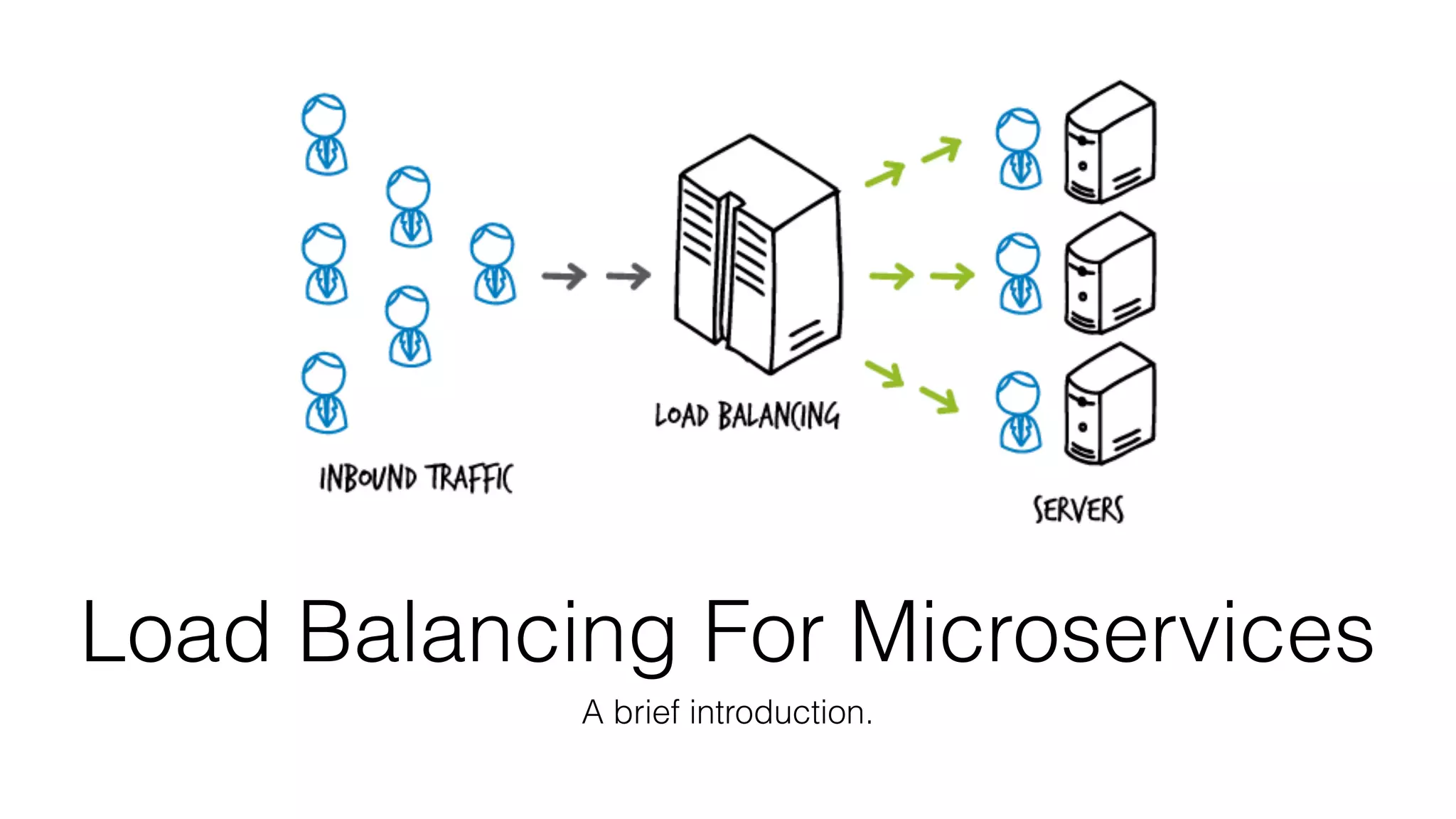
Load Balancing For Microservices
A brief introduction.
Load Balancing For Microservices
• Load balancing: a technique to
equally distribute traffic between
servers (duh.)
• Most popular options runs on Layer 4
or Layer 7 (OSI: Open Systems
Interconnection Model)
• Layer 4: operates at the
intermediate transport layer (TCP/
IP)
• Layer 7: operates at the high-level
application layer (user namespace)
Load Balancing For Microservices
• L4 options:
• LVM
• L7 options:
• NGINX
• Apache HTTP Server
• HAProxy
• Most public / private clouds have
their solutions inside-the-box
Load Balancing For Microservices
• In a microservices environment where
one service runs in one instance as a
standard and scaling is manual, L4 / L7
load balancing options are good enough
• And about containers?
• AWS ELB supports ECS
• Microsoft Azure supports ACS (but
requires DC/OS)
• GCE uses GKE
• OpenStack uses neutron-lbaas
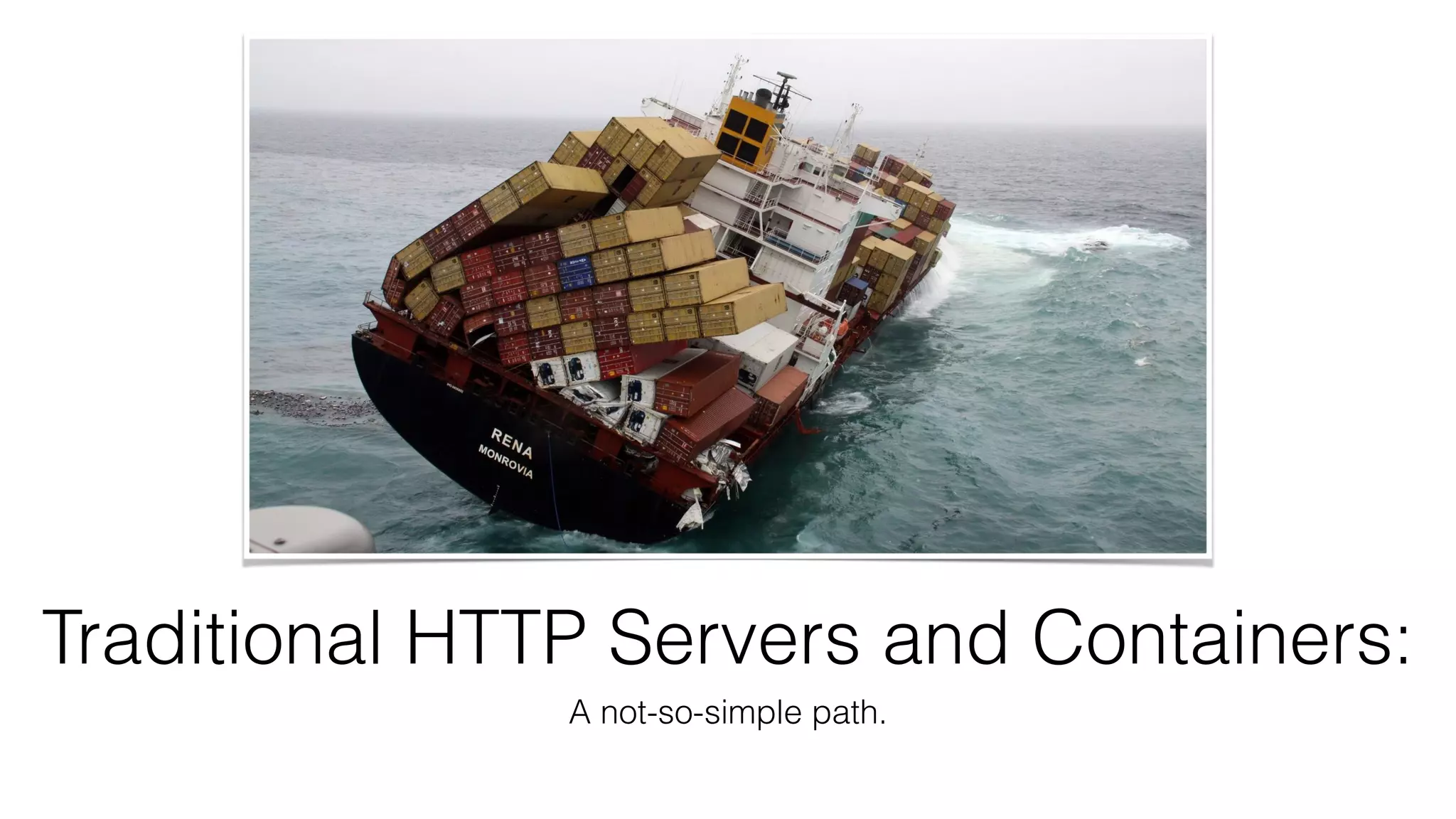
Traditional HTTP Servers and Containers:
A not-so-simple path.
Traditional HTTP Servers and Containers
• HAProxy, Apache HTTP Server and
NGINX are created before of
Microservices / Containers boom
• Based on static vhost
configuration
• You need to previously know the
number of upstreams to configure
• But how to dynamically discover
new servers / containers and
discard old ones?
Traditional HTTP Servers and Containers
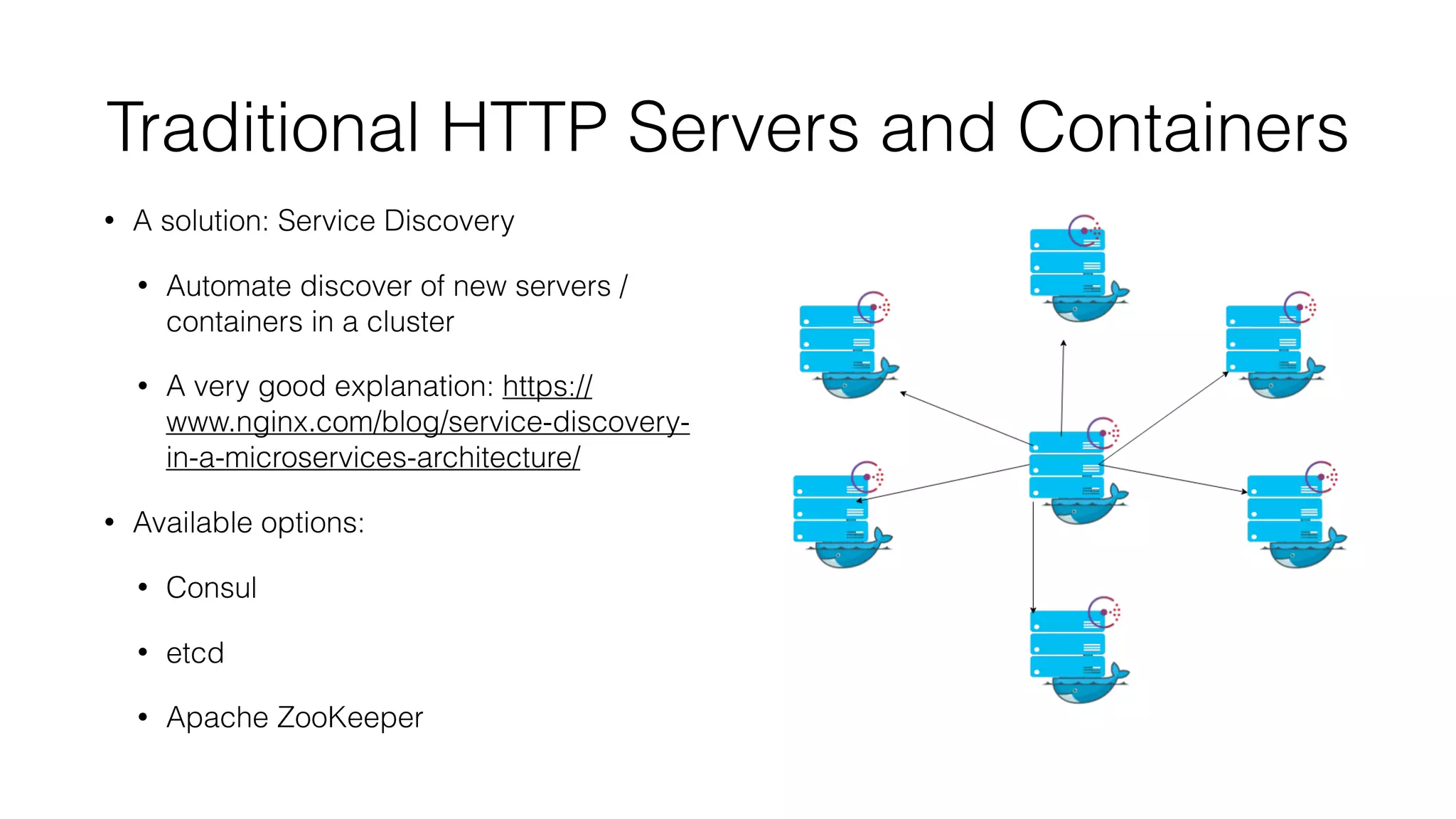
• A solution: Service Discovery
• Automate discover of new servers /
containers in a cluster
• A very good explanation: https://
www.nginx.com/blog/service-discovery-
in-a-microservices-architecture/
• Available options:
• Consul
• etcd
• Apache ZooKeeper
Traditional HTTP Servers and Containers
• Most famous solution to Apache
HTTPD, NGINX and HAProxy:
consul-template
• Uses Consul as service registry
database to discover new
instances / containers running
• Dynamically generate vhost files
and sends a SIGHUP signal to
nginx / httpd daemon reload
configurations and apply changes
(hot-reload)
Traditional HTTP Servers and Containers
• It works? Yes.
• But you need to create a Consul
infrastructure
• A Consul master
• Pool of Consul agents
• Dockerized Consul isn’t a good
idea
• Obviously, more one dependency
Traefik: Dynamic Load Balancer For Containers
Cheese As A Service.
Traefik: Dynamic Load Balancing For Containers
• Created by Emile Vauge
• Written in Go
• Focused on microservices
• HTTP/2 Support
• Websockets
• Let’s Encrypt
• Docker, Swarm, Kubernetes, Marathon,
Mesos, Consul, Etcd and others
Traefik: Dynamic Load Balancing For Containers
• How it works?
• Traefik listens to backend /
orchestrator API’s and detects any
changes, applying it
• Routes are dynamically managed
• You can create / update / destroy
routes at any time
Traefik: Dynamic Load Balancing For Containers
• How it works internally?
• Traefik reads service metadata on
Docker / Kubernetes / etcd / etc
• Hosts, ports, load balancing
algorithm etc
• You can persist configuration
using Consul, BoltDB, Amazon
ECS and other backends
• Let’s Encrypt integration
requires a key-value storage
Traefik: Dynamic Load Balancing For Containers
• Traefik main concepts:
• Entrypoints: network entry points
(HTTP, HTTPS, SSL etc)
• Backends: a load-balancing
method to receive requests
• Frontends: set of rules that maps
entrypoints to backends
Yes.
Live Demo time! Running in a Docker Swarm cluster.
Questions? Is free.
About benchmarks, visit https://docs.traefik.io/benchmarks/
Thank you! :)

TDC2017 | São Paulo - Trilha Containers How we figured out we had a SRE team at - Traefik: Dynamic container load balancer for containers

  • 1.
    Traefik: Dynamic LoadBalancer For Containers Marcelo Pinheiro @salizzar
  • 3.
    $ whoami • Fireman/ Problem Solver / Programmer since 2000 • Ruby, Python, Golang, Java, C#, Classic ASP, PHP, Node.js, Erlang and others • Fought, made coffee, negotiated deadlines • DevOps Engineer @ Work & Co
  • 4.
    Load Balancing ForMicroservices A brief introduction.
  • 5.
    Load Balancing ForMicroservices • Load balancing: a technique to equally distribute traffic between servers (duh.) • Most popular options runs on Layer 4 or Layer 7 (OSI: Open Systems Interconnection Model) • Layer 4: operates at the intermediate transport layer (TCP/ IP) • Layer 7: operates at the high-level application layer (user namespace)
  • 6.
    Load Balancing ForMicroservices • L4 options: • LVM • L7 options: • NGINX • Apache HTTP Server • HAProxy • Most public / private clouds have their solutions inside-the-box
  • 7.
    Load Balancing ForMicroservices • In a microservices environment where one service runs in one instance as a standard and scaling is manual, L4 / L7 load balancing options are good enough • And about containers? • AWS ELB supports ECS • Microsoft Azure supports ACS (but requires DC/OS) • GCE uses GKE • OpenStack uses neutron-lbaas
  • 8.
    Traditional HTTP Serversand Containers: A not-so-simple path.
  • 9.
    Traditional HTTP Serversand Containers • HAProxy, Apache HTTP Server and NGINX are created before of Microservices / Containers boom • Based on static vhost configuration • You need to previously know the number of upstreams to configure • But how to dynamically discover new servers / containers and discard old ones?
  • 10.
    Traditional HTTP Serversand Containers • A solution: Service Discovery • Automate discover of new servers / containers in a cluster • A very good explanation: https:// www.nginx.com/blog/service-discovery- in-a-microservices-architecture/ • Available options: • Consul • etcd • Apache ZooKeeper
  • 11.
    Traditional HTTP Serversand Containers • Most famous solution to Apache HTTPD, NGINX and HAProxy: consul-template • Uses Consul as service registry database to discover new instances / containers running • Dynamically generate vhost files and sends a SIGHUP signal to nginx / httpd daemon reload configurations and apply changes (hot-reload)
  • 12.
    Traditional HTTP Serversand Containers • It works? Yes. • But you need to create a Consul infrastructure • A Consul master • Pool of Consul agents • Dockerized Consul isn’t a good idea • Obviously, more one dependency
  • 13.
    Traefik: Dynamic LoadBalancer For Containers Cheese As A Service.
  • 14.
    Traefik: Dynamic LoadBalancing For Containers • Created by Emile Vauge • Written in Go • Focused on microservices • HTTP/2 Support • Websockets • Let’s Encrypt • Docker, Swarm, Kubernetes, Marathon, Mesos, Consul, Etcd and others
  • 15.
    Traefik: Dynamic LoadBalancing For Containers • How it works? • Traefik listens to backend / orchestrator API’s and detects any changes, applying it • Routes are dynamically managed • You can create / update / destroy routes at any time
  • 16.
    Traefik: Dynamic LoadBalancing For Containers • How it works internally? • Traefik reads service metadata on Docker / Kubernetes / etcd / etc • Hosts, ports, load balancing algorithm etc • You can persist configuration using Consul, BoltDB, Amazon ECS and other backends • Let’s Encrypt integration requires a key-value storage
  • 17.
    Traefik: Dynamic LoadBalancing For Containers • Traefik main concepts: • Entrypoints: network entry points (HTTP, HTTPS, SSL etc) • Backends: a load-balancing method to receive requests • Frontends: set of rules that maps entrypoints to backends
  • 18.
    Yes. Live Demo time!Running in a Docker Swarm cluster.
  • 19.
    Questions? Is free. Aboutbenchmarks, visit https://docs.traefik.io/benchmarks/
  • 20.