Traumatic brain injury
• Traumatic brain injury (TBI) can be considered as
the
• combination of primary injury sustained on impact,
and hence
• not medically modifable, and secondary injury
developing in
• the following hours and days. Understanding the
importance
• of intracranial pressure (ICP) and related
parameters is key to
• minimising secondary injury and improving
Intracranial pressure and cerebral
blood fow
• Intracranial pressure and cerebral blood fow The
brain depends on continuous perfusion for oxygen
and glucose delivery, and hence survival. Normal
cerebral blood fow (CBF) is about 55 mL/min for
every 100 g of brain tissue. Ischaemia results when
this rate drops below 20 mL/min, and even lower
levels will result in infarction unless promptly
corrected
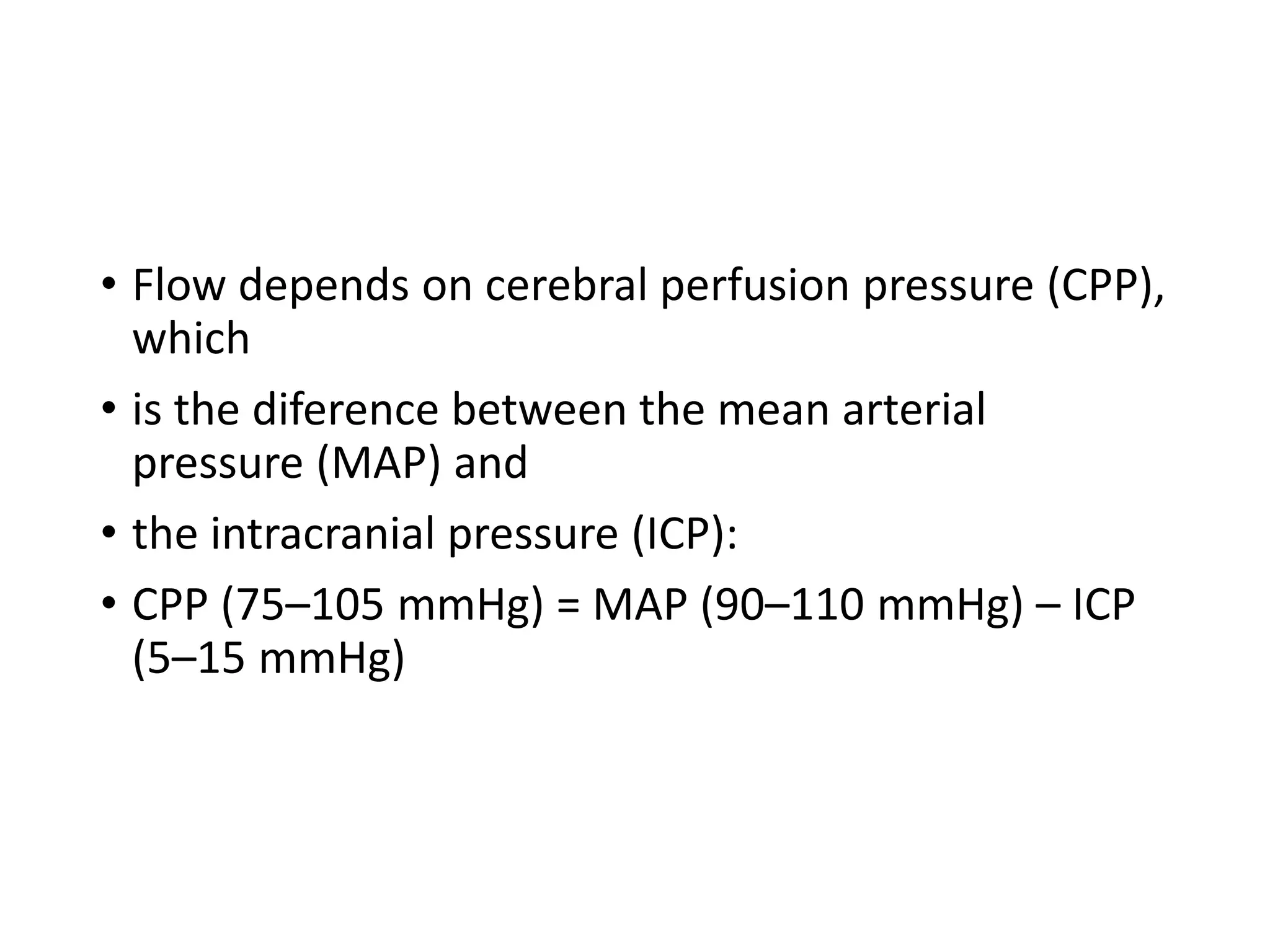
• Flow depends on cerebral perfusion pressure (CPP),
which
• is the diference between the mean arterial
pressure (MAP) and
• the intracranial pressure (ICP):
• CPP (75–105 mmHg) = MAP (90–110 mmHg) – ICP
(5–15 mmHg)
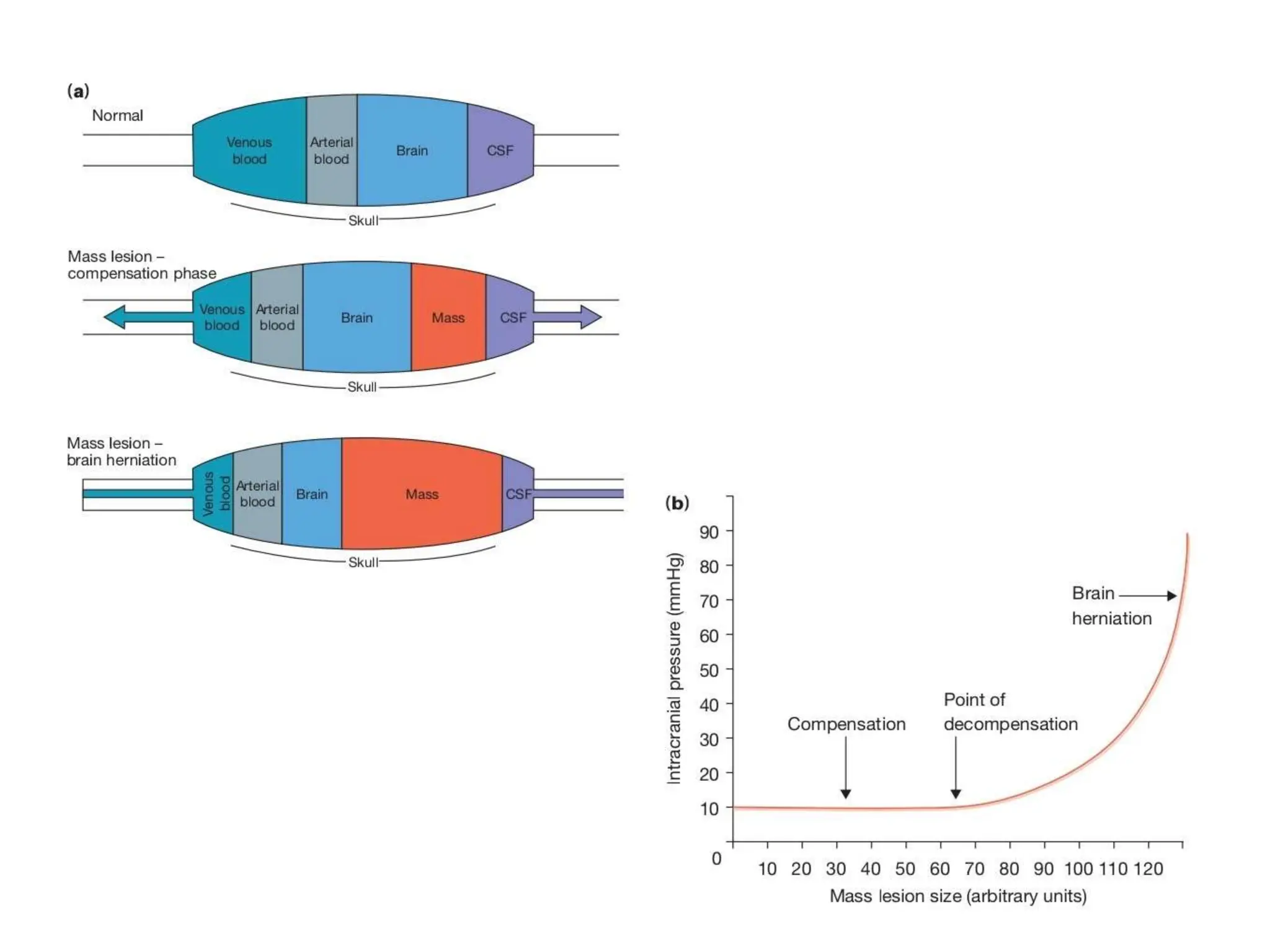
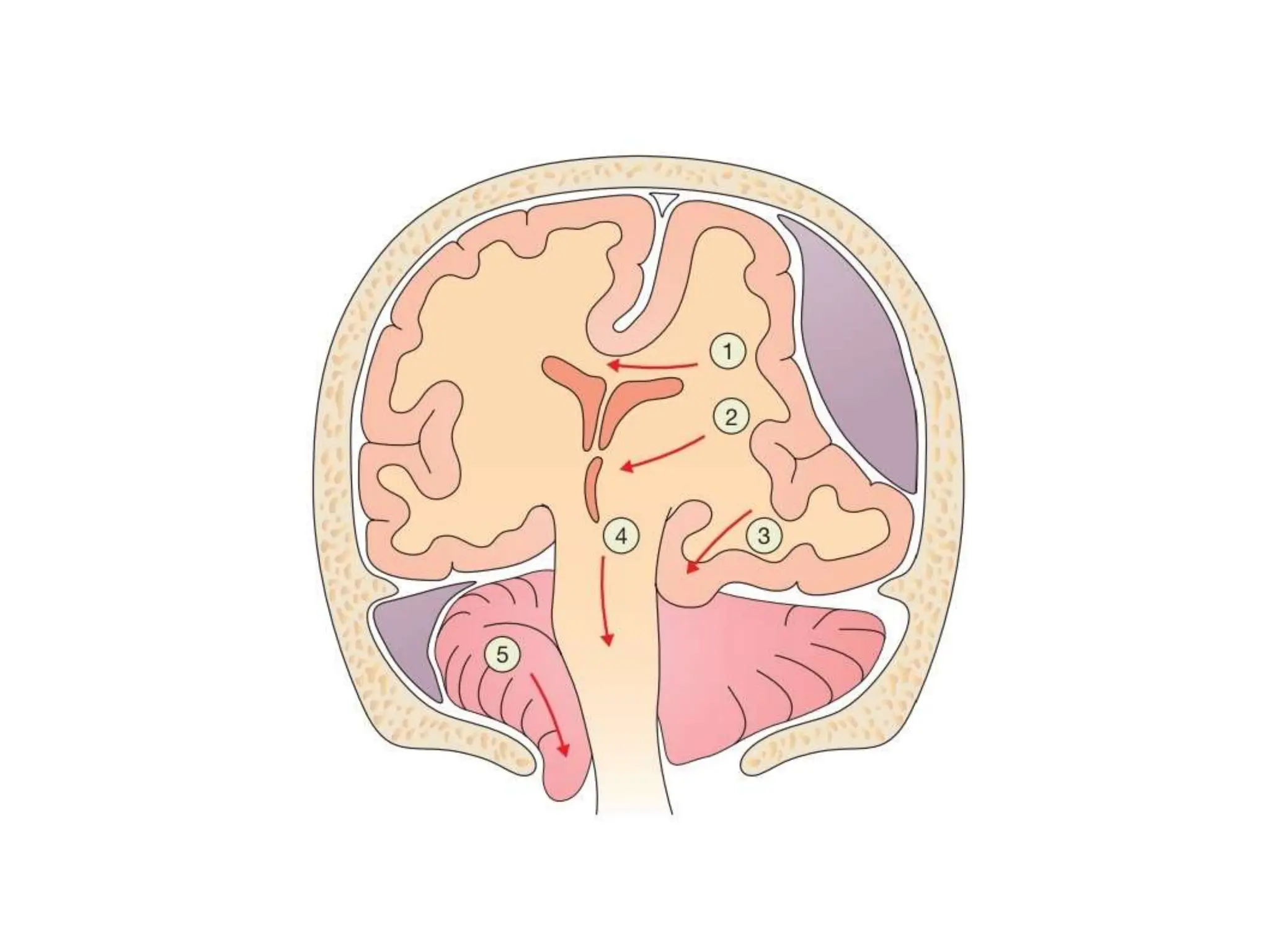
The Monro–Kellie doctrine and
herniation syndromes
• Cerebellar tonsillar herniation through the
• foramen magnum compresses medullary vasomotor
and respiratory centres, classically producing
Cushing’s triad: hypertension, bradycardia and
irregular respiration. The
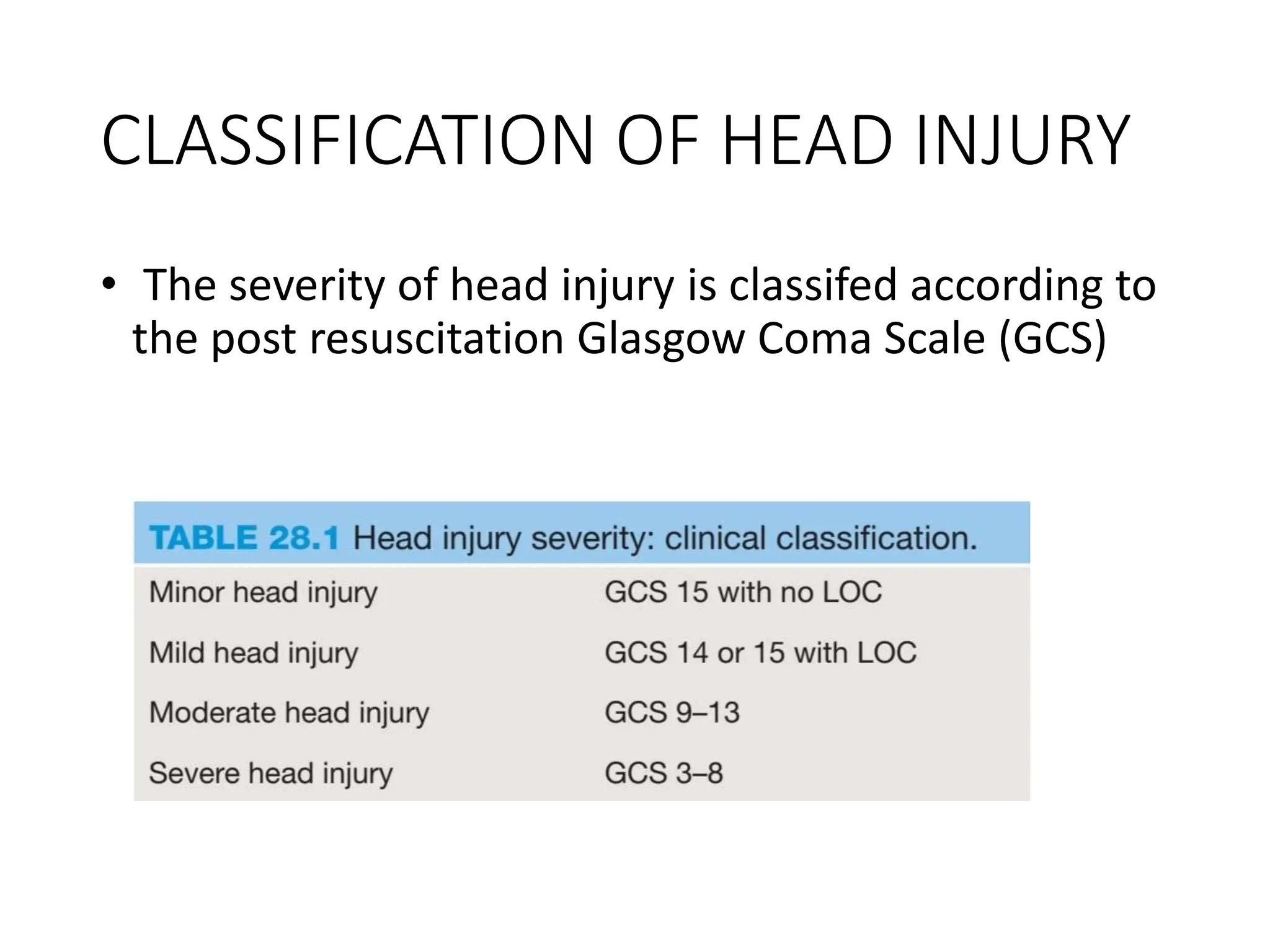
• Severe head injury
• GCS 3–8
• patient is then said to be ‘coning’, and brainstem
death will
• result without immediate intervention.
CLASSIFICATION OF HEAD INJURY
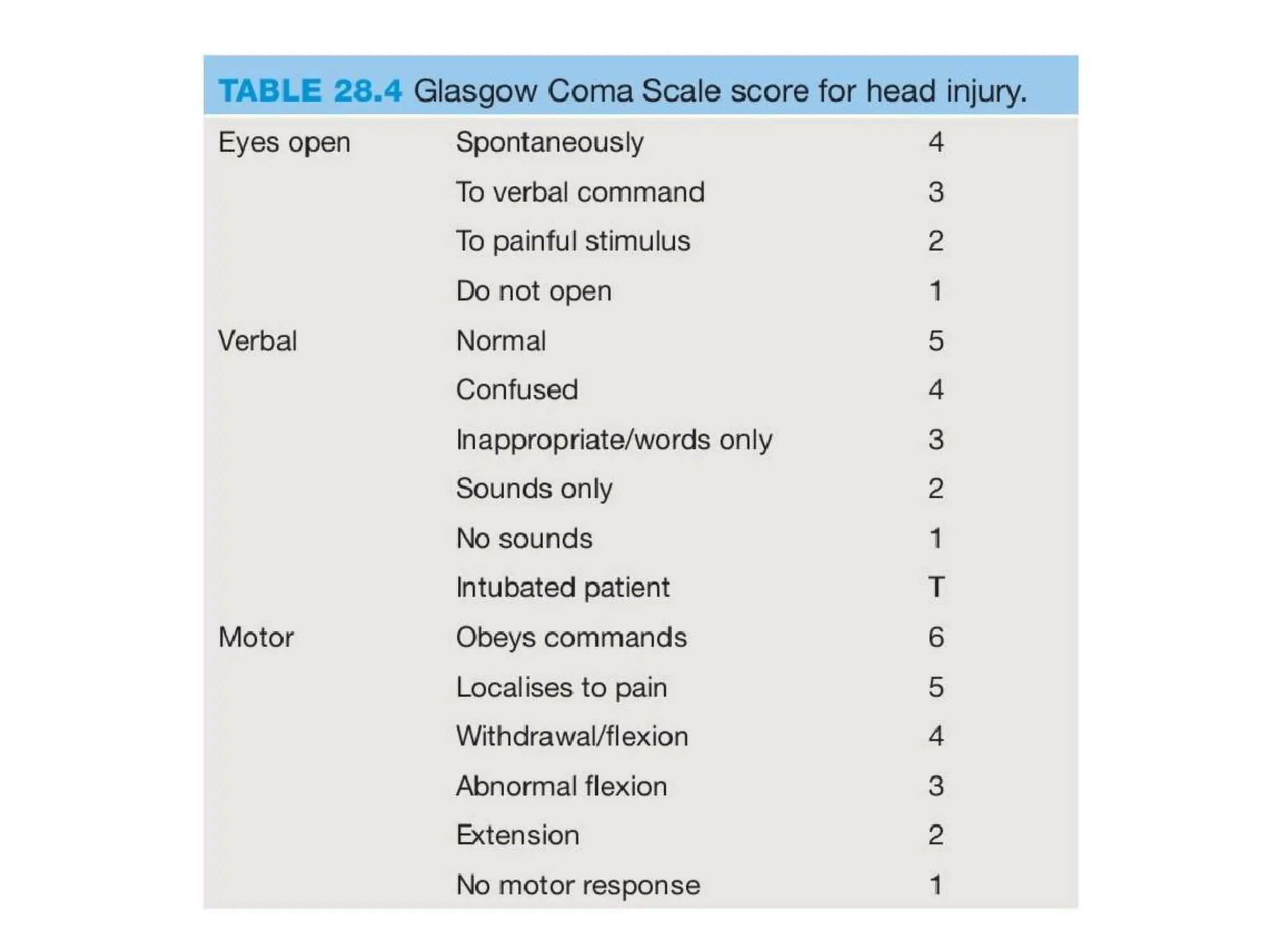
• The severity of head injury is classifed according to
the post resuscitation Glasgow Coma Scale (GCS)
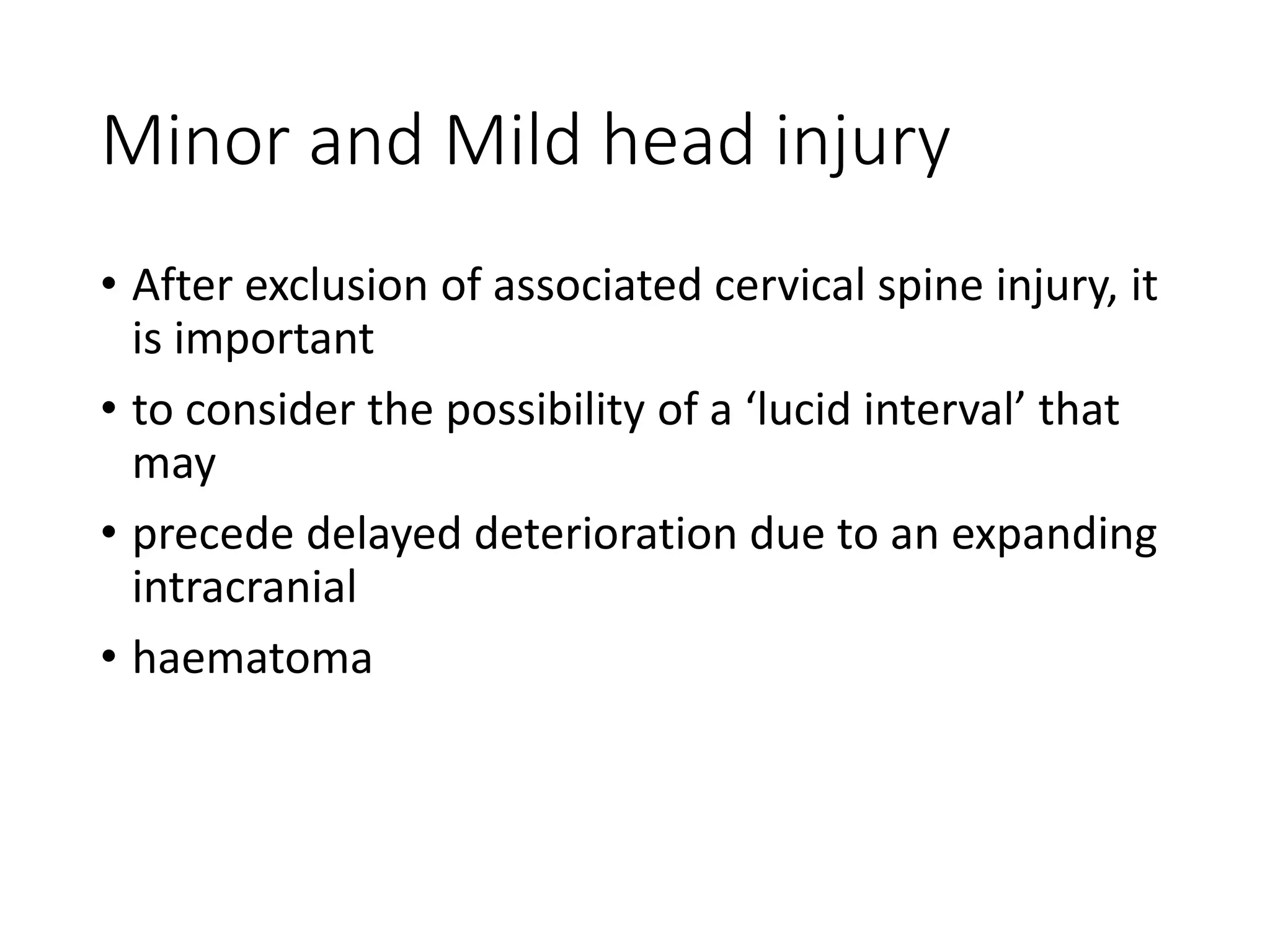
Minor and Mild head injury
• After exclusion of associated cervical spine injury, it
is important
• to consider the possibility of a ‘lucid interval’ that
may
• precede delayed deterioration due to an expanding
intracranial
• haematoma
Non-accidental injury
• Head injury in children and vulnerable adults may
be due to abuse. Signifcant fndings include delayed
presentation, injuries of disparate age, retinal
haemorrhages, bilateral chronic subdural
haematomas, multiple skull fractures and
neurological injury without external signs of
trauma.
Concussion, second impact syndrome
and postconcussive syndrome
• Concussion is defned as the alteration of
consciousness as a
• result of closed head injury but is generally used to
describe
• mild head injury without imaging abnormalities:
loss of
• consciousness at the time of injury is not a
prerequisite. Key
• features include confusion and amnesia
• Postconcussive syndrome is a loosely defined
constellation
• of symptoms persisting for a prolonged period after
injury.
• Patients may report somatic features such as
headache, dizzinessand disorders of hearing and
vision. They may also suffer
• a variety of neurocognitive and neuropsychological
disturbances,including difculty with concentration
and recall, insomnia, emotional lability, fatigue,
depression and personality change.
Summary
● Decisions on imaging and discharge are best made
guided by published criteria
● In preverbal children and other vulnerable groups,
nonaccidentalinjury must be considered
● Amnesia, confusion, headaches and somnolence
are typical features of concussion
MODERATE AND SEVERE
TRAUMATIC BRAIN INJURY
• Resuscitation and evaluation
• Resuscitation is performed according to Advanced
Trauma
• Life Support (ATLS) guidelines, beginning with
management
• of the airway with cervical spine control and
proceeding to
• assess and manage breathing and circulation. The
history obtained in parallel is key to shaping
ongoing management.
History
Mechanism
• In moderate and severe TBI, a history must be obtained from
• witnesses and paramedics. High-energy mechanisms of injury,
• including a fall from a height or a high-speed road accident, will
• require careful clinical and radiological exclusion of associated
• multisystem and spinal injury (see Chapters 27 and 30). In the
• case of road trafc accidents in particular, extraction time and
• evidence of hypoxia or haemodynamic instability at the scene
• is important information to obtain from the paramedics.
• Falls and crashes are often caused by a primary
medical problem
• such as myocardial infarction, hypoglycaemia or
subarachnoid
• haemorrhage, with crucial implications for
management.
Neurological progression
• A specifc check should be made for any loss of consciousness
• at the time of injury and its duration. The GCS score and pupil
• responses should be recorded at the scene, during transfer,
• at admission and regularly thereafter. A deterioration in the
• GCS score is an important index of developing a potentially
• reversible secondary injury. It is also useful to assess the extent
• of amnesia, retrograde (events prior to the injury) and
anterograde
• (events afterwards). If the patient was intubated at the
• scene of the accident, it is valuable to know whether the patient
was moving all four limbs before this.
Past medical history
• Obtain details of the patient’s medical background,
including
• allergies and normal medications. Of particular
note here are
• antiplatelet agents, potentially requiring platelet
transfusion especially if surgery is required, and
anticoagulants, which may need reversal.
Examination: primary survey
• ATLS guidelines address a fundamental priority:
ensuring uninterrupted perfusion of the brain with
oxygenated blood. This is especially important after
a head injury, given the disturbance to intracranial
autoregulation and the sensitivity of the primary
injured brain tissue to further insult. Bleeding from
scalp lacerations may require management as part
of the primary survey as the blood loss can
besubstantial and ongoing
Pupil
• The pupil size should be recorded in millimetres
and the reactivity documented as present, sluggish
or absent. Uncal herniation can compress the third
nerve, compromising the parasympathetic supply
to the pupil. Unopposed sympathetic activity
produces a sluggish enlarged pupil, progressing to
fixed and dilated under continued compression
Summary
Primary survey
● Ensure adequate oxygenation and circulation
● Exclude hypoglycaemia
● Check pupil size and response and GCS score as
soon as possible
● Check for focal neurological defcits before
intubation if
possible
Examination: secondary survey
Head
• Examination of the head should include inspection and palpation
• of the scalp for evidence of subgaleal haematoma and
• scalp lacerations, which may bleed profusely and potentially
• overlie fractures. Examine the face for evidence of fractures,
• especially to the orbital rim, zygoma and maxilla. Clinical
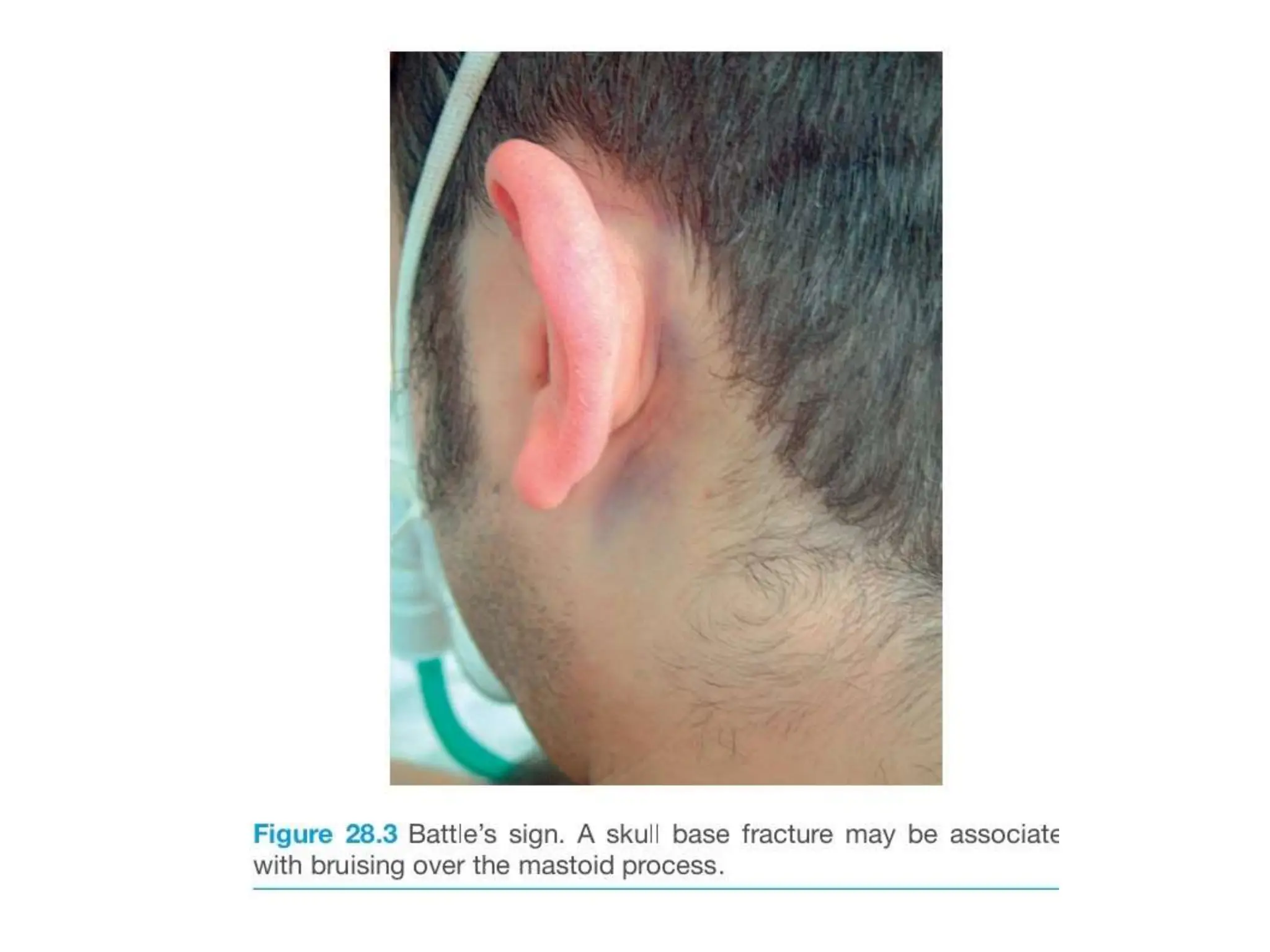
• evidence of a skull base fracture may include Battle’s sign and
‘racoon’ or ‘panda’ eyes (bilateral periorbital
• bruising). Haemotympanum, or overt bleeding from the ear if the
tympanic membrane has ruptured, and CSF rhinorrhoea or
otorrhoea are also highly suggestive of a fracture of the base of
the skull.
Neck and spine
• Studies have demonstrated an incidence of cervical
fracture
• of up to 10% in association with moderate and
severe TBI.
• Cervical spine injury must be presumed in the
context of head
• injury until actively excluded. In a high-energy
mechanism
• such as a road trafc accident or fall from a height,
thoracic
• A peripheral nerve examination with
documentation of limb tone, power, refexes and
sensation needs to be performed early to identify
spinal pathology
Summary
Secondary survey
● Battle’s sign, periorbital bruising and blood in the
ears/nose/
mouth may point to a base of skull fracture
● Cervical spine fractures are common and must be
actively
excluded
● Log-roll to check the whole spine for steps and
tenderness
and for a per rectum examination
SURGICAL PATHOLOGY
Fractures: skull vault
• Closed linear fractures of the skull vault are
managed conservatively.
• Open or comminuted fractures should be
considered, debridement and prophylactic
antibiotic therapy.
• Depressed skull fractures involve inward
displacement of a bone fragment by at least the
thickness of the skull.
Fractures: skull base
• Clinical signs of skull base fracture include bleeding or
CSF
• leak from the ears (otorrhoea) or nose (rhinorrhoea)
and
• bruising behind the ear (Figure 28.3) or around the
eyes. Skull base fractures may be complicated by
pituitary dysfunction, arterial dissection or cranial
nerve defcits, with anosmia, facial palsy or hearing loss
typical. CSF leak will generally resolve spontaneously
but persistent leak can result in meningitis so repair
may be required. Blind nasogastric tube placement is
contraindicated in these patients.
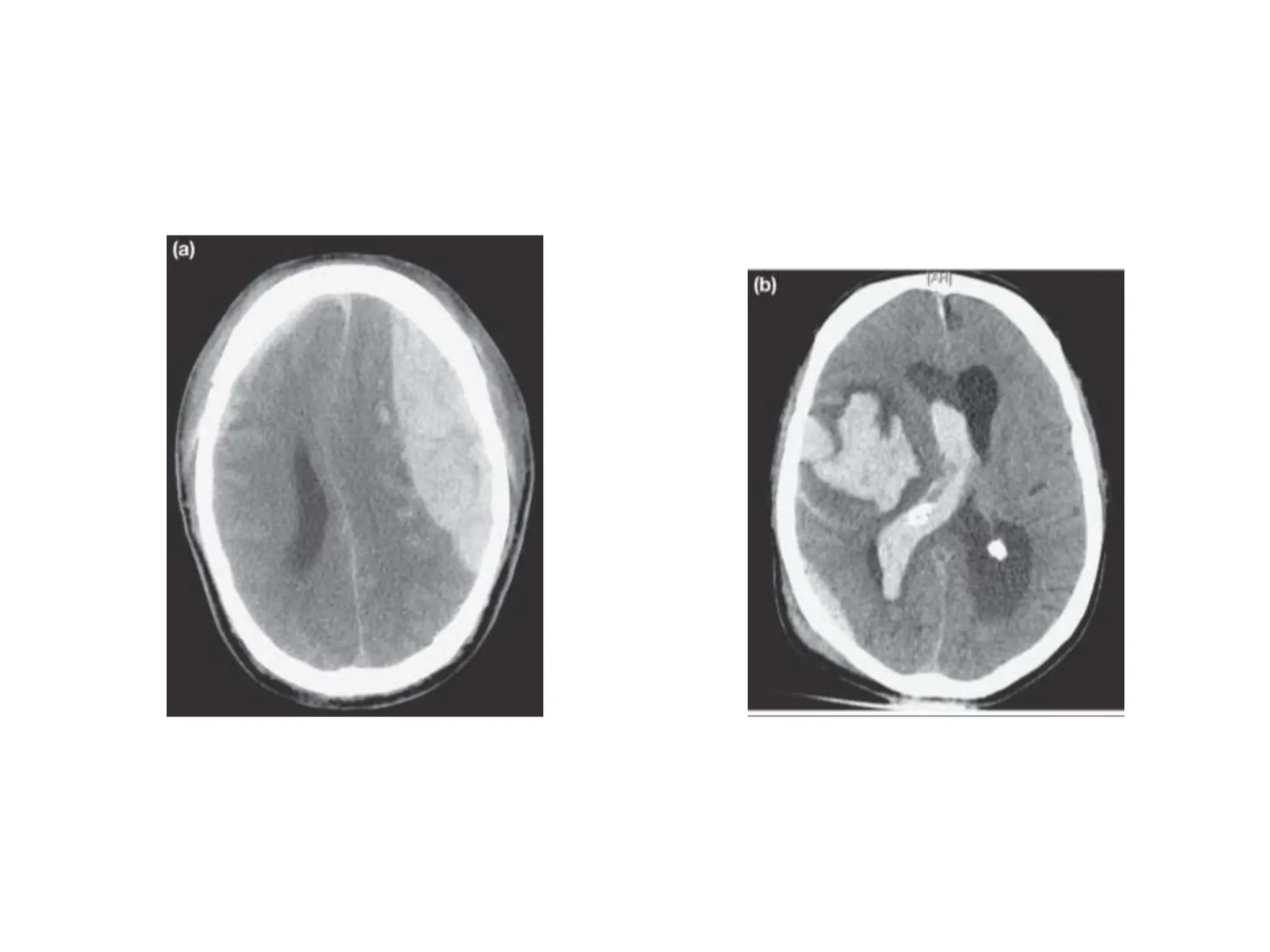
Extradural haematoma
• Extradural haematoma is a neurosurgical
emergency.
• It results from rupture of an artery, vein or venous
sinus,
• in association with a skull fracture. The classical
injury is a fracture to the thin squamous temporal
bone, with associated damage to the middle
meningeal artery. Transient loss of consciousness is
typical, and the patient may then present in the
subsequent lucid interval with headache but
without any neurological deficit.
Extradural haemorrhage
● Can follow relatively minor trauma with brief loss
of
consciousness
● Followed by a lucid interval and then sudden
deterioration
● Lentiform lesion on CT
● Require immediate transfer to a neurosurgical unit
for decision
on evacuation
Acute subdural haematoma
• This is encountered in two broadly distinct
contexts. First, high-energy injury mechanisms can
result in the rupture of cortical surface vessels with
signifcant associated primary brain injury. This
results in an expanding haematoma with rapid
deterioration
Chronic subdural haematoma
• Chronic subdural haematoma (Figure 28.7) is a
common
• cause of acute neurological deterioration in older
adults.
• Cerebral atrophy in this age group results in stretching
of the
• cortical–dural bridging veins, which are then vulnerable
to
• rupture. The resulting haematoma can expand over
days or
• weeks by osmosis, ultimately producing symptoms of
raised
• ICP or focal defcits.
Traumatic subarachnoid
haemorrhage
• Trauma is the commonest cause of subarachnoid
haemorrhage, and this is managed conservatively.
• It is not usually associated with signifcant
vasospasm, which
• characterises aneurysmal subarachnoid
haemorrhage.
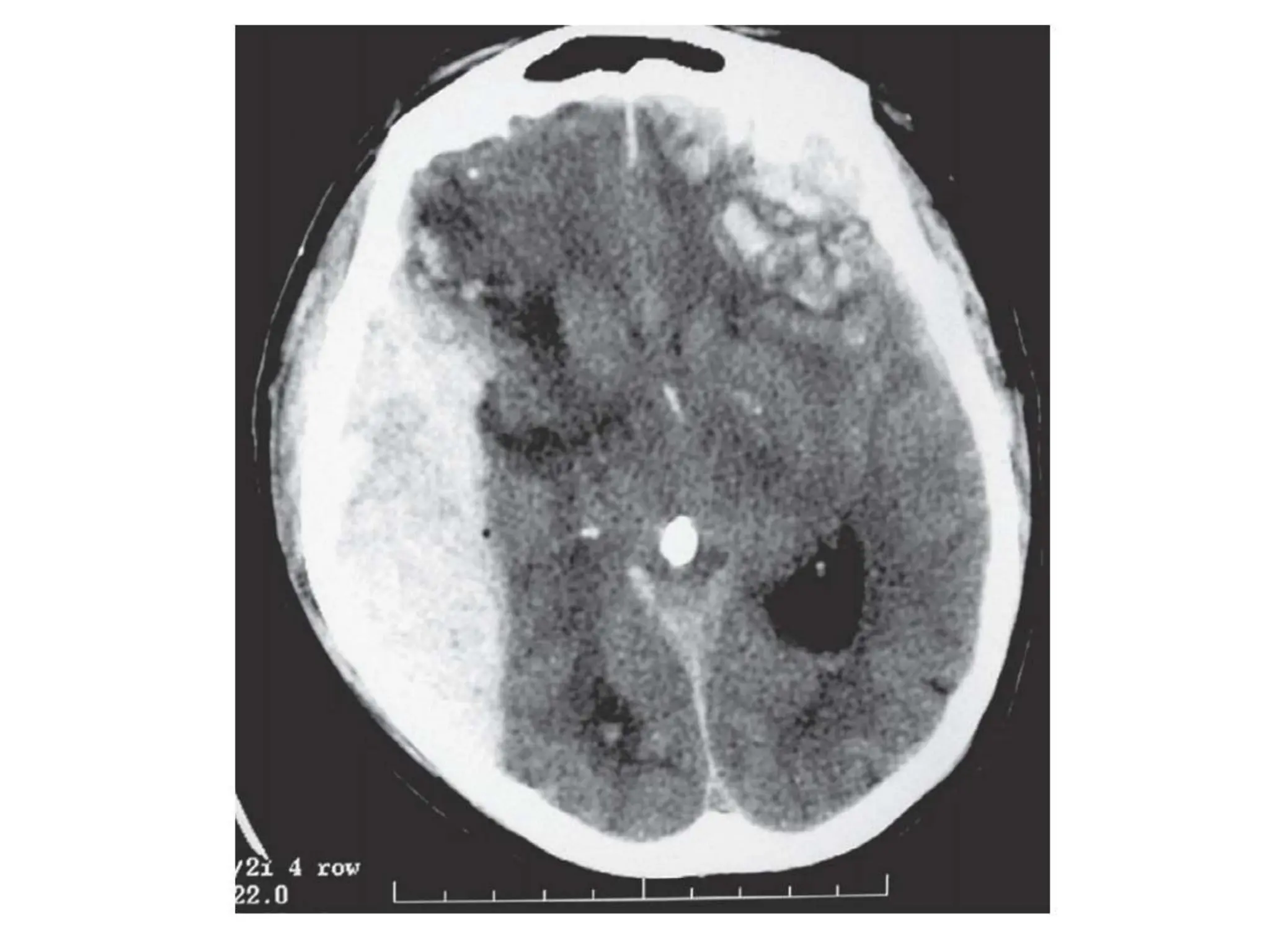
Cerebral contusion
• Contusions are common and are found predominantly
where
• the brain is in contact with the irregularly ridged inside
of
• the skull, i.e. at the inferior frontal lobes and temporal
poles.
• ‘Coup contre-coup’ contusions refer to brain injury
both at
• the site of impact and distant to this, where the brain
impacts
• on the inside of the skull as the skull and brain
accelerate and
• then decelerate out of synchrony with each other.
Diffuse axonal injury
• This is a form of primary brain injury seen in high-
energy accidents that usually renders the patient
comatose; it is associated
• with poor outcomes. It is strictly a pathological
diagnosis made
• at postmortem, but haemorrhagic foci in the
corpus callosum
• and dorsolateral rostral brainstem on CT may be
suggestive.
Atrial dissection
• Cerebral arterial dissection occurs spontaneously or in the
• context of trauma. In the hours after signifcant trauma,
• dissection of the carotid extracranially, or at the skull base in
• association with fractures, is most common. It presents with
• headache, neck pain and focal ischaemic defcits due to
occlusion by mural haematoma, thrombus and
thromboembolism.
• Intracranial dissection often afects the vertebral artery and
• may result in subarachnoid bleeding.

TBI definion and their types well explained

  • 2.
    Traumatic brain injury •Traumatic brain injury (TBI) can be considered as the • combination of primary injury sustained on impact, and hence • not medically modifable, and secondary injury developing in • the following hours and days. Understanding the importance • of intracranial pressure (ICP) and related parameters is key to • minimising secondary injury and improving
  • 3.
    Intracranial pressure andcerebral blood fow • Intracranial pressure and cerebral blood fow The brain depends on continuous perfusion for oxygen and glucose delivery, and hence survival. Normal cerebral blood fow (CBF) is about 55 mL/min for every 100 g of brain tissue. Ischaemia results when this rate drops below 20 mL/min, and even lower levels will result in infarction unless promptly corrected
  • 4.
    • Flow dependson cerebral perfusion pressure (CPP), which • is the diference between the mean arterial pressure (MAP) and • the intracranial pressure (ICP): • CPP (75–105 mmHg) = MAP (90–110 mmHg) – ICP (5–15 mmHg)
  • 5.
    The Monro–Kellie doctrineand herniation syndromes • Cerebellar tonsillar herniation through the • foramen magnum compresses medullary vasomotor and respiratory centres, classically producing Cushing’s triad: hypertension, bradycardia and irregular respiration. The • Severe head injury • GCS 3–8 • patient is then said to be ‘coning’, and brainstem death will • result without immediate intervention.
  • 8.
    CLASSIFICATION OF HEADINJURY • The severity of head injury is classifed according to the post resuscitation Glasgow Coma Scale (GCS)
  • 9.
    Minor and Mildhead injury • After exclusion of associated cervical spine injury, it is important • to consider the possibility of a ‘lucid interval’ that may • precede delayed deterioration due to an expanding intracranial • haematoma
  • 10.
    Non-accidental injury • Headinjury in children and vulnerable adults may be due to abuse. Signifcant fndings include delayed presentation, injuries of disparate age, retinal haemorrhages, bilateral chronic subdural haematomas, multiple skull fractures and neurological injury without external signs of trauma.
  • 11.
    Concussion, second impactsyndrome and postconcussive syndrome • Concussion is defned as the alteration of consciousness as a • result of closed head injury but is generally used to describe • mild head injury without imaging abnormalities: loss of • consciousness at the time of injury is not a prerequisite. Key • features include confusion and amnesia
  • 12.
    • Postconcussive syndromeis a loosely defined constellation • of symptoms persisting for a prolonged period after injury. • Patients may report somatic features such as headache, dizzinessand disorders of hearing and vision. They may also suffer • a variety of neurocognitive and neuropsychological disturbances,including difculty with concentration and recall, insomnia, emotional lability, fatigue, depression and personality change.
  • 13.
    Summary ● Decisions onimaging and discharge are best made guided by published criteria ● In preverbal children and other vulnerable groups, nonaccidentalinjury must be considered ● Amnesia, confusion, headaches and somnolence are typical features of concussion
  • 14.
    MODERATE AND SEVERE TRAUMATICBRAIN INJURY • Resuscitation and evaluation • Resuscitation is performed according to Advanced Trauma • Life Support (ATLS) guidelines, beginning with management • of the airway with cervical spine control and proceeding to • assess and manage breathing and circulation. The history obtained in parallel is key to shaping ongoing management.
  • 15.
    History Mechanism • In moderateand severe TBI, a history must be obtained from • witnesses and paramedics. High-energy mechanisms of injury, • including a fall from a height or a high-speed road accident, will • require careful clinical and radiological exclusion of associated • multisystem and spinal injury (see Chapters 27 and 30). In the • case of road trafc accidents in particular, extraction time and • evidence of hypoxia or haemodynamic instability at the scene • is important information to obtain from the paramedics.
  • 16.
    • Falls andcrashes are often caused by a primary medical problem • such as myocardial infarction, hypoglycaemia or subarachnoid • haemorrhage, with crucial implications for management.
  • 17.
    Neurological progression • Aspecifc check should be made for any loss of consciousness • at the time of injury and its duration. The GCS score and pupil • responses should be recorded at the scene, during transfer, • at admission and regularly thereafter. A deterioration in the • GCS score is an important index of developing a potentially • reversible secondary injury. It is also useful to assess the extent • of amnesia, retrograde (events prior to the injury) and anterograde • (events afterwards). If the patient was intubated at the • scene of the accident, it is valuable to know whether the patient was moving all four limbs before this.
  • 18.
    Past medical history •Obtain details of the patient’s medical background, including • allergies and normal medications. Of particular note here are • antiplatelet agents, potentially requiring platelet transfusion especially if surgery is required, and anticoagulants, which may need reversal.
  • 19.
    Examination: primary survey •ATLS guidelines address a fundamental priority: ensuring uninterrupted perfusion of the brain with oxygenated blood. This is especially important after a head injury, given the disturbance to intracranial autoregulation and the sensitivity of the primary injured brain tissue to further insult. Bleeding from scalp lacerations may require management as part of the primary survey as the blood loss can besubstantial and ongoing
  • 20.
    Pupil • The pupilsize should be recorded in millimetres and the reactivity documented as present, sluggish or absent. Uncal herniation can compress the third nerve, compromising the parasympathetic supply to the pupil. Unopposed sympathetic activity produces a sluggish enlarged pupil, progressing to fixed and dilated under continued compression
  • 22.
    Summary Primary survey ● Ensureadequate oxygenation and circulation ● Exclude hypoglycaemia ● Check pupil size and response and GCS score as soon as possible ● Check for focal neurological defcits before intubation if possible
  • 23.
    Examination: secondary survey Head •Examination of the head should include inspection and palpation • of the scalp for evidence of subgaleal haematoma and • scalp lacerations, which may bleed profusely and potentially • overlie fractures. Examine the face for evidence of fractures, • especially to the orbital rim, zygoma and maxilla. Clinical • evidence of a skull base fracture may include Battle’s sign and ‘racoon’ or ‘panda’ eyes (bilateral periorbital • bruising). Haemotympanum, or overt bleeding from the ear if the tympanic membrane has ruptured, and CSF rhinorrhoea or otorrhoea are also highly suggestive of a fracture of the base of the skull.
  • 25.
    Neck and spine •Studies have demonstrated an incidence of cervical fracture • of up to 10% in association with moderate and severe TBI. • Cervical spine injury must be presumed in the context of head • injury until actively excluded. In a high-energy mechanism • such as a road trafc accident or fall from a height, thoracic
  • 26.
    • A peripheralnerve examination with documentation of limb tone, power, refexes and sensation needs to be performed early to identify spinal pathology
  • 27.
    Summary Secondary survey ● Battle’ssign, periorbital bruising and blood in the ears/nose/ mouth may point to a base of skull fracture ● Cervical spine fractures are common and must be actively excluded ● Log-roll to check the whole spine for steps and tenderness and for a per rectum examination
  • 28.
    SURGICAL PATHOLOGY Fractures: skullvault • Closed linear fractures of the skull vault are managed conservatively. • Open or comminuted fractures should be considered, debridement and prophylactic antibiotic therapy. • Depressed skull fractures involve inward displacement of a bone fragment by at least the thickness of the skull.
  • 29.
    Fractures: skull base •Clinical signs of skull base fracture include bleeding or CSF • leak from the ears (otorrhoea) or nose (rhinorrhoea) and • bruising behind the ear (Figure 28.3) or around the eyes. Skull base fractures may be complicated by pituitary dysfunction, arterial dissection or cranial nerve defcits, with anosmia, facial palsy or hearing loss typical. CSF leak will generally resolve spontaneously but persistent leak can result in meningitis so repair may be required. Blind nasogastric tube placement is contraindicated in these patients.
  • 31.
    Extradural haematoma • Extraduralhaematoma is a neurosurgical emergency. • It results from rupture of an artery, vein or venous sinus, • in association with a skull fracture. The classical injury is a fracture to the thin squamous temporal bone, with associated damage to the middle meningeal artery. Transient loss of consciousness is typical, and the patient may then present in the subsequent lucid interval with headache but without any neurological deficit.
  • 33.
    Extradural haemorrhage ● Canfollow relatively minor trauma with brief loss of consciousness ● Followed by a lucid interval and then sudden deterioration ● Lentiform lesion on CT ● Require immediate transfer to a neurosurgical unit for decision on evacuation
  • 34.
    Acute subdural haematoma •This is encountered in two broadly distinct contexts. First, high-energy injury mechanisms can result in the rupture of cortical surface vessels with signifcant associated primary brain injury. This results in an expanding haematoma with rapid deterioration
  • 36.
    Chronic subdural haematoma •Chronic subdural haematoma (Figure 28.7) is a common • cause of acute neurological deterioration in older adults. • Cerebral atrophy in this age group results in stretching of the • cortical–dural bridging veins, which are then vulnerable to • rupture. The resulting haematoma can expand over days or • weeks by osmosis, ultimately producing symptoms of raised • ICP or focal defcits.
  • 37.
    Traumatic subarachnoid haemorrhage • Traumais the commonest cause of subarachnoid haemorrhage, and this is managed conservatively. • It is not usually associated with signifcant vasospasm, which • characterises aneurysmal subarachnoid haemorrhage.
  • 38.
    Cerebral contusion • Contusionsare common and are found predominantly where • the brain is in contact with the irregularly ridged inside of • the skull, i.e. at the inferior frontal lobes and temporal poles. • ‘Coup contre-coup’ contusions refer to brain injury both at • the site of impact and distant to this, where the brain impacts • on the inside of the skull as the skull and brain accelerate and • then decelerate out of synchrony with each other.
  • 40.
    Diffuse axonal injury •This is a form of primary brain injury seen in high- energy accidents that usually renders the patient comatose; it is associated • with poor outcomes. It is strictly a pathological diagnosis made • at postmortem, but haemorrhagic foci in the corpus callosum • and dorsolateral rostral brainstem on CT may be suggestive.
  • 41.
    Atrial dissection • Cerebralarterial dissection occurs spontaneously or in the • context of trauma. In the hours after signifcant trauma, • dissection of the carotid extracranially, or at the skull base in • association with fractures, is most common. It presents with • headache, neck pain and focal ischaemic defcits due to occlusion by mural haematoma, thrombus and thromboembolism. • Intracranial dissection often afects the vertebral artery and • may result in subarachnoid bleeding.